Category: Blog

  • There Are Some People You Just Can’t Help

    There Are Some People You Just Can’t Help

    “Be there. Be open. Be honest. Be kind. Be willing to listen, understand, accept, support, and forgive. This is what it means to love.” ~Lori Deschene

    A few months ago, I was totally freaked out.

    I was having a cup of tea with a soul-sister friend, and we were in deep conversation. I was crying.

    I was explaining, between hiccupping sobs, about how there was someone in my life who was suffering deeply.

    Sitting at the café that day, I said to her, “There is this person in my life that I love so deeply, but he is suffering.”

    I told her about all the ways I was connected to this very special person, and told her about how I was committed to helping him.

    My friend was empathetically listening, and my story went on and on.

    “He’s so depressed. When I’m around him, I just suddenly feel so sad. I feel his pain. It’s so deep. I have tried to share my wisdom with him, to help him evolve out of his depressed rut, but he won’t listen. I know he can make a change, but he just won’t listen to me. It’s like his ears are closed to me. What do I do? How can I help him?”

    It was then that my dear friend replied in a way that I will never forget.

    She placed her hand on my shoulder, and looked deeply into my eyes.

    We sat in silence together for a moment.

    Finally, she spoke, with such a gentle tone in her voice. “Anya, your lesson is to learn in this situation is simple, yet difficult. Your lesson is that you cannot help this person. Sometimes, there are people that you just can’t help.”

    I gasped. Chills ran down my spine. Her words resonated through every cell of my body.

    It was all so simple.

    There are people in my life that I just can’t help.

    So simple, yet so profound. Why hadn’t I realized this before?

    And how had I somehow fallen into the trap of taking on someone else’s burden as my own? Why had I gotten trapped in suffering by trying to “fix” someone who was suffering?

    These traps are, unfortunately, all too common for those of us with big open hearts. They are quite common for those of us who are caregivers, lovers, amazing friends, healers, spiritual way showers, and all those who wish to use our lives in service to a higher good.

    Since that day at the café, I’ve been thinking a lot about my sweet friend’s advice. And I’ve come to a few insights of my own.

    First, in order to be helped, a person must first ask for help. A person must make themselves available, vulnerable, open, and humble.

    And this is not easy! It’s not easy to be open. It’s not easy to say, “I don’t know; please help me.”

    Second, in order for you to help someone with your words, that person must first resonate with the kind of wisdom you have to share.

    As a matter of fact, my depressed friend has a totally different worldview than I do, so it’s no wonder he wasn’t open to my words of advice.

    There are a thousand paths and a thousand ways to interpret the world.

    My way may not be your way, and your way may not your neighbor’s way. We are often so different in our concepts and language for interpreting this mysterious thing called life.

    In short, for a person to want your help, that person must be somewhat already aligned to your philosophical or spiritual worldview.

    Further, in order for a person to receive your help, they also must present themselves to you in the most perfect, synchronistic moment.

    Indeed, they must be standing before you in the most precise, delicate moment: the moment just before the blossoming, just before the great change occurs. It can be as small as a split second of opening.

    Timing is everything.

    In that moment of perfect timing, they will be not only ready but hungry for evolution, hungry for growth, hungry for truth, hungry for new ways of seeing the world beyond their limited old perspective!

    My dear friend who is suffering does not want to grow in the way I wish he would (consciously evolve out of suffering through spiritual practice)—at least, not at this time.

    He is suffering and he does not even want to admit that he is suffering. He believes he can achieve no higher or better state in this lifetime.

    Once I realized that there are some people I just can’t help, I felt a tremendous relief. A giant stone lifted from my heart, and I could suddenly breathe again.

    I realized that I had unwittingly taken on his suffering as my own, in a misguided attempt to figure out how to “fix” him. I had allowed my natural empathy to become a wound in my own energetic body.

    If a person you love is stuck in a place of denial to their own suffering or their own addictions or stuckness, then there is a strong possibility that what you say won’t make a bit of difference.

    Denial is an incredibly strong force. And if your worldview differs too much from theirs, then it may not be your place to plant any seeds of wisdom. It may be your place to step back from trying to speak at all.

    That’s a tough lesson of love, I know, but if you can remember it, it will save you a lot of heartache.

    Indeed, if someone is in denial to their own suffering, then that very denial may very well block them from truly hearing you speak.

    So, what do we do in these kinds of situations?

    Can we take any action at all?

    The answer is yes.

    When we deeply love someone and we are invested in them (such as a lover, a friend, a child, or a business partner), what we can do is simply radiate love.

    When we are in their presence, we can be as light, happy, and conscious as possible.

    This light, this presence, this subtle vibration, will subtly shift their energetic field. And though no words are spoken, they will feel a little bit more peace while they are near us (whether they consciously know it or not).

    And we can of course listen to them. When they need to talk, we can listen, and we can offer a hug or a gentle, reassuring smile.

    Indeed, sometimes, when we love someone, the best thing we can do is shut the heck up.

    The best thing we can do is simply be.

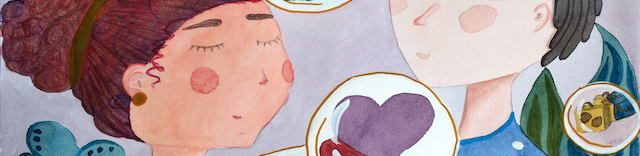
    Friends painting by Jerry Weiss

  • What to Do If Your Life Story Depresses You or Holds You Back

    What to Do If Your Life Story Depresses You or Holds You Back

    “The truth you believe and cling to makes you unavailable to hear anything new.” ~Pema Chodron

    Too often we let stories from our past define us. We tell them over and over to ourselves and to others until it becomes our truth. What if, without deviating from actual facts, we choose to tell different stories? What if these new stories could bring us more freedom and strength?

    Below are some true facts about my own life. I’ll follow each one with the stories I could be telling myself about each one, followed by the story I choose to go with.

    Fact Number One

    My father abused my teenage mother when she was pregnant with me and left us when I was just a few days old. I’ve never seen him again.

    The stories I could be telling myself now:

    Men are bad.

    Men can’t be trusted.

    The reason I can’t hold on to a relationship is because my father left me.

    I’m unwanted.

    I’m unlovable.

    The true story I choose to go with:

    They were young. He felt trapped and scared. His fears drove him to behave very badly. He had his own issues from his own childhood.

    It sucks, but it doesn’t define me or shape my views of men or myself.

    If I’d held onto the negative self talk or views about men, it could have prevented me from being the happy, loving, loved person I am today.

    Fact Number Two

    In my tween / teen years my mother worked nights in a factory and I didn’t see her before or after school. There was never a parent attending my school music and sporting events or awards presentations and I found my own way home afterward, often walking back in the dark, freezing cold winters of Minnesota.

    I got myself up and to school on time, oversaw my own homework, dinner, and bedtimes, and often that of my younger brother too.

    The story I could be telling:

    My mother didn’t care about me. She was irresponsible. She put me in danger and neglected my needs.

    I have to fend for myself in this world or nobody else will. I need to look out for number one. This is why I’m lonely. This is why I never succeeded. I was handed a bum deal compared to my friends. I could have made more of my life if I’d felt supported and had good guidance at pivotal stages of my youth.

    The story I choose to go with:

    My mother was doing the best she could with what she had.

    Being very independent from a young age taught me responsibility.

    I’m truly motivated to be present in the lives of my own children, attending their events, encouraging and offering guidance. The past has made me a better mother.

    Fact Number Three

    The boyfriend I fell madly in love with in my twenties verbally and physically abused me until I was finally hospitalized with cracked ribs. I gave up my career and possessions in California to move to London to be with him. I knew nobody except his friends.

    The stories I could be telling myself now:

    History repeats itself. I was abused because my father abused my mother.

    I deserved it for being such an idiot.

    I’m not worthy of proper love and respect.

    Men are all assholes.

    The story I choose:

    I didn’t know my boyfriend well enough before I moved abroad to be with him. I felt unable to move back to the U.S. as I’d given up my job, home, car and life there. I continued to stay with him for too long out of fear and ignorance.

    I’m smarter now. I learned what I don’t want in a relationship and it enabled me to recognize what I do want and to find it. I’m stronger and I know myself now. I love myself. I am worthy.

    Do you know anybody who’s been dealt a crappy deck and now tells the first kinds of stories? Do they blame past circumstances for their present life? Do they begrudge the people who have mistreated them?

    Which stories from your past do you tell yourself and others over and over? Are these stories helping you or holding you back?

    Rewriting the script in your head isn’t easy, especially if you’ve been telling it for a very long time.

    Here are some ways to begin to dump the old stories and replace them with new ones.

    1. Recognize when you’re telling them and press your mental pause button. Stop giving it fuel.

    2. Write down the fact, as I’ve done above, then the story you’re presently telling. Now write a more positive interpretation of it. What good has come out of it? What have you learned? How would it feel if you dropped the old story and told a new one? Explore this on paper and see what it brings up.

    3. Use EFT Tapping. Emotional Freedom Technique is effective for bringing your story to the surface, getting real about your feelings, then changing the narrative about it. For deep rooted stuff, work with a qualified EFT practitioner.

    4. Practice “loving what is.” Have a notebook handy as you read the book Loving What Is by Bryron Katie. Write your answers to her four powerful questions. It only works when you do the work. This book single-handedly healed my relationship with my mother.

    Self-limiting beliefs often stem from stories you’re clinging onto that aren’t serving you. They hold you back from true happiness and success.

    Begin to bring a gentle awareness to these stories and see if you can give them new meaning. It isn’t about forgetting your past and making things up. It’s about choosing to tell the truth in a less victimizing and more empowering way.

  • Introducing Buddha Groove: Meditation, Yoga, and Inspirational Gifts

    Introducing Buddha Groove: Meditation, Yoga, and Inspirational Gifts

    Hi friends! I hope you’re all enjoying the holiday season so far. Since I know a lot of us spend the beginning of this month looking for the perfect holiday gifts for the people we love, I wanted to take this opportunity to introduce you to Tiny Buddha partner Buddha Groove.

    A family-owned business, Buddha Groove was one of Tiny Buddha’s first sponsors many years back.

    Buddha Groove partners with artists all over the world to offer products that feed the spirit, inspire the mind, and revive the body. Many of their designs originate from artisan traditions in places such as South America, India, Indonesia, Tibet, Nepal, Thailand, and several other world regions. Buddha Groove also partners with many independent artists across the U.S.

    Their wide assortment of spiritual and wellness items and meditation gifts include…

    Buddha statues, like this:

    Translucent Blue Buddha Statue

    Cold Cast Bronze Medicine Buddha Statue

    Meditation malas, like these:

    Chakra Wrist Mala

    Knotted Amethyst Meditation Mala

    Singing bowls, like these:

    Blue/Gold Tibetan Singing Bowl

    Blue/Gold Tibetan Singing Bowl

    Spiritual jewelry, like these pieces:

    Breathe Pendant

    Abstract Chakra Figure Pendant

    Books and coloring books, like these:

    Inspirational Quotes Coloring Book

    Mindfulness Guidebook for Kids/Parents

    Yoga gifts, like these:

    Namaste Blessings Card Set

    Yoga Frog Figurines

    Although I consider myself a minimalist, I know that creating a tranquil environment can go a long way in fostering a sense of inner peace. And I also know that it’s much easier to be mindful and consistent with my meditation practice when I have lovingly chosen tools to support me.

    The same is true of the people we love. What better gift to give than a gift that aids in creating calm and comfort?

    Buddha Groove offer free shipping within the continental USA and ships internationally through a third party company. They also offer no-hassle returns within 30 days on all items except media, books, cards, and products containing plants.

    You can browse their full collection here and read a long list of reviews from happy customers here.

    I hope you’ll enjoy browsing through their site, and also hope you find something that speaks to you for the spiritually inclined individuals on your holiday gift list!

    **This is a sponsored post containing affiliate links. That means that a small percentage of each sale supports Tiny Buddha and helps keep the site going.

  • The Introvert’s Hate/Hate Relationship With Spontaneity

    The Introvert’s Hate/Hate Relationship With Spontaneity

    “The man who is prepared has his battle half fought.” ~Miguel De Cervantes

    They say you should live in the present, and “they” form a chorus of voices that is growing in number by the second. Everywhere you turn these days, the message is loud and clear: life is better when you live in the moment.

    I get it; I really do. I know that when I hit that flow state, regardless of what I’m immersed in, time passes in a heartbeat and I tend to really enjoy myself.

    It’s just that I would prefer it if I could plan those moments of flow some time in advance. I want—no I need—to prepare myself for the event of letting go. I need to be mentally ready so that I may jump into the river and let the current take me.

    If I’m not prepared, that river turns out to be less of a serene, meandering brook, and more a surge of cascading torrents that pummel my senses until I’m half-drowned and ready to give up.

    This is why I, the introvert, despise spontaneity in all its forms.

    The first few weeks of university really tested me. I lived on campus in a dorm where I shared a communal kitchen with eleven other people. It didn’t matter what night of the week it was, there were people heading out to a bar, restaurant, or club.

    I’d often get a knock at my bedroom door and an invitation to one of these nightly excursions: “Oh, hey, me, Johnny, and Mike are heading to {insert one of many different venues} for some beers. You wanna join us?”

    At this point I’d be searching every corner of my mind for a reasonable excuse, a Get Out Of Jail Free card that would save me the pain of just saying no. I knew that if I did just decline without justification, I’d get the inevitable looks of astonishment as if I were turning down the opportunity of a lifetime.

    “It’s Wednesday.” No, that won’t do.

    “I’m tired.” Not going to cut it.

    “I’ve just sat down to catch up on Friends.” Watch it another time, I’d be told.

    I wanted to tell them the truth, but can you imagine what they’d have said? “Oh, thanks for the invite guys, but I’m an introvert and I can’t stand being spontaneous. Maybe another time, assuming you give me seven days notice in writing.”

    Instead, I’d often just mumble something incoherent about how I’ve got a paper due the next day, or how I’m just on the phone with my parents. They usually got the message.

    I didn’t avoid nights out entirely; I can be quite a social character when I want to be. I just made sure that I was mentally prepared beforehand. I’d agree (with myself in advance) that I was going out on a particular night, and I made sure I spent plenty of time alone in the afternoon or early evening to recharge my batteries for the oncoming festivities.

    Eventually, I had a nice little routine going. I’d go out on Monday most weeks, Friday some weeks, Saturday almost every week, and the occasional Thursday. No other nights really got a look-in. And it tended to be the same set of places each time because of certain student promotions or theme nights.

    What’s more, my friends knew when I was and was not going to accept their invitations, so they stopped knocking when they knew it was a waste of their time.

    Somehow, I had managed to appear fairly sociable and outgoing while avoiding anything unexpected. I had planned my way out of spontaneity.

    Structure: An Introvert’s Best Friend

    My experiences as a student might not exactly mirror your situation, but as a fellow introvert, I’m sure you can relate to the need for structure and routine in your life.

    There are few things less enjoyable for an introvert than being coerced into some random activity at some unplanned time with unfamiliar people. It’s literally our Kryptonite.

    We simply cannot handle the unknowns: Where are we going? What is the place like? What will we be doing there? Who else is going? How are we getting there?

    Perhaps the uncertainty that scares us most is not knowing when it will end. Social activity drains us, but spontaneous social activity burns through our energy reserves in double-quick time because of how much we have to think, react, and absorb when we’re not mentally ready for it.

    If there’s no clear time at which things will draw to a close, we panic, knowing we’ll be utterly spent in the not-too-distant future.

    Put some structure in place—primarily in the form of plenty of warning—and we will be able to extract far more enjoyment out of the very same event or activity. When we know it’s coming, we have time to open ourselves up to the possibility of enjoying ourselves. We remove our shackles and move more freely, both physically and mentally.

    Be Confident In Your Boundaries

    The reason I found those early weeks of university so difficult was because I felt bad saying no to people. I wanted to make friends as much as the next person, and I always had this nagging feeling that my refusal to take part would see me labelled as boring.

    Somehow or another it all worked out, but I could have avoided plenty of insecurity had I just understood that putting personal boundaries in place is not a sign of weakness. I did say no to people, and I did it a lot. These days, I’m much more comfortable doing it, and it reduces the anxiety I feel around spontaneity itself.

    I know I can turn down anything I don’t feel like doing, and I don’t worry so much about what other people think. I’ve learnt that, actually, most spontaneous people care a lot less about receiving a no from introverts like you or me. Or rather, they get over the rejection quickly because they’re too busy just getting on with whatever spontaneous act it is they are doing.

    In these situations, it’s the introverts who tend to overthink everything. You may dwell on the exchange for hours after it happened, considering all of the possible ways you could have handled it better or the consequences of your refusal. The big deal exists almost entirely in your head. So it’s in your head that the battle must be won.

    The challenge is to know your boundaries intimately and to build them strong and sturdy so that you are able to confidently say no to offers and invitations that you either have not planned for or do not think you’d enjoy. No is not a dirty word and you shouldn’t be afraid of using it.

    Take The Reins Yourself

    There is a relatively simple way to avoid spontaneous requests from others: get in there first. You want a plan in place, right? You crave structure in your life. Then create the plan and add the structure yourself.

    Don’t wait for your friends to suggest you meet up that night, or the next night for dinner. Suggest a date and a time that feels comfortable for you. A few days time, next week, in a fortnight; it doesn’t matter as long as it gives you enough time to prepare mentally.

    And if you know that these events tend to happen naturally every couple of months, keep this in mind and put a note on your calendar to start suggesting dates well in advance. This also has the added benefit of making you seem like the sociable one because you’re doing much of the organizing.

    Yes, you may be an introvert, but that doesn’t mean you don’t ever want to see anyone. We introverts can enjoy ourselves as much as anyone else, but having some forewarning will only serve to make the whole process more compatible with your needs and wishes.

  • What to Say (and Not to Say) to Someone Who’s Grieving

    What to Say (and Not to Say) to Someone Who’s Grieving

    “Remember that there is no magic wand that can take away the pain and grief. The best any of us can do is to be there and be supportive.” ~Marilyn Mendoza

    My mother, an articulate and highly accomplished writer, began to lose much of what she valued a few years ago. Her eyesight was compromised by macular degeneration, her hallmark youthful vigor was replaced with exhaustion, and many of her friends began to die. Finally, and cruelest of all, her memory began to go, slowly at first, and then with increasing speed.

    Her struggle and her suffering in the last two years of life were excruciating to watch, and I was helpless to stop what felt like an avalanche of cruel losses.

    Sometimes in that last year, she would call me several times a day with distress and confusion. When she finally died, after five ambulance trips to the hospital in six weeks, my first response was thankfulness that she was out of the struggle and, to my surprise, relief. I had been grieving the mother I had known for the last year of her life, and she had already been gone a long time.

    It would be another month before I found my grief, and I suspect that it will be there forever; but my immediate feeling was not sadness.

    People feel so many things at so many different times about the death of a loved one: loss, anger, devastation, confusion, guilt, and fear, to name a few. If we assume anything about how they are experiencing their loss, we can make them feel worse. Here are a few suggestions about how to reach out, starting with what not to do.

    Don’t assume you know what I am going through.

    I was surprised by how many people came up to me and said, “I know just what you’re going through.” Even worse, they would tell me, “This will be the saddest thing that will ever happen to you,” or “You won’t know who you are for years after this.”

    We all know that losing a mother is a major life event and it changes many things. What we don’t know is how. It is different for each person; we cannot overlay our own experience on someone else’s and assume it’s the same. For me, whose first feelings were that her death was that of a reprieve, it caused me to doubt the validity of my response.

    Don’t use religious clichés about this life or another. 

    Religious clichés such as “Jesus called her home,” “God needed another angel,” or “it’s in the hands of the Lord,” were infuriating. For one thing, my mother was not a Christian, nor am I. I love the Jesus story, but it doesn’t resonate for me as the only true story, and it sure doesn’t help me feel better about my mothers’ death.

    Don’t say “there is a reason for everything.” 

    Then the cards began to come filled with familiar clichés: the worst was “there is a reason for everything.”

    That feels to me like a way to do a “wrap up” on something that is fragile, personal, and unknown. How do you know there is “a reason for everything?” It insults grief by trying to dilute it into a rational cosmic plan.

    You cannot explain, rationalize, or sum up my loss in a tidy little cliché. My reaction to those messages was not to feel more comforted, but to feel more isolated.

    Don’t talk about her “passing.”

    Talking about people who have “passed” feels like minimizing what happened and avoiding the word “death.” It is a tough word, it is final and irreversible and filled with loss. But it is a true word. It is what we have to manage, and the hugeness of the word, death, in its finality and brutality is what allows us to find our necessary grief.

    There were people who said things that did comfort me.

    1. I wish I had the right words, just know I care.

    2. I don’t know how you feel, but I am here to help in any way I can.

    3. Would you like me to bring you some enchiladas on Tuesday?

    4. What was this like for you? I’d love to listen if you would like to talk about it.

    Here is the most important thing for you to know.

    Each of our relationships has a bubble around it. Within that bubble is the history of what we have shared. Grief is a part of the human experience, and we grieve not just for the person who has died, but also for the part of our history they take with them.

    Losing a mother is a major life change regardless of what the relationship was like. But we don’t know what that is like for anyone but ourselves. When we assume we do, we belittle their experience and lose a chance to know them better.

    Although we may intend to connect with the other person, sometimes the opposite happens and what we say makes them feel worse. When we invite them to share their own experience, we help to break down the isolating walls of loss and inspire a true connection.

  • The Simplest Way to Make More Time for What Matters

    The Simplest Way to Make More Time for What Matters

    “We’ve all heard the saying, stop and smell the roses. But it would be far better to be the gardener who grows the roses and lives with them constantly.” ~Deepak Chopra

    What would it take to befriend time? To see time as an ally, a friend even—an opportunity?

    Most of us have a much different relationship with time. One that is based on scarcity. The chorus of “I don’t have enough time” reverberates through conversations, social media channels, and personal mutterings.

    Redefining our relationship with time isn’t like flipping a light switch. But it is a bit like pumping gas in your car.

    I am one of those people that forget to make time to stop at the gas station as the fuel gauge in my car starts to veer towards the red E. I’ve never run out of gas, but the fuel light comes on more than I’d like to admit.

    Why exactly would I ignore this gauge? Because of time. I see that the meter traverses from ½ a tank to ¼ of a tank, and I find myself thinking, “I don’t have time to stop and get gas right now. I’ll stop tomorrow.”

    But tomorrow becomes the next day, and then the day after that. And by that point, the taunting orange light has been activated. Even then sometimes I ignore it, believing that I’m in a rush.

    Except that something funny happens when eventually I pull into the gas station and stop long enough to fill up. The process of putting gas in my car doesn’t take very much time. Though I haven’t timed it, my guess is that from inserting my credit card to activate the machine to replacing the nozzle when I’m done, less than five minutes have passed.

    Five minutes is forever. Minds can be changed in five minutes. Heartbeats can be elevated (or slowed) in five minutes. Smiles can be shared, laughter can fill a belly, and bodies can be hydrated in five minutes.

    In fact, it seems to me that filling up my car with gas offers the perfect reminder of why we need to make time an ally. Cars need gas to function. We, like cars, have our own fuel needs to not just survive, but thrive.

    Beyond food and water, we need play, we need sleep, we need connection, we need love. But too often, we tell ourselves we don’t have time.

    We rush and scramble through the day, moving from one thing to the next, trying to check things off our lists as if productivity is the ultimate indicator of joy. And, more importantly, we tell ourselves that the things we crave will take too much time—time that we do not have.

    What if we did have time? What if the things we crave could fill us up, just like gas fills a car, in just a few minutes? What if we could give ourselves permission to savor the unexpected moments instead of just the big, fancy, planned out ones?

    Maybe instead of needing an hour long nap or workout, we could find fulfillment in a shorter power nap? Or instead of a trip to the gym for a workout, we could feel strong from mini-bursts of movements throughout the day?

    What if we saw time as an opportunity for fulfillment like a friend that invites us to be present rather than using the hours on the clock as mile markers for productivity?

    When I think back to the most heart-filling, nourishing moments of the last few months—or even the last few days—they are the ones that I had to allow myself to receive outside the boundaries and constraints of a schedule. The moments where I allowed myself to move slowly, so slowly in fact, that I had the opportunity to notice the dance of life around me.

    Like when my heart smiled from pausing before I left my home office to hear my daughter singing out loud in the shower. Or when I made time for a thirty-minute yoga practice one evening and remembered that sometimes all it takes is a simple twist to let go of whatever I was holding on to. Or the evening that instead of making a run for it, trying to avoid the rain, my daughter and skipped and jumped in puddles on our way home.

    None of these moments took any great length of time. And yet, had I been rushing, or listening to my thoughts run amok with reminders of how much I had on my to-do list, I would have missed them completely.

    In The Big Leap, Gay Hendricks offers the question: “Am I willing to increase the amount of time every day that I feel good inside?”

    So many of us use clocks as measures of progress. How long can I meditate? Can I beat my 5k pace? How many clients can I fit into one day? But these measures ignore all the smaller indicators. The goosebumps on your skin from noticing a sign that reminds you of something you love. Or the peaceful scene that you witnessed that reminded you to take a breath.

    Instead of worrying about a spillover of gas when we pump those few last gallons in our car, how might the day be different if saw time as a way to top ourselves off with fulfillment?

    The Easiest Way to Make Time a Friend Is to Create Space

    Think of it like de-cluttering. What can you release to create more moments to see time as an opportunity? Maybe you need to release expectations or assumptions. Or perhaps you could let go of judgments around what it means to be successful or productive.

    Amplify Abundance

    Just like de-cluttering and release creates space, a focus on what needs to be amplified cultivates abundance. If you are releasing expectations, can you amplify being guided by intuition? Could you amplify stillness by allowing yourself to stop throughout the day to take three breaths? Or six? What might it feel like to amplify nourishment for the mind, body, and soul?

    I’ve heard all of it before. Parents who feel like time isn’t on their sides with schedules and carpools. Or individuals who feel like they are at their best when they are trying to beat the clock. I’ve been there. In my early adult years, I often felt like I was most focused when my schedule was packed and had little time for distraction. But now I wonder.

    Time and fulfillment seem inextricably connected. And I don’t know about you, but life feels much more delicious when you practice time management with your heart and clarity of purpose instead of a to-do list.

  • I Will Not Be Put in a Box: I Am Not What I Do, Own, Think, or Feel

    I Will Not Be Put in a Box: I Am Not What I Do, Own, Think, or Feel

    “All that I seek is already in me. “ ~Louise Hay

    My world collapsed the day I became unemployed. After a successful thirteen-year career in a multinational company, working across different countries and cultures, I ended up with no job. I wasn’t an expat leader in Shanghai any longer; from that day, I became an expat housewife, and this big status change came like thunder.

    Whenever people asked me about myself when I was working, I used to explain what my job was all about. Or give them a business card and let that speak for me.

    Being left with no work was a very painful experience, one I will never forget. It came like a trauma, and I felt like a failure: lost, stuck, miserable, and depressed.

    All of a sudden, I had no business card to show the world to validate my self-worth. There were no more international projects, company sales, and fantastic team achievements for me to talk about and feel proud.

    They say true growth mostly comes from pain, and I believe that’s true. Today I see that moment as a gift from life, a real blessing in disguise that helped me stop for a moment and, for the very first time, ask myself who I was and what made me really happy.

    So here’s what I didn’t know at the time and what I know to be true today:

    1. I am not what I do.

    From an early age we’ve been conditioned to value ourselves through how well we do things in life. Most of us were raised to achieve and deliver results, always running somewhere, always busy.

    Work is part of life, and money is a much-needed instrument that we need to survive. But is life supposed to be all about work? What if the purpose for us being here were just to be happy?

    Whenever I fail at anything, that doesn’t make me a failure because I am not what I do. My job is part of life and not life itself. I am not my profession, no matter how much I might love what you do. Today I am a coach, in the same way I am a wife, a daughter, a sister, or someone’s friend. I wear many hats, and so do you.

    For so many years I thought I was my job. And when the job was not in my life any longer, I wasn’t.

    Wayne Dyer was right: “You are a human being, not a human doing.”

    2. I am not what I own.

    I grew up in Eastern Europe. After the Romanian revolution in 1989, money got depreciated at such a level that, with the same amount of money my parents could buy a car, they ended up buying a new TV.

    If you think you are your money or your possessions, think of bankruptcy. Think of those people who suddenly lose what they have in their accounts.

    I grew up thinking money was evil and being rich was bad. That’s not what I believe to be true today, since we can’t feed the poor from an empty plate. Financial stability helps us feel safe and secure, and that is a basic human need. Money is as it is: not bad, not good, not evil. What people do with the money can be either right or wrong; it’s all about how we use it.

    But if we let the money own us, we turn into hostages. We start running a never-ending rat race toward happiness and project it into an imaginary future, and forget to be grateful for everything else we have.

    We often think thoughts like: When I make that much money, I will be happy. When I buy that car, I will be happy.

    In reality, that’s a trap because it will never feel like we’ve gathered enough.

    “Acknowledging the good that you already have in your life is the foundation of all abundance.” ~Eckhart Tolle

    3. I am not my physical appearance.

    In today’s society, the concept of beauty often gets associated with youth, or having no wrinkles. Social media, women magazines, Photoshop, beauty contests—they all put tremendous pressure on people (and women especially) to fit particular requirements and parameters that sometimes are not even real.

    For many industries, that’s an excellent source of income. That is why anti-aging cosmetics sell well and plastic surgery is booming. It’s all based on fear.

    If I identify my human value through my physical appearance, the process of aging turns into a burden. If I attach my happiness to my young years, I risk disliking or even hating myself once I grow older.

    My body is the temple of my spirit and the only one I’ve got. It’s the vehicle that helps my soul move into this world. And still, that’s not who I am.

    “Your body regenerates in an environment created by your thoughts, emotions, and expectations. Make sure they are positive.” ~Christiane Northrup

    4. I am no one’s thoughts.

    If I perceive myself as not good enough, stupid, intelligent, ugly, annoying, gorgeous, slim, or fat, that’s not the absolute truth; it’s just what I believe to be right. That’s nothing but thought, a representation of my opinion of who I am.

    The same thing is valid when I let people tell me what they think about me. In reality, I am as I am. What people see in me is a matter of self-perception, filtered through their own lenses, and it has nothing to do with me.

    Take beauty, for example. It’s a norm. In the Eastern-European culture that raised me, beautiful generally associates with being slim, so some people could think I am overweight. However, during my trip in India years ago, I was suggested to gain some weight. We are all shaped by cultures and the societies we grew up in.

    Blaming others for the way I feel is disempowering, and it turns me into a victim when things are imposed on me. If I say “You make me angry” or “you make me sad,” I am giving my power away. I know I can never control what people say or do, but I can always self-manage how I respond to that. No one can upset me, stress me, or depress me unless I allow it.

    “No one can hurt me; that’s my job.” ~Byron Katie

    5. I am not what I feel.

    We tend to define who we are by the way we feel: I am sad, depressed, confused, excited, anxious, happy, and so on.

    I have learned how to detach myself from my emotions and witness them with no judgment.

    Instead of “I’m sad,” I say, ”There is sadness in me right now.”

    Instead of “I’m angry,” I say, “There is anger in me right now.”

    Instead of “I’m worried,” I say, “There is a worry in me right now.”

    Acting as an observer helps me take my power back. I’ve learned not to let my feelings control me, knowing that, just like my thoughts, they are transitory. This way, energy-consuming emotions that used to torment me do not own me any longer, and I own them instead.

    “Feelings are just visitors; let them come and go.” ~Mooji

    I am not what I do or own, or how I think, look, or feel. I just am. My spirit refuses to be put in a box and labeled. I am a soul who is here to learn, grow from new experiences, and be happy.

    “When you know that you are not flesh and blood, that you are the eternal spirit, than nothing will trouble you. Even death you will not know it is just a change of state.” ~Mooji

  • 20 Inspiring Gratitude Quotes and Tiny Buddha’s Gratitude Journal Giveaway

    20 Inspiring Gratitude Quotes and Tiny Buddha’s Gratitude Journal Giveaway

    Update – the winners for this giveaway are:

    • Marc Remington
    • Kittenpants13

    Hi friends! Happy Thanksgiving to those of you who celebrate.

    I’m so grateful to all of you who share your experiences and insights on the blog, and to those who you who give your time and energy to help others in the comments and community forums. I am endlessly inspired by your openness, your empathy, and your kindness.

    To celebrate this day, I gathered some of my favorite gratitude quotes (mostly from anonymous sources), and I’ve also put aside two copies of Tiny Buddha’s Gratitude Journal for a special giveaway.

    About the Journal

    Including questions and prompts pertaining to both your past and present, the journal will help you see your life through a new, more positive lens.

    The book also includes fifteen coloring pages, depicting awesome things we often take for granted, like nature and music.

    With space for written reflection, these pages provide all the benefits of coloring—including mindfulness and stress relief—and also guide you to recognize the beauty in the ordinary.

    Whether you’ve been gratitude journaling for years or you’re just giving it a try for the first time, Tiny Buddha’s Gratitude Journal will help you access a state of inner peace, contentment, and joy.

    The Giveaway

    • To enter to win one of two free copies of  Tiny Buddha’s Gratitude Journal, leave a comment below sharing something you’re grateful for today.
    • For a second entry, share this post on one of your social media pages and include the link in a second comment.

    You can enter until midnight, PST, on Thursday, November 30th.

    If you’ve already received your copy, I would appreciate if you’d leave a review on Amazon here. It doesn’t need to be long—even a tiny review can make a big difference.

    The Quotes


    Yes, that last one is my own quote, so it’s probably kind of odd to include it in a list of my favorites. But I wanted to add this one in case you’re going through a tough time right now and not feeling all that grateful. Be good to yourself. Take care of yourself. And know that you are loved and appreciated.

    **One request before you go! Tiny Buddha has been nominated for Healthline’s Most Loved Blogs contest. If Tiny Buddha wins, the entire $1000 prize will be donated to Operation Smile to give new smiles to four children with cleft lips and palates. You can vote once daily until December 6th here. Thank you so much in advance for voting!

  • Why You Need to Embrace “Beginner’s Mind” to Live a Life of Adventure

    Why You Need to Embrace “Beginner’s Mind” to Live a Life of Adventure

    “The don’t-know mind… doesn’t fear, has no wish to control or foresee, steps off the cliff of the moment with absolute trust that the next step will land somewhere, and the next step somewhere else, and the feet will take us wherever we need to go.” ~Byron Katie

    I am fifty-five years old. I’ve raised a family, been through two divorces, bought and sold four houses, and had a successful professional career. And right now I’m doing one of the hardest things I’ve ever done, which is learning to host in a busy restaurant.

    My coworkers range from mid-twenties to early thirties. They are smart and hardworking. I feel like my brain is about to explode.

    Why am I doing this? Well, money, for one thing. For better or worse, I can’t go back to my original profession after taking two decades off to be a mom. But another large motivator is that I want to do something totally new and out of my comfort zone, to experience what Buddhists call the “not-know mind” or beginner’s mind.

    In my experience, adults older than about twenty-five are exceptionally good at stacking the odds in their own favor. We like to do what’s familiar, what’s comfortably in our wheelhouse.

    Let’s face it: It feels good to know what you’re doing—especially when you’re the oldest one in the room!

    Throughout childhood and young adulthood, avoiding new experiences is not optional (however much we might resist them). Every year in school we get a new teacher, perhaps new classmates, and continually new material to learn.

    Starting a new career, moving into new social roles and responsibilities, all require us to be a beginner, to not know for that uncomfortable initial period.

    Our goal in life is usually to reduce this sense of uncertainty and vulnerability as quickly as possible. Resisting new experiences, even the ones we actively desire, makes them still more uncomfortable. If we could crack this nut and truly embrace the vulnerability (and excitement!) of being a beginner, our lives would be more interesting—and a lot less stressful.

    The discomfort we feel is pure ego. Ego is the part of us that needs to look large and in charge at all times. It is not a fan of beginner’s mind. Ego tells us we’re in danger when we’re not in familiar territory. Its job is to keep us “safe,” and if that means living a small and boring life, so be it.

    I have to actively calm and soothe my ego each night when I report to work, filled with unfamiliar butterflies. I use self-talk that sounds exactly like what I say to my daughter when she embarks on a new experience:

    “Just do your best. No one expects you to know everything right off the bat. New things are always scary, but you learn more every night.”

    One of the keys to beginner’s mind is humility—a characteristic not highly regarded in this society. We are mostly about pumping ourselves up (there’s ego again). Humility requires us to acknowledge and honor what others know that we do not. For instance, I never knew how challenging restaurant work was before this, but I will never take a server for granted again!

    Humility and humiliation are not the same thing. Recognition isn’t a zero-sum game: Genuine admiration of someone else’s ability or expertise does not automatically make me “less than” as a person. In fact, it makes me stronger! To be humble in this sense is a mark of maturity and real self-esteem.

    Humility isn’t about falsely running ourselves down, but about seeing ourselves—our strengths and weaknesses—clearly. In this job, it doesn’t matter that I have a master’s degree (there are lots of servers with master’s degrees, I find) and no one cares what my previous profession was. What matters is that I’m willing to learn from anyone with the time to teach me.

    Beginner’s mind is all about being willing to learn, which can (and should) happen at any age. But you can’t learn something new if you only do what you’re already good at. You can’t learn if you insist on being the expert. You can’t learn if you’re not willing to get it wrong for a while, to make mistakes—even in public.

    The pay-offs are many, although it might be hard to convince yourself of that when you’re full of butterflies and dread. Life is an adventure, and adventures require us to step out of our comfort zones.

    Ask yourself: Am I really ready to settle for more of the same for the rest of my life? Isn’t it worth a little discomfort (even a lot) to learn a new skill, meet a new person, or discover a new aspect of myself?

    We can ask the ego to take a back seat for a while, and no one will be the worse for it. We can take our courage in our hands, and step out into the unknown, over the cliff, trusting that the next step will land somewhere.

    Usually, the worst that can happen is that we will feel uncomfortable, maybe even embarrassed. Maybe we’ll actually fail! I’ve considered that outcome and decided that I’ll survive if it happens. I’d rather try and fail than wonder if I might have succeeded.

    I hope that I’m providing a positive role model for my younger coworkers; maybe when they’re fifty-something they won’t hesitate to step out on a limb either. I know that I’m providing a good role model for my daughter. She texts me good luck almost every night on my way to work, and says things like, “I’m proud of us, Mom.”

    We lose touch with what our children are going through when we get too comfortable with our lives. They don’t put much credence in our advice to “just try it” when they never see us taking a risk. We can’t model courage, or how to handle mistakes and survive failure, if we always stay safely ensconced in our comfort zones.

    And the fact is, change will come even when we do our best to guard against it. The safety of a comfort zone is temporary, at best. In embracing humility and beginner’s mind, we really have nothing to lose and everything to gain. We’ll either succeed, or we’ll learn something—or, most likely, both. It’s a win/win (although you might never convince your ego of that)!

  • How Surfing Helped Me Turn Fear and Anxiety into Confidence

    How Surfing Helped Me Turn Fear and Anxiety into Confidence

    “If you want to conquer fear, don’t sit home and think about it. Go out and get busy.” ~Dale Carnegie

    Not too long ago I went through an extremely chaotic and emotional two-week period. Anything that could go wrong or be difficult did and was. I thought it would never end.

    When it began, the little hiccups were easy to let roll off my shoulders. After about a week, I was feeling pretty worn down and was in tears daily. At the end, I felt numb, and when things kept going wrong I would say to myself “Sure… Okay …what’s next?”

    These two weeks were filled with miscommunications, the realities of parenting a teenager, negative art critiques, the end of a three-year business relationship, technical difficulties with my social media accounts, a shoulder injury, and an art block, and none of my efforts seemed to put any of the proverbial fires out.

    Not to mention that we were surrounded by literal fires here in Southern Oregon, which brought oppressive smoke and stress.

    I was tired, scared, tired, hurt, tired, irritable, and physically taxed. And did I say tired? Usually getting into the art studio and painting is the best way to bring me back around, but that wasn’t working either. I would stare at my painting and just not know what to do, so I would do nothing.

    About a week in, I drove myself to the coast to surf for the day, thinking that getting out of the smoke and into the ocean would wash away the negativity. But the conditions were not in my favor, and the day was frustrating as I paddled my way from one side of the beach to the other searching for waves. I drove back into the smoke feeling defeated, complacency of the crapolicious period of time setting in.

    The next week, I decided that there was nothing left to do but treat myself with some kindness and compassion. I rested, ate a carton of ice cream, and watched schlocky movies. I thought that maybe by just not fighting it anymore, the procession of poop would lift. But no, the hits just kept coming.

    I felt the depression creeping in as it has a tendency to do after anxiety has beat me into submission.

    For me, anxiety and depression have a way of cultivating more anxiety and depression. As the challenges arose in continuum, seeing the positive became harder and harder. The negativity took the lead and thus started a downward spiral of adversity and uncertainly. It is a horribly stagnant and uncomfortable place to live.

    So, I decided to participate in a surfing competition. Wait… wha?

    I had actually planned to compete months before. It was not something that I had ever done prior, and it is generally an activity that I would consider completely out of my comfort zone.

    I’ve never been interested in competitive sports; I’m nervous when put on the spot and I am not comfortable being the center of attention. A friend who competes annually told me it would be casual fun, but it didn’t necessarily sound like a good time to me. It sounded nerve racking.

    Nevertheless, I had registered to compete. The timing couldn’t have been worse. I already felt like I had been hit by an emotional mac truck, and the physical ailments were tagging along like uninvited hitchhikers.

    I decided that I would go, but if I wasn’t feeling it, I would back out and just be there to enjoy the beach and support my husband and our friends. And so, we prepared for a long weekend at the coast.

    The day before our departure my husband got a cold and I could feel one coming on. The morning we left I woke with a migraine.

    “Oh, this is starting out fantastic,” I thought to myself, but I kept my snarky remarks to myself, climbed into the van, and off we went. Hubbie sniffing and sneezing and me unable to keep my eyes open for very long.

    I have to admit that I was glad to get out of my art studio. Staring at my painting that I was stuck on had been a source of irritation that I was relieved to take a vacation from.

    We arrived at the beach to find almost non-existent waves, which would make a surf competition pretty difficult. Then, I received a not such fantastic report from a friend whose father is in poor health and I realized that my parents had missed my daughter’s volleyball game because I had told them the wrong time. And my shoulder was killing me. Would it ever end?

    The more it came, the more indifferent I felt. The apathy was only interrupted by sporadic bursts of tears followed by the need to collapse and sleep.

    I swear the sole reason that I didn’t back out of the competition was simply because I just couldn’t walk back up the beach one more time to get to the registration table again. Plus, I started to question if I would be disappointed in myself and regret it if I surrendered.

    So, I went on. My heat was at 11:40 the next morning. I would have twenty minutes to catch as many waves as I could, only two of which would count toward my score. The waves were ankle height. How on earth was this going to work? I ate some chocolate and went to bed.

    The morning of the competition, I woke with small butterfly flutters in my stomach that in the hours leading up to 11:40am turned into a swarm. I was nauseous, shaky, and terrified. At least I had seemed to have beaten the sickness and my migraine was gone. Focus on the positive, right?

    I paddled out in to the water with my six competitors and sat for what seemed to be an eternity. Then the horn blew and my twenty minutes began. I caught as many waves as I could and it was actually going okay.

    The horn blew again ending my heat and I came out the water with the biggest smile on my face. I had done it. I was happy with how I had surfed but mostly, I was just psyched that I had gotten out there. All of the crap from the previous two weeks melted away and all of a sudden, my problems didn’t seem like such a big deal.

    “Look what I just did!” I exclaimed. I felt proud and accomplished, the sky seemed bluer, and the world brighter. I felt ready to tackle anything. I found out that I came in dead last in my heat but it didn’t matter. I had gone through with it.

    I brought that feeling home and immediately was able to resolve the painting I had been stuck on. The technical problems I was having got fixed, and harmony seemed to be on its way to restoration. I, once again, felt I could take on the world.

    I am a highly sensitive person who struggles with anxiety. When things are going well, it feels like the good will never end. When life is not working in my favor, I feel as though I’ve been sucker punched and then repeatedly kicked when down. Like all of the warranties have just expired. Like I’m making all the wrong choices and doing all the wrong things.

    It can be hard to stand back up again when I’m questioning every option. The fear is overwhelming and paralyzing. But I now realize one way to effectively shake off these negative cycles, which are inevitable: I can turn fear on itself by doing something that intimidates me.

    I can fight fear with action.

    During this particularly bad negative cycle, I became scared of everything and it was hard for me to move forward, as I was petrified by all of the possible outcomes. It destroyed my confidence.

    My everyday coping methods of dealing with anxiety were not working. But by doing something that scared the crap out of me, something completely out of my comfort zone, I showed myself that I am strong.

    Also, I am aware that surfing, skiing, hiking, and mountain biking are all activities that force me to engage with the present. I can’t think about what’s happening in other areas of my life when I’m dropping into a wave or flying down the side of a mountain. It’s like jet-fueled mindfulness. I am reminded that there are things that I cannot control, and I become aware of the smallness of my problems.

    In this particular instance, I was so lost in doubt and confusion that merely going to the coast for a surf didn’t boost me. However, by surfing in a competition, something that was completely foreign to me, I was able to not only get outside myself for a minute through the physical act of surfing, but I was also able to prove to myself that I can accomplish things that I interpret as out of my reach.

    Sure, I may not have ended up on the winners’ podium, but in non-existent surf and with every eye on the beach watching, I competed. And when I walked out the water, I was cheered.

    Want proof of how doing something terrifying changed my outlook? Take a look at the photo to the right. That’s me coming out of the water after my heat. That smile is genuine. I felt like a winner.

    For me, there is nothing more debilitating than being fear-driven. It is a barrier to progress and I, for one, feel I have come too far to let anxiety sit at my table for long.

    Don’t get me wrong. There is such a thing as healthy fear. If I would have shown up to the competition and the waves were fourteen feet high, I don’t think I would have surfed. But if I would have backed out because things had been going poorly and so, “this will probably be a disaster too,” well, I just plain refuse to adhere to that mind set, even if that’s where my brain wants to go.

    We all go through periods of time when the world just seems to be working against us. Cycles when we feel we are swimming against the current. Sometimes the best way to break the cycle is to show ourselves that worry and doubt have not taken total control.

    We can take the power away from fear and stock it back into our arsenal by taking action.

    We set ourselves free by proving that we can do the very things that scare the bejesus out of us and that life will still go on, possibly with a renewed confidence, even greater than it was before. So, go out and do something that scares you. I double dog dare ya’!

    Photo credit for Marigny’s surfing picture: Chris Goodyear

  • How to Enjoy the Holidays When Grieving the Loss of a Loved One

    How to Enjoy the Holidays When Grieving the Loss of a Loved One

    This post contains an excerpt from GETTING GRIEF RIGHT: Finding Your Story of Love in the Sorrow of Loss, by Patrick O’Malley, PhD with Tim Madigan.

    It was spring 1980 when my wife, Nancy, and I received some of the best news of our lives—she was pregnant with our first child.

    On a Tuesday morning that September, we found ourselves sitting in her obstetrician’s office. Nancy, not due to deliver for three months, had been awakened the night before by a strange physical sensation.

    She had wanted to get checked out, just to be safe. But after the examination that morning, her doctor said we needed t0 get to the hospital. Labor had begun. I remember how Nancy’s voice trembled.

    “Can a baby this premature live?” she asked.

    “I don’t know,” the doctor said. “We will try to buy time. He will be a pipsqueak of a kid.”

    Thirty-six hours later, on September 3, 1980, Ryan Palmer O’Malley was born, weighing a little over two pounds. You couldn’t have imagined a more fragile looking creature. He had been far from ready to leave his mother’s womb, yet there he was.

    In the first few moments of his life, I was aware of the great risk of loving my son, but I was powerless to resist. From the first glimpse of Ryan, I knew he would have a place in my heart forever.

    His early life was a succession of seemingly endless days and nights. We hovered over the side of his crib in the hospital, looking down at our boy who was hooked up to all this noisy equipment. His life was measured in minutes and hours. On several terrifying occasions, Ryan stopped breathing, and his medical team would rush in to resuscitate.

    All this time, Nancy and I yearned to hold him, but his frailty and the equipment made that impossible. The most we could do was touch a tiny finger, rub a tiny arm.

    Instead of cooing, the sounds around my son were the mechanical beeping of intensive care machines. Instead of that wonderful new baby smell, there was the pungent scent of antiseptic soap we had to use to scrub up before seeing him. Despite not being able to hold him, despite all the machines between him and us, we loved him deeply.

    Early fall turned to Thanksgiving and then to Christmas. Our son gradually grew stronger. One day in January his doctor weaned him from the respirator. We could now hold him without the tangle of tubes and wires.

    On March 9, 1981, our seventh wedding anniversary, we were finally able to bring our baby home to hold him, bathe him, kiss him, dance with him, feed him, and rock him. He smiled for the first time in those days. Though he was still fragile and underweight, we allowed ourselves to start imagining Ryan’s future. No parents loved a son more.

    And then he was gone.

    On Saturday night, May 16, 1981, we were treating him for a cold but not particularly concerned. We had been through much worse. But early Sunday morning our precious son suddenly stopped breathing.

    I started CPR. Ryan’s doctor and an ambulance were at our house within minutes. His doctor administered a shot of adrenalin to his heart as the medical technicians continued CPR. Nancy and I silently prayed as we followed the speeding ambulance to the hospital.

    The next several hours are a series of snapshots forever imprinted in my mind.

    • His physician coming into the waiting room with tears in his eyes, saying, “I could not save him.”
    • Holding Ryan’s body
    • Returning home without him
    • The heartbreak of our family and friends as we broke the news of his death
    • The dream-like, adrenalin-fueled rituals of visitation and funeral
    • The faces of all those who filled the church
    • The sight of his tiny casket by the altar
    • Seeing construction workers removing their hard hats as the funeral procession drove by
    • Leaving the cemetery on that sunny spring day

    I have taken off work on the anniversary of Ryan’s death every year since that first year. I go to the cemetery to think about him and the years now behind me. Powerful feelings rise each time I see my son’s name on the grave marker: RYAN PALMER O’MALLEY. It grounds me in the hard reality—this really happened.

    In my experience as both a grief therapist and bereaved father, the holiday season can be one of the most difficult times of the year for those grieving.

    Many who have experienced the death of a loved one wish they could lie down for a nap on October 30 and awake again on January 2. This season can be challenging when the shadow of loss is present.

    The collision between the cultural expectations of happiness and the personal reality of grief can create stress, confusion, and an increase in emotional pain for those who mourn. The gatherings of family and friends during this season may shine a brighter light on the absence of the one who has died.

    If this is the first holiday season after the death of a loved one, there can often be a buildup of anxiety, anticipating how it will feel to be without the one who is gone. And, even if the loss occurred many years ago like mine, the holidays are always a reminder of what was and what might have been.

    Confusion, yearning, exhaustion, sorrow, and all the other feelings that come with grief are absolutely normal during this time. Difficult but normal. Painful but normal. Grief is not a psychological abnormality or an illness to cure. Grief is about love. We grieve because we loved. Holidays may be a strong emotional connection to special times of remembering that love.

    Here are eight ideas to help you enjoy the holidays while also honoring your loss.

    Both And 

    Enter into this season in a state of mind of “both and” rather than “either or.” Sorrow does not exclude all joy, and celebration does not eliminate all sorrow. Yet, it can be confusing to experience opposing emotions at the same time or feel your mood vacillate between light and dark.

    Joy may transition into sadness in the blink of an eye. Contentment may suddenly shift into yearning. Both experiences have value because both are part of your grief story.

    Be present to the moments of enjoyment, and at the same time, respect your feelings of loss.

    Sights, Sounds, and Scents

    Most who grieve prepare themselves emotionally for those significant moments during the holidays, such as sitting down for a holiday meal and attending parties; yet, some triggering experiences can occur when you least expect it.

    A sight, sound, or smell may zip right past your defenses and cause an intense surge of sorrow. And sometimes, that surge may happen in public. To this day, certain Christmas carols I hear while shopping elicits a sudden sense of melancholy because of the strong identification they have for me with the first and only holiday season my son was alive.

    We knew our loved one in a shared environment that is full of these sensory experiences that can provoke feelings of loss in an instant because of this connection created from past holiday seasons. This is perfectly normal and doesn’t mean that you’re going backward in your grief. Value these moments as important connections to the one who has died.

    Social Splitting

    The transition back into your work setting and your social groups after a loss can create a strain because you may have to act better than you feel in order to appear socially appropriate. This social splitting can be exhausting. Add to that the cultural expectation of being “up” for the holidays, and the exhaustion may be compounded.

    This type of fatigue is normal. Monitor your energy, and be willing to moderate your social engagements, if needed. To recharge yourself from the drain of social splitting, spend ample time with those with whom you can fully be yourself and who will support you without judgment.

    Approach and Avoid

    Our most basic nature is to approach pleasure and avoid pain. Our more evolved nature can approach pain if we know there is an ultimate benefit in doing so. Our natural resistance to the pain of grief can create more pain.

    Be intentional about scheduling time during this hectic season to approach your pain. Create rituals that represent the unique relationship you had to the one who died, such as listening to his or her favorite music or reading a favorite poem.

    Light a candle or ring a bell to mark this special time of remembering and reflecting. Visit the cemetery or mausoleum if that provides a connection for you.

    I’m grateful to our Japanese daughter-in-law who requests each holiday season that we participate in the Japanese custom of taking food to the gravesites where our son and other family members are buried. Her ritual has now become ours.

    Seek Heathy Distractions

    In a season fraught with overindulgences, be aware of the risk of numbing the feelings of loss through unhealthy escape behaviors. Also, know that it’s not possible to stay in the emotional intensity of grief without some relief, so give yourself permission to engage in healthy distractions.

    The key to a healthy distraction is a behavior that allows you to pause your feelings for a moment so that you may come back, and be truly present to them later. My ritual of watching comedy holiday movies has served me well through the years.

    Reach out to a trusted friend if you’re concerned about harmful escape behaviors during the holidays. Ask if you can be accountable to them for these behaviors and if they will participate with you in heathier activities that provide you with some respite from your grief.

    Tell Your Story 

    My professional training taught me that grief is a series of steps and stages to work through, which will lead to a conclusion called closure. My experience as a grieving dad did not at all match up with this psychological model.

    Through my own grief and by working with so many who mourn, I came to understand that grief is an ongoing narrative of love, not an emotional finish line to be crossed.

    Stories help us stay connected to those who have died and help us create meaning about what we have experienced. Finding a place for that story to be received is an important part of the grief journey.

    Tell the story of your loved one as it relates to the holiday season to someone who listens well. Or spend some time writing specific memories related to your loved one and the holidays.

    Acknowledge Someone Else’s Loss

    Those who grieve want their loss and their loved one remembered, so consider making contact with someone who is grieving, as well. It doesn’t matter how long ago that loss may have been. Offer the compassion to others you desire for yourself.

    Compassion literally means to suffer with and calls us to enter into the pain of another. Listen with gentle curiosity and an open heart. Consider making a donation to a cause that is relevant to the person who is grieving.

    Be Forgiving 

    Let self-compassion replace any self-criticism as you do your best to balance holiday enjoyment with your grief. Be forgiving of well-meaning others who may try to help you with your grief by “cheering you up.”

    How you measure what’s significant and what’s trivial may have changed as you grieve. Patience may be needed when you’re in the midst of others during the holidays who experience the trivial as significant.

    As you reflect on your loss, you may also benefit from reviewing your history with the loved one who has died, and offering and accepting forgiveness for the human flaws you each had that affected your relationship.

    Remember always, you grieve because you loved. May you have peace and light as you embrace your story of love and loss this holiday season.

    Adapted excerpt from GETTING GRIEF RIGHT: Finding Your Story of Love in the Sorrow of Loss, by Patrick O’Malley, PhD with Tim Madigan. Sounds True, July 2017. Reprinted with permission.

  • Train Your Mind: Overcoming Negative Thoughts Is Half the Battle

    Train Your Mind: Overcoming Negative Thoughts Is Half the Battle

    “Believe you can and you’re halfway there.” ~Theodore Roosevelt

    I could not find the bottom of the pool.

    The task seemed simple enough: Wearing no more than twenty pounds worth of gear, swim to the bottom of an eight-foot pool, remove your gear, and swim back up.

    My feet combed for something—anything—solid beneath me, to no avail. A shock of fear struck through my veins, clouding my head. Panic. I reached a point of sheer, utter, uncontrollable panic.

    Panic is an interesting beast. It is designed to trigger the flight-or-fight mechanism in the human body; it is for survival at all costs. Yet, it tends to override any form of rationality. So, with twenty pounds dragging me down into the depths, I attempted desperately to swim back up to the surface.

    In swimming, there are three places you can be, and only one of which is dangerous. The first is above water, where you can breathe. The second is on the bottom, where you can use momentum to push yourself up. The dangerous one is in between. In purgatory. This is where I found myself.

    I had not struggled with any aspect of training while at the U.S. Military Academy. I was not the smartest of the bunch, but I was a hard worker, and I was willing to sacrifice sleep; this earned me decent grades. I was not the strongest, but I was willing to put in work every day at the gym; this earned me good physical stamina.

    I had always heard about how everyone experiences a crucible event at the academy, during which they were stopped dead in their tracks and given two choices: give in, or do everything you can to claw and scratch your way to success. I, however, was complacent.

    Time slowed down as I fought tooth and nail to reach the surface. When people are drowning and in a state of panic, they do what is called “shelfing.” It is a fruitless attempt to push the water below them with their arms to get their head to air.

    I felt a moment of cold as my hand punched above the surface one last time, clawing for air, before my lungs began burning so badly that my body went limp. I watched the world around me begin to close to black. Pictures of my family and my life flipped across my thoughts like a film reel.

    Just as I began to lose consciousness, a shepherd’s hook was thrust in my direction, pulling me to the surface, where I quickly clutched the side of the pool, panting, my heart pounding in my throat. I looked up at my combat survival swimming instructor, my eyes swirling with fear.

    “Go in and do it again,” he said.

    From that point on, this course became the bane of my existence. I writhed with anxiety before each session. I continued not to pass the swim tests. The dark cloud of failure lingered over my head. This was a mandatory class. If I failed, it put my graduation in jeopardy.

    Here I stood, in the second semester of my junior year at West Point, with an enormous, unexpected mountain in front of me. This was my crucible. This was where I would rise or fall, and it would change the course of my existence.

    It is important to mention that at this point, I had failed every single “survival gate.” I started going to every extra help session I could, continuously attempting to retest. It all seemed futile because the moment I began to sink in any capacity, my mind went into overdrive, and the panic would set in. Once the panic set in, I was finished.

    Buddha once said, “Rule your mind or it will rule you.” I was in good physical shape. I knew how to swim. This was not a question of capability; it was a question of mindset. And I had to fix it.

    Up until this time in my life, I always used a brute force approach to challenges or adversities. I did not consider the mind as a muscle requiring growth and exercise, like the body. My mind had never acted against what my body and heart wanted to do. For the first time, I experienced uncontrolled thoughts that were influencing my actions.

    Every time I attempted to swim, as soon as my hips would begin to drop under or my head plunged beneath unexpectedly, my inner voice wailed, “It’s over. You are drowning.” Like clockwork, I would let my body become vertical, and I would sink beneath the surface, splashing desperately for the center ropes or the edge.

    Something had to change. The water absorbed brute force like it was nothing, and it was more than willing to swallow me into its depths, no matter how much I flailed. I had to find a different way to stop myself from panicking.

    I started small. I looked in the mirror before class and told myself, “You can do this. You are strong.” I played motivational songs before class. I made a deliberate attempt to get myself excited, while inside, my stomach was squirming with dread.

    Then one morning, while I was wearing my full kit and attempting to breaststroke across a twenty-five-meter lane, I felt my hips begin to sink. The flush of fear stung my cheeks, and my breathing became staggered.

    “You are drowning! You cannot do it!” the voice of panic screamed in my head. I felt my shoulders go under. Then I could no longer breathe.

    My eyes squeezed shut as my arms began to wave wildly. But, at that moment, my mind training seemed to kick in. “You are alright.” The small, timid words of reason attempted to push away the panic. “You can save yourself.”

    I stopped flailing. I brought my arms to my sides and allowed myself to sink all the way to the bottom of the pool.

    “You are okay.” I felt the bottom of the pool with my boots and pushed as hard as I could against it, sending myself shooting upwards. With a gasp of relief, my head burst out of the water, and I swam to the end. I met the lifeguard’s eye; he had been waiting by the edge of the pool, ready to act.

    “Hey, good job!” he told me with a smile. “You saved yourself!”

    This was the beginning of a change. I could learn to challenge the negative thoughts.

    From then on, when I swam with my gear, I repeated the mantra, “You are okay. You are okay.” When I jumped off the 6-meter diving board and plunged into the depths of the pool, I told myself, “You will make it.” When I slid down into the wave pool, headfirst, in my gear, clutching my rubber rifle to my chest, I said, “You will finish.”

    The swell of panic that consistently grew in me could be quelled by this quiet, steady focus that simply refused to give up. In the end, I retested every single survival gate multiple times and finally scored the minimum requirements to pass the class—on the very last day.

    This experience changed my outlook on life and myself. The mind is an incredible tool that you can train to accomplish amazing feats. It can be your worst enemy, or, with practice and understanding, your best weapon.

    It is vital to realize that everyone—you included—will go through a crucible in life. It will be a defining moment during which you teeter on the bridge between triumph and defeat, and you will have the choice. That choice and the choices you make every time you are faced with a hurdle will build the habits that ultimately will come to define how you will live your entire life.

    You cannot fully prepare for a crucible in life, no matter how much you try. It will sneak up on you, and it will grab you by the neck and pull you under if you let it.

    The key lies in your way of thinking. Every single time I got in the water, I was filled with a sensation of impending doom. My internal monologue told me of certain failure. However, you can change your inner voice. Make a deliberate effort to tell yourself a different story than the one that has been drowning you. Change the way you speak to yourself. When your mind is right, your actions can follow.

    This is not a story of becoming the most successful swimmer ever. I scraped by with a single mark above failing.

    This is a story of training your mind, and making the deliberate decision to fight the negative monologue that has overpowered you. Whether it be a crucible of health, school, physical activity, sports, or money, the first step toward overcoming is to convince yourself it is not only possible, but you will.

    The negative thoughts are next to impossible to fully stop. Instead, you must train your mind to answer them with stronger, more positive thoughts. Learn to trust yourself through positive self-talk. This is not a skill to learn in a single day, but you can train yourself before your crucible strikes.

    The best step you can possibly take for yourself at this very moment is to practice the subtle art of training your mind and thoughts. Meditate on it. When you hear yourself complaining, counter your negative thought with an empowering one. Smile more often, even when you do not feel like it. Feel your fears and doubts, but go for it anyways. Compliment yourself daily. Practice gratitude and mindfulness.

    Ask yourself the question, “Who do you want to be?” and use the answer to thwart any thoughts that keep you from becoming that person.

    You do not have to let yourself drown to find your mental strength.

  • Why I Was Addicted to Attention, Lies, and Drama

    Why I Was Addicted to Attention, Lies, and Drama

    I’ve done a lot of things for attention that I’m not proud of. I’ve created drama. I’ve bragged. I’ve exaggerated. I’ve hurt people. I’ve hurt myself. I’ve lied and lied and lied.

    No one wants to be labeled as an “attention seeker.” When people say, “She’s just doing it for attention,” they don’t mean it as a compliment. I knew this. And I knew that people said these things about me.

    And still, I couldn’t stop.

    I spend a lot of time around animals, especially cats. It’s easy to see which ones have experienced starvation. They have constant anxiety about food. They meow and meow when it’s feeding time. They scarf their portions down without breathing. If the bowl is left full, they’ll eat whatever’s there—even if it’s a week’s worth of food!

    I was that cat with attention. I could never get enough.

    But compulsive behaviors aren’t about what we’re consuming. Attention seeking isn’t about attention. Food addiction isn’t about food. Really, it’s about control.

    When you’ve been starved of something, you develop a fear of losing it. You begin to cling to every morsel of what you’re desperately afraid to live without. Survival mode.

    That’s what it was like for me: constant survival mode. I felt like, at any moment, I was going to be abandoned, left alone, forgotten. I fought to be noticed. Fought to be heard. Fought to be “loved.”

    But despite my constant attention-seeking efforts, I never got what I truly wanted. I never felt loved for exactly who I was because I never showed her to anyone! I showed the world the person I thought it wanted to see, and I used other people as characters in my personal drama.

    So that is the biggest irony: because I was so desperately hungry for love, I couldn’t have it. Because I so deeply craved attention, I repelled people away from me. Then, these experiences reaffirmed my biggest fear: there wasn’t enough. I wasn’t enough. So I’d grasp more, cling more, lie more.

    Too often, people talk about attention seeking like it’s a character flaw. I see it as an addiction.

    When we’re trying to fill a love-sized hole, it doesn’t matter what we’re trying to stuff into it: drugs, money, alcohol, approval, sex. If it’s not love, it won’t truly satisfy us. We’ll keep wanting more and more.

    My journey of healing my attention-seeking patterns has been long and painful. One of the most painful things has been realizing that most people weren’t reacting to me the way I thought they were.

    I used to brag loudly in public, imagining people around me admiring and envying me. Now, I realize that most of them were either ignoring me or annoyed by my antics.

    I used to stretch every accomplishment, imagining people respecting me. If it was two, I’d say five. If it was 100, I’d say 300. If it was one minute, I’d say an hour. Now, I realize that most people either didn’t believe me or used my lies to reinforce their own insecurities.

    I used to make a tragedy out of every pain and a drama out of every inconvenience, imagining people pitying me. Now, I know that most people either felt stuck in the cloud of toxicity that surrounded me (because of their own unhealed traumas), or they avoided that cloud like the plague.

    The world, I’ve discovered, isn’t quite the place I thought it was.

    I was so busy talking and talking, lying and lying, that I never sat down just to listen. And that is what helped me heal: looking within myself, looking around me, and embracing reality.

    Attention seeking, for me, was a kind of self-protection. On my journey of healing myself, I’ve found that self-love and self-protection aren’t the same thing. I had to remove my armor and my mask. I had to face the truth.

    Beneath my defense mechanisms, I found a fragile, wounded part of me that was traumatized by childhood experiences—by emotional starvation. But this part of me wasn’t fragile because of the wounds I incurred as a kid. It was fragile because I tried to protect it.

    After I got hurt, I tried to hide myself away. I tried to create an elaborate fantasy world to protect myself from rejection and abandonment. I piled layers and layers of bandages on top of my wounds, but wounds need air to heal. I tried to keep myself safe, but I ended up suffocating myself instead.

    I wasn’t lying and creating drama “just for attention.” I was doing it to survive. I was grasping for scraps of approval to replace my desperate hunger for real love, for authenticity, for happiness.

    On the outside, it seemed like I wanted other people’s attention. That’s what I thought I needed too. But what I really needed was to pay attention—to be able to just exist in each moment without struggling. To be able to look at myself without running away. To look at people without being afraid of them. To have peace of mind.

    Maybe you know someone who’s stuck in these patterns. Maybe that someone is you. However this applies to you, I hope to communicate one important thing: attention seeking is a symptom of a bigger cause.

    It’s not something to be dismissed. It’s also not something to be judged and criticized. It’s something to be accepted, understood, unraveled, and forgiven.

    Healing these patterns takes time. Every step along the way, it’s been difficult for me to invite reality to replace my delusions. It’s been hard to allow myself to be raw and open instead of trying to protect myself from pain.

    But this healing journey has also allowed me to enjoy real affection: from myself and from others. And that has been worth all the hard work.

  • How Creativity Heals Us and Why It’s a Gift to the World

    How Creativity Heals Us and Why It’s a Gift to the World

    “Creativity is the way I share my soul with the world.” ~Brené Brown

    I wrote a poem today for the woman I love(d).

    Just a few weeks ago, I fully believed she was the one I’d be with forever. Love forever. My heart was open so deep and wide to her. We talked about marriage and living together in the woods, making art, and being a family.

    Then things got tough. We talked, we tried, we read books, jetted our intention out into the universe. But we just couldn’t keep it together.

    There was so much pain. But also so much love. There were no lies; there was no betrayal. There was lots of kindness and understanding, attempts at consciousness and empathy. It was really hard, and my heart broke. But it’ll be okay. Just a very different road than I had anticipated.

    After a few weeks we’ve come together again as friends. Really good friends. As she said, “I want to be the best ex-girlfriend you’ve ever had.” And so far, she is. Truly.

    She challenged us to love each other as much as we can while not being together. It’s a big ask. A deeply spiritual question that pushes boundaries of everything we think we know about who we love, why we love, and what we expect in return.

    Tomorrow is the anniversary of the day we met.

    As you might imagine, my poet heart is full of love, hurt, conjecture, compassion, and the mystery of it all. And that brings me to my point…

    Creativity is not a luxury item.

    Writing her some verses about what we had, what we dreamed, and what we’ve become, helped me to clarify my thoughts and feelings. It helped me see into my own truth.

    For anyone who feels compelled in any way to activate and engage with their creativity, it really is so much bigger than it appears. Here’s why…

    Creativity helps us to be seen.

    There are something like seven billion people running around on this planet. Whether you’re driving down the freeway, walking the streets of your city, or tapping around online, it’s easy to feel lost. To feel invisible, inconsequential. It’s a big world.

    When we create something—whether it’s a one-woman show, a video animation, a poem, a song, whatever—we’re taking what’s inside of us and stepping it out. Now it can be shown or heard. Now it can be experienced, transmitted. Now it can be shared.

    When it’s shared, parts of us that were once invisible, hidden, obscured, become known.

    Perhaps you’ll get your fifteen minutes and become popular with the masses. More likely, it’ll be with your extended gang or just a few close people. And sometimes your creation will only be for yourself. Even if no one else checks out your work, it’ll still help you to see yourself. Become better known to yourself. Understand more deeply who you are.

    This is big.

    Creativity helps us express ourselves.

    To be expressed simply means moving from the potential to the actual. A dancer that sits in the corner is not expressed as a dancer in that moment. A chef that heats up a can of soup is not expressed as a chef. You get the idea.

    As my poetry teacher in college said, a poet is not someone with a book of poems on her desk. It’s not someone with a teaching gig or a fat resume. A poet is someone who writes poems.

    This may seem pretty obvious, but it goes deep. As humans, our true potential is nearly limitless. Based on the choices we make, the chances we take, and the efforts we put in, our lives move forward in whatever trajectory we choose. We will essentially be expressed in various ways as the result of our choices.

    Creativity, in whatever form we desire, helps us become who we are. Dancer, poet, entrepreneur, singer, artist, dad, friend, teacher, lover, whatever. It’s your choice. Your effort. Your path. However you choose to express becomes your life.

    This is big.

    Creativity helps us to heal.

    There are plenty of ways to heal. You can see a therapist, dig into some meditation, go on a solo voyage around the world, talk to your pals, hit up a sweat lodge, or go on a fantastic inner journey. It’s all good. Whatever’s right for you is right for you. But there’s at least one key difference in using creativity to heal.

    When we create something, it moves from the internal (an idea) to the external (the expression). Unlike a meditation or a visit with the therapist, our struggles and our catharsis can now be shared.

    I wrote a screenplay called PANACEA’S DREAM about a shaman and scientist who develop a pill that cures any illness. It works, but nobody really knows why.

    Thematically, it’s about the duality between faith and science. This is something I’ve grappled with my whole life. But now, these questions play out through my characters. I’m healed in ways by writing this narrative because I can now integrate the separate parts of myself. I can now see and have empathy for the skeptic within as well as the spiritualist who relies on faith alone.

    Anyone who reads my screenplay or sees the movie will get some kind of benefit from it. Perhaps stir up some questions. My expression can be shared. Unlike that trip to the therapist or the sweat in the lodge.

    So creativity helps us to be seen, expressed, and healed. This is fantastic! But I just recently had a bit of an epiphany and tapped into a deeper truth while talking with my old love.

    Being expressed, healed, and seen is actually a service to humanity. A gift to the world.

    When we are expressed, we become who we truly are.

    When we are healed, we become better versions of ourselves.

    When we are seen, our truth and goodness shine in the world.

    And when we express, heal, and shine, we help others to do the same. This is big. Really big.

    Tomorrow I’m going to take my own advice. I’m going to give my old love her poem. And love her with everything I’ve got in my heart (even though we’re not together). I’m going to express, heal, and be seen in ways I cannot speak.

    Creativity is not a luxury item.

  • Making the Hurt Visible: How I Stopped Hating the Man and Learned to Listen to Myself

    Making the Hurt Visible: How I Stopped Hating the Man and Learned to Listen to Myself

    “Ignoring isn’t the same as ignorance, you have to work at it.” ~Margaret Atwood, The Handmaid’s Tale

    We’ve just passed the year anniversary of an event that has greatly changed our country. The shock of the election results last year sent waves of powerful emotions rippling through our nation.

    Personally, I felt the effects as intense and immediate grief. It was as though I had just lost my dearest companion.

    I had days of shock, despair, feelings of intense cold with physical shaking and episodes of vomiting and nausea, followed by weeks of sleepless nights, spontaneous sweating, nightmares and feelings of imminent danger. Everything felt like a threat. Everything felt like an unbearable reminder. It was all so devastating… and so embarrassing.

    I was ashamed of how deeply I registered the experience and found it difficult to talk about even with those I loved. I was confused as to why it felt so intense, why I felt choked when I tried to speak of how I was feeling, and assumed it was something wrong with me. I was the living example of the liberal snowflake.

    As I began talking to others I realized that I was not alone in this experience, and I began to be curious as to why it registered so deeply with myself and some others, and yet did not in some of my friends who had similar political ideologies. They were still disappointed and disgusted with what had happened, but it did not register in such a visceral way.

    Personal and systematic abuse shaped us all in invisible ways. The answers I found to why I related so physically to the event go back very far into my personal history, and if you believe in such things, my ancestral history also.

    As a small child family gatherings held a sense of dread for my sister and me. While we enjoyed the food and presents usually involved, there was also the regular ritual of uncle Joe.

    Uncle Joe would call us floozies and comment that our legs were too skinny, our knees looked like washerwoman knees, and no one would find us attractive.

    There were also the sneak attacks of him grabbing us and holding us down and tickling us while we screamed for him to stop. It was always in the middle of the room with everyone watching, and him narrating the scene, saying how much we really loved it, how silly we sounded screaming stop because we were laughing, and everyone could see we enjoyed it.

    At the beginning and end of gatherings he would demand a hug and kiss; didn’t we love our uncle?

    I remember feeling helpless, humiliated, and ashamed for my tears. It was expected for us to swallow our feelings and put on a happy face. We needed to be polite.

    If any adult came to our aid or defense I do not recall it, and I’m sure if anyone did they would have also been told that they were being too sensitive. He was showing his love for us, and why didn’t they appreciate it? We should feel lucky to have an uncle who loved us so much.

    This kind of story is so commonplace, so ubiquitous, that many may read it and still question what was wrong with that situation. But this is how the very damaging abuse called gas lighting works.

    The perpetrator takes advantage of someone weak or vulnerable. They deny the victim from having a voice in the story, then re-center the story to be about themselves, about how great and wonderful they are or, conversely, how they themselves are being abused in the situation. And they mostly are not even aware that they are doing it.

    Even in writing this down I feel the tension in my body rise. I feel the tremors involuntarily start in my limbs, my breath gets shallow, and I have trouble even wrapping my head around the words to adequately explain the experience.

    In Psychological Harm is Physical Harm Nora Samaran writes of how this kind of abuse shapes the brain and how someone can react to this behavior for the rest of their life. The systematic silencing of one’s voice and denial of one’s reality can cause someone to become incapable of talking about it.

    Uncle Joe was not the only person in my life who behaved in this way. It was everywhere, from the doctor who told me that it didn’t hurt when he burned off my warts with dry ice, to my father who told me to quit crying or he would give me something to cry about, to the teachers who seemed to always ignore my correct answers, but hear the boy behind me who repeated what I just said as if it was his own idea. It was on television, in movies, in the music I heard on the radio.

    I internalized the patterns and found myself over and over in the same frustrations, the same endless arguments, the same feelings of invisibility.

    I sought out the dynamic in my relationships, sometimes in more obviously abusive partnerships, but often in the subtle and almost invisible forms of minimization. I felt like I was talking, but the people I was talking to didn’t seem to register what I was saying.

    It was like being caught in a nightmare, where you are trying to speak but what comes out of your mouth is unintelligible. You know what you are trying to say, but what my partners heard was something altogether different. It was crazy making.

    Because of the systemic normalization of minimizing and denying the feminine perspective, I came to deeply distrust my own mind.

    I did not have to even be told my perceptions were not important; it was done in the subtle shrugging off of my suggestions, the deep sigh that made me feel my words were ridiculous, the automatic response of the males in my life to say “yes, but…,” “ I don’t think you get what’s going on,” “you are misunderstanding,” even when I was describing my own feelings or experience.

    And the many years of work I did getting a handle on my own anger issues and automatic reactions made me super sensitive to the claims that I was the one being too aggressive, making too big a deal out of something, or just being mean.

    I automatically took on the blame and responsibility of any argument. I was being irrational, I was not being clear enough, the words I used were hurtful; therefore, they were invalid.

    Mathew Remski discusses this quite eloquently from the male perspective. He talks of the behavior of minimizing being so embedded in his make up that it takes continuous concentrated effort to even notice when it is happening. And that it also takes the help of his partner continuously pointing out when it happens.

    It is a lot of work to be constantly vigilant monitoring our behavior, and it can feel almost impossible to overcome. I know because I, and most other people who have had the experience of personal or systematic marginalization do this every day with our own behavior. The constant rewriting of our own experiences to fit within a system that cannot accept our true feelings, which center the collective narrative on a cis, white male perspective.

    When the campaign happened, the behaviors I had deep visceral reactions to became public. Instead of being hidden away in the most intimate relationships or invisible private conversations, they were being played out on a very public stage.

    I felt myself reacting to them all as if they had happened to me personally (because they had, just not by this particular person).

    When one of the most powerful positions in the world was given to a person who was so blatantly abusive and disrespectful, who openly mocked his victims, who rewrote every story so the blame was scattershot anywhere but his direction, who played out the usually hidden abuses so many of us feel intimately on a scale so huge it permeated the globe, it felt to me that the years of hard work I had done to reclaim my identity had been wiped out in a single night.

    It validated the claim of every person who had told me I didn’t know what I was talking about; if I was uncomfortable it was because my expectations were not reasonable; if I felt abused, hurt, ignored it was hurtful and unfair to the person I was accusing; that pointing out my pain or the pain of others was downright impolite and my behavior. The mere fact that I had a perspective of my own, was intolerable.

    I found relief through somatic therapy. Somatic therapy works directly with sensations of the body and translating them into the emotions that we may be storing there. It requires one to become present in the now, opening to the deeply buried layers that bubble up from the subconscious when we have knee-jerk reactions and strong emotions.

    Translating the subconscious reactions we have into conscious and conscientious actions creates the space to make our hurt, and the hurt of others visible. To do this I had to dive into the depth of the grief to see where it stemmed from, not just place it was most recently triggered. This was a place that made every fiber of my being long to run away, numb out, cease to exist.

    But the leaning into the pain instead of running away allowed me to recognize and accept my own feelings and reactions as tools of learning. I had to relearn to trust my instincts and see myself as a reliable source of information. I learned that I am valid, my feelings are important, and I have a right to be heard and to take up space.

    I saw the ways I was complicit in my own harm. I had given up the right to my own perspective, internalized the doubt that my experiences are real, automatically responded to my strong emotions as unreasonable, and I had agreed that the feelings and needs of others were more important than my own.

    When I saw that I had agreed to these things subconsciously, I was finally able to decide for myself that I did not want to do these things and could make the choice to stop.

    It was and continues to be hard work. But now I listen when strong reactions come up, and instead of automatically silencing them I ask, what they are here to tell me? My anger, fear, guilt, depression, despair, all have a message they are desperately trying to get me to hear.

    With deep listening my reactions can be transformed into conscious actions. Actions that let my voice be heard, centering my own story and needs, and allowing others to express what they need to express as well. It also gives me a very low BS tolerance threshold.

    In claiming my own story I suddenly found it intolerable having it minimized in any way and could no longer be silent when it was.

    This is a deeply inconvenient perspective to have. Going against the grain of society and allowing myself to be impolite while remaining as compassionate as I can muster leads to many awkward and uncomfortable conversations. It leads to conversations where I have to put my personal safety on the line in order to stand up for my personal integrity.

    There is also the need for great delicacy and diplomacy. You cannot hope for others behavior to change when you make them the enemy.

    We all have the capacity to hurt; we all have the capacity to heal. I am the victim of abuse in cases related to my gender, and at times, my age, but have also been the perpetrator in cases where my privilege, be it from my white skin, my middle class upbringing, my citizenship etc. have blinded me to the ways I have contributed to the minimization and abuse of others.

    Learning to have compassion for myself and my own tender emotions also requires me to have compassion for those who have harmed me. In the cases of my intimate circle, these are people I love and respect, and I want to be able to still love myself and need to allow for others to love themselves. I see the great hurt many of the people who have treated me this way carry around, you do not abuse without having first been abused yourself.

    Unfortunately the abuse of toxic masculinity (the culture of oppression, patriarchal values, or the many names this behavior is known by) has become so embedded in our culture that we do not even recognize it as abuse. It is the norm; it’s just the way it is.

    It is invisible to the unconscious eye, until we make it visible. We are all damaged by it, but some are made to pay a dearer price, and some are allowed to gain privilege.

    Those that gain privilege may have less of a motivation to change the patterns and a harder time seeing the ways they do harm and the ways it benefits them. It takes a lot of self-awareness and the ability to make yourself vulnerable. Accepting the responsibility of having harmed others and making amends is a very painful truth to accept, and so many will avoid this at all costs.

    And this responsibility is passed down through the generations. If one generation cannot make amends for the harm they caused, the pain, guilt, and responsibility are handed down to the next; only the further it goes from its origins, the more subconscious it becomes, and the more difficult it is to bring the surface and recognize it.

    But this is also the way it is healed, once and for all. It is not appealing work to dig deep into the ugliest depth of our suffering, to name the ways we have suffered, the ways we have caused suffering, the ways we have allowed both things to happen. But not doing it makes those parts of ourselves most in need of tender care the least visible.

    So in this year when all I really wanted was for this guy, who made all my alarm bells go off, to shut the hell up, I was moved to look at all the ways I had let this weak and damaged person, and so many others like him, convince me I had to shut the hell up. I lovingly listened to my own story and convinced myself to speak up instead.

  • Limited Edition Tiny Buddha “Be the Change” Shirts

    Limited Edition Tiny Buddha “Be the Change” Shirts

    Hi friends! Earlier this week I sent an email about the limited edition “Be the Change” shirts, which will be available until November 20th.

    For those of you who missed that email, here’s a quick recap:

    I launched this campaign both to time with the holidays and also to fund a series of mini documentaries I plan to film early next year.

    These mini docs will feature inspiring people who are making a positive difference through unique, creative paths. I plan to film these in the spring, in partnership with my co-producer, Ehren Prudhel, and share them shortly after on Tiny Buddha’s social media pages.

    If there’s one thing we need right now, it’s a reminder that there’s a lot of good in the world, and that we can all make a tremendous difference by choosing to “be the change.”

    You can choose a tee, V-neck, tank, hoodie, or 3/4 sleeve shirt, in sizes XS to 5XL for some styles.

    Grab your shirt here, and please share if you think your friends would appreciate this as well!

  • Leave the Past in the Past: What Matters Most Is Who You Are Now

    Leave the Past in the Past: What Matters Most Is Who You Are Now

    “Focus on what matters and let go of what doesn’t.” ~Unknown

    When I was in rehab for alcohol addiction, one of the most difficult things for any of us to overcome was the fact that we thought we were beyond redemption.

    Why? Because during the depths of our addiction, we had done some things we weren’t too proud of. Unhealthy behaviors that included drinking while driving, calling in sick when we weren’t because we were too hung over to go to work, or neglecting our children for the lure of spending the evening with a bottle of wine instead. None of this sounds like anything you could feel good about it, does it?

    The biggest thing I had to learn through this was that who I am now is what matters most.

    My unhealthy past behaviors don’t make me the person I am now. And the first step in becoming the person you are now—the one where your kindness can shine, your love for your children takes center stage, your choices with others are healthy, your self-abuse is nonexistent (or, at least dormant)—is to leave the past where it is.

    Instead, focus on the future and building the person you want to become. If you are struggling with being stuck in a place where you don’t feel like you’re being your best person, where you might be berating yourself for your behaviors you aren’t proud of, where you might not know how to turn your life into something that more positively reflects the better parts of you, then read on!

    “It doesn’t matter where you are coming from. All that matters is where you are going.” ~Brian Tracy

    First, we need to understand a very fundamental thing: the past does not define us. Often, we believe that the past does define us and, therefore, there is no escaping it. This is simply not true.

    We are the ones that decide whether or not the past holds us hostage. Your past may have shaped you, but it does not define who you are now. What defines you is what you do now, your actions now, and what you have become since the past you left behind.

    The second thing in becoming the person you are now is to stop doing the behaviors you don’t like, those ones that make you feel like shit about yourself. You know the ones. But, changing bad habits or unhealthy behaviors doesn’t happen overnight.

    I couldn’t change everything I disliked about myself all in one night. It was a process. You need to learn that things take time and this is just part of the journey. And, most importantly, that this is okay.

    “Every positive change in your life begins with a clear, unequivocal decision that you are either going to do something or stop doing something.” ~Unknown

    It starts with first changing your behaviors one at a time. If you could slow down just a little and ask a simple question “Will this make me feel lousy about myself if I do it?” and the voice said yes, you might be able to pause long enough to say to I don’t want to do things anymore that make me feel lousy about myself.

    You could then decide I am going to choose to not commit this behavior this time. And, that is precisely what it is—a conscious decision to thwart one unhealthy behavior at a time from coming to fruition and sending you down that ugly road of self-loathing and condemnation.

    “We cannot become what we want to be by remaining what we are.” ~Max de Pree

    If you ask yourself the opposite question “Will I feel good about myself if I do this?” sometimes it is even easier to follow through on the action.

    It was a long road for me to turn my life around from where I was, but I did it. I started by building better and more positive behaviors one at a time, until I started to have more of those than the unhealthy ones. And slowly, but steadily, I built myself into a different person—one I could be proud of and one I liked being.

    For example, if I asked myself, “Will I feel good if I go into work despite being hung over and at least show up?” And the answer was yes, then I did it.

    “Will I feel good if I don’t drink tonight and instead hang out with my children?” And the answer was yes and I did it, I actually did feel better about myself!

    The more actions you can collect that make you feel good about yourself, the further along you get to leaving actions behind that you don’t feel good about. It’s a process of collecting more “I feel good about myself” actions than “I feel bad about myself” actions. This is what you need to do.

    Even more importantly, each time you do an “I good about myself” action, you need to give yourself some credit for it. This is important, even if you slip up and commit an “I feel bad about myself” action the very next minute.

    If you don’t give yourself encouragement for the small victories, then you’re doomed to not have the courage to keep going. So self-reward, recognition, and credit are all very important things to give yourself.

    Every small act in the right direction needs to be recognized as something good and valuable, so give yourself a pat on the back, a verbal good job, a kudos, or a gold star sticker. It doesn’t matter what, as long as it is some kind of recognition that works for you.

    Make sure to give yourself recognition in whatever way makes you feel good about it. These will add up over time until you begin to start feeling good about yourself in general, at least a little bit, then more, then finally much more.

    “No matter how hard the past, you can always begin again.” ~Buddha

    What about the moments when you fail, or commit the “I feel lousy about myself action?”

    You must forgive yourself these, practice some self-compassion, and let it go. Just say to yourself, “I messed up, I forgive myself, I will try again.” Otherwise, you will stay stuck in the “I feel lousy about myself” behavior by beating yourself up for it, making yourself feel bad, and then dangerously looking for a way out of that bad feeling by committing some other unhealthy behavior.

    For example, here’s what usually happened to me. I’d feel bad about drinking, so I’d drink so I could forget about this horrible feeling I couldn’t stand being in.

    Guess what always happened in that scenario? It became a vicious cycle and a whirlpool that just kept sucking me down further and further. And that is exactly, what it is like—a whirlpool.

    Your job is to stay out of the whirlpool, by focusing on doing actions that you feel good about, building your self-confidence that you are a good person, acknowledging your accomplishments, and creating a sense of strength for yourself that you can continue to build on this foundation.

    “Each morning we are born again. What we do today is what matters most.” ~Buddha

    So, when you commit an unhealthy behavior, forgive your wounded self. This does not mean you accept it as okay or that you shouldn’t take accountability for your actions. It simply means you don’t demean yourself over it, or punish yourself for it, or otherwise stay stuck in it. You forgive, move on, and try to focus more on doing actions that make you feel good about yourself.

    By focusing on actions that make you feel good about yourself, you begin to build up a new sense of self. Because, this is exactly what you are doing. You are building a new you. You are creating a new version of you—a stronger version, a version you are proud of, a version that reflects your true values and true self.

  • Seeing Rejection As Redirection: What We Gain When We Lose

    Seeing Rejection As Redirection: What We Gain When We Lose

    “Every time I thought I was being rejected from something good, I was actually being re-directed to something better.” ~Steve Maraboli

    Rejection hurts. Whether it is from family, friends, co-workers, or a new company, when we experience rejection it hits us right in the heart—the control center to our emotions.

    We may wonder, what is wrong with me? We might begin pulling ourselves apart with self-criticism. However, rejection also has a way of teaching us, redirecting us, and ultimately making our lives better.

    I have learned to look at rejection differently these past couple of years. Actually, many of my greatest blessings have come out of what I perceived as rejection. Yes, there have been many painful experiences, but then again, I always have been one to learn more through pain than through pleasure.

    When I was younger, I faced rejection daily. I was an overweight teenager with crushes on any boy who looked at me. Other kids would constantly make fun of me, and no boys dared to show me any bit of interest. I was bullied and rejected simply for being me.

    I experienced rejection around relationships several more times as I grew older. There was a period when I was so afraid of rejection, I clung onto friendships and relationships that I intuitively knew were not healthy for me.

    Unsurprisingly, these relationships eventually died out. This, of course, validated my beliefs that I was unworthy and that I would always be rejected. More so, it led to significant feelings of loneliness, even surrounded by bodies of people.

    As I got into my career, there were several times I did not get the job I had hoped for.

    I did not receive my professional counseling license in the time I wanted and planned for. I did not get that promotion I had worked so hard for. The rejections just kept piling on.

    Finally, it was like a light bulb went on. These things were all happening for a reason, and they were all perfectly timed.

    I began to spin the way I viewed rejection. I started to see it as an ability to reassess and become more acquainted with different parts of myself. In some situations, I was able to see that maybe I was not on the right path. Or, if it still felt I needed to be there, I was able to look within and see where I needed to improve in order to make it happen.

    My perspective became clearer. Every job I was denied for, opened the door to new (and better) opportunities. Every relationship that hurt me, led me to my true love (and husband-to-be). Every mistake I made, guided me to look within.

    I was able to learn, grow, and ultimately make changes. I forgave myself for not knowing what I did not know until I learned it. I found myself thanking all of the people, places, and things that rejected me. They led me on a process to being the person I am today, a woman of integrity, grace, resilience, and strength.

    But, let me warn you, this epiphany did not happen overnight. Slowly, I began to see my perception and my beliefs were no longer serving me. I started to look at situations differently, and began searching for the blessing in disguise. I know, it sounds easier said than done, but there are some tools we could use to help quiet the inner critic that shows up during these times of distress.

    1. Treat yourself with compassion.

    If there’s anyone that knows the dialogue “You deserve bad things because…” it’s me. But, research shows negative self-talk is destructive and ineffective.

    If I believe I deserve bad things, I will start to attract people or things that validate that belief. What we feel on the inside, manifests itself on the outside.

    We need to work on responding to our inner critic with kindness and compassion. A helpful way of doing this is communicating with yourself like a dear friend.

    When a girlfriend went through a job denial, I encouraged her to trust that new opportunities would evolve. I also acknowledged her courage for just showing up and interviewing. I would never have said she’s hopeless and she ought to give up.

    When friends have gone through terrible breakups, I have always done my best to remind them they are worthy of love, and to help them find the lesson in the situation. I wouldn’t have told them it was their fault because there was something wrong with them.

    2. View rejection as getting outside your comfort zone (where all the magic happens).

    If we never experience rejection, we are probably not taking many chances, and therefore, not making many changes.

    When we get rejected, we can at least be comforted in knowing that we are taking risks. These risks help us better understand who we are and where we are going. More so, they help us build strength and develop skills to deal with inevitable adversity life brings, which helps us build up resilience.

    I worked hard to obtain a professional license, which was denied to me when I first applied due to a history of being dishonest. At the time, this broke me. I felt so ashamed and scared. However, this allowed an opportunity to really challenge and get honest with myself.

    My use of alcohol was starting to have consequences that I attempted to hide. It was beginning to slip into other areas of my life. Ultimately, this rejection directed me to a life in recovery, which constantly gets me out of my comfort zone.

    Not only am I living present and sober, it has taught me to get out of myself and be of service to others. Fast forward a year, I got my license. Boy, did it mean way more to me then than it would have the year before, as I put in a lot of hard work to making changes and re-aligning my life.

    3. Don’t let rejection define you.

    Many times when we face rejection, we personalize it. We make the event of rejection far more than the event. We begin to identify with it. This is a failure, therefore I am the failure. It is important to separate what happened to us from who we are.

    Rejection isn’t always personal. Oftentimes when someone rejects us, it has nothing to do with faults on our part; it just means we weren’t a good fit for that person, job, or opportunity.

    If we take rejection to mean we’re unworthy or unlovable, it’s likely because the rejection is triggering an existing belief formed earlier in life—which is a good thing, since this points toward something we may want to address and release.

    I had a tendency to put my worth into external things, and in a sense, abandon myself. After patterns of rejection, it became apparent I wasn’t meeting myself with compassion. I was meeting myself with shame and attempting to shame myself into making changes.

    I worked on consciously being mindful of my thoughts and shifting them to be more supportive. I learned that failure was an event, but not me as a person. Furthermore, I practiced trusting that things will work out at the right time. If it was not working out right now, I still had something to learn even if that was just to be patient.

    4. Find the lesson in rejection.

    We could easily focus on what we have lost when we experience rejection, but it’s more useful to ask ourselves, “What have I gained?” This way we can learn from the experience. Rather than beating ourselves even more over the head, we can turn our adversity into self-growth and self-exploration. With each experience, we can grow stronger.

    Personally, I have learned to look inside and identify what I need to work on. I have begun to see I am more capable to handling loss than I have credited myself. I have also found the ability to use rejection as an opportunity to humble myself, and move forward with wisdom to do things differently.

    At twenty-five years old, I was divorced from my first marriage. I was in a space of regret and shame. I felt I’d deeply let down my family and friends. I found myself isolating from others and alone. I lost a relationship, a home, friendships, and predictability. But in hindsight, I gained much more.

    I began to see I was codependent in the relationship. I was stagnant and not evolving as a person. Slowly, but surely, I began to learn to truly depend on myself.

    I gained wisdom about healthy boundaries in a relationship.

    I then learned to cherish true friendships. Friends who saw me at my lowest and still loved me without conditions.

    Most importantly, I gained a relationship with myself. I learned to love the woman I am unconditionally. In doing so, I finally attracted real love. I learned to value, respect, and love my now fiancé unconditionally.

    Our thoughts have a strong impact on our emotions. Our emotions, in turn, have a strong impact on our decisions and our behaviors. If you find yourself experiencing failure or rejection, ask yourself what is your interpretation of the situation. What meaning are you giving it?

    If you have a tendency toward negative self-talk, you will find your energy draining quickly. This will eventually take you away from what is important. When we are in a battle with ourselves, we cannot possibly be present for others.

    It could be helpful to create a new belief about the situation. On the surface, I may have a loss of relationship, but deeper down I am gaining a better understanding of myself. Train your brain to look for the blessing, not the curse. I, personally, believe I am always being protected. If you don’t believe in a higher power, you could still choose to understand rejection as redirection to something better.

    I choose to trust the universe and that things are happening as they should for my highest good. It is crucial for me to have that faith in order to be with the sense of peace, I feel, we all yearn for in life. And, to be completely honest, I am extremely grateful for things not working out the way I once hoped they would.

  • Why We Often React in Ways We Regret (and How to Stop)

    Why We Often React in Ways We Regret (and How to Stop)

    “By practicing self-awareness and pausing before reacting, we can help create a world with less pain and more love.” ~Lori Deschene

    It happens to the best of us. We find ourselves in a challenging situation or stressful environment and we get overcome—by an emotion, an impulse—and we act in a way that makes things worse.

    It might be exploding at our spouse in response to a simple request. Or freezing during a difficult meeting at work. For me, this often happens when I receive negative feedback or constructive criticism. Something “takes us over” and we act in a way that doesn’t feel like us.

    Sound familiar?

    We’re Hardwired for Fight-or-Flight

    There’s actually a very simple, biological explanation for these seemingly mysterious responses. We all have a little lizard inside of us.

    It’s true. The “reptilian” brains evolved to keep us safe in the often dangerous and harsh environments of our biological ancestors.

    When our brains perceive a threat—whether a physical threat like a bear or a more subtle social threat like an angry co-worker—our reptilian functions kick in to help protect us; and we’re compelled toward “fight or flight.”

    Most Threats Today Are (Mostly) In Our Heads

    Our inner lizard is awesome when we need them—and it has certainly served (and continues to serve) our reptilian ancestors quite well. The problem is that many of us today don’t live in a world where our lives are actually threatened.

    We may feel threatened by things like interpersonal conflicts, overwhelm, busyness, and other aspects of our increasingly complex world; but our lives are not actually in danger.

    The problem is that our brains still react as if we are, and when we feel threatened, our reptilian brain takes over.

    These are the mysterious outbursts we see in ourselves and others. When this happens, our higher level capacities, which live in our pre-frontal cortex are disabled. These include things like empathy, creativity, flexibility, and the ability to see new possibilities.

    This area of our brains, and its associated capacities, developed much later in our evolutionary journey; and are therefore less entrenched than our more ancient reptilian impulses.

    So when we feel threatened, a battle ensues between our reptilian brain and our pre-frontal cortex—a battle that our inner lizards usually win.

    My own inner lizard loves to rear its head when I’m confronted with any situation that makes me look bad, or not perfect.

    I’ve worked very hard to look good. It’s pretty wired into me. I don’t mean so much the way I look physically. Rather, what I do, what I produce, and what I create needs to look good. It needs to be good, to be exemplary. So when I receive any less than stellar feedback, my inner lizard tends to kick in. Even the slightest feedback can become devastating. One raised eyebrow can send me into the toilet.

    If I were a soldier fighting in a battle, of course, “not being good” could be very life threatening. But in my world, that’s really not the case. In my world, things like transparency, vulnerability, and being willing to admit my imperfections go a long way. But my inner lizard hates it!

    The Good News

    At this point you might be feeling a little overwhelmed or even fatalistic. You might be assuming that we’re no match for our inner lizards and we’re doomed to react in unhealthy ways when we feel trapped, or stressed, or overwhelmed—and there’s nothing we can do about it. That’s how I often feel as well.

    But there’s good news. I’ve found that with a little introspection, intention to improve, and effort, it’s possible to learn to recognize and embrace my inner lizard, releasing my higher human capacities in the process.

    Here’s how you do it.

    Observe and understand.

    Get to know the various ways in which the inner lizard is showing up in yourself, and those around you. This is not about blaming or shaming, this is about humble recognition. Our lizards many different “styles” in which they show up (you can learn more about these on my website), but the four main categories are:

    • Fight: Aggression in its many forms
    • Flight: Withdrawal or escape
    • Freeze: Shutting down
    • Fawn: Becoming eager to please

    My desire to be good, for instance, is an example of a “freeze” style. The way it shows up for me is that while I’m doing everything I can to look good on the outside, on the inside I’m like a deer in the headlights. My inner lizard likes it when things are in control and looking successful. When I feel exposed, it can be a whole different story.

    These reptilian reactions are wired into us by design—they are not flaws. They are human safety features. The question is whether reactions that served our ancestors still serve us now, particularly in a work or relational context.

    Get and stay connected.

    Shame, blame, complaining, explaining, justifying, defending, and denying are indicators of disconnection—from ourselves and others.

    Many of us learned to disconnect as children, and these indicators—this disconnection—may seem so normal, so usual, that they are hard to see as an indicator of anything. Yet, as adults, we need the capacities that come with being connected. If we are going to face stressful environments with the capacity to navigate them effectively, connection is required.

    If getting and staying connected feels like a big ask, for a start, you might play with simply noticing when you find yourself shaming, blaming, complaining, explaining, justifying, defending, or denying.

    Don’t try to do something differently. Just notice what is happening for you, and what the situation or context is. If you are up for it, you can share with a trusted friend or journal on what you notice.

    What we resist persists.

    For some of us, our reptilian reactions are so “business as usual” that it may be hard to recognize as a contributing factor to the very issues that you want to address. And we may find it much easier to simply ignore our reptilian tendencies and the impacts they have on ourselves and those around us. But we do so at our own peril. The more we ignore them, the greater a hold they have on us!

    Embrace your inner lizard.

    Compassion is central to loosening the grip our inner lizards have on us when the going gets tough. If you blame yourself or others for how they react, the safety styles—the reactive patterns—become more entrenched and cleverer. Their job is protection. They do it well.

    By learning to see and get to know your own and other’s lizard-like tendencies, and by appreciating that they were created for a reason, they can begin to relax.

    Sometimes just noticing begins to shift patterns, other times we require outside support to be able to see and recognize what is happening. This has been my experience. I’ve learned to see my desire to appear perfect for what it is, which gives me a chance to express something different, to be vulnerable and transparent.

    When you do this, you’re making it possible for more of the pre-frontal cortex to come online, and you’ll allow your higher human capacities expand so you can be more effective in your interactions with others.

  • We All Make Mistakes, So Let’s Try to Remember the Good

    We All Make Mistakes, So Let’s Try to Remember the Good

    Julius Caesar has long been my favorite work of William Shakespeare. I am drawn to the political intrigue, the betrayal, the powerful words of Marc Antony.

    One line from the play has always remained lodged in my mind:

    “The evil that men do lives after them; the good is oft interred with their bones.”

    The line often pops into my head when I feel unjustly persecuted or blamed. Shakespeare understood hundreds of years ago that human nature causes us to feel self-centered and unjustly targeted.

    While I recognize I am not now nor was I ever a perfect mother, I do know I was not a terrible mother. I never missed a school event. I made the dioramas. I read with my kids every night. I helped them prepare for no fewer than three competitive spelling bees.

    I ran school carnival booths. I made the calls to the principals and superintendents when unjust policies were implemented.

    My house was the spot where my son’s friends always came to hang out.

    I gave an epic Jackass themed birthday party when my son turned thirteen that remains legendary among his friends.

    While my ex-husbandwouldn’t often get up early on Saturdays, I never missed one of my daughter’s soccer games. I made sure I stayed involved in tennis, soccer, and swimming.

    I sharpened two pencils for my son every morning and set them out before he left for school. I put a sticky note of encouragement in my daughter’s lunch each day.

    I fought for them against abstinence-only education, ministers eating lunch in school without parental permission, and any other unjust issue my kids needed me to fight against.

    I worked on every college scholarship application with my daughter. I attended every college visit with her.

    She and I have been to dozens of Broadway shows together.

    I do not recount those events to receive accolades or praise. Millions of mothers do the same activities daily.

    Those memories are just some of my strongest as a mother. That is the reason for my recounting those memories. I remember the good about motherhood. The carnivals, the laughter, the vacations.

    No doubt my kids remember the bad more strongly. Because of my problems with alcohol, I remember a humiliating event where I chased my son trying to get him to try a drink in front of his cousin and friends. I know I got drunk the first day of my daughter’s freshman year and passed out that afternoon.

    I am sure they have multiple other negative stories about me. I began drinking in a dysfunctional manner off and on at age twenty-eight. I take responsibility for it. I’ve stupidly driven drunk. I’ve experienced the ire of both of my children in response to my drinking. I’ve spent years sober and spent months in relapses.

    Addiction appears in the DSM-V as a disease. I will fight it for the rest of my life, but I live in fear that the evil overtakes the good in the memories of those I love.

    The evil I’ve done lives on; the good remains buried. I recognize that is probably my own shame and self-pity surfacing, but I continue to feel the good remains buried.

    I experienced a similar childhood and understand now that I react to my mother in an equally unfair manner.

    My mom was the “cool mom.” She was the first one who would stand up for me or any other underdog. She was funny, edgy… My friends all loved her.

    Monetarily, I never wanted for anything. I grew up in suburban America. We went on vacations—nothing fancy: Tennessee, Arkansas, New Mexico. I had new school clothes and shoes every year. My mother never missed any event in which I participated.

    I remember the silly songs my mother would sing to me. I sentimentally keep a list of them on my phone. I remember my mother’s laugh. I am remembering the good. I want the good to live on.

    Like my own children, I will admit that it’s the “evil” I tend to remember more easily. I continue to fight that urge.

    My mother too battled with alcohol. She would get off work at 5:00 p.m. and disappear. I memorized the phone number of every regular bar she visited, every jail, and every hospital in the area. I called so frequently looking for my mother that I knew every phone number by heart.

    She drove drunk, picking up a friend and me from the movie theater, drunkenly yelling out the window. Meanwhile the grease she’d put on the stove to cook chicken at home had caught on fire.

    She passed out half-naked in my room when I was thirteen and a friend was spending the night. We had to try to drag her to bed. This event occurred after a special night of her hurling pornographic obscenities at a Craig T. Nelson character and a Jim McMahon commercial while watching television with us.

    She ran into a dumpster while driving home one night. She called us, but was so drunk she could not explain where she was.

    I am now conscious of the fact that I am guilty of that same Julius Caesar line regarding my mother. The good that she has done remains interred. The evil tends to run unfairly on repeat in my mind.

    My mother was a good mother. She was flawed, as I am, as we all are, but she was my biggest ally when I was a child.

    I am going to make a commitment to remember the good. I do not want it interred with her bones. I owe her the same that I hope for myself. Let my kids remember the good. Let that be my legacy. I owe it to my mother for the good that she has done to be her legacy.

    I cannot ever take back the hurt I’ve caused for my children, but I also know that I can strive to be better. That’s all any of us can do. We’re all only human. We all make mistakes. And we all have the choice to honor each other by remembering the best moments instead of focusing on the worst.