Tag: wisdom

  • Riding the Wave of Rage: How Mindfulness Became My Lifesaver

    Riding the Wave of Rage: How Mindfulness Became My Lifesaver

    “Letting go gives us freedom, and freedom is the only condition for happiness. If, in our heart, we still cling to anything—anger, anxiety, or possessions—we cannot be free.” ~Thich Nhat Hanh

    My anger has gotten the best of me more than I care to admit. I’ve smashed windows, broken chairs, had movie-worthy brawls on the beach, and said gut-wrenching stuff that has brought people I care about to tears.

    I grew up when mental health was not taken seriously, nor was it even on my radar. I just took my wild nature to mean I was screwed up and hopeless. And sadly, the thought of seeking support only brought up more anger. It felt like I was weak, pathetic, and a loser for being unable to sort my life out.

    So, without understanding why my emotions were such a rollercoaster (undiagnosed depression and type II  bipolar disorder), I didn’t know where else to turn except to my dear ole friend Sailor Jerry, the purveyor of fine spiced rum. Alcohol only fueled my emotional outbursts, exacerbating the problem.

    Knowing that kind of anger lived inside me brings on an emotional blubbering mess of a show. Because overcoming the guilt that came from identifying with those actions and feeling like that’s who I was as a man took years of therapy.

    It feels so different than the person I am now.

    I understood in therapy that it’s not my fault per se, but it is my responsibility to do something about it.

    Nothing has driven that lesson home more than being a dad.

    And if my daughter is anything like my wife and me, we got ourselves a wild child ready to test our limits.

    Living with Canadian winters means it’s inevitable that, at some point, you’ll lose control of your car. I once did a complete 360 on the highway on the way to work as I lost control on black ice. I didn’t think; I just acted based on what I learned in driving school.

    If you’re driving your car and it starts to skid, you go with the flow of your vehicle and move in the direction of the skid, not against it. That’s how you regain control, even if it seems counterintuitive.

    Anger is the black ice of emotions. You’re often thrown into a spiral of anger before you even have the chance to mindfully be aware that you’re losing control. That’s why I’ve found the practice of mindfulness and daily meditation life transforming.

    The anger never goes away because you never stop experiencing the emotions of life, but through the practice of mindfulness, you create space between the stimulus (my wife and I fighting, exhausted from a sleepless toddler, and businesses to run) and the response (thinking it’s time to end the marriage).

    You can choose to respond and act differently because you see the trigger for what it is for you.

    Think of it like a gigantic pause button that allows you to slip into Matrix mode. You see the stimulus, pause for presence, and respond with intention. My daughter is not purposely trying to throw our lives into chaos. My wife and I aren’t fighting because we no longer love each other. We’re dealing with the tornado nature of a toddler, running businesses, and being pushed to our limits.

    It’s better to respectfully and constructively communicate your feelings with your partner if you plan to stay married. I get it. Easier said than done, but we need to believe that we’re not inherently flawed and beyond help.

    My previous relationships all had their fair share of fights (stimulus), resulting in my doom spiralling into believing it was time to burn it all down (response). Without a pause between stimulus and response, the middle became a breeding ground for an unconscious poison cocktail of guilt, shame, and a need to escape the uncomfortable reality of what I was facing.

    Let’s be honest. I wasn’t making any effort to change. Repairing a relationship without tools is damn near impossible. Through therapy, I gained a deeper understanding of my emotional struggles and the root causes of my anger. Now, I have a fully stocked toolbelt that I feel comfortable using.

    And that’s where the power of mindfulness comes in. You learn to know and trust yourself well enough to tap into a greater energy around you, and you become calm in any situation. You see the black ice, grip the wheel, and control the situation by keeping yourself present with the stimulus.

    When faced with a challenge, do you possess the mental flexibility and self-awareness to remain centered and connected with that space between stimulus and response, and move forward in a way you can be proud of?

    Or do you struggle against challenges, only to give up because negative self-talk and conditioned thinking compel you to repeat the same destructive pattern, leaving you guilty and ashamed?

    I’m not saying I never get angry anymore. But I sure as hell try my best not to throw rocket fuel on the fire. Addressing the root of the problem—undiagnosed depression and type II bipolar disorder—helped me better understand how to cope with a rollercoaster of emotions and feelings that previously felt beyond my control.

    Life is a lot like being in a high-stress athletic event. The ability to react to another player’s actions without emotional triggers often makes the difference between making a wise or a poor decision and ultimately winning or losing the game.

    The only difference is that the game of life truly never ends. We will only lose if we stop improving and holding ourselves to a higher standard for how we show up in the world. Taking full responsibility for our lives can be terrifying, but it also creates a sense of personal freedom. This is because it allows us to take action toward becoming the people we know we’re capable of being.

    To thrive, you must mindfully choose to go with the flow of your emotions and drive toward anger, shame, and guilt, not away from them. You must sit with these feelings, pause to recognize how you’ve been triggered, and consciously choose a response you’ll feel good about. This way, you regain control of your life by releasing yourself from a pattern of actions that no longer serves you. Remember, practice makes progress.

  • 3 Lessons on Finding Love That I Learned When Looking for My Soulmate

    3 Lessons on Finding Love That I Learned When Looking for My Soulmate

    “Your soulmate is not someone who completes you. No, a soulmate is someone who inspires you to complete yourself.” ~Bianca Sparacino

    For years I was in what seemed like an endless search for my soulmate—someone who would understand me, love me unconditionally, and share my values and interests.

    It felt like I needed someone in my life to feel happy, fulfilled, and whole.

    I went on a handful of dates, but I got friend-zoned at times, rejected at others, and ended up with the wrong people the rest of the time.

    What pained me the most was how I repeatedly ended up with people who were emotionally unavailable, uninterested in a committed relationship, or simply weren’t a good match for me. And I couldn’t understand why. At some point, I thought I was just unlucky in love.

    In retrospect, however, it was in some ways my fault. I wasn’t unlucky in love; I sucked at dating and relationships because my life sucked.

    What does that mean?

    If I had focused less on finding a partner and more on becoming the kind of person I wanted to attract, my dating and love life would have been a lot easier.

    After I worked more on myself and cultivated the positive qualities I wanted in a partner—such as kindness, compassion, authenticity, and self-love, as I worked on healing my past wounds and releasing the limiting beliefs that were holding me back—my love life changed for the better.

    And now, I’m living the dream with the love of my life, Sandra, who I met in my senior year in college.

    Focusing on who I was instead of what I wanted helped me attract a compatible partner, and I’ve become a better version of myself as I’ve continued growing over the years.

    You Need to Take More Responsibility

    People often say, “You’ll find love when you’re not looking,” but I’ve always believed that a closed mouth doesn’t get fed.

    This is why I was so proactive in searching for a romantic partner for years.

    But in the wake of countless disappointments, I completely gave up and adopted a more passive approach, telling myself that the universe would either deliver me a soulmate or not.

    For months, I quit putting myself in situations where I was likely to meet like-minded people. I asked fewer love interests out, went on fewer dates, and tried to hold onto obviously wrong relationships (more on that later).

    I got more and more disillusioned with dating and relationships. Sometimes I thought I just wasn’t ‘destined’ to find ‘the one’; other times I told myself I just had to wait until the universe handed me my ‘perfect mate.’

    I left everything to God, fate, or destiny, which gave me something to blame for my disappointing love life, when I should have been taking responsibility for what I could control instead of focusing on what I couldn’t.

    Life will probably not hand most of us our ‘perfect mates,’ which means unless we’re proactive, we’ll most likely miss out on opportunities to connect with others who could be good matches for us.

    That’s why I believe we should put ourselves out there in the dating world. We can do this by using online dating apps (even though they can be frustrating), attending social events, joining clubs or groups focused on our interests, and being more open and approachable.

    Cliche, I know, but better than living passively and waiting for some supernatural forces to bring the ‘perfect partners’ to us.

    No, You Don’t Need to Reorder Your Life to Find Love

    I used to be obsessed with finding a soulmate who would not only complete me, but also enjoy a fairytale romance with me.

    I was so fixated on finding ‘the one’ that I had to reorder my life around my search.

    I even resorted to changing my personality to fit what every one of my then-love interests would want in a partner.

    I sacrificed a lot just to ensure I was in a relationship, and I didn’t realize how much of myself I was losing in the process.

    Now, I no longer bend my life to make room for or be loved and accepted by someone else.

    Because when I did this and eventually got into relationships with the people who I thought were the ‘best partners’ I could ever wish for, it often ended in pain and tears.

    We weren’t even close to compatible. We either had different goals or our personalities clashed more often than not.

    With each heartbreaking breakup, it was obvious (to everyone but me) that I had given up too much of myself and compromised too much to make things work.

    It can’t be ‘true love’ if you have to sacrifice yourself in the process of finding and keeping it.

    Don’t Force a Connection that Isn’t There

    The inconvenient truth is that we can’t change reality just because we don’t want to accept it.

    You might be putting a relationship on a pedestal and choosing to ignore obvious issues because you want to believe someone is perfect for you—maybe because you’re tired of looking, or because they seem like a good fit, and they just have to be ‘the one.’

    But what if they’re not ‘the one’ because they don’t want to be?

    When this happens, we might try hard to convince ourselves that someone is our soulmate even when they don’t reciprocate our feelings or treat us well, and generally act in ways that contradict their profession of love for us.

    As a hopeless romantic to the core, I’ve met a few people who I strongly thought were the ones for me. But the one that had the most negative effects on me was the last girl I dated before I met Sandra.

    She was smart and beautiful and had a way of making me feel like I was the only person in the world.

    But as time went on, things started to seem different than I had expected them to.

    It wasn’t because I had unrealistic expectations, unless it’s unrealistic to expect my partner to at least minimize canceling plans at the last minute or to care about my feelings.

    Despite all of this, I couldn’t shake off the feeling that she was my soulmate and that we were meant to be together. I thought of her behaviors as a temporary phase and told myself things would get better if I just held on.

    Sound familiar?

    One big lesson I learned is that the people we’re so bent on convincing ourselves are our soulmates are actually the wrong people for us.

    Because we all deserve someone who’ll appreciate us for who we really are.

    To find that kind of love, we have to focus on being the kind of people we want to attract, take more responsibility for meeting new people (without sacrificing ourselves to hold onto them), and never settle for less than we deserve. When we do these things, we stand a better chance of finding that special love we’ve been hoping for.

  • How I Calm and Release Intense Emotions of Anger, Sadness, and Frustration

    How I Calm and Release Intense Emotions of Anger, Sadness, and Frustration

    “You don’t have to be positive all the time. It’s perfectly okay to feel sad, angry, annoyed, frustrated, scared, or anxious. Having feelings doesn’t make you a ‘negative person.’ It makes you human.” ~Lori Deschene

    In November, I was on an emotional roller coaster full of sudden, unexplainable fits of anger—hysterically crying for no reason, barely sleeping, feeling urges to physically kick, hit, and scream.

    One of the main triggers was when my partner would go out without me.

    He’d go out with his friends to play pool, and I would immediately shut down, shut him out, and turn inward.

    Lying in bed, my thoughts would spiral out of control.

    What if he gets hurt?
    He’s a grown man playing pool; he’s not going to get hurt.

    Is he picking up other women?
    No. He loves me.

    Why didn’t he invite me?
    Having time to ourselves is something I value.

    We’re in a loving, committed relationship and have been together for four years, so why hasn’t he proposed?
    Wait, do I actually want to get married? Or has society just told me I want to get married?

    Why hasn’t he texted me?
    He’s being present with his friends. That is a good thing.

    What is wrong with me? Why am I being petulant, controlling, and jealous? Why can’t I support his time with friends like he does for me? On and on and on…

    Then the physical sensations would take over my body.

    I’d feel hot, my heart would beat quickly, and I wanted to escape my body. I’d have the urge to kick and scream and punch. I could not relax.

    I tried to quell my emotions and rely on the quiet, calm part of me to remedy the situation with my go-to tactics of meditating, focusing on breathing, and reading, but all of those failed miserably.

    I could not figure out why my usual calm, optimistic self, who is able to quickly pinpoint negative thoughts and change them, was not doing her job.

    My inability to understand what the hell was happening made me feel even more angry, frustrated, and helpless.

    So, through talk therapy, coaching, and journaling, I turned to my inner child, who I know wants to be seen, heard, and loved but who has erected walls to protect her heart.

    Communing with my inner child offered me a giant release and a few discoveries:

    In my relationship (and in my new business), I had a deep fear of abandonment and fear of the unknown.

    My fear of abandonment was being activated because my partner and I had just finished eighteen months of travel during which we were together most of the time. I grew comfortable in our little refuge, secluded from the rest of the world.

    And now, we were back in the real world, hanging out with people, adjusting to a new city and new jobs.

    I felt like we didn’t spend any time together anymore. I had expected him to propose during our year of travel, but he didn’t. I thought he was pulling away from me.

    The truth is, all of these were made-up stories in my head.

    In reality, we still spent a lot of time together, and we had gotten to know each other even more intimately and deeply during our year of travel. (And a proposal was right around the corner!) We were simply adjusting to a new way of living.

    I also started to realize that I was desiring to express a part of me that I had never expressed.

    The tears and physical discomfort were a sign that a part of me was being suppressed. Those parts that I was suppressing were the parts of me that I had been told were too much… too emotional, too loud, too big.

    I was taught that being stoic and quiet is a virtue.

    I was taught that showing emotions is a sign of weakness.

    I was taught that women are meant to be seen, not heard.

    I started to realize that it is actually a strength to express emotions and that I am worthy of taking up space.

    And I realized that my anger, frustration, and sadness could not be quelled and calmed through breathing and meditation; rather, I needed to become fortified in these intense emotions and express them in a healthy way.

    Three tactics I use to be fortified in the difficult emotions of anger, frustration, and sadness are:

    1. Shake it out. I bring my whole body into this and shake and stomp. It offers an instant release of tension.

    2. Yell it out. I go in my car, turn up some music, and yell until my vocal cords feel tired. Afterward, I always think, “Wow, that felt good.”

    3. Run it out. I never feel worse after a run, especially a run in the rain.

    Each of these tactics is of a physical nature, because sometimes, our emotions are simply energy that needs to be moved through the body. (I suggest pairing these three somatic practices with mindset work to understand and move through your beliefs, doubts, and fears. In other words, get into the body and the mind!)

    So, if you’re feeling intense emotions that you are unable to quell and calm, I invite you to match that emotional intensity with a healthy physical release.

    And please know that fear of abandonment in our relationships is totally normal (it’s a survival instinct, which might also be exacerbated by childhood trauma), so release the self-judgment and give yourself a little grace.

    (Also, I am happy to report that, at the time of writing, my fiancé is at his bachelor party, and I am one hundred percent not freaking out. Which is a result of therapy, mindset work, and somatic practice!)

    We get to explore what is going on and transmute that fear into a deeper love, more pleasure, and expanded intimacy.

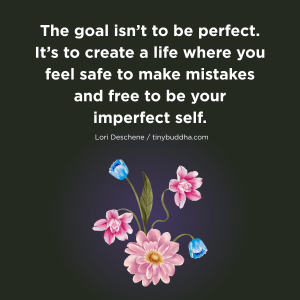
    So here’s to getting to know and expressing your full, perfectly imperfect self!

  • 4 Types of Regret and How to Leverage Them for a More Fulfilling Life

    4 Types of Regret and How to Leverage Them for a More Fulfilling Life

    “Regret is not dangerous or abnormal, a deviation from the steady path to happiness. It is healthy and universal, an integral part of being human. Regret is also valuable. It clarifies. It instructs. Done right, it needn’t drag us down; it can lift us up.” ~Daniel H. Pink

    It happened when I reached midlife.

    I’d experienced regret before, but this was different.

    In my forties, I struggled with several deep-seated regrets all at the same time.

    And I didn’t handle it well.

    If only I hadn’t chosen to fall into unhealthy habits that were hard to break, like smoking cigarettes and drinking too much alcohol.

    If only I’d worked to understand myself and develop my identity earlier in life.

    If only I’d gone after that degree in psychology I’d really wanted.

    If only I’d taken charge of my own financial wellness rather than abdicating it to my husband.

    Because I didn’t know better, I wallowed in these regrets, revisiting past mistakes and ramping up my self-criticism.

    So many might-have-beens and what-ifs.

    Heartbreak and grief ensued.

    It’s safe to say I was well and truly stuck there for a while.

    Thankfully, working with a therapist helped me safely face my feelings and reframe my regret as an opportunity for growth rather than a threat.

    Over time, I learned to practice self-compassion and what my therapist called Neutralize the Negative – Promote the Positive.

    I learned I could extract lessons from regret, use them to keep growing into the best version of myself, and create a more fulfilling life.

    I learned that regret could be a positive force for good.

    As the poet and wise woman Maya Angelou used to say, “Do the best you can until you know better. Then, when you know better, do better.”

    Fast forward to 2022, when one of my favorite authors, Daniel H. Pink, published his remarkable book The Power of Regret: How Looking Backward Moves Us Forward.

    Pink’s research, poignant stories, and practical takeaways had me thinking, “This is a guide for living better. I wish I’d understood all this back then.”

    Understanding Regret

    Unlike sadness or disappointment, regret is a unique emotion because it stems from our agency. It’s not something imposed upon us; rather, it arises from choices we made or opportunities we missed.

    Intrigued by this powerful emotion, Pink embarked on a qualitative research journey, inviting people from all walks of life to share their regrets.

    The response was overwhelming, with tens of thousands of stories pouring in. Through this process, Pink compiled, classified, and analyzed the regrets, unearthing valuable insights that can help us navigate life’s complexities.

    One of the key findings was that regrets of inaction outnumber regrets of action by a ratio of two to on, and this tendency increases as people grow older.

    Action regrets, such as marrying the wrong person, can often be tempered by finding solace in other aspects of life. For example, someone who feels they married the wrong person might say, “At least I have these wonderful kids.” However, regrets of inaction lack this silver lining.

    Pink identified four main types of regrets that tend to cluster together. He calls them deep structure regrets. They all reveal a human need and yield a lesson.

    Foundation Regrets

    Foundation regrets emerge from neglecting to lay the groundwork for a stable and fulfilling life, like failing to save money for retirement or neglecting one’s physical well-being.

    I now understand that most of my regrets, including those I shared above, fall under this category. Foundation regrets sound like this: If only I’d done the work.

    The Human Need: Stability—a basic infrastructure of educational, financial, and physical well-being.

    The Lesson: Think ahead. Do the work. Start now. Build your skills and connections.

    Boldness Regrets 

    As we grow older, the regrets that haunt us revolve around the missed opportunities we let slip away rather than the risks we took. The chances we didn’t seize, whether starting our own business, pursuing a genuine love, or exploring the world, weigh heavily on our hearts.

    Boldness regrets sound like this: If only I’d taken that risk.

    The Human Need: To grow as a person.

    The Lesson: Start that business. Ask him out. Take that trip.

    Moral Regrets

    Moral regrets arise from actions that go against our sense of kindness and decency, such as bullying, infidelity, or disloyalty. They sound like this: If only I’d done the right thing.

    The Human Need: To be good.

    The Lesson: When in doubt, do the right thing.

    Connection Regrets

    Connection regrets center around missed opportunities to maintain relationships, often due to the fear of awkwardness. They sound like this: If only I’d reached out.

    The Human Need: Love and meaningful connections.

    The Lesson: If a relationship you care about has come undone, push past the awkwardness, and reach out.

    Doing Regret Right

    So how do we approach regret in a way that enhances our lives? How do we do it right? Pink suggests a three-part strategy: looking inward, looking outward, and moving forward.

    Looking inward involves reframing how we think about our regrets and practicing self-compassion. We often judge ourselves harshly, but treating ourselves with kindness and understanding can lead to healing and growth.

    Looking outward means sharing our regrets with others. We unburden ourselves and gain perspective by opening up and expressing our emotions. Talking or writing about our regrets can help us make sense of them.

    Moving forward requires extracting lessons from our regrets. It’s essential to create distance and gain perspective. Pink offers practical exercises like speaking to ourselves in the third person, imagining conversations with our future selves, or considering what advice we would give our best friend in a similar situation.

    In addition, Pink encourages us to “optimize” regret rather than trying to minimize it. He suggests creating a “failure résumé” to reflect on and learn from past missteps.

    He also recommends combining our New Year’s resolutions with our regrets from the previous year, turning regret into a catalyst for self-improvement.

    In a culture that promotes relentless positivity and a “no regrets” philosophy, I’ve learned that negative emotions have their place in a fulfilling life. I know better now, and I couldn’t agree more with Dan: “If we know what we truly regret, we know what we truly value. Regret—that maddening, perplexing, and undeniably real emotion—points the way to a life well lived.”

  • How Following Our Instincts Now Can Protect Us from Pain Down the Line

    How Following Our Instincts Now Can Protect Us from Pain Down the Line

    “There is a voice inside of you that whispers all day long, I feel this is right for me, I know that this is wrong. No teacher, preacher, parent, friend or wise man can decide what’s right for you. Just listen to the voice that speaks inside.” ~Shel Silverstein

    Some time ago, a guy I knew suggested I go swimming with him and a friend of his. I accepted.

    I didn’t know him well. Sometimes he would say hello and be warm, while other times he would ignore me. Since he was a longtime friend of a girl I knew, I was looking forward to getting to know him better so we could become friends too.

    He and his friend dived several times from the ten-meter diving board. When it was my turn to jump, I was petrified.

    I was standing on the diving board with a firm will to jump, but the emptiness below me paralyzed me.

    My new friend climbed the stairs of the diving platform, came on the board, and kissed me on the mouth to encourage me. It was cute of him, but the situation stressed me even more. I knew him very little, and the fact that he blew hot and cold did not give me confidence.

    When I finally got off the diving board, without having jumped, I told him how much I appreciated that he came to encourage me, but I preferred that we stay friends.

    In the following months, whenever I bumped into him, he ignored me.

    About six months later, as I was walking down the street, he ran out of a restaurant to greet me and offer to ski with him and his friends, which I accepted. I was surprised at his change in attitude and relieved that he was no longer mad at me for sending him away at the pool.

    We spent a wonderful day of skiing, during which he was particularly friendly.

    In the evening, we met at the local pub, where he told me of his desire to go out with me. I replied, again, that I preferred that we stay friends.

    Later that evening, when I passed him on the pub stairs, he walked straight past without looking at me. It hurt me. I knew he was hurt, but it was unfair to ignore me again. I had spent a wonderful day with him and wished we could stay on good terms.

    Following this, I felt uneasy and ended up telling him that I had changed my mind about him because I wanted things to go back how they were earlier that day, when he was warm and charming. That’s how our relationship started, but I quickly realized something was wrong.

    I noticed that when he needed me or when we were planning to spend the night together, he was warm and generous with compliments. On the other hand, when I was useless to him, he was cold and distant. The sudden shift between the two extremes made me doubt his sincerity and feel manipulated.

    Moreover, he did things secretively, which created an atmosphere of mistrust.

    Also, he always created a busy schedule for himself, in which he assigned me time slots in advance.

    If I suggested that we see each other at a time other than what he had initially planned, he did not let go until I gave in.

    I felt like a pawn on his chessboard, and I was tiring of the lows but growing addicted to the highs.

    When I would bring up issues in our relationship, he was not open to questioning himself. Each time, he managed to convince me that I was the cause of the problem. The argument ended with me crying and begging him to forgive me.

    As a result, after each argument, I felt that the problem was still unsolved, and my frustration escalated.

    He ended up leaving me, which was legitimate since we were constantly arguing.

    The breakups I had experienced with other ex-boyfriends had left me either relieved or heartbroken, or both. This breakup left me with an identity crisis.

    During our relationship, when my ex-partner found a flaw in my personality, he could not help but amplify it and remind me of it all the time.

    That is when I started to doubt myself. Who was right, him or me? Maybe he was right, and I was this person he was describing.

    It took me a while to realize that this relationship was toxic. Looking back, I wondered how I could have come to this.

    How could I have been left by a man I had never wanted to be with and for whom I had never had romantic feelings?

    Also, why had I tried so hard to make this relationship work when I was miserable throughout its course?

    In other relationships, I’ve always had feelings for my partners. Those magical feelings that make you euphoric at the beginning, and every time you see someone who looks a little like your loved one, you think it’s him.

    In this case, the unease after being ignored made me change my mind.

    In his defense, my ex-partner never forced me to be in a relationship with him, and as an adult, I am responsible for my choices.

    Yet, his strong-willed character always ended up defeating my decisions.

    This experience taught me why you should listen to your inner voice and be in tune with yourself. The voice inside tells you what feels right and wrong for you.

    Don’t be afraid to follow your intuition, even when people insist you go against it. Does that mean that you should think only of yourself? No, obviously. However, if what is being asked of you goes against your intuition, and even if you do not understand why, it is better not to do it.

    If I had listened to my intuition and refused to go out with this guy, I would have hurt him briefly but saved him from a relationship that did not suit him. Moreover, I would have spared myself unnecessary suffering.

    When you make decisions with your heart, you have no or fewer regrets if things go wrong.

    It can take time to learn to listen to your inner voice and follow your instincts without feeling guilty—especially if you learned growing up to put other people before yourself, as I did.

    If you feel that someone or something isn’t right for you but worry about upsetting someone else, remind yourself that a little short-term discomfort can often save you a lot of pain down the line.