Tag: wisdom

  • A Simple Sentence That Helps When You Feel  Overwhelmed

    A Simple Sentence That Helps When You Feel Overwhelmed

    Woman Hiding Under Pillow

    “Realize deeply that the present moment is all you have.” ~Eckhart Tolle

    Days after the initial divorce from my ex-partner, I wanted to meet two very close friends in the city. I knew they would be loving and supportive and that the experience would be good for me. But I was so grief stricken and overwhelmed with emotion that even leaving the house felt like a monumental effort.

    Sitting on the edge of my bed, picturing all the steps it would take me from where I was now to where they were seemed insurmountable. Normally, I would have jumped in my car and traveled to them with ease. But I wasn’t at home; I was staying with my family and I didn’t have a car.

    Being in unfamiliar territory, there was the challenge of working out the public transport timetable (not one of my strongest traits even at the best of times), the fear of breaking down on the bus, and a general air of vulnerability and shame.

    Weeping silently, I considered simply staying at home. But the idea of being alone brought a fresh wave of pain. The thought of spending the morning by myself in an empty house was too much to bear.

    I was caught between two painful ideas: stay at home alone with my grief or face the anxiety of traveling in a fragile state.

    Thankfully, my years of meditation practice came to the rescue and I heard an inner voice say, “Focus on the very next step.”

    A sigh of relief escaped my lips as I realized that I didn’t have to travel all the way to the city to meet my friends. I just needed to do the very next thing.

    I gave myself permission to only focus on what was in front of me. I didn’t have to go anywhere I didn’t want to. I didn’t have to do anything I didn’t want.

    All I had to take was the very next step, without thought for what came after or commitment to a particular outcome.

    First up, get dressed. I didn’t think about the fashionable choice; I simply focused on the process of dressing. One leg in the pants, second leg in. Pop the t-shirt over my head. Breathing deeply each time and moving slowly but surely.

    This simple act was enough to undo me. A fresh flood of tears ran down my face, as the pain and shame hit me. I couldn’t do this. I should be handling this better. Why couldn’t I just go and meet my friends like a “normal person”?!

    Drawing deep on all my training, I put one hand over my heart and one on my belly. I felt my breath moving in and out, my belly rise and fall. Sinking into this feeling of presence, I practiced a little self-compassion.

    Recognizing that I was experiencing a moment of suffering, just like a “normal person,” I was able to send some kindness to my tender heart. Just as I would have comforted a hurting friend, I soothed my nervous system with gentle thoughts and deep breaths.

    Once again, I heard the voice: “Focus on the very next step.”

    So I did. I walked to the bathroom to brush my teeth. Not so I could go and meet my friends all the way in the city, but simply to experience the sensation of brushing my teeth.

    Next, I placed each object into a bag that I may need if I was leaving the house. Not that I was necessarily leaving the house. It was simply a task of placing objects, one by one, into a bag. Keys, wallet, phone…

    Then, a short investigation. What bus would take me from the house to the city? A simple act of curiosity. Information gathering. Just a little research.

    I repeated each task in this same fashion. Slow, deliberate, present. Without focusing on the reason or the end result of each exercise, I was able to complete each one with full attention. This presence helped me feel calm and secure throughout the entire journey.

    Breathe, walk out the front door. Breathe, wait at the bus stop. Breathe, watch the suburbs roll past the window. Breathe, walk step by step to the meeting place.

    I made it all the way to the city and fell into the arms of my friends. There were tears of relief as I realized I’d completed the “insurmountable journey” by taking it one step at a time. The time we spent together was nourishing and healing. The sense of quiet pride at making it this far was restorative.

    When I focused on the very next step, I was able to overcome the devastating emotions and inertia. And in the weeks to come, although I faced many difficult days, this mantra went on to help me overcome overwhelm each time.

    If you’re facing a challenging transition, it’s easy to feel swamped by a tidal wave of emotions and thoughts. So when you’re feeling overwhelmed, let go of the myriad of decisions and actions that you need to take. Simply focus on the step that’s right in front of you.

    You may not know all the steps you need to take—and that’s okay. You don’t need to know the end before you start. You simply need to take the immediate action that is required right now and that will lead you further down the path.

    If you focus on the very next step, you’ll be able to release overwhelm and get through any transition you face.

    Woman hiding under pillow image via Shutterstock

  • 12 Ways to Turn Your Crippling Stress into Happiness

    12 Ways to Turn Your Crippling Stress into Happiness

    Happy Meditating Woman

    “More smiling, less worrying. More compassion, less judgment. More blessed, less stressed. More love, less hate.” ~Roy Bennett

    You are a slave to stress.

    I can relate. Stress crushed my life and dreams.

    I started a business and faced intense criticism over this decision.

    Everyone was sure I’d fail. My friends and family attacked me while I was combating my own self-doubt.

    My stress level was insanely high.

    Then the worst happened. My business failed and I lost all my savings. I was crushed.

    It took a long time to finally accept this failure.

    Today, whenever I work, stress still lingers in my body like the shadow of my dark past. But now I know how cope with it. Let me teach you how.

    1. Consider getting a pet.

    Sharing negative feelings with close friends can significantly reduce stress. Studies show that spending time with pets relieves stress in the same way. Also, when you’re accompanied by a pet in stressful situations, it prevents your stress level from rising.

    I have a cat. He was my only friend when nobody was supporting me. I’m grateful to have him by my side.

    If you don’t have a pet, consider getting one. It may change your life in surprising ways.

    2. Stop dwelling on your problems.

    Kant State University had an eye-opening discovery. Apparently, the more you talk about your problems, the more you’re likely to suffer from depression.

    Of course, it’s healthy to share what you’re going through. But when you’re mindlessly dwelling on your problems, it doesn’t solve anything.

    I never talk to anyone about my problems because no one supports me. This propels me to actively seek solutions instead of blindly mulling over things that could stress me out.

    If you’re fortunate to have supportive friends, do seek their support. What’s important is that you don’t just whine about your difficulties, but actually act.

    3. Shower yourself with gifts.

    You’re being brutally hard on yourself.

    You take success for granted. Worse, you exaggerate failure.

    When you’ve reached a goal, you move on nonchalantly. If you don’t, you torment yourself mentally. You scold, devalue, and deprive yourself.

    I’ve been there. I know this is self-destructive.

    Reward yourself for reaching goals. Research shows that when you’re rewarded for an action, you’re likely to repeat it. This is called a positive feedback loop. It’s much more effective than punishment.

    If you gain stress from failure, without happiness from success, the only outcome is stress.

    If you earn happiness from success, without stress from failure, the only outcome is happiness.

    4. Exploit bad habits to your advantage.

    I used to run away from problems. When stress hit, I’d instantly give up on whatever I was working on and resort to escapism.

    You may have experienced this too.

    Escapism may entail over-eating, indulging in unhealthy foods, TV, Internet, porn, smoking, and drinking. Over time, they form destructive habits.

    Exploit escapism by using it as an anchor.

    Pick healthy alternatives, such as meditation, stretching, listening to motivational talks, napping, or light exercises.

    Before you escape, do thirty seconds of an alternative first.

    Say you’re angry with your boyfriend. You think you need to eat some junk food to calm down. Before that, meditate for thirty seconds. Then you’re free to indulge.

    Do this for two months. Then increase good habit time weekly, until the good habit completely drowns out the bad.

    This way, I built new automatic responses to stress and broke my escapist habits completely. Now when I feel stress, I either take a short nap or move along to uplifting music.

    After a few minutes, I’m recharged and motivated to face new challenges.

    5. Unleash your anger (and cry yourself to sleep).

    Don’t always try to appear perfectly calm. You need to express difficult emotions—anger, for example.

    Discuss your frustration with friends. Journal your rage and analyze it objectively on paper. You can even confront the object of frustration assertively.

    Remember to release your anger under control. Don’t throw tantrums or yell impulsively. Express it as a means of problem solving.

    This applies to other difficult emotions, as well, like sadness. It’s healthy to express these “negative” emotions.

    6. Reach great heights by letting yourself suck big time.

    I’ve learned to accept my devastating failure. I have to. Otherwise, I’d be completely destroyed and discouraged from pursuing anything ever again.

    Some people cannot accept mistakes. Everything has to be perfect from the start. They think others will look down on them if they appear to be flawed.

    These people are frequently stressed.

    The happiest and most successful people focus on improvement. They love mistakes and flaws, because they see them as opportunities to grow.

    Learn from these people.

    Have lofty goals but have realistic standards. Don’t judge yourself based on the results of your actions. See them as feedback and seek improvement from there.

    7. Be shameless about not doing things.

    You don’t have the time and energy to do everything you want to do.

    Inevitably, things are left undone, and you beat yourself up. This creates stress.

    Consider what’s truly important to you. Kill the rest shamelessly.

    This way, you gain more time and control over your life while making more progress.

    I focus only on my career and my relationships. I’ve postponed other ambitions, like becoming a martial artist and a calligrapher, because they’re comparatively unimportant.

    8. Declare war on useless crap.

    I’m clearing up my apartment. It’s now clean and spacious. When I’m inside, I feel more relaxed, concentrated, and in control.

    Psychologists found that clutter competes for your attention and overloads your brain. This makes you stressed and even damages your ability to think.

    Trash this useless crap ruthlessly.

    Begin with discarding one item per day, for two months. It’s easy, and it trains you to detach emotionally from your possessions. Later, you can expand to junk more items daily.

    9. Learn how to use your body wisely.

    I always keep my back straight and try to appear confident.

    Why? Because posture has a direct relationship with your mood and behavior.

    When you position your body in a natural and comfortable way, you feel less stressed.

    Also, when you appear confident, you feel more powerful and in control. Confidence balances out stress.

    Read books on correct posture and body language. These skills not only reduce stress reliably, they also keep your body healthy.

    10. Extract everything from your overloaded head.

    When your mind is overloaded, you feel agitated, you malfunction, and then you collapse.

    Extract all your mind clutter in one place, out of your head.

    Observe your thoughts for five to fifteen minutes, and let information resurface from your mind.

    You’ll be surprised how much stuff pops up. Things you have to do, things you’re waiting to do, open loops, creative ideas, long-term plans, and many more.

    Write down everything as soon as they come up, no matter how trivial they may seem.

    This helps organize your life and clears even the smallest mind clutter. When you can see everything on paper, you’ll find them more actionable. Life becomes less overwhelming.

    I personally prefer pen and paper for this. A sophisticated to-do system works too, but avoid spending too much time on that. You might create stress in the process.

    11. Learn from the Chinese: the spectator’s eyes.

    Stressed people are masters at exaggeration. They magnify every little problem.

    You can’t see the big picture when you are caught up inside a problem. Then you begin to exaggerate and freak out.

    A Chinese saying goes, “The spectator’s eyes are always clear.

    Ask a friend for his honest opinion on your problems. This will likely help you recognize when something truly isn’t a big deal. Learn from spectators, and analyze your problems objectively. Then you can see problems as they are, and act wisely.

    12. Laugh: meet apocalypse with humor.

    I watch comedies a lot. They give me a brief escape from my stressors.

    One day I had a revelation.

    Visualize these scenarios: bombing a job interview, getting fired, being unemployed, getting robbed, getting sued, getting rejected by the opposite sex.

    Disasters. But they’re all funny in comedies. There’s something funny in every problem.

    Maybe you burned your food. Maybe you dropped your phone into the toilet. Have a laugh!

    Once you can do this, you’ll completely turn your perspective around. You’ll see the positive in every situation, and face problems happily.

    This Second, You Can Transform Stress Into Happiness

    It’s not impossible. Many people have done it.

    Pick one lesson that looks appealing to you, do some research on it, then act.

    You’ve let stress dominate you long enough. Now is the time to live differently.

    Do you want to stay crippled by stress? Or do you want to turn life into happiness?

    The choice is yours.

    Happy meditating woman image via Shutterstock

  • The Introvert’s Brain: Why They Might “Think Too Much”

    The Introvert’s Brain: Why They Might “Think Too Much”

    Brain

    “Only those who care about you can hear when you are quiet.” ~Unknown

    I find it difficult to be understood. I seem to frequently create complexity out of something that is perhaps very simple and straightforward to others.

    For example, going to a movie. For many people, it would be “choose a movie, choose a time, choose a cinema” and there you go.

    For me, I check movie reviews, all possible timings, in all possible cinemas. For each timing and location, I will consider if the timing allows other things to be done before and after the movie, and whether the location has sufficient food and shopping options. All else being equal, the location with the cheapest parking fees wins.

    Yes, I take a long time to decide on a movie outing, and more on issues with much bigger consequences in life.

    In the recent years, I have had to make some rather big decisions about my life, on career and family. Judging from the process I go through to make a decision on a movie, you can imagine the epic journey I went through for each big decision.

    My brain had a field time linking every single option to different possible outcomes. Even issues that were once unlinked would somehow be connected to one another the more my brain was allowed to think. And after that, my brain took the liberty of developing Plan A, Plan B, and even Plan C for each scenario.

    Naturally, with such a repertoire of scenarios, my brain went round and round as it tried to take care of even the worst-case scenario.

    There is a saying that if you cannot do much about something, there is no point worrying about it. But I always feel that I can do something. I can mitigate the impact of bad outcomes if I take careful calculated actions—that is why I think, I plan, then I do. Only when the worst-case scenario could be taken care of would I be ready.

    To reach that stage, it took months (if not years). If I tried to explain to a select few friends that I trusted, I found myself bringing up the intricacies of each carefully-devised thought, fear, hope, and plan.

    Most of the time, I would elicit a response like “You think too much” or “Don’t be so pessimistic” or “Be more positive.”

    Perhaps the one that I dreaded to hear most was “be happy.” I was trying to be happy—I was taking charge of the difficult issues in my life, but in the process of sharing my elaborate thought process, it seemed to people that I was the one creating unhappiness for myself.

    In the end, I shut up.

    Perhaps it was my fault that I could not articulate my thoughts better. Perhaps I was too long-winded; people generally do not have the patience to listen to the epic journey in my brain. Perhaps they disagreed with some parts of my assumptions, or could not understand the situation sufficiently to appreciate my fears and concerns.

    Whatever the possible reasons, I did not want to be discredited for my thoughts and feelings. The epic journey had been too arduous to be brushed aside with “don’t think so much.”

    In a way, I wish I could stop that intricate elaborate deep-thinking process. I envy those who can just be happy-go-lucky, not think much, just do and deal with whatever consequences may come. However, science has shown that the brain is wired differently for introverts and extroverts.

    German psychologist Hans Eysenck found that introverts have naturally high cortical arousal and may process more information per second. They get overwhelmed and tired quickly in environments with a lot of stimulation, such as a loud restaurant.

    Positron emission tomography (PET) scans showed that introverts had more blood flowing in their frontal lobes and anterior thalamus, regions of the brain that recall events, make plans. and solve problems.

    It looks like I cannot help it, since I am born with this brain.

    With such a brain, all life experiences play a big part to stimulate and shape thoughts. Childhood, adolescent, social interactions, work, family—everything.

    As an introvert thinks, s/he connects all the dots, linking past and present experiences much more than extroverts would.

    Let’s say we have an introvert, born to a loving and nurturing family, who has close-knit friends and relatives and a cooperative work environment. And we also have one who is not. Which one is more likely to develop positive linkages and hopeful thoughts when forming their outlook in life?

    I guess I have come to accept that even good friends may not be able to understand me. Or they might label me as “the one who thinks too much” and has a high dose of pessimism. They may even start to stay away from me, as conventional wisdom advises that one should surround himself with positive and optimistic people.

    But I want to question: Do we just dismiss people because they appear “unhappy people” or “pessimistic people” at a point in time? Are they lesser beings just because they find it difficult to handle life as optimistically as others? Everyone has a story. At any point in life, maybe your story is happier than someone else’s.

    Let me illustrate using examples from some of my favorite animated movies.

    Mr Carl Fredricksen in the movie Up would be dismissed as a grumpy old man who offered no smile or generosity to even a little wilderness explorer. But he was not always unhappy. He happily fell in love and married, but lost the love of his life and his motivation when his wife passed away.

    Elsa the ice queen in the movie Frozen would be dismissed as cold-hearted and aloof, but what would you expect of a young girl who grew up locked up in a room because she nearly killed her baby sister and was deemed dangerous by her parents?

    Marlin the over-anxious father in the movie Finding Nemo was happily married and about to be the father of 400 children. Then a barracuda showed up, killed his wife, and ate all but one of the babies. The one baby that survived was born disabled. After carefully raising Nemo and letting Nemo attend school, the kid was immediately kidnapped by a human. Can you blame Marlin for his anxiety?

    Take heart though, those who truly care will know how to reach out.

    Mr Fredricksen, Elsa, and Marlin could have remained as they were had it not been for Russell (little wilderness explorer), Anna (Elsa’s sister), and Dory (the blue fish memorably voiced by Ellen DeGeneres) respectively.

    They cared enough to stick by their miserable companion/sister, to encourage and give support. They offered a different perspective to gently draw their friend out of their fears and doubts.

    I had always believed that only another introvert can understand and care for another introvert. But I am wrong. Russell, Anna, and Dory were extroverts and optimists.

    Although they might not have fully comprehended their introverted friends, they cared enough to never stop reaching out. I realize these are cartoon characters, but I’ve known Russells, Annas, and Dorys in my life and I appreciate and cherish them.  There are not many, but a few truly kind and caring friends are good enough for introverts.

    If you have had similar experiences as me, we should stop beating ourselves up for “thinking too much.” Whether we are blessed or cursed by our deep-thinking brain, we have to live with it and harness its strength.

    We are naturally empathetic and will be the ones that best offer comfort and support when others are down. What we say or do, we have thought through carefully. We are trusted for our steadiness and thoroughness, and ability to understand complexities.

    Yes, we can become more self-aware and accept that we have the natural tendency to go very deep. With that awareness, we can develop control over our brains to push ourselves to the surface once we have gone a little too deep.

    We can make miracles if we adapt these abilities to a world where extroverts are in the majority.

    In fact, they say the best teams comprise of an introvert and an extrovert (e.g. Apple’s Steve Jobs and Steve Wozniak, and Facebook’s Mark Zuckerberg and Sheryl Sandberg) due to complementary strengths and weaknesses. And let’s not forget Albert Einstein, Mahatma Gandhi, Bill Gates, Abraham Lincoln and Warren Buffett who are famous for their powerful introverted brains.

    On my part, I have learned to control how much I share, to control my tendency to articulate the epic journey of my decision-making process, lest I attract a “you think too much” remark.

    I have learned to be comfortable with the brain processes I have, and not feel the need to always justify my thoughts and decisions. Less is more, for people who cannot, will not try to understand us. And if anyone cares enough, they can hear even if we are quiet.

    Brain image via Shutterstock

  • The Zen of Coloring: 7 Lessons on Living a Happy, Mindful Life

    The Zen of Coloring: 7 Lessons on Living a Happy, Mindful Life

    Adult Coloring

    “The hand can never execute anything higher than the heart can imagine.” ~Ralph Waldo Emerson

    I’ve been into mindfulness for a long time but having never been much of an artist, the mindfulness coloring craze had bypassed me until recently.

    I brought a book and some colored pencils to keep me amused during a recent train trip but enjoyed it so much I’ve continued the habit—and to my surprise, the work I’ve done looks quite good!

    I’d heard that mindful coloring is good for reducing stress levels and being more present, but I found even more benefits. For example, after coloring I noticed that I had flashes of inspiration and ideas that seemed to come out of nowhere for someone not usually known for their creative genius.

    Coloring is less about passing time now and more about helping me connect to the present moment and activate the creative part of my brain. It has also taught me a few life lessons, which I’d like to share:

    1. We create what we envision.

    Life is a blank canvas; we make it what we want it to be.

    Like the pages of my coloring book, each new day is blank with potential and possibility, and I get to choose what colors I use, how, and when, and the attitude with which I approach the page or the day.

    I can spend the day creating amazing colors and fulfilling my potential, or I can complain about the blunt pencils, going out of the lines, and the many other things that may not be going right.

    2. We’re all capable of creating beauty.

    We are all capable of creating beauty, even if we think we can’t draw. I’ve spent many years believing I’m no good at art, but this has showed me I am still able to create pretty pictures, despite not being ‘an actual artist’!

    The same is true of other roles we might want to try in life. We might think we’re not writers, or chefs, or enterpreneurs—but we can do more than we think, if only we’re willing to try. We can create something beautiful if we’re willing to see ourselves in a new light.

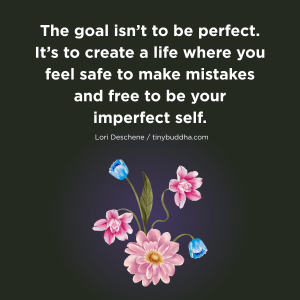
    3. It doesn’t have to be perfect.

    Mindful coloring has taught me to let go of perfection and unrealistic expectations of myself. Like life, my drawings don’t have to be perfect. It’s okay if I go out of the lines; mistakes are just bends in the road, not the end of the road. And if I’ve really messed it up I turn the page and start again.

    On the flip side, when it goes right I’ve learned to take a moment to savor this and appreciate the beauty. Sometimes in life, whether it’s on the page and our own creation or out in the world and a natural phenomenon, it’s nice to stop for a moment and appreciate what we’ve done.

    4. Good maintenance increases effectiveness.

    The second investment I made after my coloring pencils was a sharpener. I realized you can’t draw nice pictures with blunt pencils, and keeping the implements in good shape is critical for effective results.

    The same is true for ourselves; looking after our bodies and minds and prioritizing self-care allows us to perform at our peak.

    Whatever you do in your personal or professional life, you’ll be far more effective if you exercise regularly, eat nutritious meals, recharge through contemplative practices like yoga and meditation, and get sufficient sleep.

     5. Doing things we love isn’t wasting time.

    Mindful coloring has taught me the importance of finding time to do what we love. Most people look at me funny when I say I’ve been coloring, almost as if I must have nothing better to do and am clearly not busy enough doing ‘important things’ like other grown ups.

    It’s important that we have downtime and make time not just to do the things we love, but to play and flex our creative muscles as well. For me, that’s coloring; for you, that might be dancing, playing in a band, or riding your bike.

    6. We’re never too old to play.

    The misguided belief that coloring is for kids or that there are much more pressing things to spend our time on made me realize the importance of play.

    I hadn’t colored since I was a kid. In our grown up world of busyness we have overlooked the importance of keeping in touch with our inner child, and this is how life can get dull and boring.

    Not only does play keeps this interesting, it also relieves stress, boosts creativity, and can even improve brain function.

     7. Less doing, more being.

    Most of all, mindful coloring has showed me the art of less doing and more being, which is crucial in a world of overstretched, exhausted adults.

    Mindfulness itself in any form is fabulous for returning us to the present and making us more aware. We can spend so much time going over the past or worrying about the future that we miss the present, and this is of course our lives—the moments we are in now.

    It’s too easy to let life pass us by. Mindful activities give us the opportunity to be more present.

    I would never have thought something as simple as coloring could have brought me so much insight and joy.

    Life is a lot like that—we never know what will enrich our lives until we give something a try. So go out there and create, and don’t worry about making it perfect. Just throw yourself into it and enjoy the process. And let yourself go out of the lines every now and then. Sometimes mistakes can be beautiful—and if not, you can always turn the page!

    Adult coloring image via Shutterstock

  • Look for the Good and You Will Find It

    Look for the Good and You Will Find It

    Rose Colored Glasses

    “What we see depends mainly on what we look for.” ~John Lubbock

    Have you ever noticed how as human beings, we tend to go negative?

    Looking out into the world, we see the crumpled fast food bag in the street and the torn curtain in the window.

    Looking into the mirror, we see the pores and dark circles under our eyes. We see the freckles and miss the dimple, or we hate the dimple and miss the smile.

    Our eyes focus in on what’s wrong.

    I’ve noticed it’s hard to undo this tendency in myself, though sometimes the veil drops suddenly, and I can see the beauty of the world around me.

    Many years ago, a friend and I made a three-day visit to the Polish city where we were to live for a year while we taught English.

    Arriving on the train, I was struck by the torn metal siding in the station and the crumbling rust of the ancient stair railings; as we walked along the sidewalk, how the entire city seemed one blocky stamped-out Soviet-era apartment building after the next.

    Neither of us spoke, but I felt sure my roommate’s thoughts mirrored my own: This was where we were going to live? This worn foot sole of a town was going to be our home for a year?

    Just as my mind headed in the direction of I don’t think I can live here, a tiny bird flew down a foot or so in front of my shoes, hopping a few inches here and there to nibble the tops of a tuft of grass poking out of the broken concrete.

    I let my suitcase bump to a stop and watched. The bright saturated green of the grass, the pale orange stripe on the bird’s beak, the angle of sunlight against the cracked sidewalk… it was beautiful. And at that moment my heart gave a hopeful thump. There was beauty here, too. I only needed to look for it.

    As humans, we have a built-in bias to see what’s not working, what needs fixing, what doesn’t measure up. In general, it’s not bad to see the negative… we avoid falling into pits by looking out for potholes. But seeing only the negative results in what I call “paper towel tube vision.”

    When you look through the empty cardboard paper towel tube, you only see whatever shows through the little circle at the end of it, and nothing else. This is what we’re seeing when we see only the flaws on our cheeks and only the crumpled coffee cups on the curbs of life. We see whatever appears in that little circle and lose all perspective.

    Seeing the good doesn’t mean we don’t see the bad, too. It means we throw away the paper towel tube and let our eyes take in what we don’t like and invite ourselves to see what’s good there, too. We let ourselves see it all, the big panoramic view that acknowledges that we are more than any mistake or flaw or misdeed.

    Imagine letting your mind unfold like a vast, exquisite map laid out on a table. Seeing the bigger picture can be an awesome way to see yourself with more love.

    Make a habit of looking for the good. Catch yourself looking at the world—or at yourself—with a narrow, negative view. Then step back mentally and spread out your awareness.

    See with the eyes of your heart. Look for something that’s working, something sweet, something lovely, something that opens you up.

    Look for the good in people, even people you wouldn’t want to sit over dinner with.

    Look for the good in the mirror.

    Let looking for the good become a new default for you, and give yourself credit when you’re able to hold whatever’s happening with that big perspective and big heart.

    Woman with rose-colored glasses image via Shutterstock

  • You Don’t Need to Do Big Things to Change the World

    You Don’t Need to Do Big Things to Change the World

    Holding the earth

    “Do not wait for leaders; do it alone, person to person.” ~Mother Teresa

    Life is complicated. The world’s problems are extremely complex. But what if you could help solve the world’s problems? What if you were a world changer?

    Seems rather daunting, doesn’t it? Me? Change the world?! I used to feel like an ostrich, burying my head in the sand and trying to ignore all the hurt and evil in the world, because I felt helpless, like there wasn’t anything I could do.

    I didn’t always feel that way though. There was a time when I felt I could make a difference…

    Four months before my grandmother died, I sat by her bedside, holding her hand, and we had what turned out to be the last real conversation we had together on this earth. She looked at me and said, “I always wished I had done something great in this world.”

    I told her that she had done something great! She had raised five wonderful children. She had helped and influenced so many for good during her life.

    As I said those words to her, I truly believed them. I knew that by simply living a good, honest life and being kind to those around her, she had had a huge impact on the world. She had had a huge impact on me.

    Yet somehow, fourteen years later, I realized I had fallen into that same trap.

    I found myself thinking I wasn’t doing anything significant or worthwhile in this world because I wasn’t working in refugee camps or stopping genocides. I felt that I wasn’t “changing the world” because I hadn’t done something “major” to help the world.

    Do you feel the same way? Are you discounting the work you are doing within your home and family, within your community of friends, within your neighborhood? Are you forgetting the impact that your everyday acts of service and love can make?

    I used to think “changing the world” consisted only of really big sweeping movements that made lasting change the world over.

    I would think of actions worthy of being written in the history books. I would think of Mother Teresa creating the Missionaries of Charity and caring for thousands upon thousands of the destitute in Calcutta. I would think of rebuilding a city after a natural disaster.

    Although these examples do indeed change the world, when you really get down to it, to “change the world” means to make a change to better one person’s world. By helping one person feel special, loved, and important, you are changing the world for one individual at a time.

    It reminds me of a time, years ago, that I was sitting in my car at a gas station. I cannot tell you what my day was like before this moment or after, but as I sat there, a man walked by with a big smile on his face. He didn’t look at me or even see me, but he changed my life.

    A true, genuine smile is contagious, it spreads to all who observe it, and that’s what happened that day. His smile spread to me and I was uplifted. Over a decade later, I still think about that incident and try to intentionally smile as I go about my day.

    Mother Teresa cared for thousands over the years, but she cared for and loved one individual at a time. She said, “There are no great deeds. Only small deeds done with great love.”

    We may not stop genocides or serve those in the refugee camps today, but we can do something for someone today. Not only does that mean you are not insignificant, but it means that you can, in fact, change someone’s world every single day.

    We just need to change our mind about what it means to change the world!

    I have started calling myself a “world changer.” It felt awkward at first, but slowly, I have started to believe it again and you can too.

    Before this powerful realization, I had started to take the Ostrich Strategy. No, I didn’t stick my head in the sand. (Ostriches don’t really stick their head in the sand; they’d suffocate just like you and I would if we tried that!)

    When an ostrich is frightened, it will either run away or it will lie down low and stretch their necks out along the ground in front of them, as flat as they can, in the hopes that they will blend in.

    Running away or lying low in an attempt to go unnoticed and then hoping the world gets better is not an effective strategy for change. Actively changing your own world in order to change the rest of the world is.

    Changing your world will change the world.

    As I told my grandmother that day, so I tell myself and you, you are doing great things each day. You make the world a better place each time you serve or love someone else. Then those people you serve will share that love with others, starting a ripple of love.

    As more and more ripples form, aided by the winds of time, they will create a virtual storm of love that will crash along the shores of humanity, washing away the evil and the rough edges, leaving a new shoreline, a new world.

    Changing the world starts at home within ourselves and our families, expanding out with the ripple effect, creating a storm and changing the world for one person at a time with each kind word and act of love given to a stranger or friend.

    One act or grand gesture alone won’t change the whole world, but it can change the world for someone, who will change it for someone else, who will change is for someone else, and on and on.

    Just like that man walking through the gas station started a ripple by changing my day over a decade ago, changing the world will involve many people doing many small acts of love to accomplish great things and lasting change. Changing the world starts at home. It starts with you.

    If you believe you are insignificant and that your efforts are not enough, you will be unhappy and the world will suffer by missing out on all the good that you have to offer. But, if you realize you have great power and a responsibility to touch another person’s life each day, resulting in world-changing ripples of love, you will be starting a storm that changes the world.

    So stop being an ostrich. Choose to act. Take the world by storm instead!

    Holding earth image via Shutterstock