Tag: wisdom

  • Happiness Hacks: 10 Ways to Infuse Your Life with Joy

    Happiness Hacks: 10 Ways to Infuse Your Life with Joy

    Happy

    “There is no way to happiness. Happiness is the way.” ~Thich Nhat Hanh

    Life seems complicated these days.

    We’re all busy pursuing happiness, yet how many of us ever reach that goal?

    Success, money, and busyness are top of our priority list, yet deep in our hearts we’d prefer time, love, and security.

    It’s the age of making a living, but perhaps at the cost of making a life.

    What really makes us happy, and how do we find it?

    I spent many years trying to fit in, to be someone else, to pursue the dream of success, in my jobs and my relationships.

    I collected material things, often at the cost of what really mattered, and I was left unfulfilled as a result.

    I quit my corporate job and left my long-term relationship to go on a journey of self-discovery. Here are my top nine happiness life hacks, from my experience and the things I’ve learned along the way.

     1. Authenticity: Be who you are, not who you think you should be.

    We live in a world where we are surrounded by ideals, and with a tendency to compare ourselves to others, it’s no wonder so many of us feel like we’re not enough.

    I’d tell myself that writing was a hobby, not a “real job.” I sought approval through promotions and success through status, neither of which made me happy.

    To find happiness, we must be true to ourselves, live our own dreams, and be proud of what makes us unique. So, instead of comparing yourself to others, look to see if you’re fulfilling your own potential in accordance with what you value.

    2. Self-care: Respect yourself.

    Health and happiness are inextricably linked; you can’t have one without the other.

    Our nutrition is so important, as is getting enough sleep and regular exercise. In a world where lifestyle-related disease is at epidemic proportions, taking care of our own health is increasingly critical.

    Yoga, meditation, and regular walks help me look after myself and keep me strong. These practices were key in helping me overcome corporate burnout.

    Sometimes these practices seem too basic, and we ignore the simple principles of good health. It’s often the last thing we prioritize and in our busy lives. But taking time out to care for our health is fundamental. Without our health, we can achieve very little.

    3. Mindfulness: Live in the now.

    Our minds are so busy, and with the evolution of technology, we are now connected 24/7. We never switch off. As a result, we are spending less time in the present.

    Our thoughts are consumed with rehashing the past or worrying about the future.

    The past has gone and we cannot change it, and the future never arrives. The only time we have is now—the present—and of course, this is life.

    In a world where multitasking is seen as a necessary skill, being mindful is the opposite. It’s slowing down and focusing on one thing at a time, one moment at a time.

    Mindfulness is acceptance of what is, without judgment; being yourself, at home with yourself; and seeing the beauty in every moment. It teaches us to slow down and notice more. This leads to a true happiness that arises from within, independent of external circumstances.

    4. Resilience: Learn from experiences.

    Being happy doesn’t mean that everything is perfect. As Thich Nhat Hanh says, “The art of happiness is also the art of suffering well.”

    To be happy, it is critical that we embrace the tough times, too. They come to us all. It’s how we deal with them and bounce back that impacts our happiness. This is our resilience.

    We spend much of our time trying to avoid the bad times and cling to the good, yet both will always come and go. Embracing this and shifting our perspective is key to happiness.

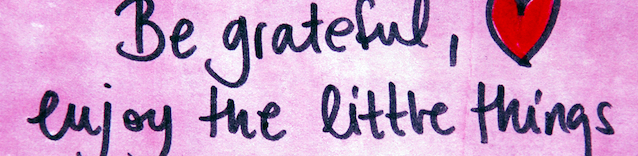
    5. Appreciation: Be grateful.

    In our consumer-driven society, it’s all too easy to focus on what we can get, and to be never feel fulfilled. This leads us into constant craving. Like a bottomless bucket that can never be filled, we always want more.

    I learned that happiness is not about getting what you want; it’s about loving what you have.

    There are many things we are lucky to have, yet take for granted: fresh air, clean water, warmth, shelter, family, and food. It’s not until these things are taken away that we realize how fortunate we are. Gratitude helps us remember our priorities and focus on the things that matter.

    6. Simplicity: Let go.

    We feel we need to have things in order to be free, when in fact it’s the opposite. Our struggle to hold on to things brings the very pain we are trying to avoid. We are terrified of letting go, for fear we’ll have nothing, but this is the true path to living well.

    When I went from a corporate job and material wealth to having nothing and living simply, it put things into perspective for me. After all, everything material we have can be lost tomorrow.

    The irony is, if you’re asked what you most value, it’s likely to be the things money can’t buy—things like love, health, and family.

    There are also things within us that we need to let go of. This can be hurt or anger from the past, or limiting beliefs about ourselves. These things hold us back, and like heavy baggage we carry around with us, they break us down.

    7. Self-empowerment: Look within.

    We have a tendency to look for inspiration externally, in our teachers or gurus, yet we have infinite potential within.

    Often, these people help us tap into our inner well, but so do other ordinary people in our life, along with our own experiences.

    We are capable of amazing things if we stop doubting our abilities. It’s often during our biggest challenges that we find out just how much strength we possess.

    8. Compassion: Reach outside yourself.

    Happiness is less about survival of the fittest and looking after number one, and more about collaboration and acts of kindness. Doing good makes us feel good. The best jobs I’ve ever had were voluntary, unpaid roles helping others.

    Our natural response to seeing someone in distress is the impulse to help. We care about the suffering of others, and we feel good when that suffering is released.

    Feeling like we’re making a difference in the world and helping those who need it brings us joy and meaning.

    9. Enjoyment: Do things you love.

    We need to earn a certain amount of money to provide the basics, and few of us are lucky enough to have a job we love. However, we all still have a whole life outside of work with which to create happiness.

    Instead of just making a living, be sure to make a life. Do things you love every day, spend time with those who nourish your soul, learn new things, take time out for you.

    This can involve small things, like a chat with friends, a walk on the beach, or a cup of tea in the garden; or the bigger things, like enrolling on an art course, traveling to that place you’ve longed to visit, or writing that book.

    10. Challenges: Try something new, something that scares you.

    Sometimes we’d like to change things, but it’s just too hard. We know we’re unhappy where we are, but the alternatives are too scary. We prefer the devil we know, and the familiar feels secure, even if it doesn’t make us happy.

    For me, leaving my relationship, changing careers, and speaking in public all left me gripped by fear. I was afraid of the unknown, and also failure. But it’s only by facing these fears that we are able to grow into the people we’re capable of being.

    To get somewhere you’ve never been, you might have to do something you’ve never done. Life begins at the end of our comfort zone!

    Life doesn’t have to be complicated. Happiness shouldn’t be hard, but we often make it so.

    One of the things I’ve discovered is that we are responsible for our happiness, and it comes from within—which is great news, because it puts us in control and makes it possible!

    It takes work, and it may not be easy, but small steps in the right direction put us on the path to happiness.

    Try focusing on one of these life hacks each week and see how your life changes.

  • 10 Ways to Lift Your Spirits When You’re Having a Tough Week

    10 Ways to Lift Your Spirits When You’re Having a Tough Week

    “True happiness is born of letting go of what is unnecessary.” ~Sharon Salzberg

    You are exhausted. Every force in the universe seems to be conspiring against you.

    You pick yourself up just to be knocked down again by more bad news.

    It’s not fair!

    You want to crawl in bed and wait for the week to be over.

    But you know you can’t hide.

    Sometimes our lives get tough. It happens to all of us. You know things will eventually get better, but it’s hard to get through a ruthless week in one piece.

    When you are having a horrible week, do you succumb to pressure, or have you learned how to keep your spirits up?

    Back when I was in college, we used to have horrible jam-packed finals weeks. We’d usually start Monday and finish on Saturday. We’d have five final exams during that week.

    It was rough.

    Like most of us, I’d study ahead but usually had to cram a lot during that week. They were nightmare weeks with sleepless nights. I thought crazy times would end with college.

    But I was wrong.

    Years later I took a job as a project manager. It was a lot of fun in the beginning, until it became intense. My team and I had an ever-growing amount of projects with insane standards we were handling.

    Soon, I was working sixty to eight hours a week. I’d put out a fire and fifty more were waiting for me. I was barely able to keep my head above water.

    My fuses were extremely short during those days. When something at home didn’t go as I expected, I’d blow up. I’d get angry, yell, and end with a dagger-to-the-heart kind of comment.

    It was the grown-up version of a toddler’s temper tantrum.

    Letting off my steam in an unhealthy way would later come back to haunt me. I felt ashamed of my behavior, and somebody I loved was in pain because of me.

    Eventually, I realized that this was extremely damaging to me and my loved ones. I had to make dramatic changes in my life.

    I admit, it did take a few months to make the changes, but at least I could see the light at the end of the tunnel. In the meantime, I learned a better way to deal with extremely stressful times.

    Here are ten tricks I used, or later learned, that will help you stay happy in the middle of a crazy week:

    1. Picture your life a month from today.

    You will overcome your problems and your life will go back to normal, but most of the time it won’t happen overnight.

    It helps to have a long-term perspective to get detached from the overwhelming stress of today.

    When I was swamped with problems and piles of unanswered emails, I’d often get very discouraged. I found that daydreaming about my future, about things being normal again, would calm me down.

    Fast forward a month from now. Think about you living a happy, normal life again. It will lift up your spirit, and in no time you’ll be living there once more.

    2. Create a peaceful space for yourself.

    Your environment matters.

    The last thing you want when you are under stress is to sit at a sad-looking desk with piles of paper and clutter.

    While being under a lot of pressure, I was lucky enough to come back home to a Zen, clutter-free bedroom. I’d instantly feel peace.

    The same can happen to you. When you are surrounded by chaos, you add unnecessary stress to your life. If you create a peaceful space around you, you’ll be able to breathe deeply and relax more easily.

    So even if you feel like you have no time, spend fifteen minutes to put stuff away and create a quiet surrounding. You won’t regret it.

    3. Remove yourself from negative, draining conversations.

    It’s impossible to isolate yourself from “negative people” all the time. We all have hard days and get a little negative every now and then.

    When you’re having a rough week, it might be tempting to fall into that self-pitying place. Increase your odds of maintaining a positive mindset by avoiding negative, emotionally draining conversations.

    Back when I was working crazy weeks, I was not able to ignore my negative customers. But I learned to stay out of other negative conversations or switch to positive topics, even if the only positive thing I could think of was the weather.

    Don’t let negativity suck up all your energy. You’ll end up in a depressive conversation, and your day will go further south.

    4. Celebrate your small wins.

    When you are in the middle of a storm, it may be a while till you have a big win. But you can celebrate the small things and lift up your spirit.

    It may be a task accomplished, a good report, or that you took the high road when somebody criticized you.

    Purposely find the small things that made you proud of yourself throughout the day. Make a mental note about them.

    Reflect on your small wins and let that cheer up your weary spirit.

    5. Selfishly set your limits.

    You are ultimately responsible for your own well-being. Nobody will care about you the way you do.

    When I was working over sixty hours a week, I realized no matter how many hours I’d put in, or how efficient I was, I was not going to be able to meet my deadlines. I decided to let my boss know.

    You know when you are reaching exhaustion better than anybody else. You need to start saying no, way before you reach your limit.

    Be selfish about your time.

    When you see a stormy week on the horizon, it’s time to cancel all the nice-to-do things that snuck into your calendar (unless it’s something that would refresh your soul).

    6. Make someone delightfully happy.

    Something interesting happens when you focus on somebody else’s happiness. When you make someone else happy, it comes back to you.

    You’ve experienced that before. Maybe you wrote someone a heartfelt note, or you put a special effort in giving someone a present. And they loved it! That act of love and kindness filled your heart the way nothing else would have.

    So think about calling a friend to tell them how much you appreciate them, or taking a break to invite someone you love for dinner. It will transform your week, and it might brighten their week, as well.

    7. Wake up twenty minutes earlier.

    It may seem counter intuitive, because of course you want to sleep as much as you can. But you’ve got to trust me on this one.

    The first hour of your day sets the mood for the whole day.

    If you start your day having to rush to wherever you are going, things will go downhill from there.

    On crazy weeks you are already on edge, so don’t push yourself even more. Instead wake up a little earlier. Get ready and have breakfast slowly. Don’t rush.

    Your peace during the first hour of your day will go a long way.

    8. Accept the imperfect.

    When your life feels like a sinking boat, it’s the wrong time to insist on every detail being perfect.

    Of course, some things will need to be finished perfectly, but many others won’t.

    Is dinner slightly overcooked? Then nobody will get food poisoning. Your shoes don’t match your outfit? Unless you are the editor of Elle Magazine, nobody will care.

    You only have twenty-four hours a day, but now your plate is much fuller than last week. You need to accept some things won’t be accomplished the way you’d like them to be.

    Be kind to yourself and let some high standards slide.

    9. Lean on an authentic friend.

    It’s hard to be an objective observer when you are going through tough times.

    Having a good friend to help you is invaluable.

    During my tough times, I often lean on my husband. He is sensitive enough to let me vent, but he’s able to show me the positive side of things too.

    You have to be careful selecting this friend. If you find yourself getting more and more depressed when you are talking to your friend, you should stop talking to him or her for now.

    You need a friend that can listen and sympathize with you, and at the same time help you get out of the hole.

    10. Focus on your awesomeness.

    It’s hard to see ourselves through a positive lens in the middle of a storm.

    But you haven’t changed. If anything, you are growing stronger and more resilient during tough times.

    You need to remind yourself about your amazing qualities.

    List them. Ask your best friend to help you. Keep them in front of you at all times.

    Because that’s the true you, not the overwhelmed, stressed out version you see in the mirror.

    You Can Stay Happy Even During Crushing Times

    It’s hard to see the light at the end of the tunnel when you are going through the valleys of life.

    You wish life were always good. But tough times are inevitable.

    They will happen every so often, even if you put your best foot forward to try to avoid them.

    So, sooner or later, you’ll need to learn how to stay happy in the middle of a storm.

    The pay off is astronomical. Your heart and mind will thank you.

  • Why We Worry About What Other People Think of Us (And How to Stop)

    Why We Worry About What Other People Think of Us (And How to Stop)

    “When I look back on all these worries, I remember the story of the old man who said on his deathbed that he had had a lot of trouble in his life, most of which had never happened.” ~Winston Churchill

    I often play a little game with myself when I’m feeling bad. The game is a simple one, and maybe one that some people might find slightly morbid, but it cuts to the heart of the matter.

    I ask myself if this thing that is making me feel bad will matter to me when I’m on my deathbed. Ninety-nine percent of the time the answer is no.

    The things that matter to us when we’re contemplating our demise are the things that are actually important like, Did I love enough? and, Did I do all of the things I wanted to do?

    No one on their deathbed has ever said, “Man, I really wish I hadn’t stumbled over my words during that job interview.” Or, “I wonder why no one complimented me at that party when I was twenty-two.”

    We spend a lot of our time worrying about things that won’t matter to us later.

    You might be thinking, but it matters to me now, and it does. But there are two reasons why it shouldn’t: The first is that worrying is counterproductive, and the second is that worrying about what other people think of you doesn’t serve you.

    Worrying is the most impractical way to use your energy. There has never been a time when worrying if so-and-so would like you, give you the job, or want to be your partner in life contributed to you getting what you want.

    Not only does this not solve your problems, it typically leads to anxiety and overwhelm.

    When things are outside of our perceived control, like when we’re meeting people for the first time, worry kicks in.

    Our minds are wired for negativity—an evolutionary tool designed to keep us safe. But today, this process doesn’t serve us. We’re not meeting bears that might kill us at the event tonight, but our bodies are responding as if we were.

    Just like anything that isn’t serving us, worry can act as a signpost for where we need to dig more deeply into ourselves.

    Worrying about what other people think about you is a key indicator that you do not feel whole without the approval of others. 

    You’re looking outside of yourself to fill something only you can fill. No amount of approval from an outside source will ever make you feel whole. You’ll get it once and need it again and again and again. It’s an addictive cycle that turns you away from yourself.

    I remember when I began dating in my early twenties. I was super nervous because I wanted to make a good impression on whoever I was going out with. I was so focused on appearing likable that I didn’t even consider whether or not I liked him.

    This, in the simplest of terms, is disempowerment.

    We disempower ourselves when we’re more concerned with how other people perceive us than we are about how we perceive ourselves.

    When you are truly content with who you are, you stop being concerned with whether or not other people like you.

    You deserve to live your life for you instead of chasing an ideal your mind has created.

    You deserve to discover who you truly are, and show that incredible person to the world.

    You deserve to have people around you who love and admire you for who you are instead of who you are trying to be.

    There are two techniques that have alleviated my worry about what others think of me. The first is my breathwork practice, a powerful active meditation that gives me clarity, connection to my deeper self, and lightness of being.

    The second is mindfulness, the act of being conscious and nonjudgmental of my thoughts. Once I’m aware of my thought process, I work on actively shifting my focus to something that serves me.

    I recently went through a shocking breakup. It was shocking because the person I had been dating led me to believe he was committed to me, and we were planning our futures together.

    Without warning, he decided he didn’t want that. Of course, there is a natural grieving process when we lose someone we love dearly, but part of my challenge has been letting go of what he thinks about me now.

    I will have thoughts about how he doesn’t hold me in the high regard he once did, and it will leave me feeling deflated.

    In these moments, I am disempowering myself. I am allowing his thoughts about me to matter, and they shouldn’t.

    It’s not that we shouldn’t ever care about what people think about us, but we should care what we think about ourselves first. So in these moments I ask myself who I am and place my attention there.

    If he doesn’t think I’m amazing anymore, it doesn’t matter, because I know I am.

    We disempower ourselves far too often. A simple shift in our thinking can bring us into connection with the truth.

    When you find yourself concerned about what someone thinks about you, bring the focus back to yourself. If you’re thinking, “I hope she doesn’t think I’m a flake.” Ask yourself, “Am I a flake?” If you know the answer is no, then you’re good. Release it and move on.

    If the answer is yes, then take note and forgive yourself for it.

    When you spend time wondering how other people perceive you, you create stories that are often far from the truth. In order to change, we have to be able to see ourselves, accept who we are by giving ourselves love, and then make new choices.

    Worrying about everyone else’s possible thoughts doesn’t contribute to positive transformation.

    When I’m on my deathbed, the people who are going to matter to me are the ones who chose me, the ones who really saw me, the people who chose to give me love even when I fumbled.

    These are the people who matter.

    And it will matter to me that I lived a life I was proud of, that I was able to get to know myself and share that person with the people I love.

    So, you have to learn to be your own advocate. You have to stop giving your power away to other people.

    Like meditation practice, each time your mind wanders to the thoughts of other people, bring it right on back to yourself. Fill up that void with your own love. Stand in your own power. Show people who you really are, unapologetically.

    Don’t wait for someone else’s permission to be amazing. If they don’t see it in you, it doesn’t matter.

    The truth is that if they don’t see it in you, it’s because they don’t see it in themselves.

    We are all acting as mirrors for one another. Don’t try to be the broken version of someone else. Be the best version of yourself and your own biggest fan.

  • Yo-Yo Dieting: How to Free Yourself From the Struggle

    Yo-Yo Dieting: How to Free Yourself From the Struggle

    “Your body is a temple, but only if you treat it as one.” ~Astrid Alauda

    Have you ever guiltily reached for second helpings of a tempting dish or dessert while justifying it with something along the lines of, “It’s okay, I’m going on a diet/detox after this”?

    Or, do you ever find yourself eating really healthy one week, then the minute you cave in and eat something unhealthy, your eating habits suddenly take a turn for the worst?

    Are you really hard on yourself when you don’t feel comfortable in clothes you want to wear and suddenly regret all the unhealthy food choices you’ve made the past few months?

    I’ve experienced all of these scenarios. I used to yo-yo diet for years, and I would cycle through super healthy or restrictive eating plans one week, to eat-whatever-you-like the next week.

    I was always fighting to be a particular weight or to look a certain way. My eating habits were inconsistent, and so were my weight, my energy levels, and the way I felt about my body.

    After years of unhealthy eating habits (that may have appeared healthy on the outside), my body didn’t take it so well anymore. I got to a stage where I would feel sick after most meals and suffered stomach cramps due to a digestive disorder.

    It was frustrating and a daily inconvenience, however it was irritating enough for me to stop and do something about it.

    After years of not looking after my body, the messages became louder and clearer until I made the choice to pay attention and listen to my body.

    I started to re-educate myself about my health from a more holistic perspective. I moved away from using food as a way to control how my body looked and moved toward using food as a way to heal my body of illness.

    By embracing mindfulness with my eating I began to notice which foods my body rejected and which foods fueled my body.

    I also noticed how my eating habits affected my mindset and how I feel much more confident about my body now that I look after it and eat well.

    I redefined what healthy means for me and it no longer means choosing fat-free options or tiny portion sizes.

    On reflection, these are the steps I took to redefine my health and finally be free of yo-yo dieting and controlling eating behavior.

    1. Make it your diet, not a diet.

    The word diet simply refers to the food that a living being eats day-to-day. (Like, the diet of a koala consists of eucalyptus leaves.) However, in modern times, the word diet is more commonly associated with a temporary eating plan that has an end goal of losing weight.

    But, what happens after the weight is lost? Do you go back to eating take-out and chocolate and whatever you can get your hands on? Being healthy is not a temporary thing that is to be attained in the future; it is a way of life that is to experienced now.

    View your health as a permanent thing in your life and see it as something in the present rather than in the future.

    2. Tune into your highest level of motivation.

    For many people the initial incentive to diet is to be thinner; however, this motivation is not always enough when more important things take priority in life, such as passing exams, building a career, and raising children.

    When I developed digestive problems, my motivation shifted and accelerated because attention was now drawn to one of my highest values: my health. I realized that striving to be healthy just so I could be thin was not helping me in the long run if my body was suffering.

    To be truly committed to creating a healthy lifestyle, you need to be driven by something of high value to you, across all areas of your life, such as your health and vitality (what keeps you alive and thriving so you have the energy to play with your kids, excel in your career, travel the world, or do whatever it is that makes you happiest).

    Use this to remind yourself why you need to be healthy to live a fulfilling life now; don’t wait till you’re burnt out and sick to value your health.

    3. Change your beliefs about healthy eating.

    When I started changing my perspective on health, I also realized some of my old beliefs about health were not helping me—i.e.: being healthy means only eat foods with fat-free labels; eat just under daily calorie requirements; never eat avocados, nuts, or any foods naturally high in fat.

    I had to let go of beliefs that held me back and create new ones that brought me toward a lifestyle where I felt energy and vitality to do the things I loved. My new beliefs include: eat whole foods as much as possible, make healthy snacks using nuts and seeds for energy boosts throughout the day, and listen to my body to judge food intake rather than counting calories.

    If you find your current beliefs for optimal health are a little skewed or unattainable, it is time to re-educate and recreate your beliefs about health. Then, visualize yourself living as your healthiest self, and draw on this daily to remind yourself of what is most important to you.

    4. Discover what’s holding you back.

    When we continue with unhealthy habits, even ones we want to change, we become stuck in it, because staying there is fulfilling a need (albeit it in an unhealthy way). Usually, we don’t know what that need is until we look within and be completely honest with ourselves.

    For me, this need was self-acceptance. I was striving to create a perfect body idolized and accepted by society, but the person I really wanted acceptance from was myself. 

    Dieting fulfilled that need because when I lost weight I would like my body; however, when I gained weight I’d dislike myself. Once I started to accept my natural body type and embrace the body I have rather than change it to look like a photoshopped celebrity, I began feeling good about my body all the time, regardless of how much I weighed or what I ate that day.

    Once you dig deeper and understand your why, you can work toward meeting your need for something like self-acceptance in a healthier way too.

    To do this, start with the behavior you see on the surface (such as restricting calories), and ask yourself why you do this. Get your answer and then ask yourself why or what is the purpose of this? Keep asking why until you get to the core of the issue.

    5. Listen to your body.

    Once you have tuned in to what motivates you and what holds you back, you have also tuned into the values that are unique to you. These values have been shaped by who you are and what you need to function as your best self. Therefore, it doesn’t make sense for you to follow a healthy lifestyle carved out by someone else; however, it does help to gain advice and inspiration from other people’s experiences.

    You need to listen to your body and make your food choices intuitively. The easiest way to start this is to keep a food diary. Record what you eat and how you feel after each meal so that you can choose to eat more of the foods that make you feel good and less of the foods that don’t make you feel so good.

    6. Implement your new perspective of health.

    The last step is to take action. In my opinion, the best way to do this is by taking baby steps. Set achievable goals so that you can comfortably introduce healthier behavior into your lifestyle.

    If you decide you’re going to give up all processed food, refined sugars, and gluten, and you’re going to start tomorrow, there’s a good chance you will be overwhelmed and disappointed and quickly return to old ways.

    You need to be realistic and set goals you can start now, that are achievable in a specific time frame. Be honest with your self. Ask, “Is this something I can do in that space of time, and do I believe the outcome will create the healthier lifestyle I envision?” If not, then re-adjust so it does.

    Accept what works for you and move away from what doesn’t. When you work from within you will naturally take action that feels best for you.

    Once you follow these steps and mindfully create a healthier lifestyle that is unique to you, being healthy will become a part of who you are, and not just something you strive for. This is what happened to me.

    I am now very passionate about my health and I love cooking and preparing healthy foods. I have learned how to listen to my body and honor and respect what I need to be at my optimal health. I now have a healthy relationship with food and diets are something of my past.

  • How to Transform Your Body by Coming from Love Instead of Fear

    How to Transform Your Body by Coming from Love Instead of Fear

    “Fear is the opposite of everything you are, and so has an effect of opposition to your mental and physical health.” ~Neale Donald Walsch

    My initial foray into health and fitness started from a deep place of fear.

    I feared my weight and my appearance, always wondering what new trend I’d encounter in a magazine or on social media that would point out the latest way I was inadequate.

    I feared the big health scares that we’re told could kill us at any moment if we aren’t careful. Diabetes. High blood pressure. Cancer.

    Many of us have all been on some part of this same path. But when we let fear sit in the driver’s seat, it actually pushes us in the opposite direction of true health and happiness. We’re driven to make exercise or diet choices that never seem to satisfy, and the body we see in the mirror never seems to be what we want.

    And so like many of us, I hopped from one exercise plan to another. I jumped from one eat-this-but-not-that diet to another. Meanwhile, I never arrived at a place of feeling healthy, whole, and happy.

    This feeling I was seeking—this thing I was trying to get out of my body and my physical pursuits—was a teaching moment for me.

    As each so-called “healthy” lifestyle change led to dead ends, and as I saw friends struggle with weight despite their strongest efforts, I slowly realized that our health is only as good as our mindset.

    See, fear is completely unsustainable as a motivation for our health journey. We don’t like to dwell on all the ways our mortal bodies are threatened. Information alone isn’t heart knowledge, which is why so many of us intellectually know we shouldn’t smoke or eat so much fried food, but maybe we eat French fries for lunch anyway.

    Fear of our own bodies doesn’t work either. Our unhappiness might make us go on a diet, but for every action there’s an equal and opposite reaction, so we inevitably get off of that diet. Then we feel the pang of guilt and more fear, and the fear-driven cycle repeats itself.

    To break this cycle, we have to talk about not just our gym habits or our eating habits or our favorite green juice, but also our mind habits.

    If we change our minds, we change our bodies. The body is the physical incarnation or manifestation of our internal beliefs and thoughts. While so-called “body problems,” like extra weight where we don’t want it, may bubble to the surface on the body level, the answer isn’t solely on the body level but also on the level of our mindset.

    My health path switched lanes dramatically when A Course in Miracles reminded me that nothing real could be threatened.

    The book teaches that our real, inner self is already whole, perfect, and securely loved. That’s real, but we’ve bought into the illusions that Hollywood, magazines, social media, and the world sells to us.

    When we accept that we’re already whole and that this truth cannot be threatened, we can finally release the fear we feel when we perceive a threat to our body. Body image threats—“I’m less if I don’t weigh less” or “I lack if I don’t have more muscles”—lose all of their power and dissolve the moment we hug this truth close to our hearts.

    To paraphrase it in non-religious psychological and philosophical terms, everything that we see around us is simply our minds’ projection—our world, our “reality,” reflecting back to us our own internal beliefs and mindsets.

    This is true when it comes to the types of careers we chase, or the types of friendships we create, or how we relate to money or sex or love. It’s especially true for how we perceive what we see in the mirror and how we care for our body.

    If fear is an unsustainable motivator for weight loss or staying healthy, and if fear actually makes us make unhealthy choices, then we must return to a core place of love.

    We must release the illusion and accept that our real self is whole. Similar to how darkness is just an absence of light, the fear we’re feeling is not an actual thing, but rather an absence of love for our true selves.

    Approach exercise, diet, and physical health with a love-focused mindset, and suddenly we change how we treat our bodies and we begin to see the physical results we’re looking for.

    Remember, when we get healthy on the mind level, the body manifests this new mindset through our subconscious choices.

    There are a few ways that we can each start to center our diet, weight loss, and fitness on a spirit of love instead of a spirit of fear:

    1. Remember who you really are.

    In A Course of Miracles, we’re told that we’re already whole, divine, and full of light, but we’ve just forgotten that and need to be reminded of it.

    Unfortunately, so much of the messaging that we’ve internalized tells us we need a certain waistline or a specific number of abs to be good, whole, and lovable.

    Begin to remember who you really are, and remember that your real you is not threatened. You are divine, and therefore you’re wholly love, wholly lovable, and wholly loving—no matter your physical appearance!

    2. Identify and let go of your triggers.

    So many of our dietary choices are driven by subconscious, fear-based emotions like anxiety and stress. For example, researchers have found that stress—which is really fear of a situation that we can’t control—causes us to crave unhealthy, sugary snacks.

    Fear also causes our body to release cortisol, a hormone that boosts appetite and makes us store extra abdominal fat.

    Every diet we’ve ever tried and failed at focused solely on the physical symptoms, like stopping late-night snacking. But remember, a problem like late-night munchies isn’t just on the body level but on the mind level.

    Take a step back and observe the situation for any underlying triggers—a problem in the office, or maybe a toxic friend—that may be provoking fear.

    Self-care is having the courage to heal by identifying and creating boundaries between you and any toxic situations present, carving out time to relax and de-stress, and saying no whenever appropriate.

    3. Build an abundance mentality.

    It’s time to exercise your mindset muscle just like you exercise your physical muscles. As a certified personal trainer, I have reviewed dozens of psychological studies that show how positive self-talk and a positive mindset motivate us to stick to our health goals. It’s one of the big differences between people who stick to their New Year resolutions and those of us who don’t.

    In our health journey, an abundance mentality means we choose to exercise and bless our physical bodies because we want to add more positivity to our already abundant lives, not because we’re trying to fill some sort of inner emptiness.

    For me, when I walk into the gym with a mindset of abundant success (“I love myself, so I want to sweat a little”) instead of a lack mentality (“I can’t believe I ate that, I need to burn it off now”), it changes everything about my workout endurance and the physical results I see.

    4. Drop the fear-based language.

    When I talk to people, they often refer to their diet struggle. Or they see health as a battle between their mind and their body. “No pain, no gain,” is something athletes yell at themselves as they complete one last mile or one last burpee.

    Struggles, battles, and pain are no way to refer to the physical temple within which our divine love lives. All it does is reinforce the false idea of separation between our spiritual and physical manifestations.

    Your body is not something you need to battle and beat into submission. As we drop fear-based language, we empower ourselves and the people around us to view each of our bodies with more love.

    5. Create love-based diet, exercise, and wellness goals.

    The health stool has three legs: Our internal mindset, scientific research on proven exercise and diet techniques, and actual action. Research may say, “Do XYZ to get stronger,” and we take action. But the mindset aspect is a game changer.

    An action done in fear has a different outcome than the same action done in love. As a personal trainer, I know that it’s our thoughts and beliefs systems that actually transform our bodies.

    For example, every summer, people tell me they want to look ripped or toned for the pool season and that they’re worried about abs or love handles. This is a fear-based wellness goal.

    A love-based wellness goal might look like this: “I want to be more flexible so I can play with my grandchildren.” Or, “I want stronger legs so I can go hiking more.” Goals built around love connect us to positive, abundant life experiences.

    Instead of eating or not eating something because we’re terrified or our body, we can replace this fear with love. If we love our body, because it houses our divine nature, how does that change what we do?

    Love looks like a little bit of sweat at the right time, enough sleep every night, and nourishing, yummy meals that make you feel good.

    The more we stay connected to love instead of fear, the more we’ll see this same love reflecting back to us when we look in the mirror and when we glance down at the bathroom scale.

    Ask yourself right now, “If I am whole, healed, and loved, what changes would I make to feel more of that love in my own body today?”

  • 10 Things to Remember When You Feel Lost and Alone

    10 Things to Remember When You Feel Lost and Alone

    “Accept what is, let go of what was, and have faith in what will be.” ~Sonia Ricotti

    I would lie awake at night aching for rest and relief from my racing mind. Hot milk with honey, yoga postures with my feet above my head, no chocolate after three in the afternoon—I had tried it all.

    I was weaning myself off sleeping pills. Wrenching myself from my love affair with the tiny white disc. I’d pop it under my tongue to slide from the shackles of adrenaline. They felt impossible to escape.

    I’d started using sleeping pills in my last semester of university, having begged my doctor for a prescription to stop the torture of lying awake night after night. One day running straight into the next, and the next, and the next. An endless horror-film loop.

    I felt lost.

    And alone.

    It wasn’t a new feeling. I’d felt that way for years.

    I’d lie awake and wonder why I didn’t feel better, wish I could feel like everyone else seemed to—content, confident, happy. Why wasn’t that my life?

    And then, one day, I decided to see what else was possible. If I could feel a different way. If I could feel better.

    It took time. And patience. Self-exploration. And courage. But I did get there.

    If you’re feeling like I felt then, here are ten things to remember.

    1. We’re all in this together.

    I’ve felt that way. All of my closest friends have felt that way. Family members of mine have felt that way. And, people who read Tiny Buddha—just like you—have felt that way. Or are feeling that way right now.

    One day a friend of mine surprised me. She was someone who always seemed positive and upbeat. Always sunny.

    I said to her, “Some days I just feel so alone, like nothing is okay.” She said: “Me too.” It made me feel better, and less alone. We’re all in this together.

    2. People share the highlights, not the lowlights.

    We can feel anxious, sad, and unhappy after going on Facebook or Instagram. We can end up feeling like we don’t have an awesome enough life;, like, if we don’t have a glamorous event to photograph and share, we suck.

    But people share the highlights, not the lowlights. I’ve talked with so many people whose lives look amazing on Facebook and Instagram who tell me, “I feel sad. I feel like no one cares. I feel alone.”

    3. It’s okay to be right where you are.

    Sometimes we think we need to be making progress and moving forward, that we need to be a shining ray of light all the time. But the truth is, we need times when we’re pausing.

    Those times are often when we feel more lost and alone. We’re figuring things out, re-evaluating what we thought we wanted. It helps to let ourselves rest in the knowledge that this time is natural and normal, rather than tell ourselves we need to be making progress and moving forward.

    4. Change happens in the mess.

    The truth is that we often can’t feel better until we have a little meltdown. Or a big one. Change means shifting into something different, and to do that we may need to let go of some things and allow them melt away. This can get messy.

    I had to let go of the thought that I needed to be what everyone else thought I should be. To do this, I started to notice my thinking, especially thoughts that included the words “should” and “have to.” Then I got myself to question those thoughts: Is that absolutely true? Do you have to?

    When I gave myself the time and space to explore those questions, a freedom came. It was the experience of being able to question my own thinking, which helped me see that I didn’t need to believe all of my thoughts. From there, I was able to choose other thoughts. From there, I was able to choose other actions.

    That change wouldn’t have happened without me getting messy, having a meltdown, and letting go of some things.

    5. New beginnings can feel like endings.

    Do you remember a time when you started something new? A new school year? A new summer break? A new relationship?

    I bet if you look back you’ll recognize that there was an ending that happened before that new beginning. And during that ending you might have been sad and felt alone. But eventually, those feelings transformed when the ending gave way to a new beginning.

    6. It’s easier if you let it be there.

    The harder we fight the way we’re feeling, the harder it is to feel that way. The more we let it be there, the easier it gets to feel that way. The feeling no longer feels scary, or like something we need to try to avoid.

    And often, as a result, the feeling will fade away. Sometimes quickly. But resisting the feeling can make it feel bigger and harder to handle.

    7. Being alone can bring you peace.

    When we’re alone, we’re faced with our feelings and our thoughts. It’s harder to distract ourselves.

    If we let these times of feeling lost and alone be all that they can be—messy, uncomfortable, hard—we can learn to handle them. We can learn that they don’t need to be avoided. And that helps us feel stronger, like we can handle anything, and that can bring us peace.

    8. Feelings can heal you.

    All of the emotions that arise when we feel lost and alone can point to what we need to heal within ourselves. They can be like signposts on the road to freedom, saying, “Look over here. Go this way.”

    The sadness I felt when I felt most alone was pointing my attention toward expectations I had of myself: that I had to be in a relationship in order to be happy, that I had to be busy and socializing all of the time in order to be like other people, that I had to live an exciting-all-the-time life.

    Letting go of those expectations helped me heal those misunderstandings within myself. Without the sadness, I wouldn’t have spotted them.

    9. It doesn’t mean anything is wrong with you.

    I hesitated to write this in this way. And I don’t mean it to sound harsh or unfeeling.

    Accepting that life is kind of sucky sometimes can help us get through the times where we feel lost and alone. It doesn’t mean anything is wrong with you. It’s just part of being alive.

    10. The sun will come out tomorrow.

    Okay, I know it might actually rain. But what will happen for sure is that a new day will dawn. And in the dawn of a new day, you might feel better.

    Also, be gentle. Be soft. Be caring. We’re all in this together. And there are other people who feel exactly the same way.

    Editor’s note: Lindsey has offered to give away two copies of her new book. From Darkness to Light: Devil Wears Prada meets Eat Pray Love. An uplifting story of personal transformation, travel, and starting over. To enter to win a free copy, leave a comment below.

  • How to Make a Hard Change and Avoid Future Regrets

    How to Make a Hard Change and Avoid Future Regrets

    Man in sunglasses

    “If you do tomorrow what you did today, you will get tomorrow what you got today.” ~Benjamin Franklin

    If you want change, it has to come from inside. You can’t rely on someone or something to change you; you have to do it yourself.

    However, it’s one thing to want it, but it’s another to actually do it. That’s the hard part—doing it. Change can be hard.

    But there’s a technique to get yourself to take action to make a change. It’s simple, and truly powerful.

    A Technique to Get Yourself to Make a Change

    It’s just a matter of closing your eyes, using your imagination, and opening them. Ready?

    Take a look at your life as it is now. Where are you physically, emotionally, financially, in your relationships, in your career? What areas are you happy with; which do you want to change?

    Now, close your eyes. Look out one year and see yourself as you are today. As if nothing changed. Are you happy with yourself? Are you happy with how things haven’t changed?

    If you’re not happy, keep your eyes closed and make yourself feel the pain of not changing. Feel the burden of not having enough money, of being in an undesirable relationship, of being stuck in that same job, same desk, of being overweight. Really feel that weight on your shoulders, holding you back, pushing you down. Hold that image for a while.

    Now, imagine yourself five years from today, in the same place, broke, lonely, depressed, stagnant. Really feel it, the weight of the baggage, the frustration, the disgust of not doing anything to change your life for the past five years. Again, hold that image in your mind and feel those feelings. Do you want that?

    Go out even further, ten or twenty years, without making a change. See your life as if it was clear as day, as if it was your reality. If you are able to get yourself to feel that pain, to truly feel it, the weight of it will get you to immediately take action and decide to make a change.

    The idea is not to visualize a life you want; instead, it’s for you to imagine what your life would be like if you didn’t do anything to change it.

    The negative emotions associated with not changing should ignite a fire inside you and make you decide to do something about it.

    How I Pushed Myself to Make a Change

    Let me give you a personal example.

    It’s often said that college is where you go to have new experiences, meet new people, discover yourself, and try new things.

    For me, that was absolutely the case. As an individual, I feel I really came into my own. It was also a place where I tried new things, good and bad.

    One of the bad things I did was start smoking. It seemed like everyone around me was doing it. In particular, when I went to parties, everyone would light up.

    Being young, invincible, and naive, I thought that I would be able to continue with it and then quit whenever I wanted.

    Well, that wasn’t the case. I continued this habit for years after graduating. Quitting was harder than I thought. I probably tried quitting over 100 times.

    It wasn’t until I was expecting my first child that I knew I had to quit, if not for me, for him; but how? I tried so many times before with no success.

    So what I did was to imagine myself smoking for the next year. I smelled the horrible odor smoking left on my clothes, I felt the blackening of my lungs, I tasted the yellowing of my teeth, I thought of the damage I was doing to my infant son.

    Then I looked out even further. Five, ten years out. I was literally killing myself, little by little, day by day, cigarette by cigarette. What was I doing to myself, to my family, to my child? I felt the pain. I really felt it.

    Then I looked out ten or even twenty years. I saw my little boy with a cigarette in his hand. He was doing the same thing I was—killing himself.

    I knew I couldn’t continue as I was. It was right then and there that I decided to quit smoking for good.

    It’s Your Turn

    Think of some part of your life you want to change. Find something that, if you were still doing it, or not doing it, over the next several years, it would negatively impact the quality of your life.

    Got it? Now that you’ve decided you want to change something, the next question is: What are you going to do? How are you going to get to where you want to be?

    For now, don’t worry about the how; that will present itself. The only thing you need to do now that you’ve decided to change is to start moving forward.

    Take some action, any action. It doesn’t have to be anything monumental. Even small changes can have a significant, long-lasting impact. The important thing is to do something now, and to be consistent.

    To show you the effects of consistent small changes consider this. If you had the choice of getting $1 million today or getting a penny today, that doubled every day for the next thirty days, which you would choose?

    Knowing this is a trick question, you’d probably choose the penny. But do you know how much that penny would be worth in thirty days? Over $5 million!

    I have done this personally, many times, where I made a small change and it had a significant impact on many parts of my life.

    Tired of Being Tired

    For example, there was a time in my life when it seemed that I was always tired. I never seemed to be able to get enough sleep.

    This negatively impacted me physically, mentally, and professionally. I was out of shape (too tired to exercise), my mind felt as if it was in a perpetual haze, and my work suffered because I wasn’t 100% engaged.

    Then, one day, I decided that over the next six weeks I would go to bed five minutes earlier than I did the week before. Additionally, when I woke up, the first thing I would do is drink a glass of water instead of going straight for the coffee.

    The results of these two small changes were huge! Because I was now going to bed earlier, my body was much more rested. This made it easier for me to start working out a few days a week. The additional exercise I was getting also gave me more energy. (See the snowball effect here?)

    Also, because I drank water first instead of having my usual jug of coffee with sugar and milk, my body was properly rehydrated in the morning. And my sugar and caffeine intake decreased, which prevented me from crashing in the afternoon and helped me stay alert throughout the day. Again, the snowball effect.

    I was now healthier, had more energy, was mentally sharper, and was fully engaged and more productive at work!

    3 Steps to Success

    Therein lies the secret. If you want to change anything about your life, anything, you first need to decide that you want to change.

    The next thing you need to do is take action, immediately! It doesn’t have to be anything huge, just take some action.

    Finally, if you consistently take action, it will compound on itself and you will see dramatic changes in your life faster than you could have ever imagined.

    When someone first told me about this, I was skeptical. How can imagining something change your life? It would never work.

    But after I got past the initial skepticism, actually gave it a try, and stayed consistent, I was shocked at the results I was getting.

    I now feel like I have a duty to share this with as many people as I can. If even one person applies this and is able to make a change, I can feel good knowing that I made a positive impact on someone’s life.

    In the end, isn’t that what we all want, to be able to make an impact?

    I would like to leave you with a phrase I that I like to read whenever I feel discouraged:

    “The last chapter to your life has not been written yet and it doesn’t matter what happened yesterday, it doesn’t matter what happens to you. What matters is what you’re going to do about it.” ~Les Brown

  • How to Change Your Life When It Feels Like Nothing is Going Your Way

    How to Change Your Life When It Feels Like Nothing is Going Your Way

    “The rose is a rose from the time it is a seed to the time it dies. Within it, at all times, it contains its whole potential. It seems to be constantly in the process of change; yet at each state, at each moment, it is perfectly all right as it is.” ~Timothy Gallwey

    Have you ever wanted something so desperately that you became devastated after many failed attempts to get it?

    Has the same pattern kept repeating itself no matter how you tried to change it?

    Have you ever longed for something so deeply that you lost interest in life when it didn’t happen?

    There was a time when I felt this way. I was at a total loss for what to do next.

    I wanted just one thing in my life, and I knew it would make me feel happy and complete. But it kept eluding me. The harder I tried to achieve it, the further away it became. I felt repeatedly heartbroken and cheated.

    I didn’t think I was asking for too much. Many people had what I wanted. I had searched for years to find it and thought I deserved it. What was wrong with me that I couldn’t have a normal life?

    I wanted to find my soul mate.

    I kept trying, but I kept falling in love with men who couldn’t commit. Each time, my boyfriend and I seemed so compatible. I looked forward to every hour spent together.

    I could envision a life together, and my boyfriend seemed to be on the same track. But one day he would drop the bomb—“It’s time to move on.” I heard the excuse, “The timing is not right” so many times that I resented it.

    After searching everywhere for answers, I kept hearing the same messages:

    • When things aren’t working, you need to stop trying so hard.
    • It’s better not to be so emotionally attached to the outcome.
    • Things will work better if you drop your expectations and work with “what is” instead.

    This contradicted everything I believed in. I’d always gone after what I wanted. It worked while I lived at home and at school. Why wasn’t it working now that I was on my own and the timing was right?

    What Stops us from Getting What We Long For?

    Defeated, I searched further. I learned that often when we feel hopeless and stuck in life, it’s not just that we’re trying too hard, it’s that we’re trying to control things.

    It’s not possible to have everything the way you want it. Too many other variables are involved—primarily what other people want. We all have conflicting wants and needs, and our desires are often thwarted when they conflict with what others want.

    It took me a while to admit that I might be controlling. But we live in a society of achievers. People learn to go after what they want relentlessly, and that’s what I had learned.

    Once in a meditation class I attended, the instructor compared his laid back, Eastern students with his Western students. He said Western students try to grasp in order to achieve stillness in meditation. Eastern students tend to allow.

    With meditation, allowing is the only approach that works. Grasping pushes away the experience of peace. You must let go in order to sink into a state of meditation.

    Next I learned something that was even harder for me to accept—the underlying reason that we try to control things. We do so because we’re afraid. We have deep-seated, often hidden fears about life. By trying to put our lives in order the way we want them, we feel more secure.

    That idea took some serious introspection. But being honest, I finally had to admit that I was lonely and afraid of being alone.

    That’s what made me so intense about finding the right mate. And my result was the same as that of the people who grasped to achieve meditation. I was chasing my potential mates away.

    I was prematurely expecting each relationship to turn into a marriage and acting as if it was a given. I wasn’t being patient and letting things develop. It was too much pressure for the men in my life.

    An Experiment That Can Change Your Life

    After realizing I was suffering from the perils of being a control freak, I realized I had nothing to lose. Out of desperation, I decided to see what would happen if I had goals but let go and let things unfold without directing them toward a specific outcome.

    At this time, I had also been laid off from my job, making things even harder because I viewed my career as the other part of my life that made me complete.

    I started big by vowing to let my next relationship be decided for me. After all, my track record wasn’t so great.

    I viewed this as an opportunity to start over without trying to control—without expectations—with less fear and more faith. I set my mind to believe that things would work out if I relaxed, trusted, and went with the flow instead of against it.

    I began to follow Deepak Chopra’s advice of “being the observer” of my life. I calmed my fears by trying to be conscious that there is peace in the brief moments between our thoughts.

    I began practicing meditation and yoga with a yogi who showed up in my life. I started walking for an hour every day with a girlfriend, Mary, who I’d just met in my company’s outplacement program. She had been laid off the same day I was.

    My life changed markedly in a very short time. For the first time, I realized I didn’t have to be full of anxiety even if I was single and unemployed.

    I checked in with myself and realized that in each moment I was okay. I could handle this. I could slow down, try to find the best course of action, and focus on how to change—how to be more relaxed by allowing rather than grasping.

    I still had goals, but I started going with the flow and being open to other possibilities instead of insisting on specific outcomes I thought would make me happy.

    Incredible Things Materialize When You Learn to Let Go

    Although unemployed, I began to feel far less stress every day. It was like a weight had lifted from my shoulders. I hadn’t been happy with my job anyway, and it felt great knowing I could try something new.

    As a result of meditation, yoga, and exercise, I was able to stop the depression medication I had been taking for several years.

    I had tried to wean myself off of it before, but it didn’t work until I loosened up and started being open to this new way of life—experiencing the possibilities instead of directing things.

    Surprisingly, I was enjoying this experiment. I felt like I was truly living life instead of holding the reins, hanging on, and being thrown off course emotionally when things didn’t go the way I wanted. I started seeing that great things were coming to me.

    Dropping my fear let me experiment with observing what was going on around me and allowing things to unfold. I began to see openings and opportunities I never would have found had I kept trying to make things happen. It was like opening gifts.

    For the first time in my career, I decided to start my own business. And instead of hooking up with another boyfriend, I found a group of like-minded friends who made me feel at home.

    I found them by joining a group Mary told me about. They were studying a book called, “The Quest.” When she told me about it, I said, “That sounds like something I’m on.” It turned up at just the right time—and so did Mary.

    It took quite awhile for the right relationship to appear, but in the meantime something valuable happened. I got to know myself better, and I grew immensely. I became comfortable in my own skin and even grew to love being single.

    Later when I was happy with my life, I met my soul mate and husband, Mike, at a singles event. He is completely different from previous boyfriends.

    I knew he was the type who wanted a commitment from the start. His eyes sparkled the first time we met, and he was genuinely interested to hear as much about my life as I was about his.

    We have so many things in common. We share the same interests, we’re intellectually compatible, and we even like the same food and furniture. Where we differ, we are still compatible. It’s amazing to me how it all turned out.

    There is no other way to know what it’s like to drop your expectations and go with the flow unless you try it for yourself like I did. There definitely is no way to trust it until you experience it working.

    I’ve watched others go through similar disappointments in life trying to make things happen. Many of us are wired to pursue specific outcomes that we believe will give us security. If only we realized we could be happier if we open up and tap in to what comes our way while we’re busy making other plans.