Tag: wisdom

  • Why We Don’t Need to Apologize So Often & How to Do It Well When We Do

    Why We Don’t Need to Apologize So Often & How to Do It Well When We Do

    “The ability to apologize sincerely and express regret for the unskillful things we say or do is an art. A true apology can relieve a great deal of suffering in the other person.” ~Thich Nhat Hanh

    My life has been full of apologies. I’ve been on both the receiving and giving end of the good, the bad, and the ugly apology.

    Just recently a dear friend who I hadn’t connected with in a long time reached out and asked if we could meet for coffee. I sort of backhandedly blew her off and told her I would try to meet her later that same day. I had already made plans to run with another friend, but I chose not to share this.

    After my run, I invited my running buddy to coffee and ran into my other friend. It was awkward. We hung out and all had coffee together, but there was an uncomfortable vibe between us the entire time.

    Later that day I texted my friend, apologized, and told her I should’ve been honest about my reason for rejecting her invitation. Yes, you read that correctly—I texted my apology! Owning our mistakes is hard, and I’m working on getting better in this area.

    On the other hand, I’m learning there’s a difference between apologizing for a mistake and apologizing for being human.

    Recently there has been a social media meme outlining the power of shifting our word choice from “I’m sorry” to “thank you.” For example, instead of saying “I’m sorry for being such a mess,” say “Thank you for loving me unconditionally.” This type of apology suggests that our word choice is powerful and that we can choose words that empower rather than degrade.

    Apologies are hard.

    By definition an apology is an acknowledgement of an offense, failure, or disappointment. Anytime we are faced with having to apologize we either must acknowledge our own offense or step into holding space for another person’s disappointment. In our culture, we aren’t taught to do either of those very well.

    On the other hand, apologies can be incredibly powerful healing tool connecting us to our own human experience, as well as other people.

    An apology gives us the opportunity to practice humility and step into vulnerability and out of shame. So, the question becomes: How can we master the art of the apology in an effort to heal ourselves, our relationships, and the global community? Below I offer simple, actionable ways we can embrace this art.

    The “It’s Not Me, It’s You” Apology

    No one wants to feel like they’ve been a schmuck, and as a result, we often try to turn the fault or blame back on to someone else so that we don’t feel the shame often associated with owning our mistake.

    Mistakes and subsequent apologies are hallowed ground for so much learning, grace, and humility. When we shy away from these places, we stay stuck in our own pain and shame.

    Recently I had an exchange with a friend after we had awkward conversation between us. My friend seemed upset and distant, but I didn’t know what had happened. After asking her what was up, she replied that yes, she was upset. She went on to explain what had happened to upset her and apologized for her bad behavior.

    After hearing this I felt genuinely saddened about what she was feeling and began to understand why she had taken such a caustic tone with me.

    Unfortunately, as quickly as she apologized she tossed it back onto me and said that it was my fault she had acted that way, and if it weren’t for me she wouldn’t have been so mean.

    She used the “I’m sorry, but you…” apology style. Rather than create a space of mutual understanding and an opportunity for healing, she continued with the same caustic tone and pushed the responsibility for the situation back on to me. Naturally, I felt awful that, in her view, I was 100% responsible for her angst.

    This posturing left very little room for any reconciliation without getting into a back and forth exchange of grievances. Not liking the options of taking full responsibility or continuing to engage in a ping-pong of blame, I thanked her for letting me know how she felt and moved on.

    We are not required to engage in or accept a blame-based apology. We can simply, and in love, move on. On the other hand, if you find yourself using the “But, you… apology,” realize that you could be damaging a relationship by staying stuck in your own ego’s need to be blameless.

    When an apology is followed by a “but” and an explanation it negates the apology and doesn’t feel genuine or as if the individual is invested in seeing the opportunity to resolve, Rather, it seems they’re trying to shun any responsibility they have in the situation.

    Eliminate the Explanation

    The “explanation apology” is similar to the “it’s you, not me apology,” but rather than shifting the blame to another person, we offer excuses or try to explain all the reasons our apology is good enough. It often comes from a place of feeling ashamed of our humanness.

    For example, I think most of us can relate to saying things we don’t mean when we’ve been drinking. Many years ago, when my husband and I were just dating, we got into a booze-infused argument, and I called him a nasty name I typically reserve for my ex-husband. Even in my tipsy state I could see the hurt in his eyes. I felt so ashamed, but at the moment couldn’t bring myself to apologize.

    The next day I apologized and let him know that’s not how I felt about him. It would have been easy to explain why I had said something hurtful by blaming the booze or a variety of other things that would take the spotlight off my own careless words. I decided instead to own my bad behavior, and it was humbling, but owning it planted the seed for a healthy relationship to grow.

    Mistakes are part of the human condition. Noticing when we are defaulting to feelings of shame for our humanness by either excusing or avoiding saying sorry can help us grow into more compassionate people. It can become a beautiful opportunity to reclaim our right to be human and make slipups.

    If you do feel compelled to add something to your apology, perhaps a statement that affirms the other person would be a kinder choice.

    When It’s Not Necessary to Say Sorry

    Earlier I mentioned the popular social media meme going around suggesting we trade our “sorry’s” for “thank you’s.” This enables us to shift from guilt to gratitude in situations where we’ve done nothing wrong.

    I have been a yoga teacher for many years, and it’s industry practice to reach out to another teacher and ask them to sub your class. One time a fellow teacher called to ask if I could sub for her. Unfortunately, I wasn’t available, so I apologized and began listing off all the reasons I couldn’t help. I felt guilty and thought I needed to defend my answer.

    In retrospect, I realize I could have simply said, “Thank you for thinking of me. I’m flattered! Unfortunately, I won’t be able to teach for you this time, but hopefully I’ll be able to next time!”

    Noticing what you’re apologizing for and when is a beautiful way to bring mindfulness to our everyday conversations. It also helps us keep apologies for the things we do that genuinely require regret.

    At the same time, it gives us permission to give ourselves a break. It can be easy to get in the habit of beating yourself up and apologizing for everything. Intentionally setting the tone of a situation to be one of grace and kindness can elevate the consciousness of the individuals and allow both parties a breath of relief in acknowledging the imperfect perfection of any moment.

    I was having this discussion with the female inmates I teach yoga to once a week, and they recognized how empowering it felt not to own things that result in them immediately feeling dis-empowered, the victim, or bad person of a situation. They could see how insignificant apologies were keeping them oppressed.

    Keep It Simple – I’m Sorry. Period.

    When we find ourselves in the position where an apology is the best choice, there is no replacement for the two simple words: I’m sorry.

    Stopping at these two simple words prevents us from coming from a place of pride and ego, and it gives the other person permission to simply feel whatever it is they are feeling without us trying to soothe it or fix it.

    Instead of being shamed by apologies or letting your ego get in the way of an opportunity for growth, I encourage you to see these as sacred opportunities to embrace the human condition and help heal yourself and others.

  • The Power of Doing Nothing When You’re Frustrated or Anxious

    The Power of Doing Nothing When You’re Frustrated or Anxious

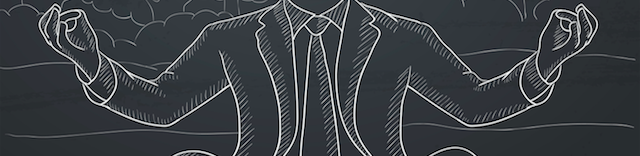
    Stressed man meditating

    “This ‘doing nothing’ is not a cold, passive resignation, but is a luminous, sacred activity, infused with presence and a wild sort of compassion. It is a radical act of kindness and love.” ~Matt Licata

    I am storming home after work.

    The important men in my life are driving me bonkers—they’ve been self-important, disrespectful, condescending jerks.

    My dad doesn’t see the value in the work I do, and my partner blew off our date to take an important phone call. My younger brother leapt off of the phone with me, which he’s been doing every time I’ve called in the last year.

    I am taking furious, short breaths, and hardly noticing each step.

    My mind races with things I could say to show them just how in the wrong they are. I rocket between being spiteful and feeling sorry for myself.

    A woman my age walks toward me, carrying two bags and nursing a baby. I move aside to let her by and accidently make eye contact with her little girl.

    She gazes at me unblinkingly, no expression on her small, round face. She doesn’t react to my momentary presence in her world; she just looks at me.

    Our eyes meet for only a moment, and then they are both gone. That look has stopped me in my tracks and drained me of all my struggle. I’m standing there on the sidewalk, feeling totally empty of the fury that possessed me a few seconds earlier.

    That emptiness makes me lightheaded, and I stand for a moment, swaying in the dusky light. I’m suddenly aware of my breathing, of the tightness in my abdomen and hands. For the first time, I notice what a whipped-up tower of smoke and rage I’ve become.

    I make eye contact with myself, as if I’m now the wide-eyed babe, lying on my mother’s chest.

    I’m filled with compassion for myself. I become aware that the anger I was feeling is also anger at myself for not hearing and responding to what I want—for putting my needs last, for being judgmental and self-righteous.

    This awareness washes over me in a wave of feelings, more so than thoughts. I experience anger, sadness, and finally the comfort of being heard. Someone is listening to me—I am listening to me.

    . . . . .

    I regularly encourage my girlfriends to take more time for themselves, to move more slowly through choices and transitions, to make space in their heads to really hear themselves.

    I don’t want to wait for a wide-eyed magic babe to spook us back into our own experience. I want us to be intentional about it.

    Through meditation, I can sometimes create space to hear myself. But many of my friends are fast-paced, creative women who have a hard time sitting still. Meditating is simple, but not easy, and especially for these active types, “doing nothing” is something that has to be eased into.

    Walking has been an incredible space-creator for me, as has writing.

    At the beginning of both of these pursuits, I am filled with chitter-chatter—the daily bushwhack through the swamp of self-judgment, fear, and worry.

    By being intentionally aware of my surroundings when walking, and my words when writing, the fog of my heavy thoughts begins to lift. Eventually I am purely in the experience—noticing the birds and the flowers, and the feeling in the bottoms of my feet, or simply connecting word to word, sentence to sentence.

    To maintain a connection to the physical world around me and the spiritual world within me, I practice both writing and walking for an hour every day. Sometimes, it’s an uphill battle and I end up feeling totally defeated. But most days, at least a shimmer of my true self shows up during my practice, and I feel blissfully at peace.

    . . . .

    The lesson I learned that evening, when I saw the baby and her mother, was that how I’m feeling just is.

    Most of my frustration and anxiety comes from trying to fix the way I’m feeling, to somehow “solve” it. As soon as I settled into the experience of being angry, the anger itself just sort of melted away, and my true desires became apparent.

    A friend and I were recently speaking about “looking straight at things” rather than seeing them out of the corner of your eye and avoiding them. We were discussing negative body-talk, anxiety about work, and the emotional discomfort that often leads to overeating.

    She told me, “If I could just look straight at the part of me that wants a bowl of cereal, I would see that I’m actually nervous about an upcoming presentation.” The urge to eat more when she’s already full is disguising the discomfort of feeling over her head at work.

    My intense anger at the important men in my life was disguising the true discomfort that stemmed from over-working myself, not prioritizing my own self-care, and putting others’ opinions of my life before my own.

    A curious experience with a tiny stranger was enough to shock me out of my thoughts, bring me back into my body, and allow me to really hear myself.

    That moment reminded me how to be present and to give myself the time and space to understand my inner needs.

    I extend this same reminder to you: In whatever way is easiest for you, start being present to yourself by doing nothing. I challenge you to lie on the couch, sit on the bench, or meditate; allow space for your true hopes and fears to bubble up into your conscious mind.

    As Matt Licata says, this is a “radical act of kindness and love,” and we each benefit from showing ourselves that loving kindness.

  • 3 Relationship Myths (and Why We Need to Stop Believing Them)

    3 Relationship Myths (and Why We Need to Stop Believing Them)

    “Love isn’t always perfect. It isn’t a fairytale or a storybook. And it doesn’t always come easy. Love is overcoming obstacles, facing challenges, fighting to be together, holding on and never letting go.” ~Unknown

    When I started dating, I idealized love. I had many false notions about relationships, which I formed from my friends, watching movies, and reading romance novels. Many of the beliefs I had about how relationships should work caused me pain and disappointment because reality turned out to be different from what I expected.

    Dating became a journey of resetting my expectations and letting go of false beliefs. In order for me to find love, I had to let go of the myths I had around relationships.

    Myth #1: Opposites attract and make for more lasting long-term relationships.

    I found myself drawn to men who were very different from me during my early stages of dating. They were the stereotypical bad boys who rebelled against authority, the ones with a wild independent streak who were emotionally unstable.

    These were the type of men I was attracted to. They made my life exciting and helped me expand my boundaries. I thought opposites would create a balanced relationship, making for an ideal union.

    Luckily for me, none of them worked out. Looking back, it would have made for a bumpy, unstable relationship.

    We’re fascinated by people who are unlike us because they represent parts of ourselves that we’d like to let out and explore. We tell our friends we can’t help who we are attracted to, but often we are attracted to people who are wrong for us.

    While it’s true that we can complement each other with some differences—if, for example, one person is more laid back and the other is more Type A—couples who are more similar have longer lasting relationships than those who are complete opposites.

    Dating someone similar means we get the support and validation for our core life values. There will be fewer disagreements on the most important issues and opinions that shape our lives.

    Core life values may be spiritual, religious, social, family, and health-related. Taking a closer look at what you prioritize in your life and where you invest your time will tell you your values.

    This also means that having similarities lead to more positive feelings because of the reciprocity rule in relationships: we like others who are like us.

    It’s exciting to date someone who is the opposite of you at the beginning. But as the relationship progresses two people with different life values will start to separate and head down different paths.

    Opposites attract like strong magnets for the short term, but if you’re looking for the long term, it’s similar core life values that will keep you together.

    Myth #2: You should be honest about your deal breakers upfront to save time.

    The other day I went to lunch with one of my friends, who is a serial dater with profiles on three different dating sites. He dates several women at a time and sometimes goes on three dates a day.

    When he tells me how the first dates went, it usually starts with the women initiating several rounds of questions, which then turns the date into a mate interview.

    Are you close to your family?

    Have you been married before?

    How many kids do you want?

    I know I have done the mate interview on a first date before, so I understand why these women were questioning him early on.

    When I was tired of just dating, and looking to get married, a friend told me to be open and upfront about it, because “you don’t want to waste your time with him, so you want to make sure you are on the same page. And if your honesty scares him then he is not the right person for you.”

    This piece of advice could not have been more wrong.

    Yes, it’s important to be honest and be on the same page for a sustainable long-term relationship, but letting them know all of your standards and requirements on the first couple of dates is just too much information.

    No one wants to waste time in relationships, but interviewing someone shows that you’re more interested in getting what you want from them than getting to know them.

    When I was trying to figure out if they would make a good parent or partner, I was screening them and testing them. I went from having fun and being lighthearted on the date to turning into an interrogator. I was limiting myself to a small pool of candidates who were ready to answer these kinds of questions, thereby limiting my chances at finding love.

    By being upfront about your deal breakers, you may not even find yourself in a relationship in the first place, because you quickly screened out perfectly good people who had the capacity to be a devoted partner but didn’t show it on the first date.

    Myth #3: Having conflict in a relationship means you’re headed for a breakup.

    I am terrified of conflicts or any type of disagreements, which is probably why one of my strengths is the ability to always find agreement in groups, no matter how much they differ in opinions.

    I formerly believed that fighting meant you’re not compatible with each other and it won’t work out. This was why I thought that love meant never having to fight and I was terrified of conflicts.

    In my earlier relationships I dealt with fights by ignoring them, pretending they didn’t happen, and stonewalling, where I just didn’t communicate or just walked away. I thought the problem would just disappear and we could return to a normal state of things, as if it never happened.

    I remember when I suppressed my feelings, I experienced random outbursts of crying because I was so frustrated with pent up emotions inside that I would eventually crumble at the slightest stress.

    After reading a lot of self-help books and talking to my friends, I figured out that avoidance was not healthy for me, nor the relationship. It dawned on me that because everyone is unique, our differences will lead to disagreements and conflicts.

    When you are choosing to be with someone in a relationship you are choosing a unique set of problems that cannot be solved. It’s important to learn how to deal with it, because conflicts can bring you both closer afterward.

    So I learned that having conflict is actually healthy for a relationship. It shows that you are being honest about issues that are important to you rather than headed for a breakup.

    Changing my view on these three beliefs altered my success in dating. It helped me to grow to have more realistic views of love and be more aware of how much my mindset impacts how I define what love is. I hope shattering these relationship myths helps you as well.

  • Do You Constantly Think and Worry About Your Relationships?

    Do You Constantly Think and Worry About Your Relationships?

    “When you say ‘yes’ to others, make sure you’re not saying ‘no’ to yourself.” ~Paulo Coelho

    Sometimes it’s easy to define ourselves by our roles and relationships.

    We can look at ourselves as a daughter, or someone’s employee, or so in so’s husband. These things mean a lot to us, and we often subconsciously use a variety of behaviors and mental constructs to protect these roles and relationships.

    It can take form in innocuous ways, like buying clothes you don’t really want or feigning interests in order to fit in. (Go sports team!) But it also affects more serious things, like how we view ourselves, what we think we’re capable of, and what goals we pursue.

    A common theme in movies is the mid-lifer who suddenly realizes they’ve made all of their decisions in life to please other people. It’s reflected in the zeitgeist so often for a reason—because it’s a common occurrence, and an easy trap to fall into.

    My realization that I was doing this started taking shape with several ah-ha moments over the last several years, but it became palpable during an entrepreneurial workshop almost a year ago.

    We all were assigned a personality test to take at home before returning the next morning. Mine said something like: You think with your heart and are excellent at building thriving relationships.

    I thought that was a lovely-sounding result, but the next morning I got a bit of a jolt from the woman putting on this portion of the workshop.

    “Ah, you’re a blue!  You constantly think about yourself in relation to everyone else.”

    “I do not,” I replied, embarrassed.

    “But you do. What are you thinking about when you fall asleep at night?  Your relationships. You wonder if everyone’s okay. You wonder how you affect others. You wonder what they think of you.”

    I must have been nodding, because she said, “See? That’s thinking about yourself in relation to everyone else. Their approval means a lot to you, and that’s how it manifests in your mind.”

    That irritated me in a huge way.

    I ignored her for the rest of the day, fuming about how someone could say something so mean—and because of a silly little test that didn’t say anything about wanting approval! I was still thinking about it when I got home, all riled up with indignance.

    Then it hit me. I’m a fan of Jungian psychology. I’m not an expert or anything, but I like the way that dude thinks.

    He espouses the philosophy that our irritations and overreactions point to key truths about ourselves; when something or somebody really gets to us, it could be because it’s pointing to a truth about ourselves that we don’t want to see.

    I had noted people-pleasing tendencies before, and I had made great strides! I no longer fake-laughed at things that I didn’t find funny.

    I no longer thought of others, or their judgments, when making personal style decisions. And I no longer cared about being as thin as others, after struggling with eating disorders for years.

    These things were a big deal to me, and it took focused effort to make these changes. I thought I was done! Then some random person goes pointing out the other-focused thought constructs in my brain like she can see them? What the what, man? Pssssch.

    I tried to ignore it. Tried to pretend that it wasn’t there. But once something like that is pointed out, life tends to keep pointing it out to you.

    I eventually leaned in and decided to do something about it. I’m a lover of meditation and mindfulness in all forms, so invented a mindfulness game of it.

    I started watching my mind for other-oriented thoughts, and then I imagined shooting them down with the gun from the 80’s Nintendo game, Duck Hunt. Pew! Pew! I shoot them thoughts right down:

    Imagining an argument with a family member: Pew! Pew!

    Comparing myself to someone else: Pew! Pew!

    Wondering how I’d explain myself for doing something: Pew! Pew!

    Overanalyzing lack of reactions to my Facebook post: Pew! Pew!

    (A few things that don’t count: non-judgmental relationship reflection, hoping people are happy, and forgiving others and myself.)

    It might sound silly, and maybe for you it would be, but for me, it’s worked wonders.

    It’s helped me find my center. I feel like my whole life I’ve been off, getting tossed about in the storm of others’ wishes, real or imagined; flung around in subtle manipulations, others’ or mine; and thrashed into the ground by judgments, spoken or merely assumed.

    The benefits of cultivating a centered perspective like this are immense. For one thing, it leaves us free to cultivate inner-direction—to focus on the things that really matter to us, the things that we love to spend time on, the things that make us sparkle.  

    I’ve discovered that we can adopt a centered-perspective as homebase. It had been there the whole time, this calm and peaceful mind, this quiet in the eye of the storm.

    I had frequently visited it, usually while meditating, or by way of painting, or even via chore lists done in a zen-like fashion; but we can learn to operate from this place all the time.

    My mind still swerves into the storm, but less and less. It’s noticeable, and feels odd, far from being a filter for life or a perspective to see it from, like it was before.

    And once we spot mental constructs in this way, we stop identifying with them, and they can’t sweep us up like they used to. They lose power as new neural pathways are created, bringing with them new ways of thinking and of approaching life.

    Try to spot your other-focused mental constructs going forward. Recognize when you’re dwelling on arguments, comparing yourself to others, or looking for their approval, and shift your focus back to yourself. Find your center.

    Know that you’re more than how you affect the people around you. You’re more than what other people think of you. If you can focus a little less on who you are in relation to everyone else, like me, you might find yourself less stressed and far more fulfilled.

  • What to Do When You’re Having Trouble Making New Friends

    What to Do When You’re Having Trouble Making New Friends

    “The measure of intelligence is the ability to change.” ~Albert Einstein

    I’m sitting on the couch by myself watching Dexter reruns on Netflix. But I can hardly focus on the show. I’m freaking out because I still haven’t made any friends, even though I moved here over a month ago.

    I keep thinking to myself: “Will all my Saturdays look like this?” “Will I actually be able to make new friends and build that social circle I was so excited to have?”

    Let me rewind just a bit.

    It’s a hot and sunny summer day in Southern California.

    After hours of Tetris-like packing, my Toyota Corolla is packed to the brim with everything I consider important. My guitar amp has clothes stuffed in the back of it. Even my snowboard is upside down, forming to the shape of the roof.

    I should be exhausted from packing, but I’m not. I’m beaming. Smiling from ear to ear, I can’t wait to start a new chapter in my life.

    With a new promotion in hand, I am given the task of opening a new office in Santa Fe, New Mexico. I have never even been to New Mexico before, but I am ecstatic to meet new people and create new life experiences. So I hop in my car and make the fifteen-hour drive to begin my new adventure.

    I’ve arrived in New Mexico, and I am high on life in the high desert of Santa Fe.

    Life is great. I’m loving the delicious, authentic New Mexican food and the warm monsoons with crazy lightning. I’m spending my time getting to know the wonderful city of Santa Fe.

    More than a month goes by and, just as monsoon season is ending, I’m all settled in and enjoying my job. However, the excitement of making new friends and living the dream is starting to disappear. Actually, it’s starting to turn into fear.

    I’ve never felt so lonely in my life.

    Day after day, anxiety slowly grows deep inside my body. When will I start to make new friends? Will I ever even make any friends here?

    The fear of loneliness is eating me alive. Especially because I didn’t think that this would be a problem at all. But it’s making it hard for me to focus on anything but my inability to make friends.

    I know that if I want to meet new people and make friends that it is up to me. I need to take action and be proactive. The only problem is that I don’t really know how.

    But I try anyway.

    I muster up the motivation to go to a public pub crawl on a Saturday night and tell myself that I am going to turn things around and move toward my social goals. When I finally realize at the end of the night that I only spoke to one person the entire time, it only deepens the pain and stress.

    As bad as it seemed and felt, some good things were taking root even though I didn’t know it at the time. I had been on a self-help kick for quite some time and was constantly reading and doing what I could to improve my life.

    By some stroke of luck and beautiful timing, I got my hands on the book Yes Man by Danny Wallace. In it, recently single Danny was falling into isolation and loneliness until he decided to say yes to everything, and in the book he recounts the events that unfolded.

    In short, he met tons of new people, did a bunch of crazy things, and had one hell of an adventure.

    I read the entire book in one day—quite a feat for me. I may not have known it at the time, but this was a pivotal moment in my life. It fundamentally changed my beliefs and the way I look at life.

    I was missing opportunities left and right.

    My problem wasn’t an unwillingness to do new things; my problem was how picky I was being about the things I chose to do. I would turn down going to music in the Santa Fe Plaza because, “eh, that music doesn’t seem to interest me.” I would turn down an invite to hang out with someone because, “he didn’t seem that cool.”

    But then, after reading Yes Man and deciding that I need to be way more open to new experiences and new people, I decided to be much less picky.

    I hung out with a forty-year-old Texan I met through email and went to a strange and interesting event called Zozobra. I went to a college football game in Albuquerque (definitely not my wheelhouse) and to the Santa Fe Wine and Chile Festival. I also played darts with some people in the back of a cigar club.

    On a Monday evening around 8:00 PM, rather than calling it a night and turning down an offer to go to a BBQ at a friend of a friend’s house, I went. But it wasn’t easy. I still had all those thoughts running through my head: “it’s late,” “you’re tired,” “you have work tomorrow,” “just go next time,” yada yada yada.

    This time, though, I decided to say yes. Even with the knowledge that I had to find my way around the ridiculous streets of Santa Fe, which don’t seem to make any sense whatsoever.

    When I arrive, the friend that invited me meets me out front and shows me in. He introduces me to the hostess who was throwing the BBQ. Fortunately, I’m welcomed with open arms.

    I’m offered dinner, but go straight to dessert (5:00PM is much closer to my dinner time). I sit down at the table and start to talk with a group of six people. I get to know them and they get to know me.

    They seemed cool, although I didn’t think they were anything special. I got a couple numbers at the end of the night and went home.

    The seeds are sown.

    Over the next month, I slowly started to hang out with these new people. One of them invited me to go bowling with his friends. Another invited me to get drinks with some people.

    The momentum kept building and eventually I met a bunch of new people and was doing new things regularly. Before I knew it, I had a core group of five really good friends, and was talking to and hanging out with many others. Things were finally starting to turn around.

    Even though I didn’t think they were anything special right when I first met them, they ended up being some of the most amazing people I’ve ever met. Truly great friends—the type that bring soup to your house during their lunch break when you’re sick.

    Had I continued to judge people before getting to know them, I would never have made the friends I did. Coming from Southern California, I had a much different style and culture than the people I met. I could have easily just asked, “are these really people I want to become friends with?”

    Or, after meeting everyone at the BBQ, I could have shrugged them off and not hung out with them the following times.

    Well, deciding to say yes was the best decision of my life. It’s been almost four years since I left Santa Fe and moved back to So Cal, and I’m still good friends with those people. I’ll even see many of them at my wedding in September.

    This whole process taught me so much. Particularly, that it’s the person on the inside that is much more important than what you see on the outside. The person that you get to know over time, not in the first few minutes you meet them.

    And I’m not saying that just to be sweet and nice. People that I would have typically judged as “not my type” ended up being some of the coolest people I have ever met. Those are things you don’t realize the first time you meet someone.

    What Saying Yes Looks Like

    When people are inviting you to do things with them, you want to be reactively saying yes. Otherwise, you will need to be proactively saying yes by finding your own opportunities to meet people.

    Proactively say yes: Be proactive and find new things to do, while doing your best to meet new people when you are doing them. This can be joining a book club, an adult-league soccer team, or a weekly board game meet up. It can be volunteering or seeing a band at a local bar.

    It can also mean finding people online and emailing them, or going to the disc-golf course and pairing up with others. The goal is to find new experiences where you can meet new people, and then say yes to yourself by going!

    Reactively say yes: When people invite you to do different things with them, say yes. Although you might not be sure if you really like the person yet, or you don’t think the event or activity is something you’d have a lot of fun doing, do it anyway. And do it with the intent of getting to know the people you go with and meeting new people while you’re there.

    Being open to new experiences and new people changed my life dramatically for the better. If you are having trouble making new friends, wherever you are, you might want to consider saying yes more often.

  • 4 Things You Need to Know When Pursuing An Ambitious Dream

    4 Things You Need to Know When Pursuing An Ambitious Dream

    Dreamer

    “So many of our dreams at first seem impossible, then they seem improbable, and then, when we summon the will, they soon become inevitable.” ~Christopher Reeve

    Have you ever decided to pursue something that excited you, that seemed really hard to do, and then had your will tested and almost crushed? I have, many times, most recently this year.

    As you may recall, I shared a blog post in January about the newly formed Tiny Buddha Productions, a film company I started with my fiancé, fellow screenwriter Ehren Prudhel.

    If you haven’t read that post yet, you may want to read that now. Go ahead—it’s here. I’ll wait.

    Welcome back! A lot has happened in the six months since we decided to make a short film about loneliness and connection.

    We’ve faced delays, and drama, and disappointment. We’ve questioned ourselves, our idea, and our potential. And we even considered scrapping the whole thing when it all seemed far harder, and success far less likely, than we once imagined it would be.

    But we’ve pushed forward, in spite of the fears and the discomfort. We’ve waded through the guck of insecurity and uncertainty. And here we are, about to start filming our first short film tomorrow.

    As I sit here with a goofy perma-grin on my face, I’d like to share a little of what I’ve learned over the past six months.

    If you’re pursuing a dream, and feeling overwhelmed, uncertain, self-doubting, and scared, perhaps some of my lessons will help.

    1. There’s no shame in being green.

    I knew going into this there was a ton I didn’t know. Although I’d studied acting and writing in college, I didn’t study screenwriting, and I had no experience producing a film or working on a set.

    In addition to what I didn’t know, there was a lot I didn’t know I didn’t know—stuff about permits, and insurance, and securing locations. Every part of this has been a learning process for me, and that can feel incredibly vulnerable.

    It’s easy to feel insecure and embarrassed when you’re working with experienced people and you feel a little ignorant.

    But when I took my ego out of the equation and stopped worrying about what other people might think of me, I realized how fun it is to be at the beginning of a journey.

    It reminds me of when I was in college, and I felt excited about everything—being on campus in Boston, meeting new people, learning from them, getting to share my work, and imagining possibilities for the future.

    Would I feel more confident if I were an expert? Sure. But there’s nothing like the enthusiasm you feel when you’re just starting out. Some day I will be an expert, and I can only hope I’ll maintain this electric passion I feel right now.

    If you too are at the beginning, remember: This feeling won’t last forever, so soak up the best and don’t worry about the worst. No one loses respect for someone just because they’re new. If anything, they highly esteem people who are embarking on an exciting but challenging new journey—especially if they’re not just out of college.

    More importantly, your experience is worth far more than their perception, so enjoy every part of this new path. This is what life’s all about—trying things that excite you and feeling giddy, nervous, and passionately alive. Let yourself bask in it.

    2. Setbacks are part of the process.

    As I mentioned, it’s been almost six months since we decided to do this short film. We originally planned to shoot in in the spring, after speaking to lots of people and hiring a director, who was going to bring his own crew onboard and edit.

    With the most important hire in place, I ran a T-shirt campaign to raise money to fund the film. And then the setbacks began.

    The director—who, I should add, is a wonderful person, who we’d be fortunate to work with—said there were too many locations. So we re-wrote the script.

    Then he told us the budget was still too small, so we increased it, to much more than we originally expected we’d spend.

    Then, after much back and forth, with all our eggs in his basket, he had to back out due to personal reasons.

    As the months went on, I began to feel like the girl who cried film. I’d already publicly announced the project on the blog. I’d run a fundraiser. And there we were, seemingly back at square one.

    For a while I got myself worked up and discouraged. I had no idea how to move things forward with our first project, and I also knew it would be just a small step on a much larger path. But then Ehren and I regrouped and decided that the setbacks weren’t failures; they were part of the journey—to be expected.

    We didn’t need to feel bad about them. We had to view them as par for the course—simply part of the process of doing something new and difficult.

    So often we get down on ourselves when things don’t go as planned. But it’s nearly impossible to make a smart plan when you’re learning as you go because you have no idea what each step will entail. The only thing you can reasonably expect when you’re doing something new is the unexpected.

    The good news is, the unexpected isn’t always bad. It’s usually in putting out mini fires that we learn and grow the most. Every step of a new journey is a classroom—and remember, people pay good money for an education.

    So don’t let the setbacks get you down. See them as signs you’re moving up, because they are, in fact, a part of the process.

    3. It helps to hold yourself accountable.

    I wrote that blog post introducing Tiny Buddha Productions for a reason: I knew that this would be hard. But once it was out there in writing, and because we also told our friends and family, it felt nearly impossible not to follow through.

    I could lie to myself and say I didn’t really want this that bad, but I’d already made it abundantly clear, very publicly, that I did.

    Reading that post has kept me motivated when I’ve felt like giving up. It’s reminded me that this means something to me, and it’s worth pushing through my discomfort to make it happen.

    Tell people what you aspire to do, and not just casually, in passing, like it’s not that important to you. You want this. You dream about this. If you’re like me, you lie awake thinking about it, and it pops into your head first thing in the morning and when you wake in the middle of the night.

    You care—a lot. And it feels vulnerable to admit that, especially since everyone will know if things don’t work out as you hoped they would. Don’t let that deter you.

    Not only does sharing your intentions keep you on track, it also inspires others to do something about the faint murmur they hear in bed at night and when they open their eyes.

    Everyone has something that blows their hair back. Remind them what it looks and feels like to go for it. As the saying goes, “Enthusiasm is contagious. You can start an epidemic.”

    4. An experience can be worth so much more than it costs.

    We raised quite a bit for this project, because filmmaking is incredibly expensive. (In fact, I was shocked to learn how much it costs to make five minutes of film.)

    When I shared with a loved one how much we raised, she questioned if perhaps we should pocket the cash or spend it on something else. “Why spend that money on something that might go nowhere when you could just keep it?” she asked.

    Well, I’d positioned the T-shirt campaign as a fundraiser, so that’s one thing. But more importantly, I knew this experience would be far more valuable than what it would cost.

    Ehren and I each have our own reasons for wanting to do this, and wanting to do it together. His reasons are his to tell. For me, this is more than a project; it’s the beginning of an exciting new life.

    It’s a way to connect with who I was before healing consumed me; an opportunity to create something that will hopefully make an impact; and a chance to do something collaborative instead of spending so much time working on my own, from my computer.

    That’s why I’m doing this film, and I hope many more after it: it’s something I need to do for myself, and want to do with Ehren. If that’s not worth the cost, what is?

    I realize I’m incredibly fortunate to have a means to raise money, and that not everyone has that same advantage. But we all have the ability to invest in ourselves—whether that means a portion of our savings or a portion of our time.

    We all have the potential to put some of what we have toward what we want to create. I know, it can be scary to do it. You can think of a million and one reasons not to use your limited resources.

    There are no guarantees. It might not work out as you hoped it would. People might say, “I told you so.”

    Yes, those things are true. But things could actually turn out better than you’d hoped. And if they don’t, this could be the first step on a different journey you don’t yet know you want to take.

    You don’t need a guarantee to know that taking a risk—stretching yourself and coming alive—is worth it, no matter where it leads.

    Having a dream is a lot like being that little man on the moon, in the picture on top. You know you can fall, but it doesn’t matter, because you’re lost in the music and the view. I’m lost in mine right now. What’s yours?

  • How Dealing with Our Emotions Can Help us Heal Chronic Pain

    How Dealing with Our Emotions Can Help us Heal Chronic Pain

    “The part can never be well unless the whole is well.” ~Plato

    Our bodies are clever. They constantly send us messages that something isn’t right. It’s our job to tune in, listen, and act on these messages.

    That headache, tight shoulders, and backache are all trying to tell us something. But sometimes the physical symptoms we experience are actually tied up in a deeper emotional pain that needs to be dealt with first.

    How do I know this? It was a message I needed to learn, one that I now teach to others.

    Six years ago my life fell apart. Within an eighteen-month period my marriage broke up, I lost my house in a devastating earthquake, and I had to walk away from my physiotherapy practice that I had poured my soul into for four years.

    At the same time I was also experiencing chronic shoulder pain. I was suffering from regular headaches, sciatica, and insomnia. I sought help from a number of different health practitioners. At times I would get temporary relief, but it never lasted.

    As a physiotherapist I knew I was doing everything right to heal my physical pain, so I could not understand why I wasn’t healing.

    Not only was my physical health a mess during this time, but I was also an emotional wreck!

    I felt like a failure. I was ravaged with guilt. I was scared of what the future held. And my self-esteem was at an all time low. I had stopped eating and sleeping. My weight had plummeted and I looked terrible.

    It wasn’t until I stumbled across Louise Hay’s book, Heal Your Body: The Mental Causes for Physical Illness and the Metaphysical Way to Overcome Them, that I began to gain a better understanding of the relationship between our emotional and physical health.

    This one book was the catalyst for change and healing. I realized that if I wanted to heal myself from chronic pain, I was going to have to dig deep to get to the core of all the challenges in my life.

    It was the start of a journey that wasn’t easy and it wasn’t pretty. A lot of the time I wanted to bury my head in the sand. I have always been one to brush emotions to the side. “I’m fine” was my tagline.

    But as I did the work, three key themes became clear.

    First, I had no sense of self-worth. I didn’t see myself as important as other people. I would give everything I had to everyone else and nothing to myself. If I did, I would feel guilty.

    I also have a Type A personality, I’m a high achiever, and I’m a perfectionist. I would constantly push myself to the limit, and the pressure I put on myself was immense.

    Lastly, I realized that I constantly compared myself to those I perceived to be living the perfect life, and I always came up short.

    I recognized that the pain I was experiencing was my body’s way of telling me I needed to slow down, take pressure of myself, and start taking care of myself.

    I knew it wasn’t going to be easy to change my ingrained habits and beliefs, but I also knew that if I didn’t my body would start screaming louder until I ended up seriously ill.

    I started by making small changes. I began to gather knowledge from others. I took what worked for me and discarded the rest. I experimented and added in what made me feel well and healthy.

    Sleep was the first thing I made a priority. I had never realized how important sleep was. It’s the time when our bodies repair and rejuvenate. One good night’s sleep doesn’t help us heal; consistently sleeping well does.

    Self-care was the next thing I needed to address. I had previously thought self-care meant hour-long bubble baths, a day at the spa, or a week’s vacation in the sun sipping champagne. But I came to realize it didn’t mean any of those things.

    I realized that the small things I did throughout my day were just as important—like taking five minutes in the morning to meditate before starting my day, making sure I had prepared a nourishing lunch, spending ten minutes cuddling my dogs after work, and reading a chapter of my book before I went to sleep.

    Small things, consistently done over a long period of time, made for big change.

    I also realized that my body had been sending me the message that my life had been out of balance for years. But I had lost the ability to tune in, listen, and connect with what it was saying.

    I started practicing a simple technique that consisted of meditative breathing, scanning my body for discomfort, and then asking what it was trying to tell me.

    Whenever I would feel discomfort in my body, I would ask myself, “If this pain was an emotion, what would it be?” If I answered “sadness,” I would then ask myself, “What is going on in my life right now to make me feel sad?”

    I would then use practices, such as journaling, to help me work through, and release, whatever was causing me to feel sad, lonely, or fearful. With time, my emotional well-being improved, and so too did my physical symptoms.

    So what are the physical signs that your emotional health may need attention? Here are just three examples that you may be able to relate to:

    1. Tight, tired, and painful shoulders.

    When I meet people with this problem, they often have a similar story. They believe that they need to be, and do, everything for everyone. They are literally “carrying the weight of the world on their shoulders.”

    2. A stiff neck.

    People with stiff necks have trouble turning their head to one side. They’re often dealing with someone close to them making a choice that they don’t agree with. This decision has hurt them and they are finding it hard to “turn the other cheek.”

    3. Back pain.

    While disc ruptures are not uncommon, most people present with muscle spasms. Again, there is often a deep-rooted emotion playing out behind the scenes. In this scenario, it often pertains to money and finances. Their finances are restricting them from doing the things they want to do (as is their back spasm!)

    Our minds and body are so closely connected. But in today’s world, where we are so overstimulated, we have become completely disconnected with ourselves.

    Instead of tuning in to our body to find the answers, we tune into Google.

    Big life stuff (as I like to call it) happens. There’s no escaping it. Even everyday life can cause us to feel stressed and overwhelmed.

    If we don’t learn to deal with our emotions in a healthy way, they become boxed up within our body, until they are expressed in physical pain or illness.

    If you are someone who experiences regular physical pain, and you are aware that your emotional well-being may be one of the reasons for this, then I encourage you to start healing by journaling on the following questions:

    Does your life feel stressful at the moment, and what is causing you to feel this way?

    What is one thing you can let go of, even just for now?

    Do you feel overwhelmed, and what do you keep saying yes to that you could begin saying no to?

    Are you taking on the emotional loads of others in your life? So often we want to help or fix those close to us, but it’s important to remember that they are on their own journey.

    Are there any stories from your past that you are holding on to that need releasing?

    Are “you” last on your list of priorities? If so, how can you make a little more time for yourself?

    Learning to tune in and listen to your body’s messages is the first step toward preventing long-term physical damage. I encourage you to start doing this now, before it ‘s too late.

  • When Mindfulness Hurts: Feeling Is the Key to Healing

    When Mindfulness Hurts: Feeling Is the Key to Healing

    “You start watching your breath and all your problems are solved. It is not like that at all. You are working with the heart of your experiences, learning to turn towards them, and that is difficult and can be uncomfortable.” ~Ed Halliwell

    Can mindfulness be bad for you?

    I had been expecting it: Once you become a regular at it, mindfulness permeates all aspects of your life.

    I only sit in meditation for twenty minutes daily (and a full hour on Sundays), but I carry its effects with me the rest of the time, elevated levels of awareness and all.

    This is not to say that I constantly float on a blissful cloud. In fact, this sudden increase in mindfulness, even for someone used to deep introspection and resolutely committed to lucidity, comes at a certain cost. What I hadn’t expected was the actual weight of mindfulness.

    Three months into the daily practice of mindful meditation, I had to admit that it was not solely eliciting the deep serenity I had hoped for. In fact, I realized that in some ways, I actually felt less happy than before.

    I couldn’t precisely put my finger on it. All I knew was that things seemed heavier, more raw. How could that be? Wasn’t mindfulness supposed to help me transcend the vicissitudes of life? What was I doing wrong? Was I the only one in that odd situation?

    I decided to do some research. It didn’t take long before I discovered evidence that mindfulness can indeed have “side effects.”

    A quick online search showed me that I’m actually in very good company. Mindfulness, and the practice of meditation, has reportedly entailed significant “downsides” for a number of enthusiasts.

    We come to mindfulness in the hope that it will constitute the path to peacefulness, often unaware that this path is paved with cracked and bumpy stones. Only after stepping onto that road do you realize how uncomfortable the process can be.

    Just like therapy, meditating is difficult, sometimes painful.

    The first and most obvious reason is that sitting still, quieting the mind, and focusing on the breath presents a real challenge. Many beginners and non-beginners complain of an overwhelming restlessness or, on the contrary, of an irresistible tendency to fall asleep (I belong to the latter category).

    The second reason is that mindfulness has a way of annihilating our blissful ignorance. It offers an unexpected and unparalleled insight into our areas of vulnerability, the sides of us that we are not always prepared to welcome nonjudgmentally.

    To get the most of it, one must recognize that the practice of mindfulness is dirty, hard work.

    According to Willoughby Britton, a Professor of Psychiatry and Human Behavior at Brown University Medical School, the downsides of mindfulness range from mild to severe, and can manifest in various ways—from unexpected anger and anxiety all the way to depression and psychosis.

    Mindfulness can exacerbate a number of mental health conditions, bring back to the surface traumatic memories, or simply force you to deal with things that had conveniently been swept under the rug.

    Whatever your initial levels of stability (or instability), a lot can emerge in the first stages of the regular practice of meditation. Ready or not, you have to deal with it. It is disconcerting at best. In my case, it was sometimes downright depressing.

    Picture a handful of Band-Aids applied to different spots on your body. Each Band-Aid conveniently covers an injury that you’re happy to ignore (or so you think).

    Mindfulness is like peeling off the Band-Aids, one by one. It hurts.

    Then you discover what’s under them: A bad cut here. A big bruise there. The occasional infected wound. A few badly healed scars. Mindfulness makes it hard to ignore that you are, under all those Band-Aids, actually hurting, or at least not entirely recovered.

    To add insult to the injury, mindfulness has a way of preventing you from applying new Band-Aids. Things that we considered pleasant, and that help us deal with life’s vagaries, lose their appeal once we become aware of their true purpose and associated costs.

    We use, in our daily lives, an arsenal of strategies, often without knowing it: thinking patterns, daily habits, activities we view as pleasurable “add-ons,” such as eating, shopping, staring at a screen, and so on. We don’t perceive those “pursuits” as Band-Aids. Aren’t they the spice of life?

    The regular practice of meditation and a more mindful approach to life, however, sheds some light on our dependence. Any behavior that resists modification might indicate an addiction, even if it was just to chocolate, new running shorts, or social media.

    I am now, more than ever, aware of my coping mechanisms, aware that rather than making life interesting, they mostly patch up an aspect of my existence that requires attention.

    If I feel bored, tired, or stressed, no amount of sweets, sports gear, or Internet surfing will truly fill the void or fulfill the need.

    Where I would mindlessly resolve to an old habit, this new knowledge stops me in my tracks. I pause, observe, notice the underlying emotion or sensation.

    If I’m under work-related stress, such as a quickly approaching deadline, or a recalcitrant passage to translate, I will often have a sudden craving for sweets, or feel the pressing need to check my Facebook page. It’s not a coincidence, I know that now, but I needed mindfulness to realize it fully.

    Now, instead of walking to the cupboard or opening a new tab in my browser, I stay put and take a deep breath. I skip the coping mechanism and refrain applying a new Band-Aid or replacing an old one.

    Even my thought processes are modified. When certain situations repeatedly elicited the kind of stress that requires a Band-Aid, I was forced to reconsider, at least to a certain extent, the choices I had been making in various areas of my life: my career path, other types of commitments, and even some relationships. I realized I had too much on my plate and that I needed to respect my limits.

    Accepting the fact that I indeed have limits was no small feat. Even if I have long been aware of some of my “rationalizations” and “compensations,” I have never faced life with such clarity, honesty, and courage. I am proud of it. I am also unsettled.

    In spite of this, I am still fully committed to continue with my mindfulness practice. The cans of worms I am opening can be a handful, but I was carrying them anyway, and they were wearing me down. I choose to deal with them.

    Things might feel very raw, but they also feel very real. I can already sense a new level of lightness and freedom on the other side of this demanding exercise.

    I invite you to give it a try too. As we move along in our mindfulness practice, I trust that we can all find our own sweet spot, the place where an increased awareness meets a renewed sense of well-being.

    For many, this will mean starting slow. When you incorporate mindful meditation into your life, don’t go for the three-day retreat right away. Not only will it be too demanding, it might even backfire.

    Instead, simply find a quiet place where you can sit for at least five minutes, in silence, every day, and focus on the breath.

    You may feel uncomfortable at first, as the feelings you formerly numbed or avoided emerge. Don’t let that deter you. If you embrace the discomfort, you’ll eventually gain the clarity needed to acknowledge and heal old wounds, break unhealthy patterns, and generally step onto the path to a more authentic life.

  • How to Feel Good Enough (When You Feel Anything But)

    How to Feel Good Enough (When You Feel Anything But)

    Woman hiding

    “There are plenty of difficult obstacles in your path. Don’t allow yourself to become one of them.” ~Ralph Marston

    I recently had a personal conversation with someone who was describing some struggles they were experiencing. In passing, they mentioned “It’s okay for you, you’ve fought your battles” and went on to talk about how I’m married, I’m working in a career I love, and I’m “successful.”

    Listening to them, I could feel my heart breaking, partly for them: I know what it’s like to compare my insides to someone else’s outsides and find myself severely wanting.

    But I also felt a deep sadness tinged with frustration, because their assumption was so far from the truth.

    While I am incredibly grateful to have the relationship, the professional opportunities, and everything else I have—and it’s true there are some battles that are now in my past—there are also plenty of challenges I’m still navigating. The biggest one by far is around feeling good enough; feeling at peace and fulfilled with who I am and what I’m doing in life.

    For a long time, I used external achievement to buoy my sense of worthiness. Underneath that, however, hid a lot of shame and anxiety, because I thought I was somehow deficient compared to other people. I felt a constant need to reinvent myself and be more than I currently was to keep up with those around me.

    Feeling good enough (and defining what good enough is) has been one of my biggest struggles and something I’ve realized will possibly be a lifelong process.

    I’d like to share some of my experiences and talk about a few things I’ve found helpful for my own ongoing journey. If you also struggle to feel good enough as you are, I hope they are helpful for you too:

    1. “Good enough” looks like different things in different contexts. 

    I used to set myself up for failure by telling myself something needed to be perfect to be good enough. Now, I’ve learned “good enough” exists on a spectrum, influenced by the situation, the context and other things that are happening in life, as well as my well-being, my values, and my priorities.

    In her book Succeed, psychologist Heidi Grant Halvorson explains it’s more helpful to focus on “getting better” rather than “being good.”

    When we focus on the latter, we tend to tie our self-worth to achievement and see ourselves either as a success or a failure. With the former, we are more open to the idea that skills, capability, and achievement are malleable things we can influence with our beliefs and behavior.

    When I tell myself the story that something has to go exactly to plan or it’s a total failure, I’m less likely to try things, I’m less open to feedback that will help me improve, and ultimately, I’m less likely to grow.

    If I try something and it doesn’t work out, it might feel painful in the short-term, but I know I’ll feel much better (and prouder of myself) looking back and knowing I’ve tried than looking back at a missed opportunity.

    I’ve also learned that it’s important to define “good enough” on my terms. Other people might have different ideas about what it means and looks like, but I can’t control that. Equally, there will always be someone who is smarter, more talented, more accomplished, more X and more Y than I am. The only person it’s helpful for me to compare myself to is me, yesterday.

    2. I focus on who I want to be more than what I want to achieve.

    Unhooking my self-worth from external achievement is still a work in progress, but one of the things I’ve found most helpful is focusing on the bigger picture. Sometimes this looks like asking myself, “How important is this particular thing going to be to me in ten years’ time?” (Usual answer: not very!). More often than not, it involves shifting from thinking about doing to being.

    While many of us place a huge amount of stock on external achievement, there are usually many variables beyond our control that influence the outcome of a situation. Even if we do our best and do everything right, we might still feel “not good enough” because those external variables mean we didn’t get the gold star or top prize.

    What we do have control over, however, are the qualities we embody. When I find myself slipping into “not good enough” thoughts, I find it helpful to stop and ask myself: Who do I want to be today? This reminds me I want to show up in my life as a creator, not as a victim, with compassion, not judgment, and calmly and wholeheartedly, rather than fighting an internal war.

    3. I focus on all the things I’m getting right (as well as the things I think I’m getting wrong).

    My inner critic is a champ at highlighting all the things I’m doing wrong and all the ways I could improve, usually with a big helping of shame and judgment on the side. A big part of my journey has been learning to turn down the volume on this part of my internal dialogue and turn up the volume on the part I call my inner mentor.

    My inner mentor is also good at pointing out things I could improve, but she does it with a very different tone.

    She is also a lot more question-orientated (while my inner critic throws statements around like confetti) and tends to ask open-ended queries like “How could you approach that situation differently in the future?”

    She also balances constructive criticism with acknowledging all the things I’m getting right too.

    I encourage my inner mentor with simple exercises like keeping a “have done” list (as opposed to a “to do” list) and taking time each week to reflect on positive experiences, new opportunities, things I feel proud of, and lessons learned.

     4. I remember just because I think something doesn’t mean it’s true.

    Like my companion at the beginning of this post, I can feel very alone when I’m in the grip of a “not good enough” episode.

    During these times, and especially with the prevalence of curated social media feeds, it’s easy to look at other people’s lives and make all kinds of assumptions and judgments about how well things are going for them, even feeling a teensy bit resentful about how challenging our life feels compared to how easy theirs seems.

    Having spent the best part of the last decade working with emotional support in one capacity or another, I’ve realized that “good enough” is not the result of circumstance, achievement, money, or success.

    The Latin root of the word compassion is “suffering with.” Everyone feels like or fears they are not good enough at some point or another. Fearing that we are not good enough doesn’t make us not good enough; it just makes us human.

    Remembering this helps me feel less alone, which enables me to start gently challenging that voice and asking “Is that really true?” “What are the other alternatives here?” “How would I respond if my best friend was telling me this?” and “Who would I be without this belief? What would I do differently?”

    Finally, I’ve learned there isn’t a “one size fits all” way to feel comfortable and enough within ourselves. There are many different paths to the same destination, and the right path for us is the one that fits our values, feels truthful, and helps us connect with whom we truly are.

    How do you navigate feeling not good enough in your own life? I’d love to hear what you find most helpful, so leave a comment and share your thoughts.

  • How to Stop Believing Negative Things About Yourself

    How to Stop Believing Negative Things About Yourself

    “If you accept a limiting belief, then it will become truth for you.” ~Louise Hay

    Have you ever felt like you weren’t living up to your potential? That chasing your ultimate dream is a waste of time because you’ll never accomplish it? You’re certainly not alone. I know the feeling, and quite frankly, it’s awful.

    Recently, I had occasion to visit a cemetery for military members and their families. I saw tombstones over 100 years old. Some of the people lived long lives, while many did not have the privilege of growing old.

    As I walked, I couldn’t help but think of the kind of lives they’d lived. Some saw unimaginable horrors in war that no doubt changed the quality and trajectory of their lives. Were most of these people happy and fulfilled? I didn’t know; tombstones don’t talk.

    The thoughts that kept coming back were: “How many of them went to their grave with regret? How many settled and accepted the labels assigned, without ever finding the satisfaction of breaking free and living life the way they truly wanted?”

    Going to the grave without ever realizing my full potential—that scares me to the bone. It’s something that I have had to fight for most of my life. It’s something that I emphatically refuse to let happen.

    Like most people, I took on the labels that authority figures assigned me at a young age. It’s what kids do.

    As the years go by, those labels, whether true or not, become sewn into the fabric of our being. They become part of our core, the vocabulary we use about ourselves, and the thoughts we hold of ourselves.

    The crime here is that so many times the labels have absolutely no anchor in truth. Rather, they are skewed or twisted interpretations that others have about us, or they are our skewed and twisted interpretations of things said and done to us. Rarely are the negative beliefs we hold about ourselves actually true.

    My nemesis was the belief “I am lazy.” In adulthood, after studying counseling theory for years in college, I finally figured out where it came from. I had always just assumed it was part of who I was.

    It came from my sixth-grade teacher telling my parents, before I moved up to junior high the following year, that I would be placed into remedial classes. I had tremendous potential, she said. But I was lazy and wasn’t performing to my full capability.

    My parents sat me down and broke the news. I was devastated. I knew all of the harsh things that other kids would say. I had heard them said before about others and didn’t like it. But now they would be saying it about me.

    That belief directed the course of my life. I walked through life believing I was lazy and began using that word in my inner vocabulary all because, at the age of eleven, my teacher and parents told me I was lazy.

    I never questioned it; I just accepted it. After all, why would my parents and teacher say it if it wasn’t true? They were supposed to know better than me.

    That is how the negative beliefs we hold about ourselves hold us back from unleashing the greatness within. Kids don’t have the cognitive capacity or life experience to question such things. They take the words of authority figures as truth, just as we are conditioned to do.

    If you’ve done the same, you must know that it doesn’t have to continue. There is a better way, and that way is to identify the negative beliefs that you hold deep down and challenge and reframe them through the lens of wisdom and experience.

    Going back to my example, I challenged that belief in my early thirties.

    What I found is that my teacher and parents did not take into consideration the fact that my mother and biological father went through an extremely violent divorce. He was the criminal leader of a notorious motorcycle gang.

    I didn’t have a stable, comfortable home environment, and academics certainly weren’t at the top of the priority list. My mom did her best, but working two or three jobs makes it difficult to do homework with the kids every day.

    Living in constant fear at such a tender age is not prime for a child’s development. Also, I started kindergarten before I turned five, so I was quite young for school.

    The sum of these circumstances contributed to my early struggles in school. It wasn’t because I was lazy or choosing not to live up to my potential.

    When I looked back through a different lens that only experience and wisdom can provide, I knew neither my parents nor my teacher meant any harm. They simply didn’t know any better, and the teacher never asked about what was happening at home. Putting myself in their shoes made me better understand what happened.

    I took on their words without ever asking myself, “Is it true?” Had I not taken the time to challenge this deep-seated belief, there is not a doubt in my mind that I would be an underperforming, underachieving, underpaid underling today. Changing that belief literally changed my life.

    The only thing stopping you from doing the same is you. If you hold negative views about yourself, you are not living life authentically. If you let the words of others define who you are, you are setting yourself up for failure. And chances are, you’ll become one of the people who get to the cemetery clutching regret.

    I don’t want that for you. You don’t want that for you. Make some time today to take back your authentic self by taking these four steps to eliminate any negative core beliefs you hold.

    1. Write down or say out loud the belief (preferably both).

    2. Think back to the earliest time you can remember having that belief.

    What happened that made you feel that way? Did someone say something that hurt your feelings? Put yourself in that moment again and hear their words, see their actions, and feel whatever comes up. Don’t push it aside. Stay there for a few minutes.

    3. After you’ve replayed it in your mind, put yourself in the other person’s shoes and reframe it.

    What was going on with them? Were they frustrated, stressed, or angry? This is important because it could signal that something was said in a moment when the person was lashing out and did not mean to harm. It could also reveal that you took something out of context.

    4. Challenge the belief.

    Write down the unequivocal proof that the person was right. Note—this must be unequivocal proof. Not opinion, emotion, or pity.

    If there is no proof, the belief is false and should be discarded. You will feel lighter after releasing it. If there is proof, you now have a rock-solid foundation from which to start changing.

    Changing behavior need not be intimidating. It requires that you be mindful when making decisions. You’ll want to make decisions that will get you to where you want to go in life. I ask myself a single game-changing question in everything I do: “Is this in alignment with my authentic purpose?” If it isn’t, I choose instead to do something that is.

    When you do that consistently, you’ll change both the behavior and the negative belief.

    You’ll gain confidence and momentum, and you’ll start achieving things that once seemed out of reach.

    Most importantly, you’ll realize that others’ words don’t define you. The words you use about yourself and the actions you take do.