Tag: wisdom

  • What to Do After a Breakup to End Painful Relationship Patterns

    What to Do After a Breakup to End Painful Relationship Patterns

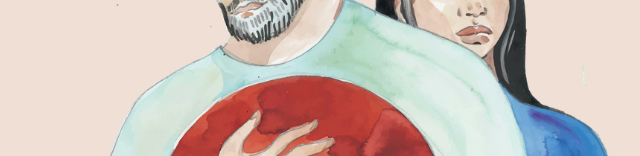
    couple is walking in the rain under an umbrella, abstract colorful oil painting

    “When writing the story of your life, don’t let anyone else hold the pen.” ~Unknown

    After my kids grew up and I moved to the city from the suburbs, I became somewhat of a professional dater. I was determined to make up for lost time after over a decade as a single mom, and I was optimistic about my future.

    My hopes were dashed almost immediately. Relationship after relationship crashed and burned, rarely lasting more than a few weeks. As soon as they’d walk out the door, sometimes within minutes, I’d fire up whatever dating website I was on at the time and begin again.

    I’ll never forget writing a new profile with a box of Kleenex on my lap and taking breaks to cry. I went out on dates feeling like the walking wounded, thinking that was the best thing to do. Just get back on the horse as soon as possible.

    After hundreds of dates and a long-term relationship, I found a better way to navigate breakups. The next time a relationship ended, I was determined to take the opportunity to build a better life for myself instead of simply running out to see who I could date next.

    Breaking up is tough. It can be one of the most miserable experiences of a person’s life. If you’re going through a breakup, it’s important to give yourself the chance to process it emotionally. If you take the opportunity to understand your part in creating the experience, you stand a much better chance of having a more fulfilling relationship next time around.

    The first thing to do is mourn the relationship. This is not popular advice, but it is good advice. We all want to get to the good part, and this is definitely not it. The thing is, if you don’t do it, you’ll have a mess on your hands that will infect your future if it’s not cleaned up.

    Not taking the time to grieve is like throwing your dirty laundry in the closet and never washing it. It gets it out of the way for the time being, but it’s a poor long-term strategy.

    Ancient cultures honored the practice of mourning. In their wisdom, they understood that mourning is part of life and helps us to heal. We’ve lost that in our day, but I think that mourning can be truly beneficial.

    When your relationship has ended, set aside some time to be alone and sit down. Cry, journal, yell, really let yourself feel what’s going on inside you. Face the fact that your relationship has ended and feel the anger, sadness, loneliness, and hopelessness, whatever comes up. You may be afraid that you’ll never come out of it, but you will.

    Locate the feelings in your body and welcome them as best you can. Lie down and put your hands on the place in your body where you feel intense emotion. It may be your chest, your stomach, or your throat. Practice breathing white light into these places and visualize them healing.

    Plan to spend at least a couple of days on this. Resist the urge to rush out with your friends, go back to dating, or hit the bars right now. There will be plenty of time for that later. See this through so that it doesn’t lurk in your heart, and once you are done, you will be done.

    Please treat yourself with compassion during this time. Take long baths, get plenty of sleep, and be sweet to yourself.

    As tempting as it may be to numb out with drinking, eating, shopping, or whatever your distraction of choice may be, try to minimize this. Waking up with a hangover, a stranger, or a huge credit card bill will only add to your troubles.

    A breakup is the perfect time to do some soul-searching. You’ll have some alone time and your emotions will be front and center. Since breakups are so painful, I hope that you’ll take this opportunity to discover how to make your life better in the future.

    Once you’ve mourned the loss of your relationship, take some time to evaluate all of your most significant relationships. Start by looking at each of your parents or primary caregivers, then your most recent relationship, and finally, your last three relationships before that one, for six relationships total.

    Use a separate sheet of paper for each person and create two columns: “liked” and “didn’t like.” Fill out a sheet for each person. After doing this, write down the traits they all had in common on a fresh sheet of paper. For instance, you may notice that these people didn’t keep their promises or had short tempers.

    After you’ve written about them, make it about you. Write down what you did that you liked and didn’t like. Finally, ask yourself why you continue to participate in behaviors you don’t like. Were you on automatic pilot? Did you know at the time that what you were doing wasn’t a good idea and do it anyway?

    When I did this exercise, I realized that many of the men I’d dated had kept me at a distance, just as my parents had. It seemed to be my default setting in relationships. I was afraid to really let anyone see me and have a chance to possibly disapprove of me, so I remained aloof and chose unavailable partners.

    I also saw that I had remained in relationships long after I knew in my heart that they weren’t going to work. I simply couldn’t bring myself to face what was happening.

    After you’ve had a chance to reflect, pick five things on your list that you’d like to change and write about what you need to do to create a new experience in your next relationship. Do you see a common thread in these relationships? Have you been engaging in behaviors that aren’t working for you?

    As long as you continue to believe that life is happening to you, you’ll continue to get the same results. Ask yourself how you’re contributing to the state of your relationships and determine what things you’ll do differently in the future.

    I decided to be more proactive in my future dating experiences by asking more questions and taking the time to get to know someone new before jumping into a relationship. I also became more vulnerable and honest about what I was looking for on dates instead of just hoping we’d be on the same page.

    Once you’ve done these things, you’ll have a much better idea where you stand and where you’d like to go next. Take the time to do this thoroughly and you’ll bring more clarity and understanding to your next relationship.

    No matter how awful your last relationship was, how wrong the other person was, or how ready you think you are to find someone new, you must look at your part in this relationship or you’ll be very likely to repeat your experience.

    Be willing to accept responsibility for your life, your past and your future. The common denominator in all of your relationships is you. You were there for all of them.

    If you have a pattern of being cheated on, mistreated, or dumped, you owe it to yourself to take a closer look at why these things happened. This doesn’t mean that the other person was blameless, but you’re the only one you can do anything about.

    If you don’t want to keep dating these types of people, take a closer look at what’s been happening. Do you have a pattern of tolerating mistreatment from those you date? Do you overlook red flags early on?

    At what point did you see that things were heading south? What, if anything, did you do about it? Did you speak up, or self-abandon? Did you hang on and try to save a broken relationship? Did you try to change him or her?

    Before you start dating again, sit down with a pen and paper and ask yourself these questions.

    Be willing to examine your actions, but don’t beat up on yourself. You were doing the best you could and it won’t help to judge yourself harshly or rehash every detail of your relationship looking for all your “mistakes.”

    This is a process of self-discovery and finding a better way, much like looking in the mirror and correcting your form at the gym. Treat yourself with tenderness and compassion.

    A breakup is a very real loss and should not be minimized. If you make the effort to learn everything you can, breakups can serve you by providing insight that will help you create a better relationship next time.

    Most of us are encouraged to move on immediately after a breakup, but if you try to do that without laying a good foundation, you’re more likely to get into another relationship that ends up not working. After taking the time to mourn your loss and learn all you can from it, moving on is the best thing to do.

    When the time comes, it helps to get closure, purge any remaining relics of the relationship, and set a course for your future.

    First, write a goodbye letter to your ex (no need to mail it, this can just be for you) or sit in a chair with another chair facing you where you can imagine him or her sitting and have a conversation for closure. Get everything out and don’t hold back. This is for you. You don’t want to carry these thoughts and feelings with you into the future, so deal with them now.

    Next, go through your home and pack up all of your ex’s belongings, gifts he or she gave you, and any reminders of the relationship.

    Set a date on which you resolve to begin dating again. Take photos for an online profile, buy new clothes, new bedding, or get a new hairstyle or a makeover. Do something new, take up a hobby, make new friends.

    Finally, sit down and write a paragraph about what you want your next relationship to be like. How would you like to feel in this relationship? Write about what kind of person you want to be with. Don’t hold back, write down everything you would like to experience.

    Going through a breakup is one of the hardest things we humans face. Making an effort to understand what happened and your part in it will go a long way toward helping you have a better relationship next time around. You’ll be much better off taking the time to reflect than running out and looking for someone else immediately.

    As for me, I forced myself to follow this very process after my last breakup and I was able to have a much better relationship when I got back to dating. I’m convinced I never would have been ready for it if I’d just kept up my gig as a professional dater.

  • Why “Be Positive” Isn’t the Best Advice When You’re Down

    Why “Be Positive” Isn’t the Best Advice When You’re Down

    Depressed man

    “Learn the alchemy true human beings know. The moment you accept what troubles you’ve been given, the door will open.” ~Rumi

    As much as I tried to apply personal development ideas in my life, I failed big time.

    All the affirmations in the world couldn’t make me love myself.

    The more I tried to “be present,” the more all-over-the-place my mind became, getting lost in overthinking.

    Mindfulness didn’t work for me either. Observing my thoughts got me to chase each and every thought and analyze it. When I tried “letting go,” I just held on tighter.

    This was my experience from reading hundreds of popular self-help books over a ten-year period. I studied intensely as if for a PhD, experimenting with the techniques several hundred such books suggested, but still my life wasn’t working very well, to say the least.

    My mind was a storm of thoughts and emotions. Sometimes I had panic attacks, which caused me to spend hours in bed, making me unable to work for stretches of time. I tried various drugs (medical and recreational) and other compulsive behaviors in an attempt to get over my depression that descended on me like storm clouds.

    Through my job at that time as a journalist, I interviewed some of my favorite personal development authors of the time, in a bid to overcome the low feelings and anxiety that were ruining my life. But little helped.

    At first I thought it was just me experiencing such problems—that there was something wrong with my mind—but when I spoke to other people in a support group I started at the time, I realized many people were experiencing the same frustrations as I had with some of the books out there, which made it all sound so easy.

    Although they knew they “should” be positive and focus only on what they wanted, they couldn’t do it. And then they felt bad about themselves that they couldn’t do it.

    Positive Thinking Pressure

    Positive thinking is everywhere these days, and yet it’s not helping the depression statistics—which are going up, not down.

    “Be positive” has become the new way of telling someone to “cheer up.” It didn’t work then and it doesn’t work now. It’s hardly like you need to be told that you should feel better. Of course you already know that. Of course you’ve heard it a million times before. And it’s downright annoying and useless to be told it again.

    Like Instagram and other forms of social media, this “positive thinking” movement seems to be about living up to an ideal standard of perceived perfection all the time. Not satisfied with looking “perfect,” now you’ve got to think perfectly, too.

    It’s like something out of the film The Stepford Wives, where real people are replaced with robots. Denying our emotions is an insult to the journey of what it means to be a human being, and it does nothing to help people feel better.

    Why It’s Okay to Be Down

    Even the great saints and mystics weren’t this perfect. They had bad days, and they were open about it. Buddhism, for example, teaches in the Noble Truths that pain is universal and inevitable. Of course, there is a difference between “feeling down” and dealing with major depression, but for many of us the former evolves into the latter because we compound our feelings with self-judgment.

    Unlike certain dubious New Age “teachings,” these authentic masters understood that negative thinking is part of the human journey, and that it’s okay to feel less than your best sometimes. And they also knew that it’s a quick route to self-hatred to expect any more of yourself.

    Without going into the low emotions, we would not feel and appreciate the high emotions. And another thing: it’s the challenges that actually evolve the best times and bring the best out of us by strengthening our “mind” muscles.

    Think of going to the gym and telling the trainer you want the ideal body, but you don’t want any tension on your muscles. It’s the same with experiencing challenges. The tension of life evolves us. 

    What to Do When You’re Feeling Low

    When you’re feeling low, the mind races into overthinking and you start trying to figure out a way to get out of the mood. Although doing this makes sense, this is exactly what keeps you stuck there. Like fighting with a giant spider’s web, the more you try to escape, the more trapped you get.

    Your Choice: To Fight or Relax

    In the middle of a bad mood you think your option is to feel good or not—to “be positive” or “be negative.” But it isn’t. Your two choices are seemingly more limited than this: to be okay with where you are, or fight against it.

    The frightened mind really wants to overthink and so trying to “be positive” becomes near impossible Trying to “be positive” is actually self-criticism; it is sending the message that you “shouldn’t” feel bad. We look for books to help us—suggestions to help us get out of the mood—all the while anchoring deeper into the darkness.

    Instead, you want to turn and face where you are. So in other words, you want to go with the anxiety rather than fight against it (and against yourself).

    You may not want to be there, but that’s beside the point. Making peace with somewhere you don’t want to be seems illogical, but it’s a necessary step in moving to where you want to be.

    Accepting All Parts of Life

    Now, whenever I feel low, I know it’s not the end of the world; it’s part of life. When I feel this way, I also know that positive change is on its way. I know that my life is evolving; that new ideas are on their way.

    Just as I don’t have a nervous breakdown at the gym when I feel tension in my muscles as I workout, I no longer fall apart when I feel the tension of life evolving me. I welcome it. I accept the process. And I accept myself even when I can’t accept the process in any moment. After all, I’m human.

    Nothing has gone wrong if we find ourselves feeling less than our best sometimes, despite what we may have read.

    Negative thinking will not make your world fall apart—quite the opposite. It is the source of our evolution. And the first step to feeling better is realizing it’s part of the process, and it’s okay. Just as what we resist, persists, it is only in acceptance that we can let go and move on to better feelings and better experiences.

    Meditation

    Forget rearranging thoughts; trying to sift the positive from the negative. Those “new age” gimmicks will get you nowhere, kind of like rearranging the deckchairs on the Titanic. To shift your life, a more “serious” approach is necessary. And that’s where meditation comes in. It’s something that’s been proven for centuries through all faiths and philosophies. In short: it works.

    Through meditation, we come into the present moment and foster a sense of inner calm. It’s not about changing our thoughts. It’s about learning not to attach to them and diminishing their power over us.

    Once you’ve made friends with exactly where you are, even with your negativity, a regular practice of meditation will make you less likely to be taken by those storms of negativity in the first place. But if they do take you down occasionally—and they probably will because that’s the journey of being human—you now know what to do about it.

    If you are suffering from depression or anxiety I recommend that you find a professional to support you and not do this journey alone.

  • The One Question You Need to Ask Yourself When Deciding What to Do

    The One Question You Need to Ask Yourself When Deciding What to Do

    Thinking man

    “Tell me, what is it you plan to do with your one wild and precious life?” ~Mary Oliver

    I’ve recently discovered that for fifty-odd years I’ve been asking myself the wrong questions. Uh-oh.

    Maybe you are too.

    The questions we ask ourselves habitually—even when the process is totally unconscious—guide our lives in a very profound way. For me, the two questions that dominated my thinking had very different, but equally pernicious results. They are: What am I supposed to be doing? And What do I feel like doing?

    The first question is all about hitting the numbers. What looks good in the eyes of the world? What would others see as successful, laudable or, at the very least, sensible? What would your mother approve of?

    This question was especially influential in my early life, but I’m still susceptible to a good dose of “compare and despair” angst.

    We love to see how we stack up against everyone else, and that impulse never seems to go away. Instead of comparing grades, test scores, and college acceptances, it’s salaries, vacations and how our kids are doing.

    There’s always some external standard we’re supposed to be hitting.

    The “supposed to” agenda is dictated by the ego, or what I like to call the Social Self. It’s all about getting you to line up and conform to the standards society sets for measuring success and general acceptability. It’s not about what would make you feel happy or fulfilled or even reasonably satisfied. Often it makes you downright miserable.

    I chose a career and two marriages based on that agenda, all of which are now defunct. The truth is, you’re not “supposed” to do anything. Truly. I know that’s hard to swallow. I have to remind myself of it daily, even hourly. There is no right answer. Life isn’t even a test! Who knew?

    Let’s all take a moment to let that one sink in.

    Unfortunately, once I finally figured out that I’m not supposed to do anything, I promptly fell into the next trap for a decade or two. As an antidote to the first question, I swung to the opposite extreme and decided that I would only do what I felt like doing.

    The problem with What do I feel like doing? is that it keeps us stuck in our comfort zones. Honestly, I usually don’t feel like doing things that make me scared and uncomfortable. Or that require a long slog of work with no guarantee of reward at the end.

    It’s hard for me to admit that this question is also wrong, because I’m a big fan of “following your bliss” and doing the things that make you feel good.

    The real problem here is in the timeline. What do I feel like doing? focuses on your feelings in that very moment. Would I rather have a glass of wine and surf the web right now, or work on that thorny chapter in my book that doesn’t want to settle into shape? Hmmm.

    Which brings me to the one question I’ve found that actually does pay to ask: What do I aspire to? This question still focuses on what you really want (not what society tells you to want), but it directs your attention out a little ways.

    What do you want to do in the grand scheme of things, not just in this moment?

    To aspire means “to direct one’s hopes or ambitions toward achieving something.” Some synonyms are: desire, hope for, dream of, long for, yearn for, set one’s heart on. That sounds kind of delicious, doesn’t it?

    Remember, we’re not talking about what would look good to others, but what would feel good to you, which is a tricky distinction for most of us. The key here is to focus on your body’s reactions.

    Thinking about what you aspire to should feel exciting and inspiring. If you feel tense or anxious or stressed out, you’re probably back in ego territory, trying to figure out what you’re “supposed” to do. (Stop that.)

    And don’t let the ego get its sticky hands on your aspirations, either. It’s easy to get sucked back into the idea that we need to achieve something specific—and within a certain timeframe, mind you!—in order to be happy.

    Refuse to go there. Focus on the joy of engaging in a goal that’s meaningful to you, no matter how long it takes or what others might think of it. Take your time and relish the process; that’s what life is really about.

    Asking What do I aspire to? keeps you homed in on your bliss, but defers the gratification just enough to get you off the couch and sitting in front of the computer, or schlepping to the gym, or picking up the phone.

    Go for the glow, follow your bliss, by all means… just not in this very moment. Get used to projecting yourself a little bit forward, and then consulting your body to find out what would feel really good to it then.

    It’s a great question to ask yourself at the start of every day, as a kind of intention-setting ritual. What do I aspire to in this day? How do I want to show up in the world?

    Flash forward to the end of that day and imagine what would make you feel really great to have done. Do the same at the beginning of the month or a new year. Use it to set goals that really matter to you, not just to your mom or your 750 Facebook friends.

    So, what do you aspire to (even if you don’t feel like it in this very moment)? Now go take a baby step or two toward it. I’ll be right there, just as soon as I finish watching this kitten video.

  • How to Stop Doubting Yourself So You Can Go After Your Dreams

    How to Stop Doubting Yourself So You Can Go After Your Dreams

    Brave superkid

    “The gap between what we do and what we’re capable of doing would suffice to solve most of the world’s problems.” ~Gandhi

    I have lived most of my life with a challenging contradiction.

    I am a hopeless idealist and dreamer. And I have also dealt with high levels of anxiety, worry, and doubt, especially as an adult.

    You can probably already see how this can go horribly wrong!

    I’d have an idea of something I’d like to do.

    An idea that would excite and thrill me. I would feel energized—enthusiastic and excited about the possibility of making a dream a reality. Then I’d hit a challenge or obstacle. And the doubt would come.

    Sometimes the result would be so subtle that I wouldn’t even notice its effects—that I was avoiding doing things to make my idea happen.

    Like when I decided to relearn piano as an adult, something I’d loved as a child and would lose myself in playing for hours, especially during the challenging times growing up. I had been heartbroken when I had to give it up because we had to return the piano I’d been using to practice on.

    As a gift to myself I bought a piano.

    I was so excited. It felt so good to be giving attention to part of myself that I felt had been neglected.

    But as I practiced I struggled.

    And I started to doubt whether I’d be able to master the skills that had seemed to come so easily as a child.

    The frustration built and I started putting in less and less effort and time. I eventually gave it up amid excuses about not having the time.

    Other times the effects of the doubt were far more obvious and painful—the fear, endless procrastination, frustration, and eventual defeat. Another idea relegated to the dusty pile of unfulfilled potential.

    The older I got, the harder this cycle became. I became more and more frustrated and filled with a sense of urgency to try and follow through with my ideas.

    It felt like time was running out.

    It got to a point where, in hindsight I realize, I was depressed, although I didn’t recognize it at the time. I’d lost my confidence in myself and my ability to do the things that really mattered to me.

    I’d love to say that I was able to turn this around in the five easy steps that we’re all craving.

    The reality is that it was a long and non-linear journey of self-discovery, voracious learning, experimentation, trial and error, and small successes and failures, until one day I realized that something had profoundly changed at the core of my being.

    I trusted myself again.

    I had rediscovered something that I knew had always been there. That sense of confident learning and experimentation that small children have, when they push themselves to their limits without the fear of being judged or shamed for making mistakes.

    I could take risks again. Small at first to build confidence. It felt so good. I felt alive, filled with hope and possibility.

    Now when I have an idea I am able to act on it (well, most of the time anyway!), and sustain the energy and motivation over long time periods in order for the idea to become a reality.

    Transforming the Self-Doubt Habit

    If anything of my experience resonates with you, then you have it too. The self-doubt habit.

    And, in fact, if you’re human, you definitely have it. As Stephen Pressfield wrote in his book Do the Work, “We’re wrong to think we’re the only ones struggling with resistance. Everyone who has a body experiences resistance.” (Resistance is the word he uses to refer to fear/worry/self-doubt—anything that takes you away from doing the thing that matters).

    Now that I have recognized this profoundly destructive habit in myself, I see it everywhere and hear it in the way people talk about themselves and their ideas.

    “I would love to do this, but I don’t think I can.” “That would be my dream, but it would probably never happen.”

    “But what if I am not good enough?”

    Sound familiar?

    And the outcome? We conclude: “Why even bother trying?” We give up before investing the necessary effort that would lead to a successful outcome.

    Two ideas have been key in helping me both recognize this destructive habit and being able to mitigate the effects so that I can build my confidence in my ability to do the things that matter to me.

    1. The actions of confidence come first; the feelings of confidence come later.

    Dr Russ Harris, author of The Confidence Gap, describes the confidence gap as the place we get stuck when fear gets in the way of our dreams and ambitions. We believe that we can’t achieve or even work on our goals until we feel more confident.

    This, he says, is the wrong rule of confidence.

    The first rule of confidence is: “The actions of confidence come first, the feelings come later.”

    Lightbulb moment for me.

    I realized that I had been putting off some many things, waiting for the day when I would magically feel more confident!

    Recognizing that this day would probably never come, I started experimenting with strategies and ideas to help me start taking small steps, which, despite the fear and doubt, helped me build my confidence over time.

    2. You can always get better.

    The other body of work that profoundly shifted my thinking and helped me to take confident action was the work of Carol Dweck, Ph.D, author of Mindset.

    Through her research at Stanford University, she found that people could be generally divided into two categories depending on their beliefs about themselves—either “fixed” or “growth” mindset.

    People with fixed mindsets believe that their talents and intelligence are fixed, so they spend their lives trying to prove themselves. Their self-worth is always on the line, and failure is to be avoided at all costs. When they do experience failure, they feel intense shame and see it as proof of not being good enough.

    People with growth mindsets believe that talents and intelligence can be developed through effort and practice, so they take on challenges so they can grow and learn. Challenges are to be embraced as the path to fulfilling potential and learning.

    Another huge aha for me.

    I realized that I had been operating with a fixed mindset.

    When I started to work on an idea, whether I was working on a creative project or trying to develop a new skill, like learning to play the piano, I’d give up as soon as I struggled. Struggle for me equalled “I can’t”; I’m not good enough.”

    However, when I could recognize my thinking and see it from a growth mindset perspective, I could catch that thought and say to myself, “I am learning, I can get better with practice,” which allowed me to keep putting in the effort needed to develop my skills and become more confident in the area.

    I could reframe struggle as evidence that I was learning rather than a sign of some innate flaw that I needed to be ashamed about.

    This one mindset shift has alone had the biggest impact in helping me keep being able to take action.

    Action steps:

    1. Do whatever you can to become aware of your thoughts during the day.

    What are you saying to yourself? How are you talking about yourself to other people? Meditate, journal, do whatever it takes. It is the most important thing that you can do for yourself.

    2. Make a conscious effort to eliminate any thoughts or talk that undermines you.

    Change it to a growth mindset. Instead of self-doubt thoughts like “What if I can’t” or “What if I’m not good enough” try thoughts like “I am learning, it is challenging but I with practice and effort I will get better” and ask yourself questions like: “What is one thing I can do today to increase my chances of succeeding?”

    Practice this new mindset over and over and over again until it becomes a habit. As Tynan says in Superhuman by Habit, “New habits are things that you do, but old habits are things that you are.”

  • How a Hobby Can Boost Your Motivation and Change Your Life

    How a Hobby Can Boost Your Motivation and Change Your Life

    If you want to be happy, be.” ~Leo Tolstoy

    We’ve all hit a low motivational point in our lives at one time or another. I am completely aware of that feeling of having nothing to fight for. In those reoccurring periods of despondency, I couldn’t find a reason to get myself out of bed.

    It’s funny that I got the life-changing question at a job interview. It was a stressful situation, and the hiring manager made it even more overwhelming when he looked at me straight in the eyes and asked: “What motivates you in life?”

    I can’t remember what I answered, but I do remember the devastation I felt from the true answer I found in me: “Nothing, nothing motivates me.”

    That was the turning point. Lots and lots of meditations later, I realized where all that frustration was coming from: I didn’t have a single thing that made me happy.

    Why was I so incomplete? I couldn’t get a job that made me feel useful, and all my friendships were superficial. I’ll spare you from the details of my reasoning process. I didn’t read, I didn’t write, I wasn’t trying to learn anything, I didn’t have a special someone in my life, and I didn’t have a hobby.

    A HOBBY! The sole thought of it made me burst in laughter. I’d never had a hobby. I basically had nothing to lose, so I decided I would give this idea a try. Picking a hobby was all I needed to do, and that’s how I ended up making endless reading lists.

    I found different reasons why I needed a hobby:

    It helps people express their creativity.

    I had an office job at the moment, and I was a total slave of routine. I needed that ‘escape’ activity that left me alone with my thoughts.

    I was already meditating every day, but I couldn’t call that a hobby… it was more like a responsibility for me. And, to be honest, it was making me even more miserable: I knew I needed a and I knew I didn’t have the courage to leave my job. A hobby like gardening, jewelry making, painting, knitting, or anything else related to creating would allow me to keep touch with the inner artist.

    That special activity clarifies the mind.

    It doesn’t matter what hobby I would pick. My options included reading, yoga, piano playing, running, or walking—all these activities have a meditative effect on the thoughts. The entire awareness is focused on the thing we are doing, and we can shut out every negative thought that was present before. In a way, when the hobby merges action and awareness, it becomes meditation in motion.

    Most hobbies have a social aspect.

    They give us the opportunity to interact with people who share our interests, so we develop connections that are not shallow at all. Let me tell you a secret: I have great communication with the people I met through Goodreads. We can Skype for hours and we never run out of topics. All discussions related to the activity I picked made me feel appreciated as part of something greater. That leads me to the next point:

    The hobby is a confidence-booster.

    When I realized I was good at something (other than my boring job), I started valuing myself as a person much more than before. In a way, I individualized myself in a non-egocentric way. When I opened the first page of War and Peace, I was hopelessly intimidated. When I finished it, I felt like my life was changed. Not because I read such an overwhelming book, but because I gained new perspectives through it. There is one word that conveys such an accomplishment: growth.

    Stress? No more!

    Trust me; I know how hard life gets sometimes. I’m the master of loss and heartache, but I realize that stress is an inseparable part of our existence. When people are immersed in a hobby, though, they find a simple relief. It’s like getting in a safe zone where stress has no access. When I return to my daily activities after a reading session, they no longer seem that problematic.

    When I was choosing my hobby, I knew it had to challenge me. I needed to pick something I always liked, but this activity was not supposed to be easy to conquer.

    Reading came as the natural response to my quest. It’s an activity that progressively gets more challenging, and it allows me to keep discovering new dimensions of the world that surrounds us. From Huxley to Orwell to Eco, I want to read everything! That’s what makes this hobby so motivating: the more progress I make, the greater challenges I need to face.

    From this point, I understand why I laughed at my realization that I needed a hobby: It was a subconscious reaction initiated by my fear of change and failure. I could find millions of excuses:

    I don’t have enough time for this.

    I’ll never make it through Tolstoy.

    I’m too busy looking for an actual job.

    I’m not smart enough to face Proust.

    At the end of the day, excuses don’t matter. I realized I needed to take action to make my life better, and that’s exactly what I did.

    Everything started with a reading list, which kept getting more and more extensive. Things didn’t stop with listing books I’ve read, though. This hobby helped me make friends, it made me a more confident person, and it eventually led me to inner harmony.

    From Hobby to Realization

    I don’t usually tell people how I met my partner. Mostly because I’m afraid the story is too much of a cliché. But, now is the right moment to share it: We met at a bookstore, buying the same book. Ironically enough, it was Never Let Me Go by Kazuo Ishiguro.

    He asked if he could add me as a friend on Goodreads, so we could share impressions. After the first 100 pages, I wrote an impression: I can literally feel my stomach dropping. I’m already crushed. He responded, and we had an arrangement for a coffee within hours. Everything was so spontaneous that I’m still surprised how I showed zero anxiety on the first ‘date’. We were madly in love from the first moment we met.

    This brings us to the lesson:

    • Passivity, inertia, excuses… we don’t need that stuff in our lives. What we need is an activity that makes our mind focused on something other than stress. A hobby.
    • I won’t lie: a hobby takes commitment. It’s not something you do in your free time; it’s something you make free time for. The first thing I did was an action plan. After I took the first step, nothing could stop me.
    • The hobby gives us a chance to open up to the world. Meet new people, see new places, learn new things, and become braver. We just need to grab that opportunity and stay spontaneous.

    When things get hopeless, I remind myself there’s a new reading challenge in front of me. The hobby is not a distraction; it’s a reminder that regardless of the struggles in our lives, we always have a spark that can brighten our days.

    With progressive steps and daily emergence in the hobby of choice, we can transfer that enthusiasm to every other activity we undertake. Suddenly, we will start feeling complete.

  • 4 Tips for Raising Happy, Emotionally Healthy Children

    4 Tips for Raising Happy, Emotionally Healthy Children

    Mother and daughter

    “Emotional intelligence begins to develop in the earliest years. All the small exchanges children have with their parents, teachers, and with each other carry emotional messages.” ~Daniel Goleman

    I consider myself an expert on the emotional needs of children. Mostly because I was one.

    No one goes into parenthood anticipating the ways they will psychologically damage their children. At least I don’t think they do. I hope not. It’s far more likely that most go into parenthood wanting the best for their children, hoping to do more for them than their own parents were able to do.

    So, why is it that so many come out of childhood scathed in some way? My parents fed me and sheltered me. I learned how to take care of myself physically and to manage the tasks of adulthood. I was responsible and productive. Yet, I was far from happy and fulfilled.

    I did not come out of childhood feeling good about myself. I had no idea how to identify how I was feeling, let alone express it in ways that were not destructive in some way. I did not learn what a healthy relationship looked like, with myself or others.

    Technologically and economically speaking, we have made tremendous strides in the last 100 years. It is actually pretty phenomenal if you take a minute to look at history.

    World Wars, the Korean and Vietnam Wars took up resources and energy in the early to mid part of the 20th century, and everyone had to step up and out of their comfort zones to keep things going, within the family and within our country. There was tremendous change on a national level.

    The earlier part of those 100 years were often about survival for families. Putting food on the table and a roof over their heads was a priority. Everyone doing their part in managing household responsibilities was paramount. Disposable income and disposable time were luxuries.

    For the most part, that has all changed.

    Huge technological and economical advancement only left psychological and emotional growth lagging sorely behind.

    Does anyone find it strange that we spend twelve years or more in an education system, which is supposed to prepare us for life, but no one teaches us how to navigate our own emotional world?

    We take classes for everything from learning to draw to playing an instrument to getting a medical degree or becoming an accountant to learning karate and gymnastics or learning to cook, yet we get little to no education on our psychological and emotional health.

    We are completely caught up in and focused on our physical health, unaware that our emotional health or lack thereof plays out in our bodies every minute of every day. Why does mental health have a stigma and physical health does not? They are completely intertwined.

    If we were healthier emotionally, we would be healthier physically.

    I think most of us would agree that the world often looks like it is going crazy. People are dumping their pain all over others, rarely being accountable for themselves or recognizing there is another alternative. I know. I’ve been there. I’ve been dumped on and I’ve been the dumper.

    All you have to do is turn on the television or look at a video game or watch the news—murder, mayhem and politics, addiction, domestic violence, divorce and child abuse, bullying by parents at their children’s sporting events, and adults having sexual relationships with children—to know that adults are still trying to figure out how to navigate their own feelings and emotions.

    How then are we to teach our children how to be emotionally healthy when we live in a world that is so emotionally unhealthy?

    Emotionally healthy people do not need to oppress others. Emotionally healthy people do not hate others for their differences. They are more likely to see their similarities. Emotionally healthy people never think they are better than anyone else, for any reason.

    Emotionally healthy people know how to express themselves in life-giving ways, and are rarely in abusive relationships or having affairs. They aren’t lying, cheating, or abusing drugs or people. They are generally happy people.

    Becoming an emotionally healthy person is an ongoing journey and needs at least as much, if not more, attention as we give to our physical health.

    Reproduction often gets less thought and planning than a vacation. Raising children to be healthy, happy, productive, and loving adults becomes on-the-job-training at its worst, since mistakes can be life altering.

    So how do we help our children become the happy, healthy, productive, and loving adults most parents want them to be?

    First, Stop Denying Your Feelings

    We are born open and perceptive. Kids pick up on all kinds of things that adults seem to miss. Most kids are naturally intuitive and inquisitive. Their environment will either nurture that experience or hinder it.

    What kids need is someone helping them to identify and articulate what they are experiencing. Feelings and emotions have a purpose. They communicate information to us that is necessary for the successful navigation of life. Unfortunately, there is often little tolerance of them, unless they are happy and joyful.

    If we aren’t being truthful about our own feelings and emotions, how can we teach our children to be truthful about theirs? The feelings we have are not the problem, what we do with them might be.

    Parents often erroneously think they have to protect their children from their own emotions and feelings. It goes something like this:

    You, the parent, are feeling sad. Your child says, “Are you sad, Mommy/Daddy?” Mommy/Daddy says, “No, honey, Mommy’s/Daddy’s not sad….”

    Your child is now confused. S/he knew what sad looked like and felt like, but they are now doubting themselves, because of course, they trust you know better. They also take in an unspoken message that says, “We don’t talk about our painful feelings and/or some feelings are not okay to express.”

    Acknowledging when your kids are right will nurture your child’s natural intuitiveness and emotional intelligence. That will go a long way in contributing to their mental health, like exercise for the body contributes to physical health.

    I am not suggesting we dump our feelings on our kids (like we more often do with anger). I am suggesting we be more honest about our feelings. Reassuring them that we can handle our own feelings will relieve them of responsibility for how we feel, as well as communicate that they, too, can have and learn to tolerate their more difficult feelings.

    They will learn from what we do.

    If we blame our children for how we feel (“You make me angry” versus “I feel angry when you…”), we will leave them with a lifetime of taking on responsibility for the feelings of others, while also learning to hold others responsible for how they feel. That has contributed to a large population of narcissistic people blaming everyone else for how they feel, unable to have any accountability.

    When that happens, we give the power we have to make ourselves happy away to those who can’t.

    It’s okay to express our feelings to our children in age appropriate ways. It is also okay to ask them how they handle things when they feel sad or angry or scared.

    It is important to normalize all feelings, without giving free reign for how they are expressed.

    Second, Stop Judging Feelings as Good or Bad

    Have you ever had anyone tell you, “You shouldn’t feel that way”? Or have you ever told yourself that? I don’t know about you, but I don’t usually choose my feelings. They seem to choose me.

    If we accept how we feel, no matter how horrible it might seem, we can begin to learn from and transform those feelings.

    Then, of course, we can stop judging our children’s feelings. This will allow them to bring their own feelings into the light, without shame. Only then can they learn from and transform their own feelings. Only then can those feelings move on.

    What is not expressed and articulated will be acted out.

    We see this in the schools every day. We see this on the news every day.

    We need to stop judging the way our kids feel. All feelings are a part of the human experience.

    Telling them “that isn’t nice” doesn’t resolve the issue. Asking them why they feel that way and allowing them to express their feelings does. They need our guidance and perspective to help them acknowledge and understand their feelings.

    I usually felt like the outsider as a kid. I did not know how to “fit in.” I took in a message that the way I was or who I was, was not acceptable. So I felt bad about myself.

    When I could finally acknowledge how I felt and express it in a safe and open environment, those feelings began to change. Not because the environment changed, but rather because my perspective on it did. My perspective on myself changed within the context of a helping relationship.

    Parents are the first helping relationship.

    We all have feelings and thoughts of which we are ashamed. This is normal. Judging feelings as bad, all the while pushing them down, will give them permission to control us.

    Facing them honestly gives us the control.

    And don’t we all want our children to be able to manage their feelings and express them appropriately? Wouldn’t we all be happier?

    Third, Avoid Telling Your Kids What You Think They Should Think

    If you want to know what is going on in your kids’ heads, you have to ask questions. Get curious—curious about how they view what is going on in their school or in the world or in your home.

    When you don’t push your own views onto your children, but rather listen to them with interest and unconditional acceptance, they will learn to accept themselves and see their own views as valuable.

    You will also be better able to head off crisis and give the guidance you think is needed if you actually know what or how they are thinking. Parents are always the involved guides and coaches that move between being an overseer to taking a more active role, depending on the age and needs of the child.

    Remember, they are not you, nor are they an extension of you. They are their own person, with their own thoughts, feelings, perspectives, and ideas. Be curious about who your kids are. Notice their strengths. Nurture them.

    Be aware of their weaknesses and work with them patiently. We all have them.

    I remember having a conversation with my parents as an adult. I was raised with fear, as the means of keeping us children in line. My parents had no idea I was drinking in high school, let alone how often I drove home in blackouts. I have felt very fortunate I did not kill myself or someone else.

    Kids will not tell you what they are thinking or feeling unless you create an environment in which they feel safe enough to do so. That means being able to tolerate the things that might make you uncomfortable.

    Dropping the gauntlet won’t necessarily stop the unwanted behavior. Understanding why the behavior exists and what is not being expressed just might.

    Fourth, and Most importantly, How Are You Dealing With Your Own Feelings?

    If we have not resolved our own emotional issues or have little understanding of their very existence, then we will be unable to assist our children manage theirs.

    None of us will have things completely resolved, since that is what life seems to be all about. It is the journey.

    But if we are afraid of our own feelings and emotions, then we will avoid those of our children. It’s never easy to watch children suffer. Yet we can’t get through life without it happening. The better prepared we are to deal with our own feelings, the better we will deal with theirs.

    The better we can navigate our own emotional world, the better we will help our child navigate theirs.

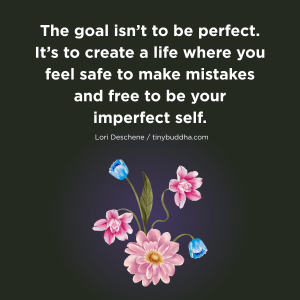
    It’s not about being perfect. It’s about showing up and being able to go there.

    It can be helpful to look back on your own childhood to gain understanding into how you learned or did not learn to deal with your feelings and emotions. It will have everything to do with how you raise your own kids.

    What was acceptable and what was not? How did your family of origin process feelings?

    There is no shame in it. It is never too late to go back and heal what we helped to break. Acknowledging our own inadequacies can be freeing. We live in a culture that demands perfection, where perfection does not exist.

    We do not know, what we do not know. There is always room to learn. Haven’t your children been the greatest teacher? Don’t they challenge you beyond what you think you can do?

    Don’t they deserve to grow into the healthy, happy, productive, loving adults you want them to be?

    Of course they do. The hard part is we have to be that first.