Tag: wisdom

  • How to Stop Punishing Yourself for Your Breakup

    How to Stop Punishing Yourself for Your Breakup

    “The most difficult times for many of us are the ones we give ourselves.” ~Pema Chodron

    After you come out a meaningful relationship that you didn’t foresee ending, you begin to think about everything you did wrong.

    If you were not the one who wanted to the breakup, you may spend a lot of time blaming yourself and wondering about what you could have done differently.

    You might begin to believe you’re solely responsible for what went down and that you deserve to spend years in relationship purgatory by yourself, mourning the loss of the person you loved.

    You might take all the responsibility and blame as you spend months and years alone.

    You may tell yourself terrible things about yourself and what a monster you were in the relationship.

    Then you’ll probably feel guilty about everything you did and assume that the relationship ended only because of you.

    And you may feel ashamed, unworthy, and unlovable because the other person was so good and you weren’t.

    This kind of unhealthy thinking puts all the blame on you and removes all responsibility from your ex.

    Your ex moves on and maybe even finds love soon after, while you spend an inordinate amount of time reflecting, hurting, and punishing yourself for what you did.

    These are all things I experienced when my marriage ended.

    I was such a mess after the marriage, carrying a big brunt of the responsibility, blame, and guilt.

    I felt like I had committed a crime against my ex for how badly I’d treated her, how intensely we’d fought, and how dramatically the relationship had unraveled at the end.

    If I had been better, wiser, kinder, and more giving, I believed, we could have stayed together.

    These feelings and thoughts kept me hiding for years, replaying the events of the past. I mentally attacked myself and felt bad about myself for years afterward.

    I stayed home, locked myself up, and suffered silently, believing that no one would ever want me again and I was unworthy of loving or being loved.

    I didn’t think there was something wrong with her, the relationship, or both of us. I took the sole responsibility for everything that went wrong. I put all the blame squarely on myself.

    Everything I did, I magnified in my mind and scolded myself for. Everything she did, I excused, justified, or found ways to blame myself for.

    I later realized this was all a figment of my imagination, these self-harming thoughts. Sure, I had played a large role in the way this relationship had ended, but I wasn’t solely at fault.

    If you’re blaming yourself for everything and feeling guilty about a relationship gone wrong, I want to remind you of the following seven things so you can stop punishing yourself for the past.

    7 Ways to Stop Punishing Yourself for Your Breakup

    1. You were doing the best you could.

    If you knew better, you would have done better.

    You were acting on the tools you had at the time. You likely were not intentionally or purposefully sabotaging the relationship or your partner.

    We each do our best under the circumstances we’re in.

    If you had the ability to be more understanding, less critical, or more forgiving, you would have done that, but you couldn’t have at the time.

    At one point in my life, I thought that feelings were terrible, so I wasn’t willing to open up about how I felt about things with my ex. I thought stonewalling and shutting down were more effective at resolving issues than talking them out (trust me, they’re not).

    I also thought it was effective to threaten a breakup when things weren’t going right or casually suggest a divorce in the middle of an argument (it wasn’t).

    This wasn’t right or fair but it was the place that I was at in my life. If I had known a better way, I would have done that. If I had the skills to communicate better, I would have used them.

    You and I grow, develop, and improve as people and partners over time.

    The good news is that partner you were yesterday doesn’t have to be the partner you are in the future. I’m not the person of yesterday, and I am thankful for that.

    You can be better the next time around.

    2. You are not solely responsible for what happened.

    Remember, there are two people in a relationship. You did your part and your ex did theirs.

    You can’t take the blame and responsibility for both of you.

    It takes two people to dance, two people to make a relationship work, and two people to make a relationship come to an end.

    You may put your ex in a completely positive light and view all your actions with negativity and judgment. Try to see the situation more objectively. Give credit and blame equally to both of you. You and your ex contributed positively and negatively to the relationship.

    You can’t take 100% of the responsibility when you were only 50% of the partnership.

    3. You deserve the same forgiveness you’ve given to your ex.

    You deserved to give yourself as much of a break as you gave your former partner, if not more.

    You’ve likely been unusually harsh and critical of yourself, absorbing all the blame for what went wrong.

    You may be used to being hard on yourself because loved ones were hard on you when you were growing up, but instead of harshness and blame, choose compassion.

    You may have done things without knowing, unintentionally, and without trying to hurt your ex.

    You are a human, growing and making mistakes like all people do.

    Your past errors do not have to be life-long regrets.

    You can use the things that you did unconsciously as learning and growing tools to become a better version of yourself.

    4. Get more curious about what happened.

    Instead of blaming yourself, get curious about the experience you had with your ex and identify the root cause of what happened.

    I began to get curious about my upbringing, my past wounds, and why I showed up in the relationship the way I had.

    I gave myself a break when I got more curious about how I became the person I was in that relationship and why I behaved and communicated the way I did. Instead of blaming, I got help through counselors and friends to understand myself more.

    Become a student of your pain, suffering, and blame so you become wiser about yourself.

    You can’t do anything about the breakup, but in the aftermath, you can do the work to understand why you showed up how you did so you can do better in the future.

    You can find self-awareness and wisdom in the past. .

    5. Release comparisons and judgments.

    We’re taught from a young age to compare ourselves to others and to judge ourselves. These self-sabotaging habits are especially hurtful after a painful breakup.

    Comparing your life to your ex’s life and comparing yourself to friends who are in relationships won’t help you move on.

    Neither will judging yourself and putting yourself down for what happened in the relationship.

    Instead of comparing yourself to others, think of this as a path of growth.

    Compare yourself to yourself. Observe how you’re stronger, wiser, and smarter about relationships today than when you were in your past relationship.

    Also, flip self-judgment into gratitude. Instead of judging yourself harshly, be thankful for your development. Be thankful for the experiences that helped you evolve as a person and a partner.

    6. Affirm your worthiness for being who you are.

    You’re feeling as badly as you are about the previous relationship because it’s opening up wounds about your own worthiness.

    Instead of beating yourself up, can you cultivate and reaffirm your self-worth? Can you remind yourself that you’re more than your relationship and what happened with your ex?

    Regardless of what happened between the two of you, you are worthy for just being yourself.

    If you don’t believe that, then maybe your relationship was an opportunity to recognize the feelings of unworthiness you had before it even started.

    Once you see the wounds more clearly, you can begin working on them.

    You can remind yourself that you’ve brought so much good into the world, have been helpful to many people in your life, and you likely exude compassion and kindness to many.

    Remind yourself that you are more than the narrow shoebox of being a partner in a relationship.

    7. Take credit for the good that came out of this relationship.

    No, it wasn’t all perfect, and there are some things you can take responsibility for in your past relationship, but what can you take credit for?

    If you blame yourself for all the bad things, don’t you also have to take some credit for the good things that happened?

    What positives came out of this relationship?

    How did you grow as a person in your past relationship?

    How did you mature and become a better version of yourself?

    In my relationship, one positive thing that happened was that we both helped each other achieve our professional goals and advance in our careers. We also both recognized self-sabotaging patterns and behavior and went on to work on ourselves.

    Through our partnership, we exposed each other’s wounds, which enabled us to do the work to heal them. We could now show up better for ourselves, our loved ones, and future partners with more self-awareness and understanding.

    You too deserve just as much credit as the blame you’re assigning yourself.

    Reflect on the high roads you took in the relationship and, after it ended, the good you did. Think about how much both of your lives have improved, if they have, and whether you both came out as wiser, kinder, more open people.

    You don’t have to punish yourself for the rest of your life and take all the blame for what happened. You don’t have to go about filled with guilt and shame for what you did to your ex.

    If you can see that you were doing the best you could, look at the many good things came out of the relationship, and see your past as an opportunity to grow, you’ll be able to release the heavy weight of your past and move forward with a wiser and more open heart.

  • Life Is Like Photography

    Life Is Like Photography

    Develop your negatives into something beautiful. Check out the new podcast for established and aspiring creators, by Tiny Buddha Productions: https://nextcreatorup.com

  • What I Did to Survive: Not Proud but I Forgive Myself

    What I Did to Survive: Not Proud but I Forgive Myself

    “Forgive yourself for not knowing better at the time. Forgive yourself for giving away your power. Forgive yourself for past behaviors. Forgive yourself for the survival patterns and traits you picked up while enduring trauma. Forgive yourself for being who you needed to be.” ~Audrey Kitching

    I used to suffer from survivor’s remorse.

    What does this mean exactly? Well, I was ashamed of the things I did to survive.

    As I reflected back on my life, I’d get filled with sadness, shame, and regret.

    Sadness because I did things that were against my moral values when I knew right from wrong.

    Shame because I did things that I never thought I would have to do, in order to survive.

    Regret because I was involved in drugs, sex, and violence.

    I had kids to feed, and they depended on me. As a single parent, I was willing to do whatever I had to do for them. I would sell tools and electronics for gas money. I would sell plates of food to buy diapers. I even chose to sell my body. I did whatever I needed to do to get by.

    I hurt family and friends along the way and lost their trust with my broken promises. Promises that I would pay back money that I borrowed, knowing I wouldn’t be able to. I used people for my own personal gain. My pain caused other people pain.

    I was risking my whole life, and I didn’t even realize it. I could have gone to jail and lost my kids, all because I was trying to provide for them.

    How Did I Get Into a Life of Drugs, Sex, and Violence?

    Well, I had a rough childhood; I dealt with physical, verbal, and sexual abuse as a child, and witnessed abusive relationships amongst relatives and family friends . I processed this into rejection, fear, and anger.

    I struggled to feel love because I equated it with hurt. My family members said they loved me and then did things that caused me pain. I thought this must be love; this is normal behavior.

    The hurt turned into anger, and then I started to resent people. This caused extreme paranoia.

    Still, despite my relationship fears, through a twisted turn of events, I had a baby at fifteen years old. I told myself I would do anything to make sure my son didn’t have the same life I’d had.

    Then at eighteen years old I was a homeless high school senior.

    My Survival Tactics

    I found myself on public assistance. I was in situations that evoked the exact feelings I’d experienced as a child, when I saw my mother depend on welfare and food stamps to get by. I felt impoverished, worthless, and dependent on a system to survive.

    I found myself wrapped up in an abusive relationship, with three kids now, around drugs, around violence, and I saw no way out. This was my life. I wanted to leave, and I tried to many times, but he held me at gunpoint, locked me in a closet, and even choked me at times.

    Domestic violence is a learned behavior. I witnessed it growing up and he witnessed it as well. This abuse was familiar. I didn’t know if I was prepared for the fight. I needed to be loved, so I accepted any love I could get even when it hurt.

    I eventually chose to break the cycle and free myself from the lifestyle I was caught in, but it left me at ground zero. I had to fight for myself, for my kids, for our future. I had to get out of this abusive relationship before he killed me, or I killed him. I’d had enough!

    But leaving was just the beginning of change, and not the end of my stress. My fight-or-flight response was constantly activated. I was always thinking, “I got to do something. My kids need shelter, food, and clothing.”

    I needed food stamps, I needed public assistance, I needed section 8 housing. I needed everything I could get to survive.

    I was doing things that I knew were wrong—lying and stealing what didn’t belong to me—but I felt like I had no choice. I couldn’t call anyone to come save me. I had already borrowed money from people. I couldn’t depend on help from my kids’ father. No one was coming to protect me. I had to save myself.

    I felt helpless. At this point I had a high school diploma, little job experience, and no stability. I was in complete survival mode.

    I did not possess the language to tell someone that I was hurting, that I was struggling and needed help. My fear (ego) told me that no one would listen, and no one would care.

    I feel so ashamed for lying to my mother, for stealing, for degrading my body. I know this is not who I am, but looking back I can see these were my survival tactics.

    I only wanted to survive, and guess what? I did.

    But eventually I wanted more than that. I wanted freedom. The freedom to let go of the past. These secrets that I was ashamed to say out loud.

    This was over fourteen years ago. I was still holding on to guilt.

    My Accountability

    I never wanted to talk about my past because it was painful. I wanted it to disappear.

    I didn’t want to admit that I was broke with $2.29 in my bank account, with three kids.

    I didn’t want to admit that I was on food stamps because I couldn’t afford food.

    I didn’t want to admit that I’d taken other people’s property for my personal gain.

    I didn’t want to admit I’d used my body for financial gain.

    I didn’t want to admit that I was in pain from different traumas, and I was self-medicating with drugs.

    Still, I had to stop and realize that I’d made it and could now focus on thriving—but I could only do that if I forgave myself. That required self-compassion. But I also realized I couldn’t blame anyone else; I had to take complete and total responsibility.

    I had to take responsibility for my choices. I had to take responsibility for doing what I felt I had to do to survive.

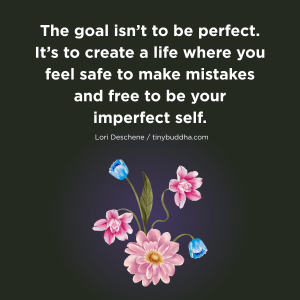
    Note to self: “Beating yourself up for your flaws and mistakes won’t make you perfect, and you don’t have to be. Learn, forgive yourself, and remember: We all struggle; it’s just part of being human.” ~Lori Deschene

    My Forgiveness and Pride

    I had to forgive myself for not understanding my power and for inheriting patterns from the trauma I’d experienced.

    I also had to give myself credit for breaking the cycle.

    I remember once, I was having a conversation with my three daughters, and I was telling them about a time when they were little, and I couldn’t afford to do certain things. One of my daughters said, “Aww, Mom. You used to be poor?”

    In that very moment, I realized that I had survived. And I had created a better future for myself and my kids. Not only did I make it, I provided a lifestyle for my kids without drugs, sex, or violence.

    I apologize if I was toxic energy in anyone’s life, including my own. My forgiveness doesn’t mean that the guilt never existed; it just means I’m letting go of the shame and pain that once controlled my life.

    I used to feel a sense of strength because I’d endured a high amount of abuse, but deep down I was so fragile.

    At this very moment in my life, I now choose to measure my strength by how quickly I release things that threaten my peace of mind.

    I looked at my sadness, I looked at my regret, I looked at my shame straight in the mirror. I acknowledged them, accepted my past, and decided they would no longer control me. This was my first step toward my freedom.

    I made mistakes. I was doing the best I could. I realized I was afraid of speaking my truth, but it’s my truth that’s setting me free.

    Whatever you did in the past to survive, I’m sure you did the best you could too. You were hurting and you used the tools you had based on what you’d witnessed and learned.

    But the past is behind you now. You don’t have to beat yourself up over who you’ve been. Accept your past. Learn from it. Forgive yourself for being who you thought you needed to be. And face your shame so you can let it go. You’ve been through enough. Why torture yourself even more?

    Whatever you’ve been through, and whatever you’re going through now, may your truth set you free and may you heal from your pain.

  • How to Be Like a Tree: Still, Strong, and Uniquely Beautiful

    How to Be Like a Tree: Still, Strong, and Uniquely Beautiful

    “This oak tree and me, we’re made of the same stuff.” ~Carl Sagan

    I was hugging trees long before it was cool.

    Recent research suggests that spending time in nature can reduce your blood pressure, heart rate, and stress level, not to mention cut down your risk of type II diabetes, cardiovascular disease, and premature death.

    But when I began hugging trees, it was an undeniably weird thing to do.

    I risked the odd looks of strangers, however, because trees felt so calm and welcoming to me. When I wrapped my arms around their broad trunks, it felt like I was being gathered into the protective embrace of a beloved elder, as if their steadfastness imparted strength, and their rootedness helped me find my own solid ground.

    Recently, however, I’ve realized that their benefits extend far beyond momentary stress relief; it’s from trees that I’ve learned the most powerful lessons about how to deal with chronic depression and anxiety.

    Here are the biggest and most unexpected things I’ve learned so far from trees:

    1. When in doubt, don’t do.

    Every time I hug a tree, I’m struck by how still it is. There’s a silence, a spaciousness, and a total lack of movement that boggles my mind.

    I mean, it can’t be easy to be a tree. If you’re not getting enough sunlight, you can’t just pick up and walk a few steps to the right. If some animal builds its home too close to your roots, you can’t do anything to move it.

    I, on the other hand, respond to any perceived threat by jumping into action. That’s the nature of my anxiety; when I’m afraid, I want to do something—anything.

    But because I’m not acting out of clarity or wisdom, and because listening to fear makes the fear grow stronger, almost every action I take just makes things worse.

    Like the time when I was anxious about leaving my therapist because I was about to move back to Atlanta after fifteen years away. Jumping into action, I decided to go off my anti-depressant medication before I left so I would have her help, but I did it at a time when I was also changing careers, starting a business, and getting ready to move cross-country. Needless to say, it made a difficult time even harder for me.

    When I don’t get the results that I want, I feel even more out of control, my anxiety grows—along with my compulsion to act—and the negative cycle reinforces itself.

    Trees show me how to break this cycle by demonstrating the value of not doing.

    When I’m smart enough to imitate a tree, I get still. I feel. I listen.

    When I do this for long enough, one of three things happens: Either the problem resolves itself, or a wise response becomes clear to me, or I realize that it wasn’t really a problem in the first place.

    2. Support all of life.

    I’m often awed by how much trees give to the creatures around them, from the moss that grows on their bark, to the birds and squirrels they feed and shelter, to the humans who breathe their oxygen and enjoy their shade.

    When I’m depressed and anxious, I usually feel both overwhelmed by my own misery and guilty that I don’t have the resources to give more to others.

    It’s another negative cycle whereby my misery makes me unable to focus on anything or anybody else, which causes me to feel horribly self-centered, which makes me feel even more wretched and less able to give. What makes things even worse is that supporting others is one of the few things I’ve found that reliably helps me feel better.

    The effortless generosity of trees offers a way out.

    When trees have something to give, they share it with everyone, no matter how small or undeserving. But they don’t beat themselves up for not having acorns in the spring, or leaves in the winter. They simply extend whatever’s there to extend.

    Sometimes all I have to give is an apology for not being more considerate. Other times it’s a smile, or appreciation for someone’s support. Over time, if I give what I have, I have more to give, but the key is never to believe that it should be more than it is.

    That way, I can support all life, including my own.

    3. Don’t be afraid to get big.

    I’ve never been one to take up too much space.

    I’m talking physically: I’m over six feet tall and always felt awkward jutting up above most of the people around me, so I subconsciously slouched and made myself smaller.

    But I’m talking emotionally and relationally as well: I never used to like to call attention to myself, ask for what I needed, or speak up about my opinions. I went out of my way not to negatively impact anybody else, even if that meant sacrificing my own happiness or well-being.

    After years of always making other people’s needs and opinions more important than my own, it was hard not to feel depressed, helpless, and hopeless. By that point, however, making myself small wasn’t so much a choice as a well-ingrained habit.

    When I began to hang out with trees more, I started to notice how unapologetic they are about the space that they take up. They don’t worry that growing tall will cause somebody else to feel inadequate, or that stretching their limbs out wider will mean they’re taking up too much room. They just are who they are. When I stood next to them, I could feel their expansiveness begin to bloom in my own chest.

    Acting on this newfound sensation, I gave myself permission to get big. When I needed something, I asked for it. When I had an idea, I shared it. When I wanted something, I moved toward it. Not worrying about how others might perceive me, I stood tall and enjoyed the unique view.

    The best part is, after a long time of feeling powerless over anxiety and depression, I finally saw that I was bigger than either of them.

    4. Being crooked is beautiful.

    I’ve made plenty of wrong turns in my life.

    I used to feel ashamed that I had ten jobs over ten years before finally finding one that felt like a fit. Or that I had so many failed relationships before getting married nearly a decade after most of my friends. Or that fear made me wait twenty-five years to write a second novel when I knew after finishing my first at age twelve that I was born, in part, to write.

    Most of us (including myself) tend to think that the straight path is the best one. We beat up on ourselves for our false starts and slow progress.

    But have you ever noticed how beautiful trees are? And how crooked?

    I’ve come to believe that it’s precisely because of their odd angles and unexpected curves that trees appear so graceful. A tree made of straight lines would hold no appeal.

    Looking back, I can see that every job I had taught me more about what I wanted and brought me one step closer to work that I loved. Every relationship prepared me in some small way to be with the man I would eventually marry. And every time I negated my desire to write, that desire grew stronger, and I had more material to work with once I finally was ready to say yes to the call.

    We can’t undo our wrong turns, but we can appreciate their gnarled beauty.

    5. It doesn’t matter who you are.

    When I was younger, I thought that it was what I did that made me worthy. I pushed myself hard to do well in school, excel in sports, and achieve as much as I could.

    Eventually that strategy led to an unsavory mix of perfectionism, anxiety, and depression. Desperate, I got help from others and re-evaluated my beliefs. I soon concluded that it wasn’t what I did but who I was that mattered.

    At first this new belief seemed helpful, but eventually it brought its own set of anxieties. I was trying my hardest, but was I really calm enough? Or kind enough? Or wise enough?

    Then one day when I was hugging a tree, I tapped into a truth that made such questions irrelevant.

    I’d just gotten curious about what a tree’s energy felt like. Opening up to it, I was immediately flooded by a sense of expansive serenity. Peaceful as it was, it was also vibrant and strong. Welcoming and warm, it pulled me in. Suddenly I felt as if I were filled with, made of, and surrounded by sunlight.

    The energy was coming from the tree, but I realized that I could feel it because it was stirring something already within me. In other words, the tree and I shared the same true nature. Beneath my body, beneath my personality, and beneath my small identifications, I am this beautiful energy. So are you. So are we all.

    Unified in this way with every other living thing in the world, even I have to admit that the idea of being unworthy doesn’t make any sense. It’s not only irrelevant; it’s impossible.

    That’s when I realized that the magic lies not in what we do or even who we are, but in what we are, and how often we remember that.

  • How Casual Dating Opened My Heart to Love

    How Casual Dating Opened My Heart to Love

    “Hopping from one relationship to another is not the way to find love. Slow down and give love a chance to find you.” ~Unknown

    When I was younger, I was a serial monogamist.

    I did the math recently and it turns out that once I started dating, I didn’t spend more than two weeks single at any point.

    Then, after the end of my most serious relationship ever, I had a moment that changed everything.

    My boyfriend and I hadn’t even been together a whole year, but I really thought he was the one, my soul mate. We had so much in common. We seemed to see eye-to-eye on everything. But then a stupid fight about birthday candles somehow blew up and ended our relationship.

    I remember just standing behind the window the morning he left with a box of books under his arm. It was the end of October, and we’d just had the first snowfall of the year.

    I kept thinking about the last Christmas we’d spent together, how he’d taken me snowshoeing for the first time. Our breath crystallized in the evening air.

    Then I realized that that wasn’t actually him. That had actually been my previous partner before him. All my relationships had begun to blur together so I couldn’t tell where I ended and they began.

    The idea of going out there again, into the cold dating world, seemed impossible. Even if it worked out, wouldn’t it just end up the same way?

    I felt trapped.

    When you keep getting what you think you want and you’re still not happy, you have to start asking yourself, what am I doing?

    So instead of firing up Tinder, going to the bar, or texting someone, I made a different choice. I simply waited.

    I realized that what was creating problems in my relationships wasn’t the fact that I couldn’t find my perfect match. It was my attitude.

    I felt like I couldn’t be alone. I didn’t want to deal with life as a single woman. But the real problem was that I looked at life as a search for this idealized perfect partner that probably didn’t even exist.

    Embrace Strength Over Fear

    When I was jumping from relationship to relationship, I was making my decisions based on fear—I was trying to avoid pain rather than trying to embrace love.

    I sometimes wonder how many of my relationships were twisted toward jealousy, insecurity, and conflict. How many people did I date that were simply wrong for me out of a fear of being alone? 

    And how much time did I waste clinging to those men, as if they were my only hope for happiness, when I not only had the power to be happy on my own, I could easily find other people to date if I tried?

    Stop me if you’ve heard this one: There are plenty of fish in the sea. This is a cliché for a reason. There really are so many people out there that you could date a different person every week and never run out.

    That’s not to say that we need to jump from superficial relationship to relationship. It just means we don’t need to suffocate our relationships with fear because we can trust that we’re strong enough to be alone and we’ll always have options for relationships in the future.

    The Casual Dating Difference

    Casual dating was always something I had avoided like the plague, but when I thought about it, I wasn’t sure exactly why. It was one of those things that you put into the category “sounds like fun, but it’s not for me.”

    But after a few months of being intentionally single, I started to get lonely. I was proud of taking the time for myself, and I knew I didn’t want to dive back into a relationship just yet. Still, deep down, I know I thrive when I’m out in the world, meeting people, and getting to know them.

    I knew I wanted to get back out there, but I wanted things to be different.

    What Exactly Do I Mean by Casual Dating?

    One reason that monogamy is the norm is that it’s something we can all wrap our heads around. Casual dating is a lot more vague because it means different things to different people.

    I came at casual dating from a place of complete ignorance. Rather than being a drawback, this allowed me to create a definition of casual dating that worked for me.

    Basically what it comes down to, for me, is non-exclusive, ongoing relationships with one or more people. I’m all about communication, but I prefer seeing people face-to-face. This means no texting, check-ins, or endless social media interactions.

    I sometimes felt rude or callous putting these ground rules out to someone I’d just started seeing, but I place a lot of value in honesty, openness, and mutual respect. I found that, while this may have been a difficult conversation to have, it saved confusion and hurt feelings down the road.

    I made sure the people I was seeing understood that this probably wasn’t going to lead to a more traditional relationship because I still wasn’t ready for that. I wasn’t playing hard to get so that they had the chance to win my heart. I was enjoying their company and getting to know them, without any pressure on how our relationship would evolve—or if it would at all.

    This actually enabled me to be more fully present with the people I was dating. By simply being open to new possibilities without clinging too tightly to any one person or relationship, you’re able to build something beautiful, moment by moment—whether this is with several people, only one, or even just yourself.

    Casual dating can be a path to self-discovery and lead to a deeper, more healthy relationship if you do eventually decide to commit to one person.

    The Casual Dating Checklist

    1. Have clear intentions.

    While many people choose casual dating to avoid having difficult conversations, this can lead to a negative experience for both parties. I advise you to be open with the people you’re seeing about what you’re looking for. This means figuring out what it is you want and what you have to offer another person rather that letting it go unsaid. First and foremost, this means being honest with yourself.

    2. Slow it down.

    Casual dating gets a bad wrap because some people think it’s synonymous with “sleeping around.” While there’s nothing wrong with that, as long as you’re being safe and honest about your intentions, you can date casually without hopping right into bed.

    In fact, when you’re dating someone casually you tend to see them less frequently, so things can unfold more slowly and naturally than with traditional relationships.

    Beyond just sex, adopting a slower pace with casual dating can actually create a stronger and more real bond than strict monogamy. You’re less likely to get caught up in the “rush” of a new relationship and will instead be focused on actually getting to know them as a person.

    3. Explore your options.

    One of the biggest appeals of casual dating is the freedom it gives you to date outside of a narrow type. When we’re looking for someone to spend the rest of our life with, we tend to be less forgiving, accepting, and open to new experiences.

    With that in mind, make sure to date new and different people. Be open to invites and attention from people you’d normally steer clear of.

    4. Understand what you want and need.

    Casual dating is about finding out what you want through experimenting so you don’t have to have things all figured out going into it. But make sure you’re being fair to yourself in these encounters. Don’t settle for people who mistreat you. Just because it’s non-traditional, doesn’t make you any less worthy of respect.

    5. Know when things have run their course.

    Whatever the circumstances, it’s good practice to be clear and honest with the people you’re seeing. Instead of ghosting, tell them how you feel. A lot of the problems that come with casual dating are in how it blurs lines between dating, sex, and relationships. When in doubt, speak out and make your feelings clear. If you’re going to end it, do it without any ambiguity.

    And sometimes, things don’t have to end. I’m happy to say that, after a few years of keeping it casual, I’m back in a more traditional exclusive relationship.

    At first, he was just one of several people I was seeing. We spent more and more time together and before long, I realized I wasn’t interested in dating anyone else. I just wanted to get to know him and only him.

    While we are monogamous now, we did it by choice rather than obligation. This happened naturally and we both agreed upon it rather than it being simply the default.

    What we have feels more real than anything I’ve had in the past. And I know that if it ends, I’ll be able to move forward. While I love him, and I love what we have, it’s finally loving myself and my freedom that has allowed me to be happy.

  • Why I’m Done Standing on the Sidelines of Life

    Why I’m Done Standing on the Sidelines of Life

    “If you spend too much time thinking about a thing, you’ll never get it done. Make at least one definite move daily toward your goal.” ~Bruce Lee

    It’s easy to criticize others.

    It’s easier to sit outside a situation than be in it.

    Ironically, it’s easy to belittle someone else’s efforts without making any real effort ourselves.

    The safe side of the ropes is an easier choice than committing to being in the ring, truly baring something. It’s also a softer option.

    It’s much harder to have skin in the game.

    It takes guts, and a healthy degree of get up and go, to put ourselves out there. To put our work and ideas out there with no guarantee they will gain any traction. To commit ourselves to competition, with no guarantees our hands will be raised in victory.

    Personal Experiences: The ‘Writer’ Who Never Writes

    I know all about living on the safe side of the ropes, as for too many years I was a ‘writer’ who never wrote.

    Some people are blessed to know what they want to do with their lives from an early age. They follow that path, committed to making it work wholeheartedly. No backup plan required.

    I’ve never been that person. I’ve tried; I’ve tripped and fallen into all sorts of ways of earning a living. And I eventually landed in a space that fits my lifestyle for the most part, with the amount of freedom I have, and also pays me well for my time as a consultant and company of one (me).

    The downside is that this career path doesn’t always fulfill me. There is a creative gap at times.  I have ideas that don’t always belong in my client work but burn away at me anyway.

    Writing has always been something I’ve been drawn to. I’ve read books throughout my life and have always appreciated the beauty in a perfectly framed run of words.

    Much earlier in my life I had a few unspectacular efforts to write some articles. Some work ended in print, but most didn’t make the cut. Even back then, perhaps fueled with a young man’s inflated ego, I fancied myself as something of a writer but lacked the work ethic or skills to back up my ideals.

    I wasn’t willing to commit myself to the craft, not even close. I wasn’t willing to have ten ideas rejected by editors so the eleventh would possibly be accepted. So, other than crafting business cases or technical process documents for consulting clients, I didn’t write (creatively).

    I occasionally promised myself I’d write, I even postured that I could do better than those who did, but I continued to remain passively on the sidelines.

    Until one day, the inertia all became too much. Yes, the safe side of the ropes was easier to some degree, but it was also uncomfortable. An itch was being left unscratched. I decided it was time I put my skin in the game.  

    So I started a simple blog. Two blogs, in fact. One based on some of the ideas that had been burning away at me and one based around haiku. (I also fancied myself as a poet who, you guessed it, rarely wrote any actual poetry!)

    Did the world stand up and take notice? Of course not. In fact, I look back now and think my initial efforts were pretty awful and unstructured (some would argue my writing remains that way). However, something magical did start to happen in me.

    The creative itch and ideas that had gnawed at me started to see light. I started to commit more time to writing. I started to make it a priority in my days and weeks. I strived to get better.

    This process all started eight or so years ago. The blogs have changed (one being retired), but my writing has continued. Books have followed. Writing has become an important part of my life. An important way for me to express myself and share something in me that may have remained covered up otherwise.

    Is it how I pay all my bills now? No, and I’m really not sure that’s the point. Committing myself to the process of making my work the best it can be, of trying to make today’s work better than yesterday’s, is reward in of itself. I have invested myself in the process.

    Do I still dream of a day where I’m a full-time writer and the words I labor over support my lifestyle fully and pay for my travels? You bet I do. However, I’m also going to keep turning up to write regardless.  I’ll carry on turning up to write until I feel I have nothing left to say, and then I’ll stop. And, to be clear, I hope I never stop while breath remains in me.

    I’ve realized that the very act of putting skin in the game is reward enough. I’m in the (writing) ring, baring a little and sometimes a lot of myself. It’s hard work at times, but it’s also exhilarating.

    The Nobility of Applying Ourselves

    There is risk attached to putting ourselves in the mix. Daring where others dare not. Committing ourselves when others second guess, or stand on the sidelines. But there is something to be earned in putting ourselves to the test. It’s where we will often learn most about ourselves. It’s where we grow. Sometimes it’s even where we define ourselves.

    To test ourselves is to learn to trust in ourselves. Whether we try and succeed immediately, or more realistically, try and fall down, pick ourselves up again, and then succeed, each time we apply ourselves we bolster the habit of getting out of the blocks. We learn to embrace, and revel in, taking action. We liberate ourselves.

    Putting ourselves to the test can take many guises. It could be a first public speaking engagement, it could be a first marathon, it could be a first child, it could be flying solo with a business idea, it could be signing up for a competition. It could involve testing ourselves physically or mentally (and often both at once).

    There is honor to be found in applying ourselves. There is respect to be found in trying to be the best we can be. There is reward to be found in the toil of striving to get better, little by little, regardless of the outcome.

    Our Choices Shape Us

    The choice is ours to make.

    We can live a passive life, never truly putting ourselves out there, and possibly shooting down the efforts of others. We can live a life of itches never fully scratched. We can leave dreams left un-chased.

    Or we can commit ourselves to an all together different route.

    We can commit to try harder, to do better, to be better. We can bare something of ourselves to the world. We can put our skin firmly in the game. We can seek to make an impact in our own small but significant way.

  • How to Accept That It’s Time to Break Up

    How to Accept That It’s Time to Break Up

    “Sometimes things fall apart so that better things can fall together.” ~Marilyn Monroe

    I knew it was over and yet I stayed.

    In my eyes, my relationship had run its course. I was fed up, tired, and emotionally drained, but I couldn’t get myself to pull the trigger. I didn’t know how to go through with it.

    Because this was my first serious relationship, everything was new to me, including breaking up. He was my first love. We lived together, built a life together, and now I was throwing a wrench into all of our bright plans for the future.

    After being with each other for over five years, our relationship had seen its ups and downs (as most relationships do). By that point, though, the honeymoon phase was a distant memory and our interactions with each other had devolved into petty fights, low blows, and toxic behavior.

    I was lost, confused, and unhappy, until finally it hit me:

    We weren’t right for each other.

    Simple as that.

    But still, I waited. For six months, in fact, until I reached a point when I couldn’t take it anymore.

    That day, I sat my boyfriend down and told him exactly how I felt and that I was done. Through protests and tears, he packed a bag and moved to his mom’s house until I could figure out a different living situation.

    The separation didn’t last long though.

    I thought I’d be relieved to finally go through with the breakup, but my boyfriend’s reaction made me second-guess myself. I’d assumed that he was as fed up as I was with our relationship and, when I realized he wasn’t, the doubt crept in and I was even more confused than before.

    So we tried again. This time, going to therapy with the hopes of working through our problems, but that didn’t work either.

    A few months later (nearly a year after I realized that I wanted to break up in the first place), my boyfriend and I finally ended things for good.

    I was left looking back at my relationship and wondering:

    How could I have put myself through that? Why did I stay as long as I did? What would I do differently if I were to do it again?

    Here’s what I wish I knew at the time.

    1. Accept your feelings as valid.

    It’s easy to get lost in your relationship and sacrifice your needs for the sake of your partner’s. That’s exactly what I did.

    Instead of listening to my feelings and breaking up with my boyfriend, as I should have done, I doubted myself. Even when every fiber of my being was telling me “it’s time,” I held back and made excuses.

    I was so worried my feelings could be wrong or temporary, and that I couldn’t trust myself. Could I be making a huge mistake I’d regret down the road?

    Then I would think about my boyfriend’s feelings—how I was causing him pain and making him suffer. So why wouldn’t it be better to stick it out for his sake?

    These anxious thoughts running through my head did nothing but keep me trapped in a cycle of fear, pain, anger, and frustration.

    The bottom line was that I was unhappy. And I knew, somewhere deep inside, this wasn’t going to change.

    After years of putting my feelings on the back burner, it was a hard reality to accept. But going through this process made me realize that I couldn’t stay in a relationship with someone I simply wasn’t happy with. It wasn’t fair to him or to me, and it left us both feeling miserable.

    Sometimes you have to be a little selfish and put yourself first, and ending a relationship is one of those circumstances.

    You also have to push through the fear that you may be making a mistake and trust that you truly do know what’s best for you. That doesn’t mean you’ll find someone else right away or you’ll never feel lonely when you’re single. It just means you know this particular relationship isn’t right for you, and it’s better to be with no one than the wrong one.

    It may be difficult, but, through my own personal experience, I’ve found that the initial feelings I had a year before my official breakup are how I feel to this day. If I had listened then, I would have saved myself a great deal of trouble.

    So if you’re struggling with the idea of a breakup, take a step back and focus on yourself. Be brutally honest with yourself and write down exactly how you feel without holding anything back.

    It can be scary to face the facts, but if the same feelings pop up time and time again, then it’s time to listen. Your gut is trying to tell you something.

    2. Focus on the now.

    When the bad times outweigh the good, something needs to change.

    My boyfriend and I shared a lot of good times together throughout the years. When we weren’t fighting about something, I thoroughly enjoyed his company and cherished the rare moments of peace we had together.

    Even though the good moments in my relationship were far and few between, I would cling to those moments to justify my staying. Just when I thought I’d had enough and felt clear about my decision to leave, I would remember those happier times and my mind would instantly become clouded.

    I idealized what our relationship once was instead of looking at it from the present circumstances. And the fact of the matter was that there wasn’t enough good to outweigh the bad.

    So I made the decision to focus on the now.

    Instead of allowing the past to creep in and fill me with doubt, I needed to face the facts and look at where my relationship was at that point in time. Doing so helped me pull away from my tendency to idealize the past and helped me move toward accepting the breakup for it what it was.

    If you find yourself in a similar situation, shift your focus to the present. Think about where your relationship is currently and how you feel about it in the moment.

    3. Create actionable plans for the future.

    Fear was my biggest enemy during my breakup. I was absolutely terrified of what the future had in store.

    Over the years, my boyfriend had become a crutch for me to rely on. We had developed an unhealthy level of codependency that was difficult for me to pull away from, mostly due to worries I had about being on my own and navigating life without a partner by my side.

    The uncertainty of the future, while exciting for some, left me frozen with terror.

    Will I be able to make it on my own? Will I be able to adapt? Where will I live? Will I ever find love again? Am I making a mistake?

    Questions like these ran through my mind on a loop, filling me with anxiety that left me feeling trapped.

    It wasn’t until I created a concrete plan that I was able to gain the confidence to finally take the necessary steps toward independence.

    To combat the overwhelming list of tasks involved in breaking up, I broke my massive to-do list down into smaller, actionable steps.

    For example, because I was living with my boyfriend at the time, I needed to find a new place to live. The first step was to figure out where I wanted to live and how much I wanted to spend. Then I needed to devote time to looking at listings and viewing apartments. Once I found a place, then I could shift my attention to packing and so on and so forth.

    Breaking tasks down into smaller steps allowed me to focus on one thing at a time, which, in turn, gave me the confidence to move from paralysis to action.

    So if you find that the thought of a breakup is too overwhelming, write everything you need to do down onto a piece of paper. Then break those tasks down into smaller steps so that it becomes less intimidating.

    The road to accepting a breakup can be a long one. When worries, fears and doubts creep in, change can be that much more difficult. That’s when it’s important to look inward and focus on what’s happening inside of you.

    The moment I shifted my focus onto myself, I was able to overcome my hesitation and make a clear decision. And today, the only regret I have is that I didn’t do it sooner.

    Every relationship is different and everyone has their own path to discovering when it’s time for things to change. The key is to be able to tune in to that moment if and when the time comes.

    Once it’s over and the dust settles, you’ll realize that breaking up isn’t always so bad.