Category: happiness & fun

  • Dare to be Different: Why It’s Okay to Break the Mold

    Dare to be Different: Why It’s Okay to Break the Mold

    Be Different

    “Criticism is something you can easily avoid by saying nothing, doing nothing, and being nothing.” ~Aristotle

    Who am I? This is a question that haunts us all at some point, especially when the people around us are trying to constantly answer this question for us.

    How do we remain true to ourselves in a world that is constantly trying to make us something else?

    I can tell you that it isn’t easy.

    I work as a full-time police officer in a busy department. In police work, everything is supposed to fit in its right place, and there is an established value system in place. In my experience the police system is founded on one major theme, and everyone is expected to conform to this mold:

    Command is valued over communication.

    This is an area where I have done a great job making myself an outcast.

    You see, I chose to join a career where the belief system of the work is contradictory to my own.

    I genuinely care for people, and I value communication above all else in my work. I prefer to talk instead of yell, and ask instead of tell.

    My way of doing the job greatly differs from almost everyone else in my profession.

    I have also noticed that I tend to get a lot further when I am dealing with people, and get in a lot less confrontational situations than my co-workers. Coincidence?

    The truth is that people will do everything they can to make you conform to their “rules.” Because the police world is such a strong subculture, there is a lot of pressure to conform and breaking the established “rules” is even more taboo.

    It can be exhausting sometimes to remain true to yourself in an environment where everyone expects you to be something else.

    We have established that it is difficult and uncomfortable to be different, so why not just conform? The mold is there for a reason, right?

    I can’t answer that question for you, but I can tell you that the mold didn’t work for me.

    Let me explain why.

    The reason I do things the way I do is because there are people that need and depend on me to be true to myself. The last thing the world needs is one more stereotypical burnt out cop.

    Don’t be so afraid to color outside of the lines that you never pick up your crayon!

    You have a unique perspective to offer that no one else does, so share it!

    I can’t tell you how many thank you’s and phone calls I have received for my openness and helpfulness at work. All because I choose to do things differently.

    I have helped to change people’s lives simply by being true to myself. I have gotten through to people that other officers haven’t been able to by because I don’t fit the mold. I promise you, nothing feels better than following the path in your heart.

    Realize I am not saying that my way is better than any other way. I am simply sharing that the different approach that I bring to work has proven to be invaluable to others.

    Also it is important to realize that being true to yourself means you might bump heads with other people. That is okay!

    If there isn’t any conflict in human interaction it usually means one person is compromising their beliefs in some way. A little bit of conflict is natural; accept it and learn from it.

    There is a sort of catch that comes with breaking the mold though.

    It definitely isn’t the easy road and you are going to face some difficulties. At least I know that I have.

    What can you expect if you choose to break the mold?

    Will you be mocked? You bet

    Misunderstood? Count on it.

    Outcasted? Most likely

    And all of it will be worth it. To the people you help and to your happiness in life, there is no alternative. You have to be true to yourself, against all odds.

    I have had insulting posters made about me and posted up at work and I have been openly mocked for my way of doing things by other officers. I have been told on multiple different occasions walking up to a scene with violent individuals “Why don’t you just go give them a hug”… as if I don’t understand that the world isn’t that simple.

    This is the price I pay for staying true to myself, and I grin and bear it. Because every time someone tells me I was the only person on the scene who really listened to them, and that I made a difference in their life, it makes it all worth it.

    My way of living has been difficult, but also equally rewarding for me. I chose not to compromise my beliefs just to fit in, and I would gladly do it again.

    The choice of who you will be is ultimately up to you.

    If you choose to break the mold, I offer some advice to help you find your way:

    1. Intimately get to know who you are and what you represent.

    Without a crystal clear view of your identity, it will be difficult to survive the pressure and ridicule. Get to know yourself more. Spend time meditating, writing out your feelings, and organizing your thoughts before you make any big decisions.

    2. Try not to take things personally.

    What you need to realize is that humans attack what they don’t understand. It isn’t that they dislike or disapprove of you; it is that they don’t understand what you represent.

    Realize that the attacks are not personal, no matter how they sound. The people attacking you are really just protecting their own ideals, because what you represent makes them question their values.

    3. Realize that you are unique and important, despite what the people around you may say.

    Your opinion and approach matters just as much as everyone else’s!

    Once you start walking your own path, never turn back. Walk through life with your head held high knowing that you never comprised what is in your heart.

    Being true to yourself will eventually earn you respect among many of your peers. I have had this happen to me, and I have more than a few co-workers who understand my approach and respect it. Coincidentally, these co-workers are the officers I always looked up to. We handle situations differently, but we respect each other’s methods. This type of support will go a long way to keeping you on course.

    Even a few of the officers who initially gave me the hardest time have started to be more respectful. It takes time, but it does get easier.

    If you ever feel alone on your path, realize that you are in good company. Almost all the great people in history chose to break the mold and to walk their own path.

    Starting right now, I challenge you walk your own path and don’t compromise your beliefs for anyone.

    Take the first step and never turn back.

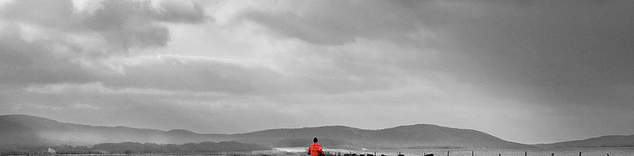
    Photo here

  • Tiny Buddha’s Guide to Loving Yourself Interview: Julia Manuel

    Tiny Buddha’s Guide to Loving Yourself Interview: Julia Manuel

    julia

    This month we’re celebrating the upcoming launch of Tiny Buddha’s Guide to Loving Yourself, a book about taming your inner critic that features 40 stories from Tiny Buddha contributors. 

    Throughout September, you’ll have a chance to meet some of them through daily interviews here on the blog.

    Today’s featured contributor is Julia Manuel, a writer, strategic communications specialist, and assistant with a Baptiste-affiliated yoga studio.

    Her contribution for the book explores how we can live authentically instead of playing roles.

    A little more about Julia…

    1. Tell us a little about yourself and your self-love journey.

    My journey of self-love is a newer expedition. I spent most of my life striving to be the best at everything, piling too much on my plate, and being jealous of others.

    Although I still have an existential crisis occasionally and ask myself, “Why am I not living the slow life on an island rather than hustling around Northern Virginia?” I enjoy sharing my time at home with my husband, our dog, and our friends.

    Being surrounded by others’ positivity is an inspiration to reflect what they emit. I want to help others feel relaxed, appreciated, and loved, and I believe that energy is emitted from within. I work on loving myself so I can give that back to the people I encounter.

    2. Have you ever thought something was a flaw only to realize that other people actually appreciate that about you? What was the “flaw”?

    Someone complained to a mutual friend that I laughed too loud. For years, I’d muffle my laughter, hide my smile, and maintain composure when I was excited. I believed if someone complained, then these traits really were flaws.

    I think maturity was the turning point. The more comfortable I felt in my own skin and the more I loved myself, I realized that laughing loudly is an expression of how much joy and happiness I feel. It’s not the laughter of a hyena, but a deep, boisterous, riotous laugh.

    When people tell me, “I could hear you coming from a mile away you were laughing so hard,” it makes me laugh even more. I could be known for worse, right? Is it wrong to say that you love your own laugh? It reminds me that I live life to the fullest.

    3. What was your biggest mistake (that you’re willing to share), and what helped you forgive yourself?

    Those with tremendous empathy must be careful that other people don’t use our warmth to fill a void, because we’re left exhausted. I let someone sponge off my energy so much that I lost myself. I wanted to help this person realize they were worthy of love and friendship, but it was parasitic, and I was left with nothing.

    The tables turned and I become the person who needed to feel loved and worthy. I clung to a new friend too fast and scared them because my actions were needy, desperate, compulsive, and negative.

    It’s been a slow process to forgive myself, but I remind myself that it is okay to leave the person you were in the past. I’ve learned to take ownership of my mistake and decided the only way to forgive myself would be to live in the present. When you’re present, there is no past or future.

    4. Complete this sentence: When other people don’t like me…

    …I am finally okay with that.

    5. What are some areas in your life where you’ve compared yourself to other people, and what’s helped you let go of these comparisons?

    A friend and I have gone to yoga classes together for three years. We roll out our mats next to each other, and for the first few months, every time we’d hit Warrior One, or crescent lunge, or chair pose, I’d peek over at her and think, “Geez, why am I not that close to my mat?! I’m not bending my knee enough or squatting low enough.” And then I beat myself up over it.

    One day, in the middle of class I realized, “Wait a second, I’m like a foot taller than her!” I know that’s the silliest example ever, but comparing ourselves to others is just that—silly. I was trying to convince my body to do things it simply couldn’t just to mimic someone else because what I saw was beautiful, calm movement.

    It’s so easy to compare. Someone at work dresses nicer than you or is a more eloquent speaker. Your friend is a perfect mother or amazing chef. Your partner always has their head on straight. What we need to recognize is the line between comparison and appreciation.

    One thing I learned from my yoga community is that I am right where I need to be. I’ve always strived to be an individual. When I’m down, I actually make a list of things I like about myself or what I’ve accomplished in the past year. When you love yourself, it’s easier to look at others and acknowledge their strengths rather than be jealous of them.

    6. What’s one thing you would tell your younger self about looking to other people to complete you?

    You are good enough.

    7. What are the top three things you personally need to do to take good of yourself, mentally and emotionally?

    • Finding Solitude. I recharge alone in silence whether that’s hiking, yoga, reading, etc.
    • Yoga. Yoga practice has bridged my mind and body. My thoughts are peaceful and collected and my body is strong. I carry that strength and peace off the mat. I also strive to practice the teachings of yoga toward other to maintain balance. We have to take good care of others too!
    • A good cry. I’m not ashamed to admit it, but I think crying is a great emotional release. I always feel so relaxed after expelling all of that pent up energy and able to take on the world.

    8. What’s something you do regularly that makes you feel proud of the difference you’re making in the world?

    I love being of service to others. Recently, this has been in the form of sharing my knowledge and helping friends write essays or scholarship applications, sharing my teacher training experience with friends who want to become certified, mentoring new hires at work, surprising friends with a good bottle of wine for no reason.

    I love the community built from reciprocating good deeds and sharing.

    *Note: I edited this post to remove info about the pre-order promotion, which ended on October 8, 2013. You can learn more about Tiny Buddha’s Guide to Loving Yourself here.

  • Tiny Buddha’s Guide to Loving Yourself Interview: Lucy H. Pearce

    Tiny Buddha’s Guide to Loving Yourself Interview: Lucy H. Pearce

    lucy

    This month we’re celebrating the upcoming launch of Tiny Buddha’s Guide to Loving Yourself, a book about taming your inner critic that features 40 stories from Tiny Buddha contributors. 

    Throughout September, you’ll have a chance to meet some of them through daily interviews here on the blog.

    Today’s featured contributor is Lucy H.Pearce, who runs Dreaming Aloud.neta blog about motherhood, creativity, and mindfulness; and The Happy Womb.com, a site offering empowering women’s resources.

    Her contribution for the book focuses on ways to overcome perfectionism.

    A little more about Lucy…

    1. Tell us a little about yourself and your self-love journey.

    I am a mother of three young children, author of four women’s non-fiction books, pro-blogger, artist, teacher and contributing editor at a natural parenting magazine.

    Listing that just makes me feel tired, but I am also a life-long perfectionist, and believer that, even when I am dropping dead from exhaustion, I am a lazy ass who needs to get her butt in gear.

    My internal monologue sticks at “You are not doing enough…” I try to counteract this lovingly on a daily basis. My simplest tool for doing this is my “done” list, rather than “to do” list, which lists everything I have accomplished in the day. 

    2. Have you ever felt there’s “something wrong with you”? If so, why, and what’s helped you change your perception?

    I think there is more wrong with me than right. I’m my own worst critic and struggle to stay the right side of sane on a daily basis. I am someone who always tends to take too much on, in a mad bid to stay sane.

    It’s a funny old mix. I have a hundred passions—all leading me in different directions. If I “take it easy” I get miserable pretty fast. I love what I do, and do what I love. But I also live with anxiety, bi-polar, and have three small children in tow.

    Sometimes I find myself getting so mad with them and myself for holding me back. But as a massage therapist once said to me, they are what keeps me grounded; without them I’d be spiraling off too far and fast. 

    3. Have you ever thought something was a flaw only to realize that other people actually appreciate that about you? What was the “flaw”?

    Discovering that I was bi-polar a couple of months back was transformative for me. I was so scared of letting people know, it felt like such a big deal. Like how coming out must feel; I was prepared for rejection.

    What I was not prepared for was the out-pouring of love toward me. Or the fact that no one was surprised.

    Instead, I was getting emails and messages saying that they were glad I had this thing that scared me so much—glad because it was what helped me to do my creative work which they loved so much; glad because I was someone who would be able to share my experiences in managing it creatively and naturally with others; grateful for my giving voice to what is often left unspoken and silent.

    5. Complete this sentence: When other people don’t like me, I…

    curl up in a ball and cry. I’d love to have some big clever answer, but it’s true.

    6. What are some areas in your life where you’ve compared yourself to other people, and what’s helped you let go of these comparisons? 

    Oh, I’m good at the comparison thing. Most especially when it comes to mothering, and tidy houses. I get my knickers in such a knot about my house being a mess—and how it shouldn’t be.

    I know that for someone who does the amount I do, who has three little kids and struggles with health issues that I need to let this go, but I feel so judged, as though not living in a show home makes me some sort of moral failure.

    I make no apologies that I prefer painting pictures or writing books to cleaning my house, but I feel I should. 

    8. Have you ever felt afraid to show people your “real” self? Why—and what’s helped you move beyond that? 

    This is something I’ve really struggled with. I’ve always felt a bit odd, different to “normal” people, a feeling that was certainly reinforced by childhood bullies. I really tried to be normal and keep my weird bits under wraps.

    It’s something I really had to get out of the way in order to be able to publish my first book Moon Time. Not only was it my first book, and self-published, but it was on the menstrual cycle—not the easiest conversation starter!

    But here’s the thing: in order to write it, I had to get over myself as flawed, deeply embarrassing, and requiring hiding away. I had to be open, and honest. Getting over myself was part of the process of writing it.

    The same with starting to paint again and having my first professional exhibition. I felt totally vulnerable and exposed doing this, but that was part of the process.

    The myth is that you get your confidence first and then you live your dream. The truth is that you do your dream, feeling scared, becoming it all the time. And through it you become your dream, you become the you, out loud, that you’ve always been hiding from, and hiding from others.

    It’s an immense act of courage. It feels like you’re going to die. But instead you come out the other side freer.

    9. What are the top three things you personally need to do to take good of yourself, mentally and emotionally?

    What’s helped me most, the past couple of years, is to be able to put “labels” to what I suffer with, rather than me just being a loser.

    When I realize that I am managing conditions, then self-care becomes not a luxury but a necessity. Managing my mental health is as vital for me as for a diabetic or an asthmatic managing their condition.

    The most important thing for me is knowing when to “stop the lights.” Either I or someone I love waves a flag when things are getting out of control, the panic is rising, and I’m getting overwhelmed, and I stop.

    I drop everything go to bed or watch a movie with the kids, postpone appointments, abandon my to-do lists for a few hours, and cull them.

    Though everything feels vital and urgent, I stop. Drop everything, and take care of myself: breathe, force myself outside and away from the computer, have a glass of water and do beans on toast for dinner.

    The world will keep on turning with me on “go slow” for a few hours. The ego won’t let me believe this, but it will. If I died, it really would keep on turning. So I can die to the world for a few hours, it will all be here in the morning. 

    10. What’s something you do regularly that makes you feel proud of the difference you’re making in the world? 

    Sending out orders of my books and moon dials, and getting emails back from women around the world saying how my words have changed their lives. I will never get tired of that, nor forget what a blessing it is to do my work.

    *Note: I edited this post to remove info about the pre-order promotion, which ended on October 8, 2013. You can learn more about Tiny Buddha’s Guide to Loving Yourself here.

  • How to Find the Motivation to Change Your Life When You Don’t Feel Capable or Worthy

    How to Find the Motivation to Change Your Life When You Don’t Feel Capable or Worthy

    “Eventually you will come to realize that love heals everything, and love is all there is.” ~Gary Zukav

    Following a path of personal development isn’t easy. Oh, it’s rewarding and can be life changing, but it can also be confusing, challenging, and scary.

    What if you take the wrong path? How do you know which piece of advice is right? Can you still get the results you desperately want, even if you go against some of the assumed wisdom?

    One such piece of wisdom is that people should make changes in their lives and their behavior for themselves, not for others. That’s always been the standard advice from friends, magazines, and TV “experts.”

    But what if you don’t feel ready, worthy, or capable of making the change for yourself? What if you feel so confused and scared that you don’t know where to start?

    I formerly struggled with loving myself enough to take those initial steps toward finding a way out of my own depression and anxiety.

    Then I realized that sometimes the love we have for other people, particularly for our children, can give us the motivation to start on the journey—even when we are lacking the love to do it for ourselves.

    Like many people, I struggled with feeling like I was wrong, deficient, and “not good enough” for a long time.

    You know how for most people, those anxious teenage years full of self-doubt and awkwardness pass with the arrival of their twenties? For me, those feelings didn’t disappear. If anything, they accelerated. Feeling unsure of myself turned into something darker and more entrenched.

    I spent my twenties shuttling between depression and its twisted sister, anxiety. By the time I was twenty-seven I was exhausted by it and hospitalized for a brief spell (a “little rest,” as my mum euphemistically described it.)

    Depression had become a part of my identity. To my mind, it wasn’t a condition I experienced; it was part of who I fundamentally was: a person broken beyond repair.

    I tried counseling but found it painful and not something I was ready for. So then I tried drama instead—intense relationships with men who tried to love me better, and I them.

    I tried medication and it helped; it lifted my mood enough so I could function.

    But the thoughts and the moods just receded; they never fully went away. The depression didn’t let go; it was always on the edges, threatening to return.

    I’d sense it. There it was snapping at my heels, reminding me that all was not well: I was not well.

    And then, everything changed. Thirteen years ago I had my son. A beautiful, smiling boy, who rocked my world and kicked my self-perception off its axis.

    That’s the thing with kids—before you have them, even though people tell you about the oceans of love you will experience, you just don’t get it. But once my son was in my arms, I got it. I really, really got it.

    I loved him in a way that blew a hole in my self-loathing and everything I’d taken to be true.

    I sat with him in my arms, perfect little fingers, toes, nose, eyelashes—perfect everything. The waves of fear and love I felt took my breath away.

    A terrifying set of questions gnawed at my mind: What if I couldn’t do it? What if I couldn’t protect this perfect little being? What if I actually damaged him? What if my deficiencies, my failings, my brokenness affected him?

    I would do anything for him. He needed me to be the best I could be. I knew that I had to get better; I hadn’t had the strength to do it for myself, so if I couldn’t do it for me, I would do it for him.

    That’s what gave me the push, the kick, the boot up the backside I needed.

    I didn’t have the answers for how I was going to do it, but I certainly had a lot of questions:

    • Why do some people seem able to soar through life and others struggle?
    • How come some people can see the good in themselves but others can’t see their own strengths at all?
    • What makes people happy, and is it possible to increase how happy we are and how often?

    Answering those questions took quite a while—thirteen years and counting. Once I took my first faltering steps along that journey to find those answers, so many things opened up for me.

    I’ve had therapy, returned to learning, studied with some amazing teachers, become an NLP Master Practitioner, completed a Master’s degree in coaching, not to mention read every personal development book I could get my hands on. I’ve sucked up positive psychology research, taken up yoga, learned how to practice mindfulness, and made understanding my brain and moods a priority.

    It might have started out as a way to sort out my own head so that I could be a better mum, but it’s blossomed into something more profound. The ripple effect of the journey is immense. I teach, write, and share what I’ve learned and will continue to do it so that others can get it too.

    I know I’ve moved from a place of great darkness to huge possibility and light. The depression that snapped at my heels has gone; although I’ll always be watching out for its return, I’m confident I have the tools to deal with it if it ever does.

    Above all, I am grateful beyond words to my son and to his little sister for showing me what love really is, for showing me that I was capable of giving such love and worthy of receiving it. They unlocked the door for me to start really loving myself.

    What started out as something I did for someone else, turned out to be the most loving thing I’ve ever done, for both of us.

    It doesn’t really matter who you’re starting out on this journey for—just start it. If you do it with a desire to learn, grow and heal, and feel happier, you will get there.

    Don’t feel guilty about taking time for yourself or investing in things that will help you to get there.

    When you feel better, are kinder to yourself, and no longer spend hours a day wrestling with your own demons, you free up so much time, energy, and love to give back to those around you.

    You might feel scared. You might feel guilty for wanting to take an hour to read that book, or visit the gym, or attend that course. You might think you’re not worthy of it.

    You might feel that being a good person is about focusing all of your energy on your loved ones and ignoring yourself. But I want to tell you that’s not true. The best thing you can do for your loved ones is sorting your own stuff out.

    • Give your kids a role model of self-compassion.
    • Show your niece that it’s okay to be gawky and unsure of herself.
    • Show your dad that it’s good to take time out and take a rest when he’s feeling overwhelmed.

    Show your loved one’s a model of choosing happiness and hope over depression and despair.

    The greatest gift that we can give to those we love is to show them that they can learn, grow, and evolve—and that they are in control of that.

    I don’t care why you do it. If you can do it for yourself, that’s fantastic. But even if you’re initially doing it for someone else, you might just learn along the way that you’re worth making the change for after all.

  • Tiny Buddha’s Guide to Loving Yourself Interview: Julie Hoyle

    Tiny Buddha’s Guide to Loving Yourself Interview: Julie Hoyle

    julie-hoyle

    This month we’re celebrating the upcoming launch of Tiny Buddha’s Guide to Loving Yourself, a book about taming your inner critic that features 40 stories from Tiny Buddha contributors. 

    Throughout September, you’ll have a chance to meet some of them through daily interviews here on the blog.

    Today’s featured contributor is Julie Hoyle of True Alignment. Having experienced a profound spiritual awakening, she now teaches others to transform self-limiting beliefs, expand in consciousness, and access their innate gifts, skills, and talents.

    Her contribution for the book explores how we can come home to ourselves by embracing our shadow side.

    A little more about Julie…

    1. Tell us a little about yourself and your self-love journey.

    I was born in the UK and have called the Bahamas my home on and off for close to thirty years. In 1989, while living in the capital New Providence, I had a lucid dream.

    In the dream, I was tapped on the head by a Yogi in a white loin cloth. Later, I discovered the Yogi was Bhagawan Nityananda, a revered Indian saint who died in the 1960’s.

    His touch was radical and life-changing in a way that I could never have anticipated.  I was graced with lucid dreams with Saints from diverse paths and traditions who gave teachings and guidance.

    In the waking state I was forced to face my inner demons, or what is now commonly referred to as the Shadow. Through this work I began to wake up to the realization that we can only love who we are if we have the courage to accept and transform the darkness within.

    2. Have you ever felt there’s “something wrong with you”? If so, why, and what’s helped you change your perception?

    I always felt like I never fit in. For example, I could never fathom why most people seemed obsessed with material accumulation and success.

    For a while I tried to be the same, but I could not do it. The result was I began to believe there was something fundamental missing in me.

    This created pain, discontent, and feelings of isolation. The weight of this pain was so wretched, my spiritual search was focused on finding someone or something that could show me what was missing.

    Happily, without consciously realizing it at the time, I began what enlightened masters describe as “the path of return,” the path back to who we are. During the course of this journey, I began to appreciate that “feeling like we don’t fit in” is a blessing. It is typical of people who are mystics.

    3. Have you ever thought something was a flaw only to realize that other people actually appreciate that about you? What was the “flaw”?

    The flaw was being a natural intuitive. As a child, I would know things about a person without him or her saying anything.

    I also had otherworldly experiences and angelic visitations, which I assumed everyone else had too. However, one day I realized that this was not the case. When I was fourteen, I decided it was best to keep quiet about this aspect of my life.

    Following a debilitating back problem in my early thirties (prior to Nityananda’s gift of initiation) I became conscious of trying to “stay safe” by closing myself down. From that moment on, I felt compelled to change the dynamic.

    Changing the dynamic meant having the courage to share. In the beginning I began writing articles for Mind-Body-Spirit magazines. Then I wrote an E-book about my radical awakening. Later, the work grew to online courses and spiritual counseling.

    Looking into the face of my fears has been life-changing. In an organic and beautiful way it has led me to my purpose.

    4. What was your biggest mistake (that you’re willing to share), and what helped you forgive yourself?

    This is difficult to answer. I really don’t believe in mistakes as such. Everything is a lesson we can learn and grow from. Everything has its own perfection, its own grace.

    5. Complete this sentence: When other people don’t like me, I…

    …do two things:

    • I look inside and reflect on whether I may have said something or acted in a way that may be interpreted as being insensitive or unkind.
    • If nothing jumps out in response to #1, I leave it alone. I don’t attempt to change the perception by working to win him or her over.

    6. What are some areas in your life where you’ve compared yourself to other people, and what’s helped you let go of these comparisons?

    I have never been obsessive about material accumulation. However, when I was in my twenties and early thirties, I would look at what others had and feel less accomplished.

    Then I began to realize that appearances are deceptive and that many people live their lives in debt. I did not want that.

    I decided my goal would be to keep things simple. Ever since, I have made a determined effort to make sure that if I die tomorrow I will not be leaving anyone in a financial hole.

    7. What’s one thing you would tell your younger self about looking to other people to complete you?

    The secret to health and wholeness is to value and appreciate yourself; no one else can do that for you. Only you can make you feel whole.

    8. Have you ever felt afraid to show people your “real” self? Why—and what’s helped you move beyond that?

    For a large part of my life I was tentative and circumspect about revealing my intuitive gifts. I was terrified of being judged or thought of as weird, so I kept things pretty much under wraps.

    However, in 2008 my husband and I lost the whole of our life savings when our bank went into liquidation. It was a dramatic wake-up call.

    I decided, “To hell with it! If everything is gone I am going to do what I have always wanted to do (which is write, share and counsel), I am going to let things rip and see what happens.” This was the best decision I ever made or I should say, was made for me by dramatic circumstance!

    9. What are the top three things you personally need to do to take good of yourself, mentally and emotionally? 

    • Meditation.
    • Exercise, which usually includes swimming, hiking, or cycling.
    • Laugh as much as possible and remember not to take myself too seriously

    10. What’s something you do regularly that makes you feel proud of the difference you’re making in the world?

    Proud is not a word I would use. Being aligned with purpose is integral to wellbeing for me.

    Teaching others how to access, listen to, and act on their innate wisdom is incredible. It keeps me in check. It tasks me to be authentic and to reflect integrity.

    I love supporting people to wake up. To realize we have the wherewithal to transform challenges and create positive, lasting changes in our lives is a joy. I am honored and grateful to be a part of this alchemical process of self-recognition.

    *Note: I edited this post to remove info about the pre-order promotion, which ended on October 8, 2013. You can learn more about Tiny Buddha’s Guide to Loving Yourself here.

  • Tiny Buddha’s Guide to Loving Yourself Interview: Emma Brooke

    Tiny Buddha’s Guide to Loving Yourself Interview: Emma Brooke

    emma-brooke

    This month we’re celebrating the upcoming launch of Tiny Buddha’s Guide to Loving Yourself, a book about taming your inner critic that features 40 stories from Tiny Buddha contributors. 

    Throughout September, you’ll have a chance to meet some of them through daily interviews here on the blog.

    Today’s featured contributor is life coach Emma Brooke, a yogini with a passion for figuring out how people tick and using that to help them find space and clarity in their lives.

    Her contribution for the book focuses on letting go of insecurities.

    A little more about Emma…

    1. Tell us a little about yourself and your self-love journey.

    I picked up yoga when I was 19 in university and finally found a place where there was no competition and no expectations. All the pressure I put on myself and all the expectations of my parents and being the first in the family to go to college fell away, and I finally realized what it meant to relax.

    From there, it was years before I had the courage to follow my own path. I’m still walking a tightrope between parental expectations and my own journey, but I’m making great progress.

    I trained in counseling and hypnotherapy part-time alongside a full-time job, and now work with other stressed out women to help them stay present and get in touch with their own inner wisdom.

    2. Have you ever felt there’s “something wrong with you”? If so, why, and what’s helped you change your perception?

    Hasn’t everyone? I often worry that I will always be thinking that the grass is always greener and that I should be like everyone else who accepts that they have to work fifty hours a week for someone else, doing something they aren’t excited about, in order to earn money to live the life they want to live in four weeks a year.

    I hope I never convince myself that settling is acceptable. I want to believe I can do good and have fun and make enough money to eat!

    3. Have you ever thought something was a flaw only to realize that other people actually appreciate that about you? What was the “flaw”?

    I have always been quite analytical and logical, which can come off as unfeeling or emotionally challenged. I spent a long time trying to be more emotional and expressive so people didn’t think I was a heartless cow.

    However, I’ve realized that it wasn’t that I couldn’t feel; it was that I was being mindful and accepting of my feelings rather than letting them control me.

    This is what I now teach—how to not let your emotions or other people dictate how you feel so you can choose how you feel, and feel your emotions from a safe place. People now pay me to teach them my flaw!

    4. What was your biggest mistake (that you’re willing to share), and what helped you forgive yourself?

    This is a hard question for me because I really have trained myself to look at everything as a gift or a lesson—living life without regrets!

    There are of course life decisions that have affected me in a negative way. I was in an abusive relationship when I was 17, which contributed to an eating disorder I developed in my early twenties.

    I also stayed in a relationship with a long-term partner who manipulated me into being someone I neither wanted to be, nor felt comfortable being (and eventually broke up with him—on Christmas).

    Despite these mistakes, I don’t regret them. They taught me so many valuable lessons and made me a much stronger person.

    5. Complete this sentence: When other people don’t like me, I…

    …remember that I’m unique and therefore not for everyone, and that generally the traits you don’t like in other people point to similar traits you want to work on in yourself.

    6. What are some areas in your life where you’ve compared yourself to other people, and what’s helped you let go of these comparisons?

    I used to spend far too much time and energy comparing myself to other people. Work and school were biggies, fueled by parental expectations.

    Through yoga I slowly learned to accept myself for who I was and began to see the value in me, rather than the flaws. This is my journey. It doesn’t matter what course it takes, it will always be mine and for me. 

    7. What’s one thing you would tell your younger self about looking to other people to complete you? 

    It can make a great Band-Aid, but that’s all it is. Sometimes it’s necessary to bolster your self-esteem but try to remember that everyone and everything is transitory.  You may not always have these people in your life.

    8. Have you ever felt afraid to show people your “real” self? Why—and what’s helped you move beyond that?

    For a very long while I hid my hypnotherapy and counseling training from work colleagues and friends in case they judged me.

    As I’ve got older I have surrounded myself with friends who I can be myself around and who appreciate my uniqueness. Finding “your people” and knowing you’re following your own intuition and are on the right path helps you be your authentic self.

    9. What are the top three things you personally need to do to take good of yourself, mentally and emotionally?

    • Yoga and meditation. I generally only take 15-20 minutes a day to practice, but it keeps the practice of mindfulness at the forefront of everything I do.
    • Fresh air and space. I get claustrophobic in London, even though I live by the river, so I go back to my childhood home in North Wales at least every month.
    • My Scottie dog, Sam. He reminds me what it’s like to love unconditionally and have fun for the sake of having fun when he goes mental and runs round in circles for no apparent reason and then curls up in my lap when I need a hug.

    10. What’s something you do regularly that makes you feel proud of the difference you’re making in the world?

    My work makes me proud. I help people find their intuition and relax and I also volunteer as a compassion for an isolated elderly lady. I might not be changing anything on a global scale, but I get to hear the joy in peoples’ voices and see the smiles on their faces when they feel better, and that’s an incredible feeling.

    *Note: I edited this post to remove info about the pre-order promotion, which ended on October 8, 2013. You can learn more about Tiny Buddha’s Guide to Loving Yourself here.

  • Tiny Buddha’s Guide to Loving Yourself Interview: Joanna Z. Weston

    Tiny Buddha’s Guide to Loving Yourself Interview: Joanna Z. Weston

    joanna-weston

    This month we’re celebrating the upcoming launch of Tiny Buddha’s Guide to Loving Yourself, a book about taming your inner critic that features 40 stories from Tiny Buddha contributors. 

    Throughout September, you’ll have a chance to meet some of them through daily interviews here on the blog.

    Today’s featured contributor is life coach Joanna Z. Weston, who formerly struggled with depression and now helps others find a way out.

    Her contribution for the book urges us to celebrate how far we’ve come in life instead of focusing on everything we think we lack or should have done by now.

    A little more about Joanna…

    1. Tell us a little about yourself and your self-love journey.

    I’ve struggled with depression, shyness, and general insecurity most of my life, so self-love has never come easily for me. I doubt that it ever will come very easily, which is why I am so well-suited to helping other people learn to do it; I know just how hard it is to practice self-love, so I will never take it for granted!

    2. Have you ever felt there’s “something wrong with you”? If so, why, and what’s helped you change your perception?

    Something? Try everything! I have hated (in no particular order): my body, my sense of humor, the talents I have, the fact that I lack the talents I lack, my strong opinions, and my general world view (because it was different from my peers).

    Not so coincidentally, those are the exact same reasons why my friends and husband claim to like me so much.  Go figure!

    3. Have you ever thought something was a flaw only to realize that other people actually appreciate that about you? What was the “flaw”?

    I’ve spent most of my life feeling not like a square peg in a round hole, but more like a non-Euclidean peg in a round hole. It’s not anything specific I can really point to.  My whole way of looking at the world is just 15 degrees off from center.

    I do very odd things with words. I get way too excited about things that most people just do not care about, and am bored by the things that other people find fascinating.

    I’m too weird for normal people, but don’t fit in any better with the geeks and the other freaks, because I suck at conforming to their standards almost as much as I suck at conforming to the normal ones!

    But apparently this is what my friends like about me. It’s hard to let go, but the people who don’t appreciate it don’t matter. Not really.

    4. What was your biggest mistake (that you’re willing to share), and what helped you forgive yourself?

    I had a serious interpersonal kerfluffle during college, and I spent years and years dwelling on it. What finally let me move on was a combination of a lot of things, but mostly realizing that, when it was happening, there was really nothing else I could have done, given who I was and where I was in my life.

    There were better ways of handling it, but I didn’t have access to them. Time also helped; it may not completely heal all wounds, but it does allow scabs to form if you can avoid picking them off.

    5. Complete this sentence: When other people don’t like me, I…

    …used to either desperately try to make them change their minds, or else become defensive and bitter. Now I try to take a deep breathe and remember that their opinions are their business, and have little to do with me.

    6. What are some areas in your life where you’ve compared yourself to other people, and what’s helped you let go of these comparisons?

    The only thing I’ve found that helps me to stop comparing myself (negatively, of course) to everyone else is to love myself better. To honor my true strengths, rather than downplaying them as “easy” or “not important.”

    It has been really, really hard for me to learn that the things I excel at are valuable, and also that I don’t have to be good (or even competent) at everything. There is something to be said for improving your weak areas, but there is also a lot to be said for focusing on and honing your strengths.

    Something else that has been helpful is surrounding myself with people who don’t feel a need to put me down in order to elevate themselves. It isn’t necessary and it isn’t healthy, for me or for them.

    7. What’s one thing you would tell your younger self about looking to other people to complete you?

    It’s a lovely idea, but it won’t work. You cannot truly accept anything from someone else that you can’t give to yourself, at least in some small way. That is true for love, forgiveness, acclaim, pride, and pretty much everything else worth feeling or having.

    It’s not that other people can’t give you those things in part—they can and they do and they will!—but you won’t be able to feel the truth of their gifts until you can offer the same things up to yourself.

    Oh, and don’t beat yourself up if you have trouble putting that into practice—nobody really has that one down perfectly.

    8. Have you ever felt afraid to show people your “real” self? Why—and what’s helped you move beyond that?

    I’m actually terrible at keeping my real self hidden, though I’ve often wished it were otherwise—it would make my life a hell of a lot easier! But in reality, I think that has been a great blessing for me.

    If I were better able to hide my true self to fit in, I might never have worked up the courage to let it out. As it is, I struggled a lot in social situations (particularly in elementary school), but I eventually learned how to avoid the people who didn’t understand me and surround myself with supportive friends.

    9. What are the top three things you personally need to do to take good of yourself, mentally and emotionally?

    I absolutely must spend time every day in some sort of spiritual communion—prayer, meditation, and gratitude are essential. Getting enough sleep (no less than 7 hours, ideally 8 or 9) is also critical, as is eating properly (which can vary from day to day, but definitely involves getting enough protein and eating frequently).

    And to be honest, a lot of that changes based on circumstances. I’m ordinarily solitary, so sometimes taking care of myself means forgoing a good night’s sleep in order to stay up late with friends. But if I’m living in any sort of communal setting (even for a day or two), it is absolutely vital that I have some time away from other people.

    For me, it’s important to respect irrefutable truths about who I am, but also to stay flexible and responsive.

    10. What’s something you do regularly that makes you feel proud of the difference you’re making in the world?

    My coaching. I truly believe that helping more people to genuinely know and love themselves, to honor their strengths and bring their potential to life, is the most important thing I can be doing.

    The world needs more people who are motivated by joy and fewer people who are motivating themselves through bitterness, hatred, and fear. Those do not motivate people to live with compassion, and that is what this world really needs.

    There is a myth that happiness causes complacency, but that’s just a story we tell ourselves to justify our misery. If you are truly happy, if you truly love yourself, if your cup truly runneth over, then you will naturally want to help other people.

    Suddenly, it’s no longer hard to loan a friend money, or watch someone’s kids for the afternoon, or make the effort to shop at local stores, or throw out your trash instead of tossing it on the ground. If I can help bring more of that energy into the world, then I’m doing pretty damn well.

    *Note: I edited this post to remove info about the pre-order promotion, which ended on October 8, 2013. You can learn more about Tiny Buddha’s Guide to Loving Yourself here.

  • Create Your Life: Having Nothing Can Mean Having Everything

    Create Your Life: Having Nothing Can Mean Having Everything

    Man and the sun

    “Breakdowns can create breakthroughs. Things fall apart so things can fall together.” ~Unknown

    A decade ago, as a nomadic adventure-seeker, I traveled and lived in Belize. I’ve always been a dream chaser, which means if I dream it, I start living it.

    My twenty-year-old self was convinced living the island life in the soulful country of Belize was my dream and gateway to happiness.

    After about a year of a major reality check—living on an island is very different than vacationing on an island! I felt totally empty. I felt like I had nothing.

    Seriously, I had no job or city to go back to. Yet, it was just the breakdown I needed to move to the other side of the breakthrough.

    A friend I met down there, another nomadic adventurer, said it so simple and straight:

    “Well, since you got nothing, you’re really free to do anything.”

    And in that moment was a major mental mind-shift:

    Having nothing also means having everything.

    That made it easy to get off my sorry butt and take full charge of the limitless possibilities in my life.

    In the empty space of having nothing, there is plenty of room for the new and incredible to make its way in.

    And that’s what I am sharing today:

    If you feel like something is missing, or if you feel like you are not where you want to be, if you feel like “This is not it!” You know what? Within the “This is not it” rests the answer of your “Yes! This is it” life.

    If you are not living the life you want, the biggest hurdle you face is within your own mind. As said by Anthony Robbins:

    “It’s not about resources, it’s about resourcefulness.”

    Instead of focusing on what you don’t have, use that to fire up what you want.

    If you want anything to change in your life, you need to change your mind first. If you feel like you are in a the midst of a breakdown—like things around you are falling apart and not going the way you hoped, you need to first change your mind and then choose another way.

    The energy around a breakdown is heavy. However, energy is just energy. Instead of labeling the breakdown as “bad,” imagine un-charging the heaviness, and simply seeing it as pure energy. That pure energy is pure potential.

    Take that massive amount of energy from the breakdown and transform it into your breakthrough moment.

    If I had remained in my funked-out state, worrying that I have no job and no home, I never would have started researching new places to live, and new things to learn, and the new life I wanted to create.

    I took the energy of the breakdown and redirected it into taking action to change my circumstances.

    The moment I shifted my perception, my reality changed.

    As Marianne Williamson says, “A miracle is just a shift in perception.”

    And that is what happened to me that day. It was a miracle.

    A shift in my perception led me from living in a situation that was no longer serving any joy or purpose, and directed me to move to Vancouver and study holistic nutrition, which has played a massive role in my joy and purpose.

    Whatever is not working in your life, you can make a miracle out if it, too.

    All you need to do is take that first step and decide.

    If you are feeling in a funk, or like things are just not working out, take that energy and redirect it.

    Start by simply giving yourself permission to fully feel the pain you are in. Once you can accept that your current circumstances are no longer serving you, you can choose to deliberately change it.

    Give yourself permission to take “thinking time.” Life can get so busy, and often when we don’t like where our life is, we fill it with things to do so that we don’t have to think about our unhappiness.

    However, this doesn’t help us get out of our funk. This is what keeps us stuck in a perpetual state of unhappiness.

    Give yourself permission to think. Go outside in nature and give yourself an hour of pure thinking time. Ask yourself: What do I want in my life? What is my dream solution?

    The answers are inside of us. All we need is to give a little time to take care of our emotional body so that we can break free from the self-made blocks that leave us feeling heavy and unhappy.

    Once you give yourself time to think, you will often start to shift into a new mindset full of possibilities. The most important thing at this stage will be to make an action plan to actually change how you are living.

    Ask yourself, what step can you take today to make your life lighter? What can you let go of that is no longer serving you?

    Sometimes it will be a radical change, like moving to a new city and starting a new job, or studying something brand new. Other times it can be as simple as integrating a new healthy eating habit or daily exercise routine.

    Whatever it is, make sure you take action so that you actually breakthrough to the other side and live a life of more meaning and fulfillment.

    Now it’s your turn.

    Have you ever experienced a shift in perception that helped you get unstuck? Or are you in a place that feels stuck and you’re finally ready to shift your perspective?

    Share your story and insights in the comments below. Your contribution helps us all grow!

    Photo by Leland Francisco

  • Tiny Buddha’s Guide to Loving Yourself Interview: Jennifer Chrisman

    Tiny Buddha’s Guide to Loving Yourself Interview: Jennifer Chrisman

    jenn-chrisman

    This month we’re celebrating the upcoming launch of Tiny Buddha’s Guide to Loving Yourself, a book about taming your inner critic that features 40 stories from Tiny Buddha contributors. 

    Throughout September, you’ll have a chance to meet some of them through daily interviews here on the blog.

    Today’s featured contributor is Jennifer Chrisman, a psychologist, wife, and mother of two, who believes wholeheartedly in the healing power of compassion, tolerance, and human connection.

    Her contribution for the book explores how we can stay connected to the belief that we deserve a life of love, instead of feeding our fears and insecurities.

    A little more about Jennifer…

    1. Tell us a little about yourself and your self-love journey.

    I feel like I started this process at a very young age, always questioning my purpose, and trying to find the “solution” so that I could finally feel good about myself.

    I went into the helping profession because I wanted to be an advocate and a role model for other young women, who may have been struggling with the same insecurities, fears, and addictions that I was, but deeper than that I think I was hoping that with enough therapy and education I would be able to heal myself.

    My journey is an ever-evolving process. I tend to view myself as a recovering perfectionist, and for me that means allowing space in my life for all of myself, all of my experiences, the ups and the downs.

    2. Have you ever felt there’s “something wrong with you”? If so, why, and what’s helped you change your perception?

    I can remember as early as elementary school always feeling different from my peers. I was painfully shy and for me, to feel different meant to feel less than.

    When I was 10 years old my father committed suicide, and while I think there was already groundwork being laid, that event solidified in my mind the evidence that I really wasn’t special or loved.

    I spent the next two decades of my life trying to fix all of my flaws. I truly believed that if only I lost a little bit more weight, was just a little prettier, made a certain amount of money, earned the affection of certain people, then I would  feel worthy of love.

    Along the road, I lost the weight, I earned the degrees, I made the money, everything “looked” the way it was supposed to, but I still couldn’t tolerate being in my own skin because I still didn’t have any concept of self-love.

    I didn’t know what it meant when people told me, “it’s an inside job.”

    I think we all come to a point in our lives where we realize that something’s got to give, and for me that was the year my son was born. On the outside, my life looked perfect to everyone around me but on the inside I came to what would be considered my “bottom.” I felt like a secret and I felt like a fraud.

    Today I believe that we are always provided with exactly what we need, when we need it, and that things change when we are ready to make change, and not a moment sooner!

    A series of events led me to finding a spiritual solution, one that I was aware of and familiar with, but unwilling, up until that point to open myself up to. That is when I began to critically examine my faulty belief systems, to challenge my old ideas of how I thought things needed to be done, and how they should look, and to simply LET GO.

    3. Have you ever thought something was a flaw only to realize that other people actually appreciate that about you? What was the “flaw”?

    I used to think that to need anything from someone else was a flaw. I thought that any form of dependency was a weakness and I defended against it for most of life.

    Unfortunately, there is no one among us that doesn’t have needs or can walk this path entirely on their own. When I began to get truly humble and ask others for help, it’s amazing how much love and support showed up in my life.

    4. What was your biggest mistake (that you’re willing to share), and what helped you forgive yourself?

    I genuinely do not believe there are any mistakes in my life, only opportunities. It has taken me a long time to come to this belief because I used to spend most of my time hiding in shame and believing, “if only I’d done things differently.”

    Every single experience I have had in my life has led me to this exact moment, and right now I am exactly where I am supposed to be. I look at the darkest moments in my life, each of the “bad choices” as my sacred wounds. They needed to happen because there was something I needed to learn.

    Finding forgiveness for those I believe harmed me and taking responsibility for my part in each of those experiences helps set me free from living with the bondage of having made “mistakes.”

    5. Complete this sentence: When other people don’t like me, I…

    …often times revert back to old thinking and obsess about what’s wrong with me, or what’s wrong with them, and what do I need to do to “fix” the situation.

    I don’t think anyone ever really gets comfortable with the notion of not being liked. However, today, I’m able to, most of the time, bring myself back fairly quickly from the catastrophe I’ve spun in my head, to recognize that while it’s often times uncomfortable to not be liked, I don’t have to defend myself or change anyone’s opinion of me.

    I’ve spent a lot of time on my self-love journey coming into recognition of, and acceptance of, those things that are within my power to change and those that are not.

    Other people’s opinions of me are not within my power to change, and as is commonly said, are not even really any of my business.

    6. What are some areas in your life where you’ve compared yourself to other people, and what’s helped you let go of these comparisons?

    It can be very easy for me to play what I call, “The Compare and Despair” game because often what happens is I am comparing my internal experience to someone else’s external appearance, and those two will never measure up equally.

    This shows up in almost all aspects of my life: motherhood, my career, my marriage, my body, etc. What I’ve come to realize for myself is that I just need to be willing to be honest and aware of myself when I’m doing it because it’s really just providing me with information.

    I spend a lot of time and focus on creating space between myself and my thoughts, realizing that just because I have a thought, that doesn’t necessarily mean it’s true, and within this space I get to make adjustments when need be.

    So, when I become aware that I’m playing the Compare and Despair game, it’s just information that there’s some part of my life that’s needing a little bit more “work,” often in the form of nurturing and loving attention.

    7. What’s one thing you would tell your younger self about looking to other people to complete you?

    Doesn’t really matter because I probably wouldn’t have listened! I needed to go through the experiences I did, to feel the pain and discomfort of those unhealthy dependencies, until I was ready to let them go.

    8. Have you ever felt afraid to show people your “real” self? Why—and what’s helped you move beyond that?

    I spent most of my life afraid of showing people the “real” me and I believe it’s because I didn’t know the real me. I was so consumed with being who I thought I was supposed to be that I never actually took the time to find me.

    Accepting that I am powerless over other people and their opinions of me has given me the freedom to begin to explore and find myself and to stand by who that is.

    9. What are the top three things you personally need to do to take good of yourself, mentally and emotionally?

    My journey is a one-day-at-a-time process and it’s important for me to consistently remain active in my self-care practices; I can’t rely on what I did yesterday to take me through today.

    Therefore, I start every morning with prayer and meditation, where I get centered and set an intention for myself and how I want to show up in my life. And then I need to get and stay connected.

    I think community is really important and so I make it a point to surround myself with like-minded individuals that are encouraging and supportive. And finally, I need to move my body.

    I’m dedicated to my yoga and Pilates practices and really value making conscious contact with my body through breath and movement.

    10. What’s something you do regularly that makes you feel proud of the difference you’re making in the world?

    Today, I consistently show up for my life. I’m no longer a secret, hiding behind my fears and insecurities. I believe that I walk with grace and dignity, right in the middle, where I’m supposed to be, no better than, or less than any other person trying to figure this life out.

    I’m blessed to work with amazing clients and to be the mother to the two most incredible babies, and there is no doubt in my mind that the woman I am today, and the journey I am trudging, will make a difference in their lives, and countless other lives.

    How exactly that is, I don’t really know, and so I’ll keep moving forward acting with integrity and smile on my face.

    *Note: I edited this post to remove info about the pre-order promotion, which ended on October 8, 2013. You can learn more about Tiny Buddha’s Guide to Loving Yourself here.

  • Be More Childlike: Life Can Be Beautiful If You Let It

    Be More Childlike: Life Can Be Beautiful If You Let It

    “Children see magic because they look for it.” ~Christopher Moore

    Take a moment to close your eyes and imagine a beautiful, warm, sunny Sunday afternoon. Where could you possibly be—at home, on a beach, or waiting at a bus stop?

    Which of these three scenarios is the most appealing? Most of us would probably choose the beach. However, true enlightenment can be found in all three.

    Recently I was waiting for a bus. It was a beautiful, warm, sunny Sunday afternoon. At the bus stop were three ladies. One was and elderly lady in her twilight years, the other was in midlife, and the final one was just a young child.

    The lady in her twilight years was laughing with the child and having fun, in between complaining to the child’s mother about having to wait over thirty minutes for a bus.

    When talking to the child, the mother in midlife was stressed and impatient. She too was complaining to the lady in her twilight years about the delayed bus.

    The child was enjoying being outside, chatting, laughing, and having fun with the elderly lady. She had no concept of time or impatience. She displayed no distress in reaching her destination.

    Observing this interaction, I asked the elderly lady if she needed to be somewhere. She said, “No, I’m going home but I actually have nothing to go home for.”

    Checking my transit Smartphone app, I attempted to reassure everyone the bus was due in five minutes.

    The child’s mother hurriedly said, “No, no. It’s not coming! I’ve been here over thirty minutes and I also have checked the internet.”

    How did she know the bus wasn’t coming? Well, her experience told her it wasn’t. She was focusing on the past, and more specifically, a past experience. An experience she’d chosen to make significant, real, and relevant to the present.

    I understood how she felt. I’d spent many years thinking that nobody loved me or wanted me after several of my relationships had failed. It was very much like waiting for the next bus, without much hope of it coming.

    The older lady said, “This city is going to the dogs!” She’d made a judgment. One that condemned a whole city to doom based on the delay of one single bus.

    The older lady was focusing on the future. A future she was predicting based on a single thought she’d had; a future for a whole city. Words we use are significant for they communicate our thoughts, feelings and beliefs.

    The young child was in the present. Living in the moment and enjoying her interaction with other human beings, a balloon in her hand, free of judgment and thought.

    She seemed happy with the warmth of the sun and a Sunday afternoon at a bus stop.

    Then the bus came. The driver opened the door and apologized for the delay, explaining that construction had held him up.

    At every stop we encountered, people boarded and complained about the delay to their destination. Throughout this time, the child was oblivious to this, still in the present.

    When I got off the bus several stops later, two more were right behind. Two more buses carrying people from A to B.

    Buses sometimes come in threes because our journey in life isn’t always the same; it isn’t always predictable. Three buses at once is a blessing, three vehicles for you to choose from, three choices instead of one.

    You see, the journey did have beauty. It had a child finding magic in an interaction with another human being, in the warmth of the sun, in the opportunity to stop and play. Unfortunately, some of us sometimes get caught up in getting from A to B.

    We sometimes don’t appreciate what’s right in front of our eyes. Sadly, on this day, the mother missed a few precious moments of her daughter growing up.

    It made me think of my parents and how I missed them. They are in their eighties and live 6000 miles away. Each day I miss them growing older. 

    I feel like they are slipping away, and there is sadness in me not being there to hug them and hear their stories each day.

    I made a resolution to call them more often, to visit them more often, despite the distance and cost (mere details in the grand scheme of things).

    The older lady worried about getting home when she was in no hurry and had expressed nothing to get home for. Sometimes that’s the problem; we don’t have something to travel to.

    Like a meteor hitting the Earth, it reminded me of a painful time in my life, when I had nothing to go home for. It was after a particularly bad break-up that scarred me for a number of years.

    At that time in my life I was running from hurt, but had nowhere to go. I really understood what the elderly lady was feeling. I could wear her pain. I wanted to simply hold her, tell her she would find a new path. Perhaps I should have been brave and told her that?

    As we grow from child to adult, at some point we stop imagining. We stop dreaming. We focus on the details of everyday life that are inconsequential.

    A bus is a vehicle. It simply gets us from A to B. We can choose if we want to appreciate the journey.

    Appreciate your travels today. There is beauty in every one of them.

    Whenever you find yourself getting annoyed, impatient, or frustrated with your journey, ask yourself these questions:

    What’s the hurry? What can I appreciate right now? What opportunity has this delay given me? What am I really being impatient with? What am I missing by being this way? 

    What would a child do right now? What’s truly important to me and what action should I take that I haven’t been?

    Powerful questions ground us. They make us reflect, think, and discover. They get us to challenge our assumptions and confront our thoughts.

    Do something childlike on every journey you take. Skip to the supermarket. Sing in the elevator. Stop and look all around you. Just see, hear, and appreciate. Life can be beautiful if you let it.

  • Tiny Buddha’s Guide to Loving Yourself Interview: Erin Lanahan

    Tiny Buddha’s Guide to Loving Yourself Interview: Erin Lanahan

    erin-lanahan

    This is second week of a month-long promotion for Tiny Buddha’s Guide to Loving Yourself, a book about taming your inner critic that features 40 stories from Tiny Buddha contributors. 

    Over the next month, you’ll have a chance to meet some of them contributors through daily interviews here on the blog.

    Today’s featured contributor is Erin Lanahan, a holistic health coach who formerly struggled with her relationship with herself and her body, and finding purpose and meaning in her life.

    Her contribution for the book urges us to change our perception of rejection so we can learn, grow, and even benefit from it.

    A little more about Erin…

    1. Tell us a little about yourself and your self-love journey.

    I have been on a path of releasing shame, low self-esteem, and low self-worth for the majority of my life. I became aware of these limitations and how they ruined my ability to be myself and speak my truth at a pretty young age.

    Ever since, I have been reaching past my comfort zones, expanding the ways in which I share my message and myself, with friends, family, clients, and students. I have been on an endless adventure, exploring my inner universe so I can best experience my outer universe.

    Self-love has been the cure to all my problems. The lack of it pushed me into drug and alcohol abuse, food obsession, unhealthy and toxic relationships, and all sorts of attempts to escape my current feelings and circumstances.

    Today I am a work in progress, but I am aware that as long as I do not abandon myself and as long as I love myself unconditionally, I will be okay and able to survive anything.

    In fact, I know that I will not only survive if I use self-love as my cure, but I will thrive.

    2. Have you ever felt there’s “something wrong with you”? If so, why, and what’s helped you change your perception?

    There was a time in my life when I would not have been able to give you list of things that were “right” or “good” about me. I lived in the land of self-judgment and conditional love. All I could see was what was wrong with me, and it was pretty much everything.

    I felt so much shame about certain things that happened to me along the way. I was afraid to let myself get too close to others, out of fear that they would leave me if they actually knew everything about me, saw me up close, and knew just how insane I truly am!

    Then, through working with others, working under mentors and coaches of my own, I realized that nothing happens to me, but rather life happens for me. At first, this was hard to swallow. It was a paradigm shift, and yet, it gave me an opportunity to reclaim my power.

    As I began to shift the way I saw the things that happened in my world, I began to experience life in a completely different way. This doesn’t mean life got easier all of the time, but it did get easier for some of the time, and it certainly got more interesting all of the time.

    I continue to ask myself: “If this is happening for me, then how can I take my power back?” This sends me on a treasure hunt, and as a result, I create the opportunity to uncover and discover the hidden treasures of my soul.

    3. Have you ever thought something was a flaw only to realize that other people actually appreciate that about you? What was the “flaw”?

    Absolutely. I used to hate being vulnerable, showing people my insecurities, and letting them in on the secret that I was human. Turns out, my students, clients, friends, family, and partner all connect with me and relate to me on a much deeper level when I share this truth with them. It has become my greatest strength.

    4. What was your biggest mistake (that you’re willing to share), and what helped you forgive yourself?

    My biggest mistake is how many people I hurt by hating myself so much, which was actually all ego.

    My ego-driven fears, such as the lack of belief in myself and shame around who I was, made it impossible for me to show up for life and for those who benefited from my services and presence.

    My shame sent me to a rock bottom, where I blamed everything for my pain. Not taking responsibility for my part in things burned many bridges between me and others.

    I have been able to forgive myself because I see now that I was doing the best I could all those years ago.

    I can feel good about myself for getting the help I needed to heal and to ultimately be living the life I live today, helping others do the same, showing up to life, and showing up for others and myself, no matter what kind of day I am having. Every day I correct my past by taking estimable actions in the now.

    5. Complete this sentence: When other people don’t like me, I…

    I feel the hurt initially, and then I realize that it does not serve anyone to go into self-pity. It is important that I look at my part. Knowing that how they feel is “their stuff,” not mine, I still must look within myself for the place that is triggered by their stuff.

    Their stuff triggers mine. It may be my own lack of self-love, my low self-worth, my self-doubt, my ego and fear. Once I am aware of what they are helping me see and get for myself, I am able to take my power back from the situation and release my attachment to how they see and feel about me.

    Therefore, when people don’t like me I experience a loss of power initially, until I realize the opportunity and go within myself to reclaim my power.

    6. What are some areas in your life where you’ve compared yourself to other people, and what’s helped you let go of these comparisons?

    I have done this a lot in my life. I have compared my body to others, my skin, my hair, my finances, my car, my clothes, my success, my career, my partner, you name it! I have compared everything at some point.

    I still catch myself doing this sometimes. What helps me let go of these comparisons is the pain I feel when I do it. It causes so much suffering, and that’s because it does not come from love; it comes from fear.

    As soon as I feel the suffering, I am aware that I am seeing life from the eyes of fear, and as soon as I know this, I can shift from fear to love. I just keep my awareness of this until I begin to feel the relief that comes when I remember the truth—that I cannot compare myself to anyone, for we have totally different paths and purposes in our lives, and therefore they will look and unfold differently.

    7. What’s one thing you would tell your younger self about looking to other people to complete you?

    It doesn’t work. Feeling complete is an inside job. Others will always mirror how complete you already feel inside yourself. Focus on wholeness within yourself, and as a result, those around you will remind you of your wholeness.

    8. Have you ever felt afraid to show people your “real” self? Why—and what’s helped you move beyond that?

    Yes. I thought they would lose respect for me and no longer be able to value my presence in their lives. I thought it would give them good reason not to love me.

    What’s helped me move beyond this is courage and vulnerability, which is the choice to share what’s in my heart, regardless of the outcome. As a result, I have learned that people truly love me, scars and all—and if they don’t, it’s their stuff, not mine, that makes them feel that way.

    9. What are the top three things you personally need to do to take good of yourself, mentally and emotionally?

    • Speak my truth
    • Eat well
    • Exercise

    10. What’s something you do regularly that makes you feel proud of the difference you’re making in the world?

    I keep working on myself so that I can give even more of my gifts. Every day I go out into the world and I share what’s in my heart, regardless of the outcome. As a friend, a partner, a daughter, a sister, a teacher, a coach, a client, and a writer, this allows me to release my attachment to what others get or do not get from my service or my presence in the world.

    When I release my expectations, everyone, including me, gets exactly what we are meant to get, which is exactly what we need.

    *Note: I edited this post to remove info about the pre-order promotion, which ended on October 8, 2013. You can learn more about Tiny Buddha’s Guide to Loving Yourself here.

  • Tiny Buddha’s Guide to Loving Yourself Interview: Charlie Tranchemontagne

    Tiny Buddha’s Guide to Loving Yourself Interview: Charlie Tranchemontagne

    charlie-tranchemontagne

    This is second week of a month-long promotion for Tiny Buddha’s Guide to Loving Yourself, a book about taming your inner critic that features 40 stories from Tiny Buddha contributors. 

    Over the next month, you’ll have a chance to meet some of them through daily interviews here on the blog.

    Today’s featured contributor is education technician Charlie Tranchemontagne.

    His contribution for the book focuses on taking off our masks so we can be more authentic in our relationships.

    A little more about Charlie…

    1. Tell us a little about yourself and your self-love journey.

    My self-love journey didn’t really start until age 25; it was then I chose to start loving myself by throwing myself out of an airplane (in flight, of course)! Skydiving was my way of letting go and trusting that if I jumped, a new way of living would open up to me.

    This experience was the first time ever that I felt truly at peace with myself. A deep inner pain from past misdeeds drove me to this threshold. I had tried for years to bury my emotional discomfort by wearing many masks; weightlifter, successful businessman, and being Mr. Perfect, but was unable to keep my “true self” from surfacing.

    After skydiving, I experienced a new feeling of self-love that set me on a path of personal self-discovery. Prior to my awakening, I had been caught in a world of self-deception that I was unable to break free from. It was by truly letting go that I was set free, and a whole new world of possibilities opened up to me.

    2. Have you ever felt there’s “something wrong with you”? If so, why, and what’s helped you change your perception?

    Yes, I have felt at times that maybe I am broken beyond repair. Early in my journeying, I beat myself up about mistakes I made in my past: juvenile delinquent behaviors, alcohol, and drug use.

    These types of early behaviors caused me to feel like I was a fraud as I entered into adulthood. I didn’t think I deserved to be given a second go at life. Practicing self-forgiveness helps me a lot; it is something I have to do constantly.

    3. Have you ever thought something was a flaw only to realize that other people actually appreciate that about you? What was the “flaw”?

    Being a skinny kid growing up, I thought my body was flawed. As a youth, I got lots of attention for being “cute,” even nominated “best looking” in high school, but I never felt comfortable in my skin.

    It took me years of lifting weights and trying to be someone I wasn’t to realize that there was nothing wrong with my body.

    I realized through weightlifting that it wasn’t my outer appearance that gave me true confidence; because even after I transformed myself from a skinny kid to a weightlifter, I still lacked inner confidence.

    It was only when I started doing work on the “inside” that my self-esteem and confidence grew.

    4. What was your biggest mistake (that you’re willing to share), and what helped you forgive yourself?

    Not asking for help as a child, when at age 9, I started traveling down a destructive path of juvenile delinquency. I was raised in a good home, with good parents, but I was misled by outside influences that pulled me away from the people that truly loved me.

    I was too scared to ask for help—not enough self-esteem, self-confidence, or simply courage to overcome such big obstacles for a child.

    Unfortunately, I stayed caught in this web of lies into my early adulthood. What helped me to forgive myself was my choice to face my past and want to move beyond it. Regardless of the work that I have put into forgiving myself, my path to self-discovery is ongoing. I still consider myself a work in progress!

    5. Complete this sentence: When other people don’t like me, I…

    …don’t take it personally. I remind myself that if I am staying true to who I am, then I cannot control what others might think about me. I guess I have to be somewhat selfish, but in a healthy way.

    6. What are some areas in your life where you’ve compared yourself to other people, and what’s helped you let go of these comparisons?

    Body image; I’ve learned to focus on myself and love what I got. Success, the American Dream; I’ve decided to stop buying into it and simplify my life.

    7. What’s one thing you would tell your younger self about looking to other people to complete you?

    It’s not true. Jerry Maguire’s famous line, “You complete me,” is Hollywood at it’s best! I would tell my younger self that before you can love another you must be able to love yourself and that love goes beyond looks and emotions.

    8. Have you ever felt afraid to show people your “real” self? Why—and what’s helped you move beyond that?

    Absolutely! After more than twenty years traveling the road of self-discovery, I wrote a post for Tiny Buddha about removing masks (which is featured in this book). For me, writing this post was my way of stepping outside of my comfort zone and sharing myself with others in a way that quite honestly scared

    I have been wanting to reach out to others for sometime, and thought that by sharing my writing, I may be able to help one person move further along their road to self-discovery.

    9. What are the top three things you personally need to do to take good of yourself, mentally and emotionally?

    • Quiet time in the morning
    • Exercise and activity
    • Simplifying my life (holding on loosely) and carrying a light load

    10. What’s something you do regularly that makes you feel proud of the difference you’re making in the world?

    Connect with people of all ages. I work with children in an elementary school. My role is to support students who are struggling at school by mentoring them and helping them to stay connected to the school, despite the hardships they may be facing.

    Working with youth in a positive way is very meaningful for me because this is the age when I went astray. My hope would be that I could help kids to avoid the pitfalls that I fell into as a youth.

    *Note: I edited this post to remove info about the pre-order promotion, which ended on October 8, 2013. You can learn more about Tiny Buddha’s Guide to Loving Yourself here.

  • The Secret to Happiness: 5 Tips to Feel More Grateful and Blissful

    The Secret to Happiness: 5 Tips to Feel More Grateful and Blissful

    “The secret of happiness is to count your blessings while others are adding up their troubles.” ~William Penn 

    Did you know that gratitude has been scientifically proven to strengthen your immune system and make you happier and more optimistic, as well as less lonely and isolated? It’s true, and although science has just recently caught up to this fact, the Buddhists have known it for years.

    On a recent trip to Bhutan, my husband and I climbed to the Bumdra monastery and camped at 11,500 feet. The air was pure and clean, and the views were spectacular. And yet when the sun went down, all I could focus on were my frozen hands and feet.

    As we huddled around the fire, I just wanted to climb into my sleeping bag and warm myself. The temperatures had dropped just below freezing, and any joy I might have felt was overshadowed by my chattering teeth.

    Our guide, on the other hand, seemed impervious to the cold. He was wearing a Gho, a traditional knee-length robe that ties at the waist—and yet here I was, bundled in my down coat, freezing.

    I asked him if he was cold, and he replied that he was grateful to be able to camp at this sacred site.

    I kept questioning him, as I couldn’t really believe his answer. I truly couldn’t understand how he could ignore this bone-chilling cold. Didn’t he want a warmer jacket; didn’t he need a heater?

    His reply humbled me: “Rather than focusing on what I don’t have, I focus on what I do—I am lucky to have a fire, I am lucky to have this job, I am lucky to have a tent, and I am lucky to have your company.”

    I realized that he had just shared a very important secret to happiness. Focusing on our blessings allow us to celebrate the present moment and keep our attention on the good instead of the bad.

    Human nature is to want what we don’t have and to dwell on the negatives—instead of celebrating what we do have and focusing on what’s going well.

    My husband and I had planned this trip for months and had spent hours hiking up the mountain. And yet during the hike I had complained about being hot, and now here I was complaining about the cold. But as I listened to our guide share his contagious sense of gratitude, my attitude shifted, and I started to focus on my blessings.

    I began to enjoy the incredible darkness and stillness of the night sky. I began to really focus on the stars, which cannot really be enjoyed living in a city that obscures the light. I began to really listen to this wise man and enjoy his stories.

    Here’s the thing: being grateful has the power to block out negative emotions. You can’t really pay attention to what’s missing or what’s not going well if you only let your mind pay attention to what is.

    As I began to enjoy the peacefulness of the night with my husband, my attitude changed, the cold faded, and I was suddenly filled with joy and gratitude for this incredible experience.

    Weather changes, possessions come and go, and experiences—both good and bad–all come to an end. But our attitude of gratitude allows us to be fully present in every moment and to enjoy every last one.

    Here are a few simple things to try to start feeling a little more blissful on a regular basis:

    1. Keep a gratitude journal.

    Make gratitude a daily habit. Every day, jot down ten great things that happened to you or that you are grateful for. Keeping your focus on the positive will really make a difference.

    2. Practice present moment awareness.

    The habit of being fully present and not wishing for something in the future or the past—but just being grateful for what is—can really shift your perspective. Catch yourself when that moment escapes you, and gently remind yourself to come back.

    3. Think bigger than yourself.

    Become involved in a cause that is important to you. As you become aware of other people who are less fortunate than you, you will start to feel a deeper appreciation for what you do have.

    4. Share the love with your family and friends.

    Cultivate appreciation for others and let them know regularly that you are grateful for them and for what they do for you—whether it be helping around the house or always inviting you out for a fun dinner date. Focusing on the positive will make people want to keep doing it!

    5. Replace complaints with gratitude.

    When you find yourself focusing on what you believe you’re lacking—I wish my car were nicer, my house were bigger, I had more money—replace it with thoughts of what you are thankful for.

    What are you grateful for today?

  • Tiny Buddha’s Guide to Loving Yourself Interview: Amyra Mah

    Tiny Buddha’s Guide to Loving Yourself Interview: Amyra Mah

    amyra-mah

    It’s day four in the pre-order promotion for Tiny Buddha’s Guide to Loving Yourself, a book about taming your inner critic that features 40 stories from Tiny Buddha contributors. 

    Over the next month, you’ll have a chance to meet some of them through daily interviews here on the blog.

    Today’s featured contributor is Amyra Mah of unusualwisdom.com. Having formerly struggled with depression, addiction, and body image issues, she now works as a spiritual coach, addiction therapist, intuitive counselor, writer, and blogger.

    Her contribution for the book focuses on feeling our feelings instead of running away from them (and ourselves).

    A little more about Amyra…

    1. Tell us a little about yourself and your self-love journey. 

    Loving myself was a perplexing concept, since I had spent most of my life believing that I was unworthy of anyone loving me. I saw myself as “damaged goods” and spent many years abusing myself through self-destructive thoughts and behaviors.

    When I first came across the idea of self-love, I really struggled to understand where this love was to come from. My entire journey of healing and spiritual growth has been about finding this source of love within myself.

    Through trials and tribulations, as well as unexpected miracles, I met different aspects of myself and discovered, bit by bit, my worthiness.

    Years ago, I reached a point where I wasn’t driven so intensely to sabotage myself anymore. Today, I’m still finding new aspects of myself in my ongoing journey of coming home to wholeness.

    2. Have you ever felt there’s “something wrong with you”? If so, why, and what’s helped you change your perception?

    I remember as a child being very creative and expressive. I saw colors, energies, felt connected to nature, had an expanded understanding of life. At some point, I received the message that it was not okay to be myself, and I started to judge all that I was to be bad.

    One of the processes that really helped me in my recovery from depression and addictions is reconnecting to those qualities. In reclaiming them as part of my innate self, I learned to stop rejecting myself.

    I realized that in denying my natural traits, I had become someone I was not; that misalignment with my natural self had translated into feeling there was something wrong with me.

    3. Have you ever thought something was a flaw only to realize that other people actually appreciate that about you? What was the “flaw”?

    When I was a teenager suffering from depression, I felt trapped in a world I couldn’t escape from. So I escaped into my mind, where I pretty much lived for the rest of my childhood. I developed an introspective, deep-thinking ability as I sought alternative ways to perceive the world.

    I had a knowing that somehow we are limiting ourselves as people and that what we see isn’t the full picture. In other words, there must be more to life than what we’re putting up with.

    Mentally, I became very creative in exploring the philosophy of life, challenging what most people have accepted as the truth. It became my default throughout most of my adult life, as well.

    Since it was borne out of the bleakness of my depression, I associated this tendency with being dark, depressing, and too intense. I saw it as a flaw that needed to be eradicated.

    It wasn’t until I started being a writer and a therapist that I realized how much people appreciate that about me. It gave me the ability to write good material and create many innovative processes that have allowed me to help many people.

    4. What was your biggest mistake (that you’re willing to share), and what helped you forgive yourself?

    In earlier years, I was so afraid of people getting close to me that I hurt a lot of people who cared about me. I remember a few of my colleagues organized a small party for me after I had resigned and was about to relocate to another country.

    I was so entrenched in my feelings of inadequacy that I couldn’t bring myself to go out and be around people. So I didn’t show up; I didn’t even tell them that I wasn’t coming.

    I felt so guilty that I couldn’t bear to talk to them again. Several years later, I was told that my friends were very hurt and disappointed. They’d even bought a cake for me.

    For a long time after that, I couldn’t get the image of my friends sitting around a cake waiting for me out of my mind. In time, I allowed myself to feel the full remorse of my actions, and heal myself from the guilt of this and many other events.

    I realized that in those days, I simply did not have the resources to act otherwise because I was crippled by pain. Learning to accept this fact helped me to forgive myself.

    5. Complete this sentence: When other people don’t like me, I…

    …no longer get angry. I used to feel so much rage in me whenever I perceived people to judge me and I would act out harshly toward them. But it only intensified my self-hatred and I ended up beating myself up over and over.

    I’ve learned to be calmer about what people think about me. I try to see everything from a spiritual perspective these days, which helps me to recognize the spirit in everyone, no matter how we’re operating in the physical world.

    Whenever I find myself reacting internally to others, I know it points to somewhere in me that needs more healing. So I use that as a “gateway” for more healing and transformation.

    6. What are some areas in your life where you’ve compared yourself to other people, and what’s helped you let go of these comparisons?

    I used to envy others who appeared to be relaxed, light-hearted, and free in expressing themselves in social situations, whereas I would battle constantly with self-berating thoughts, even as I put on a performance outwardly.

    The conflict between the anguish I felt inside and how I wanted to be made me perceive other people superficially.

    As I learned to accept myself, I began to relate to people on a deeper level and saw that everyone comes with their own pains and struggles. I learned to appreciate them for their “flaws” as much as their strengths, which in turn helped me to accept myself more.

    7. What’s one thing you would tell your younger self about looking to other people to complete you?

    Looking to other people to complete you is dangerous. If you rely on others to validate you and make you feel good about yourself, the wounds in you are still there.

    They are begging to be healed and your soul will bring you opportunities to return to more wholeness. So if you’ve been covering up your inadequacy with external validations, you’ll come to a point where you’re stripped of the false, quick-fix cover-ups.

    It could come in the form of people abandoning, deceiving, or betraying you, which are ultimately a loving gift from your soul, but you can avoid ending up in that soul-directed “last resort” by addressing and healing your deep inadequacy before such painful events become necessary.

    8. Have you ever felt afraid to show people your “real” self? Why—and what’s helped you move beyond that?

    In my mind, I was flawed, and didn’t fit in. It was a lonely place to be in. I wanted to fit in, yet didn’t want to fit in. It made me awkward, being pulled by two opposing forces.

    I didn’t know how to be in this world. I didn’t even know who the “real me” was.  Nothing felt authentic about me, so I covered up my insecurity with an image of perfection, decked up with materialism.

    For some time, I tried to convince myself that I was happy and secure living this way. But there was a strong drive in me to break out of this false self I had constructed.

    Within a relatively short period of time, I managed to deconstruct this life, and I began a journey of discovering who I really was. But what was underneath the façade was all the pain I’d been trying to cover up.

    So my “real self” then was really just a person in a lot of pain. It was challenging for me to show my vulnerability: that I am far from perfect, that I haven’t figured it all out yet, that I am still wounded and capable of behaving in stupid ways.

    I am still learning, and ironically, it is through this process that I’ve been able to connect with my true beauty and worth.

    9. What are the top three things you personally need to do to take good of yourself, mentally and emotionally?

    • Taking time out, no matter how busy I am, to sit in silence, meditate, still my mind, connect with my emotions, bring in positive energies.
    • Getting together with friends.
    • Physical exercises.

    10. What’s something you do regularly that makes you feel proud of the difference you’re making in the world?

    I am constantly looking for new, creative ways to help people transform their experience in life and grow spiritually.

    My passion to help liberate people from their suffering has come out of my own struggles. Thus, it’s usually easy for me to respond with compassion and empathy whenever I see people in need of some guidance. Being in a position to make a difference in someone else’s life is both humbling and moving for me.

    *Note: I edited this post to remove info about the pre-order promotion, which ended on October 8, 2013. You can learn more about Tiny Buddha’s Guide to Loving Yourself here.

  • Tiny Buddha’s Guide to Loving Yourself Interview: An Bourmanne

    Tiny Buddha’s Guide to Loving Yourself Interview: An Bourmanne

    an-bourmanne

    It’s day three in the pre-order promotion for Tiny Buddha’s Guide to Loving Yourself, a book about taming your inner critic that features 40 stories from Tiny Buddha contributors. 

    Over the next month, you’ll have a chance to meet some of them through daily interviews here on the blog.

    Today’s featured contributor is An Bourmanne of ownyourlifecoaching.com. Born in Belgium, she now lives in Brussels where she works as a consultant-coach in a financial services company and mentors people pleasing perfectionists so they can do their thing, unapologetically.

    Her contribution for the book explores how we often get stuck by stressing about everything we think we should be doing—and what we can do to both relieve that pressure and live up to our potential.

    A little more about An…

    1. Tell us a little about yourself and your self-love journey.

    Well, if I would describe the me I was about 15 years ago, I’d describe her as a chameleon, always adapting and blending in, striving for perfection and working hard to be a good girl, living the life she was supposed to live, doing the things she was supposed to do, forgetting what she wanted and needed, evaluating herself through the eyes of others, analyzing their every move for signs of approval or—oh, drama!—disapproval.

    And the interesting thing is, I didn’t realize that I was being a chameleon.

    It was only when lightning struck (as in being seriously ill), that I started to question the way I lived my life.

    And no, I didn’t turn my life upside down—on the outside, very little changed in those first few years, but on the inside, things started shifting.

    I read every self-development book I could get my hands on (after I managed to overcome my Everest-high resistance against anything that even remotely looked like self-help). I absorbed blogs.  And most of all, I started seeing things from a fresh perspective—an empowering, nurturing one instead of that exhausting people-pleasing-perfection-driven one.

    I allowed myself to do things that fascinated me (even though my mind screamed “silly!”). I allowed myself to do things that made me lose track of time (even though my mind screamed “waste of time!”). I allowed myself to do new things, make mistakes, and fail.  I allowed myself to not being liked by everyone. I allowed myself not getting approval from everyone.

    And gradually, things started shifting in my outside world too. I took photography classes, I reconnected with my long-lost love for writing, I took loads of personal development classes, I started mentoring and teaching.

    2. Have you ever felt there’s “something wrong with you”? If so, why, and what’s helped you change your perception?

    Oh my! I sure have! That’s what that sneaky voice of people-pleasing perfection tends to do with us—finding flaws everywhere.

    Don’t like the books they like? You are such a failure. Haven’t been to that hip restaurant yet? What’s wrong with you? Haven’t got those bigger-than-life stories to tell? You are so boring and ah, well, let’s just face it—there is something wrong with you.

    What changed my perception were the self-loving, compassionate, empowering perspectives I read in books and blogs.

    It was embracing some harsh, yet undeniable truths—you will fail, not everyone will like you, you will be judged.

    It was questioning my crappy thoughts—seeing how they were (most of the time) not true and (all of the time) not helpful. It was taking lots of teeny tiny actions that brought clarity, confidence, and the quiet trust that I got what it takes to do my thing.

    3. Have you ever thought something was a flaw only to realize that other people actually appreciate that about you? What was the “flaw”?

    Ah, reconnecting with my writing has been a real struggle. I believed I was no good and that writing was just a waste of time and not something worthy and valuable. But I allowed myself to start playing with it nonetheless.

    The beginning of my writing journey looked a lot like a game of “attract and repel”! I’d start writing a thousand times, I’d stop a thousand times, only to be pulled toward the writing again so much that I’d pick it up time and again.

    And gradually, I started uncovering my voice (if you’d have asked me upfront, I never ever would have thought I’d be writing poem-styled perfection busters—that is the magic of allowing yourself play!) and owning that I am a writer. And that feels so good.

    4. What was your biggest mistake (that you’re willing to share), and what helped you forgive yourself?

    Did you know I am an engineer? No? Well, I am, even though engineering is not my thing.  Yet, engineering felt like logical thing to do. I was good at math (and you need a lot of that!), got good grades, and sailed smoothly through the one week of entry exams. So what’s a girl gotta do? Right!

    Am I angry with myself or anyone else for having done these five year-long intense studies only to find out it was not my thing? No, I am not.

    Do I forgive myself for making that choice so many years ago? Well, the funny thing is that I don’t tend to argue with the past, but rather focus on creating what lies ahead of me.

    And so I actually don’t feel any need to forgive as I feel there’s nothing that needs to be forgiven. It was part of my journey and I fully accept and honor that. And there’s so much I gained—a bunch of good friends, loads of skills, and a ton of maturity and persistence.

    5. Complete this sentence: When other people don’t like me, I…

    …accept that they don’t.

    6. What are some areas in your life where you’ve compared yourself to other people, and what’s helped you let go of these comparisons?

    Oooh, I used to be in comparing mode quite often, even though I didn’t realize it back then.  I was always looking at others, and, most importantly, falling short in comparison. Not fast enough, not good enough, not creative enough, not funny enough, not serious enough…

    It was when I started to see how draining and exhausting and unfulfilling it was to live in constant comparing mode that I promised myself to start doing my thing, at my pace, with my voice and my style.

    Does that mean that I don’t look at others, ever? Sure I do. But instead of using their achievements and unique style as a reason to bring myself down, I use it to get inspired, to ignite fresh ideas, to learn from their stories and wisdom.

    Instead of seeing them as a measure of my worth, I started to see them as an example of what is possible. And that is much more fun and helpful!

    7. What’s one thing you would tell your younger self about looking to other people to complete you?

    Looking at other people to complete you just depletes you and makes you less of you. You are complete and you don’t need anybody else to complete you, nor can you complete anybody else.

    Let more of your unique you out, so others can genuinely love you for you.

    8. Have you ever felt afraid to show people your “real” self? Why—and what’s helped you move beyond that?

    Sure! I was afraid that they might not like what they saw, that they would walk away and that I would end up alone.

    But the irony is that I when I don’t show my real self, but some manufactured version of myself, I still feel alone, even though I’m surrounded by other people. I just find myself working hard to get a conversation going on some topic that doesn’t really interest me, and I don’t feel that genuine sense of connection and belonging.

    Now the amazing thing is that when I talk about something that genuinely interests me, and they get me, that is where the magic of genuine connection happens.

    And yes, as I started sharing more of me, some people disappeared from my life or connections just faded out, because all of a sudden it showed that they were never the nurturing connections I pretended and hoped they were.

    But there are also old connections that have gotten deeper and better, because we now really see each other. And there are new ones that feel like “home.”

    9. What are the top three things you personally need to do to take good of yourself, mentally and emotionally?

    • Writing (I just love it!)
    • Resting (I often need to remind myself! though)
    • Hiking (I love soaking up the fresh air and the beauty of nature!)
    • And – sneaking in a 4th one 🙂 – taking pictures (I love Instagram!) 

    10. What’s something you do regularly that makes you feel proud of the difference you’re making in the world?

    Writing my weekly poetry-style blog posts. Sharing nurturing, self-loving, and empowering perspectives to inspire brilliant women (that forgot how brilliant they are) to do their thing in the world (because they are so much more than they give themselves credit for!).

    *Note: I edited this post to remove info about the pre-order promotion, which ended on October 8, 2013. You can learn more about Tiny Buddha’s Guide to Loving Yourself here.

  • What Would Happen If You Did? (And Other Questions That Can Change Your Life)

    What Would Happen If You Did? (And Other Questions That Can Change Your Life)

    “If it’s still in your mind, it is worth taking the risk.” ~ Paulo Coelho

    I felt stuck. Why could I never achieve anything? Why could I never do anything tangible?

    Everyone else seemed to have no problem. You see, my friends could both work hard and grow themselves at the same time.

    Not me.

    I felt stuck.

    Every day when I came home after work I was just exhausted. I had no energy whatsoever to study my Chinese Mandarin (a long-term project of mine) or to go for a jog in the nearby forest. All my energy had been put into a job I didn’t even enjoy that much.

    I just knew I could get more out of life. What I really wanted was to spend time on my own projects—to do what I love the most. Well, to me, the only way I could shift my reality was to basically to change priorities—to put life before work.

    But how? How does one do that?

    In practice, the only tangible solution I could see was to wake up early in the morning. Really, really early. That way I would be able to pour all my fresh energy into what is most important to me.

    But I can’t do that. It’s crazy, right? That would change my entire way of living. It simply doesn’t fit the rest of the world.

    So I decided it was crazy and went on with my life. Until one day when speaking to a colleague. We came upon the topic and after a while he asked me…

    “What would happen if you did?”

    I was silent.

    “Yeah, what would really happen if I did?” I thought.

    And he continued on the same path and said: “What wouldn’t happen if you did?”

    I was silent again. I was thinking.

    I could actually only see positive things happening from making this change in my life. Previously, I hadn’t even had the courage to really get out of the box of the problem and see what choices I had.

    This question expanded my view of the world and literally changed my life. I was not so stuck anymore. And I realized that I had been so focused on the problem that I had been unable to see anything else.

    I guess you can relate to those few moments in life when we finally are able to see something for what it really is. It doesn’t have to happen through a big life-changing question. Sometimes a simple question is enough.

    So with focus on solving my problem I gave it a try, waking up early in the morning. And you see, when I do something, I like to do it big. So I set my goal to rise at 4:00 every morning.

    That would give more than three hours of doing whatever I want with a fresh mind and relaxed body. Hopefully.

    Now, I don’t want you to think that it’s that easy to basically “change time zone” and become an early riser, but with the right mindset anyone is able to.

    For me, it was the question that made it all possible. The question that changed my life.

    I think the main reason this question helped me was because I was brutally honest with myself. There are so many things that actually would (or at least could) happen if I did. At the same time, I realized that none of this would happen unless I went for it.

    For example, I would be able to…

    • Finally start that website of my own.
    • Keep a daily exercise routine without anything getting in my way.
    • Prepare romantic breakfasts for my fiancée, at least once in a while 😉
    • De-stress my entire life by having a few things “under my belt” when work starts already
    • Take a big leap forward in my Chinese studies

    And most important of all, I would be able to…

    • Set the direction of my own life, instead of being just lead down the road life takes me.

    And before I tell you if all this really happened, let’s dig into that questions a little bit more.

    The Question Explained

    I have discovered that this question I mentioned above can actually be part of a bigger pattern. You see, there are four alternatives to this question:

    • What would happen if you did?
    • What would happen if you didn’t?
    • What wouldn’t happen if you did?
    • What wouldn’t happen if you didn’t?

    I like to imagine these questions laid out like four quadrants in a matrix. Usually, we are all stuck in the quadrant “What would happen if you didn’t?”—focusing on the problem at hand.

    What all the other three questions help us to do is to move ourselves away from there and into the other quadrants. You might be able to find that these new quadrants lead to new perspectives and new insights.

    Isn’t that powerful?

    I mean, if you can think of a problem or troublesome situation you have in your life, then you will be able to come out much stronger on the other side after running it through these questions. You can, can you not?

    I have at least realized that by asking myself open and strong questions I can open up my life to more and more possibilities. Asking the questions is just the beginning, but often times getting momentum is the biggest challenge we face.

    So I urge everyone to ask yourself this question as soon as you find yourself stuck. It helped me in one situation and continues to expand my view of the world every day.

    So Does It Really Work?

    It’s not a magic question. But for the purpose of giving me new alternatives of how to live my life, it sure worked well. You see, those things I mentioned before that would happen if I did, that was just the top of the ice berg.

    In fact, I wrote down three full pages, hand written, about how my life could change. And that has been my main source of motivation ever since.

    I can understand if you feel that becoming an early riser is not a really serious life change and that I didn’t have a really tough problem to begin with. If that’s the case, then I encourage you to use this question on ever bigger problems.

    Use it to make real life changes.

    At least I put my life before work nowadays and I feel that I achieve something for me, every single day. That was what the question helped me to do.

    I am now an early riser, speak pretty darn well Chinese, have set up several websites, and am able to take those morning runs almost every day.

    You see, this question literally changed my life.

  • Discover Your True Joy: 5 Ways To Find What You’re Really Chasing

    Discover Your True Joy: 5 Ways To Find What You’re Really Chasing

    Running

    “Above all, be true to yourself, and if you cannot put your heart in it, take yourself out of it.” ~Unknown

    When my last relationship ended, I found myself suddenly questioning what my goals honestly meant to me. I had focused my past five years steadily chasing a very specific dream with this woman (creating joy, art, and a community in NYC, adopting some dogs, and eventually moving back to California to start a family together).

    At least that’s what we thought we were chasing.

    When we realized that our lives together had become static, that we lacked engaging dynamics, and that we only rarely brought out true joy in each other, our roads abruptly veered and I found myself sans lover, best friend, and collaborator. I also was given a huge opportunity to view my life with fresh eyes.

    I saw that by limiting our vision and chasing only our one shared dream, we were effectively shutting ourselves off from exactly those varied personal experiences that it would take to build our joy, inspire our art, and create that dynamic life we both desired.

    We allowed ourselves to be held back from a meaningful life by chasing the goals we thought it would take to get there. We had gotten stuck in chasing the wrong things for a right reason.

    I began examining what I had been busy chasing in all the aspects of my life. Chasing in my career, chasing in my suddenly newly blossomed singles life, and in the personal identity of who I was now that I wasn’t defined by this external relationship.

    I realized that it was time to shake things up and experience the unexpected.

    Here are some steps to discover what you are truly chasing in life. Try to answer in less than twenty seconds, with the first thing that comes to mind. You might be surprised.

    1. What makes you lose track of time?

    I’ve always liked fixing things and working with my hands. Broken pieces fascinate me as my mind wraps around how they tick. I know there’s a reason if I could only find it. It’s a great puzzle, but sometimes the minuets crawl by. By chasing the outcome (to make it work), I stopped being in the present.

    I discovered that I never feel rushed drawing or painting. No matter how long it takes me to choose a color, from the instant I pick up the brush to the second I put, it down feels like one fluid moment.

    2. What makes you happy?

    It might be sunshine, dogs, laughter, passion, collaboration, or music. I chased my career goals in the music industry by working in a studio without windows or sunlight for ten hours a day, and while it was rewarding to help people realize their dreams and create their art, I realized I was chasing the wrong thing.

    What made me happy wasn’t just making music sound better or tweaking knobs; it was helping people discover and release their albums. When I realized that I was made happy by sharing, by making art, then my goals shifted to be more people and connection focused and left me feeling more fulfilled.

    3. If you didn’t have any bills to pay, what would you do?

    You might sit on a private island by the beach, or maybe start a free service for the less fortunate. I personally realized that I have to create.

    The idea of “free-time” scared me silly, and everything I focused on in life stems back to this deep-seated need to be creating something. Even sitting quietly was creating peace. Once I realized what my driving force was, it became much easier to make choices based on what I knew my true desire to be.

    4. When you are old, what will matter the most?

    You might be chasing things, people, rewards, or achievements that seem huge and important now. You’ve given your all to reach this point, so why give up now? Ask yourself how deeply will it touch people in twenty years, thirty years, fifty years. If I get a gold record, it’s a huge achievement, but I don’t want to be remembered for a plaque on a wall.

    I’d like to be remembered as a warm, living, loving, heartfelt person full of optimism and enthusiasm. A gold sales award doesn’t commemorate that.

    5. What are you really after?

    Honestly ask yourself, what are you getting when you reach the end of this chase? I was chasing goals that I thought would help build the future for my love life, or would help advance my career—there was my “reason”—but having a more advanced career didn’t help me to connect deeply with artists. It wasn’t in tune with my true desires.

    Our relationship appeared to be chasing similar goals, but in the end our chase was actually blocking us from reaching our true selves. Ask yourself if you are chasing out of habit or just for the sake of the chase; be sure you are genuinely working towards your true goals.

    I’ve realized that a lot of what we focus on in life isn’t what’s in line with our true desire. Since then, I’ve cut my time commitment to work in half, and I now use that time to create art and build connections with people who also value the creative life I want to live. It has breathed new life into my actions and helped me understand the deeper reasons for my choices.

    Without walking the long and often painful road, we rarely discover the true reasons why we’re chasing our dreams, even if we have those dreams well defined.

    The only constant is that it never goes according to plan. Let your heart be open to the unexpected and stay flexible and free. Like a dog running after a ball when a squirrel suddenly appears, gleefully embrace the opportunity for a fresh chase and leap onto your new road with joy.

    Photo by Hartwig HKD

  • Stop Being Hard on Yourself: 5 Tips for Learning Life Lessons

    Stop Being Hard on Yourself: 5 Tips for Learning Life Lessons

    women sunset landscapes

    “When we can no longer change a situation, we are challenged to change ourselves.” ~Viktor Frankl

    I learned a big lesson this week. It’s been a lingering challenge that has popped up in many ways recently. Mostly it’s presented itself in other people, or rather, in the qualities of other people.

    Over the last few months, I’ve been introduced to quite a few new acquaintances, and I’ve continuously come up against traits that I considered ugly, like arrogance, materialism, insecurity, and ignorance.

    It really riled me up to the point that I felt a physical change in myself.

    I interpreted their taste for expensive things as a sign that they were hiding behind material objects. I interpreted their obvious mask to the world as another hiding mechanism. And what I perceived as stupid life choices I thought were a form of escaping their real selves.

    In essence, I felt that all of these traits were an attempt to cover up their own insecurities, for fear of not being accepted completely for who they are, who they really are.

    Why were these people so…unaware?

    It infuriated me.

    Each time I was triggered by a person with these traits I would think to myself “Not this again. When will I finally be rid of this uncomfortable feeling?”

    Then it hit me. Several times.

    I realized that the traits I noticed in others were just a reflection of myself. The traits that really peeved me off were traits I did not accept within myself.

    I also like to buy nice, expensive things sometimes. There are moments in my life where I wear a mask to not reveal all of myself. And in the past, I made some decisions to avoid what I was really feeling within.

    This was shocking to me because it meant I was passing judgment, not just on the other person but also on myself. It meant that I was not accepting myself fully, completely, wholly.

    And trust me, just accepting that fact was a lot to take in.

    I’ve always thought myself to be a person with confidence and a great belief in myself. But apparently, there were a few more things that I needed to learn about loving and accepting myself.

    No one is perfect. And we need to accept ourselves as we are, flaws and all.

    As we go through life, challenges arise to help us keep growing. We’re human and we have layers. Just when we think we’ve learned something, life comes along and shows us there’s more.

    Here are some tips that have helped me accept and grow with my most recent life lesson.

    1. Don’t beat yourself up.

    No matter how easy it is to say to yourself, “Why can’t you just get over this?” allow yourself the time to learn the lesson at your own pace. Challenges can hit a raw nerve within us. Sometimes we need to take it step by step and nurture ourselves in the process. Be nice and gentle to yourself!

    2. Observe your thoughts and emotions.

    Awareness is the first step in acknowledging any life challenge. How are you responding to a particular event, circumstance, or person? What are your initial feelings? And why are you feeling this way?

    Asking yourself some important questions can help you understand why you are having such a profound response to something. Don’t censor yourself to sound like a good person. Be truthful. It’s the only way to find out what’s really beneath it all.

    3. Shift the focus back to you.

    Our outer world is a reflection of what’s going on within us because we project our own thoughts and feelings onto other people and events. We give it our own meaning.

    Remember, we can’t change other people, the past, or circumstances out of our control. All we can change is ourselves. Shift your focus back onto yourself and realize that you have the power to change your life.

    4. Accept what you cannot change.

    I know it’s easy to resist your circumstances, and blame other people and events. Sometimes we just have to accept it, breathe through it, and know that this is happening because it’s time for us to grow.

    5. Celebrate your growth.

    When you’ve learned the life lesson, celebrate! After all, you’ve just taken another step in evolving as a human being. Rejoice in the fact that you can handle whatever life throws at you and become a better person because of it.

    Life is pretty amazing. We all hit a few road bumps along the way, but eventually the road gets smooth again. As long as we’re learning lessons as we go, there’s no reason we can’t sit back and enjoy.

    Photo here

  • Becoming Alive Again: Find Happiness Right Where You Are

    Becoming Alive Again: Find Happiness Right Where You Are

    “Letting go of the past means that you can enjoy the dream that is happening right now” ~Don Miguel Ruiz

    For many of us, life spits out the very real scenario of “one day to the next.” As we go through the motions, our daily routine, whatever that entails, our life becomes predictable. We feel like it’s Groundhog Day. As we land our feet on the ground when we wake each morning, we feel like we are back on the merry-go-round of life.

    For me, as I woke every morning, I questioned myself: “Is this it? Am I to feel like this every day?”

    I wanted to feel alive again. All those teenage dreams, those adolescent aspirations that I once had when life was fairly simple, were now gone.

    A time when once I felt like I could be anything and have it all had now faded, and my life started to feel a little grey.

    Initially I sought out help from a therapist. I wanted to find that person again, the one who had passion about life, but I needed help. I needed direction. Of course, the therapist was not able to solve my problems. But she gave me hope. Hope with compromise.

    She helped me to understand the idea of seasons. We all go through life, and our life has seasons of its own. Not the temperate kind that we know, but periods of change, growth. Some of those seasons are not as joyous or productive as others. For me at that time, well, quite frankly it just wasn’t my season. It was my winter. I wanted spring!

    Over time I came to accept that the stage of life that I was in could not be changed. I was a responsible adult to three children, I was married, and I was employed in a job that I was satisfied with and we had a mortgage. There were mouths to feed and bills to pay.

    All extremely sensible, and with choice I could have left my entire domestic scenario and uprooted my tribe, and radically adjusted our lifestyle in order to find what it was I felt was missing. To be honest, I wanted to escape domesticity; I wanted an easy out, in the hope that I would get back my creativity and my passion for life.

    However, the adult in me knew that this would be unfair to many of those around me.

    So here’s what I did—eventually (certainly not overnight!).

    I developed in my mind and on paper a ten-year plan for my career.

    I am happy in the job that I am doing—not skipping over rainbows happy, but close to home, great people to work with happy. I am satisfied for the moment; however, I don’t want to be here employed in my place of work in ten years time.

    I thought about where my family would be in ten years—how old they would be, how much of a commitment they would need from me. That commitment would shift in ten years because of their growth, and so would my priorities about where I worked.

    So I enrolled to study so that I can head into a different career path in ten years. While it may seem a long way off, how often do we look back on ten years and wonder where it went?

    Making long-term goals for your career allows you to commit to something new and achieve a path to career fulfilment.

    I accepted that there were things about my life that I couldn’t change and I stopped torturing myself about them.

    I couldn’t, at that time, change where I lived. My children were settled in a school, my job was secure and relatively satisfying, so really there was no reason to leave. If we did move, our mortgage costs would increase and this would simply exacerbate stress on our lives.

    I was at a point of practicalities in my life and needed to accept them, not regret them. Torturing myself about choices I had made during my life was not helpful.

    It’s not productive to wish for a life you didn’t live. Dwelling on regret is torturing yourself, because focusing on choices you made in the past won’t help you create momentum in the present.

    I learned to focus on what I already have, rather than what I want.

    I think about how grateful I am for the health and well-being of those around me who I love and adore.

    In the commercial world of today, we are surrounded and hounded to buy this and buy that, and be this and be that, and to want and want and then want more—because advertisers and marketers tell us that we won’t be good enough if we don’t want more!

    Focus on the great things you have already and hug those beautiful people who fill your life with love and friendship right now.

    I made a list of “do-able” things that make me happy. 

    While some of those adolescent and young adulthood dreams and hopes are not achievable right now, I wrote a list of things that I like to do or that challenge me. They’re things that I aspired to do in my past life but just never got around to.

    Writing is one. Yoga and walks on my own keep my mind and body balanced. Listening to music brings me joy.

    It’s about connecting with our passion for all those little things that we forget are the foundation of who we are—things that form the spirit within us. Keeping it simple is best. Strip your “happiness list” back to basics.

    It may be taking a bubble bath, or reading a particular book. Or it may be something bigger, like learning the guitar or running a marathon.

    I took myself on a trip. On my own. Overseas! 

    It was a beautiful destination—tropical, beaches, resort style accommodation, happy hour! Sounds wonderful, but in all honesty, I was petrified. I had to travel on a plane for eight hours, enter a foreign country, and be exposed to a culture entirely different to mine.

    I hate flying, was scared of catching some awful tummy bug, and wasn’t even sure if I would come back alive. No one would know if something happened to me—at least not for a while. But guess what? All those mixed emotions—the fear, the worry, the excitement, and the anticipation—all of it made me feel alive again.

    I was feeling! I was feeling emotions that I hadn’t felt for a long time. Every morning I would walk along the beach. I drank beer at 11am. I lay in the shallows of the ocean and watched tiny transparent fish dart around me. I walked in the afternoon tropical rainstorm. I ate in restaurants alone.

    So the question is: Where would you like to go? Ask yourself that and take yourself there—even if it’s just to a local tourist destination. Sometimes the closest journeys are the most satisfying. Reward yourself and take a trip to a place you have never been before.

    Becoming alive again was a journey, and from time to time I have to stop and regroup with all those feelings. Then once again I’m alive and smiling inside. You can be too.

  • Why We Don’t Always Get What We Want

    Why We Don’t Always Get What We Want

    Lonely Man

    “Remember that sometimes not getting what you want is a wonderful stroke of luck.” ~Dalai Lama

    It’s probably happened to you. In all likelihood, it has happened multiple times in your life thus far.

    You don’t understand why it happens. And when it does, it can throw you into the deepest valleys of despair.

    Perhaps you cry out to a higher power to make things better. Maybe you just stare into the cosmos, wondering what the meaning of life is and why things get tough.

    I’ve been there. Many times. For all sorts of reasons.

    Breakups, career problems, dealing with a death, financial issues, there are a million things that can put you into this frame of mind.

    You know what you want more than anything, but no matter what you do, the universe just doesn’t seem to give it to you. Why? Why can’t things just be easier, simpler? Why can’t things get better?

    Why can’t we get what we want?

    A few years ago I was going through an extremely difficult time in my life. My fiancé of four years had broken up with me. Over the phone.

    No visit. No long talk about how we could maybe work it out. She just told me she couldn’t do it anymore.

    And just like that, I was thrown into that valley.

    I spent the next few months searching for answers. I read through different religious texts, self-help sites, and scientific books. I prayed, I meditated, and I even tried to visualize the thing that I wanted the most. 

    I just wanted my fiancé back.

    My work suffered at my job, though I didn’t notice. It took an old friend, one of my bosses, calling me into his office and having an honest conversation for me to realize that I was basically coasting through the weeks.

    In the evenings, I was plagued by dreams of my ex. In them, we were happy and together. Everything had worked out.

    Of course, I always woke up in the middle of the night, sweating and crying. Yeah, I woke up crying.

    I was raised to believe in a higher power. But during those nights of torture, I found myself pounding my pillow and begging him/her to make everything better.

    Nothing ever got better, though.

    Talks with friends yielded no good counsel. As a student of the psychological sciences, and a counselor myself, their cliché words only served to frustrate me.

    “There’s a reason for everything.” “If it’s meant to be.” “Time heals all wounds.” The more I heard their fortune cookie advice, the angrier I became. 

    And the whole time, I continued to beg the higher power to fix everything.

    One day at my job, I was talking to one of the teachers I worked with. She was a huge fan of Native American history and had an interesting perspective on my predicament.

    She suggested that I go on a vision quest.

    I’d done one of these when I was in graduate school as part of an assignment. We had studied the ancient technique the natives used when they were searching for answers, so I was pretty familiar with the process.

    If you don’t know what a vision quest is, you go out to a place where all you can do is observe the world around you and focus intensely on the thoughts that come as a result.

    This time, though, the stakes were much higher than on my previous quest.

    I decided to do it on a weekend and woke up the following Saturday morning with one mission in mind: to find answers. 

    The former capital of the Cherokee nation was only twenty minutes from my house, now set aside as a state park. I figured what better place to do a vision quest than where the Native Americans used to live?

    It was a chilly morning, and the forests surrounding the historical site were thick with fog as I began my walk.

    I stopped at various points along the way to meditate and pray. There was one spot next to a gentle brook where I watched the birds and squirrels scurrying about their day, mirroring the many thoughts and feelings rushing around in my head.

    While nature was peaceful around me, a storm still raged in my heart centering around a single question: Why can’t I have what I want?

    I continued the walk, writing down every thought and emotion that came to my mind. Minutes turned into hours and, as I neared the fourth hour of my quest, I decided it was getting close to time for me to leave. Empty handed.

    I neared the top of a ridge at the edge of the sacred land and looked up into the leafy canopy of the forest. Poplar, oak, and maple leaves hung silently above me.

    “I just want to know why you won’t fix this for me,” I said out loud, bitterly.

    Suddenly, my mind was whisked back to the school where I work to a point a few weeks before and a conversation I’d had with one of my students. I’d walked into the computer classroom to see what everyone was working on that day and he’d gotten my attention.

    “Hey, can you fix my grade in this class so I can pass?”

    The question caught me off guard and I laughed. “Yeah, I can do that,” I surprised him with my answer. As a school counselor, I have access to that kind of stuff.

    His face became hopeful. “You can?”

    I went on to explain to him that I could do that, but I wouldn’t.

    He asked why.

    I told him it was because if I fixed everything for him like that, he would never learn anything.

    My brain zipped back to the moment, standing on the forest trail. The realization punched me in the face like Mike Tyson in his prime.

    A smile crept onto my face. Then I began to laugh and looked back up into the treetops.  A robust breeze rolled in, waving the high branches around dramatically.

    I continued to smile as I spun around staring dizzily into the rustling leaves.

    That was it. If someone or something always fixed everything for me all the time, I would never learn anything. More than that, I would never be able to do anything for myself in life. I would always be dependent on someone or something else to make things better for me. 

    I would never be able to learn another language, live in a foreign environment, try new foods or activities, or grow as a person in any way.

    Sometimes in life things happen that can be difficult, and often they can be extremely painful. We must push through those moments where all seems lost. When we do, we can find a new us on the other side that is wiser and more beautiful than we ever imagined.

    By working through these difficult changes in life, we grow into something new, better, stronger.

    To paraphrase what the Rolling Stones said: You can’t always get what you want. But you get what you need.

    Photo by Zigg-E