Category: happiness & fun

  • When Your Friend’s Happy News Fills You with Envy Instead of Joy

    When Your Friend’s Happy News Fills You with Envy Instead of Joy

    “It is in the character of very few men to honor without envy a friend who has prospered.” ~Aeschylus

    It’s crazy, isn’t it?

    Your best friend enthusiastically shares some big news. You say all the right things and display the right emotions. But inside you’re burning up. Instead for feeling truly happy, you’re filled with uncontrollable envy.

    It’s not that you’re a bad person. You really want to feel happy for your friend. You really want to get rid of these feeling of envy. But in the moment, you just can’t.

    When the Green-Eyed Monster Took Me Over

    A few years back my closest friend told me she was pregnant. I responded with appropriate excitement, said the right words, and showed the right emotions. But with each smile, word, and act of joy, I died a little bit inside.

    The first chance I got to be alone, I wept bitterly. It seemed so unfair that while I’d been trying unsuccessfully for over four years, she got pregnant within a month of getting off the pill. She wasn’t even sure if she wanted a baby yet!

    Bad as all this misery was, I felt worse that I had these feelings in the first place. She’s always been a good friend to me, and here I was, seemingly incapable of being happy for her.

    I tried applying conventional wisdom—replace my envy with gratitude, look at all the good things I had, and stop worrying about what I didn’t. But I found out the hard way that’s not how it works in real life.

    I was worried. I feared that if I didn’t get over this feeling I might lose a very good friend. Worse, I might lose myself and become a bitter, resentful person.

    It took quite some effort to finally come of the situation without ruining my friendship or letting it poison my soul. Here are some of the lessons I learned along the way:

    1. Envy is a strong involuntary feeling that you cannot get rid of by just wishing or willing it away.

    Nobody gets up in the morning thinking, “Today I’m going to feel unhappy for my friend’s happiness.” (At least, I hope not!) And yet, sometimes when we want something bad and find that our friend got it instead, it fills us up with envy. It’s not pleasant. It’s not welcome. But it’s there.

    Just because you don’t like it, you can’t wish or will it away.

    Research has found that thought suppression is often ineffective, and can actually increase the frequency of the thought being suppressed.

    In an experiment, researchers found that subjects asked not to think about a white bear paradoxically couldn’t stop thinking about it. Other studies explored this paradox further, and support the finding that trying to suppress a thought only makes it more ingrained.

    So first thing, stop trying to get rid of these thoughts. Accept them for what they are—normal feelings that arise in a normal human being.

    2. Nail down the source of your envy to let the person who made you envious off the hook.

    At first glance it may seem like the person who made you envious is the source of your envy. However, if you dig a little deeper, you may realize that the reason you feel envious has little to do with the person who brought out the feelings.

    In my case, the real source of my feelings was that I desperately wanted a baby. Sure, the fact that my friend got what I didn’t triggered the feeling of envy, but the source was my want and my fear that my want won’t be met.

    3. Let this knowledge lead you toward personal growth instead of resentment and bitterness.

    At this point you have a choice. You know that there is something you want but can’t have. Will you become resentful of those who can, or will you make peace with the way things are?

    I knew there was nothing that my friend could do about my inability to get pregnant. I also realized how illogical it was to expect that nobody in this world have a baby just because I couldn’t.

    It didn’t mean that I stopped feeling envious instantly; I still desperately wanted to have what my friend had. But separating the source of my feeling from the person made it possible to feel happy for her, in spite of my continued feelings of envy.

    Ever so slowly, I started to feel excited about her pregnancy and the opportunity to experience the miracle of a baby through her.

    4. Focus your attention on addressing the source of your envy, instead of trying to eliminate the feeling.

    Your envy is probably here to stay—for a while anyway. Instead of fighting it, address the source of it.

    I knew deep down that four years was a long time to wait to have a baby. But I hated to face it head on. When I realized how easily I fell prey to the green-eyed monster, I knew it was time to take my head out of the sand and deal with the issue.

    I started infertility treatment. My friend was right there by my side as my biggest source of support through this emotionally exhausting roller coaster. In turn, I was able to share with her the excitement of her pregnancy. In fact, it was a huge motivation to keep going on rough days when all I wanted to do was give up and curl into a ball.

    I finally got lucky. Five months after she delivered her son, my daughter was born. Our friendship had survived the difficult test.

    The Green-Eyed Monster Is Never Too Far Away

    I could probably stop right there, and that would be a fine place to wind this story up. But I promised to keep this real, so here’s the rest of it.

    The year that I had my daughter, three of my other close friends had their first kids too, in addition to this one. It was as if the stork had declared a “friends and family” promotional event.

    In the subsequent years, however, it was clear that my little tryst with the stork was over. All my friends had their second kids, but my attempts at growing the family further just did not pan out.

    As my friends got pregnant one after the other and had babies, I looked at their growing bellies and subsequently, their tiny little bundles of joy with longing.

    Even though it’s been years since we’ve decided to move on, I still wish at times that my daughter had a sibling to share her life with. And at odd times, I still feel pangs of envy about my friends’ perfect families.

    Then I remind myself: while you really can’t stop feeling a sense of envy every now and then, you can choose how you deal with it.

    What’s your choice?

  • You are Enough: A Tiny Manual for Being Your True Self

    You Are Enough

    “Waking up to who you are requires letting go of who you imagine yourself to be.” ~Alan Watts

    When I was in third grade, I loved to hang upside down on the monkey bars on the playground of my all-girls school in Philadelphia.

    I would lock my little pale knees over the gray steel rods and then carefully let my hands go to swing upside down, like a pendulum in a pleated skirt.

    This meant I had to bravely trust that my normally feeble strength would be sufficient to suspend me.

    It was always a victorious feeling when the backs of my knees started to burn. This meant it was time to carefully return to earth on own my terms.

    Alix – 1, Gravity – 0!

    One day, a clump of dead grass attached itself to the sole of my Stride Rite. As I was flipping off the bars, it dropped into my mouth. I hit the ground gagging and spewing, completely grossed out.

    Doubled-over and hacking out the grass was not a little noisy. I made quite the scene; however, it failed to attract the attention of my teachers.

    They didn’t rush to my side to see why I was, for all intents and purposes, throwing up.

    “Throwing up” was a golden ticket to go home from school and I wanted to cash in.

    This is because I spent the first third of my life believing that in order to be validated, something needed to be physically wrong with me.

    The only attention I felt worthy of was sympathy. I thought ailments made me interesting.

    I was the kid who wanted a sprained ankle so I could get crutches. Do you know what the attention-getting street value of crutches is in kid world? It’s like friggin’ crack!

    And a broken leg? Think of the signatures!

    I wanted poison ivy so I could have bandages, “to keep from scratching.”

    The concerned questions were like gold: “Oh no! Are you okay?”

    I wasn’t going to let the fact that I am not allergic to poison ivy stop me from tapping into this potential cache of boo-boo love.

    One summer evening with the aid of red and orange magic markers, I drew a mock rash on my arm.

    Then I test-drove it with my family, who didn’t buy it. Thankfully, this ridiculous bit never made it out of R&D.

    To be clear, I got plenty of positive reinforcement at home. I was supported from dawn ‘til dusk by my loving family, for which I am intensely grateful. But I never felt like it really counted. In my kid’s mind, I reasoned that they had signed on to love me, and were biased.

    Plus, I was just one of those souls who required validation from the outside world.

    I felt that once I left the confines of my nest, that unless I was limping or retching, I was otherwise invisible. I needed to be a victim of something in order to matter.

    That day on the playground when my teachers ignored my blatant—and legitimate!—dead grass upset, I felt even more unseen which I didn’t even think was possible.

    Aren’t these paid-professional grown-ups supposed to acknowledge me when I’m in distress?

    Since I no doubt possessed a Chicken Little-esque flair for drama, they had probably grown immune to my antics by this juncture.

    I would cling to any and all ideas of pain in order to get the symp-attention that I craved.

    When I look back at this period in my childhood I just have to laugh at myself. Not only was I highly theatrical, but my level of insecurity was semie-staggering.

    Clearly, I did not think I was enough. In fact, it’s taken me the better part of three decades to make peace with the idea that I am not only enough, but that I am exactly who I am supposed to be.

    Growing up in the seventies and eighties I had all of these notions, largely fed by TV, pop culture, and my peers, about who I was supposed to be:

    The Breck Girl, a Charlie’s Angel, Wonder Woman (but I’d be happy to be Lynda Carter), and a career-bound (not a stay-at-home) Barbie.

    As I matured into my teens, I began to shed this billboard perception about life.

    My head was turned less by action-hero ladies with perfect hair and more by, well, if I’m being completely honest, cute boys who listened to the “right” music and wore Polo cologne.

    Now eager for their approval, I shaped myself into who I thought they wanted me to be: The girl in The Smiths’ “How Soon Is Now?” video.

    This only got me so far.

    When I graduated from high school, I moved to New York to model for a large agency. This was a dream come true.

    Before long, I was trying to figure out who the modeling industry wanted me to be: Edgy? Sexy? Wholesome? Commercial? Editorial? There were so many options and would never be a clear answer.

    Having looked at my life from the outside in for so many years was a hard habit to break.

    I was like a junkie for other people’s approval, permission, information, and maps.

    I thought everyone except me was issued a handbook about life.

    They seemed to “get it” while I was constantly scrambling to find my place in their world.

    Of course, I was laboring under a massive illusion that I was the only one who felt this way.

    Again, I have to look back and laugh.

    One day during my early twenties, the universe let me look under the hood and I was let in on a cosmic secret: tons of other people feel like they’re living without a manual. Lots of us are winging it, and being a little lost is how we actually come to find ourselves.

    This epiphany was such a relief that I stopped trying to be what I thought others wanted and started getting really good at being me.

    I would love to say that this powerful shift happened overnight, but no.

    The “just being me” remained a nuanced confidence-building process for a few more years (ten?) until I was able fully step into who I am in the world today.

    The wonder of it all—and another cosmic gut-buster—is that the more I align with my whole self, the more the world rushes into to meet me where I am.

    I venture that if there actually were a handbook issued at birth, it might go a little like this:

    1. You are a miracle. Never forget this fact. Just the science alone is mind blowing.

    2. You are unique. No one will ever be as good at being you as you are. Seriously.

    3. You are enough. Always. Never doubt this. There is nothing to add, but feel free to expand.

    4. There is always more to learn, but that is not failure; it’s a gift. It can be fun too.

    5. Every obstacle is an opportunity to fall further into the miracle that is you.

    6. Commit to being the best version of you every day. Recalibrate definition of “best” as needed.

    7. Leave room for others when they fall off the wagon of their own miracle.

    8. Forgive. Forgive. Forgive. Forgive every which way. Forgive him. Forgive her. Forgive you.

    9. Compassion is the key to forgiveness. Compassion means you feel the humanity in others.

    10.The more you forgive, the more you’ll enjoy being you, because the lighter your load will be.

    11. In the end, as in the beginning: You. Are. Amazing.

    Photo by Emilian Robert Vicol

  • 10 Ways to Start Living and Loving Life Now

    10 Ways to Start Living and Loving Life Now

    Hands in the Air

    “I never want to arrive. I love the ride.” ~Coco J. Ginger

    This is what life should be, a wonderful journey of living and loving each moment.

    I was born in India to a loving, caring family. My mother and my grandparents gave me the world. They kept me hidden from the truths of life and, therefore, life was sweet, as I felt like the most loved child in the world. Now after 38 years of existing (not living) I reflect on where everything went wrong. Why have I felt so lost, broken, and regretful?

    I came from a successful business family. My father started his business at a young age and worked to make it a success.

    He involved his brothers so they’d have direction and goals in life. One day they went on a business trip to South of India from the North, and that was the last time my mother saw the love of her life.

    My father died of food poisoning at the age of 28. My father’s brothers threw my mother out of the property while she was pregnant with me, at the age of 25. One minute she had the world, and the next minute her world turned upside down.

    My mother was fortunate to have her parents to take care of her and support her during this traumatic time. Six months later, I arrived.

    My mother found a purpose to live, and her only focus in life was to give me the world. I always did well in school with studies and sports. My mother’s hard work, love, and dedication were paying off until the next phase in life.

    When I was 11 my mother and I moved to UK so I could further my education and be a success.

    The journey for both of us suddenly got tougher. My mother is highly educated, but due to lack of support and confidence the only jobs she was able to find were working in restaurants, cleaning dishes and cutting vegetables.

    It used to hurt me to see my mother work so hard, and I felt helpless that I could not do anything. I never saw my mother feel anger toward people and life, which I could never understand. She just got on with life, and her only focus was providing for and taking care of me.

    Schooling in the UK was tough because I didn’t have any friends and was seen as an outcast because I came from India. I was laughed at every time I opened my mouth because of my accent.

    I made a decision to keep quiet and stay hidden so the world would not see me. Anytime I had to face an issue, I ran to my mother and she took care of everything.

    I was growing up living a life of regret as I was indecisive, lacked confidence, and had no direction or goals. The only thing I wanted to do was to feel good from within and be happy.

    Even when it came to getting married I was not sure of the choice I was making. I married someone because her relatives sold me a story of how she was going to bring love into my family and take care of my mother when she’s old.

    My wife was exactly the opposite of the picture that was painted to me. She was abusive, aggressive, and made our lives hell. But I was never strong enough to make a decision to get out of this mess, as there was a child involved.

    Every time I thought about walking out of my marriage I felt guilty, thinking I may ruin my daughter’s life. My mother and I felt like prisoners in our own home, where we were shouted and dictated to for many years.

    After three and half years, one day my wife decided to walk out of our lives.

    Initially, it was a shock. But then I started seeing this as a blessing, as my mother seemed comfortable in the house, my daughter seemed happy, and I was able to sleep at nights without being verbally abused.

    This was the turning point in my life. I realized I needed to be tough. I needed to learn to make decisions by myself. I wanted to start living and loving life. 

    I realized as amazing as my mother is, I did not want to become a mirror image of her. I wanted to be strong and stand up for myself. Being passive and dismissive is not something I wanted to be.

    I now know what it means to live and love life. To me, it’s not traveling from one country to another and never facing reality. It’s about dealing with reality and holding the belief that no matter what happens, I can deal it.

    My living and loving life journey has just started. The lessons I’ve learned are:

    1. Let go of perfection.

    If each day you are running toward perfection, you are running toward failure. Instead, just try your best and feel good about it.

    2. Deal with it. 

    Don’t ignore it because it’s tough to deal with. Deal with the issue first, as the issues you find difficult are the most empowering when conquered.

    3. Realize that everything stems from your thinking. 

    Your thinking generates emotions. Emotions generate actions. Think positive and live positive.

    4. Do something fun each day. 

    Do something every day that will energize you, whether it’s dancing to music with no care in the world, running in the rain, or seeing friends and having a blast. Whatever it is, just do something that makes you feel alive.

    5. Don’t procrastinate.

    If you feel it, just go with it. The more you procrastinate, the more you are digging a hole of confusion.

    6. Make a list of things you want to achieve that will make you feel happy and alive.

    For me, the first thing was to share my story on Tiny Buddha. For years, I’ve read amazing stories from people who have inspired me, and I always wanted to share mine, but could not find anything positive to write. That has changed now, and here I am.

    7. Build a network of like-minded positive people.

    We are who we spend most of our time with. If we have a network of positive friends, that will help us to live with positivity.

    8. Just breathe.

    When things seem tough or confusing, take a few seconds out. Close your eyes, take a few deep breaths, and remember the powerful you who can deal with anything.

    9. Repeatedly ask yourself, “What is the worst that could happen?

    Put things in perspective when you’re paralyzing yourself with fear, and then you will realize you can handle whatever is coming.

    10. Be grateful.

    Stop thinking about what you don’t have. Instead, be grateful for what you have.

    This time will never come again, so live it and love it.

    Photo by Katelyn Fay

  • Stop Assuming the Worst: Your Thoughts Shape Your Reality

    Stop Assuming the Worst: Your Thoughts Shape Your Reality

    Open Arms

    “Your worst enemy cannot harm you as much as your own unguarded thoughts.” ~Buddha

    My morning bicycle ride had been uneventful until I spotted a small lump in the middle of the bike path. It wasn’t a twig, a dead mouse, or a smelly “gift” from a dog, which are some of the most common sightings during my rides.

    It was a perfect, intact slice of bread.

    In a nanosecond, my mind created several versions of how this piece of bread had ended up where it was.

    I pictured a young mother pushing a stroller and her two-year-old tossing the bread out to the side. But no one in her right mind would give a whole slice of bread without butter or jam to a picky toddler.

    “Well,” I said to myself, “Maybe this was the woman’s first child, and she had no clue what to feed little children.” Now, this woman’s poor choices had resulted in perfectly good food being wasted.

    My mind then traveled to countries where a good slice of bread (or any kind of food) is very hard to find, and I started to feel anger.

    That’s when a voice inside told me, “There you go again, making up stories in your head.” I chuckled at my crazy imagination. And that’s when it hit me: We all create stories in our head, and many of these stories make our lives miserable.

    I used to be a pro at assuming the worst.

    I remember being upset that a friend seemed to be ignoring me and hadn’t returned my emails, until I realized I had been sending the messages to her old (and inactive) address.

    I recall the time I paid an evening visit to Wal-Mart, and when I spotted a man running in my direction in the parking lot, I thought I was going to be attacked. The man only wanted to ask for a couple of dollars because his motorcycle had run out of gas.

    I remember a time in my life in which all the pieces were falling perfectly into place, and instead of rejoicing in the moment, I wondered when the next disaster would happen because life couldn’t be so good.

    The stories in our head come courtesy of our subconscious mind, which has been programmed since the moment of our conception. But without going into the technicality of how our subconscious mind is programmed, what matters is that we make our own reality.

    So how do we know when we’re judging things correctly or when our mind is playing tricks? The answer is, we don’t know.

    But we can learn to reprogram our subconscious mind. We can deactivate the programs that lead to unhappiness and replace them with uplifting thoughts of love.

    How do we reprogram the subconscious mind? The following have worked well for me:

    Become aware and inquisitive.

    Every time a thought that produces a negative emotion pops into your head, contemplate the origin of this thought and question the validity of it. Remember that beliefs are nothing more than repeated thoughts, so question your beliefs as well.

    Feed positive programs to your mind.

    Once you’re aware of a negative story in your head, replace it with its positive counterpart.

    In my case, I could’ve chosen to think that my friend wasn’t receiving my emails, and called her instead of insisting on sending more emails. I could’ve also assumed the man who asked for money had good intentions, and that my life could actually be good and joyful.

    Make your environment positive.

    Surround yourself with peaceful, uplifting stimuli. Instead of going out to the bar to yell to be heard and to get drunk, meet up with friends for dinner and make real connections. Instead of watching the disasters in the news, go out for a walk in nature.

    Associate with positive people.

    Think of your current relationships, and define whether some of those people are feeding negative programs to your subconscious mind. Send the toxic people away from your life, and welcome those who share your values and love you for who you really are.

    Changing the crazy thoughts in your head requires attention and practice, but once you’ve made progress, you’ll notice how amazing life turns out to be. As Dr. Wayne Dyer says, “When you change the way you look at things, the things you look at change.”

    Photo by Marcos Dias

  • Patience Is a Virtue but Don’t Wait to Be Happy

    Patience Is a Virtue but Don’t Wait to Be Happy

    Happy

    “Don’t be afraid of death; be afraid of an unlived life. You don’t have to live forever; you just have to live.” ~Natalie Babbitt

    And don’t wait to say what you need to say. And don’t wait to live the life you want to live.

    Yesterday we lost a dear friend to cancer. Ken was sixty-eight. Five months ago he and I hung out on the beach drinking out of coconuts with a straw. We were at a personal growth retreat that my husband and I conduct every winter in Mexico.

    He was the happiest I had ever seen him and he knew he only had months to live.

    Ken spoke of how he always assumed he would live to be a ripe old age. His father did. His father lived into his nineties. But a year ago Ken found out that he had a brain tumor and less than a year to live.

    Ken was the one who pointed the way for my husband and I to find our life purpose and our own happiness. He recognized a perfect fit for us with an old wise couple—who then became our mentors, who would teach us how to be happy by helping others learn to love themselves.

    Growing Ourselves

    Poignantly enough, I also lost my father two weeks ago. His death was a blessing. He was suffering from severe dementia. Ours was a complicated relationship; we had a sweet and sour life together. He was my first best friend until I was eleven and then my worst.

    Who I have become is partially due to my relationship with him. Through his early example and encouragement I became courageous and kind to all beings and because of his abuse, I became deeper and chose to live a more conscious life.

    Because of him I learned to speak up against abuse, regardless of the sacrifice (years of disconnect with my family) and learned how to heal myself. And likely because of him, I ended up devoting my life to helping others to heal themselves and find wholeness.

    I regret and sadden myself that my dad never stepped up to do any personal work in his own life. But this was his life to do the way he wanted, consciously or unconsciously. And I relieve myself in that I had nothing more I needed to say to him, and I feel complete.

    Ken’s relationship with his kids was also not easy. But the difference between Ken and my dad was that Ken continued to work on himself, to grow, to consciously try to heal his relationships with his adult children.

    Finding Happiness

    On the beach that day last winter Ken was finally happy because for a week he stopped striving to make something happen.

    He finally took residence in his body, really soaked up the lovely environment we were in, and began to feel his life rather than analyze it. And he began to really love himself and let in the love from the group he was with that week on the beach.

    He shared with my husband, afterward, that during that week he had done the work he needed to do before dying and so he could say he was ready to return home to die. He was fully awake and enjoying each present moment. He died consciously and with no regrets.

    Life is full of surprises and many of us are unlikely to live as long as we thought we would. What if we were to become really conscious of our impermanence now, without needing an impending death sentence to wake ourselves up?

    What if we begin to say what we need to say to those we care about (they may not live as long as we think they will either)? What if we express the unexpressed appreciation or heal the wounds we’ve carried around with us—wounds given and wounds received?

    Right now is the best time, regardless of our age, to do the personal work we need to do, work that will ultimately bring us to a place of self-acceptance and self-love. Fortunately, Ken found grace six months before he died. But let’s not wait that long!

    What if we started right now? What if we didn’t wait to start living the lives we really want to live. What if we didn’t wait to be happy?

    If we do that, we can feel satiated and feel ready to die when we arrive at our ending.

    How lovely would that be?

    Photo by Nattu

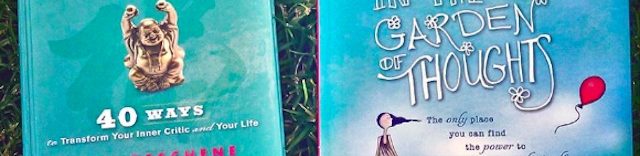
  • Book Giveaway: Guide to Loving Yourself and In the Garden of Thoughts

    Book Giveaway: Guide to Loving Yourself and In the Garden of Thoughts

    Tiny Buddha. In the Garden of Thoughts

    UPDATE: The winners for this giveaway have already been chosen. They are:

    • Vanessa Fisher
    • ljchern
    • kbennett10486
    • Jon

    Today I’m excited to run a giveaway for two books that I believe complement each other nicely—the site’s latest collaborative project, Tiny Buddha’s Guide to Loving Yourself and In the Garden of Thoughts, a New York Times bestselling inspirational book, written by my new friend Dodinsky.

    About In the Garden of Thoughts

    I was fortunate to connect with Dodinsky on Facebook, where he runs a popular page called “Positive Outlooks” that’s followed by over two million people.

    Though his heartening images and quotes were what originally caught my eye, I’m most inspired by his charisma, kindness, and…well, positive outlook!

    Through countless email exchanges he’s revealed a joyful, uplifting presence that never fails to incite a smile.

    His book, In the Garden of Thoughts, is quite similar. It’s tiny but powerful, with beautiful illustrations and positive messages for reflection and inspiration.

    Offering some insight into the book’s title, Dodinsky has written, “I truly believe that within us, there is a Garden of Thought in which we can find solace whenever we are going through a storm. The response to my work shows that there are many on the same path. Each of us needs words that bring comfort, and an understanding that one is not alone when facing adversity.”

    About Tiny Buddha’s Guide to Loving Yourself

    Launched earlier this week on October 8th, Tiny Buddha’s Guide to Loving Yourself is a collaborative book featuring a collection of stories from Tiny Buddha contributors, along with tips to help you feel good about yourself and your life.

    The book shares 40 unique perspectives and insights on topics related to loving yourself, including: realizing you’re not broken, accepting your flaws, releasing the need for approval, forgiving yourself, letting go of comparisons, and learning to be authentic.

    Much like Dodinsky, I started Tiny Buddha and created this book because I believe there is a healing power in recognizing that we are never alone with our challenges.

    And there’s nothing wrong with us for what we’ve been through or what we’re going through.

    No matter how we’ve struggled, no matter what our flaws or weaknesses, we are worthy of being fully seen—and we can make a difference in the world by doing it.

    I hope this books helps you remember, in times of doubt, that you are beautiful, imperfections and all, and you can thrive not in spite of them, but because of them.

    The Giveaway

    Up for grabs are two copies of Tiny Buddha’s Guide to Loving Yourself and two copies of In the Garden of Thoughts (to go to a total of four winners).

    If you’ve already purchased a copy of Tiny Buddha’s Guide to Loving Yourself, you can still enter the giveaway, because I’d like to send a copy to someone you love with a special note from you.

    To enter:

    • Leave a comment on the post sharing the most inspiring thing you’ve seen or heard lately.
    • Tweet: RT @tinybuddha Book Giveaway: Tiny Buddha’s Guide to Loving Yourself & In the Garden of Thoughts http://bit.ly/16AifAx

    If you don’t have a Twitter account, you can still enter by completing the first step.

    You can enter until midnight PST on Monday, October 14th. Have a great weekend everyone!

  • Increasing Self-Esteem and Happiness: 8 Steps to a Fulfilled Life

    Increasing Self-Esteem and Happiness: 8 Steps to a Fulfilled Life

    man-with-arms-raised

    “All that we are is the result of what we have thought. The mind is everything. What we think we become.” ~Buddha

    A few nights ago I did a search on Google Ad Words to compare the words “self-esteem” and “happy.” I discovered that over fifty-five million people search for the word “happy” every month, whereas just 800,000+ people search for “self-esteem.”

    Okay, I get it; we just want to be happy. But in order to be happy we need the foundation first, and the key ingredient is a healthy self-esteem. Once we increase our self-esteem, happiness comes with it.

    Creating a healthy sense of self-esteem might mean tons of work for some of us. It all starts with disciplining our thoughts.

    When I was in my twenties I was as far away from understanding this as you can imagine being. I used to think I was the ugliest person on the planet. I went through two terrible depressions, and I even contemplated suicide.

    All of this happened because I lacked gratitude for being alive, and I struggled with self-acceptance, discipline, and forgiveness. I had trouble forgiving myself because I would be too tough on myself whenever I made a mistake, and I had trouble forgiving others because I used to take things too personally, when in reality what other people say is a reflection of them, not me.

    Growing up I didn’t develop confidence in my ability to create change. I was allowing things to happen to me instead of making things happen for me.

    The last time I was depressed was twelve years ago. I could have died after taking a whole box of sleeping pills. After that I finally realized how ungrateful and selfish I had been by only focusing on myself.

    I decided to take 100% responsibility for my life because the idea of dying was scarier than the idea of living. If I was going to live, I decided I will do it in the best possible way.

    And I did. In the process I laid a strong foundation for high self-esteem and ultimately became much happier.

    Now, I love my life, I’m extremely grateful, and I continually learn how to keep improving as a human being while also teaching what I learn.

    Being the woman I am today doesn’t mean I never get sad, or that I never have problems.

    Being happy with who you have become, being grateful for the opportunity to live and for all you’ve experienced so far, being open to teaching and helping others helps you to deal better with challenges that life puts into your journey.

    Life is a cycle. Sometimes everything is great and sometimes everything falls apart in a matter of seconds. But we can choose to see each experience as something that will help us grow and become wiser.

    My conclusion after years of self-growth work is that a high self-esteem equals a high level of happiness, which leads to a fulfilled life. The keys?

    1. Understand why you need to change your thoughts and habits.

    It takes discipline to direct your thoughts to love, to increase your good habits, and to look after your body and soul every day.

    One way to increase your discipline is to write down the “why’s.” Ask yourself, why it is important to improve the quality of your thoughts?

    How would you feel having more loving thoughts? How would you feel if most of your thoughts were self-hating? Can this be a compelling reason? How would your life change if you treated your mind as sacred? How would life be if you treated it with respect?

    I used to have very low self-discipline, but step by step I kept improving it because I found compelling reasons to do so. Find your “why’s” and start with the first step. Today.

    2. Enlist support.

    Ask your family and friends for support, join a community, or seek professional help as you work toward increasing your self-esteem. Alone we won’t get anywhere.

    3. Use affirmations and mantras.

    Choose a mantra that will guide you through this process and repeat it three times a day (thirty times each time). One of my favorite mantras is “Every day I am better in every area of my life.”

    4. Filter your inner circle.

    We can’t always avoid negative people; they’re everywhere. But you can choose to surround yourself with people who support you and encourage you to be a better human being, while you also do the same for them; and you can create some distance in relationships where this isn’t the case.

    Trust that by creating some distance, you will make space for more healthy relationships. Give yourself the opportunity to be surrounded by great souls. You won’t be alone, I promise.

    5. Practice gratitude for yourself.

    Every day is a new life. It’s not that hard to be grateful when everything is okay. The tough part comes when you need to continue being grateful during hard times.

    When I’m feeling down, I thank my body for being able to breathe, I thank my eyes for being able to see, I thank my hands for being able to create, and I thank my values for leading me toward positive experiences.

    Write down everything you are grateful for and read it every morning or any time you’re feeling low.

    By practicing gratitude for parts of yourself you may otherwise not think to acknowledge, you will value more who you are, and this will help you to create a higher sense of self-love.

    6. Be present.

    By learning to not worry so much about the past and the future, you can start focusing on the moment, seeing each day as a new opportunity to do your best.

    By being in the present you will have more confidence because you’ll know that whatever negative experience you had in the past does not have to repeat itself. You will feel empowered to create a compelling future regardless of what’s happened before, which will strengthen your sense of self-worth.

    7. Help others.

    When you’re feeling helpless, go out and help someone else. Perhaps you can join a non-profit to volunteer your skills.

    This will allow you to see other realities, which will help you appreciate how fortunate you really are. It will also make you more confident because you will feel you can add great value to others in need.

    8. Trust in something bigger than yourself.

    We are not alone; we are all connected. Whenever I find myself trusting only my own strengths, I get insecure. But if I have done all that I could in a particular situation and then I also trust that the universe is supporting me, insecurities go away and miracles happen.

    Get out there, do the best you can, and allow the universe to give you a hand.

    I’d love to know what your challenges with self-esteem and happiness are! Will you take these important steps? What else would you add to this list?

  • Bounce Back from Unexpected Challenges Stronger and Happier

    Bounce Back from Unexpected Challenges Stronger and Happier

    Jumping

    “True happiness means forging a strong spirit that is undefeated, no matter how trying our circumstances.” -Daisaku Ikeda

    Let’s face it, whether big or small, stressful or simple, we all face challenges every day, some easier to deal with than others. Unfortunately, life doesn’t come equipped with an instruction manual to handle these challenges.

    No matter how much we try to plan in advance, calculate our every move, or predict what the future will bring, we can never prepare enough for the unexpected.

    The past eight months of my life have been filled with more twists and turns than the most popular roller coaster at Six Flags. As a control freak, I was suddenly forced to surrender to circumstance, forced to take a back seat and reflect on what my life was becoming.

    Sometimes it takes physical pain to get to the root of a deeper wound that you are unconsciously inflicting on yourself.

    Ever since the age of three, my heart and soul has thrived on dance. For me, the ability to connect emotionally with others through movement is something that is indescribably fulfilling.

    In May of 2012 I graduated college with my B.F.A in Dance. It marked the closing of four of the most demanding, stimulating, and downright remarkable years of my life. I grew emotionally, physically, and spiritually, molding into my adult self through incredible and trying experiences. I was healthy, in shape, and injury free.

    After graduation, I set my sights high upon New York City, anxious to jumpstart my dance career. I moved in August and set out with a willing heart, determined to make my dreams come true. My approach was frantic, maybe even fanatical.

    I needed a job, I needed to succeed, and I needed to prove myself.

    That’s when life threw a curve ball that stopped me dead in my tracks.

    I was taking a dance class before an audition when… twist, slip, fall, crack… In a blur I was in the ER clutching a broken leg, flooded with fear, anger, and distress. 

    After the initial shock of what happened, it started to sink in that I would be out of dance for a while. Realizing this setback after just arriving to NYC was heartbreaking. In that moment, all I could think about was “Why me?”

    I worked so hard and pushed so much to get to the top of my game, but in a way that was harming my body, physically and emotionally. I had let the competitive nature of the dance and theater scene get the better of me.

    Suddenly, I found myself away from my NYC apartment and newfound life and back home with my parents, trying to heal. As a young dancer whose body is her career, having life abruptly stop was devastating.

    Four months later I was able to return to the city to start again. Slowly progressing, I felt as if everything would heal. Then, another wrench in the plan: a follow up with the doctor revealing the fracture was not healing.

    Just when things were looking up, they felt as if they were sinking down again. I would need surgery, screws to set the broken bone back into place, and another five months of recovery.

    We all face setbacks at some point along life’s journey, and learning to bounce back is what really gives our spirit strength.

    Sometimes accidents happen for very good reasons. In my case, the universe was trying to tell me to slow down, that I have my whole life ahead of me to work and dance and love. Rome wasn’t built in a day.

    Yoga played a huge role in my recovery process, enabling me to overcome the overwhelming sense of failure and depression that came with my injury.

    Unable to do the physical asanas, I discovered the benefits of meditation, learning how to calm my frantic mind, and practicing acceptance toward the cards I had been dealt.

    In college, I started practicing yoga as a way to cross train and escape my hectic class schedule. Since then, the practice has become an anchor for me, its emotional and mental benefits saving me from self-destructive thought patterns and allowing me the chance to release away from, and be at peace with, the pressures of the real world.

    Before my injury, I started working a desk job at Pure Yoga in Manhattan to continue practicing yoga and to further my teaching skills. It was fate getting the job at Pure, as I landed myself right in the middle of an amazing community of loving, caring, and truly remarkable people. 

    Throughout my injury and recovery my friends at Pure have kept my spirits lifted, encouraging me to keep moving forward.

    When I returned to work, yoga was there alongside my friends to help me build back strength. It is so important to have a support system. When things get tough, your friends and family can hold you up—and you shouldn’t be afraid to let them.

    My setback produced another positive, as it led me to complete a 100-hour teaching certification in yoga therapeutics. I quickly became more involved with how important a role yoga plays in healing the body, mind, and spirit.

    Still getting my strength back, I have learned:

    1. Letting go brings abundance.

    Sometimes letting go is the absolute hardest thing to do. But when we hold on too tight, we leave no room for the light to get through.

    It’s like catching a feather: you have to hold out your hand and allow the feather to fall into your reach. You can’t catch a feather by frantically flailing and grasping for it. Once you loosen your grip on a perceived outcome, things start to unfold organically.

    Learning not to force things opens up the possibility for the brilliant and the extraordinary to happen.

    2. Believing in love will lift your soul.

    Believe that there are people in your life who love and believe in you. Believe that you are love, and that your soul has a limitless capacity to give and receive love.

    How does the simple act of believing make you feel? Worthy. Infinite. Content. Express compassion and gentility toward yourself, and to others, and you will open up to the possibilities life has to offer.

    3. Gratitude will ignite a light in the darkest of places. 

    When I first came out of my leg cast, the simple act of being able to put weight on my own two feet made me realize how grateful I am for my health, and how much we all tend to take it for granted.

    Be grateful for running to catch the subway in the pouring rain, because you can feel that rain on your skin and you can feel your feet as they pound the pavement. Experiencing gratitude in simplicity changes everything.

    Each day our yoga is to embody positivity, in every situation. Let go of what does not serve you to let abundance in. Believe in your strength to overcome. Be grateful.

    And don’t forget to breathe.

    Photo by Zach Dischner

  • Love Yourself and Your Life: 7 Reasons to Buy the New Tiny Buddha Book

    Love Yourself and Your Life: 7 Reasons to Buy the New Tiny Buddha Book

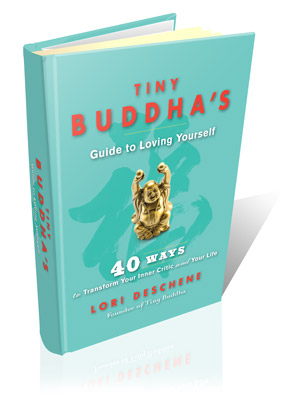
    Tiny Buddhas Guide Cover 3D

    10/9/13: The pre-order promotion is now over. You can learn more about Tiny Buddha’s Guide to Loving Yourself here!

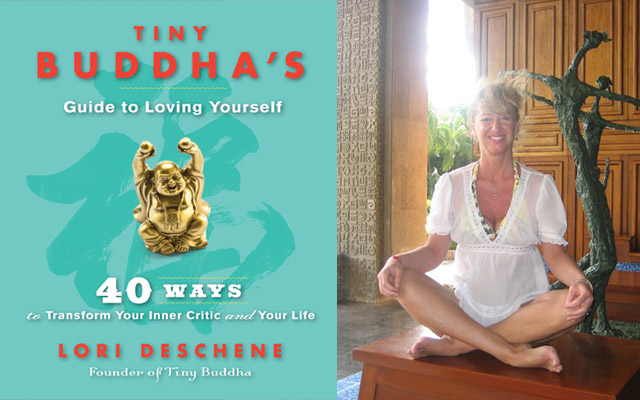
    If you visited the blog any time during September, you likely saw some of the many self-love interviews featuring contributors from the new book Tiny Buddha’s Guide to Loving Yourself: 40 Ways to Transform Your Inner Critic and Your Life.

    I’m excited to announce that today is the official launch date! If you already ordered a copy on Amazon, it’s possible that you already received it, as I’ve recently learned they shipped a little early.

    If you haven’t redeemed the free bonus pack yet, please forward your order confirmation email (for hardcopy or digital, from any book vendor) to bookbonus(AT)tinybuddha(DOT)com.

    For those of you who didn’t yet order a copy of Tiny Buddha’s Guide to Loving Yourself, today is the final day to receive the self-love bonus pack—including 8 digital items, valued at over $150—as a free gift with your purchase.

    About the Book

    Including 40 blog posts from tinybuddha.com, Tiny Buddha’s Guide to Loving Yourself offers more than just advice; it offers in a window into our shared human experience, and universal lessons we can all apply to feel happier with ourselves and our lives.

    These posts have reminded more than 1.5 million monthly readers that we are never alone, and we don’t have to live life controlled by our inner critic. They touch upon ideas that will help you:

    • Release shame about your past and the limiting beliefs that keep you stuck
    • See yourself as beautiful and valuable, with all your flaws and weaknesses
    • Accept yourself more and judge yourself less
    • Forgive yourself for your mistakes and stop being hard on yourself
    • Minimize the need for approval to feel more confident
    • Let go of the comparisons that keep you feeling inferior
    • Feel complete so that you no longer look to others to fill a void within yourself
    • Find the courage to share your authentic self for deeper connections with others
    • Learn to take care of yourself instead of putting everyone else’s needs first
    • Believe that you’re valuable so you can start creating a life you love
    • The stories are categorized into 10 chapters, connected to each of these themes.

    At the end of each chapter you’ll find four tips—one from each of the four posts in that section. They’re ideas you can turn to whenever you need help changing your thoughts, and consequently, your feelings and experience of the world.

    About the Bonuses

    Today only, anyone who orders Tiny Buddha’s Guide to Loving Yourself will receive instant access to the “Self-Love Bonus Pack,” which includes 8 digital resources, valued at more than $150.

    Those items include:

    • From Coping to Thriving: How to Turn Self-Care into a Way of Life, by Hannah Braime
    • Flowing Through the Void: Creating Miracles Out of Struggles by Activating Presence, Power, and Passion, by Amyra Mah
    • Complete Confidence eCourse, by Emma Brooke
    • An Awakened Life: A Journey of Transformation, by Julie Hoyle
    • Create a Brilliant Vision for Your Life and Business, by Margie Beiswanger
    • 5 Days of Self-Compassion, by Joanna Weston
    • Be You, Unapologetically by An Bourmanne
    • Tiny Wisdom: On Self-Love, by Lori Deschene (me)

    7 Reasons to Buy Tiny Buddha’s Guide to Loving Yourself 

    If you’re still not sure that Tiny Buddha’s Guide to Loving Yourself is worth the cost ($13.50 on Amazon for hardcover, $9.99 for Kindle—both including the free self-love bonus pack for today only), consider these 7 benefits of owning a copy:

    1. The book features 40 candid firsthand accounts of overcoming physical and emotional challenges…

    …including abandonment, abuse, addiction, depression, eating disorders, and obsessive compulsive disorder, to name a few. If you’ve feared that no one can understand or relate to your pain, this guide will help you realize that you are not alone.

    2. You’ll find practical tips to help you deal with a wide range of issues related to self-acceptance and self-love…

    …including insecurity, perfectionism, jealousy, shame, self-judgment, rejection, confidence, self-care, and the fear of being alone.

    3. It’s Tiny Buddha, off the web.

    You could spend time searching through the archives for posts related to loving yourself, and then print them out for reading at home. Or you could purchase this book to have all those stories in one anthology—complete with summaries of the main insights and a collection of related quotes.

    4. You’ll find one story from my experience in overcoming shame, self-loathing, and self-destruction.

    I’ve never before written about my former battle with bulimia. In addition to exploring the lowest point of my struggle, I shared the main message of hope that’s helped me forgive and accept myself, and not just survive, but thrive.

    5. The book is easy to read—at home or on the go.

    With 40 stories in 10 chapters, you can easily read one story each night before bed, or jump around to the sections that feel most relevant to you. And with its compact size, it’s easy to carry in your purse or bag for a boost of clarity and confidence, wherever you go.

    6. Tiny Buddha’s Guide to Loving Yourself has received wonderful advanced reviews.

    As Amanda Owen, author of The Power of Receiving, wrote: “If you are ever hard on yourself—and who isn’t—you need to read this book.” And according to Dr. Kristin Neff, author of Self-Compassion, “This wonderful collection of personal stories and words of wisdom will help you become kinder and more compassionate to yourself, and ultimately show you how to lead a happier and more fulfilling life.”

    7. It’s a tiny book that can have a massive impact.

    Despite its small size and short stories, this guide explores feelings and challenges that could potentially limit your potential for peace and happiness—and also offers some powerful, effective practices to overcome them so you can feel good about yourself and your life.

    You can order your copy of Tiny Buddha’s Guide to Loving Yourself here. To claim the self-love bonus pack, forward your order confirmation email (for hardcopy or digital, from any book vendor) to bookbonus(AT)tinybuddha(DOT)com.

    I hope you enjoy reading this book as much as I enjoyed the collaborative process of creating it. As always, I thank you for your loving presence here at Tiny Buddha!

  • 3 Powerful Insights About Finding Yourself and Creating Change

    3 Powerful Insights About Finding Yourself and Creating Change

    Monk

    “Get out of your head and get into your heart. Think less, feel more.” ~Osho

    When you’re on a spiritual quest in the chaotic outlying suburbs of Bangkok, and you’re having a complete and utter meltdown about your ability to face your inner demons and greatest life fears, where should you turn?

    Well, I feel well qualified to answer this question, having been in that exact situation!

    Where I turned was a peaceful little Buddhist temple, and more specifically a gentle and elderly monk named Yut.

    Don’t be deceived by the “gentle and elderly” description, however, for Yut was also direct and unforgiving in the way he challenged my perspectives and answered questions from my seeking, fearful self.

    Surprisingly he was also quite humorous and down-to-earth, which made for a delightfully game changing afternoon that helped to interrupt my meltdown, supporting my breakdown to become a breakthrough.

    It was mid-way through my three month sabbatical in Thailand. The preceding six weeks in the paradise island of Koh Samui had been blissful to say the least, then arriving in outlying Bangkok had been quite a shock to the system.

    I had followed my own gut instinct and divine guidance to be there, despite my fear of being alone in large cities, particularly ones where I don’t speak the language.

    I was at a point in my life where I had to shake things up. I was standing on the precipice of major change, of following my heart and leaving my decade long corporate career back home, where at the time I was National Manager of a recruitment firm.

    I had spent 32 years honing my ability to be what I thought others wanted me to be—a “success.” The only problem was that my definition of success was warped.

    I thought success and my worthiness was measured by the big job, the fancy house, the material objects. This was, of course, all nonsense that I had created in my head—a story I had bought into, fed by my addiction for perfectionism and a desperate need for security and validation.

    I was ready to break out of the box I’d been living in, and this trip was helping me to see the world, life, and myself in new light.

    It seems that when you step up in life to invite change, life has a way of guiding you to exactly where you need to be, with whom you need to be with, and hearing what you need to hear.

    It would turn out to be perfectly synchronistic that my freak out in Bangkok led me to go in search of somewhere peaceful, which in turn took me to this Buddhist temple where I was very helpfully fed three game changing insights by Yut.

    This turn of events would be another building block in one very important and transformative lesson: just be who you really are and that is more than enough.

    There was some undoing to be done! In order to be who I really was, I first had to know who I really was…

    1. Meditation is a tool to know yourself.

    “Meditation is a way to know your true self. All you need to know is within yourself, seeking it externally in the world will only take you so far. You need to look within.” ~Yut

    This Thailand quest was the start of what would become three years of daily meditation. Only 5−10 minutes per day, which connected me with my intuition and the real me. Once I connected, I was able to live from that guidance, using it as my number one navigation tool.

    2. Knowing yourself opens the way to limitless possibilities.

    “As we become more enlightened, as we know ourselves more, truly anything is possible. When you connect to your true self, then life is limitless and anything you can possibly imagine can be your reality.” ~Yut

    I was delighted to hear this! I had incorrectly expected a Buddhist monk would tell me all about denial of one’s longings and living a meager life in solitude and silence.

    I had big, audacious dreams for my life—to escape the rat race, to be a writer and coach, and to pursue my passion for energy healing, preferably while traveling the world!

    Hearing that meditation was a path to my true self, and connecting to my true self was a path to enlightenment, which in turn opens up limitless possibilities for me, well, I was ready to get my meditation groove on!

    3. Face your inner demons; own your responsibility.

    “While we are all connected, we must face our own challenges alone.” ~Yut

    While I believe deeply that our family and friend support networks are fundamental to thriving in life, the truth is that when we’re talking about inner demons, fears, blocks, and limiting beliefs, we have to face up to those ourselves.

    It’s a very personal journey to honestly look into the dark crevices inside yourself and truly own the way you feel, the way you behave, and see what is blocking your own thriving.

    Taking responsibility for how we are being and what we are doing is something that requires great courage.

    Nearly in tears when I first arrived at the temple, fearful of my time alone in Bangkok and facing up to what massive changes I needed to make in my life, the message of having to face my challenges alone actually empowered me.

    It woke me up and made me realize that no one else could set me free from my limiting beliefs about what validated me as a person and the blocks I had about risking my security in pursuit of a more meaningful life.

    I had to do this myself. I had to build a relationship with the true me and let her emerge, just as we are all called to do.

    Photo by Gane

  • Stop Seeking and Start Finding: Create a Near-Perfect Life

    Stop Seeking and Start Finding: Create a Near-Perfect Life

    Seeking WIsdom

    “What could I say to you that would be of value, except that perhaps you seek too much, that as a result of your seeking you cannot find.” ~Herman Hesse

    I have a confession: I hate slowing down. When I finally let myself stop—being alone with my thoughts, vulnerable and open to the world—I become afraid.

    I have another confession: There was a specific time in my life when went through a painful and scary situation. It broke me. And the only way I knew how to cope with my shattered self was to avoid my problems.

    Simply put: If times were hard, I ran.

    I changed schools, moved to different cities, traveled to different countries, and found solace in running, a sport that calls for constant movement. I began seeking specifically for happiness: for the people, the place, and the situation that would help me find the “perfect life.”

    I was a seeker who kept looking for happiness and different ways to “become a better person.” I was searching for a new life that would be “perfect” like the lives I saw on college campuses, TV shows, and Facebook feeds.

    I believed my old life and my old self weren’t good enough, so I had to create a new life that would allow me to start over.

    I pondered getting a Masters in global health, joining a rock band, writing a bestseller, running marathons, making music in West Africa, climbing mountains, and learning how to build lean-to’s.

    I was convinced accomplishing any of these things would make me happy, make me feel deserving, and make me whole again.

    A couple years passed by, and I slowly began to realize that no matter where I went, what I sought out, and the situations I was in, I was still the same exact person inside.

    That’s when I realized if I wanted to find happiness, I had to first understand that the perfect life did not exist, and the acceptance of my past and my imperfections is what creates the near-perfect life. 

    Most importantly, I had to find myself again, which meant I had to stop feverishly seeking.

    We should all go after the things we want; we should be driven to chase after our dreams, embrace new challenges, and go on new adventures. But seeking often means deliberately searching for something that isn’t always meant to be there, or to simply run away from something that can truthfully never escape you.

    By being too tunnel-visioned and too set on a goal—landing the “perfect” job, finding the “perfect partner,” or making the “perfect” group of friends—you may miss out on the less-obvious scenarios that are intended to fill your near-perfect life.

    When on your journey to stop seeking, start finding, and create a life where you are whole-hearted, fulfilled, and accepting, take note of these tips:

    Accept who you are. 

    Know that your core self, and your emotions, outlook, and attitude, will follow you everywhere, no matter what situation you are in. Recognizing the beautiful and imperfect person you are is the first step towards accepting new challenges and allowing new experiences into your life.

    Give yourself options. 

    You may really want one thing—a specific job, a house in a certain part of the country, or certain fame or fortune. But if one of your dreams doesn’t come into fruition, maybe this means that another bigger and better dream is waiting for you. Don’t get discouraged, and allow yourself to be open.

    Be vulnerable. 

    Invite fear, uncertainty, and imperfection into your life. Once you fully open yourself up to the universe, it will allow you to see the incredible number of options for you, and let you try new things to help create the near-perfect life.

    Meditate.  

    Use meditation as a way to be with nothing but your present self. This helps you to slow down and stop seeking, to really get to know your true self and what you feel, want, and need.

    Try again.  

    Things don’t fall into place right away. There will be ten hardships before one celebration. Don’t give up. Be patient.

    Don’t be stagnant.  

    None of these tips mean you should stop moving completely and wait for life to work itself out on its own. Rather, it’s about finding a balance between learning what you want and inviting new opportunities, while recognizing that how you react to life’s situations is in your hands.

    After nearly ten years of seeking, I found my near-perfect life in New York City, the one place I had once swore I’d never move to. I found an apartment with an old friend, and we rekindled a friendship from nearly five years prior. I discovered a support system of friends and family who were always there for me, and one company of hundreds I applied to hired me.

    My time in New York has helped me uncover the happy spirit that was always within me—the spirit that once was simply too tired from my constant seeking to spread its light.

    I’m still not very good at slowing down. I’m happiest when moving, when constantly trying to reach that next tier. But I’m also trying to slow down and breathe—to stop seeking for “better” and start finding myself, allowing my near-perfect life to meet me halfway.

    Photo by 3Drake9

  • 6 Lessons from a Poor Childhood That Lead to a Rich Life

    6 Lessons from a Poor Childhood That Lead to a Rich Life

    Happy Old Woman

    “If you want to feel rich, just count the things you have that money can’t buy.” ~Proverb

    I grew up on a farm with a father that was a hired hand and a mother that took care of the elderly.

    I had six siblings and was the fifth in line. We had little money, but I always felt loved, not deprived. In many ways I was a rich person.

    When I was four years old I lived in a two-room house, with two bedrooms built on within the year.

    We had no real kitchen (it was just a room), no running water or indoor bathroom, no TV or telephone. (No, I did not grow up with the dinosaurs). We did have electric lights.

    What did I learn by growing up in these conditions?

    1. I learned to share.

    There were four of us girls and we all slept in the same bedroom—two in one bed and two in another (both twin beds). You name it, and we shared.

    2. I learned to take good care of what little I had and be grateful.

    We each had one pair of shoes, very few clothes, and one toy for Christmas, so we took good care of what little we had and did not take it for granted. For birthdays, there was a cake baked and our present was getting to lick the bowl for the cake and icing.

    3. I learned to use my imagination.

    With very few toys we had to make your own. We walked on tall tomato cans with strips of rubber attached to hold them on our feet. We played with old tires and five gallon barrels by rolling them on their side. And stilts, we made ourselves.

    4. I learned to eat until I was not hungry any more rather that when I was stuffed.

    Food was limited, but balanced. We each got our share because my mother cut it up equally among us. (I never knew you could scoop ice cream out of the carton until I grew up, because my mother always cut a half gallon of ice cream into 10 equal pieces and that 10th piece was cut into 10 more pieces. (My father got the extra piece.)

    I have never had a problem with weight, and this is because of the good eating habits and appreciation for the food we had.

    5. I learned that it was the people that made a home, not the size of a house.

    We may not have had much, but we had each other. We had each other to talk to, play with, and laugh with. (Sometimes to fight with.)

    6. I learned to work together.

    When you live in a small space you have to work as a team. You learn good working skills and what hard work is.

    We earned money by working in the fields for the farmers, helping irrigate when it came to watering the crops, and keeping the four rooms of our house picked up, so there was room to walk.

    As I look back on my childhood and the values it fostered, I realize I was a very lucky child. Yes, things are much better and easier now, but I know what to appreciate and what’s important to be happy.

    It’s the people you share your life with—the memories you build and laughter you share.

    Things are not what make you happy. It’s living in the moment and living everyday with love in your heart.

    I only buy what I need, which controls the clutter. I have food, shelter, and water, air to breathe, and people to love that love me.

    I appreciate what I already have to add comfort to my life. I take good care of my furniture, appliances, and the little things that make life more comfortable and easier.

    We have the choice to change our life if we want. With hard work and a dream anything is possible. Obstacles can always be overcome. We learn from them and keep moving forward.

    True happiness does not come with a price tag. Happiness is something we choose with our own attitude and gratitude.

    I look at people today and all the material things they acquire, thinking they are going to find happiness, but happiness cannot be bought.

    It’s in our attitude. The love in our heart. The people we know and love. The memories life brings.

    When death is knocking at our door, what will be important is the way we loved and the memories we leave for the people left behind. They’re not going to remember the house you lived in or the beautiful things you may have had.

    People will remember the laughter they shared with you, the long talks, lessons they may have learned from you, and most important, the love that was shared.

    In the end it is who we were, how we touched other’s lives, and the love we gave and received that is going to count and be remembered.

    Are you building those kinds of memories? Are people going to smile and laugh when they think of how you touched their life someday?

    Photo by T Sundrup

  • Get Unstuck: Stop Believing the Negative Stories You Tell Yourself

    Get Unstuck: Stop Believing the Negative Stories You Tell Yourself

    Break Free

    “You may not control all the events that happen to you, but you can decide not to be reduced by them.” ~Maya Angelou

    We’ve all done it, right? Somehow, somewhere, something bad happened to us and since that moment we’ve continued to tell ourselves the story about what might and could go wrong in our future.

    For me, the biggest negative pattern I’ve had to release stems from my parents’ divorce. For as long as I can remember, I’ve been a positive person. When I was a kid I was happy-go-lucky, nothing much bothered me, and life was pretty awesome.

    Also, being an only child I was always close with my parents. The thought that they wouldn’t be together was something that never entered my mind.

    Then they split up when I was 18 and things began to change. I made different choices and I also began to believe that all romantic relationships were doomed.

    A few years later, just after I had split up with my long-term partner, I was in LA spending a lovely afternoon watching US daytime TV. Nothing much was on, but every channel I flicked to seemed to mention the word “marriage” or “divorce.”

    I also happened to be reading Wayne Dyer’s Your Sacred Self at the time, and suddenly it all made sense:

    I had been telling myself stories like “Marriages never last forever” and “All relationships are doomed,” and in essence I was creating my reality.

    I finally realized that my beliefs about relationships had been causing me to attract those exact experiences.

    I was giving these negative stories power and acting on them. I was skeptical that I would be able to have a successful and happy relationship, which caused me to see everything that could go wrong. I ultimately initiated our break-up because I believed that it was inevitable.

    The very experiences we fear keep repeating themselves if we continue to focus on them and give them power. We’ve got to become aware and first change ourselves if we want our reality to change.

    Now that I’m a few years on from that, I have replaced my negative relationship beliefs with new, positive thought patterns.

    Now, I believe my current relationship is a lifetime partnership and as a result, I act in a way that manifests that type of relationship without worry and doubt. I take responsibility for my part of the relationship, and because I have positive thinking patterns I bring my best self to the table. This allows me and my partner to have confidence and faith as we plan our lives together.

    Our experiences reflect our beliefs, so it benefits us to make them positive.

    Here are a few questions to help you get to the root of your negative beliefs so you can make changes in your life:

    1. What are the negative stories you’ve been telling yourself?

    Is there an area in your life where you seem to struggle? Which experiences trigger negative thoughts?

    It’s time to narrow in on the beliefs that are keeping you from living the life that you want.

    2. Where do those negative beliefs come from?

    What happened in your past? Did someone in a position of authority make a negative comment about you that you’ve held on to?

    Just know that you can’t change what has happened or what someone said to you or about you. But you do have the power to decide not to allow those experiences to control your life in this moment.

    3. Why are you holding on to those negative beliefs?

    Which needs are you fulfilling by holding on to these beliefs? For example, are you getting attention by playing the victim?

    By not letting go of negative beliefs, we keep ourselves trapped in a vicious cycle, repeating the same pattern over and over again. Life will continue to give us lessons until we learn, grow, and move past it.

    We need to make a change within ourselves to move forward and break through to a new reality.

    4. What does your future look like if you let go of these beliefs?

    Close your eyes and imagine your future if you didn’t have these thoughts. Notice all the amazing things that you close yourself off from just by holding on to your negative beliefs.

    What can you do in this moment to move toward that future?

    Holding on to past experiences and old beliefs gives you an excuse to continue to repeat the same behavior. It justifies negative thought patterns and keeps you in that loop.

    It’s time to break the pattern and realize you have the power to shape your reality!

    Photo by Hanna Irblinger fotografie

  • Tiny Buddha’s Guide to Loving Yourself Interview: Mary Dunlop

    Tiny Buddha’s Guide to Loving Yourself Interview: Mary Dunlop

    Mary

    This month we’re celebrating the upcoming launch of Tiny Buddha’s Guide to Loving Yourself, a book about taming your inner critic that features 40 stories from Tiny Buddha contributors. 

    Throughout September, you’ll have a chance to meet some of them through daily interviews here on the blog.

    Today’s featured contributor is Mary Dunlop, a writer and passionate student of life who believes we all have a special gift.

    In her contribution for the book, she shares how she learned to be comfortable in her own skin, and how we can learn to accept and embrace ourselves, just as we are.

    A little more about Mary…

    1. Tell us a little about yourself and your self-love journey.

    My name is Mary. I am a forty-seven year old writer. And, to me, self-love did not come naturally. I really had to work at it until finally finding my way through meditation.

    2. Have you ever felt there’s “something wrong with you”? If so, why, and what’s helped you change your perception?

    Yes, until I began connecting with myself in meditation I never felt my beauty and, no matter how much validation I received from others, I always felt uncomfortable and self-conscious.

    3. Have you ever thought something was a flaw only to realize that other people actually appreciate that about you? What was the “flaw”?

    Yes, sometimes, my lack of pretense. I had been pretending so much in my life that when I finally let that go and worked toward becoming more authentic, I feared some people would view this as a lack of polish.

    However, it felt good to smile widely and laugh loudly, and soon I discovered that one of the keys to my personal happiness lied in my ability to be myself and feel good about it.  Reaching that level of awareness also helped me attract people who appreciate me and like me just for me.

    4. What was your biggest mistake (that you’re willing to share), and what helped you forgive yourself?

    One of my biggest mistakes was constantly comparing myself to others and often viewing myself as inferior.

    I spent more than a few years of my life doing that, more time than I put into cultivating my strengths and dreams. Sometimes, I feel badly about that lost time and, when I do, I forgive myself quickly by remembering that at every given time I was doing my best with whatever level of awareness I was at.

    5. Complete this sentence: When other people don’t like me, I… 

    I’ve noticed that the more I like myself the more other people like me too, or at least, I tend to attract those who do. However, every now and then an instance will occur where someone may not like me or speak negatively about me.

    When something like this happens, I quickly remind myself of first three paragraphs of Don Miguel Ruiz’s second agreement from his book, The Four Agreements:

    “Nothing others do is because of you. What others say and do is a projection of their own dream. When you are immune to the opinions and actions of others, you won’t be the victim of needless suffering.

    We take things personally when we agree with what others have said. If we didn’t agree, the things that others say would not affect us emotionally.  If we did not care about what others think about us, their words or behavior could not affect us.

    Even if someone yells at you, gossips about you, harms you or yours, it still is not about you!  Their actions and words are based on what they believe in their personal dream. ”

    6. What are some areas in your life where you’ve compared yourself to other people, and what’s helped you let go of these comparisons?

    For me, the biggest problem was feeling comfortable in my skin, so to be comfortable with others I always had to look a certain way.

    If, God forbid, I had a bad hair day or a couple of extra pounds, I would view everyone else as beautiful swans and me the ugly duckling. Finally, I began to focus within through meditation, more specifically heart centered meditation, and slowly this self-consciousness melted away as I began to see myself in a different light.

    7. What’s one thing you would tell your younger self about looking to other people to complete you?

    I would say meditate, look within, find your sacred place! Another person can complement you but they can never complete you. Completeness can only be found in having a loving, healthy relationship with yourself.

    Society places much emphasis on being coupled, on finding that one soul mate, but don’t worry about that. Focus instead on your personal development and, once you’ve grown to a certain point and reached a certain place within, you will find the right mate, or rather, the right mate will find you.

    8. Have you ever felt afraid to show people your “real” self? Why—and what’s helped you move beyond that?

    I used to have a fear of people finding me to be “not enough”—not pretty enough, not smart enough, not sophisticated enough, not successful enough. So, as a result, I would become the world’s greatest actress and show people someone other than me.

    What helped me get past that was taking the time I needed to get to know the real me—my likes, my dislikes, my passions, my talents, and my dreams.

    9. What are the top three things you personally need to do to take good of yourself, mentally and emotionally?

    To take good care of myself mentally and emotionally, I need to take good care of myself spiritually. Consequently, for me, the top three things are:

    • Meditation
    • Running
    • Writing

    Through my journey I discovered that, as long as I don’t neglect it, my highly creative soul will always help me find a way to be happy.

    *Note: I edited this post to remove info about the pre-order promotion, which ended on October 8, 2013. You can learn more about Tiny Buddha’s Guide to Loving Yourself here.

  • What Makes Life Worth Living: Create Tiny Epic Moments

    What Makes Life Worth Living: Create Tiny Epic Moments

    Happy Together

    “One day your life will flash before your eyes. Make sure it’s worth watching.” ~Unknown

    What do you think you’ll see as you lie dying?

    Upon first reading this quote, I thought “Unknown” was talking about living life large. Filling days with great achievements and big moments. Going for it. Having no regrets.

    I lived much of my life to create those major moments.

    And maybe that is what “Unknown” was talking about.

    But it’s no longer what I’m talking about when I think about the worth of my life.

    High school English teacher Monique Cassidy wrote about a short story she had her students read called “Bullet in the Brain” by Tobias Wolff. In it, a man was shot in the head and dying.

    I don’t want to ruin the story for you, but this man’s last thoughts were not the biggies.

    His last thoughts were the small, visceral moments. In particular, playing baseball in a field when he was a child.

    Cassidy asked her students to write about the significant moments in their lives. One student, who has traveled to Paris, did not write about climbing the Eiffel Tour. She wrote about trading bread with a friend at breakfast that morning in the hotel, swapping her croissant for a baguette.

    Last week, my coach asked me what I’d done so far that morning. Actually she wanted me to write a poem about it to spur creativity.

    “I don’t want to write about it,” I said. “I haven’t done anything worth writing about.”

    My list of activities so far included folding laundry, making breakfast, and returning books to the library.

    “Good,” she said. :”Write about that. That is life.”

    We all have a few unforgettable moments in life. The big ones. When your mate dropped to one knee. Scoring the winning goal. You can probably short-list yours.

    But today, I want to celebrate the unheralded yumminess of the teeny-tiny moments that make up your life. Because my coach was right. Those are the moments that cumulatively create a life well-lived.

    While I can’t begin to guess what will run through my mind when I die, I hope it is a moment like this:

    When my daughter was maybe two or three, we were visiting my in-laws on Lake Michigan, staying in a lakefront A-Frame cabin they call the chalet.

    We came in from the beach one hot afternoon and my daughter and I went upstairs, turned on the window air conditioner, and fell asleep on the cool white sheets to the hum of the A/C.

    While we napped, we must have turned to face one another and a couple of hours later we opened our eyes simultaneously.

    In that moment, in the cool room on a hot day, I looked into her gigantic chocolate eyes and felt I could see into her soul, so trusting, so loving. I really saw her. And I felt seen and loved.

    We’ve had many big moments in our family. Traveling to China to pick up my daughter. Paris for my 40th birthday. Buying our dream house on my daughter’s first day of first grade.

    But I hope it will be the teeny tiny moments like napping with my daughter that will flash before my eyes. For in that moment, there was nothing but love.

    When it comes to the end, isn’t that all there is?

    I invite you to reflect back about those teeny tiny significant moments that have made up your life.

    To try to jog your memory, think about when you have felt trusting or content or seen, really seen. What was happening in that moment? Who was present? Try to engage all your senses. What did you see? Hear? Feel?

    How could you create more of those moments? Start by being present. Really see people. Look into their eyes and see them. Recognize love is all around.

    Celebrate those moments.

    Because while climbing to the top of the Eiffel Tour is epic, trading bread with a friend is loving.

    While vacationing on the lake is fun, looking into my daughter’s deep brown eyes and seeing her soul makes life worthwhile.

    Thank you for the reminder, “Unknown.”

    Photo by Edward Lim

  • Tiny Buddha’s Guide to Loving Yourself Interview: Sam Russell

    Tiny Buddha’s Guide to Loving Yourself Interview: Sam Russell

    sam-russell

    This month we’re celebrating the upcoming launch of Tiny Buddha’s Guide to Loving Yourself, a book about taming your inner critic that features 40 stories from Tiny Buddha contributors. 

    Throughout September, you’ll have a chance to meet some of them through daily interviews here on the blog.

    Today’s featured contributor is Sam E.A.B. Russell, a UK-based writer and photographer who considers himself a cynic by nature but tries to prove through his writing that cynics can be happy and positive too.

    In his contribution for the book, he shares some of the common defeatist, limiting beliefs that stand in the way of happiness.

    A little more about Sam…

    1. Tell us a little about yourself and your self-love journey.

    I’m a writer and photographer and I live with a smorgasbord of mental health difficulties. I started to develop love for myself when I realized that a) it’s okay for me to be different and b) only I can change my circumstances. That sounds so easy: be cool with yourself and take charge. The thing is, love’s not easy.

    Hate and anger—those are easy. They’re easy and comfortable, though painful, which is why it took me a long while to get myself on the path that I’m on today. Accepting my difference means accepting my flaws. Changing my circumstances means developing courage. Doing those things means looking in the mirror and loving the person who looks back, even on my worst days.

    2. Have you ever felt there’s “something wrong with you”? If so, why, and what’s helped you change your perception?

    Yes. I’ve grown up feeling “wrong.” Then I figured out that “inside me” didn’t match “outside me.” I was living the wrong gender for most of my life, which is no easy thing to do.

    I didn’t fit the typical gender role I was raised in and I couldn’t access the one I felt more at home in. I was suspended in a very lonely grey area for what felt like forever.

    The hardest thing was figuring that out, getting the language to express how I felt, but wow! What a great feeling when I did realize it and find those words. Now I’m on the path that feels right for me. I’ve got the love and support of my family and friends, which is all I need to do this.

    3. Have you ever thought something was a flaw only to realize that other people actually appreciate that about you? What was the “flaw”?

    I’ve always perceived and thought about things differently to others. I was the kid in the class who always used to ask the really weird and awkward questions. I used to get bullied for it by kids and adults alike.

    As an adult, I’m the one who turns the everyday into the surreal when I write. I have a habit of saying the wrong thing too, though I don’t mean anything by it.

    I still get criticized for it and some people have been unbelievably cruel to me. I’m lucky that most now recognize that how I see the world is unique and encourage me in my writing and photography.

    4. What was your biggest mistake (that you’re willing to share), and what helped you forgive yourself?

    Ugh, not sorting my awful relationship with my Mum before she died. The last thing I felt for her was resentment. I knew things were bad and I was too busy being angry with her to see that she was sick and needed me more than ever.

    I didn’t take the time to say sorry or care or do anything that would have shown her that she wasn’t without me.

    It’s not been easy but I’ve come to terms with this by first forgiving myself. I recognize that I was in a bad place at the time, and that my feelings toward our relationship were a part of that. Forgiving myself means understanding this.

    I’ve spoken to my sister a lot about how Mum loved me regardless of the arguments we had.

    We laugh about the mental things she used to get up to and share the grief of our loss. My sister is a great comfort to me, and usually the first to remind me that, despite the way I felt then, it’s not the way I feel now.

    5. Complete this sentence: When other people don’t like me, I…

    …instantly get upset and confused but later think, “Eh, there are billions of people on this planet. They can’t all like me.”

    6. What are some areas in your life where you’ve compared yourself to other people, and what’s helped you let go of these comparisons?

    Always with my writing and education. I study so hard and never feel good enough compared to others. I read my favorite authors, find a perfect sentence, and sink into despair. I look at how much work they’ve done, how successful they are and the legacy they’re going to leave behind and think: I can never achieve or live up to that.

    But then I step back, see my life, my illnesses, and my work and think, “Mate, you’re doing damn fine!”

    I’m only able to do this because I read. I’ve been fortunate enough to study writing as a skill so am able to understand how books work, so that helps me get some perspective on my gloomy feelings.

    7. What’s one thing you would tell your younger self about looking to other people to complete you?

    Nothing is ever complete. Being incomplete is being impermanent, which is being a part of the constant change, the flux called life. It’s better to be complemented, that is reflected and contrasted by another person, than completed by them.

    8. Have you ever felt afraid to show people your “real” self? Why—and what’s helped you move beyond that?

    I’m an unusual person, mostly quiet but prone to articulate outbursts on particular subjects close to my heart. I’m intense and emotionally needy but also loyal and generous. This leaves me vulnerable, and so I hide.

    I don’t go out that much and I have a very tight circle of friends. When I have to engage with others who I’m unfamiliar with, I often put on a mask. Several masks, actually. Layer after layer of unseen protection.

    I take risks when I let people in. I remind myself, in the face of fear and uncertainty, that it’s better to have loved and lost than never to have loved at all.

    9. What are the top three things you personally need to do to take good of yourself, mentally and emotionally?

    • Read
    • Eat
    • Create

    I need mental and intellectual stimuli or else I fall apart. The hardest thing for me has been coping without an academic environment since I finished my Masters Degree in 2011. I’ve not been doing a good job of it so it’s even more important that those three things remain constant and strong in my life.

    10. What’s something you do regularly that makes you feel proud of the difference you’re making in the world?

    Probably being honest, and true to myself. If you go through life lying to yourself, you’re lying to the world too and that kind of deceit benefits no one.

    *Note: I edited this post to remove info about the pre-order promotion, which ended on October 8, 2013. You can learn more about Tiny Buddha’s Guide to Loving Yourself here.

  • Where True Happiness Comes From: How We Gain by Having Less

    Where True Happiness Comes From: How We Gain by Having Less

    “The things you own end up owning you. It’s only after you lose everything that you’re free to do anything.” ~Chuck Palahniuk

    Small is the new big. That is to say, minimalism and living with less is becoming a growing movement in America and it’s starting to catch on over here in the UK too.

    With the global economic crisis and changes in social attitudes, people are starting to realize that the more stuff we have, the more miserable and trapped we become. After all, stuff leads to debt, stress, and even increases our carbon footprint.

    Plus, living in larger homes with space we don’t really need only equals more stuff, more spending, and more worry. Then, when we run out of space, we move to a bigger property—or even rent storage space.

    Enough.

    Stuff doesn’t make us happy. We might get that initial glow of excitement when we purchase new things, but it doesn’t last. 

    True meaning and happiness come from experiences. From family and friends. From hobbies. It comes from the things that we do, rather than the things we own.

    Like most people, I followed the American Dream. I wanted the big house and garden. The nice car. The expensive clothes. I also wanted to portray an air of success to “get ahead” in the business world.

    As someone who runs their own business, there’s a perception that if you’re not moving along a certain path, you’re not considered to be successful. That if you don’t turn up to a meeting in a decent car or wearing expensive clothes, you won’t be taken seriously. That you’re not worth the money you’re charging.

    I guess this perception of wealth extends to our self-worth and confidence. We feel more empowered if we’re attending a meeting wearing the right clothes and carrying the right handbag, for instance.

    But then this false sentiment extends to our private lives, as well. We want our peers to think we’re successful. We’re embarrassed, for example, if we’re driving an old car or wearing last season’s fashions. We feel like we’re going backward rather than forward if we’re not “keeping up.”

    Of course, it’s easy to fall into this trap—assuming that we really must drive expensive cars, wear designer clothes, and buy things we don’t really need.

    It’s the way brands and big companies want us to feel. They want us to spend money, constantly consume, and place all our self-worth, confidence, and happiness on “stuff.”

    They want us to be on an endless mission to be happy through consumption and spending. I’m just relieved I’ve worked this out now and discovered the truth.

    Through my own endless pursuit to be happy and seemingly successful, I was miserable and constantly running on a treadmill to keep up with my excessive lifestyle. When I say excessive, it probably wouldn’t seem that way to others. Most people would see this typical way of life as pretty normal.

    At some point though, it stopped being normal to us and we had a “Eureka!” moment. We realized that we didn’t need all that space, let alone all that stuff. So, we sold our big house, got rid of our expensive car, and started to think about minimal living.

    What could we get by without? What did we really need anyway?

    Well, we’ve just bought a 600 square foot apartment in the city. It’s got one bedroom, one bathroom, an open-plan living space, and a little balcony.

    We’ve downsized our stuff and now only have what we need. Sure, there are a few luxuries but for the most part we’re a lot lighter than we used to be.

    How do we feel? We have no debt, we have less stress, and we don’t have to work as hard to maintain our lifestyle. Because we live in such a small space, housework takes no time at all. And with no garden, we don’t spend hours maintaining a lawn or borders.

    This means we have more time. And that time is dedicated to ourselves. To hobbies, experiences, and family and friends. We also have more money to spend on doing things like travel, concerts, or even French lessons.

    Because of our new lifestyle, we’ve never been happier or more comfortable. Our lives are rich with meaningful experiences and relationships. And many others who are following this minimalist lifestyle are enjoying the same benefits.

    I personally think the age of consuming could be coming to an end. It’s certainly starting to lose momentum. People are realizing there’s a big difference between “want” and “need.”

    And with an increasing population and higher land prices, the future could be quite small compared to the way we live now. It might be that minimalism becomes a necessity rather than a lifestyle choice.

    Do you feel like you’re weighed down by your things? Do you find yourself constantly working to pay for the expensive things you own? Are you lying awake at night stressed and worried about debt? 

    Why not try a little minimalism? You don’t have to go to the extremes I’ve gone to. You could just downsize a few bits and bobs. Buy less stuff. Or even swap your car for a cheaper mode of transport?

    And instead of spending money on things, why not invest in experiences? In relationships? In the times that set your soul on fire and make you jump for joy? Why not create those precious memories that have you grinning from ear to ear every time you recall them?

    Because you know what they say: You can’t take it with you. But you can certainly be satisfied that you lived a wonderful life.

    The Good Life painting by Tracy Booth

  • Tiny Buddha’s Guide to Loving Yourself Interview: Hannah Braime

    Tiny Buddha’s Guide to Loving Yourself Interview: Hannah Braime

    Hannah

    This month we’re celebrating the upcoming launch of Tiny Buddha’s Guide to Loving Yourself, a book about taming your inner critic that features 40 stories from Tiny Buddha contributors. 

    Throughout September, you’ll have a chance to meet some of them through daily interviews here on the blog.

    Today’s featured contributor is blogger and life coach Hannah Braime. Formerly self-destructive and dependent on external validation and achievement, she turned her life around by embracing authenticity and spending her time doing things that bring her whole-hearted joy.

    In her contribution for the book, she explores why we so often find it hard to do things that are good for us—and how we can work with our resistance, not against it.

    A little more about Hannah… 

    1. Tell us a little about yourself and your self-love journey.

    My name is Hannah and I run Becoming Who You Are, the guide to authentic living. I created BWYA in 2010 as a way to process my thoughts and feelings about different personal development material I was reading at the time. Now, I’m passionate about providing tools and resources for people who are creating the lives they want from the inside out.

    My journey into self-love has been long and rocky. I experienced many years of crippling self-doubt, a vocal inner critic, and a general sense of not being good enough in any way, shape, or form. During that time, I struggled with self-harm, addiction, and depression. At one point in 2007, I even considered suicide as a viable option for escaping myself and my life.

    Coming out of that dark time was a huge turning point for me. For the first time, I decided to put my well-being first.

    I started therapy, disengaged from toxic and dysfunctional relationships, and started devouring personal development books and resources. I learned about internal dialogue, Non-Violent Communication, and dedicated time, energy, and resources to nurturing my self-care, inside and out.

    Right now, I’m happy, healthy, and have never been more satisfied with the adventurous life I’m creating.

    2. Have you ever felt there’s “something wrong with you”? If so, why, and what’s helped you change your perception?

    One of the most challenging thought patterns I’ve wrestled with, and still have to watch, is the “If only…then things would be different” fallacy. This typically goes something like: “If only I was skinnier/had different clothes/was better at X/had more money/etc., then things would be different.”

    This used to be a perpetual thought for me, and I approached life from the default position that I wasn’t enough and needed to change.

    Through therapy and counseling, I found that a lot of the negative beliefs I had about myself weren’t really mine—no one is born believing they are somehow inherently flawed or lacking. I had internalized a lack of acceptance I felt from people around me and turned that on myself.

    When I was able to examine these beliefs and their origins, I could see them for what they really were, without automatically accepting them as hard truth or acting on them. I also came to realize that I was now responsible for re-inflicting this lack of acceptance on myself and, therefore, I alone was responsible for changing that.

    3. Have you ever thought something was a flaw only to realize that other people actually appreciate that about you? What was the “flaw”?

    One of the biggest “flaws” I’ve come to realize, that other people actually appreciate, is my introversion. I used to believe that, in order for people to like me, I had to pretend to be someone I wasn’t, and I carried this belief for years until I met my partner.

    He introduced me to the Myers-Briggs personality types and it literally changed the way I perceived myself overnight. I’m not pro-labeling and I can appreciate why some people don’t like being put in a personality-shaped box, but recognizing myself as an introvert increased my self-acceptance tenfold.

    Once my self-acceptance in this area increased, I was more open to seeing other people’s appreciation of it. My partner, who identifies as an extrovert, has expressed a lot of appreciation for the way I process the world around me, especially because it’s so different to his own.

    Equally, friends and clients have commented on my listening and reflective skills, as well as my self-awareness and level of introspection. Before, I was so mired in self-doubt and the idea that I needed to be different around other people, I was closed off to this kind of feedback.

    4. What was your biggest mistake (that you’re willing to share), and what helped you forgive yourself?

    While I was at university, I got back together with an ex-boyfriend who owed me a lot of money—not because I loved him, but because I was broke. We moved back in together and, unsurprisingly, it was a disaster. The end of the relationship was traumatic, there was a lot of drama, and he never paid me back.

    I felt embarrassed and ashamed for being dishonest about my motivations for reuniting with him and judged myself harshly for not acting with integrity.

    What helped me forgive myself for this was thinking about my choice from a place of compassion, rather than criticism. In particular, I thought about how I’d feel if a friend was telling me this story, and that helped me connect to the empathy that I was struggling to feel for myself.

    5. Complete this sentence: When other people don’t like me, I…

    …trust that their absence leaves room in my life for people who do.

    6. What are some areas in your life where you’ve compared yourself to other people, and what’s helped you let go of these comparisons?

    Hmm, what areas haven’t I compared myself to others?! When I was younger, I didn’t really feel like I fit in anywhere and comparing myself to other people became my barometer for judging whether I was “normal” or not. Therefore, I’ve probably compared myself to other people in pretty much every area at some point or another.

    Self-acceptance has been instrumental in letting go of these comparisons. Once I started feeling inherently okay as myself, what other people were doing stopped mattering so much. When I find myself comparing now, it’s usually because I’m struggling to accept myself in one way or another.

    7. What’s one thing you would tell your younger self about looking to other people to complete you?

    You have everything you need; the right people will complement that.

    8. Have you ever felt afraid to show people your “real” self? Why—and what’s helped you move beyond that?

    Yes, mainly for the reasons I mentioned above. Therapy, personal development, and journaling have all helped me move beyond that, as has remembering that it’s a day-by-day process.

    When I first started my self-love journey, I thought the end goal was to be 100% authentic in every situation. Over time, I’ve come to realize that’s not the goal for me; what’s more important is for me to accept myself as I am, including the fact that I might still struggle to show my “real” self from time to time. When I accept that, it becomes a lot easier to be real.

    9. What are the top three things you personally need to do to take good of yourself, mentally and emotionally?

    • Get enough sleep: It’s the single thing that’s made the biggest difference to my quality of life.
    • Journal: It helps me process the world and my experiences
    • Exercise: I feel a lot better, physically and mentally, when I make time to be active.

    10. What’s something you do regularly that makes you feel proud of the difference you’re making in the world?

    I feel proud of my website. Although the Internet is crowded, climbing onto the digital soapbox and sharing my thoughts and opinions feels like a very vulnerable thing to do at times.

    I also find it easy to convince myself that I’m not really sharing anything that people don’t already know, so when I receive an email from someone who has had a “click” moment or feels inspired by something they’ve read on Becoming Who You Are, it’s incredibly rewarding.

    Even if there’s just one person who can take away something that resonates, that they can use to be more real with themselves and the world around them, then it’s worth the time and energy.

    *Note: I edited this post to remove info about the pre-order promotion, which ended on October 8, 2013. You can learn more about Tiny Buddha’s Guide to Loving Yourself here.

  • Tiny Buddha’s Guide to Loving Yourself Interview: Kayla Albert

    Tiny Buddha’s Guide to Loving Yourself Interview: Kayla Albert

    kayla

    This month we’re celebrating the upcoming launch of Tiny Buddha’s Guide to Loving Yourself, a book about taming your inner critic that features 40 stories from Tiny Buddha contributors. 

    Throughout September, you’ll have a chance to meet some of them through daily interviews here on the blog.

    Today’s featured contributor is Kayla Albert, a Social Media Specialist by day and a personal growth blogger by night.

    In her contribution for the book, she shares her experiences with jealousy, along with a few tips to let it go and celebrate our own greatness.

    A little more about Kayla…

    1. Tell us a little about yourself and your self-love journey. 

    My relationship with self-love is a work in progress for me. I will embrace her when I am in tune with my greater purpose and tapped in to my journey, and turn her away when I’m entertaining those pesky feelings of inadequacy.

    Luckily, the latter stopped coming around as often once I established a habit of meditating and checking in with myself on a daily basis.

    2. Have you ever felt there’s “something wrong with you”? If so, why, and what’s helped you change your perception?

    Throughout most of my childhood and up through my teenage years, I always felt as if I was on the periphery of every group. Surface ties said that I belonged, and I had several close friends, but I never fully felt comfortable in my own skin.

    I managed to go through the motions of what other kids my age were doing, but I felt things too deeply and was constantly consumed by my own thoughts. In my mind I was “different” and would never feel quite right around anyone.

    As I got older, I stopped fighting what it was that made me “different,” learned to nurture my spirituality, quiet my spinning mind, and insert myself into groups of people that already spoke my language. It turns out I wasn’t the “wrong” person; I was just in the wrong place.

    3. Have you ever thought something was a flaw only to realize that other people actually appreciate that about you? What was the “flaw”? 

    I’ve always been largely opinionated and passionate about sharing. My family knows how boisterous I can be, but I went through a period where I rarely voiced my opinion—especially if it was amongst people that were already opinionated, or whose opinions I thought would differ from my own.

    I toned down my voice—or turned it off completely—because I thought people appreciated silent agreement more than anything else.

    Throughout the years I’ve learned that my opinions offer a snapshot of who I am and where I’ve come from, and people embrace those who are willing to speak their truth, even when it’s not popular.

    4. What was your biggest mistake (that you’re willing to share), and what helped you forgive yourself?

    I believe that the forgiveness would need to be given for feeling as if something was a mistake in the first place.

    Every decision I’ve made and relationship I’ve participated in was a reflection of where I was at the time, mentally, physically and emotionally. I cannot judge anything I have done in the past with the knowledge and experience I have today.

    I am not privy to the larger picture that is my past, present, and future; I can only have faith that everything is working together in a way that is more powerful than any regret I may have.

    5. Complete this sentence: When other people don’t like me, I…

    …wonder what I spark in them that is pushing them feel to that way.

    Anytime someone doesn’t like me, I know that it’s about that person—their past experiences, beliefs, relationships, not me. I’m just acting as the mirror they’re looking through.

    6. What are some areas in your life where you’ve compared yourself to other people, and what’s helped you let go of these comparisons?

    I’ve always had a deep struggle with comparing where I am in my life with where my peers are. This has led me to feel behind in every area, no matter the fantastic strides I have been able to make.

    Through this struggle, I’ve learned to remind myself that we have all set off from different starting points, we will all encounter different obstacles along the way, and we all have different life lessons to learn. The only productive comparison I can make is between myself today and myself yesterday.

    7. What’s one thing you would tell your younger self about looking to other people to complete you?

    You will always be disappointed.

    The universe has a way of steering us off this path of outside fulfillment, repeatedly, if need be, so there will never be a happy ending as you imagine it. You are on this journey to become whole and no person can permanently fill any hole that needs filling. They have their own journey to tend to.

    8. Have you ever felt afraid to show people your “real” self? Why—and what’s helped you move beyond that?

    This was the theme of my adolescence. I would spend years socializing with the same group of people but feel as if they never really knew who I was at my core.

    The biggest change came when I learned to accept and embrace the time I spent alone. I didn’t use relationships as time fillers; instead, I opened myself to the possibility of positive, new relationships with people that I could connect with on a much deeper level.

    The relationships I found allowed me to express who I really was and, in turn, present that person to the rest of the world.

    9. What are the top three things you personally need to do to take good of yourself, mentally and emotionally?

    • Surround myself with love
    • Meditate (even if it just leads to a nap)
    • Exercise

    I recognize that my mind and body are connected in ways that I may not even be aware of. For this reason I need to care for both my body (with exercise) and mind (with meditation).

    Surrounding myself with friends and family reminds me to express gratitude and gives me hope for what my future may hold.

    10. What’s something you do regularly that makes you feel proud of the difference you’re making in the world? 

    We are all struggling with different challenges on a daily basis. I feel proud when I’m able to offer insight to someone that might lighten their load, change their perspective, or give them hope that there’s a larger plan they might not be seeing at the moment.

    *Note: I edited this post to remove info about the pre-order promotion, which ended on October 8, 2013. You can learn more about Tiny Buddha’s Guide to Loving Yourself here.

  • Tiny Buddha’s Guide to Loving Yourself Interview: Wendy Miyake

    Tiny Buddha’s Guide to Loving Yourself Interview: Wendy Miyake

    wendy

    This month we’re celebrating the upcoming launch of Tiny Buddha’s Guide to Loving Yourself, a book about taming your inner critic that features 40 stories from Tiny Buddha contributors. 

    Throughout September, you’ll have a chance to meet some of them through daily interviews here on the blog.

    Today’s featured contributor is Wendy Miyake, a writer and teacher who blog at Momochan Conquers the World and strives to hold onto her inner child as long as she can.

    In her contribution for the book, she shares her experiences in becoming more authentic, and how we can benefit from being genuine, even when we’re scared to really put ourselves out there.

    A little more about Wendy…

    1. Tell us a little about yourself and your self-love journey.

    I’m a forty-one-year-old writer and teacher. I am the daughter of two elementary school teachers, one of which would love it if I got a full time job as a teacher. The other one, my mother, always talks me out of it and tells me to follow my dream of being a writer.

    I am currently in the process of finding an agent for my picture book manuscript, The Sky Blanket. And I am working through a revision of my young adult novel, The Daughters of Kasumi.

    My self-love journey really began a few weeks before my fortieth birthday when our termite man told me that I was going to love turning forty. I stared at him rather skeptically because if forty was anything like thirty-nine, all I saw in my future was a lot of sighing.

    I didn’t have a full time job. I wasn’t married. I had no kids to my name. I lived with my parents. And my new novel manuscript was going nowhere. In my mind, I thought, this guy may know termites but he knows nothing about a female turning forty

    But you know, he was so right. There was something about turning forty that was magical and almost surreal. I’m not going to say it solved everything and I lived happily ever after. But something big definitely shifted.

    I think it’s because at forty, you can finally see death on the horizon. In your twenties, he’s not even a shadow yet. In your thirties, maybe you can make out a silhouette. But when you hit forty, oh, you see him. And if that’s not motivation to live the life you want to live now, I don’t know what is.

    Suddenly, at forty, I liked who I was and I knew now what I wanted. I wanted to continue to write picture books and novels. I wanted to meet an awesome man in my life who would knock my socks off.

    I wanted to travel and see more of the world. I wanted to continue growing my blog. I wanted to love the people already in my life who have seen me through every obstacle and triumph that I’ve experienced. These were the things that really mattered to me. 

    2. Have you ever felt there’s “something wrong with you”? If so, why, and what’s helped you change your perception?

    When I was in my late thirties and still unmarried, I thought there was something wrong with me because it seemed like everyone else my age was married. I thought, “Why not me?”

    The truth is I don’t think I was ready yet. I didn’t know who I was and I certainly didn’t like who I was at the moment. But when I turned forty, I began to see what was unique and interesting about me and I began to like that girl very much. And when I like me for who I am, that means someone else can.

    3. Have you ever thought something was a flaw only to realize that other people actually appreciate that about you? What was the “flaw”?

    I always used to think I was too honest. I can’t help it. I’m one of those people that when I was three, I announced to the entire doctor’s office that my dad had diabetes. He had a slight blood sugar problem but apparently after I learned the word I needed to tell everyone.

    I don’t know if I’ve gotten any better at forty. But one of my close friends said to me that she thought honesty was one of my best qualities. “If you were just honest, that would be hard. But you’re kind too. You think about people’s feelings before you say something.” Imagine that. Honest and kind.

    4. What was your biggest mistake (that you’re willing to share), and what helped you forgive yourself?

    My biggest mistake has been listening to other people. I think parents and friends really care about you so they don’t want you to suffer the road of a dreamer. They want you to be practical and get a full-time state job and work until you retire and then you can do what you want.

    I listened to them for a while but inside I’ve always known that I needed to do something creative. While I still teach as a day job, I’m moving more and more of my time to writing.

    5. Complete this sentence: When other people don’t like me, I…

    …move on.

    At forty, I just don’t have the patience to care about what every single person thinks about me. It’s too hard to please everyone!

    6. What are some areas in your life where you’ve compared yourself to other people, and what’s helped you let go of these comparisons?

    In my thirties, I felt like I needed to have the house, the man, the kids, the dream job, the whole nine yards of success because the people around me seemed to have that. That seemed to be the standard of happiness. But when you really get to know people, you realize that everyone has some area in their life that they feel insecure about.

    That’s when I started to feel grateful for what I had. Yes, I lived at home with my parents but if I didn’t, I would’ve never known my parents as people and I would’ve never been as big a part of my nephew’s life as I am now. And because I wasn’t married, I had the freedom to dream and travel and have all these experiences that have helped me grow as a person and a writer.

    7. What’s one thing you would tell your younger self about looking to other people to complete you?

    If I could go back and tell my younger self something, I’d tell her to listen to her own voice. Get quiet and ignore everyone else. Take your time and get to know yourself as an individual so that when you do find someone who you want to spend the rest of your life with, you walk together on the path, side by side, not one following the other.

    8. Have you ever felt afraid to show people your “real” self? Why—and what’s helped you move beyond that?

    There have been many instances where I have not wanted to share my real self with others. In some situations especially when I was younger, I was definitely afraid. I didn’t want to show my true self or true feelings because it seemed like a sign of weakness.

    While I do feel like I know my real self now that I’m older, I also feel less of a need to share that person with everyone. I think your real self is very precious and you should also be selective as to whom you share that part of you with.

    9. What are the top three things you personally need to do to take good of yourself, mentally and emotionally?

    Paying attention to my feelings, resting, and dreaming.

    Once I get disconnected from my feelings then I have no compass to navigate everyone else’s voices. I make it a point to journal or meditate when I can. The main thing is to get quiet so I can hear my heart.

    While I say resting is important, it is something I am not good at. I am the daughter of a Type A father. We know work. But I found that when I do rest, I get good ideas, way better ideas than when I keep working at something.

    I think dreaming is one of the most important things in my life. I know it may sound corny but if you have a dream, life does have so much more meaning. I feel very honored to be working as a writer.

    10. What’s something you do regularly that makes you feel proud of the difference you’re making in the world?

    I don’t think I was always about making a difference in the world especially with my writing. But after my favorite uncle died and the earthquake and tsunami happened in Japan, I realized that my intention for writing really changed.

    Writing isn’t just about me anymore. I want to write things that will matter, that will make a positive impact in other people’s lives even if it’s just in a small way. To remind myself of why I write and why stories are so important in healing the heart, I watch NHK documentaries on the survivors of the earthquake and tsunami in Japan.

    I feel a strong connection with the children who were affected. I don’t think any child should have to face loss alone. When I hear their stories, I hold them in my heart and that’s what I write from now.

    In fact, my picture book manuscript, The Sky Blanket, was written with my uncle and the survivors in mind. I want the children to have something to hold onto so that they will know in their hearts that love never dies.

    *Note: I edited this post to remove info about the pre-order promotion, which ended on October 8, 2013. You can learn more about Tiny Buddha’s Guide to Loving Yourself here.