Category: happiness & fun

  • More Is Not Always Better: Being Grateful for What Is

    More Is Not Always Better: Being Grateful for What Is

    Gratitude

    “It is not joy that makes us grateful. It is gratitude that makes us joyful.” ~David Rast

    Every New Years Eve I make a list of resolutions that I never keep up with and it just makes me feel guilty every time I don’t. Lose ten pounds, get more involved, go to the gym, develop better relationships.

    Every year I aspire to be more, do more, get more, never living within the present moment.

    My stress to do more comes into play in every aspect of my life. The stress of joining more clubs comes from the competitive environment of school. I am in constant stream of uncertainty. How do I find the balance, solitude, and the calmness in life? 

    I traveled to Puerto Rico with my family for last Christmas. I found that I had been thinking about the semester that lied ahead and what I was going to do to rise above my peers, although I was already involved in four different student organizations and was doing great in school.

    As I sat on the beach, in paradise, on New Year’s Eve, I couldn’t help it. I was starting to form the list I had visited and revisited year after year.

    This was the first time I had spent New Year’s with my family in a while. 

    We enjoyed a fancy dinner of steak and wine and fine desserts, the conversation poured openly as the four of us enjoyed each other’s company. I had missed these times as I was away at college and these moments became few and far between.

    We decided to skip the fancy party the resort provided and went back to our room instead. We watched from our balcony all of the guests in fancy dresses, possibly pretending to have more fun then they actually were having.

    They snapped pictures for Facebook and Instagram, showing everyone at home what they were missing. I asked myself, “What is this all about?” 

    As the thought danced around my head, there came the countdown until the New Year. Ten… nine… eight… I looked around at my family and everything I needed was right there.

    Seven… six… five… I didn’t need to add more to my resume, I didn’t have to join more clubs, I didn’t need to stress about what the future may hold.

    Four… three… two… It finally hit me all I needed was one One thing on my list: to be grateful. 

    Fireworks started to go off over the water. As I looked around at my family and we wished each other a Happy New Year, colors collided and clashed in the sky, the crackles and booming shaking my light heart.

    We are told about appreciating the moment and being truly grateful, I have read countless books about it; however, I never fully grasped it until this very moment. It authenticated what it really meant.

    I was overcome with a sense of comfort and gratitude for everything I had been given in the past year. I had overcome a rough time and I had not allowed myself congratulations for that.

    I had not been able to see clearly all of the things I had been blessed with, like my wonderful family, my great friends I had made at school and the friendships I had kept from home, and especially my health, which had not been the greatest the previous year.

    That is when I made this promise to myself.

    As I watched the fireworks and looked at the loving faces around me, I remembered that in one the books that had changed my life the past summer, it was suggested to practice gratitude every day.

    Make a jar and put one thing you are grateful for in it every night before you go to sleep. That is what I did when I got home; I painted my gratitude jar, along with one for each member of my family.

    Every night I scribble down something I am most grateful for. Sometimes I am grateful for time spent with family, other times I am grateful for my extra ten minutes of sleep in the morning, and sometimes I am grateful for a night out with friends.

    We have so much to be grateful for and so much to honor within ourselves. We just need to take the time to do so.

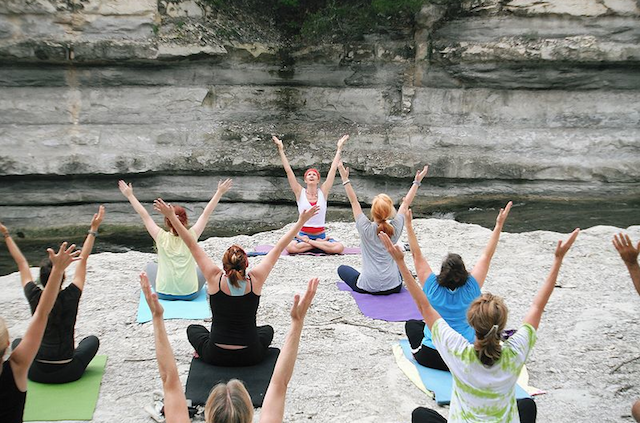
    Photo by Yoga4Love

  • 60 Things to Be Grateful For In Life

    60 Things to Be Grateful For In Life

    “We often take for granted the very things that most deserve our gratitude.” ~Cynthia Ozick

    How often do you pause to appreciate what you have in life?

    When I was young, I took things for granted. I believe many other kids did so, as well. After all, we were young and we didn’t know what life could be like on the other side.

    One thing we took for granted was education. In my country, it’s compulsory for all kids to go to school, so it was a given. We never thought about how lucky we were to be educated.

    We also took our teachers for granted. We never thought about how lucky we were to have teachers who cared for our growth so much, and poured their heart and soul into their lessons.

    Then slowly as I grew up, I began to appreciate things around me more. As I saw more and more of the world out there, I realized all the things I’d been given are not rights, but privileges.

    I realized that being literate is a not a right, but a gift. I realized there is a lot of war and violence in the world, and I’m lucky to live in a country where it’s safe and peaceful. I realized there are people out there who don’t have their five senses, and to have mine is a gift. (more…)

  • The Secrets to Happiness: Lessons from a Toddler

    The Secrets to Happiness: Lessons from a Toddler

    Happy Kid

    “Happiness is the absence of striving for happiness.” ~Chuang Tzu

    My niece is nineteen months old and the most present person I have ever hung out with. If you have children or are around them, you know exactly what I am talking about.

    I know you want more joy, health, and lasting happiness in your life, we all do.

    Could it be that instead of only teaching our children the lessons of life perhaps we should let them teach us the lessons of happiness?

    I don’t live in the same city as my niece so time with her is very important and most of it is spent observing and playing. It got me thinking about her abundant joy and how I should take these lessons to heart.

    Here is what she is teaching me about the secrets to happiness:

    Don’t think about playing; just play.

    My niece doesn’t think about playing or how to play, she just plays. Just like a blade of grass doesn’t intend to grow, it just grows. But we get so caught up in thinking about doing something that we think that contemplation is action, but it couldn’t be farther from it.

    Are you practicing making a change to your life so much that you forgot to make the change happen? One of my mottos is “Ready, fire, aim,” because if I think about it too long, I will talk myself out of taking action. Don’t think about playing, just play.

    Stop and listen to the birds.

    One of my niece’s favorite things is to listen to the birds in the morning. When was the last time you listened to the birds at dawn? When was the last time you smelled a blooming flower? When was the last time you took over an hour to eat a meal, savoring each bite?

    This is mindfulness and it is so good for creating happiness. Part of mindfulness is practicing gratitude. It’s hard to be grateful if you don’t stop and notice all the good things in your day. Stop and listen to the birds.

    Explore above, below, and everything underneath.

    Like most children, my niece is incredibly curious. Everything is new to her, so naturally it has to be explored. She has to explore every aspect of something new, no matter if it’s chalk, the sound a bell makes, or what ice cream tastes like. Her entire day is one big exploration of life.

    As an adult I get set in my ways; don’t you? We are so content in our ways we forget about new ideas, new perspectives, and new ways of doing things.

    When was the last time you took a new route to work, tried a different restaurant, jumped in a pool, or danced? Happiness is in the joy of the moment, and there is no greater way to create joyful moments than to explore new things. Explore above, below, and under everything.

    Bath time is a cause for major celebration.

    For my niece there is no greater activity than taking a bath. Total happiness ensues as she gets placed in her tub. Everything about a bath is full of joy—the water, the splashing, making bubbles, and time with her parents.

    When was the last time you reveled in something like a bath or even a hot shower? Instead, we get in to get clean and spend the whole time rushing through to-do lists in our heads. Use your bath or shower to cleanse your thoughts and enjoy the experience. Bath time is cause for celebration.

    If it’s funny, silly, or exciting, then laugh.

    A child laughs an average of forty times per day. An adult laughs an average of fifteen times per day. If something is funny, silly, or exciting, then my niece is laughing. Some are small giggles and some are deep belly laughs. Both are full of present happiness and joy.

    There is so much to laugh about. Don’t worry about looking silly or being the one with the loud laugh. Laughter is contagious and immediately changes your mood. If it’s funny, silly, or exciting, then laugh.

    Above all else what my nineteen-month-old niece is teaching me about happiness is to be present and enjoy the beauty of life. There is much to be grateful for and enjoy.

    Instead, like many, I can easily get wrapped up in deadlines, feeling bad about my body, relationship drama, or fear of failure. All of these are self-created.

    If I really stop and just notice the world around me in that moment, I see trees and hear birds. I enjoy the sunrise and sitting with friends. There is no anxiety without anticipation. And you cannot anticipate the present moment; you can only be in it.

    Photo by Mindy Gerecke

  • Stop Waiting for Tomorrow: 3 Ways to Love Your Life Now

    Stop Waiting for Tomorrow: 3 Ways to Love Your Life Now

    “Life always waits for some crisis to occur before revealing itself at its most brilliant.” ~Paul Coelho

    My husband had been unemployed for more than two years before it hit me that I was dealing with it all wrong. During that time, I kept thinking that any day he would find a new job. And every day that went by I was disappointed, frustrated, unhappy, and even angry at times.

    For two years I felt like we were in limbo. I was always thinking, “We’ll do this or that after he finds a job.” Everything seemed to be put on hold.

    But the thing was, it wasn’t on hold. That was my life, and I needed to accept it as it was.

    I finally realized that my life was going on every day, no matter what was happening at any particular moment. My life was not waiting for my husband to get a new job or until our finances were in better shape. Time was marching on.

    Besides just accepting my life as it was, I wanted more. I also wanted to embrace and celebrate my life and be truly happy.

    But how do you that when you feel like you are just barely hanging on? Our biggest problem was financial, and we honestly struggled to pay our bills and sometimes to buy groceries. It was an extremely stressful time. I felt sorry for my kids, my husband, and myself.

    I knew I needed to get away from thinking about money all the time. And I knew I needed to focus on my life as it was in the present, not as I thought it might be in the future. I longed to be happy within the reality of our situation.

    Three steps helped me to rethink my attitude and create a life I loved in that moment, as it was right then and there, instead of always hoping for a better future.

    If you’re also resisting what is, these steps may help you make peace with it and find happiness again:

    1. Take stock of what you have instead of what’s missing.

    When I made lists of what I had and what was missing, it became clear immediately that I had so much! My list included two beautiful daughters, wonderful friends, a roof over my head, a supportive family, a career that I loved, a cute cat, and much more.

    Two things really stood out about my lists. First, my “what I had” list was much longer than my “what was missing” list. And second, I noticed how different the things were on each list.

    The things on my “what I had” list were much more important than what was missing. What was missing tended to be centered on material things. For example, vacations I wanted to take that we couldn’t afford or buying new furniture.

    But what I had was about the things that really mattered in life. Taking stock made me realize that I needed to shift my attention.

    Looking at the list of what I had made me feel like my life was abundant, and I suddenly felt a sense of gratitude.

    Taking stock of where you are and what you have at this very moment can be eye-opening. Chances are you’ll find, like I did, that your “what I have” list is not only longer but also more meaningful than your “what is missing” list.

    2. Focus on what really matters.

    All my attention on our financial problems made me lose focus of what is the most important part of my life: my relationships with family and friends.

    It doesn’t cost any money to cultivate our relationships with others. Cultivating relationships comes down in large part to communicating authentically, engaging in conversations that really mean something and are marked by deep listening and honesty.

    With my daughters, who were both nearing their teens, this meant slowing down and listening to whatever they felt like telling me. Each little morsel of news about friends or school or how they were feeling was a gift that I treasured. And I discovered that the more I slowed down and listened, the more they talked to me.

    I am also fortunate to have a very tight circle of friends who mean the world to me. They cheer me on, listen when I need to talk, and make me laugh. I realized what a precious gift that laughter is. To laugh so hard I cry was another thing to treasure.

    3. Enjoy life’s simple pleasures.

    Instead of thinking about the vacations that I couldn’t go on, I thought about the morning walk I took around a nearby lake where I saw two bald eagles, a crane, and the mountains reflected in the water.

    I focused on my creativity—I played my guitar more and I started a new creative endeavor, collaging, which I absolutely loved. I continued to write and to experiment with painting. Through these creative outlets, I started embracing my life.

    Shifting your attention to simple yet joyful activities is another way to gain a whole new perspective on what you have in your life. Being creative and enjoying nature are two great places to start exploring life’s simple pleasures.

    Once I started thinking about how to live my life to its fullest in the present moment before it completely passes me by, my attitude changed.

    That’s not to say I don’t still have stressful financial moments or a longing to take a family vacation to a distant place, but I am no longer missing out on what is happening in my life. I am embracing the life I have and I am genuinely happy!

    It is possible to embrace your life and find happiness in the midst of crisis.

    When we look at our life with a wide lens, instead of just focusing on financial and career success, we can see opportunities to embrace all of life’s abundance. These can be opportunities to slow down and think about what really matters, what we value most in our life.

    Appreciating the most meaningful gifts in your life may just be the surest path to authentic happiness, no matter what your circumstances are at this moment.

  • Finding Our Inner Child and Having More Fun in Life

    Finding Our Inner Child and Having More Fun in Life

    Happy Kids

    “A healthy attitude is contagious but dont wait to catch it from others. Be a carrier.” ~Tom Stoppard

    Just the other day, I was at my daughter’s school to watch her participate in a spelling bee. As the kids came into the room, I took notice of their manner and their faces.

    They looked excited, frightened, and some, decidedly uninterested. The teacher led them over to their area and promptly told them to sit on the floor, in two straight lines, and no talking please. They complied.

    Some kids pushed at the others to “move over!” Some held their fingers to their lips, loudly shhhhhshing the others. Some opened their notebooks and began to draw or write. Some spoke quietly to the friend next door.

    I smiled as I watched them; some caught my grin and smiled back. I wondered if adults would have fulfilled the teacher’s request so quickly, and with relatively little complaint.

    I pondered how many adults, after being told to sit on the floor, would have protested “I don’t want to sit on the floor,” or “the floor, are you kidding?!”

    How many would have continued talking, ignoring anyone imploring them to quiet down? How many of them would have busied themselves instead of complaining, “This floor is hard, how long is this going to take anyway?!”

    And I wondered how many of them would have spoken to the people next to them as if they were their best friends instead of judging, sizing up.

    Once the spelling bee was under way, I paid close attention to the children in the room. There were four classes participating, with what must have been around 100 kids on that cold, hard floor.

    The children on stage were doing great.

    Some of them struggled with a word here and there but managed to put all the letters in the right order. And when they did, their relief and pride in themselves was more than evident. They slapped their foreheads, dramatically wiped their brows, knees buckling as they pretended to faint punctuated by laughter and camaraderie. They cheered each other, congratulated each other, consoled each other.

    What of those adults? Would they be willing to slap their foreheads? Pretend to faint? Laugh and shrug their shoulders when they messed up?

    What about that camaraderie? Those kids all cheered each other. It didn’t matter whose class they were in, how good or bad a speller they were. It just didn’t matter. Adults won’t speak to you if you’re on a different team.

    Maybe I’m being too hard on the adults. I’m sure there are some of them who’ll stand up on life’s stage, give it their very best shot, and maybe win—then pretend to faint, or jump up and down arms waving yelling, “I did it!” Or lose and shrug their shoulders, knowing there will be another chance, or run into the arms of a friend for consolation. But I think they are few and far between.

    Composure—looking the part for the other eyes—that’s the important thing.

    Take all that sadness or elation and put it away now, my goodness; how old are you? Don’t you know that when you win you’re supposed to look sheepish, uninterested?

    When you lose you’re supposed to pull your shoulders back, steel your face, nod your head, and say, “That’s okay, I’m fine.” When you dance you’re supposed to have “the moves,” do it well or don’t get on the dance floor; people are watching.

    I stayed with my daughter for the better part of that afternoon, following the children as they headed out the door for Physical Education. Once there, they were told to sit down, this time on the concrete. They did.

    I sat down right there on the concrete with them, and they looked at me a little strangely. Then they listened intently while the coach explained the rules of the game they were about to play.

    When he was finished, arms shot up in the air, shaking crazily, bursting with the fire of the questions. What if…? When does…? Who goes…?”

    They asked all their questions until satisfied that they understood. The game was underway. I watched. Some cheated; most played fair. They came back off the court to their spots on the ground exhausted, sweaty, giddy.

    For about a second, some were angry their team didn’t win. But they didn’t dwell. I laughed with them, told them they did really well, and asked if they had fun. They responded with a resounding “yes!” I sat cross-legged, just like them, absorbed the energy, and contemplated the attitude.

    How would I have participated, I wondered. Would I have raised my arm and asked questions? Would I have given it all I had and collapsed on the ground afterward? What, as adults, do we do to get exhausted and giddy?

    After that day I looked around at the adults I encountered. This is what I saw:

    Some were well dressed, on their way to work or a lunch break, talking intently on the phone or rummaging through purses and wallets.

    Some were driving, staring through the windshield, maybe thinking about the mortgage payment or the kids or Mom and Dad or how much it’s going to cost to fix the hot water heater.

    Some were standing in line, checking their watches, rolling their eyes, seemingly counting the number of items the person in front of them had.

    Some were at the park, watching their kids play soccer, looking stressed and yelling, “Kick it! Move up! Go! Go! Go!”

    Where did our little kids go, I wondered? Where did that elated, excited, play the game because it’s fun, run in the rain, catch the drops on my tongue, ask all the questions I need to, hug my best friend and tell them I’m sad person go? Can it be I’ve grown up too much? Have all of us?

    What would happen if the next time we do something well, we ran around in circles and screamed? What would happen if the next time we don’t understand something, we raised our hand, shook it mightily, and asked a question?

    If the next time we’re sad, we grabbed a friend and sobbed into her shoulders? If the next time we sit next to someone we don’t know, we asked them what their favorite color is? What would happen if we danced any way we wanted?

    So what am I going to do the next time? I hope I’ll be able to find the inner child I raised into an adult and give her a voice, an arm to wave, and a song to dance to.

    But for now, I’m going to sit on the floor and color.

    Photo by David Robert Bilwas

  • How to Keep Our Thoughts from Making Us Miserable

    How to Keep Our Thoughts from Making Us Miserable

    Dark Clouds

    “Nothing is either good or bad but thinking makes it so.” ~William Shakespeare

    I thought I knew what happiness was. I experienced it, and did so for a while—that is, what I thought was happiness.

    What I was calling happiness was merely an emotion. Emotions, feelings that arise in the body, come into existence when we have thoughts related to them.

    When I have certain thoughts having to do with anger, then I will feel, actually physically feel, angry. When I have thoughts that are positive, then I will feel the feeling, or emotion, that we call happiness.

    In the past, whenever I felt that feeling, I thought, well I am happy. And how sweet it was. The world seemed perfect, in harmony; nothing needed to change. And I felt it most of the time. When I did, everything was good. But then the feeling would leave. The world wouldn’t seem so balanced or peaceful anymore.

    The feeling would be gone, and I wouldn’t know why.

    I would be able to guess why—maybe I had spent a lot of money recently and didn’t have much left, or a relationship with a woman I liked a lot ended, or maybe I was feeling fearful of the future for whatever reason. I would guess that things like these were the reasons for my lack of happiness.

    I looked closely at my mind. I tried to figure out the patterns. But they weren’t so clear-cut. Sometimes, good things were happening in my life, yet I didn’t feel happy. And then sometimes when things weren’t go so well for some reason, I felt that everything was all right.

    It didn’t make sense. To add to the mess, I couldn’t always control if things were going well or not. Sometimes, I did everything I could, the same things I did when I was happy, and yet the feeling of happiness would escape me. The patterns escaped me until I read an article that told me to look toward thought.

    I looked at what impact my thinking had on my happiness. The article suggested that the thoughts arising in my head were only thoughts and to let them quiet softly.

    I practiced this and new patterns emerged.

    This time, the patterns were easy to see. Every time I was down, it was because I was thinking so much. The voice in my head would ramble uncontrollably, and I would listen to everything as if it were fact.

    The thoughts would pressure me to live and act in a way that would benefit me in the future. They would focus on things I needed to do, things that I wanted, things that would make me happy if I did or attained them.

    They would tell me that I was uncomfortable, to change this, to change that; when I was driving, to drive fast so I could hurry up and get to where I was going; when somebody said something mean, the thoughts would be about how awful this person was.

    But sometimes I would meditate. I’d become aware that thoughts are only thoughts and let them quiet.

    I set time to meditate, but also I tried to do it when I was amongst the regular activities of my life. When I would do this, there would be a period of time when my thoughts became slower, less loud, and they didn’t seem so important that I needed to listen and obey them at all costs.

    Those were the times when I was happiest.

    But then again there were some times in my life when things were going really well. I was on fire. I was killing it in my career; I had good relationships with friends and a woman I came to love. Everything was great. When things went well, I would feel happy for sure.

    I had a hunch, however, that I shouldn’t get too happy just because things were going well. I knew that they could easily change, and they would often; and when things weren’t going great, I would feel miserable. I didn’t want my happiness to become dependent on the circumstances of my life.

    Still, it was hard. The way things were going made me feel happy or didn’t. I couldn’t help it. They would bring about the way I felt.

    When I looked closely, I saw that this was because my thoughts reflected how I was doing. I realized that however I was doing, if I let go of the thoughts about the circumstances of my life, the feelings would go away. I tried to do this even when things were going well and I felt happy.

    I did this because I felt that the happiness that came from the times when I quieted and slowed my thoughts was deeper and more complete than happiness based on my circumstances. It felt more real and less easily shaken.

    And so that brings us to the present. I still struggle to stay centered and avoid becoming connected to my thoughts.

    I try not to focus my energy on making sure things are going well, but I still struggle with this too. When things do go well, I feel happy, but I try not to get too excited about that happiness. I have seen circumstances change in my life so often that it seems silly to be too caught up in them.

    I see others who seem to be going through the same cycles. They seem to get wrapped up in their thoughts, which affects their moods. I see friends whose normal states of mind I know, but when they get caught up in what is going on in their lives and start thinking about it too much, they seem to morph into different people.

    We are all in the same boat. We all have this struggle to stay centered instead of responding emotionally to life in a way that pulls us from the present moment.

    But if we can try to remember that our thoughts are just thoughts, they will fade away and grow silent, and we’ll be filled with a deep feeling of peace and joyousness.

    Photo by Visit Greenland

  • 3 Things You Can Do To Feel Happier, Right Now

    3 Things You Can Do To Feel Happier, Right Now

    Happy Guy

    “The place to be happy is here. The time to be happy is now.” ~Robert G. Ingersoll

    In The Four Noble Truths, the Dalai Lama wrote, “It is a fact—a natural fact of life—that each one of us has an innate desire to seek happiness and to overcome suffering.”

    Regardless of religion or creed or upbringing, I think we can all agree on this most universal of statements. Underneath whatever personalities we project and whatever lives we lead lies a foundational truth that applies to all of us: We want to be happy; we don’t want to suffer.

    So what can we do now, today, to feel happier? Before I describe specific practices, let me explain how I view change and self-improvement. As the old saying goes, there are two sides to a coin, and this positive-negative duality applies just as much here.

    For example, “we want to be happy” is the positive side of the statement above, or what to do, and “we don’t want to suffer” is the negative, or what not to do.

    Any challenge, whether it’s becoming a happier you or dropping a bad habit, gets much easier and gives more lasting results if you focus on the positive aspect of the situation (what you should do) as opposed to the negative (what you shouldn’t do).

    Focusing on the positive creates a set of habits that ultimately lead to a better lifestyle, built by you and around your goals.

    The negative path enforces rules and boundaries that ultimately lead to internal mental resistance and a diminished self-esteem. This realization made all the difference in my pursuit of happiness.

    What You Can Do Today

    Before this insight, I would spend my days trying to figure out what situations to avoid, what habits to control, where to go or whom to see for happiness. After the shift in my thinking, I began asking myself what I should do specifically to live a happier life.

    Much trial and error, many years, and many books later, I uncovered three main conditions under which a person feels truly happy: appreciation of the present moment, hope of future achievement, and service to others.

    These conditions are quite different and imply, in my opinion, different forms of happiness. Some individuals will naturally gravitate toward one or two out of three, or even just one. That’s normal.

    If you can handle all three, go for it. If not, don’t worry. Alone or combined, they all make for a dramatic improvement in quality of life and awaken a happier you.

    1. Appreciation of the present moment

    At its highest level, this means to become intensely focused on the present and, in some cases, to suspend time entirely. If you can do this, great. But not all of us are masters at entering the now. For most of us, leading a lifestyle of gratitude is the best and most practical way to cultivate appreciation for the present moment.

    A fail-proof technique I found was to reflect at the end of each day and express written gratitude for one to three things, events, or whatever I felt grateful for.

    Doing this daily brings about a shift in mentality from “what’s lacking in my life?” to “what is here before me now?” until being grateful eventually becomes second nature. If on certain days you truly can’t find anything worth being grateful for, don’t force yourself.

    That said, there is no shortage of things for which we can be grateful. At the very least you can breathe, and you likely have somewhere to sleep, can see and read this article, and have food to sustain you. Those are all things to be grateful for. Imagine life without them.

    2. Hope of future achievement

    The second condition, hope for future achievement, implies a different, more worldly sort of happiness. This does not always mean monetary gain, although that is usually a product of achievements such as business expansion, securing a job, or earning a promotion. This type of success, within reason, is normal. Our biological need to survive compels us to pursue it.

    But achievement comes in many other forms. It can mean physical feats such as finishing a triathlon, or a personal journey of self-enlightenment, or even little things like becoming more organized and driven.

    All of these endeavors give us end goals to surpass and offer us the promise of due reward should we succeed. This promise is what instills us with a sense of happiness. That’s why dreamers and optimists are often happier than realists. They believe in the promise of a better future.

    I found that daily visualization is a great way to nurture hope for future achievement. Think about a goal you genuinely want to achieve and put it in writing. Then twice daily, visualize yourself experiencing the success associated with whatever achievement you’re focused on. You don’t have to know how you will arrive at the end destination. Just imagine the end destination.

    For me, that means visualizing the day I open my own holistic self-development studio, or the day I sign the contract for publication of my first novel.

    For a detailed look at how and why this technique works, I suggest reading Psycho-Cybernetics by Dr. Maxwell Maltz. But in short, visualization communicates your inner desire to your subconscious mind. Over time, you become what you consistently imagine yourself to be, and you achieve what you consistently imagine yourself achieving.

    3. Service to others

    The third condition, service to others, is what helped me the most. I always knew myself to be a talented and capable person. But time and experience showed me that talent and capacity alone aren’t enough for a happy life.

    I felt like my connection with others lacked strength and authenticity, almost as though I lived at an arm’s length from society. This, I believe, held me back more than anything.

    Service to others changed all of that. Make a conscious attempt each day, as I did, to do one kind thing for someone without telling anyone about it, ever. I highly recommend trying this for at least twenty-one days. It changes your perspective on the profound interconnectedness of all beings and all things.

    It teaches you first and foremost to give without expecting anything in return, to do for the sake of doing and not for the recognition.

    Not telling others about your acts of kindness also builds discipline and becomes a secret between you and yourself, something to be proud of. Third, it teaches you that bringing happiness to others does more for your own happiness than any worldly escape or distraction.

    Start Now

    Do not wait for happiness. Start now. It is within your grasp and you deserve it. It doesn’t have to be elusive. Look for it in the simpler things in life. Express gratitude for something. Visualize success and a better you. Render an act of kindness and keep it to yourself. Implement these practices in your life to feel happier, right now.

    Photo by David Robert Bilwas

  • One Simple Thing Anyone Can Do to Have a Better Day

    One Simple Thing Anyone Can Do to Have a Better Day

    excited-woman

    “You may not control all the events that happen to you, but you can decide not to be reduced by them.” ~Maya Angelou

    Today as I walked down a trendy suburban street heading to an appointment, my phone rang. I was not having the best of days.

    I was walking past chic cafes and designer shops displaying tempting wares. However, having been laid off for the second time in two years, with a mortgage to pay and months without an income, these trivial symbols of indulgence were almost too much to bear.

    Over the past two years, I have felt down, sad, depressed, lonely, and inadequate on more occasions than I have felt joyous, happy, thrilled, loved, or valued.

    I have had more bad days than good, but I was on a path upward. I was reading self-help books and taking up the advice that helped me. I was writing and painting, two pursuits that I had all but abandoned in the quest for corporate stardom.

    Slowly, I was building myself back up again but small issues still had the power to knock me out.

    I was still gut wrenchingly lonely, but I had a couple of trips booked, and I was going to move back into the family fold overseas.

    I was going to return amongst the people who mattered the most and to whom I mattered. I was taking steps toward my own wellness. I had realized that only I can transform my life. I believed that I had the power and strength to rise beyond my challenges and be a better person for having experienced them.

    But back to the phone call. As I answered the call, I realized that it was a promotional call from a reputed global charitable organization that I had supported over the last few years while I was employed.

    I expected it to be a request for donations. It irritated me that this man would call me and ask for money when I was, myself, counting every cent to make ends meet in one of the most expensive cities in the world.

    On a deeper level, my feelings of inadequacy were reinforced because I would have to deny his request. My mood began to darken.

    As the young man with his attractive Irish accent chatted on about an initiative to supply drinking water to millions around the world, I was tempted to hang up the phone and cut the line. I was nearly at my appointment and I would not be able to chat for long anyway. How did it matter if I hung up? I was about to pull the phone away from my ear and hit the red button.

    But then something made me pause.

    I reminded myself that the world does not revolve around me. My caller doesn’t know my circumstances. He is simply doing his job. If I am rude to him, I am spreading ill will and negativity. He did not deserve that. This was my chance, albeit a small one, to make a better decision.

    So I stayed on the line and listened to what he was saying. At the first opportunity, I let him know that I only had a few minutes free and I would have to end the call soon. He may have thought I was just making excuses, but he gamely continued on at a faster pace that was somehow very endearing. It made me smile.

    As I approached my destination, I apologized and excused myself from the conversation. My caller thanked me for my time and promised to call back some other time when I was not occupied.

    This small incident barely took up five minutes but it was a significant director of my day. I was happier for being respectful and polite to a stranger for a couple of minutes. I would like to think that I did not hurt someone else’s feelings, even if he was a stranger.

    Had I chosen to end the call abruptly, I would have carried that negativity for the rest of the day. Instead, an eager Irish chap brightened up my day a little with his enthusiasm.

    I have realized recently that every small thought, every decision, every step we take has a huge impact on us, and the world around us.

    The old me, with my sense of superiority and entitlement, would have hung up the phone without a second thought. The old me would have considered my time too worthwhile to waste on such a phone call, good cause though it may be.

    I have also realized that every interaction is the opportunity to do good and receive good, whether it is a phone call, a shopping trip, or even considering your fellow travelers when playing music on the train.

    Today I also recognized that I have, almost without realizing it, become a slightly better person. I feel like I am more mindful of the world around me, more humble about my place in it. That makes me feel happy and fulfilled.

    And all it took was one phone call.

    So make the effort to make your every interaction a positive one. To face the world with a smile and a kind word. If you throw kindness out in the world, it will bounce right back, only multiplied several times over.

    Photo by Jonas Foyn Therkelsen

  • Finding Contentment in the Rhythms of an Everyday Life

    Finding Contentment in the Rhythms of an Everyday Life

    Happy Face

    “The simple things are also the most extraordinary things, and only the wise can see them.” ~Paulo Coelho

    As the day of my daughter’s second birthday approaches, I have found myself reflecting more and more on the first few months of her life.

    She arrived on a Sunday morning as winter gave way to spring, full of life and ready to embrace her humanness as only a brand new human can. There was snow lingering on the ground, and the sunrise that day was full of anticipation and the unknowing that comes along with waiting for something that is impossible to predict.

    We brought her home a few days later, unsure and anxious as so many new parents are, and settled into a rhythm that was punctuated with nursing, changing diapers, washing diapers, bouncing the baby to sleep, and waiting for her to cry so the pattern could continue.

    It was a rhythm of trial and melancholy and immeasurable joy, somehow all rolled into one. As the cliché goes, having a baby changes everything.  

    I remember the first day I left the house alone to walk around a nearby lake. I remember feeling anxious that she would need to nurse while I was gone, and that my husband would have to deal with a screeching infant until my return.

    I remember stepping around melting piles of grey snow and skirting mud puddles as I made my way down the driveway, out to the gravel road. I remember feeling the sun on my face and how good it felt to reclaim the use of my physical body.

    I remember feeling like that walk—even with the mud puddles and drab weather—was enough to satisfy my need to feel alive and in my own skin, one human embracing her humanness, for the rest of the day.

    I remember coming back into the house and melting back into the rhythm. I remember feeling like just being part of that rhythm was enough.

    That feeling of contentment from having just one half hour alone, outside, moving over the earth on foot lasted for several months. I felt a sense of peace after coming in from a run, or time spent in the garden, or the occasional longer hike in the woods.

    I went back to work full-time and started running or gardening in the morning as the sun came up.

    Despite the extra demands that came with adding work to the rhythm of the days, that sense of peace—the sense that the ordinary rhythm of ‘life with baby’ was enough—lingered. For a while. 

    A few months after the baby marked her first birthday, I noticed that sense of peace slipping. I found myself wanting more time, more resources, and more flexibility to do what I wanted to do.

    I found myself wanting to feel like I was making a difference, like I mattered enough, like I was enjoying enough. I found myself wanting to feel content with life and wanting to feel satisfied with the everyday.  But I wasn’t.

    Somewhere in the space between my daughter’s birth and her twenty month birthday, that sense of peace got stuck behind a different rhythm that felt busy and lacking and not enough.

    A half-hour walk outside wasn’t doing it for me anymore. After coming inside, I wanted another half hour, and then another, and then another. Sometimes all the time in the world, all the recognition in the world, all the happiness in the world, it didn’t feel like enough.

    I can’t say that I have completely regained that feeling of complete contentment. But as I reflect on the months just after my daughter’s birth, as her second birthday gets nearer, I reclaim some of that peace.

    In acknowledging that feeling of lack, of discontent, and of happiness that comes and goes, I am inviting that peace to return to the rhythm. 

    It will undoubtedly still be a rhythm of trial, of melancholy, and of immeasurable joy, because that is what being human is about. It is about celebrating the mountaintops and accepting the valleys and their shadows.

    It is about remembering that joy and peace remain present even when they seem buried beneath wanting, discontent and overwhelming schedules.

    It is about seeing the extraordinary in something as mundane as a walk around a frozen lake on a muddy gravel road. It is about remembering that we are all full of life and have the capacity to fully embrace our humanness.

    It is about recognizing the instinct to do something to change a feeling or the persistent need to address our desire for more—and letting it be there. Sometimes there’s simply nothing to do but accept that being human means letting all feelings speak, and then letting them pass when they no longer serve.

    Perhaps embracing our humanness and the life that comes with it means celebrating the anticipation and the unknowing that comes with waiting for something that is impossible to predict.

    Photo by bharatnow.net

  • You Don’t Have to Believe Your Negative Thoughts About Yourself

    You Don’t Have to Believe Your Negative Thoughts About Yourself

    “The outer conditions of a person’s life will always be found to reflect their inner beliefs.” ~ James Allen

    We all have a picture of ourselves in our minds. A picture of what we believe we are like. A picture we choose to believe no matter what.

    We can cling to this idea about ourselves all we want, but that will not make it true. This is not as easy to realize and even harder to accept, but it’s an important step toward a conscious life.

    I believe we all go through dark phases when our image of ourselves breaks and we start thinking less of ourselves. This phase can pass after some time if we let it, but if we insist on clinging to the picture of  ourselves in our minds, it will be harder to get through it.

    The good news is: You are whoever you choose to be.

    It’s not a coincidence that all the great spiritual masters spoke about detaching from our thoughts. Our thoughts do not represent reality. We are the ones who choose to believe that they are real, when, in fact, they have nothing to do with reality.

    No matter what situation life presents us, we can always choose to view ourselves the way we want.

    You can either view yourself as a victim or as the hero who lived through all the controversy. It’s all a matter of perspective.

    Whichever you choose you will become, since you believe that is who you really are, so you will ultimately behave that way.

    This has nothing to do with the person you actually are; it solely depends on how you choose to view yourself.

    I was an anxious person all my life. Anxiety, panic attacks, depression, phobia—you name it, I had it. I had so many issues that it was hard to view myself as sane.

    I had to realize that these feelings were never my identity; they could never define me because how I chose to see myself, despite my feelings, was my choice.

    I remember sitting on the couch and making myself sad by thinking about what a horrible person I was.

    I used to believe that I was somehow not normal and that I didn’t belong here. I chose to stay at home all the time because I believed that if I went out and lived the life of a normal person, something horrible would happen and I’d end up hurting others or myself.

    I also felt pity for my husband, because he had to spend his life with such a horrible person.

    I was not insane or different, no matter how much I believed that I belonged in a mental institution. It took me a long time to realize that what I thought of myself had nothing to do with reality, and an even longer time to apply this knowledge in my life.

    I was not perfect, I’m still not, and I never will be, but nobody else is either. We tend to believe that we are the only people struggling. Always remember that you are not alone. When you feel horrible, know that there are countless people out there who feel just like you do.

    If you feel alone and different from everybody else, this is just a thought; it’s not real. We can choose to believe it is, or we can choose to see that we are never really alone, and so many people share our feelings.

    Just because you believe something does not make it true.

    People who promote positive thinking would advise you to start thinking positively. I think this is obviously better than negative thinking, but it’s still not the solution. I believe in letting thoughts go.

    Let go of all the destructive thoughts you hold about yourself. Once you are able to accept that you are not what your thoughts are telling you, you will become free.

    You will no longer limit yourself with your thinking because you will accept that your thoughts are faulty.

    Once you realize that your thoughts are faulty, there will be nothing else standing in your way. And when you realize that there is nothing standing in your way, you will see it was your thoughts that were holding you back from being who you wanted to be this whole time.

    When I look back at how I used to be, I see a girl who was always such a nice, kind-hearted person, but for some reason chose to believe that she was something completely different and, therefore, isolated herself from the world.

    I hold no false ideas about myself nowadays. Since I acknowledged that all my opinions about myself are just thoughts that have nothing to do with reality, I realized I am who I choose to be. Nothing and no one, not even myself, can stop me from being the person I want to be.

    I embrace who I am now. I love being outside, enjoying the company of people and nature, and I know that I can bring a smile to people’s faces with my kind and loving attitude. I care for my husband even more because I know that my love and attention is valuable.

    I even started writing my first fiction novel, which is something I always wanted to do. I envied the authors who could come up with magical worlds and could use their minds to build up something beautiful. I thought that my mind was not a place of wonder, but since I let that thought go, I’ve started to build the wondrous world I never thought I could.

    I still have thoughts in my mind that I sometimes think shouldn’t be there, but that is also a part of me. As long as I can identify them for what they are, they can do no harm. I know now that nothing can control my actions, only me.

    Don’t let your mind push you around—just let it go.

  • Taking a Chance on Happiness and Knowing We Deserve It

    “Life is inherently risky. There is only one big risk you should avoid at all costs, and that is the risk of doing nothing.” ~Denis Waitley

    I like to tell the story of how I changed my mind about myself and what I was worthy of and how that change almost immediately led me to my husband—or, rather, how it led him to me. On Craigslist.

    But unlike a fairytale, we didn’t go straight from point A (boy meets girl on a sometimes-shady website) to point B (boy marries girl in the church she was baptized and grew up in, across the street from her childhood home) and happily ever after.

    We sorta stalled at first. And it was all my fault.

    See, even though we hit it off in a big way and immediately started emailing each other, like, a dozen times a day (seriously, I kept every single email and treasure them all), I wasn’t fully sold.

    I didn’t think we had a chance romantically. Even though the poor guy did everything but jump through flaming hoops to get the point across that workdays full of emails were just slightly less than he hoped for, I held him at bay.

    I conveniently overlooked his invitations to connect over the phone after work some night. He called me “Beautiful” like it was my name, and I would just conveniently overlook it. There was a big old wall between us, and I was the architect.

    Finally, after a month of this nonsense, the truth hit me like a bus (funny, since I was sitting on a bus at the time).

    I heard a voice ask, “What is wrong with you? You have everything you’ve always said you wanted, and you’re pushing it away!” After I looked around and made sure it wasn’t some weirdo randomly talking to me (you just never know on the bus), I gave the idea some thought.

    Whoa. Yes, I totally was. I was pushing it all away with both hands.

    This was another huge turning point in my life. Right there on the Route 36 bus.

    I explored this idea as I made my way home that night. For once there was a man in my life who was clearly interested in me, who very obviously wanted to take our relationship to a more serious romantic level. There was no struggle, no game playing, no confusion, no chase (at least, not for me).

    And we had so much in common—our values, our beliefs on religion and spirituality, our interests. Sure, there were differences too, but just enough to keep things interesting, to keep us both growing and learning from each other. Enough to give us endless topics to ramble over through countless emails, for sure.

    As long as I’m being honest, I was also totally addicted to talking with him. I looked forward to every single email and would get pouty when I didn’t hear from him right away. I had to check in and wish him a good night before leaving work and had to check my inbox as soon as I got home to see if he wrote back.

    I was clearly smitten. But here I was, holding the poor guy at arm’s length, even as he tried so hard to enter my heart.

    So what was my deal, anyway?

    It boiled down to this: I was miserable with my life the way it was, but it was all I knew. It was what I was comfortable with. I hated being alone, but “alone” was the only way I’d ever known my life.

    I still needed to come to terms with the fact I was worth loving. No matter how awesome I told the world I was, I needed to believe that there was someone out there who would love my wacky self as-is, no strings attached, no holds barred, no weight loss needed.

    Putting it bluntly: I had never known a man who didn’t require me to change in some way for them to consider me dateable. This was a total challenge to my self-image.

    I also needed a hefty shot of courage. After all, I’d been hurt in the past—too many times to count.

    And I hadn’t even had a romance with any of these other guys. I’d shared my heart, but I hadn’t shared my body. I hadn’t shared my secrets.

    They hadn’t heard me snore in my sleep.

    What if I started a relationship with this man and we broke up? How would I handle that, knowing that there was another person out there who knew all about me? This was a whole new world, and I had no idea how to navigate it.

    Still, in the face of all this fear and hesitation, there was a quiet little voice in my heart that pointed out that the easiest thing in the world would be to just give in. To stop fighting it, which took more effort than letting things take their natural course. To believe that I was lovable, if only because this man saw me as such, and to trust that he would never hurt me.

    And he never has.

    I realize now that this way of thinking affects people in more ways than just the example I gave here.

    So much of the time we long for something else, something new, something better, but when the opportunity presents itself, we either miss it completely or we come up with a million reasons why it’s not right for us.

    We’re too busy, we’re not smart enough, we’re not lucky enough, or connected enough; we don’t have the money for it. On and on.

    We let huge, potentially life-altering opportunities pass us by because, at the end of the day, we don’t believe we deserve them or that we could handle them if we gave them a shot. Even if we want them with all our heart.

    It’s not that we’re lying to ourselves about what we want. It’s that we let fear dictate what we’re worth.

    It takes work and a lot of self-awareness, but if we can identify these negative beliefs—all based around fear—we can work on becoming a little more fearless every day.

    Our job is to stop standing in our own way. To drop our limiting beliefs, stop dedicating time and energy to talking ourselves out of what we so richly deserve—fulfillment, love, abundance, joy, and peace. To simply open our arms and our hearts and accept the possibility of something more, right there within our grasp.

    That’s when things start moving and grooving. I promise.

    Let’s stop holding our dreams at arm’s length. Or eventually they’re going to give up on us and continue dating another girl—which is what could have happened had I not texted my man that very night after my fateful bus ride.

    In my excitement, I pulled out my phone and sent this super articulate message: You know what? I think I kinda like you.

    I have never regretted sending that text. To this day I thank the voice in my heart for setting me straight and for giving me the courage to take a chance.

    Photo by Beshef

  • Why Self-Compassion Is the Key to Being Our Authentic Selves

    Why Self-Compassion Is the Key to Being Our Authentic Selves

    Arms Outstretched

    “To be beautiful means to be yourself. You don’t need to be accepted by others. You need to accept yourself.” ~Thich Nhat Hanh

    I was raised in a family where outward appearance and reputation were important. Standing out was only encouraged if it was within the bounds of what was considered “normal.”

    No one ever explicitly told me, “What other people think of you is more important than being your true self,” yet that’s what I learned to believe. It became my mission to be accepted by others, because I thought that only then would I be worthy of love.

    I spent most of my middle school and high school years pretending to be somebody that I wasn’t. I would “chameleon” to blend in with people around me.

    I suspect that due to my less-than-stellar acting skills, a lot of people could tell that I was being phony and didn’t want to hang out with me. This only increased my hunger for external validation and acceptance.

    At the age of thirteen, I attended my first personal development seminar.

    It was an incredible experience for me, and when I was in the seminar room, something inside of me came alive. Being in that space awakened my passion for personal development, a passion that has only grown over the last fifteen years.

    In the next decade that followed, I’d spent more than 350 hours participating in personal development seminars, and in July 2009, I finally received the honest feedback that would change my life forever:

    I showed up as arrogant, selfish, self-righteous, superior, and judgmental.

    The feedback hit me like a ton of bricks. I was simultaneously composed and totally shocked.

    I was composed because I knew that people experienced me in those ways: I was a condescending know-it-all with judgment by the boatload, and little tolerance for people “doing it the wrong way” (not my way). My demeanor was often cold and closed off, and I could easily insult people where I knew it would hurt.

    I was shocked, because when I received that feedback from somebody that I’d met less than six hours earlier, I felt completely vulnerable. I didn’t know what to do with myself in that moment of being completely exposed.

    The walls that I’d created to “protect” my authentic self were only pushing (or rather, shoving) everyone else away. I finally decided to make a change. And thus began my journey of rediscovering my true self.

    To say that it was a battle would be a grave understatement. The little voice inside my head had gotten really good at convincing me of “truths” that were actually just thoughts based in my false beliefs about reputation and acceptance.

    Lying to myself had become such a subconscious process for me that bringing it into my consciousness on a daily basis was a struggle.

    Right after receiving the feedback, I’d keep “be authentic” on the forefront of my mind for a few days at a time. But more often than not, my commitment to being authentic would slowly fade behind my decades of pretending to be somebody else, and I often wouldn’t even notice the shift.

    When I’d realize that I wasn’t being perfectly authentic, every moment of every day, I’d go into beat-up mode and would berate myself for being a failure.

    My new awareness seemed like a game of lose-lose: if I ventured out into authentic living and slipped back into my old ways, I’d go into beat-up mode; if I acted like I was okay with being my pretending old self, I’d feel sick to my stomach about who I was pretending to be. I didn’t know how to win that game.

    I spent a couple of years on the rollercoaster ride of stepping out and being authentic, slipping back into my old ways, and beating myself up about it; it was exhausting. But then I learned that personal development isn’t a switch, it’s a journey.

    I couldn’t just turn off my old behaviors and turn on some new authentic behaviors.

    Creating lasting change would take commitment, practice, and most importantly self-compassion.

    Commitment meant truly committing myself to being authentic, and doing it for nobody else but me. And practice meant making conscious choices to set my authentic self free instead of staying in the box I’d built for myself.

    The self-compassion piece was the most important because it determined whether or not I wanted to pick myself back up, dust myself off, and give it another go.

    If making a mistake was only going to end in me beating myself up about it, then I’d rather not have even attempted it. But if making a mistake was met with a desire to learn, and then re-approach my ways of being in a new way, it was a much easier choice to make.

    Throughout my journey of discovering and living as my authentic self, I have experienced moments of immense joy and freedom, which have encouraged me to continue moving forward.

    One of my most impactful experiences of letting my authentic self shine took place at the end of November 2013, when I shaved half my head.

    One of my friends shaved part of her head in mid-2013, and I loved how it looked. I thought it was a perfect combination of sexy and tough. I immediately wanted to shave my own head, but hesitated…for six months.

    I thought, “What are other people going to think when they see you? Everyone is going to judge you. People are going to think that you’re weird.”

    The little voice in my head was going crazy. My head and my heart weren’t coming to an agreement because that little voice was repeating phrases I’d heard my entire life.

    But one day—and I can’t remember exactly when it happened—I just decided to do it. I knew that deep down in my heart I wanted to, so I refused to let that little voice stop me anymore. If people were going to think that being my authentic self was “weird” then so be it!

    I wish I could say “and then I shut the little voice up forevermore and lived happily ever after,” but that wouldn’t be true. My little voice was screaming when I finally sat down to get my head shaved. But I just chose to acknowledge the screaming and shave it anyways.

    After it was all done and I looked in the mirror, I fell in love. I fell in love with me! For the first time in my life, I felt completely aligned in my outward appearance and my inner authentic self. I felt free.

    Sure, people stare at me in public. But I just smile and walk on by. Everyone has an opinion about my hairstyle, but there’s only one opinion that matters—mine. And I love it!

    That was one of the biggest and most tangible steps that I’ve taken toward letting my authentic self truly shine. Now, if I start letting to the voice inside my head get to me, I can just look in the mirror or touch the shaved part of my head to remind myself of who I really am.

    One of my biggest lessons throughout my head-shaving experience was this: when I limit myself because of my fear of what others might think of me, I’m limiting what I think of me. When I truly embrace my authentic self, I am free.

    Abraham Maslow said, “What is life for? It is for you.” I’m finally living my life for me, and I’ve never felt more empowered, joyful, or authentic.

    How are you holding yourself back?

    Would you be making different choices in your life if you weren’t worried about the acceptance of others?

    How different do you think your life would be if you stepped outside of your comfort zone one time every day?

    I encourage you to get uncomfortable and to let your authentic self shine. You might be surprised at how freeing it can be.

    I certainly was.

    Photo by AJ Leon

  • 6 Ways to Triumph Over Self-Pity and Defeat Self-Loathing

    6 Ways to Triumph Over Self-Pity and Defeat Self-Loathing

    Man on a Bridge

    “Instead of complaining that the rose bush is full of thorns, be happy the thorn bush has roses.” ~Proverb

    Glancing at the ceiling, I waited for the prick as the nurse began to draw blood from my vein.

    My mother, patiently sitting in the chair next to my hospital bed, looked at me with comforting and hopeful eyes. This was not the way we had envisioned spending our Saturday.

    My mom and stepdad had drove hours up from home for the first time to visit my college for parents’ weekend.

    I had spent the past weeks planning activities and college shenanigans for my friends and our parents. My expectations were so real in my head. My mom throwing the winning beer pong toss, my stepdad shot-gunning a Natty in record timing, and me smiling with glee from the sides, like a parent watching their kid’s dance recital.

    But here we were, in a hospital, waiting for test results, while my friends and their parents were having all the fun.  

    The doctor came in and said the four-letter word I was dreading: mono. Yes, I know mono isn’t the worst illness one could get and that other people have serious diseases and ailments, but I still couldn’t help feeling unfortunate.

    It seemed that this entire semester of my senior year was filled with bad luck and misfortune.

    I had just gotten out of a relationship with the person that made my world spin round, leaving constant, overwhelming loneliness.

    I had spent the past months depressed about my current situation and anxious about the uncertain path my road would take after graduation. I walked around campus like a zombie, my white Dr. Dre Beats headphones drowning out the world around me.

    And now mono was the icing on top of a broken, dry, and damaged cake.

    I spent the next few days in my bed at home literally “sweating” out the disease. I’m not sure if it was the fever or the high quantity of sleeping and flu medications I was on, but I entered some sort of spiritual quest, I guess you could call it.

    It was almost an Alice in Wonderland scenario that let me see my situation in a different light. And I realized my biggest issue is self-loathing and self-pity. Instead of finding ways to be happy, I was choosing to marinate in my minor misfortunes.

    I spend the next days of recovery figuring out ways I was going to combat this and it led to this:

    6 Ways to Triumph Over Self-Pity and Defeat Self-Loathing

    1. Focus on others.

    If you deal with self-pity like me, then one of your biggest problems is that you are probably over-thinking about yourself.

    Dale Carnegie, in his book How to Win Friends and Influence People, stresses the importance of attention to others, based on the idea that most people love to talk about themselves.

    After reading his book, I decided to put his theory to the test. In my following conversations, I focused on other people’s lives instead of complaining about my own. I quickly learned that others have just as many problems as myself, and within time I found that people began to turn to me for advice and companionship.

    Realizing my ability to bring people guidance brought me the happiness I needed to stop obsessing about my problems and focus on positive thoughts.

    2. Find a hobby and make a goal.

    Everyone is aware of mid-life crises, but in reality we go through crises at all stages in our lives. Regardless of how old you are, you might be stuck in a rut and feeling little purpose. Instead of getting down on yourself, shift your focus to something that will make you feel good about yourself, like pursuing a new hobby and a goal.

    Find an activity that you like to do: swimming, painting, running, drawing, writing—anything! And more importantly, set a goal. This will give you something to look forward to down the road, like running in that local 5k or showcasing your artwork in a gallery.

    You might find out you’re good at something you didn’t know you were good at before.

    3. Explore what makes you happy, and do it.

    Before I had this realization, I would spend my days frustrated and thwarted with the little things that would go wrong.

    In a conversation with my sister, she gave me this simplistic advice that has resonated so deep with me. It takes a bit of inner reflection, but once you find what makes you happy, doing just that can be all you need to brush away the bad events of your day.

    For me, eating a grapefruit in the morning makes me happy. I realize it might come across as humorous to think a citrus fruit could bring such power. However, there is something about waking up and preparing a grapefruit the same way my mother would when I was a child that provides me with nostalgic warmth that gets me through my days.

    4. Remind yourself of your positive attributes.

    Whether it’s before you go to bed or during your morning routine, tell yourself a list of things that you’re good at and what makes you a good person.

    This can be one of the hardest things to accomplish. Our minds have been conditioned for years to remind us of the things we suck at and all the bad things that we have done in our lives. It takes time, but with effort you can train your brain to stop feasting on those negative thoughts and instead crave positive reflection.

    This thinking isn’t conceited; it’s healthy. Like a well-balanced breakfast in the morning, these thoughts prepare your mind for a day of happiness.

    5. Create a self to-do list.

    When feeling overwhelmed with self-pity, draft a list of what’s going through your head. Once down on paper, these problems will appear much less daunting and catastrophic. However, if you’re still feeling overwhelmed, consider this list a “to-do” list for the self.

    Taking one at a time, find ways and set dates to work on alleviating each problem. Some problems might take more than a day to solve, but knowing I spent part of my day working on myself keeps me feeling productive.

    6. Force yourself to smile, and hug yourself.

    This is the simplest trick in the book for lifting your spirits. Look into a mirror and simply smile. It might be hard, but smile, and within seconds the smile won’t be forced, but natural.

    There is a connection in your brain between smiling and the release of certain neurotransmitters that promote happiness. This tip is just cheating the system!

    A similar situation occurs with hugging. Close your eyes and wrap your arms around yourself tightly. It only takes about seven seconds to trick the mind and experience the comfort and security from hugging another.

    These two tips are simple ways to get yourself out of bed in the morning and started with your day.

    —–

    Life can get difficult and stressful, and we’re conditioned to think about ourselves, but taking the time to think of others and allowing our mind to capture the beauty in the world can make all the difference.

    Instead of wanting everything to go right or a situation to be perfect, learn to dissect the present into beautiful little moments. With time and positive energy, there is always a way to escape from self-pity and self-loathing and see a more stunning universe.

    Photo by Kara Harms

  • 4 Lessons on Conquering Fear and Living the Life You Want to Live

    4 Lessons on Conquering Fear and Living the Life You Want to Live

    Happiness

    “Our deepest fear is not that we are inadequate. Our deepest fear is that we are powerful beyond measure. It is our light, not our darkness that most frightens us. We ask ourselves, ‘Who am I to be brilliant, gorgeous, talented, fabulous?’ Actually, who are you not to be?” ~Marianne Williamson

    After lying on my apartment floor for an hour, I walked over to the mirror, leaned in, and looked into my eyes.  This was the moment I came face to face with the truth: I was afraid to stand up and be who I wanted to be in this life.

    It was not the fact that I was so rock bottom that scared me. It was the belief that I am capable of so much more.

    Five years ago, I was in a banking job that demanded more of me than I could give. I remember one day a customer standing at the edge of my desk, yelling at me, and all I could do was get up from my chair and run away as my first panic attack took hold of me.

    It was during this time that I began my relationship with food. Every evening was the same: I would leave work, get Mexican take out, return home, turn my cell phone on silent, and watch reruns of Sex and the City.

    I lived vicariously through Carrie and struggled with her through her journey. It was in these few hours that I felt connected to something. I did not have to work hard, try, or fake anything; I just observed. This ritual got me through the year of 2008.     

    On New Year’s Eve, I sat waiting for my date to celebrate a new year, looking down on the pile of clothes on my floor. Not one shirt or pair of pants fit me. The last thing I wanted to do was celebrate anything as I wondered how it all added up to this one evening.

    The truth was, I had let myself go and weighed the most I have ever weighed in my entire life.

    The next morning, after a long evening of questioning and self-loathing, I woke up and started sifting through the pictures of myself from the evening before. Something in me wanted to fully acknowledge the truth of my reality; I lay down on my apartment floor, began accepting how far I had let myself go, and let it all out.

    An hour later, I peeled myself off the floor, walked to the bathroom mirror, leaned in, and declared that I did not recognize the girl in the mirror. That moment of recognition, or a lack of recognition for that matter, was my turning point.

    I had been hiding behind clothes, food, and Sex and the City reruns for far too long, and as painful as it was to face this reality, it was my awakening. This was my life, and there was no other option but to stop hiding behind food, face my fears, and move forward, fiercely. 

    This is exactly what I did. I left my job as a personal banker, lost forty pounds in the first year, became a certified personal trainer, and eventually started my own company to inspire and empower others to move fiercely forward in their lives. I became a warrior!

    Over the next four years, I learned four lessons that empowered me to live the life I wanted to live.

    1. Moving forward is the only option.

    That day, I did not know much about how I was going to change; I just knew why I needed to change.

    So I started somewhere; I dusted myself off, wiped my tears, and began emptying my kitchen cupboards. Day by day, action by action, I began moving in a new direction, and it felt different. I began seeing changes, both physically and mentally, soon thereafter and felt a sense of pride in myself that I had never felt before.

    It’s easy to overcomplicate the path to what you want, but it is very simple: take one small step forward each day.

    2. Walk through the fear, you warrior.

    When I first began my journey of moving forward in my life, I was excited, empowered, and motivated by all the positive changes that were taking place, but with this also came fear.

    What I feared most was having the courage to hold my own and be the best version of me. I envisioned the woman I wanted to be; she was empowered, confident, sexy, strong, and capable of anything she set her mind to! Then suddenly the fear crept in as I wondered how I would walk in this woman’s shoes and pull it off.

    Fear is an interesting thing; it can paralyze you or catapult you. If you let it paralyze you, you will continue doing what you have always done and shy away from the courage you have within you, your light. If you let it catapult you, you turn your fear into fuel and use it as a tool to conquer whatever stands in your way.

    It was the day I created my personal mantra, Fierce Forward, that I came face to face with my biggest fear that first year: stepping foot in the weight room.

    Walking into a room full of grunting men who have been doing this for years was extremely intimidating, but I would not allow my fear to paralyze me. I began running faster, brewing up the courage as I envisioned myself walking tall toward the weight room, stepping over the line that divides my past endeavors from my future endeavors.

    I knew I had to put a fierce face on, and ten minutes later, I was lifting weights amongst the men I once feared.  Little did I know at that time that lifting would become my passion and be the activity that empowers me most. Choosing to face my fear that day paid off ten fold, as lifting inspired me to become a personal trainer.

    The more experience I had with facing my fears, the more of a warrior I became.

    Fear should be walked through, not around. When you walk through it, you are choosing to face what you are afraid of and overcome it. That day in the gym, I walked through my fear!

    3. You hold the key.

    It was in one of my favorite movies, Sucker Punch, that these words, whispered by Sweat Pea, awoke something powerful within me: “Who chains us? And who holds the key that can set us free… It’s you. You have all the weapons you need. Now fight!”

    These words impacted me in a way nothing has before. I had been trudging through most of my life, reacting and living like a zombie. When I heard this quote, I was four years into my journey.  Through all the trials and tribulations I faced in those four years, I realized that I had already learned this lesson; I hold the key, and I always have.

    We are the only ones that can change our lives by taking responsibility for those changes. Just as I chose to take responsibility for my unhappiness, to move forward, to walk through my fears and to live the life I imagined for myself, so can you.

    4. Practice loving you.

    I knew that I had to believe in myself wholeheartedly to move forward in my life. I made it a mission to tell myself every day that I am beautiful, strong, confident, and powerful. Even if I did not completely believe it yet, I knew I had to “fake it until I make it,” and so I did.

    It was only through practice and intention that I began learning the art of self-love. As I began reaching for the woman I wanted to be, I realized that I deserve to shine.

    To this day, I focus on my self-talk and alter each negative thought with its positive scenario, I write myself love letters, lipstick “you are beautiful and fierce” on my bathroom mirror, and wear intention bracelets that give me the courage and strength I need to believe in myself.

    You are here to be powerful, fierce, and uniquely you. Do not fear this power, but run to it and embrace it with open arms.

    Remember, “Our deepest fear is not that we are inadequate, our deepest fear is that we are powerful beyond measure. It is our light, not our darkness that most frightens us. We ask ourselves, ‘Who am I to be brilliant, gorgeous, talented, fabulous?’ Actually, who are you not to be?”

    Go get ‘em, you warrior!

    Photo by Camdiluv

  • Rediscover The Beauty Of Life Instead of Just Getting By

    Rediscover The Beauty Of Life Instead of Just Getting By

    Peaceful

    “If we look at the world with a love of life, the world will reveal its beauty to us.” ~Daisaku Ikeda

    As kids, we are beings of wonder. Spending hours inspecting blades of grass, hoping to discover lady beetles, rocking fairy wings or a cape at the shops because we feel like it, laughing for the silliest reasons, and finding unadulterated happiness in special treats, our favorite cartoon, or a game of hide and seek.

    As teenagers, we often become too cool to find joy in the simplest things but still manage it hanging out with friends, falling in love with celebrities, and listening to that one song over and over again.

    But, by the time we reach full-blown adulthood, those whimsical childhood traits may be as forgotten as an invisible friend.

    As grown ups we’re allowed to do all the fun things we spent high school wishing we could do, and yet, we get caught up in jobs we hate, paying bills, sitting in traffic, and sometimes ‘just getting by.’

    I know this feeling, because I’ve been there.

    And then, one day, I decided it was time to stop for a second and find a way to get back to a time when life was more joy-filled. Rediscovering the beauty of life, instead of focusing on the ugliness, the negativity, or the laborious pains of just getting by.

    The Beginning Of Change

    Since I was fifteen, I wanted to work in film and television. I did my high school work experience at a post-production company and decided I would work there one day.

    I graduated top of my class studying film and TV in high school, I was (and still am) a total film geek, I studied it at university. And then landed by dream job at the company I’d experienced five years earlier.

    I could not believe it.

    From that point onward, I went from contract to contract working some crazy hours (like 2PM to 2AM shifts for an entire month).

    I went through periods of no work between contracts (and, as a result no money), being morally torn between staying true to myself and doing what it takes to butter people up for the good jobs, working on shows I hated, working with people who made my skin crawl, getting praised by my superiors but being ignored by those doing the promoting, and continuing to strive for a dream job that felt like it was never going to happen.

    Of course, the perks of the job were fantastic—working with some great people, every day being interesting and unexpected, traveling, and working in what I still consider to be a really fun industry.

    But when something stops serving you, it becomes so much harder to see the good from the downright terrible.

    This all culminated when I landed the producing job I’d been working toward. Oh, what an achievement! You can imagine my excitement after so many years of working my way up to the job I’d always wanted. The celebration that followed the promotion was…non-existent.

    I was earning good money. I had the job title. I was finally getting somewhere. And I didn’t even stop to acknowledge it because all I could see was that I still wasn’t happy.

    A friend rang to congratulate me and I didn’t even notice.

    I was so overwhelmed by the anticlimax of it all. And that’s when I knew something needed to change.

    It’s Time To Do More of What Makes Me (and You) Happy

    It may seem like a ridiculous notion to some, but I honestly and truly believe that when you see these habits of what feels like never ending complaining, whining, and frustration then it’s time to make some changes.

    Some people are totally cool to accept that this is all there is, but not me. (And maybe not you, either).

    When I realized that too much of my time was spent unhappy, I decided to do whatever I could to change that.

    I changed jobs as soon as possible. I started working with people who meant the world to me in a role that was much better suited to me. This gave me room to breathe and come up for air after ten years on a career path that I decided I hated.

    I started to see what I loved again.

    And even if I was still trying to decide what to do, this made it easier to finally be happy. And I became aware of how I could do more of this on an everyday basis.

    I set dinner dates with friends on Monday nights to make the beginning of the week oh-so-enjoyable. I took advantage of coffee runs at work and turned them into glorious sun walks. I found joy in the simple pleasure of sitting in the park on the weekend just chatting or reading.

    I noticed I was changing. Sure sometimes stress still popped it’s head up and challenges arose, but I was becoming better equipped to handle the unknown because I had simply brought more joy into my life. The unexpected inconveniences became less frustrating, and the simplest pleasures became more obvious.

    The power of needing to change allowed me to find ways of doing more of what made me happy.

    Rediscover the Beauty of Life

    I’ll be completely honest with you: this is not something that just happened to me overnight. I’m still working toward my new career path and finding what I really want out of life. I still get frustrated or upset sometimes, and I still have a lot of work to do.

    But something changed the day I decided to take life into my own hands and seek out the beauty of life.

    I became more aware.

    I started attracting more happy moments and wonderful people to me because I actively sought them out, and what I put out came back to me tenfold.

    I seek out the good stuff instead of dwelling on the not-so-good.

    And, through this, I’ve learned that the more we search for beauty of life, the more we invite it in. As kids we noticed it with ease, exploring to our heart’s content but, as adults, we sometimes forget to pay attention.

    We get caught up with the mundane, we focus on the negative, and we love joining in on a mutual whine-fest with others. But imagine how much we could gain from our day if we took a moment to soak in the bliss of being alive.

    Lying in the grass, laughing with a loved one, being recognized at work for doing a great job, swapping out things we don’t like with things we love, acknowledging someone else and seeing their joy, and just embracing the moments that make up our day-to-day lives is the key to finding the extraordinary in each day.

    It may not always seem that simple but, I promise, if you’re willing to give it a shot, try it out, and be intentional when seeking out wondrous moments, it will make a significant difference to your life. And, the more you practice, the easier it will be to see.

    I invite you to be aware of what you might need to change and seek out possibilities for joy in the coming week.

    Find ways to bring the fun in and keep your eyes wide open for special moments or people that can make your life even more beautiful. Or, even better, take time to be grateful for what you’ve already got.

    Try it out, see how you go, and then leave me a comment and tell me how it went!

    Photo by deveion acker

  • Live by Your Values and Everything Else Will Fall into Place

    Live by Your Values and Everything Else Will Fall into Place

    Smiling Woman

    “Until you make peace with who you are, you will never be content with what you have.” ~Doris Mortman

    As I sit here writing this, I am still in the middle of a huge shift in my life, a shift that has seen me move from living by other people’s values and expectations to identifying and living by my own.

    The catalyst for change was a health scare when, on my thirtieth birthday, my doctor told me that I may have cervical cancer. Luckily, I got the all clear, but something had shifted and I realized how dissatisfied with my life I was. I felt like I was swimming against the tide; everything was a struggle.

    At the time I was well on my way to achieving what I wanted: money, a high-status job, and the ability to buy lots of stuff.

    I owned my own house and a car and I was out of the house twelve to thirteen hours a day working. For me, that was success. However, my ambition just seemed to disappear overnight and I went into freefall.

    I felt exhausted, I was ill all the time, drinking and eating too much, and it was all I could do to drag myself out of bed in the morning to go to work. (I was doing a daily four-hour commute.) To quote Julie Roberts in Eat, Pray, Love, “You know what I felt this morning? Nothing. No passion, no spark, no faith, no heat, no nothing!”

    I didn’t realize it at the time, but as soon as I started to question my life, I subconsciously communicated to the universe that I wanted—needed—to change things.

    I started taking on freelance work to see if I could reignite my passion for my career. I found that people wanted my services, which increased my confidence and made me realize just how low I felt after working for years in a macho and competitive environment that was never going to nourish me.

    I suddenly thought, I can earn money as a freelancer, I should start my own business. I decided to keep going at my current job for another six months and build the business in what little spare time I had.

    An hour after making that decision, I had yet another confrontational email from a colleague based on a lie told by another. I resigned that day. I already felt lighter.

    I went into business for myself and I hated it. Now I know that it was because I wasn’t ready, plus I went into business as a marketing consultant, which I wasn’t passionate about.

    Working on my own at home didn’t suit me, and the income instability meant I hit rock bottom. There were panic attacks, more illness, and I am certain I was fast heading to the stage where I would be needing antidepressants.

    As I hit rock bottom, I had an epiphany and realized that two of the main things I need in life are:

    1. Human interaction on an almost daily basis

    2. A certain level of security—that’s why I was so keen to buy a house, when most twenty-five-year-olds are renting and moving around. I am a homebody to my core.

    If a base level of security and being alone all the time are my life ‘deal breakers,’ then why had I been trying to build a life that didn’t incorporate them? I needed to get in touch with my real values.

    I began reading books and articles, anything I could get my hands on, about personal values and how to identify them.

    I identified the values I had been living by for the past thirty years, the values that had been the basis of every major life decision I had ever made. I have listed the top ten below:

    Status achieved through career

    • Money and wealth
    • Advancement — This is great for me if advancement is personal or spiritual, but in this case it was centered on career and money.
    • Affluence
    • Ambition
    • Recognition
    • Leadership
    • Materialism
    • Perfection
    • Achievement — I still want to achieve and I still have goals, but it’s different when it is a goal you have set based on your core values.

    The values that I had been living by were not mine but a close family member’s. They are not bad values, but they are not my values; they are not the things that are most important to me and how I live my life.

    So who was I? What were my values? I had no idea.

    At this point I had been trying to carry on with my business to earn money to pay the bills while ‘finding myself’ and interviewing for jobs. I got the first role I applied for as the marketing manager for a lifestyle business and a much more suitable environment for me as a person. It has allowed me to carry on with my voyage of self-discovery.

    My ten core values, the values that I now live by, are:

    • Security
    • Positive/fulfilling relationships with friends and family
    • Contentment — I love the simple things; they make me feel at my most content.
    • Peace — I can’t handle confrontation, drama, loud environments, or unnecessary competition; that’s why my previous job in a busy and noisy city for a company with a loud and competitive environment didn’t suit me.
    • Fun  — Since I started living by my values, life has become so much more fun.
    • Laughter — I love a good laugh; my friends, family, a lighter outlook on life, and the odd funny film or stand-up comedy routine provide this for me.
    • Loyalty — I am loyal to my family, friends, colleagues, and community.
    • Financial freedom — This doesn’t mean earning lots of money to me, but actually keeping life simple and living within my means.
    • Passion — Since writing this article I have moved forward and decided that my true passion lies in writing, so I have recently set up as a freelance copywriter and blogger. This will mean a lot of changes and new challenges, but I am very excited about the future.
    • Simplicity — This for me goes hand in hand with most of the other nine values; a simple life suits me.

    So what wisdom can I pass on after my journey?

    1. Your core values play a huge part in how you decide to live your life.

    If you are unhappy with parts of your life—if you are suffering from stress, illnesses, and feel generally uneasy in the living of everyday life—then it might be time to go inside yourself and answer honestly the questions “What is important to me?” and “How do I want to live my life?”

    You need to spend time identifying your values; it’s well worth the effort.

    2. Don’t live by someone else’s values.

    This makes life hard because you are never being true to yourself. It is so easy to do this because so many people, parents, family members, and teachers have a say in how we should be living our lives, and this can mean that we develop their values and not our own.

    3. Once you start living by your values, life shifts in the most beautiful of ways.

    You don’t hold on to the things that no longer serve you because you have everything you need within yourself. For example, I realized that although I was a good marketing manager, it wasn’t my passion.

    I’ve taken the leap and decided to try writing full time. This may mean many more life changes and it’s scary, but I need to follow my heart.

    Photo by Elade Manu

  • We Need to Give People the Freedom to Choose What’s Right for Them

    We Need to Give People the Freedom to Choose What’s Right for Them

    Flying Free

    “You must love in such a way that the other person feels free.” ~Thich Nhat Hanh

    I’ve read a lot of articles about loving without attachment and respecting other people’s choices, but it wasn’t until one day that I truly got it. And I will tell you what happened to me that day.

    My boss and I have a very special relationship. He’s the boss everyone would want to have. He appreciates me for my work and for everything I do. He thinks that I’m a great kid. Every time he has the chance, he praises my results and he shows his confidence in me and my work.

    One day, I decided to go to a job interview at another company. I wasn’t planning to leave; I only wanted to see what other companies have to offer. And I told him about it.

    His reaction was a complete surprise for me: instead of thinking of himself and offering me everything just so that I wouldn’t leave, he told me, “Andrei, go to the interview, and if you think that’s better for you, then go.”

    It was obvious for me that he wasn’t okay with me leaving. He loved my work and he wanted me to stay, but he understood something: the most important thing is for me to be happy. And that made the difference.

    He was thinking of me instead of thinking of himself. It was a breakthrough. Instead of forcing me to stay and granting everything so that I don’t leave, he offered me a choice. And choice means freedom.

    It meant that I got to compare. I got to see what others have to offer and then choose what is right for me. And of course, when I get to choose, I choose what makes me happy. So I went to the interview, realized that my current project was better than the new one, and returned to work with new forces.

    A few days after this I was at home, remembering the whole scene when my girlfriend called and told me that she was thinking of going on a trip for the weekend.

    We hadn’t seen each other for a while, and I had made some plans for us for the weekend. But she was thinking of leaving and she wanted to know what I thought about it.

    The first thing that popped into my mind when she told me this was: “No! Tell her not to go! We have plans!” But then I remembered how my boss had reacted. I wanted her to be happy.

    I wanted her to be able to choose what was right for her. I wanted her to have a choice, as I had, because I understood that choice means freedom. So I told her to go despite the fact that I was a little sad that I wouldn’t be able to be with her.

    There are two things that I learned from these experiences.

    Letting go gives people a choice.

    My boss taught me an important lesson: think about what other people want and need instead of only thinking about yourself.

    When someone wants a thing that is in contrast with what you want, there are two choices of action. The first is convincing the other to do the thing you want. This path empowers you. You will be satisfied, but the other will not necessarily be happy with it. By following this path, you take a risk by thinking that you know what is right for the other one. And you might fail.

    But there is another path: presenting your choice, but supporting the other’s choice. This path is more beautiful and more powerful because it empowers the other. You may or may not get what you want, but either way there is no way to failing.

    Choice means freedom.

    Freedom is a thing that we all desire because ultimately freedom brings happiness. Freedom means being able to compare the situations—the benefits and the drawbacks—and choosing what is best for you.

    As much as we all want to be free, we have to understand that others have the right to be free, as well.

    They say birds are a symbol of freedom. If you look at the sky and watch their flight, you will understand why. I’ve never seen a bird dragging another one around the sky. Yes, they might fly one near the other, they might eat and sleep near each other, but that’s it. If they choose to drag one another, neither of them will be able to fly and they will both fall down to the ground.

    It can sometimes be difficult to respect other people’s choices because it conflicts with our ego. But we all want the freedom to choose what is right for us. And everyone benefits when we all choose to give it to each other.

    Photo by Cornelia Kopp

  • How to Get Out of Your Own Way and Let Your Life Shine

    How to Get Out of Your Own Way and Let Your Life Shine

    Shining Heart

    “I wish I could show you, when you are lonely or in darkness, the astonishing light of your own being.” ~Hafiz of Shiraz

    I have been on a quest to be happy for as long as I can remember.

    I thought I had looked everywhere. I tried relationships, work, adventure travels, and a life filled with friends and activity, but still I felt anxious. I was disenchanted with life. Years of therapy attempting to work out my problems didn’t give me the sense of peace I somehow thought was possible.

    I knew there had to be more, and I am delighted to tell you that I found it when I learned to get out of the way.

    The Power of Habits

    Without my realizing it, I had been caught up in habitual ways of thinking and feeling that dominated my everyday life. My mind went on endlessly with judgments, expectations, worries, resentments, and stories about what should and shouldn’t happen.

    And I had overlooked the feelings of fear and uneasiness that were running beneath the surface almost nonstop.

    Life was happening, but with a constant inner commentary about how things weren’t quite right. No wonder I wasn’t happy.

    Fast forward to now, and things are very different. No more useless worrying, regret, or getting caught in mental stories about other people or myself. Even my body has relaxed without that lurking agitation. Everything is so open, so fresh!

    And here’s what I discovered.

    Finding Freedom

    Getting out of the way means becoming very familiar with your inner world. You discover what you do that makes you suffer so you can choose peace instead.

    Amazingly, you realize that you can press pause in any moment and step back from the momentum of old, recycled habits.

    When you do, you see what is actually happening: the pain of being stuck in an old resentment that has been dragging you down, the constricting effect of believing your thoughts, and the chaos that comes from letting your feelings rule.

    With your eyes wide open, you are primed to live in ways that are intelligent, affirming, and aligned with your deepest desires. Finally, clarity arrives.

    Getting out of the way looks like this:

    Ask yourself, “In this moment, what do I really want to feel?”

    The answer connects you with your true intention to be happy, peaceful, and clear. Already, you are halfway to being free.

    Notice the thoughts and feelings that grab your attention.

    See how you get in the way of happiness. Do you live in a belief that you are inadequate? Do you tell yourself you are a victim of your past? Do you define yourself by sadness or fear? This is why you suffer.

    Befriend your experience by noting what is present, but know that it doesn’t have to control you.

    Just for now, don’t hold onto your stressful stories. Let your feelings be without acting on them. This is the most loving way you can be with yourself.

    Experience the space that remains when you are no longer hooked by thoughts and feelings.

    Even if only for a moment, you’ve discovered what it’s like to get out of the way. Here you are—whole and relaxed, ripe to enjoy yourself, to make wise decisions that come from love, not fear and limitation. You see that life can be so beautifully simple. You touch into the living possibility of happiness for you.

    There is no need to change your thoughts or get rid of any emotions to get out of the way. Just become aware of your inner experience. Realize how defining yourself by it constrains you.

    Notice that you can make the choice to live fully now, beyond any self-imposed boundaries, with a clear mind and open heart.

    It is the effortless, practical way to happiness available in each moment.

    How to Do It: An Example

    Let’s take worry as an example. I used to worry about everything; I was full of “what if’s”—what if my plans didn’t pan out, what if I made the wrong decision, what if I didn’t fit in, what if I couldn’t cope. It was endless.

    I remember worrying years ago about whether or not I should attend a work-related social function. By that time, I knew that I could actually get out of the way, so I stopped and felt a moment of gratitude—this was my golden opportunity for freedom. I tapped into what I really wanted, which was to be peaceful, present, and clear.

    Rather than being consumed by worry, I chose to be curious instead.

    I noticed that my attention was completely taken up by negative projections about what might happen in the future. What if I don’t know anyone? What if I feel uneasy there? What if it’s a waste of time?

    My mind was flooded with these anxious thoughts. And when I stepped back to observe them, I saw that they squashed my enthusiasm, closed me down to opportunities, and inhibited me from going outside my comfort zone (which wasn’t so comfortable, anyway).

    Bringing attention to my feelings, I realized I was locked up in fear, with tension everywhere in my body. It was a light bulb moment when I saw how powerful these feelings were, even though they hadn’t been conscious to me before.

    As I noticed these anxious thoughts and feelings, I took a breath. I shifted my attention away from them and returned to simply being present and aware. There was an immediate sense of relief.

    No longer feeding worrying thoughts, the tension subsided, and I found the clarity to make a sane, calm decision about whether or not to go. I saw that the unfolding of life right now was just fine. It was amazing to realize that worry was optional.

    It took some time, but as I became more aware whenever worry started to grip, I began to see the opening of possibility. Instead of needing to figure everything out, I could relax and trust. Instead of being limited by fear, there was space for wonder, creativity, appreciation, and ease of living.

    I was shocked to realize how profoundly this pattern of worry had infiltrated my life.

    At first, only a tiny crack in the tsunami of worry appeared, but eventually, the whole thing collapsed. It just didn’t make sense anymore.

    Things didn’t change overnight, but with care and diligence to worrying—and every other confused habit—it became obvious that they were not serving happiness. Suffering was the tap on the shoulder that brought me back to peace.

    When I saw that the habits were in my way, my interest in them waned until it disappeared entirely. Why? I am happy without them.

    Finally Fully Living

    When you get out of the way, you stop resisting life. The focus shifts from what you don’t have to what is here and available. No longer doubting everything, you receive what life offers you.

    And rather than living in the mind-created past or future, you are available to the simplicity of this now moment.

    Unclouded by mental noise, you become crystal clear about what to do next. You tell the truth about what is and isn’t working. And you take practical steps to begin truly living.

    As I became aware of habits that were hijacking my happiness, I discovered why my relationships weren’t lasting and began making different choices. I realized how fear had been keeping me from living fully. I began seeing everything through the eyes of love.

    Really, it’s true. When you get out of the way, your life will shine…endlessly.

    Photo here

  • 3 Powerful Benefits of Accepting Yourself and Your Differences

    3 Powerful Benefits of Accepting Yourself and Your Differences

    Differences

    “Live your life for you not for anyone else. Don’t let the fear of being judged, rejected or disliked stop you from being yourself.” ~Sonya Parker

    Our common culture is one that values acceptance from the group over self-acceptance. We base our self-worth on how we measure up against who society tells us to be, and our culture views those who are different as being anomalies that could bring the group down.

    And yet deep in our hearts (and in the books that tell our collective history) we know that individuals who go against the grain are the ones that help society progress.

    When my father died in front of me, my ability to go to college and progress into the next phase of life (adulthood) passed away with him. We didn’t have the funds to send me to University, as I was now considered a non-resident and would have to pay more than the average Brit.

    But that was the furthest thing from my mind, as the pain of losing the only person on earth who understood me and embraced my radical nature had just died abruptly in front of my nineteen-year-old self.

    Months turned into years. I moved to the states and began living with my brother, who is also an artist. He tried to encourage me to continue my studies in some form or another, but at that time I was still paralyzed by sadness and confusion. I was basically unemployable and I knew this all too well, which furthered my feelings of inadequacy.

    Eventually, I came to accept the two things I was struggling with.

    In my soul I knew that Dad had been sick for years, treating himself poorly with toxic substances that eventually killed him. And I also knew that despite being different and perhaps undervalued in how I fit into the world, I had a purpose.

    Slowly but surely, I began to embrace the fact that I was a third culture kid and writer. That was that. There was no changing the fact that I act like an absent minded professor (books strewn around the house and nothing in its place) and have a panic attack if I merely think about waking up at 7AM to go to a job.

    I’m not skinny and will never be. And I have no interest in ever embracing that view of how a woman should be. In fact, I quite like curves and have accepted that a woman can have them and be healthy at the same time.

    My inability to complete the I.B. program (equivalent to senior year in high school) or enroll in college is a thing of the past. I am a devoted life long learner, bibliophile, and polymath, and I happen to like self-education more than being stuck in a classroom.

    If potential employers had an issue with my lack of diploma then they were obviously not the right fit for working with me.

    I found and married my soul mate and we became parents to a little angel with curly hair and a voracious appetite for travel and adventure. Several years after her birth I finally embraced what my father had pursued himself: the role of entrepreneur.

    My passion for travel, food, and culture mingled with my love of the written word and photography.

    Living a dream-driven life is not easy in many respects. It requires courage and devotion, with a lot of trial and error. The most important thing for someone who wants to devote their life to their passions is to accept themselves just as they are, right here and now. 

    Whether or not you improve your supposed flaws in the future is no matter.

    Whether or not you get a new degree or network with the right people is of no matter either if you can’t first allow yourself to be who you areThat may sound simplistic, but it’s actually complex if you look at just how narrow the path we have been told to take really is.

    That road is one of subservience to an idea or meme that may, in fact, not be healthy or even based in logic.

    Empowerment occurs when we accept ourselves.

    This doesn’t denote we become egotistical or self-absorbed. Rather, we have now accepted that our path differs from that of others, and there is no need for us to judge ourselves according to the world’s standards. When there is acceptance of who we are, right here and now, we find peace.

    Freedom occurs when we accept ourselves.

    No matter one’s disabilities, dissatisfactions, or disturbances, we must accept ourselves in order live a passionate life. How can we accept others if we cannot accept ourselves?

    No one can attain happiness if they are hung up on what is lacking; we must transcend the need to compare ourselves to others and let go of our apparent flaws and shortcomings. This frees us from self-imposed judgment and the need to fit into society’s standard of what we should look like, be, act, and do.

    Happiness occurs when we accept ourselves.

    We tend to judge our potential for having an enjoyable life on how much stuff we accrue or social statuses we have gained. Again, this is an illusion and denotes a lack of self-love, as all of the things we truly need to have a passionate life are inside of us, perhaps yet to be discovered.

    Happiness can never be purchased and others can never designate it to us. It comes from within.

    Sometimes I still get hung up on what I lack and what I could have done with my life had I made better decisions or hadn’t had such a traumatic event happen in my teens. But this feeling quickly subsides when I recognize it for what it’s worth (comparison to social memes) and count the blessings for all that I have within me and around me, no matter how small.

    Photo by George Goodnight

  • How to Stop Stressing About Being Perfect (So You Can Enjoy Life)

    How to Stop Stressing About Being Perfect (So You Can Enjoy Life)

    “The thing that is really hard, and really amazing, is giving up on being perfect and beginning the work of becoming yourself.” ~Anna Quindlen

    I finally learned I wasn’t Superman.

    It was a hard concept for me to grasp. You see, I was always the good child. The one that did everything without complaint or supervision. I was the one who didn’t need help in school, who knew how to plan, who did the chores without having to be asked twice.

    As I grew older this idea that I was “the good child/person” grew. My grades had to be perfect. My work had to be perfect. I had to interact perfectly with everyone I met.

    Needless to say, this drive to perfection caused me a lot of stress. Stress to the point that I was literally pulling my hair out. I know you see that on cartoons and things, but it happened to me for real.

    I didn’t even know I was doing it until one day I looked in the mirror after my shower and saw a bald spot. I had combed over it for so long without even consciously realizing it was there.

    I knew I had to do something after that. I had to change something. I wanted to just give up. After all, if I couldn’t be prefect, then what was the point of it all?

    I cycled into depression, but even this depression did not lessen my drive to be perfect. I made it look like I was doing fine. I went to work every day, did my home things, and even interacted on a superficial level with those around me.

    After a while of this hollow existence, I started to become angry. Why did no one see I was hurting? Why was there no reaction to this change?

    I slowly ground to a screeching, sputtering stop as circumstances in my life piled up: the death of a family member, the illness of another, my car getting totaled, my job on the edge.

    Boom, boom, boom. One right after another.

    Nothing was perfect now, and I could not see any way to make it perfect. It was hopeless, all of it.

    So, at last, I gave up on being perfect.

    At first, it seemed strange to me. Leaving things unfinished. Doing things halfway. Not going out of my way to make everything seem okay. I thought the world would fall apart. But it didn’t.

    Other people took up the slack. Things that I thought were vital went undone without consequence. Not working at 110% did not make the world come crashing down around my head.

    Hesitantly, I started to look around. I started doing things that were fun for me instead of things that needed to be done. I said no when people asked for help. I left dishes in the sink and trash in the can. I ate out instead of cooking. I ate what I wanted and not what I thought was right. I watched TV when I wanted and slept when I wanted and didn’t worry about what I should be doing instead.

    And you know what?

    It was okay.

    Shockingly, there was little difference in my life between working hard and enjoying it. Little difference to others. However, it was a big difference to my mental health. I discovered I could do more with less. Less work, less stress, less perfection.

    I could enjoy life without being perfect.

    I am not saying that my change did not cause conflict. My family was not pleased with the sudden upsurge in their workload. Those little things I always did were now undone. If they wanted it done they had to do it themselves.

    The little things they took for granted suddenly became scarce and my ever helpful and always consistent presence became something that had to be requested rather than relied upon.

    It was empowering to say no. To be out of touch. To be enjoying myself without guilt or stress.

    I found out that I could now enjoy and even look forward to things that had previously stressed me out. That every experience was not a chance to screw up but a chance to learn something new. That doing new things was good, even if I wasn’t good at them at first.

    It’s great to strive toward excellence, but it’s not worth stressing about perfection. If you’d like to take a page from my book and learn to enjoy being imperfect:

    1. Accept that perfection is unreachable.

    No one can possibly be perfect; that is what makes us human. However, you have to not only accept that you will not be perfect, but also be happy that being imperfect makes you different than everyone else. Being perfect would make everyone identical. Our imperfections are what make us unique and special in this world.

    2. Say no.

    When you are trying to be perfect, it’s hard to tell people no. You want to make them perfectly happy. You want to be the perfect spouse, sibling, or friend. However, taking on more and more things does not make you more perfect or even a better person. It only makes you more stressed.

    Saying no is not only good for your mental health, but it is good for others as well. Many times people will have to deal with their own issues, which will make them grow into stronger human beings. If you had helped them, they would not have had the chance to grow.

    3. Try new things, even if you fail.

    Being a perfectionist, it’s hard to get the guts up to try something you have never done before in the fear that you will be less than perfect at it. However, that’s the fun of trying something new! You get to learn and grow and become more than what you were before. Staying stagnant is not healthy for anyone. Embrace your mistakes and learn something new.

    4. Let some things go.

    We prioritize things that are not really important. Will you remember doing the dishes, or having fun with your friends? Will you remember filing, or having a great conversation with your coworker?

    When you learn to let the unimportant things go, you have more time for what really matters. You also have more time to do what is fun for you instead of only doing what ‘needs’ to be done.

    5. Prioritize what makes you happy.

    Life is more than work and chores and making it through one day after another. If you feel like you are working and moving but never enjoying or accomplishing anything, you may need to take a step back and reevaluate what you are doing with your life.

    Being stressed all the time is no way to live. Instead, try to enjoy your life. Prioritize those things and people that make you happy.

    Stressing out about perfection is a useless endeavor. Perfection is impossible for us, so why do we make ourselves sick over it?

    I have learned to abandon perfection and focus on enjoy life every day. This has greatly reduced my stress, increased my happiness, and made me the kind of person I would want to be friends with.