

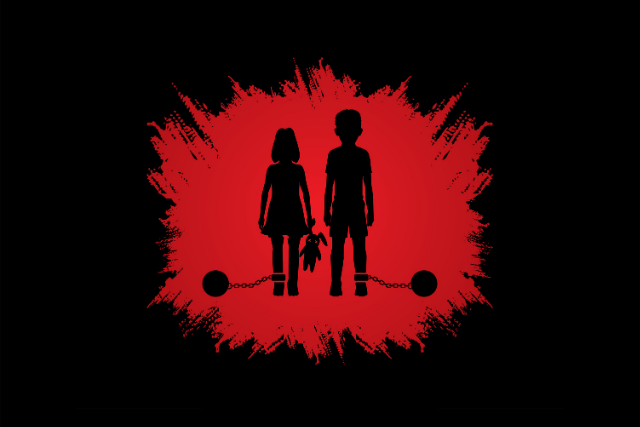
“The feeling of being rejected, disapproved of, or conditionally loved by one’s primary caregivers is a monumental, long-lasting burden for a child to carry. It produces chronic shame, guilt, and anxiety. The child is blamed for doing something wrong and in doing so learns to perceive themselves as being bad.” ~Darius Cikanavicius, Human Development and Trauma: How Childhood Shapes Us into Who We Are as Adults
You’re safe now, but you weren’t before.
Before you were abused.
If your experiences were anything like mine, you were told that you were worthless on a daily basis, that your feelings and needs didn’t matter, and that you would never be deserving or worthy of love.
Your lived experiences were denied, and you questioned your reality.
Your needs and wants were never met, and you learned that in order to stay safe, you had to put others’ needs before your own.
When conflicts arose with others, you blamed yourself because the people around you always did. I still struggle with this even now.
You were taught that you were not enough. That you had to please others in order to be somewhat worthy for a fleeting moment.
You lived on high alert, bracing yourself for the next insult, anticipating being devalued and demeaned. There was little rest from it, so you learned to be silent. You suppressed your feelings and needs, knowing they wouldn’t be honored, and you hid parts of your personality because you knew you would never be accepted for who you are.
You were complicit in your own suppression, and you became unaware of your own wants, desires, and even feelings. Your selfhood was stripped away.
You were told you were too sensitive, too needy, too emotional, and that you didn’t see or perceive situations accurately. You were told you were dumb, too fat, too thin, and/or too self-absorbed.
When you tried to stand up for yourself, you were told that you were not living in the real world. That everything that was happening to you was your fault.
Standing up for yourself was dangerous, and you were led to believe that you didn’t have that right.
This unsafe environment was where you grew up. It was where I grew up too. Where your first memories were formed and where you learned about yourself and the world through your parents’ actions and responses.
You carried your pain silently as a child and were groomed to accept abuse.
Your abusers told you it was love—that they treated you that way so that you would become a better person. Yet, in reality, this just made you easier to control and manipulate. With no sense of self or personal value you could be defined in any manner, and you’d blindly accept that definition.
They told you that you were incompetent, and you didn’t question it because you had been taught that others’ opinions had value and yours did not. Therefore, any statement made by your abusers had to be true.
You were taught that you were bad. All of your actions, thoughts, and behaviors were wrong, and you were fundamentally unworthy.
If you were fortunate, as you grew, so did your awareness of your situation, and you began to break free. You cut the toxic ties of your childhood and began to cultivate a sense of self-worth.
Perhaps you did what no one should have to do: cut off your parents or primary caregivers. You are safe now, but a part of you still struggles to recognize that.
If your experiences of formative abuse were at all like mine, you know how hard it was to break free and unlearn what you were taught about yourself and the world.
It’s easy for others to take advantage of you and abuse you because of your experiences growing up and your low self-worth. For me, this manifested in one-sided friendships in which I would give and give and receive very little in return.
Abuse is so normal to you that you find yourself drawn to it as if it’s home.
You now find yourself being abused in romantic relationships, in friendships, and in your place of employment.
I had romantic partners who told me I was ugly, that they were only with me out of convenience. I had friends who told me how flawed I was and how lucky I was to have their crumbs of friendship.
It feels so normal, so natural, so much like what you were used to. Yet it shouldn’t be!
You wonder why you wind up in these situations, why you don’t see them for what they are, and why you cannot seem to break free of this vicious cycle.
On some level you know these relationships and situations are abusive and unhealthy, but because you were never taught to trust yourself and your instincts were disarmed, you question your reality and even deny it.
Even now I have to make a conscious effort to recognize the signs of unhealthy relationships, and I have had to learn that being seen, feeling supported, and being truly cared for are normal aspects of a healthy relationship.
When others show you kindness and attention you feel undeserving, and you even question their motives.
You slinker out of the spotlight because when you were in the spotlight before, you were ridiculed and abused.
You shrug off compliments, diminisher accomplishments, and let others take the lead.
You fear speaking up for yourself or offending anyone. People-pleasing is a way for you to get recognition and love, so you go out of your way to do what you can for others, even at your own detriment.
When you’re wronged and hurt, you accept the abuse, even now, and you take full responsibility for others’ actions even when they are in the wrong.
I have taken responsibility for my friends’ poor treatment of staff at a restaurant, and even my partner’s sexist, racist comments. I shouldn’t have taken responsibility for any of this.
If you’ve done all these things as well, know that none of this is your fault.
The past you fought so courageously to overcome whispers in your ear even in the present. You tell yourself that you’re fine and you’ve grown, but the past haunts you when you least expect it.
For me, the past rears its ugly head in the face of success, when I’m consistently being treated well by others, or whenever I accomplish more than I had originally expected to. It’s as if the past me struggles to allow the me in the present to feel confident, accomplished, and happy.
Because you grew up on high alert anticipating abuse, you question and analyze others’ actions. You find yourself asking, “Do they really care about me? Have they given up on me? Is there something they are not telling me?”
You want to trust others, but you don’t know how. You want to be loved, but you were never taught what love feels like.
In social situations your emotional energy is consumed by protecting yourself and anticipating threats that are no longer real. You overreact to being teased, and you never allow yourself to talk too much because you feel unworthy of being the center of attention.
You were taught that others are more important than you, so you hold back when you have something important to say.
Because of my past I used to withdraw from social situations. I had very few friends and would pull away from people out of fear of being discarded. It has taken me years to learn that I am worthy of friendship, and I now have supportive networks of friends in my neighborhood, at work, and at school for the first time in my life.
Trusting that others have your best interests at heart is extremely difficult for you, but again, this is not your fault. The people that should have supported and protected you when you were growing up, were out to destroy you.
When you sense you are being rejected, you overreact and reject the other person first.
When you sense that you are being excluded, you exclude yourself before others can.
In disagreements, you don’t stand up for yourself and instead give in because you were taught that standing up for yourself creates drama, and you are not worthy of being validated.
You are overly accommodating, and you compromise even when you shouldn’t. I am only just now learning to take the lead at work and to voice my opinions with confidence.
None of what happened to you was your fault, but now you must learn how to let go of these maladaptive coping mechanisms.
Now you need to learn that you have a right to boundaries, that you have a right to be treated fairly and respectfully, and that your feelings and needs are valid. I know this will take time; it has taken me many years.
In emotional situations you need to learn not to react impulsively, but to step back and ask yourself, is the perceived threat real, or am I reacting based on how I was treated in the past?
You need to surround yourself with people who see your value and accept you for who you are, because this is what healthy relationship looks like. Stop making excuses for others’ ill treatment of you and remember that you don’t need to take responsibility for their toxic behavior. That is for them to own, not for you.
In social situations you need to learn to take compliments and claim the spotlight when you have something interesting or valuable to say. You deserve to be seen and heard, and you no longer have to suppress or edit yourself.
Go out of your way to do things that help you affirm your self-worth and value. Make lists of all of your good qualities and all of the things that you have accomplished. You have a right feel proud of what you’ve achieved and where you are in life.
You were never told that you were loved, that you were smart, or that your needs mattered. Now you must learn how to love yourself and find ways to affirm your own needs and desires.
Tell yourself I am worthy, I deserve to be loved, happy, and respected. Tell yourself I am safe now.

About Jen Hinkkala
Jen Hinkkala is PhD student, researcher, and teacher of arts education in Canada. She strives to understand what factors and experiences lead to higher levels of wellness, resiliency, and self-care among arts educators and students. Jen is also a life coach and specializes in self-care, well-being, time management, performance anxiety, estrangement, overcoming abuse, career paths, and anxiety. Jen runs a support group for estranged adults and a group to support personal development. Follow her here: Twitter / Blog.










 Though I run this site, it is not mine. It's ours. It's not about me. It's about us. Your stories and your wisdom are just as meaningful as mine.
I just want to thank you for your words. I need to be reminded right now. I have been struggling lately and I appreciate all that you shared!!!
Glad I could help!
Thank you very much for this article Jen.
I often see myself making excuses for my parents abusive behavior towards me, so now I will stop that and justify my own choices and decisions to save myself from their abuse. 😊
I am glad it was helpful. It takes time to break these patters so do be kind to yourself.
Hi Jen, thank you for sharing!
You wrote about abused children becoming adults that find themselves in abusive relationships and suggested reasoning why.
From a psychological perspective it goes even deeper. Being groomed to accept abuse at a young age, abuse becomes normalised. People are instinctively drawn to what they know.
Beyond that, schemas (unhealthy thought patterns) are instilled at a young age. These schemas are self-perpetuating and actively attract you to people that feed them.
It’s not a matter of you don’t listen to your instincts. It’s that personal instincts have been warped by abuse and now lead towards danger.
Behaviours that enabled a child to survive in an abusive situation now allow predators to take advantage as an adult.
The best thing to do is seek a specialised trauma therapist. They will teach you to identify when others cross your boundaries and encourage you to protect yourself in a healthy way.
Wow, thanks!
Very well said. I agree seeking a trauma therapist is excellent advice.
Thank you this is really well put
Thanks you for this article. You are spot on!!! It is comforting to feel your support.
You are most welcome.
This article is sooooo me 100%. Now I am alone and I have made a family that loves me totally, this family is made up furbabies as I can trust them with my love and I am free to give it to them totally. I have no regrets now about letting go of the family that almost destroyed me and the 2 marriages of hell. I am an vintage lady of little means yet I will NEVER rely on any single person in my life for anything. I learned the lessons of life the very hard way and they are deeply instilled in me to this day…..now I could care less about the 2 legged creatures out there full of hate, violence and greed……..my life is safe as I made it that way.
I divorced my family too. I get it.
Blood does not make a family I found out the hard way….Just be careful now of any future relationships is all the advice I can give you. It takes LOTS of time and living alone is darn OKAY in my book as I am very safe and free that way.
Yes this is true living alone can be a place of calm and focus. I think once you start to recognize the abuse you start to forge a healthier life for yourself. Relationships become more supportive and you learn, slowly that you deserve to be treated with love and kindness.
You are strong for having the courage to make a life that is happy and healthy for you. I would encourage you to ask for help and support from others because I have learned that the right people will support you and be there for you.
Hi Jen,
Thank you so much for writing this. Every single part of this is me. I’ve had a lot of therapy and worked through a lot of this. But to step into the spotlight for fear of ridicule is still often too much as it causes so much anxiety. I appreciate you sharing this so much.
Steph
Thank you for your kind words Steph. It takes time but one day you might find yourself in the spotlight feeling comfortable in that space. I was very surprised the first time that I did.
Hey Jen!🙏
This is a wonderful write-up. I absolutely admire your phrasing as it conveyed the pain behind the words so compassionately.
Thank you for sharing this with us.
I totally resonated with struggles mentioned up there.🌻
Thank you for your kind words.
Great isnights from the article!
This is truely amazing Jen it was weird reading it as it was so me !! most odd
Thanks for this amazing write up I wished I had been stronger and knew what to do years ago but now I can move on and love myself and heal 🥰 scary what people go through
My request to join your so called “support” group on facebook was declined. What bullshit. I know myself to be a largehearted and good person. In spite of people like this.
People like this only continuee abuse, because they are not healed emnough to do anything else.
The group is supported by a team of volunteers that work diligently to keep the group safe. If you send your request again and answer all the questions I will personally approve your request.
I was very very lucky. My parents were so awful to me growing up, I moved out when I was 18, got married, and over 32/33 years with my husband. I prided myself on my strengths, and wished my parents would have loved me to see I wasn’t an teenager fighting back. My husand saw my parents as abusers, and always challenged me to stand up for myself. He never pushed. He never demanded. He treated me with respect and wanted me to find that for myself. It took till I was late 40s in 2019 to go non contact 100%. Although my husband wished it was sooner for my sake. I was blessed to have true friends, inlaws, coworkers, mentors who were teachers and bosses who loved without strings. Now I am 50, raising my special needs granddaughter. A strong relationship with my daughter and my other granddaughter, and don’t need my abusive parents. I got lucky that I saw my worth pretty early on, and found the soul mate who saw ME.
So what now? Anger is real.