Tag: Happiness

  • How I Stopped Chasing Highs and Self-Destructing

    How I Stopped Chasing Highs and Self-Destructing

    “Problems cannot be solved with the same mind set that created them.” ~Albert Einstein

    In our culture, it’s pretty common to think of rock ‘n’ roll hedonism a little wistfully. From Keith Richards to Hunter S. Thompson, the wild nights and strung-out days of the world’s most iconic party animals are seen as integral to their sparkling creativity, rebellious nature, and untouchable glamour.

    So many people, especially if they want to make it in the creative industries, idealize and inevitably attempt to mimic these lifestyles. Whether they want to be a “work hard, play hard” music producer, channel Hemingway as a bar-frequenting writer, or fulfill the image of free-spirited artist, artificial highs come with the territory.

    When I was in my twenties, I fell for this concept hook, line, and sinker. I was working in the music industry and quickly cemented my image as the consummate party boy. Up for any new experience and the person you came to for a good night out, to an outside observer, it would seem that I was having the time of my life.

    However, after the months turned into years of living this way, it became clear that all those hard-drinking, pill-popping creatives have produced their canon of work in spite of their lifestyles, not because of them.

    When you hear the amazing tales of fun and debauchery, you don’t see the crashing hangover the next day, or the sense of hopelessness and despair that comes with being trapped in yet another comedown, while life refuses to move forward.

    I was relying on various kinds of chemical highs to hide the fact that in every other part of my life, I was stressed and strained to breaking point.

    Plagued by chronic insomnia, I hadn’t had a good night’s sleep for years. But within my industry, this pleasure-seeking and self-destructive behavior felt normalized, because that’s how most people behaved.

    Instead of living the dream, I felt trapped in an endless cycle of stress and anxiety. Letting my hair down one too many times a week was a shortcut to feeling okay—at least for one evening.

    The fact is that this kind of hedonism doesn’t make us feel better in any meaningful long-term sense. It’s a distraction. It’s a way for us to temporarily feel good, and potentially open us up to interesting experiences—but the highs never last. In fact, I spent much of my twenties feeling utterly drained, with no time or inclination to nurture anything truly worthwhile.

    There’s an idea that all this “stay up all night, work all day” overindulgence is fine, or even laudable. That’s until the day when we step over the shadowy and undefined line into addiction, and our behavior is suddenly viewed as embarrassing and shameful.

    I never came close to this point; in fact, to some of my peers and colleagues, it would have been far weirder and more uncomfortable socially if I were teetotal. But my lifestyle was still undeniably self-destructive.

    My own health and well-being fell behind every other consideration, especially my career. Whether it was taking a second job and running myself into the ground in order to keep it all going, or staying up all night at events before getting up for another day of work, it simply didn’t end.

    It was when I found myself completely exhausted, yet entirely unable to sleep at 2am on my ex-girlfriend’s couch—thinking of nothing but how my life was going nowhere, and convinced that there was no point left—that I realized things had to change.

    Moving Away from Hedonism

    I walked for hours that night, feeling like I was at the bottom of a pit full of regret, fear, and bitterness. But the simple action of getting up, getting out, and allowing myself to feel these emotions rather than mask them with my busy non-stop lifestyle was one of the first positive actions I’d taken for months.

    It was a dark time, and I still used partying to numb myself to the realities of my life, but a chink of light had been let in. My friends could see I was in trouble, and after they whisked me away for the week, I decided to remove myself from the life I’d created and go to South America for a few months.

    I got lucky in the fact that a big record deal finally paid me enough to extricate myself from the music business, but it was a shift in thinking that made me want to do this in the first place.

    I learned that when something isn’t working, we can’t be afraid to let it go. Being a success in the music industry was my dream, but I had to acknowledge that this wasn’t a healthy or enjoyable part of my life anymore.

    The realization had landed that we need something more meaningful and fulfilling to enjoy our lives than a series of fleeting and artificial highs.

    It became ever clearer that success didn’t equate to working all hours and pursuing a unsustainable lifestyle in order to make a broken and inadequate “Plan A” work. I had to figure out why exactly I had chosen to pursue such self-destructive behaviours, and get to the root cause.

    Seeing Clearly and Moving Forward

    With far less hedonism and hard work to hide my issues, solving my anxiety-induced chronic insomnia became a priority. However, like many people I found myself focusing on the symptoms of my problems, completely unaware of and failing to tackle their hidden source.

    I tried herbal sleeping tablets, but was instinctively reluctant to try anything pharmaceutical (which was interesting, considering I’d been so willing to take any number of illegal substances in order to have a good time).

    Ear plugs and eye masks made no difference, and it was apparent that, as with my hedonistic life choices, I was simply skimming along the surface of things rather than looking deeper. It was as if there was a patch missing from the roof of my house, and instead of going up and fixing it, I was putting up a leaky umbrella each time it rained.

    It was only the chance recommendation from a friend of a friend that led me to Vedic meditation—the technique that changed my life. After my first lesson I slept soundly for the first time in years, and within a few weeks my insomnia had eased entirely.

    It was through meditation that I learned about a different kind of hedonism. Years later, I have left my partying days far behind, but live a far more vibrant, creative, and enjoyable life. By swapping late nights for bird song and record deals for teaching, I moved away from self-destruction, and toward self-growth.

    Of course, this took a long road of self-discovery (which isn’t over yet!). But I feel there are some pointers which can help people if they’ve found themselves trapped into a similar situation to mine.

    Here are three ways to move on from self-destructive behavior.

     1. Allow yourself to learn from the lows.

    It’s all too easy, after enduring the depths of a hangover all through Sunday and a drawn-out week at work, to get to Friday night and think the answer to all that sadness and frustration is another night of overindulgence.

    I’m not saying this is easy, but instead of relying on your usual route to a good time, make yourself sit with your feelings. Without the (ultimately counterproductive) balm of alcohol and other such substances, you will start to see things as they really are, and work out if there’s anything that needs to change.

    2. Switch up your routine and break the cycle.

    Getting away from my life in London was a key part of breaking the bad habits that had me repeatedly making bad choices, which did nothing but make me feel worse (as the saying goes, the definition of insanity is doing the same thing over and over again and expecting a different result).

    It could be something as simple as suggesting to your usual drinking buddies that you try a different, sober activity on a Sunday night, or catching up with friends you haven’t seen in a while rather than sticking with the same crowd.

    The important thing is to show yourself the possibility of a different kind of lifestyle, and to build confidence in the fact that you can manage without your usual self-destructive coping mechanisms.

    3. Think about what’s driving your behavior and address the root cause.

    Hopefully, by taking a step back, you’ll be able to see what compels you to work too hard, party too hard, or indulge in your particular vice (for some people, this could even be over-exercising and obsessing about health).

    Perhaps you are a high achiever and have worried yourself into chronic stress and anxiety. Maybe you have low self-esteem, and don’t believe you are worth looking after. Whatever it is, once you are aware of your motivations it is much easier to address them.

    For me, the key to becoming a much happier person was meditation, and I thoroughly recommend it in all its various forms. But you may find that it is therapy which helps you most, or simply practicing gratitude. Even the most basic act of keeping a journal each day could make the difference.

    Whichever proves to be the most beneficial thing for you, the important thing is dedicating some time to your own self-care. By acknowledging your problems, you give yourself the best chance to fix them.

  • What Helped Me Love and Accept My Imperfect Body

    What Helped Me Love and Accept My Imperfect Body

    “You are imperfect, permanently and inevitably flawed. And you are beautiful.” ~Amy Bloom

    “Just look at yourself!”

    “That chubby face, those massive hips and thighs. The stumpy legs.”

    “No wonder he doesn’t love you anymore. No wonder he left you for her! She is so much prettier than you are.”

    I stood in front of the mirror. Tears streamed down my face. My body was shaking uncontrollably as I stared at it in disgust.

    Resentment and anger accumulated in my chest. Heavy, dark, and painful, the all-consuming emotions tried to crush me. My throat felt tight, I couldn’t breathe, my mind was racing in desperation.

    If only I was beautiful. Tall, slender, delicate, and fair. If only my body was perfect.

    He wouldn’t have rejected and betrayed me. We would still be happy. The plans we made for a future together intact and alive.

    I collapsed on the floor, sobbing and shivering. Blaming my flawed appearance for all the despair, the unbearable suffering, my shattered life.

    I had always been insecure about my body and the way it looked. But now, I condemned it for failing me, destroying my life. Judged all its blemishes and cursed its unattractive features that were too ugly to love.

    I hated my body.

    And that’s how it started.

    The Miserable Consequence of Fighting Your Own Body

    In the weeks after my boyfriend left me in May 2005, negativity consumed me.

    I was furious at him for choosing another woman over me, and I beat myself up for not noticing the affair earlier. Toxic thoughts about my inadequate body and insufficient looks circled endlessly in my mind.

    I was obsessed with the improvement of my appearance. I cut my hair, changed my wardrobe, waxed, plucked, and dyed. I considered plastic surgery to remove the visible effects of a genetic skin condition that had never bothered me before.

    And I deprived myself of food, forwent sleep to have more time to exercise fanatically every day. I ignored any hunger, discomfort, and exhaustion, lashing myself on.

    I was determined to make my body better. Fitter, slimmer, more attractive. I would never allow it to let me down again.

    And my body reacted to the verbal and physical abuse.

    Within a few weeks I suffered from a stomach ulcer, bowel issues, and frequent migraines. My hands and legs were covered in eczema. And I was plagued by hypoglycaemia that made me dizzy, faint and, on a couple of occasions, temporarily blind.

    My body and I were at war. I knew I couldn’t go on like this. I had to make peace with the way I looked.

    I had to accept my body for what it was to restore my health, emotional balance, and sanity.

    For months, I forced myself to look in the mirror and reconcile with every part of my body. I reasoned with myself that the failed relationship had long run its course and my looks had nothing to do with the break-up. I cried as I tried to forgive myself for every flaw, wrong proportion, and imperfection.

    After a while, I could look at myself and accept what I saw. Free from condemnation, shame, or judgment. Without the self-hatred, it became easier to take care of my body and my health improved together with my opinion of my appearance.

    I thought I had learned to love my body. But I was wrong.

    Realization #1: Accepting your body doesn’t equal loving your body.

    For eight years, my body and I upheld our truce. I could walk past a mirror without criticizing myself and look at myself without disgust, upset, or resentment. I had found a loving husband who frequently told me how beautiful I was.

    And I believed that he really meant it. For the most part I was okay with my looks.

    But then I gained twenty pounds during my pregnancy, and the disastrous body-shaming cycle started again.

    At first, I didn’t notice.

    I thought that I kept my husband at a distance because I was too preoccupied with my daughter. But, in reality, I felt too self-conscious and ashamed to allow him to see my flabby body.

    I deluded myself into thinking that life with a new baby was too busy to visit friends. But I just didn’t want them to think, “Blimey, she’s gone fat.”

    I believed that I stuffed myself with chocolate and greasy junk food because I had no time to cook from scratch and needed the energy while breastfeeding. In truth, I punished my body for its shortcomings.

    I had worked so hard to accept my appearance. But now, my new, changed body had once again become an enemy. I blamed it for my marital problems with a dissatisfied husband and held it accountable for my social isolation. I hated it for its ugliness, for letting me down again.

    Because the truth was that, back in 2005, I didn’t accept my body for what it was, embracing all its imperfections.

    Instead, I made peace with the fact that I wasn’t beautiful. I accepted my body as “just not good enough.” And convinced myself that, despite the inadequacies, I could live with the specific looks of the body I had back then.

    But as I gained weight and my body changed, the acceptance vanished because I never learned to love my body.

    Realization #2: The true reason why your body deserves your love.

    As I searched for ways to truly love and accept my body, I realized what a miracle the human body is.

    Trillions of cells work in harmony to perform millions of tasks that guarantee survival. Day after day, they communicate via chemical, electrical, and hormonal signals to regulate, defend, digest, filter, breathe, regenerate.

    The heart beats 42 million times every year, pumping over 2.7 million liters of blood. Bones, muscles, cartilage, tendons, ligaments, and joints work together, orchestrated by the nervous system, to allow us to sit, walk, run and jump. It takes the coordinated cooperation of around 100 muscles to simply say “Hello”!

    And yet, we are mostly unaware of our body’s accomplishments. It works in the background. Tireless, faithful, reliable, expecting nothing in return.

    As a health scientist, I knew how bodily functions worked to preserve life. At least in theory. But somehow I had never truly understood what my body did for me every second of every day.

    My body gave me life and served me unconditionally. It allowed me to experience the sunshine and all this world’s joys and pleasures. It enabled me to love, laugh, cry, and contribute.

    It created my daughter.

    But, instead of being grateful, I ignored and neglected it, sabotaged its efforts to maintain my health, and damaged it with abuse and negativity. Instead of loving the miracle that it was, I reduced it to its outer form, condemned its looks, which I denounced as unacceptable.

    Despite knowing what an amazing marvel of creation my body was, I still couldn’t look beneath my body’s exterior appearance. I obsessed over my figure and physique.

    Why did I believe my body was somehow wrong or not good enough? Why was it so difficult to love and accept it?

    Realization #3: Beauty is not in the eye of the beholder.

    As I looked into it more deeply, I started to understand that I had become a victim. All my life, I was bombarded with set definitions of beauty. Every TV show, movie, and newspaper highlighted the standards required to be beautiful.

    Every commercial, billboard, and fashion magazine implied how I had to look to be desirable. And they established beauty, attractiveness, and physical perfection as prerequisites for happiness, success, and love.

    Society seemed to prescribe specific measurements for every part of the human body.

    A certain height, weight, and hip-to-waist ratio defined a gorgeous body. Symmetrical features, flawless skin, and full lips made an attractive face. And every scar, lump, blemish or departure from the perfect body proportions destroyed all prospects of ever being beautiful.

    I had allowed my mind to become conditioned and accepted society’s version of beauty without questioning. I believed that I was destined to be ugly because I didn’t meet the criteria. I accepted the fact that beauty was out of my reach because my body shape didn’t make the grade.

    I felt like a failure for not being beautiful.

    But now it dawned on me that the society-imposed criteria were haphazard. The beauty I yearned for was a set of randomly selected dimensions, arbitrary proportions, and subjective features. Ever changing according to trends dictated by the media and beauty and fashion industries.

    Yet I bowed to them. I fixated on my appearance and compared myself to photoshopped idols. I beat myself up for my too broad hips, short legs, and round face.

    But these features were out of my control, genetically determined by the miraculous fusion of my parents’ DNA. My body was so much more than its looks and I was so much more than my body.

    So why was it so important for me to be beautiful?

    Realization #4: The true reason why we strive for beauty and perfection

    I now knew that beauty was nothing but a man-made concept. A random phantasm imposed upon us by relentless conditioning.

    But still I craved to be beautiful, I obsessed over my body’s appearance, I wanted others to admire my looks.

    And the reason was low self-worth.

    All my life, I felt inferior to others. I thought that I was inherently worthless.

    Yet, I believed that, in order to deserve happiness, love, and fulfilment, I had to be worthy of them. I had to have worth.

    So I dedicated my life to the accumulation of worth. And again, society had strict criteria to fulfill in order to be worthy of what I desired. Impressive possessions, qualifications, wealth, and other people’s approval increased my worth. And so did beauty.

    The more beautiful, flawless, and perfect a person is, the more worth they possess in society’s eyes.

    And my unremarkable looks were not good enough, leaving me with a painful worth deficit.

    Because not being beautiful made me worth less compared to others. Unworthy of a happy life, undeserving of a loving relationship. And there was nothing I could do about it.

    Or so I thought.

    The Incredibly Irony of Our Obsession with Beauty

    All my life I had been stuck in a disastrous, depressing loop.

    I wanted a life blessed with happiness and love. And in order to deserve it, I had to be worthy. But I couldn’t be worthy because I wasn’t beautiful enough.

    My body’s looks didn’t meet the requirements.

    And that’s why I could never love my body. Because it doomed me to a miserable, worthless life full of heartache, disappointment, and suffering.

    But all my self-loathing, self-condemnation, and the inability to love and accept myself were based on a mesh of lies.

    Because the truth is that beauty is a myth, a random set of society-imposed criteria. And not falling into the narrow range of qualifying measurements does not make us worthless.

    Our worth doesn’t depend on beauty, desirability, popularity or other people’s admiration and approval. It is an inherent part of who we are. An intrinsic, absolute feature of our being.

    We are worth personified, every one of us.

    We all equally deserve to be happy and loved. No matter what we look like, how tall we are, or how much we weigh.

    Our body’s outer appearance will never change anything about our worth. Our scars and imperfections cannot diminish our deservedness. Excess weight won’t make us inferior to others.

    Because we never were worthless. Nor will we ever be.

    How to Finally Love Your Body

    After these life-changing realizations, I went to work to improve my self-worth and break my mind’s conditioning.

    I must have repeated the affirmations “I am worth” and “I love and approve of myself” thousands of times. I ignored my mind’s resistance to the new paradigm and forgave myself when I slipped back into old self-criticising habits for a while. I persevered.

    I kept reminding myself that our commonly accepted concept of beauty was society-imposed, arbitrary, and unfounded. My body was a miracle regardless of whether its outer appearance met the criteria. As such, beauty wasn’t a prerequisite for loving it. Or for my worthiness as a person.

    As my mind got used to the new way of thinking, I started to accept my body as a wonderful part of the infinitely worthy being I was. I broke free from the misguided untruths I used to bow to.

    I am in a loving relationship with my body now. We are a team. I listen to its needs and allow it to look after me.

    Every day I thank it for being awesome and serving me so well. When my body changes or is unwell or in pain, I bless it with love instead of cursing it for being weak or letting me down.

    I still carry the twenty pounds I gained during my pregnancy. I might lose them eventually, for health reasons. But they don’t destroy my beauty; they don’t deduct from my worth.

    I no longer look in the mirror and see vast hips, a flabby belly, and imperfections. I see a miracle. I see life.

    I see worth.

    Beauty isn’t restricted to a chosen few who happen to meet the requirements. It is an expression of the marvel of human existence. Beauty is within all of us.

    Your body is a miracle. You are worth.

    And you are be-you-tiful.

  • Someday This Will Be Funny

    Someday This Will Be Funny

    “A great attitude becomes a great mood. A great mood becomes a great day. A great day becomes a great year. A great year becomes a great life.” ~Unknown

    I was already in a terrible mood by the time we arrived at the hotel around 7:30pm. It was Thanksgiving, and my family and I had spent four hours in the car in order to visit out-of-town family. My daughter had an accident in car seat on the way out there, and my husband and I were both battling colds. Oh, and it was my birthday.

    We’d spent the afternoon with my husband’s family, and had enjoyed the meal and the visit, but left on the early side to give ourselves time to get to the hotel before our three-year-old daughter could get overtired.

    We’d stayed at this hotel before; it offered a suite at a reasonable rate, which allowed our daughter to go to bed at her normal bedtime and for us to be in a separate room and be able to stay up until our own normal bedtime. I’d called months in advance to book a room, as soon as we knew we’d be making the trip to Raleigh, as I wanted to have that box checked off in my mind.

    In other words: I thought the hotel would be no problem.

    Unfortunately, it didn’t go as smoothly as I’d imagined. The person at the desk was new, and I had difficulty figuring out what he was trying to tell me; I just understood something was wrong. Finally he said it: We overbooked the suites and you’ll all have to be in one room together.

    One room together? On my birthday, when I have a cold and am exhausted and frustrated and grumpy? I have to go to bed before 8pm? With no chance to talk to my husband or read a book?

    Yup.

    I didn’t find this acceptable, and the front desk clerk half-heartedly called around to see if any other hotels were available, and I did the same. Being a holiday, though, there was nothing. Meanwhile, my daughter was getting more and more irritable and tired, actually asking when we could go upstairs and go to bed.

    My mood got worse and worse, and I’m not proud of the way I behaved. I was surly to the hotel employee, something I try to never, ever do after my own years in the hospitality industry. I was rude, unpleasant, and downright mean.

    It changed nothing. Well, we did get a discount on the room, but we probably would have gotten that either way. I felt terrible.

    We went upstairs, rushed to get unpacked and settled, me grumbling and agitated the whole time, then put our daughter to bed. She passed out instantly, out so cold that my husband and I were able to whisper in the dark for more than an hour, which was actually kind of fun.

    At some point during our talk in the dark, I realized this moment, this experience, this exact second, was an opportunity to stop and ask myself how I wanted to feel and behave.

    I told myself something that shifted my attitude in just one moment: “Someday this will be funny.”

    I felt an enormous energy shift and actually began to smile. My mood was completely changed.

    I saw that not having the right hotel room was so, so not a big deal. Yeah, it was an inconvenience, but it wasn’t worth being so upset over.

    And having a minor cold? And spending a lot of the day in the car? Also not big things to worry about.

    All of this happening on my birthday? It’s not like it was my sweet sixteen or the big four-oh. It was just not worth getting upset over.

    I wish I could let you feel the way I felt in that hotel room, because the shift happened so quickly and so completely. One minute I was stewing over everything that had happened in the past hour, getting more and more upset, and the next I felt complete and utter peace and relief.

    Looking back, I can also see that there was so much space for gratitude and appreciation, and not just because it was Thanksgiving.

    My family could not only afford to stay in a hotel, but we could afford to switch to a more expensive one the next night (one with a suite!). We have family to celebrate the holidays with. We have an awesome, reliable, and safe car to get us to wear we need to go.

    Appreciation is such a beautiful thing, and it goes hand in hand with shifting negative thoughts to more positive ones. Once you start looking around for things to appreciate, letting go of anger and frustration is much easier.

    This experience was really powerful and important to me, so I wanted to share what I’ve done differently since then. Perhaps these tips will help you improve your mood when dealing with inconveniences that aren’t a big deal in the grand scheme of things.

    Use the power of words to bring yourself back down to a calm place.

    I’ve started saying “someday this will be funny” whenever I can, because it brings me back to that hotel room and the way it shifted my mood. I also regularly ask myself if whatever is happening will matter tomorrow, or in a week, or in a month. Those all help me put things in perspective.

    Remind yourself things will turn out fine.

    Depending on your belief system, you may even take the long view and know that your spirit is completely safe and protected regardless of what happens in this life. If that doesn’t do it for you, simply ask yourself if this incident will even matter in a week or a month; often you’ll see that this isn’t going to have much of an impact on your life or well-being.

    Remember THIS IS IT.

    This thing that’s happening right now, even as you read this article, is your life. If you spend it going from sour mood to sour mood, your life is going to turn out pretty sour. You are the only one who has the power to change that.

    Think of the Chinese parable that teaches there is no good or bad.

    I’ve heard a few different versions of it, but the gist is that no matter what comes our way, it can be good or bad, who’s to say? Something may seem bad on its face, like losing a job, but it may bring something wonderful, like a new career you’re more passionate about.

    Use every possible opportunity to take a few deep breaths and reset.

    I know I get stuck in patterns, and feeling sorry for myself is one of them. I have to really, really work to notice when I’m getting sucked down into bad feelings and take the time to shift my perspective, so do it every single time you think of it.

    Remind yourself that like attracts like.

    You’ve probably noticed that when you’re in a bad mood and acting grouchy or defensive, other people react to you with that same energy, which doesn’t feel good and can put you in an even worse mood. You’re also more likely to notice negative things happening all around you when that’s what you’re focused on. Likewise, when you’re noticing the good stuff, you’re calmer and happier, and people you encounter reflect that back to you, too.

    This incident happened more than six months ago, but it’s stuck with me. You and I both get to decide how we will react in any given moment, in any given situation. Let’s take a collective deep breath and try to laugh.

  • When the Euphoria Fades: Dealing with the Highs and Lows of Love

    When the Euphoria Fades: Dealing with the Highs and Lows of Love

    “We come to love not by finding a perfect person, but by learning to see an imperfect person perfectly.” ~Sam Keen

    When we fall in love, we feel excited to experience some of the most joyful moments of our lives. Because love is supposed to be the source of the best feelings, right? But what about when that relationship churns up some hard stuff and leaves you feeling hurt, annoyed, sad, and irate?

    For many of us, especially deep-feelers like me, when we start to experience these inevitable lows in our relationship, we may conclude that something is inherently wrong with it.

    But what if that assumption is just smoke and mirrors? What if it is preventing you from truly experiencing the real love you crave?

    Believing something is wrong with your relationship might, tragically, lead you to conclude that the relationship has failed and should be ended, even though it’s actually pretty healthy and promising.

    “I’ve been annoyed with him a lot lately,” and, “We just haven’t been connecting much” are common complaints I hear from people I talk with. Followed frequently by the sentence of doom, “Maybe I made a mistake by marrying him.” “Maybe they aren’t meant for me.”

    I’ve made that same jump of reason in the past. Multiple times in my twenties, I ended relationships full of potential because bad feelings were arising more often than I thought they should. I thought it meant something was wrong with him or with us.

    Being someone who is highly attuned to what I feel, I have always taken my feelings really seriously. When I feel bad, I feel really bad. And when things feel, well, blah, I feel that deeply, too.

    As had been my norm in past relationships, when my partner and I began to get over those hormone-stoked, bursting-with-love early months of our relationship, I started to feel moments when things didn’t feel “good” anymore. When it all felt “dull.” When he wasn’t behaving how I thought he ought to. When we weren’t “connecting” like I thought we should.

    Like I had done in the past, I could have taken this as a sign that something was wrong with our relationship, and that he was the wrong man for me.

    But I was gifted with a powerful secret that changed everything at a relationship workshop we had attended together to preemptively deal with the normal stuff that sabotages great relationships (we were committed to this relationship thriving): This dullness was normal and healthy.

    What?

    As I let the power of this one mental shift sink in, and marinated in the subtleties of what it meant, my relationship began to full-on thrive—and continues to years later.

    My hope is that it can change your relationship for the better, too.

    Let’s Investigate This Further

    Imagine your emotional life as a spectrum from terrible to wonderful, with neutral in the middle. It is completely normal to spend one-third of the time on the negative side of the emotional spectrum, one-third on the positive, and one-third in a neutral state.

    When we believe that love should always feel good, we often experience the neutral times as less-than good, which we interpret to mean bad. We turn “okay” into “bad” and “bad” into “terrible.”

    This is especially true for sensitive souls like me, because we feel things so deeply: anything less than positive registers as uncomfortable, or negative.

    When I realized that two-thirds of the time it is absolutely normal to not feel “good” when it comes to my love life, I felt immense relief.

    It means that there is nothing wrong with my experience. It means I can stop feeling upset that I’m upset, or mad when things are just okay. I can stop feeling so disappointed when I feel unhappy, dull, irritated, sad, or confused.

    I now see that it’s the measuring of my experience against some ideal and unrealistic standard that feels so extra bad. It’s my resistance to what I am actually experiencing that feels terrible.

    So now I say, so what if I feel a bit of discomfort, or things are a little dull inside me, or between my man and me? So what if I am experiencing numbness or just okay-ness? I can just let it be what it is, knowing that it is normal and healthy, and it will change soon anyway.

    I’m not suggesting we tolerate abuse or mistreatment for any percentage of time; just that it’s normal to not always feel head-over-heels in love and blissfully happy.

    One of the biggest benefits of “embracing neutrality,” as I call it, is that my joy is amplified during the times my partner and I are really connecting well. How could I even know what good was if I never felt it’s opposite?

    Contrast is the truth of life. Contrast is part of our humanity. To have a rich love life, embracing all our feelings is the only healthy path. Because, as we allow it all, we fall deeper in love with life, and everyone in it.

    Though my life is filled with the same amount of sad, annoyed, frustrated, bland, and ho-hum moments as ever, the way I experience them has entirely changed: so much softer, so much less agonizing.

    And as I have practiced being accepting of the neutral times, I’ve actually begun to appreciate them more. When I welcome neutrality, the ho-hum moments almost start to feel good, too. That means I now feel more good feelings than bad ones, by far.

    If you’d like to recognize and get comfortable with feeling less-than-great so you can avoid ruining a good thing, here are a few tips:

    1. Use gentle awareness and be really honest with yourself.

    When you notice you are feeling less-than-great (just less-than-great for your first few times, not terrible), get curious about what you are really sensing. Feel your emotions. Notice what physical sensations are there. Do you feel constriction? Or openness? Or a vague sense of nothing?

    2. Assess your feelings.

    Rate this body-feeling on a scale from one to ten, ten being the best you could feel, five being neutral, one being terrible.

    3. If you rate below a six, really investigate with curiosity how that feels in your body.

    Allow it to be as it is. Notice that it isn’t a problem to not feel good. It’s just a bunch of interesting sensations. Even unhappiness isn’t so bad when you look at it with gentle curiosity. You are safe to experience what you feel.

    When you do this a few times a day you will expand your capacity to tolerate discomfort. You may even realize that you can actually enjoy your significant other’s imperfect behaviors and human quirks that were bothersome in the past.

    Like the nights he is mentally absorbed by a work issue and acts distant. The times he says, “uh-huh” before you even finished what you were saying, as if he wasn’t really paying attention. When he picks his nose in public…

    Because most of us, let’s be honest here, are a far cry from perfect. No one will ever truly fulfill and delight you all the time.

    That is actually your job, not your partner’s! It is your work to drop the expectations, comparisons, judgments, fears, and beliefs that are interfering with the health of your relationship and to learn to care for the normal, bland, day-to-day humanness of your sweetie.

    Because if you don’t embrace the dull times, you are much more likely to lose the whole glorious package by rejecting your experience and your partner a majority of the time.

    When I notice I’m resisting feeling dull or I’m a bit uncomfortable about something going on in my relationship, I now use this powerful affirmation to remind me that discomfort is simply part of being a human in love: “My relationship is most authentically and deeply loving when I allow the seasons of my heart to come and go, experiencing them all with presence and acceptance.”

    If you embrace neutrality like I have, instead of believing it means something has gone wrong, the neutral times become like a glass half full (instead of half empty). The good times become rich and wonderful. And those truly hard moments? They are simply reminders of how delightful the good times actually are, and reinforce their joy.

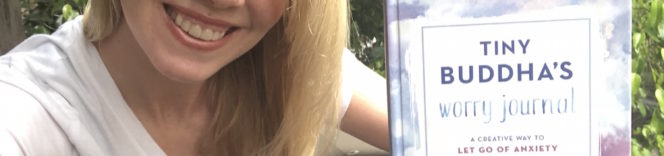
  • Tiny Buddha’s Worry Journal – Last Day for Three Free Bonus Gifts!

    Tiny Buddha’s Worry Journal – Last Day for Three Free Bonus Gifts!

    Hi friends!

    Today’s the day! Tiny Buddha’s Worry Journal is officially available for purchase, and today is the last day to claim the three free bonus gifts.

    Stored high in my closet I have a collection of more than a dozen journals from my childhood and teenage years.

    The early ones are full of angst, pain, and rage. During the later years I began to use journaling not just to vent my feelings but also to reframe my thoughts and recognize and overcome negative patterns. This helped me feel less stressed, depressed, and fearful and more peaceful, empowered, and optimistic.

    This is what compelled me to create this journal: I know from personal experience how journaling can help us move through difficult feelings and overcome mental blocks that prevent us from feeling happy, relaxed, and free.

    Whether you’re worried about the future, people you love, what people think of you, or any of the many things we can’t control in life, this journal can help you let go and calm your busy mind.

    Filled with quotes, prompts, and questions, along with coloring and doodling pages, Tiny Buddha’s Worry Journal provides a number of different activities to help you reframe your worries and minimize anxiety in your daily life. 

    If you grab your copy today, you’ll receive the following:

    A series of four meditations on letting go (led by yours truly), each with an EFT tapping session led by Naomi Jansen and an introductory chat with Naomi and her One Mind Live co-founder Stephen Fearnley

    An exclusive audio interview with me and Ehren Prudhel, host of the soon-to-be-launched podcast Next Creator Up, focusing on worries related to pursuing a new dream (more specifically, my first feature screenplay)

    A series of three vibrant desktop wallpapers featuring adorable Buddhas and calming quotes

    All you need to do to claim your bonuses is pre-order your copy from any online vendor and then forward your purchase confirmation email to worryjournal@tinybuddha.com.

    We all worry; it’s just part of being human. But it doesn’t have to control us. Not if we proactively choose to work through our worries, one moment and one page at a time. I hope these exercises help you as much as they’ve helped me!

  • 5 Practices That Helped Me Stop Being a People-Pleaser

    5 Practices That Helped Me Stop Being a People-Pleaser

    “If you spend your life pleasing others, you spend your life.” ~Cheryl Richardson

    Looking back on my life, I came to realize that I spent quite a high amount of my precious time trying. Trying to be perfect. Trying to be appreciated and liked by everyone else around me. Trying to fit in with different groups of people so that I could feel accepted and approved of.

    I can recall many situations in my life when I did things I didn’t really want to do to comfort or please others. I was a master of people-pleasing and, to be honest, it wasn’t always because I wanted to make everyone happy.

    The truth is that I wanted people to like me. I expected them to give me the things I wasn’t giving myself: love, care, and attention.

    People-pleasing is an unhealthy behavior, a clear sign of low self-esteem. It is disempowering, inauthentic, and extremely time- and energy-consuming.

    Here are five simple practices that helped me stop being a people-pleaser.

    1. Allow myself to be me.

    I can recall I once told a guy I was dating that I wanted to join him for a football match when, in fact, I didn’t. I knew he loved football, so I thought he would see me as a right partner and like me more. Big mistake.

    If you’re also doing things you don’t want to do, hoping those things will strengthen your relationships, be careful with that. Be honest about what you like or dislike. Be real. Pretending and faking who you are and what you want will only work against you.

    Being myself got me married. The day I had the first dinner with my husband (as friends at that time), I had no expectations of getting involved in a romantic relationship. I didn’t care if he liked me, I didn’t try to please him in any way because, to me, he was just a friend, not “a marriage prospect.” No lies, no mask, no hidden agenda.

    He got to meet the honest, real me, and this was whom he eventually fell in love with. Authenticity is magnetic! Being genuine is a matter of choice, so I stopped explaining myself for what I want and for who I am.

    If you also feel like wearing a mask when among people, I want you to know it is okay to be you. Your perfect imperfections make you special and unique.

    Be your own kind of beauty. Stay true to your feelings, opinions, thoughts, and emotions. Live your own life, with no apologies and no regrets.

    “Authenticity is the daily practice of letting go of who we think we’re supposed to be and embracing who we are.” ~ Brene Brown

    2. Detach from other people’s opinion of me.

    Did you know that the fear of public speaking comes first among all kinds of fears? Even the fear of death comes second! Most people don’t feel brave enough to show up in their vulnerability in front of others because they’re focusing more on what people might think about them than on the message they want to convey. I was there in the past, and whenever I had to hold a speech at work, it felt like torture.

    Seeking validation from others turns us into their prisoners. In reality, we can’t control what other people feel or think, but we are in charge of our own actions, feelings, and thoughts.

    When I know that what other people think of me does not define me, I set myself free from any judgment. What they see in me is their opinion. Some might perceive me as smart, funny, and talented. Others might think I’m an average public speaker or even a lousy one. To some, I might look pretty. To others, I might not. It’s all about their standards of beauty or intelligence, and it has nothing to do with me.

    I do the best I know and the best I can every day. I love and approve of myself as I am, and other people’s opinion or validation of me is neither required nor needed.

    If this rings a bell with you, please know you cannot please everyone, no matter how much you might try. Other people’s opinions of you are nothing but perception, filtered through their own lenses, expectations, or system of belief. Know you are worthy and beautiful, not because others think so, but because you decide to believe it.

    When I seek your approval, I don’t approve of the me that’s seeking the approval.” ~ Byron Katie 

    3. Set healthy boundaries with the outer world.

    One of the most challenging things I had to learn was how to say no to things I didn’t really want to do, without feeling selfish, guilty, or overly worried that I might hurt or upset someone else. I struggled with this in my personal relationships (like when I saw a movie in town on a Sunday because a good friend had asked, even though my body only wanted to sleep and recharge), but not only in this area of my life.

    This was a challenge at work, as well, whether I was saying yes to tasks that were not part of my job profile or volunteering to take on new projects when I already had a lot on my plate. But one day, I decided to speak up for myself and see what happened. Surprisingly, everything was just fine when I started telling people what I needed.

    To me, setting healthy boundaries was a learned practice, and here’s where I am today:

    Saying no doesn’t mean I dislike or reject the other person. I say yes to the person and no to the task. In reality, I know I can’t disappoint anyone. People disappoint themselves with the expectations they set for whom they want me to be and what they expect me to do. It’s always their story. If they truly love me, they’ll understand.

    We teach people how to treat us by deciding what we will and won’t accept. I ceased letting anyone take advantage of me. I am not a doormat. It is not my responsibility to entertain other people and make them happy. Whenever I offer people time, I give them a piece of my life.

    Today, I spend my precious time with people who bring the best in me, who support me and accept me just the way I am. Relationships in which we need to pretend are toxic. If I don’t feel at ease with people, I don’t change myself; I change the people.

    Setting boundaries in a relationship might look selfish to the outer world. In reality, it is a form of self-respect, self-love, and self-care.

    “No one can make you feel inferior without your consent.” ~ Eleanor Roosevelt

    4. Assertive communication.

    Often cases, I found it extremely difficult to say no only because I didn’t know how to express myself with clarity and confidence, fearing I could sound aggressive or impolite. I learned to say no with grace, without offending anyone.

    Here are some simple formulas that always work well for me:

    • It doesn’t work for me right now.
    • I’m not able to make it this Sunday/this week/month/year.
    • I’ve got too much on my plate right now.
    • Thank you for thinking of me, I’m sorry I can’t at this time.
    • It’s too bad I’m busy, but please let me know how it turns out.
    • Perhaps another time, let me know what next week looks like for you.
    • No thank you, but it sounds lovely.

    “When you say Yes to others, make sure you are not saying No to yourself.” ~ Paulo Coelho

    5. Become my own best friend. 

    For my happiness, I’m in charge. I stopped expecting others to make me happy and to fulfill my needs and desires.

    I’ve made myself a priority in my own life. I engage in activities that bring me joy. I do more things for my heart and soul. This way, I create happiness from the inside out instead of chasing it through other people.

    It is not my husband’s responsibility to make me feel valued, cherished, loved, whole, and complete; it’s mine.

    Loving ourselves as a whole—mind, body, and soul—is not selfish; it is necessary. Being loved is a human need. However, being needy is something different. I came to understand that people who are taking good care of themselves are less dependent on the approval of others.

    I pay attention to my self-talk. I eliminated disempowering words or thoughts from my repertoire: “I am stupid,” “I am too fat,” “I’m a failure,” “I’m not good enough.”

    I treat myself with dignity and respect. I talk to myself kindly. I don’t call myself names and I acknowledge myself for my achievements, for my willingness to learn and grow. This way, my cup of self-love is always full, and external praise comes as a bonus.

    I practice the art of embracing praise. I take compliments gracefully instead of putting myself down, as if I’m unworthy of such a celebration. I enjoy when people compliment me but I am not dependent on them to feel good about myself.

    “It’s not your job to like me; it’s mine.” ~ Byron Katie

    Once I decided to embrace myself with love and compassion, being alone didn’t feel scary or hard, and I started to enjoy my own company.

    Just think from this perspective: Out of everyone you know in the world, the only person that is always present in your life, non-negotiable, day and night, is you. So if you don’t like being all by yourself, at least from time to time, you might need to work on the most important relationship you’ll ever get in life: the one with yourself.

    To some people, the need to be alone could also be a personality issue, as introverted persons want to charge their batteries from the inside out and don’t always need to be surrounded by people. Meanwhile, I have met very extroverted people who suddenly didn’t need to spend so much of their time with others and started focusing more on themselves.

    Being liked and included and feeling a sense of belonging to a community are basic human needs. As defined by Descartes, humans are “social animals.” However, many people use others as a diverting tool that helps them run from themselves.

    I’ve been there as well in the past—spending time with others to feel seen or included, or keeping the TV switched on all day long in my home, even if I wasn’t watching. In reality, I was using that noise to run from my own thoughts and emotions.

    When we have a harmonic relationship with ourselves, we no longer look to other people to fill holes in our self-esteem. We need people but we aren’t emotionally needy. There’s a big difference between the two.

    “You can never feel lonely when you like the person you’re alone with.“ ~Wayne Dyer

  • Why I Chose Authenticity Over Fitting In or Standing Out

    Why I Chose Authenticity Over Fitting In or Standing Out

    “To be nobody but yourself in a world which is doing its best, night and day, to make you everybody else means to fight the hardest battle which any human being can fight; and never stop fighting.” ~EE Cummings

    For many years I felt like a fish out of water, but I desperately wanted to belong in the pond. I grew up wanting to be ‘normal,’ to fit in and be like everyone else. As a result, I was not in touch with who I was because I didn’t think there was another choice.

    The blueprint was clear: find a man, settle down, and prepare for a family. Do the career you’ve trained all your life for and climb the ladder because more (status, money, etc.) is always better than less. Buy things because they’ll make you happy. Be busy because this is a sign of success, even if it means you’re stressed and on the verge of a breakdown.

    So I did all those things and it didn’t make me happy, and for many years I denied the things that would. I wanted to feel important and successful, so for many years I put off my dream jobs—writing, yoga, and new age hobbies.

    I didn’t want to be the only gay in the village, so I denied my sexuality.

    I was desperate to shed all these false goals and the materials things I’d collected, which weighed me down.

    We are inherently people pleasers, so we want to fit in—to not rock the boat. But we also want to be successful and be noticed—try to stand out.

    It’s a competing paradigm that tests our authenticity and takes us further away from who we are with this pressure to be something else. Whether we deny ourselves to fit in or push ourselves to stand out, we’re having to be someone else, and that’s exhausting.

    This was certainly true for me, and I tried both!

    Scared of being different, I adopted other people’s styles and opinions and shaped my life to look like everyone else’s—the job I had, the people I hung out with, and the hobbies I pursued. It didn’t make me happy. In fact, it was an exhausting act in a play that didn’t feel like my life at all.

    When I got older, I began to feel pressure in the other direction—to get noticed, to stand out.

    When I started dating there was a pressure to dress up to be noticed and get picked; similarly, at school there was a pressure to try to be top of the class, be noticed, get picked for the team.

    As I climbed the career ladder I felt the pressure to stand out again—to be more extroverted despite my introvert tendencies, to speak up, be the hard-nosed business woman, to chase down the big promotions and be noticed by the bosses, to be picked again.

    Two pressures in opposing directions, but the same results. None of it was me, and both related to my need to please people, conforming and doing what I thought I should, not what was deep in my heart. Hell, I hadn’t even known what that was given how little attention I’d paid to it over the years.

    It can be our people pleasing tendencies that compel us to conform or try to stand out, but our fear of failure is also a huge contributing factor. We don’t want to fall short of society’s ideals, not be like everyone else, not make our parents proud, or not fit the mold for ‘success.’ We don’t want to be left on the shelf or be seen as different, undesirable, or unsuccessful.

    I spent my life doing what I felt I should, what those around me did, what felt ‘normal’ even when it didn’t feel right, even when it disconnected me further and further away from myself. It was only when I felt burnt out and exhausted from a lifetime of acting and feeling desperately unhappy that I thought things must change.

    I wanted to be me and find others who were themselves, but I also needed to find out who that ‘me’ was.

    My resulting action was quite drastic: I quit my corporate career, left my relationship of seven years, and traveled around the world in search of answers. I felt a need to get away from this place I didn’t belong in and wipe the slate clean to rebuild my life in accordance with who I really was.

    A trip around the world isn’t a prerequisite for embracing your authenticity; it’s actually much simpler.

    Ask yourself what you used to dream about as a kid, what is it that you admire most about others, what legacy do you want to leave the world, and what are your values? What do you love to do, and do you currently make time for these things?

    Take a moment to consider what your strengths are and get clear on your values. It also helps to seek out like-minded people. Not only do we feel at ease with them, they help us grow and flourish in accordance with our true selves.

    This need to fit in or stand out can show up in many ways: sending your child to a certain school because it reflects on your status as a family. Taking over the family business because you want to make parents proud. Driving a certain car that reflects your importance and status as a human. Wearing the right clothes because they are ‘in fashion’ and are what everyone around you is buying.

    There is another way, and it involves listening to your heart, not what others say. Follow your own dreams, not those society prescribes. Know who you are and stay in touch with that. Make decisions based on your values and the legacy you want to leave. Rediscover what matters to you instead of worrying about what you think you ‘should’ be doing. And ensure you prioritize your time based on your true priorities—the ones that make your heart sing.

  • How to Stop Losing Yourself and Giving Your Power Away in Dating

    How to Stop Losing Yourself and Giving Your Power Away in Dating

    “Daring to set boundaries is about having the courage to love ourselves, even when we risk disappointing others.” ~Brené Brown

    I was a serial dater for a decade.

    Dating can be fun and exciting, but it can also come with lots of disappointment and emotional pain.

    All those rejections, ghosting, and shattered hopes had a huge impact on me.

    They left me feeling exhausted and heartbroken. Probably because I dated too much but also because I didn’t do much to protect myself and my energy on these dating adventures.

    I’d say yes to many men who were not suitable for me, because I didn’t want to be single. I’d do things that I didn’t fully agree with just to keep the relationship going. I’d dishonor my own values and ideals so I wasn’t lonely. I was too available for men. I didn’t realize the power of no in dating.

    I lost faith in love. I lost my confidence and self-esteem. It took me a while to realize that it was unhealthy; but eventually, I did.

    One day, I understood that the price was too high to pay and it was not worth it. I was losing myself—the most important person in my life. I was betraying myself. I was dishonoring my own needs and wants.

    The pain I experienced during those dating years was the greatest catalyst for my transformation, like it often is in life. We want to avoid the pain at all costs, but the pain makes us find strength for making difficult decisions and the motivation for making radical changes in our life.

    I actually bless all the painful experiences I’ve had. They helped me wake up.

    They helped me to re-evaluate my approach to dating and relationships.

    They helped me step into my power and start to respect myself more in order to find men who would respect me back.

    It was the pain that helped me stop dating compulsively and find a better way. One day, enough was enough. I was ready for something else.

    I took a break to reconnect with myself. During these months, I reviewed all my previous relationships, all the dating I’d done and the men I was attracting.

    It wasn’t looking good. But honesty brings clarity, and clarity gives us an opportunity to make some decisions.

    I made many life changes and promises to myself, but there was one obvious thing that stood out to me.

    My boundaries in dating were way too weak. That’s why I was creating so much heartache in my dating and love life. That’s why I was losing myself in relationships.

    I was giving my power away by being way too accommodating and compromising too much.

    Because of weak boundaries, I allowed myself to stay in dysfunctional relationships for far too long. I was attracting men who couldn’t give me what I wanted. I’d accept the crumbs of love and never ask for more. I never stood up for myself. I never said no when I felt like it. I’d ignore red flags and never challenge men who treated me poorly.

    I needed to start to value and respect myself more. And I found the best way to do this was to strengthen my own boundaries.

    This decision changed the dating experience for me, on so many levels. In truth, it changed the course of my love life.

    I learned to say no in dating, and I said it to many, many men before I was able to say yes to my current partner.

    I became much more selective and careful when choosing the men I dated.

    I developed zero tolerance for mind games, commitment-phobes, guys who just wanted to have fun, inconsistency, indecisiveness, and disrespect.

    And it served me very well.

    I believe that I found the love of my life, after dating aimlessly for ten years, due to the fact that I defined my non-negotiables and I religiously stuck to them, no matter what.

    To help you understand where you are with your boundaries, I will begin by explaining what boundaries are.

    Simply put, boundaries are the limits you set for yourself in dating, in love, and in life. Things you are not willing to tolerate, put up with, accept, or compromise on. Your boundaries are your rules! I also interchangeably call them non-negotiables.

    A few signs of weak boundaries are:

    • Over giving and people pleasing
    • Saying yes when you mean no
    • Losing yourself in relationships
    • Overcommitting
    • Prioritizing others at the expense of your own well-being
    • Compromising, accommodating, and justifying
    • Settling for less than you deserve
    • Feeling taken for granted or resentful

    Your boundaries have a few important roles in dating. They protect your personal space, your values, and your sense of self. Weak boundaries leave you vulnerable and likely to be taken for granted, or even abused, by others.

    Here are five reasons why you need to have strong boundaries in place.

     1. They protect you.

    Without healthy boundaries, you will be hurt way too often. You will allow people into your life who don’t have genuine intentions and who are not looking for the same things that you are. Boundaries help you bring the right people into your life.

    You need to identify what you want, what is good for you, and what kind of partner you want to attract. And you need to start rejecting anyone who doesn’t have the qualities you are looking for. Otherwise, you will be wasting lots of time in dating and random relationships. Not to mention the amount of heartache you are going to experience. You need strong boundaries to protect your own heart.

    2. They communicate your value. 

    People who have strong boundaries radiate more confidence and self-respect; hence, they are more attractive. Boundaries show how much love you have for yourself and how much you value yourself. They help you attract the right people—people who value and respect what you do.

    Lack of boundaries is often linked to feeling unworthy and unlovable. Boundaries tell people how you want to be treated based on what you believe you deserve. They also help others understand how you want to be valued and respected.

    3. They save you time, energy, and sanity.

    Your boundaries help others know where they stand with you and what your expectations are. For example, in dating, when you know what you will accept and what you won’t tolerate, and you openly express it with your potential date (at the right time and in a non-aggressive way), you give people an opportunity to decide whether they will respect your boundaries or not.

    If they won’t, they will quickly disappear from your life and will save you time and energy. It will be either too much work for them or you’ll just thank them because they will be too much work for you. Rather than wasting time on the wrong people and relationships, you move on quickly and open yourself up to some more suitable dating opportunities.

    4. They empower you.

    Boundaries help you honor yourself. They help you honor your needs. They help you take responsibility for your own well-being. They help you become more assertive. They help you stand firmly in your own power.

    When you start being more mindful about your boundaries and start saying no to things/situations that don’t serve you or drain you, you will start putting into place healthy limits around dating, work, and people. You will start to feel proud of yourself. You will feel a sense of empowerment. You will feel like you are more in control of your own life.

    5. They help you love and respect yourself.

    There is no bigger act of self-love than having healthy boundaries. Your boundaries reflect how much you love and value yourself.

    When you communicate your boundaries, you let other people know that you know yourself. You let them know what is in your best interest and you are not willing to compromise on the important things in your life. Having boundaries is about loving and respecting yourself. And when you do, you get love and respect back from others.

    How to Strengthen Your Boundaries

    1. Start to say no when it feels like a no. 

    So often, we say yes to things we really don’t want to do, or don’t have time or energy for. We want to be polite and keep others happy. We do it so we don’t get rejected or lose people. But at the same time, we are being unkind to ourselves and making ourselves miserable.

    Bring more awareness to your day-to-day life and start observing how often you say yes to things you want to say no to. After a while, start actually saying no when you truly mean it.

    Saying no is an ultimate act of self-love. Saying no is empowering. When you start saying no, you’ll start feeling happier, your relationships will improve, and your self-esteem will get a boost, because you’ll be honoring yourself!

    A no doesn’t need to be blunt and rigid. You can find a loving way to say no. Here are a few examples:

    • Let me think about it.
    • I am not quite ready for this.
    • Thanks, but it’s not going to work out.
    • I am not sure I really want it right now.
    • I’d prefer not to.
    • I feel this is not the right time for me.
    • I’m okay for now.
    • I’m not able to commit to that at the moment.

    2. Start being more mindful of what you are saying yes to, and why.

    Anything to please others, out of guilt or fear, or because you want to avoid confrontation, is out of alignment. Start saying yes only to things that serve you, bring you joy, pleasure, or happiness, or agree with you and your values in the first place. Often, when you say yes to something that doesn’t feel like a complete yes, it’s really a no.

    A few questions to explore to define whether your yes is aligned:

    • When do you say yes when you really want to say no?
    • What do you say yes to?
    • How do you feel about it?
    • What would you like to say no to?

    One thing to remember: It’s one thing to set your boundaries and know what they are. It’s another thing to actually honor and stick to them. There is no point in having boundaries if you don’t honor them. If you don’t honor them, nobody else will.

    As hard as it can be initially, over time they will make you feel amazing. At the beginning, you will feel fear—fear of being rejected, of losing people, of being perceived as rude, of hurting others.

    But you will need to learn that how people respond and feel about your boundaries is not your responsibility.

    Your responsibility is to communicate your boundaries in the most loving way possible, without accusing, blaming, and criticizing. The best way to do it is to use “I feel…” statements. Just describe how you feel about the situation, or the person, so it’s more about you, not the recipient.

    Healthy boundaries help you take care of yourself emotionally, physically, and mentally. They help you respect your needs, feelings, and desires. They help you eliminate drama and emotional pain from your dating. They help you create healthy relationships with others.

    People will treat you the way you allow them to treat you. You have the power to set the tone for the quality of your dating, and every relationship in your life, simply by putting some healthy boundaries into place.

  • What My Dog Taught Me About Self-Acceptance

    What My Dog Taught Me About Self-Acceptance

    “Because one accepts oneself, the whole world accepts him or her.” ~Lao Tzu

    We all have recorded messages playing in our heads, from long ago.

    Listen to parents talking to young children. Often the message is less than approving.

    “Don’t put that in your mouth!”

    “Go wash your face right now.”

    “If you keep acting like that nobody will like you.”

    “Look at Cindy, how well she’s doing. If you worked harder you could do as well as her.”

    Those examples are kind compared to what many people will have heard growing up.

    Many of these messages enter our brains before our conscious memories are fully formed. They may be buried somewhere in our minds, but they are real.

    Of course, parents have to train young children. That’s part of their job. But not all parents balance their criticism with approval.

    So, we often grow up anxious for approval, uncertain of our own worth, always feeling that there’s something fundamentally wrong with us, perhaps feeling more or less unlovable.

    This self-critical stance interferes with the warm, loving, mutually accepting, and deeply satisfying relationships we crave all through life.

    Are relationships really that important? The Harvard Study of Adult Development followed people for as long as seventy years. Some thrived, some sank.

    What was the common factor among those who flourished for decades, in every way? Warm, supportive relationships.

    I sucked at relationships as a child. I don’t mean romantic relationships, just friendships. I was the awkward kid who got left out of playground games.

    Yet, there was a part of my life that was quite different. It was full of love and joy.

    Let me tell you about Jolly.

    Jolly was about two feet tall, hairy, with patches of brown, black, and white. For me, it was love at first sight. He was bouncing around frantically, his tail wagging so furiously that it might have fallen off.

    I pestered my parents until they agreed to get him for me.

    In no time at all, I was experiencing why dogs are called our best friends. Jolly was completely in love with me, judging by his behavior.

    If the day had been particularly frustrating for me, Jolly didn’t care. He’d jump on me as soon as I came in the door, tail wagging at dangerous speeds, squealing with delight, trying to lick my face, running up and down the room before repeating the performance, barking with joy, inviting me to play with him.

    Sometimes a teacher would tell me off in school.

    Jolly didn’t care. To him, I was still the most wonderful person in the world. He would still burst with joy when I got home, bury me in licks, desperate for me to play with him.

    Sometimes I would return feeling really low because other kids had been particularly nasty to me.

    Jolly would still jump on me when I opened the door. He would still wag that tail dangerously fast. If he could talk, I believe he would be spewing out love poetry to rival Shakespeare.

    I didn’t even have to go out of the house for him to find me fascinating and totally lovable. It was enough if I went to the next room and came back. He would still be almost bursting out of his skin with joy at seeing me again.

    It was as if he could see something in me that I could not see for myself.

    However, it took me decades to digest and fully accept the lesson that Jolly was teaching me.

    Medical school taught me the neurological pathways and brain areas that are active during criticism, but I didn’t fully embrace Jolly’s message until some decades later.

    For many parents, and for the world, success in life is something that happens in the future of a child. The child grinds out one day after another, chasing that distant glimmer of success.

    The child becomes a young adult, and still they’re chasing that distant success. Work hours are long, relationships suffer, tempers are short, nerves are frayed, emotions run high. Still, success remains like a finishing line that’s continually moving away.

    The young adult grows toward middle age, perhaps with children by now, and still they’re chasing success. For themselves and now for their children too.

    No matter how much they’ve accumulated, there’s always the possibility of accumulating more. Keeping up with the Joneses is an endless game. At the root of it all is the little child’s longing for approval.

    “They’ll discover I’m a fraud.”

    “If they really knew me they wouldn’t like me.”

    “If only I could get that next promotion or close that big sale, people would start respecting me more.”

    “If only I did better, I would become truly lovable.”

    Scratch under the surface, and there might well be a self-critical little child longing for acceptance.

    We experience the stresses and strains of life as burdens that drag us down.

    We get annoyed at ourselves for not doing better.

    We beat ourselves up for experiencing difficult or unpleasant emotions.

    We’re hooked on self-help books and programs because we’re anxious about our flaws.

    We long to be rid of our flaws and imperfections, because we believe that will make us more lovable.

    What would Jolly say?

    “I don’t care. Yes, you need to lose thirty pounds, but right now I love you and want you to know that you are completely worthy of my love.”

    “Yes, you could do with twice as much money and a much bigger house, but right now you are already totally lovable.”

    “Yes, you could do with fewer of those low moods, less anxiety and less anger, but right now you are already worthy of honor and respect.”

    “Yes, you’ve had some messy relationships and screwed up in many ways but right now you are totally worthy of love.”

    The more I learned to accept myself with all my flaws and imperfections, the more relaxed I became about difficult emotions and setbacks in life.

    The more accepting I became of my own imperfections, the more accepting and loving I became toward others.

    The more accepting and loving I became toward others, the more they responded with warmth.

    The child that was left out on the playground is now a much more self-accepting person despite his flaws, often a source of love, comfort, laughter, and joy to others. That is fertile soil for warm, supportive relationships.

    Supportive relationships, as research has found, are the key to wellbeing now and for decades to come. They help keep your body and brain working well for longer.

    At our core, we’re a mess and we’re always falling short of our aspirations. That’s part of being human. It’s okay.

    Jolly would want you to know that you are totally lovable, regardless.

  • The Top 7 Reasons We Stay in Bad Relationships

    The Top 7 Reasons We Stay in Bad Relationships

    “Some of us think that holding on makes us strong; but sometimes it is letting go.” ~Hermann Hesse

    She knew it sooner than I did. And more intensely than I did.

    I, on the other hand, may have considered our differences but never thought of them as deal-breakers. I tried to justify the many struggles we had between us and believed that our marriage could work despite the challenges.

    I had this feeling things would get better and stayed hopeful no matter how bad our relationship got.

    I told myself that her extraverted personality and my more introversion could work together. And that her more social and outgoing nature and my more private and homebound inclinations were just minor differences.

    I believed it was both of us trying to settle into our professional careers that led to our conflicts. Or maybe, it was moving away from California so she could complete her professional training that put pressure on our relationship. Or it was because we didn’t have a support system that we weren’t getting along.

    In retrospect, if I’m being completely objective, I can see there were problems.

    There were fights and disagreements that would have landed us on a reality TV show.

    There were days of not talking and threats of leaving regularly.

    There were instances where we ignored each other’s feelings and preferences in our life goals. There was a lack of understanding and compassion for each other.

    Yet, we stayed together for years, and even after our separation, I still didn’t want this relationship to end.

    Even after our divorce, I was hopeful.

    Was this the optimist in me?

    Was I being delusional?

    Are you too wondering why you’re stuck in a relationship that isn’t working and bad for your spirit?

    You may feel the dysfunction on a daily basis and feel frustrated with the constant fights and disagreements.

    Are you wondering why you’re having trouble letting go when the person you’re with isn’t the right person for you? Are you wondering why you’re stuck in dysfunctional and unhealthy relationship? And even worse, not doing anything about it?

    Here are top seven reasons we stay in bad relationships.

    1. We have grown accustomed to people who treat us badly.

    Those of us who grew up in abusive or hurtful households feel used to complicated love.

    We begin to believe that people who hurt us are the ones who truly love us.

    We have learned that it’s okay to be treated poorly, to not have boundaries, and to feel hurt by other people’s behavior.

    Others have taught us that it’s acceptable to accept abuse and dysfunction. We not only can tolerate it but have to come to view this is as normal.

    2. We prefer bad relationships over the unknown.

    This is the biggest reason most of us stay in dysfunctional, hurtful relationships.

    We may despise the person and the relationship, but we hate uncertainty and change more.

    Our brains are simply not wired for changed circumstances.

    We would suffer any amount of pain to avoid dealing with the unknown in the future.

    3. We prefer a bad relationship over being alone.

    We can’t stand being alone.

    We can’t imagine a life by ourselves.

    We see ourselves with cats, other lonely people, and silent walks in the park.

    We hear silence, see no one, and feel like disappearing from earth altogether.

    The alternative we imagine of being without someone feels hopeless and scary.

    4. We don’t value ourselves.

    We have a low sense of self-worth and don’t believe in ourselves.

    When we find people who tear us down and bring us down, we take comfort in their behavior because it confirms our beliefs about ourselves.

    We are open to people treating us badly because we are used to treating ourselves badly by talking down to ourselves, criticizing ourselves, and hurting ourselves.

    We don’t believe we are worth the time and attention of someone kinder and more compassionate toward us. We may even fear being treated well because we don’t trust that we deserve it or that it will last.

    5. We feel rejected, dejected, inspected, and tossed to the sharks.

    Ending a relationship, no matter how good or bad it was, makes us feel unwanted.

    It hits at our self-esteem and self-worth.

    It makes us feel unwanted and unworthy.

    Many of us felt unwanted or abandoned in our childhood, and ending a relationship in adulthood brings all our old feelings to the surface.

    We’d rather stay with someone than fall into a sinkhole of unworthiness, never knowing if we can pick up your self-esteem again.

    6. We feel out of place and out of sorts.

    We don’t know what our place or role in the world is anymore.

    We are no longer the husband, wife, partner of so and so.

    We lose half of our family and friends, our ex’s family and friends.

    We don’t know what to say to people at dinner parties, work, or any other social situation.

    Our society tends to put an emphasis on couples, so without a partnership we become lost and on the outside of everyday life.

    We become talked about, and our relationship status seems to be at the center of attention.

    7. We don’t believe there’s anyone else out there for us.

    A big part of why we’d rather stay together is that we doubt we could ever find someone nearly as compatible again.

    How do we know we can date again? How do we know someone else will find us attractive again? How do we know if love will strike again in the future?

    Instead of uncertainty of a day that may never come and a love that may never bloom, we choose to stay with the person we’ve already found.

    Instead of hanging on to a relationship that is bad for your heart and soul, consider the possibility of moving on, grieving, and letting go of this relationship that isn’t working.

    Trust your gut, know that this relationship isn’t right, and act on your inner knowing.

    Look at the relationship objectively, as I wish I did sooner, and make the decision to walk away before things get any worse. As much as you would like it to get better, if neither of you are working on the relationship, or if you’re just not right for each other, it will not improve.

    Know that brighter days are ahead if you release this person and the unhealthy relationship from your life. You can get through this breakup, as you’ve likely done many times in your life, and can move on from this relationship.

    Brighter days mean being alone sometimes; it means finding peace; it means getting to know yourself and eventually finding yourself in a healthy and fulfilling relationship.

    So many people have gone through heartbreak, have lost that one special person, and have gone on to find the right one.

    Uncertainty after ending a bad relationship is uncomfortable but better than the comfort of dysfunction.

    Letting go and ending this relationship is risky, but with great risk come life’s greatest rewards.

    One day of peace and comfort by yourself is worth a thousand days being in a relationship that is suffocating and dysfunctional.

    Instead of showering love on someone who can’t reciprocate, consider giving yourself that love.

    Open your heart to yourself, speak gently to yourself, do nice things for yourself, make your life comfortable and relaxed.

    Cultivate an inner sanctuary of silence, compassion, peace, and acceptance of yourself, perhaps through yoga, meditation, or spending time in nature, or by seeing a therapist to work through the core wounds from your childhood.

    Work on spiritual practices that help you accept yourself for who you are and be comfortable in your own body without needing to be with someone. This could include breath work, affirmations, journaling, or even some form or art.

    Finally, remember, your ex has helped you grow and lead you to the place you are today, but it’s not healthy to keep them in your journey to the end.

    Letting go of your ex allows you to pick up the journey on your own for a bit so you can grow stronger and be better prepared for healthy, happy relationships in the future.

    After your own solo travels, you can find another love that will help you grow as a person and further reach your potential as a human being. Or will allow you to discover who you are so you can live an honest and authentic life, which will lead you to rich experiences, spiritual growth, and deeper friendships.

    Losing this unhealthy relationship doesn’t mean your world has ended and there will never be someone out there again for you.

    Ending this relationship will open the realm of possibilities for authentic relationships, healthy love, and true happiness.

  • Life Lessons from a Wanderer: From Lost Boy, to Carnie, to U.S. Marine

    Life Lessons from a Wanderer: From Lost Boy, to Carnie, to U.S. Marine

    “Yesterday I was clever, so I wanted to change the world. Today I am wise, so I am changing myself.” ~Rumi

    How did this happen?

    I remember the wind tearing at the walls of my tent, bending the humble, graphite rods almost double. I was burrowed down in my sleeping bag, which was one of my sole possessions in life, along with that tent, a pack of books, some canned food, $200, and clothes.

    I dug even lower and thought—what the hell am I going to do?

    It was sometime in October of 1994. I was camped by a dry creek bed amidst some old, twisted mesquite trees and the fall winds of the Mojave were starting to muster.

    And by starting to muster, I mean they began to violently gust fifty to sixty miles an hour.

    All I could hear was the flapping of that pitifully thin material. It wasn’t even full dark outside yet. I could barely hear myself think the sound was so close to my head. I hunkered down miserably and hoped I would have an intact tent come morning.

    It was starting to get cold.

    I was twenty-one.

    Now how I got to that desert creek bed, in that tent, on that cold October night, was a study in the term “failure to launch.”

    Big time.

    After I graduated high school, neither my family nor I saw how I could afford to go to college despite my grades and aptitude. So I semi-decided that I should just get out there in life and see what happened. I was certain I was fairly educated, college or no college, about people and life and the way things worked.

    And I was also quite certain I wasn’t going down either the roads my father and mother had taken. Apparently, it was time to blaze some new trails.

    I was probably on a “spiritual path,” I told myself.

    No doubt, in great part, because no one could actually tell what sort of other path it might be.

    I was a little cocky, a little rebellious, and a lot upset that the world hadn’t offered me up anything better than this despite my hard work in school, but no worries, I thought—I would make my own destiny. No one was going to keep me from the fine, successful, strong person I envisioned myself quickly becoming.

    I took off with a lopsided grin and all the bravado of youth and inexperience. I knocked around in my home state of Oregon a little bit, did some landscaping, worked as a box boy, chased some women, and tried out some different towns, which all proved to be a lot like the one I came from.

    And then, after a couple of slow years that went fast, more on a whim than anything, I joined up with a carnival company touring through Eugene, Oregon.

    Yeah, I became a carnie.

    For three months I traveled down the west coast of America, blowing into town, setting up stands and rides, asking people all weekend to give me a dollar for three throws of a dart in the balloon booth.

    I met a crazy Aussie, worked beside a man with track marks on his forearms so bad I asked him if he had been burned, got offered drugs of all kinds, sex of even more kinds, and generally had a rollicking, somewhat desperate, entirely surreal time.

    As we rolled into Phoenix, Arizona at summer’s end—the last major stop and a good moneymaker—I got off that wild ride. Life on the road is rough, no matter how glamourous it might look in movies. Rougher when you’re with tough folks.

    I wasn’t quite carnie-tough, if I’m being honest.

    And then, with no better options, I caught myself a ride a few hours upstate to a town called Quartzsite. During summers it’s not much, but it blossoms by tens of thousands during winter. Retirees from all over drive down in RV’s to enjoy resting their cold bones for a while.

    It had a scrappy feeling, like a big, desert flea market. My kinda place, I figured. I looked around, bought a handful of paperbacks, and hiked several miles north to set up my tent by that creek bed.

    And a few weeks later, in the quiet of late summer, living in my tent, I started really thinking and I realized, to my dismay, I didn’t know what to do next. I thought I should probably make my next move, but somehow I just couldn’t.

    Day by day, it got harder to get through an afternoon. But still I sat there, growing more and more hollowed-out, besides the shore of that long-dead stream.

    I imagine now I must have gone into some kind of mystic survival-mode. I was contemplating my navel, but so deeply, so close to myself, I could no longer understand how or why the outside world moved. I had no plan, and had you asked me even to just fake one for eating’s sake, I wouldn’t have been able to.

    And it was no terribly enlightened, uber-in-the-now thing (though there are certainly gifts I still carry from the experience.) I could just no longer conceive of how to move myself physically.

    I didn’t have enough resources for any false move. I didn’t have enough inspiration to march out and preach to the masses, spiritual journey or not. I had completely wandered off any beaten track and had apparently found the end of the road.

    I think the technical term is “stuck.”

    And I’m sure a part of me just wanted a cup of coffee and to sleep in a real bed for a few nights.

    I had been swimming through life for years, just fast enough not to go under. I hadn’t thought much about what direction I was swimming or that I might be going twice as far as needed in the wrong direction. I didn’t consider the fact I might get tired and sincerely assumed if I just kept going I would be okay.

    But now I had stopped, awkwardly and seemingly by chance, but it was a very, solid stop nonetheless.

    And then, the wind began to howl.

    Out in my beloved desert, where it had been just me and the earth and the sun for a quiet moment of weeks, suddenly, there was this other insistent, aggressive element. One I couldn’t avoid or outrun.

    Tearing, shoving, and grasping at my poor, little world…

    And it didn’t end that night. It didn’t end the next day or the next night either. Those winds tore at my tent for three whole days.

    THREE DAYS.

    I crawled out from my tent the morning of the fourth day like some primal, man-child, almost disbelieving the sky god had let the world and its creatures live after all.

    The air was slightly shimmery and fantastic feeling, as it will be in desert mornings, and the rocks were hard under my bare feet, though I scarcely noticed. Slowly, faintly, I could hear myself begin thinking small, tentative thoughts again.

    I was cold, but nothing like the last few nights.

    Damn was I hungry.

    But then, suddenly, in that strange air, I just got it. I understood completely, peacefully even, I didn’t have the ability to tell myself what to do with my days anymore. And what’s more, I understood I was not going to get that ability back soon or without help.

    Right then, I just accepted it as fact. Not a judgment to be found anywhere.

    Maybe it was acceptance?

    I remembered how often I had left jobs and places and people behind the past few years because I didn’t want to be told what to do. Or because I was surely doing something mysterious and noble—wandering the earth like a soul-nomad, convinced mere survival activities had far less value than my greater journey (nose up in the air here).

    It was all very romantic in one sense surely, and I recommend it in measured doses. It was also cold, hard, hungry work.

    And I realized, that strange, cold morning, perhaps it was time now to consider being “bossed” by someone.

    Preferably someone who knew what they were doing.

    So I did what any sane person would do.

    I joined the Marines.

    Six weeks later, even hungrier, perhaps a little worse for wear, I stepped off the bus at Marine Corps Recruit Depot, San Diego, and into the most decision-less, disciplined, bossed around few months of my life.

    The beds weren’t good and the coffee wasn’t either. But there was food.

    And most of all, I relished my twelve weeks in boot camp, my four weeks combat training, and three more weeks of specialty schooling before I shipped off to Camp Fuji, Japan. And yes, I was a little unique in this perspective among my fellow recruits. I just honestly enjoyed having made a decision that took away all my other decisions and gave me time to re-learn the shape of a day.

    Slowly, very respectfully, I drifted back into the fuller stream of life.

    Of course, there were moments over the ensuing years when I worried I had exchanged no boss for approximately 230,000 aggressive, semi-socially challenged ones. Until I realized no one questions the Marine working twice as hard as everyone else—they promote him and then follow his orders.

    And moments when I questioned why the lost boy from Oregon who packed books instead of more food into the desert would be carrying a gun for a living. Until I realized so much of civilization still relies, unfortunately or not, on walls and the men who stand on them. And I loved so much of the world—those snowbirds, my fellow wanderers, my mom, the green of Oregon, the bright blue and sand of a desert day.

    And even times when I worried there was some sort of “loss of innocence,” that I had rushed too much perhaps. Until I realized the world will take us all in its time—fast or slow, makes no difference. What we can aspire to is an understanding of our mortality and purpose on the trip—some sense of value beyond ourselves and shaping of our own ends.

    I learned that wandering can be done with purpose. And sometimes it is done without purpose—for the sake of being a wanderer. Both have their place. Both will end.

    I learned that a “spiritual path” doesn’t preclude a job or pride or a family or a home or a business or a new book. The wandering simply goes on through other incarnations—new costumes for the old player if you will. It is the powerful essence of the questions that drive us forward, not the solace of a particular answer.

    I learned that the mind is full of doubts, and like our ancestors before us, we often fear the night. But I also learned that the heart has its own wisdom and can find us a path if we are still, if we listen even when we are afraid to hear.

    I learned that the sun comes up again, every single day—a new day always dawns. Make it your touchstone. It is only our insistence and fear and driving urgency in darkness that keeps us from the peace of new light.

    I learned that the world will love bossing you around—be it managers, Marines, loved ones, or society in general. And the only antidote is to “boss” yourself better than they can. No one messes with the person working twice as hard as everyone else.

    I learned that a person must own themselves completely and “be the boss” of their living each day. And I learned that there are times, sometimes, when we absolutely won’t know how to do that. When we will fail in the endeavor and must find some trusted help until we slowly remember how to again.

    I learned that the best boss for me is ultimately me. But I also had some very, very good “bossing” teachers along the way.

    And when I do forget myself (as we all may, when wandering) and how to be my own boss—when I find I am scared or running up against another’s will or losing momentum or lost in a desert of dying, summer days…

    I still myself and remember the howling wind. I remember the wild, reaching shadow-fingers across my tent walls under the rising of a bright, cold moon.

    I burrow deeply, arranging my blankets, my books, and all the things I love best closer to me as I prepare for the storm.

    And I let the wind howl and bear down on the thin walls of life. I let it reach for me, as it will always seek to, and I find stillness in my heart. I know answers might not come soon and the night may be long.

    And I grow calmer yet, understanding the question I have now is much more than I have asked before, knowing I might need to find help or let another show me a new way forward.

    And I smile a little, maybe, remembering the promise of that fourth day sun and what I must have looked like emerging from my fraught, little shelter and how bright the morning was and how many amazing new questions it brought.

    And then, then I listen some more.

    Here is wishing you happy wandering, happy bossing, and happy listening, always.

  • How to Stop Worrying About the Future and Start Living Your Life Now

    How to Stop Worrying About the Future and Start Living Your Life Now

    “Every tomorrow has two handles. We can take hold of it with the handle of anxiety or the handle of faith.” ~Henry Ward Beecher

    Retirement. A word that fills people with both excitement and fear.

    On the one hand, we’re excited about the possibilities that retirement brings. The possibility to travel, to try new hobbies, to live our lives the way we want.

    On the other hand, we worry about whether we’ll have enough money to survive until that unknown age at which we’ll die. And maybe not just survive but to actually thrive in our later years.

    That fear, that endless worry about the future, is what keeps many people stuck in soul-sucking careers. Following the safe path in life, trying to save up money for that day in which they’ll no longer be working. Sacrificing their one precious life in exchange for a sense of security later on.

    I understand those fears about the future and retirement. I recently turned forty-nine years old, which means that my retirement is only fifteen years away. Fifteen years may seem like a long time, but I know that those years will pass quickly.

    I have some money saved up in retirement accounts and I will also receive a small pension. And hopefully I’ll also receive money from Social Security.

    Will that be enough? And how long will that money last? I have no idea.

    My retirement years could have been a lot different. Three times in my life I’ve walked away from jobs that paid me lots of money and paid generous retirement benefits. My friends who decided to stay in those jobs will likely have few worries when they retire.

    So yes, I gave up a lot of money and a secure retirement. But I also saved my soul in the process. Those jobs I walked away from? They were destroying me.

    I hated being stuck in a cubicle. I hated sitting in front of a computer all day long. I hated writing pointless memos. I hated going to meetings to talk about things that I didn’t care about.

    My dad spent over twenty years in a job he hated because he had no choice. He had to support his wife and three kids. And I saw firsthand how staying in that job destroyed him. And I vowed a long time ago not to do to myself what he did to himself.

    So I did whatever was necessary to get out of those jobs. And then I used some of my savings and took the time to do things that people say they’ll do in retirement:

    • I backpacked around the world, visiting over thirty countries and living in several others.
    • I volunteered with street children in Mexico and with cancer patients in the Philippines.
    • I learned Spanish, starting from point zero to becoming near fluent.
    • I lived at a yoga center in Pennsylvania and a meditation center in Wisconsin.

    And afterward I started my own business so that I could live life on my terms instead of how others wanted or expected me to live it.

    In my opinion, there’s no amount of money that makes staying in a job that you hate worthwhile. Not for me, at least. Not unless I have absolutely no other choice. Life is now, not in some imagined future.

    I honestly have no idea what the future holds for me and what my retirement will be like. I may not have much money when that time happens. And the money I do have for retirement may run out quickly.

    But over the years I’ve learned to be adaptable. I’ve learned how to do without. I’ve learned how to live simply.

    Most importantly I’ve learned that the three most important things in life are connection, community, and contribution. Those are things that can’t be bought with money. And as long as I have those, everything else is negotiable.

    So whatever happens in the future, I trust in myself and my ability to adapt. I know that I’ll figure something out.

    And I’ll not just survive…I’ll thrive!

    • Maybe I’ll join the Peace Corps.
    • Maybe I’ll live in a monastery in Thailand and study Buddhism in depth.
    • Maybe I’ll teach English in a rural village in Peru in exchange for room and board.
    • Heck, maybe I’ll drive a school bus till I’m seventy-five years old like my dad did (and absolutely loved!) after he finally left his soul-sucking job.

    I leave you with this message. If you’re in a soul-sucking job, and only staying for the money, then do whatever it takes to get out as soon as you can. Your one precious life isn’t worth wasting.

    Yes, you need money to survive. We all do. But there are always far, far better options than sacrificing your life for money.

    So if you’re ready to stop worrying about the future and start living your life now, here are my tips for you:

    Accept and trust that you’ll find a way to make things work in the future, even if you’re not sure how.

    Chances are, you are more intelligent, resourceful, and adaptable than you realize. And that you will find a way to not only survive in the future but also to thrive. That’s what I found out when I started taking more risks in my life.

    For example, I used to think that I couldn’t learn a foreign language. But once I put myself in the right situation (intensive lessons in Mexico), I quickly found out that I could learn a foreign language.

    I also used to think that I couldn’t adapt to living in a foreign country. My first two attempts ended after three months due to homesickness. But my third attempt was successful and I’ve now lived in Bogota, Colombia, for over five years. I’ve adapted to living here even though I thought I couldn’t.

    Start taking a few risks and testing your limits. Just like me, you’ll learn to be more resourceful and adaptable—skills that will both help you in the future and give you more options in life.

    Strike a balance between now and the future.

    You need money for the future and for retirement. But you also need to live in the now. Aim to strike a balance between those two competing desires. Do everything you can to live your life now while also preparing for the future.

    For example, when I go out to eat with my friends, they will often order a glass of wine, an appetizer, a main course, and dessert, spending $50 per person. I, on the other hand, only order a main course and drink water, spending $10-15 dollars. I still get to enjoy a nice meal and the company of my friends (living now) while spending a lot less money (preparing for the future).

    Give up the idea that life has to look a particular way.

    Lots of people follow the safe path in life because that’s what they see everyone else doing. But there’s no reason why your life has to look like everyone else’s.

    By their forties, most of my friends and family had settled down, bought houses, started families, and worked the same jobs for years. On the other hand, when I was in my forties, I quit my job, sold all my possessions, and backpacked through Latin America and Eastern Europe. That’s not what most people do in their forties, but it’s what I wanted to do.

    Similarly, I’m sure my retirement will look a lot different than that of my friends and family. But my life isn’t bound by what other people do and neither is yours. Live the life you want to, the life that resonates with your heart—both now and in the future!

    Accept that the future is ultimately unknowable.

    None of us knows what the future holds. And no matter how much you plan for the future, your future will likely turn out to be very different than you expect. I know that mine has—for example, I never expected to be living in Bogota, Colombia, nor did I expect to own my own business.

    There’s nothing wrong with planning for the future, but in the end you can’t control it. So I suggest that you embrace the unknown, go with the flow, and see what unfolds in your life.

    In the end, you only get one chance at life. You can wait around for the future, wait around for your retirement to finally start living the life you want. Or you can start taking steps to do that right now and let the future take care of itself when it arrives. The choice is yours.

  • Our Future Is Bright—Why Worry?

    Our Future Is Bright—Why Worry?

    “How much pain has cost us the evils that have never happened.” ~Thomas Jefferson

    When my friend said she worried about the kind of future world her grandkids would live in, her daughter and I stared in disbelief.

    I hear it often, the concern for the future. There’s concern for many things, from the Earth itself to the concern for the lack of community and the implications of generations reared in a world where social media appears to be the new community.

    My friend’s daughter is quite a bit younger than me, but our kids are the same age—she came to motherhood early, I came late. Over the years I have watched as this young lady has absolutely blossomed as a mother and as a member of our society.

    Her conversations are intelligent, witty, and insightful, but most precious of all is her ability to ask questions that make people think, to question their beliefs, without creating a defensive reaction. It’s a beautiful thing. As her mum was questioning what the future would be like, my first thought was “with people like this in our younger generation, why worry?”

    The Earth right now, our people and our society, are a reflection of yesterday’s actions.

    Given our actions are driven by our thoughts, I’m really not in the least worried about our future.

    Sure, I can browse the internet, watch media, or walk out my front door and spend time observing the kind of behaviors that created the world we live in today. In fact, it’s fair to say there are many things we can look at and feel utterly horrified about.

    The fact that we do is the catalyst for change.

    There are the people like you and me, becoming more conscious of our actions, becoming more conscious of the thoughts that drive our actions. And there are our younger generations, born with more wisdom and insights into tomorrow than any amount of worry would give them credit for.

    A few years ago I watched an Australian drama series called Puberty Blues, set in the 1970’s, but played by actors born in the millennium. Having grown up in the 1970’s, I could relate to a lot of the experiences the young characters were going through.

    However, the most striking thing was an interview with the actors that I read; they were being asked how different their characters’ experiences were from their own.

    The boys felt that their 1970’s counterparts suppressed a lot of their feelings, masquerading as macho men. One commented how common it is these days for male friends to hug each other, which would have been unheard of then. The girls commented on how subservient to whims of the boys their counterparts were, something they themselves couldn’t contemplate.

    I was astounded, and rather reassured. In just thirty years, society has apparently evolved more than it has in hundreds (if not thousands) of years. The patriarchal ego has been called out; the feminine traits within us all rising to create more of a balance it seems.

    Then there are the likes of Boyan Slat that I saw on a social media site a few years ago, the young Dutch student who invented a way to clean up our ocean’s plastics and is now trialing it, and Melati and Isabel Wijsen, sisters from Bali that I found via Google, who founded Bye Bye Plastic Bags in 2013 and now the entire island of Bali is declared free of plastic bags—with the whole of Indonesia planning to ban all plastic bags by 2021.

    You only need to search “young people changing the world” or similar and you will find countless examples, ranging from environmental to humanitarian. It made my heart soar.

    Yet I need not look even that far; there are my own kids, and my friend’s granddaughter who were all happily playing together as we had this conversation. These are really enlightened kids.

    Just a month or so ago I had been reading a kids’ book about people who changed the world. This particular story was about Martin Luther King Jr. My daughter’s eyes went wide as she took it all in. I could see her wrangling with the injustice of it all and saw a look of what I’d describe as determination appear on her face.

    One of her friends had been reading another children’s book about women who changed the world, and she knew the story of Rosa Parks. I listened to them discuss it in depth as we did a scavenger hunt around a local nature reserve last week.

    These two seven-year-olds and an eight-year old friend, along with my younger child who, despite bouncing around the room at the time we had read Martin Luther King Jr.’s story, had obviously taken in more details than I would have given her credit for.

    Future activists, these kids. Not simply on the topic of equality, but they are informed about environmental issues, diet, money, healthcare, education, politics, and government. This isn’t just because they grow up in homes where we take an interest in these things; it’s because society at large is starting to take an interest.

    They are assessing this world and seeing things they like and dislike, and have the energy and sense of self-worth to believe things can be different. They know they have choices in the way they do things, and it seems likely they will.

    Our kids may not go out and start a movement, but their thinking will lead to actions that change the world.

    Tonight when we watched Disney’s WALL-E movie about a future Earth that was simply a huge garbage dump that humans had abandoned 700 years before, the kids asked so many questions about it, I am sure they came away with a strong resolve that that was not going to be the kind of future they live in.

    Sure, these are just my kids and my friends. However, I see a world full of people just like that, and we are certainly not leading lights when it comes to most of this thinking; we are simply following because it resonates and makes sense.

    In the last decade alone, the amount of choice on supermarket shelves has increased amazingly to incorporate environmentally friendly, free range, and organic produce. Many more independent, locally owned and operated alternatives have sprung up too. Even produce sold for cash along the roadside sports signs such as “spray free.”

    Pharmacies now stock many more alternative and complementary healthcare products. Even doctors are starting to recommend a broader context for treatment than the pharmaceuticals at their disposal. The world is a changing place.

    It really was surreal to listen to someone who has awareness of all these issues express worry, at the same time sitting there with future generations who are so overwhelmingly wise, empowered, and enlightened.

    To be fair, it’s crazy to worry about anything. No amount of worry ever solved anything.

    The worry was more of a habit. One I am not immune to myself, on a myriad of fronts, but mainly when it comes to my personal behaviors and achievements. In other people and in the future of this planet, I have every faith.

    In the hands of our next generation, I’d say the future looks absolutely bright.

  • You Can’t Change or Fix People, So Listen Instead

    You Can’t Change or Fix People, So Listen Instead

    “When people talk, listen completely. Most people never listen.” ~Ernest Hemingway

    The chances are good that at some point in your life you had to deal with a loved one who consistently frustrated you. They were caught in a destructive pattern of behavior that made life difficult for them and everyone around them. How do you cope when this happens?

    Perhaps you start avoiding them. And when that’s not possible, you choose to check out of any difficult conversation or interaction you’re having with them. You resign yourself to the belief that your loved one cannot and will not change their behavior.

    Or perhaps you attempt a more active approach to the situation. You try to analyze your loved one the way a therapist might. You develop what you believe are perfect solutions for their problems and present them in the most convincing way you know how. Then you get frustrated when they reject your sage advice out of hand.

    Here’s the thing: It’s not about changing or fixing them; they are your parents, siblings, or partners, after all—not broken machines in need of repair. And the best thing you can do in these situations is to give your loved one the space to expand their capacity for change.

    I learned this the hard way with my mother. She’s struggled throughout her life with unchecked anxiety. She’s caught in a pattern of pessimism, which she frames as “realism.”

    There’s rarely a day that goes by when she’s not consumed by one worry or another. And once she latches on to a concern, she can’t seem to let it go. It has to run its course. She’ll vent endlessly about her latest worry to any family member who happens to be available.

    As a problem solver by nature, I’ve tried to offer advice and suggestions that I believe will help her to deal with her anxiety more effectively. Unfortunately, it’s an approach that has often backfired. My mother can get extremely defensive and lash out in ugly ways when confronted with the negative consequences of her behavior.

    I remember a time when I suggested she’d benefit from the support of a counselor or therapist. Her memorable—and intensely hurtful—response was, “Therapy? Look at you! Ten years of talking to a shrink, and you’re still a crazy bipolar!”

    After a number of these unpleasant interactions, I decided enough was enough. I had to step back, if only to preserve my sanity and well-being. I avoided getting into anything but the most mundane conversations with my mother. I didn’t talk about politics, religion, or other potentially divisive issues. And when she chose to rant about the way the world was conspiring against her, I’d tersely say, “Okay, Mom” or “Whatever” before recusing myself from the discussion.

    But this coping mechanism was only viable for a limited time and had diminishing returns. I certainly didn’t want to see my mother in a near-constant state of emotional distress, trying to swim against an overwhelming tide of anxiety.

    I had to do something different than what I’d done in the past. So instead of jumping back into the fray, I paused. I used the time to examine how my behavior in our past interactions contributed to the problem. I took ownership of the part I’d been playing.

    I realized that a lot of it came down to the way I’d been listening to my mother. Or, more accurately, the fact that I wasn’t listening to her. Here’s what I needed to learn: sound listening skills can give a loved one the room to change destructive behaviors that adversely impact their lives—and yours.

    Are you listening?

    Do you think of yourself as a good listener? I certainly did. Unfortunately, if you’re anything like me, odds are that you overestimate how much listening you do during a conversation.

    Here’s a test. The next time you find yourself in a difficult conversation with a loved one, approach it mindfully. When they are speaking, are you really paying attention? Or are you formulating your response before they’ve even finished their sentence?

    If you catch yourself doing this, don’t be too hard on yourself. It’s natural to want to share insights and suggestions that we believe will help loved ones in emotional distress. Unfortunately, our caring and concern can become impediments to the best, and often only, help we can offer them—our ability to listen.

    When my mother would pour out a tale about her latest worry, I’d too often be preoccupied with crafting solutions for her problems.

    Sometimes I’d interrupt in an attempt to keep her from dwelling on negative thoughts. I thought I could save her from getting caught in a downward spiral by offering suggestions for better managing her anxiety; for example, “Hey Mom, instead of fixating on the inevitability of worst-case scenarios, why not concentrate on what’s happening right now?”

    I couldn’t understand why my advice was often met by resistance (“That will never work, I know it”) or even defiance (“That’s easy for you to say! You’re not the one dealing with this terrible situation.”).

    But here’s what I had failed to understand in that interaction and many others: My mother wasn’t asking for advice. She just wanted me to listen. And she absolutely did not want to be lectured about managing her emotional reactions to anxiety.

    I learned some important lessons when I took the time to examine my actions, and I knew that my behavior had to change if I expected my mother to embrace change as well. And I needed to start by listening more effectively.

    Message Received, Loud and Clear

    When my mother is in the grip of anxiety and reaches out to me, I’ve learned to remind myself that in many cases, the less said, the better. It’s about being present, being mindful; this is what listening is all about.

    Here are just a few ways to improve your ability to listen to a loved one:

    1. Acknowledge and validate.

    Sometimes a simple nod of the head can be a powerful and validating signal of support for your loved one. The same goes for a well-placed “Mm-hmm.” These seemingly small acts show that you’re focusing on what they are saying. They also indicate that, at least for the moment, you are prioritizing their feelings over your own. And they are subtle enough expressions to avoid interrupting their train of thought.

    I’ve found it helpful to remember that validation does not equal approval. I’ve learned that I don’t have to agree with my mother or approve of her behavior to effectively acknowledge her feelings.

    2. Take a breath.

    Notice your breath as you interact with your loved one. Are you holding it in as you anxiously await your turn to speak? If you’re out of breath when you respond, it can change your tone and perceived meaning. There’s a good chance you’ll sound harsher or more impatient than you intend to be.

    In the past, I’ve noticed myself running out of oxygen in the middle of challenging conversations with my mother. I’ve since learned to take it as a sign that I need to take a step back and bring myself into the present.

    3. Sometimes the best advice is none at all.

    It’s not easy to resist the temptation to dispense advice to a loved one who we perceive as needing the benefit of our counsel. But the danger of offering unsolicited advice to a loved one is this: it shows a lack of faith in them. And the more advice you dispense, the more you are suggesting that your ideas and solutions are better than any they can come up with themselves. You also risk condescension, no matter how noble your intentions may be.

    My well-intentioned but untimely suggestions for my mother came across as directives and judgments. My mother interpreted them as challenges to her competency and doubts in her ability to manage her life. I was indirectly telling her that I didn’t believe in her capacity to change.

    As I learned, our faith or lack thereof in our loved ones changes our behavior, often in significant yet subtle ways. And a change in our behavior can lead to a corresponding change in our loved one. When they know we are in their corner, they begin to develop a belief in their ability to grow.

    Seeing is Believing

    I’ve seen some encouraging signs of growth in my mother since I decided to examine and adapt my behavior. While she still struggles with anxiety, she’s taken some big steps toward better managing it. She’s taken up meditation. She has a yoga practice. And yes, she’s even been willing to talk to a therapist.

    I certainly can’t claim credit for her decision to take her emotional and mental health more seriously. But I don’t think it’s a coincidence that these developments have come during a period in which I’ve given her the room to change.

    So pause. Take a breath. Relax. And the next time a loved one is about to drive you out the door, give them some space to speak and express their emotions. Listen and be present. Trust your loved one to do the best they can at that moment. Embrace the notion that just like anyone else, they can change, and yes, they even have a right to do so. Just like you.

  • Why We May Have Already Won the Lottery of Life

    Why We May Have Already Won the Lottery of Life

    “Be thankful for what you have, you’ll end up having more. If you concentrate on what you don’t have, you will never, ever have enough.” ~Oprah Winfrey

    Occasionally, I experience moments of what I can only describe as “pure bliss.”

    It’s like a cool wave of peace washes over me, cleansing me momentarily of my worries, stress, and issues. Last week, I had such an experience.

    You may be curious, what was happening for me to experience such a state?

    The truth may come as a surprise.

    Because my outer reality was, well, rather underwhelming.

    I was walking home carrying the weekly shopping, having visited the supermarket.

    Not quite the setting for ”pure bliss” one may imagine.

    Perhaps you imagined me sat crossed legged, draped in silk robes, deep in meditation atop a mountain.

    Or, perhaps, gazing up at the glistening galaxy on a clear night.

    Nope, just a chump walking home with the shopping.

    As the late spring sun shone down on me, I smiled and said aloud, ”Man, I’m lucky.”

    Although externally, all was hum-ho and there was nothing out of the ordinary, internally, thoughts were flowing, like serene streams, forming a deep sea of appreciation in my mind. 

    I appreciated the lush green forest I could see in the distance.

    I appreciated the fact that I was walking.

    I appreciated that I had food.

    I appreciated that I had a home to return to.

    I appreciated being alive and experiencing it all.

    As I reflect on this experience, I’m curious: Why is it that such moments are rare?

    What stops me (and others) from tapping into this state of bliss more often?

    My answer, my truth is this: the disease of more.

    We spend so much of our time focusing on what is lacking in our lives. We focus on being, doing, and having more. When we focus on more, we become blind to all we are already. All we can do. All we have in our lives, right now.

    Like the proverbial donkey chasing a carrot on a stick, our focus on what is out of reach blinds us from all else surrounding us.

    What if, in many ways, we’ve already won the lottery of life?

    And what if the path to bliss was appreciating the carrots we already have rather than chasing more?

    I admit it can be challenging to appreciate the little things when you’re dealing with trauma, tragedy, or hardship. But I suspect that most of us lose sight of these gifts simply because we’re focusing on everything we want but don’t have.

    To deepen the appreciation I felt recently, I’ve researched each of the things I celebrated on this day. I hope by sharing my experience, I may help others to see that they, too, may have already won the lottery of life.

    1. I appreciate my senses.

    My apartment backs on to some forest and, although I see it every day, on the walk home this day its beauty captivated me. The different shades of the green trees and the forest’s sheer size as it towers over the houses in the village—wow, it was spectacular.

    I realize now how often I take my eyesight for granted. According to a 2010 data collection, it’s estimated that 39 million people worldwide are blind and 246 million have low vision.

    We have five traditional senses—sound, sight, touch, smell, and taste—but did you know we have fifteen other senses? These include a sense of balance, sense of temperature, and a sense of time. And they’re all worth appreciating.

    2. I appreciate my body.

    A wise friend of mine once told me ”If you want to feel more appreciative instantly, change your ‘I have to’ statements to ‘I get to’.” The first time I made this subtle change, it was profound.

    Late last year, I was feeling grumpy about having to walk across town to meet with a client. Remembering my friend’s advice, I changed the story in my head from ”Ergh, I have to walk across town” to ”I get to walk across town.”

    The sudden appreciation I felt for my legs made the hairs on the back of my neck stand on end. Since then, I no longer complain about having to walk places. It’s a gift to have a functioning body, a gift many people sadly don’t have.

    3. I appreciate that I have food to eat.

    Nearly half of the world’s population—more than three billion people—live on less than $2.50 a day. More than 1.3 billion live in extreme poverty—less than $1.25 a day.

    I didn’t mind carrying the heavy shopping bags home. I’ll be honest, there are times when I’ve complained. What a first world problem! I realized what a luxury it is to have a supermarket in walking distance where food is so readily available, and to have the money to purchase it.

    4. I appreciate having a place to live.

    The last time a global survey was attempted, by the United Nations in 2005, an estimated 100 million people were homeless worldwide. As many as 1.6 billion people lacked adequate housing (Habitat, 2015).

    When I read this statistic, my mind was blown. Imagining one million people is difficult enough, let alone 100 million. Many of us dream of a bigger house. The reality is, to many, the place we live in currently would be considered a palace.

    5. I appreciate being alive.

    As I returned home from shopping on this day, I felt an appreciation for life itself.

    Scientists estimate the probability of any of us being born at about one in 400 trillion.

    Think about that number for a moment. Let it sink in.

    For you to be here, right now, reading this, a ridiculous number of elements had to line up perfectly. That your parents, grandparents, and great grandparents met at the exact time they did is just the tip of the iceberg.

    The fact is, you are here right now. Your eyes have enabled you to read this. Meanwhile, your autonomic nervous system has been regulating your bodily functions, including your breathing and heartbeat, all without your conscious thought.

    There’s no limit to what we can appreciate if we’re paying attention. These are just a few of the things I celebrated recently. I appreciate having the opportunity to share them.

  • You Always Were and Always Will Be Whole and Complete

    You Always Were and Always Will Be Whole and Complete

    “Always engage in the quest for life’s meaning, which is inner peace.” ~Longchenpa

    When is a person complete? When have they finally “made it”?

    Is it when they find love? Success? When they prove themselves?

    I must have asked myself these questions a thousand times growing up. As soon as I recognized that you could be deemed successful or not, accepted or not, loved or not, I wondered where I fit in.

    I questioned whether I was on the right path and when I would finally arrive. I wanted to be a total package. You know, the real deal. A real catch. In a word, complete.

    Of course, at the beginning, I didn’t have much to go on. Just the minor dramas and bothers of middle-class suburbia, but I put those pieces together as best I could and set off to become complete.

    During adolescence, being complete meant getting the good grades, wearing the right sized jeans, and being “nice” or “sweet” or “cute.”

    Later it was awards, relationships, and status.

    Then came the Ivies, the ring, the house, the kids.

    I wanted to be successful, so I did what I was supposed to. I followed rules, checked boxes, and really applied myself.

    I wanted to be happy, so I planned out everything with precision as if my lasting happiness lay in getting the details just right.

    I wanted connection, so I tried to please everyone. I figured it was easier that way and a small price to pay for being universally loved.

    When all was said and done, I was good, but I could have been kinder.

    I did everything I said I would, but I could have done more.

    I was a real powerhouse, but I didn’t feel confident.

    And I still wondered when I would feel complete.

    At least half of me felt unsuitable to be seen by the rest of the world.

    I was painfully shy. I gave myself a pep talk every day just to make it out of my room. I cried without warning. I worked out too much and didn’t eat enough. I wore too much makeup.

    By adulthood, I’d become hurried and hardened.

    I denied myself the simple pleasures, and I didn’t even remember what listening to myself felt like. And as much as I longed to be known, I avoided being seen.

    There was no room in my life for sweet contentment or stillness. Living was about getting to tomorrow, not being right where I was.

    Somehow, I must have confused complete with perfect.

    Complete meant existing within a narrow scope of our human experience. It meant having all of the light and none of the dark. Having flaws or struggles made me less than. (I held my attachment to my ego against myself, too.)

    So, round and round I’d go.

    The more I held on to these beliefs, the more they let me down. I didn’t feel successful, happy, or connected, and I sure wasn’t confident. None of my planning and plotting stopped me from being hurt or rejected. None of the hardness made me stronger.

    How can anyone feel complete when they only ever accept a fraction of themselves?

    There were plenty of times I considered letting it all go and making a big change, but I feared that my empty hands wouldn’t find something else to hold on to. We need a way to understand how the world works and where we fit into it. Once we’ve got it, we’ll hold on—even if it hurts.

    All I ever wanted was to feel secure, connected, and fulfilled, and you don’t just let go of that. But, I also felt misled, and I was ready to uncover the truth.

    I started by asking different questions, like what gives a person meaning, how do you define success, and what makes a person whole?

    Whole. It was an interesting thought. Whereas complete felt like finding the missing pieces and becoming something, wholeness felt like being what you already are.

    Slowly, softly, things shifted.

    I started looking at the whole of me, not just the shiniest parts. This wasn’t easy. We all have that side of us we’d rather not see, and I’d pushed mine far, far away.

    Even with this desire for something deeper and more authentic, I worried that maybe I’d missed my chance. Maybe I really was incomplete.

    Oddly, that’s when it clicked.

    Those parts of me, even the one struggling with this whole being whole thing, are all part of my wholeness. Being whole means seeing perfection and imperfection, hurting and healing, fear and courage as one in the same. It’s the shadows that give the light away.

    Okay, I thought. What if wholeness included all of me?

    Like being a painfully shy child?

    Or the years of abusing my body?

    Or crying in the car outside work?

    What if it included the dysfunctional relationships I stayed in too long and the healthy ones I ran away from?

    Or the ways I allowed myself to be changed and the times I resisted authentic expansion?

    This shift has been richer than being kinder to myself, though I have learned to be my own best friend. And it’s deeper than having confidence, though I feel bigger and stronger than ever before.

    This shift toward wholeness is about loving the whole of me fully and openly. Not in spite of the flaws but including the flaws. It’s those parts of you that you probably don’t want to see, the ones that are struggling to keep up, that need your love the most.

    I’m not perfect about this by any means. Sometimes I forget and slip into old patterns, sometimes on autopilot, and sometimes with full awareness of what I’m doing. But perfect has nothing to do with it anymore.

    There’s nothing to hide or change when you’re focused on wholeness. Being whole is simply a matter of being.

    Whole is complete in itself, and it’s always enough.

    Right now, whether you’re standing in the shadows or basking in the light, you are whole.

    You’ve hoped and dreamed, doubted and feared.

    You’ve surprised yourself (for better and for worse).

    You’ve done exactly what you set out to do.

    You’ve fallen flat.

    You’ve succeeded and failed, fallen and risen, hurt and healed.

    You’ve loved, lost, and lived to love again.

    You’ve stood in the shadows and danced in the light.

    You’ve sung and cried, whispered and yelled.

    You’ve been winter, and you’ve been spring.

    In your lifetime, you’ve learned to crawl, to walk, to run, to soar.

    You’ve said just the right thing at the right time and the things you didn’t mean.

    You’ve been right and wrong, hard and soft, fearless and afraid.

    You’ve felt pride, shame, joy, sorrow, serenity, distress.

    And you will again.

    All the things you’ve done and the things you’ve seen, the people you’ve known, the heartbreaks you’ve stitched back together, the plans you’ve made, and the plans you’ve had to let go, the celebrations and growing pains are part of your wholeness.

    Maybe you’re feeling like you’re really not okay. You’re still whole.

    The key to making this shift is trusting in the process of working it out as you go and picking up the little gems along the way. No part of this needs to be perfect.

    So, take a step, any step in the direction that feels closer to whole.

    If you can, give thanks to the shadows as much as you would to the sunlight.

    Thank you falling for teaching me I won’t break.

    Thank you sorrow for reminding me to care for my heart.

    And learn to look at all of yourself from the most loving perspective. You are the exact right combination of experiences, insights, strengths, and imperfections that make a person whole.

    You always were and always will be wholly beyond compare.

  • Why You Can Stop Searching for Your Purpose Now

    Why You Can Stop Searching for Your Purpose Now

    “The purpose of life is to live it, to taste experience to the utmost, to reach eagerly and without fear for newer and richer experience.” ~Eleanor Roosevelt

    For some of us, like me, the question, “What is my purpose?” creates a ton of anxiety and a feeling that our self-worth is being undermined.

    It’s hard to escape this question because everywhere we turn, finding our purpose and living on a large scale seem to be the main themes of the day. The mounting pressure created by social media and the need to have it all figured out by a certain date exacerbate this search.

    I used to succumb to that pressure, until I said enough and changed my entire outlook on life.

    During my moments of deep reflection, I have found that the answer to this question is as fluid and as complex as life itself.

    Our purpose isn’t really one thing. I think our purpose is multi layered, rich and yet simple, and it should not be pigeonholed into one career or grand master plan, though some of us commit ourselves to one purposeful path. I also believe that our purpose can change throughout our lives.

    I believe that our deepest purpose is to discover our true nature, to cherish our true selves, to listen to the call of our soul, to heal the wounds that keep us in the shadow, to become more compassionate, to love the ordinary as well as the extraordinary, to serve, and to enjoy doing nothing from time to time.

    When we discover ourselves, our purpose reveals itself naturally.

    How do we discover ourselves? We experiment every single day. We become our own scientists. We start to pay attention to what brings us nourishment and joy. We pay attention to what feels natural. Purpose is not one thing; it’s everything.

    I like to call myself a lawyer by day and spiritual warrior by night, but the truth is that I am a light warrior all day.

    Despite the fact that my current career may not be the highest expression of my true calling, which is to teach, my current career has undoubtedly taught me many lessons about helping people, having integrity (go ahead with the lawyer jokes, I will laugh along with you!), becoming a great listener, and also counseling others.

    These are all virtues of a teacher, so even though I am not a full-time spiritual teacher yet, I still get to bring the energy of a teacher to my everyday life—not only in my job, but also in my home and family life.

    I am an aunt, niece, spiritual seeker, friend, sister, daughter, partner, and so much more. I am not just a lawyer. And I am living my purpose every day by bringing the qualities of a spiritual teacher to everything that I do and everything that I am.

    Our default thinking leads us to believe that having a purpose involves something on a grand stage or having a large audience with whom to share ideas, but that may not be your calling or your day-to-day purpose. Your purpose can be manifested in so many different ways.

    Take being a parent, for example. It’s the greatest job and blessing in the world. I am not a parent, but I have happily been involved in my nephew’s and niece’s life since the day they were born. I can appreciate the enormous responsibility one undertakes when they say yes to becoming a parent.

    Recently, I had this very conversation with my sister-in-law. She has a yearning desire to share a great message with the world and help others heal, but at the moment her hands are full because she is a super full-time mom. We came to the conclusion that her purpose right now, meaning today, is to raise four beautiful angels, which she is doing so beautifully.

    I told her I could not think of a greater purpose. Giving endlessly, serving, giving your heart, time, and energy to the well-being of precious souls. Perhaps a few years down the road that will change when she has more time on her hands. In the meantime, motherhood is teaching her many things that one day she may use to help spread her message.

    So even if you’re doing something you don’t want to be doing and you’re in the middle of transitioning to something else like me, your purpose is to be present to whatever is happening in your life right now.  

    Being present helps us learn about ourselves, because the truth is that we are always preparing for the next step, which is sometimes a mystery. So don’t take one second for granted. Every minute of your life means something.

    Another great piece to add to this discussion about purpose is patience. I never really understood divine timing until this year. I believe life unfolds perfectly for each of us. If we can stay present, our purpose will never evade us.

    I also believe that we do not arrive at one single destination. So, today, and only today, your purpose is to find as much joy and magic in the little moments as possible, even if you are having a tough day. This day is here to teach you something too. Your purpose is to find and honor the lesson. Your purpose is to allow your life’s plan to unfold perfectly for you.

    There’s no need to put more pressure on ourselves to think about our purpose because we can’t get there by obsessing about it anyway.

    Life is multi-faceted. You are a rich, dynamic, beautiful spark of life. You are not just one thing, and your life is not just about one thing or one career. You are so much more than that.

    So find your purpose in being a friend, daughter, son, partner, activist, or in being your own best friend. Find your purpose in loving who you are. You are an original creation and, I believe, here for a reason. You are here to do all the beautiful things that I just described, and to do them with intention and consciousness.

    The world needs you just because you’re here. Do not worry about the limitations in your head about time or age. You are here to contribute. You have your own unique expression, your own way of thinking, your own preferences, and your own feelings. Honor all of who you are. Walk down the street and smile. That may be your purpose for today. I assure you there are people that need you, and you them.

    Enjoy the mundane—the drive to work, the meal preparation, the chores. Connect with yourself daily, honor your feelings, and follow your inner guidance, your nudges. Life is always sending us messages.

    We do not need to look anymore or find anything. We came here to experience the gift of being alive and that is truly our purpose.

  • The Past May Have Shaped Us, But We Have the Power to Change

    The Past May Have Shaped Us, But We Have the Power to Change

    “If you want to fly, you have to give up the things that weigh you down.” ~Toni Morrison

    Our very first relationship is the one we develop with ourselves. However, even that one is shaped by outside forces.

    You may or may not believe that we choose our family. Regardless of your position regarding how your soul made it to your parents’ household, the truth is that the environment we are born into determines a great deal of the rest of our lives. This is especially true about the way we relate with ourselves and others.

    We learn by observing and experiencing the dynamics in our home. Our brains absorb the discourses. The judgments passed over us and the stories told about us become a part of our personality. The words we hear from the voices around us become embedded into our inner voice.

    We end up with a creation from the hands of Dr. Frankenstein: a patched up combination of voices that we later adopt as our own. That voice plays a huge role in how we develop a relationship with ourselves and, therefore, with those around us.

    The outside world shaped the inner reality that, in turn, will facilitate how we relate to that outer world.

    We learn from the way that our caregivers react to stress, from how they manage their anger, and how they engage in arguments.

    We learn from how they treat themselves, us, and the rest of the world.

    We learn about limitations and about fear.

    We learn to worry and to lie.

    We learn to yell out and to bottle it all in.

    We learn to over-react and to act like leaves at the mercy of the wind.

    We learn to micromanage and to be oblivious to life.

    We can learn the extremes. However, we can also learn balance.

    What is your vision for yourself? I’m talking about a real life vision, not about your annual income goal, or your income-to-debt ratio, or that degree you’ve been meaning to get. I’m not talking about the car you want or the trip you’ve dreamed of. Not that those things are bad or meaningless; they’re simply not a vision, they’re goals.

    What I am asking is: What is your vision? What state of being do you wish to create for yourself? What kind of relationships to you want to nurture? How do you want to feel? 

    My parents did their best to give me the best they had to give. I learned about hard work, being of service in the community, and believing in the divine. However, I did not develop anger management and conflict resolution skills, calming strategies, a healthy self-concept, or effective communication and decision-making skills.

    In other words, I was a typical clueless adult who was able to make money and run the rat race functionally. But I knew very little of myself, or how to develop healthy relationships with myself and others.

    As a matter of fact, I had no idea what healthy relationships looked and felt like. This led to a bumpy road that involved quite a few panic attacks, aggression, toxic relationships, isolation, and a social media and sugar addiction. The details of my journey are truly irrelevant. However, the lessons gained do have value.

    It started with answering questions I had never asked myself. Also, tools such as meditation, counseling, spiritual work, a lot of reading, journaling, praying, and developing a support village assisted me in the journey.

    Being open to the process is quintessential. So, I invite you to address the following questions with an open heart and observe your thoughts about yourself and others.

    Take note of the things you visualize on a daily basis. Do your visualizations match your vision? Or are they hindering it?

    What does a healthy relationship with yourself feel like?

    How about the conversations you have with yourself? How did that voice form?

    Where do these stories about yourself come from? Are you truly that person?

    How is your relationship with yourself? Are you hyper-critical? Do you “bash” on yourself? Or do you make excuses for yourself?

    What type of relationships do you envision for your journey?

    What type of narratives do you create in your mind with those who surround you? Do you imagine arguments? Do you mentally practice “come back phrases”? Do you spend time rehearsing irrelevant hypothetical situations? Do you declare negative labels on the rest of the world?

    Your early caregivers started the work of raising you, but you are the one responsible for continuing it. We are never done growing. You are not done. The universe is not done with you. Now it’s your turn to help yourself create the reality you envision for yourself.

  • Life Is in the Little Things: Finding the Extra in the Ordinary

    Life Is in the Little Things: Finding the Extra in the Ordinary

    “The difference between ordinary and extraordinary is that little extra.“ ~Jimmy Johnson

    “Write about what we did today,” my daughter said. She knows I often write once she is asleep.

    Dully I thought, “What we did today wasn’t that exciting.” Yet, for her, it obviously was.

    She gets lost in her experiences, deeply entrenched in the realms of her imagination that continue to weave each experience she is having.

    From my perspective, I took the kids and their friends to a nature reserve so they could get muddy and play. I needed them outside, away from the house where cabin fever sets in quickly and the mess builds up even more quickly along with my stress levels.

    Instead, we had a nice walk, first to see a waterfall, then for them to play in a stream and slide in the mud. After that, we had a picnic and I watched them all get lost in game after game led by their imaginations.

    When we got home my daughter set about making a Lego creation; there is a national competition going on and she wants to enter. She created a platform with a throne for the queen to sit upon after she climbs the magical rainbow-colored staircase. She had been reflecting upon that staircase the night before long after she should have been asleep.

    To the side of the queen was her courtier, and they overlooked a courtyard where many of her subjects had gathered so they could have a conversation. The courtyard was filled with beautiful flowers and another large plant that stands in the corner.

    The nuances of this creation I am sure to have missed, but I glimpsed beyond the plastic bricks that my mind wanted to adjust here and there, resisting the urge to ‘fix’ them. It was a thing of beauty.

    As is her habit every day, she also drew several pictures, each with its own story, ever evolving with lots of princesses and fairies. Then there was the Charlie and the Chocolate Factory audio book that she finished listening to, and the story of the Unicorn Riders we read at bedtime, each with their own stories and life lessons to untangle and reflect on.

    Not to speak, of course, of the majestic bun she has insisted upon having in her hair these holidays, with four braids that I carefully reproduce every few weeks (after a trip to Fiji last year). My hair dressing skills seem to have unwittingly evolved in all these requests.

    For me, I was just getting through another day of the school holidays. For her, though, she was a princess dreamily going about her day.

    After the kids were asleep, I pulled out the journal I keep to record all the things to be grateful for, or that were uplifting. Here is the sad effort I wrote:

    “The sun shining through the leaves at the reserve warmed my soul.” That was it, other than noting with thanks that my partner had gone to work all day long to provide us with money.

    Yet when I’ve sat down to fill my cup with a little writing, another voice speaks from within. One that sees much more in the day than I obviously had at first glance; it sees the ‘extra’ in the ordinary.

    When my daughter said to me a few days ago “It seems like I’ll have more fun when I’m young than when I’m old, Mum,” I understood why she thought that, but it also made me a bit sad.

    I lamely told her adults experience fun in a different way, then I realized I was just kidding myself. While that in itself is true, I knew there was no kidding the kids; they know when you are having fun or not.

    It’s time for an attitude shift. Sure, when I took the kids to the pools the other day, I did it to get it over with, since they have been nagging me for months to go. It’s an indoor pool, noisy, busy, and it stinks of chlorine. When I was a kid, I would have loved it too. Even as an adult, if I had peace to swim in the large pool it could be enjoyable.

    But being responsible for the lives of two little kids who are not yet able to swim properly yet go hurtling into the depths when the wave machine comes on, and in separate directions, it’s not so relaxing.

    Today, however, was more relaxing. No chlorine smell, only the smell of freshly cut grass. No loud echoing background noise, just the sound of kids laughing and playing.

    Come to think of it, we passed a really tall tree with fruits scattered all over the ground underneath; they looked like lemons. Except this tree was about twenty meters tall, so it was a bit of a mystery to me, and it was quite nice just to notice it and wonder what it was.

    It was also quite lovely to see the various dogs going past with their owners, clearly loving being out running around just as much as the kids were.

    After our picnic I even joined in the fun by doing a pretend tap dance while all the kids sat on a bench watching and giggling.

    When we got back to the house, the kids had all enjoyed their time in the fresh air and sat quietly drawing while I was able to hose down the clothes caked in mud. I have to admit to some satisfaction in seeing the colors of those clothes emerge again from the mud-brown-grey they had turned.

    I enjoyed listening to Charlie and the Chocolate Factory as much as the kids did, and it was interesting to connect the dots on a recurring dream I used to have, any time my life got a bit out of control, about the lift that went sideward and upside down.

    And when I came to read them their bedtime story, the Unicorn Riders pulled me in to their mythical world and left me on a cliffhanger as it was time to turn out the lights.

    Now, here I am, sitting contentedly tapping away on the keyboard. My cat is curled up next to me purring away. I am now reflecting on what a joy it is to have these kids that I waited for so long to come.

    Even though they drive me nuts at times, and life can be pretty intense, it is worth it to glimpse life through their lenses.

    I’ve also just realized that my long awaited new pillow arrived today, contoured to cater for exactly the way I sleep; this is not just great news, it is sheer bliss. How could I have left this and all these other snippets out my journal?

    All these years spent longing for things, recording my dreams, and yet once they are here somewhere in my psyche they turn to hum drum, stressful even. “This is what it is to be human,” I remind myself. “To always want something more.”

    It’s the age-old paradox of noticing what about my experiences I would like to change, while still appreciating in the moment the things that I do have. Instead, I seem to have slunk down into just taking for granted what I am experiencing and getting frustrated that what I want isn’t here yet.

    This is dumb, I know. It would be healthier to celebrate the sheer miracle that this life I am leading has been entirely of my own making. There is so much power in that. I remember a few years back, when my partner complained to his godparent about how hard it was to look after the kids, she reminded him that this was his dream.

    It’s true, it was our dream to have a family, and we spent years trying to make that happen. My partner even wanted two girls; he had names for them and everything. After we realized we needed to stop trying so hard, our wish came true.

    But it’s not just about kids; it’s about the place we live, the life we lead, the people around us—it’s all of our own making. And it’s actually pretty spectacular.

    I’m reminded of a little exercise of Marisa Peer’s I did one day, where I had to imagine seven-year-old me turning up at the front door of our house in my mind’s eye. I had to invite young me in and show her around. It was quite an emotional exercise. Looking at my life today through young me’s lenses was pretty gratifying.

    Thanks to my daughter, the dull response to her initial thought that I should write about today has turned to a sparkle. It wasn’t so unspectacular after all, I realize. In fact it was quite extraordinary and really quite fun.

    So often we focus on what’s lacking, or what didn’t meet our expectations, but we’re a lot happier when we appreciate the little things and recognize the beauty in the ordinary.

  • In Search of the Sacred: Escaping Facebook’s Sticky Web

    In Search of the Sacred: Escaping Facebook’s Sticky Web

    “You leave the present moment every time you check your phone.” ~Deirdre Jayko

    Facebook was driving me to distraction! One late-winter evening, I prepped for a mood-saving hike in the snow. Magic happened on the trails in the moonlight. I decided to check Facebook for a friend’s answer to a message.

    Who knows what caught my attention, but I ended up skipping from post to post. Once I emerged from my Facebook haze, I realized it was too late to walk safely. What had I accomplished in place of my hike? What did I even read about?

    As I put away my warm clothes and went to bed, I promised myself I was going to change my Facebook usage. It was eating away at my life. I was driving myself to distraction.

    Social media usage bothers people for a variety of reasons. Drilling down on those reasons reveals a larger theme of loss of control. In spite of ourselves, we spend way too much time scrolling through mindless content. Seemingly against our best intentions (sometimes, against our will), we waste countless hours on the site.

    My frustration level only escalated once I made the decision to torch my Facebook profile. Getting off the site seemed impossibly complex! What about people I only had contact with through Facebook? What about seeing photos of relatives and friends? What about the writings and photos I loved to share? Each time I planned on hitting “delete,” I would give up and decide it was too complicated.

    Every morning, I would roll out of bed and check Facebook. The silly thing was: I didn’t want to check Facebook. It was a subconscious habit. I didn’t even realize I was doing it.

    A red notification of some type would fuel my addictive response. Someone liked my post. Someone commented on a post. A close friend posted something new or had messaged me! That little red symbol is addicting, especially if your life is stressful. It gives your monkey mind an unsatisfying play date with the inane.

    One of my passions has always been escaping to the woods for a solo hike. One cold, crisp February morning, I chucked my smart phone into the trunk and set off down the trail into the woods. I was the only human on the prowl, and it felt great.

    Clambering along, I took a hard look at my Facebook addiction. I was bothered by the unhealthy anxiety reliever and the gambling-like satisfaction of the red-symbol jackpot. Yet, it seemed something deeper was bothering me about my Facebook use. I wanted to explore this feeling in more detail.

    I sat watching squirrels scampering through the tree heights. I reflected on that slightly sick feeling accompanying social media usage. We become caricatures of ourselves on Facebook. The nature of the beast is such that experiences are condensed into soundbites for public broadcast—an exaggerated and polished version of a moment. My real-time sharing with family and friends was much different than this public sharing.  Online interactions lacked substance and depth. On some level, they are not authentic.

    Thesaurus.com shares some synonyms for caricature: cartoon, parody. distortion… mockery? And (ouch): travesty and sham. Maybe too harsh in some situations, but, honestly, these words reflect my feelings about posting.

    Instead of chilling with my squirrel friends, I would scroll mindlessly as time slipped away, as my life slipped away. I made a pact with myself to delete my Facebook account. I created a statement of intent in my journal, signed and dated it.

    I still didn’t get off of Facebook.

    A few weeks later, I cruised to work, jamming to my favorite Gordon Lightfoot songs. The open road and dreamy music made me feel young, wild, and free. Suddenly, texts from my kids began interrupting the music. I had notifications coming in on Messenger.

    As a result of some of those messages, I began fighting the urge to check my work email before I arrived. I cursed silently that I had not taken the time to learn how to disconnect the damn phone, so I could just hear my music. Constant bombardment of stimuli. Not only irritating but also unsafe.

    I turned my phone off and threw it in the back seat. SILENCE. As I watched the trees and fields skimming by, I thought about my life before all this technology. I was beyond revolted with perpetual connectivity. I drifted back to my resolve to delete Facebook.

    I practice my spirituality in the woods. My nature time is sacred time, my interface with the Great Mystery. As I added gadgets, my secret, unique, sacred relationship with the earth had seemed harder to access. Would I ever feel that connection again? A hypothesis began shaping in my mind. Would I feel more spiritual and be able to access a deeper level of awareness if I got off of Facebook?

    I thought about the sticky web that is Facebook. Not only did I have over 200 “friends” of varying levels of intimacy, I had hundreds of photos and memories all neatly time-lined for my reminiscence. I felt the stress of giving up a potential audience for my creative works.

    I was stuck in an uncomfortable spot for several weeks. I wanted to get off Facebook to test my hypothesis, but I inexplicably felt trapped on the social media. I began to realize how I was being manipulated in an unhealthy way.

    I couldn’t torch my Facebook despite my great desire to plunge deeply into my spirituality. I was hooked. I hate being hooked or controlled by anything. So, I redoubled my efforts.  I developed a plan to get off Facebook in steps.

    In the first step, I deleted people I really didn’t know. I quickly deleted about thirty people. It felt good to finally start on my goal. I focused on being more in tune, being more aware, being more spiritual.

    As I whittled down my friends, the people became more intimate. People that mattered in my “real” life. I started getting confused about who to delete next and how to delete them. Should I send them a note? Would that be strange? Should I make a public post?

    I stalled for another couple of weeks. I was acutely aware that social media traps people and creates a labyrinth of complexities, a maze of prisons. I didn’t like how that made me feel.

    A few weeks later, I opened my journal to write. My signed pact stared back at me, forcing me to address this disturbing phenomenon of being trapped on Facebook.

    That evening, I curled up on the couch with a cup of coffee. My sole intent was to reduce my social media presence. I sent a private message to select people, explaining I was leaving Facebook and providing my contact information.

    A few wrote back, asking, “What’s wrong? Are you okay?” My ego raised up a bit. Wow, they think something has gone wrong in my life. I should stay on Facebook to prove nothing is wrong. I slayed that ego dragon and pressed on with my quest.

    As I mass deleted my friends, Facebook acted like a real creature, bombarding me with more “people I may know” than ever before. It made me wonder if the site is programmed to recognize when someone starts deleting friends. Maybe not…but the new potential friends were very intriguing.

    How did they manage to target my profile with these people? I was tempted to click on some of the new profiles but moved on towards the goal. At times, the process of deleting friends felt great, but mostly I felt a sense of loneliness.

    Eventually, I had no friends. I experienced a mix of relief, sadness, and anxiety.

    Even the shell without friends proved a sticky trap. I belonged to groups that only posted on Facebook. I also had “liked” very entertaining pages. Could I give up Randy Rainbow videos, and adorable pictures of cows and elephants from the Gentle Barn and the Elephant Sanctuary? Yes, I can access their websites when I need a fix. I ‘unliked’ all my awesome pages.

    The hardest sacrifice was abandoning all my kids’ pictures and my life experiences neatly time-ordered. I pressed on because I wanted a deeper, more authentic life.

    I was ready for the final step—deletion! I couldn’t find the deletion button. Deactivation is not the same as deletion. All your info is stored and ready to be resurrected. I didn’t like this privacy issue, and I didn’t want the option to reactivate! I found it easier to google “delete Facebook account” and follow a link from a separate website, than try to find the instructions on Facebook.

    Finally, I found the delete account button and smelled freedom. Like a creepy, ex-partner who decides he isn’t going to be rejected, Facebook notified me deletion would take two weeks, and I could hop back on anytime in that two weeks.

    Thinking back on all the sticky traps of Facebook and the recent media attention on privacy breaches, I thought, “Why do we allow this? Why are we okay with this?” It is not authentic or satisfying to live this way.

    The first afternoon free of Facebook felt super!  A few days later, I felt similar to when I left home for a new job in a new city. Kinda lonely and lost, but ready for a new adventure. I definitely missed my friends back in Facebookland. I wondered if I would ever talk to some of them again.

    I jokingly asked my kids, “Do I still exist?” Sometimes, I caught myself clicking through news sites more often, simply out of habit. I realized some of my clicking provided a method of anxiety relief. The other sites just didn’t have the addictive quality of Facebook, and I eventually quit the mindless clicking.

    As the days move on, I notice subtle differences in my thinking. I feel a soft, calm sensation as I drive to work or create projects. I notice light patterns as the day shifts to dusk. I am more present in my own life. I feel a novel sense of boredom from time to time. Surprisingly, I really like feeling bored. It has stimulated my creativity and my humor. You have to work a little harder when there is nothing to do.

    One morning, I was goofing around with my dogs on the couch, playing with their paws, scratching their ears. I had not really connected with them in that manner in a long time. A kind of bored goofiness came over me that had been destroyed by the constant clicking. I felt like a little kid, lazing on Saturday afternoon. Boredom is not a bad thing.

    I also became really aware when my loved ones were ‘hooked up.’ It seemed weird that they would be so intent on staring at screens. It should seem weird, shouldn’t it? We’ve been deconditioned to this insanity.

    Occasionally I have moments of discomfort about my exodus. What about when my son graduates? Or, I have an article published? Or I travel to an exotic location? What if I take a killer photograph or observe a rare animal in the woods? Who will know?

    I guess I’ll share these experiences, successes, and photographs during lunch with my close friends and around the table with my family. At this point in my life, that feels so right to me. My smoother, more relaxed, unplugged mind is savoring the days I have left.

    I went to the woods today. I walked quietly and softly on the earth. I left my iPhone at home. The perfect scene for a photo and an unexpected animal sighting went uncaptured. With no phone to grab, these snapshots won’t be shared with the masses. How refreshingly beautiful.

    A little squirrel scampered on a tree, chattering to me. It was so quiet, so calm in the woods. I became lost in the moment. I felt that deep, sacred connection with nature that is so precious to me. I transcended into that other world, the world that remains hidden from a noisy mind. A place void of anxiety, of ego, of caricature. A place rich with connectedness, with earthiness, with authenticity.