Tag: Happiness

  • How a Creative Hobby Can Boost Your Mental Health

    How a Creative Hobby Can Boost Your Mental Health

    “The world always seems brighter when you’ve just made something that wasn’t there before.” ~Neil Gaiman

    A few years ago I wrote an article about my personal experience with bulimia. The piece was published by several different media channels, and some time afterward I was interviewed by CNN.

    It was the first time I had publicly and explicitly spoken about that particular part of my journey. But the desire to acknowledge and address the emotional effects of my experience had been present for some time.

    Prior to writing the article, I hadn’t felt ready to lay myself bare in such a direct way. However, I instinctively knew that I needed a means of self-expression that would allow me to speak of what I’d been through without being quite so specific.

    That’s where creativity came in.

    I began using photography as a way of expressing everything I was still too vulnerable to verbalize. It was a beautiful revelation for me to realize that I could share my thoughts and feelings in an abstract way. I could pour my pain into the creation of something new. This was a crucial step in my recovery.

    I’d begun binging and purging as a way to avoid my feelings after the breakdown of my marriage. I had fallen out of love with my husband, and I was carrying a tremendous amount of guilt inside me, constantly feeling as though I’d failed my family and friends by not being able to make my relationship work. I hated myself for walking away from my marriage, for daring to want more.

    I was also dealing with intense pressure at work and financial stress, all of which had left me feeling as though everything was out of control.

    Bulimia had given me the illusion of control, but it was also a way of punishing myself for not being able to stay in a relationship that everyone else expected me to be content with.

    Mental health issues are often accompanied by feelings of shame and guilt. We tell ourselves that we should be able to handle everything, that we shouldn’t be placing a burden on our loved ones. It’s a self-destructive cycle that has the potential to send us spiraling.

    Although creativity doesn’t act as a magic wand, it does give us an opportunity to take a breath and gain a greater understanding of what’s going on internally. We can use creativity as a means of translating ourselves to ourselves.

    Photography became a lifeline for me. I could capture texture and shadow, play around with light and motion. I could convey some of the darkness that was still haunting me, but instead of succumbing to my feelings, I was able to build something from them.

    I also began to use poetry and creative writing as tools to help me channel my emotions. The personal value of this was enormous. In creativity I had a friend, a means of telling my own story in my own way, and a source of strength and support that I could rely upon to be there for me.

    Here’s how a creative hobby can help us cope with mental health issues:

    1. Creativity reminds us that we have the ability to effect change, and it also helps us be more present.

    When we are experiencing mental health challenges, it can be easy to fixate on the fear that there won’t be any light at the end of the tunnel. When I was dealing with bulimia, I would obsessively weigh myself every morning and every night. If I were away from home or in a place where I didn’t have access to a bathroom scale, I would feel a sense of rising panic. I couldn’t imagine a time when I would be free of the need to control my weight.

    Immersing ourselves in creativity can help us believe in our ability to heal, grow, and change because we are actively participating in the production of something new.

    Whether it’s baking, gardening, painting, dancing, sculpting, or any other creative pursuit, we are taking an idea and breathing life into it.

    This not only helps to keep our focus on the present moment, thus alleviating future fears, but it also gives us the additional benefit of shaping and impacting an outcome through our efforts.

    When we create, we are combining imagination and resourcefulness. We are envisaging an end result and then taking action to make it happen. This adds to our personal skill set and emboldens us to have the same courage in other areas of our life.

    Whenever I’m revisited by old demons that threaten to topple me, I create something. Anything. The act of creating helps me to re-center and focus on my abilities, rather than obsess about my perceived shortcomings. It also helps me step outside myself, shift my perspective on my challenges, and remember what’s truly important.

    I recently herniated a disc in my back and was unable to practice yoga with as much ease as usual. As I lay on my mat at home one morning, feeling frustrated at my body for failing me, I began to slip into some old self-talk about not being good enough.

    But then I noticed the pattern that the sunlight was projecting on the wall beside me. I took my phone and snapped a photo. As the light shifted again once more, I was reminded that nothing is static and everything is always changing. My energy automatically lifted.

    Creativity teaches me about trust and impermanence and also expands my sense of awareness. The simple act of witnessing and photographing the moving light was enough for me to remember that each day is full of beauty. I don’t want to miss any of it by wasting my energy on criticizing my body.

    2. Creativity enables us to process some of what we’re feeling without the intensity of putting ourselves under a microscope, and it can also help us meet our needs.

    We’re not always ready to closely examine every experience. We’re not always comfortable talking things through, or wading into the depths of our pain or trauma. But we need to work through these feelings, or else they’ll lie beneath the surface, limiting and controlling us.

    Creativity can offer us a safe space in which we’re able to release some of our emotional weight without over-analyzing. We eliminate the scrutiny but still receive the benefit of self-connection.

    When we’re able to connect with what we’re really feeling—whether it’s anger or regret or disappointment—and then channel that into a creative project, we are less likely to engage in behaviors that are numbing or harmful. Which means we actually work through the feelings instead of just distracting ourselves from them.

    Creativity can also be a compass. It’s a way of identifying an inner need and then permitting ourselves to meet that need.

    Perhaps you are craving more vibrancy or flavor in your life. Being creative might mean choosing bright, bold fabrics to make a clothing item, or being experimental in the kitchen with new cuisine.

    And just as creating something from nothing can help us believe in our ability to create change in other areas of our lives, meeting some of our needs through creativity can empower us to meet other needs—the need for self-care or boundaries, for example.

    When we’re struggling with mental health issues, it’s easy to minimize or neglect our needs, but this only prolongs our healing. Creativity helps us trust our intuition and follow our instincts. It isn’t necessarily a substitute for therapy, but it can play a pivotal role in helping us build confidence and resilience, enabling us to both work through how we’re feeling and take good care of ourselves.

    3. Creativity enables us to connect with others and build community.

    Common mental health issues such as depression or anxiety can lead to social withdrawal and isolation, increasing feelings of loneliness and heightening the body’s stress responses.

    Creativity is a wonderful way to connect with others. Social media platforms provide us with ways to share our creativity and spark conversation with people who have similar interests. When I first began blogging online, I was amazed at how quickly I was able to become part of a supportive community, many of whom I’ve since met in person.

    Most libraries or community centers offer group arts and crafts classes. These are fantastic opportunities to establish local connections and circle with others. I recently attended a free creative sculpture workshop at the New York Public Library. I had no previous experience, and my creation was far from perfect—none of that mattered. It felt amazing to come together with other people and make something.

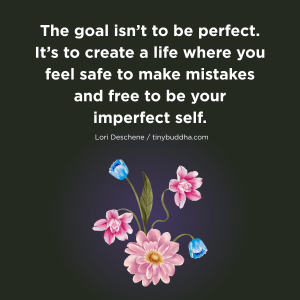
    We are all creative beings. Experimenting with different mediums can be a wonderful way to find out what sparks joy and brings comfort. You don’t have to be an expert. Remember, perfection is not the goal; you’re simply making your world a little brighter.

    My journey with creativity has given me more than I could ever have anticipated. It may not always change external circumstances, but inwardly there’s a shift every single time. An easier breath. A blank canvas and a fresh start. A reminder that I can begin again and again, as many times as necessary. And sometimes that’s all we need to be okay.

  • How to Make Your Life Matter (Even If It Lacks Purpose and Direction)

    How to Make Your Life Matter (Even If It Lacks Purpose and Direction)

    “The purpose of life is to live it, to taste experience to the utmost, to reach out eagerly and without fear for newer and richer experience.” ~Eleanor Roosevelt

    Calm yourself down. It’s okay. All is well.”

    I clung to the sterile white table while the laboratory was spinning around me.

    “It’s just an anxiety attack. It will be over soon.”

    I closed my eyes and took a deep breath, forcing my lungs to expand against the tightness in my chest. Cold sweat trickled down my spine as I battled the all-consuming feelings of overwhelm, panic, and disappointment.

    My life was going nowhere.

    How had this happened? I thought I had a plan.

    I had chosen a promising career in science to make a positive contribution. I’d dedicated myself to changing the world, gaining recognition, and creating a legacy. So my life would matter.

    And yet, I felt empty. Aimless. Unhappy.

    I was stuck in a pointless treadmill of work, eat, sleep, repeat. I had no social life, no hobbies or passions. I focused solely on my research, hoping to enrich other people’s lives.

    But instead, I added to pharmaceutical companies’ profits. I made no difference to anybody. And I was way behind in my career compared to other people my age.

    I lay awake at night, disillusioned and frustrated, beating myself up for my miserable failure, drowning in hopelessness, anxiety, and worries.

    What if I died tomorrow without leaving a mark on the world? Vanished without a trace, my insignificant life instantly forgotten?

    What if my existence was meaningless?

    I stood in the middle of the deserted lab, tears streaming down my face. Everybody else had left to enjoy their evening. Their lives had direction, happiness, purpose. They counted.

    What was wrong with me?

    As despair washed over me, I knew I couldn’t go on like this. I had to find my true purpose in life. Before it was too late.

    My Hopeless Search for Purpose and Direction

    After my fateful (and humiliating) breakdown in the lab, I embarked on a quest to find my true purpose, determined to make my life matter.

    I studied countless blog posts, articles, and self-help books. Desperate to discover the secret to filling my life with meaning, I absorbed every piece of information available on the topic.

    Most writers agreed that we have to focus on the things we love, and use them to contribute to society.

    The problem was that I had concentrated all my time and effort on pursuing an academic career. It had seemed a sensible choice at the time, with excellent prospects of achieving purpose and impact. But it had never been my passion.

    And I was now at a dead end, without a clue about what I loved, because my whole life was purpose-driven.

    I never went for a walk in the sun unless I could pick up some shopping on the way. I never spent time in the garden unless I could pull out some weeds at the same time. And I had abandoned my favorite hobbies of jigsaw puzzles and crochet because I thought they were useless activities.

    I felt guilty and lazy when I wasted precious time on them. Time that could be spent doing something productive and significant.

    For months, I obsessed over finding something I loved that also had purpose, but nothing I felt passionate about seemed important enough to lend meaning to my life.

    Growing more anxious, frustrated, and desperate by the day, I prepared myself to settle for an unfulfilling half-life, devoid of purpose, meaning, and direction. Maybe I had no purpose; maybe my life was too irrelevant to matter.

    But then, a thought popped into my mind that changed everything.

    What if the crucial question wasn’t “What’s my purpose in life?” but “Why is having purpose so important to me?”

    My True Motivation for Seeking Purpose in Life

    Having purpose enriches us. Knowing we can use our gifts to improve our community, better society, and enhance people’s lives, we experience joy. A deep feeling of satisfaction, connection, and fulfillment.

    But, as I dug deeper, I discovered that none of this really motivated my relentless search. At least not primarily.

    The truth was that I so desperately sought purpose in my life because, somehow, I believed that I had to justify my existence.

    It was as if I didn’t deserve to live if I didn’t have a purpose. As if I was unworthy of love and happiness until I could offer something useful to the world—until I had important achievements and contributions to show for myself, and was somehow special, somehow more.

    So, the pursuit of purpose became the sole purpose of my life. And my failure to identify what could give my life meaning left me feeling pointless, stressed, and ashamed.

    All because of one devastating misunderstanding.

    The Tragic Reason Why We Obsess About Our Purpose

    I spent my entire life chasing my purpose—desperate to achieve the one important contribution to mankind that would make me special, that would earn me recognition and approval and justify my existence—because, deep down, I believed that I was worthless.

    I considered myself an empty vessel, devoid of value and significance. I assumed that I had to gain worth through my accomplishments, successes, and qualifications. That I needed purpose and a clear direction in order to gain some worth and finally deserve happiness.

    The absence of purpose in my life created a painful worth deficit. I felt inferior to others who made valuable contributions and earned admiration, approval, and status.

    I mattered less. I was irrelevant because I was useless to society.

    It was my perceived lack of worth that made me feel empty and meaningless. And the only cure I could see was to find that extraordinary purpose that would make me worthy.

    So, I searched more and worked harder. I sacrificed every activity that didn’t seem meaningful and important enough to increase my worth, irrespective of how much I loved it.

    Foregoing all joy, I burnt myself out hunting for my purpose. So I could prove that my life mattered. So I could convince the world of my worth—and my right to exist.

    In the process, I missed the purpose of my life altogether.

    The Empowering Secret to Living a Worthy Life

    I thought I would never be useful enough to have worth, which meant my life would never matter, but I was wrong.

    And I realized it on the day I first cradled my newborn daughter. Looking down at the tiny bundle in my arms, there was no doubt in my mind that she was worth. That she deserved all the happiness and love in the world.

    Yet, she had no accomplishments to her name. She’d made no contributions to mankind and society. She had no concept of purpose, goals, or direction.

    Yet she mattered, simply because she existed.

    In this very moment I understood that we cannot have worth. It’s not something we earn, gain, or lose.

    Worth is the essence of our being. An absolute, inherent, unchangeable part of who we are.

    We are worth personified. Every one of us is 100% worth. From the day we are born to the day we die. And beyond.

    Having a purpose, a goal to work toward, can enhance our life, add to our happiness, and enable us to contribute to the world. But it won’t change anything about our worth, which is unconditional, unlimited, and independent of our actions.

    Success, accomplishment, and focused direction won’t increase our worth. And failure cannot diminish it.

    Because we are worth. We are wonderful expressions of life. And as such, we matter.

    Finding a Way Out of Worthlessness

    And so, five years after the day in the lab that started my journey, I abandoned my unhealthy quest for purpose and focused on accepting my true, inner worth instead.

    Countless times a day I affirmed: “I am worth.”

    I reminded myself of my infinite worth every time I felt useless. I repeated the affirmation when I struggled with my meaningless, aimless existence. And I tried to remember the truth whenever I beat myself up for not being important enough.

    At first my mind resisted, stressed by the change of priorities.

    Too many years it had held the belief that I was worthless, and that purpose was a prerequisite for worth and, ultimately, happiness.

    I ignored it as well as I could, stubbornly affirming my worth, over and over again.

    And step by step, day by day, my understanding of my true worth grew, and the compulsive need for purpose weakened.

    Until one day I was liberated. I felt free to explore my passions, enjoy all my unproductive hobbies, and fill my entire house with crochet doilies. Without guilt, without feeling I was wasting my time on idle indulgences.

    I even found joy in my profession as a scientist once the crushing pressure to achieve, outperform, and impress had been lifted. Once I no longer expected it to give me purpose.

    And I could relax. Knowing that, sooner or later, some purpose would reveal itself to me, without having to be forced, simply because I was focusing on the things I loved.

    The Liberating True Purpose of Your Life

    When I was convinced of my inherent worthlessness, I sought purpose as a means to deserve happiness, while I abandoned the things that actually made me happy because they lacked purpose!

    Looking back, the irony makes me cringe.

    I now believe the purpose of life is to be happy. To grow, thrive, and experience life to the full. To worry less about our achievements, productivity, and the meaning of our life and to prioritize the things we enjoy.​ Even if they serve no purpose at all.

    Because the only way to make your life matter is to make it matter to you. To know your true worth and contribute your unique perspective to this world.

    So, be kind and compassionate. Take care of your loved ones, and yourself.

    Help and support others. Not because you have to earn worth, but because you want to improve their lives.

    And do what you love as often as you can. Walk in the sun, sit on the beach, lie in the grass. Just because it feels good.

    Do it without feeling guilty or beating yourself up for the lack of purpose. Without fear over whether you are important enough, useful enough, influential, significant, or deserving enough.

    Because, at the end of the day, purpose can add to your happiness, but it’s not a prerequisite for it. You don’t need a mission, purpose, a direction for your life to be worth living.

    You don’t have to justify your existence or prove your worth. Not to your parents or your family; not to your friends, your boss, or society.

    Not even to yourself.

    Because you are worth personified. You matter. Right here, right now.

    And as long as you enjoy walking your path, no matter how aimlessly, your life has meaning.

  • How I’m Healing the Vulnerable, Rejected Kid Inside Me

    How I’m Healing the Vulnerable, Rejected Kid Inside Me

    “In case no one told you today:
 You’re beautiful. You’re loved. You’re needed. You’re alive for a reason. 
You’re stronger than you think. You’re going to get through this. 
I’m glad you’re alive. Don’t give up.” ~Unknown

    I was fourteen years old and it was a holiday of firsts: my first holiday away from my family with my school and my first holiday abroad, where I had my first real crush.

    For the two weeks I was away, I was caught up in a flirtation with a boy from one of the other schools. I had to pinch myself when he said yes after I’d struck up the courage to ask if he would meet me at the disco on the last night.

    The disco was everything I wanted it to be; we laughed, we danced, and I had my first kiss. If there is such thing as cloud nine, that’s where I woke the next morning. Still in a romantic haze (well, as romantic as a fourteen-year-old can get), I went to wave off the boy I’d begun to think of as my “Prince Charming” for what would be our last goodbye.

    But the fairy tale romance didn’t work out the way it had played out in my fourteen-year-old imagination. As I walked up expecting an embrace, he didn’t even want to make eye contact, then he turned his back on me.

    I’ll never forget the feeling of rejection. It was like my whole being was blocked off and cast aside.

    Still hoping for that dream goodbye, I waited until he got on the bus, thinking maybe I had been mistaken. That’s when it happened: surrounded by his friends, looking through the window, he was pointing at me, pretending to stick his fingers down his throat, implying being sick, and making gestures about my weight.

    “Prince Charming” had actually led me on as a bet, as a joke to his friends. I was the joke. I don’t know how, but somewhere inside I had the strength to keep my tears in, probably because I didn’t want to deal with the humiliation of what had just happened in front of everyone (including my friends).

    Twenty-one years on, and for as long as I can remember, when I recall the experience I feel the exact pain—the feeling of rejection and not feeling good enough—as I did at that very moment.

    That, right there, was the beginning of my low self-esteem, which later manifested into an eating disorder, anxiety, and being in toxic and abusive relationships. I accepted physical, emotional, and sexual abuse because I didn’t want to feel the feeling of rejection again.

    It was only recently, when I retold the story to my therapist, that I realized what a life-defining moment it had actually been, and recognized the narrative I had given myself.

    As I began recalling the experience, I started “When I was fat, ugly, and spotty I had this experience… No wonder he didn’t like me.” There it was: that one life-defining moment had played out a narrative that all my being wasn’t good enough. As a result, I sought acceptance and approval from others, and accepted their opinions of me as my truth.

    As I’ve started to process not only what happened but also the huge impact it’s had on my life, these are the things I have learned and what has helped me to begin to heal:

    1. We are good enough, and what really matters is how we feel about ourselves.

    At first I found it difficult, but I had to start believing that I was lovable, good enough, and that the only opinion of me that really mattered was my own. As I began practicing telling myself “I love you,” my whole body would tense, and I’d feel wrong for saying it. As I kept practicing, I slowly began to realize that I could love myself. I even had a small ceremony sealing my commitment to myself!

    Having struggled with self-love for nearly thirty years, I found it easy to slip into seeking approval from others at times. On the days I felt weak I looked at my commitment ring as a reminder of my love and acceptance for myself. On these days I gave myself the permission to feel whatever emotion I needed to feel.

    I’ve learned that we are each the one person we are guaranteed to wake up with for the rest of our lives, so we need to make ourselves our main priority. Instead of putting others on a pedestal and seeking their approval, we need to instead change our hierarchy of love so that we’re sitting at the top.

    We deserve love, but that love needs to begin within us.

    2. What would your present self like to say to the hurt person from long ago?

    As I sat with the pain of my fourteen-year-old self, I had an overwhelming urge to hold myself tight, providing a force field of safety where no one could hurt me.

    As the tears began to flow, I told myself how beautiful I was compared to the boy who had ridiculed me; any person who feels the need to humiliate a person for a joke is not deserving of my love or respect.

    As I stayed with the moment I felt every emotion I could feel—sadness, fear, anger, and then, just as the feelings flooded through me, the weight of the emotions I had held for so many years began to dissolve.

    Talking to our vulnerable self may seem a bit weird at first, I get it, but it’s worked for me. By going back in our minds and being there for our vulnerable younger self, it’s like having a superhero swoop in to protect us, only even more empowering because we are the superhero, minus the spandex and cape.

    No matter what has happened in our pasts, we have the opportunity to give ourselves the wisdom and words of hope we wish we had heard at the time. If it’s difficult to do this, think about what you would say to a best friend if they had a similar experience. We’re often much more compassionate toward our friends, so try to see yourself in that same loving light.

    3. Where has the need for validation from others come from?

    Having committed to love and accept myself, I knew I owed it to myself to go deeper to work out why I had relied so much on others for approval.

    My reflections led me to think of my upbringing, growing up with parents affected by alcoholism. Following violent outbursts I felt I was to blame for what had happened; I felt that I deserved the abuse. In fear of further violent outbursts I began people-pleasing and seeking approval from others in order to feel safe. At my core I felt unlovable.

    I then realized that when the fourteen-year-old boy had ridiculed me it had only reinforced how I had felt inside, and made me further believe that I was unlovable. I was then able to look at how I had acted and behaved from then onward, reinforcing those core beliefs.

    I realized I had accepted poor behavior and abuse from others because I felt I “deserved it.” I also engaged in self-sabotaging behaviors in the form of an eating disorder and drinking to excess.

    Delving deep inside may not be an easy task, and it may be something that we put off, or don’t do at all. We may be connecting to a part of ourselves that we may have kept hidden for years, even decades, for fear of being rejected. But, when we have the ability to do this important work, we are finally giving that vulnerable part of ourselves a voice and an opportunity to say what it needs to heal and finally get its needs met.

    4. Nourish, nourish, nourish.

    For close to three decades I had hidden that vulnerable part of myself and turned to my eating disorder for comfort, believing that others would reject me for being fat and ugly if I let it go. I now know I need to connect to the part of myself that has been abandoned for so long. I need to nourish it, and give it the love it has deserved all this time.

    While hard at first, when I’ve eaten, I’ve reminded myself how the food will nourish me. When I’ve exercised, I’ve remembered how the exercise is nourishing my body. When I’ve sat in meditation, I’ve reflected on how good it has felt to nourish my soul.

    These small acts of kindness have already had a positive impact. I haven’t found the need to emotionally eat or purge. I have more motivation, as I’m doing things from a compassionate place of self-love. I am also finally able to look in the mirror and utter the words “I am enough” and “I love myself” (and mean it).

    No matter what happened to us in the past, we have the opportunity to rewrite our narrative for our future. We have the opportunity to love and accept ourselves as a whole, including the vulnerable parts that we may have hidden as a way of self-preservation.

    With each day we begin to meet our own physical, emotional, and spiritual needs the layers of self-loathing will be replaced with self-love and acceptance.

    Be kind to yourself. xx

  • The Secret To A Happy Life Is Hidden In Your Daily Habits

    The Secret To A Happy Life Is Hidden In Your Daily Habits

    “The key to being happy is knowing you have the power to choose what to accept and what to let go.” ~Dodinsky

    It hit me as I cruised along at full speed on a busy motorway on my way to a friend’s house.

    Shaking like a leaf, I pulled myself out of the car and stood by the side of the road. I desperately gulped in the fresh air, a frantic attempt at calming myself down.

    This was the ninth day in a row I’d experienced a wave of panic so intense, it felt like I was about to die. It was utterly unbearable.

    I’d been worrying about all the work I had left to do on my Master’s dissertation and berating myself for taking a day off to spend time with friends when I should have been working. All of a sudden, my throat closed up, my chest tightened, and my hands shook so much that I was convinced I would lose control of the car.

    This was the final straw.

    I’d been waiting for a magic solution, a miraculous savior, a quick fix that would snap me out of my near-constant state of worry. I’d been waiting for the universe to wave its wand and finally grant me a normal life. It wasn’t happening.

    I wasn’t willing to face up to the work I needed to do in order to stop indulging in my bleak hypothetical predictions about the future. And more importantly, I didn’t even know what the work was. But that day, I made the decision to find the key to a happy life and to start putting in some serious elbow grease.

    I just couldn’t live like that any longer.

    That was three years ago.

    What You Practice, You Get Good At

    The problem is, for a very long time, I practiced worrying. About everything.

    I worried about what people thought about me. I worried about what might happen to my health. I worried about whether I would have the career I wanted.

    I also practiced managing this worry, and the myriad of unpleasant emotions that accompanied it, with food, alcohol, and sex. I used substances (and other people’s bodies) to make myself feel good, to take my mind somewhere else, and to give myself a moment to relax.

    But underneath, the worry was still there; these “fixes” just masked it. Instead of paying attention to what was actually going on in my head and realizing that my thoughts were creating a reality that didn’t actually exist, I practiced covering up my desperation, hoping that this fix would be the one that actually worked.

    I was constantly feeding habits that gave me short-term satisfaction or relief, that I knew were ultimately destructive. And I know I’m not the only one.

    Many of us spend our days acting mostly out of habit—the foods we eat for breakfast, the route we take to work, even the thoughts we entertain. These become the actions we practice, over and over again.

    And what we practice, we get good at.

    What Do You Practice?

    Here’s a little something to reflect on: What habits are currently running your life? What thoughts do you think every single day? And are these serving you, or not?

    We might not think of habits as a practice, but that’s exactly what they are. Each and every day, we’re practicing being the type of people we want to be, whether we realize it or not.

    My anxiety, despite being a very real (and often terrifying) experience for me, was a habit. I was practicing being the type of person who was constantly stressed out and worried about everything. Nowadays, however, I practice being the type of person who recognizes these thoughts, knows her limits, takes care of herself, and makes a different choice each time her old pal worry comes out to play.

    Think about it:

    • How many times a day do we complain about things not being the way we want them to be?
    • How many times a day do we disengage from connection with others and allow ourselves to be distracted by technology?
    • How many times a day do we worry about things that haven’t even happened yet?

    The answer is likely: a lot.

    We’re experts at this stuff. After all, the key to mastering any skill is repetition; if we repeat a specific action enough, eventually we’ll gain fluency and competency at it.

    This is why the true secret to happiness lies in our daily habits rather than in the “magic fixes” we often think will make us happy.

    Daily Practices for a Happier Life

    So what if we became conscious of the habits that are running our lives and switched them on their head?

    What if we started practicing things we actually wanted to get better at? And what if, instead of making it some huge, life-changing mission, we simply set the intention to live this way, making small steps toward it wherever we could?

    Remember: What we practice, we get good at.

    With this in mind, here are a few suggestions for habits we could start practicing daily in order to live a happier life:

    • Kindness
    • Compassion
    • Generosity
    • Acceptance
    • Non-judgment
    • Presence
    • Listening
    • Forgiveness
    • Relaxation

    The way these look in our lives will be different for everyone, but the intention behind them is the same—to notice our destructive habits and to make a different choice.

    Personally, I’ve found three super effective ways to start bringing new practices into our lives.

    1. Notice your autopilot.

    We have to recognize our habitual autopilot mode in order to do something about it.

    Becoming aware of the way we live our daily life—the choices we make, the people we surround ourselves with, and the stories we tell ourselves—helps us to remember who we really are and what we really want. It also helps us make more conscious decisions about how we act so that we choose our response rather than react out of habit.

    The best way to do this is to first make a list of all the times you already know you tend to slip into autopilot.

    For example, you might recognize that you frequently spend your lunch break scrolling through Facebook, and then you feel bad about yourself after comparing yourself to other people. Or, you might notice you regularly worry about worst-case scenarios when you’re lying in bed at night.

    Once you’re aware of what you’re doing, you can commit to making a different choice the next time you’re in that situation, practicing a habit that doesn’t serve you.

    I have to be honest here. This takes time.

    In the beginning, it was difficult for me to recognize when my “worry” head was on because it felt so natural to me. But once I started paying more attention to my habitual thoughts and behaviors, I found it much easier to switch the script in those moments and instead practice some deep breathing to relax myself.

    Action step: Take a moment to think about the times you already know your habitual autopilot-self takes over. What could you do to in those moments to break that pattern, re-engage with the world, and make a different choice?

    Remember: What we practice, we get good at.

    2. Focus on your physical sensations.

    Another great way to practice new habits is to focus on how they make us feel in our bodies. I like to think of this in terms of openness (expansion) and tightness (contraction). I usually feel pretty open and soft in my heart space when I practice kindness, for example, and tight and tense in my belly when I practice being rude.

    Our sense of expansion or contraction in our body can act as an “mindful shortcut,” giving us an easy way to determine what might be going on in our heads.

    If we focus on how we physically feel in our bodies and the sensations our habits bring up for us, we can really start to distinguish between the ones that currently serve us and the ones that definitely don’t. Since our physical sensations often directly relate to our emotional experience, it’ll also provide us with a little motivation to continue practicing the things that make us feel expanded.

    The issue most of us run into here is that we mostly walk around feeling completely out of touch with our bodies. In fact, it wasn’t until I really started to dive deep into yoga that I realized my body was constantly giving me important signals—and I was totally ignoring them.

    The best way to begin observing your body is to sit in stillness and just notice your bodily experience, even if you start with just a few moments a day. The more you “check in” with your body, the more you’ll be able to tune in to what it’s trying to tell you.

    When I started paying attention to my body, I noticed how different thoughts affected me in completely different ways. My worry made my body feel tight, tense, and achy, for example, whereas calm thoughts made my body feel soft, relaxed, and open. This helped draw my attention to my worrisome thoughts and choose to focus on my breathing in the present moment instead of on my “faux” reality.

    Action step: Start your day by asking yourself one of these questions:

    • “How do I want to feel today?”
    • “What do I want to practice today?”
    • “How do I want to live today?”

    Then check in with yourself regularly throughout the day (setting up a reminder on your phone helps!) to observe how your body’s feeling. Pay particular attention to your heart, solar plexus, and belly areas. Is there a sense of expansion or contraction? Does this align with how you want to feel? What are you currently practicing? And does this align with what you want to practice?

    Remember: What we practice, we get good at.

    3. Set an intention.

    We can also practice new habits by simply affirming to ourselves that it’s our intention to practice them.

    Intentions are perfect because they’re designed to be a guideline rather than a goal. With goals, it’s far too easy to beat ourselves up if we don’t reach them, but with an intention, we can just start over again.

    If we set an intention to be kind, or compassionate, or generous in the morning, we’re also far more likely to jump at opportunities to practice this as we move through our day. It helps us make decisions that are more aligned with the people we want to be, since our intention will still be fresh in our mind.

    For example, I’ve recently been setting an intention to practice forgiveness. I realized that I’d been holding on to so much resentment, anger, and blame toward myself (and others) about my anxiety. I felt so much rage about my past—the years I’d spent constantly trying to please other people at the expense of my own needs; my first boyfriend’s extremely controlling behavior, which left me feeling utterly weak; and the pressure I’d felt growing up to be “perfect.”

    So every morning I listen to a forgiveness meditation, which includes repeating to myself, “I see and feel the pain you’ve caused me, and it’s my intention to forgive you.” Then, as I’m about to go into my day, I remind myself that it’s my intention to continue to practice forgiveness.

    Have I forgiven everyone (or myself) yet? No. But that’s beside the point.

    The point is that every single day, I’m practicing.

    Action step: Decide on at least one new habit you’d like to start practicing. How can you set this intention for yourself each day? How can you remind yourself of this intention when you go off track?

    Remember: What we practice, we get good at.

  • How to Choose Peace When You’re Under Pressure

    How to Choose Peace When You’re Under Pressure

    “Let us fill our hearts with our own compassion.” ~Thich Nhat Hanh

    “Mom’s concentrating,” I tell my kids as I clean up after dinner. I suggest a game to keep them occupied. “How many words start with A?”

    As I inspect the crumbs under the kickboard, I pay just enough attention to hear them play along.

    Mom. L!” (I must have drifted off.)

    “Right. L is for?” And they’re off again. Be more present, be more present, be more present, I think.

    M…N…O…I laugh to myself when we reach P. P is for pressure, that’s what, I think as I remind myself that I really need to print off those tax documents tomorrow. And call the doctor. And send off those emails. And register for that training.

    The fact that I can share this with you today reflects true progress. I’m learning to notice the pressure now, examine it, and reduce it where I can, trusting that I can still address the valid concerns that are within my control.

    But before, pressure just felt normal. Necessary even. I used to tell myself that this is what discipline and motivation looked like, as if I didn’t believe I could do the things that mattered without the stress.

    It’s only in the last few years that I’ve dared to be honest with myself about what goes on in my body and mind.

    Now, I accept that this is pressure, and it isn’t helping. Now, I know that my thinking patterns and actions can either bring more pressure or more peace. And now, I truly believe that I have the power to choose which way it goes even when nothing else is in my control.

    This doesn’t mean I’ve perfected the process. Far from it. But now I have the clear intention to at least try.

    Recognizing the pressure was the easy part. The warning signs were clear enough: headache, tension, irritability, worry, fatigue. This doesn’t always stop me denying it or trying to power through.

    Recognizing that my thoughts and actions might be intensifying it was a little harder.

    There’s always a kernel of truth (or more) in the pressures we feel. Pressure comes from the real, daily things that keep life running smoothly. It also comes from the deeper, scarier problems we face. A serious diagnosis. Unemployment. Divorce. Loss. Trauma. And either way, whether it’s an everyday concern, a traumatic event, or what we’ve learned to label as a “silly” worry, we feel pressure when we care. The pressure we feel tells us so much about our values, priorities, and expectations.

    However, in my experience and maybe yours, there’s a special kind of pressure that’s internally generated, or at least internally magnified. It’s not made up or crazy, but it can become disconnected from reality the longer it goes on.

    That drone of what if this and what will they think and who will I be is my voice in my head. It echoes a lifetime of internalized messages, but now, as an adult living my own adult life, it’s me sending most of those messages.

    Which leads me to the hardest part of choosing a more peaceful way through: the choice.

    I’ve held on to so many pressures in my life, waiting for the day I’ve finally earned the right to let them go. The trouble is, there’s no referee or judge, no one’s keeping score. I’m the only one who can grant myself permission to change, and it’s me who chooses peace or pressure.

    When life feels secure, the peaceful path is easy to see. It’s right in front of you. You’re standing on it! When I’m there, I can tell myself the most beautiful affirmations, “I decide if I live life in fear of the pain or in devotion to the love. I can choose to let go of that which does not serve me. I love and accept myself fully, completely, deeply.”

    But when things get hard or serious, or when something I really care about is on the line, the doubts can creep in.

    Is it safe to let go of my pressure-filled thoughts? 

    What if I need this pressure to succeed?

    Can I really let myself slow down and relax when there’s still so much I need to accomplish?

    Do I deserve to feel good right now? Have I earned it? I’ll have time for myself when this is all over.

    Every day, I grow more aware of this process, and every day, I feel a little braver. Brave enough to find my way back to the peaceful path.

    I can still act so surprised about the pressure, though. After the big doctor’s appointment, after the wedding, after the funeral, after the visit with the in-laws, after the annual review, I’ll have a moment of clarity. I’ll see as if for the first time how much pressure I’d been under by its absence.

    For a moment, before the space is filled in with something new, I feel peace. And every time, for just a moment, I can talk to myself with true understanding and compassion.

    “You were under so much pressure,” I’ll say. “That was really weighing on you. Of course, you felt pressure. It makes sense that you felt confused about that. It makes sense that you felt so stuck. I know, I know. You were scared.”

    Then, when I could assert my willingness to change, that familiar critical voice sneaks back in. But I thought you’d be over this by now.

    Pressure.

    The things we feel pressure about may change on the surface. Move faster, do more, do better. Underneath, they’re always about the same questions:

    Who am I?

    Am I good enough?

    I am worthy of love and connection?

    Can I get through this?

    And even in the attempt to be compassionate with ourselves, we can easily slip into questioning our worth rather than affirming it. We can intensify the pressure to get over it already. Rather than saying, “I see that I’m feeling pressure and I choose to accept and love myself fully through it” it becomes more, “Really? This again?”

    Here, too, I’m learning how to choose the peaceful path through. I’m learning that there’s no purpose in shaming yourself for the pressure, just as there’s no purpose in minimizing it or bottling it up.

    I’m learning that taking the peaceful path means changing the whole process to one of compassion, not criticism. So, I’m practicing answering those questions in a more caring way.

    You don’t need to hurt yourself like this.

    You can decide how you’re going to approach this.

    Even here, you can choose to accept yourself.

    You can choose the most peaceful path through this.

    There will always be pressure. Pressure, pain, stress, tension, friction—they’re a part of living. Life cannot and will not ever be stagnant, and that’s not always comfortable. Still, we can choose a more peaceful path through it.

    Maybe now you’re under the pressure to do more and do it faster. Or the pressure to be certain. Or to be strong or perfect. Or maybe even the pressure to release the pressure. The pressure you experience may be internally generated or a reflection of the people and circumstances surrounding you.

    No matter how much pressure you’re under or where it stems from, you can find a more peaceful way through it with your own compassion.

    Here’s how:

    1. Practice being aware without the judgment.

    Learn your personal early warning signs and start to label that internal experience as pressure. Practice recognizing it before it boils over or paralyzes you, and be honest with yourself about whether it’s really helping. Even if all you’re able to do is notice its absence when it leaves, start there. Notice the feeling of pressure or relief, call it what it is, and recognize how this process impacts your life.

    2. Validate yourself.

    When you’re under pressure, validate your feelings with statements like you’re under pressure right now and this feeling makes sense. And move toward validating your own worth. Even statements like I’m learning to accept myself can be enough to ease the pressure.

    3. Look beneath the surface.

    Once you’ve recognized you’re under pressure and offered yourself validation, you can look beneath the surface at what’s going on. Be honest and compassionate with yourself as you ask the questions that help you understand your situation.

    What feels threatened? Who’s influencing you? Could you be magnifying this? What would help you ease the pressure? What’s one thing within your control? What scares you about finding a peaceful way through?

    4. Practice new thoughts and actions until they’re your new normal.

    Tell yourself the kinds of things you’d tell a dear friend who’s under pressure. Remind yourself of your true priorities, your strengths, and the choices you can make. Tell yourself why you wish to choose a more peaceful path. And do it again and again and again until the words stop sounding foreign.

    Then, practice building the courage to act from that place, even if you don’t quite believe it yet. Belief might have to come after the action.

    Act like it’s safe to be you, safe to be happy, and safe to choose peace. Take one thing off the agenda. Extend a deadline. Tackle something small and savor crossing it off the list. Take a walk and fill yourself with awe. Whatever you do, remember that the bravest thing isn’t always the biggest or the boldest but the most authentic.

    Practice these steps from a place of love and treat every time the pressure returns, because it will, as another moment to renew your commitment to finding the most peaceful way through.

  • Two Types of Boundaries That Can Help You Take Good Care of Yourself

    Two Types of Boundaries That Can Help You Take Good Care of Yourself

    “Daring to set boundaries is about having the courage to love ourselves, even when we risk disappointing others.” ~Brené Brown

    Do you have the courage to love yourself and set the boundaries you need?

    For years I didn’t, and wondered why my life didn’t work. I didn’t really understand what boundaries were or why I needed them.

    My severe lack of boundaries allowed me to give away my energy, time, power, and love to others, leaving virtually nothing for myself.

    For years I lived in a perpetual state of lack, feeling like I wasn’t enough. Looking back, it makes sense that I didn’t feel like I was enough; I was giving everything I had to everyone else.

    Unsurprisingly, things eventually reached a breaking point, and at the age of thirty-six it all came crashing down on me.

    Living without boundaries, overworking myself to the point of burnout, trying to please everyone, battling with money, having an emergency operation, and leaving a toxic relationship had left me almost broken. I finally surrendered and realized something had to give, before I did completely. My lack of boundaries was costing me too much.

    At the time I didn’t realize that an issue with boundaries was the root cause to the problems I was facing, but I could no longer deny, avoid, or ignore that something had to change. I had spent too long focused on how I could look after and help others, and simply wasn’t taking care of myself.

    Boundaries help us to recognize our own needs. They show us it is perfectly acceptable to have needs and to take care of them. Always.

    Not having healthy boundaries allows you to deny your needs through numbing behavior, such as: addiction, overworking, overspending, overdrinking, procrastination, people-pleasing, and unhealthy relationships. Whatever your personal preference, all of these behaviors allow you to disconnect from who you really are and how you really feel.

    The more you deny your needs, the louder they shout to try and get your attention, so you have to keep numbing away to quiet them down, and that’s no way to live.

    We must establish boundaries to promote and protect our self-care, self-worth, and self-love. It is only from that place that we can look after ourselves, which allows us to truly be there for others.

    Creating healthy boundaries means that you take responsibility for yourself, your time, your feelings, and your energy instead of allowing yourself to be buffeted around by everyone else’s.

    Boundaries allow you to take control rather than allowing others to control you, and conversely allow you to give more to others because you come from a place of abundance rather than lack.

    To create boundaries for yourself you have to tune in to your personal needs and your true feelings.

    In essence, it’s understanding what feels good for you, and what doesn’t. As you work on your boundaries, start to notice where you may be blocking your true feelings. If you are perpetually busy or distracted, leaving no time to connect to yourself and how you really feel, then you need to make time to reflect, recharge, and listen to what your body, mind, and soul are trying to tell you.

    There are two sets of boundaries you need to work on, which I refer to as your internal and external boundaries. Both require you to take notice of yourself, which may be a new experience if you’ve spent a long time focusing on others.

    You can see your internal boundaries as those that you have some control over. They dictate how you treat yourself. Do you sleep to fully recharge your system, eat a healthy diet, think and say kind things to yourself, and make time for the activities that light up your soul?

    During my twenties there were times when I hardly seemed to have slept at all. I was at University and worked in a credit control office, which I loathed, and also did bar shifts most nights. I’d spend the day studying, then go to the office and then straight to the bar, working until late. I had youth on my side and all the fire to keep going, but my energy wasn’t really channelled, I was exhausted a lot of the time, and I missed a lot of experiences because I was always working.

    I needed to set internal boundaries, even though my life was busy, as my choices were a recipe for burnout.

    Life will always get in the way, but do you consistently take care of yourself? If you listen to your heart you’ll know if you don’t. And odds are, you can feel if you don’t.

    If you consistently ignore your health and well-being, believe every negative thought you have about yourself, and treat yourself like you’re not a priority, you likely feel both physically and emotionally drained.

    Make looking after yourself a priority and notice how quickly you start to feel different. Notice how you feel when you allow yourself to sleep enough, eat well, support yourself, care about yourself, and ultimately, love yourself. All the time.

    Looking after your internal boundaries is the foundation for your external boundaries, how other people treat you, and how they and external situations affect you.

    The more you can understand your true feelings and attune to yourself, the easier it becomes to set and maintain your personal boundaries, in any situation,

    Boundaries are a work in progress; they cannot be a one-and-done exercise. Life and the people around you are constantly changing, so you will need to keep managing your boundaries as those changes happen.

    Look at any issue you are facing—perhaps you’re feeling anxious or overwhelmed, for example—and notice if there is a boundary that has fallen away or may have never even existed. Often when we feel overwhelmed it’s because we haven’t taken the time for self-care so we can be in the best place to find the answers we need.

    Once you’ve developed boundaries for yourself, it’s time to apply that philosophy to everything and everyone else. These are your external boundaries, protecting yourself from the outside forces that can potentially throw you off balance.

    I have found it useful to think of our boundaries with other people as energy exchanges. If there are people in your life who regularly leave you feeling drained, then it’s probably time to look at your boundaries with that person to see what might need to change.

    You don’t have to give your time to people who leave you feeling depleted. If they request more than you can reasonably give, you can say no. If they are vocally unsupportive of your choices, you can choose to speak about other topics when you’re with them. If you don’t like how they speak about other people, or they have values you don’t agree with, you can choose to spend less time with them, if any time at all.

    I found that working on my boundaries made me reassess a lot of friendships and who I trust and want to be in my inner circle.

    If there are people who drain your energy, and you feel worse for being around them, then it may be better for you to remove that person from your life.

    If that’s not possible, you can always alter how you interact with them. If face-to-face time becomes too challenging you can use another method, such as a short call, brief email, or social media.

    Ultimately it’s about finding what works for you and focusing on the people who protect your energy.

    If this is a new concept you can, like I did, feel that boundaries have to be big and solid, like a steel wall, so that nothing can ever get past them.

    When I left a very painful relationship my first thought was that trust was always going to be an issue for me, so it would be near impossible to have another relationship again. So I closed that avenue in my mind and focused elsewhere.

    Maintaining a steel wall like this is exhausting. It shuts out the good as well as the bad, and we risk becoming closed to life. It also means we don’t move forward in life either, as we’re busy using all of our energy to hold up the wall.

    Over time I realized that it was most important that I learned to trust myself again, and could start to build trust with other people at my own pace.

    As I continued to work on my boundaries I realized that I didn’t need to use so much energy to keep everything out. I just needed to focus on living my life, how I wanted, and to move away, in whatever way I needed to, from what didn’t serve me. Like water.

    For example, when a discussion became an argument that I could never win, going round and round in circles, I realized I could just remove myself from the debate. I didn’t have to prove my point to someone who didn’t want a resolution and was only looking to create drama, I could simply go and do something else.

    “Water is the softest thing, yet it can penetrate mountains and earth. This shows clearly the principle of softness overcoming hardness.” ~Lao Tzu

    My boundaries didn’t need to be fixed and rigid to work. They, and I, could be like water simply moving through life. Flowing with ease this way and that, toward what served me and away from anything that didn’t. No apology.

    This approach kept me open and moving instead of shut-off and stuck, able to adapt to all of life around me.

    Even when you are really attuned to yourself and have set healthy boundaries, they can still falter. You can still find yourself giving too much of your time, energy, and power, trying to please everyone else, and losing sight of what you need for yourself.

    If you find yourself falling back into old habits, recognize that it happened and start to take care of yourself to recover, in a way that works for you.

    When you’ve centered yourself, look for the lesson. There is no failing, only learning. Stay like water and choose to be light rather than becoming heavy and weighed down by the situation.

    Recognize your humanity and don’t forget your humility as well. Just as there is something to learn, there will be always be a reason to laugh, which helps you let go and move forward.

  • 3 Ways to Stop Obsessing and Start Enjoying More of Your Life

    3 Ways to Stop Obsessing and Start Enjoying More of Your Life

    “Very little is needed to make a happy life; it is all within yourself, in your way of thinking.” ~Marcus Aurelius

    I’ve come to realize that worrying and obsessing don’t help or change anything.

    Hold up. Wait a minute!

    Let me rephrase that, because worrying and obsessing do change things. They make your life worse. I think pretty much everyone in the world knows this, but how hard do we try to stop doing these things?

    What If?

    Every day you wake up and you think and obsess and wonder, “What if?”

    What if I lose my job? What if he leaves me? What if I lose everything and end up homeless?

    Day after day your mind spins out of control contemplating all the things that could go wrong with your relationship or your life. On and on and on it goes, and where it stops nobody knows.

    Aren’t you getting tired of thinking all the time? Isn’t obsessing about possibilities wearing you out? At what point do you decide you should stop getting caught up in your thinking, but then actually make a change?

    I’m tired, and I know relentless thinking wears me out. Just to let you know that I understand, I’ll give you an example.

    Honestly, I have the best boyfriend ever (for me anyway) because he doesn’t let a lot of things get him down. I mean, the guy is genuinely happy and content 99% of the time. Me, not so much. He has been through multiple deployments, many of them combat, and still he never lets stuff get to him.

    But, how does this happen? Where can I get some of what he has? This, I have been contemplating.

    I’ve come to realize he feels happy more than I do because he doesn’t overanalyze life, question everything, and obsess about the future. And he probably also doesn’t obsess about how happy he is and how he can be happier!

    Here’s how it goes:

    Me: “Does he even love me? Is he ever going to totally integrate me into his life? Am I too boring for him? I really need to get some hobbies. Am I settling, or do I expect too much? I’m so fussy sometimes and I don’t know how he handles it. Where are we going to move? When is he going to deploy? Where is he going to go? Is he going to leave me here all alone?”

    I look over at him longingly, wondering what’s going through his mind, because it must be something serious and important, and he must be contemplating the fate of our relationship or the existence of the Universe, right?

    He knows when I look at him with that longing look I want to know what he’s thinking about. So, I say, “Tell me, I must know!”

    Him: “I need some new pants.” Or he’ll utter, “I want a key-less ignition for my bike.” Or, the earth-shattering statement, “My feet really stink.”

    It’s possible he’s just not telling me what he’s really thinking, but if he is obsessing like I do, it doesn’t show in how he lives his life.

    The more time I spend with him, the more I realize I’m wasting my life away obsessing about what might be or what could be or what isn’t instead of simply enjoying the moment and living in gratitude for what I have.

    My guy gets all happy and excited about the little things, and for some reason I don’t. I try. So far, I have failed. But, I vow that going forward I will not fail. I will stop obsessing all the time and I will be a lot happier as a result.

    Do you know why you obsess? Is it serving a purpose anymore? If not, you can change it. Here’s how.

    1. You have to want it.

    Are you at the point where you’re sick and tired of being sick and tired yet? If not, keep doing what you’re doing. Maybe obsessing still works for you in some way and you aren’t yet ready to change. That’s okay. We all change when we’re ready, and we get to different points at different times.

    Wanting to change starts with a conscious choice you have to make. At some point you decide that you want to take control of your life instead of letting your life, your history, and your mind control you.

    Think long and hard. Do you truly, really, honestly want to be happier? I believe that I have struggled with this notion for a long time. In my head I want to be happy, but in my heart there’s a seed of doubt.

    Happiness is something I had briefly when I was a small child, but it was shattered by abusive adults. What if I get it back and it gets taken away again? As an adult I know that isn’t logically possible because no one can take away my happiness, but it’s still a lingering fear.

    Do you feel something similar?

    Despite this fear I’ve decided that I want to be happier. I’m running out of time. We’re all running out of time. Your life is ticking away every day, and you never know when it will end.

    Decide you want to enjoy more of your life. Decide you deserve to enjoy more of your life. Decide you will do something to change, and then you will.

    2. You have to rewire your brain.

    This is the hard part. Your mind has been wired a certain way, possibly due to traumatic events, abuse, or neglect. There’s a roadmap that takes you from Point A to Point B, without fail. Before you know it, an innocuous thought like, “Does he really care about me?” has turned into you remembering every instance he showed you he didn’t care (or at least that’s how you interpreted those events), and you have now convinced yourself you should break up.

    See how this works? Often, it isn’t logical, and it isn’t factual. You’re creating stories in your head because your mind is trying to contain and assuage your fears, put them in a box, and allow you to function with the ever-scary “not knowing.”

    The fact of the matter is, you don’t know. You don’t know if your partner will leave you (they might die or cheat or break up with you—or they might stay forever). You don’t know if you’ll die tomorrow. You don’t know if you’ll lose your job or have financial struggles or end up winning the lottery.

    Recognize when you’re obsessing, then decide to accept what you don’t know and stop getting caught up in your thoughts. Do it once. Do it twice. Do it over and over and over until you have a little peace. If meditation helps, then do that. If sitting at the beach or reading a book helps, then do that. Do whatever will help you bring a little peace to your mind.

    Once you’ve created a little space in your head, you have to start believing. When you realize you’ve been wondering, “Does she really care about me?” remind yourself, “She shows she cares about me.” Start believing the good instead of the bad.

    It took me about a year to convince myself that my boyfriend really cared, even though his actions showed he did. He kept showing up and didn’t run away, but still, I had to get over my fear that no man would ever really care about me and they’d only want to use me.

    If your partner doesn’t show they care, then that’s something you need to actively address. Obsessing about something can’t change it. Only action can.

    3. You have to learn to love the little things.

    I know this is hard sometimes. If you feel apathetic or tired or depressed it’s hard to see the good in anything. But every day there are usually little things that happen that could bring you joy, even if for a few minutes.

    Yesterday I went to the beach for a few hours. Being in the sun, feeling the wind, and hearing the ocean brings peace to my soul. I try to do this as often as possible because it reminds me to appreciate being alive.

    Watching him cook breakfast makes me happy. I had to learn to sit back and let someone do something (anything) for me, and now I smile a little every time he whips up some eggs and bacon.

    They have a baby hippo at the zoo. He weighs five hundred pounds, but he bobbles around like a fat, happy, little apple in the water, and watching him makes me happy.

    I decided to buy some flowers to put in our bedroom so I can look at the sunny little yellow bunch every day.

    And I’m thinking we need a dog so I have something else to focus on.

    I’m trying to find simple things to make me happy instead of waiting for some big, giant event or some magical time when life suddenly changes and becomes more fulfilling, because that won’t ever happen. You create your reality, and if you keep waiting for life to happen, it will slowly pass you by.

    What about you? What makes you happy? There must be something you’re grateful for, and if not, find or create something. Do you paint or write? Maybe you like animals and want to volunteer at a shelter. Maybe you need to get out in nature every day even if only for an hour.

    Think of those little things that bring you joy and make sure you do them as often as possible. Try to focus on what’s good in your life, because we can spend all day focusing on what’s wrong or what isn’t working or what could be better, but honestly that doesn’t get us anywhere but into a negative spiral.

    Most importantly, don’t give up if you fall backward. Don’t let the outside world make you feel like you aren’t enough if you aren’t perfect and happy and smiling all the time like everyone else on Instagram. A picture isn’t life, and social media can make you feel like a failure if you let it.

    It’s okay to struggle. You don’t have to be perfect. You’re enough just the way you are, and as long as you keep moving forward and make peace with your journey, you are doing all you can and you should be proud of yourself.

    So, get out there. Stop letting obsessive thoughts control you and start living your life for today!

  • How to Embrace Your Sensitive Superpower and Stop Feeling Overwhelmed

    How to Embrace Your Sensitive Superpower and Stop Feeling Overwhelmed

    “With realization of one’s own potential and self-confidence in one’s ability, one can build a better world.” – Dalai Lama

    Sensitivity can feel like a gift or a burden, depending on our relationship to it.

    If you often feel completely overwhelmed by an overload of stimulation, then your sensitivity probably doesn’t feel like an asset. Maybe more like a liability. But it doesn’t have to be this way.

    As an introvert and sensitive person, I’ve navigated these waters my whole life, and I’ve come to realize that sensitivity is more than a gift—it’s a superpower! But first we need to understand what sensitivity is and what it’s not.

    What is Sensitivity (the Superpower)?

    To keep it fairly simple, sensitivity is essentially the ability to feel. The more sensitive we are, the more we feel.

    Sensitivity allows us to be more aware of what’s happening around us—people, conversations, traffic, nature, how a place feels. It also makes us more aware of and in touch with what’s happening inside us—our thoughts, emotions, sensations, and how we react to external things.

    I see sensitivity as a foundation for self-awareness. Without the ability to feel, we could never discern what’s really happening and break through the limits of our personality and fears.

    Sensitivity is also an aspect of empathy. Because we can feel what others are feeling, it allows us to understand them and connect with them more deeply. Without some degree of sensitivity, we’d be disconnected from people.

    On the other side, it can be extremely overwhelming. Too much sensory information coming in all at once can leave us feeling agitated, overwhelmed, and drained. When sensitivity becomes overwhelming, we often pull away from people and retreat to time on our own—a typical trait of an introvert or HSP.

    When I was young, wherever my parents took me, I’d be very aware of the spaces around me and how they made me feel. I either liked a place because I felt good there, or I didn’t like it because I felt uncomfortable.

    At that time, I didn’t comprehend much more than that—I didn’t know how to—and it’s very clear to me now that I didn’t have a context for it back then. There was too much sensory information passing through me, so when a place felt unpleasant it was just an overwhelming sense of feeling unsettled and unsafe.

    I was also very sensitive to people. I would instantly have a sense of the state, or mood, of them as soon as I met them, or even just saw them. When I was young, I didn’t understand what they were feeling, but whatever it was, I’d feel it in myself. Depending on their emotion, this could be very uncomfortable.

    I’d find myself feeling frustrated and emotional for no reason when around certain people, but it wasn’t my emotion. Again, at that time, I couldn’t tell the difference because I’d feel it in me and assume it was me, but I didn’t understand why I felt like that. Very confusing.

    Later I learned to know the difference between my own emotions and someone else’s, as I was much clearer on what was happening inside me.

    This is when I started recognizing the gift, or superpower, that sensitivity brought into my life. In sensing what others were feeling, I experienced a sense of connection to them, which helped me understand them.

    This awakened a sense of caring in me. I could feel when people were upset, sad, or hurt, and I found myself wanting to help. If someone was angry, I started to feel beyond the anger and to understand why they felt that way. Diffusing an argument or conflict was easy because I could feel where they were coming from.

    It’s so easy to judge people, retaliate, or disconnect when we don’t understand them. The moment we understand, there is opening, heart, and compassion.

    Sensitivity, our ability to feel, is a superpower that allows us to understand, connect, and have deep insights about ourselves and the nature of humanity. And the world needs more of this.

    What’s Not a Superpower

    If we say someone is emotionally sensitive, it could mean they’re sensitive to their own emotions, or it could mean they react emotionally to others’ words, actions, and emotions.

    Being sensitive to what’s happening inside ourselves is the basis for self-awareness, and an essential ingredient if we want to grow. A superpower.

    If someone says something and we’re hurt by it, we might call it being sensitive, but it’s more an emotional reaction than a superpower. Yes, we may feel the intention behind their words, but feeling it and being hurt by it are not the same thing. If their words have triggered something in us, then it’s more about the stability of our sense of self.

    Another example: You’re in a crowded room and you become overwhelmed and drained by the noise and stimulation.

    Here your sensitivity gives you the ability to feel everything that’s happening around you. I think this is an amazing gift. It may be a lot of stimulation, but I’d still call this a superpower.

    However, when we feel overwhelmed or drained, it’s not solely because we’re sensitive. It’s because we don’t feel grounded or stable internally, as I mentioned in my previous post about how I preserve my energy in groups as an introvert. The good news is, we can proactively foster internal stability.

    When we feel overwhelmed and drained in crowds, we often just want to remove ourselves from the situation and be alone. There’s no right or wrong, what we should or shouldn’t do, but when we acknowledge what’s happening inside us, then we have a choice.

    Learning Not to Let Sensitivity Control Us

    When I was young my sensitivity was too much for me. I would feel the good, the bad, and everything in between. It felt like the world around me was not around me but passing through me; and because I didn’t have a context for what was happening, the world felt unsafe, so the only way for me to function was to shut down.

    It wasn’t something I did consciously, as I didn’t understand what was happening. It was something I did on a subconscious level.

    It wasn’t until many years later, after doing a lot of work on myself, that I was able to realize what I’d done. I’m now able to reconnect with my sensitivity and wield it while feeling safe.

    Sensitivity is a gift, but if we don’t have a stable center within us, then our ability to feel becomes stressful and overwhelming, and ultimately begins to control us. In a sense, we become a victim to the power of our own sensitivity, as if it’s wielding us.

    To embrace our superpower—to be able to feel for and connect with others deeply without feeling overwhelmed or easily hurt and reacting emotionally—we need to find stillness inside ourselves. A stable center.

    If we can’t find stillness and quiet amidst the noise of our own mind, we’ll never be able to find peace and quiet amidst the noise of the world.

    Our thoughts amplify how we react to the overstimulation of our sensitivity. We pick up on what’s happening around us, it creates a space inside us—a landscape of emotions and feelings—and this triggers thoughts. The thoughts then reinforce the emotions, anchoring them further. The emotions continue triggering more thoughts, in a vicious cycle that goes on and on.

    For example, if we’re in a loud, crowded room we may feel anxious as a result of all the sensory input—the noise, people’s energy, and the energy of the place. We may start thinking thoughts like “Why did I come here? I knew this would be a bad idea.” Then we start feeling trapped and overwhelmed, triggering more thoughts of perhaps how you blame your friend for inviting you, or “How am I going to just disappear?” This all amplifies the anxiety.

    Or, if someone says something that triggers us emotionally, we may feel insecure, then start thinking about how we always say the wrong things, and then feel more insecure.

    After starting a meditation practice, I realized that when I’m more still and quiet inside myself, I react less and less to external stimulation. I’m no longer at the mercy of my superpower. In fact, the stiller I become, the more I feel, but without it becoming chaotic or overwhelming.

    The Problem Isn’t Our Sensitivity; It’s Our Lack of Stability

    I still value time on my own. I always have and always will. But I now have a more stable center, so I’m able to use my sensitivity as a superpower.

    You can do the same by prioritizing activities that help you create a sense of internal stability, such as:

    After meditation, I particularly like spending time in nature. We can walk outside and let our mind run, and there will still be a calming effect. But when we consciously tune into our surroundings as we walk—using the superpower of our sensitivity to feel nature’s stillness—our own stillness becomes more tangible and stable.

    When we feel stable inside ourselves, we have a solid foundation to feel deeply, so the outside world has less power to control us. The stillness inside is unwavering, regardless of what’s happening outside of us.

    Our sensitivity is a gift in that it opens the door to a more connected world, but we need to proactively foster internal stability so we’re not at the mercy of the chaos around us. The more we embrace our superpower and live in it from a space of stillness and stability, the more at peace we will be inside ourselves—creating a greater capacity to help others, and in turn creating a more connected humanity.

    Find stillness. Find your superpower.

  • Why Compliments Made Me Cringe and How I’ve Learned to Accept Praise

    Why Compliments Made Me Cringe and How I’ve Learned to Accept Praise

    “Even when the sea is stirred up by the winds of self-doubt, we can find our way home.” ~Tara Brach

    What is it about praise that’s so hard to hear sometimes?

    You know the drill. You do something noteworthy, like cooking a meal for your friends or getting on stage to do a talk. Assuming things go okay, your friends or colleagues tell you a bunch of nice, encouraging things afterward:

    “This meal is delicious!”

    “You did great up there!”

    And suddenly you feel uncomfortable.

    Maybe you deflect those nice, encouraging words (“Oh, it was nothing, really”). Or worse, you graciously accept their praise, but inside you feel strangely empty, like you’re getting credit for something someone else did.

    So what’s that all about? Why can’t we just let praise sink in?

    To begin with, we’re often very good at dismissing people’s praise. We see all the angles, the reasons that someone’s praise doesn’t really count.

    “They don’t know what they’re talking about.”

    “They’re just being polite.”

    Me? I often experience praise as a kind of pressure. It’s why, if I’ve made a good first impression on somebody, I want to leave the room immediately. (“Uh oh. They think I’m this charming all the time? Now I have to keep this up.”)

    Through this lens, we can even turn praise into criticism:

    “They think I need special encouragement.”

    “Yikes. If they think that was good, they must have a really low bar for what they think I’m capable of.”

    It’s like a superpower that makes you feel awful. Even when people are being nice.

    This is how I imagine praise works for some people:

    Do a good job -> Praise happens -> Fills up the praise vase -> They think, “I’m doing okay at this life thing!”

    But this is how it often works for me:

    Do a good job -> Praise happens -> I notice the glaring discrepancy between the praise and my feelings about myself -> I think, “I’ve fooled them again! I better not mess this up!”

    Sound familiar?

    The problem may actually be that you’re overusing your strengths. When you second-guess someone’s praise, searching for the hidden meaning of their words, you’re actually using a highly developed communication skill. You’re reading between the lines of what they’ve said. This is often a really useful skill, but if you’re like me, you may have honed that skill a little too much.

    Recently a friend of mine put it this way:

    “Part of the reason that I can find things hard is because I overuse my strengths. I’m really smart at looking for the nuance in things, but I look for the hidden message in *everything*. It makes my life a bit complex, and I’ve learned I need not to be so diligent at using my strengths.”

    Yep yep yep.

    When we second-guess every positive interaction, we turn potentially nourishing moments into a launching pad for further self-interrogation and doubt. I call this “praise-shaming”: the act of taking well-intentioned positive feedback and using it to highlight your own shortcomings.

    So how do you learn to relate to praise in a more nourishing way?

    First, you need to understand why praise can sometimes feel like it’s not really about you. And it’s not just an issue of self-esteem; it has to do with the nature of praise itself.

    The thing about praise is that it’s a form of judgment, and it tends to be very definitive. Let’s say you’ve just done something difficult, like speaking in front of a crowd. Afterward, your friends might say…

    “You were amazing!”

    “Oh my god, that was so good!”

    Lovely stuff, but not all that nuanced.

    Our inside experience is usually so much more complicated. “I think I mostly did a good job, but also there are ten things I’d change, and I’m still not sure if that one particular person in the third row was hating every minute.”

    It’s not that praise is false; it’s just too simple.

    If you spend a lot of time in your own head, wondering why the world seems so simple for other people while your brain is going at a thousand miles an hour, then it’s no wonder that praise can often feel like a gross simplification of your inside experience.

    The praise feels false, not because the person praising you is lying, but simply because it doesn’t match your inside reality.

    And since praise is so black and white, if that praise doesn’t ring true, it kind of makes sense that our reaction to it is to go drastically the other way. We think, “Well, if it’s not actually that great, then I’m some kind of fraud, right?”

    Strangely, the first step to accepting praise may actually be to take it less personally.

    A funny thing started happening for me about a year ago, at the tender age of thirty-five. When someone would tell me they liked my work or they enjoyed my company, I stopped taking it so personally.

    I’d think to myself, “Oh, that’s nice that they think that about this idealized version of me they have in their head. He sounds lovely.”

    Doesn’t sound all that uplifting, does it? And yet, strangely, it helped me feel a lot less uncomfortable with the praise that came my way.

    It took the pressure off. Suddenly there was room for that praise to be what it really is: simply an expression of how my friend is feeling in that moment when they think about me.

    By not taking praise personally, I wasn’t doing any favors for my self-worth, but that was kind of the point. If every bit of well-meaning praise sparks an internal referendum on your worthiness as a human (do I really deserve this praise?), that’s not exactly a recipe for inner peace.

    I couldn’t yet accept that I deserved to be praised. But by not taking praise so personally, it helped me at least accept that my friends thought I was deserving of praise (even if I privately thought they were crazy).

    I tried this approach for about a year. I got better at relaxing when people would tell me nice things. I stopped worrying so much about living up to the idealized version of me that friends and colleagues had in their heads. It helped.

    But there’s another step, one I’m just beginning to master. Because the truth is (as I am slowly realizing), the people in your life probably know you better than you think. In fact, your friends know you in a way you struggle to know yourself because they’re not focused on all the things you think are wrong with you.

    Sure, the nice things your friends tell you might not be the whole truth, but they are still true.

    Praise is what the people who care about you see when they look at you without all the layers of self-judgment.

    There’s something very encouraging about this, I think. That the people around me are willing to look at me and see the good stuff, even when I’m convinced it’s not the whole story. That they are willing to focus on my strengths, not my flaws.

    Through this lens, praise isn’t some kind of deception. Nor is it some kind of well-meaning misunderstanding. It’s an act of love. It’s a willingness to see the best in you, even though life is always more complicated. And these days? I’ll take that.

  • Why We Close Ourselves Off to Friendships and How to Open Up

    Why We Close Ourselves Off to Friendships and How to Open Up

    “If you accept a limiting belief, then it will become a truth for you.” ~Louise Hay

    Picking the flimsy gold lock on my groovy denim-covered childhood diary, I’m instantly transported back to my ten-year-old life.

    Each page duly describes what I what I ate for dinner that day as well as what my two best friends and I got up to. It was 1976 and we were obsessed with Charlie’s Angels, cruising around “undercover” on our bikes, solving fresh crimes around the neighborhood.

    Every couple of weeks I’d report the latest drama amongst the three of us. Either my two friends had inexplicably turned against me, or one of them had coerced me into siding with them in a never-ending series of turmoil.

    By the time we were teenagers, we’d drifted apart and I’d started struggling to form female friendships that weren’t fraught with gossip or backstabbing

    When I got to university I’d firmly made up my mind that girls weren’t to be trusted and I only wanted guy friends. I made an exception for one girlfriend who felt the same, and we went on to be roommates, priding ourselves on our fun circle of male-only friends.

    It’s fascinating to reflect on how belief systems are formed. The more I told myself this story of females being intrinsically bad news, the more I avoided getting close to any. As I grew into an adult, my theory was again proven as I got sucked into more dramas and gossip.

    Once I got married, my husband became my best friend. He was never jealous of my male friends, and we enjoyed a great social life with other couples. However, after we started a family I found myself navigating fresh female waters: the mothers at the school gates!

    I immediately sensed a minefield of gossip and competitiveness. It would have been easier to drop my kids off and go, but I had their social lives to think about too.

    Thankfully, I got back into journaling around this time, and I used it as a way to get to know myself better. I explored my struggles on paper and tapped into my wiser, all-knowing self to discover that, for me, the secret to having great female friendships was to see special ones individually, never forming a group.

    I turned down all invitations for ‘Girls Nights Out’ or weekends away, as that dynamic wasn’t appealing. I now had a small handful of genuinely lovely girlfriends whose company I cherished and who shared my values of trust and openness. I made a point of seeing them one-to-one and never introduced them to each other, treasuring our meaningful conversations.

    One day I heard about a series of life coaching workshops and felt immediately drawn to sign up. I invited a dear friend to join me, but she couldn’t make it, so I invited another special friend who eagerly accepted. How fun to have a once-a-week date together to focus on our lives. But then something ‘terrible’ happened. The first friend I’d invited called back and said she’d rearranged her schedule and was excited to now be able to join me after all!

    This sent my head into a spin. I decided my only choice was go with them both.

    Although we all lived on the same street, I’d deliberately never introduced them to each other because of my flashbacks to the three-way friendship dramas of my childhood. “One-to-one friendships only” had become my rule.

    Together in the car on our way to the first workshop, I endured small talk and introductions, rather than delving into meaningful subjects as I normally did with each of them. But by the time we left the workshop venue, we were all riding on a high of inspiration, so we headed straight to a restaurant to download our insights over lunch.

    We did the same thing again every week and by the time the course ended, we’d agreed to form a monthly meet-up for the ‘soul’ purpose of working on our lives together.

    That was in 2008, and we’ve met every month since.

    Our Power Posse is based on absolute openness and deep mutual trust. Having our monthly check-in to share on how each area of our life is going helps us clarify our intentions and goals. It gives us accountability and motivation to live our best lives.

    We’ve even run retreats together, inviting other women with a growth-mindset to join us. I’d have never imagined this back when I was still telling myself the false story that females aren’t to be trusted.

    In my case, I held myself back with the limiting belief that group dynamics among women were dangerous. Perhaps you hold a different belief that prevents you from forming and maintaining friendships, for example:

    • No one really gets me.
    • I ruin all my relationships.
    • I’m too intense or too sensitive for people.
    • People always disappoint you eventually.
    • You can’t ever really trust anyone with your personal life.
    • I can’t relate to any of these people.
    • Everyone already has all the friends they want at my age.

    We form many of these beliefs out of direct experience from our past. When something painful happens, we draw a conclusion about why it’s happened in an attempt to avoid that same situation in the future. That conclusion feels like a fact, and it then forms a belief that we carry through life. This affects how we think, act, and feel—about ourselves and others.

    Limiting social beliefs are often amplified by a fear of rejection, criticism, ridicule, or betrayal. We proceed with undue caution in order to protect ourselves from getting hurt. This leads to limiting decisions. We cut ourselves off from what’s possible by painting ourselves into a box that feels safe. We miss out on opportunities that would enrich our lives.

    In order to break free from these limitations we need to act against our self-protecting instincts. It’s okay to take baby steps if you need to. Start by setting an intention. What aspects of your social life or a specific friendship make you feel unhappy or disconnected? Which limiting beliefs may be hindering you? What would you need to believe instead to welcome more people into your life?

    For example, “I can’t really trust anyone with my personal life” could turn into, “There are people out there than I can trust—I just haven’t met them yet.” This positive expectation shifts the energy around it. Now you can begin to collect new evidence to back up this belief by opening up more regularly, sharing more authentically, and increasing the likelihood of making a solid connection with someone you can trust.

    Our belief system is powerful, so it’s important to pay attention to when you might be telling yourself a limiting story. The more awareness you bring to your beliefs, the quicker you’ll make the shifts needed to let them go.

    Shedding my own limiting beliefs has opened the door for a multitude of incredible females to come into my life over the past ten years. They’ve shined a light on my own greatness, and we’ve inspired each other to reach even higher for our biggest dreams. The same can happen for you.

    What stories from your past have carried on into your present life? Are you willing to let go of any limiting beliefs that aren’t serving you so you open yourself up to new people and experiences?

  • My Needs Matter Too: How I Started Speaking Up and Setting Boundaries

    My Needs Matter Too: How I Started Speaking Up and Setting Boundaries

    “Setting boundaries is a way of caring for myself. It doesn’t make me mean, selfish, or uncaring just because I don’t do things your way. I care about me, too.” ~Christine Morgan

    In my early twenties, I could shout into a megaphone at a political rally of thousands, but I couldn’t decline drinks from strangers at the bar. I could perform original music for an attentive audience, but I couldn’t tell my friends when I felt hurt by something they’d said. I could start a business, advocate for new laws at City Hall, and share deeply personal poetry on Facebook, but I simply couldn’t speak up for myself in moments of conflict.

    At the time, I had no idea that boundary setting and speaking up were systemic issues millions of people struggled with. I didn’t understand that my inability to set boundaries probably originated in my childhood as the cumulative result of my untended emotional needs.

    I just thought I wasn’t trying hard enough.

    I judged myself mercilessly for being unable set boundaries. I spent many mornings scribbling viciously in my journal, unpacking the previous day’s events. These are unedited excerpts:

    “She asked to reschedule our meeting, and even though I promised myself I’d never schedule an early-morning phone call again, I did—for 7:00am. Ugh. Why didn’t I just ask her to reschedule?”

    “I resent him so deeply for how he treated me, but when I saw him in the coffee shop yesterday, I acted like everything was peachy keen. What the hell? I’m so frustrated. How do I get better at standing up for myself??”

    Woven tightly around my self-judgment was a thick mesh of confusion. I was the type of person who looked forward to therapy, hoarded self-improvement books, and spent evenings with girlfriends unraveling the scrappy tangles of our psyches. I liked understanding myself. You can imagine, then, that I was totally and completely flummoxed by my inability to understand—never mind remedy—my people-pleasing habit.

    Most of the time, the thought of saying no—to friends, family, lovers, and colleagues—simply didn’t enter my mind space. No matter how uncomfortable or unsafe I felt, the only future that felt available to me was one in which I pleased the offending person and later felt victimized and resentful.

    Other times, when I felt brave enough to simply entertain the notion of saying no, I felt a heaviness in my chest and a closing in my throat. The words literally couldn’t escape my mouth.

    My friends who had no issues setting boundaries were wary of my explanations. To them, setting a boundary was like swatting an annoying gnat. But to me, it was like battling a saber-toothed tiger.

    I wish I’d known then what I know now: that boundary setting isn’t a simple box to check off of your self-care to-do list. It represents a complicated matrix of issues related to one’s family of origin, socialization, limiting beliefs, and, most importantly, one’s relationship with oneself. Setting boundaries is the final step on an extensive journey of self-reflection and diligent practice. Had I understood this years ago, I would have been able to reassure myself:

    You are not weak.

    You are not stupid.

    You are doing the best that you can.

    We set boundaries to protect ourselves. In order to protect ourselves effectively, we need to know what we’re protecting. Developing a rich understanding of our own needs, desires, values, and vision gives us the firm sense of identity we need to keep from wavering in our commitment to speak our truth.

    When I didn’t have a clear sense of who I was or what I wanted, it was easy to let others define me; wait for others to speak up for me; resent people who didn’t proactively predict or meet my needs; prioritize others’ needs over my own; and seek value from external sources, like whether others liked me or found me attractive. Combined, these tendencies were painfully disempowering. I often felt like a shadow of myself.

    I first began to build a solid sense of identity after I went through a devastating breakup with a long-term partner. My codependency had been a contributing factor to our separation, and I was finally beginning to understand that I couldn’t expect others—lovers, parents, friends, or colleagues—to be my purpose for living.

    I also couldn’t allow external measures of success—like climbing the career ladder, losing weight, or winning awards—to be the driving forces behind my behavior.

    I had to go deeper. Here’s how I did it.

    Step 1: Meet your fundamental needs.

    At first, I wasn’t sure where to begin. I mean, how do you build an identity?

    In that fragile state of post-breakup unknowing, questions like “Where do you see yourself five years from now?” or “What direction do you want to take your business in?” were enough to reduce me to tears. I didn’t know what direction I wanted my career to go in. I didn’t even know how I would get through the weekend.

    What I did know was that I wanted Kava tea before bed, and that I couldn’t sleep without lavender oil in my diffuser, and that going on long walks around the park with my best friend made my heart feel lighter.

    As I explain in my previous post about discovering what you want when you’re a people-pleaser, these mild, uncomplicated wants were sacred whispers from my innermost self. By pursuing these small desires, I learned to trust myself.

    Maslow’s hierarchy of needs gave me a helpful roadmap as I became more accustomed to taking care of myself.

    Recovering people-pleasers like me rarely meet our own needs and/or prioritize others’ needs instead. Oftentimes, we neglect even our most elementary needs at the bottom of the hierarchy.

    In the past, for example, I regularly cancelled dentist appointments and annual physicals, though I fiercely encouraged others in my life to take good care of themselves. I didn’t get enough sleep and postponed trips to the grocery store.

    Only when I began to meet these primary needs did other, more complex desires arise. We must meet our own fundamental needs on a regular basis in order to construct the firm foundation upon which our sense of identity will be built.

    Step 2: Uncover your core identity.

    Over months, I slowly climbed Maslow’s hierarchy, continuing with basic self-care as more vibrant desires surfaced. I began to crave rich social connections, meaningful bonds with family members, travel, and dancing. My natural curiosity, which I hadn’t felt connected to in years, awakened.

    Ultimately, I found myself considering how I could make the most of my life—how I could self-actualize and “become the most that one can be.” I considered the following questions during my morning journaling sessions:

    • Vision: What do I want my future to look like?
    • Identity: Who am I and what roles do I play?
    • Values: Which principles or morals most resonate with me?
    • Skills: What abilities do I possess?
    • Desires: What do I crave?

    Exploring my identity across multiple planes gave me the chance to learn how expansive I actually was.

    For starters, I possessed far more skills that I’d ever given myself credit for! I was uniquely empathic, a good listener, organized, and great at designing systems.

    I learned that I valued personal freedom, self-expression, financial responsibility, and playfulness.

    As someone who was recovering from a codependent romantic relationship, I was stunned to remember that I was sister, a daughter, a coach, a community leader, a best friend, and more.

    Wide-eyed, I realized that I was so much more than the shadow-self I’d felt like months before.

    I’d spent so much time defining myself by others that this simple exercise—putting my pen to paper and exploring myself for thirty minutes—was a milestone: not only because of what I discovered, but because I took the time for myself to do it at all.

    Take some time to explore your own roles, values, morals, abilities, and desires. It’s easier to set boundaries to protect the things that matter to you most when you’re clear on what those things are.

    Step 3: Bring your authentic self to your relationships.

    In retrospect, that early period of self-discovery was the most profound period of my life to date. It was characterized by the uncompromising commitment to prioritize my innermost self. Most importantly, those months provided me the firm foundation I needed to bring my authentic self to my relationships with others.

    Boundary setting is like working a muscle—difficult and exhausting at first, but eventually, second nature. With this new understanding in hand, I began to tentatively set firm and healthy boundaries in my relationships.

    At first, simply saying no to a party invitation was a challenge. But I did it.

    Not long after, I set non-negotiable work hours and withdrew from a few extracurricular commitments that no longer served me. It was hard, but also felt totally righteous.

    As I pocketed these small successes, setting harder boundaries felt less impossible. Eventually, I told best friends when their actions upset me; terminated romantic partnerships that weren’t meeting my needs; and unpacked old childhood hurts with my parents. I’d be lying if I said I didn’t dance around my kitchen once or twice—okay, definitely twice!—totally overjoyed that boundary setting was coming more easily to me.

    After each difficult conversation, rocky though it may have been, a weight lifted from my chest. In the absence of that weight, I could navigate the world more freely. I noticed that I was more present for my clients, more playful with my friends, and more authentic with my family. Relationships that had once been a source of resentment finally felt nourishing because I was bringing my full self to the table.

    Notice when you’re being inauthentic in your relationships so can you start creating this same freedom for yourself. Practice communicating what you think, want, and need and sharing how you honestly feel. Once you start working this muscle, it becomes much easier to set boundaries in all areas of your life.

    It’s A Lifelong Journey

    Putting my truth into action is a lifelong journey because my truth is always changing. My relationships grow, my needs shift, and my identity—the very bedrock of who I am and what I’m protecting—transforms.

    Years later, I still occasionally find myself challenged by moments of confrontation. In those moments, I always harken back to the fiercely empowering truth that I set these boundaries to protect the vibrant inner self that I’ve come to know and respect.

    I like to remember that this journey may not be linear.

    I like to remember the progress I’ve made so far.

    Most importantly, I like to remember to have patience and compassion for this inner self of mine. She has become so brave. She exposes herself to the elements, and risks being seen, known, and loved by herself and by others.

  • Accepting My Autistic Self: Why I’m Done Trying to Fit In

    Accepting My Autistic Self: Why I’m Done Trying to Fit In

    I care for myself. The more solitary, the more friendless, the more unsustained I am, the more I will respect myself.” ~Charlotte Brontë, Jane Eyre

    A common misconception about autistic people is that we don’t care if we’re alone. Of course this varies with each person, but on the whole, it’s untrue. We want to feel included, it’s just not easy for us to fit in. There are other days when I feel autism has separated me so fully from other people that I am functioning on a different plane of existence, not just with a different brain structure.

    I attended a child’s birthday party recently, and it was a sensory nightmare. Children screaming, rain pouring, karaoke, a pinata, one incredibly friendly, one-ish looking, adorable baby boy who used me as a jungle gym. Before all of this was simultaneously happening, my family had arrived a few minutes early to secure a good parking spot.

    The five of us unloaded from our van and went inside. There was mostly family there, no one unknown yet, only a half dozen people, still pretty quiet and cozy. My sister-in-laws were doing rounds with the multiple sets of in-laws and close friends everyone knows.

    Recently diagnosed, I’ve been making more of an effort to put aside my discomforts and reach out in different ways to form stronger family bonds for my children. I usually retreat to my phone during children’s parties that are not my own children’s, but this time I attempted to mimic my sisters-in-law. I put my purse away and went in turns attempting to make conversation with my family.

    The same experience happened with five different people. They would say something and I would reply with something in return. After each time I spoke it was as if I’d said nothing; they would speak after my comments as if I had interrupted them, despite me answering direct questions or comments.

    I gave up on conversation when things started getting busy, and switched to attempting to give my niece the blanket I’d been crocheting for eighteen months. My niece is only almost one, so I gave it to her mom to open. She did not take it from my outstretched hand, nor did she show interest in it while I was there.

    When all our kids were settled in the car and my husband was driving home, it began. Anxiety, guilt, self-doubt. What do I do wrong? Why can I not think of things to say that spur conversation? I’ve spent a large amount of time trying to understand facial expressions I was not built to read. Did I not read them well? And how could I still be failing at talking about the weather?

    I asked my husband, what am I doing so wrong? I did all the same things that my neurotypical sisters-in-law did. Why did they not chat with me for fifteen minutes like they all did with everyone else? I showed interest in their lives, taking care to avoid my special interests.

    I stewed over it, I cried and called myself a failure because I can’t seem to connect with people and can’t pass for normal, even though I now know why, after thirty years.

    I was crushed that knowing why I was different made no impact when it came to bridging the difference. As I continued to think about this I eventually concluded that not knowing my diagnosis, or if I even had one, gave no one an excuse to treat me poorly.

    Then I realized there was nothing wrong with how I attempted to connect. The problem wasn’t me; it was the people I was trying to interact with. I asked myself, who and what was I failing? People who wouldn’t even talk to me.

    I then remembered that I get to choose how I react. I get to choose to feel bad or move on, and I needed to ask myself what I wanted to feel—and what I deserved to feel. So I decided right then I don’t want to be affected by people who simply don’t care for me.

    I will probably never connect with my sister-in-laws, not one of the four. I’ve put in a lot of effort trying and failing. The way I choose to see it now, I was born with the ability to weed out shallow relationships.

    I didn’t do anything wrong besides not be my true self. The traits I was born with should not determine other people’s treatment of me, just as my treatment of others is not dependent on them, just myself.

    I will never pass for your typical wife or mother. I didn’t for the first thirty years of my life when I didn’t know I was autistic. I doubt I will in the next thirty years with an explanation for my traits and behavior. I am learning that is not just okay, but great.

    I choose now to live like it’s not my job to sacrifice my comfort because I socialize differently. I don’t owe anyone “normalcy.” I don’t need to try to mask my autism by copying a seemingly normal routine. By attempting this I stole the joy out of my own experience. I felt anxious and frustrated and ultimately like a failure.

    I still crave company, but good company will come on its own. They won’t expect me to fake anything, mimic anyone, or wonder or ask why I seem different. They will just be with me and accept me as I am.

    Being autistic has impacted my entire life, and for most of my life I never understood what was happening. I got blessed with an extra set of challenges I had no choice over. But I do get to choose how strong those challenges make me.

    I choose to get stronger every day. I choose to be my own hero. Every day, I choose to let go of my self-doubt and hold on to my true self.

  • How Getting Hit by a Bus Taught Me to Stop Worrying and Start Living

    How Getting Hit by a Bus Taught Me to Stop Worrying and Start Living

    “Sometimes it takes a good fall to really know where you stand.” – Hayley Williams

    How often do you appreciate the pleasure of taking a deep breath? Have you stopped worrying about what the world can do to you, and instead focused on what you can do in the world? Do you actively appreciate your life, as a part of your daily routine?

    Odds are you do not. I know I certainly didn’t, until it was nearly taken from me.

    I’ve been riding bicycles around New York City since I was a child. While cycling in the city used to be considered something of an extreme sport, in the last couple of years the city built bike paths on many streets and avenues, making it safer.

    It was during this expansion that I was hit by a bus.

    In 2009 I would ride my bicycle to and from work every day, using bike lanes whenever possible.

    Nights were a different story. I avoided certain roads because the prevalence of bicyclists who would travel the wrong way without using any lights raised the spectre of a crash, and falling out of the bike lane and into traffic.

    When I feared Central Park West would be a dangerous way north, I would use Amsterdam Avenue instead.

    While the law says that cyclists must use bike lanes when they are marked, it is also the law that cyclists must be accorded eighteen inches of roadway on all roads in the state. Thus riding on roads without bike lanes is not illegal by any stretch of the imagination, only dangerous.

    I figured that, on balance, it was less dangerous than hitting an invisible cyclist coming straight at me out of the darkness.

    It was sunny at 4:30 pm on November 22, 2011. Sunset was an hour away, but I was worried that it would get dark during my commute, so I took Amsterdam home.

    The temperature was comfortable, and the traffic was not too heavy. I was riding my Bike Friday custom folding bicycle, past where I used to play billiards as a boy, past some high-end bars, and past a parked police cruiser. That’s where I was hit.

    A Peter Pan bus was headed to New England on Amsterdam Avenue. Like most private bus drivers, the driver was hurried.

    He was hustling to beat the evening rush. Getting stuck in traffic before the interstate would mean arriving late to his destination. Once on 10th/Amsterdam Avenue, he put the pedal down, weaving through traffic to get north as quickly as possible.

    When the bus undertook a car, weaving into the rightmost lane, the side of the bus struck my shoulder, then the left handlebar of my bicycle.

    I wobbled to the right, and the bike, its wheel turning ninety degrees as a result of the handlebars being struck, spun out from under me, sending me flying.

    As I catapulted through the air, my instincts took over. Years spent studying Japanese martial arts taught me how to take a break-fall, and to tuck my chin so my neck would not snap on impact.

    I did what I could.

    When I landed on my left side, I injured my spine in ways that would only reveal themselves shortly after the lawsuit was over. I tore the labrum in my left shoulder. I was, however, not dead.

    When I tucked my chin and turned my body away from the bus, I ensured that while the wheels of the bus ran over my backpack, they missed my head and spine, coming nowhere near my extremities.

    I can still recall the feeling and sound of the air whipping past my neck as the rear wheels of the bus passed within inches of my head, pulling my backpack under so hard that the shoulder straps tore completely.

    The bus driver just kept going.

    The police car immediately chased the bus as soon as I was hit, catching up to it several blocks later. When the cops returned, they were shocked that I was not dead, since they had seen this sort of thing before, and it “always” ended in death.

    After I staggered out of the roadway, I texted my wife, who collected me and took me to the hospital. I was in total shock, and my thoughts were a mess.

    At the hospital, I told the nurse at reception what happened. “How do you feel?” she asked.

    “Like I’ve been hit by a bus,” I said.

    It took a while to process what happened. There’s a reason they call the state you’re in after an accident “shock” after all. The night after the accident, I felt okay, and went to bed. The next morning, I was in so much pain, I couldn’t move.

    There was a lawsuit. There was physical therapy. It wasn’t fun. At the same time, I went through the accident, lawsuit, and recovery, I was questioning my choice of career, and there were massive layoffs at my company, of which I was eventually a statistic.

    Newly unemployed and physically damaged, I was forced to take stock of things. Was I happy? Should I keep chasing a career that made me miserable? How would I feel if I had to look down the barrel of a gun one more time?

    Looking Death In The Eye Is Transformative

    Coming face to face with death helped clarify things. Death puts life in high relief. You take stock of the elements of your life and see them objectively because you aren’t thinking about the experience of them so much as the existential question of “Is there a point to this?”

    Trust me, the question becomes easier to answer after a near-death experience.

    For a start, I knew I truly loved my wife and she loved me. Our relationship became stronger from enduring my injuries. I appreciate her even more with each passing day. She is one of the puzzle pieces that fits perfectly.

    After all, what are the odds of meeting one specific person, then dating them, then marrying them, in a city as big as New York, especially considering that she isn’t from the USA?

    I savor every day with her, because I know how unlikely our meeting was, and how it was nearly all undone under the wheels of the Peter Pan bus.

    How about my career, the one I thought defined me as a person? I realized how much I really hated my job—the one I’d recently lost.

    I started to explore other applications of my skills. I found not one, but several. I use this as a platform to elevate and better myself each day. I was immediately happier, and all of my long-term professional dreams came closer.

    Most of all, I learned to live deliberately.

    I make it a point to keep in touch with my parents regularly. When I am not working, I make sure to disengage so that I can devote my full attention toward my children.

    I spend more time appreciating the beauty of Mother Nature, even if it means just a quick stroll in the park with my family.

    And even though life keeps me busy and it’s harder to maintain friendships as an adult, I’ll try to check in with a few of my close friends to let them know that I appreciate them in my life.

    I also spend less time worrying about who I’m supposed to be and more time focusing on who I want to be.

    Growing up in a typical Asian family, my parents taught me that success in life means getting into high-paying professional careers. Jobs like accountants, doctors, lawyers, and engineers are the preferred ones. So, you can imagine how devastated they were when they discovered I became a graphic designer instead. At that point in life, I felt as if I’d let them down.

    Life hands us scripts all the time. The people around us make superficial assessments of who we are and tell us, in words or actions, who we can and cannot be. Sometimes they underestimate us because of how we look, or discount us because of how we sound.

    And most of the time, we take these scripts and use them as guides to our path, afraid of diverging from the set plots.

    We believe that we are expected to look a certain way, live a certain way, in order to be deemed as worthy by the society. But what happens when life throws us a curveball—like being hit by a bus and being let go from your job?

    Those are not part of the script. Without any guidance, we let ourselves believe that the script ends there.

    Allowing all the scenes in your script to come from the world is letting your life be up to a roll of the dice. The truth is, we are the authors of our script. It is up to us to write the script we want to follow, because no one else is going to.

    We may face a disaster because that’s part of the meta-plot of our scripts, but how we respond to it is up to us. We may not get to decide which cards we’re dealt, but we get to decide how we respond to each of the cards.

    In the face of disaster, we can either let that moment become the defining source of lifelong disability or grievance, or we can use it as motivation to realign our priorities with the things that make us happy.

    There’s this myth that one day the world will discover you while you’re going about your mundane life. This just doesn’t happen. The world isn’t going to discover you, it’s going to hit you with a bus. The world isn’t an author you want to put in charge of your life’s story.

    So where did my script lead? All the changes I’ve mentioned were adjustments made in a moment redirecting the vectors of my life, but they were only moments; turning points now years in the past. Most of the time I live with a single effect of the accident: I feel alive.

    Living isn’t just a state of being anymore, it is an active experience. Even when my body reminds me of the many ways it is dinged up, I’m reminded that I am alive, and I savor those feelings, because as bad as I feel some mornings, feeling anything at all is a pleasure, because it means I survived something horrifying, and get to laugh in the face of death.

    My life’s script now also involves less worrying. We usually worry about the things we cannot control, and how they will potentially affect us. Most of the time, the things we worry about don’t materialize, and if they do, they aren’t as bad as we think.

    Years ago, I worried so much about the possibility of being laid off by my company that it kept me awake with cold sweats on many nights. Unfortunately, my worry turned into a premonition. But I also realize that worrying didn’t prevent anything from happening, and in the end, getting laid off was for the best.

    So, why spend any life’s precious moments worrying?

    Life’s too short for that.

  • How to Find Your Fighting Spirit When Life Gets Tough

    How to Find Your Fighting Spirit When Life Gets Tough

    “Sometimes, life will kick you around, but sooner or later, you realize you’re not just a survivor. You’re a warrior, and you’re stronger than anything life throws your way.” ~Brooke Davis

    No matter how positive we are, how healthily we live, or how much kindness, generosity, or fairness we practice, shit happens. To all of us. And suddenly, we find ourselves juggling more balls than it seems humanly possible to juggle.

    I’ve had my share of this…

    When my father died suddenly when I was in my twenties. When I was lost in a bottomless depression for two years in my thirties. When I had to undergo neurosurgery to remove a brain tumor in my forties.

    It seems that I got one ‘biggie’ like that in every decade of my adult life!

    They knocked the wind out of me, plunged me into unspeakable darkness and despair, and brought me face to face with my worst fears.

    I know what not knowing how to go on feels like.

    Yet somehow, I went on and came through.

    I used to see myself as a survivor—able to bear great pain and live through the suffering until things got better. That’s a quality and a strength, for sure. It’s an acceptance of what’s happening to you. An inner, maybe quiet, determination to still want to live, despite it all. That’s one way of not giving up and making it through.

    But more recently, I’ve been inspired to cultivate another quality I’ve discovered in myself, in addition to that: my fighting spirit.

    It was a revelation to me that, instead of bearing what life throws at me, I can consciously choose not to let it beat me. That I can be a warrior, as well as a survivor!

    Fighting is a way of standing up to your inner voice of discouragement and resignation: a decision to show up and do what you can even when it’s tough and you want to give up.

    And I’m finding that…

    My fighting spirit is a great resource to have in my life toolbox.

    I can call upon it when I need it. It adds to my resilience and self-reliance when life gets tough. And I also find that it comes in handy when I want to make changes for the better in my life, but struggle with the unforeseen complexities of, or resistance to, what I want to do.

    Now, don’t get me wrong: Fight is not always called for when life gets tough.

    Sometimes we need to let ourselves be sad, down, or angry before we can find an appropriate response to what happened to us.

    When we’ve pushed ourselves too hard, we might need to give ourselves the space to rest or even be ill for a while, before finding our way to heal.

    Sometimes all we can do is indeed hang in there and survive as best we can.

    And sometimes we need to let go of the fight, allowing things to happen as they will and going with the flow.

    But fighting is called for when something important is at stake.

    When you need to speak up for yourself (or someone or something that really matters to you). When you want to save a significant relationship that you’re on the verge of losing. When you’re facing a critical illness. Or when you need to stand up to the voices inside you that make you want to shrink away and disappear when it’s important to stay and be seen or heard.

    Recently, I’ve fought more than ever before—and consciously so.

    I’ve fought for living the creative and passionate life I am called to live. For my professional practice to continue to evolve. For my writing to find a place in the world. For my mother, who got diagnosed with Motoneuron Disease in her eighties, to have a dignified last phase of her life. For keeping my gallbladder when I developed a gallstone. The examples are many.

    So, if you’d like some inspiration to discover and cultivate your own fighting spirit, I offer you…

    6 Ways to Find the Fight in Yourself

    These strategies help me when I don’t want to give in to the temptation to throw in the towel too soon. When I need to keep going even though it’s tough. When I need to stand up for what really matters to me. I hope you’ll find them helpful too!

    1. You can do this!

    Make “You can do this!” your mantra, repeating it to yourself, even aloud, when you feel discouraged. Strengthen yourself in every way possible—by exercising, meditating, or arming yourself with knowledge and support—to help you believe you really can handle whatever is coming.

    I remember the time when it became clear that I wasn’t going to be able to avoid brain surgery. This is a radical operation, and I was terrified of its risks and what it might do to me. The fact that the surgeons were going to cut into my brain—the center of my consciousness, my thoughts and my reasoning, my story and my memories—made my fears a thousand times worse!

    Yet my fighting spirit kicked in: I got physically fit and strong. I learned what I could about my tumor and my surgery. I did the inner psychological work to oust the demons that had perhaps contributed to bring the tumor on. And I got alternative health support from hypnotherapy, homeopathy, Ayurveda, and even angelic healing!

    As I responded to my challenge in this way, I discovered a voice within me that spoke “I can do this!” into the storm of my fears, growing increasingly loud, strong, and determined.

    2. Don’t let it beat you.

    When adversity strikes, we are faced with a stark choice: We can either let it beat us or not.

    My mother always says to herself, when facing a difficulty, “Who’s the boss here—me or this challenge?” She’s experienced hiding under her desk as a schoolgirl when the bombs fell during the war. She suffered frostbite on her feet in the winter because she didn’t own sturdy shoes. She lived through leaving her homeland to start a new life in a foreign country. Yet none of this destroyed her.

    Perhaps it is true that hardship builds character. If you never have it tough and you never need to fight, you never learn how. You never build that fighting muscle.

    We all have to face fear, pain, and harshness in life. But we can make a conscious choice to respond in ways that affirm our spirit. We can choose not to be discouraged, not to give in, not to despair—at least not for too long. We can call upon our inner strength, fight back, and rebuild ourselves.

    My mother found her way back to her happy nature after the heaviest blows—the early death of her husband and facing Motoneuron Disease in her eighties. She knows that adversity can only really beat her if she lets it. And I watch in awe as, time after time, she makes a conscious inner decision that she won’t. ‘Cause she’s the boss.

    3. Why do we fall?

    This is from the film Batman Begins. It’s how Batman’s father consoles his son when he’s had a setback. “Why do we fall?” he asks him. When the boy doesn’t have an answer, the father says: “So we can learn how to stand up again.”

    Whether you’re a Batman fan or not, remind yourself of this when you’re down and feel like giving up. Then find your fight and stand up again.

    4. Keep trying—intelligently.

    They say that Rome wasn’t built in a day. Equally, you might not resolve a complex and challenging situation in one day. It may take several attempts to find your way through. Even if one attempt fails, it’s important to keep trying, but keep trying intelligently.

    Ask yourself what you can learn from your previous attempt. What worked, what didn’t, and what you need to do differently this time. Then try again, using those insights. The story goes that Thomas Edison tried and rejected ten thousand combinations of material before he came up with a workable light bulb. Know that your ‘failed’ attempts are the stepping stones that will ultimately lead you to where you want to be.

    5. Keep showing up.

    I have a friend who has had a most debilitating, not clearly diagnosed illness for years. Yet she makes a point, always, to show up whenever possible, in whatever way she can: to work, to choir practice, to family activities…

    She dresses up and puts her make up on. And when she’s too weak to be there in the real world, she’s there online, writing and sharing her beautiful reflections about life. If that’s not fighting spirit, and truly inspiring, I don’t know what is.

    So if you’re struggling too, ask yourself: In what ways, however small, can I keep showing up?

    6. Insist and persist.

    This was one of my methods for getting stuff done when I worked in the challenging and fast-paced world of management consulting. I’d be friendly, charming, great to work with—but I wouldn’t go away until the work that needed doing was done and people had made the contribution that was necessary. My colleagues used to joke that I could be like a dog with a bone.

    Insisting and persisting serves me well when life gets challenging for myself, too: I use it to understand what’s going on, find the help I need, and try different ways of responding to what’s happening. And I won’t stop until I am through.

    Perhaps that’s one kind of stubbornness worth cultivating!

    My fighting spirit is a useful string to my bow of life skills, and I shall be forever grateful for the experiences that helped me discover and hone it.

    Over to you now…

    When life piles on the challenges, and you’re pushed to the edge, where and how do you find your fighting spirit? How do you go on?

  • How Lowering Our Expectations Helps Us Do What We Really Want to Do

    How Lowering Our Expectations Helps Us Do What We Really Want to Do

    “Human beings can alter their lives by altering their attitudes of mind.” ~William James

    Despite being the sort of person who’s constantly generating self-improvement to-do lists, I’ve never been big into making New Year’s resolutions. If I make any at all, they usually occur as an afterthought, frequently after the fact, and without much in the way of any real resolution.

    However, this January I suddenly decided my resolution for 2019 should be to lower my expectations.

    My whole life I’ve been an overachieving, Type A perfectionist. The sort of person who obsessively stresses about getting work in on time, yet also compulsively turns in assignments a week ahead of their due date.

    While my discipline and work ethic are certainly qualities I’ve come to appreciate, they haven’t always served me well. My relentless drive toward perfectionism and often mile-high expectations have actually held me back from doing many of the things I’ve wanted to do.

    Having moved around a lot during 2018, I found myself in the new year without a yoga studio or routine practice for the first time in over a decade. After regularly getting on my mat for nearly half my life (in sickness and in health, for richer or for poorer) I was shocked and dismayed, and a little scared, by how easily I had fallen off the wagon. Even worse was how hard I was finding it to get back into the swing of things.

    I decided to sign up for a one-week free trial of a popular yoga app hoping the accessibility of classes and convenience of being able to practice whenever and wherever I wanted would inspire me to get back into it. However, the trial came and went and I still hadn’t logged onto the app or gotten on my yoga mat.

    Now officially a paying member, wracked with guilt and headlong into a shame spiral, I decided the least I could do was open the app. If only to keep from feeling any worse than I already did. As I scrolled through the classes I noticed most of them were only twenty or thirty minutes long; I certainly had twenty minutes to spare, might as well…

    Twenty minutes later, after having completed my first yoga class in months, I had an ah-ha moment.

    During the video, the instructor focused on letting go of needing to be in a certain place mentally and/or physically in order to begin to practice.

    Seated on my mat, I thought about why I had stopped practicing in the first place.

    I was used to practicing yoga in a specific way—taking a seventy-five or ninety-minute class in a traditional studio setting—and I kept waiting to have the time or energy or desire to find a studio and go take class. But none of those things ever seemed to align.

    After falling out of my routine I felt so badly about myself that I didn’t even want to think about yoga because every time I did it reminded me of how I should be practicing. And that’s what kept me from starting up again.

    The expectation that when I did yoga, it should be in a certain place and for a certain length of time kept me from seeing other options and ways of continuing to do something that was good for me and I felt good doing.

    In the spirit of taking action, and the belief that practicing for twenty minutes was obviously better than not practicing at all, I decided to try lowering my expectations. I had to figure out what felt doable to me. I still wanted to try and fit yoga into my week at least three times, but a practice of twenty to thirty minutes each felt like a more realistic goal, and one I knew was well within my reach.

    Lower expectations initially ran counter to everything I believed to be true about self-improvement (if you’re not crying or bleeding you’re obviously not trying hard enough!). According to science, however, low expectations might be the secret to success when it comes to creating positive change and building healthy habits.

    Because of what’s called the self-enhancement bias, people prefer to see themselves in a positive light. Though, this preference often and unfortunately gets in the way of real self-improvement when we overestimate things like how quickly and easily we can enact change, or how much change we’re capable of.

    When we set our expectations high and then can’t quite reach them, it feels like we’ve failed, discouragement sets in, and we tend to give up.

    Recent studies show that if we expect less, it’s more likely an outcome will exceed our expectations and have a positive impact on happiness. This is important because the happiness we feel when we exceed our expectations creates an intrinsic reward, which is a major component in building healthy habits that stick.

    Interestingly, after I got over the initial hump of doing less, it didn’t feel like I was lowering my expectations at all. I felt like I was simply breaking things up into bite-sized pieces and also being more realistic about how much I could accomplish given the amount of time, energy, and willpower I had. I found, in general, I got overwhelmed a lot less and ended up feeling better about myself overall.

    Another takeaway was the awareness that almost anything can become doable if you break it down into a process.

    I used to look at all of the big things I wanted to do in life and immediately become overwhelmed. Now when I look at those same things, take each individual goal, and format it as a step-by-step process, I realize I can achieve pretty much anything. It’s simply a matter of being reasonable about how long something is going to take, as well as getting real about how much I actually want to do a given thing.

    Lowering my expectations has equally helped me learn to prioritize my goals and itemize my time and energy, looking at what matters to me a lot, what matters to me a little, and what I really don’t care about at all.

    If you’re feeling frustrated about all the things you’re not doing—especially big, time-consuming activities—ask yourself if you really want to do this or just think you should. If it is something you want, try lowering your expectations of yourself and doing only what feels manageable, and see if that helps you get going. Like me, you may find that taking the pressure off makes it a lot easier to get and stay motivated.

  • Love Them Today, Before Their Tomorrow’s Taken Away

    Love Them Today, Before Their Tomorrow’s Taken Away

    “Before someone’s tomorrow has been taken away, cherish those you love, appreciate them today.” ~Michelle C. Ustaszeski

    Last year, my grandfather passed away.

    He had gone to the hospital many times before. Sometimes he went for a minor sickness, sometimes for a severe condition. Unfortunately, the last time he went, we found out that he didn’t have much time left. He was diagnosed with last stage bladder cancer.

    It was a shock to our family. My grandfather had always been a survivor. He’d survived the war, the darkest moment of the country. We couldn’t imagine he would lose his life to something like this.

    I came home as soon as I could after hearing the news. And luckily, when I was home, he was conscious. He was a big man, but I remember seeing him in bed, looking small and fragile like a sick little cat under his too loose clothes. I was thankful for the chance to be with him for the last time, and happy he knew I was there.

    After that, I came to visit and check on him every day. On the last day I was home, I hugged him and told him to get well soon, and that I would come back to visit him when he got better.

    Before I even said it, I knew it would never happen. I made a promise that I knew I couldn’t keep.

    I returned to the city to work and a couple weeks later, I received the news that he had passed away.

    All my memories of him suddenly came flooding back. He was always there in my childhood. He watched me all day so that my mom could go to work, which meant he was basically a stand in parent.

    I remembered the time he gently wrapped a bandage around my head after I ran into a wall and my forehead started bleeding. And how he listened patiently to all my childhood problems, from complaints about a dress that was too old to my side of a fight with my sister. And how he often bought me snacks even though he didn’t have much money to spare.

    After I grew up, he was still there while I was studying and busy chasing success and promotions. Yet I only visited him a couple times a year, when I had free time.

    I was so used to his presence that I didn’t remember to cherish him while I had the chance.

    I remembered one time I came back to visit my old school and realized the tree I used to play under was still there, waiting for me to come back for almost twenty years. I felt like I’d treated my grandfather like that tree. I’d never thought much about how long he’d had to wait for me.

    I sobbed, tears running down my cheeks. I couldn’t breathe well. My head was heavy. That tree is now gone. Gone for good. My grandfather is no longer. Now every time I drive by his house, the gate will be locked, the door will be closed, and I’ll no longer see him sitting in his chair, drinking tea, and greeting me with a sparkle in his eyes.

    Same street, same house, but it will never be the same.

    I didn’t come back home for my grandfather’s funeral because I was pregnant, but many of his other grandchildren showed up. Many of them I hadn’t seen in years, even after hearing about his sickness. In fact, I’d forgotten about their existence. How could I remember? They were never there to talk to him, to be with him when he was conscious. Why did they even show up after he’d passed? What were they doing? Who were they trying to impress?

    But then it hit me.

    They were just like me. They’d treated him like an old tree whose shadow was always there for them to play under. And they only missed the tree when it was cut down and they were exposed to the sun.

    I can’t blame them. It makes sense. Life happens. We get busy. We need to work to pay the bills to buy the house to get the promotion. And we just forget. It’s not until we get burnt that we realize how much we needed that tree, and how much we wish we could feel its shade again.

    Maybe it’s time for all of us to slow down, look around, and make sure we spend time with the people who really matter to us.

    If you also need to get your priorities in check, like I did…

    Make plans to spend time with your loved ones.

    I’m sure you’re one of the busiest people in the world. We all are. Or at least that’s what we choose to believe. It’s tempting to spend all our time and energy trying to achieve our goals. When we achieve them, we think, then we’ll allow ourselves to take it easy and be with our loved ones.

    But what if when that time comes—if it ever comes at all—our loved ones are no longer there?

    Don’t wait till you get the time to prioritize the people you love. Make the time. Make a plan. It’s a choice. One you won’t regret.

    Put down your phone and stay present.

    How many times have you looked at your phone, read emails or the news, or scanned your notifications while talking to someone?

    Yes, you might be able to multitask. But did you really listen to the person in front of you?

    Put down your phone and look at your mom’s face when you talk to her. Do you notice the extra wrinkles and gray hair that weren’t there before?

    It hurts my heart every time I notice a difference in my mom’s face. It’s like standing still while watching her slowly slip away, knowing there is nothing I can do to stop it. We all have but a short time on this Earth. Don’t trick yourself into believing that there will always be a next time because someday, that conversation will be the last.

    After my grandfather died I swore to cherish every moment I have with my loved ones. I make eye contact; I listen to them and hold their hands. I hope all of these moments and memories will sustain me when it’s time for the final goodbye.

    Let them know how you feel.

    You won’t always feel love for the people you care about. Sometimes they’ll annoy you, or you’ll disagree. And that’s okay. No one, and no relationship, is perfect, and we’re all doing the best we can. The important thing is that you value them, even if your relationship has ups and downs, and let them know you care while you have the chance.

    Make sure you tell them how much you appreciate them. Send them random texts to tell them you love them. Bring them flowers and watch their eyes light up. These are the memories we’ll remember when we’re about to leave this world. We won’t think about the job, the house, or the promotions, but the little moments we shared with the people who made us feel loved.

    I wish I could still do these things for my grandfather. And I wish I did them more often when I had the chance. But I didn’t. All I can do now is take the lesson with me and show up fully for the people who are still here.

    Make the most of your time with your loved ones, because you never know when that time will run out.

  • It’s Not All Love and Light: Why We Can’t Ignore the Dark and Just “Be Positive”

    It’s Not All Love and Light: Why We Can’t Ignore the Dark and Just “Be Positive”

    “The dark night of the soul comes just before revelation.” ~Joseph Campbell

    If you frequent Instagram or any other social media platform these days, you may notice countless posts about positivity, self-help, yoga, and green juice. And gluten-free everything.

    Most of us equate these messages with spirituality and good vibes. I won’t disagree. These messages do promote good vibes. But, the problem is these posts don’t tell the whole story, and once we log off, many of us still feel incomplete, fearful, and insecure because all of these “influencers” and gurus seem to have it all figured out.

    I’m going to let you in on a little secret: None of us has it all figured out. We cannot possibly summarize the complexity and fluidity of our lives in one post or yoga pose. And from experience, I can tell you that before you get to the love and light part, there’s a lot to muddle through. As they say, Instagram posts are oftentimes just someone’s highlight reel.

    It’s easy to get enticed by gurus because they seem to have all the answers and to always be positive no matter what. When I followed a few well-known, self-proclaimed spiritual teachers, I put them on a pedestal and ignored my own inner guru. I also constantly compared myself to them because I wasn’t blissful 24/7, as they seemed to be.

    Thankfully, that was short-lived. While I honor and respect everyone’s journey, I now realize that I resonate with a vibe of authenticity, not one that only allows others to see the positive without ever discussing the dark side of life.

    I’m inspired by the teachers who share their struggles and transmute them in the name of love and healing, not the ones who claim to always be happy and positive, or who claim they have all the answers.

    The spiritual journey is extremely personal. It leads you to connect to your true essence so you can start making choices from your highest self. The self that’s rich with love, joy, and wisdom. The self that knows which course is best for you. The self that wants you to learn self-love and self-fulfillment and to experience joy and overcome challenges with grace.

    You cannot capture all of this on Instagram, I promise you.

    On this journey, every day is a new discovery and adventure, and yes, there will be days where you feel completely off and perfectly human. So, don’t stress; you are still on a spiritual journey even if there are times when you seem “negative” or swear off positive practices like yoga.

    You are still precious.

    You are still loved.

    You are still so incredibly worthy.

    The beauty of the spiritual journey is that while you discover the infinite love inside of you and tap into your beauty and uniqueness, you also fall in love with your humanness. You start to accept that you are meant to feel all emotions, while also finding ways to be in alignment with what feels good to you.

    In my experience, the work—returning home to yourself—begins by simply acknowledging that something is missing and that you feel disconnected, off, or incomplete. From there, you need to lean into the darkness instead of denying it with positivity (what’s known as a “spiritual bypass”).

    The journey will involve facing your beliefs head on and learning to release and reshape the ones that don’t serve you.

    It will ask you to visit parts of your life and mind that you are ashamed of and would rather ignore or kill off.

    It will ask you to release old wounds and drop the revenge-like mentality against people and circumstances that have hurt you.

    It will require you to visit painful memories and comfort that inner child in you who needs to be nurtured.

    It will require you to be honest with yourself about how committed you are to change.

    These are just some of the questions that I have had to answer thus far:

    Am I truly willing to forgive and move on? Am I willing to see a past hurt as a messenger or a lesson?

    Am I willing to make new mistakes with the understanding that no one is perfect?

    Am I willing to question the beliefs that keep me stuck and feeling depleted?

    Am I willing to let go of relationships that drain me?

    Am I willing to change my lifestyle in the name of healing?

    Am I willing to trust life, accept what needs to go, and embrace what needs to stay?

    The answers came with many tears, and there were many days that I didn’t want to get out of bed because all I could do was relive my mistakes. I was cleansing my soul and at times reliving some painful moments.

    I embarked on this journey to connect with myself again, to connect with my divine essence and the joy that had previously eluded me.

    This connection didn’t magically appear. I had some homework to do. I started to slowly change my diet, although I still struggle with that, I had uncomfortable conversations when I needed to speak my truth, and I found new routines that helped me stay connected with my body, including qigong.

    I found peaceful ways to be creative and have fun, like painting. I also showed up to every coaching session with an open heart, an eagerness to learn something new about myself, and a willingness to release old patterns, habits, and thoughts that were keeping me trapped.

    Though I will continuously evolve every day that I am alive, I feel much closer to my personal truth. And I feel more comfortable expressing it. That’s the true journey.

    Many realizations came to me when I slowed down enough to connect with myself. For example, I realized I’d lived my entire life as an extrovert when in fact my deep essence is stillness and introversion. I recharge in the quiet spaces and I nourish myself when I disconnect for a bit.

    This was not an overnight revelation, but a long journey with many layers. I got to my truth (just the tip of it for now) by releasing emotions and beliefs that were just plain heavy and rooted in fear and doubt.

    This took time.

    So, the truth is that no matter how much green juice you drink or how many yoga poses keep you in shape, if the emotional release is not part of the routine, it will be challenging to maintain lasting change. The emotional healing is the hardest part. It’s the part that I resisted for a long time until I became comfortable facing my shortcomings, my past traumas, and my conditioning.

    Change only occurred when I developed a genuine curiosity about my life and how I live it. I was eager to meet my traumas and brave enough to understand my triggers.

    While I have not magically eradicated all of my fears, I have a new perspective and I maintain a daily routine that keeps me feeling loved and protected so that when challenges arise—because they will—I have a foundation of self-love and self-compassion, knowing that we all struggle.

    I try to eat well to balance my moods. I stay creative every day. I pick one tool daily—mantras, my own customized prayers, salt baths, sitting and breathing, walking in nature—to help me with any challenges. And I try to move my body daily. These little efforts keep me centered.

    It’s easy to recite positive mantras and flash the peace sign, but the real transformation begins inside. Once you expose the darkness, love and light can then enter. And when darkness comes to visit again, the light within you will give you strength to face any challenge.

    The light in you will always guide you home. Keep moving—you’re doing great!

  • 9 Lessons from my 9-Month-Old Nephew, Who’s Taught Me How to Live

    9 Lessons from my 9-Month-Old Nephew, Who’s Taught Me How to Live

    “The mediocre teacher tells. The good teacher explains. The superior teacher demonstrates. The great teacher inspires.” ~William Arthur Ward

    Oliver.

    Ahh, my heart skips a beat at just the sound of his name.

    In 2018, a tiny human being arrived on the planet, one who would change my life. In the short nine months my nephew Oliver has been in my life, I’ve learned a lot. I’m not talking about changing nappies and bottle-feeding, although I’m getting to grips with these essentials too. No, Oliver has taught me valuable lessons about life itself. Here are nine of the biggest.

    1. Love and be loved.

    Those who meet Oli can’t help but love him. He has big, beautiful, blue eyes and a smile that you can’t help but reciprocate.

    Although he’s beautiful on the outside, it’s his spirit I love most. He’s gentle, innocent, and curious. I see the good in him, and even though I know he’ll make mistakes as he grows up, I also know it won’t change my unconditional love for him.

    Loving Oli in this way has taught me to be more loving and less judgmental of others because I recognize that in every adult there’s an innocent child who’s just trying to do their best.

    This has also helped me better open up and receive love. I feel how deeply I want to help Oli, and how much it means to me when I can, which makes me more receptive when others want to help me.

    2. Make time to play.

    Oliver’s social schedule is impressive, better than most adults! He goes to birthday parties, visits family, has trips out, not to mention the numerous baby classes he attends. Regardless of where he is, whether it’s a class with friends or a rainy day spent at home, I can count on one thing—he’s playing!

    One morning, while watching Oli play, I asked myself, “Do I make enough time to play?” Adulting can be a serious matter at times, but that’s not to say we can’t pass time in a way that lights us up. Maybe I’m a little old to play with toy cars (or maybe not). Still, it’s important I make time for fun.

    So I now make time to play piano and watch movies instead of telling myself these things are unimportant, and I try to infuse a spirit of play into everything I do instead of taking it all so seriously.

    3. Praise ourselves.

    Recently, my sister taught Oli the song “If You’re Happy and You Know It Clap Your Hands.” He’s always a little out of time, but he’s mastered clapping itself. It melts my heart to see him clapping away with his mini hands.

    I hope when he’s a little older, he’ll clap for himself after all his accomplishments and learn to praise himself for a job well done. Children are usually great at this. Sadly, when we become adults, we become more critical of ourselves, and words of praise become words of criticism. We become our own worst enemies, which makes it hard to ever feel happy, proud, or successful.

    I formed a habit at the end of last year, to praise myself for three achievements at the each of day. Big or small, it doesn’t matter. I simply praise myself. I’m a lot less critical of myself since starting this ritual—and a lot happier as a result!

    4. Give encouragement.

    “C’mon, you can do it.” This seems to be my catchphrase when I’m spending quality time with my nephew. He’s forever on the move, grabbing on to the side of the sofa and pulling himself up slowly.

    Rather than helping him directly, I sit back, smile, and encourage because I want to support his growth instead of just doing things for him. If my family are in the room, they’ll join in and it begins to feel like we’re a group of cheerleaders rooting for our favorite sports team.

    Oli loves encouragement. Don’t we all? Life can be challenging sometimes, and hearing someone say, “I believe in you” can help us push through when we’re tempted to give up.

    I now put more energy into encouraging my loved ones—and myself. Replacing my inner dialogue from negative, doubtful messages to pure encouragement has been life changing. Our thoughts determine our feelings, which influence our actions. For this reason, even a little self-encouragement can dramatically transform our lives.

    5. Express how you feel.

    Another important lesson Oliver has taught me, and taught me well, is to express how you feel. When Oli is hungry or tired you know about it! He doesn’t hold back. And he always gets his needs met as a result.

    For a long time when I was living with anxiety, I wore a mask and hid my real feelings, putting on a “brave face.” I was afraid of being judged and I falsely believed that “real men” shouldn’t show weakness or ask for help.

    I’ve gotten better at expressing how I feel, though there’s still room for improvement. As a result, I’m also better able to move past my challenges and get what I need.

    6. Be determined.

    One of Oliver’s cutest idiosyncrasies is his growl. He’s one determined little man, and his determined actions are always backed by a “GRRRR.” He’s advanced for his age, and I bet it’s because of his determination. If he fails the first time around, he tries again.

    As adults, we’re sometimes too quick to form conclusions about what’s possible and what we’re capable of doing. Babies don’t have this kind of internal monologue—they just keep going when they have a goal in their sights!

    Watching Oli has inspired me during recent challenges to really dig deep, get determined, and keep on going.

    7. Know when to rest.

    As playful and determined as he is, Oliver knows when it’s time for a nap.

    In the past I’ve been guilty of pushing too hard, working too long, and not resting enough. I sometimes think I’ll get more done if I work harder and longer—probably because I often heard growing up “You can be successful if you work hard.” But I’m actually more effective if I allow myself to stop working and rest when I’m tired, since I can then come back stronger and recharged later or the next day.

    I may not require as much sleep as a baby, but I do need to listen to when my mind and body is saying “enough.” It’s not about working harder, but smarter.

    8. Try new things.

    The last time I saw Oliver, my family and I took him to the English seaside for the first ever time. It was a cold and windy day, but we didn’t let the weather prevent us from having a great time. We walked for hours along the coastline, breathing in the salty sea air and listening to the sound of the waves crashing against the shore.

    Having a baby in the family is the perfect reason to go and experience all the world has to offer, to show them its wonders for the first time.

    As adults, our lives can get routine. We drive to work the same way, eat the same foods, and see the same people day to day. According to Tony Robbins, one of our six core needs is the need for uncertainty—or variety. Without new experiences, life starts to get boring.

    There’s so much joy to be had when we enter the realm of the new with a curious pair of eyes. Trying new things also helps us discover new things about ourselves—new interests or strengths, or traits we didn’t know we had.

    After this outing with my family, I made a list of new things I’d like to experience, from foods to devour to countries to explore. I may be far beyond Oil’s age, but we’re never too old to try new things.

    9. Live in the present.

    Perhaps the biggest lesson my nephew has taught me is to live in the present moment. He has no concept of time. The past and the future don’t exist in Oli’s world; he lives completely in and for the present, which ultimately, is the only time we can ever live in.

    Oliver hasn’t yet learned how to remember. He hasn’t learned how to worry. He is pure. Like we all were at one time. If he falls down, he forgets it quickly and goes right back to playing, completely connected to the joy of what he’s doing.

    It’s never too late, I believe, to return to living life in the present. Although over the years, thoughts may have pulled our focus like a tug of war rope, back and forth, between the past and future, we can always return to the now, right now.

  • The Invisible Effects of Social Media: When It’s Time to Stop Scrolling

    The Invisible Effects of Social Media: When It’s Time to Stop Scrolling

    What you do today is important because you are exchanging a day of your life for it.” ~Unknown

    Is there a more precious commodity than time? It’s the currency of life; the most basic finite resource, and we have a responsibility to spend it wisely. It’s up to us each individually to figure out what that means to us. For me, that means being mindful of the people, activities, and thoughts to which I give my time and energy.

    I am an obsessive reader, and at any one time I have at least fifteen books checked out of the library. I tell myself that I won’t check out any more books until I’ve finished reading the ones I’ve already borrowed, but I never listen and I’m glad for it, because reading is one of the wisest and most enjoyable ways I can spend my time.

    I try to be cognizant of what grows my spirit and what shrinks it, and I aim to use my time accordingly.

    But this is hardly an easy task, especially with the constant lure of technology and smartphones. Unlike with books, the escape these devices offer can quickly lead me down a rabbit hole of anxiety where I feel my inspiration leaking away and self-doubt taking its place.

    Whether this is because I’m feeling guilty for wasting so much time, tired from staring at an electronic screen so long, or because I’m negatively comparing myself to other people, I know that my time can be put to better use.

    I often end these technology binges with a nagging sense of emptiness and, despite the vast array of connection offered by technology, a vague feeling of disconnection as well. I don’t want to scroll my day away, yet sometimes feel compelled to do it.

    We all have a basic need to belong, and social media’s popularity can be boiled down to its ability to tap into that need. However, it’s important to keep in mind that the complexities and imperfections of real life are often glossed over or edited out entirely. To compare your real life to someone else’s crafted digital persona is unfair and unrealistic, and it sets you up for disappointment.

    Social media can also taunt us by bombarding us with the adventures of people better left in our past.

    I didn’t fully appreciate this hurtful effect until my social media usage worsened a recent experience of heartbreak. Like a bullet in the back, my screen suddenly and completely filled with him. And not just him, but his new girlfriend too.

    It wasn’t long before the photo left the confines of the screen and filled my room and my mind; my entire world became consumed with memories of when he held me that way and the accompanying feelings of sorrow, loss, anger, and jealousy.

    I thought strength meant I shouldn’t be affected by something as silly and trivial as Facebook or Instagram, but no matter how much I don’t want to be affected, the truth is that I am. And the effect social media can have on our feelings of self-worth is not trivial.

    Only when I accepted this did I begin to move toward easing the pain of heartbreak. The first step was using my time not for social media obsession, but for reflective writing and poetry, which are activities that provide me with real, sustainable healing.

    When I do use social media, I make sure my feed is filled with posts that I enjoy seeing and that help me grow rather than make me feel smaller. And I share posts that are an expression of my inner feelings or at least can make someone laugh.

    I have also made a commitment to be present with myself and my emotions, without judgment, instead of using social media to distract myself from my feelings. This mindful practice, though difficult, is worth the effort because it allows me to strengthen my ability to treat emotions as valid but fleeting, rather than being in resistance or letting them consume me.

    Heartbreak and pain are part of the human experience. It helps to remind myself that I am not alone and to reach out to loved ones—offline—and let myself be vulnerable enough to express what I’m going through. For me, too much social media actually dampens my sense of connection to others because I tend to retreat when I start believing my life is not as exciting or meaningful as other people’s.

    I’ve learned to limit the time I spend fueling insecurity with social media and to fill that time either with mindful scrolling or something else entirely. I keep in mind that this technology is the new terrain on the landscape of communications, and it can be a fantastic and fun tool if I navigate and utilize it responsibly.

    This article is most likely reaching you via a social media channel, and I’m thankful for the opportunity this provides for sharing work that elevates our awareness and consciousness. Because of social media, I’ve increased my exposure to websites and channels that facilitate personal growth, such as Tiny Buddha, but I’ve had to learn to become more mindful of when it’s okay to unwind online and when it’s harmful.

    Sometimes I need a break, and watching a video of cats that are afraid of cucumbers or hopping from one newsfeed to the next can be a good stress reliever. I also find that pausing occasionally during creative activities gives ideas the necessary time to simmer below the surface until they are ready to come to light, and social media can be a good way to give my mind a break.

    I know I need to stop scrolling when I feel a shift in my emotions; when the lighthearted fun of connecting virtually and the joy of sharing my creative work with people all over the world becomes a self-imposed prison of mindlessness. I don’t want to allow my precious time to tick away in a stream of posts and updates. When I feel this shift, I know it is best to turn off my device, take a few deep breaths, and turn my attention and time to something more enriching.

    I also realize now that it’s more beneficial to be present with my surroundings rather than tuning out into a digital world during every available moment. On walks, commutes, and at the dinner table I enjoy being fully present with the people and things around me, as well as my own sensations and feelings.

    These small moments of togetherness and solitude are fertile with opportunity for self-reflection, presence, and connection, but only if I resist the temptation to compulsively check my smartphone.

    The key here is to become aware of how often we reach for our phones so we can examine how we spend our time and whether we can put some of that time to better use.

    I’ve caught myself multiple times at the beginning of an unproductive scrolling session and made the intention to put my phone down after ten minutes so I don’t get too lost in a cycle of posts and updates. And on other days I could use a good cat vs. cucumber video, and that’s okay too; it’s all about balance and awareness.

    Social media can be a good thing when we use it responsibly. Whether we are scrolling, sipping a cup of tea, or having a conversation, cultivating mindful presence can only enrich our experiences. This, I believe, is how we can wisely utilize the small amount of time we are afforded.

    When I dip into moments of deep, full presence, the only response that springs forth is gratitude, and I can think of no better way to spend my time than in a state of appreciation.