Tag: anxiety

  • Pre-Order Tiny Buddha’s Worry Journal and Receive 3 Free Bonus Gifts

    Pre-Order Tiny Buddha’s Worry Journal and Receive 3 Free Bonus Gifts

    There was a time when worrying was like breathing to me. It’s estimated that we think between 50,000 and 70,000 thoughts per day and we breathe 23,040 breaths. It would likely be accurate for me to say I once panicked as often as I inhaled.

    I worried about what people thought of me. I worried that people weren’t thinking of me at all. I worried about what could go wrong. I worried I might have done something wrong. And I worried about being wrong—just by being me.

    All this worry was crippling. It’s hard to enjoy anything when you’re there but not because the deepest part of you is tied up in knots, held hostage by your perpetually panicked brain.

    I eventually learned that my body and mind were primed for anxiety in my younger years—meaning I lived in a constant state of fight-or-flight mode, always on edge and on the lookout for threats—and that I’d reinforced this sense of dread through persistently negative, irrational thoughts.

    I suspect many of us live like this: with a fearful, racing mind and a sense that at any time, the other shoe could drop—and it might be freakishly large enough to crush us. But we don’t have to stay under this weight.

    Over the years, I’ve learned a lot about relaxing my body, calming my mind, and proactively managing anxiety.

    I’ve learned to recognize the thoughts that don’t serve me and to actively shift my perspective before I get swept up in a vortex of fear.

    I’ve learned to embrace uncertainty and to trust that I can handle whatever comes at me.

    And I’ve learned to accept that I will sometimes experience anxiety, no matter how much I heal or grow, so I don’t fight myself so much when it inevitably happens.

    This is what compelled me to create Tiny Buddha’s Worry Journal, with the help of my talented friend, illustrator Rose Hwang.

    Filled with quotes, prompts, and questions, along with coloring and doodling pages, Tiny Buddha’s Worry Journal provides a number of different activities to help you reframe your worries and minimize anxiety in your daily life. 

    If you have a hard time detaching from worrisome thoughts, this could be just what you need to learn to let go and ease your troubled mind. It takes a little time and practice, but with just a few mindful minutes each day, and the right tools, anyone can become less anxious.

    If you pre-order before the June 26th launch date, you’ll receive three free bonus gifts, including:

    A series of four meditations on letting go (led by yours truly), each with an EFT tapping session led by Naomi Jansen and an introductory chat with Naomi and her One Mind Live co-founder Stephen Fearnley

    An exclusive audio interview with me and Ehren Prudhel, host of the soon-to-be-launched podcast Next Creator Up, focusing on worries related to pursuing a new dream (more specifically, my first feature screenplay)

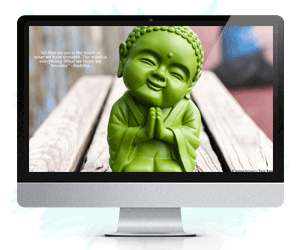
    A series of three vibrant desktop wallpapers featuring adorable Buddhas and calming quotes

    All you need to do to claim your bonuses is pre-order your copy from any online vendor and then forward your purchase confirmation email to worryjournal@tinybuddha.com.

    Worry is a part of life, but it doesn’t have to control us. It’s possible to breathe a lot easier. These days, I do. I hope this journal helps you do the same.

    **Though Amazon hasn’t yet discounted the price, it will likely go down soon, as it always does. As part of Amazon’s pre-order price guarantee, you’ll be charged the lowest price offered before the launch date.

  • How I Transformed My Anxiety and What to Do If You Feel Emotionally Stuck

    How I Transformed My Anxiety and What to Do If You Feel Emotionally Stuck

    “There is still vitality under the snow, even though to the casual eye it seems to be dead.” ~Agnes Sligh Turnbull

    For as long as I can recall, I have always been a fretful and anxious person. Mine was a low-key anxiety that’s always colored the background of my life, a constant companion of ambiguous dread and imminent doom (just around the corner!)

    The annoying part was that I never quite knew why the anxiety hung around. There weren’t any real situations in my life that evoked this constant, nagging fear.

    I have tried various techniques to manage my anxiety. I tried deep breathing. I tried to balance out the fearful thoughts that sometimes follow the feeling of fear with logical investigation of the facts.

    I tried self-hypnosis—imagining a safe place in the depths of my psyche protected by multiple layers of force fields. I tried going toward the fear instead of running from it by putting myself in fear-inducing situations, so I could learn to tolerate it better. I tried self-psycho-analysis.

    All these produced various small results, but always, always there was something missing. I somehow felt like I did not go all the way to the bottom of my anxiety. 

    Then I picked up mindfulness, in those days before it became so well known. I learned on my own and in various courses, to make space for my anxiety.

    Above all, I discovered that my anxiety wasn’t me. That was an important piece of the puzzle. And yet, there was still a lot of the puzzle missing. My gut feeling was telling me, there’s got to be more.

    And then I came upon a book on Focusing. This is a method discovered by the late psychologist-philosopher Eugene Gendlin. He discovered that people who engaged in a specific kind of internal exploration of their experiences often came away feeling that their emotional struggles have transformed, quite literally.

    They no longer felt the same way before they started the internal exploration process. Even though the situation that had caused them to feel that way remained unchanged, how they understood it and felt about it had become radically different.

    I was entranced, so I read everything I could about this method. I tried it out on myself…

    And fell flat on my face. It didn’t work and I was still anxious. Only now, I was even more anxious because it was tinged with a near panicky sense that what I needed was just within my reach but I could not grasp it! I pictured my anxiety flashing the victory sign in my mind.

    Then thankfully, I took a course with a Focusing teacher in the United Kingdom and I got it.

    My anxiety started to shift.

    How I Understand It: Vital Emotions and Blocks

    We are all born with naturally flowing emotions that guide us and give us information about our lives, our worlds, and our needs. I call these “vital emotions.” No matter what form they take (joy, anger, grief, gratitude, and so forth), the experience of them moving within and through us unfettered makes us feel alive.

    Just look at babies. They are always experiencing naturally flowing emotions and they are little bundles of vitality. When they are angry, they scream without concern. When happy, their mirth is disinhibited.

    However, as we grow up, we learn to cut off these emotions. For instance, some people become overly rational at the expense of feeling emotions, like Sheldon from The Big Bang Theory. Alternatively, some of us fall into stuck emotional patterns that repeat over and over again without getting us anywhere but into trouble (my anxiety is one example).

    I call cutting off emotions or stuck emotions “blocks.” We tend to pick them up as we bump along in life. Focusing is a method to help us free up our blocks and get in touch with our vital emotions.

    What I Learned About My Emotions

    I learned in Focusing to take on a curious and self-compassionate approach to my emotions. I also learned to drop my awareness down into body to experience the sensations of my emotions in real time, and use these sensations to guide my discovery of the layers of information contained within my emotions.

    From there, I learned to decode what my emotions are telling me that I needed at that point in time. When I accessed this new understanding, I started to feel my anxiety transform.

    When I focused on my anxiety block in an open-minded and compassionate manner, I discovered that it felt like a kind of jittery electricity coursing through my body, and occasionally thickening into a lump in my chest.

    Fascinatingly, I also found that I had a tendency to hold back in my actions, my breathing, and even my voice (I had trouble projecting my voice). It was like I had put the brakes on inside myself.

    Through gentle and persistent questioning around these bodily responses, I discovered that I picked up my anxiety block because the adults in my life had subtly and not so subtly put me down when I tried to express my vital emotions.

    I remembered being shamed for showing my vital emotions like anger or even dizzy joy. Then I was told I was too sensitive when I was feeling vulnerable and upset. My anxiety was telling me that I could not let my guard down. I could not afford to be myself fully.

    At this point, my anxiety had started to shift physically and it was replaced by another emotion—sadness. Sadness that I wasn’t allowed to be myself.

    As I paid the same gentle attention to how my body held this sadness, it shifted once more and transformed into anger. I was angry that people could do this to me, no matter how well meaning their intentions. How dare they! How could they?

    With that line of thought, I knew that I wasn’t going to let people discount my emotions again! I felt physically stronger with this new determination. I had moved pass my anxious block and touched the procession of my vital emotions hiding by it. And then, I realized that my anxiety was trying to protect me from the devastating forces of shame and ridicule. I needed to feel safe in an unsafe environment.

    They only way I knew how was to block off my vital emotions least showing them got me into trouble. This realization gave rise to a warm feeling of self-compassion—I was doing the best I could to protect myself and my anxiety was my warning system.

    A Realistic Transformative Method

    Needless to say, I fell in love with focusing and undertook more training in it. I have found my method of transforming my life-long anxiety. Do I still struggle with it? Of course, but now it feels different. It no longer is a pervasive unknown fear. It has shrunk and only occasionally pops up. And when it does, I know how to engage with it to transform it.

    Try This Out

    The next time you feel emotionally stuck or have an inexplicable emotional reaction, take a moment to pause and focus on how it feels in your body as a sensation. Notice where in your body you feel it the strongest.

    A good place to start noticing is the space within your throat, chest, and belly. Simply spend a minute or two trying to describe the raw sensation of the emotional reaction, in real time—“Right now, how does it feel?” You might notice that the sensation changing. If it does, simple stay on top of it by describing the new sensation.

    Simply tuning in this way helps you create a unique and open-minded relationship to your emotions. It is also one of the crucial steps in focusing. See if you could make this into a daily habit. Remember, emotions transform when we try to understand them in an open-minded way.

  • Move Your Body, Calm Your Mind: 5 Practices That Help Ease Anxiety

    Move Your Body, Calm Your Mind: 5 Practices That Help Ease Anxiety

    “Get out of your head and get into your body. Think less and feel more.” ~Osho

    Do you want to meditate but the idea of sitting with your thoughts for twenty minutes gives you anxiety? Or maybe meditation seems like one more task you have to add to your ever growing to-do list, so you take a pass?

    As a working mother of three, I’m no stranger to daily stress and routine overwhelm. Life in the twenty-first century can be pretty hectic, especially for busy moms, and so many of us search for practical ways to minimize the stress and anxiety that are so common in our society.

    Meditation seems like a perfect solution. It’s “easy,” accessible, and it’s good for our health, both mental and physical. It reduces stress and improves emotional regulation, concentration, and sleep. It helps us develop more kindness and compassion, for others and ourselves.

    Sounds like a perfect cure. Except it’s hard. It can feel like a chore or a time thief. And it often triggers our fears and anxieties, especially if we have a history of trauma we’re still healing. 

    So why not adjust the traditional meditation practice to reflect our modern lifestyle and constrictions? Why not mimic the practice of mindfulness while moving your body? Instead of sitting still, why not focus on gentle, repetitive movements that are enjoyable, all while reaping the benefits of mindfulness?

    Believe me, you can have it both ways.

    I am a Type A person. I am driven, full of energy and ambition. I’m competitive, over-scheduled, and always on the go. And I don’t have much patience, or time to kill. Sitting still for twenty minutes is often the last thing I want to do.

    Another hurdle for me was anxiety, which often peaked when I opened up to my internal world of thoughts and feelings, as one does while sitting in meditation. I do better now, but in the first year of practice I often felt triggered and overwhelmed—precisely the opposite of what I was going for.

    This is common for people with trauma or chronic pain. We tend to numb, distract, or ignore distressing sensations in order to make it through the day. Mindfulness requires the opposite of such disassociation.

    When sitting in meditation, I was to focus on and “befriend” my body, along with the residue of trauma still lodged in it. Despite my best intentions I would become fidgety and agitated instead. Noticing my pain, both physical and emotional, seemed to increase it. I’d find myself trying to resist it, run from it, beat myself up for not being able to just “observe” my experience, and then criticize myself for beating myself up. It was a vicious cycle.

    I understood that the goal was to learn to be with my experience, and it did get easier over time, but often it was too much to handle.

    Needless to say, I’ve searched for alternative ways to meditate, ones that didn’t involve sitting still but were movement-based instead. And I found plenty.

    The Meditative Benefits of Rhythmic Movement

    Many of us have experienced some type of trauma or significant stress in the past. It’s part of a human experience. Even if we were lucky enough to avoid trauma, we live in a world of chronic stress and overwhelm. We often operate in “survival mode” and experience chronic muscle tension and fatigue. We feel anxious and maxed out too often.

    Anxiety is often a symptom of a freeze response in fight-flight-freeze—the feeling of helplessness, our inability to change or escape a difficult situation, such as the daily stress that comes with our modern lifestyle. Movement is a great antidote to that freeze state. It gets us unstuck.

    Stress gets stuck in our bodies. We carry this tension around with us and it affects us on a body-mind level. Movement is a great way to release that tension and get back to a relaxed state. Repetitive movement can also bring us into the state of mindfulness, giving our body a chance to press the reset button and kick in our natural healing and renewal processes.

    Rhythmic movement, just like meditation, can be very therapeutic and healing. It helps integrate our body and mind, reset the nervous system, and rewire the brain for healing and wholeness. It’s not only good for your physical body but your mental health too.

    Meditative movement activities are grounding as well. Feeling grounded is the exact opposite to perpetual worry.

    Anxiety is about getting stuck in our internal world of thoughts and feelings. The repetitive movement, however, helps us get out of our head and reconnect with our body, grounding and centering us, connecting us back to the earth and to ourselves.

    Grounding reduces inflammation and emotional stress, elevates our mood, and improves our immune responses. It brings us back to feeling centered and secure. And it’s exactly what we need in times of struggle and overwhelm.

    5 Movement-Based Meditative Practices Perfect for Anxious People

    There are a number of activities that have a meditative effect that don’t require you to sit still for twenty minutes. In fact, any movement that’s relaxing and repetitive can give you similar effect as meditation. The trick is to go slow and bring mindfulness to the practice. And if you enjoy doing it, you will find it easier to add to your daily routine, so it won’t feel like a chore.

    Here are my favorites:

    1. Walking

    Walking is one of the easiest anxiety-reducing movement-based techniques. It can invoke mindfulness, clear your head, and release stress from the body. And if done in nature, you will feel more wakeful and alert and, at the same time, open, relaxed, and spacious.

    2. Hatha yoga

    The most rewarding for me personally, Hatha yoga is a gentle practice of body-mind integration. Yoga combines awareness of breathing with asana practice, enabling you to achieve the state of mindfulness and wholeness. It’s easy and accessible to everyone—you don’t have to join a studio, simply search YouTube for inspiration and lesson videos.

    3. Gardening

    Nothing connects me more to my surroundings than gardening. Great for anxiety and taming the monkey mind, gardening is a perfect activity to help you become mindful and engage with the world around you with all your senses. The calm of gardening can bring about the state of flow, as you become fully absorbed in the activity. Gardening is grounding; my garden is my personal Zen.

    4. Swimming

    Swimming is a gentle exercise that allows you to focus on deep breathing and the rhythm of your stroke, both lulling you into a state of deep relaxation. It comes with minimal distractions and is a great tension reliever. All you need is a body of water.

    5. Dancing

    Focused on expression on a bodily level, dancing allows you tap into your body’s own healing resources. It’s therapeutic. You connect with your body in elemental ways and allow it to express feelings often hard to convey in words—something especially beneficial for trauma victims and people suffering from anxiety or depression.

    By being mindful while dancing, you also learn about yourself and your body and embrace your creativity and the comforting flow of pleasant physical sensations, fully re-engaging with the present moment. And that’s healing.

    Whatever practice you choose, use the movement and sensations of your body to bring your awareness to the present moment. Draw your attention to your hands and feet, the sensations of touching the ground, and your arms swinging or shifting in motion.

    Follow your breath as you inhale and exhale deeply and air travels in and out of your lungs. Let the rhythmic flow of your movements relax your mind.

    Listen, notice, smell, and feel into your surrounding, using your senses to anchor yourself in the present moment.

    Observe your experience, including your thoughts and feelings, without judgment. Notice when you get lost in thoughts, and bring yourself back to the movement, back to the now.

    Try to add mindful movement to your daily routine, if possible. It’s a great way to reset your mind and remove stress out of your body, in a gentle and supportive way. Weave your favorite meditative activity into your daily life, without the distraction of technology. Make it your self-care habit.

    And don’t forget to tap into mindful movement in times of struggle and overwhelm, to gently shift your body and mind out of stress and into relaxation. It’s a great alternative to sitting meditation when anxious energy is stuck in your body, ready to be released in an active way.

    Mindfulness Takes Practice But You Are Worth It

    I used to ruminate a lot on my walks. With practice, I’ve learned to let go of my onslaught of thoughts and bring myself back to the present moment. I now focus on the smell of freshly cut grass and the feel the breeze on my neck and sun on my face, and pay attention to each step and how it resonates through my body. As I walk, I realize the beauty around me and fill my heart with joy and gratitude. That uplifting energy fuels the rest of my day.

    I do practice sitting meditation, and I have found it to be very useful. But my temperament begs me to move and be in nature, which is why I love walking and gardening.

    Think of what is healing, relaxing, and brings you pleasure. Then bring awareness to your body as you develop a practice of bringing that joy into your every day, whether through movement, a creative pursuit, or play.

    You are worth it!

  • How to Accept Anxious Feelings So You Can Let Them Pass

    How to Accept Anxious Feelings So You Can Let Them Pass

    “Don’t try and save yourself. The self that is trying to be saved is not you.” ~Mooji

    Three months ago I had a strange experience.

    It wasn’t strange in that it had never happened before. It was strange in that it was unexpected. Unexpected in the way a hiccup comes up out of nowhere to interrupt a meal. No, actually, it was more unexpected in the way a sudden illness overtakes a period of health.

    Just for a bit of context, over the last six months, I’ve generally been the calmest I’ve felt in years—maybe even my whole life. But recently this has come with a strange side effect. When negative emotions do arise, as they inevitably do, I’m sometimes even more reactive to them than I used to be.

    So three months ago when I woke up abruptly in the middle of the night with a ball of anxiety in my chest it was, well, unexpected.

    And my mind immediately kicked into overdrive.

    “Why am I anxious?”

    “Is there something I’ve forgotten?”

    “Is there something coming up that I’m nervous about?”

    “Am I sick?”

    And then the most dangerous question of all:

    “Have I really been anxious this whole time and the calm isn’t real?”

    This question is very tricky. If I was a character in a movie, I’d been standing up out of my seat and yelling at myself on the screen, “Ignore it! Ignore it! You’re fine, go back to sleep!”

    But it’s tricky because it feels like there a grain of truth to it; on some level we can all relate to that sense of doubt. Our minds tend to come up with explanations based on our feelings, so this sensation of anxiety was (unsurprisingly) causing my mind to come up with a story based on these feelings.

    The whole ordeal lasted less than five minutes. Fortunately, in this moment of tension, I was mindful enough to see how far-fetched these thoughts were. I settled on a far more pragmatic explanation; I’d become so unused to feelings of anxiety, that when they did arise, they were a shock to the system, so my mind immediately tried to rationalize them.

    And then I went back to sleep.

    Moments like this one would come again, and what I needed to do was simple. Any five-minute mindfulness book would have had the answer.

    All I needed to do to keep the calm was to not care that these thoughts and feelings were there. I just needed to be completely disinterested, to not touch anything in my mind. Following the instructions in a moment of distress, however, is much easier said than done.

    So I remembered what I’d heard a yoga teacher say once in an uncomfortable pose where the students had their hands above their heads for a long time.

    “Just tell your mind that things are going to be like this for the rest of your life. It’ll get bored of the pain and move on.”

    I took that idea and started applying it whenever worries came up. I managed to convince myself that I didn’t need to fix anything and that feelings of anxiety were just really not that interesting. It worked out pretty well, so well in fact, that I thought I’d go into a little bit more detail of how I managed to do so and share it with you.

    Here are five ways you can begin to accept anxious feelings and live a better life.

    1. Accept that you can never know why you are experiencing anxiety.

    As problem-solving creatures, when we experience discomfort we immediately try and understand why. But not everything in our lives has a straightforward answer. There are a multitude of factors that lead to anxious feelings, from genetics to work to relationships to diet, memories, and even the weather.

    Trying to pinpoint one reason so that you can have a concise narrative in our minds is a lot less effective (and a lot more tiring) than simply accepting the fact that you don’t know why. This acceptance also allows you to focus your energy toward more practical, calm-inducing strategies such as journaling, yoga, and exercise. When we have more energy, we’re more alert, and this naturally makes us more engaged in our work and home lives, safeguarding us against anxiety and rumination.

    2. Accept that anxiety is neither good nor bad.

    Seeing your anxiety in a wider perspective is best illustrated with a Taoist story (origin unknown):

    “There is an old farmer who had worked his crops from many years. One day his horse ran away. Upon hearing the news, his neighbors came to visit. “Such bad luck,” they said sympathetically.

    “Maybe,” the farmer replied. The next morning the horse returned, bringing with it three other wild horses. “How wonderful,” the neighbors exclaimed.

    “Maybe,” replied the old man. The following day, his son tried to ride one of the untamed horses, was thrown, and broke his leg. The neighbors again came to offer their sympathy on his misfortune.

    “Maybe,” answered the farmer. The day after, military officials came to the village to draft young men into the army. Seeing that the son’s leg was broken, they passed him by. The neighbors congratulated the farmer on how well things had turned out. “Maybe,” said the farmer.”

    To accept anxious feelings, try to treat them like the farmer in the story treated his horses. You never know what good may come from your anxiety! In fact, the calm in my life that I mentioned at the start of this article is a direct result of the meditation practice I started, and continued, because of anxiety.

    3. Accept that everyone will experience some form of anxiety.

    When we experience pain we’re hardwired to respond to it, and in that response our perspective is distorted. We become the center of the universe, because we are only feeling our pain in that moment, and not anyone else’s.

    It can be calming and reassuring to know that everyone goes through periods of worry. There are billions of people who have dealt with whatever feelings are coming up in your experience, and there will probably be billions after you. So don’t by any means underestimate your capacity to handle the situation.

    4. Let go of the idea that you shouldn’t have anxiety.

    How would you feel about anxiety if everyone in the world had it? Or if you were told that it was a necessary and useful part of life? You’d probably worry about it a lot less. The idea that you shouldn’t have any feeling stems from the need for things to be better. If you can let go of the normative belief that anxiety is wrong, then your mind will naturally become less and less interested in it.

    This goes hand in hand with the idea that anxiety holds you back in any way—you want to let that go too. Anxiety may, in fact, hold you back from an immediate action, but if we recall the Taoist story of the farmer and his horses, we can never truly know in what direction anxiety will take us.

    5. Become bored with your anxiety.

    This last one is the most difficult but the most important. Often anxiety is so painful that we become fascinated, obsessed even, with understanding and solving our worries. We want to get rid of the pain of anxiety as soon as possible.

    Sometimes this is useful, as we come up with strategies to manage our emotions, but a lot of the time it validates the power of our anxiety and adds fuel to the fire. The mind will only focus on what it values; if you can manage to become bored with your anxiety, it will loosen its grip on your life.

    The steps I’ve outlined in this article are, like I explained in my own experience, much easier said than done. I hope, however, that I’ve given you a slightly different approach you can take toward dealing with any negative emotions.

  • What Annoys Us About Others Can Teach Us About Ourselves

    What Annoys Us About Others Can Teach Us About Ourselves

    “Everything that irritates us about others can lead us to an understanding of ourselves.” ~Carl Jung

    When my wife and I had children, little did we know that we’d be creating little bundles of nerves. Between my wife’s depression and my own anxiety, we created two anxiety-ridden, depressed balls of mess, and then some.

    Don’t get me wrong, we love our two girls to death, and we are very proud of them. They are both very strong and beautiful young ladies. Occasionally we like hanging out with them too.

    While the two girls have similar interests, their personalities couldn’t be more different. They both exhibit anxiety and depression, yet they show it in different ways. The oldest has panic attacks and hyperventilates, unable to stop herself from crying and heaving. The youngest just curls up in a ball and is unable to move or do anything.

    We find it interesting that the qualities we love, and those we dislike, about both girls stem from both of us. It is as though the Universe took the best and the worst from both of us and amplified it in our children.

    All That Talent Gone to Waste

    My oldest daughter is naturally talented in many areas. She’s strong and athletic, she’s naturally artistic, she’s smart, and she also has a talent for music. She has a beautiful voice, and picked up playing classical guitar in almost no time.

    What drives my wife crazy is that my daughter doesn’t realize how talented and gifted she is.

    What drives me crazy is that she doesn’t develop that talent, and do something with it. She has so much potential.

    As parents, it is easy for us to look at our children and wail and moan about their perceived shortcomings, their lost potential, and so forth. We know what they are going through, because we have both been there. We both struggle with anxiety, so we know what it looks like and how it affects our children.

    In general, isn’t it easier to see the shortcomings that we perceive in other people, than our own?

    Little Mirrors

    What I’ve realized, however, is that our children mirror our own behaviors and attitudes as parents. What annoy us about our children’s personalities are often quirks we ourselves have.

    This principle actually applies to all our relationships, not just with those of us with children. We should stop and ask ourselves, “Am I setting that example? Am I acting the same way?” Often, we don’t realize that what annoys us about someone else is actually an issue we ourselves have.

    For instance, in extreme cases, children who exhibit violent behaviors often come from violent households. They are mirroring the behavior they have been exposed to at home.

    In my wife’s case, it drives her crazy that my oldest daughter doesn’t realize how talented and gifted she is, even though my wife clearly sees it. Yet, when I look at my wife, I see the same thing in her! It is indeed ironic.

    My wife doesn’t think she’s very talented or gifted, and wonders what people see in her. Obviously I saw something in her, because I married her! So the very issue that irritates my wife about my daughter is the very issue that she herself unconsciously struggles with.

    So Much Potential…

    What drives me nuts about my oldest daughter? It frustrates me that I see so much potential in her, and yet I don’t see her developing it. She has so much natural talent, she could be a leader. Her peers look up to her and admire her, and she doesn’t even realize it.

    What does this say about me? Am I the same way?

    Looking at myself through the same lenses, I am forced to laugh, because I do see the same thing! Like my daughter, I probably have many talents I don’t even realize I have. Looking at myself from the outside, I think I have the potential to be a leader as well, but I choose not to. I had so much potential…

    Learning About Ourselves

    From this perspective, I can’t really blame my daughter. I have social anxiety and don’t want to deal with people, and I know she does too. Often times I’ll go out of my way to avoid people. What I perceive as my daughter not developing her talents is more than likely her not wanting to be the center of attention. I can relate to that—I don’t like being the center of attention either.

    I never thought I would be learning about myself from my own children. Sure, I figured they’d know more about new technologies than me, for example. When I have a question about how to do something on my iPhone, for instance, I go to them, and they can show me right away.

    Yet, what my children are teaching me are what issues I need to deal with in myself. Perhaps I, too, have many skills and undeveloped potential, if only I could learn to manage my social anxiety. We often want our children to be different from us, to have different experiences. We don’t want them to go through the same things we struggled with, yet as much as we try or want to, we can’t change who they are.

    We can, however, change ourselves. There is value in stopping to reflect on what frustrates you about your children, your family, or your friends. What behaviors irritate you? What do you think they could be doing better?

    Then stop and look at yourself. Are you exhibiting the same behaviors? What could you be doing better? Are you making the changes in yourself that you’d like to see in your relationships?

    Practice the Golden Rule

    Of course as parents, we want to support our children and provide them everything they need to be happy, healthy, and successful. What parent doesn’t? It may frustrate us that they are not living up to their potential, as we see it—but the apple doesn’t fall too far from the tree. Are they mirroring our own behavior?

    As parents, we show our children love and patience, but our expectations of them should follow the mirroring principle, or the golden rule—would we want to be held to the same standards? My daughter could be captain of the soccer team, but would I want to be one, if I was in her position? Probably not.

    We could make our kids practice the piano for an hour every day, and do their homework for three hours after school. Would we want to do that? Probably not.

    The mirroring principle with our children, family, and friends, then, goes both ways. What can we learn about ourselves from our relationships? Conversely, what should we expect from our family and friends, that we ourselves would be willing to do?

  • Feeling Anxious? People-Pleasing Could Be to Blame

    Feeling Anxious? People-Pleasing Could Be to Blame

    “Living with anxiety is like being followed by a voice. It knows all your insecurities and uses them against you. It gets to the point when it’s the loudest voice in the room. The only one you can hear.” ~Unknown

    White lights flutter before your eyes. Your chest tightens, as if under the weight of a hundred ten-pound bricks. You wonder if your next breath will be your last. Emotions rip through you: fear, glooming dread, hopelessness. Without warning or clear cause, these feelings consume you.

    You start to wonder if you’re going crazy. It’s like you no longer have control over your own body, your own thoughts.

    This is the experience of chronic anxiety. And if you’ve ever encountered it, you know that the presence of it—and the absence of answers or solutions—can make you feel like you’re losing it. It can make everything that was once enjoyable feel like a struggle.

    I know this feeling all too well.

    I used to suffer from periodic anxiety attacks in my early twenties. They left me perplexed and afraid. I felt like I was being possessed. I felt out of control and believed I was dying all the time, with no evidence of a real illness.

    Anxiety stole parts of my life from me, until I decided I wouldn’t let it take away my hope for a better future. One day, embarrassed after having to pull over onto the side of the road in order to breathe, I decided to get help for my anxiety attacks.

    I realized then that people pleasing was causing me anxiety in two ways.

    First, I felt anxiety about being imperfect, making mistakes, and making choices that others didn’t approve of, especially in my family relationships. Then I felt more anxiety because I thought I shouldn’t feel this way. I thought if people knew I was suffering from anxiety that they would reject me.

    Life can be messy, strange, and hard sometimes. And it gets even harder when the faith you once had in yourself is bulldozed by your inability to take a deep breath and calm yourself down.

    It’s hard not to blame yourself. It’s hard to avoid feeling inadequate, like your issues are all your fault. It’s especially hard when you’re a people-pleaser.

    Chronic people-pleasers want to look presentable all the time, like we have it all together and our lives are perfect. Anxiety doesn’t fit into the perfect lives we’ve established for ourselves. So when it hits, we become our harshest and cruelest critics.

    We fail to realize that when we don’t accept our symptoms, we only exacerbate them. We forget that judging things never makes them better. We can’t help but get angry with ourselves.

    Stop Playing Pretend

    Anxiety had its most crippling effects on me when I was in college. I believed I needed to get all A’s on my report card in order to be a good student. I also believed that if I had to study to get good grades, I was somehow intellectually inferior.

    I studied a lot for tests—more than what I thought should be necessary. But when I talked to other people, I pretended like I’d barely studied at all. And whenever I received the occasional B, I beat myself up pretty harshly.

    I didn’t want anyone to know that I didn’t have the best report card. Little did I know at the time it made me appear pretentious and stuck up.

    After graduation, I interned at a university clinic, where I started to see clients. With each client, I was assigned a therapy room. This one time, I accidently used a room that wasn’t assigned to me. When the therapy was over, the clinical supervisor was not very happy with me and did not have trouble showing it.

    Not knowing how to handle disappointing someone, I cried to her and ran off because I could feel a panic attack coming on. Later I felt like a baby, and couldn’t understand why I had such a strong reaction to making a mistake.

    Later I realized I was always anxiously trying to please people because it was difficult for me to deal with disappointing others. I thought somehow making a mistake devalued me as a person, and that made me anxious to think about.

    I would assess my worth on how much I could do right, instead of realizing I had intrinsic worth regardless. This experience helped me understand that my urge to please was based on anxiety and fear more than anything else.

    I spent that time of my life hiding who I was and putting a fake smile on my face.

    In trying to appear perfect, I became rigid and lost my edge and my humor. I resisted my outgoing personality because I thought I would interrupt people too much. I thought I should always let others take center stage while I didn’t ruffle any feathers in the background.

    I pretended everything was great, but it wasn’t. I was suffering from crippling anxiety, feeling disconnected, and often misunderstood. I was hiding my pain, and my frustration with people who were acting rude and selfish.

    I gave advice and ran to the rescue of anyone in despair, and partook in activities that I didn’t necessarily enjoy. I hid my true self by hiding behind other people’s problems. I convinced myself that there was no room for me.

    Through my own experience, I learned that the greatest changes begin when we look at our problems with interest and respect, instead of judgment and denial. When we allow our true thoughts and feelings into awareness, we have the opportunity to learn from them instead of unconsciously reacting to them without knowing why.

    We keep our negative feelings relaxed by not ignoring them, and we increase our awareness of reality by being willing to encounter our personal truths.

    After therapy, I learned that my panic attacks were a reminder that I was a human, not a perfect being. I needed to be acknowledged for who I was, instead of always putting others first or forcing myself to have it all together.

    I needed to know that my worth didn’t depend on what I did for others or what grades appeared on my report card.

    Our bodies have so much wisdom, and sometimes they know more than we realize. Sometimes our anxiety is merely a signal telling us to take a closer look within.

    Anxiety As A Symptom, Not The Disease

    When I first sought therapy for my panic attacks, I thought they were a sign of weakness that needed to be eliminated. What I came to understand is that we can choose to bury our unexpressed emotions and deep thoughts, but they’ll come back later, often in unpleasant ways.

    In my case, they came back as panic attacks. When aspects of ourselves are distanced, denied, or devalued, they’ll always try to make us listen by surfacing as unwanted symptoms.

    Think about what some aspects of your ignored self are trying to tell you. Maybe your symptoms are coming up as chronic anxiety, depression, muscle pain, headaches, feeling lost, etc.

    The analogy of the missing roommate, from Bill O’Hanlon and Bob Bertolino’s book Even from a Broken Web: Brief, Respectful Solution-Orientated Therapy for Sexual Abuse and Trauma, can help clarify the impact of ignoring our inner selves.

    The Missing Roommate

    Imagine that there are a bunch of people living together in a house, and they decide to kick out one of their roommate because they don’t like him. They lock him out and change the locks.

    He comes to the door and tries persistently to get back in, but the roommates tell each other to ignore him, thinking he will go away.

    After a while, he becomes exhausted and slumps against the door. They think he’s gone away and won’t cause any more trouble. For quite a while, it seems to have worked. But he’s really just sleeping outside the door.

    Eventually, something wakes him up, and he decides he wants to get back in the house. He pounds on the door again but gets no response and becomes tired again. Finally, he becomes desperate and crashes through the front window.

    That is what happens when parts of your true self are vanished, unexpectedly. The parts of you that went missing will want to show you who you’re meant to be. They’ll scream, “I want to come back! I am part of you! I will not be ignored!”

    This is how it happened for me. I got so caught up in trying to be who I thought I was supposed to be, I lost who I actually was.

    However, when we devalue parts of ourselves, they develop a mind of their own. They may go away for a while, at the expense of our wellbeing and relationships, but before long they’ll come crashing through the front window.

    We must realize that the experiences we have, even seemly negative ones, are here to teach us, challenge us, and allow us to grow.

    How you see yourself, your life, and your options is shaped by your mindset. If you live with the mindset of a people-pleaser, you’ll constantly feel pressure to fit in, make others happy, be liked, gain acceptance, and seem happy all the time. That’s a lot of pressure. No wonder you feel anxious!

    When I reached out for the help of a therapist, I thought there was something wrong with me because of how sick I’d gotten. I wasn’t able to see that even if I could benefit from making some changes, my anxiety wasn’t my fault. I needed to grow so I could learn to better manage my life and be okay with sometimes disappointing other people in order to take care of myself.

    It’s okay to make mistakes; it’s all right for people not to approve of all your choices; it’s fine to have the occasional issue. In fact, it’s through the pitfalls of life that you can learn and experience who you are.

    I’m thankful for my panic attacks. They allowed me to open my eyes and change my life. I started making myself a priority and embraced my imperfections with open arms.

    Editor’s note: Ilene has generously offered to give away two free copies of her latest book, When It’s Never About You: The People-Pleaser’s Guide to Reclaiming Your Health, Happiness and Personal FreedomTo enter to win one of two free copies, leave a comment below. You don’t have to write anything specific—”Count me in” is sufficient! You can enter until midnight PST on Sunday, December 24th.

    Update: The winners have been chosen. They are Stephen Chavez and Julie.

  • How Surfing Helped Me Turn Fear and Anxiety into Confidence

    How Surfing Helped Me Turn Fear and Anxiety into Confidence

    “If you want to conquer fear, don’t sit home and think about it. Go out and get busy.” ~Dale Carnegie

    Not too long ago I went through an extremely chaotic and emotional two-week period. Anything that could go wrong or be difficult did and was. I thought it would never end.

    When it began, the little hiccups were easy to let roll off my shoulders. After about a week, I was feeling pretty worn down and was in tears daily. At the end, I felt numb, and when things kept going wrong I would say to myself “Sure… Okay …what’s next?”

    These two weeks were filled with miscommunications, the realities of parenting a teenager, negative art critiques, the end of a three-year business relationship, technical difficulties with my social media accounts, a shoulder injury, and an art block, and none of my efforts seemed to put any of the proverbial fires out.

    Not to mention that we were surrounded by literal fires here in Southern Oregon, which brought oppressive smoke and stress.

    I was tired, scared, tired, hurt, tired, irritable, and physically taxed. And did I say tired? Usually getting into the art studio and painting is the best way to bring me back around, but that wasn’t working either. I would stare at my painting and just not know what to do, so I would do nothing.

    About a week in, I drove myself to the coast to surf for the day, thinking that getting out of the smoke and into the ocean would wash away the negativity. But the conditions were not in my favor, and the day was frustrating as I paddled my way from one side of the beach to the other searching for waves. I drove back into the smoke feeling defeated, complacency of the crapolicious period of time setting in.

    The next week, I decided that there was nothing left to do but treat myself with some kindness and compassion. I rested, ate a carton of ice cream, and watched schlocky movies. I thought that maybe by just not fighting it anymore, the procession of poop would lift. But no, the hits just kept coming.

    I felt the depression creeping in as it has a tendency to do after anxiety has beat me into submission.

    For me, anxiety and depression have a way of cultivating more anxiety and depression. As the challenges arose in continuum, seeing the positive became harder and harder. The negativity took the lead and thus started a downward spiral of adversity and uncertainly. It is a horribly stagnant and uncomfortable place to live.

    So, I decided to participate in a surfing competition. Wait… wha?

    I had actually planned to compete months before. It was not something that I had ever done prior, and it is generally an activity that I would consider completely out of my comfort zone.

    I’ve never been interested in competitive sports; I’m nervous when put on the spot and I am not comfortable being the center of attention. A friend who competes annually told me it would be casual fun, but it didn’t necessarily sound like a good time to me. It sounded nerve racking.

    Nevertheless, I had registered to compete. The timing couldn’t have been worse. I already felt like I had been hit by an emotional mac truck, and the physical ailments were tagging along like uninvited hitchhikers.

    I decided that I would go, but if I wasn’t feeling it, I would back out and just be there to enjoy the beach and support my husband and our friends. And so, we prepared for a long weekend at the coast.

    The day before our departure my husband got a cold and I could feel one coming on. The morning we left I woke with a migraine.

    “Oh, this is starting out fantastic,” I thought to myself, but I kept my snarky remarks to myself, climbed into the van, and off we went. Hubbie sniffing and sneezing and me unable to keep my eyes open for very long.

    I have to admit that I was glad to get out of my art studio. Staring at my painting that I was stuck on had been a source of irritation that I was relieved to take a vacation from.

    We arrived at the beach to find almost non-existent waves, which would make a surf competition pretty difficult. Then, I received a not such fantastic report from a friend whose father is in poor health and I realized that my parents had missed my daughter’s volleyball game because I had told them the wrong time. And my shoulder was killing me. Would it ever end?

    The more it came, the more indifferent I felt. The apathy was only interrupted by sporadic bursts of tears followed by the need to collapse and sleep.

    I swear the sole reason that I didn’t back out of the competition was simply because I just couldn’t walk back up the beach one more time to get to the registration table again. Plus, I started to question if I would be disappointed in myself and regret it if I surrendered.

    So, I went on. My heat was at 11:40 the next morning. I would have twenty minutes to catch as many waves as I could, only two of which would count toward my score. The waves were ankle height. How on earth was this going to work? I ate some chocolate and went to bed.

    The morning of the competition, I woke with small butterfly flutters in my stomach that in the hours leading up to 11:40am turned into a swarm. I was nauseous, shaky, and terrified. At least I had seemed to have beaten the sickness and my migraine was gone. Focus on the positive, right?

    I paddled out in to the water with my six competitors and sat for what seemed to be an eternity. Then the horn blew and my twenty minutes began. I caught as many waves as I could and it was actually going okay.

    The horn blew again ending my heat and I came out the water with the biggest smile on my face. I had done it. I was happy with how I had surfed but mostly, I was just psyched that I had gotten out there. All of the crap from the previous two weeks melted away and all of a sudden, my problems didn’t seem like such a big deal.

    “Look what I just did!” I exclaimed. I felt proud and accomplished, the sky seemed bluer, and the world brighter. I felt ready to tackle anything. I found out that I came in dead last in my heat but it didn’t matter. I had gone through with it.

    I brought that feeling home and immediately was able to resolve the painting I had been stuck on. The technical problems I was having got fixed, and harmony seemed to be on its way to restoration. I, once again, felt I could take on the world.

    I am a highly sensitive person who struggles with anxiety. When things are going well, it feels like the good will never end. When life is not working in my favor, I feel as though I’ve been sucker punched and then repeatedly kicked when down. Like all of the warranties have just expired. Like I’m making all the wrong choices and doing all the wrong things.

    It can be hard to stand back up again when I’m questioning every option. The fear is overwhelming and paralyzing. But I now realize one way to effectively shake off these negative cycles, which are inevitable: I can turn fear on itself by doing something that intimidates me.

    I can fight fear with action.

    During this particularly bad negative cycle, I became scared of everything and it was hard for me to move forward, as I was petrified by all of the possible outcomes. It destroyed my confidence.

    My everyday coping methods of dealing with anxiety were not working. But by doing something that scared the crap out of me, something completely out of my comfort zone, I showed myself that I am strong.

    Also, I am aware that surfing, skiing, hiking, and mountain biking are all activities that force me to engage with the present. I can’t think about what’s happening in other areas of my life when I’m dropping into a wave or flying down the side of a mountain. It’s like jet-fueled mindfulness. I am reminded that there are things that I cannot control, and I become aware of the smallness of my problems.

    In this particular instance, I was so lost in doubt and confusion that merely going to the coast for a surf didn’t boost me. However, by surfing in a competition, something that was completely foreign to me, I was able to not only get outside myself for a minute through the physical act of surfing, but I was also able to prove to myself that I can accomplish things that I interpret as out of my reach.

    Sure, I may not have ended up on the winners’ podium, but in non-existent surf and with every eye on the beach watching, I competed. And when I walked out the water, I was cheered.

    Want proof of how doing something terrifying changed my outlook? Take a look at the photo to the right. That’s me coming out of the water after my heat. That smile is genuine. I felt like a winner.

    For me, there is nothing more debilitating than being fear-driven. It is a barrier to progress and I, for one, feel I have come too far to let anxiety sit at my table for long.

    Don’t get me wrong. There is such a thing as healthy fear. If I would have shown up to the competition and the waves were fourteen feet high, I don’t think I would have surfed. But if I would have backed out because things had been going poorly and so, “this will probably be a disaster too,” well, I just plain refuse to adhere to that mind set, even if that’s where my brain wants to go.

    We all go through periods of time when the world just seems to be working against us. Cycles when we feel we are swimming against the current. Sometimes the best way to break the cycle is to show ourselves that worry and doubt have not taken total control.

    We can take the power away from fear and stock it back into our arsenal by taking action.

    We set ourselves free by proving that we can do the very things that scare the bejesus out of us and that life will still go on, possibly with a renewed confidence, even greater than it was before. So, go out and do something that scares you. I double dog dare ya’!

    Photo credit for Marigny’s surfing picture: Chris Goodyear

  • 3 Tools to Help You Calm Your Mind and Let Go of Anxiety

    3 Tools to Help You Calm Your Mind and Let Go of Anxiety

    “I vow to let go of all worries and anxiety in order to be light and free.” ~Thich Nhat Hanh 

    I’ve struggled with anxiety throughout my life. A difficult childhood and my highly sensitive personality meant I grew into an anxious kid—there was just too much pain and emotional overwhelm for my young brain to handle.

    My anxiety most often manifested as perfectionism and people pleasing, so from the outside everything seemed great. I excelled in school and I was a good kid who did as she was told. But there was a war inside me.

    I felt broken, unable to navigate these huge feelings of fear and uncertainty on my own. Full of negativity and self-criticism, I felt like an outsider, misunderstood by the world, scared and alone.

    Over the years, as I stuffed down these feelings of inadequacy and isolation, I internalized the belief that somehow I was not good enough, that there was something inherently wrong with me.

    Afraid of being found out, ridiculed, and humiliated, I became invisible. I masked my fears, shame, and feeling rejected with arrogance. I became rigid and controlling. I was super hard on myself. I felt restless, angry, and defective even more.

    In denial about all of this until my late thirties, my children finally cracked me open.

    Motherhood was full of its own challenges, and my perfectionism shifted into high gear—the image of a wonderful, ever caring, ever patient mother was front and center. Hell bent on giving my children everything I was missing growing up, I put an enormous amount of pressure and responsibility on myself.

    The stress was too high and I started breaking down. I began to unravel.

    Anxiety happens in the presence of danger you can’t do anything about. Fear is a healthy and helpful response when you’re in an immediate danger. It alerts us and mobilizes us into action. But if you’re safe at home thinking about something that might happen or something that happened long time ago, you’re suffering needlessly.

    Anxiety can show up in many ways and on many levels: physically, emotionally, and mentally. For me, it’s being negative and super critical of myself—my anxious voice telling me I’m messed up not good enough, inherently wrong.

    I get easily stressed and overwhelmed. I become a perfectionist; I get restless, on edge. I’m unable to relax, sleep, focus. I’m so caught up in my head with worries that I’m not present, I’m not there for people who matter most. My chest is tight, my arms and legs tingly, headache and backache show up unannounced.

    And then I reject how it feels, wanting it to do away—my resistance only making things worse. Fear feeds on itself. I feel broken, I feel shame, and so I disconnect from others. Depression kicks in. I get stuck.

    3 Steps Toward Healing Anxiety

    Anxiety is often embedded deep into the subconscious, especially if there is a history of childhood trauma or neglect. Past events and experiences are stored in the body. Thinking patterns and defense mechanisms become habitual, and we carry them throughout our adult life, unaware of their negative consequences. These are all hard things to deal with.

    Fortunately, we have the capacity to change our brain by learning to be present, and becoming more aware of our habitual thoughts and behaviors. The brain is “plastic”; it can adopt new behaviors and learn new ways of looking at the world. This process is slow, but it’s our opening into healing anxiety.

    Mindfulness is the foundation of change.

    The first step in calming anxiety is mindfulness—becoming aware of the here and now, without judgment or trying to change our experience. The good news is that our physical body is a perfect vehicle for bringing ourselves into present awareness. And we start with out breath.

    Anxiety moves us out of the present moment and into our habitual reacting to the perceived threat. It overwhelms our brain and blocks us from seeing things clearly, entangling us in ceaseless fears and worries.

    We can’t heal what we don’t know. Mindfulness is the tool that can shed the light on our habitual thinking, feeling, behaving, and holding patterns—that is, where in the body we’re holding onto our fear and pain. Bringing these patterns to light allows us to break the cycle.

    When you are triggered (someone says something critical to you, your child comes home from school crying, you argue with a friend or spouse), start by anchoring yourself in your breath.

    Take a deep breath in, then slowly and fully exhale. Keep breathing deeply and slowly while allowing your experience to be as is, without judgment. This is truly hard—you may want to have a guided meditation handy for moments like this.

    Slowly move your attention to your entire body and start tracking your sensations. This allows us to get out of our head and embody our current experience. We can begin to notice where in our body the fear and anxiety are being stored, where we might feel frozen, afraid, or on fire.

    Observe, where is anxiety locked in your body? What does it feel like? What does it look like? What’s the texture, color, temperature?

    A lot of tension from anxiety is stored around our eyes, jaw, neck. Notice this and consciously release the grip. Let those points relax.

    If we’re able to stay present and open—with breath as our anchor—we will slowly calm the physical part of anxiety. This in turn, slows us down mentally, allowing us to calm down the racing thoughts and emotional reactions.

    Observe your mind for a moment and notice any difference from when you began this meditation. Come back to your breath if you notice you’re drifting into your thoughts.

    If you feel strong enough, you can notice and acknowledge any feelings and emotions you are now experiencing. You can commit to witnessing the fear, your vulnerability, allow and feel it so you can finally move past it.

    Another helpful tactic is visualizing peace flowing into your body with each breath in, and tension leaving your body with each breath out. Breathe in calm, breathe our fear.

    Again, if you’re feeling anchored, you can now observe your internal dialog in order to reframe your experience and learn new ways of responding in challenging situations.

    You have to be willing to observe your negative thoughts and emotions with openness and clarity. You can then look at what triggered you and why? You can dissect your reactions to figure out better ways of responding next time. This way you learn new ways of coping and responding in the moments that push our sore spots.

    Self-compassion is the engine that keeps us going.

    Kristin Neff defines self-compassion as “being warm and understanding toward ourselves when we suffer, fail, or feel inadequate, rather than ignoring our pain or flagellating ourselves with self-criticism.”

    No positive change can happen in the atmosphere of criticism and self-abuse. We can’t force ourselves to do better. We have to offer ourselves support and encouragement in order to heal and grow.

    Negative self-talk is the hallmark of anxiety.

    Perhaps, growing up, our caretakers criticized, shamed, or punished us for our mistakes and weaknesses and so we learned to treat ourselves this way. Perhaps we learned to believe that if we’re hard on ourselves, we’ll accomplish more, become a better version of ourselves.

    Tune into that inner voice. What is it telling you? Does this voice remind you of someone from your past?

    Tapping into self-compassion can help us break our entrenched patterns of self-criticism, while still allowing us to be honest about our fears.

    We can remember that no one is perfect, and everyone struggles in one way or another. And we can offer ourselves kindness and understanding. We are not weak or defective. We are human, and all humans go through moments of struggle.

    Think of your self-compassionate voice as a supportive and kind friend who’s encouraging you to see things in a clearer, more balanced way. Don’t add to the pain by putting yourself down, judging yourself harshly. Offer yourself understanding, love, and care. This is hard work, and you are doing the best you can with what you’ve got.

    This is not about excusing your behavior or bathing yourself in self-pity. It’s about giving yourself love and support so you can do better, be stronger, so you can rise above your past pain and better handle struggles ahead.

    Self-expression is the outlet for letting go.

    The hardest part of anxiety is learning to let go. Letting go is difficult, even if consciously we understand that our hurt and fears are a heavy burden to carry. This is the stuff that weighs us down, physically and emotionally diminishing our life force.

    The enormous energy needed to protect ourselves from pain and anxiety is depleting, and so we must learn to release the fears and unburden our soul.

    As Della Hicks-Wilson tells us, we have to “let the truth exist somewhere other than inside your body.”

    We have to get it out of our body, remove the stored pain, anxiety, fear, trauma, shock, and shame so we can make room for joy, peace and vitality.

    One of the best forms of emotional release is by writing. When we write we give our internal world a voice. We slow down and clear our head, and gradually deepen our understanding of ourselves. We are then able to process and makes sense of what’s happening with us and around us. We gain a new perspective, discover new choices, develop new mindset.

    Writing is an act of courage. You show up for yourself, expose your vulnerabilities bringing the ugly parts into the light to look at it up close. But the act of writing is liberating. It gives us permission to release.

    By putting our fears and hurts down on paper, we can let them go without judgment or worry. Our journal becomes a safe space for us to free ourselves, get unstuck, move forward. When we write we release, and when we release we heal.

    Healing Takes Time and Devotion

    I still get anxious sometimes, as does everyone else, but over the years I’ve picked up strategies that allow me to cope and manage my anxiety so it doesn’t control my life. My most reliable tools are daily meditation, yoga, making art, journaling, spending time in nature, surrounding myself with people who love and support me, and being mindful of my internal dialog.

    Writing has been the most transformative, however. When done mindfully, writing allows us to step back and shift our mindset, rewiring our brain over time. We can safely process our experience, integrate and heal it, all while staying present and kind to ourselves.

    Slowing down is the key to successfully transforming anxiety, and both mindfulness and writing allow us to slow down the rollercoaster of reactions so we can unpack and integrate our experience.

    We have a deep capacity to heal and grow, but we can only do with enough self-awareness, a healthy dose of self-compassion, and an empowering belief that we are inherently good.

  • 20 Reminders That May Comfort You When You Feel Anxious

    20 Reminders That May Comfort You When You Feel Anxious

    Your heart races. Your body temperature rises. Your hands may shake. Your stomach may churn.

    Your thoughts start spiraling to the worst could that happen, and suddenly you feel so unequipped—like everything’s going to fall apart, and you won’t be able to handle it.

    It can feel so powerless when anxiety takes over, almost like your brain and body are being hijacked, and there’s little you can do to feel safe or in control.

    Except that’s not actually true. Though anxiety can have both physical and mental symptoms, and we can’t just will it away, there are things we can do to calm ourselves.

    I know because, like most of us, I’ve been there many times before, and I’ve coped both poorly and well.

    I’ve panicked about panicking, believed every anxious thought, judged myself as weak, and tried to numb my feelings with alcohol—these are things I’ve done more often than I care to admit.

    I’ve also breathed deeply, observed my thoughts, treated myself with compassion, and chosen to embrace my feelings—more and more often as I’ve gotten older.

    Since I know we have a lot more power than we think when it comes to managing anxiety, I recently asked this question on the Tiny Buddha Facebook page:

    What’s one thing you try to remember when you feel anxious?

    More than 1,000 people responded, which I appreciated both because their thoughts were comforting and also because this reminded me just how common anxiety is. It’s natural. It’s human. But we don’t have to let it control us.

    Next time you’re feeling anxious, remember what these Tiny Buddha community members shared:

    1. This will pass, and more quickly if you don’t resist it.

    It’s a wave I must let hit me and ride until it passes. Fighting it prolongs it and turns it into a riptide. ~Lori Craven

    If you just let the current carry you to where it will for a little while, the river will eventually spit you out. Just go with it and it’s going to be okay. ~Renee Breuer

    2. You can and will get through this—and this can make you stronger.

    I verbally acknowledge and remind my inner child that it’s okay, and “Adult Doug” will take care of it. That’s where the anxiety arises from. I know as an adult that my success rate of surviving any crises I’ve faced is 100%. My little inner “Doug” gets scared and feels anxious, afraid, and insecure, so I just tell him that I have it in control. ~Doug Marcum

    I can handle whatever happens. I always have, one way or another. If things don’t work out the way I expect then that’s okay too. The anxiety will pass and I will be stronger afterward. ~Suzy Wedley

    3. You are safe.

    I breathe and repeat to myself: “I’m safe. I’m okay. I can take care of myself. I am powerful. I am significant.” Repeating it helps me refocus. ~Ida Zakin

    The situation isn’t life or death. I’ll live to see another day despite the outcome. ~Claire Denney

    My mantra: “It’s just adrenaline. It can’t hurt you. It will pass.” ~Chuck Striler

    4. Your body is trying to protect you.

    I’m not a dying zebra! I watched something that said stress is a natural part of our fight or flight response, which is helpful if you’re on the savanna running from a hungry lion. ~Jenn Miles

    Anxiety is my body’s way of trying to protect me. My body has good intentions. It’s just a little misguided. I’m grateful for my body’s protection. ~Jenny Britt

    5. The past and future cannot hurt you in the present.

    I try to think about what is causing me anxiety, and it is typically a thought or thoughts about the past or future. I remind myself that I am okay in this moment, and all we ever have is this moment. It helps me. ~Angela Regan-Storvick

    6. Thoughts can only hurt you if you give them power.

    Since mine stems from thoughts that then spiral, I remind myself that thoughts are just that. They do not have to have meaning attached to them if I do not let them. Let them come in and out and give them no power, no meaning. Do not fuel them but let them come and go. They do not have to be reality, and most times they are not a reflection of reality or my true self, just plain old thoughts, and I do not have to react to every single one. ~April Rutledge

    7. Worrying will not change the outcome.

    I remind myself that my worrying will not change the outcome—never has and never will. Then I focus on what I’m grateful for, things that are beautiful and wonderful in my life right now. And lastly I repeat this: “I let go and I trust that I am being taken care of.” ~Joie Kreze

    8. What’s worrying you is temporary.

    I try to remind myself that whatever is causing my anxiety is temporary and if I’m patient, it will be resolved. ~Jess Swanson

    I try very hard to remember that for most situations, they will pass whether I get all stressed out or not. ~Karen Jane Lehman

    9. You have everything you need.

    I try to remind myself that I have what I need: air, water, food, clothing, shelter. Then I remind myself to keep things in perspective and that I can choose how I am. ~Lorna Lewis

    10. You’re stronger than you think.

    I get anxiety over little things and I have to remind myself of how much I have overcome. If I can get through two brain surgeries, four different types of radiation treatment, Thyroidectomy for Thyroid Cancer, and a left neck dissection, I can get through the little stuff. Sometimes you just have to push through the discomfort of the situation and see it will be fine. ~Sara Ruggiero

    11. There’s a lot going right.

    I concentrate on what positive is going on right now this minute. I am safe, I am not hungry, I have a good job, a husband that loves me, my family is safe and healthy. I keep going until I feel the tension fading. Then slowly but surely I can clear my head enough to take on what lies ahead of me. ~Birgit Gerwig

    Things could be worse. I have my health. I try to count my blessings. ~Colleen Tayler

    12. You are loved and supported.

    I think of all the people who love me. I picture their faces and I imagine myself surrounded by a bubble of love, and as I’m breathing deeply I’m breathing that love in and out. ~Conni Wrightsman

    13. Things often aren’t as bad as they seem.

    Four by four, how will I feel about this? Will it still seem huge and overwhelming looking back in four days, four weeks, four months, four years? It helps me to put things in perspective . ~Jacqui Learmonth

    I ask myself, “Am I, or is someone I love in danger right now, in this moment?” 99.9% of the time, the answer is no, so I do some breathing and relaxation exercises to calm my mind and deal with the situation from a healthier perspective. ~Celeste Rothstein

    I ask myself: What are the most important things in my life, and then focus on that. What I am stressing about usually isn’t one of the important things. ~Nicole Neubauer

    14. You can calm yourself by focusing on your breath.

    Give your brain a simple task. Sit and breathe. Stare at a wall. Put yourself in time out and inhale slowly. You are not wasting your time. Thoughts will float into your mind. Let them keep floating. Re-align your spine as you sit. And breathe. Take ten minutes if you can. If you can’t, even a minute is better than nothing. ~Dabe Charon

    Inhale for four counts, hold for seven counts, exhale for eight counts. ~Lisa Martinez 

    Breathe. If that doesn’t work I run. It forces me to regulate my breathing. This will calm my body down forcing my mind to calm down as well. ~Carolyn Stennard

    15. Trust can sometimes be the antidote to anxiety.

    Trust and anxiety are mutually exclusive so focus on trust, whatever you can trust at the moment, and anxiety moves out. ~Alexia Bogdis

    16. It helps to focus on what you can control.

    “One step at a time.” I tend to become anxious because I worry and overthink things that I can’t control and may or may not happen in the future. So I started to think this in my head whenever I notice the feeling creeping up. To take action one step at a time on something that I can control and let the rest run its course. ~Adelia Benalius

    17. You don’t need to have everything figured out right now.

    Sometimes it’s not enough to take it day by day. Sometimes, it’s hour by hour, or even minute by minute. And if I breathe and stay calm, I can make better decisions to effect positive change with the situation with which I’m dealing. ~Susan Stephenitch

    18. Getting it out can help you let it go.

    Write it down, get it off your chest, relax, make a plan of attack. Do something instead of worrying. Don’t let it take away today’s peace. Nothing stays the same! ~Lisa Marie Wilson

    19. You deserve your own love and compassion.

    Anxiety can often come from a place of judgment of the self. Stop, breathe, and surrender to self-compassion. ~‪Christine Strauss‪

    20. You are not alone.

    Know you’re not alone. Others are struggling with something as well. We’re all in this together! ~‪Melanie Rn‪

    What helps you when you feel anxious?

    **Most responses were edited for spelling and grammar, and some are part of larger comments not included in full.

    UPDATE: Tiny Buddha’s Worry Journal is now available for purchase! You can grab your copy here

  • How to Make Anxiety A Lot Less Painful

    How to Make Anxiety A Lot Less Painful

    “You are not a mess. You are a feeling person in a messy world.” ~Glennon Doyle Melton

    Anxiety can be hardwired and genetic. It can be passed down from generation to generation. It can be a result of trauma and high-stress scenarios, including divorce, moving, and death. These things are out of our control, and can be really challenging to work through.

    But, anxiety can also come as a result of certain behaviors, lifestyle choices, and beliefs that you have about yourself and the world. And that, my friend, is always within your control.

    I want to challenge the way you’re thinking about anxiety. Take a moment to ask yourself the following questions:

    What thoughts, beliefs, and behaviors are leading to my anxiety? How can I address these behaviors and change the beliefs, thoughts, or emotions that create the anxiety to begin with?

    I used to have really extreme experiences with anxiety. I would wake up feeling this pit in my stomach, like something really terrible was about to happen at any moment. Except… everything was fine.

    I had a good job, I was making a decent amount of money, I had a nice apartment, I was in a seemingly good relationship, and it seemed like everything was working out in my favor.

    On the outside, I seemed fine, but on the inside, I was dreading getting out of bed in the morning. Sometimes I literally couldn’t get out of bed in the morning. I would call my manager and tell her I was having a rough start to the day (again) and would be in as soon as I was “back to normal.”

    My breath would become choppy. My heart would race. My palms would sweat. My hands would shake. My thoughts would bounce between “What the heck’s wrong with you?” to “Why can’t you just suck it up and go to work?” and from “Am I going to have a heart attack?” to “Do I need to go back to the doctor again today?”

    I had anxiety, and I felt so pathetic about it. I felt guilty for not being more appreciative of all the things that were going right in my life. I hated myself for feeling anxious. I hated myself because I thought there was something really wrong with me that would never get better.

    It wasn’t until I realized that I had the whole situation backward that I was able to start making changes.

    I realized that it wasn’t the anxiety itself that was causing me to suffer—it was the way I was thinking about and engaging with the anxiety that was the issue. 

    Here’s the thing: Anxiety is a normal human emotion that serves an evolutionary purpose. It’s a feeling that we get when something is threatening us. Anxiety is an emotion that serves as a trigger to activate our fight-or-flight response in response to a dangerous situation. So it’s normal to feel anxiety, and just because you may feel anxious doesn’t mean there is anything wrong with you.

    How we think about our anxiety is what will create our relationship to the emotion itself. 

    If every time you feel anxious you think negative thoughts about yourself, then you send yourself into a downward spiral of guilt, shame, anger, depression, and even more anxiety. You feel more anxious just because you’re anxious.

    But if you can reframe your thoughts to come from a place of positivity and love, everything changes. Instead of feeling like you’re broken or there’s something that needs to be fixed, you start to recognize that it’s natural to have an emotion like anxiety, and that you don’t need to engage with it in a negative, self-hating way.

    You can simply acknowledge its presence, try to notice what caused it, and non-judgmentally let it go. 

    Once we become conscious of our limiting beliefs and fears around anxiety, we can choose to see things differently.

    We can train our brains to know that anxiety is a part of life, and that it doesn’t dictate our worth as a human being.

    We can choose to reframe our beliefs to become more positive, accepting, and loving, in order to go easier on ourselves when we do experience anxiety.

    And we can take action steps toward living a life that is in more balance, with less anxiety and stress, and more happiness every day.

    By becoming aware of our thoughts and beliefs around anxiety and fear, we can consciously choose which beliefs are empowering and get to stay, and which are blocking our growth so that we can release them. Because here’s the bitter truth:

    Your thoughts about anxiety can cause you to suffer more than experiencing the anxiety itself.

    A while back, I got really interested in anxiety and my mindset overall. I started working with a coach who helped me understand on a more practical level the lessons I had learned from all the books I’d read: that your thoughts create your reality, and you are always in control of your thoughts.

    I started to reframe my thoughts about anxiety and shifted the lens through which I see the world from one of lack/fear to one of abundance/love.

    My life hasn’t been the same since.

    I still experience anxiety and fear—OMG, I experience so much fear! Running my own business feels approximately like: 50% singing in my shower and dancing around my apartment to Katy Perry and 50% wanting to hide in a cave for the rest of my life and never emerge again. But my relationship to anxiety and fear has changed, because my mindset has changed. I no longer see my anxiety as a crippling force in my life that I desperately want to get rid of.

    I now see anxiety as a gift, as a sign from the Universe that something is off balance in my life, and I feel grateful for having all of the tools I need to get back into balance. It is now my mission to help you do the same.

    So when you feel anxiety, check in with yourself on what your thoughts and beliefs around anxiety are. Do you talk down to yourself for feeling anxious? Do you judge yourself or criticize yourself? Can you be more compassionate instead? Do you believe you are an anxious person? Can you be willing to see yourself as something different?

    By becoming aware of the stories we tell ourselves about how we are and how the world is, we can consciously choose which stories serve us, and which need to be rewritten. You have the power to rewrite your anxiety story. The question is: will you do it?

  • 3 Empowering Ways to Reframe Anxiety: Work With It, Not Against It

    3 Empowering Ways to Reframe Anxiety: Work With It, Not Against It

    “If I take death into my life, acknowledge it, and face it squarely, I will free myself from the anxiety of death and the pettiness of life—and only then will I be free to become myself.” ~Martin Heidegger

    If you are a lifelong anxiety warrior like me, you’ve been on a journey of ups and downs.

    Anxiety fills our whole bodies. Tension. Heart pounding. Sometimes I feel like my heart must be visibly pulsating so much so that if there are others around, they can see it.

    There are varying levels and types of anxiety, including clinical disorders. But the thing that we have in common is that at times we feel intense despair—like the world is caving in on us. We can feel literally stuck and life may even feel meaningless.

    But what if anxiety isn’t always negative? What if we could begin to see it differently?

    I’m going to share with you three archetypes that I use to cognitively reframe anxiety. Seeing anxiety in these ways has helped me feel more empowered in my journey.

    First, I’d like to share a short story about my journey with anxiety.

    I began to experience anxiety in early childhood. My parents divorced when I was three—about the same time I developed asthma.

    The back and forth visits between my parents were hard on me. Just as I’d get comfortable in one place with one set of rules, it was time to change. I felt an internal struggle to be one Melissa in two different households.

    I was sick a lot as a child and was routinely hospitalized each year for my asthma. I also pretended to be sick at times to stay home because the transition back to school felt so overwhelming. Missing school only created more anxiety as I tried to catch up.

    To complicate matters, I grew up with a mom who could be very nurturing, but wildly unstable at times. Many of my fears and anxieties arose throughout my youth when my mom would spend months, sometimes years, in bed with some ambiguous illness no doctor could diagnose.

    I believe the peacemaker and people pleasing roles I often served in my family played a part in developing my highly sensitive and empathetic nature.

    Anxiety continued to visit me frequently throughout my youth and into adulthood as I contemplated my place in the world while healing past trauma.

    When I was in graduate school, I talked to my therapist about medication. I was grieving the sudden death of my mom and was in constant struggle with anxiety. While there are cases that necessitate medication, I chose to explore other routes.

    Today I still encounter feelings of self-doubt, abandonment, thoughts about death, my purpose, not fitting into the societal mold, and so forth. Some of these issues tie into what we might call existential anxiety, the anxiety that arises when we contemplate our life’s existence.

    What has helped me to understand anxiety’s true nature is to work with anxiety rather than against it. By working with anxiety, we can start to see the light in anxiety rather than a dark monster. These are the archetypes I have assigned to anxiety to reflect that light.

    1. Anxiety as Motivator.

    A few years ago I attended a workshop in Mexico City on existential psychotherapy. One of the key concepts in existentialism is that anxiety is a core human experience that moves us toward growth and development. Because we know our time is limited and we all grapple with big, unanswerable questions, we feel anxiety about existence itself, and about making our lives matter. This anxiety calls us to be ourselves and live with purpose as we examine our lives.

    Becoming a yoga instructor was one of the most terrifying times of my life. Despite years of public speaking and outreach as a social worker, finding my teaching voice was different. It was scary, as I doubted my capacity to bring a tradition I revered so much to others in a meaningful way.

    Now when I face anxiety before teaching, I ask it to help me tap into the human anguish that my students face in other ways to best support them. It fuels my purpose of sharing my own vulnerability from the heart.

    Some amount of anxiety is healthy and compels us to ask ourselves who we are, why we’re here, and where we’re going. Anxiety typically relates to these questions under the surface. The exception would be if we are talking about a specific fear, like spiders.

    There is a difference between existential anxiety (which calls us to live with meaning) and pathological forms of anxiety (which deeply impair our ability to function). When anxiety becomes a problem, it becomes a disorder; yet, the treatment (cognitive behavioral therapy, talk therapy, etc.) is typically the same.

    How does anxiety show up in your life as a motivator? Does it move you toward action?

    2. Anxiety as Teacher

    When I encounter pain, particularly as it relates to anxiety, grief, and family conflict, I try to remember to ask myself, “What is there to learn here?” By asking this question, I take myself out of the role of victim and into the role of an empowered learner.

    Because we see anxiety as a mental health problem, we forget that anxiety is not just living in the brain. It fills us with sensations and emotions in our bodies as our beliefs and old stories play out. Something is happening within us that is requesting our presence. Anxiety can help us to become more aware of what needs greater attention and love.

    As an empath, I am prone to absorbing the emotions of others. There are moments when I experience anguish because of a painful time someone else is having. My body tightens up and feels suffocated when this happens.

    When this occurs, I become more aware of what is happening and that I need to change something. It’s a cue to me that I need to do something with the suffering I’m feeling. It’s time to get on my yoga mat or go for a walk or maybe it’s a cue that I need to set boundaries in a relationship.

    How does anxiety show up in your life as a teacher? What do you learn from anguish?

    3. Anxiety as Liberator.

    Wait, what? That was my reaction when I wrote the word. Allow me to explain.

    As a society, we pathologize despair are taught anxiety is a sickness, which leads to us feeling bad about feeling bad. But since anxiety is a natural part of being human, it’s inevitable that it will surface. Even though I feel alone with anxiety sometimes, I try to remember I’m part of a collective experience of confusion, doubt, and suffering.

    Sometimes anxiety arrives in my life and I’m able to take a moment to realize its origin. I notice that behind that anxiety is often very deep compassion, very deep fear, very deep desire to be a better person, and so forth. I then can see anxiety as a very deep capacity to experience the spectrum of human emotions and allow them to coexist.

    Anxiety can either be avoided by living on the surface, as existential psychotherapist Emmy Van Deurzen puts it, or it can be deeply embraced as an inherent part of our being. If we choose to avoid it, it will smack us in the face later in life.

    When we can start to observe anxiety in this way, we start to see it for what it is. We see that joy and anguish can exist together. We can lean into it discomfort rather than avoid. And through this process, we can begin to feel a sense of freedom.

    What if anxiety is not something wrong with you but just part of the path?

    The ideas I outlined might take a little time to resonate. I encourage you to sit with them and feel into each archetype before reaching any conclusion.

    **I am not suggesting that reframing anxiety in this way can cure severe clinical disorders. My intention is provide a thought-provoking piece to explore as a complement to any professional treatment you may receive now or in the future.

    Color splash image by Signe7542

  • How I Turned Fear and Anxiety into Joy and Fulfillment

    How I Turned Fear and Anxiety into Joy and Fulfillment

    “The largest part of what we call ‘personality’ is determined by how we’ve opted to defend ourselves against anxiety and sadness.” ~Alain de Botton

    I know fear and anxiety. We’re old friends. When I was fifteen, and school was over, I’d have to force one foot in front of the other. It was time to go home. I always kept going, and with every step I’d psych myself up.

    You see, once I’d gotten home, fixed my dinner, and finished my homework, my mother would come home. It was then that we would begin the nightly ritual of me talking her out of killing herself. I succeeded, but every day was a struggle.

    As I got older I became terrified of leaving my room and fixated on studying so I could go to college and leave her dramatic mood swings behind.

    I did get out. I went on to study at the University of North Carolina at Chapel Hill, a highly ranked school, studied abroad in England, and even went on to get a Masters Degree in International Studies from the University of Sydney in Australia. I worked hard and climbed in my career as a humanitarian worker.

    But the problem was that the fear and anxiety followed me. The chaotic energy of my childhood was still in every cell of my body. And as a result, I attracted people very similar to my mother and I was attracted to dangerous situations, such as visiting former war zones for work.

    After seventeen years of carrying this weight around, I buckled. My work suffered and I fell apart emotionally. I felt like a pilot trying to land an out of control jumbo jet with both engines on fire.

    I just couldn’t carry the weight anymore, so I began to unload toxic relationships left and right—quite to the shock and dismay of my family and friends.

    As I felt better and cracks of clarity began to seep through, the people around me pushed back. That’s when I made probably the biggest most dramatic decision I’ve ever made.

    I sold my house in Washington, DC, worked out a part-time telecommuting position with my boss, and moved to Asheville, North Carolina. I knew that I needed space to figure out who I was and to spend some quality time dealing with my past.

    Four and a half years later, I feel like a completely different person. I believe in myself, like really believe in myself. I meditate. I have clear boundaries that I stick to, and at a cellular level, I feel at peace.

    Now, I still have work to do, but I don’t dread it. Instead, I look forward to my continued work and getting to the next level of fulfillment, and I see life as full possibilities and joy.

    During this journey people have continually asked me how I did it. They’re amazed that every time they see me, I somehow have jumped to a more fulfilled level. Well, let me tell you.

    1. I made personal development my number one priority.

    Every time I made a leap, my relationship with myself improved, my relationships with others improved, new opportunities appeared in my life, and my business became less stressful, more streamlined, and more purposeful.

    2. I embraced my emotions.

    It was messy at first. I’m not going to lie. I cried every day for two years and I still cry fairly often, but it’s over quickly and I feel much better afterward. I understand now that I had to grieve for the childhood that I never had.

    The two tools that kept me sane and helped me push through were a) a regimented and strenuous workout routine that allowed me to get my anger out in a physical way and b) Iyanla Vanzant’s online Forgiveness Workshop, which guided me through why I was angry, allowed me to get to the heart of my anger (and more importantly, my hurt), and allowed me to let go.

    3. I stopped identifying myself as a victim.

    I’ll be honest, this one still comes up for me in surprising ways. I realized that I had been taking pride in being a victim. It had become part of my identity, and it was holding me back from believing in myself.

    4. I embraced that it’s how I feel that is the most important thing in my life, not the amount of money in my bank account, the status of the people around me, or the car that I drive.

    Danielle LaPorte’s book The Desire Map was instrumental in this mind shift. After reading it, I finally understood that when I coveted material things or relationships, I wasn’t coveting them; I was coveting how I thought they would make me feel. My whole life changed when I realized that I could have positive feelings now without these things.

    I began to incorporate experiencing belonging, feeling loved, and feeling safe into my morning meditation.

    There was a lot of reaching at the beginning. These weren’t emotions that I had ever experienced in a holistic and healthy way. But I kept meditating on them, and slowly, things, programs, podcasts, and people showed up in my life that showed me what those healthy emotions did feel like. And my meditations on them became more and more real. And now I know with certainty that my life will be filled with belonging, love, and feelings of being safe for the rest of my life.

    5. I embraced affirmations and mantras.

    I began to write down affirmations and post them throughout my house. When things were at their worst, I printed out on a piece of paper in huge font the words “I love you” and taped it to my bathroom mirror.

    I still cry thinking about how lonely and unloved I felt when I looked at that piece of paper every morning. But I kept it up there and I even started to say “I love you” to myself in the mirror.

    At first I could barely look myself in the eye, but after over five years, I look myself clearly in the eye and smile every time I say it, because I mean it.

    I also started to identify how I wanted to feel so I could create mantras. I still do this. At the moment I’ve borrowed one of Gabrielle Bernstein’s favorites and adapted it. Every time I am at rest I repeat to myself “I am supported in my life and business” and everyday I feel more supported.

    6. I got a dog.

    It may sound simple to some, but getting a dog has been one of the best decisions I’ve ever made. The obvious perks are the unconditional love, the constant shoulder to cry on, and someone who is always ecstatic to play with me.

    But the actual reason goes much deeper. Dogs’ behavior reflects the energy we put off into the world, so they’re like an instant karma meter. If we’re feeling chaotic and unsure of ourselves, they might protect us by attacking other dogs or misbehave.

    People always assume it’s the dog’s fault if he misbehaves, but the fault is almost always the human’s energy. Once I figured this out, I felt an even greater responsibility for the energy that I was putting out in the world. I now had to be calm, direct, and assertive so that my dog could have a happy life. During this process, he has helped me identify countless things to clear.

    7. I set firm boundaries.

    This one was and still is paramount to my happiness. I grew up in a family with essentially no boundaries. My parents would tell me about their love lives, their problems, and didn’t really allow me to have any material possessions that really felt like mine.

    So as an adult I had very poor boundaries. I’d let people take advantage of me and then get mad behind their backs. I’d ask inappropriate questions. The list goes on and on.

    One day my therapist mentioned boundaries in passing, so I looked on Amazon and found another life changing book, Where you End and I Begin by Anne Katherine. It rocked my world.

    I honestly had never even realized that I was allowed to set boundaries. I started setting them right away and my whole world started to shift.

    I now tell people when I don’t want to talk about a subject. I leave a party if I no longer want to be there and I only do things I want to do. As a result I am so much happier and grounded, and more importantly, I am now free to explore what it is that I really want.

    8. I understand that what people say often reflects what they think about themselves.

    This was a hard one. I grew up thinking that everyone’s emotional state and actions were my fault.

    As a result, I had a chronic need to please—and if I didn’t, I felt horribly guilty about it afterward. As I worked through my own emotional chaos, I began to understand how the energy that I brought to a situation could completely shift its outcome.

    I realized that I was creating a revolving mirror of chaos by projecting my own insecurities onto other people’s words and actions. Once I had reined in my inner chaos and could see the world with some clarity, I realized that most people do the same thing I was doing.

    In some cases I realized it didn’t even matter if I was in the room; their insecurities were the only thing that mattered in their world. Whatever I had to say wasn’t going to change anything.

    This realization was downright magical. I finally felt free. I look back and realize that so many situations that had made me feel bad had absolutely nothing to do with me. This has not only allowed me to forgive more people, but it has allowed me to more easily spot secure people who genuinely listen and gravitate toward them.

    9. I expelled negative messages from my life.

    I realized that the television shows I watched, the music that I listened to, and the furniture and objects I put in my house all impacted my subconscious.

    As a result, I stopped watching television where the main character was on the verge of dying or the world was going to end in every episode. This doesn’t mean I switched to shows with unicorns and bunnies. I’m an intelligent person who likes complex plots. But what I did was make sure that the shows I watched reflected how I wanted to feel.

    I started curating my music more carefully. If I loved the beat, but the song had negative messages about women, it got tossed. If the lyrics were about self-sabotage or unhealthy self-doubt, it got tossed. Or if I just didn’t like the beat, it also got tossed.

    What is now left is positive, affirming music that actually feels like me. I’ve even had people comment that the music I listen to feels like my artwork.

    I gave away or threw out all furniture or objects that I didn’t like or that reminded me of someone that I didn’t like. If an object made me feel guilty, it got tossed. If something was broken, it got tossed.

    I even threw away my dining room table! Every time I would drive to the Restore or Goodwill with a full car I was filled with guilt, but then when I drove away empty-handed I always felt an overwhelming sense of relief.

    I realized that I was so busy cluttering my house up with obligations and broken things that I wasn’t showcasing the things I loved and that brought me joy.

    10. I believe in myself.

    When I was trying to study abroad in England and get my Masters in Australia, I felt so sure of the outcome—in my mind there was no other outcome—and I felt so focused and purposeful. I realized this year that I had lost that drive.

    Going through my past in painstaking detail in order to heal had really taken its toll. In some ways it had dragged me into a holding pattern and I couldn’t see a life beyond it.

    Then I started to listen to the Tim Ferriss’ podcast. It’s a complex show hosted by a complex man, so you could take away any number of things. What I’ve taken away lately is that I need to start asking myself more absurd questions.

    Essentially I need to start thinking bigger. So when Tim mentioned an old 1959 book called The Magic of Thinking Big by David Schwartz, I devoured it. It is lifting me up in ways that I never expected (and making me chuckle at its totally 1950s take on life).

    As a result of this book, I finally understand what Tony Robbins has been banging on about—successful people and businesses are successful because they truly believe they will be successful, and they’re willing to do any amount of personal growth work to get to their goal.

    They are so sure of the outcome that nothing, not even their most horrifying ghost will stop them. They’re not going to push against the ghost, they’re going to embrace the ghost, feel its pain, and move through it.

    I believe that I can. And I believe that you can too.

  • How to Dissolve Social Anxiety by Doing Nothing

    How to Dissolve Social Anxiety by Doing Nothing

    “Your thoughts have to understand one thing: that you are not interested in them. The moment you have made this point, you have attained a tremendous victory.” ~Osho

    “What do you do when you go out alone to the forest for the whole day?” my friend asked.

    “Nothing. I just sit there, enjoy the peace, and let my thoughts be,” I replied.

    “So you meditate,” she said.

    “No,” I objected. “I just sit there and do nothing.”

    “But that’s meditation,” she insisted.

    I smiled and shrugged my shoulders. “Okay, if that’s what you want to call it.”

    At that time, most people and society were a big, mean, frightening monster I kept trying to get away from—if not physically, then at least mentally by blasting music through my headphones, escaping far away in my daydream world, or by drowning my invasive negative thoughts and feelings in drugs and alcohol.

    Yet, the real monster was inside of me and didn’t plan on leaving any time soon.

    I remember how my social anxiety got worse around some people, usually the ones who seemed to feel superior, arrogant, and judgmental toward others. At least that’s how I perceived them in my subjective reality as a socially anxious person. But this wasn’t the only determining element for the intensity of my fears.

    Authority figures were frightening, too, even the kind ones.

    The truth is, when you have social anxiety, you have such low self-esteem and an intense feeling of inferiority that you think pretty much everyone is superior to you.

    So as a general rule, my brain decided that everyone is better and cooler than me, and that pretty much everyone thinks I’m ugly, stupid, and worthless. Therefore, I better stay away from people if I want to avoid mocking, judgment, and rejection.

    Every time I didn’t respect my brain’s wish, an alarm in the form of severe anxiety would go off.

    Actually, that alarm went off even when just the thought of some people crossed my mind.

    But after hours of my special meditation, these thoughts lost their grip. I would think of people, and no unpleasant emotions would arise, or if they did arise, much less than before.

    I would feel at peace… until the chaos of the city and society would get the best of me again. It would usually take just a day or two before I’d feel pretty much as my old anxious self, which might seem too short to be even worth the time to get out of a big city. It might seem like my few-hours long trip was meaningless.

    Yet, every meditation made me a little bit stronger and a little bit more peaceful.

    Nothing is meaningless. That’s one of the precious lessons I’ve learned from nature.

    When everything seemed to lose its meaning, I would look at nature’s beauty surrounding me. I would look at plants and know they are not meaningless. Besides having their special roles in the ecosystem, they appease me. So if they are not meaningless, nothing is, because in nature, everything breathes and lives as one.

    There are many more lessons the natural world has taught me.

    You know what’s best about being surrounded by meadows, trees, birds, and butterflies?

    You feel the life around you, but you know there’s no judgment or rejection involved, not in the same sense as in human society. No thoughts. Nature just is.

    Especially plants. There’s something about them that is very calming.

    Wild landscapes inspire me to just be. And when you “just are,” without judgment of good and bad, you become incredibly peaceful.

    You have probably heard of Jim Rohn’s quote, “You are the average of the five people you spend the most time with.” While it might not always be true, I believe it generally is. That’s because we are influenced by our surroundings and social interaction.

    Spending time in nature is like becoming infected with that peaceful just be feeling.

    What does this have to do with social anxiety?

    At first glance, it doesn’t have much to do with the “social” part of anxiety, but read on.

    Social anxiety is born out of a feeling of unworthiness, of not feeling good enough, of judgmental thoughts defining you as “bad” and defining other people as “bad,” “good,” or “better.”

    When you just are, all the good and bad disappears and gives place to indescribable peace.

    You become stronger and untouchable.

    As I sit there on a meadow with the forest surrounding me, I just let my thoughts be.

    I don’t try to stop them, create them, or analyze them. I don’t even observe them.

    I probably can’t say I get lost in them either.

    It’s more like I get lost in the peaceful part of myself while I let all the thoughts do whatever they want. I let them be, and with that, I let them go.

    I am emptying myself.

    One of my friends once said, “Why do you say you are emptying yourself? You should say you are refilling, not emptying.”

    I say emptying because I don’t think that you have to fill yourself up to become the highest version of yourself.

    Your true self is blissful, happy, loving, and peaceful. Unhelpful thoughts cover up that peace and make you get lost in the labyrinth of heavy and unpleasant feelings like anxiety, low self-confidence, fear, anger, and sadness.

    When you let go of those thoughts, you automatically become everything you ever wanted to be.

    So in the end, I like the idea of calling “just sitting in nature, doing nothing” meditation. After all, it creates the effect meditation is supposed to create.

    If you haven’t already, I invite you to try this “meditation” yourself. Sit there for a few hours. Or at least for one hour. Needless to say, looking at your phone doesn’t count as “doing nothing,” so leave it at home or in your pocket.

    No need to analyze, observe, stop, redirect, or create your thoughts. Just be there. Don’t try to be present, and don’t try not to be. Don’t try to be without thoughts, either, because as soon as you try to do anything with your thoughts, you are creating new thoughts, more thoughts, and the “just be” state is gone.

    Just be. And let thoughts be too. It’s one of the best paths to yourself because when you lose all the unhelpful thoughts, you find yourself.

  • How to Stop Dwelling: A Simple Practice to Let Go of Anxious Thoughts

    How to Stop Dwelling: A Simple Practice to Let Go of Anxious Thoughts

    “Change your thoughts and you change the world.” ~Norman Vincent Peale

    We all encounter times in life when someone says or does something that offends us. After the fact, no matter how hard we try to let go of feelings of hurt or resentment, we might find it hard to move on.

    I know, I’ve been there before myself, mostly when I wished I’d told people how I really felt in certain encounters, or when I doubted what I’d said or done and then replayed past events over again in my mind.

    I am a reformed people pleaser, and as a result, I haven’t always expressed my honest feelings to others.

    More times that I can count, I felt self-conscious and anxious while approaching certain people and situations in life.

    Was I funny enough? Did I seem unintelligent? Did I unknowingly offend someone? These kinds of questions would creep into my mind and take over my mood on a daily basis.

    My self-doubt and fear of confrontation not only affected how I represented myself in social settings, it also caused a lot of unnecessary worry and tension in my relationships.

    There was a turning point when I was fed up with avoiding conflict and tired of feeling hurt. I realized that in order to change how I felt, I needed to perceive the world through a different lens.

    “You will be free the moment you stop worrying about what other people think of you.” ~Unknown

    In college, I remember one of my professors asking each person in the classroom what they wanted to accomplish at the end of their academic career. The first thing that came to mind was “I don’t want to take things personally any longer.”

    I didn’t realize it at the time, but at that very moment my journey had begun.

    While completing my degree, I worked closely with people who had been abused and neglected. They had been completely and utterly unseen by the people they trusted most. Not only did my heart ache for what they had lived through, my eyes slowly started to open. These amazing individuals were enough, even if no one ever led them to believe that they were.

    And I was enough. I didn’t have to second-guess the things that I did, or allow self-doubt to get in the way of my happiness.

    I could simply exist in the world without my anxiety defining me.

    Shortly after this discovery I met a kind Buddhist mentor, and through deep daily mindfulness practices, I learned how to tame the anxious, unproductive thoughts that came into my mind and not get swept away by them.

    As I continued my inner work, I was kinder and more patient with others and myself.

    In time, I realized that struggle is universal, and that we all share these encounters in some form at some point in our lives.

    How we relate to our pain is what shapes the outcome.

    We can either crumble under life’s pressures or embrace them and become more evolved versions of ourselves. Our true nature is who we are underneath our struggles and stories, and accessing that nature is the key to feeling at peace.

    Our disposition and family of origin greatly affect how we observe and react to the world around us. But we are not powerless; we can change how we respond to life’s difficulties.

    Have you ever admired someone who came out of the other end of adversity stronger, wiser, and better equipped for the road ahead? You do not have to admire that person; you can be them.

    Take a brief moment and think back to a time when someone said or did something that troubled you. Did negative thoughts take over your mind? Was your heart pounding? Did you find it hard to concentrate? Did this moment feel like it would never end?

    I know from personal experience that stress can sometimes feel like an out-of-body experience. Our thoughts can quickly take over and we can get caught up in our heads. Over time we can start relying on that comfortable place of simply reacting without thinking, or we can push our feelings away and disconnect from situations completely, like I did.

    For this reason, I have adapted my own go-to mindfulness exercise, inspired by Tara Brach’s RAIN practice, that I have used time and time again and referred to others. This method can help you to develop deep awareness of your thoughts, as you’re facing difficult moments or shortly after, while offering yourself words of compassion and kindness.

    One of the first times I put this technique into practice, it helped me move into a more accepting, healing place.

    A few years back I was at a meet for new mothers. It was my first time there, and all the conversations made it difficult to hear.

    I had asked someone in the crowd to repeat their child’s name, which was, “Wren,” a pretty name, like the bird. Another mother overheard me and loudly mentioned to another person that people from the city weren’t worldly and had little knowledge of nature.

    I wondered what I possibly could have done to offend this woman. My thoughts spread like a wildfire.

    I felt deeply angered by her comment. I proceeded to doubt myself, questioning if there was something I had said to the group that day which seemed silly or unintelligent. My next course of action was to start thinking of things to say to counteract her verbal attack, a way of proving my knowledge.

    While all of these ideas bubbled up in my mind, I was completely silent. I felt a burning sensation brewing in my stomach and chest.

    I tried to make the best of the meet after that, but couldn’t help but feel irritated. I gave this person the cold shoulder the rest of the day and was upset with her. I was also angry with myself for not rising above the pettiness by choosing to snub her.

    Later that evening, I kept thinking about what she had said and why she chose me as her target.

    Once again I had fallen into the trap of avoiding conflict at the expense of my well-being.

    I proceeded to break down what I was feeling and what needed my attention most, and this brought me much needed internal comfort.

    O P E N to Your True Nature

    The next time you find yourself over-thinking past situations or feeling overwhelmed by life’s stresses, try this exercise to offer yourself some compassion and bring yourself back into the present moment.

    Observe

    Close your eyes and take a breath. Notice how your body feels—tension in the stomach or heaviness in the shoulders, for example. Then notice the thoughts you’re thinking in the moment or are dwelling on from the past, and name them, such as, worrying, fearing, replaying, or planning.

    When you observe your thoughts, you’re able to choose which to believe and which to let pass. You can choose not to believe that someone else meant to hurt you, that you did something wrong, or you deserve to be judged. You can see these thoughts as nothing more than knee-jerk reactions to a perceived offense, and not reflections of reality or ideas you need to let influence your state of mind.

    Peace

    When you are ready, bring peace to your mind and body by saying, “I am deeply hurt and it is okay to feel the way that I do.” (Use comforting words to ease your distress about a specific situation.)

    Some other thoughts that may bring you peace: “Even if other people judge me, I don’t have to judge myself.” “What other people say and do is about them, not me.”

    Enjoy

    Take a deep breath and take a moment to sit in the calmness of mind and body.

    Nature

    Say to yourself: “The moment has passed and now I am at peace. This is my true nature.”

    More times than not, the present moment is an anchor, solace in the midst of chaos. You can always come back to the present moment.

    Observing my thoughts and accepting the situation for what it was not only enabled me to make peace with what happened, but also helped me foster compassion for the woman who offended me. I realized that her bias might have come from a vulnerable and wounded place.

    Being a new mom isn’t easy and I can identify with that; perhaps she was feeling insecure that day and displaced the judgment she had of herself onto me.

    Had I not have taken a step back to assess my own thoughts I may not have been able to feel compassion for her.

    As I continue to practice OPEN, it allows me to feel and examine the full gamut of my emotions, and in turn this allows me to feel deeper connection and concern for others.

    I am no longer as self-conscious and I don’t take things personally as often.

    The lesson I learned in all of this was that worrying about what others think of me does not change anything, and life is unpredictable and out of my control. This discovery was actually pretty liberating for me.

    I think we could all benefit from learning to tap into awareness and calm our mind. We can learn to forgive and be kind to ourselves, and to the people around us. And we can create space between ourselves and our anxious thoughts so that they don’t define us or throw us off our center.

    The next time you feel anxiety rising, remember that our thoughts can hold us back or deeply restore us. However, we do have a choice to listen to the thoughts that encourage us so we can open to our true peaceful (or balanced or noble) nature.

  • My Proactive 8-Part Plan for Beating Anxiety and Negativity

    My Proactive 8-Part Plan for Beating Anxiety and Negativity

    “Nothing can bring you peace but yourself.” ~Ralph Waldo Emerson

    I’m on a much needed and looked forward to vacation with family whom I love dearly, and yet I’m entering the belly of the whale. Perhaps it was triggered by my habit of making sure everyone is okay and having a good time. Perhaps it’s because the act of preparing for and traveling to Baja was exhausting and now I’m just tired.

    Whatever the cause, my anxiety starts as an uncertainty, an insecurity tickling the back of my skull. Then it attacks my ego, assigning me responsible for the self-created and the mostly non-existent negative body language that whoever is sitting next to me is giving off. The way you picked up your fork makes me think you’re angry. The look you flashed when I coughed causes me to cower.

    From there the insecurity spreads like a plague until it’s part of every thought, every action. At some point, it doesn’t even seem to originate in the brain anymore. It becomes a vibration within. A simmering under my skin that makes me jump at the smallest of noises. A discomfort that makes eggshells appear under my feet.

    Once here, it’s like I can’t do anything right. Every action is disappointing. Every thought is wrong thinking. The big picture comes crashing down making it hard to breathe. It settles onto my shoulders and around my throat, like an over-zealous travel pillow. Tears usually follow accompanied with sides of hopelessness and embarrassment.

    Anxiety attacks. No really. It attacks. It’s calculated, methodical, and unforgiving. It makes me think that it’s All. My. Fault. It’s exhausting and it can happen anytime, even on vacation.

    I’ve been dealing with anxiety since I was a kid, although I didn’t know what it was until I was well into my thirties, at which point I had to make a decision: to be a stressed-out, anxiety-ridden person, which also meant living with the idea that there was something wrong with me; or to accept the fact that I’m a person and all people have struggles.

    Anxiety and negative thinking are my struggles, and I choose to handle them in the same way I handle having seasonal allergies or a bad back.

    Let me explain. I live in a state of sleepy sneezes when things start blooming. In the months before spring arrives, I begin taking bee pollen daily so I’m less prone to lethargy and allergy attacks. I injured my back last week surfing, so I’m not going to lift heavy things and after a period of rest, I’ll start doing stretches and exercises to strengthen myself so I can get back in the water.

    I’m not going to wait to get to the point where I’m laid out and feeling sorry for myself, and I’m not going to jump into an activity that will exacerbate the situation. I am being proactive about my well-being.

    When I was about thirty-five, my anxiety got so bad that it led to a depressive state. I was panicked all of the time and I began to realize that the life choices I habitually made were feeding my negative state of mind.

    I wasn’t living a healthy life style. I didn’t find my job fulfilling. I was angry that I didn’t have what “you” had. Something was always missing and I was constantly reaching outward to fill the empty space.

    The problem was that nothing from outside myself was helping. I realized that drinking alcohol and eating poorly (i.e. binging on sugar), sitting in front of social media, smoking cigarettes. and watching hours of television were all the same type of abuse.

    I had been using all of these things to dull myself to, well, myself. I had been living un-happily for the majority of my life and so unhappy had become my default.

    I also had to admit that my discontented state was a direct product of living dishonestly. I hadn’t been communicating about the things that I knew would make me unhappy because I was only worried about what would make me look good to others.

    So, I acted based on the assumptions of what others thought I should do (without asking them, of course). Then I got pissed off when others didn’t act the way I wanted them to. The result was that I pushed away the people I loved and in turn, felt isolated and angry.

    When I started seeing all of these things that were making me unhappy, the natural question to ask myself was “Well, then, what the heck makes me happy?” The shocking answer was that I didn’t know. Something had to change.

    Drinking alcohol was the first thing to go. It was a raging red flag that had been waving for a few years. I finally decided to pay attention.

    Once I had a few months of sobriety, an odd thing happened: I started painting. It wasn’t a huge stretch for me, as art had always been in my life in some way, but painting had never been my favorite medium.

    But there it was, in all of its colors and shapes. Abstract painting. I didn’t really care what the painting looked like. That wasn’t the point. The point was the present state of mind that creating art brought me to. I didn’t think about my to do list, my sadness, or my insecurities. I was just painting.

    When I was a kid, I loved to make art. The art studio in my high school was where I was most comfortable. I loved getting my hands dirty in clay. I left spatterings of paint and ink on my clothes because I liked them there. I felt at home when I was doing art.

    At thirty-six years old, immersing myself in abstract painting reminded me of what it was like to actually feel like myself again.

    I had to come to terms with the fact that since I was thirteen years old, I had been living the life of a person that I thought I should be, not who I really was. I had to let go of all aspects of that person that wasn’t authentic to me and remove all of my masks in order to follow the life I want to live.

    I felt relieved to finally be exposed. I didn’t have to hide anymore. I admitted that sometimes I am more of an introvert than extrovert. That if all I’m doing is chasing a paycheck, I’m never going to be okay with a nine-to-five job, even if it comes with an impressive title. That I am not ever going to be like anyone else but me.

    I recently had a discussion with a friend regarding how to be the best and most useful person to the world. She was given the advice to follow her authentic passion, as following passion leads to happiness and a happy person is more useful to themselves and everyone around them.

    I don’t really remember how old I was when I started making art, but I’m pretty sure that it’s the first thing I found that felt good to my soul, and it was life-saving to be reminded of that. Now, having come full circle, I have four years of my authentic work under my belt. I have quit my day job and I’m pursuing my passion of being a professional artist (which is something that I deemed not possible very early on).

    I don’t know what prompted me to pick up a paintbrush four years ago, but I believe it was a gift from my Self to myself. The really cool thing is that I don’t want to be anyone but me anymore. I’m so interested in giving attention to this person that has always been there, but I ignored because I didn’t think she was good enough.

    It was difficult to grasp that the only one judging and bullying me was me, but I have to remain compassionate to that misguided part of myself as well. She was only doing the best she could.

    Anxiety is still a part of my life. I am not “cured.” But just like I treat allergies or an injured back, I have decided to be proactive in dealing with my anxiety.

    When I’m actively practicing the below, I’m better rested and less reactive. I am able to clearly see my options leading to less confusion and better decisions. Most importantly, I can feel when anxiety is welling up and I have the tools to tamper it down before it is out of control.

    When I am active in the following, my anxiety is manageable:

    1. Choose to live authentically. What moves me? What do I feel I am here to do? What is going to make me happy? Whatever it is, don’t judge it. Do it.

    2. Practice acceptance. We all have hard things to deal with. Every last one of us. That’s life.

    3. Meditation in the mornings sets my base line for the day and helps me sleep at night.

    4. Painting every day keeps my hands busy and creates an outlet for the mental energy that cannot be released otherwise.

    5. Exercising outside in nature, particularly surfing in the ocean every chance I get, allows me to see that the world is sooooo much bigger than me and all decisions are not mine for the making (see the above mentioned back injury).

    6. Reciting my gratitude list regularly, and telling the people I love that I’m grateful for them, helps me to see the positive side of life instead of focusing on the negative.

    7. Eating right and treating my body with respect keeps me feeling whole, healthy, and balanced.

    8. Reminding myself that this is a practice. I am not perfect. It’s okay not to be.

    It’s not always easy. When I started writing this, I was entering the belly of the whale. Now that I’m many paragraphs in, I already feel more at ease.

    By identifying and accepting this particular whale, I don’t have to be swallowed. Just by writing this, I have taken the unknown out of the scenario by calling the anxiety out for what it is. Once I have given it a name, it’s not quite so scary. It just is what it is. Some people have diabetes. I have anxiety.

    We cannot choose whether or not we have problems like anxiety. We all have our issues and that’s just part of being human. Rather than be at odds with anxiety all the time, we can choose to learn more about it and actually co-exist. We have a choice about how much say we allow anxiety to have in our lives.

    I find that I prefer to swim along-side my whale and learn more about it rather than being engulfed by it. Frankly, more and more, I’m finding that I’m just grateful to be able to go for a swim, and so I dive in. Deeper and deeper. Excited to find what else is beneath.

  • How My Drive to Succeed Led to Crippling Anxiety (And How I Got My Life Back)

    How My Drive to Succeed Led to Crippling Anxiety (And How I Got My Life Back)

    “The only way out is through.” ~Robert Frost

    The suffocating pressure from being obsessively focused on achievement and improvement led to escalating stress and anxiety over the years, but I ignored my feelings and kept attacking my goals.

    Over time it became darker and heavier. It became crippling. It forced me to put a stop to almost everything in my life.

    I’m a type A personality driven by a need for accomplishment. When I was in elementary school, I did my homework immediately after getting home even though my mom begged me to take a break. In high school, I regularly stayed up past midnight working on homework and scholarship applications.

    This need to succeed brought many gifts. I succeeded in school, work, and sports. My methods to achieve my goals were consistently reinforced by positive results.

    But this “success” came with a price that took a toll on my mental health. The only way I knew to succeed was through uncompromisingly high expectations and an unrelenting work ethic. When things didn’t go right, I was hard on myself and doubled down on my efforts.

    The journey to reclaim my life from anxiety took six months that felt like six years. Along the way, I learned how to manage my anxiety (there is no defeating it) so that I could live my life again: accept everything as it is, try to succeed without attaching to the outcome, and let thoughts come and go.

    Crippling Anxiety

    Over the years, as I pursued one goal after another with laser focus, the anxiety grew. I didn’t understand what it was. I didn’t want to deal with it.

    I felt ashamed of the emotions my anxiety created. I felt like I shouldn’t be having the thoughts that raced and spiraled through my head.

    I tried to stop them through sheer willpower. That created more anxiety. I didn’t utter a word about anxiety to anyone, even myself.

    About nine months ago, the anxiety I had been pushing down for years exploded like a volcano. It didn’t give me the option to continue ignoring it.

    It forced me to stop almost everything in my life: writing, running errands, hanging out with friends, and taking part in any social activities. During this time, I only left my house to go to work. Commuting to work and making it through the day took up every ounce of energy and willpower I had.

    I worried on a mental loop. I worried about worrying. I couldn’t stop the seemingly endless dark thoughts, fears, and mental distortions that surfaced.

    My mental loops and panic attacks could last for six hours before I got a second of relief. I had an overwhelming fear of losing it all. The anxiety manifested itself physically through shortness of breath and elevated heart rate.

    I twisted and turned in bed for hours because it was so painful. The anxiety came in unrelenting waves. It came with the force of a hurricane.

    Days and weeks were swallowed by an endless loop of anxious and fearful thoughts that felt like they would never release their grip on me. Surviving each day became an all-consuming task.

    Road to Recovery

    Getting better was the toughest challenge of my life, even though I directed my will to succeed and work ethic to healing. Freedom from the prison of anxiety felt so far away that I couldn’t imagine what it would feel like to live my normal life again.

    The recovery was painfully slow for my driven personality. At the beginning of the process, panic attacks and racing thoughts dominated my days. But I kept working at it, regardless of how dark and hopeless I felt.

    I tried my best each day. I took it one day at a time. I went to therapy twice a week, exercised every day, meditated three times a day, and played Mario every day to relax myself and quiet my mind.

    I tried to practice acceptance. I tried to not resist or dive into the dark thoughts. I say “tried” because most of the time I failed at successfully executing these habits.

    I had the highest urgency to improve. My life depended on it. Every action I took was centered around managing and decreasing the anxiety.

    Every day felt like an epic battle with my mind. I learned the hard way that there are no quick fixes for anxiety. There’s no strategy or seven-step program that eliminates anxiety from your life.

    Slowly but surely, I made progress. It felt like three steps forward, two steps back. Yet, most weeks were better than the prior week.

    Over time, I gained tools and skills that helped me cope with the anxiety. I learned new lessons every day about dealing and living with anxiety. I uncovered important truths about what had led me to this painful reality.

    The anxiety forced me to examine my actions, priorities, and values, and where my life was headed. At the time, I wished there were easier ways to learn those lessons. Your greatest teachers are your failures. That’s the way life works.

    I’d like to say it’s been a storybook ending. That I’ve conquered anxiety. That the racing thoughts and fear have vanished from my life. Anxiety doesn’t work that way, though.

    That being said, I’m back to living my normal life. I’ve discovered a new definition of success. I’ve improved my ability to manage the anxiety.

    Mindsets to Manage Anxiety

    Anxiety still shows up unannounced. I can’t control the intensity or nature of my anxiety. However, I can manage it if I’m mindful of how I go about my days and how I react to it when it shows up.

    Everyone’s anxiety is unique. If you’re battling anxiety, you’ll have to experiment to find out what works best for you. But you’re not alone.

    Although people don’t tend to talk about their struggles with anxiety, more people than you can imagine deal with intense anxiety: an estimated 40 million Americans suffer from anxiety disorders.

    Here are behaviors and mindsets that generally decrease my anxiety levels:

    • Accepting everything in my life as it is
    • Not worrying about things I can’t control or change
    • Observing my thoughts from the sidelines instead of engaging with them
    • Questioning thoughts: Do I have to go into this thought? Is this fear-based thought true?
    • Allowing anxiety to spend time with me; riding the wave instead of going against the current and fighting anxiety
    • Being okay with my flaws and weaknesses
    • Letting go of the need to succeed and accepting the outcome of my actions, good or bad

    These behaviors and mindsets cause my anxiety to spike:

    • Replaying past experiences on a mental loop
    • Being hard on myself when I don’t meet my standards
    • Blaming myself for actions or thoughts that caused me more anxiety
    • Resisting fearful thoughts or anxiety
    • Engaging with and reacting to every thought; being in the middle of the storm of my thoughts
    • Trying to deconstruct why I had a thought or feeling
    • Trying to control my thoughts instead of my reactions to them
    • Obsessing over what other people may think about things I did or said
    • Needing to and having to succeed

    Acceptance is the Key Ingredient

    I resisted the concept of acceptance when my therapist introduced it to me. I thought if I practiced acceptance, I would lower my standards and give up my commitment to excellence.

    I thought acceptance represented being okay with mediocre effort and average results. I thought it would lead me to lose the drive to succeed that has been one of the key ingredients to my accomplishments in life.

    I was wrong. Acceptance can (and should) be paired with a drive to succeed. An engine to produce at a high level leads you to put in the hard work that’s necessary to achieve your goals.

    Acceptance allows you to let go of the result once the hard work is complete. It frees you from worrying and being attached to the outcome, because that’s out of your control. Acceptance is living in the world of what is, instead of what should be, what could be, or what you want it to be.

    Acceptance is a simple idea yet it’s difficult to put it into practice for a perfectionist with a tendency to overanalyze. Although it’s been a struggle to increase acceptance in my life, I’ve discovered a few tools that have been effective: meditation and reframing my mindset during and after anxious episodes.

    Meditation has vastly improved my awareness of thoughts, feelings, and emotions. Awareness is crucial for managing anxiety effectively. When I’m anxious, step one of acceptance is to feel and acknowledge my emotions.

    The next step is to ask myself some version of this question: “Is there anything that I’m not accepting in this moment that’s causing or increasing my anxiety?” Once I pinpoint what I’m resisting and choose to accept it, I know the anxiety will subside.

    Many times, I can reframe my mindset in the middle of the anxiety. I can mentally shift from fighting the present circumstances to accepting them as they are. Other times, the anxiety takes over and I have to brace myself until the clouds clear. Once I’m out of the storm, I can dissect that situation and identify the lack of acceptance and the friction that led to the high levels of anxiety.

    For example, an argument with my wife can trigger anxiety because I wish that the disagreement never happened. I can’t accept where I am in that moment until I accept that I didn’t act like my ideal self in that situation, and that I can’t go back to change the past. Once I accept the argument and the anxiety it caused me, the friction disappears and my anxiety levels start to drop almost immediately.

    My performance can also be a trigger. I can get intense anxiety from mentally replaying the mistakes I made on a work project that didn’t go as well as I expected. I also experience anxiety when I fail to accept the way decisions are made in a large corporation. Or I don’t accept that people often behave in ways that are different than what I expect or value.

    If I’m trying to control things that I can’t change or affect, I’m not accepting my current situation. Trying to act outside of my sphere of control is resisting the way the world works. It’s like not accepting that I can’t change the laws of gravity.

    Once I accept my past mistakes or that I can’t control how others act and what their priorities are, I can fully accept my present circumstances. When I accept that I experience high levels of anxiety frequently and that my reactions to anxiety sometimes cause more anxiety, I can live without bracing myself for the next attack.

    I can let go because I’ve accepted that I will have high levels of anxiety again and that I will make mistakes in how I handle the anxiety again. It doesn’t mean I like being anxious. It just means I’ve accepted where I am at this time in my life. I can take action from there instead of where I wish I was. I can take action within my zone of control.

    I’ve experienced the deepest moments of tranquility that I’ve had in my life in the last couple of months. These magical moments happen during the brief windows when I’ve accepted everything in my life as it is.

    My mind quiets because there is no friction or turbulence. I lose myself in the sounds and sights of my environment. I hear the birds chirp. I see all the different colors of the leaves.

    Redefining Success and Anxiety

    I used to be afraid of my anxiety because it felt so intense, emotionally and physically. Although I still experience intense anxiety on a daily basis, I’m now thankful for the anxiety I’ve experienced (sometimes even while I’m caught up in that crushing anxiety).

    This is a perspective that only comes after being through the eye of the storm of anxiety. If you’re in the middle of that storm, your only job is to get through it so you can get to a place where you feel safe.

    I’m thankful for anxiety because it has brought many gifts. Because of it, I quit relentlessly pursuing success at any cost. I started meditating. I began exercising regularly again. I prioritized balance in my life.

    The most important lesson anxiety has taught me is that a successful life isn’t defined by how many achievements I’ve collected. Instead, success is building and nurturing relationships, being present to the little things in life, being grateful for the gift of life, exercising the mind and body, and living the life I want without looking over my shoulder to see what others are chasing.

    I don’t always follow the formula I discovered for my new definition of success. But when I adhere to my success formula, my days are significantly better than when I fall back to my habitual ways.

  • How a Terrified, Socially Anxious Guy Became Relaxed and Confident

    How a Terrified, Socially Anxious Guy Became Relaxed and Confident

    “Everything can be taken from a man but one thing; the last of the human freedoms—to choose one’s attitude in any given set of circumstances, to choose one’s own way.” ~Viktor Frankl

    Life is hell… or so I thought for most of my thirty-four years.

    My intense social anxiety, an over-the-top and uncontrollable fear of people and social situations, ruined much of my young life. I operated completely alone, living only inside my own head, without even realizing it.

    Now, it’s rare that I’m too afraid to talk to anyone. And I face multiple difficult decisions, discussions, and even confrontations in any given week.

    Just a few years ago, a client could make what I would mistakenly take as an angry comment (even just by email), or someone could look at me funny, and I’d tailspin into a three-day episode of fear, shame, and self-hatred. I’d literally lose sleep over it. Every time an emotional breeze blew, I uprooted and fell over.

    But I no longer struggle like I used to. Similar situations sometimes cause mild anxiety, but often, none at all.

    This transformation surprises me as much as friends who’ve known me for my entire life. How did it happen? Why do I no longer turn every little social cue into a psychological catastrophe?

    I learned three lessons after decades of trial, error, failure, reloading, and trying again. At times, I was filled with hopelessness and despair. Occasionally, suicide appeared a viable way out.

    But somehow I mustered up just enough resolve to keep going. It made no sense that life should be filled with misery exclusively.

    I finally found what worked. Or maybe it found me.

    Here’s what I learned, and the actions I take to hold social anxiety at bay and keep my peace, confidence, and happiness today.

    1. Fear and anxiety always lie, and never serve your best interest.

    I can’t tell you how long I chose to trust and obey my fear of people. I never questioned it. I always assumed the anxiety and fear spoke the truth.

    Both had been present my whole life, after all. Fear and anxiety owned me. And I learned to sink my shoulders, lower my head, shuffle my feet, and do exactly what they said:

    • “Don’t talk to that person! They’ll reject you.”
    • “See the way they’re looking at you? They hate you.”
    • “Forget about asking anyone on a date. You’re a loser. They’ll say ‘no’ anyway.”
    • “You’ll miss the shot (in basketball). You’ll just be a failure. Everyone will laugh.”
    • “You’re stuck. You can’t get anywhere in life. You’ll never amount to anything.”
    • “You’re doomed to a bleak, lonely existence.”
    • “Don’t even try. You know how this ends anyway.”

    These thoughts kept me lonely, isolated, unemployed, and full of self-hatred.

    After years of trying different approaches, and sometimes even the same things, I finally asked myself, “What if everything fear told me was a big, fat lie? What if something different could happen?”

    I realized that my own mind told me the worst possible stuff. It lied outright. So, I learned not to accept my thoughts or feelings as reality.

    Eventually, I started doing exactly what fear told me not to do. At first, I rarely got the outcome I wanted. But slowly, I developed freedom from fear. More good things happened. And life got better.

    I felt more confident. Got married. Bought a house. And enjoyed my work.

    I didn’t think I’d ever have any of those things.

    Acting first, and letting the feelings follow (but not necessarily expecting that change immediately in the moment), works like a charm on fear.

    2. Happiness and confidence come from within, not from anything external.

    I got sucked in by society’s portrayal of happiness.

    Someone owns a massive house, and they seem to have it all. A quarterback tosses a touchdown pass to win the game, and they become an infallible superhero. James Bond always knows what to do and how to win the day.

    Though I didn’t realize it then, for a long time, I thought confidence and happiness came from all this… stuff. After I had one of those externals, I thought, I would feel happy, confident, and good about myself.

    So all my energy went toward pursuing these things. Sometimes ruthlessly, harming others along the way.

    I got a small taste on occasion. But it offered only fleeting happiness. None of it lasted, so I needed another thing from the list to feel happy and confident. And of course, that didn’t work either. On and on it went…

    Where do happiness and confidence come from? Things you can’t buy. Working on yourself.

    This has resulted in much more than just happiness and confidence. I now feel:

    • Satisfied
    • Fulfilled
    • Purposeful
    • Content
    • Grateful

    Compare this to how I felt before:

    • Hopeless
    • Filled with despair
    • Like a fraud/imposter/outsider
    • Guilty
    • Full of self-loathing
    • Regretful

    The comparison’s not even close, really.

    3. Regardless of the extreme power social anxiety has over you, you can become confident and happy.

    During high school and early college, my social anxiety was at its worst.

    I had plenty of excuses for not going to social events. I’d stay in on Friday and Saturday nights. Almost every interaction with a human being, and even just the anticipation of it, triggered shockwaves of social anxiety.

    Making a friend and having a real relationship with them? Not a chance.

    Instead, I’d drink too much at parties. Usually, I wouldn’t remember them. I didn’t want to because of the incredible stress they caused.

    And of course, drinking was really avoidance of intimacy. Long term, it actually increased my anxiety and desire to avoid real interactions with others.

    The more failure I met, the more anxious I became. And the more the social anxiety grew, the less I was able to meet people and make friends.

    Down and down I went, feeling empty and alone the whole way. What was wrong with me? Why couldn’t I make friends and hold down a job with ease, just like everyone else?

    How do you break that cycle?

    You do the opposite. Create an upward cycle instead. One that works like this:

    Forgiving myself for mistakes, and realizing when I do and don’t have responsibility

    In the past, I would constantly criticize and put myself down whenever things didn’t go “right” (read: my way). I mistakenly believed I had more responsibility for outcomes than I did.

    One time I bumped into a guy’s $100,000 car with a tire I needed fixed. He was screaming and cursing a blue streak at me. I plummeted into guilt and shame.

    These days, I’d take responsibility for the accident, but not for the other person’s feelings. It would be tempting to feel guilty and ashamed. But I could recognize that and share how I felt with someone I trust instead of telling myself how stupid I was.

    Today, I constantly forgive myself for mistakes of any kind, and I let outcomes be what they are.

    Challenging myself to speak up

    For example, let’s say someone disagreed with something I said. Before, I’d immediately get anxious and fearful, and likely wouldn’t stand up for myself.

    Now, instead, I’d pause and think. If I felt strongly about my opinion, I’d continue standing up for myself rather than going along with what the other person said. Nice confidence boost there.

    Or, if a customer service associate refused to offer a refund, socially anxious me would simply take it and go about my way. Now, I’d pause and think, and rather than give in to anxiety, ask to talk to a supervisor. Instead of feeling bad about myself, my confidence would go up.

    Loosening my grip on the things I think I have to have

    My social anxiety constantly wanted control. I had to have the girl, the job, the laugh, or whatever it was.

    I usually didn’t get those things because I was too afraid to try. Or, I did try, but acted from a place of fear and ended up making too many mistakes and chasing those things out of my life.

    I’d get too anxious at work, fearing that my boss would see my mistake. Then I’d second-guess myself, and make more silly mistakes because of that anxiety. Or I’d get too anxious to move a relationship forward, and the girl would pick up on that, then she was gone. If I wanted people to laugh, I’d get so anxious about needing that outcome that I’d forget the joke or say it awkwardly.

    Letting go of control and attachment to my desires has helped me feel more at ease, and far less anxious.

    Accepting what happens, without blaming myself or judging it as “good” or “bad”

    If I have a conversation with a potential client, and they don’t want to work with me, I try not to get upset with myself. My instinct is to feel guilty and ashamed, like I didn’t say the right things necessary to win the business (judging the situation as “bad”).

    Now, I say, ”Well, that didn’t work out. Let’s see. What happened?” Sometimes clients get busy doing other things. Some want to see what they can get from you for free. Other times, clients don’t get the budget they thought they would. And they might move on to another company.

    I accept that I don’t know why the prospect didn’t become a client. I learn from the situation what’s possible based on the evidence available, and let go of the rest.

    Correcting my wrongs with others

    Sometimes in the past, I avoided others. Or, I talked negatively behind their back. And in some cases, I got angry to their face.

    Now, when I fall into these old habits, I waste no time apologizing and doing everything I can to not repeat the wrong in the future. It helps with social anxiety because I have to go directly to the person, face-to-face.

    In cases where I talk negatively behind someone’s back, I correct the wrong with those who heard it instead of avoiding people. This rebuilds the relationship, which melts away social anxiety.

    Sharing the troublesome thoughts spinning around in my head

    The longer anxious thoughts spin around in your head, the more power they get. So today, I share them with people who understand and care. Not a single one has social anxiety, but they all want to see me heal.

    Not blaming others

    When things went wrong because of my social anxiety, like the two jobs I got fired from and the other I quit, I wanted to only look at what the employers did wrong. That didn’t help at all. So today, I look at my part in the situation, even if it’s just 1%.

    When I blame others, I do so because I’m too anxious and afraid to look at myself. I don’t want to experience the embarrassment of seeing what I did wrong. But how can I relieve my anxiety without looking at my own actions?

    When I look at what I did, and take positive action to correct it, I gain confidence because I’ve improved as a person. My struggle with my wrong weakens. Over time, it goes away completely.

    This allows me to take real action to improve my life. Blaming keeps me inactive, and a slave to the same old attitudes.

    Serving others in big and small ways

    I’ve adopted a lifestyle of service. Usually not big things, but I make myself available to help others out with personal problems, quick errands, or whatever it happens to be.

    At first, I served others just to get out of my negative social anxiety. That’s okay at first. With continued practice, you serve others mostly for their gain.

    Practicing self-awareness and working on my actions and reactions

    I don’t have a single tactic that works for fixing or improving other people. Life doesn’t work that way. So, I simply focus on improving myself daily.

    I have a list of thirty character defects. I’m capable of just about any wrong any human can commit, but generally I act on these thirty.

    When tempted to act on one, I pause for a moment and choose a positive action instead. I’ve not had one perfect day yet, but my internal life improves daily. And I feel increasing happiness and connectedness to others as a result.

    Discarding unhealthy mindsets: playing the victim, pitying myself, feeling entitled, or self-righteously judging others

    I played the victim because everyone else got the girlfriend, job, or car first. Because I was anxious and afraid to go for those things, they came much later in life for me than most people.

    Social anxiety caused me great fear, guilt, and shame. I didn’t get the external things when I thought I should, so I felt entitled to compensation for my suffering.

    I’d judge others because truthfully, I didn’t like myself. My self-esteem was through the floor, so I wanted to bring everyone down too.

    Unfortunately, this only increased social anxiety’s power over me because all of these choices kept me separate from others. So when these feelings come up now, I don’t act on them. I don’t even allow myself to think about them. I simply acknowledge their presence and move on.

    My social anxiety wants to weigh me down like an anchor. And it can, if I don’t strictly adhere to the above list. But now, I live in a beautiful upward cycle that leads to happiness. Because these steps work.

    But it takes time to learn and put all this into practice. Sometimes decades.

    Hopefully learning from my experience shaves years of struggle off your growth and enables you to experience happiness, joy, and freedom—starting right now.

  • The Power of Perspective: A Simple Way to Ease Anxiety

    The Power of Perspective: A Simple Way to Ease Anxiety

    “The primary cause of unhappiness is never the situation but your thoughts about it. Be aware of the thoughts you are thinking.” ~Eckhart Tolle

    One of the first ideas I learned in law school was “the reasonable third person,” a legal fiction created to help figure out if someone has acted unreasonably. There’s no clear-cut definition, so I spent a lot of energy arguing what a reasonable person would do. This hypothetical person haunted my law school exams, and later, my career.

    But I realized the reasonable third person could teach me something beyond the courtroom. I could apply that perspective to ease anxiety in my own life.

    At my law firm, I was so busy that I could barely make meetings in time. It would always be a mad scramble to get everything ready. The senior lawyer would always be annoyed and stressed, and the partner would barely acknowledge my presence.

    I’d have too much coffee and be nervous. I’d try to be casual, but I’d either fidget too much or sit too still, trying not to attract attention. I was always so nervous I’d get asked a question and not know what to say.

    Mostly, I just sat silently in meetings. Occasionally I’d make a comment, but I’m sure no one noticed because I was so unhelpful. I always felt like an idiot.

    Then I realized how personal and subjective my interpretation was. By changing my perspective, I could compose a new, more useful narrative of events. My interpretation—my thinking—could relieve my distress.

    I felt like I was always running late, but I made it to meetings, didn’t I? So “I could barely make meetings in time” became “he arrived in time for the meeting to start.”

    “I’d always have too much coffee and be nervous” became “Joseph drank coffee.” “I’m sure no one noticed because I was so unhelpful” became “he was pretty quiet during the meeting.”

    This narrative removed the self-centered thinking. It focused on what actually happened, not what I felt about what happened.

    Afterward, I was less overwhelmed by my thoughts and feelings. I had a broader perspective, like that of a third party. My feelings weren’t bound so tightly to events.

    Third Person Thinking

    I began to call this third person thinking. It’s the idea of observing your experience from a distance instead of identifying with how you felt about it. I could rise above my own viewpoint of an event.

    It’s like the judge deciding whether someone acted like a reasonable person under the circumstances. It’s irrelevant what they subjectively experienced. Focusing on the cold hard facts might overlook the emotional impact of events, but it also allows you to change that emotional impact.

    Okay, so this sounds nice in the abstract, but does it actually work? Researchers have examined this skill (called “self-distancing” in the study) in situations that provoke anxiety or anger in real life, like public speaking. The results are encouraging: The studies presented clear improvements from third person thinking.

    Benefits

    Third person thinking improves your reaction to a stressful event. You’ll feel less pain, anxiety, and “maladaptive post-event processing,” in the unwieldy language of the studies. Post-event processing—your perspective on what happened—improves, becoming more useful.

    You’ll also better manage future situations, as you can “appraise future stressors in more challenging and less threatening terms.” Translation: You’ll feel less worried about stuff that usually worries you.

    Third person thinking also improves performance during the event itself. Study participants with social anxiety gave better public speaking performances when they engaged in self-distancing. Athletes also perform better when they engage when they manage their self-talk in the same way.

    The theory looks good. But are we just fooling ourselves? After all, the objective situation hasn’t changed.

    Maybe it seems that way, like trying to convince yourself you’re happy when you feel like crying. But what you think affects how you act and feel. It’s a cycle. Each stage—thoughts, feelings, actions—affects the others.

    Thinking Like a Third Person

    So, how do you actually do it?

    First, consciously observe how you’re talking to yourself. What are you telling yourself—are you saying, “I really screwed that up,” or “I’m sure I sounded like an idiot just then”? Just slowing down like this breaks the automatic chain of reaction, preventing a cascade of emotional reflexes.

    Second, write it down. This forces you to slow down even further. It makes the distancing more real, and it’s important to create that muscle memory of practice, just like meditation.

    Third, replace personal pronouns like “I” and “me” with third person pronouns in the story you’re telling yourself. Use your name. “I had to give a speech” becomes “Joseph gave a speech” and “she spoke for ten minutes.”

    Finally, focus on the events themselves, not the narrative you tell yourself about them. You might be biased to focus on your inner monologue. But try to keep your assessment objective: not “I did a terrible job and I’m about to get fired” but “Her boss told her to redo one section of the assignment.”

    Tips

    First, make sure you’re being friendly to yourself. Third person thinking isn’t going to do much good if you’re still judging yourself but camouflaging that judgment by changing a few words. Instead, talk to yourself as if you’re talking to a friend who went through the same situation.

    At the same time, stay objective. A true friend is supportive but honest; you know your friend will tell you the truth. Being kind, but objective, is the most supportive thing you can do.

    Second, third person thinking isn’t about avoidance. Don’t use it to withdraw from how you feel or what you think. You’re still engaging with the event, only from a healthier place.

    Finally, just do it. For me, third party thinking felt (very) silly at first. It was also difficult because I was so used to being wrapped up in the events around me.

    But just try it out. There’s really nothing to lose, and it just might help you feel calmer and less overpowered by what occurs in your life. It certainly did for me.