Category: Quotes

  • Tiny Wisdom: Choose to Enjoy Your Choices
    Tiny Wisdom: Choose to Enjoy Your Choices

    “Enjoy your own life without comparing it with that of another.” -Marquis de Condorcet

    Last Saturday I decided to take a mid-day bath, just because I felt like it. I’d been working from home (since Monday starts my “weekend”) and I felt like I needed to take a break and recharge.

    Not two minutes into my relaxing soak, I heard loud fiesta music coming from somewhere outside.

    There’s a little park close to my apartment, and families frequently reserve the space for birthday parties, complete with barbecues and blow-up bouncy houses.

    Whenever I walk by one of these events, I feel tempted to pretend I’m part of the group and inappropriately thrust my inner child into the pile of jumping kids.

    But of course I don’t. I just reminisce about my favorite childhood memories and fantasize about all the multi-generational functions I’ll attend when, one day, I too have kids.

    Anyways, as I was lying in the tub on Saturday, listening to the loud, happy music outside, I found myself thinking, “They’re probably having way more fun that I am right now. I should be outside, dancing, socializing—not lying alone in a steamy room.”

    What usually feels like a sanctuary and a gift suddenly felt inadequate in comparison to someone else’s experience.

    But then it occurred to me: At least one person out in that park could very well have been thinking, “I’m tired. It’s been a long week. I really need some ‘me’ time. I should be soaking in a warm bath right now!”

    I realized then, or perhaps remembered, that dissatisfaction is often the result of assuming something else is better.

    It’s a consequence of comparing our present experience to something else we assume is more interesting, engaging, meaningful, fun—or flat-out more worthy of our time.

    Nothing is more worthy of our time than the joy right in front of us, because in any given moment, that is where we have the opportunity to fully experience life. Not where someone else is, not where we suspect we should be, but right where we are.

    I pulled out the rubber ducky last Saturday; I wasn’t alone after all. And I listened to the joyful music while I silently appreciated the opportunity to just be. It was a worthy choice.

    Most choices feel that way when we consciously choose to let ourselves enjoy them.

    Photo by Akuppa

  • Tiny Wisdom: This Moment is a Chance to Be Free

    Tiny Wisdom: This Moment is a Chance to Be Free

    “Dwelling on the negative simply contributes to its power.” ~Shirley Maclaine

    Have you ever felt like you were drowning in negativity?

    Maybe you were feeling down on yourself, but instead of pulling yourself up, you made yourself feel bad for struggling with yourself in this way.

    Or maybe you made a mistake, but instead of forgiving yourself, you beat yourself up over it, rehashing everything you should have done.

    It’s all too easy to get stuck in a cycle of negativity. Even if we practice yoga, meditate, or start our mornings with positive affirmations, we can fall down, and find ourselves wondering why it feels so hard to get back up.

    As I mentioned last week, I spent most of my life in this type of cycle, and despite the tremendous progress I’ve made over the years, I still fall into this trap sometimes.

    When this happens, I might be tempted to think myself in circles—to essentially let my feelings paralyze me while I dwell on the same fears and frustrations over and over again. And then I might wonder why I feel so stuck.

    The truth is we feel paralyzed when we paralyze ourselves, and we can set ourselves free if we stop obsessing about why we can’t.

    We don’t need to identify concrete solutions to all our problems. We don’t need to create the illusion of control amid uncertain circumstances. We just need to accept that our biggest problem is fighting the way things are, and then consciously choose to stop battling ourselves.

    We just have to choose to be in this moment instead of scheming toward something better

    This moment is a new opportunity to let go of everything that’s stressing us.

    This moment is a new chance to take a deep breath so that we don’t feel overwhelmed and frustrated.

    This moment is a tiny lifetime, all in itself, and we have the choice to live it.

    We can trudge through mental quicksand, feeling bad and wishing we didn’t; or we can realize that stewing isn’t even slightly productive, and then consciously choose to let go and be free.

    Photo by Alex [Fino] LA

  • Tiny Wisdom: Do You Let Advice Cloud Your Judgment?

    Tiny Wisdom: Do You Let Advice Cloud Your Judgment?

    “A wise man makes his own decisions; an ignorant man follows public opinion.” –Chinese Proverb

    As you may remember from a recent post, I’m planning to have surgery soon to remove benign uterine tumors, known as fibroids.

    Although I felt certain then that this is the right thing to do, I’ve vacillated quite a bit—mostly because I’ve been listening to too many other people.

    Some have advised me to try alternative methods to shrink the fibroids, including herbs and positive thinking. Others have reminded me this surgery could have undesirable complications and a rough recovery. And then there have been people who’ve shared their own experiences to reassure me I’ll be fine.

    The friends who’ve suggested alternative treatments have pointed me toward self-help authors who’ve written about curing their own diseases through positive thinking. While I believe in the mind/body connection, I initially felt confident about my choice to seek traditional medical care.

    Yet I’ve still stopped and questioned myself, wondering if perhaps other people know something I don’t.

    The reality is that no one knows the one thing I want to know: what the outcome of this particular surgery will be, and whether or not I will eventually be glad that I did it.

    No one knows what will come of my choice. And no one knows what is right for me. They only know they mean well and want to help—which means I need to own my decision and simply accept the unknown.

    This is a frequent theme on the site, and for good reason: every day we have countless choices to make, and sometimes even the smallest ones can have major repercussions that we may later feel we could have prevented, if only we knew.

    Yet we can’t. All we can do is recognize when we know all we can, trust our instincts, and then resist the urge to be swayed by everyone around us.

    Of course we need to be open minded and to educate ourselves before making a choice; but in most cases, once we’ve done that, we don’t need more advice and information; we need courageous resolve. So I’ve decided firmly to commit to my surgery, despite the other options and things that could go wrong.

    No one can predict our future or take responsibility for it. It’s our job to create it, if we’re brave enough to decide.

    Photo by Eddi van W

  • Tiny Wisdom: Creating Time for Fun

    Tiny Wisdom: Creating Time for Fun

    “It’s not enough to be busy; so are the ants. The question is: what are we busy about?” ~Henry David Thoreau

    Last week my younger brother visited me for five days. To ensure I could spend as much time with as possible, I worked extra hard during the weekend before he arrived.

    It amazed me to realize how much I could accomplish when I had a strong motivation to be efficient.

    During the week, I put in a couple of hours in the mornings to handle pressing issues, and then spent the afternoons and evenings going out with him. Once again, I was surprised to realize just how much free time could be available to me if I consciously chose to be more effective while working.

    This made me think of Parkinson’s Law: Work expands to fill the time available for its completion.

    I realized then that I’d given myself more time than necessary for work, and as a result, I ended up spending a lot of time procrastinating and entertaining myself online.

    How might things change for me, I wondered, if I chose to commit to more social and recreational activities, made them priorities, and then once again had a strong motivation to finish work more quickly?

    I realize not everyone has flexibility in their work schedules, but I suspect we could all create more time for ourselves if we had a strong incentive to cut out the choices that don’t align with our strongest desires and intentions.

    Maybe it’s blog hopping, or zoning out in front of the TV, or my personal favorite, searching the web for things you may want to do. If there’s one thing that’s consumed my time the most, it’s researching how I actually want to spend it.

    I believe what John Lennon said is true: Time that you enjoyed wasting was not wasted. And I don’t think there’s anything inherently wrong with using technology if we’ve consciously chosen to do it.

    However, we owe it to ourselves to get out in the world and explore different possibilities—to be playful, to be curious, to be engaged, to be.

    Perhaps it would be much easier to do that if we asked ourselves: How can I be more effective? What am I currently doing that I can minimize? And how can I start using the time I’ve created in a way that will excite and inspire me?

    Photo by h.koppdelaney

  • Tiny Wisdom: The Most Powerful Words for Healing

    Tiny Wisdom: The Most Powerful Words for Healing

    “The practice of forgiveness is our most important contribution to the healing of the world.” -Marianne Williamson

    Did you ever feel like there was a conversation you really wanted to have with someone, and yet a part of you felt it was unwise?

    This is a feeling I know all too well.

    When I was younger, I spent years fighting for an apology. It wasn’t until my whole world crashed down on me that I realized I’d become a tornado of anger and bitterness, destroying everything in my wake.

    I eventually realized I needed to let go of the victim story I’d been carrying around, whether I got the closure I sought or not. For a long time, I thought I had let go.

    But recently I realized I’ve been carrying around subconscious resentment, because a part of me still wants to hear those words I chased long ago—that I’ve always deserved respect and love, and I’ve never deserved to feel pain and shame.

    So I put this all in a letter that I don’t intend to send. Despite having spent many years in therapy, and even more collecting self-help books, I’ve never done this before.

    The other day was the first day I got it all down. I titled this Word Doc “What I Need to Say,” and I ended it with the following words:

    “I wrote this letter because I want to heal more fully. A part of me feels that would be so much easier for me if you could look me in the eye and say, ‘I’m sorry.’

    Then I remember I chose to stop pursuing an apology. So instead of pushing for it, I will say this: for all the anger, resentment, bitterness, and cruelty I directed toward you many years ago, I’m sorry. That’s not the person I want to be. The person I want to be isn’t a victim. She’s loving, compassionate, and kind.

    The person I want to be has forgiven you, and loves herself for making that choice.’”

    Somehow just expressing these thoughts makes me feel empowered—and all the more confident that I deserve my own respect. I am not forgetting that I was hurt. I am choosing to heal. I am choosing to be the type of love I’d like to receive.

    Little in this world is more powerful than that.

    Photo by Frames-of-Mind

  • Tiny Wisdom: Just Breathe

    Tiny Wisdom: Just Breathe

    “Our way to practice is one step at a time, one breath at a time.” -Shunryu Suzuki

    When I was younger I frequently had mini panic attacks and feared that I might suffocate. It literally felt difficult to catch my breath; it almost felt like I was being smothered.

    When I felt this type of anxiety, people often told me, “Just breathe.” But that was the problem—it didn’t feel like I could. The missing piece of their advice was how.

    When we’re feeling frustrated, or panicked, or stressed, or scared, we tend to breathe rapid, shallow breaths, allowing minimal air to our lungs.

    This can actually lead to a number of physical problems, including dizziness, headaches, chronic fatigue, heart palpitations, headaches, high blood pressure, and numbness.

    So on top of the difficult emotions we may experience, we then create short-term and long-term physical problems by reducing the amount of oxygen that gets to our brains.

    The alternative: Take deep, slow, mindful breaths through the nose. Then hold the breath briefly before exhaling for twice as long as the inhalation.

    Not only does this help us release tension and reduce anxiety; it also provides a solid internal focus to help ground us when we may feel overwhelmed by external circumstances.

    That’s what it means to just breathe: to just breathe. To concentrate solely on the experience of nourishing our bodies with air and in doing so foster a deep sense of internal safety.

    This reminds us that no matter how catastrophic things may seem, we’re alive. We’re okay. We’ll get through it. We are still here, still strong, still breathing.

    If you’re feeling overwhelmed, just breathe. Forget for a minute about everything that needs to be done, and take it all one slow step and deep breath at time.

    If you’re feeling worried, just breathe. Forget for a minute about everything that might go wrong and create what can go right, one slow step and deep breath at a time.

    If you’re feeling scared, just breathe. Forget for a minute about everything that might hurt you and take care of yourself, one slow step and deep breath at a time.

    Oftentimes the world inside our heads is far more chaotic than the world outside it. We have immense power to calm it by remembering to just breathe.

    Photo by brewbooks

  • Tiny Wisdom: How We Miss Out When We Judge

    Tiny Wisdom: How We Miss Out When We Judge

    “Judgments prevent us from seeing the good that lies beyond appearances.” -Wayne Dyer

    The other day I was writing at a community table at Starbucks when an older man asked if he could sit next to me. Since our chairs were backed up against a wall, I had to get up to facilitate this.

    I thought he was looking at me in a slightly strange way, but I put this out of my mind. We were sitting side by side in a confined space, not walking down a dark alley together—there was no reason to be alarmed.

    Several hours after he’d left, he came back in to use the bathroom. When he saw me, he said, “Wow, you’re still here.”

    I responded, “Yup, I pretty much live here. It’s my unofficial office.” And we both laughed a little. Again, he was looking at me in a way that made me feel uncomfortable.

    Then he asked me what I do.

    After I told him a little about Tiny Buddha, he told me that his passion is music—and then he offered to show me this trailer for a documentary he’d made.

    If it were online, I would have posted it, because it moved me, and reminded me how music can inspire, connect, and heal. I could see he was proud and excited to share this, and I felt grateful for having seen it.

    After it ended, he told me music means so much to him partly because he was born 80% deaf. After many operations, his sense of hearing has improved dramatically, but still, it isn’t perfect.

    That’s why he’d been looking at me in a way that seemed odd; he was trying to read my lips.

    I almost completely judged him by appearances and assumptions—and if I had, I would have missed the fleeting opportunity to see inside his heart and find a piece of myself.

    I write and publish a lot of posts about opening up and reserving judgment, and yet sometimes it’s still instinctive to shut down and close people out.

    It’s even more tempting when we suspect there’s something to fear. Of course it’s always best to follow our instincts when we genuinely feel we’re in harm’s way.

    But the truth is we rarely are. Most often, we’re sitting side-by-side with someone just like us, who has something amazing to share if only we’re open to receiving it.

    Photo by Akuppa

  • Tiny Wisdom: What Are You Feeding Your Heart and Mind?

    Tiny Wisdom: What Are You Feeding Your Heart and Mind?

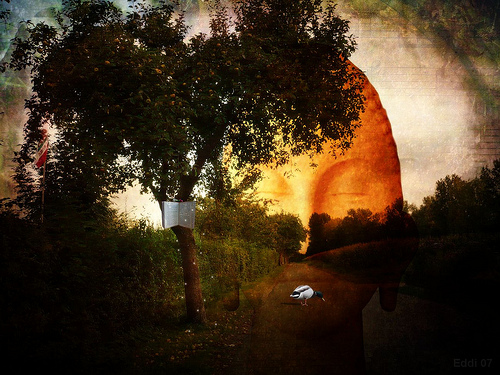
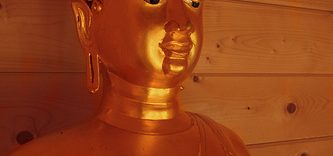
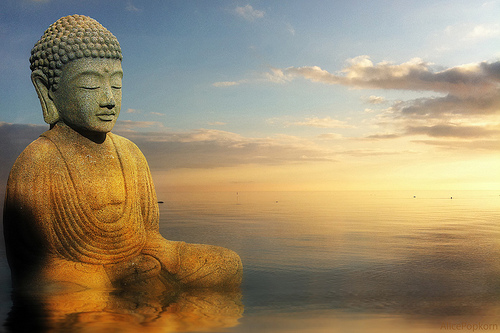
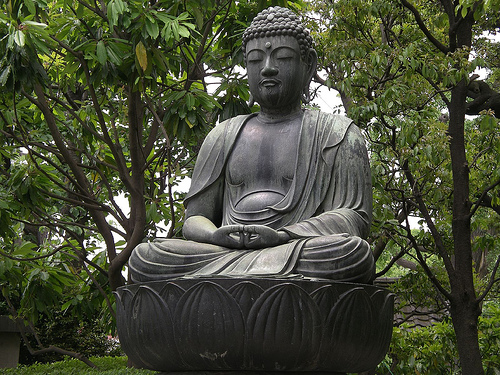
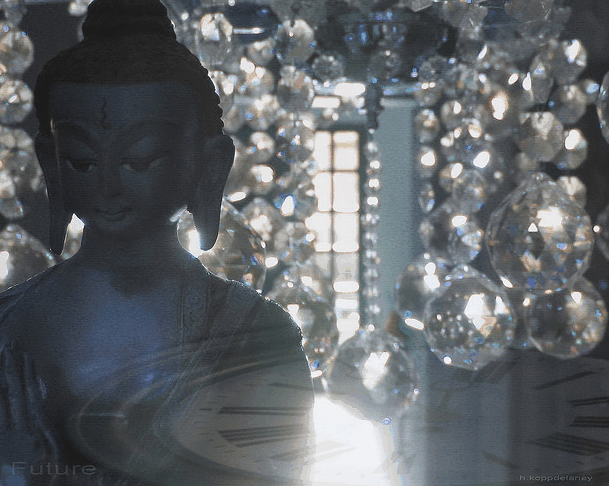
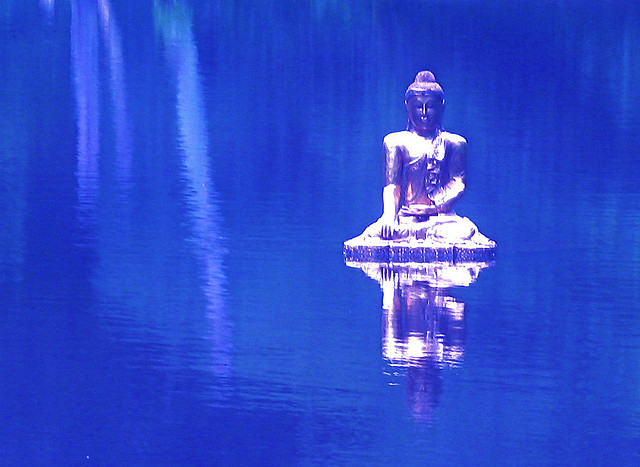
    Buddha with Orange Background

    “Nurture your mind with great thoughts; to believe in the heroic makes heroes.” -Benjamin Disraeli

    The other day I read about an insightful Native American myth. A tribal elder tells his grandson that inside each of us, there is a black dog and a white dog doing battle.

    The black dog possesses qualities typically understood as negative, including envy, greed, sorrow, anger, resentment, and arrogance. The white dog possesses qualities understood as positive, including love, joy, kindness, empathy, compassion, humility, and peace.

    The grandson asks, “Which dog will win the fight?” And the elder responds, “Whichever one we feed.”

    What an empowering call to action. We can reap tremendous benefits from asking ourselves: What am I nurturing in myself today?

    We can choose to dwell on everything we think is wrong, complain about it to everyone who’ll listen, focus on everything we think we lack, and generally go through our days feeding negativity.

    Or we can choose to engage with the world in ways that feel right, talk about the things that excite us, focus on everything that makes us feel fortunate, and generally go through our days feeding positivity.

    Of course, there is a third, likely more realistic option: We can do our best to recognize when we’re doing the former, and then make the conscious choice to do the latter.

    We may never completely eliminate negative thoughts, but we can learn to catch them and dispute them with increasing regularity.

    We may not always feel loving and kind, but we can choose to meditate, practice yoga, or do whatever helps us create inner calm, so as to cultivate those feelings more often.

    We may never feel permanently peaceful, but we can choose to question our envy, resentment, and discontent to develop self-awareness and act on what we learn.

    It also serves us to recognize that we all come from different places, and despite our similarities, we each have our own unique blend of challenges. Contrary to the myth, very little is black and white.

    This means it’s our job to recognize how we’re out of balance, without judging why it’s so or comparing ourselves to other people, so we can focus on doing our best to nurture good thoughts and feelings.

    We don’t live in a purely positive world, and we can’t control everything that happens to us—but we can make the world a better place by first striving to know and nourish ourselves.

    Buddha image via Shutterstock

  • Tiny Wisdom: Who Do You Think You Are?

    Tiny Wisdom: Who Do You Think You Are?

    “It’s not who you are that holds you back; it’s who you think you’re not.” -Unknown

    I know this may seem obvious, but I recently realized I have the most confidence in the things that I do most frequently.

    For example, I write every day—and I have a lot of confidence in my ability to help people through my words. I identify myself as a writer, which goes a long way in motivating me to do this consistently and passionately.

    I feel less confident when it comes to the business side of things—negotiating the contract for my next book, for example. I frequently reinforce to myself that I’m not a businesswoman; and as a result, I rarely think or act like one.

    While a part of me enjoys not focusing on money, I also realize we all need money to live, and there’s a lot of good we can do with our earnings, for ourselves and other people.

    Just recently, my friend Emmanuel wrote a blog post about receiving a generous financial gift from a client, and then passing it on to a friend in need.

    When I read something like, I’m reminded that my restrictive thinking not only limits my own financial stability; it also impacts my ability to give to others, whether I do that directly, or through my capacity to continually invest in this site.

    Right then I realized:

    Confidence doesn’t only come from knowing who we think we are, and what we can do well; it also comes from believing in who we can become and what we can do better.

    We’re best able to do this if we consciously choose to see ourselves differently, and then act on that vision a little every day.

    For me, this means recognizing when I’m limiting possibilities by thinking, “I’m a writer—this isn’t for me,” and instead proactively choosing to create new opportunities, guided by the belief, “I’m a visionary, and there’s no limit to what I can create.”

    It’s a tiny shift in thinking that can make a profound difference. It’s amazing how simply adjusting our self-perception can dramatically impact our confidence and potential.

    We get to decide what we do, create, and become in this life. But that means we need to be willing to ask ourselves: What’s the impact I’d like to make, how do I need to evolve to do that, and what steps can I take to enable that, today and every day?

    Photo by Andrew Girdwood

  • Tiny Wisdom: Believe in What You Can Do

    Tiny Wisdom: Believe in What You Can Do

    by Lori Deschene

    “When you believe something can be done, really believe, your mind will find ways to do it.” -Dr. David Schwartz

    In 1957, Dr. Robert Merton introduced an idea known as the Galatea Effect, which suggests we tend to do what we expect we’ll do.

    If you think you can run a marathon, you’re more likely to push yourself through training and eventually cross the finish line. If you expect that you’ll make friends easily, you’ll likely be relaxed enough to make people around you feel at ease.

    It also works the other way around. If you believe you don’t have the leadership skills to run a meeting, your insecurity will undermine your authority. If you expect you’ll clam up around the person you’re attracted to, you’ll find yourself sweating whenever you meet eyes.

    What if we woke up and expected not only the best of ourselves and our efforts, but also the best in the unexpected? What if we expected that the things we can’t predict will somehow turn out for the best? What if we didn’t just believe in ourselves; we believed in our ability to adapt to the unknown?

    We can never know exactly what’s coming, but we can know that no matter what happens, we can turn it into something good. We can know that no matter where our aspirations lead us, we can meet all our needs through our interpretations, attitude, and actions.

    If you’re feeling stressed about the things you’re trying to accomplish, choose to expect the best in yourself–but more importantly, remember that you can find joy in tomorrow, no matter what it brings.

    Photo by Casbr

  • Tiny Wisdom: Be Good to Yourself

    Tiny Wisdom: Be Good to Yourself

    “Be gentle first with yourself if you wish to be gentle with others.” -Lama Yeshe

    All too often we’re unforgiving and cruel to ourselves in a way we’d never treat our friends.

    We’d never look a friend in the eyes and tell her she’s not good enough. We’d never beat a friend up over one mistake he made years ago. We’d never expect a friend to move mountains when she’s exhausted and clearly needs a rest.

    Why do we sometimes do these things to ourselves?

    So often when we think about self-love, we think about the big picture—forgiving ourselves for past mistakes and accepting ourselves, imperfections and all.

    But in much the same way we show love in relationships through tiny acts of appreciation and consideration, we can love ourselves through small, maybe even random acts of kindness.

    For me, that means allowing myself to relax if I need to, even if I feel like I should be productive. It means treating myself to a nice lunch every now and then, even if I feel I should save money. It means responding to negative thoughts in my head with the same uplifting advice I’d give my sister.

    Sometimes it also means seeing in the mirror that little girl who I used to be—the little girl who always did her best and wanted nothing more than to have someone hug her and tell her it was good enough. It’s my job to do that now.

    It’s all of our jobs.

    Today, give yourself the consideration and kindness you’d extend to the people you love. If you’re dissatisfied with your progress, remind yourself of all you’ve accomplished. If you made a mistake, cut yourself from slack. If you’re tired, take it easy.

    All the goodness you put out into the world starts with how you treat yourself.

    Photo by AlicePopkorn

  • Tiny Wisdom: Do You Talk Yourself Out of Doing Things You Want to Do?

    Tiny Wisdom: Do You Talk Yourself Out of Doing Things You Want to Do?

    “Begin doing what you want to do now. We are not living in eternity. We have only this moment, sparkling like a star in our hand-and melting like a snowflake.” –Francis Bacon, Sr.

    The other day I planned to work out in my apartment community’s fitness center after I finished writing. But when I left the coffee shop, and walked straight into a bright, sunny day, I felt the last thing I wanted to do was stare at a magazine on an elliptical machine.

    What I really wanted to do was pull out my bike from where it had been resting for months and do a little exploring.

    Immediately, I began making excuses in my head as to why I shouldn’t do this.

    I’d get a better work out on the elliptical. That’s what I’d planned to do—and it’s good to stick with plans (a weak argument, I know). It would be hard to get my bike out of the closet under my stairs, where it was wedged in with other stored items.

    Suddenly I realized I was talking myself out of doing something I really wanted to do.

    This may seem like a little thing, but I believe the little things are the big things.

    It’s the tiny choices we make about how we spend our hours that dictate how we spend our lives—whether we get out and enjoy what’s in front of us, or make excuses to do what we always do, or what we planned to do.

    And this type of thinking can obviously impact the things we traditionally consider big—the choices we make and the risks we take in our personal and professional lives.

    If we’re not self-aware, we can end up making all kinds of excuses to not do what we want. We can tell ourselves it’s unwise, or impractical, or unrealistic, or pointless, or laughable, or risky, or inadequate.

    We can tell ourselves we’re unsure, or unprepared, or uncommitted, or untalented, or incompetent, or too busy, or too distracted.

    We can rationalize that it’s too late, or we’re too old, or it’s too soon, or we’re too young. And we can convince ourselves it doesn’t really matter.

    Except it does. Whether it’s a tiny choice or a big decision, if it’s something we want to do, it matters.

    Happiness is when we recognize that, dispute our own defeatist excuses, and then get out there and enjoy instead of holding ourselves back.

    Photo by Shadowgate

  • Tiny Wisdom: Act and Create New Possibilities

    Tiny Wisdom: Act and Create New Possibilities

    “The possibilities are numerous once we decide to act and not react.” –George Bernard Shaw

    As you may have noticed, I’m a huge movie buff. It’s largely because most films chronicle a hero’s journey, taking a character through all stages of transformation.

    There’s recognition of the need to change, there’s fear, there’s resistance, there’s encouragement, there’s struggle, there’s redemption, and in the end, there’s rebirth, and a sense that things will keep getting better.

    Recently I noticed something about the way I experience movies: I generally end a film with a strong desire to do what the main character has done.

    After I saw Dolphin Tale, I dreamed about spending time with dolphins. After I saw We Bought a Zoo, I imagined life would expand in amazing ways if I, too, could own a zoo. And after I saw The Big Year, I seriously considered bird watching, even though I’ve always believed this hobby to be as exciting as watching paint dry.

    What I realized is that it’s not these specific hobbies I want (though I do, in fact, love animals)—it’s the passion, connection, and growth the characters experience as a result of undertaking them.

    I think that’s what we all want: we want to feel alive. We want to feel like part of something bigger than ourselves. We want to care about something that excites us, intrigues us, and challenges us to reach deep down and be the people we know we can be.

    In many ways, Tiny Buddha provides that for me, as your blog may for you, if you have one as well.

    But even though technology provides us with the opportunity to connect with more people than ever before, there is no replacement for hand-to-hand engagement and experience in the world.

    There is no journey like the one we take together, literally step by step, outside our doors, out of our heads, and guided by our hearts.

    I don’t know yet what I want beyond the world of written words.

    Maybe you don’t know where you’re going either, and maybe that’s okay. Maybe we don’t need to have an exact plan. We just need to know we want to start that journey—to wade into a world of discovery prepared for all the excitement and uncertainty that come with doing and growing.

    Today I’m taking a tiny step by researching yoga teacher training. What small step can you take today to create new possibilities?

    Photo by soham_pablo

  • Tiny Wisdom: The Same, But Different

    Tiny Wisdom: The Same, But Different

    “What you do today is important, because you are exchanging a day of your life for it.” -Unknown

    My boyfriend, who is an aspiring screenwriter, has told me that the film industry and moviegoers essentially want “the same, but different.”

    We want the same themes, but with different people; the same humor, but in different circumstances.

    We want to see good rewarded, and for love to conquer all; we want the hero to change for the better, and the villain to reap what he sows.

    We want action, excitement, adventure, and romance; we want to feel terrified and then relieved; we want to doubt and then believe.

    We want to see people fall and survive—struggle and thrive. We want to feel the full spectrum of emotions, from low to high. We want to be moved, inspired, and maybe even in some small way, changed.

    In the real world there are no happy endings, since we’re perpetually in the middle—and often, there’s gravity where filmmakers would insert levity, and unfairness where they would create justice.

    Still, this is all very similar to life: from one day to the next, it’s often the same, but different.

    We experience fears, insecurities, and emotions that we’ve known and felt for years. We deal with challenges that seem so familiar they may even seem like a part of us.

    We might make mistakes we’ve made many times before. We might come against the same resistance we’ve been battling all our lives.

    We may repeat the same patterns in relationships that we’ve known since we were young. And we may find ourselves receiving guidance that seems like nothing new.

    And yet it’s always new. It’s always different. Even if the days are similar, we come to each one totally new people.

    We come to our struggles with new insights. We come to each other with new understanding. And we come to each moment with new potential to be that hero—to make a different choice, to change for the better.

    Sometimes it can seem like nothing ever changes and nothing ever will. But everything changes, in tiny shifts, every day. The real question is whether or not we’ll recognize the tiny shifts within us and act on what we feel.

    Regardless of our circumstances, we always have a choice. We can choose more of the same; or we can recognize this moment is different—and that we can be, too.

    Photo by malfet_

  • Tiny Wisdom: When Less Is More

    Tiny Wisdom: When Less Is More

    “Don’t use a lot where a little will do.” -Proverb

    I recently saw a reality show about reviving struggling restaurants. The premise is that an expert comes in to help save a family business and in the process helps the owners rebuild their relationships and their lives.

    In the beginning, the expert suggested the family reduce their menu from multiple pages to just one. They originally created a massive list of selections because they assumed this created more value. In all reality, it was overwhelming.

    In many instances, less is more.

    This is a big part of the philosophy behind Tiny Buddha. I publish one post from the community every day, which allows me to spend a great deal of time with writers.

    Conventional wisdom of the web suggests that more content leads to more page views, which ultimately creates a successful site. Yet I’ve found the opposite can be true.

    Having a lower quantity allows more time to focus on quality and also allows more time for connection through comments. In this way, it’s not about building a large community; it’s about fostering an engaged one. As far as I’m concerned, there’s no greater success than that.

    Regardless of your project or dream, the “less is more” philosophy can go a long way in creating value and enabling progress.

    You may not have a large number of hours to commit, but this means you have an incentive to prioritize your goals, and that just may help you focus and become optimally effective.

    You may not have abundant resources, but this means your passion and purpose may be your greatest assets, and there’s no limit to what you can accomplish when you invest yourself in a vision that moves and inspires you.

    You may not have countless readers or customers, but this means you can focus on providing exceptional service, which can be far more valuable than dozens of cursory connections and standard experiences.

    Most importantly, when we focus on doing less and doing it well, instead of doing more and assuming it’s better, we’re less scattered, more deliberate, less harried, and more present.

    And really, isn’t that what we want? It’s not just the goals and the outcomes we visualize; it’s the happiness and satisfaction we imagine we’ll experience when we get there.

    It may be the biggest advantage to doing less: we create more space to enjoy those things now.

    Photo by saebaryo

  • Tiny Wisdom: Choose to Be Here

    Tiny Wisdom: Choose to Be Here

    “Stress is caused by being ‘here’ but wanting to be ‘there.”‘ -Eckhart Tolle

    There is little in life that is more stressful than thinking you need be somewhere else but feeling powerless to get there.

    There’s this dream I used to have over and over again. I’d want to get somewhere, but my body wouldn’t move. I’d start running, but I would essentially be jogging in place, like Wile Coyote when he was pushed off a cliff but he’d continue moving his legs while suspended in mid-air.

    No matter how much energy I expelled, I was immobile; but I always kept fighting, sweating, and screaming, hoping something or someone would save me from the pain of my paralysis.

    That’s how I lived my life. There was always something I visualized as the end-all-be-all in terms of happiness, and it was always something that evaded me—a relationship, a job, an adventure, and usually underneath it all a feeling I desperately wanted.

    It was always something just out of reach until I got it, and my internal supervisor gave me a new assignment to target my aching, endless want. There was no reward to achieving; just a new demand to cower before.

    I’ve realized there will always be the possibility of a tomorrow that could be better than today. There’s always going to be a there that sounds like a fantasy—someday when you’ve gotten what you want.

    You could easily wrap your whole life around the promise of getting there and tie your emotions to the illusion of getting closer. You could stress out if you don’t think you’re making progress or feel frustrated that you haven’t seen enough results. You could complain to people about feeling stuck and dwell on how much better things would be if only you could get there.

    You could do all of that—if you want to choose unhappiness. Because this moment, right now, is life. And where we are is where we have an opportunity to be happy.

    We can fight it and feel stressed or let go and feel peace.

    That doesn’t mean we can’t strive for things we want. It just means we’ve realized the path to a bright tomorrow starts with a choice to recognize and create light today.

    Dig your heels in and take a deep breath. You are here, and this is all that’s guaranteed. What’s good about this moment, and how can you appreciate and enjoy it?

    Part of this post is excerpted from my book, Tiny Buddha: Simple Wisdom for Life’s Hard Questions.

    Photo by Viewoftheworld

  • Tiny Wisdom: Do You Recognize and Receive Love?

    Tiny Wisdom: Do You Recognize and Receive Love?

    “Your task is not to seek love, but merely to seek and find all the barriers within yourself that you have built against it.” ~Rumi

    After I wrote yesterday’s post about giving and receiving love, I started to think about the many times in the past when I felt love-deprived.

    It’s easy to feel that way when we’ve been hurt or we think we’re alone—as if there aren’t any people who are really looking out for us.

    In retrospect, I realize that when I felt this way, it wasn’t that no one loved me. It was that I was too busy looking for love to open my eyes and see it.

    I was too busy craving romantic love to recognize and appreciate the other forms of love coming at me; as a result, I came to every potential partner with a deep sense of neediness and lack.

    Love was the one thing I didn’t have. And yet it was all around me.

    What I’ve learned is that receiving love doesn’t necessarily mean opening up to a long-term relationship, though of course it can mean that. It also means consciously looking for acts of love and them choosing to appreciate and accept them.

    When someone looks out for you, empathizes with you, stands up for you, listens to you, relates to you, appreciates you, respects you, accepts you, or acknowledges you, they are giving you love.

    When someone thanks you, encourages you, believes in you, supports you, forgives you, soothes you, uplifts you, or trusts you, they are giving you love.

    When someone opens up to you, tries to know you, stays strong for you, assumes the best in you, compliments you, mentors you, makes time for you, or makes an effort for you, they are giving you love.

    Love is always coming at us, in one form or another—sometimes from friends, sometimes from family, sometimes from strangers we may only know in passing.

    It might be a thoughtful call at just the right time, a warm hug for no good reason, or even a supportive blog comment on a day when you felt weak and afraid.

    We all have so much love to give, and we’re giving it every day. The only question is whether or not we’re also able to recognize and really receive it.

    Thank you to all of you for the love you sent me this last week. It makes a big difference for me, and I appreciate it!

    Photo here

  • Tiny Wisdom: Love Heals

    Tiny Wisdom: Love Heals

    “Eventually you will come to realize that love heals everything, and love is all there is.” -Gary Zukav

    The end of last week was a little tough for me.

    I was waiting to be scheduled for surgery, knowing it could fall anywhere within the next three months. I was realizing I will soon have thousands of dollars in medical and dental bills, between that, a recent mammogram to test another suspicious lump, and my eight cavity fillings.

    I was worrying about disappointing my engaged sister who is expecting me to fly home soon for dress shopping, while also feeling overwhelmed about the three different sets of visitors I will be hosting in March. Lastly, I was dealing with some old issues that resurface every now and then, two decades after I first began addressing them.

    On Thursday night, when my boyfriend and I were out for dinner, it took a Herculean effort to not break down in tears, which I knew would be embarrassing for him. I made it to the car and cried the whole way home.

    Being the understanding, supportive person he is, he listened to me for more than an hour that night, and again on Friday morning when I started crying just minutes after waking up.

    I don’t think I had a single thought that didn’t revolve around me, my discomfort, and my need to work through my feelings.

    On Saturday morning, something occurred to me: I had been obsessing about myself and my circumstances, and my boyfriend willingly sat in that space with me, a source of nonjudgmental friendship and kindness.

    What I had I done for him lately? Caught up as I was in my own drama, what effort had I made to be thoughtful—not in reciprocation, but just because I love and appreciate him?

    So I emailed him at his work, offering to make our grocery run and then take him out to dinner. And I knew I brightened his day, the way he often brightens mine. Suddenly I felt a profound sense of relief, gratitude, and peace.

    It wasn’t because I’d solved all my problems. It wasn’t because I’d made any major emotional breakthroughs. It was because I stopped focusing on those things, remembered how fortunate I am to have love in my life, and then put my love into action.

    That’s the remarkable thing about love. It has an amazing power to heal—not just in the getting, but also in the giving.

    Photo by kalyan02

  • Tiny Wisdom: Using the Hours We Have

    Tiny Wisdom: Using the Hours We Have

    “The whole life of a man is but a point in time; let us enjoy it.” -Plutarch

    There are certain motivational quotes that I find to be a double-edged sword, in that they can both motivate us and lead to guilt and pressure, depending on how we interpret them.

    One such quote reads, “Don’t say you don’t have enough time. You have exactly the same number of hours per day that were given to Helen Keller, Pasteur, Michaelangelo, Mother Teresa, Leonardo da Vinci, Thomas Jefferson, and Albert Einstein.”

    To me, this quote implies using our time well means doing something huge for humanity. It also fails to acknowledge that creating time sometimes takes…well, time.

    It’s true: each one of us has exactly 24 hours to fill every day—and ultimately, we have the ability to create our lives as we visualize them. However, we’re all starting from different situations, with different responsibilities.

    An unemployed person who does not yet have a family, who is living rent-free with friends, can much more easily find time for their passions than someone who has a mortgage to pay, three children to support, and aging parents depending on them for care.

    This is not to say the second person should consider themselves a victim of their circumstances, or make excuses to forget about their goals.

    It’s merely a neutral evaluation of the facts. Sometimes we simply have more free hours in our schedule.

    Why is it important to acknowledge this? Because it allows us to form a realistic plan based on our unique situations—one that allows us to identify windows of time and maximize them to the best of our ability, instead of worrying we’re not doing enough and then feeling paralyzed.

    It’s a matter of being kind to ourselves in assessing our current reality and making a plan to transform it. As far as I’m concerned, being kind to ourselves is always the best use of our time.

    So often in life we push ourselves to do and be more than we are, sometimes sacrificing our self-care and other priorities in order to get where we think we need to be.

    It always benefits us to make time for the things that really matter to us, but if the goal is meaning and joy, it serves us well to ensure we’re not overwhelming ourselves, sacrificing meaning and joy now, hoping we’ll find them later.

    Photo by h.koppdelaney

  • Tiny Wisdom: Challenging the Need for Approval

    Tiny Wisdom: Challenging the Need for Approval

    “Lean too much on other people’s approval and it becomes a bed of thorns.” -Tehyi Hsieh

    “Oh no, I said something wrong.” If I had a top-10 list of defeatist thoughts that I’ve entertained most frequently over the course of my life, this would certainly make the cut.

    I’ve thought this when I’ve met new people and wanted to make a good first impression.

    I’ve thought this with men I’ve dated, when I felt insecure and neurotic about whether or not I seemed confident and charming enough.

    I’ve thought this during job interviews; when networking with people in my field; and on various occasions when there’s been a spotlight on me, literally or metaphorically.

    It’s a knee-jerk response when I fear I’ve somehow presented myself in a bad light—and that maybe as a result, I will lose approval.

    In a perfect world, I want to always say the “right” thing at the right time. But when I dissect this instinct, I recognize that what I really want is to know people will never think bad things about me—that they’ll never question my intentions, or judge me by one comment or encounter.

    I’ve realized, however, that this is a fool’s errand, because we simply do not have the power to shape how we’re perceived. More importantly, we’ll never know lasting happiness if it’s dependent on other people’s approval.

    Even if we say all the “right” things, there will always be someone who doubts us, judges us, or interprets our words to mean something we did not intend.

    I’ve often called myself a recovering people-pleaser, because I’ve made vast improvements in this regard, but I still feel that knee-jerk instinct at times—that fear that I won’t be liked or accepted. I’ve learned that this is okay.

    Retaining our power isn’t about eliminating self-doubting, defeatist thoughts; it’s about learning to dispute them so that we can let them go and move on, feeling self-approved whether other people validate us or not.

    We may never feel permanently confident. But we can learn what that place looks and feels like so we come back a little more quickly with every challenge we face.

    Photo by KittyKaht