Category: Blog

  • When Someone You Love Shuts the Door

    When Someone You Love Shuts the Door

    “It is one thing to lose people you love. It is another to lose yourself. That is a greater loss.” ~Donna Goddard

    We didn’t mean to fall into anything romantic. It started as friendship, collaboration, long voice notes about work, life, trauma, and healing. We helped each other solve problems. We gave each other pep talks before difficult meetings. He liked to say I had good instincts; I told him he had grit.

    We shared vulnerabilities like flashlights in the dark—he told me about getting into fights, going to jail, losing jobs because he couldn’t keep his mouth shut. I shared about growing up in a home with yelling, hitting, and silence, and how I used to chase validation in relationships just to feel seen. Somewhere in there, something sparked.

    By early May, the friendship shifted. There was a night we were sitting together, talking about emotional sobriety, when I felt it: the weight of his gaze, the stillness between us. We kissed. And then we didn’t stop. I didn’t expect it, but I also didn’t resist it. It felt natural, like picking up a conversation we didn’t realize we’d already started.

    But like many things built on intensity, it became complicated fast.

    He opened up about wanting to explore something sexually that I couldn’t. It may have felt like shame to him, but that wasn’t my intention—I was simply clear: I wouldn’t feel safe there. He was hurt. Said I’d stepped on his vulnerability. And I didn’t respond perfectly. I froze. That’s what I do when I feel pressure or threat. I don’t yell or lash out—I go quiet, retreat inward, try to understand what’s happening before I respond.

    Still, I thought we’d moved past it. I gave him space while traveling, and when we reconnected, he told me he was in love with me. That he accepted my situation. That it was worth it. That he’d be patient.

    So I met him in the middle. I softened. I opened a little more.

    He was a recovering alcoholic—sober for nearly nineteen years. He had wrecked two long-term relationships in the past, he told me. He’d been arrested multiple times, fired for outbursts, and said he was trying to do better now. I believed him. I saw the way he loved his dog training clients, how he was trying to build something on his own terms.

    I shared my own journey—how I’d sought approval in the arms of others when I felt dismissed or invisible in my marriage. How I went to SLAA and learned to sit with my feelings instead of running from them. How I founded a company, Geri-Gadgets, inspired by caring for my mom during her dementia journey. He understood the grief of losing a parent slowly. His mom had dementia too. We bonded over what that does to you—how it softens certain edges while sharpening others.

    We had history, shared values, hard-earned wisdom. That’s why I was so unprepared for how it ended.

    It started with a question. I asked him what I should wear to dinner with his sister and brother-in-law after a meeting we were attending together. He responded by sending me a photo of a woman in a short leather outfit, over-the-knee stiletto boots, and a dominatrix pose.

    I stared at the image, confused. Was it a joke? A test? A dig? Given my past—the abuse, the trauma, the very clear boundaries I’d communicated—I didn’t find it funny. I felt dismissed. Mocked, even. I made a comment about the woman’s body, not because I cared, but because I was triggered. Because I didn’t know how to say, This hurts me.

    That set off a chain reaction.

    We were supposed to be working on something together—a potential hire for his business—but the conversation turned tense. I felt myself shutting down. I needed time to process. I called to talk, to break through the tension with an actual voice, but he wouldn’t answer. He refused to talk to me—until he’d already decided to be done.

    By the time we finally spoke, it was over. He’d already shut the door. The ending didn’t come in one moment—it came in his silence, his refusal to engage when I needed him to. It came when vulnerability met a wall.

    This kind of ending triggers old wounds. The kind that taught me to freeze when someone withdraws love. The kind that makes me overfunction to earn back safety.

    I was the child who was hit and then ignored. My father would scream and slam a strap against my legs, then bury his head in the newspaper and pretend I didn’t exist. Those are the things that shape a nervous system. Those are the stories we carry into adulthood, whether we want to or not.

    In past relationships, I chased. I made excuses. I convinced myself it was my fault. I’d think: If only I were more accommodating… less sensitive… sexier, smarter, cooler… maybe they’d stay. But not this time.

    This time, I sat with the ache. I let it wash over me. I didn’t rush to fix it or fill it. I didn’t reach out. I didn’t beg for clarity or closure. I cried. I journaled. I went to meetings. I talked to trusted friends. I worked. I kept my boundaries intact.

    Because here’s what I’ve learned: I am worth calm. I am worth communication that doesn’t punish. I am worth someone who doesn’t confuse intensity with depth.

    He said I pivoted. But what he saw as inconsistency was actually growth. I was honoring a boundary. I wasn’t trying to wound him—I was trying to protect myself. And yes, sometimes that looks messy. Sometimes healing doesn’t come in a neat package with perfect communication and the right amount of eye contact. Sometimes it means making the best decision you can in real time with the nervous system you have.

    I had let him in. I trusted him with my story, my body, my boundaries. I showed up with care and effort and consistency. But I can’t control how someone receives me. I can only control how I respond when they shut the door.

    And this time, I didn’t run after it. I let it close. Gently, painfully, finally.

    Losing him hurt. But losing myself again would’ve hurt more.

    If you opened yourself up to someone and they rejected you, remember it’s not a reflection of your worth. And sometimes when someone walks away, it’s for the best if them staying would have meant you abandoning yourself.

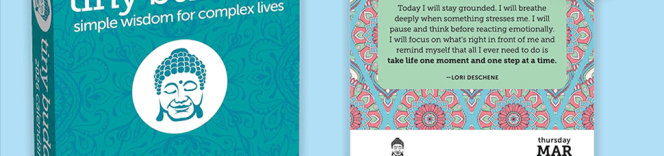
  • The 2026 Tiny Buddha Day-to-Day Calendar is Now Available!

    The 2026 Tiny Buddha Day-to-Day Calendar is Now Available!

    Hi friends! I’m excited to share that the 2026 Tiny Buddha Day-to-Day Calendar is now available for purchase! And equally thrilling, I just found out my calendar was the number one bestseller in the Mind-Body-Spirit category for the last two years.

    Uplifting and comforting, this calendar offers daily reflections from me, Tiny Buddha contributors, and other authors whose quotes have inspired and encouraged me.

    Featuring colorful, patterned tear-off pages, the calendar is printed on FSC certified paper with soy-based ink. Topics include happiness, love, relationships, change, meaning, mindfulness, self-care, letting go, and more.

    Here’s what Amazon reviewers had to say about the 2025 calendar:

    “Love this tear off calendar because I actually look forward to reading a new quote each day. Some are very thought provoking, and I like that I can save some quotes to share with others or put on a bulletin board to read again.”

    “I love this calendar. I bought two extra this year for friends and family. There are many helpful and inspiring quotes. Some make me look in the mirror and try to make changes in my life and attitudes. I look forward to reading it daily. Love love love it!”

    “This is, by far, my favorite calendar! The wisdom imparted every day is useful to think about & reflect upon. I buy several of these every year, for the past few years, to share with friends as a Christmas gift. It is always appreciated.”

    “I love this tear-off daily calendar. I put it in my window and read the quote while making my coffee every morning. Great quotes, beautiful colors. Reasonable price. So glad I selected this one!”

    “Every Day this calendar makes me stop and think. My perspective is calmed and improved with a few minutes to become more conscious of my choices in my thoughts. I can’t wait for next year’s calendar.”

    Stay inspired, motivated, and encouraged through the year ahead—grab your copy here!

  • The Unexpected Way Jiu-Jitsu Brought Me Back to Myself

    The Unexpected Way Jiu-Jitsu Brought Me Back to Myself

    “You may encounter many defeats, but you must not be defeated. In fact, it may be necessary to encounter the defeats, so you can know who you are.” ~Maya Angelou

    There was a time in my life when everything felt heavy, like I was constantly carrying around a weight that no one else could see.

    I wasn’t in a crisis, exactly. I was functioning, showing up, doing what needed to be done. But inside, I was struggling to stay afloat—trapped in my own head, questioning my worth, and unsure how to move forward.

    One evening, I walked into a Brazilian Jiu-Jitsu class for the first time. I had no idea what I was doing. I didn’t know the rules, the language, or even how to tie the belt on my gi. But I was drawn to it—maybe because I was desperate for something to pull me out of my mental spiral. I needed structure. I needed challenge. I needed escape.

    What I didn’t expect was that BJJ would become more than a physical outlet. It became a form of therapy. A place where I could reconnect with my body when my mind felt like a battlefield.

    Finding Peace in the Pressure

    On the surface, BJJ looks intense—people grappling, sweating, fighting for control. But underneath, it’s a quiet game of survival. You breathe. You adjust. You adapt. You keep going.

    There were moments when I would be pinned, completely stuck, with someone twice my size on top of me. I’d panic. My breath would quicken; my thoughts would race. But then I’d hear my coach’s voice in the background: “Slow down. You’re okay. Just breathe.”

    That simple instruction saved me more than once—not just on the mat, but in life.

    Over time, I started to notice something: I was calmer outside of training. More patient. More aware. Jiu-Jitsu didn’t fix my mental health overnight, but it gave me tools to deal with the days when everything felt like too much.

    Losing It… and Finding It Again

    Of course, progress isn’t a straight line. After a few years of training, I got injured. Not once—multiple times. Each injury forced me to stop, rest, and reckon with the fear that maybe I wouldn’t return.

    Without Jiu-Jitsu, I felt lost again. That familiar darkness crept back in, and I realized how much I had come to rely on the practice to stay grounded. But eventually, I returned. Slower, more cautious, but more appreciative than ever.

    I realized it wasn’t about being the best or earning stripes. It was about showing up—for myself.

    What I’ve Learned

    I used to think healing meant getting rid of pain. Now I understand it’s more about learning to live with it—and learning how to move with it, not against it.

    Brazilian Jiu-Jitsu taught me resilience, yes. But more importantly, it taught me presence. You can’t be stuck in your head when someone’s trying to choke you out. You have to be here, now.

    That practice of presence changed how I approached everything else—relationships, work, rest. It helped me become someone who doesn’t give up so easily, even when things get hard.

    Why I’m Sharing This

    Maybe you’re not into martial arts. Maybe you’ve never set foot in a gym. That’s okay. This isn’t about Jiu-Jitsu—it’s about finding the thing that brings you back to yourself. That reminds you of your strength when you’ve forgotten it.

    It could be yoga, running, painting, journaling, hiking, music. It could be therapy. It doesn’t matter what it is, as long as it helps you come home to yourself.

    If you’re going through something right now, I want you to know: You’re not weak for struggling. You’re not broken. And you’re not alone.

    Find your mat—whatever that looks like for you. And when you do, keep showing up. You might be surprised at how strong you already are.

  • My Daughter Needed Me to Choose Better, So I Did

    My Daughter Needed Me to Choose Better, So I Did

    “Children learn more from what you are than what you teach.” ~W.E.B. Du Bois

    I was standing at the service bar, waiting for my drink order to be ready. The scent of steak fat clinging to my apron and infusing itself into my bra, while twenty-something servers around me whined about working on Mother’s Day… yet I was the only mother working that night.

    I’d barely slept because I’d closed the restaurant the night before.

    My nine-year-old daughter had just told me she wished she were dead.

    And here I was, pretending to care about side plates and drink refills when all I wanted was to be home holding her, telling her she mattered. Instead, I snapped—righteous and broken all at once—and stormed out to the alley behind the kitchen where I could cry without making a scene.

    That was the moment I knew: something had to change. Not for me. For her. Because if I stayed in this life, this marriage, this pattern, she would learn it too.

    Up until then, I thought I was protecting her. I fooled myself into thinking that there wasn’t too much harm, because the yelling wasn’t directed at her. That I could absorb the blows. That love was sacrifice. But kids don’t learn from what you say. They learn from what you model. And I was modeling self-betrayal.

    Her stepfather’s cruelty wasn’t new. Neither was the exhaustion I carried in my bones from trying to patch over the cracks with routine and denial. But watching her crumble under the same pressure I had normalized? That shattered something in me that couldn’t be glued back together.

    I married him because I saw a wonderful father for my daughter. I saw him get down to her level and play with her. They would giggle together. Be silly together. Be kids together.

    Well, that was all fine and dandy when she was three, four, five years old, but at some point, she began to outgrow him. While he sat stuck in his trauma, she matured. She was growing to be a strong little lady.

    He didn’t like that. So, when I wasn’t around, he would lash out and treat her like a slave, a whipping boy, but also whined and threw temper tantrums. She had now become the surrogate mother of a petulant child.

    She was nine. She should have been thinking about art projects or bike rides, not death.

    When I confronted my husband about how he spoke to her, it only made things worse. So she begged me never to mention it to him again and informed me that she would no longer confide in me. I hated myself for letting that happen. The very moment I thought I was being strong and standing up for my little girl, I was actually just prolonging her punishment.

    I was staying for stability, for financial security, for some misguided sense of loyalty. Those were the moments that provided her with a blueprint for her own suffering.

    There’s this narrative that mothers must be martyrs. That our suffering is noble, even necessary. But I don’t buy it anymore. Because what good is a self-sacrificing mother if all her child learns is how to silence themselves in order to survive?

    Leaving wasn’t brave. It was survival. I packed us up, found a small apartment, and started over with debt, doubt, and one hell of a broken heart. Not just from the marriage but from the years I’d spent disconnected from myself. My daughter didn’t need a perfect mother. She needed a peaceful one.

    It wasn’t a clean break. I cried in closets and called him at 2 a.m. and hated myself for the longing. I felt like I’d lost my mind. But I was beginning to find my voice. And slowly, she started to smile again. Her shoulders relaxed. We giggled like two girlfriends. We reinvigorated our “‘nuggling” tradition—Saturday nights with a big bowl of popcorn, snuggled up under a blanket together, watching a silly movie. Just the two of us. Just like it used to be. I knew we were going to be okay.

    Healing didn’t come in grand epiphanies or social media-worthy quotes. It came in late-night sobs and morning coffee. In resisting the urge to explain myself to people who would never get it. In learning to sit with discomfort instead of racing to fix it.

    I had to undo decades of believing that silence was safety. That if I didn’t rock the boat, we wouldn’t drown. But we were already drowning. And pretending otherwise was only teaching her how to hold her breath longer.

    I had to unlearn the idea that being needed was the same as being loved. That caretaking and contorting myself for approval was noble.

    I started showing her what boundaries look like. I started apologizing when I got it wrong. I started asking myself what I needed, not just what everyone else wanted from me.

    I also had to let go of the fantasy that he would change. That if I just loved him better, communicated differently, forgave more quickly, then things would improve. That fantasy had a chokehold on me for years. It’s humbling—and liberating—to realize you can love someone and still not be safe with them.

    Sometimes I wanted to go back, not because I believed things would be different, but because being alone with my thoughts was terrifying. I had to rebuild a relationship with myself that I didn’t even know was fractured.

    I started journaling, walking, making playlists that made me cry and heal in the same breath. I was slowly, painfully learning to mother myself.

    I watched her blossom with every ounce of peace we created. She didn’t flinch as much. She stopped asking me if something was wrong when I was having a moment of silence. She acted like a child again. I knew then that the mess I was wading through was already doing its work—not just in me, but in her.

    We learned new rituals. Morning cuddles before school. Singing in the car. Cooking meals together and dancing in the kitchen while things simmered on the stove. It wasn’t just healing. It was joy. Honest, simple, borrowed-from-the-mundane joy.

    I realized I didn’t have to keep waiting to feel safe. I could create it.

    And in every small moment, I chose something different. I chose gentleness. I chose boundaries. I chose to believe that we were worthy of more.

    There were still days I missed the chaos. That part of me that equated drama with passion, unpredictability with depth. But then I’d hear her talking to her stuffed animals in the next room or see her curled up in bed with her cat and remember: calm is not boring. It’s safe. And we deserve safe.

    Eventually, the grief became quieter. The ache dulled. I stopped needing to explain the past to anyone, including myself. And I started dreaming again—not just for her but for me. I wanted her to grow up seeing her mother whole, not just holding it together.

    Because one day, she would hit a wall of her own. She’d sit in a bathroom or an alley or a car, and she’d wonder how she got there. And I wanted her to remember that change is possible. That discomfort isn’t failure. That sometimes, being your own hero means walking away before the fire consumes you.

    Some days, I still think about standing in the doorway of her room, unable to move—but needing to leave—looking at my sweet little girl who just told me she wished she’d never been born. The day I realized that being a mother wasn’t just about protecting my child from harm. It was about protecting her from becoming the kind of woman who thought harm was normal.

    She didn’t need me to be unbreakable. She needed to see me break and still get up. So that’s what I did.

  • The Truth My Body Knew Before My Mind Did

    The Truth My Body Knew Before My Mind Did

    “The body keeps the score. If the memory of trauma is encoded in the viscera, in heartbreaking and gut-wrenching sensations, then our first priority is to help people ‘feel’ what their bodies are telling them.” ~Bessel van der Kolk
    I used to think my body was a liar. Because how can something that’s supposed to be wise also be so dramatic?

    Why did my stomach sink before a coffee date?

    Why did I feel like I was going to vomit before a Zoom call?

    Why did I freeze before taking a step toward the exact thing I said I wanted?

    I used to think all of that meant something was wrong with me. Or maybe I was just anxious. Or overthinking. Or making it up. Pick a label.

    But now I know better.

    My body wasn’t lying. It just didn’t have the language to explain what it was holding.

    I didn’t grow up learning how to listen to my body. I grew up learning how to ignore it. Override it. Be good. Smile. Sit still. Don’t cry. Don’t be dramatic.

    So I did what I was taught. I disconnected from it.

    Even when I started “healing,” I did it with my mind. Journaling. Talking. Thinking. More thinking. Manifesting. Mindset work. All in the head. Still ignoring the body that never stopped trying to talk to me.

    At first, it felt like it was working. I felt empowered. I could reframe my thoughts, set intentions, and write affirmations. But it was like taping over a warning light in my car; I wasn’t addressing the deeper signal underneath. My body kept breaking through. Subtle at first, then louder.

    And I truly believed I was doing it right.

    If I could just write the perfect affirmation, process the trigger, and map it back to childhood, then I’d feel better. Right? But it never really lasted. Not until I stopped trying to fix it all with my brain and actually felt what was happening in my body.

    The signs were subtle at first. A little tightness in my chest. A sudden drop in energy. A weird tension in my jaw that came out of nowhere.

    Other times, it would scream. Fatigue. Rage. Anxiety. Autoimmune flare-ups. But I didn’t know how to translate any of it.

    Because no one teaches you that a shutdown isn’t laziness. That canceling plans doesn’t mean you’re flaky. That dread isn’t always fear; sometimes it’s your body flagging something misaligned before your brain catches up.

    I thought I was broken.

    But I wasn’t. I was just trying to live from the neck up.

    And I don’t think this is just my story. I think many of us were raised in systems, schools, families, and even spiritual spaces that rewarded intellect and punished emotion. We’re praised for being rational, calm, and logical. And that’s great until you realize you’ve spent your whole life bypassing your own body to meet other people’s expectations.

    Now, I understand something that sounds ridiculous unless you’ve lived it: Sometimes, your body knows the truth before your mind can explain it.

    And sometimes, your body responds to fear that’s not even yours.

    I’ve had moments where I walked into a room and felt like I couldn’t breathe, not because anything bad was happening, but because something just felt off, like the air got heavier, like something in me tensed up before I had a chance to make sense of it.

    That’s not logic. That’s not trauma speaking every time.

    Sometimes, that’s intuition.

    Other times, I’ve mistaken shutdowns for signs.

    I said I wanted to show up. I meant it. But every time I got close to putting myself out there with my nonprofit, with my writing, my body would tank. Exhaustion. Brain fog. Fatigue. I’d tell myself, “Maybe this is a sign I’m not ready.” But the truth? It was just fear. Fear of being seen. Fear of being misunderstood. Fear of being rejected.

    My body wasn’t trying to stop me. It was trying to protect me. That’s the nuance no one talks about.

    Your body is wise, but it’s not always right.

    Sometimes it’s responding to a past version of you.

    Sometimes it’s responding to someone else’s energy.

    Sometimes it’s responding to a thought that isn’t even yours.

    But it’s still trying to help in the only way it knows how. And that matters.

    There were times when I canceled something exciting, like a podcast interview or a speaking engagement, because I felt sick. Nauseous. Shaky. I thought, “This must be a sign it’s not aligned.” But often, it was just fear. Fear pretending to be intuition.

    That’s when I realized: I needed to stop asking, “Is this true?” and start asking, “What’s this from?”

    I had to learn the difference between fear and instinct.

    For me, fear shows up fast. It’s hot. Tight. Loud. It tries to rush me.

    Instinct feels slower. Grounded. Even when it says “no,” it comes through calm, not chaotic.

    It wasn’t a switch I flipped. It was a process of remembering. Of noticing patterns. Of asking gentler questions.

    And there was a moment that shifted everything.

    I was sitting on the floor of my bedroom, crying without a clear reason. Nothing dramatic had happened that day. But my chest was tight. My head was spinning. I had that familiar urge to “figure it out.”

    Instead, I just sat. I stopped trying to analyze it. I stopped trying to fix it.

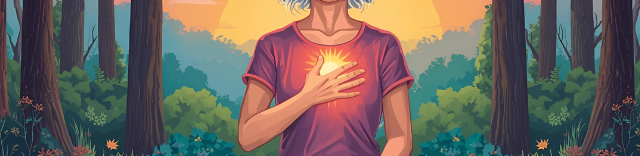
    I put one hand on my heart and the other on my belly. I breathed. And I said out loud, “I’m here. I’m listening.”

    It sounds small, but it felt like something in me softened. My body didn’t need me to understand; it needed me to be with it.

    Since then, that’s been my practice. Not trying to always decode my body like a puzzle. Just making space for what’s happening, even when it’s messy.

    I don’t believe there’s one way to “tune in.” No method saved me. No protocol healed me. What helped was slowing down long enough to notice.

    Breathing. Listening. Learning the difference between intuition and avoidance. Between truth and trigger. Between safety and comfort.

    If you’ve ever felt like your body was unreliable or like it was working against you, you’re not alone. Most of us were never taught how to interpret its language. And that doesn’t mean we’re broken. It means we’re learning a new skill, one that most people never even knew  they needed.

    That’s not something you get from a course. That’s something you get from being in your body long enough to tell when it’s reacting and when it’s remembering.

    It’s why somatic therapy and polyvagal theory are gaining traction. Not because they’re trendy but because they give us a language for what so many have always felt: that the body holds on. That healing.

    It isn’t just about mindset. That regulation doesn’t come from logic; it comes from safety.

    Books like The Body Keeps the Score opened that door for me. But living it? That’s where it finally clicked.

    I don’t have a neat bow to end this with.

    But I can tell you this: Your body isn’t broken. It’s not stupid. And it’s not trying to sabotage you. It just doesn’t speak in words.

    And when you start listening—really listening—you stop needing so many answers.

    Because sometimes the answer isn’t “figure it out.”

    It’s: “Feel what’s actually happening.”

    And that’s enough.

  • I Wanted Revenge; Here’s Why I Let It Be Instead

    I Wanted Revenge; Here’s Why I Let It Be Instead

    “To let go does not mean to get rid of. To let go means to let be.” ~Jack Kornfield

    I must admit right off the bat—as a serial entrepreneur, I’m a risk-taker. Throughout my twenties and thirties, I jumped at opportunities without always vetting the characters involved or asking what six months down the road might look like. I trusted, I leapt, I learned.

    At twenty-three, I launched my first real business with another partner—an upscale pet resort. We had climate-controlled suites, a beautiful play yard, and classical music playing softly in the background. An elaborate four-tier fountain greeted guests in the lobby, where you could also view the handcrafted “Catio” patio built by my father himself.

    Within a few months, it was already turning a profit. On the surface, it seemed like a dream come true. But something felt off.

    My partner, M, was in charge of the books. At first, I brushed off the small red flags. A check deposited here, a discrepancy there. But one night after the last guest was picked up, I went into the office, pulled the books, and began a deeper investigation. What I found left me cold.

    There were large withdrawals I hadn’t approved. Checks made out directly to M. While we had agreed on how much we would each take from the business, these amounts far exceeded our arrangement—and were happening far more often.

    I was sick with disbelief. I confronted her. She cried. She apologized. But she didn’t offer an explanation, only tears. I kept asking, “Why didn’t you just tell me?”

    The betrayal grew stranger. Tensions rose. Communication broke down. One day, I pulled into the parking lot, and someone was there—recording video because they believed I would become physically violent (huh? Me? I don’t even hurt bugs!) as they told me I was no longer allowed on the property.

    Wait, what?

    I was the president of the company. I had put up all the money. It was my vision. My energy. My debt.

    But here’s the thing—I had trusted M to handle the legal paperwork. And while I believed I was an equal owner, I never verified that the documents said so. I wasn’t listed as a shareholder. I had no legal stake.

    I was the president of a company I didn’t actually own.

    At thirty-three, I didn’t know what to look for. I had no real business background—just ambition, trust, and big dreams. And now I was being lied to, stolen from, and kicked out of the very place I built.

    The desire for revenge was overwhelming. I wanted to scream. I wanted to sue. I wanted justice.

    I met with attorneys. I weighed the options. And ultimately, I had to accept one of the hardest truths of my life: pursuing justice might bury me further. The legal costs, the emotional toll—it wasn’t a fight I could afford to win. So I let it be.

    This was the beginning of a long line of “Let it Be’s” with many entrepreneurial hardships, missteps, and mistrusts. It was just the first in what would become an incredibly wild journey over the next twenty years. I was wronged again and again—faced the pain of greed, anger, narcissism, and outright insanity—and I let it ALL be.

    And believe me, the devil on my shoulder had a full revenge script ready—dramatic, petty, borderline illegal. But I never acted on it.

    Every. Single. Time.

    And the truth of it all is taking the higher road isn’t easy. Letting things be is HARD.

    But it’s not weakness. It’s wisdom.

    Because here’s what I’ve learned: fighting fire with more fire only leaves you burned. And the more oxygen you give a flame, the bigger it gets. The longer you cling to betrayal, the more time you spend stuck in it.

    And time? It’s precious.

    Instead of plotting revenge, I began to rebuild. First, I crumbled. Then, brick by brick, I picked myself back up. I changed direction. I started over.

    Here’s what helped me through:

    • I got quiet. No grand social media posts, no smear campaigns. Just space. Silence gave me clarity.
    • I got help. From mentors, therapists, friends who spoke truth when I couldn’t see it.
    • I wrote everything down. The facts. The feelings. The fear. Putting it on paper helped me process it.
    • I took responsibility. Not for what M did, but for what I missed. I studied, I learned, I vowed never to be that uninformed again.

    Because I chose to let it be, I didn’t carry the weight of revenge, I moved forward with grace, and my integrity stayed intact.

    Yes, I lost money. I lost years. I lost a dream.

    But I didn’t lose myself.

    Letting it be doesn’t mean pretending it didn’t happen. It means choosing not to carry it forward. It means making peace with what you can’t control—and putting your energy where it counts.

    This was the first of a long line of experiences I’ve had throughout my entrepreneurial journey. After this event, I faced even more heartbreak and challenges. But every time, I have chosen to let it be.

    Sir Paul McCartney once shared how his mother visited him in a dream and told him the simple words: “Let it be.”

    Well, Mother Mary—you were right.

    This is the way to do it.

    So the next time you’re standing face-to-face with betrayal, I hope—for your sake—you let it be.

    We only get so much time here. Let’s not waste it on battles that don’t build us.

  • What If Growth Is About Removing, Not Adding More to Your Life?

    What If Growth Is About Removing, Not Adding More to Your Life?

    “Maybe the journey isn’t so much about becoming anything. Maybe it’s about un-becoming everything that isn’t really you, so you can be who you were meant to be in the first place.” ~Paulo Coelho

    For years, any time I felt sadness, insecurity, loneliness, or any of those “unwelcome” feelings, I jumped into action.

    I’d look for something new to take on: a class, a language, a project, a degree. Once, in the span of a single week, I signed up for language classes, researched getting certified in something I didn’t actually want to do, and convinced myself I needed to start training for a 10K.

    Because if I was doing something productive, I wouldn’t have to sit with what I was feeling. That was the pattern: uncomfortable emotion → frantic pursuit of something “more.”

    I became a master at staying busy. If I was chasing something, I didn’t have to face the ache underneath. But the relief was always temporary, and the crash afterward was always the same.

    Because deep down, I wasn’t looking for a new skill. I was looking for a way to feel like I was enough.

    I once heard someone say, “We can never get enough of what we don’t need.” I felt that in my bones.

    Looking back, I can see why. I spent a lot of my life trying to earn my place, not because anyone said I wasn’t enough, but because it never really felt safe to just be. There was a kind of emotional instability in my world growing up that made me hyperaware of how others were feeling and what they needed from me.

    I got really good at shape-shifting, staying useful, and keeping the peace, which eventually morphed into perfectionism, people-pleasing, and a chronic drive to prove myself. I didn’t know how to feel safe without performing. So, of course I kept chasing “more.” It was never about achievement. It was about survival.

    But no matter how much I accomplished, I never felt satisfied. Or safe. Or enough.

    It reminded me of something a nutritionist once told me: when your body isn’t properly absorbing nutrients, eating more food won’t fix the problem; it might even make things worse. You have to heal what’s interfering with absorption. The same is true emotionally.

    When we don’t feel grounded or whole, adding more—more goals, more healing, more striving—doesn’t solve the problem. We have to look at what’s blocking us from receiving what we already have. We have to heal the system first.

    We live in a culture that convinces us that growth is about accumulation.

    More insight. More advice. More goals. More tools. If you’re stuck, clearly you haven’t found the right “more” yet.

    So we reach for books, podcasts, frameworks, plans, certifications—anything to build ourselves into someone new.

    But here’s what I’ve learned from years of doing my own work: Real growth doesn’t come from becoming someone new. It comes from letting go of what no longer serves you so that you can make room for the version of you that’s trying to emerge.

    There’s a quote attributed to Michelangelo that says, “I saw the angel in the marble and carved until I set him free.”

    He believed his sculptures were already complete inside the stone; his job was simply to remove what wasn’t part of them.

    When I heard that, I realized: That’s exactly how real transformation works. Not more, not better, not shinier. Just… less in the way.

    But when people feel stuck, they react by piling on layer after layer of effort, advice, and activity until the thing they are actually looking for (peace, clarity, ease, joy) gets buried even deeper.

    When we feel inadequate or incomplete, our instinct is to reach outward for something to fill the space. But the real work is to turn inward and get curious about what that space is trying to show us.

    That might sound airy-fairy, but the truth is, identifying and transforming the parts of us that are carrying old stories isn’t passive. It’s not just a mindset shift or a nice thought on a coffee mug. It’s work.

    It’s learning how to sit with discomfort without immediately escaping into productivity.

    It’s noticing the parts of us that over-function, over-apologize, and over-control and asking where they learned to do that. It’s exploring the beliefs we’ve carried for years, like “I have to earn my worth” or “If I stop striving, I’ll disappear”—and getting curious about who they actually belong to and what they really need from us.

    This isn’t about erasing who you’ve been. It’s about honoring the roles you played to survive and choosing not to let them lead anymore.

    You don’t have to overhaul your personality or give up on ambition. This work is about clearing away what’s outdated and misaligned. The thoughts, roles, and behaviors that might have kept you safe once—but are now keeping you stuck.

    Here’s what that might look like:

    • Letting go of the belief that love must be earned.
    • Dismantling the habit of saying “yes” to avoid disappointing others.
    • Releasing the fear that setting boundaries will make you unlovable.
    • Recognizing that staying small isn’t humility, it’s protection.

    I’ve used every one of these tools myself. I began to notice when I was performing instead of connecting, fixing instead of feeling. I caught myself hustling for approval and validation and started asking: What am I afraid will happen if I stop? I practiced pausing. I gave myself permission to rest, to say no, to take up space. And slowly, I began to trust that I didn’t have to be more to be enough.

    This kind of letting go isn’t instant. It requires awareness, compassion, and support. It requires choosing to stop running and start listening… to yourself.

    Many of us are afraid to let go because we believe we’ll be left with less—less identity, less stability, less value. But in my experience, the opposite is true.

    When we stop performing and start unlearning, we uncover a version of ourselves that feels more whole than anything we could have constructed.

    Under the perfectionism? There’s peace.

    Under the overthinking? There’s clarity.

    Under the fear of being too much? There’s boldness.

    We are not lacking. We are hidden.

    If this resonates with you—if you’re tired of doing more and still feeling stuck, here are a few places to begin:

    Pause the performance. Notice when you’re trying to “fix” something about yourself. Ask what you’re feeling underneath the fixing.

    • Identify the beliefs you inherited. Were you taught you had to earn love? Be useful to be safe? Stay small to be accepted?
    • Get curious about your patterns. What roles do you play at work, in relationships, in your head? Where did they start?
    • Create space. That might mean working with a coach or therapist or simply setting time aside to be with yourself, without distraction.
    • Be gentle. You’re not broken. You’re patterned. And patterns can be unlearned.

    Here’s what I want you to know: what’s on the other side of the removal process isn’t emptiness. It’s clarity. Peace. Energy. Trust.

    That person you’re trying so hard to build? That person is already there, just waiting for you to set them free.

  • 6 Simple Things I Do When Life Feels Completely Overwhelming

    6 Simple Things I Do When Life Feels Completely Overwhelming

    “You can’t calm the storm, so stop trying. What you can do is calm yourself. The storm will pass.” ~Timber Hawkeye

    Overwhelm doesn’t always knock politely. Sometimes it crashes into my day like an unexpected storm—suddenly I can’t think straight, and everything feels urgent, impossible, and too loud. One minute I’m fine, the next I’m spiraling in my head, convinced I’m falling behind on everything and failing everyone.

    If you’ve ever sat frozen in your car in the grocery store parking lot, staring blankly at a to-do list that now feels like a personal attack, you’re not alone.

    Here are six things I turn to when I feel completely overwhelmed—none of them fix everything, but they all help me find my footing again.

    1. I stop trying to “figure it all out” right now.

    When I’m overwhelmed, my brain turns into a malfunctioning computer with eighty-seven tabs open and nothing loading. I immediately try to solve everything at once, like I can outthink the chaos if I just try hard enough.

    But thinking harder doesn’t fix it. It just fries my system.

    I’ve learned to pause and remind myself: I don’t need to fix my whole life in this exact moment. When I feel myself spiraling into “fix all the things” mode (shoutout to ADHD), I write down whatever I’m trying to remember or control. That way I’m not ignoring it—I’m just parking it somewhere so I can get through the thing I actually need to do right now.

    2. I pick one tiny thing I can do.

    Sometimes I stare at the mountain and forget I can just take one step. My brain immediately goes into “do it all right now or you’re failing” mode. And that’s when I end up doing absolutely nothing except overthinking and hating myself for not being productive.

    So I stop and ask: What’s the next five-minute task I can do without using my last brain cell?

    Not the whole kitchen—just get the dishes out of the sink. Not the whole inbox—just respond to the one email that’s been haunting me for days. One drawer. One phone call. One bill.

    It doesn’t feel glamorous, but it’s how I trick my brain into motion. Because five minutes of action beats two hours of beating myself up for not doing anything. Tiny progress is still progress. And sometimes, it’s the only kind that’s available.

    3. I ground myself in something sensory.

    When anxiety hits, it’s like my brain hijacks my whole body. Suddenly, I’m not just stressed and overwhelmed. No amount of logic works in that moment because my nervous system doesn’t care that everything’s technically fine.

    So instead of trying to think my way out of it (which never works), I shift focus to anything physical. I take a cool shower, drink a cold glass of water, light a candle, or put on my favorite scented lotion. I’ve held ice cubes before just to shock my brain back into my body.

    Sometimes I just sit with my cat and focus on the feel of his fur under my hand, like, “Okay, this is real. This is here. I’m not being chased by a bear.”

    Sensory grounding actually helps. It’s not deep or profound, but it’s basic anxiety relief. And honestly, that’s the vibe I’m going for when I’m spiraling: survive first, analyze later.

    4. I do a ten-minute reset (phone-free).

    I set a timer and do something quiet and simple—no phone, no news, no notifications. Just ten minutes without input. That alone feels like a luxury.

    I sit outside and zone out to whatever the wind is doing. Or I color like a bored kindergartener. Sometimes I wash the dishes really slowly, like I’m doing a meditative art form instead of basic hygiene. And occasionally, I just lie on the floor and stare at the ceiling like I’m rebooting my entire existence.

    It’s not about being productive or using the time well. It’s about giving my brain a break from having to be on all the time. Ten minutes of stillness doesn’t fix everything, but it gives me just enough space to breathe again—and sometimes, that’s all I need to keep going.

    5. I check my self-talk for cruelty.

    Overwhelm brings out the absolute worst inner dialogue. My brain turns into a mean girl with a megaphone. She says things like:

    “Why can’t you handle this?”

    “You’re behind—again.”

    “Everyone else is doing just fine. What’s your excuse?”

    It’s not helpful. It’s just self-bullying, dressed up as motivation.

    When I catch that voice spiraling, I try to pause and respond the way I would if a friend came to me in the same state—exhausted, anxious, and trying their best. I’d never say, “Wow, you’re really bad at life.” I’d say something like:

    You’re not failing. You’re overwhelmed. Let’s figure out what would actually help right now.

    That shift—from shame to support, from blame to curiosity—changes everything. It doesn’t magically make the stress disappear, but it keeps me from mentally kicking myself while I’m already down. And honestly, that’s a win.

    6. I let it be a “low power mode” day.

    Phones go into low power mode when they’re drained—and so do I. And on those days, I stop expecting myself to function like I’m fully charged.

    I do the bare minimum. I eat something simple (whatever takes zero brain power and maybe comes in a wrapper). I wear the comfiest clothes I can find, even if they don’t match and have questionable stains. I don’t force motivation to show up or try to “push through.” I let it be enough that I exist and made it out of bed.

    And I stop treating rest like something I must earn. I don’t need to check off five tasks or prove I’m productive before I’m allowed to take a breath. Sometimes, the most responsible thing I can do is shut everything down and reboot.

    Because being human is hard. Being sensitive, overstimulated, exhausted, or just done is part of it. And it’s okay to have days when I’m not okay. I don’t have to explain or justify it. Low power mode is still functioning—it just means I’m protecting my energy until I have enough to show up fully again.

    Final Thoughts

    Overwhelm doesn’t mean I’m broken. It usually means I’ve been running on empty for too long while trying to hold everything together without enough rest, support, or room to fall apart safely. It’s not weakness. It’s a warning light.

    These six things don’t magically fix the mess. They’re not a makeover or a glow-up. They’re a ladder. A gentle, scrappy, wobbly little ladder I’ve built over time that helps me climb out of the mental spiral one small rung at a time.

    If you’re feeling buried right now—under expectations, emotions, responsibilities, or just life in general—I hope something in this list reminds you:

    You don’t have to do it all. You don’t have to be productive to be worthy. You don’t have to perform your pain or prove how hard things are.

    You just have to come back to yourself. One breath. One step. One tiny act of care at a time.

    You’ve got this. And even if today, this just means brushing your teeth, replying to one text, or microwaving some sad leftovers—that still counts.

    You still count.

  • How Understanding Complex Trauma Deepened My Ability to Love Myself

    How Understanding Complex Trauma Deepened My Ability to Love Myself

    “Being present for your own life is the most radical act of self-compassion you can offer yourself.” ~Sylvia Boorstein

    In 2004, I experienced a powerful breakthrough in understanding what it meant to love myself. I could finally understand that self-love is about the relationship that you have with yourself, and that relationship is expressed in how you speak to yourself, treat yourself, and see yourself. I also understood that self-love is about knowing yourself and paying attention to what you need.

    These discoveries, and others, changed my life and led me into a new direction. But as the years went by, I began to feel exhausted by life. Despite all that I had learned, I could feel myself burning out. It became clear to me then that there was a depth of self-love and healing I still wasn’t able to reach.

    What I didn’t realize yet was that I had been living with complex trauma my entire life. It stemmed from a painful childhood, and it had created blind spots in how I saw myself and others. Because of complex trauma, I moved through life in a fog—feeling lost, disconnected from myself, and seeking self-worth through external validations.

    So, I continued on with life—struggling, yet still hoping to find my answers. Then one day the fog began to lift, and the healing process began. I couldn’t see it all at once, but little by little, it became clear what I needed to learn in order to reach a deeper level of self-love and healing. Here’s a glimpse into my journey.

    From 2011, I spent the next five years helping my dad take care of my mom because she had advanced Alzheimer’s disease. I was helping three to four days a week, even though I was dealing with chronic health issues and severe anxiety. This was an extremely difficult time that pushed me past my limits—yet it was a sacred time as well.

    Six months after my mom died in 2016, my health collapsed due to a serious fungal infection in my esophagus. I had never felt so broken—physically, mentally, and emotionally. I was desperately searching for ways to recover my health, I was grieving the death of my mom, and I was struggling with a lost sense of identity. Because of this, and more, the goals and dreams I once had for my life vanished—as if the grief had caused some kind of amnesia.

    A few years later, I had my first breakthrough. I was texting with a friend, and he was complaining to me about his ex-girlfriend, who has narcissistic personality traits.

    He told me about the gaslighting, manipulation, ghosting, lack of empathy, occasional love-bombing, devaluing, discarding, and her attempts to pull him back in without taking accountability for the ways that she had mistreated him.

    His description sounded oddly familiar. It reminded me of the dynamic I had with many of my family members in different variations. I had always sensed that something was off in the way my family treated me, but I was so conditioned to normalize their behavior that I couldn’t quite put my finger on what was wrong.

    Once I became aware of narcissistic personality traits, I started doing my own research by listening to narcissistic behavior experts such as Dr.Ramani Durvasula, and it was very liberating.

    I learned that parents who have narcissistic personality traits, often treat their children in ways that serve their own emotional needs instead of meeting the emotional needs of their children. And this can cause negative programming in the way those children think about themselves and others.

    For example, since my dad treated me like my emotional needs didn’t matter, this may have modeled to the rest of my family to treat me in the same way. And it most definitely taught me how to treat myself, especially when I was around my family.

    I also learned that narcissistic relationships can cause you to lose yourself, because they can systematically break down your identity, confidence, and state of reality.

    At the same time, I also learned that narcissistic behavior often stems from a deep sense of insecurity, usually rooted in a painful and abusive childhood. Recognizing this helped me to see my family members through a more compassionate lens—not to excuse their behavior, but to understand where it might be coming from.

    Learning about narcissistic personality traits has deepened my ability to love myself because of the clarity it has given me. I finally understand my family dynamic and how I used to abandon myself when I was around them.

    I would always give them my full and undivided attention, hoping it would be reciprocated, but it never was. Instead, in their presence, I became invisible—as if what I thought, felt, or needed didn’t matter. Around them, I learned to silence myself in order to stay connected, even if it meant disconnecting from myself.

    Understanding narcissistic patterns and the impact that they can have helped me to face reality. My family members were unlikely to ever change, and I would always need to protect my emotional well-being when I was around them.

    As I learned about narcissistic personality traits, I started to come across information about other related topics, such as complex trauma and how it can dysregulate the nervous system. Peter Levine and Gabor Maté are two of my favorite teachers on this subject.

    I discovered that many of my health issues—including inflammation of the stomach, panic attacks, chronic anxiety, chronic fatigue, depression, lowered immune function, pain, and chemical sensitivities—could be linked to a dysregulated nervous system.

    This can happen when the nervous system is chronically stuck in survival mode. In survival mode, the body deprioritizes functions like digestion in order to stay alert and survive. Over time, this can cause fatigue and other problems by draining energy and disrupting key systems needed for rest, repair, and vitality.

    Learning about complex trauma has deepened my ability to love myself because it has opened my understanding to why I might be chronically ill and always in a state of anxiety. Knowing this gives me clues in how I can help myself.

    I also learned that complex trauma is caused less by the traumatic events themselves and more by how those events are processed in the nervous system and in the mind.

    According to the experts, if you are not given context, connection, and choice during traumatic events—especially when those events occur repeatedly or over an extended period of time—it’s more likely to result in complex trauma.

    For example, if during my own childhood, it had been explained to me why my dad was always so angry and sometimes violent… and if I would have had someone to talk to about how his words and actions affected me and made me feel unsafe… and if I would have been given a choice in the matter and wasn’t stuck in harm’s way, then I would have been much less likely to have walked away with complex trauma.

    But since those needs were not met, I internalized the message that I wasn’t safe in the world, which caused my nervous system to become stuck in a state of dysregulation. As a result, constant fear became an undercurrent in my daily life—often stronger than I knew how to manage.

    When I wasn’t in school, I would often retreat into my wild imagination—daydreaming of a perfect fairy tale life one minute and scaring myself with worst-case scenario fears the next. Fortunately, my wild imagination also fueled my creativity and artistic expression, which was my greatest solace. To protect myself, I developed the ability to fawn and to people-please. All of these survival responses have been with me ever since.

    Before I learned about complex trauma, I was told that the only course of action you can take in regard to healing from past emotional abuse was to forgive those who have abused you. But that’s not correct. Forgiveness is fine if you feel like forgiving, but it doesn’t magically rewire years of complex trauma and nervous system dysregulation. The real course of action is to identify and to gently work on healing the damage that was caused by the abuse.

    As I explored the internet in search of ways to begin healing my dysregulated nervous system, I came across two insightful teachers, Deb Dana and Sarah Baldwin. They teach nervous system regulation using polyvagal theory, and I found their classes and Deb Dana’s books to be extremely informative.

    Polyvagal theory, developed by neuroscientist Dr. Stephen Porges, helps people to understand and befriend their nervous systems so they can create a sense of safety within themselves.

    Learning about polyvagal theory has deepened my ability to love myself by teaching me how my nervous system works and by helping me understand why I feel the way I feel. It also teaches exercises that help me to send signals of safety to my body, gently communicating to my nervous system that it doesn’t need to stay in survival mode all of the time.

    Nervous system rewiring is a slow process, and while I still have a long way to go before I get to where I want to be, I’m already feeling subtle shifts in the way I respond to stressful situations. This breakthrough has given me new hope for healing and has provided a new path forward.

    I also learned from complex trauma experts that fawning and people-pleasing can actually be trauma responses. These responses were the reason why I was so willing to sacrifice my health to help my dad take care of my mom. It was because I had been conditioned to always please my parents and to put their needs ahead of my own.

    Learning about how fawning and people-pleasing can be trauma responses has deepened my ability to love myself by giving me new insight into my own behavior. In the past, it had always bothered me if I thought anyone didn’t like me, and now I can understand why I felt that way. It was because those thoughts triggered old feelings of fear from childhood, when not pleasing my dad felt dangerous. This taught me to never say ‘no’ to people in order to always feel safe.

    By becoming aware of these trauma responses and wanting to reclaim my power, I have gained the ability to say ‘no’ with much more ease, and I’m much better at setting healthy boundaries. I’m also learning to accept that not everyone is going to like me or think well of me—and that’s okay.

    During the later years of my dad’s life, we developed a much better relationship. Both my mom and dad were grateful for the help I gave to them when my mom was sick.

    After my dad died in 2023, I no longer had the buffer of his presence to ease the stress of family visits. But I also no longer felt obligated to be around family members for the sake of pleasing my dad. So, a few months after his passing, when I received disturbing correspondence from a certain family member, I was able to make the difficult decision to go no contact. Spending time with family members had become too destabilizing for my nervous system—and to be completely honest with you, I had absolutely nothing left inside of me to give.

    At first, I felt a lot of guilt and shame for going no contact, being the people-pleaser and fawner that I have been. But then I learned from complex trauma experts that guilt and shame can also be trauma responses.

    When we are guilted and shamed in our childhoods for speaking up for ourselves, it can teach us that it’s not safe to go against the ideology of the family, that we should only do what is expected of us, and that our true voices and opinions don’t matter. This kind of programming is meant to keep us small—so that we are less likely to stand up for ourselves and more likely to remain convenient and free resources for the benefit of others.

    I experienced a lot of rumination and intrusive thoughts the first year of going no contact, but with time and support I was able to get through the hardest parts. Watching Facebook and Instagram reels from insightful teachers, such as Lorna Dougan, were incredibly helpful and kept me strong.

    A truth I had to keep reminding myself of was that my well-being was just as important as theirs, and that it was okay for me to prioritize my mental health—even if they could never understand.

    Giving myself permission to go no contact with family members has deepened my ability to love myself because it has allowed me to help myself in a way that I had never been able to do before.

    I now have a real chance to protect my mental health, to heal my nervous system, and to live the life that is most meaningful for me and for my husband. I no longer have to drain my last ounce of energy on family visits and then ruminate about how they treated me for the next 72 hours. It has also opened up my capacity to deal with other challenges in my life, like facing the new political landscape that is now emerging.

    In conclusion, it was only when I began to tend to my complex trauma and examine my family relationships that I was finally able to recognize and understand the blind spots that had obscured my ability to know and to love myself more deeply.

    Looking back on my journey, I’m grateful for how far I have come:

    I now know and understand myself better. I have a greater understanding of what I need in order to heal.

    I am able to think for myself and make decisions that align with my core values.

    I like myself again, and I know that I’m a good person. I no longer believe that I’m too much or too sensitive—I just need to be around people who are compatible.

    I am able to set healthy boundaries and to choose my own chosen family—people who treat me with genuine kindness and respect.

    And I feel more confident facing life’s challenges now that I know how to turn inward and support my nervous system with compassion and care.

  • The Beautiful Losses of a Childhood Moved to the Philippines

    The Beautiful Losses of a Childhood Moved to the Philippines

    “The only way to make sense out of change is to plunge into it, move with it, and join the dance.” ~Alan Watts

    I must admit, dear reader, that I wasn’t always a fan of change—not even a little. I wouldn’t say I entered this world naturally inclined toward new or unfamiliar things.

    Like many children, I found comfort in routine—the joy that comes from ordinary moments repeating themselves. Whether we realize it or not, repetition builds a mental framework that quietly defines our comfort zones.

    Maybe that’s where identity begins, slowly shaped over time. And perhaps that’s why, while others struggle to recall their earliest years, I remember mine so clearly—because the foundation of my childhood was disrupted early on by a dramatic shift.

    You see, my early years were divided between two drastically different parts of the world. One chapter unfolded in the familiar calm of the United States; the next, in the chaotic hum of a developing country.

    It’s not the most typical of childhood stories, but I was pulled from my life in San Francisco and thrown into the Philippines as a six-year-old girl. My story begins just before that life-changing move—in the heart of a city I called home.

    Simple Days

    My first memories of San Francisco are filled with pigeons on sidewalks, ice cream at Pier 39, sunshine in Yerba Buena Park, and seafood dinners with buckets of crab, shrimp, and fish. My parents ran a small corner store beneath our apartment while holding full-time jobs.

    That shop was the source of many joyful moments—snacking on candy, hotdogs, and whatever treats we could get. I can still remember the layout of our three-bedroom apartment, the party room where my grandfather handed out chips, and the rooftop playground where we rollerbladed and played tag.

    As a child, I was energetic and loud, especially in school. I often got in trouble—not for anything serious, but for being talkative, fidgety, or overly enthusiastic.

    That trait hasn’t gone away. I still get excited easily—so much so that people sometimes question whether my enthusiasm is real.

    But I never wanted to tone it down. Maybe I watched too many Robin Williams movies. Then again, it was the nineties.

    Those were the simple, happy days I’ve always cherished—before everything changed.

    Into Chaos

    Picture a six-year-old who had just started first grade, still talking about Disneyland, now sitting on a plane heading to the other side of the world. The irony wasn’t lost on me—traveling to my family’s country of origin and yet feeling like a stranger to it.

    All I had was the unknown ahead of me—and a handful of roasted peanuts to calm my nerves.

    But it didn’t take long for the new reality to hit. I was thrown into a completely different world—fast, loud, and all at once.

    Gone were the paved sidewalks. In their place: dusty roads with no curbs. The rivers I once knew were now polluted waterways, lined with trash and a lingering smell that hung in the air.

    Dust rose with every passing vehicle. The traffic moved like chaos—cars weaving, horns blaring, people changing “lanes” at will. Looking back, it felt like a game of MarioKart—motorcycles, jeepneys, trucks all racing without rules.

    And seatbelts? Nonexistent. People clung to the backs of buses, fingers gripping metal bars for balance. Honestly, even Mario Kart had more order.

    The hardest part, though, was adjusting to the humble conditions of our new home. There was no hot water, so my mother would boil it in a kettle and pour it into a basin every day.

    Power outages were common, and when it rained, the streets often flooded—sometimes with rodents or worse floating past as we walked home. Cockroaches flew through the air, and lizards skittered across the walls during breakfast.

    Sure enough, words like “disturbed,” “terrified,” or “confused” don’t quite capture how I felt.

    Homesick

    It’s only natural to feel overwhelmed in that kind of environment at such a young age. I remember the shock vividly and how much I missed the world I had left behind.

    If I’d been younger, maybe I wouldn’t have noticed. But I was already aware of the world and my place in it.

    I’d learned to observe, mimic, and ask questions. I was sensitive and curious—and all of that made the transition harder.

    I missed San Francisco—my school, my classmates, the little things that made life feel normal.

    And though I’m not proud of it, I saw myself as different from the people around me. That discomfort became my first lesson in how flawed ideas of “otherness” truly are—a lesson that would grow with me over time.

    But there was still so much more to learn.

    Slow Opening

    When you resist a situation, it becomes easy to judge everything around you. That judgment breeds negativity, and before long, it colors your entire experience. At some point, the only way forward is acceptance.

    Somehow, I found the strength to stop resisting and take things one step at a time. Because wherever you are in the world, the need for human connection never changes.

    So I went along with it. I showed up to school, even when I couldn’t understand my classmates’ language.

    I tried. Every day, I tried—slowly picking up words, watching how people spoke, doing my best to be open.

    Eventually, the language began to make sense. I started to come out of my shell.

    With my siblings, I explored the street food that showed up each week in our neighborhood—ice creams in local flavors served with magic chocolate, hot cheesy corn, sour mangoes with fermented fish paste, salty pork and beef barbecue skewers, fried fish balls with oyster sauce, and caramelized bananas. Strange at first, but so delicious.

    One unforgettable moment I can still recall was when our entire building lost power for several hours. These “brownouts,” as the locals called them, happened often and without warning.

    It was always inconvenient, but on that particular night, large groups of kids and parents came out of their homes during the outage. Despite the darkness, candles and battery-powered lights lined up the edges of the open spaces, imbuing the entire building with a warm glow.

    I can still remember enjoying the cozy atmosphere they made along with the background sounds of small talk and guitar music while meeting other neighbor kids for the first time. Little did I know that a few of them would become some of my closest friends and playmates for several years to come.

    That night changed something in me, and not just from the possibility of new friendships, but because it was the first time in my life that I saw how a begrudging inconvenience could be transformed into a beautiful moment of connection.

    Small World

    After that, my energy returned, though with more caution. After all, it was still life in a third-world country I was dealing with, and it was not very difficult to get hurt at random, like someone running your foot over with their car by accident.

    Still, before long, I was speaking fluently, playing after school, and venturing out to buy snacks in the neighborhood. It was common for families to hang signs of what they were selling outside their homes.

    With just a few coins, I could buy candy, pastries, or a soft drink tied in a plastic bag. It wasn’t the usual way to drink, but on hot days, it felt like a treat.

    There were plenty of local sights that stayed with me—boys climbing coconut trees, old men puzzled by Halloween. But there were also shared experiences: Gameboys, Nokia phones, WWE wrestling, karaoke, and pop music from Britney to Eminem. At this point, it was the 2000s.

    In many ways, I started to see how big and small the world can be all at once—how culture spreads and how much we share, no matter the distance.

    Lasting Lessons

    We spent four years in the Philippines. By the end, I felt at home in a lifestyle that once felt impossible.

    But eventually, we returned. And when I sat in a California fifth-grade classroom again, it felt surreal.

    There were well-dressed teachers, Costco cupcakes, and cubbies painted in bright colors. Everything looked polished—and yet, I felt like I had lived a secret life.

    It’s hard to describe. Maybe it’s something you can only understand if you’ve lived it. It felt like carrying two childhoods inside one life.

    My personality shifted. I became more grounded, more grateful—for electricity, hot water, and the simplest comforts.

    I learned to value what truly matters: connection, community, and confidence—not built on material things but earned through effort and heart. That’s the lesson that’s stayed with me, and I carried it into my teenage years, into teaching English in the Czech Republic, and into my current life here in Finland.

    I’ll be forever grateful for my childhood years in the Philippines. It taught me that abundance and scarcity can live side by side—and that sometimes, in embracing the art of less, you discover so much more.

  • The Strength I Found Hidden in Softness

    The Strength I Found Hidden in Softness

    “You can’t heal what you won’t allow yourself to feel.” ~Unknown

    I used to act strong all the time. On the outside, I looked like I had it all together. I was competent, composed, and capable. I was the one other people came to for advice or support.

    The stickiness was that my version of strength created distance. I couldn’t allow myself to appear weak because I was terrified that if I let myself break down, I wouldn’t be able to pull myself back together.

    Maybe underneath it all, I was so fragile I might actually break.

    So I held it in. All of it—my grief, my fear, my loneliness. This is what strong people do, right?

    I learned to be strong early because I had to.

    My mother was depressed and suicidal for the younger years of my life. From a young age, I felt like it was up to me to keep her alive. I became the caretaker, the one who made things okay, even when nothing was.

    My father left before I was born. I didn’t meet him until I was six, and when I did, it wasn’t safe. He was abusive and schizophrenic. One time, he tried to strangle me. That moment embedded something deep: every moment is a risk. To survive, I learned to stay alert, in control, and numb.

    Later, my mum entered a same-sex relationship—a bold move in the eighties, when that kind of love wasn’t accepted. Her partner, a former homicide detective turned trauma therapist, was emotionally volatile and narcissistic. My home didn’t feel safe. There wasn’t a lot of room for me to be a child.

    So, I became hyper-responsible. A perfectionist. A fixer. I micromanaged not only my life but also the emotions of others when I could. My version of “strength” became what I hid behind and my identity.

    But underneath it all, I was scared. My “strength” was survival, not freedom.

    Years later, I moved to Australia and found myself with a friend in a power vinyasa yoga class. It was hot, sweaty, and intense. I hated it. The carpet smelled. The teacher talked the entire time. I was angry.

    And then it hit me: I was always angry.

    Beneath the appearance of having it all together, I was exhausted and resentful. The yoga mat didn’t create these feelings—it just revealed what I had been carrying all along.

    That night, something shifted. I realized my “strength” wasn’t really strength; it was my wall. A wall that had kept me safe but also kept me from feeling.

    So, I kept going back. First to yoga, then to a deeper journey of healing.

    The process came in layers.

    Along my healing journey, I explored many different modalities. The first was EFT (emotional freedom technique), where I touched emotions I had buried for decades. Later, kinesthetic processing showed me that it was safe to feel everything—every emotion, every memory—through my body. This was the beginning of softness integrating into my life, not just as an idea, but as a lived experience.

    For so long, my strength had been armor—the courage to survive. But softness opened something new: the courage to thrive, because my heart was no longer closed.

    There was no single breakthrough, no magic moment.

    With each layer that fell away, I began to replace resistance with openness, walls with connection. Slowly, I came to trust that softness wasn’t something to fear—it was something I could lean into.

    And what I learned is this: my healing required softness, which meant vulnerability and allowing myself to fully feel.

    Softness isn’t weakness.

    It’s staying open when everything in you wants to shut down.

    It’s allowing yourself to be seen without the mask.

    It’s choosing presence over performance.

    True power isn’t control. It’s vulnerability. It’s feeling your way through life and trusting yourself—trusting your thoughts, your decisions, and your impulses so you stop second-guessing and stop relying on constant external validation. Trust allows you to act from clarity instead of fear.

    It’s trusting your body, noticing what nourishes you versus what depletes you, and setting boundaries without guilt. It’s trusting life’s natural flow, letting go of the pressure to force things to happen according to a strict schedule. It’s trusting your own inner truth. Trust and softness go hand in hand; the more you trust yourself, the more you can stay open and present without fear.

    If you’ve been holding it all together for too long, maybe strength doesn’t look like pushing through. Maybe it looks like slowing down. Like taking a breath. Like feeling what’s been waiting to be felt.

    And maybe, just maybe, your sensitivity isn’t something to hide or harden.

    Maybe your sensitivity is your superpower.

    In a world that teaches us to be strong, brave, and unshakable, we can forget that our greatest wisdom often comes in stillness.

    It comes when we soften. When we listen. When we let go of who we think we should be and come home to who we already are.

    Strength isn’t about being unbreakable. It’s about being real.

    When I started listening to myself, I realized how often I had ignored my own needs and desires, pushing through life according to what I thought I “should” do. I learned to honor my feelings, trust my instincts, and make choices that nourished me instead of drained me. As a result, my relationships deepened, my confidence grew, and I found a sense of ease and flow I never thought possible.

    Sometimes the greatest thing you can do for yourself is listen to the quiet, unchanging wisdom within you and trust what you hear.

  • Micro-Faith, Huge Benefits: Reasons to Believe in Something Bigger

    Micro-Faith, Huge Benefits: Reasons to Believe in Something Bigger

    “Faith is taking the first step even when you don’t see the whole staircase.” ~Martin Luther King Jr.

    My grandmother passed away a few years ago after a long battle with cancer. Even as her health deteriorated, she never lost her spirit. She’d still get excited about whether the Pittsburgh Steelers might finally have a decent season after Ben Roethlisberger’s retirement. She’d debate the Pirates’ chances with the kind of passionate optimism that only comes from decades of loyal disappointment.

    But what I remember most are the afternoons she’d spend napping in her favorite chair with my son curled up against her. He’d drift off clutching some random object, like a wooden spoon or random toy from my parent’s basement. She’d just smile and close her eyes too. Even when she was tired, even when the treatments were wearing her down, she found joy in those stolen moments.

    In her final years, she lived with my parents, but she brought her faith with her.

    Her rosary beads found new homes on nightstands and windowsills. Her worn Bible sat open on the end table, bookmarked with a picture of her husband. The little curio cabinet filled with angels followed her too, a portable shrine to stubborn hope. Wherever she was, the air around her carried that same indefinable quality that I later realized was simply peace.

    My grandmother had the kind of faith that could part emotional storms with a single glance. She didn’t need to preach it. She lived it. You could feel her belief before you even stepped through the front door. She believed in prayer, in miracles, in second chances. In the Steelers. And in Diet Pepsi.

    After she was gone, I expected to feel completely untethered. Instead, I discovered something surprising. Things seemed to hold together. The sadness was real and deep, but underneath it was something solid. A foundation I’d never realized she’d built in me.

    My mother always said I “lived with my head in the clouds,” and it wasn’t until after Grandma passed that I understood where that came from. While I was raised in the Catholic church and spent years as an altar boy, my faith had always been fuzzier than hers. Less certain. More questions than answers.

    But it was there, hidden under the surface, because of her. I’d been benefiting from her quiet influence in ways I never fully understood or appreciated until she was gone. Her faith hadn’t just surrounded me. It had somehow taken root in me, even when I wasn’t paying attention.

    Learning to Recognize What Was Already There

    The months after her death weren’t filled with the existential crisis I expected. Instead, I found myself noticing things. How I naturally looked for the good in difficult situations. How I held onto hope even when logic suggested otherwise. How I moved through the world with a kind of quiet optimism that I’d never really examined before.

    I was still a professional overthinker, still a card-carrying worrier. But underneath all that mental noise was something steadier. Something that whispered, “This too shall pass,” even when I wasn’t consciously thinking it.

    It took time to understand that this wasn’t something I needed to build from scratch. Grandma hadn’t just modeled faith for me; she’d been quietly cultivating it in me all along. Through her example, through her presence, through those countless afternoons when she’d choose hope over fear, even when the odds were stacked against her health and her beloved sports teams.

    Discovering My Own Messy Version

    What I came to realize was that my faith was never going to look like Grandma’s. Hers was rooted in tradition, in ritual, in the comfort of centuries-old prayers. Mine was more scattered, cobbled together from different sources and experiences.

    My faith, I discovered, is held together with hope, a healthy dose of skepticism, and about six different kinds of sticky notes. It’s not the neat, organized kind. It’s more like a spiritual junk drawer full of useful things, but you’re never quite sure where anything is.

    I believe in second chances and fresh starts. I believe in the power of afternoon sun to reset your entire day. I believe that kindness is contagious and that sometimes the universe sends you exactly what you need, even if it arrives late, confused, and covered in cat hair.

    Some days, my faith is a whisper: “Maybe things will get better. Maybe I’m not alone. Maybe I can try again tomorrow.” Other days, it’s louder: “This is hard, but I can handle hard things. I’ve done it before.”

    My faith doesn’t look like Grandma’s, but it carries her DNA. It’s messier, less certain, but it has the same stubborn core, a refusal to give up hope, even when hope seems foolish.

    The Science of Belief

    Here’s what I wish I’d known during those dark months: You don’t have to be religious to benefit from faith. Science shows that belief in something greater than yourself can be a powerful tool for mental and emotional well-being.

    Faith literally reduces stress. Studies show that people who report a strong sense of meaning or spiritual belief have lower levels of cortisol, the hormone associated with stress. Translation? Faith helps your brain pump the brakes on panic.

    It improves emotional regulation by activating the brain’s prefrontal cortex, which helps you pause before spiraling. It builds psychological resilience by reminding you that you’re not at the center of every catastrophe. Whether you believe in God, the universe, karma, or cosmic duct tape, faith acts as a buffer against hopelessness.

    Acts of spiritual reflection can trigger the same brain regions involved in feelings of safety and joy. And faith often leads to rituals or conversations with others, building the connections that are crucial for well-being.

    Here’s the kicker: You don’t have to get it right. Wobbly faith counts. Uncertain, whispered-in-a-closet faith is still valid. Half-hearted “Okay, Universe, I trust you… kinda” mutterings are welcome here.

    The Power of Micro-Faith

    Big transformations feel great in theory but hard in practice. That’s why I’ve learned to embrace what I call “micro-faith,” these small, digestible moments of intentional belief. Like appetizers for your spirit.

    Today, try believing in something small:

    • The possibility of a good cup of coffee
    • The strength hiding inside your own weird little heart
    • The fact that what you need might already be on its way
    • The idea that this difficult season won’t last forever
    • The chance that tomorrow might feel a little lighter

    Faith doesn’t have to be grand or glowing. Sometimes it’s just showing up anyway, even when you’re not sure why.

    What Grandma Taught Me

    Years later, I realize Grandma didn’t just give me faith; she showed me how to live it. She taught me that faith isn’t about having all the answers. It’s about trusting that you’ll find your way, even in the dark.

    She taught me that belief can be quiet and still be powerful. That faith isn’t a destination but a traveling companion. That sometimes the most profound act of faith is simply getting up and trying again.

    Most importantly, she taught me that faith isn’t about perfection. It’s about showing up. Showing up to your life, to your relationships, to your own healing, even when you feel completely unprepared.

    I carry pieces of her faith with me now, mixed in with my own messy, imperfect beliefs. Some days I feel like I’m floating through life with my head in the clouds. But thanks to Grandma, and a whole lot of trial and error, I’ve learned to float up here without getting totally fried by the sun.

    If your faith feels fractured, fuzzy, or faint, you’re not doing it wrong. You’re just human. Faith isn’t a finish line. It’s a floating device. It won’t always steer you straight, but it might keep you above water long enough to find the shore.

    So go ahead and believe in something today. Even if it’s just the idea that the clouds will eventually clear… and the coffee won’t taste burnt this time.

  • Remembering What Truly Matters in a World Chasing Success

    Remembering What Truly Matters in a World Chasing Success

    Strive not to be a success, but rather to be of value. ~Albert Einstein, adapted

    I often feel like I was born into the wrong story.

    I grew up in a time when success meant something quieter. My father was a public school music teacher. We didn’t have much, but there was a dignity in how he carried himself. He believed in doing good work—not for recognition or wealth, but because it mattered.

    That belief shaped me. I became a teacher, filmmaker, and musician. And for decades, I’ve followed a similar path: one rooted in meaning, not money.

    But somewhere along the way, the story changed.

    All around me—especially in places like Los Angeles, where I’ve lived and worked—I see people running. Hustling. Branding. Monetizing. It’s not enough to be good anymore. You have to be seen. Promoted. Scaled. Life itself has become something to market.

    And in that shift, I’ve felt something sacred go missing.

    The False Promise

    I’m not against success. I want to be able to pay my bills, support my family, and feel valued. But the version of success we’re fed—fame, visibility, endless productivity—is a lie. It promises meaning but often delivers emptiness.

    We’ve replaced presence with performance. Care with clicks. Integrity with optimization. And the result? A society where exhaustion is normal and enough is never enough.

    Psychologists call it extrinsic motivation—doing something for a reward, like money or applause. It’s not inherently bad. But when it dominates our lives, we lose touch with intrinsic motivation: the joy of doing something just because it matters to us.

    When everything becomes a transaction, even joy starts to feel like a product.

    The Scarcity Game

    Sometimes I feel like we’re all scrambling for crumbs. Competing for attention, clients, gigs, or algorithms. Everyone trying to survive, to be seen, to matter.

    It’s primal—like a twisted version of the hunter-gatherer instinct. But where ancient humans balanced competition with community, we’ve kept the fight and lost the tribe.

    Now, even collaboration often feels strategic—a means to climb, not to connect. “Networking” replaces friendship. “Partnerships” become performance. We’re told to “collaborate” so we can get ahead—not because it nourishes our souls.

    That scarcity mindset doesn’t just shape how we work. It distorts how we see ourselves. If someone else is thriving, we feel like we’re falling behind. If we’re not being noticed, we start to doubt our worth.

    This isn’t just economics. It’s spiritual erosion.

    Capitalism and What It Forgot

    I’ve been thinking about capitalism—not as a political slogan, but as a cultural story. Adam Smith imagined markets built on freedom and mutual benefit. But today’s version often rewards extraction over contribution, performance over presence, and individual gain over shared good.

    Even education and healthcare—things meant to uplift—are judged by efficiency, growth, and return on investment. I’ve seen schools cut arts programs in the name of data. I’ve watched care become content.

    And I’ve felt it in myself—this pressure to prove my value with numbers, even when the most meaningful things I do can’t be measured.

    Another Way of Living

    I’ve spent time filming in remote indigenous communities in the southern Philippines, where life moves at a different pace. There, people didn’t ask how to monetize their purpose. They lived it. Storytelling was teaching. Planting was prayer. Taking care of elders wasn’t a chore—it was an honor.

    Nobody was branding themselves.

    But even in these places, that way of life is vanishing. Global markets, smartphones, and social media have arrived. The younger generation is pulled toward modern success. And who can blame them? Visibility promises power. But what’s quietly lost is the rootedness of belonging.

    And it’s not just them. It’s all of us.

    Do We Have to Disappear?

    Sometimes people say, “If you don’t like the rat race, go live in a monastery.”

    But I don’t want to disappear. I love music, conversation, cities, teaching. I want to live in the world—not retreat from it.

    So the real question becomes: Can we live meaningfully within this world, without being consumed by it?

    I believe we can. In fact, I think we must.

    There are people everywhere doing quiet, vital work: teachers who never go viral, gardeners who share food, coders who write open-source tools, volunteers who show up without posting about it. They aren’t trending—but they are tending to something real.

    Choosing What’s Real

    I don’t have a formula. I still worry about money. I still wonder if what I do matters. But I keep coming back to this:

    I’d rather make something honest that reaches ten people than fake something that reaches ten thousand.

    I’d rather be present than polished. I’d rather care than compete.

    If you feel this too—this ache, this fatigue, this quiet grief that something essential is being lost—you’re not alone.

    And you’re not broken. You may be one of the ones who remembers.

    Remembers what it feels like to listen deeply. To give without scoring points. To live from the inside out, not the outside in.

    That remembering isn’t weakness. It’s your compass. And even in a monetized world, it still points you home.

    The Truth Beneath the Lie

    Here’s what I’ve learned: Success, as we’re taught to define it, is a moving target. You can chase it for decades and still feel empty.

    But meaning—real, soul-deep meaning—is something we can return to at any moment. It’s in how we love. How we show up. How we make others feel. It’s in the work we do when no one is watching.

    We may not be able to change the whole system. But we can tell a truer story.

    One where value isn’t based on performance. One where success isn’t a finish line. One where we belong—not because we’re impressive, but because we’re human.

    That story is still possible. And it’s worth telling.

  • From Loss to Hope: How I Found Joy Again

    From Loss to Hope: How I Found Joy Again

    “Although the world is full of suffering, it is also full of the overcoming of it.” ~Helen Keller

    The phone call arrived like a silent explosion, shattering the ordinary hum of a Tuesday morning. My uncle was gone, suddenly, unexpectedly. Just a few months later, before the raw edges of that loss could even begin to soften, my mom followed. Her passing felt like a cruel echo, ripping open wounds that had barely begun to form scabs.

    I remember those months as a blur of black clothes, hushed voices, and an aching emptiness that permeated every corner of my life. Grief settled over me like a suffocating blanket, heavy and constant. It wasn’t just the pain of losing them; it was the abrupt shift in the landscape of my entire world.

    My cousin, my uncle’s only child, was just twenty-three. He came to live with me, utterly adrift. He knew nothing about managing a household, budgeting, or even basic self-care. In the fog of my own sorrow, I found myself guiding him through the mundane tasks of adulting, a daily lesson in how to simply exist when your world has crumbled.

    Those early days were a testament to moving forward on autopilot. Each step felt like wading through thick mud. There were moments when the weight of it all seemed insurmountable, when the idea of ever feeling lighthearted again felt like a distant, impossible dream. My heart was a constant ache, and laughter felt like a betrayal.

    Then, the losses kept coming. A couple of other beloved family members departed within months, each passing a fresh cut on an already bruised soul. It felt like the universe was testing my capacity for heartbreak, pushing me to the absolute edge of what I believed I could endure. I was convinced that happiness, true, unburdened joy, was simply no longer available to me.

    For a long time, I resided in that broken space. My days were functional, but my spirit felt dormant, like a hibernating animal.

    I went through the motions, caring for my cousin, managing responsibilities, but internally, I was convinced my capacity for joy had been irrevocably damaged. The idea of embracing happiness felt disloyal to the people I had lost.

    One crisp morning, standing by the kitchen window, I noticed the way the light hit the dew on a spiderweb. It was a fleeting, unremarkable moment, yet for a split second, a tiny flicker of something akin to peace, even beauty, stirred within me. It startled me, like catching my own reflection in a darkened room. That flicker was a subtle reminder that even in the deepest shadows, light still existed.

    This wasn’t a sudden epiphany or a miraculous cure. It was a slow, deliberate crawl out of the emotional abyss. I began to understand that healing wasn’t about erasing the pain, but about learning to carry it differently. It was about allowing grief its space while simultaneously creating new space for life to bloom again.

    The first step was simply acknowledging the darkness without letting it consume me.

    I stopped fighting the waves of sadness when they came, allowing them to wash over me, knowing they would eventually recede. This acceptance was pivotal; it transformed my internal struggle from a battle into a painful, but necessary, process.

    I also learned the profound power of small, intentional acts. This wasn’t about grand gestures of self-care. It was about consciously noticing the warmth of a morning cup of coffee, the texture of a soft blanket, the simple comfort of a familiar song. These tiny moments, woven into the fabric of daily life, began to accumulate, like individual threads forming a stronger tapestry.

    Another crucial insight was the importance of letting go of the “shoulds.” There’s no right or wrong way to grieve, and no timeline for healing. I stopped judging my feelings, stopped comparing my progress to an imaginary standard. This liberation from self-imposed pressure created room for genuine recovery, allowing me to be exactly where I was in my journey.

    I started to actively seek out moments of connection. This meant leaning on the friends and remaining family who offered support, even when I felt too exhausted to reciprocate. It was about sharing stories, sometimes tearful, sometimes unexpectedly funny, that honored those we had lost and reminded me that love, even in absence, still binds us.

    Embracing vulnerability became a strength. Allowing myself to be seen in my brokenness, to admit when I was struggling, paradoxically made me feel more grounded. It revealed the immense capacity for compassion that exists in others, and in myself. This openness fostered deeper connections, which became vital anchors in my recovery.

    The concept of “joy” also transformed. It wasn’t about constant euphoria but about finding contentment, peace, and even occasional bursts of laughter amidst the lingering sorrow.

    It became less about an absence of pain and more about a presence of life, in all its complex beauty. I learned that joy is not a betrayal of grief but a testament to the enduring power of the human spirit.

    Ultimately, my journey taught me that resilience isn’t about being tough or never falling. It’s about being tender enough to feel, courageous enough to keep seeking light, and brave enough to get back up, even when every fiber of your being wants to stay down. It’s about collecting the pieces of your broken heart and finding a way to make it beat again, perhaps even stronger and more appreciative of every precious moment.

    I now stand in a place where I truly believe I am stronger and happier than ever before. Not despite the pain, but because of the profound lessons it taught me.

    Every challenging step, every tear shed, every quiet moment of discovery contributed to the person I am today—a little wiser, a little braver, and with a way better story to tell.

    My hope is that anyone facing similar darkness knows that the path back to joy is always possible, and that your story, too, holds immense power and purpose.

  • Coming Out at 50: Love, Loss, and Living My Truth

    Coming Out at 50: Love, Loss, and Living My Truth

    “The privilege of a lifetime is to become who you truly are.” ~Carl Jung

    We all had a wild ride during the pandemic, am I right? Mine included falling in love with a woman. At fifty years old.

    That’s not something I expected. But isn’t that how life goes?

    One day you’re baking sourdough and trying not to touch your face, and the next you’re coming out to the world and losing half your family in the process.

    I’d been single for over two decades—twenty-five years of bad dates, some good therapy, and quiet Friday nights. I’d survived abuse, betrayal, and abandonment.

    I’d been struggling to make peace with my solitude. My biggest fear was dying alone in my apartment and not being discovered for days. It felt very possible.

    Trying to accept that this was as good as it gets didn’t leave me in state of letting go but in a state of absolute dread.

    Deep down, I was aching to be seen. To be chosen. To feel at home. To belong to someone. Then I met her. And my life cracked wide open.

    This wasn’t just a late-in-life love story. This was a story about becoming who I really am—about peeling back decades of shame, “am-I-gay?” denial, and internalized homophobia.

    It was about stepping fully into my own skin. And the price of authenticity? For us, it was being shunned.

    Neither of us had explored this path before, so when my now-wife came out to her devoutly Catholic family, they told her she was going to hell.

    They called her an abomination.

    Her mother hung up on her and never called back. That was years ago, and the silence still rings in our home.

    That phone call still makes my stomach knot. It wasn’t even my mother, but I felt it in my bones. I’d been orphaned as a teen, and I knew that kind of cutting loss.

    But this was different. This was intentional. This was betrayal in the name of righteousness.

    There are siblings, in-laws, nieces, and nephews who claim to “support us,” but their actions say otherwise. We’re invited to some events and left out of others. They hide the truth from the kids like we’re shameful secrets.

    We show up, smile, make small talk, and leave. No one asks how we’re doing. No one mentions our wedding. We invited them.

    And you know what? I’m angry.

    I’m angry because they get to pretend they’re not part of the harm.

    I’m angry because they preach love and acceptance, but it only extends to the people who fit their mold.

    I’m angry because my wife, the kindest human I know, cries in the dark sometimes and says, “Maybe I shouldn’t have told them.”

    But I’m also angry because we did the brave thing. And bravery shouldn’t cost this much, but it often does.

    We tried to find ways to “pass.” To live a half-truth.

    We discussed keeping things quiet “for the sake of the kids.” But ultimately, we knew any ruse would fall apart. Four kids have big mouths. And love deserves the light.

    We wanted to be models of integrity—for ourselves and for them. So we came out. Fully. And paid the price.

    It’s hard to explain what it feels like to be ghosted by an entire family. It’s grief, yes, but also rage. Deep, blistering rage. It’s the disorienting sense that you are both too much and not enough at the same time. And it brings up everything.

    All the old stories from my childhood: that I had to earn love. That I wasn’t lovable unless I was perfect. That my voice didn’t matter. That taking up space was dangerous.

    Those lies were hardwired into my nervous system. But this new rejection? It cracked them wide open. And inside that crack, I found a painful truth:

    Living authentically can cost you people you thought would never leave. But living inauthentically costs you yourself.

    So, here’s what I’ve learned, for anyone navigating the heartbreak of being rejected for who you love or who you are:

    1. Grieve it.

    Don’t skip over the pain. Feel it. Let it rage. You’re allowed to be hurt. You’re allowed to be furious. You’re allowed to be human.

    Journaling helps. Venting to supportive friends helps. Finding people who get it helps.

    Fear can strip people of their humanity. Fight fear.

    2. Build your chosen family.

    Find your people. The ones who cheer for you, hold you, and text you dumb memes when you’re sad. They are real. They count.

    Thankfully, my siblings were accepting ‘enough.’ They don’t hate. They may not be fully comfortable, but they have never excluded us.

    And my Irish wife has plenty of cousins, aunts, and uncles who have heard our story and have shown up to support us and champion us.

    Our existing circle of friends never batted an eye or skipped a beat in giving us love and support.

    3. Stop performing.

    Even if it feels safer. Even if it wins you approval. It’s exhausting and soul-crushing. You’re not here to be palatable; you’re here to be whole.

    My four stepchildren have adjusted well because we have owned our truth while staying gracious.

    The kids can spend time with their grandma and relatives no matter what they think about us.

    It’s their relationship to develop and foster on their own, and eventually the kids will come to their own conclusions.

    We will continue to model that love is love.

    4. Give your inner child the love she missed.

    Your inner child deserved unconditional acceptance. They still do. Speak to them gently. Show them they’re safe now.

    This took effort for me. And for my wife. It’s been a process of grieving and letting go—of rebuilding our lives and identities.

    Rejection has been a theme in my life, and it hit hard. Especially when I have always longed for family.

    But I realize my family is within the walls of my own home, and there is plenty for anyone else I allow to enter it.

    5. Hold the boundary.

    You don’t have to chase people who can’t see your worth. You don’t have to explain your humanity. You are not too much. They are simply not ready.

    We continue to reach out to my wife’s siblings because they and their children will be around a lot longer than their mother will (their dad died three years ago). They live a mile away.

    And even though they say they are “Switzerland,” and I say they are complicit, I do know they try in their own ways to walk a middle line.

    Sometimes, I’m struck by sadness as this feels like we have lost something, and, other times, I’m open to the ways they show up without needing to judge or quantify it.

    The truth is, I still have days where the sadness grabs me unexpectedly—at weddings, holidays, or when I see how tender my wife is with our kids and wonder how anyone could deny her love.

    But mostly, I feel proud.

    I did something really f***ing brave.

    I stopped asking for permission to exist.

    I didn’t do it at twenty. I didn’t even do it at forty. I did it at fifty. And that’s okay. That counts.

    If you’re out there thinking you’ve missed your chance, or that it’s too late to start over—I promise you, it’s not. You don’t need a pandemic either.

    You’re not too late.

    You’re right on time.

  • What Would Make the Better Story? (Why I Chose the Rain)

    What Would Make the Better Story? (Why I Chose the Rain)

    “Twenty years from now you will be more disappointed by the things you didn’t do than by the ones you did do.” ~Mark Twain

    Let me set the scene.

    It’s a blistering summer day in Miami—the kind where the humidity hugs you tighter than your ex at a high school reunion, and the air feels like you’re swimming through warm soup. Not exactly the kind of weather that makes you want to move, let alone sweat through a surprise death-match workout on Muscle Beach.

    But there I was.

    The trainer—clearly a drill sergeant in a past life—barks out: “One more rep and we’re done!”

    Ah, yes. The famous last words of every group fitness class ever.

    Spoiler: We were not done.

    That “one more rep” turned into ten more exercises, each more punishing than the last. By the end, I was convinced my legs had filed for emancipation. My tank top could’ve been used to mop the floor. And yet… beneath the exhaustion was a wild, inexplicable sense of aliveness.

    As we collapsed onto the grass post-torture, I tilted my head to the sky—not for inspiration, but perhaps divine rescue. Instead, I got clouds. Big, moody ones, rolling in fast.

    Now, as a Miami local, I knew what was coming. Rain. In five minutes, give or take.

    Our group—equal parts sweaty and semi-traumatized—decided to grab food at a nearby Greek spot six blocks away. It would’ve been an easy call… if the weather weren’t about to turn into a tropical tantrum.

    And that’s when the debate began: “To Uber or not to Uber?”

    That was the moment.

    That was the question that cracked open something bigger than I expected.

    Because I found myself thinking—not practically, but existentially: What would make the better story?

    Ubering dry and comfortable? Or walking into the storm, drenched and laughing?

    You can guess which one I chose.

    We set off on foot.

    The first raindrops were tentative, almost polite. Then came the downpour. The real deal. Within moments, we were soaked to the skin—but free.

    We splashed through puddles. We screamed. We laughed like kids who were allowed to stay up past bedtime.

    When we finally burst into the restaurant—sopping wet, windswept, and grinning—we looked like a group of joyful chaos incarnate. No one cared about how they looked. No one regretted the walk.

    Because we didn’t just choose a meal. We chose a memory.

    So now I’ll ask you the same thing I asked myself: What would make the better story?

    Not the easier one. Not the polished one. Not the one that keeps you neat and unbothered.

    The better story. The one with heart and risk and color. The one where you come alive—even if you get a little messy in the process.

    We tend to make choices based on comfort or control. We pick what’s convenient. Predictable. Safe. But the stories we remember—and the ones we’re proud to tell—usually start with a moment of uncertainty.

    A leap. A yes. A “Why not?”

    Maybe it’s the relationship that felt like a risk but turned into something real.

    Maybe it’s the day you finally stood up for yourself, even though your voice trembled.

    Maybe it’s the job you didn’t feel ready for but said yes to anyway.

    Or maybe, like me, it’s just a walk in the rain that reminded you how alive you really are.

    Your life is made up of stories.

    And every day, you’re writing the next line.

    So what will it be today? Will you play it safe? Or will you choose the version of this day—the version of yourself—that you’ll be proud to look back on?

  • Vulnerability Is Powerful But Not Always Safe

    Vulnerability Is Powerful But Not Always Safe

    “Vulnerability is not oversharing. It’s sharing with people who have earned the right to hear our story.” ~Brené Brown

    Earlier this year, I found myself in a place I never imagined: locked in a psychiatric emergency room, wearing a paper wristband, surrounded by strangers in visible distress. I wasn’t suicidal. I hadn’t harmed anyone. I’d simply told the truth—and it led me there.

    What happened began, in a way, with writing.

    I’m in my seventies, and I’ve lived a full life as a filmmaker, teacher, father, and now a caregiver for my ninety-six-year-old mother. But as I’ve gotten older, I’ve also felt something slipping. A quiet sense that I’m no longer seen. Not with cruelty—just absence. Like the world turned the page and forgot to bring me along.

    One day in therapy, I said aloud what I’d been afraid to name: “I feel like the world’s done with me.”

    My therapist listened kindly. “Why don’t you write about it?” she said.

    So I did.

    I began an essay about age, invisibility, and meaning—what it feels like to move through a culture that doesn’t always value its elders. I called it The Decline of the Elders, and it became one of the hardest things I’ve ever written.

    Each sentence pulled something raw out of me. I wasn’t just writing; I was reliving. My mind circled through memories I hadn’t fully processed, doubts I hadn’t admitted, losses I hadn’t grieved. I’d get up, pace, sit down again, write, delete, rewrite. It was as if I were opening an old wound that had never really healed. The pain was real—and so was the urgency to understand it.

    Then came the eye injection—a regular treatment for macular degeneration. This time, it didn’t go well. My eye throbbed, burned, and wouldn’t stop watering. Eventually, both eyes blurred. Still, I sat there trying to write, blinking through physical and emotional pain, trying to finish what I had started.

    Everything hurt—my vision, my body, my sense of purpose. I didn’t want to die, but I didn’t know how to live with what I was feeling.

    So I called 911.

    “This isn’t an emergency,” I told the dispatcher. “I just need to talk to someone. A hotline or counselor—anything.”

    She connected me to the Suicide & Crisis Lifeline—a lifeline for people in imminent danger of harming themselves. If you are suicidal, please call. It can save your life. My mistake was using it for something it’s not designed for.

     I spoke with a kind young man and told him the truth: I was in therapy. I was writing something painful. I was overwhelmed but safe. I just needed a voice on the other end. Someone to hear me.

    Then came the knock at the door.

    Three police officers. Calm. Polite. But firm.

    “I’m okay,” I said. “I’m not a danger. I just needed someone to talk to.”

    That didn’t matter. Protocol had been triggered.

    They escorted me to the squad car and drove me to the psychiatric ER. I felt powerless and embarrassed, unsure how a simple call had escalated so quickly.

    They took me to the psychiatric ER at LA County General.

    No beds. Just recliner chairs lined up in a dim, humming room. I was searched. My belongings were taken. I was assigned a chair and handed a bean burrito. They offered medication if I needed it. One thin blanket. A buzzing TV that never turned off.

    I didn’t want sedation. I didn’t want a distraction. I just sat with it—all of it.

    And around me, others sat too: a man curled into himself, shaking; a young woman staring blankly into space; someone muttering unintelligibly to no one at all. Real pain. Raw pain. People who seemed completely lost in it.

    That’s when the shame hit me.

    I didn’t belong here, I thought. I wasn’t like them. I had a home. A therapist. A sense of self, however fractured. I hadn’t tried to hurt anyone. I’d just asked to be heard. And yet there I was—taking up space, resources, attention—while others clearly needed it more.

    But that too was a kind of false separation. Who was I to say I didn’t belong? I’d called in desperation. I’d lost perspective. My crisis may have looked different, but it was real.

    Eventually, a nurse came to interview me. I told her everything—the writing, the injection, the spiral I’d been caught in. She listened. And sometime after midnight, they let me go.

    My wife picked me up. Quiet. Unsure. I didn’t blame her. I barely knew what had just happened myself.

    Later that night, I sat again in the chair where it had all started. My eyes ached less. But I was stunned. And strangely clear.

    The experience hadn’t destroyed me. It had initiated me.

    I also realized how naïve I’d been. I hadn’t researched alternatives. I hadn’t explored my real options. I’d reached for the most visible solution out of emotional exhaustion. That desperation wasn’t weakness—it was a symptom of a deeper need I hadn’t fully acknowledged.

    And I learned something I’ll never forget:

    Vulnerability is powerful, but it’s not always safe.

    I used to think that honesty was always the best path. That if I opened up, someone would meet me there with compassion. And often that’s true. But not always. Systems aren’t built for subtlety. Institutions can’t always distinguish between emotional honesty and risk.

    And not every person is a safe place for our truth. Some people repeatedly minimize our pain or dismiss our feelings. We might long for their validation, but protecting ourselves means recognizing when someone isn’t willing or able to give it.

    Since then, I’ve kept writing. I’ve kept feeling. But I’ve also learned to be more discerning.

    Now I ask myself:

    • Is this the right moment for this truth?
    • Is this person or space able to hold it?
    • Am I seeking connection—or rescue?

    There’s no shame in needing help. But there is wisdom in learning how to ask for it, and who to ask.

    I still believe in truth. I still believe in tenderness. But I also believe in learning how to protect what’s sacred inside us.

    So if you’re someone who feels deeply—who writes, reflects, or breaks open in unexpected ways—this is what I want you to know:

    You are not weak. You are not broken. But you are tender. And tenderness needs care, not containment—care from people you can trust to honor it.

    Give your truth a place where it can be held, not punished. And if that place doesn’t yet exist, build it—starting with one safe person, one honest conversation, one page in your journal. Word by word. Breath by breath.

    Because your pain is real. Your voice matters.

    And when shared with care, your truth can still light the way.

  • The Questions That Helped Me Reclaim My Life

    The Questions That Helped Me Reclaim My Life

    “You can rewrite the story. You just have to pick up the pen.” ~Unknown

    I remember the exact moment I started disappearing.

    It was my wedding day. Just before I walked down the aisle, my mother gently reached for my hand and said, “Your hands are freezing!”

    She was right. I was ice-cold.

    At first, I laughed it off—after all, it was February in Connecticut. Cold hands made sense, right? But that day, something didn’t add up.

    We were in the middle of an unusual Indian summer. The air was warm, the sun soft and golden. People were sipping champagne outside without jackets.

    And yet, I was frozen. Not just my hands—me.

    What I didn’t know at the time was that this wasn’t about nerves. It wasn’t about cold weather or wedding day jitters. It was my body sounding the alarm. A deep, internal signal that something wasn’t right.

    Beneath the lace and lipstick, behind the practiced smile and the applause of the crowd, there was a whisper.

    “Don’t do this.”

    But how could I possibly listen to that voice?

    The guests were seated. The music had started. My fiancé stood at the end of the aisle with hope in his eyes. My parents had planned the wedding of their dreams for me, and the entire day was unfolding like the last few pages of a fairy tale.

    How could I pause it all for… a whisper?

    So I smiled. I walked. And with every step, I tucked away another piece of myself.

    At the time, I didn’t realize it. But in that moment, I began the slow, quiet process of disappearing. Not all at once. Piece by piece. Smile by smile. Year by year.

    On paper, everything looked beautiful. Picture-perfect, even. A supportive husband. A charming home. A life that earned approving nods at dinner parties. But inside? I felt like a ghost wearing the costume of a woman who was supposed to be happy.

    And perhaps the most painful part was this: I couldn’t point the finger at anyone.

    My husband wasn’t the villain. He was kind and supportive.

    My family didn’t force me down the aisle. They loved me deeply.

    There was no one to blame—except maybe the version of me that believed being loved meant being pleasing, agreeable, convenient.

    I had built a life around what made others proud. I had excelled at being the daughter, the wife, the “put-together” woman.

    But I had no idea how to be… me.

    Maybe you’ve felt this too.

    Maybe you’ve found yourself living a life that looks good from the outside, while quietly wondering on the inside, Is this really it?

    A job that pays the bills but dulls your spirit. A routine so rehearsed it feels like a loop you can’t break. A relationship that’s functional but not fulfilling. A version of yourself that checks every box—and yet still feels like something essential is missing.

    That’s where I found myself. And let me tell you, it’s disorienting. Because how do you start over when you don’t even remember where you veered off course?

    For me, it began with paying attention to that whisper. The one I’d been ignoring since the altar. It didn’t yell. It didn’t beg. It simply waited. Until one day, I couldn’t ignore it anymore.

    I started to unravel the layers I had built around myself—layers of expectation, perfectionism, people-pleasing.

    I started asking hard questions:

    • Who am I when I’m not performing for someone else’s approval?
    • What do I actually want?
    • What parts of my life were chosen by habit or fear instead of by intention?

    And that’s when everything started to shift.

    I realized that being “stuck” wasn’t a personal failure. It wasn’t a character flaw. It was the natural result of abandoning my truth for too long.

    When you spend your life tuning out your inner voice, the world will gladly offer you a script.

    Go to school. Get the job. Marry the person. Smile. Say thank you. Be grateful. Don’t rock the boat. Don’t ask too many questions. Especially not the ones that start with what if…

    But here’s the thing: That whisper inside of you? It doesn’t disappear. It waits. Patiently. Kindly.

    It shows up as restlessness. As burnout. As Sunday-night dread. As the weird ache in your chest when you realize your calendar is full, but your soul feels empty. And eventually, it becomes too loud to ignore.

    So if you’re reading this and thinking, That’s me, I want you to know this:

    You’re not broken. You’re not behind. You’re waking up. And waking up is messy. It means grieving the life you thought you wanted so you can build the one you actually desire.

    It means being honest about what’s not working.

    It means risking disappointment or disapproval so you can live in alignment.

    It means trading “perfect” for peace.

    And it’s not always easy. But it is worth it.

    You don’t have to disappear to be loved. You don’t have to shrink to fit in. You don’t have to betray yourself to belong. You just have to listen.

    Start small. Ask yourself: Where have I been quieting my own voice to keep the peace?

    Then ask: What would it look like to honor that voice, just a little bit today?

    Maybe it’s saying no to something you’ve outgrown. Maybe it’s signing up for that class you’ve been secretly dreaming about. Maybe it’s sitting quietly for five minutes and asking your inner voice, What do you need from me right now?

    You don’t have to burn it all down to begin again. You just have to be willing to begin.

    Because the truth is… the life that’s calling you? It’s not waiting for the “perfect” moment. It’s waiting for you.

  • The Child I Lost and the Inner Child I’m Now Learning to Love

    The Child I Lost and the Inner Child I’m Now Learning to Love

    “Our sorrows and wounds are healed only when we touch them with compassion.” ~Jack Kornfield

    Her absence lingers in the stillness of early mornings, in the moments between tasks, in the hush of evening when the day exhales. I’ve gotten good at moving. At staying busy. At producing. But sometimes, especially lately, the quiet catches me—and I fall in.

    Grief doesn’t always roar. Sometimes it’s a whisper, one you barely hear until it’s grown into a wind that bends your bones.

    It’s been nearly three years since my daughter passed. People told me time would help. That the firsts—first holidays, first birthday without her—would be the hardest. And maybe that was true.

    But what no one prepared me for was how her absence would echo into the years that followed. How grief would evolve, shape-shift, and sometimes grow heavier—not lighter—with time. How her loss would uncover older wounds. Ones that predate her birth. Wounds that go back to a little girl who never quite felt safe enough to just be.

    I’d like to say I’ve spent the past few years healing. Meditating. Journaling. Growing. And I did—sort of. Inconsistently. Mostly as a checkmark, doing what a healthy, mindful person is supposed to do, but without much feeling. I went through the motions, hoping healing would somehow catch up.

    What I found instead was a voice I hadn’t truly listened to in years—my inner child, angry and waiting. While this year’s whirlwind pace pulled me further away, the truth is, I began losing touch with her long before.

    She waited, quietly at first. But ignored long enough, she began to stir. Her protest wasn’t loud. It was physical—tight shoulders, shallow breath, scattered thoughts, restless sleep. A kind of anxious disconnection I kept trying to “fix” by doing more.

    I filled my days with obligations and outward-focused energy, thinking productivity might shield me from the ache.

    But the ache never left.

    It just got smarter—showing up in my body, in my distracted mind, in the invisible wall between me and the world.

    Until the day I finally stopped. I don’t know if I was too tired to keep running or if my grief finally had its way with me. But I paused long enough to pull a card from my self-healing oracle deck. It read:

    “Hear and know me.”

    I stared at the words and wept.

    This was her. The little girl in me. The one who had waited through years of striving and performing and perfecting. The one who wasn’t sure she was lovable unless she earned it. The one who held not just my pain but my joy, too. My tenderness. My creativity. My curiosity.

    She never left. She just waited—watching, hurting, hoping I’d remember.

    For so long, I thought healing meant fixing. Erasing. Becoming “better” so I wouldn’t have to feel the ache anymore.

    But she reminded me that healing is less about removing pain and more about returning to myself.

    I’m still learning how to be with her. I don’t always know what she needs. But I’m listening now.

    Sometimes, she just wants to color or lie on the grass. Sometimes she wants to cry. Sometimes she wants pancakes for dinner. And sometimes, she wants nothing more than to be told she’s safe. That I see her. That I won’t leave again.

    These small, ordinary acts feel like re-parenting. I’m learning how to mother myself, even as I continue grieving my daughter. It’s a strange thing—to give the care I long to give her, to the parts of me that were once just as small, just as tender, just as in need.

    I’ve spoken so much about the loss of my daughter. The space she once filled echoes every day. But what also lingers is her way of being—her authenticity. She was always exactly who she was in each moment. No apologies. No shrinking.

    In my own journey of trying to fit in, of not wanting to be different, I let go of parts of myself just to be accepted.

    She, on the other hand, stood out—fearlessly. The world called her special needs. I just called her Lily.

    Her authenticity reminded me of something I had lost in myself. And now, authenticity is what my inner child has been waiting for—for so, so long.

    Sometimes I wonder if the universe gave me Lily not just to teach her but to be taught by her. Maybe our children don’t just inherit from us—we inherit from them, too.

    Her gift, her legacy, wasn’t just love. It was truth. The kind of truth that comes from living as you are.

    Maybe her lesson for me is the one I’m just now beginning to accept: that being fully myself is the most sacred way I can honor her.

    It’s not easy. The adult in me wants a checklist, a result, a clean timeline. But she reminds me: healing isn’t a destination. It’s a relationship.

    It’s a relationship with the past—yes—but also with the present moment. With the part of me that still flinches under pressure. With the softness I once thought I had to abandon in order to survive.

    I’m learning that my softness was never the problem. It was the silence that followed when no one responded to it.

    She is the key. The key to my own heart.

    It doesn’t always come in waves.

    Sometimes it’s a flicker, a breath, a quiet knowing that I’m still here—and that they are, too.

    My daughter, in the memories that move like wind through my life. And my inner child, in the softness I’m learning to reclaim. In the space where grief and love hold hands, we all meet.

    Maybe that’s the lesson she’s been shouting all along: that we can’t truly love others if we abandon ourselves. That within our own hearts—tender, bruised, still beating—lies the key to beginning again.

    We can’t mother our lost children the way we once did.

    But maybe, in their absence, we can begin to mother the small, forgotten parts of ourselves—with the same love, the same patience, the same fierce devotion.

    Maybe that’s how we honor them—not by moving on, but by moving inward.

  • Why I Learned to Stay Quiet to Be “Good”

    Why I Learned to Stay Quiet to Be “Good”

     “Your silence will not protect you.” ~Audre Lorde

    When I was little, I learned that being “good” meant being quiet.

    Not just with my voice, but with my needs. My emotions. Even the space I took up.

    I don’t remember anyone sitting me down and saying, “Don’t speak unless spoken to.” But I felt it—in the flinches when I was too loud, the tension when I cried, the subtle praise when I stayed calm, agreeable, small. I felt it in the way adults sighed with relief when I didn’t make a fuss. I felt it in the way I stopped asking for what I wanted.

    Goodness, to me, became about not rocking the boat.

    I remember once being told, “You’re such a good girl—you never complain.” And I carried that like a medal. I remember crying in my room instead of speaking up at dinner. Saying “I’m fine” even when my chest hurt with unsaid words. I didn’t want to cause trouble. I wanted to be easy to love.

    So I smiled through discomfort. Nodded when I wanted to say no. Bit my tongue when I had something true to say. I became pleasant, adaptable, well-liked.

    And utterly disconnected from myself.

    The Body Keeps the Quiet

    For a long time, I thought this was just a personality trait. I told myself I was just easygoing. Sensitive. A peacemaker.

    But the truth is, I had internalized a nervous system survival strategy: fawning. A subtle, often invisible adaptation where safety is sought not through flight or fight but through appeasement. Becoming who others want you to be. Saying what they want to hear.

    In my body, this looked like:

    • Holding my breath in tense conversations
    • Smiling when I felt anxious
    • Swallowing words that rose in my throat
    • Feeling exhausted after social interactions, not knowing why

    It wasn’t just social anxiety or shyness. It was a deeply ingrained survival pattern—one that shaped everything from how I moved in the world to how I related to others.

    I didn’t yet have the language for what was happening. But I could feel the cost.

    The silence I carried started to ache—not just emotionally, but physically.

    My jaw clenched. My shoulders rounded forward.  My chest felt like a locked room. I felt foggy in conversations, distant in relationships, unsure of where I began and ended.

    It turns out, when you chronically silence yourself to stay safe, your body starts whispering what your voice can’t say.

    The First Time I Said “No”

    It wasn’t a dramatic moment. There was no shouting or storming out.

    It was a quiet dinner with someone I didn’t feel fully safe around. They asked for something that crossed a line. And for the first time in my adult life, instead of automatically saying yes, I paused.

    I heard the old script start to run: Be nice. Don’t upset them. Just say yes, it’s easier.

    But something in me—a wiser, quieter part—held steady.

    I took a breath. I said, “No, I’m not okay with that.”

    And even though my body trembled, I didn’t crumble. Nothing catastrophic happened. I went home and cried—not from fear, but from relief.

    It was one of the first moments I realized I could choose myself. Even when it felt unnatural. Even when I wasn’t sure what would happen next.

    That one moment changed something in me. Not overnight. But it planted a seed.

    Reclaiming My Voice, One Breath at a Time

    Reclaiming my voice hasn’t been a big, bold revolution. It’s been a slow unfolding.

    It looks like:

    • Taking a few seconds before I respond, even if silence feels uncomfortable
    • Letting myself speak with emotion, not filtering everything to sound “reasonable”
    • Naming what I need, even if my voice shakes
    • Resting after interactions that leave me drained—honoring the impact
    • Journaling the things I wanted to say, even if I never say them out loud

    Some days I still go quiet. I still feel the old fear that speaking truth will cause rupture, rejection, or harm. Sometimes I still rehearse what I want to say five times before I say it once.

    But I’ve learned that every time I listen to myself, even if just with a hand on my heart, I’m creating safety from the inside out.

    And slowly, my body began to shift. I stood a little taller. My breath came a little easier. I started to feel more here—more like myself, not just a reflection of who I thought I needed to be.

    What Helped Me Begin

    Sometimes, what rises first isn’t courage but grief. Grief for all the moments we didn’t speak, for the versions of ourselves that held it all inside. I had to learn to meet that grief gently, not as failure, but as evidence of how hard I was trying to stay safe.

    This journey didn’t begin with confidence—it began with compassion.

    Noticing the times I silenced myself with curiosity instead of shame.

    Asking: What did I fear might happen if I spoke? What used to happen?

    Placing a hand on my chest and saying gently, “You’re not bad for being quiet. You were trying to stay safe.”

    And then, when I felt ready, experimenting with small expansions:

    • Leaving a voice note for a friend instead of texting
    • Telling someone “I need a moment to think” instead of rushing an answer
    • Saying “I actually disagree” in a conversation where I normally would’ve nodded along

    None of these were big leaps. But each one taught my nervous system a new truth: it’s safe to have a voice.

    If You’ve Been Quiet Too

    If you’re reading this and recognizing your own silence, I want you to know:

    You’re not bad for going quiet. You were wise. Your nervous system was doing its best to keep you safe.

    And if you’re beginning to feel the tug to speak—to take up a little more space, to say “no” or “I don’t know” or “I need a moment”—you can trust that too.

    You don’t need to become loud or forceful. Reclaiming voice doesn’t mean overpowering anyone else. It just means including yourself. Honoring your truth. Letting your body exhale.

    You are allowed to be heard. You are allowed to pause. You are allowed to unfold, one breath at a time.

    Your voice is not a threat. It’s a bridge—back to yourself. Your silence once kept you safe. But now, your truth might set you free.