Tag: self love

  • Addicted to Approval: Reclaim Your Self-Esteem

    Addicted to Approval: Reclaim Your Self-Esteem

    Happy Woman

    “To be beautiful means to be yourself. You don’t need to be accepted by others. You need to accept yourself.” ~Thich Nhat Hanh

    The past few years have been full of hard but necessary lessons that I needed to learn about my relationships with others—their limits, boundaries, what healthy relationships are and are not.

    I realized that the foundation for some of my relationships (the unhealthy ones) was my need for attention and approval. This, of course, was futile, because we can only truly feel good about ourselves despite outside opinions.

    Because I felt inadequate and overly self-critical due to a past full of put-downs and personal failures (real or perceived), I needed “proof” that I mattered and was worthy in the eyes of people who represented the very individuals from my past who had shamed me, abused me, ignored me, and devalued me.

    Growing up, I was always the outlier, and in a lot of ways I still am—the girl with the wild imagination and unpopular hobbies (art over sports, unique tastes over trends, time alone in introspection over socializing).

    I was also the middle child who didn’t quite measure up to the overachieving big sister and gifted little brother—often ignored, humored, my “little” achievements dismissed.

    While I was not mistreated or neglected in any major, obvious way, the lack of attention and validation culminated over time to make me feel like a general disappointment as a human being.

    Even after many major accomplishments, I felt inadequate. I earned a master’s degree, married a wonderful man, quickly built an impressive career, made amazing friends, moved to my dream town and into a gorgeous home, but I still sought validation from others that I was worthy and wanted (and still occasionally do).

    I recently realized that I was holding onto some people not because they were friends I needed (they were actually quite toxic and manipulative), but because they seemed to want or need me. They occasionally fed me a crumb of self-esteem—complimenting me, asking to spend time with me, and telling me how much they liked me.

    These friendships were superficial and damaging to me because of all the times they made me feel just the opposite, because they were too busy or self-absorbed and I interpreted that as a negative reflection on me.

    They reminded me of the people I’d failed to win over in my past. People I was still intent to gain approval from but never will. And I needed to let that expectation go.

    I have ended or distanced myself from these relationships and I often feel heavy with sadness about no longer being close to them. But I know that the grief I feel has more to do with the loss of attention (“approval”) I got from them, not necessarily them.

    It was selfish that I had held onto them for an (artificial) ego boost and out of a sense of duty, because a relationship had been established; that was unfair to them and unhealthy for me. I needed to be selfish in another way: focus inward and provide myself with that ego-boosting energy.

    In approval-addiction friendships, both people seek validation and attention from each other instead of truly being there for one another, unselfishly. That’s a no-win situation.

    I am now on a journey toward self-love and acceptance from within. I have developed four “mantras” I repeat to myself when I find myself drifting back into old relationship patterns, clinging to other people and things to gain feelings of self-worth.

    Self-Love Mantras

    1. No one else can prove your self-worth.

    True friends can help boost it, but only temporarily. Authentic, lasting personal validation exists when you value and approve of you.

    2. You are who you are, and that’s good enough.

    You will have moments, even phases when you’ll doubt this, and that’s okay. Just remember: bad things are going to happen. Some people aren’t going to like you. But these are not a negative reflection of the awesome person you are.

    3. Your friendship, time, and thoughtfulness are precious.

    Invest these wisely and with integrity. You deserve it, as do your loved ones.

    4. Be proud of yourself and all you do.

    Depending on others to confirm that you’re worthwhile is a recipe for disappointment. No one will approve of everything you do. You don’t either, right? You have more than enough to be proud of and that pride should come from within and be unshakeable at its core.

    Photo by kris krüg

  • Accepting Yourself as an Introvert and Loving Your Inner Tortoise

    Accepting Yourself as an Introvert and Loving Your Inner Tortoise

    tortoise

    “We can’t underestimate the value of silence. We need to create ourselves, need to spend time alone. If you don’t, you risk not knowing yourself and not realizing your dreams.” ~Jewel

    Tortoises are out of fashion. They are no longer the wise ones, taking one patient step after another, coming out victorious in the end. Today, they are the ones who can’t cross the road fast enough, the ones most likely to get hit by a car.

    There is shame involved in being a tortoise.

    And so I have spent a considerable chunk of my life trying to turn into an extroverted hare, coming up with rationalizations for why I am not, most definitely not, an introverted tortoise.

    For one, I don’t move slowly. In fact, I love to dance. I am quick in perceiving and understanding what people say and mean. I am not slow-witted.

    But these explanations don’t quite cover what it means to be a tortoise—how their rhythms are slow and deep, how they enjoy taking in the scenery instead of rushing past, how they need the shell that protects their most vulnerable, precious self.

    As introverts, it’s easy for us to get alienated from our own nature because of the extrovert bias in the culture at large. So, how do we reconnect with and start celebrating ourselves? It starts with self-awareness and living our own truths.

    The Way We Manage Energy

    As opposed to extroverts who turn to other people to recharge and renew themselves, too much interaction saps our energy. Introverts turn inward and need quiet spaces to recharge. This is why we turn to nature, to prayer, to solitary hobbies.

    We already know this from our own experience. What we often struggle with is the validity of this preference for time alone. I’ve wrestled with this too, thinking that there is something wrong with me if I am not excited about going to a party or socializing at the end of a hectic day.

    It’s only recently that I’ve begun to let go of this internal dialogue. By going deeper into my own creativity—writing more, doing photography—I’ve realized that what I am actually lonely for is a connection with myself. When I’m taking a photograph, for example, I feel present and whole.

    Engaging in activities that make us happy helps us focus on all that is right with us, instead of wondering whether we are faulty.

    As introverts, we need to start giving ourselves permission to go deeper into our own nature. If building legos, reading books, or watching birds gives us joy, that’s what we should be doing instead of going along with what other people think is fun.

    It might be fun for them, but is it fun for us?

    Another thing that I’ve learned is that although I need time alone, not all interactions affect my energy in the same way. While many social interactions leave me feeling depleted, there are some that have the opposite effect.  In her wonderful book, The Introvert’s Way, Sophia Dembling discusses this with Cognitive scientist Jennifer Grimes.

    Grimes says that the real issue is not how much energy we put in a situation, but whether we get an adequate return on this energy investment.

    She says, “There are people who like to invest a lot of energy and get a lot back. Some people don’t want to invest a lot and don’t expect a lot back. The people who are deemed the extroverts in pop literature, the people who are social butterflies, what they get back on an interpersonal level is sufficient for them.”

    As introverts, we need to be aware of this. While small talk is draining for us, meaningful conversations are energizing. They require us to expend energy, but they also give us energy back.

    Haven’t we all talked for hours about something we are passionate about, and been at a loss about what to say when we are talking politely with an acquaintance?

    The Rhythms of Social Conversation

    As an introvert, social conversations can be a challenge for me. I didn’t realize earlier that one of the reasons for this is the difference in the rhythms of how introverts and extroverts communicate.

    When we are asked a question, introverts usually pause to think about it before replying. We need this space to formulate our answers. This is different from extroverts, who formulate their answers while talking.

    Because of this difference, when we are silent, extroverts can perceive this as meaning that we have nothing to say and rush in with their own thoughts. And while they are talking, we can’t think. This dynamic renders introverts mute.

    For me, understanding this has been extremely important. Instead of getting frustrated that I didn’t get a chance to speak, I’ve started responding differently. By showing the other person that I am still thinking by providing visual cues (like furrowing my brows), I hold my ground better in a conversation.

    I’ve also started letting myself interrupt the other person. And in the case of those people who are extreme talkers, I’ve understood that it’s okay to disengage and simply walk away. By doing these things, I’ve created more space and freedom in my interactions.

    While understanding this basic difference between extroverts and introverts is important, we also need to be aware of the mistakes we can inadvertently make in social situations. One of these is being too quiet in a new group setting. Introverts don’t realize that it is the silent person in the group who gains more and more power as the conversation goes on.

    Elaine Aron talks about this dynamic in her wonderful book The Highly Sensitive Person. She says that if we remain silent in a new group, other people can be left wondering if we are judging them, unhappy about being part of the group, or even thinking of leaving the group. As a defence mechanism, the group might reject us before we have a chance to reject them.

    So, in a new group, it becomes extremely important for introverts to communicate what they are thinking, even if it is just to say that we are happy to listen and will speak up when we have something to say.

    The Focus on all That’s Right with Us

    As introverts, most of us have heard messages about all the things that are wrong with us. We are too intense, too solitary, not fun enough.

    What’s wrong with thinking deeply? What’s wrong with solitude? What’s wrong with enjoying one-on-one conversations instead of a big party? And fun according to whom?

    Once we give ourselves permission to ask these questions, we can also start seeing our own strengths more clearly. What the culture considers an aberration is what makes the best part of us.

    Thinking deeply gives us new insights. It helps us see new relationships between things. The solitude we love is also the springboard for our creativity. It gives us the chance to imagine and re-imagine our world.

    Aren’t these all amazing things?

    As introverts, connecting with our essence is what will help us actualize our talents. Not acting like an extrovert. I am sure it’s great to be a hare, but not if you are a tortoise.

    Photo by Lee Ruk

  • Letting Go of the Lies That Make Us Feel Bad About Ourselves

    Letting Go of the Lies That Make Us Feel Bad About Ourselves

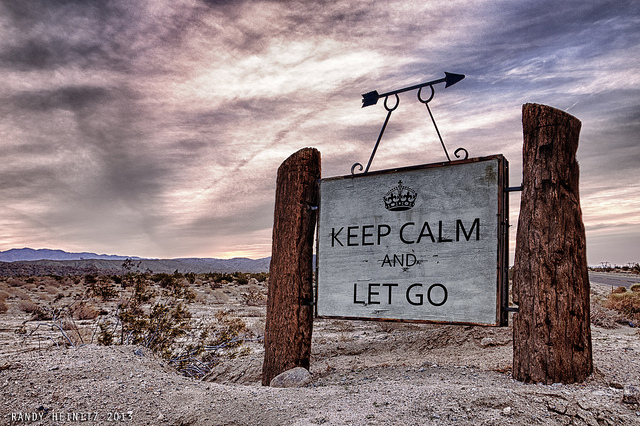
    Keep Calm and Let Go

    “Genuine forgiveness does not deny anger but faces it head-on.” ~Alice Duer Miller

    The man who I thought was my soul mate walked out on me fourteen years ago. He immediately remarried a lovely, beautiful woman who was everything I was not.

    I am desperate to fall in love. I’m thirty-eight. I want a baby. I want a relationship. I feel alone.

    A year ago, I fell unexpectedly in love with my photographer. Yes, star-struck romantics, it was just like the movies. Shy, awkward woman gets pictures taken for her brand-building website, and she is completely unraveled by his boyish sweetness and the power of his lens.

    I had never felt so beautiful, so free, so seen, so celebrated. It was a wham-bam-thank-you-mam whirlwind romance. We “hung” out only four times.

    But I had felt the life times between us, even if he didn’t.  And he didn’t. He didn’t choose me. But that didn’t stop me from becoming a crazy woman. Obsessed.

    I cried every other day, made up stories, fantasies. Of course we had shared past lives together. He was my “real” soul mate.

    Even if my mind was making up the stories, my body remembered. Why else would I be so upset? I felt like I was dying, my heart was being squeezed into blackness, and all I could do to get past the tears was scream.

    I had many, many moments that looked like this:

    Imagine me, on my bed, with a box of tissues, crying from the pit of my soul. Snot coming out my nose and spit out my mouth, all dripping into a sticky pool on my bed. I’m angrily screaming out and yelling “Why?!? Haven’t I suffered enough pain? I’ve done what I thought was right. I’ve prayed. Meditated. Done good deeds. Challenged myself. Don’t I deserve love? The man I want? What can I do differently? What is wrong with me? Why am I not blessed? What do I have to DO-O-O-O-O-O-O-O?!”

    Not a pretty scene.

    It was gut-wrenchingly painful being in that victim hell realm. I had to get out. But how?

    How do you get out of your own way? How do you survive when you are drowning in a pit of dreadful dark emotions and thoughts? All I could think about was that penetrating question, “Universe, what do I have to do??

    Do? What do I have to do, right? Because obviously, I did something wrong or didn’t do something right to win his love.

    In this two-lettered word, do, I realized everything. It wasn’t about doing. It was about surrendering, letting go, and trusting in the organic flow of life.

    Not easy.

    I constantly forget this, and the universe kindly reminded me of my sticky attachments to the external, yet again. Then, to make matters worse, that little voice crept up and said in its annoying voice, “You need to look inside for love, not on the outside.”

    Who’s heard that before?

    And I say back defiantly, “Easy for you to say. I’m only human. I’m not an enlightened being. I want love, damn-it. Love!”

    Then, I stopped. I took a breath, dropped into my body, and surrendered. And then surrendered some more.

    Finally, I said to myself, “It’s okay to want love. It makes me a loving human being. It’s even okay that I became a crazed, angry woman, mad at the world, making up fantastical, delusional stories. It happens. But, mainly it’s okay because deep, deep down inside myself there was a lie I was telling myself.

    (Breathe)

    I was telling myself that it was my fault for being so unlovable, so broken that these men didn’t choose me. And of course, I know that’s not true.

    At first, I felt like an idiot. Geez, not the stupid loathing-lack-of self-love-thing again. But then I remembered to give myself empathy. I forgave myself for my lie because I know that many of us on this planet have the same one.

    That is what makes us human.

    Self-acceptance, forgiveness, and self-love washed over me. And I felt a little bit better, lighter. I felt like I was thrown a divine rope to pull me out of that pit of despair.

    I went through this routine about 100 more times, until one day, months later, I felt normal, clearer, and joy eventually snuck in again. I haven’t met Mr. Right yet, but I’m hopeful. I’m more grounded, more open, more trusting, and less attached.

    And when I start to feel the chatter of my mind and those icky feelings bubble up again, I remind myself of what I learned months before. There is a universal process of forgiving and letting go. We each have our own way of describing it, but mine goes something like this.

    1. Acknowledge what you are feeling, your anger, your sadness, and your pain.

    2. Release it. Express it (safely, away from blunt objects, and in the comforts of your home). Don’t hold it in your body to fester and turn into disease!

    3. Ask yourself the tough questions, and answer truthfully until you get to the very bottom of your pit of despair. There, you will find the treasure: the lie you have been telling yourself.

    4. Be gentle. Accept your lie. Forgive yourself for telling it.

    5. Lovingly let it go and rewrite your story. For me, it was: “I’m not unlovable. I’m lovable, and love will come to me in its perfect timing! Yahooo!”

    6. Finally, chuckle at the absurdity of it all, and remind someone else of this human process of death, rebirth, and growth through your own sharing, storytelling, and your art.

    Breathe. Breathe. Breathe. And smile.

    Photo by Randy Heinitz

  • Tiny Girl with Huge Wisdom

    Tiny Girl with Huge Wisdom

    Feeling down on yourself and worrying about what others think of you? Take a page from young Breanna Youn’s book…

  • How to Stop Judging and Being Hard on Yourself

    How to Stop Judging and Being Hard on Yourself

    “You, yourself, as much as anybody in the entire universe, deserve your love and affection.” ~Buddha

    For a long time I joked that if I had a time machine, I would go back to 1989 and give my sixteen-year-old self a swift butt kicking. But then a few months ago, on my fortieth birthday, a friend posted a picture of me at sixteen on Facebook.

    Seeing this image of myself totally threw me for a loop. Other than a school photo, it’s probably one of the few pictures I am aware of from that time in my life.

    I spent some time contemplating this version of me glancing sideways at the camera. Under the surly expression of not wanting my photograph taken, there is undeniable beauty and innocence.

    What makes it even more poignant is that I am the mother of a teenage boy who happens to be sixteen right now. His teenage drama has brought back so many memories of myself at that age.

    For most of my career as a teenager I was preoccupied with being cool, with cultivating a counter-culture, bohemian persona (assuming clove cigarettes, On the Road, and a pile of mixed tapes constituted “bohemian”). Rolling my eyes at my mother was a near constant affectation.

    I was certain that I knew it all; I had the rest of my life all figured out and I rejected anything that didn’t fit with my narrow understanding of the world. I now know there were countless experiences I missed out on by virtue of my stubbornness and general disdain for everything.

    I avoided most of the mainstream high school dances and events. I dropped out of clubs and activities as soon as they felt challenging. I didn’t bother investigating the many academic and social opportunities that came my way.

    What I would have regarded not long ago as a silly, selfish, snotty teenage attitude, I now realize is something else entirely. In that picture I see the seeds of pain and hurt—some already planted and taking root; some yet to be sown.

    Lack of encouragement and confidence was written all over my face. The trauma of rejection and the fear of not measuring up was so apparent. That cool thing was just an act—a part I was playing to protect the hurt little girl that I really was.

    It occurred to me as I observed her tentative gaze that this girl is still a part of me and deserves my love and tenderness, not my judgment. She deserves respect for the woman she is going to become and comfort for the child she has been.

    Those reflections brought me full speed into the present moment. Seeing this image of myself in a new light forced me to examine the way I treat myself today. I tend to be pretty understanding and gentle with others, but so tremendously unforgiving with myself.

    Maybe it’s a sense of guilt over squandering my potential. Or maybe I’ve grown to be hyper-vigilant about seeming unworthy. Perhaps I’ve just been metaphorically giving my inner sixteen-year-old a butt kicking all along.

    Whatever the reason, when I notice in hindsight that I’ve made a bad decision or missed an important detail, I beat myself up. Whether it’s buying something that turns out to be a waste of money or spending time goofing off on the Internet, I often feel like I’m that teenager in need of a stern, judgmental lecture.

    I have yet to really figure out why I’m so ruthless with regard to my own mistakes but I’m pretty sure I’m not alone. If our culture’s lack of self-esteem is any indication, this seems to be a challenge for many people.

    I’ve heard it said that until you can love yourself, you can’t truly love others. I’m not sure how much I agree with that. In fact, I’ve come to think of maternal love as loving someone else more than you love yourself.

    What I do know is that struggling to love myself makes showing up in the world a big challenge. Showing up as my authentic self requires so much effort. In fact it’s nearly impossible when I don’t feel self-love.

    I strongly feel that lack of self-love holds us back. It prevents us from connecting with our purpose and doing great things. I may be over-generalizing but the scarcity of self-love in our society seems to be at the root of so many common problems.

    It’s important to understand that loving yourself doesn’t mean you are selfish or a narcissist or that you don’t take responsibility for your mistakes. It means that you treat yourself fairly and with respect.

    Self-love means that I forgive myself for my errors and continue striving to be the best person I can be. It means I believe in myself and put the same effort into my well-being as I do for my loved ones.

    It should come as no surprise that the practice of self-love is far easier said than done. But, in my often-imperfect journey to loving myself, I’ve learned a few things along the way:

    1. Challenge the notion that there’s any merit to being hard on yourself.

    Beating yourself up may have the short-term effect of making you work harder or be more diligent. But in the long run, being unkind to yourself causes resentment, a sense of defeat, and eventually some emotional scars.

    2. Add a new twist to the Golden Rule.

    We always teach children that they should treat others the way they wish to be treated. A good rule as we grow up is to treat ourselves according to the same standards we treat others.

    You probably aren’t the kind of person who would call their child, mother, or best friend “stupid,” so why would you say that kind of thing to yourself?

    3. Know that forgiving yourself doesn’t mean lowering your standards.

    There is nothing wrong with striving to be the best you can be. However, it’s important to cut yourself some slack when you fall short of expectations.

    Making a mistake or not being perfect is simply part of being human. If you didn’t do your best, it’s okay and it’s really not the end of the world. Dust yourself off, keep moving forward, and love yourself for all your imperfections!

    While it’s definitely not easy at first, I promise that learning to love yourself really does pay off. The love and kindness we have for ourselves may eventually allow us to change the world!

  • When Trying to Be Positive Brings You Down

    When Trying to Be Positive Brings You Down

    “Serenity comes when you trade expectations for acceptance.” ~Unknown

    How many of us have caught ourselves feeling as though we’re imposters when we’re trying to talk about a difficult situation in a positive light? We’re often fed the idea that how we feel is in how we decide to see life, which, I agree with; however, sometimes I think that idea gets taken to a deceptive extreme.

    In the midst of one of my mini-meltdowns the other day, I called my friend and told her what had been going on in my head the last few months.

    “It’s sounds as though you have some shame issues with your experience. It’s okay to admit that you’re disappointed and angry. You need to allow yourself to accept it. It’s the first step in healing…” my friend asserted as I was invalidating myself while I attempted to explain how I felt about the last year of my life.

    “What a relief,” I thought to myself as she went back and validated every one of my thoughts and feelings.

    Have you ever known something in the back of your mind, but you needed someone else to bring it to the front?

    Any time I talked about my experience, I would always do my best to portray it in the best light possible. We’re supposed to be optimistic about how we see life and our experiences, right? The problem was that I was doing it at the cost of compromising the authenticity of my story.

    I moved halfway across the nation, leaving behind my well paying (but miserable) job, friends, and family in search of finding work that filled instead of drained me. I accepted a one-year position as an intern counselor at a residential boarding school, working with adolescents coming from particularly challenging backgrounds.

    I loved working with the students and learned invaluable lessons from them and their stories.

    I hated constantly feeling as though I wasn’t (good) enough.

    I poured everything I had into that year, and admittedly, there were definitely times I failed because I struggled to find the support I needed while carrying the weight of a massive life upheaval, trying to be “present” for my friends and family back home, and balancing helping to guide the students through their issues while trying to not retrigger my own.

    Additionally, I couldn’t meet all the expectations coming from so many different people and places, so I did the best I could but it didn’t cover everything.

    Though I would tell a friend that is all you can do and that is good enough, like so many others, I am my own worst enemy and consistently felt like a failure.

    I returned to my home state feeling defeated not only regarding my performance at the school, but about returning without having found what I set out looking for.

    I felt even more clueless and lost than before I left, and it was embarrassing. Who leaves everything behind looking for something, and then returns without it?

    My friend continued to gently remind me that not everything is within my control when I’d protest saying things like, “but isn’t how we see life all about our perceptions? Aren’t we supposed to be able to go out and fix things if they aren’t filling our needs or change how we look at them?”

    “So, it wasn’t what you were hoping it would be. That’s not your fault. You need to admit and accept that you feel the way you do, and it’s okay. Trying to cover up what’s really going on might be what’s holding you back from moving forward.”  

    Oh. Right.

    When she said that it seemed like the most obvious thing in the world. It’s okay to say that there were some flaws with the program that had nothing to do with me. It’s okay that the experience wasn’t perfect. It’s okay that I wasn’t perfect.

    I was trying so hard to always put a positive spin on my story that I wasn’t really telling my story anymore, and that subtle lie was corroding my own sense of self-worth.

    All that said, I do believe in doing our best to “look at the bright side,” so to speak, but not before we can honestly assess our experience and accept how we really feel.

    It’s only when we can be truly honest with ourselves about how we feel that we will be able to find the positive lesson, heal, and move on.

  • Your Reality Is a Reflection of What You Believe You Deserve

    Your Reality Is a Reflection of What You Believe You Deserve

    Reflection

    “You are very powerful, provided you know how powerful you are.” ~Yogi Bhajan

    Over the last ten years I have learned time and time again that our reality is a reflection of what we believe we deserve, often on an unconscious level.

    I discovered this about a decade ago while living in Belize—a diving vacation hotspot on one end and gang-infested, poverty-ridden land on the other.

    Back then I was avoiding the 9-5 life. You may say I was running from something, such as routine and following the status quo, but I was also looking to find my worth by escaping my everyday life.

    I now see that my self-worth was pretty close to zero, and the concept of self-love hadn’t had a chance to make its way on my radar.

    Despite the fact that I had the financial savings, my fear and inner lack of deservingness led me to a cockroach-infested wooden four by four. I can’t call it a cabin since there was neither a kitchen nor a bathroom, but luckily there was an outhouse outside.

    Essentially, I had manifested my own jail cell, which represented what I thought I deserved.

    I had seen other gorgeous living spaces that, in reality, were cheap, but when I saw them I thought, “I don’t deserve to be in a place like this.”

    So I settled for a cockroach-infested box that scared the heck out of me. Ultimately, it was too much to bear, and I went off to the next country, once again in a living space that smelled horrendous. I stuck it out as long as I could until I was so low that I had no choice but to leave once again.

    At the time I wasn’t able to see that what I had chosen was a reflection of my low self-worth. I felt like dirt and lived in it.

    For years to come, that fear and lack of deservingness followed me in less than ideal living situations.

    As I started to look at self-love, and practice affirmations, yoga, and meditations in nature, it was like a light went on, mostly unconsciously, until the day came when I consciously realized: I deserve better.

    That was all it took. The moment I made that connection, I released my fear of my small paycheck and took action to improve my reality. I knew I had to take the first step and then the universe would follow and take care of me.

    That belief and faith helped me look for better opportunities, which I finally believed I deserved, and put myself out there to pursue them.

    I discovered that I had to do my part, and then I had to surrender and trust that whatever was in the highest good would manifest.

    As my inner self-worth grew and I took conscious action to improve my circumstance, I finally got my own apartment and a better job.

    The magic in this was that I had quit the old job where I was undervalued even before I heard back from any of the other places I had reached out to.

    I took the risk and made the first step to let go of the old job that was wearing me down, and trusted that all my hard work would manifest a new opportunity.

    That was exactly what happened.

    What amazes me is that our practice of deeper self-love is continually evolving and growing.

    It’s not like one day you wake up and everything is perfect. In reality, it’s common to wake up some days questioning your value, feeling down, and finding yourself in less than ideal situations.

    This is why awareness is the magic key.

    Once you are aware of this, you can change it. Once you can see that you are sabotaging yourself, you can choose to deepen your spiritual practices. This will energize you and increase your faith, helping you take action, which always leads to a more fulfilling reality.

    Through the years I have continued to let go of work opportunities that no longer helped me grow or that negated my value. It’s scary every time you let go of something that feels safe (even if it is draining) but without fail I have found that when you release something that no longer serves your highest potential, you open yourself up to something better.

    And yet the shadow of self-worth still comes up. Sometimes I’ll catch myself looking at something and thinking, “That’s too nice for me.”

    But the difference between now and way back in the past when I lived with cockroaches is my awareness.

    The moment I recognize my old habit pattern of self-worth emerging, I am able to tame the beast and realize that I am worthy, and it is okay to want and enjoy nice things.

    Awareness is the first step in releasing the old habitual patterns of lack so that you can start living and breathing the feelings of a full life.

    This doesn’t mean “full” of physical things, since true abundance comes from within. It’s also having proper living conditions that feel safe and peaceful, having healthy food to eat, and the ability to enjoy some of life’s pleasures.

    So if you find yourself in a less than healthy and ideal situation, take a moment and ask yourself:

    1. Does this relate at all to your feelings of self-worth and self-love?
    2. Is there any way that you are responsible for creating the reality that you are living?

    Take some time reflecting on these two questions, and then sit in silence for about five minutes as you follow the rhythm of your breath and focus your attention on your heart center.

    Be aware of what arises. Notice without judgment, and then for the next five minutes repeat “I am worthy” or “I love myself.”

    This is like creating your own mantra that you breathe in and out. It is effective at changing your self-talk so that you feed your mind positive thoughts about yourself instead of negative ones.

    What you feed your mind grows and becomes your reality.

    Then ask yourself:

    How do you want to be living? And, how can you inject your own self-love into this equation?

    Once you know your worth, once you truly care about yourself on a deep soulful level, you will want to take care of yourself and give yourself the best. Through self-love and self-worth you will find the courage to take action to live a better life.

    And if you are having difficulty with this process, please remember it is a process, and rarely does this change happen overnight. But it does happen.

    You can create a better life. Start by being aware of how you treat yourself. You can pray, meditate, practice affirmations, and ask your inner guidance for help.

    All of these actions will increase your faith and energy, which will lead to increased positive actions to enhance your life. Start being kinder in how you talk to yourself, how much time you give yourself, and how often you treat yourself to something lovely. (This can be as simple as a warm cup of cocoa.)

    Love yourself first and the world will love you back.

    Photo by Aevar

  • How to Practice Self-Compassion: 5 Tips to Stop Being Down on Yourself

    How to Practice Self-Compassion: 5 Tips to Stop Being Down on Yourself

    Inner Light

    “If your compassion does not include yourself, it is incomplete.” ~Jack Kornfield

    I never wanted to see a therapist. I imagined settling onto the storied couch and seeing dollar signs appear in concerned eyes as I listed the family history of mental illness, addiction, and abuse. I feared I’d be labeled before I’d ever been heard.

    But after experiencing the emotional shock of witnessing a murder, I knew I needed a space to grieve. So I gathered all of my courage and laid myself bare to a very nice woman who had Don Miguel Ruiz’s The Four Agreements on her coffee table. I trusted her.

    Within moments of meeting me, that very nice woman shattered the world I knew. The characteristics I viewed as strengths—my drive, my nurturing nature, my strength under pressure—were neatly organized into a single neurosis: codependency.

    As I leafed through the pages of the book she recommended to me, I saw myself in the narrative of the co-dependent: giving until I had given all that I had; investing myself deeply in the mental health of those around me; constantly trying to make others happy.

    But rather than find comfort in the words on the pages, I found myself sinking into despair. All of those years I thought that I had escaped my past unscathed, and here I was, stuck with a label: codependent.

    Week after week, I dove deeper into this idea that perhaps I needed to confront my past; perhaps I did need to grieve. I cried. I raged. I stopped eating. I ate too much. My health declined.

    My therapist told me I needed to relax. So I woke up early every day, determined to be the most relaxed person I could be: always striving to relax harder, better. And yet I didn’t feel better; I felt worse.

    By accepting a label given to me by a near stranger, I had unconsciously shifted my focus from living in the present to fixing something that I perceived to be wrong with my past.  And it had overwhelmed me.

    My inner critic gained a strength previously unknown to me. Every day, I thought about how I might make myself better. I cursed at myself for being unable to let go, and then I cursed at myself for cursing at myself.

    I was exhausted.

    As I slowly came to realize that I could not keep up with that inner critic, something changed. I accepted that I couldn’t be perfect. I accepted that I was human.

    Only by finding my edge—that place where I couldn’t take any more—was I able to finally let go. When my inner critic started to rear its head, I learned to stick up for myself as I might defend a friend: “I am only human. I am not perfect, nor do I need to be.”

    With that simple acknowledgement—I am not perfect, nor do I need to be—I was finally able to free myself not only from the pain of past experiences, but also from the pain that came from reducing myself to a label.

    By learning to practice self-compassion, I became comfortable with the person I am today, free of expectations.

    The journey to self-compassion was a difficult one for me, but I believe it to be a journey that I will only need to take once. Today, I have the tools I need to practice self-compassion without having to first battle my inner critic, and these are tools that anyone can use:

    1. Acknowledge challenges and let them go.

    I always remember, “I am not perfect, nor do I need to be.” When entirely normal emotions come up—frustration, stress, anger, fear—I remind myself that no one expects me to be perfect. I allow myself to feel whatever it is I need to feel and to then let it go.

    2. Remember that you are exactly where you need to be.

    When we start our journey inward, we may learn things about ourselves that shock us. I try to remember that every challenge has its purpose and I am exactly where I need to be today.

    3. Practice self-growth rather than self-improvement.

    Improvement implies that there is something to fix. Rather than attempting to “fix” what’s “wrong,” I focus instead on strengthening what’s right. Work toward personal growth rather than some idea of perfection.

    4. Speak to yourself as you would speak to a friend.

    As I faced challenges in my personal growth, I learned to be kind to myself. If a friend was struggling with an uncomfortable emotion, I would never criticize that friend with language like, “Why can’t you just learn to be happy all of the time?!” So I don’t speak to myself that way either.

    5. Give yourself a hug.

    Go on. Right now. Just do it. That felt good, didn’t it?

    Self-compassion is an inside job. I’ve learned that if I am gentle with myself, the world becomes a gentler place. I invite you to experience it too.

    Photo by Joseph Vasquez

  • Win a Free Copy of Tiny Buddha’s Guide to Loving Yourself

    Win a Free Copy of Tiny Buddha’s Guide to Loving Yourself

    Tiny Buddhas Guide Cover 3D

    UPDATE: The winners for this giveaway have already been chosen. 

    The winners:

    • Antwanette Miller
    • Rebecca

    This may seem like Déjà vu, because I published an almost identical post last Friday. It’s now a new week (soon to be weekend) and a new chance to win a copy of Tiny Buddha’s Guide to Loving Yourself!

    For those of you who already bought a copy, I hope you’re enjoying it!

    And I have a special request for you: Since it’s brand new, there are currently only four reviews on Amazon. (Thank you so much to those of you who responded to my request last week and wrote one!)

    Those reviews go a long way in influencing people who may benefit from the book.

    If you’ve found the site and the book helpful, I would be so grateful if you would take five or ten minutes out of your day to support me and the site by reviewing Tiny Buddha’s Guide to Loving Yourself

    Whether you write two words, two sentences, or more, it will make a tremendous difference.

    Now on to today’s giveaway!

    This one’s a little different, in that you won’t be entering to win a copy for yourself; instead, its an opportunity to have a copy mailed to someone you love, directly from my publisher, with a special note from you. 

    About Tiny Buddha’s Guide to Loving Yourself

    Tiny Buddha’s Guide to Loving Yourself is a collaborative book featuring a collection of stories from Tiny Buddha contributors, along with tips to help you feel good about yourself and your life.

    The book shares 40 unique perspectives and insights on topics related to loving yourself. It will help you:

    • Release shame about your past and the limiting beliefs that keep you stuck
    • See yourself as beautiful and valuable, with all your flaws and weaknesses
    • Accept yourself more and judge yourself less
    • Forgive yourself for your mistakes and stop being hard on yourself
    • Minimize the need for approval to feel more confident
    • Let go of the comparisons that keep you feeling inferior
    • Feel complete so that you no longer look to others to fill a void within yourself
    • Find the courage to share your authentic self for deeper connections with others
    • Learn to take care of yourself instead of putting everyone else’s needs first
    • Believe that you’re valuable so you can start creating a life you love

    I started Tiny Buddha and created this book because I believe there is a healing power in recognizing that we are never alone with our challenges.

    And there’s nothing wrong with us for what we’ve been through or what we’re going through.

    No matter how we’ve struggled, no matter what our flaws or weaknesses, we are worthy of being fully seen—and we can make a difference in the world by doing it.

    I hope this books helps you remember, in times of doubt, that you are beautiful, imperfections and all, and you can thrive not in spite of them, but because of them.

    The Giveaway

    To enter to win one of two free copies of Tiny Buddha’s Guide to Loving Yourself, to be mailed to someone you love with a special note from you:

    • Leave a comment on the post sharing one thing you think other people appreciate about you
    • Tweet: RT @tinybuddha Enter to win a free copy of Tiny Buddha’s Guide to Loving Yourself! http://bit.ly/16yY2ru

    If you don’t have a Twitter account, you can still enter by completing the first step.

    You can enter until midnight PST on Monday, October 28th. Have a great weekend everyone!

  • Book Giveaway: Tiny Buddha’s Guide to Loving Yourself

    Book Giveaway: Tiny Buddha’s Guide to Loving Yourself

    Tiny Buddhas Guide Cover 3DUPDATE: The winners for this giveaway have already been chosen. They are:

    • Sunny Kharbanda
    • UnicaPoet

    It’s been 10 days since the launch of Tiny Buddha’s Guide to Loving Yourself, and I’m excited to share that the book has been a bestseller in Amazon’s self-esteem category since then.

    For those of you who already bought a copy, I hope you’re enjoying it!

    And I have a special request for you: Since it’s brand new, there’s currently only one review on Amazon. Those reviews go a long way in influencing people who may benefit from the book.

    If you’ve found the site and the book helpful, I would be so grateful if you would take five or ten minutes out of your day to support me and the site by reviewing Tiny Buddha’s Guide to Loving Yourself

    Whether you write two words, two sentences, or more, it will make a tremendous difference.

    Now on to today’s giveaway!

    This one’s a little different, in that you won’t be entering to win a copy for yourself; instead, its an opportunity to have a copy mailed to someone you love, directly from my publisher, with a special note from you. 

    About Tiny Buddha’s Guide to Loving Yourself

    Tiny Buddha’s Guide to Loving Yourself is a collaborative book featuring a collection of stories from Tiny Buddha contributors, along with tips to help you feel good about yourself and your life.

    The book shares 40 unique perspectives and insights on topics related to loving yourself. It will help you:

    • Release shame about your past and the limiting beliefs that keep you stuck
    • See yourself as beautiful and valuable, with all your flaws and weaknesses
    • Accept yourself more and judge yourself less
    • Forgive yourself for your mistakes and stop being hard on yourself
    • Minimize the need for approval to feel more confident
    • Let go of the comparisons that keep you feeling inferior
    • Feel complete so that you no longer look to others to fill a void within yourself
    • Find the courage to share your authentic self for deeper connections with others
    • Learn to take care of yourself instead of putting everyone else’s needs first
    • Believe that you’re valuable so you can start creating a life you love

    I started Tiny Buddha and created this book because I believe there is a healing power in recognizing that we are never alone with our challenges.

    And there’s nothing wrong with us for what we’ve been through or what we’re going through.

    No matter how we’ve struggled, no matter what our flaws or weaknesses, we are worthy of being fully seen—and we can make a difference in the world by doing it.

    I hope this books helps you remember, in times of doubt, that you are beautiful, imperfections and all, and you can thrive not in spite of them, but because of them.

    The Giveaway

    To enter to win one of two free copies of Tiny Buddha’s Guide to Loving Yourself, to be mailed to someone you love with a special note from you:

    • Leave a comment on the post sharing one thing you love about yourself
    • Tweet: RT @tinybuddha Enter to win a free copy of Tiny Buddha’s Guide to Loving Yourself! http://bit.ly/GTjqRC

    If you don’t have a Twitter account, you can still enter by completing the first step.

    You can enter until midnight PST on Monday, October 21st. Have a great weekend everyone!

  • Silencing Your Inner Critic: You Don’t Need to Torture Yourself to Grow

    Silencing Your Inner Critic: You Don’t Need to Torture Yourself to Grow

    Woman in a field

    “You yourself, as much as anyone in the entire universe, deserve your love and affection.” ~Buddha

    I was tortured by self-hatred for most of my life.

    There were aspects of myself that I had a hard time loving. I didn’t like that I am competitive, that I was not a blonde with blue eyes, that I am not good at math or managing money.

    I did everything I could to hide these things. I was over-caring, over-helping, and over-accommodating others.

    I think I did a pretty good job of not being myself. This created additional psychic pain in me. I felt like Picasso who was not allowed to paint or Mozart who was banned from approaching another musical instrument again.

    The funny thing is, I was the one doing it to myself. I was no longer a child under the mercy of my critical, perfectionist parents (who were in pain and unconscious themselves). I had become my parents! I had become my worst critic.

    I wondered, “Why am I so mean to myself? What could I have done in a past life or in this lifetime that could warrant such self-torture?”

    Interestingly enough, even when I tried to conjure up the filthiest, sickest scenario, I had a hard time hating that imaginary person doing the crime.

    I had worked with criminals in a prison. I knew their stories and what they went through. It doesn’t condone their behavior, but I could see the chain of pain and lack of love that was passed on to them, and then from them. I just couldn’t hate them.

    If I couldn’t hate these criminals, why did I hate myself so much? It seemed so illogical.

    Then I remembered reading about the inner critic. I looked into it further and started getting to know this beast. In addition to my inner critic, there were many parts of myself that had helped me survive.

    I had an inner protector, a hermit, a social butterfly, a flirt, and many other parts that served a purpose.

    For example, “The Flirt” was helping me make friends and gain clients and extract the juice out of my relationships by being playful. “The Hermit” knew when I needed to recharge my mental, emotional, and physical bodies. “The Social Butterfly” helped me find and attract communities that met my different needs.

    They all had a job to do, but they needed to be in balance.

    Some of these selves were created out of necessity when I was young and didn’t have enough safety and kindness in my life. But I was no longer that little girl. Some of these selves were such loyal servants that they never left me all my life. I recognized this with gratitude that came out of nowhere.

    Suddenly, instead of hating my inner critic, I felt a sense of compassion for how hard she had been working to keep me safe from rejection, ridicule, abandonment, and many other rational and irrational fears. I decided that I didn’t want her to work so hard anymore. She had done a great job.

    Maybe I was selfish, lazy, negative, arrogant, and bitter. So what? Aren’t all these parts of me and personality traits so human? How many people do I know and love who have some unpleasant or unbalanced qualities or habits? Many. Their qualities do not make me not love them. Those are their quirks.

    So then came the self-inventory.

    Do I make a genuine effort to call myself out on my stuff when I am conscious enough to see it? Yes.

    Do I make an effort to make amends with people I have hurt? Yes.

    Am I someone who genuinely wants to be a balanced individual who serves others? Yes.

    Then what is the problem?

    Does this mean that I was going to let it all go and be a mean, bitter, selfish, codependent woman?

    No.

    How about if I cut myself some slack? How about I practice being gentle with myself and give this poor inner critic a break?

    “I no longer need to torture myself to grow.”

    Oh, that felt good to say it to myself. I took another deep breath to let this new reality/belief set in. I felt freer, and more loving toward all of life.

    I knew that I had to work at sustaining and integrating this new belief. I had, in the past, had big revelations but had taken the wisdom for granted. Then I would slip back to my old behavioral and thought patterns.

    Back then I didn’t understand that our brain needs to integrate new concepts in the same way we learn a new language.

    So I immediately made a plan. It didn’t have to be a perfect plan, but had to be something I could stick to, since I knew that our brain learns by repetition.

    I wrote down affirmations that felt right to my heart. I started a running “What I love about myself” list. I started writing down things I was even shy about. “I love my hair. I love my toes. I love my sense of humor. I love my fragile, sensitive heart.”

    I was finally on paper. And it didn’t look so bad. I started reading it out loud to myself every day, and adding to it.

    My neediness toward people started decreasing. When I made plans to hang out with them, I noticed that my secret need was no longer to be comforted, approved, or supported by them. I was just open to every encounter for what the exchange would bring for everyone involved.

    The shift wasn’t overnight, but I kept at it. The more love I felt for myself and the less I gave my full attention to my inner critic, the happier I became.

    My energy shifted. People were attracted to me as clients and friends. After three months of isolation, I was being invited to parties, camping trips, and concerts. I picked where I wanted to be and who I wanted to be around. I listened to my inner child and followed her nudges.

    These are the steps I followed in learning to love myself:

    1. Get to know your inner critic, its voice, and its intentions.

    Activate your observer self and listen to what it is saying as if you are hearing it on the radio. Recognize that this is an old tape repeating the criticism of society and the people who raised you to ensure your emotional and physical safety. It is running on autopilot.

    2. Take some time to yourself; go deep inside.

    Explore what you could have done to deserve this much self-hate/criticism. Look for an example of a person or situation where you can’t hate someone who’s made a mistake, even if you wanted to.

    Let your brain help you find proof that you don’t deserve your self-criticism. When you find it, you will create a crack in that thought pattern. But that alone is not enough to break it open and get it to release.

    3. Make a realistic plan.

    List three things you can do to raise your self-esteem. These can be as simple as: “I will say ‘I love you’ to myself ten times a day,” or “I will look at myself in the mirror and identify things I like about myself every morning before leaving the house.”

    The trick is that they need to feel doable to you. This is your plan. You are in charge of what you want to do. Make it a joyful and fun one.

    4. Stick with the program.

    I find that I get the best results when I keep track of it. Seeing a day or two of missing my exercises or meditation bothers me and motivates me to get back into it.

    5. Start hanging out with people who make you feel good.

    These are the people who see and experience you as who you really are. Let people who love you reflect the real you back to you. Start hanging out with people who could use cheering up. Reflect back to them how you see them. Practice the balance of receiving and giving.

    6. Know that you have the power to take the reins from this inner critic.

    It has been doing a great job, but it doesn’t need to drive the car anymore. Once you decide this, the rest is pretty much practice and patience.

    My inner critic was so harsh that it was hard for friends to watch me hurt myself that way, but I’ve learned to love myself. You can do it too.

    Photo by MrVertrau

  • Love Yourself and Your Life: 7 Reasons to Buy the New Tiny Buddha Book

    Love Yourself and Your Life: 7 Reasons to Buy the New Tiny Buddha Book

    Tiny Buddhas Guide Cover 3D

    10/9/13: The pre-order promotion is now over. You can learn more about Tiny Buddha’s Guide to Loving Yourself here!

    If you visited the blog any time during September, you likely saw some of the many self-love interviews featuring contributors from the new book Tiny Buddha’s Guide to Loving Yourself: 40 Ways to Transform Your Inner Critic and Your Life.

    I’m excited to announce that today is the official launch date! If you already ordered a copy on Amazon, it’s possible that you already received it, as I’ve recently learned they shipped a little early.

    If you haven’t redeemed the free bonus pack yet, please forward your order confirmation email (for hardcopy or digital, from any book vendor) to bookbonus(AT)tinybuddha(DOT)com.

    For those of you who didn’t yet order a copy of Tiny Buddha’s Guide to Loving Yourself, today is the final day to receive the self-love bonus pack—including 8 digital items, valued at over $150—as a free gift with your purchase.

    About the Book

    Including 40 blog posts from tinybuddha.com, Tiny Buddha’s Guide to Loving Yourself offers more than just advice; it offers in a window into our shared human experience, and universal lessons we can all apply to feel happier with ourselves and our lives.

    These posts have reminded more than 1.5 million monthly readers that we are never alone, and we don’t have to live life controlled by our inner critic. They touch upon ideas that will help you:

    • Release shame about your past and the limiting beliefs that keep you stuck
    • See yourself as beautiful and valuable, with all your flaws and weaknesses
    • Accept yourself more and judge yourself less
    • Forgive yourself for your mistakes and stop being hard on yourself
    • Minimize the need for approval to feel more confident
    • Let go of the comparisons that keep you feeling inferior
    • Feel complete so that you no longer look to others to fill a void within yourself
    • Find the courage to share your authentic self for deeper connections with others
    • Learn to take care of yourself instead of putting everyone else’s needs first
    • Believe that you’re valuable so you can start creating a life you love
    • The stories are categorized into 10 chapters, connected to each of these themes.

    At the end of each chapter you’ll find four tips—one from each of the four posts in that section. They’re ideas you can turn to whenever you need help changing your thoughts, and consequently, your feelings and experience of the world.

    About the Bonuses

    Today only, anyone who orders Tiny Buddha’s Guide to Loving Yourself will receive instant access to the “Self-Love Bonus Pack,” which includes 8 digital resources, valued at more than $150.

    Those items include:

    • From Coping to Thriving: How to Turn Self-Care into a Way of Life, by Hannah Braime
    • Flowing Through the Void: Creating Miracles Out of Struggles by Activating Presence, Power, and Passion, by Amyra Mah
    • Complete Confidence eCourse, by Emma Brooke
    • An Awakened Life: A Journey of Transformation, by Julie Hoyle
    • Create a Brilliant Vision for Your Life and Business, by Margie Beiswanger
    • 5 Days of Self-Compassion, by Joanna Weston
    • Be You, Unapologetically by An Bourmanne
    • Tiny Wisdom: On Self-Love, by Lori Deschene (me)

    7 Reasons to Buy Tiny Buddha’s Guide to Loving Yourself 

    If you’re still not sure that Tiny Buddha’s Guide to Loving Yourself is worth the cost ($13.50 on Amazon for hardcover, $9.99 for Kindle—both including the free self-love bonus pack for today only), consider these 7 benefits of owning a copy:

    1. The book features 40 candid firsthand accounts of overcoming physical and emotional challenges…

    …including abandonment, abuse, addiction, depression, eating disorders, and obsessive compulsive disorder, to name a few. If you’ve feared that no one can understand or relate to your pain, this guide will help you realize that you are not alone.

    2. You’ll find practical tips to help you deal with a wide range of issues related to self-acceptance and self-love…

    …including insecurity, perfectionism, jealousy, shame, self-judgment, rejection, confidence, self-care, and the fear of being alone.

    3. It’s Tiny Buddha, off the web.

    You could spend time searching through the archives for posts related to loving yourself, and then print them out for reading at home. Or you could purchase this book to have all those stories in one anthology—complete with summaries of the main insights and a collection of related quotes.

    4. You’ll find one story from my experience in overcoming shame, self-loathing, and self-destruction.

    I’ve never before written about my former battle with bulimia. In addition to exploring the lowest point of my struggle, I shared the main message of hope that’s helped me forgive and accept myself, and not just survive, but thrive.

    5. The book is easy to read—at home or on the go.

    With 40 stories in 10 chapters, you can easily read one story each night before bed, or jump around to the sections that feel most relevant to you. And with its compact size, it’s easy to carry in your purse or bag for a boost of clarity and confidence, wherever you go.

    6. Tiny Buddha’s Guide to Loving Yourself has received wonderful advanced reviews.

    As Amanda Owen, author of The Power of Receiving, wrote: “If you are ever hard on yourself—and who isn’t—you need to read this book.” And according to Dr. Kristin Neff, author of Self-Compassion, “This wonderful collection of personal stories and words of wisdom will help you become kinder and more compassionate to yourself, and ultimately show you how to lead a happier and more fulfilling life.”

    7. It’s a tiny book that can have a massive impact.

    Despite its small size and short stories, this guide explores feelings and challenges that could potentially limit your potential for peace and happiness—and also offers some powerful, effective practices to overcome them so you can feel good about yourself and your life.

    You can order your copy of Tiny Buddha’s Guide to Loving Yourself here. To claim the self-love bonus pack, forward your order confirmation email (for hardcopy or digital, from any book vendor) to bookbonus(AT)tinybuddha(DOT)com.

    I hope you enjoy reading this book as much as I enjoyed the collaborative process of creating it. As always, I thank you for your loving presence here at Tiny Buddha!

  • Tiny Buddha’s Guide to Loving Yourself Interview: Mary Dunlop

    Tiny Buddha’s Guide to Loving Yourself Interview: Mary Dunlop

    Mary

    This month we’re celebrating the upcoming launch of Tiny Buddha’s Guide to Loving Yourself, a book about taming your inner critic that features 40 stories from Tiny Buddha contributors. 

    Throughout September, you’ll have a chance to meet some of them through daily interviews here on the blog.

    Today’s featured contributor is Mary Dunlop, a writer and passionate student of life who believes we all have a special gift.

    In her contribution for the book, she shares how she learned to be comfortable in her own skin, and how we can learn to accept and embrace ourselves, just as we are.

    A little more about Mary…

    1. Tell us a little about yourself and your self-love journey.

    My name is Mary. I am a forty-seven year old writer. And, to me, self-love did not come naturally. I really had to work at it until finally finding my way through meditation.

    2. Have you ever felt there’s “something wrong with you”? If so, why, and what’s helped you change your perception?

    Yes, until I began connecting with myself in meditation I never felt my beauty and, no matter how much validation I received from others, I always felt uncomfortable and self-conscious.

    3. Have you ever thought something was a flaw only to realize that other people actually appreciate that about you? What was the “flaw”?

    Yes, sometimes, my lack of pretense. I had been pretending so much in my life that when I finally let that go and worked toward becoming more authentic, I feared some people would view this as a lack of polish.

    However, it felt good to smile widely and laugh loudly, and soon I discovered that one of the keys to my personal happiness lied in my ability to be myself and feel good about it.  Reaching that level of awareness also helped me attract people who appreciate me and like me just for me.

    4. What was your biggest mistake (that you’re willing to share), and what helped you forgive yourself?

    One of my biggest mistakes was constantly comparing myself to others and often viewing myself as inferior.

    I spent more than a few years of my life doing that, more time than I put into cultivating my strengths and dreams. Sometimes, I feel badly about that lost time and, when I do, I forgive myself quickly by remembering that at every given time I was doing my best with whatever level of awareness I was at.

    5. Complete this sentence: When other people don’t like me, I… 

    I’ve noticed that the more I like myself the more other people like me too, or at least, I tend to attract those who do. However, every now and then an instance will occur where someone may not like me or speak negatively about me.

    When something like this happens, I quickly remind myself of first three paragraphs of Don Miguel Ruiz’s second agreement from his book, The Four Agreements:

    “Nothing others do is because of you. What others say and do is a projection of their own dream. When you are immune to the opinions and actions of others, you won’t be the victim of needless suffering.

    We take things personally when we agree with what others have said. If we didn’t agree, the things that others say would not affect us emotionally.  If we did not care about what others think about us, their words or behavior could not affect us.

    Even if someone yells at you, gossips about you, harms you or yours, it still is not about you!  Their actions and words are based on what they believe in their personal dream. ”

    6. What are some areas in your life where you’ve compared yourself to other people, and what’s helped you let go of these comparisons?

    For me, the biggest problem was feeling comfortable in my skin, so to be comfortable with others I always had to look a certain way.

    If, God forbid, I had a bad hair day or a couple of extra pounds, I would view everyone else as beautiful swans and me the ugly duckling. Finally, I began to focus within through meditation, more specifically heart centered meditation, and slowly this self-consciousness melted away as I began to see myself in a different light.

    7. What’s one thing you would tell your younger self about looking to other people to complete you?

    I would say meditate, look within, find your sacred place! Another person can complement you but they can never complete you. Completeness can only be found in having a loving, healthy relationship with yourself.

    Society places much emphasis on being coupled, on finding that one soul mate, but don’t worry about that. Focus instead on your personal development and, once you’ve grown to a certain point and reached a certain place within, you will find the right mate, or rather, the right mate will find you.

    8. Have you ever felt afraid to show people your “real” self? Why—and what’s helped you move beyond that?

    I used to have a fear of people finding me to be “not enough”—not pretty enough, not smart enough, not sophisticated enough, not successful enough. So, as a result, I would become the world’s greatest actress and show people someone other than me.

    What helped me get past that was taking the time I needed to get to know the real me—my likes, my dislikes, my passions, my talents, and my dreams.

    9. What are the top three things you personally need to do to take good of yourself, mentally and emotionally?

    To take good care of myself mentally and emotionally, I need to take good care of myself spiritually. Consequently, for me, the top three things are:

    • Meditation
    • Running
    • Writing

    Through my journey I discovered that, as long as I don’t neglect it, my highly creative soul will always help me find a way to be happy.

    *Note: I edited this post to remove info about the pre-order promotion, which ended on October 8, 2013. You can learn more about Tiny Buddha’s Guide to Loving Yourself here.

  • Tiny Buddha’s Guide to Loving Yourself Interview: Sam Russell

    Tiny Buddha’s Guide to Loving Yourself Interview: Sam Russell

    sam-russell

    This month we’re celebrating the upcoming launch of Tiny Buddha’s Guide to Loving Yourself, a book about taming your inner critic that features 40 stories from Tiny Buddha contributors. 

    Throughout September, you’ll have a chance to meet some of them through daily interviews here on the blog.

    Today’s featured contributor is Sam E.A.B. Russell, a UK-based writer and photographer who considers himself a cynic by nature but tries to prove through his writing that cynics can be happy and positive too.

    In his contribution for the book, he shares some of the common defeatist, limiting beliefs that stand in the way of happiness.

    A little more about Sam…

    1. Tell us a little about yourself and your self-love journey.

    I’m a writer and photographer and I live with a smorgasbord of mental health difficulties. I started to develop love for myself when I realized that a) it’s okay for me to be different and b) only I can change my circumstances. That sounds so easy: be cool with yourself and take charge. The thing is, love’s not easy.

    Hate and anger—those are easy. They’re easy and comfortable, though painful, which is why it took me a long while to get myself on the path that I’m on today. Accepting my difference means accepting my flaws. Changing my circumstances means developing courage. Doing those things means looking in the mirror and loving the person who looks back, even on my worst days.

    2. Have you ever felt there’s “something wrong with you”? If so, why, and what’s helped you change your perception?

    Yes. I’ve grown up feeling “wrong.” Then I figured out that “inside me” didn’t match “outside me.” I was living the wrong gender for most of my life, which is no easy thing to do.

    I didn’t fit the typical gender role I was raised in and I couldn’t access the one I felt more at home in. I was suspended in a very lonely grey area for what felt like forever.

    The hardest thing was figuring that out, getting the language to express how I felt, but wow! What a great feeling when I did realize it and find those words. Now I’m on the path that feels right for me. I’ve got the love and support of my family and friends, which is all I need to do this.

    3. Have you ever thought something was a flaw only to realize that other people actually appreciate that about you? What was the “flaw”?

    I’ve always perceived and thought about things differently to others. I was the kid in the class who always used to ask the really weird and awkward questions. I used to get bullied for it by kids and adults alike.

    As an adult, I’m the one who turns the everyday into the surreal when I write. I have a habit of saying the wrong thing too, though I don’t mean anything by it.

    I still get criticized for it and some people have been unbelievably cruel to me. I’m lucky that most now recognize that how I see the world is unique and encourage me in my writing and photography.

    4. What was your biggest mistake (that you’re willing to share), and what helped you forgive yourself?

    Ugh, not sorting my awful relationship with my Mum before she died. The last thing I felt for her was resentment. I knew things were bad and I was too busy being angry with her to see that she was sick and needed me more than ever.

    I didn’t take the time to say sorry or care or do anything that would have shown her that she wasn’t without me.

    It’s not been easy but I’ve come to terms with this by first forgiving myself. I recognize that I was in a bad place at the time, and that my feelings toward our relationship were a part of that. Forgiving myself means understanding this.

    I’ve spoken to my sister a lot about how Mum loved me regardless of the arguments we had.

    We laugh about the mental things she used to get up to and share the grief of our loss. My sister is a great comfort to me, and usually the first to remind me that, despite the way I felt then, it’s not the way I feel now.

    5. Complete this sentence: When other people don’t like me, I…

    …instantly get upset and confused but later think, “Eh, there are billions of people on this planet. They can’t all like me.”

    6. What are some areas in your life where you’ve compared yourself to other people, and what’s helped you let go of these comparisons?

    Always with my writing and education. I study so hard and never feel good enough compared to others. I read my favorite authors, find a perfect sentence, and sink into despair. I look at how much work they’ve done, how successful they are and the legacy they’re going to leave behind and think: I can never achieve or live up to that.

    But then I step back, see my life, my illnesses, and my work and think, “Mate, you’re doing damn fine!”

    I’m only able to do this because I read. I’ve been fortunate enough to study writing as a skill so am able to understand how books work, so that helps me get some perspective on my gloomy feelings.

    7. What’s one thing you would tell your younger self about looking to other people to complete you?

    Nothing is ever complete. Being incomplete is being impermanent, which is being a part of the constant change, the flux called life. It’s better to be complemented, that is reflected and contrasted by another person, than completed by them.

    8. Have you ever felt afraid to show people your “real” self? Why—and what’s helped you move beyond that?

    I’m an unusual person, mostly quiet but prone to articulate outbursts on particular subjects close to my heart. I’m intense and emotionally needy but also loyal and generous. This leaves me vulnerable, and so I hide.

    I don’t go out that much and I have a very tight circle of friends. When I have to engage with others who I’m unfamiliar with, I often put on a mask. Several masks, actually. Layer after layer of unseen protection.

    I take risks when I let people in. I remind myself, in the face of fear and uncertainty, that it’s better to have loved and lost than never to have loved at all.

    9. What are the top three things you personally need to do to take good of yourself, mentally and emotionally?

    • Read
    • Eat
    • Create

    I need mental and intellectual stimuli or else I fall apart. The hardest thing for me has been coping without an academic environment since I finished my Masters Degree in 2011. I’ve not been doing a good job of it so it’s even more important that those three things remain constant and strong in my life.

    10. What’s something you do regularly that makes you feel proud of the difference you’re making in the world?

    Probably being honest, and true to myself. If you go through life lying to yourself, you’re lying to the world too and that kind of deceit benefits no one.

    *Note: I edited this post to remove info about the pre-order promotion, which ended on October 8, 2013. You can learn more about Tiny Buddha’s Guide to Loving Yourself here.

  • Tiny Buddha’s Guide to Loving Yourself Interview: Alexandra Heather Foss

    Tiny Buddha’s Guide to Loving Yourself Interview: Alexandra Heather Foss

    Heather

    This month we’re celebrating the upcoming launch of Tiny Buddha’s Guide to Loving Yourself, a book about taming your inner critic that features 40 stories from Tiny Buddha contributors. 

    Throughout September, you’ll have a chance to meet some of them through daily interviews here on the blog.

    Today’s featured contributor is Alexandra Heather Foss. A freelance writer who has overcome countless difficulties—from childhood trauma to health issues—she values both her tears and smiles, because both have made her who she is.

    In her contribution for the book, she shares why she sees beauty in her scars, and how we can learn to value ourselves not in spite of our pain, but because of it.

    A little more about Alexandra…

    1. Tell us a little about yourself and your self-love journey.

    Perhaps not during early childhood but certainly for the majority of my life self-love has been one of my greatest struggles. Lists full of flaws and insecurities about myself, these are easy to fill, but to have reverence for who I am is a challenge.

    I get there sometimes and then I regress, and this cycle continues season after season. That said, I would not choose another path, not even if it were easier, for I own my journey.

    It is the cycles up and down that have taught me about balance, beauty, even breath. When I breathe in, I see an artist, someone who loves the luscious curves of letters and the words they form. I see a creative spark that is untamed by the most torturous traumas, I see potential, excitement, lyricism, adventure.

    I am someone who has never given up on myself. I am my most loyal companion, a plucky island lover who smiles up at the moon and washes away persistent tears with seawater.

    These are my soul trophies, the shining glories that make me believe I am as worthy of love as any other, especially from myself. And I am grateful for the perilous moments when self-love has been absent, for the lack afforded me contrast, the ability to see that I am as beautiful as I can at times be ugly.

    2. Have you ever felt there’s “something wrong with you”? If so, why, and what’s helped you change your perception?

    Of course I have, for most my life actually. I think because of the traumas I have known, I adopted at a very early age the false belief that I must have deserved pain on some fundamental level, that there was something fundamentally wrong with me.

    I felt corrupted and I could not believe that it was the sole result of abuse. That seemed like a convenient excuse for something deeper, but therein was the lie. I can tend to wrong just like I can tend to right, as is true for us all I believe, but I am not wrong just for being alive.

    My perception has changed simply because I have devoted myself to self-work. I spend time—in the tub, at the market, when I am writing, sleeping, talking, traveling—trying to better understand my motivations and quite simply the puzzle that is me.

    The larger goal was to understand others, or at least that is what started me down this journey, probably around the time I knew first real pain, but now the quest is of a far more spiritual, and certainly personal nature.

    With every question I ask of myself, or others ask of me, I have to go a little deeper, and the more I learn the more I know I may be wrong sometimes, but I am not wrong.

    3. Have you ever thought something was a flaw only to realize that other people actually appreciate that about you? What was the “flaw”?

    Yes, many times with many flaws, but what feels most relevant to this question will seem strange in that it is certainly not by definition a flaw. Over half my life I believed I was flawed because I was a woman. There was a lot of sexism where I grew up and I felt my femininity was fundamentally flawed.

    It has taken a lot of work to accept the divine feminine within me, to see my emotions as strengths, to believe without doubt that I am not part of an inferior group of people, deserving of objectification and disrespect.

    Through my writing especially, my readers of various genders have showed their appreciation, seeing the beauty in something I never should have believed was a flaw but sadly did, and I am so grateful.

    4. What was your biggest mistake (that you’re willing to share), and what helped you forgive yourself?

    In an effort to fit in during childhood I lied one night to be with the popular kids. There were these woods where kids used to hang out and I traversed them, by myself, to for once feel as if I were normal.

    That night turned into one of the worst in my life. It was the night my innocence was taken from me, when my soul retracted so far inwards I thought I would never recover it, and I have been trying to forgive myself that foolish decision, the decision to abandon myself for the acceptance of others, ever since.

    5. Complete this sentence: When other people don’t like me, I…

    …feel insecure and vulnerable, and often I hurt myself in an effort to understand.

    6. What are some areas in your life where you’ve compared yourself to other people, and what’s helped you let go of these comparisons?

    I compare myself all the time to others—with looks, career decisions and achievements, with life choices. I cannot say I have yet let go of comparison, but I am most certainly working on it.

    I know I would not want the life of anyone other than myself but that does not mean when I think about a celebrity I admire, or someone I once knew, I am devoid of fear, worry, or judgment.

    I think comparison can be healthy, in that it can help us learn more about how we truly feel when we measure ourselves against others, noticing how we respond after trying on a certain life path, even just via daydream, but it can also be dangerous.

    Whenever something threatens us to lose ourselves, we have to be especially careful. The way I redirect when I get into a toxic comparative session, whether it be on a social media site or after a fight, is to try and think about something I love about myself.

    So if I feel like I am paralyzed compared to someone I consider mobile, let’s say with career, I go rollerblading, charging myself from the inside with positive energy, and I feel a little less stuck.

    7. What’s one thing you would tell your younger self about looking to other people to complete you?

    Good question! I would very gently shake myself out of that philosophy. So much time I wasted feeling like I am not good enough as I am, that I need, the way I need water or air, someone else to integrate all the pieces, to make me feel valuable and complete.

    I may not have been born perfect, and I do love the company of others, especially those I am closest with, but I was born complete—completely me, and that is a beautiful thing.

    8. Have you ever felt afraid to show people your “real” self? Why—and what’s helped you move beyond that?

    Yes! All the time! Because there are all these “flaws” I see in myself, things I think others will not like if they really knew me. For instance, I can be bossy, and picky, I have lots of psychic and physical wounds that are not especially attractive, I do not laugh nearly enough, or they can be “flaws” others have expressed about me.

    I had one boyfriend who hated my knees, another my feet, hundreds of people throughout the years have criticized my career path, and refusal to conform; even the fact that I am a woman has been a problem for many.

    I struggle expressing my honest self because the society I have known has discouraged my honesty, it decidedly unwelcome.

    Someone asks how I am, and I say “sad,” and they squirm in their seat, sloughing off some remark about the weather to change the subject, so I have had to decide whether to lie and say “fine” when I’m not, or only share the company of those who actually want to know, even if the truth is unpleasant.

    It can be lonely and confusing, feeling like who I am really is not preferable to who others wish me to be, but I’ve spent too much time lying to avoid judgment. I am still working on it but I think realizing that people are going to judge one way or another helps me to accept and project more honestly my “real” self.

    9. What are the top three things you personally need to do to take good of yourself, mentally and emotionally?

    • Treat myself as I do my closest loved ones (have empathy for myself)
    • Spend more time in silent solitude
    • Honor the things I love most—travel, nature, creativity…

    10. What’s something you do regularly that makes you feel proud of the difference you’re making in the world?

    My writing makes me feel proud. Hearing from others the impact my words have had on them, it lifts my spirit. I can only hope this feeling continues always.

    *Note: I edited this post to remove info about the pre-order promotion, which ended on October 8, 2013. You can learn more about Tiny Buddha’s Guide to Loving Yourself here.

  • Tiny Buddha’s Guide to Loving Yourself Interview: Madison Sonnier

    Tiny Buddha’s Guide to Loving Yourself Interview: Madison Sonnier

    Madison

    This month we’re celebrating the impending launch of Tiny Buddha’s Guide to Loving Yourself, a book about taming your inner critic that features 40 stories from Tiny Buddha contributors. 

    Throughout September, you’ll have chance to meet some of the book’s contributors through daily interviews here on the blog.

    Today’s featured contributor is Madison Sonnier, who has overcome obsessive-compulsive disorder and depression, and now strives to help others through her writing.

    In her contribution for the book, she offers a few tips to believe in our worth and ourselves and find the right path for us.

    A little more about Madison… 

    1. Tell us a little about yourself and your self-love journey.

    My self-love journey is constant. I’m still learning, growing, and becoming. I struggle with self-love sometimes, but I am adamant about learning to be nicer to myself on a day-to-day basis.

    2. Have you ever felt there’s “something wrong with you”? If so, why, and what’s helped you change your perception?

    Absolutely. I would describe myself as a very unorthodox person. I don’t really live by “rules” and traditional standards. I’m also quite simply a bit strange, although I say that with love.

    I’m self-employed, extremely frugal, and have no idea what I’m doing half the time. I didn’t go to college. I don’t socialize much. I live my life at a slower pace than most people I know. I’m uncharacteristically anxious a lot of the time. I have weird habits such as frolicking around my kitchen and carrying on conversations with myself in my head…The list goes on.

    Because of all the things that made me different from my family and friends, I felt like a black sheep or an ugly duckling. But I’ve slowly learned over the years that what makes you different is a gift, not a curse.

    3. Have you ever thought something was a flaw only to realize that other people actually appreciate that about you? What was the “flaw”?

    I used to think not having much to say was a flaw, but I think some people appreciate that I’m thoughtful and a good listener. I’m not always on the edge of my seat waiting to blurt out my two cents in the middle of a conversation.

    4. Complete this sentence: When other people don’t like me, I…

    …I become very anxious and hurt before eventually remembering that what other people think of me is none of my business anyway. 

    5. What are some areas in your life where you’ve compared yourself to other people, and what’s helped you let go of these comparisons?

    I most often compare my progression in life to other people’s. I also compare my reserved personality and my tendency to become incredibly anxious to other people’s outgoing personalities and fearlessness.

    I tell myself that I should be less anxious, more outgoing, at a different level of growth, etc. I have a habit of looking down on the areas of my life that are less ideal and less celebrated.

    I constantly have to remind myself that beating myself up never leads to positive growth. We’re all unique human beings, and we all progress at our own rate. When we accept who we are and are patient with ourselves, life inevitably unfolds exactly as it should.

    It helps to remind myself that there is nothing wrong with me and that I’m where I need to be at this moment in time. No two journeys are the same.        

    6. What’s one thing you would tell your younger self about looking to other people to complete you? 

    One of the biggest things I’ve come to learn over the years is that other people cannot give you what you’re not giving yourself. It will never feel like enough, and you will feel perpetually frustrated and confused about that.

    When other people tell me they’re proud of me or that I did a good job on something, I have a hard time believing them unless I feel proud of myself and truly believe that I did a good job.

    When other people tell me I’m lovable, I have a hard time believing them unless I view myself as lovable in that particular moment.

    I’ve learned that other people cannot complete the parts of me that I’m not actively completing on my own. No one can fill your inner void except you.

    7. What are the top three things you personally need to do to take good care of yourself, mentally and emotionally?

    • I need to write. Writing gives me a creative and emotional outlet, and I do it every day.
    • I also need an adequate amount of solitude because I function better when I have alone time.
    • And lastly, I think spending time with my dogs or simply spending time with people who make me feel happy and good about myself is essential to my well-being.

    8. What’s something you do regularly that makes you feel proud of the difference you’re making in the world?

    Whenever I consider what kind of good I’m doing in the world, I always think of my writing and how many people have been positively affected by it. Even if I hand out inspiration in smaller doses, I feel like I’m making some kind of difference.

    Writing gives me a voice and an opportunity to let other people know that they’re not alone.

    *Note: I edited this post to remove info about the pre-order promotion, which ended on October 8, 2013. You can learn more about Tiny Buddha’s Guide to Loving Yourself here.

  • Tiny Buddha’s Guide to Loving Yourself Interview: Hannah Braime

    Tiny Buddha’s Guide to Loving Yourself Interview: Hannah Braime

    Hannah

    This month we’re celebrating the upcoming launch of Tiny Buddha’s Guide to Loving Yourself, a book about taming your inner critic that features 40 stories from Tiny Buddha contributors. 

    Throughout September, you’ll have a chance to meet some of them through daily interviews here on the blog.

    Today’s featured contributor is blogger and life coach Hannah Braime. Formerly self-destructive and dependent on external validation and achievement, she turned her life around by embracing authenticity and spending her time doing things that bring her whole-hearted joy.

    In her contribution for the book, she explores why we so often find it hard to do things that are good for us—and how we can work with our resistance, not against it.

    A little more about Hannah… 

    1. Tell us a little about yourself and your self-love journey.

    My name is Hannah and I run Becoming Who You Are, the guide to authentic living. I created BWYA in 2010 as a way to process my thoughts and feelings about different personal development material I was reading at the time. Now, I’m passionate about providing tools and resources for people who are creating the lives they want from the inside out.

    My journey into self-love has been long and rocky. I experienced many years of crippling self-doubt, a vocal inner critic, and a general sense of not being good enough in any way, shape, or form. During that time, I struggled with self-harm, addiction, and depression. At one point in 2007, I even considered suicide as a viable option for escaping myself and my life.

    Coming out of that dark time was a huge turning point for me. For the first time, I decided to put my well-being first.

    I started therapy, disengaged from toxic and dysfunctional relationships, and started devouring personal development books and resources. I learned about internal dialogue, Non-Violent Communication, and dedicated time, energy, and resources to nurturing my self-care, inside and out.

    Right now, I’m happy, healthy, and have never been more satisfied with the adventurous life I’m creating.

    2. Have you ever felt there’s “something wrong with you”? If so, why, and what’s helped you change your perception?

    One of the most challenging thought patterns I’ve wrestled with, and still have to watch, is the “If only…then things would be different” fallacy. This typically goes something like: “If only I was skinnier/had different clothes/was better at X/had more money/etc., then things would be different.”

    This used to be a perpetual thought for me, and I approached life from the default position that I wasn’t enough and needed to change.

    Through therapy and counseling, I found that a lot of the negative beliefs I had about myself weren’t really mine—no one is born believing they are somehow inherently flawed or lacking. I had internalized a lack of acceptance I felt from people around me and turned that on myself.

    When I was able to examine these beliefs and their origins, I could see them for what they really were, without automatically accepting them as hard truth or acting on them. I also came to realize that I was now responsible for re-inflicting this lack of acceptance on myself and, therefore, I alone was responsible for changing that.

    3. Have you ever thought something was a flaw only to realize that other people actually appreciate that about you? What was the “flaw”?

    One of the biggest “flaws” I’ve come to realize, that other people actually appreciate, is my introversion. I used to believe that, in order for people to like me, I had to pretend to be someone I wasn’t, and I carried this belief for years until I met my partner.

    He introduced me to the Myers-Briggs personality types and it literally changed the way I perceived myself overnight. I’m not pro-labeling and I can appreciate why some people don’t like being put in a personality-shaped box, but recognizing myself as an introvert increased my self-acceptance tenfold.

    Once my self-acceptance in this area increased, I was more open to seeing other people’s appreciation of it. My partner, who identifies as an extrovert, has expressed a lot of appreciation for the way I process the world around me, especially because it’s so different to his own.

    Equally, friends and clients have commented on my listening and reflective skills, as well as my self-awareness and level of introspection. Before, I was so mired in self-doubt and the idea that I needed to be different around other people, I was closed off to this kind of feedback.

    4. What was your biggest mistake (that you’re willing to share), and what helped you forgive yourself?

    While I was at university, I got back together with an ex-boyfriend who owed me a lot of money—not because I loved him, but because I was broke. We moved back in together and, unsurprisingly, it was a disaster. The end of the relationship was traumatic, there was a lot of drama, and he never paid me back.

    I felt embarrassed and ashamed for being dishonest about my motivations for reuniting with him and judged myself harshly for not acting with integrity.

    What helped me forgive myself for this was thinking about my choice from a place of compassion, rather than criticism. In particular, I thought about how I’d feel if a friend was telling me this story, and that helped me connect to the empathy that I was struggling to feel for myself.

    5. Complete this sentence: When other people don’t like me, I…

    …trust that their absence leaves room in my life for people who do.

    6. What are some areas in your life where you’ve compared yourself to other people, and what’s helped you let go of these comparisons?

    Hmm, what areas haven’t I compared myself to others?! When I was younger, I didn’t really feel like I fit in anywhere and comparing myself to other people became my barometer for judging whether I was “normal” or not. Therefore, I’ve probably compared myself to other people in pretty much every area at some point or another.

    Self-acceptance has been instrumental in letting go of these comparisons. Once I started feeling inherently okay as myself, what other people were doing stopped mattering so much. When I find myself comparing now, it’s usually because I’m struggling to accept myself in one way or another.

    7. What’s one thing you would tell your younger self about looking to other people to complete you?

    You have everything you need; the right people will complement that.

    8. Have you ever felt afraid to show people your “real” self? Why—and what’s helped you move beyond that?

    Yes, mainly for the reasons I mentioned above. Therapy, personal development, and journaling have all helped me move beyond that, as has remembering that it’s a day-by-day process.

    When I first started my self-love journey, I thought the end goal was to be 100% authentic in every situation. Over time, I’ve come to realize that’s not the goal for me; what’s more important is for me to accept myself as I am, including the fact that I might still struggle to show my “real” self from time to time. When I accept that, it becomes a lot easier to be real.

    9. What are the top three things you personally need to do to take good of yourself, mentally and emotionally?

    • Get enough sleep: It’s the single thing that’s made the biggest difference to my quality of life.
    • Journal: It helps me process the world and my experiences
    • Exercise: I feel a lot better, physically and mentally, when I make time to be active.

    10. What’s something you do regularly that makes you feel proud of the difference you’re making in the world?

    I feel proud of my website. Although the Internet is crowded, climbing onto the digital soapbox and sharing my thoughts and opinions feels like a very vulnerable thing to do at times.

    I also find it easy to convince myself that I’m not really sharing anything that people don’t already know, so when I receive an email from someone who has had a “click” moment or feels inspired by something they’ve read on Becoming Who You Are, it’s incredibly rewarding.

    Even if there’s just one person who can take away something that resonates, that they can use to be more real with themselves and the world around them, then it’s worth the time and energy.

    *Note: I edited this post to remove info about the pre-order promotion, which ended on October 8, 2013. You can learn more about Tiny Buddha’s Guide to Loving Yourself here.

  • Tiny Buddha’s Guide to Loving Yourself Interview: Cat Li Stevenson

    Tiny Buddha’s Guide to Loving Yourself Interview: Cat Li Stevenson

    Cat

    This month we’re celebrating the upcoming launch of Tiny Buddha’s Guide to Loving Yourself, a book about taming your inner critic that features 40 stories from Tiny Buddha contributors. 

    Throughout September, you’ll have a chance to meet some of them through daily interviews here on the blog.

    Today’s featured contributor is Cat Li Stevenson, an avid meditator, a blogger for Think Simple Now, and a Sponsorship Coordinator for the Wisdom 2.0 Conference.

    In her contribution for the book, she explores what it really means to take care of ourselves—not just physically, but mentally, emotionally, and spiritually.

    A little more about Cat…

    1. Tell us a little about yourself and your self-love journey.

    I’ve been in a major shift since June 2012. Well, the inner journey began years before that, but since last year I’ve been making external life changes—like quitting my corporate job, giving away most of my material goods, moving to SF to live in an urban Zen practice center, and working on inspiring events with Wisdom 2.0.

    My self-love (aka soul-searching, self-compassion) journey has included a massive simplifying and stripping down to see the wholeness that’s been buried. I spent the past decade consumed with busyness in chasing things outside of myself—exerting (an exhausting and unsustainable) effort to keep up with things that I thought would make me happy.

    That guiding force has been a desire to live in a way that would fit into an externally recognized, achievement-based life.

    I’m unlearning and re-learning what it means to live from an organic, more fulfilling, human place—how to be where I am, pay attention to what authentic happiness means for me—and ultimately take care of this “one wild and precious life.”

    2. Have you ever felt there’s “something wrong with you”? If so, why, and what’s helped you change your perception?

    Umm, yea. I think these roots began growing up in a mostly Caucasian neighborhood, and being a Chinese American. As the first generation living in the states, I felt like I straddled two worlds—that of being Chinese, that of being American—and I didn’t really find a place where I fit in (within some pre-conceived box I’d created and labeled as “belonging” on either side).

    This thinking pattern still finds its way into my adulthood. Like, today I was at a meeting and didn’t feel warmth from one of the people in the room. And this ignited a familiar, perpetual story of not being good enough at what I was doing, and a sense of not belonging.

    When I’m aware of these feelings, I try to give my inner realm some space instead of fighting with my own emotions and adding more tension to what’s already there—giving spaciousness to be curious and notice what’s happening mentally, emotionally, and in my body.

    I stay right there with that feeling, and drop the mental chatter, usually a habitual story of self-judgment. I identify with where that feeling is in my body, and remember that feeling isn’t actually me. It’s a momentary feeling that comes, and then diminishes.

    Though it seems counterintuitive, actually leaning into the feelings of not belonging has helped me move through it.

    3. Have you ever thought something was a flaw only to realize that other people actually appreciate that about you? What was the “flaw”?

    I’ve always been into many things that don’t usually co-exist together. I love hip-hop and electronica, and also classical and kirtan. I enjoy bowing, chanting, praying—and have also been into Sex In The City lately.

    It used to frustrate me that I couldn’t fit into this one “either/or” box of some sort, and that felt like a flaw. Now, I’m noticing that this dynamic range—this idea of “and”—is okay. Having a love of various things has also gifted me opportunities to connect and harmonize with all sorts of interesting people.

    4. What was your biggest mistake (that you’re willing to share), and what helped you forgive yourself?

    My biggest mistake, I don’t know if I’d phrase it as that. But perhaps my biggest lesson is what I share in my post for the book—that of being so caught up in busyness and “pushing” through my life, not listening to my body or attuning to my intuition.

    What’s allowed me to forgive myself is knowing that this remarkable journey I’m on now likely wouldn’t have happened if I hadn’t experienced that stage in my life.

    5. Complete this sentence: When other people don’t like me, I…

    …try to practice with Don Miguel’s words.

    The habitual reaction when I sense someone doesn’t like me or “get me” is to fall into that same lengthy story of self-judgment. The work comes in remembering his advice from the Four Agreements: “Don’t take anything personally. Nothing others do is because of you. What others say or do is a projection of their own reality.”

    6. What are some areas in your life where you’ve compared yourself to other people, and what’s helped you let go of these comparisons?

    I find it easy to get caught up in thinking everyone else’s life is less challenging than mine. Especially with social media when we get to pick and choose what we display to the world, most of us choose to share that which is only on the surface. And that can both be beautiful and can create an illusion.

    I compare myself to people who might be living an outward life that appears to be flawless. You know, the perfect body, the perfect vacation, the perfect partner, the perfect job, the perfect family—the perfect everything (from my limited perspective)!

    When my comparing mind kicks in, I remember to practice gratitude for my life. I also remember that none of us are exempt from this full range of human experience. None of us are immune to hardship and challenges, no matter how perfectly crafted a life may appear. And we’re really not so different, regardless of what we may “think.”

    7. What’s one thing you would tell your younger self about looking to other people to complete you?

    This entire journey we’re on is really an inside job. This statement is so redundant that I likely would have rolled my eyes at anyone who tried to give me this advice when I was younger!

    Though, I’m noticing, it’s really true.

    The quickest way to unhappiness is looking outside of ourselves. It’s like traveling with a blindfold on with no idea of where we’re headed and why, then getting directions from other people.

    This parallels other pursuits, like finding a partner that you think will make you happy or going after a goal for recognition, or wanting a car that you may feel prestigious in, or an outfit that makes you feel good.

    These things are all fine to want, to have—though, in my experience, no matter how much abundance and happiness we think may exist outside of ourselves, if we are not attuned to the inside we’ll always return to a baseline of dissatisfaction. I know this experience of feeling restlessness and being insatiable firsthand.

    The moment I began the (both challenging and liberating) work on myself through meditation, yoga, contemplation, and community support of good friends and teachers, I began to feel more complete within.

    8. Have you ever felt afraid to show people your “real” self? Why—and what’s helped you move beyond that?

    When I’m afraid to show my real self, it’s usually because there’s an inner judge that is telling me how I should be. Inner Judging Cat says that I’d be more lovable if I were smarter, fitter, kinder, and a more patient friend and partner—and that my worth is earned, hinging on some level of self-improvement.

    I think the world of constant improvement and productivity can be so pervasive that this moment and who we are now doesn’t seem like enough.

    It reminds me of what a friend once said: “My practice is just to keep coming back to myself. To not fixate on who I want to be so much that I miss out on who I already am.”

    I have a strong hunch that self-acceptance may be a large part of the self-love journey.

    9. What are the top three things you personally need to do to take good care of yourself, mentally and emotionally?

    • Sleep
    • Meditation
    • Being active/outdoors with friends

    10. What’s something you do regularly that makes you feel proud of the difference you’re making in the world?

    Taking the time to work on myself and grow with a daily meditation practice with a community of practitioners.

    I think that transformation in the world begins with each individual. And the more each of us pay attention in our own lives, the more we will begin to show up wholeheartedly in other areas of life—from the interaction at the local café or grocery store to our job, family, friends, and then rippling into the larger community.

    I feel like that this work on self, returning to a place of wholeness and self-compassion, is the greatest difference each of us can make. Like what Gandhi said, “Be the change you wish to see in the world.”

    *Note: I edited this post to remove info about the pre-order promotion, which ended on October 8, 2013. You can learn more about Tiny Buddha’s Guide to Loving Yourself here.

  • Tiny Buddha’s Guide to Loving Yourself Interview: Kayla Albert

    Tiny Buddha’s Guide to Loving Yourself Interview: Kayla Albert

    kayla

    This month we’re celebrating the upcoming launch of Tiny Buddha’s Guide to Loving Yourself, a book about taming your inner critic that features 40 stories from Tiny Buddha contributors. 

    Throughout September, you’ll have a chance to meet some of them through daily interviews here on the blog.

    Today’s featured contributor is Kayla Albert, a Social Media Specialist by day and a personal growth blogger by night.

    In her contribution for the book, she shares her experiences with jealousy, along with a few tips to let it go and celebrate our own greatness.

    A little more about Kayla…

    1. Tell us a little about yourself and your self-love journey. 

    My relationship with self-love is a work in progress for me. I will embrace her when I am in tune with my greater purpose and tapped in to my journey, and turn her away when I’m entertaining those pesky feelings of inadequacy.

    Luckily, the latter stopped coming around as often once I established a habit of meditating and checking in with myself on a daily basis.

    2. Have you ever felt there’s “something wrong with you”? If so, why, and what’s helped you change your perception?

    Throughout most of my childhood and up through my teenage years, I always felt as if I was on the periphery of every group. Surface ties said that I belonged, and I had several close friends, but I never fully felt comfortable in my own skin.

    I managed to go through the motions of what other kids my age were doing, but I felt things too deeply and was constantly consumed by my own thoughts. In my mind I was “different” and would never feel quite right around anyone.

    As I got older, I stopped fighting what it was that made me “different,” learned to nurture my spirituality, quiet my spinning mind, and insert myself into groups of people that already spoke my language. It turns out I wasn’t the “wrong” person; I was just in the wrong place.

    3. Have you ever thought something was a flaw only to realize that other people actually appreciate that about you? What was the “flaw”? 

    I’ve always been largely opinionated and passionate about sharing. My family knows how boisterous I can be, but I went through a period where I rarely voiced my opinion—especially if it was amongst people that were already opinionated, or whose opinions I thought would differ from my own.

    I toned down my voice—or turned it off completely—because I thought people appreciated silent agreement more than anything else.

    Throughout the years I’ve learned that my opinions offer a snapshot of who I am and where I’ve come from, and people embrace those who are willing to speak their truth, even when it’s not popular.

    4. What was your biggest mistake (that you’re willing to share), and what helped you forgive yourself?

    I believe that the forgiveness would need to be given for feeling as if something was a mistake in the first place.

    Every decision I’ve made and relationship I’ve participated in was a reflection of where I was at the time, mentally, physically and emotionally. I cannot judge anything I have done in the past with the knowledge and experience I have today.

    I am not privy to the larger picture that is my past, present, and future; I can only have faith that everything is working together in a way that is more powerful than any regret I may have.

    5. Complete this sentence: When other people don’t like me, I…

    …wonder what I spark in them that is pushing them feel to that way.

    Anytime someone doesn’t like me, I know that it’s about that person—their past experiences, beliefs, relationships, not me. I’m just acting as the mirror they’re looking through.

    6. What are some areas in your life where you’ve compared yourself to other people, and what’s helped you let go of these comparisons?

    I’ve always had a deep struggle with comparing where I am in my life with where my peers are. This has led me to feel behind in every area, no matter the fantastic strides I have been able to make.

    Through this struggle, I’ve learned to remind myself that we have all set off from different starting points, we will all encounter different obstacles along the way, and we all have different life lessons to learn. The only productive comparison I can make is between myself today and myself yesterday.

    7. What’s one thing you would tell your younger self about looking to other people to complete you?

    You will always be disappointed.

    The universe has a way of steering us off this path of outside fulfillment, repeatedly, if need be, so there will never be a happy ending as you imagine it. You are on this journey to become whole and no person can permanently fill any hole that needs filling. They have their own journey to tend to.

    8. Have you ever felt afraid to show people your “real” self? Why—and what’s helped you move beyond that?

    This was the theme of my adolescence. I would spend years socializing with the same group of people but feel as if they never really knew who I was at my core.

    The biggest change came when I learned to accept and embrace the time I spent alone. I didn’t use relationships as time fillers; instead, I opened myself to the possibility of positive, new relationships with people that I could connect with on a much deeper level.

    The relationships I found allowed me to express who I really was and, in turn, present that person to the rest of the world.

    9. What are the top three things you personally need to do to take good of yourself, mentally and emotionally?

    • Surround myself with love
    • Meditate (even if it just leads to a nap)
    • Exercise

    I recognize that my mind and body are connected in ways that I may not even be aware of. For this reason I need to care for both my body (with exercise) and mind (with meditation).

    Surrounding myself with friends and family reminds me to express gratitude and gives me hope for what my future may hold.

    10. What’s something you do regularly that makes you feel proud of the difference you’re making in the world? 

    We are all struggling with different challenges on a daily basis. I feel proud when I’m able to offer insight to someone that might lighten their load, change their perspective, or give them hope that there’s a larger plan they might not be seeing at the moment.

    *Note: I edited this post to remove info about the pre-order promotion, which ended on October 8, 2013. You can learn more about Tiny Buddha’s Guide to Loving Yourself here.

  • Tiny Buddha’s Guide to Loving Yourself Interview: Wendy Miyake

    Tiny Buddha’s Guide to Loving Yourself Interview: Wendy Miyake

    wendy

    This month we’re celebrating the upcoming launch of Tiny Buddha’s Guide to Loving Yourself, a book about taming your inner critic that features 40 stories from Tiny Buddha contributors. 

    Throughout September, you’ll have a chance to meet some of them through daily interviews here on the blog.

    Today’s featured contributor is Wendy Miyake, a writer and teacher who blog at Momochan Conquers the World and strives to hold onto her inner child as long as she can.

    In her contribution for the book, she shares her experiences in becoming more authentic, and how we can benefit from being genuine, even when we’re scared to really put ourselves out there.

    A little more about Wendy…

    1. Tell us a little about yourself and your self-love journey.

    I’m a forty-one-year-old writer and teacher. I am the daughter of two elementary school teachers, one of which would love it if I got a full time job as a teacher. The other one, my mother, always talks me out of it and tells me to follow my dream of being a writer.

    I am currently in the process of finding an agent for my picture book manuscript, The Sky Blanket. And I am working through a revision of my young adult novel, The Daughters of Kasumi.

    My self-love journey really began a few weeks before my fortieth birthday when our termite man told me that I was going to love turning forty. I stared at him rather skeptically because if forty was anything like thirty-nine, all I saw in my future was a lot of sighing.

    I didn’t have a full time job. I wasn’t married. I had no kids to my name. I lived with my parents. And my new novel manuscript was going nowhere. In my mind, I thought, this guy may know termites but he knows nothing about a female turning forty

    But you know, he was so right. There was something about turning forty that was magical and almost surreal. I’m not going to say it solved everything and I lived happily ever after. But something big definitely shifted.

    I think it’s because at forty, you can finally see death on the horizon. In your twenties, he’s not even a shadow yet. In your thirties, maybe you can make out a silhouette. But when you hit forty, oh, you see him. And if that’s not motivation to live the life you want to live now, I don’t know what is.

    Suddenly, at forty, I liked who I was and I knew now what I wanted. I wanted to continue to write picture books and novels. I wanted to meet an awesome man in my life who would knock my socks off.

    I wanted to travel and see more of the world. I wanted to continue growing my blog. I wanted to love the people already in my life who have seen me through every obstacle and triumph that I’ve experienced. These were the things that really mattered to me. 

    2. Have you ever felt there’s “something wrong with you”? If so, why, and what’s helped you change your perception?

    When I was in my late thirties and still unmarried, I thought there was something wrong with me because it seemed like everyone else my age was married. I thought, “Why not me?”

    The truth is I don’t think I was ready yet. I didn’t know who I was and I certainly didn’t like who I was at the moment. But when I turned forty, I began to see what was unique and interesting about me and I began to like that girl very much. And when I like me for who I am, that means someone else can.

    3. Have you ever thought something was a flaw only to realize that other people actually appreciate that about you? What was the “flaw”?

    I always used to think I was too honest. I can’t help it. I’m one of those people that when I was three, I announced to the entire doctor’s office that my dad had diabetes. He had a slight blood sugar problem but apparently after I learned the word I needed to tell everyone.

    I don’t know if I’ve gotten any better at forty. But one of my close friends said to me that she thought honesty was one of my best qualities. “If you were just honest, that would be hard. But you’re kind too. You think about people’s feelings before you say something.” Imagine that. Honest and kind.

    4. What was your biggest mistake (that you’re willing to share), and what helped you forgive yourself?

    My biggest mistake has been listening to other people. I think parents and friends really care about you so they don’t want you to suffer the road of a dreamer. They want you to be practical and get a full-time state job and work until you retire and then you can do what you want.

    I listened to them for a while but inside I’ve always known that I needed to do something creative. While I still teach as a day job, I’m moving more and more of my time to writing.

    5. Complete this sentence: When other people don’t like me, I…

    …move on.

    At forty, I just don’t have the patience to care about what every single person thinks about me. It’s too hard to please everyone!

    6. What are some areas in your life where you’ve compared yourself to other people, and what’s helped you let go of these comparisons?

    In my thirties, I felt like I needed to have the house, the man, the kids, the dream job, the whole nine yards of success because the people around me seemed to have that. That seemed to be the standard of happiness. But when you really get to know people, you realize that everyone has some area in their life that they feel insecure about.

    That’s when I started to feel grateful for what I had. Yes, I lived at home with my parents but if I didn’t, I would’ve never known my parents as people and I would’ve never been as big a part of my nephew’s life as I am now. And because I wasn’t married, I had the freedom to dream and travel and have all these experiences that have helped me grow as a person and a writer.

    7. What’s one thing you would tell your younger self about looking to other people to complete you?

    If I could go back and tell my younger self something, I’d tell her to listen to her own voice. Get quiet and ignore everyone else. Take your time and get to know yourself as an individual so that when you do find someone who you want to spend the rest of your life with, you walk together on the path, side by side, not one following the other.

    8. Have you ever felt afraid to show people your “real” self? Why—and what’s helped you move beyond that?

    There have been many instances where I have not wanted to share my real self with others. In some situations especially when I was younger, I was definitely afraid. I didn’t want to show my true self or true feelings because it seemed like a sign of weakness.

    While I do feel like I know my real self now that I’m older, I also feel less of a need to share that person with everyone. I think your real self is very precious and you should also be selective as to whom you share that part of you with.

    9. What are the top three things you personally need to do to take good of yourself, mentally and emotionally?

    Paying attention to my feelings, resting, and dreaming.

    Once I get disconnected from my feelings then I have no compass to navigate everyone else’s voices. I make it a point to journal or meditate when I can. The main thing is to get quiet so I can hear my heart.

    While I say resting is important, it is something I am not good at. I am the daughter of a Type A father. We know work. But I found that when I do rest, I get good ideas, way better ideas than when I keep working at something.

    I think dreaming is one of the most important things in my life. I know it may sound corny but if you have a dream, life does have so much more meaning. I feel very honored to be working as a writer.

    10. What’s something you do regularly that makes you feel proud of the difference you’re making in the world?

    I don’t think I was always about making a difference in the world especially with my writing. But after my favorite uncle died and the earthquake and tsunami happened in Japan, I realized that my intention for writing really changed.

    Writing isn’t just about me anymore. I want to write things that will matter, that will make a positive impact in other people’s lives even if it’s just in a small way. To remind myself of why I write and why stories are so important in healing the heart, I watch NHK documentaries on the survivors of the earthquake and tsunami in Japan.

    I feel a strong connection with the children who were affected. I don’t think any child should have to face loss alone. When I hear their stories, I hold them in my heart and that’s what I write from now.

    In fact, my picture book manuscript, The Sky Blanket, was written with my uncle and the survivors in mind. I want the children to have something to hold onto so that they will know in their hearts that love never dies.

    *Note: I edited this post to remove info about the pre-order promotion, which ended on October 8, 2013. You can learn more about Tiny Buddha’s Guide to Loving Yourself here.