Tag: Peace

  • On Tough Choices: How to Make Peace with Your Decision

    On Tough Choices: How to Make Peace with Your Decision

    “To get something you never had, you have to do something you never did.” ~Unknown

    After four years, four months and seven days of a long distance relationship with a mountain guide (between my NYC apartment and Maine, northern New Hampshire, Jackson Hole, WY, and various other parts of mountainous America), I was at the end of my rope, so to speak.

    Being slightly older than him, and much less capable of handling the gaps of two to five weeks between seeing each other, I suddenly felt a strong urge to move on. I was craving the next part of my life, whether with him, or without.

    For months leading up to September 21st, 2011, I was constantly wanting more from him and blaming him when he couldn’t or wouldn’t give it. To me, “more” meant traveling more to see me, spending more time and arguing less when we were together (despite the immense amount of pressure I put on every visit), and communicating with me more often when we were apart.

    Constantly terrified I would lose him, I was hanging on to something I wasn’t sure I wanted, or perhaps wanted for the wrong reasons. In my over-analysis of it all, I was becoming lonely, desperate, and depressed.

    I was barely surviving the relationship, let alone thriving, which is what I really wanted. I couldn’t force the result I wanted, and I felt powerless. I figured it wasn’t meant to be.

    But when we were together, it felt like we were.

    Then I felt the crazy creeping in. (Yes, more than it already had.) At some point in the fog, it became clear to me that I was completely attached to a single outcome—that he would change his life to fit mine.

    For years I felt like I had fit into his life (we started dating just a few weeks before I got laid off of my dream job). But what needed to happen was to create one life together. And in order to do that, I needed to get clear on what I wanted for my life, and for our future, because until I did, he would never be good enough. I later learned that acceptance is the first step to thriving with someone.

    I started to look at the situation with objective eyes and realized what didn’t work for me and what did.

    What didn’t work was seeing each other a total of three months out of the year. What worked was that he had chosen an adventurous and inspiring career, and I accepted that. What didn’t work was to be far away from a major city, specifically New York or Los Angeles, while still developing my music career. What did work was to live in the country only an hour and a half away from New York.

    With this new self-awareness and clarity, I was able to pack up my car to go visit him in New Hampshire, and be okay with the fact it could be the last visit. I was ready to let him know my terms, where I was willing to be flexible, and where I knew I had to take care of myself. I was open to the fact that it may not work out. And in that openness, there was room to choose.

    So besides packing up my things for the four-day visit, I packed up his things, from shirts to boxers to a pair of shoes to his rollerblades. (Yes, folks, the boy can rollerblade. He grew up on a river in Maine and ice skated all his life. It’s quite sexy actually.)

    When I arrived in New Hampshire, we dove into a deep conversation about our future. For the first time, I was not telling him what I thought he wanted to hear. I was clear, I was powerful, and all the while, I was not making him wrong or blaming him for anything.

    My communication came across clearly. We were able to create what a “day in the life of us” really looked like. After creating that, I cried. I had been so focused on how it wasn’t ever going to work that I wasn’t able to imagine the wonderful ways it could. (more…)

  • The Unexpected Path to Living the Life You Dream About

    The Unexpected Path to Living the Life You Dream About

    “Of course there is no formula for success except, perhaps, an unconditional acceptance of life and what it brings.” ~Arthur Rubinstein

    I used to be a big fan of working hard, really hard. I still work hard, but I do it from a place of inspiration and peace, instead of fear and must.

    In the past few years, something has shifted within me. It is both confusing and wonderful. I cannot put my finger on exactly what is going on, but it seems to be happening in just the right way.

    Like Arthur Rubinstein says in the quote above, there are no formulas for living the life you secretly dream about, because if you simply accept and welcome life, it’ll reveal itself to you.

    It is not through effort that you mold the universe to your liking, but from allowing the universe to mold you, and show you the way.

    When I began doing what I love, which is showing people how they can be more fulfilled in their work, I thought I had to take a predetermined path to my destination.

    And it almost stopped me, because I didn’t believe in myself. I saw so many others doing what I wanted to do, and they were more accomplished, had more knowledge, and were more successful.

    Or, so it seemed.

    I almost didn’t take action, but I’m glad I did.

    The Biggest Pitfall

    One of the biggest mistakes I made was trying to find the answers outside of myself when the answers were always inside.

    I’m not saying you should abandon learning and research altogether, but for me, it reached a point where I had to listen to my heart, and feel where I should go.

    I resisted going down this path for a long time, and I still sometimes do, because I’ve been a big fan of the mind, of logic.

    However, I’ve realized that I don’t know it all, and when I listen to my heart, I seem to be led to more happiness, peace, and freedom in my life.

    The early days were a struggle, but as I began seeing results, I started trusting my heart more and more. (more…)

  • Book Giveaway and Interview with Rick Hanson: Develop a Buddha Brain

    Book Giveaway and Interview with Rick Hanson: Develop a Buddha Brain

    Update: The winners for this giveaway have already been chosen. Subscribe to Tiny Buddha for free daily or weekly emails and to learn about future giveaways!

    The Winners:

    I read a lot of books about mindfulness; this was by far one of my favorites. In his book Just One Thing: Developing a Buddha Brain One Simple Practice at a Time, Rick Hanson offers practical, daily practices, backed by the latest in brain research, to help us avoid stress, improve our mood, enjoy life more fully, and develop emotional resilience.

    This is not merely a book of mindfulness exercises; it’s a guide that helps us rewire our brains for increased happiness and overall well-being. I highly recommend Just One Thing to anyone who’s felt overwhelmed by disempowering, negative thoughts.

    The Giveaway

    To enter to win 1 of 2 free copies of Just One Thing:

    • Leave a comment below.
    • Tweet: RT @tinybuddha Book Giveaway & Interview with Rick Hanson: Develop a Buddha Brain http://bit.ly/rW3u3N

    If you don’t have a Twitter account, you can still enter by completing the first step. You can enter until midnight PST on Sunday, December 11th.

    The Interview
    1. Your work is based on the idea that meditation and mindfulness can change the brain. Can you expand on this?

    Actually, I’d put this a little more broadly: my work—and that of many other scholars and clinicians—is grounded in the general fact of “experience-dependent neuroplasticity,” which is the capacity of mental activity to change neural structure.

    For example, researchers studied cab drivers who must memorize London’s spaghetti snarl of streets, and at the end of their training their hippocampus—a part of the brain that makes visual-spatial memories—had become thicker: much like exercise, they worked a particular “muscle” in their brain, which built new connections among its neurons.

    Similarly, another study found that long-term mindfulness meditators had thicker cortex in parts of the brain that control attention and tune into one’s body.

    In the saying from the work of the Canadian psychologist, Donald Hebb: “neurons that fire together, wire together.”

    Fleeting thoughts and feelings leave lasting traces in neural structure. Whatever we stimulate in the brain tends to grow stronger over time.

    A traditional saying is that the mind takes the shape it rests upon. The modern update would be that the brain takes its shape from whatever the mind rests upon—for better or worse. The brain is continually changing its structure. The only questions are: Who is doing the changing: oneself or other forces? And are these changes for the better?

    In this larger context, my focus is on how to apply these new scientific findings: how to use the mind to change the brain to change the mind for the better—for psychological healing, personal growth, and (if it’s of interest) deepening spiritual practice. I’m especially interested in: (more…)

  • 6 Crucial Lessons to Help You Live Fearless and Free

    6 Crucial Lessons to Help You Live Fearless and Free

    “Love is what we were born with. Fear is what we learned here.” ~Marianne Williamson

    I got my masters in Clinical Social Work and became a therapist in 1997.

    A year later, I got my PHD in Fear.

    After a decade as a talent agent predominantly for super models, I was burned out. I realized it was time for a career change when I cared more about getting models into rehab, therapy, and eating disorder clinics than a lucrative Pantene contract.

    When I landed in the modeling-agent world, I was convinced I would change an exploitive system. I did not, but the system definitely changed me.

    I was desperate to get off the crazy nicotine, caffeine, adrenalin-fueled hamster wheel that had become my life, but did not know how. Apparently, though, the universe had just the plan.

    In 1996, I applied to New York University’s Clinical Social Work Masters Program, never imagining I would be accepted. Much to my amazement I was accepted and spent the next two years remotely running the television department for Elite Modeling agency, getting my degree, and teaching acting as an adjunct professor at NYU/Tisch School of the Arts.

    Immediately following graduation, the single most important life-changing event happened. I fell in love with my now amazing husband, Victor Juhasz. Vic was a widower with three angry, out-of-control teenage boys. As if being the divorced/widowed father of three sons wasn’t enough, he also lived in New Jersey.

    I didn’t care. It was perfect. He was perfect. Intoxicated with love hormones, I thought this talented, successful, gorgeous man could have 22 teenagers, and I would still say, “It’s all good. Love will find a way!” Believe it or not, this was the calm before the storm.

    Four months into our relationship, my father, 61 years old and in prime health, dropped dead of a heart attack.

    Three months after my father’s death, I discovered a plum-size lump at the base of my throat, which was diagnosed as a large, malignant thyroid tumor. My heart ached as I underwent surgery and radiation while building a relationship with the three boys, whose own beautiful mother died of cervical cancer when they were 5, 3, and 1.

    A mere five months later, based solely on my intuition, a more aggressive cancer was discovered on the other side of my thyroid. More surgery, radiation, and isolation followed.

    On a quiet evening, two months after the second cancer diagnosis, I leisurely walked onto the back porch to find a huge stocking-faced man holding a .22 to the back of my husband’s head. We were robbed at gunpoint with our youngest son in the house.

    My PHD in FEAR was officially complete. For the first time in my life I was afraid—all the time.

    The therapist in me knew it was a trauma response; the human in me was still incensed. I made the distinct decision to become a fear expert knowing that I, nor anyone else for that matter, could really live life if fear continued to dominate my mind and my decisions.

    I worked though my own fear with the help of my therapist and spent the next 14 years in my busy private therapy practice in New York City researching the effects of fear and the mind-body connection.

    I turned my pain into purpose and taught thousands of clients and students to transform their own fear into freedom.

    Here are a few truths I have learned about transforming fear. (more…)

  • Being Happy in the Present: See the Tree

    Being Happy in the Present: See the Tree

    “Have respect for yourself, and patience and compassion. With these, you can handle anything.” ~Jack Kornfield

    I sometimes find myself smiling for no reason—a good mood, perhaps, or maybe a thought about friends and loved ones. What I notice is that every time I contemplate my own smile, it comes back to the thought of being here, now, and feeling for those around me with understanding instead of judgment and love in place of anger.

    It is in the here and now that I find happiness.

    Contemplate a tree: In the blazing heat of the summer, does it cry and complain, or does it sway in the passing breeze? In the deathly cold of winter, does it shutter and wither, or does it catch the falling snow from the sky and offer us pleasing scenery?

    Now ask yourself the same question: In the crests of life, do you lose your legs and sink, or do you stay afloat with the rolling tides? Oftentimes we forget that happiness is usually a choice, and it is in times of need when we need to be patient with ourselves in order to stay afloat and choose to be happy.

    Last year was rough for me. I felt manipulated by a (now ex-) girlfriend for a year before finally leaving her, was hurt twice again over the summer, and as a result, became slightly jaded. I was prepared to live the next year in solitude, not caring to find romance.

    I experienced something we all experience. Heartache does not discriminate against any particular person, life, or event. How then can you stay strong, positive, and happy in the face of misfortune?

    What I’ve learned is quite simple:

    See the world, free of implication, free of self-deception, for what it truly is.

    It is easier said than done, but once you have the basic mindset in place practice will eventually bear many fruits. So follow these general guidelines to find strength when dealing with troubles:  (more…)

  • 50 Ways to Show Gratitude for the People in Your Life

    50 Ways to Show Gratitude for the People in Your Life

    “Feeling gratitude and not expressing it is like wrapping a present and not giving it.” –William Arthur Ward

    The holiday season generally brings us closer to people. Sometimes that closeness reminds us how much we love each other. Sometimes it reminds us that we drive each other crazy, as family often does.

    At the heart of it, Thanksgiving in particular calls us to see people with the deepest appreciation for the gifts they’ve given us. Some gifts are more immediately obvious than others—the type that come with praise, affection, and genuine esteem.

    Others push us, stretch us, test us, and make us wonder if there’s anything to be grateful for at all.

    There’s no denying that certain relationships are more challenging than others, but through each we have an opportunity to grow and help others do the same. Every relationship teaches us something about loving, trusting, forgiving, setting boundaries, taking care of ourselves, and taking care of each other.

    From the people who love you, to the people who challenge you, to the people who support you at work, here’s how to show your gratitude.

    Show Gratitude to People Who Love You

    1. Share a specific example of something they did for you and how it made a difference in your life.

    2. Do something little but thoughtful for them—like clean up after Thanksgiving dinner!

    3. Give a long, intimate hug; or if you know they don’t like hugs, stick out your hand for a handshake to cater to their preferences and make them smile.

    4. Tell them you’re there if they have anything they want to talk about—and let them know they have your full attention.

    5. Give them something of yours that you think they would enjoy, and let them know specifically why you want them to have it.

    6. Invite them to do something you know they’ve always wanted to do.

    7. Encourage them to try something you know they want to try but haven’t yet because they’re scared.

    8. Offer to do something you know they don’t enjoy doing, like organizing their closet or mowing their lawn.

    9. Compliment them on a talent, skill, or strength that you admire.

    10. Look them straight in the eyes and say, “You make the world a better place.”

    Show Gratitude to People Who Challenge You

    11. Fully listen to what they have to say instead of forming your rebuttal in your head and waiting to speak.

    12. Thank them for introducing you to a new way to look at things, even if you still don’t agree.

    13. Pinpoint something you admire about their commitment to their beliefs—even if you don’t hold them as well.

    14. Resist the urge to tell them they’re wrong.

    15. Challenge them right back to be the best they can be, with love and positive intentions.

    16. If they inspired you to push outside your comfort zone, thank them for inspiring you to take a risk, and let them know how it paid off.

    17. Write a blog post about how they helped you see things differently and dedicate it to them.

    18. Use the lesson this person teaches you through your interactions, whether it’s patience, compassion, or courage.

    19. Introduce them to someone who may challenge them and help them grow, as they’ve done for you.

    20. Let them know how you appreciate when they challenge you in a loving, non-confrontational way—and if they don’t do that, be calm and kind when you ask them to do that going forward.

    Show Gratitude to People Who Serve You

    21. Give a larger tip than usual.

    22. If they have a tip jar, include a thoughtful note of appreciation along with your coins or bills.

    23. Smile when you order or enlist their assistance. Smiles are contagious, so give one away!

    24. If they serve you regularly, acknowledge something they always do well—like work efficiently or stay calm under pressure.

    25. Exhibit patience, even if you’re in a hurry.

    26. Let their supervisor know they do an outstanding job.

    27. Keep their workplace clean—for example, at a coffee shop, clean up after yourself at the sugar stand.

    28. Offer to get a coffee for them, if it’s someone working in or outside your home.

    29. If you have their contact information, send an email of appreciation—and let them know you just wanted to express your gratitude, so they don’t need to write back.

    30. Praise them in a review on Yelp and/or recommend them to people you know.

    Show Gratitude to People Who Work with You

    31. Write a handwritten thank-you note, acknowledging things you value about them and their work.

    32. Offer to lighten their workload in some way if you are able.

    33. Bring back lunch for them if you know they’re working hard and likely haven’t had a chance to grab something.

    34. If you’re running a meeting, keep it short to show them you appreciate and respect their time.

    35. Ask them about their lives instead of always being all business. This doesn’t mean you need to pry into personal matters; it just means showing an interest in who they are as people.

    36. Be the calm, light voice in a stressful situation.

    37. Give them flowers to brighten their desk.

    38. Let their boss know how they’re doing a great job and contributing to the company.

    39. Listen fully if they’re having a difficult day, and recognize if they need space to figure things out on their own, not advice or help.

    40. Remember that the little things can make a big difference!

    Show Gratitude for Yourself

    41. Make a list of ways you’ve impressed yourself lately.

    42. Treat yourself to something you enjoy, like a pedicure or a massage.

    43. If someone compliments you, thank them and let them know you’re proud of that skill, talent, or accomplishment.

    44. Compliment yourself—say it while looking in the mirror, write it in a journal, or jot it on a sticky note and put it on your refrigerator.

    45. Give yourself time to enjoy a passion you’re sometimes too busy to fit in.

    46. Take an inventory of all the good things you’ve done for other people and the world.

    47. Write yourself a love letter. Seriously, start with “Dear Lori” (but insert your own name) and describe all the things you admire about yourself.

    48. Let go of any conditions you have for being kind to yourself—meaning you appreciate even if you didn’t accomplish or do anything specific.

    49. Schedule a date with yourself—an afternoon or evening that’s all about you.

    50. Share the beauty that is you with the people around you, knowing they’re fortunate to have you in their lives.

    I am fortunate to have you in mine. You make the world a better place!

    **Update: Since I wrote this post, I launched a gratitude journal/coloring book that people seem to be really enjoying! If you’re interested, you can learn more here.

  • How to Live in Peace and Balance: 6 Things to Let Go

    How to Live in Peace and Balance: 6 Things to Let Go

    “All the art of living lies in a fine mingling of letting go and holding on.” ~Havelock Ellis

    Imagine that you have to move in two days. Would you be able to pack all your possessions in that time and clean out your house completely?

    How about your mental baggage? If you have only two days left to finish all the important projects in your life, would you be able to do it?

    Three years ago I left the country where I was born and raised and moved permanently to a different place half way around the globe.

    Packing was not easy because there were so many things that were meaningful to me, but of course I couldn’t take them all. But even more difficult was the part of leaving my friends and family behind. I couldn’t put my friends in a suitcase and smuggle them across the border.

    However, the hardest part was still ahead. Soon after I got to the US I realized that I had to let go of a lot of habits and even my lifestyle. Everything was so different from where I grew up.

    I had two choices: to hold on to my past, complain, and be completely miserable, or let go of everything that was no longer relevant and start a new life while still holding on to my authentic self.

    You may not have had to go through such drastic changes in life. However, we all face the dilemma of letting go and holding on.

    A lot of times if we are not forced to let go of something we keep dragging ten, twenty, forty years of mental and physical baggage behind us. At some point that baggage becomes so unbearably heavy that we just decide to stop moving forward and start living in the past.

    We stop having new goals and dreams. We stop meeting new people. We stop trying new things. We stop learning. But ironically, we still keep buying and acquiring more physical clutter to fill our homes and closets.

    Of course, on the other hand if you throw away everything you love and enjoy, then suddenly you lose your personality. Frankly speaking, you cease to know yourself then.

    So, quoting Havelock Ellis again, how do you mingle letting go and holding on? The answer to this question will give you the ultimate inner peace and balance. (more…)

  • The Joy and Peace That Gratitude Brings

    The Joy and Peace That Gratitude Brings

    “Gratitude is the memory of the heart.”  -Jean Baptiste Massieu

    Several months ago I was invited by the man I was newly seeing to come to one of his meditation classes. He’d been going through an incredibly tumultuous and painful time in his personal life; he realized that his family unit, which he had always seen as perfect, was human and flawed. That seemed to break something in his spirit.

    He turned to meditation as a source of re-centering himself. In addition to the deep breathing, one of the cornerstones of meditation practice is gratitude—finding at least one thing every day to be thankful for.

    He had told me it was a “bring a friend day.” After entering, we saw three other pairs of people and the group leader gathered around a table.

    The first pair was two women in their forties. They had been best friends since college and had remained close for over 20 years.

    One of them shared how through past illness and family strife her friend had never left her side. They laughed about margarita nights until dawn and how the other always picked up the phone. Where one woman stopped, the other picked up. They were grateful for their cultivated and cared for sisterhood.

    The second pair was two older men. They were neighbors and friends who had grown up together. One wanted to share his gratefulness for the other’s steadfast support through his divorce, and for always offering a welcome place for Christmas and Thanksgiving.

    He spoke about the difficulties he faced in not being with his children and his appreciation for having his friend to turn to. Face to face he turned to his friend and thanked him for his family’s constant support, for without them he didn’t feel he would have made it.

    The third pair was a mother and son. The mother wanted to remind her son how special and important he was, not only to her but to everyone around him. She recognized that his recent past had been marred with difficulties and let downs. She knew he felt broken and hurt; she held his hand as she thanked him for letting her be a support and nurture him. She was grateful to see her son’s smile again.

    The last pair was me and the man I’d been seeing for only a couple months. He wanted to appreciate our growing trust and support in each other.

    He appreciated that I showed patience in his slow approach to communication and that I encouraged him. He’d had a different experience growing up than I did—my family said everything on their mind the moment they felt it—so it meant the world to me that he wanted to communicate with me, and he acknowledged his gratitude in this way.

    The man who was going through so much in his own life took the time to reach out and show me thanks, simply for caring. I was blown away by the unexpected validation.

    I’d recently dealt with a series of blows that had left me feeling weak: the passing of a friend, numerous graduate school rejections, and building anxiety towards next life steps. His taking the time to share his gratitude with me pulled me up and opened my eyes. (more…)

  • Embracing All of Life Instead of Resisting Pain

    Embracing All of Life Instead of Resisting Pain

    “Don’t seek, don’t search, don’t ask, don’t knock, don’t demand – relax. If you relax, it comes. If you relax, it is there. If you relax, you start vibrating with it.” ~Osho

    As far as I can remember, I have always asked myself questions about the nature of my emotional pain. I analyzed and went on long thinking quests to find answers to all of this deliberation. I was convinced that I would find deliverance by coming up with the exact hypothesis, about why I was chosen to have to live with so much trauma and pain in my childhood.

    I felt like a victim of life.

    I did not wonder about the source of my joy; on the contrary I simply accepted these positive emotions.

    I went through a phase of denying the negative emotions I experienced, and I thought that being positive, at all costs, would “chase” away my suffering. At the time, I used the skills best known to me, to defend myself against the pain I felt.

    For many years I attempted to transform a negative emotion into a positive one. Albeit, the pain did not subside, it was still echoing loudly, and eventually manifested itself at full volume. Then not too long ago, someone gave me the permission to embrace my pain. I felt as though I had been given the authority to grieve the entire trauma that I had ever experienced.

    I began this journey of looking at the source of my pain. Yet, I felt drowned by it, and I felt the constant burn of going through the fire. I indulged in this state and felt some form of relief about acknowledging all of this suffering.

    Upon reflecting on the path I had permitted myself to take, to travel to the depths of my past, I uncovered that I had developed an unconscious belief that someone was guilty for inflicting this suffering on me. As a result, I continued the cycle of victimization, where I was seeking to lay blame on someone for my ill feelings, thus not achieving inner peace.

    Following my last break-up, to the man I call one of my soul mates, I fell to pieces, and delved into the tides of emotions that came my way—sadness, loneliness, fear and depression. The pain was louder than anything I have ever experienced, thus far.

    I blamed him for all of the suffering I was experiencing, I made him the source of my turmoil, and then I used hate towards him to manage my pain. I was in victim mode, and I turned him into the cause of my darkness.

    Then it dawned on me, and I recognized that I was fighting against the tide again by not accepting my pain.

    That is when I started to wonder about the following: “If I am able to accept the positive experiences of my life, that bring me joy and happiness, without even questioning their origin or trying to avoid them, what if I did the same for the other emotions I fear so much, such as sadness, pain, fear, anger, and loneliness?” (more…)

  • Prescriptions for Peace: How to Combat Anxiety

    Prescriptions for Peace: How to Combat Anxiety

    “When the crowded refugee boats met with storms or pirates, if everyone panicked, all would be lost.  But if even one person on the boat remained calm and centered, it was enough. They showed the way for everyone to survive.” ~Thich Nhat Hanh

    Without realizing it, I spent the majority of my childhood in a constant state of anxiety. In my early twenties, after a break-up with a man I dearly loved (albeit a little obsessively) I tried to medicate my grief with too many cups of coffee, bottles of wine, and many cigarettes.

    I found myself one absurd sunny afternoon with shaky, sweaty hands, palpitations that felt like a heart attack, and an overwhelming sense that I was crazy. I called the emergency room and they informed me I was having a panic attack.

    Although I tended toward depression and struggled with not wanting to get out of bed, I didn’t realize depression and anxiety can go hand in hand.

    At one point, my doctor prescribed anti-anxiety medication, but it numbed me out to such a degree I could barely function. Realizing that this was not the answer for me, I made it a life-responsibility to care for and self-treat my anxiety.

    Back then, if someone suggested that I find “peace,” I would toss it away with a roll of my eyes thinking they were some sort of hippie trying to save the planet, or a born-again with a bumper sticker of a white-winged dove. What was peace anyway? I was just trying to survive my inner turmoil.

    Over time, I discovered more about what peace really meant for me. If I could be at peace, I knew then that I could better understand and have compassion for others. But I had to start small and stay simple in order to face the stressors of my life.

    I began with the basics and slowly built my foundation over the years. My pattern for so long was trying to build my ship out at sea. The realization was to learn how to build my mast on stable ground.

    Once I built a basic foundation, I got a little fancier: I kept journals to have a place to put my rapidly thinking mind. I learned how to meditate, slowly increasing from ten to forty-five minutes a day.

    I studied and read countless spiritual books before going to bed (sometimes an excellent remedy for sleep) and found time each week to be creative. I changed my eating habits, learned how to eat more vegetables, legumes, grains, and olive oil, and juiced delicious concoctions to ground me.

    Over a long period of time, I created a daily structure that would include all of the above and more, which solidly holds me and gives me inner-strength. Then, I could start thinking about the bigger things, like the views of the world and how to help make it a better place.

    Today, inner-peace is tangible and real for me. Even when the going gets tough, even when life slams me with loss and difficulties, I have my tried and true structure to come back to. (more…)

  • Interview and Giveaway: Gretchen Rubin of The Happiness Project

    Interview and Giveaway: Gretchen Rubin of The Happiness Project

    Update: The winner for this giveaway has been chosen. Subscribe to Tiny Buddha for free daily or weekly emails and to learn about future giveaways! The winner: +sp.

    I was perhaps the last person on the face of the planet to read The Happiness Project.

    Earlier this year, a friend connected me with Gretchen Rubin, which prompted her to interview me for her blog. After I spent some time exploring her archives, I realized I needed to learn more.

    If you’ve read The Happiness Project, you know Gretchen balances ancient wisdom with contemporary research to create a personal roadmap for happiness that hinges upon everyday choices.

    She spent a year test-driving various “resolutions” for joy in a methodical, measurable way, and chronicled her experiences both on her blog and in her book.

    One thing that drew me to Gretchen’s work is her admission that she was not unhappy before—she simply felt she didn’t appreciate the things in her life that might otherwise have made her happier.

    While we all have different challenges, I suspect this is something we can all relate to.

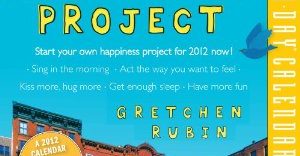
    I’m excited that Gretchen took the time to answer a few questions, and also that’s offered to give away one copy of her 2012 Page-A-Day Happiness Project calendar.

    The Giveaway

    To enter to win:

    • Leave a comment on this post.
    • Tweet: RT @tinybuddha Interview and Giveaway: Gretchen Rubin of The Happiness Project http://bit.ly/tvUOZt

    You can enter until midnight PST on Sunday, November 13th. If you don’t have a Twitter account, you can still enter by completing the first step.  (more…)

  • The One Thing That Helped Me Forgive My Father

    The One Thing That Helped Me Forgive My Father

    “We must be willing to let go of the life we have planned, so as to accept the life that is waiting for us.” ~Joseph Campbell

    I stood in front of my father, man to man, and demanded an apology. His long absence and lack of interest during my formative years had burned within me a resentment that wouldn’t quit. My therapist suggested that I confront him as one adult to another, so there I was.

    It didn’t go well. The more I pointed out his failures, the more defensive he got. The more I demanded an apology, the more he justified his actions. In his mind, he wasn’t to blame for the fact that I spent much of my childhood longing for the particular kind of bonding that only a loving father can provide.

    “It’s a simple apology!” I finally screamed. “That’s it. That is all I want. You weren’t around and you damn well should have been. I needed you. It’s not rocket science. Children need their parents. But you didn’t care about me, did you?”

    “Well, you are only alienating me further by the way you’re acting now,” he replied, offended.

    Maddening. I left that encounter with a splitting headache that lasted three days. What gives? How could he be so narcissistic? I returned to my therapist, Jake, to discuss the incident.

    “You confronted your father and really pushed him. I guess you needed to do that,” Jake said with a tone of respect. “Now, perhaps you can approach him in a different way, coming from a different place.”

    Forgiveness

    I agreed that Jake must be right, although it would be three years before I understood what that new approach might be. I knew I needed to forgive him, so I just kept trying. All of the prayers, affirmations, visualizations, and other work must have been helping, but I never experienced the true letting go of resentment that comes with actual forgiveness. It didn’t feel like a choice.

    The answer came from a client. She had come to me for help in dealing with her son and happened to tell me about an encounter she once had with a Buddhist monk. After angrily relating the sad tale of her childhood and the awful parenting she experienced, the monk simply stated the following:

    You are the wrongdoer now.

    It hit me like a ton of bricks. (more…)

  • 5 Ways to Find Your Center When Life Feels Overwhelming

    5 Ways to Find Your Center When Life Feels Overwhelming

    “Within you, there is a stillness and a sanctuary to which you can retreat at any time and be yourself.” ~Hermann Hesse

    We’ve all had moments when life’s demands left us feeling stressed and scattered. In these moments, it’s helpful to have some simple tools to help us gain composure and come back to our center.

    Let me paint a picture for you of a scene from my daily life at its most overwhelming.

    On a recent Tuesday, I drafted my evening’s “to-do” list, which contained the following items: Go clothes shopping for my son, get groceries, cook up some dog food, cook dinner, give my son a bath, put laundry away, walk the dog, and prepare for a workshop that I was to present that weekend.

    Like most working parents, I have to fit a lot of tasks into a brief period of time on weeknight evenings.

    Clearly all of those items weren’t going to get accomplished. But I felt compelled to try.

    And then, mid-afternoon, a feeling of illness began to creep over me, starting with a headache and progressing into nausea and profound fatigue. By the time I got home, I had revised my list, and whittled it down to: Bathe my son.

    I felt incapable of anything else.

    Still, even with a truncated list, my evening became chaotic very quickly. Our newly-acquired dog was dripping blood all over the house, including the white slipcover. She was not sick—she was in heat.

    As I tried to attend to the mess, my son called to me from the kitchen. He held his cupped hand out to me, and proudly exclaimed, “I caught it so it wouldn’t fall on the kitchen floor!”

    I will allow you to draw your own conclusions about what his hand held, but I’ll give you a hint: He’s potty training.

    In the mean time, my head was throbbing, my stomach was retching, dishes from the previous day were piled up in the sink, laundry from the week sat haphazardly on my bedroom chair, and the workshop I was to present in four days had not been planned or prepared for. Not to mention, I had a hungry child and dog to attend to.

    Sometimes, when external factors like these seem overwhelming, we feel unable to remove ourselves from the situation long enough to gain perspective and compose ourselves in order to move forward.

    Very often, these external factors become internalized, and our minds start reeling. “I’ll never get it all done, my life is spiraling out of control, I can’t get myself together…” The internal loop can be loud, persistent, and ultimately paralyzing. And once it begins, it is hard to stop. (more…)

  • Love Yourself, Accept Yourself, Forgive Yourself

    Love Yourself, Accept Yourself, Forgive Yourself

    “Love yourself—accept yourself—forgive yourself—and be good to yourself, because without you the rest of us are without a source of many wonderful things.” ~Leo F. Buscaglia 

    You mean I am a source of many wonderful things?

    Yes. Actually you are. Own up to it.

    Leo has it right.

    Love yourself.

    Despite all the things that you think may be terribly wrong with you, love yourself. Love yourself.

    Tattoo it on your brain.

    I can think of so many reasons why you should love yourself, but here’s just one: It is incredibly dull and uninspiring to be around people who do not love themselves.

    I spent many years being anorexic and feeling like I was a monster. I’m sure I was not much fun to be around, and I also know that I didn’t book any of the acting jobs I was trying to land. It is very challenging to hire someone or love someone who fights you by holding up a mirror of hatred toward themselves.

    Here’s my challenge for you today: Take a picture of your face and remember that in ten years time you will be amazed at how gorgeous you were. Be amazed now.

    Identify something about you that you may not adore and find a way to at least laugh at it or like it, even a little bit.

    I have profound hearing loss; in fact, I am almost deaf and wear hearing aids. I have ringing in my ears twenty-four hours a day, seven days a week. Does it drive me mad most days? Yes. However, it’s here to stay, and I have learned that I can make light of it, or I can sit home and feel sorry for myself because I am missing out on what feels like everything.

    Either way, the choice is mine to make.

    I have also learned that because of my hearing loss, my other senses are highly attuned. I am more compassionate because of it. I am a healer.

    I have turned something I don’t necessarily “love” having into another piece in the puzzle of me, and part of why I love that puzzle.

    Instead of thinking “I am an incomplete human being because I can’t hear perfectly,” I think “I am an incredible human being with a profound sense of touch and understanding and a huge capacity for love. I am also awesome at reading lips. So there.” (more…)

  • How to Meditate at Any Time without Meditating

    How to Meditate at Any Time without Meditating

    “If we are not fully ourselves, truly in the present moment, we miss everything.” ~Thich Nhat Hanh

    Flour. Salt. Water. Yeast. As I push the warm, soft dough against my palm, I feel the cold stone countertop underneath. I feel my hips leaning up against the cabinets. I hear my breath inside my head.

    As I knead the dough, it changes. The dough becomes more elastic and flexible, ready to rise and be baked into a crusty loaf.

    As I make bread, I change. My thoughts go quiet. I come into the now.

    I have struggled with an inconsistent meditation practice for months. In those moments when I successfully meditate and clear my mind, I feel such a sense of accomplishment and peace.

    But as any beginning meditator knows, those moments are few and far between.

    Usually, my scattered mind is split between keeping track of the time, trying to quiet the voice in my head, and chastizing my body for fidgeting. 

    I struggled and pushed myself to meditate properly with little success, until I realized that any act can be a meditation.

    I discovered this fundamental insight through books by Eckhart Tolle and Thich Nhat Hanh. It is not so important to sit with a perfectly erect spine for twenty minutes per day in meditative bliss. What is important is to be here, in the now. Living your life. Noticing what is. Noticing life.

    So often throughout our days we are lost in our thoughts. We may be on the train or in the shower, but in our heads we are already giving that important presentation, having the difficult conversation, worrying about and planning for what might happen next. (more…)

  • Book Giveaway and Interview: One Minute Mindfulness

    Book Giveaway and Interview: One Minute Mindfulness

    Update: The winners for this giveaway have been chosen. Subscribe to Tiny Buddha to learn about future giveaways!

    The winners:

    As you can likely tell from the number of author interviews/giveaways I’ve posted during these last few weeks, I’ve been receiving and reading a wide selection of books lately. One-Minute Mindfulness is now sitting on my coffee table, where I know I will refer it often.

    The full title reads One-Minute Mindfulness: 50 Simple Ways to Find Peace, Clarity, and New Possibilities in a Stressed-Out World. It delivers on its promise.

    From the Amazon Description:

    In this book, Donald Altman brings the benefits of mindfulness down to earth and into everyday life. With fifty exercises and practices to build awareness and center attention, you will discover how to savor routine pleasures, build fulfillment in your work, enhance and heal relationships, change unhealthy habits, and connect to peace even in the midst of chaos or uncertainty.

    The Giveaway

    To enter to win one of 5 free copies of One-Minute Mindfulness:

    1. Leave a comment on this post.
    2. Tweet: RT @tinybuddha Giveaway and Interview: One-Minute Mindfulness by Donald Altman http://bit.ly/mQfaHA

    You can enter until midnight PST on Sunday, September 25th.

    The Interview

    1. In your book, One Minute Mindfulness, you offer a variety of practices to create mindfulness in 60 seconds. It’s an accessible practice, since everyone can find a minute here and there throughout their day. Do you find that integrating these practices into a daily routine creates more mindfulness overall?

    In my mind, there’s no question that this increases the level of overall mindfulness. This is actually in line with the Buddha’s teachings—that mindfulness is used every possible moment. And it’s why mindfulness is considered to be a path to enlightenment.

    Each next sixty seconds holds the potential for anyone to open with spaciousness to whatever is happening, to see the truth of that moment. You can only do that in the next minute that is right before you, which is why a one-minute mindfulness practice is so valuable. (more…)

  • 5 Simple but Powerful Choices for Pure Peace and Contentment

    5 Simple but Powerful Choices for Pure Peace and Contentment

    “Until you make peace with who you are, you will never be content with what you have.” ~Doris Mortman

    Every day I chat with a friend and he always asks, “How are you?” This isn’t the superficial greeting we often give to an acquaintance in passing. He really wants to know, and I usually oblige with an honest snapshot of how my life is at the moment.

    I began to notice that my answers contained words like “quiet,” “peaceful,” and “content.” Could this be the elusive happiness that I spend so much energy and time to achieve? And could it have settled subtly on my shoulder like a shy butterfly while I was busy with my life?

    I am constantly reading and analyzing how I can make my short time on earth better. In general, life is good. But like many people, I often fall into the trap of trying to do too much, be too much, and painstakingly pick myself apart for being human.

    I took some time to reflect what changes I had made over the last few months that would have opened me to a feeling of pure contentment. By contentment, I simply mean I feel fine and secure with what I have, what I am, and where I am going right at this moment.  I know things can change, but I feel now is perfect.

    Here are the five things I identified that led me to find a harmony within, however fleeting.

    1. Show humility.

    I live in Florida, where the housing market is especially broken. The loss of tourism, the NASA space program, and other economic hardships here have caused many friends to lose their homes to foreclosure. I am reminded everyday to be grateful for things such as a house I love and the ability to share with my children.

    When I sweep my floors, I think, “I feel thankful to have what I have and the joy to taking care of it.” It sounds funny, but many boring household chores are what others would wish for. These chores are a service to my family and a healthy dose of humbleness for my soul.

    2. Recognize enough.

    With practice, and gentle reminders from those I respect, I have finally accepted my true life is happening right now. I celebrate the accomplishments and good things as they happen and avoid looking ahead too far for more of the same.

    Going slowly and enjoying the journey is “life.” Rushing the moment can take such fun out of the anticipation. Expectations can lead to disappointment, but accepting what I have been given now is contentment.

    If right now is painful for you, try thinking, “I’m growing,” instead of “I’m hurting.” It’s pain and discomfort that causes us to move. Sometimes the move is necessary and beneficial overall.

    I repeat the mantra “I have what I need” often to remind me that now is not just enough, but a blessing.

    3. Simplify life.

    Give up what you don’t need and be glad you did. So many things can fall into this category. Material things take space and energy to maintain. Toxic relationships tax our positivism and peacefulness. Worry and despair over things we cannot change rob our sense of well being.

    Very few things in life are a real crisis. Those that are cannot be solved by worry but by deliberate and thoughtful actions. Take decisive action to cut out the things that complicate and thus rob you of true contentment.

    I’ve begun to clear whole days on my calendar of planned events. These are free days that I can spend with my family spontaneously.

    4. Have real fun.

    Regret can be a mood killer. We often take the serious and over-analyzed road when making decisions. It’s good to be responsible; it’s also good to take a chance even if it entails a big mistake.

    I went to Las Vegas once and really wanted to try a live poker tournament. I chickened out and instead watched a friend try it. It is something I still wish I had pushed myself to do.

    Is a card game a life or death situation? No. But I should have allowed myself the fun, and if the chance arises again, I’m on it! Respect your boundaries, but be open to experiences and challenges that offer a sense of peace.

    5. Make room for quiet.

    Whether you pray, meditate, listen to nature, or even just be, allow yourself to hear what’s in your heart. Connecting with what is inside better prepares you to deal with the exterior world with calmness and peace. Give up control and release yourself to thoughts and emotions that can heal, strengthen, and even surprise you.

    Your inner voice often has something to say. You can best recognize that gut feeling that can act as a reliable compass once you turn off all the noisy, messy distracting sounds of life. I describe it as being “plugged in” to the positivity around me.

    I am not all calmness and peace all the time. I have a full and often chaotic life with children and a job. But, with a few mindful adjustments, I have found a season of contentment, and for that my thankfulness abounds!

  • Why Happiness Will Never Come To You

    Why Happiness Will Never Come To You

    “The foolish man seeks happiness in the distance; the wise grows it under his feet.” ~James Openheim

    December 19, 2001: this will forever be written in history as the day I was pitied by a 90 year-old.

    I was holiday shopping at the mall, grimacing in pain with each step I took. “One… two… three…” I counted my steps, hoping to distract myself from the painful task before me: reaching the Bath and Body Works store roughly 300 yards ahead.

    After several torturous minutes, I looked up. The store was still an oasis in the distance—perhaps a mirage in this vast desert-of-a-mall.

    Had I even made any progress at all?

    Just then I noticed a 90 year old man—stooped, shaky, and walking slowly as a turtle, like old men often do. To my absolute horror, the old man passed me with ease.

    He turned around and spoke to me: “You OK? You aren’t looking so good.”

    Tears of desperation welled up in my eyes.

    “No,” I said. “No, not really.”

    The reason for the old man’s pity?  In a strange stroke of fate, I had been diagnosed with rheumatoid arthritis during my sophomore year of high school.

    “You have a severe case,” the doctor had told me without a hint of empathy. She explained the science behind it: for unknown reasons, my immune system was recognizing my joints as foreign bodies and attacking them full-force.

    I had always imagined that arthritis was some mildly annoying affliction that only affected old people. I unwillingly discovered that in my case, it was much more than just annoying— in fact, it was devastating. It felt as if I had a constant and never-ending war raging in my joints, as if I had badly sprained my knees, my wrists, and my elbows all at once, and all I could do was endure it.

    “What did you do to your knees?” people would ask me with concern. I didn’t blame them for asking— my knees were inflamed and swollen to the size of ripe watermelons ready to burst.

    “Nothing,” I answered truthfully.

    My classmates were worried about getting their homework done or about who would ask them to homecoming. I was worried about whether I could walk down the halls without wincing in pain or whether I would even have the energy to get out of bed for the day. Things that were supposed to be easy became nearly impossible. Even tasks as simple as stepping into the shower and getting out of my desk after class were excruciating.

    With tears in my eyes, I lamented in my never-ending misery.  “If only I could feel normal again,” I cried, “I would be so unbelievably happy.”

    Fast forward seven years, and my dream had somehow become a reality. As the years passed, my symptoms slowly decreased in severity until one day, for no apparent reason, they became nearly imperceptible. (more…)

  • 5 Questions to Ask Yourself When You Aren’t Sure What You Want in Life

    5 Questions to Ask Yourself When You Aren’t Sure What You Want in Life

    “The quality of your life is in direct proportion to the amount of uncertainty you can comfortably deal with.” ~Tony Robbins

    There are times in life when we just don’t know what we want. These are the awkward in-between places where we feel uncertain and unsure, and perhaps even question our purpose.

    There was a pivotal time in my life, after I got my Counseling Psychology Masters degree and had a private practice, when I knew I did not want to be a therapist.

    I left counseling to help my husband start his fashion business, even though this was not an interest of mine. My true desire was to write and publish books, but at the time I wasn’t sure what I wanted to write about.

    A year later, while riding my bike on a beautiful sunny day, I tried to pop a wheelie over a curb and fell, hitting the back of my head on a car bumper and then the road.

    The neurologist told me I had a moderate concussion and I needed to lie low for three months. I got migraines from simply walking around the block, so I had to stop completely.

    While I was sitting at the kitchen table one afternoon, I got the idea for my now published book and card deck set. It hit me harder than the fall off my bike. After helping my husband with his business for a year, without knowing what was next for me, I was ready to hit the ground running.

    These places where we are asked to be still and experience the unknown are as important to our journey as the times when we feel certain. An empty blank canvas permits the unanticipated and unexpected to appear.

    Like a trapeze artist letting go of one bar we suspend in a gap before the next bar comes swinging towards us. This space is the catalyst that creatively births us into new ways of being.

    Here are five key questions to experience relaxation, stillness, and peace while resting in the uncertainty of the unknown: (more…)

  • Improving Your Reactions to Mishaps from the Inside Out

    Improving Your Reactions to Mishaps from the Inside Out

    “Peace of mind is not the absence of conflict from life, but the ability to cope with it.” ~Unknown

    I am confident. I am content. I am complete. I am calm.

    I decided that this was going to be my new mantra. I decided this at 8:26 a.m. I repeated it to myself over and over while showering, getting dressed, and driving to work.

    I ascended the stairs to my office, singing the words in my head. I am confident. I am content. I am complete. I am calm.

    This was going to be a good day. I would stay focused, yet aware; productive, yet relaxed. Yup, I was on top of the world, strutting my stuff in my maxi dress and strappy sandals.

    And then I spilled my water bottle. My dress was blotched in awkward areas for a significant amount of time.

    Needless to say, I forgot my mantra.

    I forgot that I was supposed to be confident, content, complete, and calm.

    For the first hour of my work day, I drifted in and out of an anxious haze of unrest, just because of that stupid water bottle. That spilled seven ounces of water triggered a tidal wave of unease and insecurity.

    They say not to cry over spilled milk. “They” didn’t mention spilled water because it’s so insignificant.

    I realize that spilled water is a really stupid thing to get worked up over. Logically, I know that.

    But it wasn’t the spilled water that was really the problem. Anxiety is something I know all too well. I often allow small and insignificant disruptions to cause me a lot of distress. I blow things out of proportion; I know this.

    But that doesn’t mean I have to live with anxiety-on-call for the rest of my life.

    “Spilled water bottle” incidents happen. (more…)