Tag: loss

  • Life Goes on After Loss: Tiny Steps To Work Through Grief

    Life Goes on After Loss: Tiny Steps To Work Through Grief

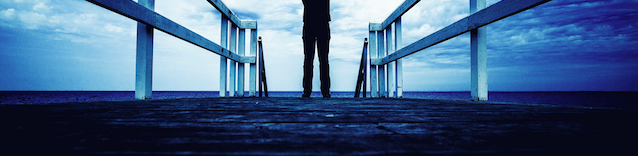
    Woman Alone by the Sea

    “I realized, it is not the time that heals, but what we do within that time that creates positive change.” ~Diane Dettman

    Two weeks ago I found out that a friend passed away. He died eight days after my birthday at the age of twenty-six, and that fact has been hard to swallow, as I didn’t know that my time of celebration would also be a time of grief.

    The details surrounding my friend’s death are unknown; all I know is that it happened suddenly, and it was a huge shock to me and other friends that knew him. He was my first high school crush. As a fourteen-year-old girl at the time, it was a big deal to me. I really cared about him.

    My friend had sent me a Facebook message in March of 2014 stating that we should get together, as he wanted to see how I was doing. I was touched at how caring he was and wanted to know what was going on in his life, so I said yes.

    We talked for hours that day, and I brought him up to speed on what had been going on in my life. When the get together ended the last thing he said to me was, “I wish you the best, and if you need anything let me know.”

    He walked out the door, and that was the last time I saw him.

    When I first got the news of my friend’s passing I didn’t know what to think, what to feel, what to say. I just sat there staring at my computer screen, hoping it was a bad joke. It didn’t feel real at first, and when it did sink in the floodgates that held my tears back for a while opened. It was like a punch in the gut.

    Days after I heard the news I just didn’t know what to do with myself. I let myself go for a while. I lied down on my bed in the fetal position staring at nothing. At some points I was dry-eyed, and then I would start to cry, wailing almost.

    I heard a sound pass through my lips that I never heard before. It was the sound of heartbreak. I wondered: “How does life continue after this?”

    I got frustrated that I didn’t know how to answer that question, and a week later it hit me.

    Life does continue, and it gets better with time.

    My grief comes in waves, and this experience has been teaching me how to surf those waves as gently and as lovingly possible. If you’re also grieving a loss, this might help.

    Acknowledge your feelings.

    It was scary and painful to acknowledge every emotion that came with my grief. I felt angry, sad, and went through a depression. I wanted to crawl into a hole somewhere because I was so overwhelmed by my pain.

    I felt like I was losing who I was a little. I had to find a healthy way to address my feelings and slowly start picking up the pieces of my life and putting them back together into a stronger version of me. Once I became honest with myself and acknowledged my emotions, a weight released off my heart.

    Being honest with myself and others also helped me rebuild connections with friends who are sharing this grief with me.

    While I still deal with the same feelings, it is slowly getting better.

    If you are going through a difficult time, know that it’s okay to acknowledge your feelings. If you don’t feel comfortable talking it out, grab a journal and quietly be honest with yourself.

    Know that it’s okay not to feel 100% right away.

    As days pass I still don’t feel 100%, but that’s okay. Slowly, I have started to do the things I enjoy. Starting small is key to rebuilding your life and getting back on track. The other day I went for a walk to clear my head, and even though it was only for a few minutes, it helped.

    Take care of your physical body. It’s just as important as taking care of your emotional well-being.

    I lost my appetite for a while. I didn’t want to eat or do anything productive. Then I realized I was hurting myself, so I slowly began to eat a little more and began taking care of my body again.

    I had a teacher who once said, “You look good, you feel good.” She was right. Once I began to take care of myself again, I started to feel a change in my mood. I needed to take care of myself so that I could be there for those that need me.

    Be patient with yourself and others.

    Oftentimes we have loved ones who don’t understand our grief, especially if they are not going through it with us. Other times we have people who share our grief but go through it differently. In both of these instances it’s best to remain patient. Be patient with yourself as you grieve and be patient with those around you.

    It also helps to tell your support system what you need. Being clear about what you need helps you get the best support possible. For example, I told my friends that I needed company so I wouldn’t feel alone with my sadness, a shoulder to cry on, and a warm hug.

    Realize it’s okay to be human.

    The grieving process is a time of growth, and it’s okay to feel like you’re moving backward every now and again. It just means you’re human, and that you are working through your emotions.

    I’ve realized that life does continue, and loss gives us lessons if we’re open to them. Something good can come from the pain. The lessons may not come to us right away, but when they do our whole perspective changes.

    Going through this grief has taught me to be a kinder and better friend and to enjoy each and every day to the fullest. My goal is to leave a lasting impression in everything that I do.

    This article is my love letter to those that have lost someone dear to them. If that’s you, know that you are not alone.

    Woman by the sea silhouette via Shutterstock

  • Losing Your Job Doesn’t Have to Mean Losing Yourself

    Losing Your Job Doesn’t Have to Mean Losing Yourself

    I believe one of the greatest achievements in life is the choice to be empowered, not paralyzed, by a disappointment.” ~Lori Deschene

    I was recently fired from my dream job, and this was devastating to me.

    Anyone who has ever lost their livelihood should be able to relate to this experience. Vulnerability, shock, confusion, and anger dominated my feelings in the aftermath of suddenly losing a job that I loved.

    What happened? My company created a fantastic referral program, and I saw a business opportunity to take advantage of it.

    I reached out to multiple senior members of the staff in order to get approval for my business plan, and then I set it in motion. Two weeks later I was fired, without warning, for the very thing that I had openly sought and received approval for.

    Upon hearing the news, my mind was reeling. I don’t think I’ve ever been so angry.

    How could they do this to me, particularly after being told the day before that I could soon expect a promotion? How could they be so cruel? Why couldn’t they work with me to resolve the issue in an amicable way?

    Thoughts of revenge swirled around in my head. I wanted to burn bridges. Oh lord, how I wanted to burn bridges!

    My life was suddenly thrown into turmoil. The plans that my girlfriend and I had made for our next year or so were thrown into disarray.

    Would I have to move away from her, and how would that impact our relationship? How am I going to explain this to my friends and family? How was I going to pay my rent? How can I ever feel secure in a future job? Am I “falling behind” my friends?

    What it largely boils down to is feeling a loss of my identity. Despite only working at this company for a few months, its mission is something that I felt (and continue to feel) incredibly passionate about.

    I don’t just mean that I lost my identity in the sense that “I am what I do.” Of course not—I’m so much more than just my job.

    But this job allowed me to act authentically; not only did I enjoy my work, but I actually felt as though I was living my life, rather than just working in order to live my life. I was doing good things, and promoting something that I loved.

    As Homer Simpson once said, “If I’m not a nuclear safety whatchamajigger, I’m nothing!”

    Losing my job meant that I was no longer “cutting-edge tech industry guy who is revolutionizing the world and helping the poor and downtrodden.” Or at least that’s what it felt like.

    But in reality, personal identity is far more complex than this. Whatever you think you are is at best only a vague approximation of who you really are.

    My former job was in customer service. And while there is absolutely nothing wrong with that, I really wasn’t using my skills to the best of my ability. There are other lines of work, even within the same industry, that would allow me to express my identity more authentically—and perhaps more profitably as well!

    I had gone through something similar before, and learned a similar lesson then. Career setbacks have allowed me to “fail up” in the past, and they can do so again.

    Even though it feels as though the rug has been pulled out from under my feet, past experience has proven to me that these situations can be among the most valuable.

    Real life requires embracing the uncertainty of who you are and accepting the vulnerability that comes along with this fact.

    My identity isn’t some fixed quality that is only expressed via a particular job. My identity comes from my values, and I have to trust that these values can be expressed in some even greater, more authentic way. In other words, I am more than what I think I am at any given moment.

    Getting fired is difficult, but it need not be emotionally devastating. It helps to talk about it with trusted people who love you. It helps to write things down. And it helps to look at being fired as something to evolve through rather than something you “get over.”

    So what’s next for me, then? I don’t know specifically, but I’m sure it will be something bigger, better, and more authentically me than what I have lost.

    And in the meantime, I need to “let go” and forgive those who I believe have wronged me. Luckily, I have been reading my copy of Tiny Buddha’s 365 Tiny Love Challenges, and just came across several exercises that are helping me to do this (April 9th and April 27th, for those keeping score at home).

    First, I’m visualizing my former manager and the HR representative “as a young child who is doing his or her best, making mistakes, and hoping for [my] understanding and forgiveness.”

    The fact is, I was working for a startup, and chances are they were just doing their best and didn’t really know how to handle the situation properly. It’s quite possible that they are beating themselves up over it.

    I’m certainly not happy about what happened, but perhaps they aren’t either. Everyone makes mistakes, and I forgive them for it.

    The second exercise, which perfectly sums up the message I am trying to convey in this essay, is to “imagine that you are the hero in a movie, and all the pain you’ve experienced has helped you grow, and will eventually help you thrive in life… you are the hero of the story, not the victim.”

    While I’m deeply saddened to have lost my job, this pain will be invaluable in fostering future growth.

    If you too have lost your job recently, or a role that feels like a part of your identity, try not to see it as losing yourself. You are so much more than any one job or role. And consider that maybe this happened for you, not to you. This chapter may be over, but the next one may be even better.

    Being fired image via Shutterstock

  • 4 Things to Remember When Life Feels Hopeless

    4 Things to Remember When Life Feels Hopeless

    “However long the night, the dawn will break.” ~African Proverb

    Were there times in your life where it felt anything that could go wrong went wrong? That was me five years ago.

    In a span of nine months, my marriage to a partner of eight years broke down, I lost four family members to unexpected deaths, and I suddenly found myself hurtled from living the dream life to being jobless, penniless, and homeless.

    To say life knocked the wind out of me would be an understatement.

    Each time I picked myself up, another blow would send me sprawling toward a sense of utter defeat. It was as if a tornado swept through my entire being and left me empty and devoid of hope, strength, and any ounce of self-belief.

    Shell-shocked, I spent that whole year crying. I would wake up crying in the mornings, run to cry in public toilets during the day, and end my days crying myself to sleep. It was a dark period of my life where everything was one blurry haze of tears.

    As those days of hopelessness stretched on, the only thing I could focus on was taking baby steps every day to build a new life and a new future.

    It was an arduous journey where I was often taking one step forward and two steps backward. Many times, I felt like I would never see the light at the end of the tunnel, and I struggled to find the strength to inch forward.

    Five years on, I finally came out the other side. My new life and the new me are still under construction, but I now have in me a spring of strength to propel me forward, regardless of setbacks or how grim a situation seems.

    This newfound capacity did not develop overnight. It grew gradually as I practiced and incorporated into my life the valuable insights below.

    If you’re going through difficult times now, the following four reminders may help you be more resilient.

    1. Remember that life always changes. Things can get better.

    When troubles strike, it can feel like things will only get worse, but that is the pessimist in us talking. If we keep the faith and respond to the situation with positive and constructive actions, we can break out of the cycle and things can get better.

    Sometimes all we need to do is to simply let time pass and to resist the temptation to overreact and aggravate the problem. During times like these, I would distract myself by actively engaging in other areas of my life.

    2. Recall how you overcame similar struggles in the past.

    When plodding through a challenging time, it’s natural to be gripped by fear, self-doubt, and pessimistic thoughts that we won’t be able to surmount the obstacles. We forget that it always feels impossible until it’s done, and that we have overcome similar struggles in the past.

    A simple but extremely effective thing I did was to list down the occasions in my life where I busted through hurdles and rose above the seemingly insurmountable difficulties. As I penned out the victories, I found renewed faith in myself and in the unknown future, which may well bring the good instead of the bad like I feared.

    3. Remember that things aren’t as bad as they seem.

    Zoom out on the issue and focus on the grand scheme of things. More often than not, the raging fires in our lives hijack our attention and we fail to see the big picture. It’s rarely the case that every aspect of our lives went awry at the same time, and it’s critical to keep the right perspective when the going gets tough.

    We need to remember that our problems are merely a subset of everything that’s going on in our lives and not let the worries, fear, and anxiety overtake our minds. Even if every area of our lives—namely health, relationship, work, money, and passion—went haywire, the fact that we’re alive means there’s hope for things to turn around.

    4. Remember that there are still things to appreciate.

    Do not let the darkness blind you from seeing the stars. It’s human nature to get caught up with the things that are not working out in our lives and forget the good bits. I’m a big believer of a grateful heart being a magnet for abundance and miracles.

    No matter how terrible life may seem at any single point, there are always good things if we keep our eyes peeled for them.

    Thanks to the challenges, I came to see who my true friends were, and I also learned to appreciate many of the blessings I had taken for granted. I might have lost a life partner, loved ones, money, and employment, but these setbacks are transient.

    I would always have my degree, knowledge, skills, professional experience and network, and people who care deeply for me to fall back on and to get me back on my feet.

    As I grew stronger in handling life’s curveballs, I was grateful that I had developed this invaluable life skill at a young age so I can have the rest of my life to benefit from it. While maintaining a thankful heart, I realized that even in dark times there are stars we can gaze upon if we view our plight through the right lens.

    Which areas of your life are you struggling with right now? How do you cope and stay resilient?

  • Surviving Life’s Storms: Have Hope That Life Will Carry On

    Surviving Life’s Storms: Have Hope That Life Will Carry On

    Woman in a Storm

    “I’ll never know, and neither will you, of the life you don’t choose. We’ll only know that whatever that sister life was, it was important and beautiful and not ours. It was the ghost ship that didn’t carry us. There’s nothing to do but salute it from the shore.” ~Cheryl Strayed

    I have weathered my fair share of storms.

    When I was in college, I met a boy a month after arriving on campus. I was eighteen, naive, and completely in love. The red flags were there by the truckload. As each red flag appeared, I darkened the tint on my blinders and convinced myself this was the person I was meant to be with. And so,  the storm began.

    About a year later, Mother Nature unleashed a storm of her own on my college town and surrounding areas. It was a hurricane that didn’t seem like a big deal as it meandered through over the course of a day or two.

    I shrugged it off and kept on going like nothing was happening. Only something was happening—a flood of epic proportions.

    The morning after the storm I woke up at 5:00 and couldn’t figure out why. My pets, two dogs, and three cats were running around in a panic.

    I got up to see what the fuss was about, and that’s when I smelled the rancid floodwaters. I peered down the stairs of my loft apartment, and to my shock realized half of the front door and several stairs were completely submerged.

    The night before I had laughed at the puddles and bit of street flooding. Now those puddles had amassed and invaded my home.

    I woke up my sleeping boyfriend. He angrily waded down into the water and tried unsuccessfully to open the now swollen shut front door. As he announced that we were stuck, I picked up the phone to call for help and heard the entire building lose electricity. It was audible and eerie. Everything went quiet.

    We ran to the windows and saw some people across the street moving belongings out of their not yet flooded apartments. Quickly, we opened the windows and screamed for help. Two guys came over, waded through the water to our door, and helped my boyfriend get it to open. I instantly began walking around grabbing things and putting them back down.

    I was in complete shock and had no idea how to pack, what to pack, and what to leave behind.

    First thing, we got the animals out of our apartment. I led my scared and yelping dogs through the water, which was about waist high on my small frame.

    My boyfriend carried the cats over his head in a carrier. I found a place willing to board them that still had space available and returned to my apartment.

    I packed clothes, photos, cards, and special items I knew couldn’t be replaced. We put the TV on top of the refrigerator. Some kind strangers floated by in a boat and rescued the computer I used for school. A few friends showed up to help us carry the garbage bags I packed to dry ground. Eventually, my boyfriend left and went with his friends.

    I was alone and the floodwater kept rising.

    I took as many trips through that water as I could. I was terrified and determined to save as much as possible.

    A fireman arrived and warned a group of residents that dams had burst in other parts of the state and soon the waters would be too high for us to walk through. He urged us to leave, reminded us that it was just stuff. “But it’s my stuff” I replied, my throat filled with tears.

    I looked at his high-waiters and equipment and begged him to help. He wouldn’t.

    Eventually, my boyfriend came back for me and what I had managed to put on dry ground. The water had reached my chin and it was time to let go, to accept that I could save nothing else.

    The months after the flood were incredibly difficult. The water rose over fifteen feet on my building alone. Entire towns were destroyed, lives forever changed.

    I stayed in a hotel and with family while I contacted FEMA and the Red Cross and looked for a new place to live. Many students quit college because of the flood, but I didn’t even entertain the idea. I was going back. I would start over, somehow.

    Once I found a new place to live, we moved in and slept on an air mattress. We went to food banks and stood in line for free canned goods and bread. I was humbled in those moments more than I had ever been in my life. I felt alone, scared, and poor. I wondered if my life would ever be normal again.

    With the help of groups like FEMA and the Red Cross, I was able to get furniture. My car was flooded out and I had to get something new. I reveled in these bright moments and felt my heart nearly burst with gratitude.

    School started up again and I returned to classes. I was still struggling financially, and had lost most of what I owned, but I had what was important to me. I leaned on school counselors when I needed to and tackled my mental health. I knew getting my anxiety and PTSD under control was paramount to moving forward and finishing my degree.

    I was proud of what I had been through and the newfound determination that couldn’t so easily be washed away. Life wasn’t exactly as it was before, but it was normal again, a new normal.

    Eventually, I graduated and ended up in graduate school. To say I was proud would be an understatement. My boyfriend moved with me, and I thought that finally the storm between us would subside as we began our new, more responsible lives. At least that’s what I told myself.

    And, like all storms, ours had an ending. After over a decade of me tolerating his severe physical, mental, and emotional abuse, I finally told him it had to end. Things were obviously never going to change. I could no longer keep wearing those blinders.

    When that relationship ended, I was truly devastated. It was another hurricane that left me wondering if my life would ever be normal again. We kept seeing each other on a regular basis, and I knew I would never cut ties with him if we kept living in the same town.

    So, with much tortured contemplation, I walked away from the graduate program I had nearly completed. I walked away from a near perfect GPA. More importantly, I walked away from the hurricane that was him.

    People often ask me if I regret not finishing my degree and if I will ever go back. My answer for a while was yes. I didn’t want to accept that I had not completed the degree. I was someone who finished college despite a flood, after all.

    But as time passed, I accepted it for the reality that it was. I had made a decision and I had to live with it. I chose freedom from a toxic and harmful relationship over finishing a degree. I knew in the end only one of those would truly save me and it meant starting over. Again.

    Starting over after that relationship wasn’t easy but I had weathered a flood. I had practice. Slowly I rebuilt with the pieces left and the perseverance that guided the way. I went from being too embarrassed to ask for help, to humbled at the help received, to completely grateful for all of it.

    The key for me in both hurricanes, the flood and my relationship, was to know that life would go on after the storm subsided. To breathe through the anxiety and remember that I had survived that far for a reason and would continue to long after these storms were memories.

    It took persistence and so much gratitude. Gratitude for the learning experience, for the fact that I was still standing, and for all of the people that were there to help along the way. And where there is gratitude for even the smallest bits of light, there is hope. Where there is hope, there is the will to carry on.

    Find your bits of light in the storm and cling to them. It doesn’t matter how small it seems. Find it and be thankful and watch it expand to a new horizon.

    Always remember that you deserve a stable, hurricane-free view. And if walking away feels scary, ask yourself what would hurt more: the pain of letting go or the pain of staying stuck in the storm forever?

    You, dear reader, can do this no matter what storm it is you are facing. Choose the life away from the hurricane and wave goodbye to the one you didn’t choose from the shore of your new normal.

    Happy sailing.

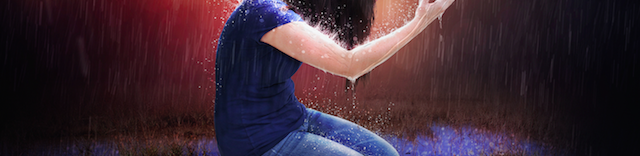
    Woman in the rain image via Shutterstock

  • How to Hold a Broken Heart (So You Can Get Through It)

    How to Hold a Broken Heart (So You Can Get Through It)

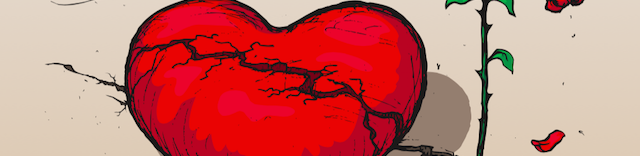
    Broken Heart

    “Sometimes this broken heart gives birth to anxiety and panic, sometimes to anger, resentment, and blame. But under the hardness of that armor there is the tenderness of genuine sadness …This continual ache of the heart is a blessing that when accepted fully can be shared with all.” ~Pema Chodron

    I remember a few years ago when I was going through a bad break-up. It wasn’t the longest relationship of my life or even the deepest. But it had so much potential and it ended in the most cursory of ways.

    Already a few drinks deep, I FaceTimed a friend who lives in D.C. and we had a long-distance whiskey together. As I teared up I asked him a favor, prefacing it as such: “I’m guessing it’s the case. I know this sounds dramatic. But I need you to tell me that I’ll find ‘the one’ and settle down at some point.”

    He looked at me, paused, and said something I’ve never forgotten. He said, “You will love again. That I know. Whether it’s one person for a long relationship or many people with shorter ones, I know you will fall in love again.”

    As a long-time Buddhist practitioner, I have studied and experienced the heart’s amazing resilience and ability to rebound and offer love, again and again. Yet my friend’s words hit me in a new way.

    I began to realize that the ability to love is innate. We love love. We all want to love, and while there are times when we feel devastated by loss, the heart ultimately heals and once more shines forth, hoping to connect anew.

    And maybe that means we love one person for the rest of our days, or many, but the heart’s ability to love is not something I have ever questioned since. That said, when you’re broken-hearted, it’s hard to contact your ability to love unconditionally.

    Now, if you’re like me when you go through a major break-up you have a particular set of things you do to distract yourself from that pain.

    You might hole up and binge-watch a television show. You might drink a lot, either at home or hole yourself up at a local bar with a handful of supportive friends. You might attempt to rebound quickly, filling your time with endless dates or casual sex.

    Whatever your form of distraction may be, you might have found what I found: these distractions are temporary and when your show ends/you sober up/you wake up next to someone you don’t really like your pain is there bigger and badder than ever.

    In my experience, big emotions like heartbreak aren’t meant to be avoided; they’re meant to be felt. It’s a bit like standing at the edge of the ocean and having a giant wave come crashing down on you. You can kick and fight and pull against it, but it will only drag you further out to sea.

    Instead, you can look at it and dive headfirst coming out the other end, perhaps even feeling refreshed. The same goes for heartbreak. The more you kick and fight against it, the more you will get dragged into the very depths of that misery. The only way is through. You have to let the emotion roll over you like that wave.

    The main practice I recommend is one I do for heartbreak moments both big and small. I place my hand on my heart, drop the story line around the underlying emotion, and rest with the feeling of the emotion itself.

    Instead of getting lost in the mental maze of “Why did she do that?” “How can I get her back?” or “What did I do wrong?” I acknowledge those thoughts then bring my focus back to the emotion that exists right beneath their surface.

    As Pema Chodron says at the beginning of this piece, I let myself go past the anxiety and panic and touch the genuine heart of sadness that exists underneath. From that place of vulnerability and authenticity, I find the energy to once more connect with others from a place of wholeness and love.

    Years after that emotional talk with my friend, when I went through a similar break-up, I knew that the best way to see myself through to the other side of my broken heart was to take the time to rest.

    I would notice the pain of missing that person and the sinking feeling that occurred in my body. When that would happen I would lie down and breathe into it. I wouldn’t entertain the story lines that came up. Quite the opposite—I would return to the sinking feeling.

    And then, as if I had said some magic spell, the sinking feeling would lift and I could go about my day once more. I could connect with others, offering my vulnerable and tender self authentically. By diving into the heart of what I felt, I ended up feeling liberated. Today, I love again. Tomorrow, I hope to do the same.

    Broken heart image via Shutterstock

  • The Pain Won’t Stop Until You Accept What Is

    The Pain Won’t Stop Until You Accept What Is

    “Accept what is, let go of what was, and have faith in what will be.” ~Sonia Ricotti

    Life is sometimes ridiculously hard. It sucks. It rips out your heart and your entrails, spins them around the room, and stuffs them back in unceremoniously through the hole from which they were ripped.

    And it expects you to smile and carry on. People expect you to carry on. Because that is what we think people do.

    I felt like this a few years ago when my marriage ended. Luckily, I had good people around me. They didn’t expect that from me.

    I, on the other hand, expected me to get right back on that horse. I had to keep going, to be stronger. To not let it affect me that much. So I berated myself. I got angry with myself. I hated myself (because that was exactly what I needed, right?)

    The thing is, when you are in the thick of it, you don’t know what you need. You know there is pain and you want it to stop. Please, please, just stop!

    And then there is the anger. This is the hurt you don’t understand yet. Hurt without compassion, hurt without direction.

    It explodes. It finds a way, a way out, somehow. Eventually.

    My expectations were so high. Or should I say, it was my hopes that were high. It had to stop.

    I couldn’t function until it stopped. I couldn’t forget until it stopped. And I wanted to forget so much.

    I wanted to forget how I felt now. I wanted to forget how I felt before—because then I wouldn’t miss it so much. I wanted to forget the good things she did because remembering caused pain.

    Conversely, I wanted to forget the bad things she did because those memories caused pain, too.

    In addition, I wanted to forget every small little detail of the stupid things I’d said and done that I wished I hadn’t, the things I went over and over and over in my head. Those sharp, jagged memories I just couldn’t switch off, each one like a fishhook being carefully placed beneath my skin, then mercilessly torn from its grip.

    I scurried desperately for refuge inside my head. I stayed in there. Outside were people.

    People would want to talk to me, to make eye contact. I was incapable of either. I was scared.

    I was frightened and ashamed and I didn’t want to see caring in someone else’s eyes. I didn’t want to hear kind words. I didn’t know how I would respond.

    I didn’t know if I would break down in tears, descending to that place I hated where I was a pathetic, whining fool who brought it all on himself. Or alternatively, to the place where I got so angry at how I was treated that I didn’t want anyone to see the look in my eyes. To see the raw anger and furious energy that burned inside of me.

    I didn’t want to be seen. Being seen asked questions. Questions I wasn’t ready to answer.

    It was like a living volcano raging inside me. I went to counseling because I needed an outlet. I needed to get it out.

    The hope inside of me that we would get back together restricted me from talking to people close to me. “What if we got back together?” What if in my pain and my hurt I said things about her, how would people see her when she came back? That would make it difficult for her.

    In retrospect, I think I knew it was over, deep down, but I was still fighting what was. This false hope also gave me a reason not to open up or face things.

    I look back with gratitude that I somehow found the wisdom in the bottom of that cold, dark place to take that step, to actually do something.

    All of my life I had bottled up feelings. I had been strong. I had controlled my emotions.

    I wasn’t a walking unfeeling marble statue. I did let loose some emotions. But I never really fully let go.

    I never allowed myself to feel it all completely. I never surrendered. I was always fighting reality.

    When I finally relinquished my hold on trying to control everything, it all changed. I allowed it to fall, to break free. I held nothing back.

    It was here, in this moment, I finally grasped that accepting where we are is the most important step in any change process.

    It was the only way through any journey of pain, to allow yourself to feel it without judgment. From the maelstrom of confusion, darkness, hail, wind, and rain in my mind, the storm started to pass.

    It was like waking up lying on a beach after a shipwreck. Battered and bruised, feeling empty inside, lost, lonely, not knowing where you are, where you are going or how. But in the center, deep inside, there is a calm. Something that whispers, “The worst is over.”

    Suddenly, I was able to sleep again. I woke each day without that feeling of readying myself for battle. My food tasted better.

    I still had the hurt, but it was dulled. I still had the memories, but the sharpness around the edges began to blur a little. I had still to figure out what my life was going to be like without her in it, but I had survived.

    All of this I allowed when I surrendered.

    When I stopped fighting reality my mind calmed, and I understood that what has happened outside of me “is what it is.” I cannot change that, only how I respond. Accept.

    My prolonged and persistent pain was coming from my refusal to accept this. When I stopped fighting what was, when I stopped trying to fight against the waves rather than letting them carry me to shore, I finally found peace. Surrender.

    The reality wasn’t different. I still had to deal with my new situation, with my new life. But the storm in my mind had quieted. It was easier to see.

    What I learned here wasn’t just about a break-up. It wasn’t just about dealing with pain. For me, this was a massive life lesson.

    There are still many times when storm clouds amass in my mind. I remember not to fight the reality, whatever is going on in my life. I remind myself, “This too shall pass.”

    Everything is transient. Everything ends. Good and bad.

    So I wait during the bad times. I watch, I observe, I learn. I focus on what I can control and I don’t resist and fight what I can’t.

    And I remember to cherish the good moments because they too shall pass. Life is so much richer when we surrender to it rather than fighting it. It all starts with accepting what is.

  • Now Is the Time to Appreciate Each Other and Enjoy Life

    Now Is the Time to Appreciate Each Other and Enjoy Life

    Friends Making Heart Symbol

    “If your forever was ending tomorrow, would this be how you’d want to have spent it? Listen, the truth is, nothing is guaranteed. You know that more than anybody. So don’t be afraid. Be alive.” ~Sarah Dessen

    It was beginning to get dark. Lightning streaked across the cloudy sky above the ocean. The full force of the wind took the breath out of me as my eyes squinted from the heavy rainfall.

    Waves rolled in to crash down in front of me, as if the ocean was screaming at me.

    “Turn around, human. Go home!”

    “Maybe I should,” I thought. “What am I doing out here in this extreme winter weather?”

    But my intention returned. The news I had received that day continued to stir at the back of my mind. And so, I moved forward.

    The water was ice cold as the waves smashed against my legs. I moved forward.

    Just as I thought I could bear no more, I submerged myself underwater. The sounds and sensations shifted as I merged with the ocean for a brief moment. And then I resurfaced to brave the magnificent storm.

    In this moment, I felt so alive!

    I had awoken to the reality of life—that there is only one thing that holds us to this world. A heartbeat.

    Earlier that day I had received news that my friend, Nick, had tragically and unexpectedly passed away. His heartbeat no longer held him to this world.

    How fragile we truly are. Yet living this truth is where we truly fail.

    My ocean swim in extreme winter weather was a way to remember that I had a heartbeat; that I was alive. It was a reminder that all those I know and care about are mortal, fragile, and finite.

    Why had I ignored this truth? Why had I lived my life to this point in safe denial?

    Reflecting back on this experience, I have come to realize that when we lose someone, it temporarily shifts our internal compass of reality.

    It points us home, toward what some people call our “higher self,” “inner wisdom,” or put simply, our raw humanity.

    These lessons we learn from loss are valuable reminders for our own personal growth. They serve as road signs that lead the way back to our own humanity, which we so easily lose touch with in today’s society.

    In finding my own way back to humanity on that stormy night at the beach, my first road sign pointed toward letting go of judgments.

    Too often we form negative judgments about people based on their mistakes and choices we don’t agree with, and in doing so can’t see the best in them. What a selfish person! What a rude person! How could he do that!

    We create generalizations that cut us off from the people around us. We zoom in on these judgmental labels and before we know it, it’s too late to appreciate the people in our lives.

    I knew my friend who passed as a casual acquaintance for six years. Sometimes I thought he partied too hard. There were times where he even got into trouble with the law.

    Yet, there were so many things I could have appreciated more by simply looking beyond my judgments. 

    He was friendly and known by so many. He had a great sense of humor and was extremely fun to be around.

    His energy and zest for life were contagious. Although he had never been employed, I really admired his courage to live a satisfying life in his own way without worrying what others thought. But I never told him while he was alive because I was too busy judging his choices. And now I’ll never have the chance.

    Which judgments are getting in the way of connecting with people in your life? What would you appreciate about them if you knew your time with them was limited?

    My second road sign back to humanity pointed toward appreciating the present moment. Too often we sleepwalk through life, lost in our own minds with endless thinking. Many times we’re not even present in what we’re doing.

    If you’ve ever taken a shower and realized that you can’t remember whether you have already washed your hair, you will know what I am talking about.

    Perhaps you’ve taken a walk on the beach on a sunny afternoon, but spent the whole time gazing at the ground lost in thoughts about the day.

    The present moment? Before you know it, it’s gone.

    Appreciating the present moment is as simple as noticing the sensations and experiences around you.

    My spontaneous ocean swim allowed me to feel the heavy rainfall on my skin, the sheer force of the wind and waves against my body, and the exhilaration of submerging myself into the ice-cold water.

    What are the things that make you feel alive? What prevents you from fully enjoying those things, and what can you do to start experiencing them more mindfully?

    Oscar Wilde, a nineteenth century Irish writer, remarked that “To live is the rarest thing in the world. Most people exist, that is all.”

    I encourage you to go beyond simply existing. Appreciate the present moment and completely savor the experience. Because that’s what we are all here for, right?

    In sharing my lessons from loss, I hoped that you too will remember that there is only one thing that holds us to this world: a heartbeat.

    Let this truth guide you in your actions every day, and be mindful of life lessons that serve as reminders.

    The moments we have are small grains of sand in an infinitely trickling universe; take time each day to enjoy the present moment before it trickles away.

    The people in our lives are drops in an endless ocean that forever ebbs and flows; take time each day to appreciate them before the waves carry them away.

    Friends making heart symbol image via Shutterstock

  • 5 Dos and Don’ts for Surviving a Hard Time

    5 Dos and Don’ts for Surviving a Hard Time

    Boat in a Storm

    “Our ultimate freedom is the right and power to decide how anybody or anything outside ourselves will affect us.” ~Stephen Covey

    My partner was a well-respected bank manager in a small country town. He was rising through the bank hierarchy with good prospects for further promotion. We were thought of as a happy, close-knit family that contributed in every way we could to the local community.

    Unbeknownst to us, the bank was conducting a re-assessment of their country branches. Several of the smaller banks would close and all staff would be dismissed.

    Frightening words were on our lips—redundancy, fear of the unknown, financial difficulties, unexpected change, personal loss.

    Little did we know how much a huge obstacle suddenly dumped in our path would affect us, particularly emotionally. Our hopes and dreams for the future—moving back to the big city to live in a “castle” with a fantastic view—were dashed.

    We started to name and blame bank personnel. We asked lots of questions but the answers remained elusive.

    Our totally negative and blaming attitude kept us stuck in an emotional hole. We couldn’t see how necessary it was to accept the situation emotionally, before we could do the practical stuff required to relocate and rebuild.

    There was a pre-requisite to the rebuild but we missed understanding this, until…

    A close friend started sending us a card every six or so days. In each card was written a quotation, the words of a song, or sentences our friend had read that she thought would be constructively helpful.

    One day when a card arrived, I was feeling very down. I read the words “Could we change our attitude, we should not only see life differently, but life itself would come to be different.” (Katherine Mansfield)

    The word attitude jumped right out. Changing our attitude was the pre-requisite we had missed seeing. What a realization—such a powerful one. It became the catalyst our family needed to accept our situation, stop feeling sorry for ourselves, and start to map out a recovery plan.

    And it all started from a simple, thoughtful act. Our friend had helped us survive.

    How can you, too, be a survivor when loss, health issues, financial challenges, or accidents block your path?

    Not all your problems will be as overwhelming as the one I’ve described. Nevertheless, every problem, including insignificant ones, can be worrying, even numbing. Knowing what to do will ensure that the physical and emotional scars left by your experience will not be very deep.

    Following are my five Dos and Don’ts that I documented from our experience, to help you work through every bump and hump, minor or major.

    This is not your usual list of “five practical steps.”

    Rather, the Dos and Don’ts are what reshaped our attitudes and emotions—a reshaping that was the pre-requisite to solving our practical issues—moving both our location and professional direction.

    5 DOs and DON’Ts to Ensure Your Survival

    1. DON’T bury your feelings.

    Denial, anger, and anxiety are normal feelings that can accompany setbacks. They’re also positive things—stepping stones on the road to acceptance and recovery. It’s natural, too, to feel completely overwhelmed and powerless.

    First, recognize and accept that the situation is real. Allow your feelings to surface and overflow. Have a cry, a yell, and a rave. You’ll empty yourself of the worst of your negative feelings and be quicker to mend and move on.

    We found that taking walks in a nearby park, among trees, provided a peaceful environment for us to clarify our feelings and come to grips with the above emotions.

    2. DON’T act like a victim.

    Things get worse when you focus on yourself and act like a victim.

    Quit blaming yourself, others, or external circumstances for what has happened. Going over and over what you should have done solves nothing. Wallowing in self-pity and beating yourself up takes your power away.

    Believe in yourself and your abilities. Believe that you are awesome enough to push through to a brighter future. Read inspiring books or put sticky notes with motivational quotes around the house. Say them out loud as you walk past. Take back your power over the situation.

    For us, mindfulness was a great tool to help us snap out of the victim mentality. We sat quietly for ten minutes a day and concentrated on our breathing, taking our focus away from our worries. The activity was very calming.

    Being mindful gives your mind a rest. You’ll problem solve more easily with a calm mind. You’ll move from victim mode into action mode, as we did, to hasten the healing process.

    3. DO keep the communication channels open.

    At these difficult times, keep friends and family close by as listeners and supporters. Find someone you can confide in about the challenges you face. Together, brainstorm possible ways to move ahead.

    Talking and sharing helps you see a different perspective so you can come up with creative solutions. It will also help you see that you’re not alone because others have been through equally challenging circumstances.

    I found keeping in touch with my usual contacts on social media helped lighten my load. I enjoyed logging on to sites like Tiny Buddha, where I received encouragement from others in the blogging community.

    4. DO be flexible.

    Accept that ups and downs are an inevitable part of life. Remembering that life moves through cycles of peaks and troughs will help you look forward to the rewarding times that lie ahead.

    These words from Alexander Bell, in one of our cards, gave us both a jolt. “Sometimes we stare so long at a door that is closing that we see too late the one that is open.”

    Be flexible; adjust your thinking and your goals. Becoming paralyzed and inflexible by the reality of your situation might deny you the opportunity to follow a new, exciting direction. Adapt so you can survive and thrive.

    Previously we were choosing to be miserable. Now we started asking empowering questions such as, “What choices do we have here?”

    This form of questioning encouraged flexibility and enabled us to expand our thinking. We found ourselves probing possible alternative— in what employment areas outside banking is financial expertise sought after?

    Being flexible isn’t easy. However, we found it absolutely necessary before we could move forward.

    5. DO focus on the good things in your life.

    Focusing on what you don’t have stops you from seeing all the wonderful things that you do have. Appreciate what you have, and the things that are working out well. You’ll gain a better perspective on life.

    Rejoice in any progress you make. Reward yourself with small treats such as coffee with friends. Each step and celebration provides motivation for the next one. You’ll find relief from the stress that has enveloped you.

    As a family we made a list of things we were thankful for such as good health. We included positive aspects of moving back to the city—more time to spend with our families, wider educational and sporting opportunities.

    Being thankful gave us a more positive outlook. Even the “castle” came back into view.

    We placed the following words where we could see them every day, and that helped too. “If you have nothing to be grateful for, check your pulse.” It’s something to smile about, eh?

    Final Thoughts

    Setbacks, tragedy, loss, and failures are part of life. So the joy and success we find in our daily life depends largely on the way we handle life’s problems—our attitude—as well as on our ability to keep going, no matter what.

    In other words, never give up.

    Setbacks are golden opportunities to learn and grow. It’s up to you to transform the pain into purpose.

    Ship in a storm image via Shutterstock

  • Why It’s Essential to Find Humor During Your Darkest Hours

    Why It’s Essential to Find Humor During Your Darkest Hours

    Little Monks Laughing

    “A good laugh overcomes more difficulties and dissipates more dark clouds than any other one thing.” ~Laura Ingalls Wilder

    During my pregnancy with my second daughter, Grace, a routine scan showed that the baby had a rare and serious heart defect.

    From that moment onward, my husband and I started walking along the most challenging, heart-breaking, and grueling road either of us has ever traveled. The journey often saw us cry, but you may be surprised to hear that we laughed a lot too.

    On the day of the scan, the fetal cardiologist spent a long time scanning our baby’s heart. When she had finished, she sat us down to explain her findings. Up until that point, we knew that the problem was serious, but we didn’t know the exact diagnosis.

    She took out a pad of paper and began drawing a detailed diagram of a heart. She then looked up and asked, “How’s your biology?” My husband (who has one failed attempt at a biology GCSE under his belt) looked worried, as if he were fifteen again and she was about to test him.

    “Not good,” he said apologetically. Even in the midst of such a traumatic experience, I found this small part of it funny. So I laughed.

    There’s no point trying to be solemn for solemnity’s sake. Even in the darkest, most trying and difficult moments, I believe if something is funny, you have to laugh. Seize the opportunity to escape the situation, even if for a few seconds, and welcome the release.

    On the day of Grace’s funeral, as my husband and I sat together clutching each other’s hands, the choir began the first song.

    I had never properly heard my husband sing before, and it was the poorest display of tone-deaf screeching I have ever been subjected to. It was also extremely funny, and I couldn’t help bursting into fits of giggles (everyone else thought I was crying).

    You may think me heartless—how could I laugh at my own daughter’s funeral? Believe me, that day was the saddest and heaviest of my life. Minutes earlier, when my husband and I carried Grace’s tiny white coffin into the crematorium, the pain was so intense that I didn’t think I could make it.

    And then suddenly, my husband once again exercised his great ability to make me laugh. The laughter lightened me for a few moments.

    A minute of laughter allowed me to momentarily forget my sorrow, and the heavy burden was temporarily lifted.

    Grace only lived for one day. I will never know the person she would have become. But I do know that she would have loved me, and she would be happy that my laughter helped me endure the pain of losing her, even if it was just for a short period.

    My husband is a very funny man who has me in stitches every single day (so much so that sometimes I can’t even stand up).

    He hides this from the rest of the world, and I feel privileged to be one of the few people he shows this side to. When we were at the doctor’s office and Grace’s funeral, he wasn’t trying to be funny, and yet even during the most difficult of times, he still has the ability to make me laugh.

    When Grace died, many people told me that the burden of grief would probably cause our relationship to become strained and difficult.

    We were given lots of well-meaning advice, and yet our relationship didn’t suffer at all. Indeed, we became stronger and developed an even deeper bond. I think humor had a lot to do with this.

    The ability to laugh every single day, despite our grief, pulled us through our mourning together. I came to admire my husband even more for his strength, compassion, kindness, and (of course) his wonderful sense of humor.

    Laughter is a remarkable healing force, allowing you to forget yourself and bond with the person you are laughing with.

    I have witnessed friends who, when going through tough times, stop themselves from laughing at something (even though I know they would normally find it funny). We have a tendency to halt our laughter because it doesn’t seem right or appropriate, because we might feel guilty if we let it go.

    Laughter is always right and appropriate (as long as it’s not at someone else’s expense).

    In your darkest hours, if you find something funny, allow yourself to laugh. Many studies have shown that laughter and humor have a huge array of benefits, including strengthening the immune system, reducing pain and stress, and increasing energy.

    If you are going through a difficult experience or are generally feeling down, humor may accidentally find you. Embrace it.

    And if you don’t come across it by chance, track down a way you can lose yourself in some proper laughter. Watch a film that never fails to make you chuckle, speak to a humorous friend, or read a funny book. It’s not wrong to laugh when things are tough; on the contrary, I promise it will help.

  • Finding Strength and Moving On from Heartbreak

    Finding Strength and Moving On from Heartbreak

    Broken Heart

    “Sometimes things fall apart so that better things can fall together.” ~Marilyn Monroe

    Whether we’re processing disappointment or a tragedy, heartache can seem irrevocable, as if our entire existence has been nuked into bleak devastation.

    While it can be hard to consider the possibility that these barren circumstances could be necessary, or fruitful, heartbreak can show us a great inner strength that exists in unsuspecting, subtle ways.

    I was never the kind of person who was convinced that consuming, true love was real. (You know, the kind that Celine Dion sings about.) Yet, that is exactly where I found myself when I met a man who had a set of traits that I had only dreamed of.

    And when it abruptly ended, with no explanation, I was devastated and bewildered. Now on the other side, these are the things I would have said to the girl laying on the pitch-black bathroom floor when she was drowning in questions about faith and forgiveness.

    Every activity is an act of strength when you’re struggling.

    Every time you get out of bed, go to a yoga class, or just do the dishes is a strong initiative of willpower because you’re pushing forward with your life, household, and health. You may still feel depressed, but it’s in these small measures that you’re seeding something wholesome for your present and future.

    Be proud you took a risk.

    While the destination may not be the oasis you’d envisioned, you have to remember why you set out on the journey.

    You took a chance by opening up to someone or attempting a new endeavor. It takes a great deal of courage to venture into an exploration of the precarious unknown, and you have to give yourself praise for making an effort.

    Move with the emotion.

    Sorrow can feel like a suffocating place of confinement. Yet trying to power through and forcing yourself to get over what you’re feeling is an act of denial. Our sentiments are a part of us and they can’t be amputated on command. Honor this part of yourself and try to progress with it in tow.

    Accept your choices.

    We can incessantly pick at the “should haves” and “would haves,” but your inner GPS chose a route based on the information you had at the time. You couldn’t have done anything different. When you can fully embrace this, it is an act of forgiveness to yourself, because you stop questioning your capabilities. Everything you did was as it was supposed to be.

    Stay present.

    The monkey mind wants to pick at the past and guess about the future. It takes work, but when you can fully focus on the details of the present moment, the questions and concerns will subside. You can do this by taking notice of your senses in your immediate surroundings—the taste, smell, touch, and of course your breath.

    Just like any fitness routine, it takes practice. Don’t be bothered by the number of times you have to re-center your thoughts; just keep doing it.

    Look for beauty.

    Whether you go to a museum, a botanical garden, or just enjoy a sunset, seek out the aesthetic that you find pleasing. Doing so will allow you to reconnect with a part of your true self. It can also be a soothing reminder that there are other amazing things in life beyond your distressed situation.

    Ask for company.

    Some cultures teach us to shoulder our own burdens. And as such, you may want to lock yourself away in isolation because you may not want to reveal your state of affairs or you don’t want to trouble anyone else. But if you’re really feeling lonely, reach out to family member or a friend.

    You probably feel fragile in this vulnerable condition, but showing up with an affliction allows others to know you on a more genuine level, and it also may reveal a greater depth of their own. Even when you feel broken, other relationships can form and even grow.

    Getting through heartache can be incredibly difficult. Give yourself what you need to let your healing unfold day by day, without judgment for the method or self-care that you choose.

    You can’t predict how long the process will take, but there will come a time when the pain and anguish will diminish. You’ll get there…

    Broken heart image via Shutterstock

  • Let Loss Remind You to Live

    Let Loss Remind You to Live

    Man on a Pier

    “Pain can change you, but that doesn’t mean it has to be a bad change. Take that pain and turn it into wisdom.” ~Unknown

    Experiencing a death of someone, no matter how close you were to them, is a shock to the system.

    One moment you’re just drinking your morning cup of Joe and then suddenly, you’ve collided with the uncertainty of existence.

    Daily, we do everything we can to numb ourselves from our own fragility, but sudden death reminds us all that impermanence is still there under the surface, throbbing.

    The other day, I logged onto Facebook and received a message from an old coworker. He asked me how I was and we exchanged the usual pleasantries, until, he dropped a bomb.

    “You should know, Armando was killed in a car accident last week.”

    Armando and I were not extremely close, but we were friends during the eight months I worked at a café with him.

    We got to know each other when I began opening with him on Sunday mornings, me arranging box after box of fresh pastries in the case, him preparing the hollandaise sauces and turning on the ovens.

    Sunday mornings were always slow, so Armando and I got a lot of time to chat and goof off.

    We made a game out of calling each other the wrong names, which Armando especially loved. “Eighty-six croissant, Karla,” he’d yell from the kitchen, and I’d shoot him a, “right-o, Archie,” that would have him doubled over in laughter.

    Armando made the monotony of our workdays colorful and fun, and I was always so thankful when he was on my shift.

    Fast-forward to the day I found out he was gone. My impulse was to lump his death in with the rest of the bad news we are bombarded with every day. After all, I thought, we hadn’t been friends for long.

    I was ready to downplay his impact on my life, to distract myself from the email about his memorial, to numb myself from the pain of loss. Really, I didn’t think I had the right to be upset about the death of someone I barely knew.

    Except, there was still a knot in my gut that these thoughts weren’t helping to unwind. Armando brought joy and laughter into my life during a time when I was worn out from working three jobs and feeling lonely in a new city.

    His light-heartedness often shocked me out of my bad moods, and no, I hadn’t known him well, but I could still be heartbroken the world had lost his light.

    Then suddenly I was driving in my car, the same invention that killed Armando.

    I wound through the streets of Berkeley, past the café we worked at together and the BART station and the library, and I let myself think about Armando. The special strawberry salad he used to make me and a coworker on our breaks, the times I got red-cheeked from catching him and his girlfriend kissing in the storeroom, the night of the wild Christmas party when we all went out and sang karaoke.

    I thought about how he told me he wanted to move back to Mexico City, how much he loved it there. I let myself remember that he was more than a percentage or trending story, but a beating heart. I let myself cry for him.

    Then I reminded myself: it’s okay to let yourself be affected by things.

    Acknowledging tragedy puts our own fragile existences into question, and it forces us to face that we could’ve been the one who died suddenly.

    That is a scary realization, but I say let it scare you. Let it put a fire under you. Let your limited time on this planet propel you toward your dreams with incalculable fervor.

    Perhaps most importantly, let it make you grateful for the people around you who bring joy and laughter and love into your world, however fleeting.

    Man on a pier image via Shutterstock

  • If It’s Hard to Say Goodbye, Your Life’s Been Truly Blessed

    If It’s Hard to Say Goodbye, Your Life’s Been Truly Blessed

    “You can’t start the next chapter of your life if you keep re-reading the last one.” ~Unknown

    On the evening of my high school graduation it hit me—the familiar faces and places I’d grown so accustomed to over the last twelve years would soon be changing.

    The anxiety of that reality had started to creep into my psyche weeks ago, when I was being fitted for my cap and gown. Standing there looking in the mirror, I remember thinking to myself, “How did I get here?”

    Somehow I had gone from a seven-year-old schoolboy to an eighteen-year-old teenager, and I wasn’t quite sure where my youth had gone.

    Sitting at the ceremony, one thought continued to occupy my mind.

    I knew at the conclusion of our graduation party early the next morning, I would be closing a chapter in my life—one filled with exploration, development, struggles, and growth.

    For so many of my fellow classmates, we had been together since kindergarten. We journeyed together, watching each other grow through the innocence of childhood, to the prejudices that develop as young adults.

    We went from adorable five year olds without a care in the world, to the awkwardness of puberty and the struggles to live up to societal stereotypes.

    In a way they were like family—comfortable like an old sweater; grounding me when I needed a reminder that I belonged to something greater than myself.

    It was a bittersweet moment in my life.

    While I understood that life didn’t end after graduation, and opportunities were certainly before me, it also meant leaving the safety and security I’d come to rely on over the last twelve years.

    As I tossed my cap high into the air I realized it would soon be time to say goodbye.

    When my aunt called me that summer morning, I wasn’t completely surprised by the news that my grandmother had passed away.

    My wife and I had just visited her the night before, and each of us felt as though her silent stares were her way of telling us goodbye.

    My relationship with her was invaluable—a profound part of my existence from a rambunctious child to a young married adult. She was a constant source of joy, love, and support, one I came not only to rely on, but also cherish.

    A few years prior, she gave me a photo album she began compiling on the day I was born. A photo album dedicated to my life, featuring photographs, recital programs, and other mementos she religiously collected and safely stored behind a clear sheet of plastic film.

    Flipping through the pages after her passing, I felt as though a part of my heart had died along with her.  

    I never questioned her love for me; it was incredibly evident each and every time I was in her presence. And while that was a comforting reminder, the loss was intense.

    Throughout the memorial service, I was surprised by my complete composure on what was an incredibly sad occasion. But as the church organ began to play and they wheeled her coffin down the center aisle, tears began flowing uncontrollably.

    It was a bittersweet moment in my life.

    While I knew deep down she was tired of being a prisoner to her physical ailments, accepting that I would never see her again in this earthly life was difficult to acknowledge.

    As I wiped the tears from my eyes and headed to the cemetery, I realized it would soon be time to say goodbye.

    With the last box loaded on to the moving truck, our house appeared just as it did when we first moved in—empty.

    As we meandered from one room to the next greeted by the sound of a faint echo, my wife and I tried our best to hold back the tears to no avail.

    We remembered how we first felt as young homeowners.

    There was an air of excitement and a feeling of accomplishment swirling around the empty rooms of our new home.

    It was there we would host family and friends on cherished holidays or for simple Sunday dinners; where we’d tackle DIY projects together, going from frustrating to entertaining by its completion; where our bodies would grow twelve years older, and our hearts infinitely stronger still.

    It had become a place of solace from the harsh world outside our front door. Filled with warmth and overflowing with unforgettable memories, which now seemed to replay in our minds like a documentary chronicling our time there.

    It was a bittersweet moment in my life.

    While moving our lives across the country provided us with new opportunities both personally and professionally, it also meant leaving a house that had become our home for over a decade.

    As the two of us made our way down the stairs of our side hall colonial for the very last time, I realized it would soon be time to say goodbye.

    I think we all can agree that saying goodbye is never easy.

    And while the word “goodbye” has garnered a rather negative emotional connotation in society, there is another way, a more positive way to perceive it.

    Author A.A. Milne, who is perhaps best known for his books about a teddy bear named Winnie-the-Pooh, once wrote:

    “How lucky I am to have something that makes saying goodbye so hard.”

    While saying goodbye does mean accepting that a part of our life is now over, it also provides us with a chance to realize just how blessed our lives have been.

    To look back and reflect on the journeys we’ve shared with some wonderful people, while being exposed to amazing and invaluable experiences we often take for granted.

    Regardless of how long someone has been a part of our lives, whether it’s five minutes, five years, or five decades, their impact will always remain with us—even after we utter that simple, yet hard to say two-syllable word.

    My stories above are but a small snapshot of the many times during my personal journey when I’ve struggled to utter the word “goodbye.” Regardless of the circumstances, saying goodbye means change, and change rarely comes along with immediate acceptance.

    The finality associated with saying goodbye is challenging. Yet it’s an empowering word, enabling us to achieve closure and ultimately move on with our lives.

    The quote below, from Walt Disney, has continually provided me comfort on days when I’m feeling sad and lonely and need a little reminder of the blessings I’ve been bestowed, which no one can ever take away.

    “Goodbye may seem forever. Farewell is like the end, but in my heart is the memory and there you will always be.”

  • How Meditation Can Help Us Heal from Trauma, Pain, and Loss

    How Meditation Can Help Us Heal from Trauma, Pain, and Loss

    Man Meditating

    “In the midst of conscious suffering, there is already the transmutation. The fire of suffering becomes the light of consciousness.” ~Eckhart Tolle

    I still remember the first day I met her.

    I was running a bodywork clinic from home at the time, and she came to me one day for a treatment. Let’s call her Miranda.

    Miranda had something about her that I noticed immediately, a palpable sense of peace and clarity that shone through her eyes and radiated out from her very core.

    She seemed to be the most spiritually grounded person I had ever come across. I conveyed these impressions to her and asked if she had some sort of spiritual practice.

    Indeed she did; in fact, she was what I would call a hardcore meditator.

    For more than twenty years she had seated herself on her meditation cushion for three hours every morning from 4:00 to 7:00. I was incredibly impressed with her commitment to her practice, seeing as I had dabbled on and off in meditation for some years, but found it hard to commit to a regular habit.

    After chatting about her practice for a while, I asked her to share the biggest benefit that regular meditation brought into her life. I saw a hint of sadness appear in her eyes as she proceeded to tell me her tragic story.

    A few years earlier, her daughter, who was about eleven at the time, was diagnosed with a type of leukemia.

    The prognosis was not good, and as a last resort, her doctors wanted to try an aggressive treatment that on the one hand could save her life, or on the other, could potentially result in severe side effects, perhaps even death.

    It was up to Miranda and her husband to make the agonizing decision to go ahead with the treatment or not. Her daughter had been raised within a very healthy lifestyle, with mostly organic food and little exposure to chemicals, so Miranda felt worried about exposing her daughter to this intense therapy.

    Eventually, Miranda and her husband came to the difficult conclusion that without the treatment she may die anyway, and so decided to go ahead with it. Sadly, her daughter did pass away after the treatment.

    Miranda and her husband were overcome with unspeakable grief, but also a sense of guilt at having chosen a treatment that ultimately proved too much for her daughter’s body to bear.

    Of course, it was no one’s fault that she passed, just a sad consequence, but nevertheless they were both riddled with guilt.

    For some people, this kind of deep emotional trauma has the potential to destroy their lives forever.

    Some people break in this kind of crisis never to feel whole again. And while Miranda spent most of her days after her daughter’s death consumed with pain and loss, she had the fortitude to continue with her daily meditation practice.

    In those hours of stillness, she let herself surrender.

    She surrendered to her pain, she embraced her grief and guilt fully, riding the waves of her deep emotions until her consciousness was able to drop even deeper, to that still, silent place within that is ever-present, but often obscured by the constant river of thoughts and feelings.

    Those three hours of peace were Miranda’s lifeline and path to healing. They kept her sane, and they kept her strong for the rest of the family.

    Of course, Miranda will always experience a sense of loss and sadness after losing her precious daughter, so please don’t think I am implying that meditation takes away the emotional pain in our lives or helps us to escape our feelings or problems. It doesn’t. But it does help us to get in contact with that part of ourselves that is beyond them.

    Our lives are a series of changing experiences and external conditions that we deem “good” or “bad.” In order to avoid being at the mercy of this seeming chaos, it is essential that we understand the transient nature of our existence. As the Buddha famously said, “All of life is suffering.”

    In other words, all things we hold dear will eventually disappear.

    We look for happiness in our loved ones, our jobs, our possessions, our health and well-being, and our material wealth, but the great truth is that each of these things can and will be taken away from us eventually. Nothing is permanent in our world of form.

    For this reason many of the great spiritual seekers that walked the Earth searched for what is real, or permanent, in our existence.

    They discovered that beyond form, there is an awareness that we all possess that is spacious, calm, and still, and central to our true nature.

    When we learn to access and live from this place within us, we are not so easily thrown around by the changing external conditions of our lives. We are able to meet life’s challenges with a sense of grace rather than resistance.

    Miranda’s story and her palpable sense of peace left a lasting impression on me. I too wanted to search for the eternal, ever-present stillness that lies beneath the petty thoughts, feelings, and dramas of my conscious mind.

    Thanks to her inspiring dedication, I made meditation a regular part of my life also. While I know that loss and emotional pain is as much a part of my human life as joy and happiness is, I have within me now an anchor at the center of my being that keeps me steady throughout life’s rough waters.

    Man meditating image via Shutterstock

  • Be Fully Present with Your Loved Ones While You Have the Chance

    Be Fully Present with Your Loved Ones While You Have the Chance

    Friends Holding Hands

    “Before someone’s tomorrow has been taken away, cherish those you love, appreciate them today.” ~Michelle C. Ustaszeski

    One day after being on a spiritual path for many years, I stood in my art studio, happy to be creating a new painting. Content in my life, I was married to a great guy and raising two young boys that brought me so much joy.

    My life was perfect. Well, not exactly, but I definitely had moments of thinking it was, and this happened to be one of those moments.

    I had come a long way. Gone were the constant “what if’s” and the fear that I was going to get that phone call that someone got hurt, or worse. I could now put things into a larger framework. I was no longer stuck in my own jail with my fear and self-limiting thoughts. I had risen above all of that.

    Dusk no longer brought me down, even Sunday nights were fine. I used to get melancholy every Sunday evening. I had figured out that I was the problem. I learned to allow more good into my life, and had many revelations that changed my energy into a more positive one. I reinvented myself.

    A few years prior, my dad had a heart attack, and he vowed to take better care of himself so he would be here for many more years with his family. The doctor gave him twelve years with his new valves, and we like to think all our prayers gave him five more.

    Those five extra years were truly a gift, as he and my mom moved to Henderson and spent time with my brother and sisters who lived nearby with their families. My twin sister and I would drive from Los Angeles at least once a month with our families, and he enjoyed his grandchildren and loved that we all saw each other as often as we did.

    He especially loved Christmas. Every Christmas Eve we would make our traditional fish and pasta dinner. I always looked forward to spending the day together shopping for the food and then preparing it for that very special evening.

    Hands down the most important day of the year was Christmas Eve, and when the whole family came together, it was magical.

    My Dad had a pretty tough exterior. His nickname was Muggy, and boy did he live up to it. He was a handsome man with Italian dark skin and beautiful green eyes, a flash of white teeth, when he threw you that half smile. He was a pretty tough guy with a quick to anger demeanor.

    I was one of four girls that were all of dating age, and he made any boys who would come to pick us up really uneasy. I always felt uncomfortable introducing them, as there would be some sort of Godfather music playing in my mind through the awkward moments till I could flee the house to freedom and breathe again.

    A friend of mine referred to him as Al Capone and I had to give him that, as I would watch him drive down the street, his fedora tilted the way he always wore it, a cigarette dangling off his lower lip.

    I, however, was not intimidated by him, because I knew the real man, the interior that was kind and gentle and as soft as a teddy bear.

    As I became a young adult, and went out on my own, our relationship stayed strong.

    My father was one of my best friends. He was on speed-dial, and my go-to person when I needed someone to talk to. He was there for me financially when things weren’t that great. He was my rock and my safety net and I would share everything with him, the good news and the bad.

    He would yell for my mom to pick up the other line if it was important (and then get annoyed that he couldn’t hear me, because she talked over him). He would ask me are you gonna make me laugh, or are you gonna make me cry? I guess I was always calling to either complain or share a funny story.

    My father called me every morning, and no matter what I was doing I picked up and spoke to him. I cherished our morning talks and worried about one day losing him.

    A horrible divorce from my first husband led me to a new life path that would take me on a journey that, well, I’m still on.

    I read The Language of Letting Go, by Melody Beattie, then I read every spiritual book I could get my hands on. A New Earth by Eckhart Tolle, and The Power of Now blew me away, as it was all I needed to finally escape my dark fears about death and the worry about my dad.

    When I married again, my dad was there to support me along with my beautiful mom, and they were there for the birth of both of my sons.

    So, back to the moment in the art studio…

    After hanging up from my morning call from my dad, I reflected on the idea that with all I read, and all that I now understand, I would be okay if something happened to him. That my spiritual journey had guided me to this very moment in time.

    I repeated the sentence in my head: I would be okay if something happened to him.

    As I stood there in that sunlit room, I could hear the words ringing in my head, ringing with the power of truth that this truly was the gift.

    The gift of emotional and spiritual maturity to handle what was soon to be my dad’s last Christmas with us.

    A few weeks later, on Christmas night, after we all had dinner together. My dad wasn’t feeling well and went home earlier than usual.

    That’s the night we got the phone call, the call that I spent my whole adult life worrying about. My last Christmas with Dad, my last morning call from my best friend.

    The loss of my father was beyond words for me, but if we can live in each moment, we can stay strong and realize that we are okay when loved ones leave this earth.

    I was gifted precious years with him and enjoyed every phone call, every visit, and celebrated all of the time I shared with him.

    Of course I grieved, and I still miss him every day, but what I realized was that we do have the strength needed to carry on with our happy lives. That we were blessed to have them while they were here and that we are better for having known them, for their memories live forever in our hearts.

    We never know when we will lose someone so dear to us; it’s easier to accept the inevitability of loss when we can look back without regrets. Be fully present with your loved ones while you have the chance. Not everyone gets the gift of five more years, even if you pray for them.

    Happy people image via Shutterstock

  • You Have a Choice: Your Future Can Be Better Than Your Past

    You Have a Choice: Your Future Can Be Better Than Your Past

    “Someone I loved once gave me a box full of darkness. It took me years to understand that this, too, was a gift.” ~Mary Oliver

    On the January 17, 2000, I was in a car crash. I was living in France at the time. I don’t remember much about the crash. I know that we all walked out of the car relatively unscathed. Shocked, scared, and confused, yes. Injured, no.

    I remember thinking that I should probably call my mum and dad back in England. Tell them what happened. What I didn’t know in that moment was that back in the UK, I didn’t have a mum to call anymore.

    That same afternoon, on the 17th January 2000, was also the day my mum had decided to take her own life.

    I found out about my mum’s death standing in the reception of the hotel we had walked into after the crash.

    “Liz, she’s gone.”

    That’s all I heard at the other end of the phone. It’s all I had to hear. I knew. It was my sister’s voice. She’d managed to track me down in the hotel.

    It’s weird because I remember thinking in that moment, “Okay, my mum has just died and I now have to tell some people I don’t know that my mum has died, and I don’t want to put them out or get them all upset, so I’ll just be matter of fact and straight up and not cry.”

    Matter of fact. Straight up. I won’t cry. And that’s how I chose to deal with the aftermath of my mum’s death.

    While everyone fell apart around me, or grieved, I was the one who was totally okay. I was so together and dealing with it quietly, like I was totally fine.

    I remember one day, standing at the checkout of a supermarket, I stood next to my dad as he fell apart while we were packing cans of baked beans into the carrier bag.

    I looked at him, the giant pillar of a man I had always known—wracked with the most intense grief for his wife—and thought, “I am alone in this. I’ve got to be strong because no-one else will be.”

    I returned to France three weeks after my mum’s death. I couldn’t wait. I spoke to no one of her death. People knew, of course, but death is weird, isn’t it? It shuts people down. Especially suicide.

    “How did your mum die?”

    “She killed herself.”

    Oh. No more questions.

    Back in France, I got drunk a lot. I was the first person at the party and the last one to leave. If there was something stupid to do, I was there, the life and soul, but if anyone got too close I’d push them away.

    I was the master pretender. The chameleon. Always fun and happy and having the best time, yet on the inside it was ugly and dark and I was wracked with grief that was so painful, the only way I could cope with it was to numb it out. To not allow myself to feel anything.

    I started developing strange behaviors about seven years after my mum died. The grief that had been locked in the box in my head for so long finally exploded, and it manifested itself not by crying and grieving, but in horrific anxiety and OCD and really weird thoughts that freaked me out.

    I also started to wonder what it would be like to not be alive anymore. To not have to walk around and be the girl whose mum killed herself and deal with all the crap that came along with it.

    I remember walking past a huge wall one day and wondering what it would be like to climb to the top and jump off it. I wondered whether the impact would kill me.

    It was in that moment, staring up at that wall, that I actually felt something for the first time. And that feeling was relief. Relief that I had a choice. A choice of whether I lived or died. A choice in my future.

    As numb and as twisted as I felt right there in that moment, I remember smiling. Because it was up to me what happened next. I chose to walk away from that wall. To start living again even if I didn’t know what that meant exactly at the time.

    I decided to not let my mum’s death, which had dogged me for some many years, become a reason to end my life too.

    And I don’t just mean end my life by suicide, but to end my life emotionally, to shut down, to numb out, to allow what happened to become my story—the story of someone who shirked away from her own life because her mum killed herself and the world now owed her something for taking her away.

    But guess what? The world didn’t owe me anything, and the world doesn’t owe you anything either.

    We are all victims of something that has happened in our lives. We ruminate and torture ourselves with things that were said or not said, and about what happened or didn’t happen or things that haven’t even happened yet.

    We react to things like a tightly coiled spring, red raw from experiences and situations that lie well in the past. And yet most of us allow our past to build our future.

    It’s the reason why you can’t commit to men, because your dad walked out when you were five, or you don’t make friends easily because of that one moment in the playground, aged eleven, when the popular girls made fun of your glasses.

    It’s the reason you go to work to a job you hate every day, because you decided early on in life that you weren’t good enough and that you’d just settle for less than.

    It’s the reason we make so much meaning out of things. You receive a text message and they don’t end it with a kiss, or someone signs off their email with “regards,” and your immediate thought is, “What did I do?”

    You see your boss walking toward you in the corridor at work and you say hello to him, but he keeps his head down and doesn’t respond. “Oh my god, why did he not say hello? Maybe I’m one of the ones who’ll be made redundant?”

    We attach so much meaning to everything, don’t we? And yet here’s the thing. There’s what happened and our story about what happened, and assuming the two things to be the same is the source of much pain and unnecessary self-suffering.

    Some people just don’t like leaving kisses at the end of text messages, and your boss just found out his wife has cancer and didn’t notice you walking toward him in the corridor, and Barry in accounts doesn’t think that “regards” at the end of an email sounds rude because Barry is more interested in getting the email written and sent so he can leave at 5pm, and fifteen years ago my mum died.

    You’re not five anymore. You’re not eleven and I am not the eighteen-year-old girl whose mum blew out the candle without saying goodbye.

    You have a choice. Today, right here, right now, you have a choice in how you’re going to show up, not just while you’re reading this, but right here in your life.

    You only have one life. And yet you always have lots of choices. About how you respond to what has happened to you in your life and what you do with it as a result.

    We can become wrapped up in darkness and negativity, blaming everyone and everything, or we can take from what has happened and learn something about ourselves.

    My favorite poet, Mary Oliver, wrote in her Thirst collection, “Someone I loved once gave me a box full of darkness. It took me years to understand that this, too, was a gift.”

    And now, writing this, fifteen years after my mum’s death, I feel grateful, not that she died, but that amidst the heartache and the grief and the intense loss, I found out who I was.

    And I did so because I made a choice. To show up. To live the life that I wanted to. To take responsibility. To rewrite my story. To not just be the girl whose mum killed herself. But to be the woman who chose to decide that my future is bigger and better than my past.

    And I invite you to do the same.

    Change image via Shutterstock

  • Ending the Cycle of Breaking Up and Getting Back Together

    Ending the Cycle of Breaking Up and Getting Back Together

    Breaking Up

    “As soon as you trust yourself, you will know how to live.” ~Johann Wolfgang von Goethe

    Almost all of my romantic relationships have had some kind of long ending. At some point I’ve gained clarity on the relationship, I’ve acknowledged the truth that it’s not working out, and then I’ve ended it.

    I would like to say that was the end of the story, that I moved on each time with peace and ease. But the reality is that I second-guessed myself and ended up excusing all of my partners’ faults to justify giving them another chance.

    There have been significant studies that show that our brains literally become addicted to our partners. But our relationships also have an emotional attachment. Oftentimes our partner fulfills some kind of void for us, particularly from childhood.

    Maybe we want to know that our partner will put us first or will never leave us, or maybe we want to feel that we are worthy of being loved unconditionally. These wants make it difficult to go through with a breakup — even when it’s for our own good.

    To have a healthy separation, we have to understand that breakups are huge obstacles to overcome, and have compassion for ourselves as we navigate the intense emotions.

    It’s important to know yourself and what you need to do to move forward. Even then, it can prove difficult to remain steadfast. Breakups can re-open deep wounds that evoke powerful emotion.

    Flip-flopping in relationships is a sign that we aren’t clear on what is best for us or how to give ourselves what we need.

    We’re dealing with the intensity of feelings and the brain’s addiction, so we have to learn how to gain and maintain clarity for ourselves. The back and forth shows that there is doubt and uncertainty. It shows us that we aren’t abiding by our own truth. 

    I was once in a relationship for about eight months. It was a deeply powerful and transformative relationship for me. But we broke up because something was fundamentally off.

    Two months later (and in a depression), I convinced myself I had made a mistake—that I just needed to accept him as he was and we would be fine—and I asked for him back.

    That lasted maybe a month. Then two more months passed, and we got together to exchange belongings. Feelings opened back up, and we spent another month or two together. It ended again.

    Four months apart. I was doing great. I was strong. Then it was my birthday, and he popped up. Two more months together. And then reality hit me.

    The truth was that the relationship had depleted me completely. I had no energy for myself. I had no ability to be truly happy when we were together because I was giving all of myself to him. He was pulling on me to fill his voids, and I was depleting myself in an attempt to acquire his love.

    The back and forth was exhausting and a little embarrassing.

    I could never wish those encounters didn’t happen, because I learned tremendously from each one of them. But now I’ve learned the lesson, and moving forward I know how to stand by my own side and cultivate relationships that are balancing and harmonious. 

    This particular ex recently popped back into my life, and this time I was prepared. I’d done deep work on myself since our last communication. I understood the root of my attachment to him, and I realized that I was punishing myself for “messing up.”

    I had wanted his love back, at any expense to my own well-being. I also had a deep realization that I am worthy of a healthy partner, someone who can have an equal exchange of depth and intimacy with me.

    Recognizing these truths and putting my happiness before his allowed me to put up firm boundaries so we could have healthy communication.

    Having boundaries is an act of respect for yourself. It shows you and the person you’re in communication with that you value yourself first and foremost.

    I was very clear within myself (and later with him) that I was not willing to open up any door that would lead down a road that was unhealthy for either of us.

    I was no longer willing to put myself out for him, but that doesn’t mean I wasn’t willing to give him some of my time. I was able to show him compassion and still be true to myself.

    I also know that I am where I need to be—without him as a romantic partner. And I have faith in my own path. I know the only thing I need to do is to connect with the deeper part of myself and allow it to guide me.

    We all know what is best for ourselves, even in the times when we feel most confused. Trusting our inner voice, even when it may sound tiny and muffled, is the key to ending the cycle of breaking up and getting back together—and the path to a healthier, happier relationship.

    Breaking up image via Shutterstock

  • Lost Love: How to Survive Heartbreak and Seize the Future

    Lost Love: How to Survive Heartbreak and Seize the Future

    Love

    “We must be willing to let go of the life we’ve planned, so as to have the life that is waiting for us.” ~Joseph Campbell

    On top of the world at twenty-two.

    That’s how I felt. I was twenty-two years old and in love for the first time. I couldn’t believe it.

    I had come out of a lonely childhood and was beginning to find confidence as a young adult. I landed a secure job, bought my first car, and experienced a freedom I never felt before. Then this beautiful girl came along and took me to another level.

    Little did I realize that just around the corner lay the numbness of loss, the feeling of helplessness, and sleepless nights as something magical just slipped away.

    Love Found

    When we met, we hit it off straight away. She was kind, sincere, and very attractive. We laughed at the same things, and as we grew closer, stronger feelings soon developed.

    Falling in love was exciting. We had great times and lots of laughs. It’s hard to describe, but we clicked immediately. After about six months, I plucked up the courage and proposed. She said yes, and suddenly marriage was on the horizon.

    Wow!

    I spent all my savings on a ring, and we made plans for the future. People’s generosity overwhelmed us as we were adorned with engagement presents.

    But as we organized the wedding, hints at secrets began to emerge. With little warning, plans crumbled. I spent night after night driving around in my car wondering what to do and how to cope.

    Why did it go wrong?

    It’s said that when you meet the “right person,” you’ll know. And we did … just know, or so we thought.

    Love Lost

    The catalyst turned out to be a friend of my fiancé. When the friend came from England on a visit, the tone of our relationship changed. I discovered that a marital affair had occurred between my fiancé and her friend’s husband long before I came on the scene.

    Rather than lose her husband, my fiancé’s friend, with no knowledge of me, had come over to see if they could agree on an arrangement to live with the same man!

    Now, I’m not old fashioned, but I was shocked. The offer didn’t attract my fiancé either, but it did change the atmosphere. For some reason I’ll never understand, my fiancé seemed to change. She became colder, and I obviously wondered if she still had feelings for this other man. We tried a few times to keep the relationship going, but it didn’t work.

    It was a dark time of bitter recriminations and rumors.

    Love Heals

    Today I realize that the experience strengthened me. After a difficult eighteen months, I started developing a more positive sense that happier times could be ahead and that the future, the undiscovered country, could still hold excitement and happiness. We all have a choice to hold onto that belief or dwell in the past.

    Love can cause pain, but it can heal pain too.

    What we let it do is up to us. The following steps helped me through this painful period.

    Surviving and Seizing The Future

    1. Stay friendly, but give friendship time.

    A split often results in one person hurting more than the other. Emotions are strong, and you’re feeling fragile, so it’s vital to avoid angry confrontations. Don’t try to convert the relationship into something else overnight. I tried a few times to rekindle a friendship with no success. It was obvious we needed to give each other space.

    2. Don’t hide from favorite haunts.

    As a couple, you probably frequented some places, and you’re avoiding those now to avoid the memories. Avoiding favorite places only creates conscious reminders and heightens the sense of loss.

    Although difficult at the start, if you enjoyed particular cafes, cinemas, or beaches, don’t avoid them. Enjoy them, and create new memories. Although hard in the beginning, I continued to enjoy walking at a nearby lake, and eventually the reminiscing stopped.

    3. Enjoy being a solo artist.

    Separation can make you aware of how much you’re looking for happiness in other people. Take some time without a serious relationship and you’ll find yourself becoming more able to enjoy your own company.

    As your self-confidence grows, your reliance on having a partner to enjoy good times diminishes. I enjoyed being single for over a year afterward, and this helped me in my recovery. It was better to let life unfold.

    4. Keep the memories secure.

    I regret destroying photographs from the time. Things happened, and burning pictures doesn’t change that. Store the photos away but somewhere safe (perhaps easier in the digital age—mind you they’re also easier to delete). When the time is right, go ahead and look because these were important times in your life, and you’ll want to revisit them sometime.

    5. Let nature work.

    As time passes, the hurt subsides naturally. You don’t need to do anything. No effort. No timetable. Just let nature take its course, and be sure in the knowledge that you will recover. Cry when you need too. (Yes, even if you’re a man!)

    6. Keep an honest perspective.

    It sounds like a harsh reality check, but if a relationship is not right for you, it’s not right for the other person, or vice versa. This realization will help you to come to terms with the situation and help you think about how the other person feels. Putting my fiancé first helped me realize she no longer wanted us to continue, and I came to terms with that.

    7. Accept judgment.

    People might judge you as you come out of a relationship. Don’t let people taking sides trouble you, and don’t feel you have to correct what they think. There will always be people who judge, but judgments only hurt us if we judge ourselves in response.

    Instead of dwelling on what other people think, focus on finding peace within yourself and you will become stronger and more positive as a result.

    8. Forgive and forget.

    Never hold grudges or judge your ex-partner harshly if they were at fault. Nobody makes perfect decisions. It will be easier to forgive if you try to empathize with their situation.

    My ex-fiancé came from a broken home, missing her father during her teen years. Perhaps she looked to others for love which led her to relationships that ultimately weren’t right for her. Most importantly though, when it comes to forgiving, start with yourself. Beating myself up only slowed down my recovery. It was only when I began showing compassion for myself that I could fully heal.

    9. Look Into the future.

    Think of all the possibilities that still await—new steps in your career, and new friends and experiences in life to enjoy. You often hear advice about focusing on the present moment. This is good advice, but during a relationship break-up, know that the present moment will pass. We both moved on and made a fresh start.

    Love Now

    The above was a rollercoaster ride with emotions on a high and then an all-time low. You can continually cross-examine yourself and feel emotionally drained. Could I have handled things better? Was there another way?

    Four years after my story, I met a truly wonderful person. My wife and soul mate. It put everything into perspective, and after eighteen happy years, we’re still madly in love.

    As for my ex-fiancé, all I know is she is married with children and I hope very happy. You see, the end of one relationship might just mean moving closer to the beginning of a new one, and the right one. You never know when love strikes, so if you have lost recently, don’t give up, believe in yourself, and take each day one at a time.

    Your soul mate is out there looking for you right now.

    Broken heart image via Shutterstock

  • Keep Your Heart Open to Love When Life Knocks You Down

    Keep Your Heart Open to Love When Life Knocks You Down

    Heart in Hands

    “Only to the extent that we expose ourselves over and over to annihilation can that which is indestructible be found in us.” ~Pema Chodron

    I was nineteen weeks pregnant when my husband and I went for a routine ultrasound. We were to confirm that our child’s anatomy was as it should be, and we were to discover our child’s sex.

    We were choosing names in the waiting room. We ran into the receptionist at the fertility clinic and exchanged hugs. We had graduated from the clinic. The tuition was expensive and the education detailed and grueling. But we were a success story.

    As the technician began the ultrasound she got really quiet. I knew something was wrong.

    I have tried to write about what followed. I really have. But I still can’t. What you need to know is this: three days later, on August 2, 2013, our son Zachary was stillborn.  

    I remember standing in the hall of the hospital waiting outside the Quiet Room to see him. Sobbing in a way I didn’t know I could sob. I remember a nurse putting her hand on my back and me saying to her through my sobs, in shock, “Life is so hard, isn’t it?”

    “Oh yes,” she replied.  That nurse was the first person to mirror to me that I was not insane. Life really was this bad sometimes.

    This wasn’t the first loss of my life, although it was the most consciously heart breaking (I mean that literally: heart-breaking.)

    Zachary’s death sat on top of a list of other losses: divorce, financial loss, job loss, loss of safety and security, loss of basic well-being. And eight months later I lost another child after just ten weeks.

    This second loss almost ended me. I breathed pain. Once in a while I would come up for air, flailing my arms around and gasping, but before I knew it I would be pulled under again. I just couldn’t make anything stick. Nothing was moving forward.

    I felt like everyone was passing me by—growing in their careers, becoming parents. One woman I know had three babies in the time I lost two.  

    I couldn’t stop the feelings of unfairness. Even writing this today I can feel the shame and unworthiness flooding back. Every time I thought I was gaining ground something would happen—something small like the grocery store being out of cilantro—and I would fall right back into despair.

    This lasted for months. Don’t let anyone kid you—life can be painful. Devastatingly so. Life can take what you love from you and ask you for a response. There is nothing easy about it. Life can ask everything of us.

    Throughout this time I insisted on trying to recover. I went for walks. I saw friends. We bought a cottage. I worked. I even  tried to stop trying. None of this felt right. It felt against the grain.  And it was. But I kept acting as if there was hope.

    I kept making plans. I kept trying to put my pain into words.

    It became clear that I had no control over my grief. It was going to take the time it took. I had to surrender to it and trust that one day something might look beautiful again.  

    Surrender wasn’t something that happened all at once. Sometimes I would think, “I’ve given in now,” only to wake up fighting again the next morning. But layer by layer, revelation by revelation, I finally allowed myself to have lost my son. To recognize that there was nothing I could do to get him back.  And nothing I could do to ensure I had another child.

    I didn’t like it. It didn’t feel good. But I existed, breathed, lived with that truth.

    And then, all in one week, three friends held me up. They said, in effect, “I am not going anywhere and you are going to make it through this.” And they said, “I can bear this pain with you.”

    I could say I was lucky to have these three people in my life. And I am. But these friendships were co-created. Over many months of talking to each other about our lives. And I had to be vulnerable to them and show them my pain so they could see it and respond.

    How did I make it through the nightmare of losing my child? By refusing to give up expressing the pain that I was feeling.

    It is a paradox, I realize. I had to keep working hard at showing myself in order to give up. But surrender is not a moment—it is a working through, with a context.  It is a moment of grace surrounded on either side by days of showing up.

    Here is what I learned from going to hell and back. This is my personal list of thoughts and reflections and I hope something here will resonate for someone else who is going through hell.

    Invest in yourself.

    This is the time to give yourself the environment you need to mourn and heal. Anxiety makes the body tense. Have a steam/sauna, massage, or cranial sacral therapy. As your mental state allows, find a restorative yoga class or practice meditation. Perhaps try therapy or dance or running.

    Follow your intuition and invest time and money in the care of you.

    Let life be terrible for a while.

    You won’t get anywhere with affirmations when you are in the throes of grief. Respect that part of you that doesn’t want to go on. Listen to it for a little while. Give it some space.

    Lean into life even when it hurts like hell.

    Make plans. Self-care activities, lunch/coffee/dinner with friends old and new. Go for a walk even when you don’t feel like it. Do things you enjoy; find a new computer game, take a course.

    Don’t overbook yourself but make sure you are engaging with life in some way outside of your work. It is through this engagement that something new can arise.

    Take risks.

    Tell people what is happening for you. This can be difficult when you are obliterated by life, because our culture expects us to put on a positive face. You will be surprised at how many people in the world can identify with pain.

    Answer questions honestly rather than hiding things. Sometimes when people ask me if I have children I say, “not living.” It lets them in to my life in a deep way and often builds our connection.

    Let the people who love you help you.

    When I was able to share my feelings with the people I love, they listened. They responded with love and with commitment to be there with me through this. I received great gifts from my loved ones because I let them see my pain.

    What if you feel that no one loves you?

    • Find a therapist. If money is an issue, sometimes student clinics provide therapy with therapists in training for low cost. The love and compassion of your therapist can be a foundation in difficult times.
    • Find a support group. My group of bereaved mothers saved me in those early months. It was so powerful to be with others who knew the particulars of my pain. There are many powerful support groups out there. They are low cost and are often run by passionate people—many of whom have been through something. If you can’t find one, start one yourself. The internet makes this easy.
    • Participate in online forums. There are some very supportive communities supporting all different kinds of people. Of course, you have to choose carefully who you share yourself with, particularly on the internet. A good one is well moderated and supportive.
    • Finally, and this can be difficult to hear when you feel unloved (I know this from experience), realize the idea that no one loves you is a misconception. You just haven’t found the people who love you in the way you need to yet. Or you haven’t opened to them yet. But you are loved. And that love will grow as you seek it out and honestly give of yourself to the process of growth and change.

    Love Is Always Possible

    Not in every relationship. Not in every moment. But love is always possible.

    My job is to keep my heart soft. To keep feeling through what life throws at me and what life takes away. Because eventually joy will come round.

    Love is the act of keeping your heart open no matter what comes. Love is the care for yourself and the world to keep it open despite fear, rage, grief, humiliation. To keep living.

    That is what I have learned from my son. That is what I have learned from life. Love is possible. We need each other. And we can always love.

    Heart in hands image via Shutterstock

  • Awakening to Life and Love After a Devastating Loss

    Awakening to Life and Love After a Devastating Loss

    “The world breaks everyone, and afterward, some are strong at the broken places.” ~Ernest Hemingway  

    For years I cursed spring.

    During that time my heart woke to the bitterness of life. In the harsh frost of winter my anguish and the season were one, a climate where I felt safe, cocooned in a blanket of grief, a camouflage that ensconced me from the world outside.

    Like grief, winter brings the bitter cold to our life, and those withered months drenched in sorrow tasted natural.

    In the time I lingered frozen in my shroud of despair, spring had arrived, with feathered creatures whistling joyous songs while the leaves danced up our driveway. The warmth of the sun was a charlatan, exasperating my pain while seducing me like a stranger to a foreign place.

    Welcoming the signs of spring felt like a betrayal of my grief. For years I remained suspended, cursing the seasons, as if they had something to do with my anguish. Spring represented an unwanted gift, and this rebirth offended me. How could life continue when I stood so raw?

    Marooned in a well of grief, I felt alone in a world surrounded by people, a place where I was unable to articulate the wound that clutched at my soul.

    My attention oscillated with an assault of questions, an endless loop of uncertainty that blemished my heart.

    Feeling guilty for being alive when he was gone, for waking each day, even the shame I felt running out of tears depleted me, until nothing but darkness remained. Each day another upheaval when I woke peacefully until the ambiguity dissipated and exposed me to the pain again.

    Meeting with other bereaved families and sharing our lives brought the courage I needed to begin functioning again. Slowly a thaw occurred and the bitter cold that once surrounded my heart began to warm.

    The heartache that previously consumed me now unfolded into a treasure of memories and the gifts they bring with the passage of time. Gratitude can nourish us when our heart feels empty. Though learning through loss is difficult, it remains powerful.

    Embracing this enlightenment and the growth it provided filled me with love and compassion. Through years of grief, love, and self-examination, I began to find myself authentically whole again, and like the new buds of spring, my heart began to open.

    Eventually spring’s return blossomed within me and I looked forward to the new beginnings it would bring—perhaps because of the cold, seemingly endless winter, or the accumulation of snow all around us?

    But when I happened upon an old journal from twenty years ago, the place where all this grief began, the year our five-year-old son died, the fog began to lift.

    Finding a quiet room I sat down and began slowly turning the pages, revisiting the season of loss I had endured. Tenderly I stroked the pages acknowledging that despairing period of my life.

    As I read, I recalled the brave woman I was, surviving the loss of my child, and I could not help but honor her and the battle she had forged to survive.

    For days I continued reading the journal entries, discovering stories that swelled my heart and welled my eyes with tears. Yellowed pages filled with letters and poetry, notes and emotions bringing the words to life again, reminding me of how far I had come.

    Entries I had written cursing the seasons stung at my vision, until suddenly aware of the anger I once held with spring, for it was not the season that hurt; the pain that gripped me was witnessing life moving on without me.

    It took me years of unraveling to find myself again, and there are still days when I hear his sweet voice in the quiet of my day and know that he is still with me. Learning to step beyond the loss and share the love I had for my son in positive ways became one of my greatest blessings.

    Gratefulness is plentiful when we look beyond ourselves and see the beauty that exists in life all around us.

    Ryan’s story became a story of love, one of giving to others the way this small child gave to us. Caring for strangers with random acts of kindness began filling the emptiness that once consumed me.

    The power connected to giving is immeasurable, and that influence sustained me. Beginning with small acts that kept me anonymous was the tipping point I needed to shift directions.

    Paying at a drive-through where I remained nameless energized me, and instead of the melancholy I had previously felt, a new kind of optimism emerged.

    Solace can be found in that quiet place of grace when you release a kind deed into the universe and let the laws of nature embrace it.

    Over twenty years later I was running a race on Ryan’s birthday and aspired to do something special.

    Although I was unclear on how I would present it, I went prepared, picking up two $10 gift cards from a local store. This time I needed to step out of my anonymous comfort zone and be present.

    After asking permission, I handed the two gift cards to two young siblings there to run the race. The delight alone was a gratification to witness, but this act gave more.

    After sharing Ryan’s story, they all thanked me and I returned to my own daughter, both of us beaming.

    Within a few minutes the children bashfully approached me, thanking me again and sharing how special they felt. Smiling, I looked up at their mom who stood watching with tears running down her face.

    Allowing Ryan to live on in positive ways is a gift I have given away countless times without regret. Connecting ourselves with others makes the world a more loving place.

    Although we try and live with a strategy in mind, planning how many children we want or the house we need, within all of this, there is no immunity from loss.

    When we realize that material things are fleeting collections of wants and will not sustain us in tragedy, we begin to embrace the little moments of life.

    Giving of ourselves is the most valuable offering we can present, shaping the world in a perfect light. A beautiful sunrise, a child’s laughter, even the smile we bring the elderly neighbor when we stop to visit will be the pause that will anchor us if our ship begins to sink.

  • 3 Things You Need to Stop Telling Yourself If You Want to Lose Weight

    3 Things You Need to Stop Telling Yourself If You Want to Lose Weight

    “Stop hating yourself for everything you aren’t. Start loving yourself for everything that you are.” ~Unknown

    Picture it: You’re out with friends having dinner, then one of them says, “I shouldn’t be eating this. I skipped the gym today.”

    Another one replies, “I’m so bad. I’ve been eating out of control all week. I just can’t stop.”

    And another one says, “I’m going to have to eat salad for the next couple days to make up for this.”

    Does this type of conversation sound familiar to you?

    It’s all too familiar to me. I used to be the leader in these conversations, until one day, in the middle of claiming myself the fattest, I actually heard the words coming out of my mouth. And then I listened to everyone else talking negatively about their bodies as if we were competing to see who is the most guilty for eating.

    I get it. You want to lose weight. Heck, I want to lose weight. That’s not the problem.

    The problem is how we treat ourselves when we decide we need to lose weight. If you’re anything like I used to be, you can be very nasty to yourself in the name of “motivating” yourself to lose weight.

    Rather than giving you three tips on losing weight through diet and exercise—because I know you know what to do; you just don’t want to do it all the time—I’m going to share with you the three statements that are getting in your way of losing weight and loving yourself.

    1. There is something wrong with me.

    I always said this to myself when I could not stop reaching for sweets, even though my stomach was full or I knew I only wanted it because I was bored. There had to be something wrong with me since I didn’t have the willpower to just stop myself.

    Are you wondering what’s wrong with you?

    Nothing! Stop bad mouthing yourself when you are not able to work out or don’t possess enough fortitude to adhere to your restrictive diet plan.

    In case you haven’t noticed, berating yourself never has and never will work to motivate you on your weight loss goals. And as the saying goes, “If you do what you’ve always done you’ll always get what you already got.”

    Instead of trash talking yourself to “motivate” you to lose weight, how about you take it easier on yourself?

    Yes, you had a donut for breakfast instead of your wheatgrass smoothie or you didn’t get to the gym today. So what?

    I now realize that when I “slip up” I can always start anew right where I am, and so can you. Because no matter how much you punish yourself, you can’t feel badly enough to change what happened in the past.

    And let’s face it, it hasn’t worked so far, so what do you think is going to change if you continue to do that?

    2. I need to wait until I lose the weight.

    For a long time, I was waiting to buy new clothes until the scale reached a certain number. My life was on hold until I felt I deserved or earned the right to do all the things I wanted to do.

    I recently chose to just accept the weight I am and I bought clothes that make me look and feel good. I was tired of shoving myself into clothes that didn’t fit or waiting to lose weight to fit back into them.

    I know I was not alone in this thinking either. Friends, family members, and strangers say this to me all the time, that they are going to do something amazing but they have to lose weight first. Or they will be happy after they lose the weight.

    Stop waiting! You don’t know how long it’ll take you to lose the weight, and keep it off. What if it takes you months or years? You don’t deserve to wait that long for nice things. That’s not what life is about.

    Instead of waiting that long, celebrate the little wins along the way to encourage yourself to keep going. Take out the good dishes and eat on them, buy a new outfit and feel great in it now, go out on a date, LIVE!

    3. They are so beautiful. I’ll never look like that.

    While looking at Facebook and Instagram, it’s so easy for me to see celebrities or even strangers and wish I had the body they have.

    I’m sure you find yourself comparing your body, and that’s not always a problem. The problem occurs when you start using someone else’s body as a standard for how your body should look. That’s not fair and is actually an insult to your body.

    You don’t have the same physique as they do. You can’t make your body look like theirs if that’s not how your body frame is set up.

    If you are comparing yourself to someone who has an hourglass figure and you have more of a pear shape, there is just no way you are going to have the shape they have. You are just setting yourself up for a huge disappointment.

    My celebrity standard was Beyonce. I wanted to have the flat stomach and curves in all the right places, but after a few months, I realized I don’t have the desire or dedication to do all the work it takes to look like that. That’s part of her job, and it’s certainly not my job to look like her.

    Eventually, I realized that what I really wanted was to tone up what I already had. That is more attainable. And now, I compare myself to how I was a few months ago and celebrate the small and steady progress I am making.

    If you still want to compare, then start with where you are right now and compare your eating now to how it was before you started eating healthier.

    Don’t go back to ten/twenty years ago and ogle and get upset because you weren’t able to stay that size. You and your body have changed. It happens. Set a new barometer and watch your progress from now until you get to where you want to be.

    Berating yourself, waiting to do nice things for yourself, and comparing yourself are not what you want to do when you want to lose weight and feel better about yourself.

    Focusing on what you like about yourself, treating yourself to something special every now and then, and giving up comparisons is the way to a healthier and happier you.