Tag: kindness

  • 25 Powerful Acts of Love and Kindness

    25 Powerful Acts of Love and Kindness

    The holiday season has the potential to bring out the best in us. Though the days get shorter and colder, somehow our hearts get bigger and warmer.

    Maybe it’s the thoughtfulness handwritten on Christmas cards, maybe it’s the focus on giving over receiving, or maybe it’s the anticipation of celebration with people we love.

    For many, it’s the reminder of what’s important in life—not what we do, what we earn, or what we buy, but how we treat each other, how we help each other, and how we use our gifts to make the world a better place.

    Yes, the season inspires us not just to believe in magic, but also to create it.

    It’s for this reason I created a series of “holiday love challenges” (some taken from Tiny Buddha’s 365 Tiny Love Challenges), to inspire more acts of love and kindness.

    Some focus on giving, others on appreciation, and others on giving ourselves the same compassion we strive to offer others.

    I hope some of these inspire you to create a little magic in your world, one tiny act of love at a time!

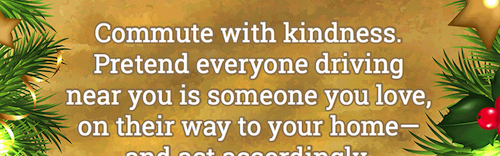
    Holiday Love Challenge #1

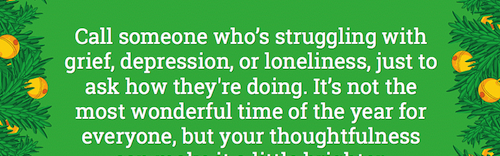
    Tiny Buddha's Holiday Love Challenge #2

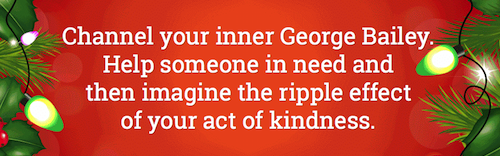
    Tiny Buddha's Holiday Love Challenge #3

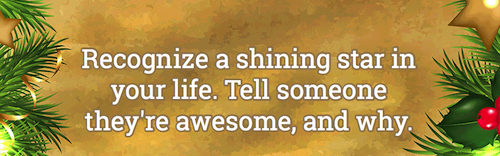
    Tiny Buddha's Holiday Love Challenge #4

    Tiny Buddhas Holiday Love Challenge #5

    Tiny Buddhas Holiday Love Challenge #6

    Tiny Buddhas Holiday Love Challenge #7

    Holiday Love Challenge #8

    Holiday Love Challenge #9

    Love Challenge #10

    Holiday Love Challenge #11

    Holiday Love Challenge #12

    Holiday Love Challenge #13

    Holiday Love Challenge #14

    Love Challenge #15

    Holiday Love Challenge #16

    Holiday Love Challenge #17

    Holiday Love Challenge #18

    Holiday Love Challenge #19

    Holiday Love Challenge #20

    Holiday Love Challenge #21

     Holiday Love Challenge #22

    Holiday Love Challenge #23

    Holiday Love Challenge #24

    Holiday Love Challenge #25

  • The Christmas Gift Experiment

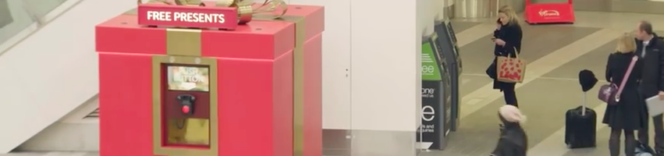
    The Christmas Gift Experiment

    While I don’t agree that presents aren’t for receiving (because someone has to receive in order for someone to give!) I love this joyful little experiment. =)

  • Your Kindness Could Help Someone Find Hope in the Darkness

    Your Kindness Could Help Someone Find Hope in the Darkness

    “Remember there’s no such thing as a small act of kindness. Every act creates a ripple with no logical end.” ~Scott Adams

    I was ten years old and growing up in a home that I can only describe as hellish. Among other things, our father forced us to stand against the wall for long periods of time until we shook from exhaustion. On one such day, he sent me to McDonald’s to buy him a cup of coffee.

    I was happy to get out of the house and escape my punishment momentarily. As I headed to McDonald’s, I wondered what it would be like to never have to go back home. I hoped that I would have a better life someday, but I could not see how.

    When I arrived at my destination and opened my mouth to order the coffee, I burst into tears. I just could not hold them back any longer and they came pouring out right there at the counter in McDonald’s.

    As I stood there, a sobbing, broken little ten-year-old girl, a lady came out of nowhere. She said, “Sweetheart, would you like something for yourself? I will buy you anything you want. Just tell me what it is and I will get if for you.”

    I was so touched by her kindness that I cried even harder. There was nothing on that menu I wanted. I wanted a better life. I wanted never to have to go home again.

    Eventually I stopped crying and went home with the coffee, but I never forgot that lady or her kindness to me. I’ve often wished that I could find her and thank her for what she did that day.

    We interact with so many people every day, in traffic, at the office, and online. If you walk down the sidewalk in a major city you will walk past hundreds of people. The next time you do this, look at them. Really look at them.

    Every single one of these people has had his or her heart broken at one time or another. Guaranteed. You never know what other people are dealing with.

    The person who cut you off in traffic may be struggling with a difficult child or spouse. He or she may have just gotten fired. Of course, it’s possible that they’re simply rude, but you never know. We can’t always be at our best, but we can try.

    It is not always possible to know why people act the way they do, but I can guarantee that you will feel better if you give people the benefit of the doubt more often than not.

    When in doubt, be kind. It doesn’t cost anything to be kind.

    Can you express concern for someone today? Will you take a minute to hold the door for someone or let them in front of you in traffic?

    Why not pick up the phone and call a friend who could use a kind word? You could send a quick email or text to someone you’ve been thinking of. If you want to go all-out, send a hand-written note or card to someone.

    When you encounter a person who is less than charming, consider taking a deep breath and trying to understand where he or she is coming from. Do they have a point? Can you let it go?

    Instead of rushing through your day, try slowing down and seeing how you can be of assistance. Be open to being of service, even in small ways. Instead of worrying because you’re too busy at work to volunteer on a regular basis, you could just volunteer for an hour or two.

    You can make an enormous impact on someone’s life, even with one small kindness. I still struggle to find the words to describe how much that simple act of compassion meant to me all those years ago.

    I went back home and life was still hard. Nothing changed for a very long time, but I had a tiny seed of hope in my heart that began to grow.

    I went to bed that night knowing that there is kindness in this world. Good things were possible and all was not lost. Somehow, it would be okay because there are good people in the world.

    Even today when I’m struggling with something and all seems lost, I remember that day. I remember that there’s always hope. I send a silent thank you to my would-be benefactor.

    You don’t have to be Mother Teresa or Abraham Lincoln to make an impact in someone’s life. You can simply take a minute out of your day to encourage someone. You never know how much of a difference you can make with one small act of kindness.

    If you lived in the south suburbs of Chicago in the late seventies and offered to buy something for a crying girl at McDonald’s, I want to send you a very belated thank you. This post is dedicated to you.

  • A Simple Practice to Prevent Binge Eating and Boost Your Happiness

    A Simple Practice to Prevent Binge Eating and Boost Your Happiness

    “Be nice to yourself. It’s hard to be happy when someone is mean to you all the time.” ~Christine Arylo

    When the alarm went off, the haze of a dream dissolved into the memory of yesterday’s failure. My stomach was still full from last night’s binge, and I was utterly disgusted with myself.

    How could I have blown it again? What was wrong with me?

    I grabbed a notepad and pen and resolved that today would be different. Today I would stick to my diet!

    As I had every day for the previous several weeks, I made a list of every single thing I would allow myself to put into my mouth that day, and its exact calorie count.

    The fact that this totaled up to starvation rations was, to my adolescent mind, perfectly sensible. I had to starve myself.

    Until I reached the (utterly arbitrary) “optimal” number on the scale, I would never be acceptable. Lovable. Enough.

    Or so I thought. The fact that my body was already a healthy weight had nothing to do with it.

    But this day, like all the days before, did not go as planned.

    By the first break period, hunger veered me from my rigid diet and I bought a cup of raisins and peanuts—a “forbidden” snack that took me well over my daily calorie allowance. Then, furious at myself for blowing it, I sought comfort by gorging myself on the very thing I was impossibly trying to avoid: food.

    Day after day it was the same vicious cycle: impose crazy-strict limits, fail to follow them, beat myself up, numb out by binge eating, beat myself up even more.

    Then, in disgust and desperation, I’d lock myself in the bathroom and secretly throw up.

    All of which, of course, only made me feel worse about myself, so I’d impose even stricter limits, which were, of course, even more impossible to stick to.

    This pattern of shame cycled on and off for close to a decade.

    Sometimes it was worse, sometimes better. I had periods when my eating was relatively normal, but for a long time I believed that, like a recovering alcoholic, I’d never be entirely free from the danger of backsliding. “Once a bulimic, always a bulimic,” I often said.

    Over my years of healing, though, I was pleased to discover that I was wrong.

    It didn’t happen overnight, but I’m living proof that it is possible to break free from binge eating behavior.

    I could tell you all the things that helped me in my journey toward health. For example:

    • The attention of my first boyfriend, who made me feel attractive and loved.
    • Giving away all my “skinny” clothes and buying a new wardrobe of clothes that actually fit and made me feel attractive.
    • Studying Feminist theory and learning how my self-concept was programmed and poisoned by a sexist status quo and powerful Capitalist institutions, which greatly benefit when women focus our energies on changing our bodies, rather than changing the world.
    • Experiencing my boyfriend’s family’s attitude of abundance around food, which made me realize that my own family had an attitude of scarcity that exacerbated my dysfunctional eating. (Better eat those brownies now, because there won’t be any more when these are gone!)
    • Eliminating all restrictions and rules around which foods were “allowed” and which “forbidden,” and in what portion sizes. (Restrictions don’t work, because it’s human nature to always crave what’s forbidden!)

    When I looked back from decades later, a pattern emerged. Underlying all of these influences was the simple concept of self-compassion.

    Acknowledging that I’m human, allowing myself to be imperfect, treating myself kindly and gently when I stumble—this, I have learned, is a foundational practice not just for healthy eating, but for living a happy life.

    When I let go of my rigid food rules, and when I ceased to beat myself up for “blowing it,” there was nothing for me to rebel against.

    And when I gave myself permission to be human and imperfect, there was no need to beat myself up anymore.

    It turns out the tendency to over-consume after a small stumble is a well-documented phenomenon.

    The actual scientific term for it is the “What the Hell Effect,” as in, “Oops… I’m trying to quit smoking, but I just took a puff from a friend’s cigarette. What the hell, I might as well smoke the entire pack…”

    Since beating ourselves up seems to invariably lead to the “What the Hell Effect,” a group of researchers wondered whether self-compassion might act as an antidote, and decided to test their theory.

    One study brought women dieters into a lab, one at a time, ostensibly to taste test candies.

    In fact, they were studying the effects of self-compassion on binge eating, but they didn’t tell the women this.

    Upon entering the lab, a researcher wearing a white lab coat (signaling authority) presented each subject with a tray of donuts, and instructed her to pick her favorite kind and eat it (thus blowing her diet!) Then the researcher handed her a full glass of water and asked her to drink it all, so she’d feel uncomfortably full, and hence very aware that she’d blown it.

    Next the researcher showed the woman into a room with several bowls of different kinds of candy, handed her a clipboard and pen in order to rate them, and told her she could eat as much as she wanted.

    What the women in the study didn’t know is that the candies had been carefully weighed in advance. In fact, the scientists threw out the rating sheets—what they were really interested in was how much candy the women ate.

    Here’s where things got really interesting. The only difference between the control group and the experiment group was that before letting the experiment group into the “candy tasting” room, the researchers gave these women a very small self-compassion intervention, which went something like this:

    “You know, we’ve noticed that a lot of women feel really badly about eating the donut. We wanted to remind you that first, you did it for science, and second, everyone blows their diet sometimes. So don’t be too hard on yourself.”

    It seems like such a small thing, but guess what? That tiny intervention made a very big difference. The women who were told not to be too hard on themselves ate almost one third the amount of candy as the control group women!

    This mirrors exactly my own experience with binge eating: When I was finally able to forgive myself, remind myself that I’m human, and treat myself kindly, the bulimic behavior simply dissolved.

    Dr. Kristen Neff, the world’s foremost researcher on self-compassion and author of Self-Compassion, defines self-compassion as being composed of three elements:

    1. Mindfulness (noticing that you’re feeling badly, as if observing yourself from the outside)
    1. Common humanity (recognizing that stumbling, personal inadequacy, and suffering are part of the shared human experience, not your personal pathology)
    1. Self-kindness (being gentle and loving with yourself, as you would a beloved friend)

    Like so much else in life, self-compassion is a practice. Most of us were not trained to be self-compassionate as children, but thankfully, we can learn to do so as adults.

    We can even use self-compassion when we stumble in our efforts at self-compassion!

    In my own life, this simple practice has been life-changing. Not only do I have the healthiest relationship with food of any woman I know, but I’ve learned to allow myself to be human in every other area of my life as well, and I’m happier than I’ve ever been.

    I wish I could go back and give my seventeen-year-old self a self-compassion intervention—it might have saved me decades of misery.

    Of course I can’t go back in time, but I can share what I’ve learned with you. I hope it helps you as much as it helps me.

    What’s something you’ve been frustrated with yourself about this week? Can you try practicing self-compassion with that? If it were your dearest friend, instead of you, how would you respond to her? Try turning that kind and loving voice on yourself and see what happens. And remember, practicing self-compassion takes practice, so if it’s hard for you, be self-compassionate!

  • The Guru of Caumsett: Simple Yet Profound Lessons from a Kind Stranger

    The Guru of Caumsett: Simple Yet Profound Lessons from a Kind Stranger

    Buddha

    “See the light in others, and treat them as if that is all you see.” ~Dr. Wayne Dyer

    It was about a month after my son was born that I was introduced to the man I have come to think of, only somewhat facetiously, as “The Guru of Caumsett.”

    My husband and I were at the park with our newborn son when a man I’d never seen before began waving as he strode determinedly—despite a pronounced limp that caused him to drag, ever-so-slightly, one leg behind the other—past us.

    “How are you doing?” my husband called, waving back while I smiled and nodded my hello.

    “Just great! It’s a beautiful day. You enjoy it!” he encouraged, never stopping completely, but all the while holding my gaze and smiling brightly at us, as if he’d just bumped into long lost friends.

    I questioned my husband as to how he knew him, and he explained that he didn’t. But he saw him every time he was at the park, and the man always greeted not only him but everyone he passed on the path the same way.

    A month or so later I was back at the park. It was to be another scorching mid-summer day, as was evident by the tightness in my lungs and frizziness of my hair.

    But I was determined to run just one full lap around the path before submitting to the heat. It had been many months since I had attempted such a feat. And within only a matter of a few yards, I realized that I had grossly overestimated my body’s readiness for such a challenge.

    Not more than eight weeks prior I had been lying in the hospital after enduring twenty-eight hours of arduous labor that culminated in the emergency Cesarean surgery from which I was still recovering. In fact, from which I had only just begun to truly recover.

    Sadly, like many women, my birthing experience, although successful in that our precious baby boy was born healthy, ended up being a rather traumatic event for me due to circumstances out of everyone’s control.

    As a result, those first few weeks at home were filled with unexpected feelings of inadequacy and, at times, an overwhelming sense of fear that I’d only begun to be able to understand and move through.

    Exercise, I was sure, would help shed not only the remaining baby weight, but also some of the anxiety I had so uncharacteristically been carrying. So when my attempt at running was sabotaged by my still ravaged body and the oppressive humidity, I felt nothing short of despair. 

    The paved path at Caumsett State Park is a three-mile loop. I had made it exactly to the halfway point when I could no longer maintain even the painful shuffle to which my usually fine runner’s stride had devolved.

    Winded and with my clothes plastered with sweat to my still swollen body, I conceded. But I still had to walk the additional mile and a half back to my car.

    As I leaned into the steep incline of the final hill, I was alarmed by the extent of exhaustion and weakness I felt. I began to wonder if I would ever again feel the same strength and comfort in my body that I had been so used to prior to my pregnancy.

    And that’s when I saw him. Just as I was arriving at the top of the hill he was beginning his descent. Without a trace of sweat on his brow—and limp be damned—he moved past me with enviable ease.

    With barely enough breath in my lungs to keep me moving, I managed only a small wave and smile. Without missing a beat and with his face beaming, he said, “Good Morning! You’re doing great. You look terrific!”

    Despite my sweaty clothes and heavier frame, my labored breathing and negative thoughts, I simply stopped in my tracks and said, “Thank you! You have no idea how much I needed that.”

    In the West, the word guru is most simply and often defined as “teacher.” However, when the word is broken into two syllables, its deeper meaning can be better understood.

    Gu denotes a spiritual ignorance or a state of darkness that so many of us experience and unfortunately, dwell within. Ru represents the light of spiritual knowledge that dispels the spiritual ignorance.

    In short, a guru is one who dispels the darkness of spiritual ignorance and lights the way toward spiritual knowledge.

    So you see, with only a few kind words and his genuine goodwill, my guru of Caumsett managed to illuminate for me a new way of thinking and experiencing the situation in which I had found myself.

    I quickly went from feeling frustrated and defeated to being able to recognize all I had so recently been through, and I became excited, proud even, of how well I was doing only a short eight weeks later. He shone his light into my darkness for no other reason except because he could.

    For the most part, I’m sure he is just a regular guy. But to me and everyone else who is lucky enough to meet him along their way, he is a personification and great reminder of some of life’s most simple yet profound lessons.

    Smile at each other. Offer some kind words and a genuine caring for those around you. Build people up instead of knocking them down.

    Work to see your perceived obstacles instead as opportunities. And let nothing stand in your way of realizing just how blessed you truly are.

    Smiling Buddha image via Shutterstock

  • What If Success Was Measured by How Well You’ve Loved?

    What If Success Was Measured by How Well You’ve Loved?

    Heart Hands

    “That man is a success who has lived well, laughed often and loved much.” ~Robert Louis Stevenson

    When I was a child, I learned a lot from my parents and other authority figures. I learned the difference between wrong and right, the value of hard work and perseverance, that one must not mistreat or use people, but be good.

    I learned about love too, for when my loved ones were happy, the same joy always came back to me.

    Making the difficult transition into adulthood, I picked up a whole lot of other things from whatever environment I managed to land in—from school, college, and my workplaces.

    I learned that I had to get a certain rank in class for my intelligence to be considered acceptable. I was questioned and cross questioned repeatedly on why some kid who lived in my building got a better rank than me. Why couldn’t I perform better?

    My future somehow seemed to be in peril due to my underperformance in math, geography, and languages, and my bad handwriting.

    So I learned to be competitive and strive harder. I also learned that no matter what I did, even if I performed better than my last result, it wasn’t good enough because some friend in class or someone in the colony or prior performance by my siblings was always better!

    Soon an epic thirst for ‘success’ kindled in me.

    I learned that success meant doing well in class—getting great marks, getting into a good college, getting epic marks there, as well (you cannot fall lower than a first class), getting an epic job. And it should be in an epic company (brand name) and pay well enough to sound epic and also allow me to spend and save well, to provide sufficiently whenever I find a partner, have kids etc.

    Makes sense, right?

    Oddly enough, I managed to do most of that—get good marks, get a good job in an epic company with an epic package, and make my parents proud.

    I seemed to be at the pinnacle of (my self-defined) success!

    Well, not quite.

    For one, I hated my epic job. The epic company that had hired me (thought they had bought my soul) put me in a department that was a far cry from what they had hired me for.

    They increased the pay of said department a few months down the line (there were many others stuck in the same mess as me). I guess it was supposed to compensate. I also had to move away from home, far from my loved ones.

    After much frustration and in a span of one year, I was packing my bags and returning home. I wasn’t ready to hand over all of my soul, after all!

    What happened after that is a long story best kept for another time. Let’s just say that I returned to what would be, compared to my peers, a relatively mediocre place, both in terms of position and finances.

    I was fast slipping off the success radar!

    Something else also started happening though. While I was busy wallowing in self-pity and licking my wounds, I became more reflective and perhaps, more observant.

    I noticed how happy I was to be with my family.

    With all the glorious dysfunctionality that existed within, of which I am an integral part, I realized that I love them to bits and pieces. I had always taken them for granted, and the time spent away is helping me to treasure the time I spend with them now.

    I discovered joy in little things.

    A neighborhood cat gave birth to a litter of kittens. The mere sight of those tiny babies evoked love and joy in me that I cannot put into words! It was pure bliss feeding them every day, checking on them, and playing with them.

    Most of the litter along with the mom cat dispersed. But two kittens, now nearly year old cats, still linger, and I look forward to going home every single day to feed and cuddle the furballs.

    I took a course in dancing.

    It was one thing I had loved as a child but that I simply wasn’t good at. While I struggled with it through the course, it was a liberating experience. It made me realize that we place a lot of shackles around ourselves as far as our capabilities are concerned.

    I questioned my ultimate ambition in life.

    Do I want to compromise on my health, happiness, and loved ones to achieve ‘success’ like everyone else around me seems to be doing? As a kid I had a lot of other dreams, and now I am revisiting them.

    I realized that in the success I had been chasing for so long, in the rat race that I am still running, there is little room for integrity.

    We are lying every day, be it to get a promotion, to get selected in an interview, or to aggressively sell a product. We are lying so much that it has become part of the fabric we’re made of.

    I realized that power and success as I knew it did not teach love.

    I noticed that people in prominent positions around me were not necessarily using their power with kindness. I have seen people in power abuse those below them, aggressively push them to overwork, look down upon them, and invoke bitterness in them. And I have also seen such behavior being hailed as the hallmark of a performer who could get the job done.

    I realized that it was my responsibility to learn to become a better human being.

    Whether or not I learned to become successful in practical, worldly terms.

    I am not saying I have risen above any of this, only that I am better aware of what I’m doing these days and I reflect on the kind of choices I want to make for the road ahead.

    Just think about it—what if success was measured by how well you’ve loved instead of what you’ve earned or how many people know you?

    What if success was actually how much you’ve loved life itself, filling it with love and giving even more love? And not necessarily what you are wearing, the places you’ve been to, or the phones, cars, and yachts you’ve owned?

    What if success was measured by how much joy you’ve brought to the table and how much better or worse you left the place than when you arrived?

    What if success was measured by how kindly and sincerely you’ve treated those around you?

    What if you actually got negative points every time you treated someone meanly or unfairly or judged someone or looked down on someone?

    How would your success graph look in that case? Would you need to put in more effort to make it better?

    I know I would be in the red.

    These days I make it a point to not take for granted all that I have been blessed with.

    Things like a stable home, concerned parents who love me and care for me in spite of some tremendous difficulties and conflicts, a great education including a post grad degree, loving reassurance whenever I feel I’m not doing well in life, freedom to live life on my own terms. Two cats who let me feed them and give some reluctant hugs for the same—all this and more!

    These days, I have also come to notice many who are working out of love, giving freely, who are true blessings, making this world a better place, in whatever small ways that they are. Quite possibly, you are one of them!

    I’ve learned that one can always appreciate what one has instead of clamoring for more of everything; it’s a good way to feel content. Yes, there are things to be achieved and they will be achieved in due time. Yes, I still lie as much as I am required to and I need a do a lot of work there.

    I accept that I still don’t know exactly where I am headed in life, and that’s okay. I prefer to call it figuring it out instead of failing.

    At the very least, I know that I am editing my definition of success. I am learning a whole new definition in fact, bit by bit, every day!

    Heart hands image via Shutterstock

  • 21 Tips to Release Self-Neglect and Love Yourself in Action

    21 Tips to Release Self-Neglect and Love Yourself in Action

    “To be beautiful means to be yourself. You don’t need to be accepted by others. You need to accept yourself.” ~Thich Nhat Hanh

    The most important decision of your life, the one that will affect every other decision you make, is the commitment to love and accept yourself. It directly affects the quality of your relationships, your work, your free time, your faith, and your future.

    Why, then, is this so difficult to do?

    Your Family of Origin

    I grew up with nine siblings. I had two older brothers, three older sisters, three younger sisters, and a younger brother.

    I never fit in. My sisters were tall and thin with beautiful, long, lush hair. By eleven years old, I was short and very curvy. My hair was fine, thin, and wild.

    For the most part, my siblings did as they were told. I was outspoken, out of control, and rebellious.

    I wore my sister’s hand-me-down school uniforms. I rolled up the hems on the skirts and popped buttons on the blouses. My look was unkempt.

    I was teased and bullied at home and at school. Yet I didn’t go quietly into the night. I fought for my place in my family. To protect myself, I developed a good punch and grew a sharp tongue. (more…)

  • A Tiny Act of Kindness Can Help Someone in a Big Way

    A Tiny Act of Kindness Can Help Someone in a Big Way

    No Act of Kindness Is Wasted

    I started working in the food industry when I was just twelve years old.

    I couldn’t drive, stay out past 11:00pm, or do algebra, but I could easily fill a bag with bagels at a business owned by a close family friend. And so I did, every weekend.

    It was a simple job, working the dozen counter. I didn’t even have to ask people how many they wanted (thirteen, a baker’s dozen—that’s just good business!) I only had to ask what kind they wanted, then hand it to them, make change, and send them off with a “Have a nice day!”

    I tried, as often as I could, to stay neatly tucked behind the register, but every now and then someone asked me to help with something unrelated to my one responsibility.

    I knew it would reflect poorly on the business—and would erode my self-esteem—if I responded to those requests with, “I don’t know how to do that—I’m just a kid,” so I often tried to do things I’d never been trained to do. Like make coffee.

    Sounds easy, right? It should have been. Except I didn’t know the commercial coffee maker wouldn’t light up after I hit the “twelve cups” button, to register that it was, in fact, brewing. So I hit that button five times, flooding the coffee island in the middle of the restaurant.

    I remember the angry looks on customers’ faces, and I remember feeling both embarrassed and bad about myself. I’d failed at a simple job, and people weren’t happy with me.

    That kind of thing happened a lot, and not just when I worked at the bagel shop.

    A couple years later I worked with a few friends at a dinner theater fundraiser for my community theater group.

    We all wanted to raise money to do Grease, and we thought serving would be good practice for adulthood, when we’d likely wait tables between endless rejections (at least, that’s what I thought). So we were eager to work the event.

    Even though there wasn’t a coffee maker in sight (I didn’t have to go too deep into the kitchen) once again things went less than smoothly.

    Since the cooks were amateurs too, it took a while to get all the food prepared and plated. As table by table received their heaping piles of pasta, the patrons in my section appeared to get a little antsy. So I worried, once again, that they were annoyed and angry with me.

    When their food was finally ready, I loaded it all onto one massive tray so no one would have to wait a second longer for their saucy carbs, and then hoisted the tray above my head.

    I made it just a few feet shy of the table before it all came crashing down. On me.

    I’m not sure if it was the sight of me fighting back tears or the knowledge that I was only fourteen, but the patrons didn’t act annoyed. In fact, they got up and helped me clean the mess.

    I was amazed that they weren’t infuriated, especially knowing they’d have to wait even longer to eat. They were patient, kind, and giving, as I learned at the end of the night when a man slipped a twenty in my hand and said, “You did a good job—thanks!”

    He was lying, I knew, as I cleaned sauce out of my hair, but it didn’t matter. These people didn’t focus on what I’d done wrong. They saw how I’d struggled and they chose to respond with understanding and compassion.

    In doing so, they helped me show myself understanding and compassion—yet one more thing I haven’t always done well.

    I’ve reflected on this experience many times over the years when I’ve encountered servers or workers in other businesses who’ve done less than stellar jobs, and I’ve tried to show them the same kindness a group of strangers once showed me.

    They may not all be minors with tears in their eyes and spaghetti in their hair, but they are, no doubt, hard working people who are carrying a lot around—and I don’t just mean their trays.

    They all have struggles, and dreams, and goals, and responsibilities, and they too could benefit from someone showing them patience, kindness, and understanding if they’re a little slow or less than friendly.

    I’m not saying it’s not reasonable to expect good service, just that the world is a better place when we see people beyond their nametags, and visualize everyone as a kid who truly is doing their best.

    As you may have seen on the site or Tiny Buddha’s social media pages, I recently wrote a book titled Tiny Buddha’s 365 Tiny Love Challenges (on sale October 6th), with the help of seventy Tiny Buddha contributors, that shares numerous stories just like this.

    Reading through these stories reminded me how similar we all really are.

    We’re all a little scared and a little rough around the edges.

    We’re all looking for love, support, acceptance, and appreciation.

    And we can all get and give these things every day, one tiny act at a time.

    I’ve seen the power of tiny acts of kindness, forgiveness, and acceptance countless times in my own life, and as the title suggests, I’ve created 365 of these small acts that we can all do, including this one from the seventh month:

    Be patient and understanding with people who serve you, especially if they have a lot of customers to tend to.

    It may seem like a tiny thing, but sometimes the tiny things are the big things.

    Empathizing instead of criticizing is a big thing. Getting up to help instead of sitting back and judging is a big thing.

    And it’s big things like these that help us all feel seen, appreciated, and loved—and far happier for it.

    Kindness quote image via Shutterstock (attribution: Aesop)

  • We All Have Bad Days and All Need a Little Kindness

    We All Have Bad Days and All Need a Little Kindness

    ”Be kind to unkind people. They need it the most.” ~Unknown

    A couple weeks back I had what Alexander would call a no good, terrible, very bad day.

    I’d slept poorly the night before—possibly because I had caffeine, which I usually avoid, somewhat late in the day, and possibly because I have a toddler-sized bladder that doesn’t seem to understand or care about REM cycles.

    In addition to being physically exhausted, I was feeling emotionally spent. I’d been dealing with a high level of uncertainty, as my boyfriend and I were preparing to move yet again, after months of discussion about where we’d live long term.

    Also, I was feeling a little disappointed with myself. I’d recently slowed my work down a bit, both to allow myself space to process my feelings related to the move and to work on some new creative projects.

    Turns out, it’s poor logic to expect that I can simultaneously allow a tidal wave of emotion to wash over me and create something completely unrelated to those feelings.

    So on top of fear and worry about the future, I was feeling guilty about “wasting time.”

    In an attempt to improve my mood, I asked my boyfriend if he wanted to get lunch, but first I needed to stop at the post office to mail a package.

    The line looked like something you’d see at Disneyland, except without the enthusiastic banter you usually hear when people are inching closer to Space Mountain.

    My patience was right there with my bladder—the size of a toddler’s—and I really wanted to leave; but the sooner I mailed that package, the sooner I could stop telling myself, “Why are you doing nothing? You have to mail that package!”

    I thought, “It will go quickly,” without any good reason to believe this was true other than wishful thinking. I couldn’t have been more wrong.

    There were three people working at the counter: one helping people with passports, one giving mail to people who were picking it up, and one working with a customer who seemed to be mailing holiday gifts—five years’ worth, to friends, friends of friends, and friends of those people too.

    I was four people away from the front of the line when it hit me—I really had to pee. But I’d already written on a padded envelope I’d gotten from their retail area. I couldn’t leave; I had to pay for it.

    Sweating, with the sun beating down on me through the window, I started shifting my weight from leg to leg, texting my boyfriend in the car to let him know I’d be a while.

    I felt annoyed with everyone—the postal workers, for not working more quickly; the other customers, for not having fewer things to mail; the manufacturer of my shirt, for not making it more breathable.

    By the time I finally got to the front of the line, I felt ready to explode. I hoped this would be quick—here’s my package, mail it cheaply, have a nice day.

    That’s not what happened.

    The woman behind the counter told me I didn’t write the city legibly, and then began to write, even less legibly, on top of it.

    Since I’m a perfectionist, and because this package and the recipient were important to me, this really bothered me—that it looked like I spelled “round” wrong the first time, then scribbled over it and said, “Yup, this looks good to go.”

    Exasperated, I told the postal worker, “That looks horrible. I don’t want it to look like I can’t spell ‘round.’ Can I just get a new envelope?”

    I ran to grab one, then looked at the winding line and panicked. What if she took another customer while I was writing, and it was someone else with a half-hour worth of stuff to do?

    Then, while pressing the pen so hard it almost broke in my hand, I heard “Next in line.”

    “Could you just wait one second?” I implored. It’s just such a long line, and I waited so long, and I’m like three pen strokes from done.”

    She obliged, equally annoyed—after all, the winding line had greater implications for her than me. Then, after beginning to process my package, she said, “You have the wrong zip code.”

    Thus began a ridiculous back-and-forth discussion about who was right—her computer, or my post-it note, backed by Google.

    I really didn’t want to have to come back, and I didn’t want the package to get returned to me—at a place I wouldn’t be living at for long.

    So finally, after arguing for a bit, while shifting from leg to leg and wiping sweat from my brow, I said, “Never mind. I’ll just pay for my two envelopes and go.”

    I hadn’t yelled at her. I hadn’t insulted her. But I’d been rude. I’d been frustrated, impatient, and impolite. I’d vomited “bad day vibes” all over her, then left in a huff.

    And I felt terrible about it.

    I returned home and emailed the recipient to verify the zip code, and it turns out the postal worker was right—the recipient had given me the wrong one. It showed as the right address in Google because Round Rock has multiple zip codes.

    I felt even worse then.

    “This was so un-Tiny-Buddha-like,” I thought. “I should be better than this.”

    Should. There was that word again. What’s the worst thing you can do when you’re having a bad day? Pile on reasons to feel bad.

    So I decided to cut myself some slack. Did the postal worker deserve my attitude? Nope. Could I have been less volatile? Sure. Would it do any good to beat myself up over it? Absolutely not.

    The next day, after getting a better night’s sleep, I went back to the post office again, armed with the correct address. This time, there was no line. I immediately saw the postal worker from the day before, rearranging some packing material in the retail area.

    “Excuse me, “ I said, “Do you remember me? I was here yesterday…”

    She seemed to arm herself emotionally, glancing at me, then quickly away, before saying, “Um, yeah.”

    “I was rude to you yesterday,” I said, “and I’m sorry.”

    It felt strange and vulnerable to say this to a stranger, but I was sorry.

    I was sorry because I imagine her job isn’t easy. And the sun was beating down on her too. And she didn’t get to run out when I did, to eat lunch, go home, and decompress.

    She was doing her job—and a good job at that—and I was sorry I treated her poorly.

    She looked at me, her body softened, then she reached out for a hug. I doubt she knew it, but I really appreciated that hug. I needed it.

    “It’s okay,” she said. “I know how it is when you have an important package to mail.”

    “I was just having a really bad day,” I said, “and you were right. I had the wrong zip code.”

    “It’s okay,” she said again. “We all have bad days.”

    Where I stood just yesterday, feeling rude and ashamed, I now stood feeling kind and proud. I doubt she knew it, but she gave me a tremendous gift. She reminded me that my worst moment didn’t have to define me.

    I could choose to do something different. I could choose to take responsibility, admit my shortcomings, and do better today than yesterday.

    I don’t know about you, but I’ve come to realize I’m a lot like that scribbled “Round Rock”—messy and far from perfect. I make mistakes. I’m not always kind or polite. Sometimes I let my emotions get the best of me. Sometimes I don’t deal well.

    But maybe these little mistakes are big opportunities. Maybe the worst of humanity can give way to the best.

    Maybe every moment of rudeness is a hug waiting to happen. Okay, so that’s kind of cheesy, and maybe a little idealistic. And I realize there are situations when people are far ruder than I was, and far less understanding than she.

    But I know next time I encounter someone who seems impolite, I’ll remember how I felt that day. I’ll remember I’m likely not seeing them at their best, and this doesn’t define who they are.

    Then I’ll look them in the eye and think to myself, “It’s okay. I know how it is. We all have bad days.”

  • 5 Ways to Experience the Kind of Love You See in the Movies

    5 Ways to Experience the Kind of Love You See in the Movies

    Love Is in the Air

    “Maybe it’s not about the happy ending. Maybe it’s about the story.” ~Unknown

    Growing up, I often pretended my life was a movie, and created quite a few awkward situations by trying to force real life to look like a romantic comedy.

    In the movies, everything was so electric.

    People didn’t just care about each other; they adored each other. They didn’t just date; they had a montage of amazing memories, complete with tandem biking, skipping, hand-in-hand, in a field of flowers, and dancing in the rain.

    That’s the kind of love I wanted—the intense, always exciting, never disappointing, made-for-the-big-screen kind.

    And I was willing to fake it ‘til I made it.

    I remember this one time when I was dating someone who quite obviously didn’t care for me. (I gravitated toward a lot of men like that back then. My Pavlovian response to disinterest? Obsession, every time.)

    I told him I didn’t think we should see each other anymore, hoping he’d put his finger on my lips to silence me, then kiss me after realizing what a huge mistake it would be to let me go.

    That didn’t happen, but I still held out hope for a cinematic realization that we were meant to be.

    I left his family-owned restaurant, got ten feet down the street, then turned around, ran back in, leapt into his arms, and said something horrifyingly cheesy, like, “You complete me! I’ll never let go!”

    I didn’t have to. He let go. And then pushed me away. And probably filed me under “crazy stalker” in a mental folder for girls he’d never call again.

    (Somehow those lines sound a lot less worthy of a restraining order when said by Renee and Kate.)

    I’ve since realized that I fixated on romantic love because I was trying to fill a massive void that stemmed from low self-esteem. And I inadvertently repelled men with my neediness, obsessive behaviors, and lack of self-awareness.

    I’ve also come to learn that the type of romance depicted in these comedies differs from real love—and that we need to complete ourselves first if we ever hope to experience it.

    Real love isn’t about finding your one and only soul mate, sweeping them off their feet, and maintaining a fantasy worthy of popcorn, soda, and waterproof mascara.

    Real love is messy. It takes effort, sacrifice, and compromise. It entails both highs and lows—moments both extraordinary and ordinary.

    And it’s not reserved from romantic relationships. It’s what inspires us to hold a door for an injured stranger, hold a friend’s hair when she’s battling cancer, and hold a parent’s hand when he’s taking his last breaths.

    It all comes from love. Different flavors, of course, but love nonetheless.

    All this being said, I still want to experience the kind of love you see in the movies. Not the romantic kind (though I’ve always wanted to dance in the rain).

    I’m talking about something altogether different, but equally magical and transformative.

    It’s the kind of love that creates a world so beautiful, we don’t need escapist fantasies.

    The kind of love that fills us with something far greater than lust and euphoria.

    It’s something we can all experience by doing these five things, and in doing so, create a better, kinder, more loving world.

    How to Experience the Kind of Love You See in the Movies

    1. Save the cat.

    In his definitive guide to screenwriting, the late Blake Snyder instructs writers to introduce their movie hero with a “save the cat” moment—meaning the hero does something kind, which makes the audience like and sympathize with him or her.

    While there’s no one whose sympathies we need to earn, because we’re (hopefully) not being watched, we can all create a better, more loving world by looking for these “save the cat” moments.

    It’s when you step in to defend someone who’s being bullied, or grab an extra sandwich for the homeless person sitting outside, or take a little time out of your busy day to help someone who’s struggling—with anything; homework, a heavy bag, or a heavy heart.

    The best way to experience love is to be willing to give it. We can do this every day—no field of flowers required.

    2. See the good in people.

    In a world where we’re constantly bombarded with bad news, it’s easy to become jaded. It’s tempting to assume the worst in people and live behind a metaphorical suit of armor, ever ready for someone to do something that justifies our cynicism.

    But when we constantly look for the worst in others, we miss out on the best.

    You can certainly find your fair share of cynics in the movies, but for most Scrooges, there’s a transformation—a shift in their fundamental beliefs that changes how they engage with the world, thereby changing the world they experience.

    If we want to see a world of beauty, hope, and kindness, we need to be willing to look for these things.

    This doesn’t mean we should ignore the harsh realities of life; to create positive change, we need to first acknowledge what needs changing.

    It just means we open our eyes to see those “save the cat” moments when they happen. People do good things every day. If we want to nurture a loving heart, we have to recognize and appreciate them.

    3. Inspire the best in others.

    We’re more likely to see the best in others if we proactively aim to inspire it. It’s not always easy to do this; unlike in the movies, the Jerry Maguires of the world don’t always get the business and the girl in the end.

    But we’re all drawn to people with visions—people who put other people before profits, people for whom integrity is more important than notoriety.

    When someone stands for something good—something that benefits not just that person individually, but the world at large—it touches something inside us, and motivates us to devote ourselves to a purpose that can help create a better world.

    Choose a purpose—maybe not for your lifetime, but for this time in your life. Write your “mission statement.” Wrap your love around a cause. Aspire to make a difference, no matter how big or small, and you will.

    4. Check your ego.

    As story consultant Jen Grisanti wrote in her Tiny Buddha post, in the best movies, the protagonist starts with an ego-based desire—to get the job, or revenge, or adoration and admiration—and ultimately reevaluates their goal to better serve and connect with others.

    It’s when Bruce Almighty stops obsessing on being a successful news anchor and instead, becomes a loving, attentive partner to his fiancé, and someone who actually appreciates reporting on good people doing good things.

    We all have goals and ambitions, even those of us who consider ourselves spiritual. For some of us, those ambitions might be more about making a living or making ends meet than making a name for ourselves.

    But many of us are chasing a feeling, whether we hope to feel worthy, valued, or important. Ironically, the things we chase, when caught, often leave us feeling emptier than when we started.

    To truly feel fulfilled, we need to set goals that reflect not only what we want to gain, but what we want to give.

    I used to think “you get what you give” referred to reciprocity, but I now know this means that the giving itself is the getting. If you’ve ever experienced profound joy after helping someone else, you know this too.

    5. Believe in love (and love yourself).

    In the movies, a protagonist might not believe in love from the get-go, but if not, that’s his or her journey—to open to the possibility of love again, despite having been hurt or betrayed.

    Then there are those heroes who start their journey obsessed with finding love, much like my former self, only to realize they first need to heal and learn to love themselves.

    We’ve all been wounded in some way, and most of us have learned to either push people away or cling to them in attempt to lessen our pain.

    Real love is neither fearful nor needy. It’s not about broken people completing each other. It’s about coming to each other healed and whole, ready to complement each other.

    To experience this kind of love, we need to let go of how we’ve been hurt in the past, and believe that there are people out there who will treat us with care, kindness, and respect, if only we give them the chance.

    And we need to show ourselves we’re worthy of this kind of love by treating ourselves the same way, and letting go of people who don’t.

    Real love isn’t a fairy tale, but it’s so worth it, and possible if we work for it.

    I still like to think of my life like a movie, but not because I’m waiting for someone to ride off into the sunset with me.

    I think of my life like a movie because I want to be inspired. I want to be kind, I want to see the best in people, and I want to do my part to create the kind a world where we all inspire the best in each other.

    The goal isn’t a happy ending. It’s to live a happier story. And that starts with how well we give and receive love.

    **If you enjoyed this post, you may also enjoy the upcoming book Tiny Buddha’s 365 Tiny Love Challenges, launching October 6th. Pre-order now and you’ll instantly receive $300+ in free bonus gifts, including several eBooks, eCourses, and meditations on love and relationships.**

    Love is in the air image via Shutterstock

  • Help Instead of Judging; They May Be Blinded by Pain

    Help Instead of Judging; They May Be Blinded by Pain

    Compassion

    “We can judge others or we can love others, but we can’t do both at the same time.” ~Unknown

    When I was eighteen, my father took his own life. I was just a baby, really, a mere freshman working on my Bachelors Degree at UMF.

    There are times when I feel lost in the pain of missing him, stuck with this empty hole inside. Hovering in between confusion and anger, where the feelings consume me.

    Losing my father in such a traumatic way has shown me just how deeply I can feel, how hard I can fall, how grief can overcome my entire being at times, how forgiveness can heal—and also how I can help others so they don’t need to suffer as my father did.

    A military man who dealt with severe depression and PTSD, he desperately tried to find his place in this world. He tried to find comfort through his adopted family, he tried to find courage through joining the military, and he tried to find understanding by becoming a father.

    He was a quiet soul who was sociably awkward in a sweet, innocent way. He radiated beams of sadness from his eyes and tried desperately to express his love to his family without actually having to verbalize it.

    Monday, February 19, would become the date that measures time in my book. Time would be measured before this date and after this date.

    I awoke that morning, traveled south to a friend’s home, and fell asleep on her couch after arriving.

    Around 9:00pm, there was a knock on the door. There stood a Maine State Trooper and a priest. As I sat up on the couch, they walked into the living room. My heart pounded so hard I felt as if it were outside of my chest.

    As they sat down, I screamed, “What’s happened? Why are you looking at me like that?”

    The state trooper said, “I’m sorry to tell you this Jessica, but your father has died.”

    The priest quickly intervened, “He died quietly, in his sleep, with his cat next to him. He took his own life, dear, by overdosing on medication, but he’s at peace now…”

    Time stopped. My heart stopped. The pounding noise in my ears stopped. I cannot recall what they said next. I don’t remember what I even did next. I remember faintly hearing questions like, “Did you know he was ill?”, “Maybe this is a good thing considering the circumstances?”, and “Do you want to go see your mom now?”

    It was all a blur. We rushed back to my family home, I ran into my mother’s arms, and suddenly the funeral planning began. Life would never be the same.

    I remember feeling awkward and out of control. I worried about the stigma attached to the way he died, along with the potential judgment, the unknown pain, and the unknown future.

    What looks will I get upon returning to the University? How will people act around me? Am I a statistic? Am I a survivor? My mind raced. My feelings cycled through anger, resentment, betrayal, confusion, and hurt.

    How could he do this to me and our family? Didn’t he want to see me graduate college, get married, and have children? Why leave me with all these questions? This guilt? This pain? Why would he do such a thing, take the easy way out and refuse any help? He was such a great father, a strict Catholic, a military man…why would he do this?

    Then I realized that all of my pain and all of my questions were centered around me, not him. My inner victim was loud and self-pitying. And that’s part of the problem. People who are in such pain from deep depression or mental illness aren’t thinking rationally.

    My dad wasn’t thinking about my wedding in the future or the grandkids he would have or his next vacation; he was in pain. Period. Unbearable pain that he just couldn’t escape. He needed help. But people turned away because it can be uncomfortable to reach out, or perhaps because they thought it wasn’t their problem, or that he was just mean.

    We all have the power to recognize pain in others and offer compassion instead of judgment. In doing so, we can help those in need instead of forming mistaken conclusions about them and writing them off.

    Let go of the assumption that the man talking to himself on the street or the person in the straight jacket are the only ones “crazy” enough to take their own life—and that those people aren’t also worthy of compassion.

    Everyone is fighting a battle you know nothing about. And everyone processes loss and hardship in different ways. How much you can handle will vastly differ than what someone else can handle.

    We’re all hurting in some way, perhaps damaged due to tragedy, and yet in spite of everything, many of us rise out of bed in the morning and put a smile on our face.

    Many people appear composed or happy to give the impression to the outside world that they have it all together, only to return home to feel sad and alone.

    When you encounter someone in distress or look into a stranger’s eyes and see sadness, offer kindness. Don’t wait for others to be kind to you, show them how to be kind. Don’t prejudge or assume something about anyone; allow them to tell their own story—and believe them.

    Listen, be present, and give others the space to be themselves.

    This is what I learned from my father’s loss—that you never know who’s completely blinded by the depth of their pain, and you never know how much you could help by offering kindness and compassion.

    Compassion image via Shutterstock

  • “Toxic” People Often Need Compassion the Most

    “Toxic” People Often Need Compassion the Most

    “Be kind, for everyone you meet is fighting a hard battle.” ~Plato

    By all standard definitions, I used to be an energy vampire. I lived in my own self-created drama, prone to rages, complaints, and self-pity. I exhausted the people around me and played games of control, superiority, and victimhood.

    I’ve heard this bundle of behaviors called a “personality type,” and I think that is as obscene as saying that a hungry person has a “Hungry Personality Type.”

    An energy vampire, by definition, is someone who cannot create or sustain their own positive energy, so they take it from others. An energy vampire, by my own experience of that definition, is someone lacking in self-love and trying to pull that love out of others.

    Such a person is simply hungry, not inherently flawed.

    I’ve been there.

    A few years ago, I began hearing voices and feeling suicidal. I had drained the people around me dry and I was all alone. I was trying to drain myself, but I had nothing left to give. I had to choose: change or die.

    When I started to change, I realized just how much I hated myself, how much I judged myself, how many impossible standards I set for my own acceptance. I began to work on accepting and loving myself just as I was.

    Bit by bit, I opened up to the beauty of my face, the beauty of nature, the beauty of the human smile.

    I began to fall deeply in love with everything and everyone. After years of hunger, years of being a love vampire, biting others to get it, I realized that I could feed myself. I didn’t have to hurt myself or anyone else.

    In that awareness, I remembered the people who had accepted me when I was “toxic.” These people became my teachers. Their kindness and love, which was invisible to me in a state of desperate love hunger, suddenly became crystal clear in my newfound self-awareness.

    It hurts me to confess that some of these people never got to see me get better. All they knew was my darkness and they gave as much as they could before they left. And they are still my greatest teachers.

    After I healed my mind and replenished my self-love tank, I began to reach out to others on the same journey.

    I’ve met so many people who have been abandoned by everyone around them, because they’re “energy vampires.” I found these people in my family. I found them in my old circles of friends.

    It hasn’t been easy, but I’ve really tried to give back what was given to me. I’ve tried my best to be loving and supportive to people who only know how to take (at least, right now).

    And it’s been worth it.

    A few years ago, I kept meeting up with one person that everyone around me told me was toxic. I was always exhausted after hanging around her and I knew that, deep down, she resented me. She treated me just like I used to treat people.

    I didn’t “cut ties” or “protect myself” from her as all the articles say. I gave her some of my time—not all of it, but some of it. I took care of myself enough that I could heal from any emotional pain I got in our meetings.

    Eventually, she stopped talking to me. We didn’t speak for close to five months and, the other day, she suddenly called me to ask if we could meet up.

    When I saw her, her eyes were sparkling and her smile shone for miles. She couldn’t stop talking about all the epiphanies she’d had and all the ways she’d healed. She had stumbled across some powerful lessons in a program she enrolled in and it changed her life.

    She kept saying, “Now, I understand.” Everything I would talk about that she eyed suspiciously—now, she understood.

    After a long conversation about her new, joyful life, she paused, looked away, and said, “I hated you, you know. I couldn’t believe anything you said and I just didn’t understand that happiness like this was possible. I thought you were lying. I was such a jerk to you. Why did you keep talking to me?”

    I smiled and said the words that I’d used to defend her behind her back when others would interrogate me with the same question: “You deserve it. I saw myself in you. You weren’t a jerk. You were hungry. I knew you’d wake up one day and, when you did, you’d remember this, remember me. And, one day, you’d be that person for someone else.”

    And, now, she is.

    I’m not saying we should all surround ourselves with people who make us feel bad. I’m not saying that we should spend all our time giving compassion to others at our own demise.

    What I am saying is this: Oftentimes the “toxic” people are the ones that need compassion the most.

    And although you probably won’t get a “Thank You” from them in that moment, being kind, seeing them from a compassionate perspective, and refusing to resort to negative adjectives, that could really change a person’s life.

    Your acts of kindness, though they may not be immediately rewarded, are never wasted. They will sit inside the recipient’s mind, outside the walls of their self-imposed limiting beliefs, awaiting their awakening.

    And, if they do awaken, they will remember you and they will learn from you. And your acts will have contributed to a more loving world with fewer “energy vampires” and more people who love themselves and love others.