Tag: kindness

  • Start Believing in Yourself: How To Adopt A Language of Love

    Start Believing in Yourself: How To Adopt A Language of Love

    “Once you have learned to love, you will have learned to live.” ~Unknown

    We are powerful, vivacious, brilliant creatures. Our thoughts and ideas create the very world around us. We constantly, and often unconsciously, exude and radiate palpable energy that permeates through every crack and crevasse of our lives.

    Our words hold especially powerful energy and the ability to uplift and inspire others and ourselves, or send us spiraling down the ladder to Bummersville. Learning to recognize our inner Negative Nancy allows us to pump up the volume on our love lingo to bring us back to a place of clarity, peace, and happiness.

    As a young woman in my early twenties, I am no stranger to the pitfalls of self-criticism. As a child of divorced parents, I grew up with the belief that I was somehow imperfect. Inadequate. Just shy of being good enough

    My teenage years proved to be of little consolation, as I was suddenly introduced to the world of comparisons. The desire to be as thin as, rich as, and cool as whoever was entirely consuming. I validated this belief of not being good enough with constant self-judgment.

    I clouded every move I made with the veil of criticism. No goal or achievement was ever really celebrated, just held up in comparison to someone else’s triumphs.

    Finally, after being introduced to the idea of self-love, I did an experiment in which I tried to mentally note each time I said something negative about myself in one day. Holy eye-opener. Before I even finished breakfast I had already torn myself apart with self-criticism and harsh judgment.

    I would never think to speak to someone I dislike in the way that I was thought-bashing myself.

    It’s no wonder I didn’t feel enthusiastic or passionate about anything. All of that garbage mind chatter was blocking my ability to see the reality: I am outrageously perfect. I have purpose. My life has meaning. I am an integral part of the whole.

    I still struggle from time to time to tune out my inner critic and embrace my inner cheerleader; beliefs that we hold onto for a long time as truths are never easy to let go of. But I have found that there is a distinct correlation with the words I use as a part of my regular vocabulary and the way that I feel.

    Adopting a language of love is essential in keeping me aligned with my highest self. 

    Here are my no-no’s and big YES!’s when it comes to speaking the language de amor:

    • Stop saying, “I can’t.” You can; you just haven’t done it yet or you haven’t tried.
    • Stop saying, “Always.” Actually, just stop generalizing. Nothing is black and white.
    • Stop saying, “They did, he did, she did…” It’s a subtle (or sometimes not-so-subtle) form of blame. Observe your current situation and ask, “What can I do now? How can I make this better?”
    • Stop saying, “I wish this or that.” Instead say, “I want this and these are the steps I am going to take to get me there.”
    • Really stop saying “I am not good enough. I am fat. I am ugly. I’ve made too many poor choices. I’ve tried before and it didn’t work out.”

    I like to imagine that I am made up of a team. I’ve got inspiration, truth, gratitude, enthusiasm, ambition, worry, deprecation, blame, and sadness. The game’s all tied up, this is the crucial moment that decides whether my team moves forward or is left behind.

    Who am I gonna put in the game? Who’s gonna be on the bench? This isn’t practice…this is life! Keep worry, deprecation, blame, and sadness off the court. They’re gonna lose the game.

    Adopting a language of love is not about positive affirmations. It’s not about trying to convince yourself that you feel something else other than what you feel, or that a situation is something other than what it is.

    It’s about consciously choosing thoughts and words with uplifting energy. It’s about embracing what is intrinsically true and inherent: You got this. 

    Whatever your situation, whatever your roadblock or mental block or financial block, you’ll figure it out. How do I know? Because we all contain inside of us the capacity to manifest our deepest desires and stay the course all the way to the end.

    Let’s adjust our thinking and speaking to reflect that, shall we?

    May love become our new modus operandi.

    Photo by aussiegal

  • How the Need to Be Right Can Lead to Guilt and Regret

    How the Need to Be Right Can Lead to Guilt and Regret

    Sitting Together

    “The obstacles of your past can become the gateways that lead to new beginnings.” ~Ralph Blum

    I think we all have this issue: guilt, followed by its sister, regret.

    I didn’t realize how dark a blemish it was on my heart until I fully felt the anguish of my mother’s death. I never quite realized my full potential, courage, or strength until her passing.

    Her greatest sacrifice, leaving this earth, proved to be my greatest motivation to search myself for the answer of whom I was and why; it was the major catalyst in my life for change.

    Sometimes the best things for you are the hardest.

    Admitting the darkness you’re carrying inside is one of the hardest things to do. Convincing yourself that you have been wrong and need to change can be even harder.

    Forgiving yourself because you are human, and loving yourself enough to know you deserve more, and deserve to give others more, is the hardest task of them all.

    I was an embittered person almost my whole life. I could hold a grudge with the best of them. I felt I had a lot to be resentful for, and truthfully, much of it was not unwarranted. But with my inability to never let go of things, I was miserable, making everyone else around me miserable, as well.

    This went far beyond just being angry. I felt I was being terribly misunderstood and never heard. I also felt the constant need to have to defend myself and my views with a strong argument.

    I had a very strained relationship with my mother starting when I was 14. I was at that age when I thought my parents knew nothing and I was smarter than they were.

    I can now fully understand why I felt that way, beyond just normal teenage rebellion. I was projecting a lot of my older siblings’ perceived unpleasant experiences with my parents onto my own, and letting that determine my relationship with them.

    There was a lot of friction between them, and I somehow felt that if I didn’t share their same resentment I was somehow betraying them.

    Because of this, I went through my youth and into my adulthood expecting my mom to give more than she could and blaming her, instead of blaming myself for not having enough compassion and never taking the time to understand that she was a person, too.

    I seemed to always be aggravated at everything she did.

    I held onto the need to be right, never letting up and always needing to argue. I grew into this person who could never listen with a compassionate heart and lived with resentment instead of love, kindness, and forgiveness.

    I was very hard-hearted instead of soft and pliable and forgiving.

    We would have bouts of calm when we got along great, then something would shift in her mood or mine and it would turn volatile. I see now that, because we were so much alike, it caused much of that friction. This went on for our whole relationship, up until just a couple of years before she died.

    I’m not saying she was without her faults, too. But now that she’s gone, and since I am much older, I can see everything so much clearer. That’s where the guilt comes in.

    We had been working on our relationship, though we didn’t acknowledge that openly, and we were really making headway. You see, I couldn’t even hug her, hadn’t done since I was a kid. But I was getting closer to her and hugging her more because I knew she needed it, and so did I.

    My great wall was crumbling.

    We had always done things together for years, not that that stopped the bickering. But that was all but over for a long while. Not long enough, though. And this is where the regret comes in.

    I wasted so much time being angry and self-righteous that I missed out on having a better relationship with my mother.

    If I had only known then what I have learned in the last few years and especially since her death, I could have saved myself the burden of that guilt and regret.

    There are so many moments each day where I will have a memory of us together and I will feel shame for the way I reacted to a situation. In my mind I can change the outcome to something that I should have done to handle the situation better.

    When she would be difficult, and she could be at times, why did I have to make it worse? Why couldn’t I have just stayed calm and had compassion for her feelings instead of getting overwhelmed and lashing out?

    I was incapable of doing that at the time because it’s hard to do when you are totally unconscious. You act before you think, lash out before you embrace.

    Oh, how I wish I had known this calm before it was too late! I think about the agony I could be saving myself now, and I am filled with remorse. But it doesn’t have to be that way. You can save yourself from the pain that I am trying to overcome.

    All it takes is a step in the right direction.

    It is so important to put your prideful ego aside and try the softer way. Ask yourself these three questions:

    1. Will it destroy me to “give in,” take the barriers down, and not have to be right all of the time? 

    When you “give in” it is not to lie down and be trampled on, but to slow down and reflect on what’s most important. The egotistical need to be right is what will ultimately destroy you. It leaves no room for compromise or compassion for another’s feelings, and will cause you more damage in the long run.

    2. Is it worth it to be right, making the argument more important than making someone else happy?

    When you constantly reinforce to the people in your life that you value your own opinions more than their feelings, it can cause a lot of hurt. Why not take the higher road and save the moment by saving your voice?

    3. Will my actions now cause me pain and regret later? 

    My biggest lesson learned was that, if I had only known then what I know now, I could have prevented so much grief.

    I wish I had had more generosity in my heart at that time. I wish I knew how to pause and let myself have that moment to feel the clarity that I needed to make a better choice in how I handled the situation at hand.

    I know that, when she did things that I considered unforgivable, it’s because she didn’t know any better and was only doing the best she knew how at that time, as was I.

    I am so grateful that I have learned these lessons now so that I can have the opportunity to live this way from here on out. I’m a big believer in things happening for a reason, and though I don’t quite know how to justify this one, I thank my mother every day for her sacrifice in that in losing her, I gained the greatest insight.

    I just wished I’d learned these lessons sooner.

    Photo by Kevin Krejci

  • 10 Simple Ways to Make the World a Better Place

    10 Simple Ways to Make the World a Better Place

    young volunteer woman caring for elderly woman

    “As one person I cannot change the world, but I can change the world of one person.” ~Paul Shane Spear

    I have always wanted to change the world.

    I remember being four years old, sitting glued to the television on Sunday mornings, not watching cartoons, but utterly captivated by World Vision. I cried about the injustices in the world, and begged my mother to let me sponsor Maria, the girl with the large, sad eyes who was around my age.

    My mom patiently tried to explain to me that we couldn’t afford to send her money. I couldn’t understand, since we seemed to live in luxury compared to Maria.

    Having been raised in a middle-class community of about 800 people in rural Newfoundland, I had never seen a stark divide between the rich and the poor. We all seemed to be the same to my four-year-old eyes.

    My heart broke for Maria, and all of the other children on the show. I vowed to myself that someday, I was going to help people like her.

    Throughout my childhood, I told everyone that I wanted to change the world. Many didn’t take me seriously. They’d say, “One person can’t change anything.”

    Still, I knew I wanted to make a positive difference by helping people, animals, and the environment.

    I started volunteering in elementary school, and became a vegetarian at the age of 13.

    People asked, “Why bother? You know, that cow isn’t going to come back to life because you aren’t going to eat it.” And they very often said, “It won’t make a difference.”

    I tried to explain that every action counted, and that we all had to make small efforts or nothing would ever change.

    As time went on, people around me began to criticize less, and many friends and family members decided to try some of the things I was advocating.

    Each time I did something to make a positive impact, it left me wanting to do more.

    You may think that you need to be a world leader or a billionaire in order to make a difference.

    I always believed that being a good person is about the small things. It’s about how you treat other people, not how many people you have power over.

    If you’d like to make the world a better place, but aren’t sure how to fit it into your busy life, these ideas may help:

    1. Volunteer.

    Volunteering doesn’t have to consume all of your free time. You can volunteer as few hours as you would like! You can find an organization within your community, or you can even volunteer online, through websites that will allow you to help for even a few minutes at a time.

    2. Donate blood.

    This can be one of the most satisfying ways to make a difference. You can literally save a life with just an hour of your time.

    3. Donate used clothing.

    There are so many places and ways you can donate your used clothing. Some organizations even offer pick up services, Donate them to a homeless shelter, or an organization that sells them to raise funds.

    4. Foster an animal.

    This can be such a rewarding experience. If you’re able to part with the foster animals, they leave a hole in your heart, but fostering your next pet helps fill it, and you will be making a difference in the lives of so many animals in need.

    5. Spread the word about various causes in your community.

    See an interesting fundraiser that an organization is hosting? Share it on Facebook! See an animal that’s up for adoption? Share it. There are so many ways you can help an organization with just the click of a mouse.

    6. Donate something you made to an organization that can use it.

    I make jewelry, hats, scarves, and other crafty things in my free time. I’ve donated many hats and scarves to homeless shelters, and donate jewelry to a cat rescue organization for them to sell or auction to raise funds. You have talents—use them!

    7. Join a bone marrow registry.

    It’s incredibly easy to sign up to donate bone marrow, and you never know when you could save a life.

    8. Spread some kindness.

    Small acts of kindness can go a long way in making the world a better place. Think about a time when someone did something unexpected for you that brightened your day. Weren’t you a nicer person for the rest of the day because of that?

    I’m willing to bet that anyone who receives an act of kindness passes it on in some way, even if it’s just by being in a better mood, and therefore treating the people around them with more kindness than usual.

    Send someone a kind message. Give a small gift. Make something for someone. Tell someone how much they mean to you. There are so many ways to brighten someone’s day.

    9. Change your diet.

    Many people will argue with the validity of this strategy to improve the world; however, what you buy reflects what you value.

    If you don’t want to become a vegetarian, try having one meat-free day per week. If you don’t want to reduce your meat consumption, how about buying some free range meat or eggs? Or, buy organic food products. There are many ways you can change your diet to reflect your values.

    10. Make your purchases support your values.

    Every purchase you make supports something. You can either support a large business that exploits people, animals, and the environment, or you can buy items that are local, organic, or fair-trade. It’s hard to change this all at once, especially if you’re used to shopping for bargains, but try changing just a few of your purchases to make them better reflect the things you value.

    These are just a handful of the thousands of ways you can make the world a better place! Just remember that every single thing you do makes a difference. Don’t ever let anyone—yourself included—discourage you from trying to be a better person and help others.

    Photo by Dave Bezaire & Susi Havens-Bezaire

  • The Gifts of Empathy: We’re Not Alone with What We’re Feeling

    The Gifts of Empathy: We’re Not Alone with What We’re Feeling

    Hugging

    “In separateness lies the world’s great misery, in compassion lies the world’s true strength.” ~Buddha

    When asked why I write fiction, I used to say, “Because I enjoy writing and revising sentences” or “Because I like practicing an art I’ll never perfect” or “Because I love to read.” All those reasons remain true, but my answer has changed.

    The most important reason I write stories, and read them, is to practice empathy.

    Strange how we often feel empathy more easily for fictional characters than for real people. One reason is that sometimes we get to know fictional characters more deeply than our family members and friends.

    Too often in real life we keep aspects of our true selves hidden and miss an important opportunity to connect with other human beings.

    How many times has this happened to you? You run into a friend, sometimes a close friend, who says, “How are you doing?” and you say, “Good! How are you?” and the friend says, “Good!” Meanwhile, you’re not doing well at all, and later you discover that your friend hadn’t been doing well.

    Recently, I tried something different. When a friend asked how I was, I told him the truth—that I’d had a difficult week.

    He said, “I’m sorry to hear that. I know a few other people who had a rough week.” He waited to see if I wanted to share more, but didn’t prod. Then he said, “Hey, I hope you have a better week next week.” I could tell that he meant it, and that made me feel a little better, a little less alone.

    I’m not suggesting that we all become confessional and reveal our secret struggles, fears, and pains with everyone we meet. But I am suggesting that you don’t have to feel alone. When you take a chance and share a hidden part of yourself with someone, it’s amazing how often people respond with, “Me too.”

    Here is the most important thing to remember: Whatever you’re feeling, someone else has felt it. Whatever you’re going through, someone else has gone through it. You may feel alone, especially if what you’re experiencing is very frightening or painful, but you are never alone.

    I was having dinner with a close friend the other night, sharing with him about a difficult time in my life, the most difficult, when I had hurt someone I love very much. (more…)

  • 8 Easy Ways To Spread Happiness Around You

    8 Easy Ways To Spread Happiness Around You

    Happy Days

    “All the flowers of all the tomorrows are in the seeds of today.” ~Proverb

    For as long as I can remember, I’ve wanted to contribute to the world somehow. I’ve always dreamed of starting a charity organization. I bet that, just like me, you walk around with some sort of wish in your heart to change the world in some way, but you might not do anything about it. How come?

    My excuses were time, money, fears, and not knowing how to go about it. I’m guessing you have similar hindrances.

    Until recently I held on to the limiting belief that someday, one perfect day, when I’m done being busy with pursuing my masters degree, working my current part-time job in a call center, and raising two small kids under five, I’ll follow my heart and contribute to this world. Someday.

    It’s a myth!

    Through my job in a call center, I witness lots of tragedies that happen to people, and they’ve been wakeup calls for me.

    I’ve understood something life-changing: all I really have is today. And I better make it count.

    So I made a conscious decision, a choice, to throw all my fears away and start spreading happiness.

    I thought, I might not be able to start a charity now, but I can take a tiny step and start as a volunteer in some existing organization. So I joined hospital clown project, where I do the small, practical stuff for them.

    I also decided to spread happiness around my inner circle—my husband, my two kids, my family, friends, and colleagues, with small things. (more…)

  • How to Stop Betting Against Yourself: 7 Keys for Personal Freedom

    How to Stop Betting Against Yourself: 7 Keys for Personal Freedom

    “Nothing reduces the odds against you like ignoring them.” ~Robert Brault

    Do you ever wake up feeling like you’re battling yourself?

    What’s worse is waking up in that battle and feeling like you’ve already lost before you’ve even started the day.

    But think about that for a second: isn’t living this way crazy? We think it’s normal to be fighting ourselves. We’re taught we need to grind it out and make something of ourselves to be successful. We’re taught we need to become something.

    And the underlying message is this: who we are right now isn’t good enough.

    We’re starving for acceptance, but see ourselves as flawed, and we end up spending our lives in a quest to prove ourselves to the world and to ourselves.

    The Fallacy of Needing to Earn Your Freedom

    When I was a kid I felt radically wild and free. And I bet you did too. But I also would bet that something changed and you don’t feel as free as you once did.

    As a curious, adventurous lad, I felt like I could do anything, be anything, and create whatever I wanted. My imagination was my only limit.

    But then somewhere along the way I started to hear the voices of my parents, teachers, and adults around me send contrary messages.

    I needed to…

    • Get good grades to prove my intelligence (and my worth).
    • Do what’s right (follow the pages of an old book) and not misbehave to prove my goodness.
    • Conform to socially-approved behavior to show that I was a valuable member of society. (more…)
  • We Need Compassion the Most When We Seem to Deserve it the Least

    We Need Compassion the Most When We Seem to Deserve it the Least

    “Our sorrows and wounds are healed only when we touch them with compassion.” ~Buddha

    When babies cry everyone rushes to find what’s wrong and alleviate their stress. It’s a bit of an instinct to do this in our culture.

    We understand that the only way that a baby can communicate a need to us, whether it’s hunger, a necessary diaper change, fatigue, or discomfort, is to cry out. No one wants to hear a baby cry, so we respond quickly.

    Unfortunately, as a child begins to grow and learns the language, we assume that they know how to communicate their needs effectively, yet do they?

    As an elementary teacher I have come to know that even though children have more vocabulary words when they enter school, they still do not know how to communicate their needs. Often, children cry out to get their needs met, but all we see is defiance instead of their plea for help.

    Bella is an adorable first grader who entered my classroom in September. I remember getting her kindergarten card, which noted that she could be a handful at times. I put the card in my filing cabinet at the start of the year because I like to get to know my kids from my own perspective without previous judgments.

    When I met Bella and her mom at our welcome back picnic, I noticed that Bella appeared to be running the show. Her mom and I talked for a bit, and she shared that Bella’s dad died when she was only eight months old, and it was just the two of them still to this day. It was easy to see that mom was compensating for the loss.

    Within the first month of school, I could certainly see why Bella had earned this reputation of being a handful. She could be a bit silly and somewhat defiant at times, but she knew the rules of our classroom and understood what kind of behavior was expected, so she did well with me.

    Right after the December break, things started to change.

    Bella was getting herself in trouble in art, music, and gym. She was not listening to directions and defying the teachers when they asked her not to do something. She was also talking back to adults in the building and getting herself into trouble at her before and after school program.

    Her mom and I talked on the phone to create a plan of action. I suggested a behavior plan to help her, but asked mom to promise to follow through at home for this to be effective. The plan worked for only a few days because Bella just didn’t have a strong interest in following the rules. (more…)

  • Empower Others and Make a Positive Difference in Their Day

    Empower Others and Make a Positive Difference in Their Day

    Helping Hand

    “Praise is like sunlight to the human spirit. We cannot flower and grow without it.” ~Jess lair

    One of the more important lessons I learned as a child came from my father.

    One day a beggar knocked on our door looking for a giving hand. Though I was a small child, I still remember how he looked. He was old, with an untamed beard and tattered clothes. He had a wretched odor; I imagine he hadn’t showered in months. He was, more likely than not, homeless.

    I remember how my father treated him. I remember my father inviting him into our home, seating him in our kitchen, opening the fridge, and feeding him a hearty meal. I don’t remember much more than that, yet my father’s actions that day taught me an important lesson. It was a lesson about how to treat others. It was a lesson about empowerment.

    Recently, I have gone on a journey in the world of altruism. I sought out “good people” in order to understand the characteristics that define them. What piqued my interest were not just their acts of kindness, but also an understanding of their inner world.

    The inspiring, kind people who I met throughout my journey are incredibly influential teachers. It is worthwhile understanding their insights, the way they approach life, and more specifically the way they treat others. Meeting them has had a profound effect on my life.

    One of the lessons I learned through my interaction with them was the importance of empowering others.

    Each of our inner circles is growing and encompassing more people: children, significant others, friends, colleagues, and random people we meet and don’t know as intimately. As the circle grows, so too does our influence.

    Every nod, every smile, every interaction can completely change the course of someone else’s day. We can either wield that influence in a positive or negative way. The people who I met chose the former.

    The following I would like to dedicate to those special people who identify with their fellowmen, and use their influence to empower them. (more…)

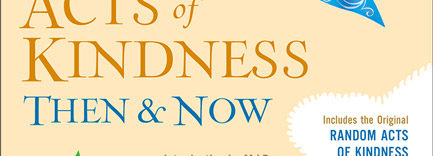
  • Book Giveaway – Random Acts of Kindness: Then and Now

    Book Giveaway – Random Acts of Kindness: Then and Now

    Random Acts of Kindness

    Note: The winners for this giveaway have already been chosen. Subscribe to Tiny Buddha to receive free daily or weekly emails and to learn about future giveaways!

    The Winners:

    “Practice random acts of kindness and senseless acts of love.” ~Ann Herbert

    An unsolicited financial donation right when you need it. Roadside assistance from a stranger after your car breaks down.  An anonymous gift when you’re struggling and in desperate need of a smile.

    These are just a few random acts of kindness that can transform your day and renew your faith in people, and just a small sampling of the type of stories you’ll find in Random Acts of Kindness: Then and Now.

    Twenty years back, Conari Press published the first Random Acts of Kindness book, highlighting stories of people looking out for one another in their daily lives.

    As the book inspired a movement, Conari started the Random Acts of Kindness Foundation, which works with schools and communities to spread kindness.

    Every February for the past two decades, the foundation has spearheaded Kindness week, which runs from the 11th through the 17th.

    To celebrate the week and the book’s anniversary, Conari has offered five copies of the updated book for Tiny Buddha readers.

    Including the original book and new stories sourced through social media, Random Acts of Kindness: Then and Now is an inspiring, feel-good compilation that encourages a more generous, caring, compassionate world.

    The Giveaway 

    To enter to win 1 of 5 free copies of Random Acts of Kindness: Then And Now

    • Leave a comment below, sharing an act of kindness you’ve recently offered or received
    • For an extra entry, tweet: RT @tinybuddha Book Giveaway – Random Acts of Kindness: Then and Now http://bit.ly/Y7Oo9p

    You can enter until midnight PST on Monday, February 18th.

    Learn more about Random Acts of Kindness: Then and Now on Amazon.

  • The World Is a Kinder Place When You’re Kind

    The World Is a Kinder Place When You’re Kind

    Friends

    “Don’t wait for people to be friendly. Show them how.” ~Unknown

    Sometimes I stop to think about how in the world I ended up where I have. I started off with very little, and somehow along the way I have ended up generally happy and on my own two feet.

    My adolescence up to my early twenties had its share of dark days. Whether or not we are lucky enough to have a small handful of people that stick by us no matter what, more often than not we can find ourselves feeling incredibly lonely.

    For a long time through my rough days, I held a sort of grudge against the rest of the world. I had convinced myself that everyone was only looking out for themselves, and I had lost faith in the idea that people were mostly good.

    Where was that feeling of community? Or helping out your neighbors? What about equality and accepting others’ differences?

    The world felt large, dark, and lonely. I felt very let down.

    What I didn’t realize at the time was that as much as those close to me have influenced my growth and my life, those I consider strangers have made just as strong an impact. By closing out the rest of the world, I was really hindering my growth and happiness. Let me explain.

    I had an accident a few years back, and unfortunately, I was far from home and by myself when the incident occurred.

    Many strangers witnessed the accident and casually passed by. Two people who could have just as easily done the same, leaving the accident for someone else to take care of, chose to step in and come to my aide.

    They had no obligation to help, and in fact, had places to be. Instead, they stopped to help me, waited until the paramedics arrived, helped to contact someone I knew, and confirmed that I would be okay.

    I was shocked that people who didn’t even know my name were spending so much time taking precautions to ensure my safety.

    My world was jolted—and I kind of liked it. (more…)

  • Create Meaning By Helping Others (Without Doing it for Validation)

    Create Meaning By Helping Others (Without Doing it for Validation)

    Helping Hand

    “If you light a lamp for someone else it will also brighten your path.” ~Buddha

    Why are you here on this earth? What is your purpose? What are you supposed to be doing with your life? These deep questions burn in all of us. Our souls’ desire is to lead fulfilling lives that have meaning.

    My life’s journey has always been linked to helping other people; I just never saw it as serving them. As I have grown to know myself, I have discovered that I have this huge heart that wants the best for myself and for others. I now live to serve, and this brings me great fulfillment.

    The Difference Between Seeking Validation and Serving

    It wasn’t always easy for me. I spent a great deal of my life questioning why I was here and what my life was all about. I had been through so much pain and had suffered at the hands of others. I couldn’t understand it all until I took a stand. Enough was enough. I needed to be different.

    Little did I know that being different meant discovering myself and not simply changing my circumstances.

    I was always a helpful person, but it was about seeking validation for what I did, not about the difference I could make in others’ lives when coming from a place of inner strength.

    I started learning about who I was and why I was behaving the way I did. I would often be so angry with myself for doing things for other people that I really didn’t want to do.

    I was angry that I didn’t say no when I really wanted to. I was seeking validation in these moments and wanting to be liked. I realized that I could say no, and that I’d been saying no to the wrong person. I needed to start saying yes to me, and that meant no to others.

    I also wanted to be sure that I wasn’t being mean and hurtful to others by saying no to certain requests, and so I started asking them. I realized quickly that true friends are the ones who tell you what you need to hear, not what you want to hear.

    I wanted more of that in my life, and I knew if I were open and honest with others in this same way, I would help them discover something great about themselves. This was true servitude, and it came from a more empowered place.

    The focus was on serving them and not seeking validation for myself. (more…)

  • Becoming Friends With Yourself: You Deserve Your Love

    Becoming Friends With Yourself: You Deserve Your Love

    “You, yourself, as much as anyone in the entire universe, deserve your love and affection.” ~The Buddha

    Bodhicitta. Metta. Loving-kindness. Compassion. Whatever you call it, this is what spiritual practice is all about, right? Long story short, the teachings instruct us to generate these vast motivations and wishes that all sentient beings be free from suffering and experience true and lasting happiness.

    It sounds wonderful, doesn’t it?

    So why is it that so many of us are still unhappy, even after years of sitting on the cushion? Why do we still struggle with depression, anxiety, fear, and even self-loathing?

    Now, I’m not the first practitioner to point this out, but the main reason is that we forget the most important word in these prayers, aspirations and practices: all.

    This, as they say, means you.

    This would seem easy, wouldn’t it? To include ourselves in this great wish for limitless happiness seems to be nothing short of the most common sense. After all, you want to be happy, don’t you?

    But the truth is, this is very hard for us here in the west. At a very deep and wounded level, we don’t really think we deserve any of that. So even though we might spend a great deal of time thinking about others, we wholeheartedly neglect ourselves.

    At least I do.

    You see, before I discovered Buddhism and meditation, I was a drug addict. During those twenty-three years of madness, clinging, and sorrow, I hurt a lot of people. But mostly, out of self-loathing and shame, I hurt myself.

    When I finally made the choice to give recovery a real shot, I had to begin the long, slow, and always painful process of making amends, not only with my friends and family, but also with myself. (more…)

  • Developing Self-Compassion & Learning to Be Nicer to Ourselves

    Developing Self-Compassion & Learning to Be Nicer to Ourselves

    “Be gentle first with yourself if you wish to be gentle with others.” ~Lama Yeshe

    Several months ago, I sat in a large workshop audience being led by Kristin Neff, a pioneer in the field of self-compassion research.

    She directed us to divide up into pairs for a self-compassion exercise. I turned to the young woman next to me. We introduced ourselves and returned our attention to Kristin.

    Following her instructions, my partner closed her eyes while I sat looking at her. Kristin led those of us with open eyes through a loving-kindness meditation that was directed at our partners.

    Although I did not know this young woman, I could feel my heart open wide to her as compassion arose within me. I felt warm and loving toward her.

    Then it was my turn to sit with closed eyes. As Kristin repeated the meditation and I felt my partner’s loving gaze on me, I started to hear a voice.

    Not a psychotic one, mind you, but that familiar voice that so often takes up my internal space. It had started chatting quietly but zoomed to full volume within seconds.

    “You don’t deserve compassion! You don’t make enough money! You snap at Andrea all the time! You just need to get yourself under control!”

    Sigh. So much for self-compassion.

    But that was the point.

    After the exercise, Dr. Neff asked, “How many of you found it harder to feel compassion toward yourself than the stranger sitting next to you?”

    Just about everyone in that huge group—including me—raised their hands. (more…)

  • Small Acts of Love and Compassion Can Change the World

    Small Acts of Love and Compassion Can Change the World

    “All great changes are preceded by chaos.” ~Deepak Chopra

    We live in an eternally pregnant present, full of possibilities for a bright future. I believe it has always been that way throughout the history of the world. That’s just how the universe works. Unfortunately, we haven’t always experienced our lives the way the universe intended, especially right now.

    Humanity seems to be forever in a time of chaos, marked by violence against one another, and most of us do not know how we got that way or when it will end.

    I admit that sometimes I long for the good old days of the status quo, when I could navigate daily ugliness with a shrug and sit through dicey evening news with a steadfast, glassy stare. It was easy to ignore my feelings and stay mired in dark indifference. I just turned off my heart to survive it all. It was safer that way.

    But it is also very clear to me that the days of dark indifference are over. I think you might feel it too. Yes, life is filled with the same old problems and yes, life is fast. But we now move too quickly to rely on the same old solutions. Our survival tools are obsolete because humanity has upgraded. We are becoming more balanced. We are becoming our better selves.

    Six years ago, when my small family moved to Denver for my husband’s job, I fought it tooth and nail. I hated the harsh, dry climate that made my nose bleed and the 1100-mile distance that kept me from the rest of my family and friends. The culture shock and the intense high altitude sun forced me to retreat, literally, to the inside of my house and the inside of my soul for comfort.

    That was the beginning of creating my own better self. I read, meditated, and read some more. And I finally started to learn to balance my head and my heart.

    My effort started an inward journey that continues still, even though my days in Denver are long gone from my personal map. But the experience of relying on my heart to inform my thoughts forced me to evolve.

    I suspect the entire world is evolving, one person at a time. We are reaching a critical mass, a beautiful tipping point for humanity. We are leaving behind the outdated Handbook of Life, with all its heavy-handed solution of war, judgment, and oppression, and writing a new one from our hearts. (more…)

  • 10 Ways to Be Great Today

    10 Ways to Be Great Today

    Earlier this week I wrote a post about the pursuit of greatness. I highlighted how it can sometimes create stress when it manifests as fear that we’re not good enough and might never be.

    In reviewing the reader comments, I felt a sense of deep appreciation for knowing so many truly great people. And I imagined there were far more of them who didn’t comment—some who may not realize just how great they are.

    I decided to put together this list based on some of my favorite related quotes. If you’re looking to nurture greatness, these tips may help you do just that—or they may help you recognize the extraordinary impact you already have on the people around you.

    1. Be a source of kindness.

    “Men are only as great as they are kind.” ~Elbert Hubbard

    We all want to live in a world where people are compassionate, understanding, and kind. Every time we treat someone this way, we do our part to create that kind of world.

    2. Treat everyone equally.

    “The true measure of a man is how he treats someone who does him absolutely no good.” ~Samuel Johnson

    There’s another saying that suggests we should be nice to people on the way up because they’re the same people we’ll meet on the way down. But there’s a more important reason to treat people well: We all thrive together when we stop fixating on “up” and “down” and choose to stand beside each other.

    3. Remember that actions speak louder than words.

    “Great thoughts speak only to the thoughtful mind, but great actions speak to all mankind.” ~Theodore Roosevelt

    Most of us have ideas to make a difference in the world—and we can do these things if we’re willing to act as much as we think and talk. Take your plans out of your head and off the page, even if with just one small step. Wherever you are in the process, that’s the opportunity to be great. (more…)

  • More Peace and Connection: Recreating a Simpler Time

    More Peace and Connection: Recreating a Simpler Time

    “Enjoy the little things, for one day you may look back and realize they were the big things.” ~Robert Brault

    Yesterday, as my boyfriend and I were driving home from a quick trip to Vegas, we saw a sign for a ghost town and decided to do some exploring.

    I’ve always loved the idea of a ghost town—a place left untouched for years, still reflecting the people who once inhabited it, as if they’d just picked up and left mere moments ago.

    Though aged with cobwebs, marred by neglect, and long since deprived of life and laughter, it would seem like time had stood still. I imagined it would feel a lot like Thoreau’s cabin in the woods: minimal, modest, and quaint.

    In our high-tech, fast-paced world, very little feels simple. And while I love my home and environment in Los Angeles, I often long to find places that feel charming and uncomplicated.

    We quickly found it wasn’t a village left untouched for exploring, though much of it looked how it once did; it was a small slice of the land commercialized with little tiny shops, as is the American way.

    Still, I enjoyed roaming through the surrounding mountains and seeing nostalgic pieces within and outside the cottages—a few wooden carriages, an oil burning stove, and a deep claw foot tub.

    While walking around, I asked my boyfriend if he’d ever fantasized about living in a small village, with a self-contained community of people who all knew and supported each other.

    It’s something I’ve always romanticized. Instead of living in the hustle and bustle of our modern world, always consuming and pushing for the next big thing, we’d create with our hands and spend more time enjoying life’s simple pleasures together.

    We’d have access to everything we need within close proximity, and the vast world made seemingly larger through the web would shrink in feel and yet expand in possibilities.

    Not possibilities for earning money and succeeding professionally; possibilities for childlike joy and meaningful connection—the human wealth our tribal ancestors once enjoyed, before everything got bigger, faster, and automated. (more…)

  • We Need to Be Giving: Kindness Can Be a Win-Win Situation

    We Need to Be Giving: Kindness Can Be a Win-Win Situation

    “We make a living by what we get, but we make a life by what we give” ~Winston Churchill

    When asked what his religion is, the Dalai Lama tends to respond with one word: kindness.

    In the world we live in today it’s easy for us to get so caught up in our goals and commitments that we overlook the suffering or needs of those around us.

    Kindness may sometimes be put to the bottom of our to-do list when we feel a desperate need to survive, which seems to be increasing with all that is going on globally at the moment.

    Many of us have lost our jobs, are renting our homes from the banks, and are just about scraping by for the daily necessities.

    The paradox there is that now is the very time we need to be kind to one another because we need one another more than ever.

    And the old proverb “give to receive” is possibly the guiding light that we are meant to follow.

    Having recently returned from India where I spent six weeks in Dharamsala, alongside my Tibetan friends, they taught me a thing or two about the benefits of giving.

    My line of work takes me into the lives of Tibetan monks. These monks are my friends and really want what I am doing to succeed. As a result, they open up and welcome me and my friends without thinking twice.

    For example we were celebrating the birthday of one of our friends. It is not the tradition for Tibetan monks to celebrate birthdays, only that of the Dalai Lama’s, so they were not so sure what to do.

    I rounded up cakes and drinks and asked the monks if we could have our little get together in their working space, to which they readily agreed.

    We did the typical happy birthday song and cut the cake while a handful of the monks watched on slightly bemused at our Western ways. Slowly the rest of the monks wandered in and each of them instantly dropped the work they were doing and sat down to take part.

    Despite their lack of understanding of our unusual rituals they could see this was important to us and that seemed to be enough for them to make time for us.

    As a way of saying thank you for all they had done, I donated a hot water tank for the monastery which meant no more cold bucket showers for the monks when temperatures drop below freezing, as they easily do high up in the Himalayan foothills.  (more…)

  • Being Kinder in What You Say, One Word at a Time

    Being Kinder in What You Say, One Word at a Time

    “The smallest act of kindness is worth more than the grandest intention.” ~Oscar Wilde

    I believe in kindness.

    I am not, by nature, a kind person.

    But I’m trying to be.

    My tongue is sharp. I’m far too often the first to come back with a sharp retort.

    Sarcasm and I were old companions, until about four years ago, when I had what I thought was just a casual conversation with a friend. But the next time I saw her, there was a distance between us.

    I finally had a chance to speak with her alone, and asked what was the matter.

    “You always have get a shot in.”

    Oh.

    I couldn’t even remember what we’d been talking about. Nothing important, really.

    I did know I hadn’t meant to be cruel. That whatever it was I’d said, I’d only meant it as teasing, or a friendly poke. A chance to be clever, witty.

    But I’ve learned that it’s better to be kind than clever.

    That too often what I think is wit is closer to hurtful.

    I may think we’re playing, trading silly jests, but I don’t know how the other person is feeling that day. Something that may normally ride lightly on them may strike an unknown injury, remind them of another hurt.

    A game that I played for my own amusement isn’t worth the risks.

    I don’t really want to be the person who always gets a shot in. The person my friends are hesitant to chat with, because they don’t know if they’re going to be next to be teased.

    So I’m willing to work at nurturing kindness in my speech, and in my actions. I haven’t changed my entire life yet, but drop-by-drop, word-by-word, lots of little things add up.

    Here are some of my “daily drops,” should you wish to incorporate them into your life, as well: (more…)

  • 4 Easy Steps to Deal with Difficult People

    4 Easy Steps to Deal with Difficult People

    “There is a huge amount of freedom that comes to you when you take nothing personally.” ~Don Miguel Ruiz

    It seemed like a simple task. Please switch my gym membership from gold to silver level. I’m not cancelling, just switching.

    That was now the third time I repeated my request, each time a little more calmly and a little more slowly, despite the beginnings of blood boiling feelings.

    The person on the other end of the phone could not have been ruder. It was as if I was asking for a kidney instead of a membership change. A harsh tone and harsher words ensued. Why, I still have no idea.

    You have undoubtedly met them. You have maybe been one, once or twice.

    Why are some people continually difficult to deal with? What makes Joe easy to get along with and John such a struggle? Here are the major reasons and what can be done about it.

    1. We feel triggered when our needs aren’t met.

    We love it when we are acknowledged. We may not be crazy about when we are criticized, but it beats Option #3: being ignored.

    Being ignored is a terrible feeling for humans and one that we avoid like the plague. When this occurs, some people revert to “problem child” mode. These are the set of behavioral responses that are so ingrained that it is a reflexive series of actions. It is the default mode.

    When you find yourself in such a situation, ask the big question: What is my positive intention here? What am I trying to accomplish? (Or: What is the other person trying to accomplish?)

    If you can leave enough of the heated emotions aside, clearing enough space for some patience and I dare say, compassion, the root cause of the behavior often becomes crystal clear.

    What are you trying to accomplish? Great. Let’s find a way of getting what you want in a healthy fashion… (more…)

  • 20 Ways to Give Without Expectations

    20 Ways to Give Without Expectations

    Gift

    “The true measure of a man is how he treats someone who can do him absolutely no good.” ~Samuel Johnson

    Some people say there’s no such thing as a selfless act—that any time we do something to help another person, we get something in return, even if it’s just a warm fuzzy feeling.

    I’ve spent a lot of time playing with this idea in my head. It doesn’t really bother me to know it feels good to help someone else. That, to me, is a completely acceptable type of selfishness. What give me cause for concern are the underlying expectations we often have when we give “selflessly.”

    We’ve all been there. You cover for your coworker because you know you’ll need her assistance next month. You give your sister $20, and then silently look for ways she can pay you back, even if not monetarily. You help your friend get leads for a job, and then feel angry when she isn’t as proactive in offering you support.

    I’ve found that these expectations cause more stress than joy. They mar the act of giving, which makes me feel slightly guilty; they lead to disappointment if the person I helped doesn’t return the kindness; and they tie my intentions to an internal score card, which places a wedge in my relationships.

    Recently I’ve been asking myself, “What is my expectation?” before I do something for another person. The answer I find most acceptable, cheesy as it may sound, is to feel good and show love. Strangely, when I release the need to control what I get for giving, I get enough, somehow.

    I’ve made a list of twenty things you can do to show you care, without needing the recipient to return the kindness—twenty ways giving is its own reward. Maybe some of these will resonate with you. Or perhaps you’ll want to write your own list to spur the spirit of giving without expectations. (Although I’ve written you, these are things I try to do.) (more…)