Tag: kindness

  • The Gift of Kindness: A Simple Reason to Give What We Can

    The Gift of Kindness: A Simple Reason to Give What We Can

    Helping the Homeless

    “Love and compassion are necessities, not luxuries. Without them, humanity cannot survive.” ~Dalai Lama

    “Look at that guy,” I said to my wife.

    We were circling the block looking for parking when I spotted him on the sidewalk in front of the bank. For some reason he stood out from the other people in the area.

    “Seems off,” I thought to myself.

    As I passed by, I kept an eye on him. He didn’t seem to be going anywhere, just walking back and forth along the sidewalk in front of the bank.

    He was looking around and moving around like he was waiting for someone, but clearly he was alone.

    We came back around the block and I parked in a loading/unloading zone.

    “Make sure they don’t tow me,” I joked to my wife. I hopped out of the car and made my way to the bank’s ATM on the sidewalk.

    Halfway through the transaction I heard a very small voice coming from behind me.

    “Can I have two dollars? I need two dollars for the bus.”

    The voice was so small that at first I wasn’t sure if he was talking to me or someone else. I continued with my transaction without acknowledging the question.

    “That’s awesome. You’re ignoring me,” he continued.

    At this point I realized that he was talking to me. I didn’t respond.

    The voice got smaller and turned into mumbling. I couldn’t understand what he was saying.

    I finished the transaction and turned back toward my car. He was standing near my car but not in the way.

    I looked at him.

    In front of me was a disheveled, forty-something man. The years appeared cut into his face in the form of deep wrinkles accentuated with dirt.

    The wrinkles could have meant a man much older, but his overall demeanor suggested youth. He still had the aura of a younger person.

    His hair was very short and he was holding a coffee.

    As I walked toward my car he stopped talking. I got around to the driver side and opened the door.

    “No,” I said loudly and resolutely while looking at him. It was the answer to his earlier question, and also an answer to him in general.

    He didn’t respond.

    Driving away I felt uneasy and my mind replayed the situation a few times.

    I have given money to people in the past. It hasn’t happened often, but sometimes.

    My problem with this man was that I felt he didn’t need the money. It was the coffee that bothered me. He had a cup of coffee in his hands. Premium coffee.

    Coffee, I later learned, would be our connection.

    I had forgotten about him by the next day while I was waiting in the Starbucks drive-through line. We reached the service window.

    “Hi! The car in front of you paid for you,” the barista said.

    “What?” I replied. I was caught off guard.

    “Your order has been paid for,” she reiterated. She handed us our items. “You’re good to go.”

    “Thanks,” I replied reaching for the items.

    My daughter asked me why I was shaking my head as we pulled forward.

    “The universe is always teaching me lessons,” I said smilingly.

    She looked at me blankly.

    That’s what I call it when stuff like this happens—the universe teaching me lessons.

    Over the years I have learned to pick up on this phenomena. The lessons are broad and typically focus on topics like compassion, forgiveness, understanding, and renewal. They always emerge through the random coupling of everyday events.

    Some lessons are blatant, but others can be very subtle. The subtle ones are the best. Sometimes I will only “get it” after a couple of days letting it sink in.

    This one I considered blatant. The lesson being:

    Share what you have. Give—even if they don’t need it.

    I didn’t give that man any money because I didn’t believe he needed it. My assumption was that earlier that day he had traded some of his money for that coffee he was holding.

    If he really needed two dollars, then he shouldn’t have spent his money on that coffee.

    But, that reaction is totally contrary to the lesson.

    Later, as I stewed on the lesson, a couple of thoughts occurred to me: Maybe there was no coffee in that cup. Maybe he was collecting change with it. Maybe the cup was empty. Maybe the cup only had water in it.

    The point was that I didn’t know. I assumed.

    The bigger point was that it didn’t matter whether the cup was filled with premium coffee, gold coins, or anything else.

    Giving is not about the other person’s perceived need; it’s about the act itself.

    We are choosing to be the best version of ourselves when our actions demonstrate the best within us.

    Do you remember how you felt the last time you gave? I am willing to bet you felt good about yourself, and good about the act. And that’s great!

    Now, was that good feeling because you filled a need, or because of the act in general?

    Think about it. You can say it was both, but I am also willing to bet that you would feel just as good if you gave to someone who didn’t really need it.

    The good feeling comes because giving is an act of kindness.

    The person in front of me in the drive-through that day could have looked in her rearview mirror and concluded that I didn’t need it.

    After all, I am driving a newer car, my clothes were clean, and the assumption is that I can afford a coffee since I am already in the drive through line.

    Her gift to me was not because I needed it.

    Her gift to me was about kindness. It was about doing that extra little bit to lift someone else up.

    Lesson taught. Lesson understood.

    Photo by Ed Yourdon

  • 6 Lessons from a Brave Little Girl About Living a Love-Filled Life

    6 Lessons from a Brave Little Girl About Living a Love-Filled Life

    Friends Heart

    “One word frees us of all the weight and pain of life: that word is love.” ~Sophocles

    I can’t believe it was almost four years ago that I met *Holly. Her story is still deeply embedded into my heart. Who would have thought that one can learn so much from a ten-year-old child?

    At the time, I was working in Kenya as a children’s rights researcher. Knowing about my psychology background, the principal of a primary school I was working at asked me if I could talk to one of their students. Since I would only be able to meet her for a few shorts months, and I thought I was not qualified enough, I was hesitant at first.

    Then I remembered: always ask the question, “How can I serve?” in every situation

    I knew it was a place for me to serve. So even though I lacked an official therapist license in my home country, I agreed to meet with Holly.

    For that winter I became her volunteer counselor. I gave her my full attention while I listened to her stories, I provided her full support, and most importantly, I gave her my unconditional love. But in the end, she gave me so much more back.

    When she was only four years old, Holly was raped by her father, contracting an STD that caused her all sorts of health problems, including visible rashes all over her skin.

    It is not only that her rashes were itching and made her feel uncomfortable, but children at school, especially boys, continuously abused her for it.

    “Children throw stones at me. They say I have HIV. They say I am not a child anymore but a prostitute. But I am a child. I want to be a child,” she told me once.

    At home, her life was not better: living in the slums, she was facing extreme poverty. Her emotionally removed mother neglected her and made her responsible for all home tasks, from cooking to taking care of young siblings. Also, she was afraid of her alcoholic uncle visiting them on a regular basis. The list of her sorrows went on and on.

    Holly desperately wanted to be loved and cared for. She was always so thankful for anyone who was there for her, and she radiated kindness and love at all times through her beautiful smile.

    Being on the ground as a researcher on the topic of violence against children, I knew that Holly was not alone. She was not the only child that opened her heart to me. But she was one of the youngest, yet one of the most influential among them.

    Holly has taught me some life lessons that I believe are universal regardless of our life circumstances.

    1. Never give up.

    Holly went through so much yet she never gave up hoping, dreaming, and trying. She spoke about her future as if she believed things could get better.

    As long as we are alive, we have the choice to keep trying to improve our life.

    Sometimes we give up on our dream too early because we don’t believe we can succeed. Giving up guarantees we won’t.

    But what if we fail, you may wonder. In my dictionary there is no such thing as failure: only successes and lessons. Even if we don’t accomplish our goal, we will grow and learn throughout the process—and this growth sometimes provides more than a successful end result.

    2. Use your imagination.

    Holly imagined a better life for herself and she created stories, poetry, and drawings to capture her dreams. She was so clear in her art that it was as if she were already living in her beautiful future.

    Children have wild imaginations. As adults we often forget about this wonderful tool, being overwhelmed with work, family, and other responsibilities in life.

    If we want to create the life of our dreams it is essential that we use our imagination, because it allows us to experience anything we want. Visualizing new possibilities is a first step to creating our future.

    3. Share.

    One day Holly showed up with a few pieces of candy that she got from a volunteer at the school. She offered to share them with me. She didn’t have much—in fact, she had very little—yet she wanted to share that little with others.

    She also shared her life with me. Sharing her stories, her sadness, her joy, her dreams, and her art meant the world to me. I felt love and I loved her back.

    Sharing is caring, sharing creates connection, sharing creates love. You can share so much with the world: you can donate to charities, you can share a meal with your friends and family, you can share your stories through a blog, you can share your experiences over a coffee, you can share your joy, and you can share your love. Show your love—share what you have.

    4. Accept support.

    Holly recognized that she needed support to get out of her situation, and she accepted any support she could get. She accepted financial support through donations from volunteers. And she accepted  emotional support through friendships from anyone who offered it.

    She never felt bad about accepting support. She knew in her heart that someday she would pay it forward, helping children in similar situation. For the present moment, she gave back what she could—her love and gratitude.

    Accepting support is not a sign of weakness. We can’t always do it alone. Accept support if you need it and be grateful. Karma goes around. You can help out someone the next time around.

    5. Be kind.

    Holly was a tiny, fragile girl who received pain from every direction in life, yet she always smiled. Often, I was amazed how much kindness she was able to offer.

    Kindness was her radical response to suffering. I think she innately believed that if she offered kindness, good karma would come back to her to help her life turn around. I know that being kind also made her incredibly happy because she was able to bring joy to others.

    The world needs kindness and there can never be too much of it. It can also be one of the biggest presents to someone because it is a sign of caring, love, and happiness. When you have a choice: always choose kind.

    6. Love.

    Holly had the biggest heart. I seriously believe that this little girl always came from the perspective of love.

    We are all born with enormous amount of love and as children we are more likely to openly share it with the world. Growing up, we close more and more doors in our heart and we get hardened by our experiences. Then we have a difficult time expressing our love as adults.

    I urge you to open up those doors. Let your heart shine to the world and express your love.

    Expressing love doesn’t have to be difficult: a smile, a hug, a loving note, a kind email, a home-cooked meal, a flower, a small surprise, or similar small actions can work. Of course, the words “I love you” can be the most powerful when lovingly coming from our heart.

    There can be never too much love in this world. So choose love, be love, live love, just love, always love.

    Due to confidentiality I was not able to follow Holly’s life-story. I am not sure what happened to her. I don’t even know if she is alive. But I will forever remember her story, her smile, her love, and the lessons she taught me.

    Holly, wherever you are, you are in my heart and sending you some loving vibes.

    *Name changed to protect her privacy. Photo by Sharky

  • The Power of Kindness: Life-Changing Advice About Creating Happiness

    The Power of Kindness: Life-Changing Advice About Creating Happiness

    Flower for You

    “We make a living by what we get, but we make a life by what we give.” ~Winston Churchill

    It was a beautiful winter’s day in Sydney. Having returned home after working for two years in Singapore and traveling through Asia, I felt like I owed it to myself to do something I loved.

    My heart has always been in fitness and travel. When there was a job opening at my local travel agency, I applied, went for the interview, and got the position. I was a happy girl—but only for a short while.

    Two months into my job, it didn’t feel right. I felt something was missing. And suddenly, everything that I thought I knew about my love for traveling went astray. I wasn’t satisfied with my job.

    I had to decide if I wanted to stay or leave. I didn’t have a wealth of options. If I were to quit, I would be jobless for a while. The best I could have done was to spread my love and knowledge of fitness to my average of fifty daily blog visitors.

    If I were to stay, I would have had to suck this up, being unhappy and unsatisfied.

    I took the road less travelled and sent in my letter of resignation a few days after.

    For weeks after that, I felt lost and uncertain. I wished I hadn’t resigned. I wondered: What am I going to eat? How am I going to sustain myself?

    And then it happened, when I least expected it.

    A seventy-five-year old lady came in on a rainy day. She had a medium sized stature, and she was of Asian descent with a rather intimidating face. She told me her name was Chan and that she would like to inquire about a trip to London to visit her daughter.

    I was rather reluctant at first to help her out, thinking it might be yet another empty inquiry, but I thought about how I would feel if my parents were the ones walking into a travel agent, being treated unfairly.

    I sat down at my desk, on my second-to-last day, with a genuine smile on my face.

    My “empty inquiry” thoughts turned out to be true. Two hours into her consultation, she said she needed to think about everything I’d proposed. I told myself it was okay. The sale wasn’t meant to be; at least I’d helped her as much as I could.

    Before she left, I had to tell her that it was my second-to-last day at work, and if she were to come in several days later, I wouldn’t be around to help her.

    I thought she wouldn’t really care, but to my surprise, Mrs. Chan sat back down on her seat.

    She started questioning me. She asked me where I was going, why was I quitting, and what my plans were after this.

    I tried to be as honest as I could, telling her that the job wasn’t right for me and I didn’t have any concrete direction. All I had was my Physiology degree and a burning passion for fitness. I was half-hearted. My eyes got wetter and she could sense the doubts in my voice.

    Like an angel sent from above, she held my hands and looked into my eyes.

    “My dear, sometimes in life we’re being tested. We’re given directions and options and we have to weigh them. And sometimes, even after weighing on a multitude of scales, lengths, and units, it is perfectly normal not to be sure of anything.”

    I kept silent. I was listening, my brain was processing.

    “I just turned seventy-five last week. I want to book a trip to London to surprise my daughter who has been living there for three years. Three years ago, she was at the exact same position as you. The only difference is she was made redundant.”

    Still listening, I was a tad surprised she was opening up about her life.

    “Before I go on, I want to thank you for helping me through this inquiry. I am always skeptical about travel agents, but you proved that not all of you are the same. It’s a pity that this company is going to lose an exceptional young lady like you, but I’m happy for you. I could see it through your eyes as soon as I stepped into the store that you would be better off elsewhere. And I was right!” Mrs. Chan chuckled.

    It was unbelievable hearing her speak when she’d seemed cold for the past two hours. Still, I continued listening.

    “Now I’m going to tell you exactly what I told my daughter three years ago. If you’re doing anything in life that is making you unhappy, you should stop as soon as you can. You’re young. Set yourself free. Don’t waste time doing things you don’t enjoy doing.”

    “Great, now she’s reading my mind,” I silently thought, still waiting for her next words.

    “You might not know at this point in time if this is the right thing you’re doing. You might fail. You might be disappointed you left a good-paying job. But a good-paying job is nothing if you’re not happy.”

    She continued, “Finish your duties here and step into the unknown world. You never know what you might discover. You should be out there seeing the world and helping people with your beautiful smile and kind soul.”

    The tears I was vainly holding back started to roll down my cheeks.

    “And if life hits you hard one day, remember you made the effort to pursue your dreams. You made memories. And you chased after what you loved the most. You will be okay.”

    Her words hit me hard. I never knew I needed them until that moment. It was the most perfect timing in my life.

    “That is all I can say to you. Like a seventy-five-year old knows any better!” she joked.

    I wiped my tears and walked her out of the door. I wanted to hug her and just stay there in her arms, the arms of a stranger that I only knew for two hours, but I held myself back.

    “And remember this—no matter what you do, be kind to others. That should be the fundamental base of all your actions.”

    Stunned for the millionth time, I stood there, speechless. She left. I saw her walk away. I don’t even know her full name. Or her contact details.

    I went home that night and hugged my mother. I needed it. I needed her. And I never knew I needed Mrs. Chan and her words.

    It came to me because I was kind. And it came to me when I least expected it.

    Being kind is the fundamental base of all my actions. And I will remember that for the rest of my life. 

    Sometimes in life we meet people who are there to help and guide us, but we have to be open to receive it. Whether or not we choose to accept it, everyone wins when we’re all kind to one another.

    Never underestimate the power of kindness. You never know how much happiness you can bring to someone’s life.

    Photo by Kietaparta

  • 3 Ways to Be Kind and Make Someone’s Day

    3 Ways to Be Kind and Make Someone’s Day

    Smiling Together

    “The smallest act of kindness is worth more than the grandest intention.” ~Oscar Wilde

    It’s the small, everyday things that can make or break a day for us.

    While we celebrate the role models who inspire thousands (in person or on Facebook!), for most of us everyday moments—a stranger jostling us in the shops, a driver cutting us up at a light, someone pushing in front of us in line at the post office—can upset us out of all proportion.

    But the flip side is that we can also be disproportionately pleased by the small actions of a stranger.

    On a bad day recently, rushing down the road in Chiang Mai, Thailand, late for an appointment, I dropped my bag and things spilled all over the road. I looked at my possessions spread out in the dust beneath me and held back tears.

    As I stood there, a Thai woman, tending a food cart at the side of the road, walked over and carefully helped me pick everything up. Then she smiled at me, patted my hand, and walked back to her stall.

    This small act of kindness from a stranger reminded me to be kind to myself, and I took a breath before continuing with my day, lighter in heart and mind.

    Be that stranger. Here are three small acts of kindness you can carry out today.

    Offer your help.

    Last year I met someone who challenged himself to offer his help to one person every day.

    One day, I was really ill, in a foreign country, alone. I had no way of getting to the shops. He offered his help and brought me groceries. It was a small thing for him. But I was hugely grateful, and it made a real impact on me, this almost-stranger providing practical help.

    Now I try and offer my help more often.

    At first I used to think no one would be interested in my help, or they’d be suspicious, or dozens of other reasons that stopped me from offering. But even when people don’t need it, they appreciate being offered help.

    I offered someone help with something they were carrying yesterday, and while he turned me down, we exchanged a joke and a few words, and both of us went on our way happier.

    And when people do need the help, you’ll be amazed at the long-lasting impact it can have.

    Be of service. Offer assistance.

    Say thank you.

    You might say thank you 100 times a day. It’s a politeness, a courtesy. But how many times do you actually mean it? How many times are you still engaged in the conversation when you say it, and not turning away toward the next thing?

    I have a friend who doesn’t just write the usual “To Sarah, Happy Birthday, Love Mary,” on birthday cards but instead takes the time to write a more heartfelt message. She includes some of the things she appreciates her friend for doing for her that year.

    Getting a card from her doesn’t feel like a formality, it feels like a true connection. And her cards are the ones I remember.

    Today, say thank you like you mean it. Catch the other person’s eye and say it firmly. “Thank you. I really appreciate your help.” It could be to the girl who serves you your caramel macchiato in Starbucks, or your dad for helping you out by putting that shelf up for you.

    Or, if it feels too personal or intimate to say it face-to-face, write a letter or a card to a friend thanking them for something specific they contributed to the friendship last year—their joy, their lightness of touch, the great presents they always buy you, their sense of humor.

    Be grateful, and share that gratitude with the other person.

    Compliment someone.

    We judge others in our head all the time, just as we judge ourselves all the time. I hate that dress she’s wearing. I look fat in that mirror. I can’t believe she just said that. That nail  polish is awful. He really can’t do that yoga pose… It’s a constant narrative.

    But we also think positive things in the same way: I love that skirt. I wish my hair was that color. Those shoes are great. He does a great downward dog; I wish I was that confident.

    In my last job, particularly when I was feeling negative (and knew it might leak out), I used to push myself to articulate the compliments I usually just said in my head. Sometimes the person I was complimenting was a little taken aback, but they were always pleased.

    Put your focus on the positive by expressing it. Tell someone what you like, admire, and appreciate. Share the love.

    These actions might seem small, but not only do they make others’ lives better, they are also directly nourishing for you. Being kind is good is not only good for your heart, it’s good for your health.

  • How to Improve Your Relationships and Make a Kinder World

    How to Improve Your Relationships and Make a Kinder World

    kindness

    “If you propose to speak, always ask yourself, is it true, is it necessary, is it kind.” ~Buddha

    I once attended a lecture given by a world-renowned expert on post-traumatic stress disorder. The lecture made two points that I have never forgotten. I call them “brain tricks.”

    1. Given a choice, our primitive brain will naturally select for the negative. It’s a survival thing.

    2. When in crisis, the part of our brain that conceptualizes time and space goes off line. In other words, our brain increases the urgency of the problem by making us think the crisis will never end.

    Fortunately, these tricks, while at times necessary to protect us, are the activity of our primitive mind and we do not have to be at the mercy of them.

    Through awareness and a desire not be reactive, we can shift to our more evolved brain and get an accurate perspective, enabling us to respond in a more equitable manner.

    I’m concerned that we may be unknowingly generating those “brain tricks.” There seems to be a strong movement toward trolling for what’s “wrong” on just about every level. It appears that popular culture’s collective brain is a giant reflection of a society in crisis.

    We live in a reactive world that would choose to focus on what is wrong rather than what is right, even when there is so much that is right.

    The term “snarky” has become an attribute to be admired. Being witty at someone else’s expense can leave us with a feeling of authority and control. Egos get a boost and identities get clarified when what we disagree with gets isolated.

    However, problems arise when this penchant for sarcasm, cynicism, and criticism takes a leap into our relationships.

    I believe this sanctioned attack on others is one of the primary reasons generalized anxiety is on the rise and long-term relationships are on the decline.

    There is a better way to strengthen egos and that is by embodying the art of common courtesy. Wouldn’t it be sweet if being kind and thoughtful was the “new” witty—the new identity booster and clarifier?

    Common courtesy begins with positive regard for all humanity. Though we may have differences, we have more similarities.

    Because our brains naturally select for the negative, we have to train our minds to proactively look for the positive and for what we have in common.

    Respecting others is an offshoot of positive regard. It’s not flattery, nor is it following orders.

    It is honoring people’s right to be themselves, along with their beliefs, and the way they want to live their lives. It requires empathy, not necessarily agreement.

    Treating a person as less valuable or worthy in any way shows disrespect and leads to conflict, both inward and outward. It is false pride to feel good when treating someone with disdain.

    Common courtesy shows you can look beyond yourself. It demonstrates caring, generosity, good will, and the valuing of others.

    I learned my lesson not long ago while out to dinner in a nice restaurant with my family. We were having a delightful evening, enjoying our food, and discussing plans for a possible European vacation.

    My two sons expressed an interest in going, but were having trouble seeing how their university schedules could accommodate a three-week vacation. One son was particularly snarky in his communication.

    I immediately got on the defensive, and returned his snarkiness with my own.

    “You know,” I said, “you can be really difficult to get along with.” As soon as the words left my mouth, heaviness spread throughout the room. The night was ruined.

    I felt both shame and anger. In my mind I determined we would not be spending any money on a European vacation, at least not one that included ungrateful sons. I went home and to bed, but not before my husband told me I had been too harsh.

    The next morning I woke up with a guilt hangover. I thought deeply about the night before. The light went off in my head when I asked myself how I would’ve felt if someone had told me I was hard to get along with.

    Ouch! That would’ve cut deep, and I said those words to someone I love very much. In fact, I love him so much I was planning an expensive vacation so that his mind could be expanded. Ironic, huh?

    The truth is, I could’ve conveyed my frustration in a more courteous manner. For example, I could have said:

    “I can see this is going to be complicated. Why don’t you give it some thought and we can talk more about it next week when we have more information.”

    Immediately, I texted him, “Please forgive me for the harsh words I said to you last night at dinner. I realize they were hurtful and it hurts my heart to know I caused you pain.” I heard back from him in seconds: ”No worries Mom. I love you.”

    Here’s what I’ve learned about building a kinder world through common courtesy:

    Greet others.

    When you make eye contact with anyone, say hello, smile, or wave. Everybody wants to be recognized, included, and acknowledged.

    Say please and thank you.

    Being polite sends a safety message. It shows positive regard and respect.

    Be courteous in conversation.

    Ask people questions about themselves to show a genuine interest in what’s important to them. Then fully listen. Show people you value and respect what they say, even if you disagree with them.

    Apologize.

    Admit when you are wrong and apologize.

    Build people up instead of tearing them down.

    Let people know what you admire about them. Give genuine compliments freely. Tell them you believe in them and share their good qualities with others.

    Go the extra mile.

    Show people you care by going out of your way to perform acts of kindness.

    The bottom line is: Follow The Golden Rule. It is no surprise that some form of it is found in every culture; it is a universal law. Treat others as you would like to be treated. It’s that simple.

    If we don’t like to be criticized, we shouldn’t criticize others.

    If we don’t appreciate someone rolling their eyes at us, we shouldn’t roll our eyes at others.

    If we don’t want people mocking us to others, we shouldn’t mock other people or gossip.

    If we are tired of people not respecting our values and choices, we need to respect others’ values and choices.

    If we don’t want to be the target of someone’s snarkiness, we need to stop being snarky ourselves.

    In the immortal words of Mahatma Gandhi, “Be the change you want to see in the world.”

    Photo by Ed Yourdon

  • How to Stop Judging and Being Hard on Yourself

    How to Stop Judging and Being Hard on Yourself

    “You, yourself, as much as anybody in the entire universe, deserve your love and affection.” ~Buddha

    For a long time I joked that if I had a time machine, I would go back to 1989 and give my sixteen-year-old self a swift butt kicking. But then a few months ago, on my fortieth birthday, a friend posted a picture of me at sixteen on Facebook.

    Seeing this image of myself totally threw me for a loop. Other than a school photo, it’s probably one of the few pictures I am aware of from that time in my life.

    I spent some time contemplating this version of me glancing sideways at the camera. Under the surly expression of not wanting my photograph taken, there is undeniable beauty and innocence.

    What makes it even more poignant is that I am the mother of a teenage boy who happens to be sixteen right now. His teenage drama has brought back so many memories of myself at that age.

    For most of my career as a teenager I was preoccupied with being cool, with cultivating a counter-culture, bohemian persona (assuming clove cigarettes, On the Road, and a pile of mixed tapes constituted “bohemian”). Rolling my eyes at my mother was a near constant affectation.

    I was certain that I knew it all; I had the rest of my life all figured out and I rejected anything that didn’t fit with my narrow understanding of the world. I now know there were countless experiences I missed out on by virtue of my stubbornness and general disdain for everything.

    I avoided most of the mainstream high school dances and events. I dropped out of clubs and activities as soon as they felt challenging. I didn’t bother investigating the many academic and social opportunities that came my way.

    What I would have regarded not long ago as a silly, selfish, snotty teenage attitude, I now realize is something else entirely. In that picture I see the seeds of pain and hurt—some already planted and taking root; some yet to be sown.

    Lack of encouragement and confidence was written all over my face. The trauma of rejection and the fear of not measuring up was so apparent. That cool thing was just an act—a part I was playing to protect the hurt little girl that I really was.

    It occurred to me as I observed her tentative gaze that this girl is still a part of me and deserves my love and tenderness, not my judgment. She deserves respect for the woman she is going to become and comfort for the child she has been.

    Those reflections brought me full speed into the present moment. Seeing this image of myself in a new light forced me to examine the way I treat myself today. I tend to be pretty understanding and gentle with others, but so tremendously unforgiving with myself.

    Maybe it’s a sense of guilt over squandering my potential. Or maybe I’ve grown to be hyper-vigilant about seeming unworthy. Perhaps I’ve just been metaphorically giving my inner sixteen-year-old a butt kicking all along.

    Whatever the reason, when I notice in hindsight that I’ve made a bad decision or missed an important detail, I beat myself up. Whether it’s buying something that turns out to be a waste of money or spending time goofing off on the Internet, I often feel like I’m that teenager in need of a stern, judgmental lecture.

    I have yet to really figure out why I’m so ruthless with regard to my own mistakes but I’m pretty sure I’m not alone. If our culture’s lack of self-esteem is any indication, this seems to be a challenge for many people.

    I’ve heard it said that until you can love yourself, you can’t truly love others. I’m not sure how much I agree with that. In fact, I’ve come to think of maternal love as loving someone else more than you love yourself.

    What I do know is that struggling to love myself makes showing up in the world a big challenge. Showing up as my authentic self requires so much effort. In fact it’s nearly impossible when I don’t feel self-love.

    I strongly feel that lack of self-love holds us back. It prevents us from connecting with our purpose and doing great things. I may be over-generalizing but the scarcity of self-love in our society seems to be at the root of so many common problems.

    It’s important to understand that loving yourself doesn’t mean you are selfish or a narcissist or that you don’t take responsibility for your mistakes. It means that you treat yourself fairly and with respect.

    Self-love means that I forgive myself for my errors and continue striving to be the best person I can be. It means I believe in myself and put the same effort into my well-being as I do for my loved ones.

    It should come as no surprise that the practice of self-love is far easier said than done. But, in my often-imperfect journey to loving myself, I’ve learned a few things along the way:

    1. Challenge the notion that there’s any merit to being hard on yourself.

    Beating yourself up may have the short-term effect of making you work harder or be more diligent. But in the long run, being unkind to yourself causes resentment, a sense of defeat, and eventually some emotional scars.

    2. Add a new twist to the Golden Rule.

    We always teach children that they should treat others the way they wish to be treated. A good rule as we grow up is to treat ourselves according to the same standards we treat others.

    You probably aren’t the kind of person who would call their child, mother, or best friend “stupid,” so why would you say that kind of thing to yourself?

    3. Know that forgiving yourself doesn’t mean lowering your standards.

    There is nothing wrong with striving to be the best you can be. However, it’s important to cut yourself some slack when you fall short of expectations.

    Making a mistake or not being perfect is simply part of being human. If you didn’t do your best, it’s okay and it’s really not the end of the world. Dust yourself off, keep moving forward, and love yourself for all your imperfections!

    While it’s definitely not easy at first, I promise that learning to love yourself really does pay off. The love and kindness we have for ourselves may eventually allow us to change the world!

  • 5 Habits of High Self-Esteem to Adopt If You Want to Be Happier

    5 Habits of High Self-Esteem to Adopt If You Want to Be Happier

    “Stop beating yourself up. You are a work in progress; which means you get there a little at a time, not all at once.” ~Unknown

    Ten years ago, when I was in my early twenties, I wasn’t really my own best friend.

    I was in college and although things were going okay with my studies, I wasn’t very happy.

    When I made a mistake or failed I beat myself up for days or sometimes weeks.

    I mostly focused on the negative and rarely took the time to appreciate the small and wonderful things about my life and myself.

    I compared how I looked, my results in school, and success while dating—or more accurately, the total lack of dates—to what other people had and their results.

    I was stuck in a rut of negativity and low self-esteem. Not a good place to be in.

    But finally, after many years, I broke out of that rut.

    It wasn’t easy. But step by small step I made changes in how I thought and how I viewed the world and myself. I stumbled along the way and many times I fell back into my old negative habits.

    Today I’d like to share five habits that helped me to make that big change in my life, that I still rely on to this day and every day to maintain and build my self-esteem.

    1. Compare yourself to yourself.

    One of the first things I decided that I needed to stop doing was comparing myself and what I had to other people and what they had.

    But what to do instead, since replacing a habit tends to be more successful than trying to just stop doing it?

    I decided that I would compare myself to myself instead.

    To look at how I had grown. How far I had come. How I had become more successful in small or bigger ways.

    2. Be kinder toward other people.

    One interesting thing I discovered was that when you are kinder toward other people in your life, you tend to think about and treat yourself in a kinder way, too.

    And the other nice thing about this is that how you treat others is how they tend to treat you in the long run.

    So I have found it very helpful to focus on being kind in my daily life.

    This kindness doesn’t have to be about big things.

    It can simply be to:

    • Just be there and listen fully for a few minutes as you let someone vent
    • Give a genuine compliment
    • Let someone into your lane while driving
    • Take a few minutes to help someone out in a practical way by giving advice, using Google to help them find something, lifting a heavy table, or making arrangements for a dinner at a restaurant

    3. When you stumble, be your own best friend.

    Instead of beating yourself up when you make a mistake, fail, or stumble in some way, ask yourself: How would my best friend or parent support me and help me in this situation?

    Then simply do things and talk to yourself like he or she would.

    This simple change in perspective can help you to not fall down into a valley of depressed thoughts, but to be constructive and optimistic about what you do from here on out.

    4. Leave perfectionism behind.

    One of the biggest reasons why I beat myself up so much was that I often wanted things to be perfect.

    And so I held myself to an inhuman standard, in school and whatever I did, really.

    A big problem with this mindset was, of course, that I often did not do things at all because I was afraid that I could not do them perfectly. Or, I felt it would be too much work and quit before I had even gotten started.

    Just realizing how this mindset was hurting me and people around me helped me to let go of it and adopt a healthier outlook.

    Also, reminding myself that there is a thing called “good enough” and focusing on reaching that instead of perfection helped me not only to get better results, but also perform better in all areas of my life.

    It also helped me to stop procrastinating so much and to take a lot more action to improve my life step by step.

    5. Keep in mind why your self-esteem is so, so important.

    Here is my experience with improving my own self-esteem in the past few years:

    • Life will become simpler and lighter, because you will not make mountains out of molehills nearly as often anymore.
    • You’ll be less needy and more stable as a human being. When you like yourself more, when your opinion of yourself goes up, then you’ll stop trying so eagerly to get validation and attention from other people.
    • You’ll sabotage yourself less. By raising and keeping your self-esteem up, you will feel more and more deserving of good things in all areas of your life. So you’ll go after these good things more often and with more motivation. And when you get them, then you’ll be a lot less likely to self-sabotage because you know that you deep down actually deserve to have them in your life.
    • You’ll be more attractive in any kind of relationship. With better self-esteem you’ll get the benefits listed above. And all of that is highly attractive in any kind of relationship. No matter if that relationships is with a friend, at work, in school, or with a partner.

    All these huge benefits have also made my life happier. And as I move through my days I keep these very important reasons for keeping my self-esteem up and improving it in the forefront of my mind.

    Doing this simple thing has done wonders for my own self-esteem and for my motivation to make it a top priority in my life.

  • A Small Act of Kindness Can Make a Big Difference

    A Small Act of Kindness Can Make a Big Difference

    “If you want others to be happy, practice compassion.  If you want to be happy, practice compassion.” ~Dalai Lama

    I had an old trench coat that was balled up on the floor of my garage, gathering dust near the washing machine. It was raining. It was unusually cold (for California, anyway).

    I was driving home when I saw a man in a short sleeved shirt wandering through our neighborhood, pushing a shopping cart. He was walking painfully slow. He was dripping wet.

    I paused at the intersection to my street and watched him for several minutes, thinking. My heart was heavy seeing him move so slowly, so wet, so cold. I suddenly remembered the crumpled-up coat. But what if I needed it sometime in the future? A story I had once heard at a church conference came to mind.

    An Inspiring Story of Kindness

    Two boys walked down a road that led through a field. The younger of the two noticed a man toiling in the fields of his farm, his good clothes stacked neatly off to the side.

    The boy looked at his older friend and said, “Let’s hide his shoes so when he comes from the field, he won’t be able to find them. His expression will be priceless!” The boy laughed.

    The older of the two boys thought for a moment and said, “The man looks poor. See his clothes? Let’s do this instead: Let’s hide a silver dollar in each shoe and then we’ll hide in these bushes and see how he reacts to that, instead.” (more…)

  • Why Giving to Others Is Also Giving to Ourselves

    Why Giving to Others Is Also Giving to Ourselves

    Free Hugs

    “Don’t wait for extraordinary opportunities.  Seize common occasions and make them great.” ~Orison Swett Marde

    I stood at the library counter waiting to check out a stack of books when I overheard an overworked woman explain to the librarian why her books were late.

    “My boss has me running his errands after hours. It’s a miracle I made it on time to pick up my daughter from daycare,” she said.

    “Are you a personal assistant?” the librarian asked.

    “No, I’m a paralegal,” the woman explained. “But staffing is tight, and if I don’t take on the extra tasks I might lose my job. I can’t be picky in this economy.”

    I understood the woman. Years ago, when my children were younger, I took on extra tasks both because I needed money and because I could not say no. I connected with her story and wanted to do something to let her know she was not alone.

    But what could I offer her?

    The desire to give to others spontaneously was as reflexive as smiling. I had learned it over the years by watching others give to me when I was in no position to give back to them.

    I rummaged in my purse and found two tickets to the movies I had earned from working overtime. I abandoned my books at the counter and followed the woman and her child outside.

    “Excuse me,” I said. “I couldn’t help overhear your conversation about work. I understand what you’re going through because I’ve gone through it myself, and I want you to know I appreciate you even if your boss doesn’t.”

    I handed her the tickets. “Take your daughter to a movie,” I said.

    Her eyes widened and filled with tears. “Thank you,” she said. “You’ve just made my week.”

    That small gesture of solidarity, understanding, and generosity made me feel as close to the woman as I could get to my twenty-two-year old self who worked too many ungrateful hours for too many ungrateful bosses just to help my family survive.

    PBS’s special, “This Emotional Life,” explores the healing power of giving through volunteerism and philanthropy.

    Research shows that once people have enough to meet their needs, additional money and time do not increase their happiness. It’s only when the donor gives away the additional money and time that the donor’s happiness is increased.

    According to Emma M. Seppala, Ph.D., people benefit from giving by connecting with others.

    Humans have a built-in need to relate, resonate, and mirror each other. In a world increasingly dependent on technology, the gift of giving of oneself increases intimacy and reduces the likelihood of loneliness.

    Giving ripples out in waves like a stone plunked into still waters. It connects us in a tangible way. It makes us realize we are not alone.

    Giving doesn’t have to be complicated or grand. It can be an encouraging smile or a gentle hug. Fifteen minutes of attentive listening can be as valuable as a one-hour massage.

    After all, it’s not how much we give, but how we give.

    If we give from the heart, in a desire to connect, then we seize a common occasion and make it special, which is much different than if we give to a great cause out of obligation or self-importance.

    You also don’t have to have a structured system of volunteering and philanthropy to enjoy the benefits of giving. It can become a habit you develop over time until it becomes an integral part of your life.

    Start by paying closer attention to the people you encounter during the day. Soon you will recognize an opportunity to give.

    If you’re leaving a crowded parking lot and notice someone driving around looking for a spot, you can signal for the person to take your parking spot.

    If you see an overwhelmed waitress struggling to keep up with your table’s demands, you can leave a larger tip to show your appreciation. If you notice someone walking around with a permanent frown, you can flash your comforting smile and shine a tiny light on that person’s dark heart.

    Generosity isn’t only for strangers. You can weed a neighbor’s garden, cook a meal for your parents, or pay a visit to someone you haven’t seen in a while. Giving to those you know and love the most prevents you from taking them for granted.

    An odd by-product of giving freely out of compassion and love is how it makes the giver feel. The more you give from a place of unconditional generosity, the more joy you feel. Giving makes you realize how much power you have to make others feel better about themselves and their lives.

    Go out and give whatever you have to whoever needs it. Seek ordinary moments and make them extraordinary. Life truly is a special occasion.

    Photo by Jesslee Cuizon

  • A Simple Way to Make the World a Little Better Every Day

    A Simple Way to Make the World a Little Better Every Day

    Giving

    “Too often we underestimate the power of a touch, a smile, a kind word, a listening ear, an honest compliment, or the smallest act of caring, all of which have the potential to turn a life around.” ~Leo Buscaglia

    When I was seventeen years old, I decided to make a change.

    Instead of keeping my opinions to myself, I was going to start sharing them.

    Every time I had a kind thought about someone, I was going to tell them. And anytime I heard a compliment about someone who wasn’t in the room, I would let them know.

    If I loved someone’s outfit in the grocery store, I was going to say so. When my sister did something brave, I would tell her. When I felt a rush of affection for my best friend, I’d voice it. And when someone called a colleague brilliant, I would shoot them a note.

    This was something new for me. For whatever reason, I usually kept my nice thoughts to myself. I wasn’t in the habit of doling out compliments.

    And, yet, when I got a random compliment, it changed the shape of my entire day, sometimes my entire week.

    And so, at seventeen, I decided to change.

    It sounds like a pretty simple change to make in your day-to-day life, but even simple changes can be hard. Because so much of what we do is habit. If we’ve been keeping our thoughts to ourselves for twenty or thirty or even just seventeen years, it can be tough to start speaking up.

    But when you do make a commitment to make a small change like that, it can have a massive ripple effect. It can change your relationships. It can change your perspective. It can change the course of a life.

    And boy did it.

    The first time I complimented a stranger, he fell in love with me. Other times, I earned smiles, thoughtful pauses, and quiet, sincere thank-yous.

    But the most powerful change I saw was in the ripple effect that my decision had on those around me. In particular: on two girls that I met on my trip to Costa Rica later that year.

    It was a volunteer trip for teenagers and I was what they called a MAG Leader—a sort of camp counselor who roomed with and took responsibility for the wellbeing of five girls.

    Two of my five girls did not get along. They barely spoke, and when they did it was to antagonize the other. One girl made physical threats. Both did a lot of talking behind each other’s backs—until I introduced my compliment commitment to the group.

    I sat the girls in a circle and handed out index cards. Each index card had one of our names written on the front. And I told the girls that we were going to take a few minutes to pass around these cards.

    On each card, they should write one thing they really admired about the person whose name was on the card. One sincere compliment.

    Afterward, each girl got the card with her name on it.

    At the end of the few minutes we spent with these index cards, the two teenaged enemies were shocked to discover that the other person had something really insightful to put on their card. One girl commented on the strength and confidence of the other. The second girl admired the poise of the first.

    Suddenly and without meaning to, these girls respected each other. Suddenly, they each had something positive to say about the other.

    They never became best friends. But the bad-mouthing and the threats and the antagonism just melted away. A grudging respect and even courtesy took their place.

    This is when I really understood the power of compliments. The power of saying the kind things we think.

    It doesn’t take that much effort. You don’t have to manufacture a compliment for every person that passes by. But by simply voicing the nice thoughts that go through all our heads on a daily basis—“I love your sweater,” “What a beautiful smile,” “You’re so brave,” “I’m so glad we’re friends”—we can make the world just a little bit better every day.

    Photo by Kate Ter Haar

  • Color Your World with Kindness

    Color Your World with Kindness

    This is not only an adorable video with a great message, it’s also for a good cause.

    When this video reaches 1,000,000 views on YouTube, The Better Worldians will fund surgeries allowing ten children to walk for the first time.

    This campaign is part of their mission to build a caring, positive community of people that work to change the world—the BetterWorldians Community.

    Their partner in this “Color with Kindness” campaign, CURE International, is a nonprofit organization that operates hospitals and programs in 29 countries worldwide. They have seen over 2.1 million patients, provided over 150,000 life-changing surgeries, and trained over 6,600 medical professionals.

    Watch and share to support the cause!

  • The Greatest Lesson We Learn When Someone Is Unkind

    The Greatest Lesson We Learn When Someone Is Unkind

    Lonely Girl

    “I have learned silence from the talkative, toleration from the intolerant, and kindness from the unkind.” ~Khalil Gibran

    I recently travelled to Malaysia for a friend’s wedding where I spent four delicious days communing with wild monkeys and feasting on sticky rice. The people were kind and warm, the culture rich, the trip magical.

    On my last day in Kuala Lumpur, I was headed out to buy souvenirs for family and friends when I stumbled across the most beautiful temple—filled with ornate gold and red statues, air thick with sweet-smelling smoke.

    I wandered around, overcome with majesty, trying to breathe it all in. I was still under the temple’s spell when someone spoke to me.

    “Your dress is ugly.”

    I looked to my right where the voice had come from. A woman was sitting on a bench, not looking in my direction.

    “Sorry?”  I said, thinking I must have misheard. She waved me off.

    I stood there for a moment, trying to decide on a course of action. She was American, the first and only other American I’d met during my trip.

    Had she really just said my dress was ugly? It was a simple blue affair, uncomplicated and perfect for traveling. Maybe she said my dress was pretty, I thought. I must have misunderstood.

    The hurt and confusion was rising to a crescendo in my head. But if I’ve learned anything over the last few years, it’s that we all have a choice of how we choose to respond to what we are given. I chose to engage.

    “Did you just say my dress is ugly?” I asked.

    “Yeah,” she said. “I did.”

    I took a deep breath and replied, calmly, “Why would you say that to me?”

    “I’m entitled to my opinion,” she said. “Your dress is ugly; I can tell it’s not well made. Your purse is dirty. I am free to voice my thoughts and those are my thoughts about you.” 

    To say it felt like getting slapped in the face would be an understatement; it was more of a punch to the gut. My blood boiled, my heart raced, and still I kept my voice at an even keel.

    “You are entitled to your own opinion,” I said. “But we also live in congress with other human beings. Why would you say something so aggressive and unkind?”

    At which point she reiterated her insults. Her words sliced coolly into the way I looked and the clothes I wore. That’s when I said the one thing I regret saying.

    “I wish there were fewer Americans like you traveling abroad,” I told her. “You give the rest of us a bad name.”

    I turned and walked away, and she yelled one more barb at my back as I walked out of the temple. I didn’t turn around.

    My hands were shaking as I walked down the street. I felt a strange knot of emotions in my chest: hurt, anger, fear.

    I was irrationally terrified that I would run into her again, that she would be sitting in the seat next to me on my flight home and I would be subjected to seventeen hours of her cruelty, unable to escape.

    But most of all I felt baffled. Why did this woman choose to attack me? Why had she said what she said?

    I couldn’t call my boyfriend, who was back in our sunny home in California, or my best friend in DC—both of whom were sound asleep halfway across the world. So I was left to process what had happened on my own, in a foreign country, without my normal triumvirate of “healthy coping mechanisms”: yoga, conversation, tea.

    And here’s what it all came down to: kindness.

    I had just read the wonderful convocation address given by George Saunders to the Syracuse class of 2013. George talks about something he calls a “failure of kindness,” and those three words were very much on my mind.

    Yes, you could say I had suffered from a failure of kindness. But what I realized was that I, too, had been unkind.

    I wish I hadn’t said what I said to her. That came from a place of being wounded, of feeling the need to fight back. I wish I had said: “I hope the people you meet are kind.”

    Because I do hope that for her. I hope that she is bathed in loving-kindness, that she is inundated with so much that she cannot help but share it with the world.

    While it’s true that kindness engenders kindness, the lack of it can be a powerful teacher.

    For my remaining hours in Kuala Lumpur, I was abundantly kind to everyone I met. I complimented a girl on her joyful spirit, told shop owners how beautiful their merchandise was, smiled widely and genuinely. I made a point to be kind to these warm, generous people who had so kindly shared their country with me.

    And every time I was shown kindness, no matter how small, I felt immeasurably grateful.

    That woman gave me a great gift. She reminded me that we all have a choice to be kind, and we are presented with that choice many times a day.

    Say a kind word to someone you don’t know.

    It doesn’t have to be an eloquent oration—a simple compliment can make someone’s day. If you like a man’s tie or a woman’s necklace, tell them so. And if you are struck by someone’s personality or spirit, thank them for it.

    Write a note to someone you appreciate.

    Tell a co-worker, family member, or friend what you appreciate about them. Don’t hold back. These are the sorts of gifts people treasure, often keeping that little slip of paper (or Facebook post) for many years to come.

    Tip someone who doesn’t normally get tips.

    This was easy in Malaysia, where tipping is rare—one young woman was so happy she went dancing down the hall. Tipping can be a great way to show people you are grateful for their service. I still remember the night I gave $10 to a tired young man at a Taco Bell drive-thru. His eyes lit up like fireflies.

    We’ve all committed failures of kindness when we are hurt, angry, or tired. But each of us holds within us the power to achieve triumphs of kindness every day.

    Photo by Robert Vitulano

  • Kindness Keeps the World Afloat

    Kindness Keeps the World Afloat

    Kindness is contagious, as the beautiful video from Life Vest Inside illustrates. How can you start a chain reaction?
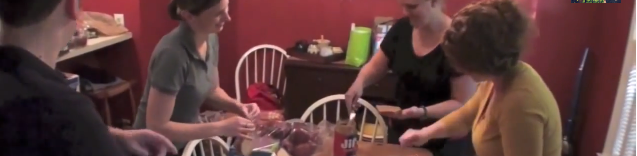
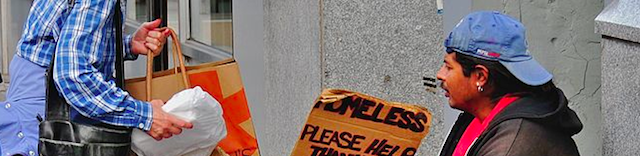
  • Make the Homeless Smile

    Make the Homeless Smile

    It’s the little things we do in this world that make a big difference. What if we made kindness a trend?

  • Are You Stressed, Rushed, and Aggravated?

    Are You Stressed, Rushed, and Aggravated?

    Walking Through Airport

    “Meaning is not what you start with but what you end up with.” ~Peter Elbow

    As a boy, I had a romantic notion about having a job where I traveled for business. It sounded so important and stylish. I liked the idea of dashing through airports to my next big meeting.

    I thought it meant that mine would be a wider world. And so it was.

    Be Careful What You Wish For

    As often happens, what you think about comes into being. I found myself on my very first “business trip.” I was going to the exotic location of Moline, Illinois.

    In my fantasies I was thinking more along the lines of NYC or London, but hey, it involved an airplane. Actually, it wasn’t even a jet; it was this very loud, somewhat cramped prop plane.

    So a couple hours later, after flying at a surprisingly low altitude and slow rate of speed, I had traveled from a semi-rural location with corn and cows to…another semi-rural location with corn and cows. It seems my dreams of importance and style were still in my future.

    Dashing Didn’t Turn Out To Be So Dashing

    My life and work continued down this same path, so occasionally schedules were tight. Once, I remember literally running through an airport so as not to miss a flight.

    It looks good in the television commercials but let me tell you, running in a suit and tie, toting a briefcase and an overnight bag isn’t so sexy. It’s more sweaty and disheveling. I must confess, I felt less than debonair.

    The Illusion of the “Good Seat”

    Every flight (and there were many), I vied for a good seat with the rest of my fellow business travelers. I gloated over my exit row seat or my aisle seat. I glared enviously at the first class passengers, already seated with their complimentary mimosas.

    When it came time to disembark, I leaped to my feet the moment the “Remain Seated” sign went out. I mean, you’re supposed to. At least you must be, because that’s what everyone else was doing.

    I told myself it was important that I leave the plane immediately. After all, I had pressing business. That’s why I’m flying.

    And Then I Woke Up

    This dream of being a business traveler turned out to be not so dreamy after all. Traveling is a hassle with the hotels and cabs and parking garages and strange cities and expense reports. Airplane seats are tight and fellow travelers are sometimes surly.

    This isn’t what I signed up for. I started to wonder about the ground rules I had assumed regarding flying for a living.

    Questioning the Unstated

    What is a good seat? I’ll tell you. There’s only one on the plane: it’s the one the pilot sits in.

    The rest of us, no matter where we sit, are getting basically the same experience. Once I accepted that, I have never had a bad seat.

    What’s the rush to get off the plane? When I wait until everyone else has cleared out around me, it is far easier to collect my things. I don’t hack anyone else off by getting in their way to rush off the plane either.

    I generally go for the window seat now, not because I prefer it particularly. It just means I am not in any hurried person’s way when it comes time to deplane.

    This leisurely attitude means I spend perhaps 10 more minutes aboard if I am seated near the front. If I am seated near the back, it costs me virtually no time at all. And I still get to the baggage claim area before my bags.

    I get to airports early. I check in and kick back. Did you know they put bars in airports? I find this highly convenient for this back kicking.

    I pack light. I generally travel to places that sell just about anything I regularly use. I have found that even developing countries have food and toiletries for sale.

    Sharing My New Found Travel Ease

    Once I found myself on an overbooked flight. Five people were in front of me in line trying to get boarding passes. As each one of them in turn berated the gate agent, all she could do was apologize and say she couldn’t give them a boarding pass at this time.

    When it was my turn, I saw her steel herself for the next verbal assault. But I figured something out as I stood in line: berating the poor lass wasn’t resulting in a boarding pass for anyone.

    So I just said, “Tough day, huh? Listen, if you can get me on this flight I would really appreciate it. Just do the best you can.”

    Five minutes before they closed the jet way doors, she called one name to give out a single boarding pass—mine.

    I wanted to throw a fit as much as the next guy as I stood in line. But what would be the point of ranting at the last person who could help me who, incidentally, was not responsible for causing my problem?

    I didn’t see one glimmer of recognition out there amongst those envious faces of the grounded either. They all had the same chance as me and they had it first. We make our own reality. Own it, or don’t.

    The Traveler, Well Seasoned

    The bottom line is this: air travel, or anything else, is what you make it. I got to live my illusions until I decided they no longer served me.

    I have a far different experience now, even though the external details remain basically the same. I have no stress and I get where I want to go when and if I have a notion to go anywhere at all.

    I am a fan of destinations, but the journey happens too. While I may not have always taken the road less traveled, these days I always choose the travel encounter less experienced.

    Photo by plantronicsgermany

  • Who to Fall in Love with First: 6 Ways to Love Yourself

    Who to Fall in Love with First: 6 Ways to Love Yourself

    “Your task is not to seek for love, but merely to seek and find all the barriers within yourself that you have built against it.” ~Rumi

    Most of us are so busy waiting for someone to love us that we’ve forgotten about the one person we need to love first—ourselves.

    Ironically, it was when my ten-year marriage fizzled that I began the innermost process of self-discovery about love.

    While discouraged and saddened at the crumbling of our relationship, I began to explore love more. How had it fizzled? Why had we stopped loving each other, and what had happened to our love?

    The People Who Were to Have Loved Us

    I grew up in a rather patriarchal culture and family, which had trouble expressing or showing love.

    In fact, they showed love in unusual and unhealthy of ways. My mother used harsh language, put-downs, and comparisons to others to berate, embarrass, and ridicule me about my personal habits, lack of achievement in school, and potential career choices.

    My dad showed love in the form of his belt, which lashed against my body throughout my childhood. I remember horrific lashes, which left marks around my legs, buttocks, and back. If I were lucky, the lashes were made by the softer leathery-parts of the belt. If I wasn’t, it was the buckle, which did the scarring.

    The violent strikes resulted from disobedience, for challenging my parents’ authority, and mediocre grades.

    My adolescent years were filled with memories of some of these physical scars, which have disappeared, but also emotional scars, which continued to linger.

    My ex-wife’s parents similarly showed love in unhealthy ways: ignoring her feelings, constantly criticizing and comparing her to others, and not expressing their love for her.

    What I’ve realized since our divorce was that we were two damaged people who had trouble loving ourselves, let alone each other. When the love you’ve known has been physically harmful, emotionally painful, and psychology scarring, how do you love another person?

    With this realization, I’ve had to find ways to love myself first.

    You too may have been unloved or shown love in unhealthy ways in your life. Here are some tips on loving yourself first before searching for love in your life.

    1. Be kind to yourself.

    You may have hurts, emotional pain, and shortcomings. Learn to accept yourself, shortcomings and all, even if your family and previous partners may have berated you about your inadequacies.

    We tend to be harsh on ourselves, often because the people who were supposed to love us were unusually cruel and heartless to us. We hear their non-stop chatter in our minds and our beings.

    Focus on your many positive qualities. Focus on your strengths, your abilities, and your admirable traits. Let go of harsh judgments, comparisons to others, and self-hatred.

    When you can see yourself as the soulful and divinely inspired person you are, the damaging internal dialogue doesn’t hold up.

    Be gentle with yourself.

    2. Feel the love within you and be that love.

    You may experience both self-hatred and self-love. Spend more time focusing on self-love.

    Try loving and positive affirmations. Nourish your soul through a love-kindness meditation or spiritual practices that help you feel compassion and love toward yourself.

    Once you feel vibrations of self-love or the peace of positive affirmations, try to be in that place of love throughout your day.

    Infuse this love with your interactions with others in your life.

    3. Give yourself a break.

    You’re not perfect. No one is. You don’t have to be at the top of your game every day. No one is happy all the time. No one loves themselves always. No one lives without pain.

    Be willing to embrace your imperfections and excuse your bad days. Don’t set such high standards for yourself emotionally and mentally. It’s normal to feel sadness and pain and to hit some low points in life.

    Allow yourself to embrace these emotions without judging yourself for them.

    4. Embrace yourself.

    Are you content being alone by yourself without feelings of anxiety, fear, and judgment?

    You may have to go within and seek solace in yourself to be comfortable in your own skin. Practice moments of alone time and be aware of how you treat yourself.

    Learn to embrace solitude and allow yourself to be mindful of your thoughts, feelings, and beliefs about yourself.

    The process of self-discovery can happen through the process of clinical therapy or counseling. This healing process can help you discover who you are and what your obstacles to loving yourself are.

    In the alternative, periods of introspection, silent meditations, journaling, and sharing your feelings with supportive friends may help you be more aware of who you are.

    The process of loving yourself starts with understanding your true nature.

    It took a combination of meditation, therapy, writing, and silence to come to terms with my past and my present. Only once I realized I wasn’t loving myself could I attempt to change that.

    5. Be grateful.

    Rhonda Byrne, author of The Magic, shares with us a powerful way to change all of our relationships and our life.

    Byrne encourages us to practice gratefulness and regularly count our blessings.

    “When you’re grateful for the things you have, no matter how small they may be, you will see those things instantly increase,” Byrne says.

    She includes twenty-eight practices for twenty-eight days of your life to help you feel gratitude more deeply. Her initial practice is a formula to count your blessings.

    She encourages you to write out the following sentence for ten items you’re grateful for everyday.

    “I am truly blessed to have _____________, because _____________(why?).”

    You will immediately start loving yourself more when you realize all the things you’re grateful for in your life.

    6. Give yourself in service to others.

    When you think about kindness toward others and being love to others, you open the door to divine love.

    “I slept and dreamt that life was joy. I awoke and saw that life was service. I acted and behold, service was joy.” ~Rabindranath Tagore

    Yes, giving to others is a gift of love you can often give yourself which brings you more love.

    When you’re being kind, considerate, compassionate, and giving of yourself, your soul will rejoice. You’ve reached the highest level of self-love in this state of serving others.

    Find ways to do small and large tasks to assist those living in your house, neighborhood, or community. Practice conscious acts of kindness and giving.

    The love you’re sharing with others in the form of service will help you feel more love and fulfillment in your life.

    You’ll realize you don’t need someone else to feel complete any longer. You’re complete.

    A relationship will only make you shine brighter and bring more love in your life.

  • You Have the Power to Change Someone’s Day for the Better

    You Have the Power to Change Someone’s Day for the Better

    Pushing Car

    “It is one of the most beautiful compensations of life that no man can sincerely try to help another without helping himself.” ~Ralph Waldo Emerson

    It’s a feeling of dread. Maybe you’ve experienced it before.

    You’re driving down the highway and suddenly something goes wrong. You’re stepping on the gas pedal but nothing is happening.

    All the little lights on the dashboard come on and you notice one particular gauge you’ve been meaning to address sooner.

    The needle is just past the E. You’re out of gas. 

    It’s a helpless feeling. Desperation flashes through your mind as the wheels begin to slow. Other cars start passing you as you attempt to merge over to the emergency lane to get out of the way, the whole time hoping you can coast just a little farther, ever closer to the oasis of fuel at the next exit.

    Maybe that isn’t how it felt for you or perhaps you’ve never been through this little peril. But that’s how it felt when I ran out of gas recently.

    I was four or five miles from home, cruising down a long hill on the interstate when I realized my car wasn’t responding to my foot’s orders. 

    Fortunately, I was able to get over and coast all the way to the next exit and even up the ramp.  My mind raced, wondering how far I was going to have to push the car, and worse, if it would be uphill.

    When my vehicle’s momentum finally slowed to a stop, I was relieved to see the gas station only a few hundred yards away and that I’d only have to overcome a slight incline to get there.

    So, I got out and started pushing. As I grunted and heaved I was unpleasantly surprised at how heavy my little car was on a relatively flat stretch of road. But I pressed on, inching my way towards the plastic gas station sign that signaled my salvation. 

    My muscles strained against the heavy burden, legs and arms burning from the exertion. I thought about the times I’d seen other people who were out of gas. I always felt bad for them, maybe even a little embarrassed for them.

    Now I felt the shame I’d always imagined those people felt.

    More than a few times, I’d actually stopped and helped them push their vehicles to the nearest station. While I lumbered forward, one particular instance popped into my head from several years before.

    I was in Austin, Texas for a convention. A friend and I had been hopping around to different bars (like any good convention-goers) when, from the sidewalk, we saw a guy pushing a monstrosity of a car. It was a big convertible from the 1970s. 

    I don’t recall what make or model the behemoth was. All I know is that it was the heaviest object I’ve ever tried to move in my life.

    Still, my friend and I started pushing with the guy. He hadn’t seen us at first and was surprised that his task had been suddenly lightened. He smiled back at my buddy and I as we kept pounding our feet across the pavement, one foot in front of the other.

    “Just steer,” I told him as we kept easing the car towards a section of the road that began to slope downhill. “Once you get to where it starts slanting down you’ll be fine,” I said. 

    After several exhausting minutes, we reached the crest in the road and the car began to coast on its own. The driver thanked us and offered us money, which we declined. He waved back to us as he hopped in and guided the wheeled boat to the station.

    We went on about the rest of our night and didn’t give the event much thought. In fact, I hadn’t thought about it in years.

    Now here I was, in the same predicament, out of gas and trying to reach a little section of the road up ahead where it started to slope downward, the whole time trying to steer and push, a difficult pair to manage at once.

    Suddenly, the car felt like it was half its weight. I first looked down to see if I’d reached some kind of a little down slope or something. Then I heard a guy’s voice from behind me. 

    “Thought you could use a little help.”

    I turned around to see a total stranger, in his mid-thirties, pushing hard against the back end of my car. I smiled broadly. “Thanks man!” I shouted over the passing traffic.

    He had parked his truck just off the exit, probably as soon as he had seen my plight. He hadn’t hesitated or thought about helping me for more than a second. His instant thought had been to help.

    “You should be okay once we get to that little down slope up ahead,” he commented. 

    Inside, I laughed, remembering how I’d said those exact words to the guy in Austin a few years before.

    A minute or so later, we reached the downhill section of road and my car began coast itself towards its haven. “I think you’re good,” he yelled and waved.

    I thanked the man again and hopped in my car, steering it into the station on nothing but gravity’s sweet momentum.

    I don’t know much about karma, but I do know this: life presents us with opportunities, little moments where we can make the world a better place with a simple action.

    That stranger made my day better by lending a hand. He lightened my load and thus, lifted my spirits.

    Had he not helped, I may have become annoyed at the situation and more easily bothered the rest of the day, even irritable. I could have returned home less happy and let those feelings pass from me to the people around me, making their day worse.

    You have an extraordinary power to change someone’s day for better or worse, and you have no idea how far reaching that impact will be. 

    Another thing I took away from the gas incident is that good deeds never seem to go un-repaid.  It is an indelible truth that I’ve noticed time and again. Call it karma or mitzvah or comeuppance, it all works the same way.

    I kept smiling as I filled up my tank. I felt grateful that a random stranger had helped me. It gave me a good feeling inside, a sense that everything would be okay, no matter what.

    I started to replace the gas cap when I heard a familiar sound on the other side of the pump. A police officer in an old, beat-up pickup truck was trying in vain to get the engine to turn over.

    “Battery dead?” I asked. “If you need a jump, I have some jumper cables in the trunk,” I offered.  The man’s frustration visibly eased a little.

    “Thanks man,” he replied.  “I’d appreciate that.”

    “No problem,” I said as I reached in the trunk and grabbed the cables. “It’s always good to help someone out.”

    Photo Geoffrey Callaway

  • How to Be Kind to Yourself in a Busy World

    How to Be Kind to Yourself in a Busy World

    Relaxing

    “The time to relax is when you don’t have time for it.” ~Sydney J. Harris

    A few weeks ago, I had a panic attack. It was the first time in my life that I had experienced such unfamiliar feelings of intense fear and debilitating terror. As each prolonged minute painfully elapsed, I honestly thought that I was dying.

    At the time, of course, I had no idea what was happening to my body.

    I did not know why my heart was racing, why my face was numb, or why my tongue felt like it was choking me. Why my hands and feet were tingling, why my arms felt heavy, why my head was spinning. Or why I felt absolutely certain that my body was shutting down.

    I had convinced myself that what I was experiencing was unquestionably my central nervous system failing. I needed to seek medical attention immediately. I couldn’t allow myself to die right here in my kitchen.

    So, I called an ambulance.

    The paramedics ran a few tests, assuring me that, thankfully, I was not about to die and my condition was far from my self-diagnosed critical state.

    As I started to calm down, regaining control of my breathing, the physical symptoms slowly dispersed. I began to realize that the problem that had suddenly overpowered my entire body, was in fact, all in my head.

    My mind was suffering from extreme exhaustion.

    The troubling thing was that panic attack had happened to me out of the blue with absolutely no warning signs. It was a seemingly average day; I was getting ready for work after a morning of studying and visiting the gym. I could not identify the obvious trigger.

    Over the days that followed, I felt physically and mentally drained.

    My body ached, muscles felt tense and sore, to the extent that I even lost control of my tongue, making the simple act of speaking a tiresome struggle. My head was working hard to make sense of it all, while trying to sift through the relentless negative thoughts I was constantly creating.

    During those weeks afterward, I learned how much the mind can affect the body, and vice versa. I also learned how vitally important it is to take care of your mind, reduce stress, and be kind to yourself.

    The world is full of stress inducing scenarios; it’s how we react to them that really matters.

    Listen to your body.

    Your body is your greatest teacher. It knows you better than any standardized text book or generic medical advice.

    I learned that prescribed antidepressant medication did not work well in my body; however, daily relaxation techniques through yoga and meditation invited a little bit of mental clarity into my day.

    Only you know what works best in your body, and what makes your heart sing.

    Just be.

    We need to understand that we are human-beings, not human-doings.

    Taking time out of the busyness of everyday life to just be is good medicine for the body and soul. By disconnecting from the influx of social media updates, the steady stream of e-mails, and instant text-messaging communication, we can recharge naturally away from the buzz of the electronic world.

    The best thing is, we don’t actually need to do anything—so put down the books, turn off the guided relaxation CD, and just feel content with just being where you are, in this very moment.

    Trust the process.

    Sometimes we push too hard to make things happen.

    In the weeks leading up to my panic attack, I was driven by the fear of failure. Everyday, I was overexerting my brain, force-feeding it information to get ahead in my studies, reasoning with myself this was the only route to success. Consequently, I had very little time to relax and absorb this new acquired knowledge.

    Trust that where you are right now is exactly where you are supposed to be. Learn that life becomes much easier when you stop fighting against the resistance of your own limitations, just relax, and go with the flow.

    Be open to change.

    We all know that nothing stays the same forever. However, problems arise when we become attached to the way things are.

    Accept that life is a series of ever-changing events and situations. And new opportunities will present themselves to you from time to time. The end of your job in one company simply means the beginning of a brand new set of life experiences waiting for you in another.

    Embrace uncertainty by switching off the worrying mind, replacing the prospect of the unknown with positive anticipation.

    Be kind.

    Emotions that are cultivated in the mind often manifest themselves somewhere on the human body.

    A dull ache in the stomach can translate to a gut full of worries. Similarly, a sore throat may relate to communication and self-expression issues.

    By becoming aware of the sensations in your body and allowing them to reach their full expression, you can learn to send kindness the physical problem. This, in turn, brings a sense of clarity and calmness into your mental world.

    Moreover, if we take good care of our bodies through gentle exercise, nutritious food choices, massage, or just having a long relaxing soak in the bath, our minds will become less chaotic and more of a comfortable pleasant place to stay.

    Photo by GerryT

  • Motivate Yourself Without Pushing Yourself: Tips for Self-Compassion

    Motivate Yourself Without Pushing Yourself: Tips for Self-Compassion

    Happy

    “Our sorrows and wounds are only healed when we touch them with compassion.” ~Buddha

    I have always struggled with self-compassion. In fact, I’m not even sure I have been aware of it all that much throughout my life.

    I’ve always thought the only way to truly grow was to push myself, both physically and mentally, so without even realizing it, I set myself up for that.

    I would not study for my university exams until the night before. I would take it easy and not make enough money until it got to the stage that I had to almost create a miracle to pay my next credit card bill. I would push my partner until our relationship was at a breaking point so I could then save it.

    It was almost like I wanted to prove to myself that I was a hero in someway. As I reflect back now, it was so strange what I was doing, but the truth was I was not even aware I was doing it.

    Over the past few years I could see my patterns more and more. It shocked me that I would be that unconscious of my motivations.

    But as I dived into it, I could see that I actually had a fear that I’d somehow be less if I took that pressure off myself. It was the pressure that was keeping me motivated and more importantly keeping me growing.

    I wondered if I had to continue like that. What would happen if I let it go? Would I stop being as great as I could be?

    Then I became aware of self-compassion. It was a foreign concept to me, and one I remember fighting against for some time. My ego did not want to just give in that easy!

    At first I felt that I would become more self centered, and that was big no-no—after all, aren’t we all here to serve others, not ourselves?

    But then I started see what my lack of self-compassion was really doing to me. It was, in fact, the very thing that was isolating me from the world and making me self-centered.

    I was so caught up in my own struggles and issues that I had begun to feel that I was the only one on the planet going through what I was.

    I had forgotten that all my friends were feeling the same way as me; they too were struggling in life, and I had not seen it. My issues were not greater than everyone else’s, after all.

    As I saw this more clearly I felt myself soften to compassion for myself, and those around me. I started to “feel” compassion for the first time.

    I recall pondering one day, how I would feel in a relationship if I treated my partner or child in the same way I had been treating myself? Would I really be that motivated to keep going each day?

    The never-ending berating and judgments, constantly trying to fix, change, or improve myself, never being enough. How motivated can you stay under such conditions?

    I would have never expected anyone to respond positively to this, but yet I expected myself to. Something was very wrong with my perception of myself.

    It was at that moment that my belief structure started to collapse on itself, and I realized that I did not have to be that hard on myself for motivation. I could actually be kind and it would have an even greater effect.

    Bit by bit, I felt self-acceptance, and a love came over me like waves, like it had been wanting to come through for so many years, but I had blocked it.

    All I had been looking for was sweeping over me in one giant gush. It felt amazing and it felt true. I knew that I’m okay the way I am.

    I suddenly felt a common bond with humanity again. Like we are all perfect in our imperfect way, and that is actually what it’s meant to be like.

    I realized that I do not have to get everything right everytime. I do not have to be changed or improved; I just need to accept who I am right now.

    The pain and sorrow I had been feeling my whole life rose up, and I could clearly see what I had done to myself for decades. I was sorry for this, so very sorry.

    I broke down and cried and cried. I had been so mean to myself. The pain and struggles of the last few decades came pouring out of me like the dam gates had been opened.

    I felt relief for the first time. I could not do this any longer; there was simply no need. I had done nothing wrong by just being me.

    This was one of the most significant moments in my life—the acceptance of myself through self-compassion.

    My tips to create more self-compassion include:

    1. Be aware if you are being hard on yourself and recognize where this shows up for you.

    It can be subtle. Look at all life areas, including your health, finances, and relationships, at work and in your family.

    2. Challenge your beliefs and fears. 

    Do you have a belief that if you are gentle with yourself you will somehow not be motivated enough or not all you can be? Recognize that this doesn’t have to be true. Also, notice if you feel that being compassionate toward yourself will lead you to feel self-indulgent or selfish.

    3. Treat yourself kindly, without judgment.

    Picture your best friend and how you treat them. Now apply this same love and kindness to yourself. You should be your own best friend after all!

    4. Be mindful of when you slip out of compassion and start to treat yourself harshly again.

    Forgive yourself and understand that you are human and this is part of the human game.

    5. Feel the pain of others around you.

    Listen to their stories and feel what it must be like to be them. This will make you automatically feel compassion and be softer on yourself as you connect with their common humanity.

    We all have issues and problems that cause us pain, but suffering through them is optional. Self-compassion provides another option.

    Photo by JFXie