Tag: kindness

  • How to Stay Kind Without Losing Yourself to Toxic Behavior

    How to Stay Kind Without Losing Yourself to Toxic Behavior

    “The strongest people are the ones who are still kind after the world tore them apart.” ~Raven Emotion

    A few months ago, I stopped being friends with my best friend from childhood, whom I had always considered like my brother.

    It was a tough decision, but I had to make it.

    In the past five years, my friend (let’s call him Andy) had become increasingly rude and dismissive toward my feelings.

    Not a single week went by without him criticizing me for being optimistic and for never giving up despite being a “failure.”

    Still, I tried to be understanding. I really did.

    I knew he was always stressed because he was going to graduate from college two years later than his peers.

    And I knew he felt insecure about not being as rich and successful as “everyone else.”

    But one can only take so much, and after so many years, I just couldn’t anymore.

    It’s hard to keep showing up with warmth and patience when the other person not only doesn’t appreciate you but even attacks you for being “naive in the face of reality.”

    (Yeah, he’d somehow convinced himself that I was in denial about my lack of success—as if the only way to react to failure were to get angry and frustrated.)

    If you’ve always tried your best to be kind and gentle, you too might have been in a similar situation and wondered at least once, “Why bother?”

    Because even though we don’t expect trophies or medals, a complete lack of appreciation can become difficult to accept after a while, and a simple “thank you” can start to matter more than we wish it did.

    I’ll admit that, because of Andy, I almost gave up on being a kind person multiple times.

    Luckily, I didn’t, and in the months that led to my difficult decision, I learned some important lessons on how to stay kind even when it starts to feel like there’s no point to it.

    I hope these lessons will help you stay true to yourself, too.

    1. Make sure you’re not using kindness as a bargaining chip.

    Just as positivity can become toxic, there is such a thing as a harmful way of sharing kindness.

    Here’s what I mean.

    In my teenage years, I used to be what some would call a “nice guy.”

    You know, the type of guy who prides himself on being nice, except he’s really not.

    In typical “nice guy” fashion, I treated kindness as a transaction. (”I’m doing all these things for them, so they should do the same for me” was a typical thought always floating in my mind.)

    I would be nice and generous to others, but I would always compare what they did for me to what I had done for them.

    Then, if they didn’t reciprocate in a way that I found satisfactory, I would secretly start to resent them.

    It’s not my proudest memory, but it shows how even something positive like kindness can be weaponized.

    And it’s not just “nice guys” who do that, either.

    Many parents make the same mistake: they try to guilt their children into showing gratitude or obedience by bringing up all the sacrifices they’ve made for them.

    Of course, all this does is make the kids feel bad and even distrustful, as they may start to wonder whether their parents’ sacrifices were made out of love or selfish motives.

    Because when kindness is given conditionally, it stops being about helping—it becomes about satisfying one’s desperate need for appreciation.

    Needless to say, this is unhealthy for all parties involved.

    That’s why it’s best to…

    2. View kindness as an expression of who you are.

    It’s easy to forget—especially when it goes underappreciated for too long—that kindness should be, fundamentally, an expression of yourself.

    You are kind because it’s who you are, not because you want someone else’s approval.

    When I look back on my friendship with Andy, I’m obviously not happy about all the times he attacked my self-esteem, dismissed my feelings, and put cracks in our relationship without a second thought. However, I can at least be proud that I didn’t let that break me and instead stayed strong.

    Because that’s what this is about.

    Being kind, even in the absence of thanks, is an act of self-respect.

    It’s not about wanting others to notice.

    It’s about staying true to yourself, regardless of how unappreciative others might be.

    3. Remember you’re allowed to withdraw your kindness.

    Kind people always struggle with this.

    We worry that if we quit going above and beyond for someone, it might mean that we’re not good people anymore.

    This is why it took me so many years to finally stop being best friends with Andy: I was afraid of being told I wasn’t really kind after all.

    I didn’t want that to happen, so I kept being as generous as possible, despite how often he hurt me.

    For years, I kept cooking, doing the dishes, vacuuming, mopping, and doing all sorts of chores that normally would be divided equally among roommates.

    I wanted to do my best to give him as much time and space to focus on his studies (although I was in his same situation and had my own studying to do).

    I refused to see that he didn’t plan on treating me any better.

    In fact, years before, he’d already made it clear he didn’t believe I deserved to be repaid for all the things I did.

    Yet, I just let him disrespect me and hurt me and kept being kind to him. Because kindness shouldn’t be conditional, right? Because it should just be an expression of yourself, right?

    But here’s what I now understand: just because you shouldn’t expect people to treat you well in exchange for your kindness, it doesn’t mean you should accept being treated badly.

    There’s a limit to how much thanklessness you can tolerate before it starts eating you up inside.

    You have every right to pause or withdraw your kindness when you’re being treated poorly. This is about setting healthy boundaries. You’re not being selfish or arrogant.

    I can’t believe how long it took me to realize that unconditional doesn’t mean boundaryless.

    Kindness with zero boundaries isn’t kindness at all but self-abandonment.

    There’s nothing noble about completely neglecting yourself just to be as generous as possible to someone else.

    Be kind because that’s who you are, but don’t let yourself be taken for granted.

    4. Don’t let negative people convince you to quit.

    We all know people who are never content with feeling miserable by themselves, so they try to make others feel just as miserable.

    And when they keep criticizing you for being a “goody two-shoes” just because you have a positive attitude, it’s hard to stay unperturbed.

    You may even start to question yourself and if you should maybe stop being a positive person.

    But let me assure you: letting negative people decide what kind of person you should be and what kind of life you should live is NEVER a good idea.

    Because, again, some people just want to tear others down.

    You could change your whole personality and become exactly like them, and they would still criticize you and judge you.

    Why? Because the reason they hurt others in the first place is that they’re (unsuccessfully) wrestling with their own problems.

    It’s not about you being “too nice” or “fake.” It’s about them not being able to find it in themselves to be patient and generous and always choosing to just lash out instead.

    Good people are never going to criticize you for being kind.

    Even if they believed that your brand of kindness might not be pleasant in some instances, they’d just tell you. They wouldn’t try to make you feel bad.

    Stay True to Yourself

    When kindness feels thankless, it’s easy to wonder if it’s even worth it—especially if the thanklessness comes from someone we care about.

    I’ve been there more times than I can count, and yes, it always feels awful.

    But kindness isn’t merely a way to please others—it’s how we respect ourselves.

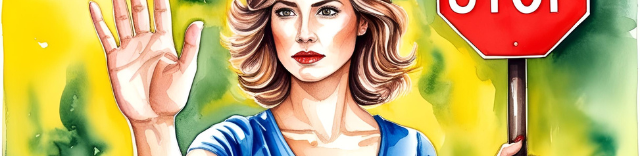
    You have the right to press PAUSE or STOP when someone disrespects you too much.

    You don’t have to let others take you for granted just because you’re worried they might have something to say about your genuineness.

    Because, honestly, what if they did?

    You don’t need their approval.

    You’re kind because you’re kind. It’s that simple.

  • What Happened When I Stopped Expecting Perfection from Myself

    What Happened When I Stopped Expecting Perfection from Myself

    “There is no amount of self-improvement that can make up for a lack of self-acceptance.” ~Robert Holden

    Six years ago, I forgot it was picture day at my daughter’s school. She left the house in a sweatshirt with a faint, unidentifiable stain and hair still bent from yesterday’s ponytail.

    The photographer probably spent less than ten seconds on her photo, but I spent hours replaying the morning in my head, imagining her years later looking at that picture and believing her mother had not tried hard enough.

    It’s strange how small moments can lodge themselves in memory. Even now, when life is smooth, that picture sometimes drifts back. The difference is that I no longer treat it as proof that I am careless or unloving. I see it as a reminder that no one gets it all right, no matter how hard they try.

    I tend to hold on to my “failures” long after everyone else has let them go. My daughter has never mentioned that photo, and one day, if she becomes a mother, she might discover that small imperfections are not proof of neglect. They can be a kind of grace.

    For most of my life, I thought being a good person meant being relentlessly self-critical. I stayed up too late worrying over things no one else noticed, like an unanswered text or a dusty shelf before company arrived. Sometimes I replayed conversations until I found the exact moment I could have been warmer or wiser.

    The list was endless, and my self-worth seemed to hinge on how perfectly I performed in every role. Somewhere along the way, I started expecting myself to already know how to do everything right. But this is the first time I have lived this exact day, with this exact set of challenges and choices.

    It is the first time parenting a child this age. The first time navigating friendships in this season. The first time balancing today’s responsibilities with today’s emotions.

    The shift came on a day when nothing seemed to go my way. I missed an appointment I had no excuse for missing, realized too late that I had forgotten to order my friend’s birthday gift, and then managed to burn dinner. None of it was catastrophic, but the weight of these small failures began to gather, as they always did, into a heaviness in my chest.

    I could feel myself leaning toward the familiar spiral of self-reproach when I happened to glance across the room and see my daughter. And in that instant, a thought surfaced: What if I spoke to myself the way I would speak to her if she had made these same mistakes?

    I knew exactly what I would say. I would remind her that being human means sometimes getting it wrong. I would tell her that one day’s mistakes do not erase years of love.

    I would make sure she knew she was still good, still worthy, and still enough. So I tried saying it to myself, out loud. “We all make mistakes.”

    The words felt clumsy, almost unnatural, like I was finally trying to speak the language I had only just begun to learn. But something inside softened just enough for me to take a breath and let the day end without carrying all its weight into tomorrow.

    Self-compassion has not made me careless. It has made me steadier. When I stop spending my energy on shame, I have more of it for the people and priorities that matter.

    Research confirms this truth. Self-compassion is not about lowering standards. It is about building the emotional safety that allows us to keep showing up without fear.

    And here is what I have learned about actually practicing it. Self-compassion is not a single thought or mantra. It’s a habit, one you build the same way you would strength or endurance.

    It begins with noticing the voice in your head when you make a mistake. Most of us have an internal commentator that sounds less like a mentor and more like a drill sergeant. The work is in catching that voice in the act and then, without forcing a smile or pretending you are not disappointed, speaking to yourself like someone you love.

    Sometimes that means literally saying the words out loud so you can hear the tone. Sometimes it means pausing long enough to remember you are still learning. Sometimes it means choosing kindness even when shame feels easier.

    It also helps to remember what self-compassion is not. It is not excusing harmful behavior or ignoring areas where we want to grow. It is acknowledging that growth happens more easily in a climate of patience than in one of punishment.

    The science supports this. When we practice self-kindness, our stress response begins to quiet, and our nervous system has a chance to settle. This does not just feel better in the moment; it makes it easier to think clearly and choose our next step.

    I’ve noticed other changes as well. Self-compassion makes me braver. When I’m not terrified of berating myself if I fall short, I am more willing to try something new.

    I take risks in conversations. I admit when I do not know something. I start things without obsessing over how they’ll end, and when mistakes inevitably happen, I don’t have to waste days recovering from my own criticism.

    Sometimes self-compassion is quiet, like putting your phone down when you begin to spiral through mental replays. Sometimes it is active, like deciding to stop apologizing for being human. Sometimes it is physical, like unclenching your jaw or placing a hand on your chest as you breathe.

    Over time, these small gestures add up. They rewire the way you respond to yourself, replacing the reflex of blame with the reflex of care.

    We are all walking into each day for the first time. Of course we will miss a detail or lose our patience. Of course we will get things wrong.

    But when we meet ourselves with kindness instead of condemnation, we remind ourselves that love, whether for others or for ourselves, has never depended on perfection.

    And that lesson will last far longer than any perfect picture.

  • The Mean Instinct: Why We Exclude Others and How to Stop

    The Mean Instinct: Why We Exclude Others and How to Stop

    “In a world where you can be anything, be kind.” ~Unknown

    “Girls are mean!” I nodded knowingly as my boss struggled to explain the difference between raising boys and girls. I couldn’t speak to raising boys, but I remembered all too well what it was like when my daughters were growing up.

    Girls traveled in packs, always with a leader at the helm. And almost every week, one of the lesser-ranked members was cast out, ostracized from the group. More often than not, it was one of my daughters. I distinctly recall their heartbreak—the kind of deep, inconsolable sorrow that only a child can feel when their world is upended.

    Then, just as suddenly as they had been exiled, the social winds would shift. They’d be welcomed back into the fold, all smiles and laughter, as if the agony of rejection had never happened. And just like that, it was another poor girl’s turn to bear the brunt of exclusion. My daughters, now safely back in favor, never hesitated to play along, inflicting the same pain they had so recently endured—all in an effort to stay in the leader’s good graces.

    It’s easy to think of this as just ‘girl drama,’ but is it really? I found myself wondering: is meanness learned, or is it wired into us? And oddly enough, my horse helped me answer that question.

    From Outcast to Enforcer

    A few years ago, I moved her to a new home, where she had to integrate into an unfamiliar herd. The top mare wasted no time making it clear—she didn’t like my mare. For two weeks, every time I arrived, I’d find her standing alone on the outskirts, gazing longingly at the hay she wasn’t allowed near. And every time, she would run to me, silently pleading for help.

    It reminded me so much of my daughters. It broke my heart.

    But then, something shifted. Slowly, she earned her place. She ingratiated herself with the top mare. They became inseparable—best friends. And soon enough, it was my mare turning on the others, asserting her own dominance.

    Watching my mare transform from the outcast to the enforcer unsettled me. I realized—this wasn’t cruelty. It was instinct. The unspoken rules of survival. And the more I thought about it, the more I saw those same rules playing out in my own life.

    Sure, we may not bite or chase each other away from the hay, but we have our own ways of keeping the social hierarchy in check. The whispers. The inside jokes are at someone else’s expense. The subtle shifts in who gets included and who doesn’t.

    Had I been any different? Had I, too, learned to play the game—shifting, adapting, and excluding, not out of cruelty but out of the same deep, instinctual need to belong?

    Were We the Mean Girls?

    I don’t really remember the “mean girls” when I was in school. But looking back… that probably means I was one.

    I never thought of myself as particularly cruel, but I do remember moments that make me wince now. One in particular stands out.

    There was a girl in my class—let’s call her Claire. She was bright and talented, and she attended speech and drama classes. One day, in a rare moment of vulnerability, she opened up to us. She admitted that when she was younger, her parents had sent her to those classes because she had a speech impediment. She had worked hard to overcome it, and in that moment, she was trusting us with a piece of her story.

    And how did we respond?

    We laughed. And worse—we turned it into a joke. Every time she was in earshot, we’d start singing “Words Don’t Come Easy.” It was meant to be funny, just harmless teasing. At least, that’s what I told myself at the time. But now, I cringe at the memory.

    She had been brave enough to share something real, and instead of honoring that courage, we used it against her.

    At the time, I didn’t think of myself as mean. I wasn’t the ringleader, just someone going along with the joke. But does that really make it any better? Looking back, I realize that staying silent—or worse, laughing along—makes you just as much a part of the problem.

    If anyone I went to school with happens to read this—especially Claire—I’m sorry.

    Do We Grow Out of It?

    I’d like to believe that kind of behavior is just a phase—something we grow out of as we mature, as our empathy deepens, as we learn to control our baser instincts. After all, kids can be cruel, but their brains aren’t fully developed. They act on impulse, driven more by the need to belong than by a true desire to hurt anyone.

    Surely, then, adulthood brings wisdom. Surely, we learn to be better.

    Sadly, that’s not always the case.

    We like to think we’ve evolved beyond schoolyard cliques, but the truth is, meanness just becomes more subtle. Instead of playground exclusions, it’s office gossip. Instead of outright teasing, it’s backhanded compliments and judgmental whispers. The tactics change, but the instinct remains.

    How to Break the Cycle and Choose Kindness

    The instinct to exclude, judge, or tear others down may be wired into us, but unlike my mare, we have something powerful: awareness and choice. We don’t have to follow our instincts—we can rise above them. Here’s how.

    1. Recognize the pattern.

    The first step to change is awareness. Meanness doesn’t always look like outright bullying—it can be as subtle as rolling your eyes at someone’s success or staying silent when a friend is being excluded. Start paying attention to the moments when judgment, gossip, or exclusion creep in. Ask yourself:

    • Why am I doing this?
    • What am I gaining?
    • How would I feel if I were on the receiving end?

    2. Challenge the scarcity mindset.

    Much of our instinctive meanness comes from a deep-seated belief that success, beauty, or belonging is limited—that if another woman shines, it somehow dims our light. But that’s simply not true. There is enough success, happiness, and love to go around. Lifting others up doesn’t take anything away from you—it strengthens everyone.

    3. Replace gossip with encouragement.

    Gossip is a social bonding tool—we do it to feel connected. But there’s a better way. Next time you’re tempted to tear someone down in conversation, flip the script.

    Instead of:

    “Did you see what she was wearing?”

    Say:

    “I love how confident she is to wear that!”

    Compliments—especially when given freely, without expectation—have a way of shifting the energy in a room.

    4. Make kindness a habit.

    Kindness isn’t just about grand gestures—it’s in the small, daily choices.

    • Smile at a stranger.
    • Invite the quiet colleague to lunch.
    • Defend the person being talked about behind their back.
    • Support your friends’ successes without comparison.

    The more you practice, the more natural it becomes.

    5. Teach the next generation.

    If you have children, especially daughters, talk to them about social dynamics. Share your own experiences. Show them what healthy friendships look like.

    When they come home upset because they were left out—or because they left someone else out—help them navigate those feelings with empathy and self-awareness.

    6. Be the one who makes room at the table.

    In every social group, workplace, or community, there are people on the outskirts—just like my mare once was. You have the power to invite them in. Inclusion is a choice. So, the next time you see someone being left out, be the person who makes space for them.

    Final Reflection: Who Do You Want to Be?

    Every day, we have a choice. Not just in grand, dramatic moments—but in the quiet, ordinary ones.

    The choice to include.

    The choice to uplift.

    The choice to be better.

    So today, ask yourself: Who needs a seat at your table? And will you make room?

  • Standing Up for Yourself Doesn’t Make You Any Less Kind

    Standing Up for Yourself Doesn’t Make You Any Less Kind

    “Being a good person doesn’t mean being a doormat… You can be kind, giving, and full of love, but that doesn’t mean you have to accept disrespect or allow your boundaries to be crossed.” ~Unknown

    I can still vividly remember sitting in my seventh-grade classroom, forcing a laugh as my classmates made jokes at my expense. My cheeks would burn red, but I’d smile along, desperately wanting to belong. For years, I mistook my silence for kindness, my nervous laughter for good nature. I didn’t realize that by laughing at myself, I was slowly chipping away at my own self-worth.

    Growing up, I was the “nice kid”—the one who never caused trouble, never talked back, and always tried to keep the peace. When someone would make a cutting remark about my appearance or mock the way I spoke, I’d respond with a practiced smile and a halfhearted chuckle. I thought this made me mature, diplomatic even. “Just brush it off,” my mother would say. “They’re only joking.” But deep inside, each laugh felt like a small betrayal of myself.

    The pattern continued well into my teenage years. In every social circle, I became the designated “good sport”—the one who could take any joke, no matter how sharp its edges. I wore this label like a badge of honor, never realizing it was actually a shield I was hiding behind. My inability to stand up for myself wasn’t kindness; it was fear dressed up as politeness.

    The turning point came during my first year of college. During a group project, a teammate made a particularly cruel joke about my work ethic. As usual, I started to laugh, but something inside me snapped.

    Years of suppressed feelings bubbled to the surface, and for the first time, I heard how hollow my laughter sounded. In that moment, I realized I wasn’t being nice—I was being complicit in my own diminishment.

    This revelation led me down a path of self-discovery and personal growth. Through therapy, self-help books, and countless conversations with trusted friends, I began to understand the difference between being kind and being a doormat. I learned that standing up for yourself doesn’t make you mean or confrontational—it makes you self-respecting.

    Here are the vital lessons I learned along my journey:

    The first step was the hardest: acknowledging that my laughter was a defense mechanism, not a sign of resilience. I had to accept that it’s okay to not find hurtful comments funny. Real strength isn’t in laughing off insults; it’s in acknowledging when something hurts and addressing it directly.

    I started practicing simple phrases in front of the mirror: “I don’t find that funny,” “That comment was inappropriate,” or simply, “Please don’t speak to me that way.” At first, these words felt foreign on my tongue, but gradually, they became part of my vocabulary. I learned that confrontation doesn’t have to be aggressive—it can be calm, dignified, and firm.

    The most surprising discovery was how many people respected me more when I started setting boundaries. Those who truly cared about me adjusted their behavior. Those who didn’t, well, they showed their true colors, and I learned that not every relationship needs to be preserved at the cost of your self-respect.

    Today, I still consider myself a kind person, but my kindness no longer comes at the expense of my dignity. I’ve learned that true niceness isn’t about accepting poor treatment; it’s about treating others—and yourself—with respect.

    When someone makes a hurtful comment now, I no longer reach for laughter as a shield. Instead, I stand tall in my truth and speak up with compassion and clarity.

    To those who recognize themselves in my story—those who laugh when they want to cry, who smile when they want to scream—I want you to know that your feelings matter. Your discomfort is valid. Your voice deserves to be heard. Being nice doesn’t mean being silent, and standing up for yourself doesn’t make you any less kind.

    The journey from forced laughter to authentic self-expression isn’t easy. It’s filled with uncomfortable moments and challenging conversations. But with each small act of standing up for yourself, you rebuild your self-worth piece by piece. You learn that the strongest form of kindness is the kind you show yourself.

    Remember: You can be both nice and strong, both kind and assertive. The real magic happens when you find that balance—when you can face the world with a genuine smile, knowing you’ll never again laugh at the expense of your own dignity.

  • A Beautiful Reminder of How Powerful We Are

    A Beautiful Reminder of How Powerful We Are

    “No kind action ever stops with itself. One kind action leads to another… A single act of kindness throws out roots in all directions, and the roots spring up and make new trees. The greatest work that kindness does to others is that it makes them kind themselves.” ~Amelia Earhart

    When you’re having a particularly rough day, it’s tempting to hang your head in defeat and conclude it’s a cruel world where nothing matters. I had a day like that last month.

    A good friend was diagnosed with a horrendous disease. The horse I had been training with for years was sold and relocated across the country with almost no notice. A shady car mechanic almost had me convinced to replace four perfectly good tires.

    All this in one day.

    Yet that’s not all that happened that day.

    I also went to the bank to use the cash machine. I hadn’t been to that location in months. When I arrived, there was a security guard outside. I said hello. It seemed like he recognized me as having been there before. I completed my transaction and started walking back toward my car. And that’s when the security guard said, “When’s the next free hug day?”

    As it turned out, he remembered me from several months ago when I was wearing a t-shirt with Elmo on the front and the words “free hugs” in big letters. At that time, I had completely forgotten I was wearing that shirt. In fact, I was so caught up in my thoughts that day that I didn’t even notice the security guard standing there until I heard a voice say, “I’ll take you up on that shirt.” That was months ago.

    That small act of kindness—a single hug several months ago—had made an impact. I was getting a beautiful reminder of that now.

    So when the security guard asked, “When’s the next free hug day?” I immediately snapped out of my defeated state of mind and cheerfully answered “every day,” and we hugged for the second time.

    “Thanks, I needed that,” he said. And I guess so did I.

    That’s the power of one person. Each of us has within us the potential to make a positive impact on the world.

    We don’t need to start a non-profit or donate all our possessions to charity (although those things are awesome) to make a difference. Making a positive difference can happen with our every thought, word, and action—no matter how small.

    My interaction with the security guard at the bank was a beautiful reminder that something as small and fleeting as a hug, a smile, or a kind word can have a profound and lasting effect.

    “There’s no such thing as a small act of kindness. Every act creates a ripple with no logical end.” ~Scott Adams

    The truth is, we’ll never know just how far the ripples of one small kindness extend. Maybe that initial hug with the security guard months ago put him in a more lighthearted mood for the rest of the day, which influenced how he interacted with his family that evening, which in turn influenced their actions and outlook the next day, and so on, and so on.

    Maybe the second hug reminded him that the world is full of friendly people, and all that it takes is a tiny, initial gesture to break the ice.

    “The very nature of kindness is to spread. If you are kind to others, today they will be kind to you, and tomorrow to somebody else.” ~Sri Chinmoy

    Although we can never know just how far the goodness of one kind act can spread to others, what we can experience firsthand are the effects a kind act has on ourselves. Studies have repeatedly shown that the person doing the kind act receives as much benefit to their mood and outlook as does the receiver—oftentimes even more so.

    What’s more amazing is that this double benefit is not limited to our kind words and deeds. It applies to our thoughts as well.

    That’s right. Our thoughts are powerful. The quality and quantity of our thoughts affect our physical, mental, and emotional health.

    That’s why things like the placebo effect work. If we wholeheartedly believe the sugar pill the doctor gives us is a powerful medicine to help what ails us, our body will respond according to that belief. Our thoughts directly influence how our body functions.

    Our thoughts also extend out to others.

    Because thoughts, like everything else, are energy, they are broadcast nonstop, twenty-four hours a day, to everyone and everything around us. That’s why things like distant healing and prayer groups can promote healing and positive change. When two or more people synchronize and focus their thoughts, the positive effects are magnified.

    Even in our day-to-day activities, our thoughts have an impact on others. Although we may not be able to read the mind of the sales clerk who approaches us in the store, for instance, on some level we can feel them.

    Our body senses the energy fields of others.

    That’s how we are able to get an immediate sense of someone when we meet them for the first time. Even before either person says a word, we receive an energetic impression of that person. Whether that first impression is positive or negative has a lot to do with their (and our) thoughts.

    We live in an interconnected, interdependent universe. My interaction with the security guard at the bank that day was a beautiful reminder of this.

    So, while we may often feel alone or distracted in this increasingly busy world, it is empowering to realize we can connect with anyone, anywhere, with our thoughts, our words, and our actions. All it takes is intention and attention. That’s how powerful we are.

    We can set an intention to embody kindness and compassion and be a positive force in the world. Then we can give it attention by regularly monitoring our thoughts to ensure they are in alignment with our intention to be the best version of ourselves.

  • How to Make a Big Change by Embracing Love and Confronting Fear

    How to Make a Big Change by Embracing Love and Confronting Fear

    “If you truly want to change your life, you must first be willing to change your mind.” ~Dan Altman

    I was listening to one of my favorite podcasts recently, and the guest speaker, Gary Zukav, was explaining that humans operate from two major emotions. Once you learn this and can differentiate how you’re truly feeling, life can feel easier and more peaceful. He said this:

    Every emotion stems from only two: love and fear.

    It took me a second to let the message sink in, but the more I thought about this statement, the more I realized how true it is. Humans can experience a gamut of feelings such as anger, guilt, love, happiness, sadness, worry, shame, etc. But if you look closer at each emotion, you can trace them back to love or fear.

    I started to apply this reasoning to my thoughts and began identifying which emotion was causing each one. I found that the heavier emotions like worry, anxiety, and insecurity were stemming from fear. Fear of what will happen, fear of what people thought of me, and so on.

    When I started this process of identifying the thoughts, I realized I was spending way more of my time in fear than love. (It’s common for humans to be here because our brain is built to protect us.) I set out to train my brain to think more love-based thoughts like recognizing the abundance and love I already have and how I am so grateful to have the relationships I do.

    Now, this isn’t to say that fear-based thoughts are bad; we need them for survival. And I’m also not saying that you should ignore any negative emotion and only think happy thoughts; that isn’t realistic or healthy!

    But I found that I was consciously focusing on the heavier emotions instead of finding all the beauty around me. The fear-based thoughts turned into my comfort zone because making a big change felt intimidating. I’d rather just stay safe and let the worry dictate my actions.

    I think we humans love to complicate life and be constantly in worry mode, fearing that if we let our guard down something bad will happen. But what if you consciously chose a thought that felt better? What if you chose to see the beauty and ease in life? Try it for just one day and see how you feel.

    One area of my life where I was stuck in fear was my relationship with my physical body. I started a new journey this year, one where I am taking care of myself through choosing healthy food and movement. Releasing excess weight I gained from a stressful year in 2023.

    Although I knew what foods to eat and that I needed to move my body more, my mind was still against me. Telling me I couldn’t do it or it wouldn’t make a difference. But this time around, I wasn’t going to throw in the towel just because my mind wanted to.

    I decided to choose love-based thoughts about myself and my new journey. I figured that no one was going to do it for me, and I needed to be my biggest advocate. I had to choose the thoughts and beliefs that would support me and remind myself that I was worth the extra effort.

    Let’s take a look at love-based vs. fear-based thoughts and how I completely changed my perspective by reframing my thinking.

    Fear-based thought: I have to cut out “bad” foods so I can lose weight quickly.

    Love-based thought: I’m choosing to eat whole foods that give me energy.

    Fear-based thought: If I’m not spending an hour in the gym every day, then what’s the point in moving my body? It won’t make a difference.

    Love-based thought: I choose to move my body daily, in a way that makes me happy, because it improves my mental and physical health.

    Fear-based thought: I have to look a certain way or weigh a certain amount to be happy and confident.

    Love-based thought: I’m taking ownership of my health so I can feel and look my best and be confident in my own body, not because I need to look like anyone else. I know that external appearance has little to do with being happy.

    Fear-based thought: I need to punish myself for past decisions and actions, so that means I can’t have fun anymore or enjoy food.

    Love-based thought: I know that this is a journey, and perfection is not the goal. I’m making daily decisions that support where I want to go, and that includes having fun.

    See how supportive and kind the love-based thoughts feel? Now, that doesn’t mean there won’t be challenges or setbacks along the way. Of course there will be! But I can choose to be kind to myself and have my own back.

    The love-based approach to this journey reminds me why I’m doing it—to take care of my body, not because I am trying to look like someone else. The love-based approach is what is going to set me up for long-term success.

    Fear wants everything immediately, and love knows that good things take time to grow. Fear will tell you to stick to what you’re used to, even if it’s not the healthiest choice. Fear likes comfort because comfort = safety. That’s why so many of us find it challenging to change our habits.

    To make any change, you first need to start with your belief system and how you see yourself. Doing anything out of punishment, shame, or insecurity will never last. These are all based on what other people think of you and don’t give you a greater sense of purpose as to why you’re making a change.

    Now it’s time to look at your own life and identify which of these two emotions you are living in. The next time you are starting a journey or just feel like you are stuck in life, first ask yourself what thoughts and beliefs you are carrying. Do they feel supportive and loving or fearful?

    If you find yourself having more fear-based thoughts, that’s okay and normal. What you choose to do with those thoughts is where your power lies. Start to look at the fear and question what it protects you from. Will it get you to your goals? Would you talk to your best friend this way? Having awareness and confronting these thoughts is what will completely change your life.

    Do you desire more love and kindness? Start by being kind to yourself! Write down all the ways you are worth the extra effort and care. Start finding the beauty that already exists in your life, all around you. Decide right now that you’ll be your biggest cheerleader because when you have your own back, almost anything is possible.