Tag: joy

  • The Unexpected Therapy I Found on My Phone

    The Unexpected Therapy I Found on My Phone

    “Sometimes you will never know the value of a moment until it becomes a memory.” ~Dr. Seuss

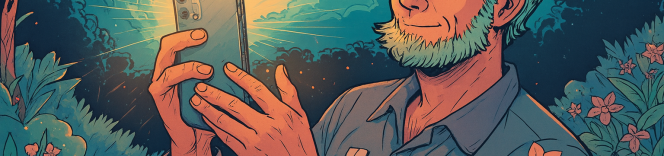
    The notification pops up on my phone: “Jason, we made a new memory reel for you.” I pause whatever I’m doing, probably something stressful involving deadlines or dishes, and feel that familiar flutter of excitement. What chapter of my life has Google decided to surprise me with today?

    I tap the notification, and suddenly I’m watching years of Father’s Day adventures unfold. It started accidentally—one Father’s Day trip to the Buffalo Zoo that somehow became our tradition. Instead of buying me something I didn’t really need, we chose experiences. Year after year, we’d visit a new aquarium or zoo.

    There’s my son at age three at the Erie Zoo, barely tall enough to see over the penguin exhibit barrier. The same kid at five at the Baltimore Aquarium, tentative but overjoyed as he touched a stingray for the first time. Then six at the Philadelphia Zoo, taking in the fact that there is a tube system where some of the big cats can walk overhead.

    Buffalo, Erie, Philadelphia, Baltimore, Charleston. We’d mapped Father’s Days across the Eastern Seaboard without ever planning it. So much time has passed since we started. My son has grown taller, lost teeth, found his voice. I’ve gotten balder, maybe a little softer around the edges. But there we are, year after year, choosing moments over things.

    We tell ourselves to create experiences instead of accumulating stuff, but just how important that choice is never really hits until you play it back. Here was the proof: a memory bank I didn’t even realize we were building, one Father’s Day adventure at a time.

    The emotions hit in waves. Pure joy at his excitement over feeding the stingrays, happy sadness watching his younger self discover jellyfish for the first time, overwhelming gratitude for every single trip we took. This ninety-second reel has become medicine for whatever current stress I’m carrying.

    And that’s when it hits me. My phone accidentally became my therapist.

    When Technology Gets It Right

    I never intended for Google Photos to become part of my self-care practice. Like most people, my wife and I take hundreds of photos without much thought, letting them pile up in digital storage. The idea of actually organizing or regularly looking through them feels overwhelming. Iƒt feels like thousands of images scattered across years of living.

    But then technology stepped in with an unexpected gift. These automated memory reels started appearing, curating my own life back to me in perfectly sized emotional portions. Not the entire overwhelming archive, just a gentle serving of “Remember this?”

    At first, I was skeptical. Another way for a tech company to keep me glued to my screen when I routinely looked for ways to escape. But as these memory notifications became part of my routine, I realized something profound was happening. Google’s algorithm had accidentally created something I never knew I needed: regular reminders of how blessed my life has been.

    The beauty is in the surprise element. I’m not seeking out specific photos when I’m feeling down. That can sometimes backfire, making me feel more nostalgic or sad. Instead, these curated moments arrive when I least expect them, like getting a text from an old friend who you haven’t heard from it a while.

    The Science of Digital Reminiscence

    Research shows that positive reminiscence (deliberately recalling happy memories) can significantly improve mood and reduce stress. When we engage with positive memories, our brains release dopamine and activate the same neural pathways associated with the original experience. We literally get to relive moments of joy.

    Visual memories are particularly powerful. Studies in cognitive psychology reveal that images trigger stronger emotional responses and more vivid recall than other types of memory cues. When we see a photo from a happy time, we don’t just remember the moment. We can almost feel ourselves back there.

    Nostalgia, once thought to be a purely melancholy emotion, is now understood to be a powerful mood regulator. Research from the University of Southampton shows that nostalgic reflection increases feelings of social connectedness, boosts self-esteem, and provides a sense of meaning and continuity in our lives.

    But what makes these digital memory reels especially effective is that they’re unexpected and brief. Unlike deliberately scrolling through old photos (which can sometimes lead to rumination or sadness), these automated highlights arrive as pleasant surprises and end before we get overwhelmed.

    The timing is often perfect too. These notifications tend to pop up during mundane moments, like waiting in line, taking a work break, sitting in traffic. Exactly when we need a little perspective on what really matters.

    The Emotional Range of Remembering

    Not every memory reel hits the same way. Some make me laugh out loud, like the diversity of my son’s increasingly elaborate Halloween costumes or the series of failed attempts to get a decent group photo at our destination wedding. Others bring that “happy sadness” I’ve come to appreciate… seeing my grandmother in photos from a few years back, her smile bright even when her health was declining.

    Then there are the reels that just make me feel deeply grateful. The random afternoon when we decided to try goat yoga. The collection of action shots over the years: chasing my son around the house in a homemade superhero costume, his skateboarding phase, catching up with friends we haven’t seen in some time. These aren’t momentous occasions, just evidence of a life filled with small adventures and genuine connection.

    What strikes me most is how these photos capture joy I might have forgotten. In the daily grind of parenting, working, and managing life, it’s easy to remember the stress and overlook the sweetness. But here’s photographic proof: we’ve actually had a lot of fun together.

    The reels remind me that while life hasn’t been all butterflies and rainbows, the good has consistently outweighed the tough times. The visual evidence is overwhelming. We’ve been blessed, again and again, in ways both big and small.

    Embracing Digital Self-Care

    I’ve learned to treat these memory notifications as legitimate self-care appointments. When that notification pops up, I pause whatever I’m doing and give it my full attention. No multitasking, no rushing through. I let myself feel whatever comes up. The giggles, the happy sadness, the overwhelming gratitude.

    Sometimes the timing feels almost magical. The day my social anxiety took over because I had to present during three different meetings, a reel appeared featuring peaceful moments from the trip my wife and I took to Newport, Rhode Island (mostly so I could try a lobster roll). When I was worried about whether I was doing enough as a parent, I was served a compilation of my son’s biggest smiles over the years.

    It’s become a form of mindfulness I never planned. These brief interruptions that pull me out of current anxiety and remind me of the bigger picture. They’re proof that I’ve been present for beautiful moments, that I’ve prioritized what matters, that love has been the consistent thread running through our ordinary days.

    The Memory Bank We Don’t Realize We’re Building

    Those Father’s Day zoo trips felt routine at the time. Just something we did because that’s what families do on special days. I wasn’t thinking about creating lasting memories or building traditions. I was just trying to make sure my son had a good day.

    But now I see what we were doing, and that was making deposits in a memory bank that would pay dividends years later. Every photo was evidence of intention, of showing up, of choosing joy even when life felt overwhelming.

    The beauty of these digital memory reels is that they reveal patterns we might not see in real time. They show us that we’ve been more intentional than we realized, more present than we felt, more blessed than our current mood might suggest.

    The Gift of Automated Gratitude

    In a world where technology often leaves us feeling more anxious and disconnected, these memory reels offer something different: automated gratitude practice. They’re gentle reminders to pause and appreciate not just where we are, but where we’ve been.

    They don’t require apps to download or habits to build. They just arrive, like grace, when we need them most.

    So, the next time you get one of those memory notifications, pause. Let yourself be surprised by your own joy. Look at the evidence of love in your life. The big moments and especially the small ones. Notice how much good has happened, even during life’s inevitable challenges.

    Your phone is holding more than photos. It’s holding proof of how blessed your life has been.

    And sometimes, that’s exactly the reminder we need to keep building that memory bank, one ordinary, beautiful day at a time.

  • Finding Balance Through the Full Spectrum of Emotion

    Finding Balance Through the Full Spectrum of Emotion

    “As a solid rock is not shaken by the wind, the wise are not shaken by praise or blame.” ~The Dhammapada, Verse 81

    Some moments lift you like moonlight. Others break you like a wave. I’ve lived through both—and I’ve come to believe that the way we move through these emotional thresholds defines who we become.

    By thresholds, I mean the turning points in our lives—experiences so vivid, painful, or awe-filled that they pull us out of our usual routines and bring us face to face with something real. Some come in silence, others with sound and light, but they all leave a mark. And they ask something of us.

    The Night the Frogs Were Singing

    Years ago, I was in San Ignacio, Baja California Sur—a small town nestled in the middle of a vast, harsh desert. But this desert hid a secret: a spring-fed river winding quietly through thick reeds and groves of towering palms.

    One night, I walked alone along the water. The full moon lit everything in silver. The town was asleep, but the frogs were wide awake—thousands of them—and their voices filled the night.

    It sounded like a million. A strong, unstoppable chorus rising into the sky, as if they were singing to the gods in heaven.

    Insects danced in the air like sparks. The river shimmered. I stood in the stillness, listening.

    And then, something in me lifted.

    My breath slowed. My thoughts stopped. I felt unbound—present, light, completely inside the moment.

    I felt like I could fly.

    Not in fantasy—but in my body. As if for one rare instant, the weight of everything had fallen away. I wasn’t watching the world. I was part of it. Connected to the frogs, the moonlight, the pulse of life itself.

    That was a threshold I crossed without knowing. Not a dramatic one, but sacred. A moment of wholeness so complete it continues to echo, years later.

    Not All Thresholds Are Joyful

    That night by the river was one edge of the spectrum. The other is something far harder.

    I recently read about a mother who lost her entire family in the span of a year. Her husband died unexpectedly. Then her son, in a car crash. Then, her only surviving daughter was swept away in the Texas floods.

    From a full home to unbearable silence—in just twelve months.

    I can’t imagine the depth of that grief. But I recognize it as a threshold too—a point from which there is no going back. Loss like that doesn’t just wound—it transforms. It alters the shape of time and identity. It demands a new way of living.

    And it reminds me: thresholds aren’t always moments we choose. Sometimes, they choose us.

    The Man in Ermita

    I also think of a man I used to see every day on a busy street corner in Ermita, Metro Manila. The intersection was chaotic—taxis, vendors, honking horns, kids weaving through traffic. And there, beside the 7-Eleven, was a man rolling back and forth on a small wooden board with wheels.

    He had no legs. His arms were short and deformed. That wooden platform was his only home, his only transportation, his only constant.

    He didn’t shout or beg loudly. He just moved. Quietly. Present. Enduring.

    And I often wondered: What are thresholds for him? What brings him joy? What pain does he carry that none of us see?

    His life taught me something. That some thresholds are lived every single day—without drama, without noise. Some are carved into the body. Into the street. Into the act of continuing on, no matter who notices.

    We each live on our own spectrum of experience. And his presence helped me recognize that my own joys and struggles don’t exist in isolation—they live alongside countless others, equally deep, equally human.

    The Emotional Spectrum We All Move Through

    These three stories—the night of the frogs, the mother’s loss, the man in Ermita—might seem unrelated. But they’re not.

    They’re all thresholds.

    • One is a threshold of awe.
    • One is a threshold of grief.
    • One is a threshold of silent resilience.

    They represent different points on the same emotional spectrum. And the deeper I reflect, the more I understand that we are all moving along that spectrum—back and forth, again and again.

    What Balance Really Means

    We’re often told to seek balance. But I don’t think balance means calm neutrality, or avoiding emotional extremes.

    To me, balance is the ability to stay grounded while being stretched. To remember joy even in sorrow. To hold stillness even when life is loud. To feel everything—and not shut down.

    Wisdom isn’t the absence of intensity. It’s the willingness to stay with whatever life brings—and keep walking.

    Writing has been my way of staying grounded.

    Therapy helped me find the words. But writing gave me a place to live them. It helps me remember what I’ve felt—and understand what it meant. It’s how I make peace with the past. It’s how I reach forward toward something whole.

    When I write, I return to that night in San Ignacio. I also return to the man in Ermita, and to the countless thresholds I’ve passed through quietly—some with joy, some with pain.

    Writing helps me stay with what is real, even when it’s hard. Especially when it’s hard.

    An Invitation to You

    Maybe you’ve had your own version of that river night—an unexpected moment of beauty or clarity. Or maybe you’re sitting with a threshold you didn’t choose—grief, fear, change, uncertainty. Maybe you’re surviving silently, like the man on the wooden board.

    Wherever you are on the spectrum, I want to say this: The thresholds we pass through don’t make us weaker. They shape us. They wake us up. They teach us presence—not perfection—if we choose to stay with our experience, even when it hurts.

    If you’re writing, reflecting, or simply breathing through it all—you’re already on the path.

    And that path will one day lead you to another threshold somewhere else on the spectrum. So stay open to each transformative moment, and let them shape you into someone more alive, more resilient, and more balanced.

  • Full Circle: Reclaiming the Me Who Felt Most Alive

    Full Circle: Reclaiming the Me Who Felt Most Alive

    “We shall not cease from exploration, and the end of all our exploring will be to arrive where we started and know the place for the first time.” ~T.S. Eliot

    In my early twenties, I packed a backpack and boarded a plane alone with a one-way ticket to Southeast Asia. It was a move that baffled my father, inspired my friends, and quietly terrified me.

    I was drawn by something I couldn’t fully articulate at the time: a craving for freedom, truth, and a kind of belonging I hadn’t yet known. What I didn’t realize then is that this two-year trip would imprint on me a version of myself I’d spend the next twenty years slowly forgetting, and then, almost by surprise, begin to reclaim.

    Three weeks into that trip, I found myself in Northern Thailand feeling completely lost. I wasn’t sightseeing like I “should” have been, or checking off cultural highlights. I felt aimless. Lonely. A bit ashamed that I wasn’t “making the most” of the experience.

    The structure I was used to (school, expectations, a tidy plan…) had fallen away. I felt unmoored, as if I’d made a huge mistake. Who was I to think I could just wander and have it mean something?

    And then I met Merrilee.

    She was older, solo, sun-wrinkled and wise—the kind of woman who carries stories in her skin.

    Over an afternoon spent talking at our quiet guesthouse, she helped me see something I hadn’t yet understood—that the point wasn’t to fill the time. The point was to be with myself. To let the lack of familiarity and structure teach me how to listen inward. To begin trusting my own rhythm and desire without external cues.

    The kind of freedom I’d dreamed of required discomfort first and a willingness to stop outsourcing my worth to what I was doing.

    That single conversation changed the entire arc of my trip. And it changed me. Forever.

    For the first time, I felt connected to myself not because I was achieving something, but because I was simply attuned. I moved at a pace that felt good. I made decisions from joy, not obligation. I stopped trying to prove anything. And in the middle of that season of self-connection, I met the man who would become my husband. A new chapter began rooted in love and partnership, and eventually, in motherhood.

    And slowly, without really realizing it, the version of me that woke up in Thailand began to dim.

    Over the years, I became a mama to two beautiful boys. I cultivated a stable career. I managed a household. I became, in many ways, the kind of adult we are told to strive for: organized, reliable, efficient, productive. I wore those traits like armor, and at times, even like a badge of honor. But beneath it, there was a soft ache.

    I had flashes of her—that younger, aligned me—the one who had danced through temples, laughed with strangers, trusted the moment. I saw her in photos. I reread journal entries and marveled at how whole I’d felt. But the distance between us seemed too wide. I didn’t resent the life I’d built. I just felt like I’d built it around everyone but me.

    Some seasons are shaped by who needs us and how we choose to show up. And when we decide to set aside our deepest longings for the sake of others, it can serve as a useful contrast.

    Maybe that soft ache was there to remind me that while raising children, tending to aging parents, or holding together the invisible threads of a household can offer deep meaning and purpose… it’s not the whole of me.

    Somewhere in my early forties, with my kids nearly grown and a job that no longer felt right, the stirring got stronger. Roaring and insistent.

    Only this time, it didn’t send me packing to the other side of the world. It sent me inward. And I was ready for it now. I had the capacity to respond.

    I began exploring new trainings. I started a side business that brought me alive in ways I hadn’t felt in years. I slowly reduced how much I was giving to my secure job to devote more time to the work that felt aligned with my soul. I was awakening again, but with responsibilities and relationships that complicated the path.

    Eventually, I knew it was time to leave my job entirely. It was a leap that, while intentional, shook me more than I expected.

    The weeks after submitting my resignation were not the liberating breath I’d anticipated. Instead, I felt untethered, afraid, and riddled with doubt. Who was I now? What if I failed? What if all of this was some naive midlife fantasy?

    Every structure I had leaned on—title, paycheck, certainty—was gone. I felt like I was falling. And then it hit me: I’d been here before.

    That lost, floating, what-the-hell-am-I-doing feeling? It was the exact same emotional terrain I’d walked through in Thailand. Only now, I had more to lose. The stakes were higher, so the fear was louder, but the lesson was ultimately the same.

    To let go of structure without losing myself. To trust the process of becoming before I had evidence of it all working out. To believe that flow, intuition, and joy are valid guides, even in business.

    This time, there was no Merrilee waiting for me on a bamboo veranda. But there was embodied memory. There was me. There was the version of me who had lived it once and come alive because of it. The gift of having that experience in my early twenties wasn’t just the adventure. It was the blueprint it gave me for how to find my way back when I felt lost.

    I didn’t have to figure it all out from scratch. I just had to remember who I was when I felt most alive. What she trusted. How she moved. What she believed.

    She didn’t need five-year plans or marketing funnels or perfect clarity. She needed space. And courage. And breath. She needed to like herself and to let that be enough.

    And so, I began letting that version of me take the lead again.

    Building a business, especially one rooted in healing, service, and soul, isn’t just about offers and strategy. It’s a spiritual path. It asks you to meet your edges, again and again. It confronts your conditioning. It stirs up your doubts. But it also calls forward your truest voice: the one that got quiet when you were busy being “good” and responsible and reliable.

    For years, I looked back on that time in Asia with a kind of reverence—a fond and distant memory of a life I couldn’t believe I was once brave enough to have lived. I never saw it as a departure from real life, but I did place it in a separate category, a luminous chapter that shaped me, but felt hard to access again.

    Now I see it more clearly. That moment was the original map of who I am when I’m not trying to be what the world wants. And now, in this middle chapter of life, I get to choose her again.

    Not by backpacking across the globe (though I admit that’s tempting), but by waking up each day and building a life, a business, a version of myself that’s led by truth, flow, and trust. It’s scarier now. But it’s also richer. Because I know what it feels like to come home to myself.

    And I know the ache of the contrast if I don’t.

    Maybe you’re reading this and feel like you’re standing at a similar threshold, untethered, uncertain, trying to trust the pull of something deeper.

    If so, let this be your Merrilee moment.

    The path might feel blurry. You might question whether you’re wasting time, or if you are foolish for wanting more.

    But what I continue to learn in new ways is that the process of returning to yourself and recentering your needs doesn’t always come with clarity. It often arrives with chaos. With fear. With silence. With the pain of letting go.

    But what’s waiting for you on the other side of the unraveling is a more vibrant you. And that person is so worth meeting again.

  • From Loss to Hope: How I Found Joy Again

    From Loss to Hope: How I Found Joy Again

    “Although the world is full of suffering, it is also full of the overcoming of it.” ~Helen Keller

    The phone call arrived like a silent explosion, shattering the ordinary hum of a Tuesday morning. My uncle was gone, suddenly, unexpectedly. Just a few months later, before the raw edges of that loss could even begin to soften, my mom followed. Her passing felt like a cruel echo, ripping open wounds that had barely begun to form scabs.

    I remember those months as a blur of black clothes, hushed voices, and an aching emptiness that permeated every corner of my life. Grief settled over me like a suffocating blanket, heavy and constant. It wasn’t just the pain of losing them; it was the abrupt shift in the landscape of my entire world.

    My cousin, my uncle’s only child, was just twenty-three. He came to live with me, utterly adrift. He knew nothing about managing a household, budgeting, or even basic self-care. In the fog of my own sorrow, I found myself guiding him through the mundane tasks of adulting, a daily lesson in how to simply exist when your world has crumbled.

    Those early days were a testament to moving forward on autopilot. Each step felt like wading through thick mud. There were moments when the weight of it all seemed insurmountable, when the idea of ever feeling lighthearted again felt like a distant, impossible dream. My heart was a constant ache, and laughter felt like a betrayal.

    Then, the losses kept coming. A couple of other beloved family members departed within months, each passing a fresh cut on an already bruised soul. It felt like the universe was testing my capacity for heartbreak, pushing me to the absolute edge of what I believed I could endure. I was convinced that happiness, true, unburdened joy, was simply no longer available to me.

    For a long time, I resided in that broken space. My days were functional, but my spirit felt dormant, like a hibernating animal.

    I went through the motions, caring for my cousin, managing responsibilities, but internally, I was convinced my capacity for joy had been irrevocably damaged. The idea of embracing happiness felt disloyal to the people I had lost.

    One crisp morning, standing by the kitchen window, I noticed the way the light hit the dew on a spiderweb. It was a fleeting, unremarkable moment, yet for a split second, a tiny flicker of something akin to peace, even beauty, stirred within me. It startled me, like catching my own reflection in a darkened room. That flicker was a subtle reminder that even in the deepest shadows, light still existed.

    This wasn’t a sudden epiphany or a miraculous cure. It was a slow, deliberate crawl out of the emotional abyss. I began to understand that healing wasn’t about erasing the pain, but about learning to carry it differently. It was about allowing grief its space while simultaneously creating new space for life to bloom again.

    The first step was simply acknowledging the darkness without letting it consume me.

    I stopped fighting the waves of sadness when they came, allowing them to wash over me, knowing they would eventually recede. This acceptance was pivotal; it transformed my internal struggle from a battle into a painful, but necessary, process.

    I also learned the profound power of small, intentional acts. This wasn’t about grand gestures of self-care. It was about consciously noticing the warmth of a morning cup of coffee, the texture of a soft blanket, the simple comfort of a familiar song. These tiny moments, woven into the fabric of daily life, began to accumulate, like individual threads forming a stronger tapestry.

    Another crucial insight was the importance of letting go of the “shoulds.” There’s no right or wrong way to grieve, and no timeline for healing. I stopped judging my feelings, stopped comparing my progress to an imaginary standard. This liberation from self-imposed pressure created room for genuine recovery, allowing me to be exactly where I was in my journey.

    I started to actively seek out moments of connection. This meant leaning on the friends and remaining family who offered support, even when I felt too exhausted to reciprocate. It was about sharing stories, sometimes tearful, sometimes unexpectedly funny, that honored those we had lost and reminded me that love, even in absence, still binds us.

    Embracing vulnerability became a strength. Allowing myself to be seen in my brokenness, to admit when I was struggling, paradoxically made me feel more grounded. It revealed the immense capacity for compassion that exists in others, and in myself. This openness fostered deeper connections, which became vital anchors in my recovery.

    The concept of “joy” also transformed. It wasn’t about constant euphoria but about finding contentment, peace, and even occasional bursts of laughter amidst the lingering sorrow.

    It became less about an absence of pain and more about a presence of life, in all its complex beauty. I learned that joy is not a betrayal of grief but a testament to the enduring power of the human spirit.

    Ultimately, my journey taught me that resilience isn’t about being tough or never falling. It’s about being tender enough to feel, courageous enough to keep seeking light, and brave enough to get back up, even when every fiber of your being wants to stay down. It’s about collecting the pieces of your broken heart and finding a way to make it beat again, perhaps even stronger and more appreciative of every precious moment.

    I now stand in a place where I truly believe I am stronger and happier than ever before. Not despite the pain, but because of the profound lessons it taught me.

    Every challenging step, every tear shed, every quiet moment of discovery contributed to the person I am today—a little wiser, a little braver, and with a way better story to tell.

    My hope is that anyone facing similar darkness knows that the path back to joy is always possible, and that your story, too, holds immense power and purpose.

  • From Burnout to Bliss: The Beauty of Therapeutic Art

    From Burnout to Bliss: The Beauty of Therapeutic Art

    “It takes courage to say yes to rest and play in a culture where exhaustion is seen as a status symbol.” ~Brené Brown

    “You have burnout.” I listened to these three words in a trance, said thank you, and got off the call with the doctor.

    Part of me had known.

    The endless days I spent in bed staring at the ceiling with no motivation to do anything. The inability to focus on my screen. And the sudden bursts of tears when I saw yet another meeting pop up in my calendar.

    I knew all of this wasn’t normal. That something was going wrong.

    But another part of me was in disbelief. Burnout?! How can I be burned out if I’m doing what I love?

    Just three years ago, I co-founded a company to help chronic disease patients. I was here to change the world, to help others, to build something meaningful.

    How is it possible to burn out following your own dream? That’s something that just happens to miserable people in their nine-to-five jobs.

    As I dove deeper, I learned how wrong I was.

    It’s actually much more common to burn out when you’re running your own company than when you’re an employee.

    The financial rollercoaster, the rejections along the way, the countless weekends spent working without ever really taking a break—we are not made for that.

    No matter if we’re following our own dream or someone else’s.

    So, like the perfectionist and hustler I was, I thought: Let’s fix this fast so I can get back to feeling joy for what I’m building.

    I read the self-help books, did talk therapy, started mindset coaching, tried different productivity techniques, but the void inside me, the demotivation, the inability to feel joy—none of it went away.

    And underneath all of this was a crippling fear: What if I’ll only get healthy if I leave everything I’ve built behind?

    The turning point came one day, out of the blue.

    I was sitting at the beach watching the sunset, and as I watched the sun setting in its glamorous colors, I heard a voice inside my head say, “Go and buy paint.” At first, I dismissed it, but it got louder and louder until it was practically screaming: “GO AND BUY PAINT.”

    And so, I did. I went to the nearest dollar store, bought cheap acrylics, a small canvas, and a few brushes.

    At home, I put a plastic bag on my bed, and without much thought, I started painting.

    The first brushstroke hit me deeply. I felt my body and heart exhale: finally, you have come home!

    I painted for hours. And when I finished, I was exhausted, but it was a good exhaustion, like after a long hike, when you’re filled with a quiet love inside.

    For the first time in months, I fell into a deep, long sleep. When I woke up the next afternoon, the void didn’t feel so big anymore.

    I felt… I couldn’t quite describe it at first. Until I realized: I felt happy.

    I spent the next months painting every single day.

    I learned different techniques, invented my own, and with each drawing, I left behind traces of overworking, criticism, judgment, perfectionism, and self-pressure.

    After a while, I got curious. I wanted to understand what the art had actually done to me. Was it possible to heal burnout “just” by painting?

    So I went down the rabbit hole: studying, learning, experimenting. The deeper I went, the more I realized it wasn’t really about the art at all.

    The art was just the tool. A tool to create space to feel, to process, to change the internal narrative.

    Maybe you know what I mean. Maybe you’re completely drained and exhausted by your work, whether in a demanding job or in your own business, and you’re questioning why this is happening to you. Maybe you already know it can’t go on like this, but you feel trapped in the situation you’re in.

    If so, here are a few things that helped me in my process using art and that might help you, too.

    And no, you don’t need fancy materials or specific techniques.

    The type of art I found most healing is called therapeutic art. It’s not about the outcome; it’s about the process. The paintings don’t have to be pretty. Sometimes they’re just black scribbles, circles, undefined shapes. It’s all about expressing yourself onto the paper.

    So here they are—the five lessons that helped me in my quest to heal from burnout.

    1. Connect to your creator self.

    Your creator self is the part of you that exists beyond the roles, responsibilities, and pressure of your work. The part of you that’s here simply to create and express.

    Burnout disconnects us from that part of ourselves. Through mindful painting, we can make space to turn inward, explore freely, and reclaim a sense of agency over our own experience.

    When you use art therapeutically, there’s no need to prove anything or achieve a result. It’s about being present in the moment, feeling your hands move across the paper, and letting yourself just be.

    That’s what helps reconnect you to your sense of aliveness and to the real you beneath all the noise.

    2. Release stress from your body.

    Burnout and overworking aren’t just mindset problems. All the stress, all the emotions you chose not to feel along the way, get stored in your body.

    Your body literally goes into survival mode, and no amount of thinking or talking will fix what’s happening in your system.

    Therapeutic art is a mind-body practice that helps process tension, emotions, traumas, and stress that have been stored for years.

    The act of painting, moving your hands, and letting emotions flow through color onto the paper allows your body to exhale and relax. It gives your system the break it has been screaming for.

    3. Rewrite the success story running in your subconscious.

    Most of what drives our actions doesn’t come from conscious thought, it comes from the subconscious, which shapes 90–95% of how we think, feel, and act.

    This is where all the hidden beliefs live that drive us into overwork and burnout: “Rest is lazy,” “If I slow down, I’ll fail,” “Success has to be hard.”

    Even if you logically know these aren’t true, your subconscious doesn’t. It keeps running on these old programs.

    Through painting freely and intuitively, you can project these thought patterns onto the paper. You may catch yourself wanting to control the outcome, judging the process, or feeling anxious when things get messy.

    And in those moments, you have the chance to soften, challenge the old stories, and show your system that there’s another way to live and create.

    4. Let go of what’s no longer working.

    Burnout is a sign that something you’ve been carrying—a habit, a role, a belief, an idea—is no longer aligned with your highest self.

    Art gives you a safe space to practice letting go. On the canvas, you can release control, let things get messy, and allow what wants to emerge to show up without needing to fix or force it.

    This mirrors what we need to do in life: loosen the grip, experiment, and trust the process. When you practice surrender in small ways through art, it becomes easier to loosen your grip on the bigger things draining you.

    5. Rediscover your joy again.

    One of the most painful things about burnout is losing your sense of joy. Everything becomes dull, gray, and heavy.

    Therapeutic art invites you back to joy without a goal. It’s not about making something pretty or useful. It’s about playing with colors, being fully present, and simply observing yourself.

    When you paint just for the experience, you remind your system what it feels like to have fun and be here without needing to earn anything.

    And that, in itself, is a powerful way to heal.

    Burnout doesn’t mean you’ve failed or are broken. It’s often a sign that something in your life or in you is ready to change. For me, painting became the safe and joyful space back to myself.

    The best thing is that you don’t need to be an artist to use painting in your healing process.

    What matters is making space to listen inward, to let your body exhale, and to soften the old stories you’ve been carrying.

    And when you do, you might be surprised at what’s still alive inside you, just waiting to come home.

  • A Case for Joy in a Monetized World

    A Case for Joy in a Monetized World

    “Not everything that can be counted counts, and not everything that counts can be counted.” ~William Bruce Cameron

    My gardener and I were talking the other day—his English broken, my Spanish worse—but we found a way to connect.

    He told me about his eight-year-old son, a bright, joyful kid who loves baseball. The boy wants to play. His mother wants him in tutoring. And somewhere in that gap, a bigger question emerged: what matters more—discipline or joy?

    I didn’t plan to give advice, but it came out anyway. “Let him play ball,” I said. “Let him be part of a team, fall in love with something, feel what it’s like to give yourself to a game you care about.” Maybe there’s room for both—tutoring on weekends or part-time. But I couldn’t shake the feeling that too often, we push kids toward what’s useful before they know what they love.

    That conversation stayed with me because it reflects something bigger and more troubling: almost everything in life now feels monetized.

    From birth to death, we are priced and processed. Pregnancy is a billing code. Daycare is a business. College is debt. Even death has been streamlined into packages—premium, standard, economy.

    Want to talk to a therapist? That’ll cost you. Want clean food? That’s extra. A safe place to live? Depends on your credit score. Even our time with loved ones feels rationed by work schedules and productivity apps. There’s a price tag on presence.

    The monetization of everything is more than just an economic system—it’s a cultural atmosphere. It creeps in quietly, turning art into content, friendships into followers, and values into branding strategies. We trade attention for advertising, care for convenience. And as the world becomes more globalized, centralized, and digitized, this way of thinking spreads—efficient, scalable, and soul-numbing.

    But there’s something that can’t be priced or faked: flow.

    Flow is that immersive state where effort disappears, time softens, and we’re fully absorbed in what we’re doing. It’s the feeling of being completely alive and focused—not because we’re chasing a reward, but because we’re in tune with the task itself.

    I remember pitching in Little League when I was ten. I wasn’t the best, but for one brief inning, everything clicked. I stopped thinking. The ball moved like it was part of me. I wasn’t trying to impress anyone—I was just there, inside the game. That was flow. And I’ve spent much of my life chasing that feeling through music, writing, teaching.

    I’ve spent most of my life as a teacher, filmmaker, and writer. Not because it made me rich—it didn’t—but because it gave me something to live for. Now, at seventy, I help care for my 96-year-old mother, still trying to finish my life’s work with little to show for it in the bank. But the work still matters. So does she.

    My mother’s caregivers—mostly women of color—show up every day. They help her eat, dress, and smile. They aren’t paid nearly enough, but they move through their days with compassion, grace, and humor. Their labor doesn’t fit into a tidy spreadsheet of profit. And yet it holds the world together.

    I wonder: What happens to a society that forgets how to value the things that can’t be monetized?

    We know something’s wrong, but we don’t know what to do. We still need to pay rent, buy groceries, find a way to survive in a system that rewards efficiency over depth, image over presence. There’s no clear answer. Just tension, quiet resistance, and sometimes—if we’re lucky—a moment of clarity.

    So I say again: let the boy play. Not to win, or to be the star, but to feel the joy of running with others, of belonging to a team, of laughing, working hard, and learning—together. Let him build friendships that might last a lifetime. Let him feel what it means to be part of something larger than himself, where improvement matters more than trophies.

    And maybe, just maybe, let him find flow. On the field, or even in tutoring, if the conditions are right—if the learning is alive and the focus is real. Because flow is the goal, whether in a game or a classroom. That’s where confidence is born. That’s where joy lives.

    Of course, I know Little League can be its own kind of heartbreak. When the game becomes about dominance, when adults project their own regrets or insecurities onto the boys, when coaches forget it’s supposed to be fun—it can damage the very spirit it’s meant to nourish.

    That’s why it takes the right coach. One who listens. One who knows it’s a boy’s world for a short while, and that this game, at its best, teaches how to care, to lose with grace, to try again, and to trust others.

    I told his father all this in our clumsy mix of English and Spanish. I told him I hoped his son gets to play. Not because it will lead to anything measurable. But because it already is something valuable.

    Sometimes, the best thing we can do is willingly open the door—and let the players play.

  • Magic in the Ordinary: Finding Glimmers and Hope in Everyday Life

    Magic in the Ordinary: Finding Glimmers and Hope in Everyday Life

    “If today gets difficult, remember the smell of coffee, the way sunlight bounces off a window, the sound of your favorite person’s laugh, the feeling when a song you love comes on, the color of the sky at dusk, and that we are here to take care of each other.” ~Nanea Hoffman

    The beach breeze brushed against my skin. I felt the warmth from the sun, and I could hear the crashing waves and wild shrieking laughter of my toddlers.

    I looked down at my perfect ten-month-old with his adorable chubby cheeks, snoring softly in my arms. My chest ached as if my heart physically hurt from the amount of love I felt toward my children in that moment, and my eyes shimmered with tears at the force of that love. “This was a glimmer,” I thought.

    Many people are familiar with the idea of triggers. Triggers are any scenarios or stimuli that stir up negative emotions, which are usually rooted in a past hurt or trauma.

    Less familiar to most people is the concept of glimmers. Glimmers are the opposite of triggers. They’re little moments that spark calm and connection. The idea was originally introduced by Deb Dana, who is a prominent figure in the application of Polyvagal Theory, which is a scientific framework for understanding the nervous system.

    We are less inclined to look for glimmers than triggers, and the reason is evolutionary.

    In the past, our caveperson brains benefited more from remembering the time we ate poison berries or the places that hungry lions lurked than from savoring a beautiful sunset. But most of us are buying our groceries at farmers’ markets and grocery stores now—and don’t have to worry about lions, so we can practice changing our brains.

    There’s an idea in psychology that “what we water will grow” in reference to what thoughts we attend to. The more we practice noticing the positives, the more naturally our brains will make and strengthen those pathways.

    I’m a mental health therapist, and I learned about glimmers through a continuing education course. At the time, I was struggling with my own anxiety. I had feelings of guilt show up as I guided my clients through their mental health challenges while still learning how to manage my own.

    When I have a moment to take perspective, though, I can show myself grace as a mom of a three-year-old, a two-year-old, and a ten-month-old, who happened to be a miraculous little surprise.

    With three small humans, two dogs, and a fish, life is loud, messy, chaotic, and beautiful. Balancing work, house chores, and the needs of others can feel exhausting and overwhelming.

    I don’t have hours to do all the self-care activities that you are “supposed to” do in a day—journal, exercise, meditate. But glimmers? They fit into my life.

    I love Harry Potter, fantasy, and magic. I like to look at glimmers as more than calm and connection and more like sparkly little moments in our ordinary life. Glimmers can be sensory—a beautiful sunset, a warm breeze, the flicker of a candle, the scent of lavender, or the first sip of a really delicious coffee.

    They can be internal—a deep exhale, a comforting memory, a moment of self-compassion, or being proud of an accomplishment.

    They can be a social connection—a long hug from your partner, a rambling story from your three-year-old, or hearing your two-year-old tell his sister, “I love you, Evy.”

    The idea of glimmers reminds me a bit of the Danish concept of hygge. Hygge’s closest English translation is a concept of coziness and contentment. I love the idea of connecting these two ideas because it would seem to me that engaging in hygge practices would set you up to have even more glimmers.

    Creating more hygge in your life would include whatever feels cozy for you. For me, it’s big comfy blankets, candlelight, a warm drink, and clothing with the softest fabrics. The values behind hygge are a sense of presence, slowness, and connection. Hygge is about setting an environment to invite glimmers in.

    These days, I collect glimmers like fireflies in a jar. They’re nothing fancy, but they’re tiny moments that reassure me that I’m okay. They bring me home inside my own body. There is magic in the ordinary, after all. You just have to look for it.

  • Redefining Extraordinary: How I Found Joy in the Everyday

    Redefining Extraordinary: How I Found Joy in the Everyday

    “Joy comes to us in moments—ordinary moments. We risk missing out on joy when we get too busy chasing down the extraordinary.” ~Brené Brown

    I started going to my local gym a few months ago to prepare for a strenuous hike.

    The gym is a tiny place, located on a quiet street in the middle of a small town. It doesn’t have any fancy accommodations or instructors leading classes. It doesn’t even have showers or lockers to store my bag.

    It does have a few treadmills, free weights, weight machines, and regulars who can lift really dang heavy weights.

    Now, I’m not someone you would usually find in a gym. Let me put this in context: my lowest grade in school was in physical education. I quickly grasped long division and read complex stories, but I probably still could not get the volleyball over the net.

    As you can imagine, the gym was not a fun place for me.

    I imagined everyone silently judging me. I worried about what to wear. I was so clumsy from nerves that I even had trouble opening the gym door.

    The regulars, mostly men, seemed huge and intimidating. I felt small and weak.

    I stayed on the treadmill in the corner for six weeks. Headphones on. Head down. “I don’t belong” on repeat in my mind.

    It was a battle with myself to get out of the car every time I visited, but I somehow found the courage to make it to the treadmill. I imagined the joy I would feel when I finally made it to the top of the mountain.

    Finally, after six long weeks of walking on an incline, my husband and I flew across the country to complete the hike. It was the longest distance and highest elevation (and quickest descent) I had ever experienced.

    I honestly thought I wasn’t going to make it in some parts. On two occasions, I had to sit down to avoid fainting.

    My muscles screamed. I panted and wheezed and sweated. But we climbed.

    And we climbed.

    And then, when I thought we had reached the top… we unfortunately had to climb some more.

    Finally, after several hours, we made it to the end of the trail. The summit opened up around us, and I instantly forgot my exhaustion. Every minute of struggle felt worth it for what stood before us.

    It was a bright, clear day, and miles of rocky peaks were visible. A blue lake twinkled below. The sun reflected off a small glacier to my right. Everything was still and, even with other hikers around, incredibly quiet.

    My husband and I spoke in whispers as we ate our peanut butter sandwiches, and I realized I had flown across the country and hiked a mountain in an intentional search for extraordinary.

    If I am really honest with myself, I’ve been searching for extraordinary my entire life.

    I know I am not the only one. Many of us high-achieving perfectionists often find ourselves frustrated. Not only do we want to experience extraordinary; we also want to be extraordinary. We have an innate desire to live a life of contribution and meaning.

    We often feel like we are not doing enough. We feel we should be doing more. We think we need to be there instead of celebrating where we are right now in this moment. And even when we do accomplish something, it often doesn’t feel like enough for long. Our constant striving reinforces the belief that we ourselves are not enough unless we’re achieving something big.

    This desire serves us well. We are individuals known for our ability to get things done and make an impact on those around us; yet we can be so forward focused that the right now can feel underwhelming and, well—for lack of a better word—quite ordinary.

    Lately, I’ve held these beliefs under a microscope and really examined their hold on me. What makes a moment extraordinary? Do I really need a product, a summit, for the moment to have meaning? How many people must I impact before my life “counts?”

    I’ve discovered extraordinary moments are like the summit of my hike, which also means they are fleeting. It is not long before your shins are killing you as you make the steep descent. It is not long before the extraordinary moment becomes nothing more than a memory and, on occasion, a beautiful photo.

    I am realizing that maybe the extraordinary doesn’t have to be limited to the peak. Perhaps it can also be found in the hike. Maybe it was in the moments I gasped for breath. Maybe it was even in the mundane gym sessions I completed in the weeks leading up to the hike.

    Those moments pushed me outside my comfort zone and allowed me to grow stronger. Those gym sessions prepared me so I could show up in the moments of the hike where it got really hard. Isn’t that, in itself, pretty extraordinary?

    I have returned to my local gym. Only now, I have moved from the treadmill in the corner.

    Now, several times a week, you will find me with a barbell in my hands. You will see me celebrating incremental growth—a few additional reps, a bit more weight, or maybe even just celebrating the fact that I showed up today despite my fear.

    In a way, I guess the quest for the extraordinary has led me to appreciate these moments of ordinary. I am finding myself appreciating consistency and routine. I find myself appreciating incremental progress over the huge gains.

    That’s not to say that I don’t still chase extraordinary. In fact, I have a trip planned in a few short weeks to find views like I have never seen and to push myself in new ways. I am sure it will be extraordinary.

    Yet, I also am starting to find joy in the small, everyday tasks. I am starting to see meaning and purpose infused in every action. I’m now on a quest to appreciate just how extraordinary the ordinary can be.

  • 365 Days of Wonder: The Magic of Starting an Awe Journal

    365 Days of Wonder: The Magic of Starting an Awe Journal

    The news: everything is bad.
    Poets: okay, but what if everything is bad and we still fall in love with the moon and learn something from the flowers. ~Nikita Gill

    My dad died when I was thirty-one. I wasn’t a child but barely felt like an adult. He had reached retirement, but only just. Mary Oliver got it right when she wrote, “Doesn’t everything die at last, and too soon?”

    A few months later, I pulled myself out the door and off to work. The December weather and my heart were both raw. Then I saw it: a single rosebud on a ragged bush.

    I laughed aloud. A rose blooming in winter? And then I started to cry—for the wondrous absurdity of a tiny, lovely thing proclaiming its place in a dark world.

    This pink bud did not make things “all better.” And yet, for a moment, I remembered that my heart was capable of feeling more than grief. It had space for wonder and delight.

    I have spent the last three years studying the emotion of awe. I could share studies about how experiencing wonder makes us more generous, humble, and curious. I’ve written a whole book on the emotional, psychological, and cognitive benefits of this feeling.

    But here’s one thing I really love about this thoroughly human emotion: awe doesn’t require anything from us but our attention. We don’t have to do anything to feel awe. We don’t have to be anything we are not. We just have to show up in the world, eyes and ears open.

    When researchers ask people around the world to describe a moment when they experienced awe, they often point to ordinary moments. A piece of music that brought tears to their eyes. A stranger helping someone in need. A blooming cherry blossom tree. The smell of the earth after the rain. Holding someone’s hand in their final days.

    This year, I made a resolution to keep an awe diary. I call it “365 Days of Wonder.” I’m drawing inspiration from my late grandmother. She kept a daily diary for over fifty years, and most of her entries are only one or two sentences. Taken together, these micro-entries paint a rich picture of the rhythm of her years.

    So I feel no pressure to write a long journal entry each day. Just a sentence or two about something I saw, heard, tasted, smelled, or learned about that day that made me say, “Oh wow.”

    It’s now mid-March, and I have written seventy-seven entries. Can I share a few of them?

    Day 9:

    Listening to President Carter’s funeral, I was touched by this reflection from his grandson, Jason Carter: “In my forty-nine years, I never perceived a difference between his public face and his private one. He was the same person. For me, that’s the definition of integrity.”

    Day 27:

    Last night I randomly grabbed some old fortune cookies before driving home a group of teenagers. “Here, check out your fortunes for the week,” I said. The first teen read, “You will be surrounded by the love and laughter of good friends. Ha! Well, that one already came true.”

    Day 34:

    While on a morning walk, I got a text from a friend. She had woken up to the sound of a neighbor shoveling her driveway—a reminder, she wrote, that there are “good people everywhere.”

    Day 37:

    A beautiful family friend died today. She was ninety-five, and I remember when—at nearly eighty—she spotted our family across the beach and ran full throttle to greet us, with a hand atop her head to keep her sunhat from blowing away. I want to age like that.

    Day 38:

    I brought Humfrid the Octopus with me on a school visit today. At the end of my presentation, a kindergarten sidled up: “Can Humfrid give me a hug?” I replied, “With eight arms, he can give you a quadruple hug!”

    Day 41:

    Finding a moment of wonder was harder today. So this afternoon while driving, I tried to keep my senses open. And almost instantly, I got stuck behind a school bus.

    But, but, but . . . while stopped, I noticed a border collie sitting at attention. The moment his teenage person stepped off the bus, he bolted down the long driveway and danced happy circles around his kid.

    Day 42:

    It was fourteen degrees when I took the dog out this morning, but the dawn was full of birdsong. In a month, the migrating birds will start returning—but I’m so grateful to the hardy little birds who stick around all winter.

    Day 62:

    I backed into a car last night in a small, dark parking lot. Tears. I couldn’t find the owner, so I left a note with my info and contrition. The owner texted me later, we shared all pertinent insurance details, and then he wrote this:

    “The car is a car. They make thousands, if not millions, of them, and it’s no good for me to be angry because of an accident. Things happen. Better energy with happiness and kindness. Hope you have a lovely day.”

    Day 65:

    I came home late from a meeting last night. My thirteen-year-old was still up—writing heartfelt thank-you notes to people who had supported a service project she had helped organize.

    Day 73:

    Took my dog to be groomed. While he ran around the groomer’s backyard with her pups, she showed me an envy-inducing “She Shed” that her dad built for her last year. Mind you that she is my age and he is in his 70s. She got teary and said, “He’s the best man I’ve ever known. I’m so lucky.”

    Day 74:

    I didn’t need my Merlin app to identify woodpeckers today. At least three were rattling the neighborhood at dawn with their hammering. In other news, I heard my first red-winged blackbird of the season.

    Day 76:

    I wasn’t sure whether my youngest still believed in leprechaun magic and did the usual low-key-but-fun mischief around the house after the kids went to bed. When he came down the stairs this morning, he broke into a huge grin and whispered to me, “You did a good job this year, Mom!” And there it is. Another kind of magic.

    Seeking out wonder has become a habit. I find myself looking up when I go out to walk the dog, paying more attention to good news in my doom scrolling, and pausing to listen when I hear something lovely. Like finding that rose on a December day, these moments of wonder don’t fix what hurts. But they whisper each day, “This world is hard. And this world is so, so wonderful.”

  • Why You’re Not Happy (Even If Life Looks Fine)

    Why You’re Not Happy (Even If Life Looks Fine)

    Do you sometimes see people running around enjoying life and wonder what you’re missing? Sometimes I used to think I must be a horrible person. I had so many things going for me, and I still couldn’t be happy. I would ask myself, is there something wrong with me? Am I a narcissist?

    Then sometimes I would decide I was just going to be happy. I would fake it until I made it and just accept that’s who I was. But it wouldn’t take long for me to feel overwhelmingly depressed.

    I had a little dark hole that would constantly pull at me, and I didn’t have the energy to keep ignoring it. My attempts to do so just made it scream louder, and then I really was in a mess. This, of course, made me feel worse because it would remind me that I must be crazy.

    As I worked through my healing journey, I discovered there are three key reasons why we can’t just muscle up and be happy. We need to work through these three obstacles to move from just surviving and having moments of happiness to thriving and living a life full of joy and inspiration. To living a life where we love who we are and what we are doing and have hope for the future.

    Life is never perfect, but it sure is a lot more enjoyable and fun when we love, enjoy, and fully experience the present moments we are in.

    So what are these obstacles? And what strategies can you use to work through them?

    1. Validate Past Experiences

    When you don’t fully validate and process painful past experiences, the energy of those experiences gets trapped and contained within your body.

    It takes consistent and continual emotional energy to keep the walls around those experiences high and the energy within contained. The energy and emotion inside are deep and strong, and to keep these feelings away from our consciousness. we can’t allow ourselves to experience any deep or strong feelings, even the good ones.

    Allowing yourself to pull down these walls and grieve all the deep and strong feelings inside will free your emotional energy to feel deep and strong happy feelings too.

    For me, this meant feeling and processing the sexual abuse I endured as a child.

    For years I convinced myself that I was fine and that it happens to almost everyone. I tried to minimize my experience and leave it in the past. The walls I had built to keep all the grief and pain of those experiences out of my conscious daily awareness drained me and prevented me from feeling life in real time. I was guarded, with very shallow access to my feelings.

    No one wants to go back and work through the pain of the past, but I discovered that doing grief work with my therapist allowed me to truly let go of the pain and thrive in the present.

    2. Let Go of the Need for Control

    When you’ve been hurt in the past, it is normal to want to curate a life where you can’t get hurt again. We create a sense of safety by ensuring our life is as predictable as possible. Any time someone in our circle acts in a way that is outside our control, we ensure they “get back in line” so we feel safe.

    For example, if your partner doesn’t immediately return your text, you might get upset and lash out about how disrespectful he is being. If your kids don’t seem to be as concerned about their grades as you think they should be, you might panic and shame them, saying they will be stuck working in fast food restaurants for the rest of their lives. We want everyone to act as we think they “should,” so our world feels nice and safe and predictable.

    Zoom out and look at this scenario… Could it be any more boring? No wonder it’s impossible to feel true joy and happiness. Joy and happiness come from the ability to be spontaneous, light, free, and unpredictable.

    I think a lot of people mistake feeling safe for feeling happy. Being in a constant search for safety keeps us in survival mode. Knowing you are safe with yourself no matter what allows you to move out of survival and into a higher consciousness that brings joy, pleasure… and happiness.

    It is true that many of us have very real pain from the past, and it is perfectly normal to want to protect ourselves from feeling that pain again by attempting to curate a life we can fully control. This is an unconscious decision we make out of self-protection.

    Choose to make the conscious decision to let go of control. Trust that you now have all the resources within yourself to feel safe, no matter what happens. Releasing the need to control will bring you the ability to feel joy, pleasure, and fun again.

    This one was difficult for me and took a long time to integrate. Because of my abusive childhood experiences, I overcompensated for my feelings of worthlessness and lack of safety with a drive for success and perfectionism to try to control how others perceived me.

    If my co-worker wasn’t pulling her weight, I would stay late and work weekends to ensure the work was done, and done well. If my husband wouldn’t spend time with me or plan dates, I would plan dates and put all the reservations in his name so it looked like he was investing in me and our relationship. If my kids were not interested in wearing outfits that I thought would make our family look perfect, I would bribe them with candy so we could look good and put together as a family.

    I thought that making myself and my family look like we had it together meant that we did, and we would therefore be happy. Man, this couldn’t be further from the truth, and it actually drove not just myself but everyone in the family system in the opposite direction.

    No one likes to be manipulated, and even if we can’t exactly identify that’s what is happening, we feel it. Honestly, I had a bit of an identity crisis as I let go of how I wanted life to look and embraced living and feeling life in real time. What I can say is that since I’ve let go of control, life has been full of more peace and joy than I knew possible.

    3. Look for Happiness

    What we look for, we will find. There is a reason we constantly hear people talk about gratitude. When we look for things we’re grateful for, things we enjoy or love, we create more of those things in our lives. We begin to see how much joy and happiness we already have.

    We so often completely overlook the goodness that’s all around us because we are preconditioned to see and experience all the things that are going wrong.

    This third step is caused by not working through the first two. When we haven’t validated our past painful experiences, we look for validation in all our current painful experiences.

    It’s like those experiences keep haunting us until we take the time to turn around and look at them. They cloud our ability to see the happiness we already have all around us. We can’t experience the innocence and joy in our children. Nor can we accept the love and connection our friends want to offer us or appreciate all the amazing things we are doing well at work.

    When we are stuck in the need for control, we look for all future outcomes that will help us to stay safe instead of looking for all the joy and pleasure that is already in our life. We don’t have enough bandwidth to do both, at least not all at once; so, for example, if we spend all our time subconsciously looking for ways someone else might hurt or abandon us, then we don’t have the energy left to look for joy and pleasure in our relationships.

    One day I had to make a choice. I decided I had had enough of being tired, frustrated, and miserable. I knew it would take a while for my circumstances to change, but that didn’t mean I had to stay stuck and feel isolated, frustrated, and lonely.

    I made the hard choice to look for happiness. At first, I would journal things I found happiness in, and over time it became more subconscious than conscious. It also helped to talk about it with a good friend, as we both challenged each other in looking for happiness.

    Sometimes I still struggle. If I haven’t been taking care of myself, this one is the first to slip. I start to slide back into an old pattern of looking for how life is screwing me over. I know that I’m better able to keep my mindset in happiness when I engage in self-care as often as possible.

    If enough is enough and you are ready to move on from feeling like you are just surviving life, implement the following three strategies to overcome the obstacles to joy.

    First, start journaling or processing your feelings about past experiences. It could be a good idea to do this step with a professional, depending on what you have been through.

    Next, start identifying how much control you have over your life and the people around you and see where you can loosen up the reins a little.

    I can almost hear you saying back to me, “But everything will fall apart if I let go!” Let it fall apart. You don’t want a partner and kids who live only to make you satisfied and “happy.” Let life get a little messy. They (and you) will be so much happier if they just get to be themselves, make mistakes, and develop connections out of genuine love and respect… not out of fear of failure or mistakes.

    This last one is pretty simple: start looking for joy. Get curious when you find it hard or upsetting to look for joy. Often, turning things around is simply a choice. Change your subconscious conditioning from looking for what is going wrong to looking for what is going right.

    These three steps will help you attract the people and experiences that will bring you everything you are looking for.

    Before you know it, your past pain will be a distant memory that doesn’t impact your day-to-day life. Instead, you will feel a sense of freedom and joy because you’ll be able to live life in the moment rather than in your head trying to predict outcomes, and because you’ll have reset your pre-conditioning to look for the good in life everywhere you go.

    This is what it takes to be one of “those people” who just seem happy and full of life. Which strategy will you try first?

  • Don’t Postpone Your Life: Why We Need to Live Fully Now

    Don’t Postpone Your Life: Why We Need to Live Fully Now

    “Life doesn’t allow for us to go back and fix what we have done wrong in the past, but it does allow for us to live each day better than our last.” ~Unknown

    It’s funny how from one day to the next your entire world, the core of your belief systems, and the way you live life just change. It’s even funnier how sometimes you don’t even notice it happening until it already has. One day you wake up and realize you are brand new, your old self has been lost, and your new self has been found.

    Let me take you back to when it all changed for me…

    I lived in the typical box of a straight-A, hardworking, overachieving, need-to-be-it-all/do-it-all kid. From someone who grew up with scarcity as a looming cloud haunting me through each and every decision, the foundation of my mindset, specifically regarding “success,” was built on outward achievements. Almost as if checking off boxes outside of me would somehow magically bring me a sense of inner peace.

    When I was in first grade, I got my first 100 on a test instead of 102 with extra credit. To most people, especially children, this is still a perfectly acceptable grade. (And it’s only first grade—who cares, right?)

    I did. I cared so much, too much. I had a complete meltdown, beating myself up over not being good enough/smart enough, all because of one single extra credit question. I felt as though I needed to punish myself for not being perfect, so clearly, I was a little bit ambitious, to say the least. With two accepting and supportive parents, this high-strung striving for greatness was fully self-inflicted.

    Within me lived a desperate need to work hard now so that I could enjoy later. I embraced the idea of not enjoying life until xyz had been completed in both the most impactful and most irrelevant life decisions.

    When you are so deeply immersed in a cycle of unachievable reward systems, when do you ever have a moment to truly enjoy life? By constantly striving for an unattainable life in the future, I learned that there will always be something more you could be doing, and this can prevent you from living a full life in the present. Doing in the now forever trumps the pleasures of later.

    With these beliefs strongly in place, I was on the road to overworking at a job I didn’t align with for the sole purpose of enjoying a few moments here and there on days off actually doing what I liked—what made me feel alive. And unfortunately, this is the expected lifestyle of many people nowadays.

    It was mine for a period of time, and this mindset stuck with me for years… until it all changed, of course.

    During this whirlwind of unhealthy looping behaviors, life outside of me was still existing. Waves were flowing, cycles were ending, the sun was rising, and my grandma was deteriorating with Alzheimer’s disease.

    This is the moment that set in motion the unlearning of my past beliefs and the implementation of my current values. Her disease was the divine trigger that initiated the switch from me doing life to living life.

    To take you through my grandparents’ journey, bring to mind those “movie loves” that you think can only exist in the realm of make-believe. The love that you can feel just from watching from afar. My grandparents were the expression of that. Young love—regardless of age.

    He was a man with three jobs, and she was a working woman taking on the rather heavy load of raising two children. They put their current time on the line for a better future for their kids—the ones they had and the ones that lived inside themselves.

    Before a time when I existed, they lived out the mindset I once so heavily believed in. My grandparents worked hard, that blue-collar-hard, so that when the time came and life had settled down, they could finally enjoy the life they had been waiting for.

    As the work had ended, it was as if life had begun. With the well-earned money, these lovebirds traveled the world and were eager to see it all. And that was the plan—work hard now, play hard later… until later was met with sickness and, therefore, was never lived.

    My grandfather was a fit man watching his own body betray him as cancer entered and his hope left. And somehow this, as I observed, had been less painful than watching the woman he had created a life with forget who he was.

    My grandmother went from a lively, active woman to a child needing to be fed, dressed, and bathed. With my grandfather battling his own health issues and trying to take care of my mentally lost grandmother, it was as if none of it mattered. The money, the time, the hard-work—just like that, gone.

    Watching the regret, pain, and heartbreak weigh so deeply on the ones I loved, a shift, more like a full-body revolution, began to swirl within me. Nothing is more uprooting than seeing someone who has lived an entire life from start to finish have regrets of not living sooner.

    This pivotal moment shook me to my core; it woke me up in both a startling and subtle way. The regret looming in the air served as a reminder that life is meant to be lived today.

    I was forced into the understanding that I can’t, nor do I want, to save my life for later. To enjoy after, to live and to feel in the future. Because what if my “later” ends up like theirs? Unfinished and lost, remaining only in their dreams, not in their realities.

    With these heavy understandings, slowly, my approach to life began reflecting this lesson. The lesson that later may never come, that life doesn’t wait for you.

    So, here I am today. Writing to you from Italy as a girl who packed up her life and left one day. As a girl with dreams to feel, experience, create, and truly live.

    My plans of making lots of money, going to school, and creating a career that wouldn’t fulfill my heart and soul died. The experience of seeing the world, making big and brave decisions, and laughing my way through heartbreak and massive transitions—that is being alive. I feel alive. This life that was once so trapped in a box, a box that wasn’t for me, that made me small—it is gone now.

    Today, I live freely and fully not only for me but also for them. For my teachers that came to me in the form of grandparents, for the souls that made me realize and recognize my own. Even though they are no longer here, I am living this life for them.

    Life takes turns we can’t anticipate, turns that live outside our realm of fathom. We don’t know where we will be, who we will be with, and what we’ll be doing there. But what we do know is that we need to be there for it, wholly and fully, with our hearts and souls.

    Later might not look the way you expect—it might not be there at all. So take the chances, even if you’re scared. Play in the rain to feel alive, sing at the top of your lungs, and dance like nobody’s watching. Because there is nothing like living in the now. It is all we have.

  • Two Reasons We Sabotage Our Joy and Success and How to Stop

    Two Reasons We Sabotage Our Joy and Success and How to Stop

    “The wound is the place where the Light enters you.” ~Rumi

    Have you ever held yourself back from going after what you truly want, or from enjoying what you have, because of a lingering fear that it might be taken away from you, or because you felt guilty for having more than others?

    For years, I found myself unintentionally sabotaging moments of pure joy and personal success without being able to embrace them fully.

    For example, when my son was born, a rush of panic would flood me every time I even imagined the possibility of losing him, and I felt guilty even having a family knowing that my friend was struggling with infertility due to her health issues.

    Also, the money that flowed into my life always seemed to vanish as if I was in a rush to get rid of it, feeling torn between my gratitude for what I’d earned and the unease of knowing that others were barely getting by.

    No matter how hard I tried, I couldn’t shake the constant sense of dread that lingered. One moment, I’d feel exhilarated and at peace, only to be hit with a wave of fear and guilt, as if my mind was plagued by relentless, unsettling static.

    It felt like an endless cycle of scarcity. A pattern of having and sabotaging. But it was something deeper that made me question my beliefs of my own worthiness.

    It took years of reading, researching, and learning to realize that this feeling wasn’t just a behavior—it was a belief that traced back to my childhood.

    I grew up in a dynamic, happy family that traveled often, cared for me, and always made me feel safe and loved. But when the war came and everything changed in an instant, my life of safety and my carefree days turned into a desperate fight for survival.

    That abrupt shift of losing freedom and the life I had before that moment left a deep mark on my young mind. It taught me that nothing is guaranteed and that having too much joy was dangerous and it could vanish in a flash.

    Later on, this belief seeped into every corner of my adult life. When I built a vibrant career, guilt kept creeping in because I knew there were others who were struggling. Even in moments of personal growth and healing, the weight of this belief made me feel as if I was betraying all the suffering and destruction I had witnessed as a child.

    It was exhausting, and for the longest time, I had no idea why I felt this way. But holding onto this belief didn’t help anyone. It certainly didn’t help me. And especially not those still fighting for survival. It kept me small and limited, trapped in a cycle of guilt and fear.

    While this mindset once served as a form of protection, I had to accept that loss is an inevitable part of life—and that fearing it only kept me from truly living.

    As I started my healing journey and helped other souls find their path to healing, I began learning about the subconscious mind and how early childhood experiences, cultural conditioning, and unresolved emotions shape us.

    When I allowed myself to acknowledge the origin of this belief without judgment, I knew I had started the healing process. I gave myself permission to grieve for the child I was and for everything I had missed experiencing as a twelve-year-old girl.

    Then I started working on how I see the world and how I, just like everyone else, am responsible for the energy I send out into the world. I started to see my joy, success, happiness, and achievements as gifts and opportunities, not things I had stolen from others.

    I reframed my story and embraced an affirmation that I still use nowadays—The more I thrive, the more I can give back. This whole new perspective shifted my energy from guilt to gratitude and inspired action.

    I changed my inner narrative through energy healing and the deep soul alignment my being was craving. I am worthy of happiness, just like everyone else, and I deserve abundance in every aspect of my life.

    Over time, these words became my truth, which I now believe deep in my core.

    It’s no surprise that, of all the emotions I worked on during the process, guilt was the hardest one to let go, because I couldn’t give up thinking and feeling what other people who were going through the same struggles felt. But when I decided to channel my abundance into acts of service, I realized I could help others without sacrificing my own joy.

    Limiting beliefs can be tricky because you may not even realize you have them. And even if you’re aware of some, they might not be the ones you actually need to work on. The root cause isn’t always easy to spot, but there are steps you can take to get there.

    1. Start by identifying areas of your life where you face challenges.

    Write down the belief you feel is contributing to your struggles. Putting it all in writing can give you the clarity you need to move forward.

    2. Explore the origin of this belief.

    Did you hear it from someone? Was it an event in your life that started it? Understanding where this belief might have started can help you detach from it.

    3. Challenge limiting beliefs with empowering truths.

    For example, you could replace “I’m not worthy of success because others are struggling” with “My success empowers others. By thriving, I create more opportunities to help and inspire.”

    Find examples from your own life when this was true and write them down. As you shift your perspective, you’ll begin to see things in a new light—one that is healthier and more uplifting.

    While affirmations can be a powerful tool, please note that they may not be sufficient if you’re dealing with deep-rooted patterns of fear, doubt, or trauma. Simply repeating the words may not be enough if you struggle to truly believe them.

    To more effectively heal these limiting beliefs and rewire the brain, a more holistic approach is often needed—one that integrates mind, body, and energy healing. This can include guided meditation to access subconscious patterns, breathwork to release stored emotions, somatic practices to reconnect with the body, and inner child work to address the root cause of past wounds.

    By combining these methods, you allow healing to happen on multiple levels, creating deeper and lasting transformation.

    4. Create a daily practice where you meditate and visualize yourself thriving to reinforce your new narrative.

    Meditation helps quiet the mind and clear energetic blockages, while visualization allows you to embody the feelings of your new reality.

    To fully integrate this shift, take aligned action each day that supports your growth. Set boundaries by saying no to commitments and situations that no longer serve you, speak your truth by expressing your needs, and engage in new experiences by exploring new places. Celebrate small wins by acknowledging and appreciating every step you take toward becoming the person you are meant to be.

    It might also help to find a guide or a coach who can help you navigate the deeper layers of limiting beliefs. You might realize that an outside perspective is what you need to break free.

    If you find it hard to let go of your conditioning, be patient with yourself. It’s not easy to get out of your own way, even when your soul is feeling a strong pull and an immense desire to break free and to awaken to a life filled with meaning, light, and purpose.

    But if you keep at it, you can let go of the limiting beliefs that hold you back. Then, when you believe that you are worthy of receiving and fully experiencing all of life’s blessings, you’ll be able to embrace each gift with gratitude while you have it, knowing that both gain and loss are natural parts of our journey.

    And remember, embracing joy and success is also a gift to everyone around us. When we honor our worth and embrace our light, we align with a higher vibration that radiates into the world.

  • How to Live a Joy-Filled Life with Chronic Illness

    How to Live a Joy-Filled Life with Chronic Illness

    “Living with chronic illness isn’t a life half-lived; it’s an opportunity to redefine what it means to be truly alive, resilient, and whole.” ~Christopher Reynolds

    I have spent the past eleven years of my life in chronic pain. While this journey has been long, excruciatingly difficult, and deeply lonely, I am beginning to come to peace with my body. After seven long years of intense physical pain, anxiety, and depression, my mindset shifted.

    Ironically, this shift began the moment that I got a diagnosis. In February 2020, I was diagnosed with Ehlers-Danlos syndrome. After seven years, I stopped searching and started living. That day, I did not leave the hospital crying with sadness. I left crying with relief.

    While chronic pain is something that I still live with daily, my head no longer spirals into depression as I google the worst-case scenarios.

    I simply spend my time choosing how I want to live.

    If you are struggling with chronic pain, I hope this post offers a source of hope. As someone who has lived, breathed, and experienced the physical, mental, and spiritual pain of chronic illness, I know it hurts. And it doesn’t just hurt us. It hurts those we love.

    While my day-to-day experience is still pretty rough, I experience more joy than ever before.

    Here is my chronic health story. I hope it inspires yours.

    My Experience of Chronic Health Conditions

    As a teenager, I experienced pain in my knees, hips, and shoulders.

    I was taken to a physiotherapist and told something was wrong, but they weren’t quite sure what. So I told myself they were growing pains and continued with my life.

    At age nineteen, I returned home from a year abroad in Thailand, and my whole world fell apart.

    It began with intense gut symptoms, huge amounts of bloating, and severe stomach pain.

    I had the usual food intolerance and stool tests, but again, doctors found nothing.

    Around six months later, the gut symptoms persisted, and a debilitating sense of fatigue began to hit. Every morning, I woke up feeling hungover and as if I had been hit by a bus.

    My body started experiencing some pretty crazy, unexplainable symptoms; my skin would go through weeks of being intensely itchy, with no rash or raised bumps in sight. My heart started racing whenever I stood, and an off-balance vertigo feeling became the norm.

    My ears started ringing, I became incredibly sensitive to noise and light, and my eyes stopped making water—itching and burning on a daily basis. I had no idea what was going on.

    For the next three years, I walked through life feeling like shit.

    I was exhausted by lunchtime and had to sleep in my car on my lunch breaks just to get through the day at work. I returned to the doctors time and time again, only to be given omeprazole and told these were all symptoms of anxiety.

    Fast-forward three years, in a state of absolute despair, I ordered a private stool test.

    In a matter of days, I found out that I had, in fact, had a parasite called Blastocystis hominis—a type of algae/water mold—that had most likely been in my system for years since returning from Thailand. I cried and cried, thinking I had finally found the answer.

    This answer was hope that I could heal.

    At this point, I was on a nine-month waiting list to see a gastroenterologist.

    So I started my own healing path with an extremely strict parasite-cleansing diet, accompanied by antimicrobial herb protocols. After two and a half years of seeing multiple doctors, naturopaths, and nutritionists, combining antibiotics with herbal medicine, and doing an intense parasite cleanse retreat, I finally cleared the parasite out of my system.

    However, it was at this point that I really began to lose my mental health.

    After two and a half years of eating no gluten, dairy, sugar, high-sugar fruits, or alcohol, and being insanely regimented in my day-to-day routine—barely getting through each day and missing out on the fun of my early twenties—I still felt like shit.

    The parasite was gone, but all the symptoms persisted.

    I lost all hope and reached an all-time low. I started to believe that I was crazy.

    I thought I had just lived out the hardest few years of my life, but I was wrong.

    My health continued to spiral out of control, and I was literally losing the will to live.

    During this time, I was visiting doctors and hospitals every week.

    I was given a myriad of diagnoses by various specialists, including:

    • Chronic fatigue syndrome (M.E)
    • Fibromyalgia
    • SIBO (small intestinal bacterial overgrowth)
    • Postural Tachycardia Syndrome
    • Open stomach valve sphincter
    • Meneire’s disease
    • Vertigo
    • Sinusitis
    • TMJ disorder and chronic migraines
    • Facial neuralgia
    • Anxiety
    • Depression
    • Gastoparesis
    • Papillary conjunctivitis
    • Widespread inflammation in joints
    • Mild scoliosis
    • Low stomach acid
    • Bladder problems

    I was living with all of these so-called conditions and symptoms, simultaneously, every single day, with the odd ebb and flow, for seven years; it was relentless, and I would not wish it upon anyone. Little did I know that these diagnoses were simply masks of a larger issue at play.

    Fast-forward two more years, and somehow, miraculously, I was guided to a support group for those with Ehlers-Danlos Syndrome.

    I attended the support group, felt seen, heard, and validated for the first time in my health journey, and was given the details of a specialist in London.

    The Radical Shift: Transforming Pain into Power

    In February 2020, when I was twenty-four, my whole life finally made sense.

    An EDS-informed rheumatologist listened to my story, assessed my symptoms, and carried out the Beighton score test. Within thirty minutes, I had answers to everything.

    I was given the diagnosis of hypermobile Ehlers-Danlos syndrome, type 3—a genetic connective tissue disorder that affects collagen production within the body.

    I was also educated about comorbid conditions, such as postural tachycardia syndrome and mast cell activation disorder, which explained my crazy heart rate, experience of anxiety, and the inflammation-based diagnoses that I had received up until this point in my life.

    I walked out of the office with tears in my eyes and a huge smile on my face.

    I had been seen, heard, and validated.

    Finally, I could stop wasting my physical and mental energy constantly searching for answers.

    Now, I simply had one mission in life—to figure out how to live.

    How to Live a Joy-Filled Life with Chronic Pain

    For years, there was no space for fun or spontaneity; it was a matter of surviving, not thriving.

    I was obsessed with finding the next best specialist, trying every medication and holistic therapy under the sun, and putting everything on hold until I was ‘healed.’ I missed out on a lot in my twenties, not just because of chronic illness but also because of my mindset.

    I am sure there is still more to learn on my journey; however, I hope the tips below will shed some light on the small shifts you can make when living with chronic health conditions to transform your mindset and live an incredible, joy-filled life.

    1. Separate yourself from your health condition.

    A few years ago, I would have introduced myself with “Hi, I’m Jadine,” and sixty seconds later I’d follow this with “I can’t because I have a chronic illness.” These days, I don’t give it a mention.

    I began to realize that chronic illness was not me. By introducing myself as a chronically ill person, not only was I reinforcing this story within my own mind, but I was also robbing people of the joy of really getting to know my soul and passions.

    As a relationship deepens, I share my experience; however, I consider my words carefully. Here are some empowering phrases to separate yourself from chronic illness.

    • “I am chronically ill.” –> “I experience chronic health conditions.”
    • “I have (condition).” –> ‘”My body experiences (condition).”
    • “I can’t because I’m chronically ill.” –> “I adapt around chronic health conditions.”

    These phrases support you in separating chronic illness from your identity, labeling them as an experience rather than as part of you. By labeling it as an experience, you also open yourself up to the possibility of healing. An experience can pass; if you ‘are’ something, it can’t change.

    2. Focus on what you can do rather than what you can’t do.

    For years, I had deep sadness around the fact that I was always missing out. I was so scared of making myself sicker and experiencing more pain that I said no to everything. And if I did say yes, I would experience extreme amounts of anxiety leading up to a ‘fun’ event.

    These days, I take my pain with a pinch of salt. I go to the gym, swim, do yoga, and see my friends, and I have managed to build my working pattern up to four days per week.

    Sometimes, I overdo it. And sometimes I need an afternoon in bed. But my mental health and happiness have thanked me tenfold for getting back out in the world again.

    If I can’t do something, I adapt; there is nothing that you can’t do if you put your mind to it.

    Phrases to use to help you focus on what you can do

    • “I can’t because…” –> “I can adapt and…”
    • “I’ll be too knackered to join.” –> “I’ll put it in my calendar and confirm nearer the time.”
    • “I won’t be able to do that.” > “I can do it better this way.”

    3. Plan things to look forward to in your day, week, and year.

    This has been a huge game-changer for me. Once I stopped searching for answers and constantly trying to heal, I started planning things to look forward to again. This can be as simple as planning a relaxing trip to the sauna with a friend, going to a concert, or booking a holiday. If these goals feel too big or out of reach, start small.

    Ask yourself: If I could do one thing today that would make me smile, what would it be?

    4. Set yourself goals, personally and professionally.

    Just because you experience chronic health conditions or a disability that causes chronic pain, it doesn’t mean that you have to put your mental goals on pause.

    In 2020, I could barely walk a mile.

    In 2022, I began to walk 330 miles of the Cornish Coast path.

    I adapted by breaking it down into fortnightly adventures that just pushed my body to its limits without overdoing it each time. It was a hugely liberating experience, and I found myself feeling more alive, more driven, and more passionate than I had in years.

    Plus, I felt a huge sense of achievement raising money for EDS Support UK.

    Similarly, I spent years working low-paid jobs around twenty hours a week, thinking that because I had chronic health conditions, I would never be able to have a ‘career.’

    Miraculously, I am now working four days a week for a company I love and am about to receive my third pay rise in twelve months. Set yourself goals and let yourself achieve them, even if you have to adapt or do things slightly differently from others.

    5. Stop projecting into the future.

    When you are given a chronic diagnosis, it’s very easy to believe that you will only get worse. In the past, I spent nights bawling my eyes out, imagining worst-case scenarios.

    For years, I believed that I would be in a wheelchair by the time I was thirty. The only people I had met in real life with EDS had all ended up in this position, and through fear, this had been cemented into my brain.

    Here I am approaching my thirtieth birthday, and while I admit I find it difficult to hold up my back and spine for long periods and have recently found out I have a few ribs that are now sliding out of place, I’m still standing.

    I don’t know what the future holds, but I know I have the resilience to deal with whatever comes my way. Life isn’t linear, and there is no way we can know whether our bodies will remain the same, deteriorate, or miraculously heal.

    Stop projecting into the future so that you can live your most joy-filled life today.

    Final Thoughts: Reality Vs. Mentality

    The reality is, chronic illness is not for the fainthearted.

    It is for souls who came here to be pushed to their limits, to expand their capacity to sit in the darkness, build an extraordinary level of resilience, and bounce back to the light.

    You can be the most resilient, positive, and determined person, yet no doubt, chronic health conditions will still take their toll on your mental health. However, living with chronic conditions is possible. While it can feel like a constant uphill battle, there is still joy to be found.

    When you realize that you can either be in physical and mental pain or be in physical pain and choose better-feeling thoughts, the choice becomes obvious.

    You may not be able to control the cards that you were dealt.

    But you can take charge of your happiness and choose a joy-filled life.

  • When Unhappiness Is the Soul Crying Out for Nourishment

    When Unhappiness Is the Soul Crying Out for Nourishment

    “Happiness is not something ready-made. It comes from your own actions.” ~Dalai Lama

    I had been caught in a web of unhappiness for several months some time ago.

    During those months, each morning looked the same. I would open my eyes, sigh in misery, and sit at the edge of the bed for a few minutes to mentally prepare myself for yet another day. It took all the energy within me, which was little, to stand up and go about the day.

    Although I was unhappy for many months, I had come a long way in healing from severe anxiety. I experienced mild anxiety here and there, but severe anxiety was a distant memory and feeling.

    About a few months into feeling unhappy, thoughts began to multiply and scatter, my jaw tightened, my breaths shallower and more shortened, my hands shaky, and my body heavy.

    One morning, I felt a bit different than usual. I still sat at the edge of the bed for a few minutes, but this time, I felt dizzy and nauseous. I knew I wasn’t well. I felt like I really needed a day to simply be and do nothing, so I called in sick to work. However, that day, the distant memory and feeling of severe anxiety felt closer than ever.

    The first half of the day, I found myself all over the house—upstairs, downstairs, and on the front patio, trying to escape the anxiousness by cleaning, doing laundry, cooking, and scrolling through social media.

    I went from needing to do nothing to doing anything that would distract me from the mental and physical pain anxiety brought about.

    Then, halfway through the day, I went upstairs to put away clean laundry. As I walked back downstairs, I felt the urge to sit down on one of the steps in the middle of the staircase. There it was. The severe anxiety attack creeping up to the surface to finally release itself. My heart rate increased. My lips quivered. I dropped a tear, then two, and then countless. I cried in agony.

    I reached my arms out, lifted my hands up, and said with a stutter, “Please,” begging the universe to spare me from the mental anguish.

    About fifteen minutes later, the anxiety dissipated, but I stayed put for an additional thirty minutes, staring down the steps with a blank mind, before I went about the rest of the day with a blank mind, too.

    For the next few days, I felt more hopeless than unhappy. I dragged myself through the days. The only time I looked forward to was the evenings, when I could lie in bed, not having to do anything. It was the highlight of my days because I felt safe hiding in bed, where the silence and darkness were comforting.

    After a few days, one late afternoon, as I was unloading the dishwasher, my husband came into the kitchen and said, “Something isn’t right in the universe.”

    This is our way of trying to figure out why the other is out of balance when we can’t quite put a finger on what the other is feeling and why.

    I replied, “I’m okay,” as I continued to unload the dishwasher.

    He turned me around to face him, but I kept looking down, and he further said, “You haven’t been okay for a while now.”

    I stayed quiet for a minute before I looked up at him and replied, “Yeah, I’ve been unhappy for a while now…I don’t know why.”

    He instantly hugged me.

    At first, still feeling hopeless, I didn’t hug him back. But after a few minutes, I began to feel more unhappy again. My eyes heavily watered before I broke down crying and hugged my husband back as tight as I could.

    He said, “It’s okay; let it out.”

    I collected myself and leaned against the dishwasher.

    My husband held my hands and asked, “Why are you unhappy?”

    It was the first time in several months that I thought about it rather than only feeling it.

    I said, “I’m just tired. I feel drained. I go to work, cook, clean, and repeat. Is this it? Is this life?”

    He replied, “It seems like you aren’t nourishing your soul.”

    I was quiet.

    We looked at each other for a few moments as he continued to hold my hands.

    I said, “Thank you, honey,” as I hugged him once more as tight as I could.

    What he said was all I needed to hear to realize I was in survival mode. I wasn’t prioritizing what sparks my happiness, what helps me thrive, and what nourishes my soul. I was letting surviving take precedence over thriving.

    I enjoy looking for and trying new dessert recipes. I enjoy browsing around in bookstores and reading. I enjoy writing and sharing personal reflections, fictional stories, and uplifting advice. I enjoy spending time outdoors, especially surrounded by nature. I enjoy taking a road trip to visit my family, who are a six-hour drive up North from where I live. I enjoy hanging out with my husband and dog.

    But, for several months, I did none of the above.

    I was consumed by the day-to-day routine of working, cooking, and cleaning, which took up all my time. I was stuck in a cycle of only being and doing what helped me survive.

    My unhappiness was simply the soul, home to the light, joy, love, and peace within, crying for nourishment.

    ___

    The feeling of unhappiness is common for many of us.

    Often, when we talk to other people about our unhappiness, it’s difficult to pinpoint the cause, and the typical responses don’t help us figure it out. People say things like, “You should be happy that you have a roof over your head and food on your table.” Or, “You should be happy that you’re better off than some others in the world.”

    The responses only reflect that we’re meeting our survival needs.

    But just because we’re surviving doesn’t mean it should make us happy.

    Survival mode nourishes our physical body, but if we don’t nourish our soul, we can end up feeling lifeless.

    It’s important that, despite needing to do things that help us survive, like working full-time for a paycheck and cooking meals to fuel our bodies, we create time and space to do things that nourish our souls and help us thrive, too.

    Here are three simple practices that have helped me do just that.

    1. Start with joy.

    I reflected on what truly sparked joy within me. Even if I must dig a little, deep down, I know what I enjoy doing. I thought about when I’m most present, what makes me smile and laugh, and when I feel light and at ease. It’s what checks off all of those boxes that nourish my soul, igniting the light, joy, love, and peace within me.

    2. Write it down.

    I found an old journal I received as a birthday gift years ago. On top of the first blank page, I wrote “Accomplishments” as the title instead of “To-Do” because I wanted to manifest what nourishes my soul and write it into existence.

    I listed five things—write every day (i.e. newsletter or journal), practice self-care every day (i.e. stretch or apply a face mask), read twice a week, take a nature walk twice a week, and have fun once a week (i.e. try a new dessert recipe, sew, or make a DIY candle). I focused on what I knew I could create time and space for. I check in with myself periodically to add to or subtract from the list as I heal, learn, and grow to remain in alignment with my soul’s calling.

    3. Take action and remain consistent.

    I try my best to intentionally create time and space in the week for everything I’ve listed down, and every Sunday, I read over my Accomplishments to note what I could or couldn’t and do. If for any reason I couldn’t do one or more of what I’ve listed, I prioritize it for the next week.

    If there’s a regular pattern of missing one or more things, I simply subtract it from the list to not get down on myself for not accomplishing it and focus on what I did and can continue to accomplish instead. This check-in helps me create time and space to nourish my soul and remain consistent.

    While we must do things that help us survive, we don’t have to lose ourselves in survival mode. We can work, clean, cook, and do any other daily task alongside nourishing our soul.

    Surviving always finds a way to take precedence over thriving, so it’s important to intentionally create time and space for what nourishes our soul, as it often gets pushed to the back burner. When we nourish our soul, we wake up with an uplifted spirit and energy to go about the day and feel happier as a result.

  • Stop Chasing: Finding What You Need in the Here and Now

    Stop Chasing: Finding What You Need in the Here and Now

    “Life is what happens while we’re busy worrying about everything we need to change or accomplish. Slow down, get mindful, and try to enjoy the moment. This moment is your life.” ~Lori Deschene

    Are you living life in a constant pursuit—chasing happiness, freedom, comfort, or success? What if the thing you’re so desperately looking for isn’t at the finish line? What if life isn’t a race to be won? These were the questions I asked myself not long ago.

    I won’t lie; answering them didn’t completely change my life overnight. I didn’t have any major breakthrough when realizing what I’m about to tell you, but it was a starting point.

    The starting point was realizing I had spent most of my life waiting. Chasing the things I believed I lacked.

    In the pursuit of happiness, I was waiting for that moment in which all my dreams coming true would finally bring me everlasting joy.

    Aspiring to be a free spirit—as free as the wind—I created mental cages and rules that made me feel stuck and hopeless, like a bird that knows how liberating it is to fly but cannot spread its wings.

    Chasing comfort, I let possibilities for growth slip through my fingers and run away from me.

    Trying to reach success, I forgot to take care of what truly deserved my attention: my health, my relationships, and my spark.

    The major problem?

    When you chase something, you’re placing it far away from you. You’re increasing the distance between what you desire and what you believe you lack.

    But what you desire is already at your fingertips.

    I didn’t have to wait for happiness because happiness wasn’t a destination to reach. Achieving my goals and making my dreams come true wouldn’t have made me any happier unless I was ready to fully embrace happiness in the here and now.

    Happiness was already inside of me and all around. I just wasn’t looking.

    The freedom I was so desperately chasing could have never touched me if I first didn’t get rid of the mental blocks I’d created myself. If I first didn’t destroy the walls my own mind had built.

    I quickly realized that comfort wasn’t my friend—it just wanted to keep me safe, but not necessarily feeling alive.

    Chasing success had me run, run, and run without actually going anywhere, like a hamster on a wheel.

    If life isn’t a race, why are we always running?

    We jump from one goal to another, from one’s arms to another’s, from one dream to another. We’re always running, chasing something that ends up turning into nothing.

    If we allowed ourselves to take a moment, slow down, and hit the brake pedal, we’d soon realize that the chasing is what’s making us unhappy.

    It’s pushing all we ever wanted far away from us—within our eyesight, but out of our reach.

    How do you stop chasing the next big thing when you’ve spent your whole life in pursuit of something—anything?

    All You Want Is Already Within You

    The major change you must make is shifting your perspective about what you want.

    I wanted freedom, but I wasn’t allowing myself to feel it because I had created unbreakable rules for my life. Then, it hit me: How could I expect to experience freedom in other areas of my life (career, money, etc.) if I wasn’t even free from my own mind?

    Whether you want love, connection, happiness, or purpose, are you sure you’re not the one standing in your way?

    If you want love and connection, are you loving yourself and genuinely getting interested in others?

    If you want to be happier, are you filling your days with small things that can bring you more joy?

    If you want purpose, are you actively seeking and engaging in activities that can bring you a greater sense of purpose?

    Shift your perspective and start believing that everything you seek is already within you. Because it is.

    Live in the Here and Now

    Being more mindful means learning to be where your feet are. Embracing the here and now can put an end to what feels like an endless race.

    Because there can be no race if you learn not to place any expectations or hopes in the future.

    There’s just this moment—right here, right now. Nothing else matters. Nothing else really exists.

    If this moment is all that’s true and all that exists, it means you already hold in your hands what you’re chasing.

    Becoming more mindful means giving yourself the space to be, to exist—still, frozen, standing.

    Mindfulness is not an end state but a way of living.

    You don’t have to meditate for one hour every day to start being more mindful.

    There are practices other than meditation you can adopt to bring more mindfulness into your day.

    For example, you could start by changing how you do mundane tasks.

    It could be as simple as sipping your coffee slowly, noticing its warmth and flavor instead of chugging it down.

    Or listening to what your friend has to say instead of thinking how you’re going to respond.

    Or, why don’t you start doing one thing at a time instead of falling for the trap of multitasking?

    If your body is here, why do you let your mind be anywhere else?

    Celebrate the Journey

    Finally, if you want to stop chasing the next goal, mental state, or fleeting desire, you must recognize how far you’ve gone before you start looking at what’s ahead.

    Instead of not giving yourself the time to reflect and look at the progress you’ve made, why don’t you try to slow down for once?

    Celebrate your achievements, big or small. Praise yourself for the path you’ve walked before you start searching for the next finish line. Your results deserve recognition.

    What’s the purpose of setting big goals and milestones to reach if, once you get there, you don’t even allow yourself to feel it, to enjoy the experience?

    The pursuit of anything loses its meaning if it’s not celebrated.

    What’s the point of reaching the top of the mountain if you keep looking for the next one to hike instead of enjoying the view from above?

    Chasing everything—or anything—won’t give you what you hope to get until you start giving it to yourself. Reflect on what you’re chasing and ask yourself, “How can I embrace it in the here and now?”

    Stop wandering in life, on a never-ending pursuit of something that’s already within you. If you only started looking…

  • Live a Life You Love: The Magic of Following Joy

    Live a Life You Love: The Magic of Following Joy

    “Some people are empowered by travel and some are inspired by the warmth of home. Some thrive in the spotlight and some feel called to support those who are on stage. Some people are comfortable half-dressed and cussing like sailors and others prefer modesty and gentleness. The thing is: we are all empowered and inspired in different ways, and it’s not our job to decide what that looks like for anyone else.” ~Brooke Hampton

    In 1992, the Olympic Games were on, and my dad was glued to the screen. He called me over to watch with him, and though I didn’t know it at the time, that moment would change my life.

    I remember seeing a woman in the pool, dancing in sync with music, her movements flowing effortlessly in and out of the water. It was called synchronized swimming, and it was the most beautiful thing I’d ever seen. I couldn’t look away. Something about her presence, the grace and joy in her movements, stirred something deep inside of me. At that moment, I knew I had to try it for myself.

    Swimming became my world. It brought me a joy I hadn’t known before—a feeling of connection to something outside of myself that felt complete inside. I found a piece of myself in that water, and for years, it became a constant source of fulfillment.

    Yet, as I reached a certain level of skill, I found myself at a crossroads. I was eighteen, faced with a choice: Should I keep swimming at an elite level, or follow a “normal” path, going to college and pursuing a “real” career like everyone else? Society made it clear which path was practical and expected, and I felt an unspoken pressure to comply.

    Ultimately, I chose the “safe” option. I quit swimming and studied to become a registered nurse. For a while, I felt proud of my decision. Nursing is fulfilling work, and I was recognized by others as someone with purpose, even as a “hero.” I had stability, respect, and everything I thought I was supposed to want.

    But there was something else there, too—a quiet emptiness that I couldn’t ignore. It was a gnawing feeling, like I’d left a piece of myself behind, a piece I couldn’t get back. Despite the appreciation I received as a nurse, I felt a deep, lingering question: Is this all there is?

    In the hopes of filling that gap, I decided to try something completely different. I began training in aerial arts, just for fun. But soon enough, “just for fun” grew into something more. Aerial arts opened up a part of me I had shut away—the part of me that felt fully alive. And the more I trained, the more I realized that I wanted this for real. My passion was strong enough that, in my thirties, I received a contract as a professional circus performer.

    For the first time since my swimming days, I felt whole. But with this new identity came new judgments and doubts. I was no longer seen as a nurse with a “real” career but as a dreamer. People couldn’t understand why I’d left a stable job with a retirement plan to fly high on silks. I began to question my purpose… again!

    Then, one day, I noticed something powerful. I’d grown used to seeing the delight on children’s faces in the audience, but as I looked closer, I saw the same spark of joy in the eyes of adults. I realized that I was offering something important, something they didn’t get to experience often. I was giving them a moment to feel wonder, to escape the weight of their daily routines.

    In that moment, I saw my purpose clearly—I was there to bring joy, not just to children, but to everyone watching.

    Years later, I married and had two beautiful children, a joy unlike any other. But as I adjusted to my new life, I found myself struggling again with that same emptiness, though now it was tinged with guilt. I had so much to be grateful for—a loving family, two amazing kids. How could I feel this way? I was thousands of miles away from my family and community, exhausted and trying to survive the challenges of motherhood. I knew I was losing myself again. I could feel it.

    My husband noticed the heaviness in me, and one day, he brought me a gift: a set of paintbrushes and a blank canvas. He encouraged me to try something new, to see if it might help me reconnect with myself. I hadn’t painted since childhood, and I had no idea if it would help, but I picked up the brush. That one small act rekindled something in me that I thought was gone. For the first time in years, I felt excited, inspired, and awake.

    Painting became my new way of following joy, and as I created art, I felt my purpose deepening. I was bringing beauty into the world, creating pieces that I could share that might spark joy in someone else. Art allowed me to process my own emotions and express my inner world, which made me feel whole again.

    Reflecting on this journey, I realize that joy has been my compass all along. Life can take us on unexpected paths, and sometimes, society’s expectations steer us away from our true calling. But when we listen to that inner voice, when we follow what brings us joy, we find a direction that feels right—even if it doesn’t make sense to everyone else.

    Here are a few insights I’ve gathered along the way:

    Joy can be a powerful guide.

    If we let it, joy can show us where we need to go, even when the path isn’t clear. It’s worth listening to that pull and letting it be our compass.

    Embracing change can lead to fulfillment.

    Choosing joy often means stepping into the unknown. It can mean letting go of what’s “practical” and taking a risk on something uncertain. But each change brought me closer to who I am meant to be.

    Life’s journey sometimes brings us full circle.

    I started with swimming, returned to performance in a new way, and finally found a place in art. Sometimes, joy leads us back to things we once loved but left behind. When we accept that, we open ourselves up to growth and fulfillment.

    Looking back, I’m grateful for the courage it took to keep listening to my intuition. It led me through nursing, aerial performance, and eventually, to the canvas, each step revealing more of who I am. I’ve learned that when we allow ourselves to pursue joy—whatever that looks like—we move closer to the life we’re meant to live.

  • Free to Shine: How I’m Rediscovering My Inner Light

    Free to Shine: How I’m Rediscovering My Inner Light

    “When a flower doesn’t bloom, you fix the environment it grows in, not the flower.” ~Alexander Den Heijer

    I remember the girl I used to be. Light, full of life, and constantly in motion—like a little twirl of joy spinning through the house. There was this rhythm inside me, an effortless dance between curiosity and wonder. I’d tap dance through the kitchen, counting how many twirls I could do before I lost my balance.

    The world felt vast, endless, and open. I didn’t just see beauty in big, grand things. I found it in small moments and delicate objects, like that little glass bird on the sofa table, a tiny piece of my world that always felt so fragile, so full of wonder.

    As a child, I never doubted that there was more to life than what I could see. I had this deep connection to the world, to the beauty hidden within it. I would hold that bird in my hands while doing my chores, dusting around it with care. It was simple, transparent, nothing extraordinary, but in my eyes, it shimmered with significance.

    That lightness, that sense of awe, stayed with me for a long time. But somewhere along the way, things started to shift.

    By the time I was in my thirties, I had built a life that looked perfect on the outside. I worked hard to create it. I was meticulous, structured, dedicated. I followed the steps I thought I was supposed to: high-paying corporate job, beautiful house, two kids, vacations—the kind of life people admire.

    On Facebook, we looked like the ideal family, smiling on beaches, posting about our Florida trips, standing in front of our towering house with that sparkling SUV in the driveway. But beneath the surface, I was crumbling.

    The lightness, the sense of wonder that had once danced so freely within me, was gone. I had replaced it with structure, control, and a constant need to keep everything in check.

    I would lie awake at night, my mind spinning with numbers, running the calculations over and over. The debt we had accumulated was crushing, and every bonus I earned was already spent before it even hit the account. I would total up the bills in my head, again and again, hoping that if I recalculated just one more time, the numbers would somehow change, the debt would somehow shrink, but it never did. I was suffocating under the weight of it all.

    On the outside, I kept up the facade. I went to work, managed my family, kept the smile in place. But behind closed doors, I was breaking.

    I’d cry in the shower so no one could hear me. I’d cry in the car, on my way to work, during moments where I was supposed to be “on,” a career woman with it all together. And then at night, after my husband and kids had fallen asleep, I’d lie in bed, silently crying into my pillow, overwhelmed by the crushing realization that despite everything I had built, I was miserable.

    There was a day, driving to work early one morning, when I saw the sun just beginning to rise. The sky was that deep, almost-black shade of pre-dawn, and then, there it was—the light. The same light I had seen thousands of times before, but this time, it hit me differently.

    I remember thinking, At least one day I’ll die. At least one day, I won’t have to feel like this anymore. The idea of my mortality didn’t scare me—it brought me comfort. The idea that this pain, this life that felt like a trap, wouldn’t last forever… it felt like relief.

    In that moment, a quiet truth began to take shape: something had to change. I couldn’t keep living this way, reaching for comfort in places that only deepened my pain. Somewhere, I had lost myself, drifting in an unhappy, unstable marriage, bound by a fear of judgment, a lack of self-worth, and the overwhelming weight of needing to please everyone but myself.

    The thought of leaving felt paralyzing, so I searched for solace anywhere I could find it. In moments of darkness, thoughts of my own mortality, and even fleeting thoughts about my husband’s, seemed to offer a strange sense of release. But I knew these weren’t answers—they were signals of how lost and trapped I had become, craving a way to ease the suffering but not knowing how.

    The truth was, it wasn’t freedom from my life I needed; it was freedom from the suffering within it. What I wanted wasn’t an escape but to find my light again, that part of me that once danced through life, open and filled with joy.

    She was still there, buried beneath years of silence and strain, waiting to be rediscovered. I knew that if I didn’t make a change, I risked losing her—losing myself—forever. And so, that realization became a turning point, a call to rise from within and seek out the light I thought I had lost.

    It took years—therapy, coaching calls, long coffee dates with friends, journaling, crying, and rediscovering who I am—but slowly, I started peeling back the layers. The walls I had built around my heart, the ones I thought were protecting me, were actually suffocating me. Piece by piece, I took them down, and with every wall that crumbled, more light began to shine through.

    Then, I met my now-husband. He wasn’t part of the plan. I had been so focused on fixing myself, on healing, that I didn’t expect to find someone who would see me, truly see me, in the midst of it all. But there he was, with love and patience, willing to walk alongside me on this journey. And with him, I learned to let even more light in.

    But life wasn’t done testing me. After all the healing, all the rebuilding, I lost my dad. His death was like another wall coming down, not in the way the others had fallen—this one was different. It wasn’t a wall I had built, but it was one that kept me tethered to the past, to who I was before.

    Sorting through his things, going through the house I had grown up in, I found that little glass bird. Still intact. After all these years, all the moves, all the changes, that tiny, fragile bird was still there. And I realized something: I’m still here too.

    I had been through so much—divorce, rebuilding, loss—but my light, the one that had been buried for so long, was still there. It had always been there. And now, after all the pain, after all the walls had crumbled, that light was finally free to shine again.

    I am the light. The light that had been hidden, buried under years of expectations and pain, was always within me. And now, after all the healing, all the self-work, I can see it so clearly. The light is me, and it is you. We all have that light within us, no matter how deep it’s buried, no matter how dark it feels. It’s there, waiting for us to let it shine.

    This is your moment. Your light is waiting, just like mine was. It’s always been there, and it always will be. All you have to do is let the walls come down, piece by piece, and watch as your light shines brighter than you ever imagined.

  • How to Find Your Ikigai (and More Purpose and Joy)

    How to Find Your Ikigai (and More Purpose and Joy)

    “We all have two lives. The second one starts when we realize that we only have one.” ~Confucius

    According to Gettysburg College, the average person will spend 90,000 hours working in their lifetime. For many of us, it seems that the answer to Mary Oliver’s famous question, “What is it you plan to do with your one wild and precious life?” is work. So why do so many of us stay in jobs we don’t enjoy?

    For three years, I had a job that made me feel restless and disengaged. On paper, it was the right fit. It aligned with my experience in education administration, an industry I fell into through a mutual friend in college. But in reality, the culture at the company made it difficult for me to feel comfortable there or have any life outside of work.

    When I was on the clock, it was constantly go, go, go. I was expected to work several weekends in the fall, summer, and spring, sometimes from home and sometimes traveling for conferences. I often worked early mornings and late evenings for a good, but not great, salary (I worked for a nonprofit), and there was no overtime.

    Because of this, I was extremely guarded about my few free weekends, preferring to use them to recharge quietly at home. I felt resentful when a family member or friend would ask me to visit, feeling so burnt out from my day-to-day that I had nothing left to give them.

    My coworkers infrequently took paid time off, and sometimes they were denied. I once asked to take a Friday off for a close family friend’s wedding and was told it wouldn’t be feasible. I spent the five-hour car ride to the venue working from the passenger seat.

    I frustratedly turned my phone off at the rehearsal dinner, which was at 8:00 p.m. on Friday, after receiving a message from my boss. When I did get to take time off, I was often asked to get online or help my boss out over the phone. I heard from her while on the beach for a friend’s bachelorette trip, in a rental for a family vacation, at my aunt and uncle’s house for Thanksgiving, and even in a remote mountain town in Italy.

    I started googling things like “how to combat burnout,” “what to do if you don’t like your job,” “how do I keep working overtime but not feel like ice cream on a ninety-degree day?” and “does my dog still love me just as much if I don’t have time to play with him every morning?” Somehow, in one of my Google spirals, I came across the concept of “Ikigai.”

    A Japanese philosophy meaning “reason for being,” Ikigai encompasses finding fulfillment in the intersection of what you love, what you are good at, what the world needs, and what you can be paid for.

    It asks, “Why do you get up in the morning?” and suggests that your career should be the answer if you’re living your Ikigai. Not only was my job not the reason I woke up in the morning (that honor goes to my two-year-old golden doodle, Nemo), but it was also the reason I hit snooze and rolled back under the covers to hide from the day for a bit longer.

    So I quit. It wasn’t as simple as that—it took a lot of work and quite a bit of luck, but I ended up redirecting to a new path that fits my lifestyle much better. When thinking about why I get up in the morning, reading was one of the first things to come to mind—I devour several books a week, and nothing makes me happier than a few quiet hours with a coffee and written words—so editorial work felt like an encouraging place to start.

    Now, I work as an editorial manager for a small company only two miles from my house. I’m doing work that I enjoy with people who I like, and I never work weekends. I’m not sure yet if I’ve found my Ikigai, but my current work allows me to explore what I love while allowing me time to cultivate hobbies and give some thought to what I genuinely enjoy.

    I’m not alone in my longing for purpose and my need to follow a career path that fits me. A 2021 Gallup report found that 60% of millennials and 57% of Gen Z are open to new job opportunities, with a significant portion saying that their primary driver is the desire for meaningful work.

    Unlike many boomers, who value financial security above all else, young people today are more likely to leave jobs that don’t provide a sense of purpose or opportunities for personal growth. A 2019 study by MetLife found that 74% of boomers considered financial security and benefits to be the most critical factors in a job, compared to only 54% of millennials.

    In our culture, we’re expected to choose a career in our early twenties, before we know anything about the world or ourselves, and climb the same ladder forever, seeking prestige and financial gain. But that standard is changing.

    Young people are choosing to leave their jobs to pursue their dreams, whether that means pivoting to a new career path, going freelance, starting their own business, or traveling. Like me, they are unwilling to put up with poor work-life balance and work that is not meaningful for them. They seek jobs that offer personal fulfillment, align with their values, and provide a sense of purpose.

    How Do You Find Your Ikigai?

    So, how do you find your Ikigai? It’s not a one-day revelation but a journey of self-discovery. It requires thought, preparation, and reflection. Here are five steps you can take to work towards your Ikigai.

    1. Set aside time for self-reflection.

    Engage in self-reflection to understand your passions, strengths, and values. Tools like journaling or personality assessments can help clarify what drives you.

    Use journaling prompts like these:

    What activities make you lose track of time?

    What do people often ask for your help with?

    What are your strengths and talents?

    When were you the happiest, and why?

    2. Experiment.

    Try different activities, volunteer, or take on side projects to explore your interests and see what resonates with you. Some trial-and-error may be necessary to gather insights into what fulfills you.

    Here are some options you can explore:

    Take on new hobbies or volunteer roles.

    Attend free workshops or community events.

    Collaborate on projects that interest you.

    Join an interest group in your community.

    3. Set goals and make plans.

    Consider your passions and strengths and use them to develop actionable goals. Create a roadmap with clear steps to reach these goals. Setting specific goals will enhance your motivation for change and give you something to work toward and look forward to.

    Try setting SMART goals. That means they’re:

    Specific

    Measurable

    Achievable

    Relevant

    Time-Bound

    4. Seek feedback.

    Ask mentors, peers, or professionals in your areas of interest for feedback. Talking to the people who know you best can give you insights into parts of yourself that you may not have noticed, including what lights you up. Talking to people who know the industry you’re interested in can help you decide if it’s right for you before you pivot entirely in that new direction.

    Consider the following suggestions:

    Ask your friends and family about their perceptions of your strengths and passions.

    Ask your boss at work what they feel you do best and what you seem to enjoy.

    Seek informal mentors who can offer advice and guidance.

    5. Embrace continuous learning.

    Commit to lifelong learning through courses, reading, and other educational activities. Staying curious and open to new knowledge can help you adapt and thrive in your pursuit of purpose.

    The following books have been helpful to me as I’ve looked for my purpose:

    Ikigai: The Japanese Secret to a Long, Happy Life by Héctor Garcia and Francesc Miralles

    Braving the Wilderness: The Quest for True Belonging and the Courage to Stand Alone by Brené Brown

    Thing Again: The Power of Knowing What You Don’t Know by Adam Grant

    Additional Philosophies for a Happy Life

    Ikigai, at its core, is the search for contentment. As you’re searching for your Ikigai, several other philosophies can help you find fulfillment in your daily life:

    Hygge is a Danish concept that, according to Country Living, “encompasses a feeling of cozy contentment and well-being through enjoying the simple things in life.” Hygge emphasizes creating a warm atmosphere. It is about finding happiness in everyday moments and fostering community and togetherness.

    Lagom is a Swedish philosophy that translates to “not too little, not too much, just right.” Lagom encourages a balanced, sustainable lifestyle and making conscious choices that lead to contentment without excess. It’s about finding harmony and satisfaction through simplicity.

    Friluftsliv translates to “open-air living” and is a Norwegian concept that celebrates outdoor life and nature. Friluftsliv emphasizes the importance of spending time in nature for mental and physical well-being. It encourages outdoor activities and connecting with the natural environment as a source of joy, relaxation, and a sense of purpose.

    Final Thoughts

    I’ve seen firsthand how many young people, me included, are increasingly leaving traditional jobs in search of more fulfilling and flexible careers, fueled by the grind of poor job quality and the longing for personal and professional growth. Embracing concepts like Ikigai has been transformative for me, and it can also be a good reminder for others.

    By actively seeking our purpose and using strategies to find what truly drives us, we can navigate our career paths with greater clarity and joy. This journey isn’t just about finding a job—it’s about creating a life that resonates with us and what we value most. After all, we only have one life.

  • 3 Simple Words to Help You Feel Present, Grounded, and Nourished

    3 Simple Words to Help You Feel Present, Grounded, and Nourished

    “The little things? They’re not little.” ~Jon Kabat-Zinn

    Remember Halloween, 2018? No? We wouldn’t, either, except that it happens to be the day our mindfulness journey—and our lives—changed forever.

    First, some background. We (Deborah and Willow) met when our boys played on the same fifth-grade soccer team. We connected quickly through our shared love of books, writing, dogs, hiking, and strong coffee.

    Something else we had in common: We were both failed meditators. To be honest, we were a bit embarrassed that we couldn’t make a mindfulness practice stick.

    Thank Goodness We WEREN’T Paying Attention 

    Now, back to the story. In 2018, October 31st landed on a Wednesday (an important detail, as you’ll soon discover). That morning, we drove to San Francisco to see a new exhibit at an art gallery.

    Parking spot secured, coffee in hand, we were first in line as we waited for the museum doors to open.

    We waited. And waited. And then it dawned on us.

    Was the museum closed on Wednesdays? Yep.

    Had we paid attention to the schedule beforehand? Nope.

    As usual, we’d been too distracted and busy—and now our plans were ruined.

    Before heading home, we decided to walk around and explore downtown San Francisco. As we set off, we decided to try an experiment: We would slow down and tune in to, well, anything and everything.

    We’d notice what was happening around us. We’d notice what was happening inside us. And we’d notice what happened when we intentionally paid attention.

    Oh, the things we noticed! Little pink flowers poking out through a crack in the sidewalk. A tiny dog in a pale blue sequined jacket. A sweet older couple holding hands as they shuffled across the street together, which instantly warmed our hearts.

    Two hours later, we realized that intentional noticing was making us feel present and grounded. Nourished and aware. We were totally engaged with our lives—and we loved it.

    A Three-Word Invitation to Slow Down and Be Present

    We decided—on the spot—to each start a daily journal based on the prompt “Today I noticed.” We’d write a sentence and draw something (anything!) about an observation. Nothing would be too small or mundane to be worth noticing.

    A few weeks later, we shared what we’d been recording. As we paged through our journals, we found ourselves saying things like, “I noticed that!” and “I feel the same way!” As we laughed and talked, we realized how much of everyday life we’d been missing out on because we were too distracted to notice.

    Here are just a few precious moments we might have missed if it wasn’t for our “Today I Noticed” mindfulness practice:

    Today I noticed that just two stalks of freesias make the whole room smell divine.

    Today I noticed how easy it is to practice “lovingkindness” on my dog.

    Today I noticed how happy it makes me to hear my husband unloading the dishes.  

    Today I noticed I love coffee so much that I imagine my second cup while still drinking my first cup.

    Our day-to-day lives were becoming richer and brighter simply because we were paying more attention.

    2000+ Days of Mindfulness—and Still Counting 

    Now, five-and-a-half years later, we’re still observing, writing, and drawing about some of the funny, surprising, sweet, and ordinary moments that we all see but rarely take the time to notice. This daily practice leaves us feeling tuned in, present, and connected—just like any other mindfulness practice.

    Unlike meditation, for us, this approach to mindfulness has stuck. Noticing and recording has become a way of life—and we don’t plan on ever stopping.

    Here are five reasons why we’re convinced that “Today I noticed” is the secret to lasting mindfulness.

    1. It’s 100% natural.

    We’re all noticing things, all the time. The key is noticing yourself noticing. Paying attention doesn’t require a meditation pillow, a yoga mat, or a mantra. It just takes a simple prompt—”Today I noticed”—to shift your mindset.

    2. It makes us feel present.

    As Jon Kabat-Zinn so wisely stated in the quote above, the little moments aren’t little because they’re what make up our lives. When we move too fast or feel too overwhelmed to notice them, we miss out on an essential part of daily life. Intentional noticing is a way to instantly feel grounded in the here and now.

    3. It sparks gratitude.

    When we slow down and pay attention, even for an instant, we stop taking things for granted. Today I Noticed reminds us how easy it is to find things to appreciate if we just slow down and look for them.

    4. It boosts compassion.

    As we discovered during our very first session of showing each other our observations, the little moments are evidence of our shared humanity. Whether we’re seeing a new bud blossom into a beautiful flower, hearing a beloved dog snoring, or appreciating a smile from a stranger, such “ordinary” experiences feel downright extraordinary when we realize they’re part of a bigger collective experience.

    5. It’s a creative outlet.

    If you’d like to have a creative practice but can’t find the time, “Today I Noticed” mindfulness is for you. You can spend as much or as little time as you’d like writing and drawing about an observation. This bite-sized break is an easy way to tap into a delicious right-brain experience and feel both completely focused and completely relaxed. And wonderfully creative!

    Here are some tips and ideas to keep in mind.

    6 Tips to Start a Noticing Practice Today 

    1. Start paying attention to little things—thoughts, feelings, observations—as you go through your day. Nothing is too “small” to notice and appreciate.

    2. On a piece of paper, starting with the words “Today I noticed,” write about your observation with a sentence or two.

    3. Create a sketch or some kind of visual to accompany or illustrate what you wrote. Remember, everyone is an artist in their own unique way.

    4. Find a buddy to share your observations with. Start a “Today I Noticed” club and host monthly sharing sessions. Or hold a weekly noticing session with your team at work.

    5. Instead of asking your kids, “How was school today?” (“BORING.”), ask them what they’ve noticed. It’s a guaranteed conversation starter!

    6. As you notice more and more things (and you will, we promise), keep track of your observations in your phone or a notebook. Then, when you’re ready for a creative break, you can dive right in and start writing and drawing.

    Go Forth and Notice!

    Have we convinced you to try noticing your way to mindfulness? We hope so!

    When you simply let three words, “Today I noticed,” inspire you to pay attention to the little things that usually slip away unnoticed, you feel present, grounded, and nourished. Small things become more interesting and memorable when we simply take the time to notice them.

    We’ll end with what may be the most powerful discovery of all: The more you notice, the more you notice. And that, friends, is where the real mindfulness magic happens.