Tag: Happiness

  • What People Get Wrong About Self-Love and Happiness

    What People Get Wrong About Self-Love and Happiness

    Woman Hugging Herself

    “Love yourself first and everything else falls into line. You really have to love yourself to get anything done in this world.” ~Lucille Ball

    A few weeks ago I was at a party, and the discussion at one point turned to fitness.

    I ventured the opinion that lifting weights was a vital activity for anyone who wants to take care of their health, to which a badly overweight man I didn’t know angrily replied, “Hell no! Lifting weights is just for shallow, insecure bros who can’t feel good about themselves unless they look buff.”

    He added, “I don’t work out, because I love myself for who I am and have nothing to prove!” He looked at me quite pointedly as he said this last part. The irony, as you might imagine, was lost on him.

    The thing is, I used to be like him. Until my early twenties, I was extremely thin and a chronic under-eater, which can be just as bad as being obese.

    I looked like a starving refugee, was frequently sick, and always low on energy. I steadfastly refused to lift weights, eat more than I wanted to, or really do anything to get into shape, on the grounds that being confident and authentic about my own identity required me to refuse to change.

    I tried to convince myself that I was really happy.

    My attitude changed when I started meeting people who were really into fitness—people who played sports, lifted weights, and had given up fast food and donuts in the pursuit of better health.

    What struck me about them was their obvious positivity; they loved themselves and they loved their lives, even as they pursued goals that would dramatically reshape their bodies. That, in turn, inspired me to start taking fitness seriously, and to do so from a place of self-respect and confidence.

    The body-positive movement had presented me with a false dichotomy: that either you love yourself and feel no desire to change, or you hate yourself and that motivates you to want to become better.

    What I realized was that this wasn’t how successful change works. The people who succeed in any kind of self-improvement, much like my new acquaintance, love themselves right from the start.

    Shortly after I started seriously dieting and exercising, I realized that I had made the same mistake in other areas of my life. I wasn’t taking school seriously because I had always been a slacker, and figured I just had to accept that about myself. I was shy and awkward, but I refused to improve my social skills because that’s just who I am, man.

    Imagine how you would react if your son or daughter got an F in math class. You wouldn’t mock them for their failure, but neither would you just accept that they’ll never be good at math. Instead, you would sternly push them to do better, and offer to tutor them, and you would do it because you love them and you want only the best for them.

    Treat yourself the way you would treat your own child: push yourself to be the best you can, because you love yourself and believe you deserve a great life.

    Books and movies tend to all follow the same narrative: protagonist is unhappy, then succeeds at everything, and then lives happily ever after. And yet, if you’ve read the autobiographies of highly successful people, you can see that while they often started out unhappy, they became happy long before they “made it.”

    Joan Jett became happy when she became a musician, not when she became a star.

    Arnold Schwarzenegger was ecstatic when he won competitions, and he chastised himself when he didn’t meet his own standards. And yet, he was one of the happiest people on Earth from the day he started bodybuilding, long before he was a champion.

    We need to always have goals. Once we meet the goals we have, we need to set new ones. And that means we can’t withhold happiness from ourselves as a way of motivating ourselves towards those goals.

    Happiness and self-love are not rewards for completing our goals. They are necessary foundations for pursuing our goals. 

    I love my body, and I’m working to put on twenty more pounds of muscle. I’m proud of how far I’ve come in my career, and I’m working to build a successful business. I love my personality, and I’m also working on becoming a more fun and exciting person to be around.

    So remember: love yourself, and choose to be happy. Set high goals for yourself, in all areas of life. Pursue those goals, because you love yourself and believe you deserve an amazing life.

    Woman hugging herself image via Shutterstock

  • Consumed by Food? 6 Lessons on Overcoming Disordered Eating

    Consumed by Food? 6 Lessons on Overcoming Disordered Eating

    “The struggle you’re in today is developing the strength you need for tomorrow. Don’t give up.” ~Robert Tew

    For a good twelve years of my life, I was obsessively consumed with food.

    I had this unhealthy relationship with my body and my eating. I simultaneously loathed myself and desperately desired to be skinnier, while also compulsively binging until I couldn’t move.

    For months I would restrict. I’d eat some fruit for breakfast, green peppers, and ranch dressing for lunch and a few bites of whatever was in my fridge for dinner. I was also hooked on diet pills and exercised until I worked off every single calorie I had eaten (which was not much).

    And then, because no one could ever sustain a diet of 800 calories (if that!), I ended up binging. I’d find myself in this compulsive frenzy, stuffing my face with bowls of ice cream, cookies slathered in icing, leftover brownies, and candy.

    This was followed by fits of depression, a deep loathing of my body, and promises to start again on Monday.

    I lost and gained the same sixty pounds over and over and over again. It was an exhausting and miserable way to live.

    When I began getting help, I thought I would never get to the end.

    My recovery consisted of lots of tears, endless pages of journaling, voraciously reading through self-help books, a mentor who guided me through the process (and kept me afloat when I wanted to give up), yoga, meditation, and lots of lessons learned along the way.

    It took years to get to the place I am today, where I don’t think about what I’m eating 24/7, I’m not consumed with being a size two, and I can relax into a life filled with freedom and ease.

    But every hardship, struggle, and tear was worth the fight because I’m a different person now. I’m the authentic, happier version of that girl I used to be. My life is full; my heart is happy (most of the time). And the lessons I learned on my journey still impact how I live today:

    Here are the top lessons I learned from my crazy, all-over-the-place eating.

    1. Comparing yourself to others only sets you back.

    When you gauge your own progress, your own body, and your own successes against others, it leaves you in an endless game that you’ll never be able to win. Trying to keep up with other people leaves you hopeless and discouraged. Others’ lives are depicted through snapshots; you never get the whole picture.

    Your journey is about focusing on your own milestones and progress. You can never compare your insides, struggles, and hardships with someone else’s, because you never know what is going on deep within them.

    There is a depth to everyone that we aren’t aware of. Each of us has our own battles, struggles, and insecurities. Focusing only on you frees up the energy it takes to create deeper healing.

    2. Your relationship to food mirrors your relationship to your life.

    Your relationship to food reflects your relationship to everything in your life: your family, your friends, yourself, and your mental/emotional state. What you are doing with your body/food is a projection of what you are doing in your mind/spirit.

    Exploring your relationship with food takes you deeper into your relationship with everything else in your life.

    The need for control and certainty is reflected in rigid, inflexible food rules. Fear of loneliness and emptiness is seen in eating for comfort and escape. Hurrying through life, always wanting to be in the next place and achieve the next goal, is reflected in rushing through meals. When we are aware of these connections, we can begin to change.

    When we change our relationship to food, we change the way we live. When we abuse our body, we abuse ourselves. And when we respect and honor our body, we respect and honor ourselves.

    3. You will never be done.

    Dealing with food issues isn’t something you can just ignore, put aside, or avoid. Healing disordered eating means dealing with it every day, multiple times a day, for the rest of your life.

    This is actually good news! You will constantly be refining what works for you, what foods give you energy, how emotions contribute to eating, what way of eating fits into your lifestyle, and what truly serves you.

    When you fall back into old habits, when you find yourself wanting to overeat and restrict, you’ll know it’s a signal to go deeper (see #2).

    4. Perfectionism derails progress.

    Striving to be a perfect eater, have the perfect body, and be a perfect person is stifling and exhausting. When you’re yearning to achieve this unattainable goal, it only sets you up for failure.

    We need to soften our expectations, relax into our imperfect selves, and realize that no one is meant to be perfect in any area of life. In a “perfect” world, everything is stagnant. There is no growth and no evolution. It is only through mistakes, trial and error, and experimentation that we learn and grow.

    When you allow yourself to make mistakes—whether it’s messing up your food plan, getting into a fight with a family member, or realizing your work isn’t satisfying—this is how you learn, incorporate feedback, and chart a new course.

    5. You are really, truly good enough—just as you are.

    I always thought that I had to lose more weight, be thinner, and have a flatter stomach in order to be accepted by others, and that I needed their acceptance to be happy. But the irony is that when you truly believe you are innately acceptable, just as you are, your healing begins to deepen and you’re able to nurture a happiness that isn’t dependent on what other people think.

    6. Disordered eating is your soul desperately crying out for help.

    Our biggest obstacles often turn into our biggest lessons. A screwed up relationship with food forces you to go deeper into yourself to really heal. It gently nudges you to explore the depths within you that you didn’t know were there, to heal all limiting beliefs, emotions, thoughts, and habits, and uncover who you really are.

    This journey is an act of pure, unfiltered courage. It exposes you raw and leaves you vulnerable. And as you realize this truth, you realize this is a gift. This is a chance to go deeper, live more honestly, and be more authentic. And isn’t that what living really is all about?

  • A Simple 3-Step Process for Reaching Your Dreams

    A Simple 3-Step Process for Reaching Your Dreams

    Girl Touching Stars

    “If one advances confidently in the direction of his dreams, and endeavors to live the life he has imagined, he will meet success unexpected in common hours.” ~Henry David Thoreau 

    I had dreams—dreams I thought could never be.

    The dream of wanting to publish but never thinking I was a good enough writer; of being a painter but not even knowing how to hold a brush; of running a business without an MBA.

    Too often in my past, I put these dreams off, waiting to feel like everything was “right”—the right timing, right environment, right preparation, right education, or right ideas.

    My enthusiasm would wane, my light would dim, and I didn’t know why. It’s because something was calling me over and over, but I kept it in a box on the top shelf of my closet.

    Why was this voice caviling at me to follow a dream when it knew I had too many other priorities? When it knew I wasn’t smart enough, or rich enough, or wasting my time?

    Because my dreams knew better than me.

    They knew more than I did the feeling of passion and bliss I would get from doing what I would love.

    They had my back.

    They knew my heart and what it wanted to express.

    They knew better than I ever could about what would give me joy and happiness.

    So, I made it my mission to listen, and I accomplished each of my dreams within only a few years step-by-step. 

    Any time I felt low or depressed I came to realize there was one primary reason: I was not on purpose. Or I questioned what my purpose was. Or it seemed impossible. And on really bad days, I believed my “purpose” was a load a crap.

    Purpose is directly correlated to our dreams. The more we follow our dreams the more we are on purpose.

    I thought I had to have the dream all mapped out—how I’d do it and what would happen.

    But, finally, rather than spend my time wondering if, when, or how it might happen, I came to realize I just needed to jump in.

    And a wild world of spontaneity, surprises, and curiosity opened up.

    If I took my dreams oh-so-seriously I could feel like a failure. But when there was more room to explore like on a fun adventure, I held them with a lighter hand. It could be fun, instead.

    But sometimes, my dreams would start to feel like a “hobby” or a whim. Something I just put my attention on sporadically. I still didn’t feel fully fulfilled.

    I discovered the reason why I was not making time for my dreams on an ongoing basis was because my mind was jutting out into the future, looking only at the outcome:

    “There’s no way I can write an entire novel—it’s going to take years…” 

    “I’d love to learn to draw, but all I can do is lousy little doodles…”

    “I’ve always wanted to start up my own business, but I don’t know where to begin…”

    If we’re standing on one side of a soccer field’s goal and want to kick the ball directly into the opposing goal, it would be impossible.

    But I learned if I dribbled the ball—one dribble at a time—I could reach my dreams and have a blast with it.

    Here’s a three-step guide to get your ball rolling and reach your dreams now.

    1. Begin.

    Simply ask yourself what is the easiest first step you can take.

    For me, it could be to simply:

    • Go to a number, pick up the phone, and make one call.
    • Walk over to the painting, pick up the brush, and paint the smallest thing I can on the paper.
    • Open up my journal and write for five minutes without stopping my hand.

    Usually, our dream is so thrilled to have our attention it’s just grateful for our willingness to meet it.

    It’s like, “Hi! I’ve been waiting for you! I’m so happy to see you!”

    Even if at first it feels like drudgery—somehow if we do that one step something inside wakes up.

    We feel good about ourselves in the simple act of beginning.

    Don’t put off a dream for any other moment. It’s calling you for a reason. It knows exactly how it will serve you. It absolutely knows what you need.

    Begin without putting any pressure on yourself:

    What if it didn’t have to be good or pretty or a bestseller or make a billion bucks?

    What if I didn’t have to know anything at first and I could learn as I go?

    What if no one had to know about it for now, and I kept it to myself?  

    Don’t worry about the outcome or the product when you begin. You can deal with that later. Just begin.

    2. Play.

    After beginning, continue with the essence of play. Do it it just because you dig it. For the sheer joy of doing it. ‘Cause it turns you on. It gives you juice.

    Play like a child again: Get your hands dirty, be messy, screw up—without having to know what you’re doing, how you’re doing it, or where it will it end.

    What if there’s nothing to lose? 

    What if it didn’t have to make sense?

    What if you could take risks?

    Have fun with it just like a kid.

    3. Repeat.

    After playing, return to step one and begin again.

    This is the most important step: It’s all about having permission to keep being a beginner. Over time, as you carry on you will become an expert.

    And even as experts, we’re always learning something new all the time. So in actuality, we’re always beginning—always being beginners.

    So, what if you still didn’t have to have it all figured out?

    If anything could happen next?

    You could continue to connect to your dream even if it’s only for a few minutes?

    Collected five minutes will not only give you energy and inspire you, but it’s amazing how much you can accomplish.

    I keep a painting on my wall at all times. Every day or so I’ll pick up a brush and add something. Just a stroke gets me going. And over a relative short amount of time—voila! A painting is finished.

    Putting our dreams into action is what makes us feel awesome.

    Keep showing up by following these three simple steps. If you continuously meet what is calling you, your dreams will naturally unfold with wonder and awe.

    What are your dreams calling out to you? Can you listen?

    Girl touching stars image via Shutterstock

  • How To Reclaim Your True Identity and Live Beyond Your Labels

    How To Reclaim Your True Identity and Live Beyond Your Labels

    “When I discover who I am, I’ll be free.” ~Ralph Ellison

    Who are you? Yes, you! No, not what the world has tried to make you. Not what your past tells you. Not what your worries tell you about your future. Who are you?

    If you’ve ever felt like your identity has been completely shattered, then I have news for you…

    Good! You’re on the right path. Give me a second, because I’m sure you’re wondering where I’m going with this.

    Well, how do I begin reclaiming my identity once it’s lost? First, in realizing what your identity is. What is an “identity?” Were you born with one? No. Did you suddenly become your “identity”? No.

    You created it. We are merely the creators of our identity.

    When I was in college I used to define myself as a singer. I was at the best university in the country for musical theater and singing was all I did. In fact, it was the only thing I really cared about.

    People would always ask, “What do you do?”

    “I sing.”

    “Oh, cool! What else!?”

    “Uh, I sing.” But it was more than what I did—it was who I was. WARNING: This is very dangerous.

    Why? Because what happens when you lose the very thing that “makes you” who you are? Well, I’ll tell you…

    My senior year of college I lost my voice completely to a cancer diagnosis. Yeah, pretty dramatic, even for a kid studying the dramatics.

    For two years, my booming baritone turned in to a whisper. I no longer knew who I was. If I wasn’t a singer then who was I? Am I a cancer patient now? How will the world know how to define me?

    After months of wrestling with this concept of who I was, I finally got some clarity. My best friend and I were speaking one day and I brought it up, “Now that I can’t sing, I don’t know who I am anymore.”

    She looked me square in the face and said, “Alex, do you think I’m your best friend because you can sing?” I honestly didn’t know.

    “Do you think people only admire you because you sing well?” Again, clueless. “Your talents don’t define you. You are none of those things. You are a loving, generous man, and that has nothing to do with your singing.” Light bulb to my inner light!

    Maybe this is all obvious to you, but for me it was a huge revelation. Hopefully you’re not suffering from my label syndrome. Our identity is not our labels!

    For the first time I started waking up to the fact that we are only what we say we are. We limit our potential by trying to box ourselves in to descriptions that the world can understand.

    The soul does not understand labels. We’re not meant to be barcodes that run through an assembly line like products in a factory. Our identity has nothing to do with our labels and everything to do with our qualities.

    We were created so that we can create from our inner qualities. That is our identity.

    So let’s shift the bloggersation.

    Knowing and having a sense of identity is still important as long as it’s not about your occupation, achievements, or external gains.

    So what is your true identity? Your true identity knows nothing of fear or labels. Your true identities are reflections of love. How the heck do we uncover that?

    I’ll tell you!

    Here’s an eight-step process to help you uncover your true identity (I’ll be the guinea pig):

    1. What are the labels you’ve created for yourself?

    Easy: Singer. I’ll throw in actor just for fun.

    2. What qualities do those labels have in common?

    Approval seeking. Giving. Passionate. Loving. Serving.

    3. What qualities do you identity as limiting?

    Approval seeking.

    4. How can you challenge that limiting identity?

    By doing something completely embarrassing and/or failing on purpose in front of people. Perhaps making some typos in this bloggesthofihgjh post (that was fun.)

    5. Was there a key decision that gave you this limiting identity?

    When I saw how much my dad loved me after a performance I gave. I thought the only way to get that love would be by performing. Essentially, seeking approval/applause = love. (Anyone else relate?)

    6. What are the consequences of this limiting identity?

    Thinking that the only way I can get love is by performing and getting the approval of others. Not showing my true self in fear that I might not be “approved.”

    7. What is your life like without this limiting identity?

    I’m fulfilled because I’m communicating from a place of authenticity instead of trying to impress. I realize in order to have true love I must love myself first. I know that my true artistry will come when I’m creating from my place of purpose not what I think others want to hear.

    8. What action can you take to prove your limiting identity wrong?

    Finish this blog, send it off to Tiny Buddha, and not care whether or not it’s accepted (although I hope you’re now reading this, Tiny Buddha readers. So meta).

    So there you go! That didn’t take long and you can do that for any limiting quality you might have. My only hope for you is that you become your true self so you can create beauty for others.

    Oh, and FYI, if you were wondering, I’m cancer free and my voice is back! I now know more than ever that my true indentify is how I show up in the world, not what the world would like to call me.

    Let me know in the comments: What’s your true identity look like? How do you plan on claiming it?

    Claim your purpose, live your love, and spread your light!

  • 7 Simple Ways To Make Life Simpler (Even If Your Life Is a Little Crazy)

    7 Simple Ways To Make Life Simpler (Even If Your Life Is a Little Crazy)

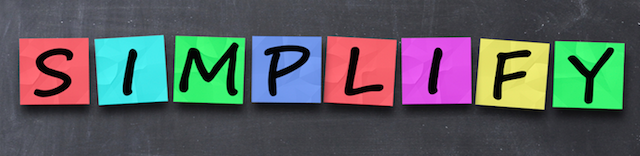
    Simplify

    “Any intelligent fool can make things bigger, more complex, and more violent. It takes a touch of genius—and a lot of courage—to move in the opposite direction.” ~E.F. Schumacher

    I used to live the most complicated life you could imagine.

    I tried to be perfect at everything. All the time.

    I was constantly proving myself. Trying to climb the corporate ladder while juggling work and family life. I would step into my boss’ shoes whenever she went on leave, no matter how little notice she gave.

    I’d extend my hours to ensure I had her work covered, along with my own. That’s right, I’d happily do two jobs at once.

    Was I insane?

    Looking back, it certainly seemed that way. Whenever anyone would ask how I was, I would answer, “I’m crazy-busy. I can’t stop and talk right now.”

    I kept thinking that I just had to work smarter and put in more effort to get over the “hump.” But I never got over the hump.

    For a while, I was too busy and overwhelmed to determine how to get out of that mess. I even thought I was having a nervous breakdown, so I went to see my doctor, and she put me on stress leave.

    That’s when it hit me—my job was costing my sanity, and my life was too precious for me to be stuck in that vortex.

    I had to make some serious changes to make my life simpler, easier, and more enjoyable. Here’s what I figured out.

    1. Don’t hide what’s inside.

    You might invest a lot of time and energy trying to be the way you “should” be and conforming to all those things that you think people expect of you. If so, you don’t even do it consciously.

    But in adhering to what you think other people expect of you, you’re adding a layer of complexity that you don’t need. It’s like you’re trying to be someone else.

    Start getting to know who you are and what you value so you can shed the extra layers and live on your own terms.

    Life is simpler when you satisfy yourself and meet your own expectations rather than try to satisfy everyone else.

    2. Reframe bad situations.

    We all have crappy stuff that happens to us. But when you find yourself thinking negative thoughts, stop and reframe.

    I don’t mean paste a smile on your face and try to convince yourself everything is rosy. That doesn’t work.

    But looking for the silver lining, or finding the opportunities behind the challenges, really improves your outlook.

    My workplace became a nightmare, and my doctor put me on stress leave because I was a mess. But that’s what gave me the necessary push to rebuild my life.

    Even when I was in the middle of the mess and feeling like my life was falling apart, I kept thinking maybe this is an opportunity; maybe this is just what I need to make a change.

    3. Use your understandascope.

    One of the biggest complexities in life can come from misunderstanding someone else. It can lead to anger, frustration, and damaged relationships.

    Instead, actively work on your ability to discover and view someone else’s perspective, or understandascope. Suspend judgment and get curious about the other person’s perspective.

    I did this recently with my ten-year-old daughter who was being disagreeable and downright horrid to everyone. I wanted to pull her into line, but I stopped myself.

    I got curious about her behavior, hugged her, and asked what was wrong. She explained that everyone loved her sister more than they loved her.

    Once I understood her perspective, life became much simpler. Instead of telling her off and upsetting her, I could discuss her feelings and provide reassurance.

    4. De-clutter your mind.

    Don’t you just hate when your mind gets chaotic?

    Like when it races around at 3:00AM going faster and faster and faster. Or when you try to remember all that stuff you’ve got to do, and you think your brain might just burst.

    The way to prevent that is to actively practice being calm for a few minutes every day. It de-clutters and slows your mind for a few minutes.

    Whether you meditate, practice mindfulness, daydream, or do yoga, the effect is to calm your mind and increase focus. Miraculously, the effects of practicing calm for a few minutes gives clarity and makes life easier all day.

    5. Re-evaluate your relationships.

    Consciously re-evaluate your relationships, one by one. Ask how the relationship enhances your life, how it serves you, and what you gain from it.

    This sounds calculating and manipulative, but it’s not. The healthiest relationships are ones where both parties are giving and receiving what they need in terms of happiness, support, and development.

    Whenever I realize that a relationship is not serving me well, I reduce contact with that person. Of course, I don’t do this just because a friend is going through a rough patch and needs support.

    I look at the full life of the relationship and establish if it’s healthy and beneficial for both of us. If not, I reduce contact and let the relationship drop away.

    6. Reconsider your corporate climb.

    Someone once told me that they’d found themselves climbing the corporate ladder, and then he realized it was against the wrong building. In other words, he was moving in the wrong direction.

    If you find yourself climbing the corporate ladder and wondering if it’s all worth it, maybe it’s time to re-evaluate. Moving up isn’t necessarily bad; just be sure it’s what you truly want.

    Will it give you the satisfaction, joy, and life balance you want? Will it fuel your passions and get you leaping out of bed each morning, eager to get to work?

    If the answer is not a loud “Hell, yeah!” then it’s worth looking at your options and evaluating what you want from life and how you can get it.

    7. Live your best life yet.

    Life is limited, but we take the time we have for granted. We get complacent.

    People who have a short time to live or have a serious health issue often find immense clarity and drive. They know what’s truly important to them.

    Thinking yourself unwell is a fairly challenging mindset to adopt; instead, embrace the idea of making the next six months the best period of your life to date. Use this as a lens to review every decision and establish what’s included in this best period of your life.

    What would make the next six months the best of your life? Work out what that would look like, and then set about ensuring those things happen.

    It truly is as simple as that.

    If It’s To Be, It’s Up To Me

    It would be nice if your Fairy Godmother could appear, wave her magic wand, and make your life perfect.

    She could wave away complexity, give you the perfect job, and rearrange your life so that it satisfies your every whim.

    Want to know why you’ll never actually see your Fairy Godmother?

    It’s because she’s inside you.

    It’s true. Her wand and her fairy dust are your direction and determination.

    They’re your ability to work out what you want and how to get it.

    You want to live a simpler life? Then establish what’s important, and eliminate as much of the rest as possible.

    It truly is that magically simple.

    So, what things are important to you?

    Simplify image via Shutterstock

  • 5 Habit Makeovers That Will Help You Turn Your Life Around

    5 Habit Makeovers That Will Help You Turn Your Life Around

    “Learn how to cope, sweet friend. There will always be dark days ahead.” ~Kris Carr

    Around this time four years ago, my life was a mess.

    Work-wise, I felt like I had hit a wall. The relationship I was in (or so I thought I was) was turning out to be a one-way street on which I was being taken for a long, long, painful ride.

    Taking care of myself was something I did only when I remembered to, or during unpredictable moments of clarity or calm within the little emotional tornado I was spinning around and around in.

    Just surviving each day was my priority.

    The cumulative toxicity of all these wrongs were making me feel jaded, physically ill, and almost on the brink of despair.

    Luckily for me (although I didn’t consider myself lucky at the time), things came to a head just before Christmas of 2013, thanks to one small step I decided to take.

    I decided that I’d had enough, and walked away—for good.

    Despite the pain, my life changed for the better that very instant. I felt lighter. Relieved. Free. As if I could finally rest my head on my pillow and sleep like baby.

    By then, I had also left my full-time job and started out on my own.

    I was ready to move on.

    But before that, I spent months in a self-imposed rehab period, analyzing everything that went wrong in the last couple of years, why I let them happen, and what I was going to do to move not just forward, but upward.

    So where did I go wrong?

    I was a “yes” person.

    Whenever someone asked something of me, I never said no.

    Why?

    Because I wanted to be liked and accepted by everyone. “If I say no, maybe this person wouldn’t love me,” I thought to myself.

    Looking back, it became clear how ridiculous and dangerous this mindset was. No matter how hard I tried or what I did, there was always someone who would get offended, or upset with me. Being a “yes” person was leaving me drained, resentful, and angry.

    The more I said yes, the more I got myself into situations I would later regret, and the more I let myself be used.

    When I reached my breaking point, I finally said no for the first time, and it left me feeling liberated. So I kept doing it, as much as I needed to.

    Life began to feel easier. I had fewer obligations and more time on my hands to focus on re-grouping, healing, and the people I truly wanted to spend time with.

    Your “yes” makeover: Start practicing saying no. You will never be able to, nor should you be obligated to, make everyone happy, even if you tried. And by doing this, you’ll learn how to say yes only when you truly mean it. You’ll start to make better decisions from your gut, not social pressure or a chronic need for validation or approval.

    Nourishing my body was not my priority. 

    When everything seems to be going wrong, you’re anxious, sad, confused, and lost, the last thing you’ll want to do is have to choose between that extra large pizza and salad for lunch.

    Eating might not even be on your radar if you’re going through a rough, traumatic patch.

    But here’s the thing: I’d been on both ends of the spectrum, eating too much and then not eating at all for days when life got overwhelming. Both options left me feeling and looking worse off than I already was.

    Unwanted weight gain sapped my self-confidence and added to my daily stressors, while too little nourishment left me feeling weak and unable to cope with life.

    I adapted by simplifying my meals—I ate more fruit and salads, which didn’t require much cooking and minimal preparation. I let people cook for me and bring me food.

    I took a multivitamin every day. I snacked whenever I could. I scheduled my meals as much as possible so that I was constantly reminded to eat. I knew that if I didn’t eat, I wouldn’t be able to get through this storm. As I healed, so did my eating habits.

    Your diet makeover: When you’re struggling to take care of yourself, know that it’s okay to make imperfect food choices. It’s okay let others help you.

    Add more structure to your meal times so you make a conscious effort to nourish your body. Eat with friends to lift your spirits. The joy will come back. The better you get at this, the better you’ll be able take care of yourself the next time life knocks you down.

    I held on to toxic relationships.

    Whenever I was around the wrong people, I’d feel one or a combination of these emotions: doubtful, sad, agitated, uneasy, or just plain tired, as if the wind had been knocked out of my sails. In contrast, the right people made me feel light, playful, at ease, uplifted, motivated, and supported.

    As I got stronger and started making clear-cut decision about who could stay in my life and who would get the boot, I came up with guidelines that would make the weeding out process easier.

    If someone:

    • Continuously took without ever giving back to me (or anyone else)
    • Turned every disagreement around to make it look like it was my fault
    • Belittled my hopes and feelings
    • Verbally abused me
    • Lied to me
    • Was unable to take responsibility for their mistakes and prefers to play the blame game

    I walked away. No exceptions. Life is way too short to spend with the wrong people.

    Your toxic relationship makeover: Give everyone in your life three chances to make things right when they do something to hurt you. Three strikes later, if nothing changes, don’t just walk away—run. I know this sounds harsh, but doing this has allowed me to regain control over who I want in my life, and who I don’t, and my peace of mind.

    I stopped dreaming.

    It takes faith and determination to keep the fires within your soul burning, even more so when you’re running on empty with a bruised heart and spirit.

    I went on this way for years until I eventually stopped hoping and dreaming, because I felt so trapped.

    My self-imposed ‘rehab’ time was perfect for giving this part of my soul much needed TLC.

    I re-started my fires by devouring as many books as I could. Danielle LaPorte’s The Fire Starter Sessions, Jonathan Fields’ Uncertainty, Napoleon Hill’s Think And Grow Rich, and Eckhart Tolle’s A New Earth were instrumental in helping me piece back my spirit, world and dreams.

    I spent a lot of time excavating, exploring, tweaking, re-discovering, and building.

    I opened myself up to deeper conversations, made peace with my mistakes and weak decisions, and started connecting instead of avoiding.

    Baby sparks eventually grew into larger-than-life flames.

    Your dream makeover Your dreams didn’t die overnight, so take your time getting them back. Getting clarity about what you really want will help you decide the first steps you’ll need to take.

    Try doing this simple, but powerful exercise: Ask yourself, “What do I want to accomplish?” Then with whatever answer you come up with, ask why to that, and so on, five times.

    Start re-kindling your flame from here.

    Too much stillness crept into my life.

    The darker and bigger the grey clouds around me got, the heavier I started to feel, physically and emotionally. I dragged my feet wherever I went. The thought of exercising felt like a chore, using up energy I felt I no longer had.

    So I gradually stopped.

    As a result, I started to feel stagnant, sluggish, and unhealthy. I loved getting my regular flush of adrenaline and post-workout endorphins, but I just couldn’t get going.

    There were, however, two things I could do that I found therapeutic and beneficial to my physical health: walking and yoga. I wasn’t in the right frame of mind for high-speed, high-intensity, as-many-rounds-as-possible circuits just yet. And that, too, was okay.

    Long, head space-clearing walks, rhythmic, breath-centered sun salutations, and gentle stretches became my salvation, so I did more of those.

    Your movement makeover: When it comes to exercise, do what is right for you when it is right for you. If hard and fast is your usual routine, it doesn’t mean that you need to force yourself to keep up with it despite not being in the right mental space for it.

    Not listening to your gut (and body) could leave you vulnerable to injury and unable to make the most of your training. If you’ve never exercised, just getting out and moving could make a world of difference.

    But whatever you do, don’t stay still.

    Be gentle on yourself, and learn to bend as the wind blows—you’ll gain a deeper kind of strength from within.

    Are you going through dark patch or on the mend from one right now?

    I’d love to know which toxic habit makeover resonates with you the most, and what you plan to do to turn things around.

  • How to Help Yourself by Owning Your “Bad” Qualities

    How to Help Yourself by Owning Your “Bad” Qualities

    Good and Bad Scale

    “Nothing is either good or bad, but thinking makes it so.” ~William Shakespeare

    Like many women, I feared my own voice.

    I feared what would happen if I acknowledged my feelings and I feared what would happen if I expressed them.

    Above all, I feared that people would leave me if I ever communicated as my true self.

    In my family and culture, feelings are things that are best when denied. I was taught they are a liability that, if embraced, would lead to fights, pain, and loneliness. I was encouraged to ignore, avoid, and push them down into the recesses of my mind.

    Not surprisingly, by thirteen I developed severe depression, resulting in poor coping mechanisms, a reliance on medication, and a suicide attempt.

    The need to express myself was natural and necessary, but my belief that it was wrong prevented me from ever owning my voice. Instead, I communicated in unhealthy ways:

    • I had angry outbursts.
    • I played the martyr.

    And while I tried to suppress and control this side of me, it came out in waves of anger and hurt. Through decades of transformation, I now understand that many of my behaviors were based on my belief that things are either all good or all bad.

    So how did I unlearn this belief and learn to express my true voice?

    By learning how I played the game of black and white.

    When we’re young, we’re taught that certain aspects of our personality are bad or wrong, while others are good and useful. And like most things we learned as kids, we need to unlearn them.

    In order to fit in, feel loved, and gain acceptance we disown the “bad” qualities we believe we have and try to express ones that are seen as “good.”

    This polarized thinking forces us to see the world in terms of black and white, right and wrong, or good and evil. And in this game of black and white, the only rule is that white must always win.

    Unfortunately, the world isn’t that simple. Most things exist on a frustrating spectrum of grey.

    Fortunately, we can learn to re-own these repressed qualities and transform them into qualities that benefit us and others.

    For example:

    • Owning our anger can lead to self-love, if this enables us to set boundaries to take better care of ourselves.
    • Owning our self-expression can lead to genuine connection, if this enables us to get in touch with and communicate our true wants and needs.
    • Owning our apathy can lead us to a passionate career, if this enables us to redirect our energy and quiet our fear of failure.

    Here’s How:

    The first step to seeing how you play the game of black and white is to determine which traits you’ve put into each category.

    What qualities in others make you angry? Often the aspects of others that trigger us are the things we don’t like about ourselves. These are frequently the areas that we need to work on the most.

    For example, when other people stated their boundaries, I previously felt threatened because I wasn’t comfortable setting my own. This taught me that I needed to address this issue in my own life in order to feel whole and attract other people with healthy boundaries.

    To begin, list several “bad” qualities. These are the traits that go in your “black” pile (i.e.: lazy, late, disorganized, loud).

    What qualities do you think of as good, desirable, and appropriate? These are the qualities that we are praised for or that we value in ourselves or others. List several “positive” qualities. These are the traits that go in your “white” pile (i.e.: honest, flexible, driven).

    Next, determine how the game manifests in your life.

    In what ways do you play the game so that “white” must win? What have been the consequences? For example, in believing that silencing my voice is good, I’ve been in unhealthy relationships, had angry outbursts, and felt depressed.

    If you were to give the disowned trait a voice, what would it say? For example: mine would tell me that it’s safe to be the real me.

    Finally, embrace the trait as neither good, nor bad, simply a part of you.

    If you were to re-own that trait, how could it benefit you? Often, qualities we view as “bad” are harsh criticisms or expressions of our own fears.

    For example, I often find that I am frustrated when I perceive someone to be lazy. This, however, is merely triggering my own fear that I am not doing enough. Owning this trait allows me to see that there are times when I should relax.

    Owning it taught me that I don’t need to overwork in order to prove that I am worthy. Owning my lazy side would allow me to live a more balanced life and cultivate self-love.

    Creating awareness around how you play the game of black and white will give you the freedom to consciously choose your behaviors instead of going on autopilot.

    It will allow you to stop stumbling through life and begin navigating it on your own terms. You don’t need to accept your false beliefs when you have the power to change them.

    Isn’t it time you mastered your life?

    Good and bad image via Shutterstock

  • The Simple, Free, and Foolproof Way to Become a Happier Person

    The Simple, Free, and Foolproof Way to Become a Happier Person

    Happy Hands

    “For it is in giving that we receive.” ~St. Francis of Assisi

    If there were a magic pill that led to a 22% lower mortality rate and higher levels of self-esteem and happiness, would you try it?

    I’m betting you would.

    Well I’m here to share some good news: there’s no need for pills or money or magic. In fact, the solution is both free and easy. It’s called volunteering, and it’s proven to make you happier and healthier. All it requires is an open mind, full heart, and a few hours of your time.

    Wondering why giving back affects your outlook so dramatically? Here are four reasons:

    Why Volunteering Makes You Happier

     1. You boost your self-esteem.

    Loving yourself is one of the keys to happiness. You may be thinking, I don’t know anything or I don’t have anything to offer the world but you’re wrong.

    I don’t have a lot of practical skills: I can’t fix a car, teach art, or bake an award-winning pie—and don’t even get me started on long division. So I used to think there weren’t volunteer opportunities for me. That is, until I got involved as a mentor to at-risk youth.

    Who knew I could help kids just by hanging out with them? It was an incredible experience, and it showed me that everybody has skills to share.

    Whatever you’re good at, and passionate about, there are causes that need your light and love. You could walk dogs at the animal shelter or deliver meals to the elderly; even if you’re homebound, there are remote volunteering opportunities you can do from behind your computer.

    Seeing how you—yes, you!—can help make the world a better place is one of the greatest self-esteem boosters you’ll ever experience.

    2. You make new friends.

    As an adult, meeting new people is tough. But it’s proven that people with an extensive social network are happier. What’s a good way to create that group of friends? Volunteering.

    While volunteering both in the States and abroad, I’ve met lots of wonderful people. People who I admire and respect; people who have stayed in my life for many years. It was easy to find common ground while volunteering together, and it was easy to stay friends because of our similar worldviews.

    Just last month, I traveled with friends in New Zealand whom I met two years ago while volunteering in Nicaragua; a few weeks later, I ate breakfast with a friend in Singapore whom I met nine years ago while volunteering in East Africa.

    It was so good to see them all again—and because of our shared experiences and perspectives, we never ran out of things to talk about (and likely never will).

    Volunteering = friends. Friends = happiness. It’s a pretty simple equation, if you ask me!

    3. You learn new skills.

    Learning is one of the best ways to engage your mind, and in turn, make you more satisfied with your life. When you think of learning, you may picture a classroom and textbooks, but I believe real life experience is a much better teacher. And one of my favorite ways to learn new skills is through volunteering.

    When I was seventeen years old, I didn’t know a hammer from a screwdriver. But then I co-led an alternative spring break trip during my senior year in high school; we helped to build houses with Habitat for Humanity.

    Though our volunteer vacation was only a week long, I learned more in that week than I probably did my whole senior year.

    Is there a skill you want to learn? Or a foreign country you’d like to discover? How about a language? (I learned Spanish while volunteering abroad in Nicaragua.) Or perhaps, you just want to learn more about yourself.

    Whatever it is, there’s a volunteering opportunity that will help you achieve your goals and bring positive change to your life

    4. You feel fulfilled.

    What’s even more important than happiness? Fulfillment: the feeling that you are contributing to something bigger than yourself. Some people find it through their careers, some through their family, and some through their art. Me? I’ve found it through volunteering.

    Whether you call it the “warm and fuzzies,” or simply just “feeling good,” giving back to others will bring you happiness—as well as its more elusive cousin, fulfillment.

    I volunteer because I feel like something’s missing in my life if I don’t. I currently give my time to a garden and learning center where we teach young kids about the power of healthy eating. Seeing their faces light up when they learn they actually like broccoli is something I wouldn’t give up for the world.

    If you’d like to bring some sunshine into your life, try bringing it into someone else’s first. Whether you serve food at a soup kitchen once a month or go on a volunteer vacation in Tanzania, stop making excuses and just go for it. Your world—and your soul—will thank you.

    Do you volunteer? Does it make you happier?

    Happy hands image via Shutterstock

  • How to Overcome Emotional Overload When You’re Highly Empathetic

    How to Overcome Emotional Overload When You’re Highly Empathetic

    “When someone throws you a stone, throw back a flower.” ~Gandhi

    “Ouch,” I cried out instinctively as my husband, Barry, and I walked through the beach parking lot, barefoot. It was only when Barry turned to me and asked me why I yelled out that I realized it was him who stubbed his toe, and not me.

    “Because it hurts,” I answered him. He looked at me curiously and said, “But it didn’t hurt you. It hurt me. I’m the one who stubbed my toe.”

    It hadn’t dawned on me that feeling other people’s pain wasn’t a “normal” reaction.

    All my life I have been extremely empathic, but for the first half of my life I didn’t even realize that this was a unique character trait, that not everyone shares.

    When I was in close contact with people who were yelling, I would literally shake. When those around me were sad or scared, I would drink in those feelings like a sponge, not realizing that these feelings weren’t my own.

    As a result, I felt on edge a lot of the time, as I was carrying not only my own feelings but also the emotions of many people around me. However, I was not in touch with this anxiety—I didn’t even know it was there. It was unconscious.

    Because I was empathic, I was often sympathetic to the plights and concerns of friends and family.

    Even as a child, people turned to me for guidance in resolving their problems. At the time, I didn’t mind because I was happy to offer whatever support I could.

    However, as I entered my teen years, the burden of other people’s emotions, on top of my own unresolved feelings, became too heavy to bear. But I didn’t know that consciously. I wasn’t even aware of what was happening for me.

    I turned to food, alcohol, and other substances to numb the intensity of what I felt.

    I felt a strong need to withdraw and I could no longer be in the same room or the same house with people who carried intense, often unconscious, emotions.

    I had to learn ways to manage the emotional energy—both my own feelings as well as the energy of others—that I was absorbing.

    This was a major key for me in breaking free from food and all other addiction. There were many bumps along the road as I learned to do this. Over time, I discovered four powerful ways to help manage emotional energy.

    1. Practice awareness.

    I noticed that if I wasn’t aware of what I was feeling, either in response to an internal shift, such as a hormonal or mood change, or a reaction to another person’s strong emotion, I was much more likely to be reactive and act out in a way that wouldn’t feel good to me.

    With awareness, I could consciously choose a response and an action that I could feel good about.

    2. Understand the nature of energy.

    A big key to healing for me has been the understanding that my response to my environment also feeds the energy. Therefore, if someone throws me a stone and I throw another stone back, or worse, a rock, I am going to exacerbate the problem.

    Not only will I add fuel to the fire and cause pain for the other, but I will be increasing my own suffering. Energy feeds on energy.

    If my daughter comes home from a long day at school expressing negativity, if I feed on that, consciously or unconsciously, by being in any way critical, negative, or judgmental myself, I will only increase the dark energy that is now in the kitchen.

    Instead, if I can give her love and sweetness, most likely that will be healing to her and the energy will shift to something that’s supportive and healing for both of us. That’s because love is all the soul seeks and when we can come back to a loving place, everything else in life becomes manageable.

    When we drift from a place of love, kindness, wholeness, and forgiveness, we feel “out of sorts” and often express bad energy (anger, fear, complaining, etc.).

    3. Don’t take anything personally.

    One of the main reasons I came to see that I absorbed and hung on to other people’s dramas and intense energies is because I bought into their suffering at some level. But over time I realized that nothing means what I think it does.

    I don’t have to force open the caterpillar’s cocoon to help it become a butterfly. I realized that the same power within me that has turned every difficulty and challenge I have faced into an ultimate lesson and blessing is in everyone else, too.

    I have learned to trust that other people, even those I love the most, need to learn life’s lessons through their own experiences and insights.

    I’m not responsible for fixing the energy or the situation. My only responsibility was and is how am I managing my own energy: am I adding goodness, love, and warmth to the space and people around me, or am I contributing to the creation of a frenetic and fearful environment?

    4. Balance yourself.

    The key to staying balanced for me is to continuously stay connected to my heart—my deeper, spiritual self—and when I stray from there by getting caught up in the voices in my head or the drama unfolding around me, to know the short-cut back to center.

    For me, the most powerful way to do this is with a form of meditation that I call self-hypnosis.

    This method helped me to heal so many aspects of my life, including my health, which had deteriorated at a young age, my weight, and food addiction issues as well as my relationships. Any type of meditation—and even just a few minutes of deep breathing—can help us center ourselves.

    Being empathic and super sensitive to energy is not something that I can just decide to change, but I can become more aware of how it affects me.

    The empowering thing is the realization that I can change my reactions and my own behaviors, no matter how overwhelming the emotions, my own and others’, feel to me, in the moment.

    Because 90% of the behaviors we do are habitual—meaning we are only doing them because we did them yesterday—we can literally re-train the brain to respond in a new way to the exact same stimuli.

    I used to think my only two choices were to react to negative energy with negativity or to withdraw and detach. Neither option was conducive to building strong, supportive relationships or to my own happiness.

    I now know that when someone throws me a stone, I can throw back a flower (as a wise spiritual teacher once recommended), and I can feel great about it!

    I wouldn’t change my empathic nature even if I could because, on a positive note, it has helped me to understand people and open my heart to them—to realize that we are all on the same human journey together, seeking compassion and love, even if we’re not going about it in the most effective way.

    Every cloud has a silver lining, and the blessing of empathy and feeling emotions strongly is the opportunity to connect to our deepest strength and transmit something greater that can bring healing to our self and others.

  • 3 Questions to Ask Yourself When You Feel Unsupported in Relationships

    3 Questions to Ask Yourself When You Feel Unsupported in Relationships

    “A community of friends supporting each other can make a world of difference.” ~Unknown

    Many of us feel we’re not getting the support we want or deserve in relationships.

    Maybe we’ve never felt supported by our friends or family. Maybe we don’t feel supported by our peers or co-workers. Maybe we don’t even feel supported by our partner.

    This can leave us feeling drained, tired, and unhappy, like we’re moving through life without much fuel to keep going.

    During my adolescence and early adulthood, this was a huge struggle for me. I rarely found a place or group of friends where I felt like I “belonged” and, therefore, I didn’t feel supported. When I did feel supported by others, it only lasted for a few days or weeks before it dissipated.

    Today, this has shifted. I feel much more supported in my current relationships and don’t feel nearly as drained as I once did.

    There are still moments when I feel like I did growing up, but I’ve realized that opening up to support is a life-long journey. It’s an ongoing process of healing old wounds and allowing ourselves to become something new.

    There are three questions that always help me realize what needs to be healed and how I need to shift my perception. If you don’t feel supported in your relationships, ask yourself:

    1. Is my story preventing me from receiving support?

    Do you tell yourself stories like “Nobody understands me,” “He can’t understand me because he hasn’t experienced what I’ve experienced,” or “I always have to take care of others and nobody can take care of me”?

    Or, do you repeatedly tell yourself, “I am never supported in my relationships”?

    Whatever your specific story is, it blocks you from receiving the support you desire.

    Some other stories that prevent you from receiving support include: “If I tell others about my problems, it will cause them more stress,” “If I share this with others, they will judge me,” “I need to give to others in order to be loved,” and “If I want something from others, I won’t be loved.”

    Formerly, I told myself the story “I will be a burden to others if I seek help and support.”

    I’d think this at work when I needed extra help or a day off, so I’d feel hesitant to communicate this to coworkers. I’d also think this when going through tough times, which made me feel scared to open up to friends, so none of them would know what I was feeling.

    When we acknowledge our stories, we are then able to shift our perception and open ourselves to receiving support from others.

    2. Am I reaching out to others for support?

    Often when we feel like we are not receiving what we desire from others it’s because we are not open to receiving. It’s as if we have a little shop set up for business, but we have all the doors locked!

    Be sure to tell others when you are going through a difficult time. Ask people for help rather than to try to figure it all out on your own.

    By letting people know that we are seeking support, we’re much more likely to receive it.

    3. Am I supporting myself?

    What we experience outside of ourselves is often a reflection of whatever we are experiencing within ourselves. If we are not feeling supported by others, then it is likely true that we may not be supporting ourselves.

    The key to shifting this is to find ways to feel full and supported within ourselves instead of focusing solely on what we want from others.

    This was something I needed to do when dealing with various health issues. For a few years, I failed to address my health problems, which meant others couldn’t support me either.

    I would not stay committed to diet and lifestyle changes that I knew would help me. This meant others didn’t have the opportunity to support me because my actions did not show that improving my health was important to me.

    Ask yourself: Am I supporting my body when it’s sick or tired by letting it rest? Do I support myself by finding time to do the things that I love to do? Do I give myself the things I know I need—like going to doctor’s appointments when I’m sick or finding a therapist when I’m going through a difficult time?

    Then take it a step further and ask yourself: Am I really “myself” when around others? Am I putting myself in relationships with people who truly accept me for who I am? Do I allow myself to share my authentic truth with others?

    If we want to be fully supported in all aspects of ourselves, we need to choose to be in relationships where we feel free to be our authentic selves.

    This might mean letting go of some relationships and releasing expectations that certain people will suddenly change and be supportive. By being in relationships with others who fully accept us, we are supporting ourselves.

    In order to experience the highest degree of love and support in our relationships, we have to really love and support ourselves. So look within and become the master of your own self-care and self-love.

  • Look Around (Not at Your Phone) and Be Present in Your Life

    Look Around (Not at Your Phone) and Be Present in Your Life

    Friends on Cell Phones

    “Enjoy the little things because one day you may look back and realize they were the big things.” ~Robert Brault

    Ten years ago I moved from the urban metropolis of London, where I grew up and spent the early part of my adult life, to the rural Mediterranean idyll of the coast of the Costa Brava in Northern Spain, in my quest to find the ultimate “quality of life.”

    I was able to make this move largely because I could be digitally connected to the rest of the world from anywhere.

    For me, digital technology in its early form provided a whole new series of life choices.

    Although it was during the pre-smartphone and WiFi era, I was able to be digitally connected via an ADSL cable that magically appeared from a field and connected to my studio, enabling me to work from there, nestled on a remote hill top location, surrounded by languid hilltops and lingering forests, underscored by a sea that merged with the sky like a pair of faded jeans.

    Perfect live/work balance achieved, or so I thought.

    But that was before. That was before something that is five inches tall and a quarter inch thick transformed every aspect of the way we live. The smartphone.

    The advent of the smartphone changed my life, but not in the way that you might think. It actually took me away from life, because it took over my life.

    Suddenly I didn’t need to be in my studio on my laptop to be connected, or to get my emails or to send projects through to clients, as I could do that from anywhere. I was free, no longer desk or studio bound.

    I could access information wherever I was. It was a revelation and totally life changing. However, although it was an incredible, life-enhancing tool in many ways, I think I was slow to realize that having access to the world in the palm of my hand also means the world had access to me.

    As my euphoria at being able to be connected anywhere and at any time began to wear off, it was replaced by the debilitating dependence of needing to be connected anywhere and everywhere, at all times.

    The more I became digitally connected, ironically I began to feel more and more personally disconnected from my surroundings, as my virtual life was not giving me any real nourishment.

    It provided a lot of ‘noise’ but I could no longer find the inherent ‘melody’ and rhythm of my daily life.

    Given that I was living in the sort of surroundings that are viewed as the ultimate off grid environment (the sort of place actually where weekend digital detoxes take place), I realized that the problem could not only be viewed as relating to a purely urban demographic.

    I looked around me, at my friends and colleagues, and realized that we would get together for lunch on a beach or at someone’s house and we would all have our heads buried in our smartphones, oblivious to each other or the breathtaking beauty that surrounded us.

    It was a problem that was wide spread. I realized that what had at first been my life line had little by little started to strangle me.

    My digital dependence had become a habit filled with avoidance techniques, providing constant distraction to avoid being with myself. I found that, without realizing it, my reliance on my digital devices had gone from expanding my life to disabling it.

    When we created the smartphone it was designed to be a tool, albeit a very useful tool, but I was using it for everything it wasn’t designed to do:

    • Distraction
    • Taking me away from awkward situations
    • Making me feel busy
    • Make me feel important
    • Not making me feel alone
    • Anything in fact to avoid spending time with myself

    I took a hard look at myself and found that, despite living in an exquisite natural landscape, I was actually living a digitally reductive, hands-free, edited life, where nothing was messy, chaotic, or emotive.

    My epiphany came on a Saturday morning in my local market, where I had gone to get some vegetables for a dinner I was giving that evening. I arrived at the market, which was a bustling, vibrant gathering of the whole neighboring town, the meeting place for everyone to get together once a week.

    Walking amongst the throngs of people looking at the kaleidoscope of recently picked, sun ripened fruits and vegetables, was a heady, textural experience.

    The air was filled with the aromas of basil, ripe fruits, locally made honey, and soft goats cheeses, but I was oblivious to that, as I was on a mission to get some tomatoes to roast with some fresh fish for the dinner I was making that evening.

    I joined the endlessly long line at the fruit and vegetable stall I usually get my produce from and was checking my emails while I waited, and waited, and waited.

    The line didn’t seem to be moving. The only thing that seemed to be moving were the numbers on the digital clock of my smartphone showing me that I had been standing in line for twenty minutes.

    I was getting more and more stressed thinking, How long can it take to buy a pound of misshapen tomatoes?

    I stepped outside of the line to try and find out what was going on. Looking to the front of the line I saw an elderly lady, with her dog, chatting with the woman who ran the stall.

    They were discussing the stew she had made last week from the marrow she had bought from there, the plight of her neighbor who had had a fall, and the wedding cake she had made for her niece’s wedding.

    They were talking, communicating face to face, sharing the stories that made up their daily lives.

    As I looked along the line I noticed that actually everyone was talking to each other, animated, interested and alive. 

    That was the tipping point for me when I realized that I was physically there but was not present. I was missing in action from my life and missing all the little things.

    For me really being present meant giving myself times to disconnect from digital technology and instead taking time to connect with the seasons, learn the names of the different winds, recognize the cycles of the moon, and read the ever changing personality of the sea.

    Ultimately I learned how to be from going to local farmers’ markets. There, I learned to appreciate the beauty of imperfection. The splendor of a misshapen tomato, appreciating the real meaning of “slow.”

    I had to learn a new rhythm, one without a preset time limit for every thing. Where queuing for twenty minutes to buy some fruit was just how it was, and was something to be savored and appreciated, because every one in the line spoke to each other and wanted to share their stories.

    It was there, waiting to buy my imperfectly shaped, local, seasonal produce, that I began to really connect with where I was and learned to appreciate all the moments and experiences that really matter—those unique fleeting moments that bring us joy.

    If you are finding you are missing in action from your life, try adopting some of the practices that were game changers for me.

    Remember to take some time out every day to put your smartphone away, pause, breathe, look up, and embrace the art of slow by living in the now.

    Scheduling in fifteen minutes of mindfulness meditation practice every morning will set you up for a day of centered calmness, and will encourage a reconnection with yourself and your natural surroundings.

    In order to be more engaged in your life, try to do things more mindfully by concentrating on being present and in the moment.

    These small changes to your daily practices are manageable and meaningful, and will shift your focus from “faster, bigger, better” to an appreciation of the micro moments, the little things that punctuate our daily lives, which ultimately, in the words of Robert Brault, “we realize are the big things.”

    Friends on phones image via Shutterstock

  • Plan Less and Enjoy More: Give Yourself Space to Simply Be

    Plan Less and Enjoy More: Give Yourself Space to Simply Be

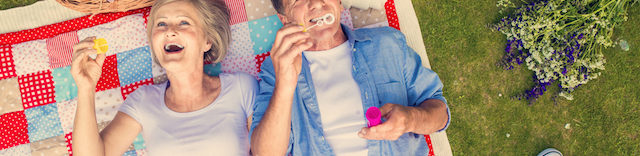
    Couple Having Picnic

    “You don’t always need a plan. Sometimes you just need to breathe, trust, let go, and see what happens.” ~Mandy Hale

    I’m a Type A personality who formerly scheduled days, weeks, and even seasons in advance. I planned my day, my meals, and my activities, as well as those of my family, with the precision of a military regiment.

    Why? Part of it was control and part of it fear. The fear led to wanting to control. Letting things happen naturally without a plan would certainly mean chaos would ensue.

    I had reached the stage in my life where I was going through the motions. Everything was getting done, but there was no joy in my life.

    I loved my kids and my husband and had a supportive extended family. Though I had some health struggles, overall I had a good life. I kept asking myself, What do those “joyful” people do, or what is their secret? 

    I know friends who have gone through their share of difficult situations, but not only did they come through with grace, they retained their joy.

    Being the methodical person that I am, I started to look at their personality traits.

    They weren’t routinely overscheduled; they made time for their family, but also quiet time for themselves.

    I was attracted to their calm, their sense of peace, and their happiness. I felt a true sense of connection when around them, as they were genuinely interested in me and our time together.

    They were unapologetic about making decisions that were right for their family and met their needs as opposed to doing what was deemed as “right.”

    I reflected on the times that have brought me joy. Most of those times were unplanned.

    The surprise of getting a call from a friend just when I was thinking of them, and going for a walk to catch up.

    Sitting with that cup of tea or coffee early in the morning when the house and kids are still.

    Looking out my window to see the amazing shades of green that spring brings.

    Watching my boys playing basketball in the driveway while they trash talk with each other.

    Watching my father hold his grandson.

    In all these situations, I did not need to purchase anything, go anywhere, or schedule anything. I just had to take a breath, relax, and be present to what was happening around me.

    For so long, I also scheduled time to be present through meditation. I tried to wake up early, make time, and sit. I worked on breathing, visualizing what I wanted from life and using affirmations, but this practice was rigid, scheduled, and forced.

    I was struggling even harder to be present, be peaceful, to “work” at being happy, because we all know anything worth having takes work. After trying this for a while, I realized I was not making space in my life for anything to change because I was just adding more to my to-do list.

    I needed to do something drastic. While I understand not many people have the luxury of doing what I did, I quit one of my contract jobs and reduced my work commitments to two days a week.

    I told myself that I would not take another gig even if it walked up and bit me in the butt. I was going to take a three-month semi-sabbatical.

    Why three months? I thought I would probably go crazy if it was any longer than that and I didn’t want to burden my husband with any financial stress.

    The only plan for those three months was that I should not plan anything that would increase my stress level, had to do with marketing my next endeavor, or enroll in school, which I had been contemplating.

    So, what did I learn? I used to write a lot as a child and a teenager. I loved to write poetry, and I was the kid that loved to get a writing assignment in high school, so I dedicated to making space for writing.

    I have discovered that making no plans opens space in my life to slow down and be present without forcing myself to be present.

    I am learning that what fills my cup is kindness, compassion, and connection. Those are the only things that I want to schedule. Engaging in activities that fill my cup allows me to approach my day and my responsibilities as offerings as opposed obligations.

    In doing so, I am slowly finding joy in doing some of the most interesting things. I found myself smiling while folding the laundry. Wow, this is what it feels like to not feel rushed, but to feel the clothes warm out of the dryer.

    It reminded me of how my mother used to throw my clothes in the dryer for a minute or two in the cold Minnesota winter, and that brought another smile and sense of gratitude for my mother’s love.

    I find myself smiling more, and often it is for no reason.

    As I am phasing back into a work routine, I am dedicated to unscheduling my calendar. I am committed to saying no to activities that would have me racing across town, to events that are large public functions where I don’t really get an opportunity to connect.

    I am committed to taking thirty minutes a day for myself, even if it is fifteen minutes at a time.

    I am waking up fifteen minutes earlier to practice yoga, which wakes up my body, allows me to clear my mind, and adds focus to my day. I have also found that walking outdoors is worth the time away from my to-do list, because I come back calmer and ready to accomplish the next task.

    Surprisingly, I have found these small periods of time quite easily. I noticed that when I was just checking email, I got sucked into checking a social media site. Then I saw a link that looked interesting and clicked on another site, and when I looked up, it had been twenty minutes.

    I sat down in front of the TV and numbed myself because I needed to “relax,” but I wouldn’t take that thirty minutes to write, go for a walk, or just sit disconnected from all the stimuli.

    While I was great about finding the time to schedule a football game, a pick up from band, and a stop by the grocery store, I never put myself on the schedule.

    Now, I am dedicated to looking for and finding pockets of time not to fill, but instead, to take some deep breaths and just be.

    What can you do to make space and time?

    Make yourself a priority. Your sense of well-being is important. Schedule some me time on the calendar.

    Take a walk—it doesn’t matter how long, even ten minutes can make a meaningful impact.

    Spend at least twenty minutes prior to bed disengaged from email, TV, and social media sites.

    Set a time limit for electronic use during your workday that does not involve work related duties.

    Say no to offers for happy hours, birthdays, baby showers, and the like unless the person being honored is truly a priority in your life.

    And put away the guilt for not being at every school function, rehearsal, and game (if you have children). Check in with your child to see if it is truly meaningful and important to them.

    By being present and engaged in the activities that are important to you and recognizing when you’re getting caught up in mindless activity, you can create pockets of time to simply relax, unwind, and breathe.

    You never know what can happen with the extra twenty minutes. You may discover the flowers blooming outside your window, the sound of the rain as it hits your roof, or you may simply be grateful for the peace.

    Couple having picnic image via Shutterstock 

  • Feeling Trapped? Step into the Unknown and Set Yourself Free

    Feeling Trapped? Step into the Unknown and Set Yourself Free

    Man and Birds

    “Dont call it uncertainty—call it wonder. Dont call it insecurity—call it freedom.” ~Osho

    My daughter loves birds. So, as a treat, we all went to a Bird of Prey center near to where we live. Here in the UK, there is a long tradition of keeping these birds. As stated on one hawking site, falconry is “the noble sporting art of flying trained birds of prey.”

    Noble or not, I have an issue with keeping birds captive. I had hoped that, in the center we would be visiting, these would be rescue birds.

    They weren’t.

    They were raised in captivity, slightly better than being caught in the wild, but only slightly. There was one area I referred to as Prisoner’s Row. Big, powerful and noble birds like falcons and kestrel chained to a post. A long row of them stuck there for visitors to gawk at.

    Yes, they are beautiful, and amazing to see up close, but they are much more beautiful to see flying up there in the wild expanse of sky.

    In any case, we were there for the Owl Experience. One by one, they brought out owls, starting with the smallest burrowing owls and getting bigger until the huge and majestic European eagle owl was brought out.

    The birds were coaxed over to the leather gauntlet our kids were given to wear. They were stunning and tolerant of us, but it was clear they were doing something against their nature. Owls are not meant to perch on human arms. These owls have been trained to do so, but trained against all natural inclinations.

    Then we went out to the flying arena where our children fed them. Chopped up bits of baby chick feet were dangled temptingly in the air then placed on a gauntlet, and eventually and very reluctantly the owl swooped down and picked up the morsel.

    They weren’t good flyers, these birds. They knew how to fly but their muscles were weak. They flew short distances and preferred to hop.

    It all left me feeling uncomfortable. It was a privilege to see these beautiful creatures up close, but at what cost?

    Perhaps it makes me uncomfortable because it is uncomfortably close to our own limited experience of life.

    As I watched the owls soar within the flying arena, I wondered why they didn’t simply soar off to freedom. They weren’t chained. Their wings were not clipped. They could do it, if they chose to.

    But they stayed. They hopped and half-flew to each wiggly bit of chick foot and hop-flew back to their post, with thinly veiled resentment. But they stayed. And then, after the show, they allowed themselves to be carried back to their cage.

    Why?

    Perhaps the birds are as susceptible to the lure of certainty as we are.

    There is the certain provision of chick feet if they fly to their keeper’s arms and back to a post within a small outdoor arena. After all, having been raised in captivity, that’s all they’ve known.

    And then there is the great, wild uncertainty that exists beyond the arena. Will there be food there? Will they be able to catch it? Are there unknown dangers lurking in that great blue expanse of sky?

    And here’s the clunky metaphor. My husband and I are in our own sort of flying arena at the moment. We’re both in regular jobs, jobs that more often frustrate than inspire, getting regular paychecks.

    We’re eating with these paychecks. It may be our own version of chick feet, but, hey, we’re eating. We are testing our wings, though. Flying a bit further. But, for the moment, we are returning to our keeper’s arms.

    We gaze out at that broad blue expanse. We know we’re capable of more. We know we haven’t really tested ourselves; we haven’t really indulged our deeper passions. It seems to me that we’ve all been trained to do things against our true nature, and have grown up in this limited, but safe, way.

    The few times I’ve flown into uncertain territory have been terrifying but thrilling.

    As it has been said, uncertainty is the only certainly. To resist it is to resist our true nature. To resist it is to stay trapped, to accept the cage, the gauntlet, the chick foot for supper. To embrace the uncertain is to fly beyond the arena into that beautiful blue expanse of freedom.

    We know beyond a shadow of a doubt that the owls can do it. Not just can, we all intuitively know that they should do it. To live in the freedom of uncertainty is infinitely better than to live in the security of captivity.

    We know this and wish this better life for the owls. Why, then, can’t we know it and create it for ourselves?

    So this is my challenge, to myself, and to you, should you choose to accept it: try something you’ve never done before. Taste something you’ve never tasted before. Read someone you’ve never read before. Say something you’ve never said before. Write something you’ve never written before and then share it.

    Step into the unknown and feel it—that ground dropping away, breath-catching feeling. That’s the feeling of the limitless expanse of creative potential. That’s life as it’s meant to be lived.

    Man and birds image via Shutterstock

  • 6 Fears That Keep You Busy and How to Enjoy More of Your Life

    6 Fears That Keep You Busy and How to Enjoy More of Your Life

    “All the mistakes I ever made in my life were when I wanted to say no, and said yes.” ~Moss Hart

    Do you ever feel like you’re always too busy to truly enjoy life?

    I know the feeling.

    I work multiple jobs to care for my family and have many responsibilities at work and at home. My to-do list never seems to end, leaving precious little time for leisure and rest.

    But here’s the funny thing: whenever I do have some downtime, my anxiety kicks in because I’m thinking about all the things I “should” do to help move my life and career forward.

    Some days, I become so overwhelmed with all the things I “need” to do that I struggle to be present with my family and those I love. I struggle to find contentment in simply doing nothing.

    As I’ve reflected on these struggles, I’ve learned that my need to keep busy has been driven in large part by six subconscious fears. I’ve learned that by facing them, I can begin to let go of my busyness so that I can enjoy my life in the moment.

    If you’re always swamped and struggling to enjoy your life, consider if any of the following fears are the cause of your need to keep busy as well:

    1. The fear of missing out.

    So pervasive is the fear of missing out that it’s referred to simply as FOMO. This fear is based on the overwhelming feeling that something more exciting is happening elsewhere or that there are more attractive options than the one chosen.

    This fear is behind my compulsion to multitask while I work—most notably, switching between multiple tabs on my browser or even viewing multiple computer screens at once.

    It’s the force behind my need to purchase the next breakthrough product or program, or chase down every opportunity that comes my way.

    Worst of all, it’s the fear behind my mindless web surfing or constant email checking when I could be spending time with my family.

    FOMO drives us to be busier (or appear to be busier) than we need to be.

    Fortunately, we don’t have to let our FOMO control us. You can face your FOMO by accepting the fact that it is impossible to pursue every great opportunity.

    By acknowledging and accepting that you cannot have everything, you can focus your limited time and energy on the few things that truly matter. That way, you’ll never miss out.

    2. The fear of being bored.

    Kids are famous for how quickly they become bored, but adults get bored too, especially with the daily grind of life. This boredom is constantly tempting us to take on the new and the novel.

    I took a while to realize that I struggle with the fear of being bored. I become bored fairly quickly. I actually enjoy working in multiple settings because it keeps me from being in one place or doing one set of tasks all day long.

    But working in multiple settings means that I always have something to do and sometimes I get overwhelmed.

    To counteract the effects of the busy life I’ve created for myself, I frequently set aside time for prayer, meditation, and reflection. And as I began to reflect on my fear of boredom, I began to see that:

    Boredom is a privilege.

    It is not something to run from but something to enter into. Boredom means that all my basic needs are met. I’ve never heard the hungry, the poor, or the person in danger say they were bored. I can, so I give thanks when I’m bored.

    You, too, can begin to face your fear of boredom by expressing gratitude for all the comforts you enjoy.

    3. The fear of facing difficult tasks.

    Do you dread working on your taxes, your marriage, or that year-end report? Most of us in a similar situation would instinctively busy ourselves with the trivial and the meaningless to avoid facing the difficult stuff now.

    This busywork is simply a form of procrastination. But it can be hard to spot if we’ve thoroughly convinced ourselves that the busywork is important. In doing so, we manage to not do the things that are truly important.

    Avoiding difficult tasks may work in the short-term but may also have disastrous effects in the long-term. In my own life, I’ve found that this behavior only leads to prolonged and magnified pain.

    Facing this fear means learning to reframe how you think about the unpleasant and difficult tasks we all must deal with from time to time. Instead of seeing them as burdens to avoid, we can view them as opportunities for breakthroughs in our finances, our relationships, and our work.

    4. The fear of looking lazy or unaccomplished.

    It’s no secret that being busy, or looking busy, has become a sign of accomplishment in our culture.

    Sometimes, this fear manifests itself in my own life. I may feel insecure if the person I’m speaking with gets interrupted with a phone call or text – I’ve responded to such interruptions before by surfing the web on my phone (or checking my empty email inbox) to appear just as busy.

    Or I might feel inadequate by comparing my life to a busy professional who travels every week for work.

    I remember once feeling small compared to an acquaintance who frequently traveled for work. Somehow, I felt less important because my work did not take me to interesting locations across the country.

    I began to change my thinking about this when I later learned that this person eventually lost his marriage. The news caused me to re-examine my priorities. Instead of feeling inadequate, I began to be thankful that I could go home to my family every day after work.

    Facing this fear means giving up your insecurities about appearing lazy or unaccomplished so that you can focus on what truly matters.

    5. The fear of being alone.

    Is your busyness driven by the fear of being alone? We often think that to enjoy life, we must constantly be in the company of others.

    We learn from a young age that being alone is undesirable. If you’ve been labeled a loner at some point in your life, people may think you’re a loser, a weirdo, or even dangerous.

    We may fear being alone because we fear being labeled, we’re afraid to be with our own thoughts, or we’re afraid of being lonely.

    Always-having-somewhere-to-be is an effective strategy to deploy when we’re afraid to be alone, but it also robs us of the ability to enjoy our own company. In her book Between Dark and Daylight, Sr. Joan Chittister writes:

    “We love to be told that we are social beings, yes, but we also know deep in the core of us that we are not frantically social beings.”

    Facing the fear of being alone means embracing the moments we get to ourselves in order to rest, recharge, enjoy a good book, or enjoy your own company.

    6. The fear of not being well-liked.

    We all want to be liked, but sometimes this need drives us to say yes to every request that comes our way. We’re afraid that saying no will cause people not to like us.

    This fear has also been a big driver of my busyness. As a recovering people pleaser, I know what it’s like to suddenly find myself caught in a hectic schedule filled with the priorities of other people. It’s utterly exhausting and demoralizing.

    Whenever I’ve said yes to win the approval of others, I almost always emerge from the experience feeling resentful toward the person and myself. Furthermore, instead of winning the admiration of that person, I become an easy target for future requests, and their estimation of me may actually decrease.

    Giving up this fear means accepting the risk of being disliked by deciding to set (and stick to) clear boundaries. Once I learned to say no—with kindness—I began to feel happier for gaining control of my time again. And people rarely reacted as negatively as I imagined for politely declining their requests.

    Stop Keeping Yourself Busy and Enjoy Your Life Instead

    If you’ve always wondered why you can’t seem to stop being busy, one or more of these fears may be driving your busyness.

    You may have fallen for the myth that being busy means having social status and prestige.

    But you also know that all the status and prestige in the world is no good if it prevents you from enjoying your life.

    Yes, these six fears are powerful, but you have what it takes to overcome them.

    You have the power to drop these illusions right now.

    Acknowledge the fears. And release them today so that you can regain control of your time and enjoy your life.

  • Put Down the Heavy Burden of Worrying

    Put Down the Heavy Burden of Worrying

    Woman with Umbrella

    “People become attached to their burdens sometimes more than the burdens are attached to them.” ~George Bernard Shaw

    You could say I had a type. Most girls I’ve dated have had a few things in common. Historically, I’ve been attracted to dark-haired deep thinkers—old souls with just a tinge of sadness in their eyes. Emotional pain is a sign of character.

    There is nothing like looking into a woman’s eyes and exploring decades (if not centuries) of wonder and worry hidden beneath a stoic, classic composure. There is an attractiveness to being slightly worn down by the road.

    But Jane was different. Jane was light.

    Is it better to date someone similar to you, or do opposites attract? Jane and I were an experiment in opposites.

    In conversation I have a tendency to wade through heavy philosophical banter. Where is America heading? If there is free will, why do individuals lean toward conformity? What is the meaning of life?

    But Jane merely laughed and changed the subject. She was absolutely free, and had the singular objective of living each day to the fullest. Without trying, Jane innocently pushed me outside my comfort zone into a place far sunnier than I was accustomed to being.

    My thoughts couldn’t be burdensome with Jane because she didn’t speak my common language of doubt and regret. She shed light on every dark corner my mind would wander.

    The Unbearable Heaviness of Being

    Having been born on the frozen tundra of Minnesota, a place molded by practical values and a sense of solemn responsibility, I had been conditioned to see life as something heavy.

    Maybe it’s the infamous winters, or an unspoken guilt still lingering from the 1860’s Sioux massacres, or maybe it’s the perpetual bad luck of the Minnesota Vikings. Whatever the origins of the struggle, the attitude is clear—too much fun is not to be trusted. We hold our worries close to our chest.

    Jane made me rethink everything. For her, having fun was life’s highest virtue. Problems brushed off her like breeze off a tulip. The ease with which she lived didn’t make sense to my ego.

    “Life is hard,” my ego would say. “There is so much I need to worry about. What if I run out of money? What if I lose my job? What if people think I’m stupid? My burden is heavy. I can’t take life lightly because if I put my guard down everything will fall apart. I need my problems. Having burdens validates my existence.”

    Whenever my ego started pontificating about life’s hardships, I heard Jane’s polite rebuttal.

    “Stop being so dramatic,” she would say. “You invent problems to justify your heaviness. But heaviness itself is the problem. Let go of the weight you are carrying. Life is a story we tell ourselves. So make the story good. Nothing—and I mean nothing—is serious enough to sacrifice the enjoyment of the present moment.”

    Burden is a choice. Sure, problems come and go. But it’s our reaction to these problems that defines us. We can take problems heavily or we can take them lightly. Heaviness won’t make your problems easier; it will make them harder. Lightness sets us free.

    Life is a roller coaster. Once you are strapped in, you’re off. You can either tighten up and be miserable during the process of life, or you can let go and enjoy the ride.

    Stop Making Sense

    “I dance for no reason. For reason, you can’t dance.” ~Saul Williams

    I think too much. In fact, most people I know think too much. Human intelligence, as amazing and useful as it is, has a dark side. When we over-think life, we create narratives that cut ourselves off from the true north of our higher self.

    You are not your thoughts. You are the consciousness from which your thoughts arise.

    The smoke and mirrors of mental analysis make us miss the great connection of consciousness surrounding us. We can’t see the forest because we’re fixated on the bark of a single tree. Maybe this is a universal consequence of the ego. Or maybe I just know a lot of nerds.

    The reality of consciousness goes beyond logic. What does this mean? It means that every person has an energetic vibration. The energy we radiate communicates more deeply than our actions and words.

    Your very presence is a vibrational state that communicates with everyone around you, openly and honestly, as effortlessly as oxygen from a plant. Try as you may, you can’t hide it.

    Is your energy heavy or light? A heavy vibrational state is draining. Light vibrations uplift.

    Heaviness repels synchronicity. Lightness attracts.

    Heaviness is the glorification of self because taking life too seriously makes the ego feel important. But by placing your own concerns on a pedestal, you isolate yourself from others and become separated from the whole of existence.

    “Smart people are not happy,” the ego says. “When you analyze life, there are too many rational reasons to be concerned. The infrastructure of society is crumbling. The wealth gap is at an all time high. How can I simply let it all go and enjoy my life?”

    “Burden is a choice,” the higher self says. “Sure, there are problems. But taking problems too seriously only makes them worse. Is it logical to let go of worry? Not always. But dancing is also not logical. When you dance, you choose to value experience over the logical implications. We dance for no reason. But once we begin, the rhythm clicks. It all makes sense.”

    Of course, not every experience in life should be taken lightly. When facing tragedies such as illness, injury, death, and addiction, a serious approach should be taken. Sometime we need help from others, and it’s important to acknowledge when this is so.

    But in the course of daily life, life tends to come to us more easily when we come to life more easily.

    If It’s Heavy, Put It Down

    When the student is ready, the teacher will come. Our teachers sometimes appear in ways we least expect. Jane was a teacher. She gave me a glimpse of what it means to love life without worry or judgment.

    Our breakup was amicable. Our polar worldviews held the relationship in equilibrium—for a while. But the balancing act of lightness and heaviness eventually become too tedious to manage. It was inevitable.

    Love is bright. When it shines on our scars we feel exposed. The lightness of being can be painful, but it’s the only way to heal our inner darkness.

    Burden is a choice. When we release the attachment to our burden, the weight is lifted. All too briefly, Jane showed me how to rise above the heaviness of life. And I’m still learning how to remain there.

    On our last night together, I rolled over in bed and finally asked her the question I had been thinking for months. “Your life is effortless,” I said. “How do you float the way you do?”

    Jane laughed. “Because I take myself lightly,” she said.

    Woman with umbrella image via Shutterstock

  • Keep Your Heart Open to Love When Life Knocks You Down

    Keep Your Heart Open to Love When Life Knocks You Down

    Heart in Hands

    “Only to the extent that we expose ourselves over and over to annihilation can that which is indestructible be found in us.” ~Pema Chodron

    I was nineteen weeks pregnant when my husband and I went for a routine ultrasound. We were to confirm that our child’s anatomy was as it should be, and we were to discover our child’s sex.

    We were choosing names in the waiting room. We ran into the receptionist at the fertility clinic and exchanged hugs. We had graduated from the clinic. The tuition was expensive and the education detailed and grueling. But we were a success story.

    As the technician began the ultrasound she got really quiet. I knew something was wrong.

    I have tried to write about what followed. I really have. But I still can’t. What you need to know is this: three days later, on August 2, 2013, our son Zachary was stillborn.  

    I remember standing in the hall of the hospital waiting outside the Quiet Room to see him. Sobbing in a way I didn’t know I could sob. I remember a nurse putting her hand on my back and me saying to her through my sobs, in shock, “Life is so hard, isn’t it?”

    “Oh yes,” she replied.  That nurse was the first person to mirror to me that I was not insane. Life really was this bad sometimes.

    This wasn’t the first loss of my life, although it was the most consciously heart breaking (I mean that literally: heart-breaking.)

    Zachary’s death sat on top of a list of other losses: divorce, financial loss, job loss, loss of safety and security, loss of basic well-being. And eight months later I lost another child after just ten weeks.

    This second loss almost ended me. I breathed pain. Once in a while I would come up for air, flailing my arms around and gasping, but before I knew it I would be pulled under again. I just couldn’t make anything stick. Nothing was moving forward.

    I felt like everyone was passing me by—growing in their careers, becoming parents. One woman I know had three babies in the time I lost two.  

    I couldn’t stop the feelings of unfairness. Even writing this today I can feel the shame and unworthiness flooding back. Every time I thought I was gaining ground something would happen—something small like the grocery store being out of cilantro—and I would fall right back into despair.

    This lasted for months. Don’t let anyone kid you—life can be painful. Devastatingly so. Life can take what you love from you and ask you for a response. There is nothing easy about it. Life can ask everything of us.

    Throughout this time I insisted on trying to recover. I went for walks. I saw friends. We bought a cottage. I worked. I even  tried to stop trying. None of this felt right. It felt against the grain.  And it was. But I kept acting as if there was hope.

    I kept making plans. I kept trying to put my pain into words.

    It became clear that I had no control over my grief. It was going to take the time it took. I had to surrender to it and trust that one day something might look beautiful again.  

    Surrender wasn’t something that happened all at once. Sometimes I would think, “I’ve given in now,” only to wake up fighting again the next morning. But layer by layer, revelation by revelation, I finally allowed myself to have lost my son. To recognize that there was nothing I could do to get him back.  And nothing I could do to ensure I had another child.

    I didn’t like it. It didn’t feel good. But I existed, breathed, lived with that truth.

    And then, all in one week, three friends held me up. They said, in effect, “I am not going anywhere and you are going to make it through this.” And they said, “I can bear this pain with you.”

    I could say I was lucky to have these three people in my life. And I am. But these friendships were co-created. Over many months of talking to each other about our lives. And I had to be vulnerable to them and show them my pain so they could see it and respond.

    How did I make it through the nightmare of losing my child? By refusing to give up expressing the pain that I was feeling.

    It is a paradox, I realize. I had to keep working hard at showing myself in order to give up. But surrender is not a moment—it is a working through, with a context.  It is a moment of grace surrounded on either side by days of showing up.

    Here is what I learned from going to hell and back. This is my personal list of thoughts and reflections and I hope something here will resonate for someone else who is going through hell.

    Invest in yourself.

    This is the time to give yourself the environment you need to mourn and heal. Anxiety makes the body tense. Have a steam/sauna, massage, or cranial sacral therapy. As your mental state allows, find a restorative yoga class or practice meditation. Perhaps try therapy or dance or running.

    Follow your intuition and invest time and money in the care of you.

    Let life be terrible for a while.

    You won’t get anywhere with affirmations when you are in the throes of grief. Respect that part of you that doesn’t want to go on. Listen to it for a little while. Give it some space.

    Lean into life even when it hurts like hell.

    Make plans. Self-care activities, lunch/coffee/dinner with friends old and new. Go for a walk even when you don’t feel like it. Do things you enjoy; find a new computer game, take a course.

    Don’t overbook yourself but make sure you are engaging with life in some way outside of your work. It is through this engagement that something new can arise.

    Take risks.

    Tell people what is happening for you. This can be difficult when you are obliterated by life, because our culture expects us to put on a positive face. You will be surprised at how many people in the world can identify with pain.

    Answer questions honestly rather than hiding things. Sometimes when people ask me if I have children I say, “not living.” It lets them in to my life in a deep way and often builds our connection.

    Let the people who love you help you.

    When I was able to share my feelings with the people I love, they listened. They responded with love and with commitment to be there with me through this. I received great gifts from my loved ones because I let them see my pain.

    What if you feel that no one loves you?

    • Find a therapist. If money is an issue, sometimes student clinics provide therapy with therapists in training for low cost. The love and compassion of your therapist can be a foundation in difficult times.
    • Find a support group. My group of bereaved mothers saved me in those early months. It was so powerful to be with others who knew the particulars of my pain. There are many powerful support groups out there. They are low cost and are often run by passionate people—many of whom have been through something. If you can’t find one, start one yourself. The internet makes this easy.
    • Participate in online forums. There are some very supportive communities supporting all different kinds of people. Of course, you have to choose carefully who you share yourself with, particularly on the internet. A good one is well moderated and supportive.
    • Finally, and this can be difficult to hear when you feel unloved (I know this from experience), realize the idea that no one loves you is a misconception. You just haven’t found the people who love you in the way you need to yet. Or you haven’t opened to them yet. But you are loved. And that love will grow as you seek it out and honestly give of yourself to the process of growth and change.

    Love Is Always Possible

    Not in every relationship. Not in every moment. But love is always possible.

    My job is to keep my heart soft. To keep feeling through what life throws at me and what life takes away. Because eventually joy will come round.

    Love is the act of keeping your heart open no matter what comes. Love is the care for yourself and the world to keep it open despite fear, rage, grief, humiliation. To keep living.

    That is what I have learned from my son. That is what I have learned from life. Love is possible. We need each other. And we can always love.

    Heart in hands image via Shutterstock

  • 10 Ways We Hide from the World & Why We Need to Be Seen

    10 Ways We Hide from the World & Why We Need to Be Seen

    Man with Bag on Head

    “Don’t hide yourself. Stand up, keep your head high, and show them what you got!” ~Joe Mari Fadrigalan

    Sometime in high school I started to disappear. If I think back to the source of my disappearance, it was probably in sixth grade, the year all of my girlfriends ostracized me from sleepovers, parties, and general friendliness.

    I was resilient, made some new friends, and forgave the old, but I kind of stopped trusting people. And when you don’t trust people, you can’t be yourself around them. So I decided to disappear.

    I remember becoming ghost-like. I remember it being a choice. A conscious choice.

    I decided to slouch in my desk and cover my eyes. I decided to silence my voice when an opinion was provoked. I decided to avoid eye contact. I decided to skip parties, stop making efforts with people who made no efforts with me, and hold my breath until graduation day.

    And this is what I learned: people let you disappear.

    I don’t think I expected to be saved, but no one crawled into my hole, grabbed my hand, and pulled me out.

    If you want to disappear, you will. You’ll meet someone five or six times and they will never seem to remember meeting you. You’ll walk down streets and people will bump right into you. You’ll be looked through and talked over.

    The world does not carve out a space for the voiceless. They do not roll out a red carpet and invite the invisible to parade through.

    This is the great lesson of life: you get what you ask for. If you want to disappear, you got it. If you want to be seen and heard, you can have that too.

    Disappearing is much easier, I have to say. It doesn’t take much energy to shut up and fade away. What’s much more challenging is acknowledging to yourself that you’re worthy of being here and facing the pain that’s required of being seen.

    Here are some of the ways we hide:

    1. We don’t give our opinion because it’s different from what other people are saying.

    2. We avoid eye contact or look away once initial eye contact is made.

    3. We speak very softly and timidly.

    4. We slouch and hunch over in an effort to shrink ourselves down.

    5. We wait for other people to initiate.

    6. In conversation we don’t offer up anything about our lives, our feelings, our interests, our thoughts.

    7. We decline invitations to parties, to dinners, to coffee, to anything new.

    8. We tell ourselves stories about people so we don’t have to like them and, inevitably, let them in.

    9. We don’t tell the truth to others.

    10. We don’t tell the truth to ourselves.

    I was waiting to live. Waiting to feel okay in my skin. Waiting to find people I could trust and open up. Waiting to live the life I wanted for myself.

    This was a dangerous lesson in my life. It taught me that it was okay to hide, that it was okay to shrink myself down to a barely audible whisper. Hiding became a habitual coping mechanism.

    When I moved to LA in my late twenties, I realized that no one knew me. I had some amazing people in my life who lived all over the country, but this was my new home—and no one knew me.

    Around this time I began to heal myself through mentorship and breathwork.

    I learned to value myself, to recognize my inherent worth, and I became more open. I took risks: I maintained eye contact with strangers, I smiled, I gave out information about myself without it being requested of me, I asked people out for coffee, I had presence, I was vibrating at a higher frequency.

    And guess what started to happen? People were seeing me. At cafes people looked me in the eye, and we made small talk, sometimes real talk. Neighbors learned my name. People remembered me.

    We all need to be seen. It’s part of what makes us human. When we don’t allow ourselves to be seen, we diminish our importance in this world. We undervalue ourselves. We hold ourselves back from greatness. We stifle our contributions. And it just plain doesn’t feel good.

    A life of joy is one in which we feel comfortable showing who we really are to the world. It means accepting the fact that we’re going to stumble over our words sometimes, be misunderstood sometimes, and even be disliked sometimes.

    But even in those moments we will still love ourselves first. We will allow the pain of others to be their pain and not our own. We will do our best to continue to give love to those who need it most, even when the remnants of their rejections sting.

    When we shrink ourselves down we diminish our light. We literally become invisible. People look right through us, walk around us, and forget our existence because we have allowed ourselves to disappear.

    There is light that vibrates through each of us. When we love ourselves we are illuminated, and we can’t help but be seen. People flock to light. 

    Hiding in a dark shell of a body is not a life. It’s a holding room. It’s the place where you’re choosing to find safe harbor until the storm passes. But the more you hide, the more difficult it is to come out. Everything feels like a violent storm.

    We avoid our own lives and, in doing so, relinquish our right to living a truly happy one.

    There are some really uncomfortable things we have to encounter in this life. We are all wounded. The only way to get to the other side of any pain is to walk through it.

    Sometimes you have to walk really slowly, and sometimes you have to sit in the pain and feel it deeply.

    Sometimes you have to let yourself be humiliated, heartbroken, and defeated in order to walk through the other side resilient, lighter, and wiser.

    The only way to shed the burden of our pain is to face into it and feel the love buried deep beneath. And we need you to walk through the fire. Because the truth is that we need to see you as much as you need to be seen.

    If you’re hiding right now, please come out. We’re all here, waiting to meet you.

    Man with bag on head image via Shutterstock

  • A Simple Way to Really See Each Other and Be Seen

    A Simple Way to Really See Each Other and Be Seen

    Kids at a Table

    “Compassion is not a relationship between the healer and the wounded. It’s a relationship between equals.” ~Pema Chodron

    Growing up, my family ate dinner together nearly every night. It was a given. My mom also created a tradition called “go around the table,” in which everyone in my family would take turns sharing the details of our day.

    I often think back on this memory with awe at the impact this simple yet profound activity has had on my life.

    While I do not yet have a family, I have introduced “go around the table” to friends at dinner parties and colleagues at work events, and have experienced the benefits of this practice in the classroom, support groups, and spiritual groups.

    Sitting around a table with others and sharing is an experience that allows you to see and be seen, and if you have not done it lately, I suspect it could change your life.

    With the guidelines below, you can introduce this activity to your family, colleagues, or any other trusted group that seeks to nurture and improve communication, confidence, leadership skills, and community.

    1. The table is for sharing, not discussing.

    In my family, going around the table meant sharing about the events of our day. Sometimes this meant also sharing how these events made us feel, but we never used this time to plan a family vacation, talk about chores, or discuss “business” of any kind. This is especially important if your table exists in the workplace.

     2. Talk about your day (or week, depending on how often your table meets).

    You will find yourself wanting to pose specific questions or otherwise shape the way your table shares, but it’s important to keep it very simple.

    The focus of the activity is for each person at the table to tell his or her story in this moment in time. Why? Mostly because my mom said so, but also because having an audience to witness our stories as we tell them is extremely validating and empowering. It also gives us the power to own our stories.

    “Go around the table” also begs us to learn the art of storytelling—as a kid, my siblings and I quickly learned how to engage each other as we went around the table.

    When it was my turn to share, I always began, “I woke up,” and everyone would kind of grumble but also smile. I was funny (and a total hack). I was also learning that I like to make people laugh and humor is a good way to get my message across.

    As you share, you will find what type of communication works best for you.

    3. Just listen.

    When it’s not your turn to talk, you don’t talk. Period. When it is your turn to talk, you do not respond to another person’s story; you simply tell your story.

    Once you learn how to not interrupt others with your speech, you can begin to learn how to not interrupt others with your thoughts. When someone else is speaking, try not to plan what you are going to say. Just listen.

    Learning to really listen to what others have to say makes us better family members, friends, employees, managers, and people.

    4. No one is in charge.

    You will need someone to facilitate the sharing, but this does not make them the boss. The facilitator simply calls on someone to share first, and then rejoins the group as you “go around the table.”

    The table is a group of peers offering compassionate listening to each other. Avoid viewing one another through hierarchical dichotomies like teacher/student, counselor/patient, healer/wounded, or even parent/child. These relationships have purpose in other settings, but in this exercise, everyone is equal.

    If people begin to speak out of turn or abuse the sharing time in any way, each member of the group is equally responsible for maintaining decorum.

    When there are very few rules, you may be surprised at how steadfastly your table members adhere to them, even if they are very small children.

    5. Allow yourself to be heard.

    Talking out loud in a group setting is really scary. It is not something that comes easily or naturally to most people, and cultivating this ability to be heard is one of the best ways to live in a more awakened state.

    When you are talking, and people are listening, you are yanked into the present moment.

    When you learn to share in this way, you will have terrifying yet beautiful moments when you notice that everyone is listening to you. Breathe and continue your story in this moment, and eventually you may enjoy it. This is true for introverts and extroverts alike.

    Learning to be heard will grow your confidence and give you power.

    6. Be vulnerable.

    Sometimes you will come to the table carrying a heavy burden. One benefit of this practice is that talking about your fears, anxieties, or challenges will lighten your load.

    Be vulnerable and share and you will find peace as you allow yourself to be supported by the others at your table.

    7. If you don’t want to share, don’t.

    You may come to the table feeling something that can’t be articulated. When it’s your turn to talk, you can always pass.

    Don’t ever feel pressured to talk about something that you don’t feel ready to talk about and don’t make something up just so you have something to say. This activity demands authenticity or it doesn’t work.

    Additionally, the more you put into the exercise, the more you get out, so even if you decide not to share, don’t check out. Be present and listen to what others say.

    8. The table is free.

    There are a lot of groups out there that offer this type of experience to members, and most of them are wonderful, healing places. If you decide to join a new group or meet-up, do your research and trust your intuition.

    Everyone at your table should feel free to come and go as they please. If someone at your table wants you to offer something that does not feel right to you, whether financially, sexually, emotionally, energetically, or otherwise, walk away and find a new table.

    If you feel scared to leave or do not know how, find someone outside of the group to talk to. You should never be asked to give more than you are willing or able to give, and you should never be made to feel guilty for walking away from the group for any reason. This is true even if the others at your table are your family.

    My mom is a really incredible woman who taught her children compassion from a young age and above all else. Going around the table is an exercise in compassion, and my hope in sharing this practice is that her wisdom will continue to affect positive growth in others.

    Happy kids cartoon via Shutterstock

  • How Emotional Pain Can Cause Us to Act “Crazy” in Relationships

    How Emotional Pain Can Cause Us to Act “Crazy” in Relationships

    Couple Fighting

    “We all exist in our own personal reality of craziness.” ~Alejandro Jodorowsky 

    Most of us have heard stories of “crazy” women (and sometimes men) and psycho exes. They are our friends, boyfriends’ exes, family members, and sometimes they can even be us.

    Often people (including ourselves) are quick to judge these people. We write them off as emotional wrecks. We label them. We shame them. It’s hard not to judge when we are not equipped with the tools to deal with behaviors we don’t understand.

    It’s even harder to feel empathy when we experience suffocation and feel our boundaries are being violated.

    But “crazy” behavior might not always be what we think. Sometimes crazy behavior is a symptom of trauma and pain. A lot of times crazy behavior hides deeper issues.

    From the moment we are born we start to develop a sense of self and belonging. We start to develop an idea of whom we are, how others feel about us, and where we fit in the world.

    Our first feelings and ideas of self come from the relationship we have with our parents.

    Generally speaking, if children have healthy parents and feel loved and secure at home, they will grow up secure and will have secure adult relationships.

    But if children come from homes where there is any type of trauma, abuse, or abandonment, where they don’t learn to build a secure sense of self, then they will grow up anxious and insecure and will have difficulty trusting others and themselves.

    Most of the time, people who act “crazy” are subconsciously playing out their childhood wounds. These wounds need to be worked through; otherwise, they continue to manifest over and over again with every new relationship.

    Craziness is simply pain turned outward.

    For as long as I can remember I have felt pain and fear of being alone. My father’s abandonment made every relationship a search for a part of me I felt was missing, but I didn’t quite know what it was.

    I have always had long and fulfilling friendships with both women and men, but for as long as I can remember I have a hard time with romantic relationships. Don’t get me wrong. I absolutely love men. I just didn’t know how to relate to them until recently.

    My romantic relationships have always been somewhat like this:

    “Hi. I am Brisa. I think I love you. Please complete me and fulfill every part of my life that is in need of fulfillment. Allow me to focus obsessively on your life to subconsciously avoid fixing all that is wrong with mine. And let me suffocate you with my love because I don’t think I am worthy of yours, and because I am terrified of you leaving.”

    Not surprisingly, men kept leaving.

    And when they left, my crazy behavior kicked in full force. I couldn’t handle the abandonment. I would chase and beg and humiliate myself in every city and every country we would be in. I didn’t care.

    The thought of being alone again, abandoned by yet another male, would consume every rational thought in my brain, and before I knew it only the irrational ones were left.

    The ones that kept screaming “Go to his house! Show up half naked and with flowers. I am sure that’s exactly what he wants right now!” Didn’t work? “Go to his work. Show up uninvited and beg him to take you back!”

    If you can think of any crazy behavior, I have probably done it. And I have probably done it more than once. I threw away my dignity and destroyed my reputation. All fueled by fear and pain, and in the name of love.

    I knew my behavior was unhealthy, but I couldn’t stop. It felt as if I was trapped inside my own body and had no control over my actions. I could see what I was doing. I could even despise my actions. But I couldn’t stop.

    The pain and fear of being alone was so intense that it would overpower my desire to overcome my destructive patterns.

    It’s hard to see clearly when we are caught up in the cycle of unhealthy relationships and denial.

    Many of us choose partners that will play the specific role we want them to play so that we can continue to relive our past with the hope of having a different outcome, thereby healing our old wounds. But subconsciously, we all know that’s not possible.

    Some of us just choose to continue to act in the same ways because we know that if we were in a healthy relationship and in drama-free life, we would have no other option but to spend our time actually dealing with our pain and wounds.

    Wounded people keep creating drama to keep avoiding themselves.

    It took years, countless tears, and major loss for me to realize there was something in me that needed to change. It took to years to accept my wounds and my need to look deeper into myself.

    I could no longer live with the reality I had carelessly (but repetitively) crafted for myself.

    I couldn’t stand others thinking I was crazy.

    I couldn’t stand that to his friends (and everyone he met) I was the crazy ex girlfriend he couldn’t get rid of.

    I couldn’t stand who I had become, even though I knew that’s not who I was.

    And most importantly, I was tired of playing victim. I knew I could no longer let the ghost of my father ruin my future relationships.

    When we spend years thinking of ourselves as victims of a sad childhood, bad people, and bad luck, it becomes part of our identity. I had to learn to take responsibilities for my actions and had to learn to rewire my brain into accepting my role in every circumstance of my life.

    Maybe some of the people we date are self-absorbed narcissists not worthy of our love, but that does not make them responsible for the way we act and the way we choose to live our lives.

    It’s possible that, like us, they are just less than perfect souls with their own traumas and wounds to heal. They are not responsible for our crazy behavior. And they are definitely not responsible for saving or “fixing” us.

    At some point we have to accept our past, our less than perfect childhoods, and we need to seek help so we can heal the wounds that haunt our adult lives.

    For me, that help came through friendships, meditation, and writing.

    My friends helped me through the nights I couldn’t bear spending alone, while meditation helped me during the times when all I wanted was to be alone but didn’t know how. And writing helped me organize my thoughts and all the erratic emotions that consumed my daily life.

    I was never taught how to be alone. The thought of having to sit with myself and work on what was really hurting me was terrifying. But once I took that first step toward healing, the journey became addicting.

    As I learned to control my impulses and erratic behavior, I felt my inner strength for the first time.

    I could literally feel my muscles getting stronger each time I overpowered my urge to text, to call, or to get involved with other unhealthy men just to fill the void, and to continue the emotional roller coaster I was so used to riding.

    Waking up is hard. It requires us to look deep into ourselves and confront our darkness.

    Coming to terms with our shortcomings and flaws is brutal. But to some, like myself, the realization that we can’t go on as usual doesn’t come until we are drowning in our own self-created problems and we have no other option but to dig ourselves out before it kills us.

    And I am glad I did.

    The disruptive storm I created for myself throughout the years ultimately propelled me out of the dark and crazy hole of fear, and into the sane, consciously aware world of self-acceptance and self-love.

    Fighting couple image via Shutterstock