Tag: Happiness

  • How to Mend a Broken Friendship (Even if You’re Not on Speaking Terms)

    How to Mend a Broken Friendship (Even if You’re Not on Speaking Terms)

    Two Friends

    “If you judge people, you have no time to love them.” ~Mother Teresa

    I kept thinking about how many years had passed by. Did I really waste four years by not contacting my best friend?

    You see, I had a falling out with my close cousin. Growing up together since childhood, we became best friends—more like brothers through the years.

    That was until we had a huge disagreement. We didn’t speak for what seemed like forever.

    Admittedly, I was the one to blame. Though at that time, I didn’t see it that way.

    When someone means a lot to you and then disappears, it leaves this huge void in your life—and possibly all because you couldn’t admit any wrongdoing. It’s something you can’t sweep under the rug so easily.

    During that time, I wondered what he was up to. Should I try to contact him? It had been so long, I didn’t know if I should even try any longer.

    Sometimes we take a sole stand, even if it’s against close friends. Maybe we won’t budge because we know we’re right (or refuse to admit we’re wrong). And if we can’t make sense of it all, maybe we wonder if we should let it be.

    After four long years, our paths crossed once again. I heard he wanted to get in touch with me. I felt the same and was eager to finally meet up and talk in person.

    It just so happened he also wondered how I was and what I was up to. After our talk, it’s like we never lost a beat. We took some time to bring ourselves up to speed, but we ultimately fixed our friendship.

    Reflecting on my experiences taught me some valuable lessons about how to fix friendships. These may work for you too, if you apply them wholeheartedly:

    1. Let the dust settle first.

    If the argument was recent, allow some time for the psychological wounds to heal. If you do anything now, you may cause more harm than good.

    Tempers flared, and hurtful things were said. Let both of you gain your senses first and reflect on what happened.

    If you get back into the mix too soon before you’ve both had a chance to cool off, you risk experiencing a repeat episode of the same argument.

    Time is your ally, so wait a while.

    2. Purge your frustrations.

    Frustrations can and will arise from time to time, so you’ll need an outlet to release stress and keep them from accumulating. Otherwise, they may undermine your good intentions.

    Sometimes you’ll feel the need to vent and validate your hurt feelings, and that’s okay. It’s not healthy to hold your feelings in and pretend you’re okay, so vent away.

    But at the same time, don’t badmouth your friend to anyone who’ll listen. Instead. Limit your diatribe to just one person you can confide in and trust.

    It’s actually about working through your feelings. Talking out loud about your frustrations not only can make you feel better but can also give you more focus and perspective in the rebuilding process.

    3. Give your ego a break.

    An ego may have good and bad parts, but one thing’s for certain:

    The ego is a projection of how we want people to see us. Sometimes, we go out of our way to protect this projection, but this costs us, because we often don’t allow ourselves to be vulnerable.

    When attempting reconciliation, both your egos are just additional obstacles both of you have to bore through to make meaningful communication between your pure selves.

    Remove any defensiveness you’re harboring and open your heart, exposing your vulnerability.

    Face your fear of unpredictability even if you don’t know if your friend will accept or reject you.

    Keep in mind that your friend needs to vent as well; you must mentally prepare yourself to listen to whatever opinions are thrown your way.

    Lastly, be mindful not to criticize, judge, or complain. These will definitely close the doors to communication. Be sure to keep an open mind.

    Your goal, by withdrawing your ego, is to get your friend to withdraw their ego as well and open up, thus removing barriers in order to reconnect.

    4. Don’t be afraid to reach out first.

    Get over that initial hump. It’s not as difficult as it appears.

    Want to email them? Don’t be afraid to push that send button. That button won’t bite you back.

    Afraid they won’t reply to you? You haven’t spoken to them for a while anyway, so what’s to fear?

    Be fearless, take the leap, and go for it. Go ahead and find a way to contact them. Believe me, you’ve got absolutely nothing to lose, because your current situation can’t get any worse.

    5. End the blame game once and for all.

    Still figuring out who’s to blame? That means you’re still dwelling in the past.

    Blaming something on anyone brings back up your fighting stance. Definitely counterproductive in fixing any relationship.

    Accept the situation for what it is even if it doesn’t make any sense at the moment.

    No one’s perfect in this world, and the last thing you want to do is stir the proverbial pot when trying to fix your friendship.

    Find a way to climb on top of that and gain the advantage of seeing over your obstacles.

    6. Visualize forgiveness before you utter a single word.

    Whatever wrongdoings your friend has committed against you, picture yourself forgiving them, and envision those misdeeds dissolving into nothingness. Let this mindset envelope your soul right before you speak.

    It’s like a golfer visualizing the ball moving through the green into the hole. He has his predetermined path planned in his head leading to his goal. All this visualization before he’s even putted the ball.

    By foreseeing your goal, you’ve already set the right tone from the get-go.

    Whatever the outcome, good or bad, you want your friend to know your intentions originated from peace, not hate.

    7. Apologize for your part in what happened.

    Saying sorry not only eases their pain but also shows that you’re giving a peace offering to the other side.

    Even if you don’t feel you’re at fault, please know you still had some part to play in the fight.

    Say sorry for anything incidental. For example, you took so long to contact them, or you weren’t able to hear their side of it.

    8. Avoid asking “Why?”

    Why is a tiny three-letter word that can cause more damage than good. When asking “Why?” you’re pretty much pinning them in a corner and making them feel trapped.

    It’s like saying, “Explain yourself; you’re guilty!” They’ll get defensive, shut down, or stay silent.

    You can change the question around so that it shows you care rather than appear demanding. Instead of asking, “Why did you act like that?” say, “Did I do anything that made you feel like you had to defend yourself?”

    Asking it this way seems less confrontational and more inquisitive.

    9. Avoid trying to force reciprocity.

    If they’re the perpetrator, don’t feel entitled to an apology, and don’t fish for feedback.

    Expecting something brings your ego back into play. It may cause unnecessary tension and create false expectations that can hinder any improvement.

    Also, it’s possible they may never come around and may never be sorry at all. This is about unconditional love by giving only from your point of view, so it’s best to not expect anything in return.

    If they truly wish to make it work, they’ll come around to explain their reasoning and let you know they’re sorry.

    Doing it this way allows them to learn and grow themselves.

    10. Be prepared to move on.

    This is all about creating peace. However, if after all that you’ve done it does not come to fruition, don’t despair. Know in your heart that you’ve taken the initiative and freed yourself from guilt.

    Why? Because you did everything you could possibly do. Now the ball is in their court.

    Don’t burn any bridges and keep that door open to friendship, but use your best judgment. If you’re treated horribly or abused, after all of your best intentions, then it would be in your best interests to close that door.

    Make That Friendship Even Stronger Than Before

    The positive thing coming out of breaking and fixing a friendship is that both of you know each of your boundaries once you have crossed them.

    It’s like playing with fire and getting burned.

    You now know what not to cross, but at the same time, you’ll have a closer connection from having experienced it. A deeper understanding you couldn’t get any other way.

    Your fixed relationship is sort of like an irreplaceable, cracked heirloom vase carefully glued back together. It may not look the same as it did before, but you can still value it for what it is and fully embrace it for what it represents.

    One thing that I know for sure: if you value this friendship, the time you lose with them can never, ever be replaced. Life is short, and the clock is ticking.

    Get the ball rolling. Make a conscious choice now. Remember, you have nothing to lose and only a friend to gain.

    Friends image via Shutterstock

  • Authenticity May Feel Risky But It’s Worth It

    Authenticity May Feel Risky But It’s Worth It

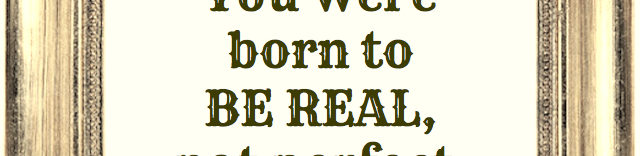
    You Were Born to Be Real

    “Authenticity is the daily practice of letting go of who we think we’re supposed to be and embracing who we are.” ~Brené Brown

    Growing up I experienced a rollercoaster of emotions. One minute I would be on top of the world and the next I felt overwhelmed by anxiety. I didn’t know how to share my difficult emotions in a healthy way with my friends and family, so I started suppressing them instead.

    I realized early on that it felt safe to hide my feelings, because no one could judge me if I kept them to myself. I believed that emotions were a sign of weakness, and there was a reward for keeping it together—I never rocked the boat, and everything around me remained peaceful.

    But I learned that you can’t trade authenticity for safety and expect to stay true to who you are at the core.

    Although it seemed like I was protecting myself, suppressing everything erected walls around my heart and reinforced the belief that it was not safe to share my genuine feelings with anyone else.

    As a result, I started having issues with food, and it soon turned into an eating disorder and resulted in anxiety and depression.

    Rather than being truly authentic with others, I became strategic; everything I said or did was a thought-out plan to gain acceptance. Being truly authentic with others was just too risky.

    I’ve since learned that we cannot truly experience the benefits of a relationship if we are not authentic. To fully feel the love and connection we all yearn for, we have to show people who we really are.

    As I let go of what others thought I should be, feel, and say, I started becoming more authentic with those I trusted most. And as I shared feelings that felt risky to expose, the people who truly cared about me received them with love rather than judgment, and those relationships got stronger.

    Other times, I shared my true feelings and learned I couldn’t trust certain people with them. I had to let go of some relationships because they were holding me back from being my true self. Although not easy, this was necessary in order for me to evolve and grow.

    Authenticity connects us. It is a great gift we give to another person when we let them see behind any masks or the walls of emotional armor.

    Even more so, authenticity is a priceless gift we give to ourselves.

    How do we become authentic in our relationships?

    Begin practicing authenticity with someone who will not judge you, advise you, or try to interrupt your process.

    This person can be a dear friend, family member, mentor, coach, or counselor, who will receive the gift of your authenticity with compassion.

    For me, it started with owning my own story and starting to share it with others. One of the first things I did was write a letter to one of my dearest friends telling her about my struggles, and she embraced all of it with love.

    Develop rituals.

    Rituals teach us to be disciplined and deliberate. Develop rituals that you will use daily to practice authenticity and let go of shame and guilt.

    The first two hours of each day are for me. I exercise, journal, and on a good day, get some meditation in too.

    It allows me to set my intentions for the day, and to say thank you. It allows me to be exactly who I am with myself so that I can be the most authentic person with others. I love my time in the morning and ever since I started consistently doing this, my life has changed.

    Trust your intuition.

    That feeling in your gut that tells you what is right and wrong. Not always easy to do when you’re fighting against the naysayers and those who can’t handle the most authentic you. Trust and follow it anyway.

    This has been a practice for me. I have not always been good at listening to my intuition for fear of standing up, rocking the boat, and being judged. I have learned that my gut is never wrong, and I now listen and trust.

    Forgive yourself.

    If you are holding onto something that isn’t allowing you to move forward, forgive yourself and let it go. Not forgiving yourself will keep you swimming in a swamp filled with your gremlins, and unable to experience healthy and happy relationships.

    I have made many mistakes in life. I followed the wrong crowd, I didn’t always do the right thing, and I held on to that guilt and shame for many years. It didn’t serve me.

    It wasn’t until I was able to forgive myself that I was finally free to move past the mistakes I had made. I was finally able to move forward and become my true authentic self and tell my story.

    Respect and value who you are.

    When you do, you set the standard for how others treat you. You have permission to be you—unapologetically and authentically you. To have strengths and weaknesses and know that those are what make you unique and amazing.

    The truth is that others will treat you with the same respect you show yourself. I didn’t believe I was worthy of having healthy relationships with people who valued who I was, because I didn’t know how to value and love myself. I often sabotaged friendships and relationships with good people.

    When I started my healing journey and practiced self-love, meditation, and positive affirmations, I then started to believe that I was worthy of healthy relationships.

    Know that you are valued and needed by others.

    People need you, and the right people will value who you are and what you stand for when you are authentically you. The world needs to hear your story.

    My healing process started when I shared my story and spoke my truth.

    I learned that it was okay to be vulnerable and authentic. There are people who related to what I had gone through and were inspired and grateful that I could share. It allowed them to be okay with sharing their story and start their own healing journey.

    Just like most skills in life, with practice your ability to recognize and tolerate emotions and be authentically you will improve. Increased self-awareness is the key to having successful, long-lasting, authentic relationships.

  • How to Turn Your Fear into Excitement So You Can Pursue Your Dreams

    How to Turn Your Fear into Excitement So You Can Pursue Your Dreams

    Follow Your Dreams

    “There are two basic motivating forces: fear and love. When we are afraid, we pull back from life. When we are in love, we open to all that life has to offer with passion, excitement, and acceptance.” ~John Lennon

    When it comes to facing fear and moving past it in order to see my dreams realized, I was always advised to power through it. Do the thing that scares you, no matter how much it makes your heart pound. Take that step that makes your stomach knot up in tight balls. Do it and power through, or else miss out on life.

    For a long time, I felt these were my only two options. I could either have moments of crippling fear as I chased what I wanted, or I could feel like life was passing me by as I let my passions die.

    One of my passions is writing screenplays, and so I continually did what I thought I should do in order to become a successful screenwriter. I called people who gave me anxiety. I put my work out to places I felt I wasn’t ready for. With each step I took, I hoped and prayed I would get more comfortable.

    I couldn’t live with the constant fear I was feeling, and yet no amount of powering through was making it go away. It was, in fact, growing, because it felt like I had no control over it. The fear was getting larger than my dreams, and I became exhausted and eventually burned out.

    I had no choice then but to take time to pause and reflect. When I did, I could see the counter-productive patterns I was engaging in.

    I was forcing myself to do things that brought me angst rather than joy. The advice to power through had turned me into a bully toward myself.

    Because I wasn’t doing the kind of behavior I normally associate with being self-destructive, such as constantly criticizing myself, I didn’t see my actions as being hurtful. In fact, I saw them as honoring my journey because I was chasing my biggest goals.

    However, when the dust settled and I stepped back, it was very clear that by powering forward, I had left behind a crucial thing: self-love. I wasn’t listening to myself.

    Because our inner world is always mirrored back to us, I always had the frustrating feeling that people weren’t listening to me.

    Instead of hearing my great ideas, they would hear the shake in my voice. They would hear me rambling on because I was too nervous to be clear and concise, and they would tune out, ending the call as I would slump down in my chair, knowing I’d blown it.

    Compounding this is the fact that I also wasn’t treating myself as an important person. I wasn’t honoring that the fear and anxiety was taking a toll.

    This too was mirrored back in the fact that people forgot me as soon as we connected. I never got any follow-up calls after my initial pitches, which only fed into my fears more. The momentum I had going was certainly powering me onward, but in the opposite direction of what I wanted.

    Once I could see the patterns, the solution was obvious. The old adage “what you resist persists” repeated in my mind.

    I had to first of all accept that I was living from a place of fear. I allowed myself to acknowledge that I didn’t like being afraid all the time. This swept through me in a wave of relief, and I felt free to choose what I wanted rather than what I felt I was supposed to do.

    I began cultivating and prioritizing self-love. The more I slowed down, took time to ask myself if I was okay, and returned to my meditation practice, the easier things got. What began to reflect back to me were my new feelings—that I’m important and what I do is important.

    As I went through this process, I was able to stop fearing fear itself. This too helped me to reverse my momentum even further, because I was open to receiving new information. I learned how fear begins in my brain and body. Once I understood how it worked, it wasn’t this huge, abstract, and uncontrollable thing.

    Fear begins in a place in the brain called the amygdala. The amygdala processes a situation and decides if it’s safe or if you need to get scared and run away. If it decides something’s not safe hormones are released in order to get your body moving and prepare you for fight or flight.

    Attached to the amygdala is the hippocampus, which is where your memories are stored. These two things work together. The amygdala looks at old memories as a way of assessing a current situation. This process is meant to be helpful, but when we’re not aware of it, it can run amok and become hurtful.

    As an example from my own life, one bad phone call with a potential agent had been stored in my memories. From that point onward, when I went to call someone with a pitch, my amygdala would access that memory and immediately label all related phone calls as bad, which steamrolled as I would get more anxious, have more bad phone calls, and dread any interaction.

    This was my brain trying to protect me by ensuring I wouldn’t engage in something that might cause me harm or emotional pain.

    Understanding this about my body and how I process things gave me a huge amount of power back.

    It was reassuring first of all to know I wasn’t trying to subconsciously sabotage myself, but to instead keep myself safe. It was also reassuring to know where this started, because once I was aware of the root of it, I could begin untangling myself from it.

    The more I began to see fear as something I could manage, the more I felt I could work with the fear rather than trying to power through it. It was then that I began to feel that thing I’d yearned for but felt was impossible to reach—excitement. I remembered why I’d started writing in the first place.

    I felt excitement to share my stories and see them made into films. I felt excitement about contacting people who were passionate about film also. I remembered how good it was to feel excited about talking to people rather than fearful.

    From this new, more self-love-based place, I started contacting people again. I listened to my inner voice, and if something made me feel fear, I would stop. I would tune in, breathe, and ask myself if I was attaching old, unrelated memories, or if it really was my intuition trying to tell me something was amiss.

    I’m happy to say people are requesting my scripts again, and I’m now enjoying pursuing my passions more than ever. I wake up excited rather than with dread. I take steps and go for things, as I did before, but without feeling like I’m stretching a rubber band that’s about to snap.

    If you’re also paralyzing yourself with fear, see what happens when you put self-love first. When you believe that you’re worth listening to, and show up confident, without an energy of desperation, people will be far more interested in what you have to say.

    And when you feel your fear creeping back in, instead of ignoring it and pushing through it, step back, breathe, and remember that your own mind and body have created it to help you.

    When you realize it’s not some big, monstrous force that shows up without your consent—that you’ve created it to keep yourself safe—you can learn to let it go.

    Follow your dreams image via Shutterstock

  • Why Being the Best Is Not the Key to Happiness (And What Is)

    Why Being the Best Is Not the Key to Happiness (And What Is)

    Happy Man

    “A bad day for your ego is a great day for your soul.” ~Jillian Michaels

    A few weeks ago, when I was feeling a bit down on life, I was surfing through Facebook and found myself getting more and more upset.

    There were weddings and vacation photos and posts about promotions and new purchases and all the great things that happen in people’s lives.

    These were my friends, and I couldn’t understand why I felt so unhappy. Why did I feel a pit in my stomach that I wasn’t good enough when I heard about someone getting the job of their dreams? Why was I so thrown by other people’s lives going well?

    That’s when an idea that has been bumbling around my mind for a few months hit me like a ton of bricks. I realized something I’ve always known but never had words for.

    I realized the evil of my own ego.

    Ever since I was young, I was that kid in school who needed to be the best, who needed all the awards.

    I took something I was good at (academic achievement) and created an identity around it, visualizing myself as the Best. And I succeeded. I was valedictorian. I graduated Summa Cum Laude.

    I got the awards, the grades, the standardized test scores, the recognition, all of which was meant make me happier. It never did. 

    With an identity centered around being the top dog in my field, I became obsessed with the people who were better.

    There was always someone who achieved more than me, or someone else who got an award I wanted. Even if I was number one in the class, there were always those points that I missed or the looming fear that I couldn’t do as well on the next test.

    I made myself miserable trying to placate the beast inside me, a beast that was never content, could never relax in the glory of what I had accomplished. It always wanted more, more, more.

    I walked away from that academic life almost a year ago and started writing books. Right away, I realized I had to fight that ego, suppress the beast inside me that still wanted to be the best.

    Writing has always been my joy in life and I didn’t want to do it for money, fame, or success. I wanted to do it because it was something I’d always wanted to do. 

    For months I fought down my ego and tried to focus on the simple joy of creating stories and playing with characters.

    I certainly slipped up a number of times and I still compare myself to others on bad days (like the one described above), especially other writers my age. But on the days I can put that self-image aside and just be, those are times of true bliss, the days I’m happier than I’ve been since I got my first A.

    Perhaps you won’t agree, but I’m starting to believe that a significant portion of the bad things in life stem from our own gluttonous egos.

    We want to be the best, be recognized, be validated and put on a pedestal, but years of research and eons of evidence tell us that those are not the things that make human beings happy.

    Ironically, it’s selflessness that tends to make us most content.

    Doing work for no other reason than because you love it; giving time to your family or a cause that matters to you; luxuriating in the simple pleasures of a good meal, exercise, a book you love, or a beautiful view—these are the things that matter, the things that make our experience on Earth worthwhile.

    Money, fame, glory, accolades, recognition are like heroin to the human brain. Some deep and intrinsic part of our nature wants them, and when we get them it sure is a rush to the system.

    But the rush is fleeting, empty, and immediately requires more.

    Focusing on these material, external things and structuring our lives around them can be just as unhealthy as destructive drugs.

    The trap of vanity can capture a soul and mutilate it beyond recognition. Relationships fail, passions are lost, and years later we find ourselves wondering how we spiraled down to such a point.

    I know because I’ve been there.

    I compared myself to my peers in school. I’ve compared myself to my friends on Facebook. I let competition run my life for years. And never once did it make me happy.

    I’m not perfect and I still fall into the trap of wanting to impress everyone. But I’m fighting that instinct day by day, trying to do what all the sages and wise men advise: Don’t give an owl’s hoot about what others think of you. 

    So kill your ego. Don’t compare yourself to others (a truthful cliché) and do things just because you enjoy them.

    Create work you love. Spend time with people who make you happy, make you better. Enjoy the views, climb the mountains, swim in the oceans, and do all the things you’ll be happy to remember when you’re old.

    I can personally guarantee fighting to “win” the game of life isn’t going to be one of them.

    Happy man silhouette via Shutterstock

  • How Meditation Calms Your Mind and Makes You Feel More Alive

    How Meditation Calms Your Mind and Makes You Feel More Alive

    “While meditating we are simply seeing what the mind has been doing all along.” ~Allan Lokos

    People around the globe have practiced meditation for centuries upon centuries, and it’s quickly becoming one of the most popular pastimes in the modern world. It’s one of the most effective ways to find inner peace, relax, and cope with stress.

    I’ve had my share of stress and troubles over the years. I remember one time, nearly eight years ago, when the stress and anxiety really got to me and made my life miserable.

    I was facing the prospect of being made redundant at work. The economy was in a bad way, money was tight, and my relationships were strained. I didn’t see any clear way out of the oncoming storm.

    The darkness began to surround me. Depression hit, and I began taking tranquillizers. I didn’t feel like doing anything. I was apathetic and often vented my anger on those who were closest to me. On top of this, I treated my body poorly by eating junk food.

    All this was affecting my health, as well as my performance at work and in life itself.

    One day I decided that I could not live like that any longer. I had finally had enough.

    How I Turned My Life Around

    To begin with, I was open and honest with friends and family. I explained why I was so stressed and how poorly I was coping, and told them that I planned to change.

    I told myself that everything would be fine, that these bad days wouldn’t last forever; it was just a temporary experience. And even if I lost my job, sooner or later I would find something else. It wouldn’t be the end of the world.

    I joined a local gym and began exercising.

    I’d exercise three or four times a week after work, would eat fresh and healthy meals, which I’d prepare for myself, and would work a little bit in the garden behind my house.

    Work slowly began improving. I kept my job, and once again I felt pretty good.

    At the gym one day, however, I got talking to a guy about general health, fitness, and positivity, and he recommended meditation.

    I was sceptical at first. I thought meditation was something reserved for monks.

    Nevertheless I decided to give it a go, and eventually incorporated it into my daily routine.

    Meditation now comes as natural to me as brushing my teeth and showering in the morning.

    I’d like to share a few of the fantastic benefits that I’ve experienced with meditation in the hopes that maybe you could experience them too.

    1. Meditation helps you foster inner peace.

    As we leave our homes or belongings untidy and unmaintained for prolonged periods of time, they become dirty, grimy, dusty, and aren’t very pleasant to look at or be around.

    Now, imagine your body as an untidy room or belonging. Instead of dirt, grime, and clutter, however, you experience anxiety, stress, depression, and negative thoughts.

    We can pick these up from all sorts of locations, including things we see on TV or on the news, from people at work, from friends and family members, from stressful situations, and just about everywhere else in the world today.

    Rather than stewing over these situations, surroundings, and people, meditation teaches us to simply release the negativity. It won’t remove those feelings, but it does give us tools to be able to cope with them in a more effective way.

    The little things, even the larger things, don’t bother us as much, so we can remain positive, happy, tranquil, and peaceful within our self.

     2. Meditation helps you find more perfect moments.

    Rather than reacting to people and situations, you instead find yourself observing the world that is happening around you.

    Before meditation, I would focus on the negative energy and allow it to overwhelm me. Thanks to meditation, I discovered something amazing: that there is perfection everywhere around us.

    Instead of focusing on the negative, I found myself searching for the positive perfection in each moment. The faint smile from a stranger, the taste of my favorite meal, or even just the comfort of spending a few moments in quiet solitude all became more important to me once I could release the negative energy.

    3. Meditation helps improve your concentration.

    One great benefit of meditation is that it helps you vastly improve your concentration levels, which in turn will help make you far more productive.

    When you meditate, you clear your mind of distractions and instead focus on the act of mediating itself. Then after meditation, you’re better able to focus on what’s right in front of you instead of getting caught up in your thoughts, fears, and worries.

     4. You don’t find yourself bothered by smaller things.

    Say, for example, you drop your dinner plate on the kitchen floor and have to then clean it up. Rather than shouting, swearing, and stewing over the fact that you made a small mess, meditation teaches us to not get bothered by smaller things.

    Instead of feeling angry and sorry for ourselves, we simply grab a cloth and broom, clean up the mess, and get ourselves more food, without getting worked up about it.

    Meditation teaches us to not sweat the small stuff, and helps to really put things into perspective.

    There are people out there dealing with overwhelming problems. In the grand scheme of things, a little mess isn’t that big of a deal.

     5. Meditation helps to awaken forgiveness.

    Another great benefit of meditation is that it helps us let go of anger more easily so we can forgive and forget.

    When I was working abroad I fell ill and had to go back home earlier than I planned, so I took my payment and left.

    What I didn’t realize was that I was entitled to a bonus for my work. It wasn’t much money, but still, it was something.

    A few months later, I found out from a co-worker that “my good friend” had collected my bonus from my boss and did not give it to me when he came back home.

    I was angry and disappointed, especially since we’ve known each other since kindergarten and I trusted him. It was months before I started talking to him again.

    I’m not 100% sure how I would react to something like this today, but I’m fairly certain that I wouldn’t keep my anger bottled up inside of me, as it is self-destructive. With the peace I’ve fostered today, it likely would be far easier to let go.

    We all have those moments where we say, “I’ll never forgive that person. Don’t they know what they’ve done to me?” What meditation has helped me to realize is that forgiveness isn’t about giving something undeserved to others. It’s about giving something that is fully deserved to myself.

    6. You begin to feel more alive.

    It might sound a little cheesy, but since I began meditating regularly, I’ve felt more alive than ever before.

    It’s as if all of my senses have been awakened simultaneously. Images seem crisper. Flavors seem tastier. Joy seems happier (if that’s even possible).

    I’ve found that I’m able to read people better, as well, both emotionally and physically. There’s this sense that allows me to detect if something is bothering someone or if they are having a brilliant day. It’s a beautiful experience that was entirely unexpected when I began my pursuit of meditation.

    Above all else, I’m more self-aware. I know what works and what doesn’t work for me. I know how to get the best out of myself, productively and spiritually, and it’s all because I took up meditation thanks to a fateful conversation I had one day at the gym.

    “Small shifts in your thinking, and small changes in your energy, can lead to massive alterations of your end result.” ~Kevin Michel

  • The Key to Freedom: Minding Your Own Business

    The Key to Freedom: Minding Your Own Business

    Freedom

    “The day you stop racing is the day you win the race.” ~Bob Marley

    Let me take you back to the beginning of my day, how I used to do it.

    Flicking through my Facebook newsfeed, clicking on profiles, scrolling through comments, monitoring social interactions, checking how many likes my last post or profile picture got. Then I’m going to my therapist, to talk about how worthless my own life is, how inadequate I feel.

    I’m not saving the world, pursuing my passion, making friends, or traveling. Neither am I getting married or engaged nor having children—and I do not have a clue what the heck I even think about all of these prospects, whether I even want them.

    I can barely look at myself in the mirror. I hate my life and my own weakness for not taking control of this pathetic situation.

    The smiling faces on my social media page grin down at me like clown masks in some perturbed haunted house in a nightmare. I ask myself, why am I taking their happiness so personally?

    We can’t seem to escape comparison. We seem to be enmeshed in it, entangled in it, trapped and suffocated by it. We can’t seem to understand who we are or where we are in life without looking around us to compare our position.

    Somewhere inside us we believe that if we can gain all the information that we can through comparing ourselves to those ‘better than us,’ maybe we will find the key to that elusive happiness, which comes only from the confidence that we are good enough.

    If we keep on social media stalking those who are living the lives of our dreams, maybe we will pick up on that thing that makes them so different from us—so much ‘better.’

    I believe we aren’t after their lives so much as what we perceive is their ease. As much as the freedom they ooze, or the contentment they display, we want their happiness. We forget that most people only display the highlight reels of their lives on the Internet.

    In fact, I used to tell myself that we create ourselves, and I tried to make myself a collage of all the people that I admired—Beyoncé included.

    I told myself, that I didn’t have any preferences. I treated myself as a blank canvas, and by that I mean I slowly rubbed out anything that came from within, without reason or logic, and replaced it with everything I was attracted to externally, like a magpie.

    The noise I was letting in from outside was torturing. And deafening.

    When the toxic concoction of low self-esteem, ambition, insecurity, and unfavorable self-comparison escalates, you may get depressed, as I did.

    My former way of life (in combination with a complex range of other factors) made me ill. While everyone is different, I realized, for me, the key to recovering my mental health was to supplement professional help and therapy with a radical simplifying of my life.

    Today, I wake up in the morning and open my eyes, taking a good look around at where I am, noticing a kitten asleep at my feet. I talk with my sister who I share a room with; we both get dressed for work, joking and teasing the other on our rushed fashion choices.

    I look out of my open attic window and smell the fresh crisp air, watching the stillness of the tree-lined street against a backdrop of rolling green hills, before the storm of traffic and rush hour.

    I get changed and choose my clothes. I pick out a book for my short commute to a digital marketing agency where I work as copywriter. I walk to work lightly, observing my surroundings and feeling life flow through me, a dull vibration at every step.

    I sit on a seat on the public bus as children get on with their parents, gossiping and teasing amongst each other. My mind is still, and I feel strangely alone—but alone in my own company. I am with myself.

    I am whole. How curious. What changed? Very little, externally. I unplugged from the noise around me and started to mind my own business.

    It happened one day, quietly, and I found it made my thoughts less erratic, my mind less split and divided. I didn’t force myself to come off social media; I knew I was way too stubborn and addicted to do that. So I turned my attention, gently, not in distraction, to the present moment instead.

    I peeked out of the quicksand that is an obsession with comparison and self-deprecation, and asked myself out of curiosity, what’s going on in my own life?

    I looked around and thought: this is it. Your dreams haven’t come true yet, and your past is filled with soreness. But there is no escape from that which you consider to be a hellhole, this is your life.

    And you are living it.

    Then a curious thing happened. I allowed any pain to pass through me like water in my hands. I processed the beauty in the same way, and I felt a part of life. Like life itself, in fact.

    I realized that I wasn’t in a hellhole at all. Relentless clinging to my thoughts, obsessions, and desperate escapes from life—resistance—had made it so. And all I had to do to be free was let go.

    Don’t worry, minding your own business doesn’t mean ignoring everyone else’s existence. But it does mean you get to control how you give and what you give, so that it is conscious, not masochistic martyrdom.

    Rather than thinking, I should travel abroad and save all those poor unfortunate souls less privileged than I (which is escapist, and also patronizing, and also doesn’t tackle the issue at the root), I began to help my mother, my siblings, my friends and began to write and share work on poverty and mental illness, as these were my most immediate experiences.

    Everyone has a different path, of course, and this is only one route, which brought me peace.

    I decided to pay attention to my existence, seeing as it was the only thing I had, after all.

    And, I started to really see the things around me, like the dust on the corners of my floorboards, and the hundreds of books I’d bought and piled up in desperation for some kind of knowledge that might bring me certainty or security, thinking I should maybe arrange them in alphabetical order.

    I would barely acknowledge these tiny details of living when I was caught up in the whirlwind of my mind—and now they grounded me in a stillness that calmed me.

    I was able to let myself live and feel worthy of the miracle of existence, with all its highs and lows. Above all, I felt a gorgeous freedom, liberating, vast and expansive, allowing me to have fun with curiosity, gratitude, and peace.

    I told myself I would enjoy the days I had, as I passed through this world, just like everyone else was also passing through. By freeing myself every day, and indeed every moment, from the limits of comparison, competition, chasing, and clinging, I began to mind my own business.

    We can all experience this freedom. We just have to choose to see life through our own eyes, by being present in the only moment that matters: this one.

    Free, happy woman image via Shutterstock

  • Stop Waiting for Permission to Live the Life You Want to Live

    Stop Waiting for Permission to Live the Life You Want to Live

    “One day your life will flash before your eyes. Make sure it’s worth watching.” ~Unknown

    I know you.

    You’re smart. You’re driven. You’re a “good girl/boy.” You found out a long time ago that life goes more smoothly for people who follow the rules, so you learned the rulebook inside out.

    People expected things from you, and you made it your job to live up to those expectations—and probably beat yourself up inside when you fell short.

    But now you’re stuck, the way anyone who has spent their life making other people happier than they make themselves gets stuck.

    You wish you could go back to school to study what you really love doing, or maybe you want to start your own business, or buy a camper and drive cross-country, or move to a big city. Or quit your high-stress, high-paying job and instead do simpler work for less money that makes you look forward to getting out of bed every day.

    And every once in a while, when you’re not busy getting your to-do list checked off or giving your time to the people in your life who always seem to need you—when things get real quiet—you feel absolutely desperate.

    You hear the clock ticking, and it’s the ticking off of the moments of a life that’s passing you by.

    You see a whole string of days ahead of you. Out of bed. Off to work. Watch the clock. Count the hours ‘til the weekend. Rejoice on Friday evening. Lament on Sunday night. Repeat.

    Nothing new. Nothing real. Nothing joyful.

    You know, somewhere inside you, that there has to be more than this.

    I know you. I am you.

    I realized not long ago that I’ve spent my entire life waiting for permission. Because I’m a good girl, you see. In my twenties I felt the burning desire in my heart for something more than a go-nowhere nine-to-five office job and the bar on the weekends.

    I wanted a career as a singer. Travel. Excitement. Adventure. Heart-stopping moments of bliss.

    And I wanted somebody—anybody—to tell me that it was okay, that I should go ahead with it. I don’t mean Oprah or some random person speaking to the masses. I wanted somebody who knew me to give me the green light.

    Guess what? It never happened, and it never will. Why? Because nobody can give us permission but ourselves.

    Nobody outside ourselves knows what’s going on in our hearts, no matter how we try to explain.

    Have you ever found this to be true? You can try and try, but there’s a nuance, a depth of desire, that’s impossible to describe. It has to be felt, and nobody else can feel it but the person whose heart is burning.

    So we wait. We wait for permission. Many of us die waiting for it.

    I don’t want to die waiting for it. Do you?

    It’s time for us to come out of our shells and admit that we want more. Let’s be honest with each other and ourselves about what we want out of life. Let’s truly support each other and push each other and not take any excuses.

    And let’s stop taking guff from the rest of the world—the ones who are still too afraid to leave the status quo behind. If that’s really what they want, let’s bless them and then move the heck on, because life is too short to be wasted on wondering what somebody else thinks of us.

    We simply have to be the heroes of our own lives. I’m willing to dust off my cape and step into that role.

    Are you?

    Here are some bits of resistance that will probably come up for you once you decide to reclaim your hero status. (Because you were totally the hero of your own life when you were a kid; you just forgot. Don’t worry. It’s totally cool. Most of us forget!)

    This is too hard.

    No, it’s not easy. But what’s easier—living a beige life for endless (yet all-too-short) years, or accepting discomfort in the present in order to live the technicolor dream life we yearn for?

    There comes a time when we have to move through what’s hard in order to get to “What took me so long to get started?” This is growth, and growth can be uncomfortable, but it’s always worthwhile.

    I’m too old to get started.

    This logic makes absolutely no sense, yet I’m willing to bet there’s no one who hasn’t told themselves this at some point.

    Guess what? If school is going to take you four, five, or six years, you’ll just get that much older anyway, whether or not you go to school. Wouldn’t you rather be happier and feel more accomplished at that point, or would you rather just feel older?

    What will ______ think?

    Listen, nothing anybody does or thinks or says to or about us has anything to do with us. It’s all about their own hang-ups, insecurities, and jealousies.

    We all apply the filter of our own experiences to what we see other people doing with their lives, and chances are our interpretation of even the people closest to us is way off base.

    People won’t accept me.

    I can’t even be flippant about this because you’re probably right. There will likely be at least one person who can’t get on board with your authentic vision for your life. But you know what? For every one person who can’t understand you, there are fifty people who will—you just haven’t met them yet.

    This isn’t the right time.

    Fact: There will never be a right time. Waiting for the right time is just a form of procrastination that stems from fear. Now is the time to get moving. You’ll figure things out as you go.

    Am I crazy?

    No. You’re finally sane. It’s the version of you who believed life was meant to be a boring slog-fest that was crazy.

    Is this even worth it?

    Yes. A million times, yes.

    So, are you ready? Let’s do this. Let’s reclaim our dreams, and when we do, we’ll inspire others to do the same.

    Because life is too short to be spent waiting for permission to get started.

  • How to Discover the Work That Will Bring You Joy and Purpose

    How to Discover the Work That Will Bring You Joy and Purpose

    “The meaning of life is to find your gift. The purpose of life is to give it away.” ~David Viscott

    You are a seeker. Searching for more of life. More joy. More depth. More connection. More happiness.

    Our generation is not willing to settle for meaningless existence. Just to get by, just to keep it all together. It doesn’t interest us any more.

    We want more freedom. Especially in the realm of our work.

    But it can seem like a long road between ‘here’ and ‘there.’ From this job, from this life into… the unknown.

    We know there is deeper purpose to fulfill, so we start to ask ourselves the question…

    What Would Make Me Happy?

    Four years ago I started asking myself this question. And I was coming up with nothing. Silence. Not good.

    I was working as a successful hospital pharmacist, moving up the ladder into management. I made great money and was well respected and efficient. But I was unhappy.

    My professional dissatisfaction had become physical, and my body was speaking to me with symptoms of severe nausea. Sugar consumption was at an all time high and I had to get out.

    But where to go? What would make me happy? What would I rather do?

    I had no idea.

    If you too are at career and life crossroads, you are likely asking yourself this question too. What would make you happy?

    And perhaps, like me, you won’t be able to answer the question at first. Or, if you do dream up a solution it involves distant countries, foreign adventures, and escape. And in your heart you know that’s not the answer.

    You desire a life that you don’t need a holiday to “escape from.”

    You desire a life that is the destination.

    When I first asked myself this question—what would make me happy?—the hospital pharmacist had no clue.

    I was going through the motions of life and finding pleasure in its various pursuits, but there was nothing that really lit me up. Nothing that really sang to my heart.

    And I was frustrated. How was I so numb to life that I couldn’t answer the simple question in a meaningful, not just fly-by-the-seat-of-your-pants kind of way?

    So I rephrased the question from “What would make me happy?” to something more achievable. “What am I curious about?”

    I removed the pressure for this next job to be “the thing that made me happy” and I created space for possibility.

    Every single possibility that sparked a trace of passion or happiness was followed, and it looked like:

    Could I sell antiques? Let me investigate… Perhaps organizing weddings? Or bake bliss balls?

    Maybe I could be a yoga teacher? The list goes on…

    And something remarkable began to happen. I found the more I explored, the more I got to know myself again.

    The more I discovered what didn’t make me happy, the closer to joy I felt.

    The more I became sensitized to what really lit me up, the clearer my direction felt.

    Create Space

    By this stage the desire for change was relentless. The pain of going on, in the current incarnation of my work, was greater than the fear of stepping into the unknown.

    And so I stepped. I reduced my pharmacy job hours and I created space for more possibility, more curiosity, and more purpose to flow into my life.

    When we are busy, the sheer inertia of our day often takes over. Our habits of keeping everything on track, worshiping the goddess of busy, and forgetting to prioritize our pleasure become the norm.

    And these are the same habits that we see to re-write.

    But re-calibration needs space to occur.

    Just like downloading new software to your computer, and waiting for the re-boot to happen, this upgrade takes time. And patience. And the screen will go black for a while.

    We have to be open and willing to sit in the black void while the download is received, while the new paradigm is created. We have to create the space for desire to arrive.

    And keeping busy doesn’t create space. It just creates more of the same.

    Essentially, if you keep on doing what you’re doing, you will keep on getting what you’re getting.

    Stop Reward-Consuming and Clear Your Debt

    At this point in my journey, and in the journey of so many others, money always comes up as ‘the thing.’

    I have expenses. I have a mortgage. I couldn’t possibly live on any less income. It feels risky.

    I hear you.

    But what price do you place on your joy?

    Consider this. The busy paradigm most us live in isn’t overflowing with joy or purpose. So we learn to compensate with treating ourselves to this restaurant, that holiday, this new wardrobe, and that green smoothie every time we are out.

    We find rewards to compensate for our unhappiness, because our consumption increases proportional to our dissatisfaction with life.

    These ‘rewards’ become just that. Rewards. To keep our heads above the surface in a career or life or relationship we don’t otherwise find joyful.

    What if, with the creation of space and the following of your curiosities, you could create more joy, with less stuff?

    I’m not saying that your new joy-filled job is going to pay less. In fact, I would argue that you will probably earn more (I do). But in the short term, your change of direction takes investment. Investment in yourself.

    During my own transition period of creating more space and following my curiosities there were two essential and practical outcomes:

    • I stopped mindlessly consuming. I started investing solely in myself and what nurtured me.
    • I cleared my debts so I felt free to follow my desires, wherever they led.

    And with time, space, and curiosity I felt ready to face the big question.

    What Is My Purpose?

    I started to feel into: What is this concept that we call purpose? How did she get it? And how can I get there?

    So many nights I sat with this question.

    During one of these soul-searching nights I read a quote from the Dali Lama where he said, “The purpose of life is to be happy,” and I realized the truth.

    No one job can define my purpose. No one choice, or label, or career can be my purpose.

    Purpose cannot be defined by one thing. Purpose is a choice that I make every day. A choice about how I show up in the world.

    When I show up with my heart open and I follow my desires, my truth, my passion, my happiness and I share that with the world, I am living my purpose.

    Purpose = sharing my passion with the world.

    This definition of purpose isn’t restricted to one career or one choice. It’s a simple choice every day.

    I can show up as pharmacist Jenna sharing my passion and live a life of purpose.

    I can show up as kinesiologist Jenna sharing my passion and live a life of purpose.

    Which means the more I open my heart, the more I follow my passion, the more I serve through that passion, the more purpose I find in life.

    But following your passion might not manifest as a career at first. Because purpose is more than a job.

    It’s a way of living.

    And often when seeking transformation, the change has to happen within before it manifests out in the world.

    Connecting with your deep passion, which knows how to answer the question “What would make me happy?” fills you up from within. And when that vessel is full, it overflows.

    Into the service of others and into jobs and careers and meaning in the world.

    Which is what we are seeking. More joy. More depth. More connection. More happiness.

    You are the only one who can make the choice, the space, the commitment.

    Choose yourself.

  • How Pain Can Lead to Pleasure and Why We Should Embrace It

    How Pain Can Lead to Pleasure and Why We Should Embrace It

    “The pain you feel today will be the strength you feel tomorrow.” ~Unknown

    We all hate to suffer, and avoid suffering at all costs. I’ve gone through great lengths to avoid discomfort, pain, and sorrow.

    I stayed with the wrong people to avoid the suffering of letting go; I indulged in tasty, fatty snacks to avoid the suffering of not eating them; and I smoked a pack of cigarettes a day to avoid the suffering involved with quitting.

    I stayed in bed for longer than I should to avoid the discomfort of waking up when I needed to. I didn’t exercise to avoid the misery of running and doing pull ups, even though being unhealthy causes a lot more pain. And I avoided the aching uncertainty by staying within my comfort zone instead of going into the unknown.

    Oh, yes! I’ve avoided hardship in so many ways; however, this constant avoidance of temporary distress led to a postponed agony and never-ending pain.

    My life was out of my own control because of this constant avoidance of suffering. I found temporary pleasure in cigarettes, alcohol, sleep, chocolate, procrastination, and T.V. And so I tried to constantly numb myself with these external pacifiers to keep myself from doing and thinking.

    I didn’t want to think; I didn’t want to face my inner demons because I knew that would bring an even bigger amount of pain. It was like a Band-Aid that I didn’t want to rip off, and so I was slowly taking it off and putting it back on.

    I was miserable most of the time, even while I smoked a cigarette with a glass of wine, but at least they numbed the pain. They made my time endurable but not enjoyable.

    I had a never-ending list of things, errands, and problems that needed addressing, but that I kept postponing. Procrastination is the mother of instant gratification and long-term suffering.

    My life was far away from what I had hoped for or wished for, and there was no one to blame but myself.

    I needed to suffer. I needed to suffer for the right reasons and in the right direction. I needed a temporary amount of suffering so I could have a more durable amount of happiness.

    I needed to feel tired and get things done, I needed to crave that chocolate and not eat it, I needed the suffering of nicotine withdrawal, and I needed to look deep inside myself and suffer so I could fix what was broken.

    I needed to stop fearing the pain and embrace it as part of the battle to achieve something greater, something better.

    Suffering is not bad if you know what your suffering is worth.

    I remember when I told a swami, “I don’t know how to quit the things and people who are bad for me, because it causes me pain to let them go.”

    He replied, “Yes, it might cause you pain, and so what? You suffer a little bit and you gain so much more in return; you avoid greater suffering in the future from getting lung cancer, becoming an alcoholic, getting treated badly, losing your job, etc. Don’t fear suffering if you’re doing it for the right reasons.”

    Nothing ever gets done without a little bit of pain.

    And this is all right. When I pushed myself to what I thought was my limit, I realized that it is limitless on the other side of pain.

    A wise man once told me “Pain is just part of the process of commitment. Nothing ever gets done without a little bit of pain. And when you see the result the pain is gone.”

    Change Your Perception About Suffering

    Pain, discomfort, and displeasure. They’re negative emotions and feelings we need to avoid, right? Not always. It is this precise perception I had toward suffering that kept me enslaved to many things.

    That painful moment when my alarm clock shouted at me to wake up, with my eyes still closed, my head spinning from the glasses of wine I had drank the previous night, my lungs burning from all the cigarettes I had smoked and my heart empty of satisfaction.

    For those few hours of fun, five, maybe six hours of “pleasure,” I had to endure sixteen hours of pain, and this was just the tip of the iceberg.

    Of course, how could I endure the displeasure of not drinking and partying on a Saturday night? “Who cares about tomorrow?” I would think. This is the clearest example of instant gratification and long-term suffering.

    Sometimes we indulge in things that are bad for us only to experience a short amount of pleasure, overlooking the long-term effect.

    Enduring short-term suffering can bring on a greater amount of long-term happiness and pleasure. When things get done, when I wake up at 5:30 in the morning and meditate, exercising and fitting into my clothes, freeing myself from abusive people, when I wake up with a clear head and no hangover. And so, suffering becomes pleasurable.

    Slowly, with one foot after the other, I push myself to long-term happiness. Sometimes I give a step back but always remembering the sweet pleasure that suffering can bring me if only I decide to ache for the right reasons.

  • 10 Simple Ways to Ease Your Anxiety Today

    10 Simple Ways to Ease Your Anxiety Today

    Peaceful Woman

    “Smile, breathe, and go slowly.” ~Thich Nhat Hanh

    As an almost recovered anxiety sufferer I know what it’s like to feel stressed, out of sorts, desperate, and unlike yourself. I know what panic attacks feel like; I’ve had many. I wouldn’t wish them on my worst enemy.

    Anxiety can be debilitating and affect every area of your day-to-day life.

    I remember about four years ago, when I was feeling so overwhelmed and anxious I could barely leave my house. I had three young children at the time. It was all I could do to get through each day.

    Just making meals for my little family felt like more than I could handle.

    I remember at lunchtime I was putting together peanut butter and jelly sandwiches for probably the seventh day in a row and I stood there thinking, what on earth is wrong with me? This is not the Hannah that I know! I’m not this person. How did I get here!?

    I slinked down to the floor and broke into tears, as I was filled with guilt about how I wasn’t being the wife and mother I should be. The light was streaming in the window, shining onto our tile floor, filled with crumbs and ants. I couldn’t remember the last time I had swept.

    As the days, months, and years passed by I have learned many lessons, and I continue to learn lessons on a daily basis. I’m human. I still have anxious days but I now realize that they will pass.  

    I accept them.

    They don’t quite sting as bad as they used to.

    You have to keep going. You have to just keep putting one foot in front of the other and know that it won’t be like this forever. Remember that about one in five people feel the same way you do.

    Thankfully, I have gone through this, because it has pushed me to learn about so many facets of health that I never would have been interested in otherwise. I’m stronger in the long run. You will be too.

    I’ve learned that we need to make self-care a priority. Sometimes it can feel really uncomfortable to take time for us. To say no to others and put ourselves first, but we must.

    If we are to be able to give to others, we need to have something to give, whether that is time, love, or patience.

    Our society is so fast paced, hurried, and often stressful. We need to make every effort possible to slow down, take time to relax, and rejuvenate. We don’t naturally build these moments into our day enough, and if you don’t currently, now is the time to start.

    I would love to share ten simple ways you can ease your anxiety today. These are a few of the strategies that I personally practice daily.  

    1. Cut sugar from your diet.

    Sugar can wreak havoc on your health. It adds to the overall burden of stress to your body. Anyone who struggles with anxiety doesn’t need to be adding any extra stress. Sugar is also void of nutrients; during stress, your body needs whole, unprocessed food full of vitamins and minerals.

    2. Use lavender oil.

    Lavender oil has been used for centuries and it’s the most versatile essential oil. With a pleasing aroma and calming properties, it has a relaxing scent that calms the mind and body.

    Use lavender safely on your skin, rub on wrists, behind ears, a dot on your neck, and enjoy its scent. You can use a few drops in the bathtub or in the shower. At night I love to add a few drops to an Epsom salt footbath.

    3. Get to bed by 10:30.

    When you have anxiety, your stress levels are high and your nerves are frazzled. Lack of sleep just adds to the problem. Going to bed by 10:30 will give your body ample time to rest and repair itself and help calm your nervous system.

    By getting enough sleep you reduce cortisol levels and the overall burden placed on your body. Sometimes sleep alone can be the biggest help when it comes to healing anxiety.

    4. Practice yoga.

    As I’ve practiced yoga I’ve noticed a reduction in anxiety symptoms. Now I can’t live without it!

    Through yoga, you learn how to breathe deeply and effectively, which is great for stress reduction. You move your body gently and get some exercise without overexerting your body and stressing it out more.

    Yoga has also been the perfect beginning step to learn how to meditate. Through yoga, you learn to be still, move more slowly and intentionally throughout your day, and you learn to recognize where tension is in your body so you can work to relax those parts.

    5. Go for a walk/jog.

    Getting outside and taking a walk can work wonders for our moods by boosting serotonin, the good mood neurotransmitter. It also allows you to soak up some vitamin D, clear your brain, and get a fresh new perspective on life.

    If your body is up to it, you can go for a quick jog or run. Those who have dealt with long-term anxiety may notice that their body isn’t quite up to jogging or running yet.

    If you feel more depleted, frazzled, and stressed after you jog, especially if that feeling lasts for a couple days, be kind to yourself and don’t push yourself to that point yet. Take a step back and just allow yourself to move gently. Yoga, Pilates, and walking are all great alternatives.

    6. Journal.

    Writing in a journal can be very therapeutic. Just like venting to a good friend or a therapist, you can vent right onto the pages of your journal. But don’t forget to write down the positive too.

    Jot down a few things each day that you’re grateful for. Write about good things that happen. Write down things you want to see in your life that may not be there yet, but write them as if they’ve happened. Don’t worry that it isn’t technically true; it just isn’t true yet, but it can be!

    7. Keep track of your thoughts.

    We don’t always realize how much our thoughts affect the way we feel and how often we even think these negative damaging thoughts. For one day write down every negative thought you have, then flip them and write down the positive version.

    If you think, “I’m so tired, I never get enough sleep,” switch the thought and think, “I may be tired, but I won’t always feel this way, and I can get a good night’s sleep tonight.” This exercise can be very enlightening.

    8. Eat fermented foods.

    Research shows that the microbes in our guts communicate with our brains, and vice versa. Most of our digestive systems have been depleted of beneficial bacteria through repeated use of antibiotics, a poor diet of processed foods, environmental toxins, and stress.

    By eating fermented foods that are high in probiotic bacteria like kefir, fermented veggies, and kombucha, we are adding good bacteria back into our guts and improving our physical and mental health in the process. A recent article published talks about how sauerkraut can even help people with social anxiety. Very cool!

    9. Eat protein at every meal.

    People who struggle with anxiety can benefit from the blood sugar stabilizing effects of protein at each meal. According to some doctors we should be getting fifty to seventy-five grams of protein a day.

    Protein helps fill you up so you don’t have crazy blood sugar spikes throughout the day that can trigger anxiety and panic attacks. Start your day with protein (kefir, cottage cheese, eggs, full fat plain Greek yogurt topped with nuts and fruit) and continue the habit at each meal and snack.

    10. Read positive books.

    When you feel like you just can’t muster a positive attitude on your own, lean on someone else’s positive vibes. Books like, You Can Heal Your Life, by Louise Hay, and Mind Over Medicine by Lissa Rankin are among my favorites.

    Journal your favorite phrases from these books so you can look back at them daily. Never underestimate the power of a positive book.

    I hope these simple suggestions can help you in your recovery process from anxiety. Try them all and see which ones work best for you, and implement them daily.

    Peaceful woman image via Shutterstock

  • 10 Deathbed Regrets You Can Avoid by Making Changes Now

    10 Deathbed Regrets You Can Avoid by Making Changes Now

    Woman with Umbrella

    “While I thought that I was learning how to live, I have been learning how to die.” ~Leonardo Da Vinci

    It’s terrifying, isn’t it?

    There you are—days, hours, maybe minutes remain in your life. You lie there helpless, searching for the strength to say your last goodbyes.

    You look back on your life. All the things you wish you’d done differently.

    As you continue to reminisce an overwhelming emotion comes rushing in, an emotion many are familiar with.

    Regret.

    You set the standards high for yourself. But now that it’s all said and done, more was always said than done.

    There’s no greater fear than leaving this world with our most important goals unfinished. Yet, with never ending hopes and dreams are we destined to live an incomplete life of mediocrity?

    Perhaps it doesn’t have to be that way.

    A New Perspective & Why You Should Burn Your Bucket List

    It’s human nature to desire more. No matter how much we accomplish, we’re wired to create new objectives to pursue.

    For most of my upbringing, I was obsessed with bucket lists. Mine had over 100 things I wanted to do. Anytime I managed to cross one off the list, I’d add ten more.

    The process was never ending and doomed for failure.

    During this time my grandfather passed away. It happened so fast I never got to say goodbye. It was my first experience of how quickly life comes and goes.

    I started thinking about when my time would come. Would it matter what my bucket list looked like on my deathbed?

    So I threw it out. Instead of thinking of what I wanted to do with my life, I started focusing on things I didn’t want to say about myself when it was time for me to go.

    That I was greedy, angry, or rude. That I didn’t care about others, or even myself.

    Death is scary. We can’t change that. But we have a chance to live fully right now—and we can do that by ensuring we don’t have to say these things at the end.

    1. I didn’t take care of my body.

    Your time will come much faster if you don’t take care of yourself.

    Smoking, excessive drinking, compulsive eating, sitting for too long—all these add up over time. Continuing bad habits encourages rapid aging and brings you closer to your final days.

    You can buy another car, a new house, and find another job, but you only get one body.

    If you want an abundance of breathtaking moments, you need a body that’s ready for the long haul.

    2. I let anger get the best of me.

    Anger is a natural emotion. We all experience it, and at times it’s perfectly justifiable. But we do ourselves a disservice if we let anger control us and sabotage our relationships.

    One of the best ways to address anger is to empathize with others and to understand why they did what they did.

    Being proactive and reflecting on the times you’re angry helps you to get to the root of what’s bothering you, allowing you to move on and go back to being happy.

    3. I spent my entire life in my comfort zone.

    There’s no bigger waste of your time than doing the same thing over and over waiting for something exciting to happen.

    Nothing exciting will happen if you don’t get out there and make something happen.

    Escaping the confinement of comfort is a struggle for anyone at first.

    But when you’re looking at your life as a whole, you’ll be proud if you don’t have to say the most unease you felt was choosing what to watch on Netflix to waste the night away.

    4. I spent too much time around toxic people.

    There comes a time when you must face the reality that not everyone you spend your time with is actually benefitting your well-being.

    People change, family members bring you down, and certain people just aren’t fun to be around.

    If you want to make the most of your time, it’s essential you minimize your time with people who drain you emotionally, disrespect you, or otherwise treat your poorly.

    If you think it’s rude to dismiss someone, look at it this way: When you stop spending time with people who aren’t positive additions to your life, you open yourself up to relationships with people who will uplift and support you.

    5. I didn’t stay in touch with family and friends.

    The other end of the spectrum is the people we love.

    Humans are biologically social creatures. We’re meant to be around others, especially the ones we care about most. There’s no sense in fighting the nature of humans because you’re too busy at the office.

    If this doesn’t seem pressing to you now, know that it may one day feel that way, when they’re gone and you realize you didn’t show them how much you loved them.

    6. I didn’t give as much as I took.

    It’s easy to forget that nothing tangible comes with us after we die.

    Once we’re gone, that’s it. Whatever you have gets left behind. So why do we spend valuable years of our lives taking rather than giving?

    Money is always the first to come to mind. I’m not suggesting we give it all away, but I’ve never met someone who was proud to say that all they did with their life was pad their bank account.

    Life is about giving and sharing experiences. The more you give, the happier you’ll be.

    7. I thought I knew everything.

    People often assume that after graduating from high school or college, they know everything.

    But the truth is when you stop learning, you stop growing.

    Since the beginning of our existence humans have been explorers, venturing to the corners of the world and into space to discover more about life.

    Constant learning allows us to discover new things about ourselves and the world, and our experiences teach us things that could never be taught in a classroom.

    Looking at the bigger picture, we don’t know anything. And that’s exactly what makes life so exciting.

    8. I never made any mistakes.

    It seems counterintuitive to wish for failure, but our mistakes are what allow us to grow.

    The point isn’t to make as many mistakes as possible, but to learn from our mistakes.

    Every great revelation, invention, or revolution started with hundreds of mistakes before it, until one miracle made it all worth it.

    It’s not so much mistakes that matter, but having the courage to make them.

    9. I hated my job.

    Accepting the nine to five and secure paycheck. Two weeks vacation for fifty weeks of slavery. Accumulating debt on house loans, car payments, and credit cards. Add on the responsibility of supporting your family, and it may seem you’ll be trapped forever.

    If you don’t enjoy your job now, that’s okay; many feel the same. But if by the time you lay on your deathbed you still hate it and never left, that’s a problem.

    You won’t want to look back and say you took the easy route and played it safe, accepting that you were never supposed to do anything meaningful with your life.

    Leaving a job is scary, especially when raising a family. It doesn’t mean you should quit today, but implementing an exit plan toward a career you actually do enjoy will relieve yourself from years of misery.

    10. I spent my entire life trying to be someone else.

    It’s become the norm to follow the crowd, adapt to the trends, and accept what everyone else is doing and join in.

    By doing this you never encounter the person you really are because you’ve been camouflaged by the identity of society.

    Taking time to understand yourself is life changing. It allows you to gather a clear picture of what you want to accomplish during your short time on Earth.

    You learn the things you love about yourself and things you might want to change. And most important, you understand what makes you unique and how your uniqueness can help you leave the world a better place than you found it.

    One Last Thing

    In the end, you’ll likely reflect on the things you didn’t do. As I said before, it’s human nature.

    But avoiding certain things, such as not taking care of myself and living in my comfort zone, has brought more happiness to my life than a bucket list ever could.

    It doesn’t matter if you swim with sharks, travel to every country, and take the first ride of space tourism; what matters is how you live your life, how well you take care of yourself, and how well you take care of others.

    This is your life, and you only get one. There’s no right or wrong way to live it.

    What matters is that you do.

    Woman with umbrella image via Shutterstock

  • 5 Ways to Create a Life You Love Without Making a Major Change

    5 Ways to Create a Life You Love Without Making a Major Change

    Love Life

    “Some people thrive on dramatic change. Some people prefer the slow and steady route. Do what’s right for you.” ~Julie Morgenstern

    Admit it.

    You feel like something’s missing from your life.

    You see people who have transformed their lives, given up their day jobs, and moved to exotic lands.

    People who have created a new life and found whatever was missing from their previous humdrum existences.

    But you don’t hate your life. You’re okay with a little humdrum. You like your responsibilities—your partner, kids, house, or job. The thought of the life you have stretching out in front of you isn’t awful.

    In fact, you’re just a fraction away from … contentment.

    But still.

    You can see there’s something to be said for adventure. You read the books, the articles, and the posts reminding you to do something new every now and then.

    But you wonder, how can you enhance and love the life you have rather than start a new one?

    Just Because You Can, Doesn’t Mean You Should

    A trend had popped up lately—which given I’m part of, I’m not knocking—for articles about location independence, digital nomads, travel, and freedom.

    The world has changed, and the possibilities for us all, particularly those of us lucky enough to be born in the Western world, seem almost endless.

    We can move continents, switch jobs, change our lives, or go from being an accountant to an artist. We must sacrifice, sure, but the possibility is there.

    But creating a life you love is different for every person. For many people, the way to be happy is through building on what you have rather than starting from scratch.

    I moved from the UK to Thailand because I needed a change in my life. I took a while to settle into my life there.

    Once I did, I realized that creating a life you love isn’t a one-time thing. One change—even a huge one—doesn’t fix everything. I grew to understand that to avoid growing stagnant and complacent, I needed to continue to make tiny course adjustments to stay on track with an amazing life.

    Otherwise, I might end up back where I started—in a life where I didn’t notice I had slipped into full-blown unhappiness until it was almost too late.

    But I didn’t need to start again by moving to some other country or making other exponential changes. I wanted to build on the life I had and make that a tiny bit better every day. I could have mini-adventures right where I was.

    Below are five ways to be content though building on what you have rather than chucking everything you currently have and starting from scratch.

    1. Clear space and pause.

    Sometimes, to see what would best serve us, we need some clear space in our lives—time when we aren’t busy doing anything other than daydreaming and letting our minds wander.

    These days, we tend to be uncomfortable with the threat of boredom, and when we’re left on our own for a few minutes, we’re quick to pick up our cell phones to fill the time.

    I’m as guilty as anyone else. I’ve deleted apps from my phone so that I couldn’t use them like a crutch. I keep my phone in my bag when I’m with others to make sure I don’t check it without thinking.

    Some of my favorite moments in the day are when I’m lying in bed, ready to sleep, and I play with the characters I write about in my fiction, considering plot ideas and just “noodling.”

    This week, use the spaces when you’d usually fill your time with your device, and just pause. Muse and dream about where in your life a little change or adventure would help you move forward and make your life happier.

    2. Reflect and tweak.

    How well do you know yourself? Could you clearly state your likes and dislikes, fears and desires, or what your values are?

    A few years ago, I tried to do the perfect day exercise over and over, and I came up blank. Sadly, I didn’t know enough about my deeper self to imagine it even in my mind.

    I needed time to get to know myself better, including many exercises, courses, and trying out the ideas in this post. But these days, I have no problems visualizing it, and I take a small step closer to it every day.

    You can, too, if you mine your subconscious. For the next week, for five timed minutes each day, brainstorm two lists of at least ten items each—one list containing things you love (or desire), one containing things you dislike (or fears). Go wild; don’t try and be rational or edit yourself.

    At the end of the week, you should have up to 100 things you do and don’t like (repetition is fine). Reflect on the themes or things that came up a lot, and see where you can tweak your life to decrease or increase the presence of dislikes and likes in your current life.

    For example, if nature appears on your list of things you love, be sure to spend a little time every day relaxing or exercising outside. If sitting in traffic appears on your dislikes list, see if you can replace some of your driving time with walking or biking, or make your driving time more enjoyable by listening to your favorite podcasts.

    These small tweaks will nudge you in the direction of a more positive and joyful life.

    3. Experiment and adventure.

    You’re busy; I get that. But you don’t need to go bungee jumping to have an adventure.

    Think small, not big, and create space for one tiny adventure or experiment each week.

    Plenty of opportunities exist for tiny adventures in life every day, from getting off at a new bus stop to talking to a stranger. Perhaps it’s a new take-out place, a free tour at an art gallery, or choosing a movie at random.

    Rather than the head-down, just-get-through-the-day attitude I used to have, I try to see even potentially boring activities as an adventure. Waiting in lines, I people-watch and make up stories, or I dance while doing the housework.

    These mini-adventures will push you out of your comfort zone, face down fears, and help you have more fun.

    4. Soothe and nurture.

    If you’re feeling run down, you’re out of emotional resources, or you’re overworked, you’ll struggle to fit in fun or truly get the most from the life you have.

    This has been a huge learning curve for me. I thought that to wring the most from life, I needed to get my head down, focus, and work and play hard. But burning the candle at both ends left me ill, unhappy, and unable to work and play with all my heart and soul.

    Schedule thirty clear minutes in your day (lock yourself in the bathroom if you have to!) where you have no agenda, and use this time to take care of yourself in small ways.

    You could pay mindful attention to your lunch instead of rushing, snuggle up on the sofa and read when it’s raining, or pay attention to your body by preparing (and eating!) a delicious and healthy meal.

    Your body, mind, and soul are intricately linked, and taking time to look after each of these so that you are ready to live the best life possible is crucial.

    5. Re-frame and re-label.

    Some days are better than others; that’s true.

    But it’s also true that two people can see the exact situation from completely opposing viewpoints.

    If we change our perspective on a situation that’s bugging us, we can improve our mindset with nothing but a change in attitude.

    Instead of feeling annoyed that a friend is late, we can feel glad we have some time to breathe and people-watch (or to do the exercise in #1). Instead of being disappointed that the restaurant we had planned to go to was closed, we can feel excited at the opportunity to experiment with a new cuisine (as in #3).

    Sometimes, when I can see a friend is much more positive than I am in a situation, I ask them to share their perspective so that I can try and adopt it. It’s a fascinating exercise—you’ll be amazed at how differently two people can view a state of affairs.

    How can you reframe and relabel any disappointments, annoyances, or discontent currently present in your life?

    It’s Okay to Live—and Love—the Life You Have

    You need to create a life that’s right for you.

    One that brings you joy and makes you shine a little brighter in the world.

    It doesn’t have to mean leaving your current life behind—your home, job, or relationships—and moving to a far and distant land.

    You can bring a little adventure into your life easily, if you start just where you are.

    Incremental change, not exponential change, might be exactly what you need.

    Love life image via Shutterstock

  • We All Have Bad Days and All Need a Little Kindness

    We All Have Bad Days and All Need a Little Kindness

    ”Be kind to unkind people. They need it the most.” ~Unknown

    A couple weeks back I had what Alexander would call a no good, terrible, very bad day.

    I’d slept poorly the night before—possibly because I had caffeine, which I usually avoid, somewhat late in the day, and possibly because I have a toddler-sized bladder that doesn’t seem to understand or care about REM cycles.

    In addition to being physically exhausted, I was feeling emotionally spent. I’d been dealing with a high level of uncertainty, as my boyfriend and I were preparing to move yet again, after months of discussion about where we’d live long term.

    Also, I was feeling a little disappointed with myself. I’d recently slowed my work down a bit, both to allow myself space to process my feelings related to the move and to work on some new creative projects.

    Turns out, it’s poor logic to expect that I can simultaneously allow a tidal wave of emotion to wash over me and create something completely unrelated to those feelings.

    So on top of fear and worry about the future, I was feeling guilty about “wasting time.”

    In an attempt to improve my mood, I asked my boyfriend if he wanted to get lunch, but first I needed to stop at the post office to mail a package.

    The line looked like something you’d see at Disneyland, except without the enthusiastic banter you usually hear when people are inching closer to Space Mountain.

    My patience was right there with my bladder—the size of a toddler’s—and I really wanted to leave; but the sooner I mailed that package, the sooner I could stop telling myself, “Why are you doing nothing? You have to mail that package!”

    I thought, “It will go quickly,” without any good reason to believe this was true other than wishful thinking. I couldn’t have been more wrong.

    There were three people working at the counter: one helping people with passports, one giving mail to people who were picking it up, and one working with a customer who seemed to be mailing holiday gifts—five years’ worth, to friends, friends of friends, and friends of those people too.

    I was four people away from the front of the line when it hit me—I really had to pee. But I’d already written on a padded envelope I’d gotten from their retail area. I couldn’t leave; I had to pay for it.

    Sweating, with the sun beating down on me through the window, I started shifting my weight from leg to leg, texting my boyfriend in the car to let him know I’d be a while.

    I felt annoyed with everyone—the postal workers, for not working more quickly; the other customers, for not having fewer things to mail; the manufacturer of my shirt, for not making it more breathable.

    By the time I finally got to the front of the line, I felt ready to explode. I hoped this would be quick—here’s my package, mail it cheaply, have a nice day.

    That’s not what happened.

    The woman behind the counter told me I didn’t write the city legibly, and then began to write, even less legibly, on top of it.

    Since I’m a perfectionist, and because this package and the recipient were important to me, this really bothered me—that it looked like I spelled “round” wrong the first time, then scribbled over it and said, “Yup, this looks good to go.”

    Exasperated, I told the postal worker, “That looks horrible. I don’t want it to look like I can’t spell ‘round.’ Can I just get a new envelope?”

    I ran to grab one, then looked at the winding line and panicked. What if she took another customer while I was writing, and it was someone else with a half-hour worth of stuff to do?

    Then, while pressing the pen so hard it almost broke in my hand, I heard “Next in line.”

    “Could you just wait one second?” I implored. It’s just such a long line, and I waited so long, and I’m like three pen strokes from done.”

    She obliged, equally annoyed—after all, the winding line had greater implications for her than me. Then, after beginning to process my package, she said, “You have the wrong zip code.”

    Thus began a ridiculous back-and-forth discussion about who was right—her computer, or my post-it note, backed by Google.

    I really didn’t want to have to come back, and I didn’t want the package to get returned to me—at a place I wouldn’t be living at for long.

    So finally, after arguing for a bit, while shifting from leg to leg and wiping sweat from my brow, I said, “Never mind. I’ll just pay for my two envelopes and go.”

    I hadn’t yelled at her. I hadn’t insulted her. But I’d been rude. I’d been frustrated, impatient, and impolite. I’d vomited “bad day vibes” all over her, then left in a huff.

    And I felt terrible about it.

    I returned home and emailed the recipient to verify the zip code, and it turns out the postal worker was right—the recipient had given me the wrong one. It showed as the right address in Google because Round Rock has multiple zip codes.

    I felt even worse then.

    “This was so un-Tiny-Buddha-like,” I thought. “I should be better than this.”

    Should. There was that word again. What’s the worst thing you can do when you’re having a bad day? Pile on reasons to feel bad.

    So I decided to cut myself some slack. Did the postal worker deserve my attitude? Nope. Could I have been less volatile? Sure. Would it do any good to beat myself up over it? Absolutely not.

    The next day, after getting a better night’s sleep, I went back to the post office again, armed with the correct address. This time, there was no line. I immediately saw the postal worker from the day before, rearranging some packing material in the retail area.

    “Excuse me, “ I said, “Do you remember me? I was here yesterday…”

    She seemed to arm herself emotionally, glancing at me, then quickly away, before saying, “Um, yeah.”

    “I was rude to you yesterday,” I said, “and I’m sorry.”

    It felt strange and vulnerable to say this to a stranger, but I was sorry.

    I was sorry because I imagine her job isn’t easy. And the sun was beating down on her too. And she didn’t get to run out when I did, to eat lunch, go home, and decompress.

    She was doing her job—and a good job at that—and I was sorry I treated her poorly.

    She looked at me, her body softened, then she reached out for a hug. I doubt she knew it, but I really appreciated that hug. I needed it.

    “It’s okay,” she said. “I know how it is when you have an important package to mail.”

    “I was just having a really bad day,” I said, “and you were right. I had the wrong zip code.”

    “It’s okay,” she said again. “We all have bad days.”

    Where I stood just yesterday, feeling rude and ashamed, I now stood feeling kind and proud. I doubt she knew it, but she gave me a tremendous gift. She reminded me that my worst moment didn’t have to define me.

    I could choose to do something different. I could choose to take responsibility, admit my shortcomings, and do better today than yesterday.

    I don’t know about you, but I’ve come to realize I’m a lot like that scribbled “Round Rock”—messy and far from perfect. I make mistakes. I’m not always kind or polite. Sometimes I let my emotions get the best of me. Sometimes I don’t deal well.

    But maybe these little mistakes are big opportunities. Maybe the worst of humanity can give way to the best.

    Maybe every moment of rudeness is a hug waiting to happen. Okay, so that’s kind of cheesy, and maybe a little idealistic. And I realize there are situations when people are far ruder than I was, and far less understanding than she.

    But I know next time I encounter someone who seems impolite, I’ll remember how I felt that day. I’ll remember I’m likely not seeing them at their best, and this doesn’t define who they are.

    Then I’ll look them in the eye and think to myself, “It’s okay. I know how it is. We all have bad days.”

  • When Helping Someone Becomes Unhealthy: Why You Can’t Always Say Yes

    When Helping Someone Becomes Unhealthy: Why You Can’t Always Say Yes

    Helping Hand

    “When you ask for what you need and receive what people and the world have to give, you reduce stress and gain energy.” ~Amanda Owen

    It started out innocently enough. The guy I was dating (let’s call him Eric) was applying to jobs, and I, a writer, could help him with cover letters and applications. I offered to help and thought nothing of it. It seemed like a simple thing to do for someone I cared about.

    A few weeks later, Eric had some car trouble and I lent him my car. He drove it around for a week and returned it with less than a quarter tank of gas. Not really awesome of him, but not worth getting angry over. After all, he just had to pay for car repairs and I knew that money was tight for him.

    Then one night, Eric and I had plans to hang out. I texted him when I was leaving my house to say he could expect me in twenty minutes.

    He replied asking if I could bring two rolls of paper towels with me. Kind of a weird request, but okay…I obliged. When I got to Eric’s apartment and asked why he had me bring paper towels, he shrugged and said that he had run out.

    At this point in the story it is probably worth mentioning that Eric lived across the street from a convenience store, where they sell (wait for it…) paper towels.

    I wish I could say I ended things there, but this pattern continued until Eric had moved into my house, taken over two spare rooms, parked himself permanently in front of the TV playing video games, and relied on me to cook, clean, and buy all food and supplies for the household.

    Eric kept saying he’d pay rent, but never seemed to have the funds, and I knew he made less money than I did so I didn’t press the issue.

    He rarely paid when we went out for dinner or drinks; I usually picked up the tab for both of us because I just wanted to get out of the house. I was frustrated, but trying to be supportive and “help” someone through a hard time.

    Then after a year and a half I finally started to see (and feel) how damaging this relationship dynamic was.

    Eric not only mooched off of me for material things, but he was also draining all of my emotional energy. I’m not sure he was even aware of what he was doing. He was just so bad at managing his own life, coping with hardships, and being an adult that my earnest effort to help him positioned me as his crutch. 

    This situation is not uncommon; I think we all sincerely want to help when our loved ones are struggling. But there has to be a limit. You simply can’t get caught up in giving so much that your own need for support and caring is squeezed out of the relationship entirely.

    The lessons I learned from my experience with Eric can be summed up in four ways:

    1. Don’t brush off the “little” things.

    It’s easy to make excuses for someone, especially if they’re charming and you genuinely care about them. But be aware of how much laxity you’re granting.

    Small things you may be tempted to ignore for the sake of being nice or keeping the peace do have a cumulative effect. If you’re constantly talking yourself into feeling better about someone’s behaviors, it’s time to speak up.

    2. Set boundaries and hold the other person accountable.

    Just because you can help in a situation doesn’t mean you have to. When you let someone take advantage of your kindness or generosity, you’re setting a dangerous precedent. When someone goes too far in asking something of you, tell them how their request makes you feel and explain why you are choosing not to grant it.

    3. Ask for stuff.

    Don’t forget that it is important for the other person to understand and respond to your needs, too. If asking for what you want is difficult, start small. Ask them to change the radio station if you don’t like the song, or ask them to hold your hand in public if you need more affection.

    Practicing with low-stakes requests will help build confidence for when you need to ask someone to meet your larger needs and desires.

    4. Check in with yourself often.

    Avoid the pitfall of making the other person the star of the relationship while you play supporting cast. Make a habit of taking time for yourself, reflecting on how the relationship makes you feel, and noting areas of imbalance you need to address. If being with someone is draining you financially or emotionally, it’s time to make changes.

    Being in the constant role of caregiver is not just a disservice to you, but a detriment to the relationship itself.

    When two people are not on equal footing there’s no room for a real connection to flourish. It’s always a wonderful thing to show kindness and support to a loved one—just be sure to keep a portion of yourself that’s just for you.

    Help vector illustration via Shutterstock

  • Forgiving Abusive Parents and Setting Ourselves Free

    Forgiving Abusive Parents and Setting Ourselves Free

    TRIGGER WARNING: This post deals with an account of physical abuse and may be triggering to some people. 

    “Forgiveness is not always easy. At times, it feels more painful than the wound we suffered, to forgive the one that inflicted it. And yet, there is no peace without forgiveness.” ~Marianne Williamson

    Growing up in the seventies and eighties with Italian immigrant parents definitely had its challenges. In a family of four girls, I was number three. That in itself was tough enough. Never as good as the first-born and not as loved and protected as the baby. Yes, it was challenging.

    On the outside, one would think that we were a picture perfect family. Our lives were as normal as normal could be.

    Both parents worked. We had a beautiful house in a nice, quiet neighborhood. We all went to good Catholic schools. Had fun family vacations in the summer. Our parents entertained a lot, so there was always a bustling of activity at the house. Picture perfect, indeed.

    Unfortunately, Mom and Dad lacked parenting skills. Sure, they provided food, shelter, and the necessities of life. Compassion, encouragement, and love? Not so much.

    Behind Closed Doors

    My mom was cold and mean to Dad, and often to us. My dad was cold and mean only to daughter number two and me. I never liked my dad. He didn’t get us. He was always angry with us. I’m pretty sure he didn’t even like me.

    And so began the misery.

    The beatings started when I was ten and continued until I finally fled at eighteen years old.

    I ran away several times throughout that period, always returning simply because, as bad as the beatings were, I had a nice roof over my head, food in the fridge and great meals, a nice bedroom, nice clothes, and all kinds of other luxuries.

    So in exchange for all these lovely things, I took the abuse.

    I never knew when I was going to get beaten either, which was the worst part for me. It wasn’t always like I knew I did something wrong, though I’ll admit, I wasn’t an angel.

    More often than not though, it was more like, if sister number two did something wrong and she wasn’t around to get beaten, they took it out on me. I was always on my toes. I never knew.

    There were many nights I would be in bed sleeping. Dad would come home late from work, bust through my bedroom door, tear off the blankets, and whip me til he thought I had learned my lesson. The problem was, I rarely knew which lesson I was supposed to have learned.

    I can recall one incident when my parents had company over for dinner, a lovely elderly couple, a minister and his wife. I loved them so much. They were the sweetest people you could ever meet.

    I came home from a friend’s house, Mom and Dad and John and Sally (not their real names) were sitting in the living room having coffee. I came running in, so very happy to see them, and Dad had that look on his face.

    I froze. Omg, you’re kidding me, right? He’s seriously not going to do this right here, right now, in front of these people, is he? Yup. He sure is. And he whipped me right there. He had an audience and no one stopped him. They just sat and watched. And once again, I had no idea what I had done.

    I hated my father and lived in fear of him throughout my teen years.  Constant fear of never knowing when the next beating was going to be.

    Forgive and Forget?

    As I grew older, I tried to have more of an appreciation for him, but failed.

    I tried to gain his respect and love as I grew into a beautiful, somewhat successful woman. That didn’t work much either. I gave him a grandson that carried the family name. That seemed to work a little. He respected me a little more then and actually even supported me more. Finally something.

    I spent most of my adult years trying to forgive him, like him, maybe even love him a little. The forgiving finally came. Liking and loving, not so much.

    It was clear in my thirties, forties, and into my fifties that I simply did not like my father. Not one bit. Because of that, I lived daily with this monkey on my back. This thorn in my side. Guilt in my soul.

    It ate away at me constantly. Why can’t I just let this go? Who knew that forgetting wasn’t going to be as easy as forgiving? I always thought that once you forgave something, you just naturally forgot about it. Nope. It was clear to me it just didn’t work like that. Not for me anyway.

    Step Up to The Plate

    Years later, Alzheimer’s had struck Mom and it was time to place her in a nursing home. Dad was eighty-four and home alone. This meant only one thing to me. It was my turn to look after dad.

    Daughter number one and I had a schedule worked out. She was retired; I worked full time, so my *duty days* with dad were limited to two to three days a week. That’s not so bad, right? Wrong! It was the hardest thing I’ve ever had to do, and I cringed every single time I pulled into the driveway.

    My job was to sit and have dinner with him and keep him company for an hour or two. I had nothing to say to him, ever. I could barely even look at him. I had no patience for him, and the only thing I felt was pity.

    He was a pitiful old man, sitting alone in a house waiting for people to come visit him, and all I could think was, “Good for you! You deserve this, you miserable old man.”

    I know, shame on me.

    Two years later, we finally placed him in a nursing home. My visits were few and far between. I was overcome with guilt. I should be visiting him more often, right? He’s coming into his last years now and all he wants is love and company.

    I just couldn’t do it. There was nothing left in me.

    I went about once a month, maybe every two months. Still cringing. My only thought was “Geezus, when is this old man going to die?”

    Pretty sad, eh? Here was the man that gave me shelter, food, clothes, money when I was broke, took me on nice family vacations every summer, and all I wanted was for him to get out of my life.

    Fake It Till You Make It

    I struggled with these emotions for a long time. How is it that I, Iva, the sunshine happy girl that sprinkles pixie love dust everywhere, could possibly be having and thinking these horrible thoughts?

    It took some time but I finally learned to rewire my brain. Think new thoughts. “Fake it til you make it if you have to” I kept telling myself.

    I realized it wasn’t going to kill me to show him some love. Some compassion. Show him something for goodness sake, Iva! So I did.

    I hugged him when I went to visit him and said, “I love you daddy” when I left. Maybe it was a lie, but he didn’t know that. That’s all he needed to hear. Someone to tell him they loved him. In his last lonely moments of his life, dad just needed love. And I gave it to him.

    I dug deep down as far as I could and gave him the love he longed for all his life. It meant little to me but everything to him. That’s all that mattered.

    Understand and Set Yourself Free

    When Dad died at eighty-eight years old, I cried tears of relief and closure. But it wasn’t his death that set me free—it was the choice to forgive and treat him with more kindness than he offered me. I knew then the pain hadn’t scarred me for life; I had taken that pain and turned it into strength and wisdom.

    I forgave him because I could finally see he raised me the only way he knew how. That’s all he knew—it was how he was raised—and I felt sad for him.

    Did it make it okay? No. Understanding doesn’t mean we condone it when someone hurts us. It means we understand. And understanding and compassion are the keys to forgiveness.

  • Two Steps You Might Be Missing If Forgiveness Doesn’t Stop the Pain

    Two Steps You Might Be Missing If Forgiveness Doesn’t Stop the Pain

    Isolated Man

    “To forgive is to set a prisoner free and realize that prisoner was you.” ~Lewis B. Smedes

    When someone you care about hurts you in some way, most people tell you that to move on, you have to forgive.

    They say forgiveness is a gift you give to yourself. You have to understand what happened from their point of view. Life is too short to hold a grudge or be angry.

    Well, what if you do all that?

    You forgive. You understand that they really didn’t mean to hurt you or if they did mean to, you understand where they were coming from.

    You seek to let go for your own sake, your own peace of mind.

    And it still doesn’t work.

    You still hurt.

    That’s where I was.

    My parents divorced when I was a toddler. As I grew older, I rarely saw him. I mostly tricked myself into believing that I didn’t care, but it hurt. I didn’t feel loveable or worth the effort, and it colored my future relationships with men.

    As part of my healing journey, I sought out talk therapy. During one session, my father’s absence came up as a topic. It was during that time that I allowed myself to even consider some form of reconnection.

    I decided to write my father a letter, sharing how hurt I felt by his absence and asking all of the questions I always wanted to know. That letter started a reconciliation process that has been under way for the past few years.

    As we got to know each other better, I got to understand why he didn’t come around and what he was going through.

    And when my grandfather died in April, 2014, I got to learn even more about my father’s upbringing and feel compassion for the little boy that he was and how the things he went through led him to become the man he became, including him not being around as my father.

    But something still wasn’t right. I tried to reason away my feelings of pain, anger, and hurt.

    “If you had the same kind of upbringing that he did, you probably would have done the same thing. His absence had nothing to do with you or your worthiness as a person. That’s all in the past, just let it go.”

    But that didn’t help me. I was missing something, so I set out to find it. I read, I wrote, I cried, I punched my mattress, and ultimately discovered two things that were missing that may help you too.

    First, I needed to grieve.

    The adult me needed to allow that little girl in me to mourn what was lost. I never got to know what it feels like to be loved by a man as a little girl.

    Somewhere in me I was holding out hope that by reconciling with him, I would fill those needs, but those moments are gone; there is no way that I can completely fill that void as an adult. I had to mourn the loss.

    When we think about mourning, we most often think of death. There are many other losses in life that we need to mourn—loss of health or a relationship or a job, and I would add to that loss of a relationship you wish you had.

    When we forgive someone and try to maintain a relationship with them post-forgiveness, it is tempting to try to get what we didn’t get before. It’s like we’re trying to redo the past in the present, when the past is gone. All this does is cause more suffering.

    What we’re building with this person is new. We must mourn what we didn’t get, mourn what we wanted, that’s the only way to start letting it go.

    And by let it go, I don’t mean that how you feel disappears. I mean that we no longer let it lead our lives in the present even if the feelings are still faintly there.

    There are as many ways to grieve as there are people. If it works for you, do it. You might try:

    • Crying
    • Writing (journaling, letters that you didn’t send, poetry)
    • Watching movies and listening to songs that help bring out deep feelings
    • Talking to a therapist
    • Finding healthy ways to release anger (punching your mattress, boxing, screaming into a pillow)
    • Reading helpful books

    Mourning is a process that takes time and can’t be rushed. It’s best done in a spirit of allowing whatever comes up, without judgment and with great self-care. The more I really allowed myself to grieve and truly feel everything I’d been holding onto, the better I felt.

    In addition to mourning, the second thing I did was to find ways to fill the needs I still had within that I was looking to my father (and other people in my life) to fill.

    Forgiveness and reconciliation should involve open communication of what is needed to move forward with the relationship and a stated commitment from the person who did wrong to change their behavior in a positive way.

    With that said, there are certain things that we need to feel good as humans that we need to give to ourselves and cannot outsource to others, especially if we want to avoid suffering.

    We must take responsibility for the following things:

    • Our belief in our own inherent worth and deservingness of good things
    • How we feel (emotionally and physically) in a given moment
    • The direction our life is going and how we choose to respond to what happens.

    We can trick ourselves in the short term to believe that other people make or break these things, but we are the only ones who can make lasting change in these areas.

    Reconciling with someone will not change these things in a sustainable way.

    Reconnecting with a parent will not make you love yourself more. Reconnecting with a partner will not make you feel like you deserve good things. You may get a boost of good feelings for a little while, but they won’t last without you dedicating the time and effort it takes to build yourself up from the inside.

    This may feel daunting, but you don’t have to make these changes overnight. Baby steps are not just for babies; they can make a huge difference in your life when taken consistently.

    Taking responsibility for your life and how you feel about yourself is worth the effort, especially when you consider that you are the one person you spend the most time with every day. Why not make that relationship the best it can be?

    And if you feel like you’ve been unloving to yourself and don’t know where to begin, one of my favorite exercises I use to help me figure out where to start is to ask “What actions would someone who loved themselves take?” Use your answers to give you a list of first steps and commit to taking one today.

    This may also feel unfair. You might think, “Why do I have to work on myself? I wasn’t the one who did anything wrong!” Just think how powerful you will be when you are not bound by the whims of another person.

    If your friend chooses to be hurtful and you get all your feelings of worth from that friend, then what? That seems like the less fair option.

    I’ve come to believe that the purpose of forgiveness is freedom. Freedom to love yourself and others again (or for the first time) and freedom to live from a place of power. I hope that what I’ve shared helps you continually free yourself.

    Isolated man image via Shutterstock

  • We Are Enough and We Don’t Need to Be Perfect

    We Are Enough and We Don’t Need to Be Perfect

    Imperfection Is Beauty

    “You alone are enough. You have nothing to prove to anybody.” ~Maya Angelou

    Every day on TV, the media tells us how we should be and how we should look.

    In mainstream society we are taught to identify with our physical body and our possessions.

    We are led to believe that if we look a certain way, we will be happier, loved more, and accepted by others. I used to believe this. I bought into it hook, line, and sinker.

    I came across a photo of myself taken about twelve years ago, and I looked radiant. The sun lit up behind me, my skin looked porcelain, and I had this amazing red hair.

    I looked at myself and thought how beautiful I was. At the same time I looked at that girl in the photo and she was a stranger. The girl felt anything but beautiful.

    She hated herself, felt unworthy of love, and thought she didn’t belong because she wasn’t thin enough or pretty enough.

    Growing up I was a victim of child abuse and bullying. It played a large role in my thinking in later years.

    My father used to call me his ugly little girl, and he also used to be cruel to my mother, who was overweight at the time. So I knew that when I grew up, I would have to be thin and pretty to be loved.

    I also had thick glasses as a child, and kids often screamed the nickname “fish eyes” across the school bus during middle school years. At that time in my life, my peers excluded me, my father ostracized me, and the physical abuse I endured weighed heavily on my chest.

    Fast forward to college. I was a theatre major.

    My voice teacher got me my first professional gig, and she believed in me. My talent got me leading roles many times, and I felt confident. Then the time came to sit down with an agent to be represented.

    It wasn’t about talent anymore. I was told how my physical appearance didn’t stack up to the competition. I could easily give you the list of all the things that were “wrong” with me. What was right with me?

    I wasn’t pretty enough, which subconsciously meant “not good enough.” I wasn’t asked to sing, or read a scene, or even do the one-minute monologue that I had prepared.

    This was my past, not my present, and definitely not my future. I now know I am enough. And if someone else doesn’t see my worth, it’s okay. I am enough! It’s even written on my yoga mat.

    As a yoga teacher it took me some time to get over the search for the perfect posture. Even yoga magazines post photos of the extremely limber, handstand steady, beautify poised, and lean types. So many think that’s how it’s supposed to be.

    Yoga magazines teach us to identify to our physical body because our eyes take it all in and we believe that’s what yoga is about. The words in the magazines say differently, but our eyes take in the images of yoga models and our brains perceive them as perfectly poised, inferring that this is what yoga is.

    For some, this may be a reason not to practice. There is still this belief that yoga is meant for the thin, agile, and bendy. This isn’t what the practice is about.

    I began my yoga practice to gain self-improvement, and I got self-acceptance. Self-improvement came along for the ride.

    I began to see my worth as a human being. Instead of “thin,” I think “healthy.” Instead of looking for beauty in the mirror, I found it inside of me, and it was there all along.

    Losing five pounds won’t make me any happier. If I do a perfect forearm stand, my life doesn’t change. It doesn’t mean I stop trying or working toward goals, but I stop identifying my body and physical practice with who I am.

    I stop identifying my physical appearance with self-worth. I am not my tight muscles. I am not my weight, or my jean size, or even my yoga practice. I am enough. I am me.

    Some of you may be thinking, “How does a yoga practice do all that?” Time and patience.

    I began my journey unable to touch my toes. The day I did there was no fanfare, no choir of angels singing, no fireworks, and no party. There was room and if felt good.

    The day I was finally able to stand on my head without a wall, something amazing happened. Nothing. If I fell on my face in an arm balance (and I have), the same thing happened. Nothing. No one would stop and stare, laugh, or point, because everyone was in their own practice.

    Over time we begin to put our fears and ego aside. Over time we begin to listen to our body and become more aware, judging it less and loving it more.

    We figure out the lessons we learn on our mat translate to the real world. The world doesn’t change, but our perception of it does.

    Stress doesn’t go away, but the way we deal with it changes. When we are kinder to ourselves, we become kinder to others. When we love ourselves, become compassionate and patient with ourselves, we are able to give it away freely to others.

    I have learned over the years I am not my past. I am not what happened to me, and I am not my physical body. My body is a vehicle that takes me through this world. Yoga is a tool to help me take care of that vehicle while I honor my entire being.

    I am so much more, I have so much to give, and I am perfect just the way I am. As I go through life there will always be someone who will criticize and judge. Let them. It speaks more about them than it does about me.

    I want you to know that you are amazing and perfect just the way you are. Criticize yourself less, love yourself more, and you will be happier.

    True beauty is found within. Almost every class I teach, I will say, “Practice makes…” and wait for an answer. Someone usually shouts, “…perfect!” I reply with, “…progress, because you already are perfect.”

    We have been brainwashed to think that perfection is outside of ourselves. The perfect house, car, family, and life. The perfect body. The perfect pose.

    We have been brainwashed to strive for perfection. All this striving makes us miserable. We can have goals, work toward them, and become better at things, but when we identify them with who we are, it steals our joy.

    A dear friend and teacher says, “Never give up. Always let go.” So keep moving forward, and never give up. You are precious and priceless.

    When we find our true nature, this is where happiness lies. Joy cannot be found outside of ourselves.

    If there is something you don’t like, change it, but don’t identify with it. Every day be the best you that you can be by loving yourself.

    Look in the mirror every morning and pick something nice to say to yourself.

    You may think that this is ridiculous and obvious, but we spend more time looking in the mirror criticizing than honoring ourselves. Make this a daily habit. You can even use a favorite quote or affirmation to set the tone for the day.

    Journal—write down all the things that make you wonderful and read them. Even tougher, read them out loud.

    Another tip toward self-love is meditation. This is scientifically proven to change the chemistry in the brain, reduce depression, and change negative thought pattern among other things.

    The path to love and joy isn’t difficult; however, the tough part is letting go of all the brainwashing from our past and the media. Invest time in you, and the rewards will be great!

    Imperfection is beauty image via Shutterstock

  • 5 Steps to Coming Back To Life After Hitting Rock Bottom

    5 Steps to Coming Back To Life After Hitting Rock Bottom

    Reborn

    “The greatest glory in living lies not in never falling, but in rising every time we fall.” ~Nelson Mandela

    Living through the past several years of my life has been a humbling experience. I guess I shouldn’t say I lived through those years. I existed.

    Through those years, life threw me punch after punch. I suffered through public shaming and online bullying, was crippled for six months with devastating anxiety and depression, gained fifty pounds, lost a lucrative job, and saw my marriage crumble before my eyes.

    I hit rock bottom, and I hit it hard.

    The thing is, nobody ever tells you how to deal with extreme failure in life. I had no idea what to do, where to go, or who to talk to. My family knew I needed help, but I knew nobody could pull me out of this tailspin.

    I had to do it myself.

    Unfortunately, for four full years I did nothing. I let the punches hit me time and time again until I actually felt numb to them. I did the worst thing you could do; I came to expect the failures, and with that expectation I kept failing.

    It wasn’t until recently that I started to wake up from the fog and realize that I had to take back my life. I did just that by going through the following five steps.

    1. Feel the pain.

    After the public shaming and online bullying, I took Xanax to cope. If you know anything about Xanax you know it numbs your feelings so you don’t have to feel them. At the time it was honestly a life saver, but I began to use it as a crutch even when the anxiety started to fade.

    One day I finally quit the Xanax cold turkey just to see what would happen, and you know what? I lived. The drugged fog was gone and I started to feel life again.

    Now, I’m not saying you should quit your medicine if it’s medically necessary. For me it was for a while, but once I could stand on my own I had to let it go in order to jump back into life. I immediately felt all the feelings I’d been hiding, from extreme vulnerability, to fear, to frustration and anger.

    I was slammed with these feelings, and they swirled around me like bees ready to sting. But I knew they were honest and true and that somehow if I felt them and let them be heard, they’d go away in time.

    And they did. For the most part. I still feel them every once in a while, but once I felt them fully, it’s as if they knew they had done their job and then left me alone.

    Their job was to wake me up to something more, to a new path, and that’s just what they did.

    2. Practice self-compassion.

    After I gave myself permission to feel and face the pain, I now had to make peace with and accept what had happened to me. The one way I did this was by practicing self-compassion. This has nothing to do with increasing your self-esteem, by the way.

    In her TED Talk titled “The Space Between Self-Esteem and Self Compassion,” Kristin Neff explains that self-esteem can be detrimental, because it’s a judgment of whether you are a good or bad person in comparison to others. It creates a narcissistic attitude.

    Self-compassion is very different from self-esteem, as it creates a compassionate attitude through relating to ourselves kindly, embracing ourselves as we are, flaws and all.

    But, how was I supposed to move in to a space of relating to myself kindly when I’d gone through years of doing the opposite? I started a daily practice of nonjudgmental reflection. And I did this just by starting to reframe my thoughts.

    Reframing our thoughts involves identifying negative thoughts and replacing them with more positive or helpful thoughts. If you have a negative thought like, “I’m not worthy of love,” you can do the following to reframe it:

    • Ask yourself what activity or action led to that thought. For example, “I’m going through a nasty divorce.”
    • Write down evidence that supports that thought. For example, “My husband said he didn’t love me anymore.”
    • Write down evidence that doesn’t support that thought. For example, “I have many friends and family that love me.”
    • Come up with a more positive thought. For example, “While I have struggled with this past relationship, that doesn’t mean I’m not worthy of love or will not find a loving, supportive relationship in the future.”

    Reframing my thoughts is an amazing practice that not only allowed me to practice acceptance of what had happened to me, but allowed me to move forward with a more positive attitude.

    3. Take responsibility for your life.

    During these difficult years of my life I felt a lot of self-pity because I felt like life was happening to me rather than realizing I had given up control of my life. In fact, all the major decisions for my life were made by my husband at the time.

    I gave up my power to someone else. Not a smart thing to do.

    I had to take responsibility for my actions in life because only then was I able to change things for the better. If you take responsibility, you take control. You take control and your life can finally become what you want it to become.

    One of the side effects of taking control was gaining freedom. I finally had the chance to make my own decisions and do what I wanted. It was scary at first having full responsibility of my life, but it opened my eyes to a whole new world I wanted to be a part of and it gave me options I didn’t know I had.

    4. Find your home again.

    When you fail, especially when you fail miserably, to return from that failure you must find your home again.

    According to Elizabeth Gilbert of Eat, Pray, Love fame, in her TED talk titled “Success, Failure, And The Drive To Keep Creating,” your home is anything that you love more than yourself. Your home is that thing to which you can dedicate your energies with such singular devotion that the ultimate results become inconsequential.

    For me that was writing. Even though I haven’t found mega success with writing, it’s something that I’m driven to do and results are now inconsequential to me.

    If people love my work, then wonderful, I’ve connected with someone. If not, that’s still alright with me because I just love doing it. It makes me feel alive again.

    5. Share yourself with the world.

    I decided not to keep my “home” to myself, even though I easily could have. I created a blog to share my work with whoever felt drawn to read it. It’s made me feel quite vulnerable again, but it honestly feels very good to share and I feel like I’ve come out of hiding and am being seen again.

    And that’s the one big point I want to make. It’s important to share your “home” with the world because it’s your gift. Share it whether people love you for it or hate you for it, share it whether you’re a novice or an expert.

    It will bring you out of hiding, out of self-pity, and out of self-loathing, because you won’t be focused only on yourself anymore. You’ll be focused on something external.

    And the magical thing about sharing your gift is it will connect you. It will connect you to the world again, to the people who come in contact with your gift, to the people who get your gift, and most importantly, it will connect you with you again.

    Man with raised arms image via Shutterstock

  • A Simple Yet Powerful Method for Making Big Changes

    A Simple Yet Powerful Method for Making Big Changes

    Time for Change

    “Whenever I go on a ride, Im always thinking of whats wrong with the thing and how it can be improved.” ~Walt Disney

    As a kid, I never realized how lucky I was to grow up less than an hour away from Disneyland.

    I was spoiled by how often I would visit the park and get the whole Disney. Unsurprisingly, I have been a fan of Walt Disney and Disneyland since I was young. He was even the subject of my first book report.

    When I was about seventeen years old I had an annual pass and spent countless hours in the park trying to absorb all the history and nerdy trivia I could.

    This was about ten years ago, which also happened to be the same summer of their fiftieth anniversary celebration. Even during all the commotion of the fiftieth, I couldn’t get enough Disney! I decided to go back and learn more about Walt and his life.

    Looking back, his accomplishments were both awe-inspiring and seemingly inevitable.

    It was his determination and ingenuity that led to his almost guaranteed success, despite his limited education and resources. Especially when he was just starting out, despite some setbacks, he was always moving forward. 

    There are many great stories, quotes, and anecdotes about Walt’s life that made an impression on me, but one in particular has always stuck with me.

    Walt knew that his business was risky and that the best way to stay successful was to constantly improve what he was creating. This led to a principle known to all Disney employees as “plussing.”

    It’s the idea that you start a project the best way you know how, even if it’s not perfect.

    Day by day you make small adjustments to your project. Your focus becomes all about improving the project as you build momentum toward your goal. Even if you start slow, momentum is always progress and anytime you can see progress, it gives you confidence to keep going.

    You don’t have to make movies or build theme parks to take advantage of this principle though. I have seen this play out and be extremely effective in my own life.

    In August of 2014 I moved from Las Vegas to Denver. I went from living on my own to a spare room in my mother’s house.

    I didn’t have a job when I made the move, but I quickly landed a part-time job in addition to the work I was doing on an online business I was building.

    At the time I weighed about 280 pounds and had way more debt than I was comfortable with. I didn’t really want to admit it at the time (who does), but it was obviously an extremely low point in my life. My “scorecard” was not looking great.

    Its not that I hadnt been trying to improve these situations; I had tried a lot of different solutions to my situation. The mistake I was making, which I can clearly see now, was that I was trying to pull off dramatic change overnight instead of working on steady progress. 

    I found a new diet that a lot of people had success with and I immediately ordered the supplies to give it a shot. After a few days of trying the diet and trying to stick with the dramatic change, I felt like I was failing, so I gave up.

    Sound familiar to anyone else out there?

    Trying to quit or stop something suddenly often doesn’t work out. If you haven’t created any momentum or new habits, it’s extremely difficult to make dramatic changes in short periods of time.

    Changing your life is no small thing and it takes time. It may start slow but once you build momentum you also pick up speed.

    Even if you set a simple goal of making your mornings less hectic and you don’t feel like you have a energy to make a change. That’s okay!

    Start with the smallest change possible; all that matters is that you start. If all you can do today is untie your shoes, great! Take that step today and see what else you can add in tomorrow. 

    This principle has been working for me since I moved to Colorado, even before I was aware of it.

    Instead of jumping into a drastic diet, I decided to go slow. I started wearing a Fitbit, which encouraged me to walk more and challenge friends to see who could walk more during the week. After a few months, that was my new habit, I started paying more attention to calories and how much I was over eating.

    Even though I ended up losing the majority of those competitions, I was losing weight, which is all I really cared about.

    In fact, as of a few days ago I am down to a little over 240 pounds. It’s not where I’m stopping, but it is drastically better than any progress I’ve made and without any of the guilt or struggle that I had experienced before.

    After living in Colorado for less than a month, I decided to scrap the website I had been working on. I was trying to build a community through this website, without first being involved in that community—rookie mistake. Things weren’t panning out like I had hoped (duh) and I realized I needed to go in a new direction.

    From this new direction I’ve continued to make constant but minor changes, and I can clearly see the progress I’ve made. The results are not immediate, but they continue to improve more and more over time.

    I am still living with my mother which is not where I want to live at twenty-seven years old, but I’ve definitely moved closer to my goals since arriving in Colorado. In fact, my car is even paid off, another first for me!

    The positive changes Ive experienced since that move and really throughout my entire life are because of small but constant adjustments. When you think about it, thats how all great things are achieved. One small improvement at a time.  

    It’s the principle behind the couch to 5k training program, it’s what led Edison to a working light bulb. It’s the principle that guided a relatively poor and uneducated farmers son from obscurity to being one of the most successful and iconic businessmen of the 20th century.

    I figure, if “plussing” worked to make Disneyland a success, it can probably help you make a positive change in your life.

    Actually, that’s my challenge to you. Wherever you are in life, whatever you are trying to achieve, take a minute to think about how this principle can help you reach your goal.

    What one action can you take today? It doesn’t matter how small it is; take that step. Even if that means that all you do is untie your shoes so it makes tomorrow morning a little less hectic.

    Start there and keep going, take tomorrow’s benefit and turn that into even more progress the following day. If you miss a day, it doesn’t mean progress is over or you’ve failed. It is only a delay, treat it as such and keep moving toward your goals.

     Time for change image via Shutterstock
  • 40 Ways To Live, Laugh, And Love Like A Child

    40 Ways To Live, Laugh, And Love Like A Child

    “Children see magic because they look for it.” ~Christopher Moore

    Adulthood? No thanks!

    All too often, being grown up is the pits.

    It can leave you drowning in responsibility, suffocating from anxiety, and sinking with doubts about your ability to be all that you should.

    Frazzled, you fall into bed to fortify yourself for tomorrow’s craziness. Then you lie awake fretting over your lack of action you regret, scary debt, and all the targets you haven’t met.

    Life’s supposed journey has left you dreading where you’re heading.

    What the hell happened?

    Somewhere between making daisy chains and making money, life’s magic became a disappointing sideshow. Somehow, your everyday blue sky turned a disconcerting gray.

    Rediscover Your Sunshine

    Children are sunshine, sunshine on little legs.

    Because sunshine is all they see.

    They have no concept of worrying about the future and living up to responsibilities or overwhelming to-do lists. They feel no embarrassment in falling over, getting it wrong, or showing anyone exactly how they feel.

    Every day brings discoveries, wonder, and excitement. Every day is new.

    They’re always way too caught up in the fun to even think about the consequences. They laugh with every inch of their bodies until they hurt, and they still keep laughing.

    There’s a word that sums up all of these characteristics …carefree.

    Ah! That’s an incredible state to be in.

    Imagine brimming with blissful expectation rather than a million worries. Being pleased with everything you’ve said and done instead of regretting forever. And swapping fear of what the day might bring to being too excited to wait and see.

    Oh boy, we can learn a huge lesson from our mini experts on life. I certainly have.

    Luckily, years ago my career path took a convoluted turn, and I ended up being surrounded by happy innocence while immersed in the whirlwind of teaching children.

    Right from the start, my wagon load of worries felt an extra heavy burden amid their light, lively atmosphere. All my long-standing hang-ups stood out as making life unbelievably difficult among their unrestricted actions. And my critical inner voice sounded super mean around their enthusiasm over the slightest achievement.

    But I desperately wanted to be one of their gang, so I resolved to emulate my young friends.

    I decided to rediscover my silly, consequence-free side, to unlock my optimism, to question everything and see responsibility as nothing more than fun tasks I’d chosen to accept.

    I worked with my little sunshines on legs nine to five every day, but it no longer felt like work.

    They made every task bright, fun, and interesting . . . and chaotic. Their infectious excitement and belief in good things pervaded my every working day. Their unconscious behavior and easy emotions filled my every weekday thought.

    I owe those little smiley faces a heck of a lot! Being surrounded by children for years made me feel years younger.

    You don’t need to be childish to be childlike. You can find happiness in everyday routine.

    I’d love for you to have carefree times too. To breathe. To dance. To laugh so hard that you physically shake.

    How can you take the first step toward feeling that free? With one small, child-like action at a time. Run with the ideas below that jump out at you. Skip into some more when you’re ready.

    Re-discover your sunshine…

    How to Live, Laugh and Love Like a Child

    1. Belly laugh at your own jokes.

    Give your happiness a double boost by delighting in your own unique sense of humor.

    2. Hop, skip, and run.

    Instantly halt worry with the enjoyable distraction of moving your body in fun ways.

    3. Believe you have super powers.

    Call on your amazing inner store of talent, knowledge, and intuition to feel superhero invincible and stay blissfully upbeat no matter what the day throws your way. “All the wonders you seek are within yourself.” ~Sir Thomas Browne

    4. Giggle with friends.

    Build heart-warming, life-long relationships and a treasure of great memories with fun, giggle-making get-togethers.

    5. Ride a chariot.

    Whiz along on a shopping cart or anything with wheels for a gleeful ride that will blow any earnest thoughts from your mind.

    6. Holler, “Me! Me! Me!”

    Trust good things will happen, and put your hand up for every opportunity that comes your way.

    7. Jump into the circle.

    Join in with any fabulous fun around you without waiting to be asked. You’re bound to form some great new relationships with like-minded good-timers.

    8. Demand, “Why not?”

    Argue back against any limiting thoughts regarding your chances of happily succeeding with any ideas or plans you have for the life you dream of.

    9. Radiate joy.

    Let your presence spread happiness to others by the infectious nature of your joy.

    10. Clown about.

    Brighten up your day by acting out any daft idea that strikes you—the sillier the better.

    11. Be impulsive sometimes.

    Follow your gut instead of overthinking. It’s a great way to find what truly motivates and inspires you.

    12. Jump up and down.

    Encourage feelings of excitement to bubble up more often by giving them glorious, physical free rein. Others will fall in love with this hugely appealing quality.

    13. Be a rebel.

    Question every wretched rule that hampers your precious happiness. Realize consequences are mostly imagined.

    14. Talk nonsense.

    “I like nonsense, it wakes up the brain cells.” ~Dr. Seuss

    15. Sing happy birthday.

    Give yourself the gorgeous gift of looking forward to birthdays (even the “big” ones!) by focusing on sharing, receiving, and celebrating all you’ve contributed in the past twelve months.

    16. Do a twirl.

    Pander to your creative flair for a brilliant mood-boost by wearing exactly what you fancy, unrestricted by any concerns for color matching or trends.

    17. Dress it up.

    Delve into your dressing up box to turn unavoidable chores into fun, let-me-at-‘em tasks by completing them while regaled in fantastically outrageous items that instantly lift your spirits.

    18. Boogie on down.

    “Kids: they dance before they learn there is anything that isn’t music.” ~William Stafford

    19. Eat jam from the jar.

    Bypass the rules every now and then if you see a happiness-boosting opportunity, and it won’t hurt anyone else.

    20. Splish splash through puddles.

    Take a break from meaningful activities to relax by being deliciously frivolous.

    21. Banish bedtime blues.

    Play late into the night if you’re having fun; you’ll sleep better for it and wake up feeling super positive.

    22. Hug your friends.

    Lavish love and affection on the people who make your world a great place to live.

    23. Burst into song.

    Sing lustily when a tune pops into your head to bring on feelings of pure joy.

    24. Chatter to yourself.

    Have upbeat conversations with yourself out loud to silence your inner critic. Kid’s don’t have an inner monolog and get things out in the open – much more healthy.

    25. Have a powwow.

    Don’t be self-conscious about asking for help from strangers. Discussing your problems in a positive way with someone else not only finds a solution faster but also can find a new friend as well.

    26. Splash in the bath.

    Get super playful with mundane events to make these supremely enjoyable.

    27. Camp out.

    Build an overnight den in the yard or even in the lounge for an exciting change of routine that will keep your thinking patterns fresh.

    28. Stamp your foot.

    Be strong over matters that are important to you. No one has the right to steal your, or a child’s, happiness.

    29. Blurt out, “I love you.”

    Love at face value. Don’t be shy about telling those you cherish just how much they mean to you.

    30. Say sorry.

    Be the first to quickly repair any relationship breakdowns for a lifetime of loving support and a million happy memories.

    31. Play with your food.

    Make meal times fun again by dining in playful settings and choosing menu options you associate with celebrations, holidays, and picnics.

    32. Trust a stranger.

    Rekindle unconscious, natural behaviors by talking to people you’ve never met. You’ll be amazed by how much you light up their day and what you learn along the way.

    33. Be boastful.

    Be proud of every little success each day, and give yourself a gorgeous reward that encourages you to keep going.

    34. Refuse to tidy your room.

    Leave tasks unfinished when you’ve had enough in favor of an activity that will give your happiness a super boost.

    35. Ask for the world.

    Be cheeky, and ask for something seemingly outrageous if it’s important to your joyful well-being.

    36. Point with awe.

    Re-discover how awesome the everyday world is around you.“There are no seven wonders of the world in the eyes of a child. There are seven million.” ~Walt Streightiff

    37. Create chaos.

    Get messy, big, and bright! Focus on fully enjoying any activity you choose so that you can encourage carefree thinking and let go of needing to control the result.

    38. Be queen (or king) of your kingdom.

    Rule your own imaginary world and let some of that feel-good fantasy rub off in the real world. “Logic will get you from A to B. Imagination will take you everywhere.” ~Albert Einstein

    39. Please yourself.

    Leave dull, unimportant tasks till later, and make time for the things that truly matter to you.

    40. Slay the dragon.

    Believe in fairy tale endings by casting yourself as the heroine or hero in your own true life story. Act this out for an incredible life of happiness. “If children ran the world, it would be a place of eternal bliss and cheer.” ~Peter David

    Forever stressing through all the pressures of adulthood is exhausting.

    The relentless demands on your time and physical and emotional wellbeing leave you feeling totally wrung out.

    Your natural energy and enthusiasm have totally lost their sparkle.

    But small, simple actions toward rediscovering your sunshine can help you burst with the joy of being a kid again.

    Consciously choosing a child-like approach brings incredibly carefree times that you can build on.

    Rekindle your natural inner child. Giggle, guff, snort, and chortle until pure joy runs out your nose. Live, love, and laugh like you never lost the magic.

    And wake up feeling as if every day is the first day or your childhood.