Tag: Happiness

  • Create a Team to Battle Fears and Loneliness

    Create a Team to Battle Fears and Loneliness

    People Holding Hands

    “When you realize there is nothing lacking, the whole world belongs to you.” ~Lao Tzu

    Five years ago, I found myself rebuilding my life after my fourteen-year marriage ended. During those first months preceding my divorce, crushing feelings of fear and loneliness often consumed me. Thankfully, I began seeing a wonderful therapist named Muriel.

    Each week, I held my breath until it was time for my appointment, when I could curl up on Muriel’s sofa and exhale all my anxieties.

    One week, when I was particularly overwhelmed, Muriel gave me the number of the local Crisis Hotline and insisted that I save it in my mobile phone.

    “I’m not suicidal!” I said, laughing as I dutifully recorded the number.

    A few nights later, I awakened in the middle of the night filled with anxiety and fear. I couldn’t stop crying. I called a good friend, but she didn’t answer. Just as I began to panic, I remembered the number Muriel gave me.

    After pouring my heart out to a complete stranger at the Crisis Hotline Center, an hour later I hung up the phone and promptly fell asleep. (In fact, I felt better from the moment I heard the volunteer’s voice on the end of the line.)

    Having the right resource empowered me to get the help I needed, when I needed it, in an appropriate manner.

    After that night, I realized the value of reaching out to the “right” person to help me through the various challenges I faced.

    In the months that followed, I came to rely upon my attorney to navigate the often rough waters of custody negotiation and property dispersal.

    I called on my accountant to provide me with guidance on my tax return.

    When I became anxious about my financial situation, I tapped the expertise of a financial planner to help me set up long- and short-term goals.

    In my personal life, I knew I could rely on my sisters for parenting tips, and I tapped the wisdom of my (single) friends when I began dating again.

    I also had colleagues with whom I could share ideas about pitching stories, or finding new clients. And I sought out a spiritual community with whom I could study, meditate, and pray.

    After a while, I began to look at every person in my life who helped me with an aspect of my well-being as a member of “Team Brigid.” Soon, my phone was filled with numbers of “experts” who could help me weather any crisis, or celebrate any triumph.

    Celebrities and millionaires have entourages and handlers to take care of their every task and need. But I don’t have to have fame or fortune to put together my own personal concierge service. In fact, having a team doesn’t have to cost me a cent; I only have to identify the people who are most valuable in my life and ask them for help.

    Creating my team roster didn’t take a lot of effort. Most of these people were already helping me in some capacity. But it’s a great source of comfort and confidence to create a list of all the people in various areas of my life who could help me with different tasks.

    For example, the mechanic who changes my car’s oil every 3,000 miles is an incredibly valuable member of my team—if I choose to look at him that way. Same goes for my hair stylist and my dry cleaner and my editor. I can look at each facet of my life—intellectual, physical, and spiritual—and identify people who are already helping me.

    By using the team perspective, I consider everyone who provides me a service as an ally, which makes the world a friendly place.

    The checkout woman at the grocery store who is always so nice to me (and everyone in her lane), and the Zumba instructor at my gym are all members of my team. As I expand my list, I realize how many people contribute to how I get through the day. Sometimes a friendly smile in the checkout lane makes all the difference.

    I don’t have an intimate relationship with every single person on my list. In fact, most of Team Brigid doesn’t know what’s happening in my personal life, let alone that they are on my “team roster,” but I can count on them all to play their part.

    Today, my team is more important than ever. Some days, just remembering that I have a wealth of (paid and unpaid) experts at the ready to support and guide me helps me maintain sanity and perspective when life becomes difficult.

    “Team Brigid” includes: my accountant, financial advisor, therapist, attorney, gynecologist, general practitioner, dentist, spiritual teacher, my neighbors, work colleagues, editors and clients, my car mechanic, hair stylist, 12-Step Sponsor, 12-Step program friends, my sisters and family members, girlfriends, my son, boyfriend, ex-husband*, my son’s teachers, coaches, and school counselors, and my son’s pediatrician.

    (*Yes, my ex is on my team today, as he plays an important role in helping raise our son.)

    Whenever I begin to feel anxious or lonely, I pull out my team roster and call up the appropriate player. For example, if I’m concerned about my son’s math grade, rather than sit and worry, I send an email to his teacher.

    Sharing my team perspective comes in handy when I have a loved one who is struggling with a difficult situation and leaning on me for support. Like my dear friend who (thankfully) slept through my 2am meltdown years ago, sometimes I just can’t be on the end of the phone—or I’m not the appropriate person to provide assistance.

    By helping my loved one develop her own team roster, I’m empowering her with far more help than I could by simply doling out advice based on my limited experience. (Plus, the team approach helps reduce caregiver burn out.)

    Who’s on your team? Spend some time today making a list of all the helpful people in your life who contribute to your well-being. You might find a position or two that needs to be filled. Or you may discover that you’ve “over-hired” in some areas.

    Looking at my life from a team approach helps me be open to the resources that are around me. I don’t have to be completely self-reliant, nor depend on any one person to take care of my needs.

    Ultimately, creating a list of the Most Valuable Players in my life helps me remember that, no matter what comes my way, I am never alone.

    People holding hands image via Shutterstock

  • A Simple Practice to Prevent Binge Eating and Boost Your Happiness

    A Simple Practice to Prevent Binge Eating and Boost Your Happiness

    “Be nice to yourself. It’s hard to be happy when someone is mean to you all the time.” ~Christine Arylo

    When the alarm went off, the haze of a dream dissolved into the memory of yesterday’s failure. My stomach was still full from last night’s binge, and I was utterly disgusted with myself.

    How could I have blown it again? What was wrong with me?

    I grabbed a notepad and pen and resolved that today would be different. Today I would stick to my diet!

    As I had every day for the previous several weeks, I made a list of every single thing I would allow myself to put into my mouth that day, and its exact calorie count.

    The fact that this totaled up to starvation rations was, to my adolescent mind, perfectly sensible. I had to starve myself.

    Until I reached the (utterly arbitrary) “optimal” number on the scale, I would never be acceptable. Lovable. Enough.

    Or so I thought. The fact that my body was already a healthy weight had nothing to do with it.

    But this day, like all the days before, did not go as planned.

    By the first break period, hunger veered me from my rigid diet and I bought a cup of raisins and peanuts—a “forbidden” snack that took me well over my daily calorie allowance. Then, furious at myself for blowing it, I sought comfort by gorging myself on the very thing I was impossibly trying to avoid: food.

    Day after day it was the same vicious cycle: impose crazy-strict limits, fail to follow them, beat myself up, numb out by binge eating, beat myself up even more.

    Then, in disgust and desperation, I’d lock myself in the bathroom and secretly throw up.

    All of which, of course, only made me feel worse about myself, so I’d impose even stricter limits, which were, of course, even more impossible to stick to.

    This pattern of shame cycled on and off for close to a decade.

    Sometimes it was worse, sometimes better. I had periods when my eating was relatively normal, but for a long time I believed that, like a recovering alcoholic, I’d never be entirely free from the danger of backsliding. “Once a bulimic, always a bulimic,” I often said.

    Over my years of healing, though, I was pleased to discover that I was wrong.

    It didn’t happen overnight, but I’m living proof that it is possible to break free from binge eating behavior.

    I could tell you all the things that helped me in my journey toward health. For example:

    • The attention of my first boyfriend, who made me feel attractive and loved.
    • Giving away all my “skinny” clothes and buying a new wardrobe of clothes that actually fit and made me feel attractive.
    • Studying Feminist theory and learning how my self-concept was programmed and poisoned by a sexist status quo and powerful Capitalist institutions, which greatly benefit when women focus our energies on changing our bodies, rather than changing the world.
    • Experiencing my boyfriend’s family’s attitude of abundance around food, which made me realize that my own family had an attitude of scarcity that exacerbated my dysfunctional eating. (Better eat those brownies now, because there won’t be any more when these are gone!)
    • Eliminating all restrictions and rules around which foods were “allowed” and which “forbidden,” and in what portion sizes. (Restrictions don’t work, because it’s human nature to always crave what’s forbidden!)

    When I looked back from decades later, a pattern emerged. Underlying all of these influences was the simple concept of self-compassion.

    Acknowledging that I’m human, allowing myself to be imperfect, treating myself kindly and gently when I stumble—this, I have learned, is a foundational practice not just for healthy eating, but for living a happy life.

    When I let go of my rigid food rules, and when I ceased to beat myself up for “blowing it,” there was nothing for me to rebel against.

    And when I gave myself permission to be human and imperfect, there was no need to beat myself up anymore.

    It turns out the tendency to over-consume after a small stumble is a well-documented phenomenon.

    The actual scientific term for it is the “What the Hell Effect,” as in, “Oops… I’m trying to quit smoking, but I just took a puff from a friend’s cigarette. What the hell, I might as well smoke the entire pack…”

    Since beating ourselves up seems to invariably lead to the “What the Hell Effect,” a group of researchers wondered whether self-compassion might act as an antidote, and decided to test their theory.

    One study brought women dieters into a lab, one at a time, ostensibly to taste test candies.

    In fact, they were studying the effects of self-compassion on binge eating, but they didn’t tell the women this.

    Upon entering the lab, a researcher wearing a white lab coat (signaling authority) presented each subject with a tray of donuts, and instructed her to pick her favorite kind and eat it (thus blowing her diet!) Then the researcher handed her a full glass of water and asked her to drink it all, so she’d feel uncomfortably full, and hence very aware that she’d blown it.

    Next the researcher showed the woman into a room with several bowls of different kinds of candy, handed her a clipboard and pen in order to rate them, and told her she could eat as much as she wanted.

    What the women in the study didn’t know is that the candies had been carefully weighed in advance. In fact, the scientists threw out the rating sheets—what they were really interested in was how much candy the women ate.

    Here’s where things got really interesting. The only difference between the control group and the experiment group was that before letting the experiment group into the “candy tasting” room, the researchers gave these women a very small self-compassion intervention, which went something like this:

    “You know, we’ve noticed that a lot of women feel really badly about eating the donut. We wanted to remind you that first, you did it for science, and second, everyone blows their diet sometimes. So don’t be too hard on yourself.”

    It seems like such a small thing, but guess what? That tiny intervention made a very big difference. The women who were told not to be too hard on themselves ate almost one third the amount of candy as the control group women!

    This mirrors exactly my own experience with binge eating: When I was finally able to forgive myself, remind myself that I’m human, and treat myself kindly, the bulimic behavior simply dissolved.

    Dr. Kristen Neff, the world’s foremost researcher on self-compassion and author of Self-Compassion, defines self-compassion as being composed of three elements:

    1. Mindfulness (noticing that you’re feeling badly, as if observing yourself from the outside)
    1. Common humanity (recognizing that stumbling, personal inadequacy, and suffering are part of the shared human experience, not your personal pathology)
    1. Self-kindness (being gentle and loving with yourself, as you would a beloved friend)

    Like so much else in life, self-compassion is a practice. Most of us were not trained to be self-compassionate as children, but thankfully, we can learn to do so as adults.

    We can even use self-compassion when we stumble in our efforts at self-compassion!

    In my own life, this simple practice has been life-changing. Not only do I have the healthiest relationship with food of any woman I know, but I’ve learned to allow myself to be human in every other area of my life as well, and I’m happier than I’ve ever been.

    I wish I could go back and give my seventeen-year-old self a self-compassion intervention—it might have saved me decades of misery.

    Of course I can’t go back in time, but I can share what I’ve learned with you. I hope it helps you as much as it helps me.

    What’s something you’ve been frustrated with yourself about this week? Can you try practicing self-compassion with that? If it were your dearest friend, instead of you, how would you respond to her? Try turning that kind and loving voice on yourself and see what happens. And remember, practicing self-compassion takes practice, so if it’s hard for you, be self-compassionate!

  • How Thoughts Can Lead to Emotional Explosions

    How Thoughts Can Lead to Emotional Explosions

    Exploding Head

    “Stay present. Stay conscious. Be the ever-alert guardian of your inner space.” ~Eckhart Tolle

    It was approximately 1:20 pm on a sunny Thursday afternoon, and I was halfway through my presentation at a high school, when I was interrupted by a loud automated female voice blowing through the intercom speakers.

    “Please secure your classroom. Please secure your classroom,” it said.

    I was extremely alarmed but mainly confused. I looked at the instructor for direction. His face had turned bright red and it was obvious he was holding back panic. He dashed to the front of the classroom to lock the door and turn off the lights.

    “Please secure your classroom. Please secure your classroom,” the robotic voice continued to blare out.

    In an authoritative voice, the instructor asked everyone to move to the right side of the classroom, away from the door, find a desk, and sit under it in silence.

    I didn’t budge. I was waiting for him to explain to me that this was a routine drill the school had scheduled and that there was nothing to worry about.

    The explanation never came. I did, however, get a stern look signaling me to follow directions.

    I found a spot near the teacher’s desk next to a boy who seemed to be frozen in fear. As I was beginning to wonder how serious the situation could be, my thoughts were interrupted by the sound of a group of students snickering and whispering.

    I turned to look at the teacher, who had gotten up from his hiding spot and looked extremely angry. In a loud, terrified whisper he said, “We could be on lockdown for up to four hours, and it’s very important that you don’t make a sound!”

    I tried to keep my cool, but after twenty minutes of dreadful silence, fear began to creep in. Could this be one of those shootings I’ve see on the news? What could possibly be happening out there? I’m in a prestigious neighborhood; could something really awful happen in a place like this?

    A million thoughts were bombarding my head when my mind flashed back to the speech I was just presenting before the lockdown.

    I had just been discussing details and examples from my own life to paint a picture of how persistent negative thoughts can lead to intense emotions. If left unresolved, those feelings can bubble up inside us and eventually cause us to burst emotionally.

    To illustrate this further, I had used a Coke bottle to prove my point.

    I had shaken the bottle for a few seconds, each shake representing one of life’s challenge. Then I opened the bottle, to represent our inability to hoard an overwhelming collection of negative, fearful thoughts. And of course, the soda explosion symbolized our emotional burst, caused by not properly dealing with the war zone within.

    My mind raced back to the present moment. If there did happen to be a gunman walking the school hallways, that person probably had a lot of negative thoughts and emotions they had not dealt with properly, which led up to this particular event.

    More than likely, he/she was not a happy person who woke up that day and just randomly decided to participate in such atrocity. A series of harmful thoughts and emotions had led them to potentially hurt innocent people.

    This is why it’s crucial to recognize and challenge harmful thoughts, and get help if we need it, I thought to myself.

    Our thoughts inspire our perspective, and our perspective is the number one indicator of how happy and peaceful we will feel in our lives.

    Our perspective determines how successful we will be, how happy our marriages are, and how much love and connection we feel toward ourselves. Our perspective is everything.

    Although not everyone’s boiling point will lead them to cause mass pain, it can be extremely detrimental to their own life.

    Not everyone will decide to terrorize a school, a movie theatre, or a mall. Perhaps not all emotional explosions will lead to suicide or self-harm, but they can all lead to adverse circumstances.

    The negative voice in our head can drive us to give up on losing weight or never achieve the financial freedom we crave. It can cause us to feel eternally stuck in a bad situation in life, or feel chronically unhappy and stressed.

    We regain our power when we realize the answer lies within ourselves.

    Becoming the ever-alert guardian of our mind is what will carry us forward.

    This means monitoring our thoughts and only accepting ideas and beliefs that align with strength, love, and grace. It means accepting that things don’t always go the way we hoped, but faithfully knowing that there is a better plan in store for our future.

    To change our reality we must first change our mind. We must consistently, concisely, and deliberately choose an empowering perspective. Then, and only then, will we begin to live a life fascinating beyond belief.

    As these thoughts poured into my brain I heard the instructor say that the lockdown had been lifted and we could all go back to the presentation.

    It turned out that the police were looking for a man who was on the run after committing a crime in the area, and to take extra precaution they asked that the school go on a secure lockdown.

    Whew!

    Thankfully, I had not been part of a ghastly school shooting, but that didn’t stop me from coming out from underneath the desk completely transformed.

    This experience had given my work a lot more meaning and value than I had previously placed on it.

    Sitting under a desk in that dark classroom, anticipating an emotional explosion, took the words of my presentation to another level because it gave me a glimpse of what an unguarded mind can lead a person to do.

    Our thoughts are the precursor to everything else we experience. We must guard them with our life.

    Exploding head image via Shutterstock

  • Why We Don’t Need to Be Like Anybody Else

    Why We Don’t Need to Be Like Anybody Else

    Man Looking in Mirror

    “The thing that is really hard, and really amazing, is giving up on being perfect and beginning the work of becoming yourself.” ~Anna Quindlen

    When I first committed to becoming more spiritual, I decided that I wanted to be ‘perfect.’ I avoided red meat, cheese, alcohol, and sugar (and anything else that was considered “low vibration”), and ate organic food.

    I never complained or uttered a negative word about anything or anyone. I meditated three to four times a day, when I woke up, in the afternoon, and at night before I went to sleep.

    You’d never see an emotion on my face. I didn’t cry. I didn’t scream. And when I got angry, I quelled it like a storm that was forming in the distance that just didn’t have enough power.

    I was serenity incarnate. I did everything I thought that true spirituality was.

    And I fought and strained for my identity of perfection. This was how I was going to show up in the world.

    The truth was, I preferred eating healthy. But at times I wanted to eat chocolate chip cookies, brownies, and cheeseburgers and watch mind-numbing reality television. I wanted to cry, get mad, and just have a good rant. But I suppressed it all.

    While I was living in Los Angeles I went to a three-hour meditation event. I had no idea that it was going to change my entire life.

    I paid at the front desk, walked to the back of the Metaphysical center, took off my shoes, and entered the room.

    It smelled of sage and those instant light charcoals they burn in hookahs. There was a large copper triangle hanging from the ceiling. Pictures of chakras and angels hung on the walls. No music was playing, nor was anyone talking; all I heard was the shifting of people in their seats.

    There were three rows of semi-circle seats. I sat in the back row. Each chair had one sheet of paper with a prayer to create sacred space. I picked mine up, folded it in half, and placed it in my lap.

    I could feel my bare feet against the smooth carpet, the cold metal armrests against the forearms of my chair, and the remnants of sweat drying on my forehead.

    The first two rows were almost full by a group of people in their late twenties and early thirties dressed in loose fitting white clothing. They wore cotton, arm length V-necks. Their pants flowing, cuffs ending just below the ankle bone.

    A few minutes later, the workshop leader entered the room. He looked to be in his early thirties. From where I sat, no creases lined his eyes. He had chocolate brown hair that bounced as he walked, brown eyes, and olive skin.

    He also dressed in white, loose fitting clothes, with black mala beads hanging around his neck.

    Everyone in white greeted him. He smiled and greeted them.

    He introduced himself, thanked us for attending, and led a prayer to create sacred space. His voice seemed to echo off the walls. Despite everyone else saying the prayer, he was the only one I could hear.

    He asked everyone to sit down at the close of the prayer.

    He sat at the front center of the room in an armless metal chair with a black cushion and crossed his legs. The mala beads around his neck shifted and clicked as he got into position.

    The light from the ceiling seemed to shine down just right, illuminating the front of his face.

    When he spoke, it felt kind.

    He taught in stories and shared with us all of the places he’d traveled to and the lessons he’d learned along the way. He gave us mantras that we could use to bless the energy of a room and showed us ways that we could connect with our soul’s purpose.

    Almost every sentence he spoke contained wisdom or something deeply profound.

    My idea of ‘real spirituality’ and what I was working toward becoming was right in front of me.

    But…

    I felt a pang of sadness. I stared at him speaking, back straight in his chair, relaxed chin, and his hands rested, one-on-top of the other in his lap. He never said an, “um” or an “oh.” Everything he did seemed effortless.

    And the other people dressed in white (which I realized were his students) looked at him intently. No one spoke, looked at one another, or checked their phone. They all focused their attention on him.

    My eyes dropped, I sank in my chair, slouching. My head hunched over staring at my lap. I realized I would never be like him. I’d never reach his level of spiritual awareness and composure.

    But then it hit me.

    Suddenly, me eyes widened, my mouth parted slightly, I took a deep breath and I felt a knowingness come over me. In my sadness, I realized that I didn’t want to be like this man.

    It was absolutely impossible to attain his level of awareness because that was his unique expression in this world. I would never be like him because I wasn’t him, and he would never be like me, and that was the best part about it.

    I had my own awareness to attain, my own mark to make upon this world. I wasn’t going to accomplish it trying to be someone else or an idea of perfection. I just had to be me and the rest would fall into place.

    I sat straight up, neck straight, feet flat on the floor. I smiled, and then closed my eyes, knowing that I was absolutely perfect being myself. We all are. We just have to believe it and stop trying to be someone else.

    Man looking in mirror image via Shutterstock

  • 5 Ways to Deal With Envy So It Doesn’t Steal Your Happiness

    5 Ways to Deal With Envy So It Doesn’t Steal Your Happiness

    “Happiness is found when you stop comparing yourself to other people.” ~Unknown

    Throughout this year I’ve noticed myself feeling envious of other people. Particularly, I would feel envious of the famous people that I would see on television, read about in magazines, and follow on social media.

    I wouldn’t even be envious of them for the things one might expect. It wasn’t because they were famous or wealthy. It wasn’t because they had millions of followers on social media. And it wasn’t because they were good looking.

    Still, I would find myself feeling envious of an actress if she had a better personality than I did. I would feel bad about myself for not being as outgoing or bubbly or expressive. I would feel like I wasn’t as likeable for being quiet and an introvert.

    I would feel envious of another celebrity for her ability to live a fun and impulsive life. I would see the way someone else could take risks and not seem to worry about the future. This made me feel like I was too cautious, and that it would keep me from having an exciting life.

    I would feel envious of a musician for the level of success she achieved. This would be especially true if the singer was close to my age. I would feel as though I was wasting my life away, while other people my age already had careers.

    Whenever I felt this way, I always wanted to try to understand these feelings. Not only did I want to understand them, I wanted to make them go away.

    I didn’t want to feel envious of the people that I looked up to. I wanted to feel happy for them.

    So, I would think about the person that made me feel this way and I would try to figure out what specifically made me feel envious. I would try to list my own strengths. I would try to see that this person wasn’t so different from me.

    When that didn’t work, I would try to ignore the feelings. When that didn’t work, I just hoped these feelings would just fade over time. But I couldn’t seem to get the results I wanted.

    It became clear to me that I would have to learn to embrace my feelings instead. One thing I’ve come to realize is that you can’t really control how you feel. Feelings are not inherently bad. But you need to look within to understand what is causing them.

    By embracing my feelings, I realized that I would become envious of different people for similar reasons. I was envious of the person with a more outgoing personality because I wanted people to notice me.

    When I thought I was envious of someone’s success, I realized I was envious jealous of the friends she made along the way.

    Most of my envy came from a desire to make more friends and have more fun.

    On this path toward understanding envy, I remembered a time when I was younger when I would always get envious of my friends when they won trophies. I didn’t participate in sports, so there wasn’t any chance of me getting a trophy of my own.

    As I’ve gotten older, I’ve come to realize that trophies and awards don’t matter all that much. They can certainly help a person to feel good about his or her hard work. But what really matters is the journey.

    What matters is playing the sport, or playing the music, or performing in the plays, or solving the equations. What matters is growing and becoming better than you once were. What matters is doing something you love to do. The trophy is really just a symbol of the journey.

    If a person had a trophy, I would feel like she was better than me. I didn’t have one, so I would feel worthless. I didn’t realize that it represented something deeper. I didn’t understand the hard work or the journey.

    Now that I’m older, I realize that I don’t get envious of people who win trophies or awards anymore. Coming to this realization gave me hope. It made me realize that envy is something we can outgrow.

    Still, time is not the only remedy for unwanted envy.

    5 Tips For Overcoming Envy

    1. Look beyond the surface.

    If we feel envious of someone, we’re probably only seeing what’s on the surface.

    It might seem like a person has easily acquired success, love, and quite frankly, happiness, while we struggle to achieve any one of those things. However, it’s important to remember that life is a journey.

    If a person has success, there is a journey that led up to it. If a person has love, there is a journey that led up to it. These things don’t happen overnight. They take time. And you have to give yourself time to achieve them, too.

    2. Take some time to unplug.

    Social media makes it so easy for us to see the best parts of other people’s lives. It can make it seem like everyone else is happy and successful, while we are struggling to keep up.

    If you feel envious of someone, take some time to just focus on youtself. Do things that will make you happy, like taking a nice bath or drinking tea or going for a bike ride. Take some time to focus on things that make you feel good about yourself.

    3. Look within.

    If you are envious of someone, take some time to understand why specifically you are envious of him or her.

    Maybe you’re envious of the person’s career or appearance or abilities. Why do you feel envious of that particular thing? Maybe it would bring you happiness. Maybe it would give you independence. It could be that the thing you really want can be achieved in a variety of different ways.

    4. Know that your feelings do not make you a bad person.

    When I’m envious of someone it can be frustrating, because I usually just want to be happy for that person’s success. So then, not only do I feel envious, but I also feel guilty.

    We feel the things we do for a reason, and oftentimes we have to dig deep within to understand the true source of those feelings. Be patient with yourself.

    5. Know that you are valuable.

    If I feel envious of someone, it’s usually because I believe she is better than me. I’ll be envious of one aspect of that person’s life and think I am worthless because I don’t have that one thing.

    The truth is that we are all valuable. You may not have everything you want in your life right now, but that does not take away your worth. You don’t need to compare yourself to others because you are perfect the way you are.

  • The Guru of Caumsett: Simple Yet Profound Lessons from a Kind Stranger

    The Guru of Caumsett: Simple Yet Profound Lessons from a Kind Stranger

    Buddha

    “See the light in others, and treat them as if that is all you see.” ~Dr. Wayne Dyer

    It was about a month after my son was born that I was introduced to the man I have come to think of, only somewhat facetiously, as “The Guru of Caumsett.”

    My husband and I were at the park with our newborn son when a man I’d never seen before began waving as he strode determinedly—despite a pronounced limp that caused him to drag, ever-so-slightly, one leg behind the other—past us.

    “How are you doing?” my husband called, waving back while I smiled and nodded my hello.

    “Just great! It’s a beautiful day. You enjoy it!” he encouraged, never stopping completely, but all the while holding my gaze and smiling brightly at us, as if he’d just bumped into long lost friends.

    I questioned my husband as to how he knew him, and he explained that he didn’t. But he saw him every time he was at the park, and the man always greeted not only him but everyone he passed on the path the same way.

    A month or so later I was back at the park. It was to be another scorching mid-summer day, as was evident by the tightness in my lungs and frizziness of my hair.

    But I was determined to run just one full lap around the path before submitting to the heat. It had been many months since I had attempted such a feat. And within only a matter of a few yards, I realized that I had grossly overestimated my body’s readiness for such a challenge.

    Not more than eight weeks prior I had been lying in the hospital after enduring twenty-eight hours of arduous labor that culminated in the emergency Cesarean surgery from which I was still recovering. In fact, from which I had only just begun to truly recover.

    Sadly, like many women, my birthing experience, although successful in that our precious baby boy was born healthy, ended up being a rather traumatic event for me due to circumstances out of everyone’s control.

    As a result, those first few weeks at home were filled with unexpected feelings of inadequacy and, at times, an overwhelming sense of fear that I’d only begun to be able to understand and move through.

    Exercise, I was sure, would help shed not only the remaining baby weight, but also some of the anxiety I had so uncharacteristically been carrying. So when my attempt at running was sabotaged by my still ravaged body and the oppressive humidity, I felt nothing short of despair. 

    The paved path at Caumsett State Park is a three-mile loop. I had made it exactly to the halfway point when I could no longer maintain even the painful shuffle to which my usually fine runner’s stride had devolved.

    Winded and with my clothes plastered with sweat to my still swollen body, I conceded. But I still had to walk the additional mile and a half back to my car.

    As I leaned into the steep incline of the final hill, I was alarmed by the extent of exhaustion and weakness I felt. I began to wonder if I would ever again feel the same strength and comfort in my body that I had been so used to prior to my pregnancy.

    And that’s when I saw him. Just as I was arriving at the top of the hill he was beginning his descent. Without a trace of sweat on his brow—and limp be damned—he moved past me with enviable ease.

    With barely enough breath in my lungs to keep me moving, I managed only a small wave and smile. Without missing a beat and with his face beaming, he said, “Good Morning! You’re doing great. You look terrific!”

    Despite my sweaty clothes and heavier frame, my labored breathing and negative thoughts, I simply stopped in my tracks and said, “Thank you! You have no idea how much I needed that.”

    In the West, the word guru is most simply and often defined as “teacher.” However, when the word is broken into two syllables, its deeper meaning can be better understood.

    Gu denotes a spiritual ignorance or a state of darkness that so many of us experience and unfortunately, dwell within. Ru represents the light of spiritual knowledge that dispels the spiritual ignorance.

    In short, a guru is one who dispels the darkness of spiritual ignorance and lights the way toward spiritual knowledge.

    So you see, with only a few kind words and his genuine goodwill, my guru of Caumsett managed to illuminate for me a new way of thinking and experiencing the situation in which I had found myself.

    I quickly went from feeling frustrated and defeated to being able to recognize all I had so recently been through, and I became excited, proud even, of how well I was doing only a short eight weeks later. He shone his light into my darkness for no other reason except because he could.

    For the most part, I’m sure he is just a regular guy. But to me and everyone else who is lucky enough to meet him along their way, he is a personification and great reminder of some of life’s most simple yet profound lessons.

    Smile at each other. Offer some kind words and a genuine caring for those around you. Build people up instead of knocking them down.

    Work to see your perceived obstacles instead as opportunities. And let nothing stand in your way of realizing just how blessed you truly are.

    Smiling Buddha image via Shutterstock

  • 9 Unique Ways to Start Having More Fun

    9 Unique Ways to Start Having More Fun

    Having Fun

    “If you are not having fun you are doing something wrong.” ~Groucho Marx

    I was at my eye doctor’s office many years ago and he asked me what I do for fun. He said he asks this of everyone to see how they use their eyes.

    We got into a heavy conversation about how I feel many people no longer have fun. It seems like once people get into adulthood, we forget how or don’t even know what we think is fun.

    Oftentimes, people get up, go to a job they hate, come home, make dinner, and watch TV before going to bed, just do it all over again the next day. And don’t get me started on how people waste their entire weekends on chores and catching up on errands.

    The human race is bored!

    My doctor shared a story with me about a time when he asked one of his clients what she did for fun, and she burst into tears. She admitted to him that she doesn’t have fun anymore. She is a wife, mom, and working woman, and she forgot what fun looks like.

    She told him that before she got married she used to paint, but that she hasn’t in years. She used to spend hours, losing track of time, painting beautiful portraits. She said that painting was a huge part of who she was, and she lost that.

    A few weeks later my eye doctor received a package came in the mail. It was a beautiful hand-painted card that this client had painted for him. She thanked him profusely for waking her up to her passion of painting. She took it up again and it was bringing her peace, joy, and fun!

    Unfortunately, too many of us are just like this woman. We get caught up with the kids, house, job, chores, parents, dog—life—and we forget to have fun.

    I make it a point to have some fun every weekend. It can be as simple as walking the dog with friends, working out, or doing something new I have never done before. I go back to work renewed when I have fun during my weekend. I am a better spouse, worker, and person.

    Below are nine ways to add fun into your life:

    1. Daydream.

    Daydreaming gets a bad rap, but in fact, daydreaming is your mind’s way of sending your soul a message. If you daydream in a positive manner, you’ll be amazed at how creative your mind can be and the secrets it will tell you.

    Take a few minutes a day to sit and be quiet and just let your mind wander. Daydream about the kind of life you’d like to have. Anything is possible in dreams, so let loose and don’t hold yourself back.

    Pay attention and don’t think anything is foolish. You might want to write what you come up with on a piece of paper.

    As the saying goes, “if you want to know where your heart is, look to where your mind goes when it wanders.”

    2. Design your “perfect” twin.

    Oftentimes we can’t imagine ourselves stepping out of our comfort zone and doing something new and different. We get so locked into what we know that we can’t let go of who we think we are.

    Many years ago I gave a workshop and had the participants create their perfect “twin.” I asked them to make up another self that they wished to be. This exercise freed people; it gave them permission to be anyone they desired because it took the focus off of them.

    This should be fun and freeing, so let loose and make your twin be anything you want! What qualities would you give your twin? What would they do for fun and work? Who would their friends be?

    3. Write your own obituary.

    Okay, this may seem rather morbid, but this can have an eye-opening effect. Imagine you are at your own funeral with all of your friends, colleagues, and family gathered around. What would you want them to say about you?

    “Her house was always clean.”

    “He was a workaholic.”

    Or would you rather hear things like “She was so much fun, up for anything or “He didn’t take life too seriously and was always having a good time no matter what he was doing”?

    Write what you think they would say currently, and then write another obituary saying what you’d like them to say. What do you need to change?

    4. Create a vision board.

    Still can’t figure out what’s fun for you? Try making a vision board.

    Take a poster board and grab some old magazines, scissors, and glue. Flip through the magazines and cut out pictures and phrases that make you feel excited or hold meaning for you.

    Once you have them cut out, paste them to the poster board. Do you see a theme? What is the board telling you?

    5. Get rid of limiting beliefs.

    What we tell ourselves becomes our reality. If we think we can’t do something, then we can’t or won’t even try.

    For example, let’s say someone suggests skiing as something you might find fun. If you tell yourself that you’ll never be able to balance on skis, you probably won’t even try skiing.

    Stop reinforcing these limiting beliefs and start telling yourself you can do it.

    6. Give yourself permission.

    So many people don’t give themselves permission to have fun because they think it will detract from their responsibilities.

    Life is meant to be fun. What kid doesn’t love to see their mom or dad having fun, especially if it’s with them?

    Yes, we all have things that we are responsible for—kids, parents, house, job—but we need to remember to add in fun and give ourselves permission to have it. You’ll be a better person for it.

    7. Observe others.

    Sometimes I like to watch other people who seem to be having fun. I can be too serious at times, and when I feel like I can’t loosen up, I watch other folks who can.

    I had a gym teacher who was so much fun. Everyone loved her and she looked so comfortable in her skin and like she was having fun all the time.

    What did I notice? She laughed at herself all the time, she found the positive in everything, and she genuinely appreciated the good things in her life.

    Without her even knowing, she taught me how to have fun just by being herself.

    8. Count your blessings.

    People who count their blessings rather than complain about their troubles just naturally have more fun.

    Think about the people you know who are always moaning and groaning about their life. How much fun do you think they have? Would they even know fun if it bit them in the nose?

    Start a gratitude journal and see how much more fun life becomes without much effort.

    9. Stop being a perfectionist.

    I knew a woman many years ago that loved to knit, but wouldn’t show anyone her pieces because she thought they weren’t good enough. In fact, she gave up knitting years before because she thought she wasn’t good at it.

    Who cares if you aren’t the best golfer or guitar player? If you are having fun and you enjoy it, isn’t that the most important thing? You may or may not improve with time and practice, but that isn’t what matters.

    You don’t have to feel that something is missing from your life or accept that your life is dull. It simply takes a little bit of hunting and soul searching and you can bring some joy and fun back into your life.

    Try these nine tips and see how much fun you and your family can enjoy.

    Kids having fun image via Shutterstock

  • How Self-Awareness Can Help Us Love People Just as They Are

    How Self-Awareness Can Help Us Love People Just as They Are

    Woman with Heart

    “Everything that irritates us about others can lead us to an understanding of ourselves.” ~C.G. Jung

    We were visiting my parents’ place in the woods for the weekend. I unlocked the door to the cabin and flipped the switch. The lights didn’t come on, so I began rapidly flipping other switches. I hollered at my husband to come have a look.

    He walked to the breaker box in the back. I heard popping as he flipped them on and off. He shouted every so often, “Try the front room!” I reported back, “Nope.”

    “Try the bedroom!” I reported back again, “Nope.”

    We did this for a few moments, then he came around the corner and said, “It’s a bad breaker. They’ll need an electrician.”

    He walked out the front door and bent over to put his boots back on. I asked, “So it’s not something you can fix?”

    He looked over his shoulder and replied, “I’m scared of two things—snakes and electricity.”

    Then he pulled the leg of his jeans down over his right boot. I jokingly said, “There are only two? Aren’t you scared of me?” and I playfully patted his rear end.

    He slid his left boot on, straightened his other pant leg, and stood up. He looked me square in the eye and said without smiling, “Yes, you too, when we aren’t meeting your expectations and doing things the way you like them done.”

    The grin slid from my face and my shoulders slumped forward. His feelings were still hurt from my reprimand the night before. I made big sad eyes and dropped the corners of my mouth to look pitiful. He held his ground, “Hey, you poke at me sometimes; I’m just poking you back.”

    Indeed, his words were like a hot fire poker rearranging embers in my gut. A flame caught and my fiery ego snidely replied, “I only do it in your best interest.” In his eyes I could see the wall going up. He sensed a lecture coming and turned and walked away.

    I stood there alone in my pride. “Yes, I do push my husband and son to be better. So?” But in that moment my heart asked, “Better than what? They are already the very best gifts in my life.”

    Some time passed. I decided a walk might clear my head and heal the hurt.

    As I stretched, I heard my dad complaining in the distance. He was upset that someone had not done something the way he wanted it done.

    He lectured my ten-year-old son about being irresponsible. My son wasn’t the culprit, but he still got a sermon about doing things “the wrong way.”

    I assumed my dad had the good intention of teaching my son something, but his rebuke roused the mama bear in me. I growled, “Why is he putting his ridiculous expectations on my cub?”

    Before I went to strike, I noticed the burden had an eerie familiarity. I suddenly realized that I was not upset with my dad; I was upset with myself. “That’s how I sound sometimes,” my heart reminded me. And I could see clearly what my husband was poking at.

    I closed my eyes and turned my shame toward the sun.

    I let my shoulder blades fall gently down my back to open my chest. I took in a deep breath of Leance and held it for a moment. I exhaled guilt. I inhaled forgiveness and let go of control.

    In the stillness I acknowledged that I am broken, but I am not beyond repair. I can apologize for expecting my boys to be different than they already beautifully are. And I can take note of how I am hard wired and ask to be transformed by love.

    We all have blind spots that impair our relationships. I’ve realized that the best way to gain insight is to pause and really listen when someone shares his or her frustrations with us. If we humble our egos and limit our lips, our eyes will often open wide and so will our hearts.

    One way we can wake up to our blind spots is to begin noticing the situations that repeatedly make us mad. A situation won’t give us a charge unless it connects deeply to something inside of us. It’s our work to determine what exactly our anger is connecting to and why.

    Once we have noticed what aggravates us, we can look within. “Where in my life do I potentially do something similar to this?”

    If disrespect makes you disgruntled, where in your life are you possibly disrespecting yourself or someone else?

    If being controlled makes you cross, where in your life are you potentially being overly controlling?

    If injustice infuriates you, where in your own life are being even the slightest bit unjust?

    Our world-changing work begins by looking within. It is from this place of self-awareness and authenticity that we can begin to truly heal our own hurts and learn to honestly love others just as they are.

    Woman with heart image via Shutterstock

  • 3 Steps to Help You Embrace and Move Past Rejection

    3 Steps to Help You Embrace and Move Past Rejection

    Sad Woman

    “Wisdom is merely the movement from fighting life to embracing it.” ~Rasheed Ogunlaru

    There were many things I wasn’t prepared for when it came to baby raising: the constant self-doubt, the vocal opinions of others, teething that never ended. But the real shock was when my ten-month-old daughter rejected me.

    It is human nature to avoid rejection. Nothing is more painful than trying your best or giving your heart and being told it’s not good enough or unwanted. In my case, I went beyond avoiding rejection—I denied the possibility of its existence.

    My childhood experiences led me to believe that rejection was the most painful outcome of any situation.

    My biological father won custody when my parents divorced and told me that my mother didn’t love me. At the same time, his alcoholism and own painful childhood didn’t allow him to love me unconditionally.

    My fear of rejection was so profound that fleeing the mere possibility defined every aspect of my life.

    In my twenties I changed friends, jobs, and cities with the frequency of oil changes. I lived in eleven apartments in six cities on both coasts, I had three different careers, and I spent most of the decade single.

    If I perceived that someone didn’t reciprocate my feelings, romantically or platonically, I would walk away. If work required that I move beyond my comfort zone or take risks, I would quit. I was out spoken and passionate, but unwilling to be vulnerable to the possibility of rejection.

    My fear kept me small. I lived a mediocre life. Avoiding rejection started to suffocate me.

    In my thirties, I found the courage to love and to declare myself a writer—two prospects that ensure constant rejection. It was worth it. I was confident that I was healed, until my daughter rejected me.

    My sister-in-law comes to our house and watches my daughter two or three times a week; I remain in my home office but am unavailable.

    Recently, when my sister-in-law tried to hand me my daughter she began to cry and didn’t stop until her aunt took her back. I was devastated.

    She was doing to me what I had promised to never do to her. I expected this from a teenager, not my ten-month-old daughter. Not the infant that I had delivered without a single drug, nursed, made sure never had diaper rash, prepared all her food, smiled, loved, and cuddled.

    This may seem like a small and insignificant event, but it opened a deep wound of pain and sorrow. The rejection felt like walking through high school in my underwear, having my boss humiliate me in front of the entire office staff, and being audited by the IRS—simultaneously. It was horrible.

    I immediately wanted to withdrawal and cut myself off from the pain. Only this time, I couldn’t; a rejection had finally happened with the one person I couldn’t walk away from—my daughter.

    Here is what I learned:

    1. Feel the pain.

    Do you feel rejected? Do nothing that distracts from the pain. Accept what you feel, exactly as it is.

    In moments that I can’t physically escape, I turn to food. The day I felt rejected by my daughter I ate half a bag of chocolate chips and shifted the pain of my heart to my belly. After the bellyache was gone I was left with the pain (and the guilt of overeating).

    For you the temptation may be something else: social media, sex, drugs, exercise, work—anything that moves the ache from your heart to somewhere else. Any one of these things can be healthy and enjoyable, but not at the moment you feel rejected.

    In this moment, allow yourself to feel the pain of rejection.

    2. Know that rejection is not about your worth.

    My terror of rejection stemmed from my inability to accept how it made me feel. I would immediately judge my inadequacy and enter into despair. When it happened with my daughter my first thought was that she didn’t love me and I was a failure as a mother.

    Feeling the pain does not mean that you affirm your worst self-assessments.

    When you feel rejected, do you do what I do and tell yourself that you weren’t enough: kind, smart, pretty, funny (enough)? Do you review every potential error you made along the way and wonder what you should have done differently? Stop.

    You will never be beautiful enough, smart enough, kind enough, funny enough, to avoid rejection, because rejection is inevitable. Everyone gets rejected from time to time. And even if you believe you did something that led to the rejection, the issue would be that specific action, not your intrinsic worth.

    Rejection isn’t about who you are as a person. There is nothing harder to believe and nothing more important.

    3. Challenge your interpretation.

    If you allow yourself to feel pain and don’t spiral into self-criticism, you will be more open to alternative possibilities: maybe it wasn’t even rejection.

    Most of the time what we perceive as rejection is something entirely else. Many people in my life have felt rejected by me, when in fact I was protecting myself from their potential rejection. My daughter’s pediatrician assures me that she was not rejecting me.

    You might have been rejected for that job because they already have someone with a similar background, and they were looking for someone with new skills to add to the team.

    You might have been rejected romantically because that person simply wasn’t ready for a serious, committed relationship.

    We can never know what exactly was happening in the moment that we felt rejected; all we can know for sure is that nothing ever means that we are unworthy. And with that knowledge we can choose not to be defined by any one interpretation.

    If we feel our emotions (pain, sadness, anger, whatever it may be) and don’t get stuck in negative self-assessments, then we can be open to other interpretations. It becomes less terrifying to take risks.

    Embracing rejection gives us the freedom to be vulnerable and moves us to be gentler with ourselves. It increases our potential to love—others and ourselves.

    If we push ourselves to feel, not judge, and challenge our interpretations the potential is great that our sense of self worth will grow and we will have the courage to risk what never seemed possible before.

    This may mean that we will have even more rejection to embrace.

    It is worth it.

    Sad woman image via Shutterstock

  • Discover Your Inner Confidence Through Skills You Already Love

    Discover Your Inner Confidence Through Skills You Already Love

    Confidence

    “I think a lot of people mistake my confidence on stage for cockiness in real life, and that’s actually farthest from the truth. When I’m on stage, I’m that confident and that cocky because I have a microphone in my hand, and there’s a few thousand people staring at me. And I know they’re there to laugh.” ~Russell Peters

    When I was ten, I opened the black, roughly textured box with the metal clasps, pulling out my first saxophone.

    The alto sax would come to represent my inner confidence. My true self. The person who paints with sound the complex musical phrases that make people smile.

    By the time I was in college, no crowd was large enough to intimidate me. Playing music was the ultimate outlet of my creative and emotional expression.

    As I write this, I can close my eyes and hear the rhythm section play the laid-back, sultry intro to John Coltrane’s Equinox. It’s a minor twelve-bar blues.

    The melody is simple, but it takes you somewhere. My fingers find the keys without thought. When my chance to improvise a solo arrives, it’s freedom.

    Okay, I’m passionate about this, as you can tell. Isn’t that the point?

    Passion and doing something really well are inseparable lovers. When you’ve crafted something into exquisite refinement, passion effortlessly flows from it.

    That’s my experience playing music, at least. But it wasn’t always that way.

    When I was a beginner, the saxophone was an intimidating beast of metal keys and rods. Perplexing like those handheld puzzle toys, or your first Rubik’s cube.

    Over time:

    • I learned one note, then two. Eventually I had all twelve.
    • I learned one rhythm, then another, which led to playing melodies.
    • I learned basic cords, then complex cords, and then I could improvise.
    • I played in school concerts, then small gigs, then large concert halls.

    This didn’t happen overnight. It took me about six years to become “pretty good.” There were eureka moments along the way where I took larger steps.

    Eventually, with deliberate effort, I knew enough to feel comfortable teaching others.

    Have you ever tried to learn a new skill? Hard work, isn’t it? It takes effort and time. Unless you’re a genius. And I’ve met very few of those.

    Start with What You’re Proud Of

    Write down ten skills you’re proud of. I know it sounds like a lot, but ten is the magic number. Use language that expresses your pride deeply.

    Nunchuck skills, bow-hunting skills, computer hacking skills (Okay, that was a lame Napoleon Dynamite reference).

    For example, I am proud that I can:

    1. Play sweet sounds on the saxophone
    2. Write well-researched, logically-organized blog posts.
    3. Design rock-solid, bug-free software that helps people
    4. Run a consistent, 23-minute 5K.
    5. Stay fit so I can play with my kids—like a kid
    6. Organize my time to be amazingly productive
      [ugh…this is getting hard…]
    7. Read one book every week
    8. Study academic papers and distill the key points
    9. Build sturdy furniture for our house through woodworking
    10. Cook delicious, healthy meals that nourish my family

    Your turn! Do this exercise. It’s an important first step.

    After all, how can you work on something new, like building supreme confidence, without knowing what worked for you in the past?

    Next, read the list out loud. Mentally reinforce your exceptional skills. When you’re struggling or trying to master a new skill, read it again. These are your reminders that mastery is possible.

    You Can Master Anything; the Skinny on Accelerated Learning

    In his book Outliers, Malcolm Gladwell suggested that, with 10,000 hours of practice, anybody could become a world-class expert in any skill. He cited an academic article in Psychological Review titled, “The Role of Deliberate Practice in the Acquisition of Expert Performance.”

    In the article, the authors found that:

    “The differences between expert performers and normal adults reflect a life-long period of deliberate effort to improve performance in a specific domain.”

    Gladwell admitted that this doesn’t apply to skills that require genetic ability, like sports. But it works like a champ for everyday skills.

    Also, how you practice makes a huge difference.

    Therefore, we can say that repeatedly taking the right actions to improve performance will make you much better at a skill.

    Successful author and entrepreneur Tim Ferriss created a thirteen-part TV show called The Tim Ferriss Experiment. In the show, Tim acts as a “human guinea pig” by learning challenging skills—where he has no experience—in a ridiculously short period.

    For example, he learned how to play the drums, speak another language, and play golf. He sought out the world’s masters to crank up the process. Tim is living proof that you can learn just about anything, with no experience, and become very good at it. You can even do it quickly.

    Here’s the formula for mastering a skill:

    1. Identify what to work on—by seeking out experts.
    2. Identify how to work on these—see same experts.
    3. Put in deliberate, consistent effort—by carving out the time and developing habits.

    Question: How do I seek out experts (steps 1 and 2)?

    It’s the twenty-first century, my friend! Use the Internet—eBooks, blogs, podcasts, webinars. Or go traditional with paper books and conferences. Seek and ye shall find.

    Question: How do I put in deliberate, consistent effort (step 3)?

    In her book Everybody Writes, Ann Handley says that practicing thirty minutes each day is much more effective than practicing for four straight hours. If you do the math, that’s 210 minutes spread out over a week vs. 240 minutes in one sitting. Less time? I’ll take that any day.

    Go ahead and schedule daily time on your calendar and use an automatic reminder. Even if it’s just fifteen minutes every day. Focus on only the one skill during those fifteen minutes. You will progress rapidly from amateur to ace.

    When I look back on the list of skills I’m proud of, I realize that I went through this process for every single one. Sometimes it took me awhile to figure out what to practice or how to practice it, but then step 3 would create a feedback loop to steps 1 and 2.

    What Are You Waiting For? Discover Your Inner Confidence!

    I get wonderfully lost in the moment when I’m on stage. I’m relaxed. I’m having the time of my life. But a few years ago, if you asked me to put down my sax and say a few words to the audience? {Silence} {Heart beating faster} {Sweat, anxiety, palpitations}

    I couldn’t do it!

    Like almost everybody with a pulse, I was afraid of public speaking.

    But one day, I realized I was stuck. In my job, in my ability to move up, in my temporal position in space-time (Okay, that’s a stretch, but still a factual statement).

    I realized that, to pursue better opportunities, to network with people who could help me, and to portray myself as a true professional, I needed to be more confident.

    First thought: “Nah, I’m an introverted, socially awkward engineer. Not gonna happen.”

    …a few minutes go by as I ponder my continued stagnation…

    Second thought: “Hmm. How will I know unless I try? Let’s do this!”

    At that point, I decided to take up a new skill: the skill of confidence.

    I read books and blogs on speaking and influence, joined Toastmasters, attended public speaking conferences, and volunteered for small leadership positions.

    As I delved into this world with abandon, I noticed the same names and concepts surfacing repeatedly. I followed the breadcrumbs. They led me to the master craftsmen—people who could accelerate my learning because they had already toiled through the process.

    During this adventure (yes, that’s what it is!), I worked on my confidence every day.

    My first few speeches were god-awful. My next few were a bit better. I experimented with hacks to accelerate my learning, including self-feedback through video and round-robin evaluations.

    This new skill of mine started snowballing. I was a finalist in a humorous speech contest. I started mentoring others, including interns, colleagues, and anyone who was curious.

    Fast-forward to today: I finally feel I’m mastering the art of confidence.

    See what I did there? I used the A-word.

    Art.

    When you practice a skill, it becomes your passion. You start connecting with others, who respond with deep, meaningful emotion.

    You’ve arrived at artistry—the ultimate in human expression.

    Okay, enough daydreaming! Go forth use your inner confidence to develop outer confidence:

    • Look at your list of already-mastered skills to get motivated.
    • Identify a new skill to master, like confidence.
    • Seek out experts (online, books, podcasts, webinars, conferences).
    • Develop a fifteen-plus minute daily habit of working on the skill.
    • Conquer the skill.

    Did you try the exercises? Are you excited about your journey toward mastery of a new skill? 

    Confident boy image via Shutterstock

  • How to Make Anxiety Work for You, Not Against You

    How to Make Anxiety Work for You, Not Against You

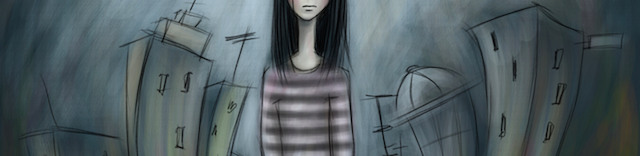
    Lonely Girl

    “Growth begins when we start to accept our own weakness.” 
~Jean Vanier

    I got fired from my job, my boyfriend left me, and my father died in one day.

    In reality, my career was going super well, I didn’t have a boyfriend, and my father was amazingly healthy, but what I did have was something I call an ultra amazing imagination, where I would make up fascinating stories about things that could happen and worry about them. (Or as other people call it, general anxiety disorder.)

    I met my now BFF anxiety when I was about ten years old. Initially, she wasn’t that much of a drag, except for casually letting me know that I should dread going to school on Mondays because something terrible was going to happen.

    I didn’t understand why she was telling me this.

    Rationally I knew it wasn’t true. I loved school. But I couldn’t get her words out of my mind. I tried explaining what was happening to my sweet and caring father, but the only words I could get out were: “Dad, I feel bad, and I don’t know why.”

    Anxiety took the liberty of moving into my room and accompanied me through my teenage years and twenties. She had black greasy hair that covered her face, and shrivelled, pale white skin that looked like it was starving for something. I just didn’t know what.

    The more I ignored her, the more she dug her dirt-filled, jagged nails deep into my bare skin.

    There was nothing I could do to escape her. I obviously couldn’t tell anyone. She assured me people wouldn’t understand.

    Besides, I had grown used to the feeling of having knots in my stomach every day and the sleepless, nightmare-filled nights. If I didn’t have these experiences anymore, who would I be?

    That’s until I turned thirty and had, well, as public speaker and shame researcher Brené Brown calls it, a spiritual awakening (a breakdown). I had reached breaking point and realized I couldn’t live the rest of my life like this.

    There had to be another way.

    I did all the typical things people do when they have a spiritual awakening.

    I journaled profusely, saw a psychologist, joined an eight-week mindfulness-based meditation class for people with anxiety and depression (I took the class three times), and learned something called Psych K to change my subconscious beliefs about myself.

    These things helped immensely. But what really changed the way I felt about anxiety was watching, wait for it, a teen, Hollywood, science fiction movie—Insurgent.

    (Warning, spoiler alert). There’s a scene in the movie where the main female character, Tris, has to pass a variety of simulations to escape a futuristic prison she’s been captured in.

    The particular simulation that changed my life shows twenty-something, short-haired Tris standing face to face with her beautiful clone, who’s embodied the anxious voices in her mind.

    She sees the clone running at her full force, trying to physically kill her. (If you’ve ever had major anxiety, a lot of the time, that’s what it feels like.)

    They duel it out, Matrix style, by flying around the room trying to attack each other, while smashing into thick glass windows.

    Her clone violently shouts out all the things Tris tries to avoid hearing such as: no one will forgive you and no one loves you. (I might have added the love part in, but hey, it adds to my point).

    Tris then stops fighting as she realizes she’s the only one who can accept her ego and says lovingly: “I will forgive you. I will love you.” The clone stops attacking her, the simulation dissolves, and she’s passed the test.

    After watching this scene I collapsed into what looked like a hunched over tree that had been hit by a storm. I burst into inconsolable tears, while my little white, fluffy dog looked at me with his head tilted as if to say: “What’s wrong, girl?”

    I thought about how all these years I’d been talking to myself like I was worthless. Every time I felt sadness or anxiety I berated myself further and emotionally smashed myself into the ground whenever I needed help.

    I was the one who had turned anxiety into some sort of creepy horror movie character, when really all she was, was a version of me who just wanted to be heard and loved.

    I decided that day to change anxiety’s name to “sweetheart.”

    Sweetheart and I get along really well now, and she’s so much happier too. She now has a rosy complexion; long, shiny black hair; and beautiful, glowing skin.

    When she feels worried, I tell her I am there for her, and she smiles. When she’s angry, I listen to what’s bothering her, and she relaxes.

    The most important thing is I give her attention when she wants it, and she thanks me and happily skips away to wherever she goes instead of torturing me. (I am assuming my mind has a virtual Starbucks where she hangs out, and it now offers coconut milk.)

    When you accept and love parts of yourself that you deem unacceptable, a strange thing happens. Those parts start working with you instead of against you.

    I don’t really look at anxiety the same way anymore. I look at it as an unbelievably creative imagination. (UCI is the medical term I give it.)

    If it’s used or channelled out of me through writing, I feel awesome, energized, and optimistic. If I don’t do anything with it, I catastrophize doom and gloom, feel exhausted, and see the worst in everything.

    I believe having UCI is a sign showing me my life calling, which is a career in story telling through writing and public speaking. I would never have figured this out unless I paid attention to the voice in my head.

    If you are currently struggling with UCI (aka anxiety), believe me, I understand how you feel and how dark things can get. But I also believe we are given certain traits or tests in life to teach us something and move us in a certain direction.

    Rather than seeing UCI as something that needs to be removed, think about the gifts it brings to your life and choose to see it differently.

    Now that I can see my anxiety as a gift, I know what I need to do to get back to inner peace, something I don’t think I’ve ever really been able to do.

    So go forth my friends, find the sweetheart of your mind, and listen to what she wants to tell you. You may be surprised at how cool and wise she really is…

    If that fails, watch Insurgent with your dog.

    Lonely girl image via Shutterstock

  • Out of Every Crisis Comes the Opportunity to be Reborn

    Out of Every Crisis Comes the Opportunity to be Reborn

    Woman with arms outstretched

    “Always seek out the seed of triumph in every adversity.” ~Og Mandino

    In November of 2007 my life burned to the ground—quite literally.

    I lost my house, four foster dogs, my sixteen-year-old cat, four pet rats, all of my possessions—and with that, my sense of peace and safety in the world.

    I had called every fear I ever had into my life on that one, dark day. In short order, I was homeless, jobless, and for the most part, friendless.

    I was downsized from my full-time job, let go from my part-time job of five years (on my birthday), and my jeep engine blew up, all within three weeks of the fire.

    But back to that black day in November… I was living in a small rental house on forty-five acres out in the middle of the country, my dream since childhood. It was a place where I could have as many critters as I could feed, and they would be free to run and play and live out their lives in peace and harmony.

    There was even a small lake with a tiny rowboat a few hundred yards from my house. I sat on the front porch most nights and weekends looking out over the cornfields, watching my dogs chase butterflies during the day and fireflies at night.

    I thought life was pretty perfect.

    Then, on the fateful day, as I was driving up the half-mile gravel road, having finished a long day as an ER social worker, I was stunned to find black smoke billowing from the roof of the house. Everything seemed to be moving in slow motion. I couldn’t believe what I was seeing.

    When I came out of my stupor, I ran to the house and promptly did everything I had ever been told not to do in a fire. I ran to the front door, grabbed the red-hot knob, and flung the door open, screaming for my animals that I knew were trapped inside.

    When an orange ball of fire hurled toward me, I ran around to the back door and made my way halfway through the dining room before I had to turn around and go back.

    The smoke was so thick I could neither see nor breathe.

    It was at this time that I noticed three of my dogs, who had been left outside to play and sun themselves on the front porch, had followed me into my burning house. I rounded them up and piled them in the jeep, and called the volunteer fire department on my cell phone between screams and sobs.

    My house burned to the ground, along with my four-legged Chihuahua foster “kids,” my cat, my rats, and everything I owned: irreplaceable family photos, my diaries dating back to the age of twelve, things left to me by my grandparents.

    I had no renters insurance, and so, no ability to replace anything.

    Thanks to the American Red Cross and my sister, Tiffany, and brother-in-law, Gregg, I was able to stay for a week in an inexpensive motel with my Rottweiler, Nikko; Pit Bull, Chloe; and my fourteen-year-old Chihuahua, Solomon.

    My mother, sister, and brother-in-law, who all lived out of state, were there for me when I cried endless tears for my lost animals, and as I tried to move through my fog of grief and depression.

    Other friends and family, including my boyfriend/best friend of nearly four years, vanished in the aftermath. Most did not even call to ask if I was okay, or if I needed anything.

    I came to understand that some people are very inept and uncomfortable in dealing with human tragedy, and so, turn away when life gets ugly.

    The loss of these relationships was as devastating as the fire itself. These were people I loved and trusted—people whom I would have bet my life would never abandon me. I was wrong.

    I was amazed and incredibly grateful for those who did come to my rescue—strangers, really.

    A woman I had never met (and my sister barely knew from a support group she had attended a few times) sent me $1500. With this I was able to put a down payment on a car.

    A local animal rescue group provided blankets for my dogs and six months worth of medication for Solomon, who had congestive heart failure.

    Another sweet soul sent me a gift card for books—always a treasured companion throughout my life.

    A hairdresser volunteered her time and skill putting hair extensions in for six months when my hair broken off at the scalp, due to stress.

    This helped me to learn that not everyone that comes into your life is meant to be there throughout your journey. People will come and go, and sometimes it will break your heart. But you may find sanctuary in the most unexpected places.

    The kindness shown to me by these individuals allowed me to start the long healing process. I came to realize that if I was going to survive this, I was going to have to find meaning in the experience and become determined to grow wiser and stronger as a result.

    I would not allow my animals to have lost their lives for nothing. Their little souls mattered. This would be my way of honoring them.

    I began to let the pettiness of others and the drudgery of every day life fall away.

    What did it really matter if I was having a bad hair day or someone in front of me left their turn signal on for three miles? What if I lost my job? My car blew up? These things were small potatoes in the grand scheme of things.

    I felt like I had survived damn near everything the world could dump on me in a small space of time, and I had made it through the other side.

    I was a survivor. This title came with the mandate of seeing the world, and living in the world, in a very different way than before. Small things had to fall away and my focus needed to shift to what was truly important—the kind of things that would still matter ten years down the line.

    Also in my new way of being was the idea of embracing what truly made me happy, not what I thought other people would admire or approve of. 

    If I wanted to eat ice cream for breakfast and lay under a tree in the park in my bunny slippers reading Stephen King, then by God, I was going to do it!

    A little way down the road I decided that working forty to fifty hours a week in order to have more stuff, a nicer car, and a nicer house wasn’t what made me happy. I began teaching part-time at an area university and opened a small therapy practice.

    My income was cut in half, but I had so much free time to spend going to the park with my dogs, sleeping in, staying up late, and just being out in the sunshine instead of being cooped up indoors. And I was doing something I loved for the first time in my life.

    Ultimately, what I learned is that any human tragedy is survivable if one chooses to find meaning in the experience. And if you choose to become stronger, wiser, and more compassionate as a result, then no experience, no matter how painful, is ever solely negative.

    On the other side of all of the fear and the heartache I found peace and happiness.

    Woman with arms outstretched image via Shutterstock

  • 50 Questions That Will Help You Feel Grateful and Good About Life

    50 Questions That Will Help You Feel Grateful and Good About Life

    “Gratitude makes sense of our past, brings peace for today, and creates a vision for tomorrow.” ~Melody Beattie

    There’s very little that upsets me like feeling stuck and out of control. That’s exactly how I felt at the beginning of this year.

    Things were going well in many areas of my life, but I was unhappy living in my boyfriend’s childhood home in a Bay Area suburb, after we’d spent years living in LA and traveling. Though I knew this was ideal for him, it just didn’t feel right for me,

    And even if I could wrap my brain around asking him to leave his hometown when he was just settling back in and reconnecting with old friends, I wasn’t entirely sure what would make sense for us both long term, given that we have family on opposite coasts.

    Some days I’d start crying out of nowhere, while eating breakfast, working, or watching TV. I’d feel fear, anxiety, and confusion, and then more guilt for being so emotional and unable to identify and own my desires.

    One day I realized I’d fallen into a trap I’d fallen into many times before, and an ironic one, at that: because I’d felt trapped in my circumstances, I’d gotten trapped in my emotions.

    I was dwelling, overanalyzing, and worrying about worst-case scenarios. No wonder I was so blocked. I was trying to solve a problem from a place of desperation and fear. Always a recipe for disaster.

    So I decided to do something I’d done before, but hadn’t in quite a while: I started a gratitude journal.

    I knew I needed to nurture more positive emotions on a daily basis, and that everything would get clearer and easier from there.

    At first it was a little difficult. I’d write something down—“catching up with my brother,” for example—but it didn’t necessarily change how I felt.

    That’s when I remembered that knowing you should be grateful and truly feeling gratitude are two very different things.

    In order to actually feel gratitude, I had to dig deeper and reflect upon just how fortunate I was.

    People have always seen me as fortunate, even when I was secretly struggling with depression and bulimia, as I’ve always appeared to have a lot going for me.

    But I realize I am more fortunate than ever at this point in my life. I just needed a little more to help me access my gratitude, buried as it was beneath layers of fear and anxiety.

    Throughout this year, I’ve been building a list of questions that help me identify what I most appreciate about my life and the people in it.

    If you too could benefit from nurturing more positive emotions—and let’s face it, we all could—try asking yourself one of these questions and see where they take you.

    1. What’s one kind or thoughtful thing someone did for you recently?

    2. Who is always there for you, and how do you feel about them?

    3. Who has helped you become the person you are today, and what’s the top thing you’d thank them for?

    4. Who’s someone who always really listens when you talk, and how does that affect you?

    5. How have your spiritual beliefs or practices fulfilled you recently?

    6. What’s the best thing that happened today so far?

    7. What’s something that inspired or touched you recently?

    8. Has anyone done anything recently that made your job easier?

    9. What’s one thing you enjoyed about doing your job recently?

    10. Can you think of any non-physical gifts you’ve received recently—someone’s time, attention, understanding, or support?

    11. What about today has been better than yesterday?

    12. Who have you enjoyed being around recently, and why?

    13. How have you used your talents and abilities recently, and what have you enjoyed about doing that?

    14. What have you learned recently that will help you in the future?

    15. What made you laugh or smile today?

    16. What’s the last song you heard that you enjoyed? How did it make you feel, and why?

    17. Have you experienced any blessings in disguise lately—things that didn’t turn out as you’d hoped and yet turned out for the best?

    18. What’s the weather like today, and what’s one good thing about that?

    19. How has technology enhanced your life and your connections recently?

    20. Have you had an opportunity to help someone recently, and how did you feel about that?

    21. What’s one thing you experienced recently that made you feel a sense of wonder or awe?

    22. What’s the best thing about your home, and have you taken time to enjoy it recently?

    23. If you didn’t get what you wanted today, can you identify something in what you got that’s worth having?

    24. What’s improved about your life from this time last year?

    25. What choices have you made in the last five years that you’d thank yourself for making?

    26. What’s something you did well recently, and what qualities or skills enabled you to do this?

    27. Who made a positive difference in your life recently?

    28. What’s something you’re looking forward to in the future?

    29. What did you learn from the most difficult part of your day yesterday, and how will this lesson benefit you going forward?

    30. What’s something you witnessed recently that reminded you that life is good?

    31. What’s something you witnessed recently that reminded you that people are good?

    32. How many of your basic needs do you not need to worry about meeting today?

    33. What event or interaction made you feel good about yourself recently?

    34. How have you made personal or professional progress lately?

    35. What simple pleasures did you enjoy—or can you enjoy—today?

    36. What modern conveniences (i.e.: electronics and appliances) do you enjoy that make your life easier?

    37. What’s the most beautiful thing you saw today?

    38. What’s something enjoyable you get to experience every day that you’ve come to take for granted?

    39. What are three things your arms or legs allow you to do that you enjoy?

    40. What’s the kindest thing someone has done for you lately?

    41. How do your friends and/or family members show they care about you?

    42. What’s the last thing you enjoyed with your senses—a good meal, a song you love, or aromatherapy—and how amazing is it that you were able to experience that?

    43. What movie, book, blog, or article affected your life for the better recently?

    44. What have you seen in nature recently that made you feel happy, peaceful, or free?

    45. How has modern medicine improved your life, recently or overall?

    46. How does electricity simplify and improve your life—and can you imagine what life would like be like without it?

    47. What’s your favorite thing about your bed, and how often does it enable you to get restful sleep?

    48. What’s something you have easy access to that always improves your mood, and how has it improved your life?

    49. Who in your life has survived something difficult, and how do you feel when you think about the fact that they’re still here?

    50. Have you recently imagined a worst-case scenario that didn’t actually happen?

    This last one was crucial for me. Not only did this help me appreciate things that turned out better than I’d anticipated, it reminded me how often this happens—if only I’m willing to act.

    And act I did. A couple of months ago my fiancé and I moved back to LA, still far from my family, but in an area I love, near an industry we both love. And we’re now planning to start working on short films together.

    We’re also prioritizing visits with our loved ones, together and separately, so we can both still nurture our relationships.

    It’s a compromise we can both not only live with, but hopefully one that will enable us to thrive.

    I am far happier for having made this choice (and grateful that my fiancé was open to it). And I know I found clarity and the strength to act on this, in large part, because I made the effort to change my mental state.

    It’s funny how that happens. We can sit around and stress about our problems all we want, trying to force a solution. But sometimes the best way to fix what isn’t working is to first focus on what is.

    Everything gets easier when we move past fear and desperation and nurture a grateful, hopeful heart.

    UPDATE: Tiny Buddha’s Gratitude Journal is now available for purchase! You can grab your copy here.

  • How Expectations Undermine Our Relationships and Happiness

    How Expectations Undermine Our Relationships and Happiness

    “I’m not in this world to live up to your expectations and you’re not in this world to live up to mine.” ~Bruce Lee

    A few years ago, my husband was away from me for a few weeks, working in another town. It was summer, and we were living close to the beach at the time, so I often spent my Saturday nights walking along the ocean at sunset, enjoying the colors and sounds.

    One Saturday night I was in a simply glorious mood. The beach was filled with happy families and couples, the Atlantic was a particularly lovely shade of aquamarine, and life felt just about perfect.

    When I got back to my car I looked at my cell phone and saw that I had missed a call from my husband. I called him back and quickly realized his mood was not nearly as buoyant as my own: He wasn’t particularly chatty, and seemed pretty negative about the work he was doing.

    I took this extremely personally and turned cold and quiet almost immediately, eventually taking the very juvenile step of hanging up on him. How dare he ruin my perfect summer evening!?

    About ten minutes later, in the parking lot of a grocery store, I had a huge epiphany: He hadn’t ruined anything. It was all me, as my negative feelings were entirely created by my expectations of how he should have behaved.

    I had been anticipating that he would be in the same great mood I was, and when he wasn’t, I took it personally. I became upset that he wasn’t acting as I expected. I became angry because he wasn’t meeting the standards I had set.

    In other words, I was completely responsible for my deflated mood.

    This was the very first time I realized how having expectations of how other people should act was causing unnecessary pain and suffering in my life. Once I started looking around, though, I saw many other examples.

    For instance, I once had the expectation that a new acquaintance would quickly respond to my text and agree that she, too, had a nice time hanging out with me.

    When she didn’t, I ended up spending more than twenty-four hours wondering if she liked me, feeling pretty bad about myself. (She did eventually respond with a very nice text; she’s just a busy person who doesn’t respond to texts immediately!)

    I expected an automatic response, and not getting one undermined my happiness.

    Another example is the time I was seventeen and gave my dad a Father’s Day card I thought he’d find really funny, and he barely even responded to it at all.

    I had built up a vision of him having a really warm and amused reception to this card, and when there was almost zero reaction, I was crushed. Again, my expectations, and the beliefs about what it meant if they weren’t met, were causing pain.

    Before you think that I’m suggesting you lower your expectations of other people and never, ask anything of anyone, let me clarify a bit.

    Telling a friend about a tough situation at home and expecting you’ll get some words of wisdom is wonderful. Hoping the guy whose eye you’ve been trying to catch will smile at you today can be fun and rewarding.

    Hoping for the outcome you desire is one thing, trying to force it and being overrun with negative thoughts and feelings when it doesn’t work out is another.

    You can’t control the way people think, feel, or react. Ever. You may try to, you may want to, but ultimately, how they act is up to them.

    And when you base your feelings of happiness, worth, or confidence on the actions or reactions of other people, you’re setting yourself up for many moments (or days or even years) of avoidable misery.

    There are a few ways to keep hoping for positive interactions with other people, but not get sucked down into the mud and muck when they don’t go as you expect.

    1. Stop expecting other people to act exactly as you would like them to—it’s a game you’re guaranteed to lose. Instead, try being open to any and all reactions from others.

    If, on that gorgeous night back in 2012, I had opened my mind and heart to my husband with no preconceived notions of what his mood should be, my evening could have remained joyful and I may have even improved his evening, too.

    Back when I was seventeen, if I had realized that my dad’s lack of reaction had nothing to do with me, but was about his own problems with expressing emotions, I would have felt far less hurt. I couldn’t make him react the way I wanted, and assuming he would do what would make me happy led to a sad experience for me.

    2. Start building up your own happiness and confidence on something you do have power over: your thoughts and beliefs.

    When someone does the unexpected and it disappoints you, it’s always because you had a belief about what they were supposed to do.

    You believe that your mother should have been proud when you won the essay contest, and when she wasn’t, you were sad. If, on the other hand, you lean in to the truth that your mother can react however she wants to, but still believe you are a wonderful writer anyway, your pain won’t be so great.

    You believe your son should have gotten better grades, but when he brings home a poor report card, you feel angry and guilty. When you stop believing that your son’s grades are a reflection on you as a parent, and start believing that you’re doing the best you can and letting go of guilt, you suffer less.

    3. Stay in the moment as often as you can.

    Stay present with your thoughts, and see if you’re holding onto expectations of how other people should behave.

    It’s when you slip out of being in the now that you are truly disappointed. When this happens, you’re letting your thoughts and stories about what the other person should have done, or what will happen now because of this perceived slight, or why you deserve to be angry, take you out of the now and down a path that is full of rejection and fear.

    The bottom line is that you will not find peace if you’re always expecting other people to give it to you with their actions or words or even love. The only way to find it is to drop your expectations of others, let go of what you think they should or shouldn’t do, and allow yourself to create your own happiness.

  • What If Success Was Measured by How Well You’ve Loved?

    What If Success Was Measured by How Well You’ve Loved?

    Heart Hands

    “That man is a success who has lived well, laughed often and loved much.” ~Robert Louis Stevenson

    When I was a child, I learned a lot from my parents and other authority figures. I learned the difference between wrong and right, the value of hard work and perseverance, that one must not mistreat or use people, but be good.

    I learned about love too, for when my loved ones were happy, the same joy always came back to me.

    Making the difficult transition into adulthood, I picked up a whole lot of other things from whatever environment I managed to land in—from school, college, and my workplaces.

    I learned that I had to get a certain rank in class for my intelligence to be considered acceptable. I was questioned and cross questioned repeatedly on why some kid who lived in my building got a better rank than me. Why couldn’t I perform better?

    My future somehow seemed to be in peril due to my underperformance in math, geography, and languages, and my bad handwriting.

    So I learned to be competitive and strive harder. I also learned that no matter what I did, even if I performed better than my last result, it wasn’t good enough because some friend in class or someone in the colony or prior performance by my siblings was always better!

    Soon an epic thirst for ‘success’ kindled in me.

    I learned that success meant doing well in class—getting great marks, getting into a good college, getting epic marks there, as well (you cannot fall lower than a first class), getting an epic job. And it should be in an epic company (brand name) and pay well enough to sound epic and also allow me to spend and save well, to provide sufficiently whenever I find a partner, have kids etc.

    Makes sense, right?

    Oddly enough, I managed to do most of that—get good marks, get a good job in an epic company with an epic package, and make my parents proud.

    I seemed to be at the pinnacle of (my self-defined) success!

    Well, not quite.

    For one, I hated my epic job. The epic company that had hired me (thought they had bought my soul) put me in a department that was a far cry from what they had hired me for.

    They increased the pay of said department a few months down the line (there were many others stuck in the same mess as me). I guess it was supposed to compensate. I also had to move away from home, far from my loved ones.

    After much frustration and in a span of one year, I was packing my bags and returning home. I wasn’t ready to hand over all of my soul, after all!

    What happened after that is a long story best kept for another time. Let’s just say that I returned to what would be, compared to my peers, a relatively mediocre place, both in terms of position and finances.

    I was fast slipping off the success radar!

    Something else also started happening though. While I was busy wallowing in self-pity and licking my wounds, I became more reflective and perhaps, more observant.

    I noticed how happy I was to be with my family.

    With all the glorious dysfunctionality that existed within, of which I am an integral part, I realized that I love them to bits and pieces. I had always taken them for granted, and the time spent away is helping me to treasure the time I spend with them now.

    I discovered joy in little things.

    A neighborhood cat gave birth to a litter of kittens. The mere sight of those tiny babies evoked love and joy in me that I cannot put into words! It was pure bliss feeding them every day, checking on them, and playing with them.

    Most of the litter along with the mom cat dispersed. But two kittens, now nearly year old cats, still linger, and I look forward to going home every single day to feed and cuddle the furballs.

    I took a course in dancing.

    It was one thing I had loved as a child but that I simply wasn’t good at. While I struggled with it through the course, it was a liberating experience. It made me realize that we place a lot of shackles around ourselves as far as our capabilities are concerned.

    I questioned my ultimate ambition in life.

    Do I want to compromise on my health, happiness, and loved ones to achieve ‘success’ like everyone else around me seems to be doing? As a kid I had a lot of other dreams, and now I am revisiting them.

    I realized that in the success I had been chasing for so long, in the rat race that I am still running, there is little room for integrity.

    We are lying every day, be it to get a promotion, to get selected in an interview, or to aggressively sell a product. We are lying so much that it has become part of the fabric we’re made of.

    I realized that power and success as I knew it did not teach love.

    I noticed that people in prominent positions around me were not necessarily using their power with kindness. I have seen people in power abuse those below them, aggressively push them to overwork, look down upon them, and invoke bitterness in them. And I have also seen such behavior being hailed as the hallmark of a performer who could get the job done.

    I realized that it was my responsibility to learn to become a better human being.

    Whether or not I learned to become successful in practical, worldly terms.

    I am not saying I have risen above any of this, only that I am better aware of what I’m doing these days and I reflect on the kind of choices I want to make for the road ahead.

    Just think about it—what if success was measured by how well you’ve loved instead of what you’ve earned or how many people know you?

    What if success was actually how much you’ve loved life itself, filling it with love and giving even more love? And not necessarily what you are wearing, the places you’ve been to, or the phones, cars, and yachts you’ve owned?

    What if success was measured by how much joy you’ve brought to the table and how much better or worse you left the place than when you arrived?

    What if success was measured by how kindly and sincerely you’ve treated those around you?

    What if you actually got negative points every time you treated someone meanly or unfairly or judged someone or looked down on someone?

    How would your success graph look in that case? Would you need to put in more effort to make it better?

    I know I would be in the red.

    These days I make it a point to not take for granted all that I have been blessed with.

    Things like a stable home, concerned parents who love me and care for me in spite of some tremendous difficulties and conflicts, a great education including a post grad degree, loving reassurance whenever I feel I’m not doing well in life, freedom to live life on my own terms. Two cats who let me feed them and give some reluctant hugs for the same—all this and more!

    These days, I have also come to notice many who are working out of love, giving freely, who are true blessings, making this world a better place, in whatever small ways that they are. Quite possibly, you are one of them!

    I’ve learned that one can always appreciate what one has instead of clamoring for more of everything; it’s a good way to feel content. Yes, there are things to be achieved and they will be achieved in due time. Yes, I still lie as much as I am required to and I need a do a lot of work there.

    I accept that I still don’t know exactly where I am headed in life, and that’s okay. I prefer to call it figuring it out instead of failing.

    At the very least, I know that I am editing my definition of success. I am learning a whole new definition in fact, bit by bit, every day!

    Heart hands image via Shutterstock

  • Create a Kinder Mind: How to Stop Your Mean, Hurtful Self-Talk

    Create a Kinder Mind: How to Stop Your Mean, Hurtful Self-Talk

    Two Kinds of Brains

    “You have been criticizing yourself for years, and it hasn’t worked. Try approving of yourself and see what happens!” ~Louise Hay

    In my quest to learn to love myself I did therapy, read plenty of self-help books, and took personal development courses, hoping I could learn to love myself like I could learn accounting.

    This was all helpful; however, when I reached the self-talk stage my progress came to a standstill.

    Before then, I hadn’t consciously realized that I used powerfully negative words when speaking to or about myself. I was the first to put myself down, the first to criticize and chastise myself, and my own harshest critic.

    While this helped me push through some physical and mental barriers and, therefore, achieve things that I never thought possible—such as completing an Ironman triathlon and running ultramarathons—these moments were the exception, not the rule.

    I hid behind the excuse that it motivated me in order to justify being mean to myself, perpetuating the cycle. My so-called valid reasons were holding me back from changing my life and loving myself so that I could be happier and more fulfilled.

    I recognized that I spoke so terribly to and about myself because I suffered from incredibly low self-esteem.

    I was trying to measure up to my own high, unrealistic standards of who I thought I needed to be in order to be loved, approved, and accepted. But these destructive and critical habits were actually in conflict with what I really needed, as they didn’t allow me to give myself love.

    I needed to change the way I spoke about myself, and I needed to do it quickly!

    I realized I’d formed these habits as a result of both conscious and unconscious decisions I’d made in the past. And if my thoughts about myself came from decisions I had made in the past, I had the same power today to make different decisions to shape the person that I would be in the future.

    These are some of the tricks and tools that I’ve used to overcome my self-esteem issues and begin speaking to myself more kindly:

    1. Journaling.

    Before I began changing my self-talk, I had used my diary to vent what I was feeling. It was painful to read what I had written. Among the negative thoughts and feelings were momentous and joyous events, but the painful memories and thoughts overshadowed them.

    When I purchased a new journal I decided to focus instead on what I did or said for and about myself that demonstrated love and kindness.

    So for instance, if I felt fat and was beating myself up about my thighs being too big, I would write that I was grateful that my big thighs were strong enough to help me run marathons.

    You too will find that after a few days of consistently doing this you will be able to catch mean thoughts before they spiral into something bigger.

    2. Eliminating the words should/must do/have to.

    I have stopped using these words and replaced them with kinder words such as “I choose to,” as I found that “should,” “must do,” and “have to” were causing me to feel unnecessary guilt.

    As an example, when I set my alarm clock at night instead of saying that “I should wake up early and exercise,” I now say to myself, “I choose to wake up early and exercise.”

    Stop ‘shoulding’ all over yourself and you too will feel much better about yourself.

    3. Smiling.

    In my most recent marathon, instead of beating myself up for not being faster, I started the race with the intention of smiling for as much of as it as I could. It was the best thing that I could have done.

    It made me feel good, and the spectators noticed it and cheered me on, which in turn filled me with more positive energy.

    Try smiling now and see how much better you feel. Imagine yourself doing this all the time when crossing the road or even when answering the phone. You will find that a little smile becomes a big smile in no time.

    4. Saying yes to yourself and no to others.

    I have learned to say yes to myself, which sometimes means saying no to others.

    I now examine my motives for saying yes to someone else. If it is to be loved and/or accepted, it will likely create disappointment when I don’t get what I expect in return.

    Imagine if we all said yes to others only when we really felt it in our hearts. There would be no resentment, and when we do things for others it would be done with joy, creating more positive feelings about ourselves.

    5. Accepting that we don’t all have to like each other.

    I have started to also worry less about what others think of me and my decisions, so long as I am comfortable with my choices, and they come from a place of integrity and honesty.

    This has helped me with my self-talk, as I no longer tell myself that I am a bad person if someone doesn’t like me.

    Just as we don’t like everyone else, everyone won’t like us, and that’s okay. You might be surprised how liberating it feels when you are okay with not being liked by everyone else.

    6. Asking, “How does this decision make me feel about me?”

    I measure every choice against how it makes me feel about myself. I ask myself, “Does this make me feel good about myself? If not, what needs to happen for me to feel good about me?”

    For instance, before I accept an invitation to see ‘an old friend,’ I now stop and ask myself, “Would spending time with this person make me feel good about myself?” If the answer is no, then I make a decision to spend my time with someone else whose presence empowers me.

    Ask yourself this question and you too will make more choices that build you up instead of tear you down.

    7. Setting achievable goals and celebrating progress.

    I now set achievable goals and celebrate them. I also don’t beat myself up anymore if I don’t achieve them, or don’t achieve them in the way I had hoped to.

    You can celebrate your small accomplishments by going to dinner with friends or buying yourself a small gift as a reward. Whatever it is, make sure that you are present in the moment when you celebrate, as this will reinforce that you are a wonderful person and you deserve credit for all the good you do.

    8. Walking away.

    I have also learned to walk away from people who don’t treat me with respect. It’s not an easy thing to do; however, if I allow others to be disrespectful toward me, then I perpetuate the cycle and I am also giving myself permission to do the same to me.

    You too deserve to be treated with love and kindness—both by yourself and others.

    How does your self-talk reflect the way you feel about yourself? Could you be kinder and more loving to yourself?

    Two brains image via Shutterstock

  • 4 Positive Lessons from the Betrayal of Infedelity

    4 Positive Lessons from the Betrayal of Infedelity

    New Beginning

    “Getting over a painful experience is much like crossing monkey bars. You have to let go at some point in order to move forward.” ~C.S. Lewis

    My eyes leapt open sometime after 2am and, after feeling the empty space next to me, I knew.

    The cell phone I laid on the pillow beside my head was silent, my previous text messages left unanswered. Panic swelled in my throat as I frantically dialed his number, calls separated by no more than thirty seconds.

    Checking phone logs and driving past houses at night had never been something I pictured myself doing. So, when I reached for my keys, believing I needed to confirm he was where he told me he would be, I knew the relationship was coming to a heartbreaking close.

    Some three years after this particular relationship ended, I look back on that girl—someone I am disconnected from now—and feel a deep and profound sense of sadness. The desperation and overwhelming devastation I experienced at this time was so intense, it’s hard to think of myself capable of such a heavy fall into darkness.

    Thankfully, I never asked for the full and honest truth about the cheating. The relationship was over for so many more reasons than these incidences, and I loved and honored myself too much to get lost in the minutia—especially when I was grappling with the loss of an eight-year love.

    Now, when I run across kernels of truth from that time, I recognize the profound lessons that come from experiencing this type of betrayal in a relationship. In a very strange way, it was one of the best things that could have ever happened to me.

    It prompted the end of a toxic relationship I would have never left on my own.

    Sometimes we’re convinced that if we just hold on a little tighter, relationships that we should be releasing will suddenly become right and whole again. But if two people are supposed to part ways, no amount of pushing will change their course.

    Because I was so attached to what I had always known and terrified at the thought of starting over, I would not have willingly left this relationship on my own. Suffering seemed far better than facing the unknown. Luckily, this turn of events meant the decision was made for me.

    The life I managed to create afterward was far more beautiful than the muck I convinced myself I was okay residing in.

    It taught me the art of directing anger and upset at the person that really deserves it.

    A million different people could have taken on the role of the “other woman.” As far as I’m concerned, who she was is really inconsequential. I did not share a life nor have an agreement of faithfulness with her—only him.

    Their relationship stemmed from a whole host of incompatibilities and glaring issues that were festering under the surface of what we created together. It was a symptom of a larger issue, and if he hadn’t of been with her, he would have been with someone else.

    She could not be the sole cause of our relationship ending when the heart of the relationship belonged to him and I.

    For some reason, unbeknownst to me, their paths were meant to cross at that time, in that way. Directing anger at her as a facilitator in the demise of a relationship that needed to end is, and will always be, fruitless.

    It taught me to disconnect my self-worth from the actions of others.

    I am and always have been enough, and the actions of someone I love are not a physical representation of my failings.

    This realization was not something I came to immediately after the end of my relationship but in the period that followed—after spending time healing alone and, eventually, after rejoining the dating world.

    All of us are on our own, very separate journey. Even if we come together with a partner for a window of time, we all have experiences and life lessons we must endure alone. While I needed to learn independence and forgiveness, there were things he needed to learn—things I won’t pretend to know.

    In the past I have caused loved ones pain and I know that, each time, it was never a result of their shortcomings. My actions were directly connected to how I was feeling or thinking at the time. In turn, I know this incident wasn’t a culmination of my failings or a representation of something I was lacking.

    If anything, it was a series of events that were meant to transpire for reasons I am still uncovering today.

    It convinced me the greatest beauty is born from letting go.

    I have always been incredibly apprehensive at the mere mention of letting something go. The fear stems from the idea that after letting go, I may never be able to find anything quite like that again.

    Often times, this is true.

    I never did find another relationship like that again—I found something far more loving, supportive, honest, and true. Something I would have never been able to imagine for myself because my frame of reference was so tied to this relationship I had known for so long.

    If I hadn’t been forced to create space and endure the periods of loneliness that followed, I wouldn’t have been prepared to accept this new relationship into my life.

    We usually can’t see a clear picture of what will transpire if we agree to release something from our lives, but that’s often because we must endure a period of growth in between—something that makes us ready and willing to bring it into our experience.

    Through this heartbreaking experience I learned that letting go is the spark that allows so many great things to transpire.

    New beginning image via Shutterstock

  • Why We Need to Share Our Honest Feelings

    Why We Need to Share Our Honest Feelings

    Sealed Lips

    “I learned that courage was not the absence of fear, but the triumph over it. The brave man is not he who does not feel afraid, but he who conquers that fear.” ~Nelson Mandela

    She hurt my feelings. She was leaving soon to live in another country for up to six months. I knew that if I held on to my hurt, this resentment would fester, and my best friend would be the recipient of my anger.

    I prayed for courage to find the right words. I didn’t want to hurt her. I knew I had to say something or I would allow my hurt to manifest into something huge.

    The courage came, and I acted immediately. I dialed; my heart pounded. I was so afraid.

    She answered. The lump in my throat made me silent. I began to weep.

    I gently uttered, “I’m calling to tell you that you hurt my feelings. When you didn’t show up for my big event, with no phone call, no communication, it hurt my feelings. When I asked for your opinions on my new gig, you didn’t respond. It hurt my feelings.”

    I stopped and let the silence set it in. Within a few seconds she responded.

    “That was the bravest thing I have ever heard you do. That took so much courage. I’m sorry. I’ve been self-absorbed.” And the story went on.

    She ended by saying that she, too, has been seeking to speak her truth, and that I had just provided the greatest example of how to do it gently and with kindness.

    The woman I called is one of my best friends from childhood. Believe it or not, making that phone call was one of the hardest things I’ve done in my new way of living. I’m a recovering alcoholic, and I’m learning how to feel and how to communicate.

    I spent my first forty-plus years sugarcoating my life and my feelings—putting a beautiful spin on everything and avoiding controversy at all costs. But that didn’t work, and the ultimate cost was I almost lost my life to alcoholism.

    Growing up in a dysfunctional and alcoholic home, I developed the ability to shine things up at an early age. I spit polished every word that came out of my mouth.

    I painted a thick coat of pretty on every fear that besieged me. When asked how I was doing, the simple “fine” or “great” would ward off further inquisition.

    There was a lot at home to worry about back then, but I believed that worry was for the weak and that I was stronger than worry, so I locked it in a steel-cased compartment deep inside of me and threw away the key. Things were just fine.

    And I did not even acknowledge anger. I can’t tell you where or how to access the anger that has burned slowly within me for decades because I have never given it a voice.

    “Aren’t you angry?” a therapist would ask me on occasion. With a genuine and convincing smile on my face, I would nod no. I didn’t feel angry, but the truth is that I really didn’t feel anything.

    I learned at an early age that it was just easier to get along in this world by placating everyone. I didn’t realize that while I was overly concerned about not hurting others with the truth, I was sacrificing my soul.

    I know now that I was an incredible liar. I lied all of the time and to everyone. And while a lie about how I was feeling may have seemed insignificant, it wasn’t. Those lies were the most powerful and did the most damage to my psyche. They continued to reaffirm the idea that I did not matter.

    I had my first drink at thirteen. I was a blackout drinker from the start, and alcohol let me escape from my fraudulent life.

    I was a high-functioning alcoholic for many years achieving much success in my career and personal life despite my drinking patterns. I could mold the veneer of my life into whatever I thought would earn society’s approval.

    After years of heavy drinking, I was graced with the gift of sobriety at forty-four. Let me tell you, getting sober is like growing up all over again, and it’s a rollercoaster of a ride. There are many days when I simply feel like a little kid, paralyzed by fear, overcome with sadness, or gleefully happy.

    One of the many gifts of sobriety has been discovering my true self and creating new habits and patterns for living.

    Over the course of my journey, I’ve regularly struggled with two issues—faith and honesty. I will leave faith for another post, but learning how to be emotionally honest with myself has been a brutal and slow process.

    Like peeling away the skin of an onion, I find that I have to peel away my old habits and walls that I have in place to shield me from the truth. Every time I think I have it mastered, another opportunity arises that challenges my commitment. I find I actually have to practice being honest with myself.

    A good friend of mine who has helped guide me in this new way of life constantly reminds me to pray for and meditate about courage. During my first summer of sobriety, I did this constantly.

    I’ve had some hard conversations. Actually, the terrifying part was imagining how those discussions would unfold, but in reality, they weren’t that difficult. And, I found that people tend to admire and respect someone who can be completely honest.

    These are the steps I take when I face emotional honesty. It’s a simple process.

    • Identify and connect with my emotions.
    • Identify my part in the situation.
    • Pray for the courage to speak honestly, with kindness and authenticity.
    • When courage hits me, act immediately.

    For those who don’t believe in a higher power, meditating on courage will help them find the strength within to be emotionally honest and tell the truth to themselves and others.

    We may think that it’s easy to tell a little white lie to save someone else’s feelings, but is it? Wouldn’t it be easier to just tell the truth?

    It’s funny, but I relish the opportunity to practice honesty now. And, it is becoming more of a natural way of life for me. If I feel overwhelmed by the truth I have to share, I begin praying for courage immediately.

    I also have learned to speak with compassion and without hate or anger.

    When I told my friend that she had hurt my feelings, I was overcome with relief, as well as a feeling of gratefulness for her friendship. By speaking up, it allowed us to grow closer, but I had taken a stand for me first; I had demonstrated to both of us that I matter.

    Each day we are given a precious gift—the gift is that day. What we do with it is up to us. I choose on this day to be authentic to the world. It’s all I can be. It’s freeing just being me. I choose to remain vulnerable by speaking my truth and sprinkling love wherever I go.

    When we learn to speak our truth, we become courageous, we value ourselves, we shine our light from within, we become worthy, and we feel, share, and connect on a more intimate level. We can inspire honesty in others.

    Sealed lips image via Shutterstock

  • 8 Ways to Reclaim the Joy We Knew as Babies

    8 Ways to Reclaim the Joy We Knew as Babies

    Happy Baby

    “The soul is healed by being with children.” ~Fyodor Dostoyevsky

    Last year, my husband and I became proud parents of a delicate little baby girl. And since then we have entered into a whole new world of unimaginable joy, love, and frustration.

    As we embark on this lifelong journey of being parents, I am starting to appreciate some of the simple joys that our daughter has brought into our life. Here are some of the little life lessons our tiny Buddha is teaching us on our journey as newly minted parents:

    1. Laugh.

    I have discovered that my new favorite thing is listening to my daughter giggle. The first time we heard it, we thought she was crying, but in fact she was laughing uncontrollably. That should give you some idea of how deeply she must have been feeling the joy.

    While these gurgling fits of laughter only come around every once in a while (for she can be quite a serious little baby), when they do arrive they give us such immense joy and we always end up laughing right along with her.

    It’s a simple reminder of the power of a good laugh! As adults, we’re often too caught up in our myriad of worries or troubles and the most laughing we do these days is in an “Lol.”

    Find the joy in your life, let it take over, and release that joy into the world through your smile or laugh.

    2. Awaken your sense of wonder.

    We discovered that being outdoors leaves her in awe. Her demeanor always turns to one of calm and quiet.

    She is mesmerized by the way the sunlight filters through the tangle of tree limbs and leaves on the giant oaks in our back yard or will stop mid play and look out the window at the pouring rain. She is already meditating and she doesn’t even know it!

    Everyday things that most of us overlook and take for granted are amazing to her because they are new and wonderful. It’s a gentle reminder of the soothing nature of nature. It is such a precious resource in this fast paced world.

    While we are all turning to apps that promise to make us happier or calmer, this little Buddha has already figured it out. All you have to do is put your phone down and take a walk outside.

    3. Listen more than you speak.

    Granted, baby talk is not exactly real speak. “Mama” and “baba” don’t turn into endless monologues about her diaper woes. But her mind is a sponge, and when you talk to her she is captivated. She hangs on to your every word and you have her full attention.

    If we all adopt the attitude that we have more to learn from others than we have to teach them, we would probably find that the relationships in our lives improve.

    4. Take risks and expect success.

    She discovered crawling at eight months old, and since then she has been crawling, clambering, reaching, stretching, and scaling things like there are no limits to what she can do.

    She has been on a mission to discover every nook and cranny in the house. No place is off limit. She fixes on a destination or object and she goes for it with gusto.

    As adults, we see things from a different perspective and are more attuned to the dangers that she could face. We also tend to take a more cautious approach to our own lives. But there is something to be said for the confident way babies approach life at this stage.

    Every once in a while, make a conscious decision to embrace the unknown, and trust that you have the capabilities within you to succeed.

    5. Live in the present.

    She has no concept of past or future at this stage. She feels joy fully, and feels pain fully. But just as quickly she is over the moment. If she hurts herself, she doesn’t dwell on the pain. A simple distraction will can get her back to her smiling self in a few seconds.

    She also doesn’t lose sleep worrying about whether she will be having pureed spinach or pureed squash for lunch tomorrow or how many more thigh rolls she has than the next baby. She is perfectly content with everything that is in the now.

    6. Love fiercely.

    The love you receive from a child is a love like no other. You are hooked, from the very first heartbeat to the first time you feel those tiny chubby fingers grab onto your world-worn hands.

    There is nothing like the comforting weight of their tiny head on your shoulder as they finally succumb to sleep, or the loving reach of their hands for any part of you just because they want to feel your touch. And you realize that this little person loves you with all their being.

    If I could demonstrate that same level of love to all those I care about in my life, I would have fantastic relationships. At a minimum, I can practice loving my husband in the same way and we would make sure that our children grow up to see a happy and loving marriage.

    7. Recognize that you don’t need “things” to be happy.

    Find joy in the simple things. It is true what people say. Don’t bother buying expensive toys—just give your baby the box the toy came in.

    She can dedicate a whole stretch of time to just staring at a label on an item of clothing or drumming on an empty Amazon box. Forget about what toy that Amazon box contained!

    In a world where we show love and appreciation in the form of gifts, gift cards, checks, and “stuff,” we forget that the most meaningful gifts are usually those of time. To witness the sheer delight on your child’s face when you come back from any small absence is proof that they value nothing more than the simple pleasure of being in your company.

    8. Move your body.

    My daughter reminds me that we are born with amazing bodies that are capable of doing so much.

    As someone who loves yoga and strives to be better at it, I am so envious of how limber and supple her body is at this age. She does a perfect downward dog and happy baby pose (with giggles to boot) and I am pretty sure if she were sleeping and I had to manipulate her body into every single yoga pose out there, she would be able to do it with ease.

    Over time we let our bodies deteriorate. A common excuse I hear from my reluctant yogi of a husband is that he is just not flexible enough to do yoga. Our daughter is proof that anyone can do it. We just have to maintain and keep practicing and we too could be yogi buddhas! And if yoga isn’t your thing, maybe it’s running or playing tennis. The point is to get moving!

    The skeptic in you will say, of course a baby can do all these things. They don’t know everything yet. They are still learning. They haven’t been hurt and worn down by real life.

    And yes that is true. But then again, we as adults also don’t know everything yet either and we are also still learning.

    Children are a great reminder to us as adults to keep rediscovering and growing. If we live our lives as if the world is new and everything in it is an opportunity to discover and grow, we might find ourselves on the path to a more joyous life.

    Happy baby image via Shutterstock

  • Surviving Life’s Storms: Have Hope That Life Will Carry On

    Surviving Life’s Storms: Have Hope That Life Will Carry On

    Woman in a Storm

    “I’ll never know, and neither will you, of the life you don’t choose. We’ll only know that whatever that sister life was, it was important and beautiful and not ours. It was the ghost ship that didn’t carry us. There’s nothing to do but salute it from the shore.” ~Cheryl Strayed

    I have weathered my fair share of storms.

    When I was in college, I met a boy a month after arriving on campus. I was eighteen, naive, and completely in love. The red flags were there by the truckload. As each red flag appeared, I darkened the tint on my blinders and convinced myself this was the person I was meant to be with. And so,  the storm began.

    About a year later, Mother Nature unleashed a storm of her own on my college town and surrounding areas. It was a hurricane that didn’t seem like a big deal as it meandered through over the course of a day or two.

    I shrugged it off and kept on going like nothing was happening. Only something was happening—a flood of epic proportions.

    The morning after the storm I woke up at 5:00 and couldn’t figure out why. My pets, two dogs, and three cats were running around in a panic.

    I got up to see what the fuss was about, and that’s when I smelled the rancid floodwaters. I peered down the stairs of my loft apartment, and to my shock realized half of the front door and several stairs were completely submerged.

    The night before I had laughed at the puddles and bit of street flooding. Now those puddles had amassed and invaded my home.

    I woke up my sleeping boyfriend. He angrily waded down into the water and tried unsuccessfully to open the now swollen shut front door. As he announced that we were stuck, I picked up the phone to call for help and heard the entire building lose electricity. It was audible and eerie. Everything went quiet.

    We ran to the windows and saw some people across the street moving belongings out of their not yet flooded apartments. Quickly, we opened the windows and screamed for help. Two guys came over, waded through the water to our door, and helped my boyfriend get it to open. I instantly began walking around grabbing things and putting them back down.

    I was in complete shock and had no idea how to pack, what to pack, and what to leave behind.

    First thing, we got the animals out of our apartment. I led my scared and yelping dogs through the water, which was about waist high on my small frame.

    My boyfriend carried the cats over his head in a carrier. I found a place willing to board them that still had space available and returned to my apartment.

    I packed clothes, photos, cards, and special items I knew couldn’t be replaced. We put the TV on top of the refrigerator. Some kind strangers floated by in a boat and rescued the computer I used for school. A few friends showed up to help us carry the garbage bags I packed to dry ground. Eventually, my boyfriend left and went with his friends.

    I was alone and the floodwater kept rising.

    I took as many trips through that water as I could. I was terrified and determined to save as much as possible.

    A fireman arrived and warned a group of residents that dams had burst in other parts of the state and soon the waters would be too high for us to walk through. He urged us to leave, reminded us that it was just stuff. “But it’s my stuff” I replied, my throat filled with tears.

    I looked at his high-waiters and equipment and begged him to help. He wouldn’t.

    Eventually, my boyfriend came back for me and what I had managed to put on dry ground. The water had reached my chin and it was time to let go, to accept that I could save nothing else.

    The months after the flood were incredibly difficult. The water rose over fifteen feet on my building alone. Entire towns were destroyed, lives forever changed.

    I stayed in a hotel and with family while I contacted FEMA and the Red Cross and looked for a new place to live. Many students quit college because of the flood, but I didn’t even entertain the idea. I was going back. I would start over, somehow.

    Once I found a new place to live, we moved in and slept on an air mattress. We went to food banks and stood in line for free canned goods and bread. I was humbled in those moments more than I had ever been in my life. I felt alone, scared, and poor. I wondered if my life would ever be normal again.

    With the help of groups like FEMA and the Red Cross, I was able to get furniture. My car was flooded out and I had to get something new. I reveled in these bright moments and felt my heart nearly burst with gratitude.

    School started up again and I returned to classes. I was still struggling financially, and had lost most of what I owned, but I had what was important to me. I leaned on school counselors when I needed to and tackled my mental health. I knew getting my anxiety and PTSD under control was paramount to moving forward and finishing my degree.

    I was proud of what I had been through and the newfound determination that couldn’t so easily be washed away. Life wasn’t exactly as it was before, but it was normal again, a new normal.

    Eventually, I graduated and ended up in graduate school. To say I was proud would be an understatement. My boyfriend moved with me, and I thought that finally the storm between us would subside as we began our new, more responsible lives. At least that’s what I told myself.

    And, like all storms, ours had an ending. After over a decade of me tolerating his severe physical, mental, and emotional abuse, I finally told him it had to end. Things were obviously never going to change. I could no longer keep wearing those blinders.

    When that relationship ended, I was truly devastated. It was another hurricane that left me wondering if my life would ever be normal again. We kept seeing each other on a regular basis, and I knew I would never cut ties with him if we kept living in the same town.

    So, with much tortured contemplation, I walked away from the graduate program I had nearly completed. I walked away from a near perfect GPA. More importantly, I walked away from the hurricane that was him.

    People often ask me if I regret not finishing my degree and if I will ever go back. My answer for a while was yes. I didn’t want to accept that I had not completed the degree. I was someone who finished college despite a flood, after all.

    But as time passed, I accepted it for the reality that it was. I had made a decision and I had to live with it. I chose freedom from a toxic and harmful relationship over finishing a degree. I knew in the end only one of those would truly save me and it meant starting over. Again.

    Starting over after that relationship wasn’t easy but I had weathered a flood. I had practice. Slowly I rebuilt with the pieces left and the perseverance that guided the way. I went from being too embarrassed to ask for help, to humbled at the help received, to completely grateful for all of it.

    The key for me in both hurricanes, the flood and my relationship, was to know that life would go on after the storm subsided. To breathe through the anxiety and remember that I had survived that far for a reason and would continue to long after these storms were memories.

    It took persistence and so much gratitude. Gratitude for the learning experience, for the fact that I was still standing, and for all of the people that were there to help along the way. And where there is gratitude for even the smallest bits of light, there is hope. Where there is hope, there is the will to carry on.

    Find your bits of light in the storm and cling to them. It doesn’t matter how small it seems. Find it and be thankful and watch it expand to a new horizon.

    Always remember that you deserve a stable, hurricane-free view. And if walking away feels scary, ask yourself what would hurt more: the pain of letting go or the pain of staying stuck in the storm forever?

    You, dear reader, can do this no matter what storm it is you are facing. Choose the life away from the hurricane and wave goodbye to the one you didn’t choose from the shore of your new normal.

    Happy sailing.

    Woman in the rain image via Shutterstock