Tag: Happiness

  • 3 Causes for Judging People (And How to Accept Yourself)

    3 Causes for Judging People (And How to Accept Yourself)

    “If we learn to open our hearts, anyone, including the people who drive us crazy, can be our teacher.” ~Pema Chodron

    Every person you meet has something special to give you—that is, if you are open to receiving it.

    Each encounter offers you the gift of greater self-awareness by illustrating what you do and don’t accept about yourself. An honest look will show you that the reactions you have to others give you more information about yourself than about them.

    You can never know for sure what motivates other people, but you can learn what you are accepting or judging in yourself.

    For instance, if someone makes a remark about you and it’s something you also judge in yourself, it will most likely hurt. However, if they make the same remark and you don’t have that judgment about yourself, it probably won’t bother you at all.

    I once visited a new friend’s house and everyone in the family was shorter than me. Since I’m the shortest person in my family, I never felt too tall.

    When my friend’s mother met me at the door and said with a slightly disappointed tone, “Oh, you are so tall,” it didn’t affect me. I was aware that she had some discomfort with my height, but I didn’t take it personally.

    However, had she been tall and said, “Oh, you are so short,” it probably would have pushed my buttons, since I do feel somewhat short.

    This point is valid for almost any interaction imaginable: Reactions always have to do with our own self-judgments and feelings of inadequacy or strength, not the other person.

    Most judgments of others stem from one of three basic causes: (more…)

  • How Being Vulnerable Can Expand Your World

    How Being Vulnerable Can Expand Your World

    “What makes you vulnerable makes you beautiful.” ~Brene Brown

    Vulnerability has never been my strong suit. It’s no wonder. In order to be vulnerable, you have to be okay with all of you. That’s the thing about vulnerability that no one tells you about.

    Being vulnerable is not just about showing the parts of you that are shiny and pretty and fun. It’s about revealing what you deny or keep hidden from other people. We all do this to some extent. I bet you’ve never said to a friend, “Oh my god, I just love that I’m insecure.”

    But that’s the point, isn’t it? You’ve got to love everything, if you want to be vulnerable by choice.

    Most of us have probably experienced vulnerability through default. More often than not, we are either forced into that state through conflict, or we are surprised by it after our circumstances feel more comfortable.

    Few of us consciously choose vulnerability. Why? The stakes are too high.

    If we reveal our authentic selves, there is the great possibility that we will be misunderstood, labeled, or worst of all, rejected. The fear of rejection can be so powerful that some wear it like armor. (more…)

  • 2 Things You Need to Form a Strong Friendship

    2 Things You Need to Form a Strong Friendship

    “To have a friend and be a friend is what makes life worthwhile.” ~Unknown

    Extreme Makeover: Friendship Edition! That would be the best phrase to describe a year in the life of a cross-cultural friendship with my best friend Marisa.

    This is the first deep and meaningful relationship I’ve ever had with someone who doesn’t speak a word in my own language.

    My relationship with her has exposed and challenged many of my cultural beliefs and ideas about friendship.

    There is nothing wrong with being influenced by culture. We all are.

    But it’s good to recognize where some of our beliefs come from. Every so often we need to do little sorting through and, if need be, have a “garage sale” to get rid of things that are not relevant to our lives.

    From the day that we are born, our culture begins teaching us lessons. It shapes our social behavior, conduct, and whole value system.

    Oftentimes, it’s not until we encounter another culture that we realize how our culture and upbringing shaped our value system.

    Before my relationship with Marisa, I had many North American values that shaped my beliefs about friendship. For example, I believed that we needed massive amounts of time together. I also believed that we needed things in common or the relationship won’t work at all.

    And yes, it is true that you do need these things, but it wasn’t to the degree that I had been brought up to believe.

    You see, I’ve had relationships with people in my own language where we’ve had space, time together, and similar backgrounds.

    But in the short time that I’ve known Marisa, our relationship has grown faster and gone further than some of these other relationships that have had the benefits of time and space. So what is the catch?

    The catch is that it’s not about how much time Marisa and I have together, but rather what we do when we have a moment together. It’s not about how full the cup is, but rather what’s in the cup—the quality and the content.

    Relationships experts say that one of the secrets to keeping a relationship healthy is engagement. (more…)

  • How to Start a Gratitude Practice and Change Your Life

    How to Start a Gratitude Practice and Change Your Life

    “When you realize there is nothing lacking, the whole world belongs to you.” ~Lao Tzu

    Somewhere in the distant past, out here in New Zealand, I recall someone saying to me “Be grateful for small mercies.”

    Back in the 1950s, when I was a small girl, that meant being grateful for the simple things that made up the better part of my life.

    As I grew, I forgot that piece of advice that someone, probably my beautiful grandmother, gave me way back then. But in 2010, I remembered it again.

    Like so many people in the world in 2010, troubles were crowding in on me.

    My American same-sex partner and I had not been able to see each other for over a year, due to both the usual constraints—American immigration law does not recognize our relationship—and the not so usual—the recession, joblessness, bankruptcy, and threatened foreclosure on our American home.

    In July my father died in New Zealand, and it was at that point I threw in the towel. Life was beyond me. Life was too big for me. I was like that small girl back in the 1950s trying to wear her big sister’s wool jersey, only it was way too big for her—she was swamped!

    At that moment I fired off an email to the great love of my life in New York. “Darling, I am beginning a gratitude list. Here are five things I am grateful for. Now you add to that and let’s start letting the universe know we love its small mercies!”

    And so we did.

    We began to shift our focus away from the pain we felt at not being able to be together, from the heartbreaking loss of people we loved, and from the impending loss of the home where we had known such happiness.

    Now I gave thanks for the silence that enabled me to hear the birdsong in my New Zealand garden, for my tea and toast, for my cozy bed, for the clear blue sky.

    She gave thanks for the good deeds she had been able to do that day and for the help others had given her. She gave thanks for the beautiful day, for her pizza, and for the delicious water she was able to gather from an underground spring near her house in upstate New York.

    And then, as the months went on, a curious thing happened. We stopped feeling alone. Together we summoned a power neither of us could have summoned alone. (more…)

  • 3 Steps to Make a Bad Day Good

    3 Steps to Make a Bad Day Good

    “To a mind that is still, the whole universe surrenders.” ~Chuang-Tzu

    The beauty of life is that we constantly have the opportunity to change it.

    We always have the power to recreate it. We can change our thoughts, remember how to live instead of planning each moment, forgive the past, be present for the now, slow down the speed, and push the reset button on a day that has escaped us.

    I recently had one of those days.

    This past Saturday was wonderful, or so I thought it would be when I woke up.

    I’d been invited to a traditional Cambodian, Vietnamese Wedding, and was excited to attend. Although I didn’t know the bride or the groom, I would be the guest of a good friend.

    I had a couple of mishaps that morning that caused me to be late. First, I spent thirty minutes with my younger sister, peeling a wad of gum off the heels she’d borrowed from me the night before—the ones I planned to wear to the wedding in the next hour.

    I half-sprinted without make-up to my car, holding a coffee that later spilled all over the front seat.

    I arrived to the ceremony fifteen minutes late. I quickly made my way toward the front door of the home. A room full of women in vibrant, traditional Asian clothing greeted me inside.

    I introduced myself to a couple as a guest of Sophya, a good friend of mine. They just looked at me blankly, perhaps unsure who she was, and didn’t really respond.

    I made my way to the nearby couch where a small group of kids were playing to wait for Sophya there. After getting lost in Legos for twenty minutes, I heard Sophya calling me from another room. (more…)

  • 7 Things That Influence Happiness That You Don’t Need to Have

    7 Things That Influence Happiness That You Don’t Need to Have

    Happy Woman

    “Being happy doesn’t mean that everything is perfect. It means you’ve decided to look beyond the imperfections.” ~Unknown

    When someone asks, “Are you happy?” we tend to look around at our peers and see how they are living.

    If we’re better off than our peers, it’s likely that we decide to be happy. Therefore, one of the tricks of being happy is to change the group we compare ourselves to.

    Silicon Valley gossip columns enjoy pointing out that Oracle’s software titan Larry Ellison, whose $40 billion net worth makes him one of the top ten richest people in America, is not the happiest guy around, mainly because he always compares himself to Bill Gates.

    Meanwhile, on the Appalachian Trail, some backpackers feel smug because they got a spot in a shelter (which only has three walls and frequently has rodents nearby), whereas the latecomers have to set up their tent in the rain.

    For some reason most backpackers covet the spots in the shelters, and prefer cramming next to snoring neighbors than setting up their tent.

    I suppose if we put Larry Ellison on the Appalachian Trail, he might feel better about himself if we somehow made sure that he always got to stay in one of the shelters (and Bill Gates had to sleep outside under a shoddy tarp).

    Let’s say you’re a thru-hiker (someone who spends months hiking an extremely long trail). Now imagine that someone visits your campsite and gives you and your four friends an envelope.

    You open yours and it says that you get a free pizza at the next town. If you’re like most thru-hikers, you’d do a somersault with your backpack on!

    Clearly, you would be ecstatic: Most thru-hikers value fresh food more than anything on the trail.

    (more…)

  • Tiny Wisdom: On Fear-Based Decisions

    Tiny Wisdom: On Fear-Based Decisions

    “Love is what we were born with. Fear is what we learned here.” ~Marianne Williamson

    Sometimes I look at people who appear to be confident, successful, and happy and imagine that they always feel that way—that they never feel insecure or afraid, and they always operate from a place of trusting love.

    Then I remember that every person who has a pulse deals with human emotions. What confident, successful, happy people have going for them is that they feel fears, but they make decisions from a place underneath them.

    They push through discomfort, fully aware that it’s impermanent, and in the process learn, grow, and expand. They realize that whatever happened in the past is over, and what happens is the future is dependent on their willingness to act now.

    Some days I let my fear control me, feeling sure I know what bad thing is coming and determined to prevent it. On other days I remember that I am shaping the future, and I can create it in love or fear, but not both. Which do you choose today?

    Photo by jennratonmort

  • Overcome the Fear of Success: 6 Ways to Start Thriving

    Overcome the Fear of Success: 6 Ways to Start Thriving


    “He is able who thinks he is able.” ~Buddha

    How would you answer the question: “Are you successful in life?”

    I know many people who would say that they are not successful; at least they have not reached success in the areas that feel important to them. I have been one of those people.

    One day I asked myself “What keeps me from being successful?” It took me a while to come up with the answer but I realized that I was holding myself back.

    Why? Well, maybe I was afraid that when I started something I would fail. Maybe I was afraid that I was not “one of those people” who get everything they go after. Maybe I felt that I didn’t deserve success in life.

    The truth is that I didn’t believe that I was able. I was not able to be successful, able to be happy, or able to fully enjoy my life. Does this scenario sound familiar to you?

    If you want to be truly successful in life (and who doesn’t?) then first of all you have to learn to believe in yourself. If you do not think that you can be successful, then who will?

    Life success does not mean that you will not fail but it means that your mistakes will teach you something and show you a better way to get what you want. (more…)

  • Available Today: Ebook, Tiny Buddha’s Handbook for Peace & Happiness

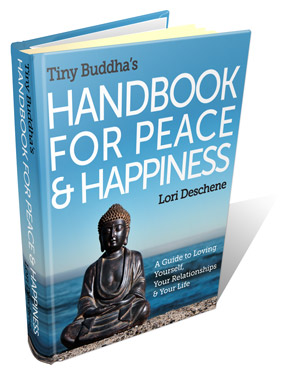
    Available Today: Ebook, Tiny Buddha’s Handbook for Peace & Happiness

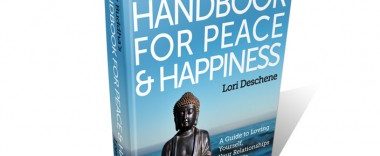
    Tiny Buddha’s Handbook for Peace and Happiness is the ultimate guide of Tiny Buddha wisdom, based on some of the most popular posts and quotes from the site. You’ll also find 4 posts not previously published on tinybuddha.com.

    Through this eBook, I’ve shared myself authentically and vulnerably, and have also offered countless action-oriented suggestions to improve your state of mind, enhance your relationships, identify what makes you feel passionate and purposeful, and find the courage to overcome obstacles and seize your dreams.

    These are my most popular, value-packed posts, as viewed by over 1.2 million readers in the last year and a half, hand-picked and edited into one easy-to-access PDF file. (more…)

  • 6 Tips: Work/Life Balance for People with Big Dreams

    6 Tips: Work/Life Balance for People with Big Dreams

    “Happiness is not a matter of intensity but of balance, order, rhythm and harmony.” ~Thomas Merton

    The vast majority of people I know have two different types of work: the kind that pays the bills and the kind they wrap their heart around.

    For some people, those are one and the same, but often that takes time, dedication, and a willingness to blur the traditional boundaries that separate work and social life.

    Because let’s face it: It’s not always easy to make a living doing something you love.

    The first challenge is to figure out what that is, and it’s often complicated by what we think we should do based on what other people think and what we’ve done up until now.

    The next step is to figure out how to do it smart. It’s all good and well to decide to you want to run an online fitness, beauty, or personal development empire, but unless you have a unique value proposition and a solid idea of who needs your services and why, you could end up just spinning your wheels.

    And then there’s the easiest part, which is simultaneously the hardest: the choice to work on your dream every day, knowing there are no guarantees and that it may take a long time to make the kind of progress that allows you to devote your full-time energy to your passion.

    This has been my experience with Tiny Buddha, and it’s the same with people who have contacted me for help with their blogs. Everyone wants the freedom to do more of what they enjoy and less of what they don’t.

    What makes this kind of complicated is that turning a passion into work can sometimes strip the joy out of it, particularly when you give up freedom now in the pursuit of freedom tomorrow.

    Really, that’s what we’re doing when cram our hours full of tasks that leave little time for play and decompression: We’re deciding tomorrow’s possibilities are more important than today’s.

    So, what’s the balance, then?

    How do you allow yourself sufficient time to create that thing you visualize—whatever it may be—while also allowing space for relaxation, spontaneity, connection, and the simple act of being?

    I recently asked on the Tiny Buddha Facebook page, “How do you create work/life balance?” I’ve chosen the responses that resonated the most strongly with me and used them in shaping this post: (more…)

  • Giveaway: Tiny Buddha’s Handbook for Peace and Happiness

    Giveaway: Tiny Buddha’s Handbook for Peace and Happiness

    Update: The winners have already been chosen for this giveaway. Subscribe to The Tiny Buddha List to learn about future contests, and click below to purchase this eBook for $10.97!

    Buy Now

    Since I launched tinybuddha.com in September of 2009, I’ve hosted quite a few giveaways for books that moved me.

    Today is a very exciting day for me—one that’s a year in a half in the making: Today I am giving away five free copies of my book.

    If you’ve been reading for a while, you may think I’m referring to my book about life’s hardest questions, which Conari Press will publish at the end of this year.

    This book is something altogether different.

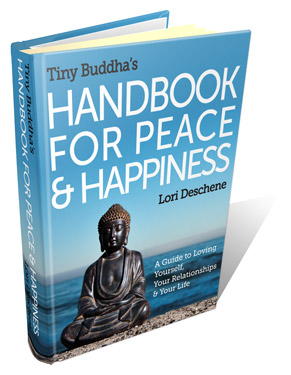
    Tiny Buddha’s Handbook for Peace & Happiness is the ultimate guide of Tiny Buddha wisdom, based on some of my most powerful, popular posts and quotes from the site.

    You’ll also find five posts not previously published on tinybuddha.com.

    With 161 pages, Tiny Buddha’s Handbook for Peace & Happiness explores concepts essential to loving yourself, your relationships, and your life.

    According to feedback throughout the site, the content has helped readers:

    • Feel a sense of empowerment to make positive changes in their lives
    • Accept and love their authentic selves
    • Depend less on external approval for happiness
    • Experience a greater sense of happiness in the present moment
    • Move on from painful events to feel joy again
    • Let go of negative feelings, attachments, fears, worries, and stresses
    • Stay present and peaceful, even when dealing with uncertainty
    • Create and maintain peaceful, loving, meaningful relationships
    • Deal with difficult or negative people
    • Slow down while still achieving goals
    • Find the courage to start pursuing meaningful work
    • Create and seek new possibilities for excitement and adventure
    • Overcome obstacles, mental blocks, and criticism to seize dreams

    I’ve categorized the posts into the following sections:

    1. Developing Self-Love
    2. Happiness and Mindfulness
    3. Letting Go and Letting Peace In
    4. Maintaining Healthy Relationships
    5. Reconciling Busyness and Happiness
    6. Creating the Life You Visualize

    Through this eBook, I’ve shared myself authentically and vulnerably. I have also offered countless action-oriented suggestions to improve your state of mind, and in doing so, change your life. (more…)

  • Tiny Wisdom: On Being Vulnerable

    Tiny Wisdom: On Being Vulnerable

    “What makes you vulnerable makes you beautiful.” ~Brené Brown

    To be vulnerable is to be free.

    It gives you a break from trying to pretend you’re always right and you don’t have any flaws. It gives you permission to show your authentic self and stop taking responsibility for the way other people perceive you. It allows you to try new things and take the risk of feeling awkward or uncomfortable.

    It also opens you up to the possibility of pain. We never know when we let our guard down that other people won’t hurt us, unintentionally or otherwise.

    We can know, however, that the pain of closing ourselves off to people and possibilities is far more dangerous than the potential risks of opening up. We’re just not meant to be isolated. We need to really connect with each other.

    Today, if you feel tempted to shut down and retreat into yourself, ask yourself : What’s the best thing that could happen today if I decided instead to move outside this place that feels safe?

    Photo by Thomas Euler

  • On Planning Less: How to Let Go & Enjoy the Ride

    On Planning Less: How to Let Go & Enjoy the Ride

    “Don’t seek, don’t search, don’t ask, don’t knock, don’t demand – relax. If you relax, it comes. If you relax, it is there. If you relax, you start vibrating with it.” ~Osho

    As I drove home today, I embarked on a familiar exercise: planning out, in ridiculous detail, the next week, month, and year of my life.

    To be clear, I’m not suggesting that planning is bad. In my world, a complete lack of planning would be anarchy. And anarchy equals anxiety. So I try to avoid it—both the anarchy and the anxiety.

    But, historically speaking, I plan to a fault. You could say I live the classic cart-before-the-horse existence. In fact, in my world, the cart comes before the horse has even been born. Or conceived.

    I think of a neat product to create, then spend (read: waste) days mentally planning which boutique in NYC would be best to approach first, before I’ve even figured out if I can afford the supplies (or safely use them).

    I find myself drawn in by late-night Zumba infomercials and spend the next several hours envisioning myself completing the workouts daily for six months, finally emerging from underneath the burden of the “workout so fun it’s not even like working out” perfectly toned, ready to ride my surf board (the one I don’t yet own) on the shores of Maui, Cameron Diaz-style.

    Did I mention that I don’t like cardio? You’d glean this if you saw the thirty-two Zumba-like DVDs that already grace the mantel of my family room. Unopened.

    Almost every Saturday, I wake up and declare my intention to stay in pajamas all day, to lie around and simply be lazy. And then by 11:07AM I’m bored to pieces and excitedly headed to Barnes & Noble (while remembering my vow not to get out of PJs).

    So today, as I drove home while unconsciously plotting how I’d like to spend every hour of every day of the next week, month, and year, a song called “Going Whichever Way the Wind Blows” by Pete Droge came on the radio. The lyrics, which repeat over and over at points, advise: (more…)

  • Growing through Challenges: How Intentions Shape Our Lives

    Growing through Challenges: How Intentions Shape Our Lives

    “Life’s challenges are not supposed to paralyze you, they’re supposed to help you discover who you are.” ~Bernice Johnson Reagon

    The last five years of my life involved a lot of self-inflicted stress and tremendous spiritual growth.

    In 2003 I made a decision that would have a major impact on my life without realizing my true intentions.

    While knowing the financial safety net was not securely in place, I decided to remain at home with my daughter instead of returning to work. Previously, when I left our first child in the care of someone else at ten months old, I felt anxious the entire time I was away from him.

    I didn’t want to experience those feelings of discomfort again, and I didn’t wanted my children to feel as alone as I did as a child, so I ignored all external factors and decided not to place our daughter in childcare.

    I wanted to be the primary caregiver for my children and to show them that, above all else, they were the most important parts of my life. I wanted my daughter to experience maternal bonding and the consistent physical presence of someone who absolutely adored her.

    However, this wasn’t my only motivation; I just didn’t fully understand my complete intentions. (more…)

  • The One New Year’s Resolution That Creates Lasting Change

    The One New Year’s Resolution That Creates Lasting Change

    “If you focus on results, you will never change. If you focus on change, you will get results.” ~Jack Dixon

    I originally started to write a post offering tons of different New Year’s resolutions and tips to stick to them to create lasting change.

    After all, that’s what we bloggers do around the end of the year: share our best practices for improving our lives as December rolls into January; compile well-researched suggestions to change, and do it consistently, despite knowing most people give up on resolutions within weeks of setting them.

    Then I realized that didn’t feel authentic to me.

    I don’t actually believe New Year’s Day is any different than any other day. I don’t believe a random point in the time measurement system we’ve created requires us to make a laundry list of things we need to change or improve.

    New Year’s Eve is, in fact, just another day, and the next day is one, as well.

    I don’t mean to minimize the excitement of the New Year, or any of the days we’ve chosen to celebrate for religious or honorary reasons. I love a big event as much as the next person; in fact, I sometimes bust out the champagne for parallel parking well or using a really big word in a sentence.

    What I’m saying is that New Year’s resolutions often fail for a reason, and it’s only slightly related to intention or discipline.

    Resolutions fail because they don’t emerge from true breakthroughs. They’re calendar-driven obligations. and they often address the symptoms, not the cause of our unhappiness.

    Some resolutions are smart for our physical and emotional health and well-being. Quitting smoking, losing weight, managing stress better—these are all healthy things.

    But if we don’t address what underlies our needs to light up, order double bacon cheeseburgers, and worry ourselves into frenzies, will it really help to vow on one arbitrary day to give up everything that helps us pretend we’re fine?

    It’s almost like we set ourselves up for failure to avoid addressing the messy stuff.

    Why We’re Really Unhappy

    I can’t say this is true for everyone, but my experience has shown me that my unhappiness—and my need for coping mechanisms—come from several different places:

    • I’m dwelling on the past or obsessing about the future.
    • I’m comparing myself to everyone else—their accomplishments, the respect and the attention they garner, and their apparently perfect lives.
    • I’m feeling dissatisfied with how I’m spending my time and the impact I’m making on the world.
    • I’ve lost hope in my potential.
    • I’m expecting and finding the worst in people.
    • I’m turning myself into a victim or a martyr, blaming everyone else.
    • I’m spiraling into negative thinking, seeing everything as a sign of doom and hopelessness
    • I’m assuming there should be a point in time when none of the above happens anymore.

    The last one, I believe, is the worst cause of unhappiness. All those other things I mentioned are human, whether we experience them persistently or occasionally.

    We’ll do these things from time to time, and they’ll hurt. In the aftermath, we’ll want to do all those different things that every year we promise to give up.

    We’ll want to eat, drink, or smoke away our feelings. Or we’ll want to work away our nagging sense of inadequacy. Or we’ll judge whether or not we’re really enjoying life enough, and in the very act of judging detract from that enjoyment.

    So, perhaps the best resolution has nothing to do with giving up all those not-so-healthy things and everything to do with adopting a new mindset that will make it less tempting to turn to them.

    An Alternative to Resolutions

    Maybe instead of trying to trim away all the symptoms of our dissatisfaction, we can accept that what we really want is happiness—and that true happiness comes and goes. We can never trap it like a butterfly in a jar.

    No amount of medication or meditation can change the fact that we will sometimes get caught up in thoughts and emotions.

    What we can do is work to improve the ratio of happy-to-unhappy moments. We can learn to identify when we’re spiraling and pull ourselves back with the things we enjoy and want to do in this world.

    Instead of scolding ourselves for all the things we’re doing wrong and making long to-do lists to stop doing them, we can focus on doing the things that feel right to us.

    This may sound familiar if you’ve read about positive psychology.

    I’m no posi-psy expert, and to my knowledge no one is since the industry is unregulated. But it doesn’t take an expert to know it feels a lot better to choose to nurture positive moments than it does to berate myself for things I’ve done that might seem negative—all while plotting to give them all up when the clock strikes tabula rasa.

    4 Simple Steps to Increase Your Happiness Ratio

    This is something I’ve been working on for years, so it comes from my personal experience. As I have worked to increase my levels of satisfaction, meaning, and happiness, I have given up a number of unhealthy habits, including smoking, overeating, and chronically dwelling and complaining.

    That all required deliberate intention, but it was impossible until I addressed the underlying feelings. I still have some unhealthy habits, but I know releasing them starts with understanding why I turn to them. Starting today, and every day, regardless of the calendar:

    1. Recognize the places where you feel helpless…

    …the housing situation, the job, the relationship, that sense of meaningless. Then plan to do something small to change that starting right now. Acknowledge that you have the power to do at least one small thing to empower yourself.

    Don’t commit to major outcomes just yet. Just find the confidence and courage to take one small step knowing that you’ll learn as you go where it’s heading. As you add up little successes, the bigger picture will become clearer. This isn’t major transformation over a night. It’s a small seed of change that can grow.

    2. Identify the different events that lead to feelings that seem negative.

    Like gossiping with your coworker, overextending yourself at work, not getting enough sleep, drinking too much.

    Whatever it is that generally leaves you with unhappy feelings, note it down. Work to reduce these, making a conscious effort to do them on one fewer day per week, then two, and then three. The key isn’t to completely cut out these things, but rather to minimize their occurrence.

    3. Identify the things that create positive feelings.

    Like going to the park, painting, looking at photo albums, or singing. Whatever creates feel-good chemicals in your head, note them down and make a promise to yourself to integrate them into your day. As you feel your way through your joy, add to this. Learn the formula for your bliss.

    Know that these moments of joy are a priority, and you deserve to receive them. When you’re fully immersed within a happy moment of your own choosing, you’re a lot less likely to get lost dwelling, obsessing, comparing, judging, and wishing you were better.

    4. Stay mindful of the ratio.

    If you’ve had an entire week that’s been overwhelming, dark, or negative, instead of getting down on yourself for falling that low, remind yourself that only your kindness can pull you out. Tell yourself that you deserve to restore a sense of balance—to maintain a healthy ratio.

    Then give yourself what you need. Take a personal day at work and take a day trip. Go to the park to relax and reflect. Remind yourself only you can let go of what’s been and come back to what can be.

    It’s not about perfection or a complete release from all the causes of unhappiness. It’s about accepting that being human involves a little unhappiness—but how often it consumes us is up to us.

    This might not be a lengthy list of unhealthy behaviors you can give up, and how, or a long list of suggestions for adventure and excitement in the new year. But all those things mean nothing if you’re not in the right head space to release the bad and enjoy the good.

    Resolve what you will this year, but know that happiness is the ultimate goal. It starts in daily choices, not lofty resolutions—on any day you decide to start.

  • Overcoming Perfectionism: The Joy of Just Okay

    Overcoming Perfectionism: The Joy of Just Okay

    “The amount of happiness that you have depends on the amount of freedom you have in your heart.” ~Thich Nhat Hanh

    Yesterday I was talking to my dear friend Erin about all the pressures to be perfect—to be more than just enough. To always be striving to be 100%.

    I realized later that this has been going on all my life. Haven’t we all felt it?

    In grade school, the importance of getting those A’s, being on the teacher’s list, always getting the gold star.

    In high school, being popular, being smart, being a jock—whichever lane we chose to fit into to, there was always the hierarchy of being the best.

    Later came the career ladder—always needing to excel.  Not to even mention the pressures to be a perfect parent and the ongoing need to be the perfect child.

    Okay, my neck is stiff just writing this.

    I am a child of the fifties. I remember people having hobbies, just doing things they enjoyed with no value system attached. Whether it was painting a picture, crocheting a potholder, or making furniture in the garage, the point was the joy.

    I don’t remember a lot of apologies about how something wasn’t up to some predefined set of standards. The end product might wind up on a wall or in the entryway, but it might stay in the garage.

    The point was the experience, not the outcome. A lot of weird crafts on the wall were just accepted. (more…)

  • The Beginner’s Guide to Simple Daily Happiness

    The Beginner’s Guide to Simple Daily Happiness

    Happy Dance

    “Happiness is not something ready made. It comes from your own actions.”~Dalai Lama

    Some days I wake up with rocket fuel in my veins, ready to take the day by storm. Happiness comes totally natural. But on others it can feel like I have lead weights strapped to my shoes.

    Have you ever been there?

    We all have.

    Happiness is a practice. It’s on us to learn it.

    While some days are easier to find a smile than others, happiness is a daily choice. It’s a mindset we can nurture and train. That doesn’t mean it’s there every second, but when you notice it’s missing, often the tiniest shift can put you right back on top of the world.

    Life will constantly test your ability to make a lemon martini out of the sourest of lemons. So be ready. Here’s your guide.

    I know that some of the below sound pretty common sense. Unfortunately common sense is not always common practice. This stuff works. (more…)

  • Finding Joy in the Ruins of a Crushed Dream

    Finding Joy in the Ruins of a Crushed Dream

    “Life is a process of becoming. A combination of states we have to go through. Where people fail is that they wish to elect a state and remain in it. This is a kind of death.” ~Anais Nin

    Five months ago, my partner Mike and I were offered jobs as English teachers in a school in China. Excitedly, we moved everything we owned into storage, organized our passports and visas, said farewell to our loved ones, and left our home in Melbourne within a month, not to be home again for a year.

    We had just started to settle in to our new home in Daqing, in the Heilongjiang province of northern China, when the unthinkable happened: I got fired.

    I still don’t know exactly how it happened, but the principal had hired both of us to replace only one teacher. When he realized his mistake, he decided to just fire me. No explanation, no apology for inviting me to pack up my whole life and move to the other side of the world and then firing me after a month—not even the decency to pay me for the work I did.

    Nothing.

    To make matters worse, they withheld our passports after they’d been processed so that we couldn’t leave the city. We had to get the police involved in order to get them back.

    This was a very confusing time for us. We didn’t know whether to stay in China for the rest of our year or just go home. But Mike still had a job with the school, and I knew that I would be giving up if we went home after only one month, so we decided stay. (more…)

  • 5 Tips to Accept Your Weaknesses: The First Step Toward Growth

    5 Tips to Accept Your Weaknesses: The First Step Toward Growth

    “Growth begins when we begin to accept our weaknesses.” ~Jean Vanier

    I went out with my mom this Sunday, a beautiful, sunny, fall day in San Francisco. As we sat on a bench looking out over the bay and ate our vegetarian spring rolls, she reminded me of an incident that happened when I was a teenager when she and I had traveled to the Grand Canyon.

    In a nutshell, I had gotten irate over a family that was feeding the ground squirrels French fries right next to a sign that said “Don’t Feed the Squirrels.” I went up to them and, apparently, was very vehement in my request that they stop feeding the F&*$% squirrels their F&*%$ junk food.

    My mom laughed as she recounted the story (and how she now tells it to others), but I froze up in shame.

    I remember how badly I felt afterwards for losing my cool like that—how I felt like shrinking up and disappearing. What to my mom was a funny story of a teenage freak-out, to me was yet another reminder of how flawed I am.

    The story reminded me of hundreds of other times—some as recent as a couple of weeks ago—when I lost my temper and lost control. And how each time, I’ve felt the cold fingers of shame, guilt, and regret, and wonder despairingly what is so wrong with me that I can’t seem to stop blowing up at people.

    I’m lucky enough to be surrounded by people who forgive me my faults and flaws as I forgive theirs. I can never hold a grudge for very long because I know how it feels to make mistakes.

    Always, when I’ve lost it with someone, I’ve apologized profusely, and I’ve used these incidents as opportunities to look inside myself and explore what happened, what triggered my anger, and how I can help make it less likely to happen in the future. (more…)

  • Baby Steps: A Simple Guide to Doing Something New

    Baby Steps: A Simple Guide to Doing Something New

    “It is better to take many small steps in the right direction than to make a great leap forward only to stumble backward.” ~Proverb

    Two years ago, after hearing Gretchen Rubin of The Happiness Project, talk about setting up one’s own blog, I went home and did just that. It had been something I had thought of doing, one day, when I would get over my “fear” of technology and decide I can do this.

    Her talk made it sound so easy that I sat down and went for it. And I did it; I set up my own blog on blogpost. I was quite proud of myself. Within the next couple of weeks I wrote a couple of posts. And then I got stuck. I didn’t know where to go from there, what to focus on, what direction to take.

    Month after month went by and I didn’t post. I had only done three postings in total. It actually felt burdensome having it up there but feeling paralyzed about continuing to post.

    After about a year, I decided to get it taken down. I felt relieved that it was off. My leap into the blogging world had sent me springing backwards. I was not ready for this. It required a commitment of writing consistently and with a focus, neither of which I had at the time.

    But it was definitely something I wanted to come back to again, one day. I didn’t feel like I was barking up the wrong tree but rather I needed to backtrack and take more preliminary steps towards this goal. So I started reading lots of other blogs and posting comments on them, Tiny Buddha being one of them.

    I’d even get comments on my comments, which was exciting to me. That gave me a boost. I wrote a couple of online pieces for newsletters. That was a win for me. And then I noticed the submissions statement on Tiny Buddha and figured I’d give that a try. (more…)