Tag: Happiness

  • Book Giveaway and Interview with Rick Hanson: Develop a Buddha Brain

    Book Giveaway and Interview with Rick Hanson: Develop a Buddha Brain

    Update: The winners for this giveaway have already been chosen. Subscribe to Tiny Buddha for free daily or weekly emails and to learn about future giveaways!

    The Winners:

    I read a lot of books about mindfulness; this was by far one of my favorites. In his book Just One Thing: Developing a Buddha Brain One Simple Practice at a Time, Rick Hanson offers practical, daily practices, backed by the latest in brain research, to help us avoid stress, improve our mood, enjoy life more fully, and develop emotional resilience.

    This is not merely a book of mindfulness exercises; it’s a guide that helps us rewire our brains for increased happiness and overall well-being. I highly recommend Just One Thing to anyone who’s felt overwhelmed by disempowering, negative thoughts.

    The Giveaway

    To enter to win 1 of 2 free copies of Just One Thing:

    • Leave a comment below.
    • Tweet: RT @tinybuddha Book Giveaway & Interview with Rick Hanson: Develop a Buddha Brain http://bit.ly/rW3u3N

    If you don’t have a Twitter account, you can still enter by completing the first step. You can enter until midnight PST on Sunday, December 11th.

    The Interview
    1. Your work is based on the idea that meditation and mindfulness can change the brain. Can you expand on this?

    Actually, I’d put this a little more broadly: my work—and that of many other scholars and clinicians—is grounded in the general fact of “experience-dependent neuroplasticity,” which is the capacity of mental activity to change neural structure.

    For example, researchers studied cab drivers who must memorize London’s spaghetti snarl of streets, and at the end of their training their hippocampus—a part of the brain that makes visual-spatial memories—had become thicker: much like exercise, they worked a particular “muscle” in their brain, which built new connections among its neurons.

    Similarly, another study found that long-term mindfulness meditators had thicker cortex in parts of the brain that control attention and tune into one’s body.

    In the saying from the work of the Canadian psychologist, Donald Hebb: “neurons that fire together, wire together.”

    Fleeting thoughts and feelings leave lasting traces in neural structure. Whatever we stimulate in the brain tends to grow stronger over time.

    A traditional saying is that the mind takes the shape it rests upon. The modern update would be that the brain takes its shape from whatever the mind rests upon—for better or worse. The brain is continually changing its structure. The only questions are: Who is doing the changing: oneself or other forces? And are these changes for the better?

    In this larger context, my focus is on how to apply these new scientific findings: how to use the mind to change the brain to change the mind for the better—for psychological healing, personal growth, and (if it’s of interest) deepening spiritual practice. I’m especially interested in: (more…)

  • Balancing Home and Work: When Life Is in the Distractions

    Balancing Home and Work: When Life Is in the Distractions

    “It is not hard to make decisions when you know what your values are.” -Unknown

    My son has chickenpox.

    It started a few days ago and today is his third day at home.

    As a work at home mom who is her own boss, I’m fortunate that I can be at home with my son instead of having to ask my employer for time off work.

    I have been working from home for the past five years with three young children, and it was only just a few weeks ago that my youngest child started school full-time.

    I felt that I had reached some sort of milestone, having all three children at school full-time now. But I must say, I was also looking forward to having uninterrupted time at home.

    Ever since I was laid off five years ago, I have been struggling to find a good balance with spending time on my home business and raising three children.

    Now with my youngest finally off at school, it felt as though I had finally crossed that threshold where I was reclaiming my time back.

    Not to become a lady of leisure. Not to go to the gym. Not to go shopping in search of retail therapy.

    But I finally felt as though I had the time, free from the demands of children, to spend on my own business.  I had finally reached that point that I was always trying to get to: being able to work non-stop and to gain the momentum that would hopefully let me move forward in my business.

    On discovering that my son had chickenpox a few days ago, I knew I’d have to keep him at home for the rest of this week. It would—temporarily—be a return back to juggling work and childcare for a few days.

    Today trying to snatch snippets of time to myself to work, I was reminded only too well how I’d really struggled, especially when the three of my children were at home during the long, long summer break. I would barely sit down at my computer only to have to go and break up a fight or find something or help them with something within thirty minutes.

    After lunch today I told my four-year-old son that I had to go upstairs to work for a while and could he please watch Mickey Mouse Clubhouse for a little while until I got back.

    My four-year-old son then said, “I wish I was you Mommy and you were me.” (more…)

  • 6 Crucial Lessons to Help You Live Fearless and Free

    6 Crucial Lessons to Help You Live Fearless and Free

    “Love is what we were born with. Fear is what we learned here.” ~Marianne Williamson

    I got my masters in Clinical Social Work and became a therapist in 1997.

    A year later, I got my PHD in Fear.

    After a decade as a talent agent predominantly for super models, I was burned out. I realized it was time for a career change when I cared more about getting models into rehab, therapy, and eating disorder clinics than a lucrative Pantene contract.

    When I landed in the modeling-agent world, I was convinced I would change an exploitive system. I did not, but the system definitely changed me.

    I was desperate to get off the crazy nicotine, caffeine, adrenalin-fueled hamster wheel that had become my life, but did not know how. Apparently, though, the universe had just the plan.

    In 1996, I applied to New York University’s Clinical Social Work Masters Program, never imagining I would be accepted. Much to my amazement I was accepted and spent the next two years remotely running the television department for Elite Modeling agency, getting my degree, and teaching acting as an adjunct professor at NYU/Tisch School of the Arts.

    Immediately following graduation, the single most important life-changing event happened. I fell in love with my now amazing husband, Victor Juhasz. Vic was a widower with three angry, out-of-control teenage boys. As if being the divorced/widowed father of three sons wasn’t enough, he also lived in New Jersey.

    I didn’t care. It was perfect. He was perfect. Intoxicated with love hormones, I thought this talented, successful, gorgeous man could have 22 teenagers, and I would still say, “It’s all good. Love will find a way!” Believe it or not, this was the calm before the storm.

    Four months into our relationship, my father, 61 years old and in prime health, dropped dead of a heart attack.

    Three months after my father’s death, I discovered a plum-size lump at the base of my throat, which was diagnosed as a large, malignant thyroid tumor. My heart ached as I underwent surgery and radiation while building a relationship with the three boys, whose own beautiful mother died of cervical cancer when they were 5, 3, and 1.

    A mere five months later, based solely on my intuition, a more aggressive cancer was discovered on the other side of my thyroid. More surgery, radiation, and isolation followed.

    On a quiet evening, two months after the second cancer diagnosis, I leisurely walked onto the back porch to find a huge stocking-faced man holding a .22 to the back of my husband’s head. We were robbed at gunpoint with our youngest son in the house.

    My PHD in FEAR was officially complete. For the first time in my life I was afraid—all the time.

    The therapist in me knew it was a trauma response; the human in me was still incensed. I made the distinct decision to become a fear expert knowing that I, nor anyone else for that matter, could really live life if fear continued to dominate my mind and my decisions.

    I worked though my own fear with the help of my therapist and spent the next 14 years in my busy private therapy practice in New York City researching the effects of fear and the mind-body connection.

    I turned my pain into purpose and taught thousands of clients and students to transform their own fear into freedom.

    Here are a few truths I have learned about transforming fear. (more…)

  • Be Good to Yourself: It’s Not You, It’s Your Brain

    Be Good to Yourself: It’s Not You, It’s Your Brain

    Update: The winners for this giveaway have already been chosen! Subscribe to Tiny Buddha for free daily or weekly emails and to learn about future giveaways!

    The winners:

    “You yourself, as much as anybody in the entire universe, deserve your love and affection.”
    ~Buddha

    If you had met me at a party a decade or so ago, I’m sure you would have walked away with the impression I was a bit of a miserable and pessimistic person. I would have happily pointed out to you how much my well-paid job sucked, how stressed I was, and how unfair life was.

    And your impression of me would hardly have been elevated if you had been able to hear the conversations that were going on inside my head.

    I was giving myself a hard time most of the waking day. Every sale I closed meant I was lucky, and every sale I lost proved I was an idiot. And on the rare occasions I wasn’t blaming myself I was blaming everybody else for my inability to be content and happy with my life.

    Do you know there are over twice as many words in the English language for negative emotions and feelings than there are for positive ones? And that’s not exclusive to the English language either because it cuts across all languages and all cultures.

    You could hear that and be forgiven for thinking that human beings are a miserable, pessimistic lot at heart, but there’s actually an excellent reason for the imbalance.

    As a species we have been sharing this planet with all sorts of creatures that can eat, sting, bite, and even electrocute us for the best part of 200,000 years.

    That’s only really changed in the last few hundred years with the explosive growth of mankind. The accompanying deforestation and expanding urbanization wiped out or marginalized entire species that may have previously posed a danger to our existence.

    As well as having to be wary of nasty creatures with big pointy teeth we also had to ensure we did not bump into enemy tribes or annoy our tribal elders or peers and risk a lowering of our status.

    The brain thinks status is crucial to its survival because tens of thousands of years ago it was status that decided whether you got to stay in the tribe, who (or if) you could marry, and generally how secure and happy you were.

    These days somebody unfollowing you on Twitter can be seen by your brain as a decrease in status, as can be being turned down for a date or losing an online role playing game. As such your brain can create a dopamine crash, and that’s why those things tend not to feel good. (more…)

  • Choose to Be Kind and Change the World

    Choose to Be Kind and Change the World

    “Be kind, for everyone you meet is fighting a hard battle.” ~Plato

    While volunteering my carpentry skills for Fundacion Uaguitupu on the outskirts of Panama City, Panama, I made a difference by assisting Kuna Indian communities in the renovation of their homes and churches. There was an abundance of necessary repairs, but unfortunately, funding could not keep pace with the work to be done.

    After three months of doing what I could with the resources available, I had done little worthy of the evening news, yet a small patch of the world had become a better place because I had been there. Sadly, in many parts of the world it doesn’t take much to be considered an improvement.

    I am forever amazed at the capacity of those who live difficult lives to treat others with kindness and compassion. I was welcomed into many homes, treated with great respect, and graciously thanked for my time in the community.

    It is humbling to think that I have so much to give, when the truth is I have so much more to learn.

    One of the most important things I’ve learned is that each and every one of us can change the world!

    Too many of us believe we have no power to make a difference. I have entertained the thought many times.

    Making a difference often takes time, and our kindness may not grow roots until long after we’ve fertilized the flower beds. Focus on the act of giving, rather than the results of your actions. Detach from outcome, and you’ll be free to make a difference in ways you never imagined.

    You don’t have to eradicate world hunger. Simply do something good everyday.

    It’s not results that soothe our souls; it’s actions. In a difficult world, kindness has amazing power.

    Every day people endure stressful jobs, demanding relationships, and backbreaking responsibility. Every day people battle life threatening disease, face uncertain futures, and struggle to survive.

    Each moment of our lives, someone, somewhere, is in need of kindness.

    What you do for others energizes the universe. What you do for the universe energizes you.

    Go slowly. Breathe, smile, and be present. Seek opportunities to make a difference, embrace the moments, and be grateful for every choice you make. (more…)

  • You Already Know Your Soul Mate

    You Already Know Your Soul Mate

    “You, yourself, as much as anybody in the entire universe, deserve your love and affection.” ~Buddha

    During the summer, my husband and I decided to take our lovely nieces and nephew out for a day-of-fun in the city. I expected a day filled with fun, laughter, and connection; I was in store for much more—a lesson in love and truth, told by my eleven-year-old niece.

    We were all at dinner and decided to play a game where one person asks a question of their choice, and everyone else answers. The question “Who do you have a crush on?” arose, and around the table we went.

    All the kids had normal answers such as “um, Jason—no Adam—well, sometimes Chris,” “Definitely Sarah,” “I am not sure if I want to say,” and so on.

    Then the question came around to one of my nieces and she answered with a big smile on her face, “Myself!”  Wow, what an answer, I thought. If only I had that kind of wisdom and self-love at that age. I was so proud and happy for her that she saw herself through such a beautiful lens.

    Her answer started to make me think. How many of us have spent endless hours and years trying to find our true love, the one who will finally find us and make all that time we waited worth it—ultimately, our soul mate?

    As my niece pointed out to me, could it be possible we have been searching for a connection that has been within us the whole time?

    What if we took that term, soul mate, and looked at it from my sweet niece’s eyes. What would we see? Maybe we would see that a soul mate is not always someone else; it does not have to be outside of you. It could be the meeting of your soul and self within you.

    Sometimes, we use so much of our time waiting and searching for someone else to fill us up and love us that we forget how much love we all already have inside that is patiently waiting to be released. We could find that missing piece if we turn inward and remember how special and beautiful we are in our core.

    But more often, we forget how to release this innate gift and fall into our own joy and divinity. We forget to connect to our power within ourselves.

    When this happens, we usually end up giving our power away and allowing someone else to define us. We allow ourselves to been seen through others’ eyes, and eventually, forget what we look like through our own. (more…)

  • Being Happy in the Present: See the Tree

    Being Happy in the Present: See the Tree

    “Have respect for yourself, and patience and compassion. With these, you can handle anything.” ~Jack Kornfield

    I sometimes find myself smiling for no reason—a good mood, perhaps, or maybe a thought about friends and loved ones. What I notice is that every time I contemplate my own smile, it comes back to the thought of being here, now, and feeling for those around me with understanding instead of judgment and love in place of anger.

    It is in the here and now that I find happiness.

    Contemplate a tree: In the blazing heat of the summer, does it cry and complain, or does it sway in the passing breeze? In the deathly cold of winter, does it shutter and wither, or does it catch the falling snow from the sky and offer us pleasing scenery?

    Now ask yourself the same question: In the crests of life, do you lose your legs and sink, or do you stay afloat with the rolling tides? Oftentimes we forget that happiness is usually a choice, and it is in times of need when we need to be patient with ourselves in order to stay afloat and choose to be happy.

    Last year was rough for me. I felt manipulated by a (now ex-) girlfriend for a year before finally leaving her, was hurt twice again over the summer, and as a result, became slightly jaded. I was prepared to live the next year in solitude, not caring to find romance.

    I experienced something we all experience. Heartache does not discriminate against any particular person, life, or event. How then can you stay strong, positive, and happy in the face of misfortune?

    What I’ve learned is quite simple:

    See the world, free of implication, free of self-deception, for what it truly is.

    It is easier said than done, but once you have the basic mindset in place practice will eventually bear many fruits. So follow these general guidelines to find strength when dealing with troubles:  (more…)

  • When You’ve Lost Your Sense of Purpose

    When You’ve Lost Your Sense of Purpose

     “Tell me, what is it you plan to do/ with your one wild and precious life?” ~Mary Oliver

    I was always the child with armfuls of books and big dreams. I wanted to be a writer. When the limit at the local library was six books, I borrowed all six, and then talked my sister into letting me borrow some of her weekly ration.

    While I had many friends, most lived several minutes away, and public transportation wasn’t available. When I couldn’t arrange a sleepover, my sibling and my books were ever at the ready to play school.

    My parents were not academics, but they heartily encouraged my own goals, which always included a clear objective: college. Step-by-step, from AP English courses, SAT preparation, catalogue perusing, and campus visits to placement testing, that long-held goal became a reality.

    My life burgeoned with canvas backpacks of Brit lit, philosophy, and cultural anthropology texts; club meetings; and hours hunkered in the campus newspaper office, ordering pizza at 10pm and pulling all-nighters with fellow staff writers to make morning deadlines.

    While I knew upon graduation that I would ultimately go back to school for a masters, first I’d chip away at student loans and work first jobs for the resume notches. As one year post-graduation stretched into four, then five, the time had arrived for my return to backpacks, midnight study sessions, and heady discussions unraveling literary criticism.

    So I brushed up with a borrowed GRE workbook, made campus visits, and applied to my favorite. I was going back to school! 

    Grad school proved to be an extension of my childhood dream—hanging out at the university watering-hole discussing line edits and narrative structure, and drafting my thesis manuscript before the hopes of agent shopping.

    This time, I had become that writer with not one diploma but now two for my wall! Never mind that I had little practical notion of what followed, beyond another day and a student loan.

    The years since walking across that stage to the cheers of fellow literary friends and family have proven a challenge intellectually and spiritually. There have been times I’ve felt unmoored.

    How, I’ve frequently wondered, can I make this life worthwhile without the focus of school, where I’ve always fit in best? What will motivate me now—workaday Mondays and my five-figure debt balance? Hardly.

    How can I lead a life of fulfillment again when many days feel without a center or a greater purpose?

    Maybe you can relate to feeling a loss of purpose, and it doesn’t have to be the end of school. It might be that you’ve just lost a job, or your children might have just left home for college and you’re unsure how to proceed with your newfound empty nest.  Or maybe you’ve earned the promotion you’ve worked toward for years, and keep wondering how you’re going to top that success.  (more…)

  • 50 Ways to Show Gratitude for the People in Your Life

    50 Ways to Show Gratitude for the People in Your Life

    “Feeling gratitude and not expressing it is like wrapping a present and not giving it.” –William Arthur Ward

    The holiday season generally brings us closer to people. Sometimes that closeness reminds us how much we love each other. Sometimes it reminds us that we drive each other crazy, as family often does.

    At the heart of it, Thanksgiving in particular calls us to see people with the deepest appreciation for the gifts they’ve given us. Some gifts are more immediately obvious than others—the type that come with praise, affection, and genuine esteem.

    Others push us, stretch us, test us, and make us wonder if there’s anything to be grateful for at all.

    There’s no denying that certain relationships are more challenging than others, but through each we have an opportunity to grow and help others do the same. Every relationship teaches us something about loving, trusting, forgiving, setting boundaries, taking care of ourselves, and taking care of each other.

    From the people who love you, to the people who challenge you, to the people who support you at work, here’s how to show your gratitude.

    Show Gratitude to People Who Love You

    1. Share a specific example of something they did for you and how it made a difference in your life.

    2. Do something little but thoughtful for them—like clean up after Thanksgiving dinner!

    3. Give a long, intimate hug; or if you know they don’t like hugs, stick out your hand for a handshake to cater to their preferences and make them smile.

    4. Tell them you’re there if they have anything they want to talk about—and let them know they have your full attention.

    5. Give them something of yours that you think they would enjoy, and let them know specifically why you want them to have it.

    6. Invite them to do something you know they’ve always wanted to do.

    7. Encourage them to try something you know they want to try but haven’t yet because they’re scared.

    8. Offer to do something you know they don’t enjoy doing, like organizing their closet or mowing their lawn.

    9. Compliment them on a talent, skill, or strength that you admire.

    10. Look them straight in the eyes and say, “You make the world a better place.”

    Show Gratitude to People Who Challenge You

    11. Fully listen to what they have to say instead of forming your rebuttal in your head and waiting to speak.

    12. Thank them for introducing you to a new way to look at things, even if you still don’t agree.

    13. Pinpoint something you admire about their commitment to their beliefs—even if you don’t hold them as well.

    14. Resist the urge to tell them they’re wrong.

    15. Challenge them right back to be the best they can be, with love and positive intentions.

    16. If they inspired you to push outside your comfort zone, thank them for inspiring you to take a risk, and let them know how it paid off.

    17. Write a blog post about how they helped you see things differently and dedicate it to them.

    18. Use the lesson this person teaches you through your interactions, whether it’s patience, compassion, or courage.

    19. Introduce them to someone who may challenge them and help them grow, as they’ve done for you.

    20. Let them know how you appreciate when they challenge you in a loving, non-confrontational way—and if they don’t do that, be calm and kind when you ask them to do that going forward.

    Show Gratitude to People Who Serve You

    21. Give a larger tip than usual.

    22. If they have a tip jar, include a thoughtful note of appreciation along with your coins or bills.

    23. Smile when you order or enlist their assistance. Smiles are contagious, so give one away!

    24. If they serve you regularly, acknowledge something they always do well—like work efficiently or stay calm under pressure.

    25. Exhibit patience, even if you’re in a hurry.

    26. Let their supervisor know they do an outstanding job.

    27. Keep their workplace clean—for example, at a coffee shop, clean up after yourself at the sugar stand.

    28. Offer to get a coffee for them, if it’s someone working in or outside your home.

    29. If you have their contact information, send an email of appreciation—and let them know you just wanted to express your gratitude, so they don’t need to write back.

    30. Praise them in a review on Yelp and/or recommend them to people you know.

    Show Gratitude to People Who Work with You

    31. Write a handwritten thank-you note, acknowledging things you value about them and their work.

    32. Offer to lighten their workload in some way if you are able.

    33. Bring back lunch for them if you know they’re working hard and likely haven’t had a chance to grab something.

    34. If you’re running a meeting, keep it short to show them you appreciate and respect their time.

    35. Ask them about their lives instead of always being all business. This doesn’t mean you need to pry into personal matters; it just means showing an interest in who they are as people.

    36. Be the calm, light voice in a stressful situation.

    37. Give them flowers to brighten their desk.

    38. Let their boss know how they’re doing a great job and contributing to the company.

    39. Listen fully if they’re having a difficult day, and recognize if they need space to figure things out on their own, not advice or help.

    40. Remember that the little things can make a big difference!

    Show Gratitude for Yourself

    41. Make a list of ways you’ve impressed yourself lately.

    42. Treat yourself to something you enjoy, like a pedicure or a massage.

    43. If someone compliments you, thank them and let them know you’re proud of that skill, talent, or accomplishment.

    44. Compliment yourself—say it while looking in the mirror, write it in a journal, or jot it on a sticky note and put it on your refrigerator.

    45. Give yourself time to enjoy a passion you’re sometimes too busy to fit in.

    46. Take an inventory of all the good things you’ve done for other people and the world.

    47. Write yourself a love letter. Seriously, start with “Dear Lori” (but insert your own name) and describe all the things you admire about yourself.

    48. Let go of any conditions you have for being kind to yourself—meaning you appreciate even if you didn’t accomplish or do anything specific.

    49. Schedule a date with yourself—an afternoon or evening that’s all about you.

    50. Share the beauty that is you with the people around you, knowing they’re fortunate to have you in their lives.

    I am fortunate to have you in mine. You make the world a better place!

    **Update: Since I wrote this post, I launched a gratitude journal/coloring book that people seem to be really enjoying! If you’re interested, you can learn more here.

  • How to Live in Peace and Balance: 6 Things to Let Go

    How to Live in Peace and Balance: 6 Things to Let Go

    “All the art of living lies in a fine mingling of letting go and holding on.” ~Havelock Ellis

    Imagine that you have to move in two days. Would you be able to pack all your possessions in that time and clean out your house completely?

    How about your mental baggage? If you have only two days left to finish all the important projects in your life, would you be able to do it?

    Three years ago I left the country where I was born and raised and moved permanently to a different place half way around the globe.

    Packing was not easy because there were so many things that were meaningful to me, but of course I couldn’t take them all. But even more difficult was the part of leaving my friends and family behind. I couldn’t put my friends in a suitcase and smuggle them across the border.

    However, the hardest part was still ahead. Soon after I got to the US I realized that I had to let go of a lot of habits and even my lifestyle. Everything was so different from where I grew up.

    I had two choices: to hold on to my past, complain, and be completely miserable, or let go of everything that was no longer relevant and start a new life while still holding on to my authentic self.

    You may not have had to go through such drastic changes in life. However, we all face the dilemma of letting go and holding on.

    A lot of times if we are not forced to let go of something we keep dragging ten, twenty, forty years of mental and physical baggage behind us. At some point that baggage becomes so unbearably heavy that we just decide to stop moving forward and start living in the past.

    We stop having new goals and dreams. We stop meeting new people. We stop trying new things. We stop learning. But ironically, we still keep buying and acquiring more physical clutter to fill our homes and closets.

    Of course, on the other hand if you throw away everything you love and enjoy, then suddenly you lose your personality. Frankly speaking, you cease to know yourself then.

    So, quoting Havelock Ellis again, how do you mingle letting go and holding on? The answer to this question will give you the ultimate inner peace and balance. (more…)

  • Battling with Your Body: 4 Simple Tips for Overall Well-Being

    Battling with Your Body: 4 Simple Tips for Overall Well-Being

    “Your body is precious. It is our vehicle for awakening. Treat it with care.” ~Buddha

    I believe there are four key aspects to our existence:  mental, physical, spiritual and emotional.  The mind is a fairly straightforward concept, and many people can identify with a spiritual component of life.

    Yet there is one other aspect of life that I believe is essential to a full and healthy journey on this planet—the emotional element of living. And that emotional state seems to be inextricably tied to the physical.

    I have always struggled with the physical. I’ve had a love-hate relationship with my body since I was cognizant of my existence. As a chubby kid, I felt different and defective. I sought relief in my grandmother’s frozen cool whip in the extra freezer located in our garage.

    I gulped down chalky pink Pepto-Bismol when I wasn’t even sick. Why? Because it was sweet.

    I couldn’t handle the monkey bars. The ball always hit me in the face. I was always last to finish running around the field at recess.  As I matured, I grew out of the chubbiness but I was never satisfied with my body.

    I spent the summer of my 11th year frantically emulating a 1984-era Richard Simmons in his 7-Minute Abs video and simultaneously saving enough money to buy a McChicken sandwich, fries, and a hot fudge sundae at McDonalds.

    Disconnected from my body, I grew into a young woman and ignored my physical existence as best I could; becoming what author Geneen Roth calls a “walking head” with that insufferable body attached. 

    I alternated between trying to eat “right,” permitting myself to eat “bad,” and feeling bad about eating bad.  If I ate a salad for lunch, I might have a half-gallon of ice cream for dinner. Alcohol eventually contributed to my lack of self-care, adding extra calories and acting as yet another way to escape my body.

    Fast forward through my twenties: After several attempts at Weight Watchers, a failed relationship, a bout with antidepressants, and a nervous breakdown, I managed to lose over 40 pounds with Weight Watchers. Down to the size I wore when I graduated from high school, I was sure my life would get better.

    It didn’t. It got worse. So I dyed my hair blond. I drank more wine.

    Then I stopped drinking. I stopped smoking cigarettes. I fully embraced sobriety, found a higher power, and earned two master’s degrees. I lost even more weight. Now my life should be perfect, right? 

    Wrong. I still can’t live comfortably in my body. And I’m soothing my discontented soul and body with food. Now it’s ice cream (or more specifically, Ben and Jerry’s Half Baked Frozen Yogurt, which has only 3 grams of fat per serving, compared to Peanut Butter Cup ice cream which has 25 grams of fat, so it isn’t that bad).  (more…)

  • The Joy and Peace That Gratitude Brings

    The Joy and Peace That Gratitude Brings

    “Gratitude is the memory of the heart.”  -Jean Baptiste Massieu

    Several months ago I was invited by the man I was newly seeing to come to one of his meditation classes. He’d been going through an incredibly tumultuous and painful time in his personal life; he realized that his family unit, which he had always seen as perfect, was human and flawed. That seemed to break something in his spirit.

    He turned to meditation as a source of re-centering himself. In addition to the deep breathing, one of the cornerstones of meditation practice is gratitude—finding at least one thing every day to be thankful for.

    He had told me it was a “bring a friend day.” After entering, we saw three other pairs of people and the group leader gathered around a table.

    The first pair was two women in their forties. They had been best friends since college and had remained close for over 20 years.

    One of them shared how through past illness and family strife her friend had never left her side. They laughed about margarita nights until dawn and how the other always picked up the phone. Where one woman stopped, the other picked up. They were grateful for their cultivated and cared for sisterhood.

    The second pair was two older men. They were neighbors and friends who had grown up together. One wanted to share his gratefulness for the other’s steadfast support through his divorce, and for always offering a welcome place for Christmas and Thanksgiving.

    He spoke about the difficulties he faced in not being with his children and his appreciation for having his friend to turn to. Face to face he turned to his friend and thanked him for his family’s constant support, for without them he didn’t feel he would have made it.

    The third pair was a mother and son. The mother wanted to remind her son how special and important he was, not only to her but to everyone around him. She recognized that his recent past had been marred with difficulties and let downs. She knew he felt broken and hurt; she held his hand as she thanked him for letting her be a support and nurture him. She was grateful to see her son’s smile again.

    The last pair was me and the man I’d been seeing for only a couple months. He wanted to appreciate our growing trust and support in each other.

    He appreciated that I showed patience in his slow approach to communication and that I encouraged him. He’d had a different experience growing up than I did—my family said everything on their mind the moment they felt it—so it meant the world to me that he wanted to communicate with me, and he acknowledged his gratitude in this way.

    The man who was going through so much in his own life took the time to reach out and show me thanks, simply for caring. I was blown away by the unexpected validation.

    I’d recently dealt with a series of blows that had left me feeling weak: the passing of a friend, numerous graduate school rejections, and building anxiety towards next life steps. His taking the time to share his gratitude with me pulled me up and opened my eyes. (more…)

  • Embracing All of Life Instead of Resisting Pain

    Embracing All of Life Instead of Resisting Pain

    “Don’t seek, don’t search, don’t ask, don’t knock, don’t demand – relax. If you relax, it comes. If you relax, it is there. If you relax, you start vibrating with it.” ~Osho

    As far as I can remember, I have always asked myself questions about the nature of my emotional pain. I analyzed and went on long thinking quests to find answers to all of this deliberation. I was convinced that I would find deliverance by coming up with the exact hypothesis, about why I was chosen to have to live with so much trauma and pain in my childhood.

    I felt like a victim of life.

    I did not wonder about the source of my joy; on the contrary I simply accepted these positive emotions.

    I went through a phase of denying the negative emotions I experienced, and I thought that being positive, at all costs, would “chase” away my suffering. At the time, I used the skills best known to me, to defend myself against the pain I felt.

    For many years I attempted to transform a negative emotion into a positive one. Albeit, the pain did not subside, it was still echoing loudly, and eventually manifested itself at full volume. Then not too long ago, someone gave me the permission to embrace my pain. I felt as though I had been given the authority to grieve the entire trauma that I had ever experienced.

    I began this journey of looking at the source of my pain. Yet, I felt drowned by it, and I felt the constant burn of going through the fire. I indulged in this state and felt some form of relief about acknowledging all of this suffering.

    Upon reflecting on the path I had permitted myself to take, to travel to the depths of my past, I uncovered that I had developed an unconscious belief that someone was guilty for inflicting this suffering on me. As a result, I continued the cycle of victimization, where I was seeking to lay blame on someone for my ill feelings, thus not achieving inner peace.

    Following my last break-up, to the man I call one of my soul mates, I fell to pieces, and delved into the tides of emotions that came my way—sadness, loneliness, fear and depression. The pain was louder than anything I have ever experienced, thus far.

    I blamed him for all of the suffering I was experiencing, I made him the source of my turmoil, and then I used hate towards him to manage my pain. I was in victim mode, and I turned him into the cause of my darkness.

    Then it dawned on me, and I recognized that I was fighting against the tide again by not accepting my pain.

    That is when I started to wonder about the following: “If I am able to accept the positive experiences of my life, that bring me joy and happiness, without even questioning their origin or trying to avoid them, what if I did the same for the other emotions I fear so much, such as sadness, pain, fear, anger, and loneliness?” (more…)

  • Prescriptions for Peace: How to Combat Anxiety

    Prescriptions for Peace: How to Combat Anxiety

    “When the crowded refugee boats met with storms or pirates, if everyone panicked, all would be lost.  But if even one person on the boat remained calm and centered, it was enough. They showed the way for everyone to survive.” ~Thich Nhat Hanh

    Without realizing it, I spent the majority of my childhood in a constant state of anxiety. In my early twenties, after a break-up with a man I dearly loved (albeit a little obsessively) I tried to medicate my grief with too many cups of coffee, bottles of wine, and many cigarettes.

    I found myself one absurd sunny afternoon with shaky, sweaty hands, palpitations that felt like a heart attack, and an overwhelming sense that I was crazy. I called the emergency room and they informed me I was having a panic attack.

    Although I tended toward depression and struggled with not wanting to get out of bed, I didn’t realize depression and anxiety can go hand in hand.

    At one point, my doctor prescribed anti-anxiety medication, but it numbed me out to such a degree I could barely function. Realizing that this was not the answer for me, I made it a life-responsibility to care for and self-treat my anxiety.

    Back then, if someone suggested that I find “peace,” I would toss it away with a roll of my eyes thinking they were some sort of hippie trying to save the planet, or a born-again with a bumper sticker of a white-winged dove. What was peace anyway? I was just trying to survive my inner turmoil.

    Over time, I discovered more about what peace really meant for me. If I could be at peace, I knew then that I could better understand and have compassion for others. But I had to start small and stay simple in order to face the stressors of my life.

    I began with the basics and slowly built my foundation over the years. My pattern for so long was trying to build my ship out at sea. The realization was to learn how to build my mast on stable ground.

    Once I built a basic foundation, I got a little fancier: I kept journals to have a place to put my rapidly thinking mind. I learned how to meditate, slowly increasing from ten to forty-five minutes a day.

    I studied and read countless spiritual books before going to bed (sometimes an excellent remedy for sleep) and found time each week to be creative. I changed my eating habits, learned how to eat more vegetables, legumes, grains, and olive oil, and juiced delicious concoctions to ground me.

    Over a long period of time, I created a daily structure that would include all of the above and more, which solidly holds me and gives me inner-strength. Then, I could start thinking about the bigger things, like the views of the world and how to help make it a better place.

    Today, inner-peace is tangible and real for me. Even when the going gets tough, even when life slams me with loss and difficulties, I have my tried and true structure to come back to. (more…)

  • 4 Myths about Doing What You Love for Work

    4 Myths about Doing What You Love for Work

    “Your work is to discover your world and then with all your heart give yourself to it.” ~Buddha

    “Big flud strikes Revere!”

    That was the headline of the newspaper I made with my sister when I was six. I hadn’t yet honed my skills as an editor, but I knew a good fake story when I heard it.

    Eight years later, while wading through my anger toward several people who’d hurt me, I wrote a short book called The Line of the Virtues about the grey area between good and bad. An older coworker at my afterschool job asked, “Are all kids this deep these days?”

    Somewhere between six and fourteen, I’d found my calling: I was a writer who liked to tackle weighty topics. Though I took a lot of detours between realizing that and pursuing writing as a career, ultimately, it brought me to Tiny Buddha—my sweet spot for personal and professional fulfillment.

    Looking back, I realize I took those detours solely because I was scared. I thought writing was one of those careers that only a few people get to do. I figured it was better not to try than to try and fail, because then I could pretend I wasn’t writing by choice.

    I remember the first time I realized I was hiding from my passion. I was twenty-six years old, and part of a marketing team that was walking across the country to promote a number of fitness products.

    A coworker and I got into a ridiculous fight over the meaning of a word. She’d formerly worked as a comedy writer for radio shows—and, for the record, she was right about the meaning. Defending her stance, she shouted, “Don’t you think I’d know? I’m a writer!”

    I responded, “Me too!”

    Then she argued, “Not really!” Further drilling the point home, she continued, “Just wait ‘til you move to San Francisco and call yourself a writer there. Your MySpace blogs just aren’t going to cut it!”

    Since I’d held nothing back from Tom, this hurt—until later when I realized she’d given me a gift. She’d smothered me with the truth, and I had no choice but to acknowledge she was right yet again.

    I got a writing job the second day after I arrived in San Francisco. I was writing about senior care, a topic that interested me about as much as the mating habits of ants. But it was a decision to step onto a new path, knowing full well that, at that point, I had no idea where I was going.

    This is true for all of us whenever we start doing something new. There are never any guarantees about where it will lead, and that can be a scary thing, particularly if your current situation allows you to comfortably meet your responsibilities.

    There simply isn’t a one-size-fits-all formula for discovering what you’re passionate about and then transitioning to a new career. That being said, I’ve learned a few things about doing what you love for work—and I’ve learned that a lot of what I previously believed simply is not true. (more…)

  • 4 Treasures to Leave Behind

    4 Treasures to Leave Behind

    “Just as treasures are uncovered from the earth, so virtue appears from good deeds, and wisdom appears from a pure and peaceful mind. To walk safely through the maze of human life, one needs the light of wisdom and the guidance of virtue.” ~Buddha

    As children, we were all fascinated by our own treasure hunts. We sought the gold at the end of the rainbow. We dreamed of sailing the seas looking for Treasure Island. We pretended to navigate ancient lands looking for the spot marked “X”.

    Growing up in my family, my treasures were little feel-good events that made me smile. I longed for play time so I could climb trees and catch spiders. I looked for friends who could play with me all night long. I loved visiting our local bookshops to scour the shelves for books I’d enjoy.

    As I grew older, I stopped seeking treasures. A life of routine and common dreams had descended on me. It was no longer seeking Treasure Island or the spot marked “X” but rather the acceptable haves of my generation. In my country it was known as the 5 Cs—cash, credit card, car, condominium, and country club membership.

    When I started looking deeper, I asked, “Is that really all there is?” Was life all about acquiring things? It just didn’t feel meaningful.

    I began to look for the real treasures in life, and started thinking about the kind of legacy I wanted to leave behind.

    4 Treasures to Leave Behind

    I have discovered that the real treasures in life have nothing to do with status and everything to do with leading fulfilling lives and sharing them with people. We can’t take anything with us, but we can leave these behind for our loved ones, both to remember us and to help and inspire them: (more…)

  • Interview and Giveaway: Gretchen Rubin of The Happiness Project

    Interview and Giveaway: Gretchen Rubin of The Happiness Project

    Update: The winner for this giveaway has been chosen. Subscribe to Tiny Buddha for free daily or weekly emails and to learn about future giveaways! The winner: +sp.

    I was perhaps the last person on the face of the planet to read The Happiness Project.

    Earlier this year, a friend connected me with Gretchen Rubin, which prompted her to interview me for her blog. After I spent some time exploring her archives, I realized I needed to learn more.

    If you’ve read The Happiness Project, you know Gretchen balances ancient wisdom with contemporary research to create a personal roadmap for happiness that hinges upon everyday choices.

    She spent a year test-driving various “resolutions” for joy in a methodical, measurable way, and chronicled her experiences both on her blog and in her book.

    One thing that drew me to Gretchen’s work is her admission that she was not unhappy before—she simply felt she didn’t appreciate the things in her life that might otherwise have made her happier.

    While we all have different challenges, I suspect this is something we can all relate to.

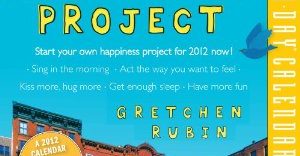
    I’m excited that Gretchen took the time to answer a few questions, and also that’s offered to give away one copy of her 2012 Page-A-Day Happiness Project calendar.

    The Giveaway

    To enter to win:

    • Leave a comment on this post.
    • Tweet: RT @tinybuddha Interview and Giveaway: Gretchen Rubin of The Happiness Project http://bit.ly/tvUOZt

    You can enter until midnight PST on Sunday, November 13th. If you don’t have a Twitter account, you can still enter by completing the first step.  (more…)

  • Aid for a No-Good, Terrible, Very Bad Day

    Aid for a No-Good, Terrible, Very Bad Day

    “The outer teacher is merely a milestone. It is only your inner teacher that will walk with you to the goal, for he is the goal.” ~Sri Nisargadatta Maharaj

    Recently, I had a very bad day. It was a day when certain life events made me so scared, so panicked I felt like I was floating in a dark void with no connection to anyone or anything, certainly not myself.

    It wasn’t one bad thing that happened, just an accumulation of family stresses, worries, questions, uncertainty, and self-doubt that flooded my spirit. I had been going-going for many days and lost touch with myself and it caught up with me—just like that. It spun me right off my center.

    Although I know as humans we are imperfect, I judged myself as a fraud.

    I’ve devoted myself to my inner-work for decades. I have a counseling psychology degree, published a self-help book and card deck set, and write articles with lessons about being peaceful, content, and happy.

    But on this day, I needed to figure out how to help myself.

    I tried to remember the amount of teachings spiritual, psychological, and creative I have collected in my toolbox over the many years.

    I thought about the great teachers of the world that offer incredible valuable assistance to one’s growth and discovery. And remembered that without the application of the teachings, we remain a head full of knowledge rather than a being who is at peace and free.

    I needed to be my own teacher in the moment, but I felt so weak and vulnerable I couldn’t connect to any of the teachings. This was a red flag of an emergency for me.

    Lying on my bed in a temporary freeze, I thought about common emergency instructions we are given in case of disaster. The building’s sign: “In case of fire, take the stairs not the elevator.” The flight attendants: “Cover your own mouth first, then your child’s.” When a tsunami hits: “Run to higher ground.” The tornado: “Open the windows so that they will not shatter” or “Go to the nearest shelter” Even for the addict, “Pick up the phone and call your sponsor.” (more…)

  • The One Thing That Helped Me Forgive My Father

    The One Thing That Helped Me Forgive My Father

    “We must be willing to let go of the life we have planned, so as to accept the life that is waiting for us.” ~Joseph Campbell

    I stood in front of my father, man to man, and demanded an apology. His long absence and lack of interest during my formative years had burned within me a resentment that wouldn’t quit. My therapist suggested that I confront him as one adult to another, so there I was.

    It didn’t go well. The more I pointed out his failures, the more defensive he got. The more I demanded an apology, the more he justified his actions. In his mind, he wasn’t to blame for the fact that I spent much of my childhood longing for the particular kind of bonding that only a loving father can provide.

    “It’s a simple apology!” I finally screamed. “That’s it. That is all I want. You weren’t around and you damn well should have been. I needed you. It’s not rocket science. Children need their parents. But you didn’t care about me, did you?”

    “Well, you are only alienating me further by the way you’re acting now,” he replied, offended.

    Maddening. I left that encounter with a splitting headache that lasted three days. What gives? How could he be so narcissistic? I returned to my therapist, Jake, to discuss the incident.

    “You confronted your father and really pushed him. I guess you needed to do that,” Jake said with a tone of respect. “Now, perhaps you can approach him in a different way, coming from a different place.”

    Forgiveness

    I agreed that Jake must be right, although it would be three years before I understood what that new approach might be. I knew I needed to forgive him, so I just kept trying. All of the prayers, affirmations, visualizations, and other work must have been helping, but I never experienced the true letting go of resentment that comes with actual forgiveness. It didn’t feel like a choice.

    The answer came from a client. She had come to me for help in dealing with her son and happened to tell me about an encounter she once had with a Buddhist monk. After angrily relating the sad tale of her childhood and the awful parenting she experienced, the monk simply stated the following:

    You are the wrongdoer now.

    It hit me like a ton of bricks. (more…)

  • 60 Life Lessons: Insights from Oprah’s Life Class

    60 Life Lessons: Insights from Oprah’s Life Class

    Call me a traitor to my gender, but I didn’t grow up watching Oprah. I didn’t have parties with other ladies that involved a television and tissues. I didn’t fill my library according to her book club recommendations. And I didn’t live my life around the question, “What would Oprah do?”

    Considering my penchant for drama back then, I was more likely to curl up to Jerry Springer than a show without paternity tests and chair throwing.

    But recently Oprah called to me. Literally.

    It started when the network reached out to my friend Mastin Kipp of The Daily Love to include him in a webcast for Oprah’s Life Class. I read his excited blog posts about receiving this opportunity, and I was thrilled for him, but having never gotten into her first chapter, I didn’t feel drawn to her next.

    I also wondered if sometimes Oprah’s celebrity overpowers the messages.

    Then I watched the webcast, and I realized there is something very powerful going on within this movement.

    I fell in love with Oprah’s Life Class—both because Oprah leads with humility and authenticity, and because she’s attracted a vibrant community of people learning to let go of pain and open up to joy.

    As I absorbed myself in the archives of webcasts, I watched people forming new insights, having mini epiphanies, and most importantly, bonding with each other through their common struggles and potential. I wanted to be part of that.

    Just after my marathon Life Class session, Oprah’s people called and invited me to attend a live taping of her webcast, on Mastin’s recommendation. I’d now have a chance to be part of it, up close.

    While there were certain spiritual conversations that created a bit of a disconnect for me, I walked away from the experience feeling touched, inspired, and eager to share the work they’re doing there.

    I considered giving you the highlights of the webcasts from this season, but you can easily watch those yourself.

    So instead, I’d like to share some of the most profound insights I gleaned from Oprah’s community of “students” in their answers to one of her pre-show questions. (Submitted to her anonymously, unless otherwise indicated): (more…)