Tag: Happiness

  • When You Don’t Get What You Want Something Better May Be Coming

    When You Don’t Get What You Want Something Better May Be Coming

    “Remember that sometimes not getting what you want is a wonderful stroke of luck.” ~Dalai Lama

    While every adoption story is different, they all start with a loss. Our loss turned out to be the best thing that ever happened to us.

    I’ve had two migraines in my life. Both were when I was battling infertility and in a war with my body. My brain had had enough apparently.

    The first migraine was on my way to work one day (different story), and the second was before a dinner party. My friend was inviting her close friends over to make an announcement. I knew what the announcement was.

    She was going to tell us she was pregnant. I was as happy for her as an infertile friend can be, which is not very.

    My migraine saved me that night. I didn’t have to go and pretend. Instead, I was alone in a dark room crying, which is where I would have ended up anyway. Now I know I was grieving the loss of my non-existent biological child.

    In what turned out to be an oddly not-difficult decision to adopt, my husband and I were on the way to the adoption agency for the first informational meeting when we had the biggest fight we had ever had. Uncharacteristically, I was so emotional I told him to turn the car around. I knew this was not the time to begin our adoption journey.

    About a month later we tried again. We were in the car, having just merged onto the highway on the way to the adoption agency, when we were sandwiched between two other cars in a three-way wreck. We were fine, but missed the meeting.

    Our third try turned out to be a charm as we showed up at the agency relatively emotionally stable and in one piece.

    Those who have adopted can confirm that timing is everything, especially in foreign adoptions when often the two files on the top of the pile get matched and a family is formed.

    Was something cosmic happening so that we would show up at the right time to receive the right baby?

    Once the adoption was underway and we were awaiting our sweet baby to be approved for release to us, I would talk to her. We even had a song, Coldplay’s “Yellow.”

    I would sing, “Look at the stars; look how they shine for you,” because I thought we could see the same stars. I felt closer to her, knowing we were thousands of miles apart, but could see the same sky.

    “You were all yellllllooo,” I would sing alone in my car, again and again.

    I don’t know what it is like to give birth, but I cannot imagine it is any more terrifying or exciting than meeting your adopted child for the first time. We, along with the families we were traveling with, had taken over a hotel floor when the babies started arriving from the orphanage.

    “Swenson” we heard our interpreter yell as he held out a baby, our baby. I don’t remember stumbling forward, but my husband has it on video. When I watch it I see myself holding our daughter and instinctively cupping her head and holding her to me.

    She was dressed in head to toe yellow. Shirt, shorts, even yellow jelly sandals. This. was. my. daughter.

    She was all yellllllooo.

    I did not get what I wanted. I wanted to have a dinner party and announce that I was pregnant. I wanted to carry a child in my belly. I wanted to discover how the baby looked like me and how it looked like my husband.

    I didn’t have a dinner party. I didn’t carry her in my own belly. She doesn’t look a damn thing like us.

    But what I got? What I got was even better. I got a child that was meant to be ours.

    This baby was so meant to be ours that we couldn’t make it to the adoption agency until the third try because it wasn’t time yet. This baby was so meant to be ours she was wearing head-to-toe yellow when we met after I’d been singing “Yellow” to her for months.

    So yes, sometimes not getting what you want is a wonderful stroke of luck.

    I daresay when you don’t get what you want it is because there is something better on its way to you.

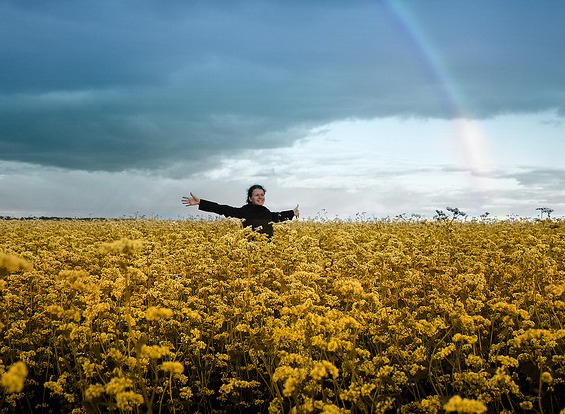
    Photo by egor.gribanov

  • 7 Steps to Prevent Getting Stuck in an Emotion

    7 Steps to Prevent Getting Stuck in an Emotion

    Stuck-In-Feelings

    “Life is a process of becoming. A combination of states we have to go through. Where people fail is that they wish to elect a state and remain in it. This is a kind of death.” ~Anais Nin

    I bought an ice cream cake for my family to thank them for giving me the time and space to write the first draft of my novel. My husband took photos. I selected my favorite shot as the wallpaper on my computer to remind me of this milestone.

    I was happy and joyous for a week. The second week I fell into despair—hard—and stayed there for months and months and months.

    I could not edit the novel I had completed and I could not start something new. I was stuck. A terminal sense of doom clouded my days and fogged over my nights.

    Eventually, I sought help from a counselor who specialized in treating creative people. Her diagnosis was grief. Some people go through the grief process when they complete a creative project, she explained.

    Apparently, I was one of those people.

    I had fallen into the trap of believing I could sustain the triumphant joy and deep satisfaction I had received upon completing the first draft of my novel and remain in those victorious feelings forever. When I couldn’t, I fell into depression and stayed there.

    I had experienced a kind of death.

    The counselor recommended that I allow the grieving to unfold naturally without force. That meant I had to give myself permission to be depressed. I had to sit with the feeling, day and night, and not wrestle with it.

    Weeks later, I finally emerged from the darkness of despair into the light of hope. I discovered the strength to edit my novel. When that was finished, I started looking for a publisher.

    I had experienced a kind of rebirth.

    Since that first bout of depression, I’ve written and published four books. Each time I finish the first draft, I grieve again. But over the years, I have learned how to process my feelings and create again.

    Here are seven simple steps to help you move through your emotions without getting stuck:

    1. Learn acceptance.

    Acknowledge what you are feeling without judgment. Offer yourself reassurance that it’s okay to feel whatever it is that you are feeling, no matter what anyone says or thinks.

    If you ignore what you’re feeling or pretend to feel something you don’t feel, the charade will prevent you from moving through the emotion. You will remain frozen in denial. The feeling will take hold and anchor you like a dead weight.

    By accepting what you feel when you feel it, you release the possibility of getting stuck.

    2. Practice patience.

    Some feelings last a few moments. Others last a few hours or a few days. Some feelings can last a whole year or longer.

    Let the feeling stay as long as it needs to; don’t force it to leave. It will only come back until it is done.

    3. Seek help early.

    It’s okay to seek help for dealing with a difficult emotion. If you find yourself overwhelmed, call a friend who can listen and offer advice or hire a professional who can provide expert insight.

    It’s better to get assistance as soon as you need it rather than waiting until you are stuck with an emotion you cannot release.

    4. Avoid self-medicating habits.

    Don’t try to mask the feeling. Drugs, alcohol, food, gambling, and shopping may temporarily relieve you from the pain of your emotion, but they will not solve your problem.

    Self-medicating habits create a labyrinth around your emotion. They offer the illusion of freedom while imprisoning you. Eventually, you’ll have to face what you are feeling head on without the benefit of an addiction to cushion the impact.

    By refusing to indulge in avenues of escape, you will learn the invaluable skill of self-reliance. You will grow confident in your ability to process your emotions quickly and efficiently no matter how joyful or painful they may be.

    5. Develop a routine.

    A consistent routine provides the foundation to build a life. Without it, chaos takes over. Feelings will either run rampant or hide in dormancy, both of which are unhealthy.

    Wake up at the same time every day. Schedule your meals. Go to sleep at the same time each night.

    Make sure you have quiet time for prayer, meditation, or reflection. Include hobbies on a regular basis. Spend time with your loved ones on a daily basis.

    The more structured your routine, the more likely your emotions will flow.

    6. Introduce something new.

    Once you have developed a routine, add something new. Boredom leads to apathy, which can encourage an emotion to take root and not let go.

    Variety leads to excitement. Trying something new keeps things fresh and alive.

    Take a class or join a club. Visit somewhere you have always wanted to go. Be adventurous.

    7. Honor the past, present, and future.

    Life is more than random moments. It’s a journey of self-discovery on a continuum of time. You can easily get stuck in an emotion by dwelling on the past or not paying attention to the present or worrying about the future.

    Embrace the whole spectrum of your life: the past with its history, the present with its immediacy, and the future with its potential.

    If you only think of the past, you’ll be stuck in the mire of what once was and miss out on what is going on all around you right now.

    If you focus only on the moment, you will neglect to remember the lessons you have learned through past experience and fail to pay attention to any future consequences. If you only dream of the future, you will become lost in fantasy without a compass to guide you there.

    By honoring the past, present, and future, you can truly live each moment to its fullest.

    Emotions are meant to come and go, not stay with you forever. By following these steps, you will train your mind and your body to process emotions in a healthy manner, leaving you free to explore the next chapter of your life.

    Photo by www.hansvink.nl

  • Don’t Control Anger, Control Yourself

    Don’t Control Anger, Control Yourself

    “Speak when you are angry and you will make the best speech you will ever regret.” ~Ambrose Bierce

    I once had a much-cherished friend who meant the world to me. The problem was that we were both short-tempered individuals and the word patience was fictional to both of us.

    There is a thin line separates right from wrong and when one is blinded by anger; it can be near impossible to see this line.

    Invariably, my friend and I kept crossing it and ended up destroying what was one of the most beautiful bonds anybody could ever have.

    One day in a fit of anger we said some mean things to each other in front of a lot of people, and that was the end of our relationship. From days of completing each other’s sentences, crying on each other’s shoulders, and growing together as best friends, we are strangers who walk this planet today.

    Much has been said about anger, an emotion that most of us experience often. We read about anger, we learn anger management tips, and we know that it is an emotion with the power to destroy, and yet when it comes to our own lives, it’s an altogether different story.

    When I replay the way I “reacted” to the whole incident instead of “responding” to it, I think of a hundred different things that I could have done right. I still wonder why I said those things, and in front of so many people.

    When we were little kids we used to write with pencils. It was a sign that told us that our mistakes could be corrected. As we grew older we received permanent markers to paint with on the canvas called life. This is because we were expected to take the responsibility of not making irreversible mistakes.

    How we manage our anger will decide if there are ugly marks on this canvas.

    Anger may be an emotion that we cannot evade, but the truth is that life is much more beautiful when we learn not to succumb to it.

    I have always been a short-tempered person. I’ve tried various things to control this, in vain. After having ruined many relationships because of this, I decided it was time to do something about my anger.

    I’ve been asking myself “Is it possible to be someone who never gets angry?”  

    There was once a saint who felt like having a bottle of beer. He asked his disciples to get him one. When the shocked disciples did as they were told, the saint simply folded his hands and stared at the bottle.

    Later, he asked his disciples to take it away. When one of them asked him, “What was it that you did?” the saint told him something that we all need to understand. He said, “I cannot control the feelings, the emotions, or the temptations but I can definitely control my actions.”

    As long as I keep my hands folded, there is no way I can grab this bottle of beer, and even though I cannot control my temptations I can control my actions.

    While anger is something we cannot control, what we do when we are angry is something that we definitely can control.

    Imagine you are working on a beautiful painting and suddenly there is a power outage and it’s pitch dark. Would you continue to make strokes on the painting, hoping that it miraculously became a masterpiece?

    In the same way, when you are angry the best thing to do would be nothing at all. Anger is like a power outage for the thinking part of your brain.

    These days, when I get really upset I choose not to say anything. I retire to my room for a couple of minutes, listen to some music, or distract myself. I let myself feel the emotion, but I don’t let myself react.

    Like the saint, I hold my hands and control my tongue, because if I cannot control anger, I will control myself at least.

    The Buddha said, “Holding on to anger is like grasping a hot coal with the intent of throwing it at someone else; you are the one who gets burned.”

    When I look back at the incident with my friend, I feel like a lot could have been different had I not succumbed to my emotions. In the process I have hurt myself more than I have hurt my friend.

    So I ask you, the next time you get angry, don’t try to control the anger; instead try to control yourself. With a little practice, it becomes a part of your life and you become a person who never lets anger ruin a valued relationship.

    Photo by Scarleth White

  • Releasing Resentment: Who You’re Really Angry With and Why

    Releasing Resentment: Who You’re Really Angry With and Why

    “Resentment is like taking poison and waiting for the other person to die.” ~Malachy McCourt

    “Can I kiss you?” he asked.

    I didn’t particularly want to kiss him, but it had been a benign first date, and I didn’t know how to say no without hurting his feelings.

    We were standing by my car in broad daylight, and what could be the harm, right? So I rather unenthusiastically nodded my head.

    He, on the other hand, was quite enthusiastic, more than I was prepared for.

    As he leaned in, I closed my eyes and endured the kiss, which most definitely did not tingle my toes. And it went on longer than I wanted, because, again, I didn’t know how to end it without hurting his feelings.

    So I waited. And after enduring a second, even longer, more enthusiastic and less-desired-on-my-part kiss, I finally managed to extricate myself, thank him for lunch, slip into my car, and drive away.

    I was relieved to be done with that date, and I was quite honestly annoyed. No, strike that—I was resentful.

    This perfectly inoffensive man had now acquired a downright unpleasant aura in my mind. Couldn’t he read that I wasn’t interested? Why did he have to pull me into a second kiss? Oh, how I resented him! 

    As I navigated the waters of online dating in search of a compatible life partner, scenarios similar to this one played themselves out over and over.

    After (I kid you not) fifty-seven first dates in a two-and-a-half year period, I’m of the opinion that there may be no greater route to self-growth than dating, if you go about it with the amount of self-examination that I did.

    One of the great gifts I got from my quest for a life partner was the realization that I needed to get clear in my own head where my limits were, before leaving my house for the date.

    In fact, I needed to learn to set limits in a lot of areas of my life, and it was dating that taught me how. Before I gained this clarity, though, I got very familiar with the emotion of resentment.

    I remember one moment, as I stewed with resentment toward a thoughtful, considerate, perfectly wonderful man, that I had an epiphany.

    I’d allowed him to go just a tad further than I really wanted, but when I thought about it, the guy had done absolutely nothing wrong. He’d been a perfect gentleman, and would no doubt be horrified if he’d known his advances had been unwanted.

    His good intentions and obvious respect for me forced me to question what was really going on here. Why was I resentful at him, I wondered?

    The only one who really deserved the brunt of my anger, I realized, was myself. The guy was just following my hazy lead, and would have backed off in a heartbeat, if I’d simply asked.

    That was when the light bulb clicked on over my head.

    That was the moment it became clear to me that resentment isn’t anger with someone else at all; resentment is anger with oneself, misdirected at someone else through the lens of victimhood. 

    Everything changed in that moment.

    When you’re trained to be a people-pleaser, like I was, setting clear limits is hard. It was easier to just go with the flow, and then get resentful and blame my dates when my true wishes weren’t magically honored.

    It was easier to play the victim.

    But playing the victim doesn’t lead to happiness or empowerment. And once I acknowledged to myself that this is what I’d been doing—playing the victim—I resolved to take responsibility.

    When I realized that my resentment wasn’t serving any useful purpose, and that it was really me I was angry with for not setting clearer, stronger limits, I could release the resentment and work on making the changes I needed to myself.

    The more I took responsibility for my desires—or lack thereof—and set clear boundaries with my dates, the less victimized I felt. And the fewer unwanted kisses I had to tolerate!

    And of course, taking responsibility for yourself extends to every area of your life, not just first dates! Learning to set boundaries and communicate them is an essential tool for anyone looking for a happy life.

    Resentment is anger with oneself, misdirected at someone else through the lens of victimhood.

    This simple statement was like a magic formula for me. It became my mantra for a while, helping me chart a less turbulent course through my dating days.

    Time for a Recharge

    Knowing something and always integrating it in your life are two different things, however. I recently discovered that I needed to remind myself of my resentment epiphany.

    That thoughtful, considerate, perfectly wonderful man I mentioned above? He’s been my life partner for over three years now, and he’s still perfectly wonderful.

    He does not, however, have any interest in physical exercise.

    I, on the other hand, am rather more concerned with my fitness than your average Joe. But even so, I don’t always reach my goal of daily exercise.

    I want to be fit, but I don’t always want to pull myself away from other things and get to the gym.

    In a psychology class I was taking, I learned that low physical fitness is actually “contagious.”

    Studies have shown that people are more likely to become sedentary and/or obese when people in their close social network are sedentary and/or obese, and I latched onto this data just the other week, as I was frustrated with myself for letting work get in the way of my exercise commitments.

    It would be so much easier to go to the gym if my partner had any interest in being my workout buddy! And it was so much easier to resent him for not having such an interest, than to take responsibility for my own failings.

    Thankfully, before I got too deep in the poisonous pool of resentment, I remembered my epiphany from years ago: Resentment is anger with oneself, misdirected at someone else through the lens of victimhood.

    Yes, it would be easier to get to the gym if my partner were gung-ho to get there himself, but he’s not to blame for my lack of exercise, I am.

    I was the one who chose to keep pounding away at the computer instead of going to the gym. The responsibility was mine alone, and any anger directed elsewhere was a pointless waste of energy.

    Whew! I felt like I’d escaped a close call. Instead of stewing in resentment toward my sweetie, I was filled with gratitude for the lessons I learned during my dating days!

    It was a good reminder. Now my antennae are back up again, watching for the niggling feeling of resentment so I can nip it in the bud before it blooms.

    Whether it’s unwanted kisses or a visit to the gym, when you take 100% responsibility and realize your anger is really toward yourself, resentment melts away and makes space for greater happiness.

  • Dramatically Improve your Relationships by Becoming a Team

    Dramatically Improve your Relationships by Becoming a Team

    Team

    “We may have all come in different ships, but we’re in the same boat now.” ~Martin Luther King Jr.

    I once had a totally commonplace, uneventful thought that transformed the way I viewed relationships.

    I’m not sure that it was mine; it certainly wasn’t anything groundbreaking or unique. I may have read it somewhere, I can’t remember now.

    It was the notion that when two people in a relationship think of themselves as on the same team, things get much easier. Positive feelings grow freely. Score-keeping and resentment are nonexistent. 

    Insights are very personal—a simple phrase that turns my world upside down might do absolutely nothing for you, and vice versa. Perhaps this notion was so life-changing for me because I grew up surrounded by people who seemed self-focused, always looking for where they had been wronged.

    They weren’t selfish or egotistical people. They were insecure people.

    My father had insecurities that led him to make everything about himself—if you didn’t say the right thing at the right time, trouble was sure to follow. I spent years walking on eggshells, trying to anticipate my next misstep. It was exhausting.

    And I remember women who constantly, endlessly talked about what was wrong with the “deadbeat men” who never seemed to treat them the way they deserved to be treated.  

    As a kid, it seemed as if adults everywhere put everyone else on the hook for their own happiness. In my childhood innocence and natural wisdom I wondered, why they didn’t take care of their own happiness? 

    Being on the hook for someone else’s happiness not only felt like enormous pressure, it was an impossible task.

    No matter how much my dad approved of something I did one day, he might disapprove of the very same thing the next day. No matter how nice a man was to a woman, he’d inevitably forget to compliment her dress and she’d have him back in the doghouse.

    All of this look-what-you’re-doing-to-me, you-should-be-treating-me-better business is not born out of independent, empowered women (or men) simply refusing to put up with less than what they deserve. That’s often how they like to view themselves, but that’s not it at all.

    Scavenger hunting for all the ways you aren’t being treated fairly is not an act of self-love. It’s an act of insecurity.

    It’s born out of fear and looking to someone else to be your savior. It’s born out of the belief that your happiness comes from what others do, which manifests as manipulation, guilt trips, and passive aggressive behavior aimed at changing them so that you can feel better.

    “Us” Not “Me”

    When you’re focused on yourself, keeping score, and making sure you’re being treated properly, you’re not actually in relationship with another person—you’re in relationship with your thoughts about the other person.

    You’re focusing on yourself, what you can get, and where your partner is falling short.

    Thinking of the two of you as a team shifts your focus. Suddenly it’s not “me versus you”; it’s “us.”

    It’s no longer “I did the laundry every day this week, what did you do?” It’s “We’re a team. I do the laundry more than you at times, and you do a million other things for me at times.”

    It’s not “If you cared about me you’d call twice a day”; it’s “I’d love to talk to you more.”

    The you-and-me-together way of looking at things is exactly what was missing for all of those disgruntled women complaining about their deadbeat men. The extreme look-out-for-myself-first approach is what made my relationship with my dad defensive and inauthentic.

    Teammates

    A couple weeks ago, I was talking with a friend about her marriage when she confessed that she was once a score-keeper. She used to keep a mental tally of what she had done and what her husband hadn’t, and she gave a whole lot of meaning to that score.

    When I asked how she came to leave the score keeping behind, she told me that her husband said something one day that completely turned it around for her.

    In the midst of one of her score reports, her husband said the reason he never thought that way was because he saw them as a team. She gives more in some ways and he gives more in other ways, but why keep track when they are always working together, in the end?

    She instantly knew that was true. He did give more than her in many ways, but her rigid, defensive outlook hadn’t allowed her to even notice what he did for her.

    Although insights are personal, she had the same game-changing one I did. She never looked at her relationship in quite the same way again. When she found herself feeling wronged, she remembered that she and her husband were teammates, not adversaries.

    Being on the same team takes the frailty out of a relationship. My relationship with my father always felt fragile and temporary, like I was one wrong look away from being disowned. In fact, I was.

    Don’t you see this in romantic relationships—especially new ones—all the time?  One or both people are afraid to fully be themselves in fear of what the other might make of their honesty.

    I can clearly remember the wave of relief that washed over my now-husband’s face when we had a disagreement about six months into our courtship. He sat me down to assess the damage and I assured him that we were past the point of breaking up over a petty dissimilarity.

    He says he knew in that moment that we were an “us.” It wasn’t “me” evaluating and judging him,” or “him” deciding whether “I” was right or wrong.

    We were a team, and teams are infinitely more resilient than individual identities trying to coexist.

    I wonder what this shift in perspective might do for you. Even if you aren’t a score keeper always looking for where you were wronged, taking on the team viewpoint can bring a new sense of closeness to your relationships.

    Can you imagine what might happen if we extended this beyond personal relationships—if we saw entire families, communities, or all of humanity as part of the same team?

    Imagine how we’d treat each other.

    Here’s to spreading the insight to our teammates everywhere.

    Photo by ClickFlashPhotos

  • Accept Yourself as You Are, Even When Others Don’t

    Accept Yourself as You Are, Even When Others Don’t

    What other people think of me is none of my business.” ~Wayne Dyer

    “You’re too quiet.”

    This comment and others like it have plagued me almost all my life. I don’t know how many times I’ve been told that I needed to come out of my shell, to be livelier, or to talk more.

    As a child and teenager, I allowed these remarks to hurt me deeply. I was already shy, but I became even more self-conscious as I was constantly aware of people waiting for me to speak.

    When I did, the response was often, “Wow! Louise said something!”

    This would make me just want to crawl back into my shell and hide. I became more and more reserved.

    The older I got, the angrier I became. Each time someone told me I was “too quiet,” I wondered what exactly they were hoping to achieve anyway. Did they imagine I had a magic button I could press that would turn me into Miss Showbiz?  

    If only it were that simple, I thought. I felt I should be accepted as I was, but apparently that wasn’t going to happen. There was only one thing for it; I would have to become the extrovert the world wanted me to be, but how?

    At seventeen, I thought I’d found the perfect solution: alcohol.

    When I was drunk, everyone seemed to like me. I was fun and outgoing; able to talk to anyone with no problems at all. However, it began to depress me that I needed a drink to do this or for anyone to like me.

    Another strategy was to attach myself to a more outgoing friend. I did this at school, university, and later when I began to travel a lot in my twenties.

    Although I didn’t do it consciously, wherever I went I would make friends with someone much louder than me. Then I’d become their little sidekick, going everywhere with them, trying to fit in with all their friends, and even adopting aspects of their personality.

    Sometimes I just tried faking it.

    When I was twenty-four, I began teaching English as a Foreign Language, and a month into my first contract in Japan, I was told my students found me difficult to talk to. I was upset because I thought I had made an effort to be friendly and I didn’t understand what else I could do.

    After crying all night because once again I wasn’t good enough, I went into work the next day determined to be really lively and talkative. Of course, it didn’t work because everyone could see I was being false.

    It seemed that I was doomed. I would never be accepted. Being a naturally loud person was the only way to be liked.

    Or maybe not.

    Over the years, I’ve spoken to several talkative, extroverted people who’ve been told they’re too loud or that they talk too much. It seems whatever personality you’ve got you’re always going to be “too much” of something for someone.

    What really matters is: do you think you need to change?

    My shyness has made some areas of my life more difficult. It’s something I’ve been working on all my life and I always will be in order to do all the things I want to do.

    However, I’ve realized I’m always going to be an introvert, which is not the same thing.

    I enjoy going out and socializing, but I also enjoy being alone. At work I talk to people all day, every day. I like my job, but as an introvert, I get tired after all that interaction, so later I need some quiet time to “recharge my batteries.”

    I can overcome my shyness. I can’t overcome my introversion, but actually, I wouldn’t want to because I’m happy being this way.

    Be kind to yourself if you decide to change.

    While I’m still shy, I no longer worry about it.  When speaking to new people, if something comes out wrong or I get my words mixed up, I just laugh to myself about my nervousness rather than telling myself how weird the other person must’ve thought I was.

    In the past I was terrified of any form of public speaking. Now my job is getting up in front of people and talking. After a rocky start in Japan, my students now see me as funny (sometimes!) and confident.

    So I think I’m doing alright. No, I don’t understand why I can’t just be like that with everyone, but I’m not going to beat myself up about it. I’m doing my best and that’s all I can do.

    Don’t be afraid to lose false friends.

    When you’re always being told you’re too much of this or not enough of that, it’s easy to start thinking you have to be grateful that anyone is willing to spend time with you.

    I used to put up with friends who treated me badly because I thought if I stood up for myself, I’d lose their friendship and I’d end up all alone.

    Eventually, in my last year teaching abroad, I did stand up for myself and my worst fear came true. I was left completely friendless.

    And you know what? It was okay. The time alone taught me to enjoy my own company, and gave me the chance to learn more about myself. This has gradually led to me attracting more positive people into my life.

    Could your supposed weakness actually be your strength?

    I’m a good listener, so friends feel able to talk to me if they have a problem and they know I’m not going to tell anyone.

    I’m an efficient worker because I just get on with the job. I can empathize with shy students in my class. I don’t force them to speak but leave them alone, knowing that they’ll talk when they feel more comfortable.

    There’s a reason why you were made the way you are. If we were all supposed to be the same, we would be.

    I’ve stopped trying to make everyone like me and I’ve stopped trying to be something I’m not. As a result, any changes in my character happen naturally as my confidence continues to grow.

    The “quiet” comments are also now few and far between. When you learn to accept yourself, you’re likely to find that others will accept you too.

    But if they don’t, it really doesn’t matter.

  • 3 Principles for Accepting Yourself and Being Authentically Happy

    3 Principles for Accepting Yourself and Being Authentically Happy

    Woman and the Sun

    “Happiness is really a deep harmonious inner satisfaction and approval.” ~Francis Wilshire

    It is only in the last few years of my life that I have felt genuinely happy and comfortable in my own skin.

    Until my early thirties the dominant feeling I carried around with me was one of extreme social awkwardness. Which is strange, because most people who knew me prior to that time would have described me as a confident guy who got on with just about everybody.

    I’m aware that outwardly I was very skilful at presenting a positive and socially pleasing demeanor, while on the inside feeling anxious and exhausted from keeping up the act.

    This wasn’t just at work or at parties, it was rife in my closest relationships too—with my friends, my family and, most bizarrely, with my fiancée.

    Perhaps the reason I was so well liked by so many is because I would agree with just about everything anyone said, so I was no bother to them. In disputes, I’d take both sides. I was always the first to offer a hand when someone needed help, but not because I felt charitable; I just wanted them to like me more.

    If I got angry or frustrated, which I did often, you would never have known it. You would have seen someone who appeared unflappable, regardless of the circumstances. If I was hurt, let down or disappointed, my lightening reflex was to smile and say, “That’s okay!”

    Somewhere along the line I had developed the philosophy that my happiness was dependent on the approval of others.

    This meant that my level of contentment was proportionate to how pleased I thought others were with me moment to moment. Of course, the problem was that I rarely thought they approved of me enough, so I was rarely happy.

    Now that I think about it, some of my earliest memories involve me trying extremely hard to be a “good boy,” to do what I was told, and how lonely it felt to fall out of favor with my parents.

    I never thought about what I wanted from life, only what would make others want to have me around.

    The ultimate price I paid was my authenticity, which I now know is fundamental to a truly satisfying and fulfilling life. Not only is authenticity vital for your relationships with others, but more importantly for your relationship with yourself.

    Isn’t it funny how the strategies we use to protect ourselves from our deepest fears are often the exact same strategies that manifest our fears into reality?

    One day my fiancée announced that our engagement was over. She said that she cared for me deeply but that she just didn’t know who I was; there was nothing real for her to connect to. I was devastated but not surprised. It was one of the worst and best days of my life.

    I walked away from our house taking nothing with me. I quit the job I hated with nothing else to go to. I was broke, lonely, and finally having to stare my exposed vulnerabilities in the face.

    Shortly afterward, I found myself walking along a beach contemplating suicide. Not because of the ending of the relationship, but because of the ending of my identity. I hated the mask I had been wearing and what it had cost me, but I didn’t know what to replace it with.

    Obviously, I didn’t take my life. Instead I moved to London. I was scared and confused but I was convinced that a new environment would be conducive to reinventing myself.

    I didn’t invent a new me. I found the real me.

    I read countless books on personal and spiritual growth, attended dozens of workshops, got coaching and training, and even began to write about and teach what I was learning. I started to feel more alive than I had ever felt before. For the first time in my life I was truly happy and being authentically me.

    I want to share with you three of the most important principles that I’ve learned about authentic happiness. I hope they inspired you.

    1. We live the feeling of our thinking.

    As William Shakespeare famously wrote, “Nothing is either good or bad but thinking makes it so.”

    Being authentically happy starts with the realization that you are both the source and the cause of your own well-being.

    We never get to experience the world as it really is; we only get to experience our thoughts about the world. It wasn’t actually other people’s disapproval that made me unhappy; it was my mistaken belief that happiness is something that comes from outside of me in the form of approval.

    Even when it looks as though your emotional state is being dictated by your circumstances, that is never true. Your thoughts are the root of your emotions. Just get curious and ask yourself, “If I weren’t thinking this way, how might I feel differently?”

    2. Everything good is inside.

    We each walk around with two versions of ourselves. One is our unconditioned self, which is innocent, flawless, and untouched by any trauma, criticism, or injustice we may have faced in life. The other is a learned self, more commonly known as the ego.

    The primary role of the ego is to separate you from the truth of who you really are—a human being who is already complete, whole, and mentally and spiritually healthy. The ego believes that happiness is attained through material success, achievement, striving, earning, and deserving. I’ve often heard it described as “everything good outside.”

    But your unconditioned self is the much bigger, wiser you. It already knows that you are what you seek; that real happiness is what naturally happens when you dare to show up unedited.

    All the happiness you have been looking for outside of you can finally be yours when you stop chasing and start choosing.

    3. Our relationship with ourselves determines our relationship with everything else.

    One of the standout moments on my journey of self-discovery was hearing Dr. Robert Holden say, “No amount of self-improvement can make up for any lack of self-acceptance.”

    Every time I had tried to improve the persona I was presenting to the world, I moved further away from the inner satisfaction I was seeking. As soon as I started treating myself with more kindness and compassion, everything in my life got better.

    The more we are willing to love ourselves, in all our messy glory, the less we go searching for happiness in the wrong places. When we are comforted by our own self-love, we no longer need to find comfort through external fixes.

    Forgiveness is key. Start by forgiving yourself for all the times you have allowed your ego block your joy. And understand that the only reason you need to forgive is to restore yourself to the authentically happy person you are here to be.

    Photo by Manuela

  • Make a Tough Situation Good: One Question That Changes Everything

    Make a Tough Situation Good: One Question That Changes Everything

    Thinking Man

    “The last of one’s freedoms is to choose one’s attitude in any given circumstance.” ~Viktor E. Frankl

    For my livelihood, I lead workshops on how to let go of stress and experience deeper happiness. My occupation makes my occasional meltdowns all the more embarrassing. Fortunately, a meltdown I had last year led me to a question that completely changed how I view difficult situations in my life.

    As I was checking in at the airport a few months ago, I was told I did not have a ticket for my cross-country flight. Fortunately, I had my confirmation number with me—which I promptly gave to the agent.

    “I’m sorry,” she said. “Although you have a confirmation number, you’re not in our system. You can’t board this flight.”

    A wave of self-pity, anger, and anxiety seared through my body. Fifty people were expecting me in New York City the next morning to talk about how to be happier. Yet, here I was fully stressed out and making this situation mean I’m an unlucky hypocrite.

    I asked the ticket agent if there were any more tickets available.

    “Yes,” she said enthusiastically as she typed away on her keyboard.

    “Okay,” I thought. “Maybe it’s not going to be such a bad day after all. I’ve been saved.”

    She continued, “But if you buy the same ticket you had before, instead of $600 round trip, it will cost you $3200.”

    “I was right the first time,” I thought. “This means I’ve been totally screwed.”

    I needed to get to New York ASAP, so I reluctantly, angrily, and self-righteously bought the stupid ticket.

    The irony of the situation did not escape me. Here I was feeling self-pity and totally stressed out while buying a ticket to lead a workshop on happiness. The universe definitely has a sense of humor.

    For a long time I’ve known I can choose my attitude and the meaning I give the events in my life. Yet, there is a difference between knowing something intellectually and knowing it when the crap hits the fan.

    Fortunately, the “ticket fiasco” I went through that day led me to create a simple question I can ask myself that has greatly impacted my daily life.

    To make a long story short, I got to New York on time and led the workshop the next morning. That night I talked to the folks at United Air Lines and they confessed that my not “being in the system” was totally their fault.

    In fact, they decided to refund the $3200 fare I had paid that day plus what I had previously paid for my ticket.

    I actually ended up making $600. Now I was feeling like life is a bowl of cherries and everything works out for the best. It seemed like I had gone through a lot of bad feelings for nothing.

    Then it hit me. I realized I often get “worked up” about things that frequently end up working out for the best. I wondered if there was a way to short-circuit this process so I didn’t spend so much time being unnecessarily stressed. 

    As I pondered this situation, I wondered, “What question could I ask myself that would help me when faced with difficult situations?” I saw that when things occur that I don’t like, I’m basically asking myself “What could be bad about this?”

    Since I ask that question, my brain feels obliged to give me many reasons why something sucks.

    So I wondered what it would be like to ask myself, “What could (potentially) be good about this?” when facing challenging situations.

    In retrospect, I realized that had I asked this question when finding out I had no ticket, I might have come up with a couple of good answers.

    I might have guessed it would ultimately lead to a good story, or a new technique—or even a refund beyond what I had paid. Of course, that’s what ended up happening, but it would have saved me a lot of grief had I imagined that outcome while in the ticket line.

    Of course, no one knows what the future holds. Yet, it seems we habitually make the challenging events of our life mean things that lead to bad feelings.

    If you’re going to make up things about the future, you may as well come up with a meaning that empowers you—rather than stresses you out.

    For better or worse, over the next few weeks I had plenty of opportunities to practice this simple method. For example, when my tax bill was unexpectedly high, I asked, “What could be good about this?”

    That answer was easy. It could mean I’m making more money than ever before; it could mean I get to help contribute to the government so they can provide services to people less fortunate than I.

    When I got sick, I asked, “What could potentially be good about this?”

    Begrudgingly I answered, “It’s a helpful wake up reminder that I need to take my vitamins and not work too many hours.” Though still sick, I immediately felt better now that I had attached an empowering meaning to my illness.

    The ability to quickly create a positive meaning to the events in our life is a great aid to being happy. Yet, this is the exact opposite of what our mind normally does. We normally create negative, disempowering meanings whenever things seemingly “go wrong.”

    The question, “What could (potentially) be good about this?” is a simple way to change how we interpret each situation in our life. So when you get in an argument with your partner, you can see that disagreement as a doorway to deeper intimacy—rather than a doorway to depression.

    When the argument is over, you don’t really know what the future holds. You may as well create a meaning that empowers you. Through such empowerment, you’ll feel better and you’ll be more likely to act in a helpful manner.

    Nowadays, I frequently ask myself, “What could be good about this?” I always come up with at least two answers, even if I don’t believe them. I find that it immediately makes me feel better—and more empowered.

    Instead of life feeling like a battle I need to put up with, it feels like I’m being given useful challenges that will eventually lead to a happy ending. It’s a much better way to live than being the victim of a mind that always delivers bad news.

    Photo by wesleynitsckie

  • Two Lies We Learn as Kids That Keep Us Stuck and Unhappy

    Two Lies We Learn as Kids That Keep Us Stuck and Unhappy

    “You can only grow if you’re willing to feel awkward and uncomfortable when you try something new.” ~Brian Tracy

    With apologies to everyone who is from somewhere else or lived before 1776, we Americans want everyone to believe that we live in the greatest country in the history of humanity and that makes us the greatest humans beings ever.

    We even have data to back up our bravado: our GDP, the quantity of our millionaires and even billionaires, and our weapons power. We have more movie stars, more rock stars, and more celebrities who are celebrated for being celebrities than anybody. That’s right, by anything we choose to pay attention to, we’re the greatest.

    America certainly seems to be the land of achievement. So how did I get to be so lazy? It seems I have had an attraction to “low hanging fruit.”

    I am intrigued by solutions that come in the form of a pill. I want growth without the necessity of change. In short, I am a typical American.

    The fact is I am a product of my environment. I have spent my life being inundated by marketing messages telling me “you deserve it,” “do it the easy way,” and “lose weight while you sleep.”

    There seem to be such an abundance of easy solutions. Why on earth would I ever consider doing anything hard or time consuming?

    I had to turn lazy. I wasn’t born that way. Like everyone else, I came into this world with nothing but possibility. I had no notion of limitation. “Work” wasn’t a dirty word. In fact, I worked at everything with joy.

    Do you know I learned how to both walk and talk with no schooling whatsoever? True, Mom and Dad were encouraging. But I have a sneaking suspicion I would have figured it out anyway. I really wanted it.

    America, the Land of the Free

    As I got older, I formed a really bad habit: I began comparing myself to others. Were my grades as good as other kids my age or my siblings? Could I run as fast? Did I have as many friends? I developed an aching need for these things. I wanted this stuff and if I could get it on the cheap, so much the better. In fact, free was better yet.

    My world offered a lot of “free.” At least, they said it was free. But it wasn’t really. There was always an unspecified cost. I just started accumulating the debt of it.

    Since everyone else seemed to be amassing that same debt too it all felt normal. Normal was proclaimed by gifted marketers and copywriters as highly desirable. Who was I to argue?

    Being cool just came with drinking the right beer. Being refined came with wearing the right clothes. Being successful came with driving the right car. Never mind that I wasn’t even sure I liked beer. Fashion is such a moving target I secretly felt I would never grasp it. And cars, they just got more and more expensive.

    When did free become so hard and time consuming?

    Too Fast for My Own Good

    So I graduated from free to fast. Okay, I am now willing to pony up the bucks so long as it’s lickety-split. If a Porsche makes me instantly debonair, I’ll fork over the dough. Bring on the shortcuts!

    Years and years of this kind of reasoning saw millions of dollars run through my hands. But all of this stuff was consumable. It went away, washed down the drain, and wore out. Sure, I had fun. But what did I have to show for it?

    I will not discount the thrilling experiences, fond memories, and good times. But there was no permanence in this life of quick fixes.

    After many lessons (more than I care to admit) and much pondering, I started to turn the battleship that is my mind. Maybe counting the cost is a good idea. Maybe the purposeful expenditure of time is worthwhile. Those were the new theories anyway. So I determined to test them out.

    Something for Something and The Slow Fix

    What I discovered was that a mindful use of my time and resources created a new and bigger world. I built useful foundations that can take a beating and still stick around. I found that selfishness had too high of a price tag on it and that indolence just wasn’t worth it.

    These days I focus on abundance. The fact that there is a price for things makes them valuable. The requirement of time makes them precious. Abundance springs from a mindful investment in value.

    It is no longer about give and take; it is about giving and receiving. Taking requires no willing giver. In fact, it usually prods unwilling givers. But receiving requires cooperation, collaboration, and acceptance. It also draws these things. True giving cannot exist without true receiving and vice versa. It’s a package deal.

    All the money that washed over me and away is gone, but it wasn’t meant to stick. The money I encounter these days has a new adhesive quality unknown to me when I didn’t truly value it.

    I am older now. Arguably, I have less time left. But I don’t mind expending my shortening time for worthwhile things. After all, that is what time is built for.

    It turns out I can’t afford the phony promises of something for nothing and I don’t have time for quick fixes. From here on out it’s slow food, quality over discounts, and nothing free with strings attached. I am starting to suspect that this was the American Dream all along.

    Photo by Luz Adriana Villa A

  • What To Do When You Don’t Know What to Do

    What To Do When You Don’t Know What to Do

    “He who deliberates fully before taking a step will spend his entire life on one leg.” ~Chinese Proverb

    Here’s the thing: I don’t know what to do.

    About this thing, about that thing. About big things and small things.

    About anything.

    Actually, to be honest, even the smallest thing seems big when I don’t know what to do about it. The state of “not knowing what to do” is like some kind of Miracle Grow for small things in my mind.

    This is not a new thing. Not knowing what to do is a particular and well-honed talent of mine. I can even juggle several not knowing what-to-dos at once.

    For example, at the moment I don’t know whether to go away with my friends this weekend or not. And if I do will I take the train? Or get a lift?

    I don’t know whether to take that new job. And if I do, when should I start it? What about all those other job offers that will flood through the door the minute I say yes to this one?

    I don’t know whether to start the diet tomorrow. Or today. Or next week. Or not at all. I don’t know whether to call my counselor or ride this one out alone.

    I don’t know what is best, what is right. I don’t know what I want to do.

    Do you know what else I don’t know? I don’t know what to do about not knowing what to do.

    And whenever I feel like this (which is not always, but often), I start not knowing what to do about things I did know what to do about before. Things I had already made decisions on, things I felt excited and sure about before, now feel wobbly and wrong. Even though I know the decisions felt right when I made them.

    My brain starts questioning it all: What if I didn’t really know what to do then either, and just decided on something that wasn’t really the right thing to do after all? What if it turns out to be “wrong”? What if I acted on impulse and didn’t think it all through properly?

    It’s like I’m mourning all the other possible options that will never, ever happen now because I didn’t choose them.

    The little voice in my head chides me: If you choose option a, then such and such might happen, which could lead to x and then that may mean y. Had I known in the beginning about y, maybe I wouldn’t have chosen that original thing. Or would I? How do I know? 

    And this uncertainty, the worry, the anxiety, the not knowing, it isn’t picky. It doesn’t just stick to the thing I’m not sure about. It leaks. It seeps into everything else, so instead of feeling uncertain or anxious about one thing in particular, about one decision specifically, I feel anxious, uncertain, and worried full stop. I forget what started it. I just feel it.

    I feel it in my chest, near my heart. In my throat. It feels like guilt, muddled with regret, with overtones of panic and an undercurrent of fear. It feels hard and cold, like a vice-like grip.

    And I don’t like it. But I just don’t know what to do about it. So I do nothing. Except worry and be anxious that doing nothing is not the right thing to do. It’s exhausting, it’s frustrating, and it’s totally and utterly unproductive.

    And the only thing that makes it stop? Is to just decide and do something. To just do anything.

    And the only way to know what to do? Well actually, there is no answer to that one.

    Other than to not worry about worrying. To not feel anxious about feeling anxious. To accept that there is no right answer.

    To breathe. To try to feel beyond the worry, to try to feel the answer rather than (over) think it.

    To stop trying to second-guess every possible outcome of every possible decision. To stop trying to control and account for every accountability. It just isn’t possible.

    To trust.

    I can’t know what will happen. I can’t know how I will feel about any of it. I can’t know whether the decision I make is any better or worse than any other decision I could have made because I am only ever going to experience the one path I do choose.

    So I can only react with what I have, what I know, and how I feel, right here and right now. And I don’t need to know how to do that; I just need to do it. I just need to allow it to happen.

    Back to my decisions. Well, I still don’t know what to do. I still don’t know what the “right” thing is.

    But maybe that’s not so much of a problem after all.

    Because I do know what the wrong thing is. And that’s to make no decision at all. Even if the decision I make is not to decide just yet—that is still a decision. Own it.

    A friend once said to me, “Whenever the time is right, it will be the right time.” It helps me relax about my decisions.

    I often wonder: Am I the only one like this? I don’t know that either, but if you’re with me:

    Stop thinking it through. Stop making up what might happen. Because that’s what’s happening here, you’re just making it up. Just make the decision instead and enjoy the ride. Whatever it turns out to be, it doesn’t really matter—you can change it later if you really have to.

    Whatever the decision is, just make it. What’s the worst that can happen, really?

    Just make the decision and then be glad you did. Enjoy the freedom and the relief that follows.

    Enjoy the present, indecision free. Because while you’re busy worrying about what might happen tomorrow, guess what? You’re missing out on all the great stuff happening today.

    So just decide. Just relax.

    Want to know the good news? The decision thing is just as leaky as the indecision thing.

    Once I get going again, I know there’ll be no stopping me. I’ll breeze through decisions that floored me before. I’ll put those small things back in their place. And if it feels wrong, I’ll change it. I won’t worry about it. Things that felt a bit wrong and weird before just won’t matter anymore.

    I won’t know where this whole confident, decision making thing came from. I’ll just feel it.

    I’ll feel it in my chest, near my heart. It will feel like contentment, embracing joy, tickled with peace and flavored with lightness. It will feel soft and warm, like molten honey trickling through my veins. It will make me smile.

    And I will love it. And I will do all I can to hold on to it.

    That I do know.

    So let’s just get started. Let’s just relax. Let’s just decide. And let’s never look back.

    Photo by J. Tegnerud

  • 50 Ways to Open Your World to New Possibilities

    50 Ways to Open Your World to New Possibilities

    “To get something you never had, you have to do something you’ve never done.” ~Unknown

    Maybe you feel stuck. Or bored. Or frustrated. It’s not that you don’t like the life you live, it’s just that you suspect there’s something more. Some greater sense of meaning or excitement. New connections. New adventures. New possibilities.

    The truth is those possibilities are always within your reach. You may not be able to quit your job or develop new skills by osmosis, but every day contains within it countless opportunities, all dictated by the choices you make.

    Some of those choices may seem inconsequential when you face them. They’re the little things, after all. Why not do it how you usually do? Why not stay in your comfort zone when it’s just so comfortable there?

    Do it for the possibility. The possibility that if you make one minor change you may set the stage for major fulfillment. Sometimes even the smallest shift in thinking or doing can create the biggest opportunity. Here’s how to get started.

    Get Out of Your Head

    1. Challenge your beliefs about what you can and can’t do. Maybe you are a good leader. Maybe you can do hard things. Maybe you can change careers at your age.

    2. Challenge your ideas about how things should work. Sometimes when you decide how things should be you limit your ability to be effective in the world as it actually is.

    3. Have a vision session. Write in a journal, create a video, sketch—anything that lets you explore what excites you most.

    4. Look for opportunities in a tough situation. Avoid a victim mentality and opt instead for a “ready for new beginnings” attitude.

    5. Remove something from your life that doesn’t serve you to make room for something better and new. You never know what you might let in when you let something go.

    6. Commit to something you always say you’ll do but always fail to start—and then take the first step right now.

    7. Turn your focus from something don’t want to something you do want. This allows you to shift your energy from complaining to taking action.

    8. Replace negative thoughts with positive ones. Positive energy creates positive results.

    9. Identify the blocks that keep you from breaking a bad habit. Anytime you improve your habits, you pave the path for personal excellence.

    10. Forgive someone if you’ve been holding a grudge. Removing that block will open you up where previously you’d shut down.

    Get Out in the Open

    11. Walk to work and open your eyes. You may find a gym you want to join or an organization where you’d like to volunteer.

    12. Talk to someone while waiting in line and ask what they do. You don’t need to wait for a specified event to network.

    13. Make an effort to connect with people you pass—smile and make eye contact for a little longer than usual. Being even slightly more open can open up your world.

    14. Learn a new skill. Start taking piano lessons or karate classes.

    15. Say yes to something you always talk yourself out of—sing karaoke or take a kickboxing class, even if you’re afraid of you’ll feel embarrassed.

    16. Take a walking lunch. Walk around your neighborhood for a half-hour with no destination in mind, and then eat at your desk when you return. You never know what will happen when you get out without a plan.

    17. Volunteer at your local animal shelter or ASPCA chapter.

    18. Start something you always assumed it was too late to do. Take gymnastics, learn guitar. If it moves you, get started today. It’s never too late.

    19. Take up urban foraging—the act of foraging for “free” fruits and vegetables around your city (where harvesting is sanctioned). According to worldchanging.com, “It saves money (free food!), it reduces waste (all that fruit isn’t rotting on the ground) and it builds community (…by forcing interaction between strangers…).”

    20. Join an adventure club to try new activities, like white water rafting and rock climbing, and meet new people at the same time.

    Get in with People

    21. Offer to help someone else. Sometimes it’s the best way to help yourself, and not just for the warm fuzzy feeling it provides. You never know what you’ll learn through the process.

    22. Carpool to work. This gives you a chance to get to know coworkers better—good for socialization, and possibly good for your career.

    23. Compliment a stranger on something you notice. Everyone likes to be appreciated, and it’s a great way to start a conversation.

    24. Take pictures of things you find interesting that other people might not notice. When you’re trying to frame the smiley face of leftover food on your plate, people will naturally want to ask what you’re doing. (I know this from experience).

    25. Do something you enjoy alone. Go to a museum or read a book in the park. You’re more accessible when you’re not engulfed in a crowd, making it easier for new people to approach you.

    26. Wear an interesting T-shirt, something funny or nostalgic. You likely won’t get through a day wearing a Gem or Alf shirt with at least one conversation with someone new!

    27. Move one of your friends into a new pool. Take one from the “we keep things light and casual” pool into the “we share our dreams and confide each other” pool. Research shows people who have five or more close friends describe themselves as happy.

    28. Bring enough lunch to share with other people at work—particularly childhood favorites. Nothing bonds like shared nostalgia.

    29. Pay attention to other people’s body language and expressions so you can offer assistance when they seem to need it.

    30. Help someone else get out of their comfort zone. You just may set the precedent that you challenge each other in your friendship.

    Get Into Your Work

    31. Show up a half-hour early or leave thirty minutes late. You’ll get more done, you may impress your boss, and you might open yourself up to opportunities for growth, particularly if your coworkers aren’t around.

    32. Speak up in a meeting, even if you don’t feel confident or you’re afraid you’ll be embarrassed. Your ideas can only take shape if you put them out there.

    33. Hold your meeting outside. People work and engage differently in new environments, particularly when they can feel sunlight on their faces.

    34. Hold a meeting standing up. This will most likely make it shorter, meaning you’ll be more efficient and create more time to work on something else.

    35. Create a business card that speaks to what really matters to you, like Meng Tan’s “jolly good fellow” card.

    36. Start learning a new language. The more people you can communicate with, the more valuable you become, particularly for work that involves traveling abroad.

    37. If you don’t work in your dream industry, volunteer within it. This allows you to be your purpose now, even though you don’t have the job; gain experience; and make valuable connections.

    38. Find a mentor. Ask someone who does what you’d like to do for tips.

    39. Attend a networking event or conference that’s big in your industry. Collect at least ten business cards, and follow up with emails the next day.

    40. Consider one of these creative ways to turn everyday situations into opportunities.

    Get Caught in the Web

    41. Check the Craigslist Community section for activities, events, and classes—and then send at least three emails today. Don’t wait.

    42. Start a group at Meetup.com to connect with like-minded people, or join one that already exists.

    43. Ask on Twitter if anyone can offer you tips to move forward with your dream.

    44. Learn to cook one tweet at a time. @cookbook tweets entire recipes and instructions in 140 characters each.

    45. Learn how to do anything that interests you on eHow, Instructables, or wikiHow.

    46. Have a “friend trade” day on Facebook. Introduce your friends to one of yours, and ask them to do the same.

    47. If you blog, find other bloggers in your niche and email them to introduce yourself.

    48. Search WeFollow.com to find the most influential people in your niche, then initiate contact them through Twitter or email.

    49. Become a host on Airbnb if you have a room to rent; it’s a great way to meet new people and earn a little extra cash!

    50. Join the TinyBuddha forums to seek help and help others who need it. (Or subscribe to tinybuddha.com for more tips to live out loud!)

    There’s a lot of information here—way more than you can tackle all at once. But it’s more about quality than quantity. Even just one small change can have a ripple effect into every area of your life. Of course it’s up to you to decide what’s possible.

    How do you open your world to new possibilities?

  • The Hunger for More: What We Really Want and Need

    The Hunger for More: What We Really Want and Need

    Screen shot 2013-04-24 at 10.19.02 AM

    “Instead of complaining that the rose bush is full of thorns, be happy the thorn bush has roses.” ~Proverb

    As a child, I was obsessed with other worlds—reading about alien planets, writing fantasy stories, or just playing video games. As a teenager, I longed to know as much as possible— who we were, why we are here, the meaning of life.

    Later on, I started traveling. There was so much to see, so much to do, so many ways to look at the world. I wanted to see it all, touch it all, experience it all.

    This need for more has existed throughout my life in its many forms, and I can thank it for always driving me to do great, exciting things. But at the same time, it has never allowed me to stay still, to just enjoy myself the way so many people seem to.

    When I ignore this feeling, it starts gnawing away at me from the inside. It tells me that I am not doing enough, that I’m lazy, a time-waster. Some would call the feeling a feeling of becoming stir-crazy, cabin fever, ennui.

    I look at it as a hunger. When I ignore that hunger, when I stop traveling or learning or creating or just doing, the weight of the world piles up on me and life suddenly feels like a suffocating, restricting place.

    If I continue to ignore it, I tend to slip into depression or sadness; the smallest of stresses will bring me to tears.

    But what is that hunger? Do we all have it, to some degree? Without the human desire for knowledge and development, we might all still be living in caves.

    Without it, we wouldn’t have medical and technological developments, and we wouldn’t have art or poetry, perhaps. But on the other hand, we might not have war, hatred, and greed.

    That hunger takes different forms depending on how it is channelled.

    Given the right circumstances, we get creativity, ambition, and invention. Given the wrong ones, we get that dark, burning need to amass more and more money and power—that greed that can be seen in so many people throughout our history.

    We often try feeding that hunger with money, power, knowledge, creative output, food, sex, or drugs. We desperately try everything to fill that void, apart from what we really need.

    Four years ago, when I was on the verge of depression, a friend suggested that I try mindfulness. In short, the art of being in the here and now, of focusing on the senses instead of the thoughts, and of looking at thoughts objectively.

    It took a while, but what my most successful moments of mindfulness showed me is that it is possible to be still, to absorb a moment fully, without that restlessness, that hunger, starting to tap its foot and demand to know what on earth I think I’m doing.

    Quieting the nagging voice in my head has become an art of its own, now.

    The most powerful moments are found walking through nature, just listening to the variety of bird song, or feeling the ancient strength of a tree against my back.

    In those moments, another, older feeling comes to me. That feeling is of being one; one with myself, one with nature, one with everything. The flowers, the trees and the birds are just a part of it.

    In the heart of a forest I realize something so true, so powerful, that it brings tears to my eyes.

    We are animals. We are part of the earth, just as any animal or plant is. Somewhere along the line, we evolved to crave more, to be aware of our surroundings, and to think about ways to improve it. That craving brought us the modern comforts that we know now, but it also brought with it a world of suffering.

    In our haste to become more, to know and to create, we also felt that it was our destiny to conquer not only each other, but also nature. But this very act of cutting ourselves off from our roots has had disastrous consequences for many.

    Most of us crave companionship, whether we seek it by clinging to romantic partners or through a string of disconnected, drunken nights. We are addicted to social networking, perhaps not because of the technology itself but because it substitutes for that feeling of oneness, of connection, that we have lost.

    We, in the developing world, are starving ourselves. This fast-paced, technology-based life, focused only on the acquiring of money and status is a twisted manifestation of a hunger that exists deep down in every one of us.

    But what that hunger really is, what that calling inside us really is, is a call back to oneness, to our roots, which we ignore.

    One way to describe it is that we all have souls, and that our souls are connected to the earth and everything on it. Or, you could say, every atom in your body was once part of something else on this earth, and will be again.

    Without nature, we cannot eat or breathe, and yet we lock ourselves up in man-made cubicles and unquestioningly buy food from packets.

    We also need to connect to each other. We might seem to connect online, but it is at the cost of face-to-face interaction, which is far better for us.

    It worries me to see children glued to phones and games, ignoring the people around them. If we aren’t even teaching people to connect to each other and to their world, then there’s little wonder that so many people are unhappy.

    Ironically, people slave away unhappily so that, one day, they can relax in the countryside or on the beach. That retirement dream might be nothing more than recognition that we need to surround ourselves with a more natural environment, not in some distant future but right now.

    I’m not saying that we should abandon all human progress and go back to living in caves. Some inventions have saved lives and made it possible for us to live much longer and healthier lives. However, we need to look at the mental health problem we’re facing and consider all other possibilities before throwing drugs at people.

    Nature therapy and mindfulness are growing industries, and have been shown to treat everything from substance abuse to depression and anxiety.

    You can see the effects yourself; just sit in a park and close your eyes, listening to the birds or the running water. Turn off your phone and let yourself just BE.

    Recognize that you were created by nature; that you are part of it and it is part of you. I have been so much happier since I honoured this core part of myself, and I want to share it with everyone.

    I believe the hunger is a calling—a calling back to where we came from. We are each one tiny part of a massive picture, and when we disconnect ourselves from it we are denying ourselves the beautiful, meaningful feeling that comes from recognizing that we are all part of the same amazing world.

    Photo by notsogoodphotography

  • 3 Ways to Redesign Your Life by Shedding the Excess

    3 Ways to Redesign Your Life by Shedding the Excess

    “Don’t let your happiness depend on something you may lose.” ~C.S. Lewis

    For as long as I can remember, “more” has always been better, but the word “more” is no longer what it used to be.

    Five years ago, I started exercising for the first time in my life. At first, I counted down the minutes until my workout was over. As I got stronger, though, I started staying at the gym longer and longer.

    For a while, I burned more calories than I consumed during meals. It didn’t matter. I worked out as much as I could because I liked the effects it had on my body and mind. I felt healthy and vibrantly energetic.

    But I hardly had time for much more in my life.

    I was burnt out. Some of my other favorite activities—like reading or making plans with friends—took a backseat to putting in hours at the gym. But working out in less time scared me, as silly as that sounds now. Would less time in the gym slow down my health and energy level? Would I lose momentum?

    When my loved ones started complaining, I knew I had to make a change.

    I found I could do more with less at the gym. I found that my body appreciated the extra rest more than I ever expected. I found that, by finding a balance, my life felt more at ease.

    Over time, I discovered that in many areas of my life, less is more. Carrying the excess of my life felt like pulling around a parachute, making every step more strained.

    Focusing on the necessary, on the positive, on the essential may grant you the freedom you desire. Here are three areas in your life you can redesign:

    1. Your Relationships

    Growing up, my friends and I counted and compared how many toys we had, how many books we read, how many good grades we achieved. Only now, decades later, have I dropped that habit of thinking “more” is better.

    When I quit my job and started my own business, I never thought that my biggest obstacle would be the people I chose to accompany me on that path. Once I hit that roadblock, it took great courage to cut the ties that were holding me back.

    The people we come across and spend time with become a part of our lives. That doesn’t mean they necessarily should. It’s up to you to choose.

    Jim Rohn once said, “You are the average of the five people you spend the most time with.” If that is true, could your relationships serve you better? If you could choose, what kind of people would you surround yourself with?

    2. Your Material Goods

    Someone once told me, “The fastest way to get a pay raise is to spend less money.”

    Quitting my job last year meant watching how I spent money. This was a blessing in disguise.

    Every single time I browsed the web for a beautiful new handbag, I stopped myself, thinking: “What am I trying to find in this handbag? What am I looking to feel by buying this?”

    Over time, this spread to the material goods I already have, not just the ones I hoped to purchase. I gave away some things that would be more useful to people in need. Living in a third-world country made that process easier, giving me a chance to give back to the communities around me.

    The items we hold around us pile up over time, but the purpose of that is not always clear. What are you looking for within those items: happiness, status, or is it something else?

    If you are interested in living a life with less stress, try asking yourself why you hold dear the possessions around you.

    3. Your Expectations

    For much of my life, I gave in to my emotions. With a blindfold over my eyes, I stumbled through life at the whim of my mood swings.

    Very often, I spent my days feeling angry, jealous, or doubtful. I was unaware of the reason behind these emotions. I let them run free, untethered inside my heart and mind.

    Until someone introduced me to a book called Man’s Search For Meaning by Viktor E. Frankl.

    In his book, he writes:

    “A man’s suffering is similar to the behavior of gas. If a certain quantity of gas is pumped into an empty chamber, it will fill the chamber completely and evenly, no matter how big the chamber. Thus, suffering completely fills the human soul and conscious mind.”

    Whether the situation is big or small, every single person decides just how much to suffer for it. When faced with the same situation, each of us decides just how to frame and feel that situation.

    The biggest reason I let my emotions run wild was because I was not aware of my expectations. I imagined life to be a certain way, and I was torn when reality didn’t match up.

    Wiping my mind clean of how life should play out, I allow myself to accept each moment as it comes, for better or for worse. The calm I feel at shedding expectations is extraordinary.

    When I set out to redesign my life— quitting my job, starting my own mini-business, spending more time writing—I never thought I would also start a quest to shed many parts of my life.

    None of this is easy, but it is worth it. I grapple with it everyday, but that grappling makes all the difference.

    Are you looking to redesign your life? Share your stories in the comments.

    Photo by The Green Party

  • Find Peace Today: Stop Worrying About What You Might Lose

    Find Peace Today: Stop Worrying About What You Might Lose

    Present Moment

    “The whole life of a man is but a point in time; let us enjoy it.” ~ Plutarch

    Take a moment to think about the last time you stared up into a clear night sky, one that was gorged with stars and seemed to go on forever—one where the longer you stared, the more depth appeared.

    How did you feel in that moment? Did you feel calm? Scared? Alone? Completely content? Did you wish you could stay in that moment forever?

    Skies like that give me an incredible sense of peace and remind me to breathe deeply and contemplate how our lives are simultaneously overwhelmingly vast and incredibly finite.

    Over the years, I have struggled with allowing people to get close to me for fear of losing them the way I had lost so many before.

    After an adoption, the unexpected death of my adopted mother, my best friend, several family members, and the smattering of broken relationships, I built a solid wall against anyone who looked like they wanted to be near me.

    I finally came to terms with the fact that in the end, most people who come into our lives will leave in some way or another—sometimes by choice and sometimes not, but their presence is what matters, not their absence.

    What’s important is realizing that each moment we have with those we love is of infinite value, and we must enjoy the time we have with them while we have it instead of being so afraid we’ll lose them that we’re never really with them even when they are here.

    If we’re so engulfed in the potential for loss, we’ll not only miss the lessons each experience can bring to our lives, but the joy it has to offer. Our happiness will sit in front of us waiting for us to recognize its face and we’ll look past it like a stranger.

    People spend an exorbitant amount of time, energy, and resources on attempting to hold back aging as it is a reminder of our mortality. It reminds us that there is no permanence, so we frantically fight to find ways to extend the length of our lives, but how many focus on deepening the quality?

    Why not slow down and realize we are immortal only in the moment we are in—this moment we inhabit contains our entire past and all of our potential and possibility for the future that may or may not arrive.

    Let’s fill this time we have now with all that we are instead of fighting for more and never actually doing anything with it. It’s like collecting a bunch of empty jars but never putting anything in them. 

    I know it can be terrifying to let go and be present in the moment because we think we have to control everything; we have to be prepared for loss, for disappointment, for heartache. We don’t want it to creep up and take us by surprise, but here’s the thing: no matter what we do to prepare, we’ll never be ready for it when it comes.

    The best we can do is fully embrace the only thing we know to be certain, and that is the current moment we inhabit. This very second as you’re reading these words, you know that you are alive.

    And no matter what’s going on in your life, your life is a miracle. Right. This. Second. Your living is an amazing orchestration of a billion and one complex systems that enables you to breathe, to think, to have a heartbeat, to learn, to grow, and to love.

    It’s hard to not fear losing others. It’s hard to not fear losing ourselves, but fear is what drives away our peace, joy, and love.

    Learning to retrain our thoughts so we don’t dwell on our fear of the unknown future and grounding into the present will help us shift our focus from loss to abundance.

    When we focus on loss, it feels as though we’re always lacking and we worry we’ll lose what we have. When we focus on abundance, we recognize that our lives are full and we cultivate the faith that each moment we’re alive, we will have what we need.

    Additionally, when we focus on abundance, a sense of gratitude seems to naturally follow. How could we recognize how full our lives are and not be grateful?

    When we are grateful for the moment we are in, we will find our lives are long enough—no matter how many years they contain.

    Photo by pdam2

  • Dare to Live: 10 Unconventional Ways to Be True to Yourself

    Dare to Live: 10 Unconventional Ways to Be True to Yourself

    Smiling

    “It takes courage to grow up and become who you really are.” ~E.E.Cummings

    Have you ever had a clear sign of who you really are and then totally ignored it?

    Maybe it required too much change or taking a big risk. Maybe you were scared to have to convince a loved one how much you needed this. And so you rationalized that “it wasn’t the right time.” Convinced yourself to “be sensible and put it off for a while.” I know how this feels, because I did it too.

    I was twenty-one then, and in my third year of medical school. We were in one of our first psychiatry classes, and the professor was demonstrating to us a patient with conversion disorder.

    I was hooked. In no other class had I been so completely absorbed. I fell in love with a big thud, reading everything I could on neuroscience and the brain.

    Although exhilarating, in my mind, this was also a disaster.

    You see, my dad was (and still is) a prominent eye surgeon who owned several hospitals and had been waiting to hand over his empire to me. My falling in love with psychiatry wasn’t part of this plan.

    I was raised in a culture where kids obeyed their parents. No questions asked. Even more so if you are the first born; added points if you were female. Unluckily, I was both. And so I ignored the sign and buried my desires.

    Then, tragedy hit and my mother unexpectedly died. And just like that, life was turned topsy turvy.

    That’s when I realized that planning to fulfill obligations first and then chase dreams is an illusion. Even the heady immortality of youth is sobered by meeting death up close. I developed this urgent, almost desperate need to be fully alive and true to myself in the time I had left on this earth.

    It has been more than ten years now since I took the plunge. I have become a board certified psychiatrist in the U.S, my siblings have grown and my dad and I have made up.

    But I would not have changed this journey, difficult as it was in some ways, even if I had the chance. Because it taught me, through trial and lots of errors, how to become real.

    Everyone’s journey is unique. And so this is in no way a generic prescription. These things happened to work for me and I share them with the hope that some may help you in your travels as well.

    1. Cherish those special friendships.

    I had (and still have) friends who knew and loved me unconditionally. This is truly invaluable. Make and keep good friends and be honest with them. They can be your moral compass during stormy times. Not just psychologically, but literally, like in share-her-last-sandwich-while-reading-poetry-on-long-afternoons kind of support.

    2. Don’t hate those who stumble; we all do sometimes.

    It would have been so easy, and actually it was, to hate my dad for a while. But as time passed, I was able to see his side too. This guy was so poor while growing up that he had only one meal a day and wore torn rags to school.

    He had to sneak to elementary classes from his day job herding sheep. From there, he had risen to be one of the top surgeons in the country and built an empire. Me rejecting it felt personal, like I was rejecting him.

    We all make mistakes. It’s part of being human. If you can, forgive and allow compassion into your relationships. It makes the ride more beautiful.

    3. Take responsibility for your own life.

    This is the beginning of self-esteem. Although stuff happens, ultimately you are responsible for your actions.

    When we deeply and utterly understand that to be true, life takes on a whole new meaning. Whatever has happened until the past moment is gone. This present moment is again yours. And you have the power to do whatever you want with it.

    4. Have a big vision and keep your goals aligned with your vision.

    I struggled with this one for a while. First, I had no big vision. In fact, I didn’t even know what that meant. So my goals and actions went in circles for a while.

    Make sure to know what kind of person you want to be and what kind of job/life you would like to lead. Then shape your short-term goals so it is moving you in that direction (or at least not away from it).

    5. Remember that death makes life real.

    In the words of Steve Jobs, “Remembering that you are going to die is the best way I know to avoid the trap of thinking you have something to lose. You are already naked. There is no reason not to follow your heart.”

    Death can come at any moment, to any of us. We don’t have forever to be who we are. In fact, we owe it to ourselves and those we love to be truly alive and authentic in each moment. It is the only legacy we can be proud to leave behind.

    6. Don’t worry too much about making mistakes.

    It is better to have tried and failed than to not have tried at all. Think and analyze your decisions carefully, but once you feel reasonably sure you have made a good choice, just trust yourself. Be bold and go forth into the wilderness.

    Whatever happens, you will have gained an experience from it that only the courageous can boast of.

    7. Know your strengths.

    You are unique. There is only one you in this entire universe. No one has exactly your strange and magical mix of genes and experience. Learn what makes you tick. And keep building on that. You will make wonderful things happen.

    8. Be kind to yourself.

    We all mess up once in a while. When it happens and you finally catch on, drop your ego, admit your mistake fully, and make amends. Learn from it so you don’t repeat that same lesson again. Then forgive yourself and move on. Life is hard and we are not made to be perfect.

    9. Be in the moment.

    This present moment is alive and full of potential. Learning to be mindful has helped me tremendously by keeping me in my life, as it happens.

    Whether you are playing, sleeping, working, lazing, watching TV, or hanging out with someone you love, give your awareness to it 100%. I highly recommend a daily mindfulness practice. It has changed the way I relate to life.

    10. Don’t forget to laugh.

    It has gotten me through many a sticky situation. And created hours of pure fun. Include as much good humor in your day as legally possible. And that’s a doctor’s order. 🙂

    So dear readers and future friends, don’t wait to be who you are. You are special and there is a reason you are on this earth. No matter what your situation is, there is something you can do today to move toward your true self.

    Dare to live; your dreams are counting on you.

    Photo by Mourner

  • 4 Lessons on How to Find the Right Direction in Life

    4 Lessons on How to Find the Right Direction in Life


    “Life’s blows cannot break a person whose spirit is warmed by the fire of enthusiasm.” ~Norman Vincent Peale

    “Something just doesn’t feel right,” I thought to myself as I walked into my house after a long commute from work, being greeted by my exhausted spouse, who was trying to manage the kids after putting in a long day at her own job.

    Work hard, save money, buy a house, and live happily ever after. The formula I grew up with didn’t seem all that great anymore. Was it broken? I mean, I worked at a good job but felt as though I was meant to do more.

    My stress and anxiety were heightened by the increasing uncertainty in my career, the unpredictability of events, and the complicated, fast nature of life, especially over the last few years.

    I became stuck, frozen, and paralyzed by the chaos of life and work I felt all around me.  

    With no reasonable approach apparent I stood still. Examining my life, overthinking all the various life paths in front of me, presented a scary picture. Each path looked worse than the other, inhibiting any possible action I might take.

    As I was spinning down this spiral of anxiety, my life stagnated and I just felt hopeless.

    Then one day, I took an unexpected trip that changed my life and led me down an unpredictable path, where I learned, adapted, and grew to understand myself better. It also led me toward a life purpose that was neither grand nor perfect, but it seemed to fit. It just made sense, and I discovered it by chance.

    Or was it by chance?

    Breathing fresh air into a stagnant soul, I felt alive again, traveling on a road despite the uncertainty existing around me.

    Over the last few years, through my journey of trying to figure out which path to follow, I learned a lot about those factors that led me to ultimately discover what I think I’m meant to do.

    As a result, I am currently in the middle of a major life change, going from a twenty-year corporate career to being an author, speaker, and career counselor. While I am not sure how the next few years will go, I am at last open to new possibilities.

    Here are four lessons I learned on how to find the right direction in life:

    1. Stop overthinking.

    So much of our stress and anxiety about the future stems from all the analysis and thinking we do as adults. We ask ourselves all sorts of questions. I recall countless nights lying awake, entertaining ideas, and wrestling with my soul. I tried so hard to figure out where I would end up that I often felt defeated before I even began.

    But all the overanalysis got me nowhere; it just burned more time.

    The reality is that no matter how smart we may be, we cannot predict the future. Things are moving so fast and we’re so interconnected that it is impossible to predict where you’ll end up five years from now.

    You just don’t know. And that’s not necessarily a bad thing, because you will not be basing your choice of direction on a forecast that’s likely to be wrong.

    You’ll be making your choice on what’s really important to you, right here and right now, not tomorrow.

    By recognizing and ultimately accepting the unpredictable nature of life, we can stop overthinking and overanalyzing, and start living more in the present moment. This helps to open the mind up to the possibilities of today.

    2. Try anything. Do something.

    When you take action and start doing things, you begin to feel better almost immediately. Instead of thinking about some far-off place in your head, full of uncertainty, you will be working on something that is really certain: your actions.

    So many times, I got caught up in the chaos of life and was consumed by it, until I realized that, while I cannot control what will happen tomorrow, I can control the actions I take every single day.

    That’s the real beauty of life—knowing that you have absolute control over each of your thoughts, words, and actions.

    And by trying, moving, asking, engaging, experimenting, and walking forward, you are one step further than where you were yesterday. And you just never know where that one step will lead you.

    3. Follow your inner voice.

    I used to feel that if only I knew more, I would be able to make a better decision about the direction I wanted to take in life. But as I dug deeper trying to get more information, the hole got so deep that I found myself buried.

    Confused and overwhelmed by so much information, some of it conflicting, I just didn’t know what or whom to believe.

    Then, I just let go. I let go of all evidence and started following my gut.

    I took chances; I took small steps walking forward in the dark. I stumbled, fell, but got back up and went in a different direction. Then again, and again, and again. As they say, the first step was the hardest, but I eventually found my way, not because some data point on a career chart showed me which way to go, but because I started to trust my inner voice.

    Sure, it was often wrong, but it got better eventually because I was out there doing and learning—not sitting and waiting.

    4. Believe in yourself.

    When I first started exploring new opportunities to find the right direction in my life, I found myself overwhelmed by the competition. There were so many others just like me trying to do what I was doing.

    Turning to my friends didn’t offer any respite, because, instead of encouraging me to try new avenues, some of them brought me back to where I began. “Why don’t you be more pragmatic?”

    With such seeds of self-doubt sown within me, it took me some time to recover my momentum. It was in the positive voices of so many others, in blogs such as this, in videos, and in social media, that I found encouragement to keep at it. It felt like these voices were talking about me.

    And in that positive lens, I found the light inside of me to bring forward the resiliency that until then had lain dormant.

    No longer suppressed by someone else’s ideas of the way things “ought to be,” I continued on my newly discovered path. The more I focused on my own voice and the voices of encouraging friends, the more I grew to believe in myself.

    Although for some, finding the right direction might require the journey of a lifetime, I do believe there is one direction in which we are all meant to go: forward.

    By taking small steps each and every day, putting aside overthinking, and realizing that you have everything you need deep within, you can find the right direction in your life. And while it may not be the direction you expected, it will work out just fine.

    Photo by katiaromanova

  • Speaking Your Mind Without Being Hurtful

    Speaking Your Mind Without Being Hurtful

    Friends Talking

    “If you propose to speak, always ask yourself, is it true, is it necessary, is it kind.” ~Buddha

    Many of us allow other people’s opinions to dictate what we believe, value, or perceive. It’s not always easy to stand up for our beliefs and opinions when others, particularly those we care about, constantly bombard us with their views.

    You might be thinking, “No, not me! This never happens to me. I’m strong in voicing my beliefs.”

    At one point or another, we all conform our opinions, either to avoid confrontation or judgment or because we’re losing faith in what we feel is right.

    Ask yourself, “Do I often justify what I believe after engaging in conversations with others? Am I continuously second guessing myself?” If so, you may be losing yourself.

    I used to be someone who always avoided conflict with others at all costs. Needless to say, I was passive by nature, and I shied away from standing up for my beliefs.

    I would avoid and distance myself from any means of voicing my opinions. In turn, I became submissive and engaged in both romantic and platonic relationships with people who were more dominating in demeanor.

    While I lacked the willpower to express my own ideas, I found myself in a state of annoyance and frustration from allowing others to indirectly control my life. Feeling helpless and unaware of who I really was took a toll on my mental well-being.

    I longed for the ability to express my thoughts and opinions freely. I craved the feeling of acceptance by others, without judgments being passed.

    I deeply admired and looked up to my sister as a role model, one who possessed the internal strength to be truthful to herself and others, regardless of the consequences.

    Sometimes my sister would discuss her issues with her friends and seek my advice, perhaps to validate if she was doing the right thing. Sometimes she wasn’t sure if she was coming on too strong and pushing others away because of her honest and strong-minded nature.

    She’d often find herself in situations where she would lose friends. Perhaps her honest opinions were too much to handle.

    When she would come to me in full-blown tears, asking me, “Why do my friends keep leaving? Why don’t they understand that I am just trying to help them?” I would respond to her by saying, “They don’t want to hear the truth from you, because sometimes the truth hurts.”

    Friends who resent one’s openness and honesty are usually, in turn, not worthy of the friendship.

    Looking back at the way I used to be led me to a conclusion. It’s not what you say to others; it’s the manner in which you say it that truly matters.

    I finally realized that, although my sister and I had opposing approaches of maintaining our relationships, neither of us was necessarily wrong in the way we went about constructing them.

    We often want to give genuine advice or opinions. However, we also need to understand that it’s not always easy to accept the truth. We need to find the balance and set limitations in order to maintain positive relationships.

    While I had no problem in maintaining mine, I often felt repressed in terms of being expressive. In contrast, my sister’s strong-minded character eventually caused her relationships to slowly dissipate.

    Over the years, I have learned that using appropriate language, word choices, and tone is the key to flourishing relationships.

    Speaking constructively and delivering tactful criticism eliminates the chance to pass biases. This also creates a healthy environment and opportunity to grow.

    As I’ve matured, I’ve recognized that my opinions actually matter and have the right to be heard. Having said this, I have learned that it is more effective to give an opinion or advice when it is sought.

    When I engage in conversations, I always try my best to think before I speak. Then, I contemplate, “Is it worth saying? How will what I say make a difference to this person?”

    If I proceed to give my opinion, I then decide, “How can I say this in such as way that it comes across as genuine, yet constructive?”

    By nature, we all have the tendency to overreact; it’s important to choose our battles wisely and release the negative energy that surrounds us.

    Be real; tell the truth using kind and heartfelt words. Respect will follow.

    Even though telling the truth may be difficult for many people, it’s the approach that we take that allows us to earn the respect of others.

    Often enough, people are so preoccupied with verbally offending others that we end up feeling as though we need to “walk on egg shells.” We may also end up saying something we didn’t originally intend.

    When I was one of those people who worried about what others thought, I allowed my life to be dictated and controlled by someone else’s agenda.

    I always felt obligated to adopt the views of my partners and friends, in fear of disappointing and upsetting them. I struggled to find the courage and willpower to rid myself of this imprisonment, in search of a voice, love, and passion.

    Through some of my ongoing romantic relationships with over-bearing, possessive men, I have come to terms with the fact that telling the truth will not always yield a positive or expected outcome.

    Still, I think that it is most important to be true to yourself. You need to be happy first before you can make others happy, and that means not self-sacrificing for unappreciative, non-reciprocating individuals.

    Speaking up for what we believe and sharing our opinions can be helpful and beneficial—when it’s appropriate, kind, constructive, and consistent.

    Photo by Seniju

  • Releasing the Need for Approval and Making Peace with Yourself

    Releasing the Need for Approval and Making Peace with Yourself

    “Lean too much on other people’s approval and it becomes a bed of thorns.” ~Tehyi Hsieh

    In the face of a conflict with another, the wisdom that most often brings me peace is the reminder that the only thing I can change is how I react. Whatever or whoever else is a part of the conflict, that is outside of my control.

    While I certainly advocate using your excellent communication skills to work through problems with the ones you love, I am a firm believer in finding my own way to cope rather than being a victim of circumstances.

    These are three powerful tools on the road to doing just that:

    1. Realize that no one else is paying attention.

    Back in high school, I faced the typical struggles of being a teenage girl who was well outside of the in crowd. It was no fun to feel like such an obvious misfit, and I remember more than once worrying about what my peers would think of something or other that I’d done.

    It was then that my dad spoke one of the most liberating truths into my life, harsh as it may sound: “Who says they care enough about you to have an opinion in the first place?”

    And what a revelation it was. Humans of all kinds (even, and perhaps especially, teenage girls!) are obsessed with themselves. Each of us lives in a universe that revolves around me; you, if anything, are a mere blip on the radar.

    In my adult life, this same wisdom continues to guide me.

    Too often, I find myself thinking that I’ll do something to “prove” something to a person I’ve been in conflict with.

    I’ll think that by staying single and being obviously happy and fulfilled, those who’ve expressed sympathy or tried to set me up will realize that their efforts were unnecessary. I’ll be tempted to pursue a job or another degree because someone, somewhere will be impressed by it and maybe realize they underestimated me.

    And then I hear my dad’s words again, and I remember that no one is paying that much attention.

    No one but me cares that much about the direction my life takes, the principles I stand on, or the lines on my resume. Any fraction of this life lived for the approval of someone else is wasted; “they” will never notice, and I will be unfulfilled, waiting for something that will not happen.

    The only one whose opinion matters is the only one I have to look at in the mirror at the end of the day. If she is not okay with who I am and what I’m doing, then I have failed.

    2. Do what you can, and then let it go.

    In the last year, I met the first person who was really difficult for me to be around in a long time; probably since those troublesome teenage days. We didn’t get along, and so I avoided him. I was not unkind, but the feeling of dislike was unfamiliar, and not one I enjoyed.

    One day, I got the idea in my head that I should “make peace.” At a gathering for a mutual friend, I said the things I felt needed to be said, in the best way I could say it, and was disappointed that the result was not what I had intended. We did not become friends, but rather he continued to treat me in a way that made me uncomfortable and left me feeling disrespected.

    For a while after that interaction I wondered if I should try the conversation again with a different approach, hoping for a different result. I think even then I knew I was barking up the wrong tree, but I suppose it’s a part of human nature to want to be liked and understood.

    I then remembered another valuable image that helped me make peace with the matter. Everything we see or experience is filtered through our own unique personality and worldview. How can we say for certain that a color we see or a flavor we taste is the same for anyone else on the planet?

    The same was true for my conflict. No matter how many different ways I tried to send the same message, I could not control the way it would be received by this person. I had to trust that I’d done my part as best as I could, and if and when it was ready to be received it would be.

    No one likes to be nagged. I’ve found wisdom only makes sense when you’re ready to receive it, and the pushier the message-bearer, the more resistant the recipient. Do your part, say your piece, and leave it alone.

    3. Be kind to yourself.

    In all of this, we walk away from the need for the approval of others, focusing on finding our wholeness in ourselves. But this journey will not be a peaceful one if we step from the disapproving voices that surround us to a similarly unkind voice that comes from within.

    I’ve caught myself more than once berating myself for making a mistake. “You colossal screw-up! Way to go, moron!”

    Imagining someone else speaking to me that way opened my eyes. If a friend or coworker talked to me the way I was talking to myself, I’d walk away. I know without a shadow of a doubt that I do not deserve to be treated that way.

    So why would I treat myself that way?

    There is a quote attributed to Plato that I aspire to live by: “Be kind, for everyone you meet is fighting a hard battle.” If we are to give others the benefit of the doubt and treat them kindly regardless of their actions, should we not do the same to ourselves?

    I challenge anyone reading this, myself included, to tread carefully the next time you make a mistake. If someone you loved had done the same thing, wouldn’t you respond gently? “That’s alright; you’ll try again another time. No worries.”

    Let’s use that same voice the next time we talk to ourselves, whether we feel we deserve it or not.

  • Finding What You Want Means Realizing What You Don’t

    Finding What You Want Means Realizing What You Don’t

    “Sometimes the wrong choices bring us to the right places” ~ Unknown

    I’ve never dreamed of owning a mansion or acres of land. I’ve never dreamed of meeting Mr. or Ms. Right. I’ve never dreamed of glory on a sports field or stage, and I’ve never dreamed of being a billionaire or “Chief” of a company.

    But I have dreamed of one thing—finding and living out my “calling.”

    I’ve dreamed of coming across a cause, art, subject, or professional field that stuns me in my tracks and induces an epiphany: this is the work I want to live and breathe, the destined object of my monomania.

    Upon graduating from college, I landed a job in human capital (HC) consulting, a field that piqued my interest more than others. There wasn’t an unbridled passion, but I figured myself as one of those who had to make an effort to be passionate.

    And so I put in my best: I always said yes to projects and took on more work even when night after night, I was the lone keyboard typing in the office.

    Though I liked my commitment in the office, I rarely thought of my field in my personal time; this bothered me, because it meant my work hadn’t become my passion.

    If it were true passion, my thoughts at work and away would be intertwined, and my thirst for the field would span office hours.

    I reasoned this was because the field was different than I’d expected it to be, based on what I’d read.

    However, when an email sent to our national pool of associates and analysts requested staffing on a large-scale strategy initiative, my heart skipped a beat. When I was selected as one of two analysts, I was ecstatic.

    Here was finally a chance for me to live and breathe my work, to be in constant productive movement. This project had a steeper learning curve than any, and being on client site removed non-work distractions.

    I was excited that this would show me my passion. And it did. But not in the way I expected.

    For the next six months, I flew out every Sunday cross country to the client site and returned Friday. The scale of the project, aggressive deadlines, and the project manager’s haphazard work style compounded the intensity and stress. Sleep became a luxury, and all-nighters were at least weekly occurrences.

    As months passed, I was living out my ideal of “career monomania,” but the anticipated fulfillment never materialized. While I was stimulated by the novelty and high learning curve, I found it hard to believe in the “why” of the work we were doing.

    Just as on other projects I’d seen, we focused on published report numbers but I didn’t get to work on what I really wanted to know—how to identify what different people valued and how to change behavior.

    When I admitted I didn’t believe in the “why,” the “what” became harder to endure.

    Last minute overnight assignments made me feel resentful; insistence that I work on the car ride to the airport despite my motion sickness made me feel disregarded. I became physically exhausted and mentally de-motivated.

    When I returned to my home office in the Bay, I worked to re-establish “life” in work-life balance. I reconnected with friends, finally joined a self-defense training center (Krav Maga), and set aside time often to read/write.

    However, the project experience left a residual heaviness. Initially, I paid little attention to it until I broke down in my supervisor’s office one afternoon when talking about it. Truth was, I felt resentful and lost because I sacrificed my time, health, and personal life for a “fulfilling” lifestyle that proved otherwise.

    I had to admit my mistake—that I mistook a job for a purpose.

    You see, during college, when searching for my “calling” proved too ambiguous and elusive, I substituted it with something more mentally digestible: search for a job. Over time, I forgot that a “career should be but one tool for achieving your life’s purpose” (Clayton Christensen).

    This project was a slap in the face that my quest to find my calling wasn’t finished. This scared me but also freed me.

    In the next months, I delved into deep introspection. I read, quested, admitted, wrote, shared, debated, and repeated the cycle.

    Slowly, it dawned on me: the topics that I could never stop thinking about, the methods I use to become my own therapist, the readings I’m most drawn to, the topics I want to write about, the conversations I most enjoy, the principles I most believe in, all could be encapsulated within one umbrella field—what I now know as positive psychology.

    My attraction to positive psychology felt unforced and insuppressible. I connected to this field long before I knew how to label it, but I never gave myself permission to take it seriously.

    When I read about these topics, I always felt guilt over not reading about work-related “productive” topics.

    But if positive psychology was already a large part of my life, why shouldn’t I accept this and make it an even larger part?

    Thus, for once, I gave myself permission to be passionate. I read the spiritual/psychological books and articles I wanted. I started my own blog about conscious living. I talked with my supervisor about my interest in projects that dealt with engagement and motivation.

    Something strange began to happen: the more I accepted myself, the more authentic I became to others, and the more the world worked with me.

    My relationships became deeper and more constructive; incidental conversations and incidents motivated me to pursue things I was once afraid of (e.g., publicizing my writing). The more I talked about these topics, the more I met people like me, and the more they introduced me to new contacts and resources.

    Part of me wishes I were writing this post years from now. Perhaps if/when I’ve earned my graduate degree in positive psychology or conducted bold research experiments or have become a holistic HC consultant. I wish I could guide you from first-hand experience how to live your calling once you find it.

    But all of this happened recently, and I can’t promise how this will culminate; but I know that I don’t want to wait for the journey’s “end” to share.

    Like many others, I often restrict myself on condition—”I will be X when I reach Y.” But how many times have we reached our goals, only to realize there are infinite more beyond the horizon?

    “There” is just a state of mind; there is nothing that we want to obtain that could forever satiate our wanting once we obtain it.

    I don’t want to hold off daring or sharing until I reach “there.” I want to treasure and navigate “here”—this space where belief copulates with action, where fears dance with courage, where insecurities bow to passion.

    I believe we each have a calling—something that deeply resonates with, motivates, and fulfills us. For a few, it is evident early on; for others, like me, it requires patience and continual searching.

    But if we are honest with ourselves, if we consciously introspect, and if we dare to never stop questing, we realize that our experiences are orchestrated in perfect concert to guide us to our “Personal Legend,” as Paulo Coelho calls it, as long as we are willing to listen for the soft entrance of music.

    Photo by Jozoana

  • How Your Mind Sabotages Your Life and How to Stop It

    How Your Mind Sabotages Your Life and How to Stop It

    Screen shot 2013-04-23 at 5.04.05 PM

    “What we see is mainly what we look for.” ~Anonymous

    A few weeks ago, my aunt was visiting for a family holiday. I hadn’t seen her in a few years so we were catching up, talking about life, and talking about the projects we were each working on.

    “So I’m still working on my PhD dissertation,” she said. “It’s really exhausting, you know, having five kids and doing my PhD all while working. It’s just exhausting.”

    “And the problem is that these professors are constantly approving or denying my thesis subjects, so I’ll begin to research it and then they tell me I need to switch. It’s like all these people are against me.”

    “We’ve also got some debt from our last house that I lost in the divorce and I’m still trying to manage that while….”

    She went on for about 15 minutes, without me even being able to say a word, until her husband finally came in and said:

    “Karen, stop gettin’ in your own way, will ya? The way you talk is enough to give a sane person a nervous breakdown.” 

    And that’s when it clicked.

    The Secret Enemy Sabotaging Our Lives

    Have you ever gone into a job interview and then couldn’t stop replaying the mental image of yourself messing up? (Like telling yourself, “There are tons of more qualified candidates. I don’t know how they’ll find me….”)

    Have you ever changed how you treated someone based on what they looked like, before you even knew them? (Like a random salesman coming up to your door?)

    Have you ever gotten upset at your spouse over something that, as it turns out, was entirely in your head? (Like blaming her/him for a mess, when it turns out it was the kids?)

    If you’ve done one of these things, then you may be falling prey to this secret enemy called your mind.

    Why Happiness, Contentment, and Even Success Originate in Our Mind 

    I’ve learned there’s one thing that holds us back from doing as well as we want: our mind.

    When we’re not doing as well as we want, it’s usually because of made-up dramas that happen in our mind all day long.

    Like the belief that we can’t be successful and happy.

    Or the belief that it takes a lot of money to start a business.

    Or the belief that all successful people are highly intelligent prodigies.

    Guess what! None of these are facts. They are merely beliefs that hold us back.

    Remember my aunt who thought that the whole world was conspiring against her? It took her own husband saying, “Stop getting in your own way!” for her to even remotely realize it wasn’t a “fact,” but merely her own thoughts affecting her behavior.

    So what do you do when your mind is getting in your own way? 

    Whether it’s messing with your relationship, how you view your job, or just preventing you from being happy, there is one key practice you can do.

    Ask yourself: Is this really true?

    Try to be a little scientist, and ask yourself “Is this really true?” Do it 100 times a day. Try to find experiences or people that contradict this idea in your head. I’ll show you how.

    Example #1: The whole world is against me, I can’t find a job, nothing ever works out, and people are untrustworthy.

    When I graduated from college, it was during one of the worst times to go looking for a job.

    I talked to many people about it, and I usually ended up saying something like this:

    Assumption: “The economy is just so bad. All of the jobs are taken and it’s going to be very difficult for me to find any job (let alone a good one). My college degree means nothing, and I’m going to have to work in Starbucks to pay for my bills. The last two job interviews went horribly. Nothing ever works out for me.”

    The Question: Is this really true? What would an observer see?

    1. Yes, there are fewer open jobs, based on statistics.
    2. A college degree is useful, but there are many other competitors with college degrees too.
    3. Yes, the past two job interviews didn’t lead to a job.

    But I chose to blame the economy instead of figuring out a novel way to find a job (like through personal connections or learning a brand new skill). 

    I chose to believe that a college degree is the only way to be competitive in a tough job market.

    I chose to believe that life had a personal vendetta against me, when in reality, the only objective fact was that I didn’t get the last two jobs I’d interviewed for.

    All of these assumptions were poisoning my mind and creating a filter through which I viewed the world.

    And all of these things prevented me from doing the only thing that mattered: seeing reality for what it was and taking the next step forward.

    Example #2: “In order to get fit, I’ve heard you have to work out two hours a day and just eat lettuce. I could never do that.”

    My dad, a guy who is in his late 50s who loves watching MMA (mixed martial arts), figured he should start taking better care of his health. Unfortunately, he had a lot of emotional and mental baggage:

    Assumption: “In order to get fit you need to work out two or more hours a day like these MMA guys and just eat super clean. You need iron willpower to never eat sweets and maintain that kind of workout plan. I could never do that. You’ve really got to be in the peak of your life.”

    The Question: Is this really true?

    The easiest way to find the objective truth for this would be to ask someone who did it.

    Fortunately a family friend who is a doctor recently had a success story to compare to:

    1. Do you need to workout two hours a day? “I only worked out forty-five minutes, four times a week.”
    2. Do you need to eat only lettuce? “Actually, I ate plenty of meat, veggies, nuts, and fruits (and wine!), and was rarely hungry.”
    3. Do you need to restrict all the foods you enjoy? “I had one cheat day: it turned out to be Saturdays when I had free-reign on tiramisu and red wine.”

    So how do you think my dad’s behavior changed when he learned that his former “belief” was not a fact?

    He felt liberated. He felt in control. He felt like he had the reigns in his own life. It’s incredibly empowering.

    When he learned that maybe it’s a little more realistic than he thought, that dramatically improved the chances that he’d change his behavior for the better.

    What does this mean for you?

    Many of us today don’t feel in control of our lives and feel like there is a game being played around us.

    But what we don’t realize is that it is our mind skewing reality—and the moment we learn to control our mind, we have more control over our reality.

    Next time you get into an argument with someone, ask yourself: Is my mind controlling my reality?

    You’ll suddenly wake up with this incredible realization that you are much more capable and in control than you think.

    Photo by herecomestherooster