Tag: Happiness

  • Bounce Back from Unexpected Challenges Stronger and Happier

    Bounce Back from Unexpected Challenges Stronger and Happier

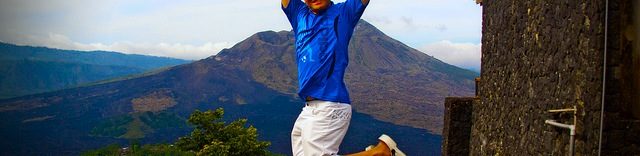
    Jumping

    “True happiness means forging a strong spirit that is undefeated, no matter how trying our circumstances.” -Daisaku Ikeda

    Let’s face it, whether big or small, stressful or simple, we all face challenges every day, some easier to deal with than others. Unfortunately, life doesn’t come equipped with an instruction manual to handle these challenges.

    No matter how much we try to plan in advance, calculate our every move, or predict what the future will bring, we can never prepare enough for the unexpected.

    The past eight months of my life have been filled with more twists and turns than the most popular roller coaster at Six Flags. As a control freak, I was suddenly forced to surrender to circumstance, forced to take a back seat and reflect on what my life was becoming.

    Sometimes it takes physical pain to get to the root of a deeper wound that you are unconsciously inflicting on yourself.

    Ever since the age of three, my heart and soul has thrived on dance. For me, the ability to connect emotionally with others through movement is something that is indescribably fulfilling.

    In May of 2012 I graduated college with my B.F.A in Dance. It marked the closing of four of the most demanding, stimulating, and downright remarkable years of my life. I grew emotionally, physically, and spiritually, molding into my adult self through incredible and trying experiences. I was healthy, in shape, and injury free.

    After graduation, I set my sights high upon New York City, anxious to jumpstart my dance career. I moved in August and set out with a willing heart, determined to make my dreams come true. My approach was frantic, maybe even fanatical.

    I needed a job, I needed to succeed, and I needed to prove myself.

    That’s when life threw a curve ball that stopped me dead in my tracks.

    I was taking a dance class before an audition when… twist, slip, fall, crack… In a blur I was in the ER clutching a broken leg, flooded with fear, anger, and distress. 

    After the initial shock of what happened, it started to sink in that I would be out of dance for a while. Realizing this setback after just arriving to NYC was heartbreaking. In that moment, all I could think about was “Why me?”

    I worked so hard and pushed so much to get to the top of my game, but in a way that was harming my body, physically and emotionally. I had let the competitive nature of the dance and theater scene get the better of me.

    Suddenly, I found myself away from my NYC apartment and newfound life and back home with my parents, trying to heal. As a young dancer whose body is her career, having life abruptly stop was devastating.

    Four months later I was able to return to the city to start again. Slowly progressing, I felt as if everything would heal. Then, another wrench in the plan: a follow up with the doctor revealing the fracture was not healing.

    Just when things were looking up, they felt as if they were sinking down again. I would need surgery, screws to set the broken bone back into place, and another five months of recovery.

    We all face setbacks at some point along life’s journey, and learning to bounce back is what really gives our spirit strength.

    Sometimes accidents happen for very good reasons. In my case, the universe was trying to tell me to slow down, that I have my whole life ahead of me to work and dance and love. Rome wasn’t built in a day.

    Yoga played a huge role in my recovery process, enabling me to overcome the overwhelming sense of failure and depression that came with my injury.

    Unable to do the physical asanas, I discovered the benefits of meditation, learning how to calm my frantic mind, and practicing acceptance toward the cards I had been dealt.

    In college, I started practicing yoga as a way to cross train and escape my hectic class schedule. Since then, the practice has become an anchor for me, its emotional and mental benefits saving me from self-destructive thought patterns and allowing me the chance to release away from, and be at peace with, the pressures of the real world.

    Before my injury, I started working a desk job at Pure Yoga in Manhattan to continue practicing yoga and to further my teaching skills. It was fate getting the job at Pure, as I landed myself right in the middle of an amazing community of loving, caring, and truly remarkable people. 

    Throughout my injury and recovery my friends at Pure have kept my spirits lifted, encouraging me to keep moving forward.

    When I returned to work, yoga was there alongside my friends to help me build back strength. It is so important to have a support system. When things get tough, your friends and family can hold you up—and you shouldn’t be afraid to let them.

    My setback produced another positive, as it led me to complete a 100-hour teaching certification in yoga therapeutics. I quickly became more involved with how important a role yoga plays in healing the body, mind, and spirit.

    Still getting my strength back, I have learned:

    1. Letting go brings abundance.

    Sometimes letting go is the absolute hardest thing to do. But when we hold on too tight, we leave no room for the light to get through.

    It’s like catching a feather: you have to hold out your hand and allow the feather to fall into your reach. You can’t catch a feather by frantically flailing and grasping for it. Once you loosen your grip on a perceived outcome, things start to unfold organically.

    Learning not to force things opens up the possibility for the brilliant and the extraordinary to happen.

    2. Believing in love will lift your soul.

    Believe that there are people in your life who love and believe in you. Believe that you are love, and that your soul has a limitless capacity to give and receive love.

    How does the simple act of believing make you feel? Worthy. Infinite. Content. Express compassion and gentility toward yourself, and to others, and you will open up to the possibilities life has to offer.

    3. Gratitude will ignite a light in the darkest of places. 

    When I first came out of my leg cast, the simple act of being able to put weight on my own two feet made me realize how grateful I am for my health, and how much we all tend to take it for granted.

    Be grateful for running to catch the subway in the pouring rain, because you can feel that rain on your skin and you can feel your feet as they pound the pavement. Experiencing gratitude in simplicity changes everything.

    Each day our yoga is to embody positivity, in every situation. Let go of what does not serve you to let abundance in. Believe in your strength to overcome. Be grateful.

    And don’t forget to breathe.

    Photo by Zach Dischner

  • Love Yourself and Your Life: 7 Reasons to Buy the New Tiny Buddha Book

    Love Yourself and Your Life: 7 Reasons to Buy the New Tiny Buddha Book

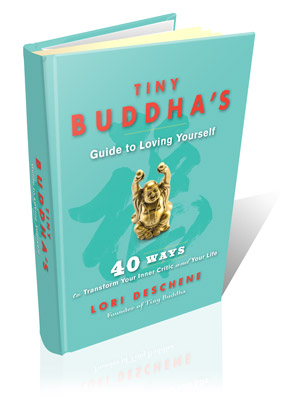
    Tiny Buddhas Guide Cover 3D

    10/9/13: The pre-order promotion is now over. You can learn more about Tiny Buddha’s Guide to Loving Yourself here!

    If you visited the blog any time during September, you likely saw some of the many self-love interviews featuring contributors from the new book Tiny Buddha’s Guide to Loving Yourself: 40 Ways to Transform Your Inner Critic and Your Life.

    I’m excited to announce that today is the official launch date! If you already ordered a copy on Amazon, it’s possible that you already received it, as I’ve recently learned they shipped a little early.

    If you haven’t redeemed the free bonus pack yet, please forward your order confirmation email (for hardcopy or digital, from any book vendor) to bookbonus(AT)tinybuddha(DOT)com.

    For those of you who didn’t yet order a copy of Tiny Buddha’s Guide to Loving Yourself, today is the final day to receive the self-love bonus pack—including 8 digital items, valued at over $150—as a free gift with your purchase.

    About the Book

    Including 40 blog posts from tinybuddha.com, Tiny Buddha’s Guide to Loving Yourself offers more than just advice; it offers in a window into our shared human experience, and universal lessons we can all apply to feel happier with ourselves and our lives.

    These posts have reminded more than 1.5 million monthly readers that we are never alone, and we don’t have to live life controlled by our inner critic. They touch upon ideas that will help you:

    • Release shame about your past and the limiting beliefs that keep you stuck
    • See yourself as beautiful and valuable, with all your flaws and weaknesses
    • Accept yourself more and judge yourself less
    • Forgive yourself for your mistakes and stop being hard on yourself
    • Minimize the need for approval to feel more confident
    • Let go of the comparisons that keep you feeling inferior
    • Feel complete so that you no longer look to others to fill a void within yourself
    • Find the courage to share your authentic self for deeper connections with others
    • Learn to take care of yourself instead of putting everyone else’s needs first
    • Believe that you’re valuable so you can start creating a life you love
    • The stories are categorized into 10 chapters, connected to each of these themes.

    At the end of each chapter you’ll find four tips—one from each of the four posts in that section. They’re ideas you can turn to whenever you need help changing your thoughts, and consequently, your feelings and experience of the world.

    About the Bonuses

    Today only, anyone who orders Tiny Buddha’s Guide to Loving Yourself will receive instant access to the “Self-Love Bonus Pack,” which includes 8 digital resources, valued at more than $150.

    Those items include:

    • From Coping to Thriving: How to Turn Self-Care into a Way of Life, by Hannah Braime
    • Flowing Through the Void: Creating Miracles Out of Struggles by Activating Presence, Power, and Passion, by Amyra Mah
    • Complete Confidence eCourse, by Emma Brooke
    • An Awakened Life: A Journey of Transformation, by Julie Hoyle
    • Create a Brilliant Vision for Your Life and Business, by Margie Beiswanger
    • 5 Days of Self-Compassion, by Joanna Weston
    • Be You, Unapologetically by An Bourmanne
    • Tiny Wisdom: On Self-Love, by Lori Deschene (me)

    7 Reasons to Buy Tiny Buddha’s Guide to Loving Yourself 

    If you’re still not sure that Tiny Buddha’s Guide to Loving Yourself is worth the cost ($13.50 on Amazon for hardcover, $9.99 for Kindle—both including the free self-love bonus pack for today only), consider these 7 benefits of owning a copy:

    1. The book features 40 candid firsthand accounts of overcoming physical and emotional challenges…

    …including abandonment, abuse, addiction, depression, eating disorders, and obsessive compulsive disorder, to name a few. If you’ve feared that no one can understand or relate to your pain, this guide will help you realize that you are not alone.

    2. You’ll find practical tips to help you deal with a wide range of issues related to self-acceptance and self-love…

    …including insecurity, perfectionism, jealousy, shame, self-judgment, rejection, confidence, self-care, and the fear of being alone.

    3. It’s Tiny Buddha, off the web.

    You could spend time searching through the archives for posts related to loving yourself, and then print them out for reading at home. Or you could purchase this book to have all those stories in one anthology—complete with summaries of the main insights and a collection of related quotes.

    4. You’ll find one story from my experience in overcoming shame, self-loathing, and self-destruction.

    I’ve never before written about my former battle with bulimia. In addition to exploring the lowest point of my struggle, I shared the main message of hope that’s helped me forgive and accept myself, and not just survive, but thrive.

    5. The book is easy to read—at home or on the go.

    With 40 stories in 10 chapters, you can easily read one story each night before bed, or jump around to the sections that feel most relevant to you. And with its compact size, it’s easy to carry in your purse or bag for a boost of clarity and confidence, wherever you go.

    6. Tiny Buddha’s Guide to Loving Yourself has received wonderful advanced reviews.

    As Amanda Owen, author of The Power of Receiving, wrote: “If you are ever hard on yourself—and who isn’t—you need to read this book.” And according to Dr. Kristin Neff, author of Self-Compassion, “This wonderful collection of personal stories and words of wisdom will help you become kinder and more compassionate to yourself, and ultimately show you how to lead a happier and more fulfilling life.”

    7. It’s a tiny book that can have a massive impact.

    Despite its small size and short stories, this guide explores feelings and challenges that could potentially limit your potential for peace and happiness—and also offers some powerful, effective practices to overcome them so you can feel good about yourself and your life.

    You can order your copy of Tiny Buddha’s Guide to Loving Yourself here. To claim the self-love bonus pack, forward your order confirmation email (for hardcopy or digital, from any book vendor) to bookbonus(AT)tinybuddha(DOT)com.

    I hope you enjoy reading this book as much as I enjoyed the collaborative process of creating it. As always, I thank you for your loving presence here at Tiny Buddha!

  • Break Free from Fear: The World’s a Kinder Place Than You May Imagine

    Break Free from Fear: The World’s a Kinder Place Than You May Imagine

    Happy Jumping

    “A man who fears suffering is already suffering from what he fears.” ~Michel de Montaigne

    When I was an undergraduate in college I signed up to learn the Fundamentals of Modern Dance. My parents were less than thrilled.

    While many of my classmates likely took such a course for an easy A or a chance to revisit their leotard-clad youths, I picked my dance courses with an unannounced and secret ambition to be an instantly amazing dancer.

    This, I felt certain, was a sound place to rest my future livelihood upon.

    At the beginning of each class we were told to travel around the room in as many different ways as we could to warm up. We could roll or leap. A slow walk, a sprint, or a cartwheel were all acceptable.

    One day the teacher commented during this free form warm-up, “You can tell a lot about a person by watching the way they move.”

    I immediately imagined what I must look like to this grad student.

    Tall. Coordinated. Cautious.

    I would drop to the ground for a roll across my bottom ever so carefully, bracing myself so as to avoid any sudden, jarring impact.

    In the world of dance it is aggression and abandon that interest us. It occurred to me in class that day that I had a tendency to tiptoe. This realization began the slow and inevitable sinking of my dreams of being a yet to be discovered dance prodigy.

    And, just as my dance instructor’s words implied, my tendency to be overly cautious as a dancer was representative of how I engaged in other parts of my life.

    During my whole freshman year of college I visited only four places on campus—my classrooms, the gym, the cafeteria, and my dorm.

    Looking back, this seems like exceedingly strange behavior.

    I must have been trying to mimic the life I knew at my parent’s house, where my orbit was similarly contained within home, school, and sports practice.

    In high school the furthest I strayed from this well-monitored agenda was to covertly buy junk food from the convenience store near my house or to stay home from swim practice to watch Oprah.

    I clearly was not a big risk taker.

    At one point in the second semester of my freshman year of college I discovered I was quite bored with this predictable and caged existence.

    I remember sitting at my brightly lit desk in the corner of my dorm room, with my feet pulled up under me, and inspirational quotes on many tiny slips of paper all around me.

    I’d just spent the last hour or more journaling, and I’d run out of things to write about.

    My head felt dull and empty.

    I stared into space and thought of a pin that an elementary school friend had given me that read, “Life begins when you get one.”

    I’d always wondered if that pin had been a jab at my life skills as a fourth grader or if it had simply been a random trinket she’d passed on to me.

    I felt frustrated and cooped up, perhaps in a way I had felt for many years.

    It seemed as though I had much bigger wings than my little quadrant of a life on campus had room for. It was uncomfortable keeping them all bent and crumpled in that small space.

    That night I had the idea to try something new. To break free. To soar.

    It dawned on me that there wasn’t anything truly keeping me in those cramped quarters other than my habits, remnants of overprotective parents’ admonitions, and my own fears.

    Soon after this revelation I went to sleep.

    The next day my courage dawned anew. I would see the world, even if it killed me.

    I did the riskiest thing I could think of: I decided to take the metro into the city.

    I was pretty sure that by leaving the school grounds I was walking into treacherous terrain. My fear drew pictures of knife wielding, dementor-like beings who lived out at the fringes of my known world. If they didn’t get me I was pretty sure that my father would, when he found out I hadn’t listened to his directions to stay put on campus.

    A little before noon I gathered my courage, an apple, and a water bottle and put them into my backpack. I noticed the day was overcast as I walked to the train.

    Once on board I sat with the lumpy forms of my prized possessions clutched to my chest.

    My heart raced. My hands were perpetually sweaty. I was sure I would be found out, but still, I held my ground.

    It surprised me that I survived the metro ride without any harm befalling me. I got off at the Smithsonian stop on the National Mall. I was still frightened as I walked over to a nearby bench and sat down, gathering my wits about me.

    Here’s what I saw. People eating their lunch. People jogging. At one point my breath caught. It dawned on me that the world outside of campus was just regular people doing regular things. I ate my apple under a gray sky that has forever been etched in my heart.

    There really were not any monsters under the bed.

    I sat for a while longer and then turned around and got back on the train. Heading home to campus I felt a wave of pride and relief wash over me. I’d done it. The real world was laughably more benign than the world I’d concocted in my imagination.

    This heady success made me curious and determined to try more scary things. I began speaking up in class. I tried stand-up. I reached out to new people. I quit a job. I started a business. I’ve fallen on my butt in ways that I never would have previously allowed myself to in that dance class years ago. Through it all I’ve not only survived, but thrived.

    What I’ve ultimately learned is this: my fears of the unknown are usually big fat liars.

    Time after time I have tested these fears and found the world to be a much lovelier place than I would have guessed.

    So go ahead and do the one thing that scares you. You just may find that the world is a kinder place than your imagination.

    Photo by Kevin Poh

  • 3 Often Overlooked Causes of Anxiety (And What to Do About Them)

    3 Often Overlooked Causes of Anxiety (And What to Do About Them)

    “Peace cannot be kept by force. It can only be achieved by understanding.” ~ Albert Einstein

    An anxious mind is a hard burden to bear. In fact, if you suffer from an anxious mind it can truly feel like a curse.

    The racing thoughts. The daily tirade of “what ifs.” The relentless voice of your inner critic constantly nagging you and deriding your every move.

    And the worst part is that the mental chatter feels uncontrollable. Truly, there were times when I struggled in vain to quiet my mind.

    It was like there was some hub or center in my brain that had gone haywire, flipped into overdrive, and couldn’t be switched off.

    I used to despair a lot over my unquiet mind. Even the great spiritual masters struggled to achieve mastery over their minds, so how could I?

    I read a lot about mindfulness and tried some mental mastery techniques like the Sedona Method and Emotional Freedom Technique. I meditated. These techniques helped, but the results would only last for a short time; the underlying issues driving my anxiety persisted and whatever peace I got would be short-lived.

    I eventually realized that if I was to quiet my chatterbox mind I would have to stop trying to control my mind and focus instead on letting my anxiety teach me what it wanted to teach me.

    I started keeping a dream journal (I had many of the typical anxiety dreams). I also started to get real with myself, sitting still with my anxious thoughts whenever they occurred and letting myself be receptive to what they were trying to show me.

    I went from trying to control and resist my anxious thoughts to the deeper place of understanding their underlying message and inherent wisdom. Here’s what I discovered.

    An anxious mind can be caused by:

    1. Unresolved relationship issues

    It turns out an anxious mind can be caused by unresolved issues in our interpersonal relationships. The anger, jealousy, regret, or unspoken feelings (positive or negative) that we harbor toward people lives on in our subconscious minds, undermining our inner peace. This is true even when we are not around those people or consciously focusing on them.

    For me, I had spent many years silently harboring anger toward my mother and father for perceived failures as parents. I was also holding on to an infatuation with a former flame that I hadn’t seen in years, and was still mentally “tuned into” negative relationship dynamics from as far back as my high school years.

    As I began to face up to these unresolved relational issues, releasing people from my heart’s tribunal, my anxiety decreased to a surprising extent. I literally felt like I could breathe easier.

    2. Unexpressed gifts or desires

    Anxious thoughts can be the result of unexpressed gifts, especially if the thoughts center around your career or how you spend your free time. In this way, anxiety is a manifestation of inner guidance.

    There is some gift or higher aspect of who you are that wants and needs to be expressed, but that has been denied expression because of fear.

    Psychologists have figured out that human beings have an inherent drive for self-actualization—to fulfill our individual potential. When there are obstructions to self-actualization, anxiety takes root.

    In ancient times, prophets often spoke of the urge to prophesy as being like a “fire shut up in their bones.”

    Anxiety is like this―a bottled-up feeling of having something inside of you that you long to express. The gift, desire, or calling within that longs for expression is bigger than you; it is tied up with your purpose for existing, which is why it feels so painful when it is suppressed.

    For me, my anxiety was telling me that I had a gift for using words and expressing myself through writing that I wasn’t cultivating enough. I also had leadership abilities and a yearning for spiritual development that I was ignoring.

    It could be latent artistic gifts, the secret desire to adopt a child, or a pull toward motivational speaking. Whatever it is, learning to express it will work wonders for your anxiety.

    3. Guilt

    Guilt is the emotional and cognitive state we experience when we feel we have done something wrong. We may have violated our own moral code or expectations, or those of others, or we may simply think that we have done something wrong even when we haven’t.

    Whatever the case, we feel judged (or we judge ourselves harshly and unforgivingly) for our actions, thoughts, or simply for being who we are.

    And because it’s so hard to express guilt (it’s not like anger where you can punch some pillows), guilt is often an internalized emotion, commonly referred to as a “bothered conscience.” Guilt sinks deep into our subconscious and manifests as anxious thoughts―it’s like our inner critic on heroin.

    At one time I harbored a lot of guilt over old friendships I had broken off. I had broken off those friendships because they were limiting my growth yet I still felt like I had violated my own standards of what it meant to be a good friend, hence the guilt.

    I walked around for years with a lot of anxiety because my guilt-tripped inner critic was always telling me that I hadn’t been a good friend in the past and never would be.

    I would feel guilty if I was anything less than the perfect, always-available, always-upbeat friend, and the fear that I wasn’t a good friend made me anxious about forming new friendships. I was always worried that I was doomed to mess up my friendships.

    It was only by examining my guilt more closely that I came to understand that my standards of being a good friend were irrational; after all, people change, it’s okay to move on, and you don’t have to be a perfect person to be a good friend.

    So our guilt is often irrational or out of proportion with what’s really at stake. And even if you feel your guilt is justified, remember everyone makes mistakes.

    You deserve self-compassion. So embrace it and put your anxious mind at ease!

  • 4 Simple But Powerful Tips to Reduce Stress and Anxiety

    4 Simple But Powerful Tips to Reduce Stress and Anxiety

    “Life is 10% what happens to you and 90% how you react to it.” ~Charles Swindoll

    I found Tiny Buddha because I have never dealt with stress and anxiety all that well, and once I became a full-time working mum of two, this had become a real issue affecting my quality of life.

    It was one day earlier this year when I was battling yet another bout of the flu, and I’d just learned about something out of my control at work that would make life even harder, that I went rushing by a group of my friends, not even seeing them.

    One rang later and asked if I was okay, adding that I had rushed by them with a face “grey with stress,” and had not heard them calling out to me. I realized something had to be done, and that’s how I found this site.

    I have never blogged or written publicly in my life, but if any of these help someone out there, I will be so happy to have contributed to the light and peacefulness coming from this site. So here goes.

    If you’re also feeling overwhelmed by stress:

    1. Think “Poor thing…” when you’re aggravated with someone.

    Part of the rushing-about modern-day-life thing is the constant irritation and even anger of bumping into other people as you go about your business.

    Someone cuts you off in traffic. Someone beats you to the last seat on the train. Your spouse forgets to turn on the dishwasher and now there are no clean plates or cups for the kids. Argh!

    Well, I came up with this to help me be more compassionate toward others, and peaceful in myself.  Every time I’m aggravated with someone, I say to myself “Poor thing…” and then fill in the blank.

    So now I say, “Poor thing, my spouse must have been so stressed and addled that he forgot to turn on the dishwasher.”

    “Poor thing, they must be exhausted to need that seat on train. I’ll go stand by the window; besides, it’s easier to pretend dance to my iPod when I’m standing.”

    Or sometimes when I can’t think of anything, I’ll say, “Poor thing, it must be painful to be in such a rush that you end up cutting people off in traffic.”

    This makes me nicer to everyone, and more importantly, happier in my own day-to-day existence.  Because being irritated, angry, or in a rush is painful, and that’s punishment in itself.

    2. Decide “I don’t do blame.”

    This one came out of the blue—well, that is, after reading so many of your amazing posts.

    I grew up in a family where there was constant blame, and it was always something or somebody else’s fault that something negative had happened.

    I then worked in places where you sent emails to the person sitting a meter away, just so you could dig them out later and forward it up higher, to show it was their fault something had happened, not yours. Awful way to live.

    Out of the blue, I suddenly said to myself, “I don’t do blame.”

    When something negative happens and my brain, out of habit, starts looking for who or what caused it, I step away from the blameful thoughts and tell myself, “That’s just an old habit.”

    I just ignore them entirely. I then look at what that negative thing is, and I think of practical ways to deal with it. As a result, my relationship with my husband, my work colleagues, even my parents, has improved immensely.

    I no longer get that awful feeling of resentment that comes when you live constantly blaming everything else around you.

    3. Next, decide “I don’t do urgency.”

    After reading this post about the surprising secret to being on time, I was thinking about how I rush around a lot, and how I can’t find a way to stop. Then I thought, well, sometimes you need “urgency,” and I tried to think of when. I thought, in life-and-death situations, like in a hospital Emergency Room, surely you need “urgency” then.

    But then I thought about shows like ER or the times I’ve been in hospital, and I remembered how the doctors and nurses always seem decisive, super-efficient, cool, collected, but never urgent.

    “Urgency” to me connotes awful feelings of desperation, being rushed, helplessness. When I get something done, even in a situation where time is of the essence, it is done because I am decisive, calm, and efficient—not because I’m “urgent.”

    So I reasoned that if ER doctors and nurses can handle life-and-death situations without “urgency,” then “urgency” is never required. I never, ever have to be “urgent”!

    I haven’t slowed down to the extent that I walk around in a constant feeling of being on a beach holiday, but I don’t have that stressed-out, hurried feeling anymore. When I need to, I act like an ER doctor or nurse with super-efficient and calm action. (And when I don’t, I try very hard to act like I’m on a beach holiday!)

    4. Change “I have to” to ” I will.”

    Like a lot of full-time working parents, I’ve lived with a lot of “have-to’s” permeating my life. From the little things (I have to do another load of laundry) to the big things (I have to find a new job) to the guilty things (I have to spend more time with my kids), I could feel these tugging away at me all the time.

    There is always a “… but” at the end of those sentences. “I have to do another load of laundry…but I don’t feel like it/have run out of washing powder/also need to cook the kids dinner.”

    The “but” causes all the stress, but I realized it wouldn’t be there if it wasn’t for the “have to.”

    Again, out of the blue I decided to swap “I have to” with “I will,” as in “I will do another load of laundry.”

    “I will” sounds like I’ve decided to do it, rather than “I have to” with all its connotations of coercion, pressure, stress, and resentment. This thing is now in my control. There is no room for “…but.”

    Suddenly, life is full of things I have decided that I will do, for whatever reason, rather than a thousand things out there making me feel anxious, pressured, and guilty because I’m not doing them.

    These are four tiny things that have made a big difference for my everyday peace and living experience. I wouldn’t have come up with any of them if it weren’t for all the fabulous other posts I’ve read here.

    I hope sharing them here might now give a little something back to someone out there, and make their daily lives a little lighter and brighter, as well.

  • No One Should Feel That They Don’t Deserve Love

    No One Should Feel That They Don’t Deserve Love

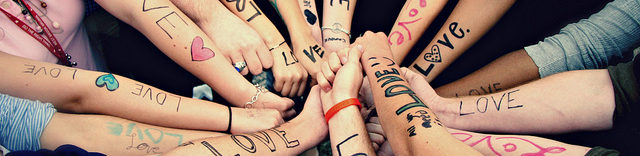
    Love Arms

    “We accept the love we think we deserve.” ~Stephen Chbosky

    There are those moments in life when things suddenly shift from a deep, sad shade of blue to a lighter shade of sky, and then eventually the beautiful reds and pinks and oranges of a sunrise.

    When a light bulb snaps on in your head and you see something that you’ve been missing for days, months, maybe even years, though it doesn’t change what caused the sea of blue, it makes it look more like a calm lake than a raging ocean.

    I had one of those moments not too long ago. I had been stuck in a sea of blue for almost two years. After the breakdown my first “real” relationship I vaulted into a deep dark ocean where I could only tread water, and I stayed there for what felt like an eternity.

    I didn’t want to go out, happiness seemed like a fleeting feeling that left me as quickly as it took me over, and I felt like I would never feel better. I had fallen into a depression that would come and go, and a false sense of healing. 

    But what I failed to realize is that I hadn’t addressed the real problem yet. And then, after treading water for a long time, I met someone else, and he was like someone I had never been with before.

    He was gentle and really cared for me, and I honestly didn’t know what to do with him.

    I didn’t know how to handle someone who didn’t want to use me. I was completely confused and unsure.

    One night, after a particularly tense time with my current love interest, I broke down, and I couldn’t understand why I resisted a real relationship so fiercely.

    I couldn’t understand why this was so hard. I couldn’t understand why I wouldn’t let myself be cared for by someone. I was treading water again, the same water as I had been for so long, and I was frustrated.

    I just kept asking myself: What’s wrong with me? Why can’t I be whole again? Why do I feel so empty and unloved?

    I stayed that way until a friend of mine asked, “Do you think you deserve something so good?”

    This was something I had never asked myself. I was so caught up in what I was feeling that I never had the courage to truly look inside and see why this was so hard for me.

    It was because I was afraid. All I had known was the deep dark blue of abuse, and I had fostered the false belief that I didn’t deserve anything better.

    For years, I found myself and put myself in situations with people who didn’t mind using me. I was used and hurt and thrown away, like an old Kleenex, and after a while that’s who I thought I was. A washed up, old person, stuck in the body of a young girl, spinning wildly in the same circles over and over again.

    I had kept that feeling as an integral part of who I was, and how I related to people. I had created my whole self-image around the belief that I didn’t deserve love.

    And because of this I had attracted people who didn’t want to love me, and I seemed to repel people who truly cared about me.

    I realized that in order to reverse this flow of people and energy I had to redefine how I see myself.

    Pop! The light bulb snapped on in my head, the waves of emotion started to calm down, and my sun started to rise.

    I could understand why I felt like this, and though I can’t undo years of this type of thinking right away, at least I am able to see it for what it really is.

    I have a long journey of recreating myself ahead of me. That is something that I probably should have done a long time ago, but I needed to tread water for a while to truly understand. And that’s perfectly okay.

    I know how easy it is to unconsciously repeat patterns, and how scary it is to break them.

    I know that I am not out of the water yet, and the sunshine hasn’t completely bathed me in its enlightened glow. I know that it may take years to understand why I do the things I do in relationships.

    But I will try to take baby steps because no one should feel like they don’t deserve someone who can love them for exactly who they are.

    Because everyone deserves to love, even if that means they have to tread water for a while first.

    Photo by Jessy Rone

  • How to Stop Fearing Disapproval: 3 Lessons from Accepting Judgment

    How to Stop Fearing Disapproval: 3 Lessons from Accepting Judgment

    Lean too much on the approval of people, and it becomes a bed of thorns.” ~Tehyi Hsieh

    I remember reading somewhere that the best way to face a fear is through repeated exposure.

    In the case of my lifelong need for approval, I have found this to be true.

    For as long as I can remember, I have wanted, needed everyone to like me. And not just like me, but agree with and sanction my every choice through obvious signs of validation.

    I remember auditioning for a community theater production of Annie when I was twelve.

    My older sister, Tara—thinner, more popular, and, by my estimation, more talented—sang before me, and seemed to knock it out of the park.

    With a bold, Ethel Merman-like voice and a petite, 5’1” frame, you might have expected to see a hefty female ventriloquist offstage, throwing her voice while Tara lip-synced.

    But that was, in fact, her voice. It was larger than life, like her—and decidedly unlike me. I may have seemed like a quiet, shrinking violet type, but you’d likely have concluded otherwise if you heard the boisterous noise in my head.

    I believed everyone was constantly judging me, and I was terrified of those thoughts I couldn’t hear.

    By the time Tara belted out “You’re only a day away,” I had nearly collapsed into a hysterical ball of panic within a corner of my mind.

    I dreaded following her, both because I knew she was superior in every way possible and I hated being critiqued.

    Within five seconds of starting my song, I felt a quiver in my voice that seemed like it might have been a ripple effect of the trembling in my knees. Except it wasn’t. It was just sheer terror.

    Everyone was watching me—which people do when you’re on stage. And a part of me craved that, needed that. I desperately wanted them to like me, to cheer for me, to believe in me and want me there.

    That’s not what I felt was happening right then. I was sure that everyone would laugh at me behind my back because I plain and simply wasn’t good enough.

    It felt all but certain in the next instant, when I attempted a belting, vibrato-like note and instead cracked loudly and obviously.

    Right then—that’s the moment when I decided that a woman named Sandy, soon to be cast as Miss Hannigan, hated me. And why?

    She hated me, I concluded, because she gave me “a look.” Crack + look = repulsion and revulsion, at least to my twelve-year-old mind.

    Never mind that I couldn’t be certain that she did, in fact, look any different than usual. And forget for a minute the perhaps obvious alternative—that if she did look different, it may have actually been compassion.

    To me, her facial features melted together into an expression of absolute condemnation, and it was the physical representation of what I imagined everyone else was thinking, too: I was a pathetic joke.

    Flash forward many years later, and I’d learned to stuff down my insecurity with a long list of self-destructive behaviors, from bulimic rituals to occasional acts of self-harm.

    I frequently tortured and punished myself for reasons varied enough to fill more than a decade of therapy, but I think it was mostly an attempt to beat other people to it.

    It plain and simply hurts less to be rejected if you’ve already rejected yourself, and you’re already hurting.

    I was always hurting.

    Over the years, I was less often rejected, primarily because I minimized opportunities. It was a tactic I learned when dealing with intense bullying in school—it’s a lot safer to just not show up.

    I remember many times sitting in my room, looking at my window and imagining it was a TV screen. That’s what life outside it felt like—something to watch, not join.

    I’ve written quite a bit about the time between deciding to be part of the world and now, but in case you haven’t read any of it, here’s a haiku that sums up those experiences:

    I wanted a life
    I took risks and sometimes stumbled
    And I learned and grew

    By the time I started my first blog, I’d come a long way, but I was more “feeling the fear and doing it anyway” than experiencing relief from the fears.

    The first time I published a blog post, I watched the comments like the proverbial not-yet-boiling kettle—hoping for a little sizzle but afraid of getting burned.

    When the comments started coming in, it was feast or famine. I felt either a rush of acceptance-and-approval-triggered endorphins or the overwhelming anxiety of not being able to fight or flee in the face of judgment and criticism.

    It was magic or misery, the experience of writing online—instant gratification or self-recrimination.

    And that’s how I knew I needed to keep at it, to share my struggles, successes, and lessons even though I was far from perfect; perhaps I could be good for others and in doing so be good for me.

    On some level, I craved the joy of knowing I’d created something others liked. But somewhere inside, I also craved the criticism.

    No, I’m not a total masochist. I craved it because I knew that each time I confronted it, I could get better at dealing with it.

    As I look back on the past several years, and the almost two-decade journey of insecurity and growth before it, I am amazed to realize I have. I have gotten better at dealing with it.

    I’m by no means impervious to feelings of self-doubt, but as a consequence of putting myself out there in varied ways over and over again, out there feels a lot less scary. And here is why that is…

    1. I’ve learned that the “looks” are sometimes in our head—and when they’re not, we often have no idea what’s really behind them.

    Someone’s disapproval might be completely unrelated to us.

    Since we can’t know what’s on someone else’s mind unless they tell us, we can either offer a compassionate look back in case they need it, or take a curious look within to explore our own reaction.

    Anything else is a waste of energy—and over something we likely won’t remember for long.

    2. I’ve learned that people will sometimes vocalize their opinions harshly and insensitively.

    Conventional wisdom may suggest ignoring them—not letting “the haters” get us down.

    More often than not, it won’t be about hate. It will be about pain—theirs.

    We can feed off that and add to our own, or we can hear them out, look for seeds of truth, and leave behind whatever won’t help us grow.

    3. Lastly, I’ve learned that it’s impossible to avoid messing up, and consequently, feeling judged.

    We all “crack” every now and then, in one way or another. Outsiders may poke those shattered parts, right when we’re most vulnerable.

    But those fissures don’t have to mean anything about us, regardless of what others conclude. If anything, they can mean we have an opportunity to learn, grow, and prosper. As Leonard Cohen wrote, “There’s a crack in everything. That’s how the light gets in.”

    Equally important, that’s how the light gets out.

    Perhaps that’s the greatest gift of this whole repeated exposure thing, the cyclical nature of it all—we’re all on both sides of this coin, showing up and being shown up for, seeing and being seen.

    We’re all powerful and fragile, breakable and strong. We each have the potential to hurt and to heal. Sometimes, oftentimes, it all blends together.

    And that’s something I’ve learned to like more than knowing you like me: the inevitability of all of us helping each other, whether we intend to or not.

    Growth is a consequence of doing, trying, risking, and making an effort, even if we’re terrified—especially if we’re terrified. The fear may never completely go away, but it ebbs, flows, and fades.

    So here’s to showing up, repeatedly. Here’s to being seen. And here’s to forgiving ourselves when we hide so we can let it go and then show up again.

    We don’t always need to stand center stage. We just need to know we gain more than we lose when we’re open to the light.

  • Stop Seeking and Start Finding: Create a Near-Perfect Life

    Stop Seeking and Start Finding: Create a Near-Perfect Life

    Seeking WIsdom

    “What could I say to you that would be of value, except that perhaps you seek too much, that as a result of your seeking you cannot find.” ~Herman Hesse

    I have a confession: I hate slowing down. When I finally let myself stop—being alone with my thoughts, vulnerable and open to the world—I become afraid.

    I have another confession: There was a specific time in my life when went through a painful and scary situation. It broke me. And the only way I knew how to cope with my shattered self was to avoid my problems.

    Simply put: If times were hard, I ran.

    I changed schools, moved to different cities, traveled to different countries, and found solace in running, a sport that calls for constant movement. I began seeking specifically for happiness: for the people, the place, and the situation that would help me find the “perfect life.”

    I was a seeker who kept looking for happiness and different ways to “become a better person.” I was searching for a new life that would be “perfect” like the lives I saw on college campuses, TV shows, and Facebook feeds.

    I believed my old life and my old self weren’t good enough, so I had to create a new life that would allow me to start over.

    I pondered getting a Masters in global health, joining a rock band, writing a bestseller, running marathons, making music in West Africa, climbing mountains, and learning how to build lean-to’s.

    I was convinced accomplishing any of these things would make me happy, make me feel deserving, and make me whole again.

    A couple years passed by, and I slowly began to realize that no matter where I went, what I sought out, and the situations I was in, I was still the same exact person inside.

    That’s when I realized if I wanted to find happiness, I had to first understand that the perfect life did not exist, and the acceptance of my past and my imperfections is what creates the near-perfect life. 

    Most importantly, I had to find myself again, which meant I had to stop feverishly seeking.

    We should all go after the things we want; we should be driven to chase after our dreams, embrace new challenges, and go on new adventures. But seeking often means deliberately searching for something that isn’t always meant to be there, or to simply run away from something that can truthfully never escape you.

    By being too tunnel-visioned and too set on a goal—landing the “perfect” job, finding the “perfect partner,” or making the “perfect” group of friends—you may miss out on the less-obvious scenarios that are intended to fill your near-perfect life.

    When on your journey to stop seeking, start finding, and create a life where you are whole-hearted, fulfilled, and accepting, take note of these tips:

    Accept who you are. 

    Know that your core self, and your emotions, outlook, and attitude, will follow you everywhere, no matter what situation you are in. Recognizing the beautiful and imperfect person you are is the first step towards accepting new challenges and allowing new experiences into your life.

    Give yourself options. 

    You may really want one thing—a specific job, a house in a certain part of the country, or certain fame or fortune. But if one of your dreams doesn’t come into fruition, maybe this means that another bigger and better dream is waiting for you. Don’t get discouraged, and allow yourself to be open.

    Be vulnerable. 

    Invite fear, uncertainty, and imperfection into your life. Once you fully open yourself up to the universe, it will allow you to see the incredible number of options for you, and let you try new things to help create the near-perfect life.

    Meditate.  

    Use meditation as a way to be with nothing but your present self. This helps you to slow down and stop seeking, to really get to know your true self and what you feel, want, and need.

    Try again.  

    Things don’t fall into place right away. There will be ten hardships before one celebration. Don’t give up. Be patient.

    Don’t be stagnant.  

    None of these tips mean you should stop moving completely and wait for life to work itself out on its own. Rather, it’s about finding a balance between learning what you want and inviting new opportunities, while recognizing that how you react to life’s situations is in your hands.

    After nearly ten years of seeking, I found my near-perfect life in New York City, the one place I had once swore I’d never move to. I found an apartment with an old friend, and we rekindled a friendship from nearly five years prior. I discovered a support system of friends and family who were always there for me, and one company of hundreds I applied to hired me.

    My time in New York has helped me uncover the happy spirit that was always within me—the spirit that once was simply too tired from my constant seeking to spread its light.

    I’m still not very good at slowing down. I’m happiest when moving, when constantly trying to reach that next tier. But I’m also trying to slow down and breathe—to stop seeking for “better” and start finding myself, allowing my near-perfect life to meet me halfway.

    Photo by 3Drake9

  • 6 Lessons from a Poor Childhood That Lead to a Rich Life

    6 Lessons from a Poor Childhood That Lead to a Rich Life

    Happy Old Woman

    “If you want to feel rich, just count the things you have that money can’t buy.” ~Proverb

    I grew up on a farm with a father that was a hired hand and a mother that took care of the elderly.

    I had six siblings and was the fifth in line. We had little money, but I always felt loved, not deprived. In many ways I was a rich person.

    When I was four years old I lived in a two-room house, with two bedrooms built on within the year.

    We had no real kitchen (it was just a room), no running water or indoor bathroom, no TV or telephone. (No, I did not grow up with the dinosaurs). We did have electric lights.

    What did I learn by growing up in these conditions?

    1. I learned to share.

    There were four of us girls and we all slept in the same bedroom—two in one bed and two in another (both twin beds). You name it, and we shared.

    2. I learned to take good care of what little I had and be grateful.

    We each had one pair of shoes, very few clothes, and one toy for Christmas, so we took good care of what little we had and did not take it for granted. For birthdays, there was a cake baked and our present was getting to lick the bowl for the cake and icing.

    3. I learned to use my imagination.

    With very few toys we had to make your own. We walked on tall tomato cans with strips of rubber attached to hold them on our feet. We played with old tires and five gallon barrels by rolling them on their side. And stilts, we made ourselves.

    4. I learned to eat until I was not hungry any more rather that when I was stuffed.

    Food was limited, but balanced. We each got our share because my mother cut it up equally among us. (I never knew you could scoop ice cream out of the carton until I grew up, because my mother always cut a half gallon of ice cream into 10 equal pieces and that 10th piece was cut into 10 more pieces. (My father got the extra piece.)

    I have never had a problem with weight, and this is because of the good eating habits and appreciation for the food we had.

    5. I learned that it was the people that made a home, not the size of a house.

    We may not have had much, but we had each other. We had each other to talk to, play with, and laugh with. (Sometimes to fight with.)

    6. I learned to work together.

    When you live in a small space you have to work as a team. You learn good working skills and what hard work is.

    We earned money by working in the fields for the farmers, helping irrigate when it came to watering the crops, and keeping the four rooms of our house picked up, so there was room to walk.

    As I look back on my childhood and the values it fostered, I realize I was a very lucky child. Yes, things are much better and easier now, but I know what to appreciate and what’s important to be happy.

    It’s the people you share your life with—the memories you build and laughter you share.

    Things are not what make you happy. It’s living in the moment and living everyday with love in your heart.

    I only buy what I need, which controls the clutter. I have food, shelter, and water, air to breathe, and people to love that love me.

    I appreciate what I already have to add comfort to my life. I take good care of my furniture, appliances, and the little things that make life more comfortable and easier.

    We have the choice to change our life if we want. With hard work and a dream anything is possible. Obstacles can always be overcome. We learn from them and keep moving forward.

    True happiness does not come with a price tag. Happiness is something we choose with our own attitude and gratitude.

    I look at people today and all the material things they acquire, thinking they are going to find happiness, but happiness cannot be bought.

    It’s in our attitude. The love in our heart. The people we know and love. The memories life brings.

    When death is knocking at our door, what will be important is the way we loved and the memories we leave for the people left behind. They’re not going to remember the house you lived in or the beautiful things you may have had.

    People will remember the laughter they shared with you, the long talks, lessons they may have learned from you, and most important, the love that was shared.

    In the end it is who we were, how we touched other’s lives, and the love we gave and received that is going to count and be remembered.

    Are you building those kinds of memories? Are people going to smile and laugh when they think of how you touched their life someday?

    Photo by T Sundrup

  • You Are the One: 5 Helpful Tips for the Brokenhearted

    You Are the One: 5 Helpful Tips for the Brokenhearted

    Woman in a Field

    “All the wonders you seek are within yourself.” ~Sir Thomas Browne

    Anyone who has ever gone through some sort of heartbreak knows what awful pain it can cause, both physically and mentally. It can be devastating, shattering, and overwhelming for your spirit.

    In the beginning of 2012 I had my heart broken by a person who I thought was “the one.”

    Between tears and desperate calls, I found myself searching the Internet for remedies to get over an ex. I knew I was a strong person, but I just couldn’t see anything becoming brighter or better ever.

    I constantly needed family and friends to reassure me that I was going to be okay. It even came to a point where I started worrying about the physical agony, as I felt intense aching in my heart and around the chest area. I worried that this would be something I had to learn to live with.

    One day I realized that I couldn’t let heartache and depression destroy my life, and then found some helpful ways to heal and become happy again, even finding a sort of joy and self-worth I hadn’t experienced before the break-up.  

    I also had the amazing opportunity to share these tips with Tiny Buddha readers in my first post “10 Tips to Help Relieve Depression and Heartache.”

    During my healing period I often found myself questioning the idea of “Mr. Right” or “the one”—that special someone to sweep us off our feet and make us feel complete.

    People in my life would tell me that once I found someone new I would get over my ex. This sounded comforting, but when you feel like your life is crushed, a new love interest isn’t really a top priority, even though a rebound-partner can feel like the right solution at times.

    Also, I wondered what I could possibly offer someone with my wounded spirit. I knew I had to find another type of “Mr. Right,” and to my surprise, I did. More precisely, I found “Miss Right”—and that is me

    For little more than a year I have been dating me. I’ve been in a loving relationship with myself that has had its ups and downs, just like any other relationship.

    I strongly believe something good always comes out of something bad. So, if you are at sitting at home with a broken heart searching the web for any kind of hope of recovering, these tips may help.

    1. Be your own sweetheart.

    Just like in a romantic relationship, where you do kind things for your significant other, you should do kind things for yourself.

    Take yourself out to the places you’ve always wanted to go. Write yourself loving notes and practice daily affirmations where you tell yourself the things you formerly wanted your partner to tell you.

    I buy myself flowers and I lovingly wrap my arms around myself while I sit in stillness to embrace self-love. Try it!

    2. Laugh out loud whenever possible.

    There is no better medicine for your spirit than a good laugh. Yes, the heartbreak will remind you of your suffering, but I’ve noticed that the human body and mind are so wonderful that they allow you to smile, even during dark times.

    Find reasons to smile and laugh whenever you can, even if it’s just for short-lived moments. (A great post to read on this topic: Why It’s Essential to Find Humor During Your Darkest Hours.)

    3. Practice self-compassion.

    When you feel sad or lonely, tell yourself the caring things you would tell a friend in need—for example, that it’s perfectly okay to feel distress and anxiety, but that this too shall pass.

    You are still a good, strong, and lovely person. The truth is, even if you are single, you are never alone. You are always surrounded by loving energy from friends and/or family, and the universe/higher power.

    4. Consider yourself single and ready to mingle—with yourself!

    Know that you don’t need a romantic partner to be complete. Be your own soul mate and strive to feel whole from within, and you will find that sense of completeness.

    When you are ready to love again, you will meet that special person to share a beautiful love story with. But for now, focus on yourself. That way, when you eventually meet someone, you’ll come to the relationship whole, not someone who feels lacking.

    5. Know that it’s okay to be angry as long as you are gentle with yourself and willing to forgive.

    You’ve probably read a lot about the importance of forgiveness. I agree that forgiveness is essential to move on, but we also need to know that it’s okay not to be able to forgive in an instant moment, weeks, or even months.

    Don’t stress out when people around you encourage you to forgive. All you need to do is have patience with yourself for not being capable of forgiving just yet. Let the emotions of anger, hurt, and disappointment be released first.

    It took me a long time to learn how to forgive myself and my ex, but I finally did and it has set me free. I now understand his reasons for breaking up with me, even though I may not agree with them.

    The key is to be gentle and keep your anger at a healthy level. Don’t punish or attack yourself for what has already happened. Instead, try to grow and learn from the experience.

    Do I still look for the romantic version of ”the one”? I am not searching; I feel confident that he will show when the time is right, and when I’m ready to share my new wonderful me with someone. But for the time being, I enjoy being with myself.

    Do you?

    Photo by William Terra

  • Get Unstuck: Stop Believing the Negative Stories You Tell Yourself

    Get Unstuck: Stop Believing the Negative Stories You Tell Yourself

    Break Free

    “You may not control all the events that happen to you, but you can decide not to be reduced by them.” ~Maya Angelou

    We’ve all done it, right? Somehow, somewhere, something bad happened to us and since that moment we’ve continued to tell ourselves the story about what might and could go wrong in our future.

    For me, the biggest negative pattern I’ve had to release stems from my parents’ divorce. For as long as I can remember, I’ve been a positive person. When I was a kid I was happy-go-lucky, nothing much bothered me, and life was pretty awesome.

    Also, being an only child I was always close with my parents. The thought that they wouldn’t be together was something that never entered my mind.

    Then they split up when I was 18 and things began to change. I made different choices and I also began to believe that all romantic relationships were doomed.

    A few years later, just after I had split up with my long-term partner, I was in LA spending a lovely afternoon watching US daytime TV. Nothing much was on, but every channel I flicked to seemed to mention the word “marriage” or “divorce.”

    I also happened to be reading Wayne Dyer’s Your Sacred Self at the time, and suddenly it all made sense:

    I had been telling myself stories like “Marriages never last forever” and “All relationships are doomed,” and in essence I was creating my reality.

    I finally realized that my beliefs about relationships had been causing me to attract those exact experiences.

    I was giving these negative stories power and acting on them. I was skeptical that I would be able to have a successful and happy relationship, which caused me to see everything that could go wrong. I ultimately initiated our break-up because I believed that it was inevitable.

    The very experiences we fear keep repeating themselves if we continue to focus on them and give them power. We’ve got to become aware and first change ourselves if we want our reality to change.

    Now that I’m a few years on from that, I have replaced my negative relationship beliefs with new, positive thought patterns.

    Now, I believe my current relationship is a lifetime partnership and as a result, I act in a way that manifests that type of relationship without worry and doubt. I take responsibility for my part of the relationship, and because I have positive thinking patterns I bring my best self to the table. This allows me and my partner to have confidence and faith as we plan our lives together.

    Our experiences reflect our beliefs, so it benefits us to make them positive.

    Here are a few questions to help you get to the root of your negative beliefs so you can make changes in your life:

    1. What are the negative stories you’ve been telling yourself?

    Is there an area in your life where you seem to struggle? Which experiences trigger negative thoughts?

    It’s time to narrow in on the beliefs that are keeping you from living the life that you want.

    2. Where do those negative beliefs come from?

    What happened in your past? Did someone in a position of authority make a negative comment about you that you’ve held on to?

    Just know that you can’t change what has happened or what someone said to you or about you. But you do have the power to decide not to allow those experiences to control your life in this moment.

    3. Why are you holding on to those negative beliefs?

    Which needs are you fulfilling by holding on to these beliefs? For example, are you getting attention by playing the victim?

    By not letting go of negative beliefs, we keep ourselves trapped in a vicious cycle, repeating the same pattern over and over again. Life will continue to give us lessons until we learn, grow, and move past it.

    We need to make a change within ourselves to move forward and break through to a new reality.

    4. What does your future look like if you let go of these beliefs?

    Close your eyes and imagine your future if you didn’t have these thoughts. Notice all the amazing things that you close yourself off from just by holding on to your negative beliefs.

    What can you do in this moment to move toward that future?

    Holding on to past experiences and old beliefs gives you an excuse to continue to repeat the same behavior. It justifies negative thought patterns and keeps you in that loop.

    It’s time to break the pattern and realize you have the power to shape your reality!

    Photo by Hanna Irblinger fotografie

  • Tiny Buddha’s Guide to Loving Yourself Interview: Mary Dunlop

    Tiny Buddha’s Guide to Loving Yourself Interview: Mary Dunlop

    Mary

    This month we’re celebrating the upcoming launch of Tiny Buddha’s Guide to Loving Yourself, a book about taming your inner critic that features 40 stories from Tiny Buddha contributors. 

    Throughout September, you’ll have a chance to meet some of them through daily interviews here on the blog.

    Today’s featured contributor is Mary Dunlop, a writer and passionate student of life who believes we all have a special gift.

    In her contribution for the book, she shares how she learned to be comfortable in her own skin, and how we can learn to accept and embrace ourselves, just as we are.

    A little more about Mary…

    1. Tell us a little about yourself and your self-love journey.

    My name is Mary. I am a forty-seven year old writer. And, to me, self-love did not come naturally. I really had to work at it until finally finding my way through meditation.

    2. Have you ever felt there’s “something wrong with you”? If so, why, and what’s helped you change your perception?

    Yes, until I began connecting with myself in meditation I never felt my beauty and, no matter how much validation I received from others, I always felt uncomfortable and self-conscious.

    3. Have you ever thought something was a flaw only to realize that other people actually appreciate that about you? What was the “flaw”?

    Yes, sometimes, my lack of pretense. I had been pretending so much in my life that when I finally let that go and worked toward becoming more authentic, I feared some people would view this as a lack of polish.

    However, it felt good to smile widely and laugh loudly, and soon I discovered that one of the keys to my personal happiness lied in my ability to be myself and feel good about it.  Reaching that level of awareness also helped me attract people who appreciate me and like me just for me.

    4. What was your biggest mistake (that you’re willing to share), and what helped you forgive yourself?

    One of my biggest mistakes was constantly comparing myself to others and often viewing myself as inferior.

    I spent more than a few years of my life doing that, more time than I put into cultivating my strengths and dreams. Sometimes, I feel badly about that lost time and, when I do, I forgive myself quickly by remembering that at every given time I was doing my best with whatever level of awareness I was at.

    5. Complete this sentence: When other people don’t like me, I… 

    I’ve noticed that the more I like myself the more other people like me too, or at least, I tend to attract those who do. However, every now and then an instance will occur where someone may not like me or speak negatively about me.

    When something like this happens, I quickly remind myself of first three paragraphs of Don Miguel Ruiz’s second agreement from his book, The Four Agreements:

    “Nothing others do is because of you. What others say and do is a projection of their own dream. When you are immune to the opinions and actions of others, you won’t be the victim of needless suffering.

    We take things personally when we agree with what others have said. If we didn’t agree, the things that others say would not affect us emotionally.  If we did not care about what others think about us, their words or behavior could not affect us.

    Even if someone yells at you, gossips about you, harms you or yours, it still is not about you!  Their actions and words are based on what they believe in their personal dream. ”

    6. What are some areas in your life where you’ve compared yourself to other people, and what’s helped you let go of these comparisons?

    For me, the biggest problem was feeling comfortable in my skin, so to be comfortable with others I always had to look a certain way.

    If, God forbid, I had a bad hair day or a couple of extra pounds, I would view everyone else as beautiful swans and me the ugly duckling. Finally, I began to focus within through meditation, more specifically heart centered meditation, and slowly this self-consciousness melted away as I began to see myself in a different light.

    7. What’s one thing you would tell your younger self about looking to other people to complete you?

    I would say meditate, look within, find your sacred place! Another person can complement you but they can never complete you. Completeness can only be found in having a loving, healthy relationship with yourself.

    Society places much emphasis on being coupled, on finding that one soul mate, but don’t worry about that. Focus instead on your personal development and, once you’ve grown to a certain point and reached a certain place within, you will find the right mate, or rather, the right mate will find you.

    8. Have you ever felt afraid to show people your “real” self? Why—and what’s helped you move beyond that?

    I used to have a fear of people finding me to be “not enough”—not pretty enough, not smart enough, not sophisticated enough, not successful enough. So, as a result, I would become the world’s greatest actress and show people someone other than me.

    What helped me get past that was taking the time I needed to get to know the real me—my likes, my dislikes, my passions, my talents, and my dreams.

    9. What are the top three things you personally need to do to take good of yourself, mentally and emotionally?

    To take good care of myself mentally and emotionally, I need to take good care of myself spiritually. Consequently, for me, the top three things are:

    • Meditation
    • Running
    • Writing

    Through my journey I discovered that, as long as I don’t neglect it, my highly creative soul will always help me find a way to be happy.

    *Note: I edited this post to remove info about the pre-order promotion, which ended on October 8, 2013. You can learn more about Tiny Buddha’s Guide to Loving Yourself here.

  • What Makes Life Worth Living: Create Tiny Epic Moments

    What Makes Life Worth Living: Create Tiny Epic Moments

    Happy Together

    “One day your life will flash before your eyes. Make sure it’s worth watching.” ~Unknown

    What do you think you’ll see as you lie dying?

    Upon first reading this quote, I thought “Unknown” was talking about living life large. Filling days with great achievements and big moments. Going for it. Having no regrets.

    I lived much of my life to create those major moments.

    And maybe that is what “Unknown” was talking about.

    But it’s no longer what I’m talking about when I think about the worth of my life.

    High school English teacher Monique Cassidy wrote about a short story she had her students read called “Bullet in the Brain” by Tobias Wolff. In it, a man was shot in the head and dying.

    I don’t want to ruin the story for you, but this man’s last thoughts were not the biggies.

    His last thoughts were the small, visceral moments. In particular, playing baseball in a field when he was a child.

    Cassidy asked her students to write about the significant moments in their lives. One student, who has traveled to Paris, did not write about climbing the Eiffel Tour. She wrote about trading bread with a friend at breakfast that morning in the hotel, swapping her croissant for a baguette.

    Last week, my coach asked me what I’d done so far that morning. Actually she wanted me to write a poem about it to spur creativity.

    “I don’t want to write about it,” I said. “I haven’t done anything worth writing about.”

    My list of activities so far included folding laundry, making breakfast, and returning books to the library.

    “Good,” she said. :”Write about that. That is life.”

    We all have a few unforgettable moments in life. The big ones. When your mate dropped to one knee. Scoring the winning goal. You can probably short-list yours.

    But today, I want to celebrate the unheralded yumminess of the teeny-tiny moments that make up your life. Because my coach was right. Those are the moments that cumulatively create a life well-lived.

    While I can’t begin to guess what will run through my mind when I die, I hope it is a moment like this:

    When my daughter was maybe two or three, we were visiting my in-laws on Lake Michigan, staying in a lakefront A-Frame cabin they call the chalet.

    We came in from the beach one hot afternoon and my daughter and I went upstairs, turned on the window air conditioner, and fell asleep on the cool white sheets to the hum of the A/C.

    While we napped, we must have turned to face one another and a couple of hours later we opened our eyes simultaneously.

    In that moment, in the cool room on a hot day, I looked into her gigantic chocolate eyes and felt I could see into her soul, so trusting, so loving. I really saw her. And I felt seen and loved.

    We’ve had many big moments in our family. Traveling to China to pick up my daughter. Paris for my 40th birthday. Buying our dream house on my daughter’s first day of first grade.

    But I hope it will be the teeny tiny moments like napping with my daughter that will flash before my eyes. For in that moment, there was nothing but love.

    When it comes to the end, isn’t that all there is?

    I invite you to reflect back about those teeny tiny significant moments that have made up your life.

    To try to jog your memory, think about when you have felt trusting or content or seen, really seen. What was happening in that moment? Who was present? Try to engage all your senses. What did you see? Hear? Feel?

    How could you create more of those moments? Start by being present. Really see people. Look into their eyes and see them. Recognize love is all around.

    Celebrate those moments.

    Because while climbing to the top of the Eiffel Tour is epic, trading bread with a friend is loving.

    While vacationing on the lake is fun, looking into my daughter’s deep brown eyes and seeing her soul makes life worthwhile.

    Thank you for the reminder, “Unknown.”

    Photo by Edward Lim

  • Tiny Buddha’s Guide to Loving Yourself Interview: Sam Russell

    Tiny Buddha’s Guide to Loving Yourself Interview: Sam Russell

    sam-russell

    This month we’re celebrating the upcoming launch of Tiny Buddha’s Guide to Loving Yourself, a book about taming your inner critic that features 40 stories from Tiny Buddha contributors. 

    Throughout September, you’ll have a chance to meet some of them through daily interviews here on the blog.

    Today’s featured contributor is Sam E.A.B. Russell, a UK-based writer and photographer who considers himself a cynic by nature but tries to prove through his writing that cynics can be happy and positive too.

    In his contribution for the book, he shares some of the common defeatist, limiting beliefs that stand in the way of happiness.

    A little more about Sam…

    1. Tell us a little about yourself and your self-love journey.

    I’m a writer and photographer and I live with a smorgasbord of mental health difficulties. I started to develop love for myself when I realized that a) it’s okay for me to be different and b) only I can change my circumstances. That sounds so easy: be cool with yourself and take charge. The thing is, love’s not easy.

    Hate and anger—those are easy. They’re easy and comfortable, though painful, which is why it took me a long while to get myself on the path that I’m on today. Accepting my difference means accepting my flaws. Changing my circumstances means developing courage. Doing those things means looking in the mirror and loving the person who looks back, even on my worst days.

    2. Have you ever felt there’s “something wrong with you”? If so, why, and what’s helped you change your perception?

    Yes. I’ve grown up feeling “wrong.” Then I figured out that “inside me” didn’t match “outside me.” I was living the wrong gender for most of my life, which is no easy thing to do.

    I didn’t fit the typical gender role I was raised in and I couldn’t access the one I felt more at home in. I was suspended in a very lonely grey area for what felt like forever.

    The hardest thing was figuring that out, getting the language to express how I felt, but wow! What a great feeling when I did realize it and find those words. Now I’m on the path that feels right for me. I’ve got the love and support of my family and friends, which is all I need to do this.

    3. Have you ever thought something was a flaw only to realize that other people actually appreciate that about you? What was the “flaw”?

    I’ve always perceived and thought about things differently to others. I was the kid in the class who always used to ask the really weird and awkward questions. I used to get bullied for it by kids and adults alike.

    As an adult, I’m the one who turns the everyday into the surreal when I write. I have a habit of saying the wrong thing too, though I don’t mean anything by it.

    I still get criticized for it and some people have been unbelievably cruel to me. I’m lucky that most now recognize that how I see the world is unique and encourage me in my writing and photography.

    4. What was your biggest mistake (that you’re willing to share), and what helped you forgive yourself?

    Ugh, not sorting my awful relationship with my Mum before she died. The last thing I felt for her was resentment. I knew things were bad and I was too busy being angry with her to see that she was sick and needed me more than ever.

    I didn’t take the time to say sorry or care or do anything that would have shown her that she wasn’t without me.

    It’s not been easy but I’ve come to terms with this by first forgiving myself. I recognize that I was in a bad place at the time, and that my feelings toward our relationship were a part of that. Forgiving myself means understanding this.

    I’ve spoken to my sister a lot about how Mum loved me regardless of the arguments we had.

    We laugh about the mental things she used to get up to and share the grief of our loss. My sister is a great comfort to me, and usually the first to remind me that, despite the way I felt then, it’s not the way I feel now.

    5. Complete this sentence: When other people don’t like me, I…

    …instantly get upset and confused but later think, “Eh, there are billions of people on this planet. They can’t all like me.”

    6. What are some areas in your life where you’ve compared yourself to other people, and what’s helped you let go of these comparisons?

    Always with my writing and education. I study so hard and never feel good enough compared to others. I read my favorite authors, find a perfect sentence, and sink into despair. I look at how much work they’ve done, how successful they are and the legacy they’re going to leave behind and think: I can never achieve or live up to that.

    But then I step back, see my life, my illnesses, and my work and think, “Mate, you’re doing damn fine!”

    I’m only able to do this because I read. I’ve been fortunate enough to study writing as a skill so am able to understand how books work, so that helps me get some perspective on my gloomy feelings.

    7. What’s one thing you would tell your younger self about looking to other people to complete you?

    Nothing is ever complete. Being incomplete is being impermanent, which is being a part of the constant change, the flux called life. It’s better to be complemented, that is reflected and contrasted by another person, than completed by them.

    8. Have you ever felt afraid to show people your “real” self? Why—and what’s helped you move beyond that?

    I’m an unusual person, mostly quiet but prone to articulate outbursts on particular subjects close to my heart. I’m intense and emotionally needy but also loyal and generous. This leaves me vulnerable, and so I hide.

    I don’t go out that much and I have a very tight circle of friends. When I have to engage with others who I’m unfamiliar with, I often put on a mask. Several masks, actually. Layer after layer of unseen protection.

    I take risks when I let people in. I remind myself, in the face of fear and uncertainty, that it’s better to have loved and lost than never to have loved at all.

    9. What are the top three things you personally need to do to take good of yourself, mentally and emotionally?

    • Read
    • Eat
    • Create

    I need mental and intellectual stimuli or else I fall apart. The hardest thing for me has been coping without an academic environment since I finished my Masters Degree in 2011. I’ve not been doing a good job of it so it’s even more important that those three things remain constant and strong in my life.

    10. What’s something you do regularly that makes you feel proud of the difference you’re making in the world?

    Probably being honest, and true to myself. If you go through life lying to yourself, you’re lying to the world too and that kind of deceit benefits no one.

    *Note: I edited this post to remove info about the pre-order promotion, which ended on October 8, 2013. You can learn more about Tiny Buddha’s Guide to Loving Yourself here.

  • Tiny Buddha’s Guide to Loving Yourself Interview: Alexandra Heather Foss

    Tiny Buddha’s Guide to Loving Yourself Interview: Alexandra Heather Foss

    Heather

    This month we’re celebrating the upcoming launch of Tiny Buddha’s Guide to Loving Yourself, a book about taming your inner critic that features 40 stories from Tiny Buddha contributors. 

    Throughout September, you’ll have a chance to meet some of them through daily interviews here on the blog.

    Today’s featured contributor is Alexandra Heather Foss. A freelance writer who has overcome countless difficulties—from childhood trauma to health issues—she values both her tears and smiles, because both have made her who she is.

    In her contribution for the book, she shares why she sees beauty in her scars, and how we can learn to value ourselves not in spite of our pain, but because of it.

    A little more about Alexandra…

    1. Tell us a little about yourself and your self-love journey.

    Perhaps not during early childhood but certainly for the majority of my life self-love has been one of my greatest struggles. Lists full of flaws and insecurities about myself, these are easy to fill, but to have reverence for who I am is a challenge.

    I get there sometimes and then I regress, and this cycle continues season after season. That said, I would not choose another path, not even if it were easier, for I own my journey.

    It is the cycles up and down that have taught me about balance, beauty, even breath. When I breathe in, I see an artist, someone who loves the luscious curves of letters and the words they form. I see a creative spark that is untamed by the most torturous traumas, I see potential, excitement, lyricism, adventure.

    I am someone who has never given up on myself. I am my most loyal companion, a plucky island lover who smiles up at the moon and washes away persistent tears with seawater.

    These are my soul trophies, the shining glories that make me believe I am as worthy of love as any other, especially from myself. And I am grateful for the perilous moments when self-love has been absent, for the lack afforded me contrast, the ability to see that I am as beautiful as I can at times be ugly.

    2. Have you ever felt there’s “something wrong with you”? If so, why, and what’s helped you change your perception?

    Of course I have, for most my life actually. I think because of the traumas I have known, I adopted at a very early age the false belief that I must have deserved pain on some fundamental level, that there was something fundamentally wrong with me.

    I felt corrupted and I could not believe that it was the sole result of abuse. That seemed like a convenient excuse for something deeper, but therein was the lie. I can tend to wrong just like I can tend to right, as is true for us all I believe, but I am not wrong just for being alive.

    My perception has changed simply because I have devoted myself to self-work. I spend time—in the tub, at the market, when I am writing, sleeping, talking, traveling—trying to better understand my motivations and quite simply the puzzle that is me.

    The larger goal was to understand others, or at least that is what started me down this journey, probably around the time I knew first real pain, but now the quest is of a far more spiritual, and certainly personal nature.

    With every question I ask of myself, or others ask of me, I have to go a little deeper, and the more I learn the more I know I may be wrong sometimes, but I am not wrong.

    3. Have you ever thought something was a flaw only to realize that other people actually appreciate that about you? What was the “flaw”?

    Yes, many times with many flaws, but what feels most relevant to this question will seem strange in that it is certainly not by definition a flaw. Over half my life I believed I was flawed because I was a woman. There was a lot of sexism where I grew up and I felt my femininity was fundamentally flawed.

    It has taken a lot of work to accept the divine feminine within me, to see my emotions as strengths, to believe without doubt that I am not part of an inferior group of people, deserving of objectification and disrespect.

    Through my writing especially, my readers of various genders have showed their appreciation, seeing the beauty in something I never should have believed was a flaw but sadly did, and I am so grateful.

    4. What was your biggest mistake (that you’re willing to share), and what helped you forgive yourself?

    In an effort to fit in during childhood I lied one night to be with the popular kids. There were these woods where kids used to hang out and I traversed them, by myself, to for once feel as if I were normal.

    That night turned into one of the worst in my life. It was the night my innocence was taken from me, when my soul retracted so far inwards I thought I would never recover it, and I have been trying to forgive myself that foolish decision, the decision to abandon myself for the acceptance of others, ever since.

    5. Complete this sentence: When other people don’t like me, I…

    …feel insecure and vulnerable, and often I hurt myself in an effort to understand.

    6. What are some areas in your life where you’ve compared yourself to other people, and what’s helped you let go of these comparisons?

    I compare myself all the time to others—with looks, career decisions and achievements, with life choices. I cannot say I have yet let go of comparison, but I am most certainly working on it.

    I know I would not want the life of anyone other than myself but that does not mean when I think about a celebrity I admire, or someone I once knew, I am devoid of fear, worry, or judgment.

    I think comparison can be healthy, in that it can help us learn more about how we truly feel when we measure ourselves against others, noticing how we respond after trying on a certain life path, even just via daydream, but it can also be dangerous.

    Whenever something threatens us to lose ourselves, we have to be especially careful. The way I redirect when I get into a toxic comparative session, whether it be on a social media site or after a fight, is to try and think about something I love about myself.

    So if I feel like I am paralyzed compared to someone I consider mobile, let’s say with career, I go rollerblading, charging myself from the inside with positive energy, and I feel a little less stuck.

    7. What’s one thing you would tell your younger self about looking to other people to complete you?

    Good question! I would very gently shake myself out of that philosophy. So much time I wasted feeling like I am not good enough as I am, that I need, the way I need water or air, someone else to integrate all the pieces, to make me feel valuable and complete.

    I may not have been born perfect, and I do love the company of others, especially those I am closest with, but I was born complete—completely me, and that is a beautiful thing.

    8. Have you ever felt afraid to show people your “real” self? Why—and what’s helped you move beyond that?

    Yes! All the time! Because there are all these “flaws” I see in myself, things I think others will not like if they really knew me. For instance, I can be bossy, and picky, I have lots of psychic and physical wounds that are not especially attractive, I do not laugh nearly enough, or they can be “flaws” others have expressed about me.

    I had one boyfriend who hated my knees, another my feet, hundreds of people throughout the years have criticized my career path, and refusal to conform; even the fact that I am a woman has been a problem for many.

    I struggle expressing my honest self because the society I have known has discouraged my honesty, it decidedly unwelcome.

    Someone asks how I am, and I say “sad,” and they squirm in their seat, sloughing off some remark about the weather to change the subject, so I have had to decide whether to lie and say “fine” when I’m not, or only share the company of those who actually want to know, even if the truth is unpleasant.

    It can be lonely and confusing, feeling like who I am really is not preferable to who others wish me to be, but I’ve spent too much time lying to avoid judgment. I am still working on it but I think realizing that people are going to judge one way or another helps me to accept and project more honestly my “real” self.

    9. What are the top three things you personally need to do to take good of yourself, mentally and emotionally?

    • Treat myself as I do my closest loved ones (have empathy for myself)
    • Spend more time in silent solitude
    • Honor the things I love most—travel, nature, creativity…

    10. What’s something you do regularly that makes you feel proud of the difference you’re making in the world?

    My writing makes me feel proud. Hearing from others the impact my words have had on them, it lifts my spirit. I can only hope this feeling continues always.

    *Note: I edited this post to remove info about the pre-order promotion, which ended on October 8, 2013. You can learn more about Tiny Buddha’s Guide to Loving Yourself here.

  • Where True Happiness Comes From: How We Gain by Having Less

    Where True Happiness Comes From: How We Gain by Having Less

    “The things you own end up owning you. It’s only after you lose everything that you’re free to do anything.” ~Chuck Palahniuk

    Small is the new big. That is to say, minimalism and living with less is becoming a growing movement in America and it’s starting to catch on over here in the UK too.

    With the global economic crisis and changes in social attitudes, people are starting to realize that the more stuff we have, the more miserable and trapped we become. After all, stuff leads to debt, stress, and even increases our carbon footprint.

    Plus, living in larger homes with space we don’t really need only equals more stuff, more spending, and more worry. Then, when we run out of space, we move to a bigger property—or even rent storage space.

    Enough.

    Stuff doesn’t make us happy. We might get that initial glow of excitement when we purchase new things, but it doesn’t last. 

    True meaning and happiness come from experiences. From family and friends. From hobbies. It comes from the things that we do, rather than the things we own.

    Like most people, I followed the American Dream. I wanted the big house and garden. The nice car. The expensive clothes. I also wanted to portray an air of success to “get ahead” in the business world.

    As someone who runs their own business, there’s a perception that if you’re not moving along a certain path, you’re not considered to be successful. That if you don’t turn up to a meeting in a decent car or wearing expensive clothes, you won’t be taken seriously. That you’re not worth the money you’re charging.

    I guess this perception of wealth extends to our self-worth and confidence. We feel more empowered if we’re attending a meeting wearing the right clothes and carrying the right handbag, for instance.

    But then this false sentiment extends to our private lives, as well. We want our peers to think we’re successful. We’re embarrassed, for example, if we’re driving an old car or wearing last season’s fashions. We feel like we’re going backward rather than forward if we’re not “keeping up.”

    Of course, it’s easy to fall into this trap—assuming that we really must drive expensive cars, wear designer clothes, and buy things we don’t really need.

    It’s the way brands and big companies want us to feel. They want us to spend money, constantly consume, and place all our self-worth, confidence, and happiness on “stuff.”

    They want us to be on an endless mission to be happy through consumption and spending. I’m just relieved I’ve worked this out now and discovered the truth.

    Through my own endless pursuit to be happy and seemingly successful, I was miserable and constantly running on a treadmill to keep up with my excessive lifestyle. When I say excessive, it probably wouldn’t seem that way to others. Most people would see this typical way of life as pretty normal.

    At some point though, it stopped being normal to us and we had a “Eureka!” moment. We realized that we didn’t need all that space, let alone all that stuff. So, we sold our big house, got rid of our expensive car, and started to think about minimal living.

    What could we get by without? What did we really need anyway?

    Well, we’ve just bought a 600 square foot apartment in the city. It’s got one bedroom, one bathroom, an open-plan living space, and a little balcony.

    We’ve downsized our stuff and now only have what we need. Sure, there are a few luxuries but for the most part we’re a lot lighter than we used to be.

    How do we feel? We have no debt, we have less stress, and we don’t have to work as hard to maintain our lifestyle. Because we live in such a small space, housework takes no time at all. And with no garden, we don’t spend hours maintaining a lawn or borders.

    This means we have more time. And that time is dedicated to ourselves. To hobbies, experiences, and family and friends. We also have more money to spend on doing things like travel, concerts, or even French lessons.

    Because of our new lifestyle, we’ve never been happier or more comfortable. Our lives are rich with meaningful experiences and relationships. And many others who are following this minimalist lifestyle are enjoying the same benefits.

    I personally think the age of consuming could be coming to an end. It’s certainly starting to lose momentum. People are realizing there’s a big difference between “want” and “need.”

    And with an increasing population and higher land prices, the future could be quite small compared to the way we live now. It might be that minimalism becomes a necessity rather than a lifestyle choice.

    Do you feel like you’re weighed down by your things? Do you find yourself constantly working to pay for the expensive things you own? Are you lying awake at night stressed and worried about debt? 

    Why not try a little minimalism? You don’t have to go to the extremes I’ve gone to. You could just downsize a few bits and bobs. Buy less stuff. Or even swap your car for a cheaper mode of transport?

    And instead of spending money on things, why not invest in experiences? In relationships? In the times that set your soul on fire and make you jump for joy? Why not create those precious memories that have you grinning from ear to ear every time you recall them?

    Because you know what they say: You can’t take it with you. But you can certainly be satisfied that you lived a wonderful life.

    The Good Life painting by Tracy Booth

  • Tiny Buddha’s Guide to Loving Yourself Interview: Madison Sonnier

    Tiny Buddha’s Guide to Loving Yourself Interview: Madison Sonnier

    Madison

    This month we’re celebrating the impending launch of Tiny Buddha’s Guide to Loving Yourself, a book about taming your inner critic that features 40 stories from Tiny Buddha contributors. 

    Throughout September, you’ll have chance to meet some of the book’s contributors through daily interviews here on the blog.

    Today’s featured contributor is Madison Sonnier, who has overcome obsessive-compulsive disorder and depression, and now strives to help others through her writing.

    In her contribution for the book, she offers a few tips to believe in our worth and ourselves and find the right path for us.

    A little more about Madison… 

    1. Tell us a little about yourself and your self-love journey.

    My self-love journey is constant. I’m still learning, growing, and becoming. I struggle with self-love sometimes, but I am adamant about learning to be nicer to myself on a day-to-day basis.

    2. Have you ever felt there’s “something wrong with you”? If so, why, and what’s helped you change your perception?

    Absolutely. I would describe myself as a very unorthodox person. I don’t really live by “rules” and traditional standards. I’m also quite simply a bit strange, although I say that with love.

    I’m self-employed, extremely frugal, and have no idea what I’m doing half the time. I didn’t go to college. I don’t socialize much. I live my life at a slower pace than most people I know. I’m uncharacteristically anxious a lot of the time. I have weird habits such as frolicking around my kitchen and carrying on conversations with myself in my head…The list goes on.

    Because of all the things that made me different from my family and friends, I felt like a black sheep or an ugly duckling. But I’ve slowly learned over the years that what makes you different is a gift, not a curse.

    3. Have you ever thought something was a flaw only to realize that other people actually appreciate that about you? What was the “flaw”?

    I used to think not having much to say was a flaw, but I think some people appreciate that I’m thoughtful and a good listener. I’m not always on the edge of my seat waiting to blurt out my two cents in the middle of a conversation.

    4. Complete this sentence: When other people don’t like me, I…

    …I become very anxious and hurt before eventually remembering that what other people think of me is none of my business anyway. 

    5. What are some areas in your life where you’ve compared yourself to other people, and what’s helped you let go of these comparisons?

    I most often compare my progression in life to other people’s. I also compare my reserved personality and my tendency to become incredibly anxious to other people’s outgoing personalities and fearlessness.

    I tell myself that I should be less anxious, more outgoing, at a different level of growth, etc. I have a habit of looking down on the areas of my life that are less ideal and less celebrated.

    I constantly have to remind myself that beating myself up never leads to positive growth. We’re all unique human beings, and we all progress at our own rate. When we accept who we are and are patient with ourselves, life inevitably unfolds exactly as it should.

    It helps to remind myself that there is nothing wrong with me and that I’m where I need to be at this moment in time. No two journeys are the same.        

    6. What’s one thing you would tell your younger self about looking to other people to complete you? 

    One of the biggest things I’ve come to learn over the years is that other people cannot give you what you’re not giving yourself. It will never feel like enough, and you will feel perpetually frustrated and confused about that.

    When other people tell me they’re proud of me or that I did a good job on something, I have a hard time believing them unless I feel proud of myself and truly believe that I did a good job.

    When other people tell me I’m lovable, I have a hard time believing them unless I view myself as lovable in that particular moment.

    I’ve learned that other people cannot complete the parts of me that I’m not actively completing on my own. No one can fill your inner void except you.

    7. What are the top three things you personally need to do to take good care of yourself, mentally and emotionally?

    • I need to write. Writing gives me a creative and emotional outlet, and I do it every day.
    • I also need an adequate amount of solitude because I function better when I have alone time.
    • And lastly, I think spending time with my dogs or simply spending time with people who make me feel happy and good about myself is essential to my well-being.

    8. What’s something you do regularly that makes you feel proud of the difference you’re making in the world?

    Whenever I consider what kind of good I’m doing in the world, I always think of my writing and how many people have been positively affected by it. Even if I hand out inspiration in smaller doses, I feel like I’m making some kind of difference.

    Writing gives me a voice and an opportunity to let other people know that they’re not alone.

    *Note: I edited this post to remove info about the pre-order promotion, which ended on October 8, 2013. You can learn more about Tiny Buddha’s Guide to Loving Yourself here.

  • How Feeling My Pain Made Me Feel More Alive

    How Feeling My Pain Made Me Feel More Alive

    “We must embrace pain and burn it as fuel for our journey.” ~Kenji Miyazawa

    I used to run from pain.

    My father died suddenly when I was six. For years I stuffed it down, never letting anyone know my emotions or how I was feeling, and I ran from situations that could cause me to lose, to feel pain.

    My heart would jump and feel fear every time I received bad news or a “bad” email from a boss. I only wanted to feel good things. I stayed out of relationships for fear of the eventual loss and bad feelings, not realizing that I was missing out on all the beauty in between.

    A year ago, my journey to feeling pain began. I had decided a few months before that I would open myself up to a relationship. I was ready to see what was out there. I was ready to feel, whatever it was. I met an amazing guy, and I thought he was the weirdest but most fascinating and beautiful person I’d met in a while.

    There was lots of love and tenderness between us. I think we were very similar, and we both subconsciously wanted ours to be a beautiful, painless relationship. We were precious with the time we spent together and never fought.

    The first pain between us came after a few months. I wanted to know where this relationship was “going.” I wanted him to be my boyfriend, officially.

    He told me he felt almost everything for me—intellectual stimulation, passion—but not an emotional connection. He wanted our relationship to continue on as it was: seeing each other three or four times a week, no expectations of what this was or would be.

    Our relationship was already beautiful. Why did that need to change? We committed to only seeing each other without calling each other boyfriend and girlfriend.

    As time went on, I stuffed down all of my doubts about our relationship. I pushed away the full days when, for some unknowable reason, I wanted to end it. (I had no solid explanation, but a feeling.)

    I ignored the red flags of someone who was just not ready to commit. I ignored my heart telling me that this wasn’t the kind of relationship I really wanted. But I continued on as before, making the moments we had together as happy and as beautiful and as magical as I could, and he did too.

    Until right before I was leaving for a weeklong work trip. He asked me out of the blue what I thought about seeing other people. Valentine’s Day had been a week before, and I had seen no signs of him feeling this way. He had gifted me with a small figurine of an elephant carved inside a latticed egg because he knew I loved elephants.

    I felt sharp pain and shock. We were walking my dog, and I walked away from him and was silent until we made it back up to my apartment. “Lauren,” he said. “I just want to talk to you.” Please just let me do that, his eyes said.

    So we did; we talked: He told me how in the past he’d had relationship doubts and hadn’t expressed them and how he felt that relationship had gone on without him. The next morning gave no conclusion, but we were tender with each other, and he whispered, “I’ll miss you,” before he walked down the subway stairs to work.

    When I returned a week later, he picked me up at the airport, and when we got back to my apartment, he coldly told me he couldn’t sleep over: He wanted to be emotionally open to other people.

    My heart broke. I cried and made him stay the night. And I was a wreck the whole next day. But something in me felt freed; something in me felt that this was the best thing that had ever happened to me.

    I had been so afraid to tell him how I felt, to tell him my own doubts and insecurities about how he made me feel, that I just didn’t tell him. Crying and feeling the emotional hurt of the split was incredibly painful, but it was the truest and most raw emotion I’d felt in months.

    When I looked at the elephant figurine he had given me, I realized that it wasn’t beautiful; it was trapped inside a structure of its own making.

    The fear that was holding me back had come true: that we could break up. But it happened, I felt it, and I was still there, still very much myself.

    Two weeks later, I found out my beloved dog Bella had cancer, and a week later, I had to do one of the hardest things I’ve had to do—take her to the vet and put her to sleep.

    Even as her body broke down, her spirit stayed strong: At the vet, I left her on a friend’s lap and briefly left the room, and when I returned, she tried to jump into my arms.

    Two of my closest friends were with me in the room, and after it happened we just hugged each other and cried. It felt strangely good and freeing to be able to cry together with someone, to feel pain together.

    A part of me thought that the loss of my relationship was just preparing me for this loss.

    Through all of this, my older brother had been fighting cancer.

    He was diagnosed almost three and a half years ago and had fought it with his life ever since. In between chemo and radiation, he surfed, traveled, coached his kids’ soccer teams, and was an inspiration to all who knew him.

    A month ago, he needed an emergency visit to the hospital: He had fluid in his lungs and spent five days with a nurse visiting his home to drain them. I went home to see him and he was thin, carrying an oxygen tank around with him, but his spirits were high.

    He was happy to see me. I told him about a recent trip to Turkey, about Bella, about my relationship. He listened to my pain and gave me advice.

    A couple months back, he succumbed to his disease, surrounded by his wife and two children. At his funeral the priest, who knew him well, recounted how my brother told him that the past three years had been some of the happiest of his life.

    I know my brother felt great pain, physically and emotionally, and he hid it from most of us. But he pushed through it to give his wife and daughters as much of himself as he could.

    And now I’m in so much pain that it all runs together. The relationship, my dog, my brother—I don’t know what to feel first. But the strangest thing is that it is the most alive I’ve felt in years, allowing myself to just feel all that I am feeling, and not judge it or push it away.

    Allow yourself to feel pain, to sit with it. To build relationships that you may one day lose, for whatever reason.

    Holding pain will be the hardest thing you do. Feeling pain is the bravest fight you will fight. Running, avoidance, fear in whatever form—it all brings you further away from being a full, feeling person.

    Pain is clarifying, cleansing. True.

    You feel this pain because you loved so hard, because you felt so hard.

    Walk bravely through pain’s cleansing fire, although it scares you, although it burns so bright that you walk in knowing it will hurt. You will come out on the other side stronger and more complete.

    I don’t know what your pain is. We all hold some pain inside of us; we carry it with us. And that’s fine. It really is.

    There is a beauty in pain that that even happiness cannot touch, because you risked, you loved, you let yourself feel. Pain will be the thing that brings you to yourself, before and after pain—before, there is happiness; after, there is transcendence.

    Pain is a part of your experience, not something to run from or escape. Pain will find you somehow, and going through its cleansing fire will be one of the truest things that can happen to you in your life if you let it.

  • Tiny Buddha’s Guide to Loving Yourself Interview: Hannah Braime

    Tiny Buddha’s Guide to Loving Yourself Interview: Hannah Braime

    Hannah

    This month we’re celebrating the upcoming launch of Tiny Buddha’s Guide to Loving Yourself, a book about taming your inner critic that features 40 stories from Tiny Buddha contributors. 

    Throughout September, you’ll have a chance to meet some of them through daily interviews here on the blog.

    Today’s featured contributor is blogger and life coach Hannah Braime. Formerly self-destructive and dependent on external validation and achievement, she turned her life around by embracing authenticity and spending her time doing things that bring her whole-hearted joy.

    In her contribution for the book, she explores why we so often find it hard to do things that are good for us—and how we can work with our resistance, not against it.

    A little more about Hannah… 

    1. Tell us a little about yourself and your self-love journey.

    My name is Hannah and I run Becoming Who You Are, the guide to authentic living. I created BWYA in 2010 as a way to process my thoughts and feelings about different personal development material I was reading at the time. Now, I’m passionate about providing tools and resources for people who are creating the lives they want from the inside out.

    My journey into self-love has been long and rocky. I experienced many years of crippling self-doubt, a vocal inner critic, and a general sense of not being good enough in any way, shape, or form. During that time, I struggled with self-harm, addiction, and depression. At one point in 2007, I even considered suicide as a viable option for escaping myself and my life.

    Coming out of that dark time was a huge turning point for me. For the first time, I decided to put my well-being first.

    I started therapy, disengaged from toxic and dysfunctional relationships, and started devouring personal development books and resources. I learned about internal dialogue, Non-Violent Communication, and dedicated time, energy, and resources to nurturing my self-care, inside and out.

    Right now, I’m happy, healthy, and have never been more satisfied with the adventurous life I’m creating.

    2. Have you ever felt there’s “something wrong with you”? If so, why, and what’s helped you change your perception?

    One of the most challenging thought patterns I’ve wrestled with, and still have to watch, is the “If only…then things would be different” fallacy. This typically goes something like: “If only I was skinnier/had different clothes/was better at X/had more money/etc., then things would be different.”

    This used to be a perpetual thought for me, and I approached life from the default position that I wasn’t enough and needed to change.

    Through therapy and counseling, I found that a lot of the negative beliefs I had about myself weren’t really mine—no one is born believing they are somehow inherently flawed or lacking. I had internalized a lack of acceptance I felt from people around me and turned that on myself.

    When I was able to examine these beliefs and their origins, I could see them for what they really were, without automatically accepting them as hard truth or acting on them. I also came to realize that I was now responsible for re-inflicting this lack of acceptance on myself and, therefore, I alone was responsible for changing that.

    3. Have you ever thought something was a flaw only to realize that other people actually appreciate that about you? What was the “flaw”?

    One of the biggest “flaws” I’ve come to realize, that other people actually appreciate, is my introversion. I used to believe that, in order for people to like me, I had to pretend to be someone I wasn’t, and I carried this belief for years until I met my partner.

    He introduced me to the Myers-Briggs personality types and it literally changed the way I perceived myself overnight. I’m not pro-labeling and I can appreciate why some people don’t like being put in a personality-shaped box, but recognizing myself as an introvert increased my self-acceptance tenfold.

    Once my self-acceptance in this area increased, I was more open to seeing other people’s appreciation of it. My partner, who identifies as an extrovert, has expressed a lot of appreciation for the way I process the world around me, especially because it’s so different to his own.

    Equally, friends and clients have commented on my listening and reflective skills, as well as my self-awareness and level of introspection. Before, I was so mired in self-doubt and the idea that I needed to be different around other people, I was closed off to this kind of feedback.

    4. What was your biggest mistake (that you’re willing to share), and what helped you forgive yourself?

    While I was at university, I got back together with an ex-boyfriend who owed me a lot of money—not because I loved him, but because I was broke. We moved back in together and, unsurprisingly, it was a disaster. The end of the relationship was traumatic, there was a lot of drama, and he never paid me back.

    I felt embarrassed and ashamed for being dishonest about my motivations for reuniting with him and judged myself harshly for not acting with integrity.

    What helped me forgive myself for this was thinking about my choice from a place of compassion, rather than criticism. In particular, I thought about how I’d feel if a friend was telling me this story, and that helped me connect to the empathy that I was struggling to feel for myself.

    5. Complete this sentence: When other people don’t like me, I…

    …trust that their absence leaves room in my life for people who do.

    6. What are some areas in your life where you’ve compared yourself to other people, and what’s helped you let go of these comparisons?

    Hmm, what areas haven’t I compared myself to others?! When I was younger, I didn’t really feel like I fit in anywhere and comparing myself to other people became my barometer for judging whether I was “normal” or not. Therefore, I’ve probably compared myself to other people in pretty much every area at some point or another.

    Self-acceptance has been instrumental in letting go of these comparisons. Once I started feeling inherently okay as myself, what other people were doing stopped mattering so much. When I find myself comparing now, it’s usually because I’m struggling to accept myself in one way or another.

    7. What’s one thing you would tell your younger self about looking to other people to complete you?

    You have everything you need; the right people will complement that.

    8. Have you ever felt afraid to show people your “real” self? Why—and what’s helped you move beyond that?

    Yes, mainly for the reasons I mentioned above. Therapy, personal development, and journaling have all helped me move beyond that, as has remembering that it’s a day-by-day process.

    When I first started my self-love journey, I thought the end goal was to be 100% authentic in every situation. Over time, I’ve come to realize that’s not the goal for me; what’s more important is for me to accept myself as I am, including the fact that I might still struggle to show my “real” self from time to time. When I accept that, it becomes a lot easier to be real.

    9. What are the top three things you personally need to do to take good of yourself, mentally and emotionally?

    • Get enough sleep: It’s the single thing that’s made the biggest difference to my quality of life.
    • Journal: It helps me process the world and my experiences
    • Exercise: I feel a lot better, physically and mentally, when I make time to be active.

    10. What’s something you do regularly that makes you feel proud of the difference you’re making in the world?

    I feel proud of my website. Although the Internet is crowded, climbing onto the digital soapbox and sharing my thoughts and opinions feels like a very vulnerable thing to do at times.

    I also find it easy to convince myself that I’m not really sharing anything that people don’t already know, so when I receive an email from someone who has had a “click” moment or feels inspired by something they’ve read on Becoming Who You Are, it’s incredibly rewarding.

    Even if there’s just one person who can take away something that resonates, that they can use to be more real with themselves and the world around them, then it’s worth the time and energy.

    *Note: I edited this post to remove info about the pre-order promotion, which ended on October 8, 2013. You can learn more about Tiny Buddha’s Guide to Loving Yourself here.

  • The Power of Failure: We Get to Decide What It Means

    The Power of Failure: We Get to Decide What It Means

    Happy Woman

    “The greatest mistake you can make in life is to be continually fearing you will make one.” ~Elbert Hubbard

    Why does this affect me so? What am I feeling? Sheer Anger! Total disgust with myself. Hatred and disappointment in my life stain my thoughts. Why? Because in my ego’s opinion, I should already be who I am meant to be, and I am not there! Not by a mile.

    I feel so much disgust. My fears and resentment have grown into hatred and pain. I am at a loss for who I never became. Full of shame, I see that I have wasted my life—or so I perceive it that way.

    It is hard to accept this. I am so sorry that I have failed so frequently at empowering myself. Seriously, what extremes must I take to wake up and say, “I am finally okay with myself; I am here, warts and all”?

    Instead, life has molded me, shaped me, and created me where I am right now.

    Tears of anger fill my eyes. Why pursue so many times my desire to make something of myself? What am I making?

    What did I expect to have happened already? Who did I think I was supposed to be? Fear, disappointment, and sadness shadow me as I have moved on.

    Now I am asking myself, “What would someone who loves themselves do?”

    It struck me, what if I decided to define what I believe I failed at? As I looked at my life, what I perceived as success and failure started to unravel.

    I was learning how I defined each of these two words. This was a monumental moment for me.

    Because I experienced my power at a young age of believing I could do anything, believing that I could make anything happen, I concluded in my late twenties, as one dead end led to another, that I couldn’t maintain, sustain, or become successful at what I really wanted.

    Attempts to open a restaurant failed as investors backed out. My joy and passion as a pastry chef failed at so many corners, it drove me mad. As a successful pastry chef in Chicago, my experience in my move to Seattle changed my belief.

    Several jobs within a year, eventually attempting to do something on my own, I faced many frustrations. With enthusiasm from being told I was one of the best vegan pastry chefs around, I thought I could make a success of myself—and yet, no one would hire me. Why? 

    Was it not clear just how much I was dedicated to making this happen? Was it not understood that I used my last cent to give it my best shot? Penniless, having moved five times in one year, dealing with a car accident and my dog running away brought me to one dead end after another. I finally surrendered, and gave up.

    When I reflect back on my life, I can see that if I had succeeded in these endeavors, I never would have worked on my own healing and opened up to my own gifts as a healer. Fate or destiny had another plan for me.

    My definition of failure became clear to me. It didn’t help that I believed I could not make much money. (Or was it that I believed I wasn’t worth a lot?)

    Because I lacked the skillful means to ask for help, needed to improve my coaching skills, and had minimal computer skills, I felt like I didn’t have the strength to sustain anything on my own (especially as resources back then were considerably different than what they are today).

    I felt it had all led me down a big black hole that I defined as failure.

    Then one day I sat down and made a bullet list showing all the failures on one side and all the successes on the other side. All of a sudden I had a light bulb moment where it was clear that I had more successes than I ever thought.

    I began seeing my strengths. Looking at my failures and successes this way has changed the charge I have on it. I’m not afraid of ideas, or starting something and making something out of nothing. This is not failure!

    As I continued looking and decoding my thoughts, I could see that I connected my self-worth and self-esteem with money and earnings in my definition. That is not success. That is all about old beliefs and being stuck in them.

    I have changed in twenty years. And now, I can see how different I am. My past is not my future. My worth is not based on money, talents, or what I have proven to myself or the world. Success is not a destination; it is how we choose to live our life on a daily basis.

    I can only now see this. At a young age, there was no way I could see it..

    Life needs to create “failures” so we have two viewpoints to reference from.

    I’ve recognized that I am quite successful at many things. As I looked at my successes on my bullet list, I realized that I need to market my strengths and hire someone for the things I’m not great at. Maybe even get a coach. As my excitement bubbled up, for the first time in my adult life, I felt I was becoming myself.

    By redefining this word “failure,” I learned that I am able to move forward and embrace who I am becoming.  The guilt, the anger, the wishes and desires that shadow my past can fade away.

    The illusions of who I was and who I am can fade as my authentic self emerges and rises above. I get to create success now through my choices. I can rejoice that I have made it thus far. For me, that is magical. I feel I am enough.

    That is how someone who loves themselves gets to decide what failure means.

    Photo by Ian D. Keating