Tag: forgiveness

  • Letting Go of the Lies That Make Us Feel Bad About Ourselves

    Letting Go of the Lies That Make Us Feel Bad About Ourselves

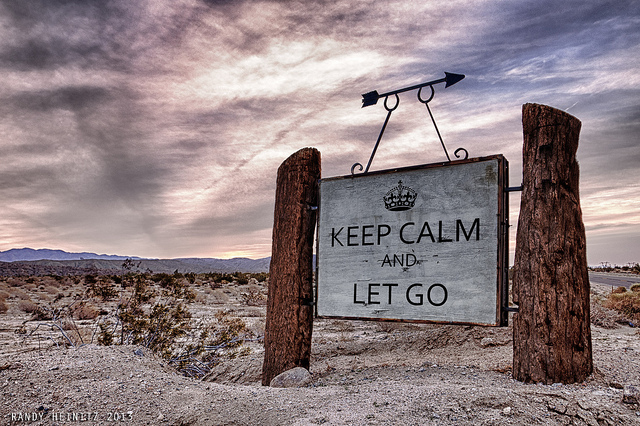
    Keep Calm and Let Go

    “Genuine forgiveness does not deny anger but faces it head-on.” ~Alice Duer Miller

    The man who I thought was my soul mate walked out on me fourteen years ago. He immediately remarried a lovely, beautiful woman who was everything I was not.

    I am desperate to fall in love. I’m thirty-eight. I want a baby. I want a relationship. I feel alone.

    A year ago, I fell unexpectedly in love with my photographer. Yes, star-struck romantics, it was just like the movies. Shy, awkward woman gets pictures taken for her brand-building website, and she is completely unraveled by his boyish sweetness and the power of his lens.

    I had never felt so beautiful, so free, so seen, so celebrated. It was a wham-bam-thank-you-mam whirlwind romance. We “hung” out only four times.

    But I had felt the life times between us, even if he didn’t.  And he didn’t. He didn’t choose me. But that didn’t stop me from becoming a crazy woman. Obsessed.

    I cried every other day, made up stories, fantasies. Of course we had shared past lives together. He was my “real” soul mate.

    Even if my mind was making up the stories, my body remembered. Why else would I be so upset? I felt like I was dying, my heart was being squeezed into blackness, and all I could do to get past the tears was scream.

    I had many, many moments that looked like this:

    Imagine me, on my bed, with a box of tissues, crying from the pit of my soul. Snot coming out my nose and spit out my mouth, all dripping into a sticky pool on my bed. I’m angrily screaming out and yelling “Why?!? Haven’t I suffered enough pain? I’ve done what I thought was right. I’ve prayed. Meditated. Done good deeds. Challenged myself. Don’t I deserve love? The man I want? What can I do differently? What is wrong with me? Why am I not blessed? What do I have to DO-O-O-O-O-O-O-O?!”

    Not a pretty scene.

    It was gut-wrenchingly painful being in that victim hell realm. I had to get out. But how?

    How do you get out of your own way? How do you survive when you are drowning in a pit of dreadful dark emotions and thoughts? All I could think about was that penetrating question, “Universe, what do I have to do??

    Do? What do I have to do, right? Because obviously, I did something wrong or didn’t do something right to win his love.

    In this two-lettered word, do, I realized everything. It wasn’t about doing. It was about surrendering, letting go, and trusting in the organic flow of life.

    Not easy.

    I constantly forget this, and the universe kindly reminded me of my sticky attachments to the external, yet again. Then, to make matters worse, that little voice crept up and said in its annoying voice, “You need to look inside for love, not on the outside.”

    Who’s heard that before?

    And I say back defiantly, “Easy for you to say. I’m only human. I’m not an enlightened being. I want love, damn-it. Love!”

    Then, I stopped. I took a breath, dropped into my body, and surrendered. And then surrendered some more.

    Finally, I said to myself, “It’s okay to want love. It makes me a loving human being. It’s even okay that I became a crazed, angry woman, mad at the world, making up fantastical, delusional stories. It happens. But, mainly it’s okay because deep, deep down inside myself there was a lie I was telling myself.

    (Breathe)

    I was telling myself that it was my fault for being so unlovable, so broken that these men didn’t choose me. And of course, I know that’s not true.

    At first, I felt like an idiot. Geez, not the stupid loathing-lack-of self-love-thing again. But then I remembered to give myself empathy. I forgave myself for my lie because I know that many of us on this planet have the same one.

    That is what makes us human.

    Self-acceptance, forgiveness, and self-love washed over me. And I felt a little bit better, lighter. I felt like I was thrown a divine rope to pull me out of that pit of despair.

    I went through this routine about 100 more times, until one day, months later, I felt normal, clearer, and joy eventually snuck in again. I haven’t met Mr. Right yet, but I’m hopeful. I’m more grounded, more open, more trusting, and less attached.

    And when I start to feel the chatter of my mind and those icky feelings bubble up again, I remind myself of what I learned months before. There is a universal process of forgiving and letting go. We each have our own way of describing it, but mine goes something like this.

    1. Acknowledge what you are feeling, your anger, your sadness, and your pain.

    2. Release it. Express it (safely, away from blunt objects, and in the comforts of your home). Don’t hold it in your body to fester and turn into disease!

    3. Ask yourself the tough questions, and answer truthfully until you get to the very bottom of your pit of despair. There, you will find the treasure: the lie you have been telling yourself.

    4. Be gentle. Accept your lie. Forgive yourself for telling it.

    5. Lovingly let it go and rewrite your story. For me, it was: “I’m not unlovable. I’m lovable, and love will come to me in its perfect timing! Yahooo!”

    6. Finally, chuckle at the absurdity of it all, and remind someone else of this human process of death, rebirth, and growth through your own sharing, storytelling, and your art.

    Breathe. Breathe. Breathe. And smile.

    Photo by Randy Heinitz

  • A Letter from Your Future Self

    A Letter from Your Future Self

    “The place to be happy is here. The time to be happy is now.” ~Robert G. Ingersoll

    Dear Past Me,

    Remember that day when you thought all was lost? When you thought there was barely any point in carrying on?

    The bank account was dangerously low.

    You were arguing with everyone close to you.

    The roof was leaking.

    It felt like everything was a struggle and the so-called abundance of the Universe was nowhere to be seen.

    You were going over the mistakes you’d made.

    The money you had lost.

    The opportunities you had missed.

    You were going over angry conversations and thinking about how right you were and how wrong they were.

    You were searching for forgiveness but holding onto the unfairness of it all.

    Remember how low you felt?

    You actually spent more time than you care to admit wishing you didn’t exist.

    You thought at least that way, nobody would miss you and you wouldn’t cause them any pain if you had never existed.

    Dude.

    Seriously?

    You do realize now that you wasted a bit of time with that ridiculousness, right?

    You wished for a lightning bolt of awareness to hit you in the head.

    You were hoping for a finely tuned droplet of self-aware genius to magically transform your heart.

    The Universe provided because in the next few moments, you read this:

    The average person lives to be 76 years of age, which is approximately 28,000 days.

    28,000 days.

    That’s when it hit you.

    Every day is truly precious.

    Months seemed to come and go.

    Years flew by.

    But days. Days were made up of habits.

    You woke up to your own habits at that point.

    How much time had you wasted drifting into jealousy?

    How many hours had been lost sinking with regret or crying over disappointment?

    If you added up the hours you’d filled with worry, regret, anger, sorrow, and guilt, how many days would it equal?

    It was terrifying to even consider.

    You shifted.

    You found three ways to live in each day that have changed you forever.

    1. You are not your feelings.

    When anger or hurt hits your heart like a ton of bricks on a hot summer day, it can feel like it consumes you.

    The more you resist, the more you fight it, the bigger it gets.

    Allow the pain to be there. Talk to it. Realize that you are the witness that is doing the talking.

    2. Meditation.

    It seems like everyone talks about meditating.

    Once you made it a non-negotiable part of your life, everything else shifted for you.

    Think of it like brushing your teeth or taking a shower.

    You can sit quietly anywhere. In your car. At your desk. Just close your eyes and breathe.

    It will help you to be in the day.

    3. Forgiveness.

    As much as you’re struggling with your own crapola, everyone else is going through his or her own lessons as well.

    As soon as you leaned into forgiveness, you felt better.

    You stopped resisting.

    Forgiveness gives you flow.

    And when you flow, BOOM—you’re in the present moment again.

    I want you to wake up to what you have right now!

    I want you to know that no matter what, today is beautiful.

    It doesn’t matter if it’s pouring rain, pounding snow, or penetrating sunshine.

    Weather is neither good nor bad. It just is.

    Today is what you make it, and I want you know that here and now, in this future moment that I’m writing you from, love is the only thing that lasts.

    Whether your current moment is filled with sorrow or bursting with joy, this too shall pass.

    Find ways to make today into a beautiful painting of kindness toward yourself and toward others, and you will reach the end of your 28,000 days with a knowingness that you lived well.

    What day is it today?

    It’s the best day ever.

    Love,
    Future Me

  • How to Move On When You’re Hurt and Waiting for Closure

    How to Move On When You’re Hurt and Waiting for Closure

    “Letting go gives us freedom and freedom is the only condition for happiness.” ~Thich Nhat Hanh

    Ah, closure. That feeling of vindication, or a sense of completion—it can be very enticing!

    There are times when seeking resolution is really important. If we are having an argument with our partner, settling it can help strengthen our relationship. If we are having a disagreement over a contract, determining the outcome may be required to continue with the project at hand.

    In these types of situations, seeking resolution is very relevant.

    That said, there are loads of situations that occur in life in which we seek closure, even though it does not really serve us. As a matter of fact, this desire can hold us back.

    When we feel we’ve been done wrong, we want resolution. The size or type of infraction may not matter. We want to know who is guilty of the offense, or, if we know who the culprit is, we want to know why they did it.

    Heres the catch: It’s pretty common to feel like this resolution is necessary to move forward.

    Many moons ago I was in a relationship with a man who turned out to be quite unsavory. Unbeknownst to me, he had gone through my wallet, made note of my credit card info, and was using two of my cards to finance what I can only describe as a shopping addiction.

    I was not using the cards at all, so was not expecting to see bills, and since he consistently arrived home before I did, he was able to get the bills from the mailbox before I ever saw them.

    I did not learn of his deception until we broke up for other reasons.

    Besides dealing with typical breakup emotions, I also had to face the reality of this man’s ability to lie to me and steal from me.

    Yes, the relationship went south, but I thought we’d had love and respect between us, and, well, enough integrity to not commit crimes against one another.

    I wanted him to account for his behavior; I wanted an apology; I wanted him to explain to me how he could have behaved in such a despicable manner toward anyone, much less me, his girlfriend (at the time).

    Unsurprisingly, I didn’t get any of that.

    I was rocked by this for quite some time. It took me months to realize that the reason I wasn’t getting over it was because I was still waiting for him to explain, apologize, or something. I realized that if I wanted to let it go, I was also going to have to let go of my desire for him to admit he was a mega jerk.

    We want to feel in the right. We want it to be recognized that we were done wrong. If possible, we want an admission of guilt.

    However, in looking for this type of closure, we are often giving away our power. We’re saying, “I cannot move past this experience until…”

    What we actually desire is an internal, emotional shift. We want to feel better!

    We already know we can’t expect the outside world to take care of our feelings. Let’s apply that knowledge to resolution as well.

    Here’s how I got over the thieving boyfriend situation, and it’s a formula I continue to remind myself of whenever I begin to feel like I can’t move past an experience until satisfaction is mine.

    Acknowledge that something crappy happened.

    Yes, it totally sucks when a formerly good friend stops returning our calls and texts. And it can be life-altering when we are let go from a job, despite receiving positive feedback on our performance review.

    It’s important not to pretend. Sometimes we rush past the feelings that are present in an attempt to appear uncaring (unhurt, really), or like we have it handled. Getting back on the horse is great and all, but let’s first acknowledge that it hurt when we were knocked off!

    Having feelings doesn’t make us less able to handle tough stuff, or to come up with great solutions. It just means we’re human.

    Identify all the feelings you do have.

    If the situation is minor, it may be one or two feelings. For more intense events, it can take a while to pinpoint all of them.

    This is essential, because identification and recognition go hand-in-hand. In doing this, we’re accepting that we are feeling these emotions. This sort of self-acknowledgment is crucial.

    By the way, we’re the only ones who get to decide what is major, or minor, for us. We’re all unique, and we’ve all had different experiences that have helped mold who we are. Something that is minor for one may be major for another, and vice versa. That’s okay.

    The point is not to compare the experience we are having to how others would react; it’s to self-process and move forward.

    Release the need for outside meditation of any sort.

    This is not about forgiveness. It’s not about taking the high road, either. Those options both involve the other person. This is about us, and what we want.

    It is simply about asserting that we can move forward regardless of what is happening (or what doesn’t happen) in the outside world. We can use affirmations, or meditation, or whatever tools work for us for energy release.

    When we are looking for resolution from the outside world, we are also seeking acknowledgement. Learning to self-acknowledge is a wonderful gift to give ourselves.

    Whether you use the tips above, or another recipe that works for you, let’s choose to move forward. We are the one who will benefit, and we’re the only ones who will suffer if we don’t.

  • Burn Away Your Barriers to Love: 7 Ways to Live a Beautiful Life

    Burn Away Your Barriers to Love: 7 Ways to Live a Beautiful Life

    Hand Heart

    “Your task is not to seek love, but merely to seek and find all the barriers within yourself that you have built against it.” ~Rumi

    My grandmother is nearing the end. She’s had a good life, a family, a loving husband, dancing and singing, growing things, running a business.

    There are some skeletons in the closet though; her early life had some very heavy experiences that made her afraid and may have held her back. On balance, a great life, but there were challenges.

    Right now, she’s slipped into a dream world and she is often still there when her eyes are open. There are lucid moments but her short-term memory is gone. She wakes and wonders who you are.

    But if you don’t push her to be in your time zone, she is happy to have her hand held, to sing the old songs, to laugh, to tell you what’s what. Her personality hasn’t changed.

    What she’s doing, we think, is sorting through the various stages of her life, coming to terms with the things that need to be understood with the heart. She seems to be burning away the old memories, the old feelings.

    Maybe she’s also looking forward to joining my grandfather for a dance, as they always did. They met at a dance.

    I don’t really know what it’s like for her but I see her returning to a kind of innocence, burning off the barriers to love. I see her life and all our lives as a gift of learning how to love.

    This has me thinking: How can we remove the barriers to love now? How can we burn off what doesn’t serve and let the best of us shine through?

    1. Practice forgiveness.

    Let go of the poisons of resentment. Let them wash away in a cool mountain stream meditation. Simply say, I forgive NAME and I forgive myself. I send love to both of us.

    2. Try to understand.

    Play act being that other person. What could have made them do the things they did? Were they in pain themselves? Were they just naive and oblivious?

    3. Change your beliefs.

    The limitations and barriers to love (and to anything else we want in life) are really about the beliefs we hold. The past is gone; it’s only our beliefs that live on to affect our current life. What belief is stopping you feeling love? Is this belief really true? Could you believe otherwise?

    4. Change your story.

    Change the way you see it and tell it. What did you learn?

    Your story might be: “I am lonely because I was treated harshly as a child and can’t trust others.” You could change this to: “My early life taught me to crave and seek healthy connections.”

    If you lived in fear as a child, did it teach you courage? Your story could be: “Being afraid taught me to stand up for what I believe in.” Change your story if you need to. Your story about before runs your life now, and now is what really matters.

    5. Create from the darkness.

    Play with the raw materials of life. Creativity transforms experience. Write, draw, paint, sculpt, bake, cartoon, collage, or just laugh about the hard stuff with a good friend. Get it out.

    In the movie Something’s Gotta Give, the heartbroken playwright (Diane Keaton) writes madly, alternately sobbing and laughing with delight as she “nails” a great comic scene. At some point, the terrible truth may become hilariously funny. Get creative.

    6. Give love to feel love.

    Love lives in my heart when I give it. Giving love makes us feel love. How do you best give love? What does your beloved like most? Do they love hugs, a talk, good food, flowers, car movies? Feel love in the act of giving. You may not have to actually watch the car movies.

    7. Appreciate this miraculous life.

    List your gratitude. List your small and simple pleasures. Indulge in them. For all the dark and light, life is a beautiful gift.

    I want to talk about that last point. Often, someone nearing the end is reluctant to let go of this life. I get that feeling watching my grandmother now. Whatever life has held, we want more of it, even when it’s time to say goodbye.

    Years ago, I saw an achingly beautiful contemporary dance performance called Fallen Angels. In the last moment, the stage filled with a thin layer of water. All but one had climbed to heaven. One dancer was left flipping and struggling like a fish in shallow water, holding on desperately to a difficult and beautiful life.

    In that scene, letting go of life was so hard. Despite all the mess and confusion, the pain and heartbreak, this last dancer did not want to leave, even for heaven.

    For all its contrasts, life is beautiful. At the end of our lives, I think we may want to hold on to all of it, the good and the bad. I have a feeling our souls wouldn’t change a thing.

    Let’s embrace the beauty as much as possible right now and burn off the barriers to love. We can only do our best, learning to love as we go, living and loving all of it.

    Photo by Jenny Starley

  • How to Stop Judging and Being Hard on Yourself

    How to Stop Judging and Being Hard on Yourself

    “You, yourself, as much as anybody in the entire universe, deserve your love and affection.” ~Buddha

    For a long time I joked that if I had a time machine, I would go back to 1989 and give my sixteen-year-old self a swift butt kicking. But then a few months ago, on my fortieth birthday, a friend posted a picture of me at sixteen on Facebook.

    Seeing this image of myself totally threw me for a loop. Other than a school photo, it’s probably one of the few pictures I am aware of from that time in my life.

    I spent some time contemplating this version of me glancing sideways at the camera. Under the surly expression of not wanting my photograph taken, there is undeniable beauty and innocence.

    What makes it even more poignant is that I am the mother of a teenage boy who happens to be sixteen right now. His teenage drama has brought back so many memories of myself at that age.

    For most of my career as a teenager I was preoccupied with being cool, with cultivating a counter-culture, bohemian persona (assuming clove cigarettes, On the Road, and a pile of mixed tapes constituted “bohemian”). Rolling my eyes at my mother was a near constant affectation.

    I was certain that I knew it all; I had the rest of my life all figured out and I rejected anything that didn’t fit with my narrow understanding of the world. I now know there were countless experiences I missed out on by virtue of my stubbornness and general disdain for everything.

    I avoided most of the mainstream high school dances and events. I dropped out of clubs and activities as soon as they felt challenging. I didn’t bother investigating the many academic and social opportunities that came my way.

    What I would have regarded not long ago as a silly, selfish, snotty teenage attitude, I now realize is something else entirely. In that picture I see the seeds of pain and hurt—some already planted and taking root; some yet to be sown.

    Lack of encouragement and confidence was written all over my face. The trauma of rejection and the fear of not measuring up was so apparent. That cool thing was just an act—a part I was playing to protect the hurt little girl that I really was.

    It occurred to me as I observed her tentative gaze that this girl is still a part of me and deserves my love and tenderness, not my judgment. She deserves respect for the woman she is going to become and comfort for the child she has been.

    Those reflections brought me full speed into the present moment. Seeing this image of myself in a new light forced me to examine the way I treat myself today. I tend to be pretty understanding and gentle with others, but so tremendously unforgiving with myself.

    Maybe it’s a sense of guilt over squandering my potential. Or maybe I’ve grown to be hyper-vigilant about seeming unworthy. Perhaps I’ve just been metaphorically giving my inner sixteen-year-old a butt kicking all along.

    Whatever the reason, when I notice in hindsight that I’ve made a bad decision or missed an important detail, I beat myself up. Whether it’s buying something that turns out to be a waste of money or spending time goofing off on the Internet, I often feel like I’m that teenager in need of a stern, judgmental lecture.

    I have yet to really figure out why I’m so ruthless with regard to my own mistakes but I’m pretty sure I’m not alone. If our culture’s lack of self-esteem is any indication, this seems to be a challenge for many people.

    I’ve heard it said that until you can love yourself, you can’t truly love others. I’m not sure how much I agree with that. In fact, I’ve come to think of maternal love as loving someone else more than you love yourself.

    What I do know is that struggling to love myself makes showing up in the world a big challenge. Showing up as my authentic self requires so much effort. In fact it’s nearly impossible when I don’t feel self-love.

    I strongly feel that lack of self-love holds us back. It prevents us from connecting with our purpose and doing great things. I may be over-generalizing but the scarcity of self-love in our society seems to be at the root of so many common problems.

    It’s important to understand that loving yourself doesn’t mean you are selfish or a narcissist or that you don’t take responsibility for your mistakes. It means that you treat yourself fairly and with respect.

    Self-love means that I forgive myself for my errors and continue striving to be the best person I can be. It means I believe in myself and put the same effort into my well-being as I do for my loved ones.

    It should come as no surprise that the practice of self-love is far easier said than done. But, in my often-imperfect journey to loving myself, I’ve learned a few things along the way:

    1. Challenge the notion that there’s any merit to being hard on yourself.

    Beating yourself up may have the short-term effect of making you work harder or be more diligent. But in the long run, being unkind to yourself causes resentment, a sense of defeat, and eventually some emotional scars.

    2. Add a new twist to the Golden Rule.

    We always teach children that they should treat others the way they wish to be treated. A good rule as we grow up is to treat ourselves according to the same standards we treat others.

    You probably aren’t the kind of person who would call their child, mother, or best friend “stupid,” so why would you say that kind of thing to yourself?

    3. Know that forgiving yourself doesn’t mean lowering your standards.

    There is nothing wrong with striving to be the best you can be. However, it’s important to cut yourself some slack when you fall short of expectations.

    Making a mistake or not being perfect is simply part of being human. If you didn’t do your best, it’s okay and it’s really not the end of the world. Dust yourself off, keep moving forward, and love yourself for all your imperfections!

    While it’s definitely not easy at first, I promise that learning to love yourself really does pay off. The love and kindness we have for ourselves may eventually allow us to change the world!

  • Forgiving and Letting Go When You Feel Resentful

    Forgiving and Letting Go When You Feel Resentful

    Heart

    “The weak can never forgive. Forgiveness is the attribute of the strong.” ~Mahatma Ghandi

    My childhood was in many ways a nice childhood. I feel like a complete twit to complain about it.  I know other people have gone through so much worse. I’ve read really difficult childhood stories and my heart literally bleeds for these people.

    Growing up I was shy, un-confident, and withdrawn. I treated school mostly like a prison sentence. I put my head down and tried to do my time without falling in with the wrong crowd.

    My parents were, and are, good parents. They provided financially for my brother and I really well.  We had food on the table every evening, and we lived in a nice house. I was never beaten or abused physically in any way, shape, or form. I was lucky.

    I love both my parents so much; I’d do anything for them. However, my love for my parents has led to so much confusion and turmoil inside of me. Why did they never reciprocate it?

    My parents never told me that they loved me. They never hugged me or told me that everything was going to be okay. I can’t even remember being told “well done” or “good job” for something that I did. Instead, on occasion they told me that I was “lazy, stupid, and fat.”

    It would’ve been so easy for them to comfort me occasionally and tell me that everything was going to be okay. Just two minutes of reassurance every so often and I truly feel that I would’ve been a happier kid. My quality of life would’ve been so much greater if I’d received that little bit of love.

    Every day I was scared of school. I felt sad and alone. Anything remotely social would cause my heart to race and adrenaline to fill my little body.

    At night I’d fantasize about having a girlfriend and also having conversations with girls at school. I’d dream about what I’d say to them and how cool I’d be.

    Alas, the next day I’d keep my head down and talk to no one. Every evening I’d be at home playing on my computer, in my room alone, trying to quietly distract myself. 

    Even now, after a decade of working on myself, I occasionally get feelings of fear and self-doubt. “Am I good enough?” I wonder. It has literally taken me years of meditation, self-help, and exposing myself over and over again to scary situations to heal myself.

    I’ve asked my mum several times if she loves me and she tells me “to stop being stupid.” She says that she demonstrates love and that she doesn’t believe in saying things. She demonstrates love by providing for me.

    As a boy and now, I like to receive my love verbalized and given through touch.

    I’m not writing this looking for sympathy. I actually feel a little silly sharing it. There are so many people that have had more difficult lives than me.

    I am writing this as someone who is far more confident than I once was. That being said, my life isn’t perfect.

    Overall, I’m doing great, but this is only after so much struggling, pain, and heartache.

    I definitely could be richer if I hadn’t had to spend many years of my life healing myself. I could be more successful if I’d had the confidence at a younger age to take certain opportunities. I could’ve had more friends if I was more outgoing at school, college, and university.

    My life would’ve definitely been easier without the need for me to constantly struggle against inner pain and fear.

    When things are going well, it’s easier for someone to forgive. When I’m making money and one of my books is appearing in shops it is easy to forgive. “No problem Mum! I love you anyway!”

    It’s easy for “gurus” to preach about how you should forgive when they get up on stage. Of course the guru is happy; things are going great in their life!

    In fact, they have probably rationalized that their success is because of their difficult upbringing.  How much easier is it to forgive a difficult past when you are rich and successful? It definitely takes the edge off things.

    The challenge of forgiveness, though, is when things aren’t going great—when life’s expectations aren’t being met. These are the times when forgiveness is a challenge. Truly letting go can be a lifetime goal, and it’s not easy.

    The first step to forgive is to learn about the person that has wronged you. Find out about their past.  Did their mother or father show them love? Did they feel safe growing up?

    My mum was from an orphanage and was never shown love from her adoptive parents. She was provided for and that was about it. On top of that, my mum was bullied at school because she didn’t have a real family and she was told that she was “stupid, lazy, and fat.” Sounds familiar.

    Most boy bullies were bullied themselves, either by a father or an older brother. When you look into their past and background, it will then be possible to understand that person.

    The next step is to forgive yourself and realize it wasn’t your fault. No one is born unconfident or shy. These are learned behaviors that are developed from our environment.

    It would be completely unreasonable to blame myself for anything. I felt scared and alone, and I did what any child would do, withdraw.

    The final step is to forgive the other person. With the knowledge and understanding you have acquired about the other person it should make this a bit easier.

    Wish that person well and, if possible, send them your feelings of love. Resentment and anger only hurt the person that is carrying them around. There is no benefit in holding onto these or having a victim story. Stories are pointless. Let go and live in the now.

    Finally, if you are struggling with forgiveness, remember that you can transform negative emotions into the drive to be a better person and create a better life.

    Experiencing pain makes you stronger, and being wronged by others helps you understand what you believe is right so you can better for the people around you.

    Because of your past, you have an inner drive plus emotional empathy, which allows you to be a truly amazing individual. Your painful experiences have given you gifts. Use your courage to explore them.

    And if you find you’re still struggling with forgiveness, don’t give up or lose heart, because tomorrow is always a new day.

    Photo by Nicole Abalde

  • Free Yourself from Regret and Transform Your Life

    Free Yourself from Regret and Transform Your Life

    Im Free

    “The practice of forgiveness is our most important contribution to the healing of the world.” ~Marianne Williamson

    I always had a hard time accepting all of me. As early as I can remember others defined me by saying “You are so weird.” Not in a malicious way but more in a “you don’t fit into our familiar box” sort of way.

    I spent most of my teens and twenties attempting to conform to others or numbing myself to a point of not caring what they thought. If someone would have told me that forgiveness and compassion would lead me to inner peace and wholeness, I would have asked them what they were smoking.

    So how is it that I came to learn that freedom lies within the forgiving and compassionate heart?

    I can assure you that it wasn’t because I have some super powers or a secret knowledge that you don’t. My discovery came through a real and messy life, no different from any other.

    Childhood

    My dad drank a lot. He was the obvious thorn in the family—the one that everyone else used as a distraction to keep from looking at themselves, the one that needed love the most but we were too afraid to give it.

    I was six or seven years old when my dad was pacing back and forth across the street from my grandparents’ house, yelling, “I just want to see my kids.” I thought to myself, “Why can’t he just come over and give me a hug? My daddy just needs a hug.”

    Someone in the house was assuring my frightened grandmother that it was against the law for him to come any closer to the house because of the restraining order, which didn’t make much sense to me, so I hugged my doll and disappeared into the background.

    As my father’s drinking and raging progressed, I too began to fear him. Afraid of my father, afraid of how people treated him, afraid life could actually be the way that he seemed to experience it—it was all so terrifying.

    It wasn’t easy watching my dad struggle his whole life, blaming his family, his job, my mom, and eventually me for his pain.

    Occasionally he would have a reprieve. Like the time he sent me a dozen roses for no reason. When I asked him why he sent them, he said, “My daughter is going to get a lot of roses in her lifetime and I wanted to be the first to give them to you.”

    He could be so charismatic, loving, and kind. I loved him with all of my heart.

    Growing Up

    In my twenties I found myself caught between a deep love and a desperate fear of my reflection. I fought a good fight not to become my dad. But as the saying goes, “what you resist persists,” and voila: I woke up one day and realized that I wasn’t like my dad. I had become him.

    Now in my twenties I was the one blaming others for my unhappiness; if only my childhood wasn’t so screwed up, if only my father was a better role model and had been there for me, and so on.

    Using relationships, alcohol, food, and whatever else I could to drown out daddy’s little mirror, I found myself plagued with the reality of not being able to live successfully anymore than he did.

    Healing begins when we can stand still and face ourselves in the mirror of another.

    The one thing that I had never witnessed my father do was take responsibility for his actions, which were the culmination of his life experiences. Knowing that I was just like him, I knew I needed to make a different choice, but how?

    Intuitively, I knew that I had to ask for help in learning how to become responsible—learning how to respond to life in a new way.

    I began reaching out for guidance through counseling, books, and learning from people around me who seemed genuinely happy. I soon discovered the power in connection.

    Connecting with people that were living life as creators, rather than victims, showed me a whole new way to live.

    I began to change inside. Compassion and self-forgiveness swelled. The principle “as within, so without” proved true as my newfound experience poured out and into my world.

    Forgiveness

    My thirties were a time of forgiveness during which my father and I were estranged because of his active drinking. At that time I didn’t know how to grow while simultaneously keeping my father in my life.

    Unfortunately, by the time my relationship with my father was healed, he had been dead for about five years.

    During those years I had made several attempts to make amends with him, once by spreading his ashes on Father’s Day at a place he used to take me and my brother as children.

    I’d written and read aloud two letters I wrote for him at different points of time.

    Interestingly, the action that created the ultimate healing came to me in meditation one morning.

    Sitting in silence I became aware of unkind and dismissive behavior I had displayed toward my father’s fourth ex-wife, Ann. Her only crime was that she loved him and was a kind stepmom. I blamed her for my father’s alcoholism, which made no rational sense.

    When I called Ann she was as gracious to me as she had always been.

    “It is so good to hear from you,” she said.

    I responded, “I’m calling because I have become aware that I somehow held you responsible for my father’s alcoholism, and because of that I was unkind and dismissive toward you. I wanted you to know that I am sorry for the way that I behaved and am extremely grateful that you were able to love and accept my father all those years, especially when I was unable to love him myself.”

    Her warmth traveled through the phone lines as she said, “You’re welcome; I understand. Your father so loved you.”

    Immediately after our phone conversation I felt something physically leave my body. I will never forget it. Beyond my understanding my relationship with my father had been healed.

    The Lesson I Wish I Had Learned Before It was Too Late

    After my father died I tried to convince myself that I had no regrets about never healing our relationship. The truth is that years earlier I intuitively knew that it was time to call my father and make things right, but I made the choice not to do it for one reason: fear.

    It is the one thing in my life that I would do differently if I could.

    Although I believe in a higher plan, with things always happening as they should, my actions play a vital role in the equation. Being responsible for my life has taught me to acknowledge my regret and the choice that I made which created it.

    Lessons I Learned from a Forgiving and an Unforgiving Heart

    • It is impossible to fully accept ourselves until we are at peace with our greatest fears.
    • Our greatest fears are easily detected by looking at those we are yet unable to love.
    • When we are willing to make things right in our life, regardless of appearances, seeking inner guidance will teach us how to heal.
    • If we still have breath, we can grow.

    Today when I find myself restless I ask, “Am I being stingy with my forgiveness?” And if the answer is yes, then I ask, “What can I do now to make things right with myself or between me and another?” knowing that they are one in the same.

    Forgiveness is a warrior’s journey where we grow into compassionate human beings. Regret surfaces when we know within what we need to do but we don’t do it. Forgiving is our opportunity to limit regrets.

    In our willingness to practice forgiveness we move from seeking acceptance to resting in our wholeness.

    Photo by Sara Jo

  • Forgiving In a Situation That Feels Unjust

    Forgiving In a Situation That Feels Unjust

    Sad

    “When something bad happens you have three choices. You can let it define you, let it destroy you, or you can let it strengthen you.” ~Unknown

    There I was: numb from a conclusion of a dismissal based on a finding that there was “no reasonable prospect of success.”

    Harassed, bullied, victimized, stalked both in-person and online, the Human Rights Tribunal tossed me into another discarded pile of victims to be ignored by the courts because a group of goons were cleaver enough to hide the body of proof.

    My assailants comprised of four individuals. One was a divorced teacher of two children who engaged in inappropriate sexual relationships with three of his immediate students—the most recent being only 18 years old when the relationship began.

    Another was his female co-worker who heinously accused me of threatening her fetus despite never detailing the exact threat, the manner in which the threat was executed, or when the alleged threat occurred.

    The others were a male co-worker who accused me of “staring at him,” despite photo evidence of his flashing the genital regions of another male co-worker, and the presently 22-year-old student who exchanged sexual favors with her teacher and attempted to spread a malicious rumour that I was arrested by local police. 

    Why did I become their target? Because I rejected the sexual advances of the teacher without knowing of his previous sexual encounters within the college program or his current relationship with a student, and filed an internal complaint with the college.

    Most of the information I know today was discovered months after my departure from the academic institution.

    I still have yet to learn of the nature of these alleged death threats I made or what exactly I threatened.

    The accusation of threatening a fetus was most troubling, as there has never been an account of what the exact threat was, how a fetus can be threatened, and when this situation occurred.

    I have been an educator for most of my career and presently assist students with learning disabilities to improve their literacy levels. To have such blatant lies against someone like me who has dedicated so much to assist in the growth of others, and for others to actually believe these lies, was horrendous.

    Local police were baffled that the courts would dismiss what they saw for themselves, and were more than obliging to provide further assistance in obtaining restraining orders against the respondents, as a school employee threatened to physically assault me.

    I understood that a dismissal did not mean that the vice-chair of the Tribunal thought that I was a liar, or thought that none of these actions transpired, or thought that the respondents were innocent of the things of which I accused them.

    It meant that the body of proof and the actions which lead to my victimization were hidden so well that there was reason to doubt the existence of a victim at all—a horrific regularity in today’s world of anonymous online accounts: distorted images, fake lives, pseudonyms used by unknown figures.

    Yes, I know of karma. Yes, I know what goes around comes back around. Yes, I know a guilty soul eats away a person from within until the truth emerges. However, these thoughts and words of attempted condolence did not help.

    Longing and questioning filled my mind in the minutes that followed.

    When would karma come? Did the boomerang miss these people during an attempt for a universal justice? Could cosmetics continue to conceal their ugliness from the world, or worse, could their ugliness actually form a mask onto me for the world to be fooled that I was the perpetrator?

    I needed to find those words that would bring peace.

    Strangely, the source of victimization also served as a means of finding personal salvation: a Google search for the terms dealing with disappointment.

    My first search was fruitful with an anonymous quote from this very website: “Do not let today’s disappointments cast a shadow on tomorrow’s dreams.”

    The satisfaction I gained from this quote was fleeting, as the notion that I still had dreams to hold onto was always true, even during the ordeals with my tormentors. Also, even monsters dream.

    The article (4 Steps to Deal with Disappointment by Raeeka) followed with a useful list of four: Let it out, get some perspective, know your own heart, and practice acceptance.

    While I could recognize the usefulness of this list in my future, it still failed to complete the emotional journey I was presently in.

    I had already accepted what the courts decided and could already devise the rationality behind the decision. Excusing myself for being a bit too logical for the emotions I was experiencing, I continued in my search.

    It was my second search that brought me to a new list from the same website, and a sentence that changed my perspective on everything: “Consider that there is nothing to forgive” (3 Unconventional Tips for Forgiving and Letting Go by Lisa Esile).

    These words made me realize that my complaint filed with the tribunal was an act of telling these respondents that they needed to change for the better and giving them the opportunity to enrich themselves.

    However, if they cannot see how they wronged me and others, how can they ever see the need for change?

    I filed a complaint with the intention of assisting them in improving their current means of treating others when they weren’t open to improvement.

    It would be similar to using such a tactic on a rabid dog; the dog cannot realize that it has rabies, which is bad for it, or that when biting other living things that it causes greater harm than usual. It would be pointless to reason with the creature that it has an illness that needs to be rectified.

    A teacher who abuses his position and shames the education system, not once, not even twice, but three times is clearly someone not on a path I wish to follow. It’s not worth the energy to wait for him to change his course of behavior, let alone to wait for his supporters to change their respective paths to grow from their situations.

    I, on the other hand, have nothing to change in my foundation: I have told no lies; I have not shamed myself in my journey; I have not harmed the progress of others or their education; and I have not disrespected the education system by abusing my position with my students. I can only grow from my experiences.

    Forgiveness has become a term that we use as a sword and a parachute.

    For some, looking for a reason to forgive becomes a journey for revenge—if something bad happens to that hurtful person, then I can forgive them. For others, forgiveness becomes an escape route for their inconsiderate behavior—an “oh well, time heals all wounds” mentality, so why worry about any harm inflicted?

    Forgiveness can only be given to someone or something that you can truly believe would have chosen differently if they had more understanding or different circumstances.

    From what I know, my assailants are similar to the rabid dogs in that they cannot see the problem, so it’s pointless to expel my energy on them. And should they change from their current circumstances, it would be such a change that forgiveness would not be required from me, as they would no longer be the people who inflicted this harm.

    In an unjust situation we sometimes need to accept that the other person is simply incapable of distinguishing right from wrong. And it’s that acceptance that can help us understand and find peace.

    Photo by Casey Muir-Taylor

  • Forgiving the Unforgivable and Ending Your Own Suffering

    Forgiving the Unforgivable and Ending Your Own Suffering

    Man Thinking

    “Resentment is like taking poison and waiting for the other person to die.” ~Malachy McCourtro

    I was completely unprepared for the emotional hailstorm that bombarded me when, back in 2001, I learned that my wife had been having an affair with my best friend of twenty-plus years.

    My normal, predictable life (which I absolutely loved, by the way) had been virtually shattered overnight. Not only did it culminate in a very bitter war (see: divorce), it also marked the onset of a toxic poison that had begun to work its way into my veins: resentment.

    It began with crippling depression—depression so bad that I no longer had the appetite to eat or a desire to care for myself. I spent untold hours (and days) under the protective shield of a comforter in bed, drifting into a slumber of numbness. Sleeping meant that I didn’t have to feel.

    And with an empty house now all to myself, I made a decision to lock the front door and refuse to answer it for anyone.

    Having just had a proverbial knife twisted into my spine by the two people I loved and trusted the most, what good could come from anyone knocking on the door with a smile on their face? People hid vicious claws behind their backs, and I refused to be stuck with them again.

    Signs Of Life

    Then, suddenly but slowly, I began to crawl back to life. I spent less time in bed, began to eat on occasion, and even reached out to talk to family. Calling around to local churches, I learned about a divorce support group that met on Wednesdays, and forced myself to attend.

    The people at this group, mostly other men, served to reassure me that I wasn’t the only one facing the frightening task of putting a broken life back together.

    And even though I cried my way through the first few meetings, a footprint for recovery began to take shape. But the poison of resentment was an entirely different monster—one that would take me a full decade to exorcize.

    Sentenced To Suffer

    Despite acquiring a new set of coping skills, I began to suffer through obsessive thoughts about the affair between my ex-wife and ex-best friend. I tortured myself with the painful details of their intimacy, imagining it over and over again throughout the day.

    And when I slept at night, my mental participation was no longer even required—those obsessive thoughts became a box of terrifying toys that came out to play on their own.

    In my paralyzing condition, I came to believe that having an apology from the both of them was the only way to exhale. But neither of them had any intention of doing so. The affair had already been going on for so long before I discovered it that they could never rightly offer any explanation of value—and therefore, never did.

    So much for exhaling.

    After a whopping ten years of this sort of self-inflicted torture—long after my divorce had been finalized—I realized it was well overdue that I look inward for the answer. No one was going to offer the apology I wanted or felt entitled to.

    I could either choose to forgive regardless, or continue in the pattern of resentment and anger that swallowed my current quality of life.

    Making A Decision To Forgive

    I chose to forgive. To let go, and to recognize the past as a dead era I’d never be able to change.

    Forgiving is a hard thing to do when you feel like the recipient is undeserving—even more so when they have no clear intention of ever apologizing. You’d rather they feel the full weight of your hurt and pain, that they suffer as you suffered, and come to know the same meaning of anguish and sorrow that you have.

    But in refusing to forgive, we wrongly assume that we are dealing out due punishment to a deserving party—neglecting to see the poison we’ve sentenced ourselves to continue ingesting.

    The Weight Of A Grudge

    Refusing to forgive can sometimes become so paramount to our existence that we let it define our life. It reflects in our language, in the stories we tell people, and in our attitudes. And since the pain is familiar, we bask in it, subconsciously teaching ourselves to see the negative in everyone.

    We miss the opportunity to form relationships and build healthy bridges with people under the faulty logic that, since one person hurt us, they’re all out to hurt us.

    Research shows that psychological stress accumulated over a period of years begins to settle as physical pain in the body—pain we can literally feel taking a toll on our well-being. Mindful meditation has worked wonders in alleviating that burden for me since I chose to forgive.

    The final stage of forgiveness, at least for me, was to pray for the people who had wronged me—and I find myself doing so a lot, whenever old feelings start to surface. I pray for their health and happiness in a sort of radical act of kindness—a spiritual adoption, if you will.

    Forgiving is one of the greatest gifts I’ve ever given myself, since with it came freedom and the permission to move on and enjoy what life has to offer in the present moment. A shackle has been removed from my ankle, and I’m free to move about now.

    I was, after all, the only person who could ever remove it to begin with.

    Photo by Will Foster

  • How My Anger Led Me to Forgiveness and Peace

    How My Anger Led Me to Forgiveness and Peace

    “Genuine forgiveness does not deny anger but faces it head-on.” ~Alice Duer Miller

    As an adult survivor of childhood sexual abuse at the hands of a relative, I had become accustomed to keeping secrets. Silence, I was taught, was a good thing. It protected people that I loved.

    So for over a decade, I carried the dark and overbearing weight of my past in secrecy and in silence, believing I was the only one in the world who’d ever experienced such abuse—until I learned from a college workshop that one in four women and one in five men fall victim to sexual abuse by the time they are eighteen.

    Shocked and convicted, a surge of emotions overwhelmed me.

    Later, for the first time, I was able to share my secret with my mother. She was devastated and we cried, but the conversation ended on a peculiar note: “You can’t ever tell your dad,” she said, “because it will destroy him.”

    It felt as if I’d finally surfaced for air after drowning my entire life, and now I was being pushed back underwater, but sadly I accepted it. As aforementioned, silence was a good thing, wasn’t it? It protected people that I loved.

    The seven years that followed proved to be the most tumultuous of my life. I battled suicidal ideation, clinical depression, anxiety, panic attacks, plummeting self-esteem, immeasurable anger and resentment, and the take-home prize of the millennia: unforgiveness.

    I was a highly-trained victim at this point, putting on an Oscar-worthy performance.

    And then one day, I’d had enough. I did what I’d always wanted to do: I got angry!

    Now before you take a baseball bat to your ex’s four-by-four, I’m not talking about the type of anger that features fist fights and flying chairs on daytime talk shows. This type of anger is a process through which you can access the power and peace that can only come from forgiveness.

    There are four steps I have experienced in this process:

    1. Give yourself permission to get angry.

    I was accustomed, as I’ve emphasized, to the golden rule of “silence.” Skeletons were better left in the closet, I thought. Unfortunately, mixed with my already existent people-pleasing ways, this was a recipe for disaster.

    In my journey toward esteeming others above myself, as many of the world’s wisest sages have taught, I inadvertently evolved into a doormat. Talk about regressive Darwinism!

    I wanted to be a good person, and so when I felt anger, resentment, and unforgiveness, I beat myself up over it. I truly believed that I was a horrible person for being angry over what had happened to me. Further, I didn’t want to be the “villain” in others’ eyes or the black sheep in the family who just couldn’t let go of the past.

    But at long last, I finally gave myself permission to feel that anger to the fullest. I gave myself permission to own my anger, and in doing so, I validated myself. I acknowledged that I wasn’t an unfeeling robot or a mindless drone—I was a flesh-and-blood human being with a deep spiritual wound that deserved proper treatment.

    I allowed myself to acknowledge that I was in pain, that it didn’t feel good, and that I was angry about it. As such, a process could then—and only then—begin. I could now travel into the deepest and darkest parts of my soul and bring light to those forgotten caverns.

    2. Share your story.

    There was a time when I believed I would never share my story with a single soul. I could’ve never imagined those long years ago how untrue that would become.

    Every time I share my story, I feel more and more powerful. I’m no longer a victim—I’m a survivor! Sharing your story is not about incriminating the wrongdoer. It’s about validating yourself, owning your experience, and committing to living your best life.

    There may be someone reading this right now who has never shared the life story that’s so burning inside their heart. Whether it’s writing down the story in your personal journal or finally telling a trusted, long-time friend, take this bold step forward. You will feel freedom like never before.

    Your story is nothing to be ashamed about. Come forth from that dark corner into the light. The weight feels lighter with every word you speak, and the story will become easier to share with each telling.

    I believe that if more people realized how liberating it feels to finally share their story, more people would in turn experience the love, freedom, and peace that they so desire and so deserve.

    3. Seek support and wisdom.

    Dealing with anger while bearing the goal of forgiveness in mind requires a life support team. You need to surround yourself with loving people who care about your personal growth and want the best for you.

    And while these people will support your need to validate yourself and feel angry, they mustn’t be people who will talk you out of forgiveness. Instead, ensure that your life support team is stocked with people who understand the power and love that comes from forgiveness and why it’s vital to your permanent joy.

    These people should also be able to ensure that you don’t act out on your anger. Getting angry doesn’t mean treating people unkindly and it’s not a “Get Out of Jail Free” card for nasty behavior and cruel words.

    You’re not excused from characterizing love just because you’re wounded. Trust me: you don’t want to live like that anyway. I can personally attest that it will only leave you feeling more deflated and defeated.

    Whether it’s friends or professional help, your support will be a safe space where you can share your struggles, open yourself up to the insight and guidance of others, and apply their suggestions to your life toward more positive and empowered living.

    4. Have the conversation.

    Once you have progressed through the above steps, there will come a time when you will want to have “the conversation” with the person who has hurt you. If you’re like me, you might be shaking your head, declaring that it won’t happen. I thought the same—until it did.

    And when it did, fists didn’t fly. Neither did chairs.

    Because I’d journeyed through the previous steps, I was able to come from a place of perfect peace. I was in control of my emotions. And I was able to lovingly explain to this individual how they had hurt me, how it had made me feel, and why I therefore struggled with extending forgiveness.

    Six months later, the process came around full circle and I was finally—finally—able to let go of the past and forgive. This didn’t mean forgetting about what happened. It meant reclaiming my life and deciding that the past wasn’t going to have any control of my happiness or my future.

    All because I’d made the choice to stop denying my anger and instead face it head on.

    What about you? Has denying anger kept you from moving toward forgiveness and peace? Try the four steps above. Go ahead, get angry (constructively)! Freedom’s waiting on the other side.

  • 3 Unconventional Tips for Forgiving and Letting Go

    3 Unconventional Tips for Forgiving and Letting Go

    “The greatest obstacle to connecting with our joy is resentment.” ~Pema Chodron

    Forgiveness is good, right? I don’t mean in a heal the planet kind of way—I mean in a selfish, me me me kind of way.

    We want to let go of our resentments and connect with people genuinely. We want to feel happy and contented, full of love for ourselves and those around us. We want to run, carefree, through the fields in a pretty cotton dress, not sit around in our pajamas, twisted with bitterness.

    But how do you experience genuine forgiveness and stop feeling resentful? Because it’s one thing to know it intellectually but another to actually feel it. Like, in your bones.

    A few years ago, in an effort to “get over things,” here’s what I did:

    I read. I saw a therapist. I journaled. I even did the thing where you write down your hurt feelings, burn the piece of paper, and poof, up they all go.

    (I also did the one where you put your “angry feelings” in the freezer to help you calm down.)

    And sure. I felt a little better.

    But I was a long way from getting out my sundress and Googling “field with long grass to run through.” There was still that nagging thought: if they hadn’t done (blah de blah) then I wouldn’t have to deal with this.

    And it’s confusing—if you forgive, does it mean someone’s off the hook?

    It’s as if one bit of your brain is saying “It’s all good” and the other bit is saying, “Ah, I don’t think so, mister.” And in a way, this is exactly what is happening.

    Trying to forgive someone is like trying to give up smoking; until you change your underlying beliefs it’s almost impossible.

    Most smoking cessation campaigns focus on the effects. The images are frightening but they rarely change behavior.

    The most successful technique to stop smoking is Allen Carr’s Easy Way to Stop Smoking. It was how Ellen, Ashton, and I quit.

    So how does Carr succeed where squillions of health promotion dollars fail?

    It’s simple. Carr explains that cigarettes don’t elevate you to some higher plane, like most smokers think. The nicotine just raises you up to where non-smokers are naturally and then drops you back down, almost seconds after your last puff.

    The belief at the heart of why smokers don’t want to stop is they’ll miss out on the relaxing feelings. But Carr shows, give up smoking and feeling good becomes the norm. He flips the old belief.

    And this is what we need to do when dealing with the slippery fish of forgiveness. We need to flip the beliefs that make it seem difficult.

    I used to see forgiveness as something you did. A verb. Now, I see it more as a noun—something that occurs naturally when you understand the truth about your thoughts and feelings.  

    Here are my 3 Carr-like forgiveness “belief flippers” that have helped me not only let go of hurt feelings but deepen my sense of well-being.

    Admittedly, the bigger the hurt, the more challenging this gets. My hunch is these ideas might help the thing you’re trying to let go of.

    1. Your thoughts cause your feelings.

    A few years ago during an intensely challenging personal time, a good friend of mine told me she no longer wanted to be friends. It touched something deep within me, and for a long time I saw her actions as hurtful.

    But then I realized two things:

    First, I was being supremely self-centered by not considering what it was like for her.

    And second, the real reason I was upset had nothing to do with her and everything to do with me. She hadn’t done anything to me, really, but my “I’m not good enough” radar was going off big time.

    My hurt feelings were due to what I thought of myself deep down. (I say “deep down” because not so deep down, I’d convinced myself I was awesome).

    If my sense of self-worth had been rock-solid, I would’ve more easily seen her side of things. Yes, I would have missed her, but I wouldn’t have taken it personally and felt heart broken.

    Your feelings are the result of what you tell yourself about what happened. It’s your thinking causing your pain.

    Which in practical terms means you need to stop blaming others for how you feel.

    2. The art of just noticing.

    So if thinking is the cause of icky feelings, you should change your thoughts, right? Or at least figure out where they come from?

    This is a common belief. But it’s also, I believe, the hardest way. Here’s what I think is a better option:

    Rather than try and think a different thought, like gratitude, or even forgiveness, just notice your thoughts without getting caught up in them.

    Once I understood I was the creator of my own feelings, this is what I did. And for years, on the odd occasion the topic of my friend came up I’d burst into tears, but always I’d be thinking, “Wow, am I really still working through that?” Almost as if I were a bystander.

    And guess what? Over time, my sad feelings lessened and my genuine love grew. Not just for my friend, but for me too.

    By not judging my feelings or blaming them on anyone else there’s been a shift in something much bigger—my sense of self worth has got stronger.

    It’s not like I don’t get upset anymore. Cripes no. I do. But knowing that my feelings are “my bad,” I rarely take it personally. The sting has gone.

    3. Consider that there’s nothing to forgive.

    Over the years I’ve thought about the shift that happens when we go from feeling angry and hurt to loving and peaceful.

    Are we learning forgiveness or do we simply reach a point where we now see there was nothing to forgive in the first place?

    Is forgiveness so tricky because the real “cotton dress running through the fields” feeling we’re after only comes once we realize there’s nothing to forgive??

    To help me wrap my head around this I find it helpful to consider the larger picture. As in, outer space large:

    I imagine a kinder, wiser and more compassionate version of myself sitting on the moon, perhaps kicking back on a deck chair drinking a margarita with Alice Kramden, looking down and watching, as the earthly me muddles my way through life…

    Watching myself hold onto dodgy beliefs and making some epic mistakes.

    Watching children around me born into challenging times and how this affects their sense of self-worth and how easily this passes on to others.

    Watching us all learning to love ourselves unconditionally—trying, failing, and even succeeding, as we do.

    And I figure this wise margarita-drinking self would conclude that everyone in their own unique way was doing their best.

    And when you think about it, if everyone’s doing their best, what’s to forgive—doing your best? 

    Toss around the idea: “Forgiveness is understanding there’s nothing to forgive.” It’s big, but when it sinks in, it really helps. And check this out…

    Forgiveness is understanding. There’s nothing to forgive.

    Woman begging for forgiveness image via Shutterstock

  • Forgiving People Who Show No Remorse: Have You Suffered Enough?

    Forgiving People Who Show No Remorse: Have You Suffered Enough?

    “That which I do not forgive in you, lies unforgiven within myself.” ~Buddhist Proverb

    When I decided to forgive the driver that killed my nine-year-old son, I struggled to believe I could or should.

    In the beginning of my grief I had so much anger toward her, and because she was not showing remorse, I wanted to find ways to punish her so that she would be in the same pain that I was.

    She did not come forward to say she was sorry or try to meet up with me after the accident, and this was hard for me to understand. Trying to cope with my overwhelming grief, as well, it was easy to stay angry with her.

    It was about six months after our son’s tragic death when I began to read a few books on grief, and read that forgiveness is an important factor in moving forward.

    In order for me to even think of forgiveness, I first tried to understand the driver’s emotions, thoughts, and feelings. When I realized she also had a story of her own, forgiving her actions became plausible.

    Even though I had never met her, friends of mine had heard she was not doing well emotionally. Not long after the accident she began spending more and more time in her room, feeling overwhelmed by her guilt, and she began to withdraw from her three sons and her husband.

    They felt they had lost their mother. When I heard this, it shifted my image of her. I realized she was a mum, too, who was also experiencing overwhelming feelings, and so this softened my anger.

    Still, there was nothing easy about forgiveness. It took courage and a true consciousness of will to let go and allow myself to come to a place of peace about the accident.

    When I began to write a letter to the driver, I tried not to think too much about what I was doing and was surprised how the words flowed. I was ready to forgive.

    After finishing the letter I knew that I would have to send it without being attached to an outcome. I knew it was about a release of emotions for me, and that I couldn’t be concerned with whether she would thank me or not.

    A few weeks after sending it, I began to feel lighter, and over time I began to feel less agitated and angry toward her and more compassionate about her journey.

    I thought less about my anger and seeking justice, and focused my energy on healing and growing through my grief, even though she never replied to my letter.

    I want you to know that forgiving doesn’t mean that you have given the message that what someone did was okay. It just means that you’ve let go of the anger or guilt toward someone and yourself, and that gives you both freedom.

    Yes, it is difficult. I have found it is my daily practice of meditation and yoga that has overtime enabled me to let go. Allowing time in stillness each day helps slow the negative and guilt-ridden thoughts.

    I’ve also learned to consciously shift from negative thoughts about the accident to positive memories. We may not be able to choose our circumstances, but we can choose how we think about them.

    When you hold resentment toward another, you are bound to that person or condition by an emotional link that is stronger than steel. Forgiveness is the only way to dissolve that link into freedom.

    We need to learn to forgive ourselves too. When we have wronged others with our words or thoughts, we need to forgive and let go of our guilt and remorse.

    Whenever you feel yourself clinging to guilt or anger, go to a place of stillness and take some deep relaxing breaths. Imagine the person you want to forgive (or seek forgiveness from) standing in front of you.

    Tell them exactly how you feel or what you wished you said before. Then either ask their forgiveness or forgive them.

    Now, visualize the other person receiving those words, and see that they have accepted this offer. Then take a deep breath in and as you let go, see your guilt or anger lift from both of you, and see yourself surrounded in light. Thank this person and then release them in love.

    When we hold onto anger and pain in our hearts, we stop the flow and love and abundance into our lives.

    Psychologist Sonja Lyubomirsky notes that when we feel wronged, our first inclination is to respond negatively, and this is a natural feeling for most people. You can’t convince those in deep anger that forgiveness will help free them from pain.

    It seems that most people need to experience a great deal of suffering before they will relinquish resistance and accept—before they will forgive.  The question is: How long will you suffer before you feel it is time to work on forgiveness?

    I encourage you to consider it now, because while we are trapped in our past hurts we cannot live fully in the truth of this moment.

    When I released my anger toward the driver, I believe I released it for my family too, and unconsciously this brought us closer together and has helped us move forward in our grief.

    Denying forgiveness blocks the flow of love and positive energy within you and around you.

    If you’re feeling heavy and burdened, and are ready to stop suffering, know that when you lift the weight of your pain, you are lifting it for all your loved ones, and this is a powerful gift to give.

  • 4 Questions to Turn Your Anger Around and Forgive

    4 Questions to Turn Your Anger Around and Forgive

    Talking

    “To forgive is to set a prisoner free and realize that prisoner was you.” ~Lewis B. Smedes

    For a long time, I had a stressful relationship with my dad. We had a falling out after I was diagnosed with Anorexia Nervosa. He didn’t understand what I was going through in regards to eating and body image, and I tried to push him out, so we stopped talking.

    Somewhere inside of me, I had built up anger that was directed at him and I just couldn’t bring myself to forgive him or let go. And he was just clueless, not knowing what was wrong with me and why I didn’t like him, so he stopped trying, too.

    Before I knew it, it had been almost a year without saying anything to each other, and I was heading off to college. I was still angry inside until my mom gave me a book called Loving What Is, by Byron Katie. Everything changed after that.

    Not overnight, but slowly things began to improve between my dad and me.

    The book has to do with four simple questions that you ask yourself about a thought or emotion you are experiencing.

    Because I felt like my dad had distanced himself from my problems, and believed that he loved my brother more than me, I had thoughts like, “He doesn’t love me,” and “I’m never enough for him,” so I worked on these thoughts with what Byron Katie calls “The Work.”

    I took the thought “I am never good enough for him,” and put it up against the four questions.

    1. Is it true?

    Is it true that I am never good enough for my dad? Yes.

    2. Can you absolutely know that it is true?

    Can I absolutely know that I am never good enough for my dad? No.

    3. How do you feel when you think this thought?

    When I think that I’m not good enough for my dad, I feel angry and sad. I become defensive and hot.

    4. Who would you be without this thought?

    Without the thought that I am never good enough for him, I would be calm, relaxed, and not so upset. My relationship with my dad would improve and I wouldn’t worry so much about his approval.

    The next step is to turn the thought around. Here are my turnarounds with examples as to why these are true for me.

    • My dad is never good enough for me because I am constantly judging him.
    • I am good enough for my dad because he does show he is proud of me.
    • I am not good enough for myself because I do not approve of who I am.

    After doing this work on my thoughts about my dad, I began to see things differently. My eyes started to open to things I haven’t seen before.

    If I wanted my dad to approve of me and accept me for who I was, I first had to approve and accept him as he was.

    When I turned around my thought, even though it was hard to realize, I saw that my behavior toward my dad was the problem, not him. I failed to remember that he was just doing what he knew how to do; he was trying his best. It was me who needed to approve of myself, not my Dad.

    Forgiveness had never come easy to me. I always felt as though I was the one who deserved the forgiving, but something changed the day I read this book. I forgave my dad. I forgave him and accepted him, and in turn, I accepted myself.

    I gave my dad what I wanted from him and our relationship turned around. I gave myself what I wanted from him and I turned myself around.

    The Work can be helpful for every thought you have or problem you are facing, as it allows you to look at your life and yourself in a new light. I understand that sometimes it can be painful questioning your thoughts, especially ones that have been with you for a long time, and it’s not an overnight process.

    Sometimes I would cry myself to sleep over my responses or want to tear the page apart because there was no way I could forgive my dad. But if you give it time and patience, a change will start happening inside of you.

    You will learn to see the person in a different way. You will see that everyone is just trying their best with what they have in this moment, and even if you believe they don’t deserve forgiveness, you deserve to be at peace.

    Photo by morstan

  • Start Healing the World: Take Responsibility for Healing Yourself

    Start Healing the World: Take Responsibility for Healing Yourself

    “The practice of forgiveness is our most important contribution to the healing of the world.” ~Marianne Williamson

    We all have the fundamental desire to create an ideal world, where everyone is healthy, happy, and free of suffering. The habitual tendency we all have is to look around us, find out what’s wrong with the world, and then try to “fix” it.

    While it’s true that horrible things happen around us everyday, to transform the world we all experience, we have to start with ourselves. We can only create change in the world if we first start with our own individual healing.

    When we heal a part in ourselves, we also heal that part in the world. In order to heal we must utilize the power of forgiveness.

    I recall a night many years ago when I finally fully recognized how much I had been hurting myself with my persistent negative self-talk.

    I used to believe that I wasn’t good enough to have and enjoy the type of life that I wanted, that I wasn’t attractive enough to meet the kind of man I dreamed of, or that I would never reach the ability to fulfill my potential.

    Based on observing my mother, stepfather, and grandparents from an early age, I learned to feel guilty for all the good, as well as all the bad that occurred in life. I also learned to blame others, and that life is supposed to be a struggle. (more…)

  • Lessons from Regret: The Time is Now

    Lessons from Regret: The Time is Now

    Friends

    “Sometimes the wrong choices bring us to the right places.” ~Unknown

    “Six weeks ago the doctors told me he had six weeks to live. I don’t think he is going to survive the night.”

    “Why didn’t you tell me this earlier?” I whimpered, my voice barely above a whisper. ‘We don’t have any time left.”

    I didn’t think that as a 19 year old, seeing my father die in a hospital was going to be something I would experience. Wasn’t he meant to grow old and grey, with me taking care of him?

    Nevertheless, in the early hours of the following morning, when the rest of the world was lying in a quiet slumber, I was sat at my dad’s bedside, holding his hand while it slowly grew cold. I wasn’t willing to let go, as letting go would mean accepting what was. I wasn’t ready for that.

    My dad and I had always had such a difficult relationship. I was the rebel teenager and he was the frustrated father who just never knew what to do with me. In the end, when the cancer had really taken over, he just gave up. He knew I wouldn’t be his problem for much longer.

    As the weeks and months passed, it became easier to be without him. But the one thing that followed me was the regret I felt—of not trying to understand him, and not making our relationship better.

    The older I get, the more I realize that that period of life was meant to teach me some tough lessons—lessons that have stayed with me to this day.

    If you want to say something, say it.

    Don’t wait for a good time. Life is beautiful and cruel in that it doesn’t tell you when your last day on earth will be. (more…)

  • 5 Tips to Forgive Instead of Letting Anger Control Your Life

    5 Tips to Forgive Instead of Letting Anger Control Your Life

    Forgive

    “If you let go a little, you will have a little peace. If you let go a lot, you will have a lot of peace.” ~Ajahn Chah

    I made it my New Year’s resolution to forgive someone for his past actions. Unfortunately, he’s not here to know.

    My dad passed away from cancer last September. There are times I miss him a lot; other times, it’s nice to have peace in my life.

    We never got along. My mother and others told me it was because we were too much alike, but I knew that was not the case.

    That’s just something outsiders say when trying to simplify your relationship.

    Besides being extremely difficult to get along with, my dad had extramarital affairs, which I knew at an early age. I’m very close with my mom, so I took it personally. I was not going to let anyone hurt my best friend.

    My dad denied everything, but that didn’t release these feelings that I had inside me since I was a child.

    In August 2010, my father was diagnosed with head and neck cancer. He was self-sufficient for the first eight to nine months of his sickness, but in June 2011 he had to get a major surgery that left him totally dependent on his family.

    Since my mom worked full time, that left me to care for him. I knew I could put our past behind us during this time, but he couldn’t.

    My father didn’t want my help and got increasingly mad at me throughout that summer. He yelled at me for everything, and he threw glass at me. He treated me like garbage when all I wanted to do was help.

    Before his death, he wrote me a letter. At this time he was very ill with cancer, so the letter didn’t make sense. However, I still believed there were some truths in there. He told me he was disappointed in me, which felt like a dagger in my heart.

    It took me time, but I realized not everyone wants help.

    (more…)

  • Dealing with Painful Memories to Find Peace in the Present

    Dealing with Painful Memories to Find Peace in the Present

    Peaceful

    “The practice of forgiveness is our most important contribution to the healing of the world.” ~Marianne Williamson

    I awoke early one morning, the cries and pleas of my dreams slowly dissipating, and though I could no longer hear or see what was happening, it stayed with me as I drifted back to the real world. I knew this story; I had dreamed a memory, and the remains of it stayed with me in my body.

    Like a dark cloud it made me pull my knees into my chest, and it forced salty tears from my closed eyes.  I had dreamed of a day almost two years ago.

    I had dreamed of the day I was raped.

    I was fifteen, and though at first I consented, I revoked that consent, but it happened anyway. That was the dream I had awoken from. The cries were mine; that voice that was begging him to stop was mine. 

    It was like reliving it again, and again and again.

    Memory is a funny thing. Since that day I have gone to many therapy sessions, I have made many changes in my life, I have even come as far as being able to forgive him for what he did, and myself for the choices I’d made to put me in that situation, but the memory remains.

    When that emotion hits me, I feel like I did the day it happened. I revert back to the little girl I once was, and all of the progress I’ve made is somehow washed away with the tears.

    I awake and I don’t feel like I’m living in this body, in this world. I am stuck somehow somewhere else, in the foggy place of memory. And it’s very hard to get out. I feel like it was my fault, like I am not worthy of a good life. 

    I feel broken, and all I want is to be alone.

    I don’t always dream of him. The memories come and go, and I have learned ways to deal with it when the wall of emotion and trauma hits me. I have learned that sometimes it doesn’t get easier with time and that sometimes we have to succumb to the feelings we have in order to release them.  (more…)

  • 7 Realizations to Help You Deal with Feeling Judged

    7 Realizations to Help You Deal with Feeling Judged

    “Judge nothing, you will be happy. Forgive everything, you will be happier. Love everything, you will be happiest.” ~Sri Chinmoy

    Are you judgmental? Not many people would be aware if they were, let alone admit to being so, but it’s so easy to form an opinion about a person or situation without knowing all the facts.

    What if the conclusions people spring to could really hurt someone? I like to think there are very few people who would actively want to upset others. Has someone passed judgment on you? What can you do if you feel misunderstood?

    I want to share with you an unpleasant situation I was in recently, which has had a great impact upon my personal growth.

    A few years ago in my thirties, I was in a car accident that caused me some spinal damage and exacerbated a pre-existing pelvic condition, subsequently leaving me initially in a wheelchair.

    Currently, I am at a stage where I can now stand unaided and potter around a bit, but I still rely on a wheelchair or crutches for more than short periods of standing or walking.

    One evening my partner surprised me with theater tickets. I hadn’t been getting out much—outings now need to be meticulously planned—so I was really excited.

    We were lucky enough to be able to park in the disabled bays right outside the venue (I am registered disabled and have a badge). We sat in the car and discussed whether I should take my crutches inside, as I was quite anxious about blocking the aisles. We decided that with his support I would manage the few steps inside without them.

    The first upset of the evening was getting out of the car. A man queuing for a space behind wound down his car window and shouted that we should be ashamed of ourselves for parking there. We clearly didn’t “look” disabled, and we literally “made him sick.” Hmmm.

    This wasn’t the first time something like this had happened. I have a hidden disability, and unless I am in a wheelchair or using an aid, I look perfectly “normal” and am (relatively) young.

    I tried to concentrate on the show for the first half, but the evening had been ruined for me by then. In the interval I needed the bathroom. The female bathrooms are down two flights of stairs (no elevator), which I couldn’t manage, so I went into the disabled bathroom on the ground floor.

    When I came out, there was a queue of old ladies.

    The first lady in the queue took one look at me and declared to her friend in a loud voice, “Young people are so lazy nowadays.” She looked at me and said, “There’s nothing wrong with your legs,” and rapped me across my ankles with her walking stick! I went home in tears.

    This evening affected me emotionally for weeks. (more…)

  • The People We Need to Forgive Can be Our Greatest Teachers

    The People We Need to Forgive Can be Our Greatest Teachers

    “The practice of forgiveness is our most important contribution to the healing of the world.” ~Marianne Williamson

    I lay huddled in a ball, my arms tightly around my knees, screaming at the top of my lungs. “Stop!” I wailed.

    It was November 30, 2006. The next day I was turning 13, and it seemed like my life was crumbling before my eyes.

    Earlier that night I was on my computer mindlessly clicking, with the usual soundtrack in the background, my mother and stepfather screaming at each other—until I heard a shattering smash. For minutes the house lay silent.

    I crept out of my room, down the hallway to see my stepfather throwing my mother’s broken glasses back at her face. I saw the glass coffee table shattered.

    “Go through to your room Toni!” my mother yelled. I refused and stubbornly watched.

    My stepfather and mother continued to yell. Next the television hit the floor, and that’s when I found myself in the ball, screaming for it all to stop.

    After that night we moved into a women’s shelter for the abused and homeless. In a haze of Valium, depression, and nightmares I watched women pass me by. Their children’s eyes spoke of horrors.

    I spent the next five years of my life in a chaotic darkness within my head. I blamed myself for what had happened that night and despised what I was.

    During that time, my mother and I flew to the other side of the planet and back many times over, chasing fleeting moments and running away from ourselves.

    Eventually, my mother went back to my stepfather. Things quickly escalated and we again moved to another country, then to another state.

    After that night, a huge resentment boiled inside of me, particularly for my stepfather. Still, I would go up to visit him every now and then after we moved back to Sydney. (more…)

  • Catch Anger Before It Catches You

    Catch Anger Before It Catches You

    “For every moment you are angry, you lose 60 seconds of happiness.” ~Ralph Waldo Emerson

    I’m not an angel. In fact, my husband used to lovingly call me a “fierce creature.” This fiery inclination can be due to inborn temperament, but it can also be a result of post-traumatic stress or similar brain-impacting life events.

    It’s taken a concerted effort, over many years, for me to become more loving, tolerant, and peaceful.

    But I still lose it from time to time. Like today, for example, it must have been a triple critical day because I lost it three times in a row. 

    It started with an unusually frustrated phone call with a relative. Then, an empty granola bar box made me furious enough to fling it across the room.

    Lastly, a well-meaning guardian at the visitors’ center of a private yoga resort challenged me. Yes, heaven forbid, I walked up the driveway, but honestly I didn’t cross the gate.

    In fact, I was in my car, about to leave, when she came flying over to warn me the resort property is off limits without a guest pass. I became curt and defensive, cold anger seeping through. After all, I’ve already been on the grounds at least a million times.

    Indulging in Anger Harms Your Health and Happiness

    In each case, I was caught in an almost automatic response. But I quickly recognized the error of my ways. Why? Because, in addition to harming others, I know that indulging in anger harms my own health and detracts from my own happiness too.

    Take a moment to tune in to yourself the next time you get angry. By doing so, you can discover anger’s harmful impact for yourself.

    When I’m triggered by anger, I feel an upsurge of energy at first—almost a high—as adrenalin surges through my body. But this feisty response quickly dissolves into feeling all churned up. If I start replaying the scene in my mind, easy to do, the emotional turmoil can keep on for days.

    On the other hand, genuine regret might pop up. Then I feel bad about myself. I get caught up in how to fix the mess, pulled between my self-righteousness and an ardent wish to let go. 

    Almost always, healing the wound I’ve imposed takes considerable time—time that could have been used for better purposes if I had only held my tongue. (more…)