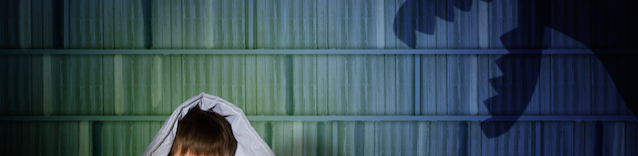
Tag: Fear

  • 4 Powerful Mantras to Help You Deal with Fear and Anxiety

    4 Powerful Mantras to Help You Deal with Fear and Anxiety

    Peaceful Woman

    “Trust that, when you are not holding yourself together so tightly, you will not fall apart. Trust that it is more important to fulfill your authentic desires than listen to your fears. Trust that your intuition is leading you somewhere. Trust that the flow of life contains you, is bigger than you, and will take care of you—if you let it.” ~Vironika Tugaleva

    Anxiety has been a part of my life for as long as I can remember. But a year ago marked my first full-blown panic attack.

    As is common with first-time panic attacks, I had no idea what was happening to me, landing myself in the emergency room several times and visiting numerous doctors before a diagnosis of panic disorder was offered.

    Anxiety can cause you to feel like you are dying. Rapid heartbeat, shaking, confusion, shortness of breath, a feeling of impending doom, and a sense of unreality are just a few of the horrifying symptoms of intense fear.

    Continually worried about when the next attack would present itself, I lived in a state of constant anxiety.

    I started avoiding all the places that could possibly trigger an attack, including grocery stores, social gatherings, and even my place of work. My life went from being filled with adventure to being very, very confined.

    Anxiety was literally trapping me inside myself.

    As my life spiraled out of control, I realized that I was doing anything and everything to avoid the fear. I was afraid of the fear. Instead of riding through the sensations, allowing them to be in my body, I was pushing and squirming against them.

    I knew I had to find a way to ride the attacks through.

    I started adopting mantras, words, or phrases that carry spiritual significance, to repeat to myself during intense moments of anxiety, and I found that my ability to handle the attacks grew. The mantras served as a vessel to carry me through the stormy waters.

    Here are some of the mantras I found most effective in leading me through fear and anxiety.

    1. Feel the fear and do it anyway.

    This phrase, originally coined by author Susan Jeffers, was a beautiful lesson for me in allowing the sensations of fear to live in my body.

    Whenever I would finally convince myself to venture out to the grocery store, I would immediately find my heart quickening, my throat tightening, and my vision getting blurry. As I walked down the aisles, all I wanted to do was bolt to the car and drive home to “safety.”

    But I just kept repeating, feel the fear and do it anyway.

    In other words, let fear be here. You can still do whatever it is you need to do with fear present.

    This mantra can apply not only to panic attacks, but any situation where anxiety may limit us, like starting a new job or moving on from an unhealthy relationship or talking to a stranger. Our initial tendency is to avoid these situations where fear arises. It’s so much easier to not accept the new job because we’re scared.

    But if we can learn to allow the sensations of fear to be what they are, we can do it anyway. We can do anything we desire, because we aren’t giving fear permission to stop us anymore.

    2. Other people feel this too.

    Often, I found myself feeling isolated and alone in my emotions and struggles. Here I was struggling to drive myself down the street without panicking, when the people around me seemed so at ease.

    But after adopting this mantra, I started realizing that whatever it is fear makes us feel—whether it be sadness, jealousy, guilt, hopelessness, anger, distrust, unworthiness—other people feel this too. Even when I am in the midst of a panic attack, certain that I am going crazy or about to die, I tell myself that other people feel this too. I am not alone.

    This mantra also evoked compassion and empathy. Instead of focusing solely on my own struggles, I began shifting my attention to all the people who feel this pain, too. My thoughts then morphed from Why am I suffering? to May all beings be free from this suffering.

    3. Commit to love.

    Fear is a very powerful emotion, especially as it overtakes your body and mind at unrelenting speeds. But love is even more powerful than all the fear of the world combined.

    When an attack threatened to push me over the edge, I reminded myself over and over to commit to love. I can’t love myself fully when I am focused on fear. I can’t love others fully when I am focused on fear.

    Often, I was so preoccupied with my fear that I couldn’t hear what anyone around me was saying.

    Committing to love meant being present when my loved ones spoke instead of silently planning my escape routes from the restaurant. It meant forgiving myself when I couldn’t drive as far that day instead of increasing my fear with worries of having a set back.

    If I can come back to love, over and over, the fear just doesn’t have as much power. Yes, it is scary and yes, it seems so very real, but we’re not meant to live lives filled with fear. If we can commit to love, however often we might need to remind ourselves, fear doesn’t stand a chance.

    4. This too shall pass.

    This a phrase I’m sure we’ve all heard a million times. But it is one of the most powerful mantras I adopted for dealing with panic and anxiety.

    Anxiety has a way of making us feel like it will last forever, especially during the intense moments of an attack. The fearful thoughts swirling around in my head—What if this lasts forever? I can’t handle this if it doesn’t end—only added fuel to the fire.

    By reminding myself that this too shall pass, no matter how awful it may seem, I was able to allow more space for the fear to live.

    This too shall pass, so I can handle it while it is here.

    Even during the worst attacks of my life, when I absolutely thought I was a goner, the whisper of this too shall pass echoed in the background. Every attack ends. Anxiety may linger but it changes. It morphs from one second to the next, which means that we can handle each second as it comes because it will all be different in another.

    Ultimately, a mantra is most powerful when it is a phrase that truly speaks to your heart. Maybe it comes from a book you happened to open, or a close friend’s advice, or a relaxing yoga class.

    Anxiety is not easy to deal with, but we can take some of the power into our own hands by shifting our thoughts from fear to love and light. Many blessings.

    Peaceful woman image via Shutterstock

  • Having Too Much to Do Isn’t the Problem

    Having Too Much to Do Isn’t the Problem

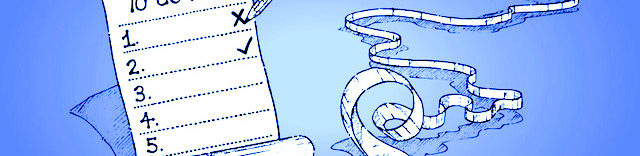
    Lengthy To Do List

    “As soon as you honor the present moment, all unhappiness and struggle dissolve, and life begins to flow with joy and ease. When you act out the present-moment awareness, whatever you do becomes imbued with a sense of quality, care and love—even the most simple action.” ~Eckhart Tolle

    As a young girl I danced a lot. I really loved it and so learned every style of dancing available at my dance school (and took up more and more of my mom’s time driving me back and forth to class and making untold numbers of dance costumes for me).

    Around my fifteenth birthday, all of that practice and enthusiasm came into its own and I was featured in seventeen of the dances being performed in the annual concert.

    There were less than thirty dances in the entire production, so the logistics around making it all happen was pretty intense. (We’re talking side of stage costume changes and Mom planning every move with military precision.)

    There are two things I remember simultaneously from that time: I loved it, and that any fear I had about being able to pull it off was squashed deep in my subconscious. I simply didn’t allow myself to feel the fear.

    This combination meant that the entire experience was a great success.

    It wasn’t, however, a healthy success.

    With the benefit of twenty-five years worth of hindsight, I’m able to look back on that time now and see the overwhelm I suppressed.

    It wasn’t the number of dances that was overwhelming. My body danced as naturally as it walked, and as soon as the music played, it knew what to do. I also knew that if I wasn’t entirely present on stage I would lose the attention of the audience.

    Even at that age, I intuitively knew that the power of the performance was in my ability to be entirely present. In that regard, I could have danced for double or triple the time I did on that day and felt completely invigorated at the end of it.

    That didn’t happen, though, because between each performance I was unconsciously draining my energy.

    You see; I didn’t know how to carry that stage presence into the rest of my life. And so the minute the music stopped, my mind resumed its constant barrage of self-criticism.

    I was afraid of disappointing people, I was afraid of not being perfect, I was afraid of making a mistake.

    If I’d been able to drop all of that inner dialogue, I would have performed those seventeen dances with ease. It wouldn’t have felt too much.

    I wouldn’t have had any overwhelm to suppress. I would have been able to experience the exhilaration fully.

    Instead, my exhilaration was stunted. Kept in check by fear.

    The thing about fear is that it dissipates in the face of presence. There’s simply no space for it when you bring your full self to a task.

    I didn’t feel the fear while dancing because I was present. During some of the quicker costume changes I didn’t feel any fear because I absolutely had to be present in order to get back on that stage immediately, fully dressed without a sequin out of place.

    When I did have the luxury of a full dance or two to prepare for the next performance, I’d get critical; “My hair’s not right,” “Can I really remember what I’m supposed to be doing next?,” “I’m just not happy with the way I approached that last sequence…”

    Each time, before I stepped back onto the stage I knew I had to stop. Become still. Find my presence again. Thankfully I did. But wouldn’t it have been nice if I been able to maintain a steady, mindful presence through the entirety of the two hours and not just when I was on stage?

    Sometimes quantity isn’t the problem. We’re all constantly complaining about too many emails, too many items on our to do list, too many social commitments.

    Sometimes it’s simply about the presence and mental quietude you bring to the myriad tasks that make up your day.

    Perhaps rather than learning how to manage our tasks more efficiently or to say no to every opportunity that comes our way (which are useful things to learn, of course) we’d all benefit from starting first with the mental clutter of our minds.

    With clearing the stories, the judgments, the criticisms we’re repeating over and over like broken records.

    Perhaps rather than suppressing them, we start to acknowledge them. We send love to our fears. We recognize their role in trying to keep us safe and then act from there.

    There’s a vast difference between acting from compassion and understanding, and acting from a reservoir of suppressed fear. You may well still achieve your goals by suppressing your fear, but at what cost?

    After all, our goals are never really all we want, are they? We want to feel good, great, amazing, exhilarated when we achieve them.

    And that, friends, is only made possible through our constant willingness to bring ourselves completely into the present moment. To drop the assessment of what is and what isn’t, and to simply allow all to be, without thought of what’s coming next or memory of what came before.

    Just here. Just now. Being and allowing.

    To-do list image via Shutterstock

  • 6 Fears That Keep You Busy and How to Enjoy More of Your Life

    6 Fears That Keep You Busy and How to Enjoy More of Your Life

    “All the mistakes I ever made in my life were when I wanted to say no, and said yes.” ~Moss Hart

    Do you ever feel like you’re always too busy to truly enjoy life?

    I know the feeling.

    I work multiple jobs to care for my family and have many responsibilities at work and at home. My to-do list never seems to end, leaving precious little time for leisure and rest.

    But here’s the funny thing: whenever I do have some downtime, my anxiety kicks in because I’m thinking about all the things I “should” do to help move my life and career forward.

    Some days, I become so overwhelmed with all the things I “need” to do that I struggle to be present with my family and those I love. I struggle to find contentment in simply doing nothing.

    As I’ve reflected on these struggles, I’ve learned that my need to keep busy has been driven in large part by six subconscious fears. I’ve learned that by facing them, I can begin to let go of my busyness so that I can enjoy my life in the moment.

    If you’re always swamped and struggling to enjoy your life, consider if any of the following fears are the cause of your need to keep busy as well:

    1. The fear of missing out.

    So pervasive is the fear of missing out that it’s referred to simply as FOMO. This fear is based on the overwhelming feeling that something more exciting is happening elsewhere or that there are more attractive options than the one chosen.

    This fear is behind my compulsion to multitask while I work—most notably, switching between multiple tabs on my browser or even viewing multiple computer screens at once.

    It’s the force behind my need to purchase the next breakthrough product or program, or chase down every opportunity that comes my way.

    Worst of all, it’s the fear behind my mindless web surfing or constant email checking when I could be spending time with my family.

    FOMO drives us to be busier (or appear to be busier) than we need to be.

    Fortunately, we don’t have to let our FOMO control us. You can face your FOMO by accepting the fact that it is impossible to pursue every great opportunity.

    By acknowledging and accepting that you cannot have everything, you can focus your limited time and energy on the few things that truly matter. That way, you’ll never miss out.

    2. The fear of being bored.

    Kids are famous for how quickly they become bored, but adults get bored too, especially with the daily grind of life. This boredom is constantly tempting us to take on the new and the novel.

    I took a while to realize that I struggle with the fear of being bored. I become bored fairly quickly. I actually enjoy working in multiple settings because it keeps me from being in one place or doing one set of tasks all day long.

    But working in multiple settings means that I always have something to do and sometimes I get overwhelmed.

    To counteract the effects of the busy life I’ve created for myself, I frequently set aside time for prayer, meditation, and reflection. And as I began to reflect on my fear of boredom, I began to see that:

    Boredom is a privilege.

    It is not something to run from but something to enter into. Boredom means that all my basic needs are met. I’ve never heard the hungry, the poor, or the person in danger say they were bored. I can, so I give thanks when I’m bored.

    You, too, can begin to face your fear of boredom by expressing gratitude for all the comforts you enjoy.

    3. The fear of facing difficult tasks.

    Do you dread working on your taxes, your marriage, or that year-end report? Most of us in a similar situation would instinctively busy ourselves with the trivial and the meaningless to avoid facing the difficult stuff now.

    This busywork is simply a form of procrastination. But it can be hard to spot if we’ve thoroughly convinced ourselves that the busywork is important. In doing so, we manage to not do the things that are truly important.

    Avoiding difficult tasks may work in the short-term but may also have disastrous effects in the long-term. In my own life, I’ve found that this behavior only leads to prolonged and magnified pain.

    Facing this fear means learning to reframe how you think about the unpleasant and difficult tasks we all must deal with from time to time. Instead of seeing them as burdens to avoid, we can view them as opportunities for breakthroughs in our finances, our relationships, and our work.

    4. The fear of looking lazy or unaccomplished.

    It’s no secret that being busy, or looking busy, has become a sign of accomplishment in our culture.

    Sometimes, this fear manifests itself in my own life. I may feel insecure if the person I’m speaking with gets interrupted with a phone call or text – I’ve responded to such interruptions before by surfing the web on my phone (or checking my empty email inbox) to appear just as busy.

    Or I might feel inadequate by comparing my life to a busy professional who travels every week for work.

    I remember once feeling small compared to an acquaintance who frequently traveled for work. Somehow, I felt less important because my work did not take me to interesting locations across the country.

    I began to change my thinking about this when I later learned that this person eventually lost his marriage. The news caused me to re-examine my priorities. Instead of feeling inadequate, I began to be thankful that I could go home to my family every day after work.

    Facing this fear means giving up your insecurities about appearing lazy or unaccomplished so that you can focus on what truly matters.

    5. The fear of being alone.

    Is your busyness driven by the fear of being alone? We often think that to enjoy life, we must constantly be in the company of others.

    We learn from a young age that being alone is undesirable. If you’ve been labeled a loner at some point in your life, people may think you’re a loser, a weirdo, or even dangerous.

    We may fear being alone because we fear being labeled, we’re afraid to be with our own thoughts, or we’re afraid of being lonely.

    Always-having-somewhere-to-be is an effective strategy to deploy when we’re afraid to be alone, but it also robs us of the ability to enjoy our own company. In her book Between Dark and Daylight, Sr. Joan Chittister writes:

    “We love to be told that we are social beings, yes, but we also know deep in the core of us that we are not frantically social beings.”

    Facing the fear of being alone means embracing the moments we get to ourselves in order to rest, recharge, enjoy a good book, or enjoy your own company.

    6. The fear of not being well-liked.

    We all want to be liked, but sometimes this need drives us to say yes to every request that comes our way. We’re afraid that saying no will cause people not to like us.

    This fear has also been a big driver of my busyness. As a recovering people pleaser, I know what it’s like to suddenly find myself caught in a hectic schedule filled with the priorities of other people. It’s utterly exhausting and demoralizing.

    Whenever I’ve said yes to win the approval of others, I almost always emerge from the experience feeling resentful toward the person and myself. Furthermore, instead of winning the admiration of that person, I become an easy target for future requests, and their estimation of me may actually decrease.

    Giving up this fear means accepting the risk of being disliked by deciding to set (and stick to) clear boundaries. Once I learned to say no—with kindness—I began to feel happier for gaining control of my time again. And people rarely reacted as negatively as I imagined for politely declining their requests.

    Stop Keeping Yourself Busy and Enjoy Your Life Instead

    If you’ve always wondered why you can’t seem to stop being busy, one or more of these fears may be driving your busyness.

    You may have fallen for the myth that being busy means having social status and prestige.

    But you also know that all the status and prestige in the world is no good if it prevents you from enjoying your life.

    Yes, these six fears are powerful, but you have what it takes to overcome them.

    You have the power to drop these illusions right now.

    Acknowledge the fears. And release them today so that you can regain control of your time and enjoy your life.

  • Put Down the Heavy Burden of Worrying

    Put Down the Heavy Burden of Worrying

    Woman with Umbrella

    “People become attached to their burdens sometimes more than the burdens are attached to them.” ~George Bernard Shaw

    You could say I had a type. Most girls I’ve dated have had a few things in common. Historically, I’ve been attracted to dark-haired deep thinkers—old souls with just a tinge of sadness in their eyes. Emotional pain is a sign of character.

    There is nothing like looking into a woman’s eyes and exploring decades (if not centuries) of wonder and worry hidden beneath a stoic, classic composure. There is an attractiveness to being slightly worn down by the road.

    But Jane was different. Jane was light.

    Is it better to date someone similar to you, or do opposites attract? Jane and I were an experiment in opposites.

    In conversation I have a tendency to wade through heavy philosophical banter. Where is America heading? If there is free will, why do individuals lean toward conformity? What is the meaning of life?

    But Jane merely laughed and changed the subject. She was absolutely free, and had the singular objective of living each day to the fullest. Without trying, Jane innocently pushed me outside my comfort zone into a place far sunnier than I was accustomed to being.

    My thoughts couldn’t be burdensome with Jane because she didn’t speak my common language of doubt and regret. She shed light on every dark corner my mind would wander.

    The Unbearable Heaviness of Being

    Having been born on the frozen tundra of Minnesota, a place molded by practical values and a sense of solemn responsibility, I had been conditioned to see life as something heavy.

    Maybe it’s the infamous winters, or an unspoken guilt still lingering from the 1860’s Sioux massacres, or maybe it’s the perpetual bad luck of the Minnesota Vikings. Whatever the origins of the struggle, the attitude is clear—too much fun is not to be trusted. We hold our worries close to our chest.

    Jane made me rethink everything. For her, having fun was life’s highest virtue. Problems brushed off her like breeze off a tulip. The ease with which she lived didn’t make sense to my ego.

    “Life is hard,” my ego would say. “There is so much I need to worry about. What if I run out of money? What if I lose my job? What if people think I’m stupid? My burden is heavy. I can’t take life lightly because if I put my guard down everything will fall apart. I need my problems. Having burdens validates my existence.”

    Whenever my ego started pontificating about life’s hardships, I heard Jane’s polite rebuttal.

    “Stop being so dramatic,” she would say. “You invent problems to justify your heaviness. But heaviness itself is the problem. Let go of the weight you are carrying. Life is a story we tell ourselves. So make the story good. Nothing—and I mean nothing—is serious enough to sacrifice the enjoyment of the present moment.”

    Burden is a choice. Sure, problems come and go. But it’s our reaction to these problems that defines us. We can take problems heavily or we can take them lightly. Heaviness won’t make your problems easier; it will make them harder. Lightness sets us free.

    Life is a roller coaster. Once you are strapped in, you’re off. You can either tighten up and be miserable during the process of life, or you can let go and enjoy the ride.

    Stop Making Sense

    “I dance for no reason. For reason, you can’t dance.” ~Saul Williams

    I think too much. In fact, most people I know think too much. Human intelligence, as amazing and useful as it is, has a dark side. When we over-think life, we create narratives that cut ourselves off from the true north of our higher self.

    You are not your thoughts. You are the consciousness from which your thoughts arise.

    The smoke and mirrors of mental analysis make us miss the great connection of consciousness surrounding us. We can’t see the forest because we’re fixated on the bark of a single tree. Maybe this is a universal consequence of the ego. Or maybe I just know a lot of nerds.

    The reality of consciousness goes beyond logic. What does this mean? It means that every person has an energetic vibration. The energy we radiate communicates more deeply than our actions and words.

    Your very presence is a vibrational state that communicates with everyone around you, openly and honestly, as effortlessly as oxygen from a plant. Try as you may, you can’t hide it.

    Is your energy heavy or light? A heavy vibrational state is draining. Light vibrations uplift.

    Heaviness repels synchronicity. Lightness attracts.

    Heaviness is the glorification of self because taking life too seriously makes the ego feel important. But by placing your own concerns on a pedestal, you isolate yourself from others and become separated from the whole of existence.

    “Smart people are not happy,” the ego says. “When you analyze life, there are too many rational reasons to be concerned. The infrastructure of society is crumbling. The wealth gap is at an all time high. How can I simply let it all go and enjoy my life?”

    “Burden is a choice,” the higher self says. “Sure, there are problems. But taking problems too seriously only makes them worse. Is it logical to let go of worry? Not always. But dancing is also not logical. When you dance, you choose to value experience over the logical implications. We dance for no reason. But once we begin, the rhythm clicks. It all makes sense.”

    Of course, not every experience in life should be taken lightly. When facing tragedies such as illness, injury, death, and addiction, a serious approach should be taken. Sometime we need help from others, and it’s important to acknowledge when this is so.

    But in the course of daily life, life tends to come to us more easily when we come to life more easily.

    If It’s Heavy, Put It Down

    When the student is ready, the teacher will come. Our teachers sometimes appear in ways we least expect. Jane was a teacher. She gave me a glimpse of what it means to love life without worry or judgment.

    Our breakup was amicable. Our polar worldviews held the relationship in equilibrium—for a while. But the balancing act of lightness and heaviness eventually become too tedious to manage. It was inevitable.

    Love is bright. When it shines on our scars we feel exposed. The lightness of being can be painful, but it’s the only way to heal our inner darkness.

    Burden is a choice. When we release the attachment to our burden, the weight is lifted. All too briefly, Jane showed me how to rise above the heaviness of life. And I’m still learning how to remain there.

    On our last night together, I rolled over in bed and finally asked her the question I had been thinking for months. “Your life is effortless,” I said. “How do you float the way you do?”

    Jane laughed. “Because I take myself lightly,” she said.

    Woman with umbrella image via Shutterstock

  • 10 Ways We Hide from the World & Why We Need to Be Seen

    10 Ways We Hide from the World & Why We Need to Be Seen

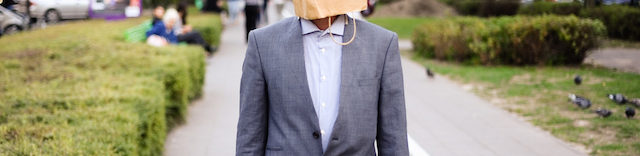
    Man with Bag on Head

    “Don’t hide yourself. Stand up, keep your head high, and show them what you got!” ~Joe Mari Fadrigalan

    Sometime in high school I started to disappear. If I think back to the source of my disappearance, it was probably in sixth grade, the year all of my girlfriends ostracized me from sleepovers, parties, and general friendliness.

    I was resilient, made some new friends, and forgave the old, but I kind of stopped trusting people. And when you don’t trust people, you can’t be yourself around them. So I decided to disappear.

    I remember becoming ghost-like. I remember it being a choice. A conscious choice.

    I decided to slouch in my desk and cover my eyes. I decided to silence my voice when an opinion was provoked. I decided to avoid eye contact. I decided to skip parties, stop making efforts with people who made no efforts with me, and hold my breath until graduation day.

    And this is what I learned: people let you disappear.

    I don’t think I expected to be saved, but no one crawled into my hole, grabbed my hand, and pulled me out.

    If you want to disappear, you will. You’ll meet someone five or six times and they will never seem to remember meeting you. You’ll walk down streets and people will bump right into you. You’ll be looked through and talked over.

    The world does not carve out a space for the voiceless. They do not roll out a red carpet and invite the invisible to parade through.

    This is the great lesson of life: you get what you ask for. If you want to disappear, you got it. If you want to be seen and heard, you can have that too.

    Disappearing is much easier, I have to say. It doesn’t take much energy to shut up and fade away. What’s much more challenging is acknowledging to yourself that you’re worthy of being here and facing the pain that’s required of being seen.

    Here are some of the ways we hide:

    1. We don’t give our opinion because it’s different from what other people are saying.

    2. We avoid eye contact or look away once initial eye contact is made.

    3. We speak very softly and timidly.

    4. We slouch and hunch over in an effort to shrink ourselves down.

    5. We wait for other people to initiate.

    6. In conversation we don’t offer up anything about our lives, our feelings, our interests, our thoughts.

    7. We decline invitations to parties, to dinners, to coffee, to anything new.

    8. We tell ourselves stories about people so we don’t have to like them and, inevitably, let them in.

    9. We don’t tell the truth to others.

    10. We don’t tell the truth to ourselves.

    I was waiting to live. Waiting to feel okay in my skin. Waiting to find people I could trust and open up. Waiting to live the life I wanted for myself.

    This was a dangerous lesson in my life. It taught me that it was okay to hide, that it was okay to shrink myself down to a barely audible whisper. Hiding became a habitual coping mechanism.

    When I moved to LA in my late twenties, I realized that no one knew me. I had some amazing people in my life who lived all over the country, but this was my new home—and no one knew me.

    Around this time I began to heal myself through mentorship and breathwork.

    I learned to value myself, to recognize my inherent worth, and I became more open. I took risks: I maintained eye contact with strangers, I smiled, I gave out information about myself without it being requested of me, I asked people out for coffee, I had presence, I was vibrating at a higher frequency.

    And guess what started to happen? People were seeing me. At cafes people looked me in the eye, and we made small talk, sometimes real talk. Neighbors learned my name. People remembered me.

    We all need to be seen. It’s part of what makes us human. When we don’t allow ourselves to be seen, we diminish our importance in this world. We undervalue ourselves. We hold ourselves back from greatness. We stifle our contributions. And it just plain doesn’t feel good.

    A life of joy is one in which we feel comfortable showing who we really are to the world. It means accepting the fact that we’re going to stumble over our words sometimes, be misunderstood sometimes, and even be disliked sometimes.

    But even in those moments we will still love ourselves first. We will allow the pain of others to be their pain and not our own. We will do our best to continue to give love to those who need it most, even when the remnants of their rejections sting.

    When we shrink ourselves down we diminish our light. We literally become invisible. People look right through us, walk around us, and forget our existence because we have allowed ourselves to disappear.

    There is light that vibrates through each of us. When we love ourselves we are illuminated, and we can’t help but be seen. People flock to light. 

    Hiding in a dark shell of a body is not a life. It’s a holding room. It’s the place where you’re choosing to find safe harbor until the storm passes. But the more you hide, the more difficult it is to come out. Everything feels like a violent storm.

    We avoid our own lives and, in doing so, relinquish our right to living a truly happy one.

    There are some really uncomfortable things we have to encounter in this life. We are all wounded. The only way to get to the other side of any pain is to walk through it.

    Sometimes you have to walk really slowly, and sometimes you have to sit in the pain and feel it deeply.

    Sometimes you have to let yourself be humiliated, heartbroken, and defeated in order to walk through the other side resilient, lighter, and wiser.

    The only way to shed the burden of our pain is to face into it and feel the love buried deep beneath. And we need you to walk through the fire. Because the truth is that we need to see you as much as you need to be seen.

    If you’re hiding right now, please come out. We’re all here, waiting to meet you.

    Man with bag on head image via Shutterstock

  • Most of the Things We Fear Are Highly Unlikely to Happen

    Most of the Things We Fear Are Highly Unlikely to Happen

    Fear

    “Only when we are no longer afraid do we begin to live.” ~Dorothy Thompson

    Australia is full of biting, pecking, threatening animals.

    Swarms of mosquitos puncture our skin every summer, flies are everywhere, we’ve got spiders bigger than my hand, our magpie birds swoop and peck at our heads during spring, and don’t get me started on the sharks and crocodiles and those mighty big bites.

    I am most scared of the snakes. Australia has twenty of the top twenty-five most venomous species of snakes in the world. We have a hundred and forty species of land snakes and thirty-two species of sea snakes. That’s a lot.

    I grew up in the Australian bush. My family had a small property that was covered in trees and long grass.

    Throughout my youth my parents and others constantly reminded me that I had to be watchful and careful of animals that bit, pecked, or did other horrible things, particularly snakes.

    If we were walking anywhere outdoors, it was important to make noises to scare snakes away. I sang, whistled, and stamped a lot and saw almost every stick as a potential snake. The longer the grass, the more noise I made and the more I watched for any movement.

    It didn’t help that when I was very young my parents had a bonfire. It was dusk and I trotted over to the fire, all happy and youthful, and a black snake reared up in front of me.

    I’ve never forgotten the shiny eyes, the glisten on its scales. It was absolutely terrifying. We stared at each other for a moment and then I employed a bit of first class noise creation by screaming at the top of my lungs, and it slithered away.

    Dad also used to tell stories of growing up in country Australia in a big old house with snakes everywhere.

    One his favorite stories was of the time he walked into their outdoor toilet and got a big shock when he saw a two meter long brown snake curled up on the floor enjoying the afternoon sun.

    The toilet was a bench of wood with a hole, and because there were so many snakes, Dad was in the habit of crouching over the hole rather than sitting on it for fear of snakes biting his bottom.

    It didn’t end there. There was also a small island on the lake in front of where he lived called Snake Island, and it was apparently infested with them.

    I’ve seen Snake Island and it’s covered in long grass and bushes, the perfect holiday destination for slithering scary things. Oh yes, and the big brown snakes could swim, yes, swim. That’s how they could go on their holidays to the island.

    Can you imagine how much I loved hearing these stories, as every kid loves a scary story, but also how much these and other snake stories impacted a child with a very big imagination?

    It didn’t help that snakes were spotted on the property every now and again. As I grew up and throughout my adult years I never stopped watching for snakes in the bush. That’s a long time to be scared of the outdoors.

    The Camping Trip & the Confrontation with the Slithering Things

    Two months ago I went on a camping trip with my family. We were camping at a remote dam surrounded by beautiful arid bush, lots of gum trees, crickets buzzing, rough ground, and dare I say it, lots and lots of sticks. A gazillion sticks, actually.

    After the sun set over the lake and we’d eaten apricot chicken in front of a campfire flickering away in a rusty old bin, I took my torch and proceeded to walk the five minutes in the darkness to the toilet block to brush my teeth.

    My snake routine started again: torch flashing over ground, eyes seeing long thin objects, stamping my feet as I walked, some humming. It didn’t help that my torch was dimming and nearly out of batteries.

    There were shadows and movement everywhere and so many sticks. These sticks could bite me at anytime and inject me with deadly poison, and our campsite was far from medical help.

    And then it happened. I hadn’t camped in a while or been out in the bush in a while. I had been through a period of my life where I had suffered terribly from an illness and had faced many fears and had overcome many of them. I was in the habit of facing things head on.

    I thought, “What’s the chance of being bitten out here? Had my father who had basically lived in snake kingdom in his youth ever been bitten? Had anyone I know, any friends of friends, anyone, ever been bitten?”

    I watched myself looking over the dim ground. I watched my brain wanting to invent snakes, seeing movement when the only movement was the shadows cast by the torch and the wind in the gum leaves. I was dumbfounded. What had I been doing all these years?

    As soon as I got back to my tent, I got onto Google and looked up exactly how many people had been bitten by snakes in Australia. It turns out that out of Australia’s population of twenty-three million people only one or two people die from snakebites per year.

    Most bites are because people try to pick up the snake or kill it. If I wanted to get bitten I would have to chase the snake down and pick it up and hug it. I also found out that sharks only kill one or two people in Australia per year as well, and the average is only a little higher for crocodiles.

    I lay back on my sleeping bag and comprehended what Google was saying. That all my life from a young age I’d been programmed to be fearful of something that was extremely unlikely to happen. 

    It dawned on me that my sense of alarm and my fastidious watchfulness was misplaced. It had taken years and years of reinforced programming to get me to a place that I couldn’t walk in the bush without being fearful.

    What a silly state to be in. I remembered that a couple of years ago I’d hiked through New Zealand and one of the truly delightful days was walking through grass as high as my waist without fear. There are no snakes in New Zealand. I’ve never forgotten the ecstasy of it.

    Reminding Ourselves About the Nature of Fear

    My realization about snakes also highlighted to me how heavily programmed fear can make us completely lose our perspective. We don’t even question whether what we fear has any basis at all. We don’t test it. We don’t think about it other than to react.

    Albert Einstein said that we must not stop questioning, and this applies when we feel fear. We should question it, investigate the nature of it, and test our preprogramed and sometimes deeply subconscious hypothesis about the ways we should live our lives.

    Sometimes the result of our investigation will be that our fears are founded. For example, we probably should be fearful of walking across a canyon on a tightrope. But what if there’s no rational explanation?

    What if there’s a brilliant world out there that we are not experiencing to the fullest in this very short time on earth?

    We have some tough genetic programming to overcome. Our brains are used to looking for threats in the environment. In the past it was a tiger, now it’s whatever we deem threatening.

    I was recently doing some research on fish and found a study examining whether fish experience pain. It turns out that even fish avoid objects that have previously caused them pain.

    Our natural animal instinct is to avoid what has hurt us before or, similarly, what we perceive could hurt us in the future. Our alarm mechanisms are inbuilt.

    We also live in a complex world full of stimulation, and it’s hard for our brains to keep up with what is a true threat such as a car heading straight for us and what’s not. There’s just so much for our minds to deal with.

    The good news is that we are equipped with tools such as logic, information, and awareness to help us overcome our fears.

    I’m finding the more I confront my fears and do the opposite of what they are warning against, the more my consciousness understands that these things are a programmed mirage.

    I know we’ve all heard this wisdom, we all inherently know that most fears have no basis in reality, but my little snake adventure reminded me that I don’t often apply this knowledge to my everyday life. So this time I decided that it was about time that I did.

    So how does a woman who has treaded heavily all her life for fear of sticks learn to live again? I’ll tell you how I learned. Later that night I had to go to the bathroom and I ventured outside my tent, turned off the torch, and walked—not stomped, walked.

    I drank in the vision of the moonlight touching the gum trees, the lake, the rough dry land and it was glorious. That’s how.

    Face everything and rise image via Shutterstock

  • 3 Courageous Choices That Make Us Better, Happier People

    3 Courageous Choices That Make Us Better, Happier People

    Girl with Arms Raised

    “Courage doesn’t always roar. Sometimes courage is the quiet voice at the end of the day saying, ‘I will try again tomorrow.’” ~Mary Anne Radmacher

    My daughter is the most courageous person I know. She’s two years old and fierce.

    So often we think courage looks like a warrior, soldier, or athlete.

    But I think we have it all wrong. Courage has a soft side that we have ignored for centuries.

    Take my daughter for instance. The other day she was running full speed ahead at the playground. She was so focused on getting to her favorite slide that she didn’t see the stick on the ground in front of her. In one second, she slipped, fell, and started bawling.

    I ran to her, picked her up, and kissed her knee. One minute later, she was wiggling out of my arms, feet on the ground, and running faster than before.

    Now that’s crazy courage. She had no reason to believe she wouldn’t fall again. However, she didn’t appear afraid at all. Even though previous experience told her she could fall again. She didn’t listen. She’s led by her enthusiasm and not her fear.

    Some people would say this is naive. But I think this is something adults need more of: courage.

    Courage is the ability to move forward boldly and authentically, guided by your intuition, despite fear, pain, or uncertainty. The word courage actually comes from the Latin word “cor,” which means heart.

    Inner courageousness allows us to follow our hearts, listen to our intuition, and lead soulfully satisfying lives while having all of our needs, desires, and goals met.

    Here are three ways you can have crazy courage like a toddler.

    Hit the ground.

    Go hard. Go fast. And if you fall, get up, dust off, and go again. But this time, go harder and go faster. Don’t worry about failure. Convince yourself that you can succeed. And no matter what sticks fall by your feet, persevere and keep going.

    I’ve hit rock bottom before. And you know what? It’s not a bad place to be. You get to let go of everything and start again. Do you know how exciting it is to start all over again? Make better choices. Go in a different direction. The joy of releasing any burden, any guilt, all of the “should’s” and “suppose to’s” and doing it all from scratch.

    So many people think they can’t start from the beginning and rebuild their life. So they stay in unfulfilling jobs, relationships, and negative situations. But honestly, the beginning of happiness is better than the middle of mediocrity or misery.

    Tell the truth.

    Be honest about your feelings. Don’t call fear apathy. Don’t call worry tiredness. If you’re afraid, it’s okay to say you are. The more you express your true feelings, the more connected you’ll be to your authentic self.

    Emotions are energy in motion. They are meant to come up and be released. We were not meant to hold on to them. Unexpressed emotions create baggage that slows us down. The more you deny your emotions, the further down you push your authenticity. Let your emotions rise up and let them go.

    Allow your enthusiasm to lead you.

    Have you ever felt so much joy bubbling up inside you that you wanted to run away? I don’t think we allow the full capacity of joy to overwhelm our lives. When was the last time you laughed from your gut? When was the last time you let joy shake you, rock you, and fill you up? Lean in to your enthusiasm.

    The more you seek to control this uneasiness, the less pure joy you will experience. Have the courage to let joy unnerve you and rock your boat. It’s a lot more fun to open up and let go. Trust me. Trust yourself. Fully commit to feeling good.

    This means taking that class you’ve been meaning to take. Going to places you think are beautiful. Spending time with people who encourage you. Learning that skill you’ve been craving to learn.

    Ditch the bucket list and start a living list of all the things you want to do while you’re alive. Start working on your list now!

    Schedule “joy” into your calendar. I know you’re busy, but it’s worth it.

    I recently started learning to play the piano. Making music exhilarates me. Will I become a concert pianist? Probably not. But even with two toddlers, I make time for it because I enjoy it.

    If you start with these three things, you’ll notice your courage muscles begin to build. It may hurt in the beginning. But if you keep going, you’ll get stronger. And not the fake strength that relies on bravado or hiding our emotions. But real inner strength that grounds you in inner knowingness, confidence, and certainty.

    Cultivating real courage makes us better people. And better people create better worlds.

    Girl with arms raised image via Shutterstock

  • We Are All the Same, So There’s No Reason to Hide

    We Are All the Same, So There’s No Reason to Hide

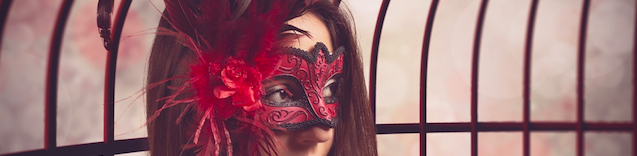
    Woman in a Mask

    “One of the most calming and powerful actions you can do to intervene in a stormy world is to stand up and show your soul. Struggling souls catch light from other souls who are fully lit and willing to show it.” ~Dr. Clarissa Pinkola Estés

    It’s taken a long time for me to be comfortable with being completely myself.

    Most people who meet me now see a strong and confident woman. Yet, underneath that confidence there is still a little girl in me that is scared. I’ve accepted that she is always going to be a part of me; however, I have learned to take responsibility for her care instead of giving that to other people.

    When I meet new people, I suspect either they are relieved to talk to someone who is transparent and real, or they are uncomfortable with my directness.

    I imagine it’s not always a matter of instant like or dislike on their end, but sometimes it feels that way to me. Either way, I’ve had to learn to not let others’ reactions influence how I show up in the world.

    I spent a good part of my life as a chameleon, changing myself to try to fit in and be accepted.

    Being the youngest of four in my family meant I was left out, teased, picked on, and blamed by my older siblings. As a result, I turned out to be a geeky kid in junior high and high school, lacking any confidence or sense of self-worth.

    I walked with a funny lurch, had a bit of a speech impediment, and tried so hard to be liked that I achieved the opposite. In high school the kids all called me a dog and barked when I walked down the hall. I was the brunt of the jokes for every classroom clown.

    The late 1970’s in the heart of Southeast Texas was not a good time or place for a pre-teen to question her sexual orientation. My science teacher, who had become a friend, no longer wanted me in her class when she suspected I had a crush on her.

    The vice-principal of the school said I was sicker than I thought I was and needed professional help.

    My chemistry teacher told the group of popular girls if they didn’t stop talking he was going to make Shannon sit with them.

    We all know kids are cruel, but in Bryan-College Station, meanness wasn’t limited to by age.

    I’d make out with boys in the hallways or back of the school bus trying to prove I wasn’t gay. I started seeing a psychologist. I put up with the cruelty of my teachers and students because there was nowhere to escape.

    If people look closely they can still see glimpses of the young girl who kept her head down and slumped her shoulders trying not to be seen. She is still with me today. Defeated without any outs, however, she had only one choice if she wanted to live. And that was to stand up for herself.

    Because it’s difficult for me to do this, I can sometimes come across kind of loud, directive, or bossy. Early on I learned to put on a good show and convinced myself that self-confidence is the key to success. Years of trying so hard not to care whether people liked me eventually integrated into a strong persona.

    Underneath it, however, still lived that little girl in me desperate for love and approval. For most my life she’s been in control. Like a puppet master, she’s pulled the strings behind my mask, seeking out someone or something to be her salvation. She was great at staying well hidden but in control.

    All she ever wanted was an end to her suffering. All her searching and orchestrating was always been about finding a way to stop the pain. She didn’t know the strings she pulled were putting me right back into the frying pan. How could she know that by latching onto other people she’d end up more hurt?

    It took a lot of personal development, self-help, spiritual woo woo reading, seminars, retreats, workshops, relationships, therapists, self-analysis, journaling, crying, screaming, pleading, praying, rationalizing, and running for me to finally understand: Latching onto anything will only bring more suffering.

    When we keep parts of ourselves locked away and behind a mask, we only give them more power and control.

    Finding my authentic voice has meant holding myself with compassion and learning to accept all of who I am.

    Letting go of my need to be perfect and my self-judgment isn’t something I’ve been able to do once and be done with. It’s something I have to do over and over again.

    I can let down my mask and be real because I believe at our core we are all the same.

    I believe we all want love and approval. I also believe that it is only by giving that to ourselves that we can give it to each other.

    Woman hiding behind mask image via Shutterstock

  • How to Handle Life: Get Out of Your Critical Head

    How to Handle Life: Get Out of Your Critical Head

    Stressed

    “Just trust yourself, then you will know how to live.” ~Johann Wolfgang von Goethe

    There was a time when I lived almost completely inside myself. I couldn’t handle much of the outside world.

    Yes, I am an introvert, but back then, I had such low self-esteem that the only place I felt safe was inside my own head. I had a low tolerance for problems and mistakes. I was life intolerant.

    Yet, my inner world wasn’t exactly a peaceful sanctuary; it was a cold, discomforting, and harsh place to be. Mainly because I was fat. Or so I thought. I was obsessed with how I looked. My study time was directed at my legs. I appraised my ankles, I graded my thigh gap. And for those failings, I beat myself up.

    What terrible thing could have befallen me for me to have retracted into my shell like that? The answer: nothing major. In fact, my childhood was good and my parents were great.

    But there was something, or a series of somethings in my childhood that led me to live inside my critical head.

    One was that I wasn’t allowed to do much. If anything, I was kind of spoiled. That didn’t really help me because I unconsciously stamped this message on my psyche: “Unable to perform tasks.”

    Second of all, I wasn’t allowed to rectify my mistakes. Just small things—a plate I broke was cleared up before I had a chance to, a garden rake was taken out of my hands because I didn’t know how to weed properly. The underlying takeaway for me was: “Just can’t handle stuff.”

    With those mottos, I plodded through life, slightly shy and fearful.

    But I’m not like that today. In fact, I’m the opposite. My self-talk now is mostly positive, and I encourage myself. I’m kind to myself, and I look out for me.

    How did this come about?

    A not-so-great relationship. I met someone, and unsurprisingly, depended on them for my self-esteem.

    If they thought I was good enough, then I was good enough. But how tumultuous it is to live on the rough seas of someone else’s appraisal! Somehow, amidst those choppy waters, I saw a lighthouse; and it was therapy. I took myself there, and I found a safe harbor.

    I also went to meditation classes.

    Those two things slowly worked away at me, chipping away at those walls I’d put up around myself. I became mindful through meditation, and through therapy I came to realize I needed to become my own best friend.

    So I did. I changed my self-talk. It was a challenge, but I pushed through.

    From there on out, my allergy to living life went away. The relationship ended, but I was equipped with new tools for living. I go out and socialize, I embrace challenges, I live my life with my eyes open—and I can handle it.

    These are the tools I learned along my way.

    Accept.

    Accept what is happening, be it a critical remark or a mistake. When you accept whatever is in front of you, you are allowing yourself to feel discomfort and trusting that you can handle it.

    It can feel quite vulnerable to be so open with no defenses and say, “Yes, this is really happening.” But once you start accepting, it gets easier, because you learn that you can cope with it.

    It’s not pushing away, or denying, which can feel stressful. It’s a calm response to life. Start with accepting small, inconsequential things like spilling food or sending an email with a typo. This will put you in good place to start accepting the bigger toughies down the road.

    Talk kindly to yourself.

    When the going gets tough, you need some back up, and the best are self-soothing sentences.

    “Everything is okay.” “I am capable.” “I trust that I can handle this.”

    They don’t just pop up; you need to work on them daily so that they are there for you when you need them.

    This is where mindfulness and meditation come in, because these practices are like sending your concentration muscle to the gym.

    Once you become mindful in your day, you become aware of how you are talking to yourself. Making it a daily commitment to change negativity into an upbeat outlook is training yourself for the day when something big goes down. When it does, those self-beliefs will come to your aid.

    Allow yourself to be imperfect.

    Sometimes you will need to engage with critical people who make judgments on who you are or a public faux pas, and they will demand that you respond.

    You have choices in how you do so. It takes time to accurately measure which response is best, so try a few.

    You don’t have to be defensive all the time. In fact, you can send your ego on holiday and even agree with some criticism. It can be a huge boost to your self-esteem when you finally allow yourself to not be absolutely perfect, and laugh at yourself instead.

    You can choose to own up to a mistake and try again. No big deal, just “Let me start again,” or “That wasn’t right, I’ll come back with it fixed.” No catastrophizing, but solutions instead.

    Once you start trusting yourself to find solutions, mega worries become tame, because you have learned that you are someone who can find a way forward.

    Finally, you can choose to explain openly what happened, or not. A bit of self-defense is not a bad thing, because you are worth looking out for, after all.

    From today onward, believe in yourself and practice self-acceptance. May your life be a wonderful journey that you take part in, every step of the way.

    Stressed woman image via Shutterstock

  • Change Your Patterns and Stop Sabotaging Relationships

    Change Your Patterns and Stop Sabotaging Relationships

    “Jealousy is nothing more than a fear of abandonment.” ~Unknown

    My biggest relationship fear used to be getting dumped for another woman.

    If it actually happened, it was going to be the ultimate proof of my worthlessness.

    It wasn’t easy to live with that fear. When it came to conjuring up scenarios of loss and pain, I was like a rag doll in the hands of my imagination.

    Even if my partner did not leave me or intend to cheat on me, the fear of being abandoned turned me into a person the man I was with no longer recognized.

    It was almost as if the woman he’d met and was attracted to, who’d responded to him with passion, interest, and adoration, had turned into the nightmare girlfriend that he had read about in men’s community forums.

    My fear, hiding in the closet like an imaginary monster, made me extremely jealous, paranoid, manipulative, and controlling.

    It was limiting my experience of life and preventing me from truly opening my heart to my partner.

    I didn’t like who I had become, and the less I liked myself the more I would depend on my partner to feel good about myself. He would energetically feel this pressure and withdraw, which then would trigger my fear of abandonment even more. It was a vicious cycle that I could not end.

    I was aware of these side effects but I didn’t have the courage to face it. I had underestimated the magnetic energy of my fear.

    I was a walking self-fulfilling prophecy. Maybe it was just dumb luck that I attracted men who would help me work through my biggest fear. Or we can call it perfect divine timing and order. I personally choose the latter.

    The men I attracted were intelligent, creative, talented, fun, and sexy. I wasn’t the only one who saw those qualities. Other women were drawn to them like bees to honey.

    It would not have been a problem if these men had confidence and didn’t feed off the energy coming from these women. I was tortured with suspicion. I cried, screamed, yelled, threatened, and did whatever I could, but I was unable to change the men.

    These relationships turned into a huge source of stress—for me and for them.

    I knew I couldn’t live like that anymore. I wanted to stare the fear in the eye and feel its cold breath on my face so that it would not have control over me anymore.

    Once I recognized what I was doing, I began identifying outdated perspectives and beliefs that didn’t contribute to healthy relationships. Reviewing this short list may lead you to your own a-ha moments.

    1. Be willing to be honest with yourself.

    I could have avoided so much stress if I was willing to face my fear of abandonment. Instead, I shoved it into the back of my subconscious and pretended it was all my partner’s fault.

    Eventually, it got too big to keep it under wraps. What we don’t know—or don’t want to know—can actually hurt us.

    2. Recognize your love script.

    We all have a love script ingrained in us that we unconsciously follow. If this script keeps bringing us pain and disappointment, we may have to pay more attention to what we’re doing and why.

    Do you always go for women who have a lingering interest in another person?

    Do you pick the guy who has a fun personality but still lives with his parents and can’t take care of himself financially?

    Now look for other constants and pull from your family history to make connections. Your love script will reveal itself. Once you see it, it will all make sense.

    3. Know that your expectations, not other people, cause disappointment.

    Some of our expectations are not realistic, and in some cases, it isn’t our partner’s job to meet them.

    Not knowing our expectations is a deadly trap that creates tension and resentment.

    I felt shame when I tried to say, “But you didn’t call me after work before you went off to have drinks with your co-workers.” So instead, I would do the same to him in order to give him a taste of his own medicine.

    He had no idea that I expected that from him. He would have, if I had known it myself and communicated it. But I didn’t. Instead, I reacted. Deep inside I knew that it was an act of control and it was childish. My hidden expectations slowly pulled us apart.

    4. Realize you’re not the center of your partner’s world.

    It sucks to find out that the world doesn’t revolve around you, doesn’t it? I used to think, “You mean, you don’t think of me all the time, fantasize about me, hang onto my every word, and see eye to eye with me on all areas of life? Wow, I thought you loved me.”

    The truth is, they are their own person and they are having their own life experience. No matter how much they love us, we are still playing a role in their life, and aren’t their whole life.

    For how long and how well we play that role is up to how each person does the relationship and lets the other person be themselves without trying to control or change them.

    If we are unable to look at ourselves and be honest about our pain and how that fuels our behavior, we will keep repeating the same patterns.

    I don’t know about you, but that got old for me, and I had to own my own fear of abandonment in order to untangle myself from this pattern. I am glad that I did.

    Now, if I feel insecure in a relationship, I just think, “Oh, it’s that old fear again” and stay present. Now I feel like an adult most of the time instead of like a child who fears abandonment. It has made a whole world of difference for me, and it could for you as well.

    Unhappy couple image via Shutterstock

  • How Fear Melts Away When We Stop Resisting the Present

    How Fear Melts Away When We Stop Resisting the Present

    Fearful Man

    “Whatever the present moment contains, embrace it as if you had chosen it yourself.” ~Eckhart Tolle

    The second hand on the clock ticked to 12 like a base runner returning home. It was 9:00AM on Monday morning.

    Anxiety set in as I stared at the stack of papers on my desk. Budgets needed to be balanced, new clients needed to be obtained, and advertising campaigns needed to be launched for high-profile brands.

    Everybody needed something. It was my first day as an Advertising Executive and I already knew I was in trouble.

    In a few hours I was scheduled to meet with my first client, a Fortune 500 retail brand.

    I was not new to the advertising world, but I was stepping into a major promotion, and this was the first global account I would be directing alone.

    I was terrified. I arrived early for the meeting and waited nervously in the conference room. It was clear during the meeting that this corporation had high expectations and a low tolerance for mistakes.

    I played it cool, but the heat was on. Inside I felt resistance. “I used to be an artist. Now I’m a business executive?” I thought. “How did I get myself into this?”

    I wanted to run away, but I had nowhere to go. The only way to release my fear, I finally realized, was to change my focus. “Stick with it,” I kept telling myself, even when frustration weighed on me like a ton of bricks. “Stick with it.”

    Human beings have evolved a physiological reaction to avoid danger by any means necessary. This impulse compels us to destroy any threat we face; and if the threat is too big to destroy, we opt for plan B. We run.

    This is known as the fight or flight response, a survival mechanism built into our DNA to ensure we don’t get eaten by tigers or beheaded by cranky neighbors.

    In prehistoric times, this response was valuable for our survival. Fast forward to the 21st Century. Today, in many ways, our cultural dynamics have evolved beyond our biological instincts.

    For example, we no longer face the same daily threats we did in paleo, or even feudal, times. But our egos still react to external conflict, however insignificant, with a fight or flight response, causing us to perceive threats that do not exist. We run away, in many cases, from shadows.

    When facing a legitimate threat, the fight or flight instinct is very helpful. But when no legitimate threat is present, the fight or flight response can create fear and anxiety in situations that don’t require either.

    People (myself included) will often sit down on their couch at home and, in spite of the fact that they are perfectly safe, experience feelings of intense worry and anxiety. This anxiety has the tendency to manifest as either fight or flight. It’s in our biological code.

    If we choose fight, we become abusive to ourselves and those around us. If we choose flight, we become absent and disconnected.

    Why do we tend to feel worry and anxiety, even when we are safe? Because we are allowing our emotions to react to a false narrative. The struggle for survival experienced by our ancestors is embedded into our collective unconscious.

    In modern civilization, this narrative expresses itself as resistance to, among other things, the peace of the present moment. Our worry causes us to over-complicate life.

    “Only fools are happy,” our ego says. “I know something is bound to go wrong. And when it does, I’ll be ready.” We resist the present moment. And whenever we resist, we struggle.

    What you resist, persists. But embracing your struggle is the end of fear.

    Running from your environment is like running from a mirror because you don’t like the unhappy face in the reflection. You can run to a different mirror (and another, and another) but you will continue to see the same unhappy reflection until you stop running and start smiling.

    Your environment will not change until you change first.

    It’s normal to feel stuck, but the more you resist the present moment and try to escape, the more stuck you will feel.

    Instead of running, use each moment, especially the bad ones, to practice being fully present. Living in the moment is a habit. The more you practice, the easier it becomes.

    As you continue to live in the present moment, peace and happiness become effortless. Acceptance of the present moment is the end of fear and anxiety.

    It seemed like an eternity, but only an hour had passed. I looked at the clock. 10:00AM. It was still Monday, my first on the job, and I already wanted out.

    I felt threatened and my fight or flight response kicked in. I wanted to run. But I didn’t. Instead, I took a deep breath, walked to the kitchen for a cup of coffee, walked back to my desk, and took another deep breath. Inhale… exhale… inhale… exhale.

    I dove in and embraced my job with abandon, releasing my ego and accepting the present moment. When things went smoothly, I trusted the flow. When things fell apart, I trusted the flow. When I made mistakes (and I made several), I trusted the flow to find a solution.

    I gave my best effort, and released attachment to results.

    Everything changed. Not only did I stop feeling insecure about my job, but I was soon promoted to a leadership role within the company. Were things perfect? No. But changing my perception caused a ripple effect that changed my thoughts and actions, and my environment changed as a result.

    The culture of my agency didn’t change overnight, but as I chipped away at the resistance within myself, the challenges I faced in my environment disappeared in equal proportion.

    We all face fear. This fear triggers our fight or flight response and causes us to struggle and resist the present moment. What if you tried, instead of running from fear, sticking with it?

    Letting go of resistance, especially when you want to resist the most, puts you in a state of flow, and from a state of flow we tune into a wider perspective and access higher levels of creativity, happiness, and peace.

    The moments in your life flow like a stream. By accepting the flow of the moment as it is, this stream will inevitably guide you to the rivers and oceans of your purpose. And one day you will look back with gratitude on the challenges that elevated your environment to align with your intentions.

    Fearful man image via Shutterstock

  • Making a Big Decision When You’re Not Sure Which Choice Is Right

    Making a Big Decision When You’re Not Sure Which Choice Is Right

    “When we can no longer change a situation, we are challenged to change ourselves.” ~Viktor Frankl

    Over the last two and a half years, I have made some big changes in my life. And by big, I mean enormous.

    First, I moved with my husband and our children from a home I loved for ten years. Shortly after, my husband and I ended a twenty-year relationship and marriage. With that separation, I made the decision to buy the house we had moved to, which on paper, I shouldn’t have been able to buy.

    Apparently ending a long commitment and beginning a large financial one on my own wasn’t enough for me, though. The following year I resigned from a secure job to pursue a dream I hadn’t fully envisioned and started a business without projected goals.

    When I list out all the changes, I start to question my own sanity.

    I have never been one to make quick decisions, especially ones that I hadn’t thought through. I was raised by my father, a self-proclaimed workaholic, who spent his career as a high-powered executive for a high-risk industrial insurance company.

    I was not bred to believe in taking chances, to live on instinct alone, and to leave anything that resembled security. You just don’t do that. But something was stirring in me that kept me unsettled.

    I knew it was time to make changes, and I knew those changes were absolutely not guaranteed to work in my favor. I was scared—no, terrified—to alter the course of my life, but standing still gave me even more anxiety.

    How do you make the decision to change your entire life and know it’s truly right for you?

    I have a secret, one that I’ve used consistently in recent years when making decisions that weighed heavily on me.

    It’s a technique that simplifies the agonizing back and forths of “should I or shouldn’t I?” One I wished I learned when I was younger to ward off some major bouts of indecisiveness and internal torment. Although in retrospect, I would not have been ready to use it until I was actually ready to hear it.

    When I was agonizing over the idea of ending my marriage, I reached out to a friend who had recently undergone some of his own major life changes. I didn’t tell him what I was debating, but I told him it was big.

    He gave me the most valuable advice I had ever received. “To make the decision, take the fear out, and then you’ll know.”

    What? How on Earth do you take the fear out? I had lived in fear for the majority of my existence. How do you keep yourself safe if you don’t live in the fear? In fact, fear is safe. It kept me securely in the life I felt like I was suffocating in. I knew exactly what to expect.

    Why step outside for fresh air if there is no guarantee that that air is not poisonous? Who does that? Maybe I do. Or at least maybe I could ask.

    So I asked the question to myself out loud, and then I took the fear out. Completely out. No worries in the world, fairy tale ending out. I had to conceptualize what the fears looked like and what they actually were.

    My biggest fear was that I couldn’t manage life on my own, including running a household financially and physically. What if I tried and I failed? What would I do?

    To discard the fear, I had to “what if” the opposite. “What if I tried and succeeded? How would I feel if I managed on my own and figured out each step of the way?”

    I also worried about the lack of emotional support and wondered if I would come home from work each day crumbling and crying and not be able to parent my children effectively. I had always had a partner, someone to rely on and to pick me back up when I fell.

    I knew the feeling of being alone, and I knew how awful it felt to think that I couldn’t handle it. I felt like a failure even before I tried.

    Then I asked myself, “What if I used my resources for emotional support? What if I relied on my friends and family—and what if I relied on myself?” The reversal of the what-ifs felt powerful and motivating. And I knew it was possible they could be true.

    When we tell ourselves lies, it feels awful; when we speak the truth, it is light and freeing. Each truth I spoke felt closer to answering my own question.

    Not only did I have to identify each fearful “what if,” but I also had to remove them. This can be done by listing them on paper and crossing them out or simply calling them by name and removing them from the equation like they don’t exist.

    I saw them each, one by one, stand up to me. There were so many. And then, one by one, I asked them to leave the room. And there came my answer: it was time to let go.

    It was not an answer I particularly liked, nor was it easy. In fact, it was one of the hardest answers I’ve ever had to accept. But it was honest, and it was accurate. Our heart always knows the answer when we gain the courage to even ask.

    Since that day, I have been faced with a multitude of opportunities to use and teach this technique. It has never steered me wrong. And throughout making the changes, I had to walk through those fears with each step. They appear over and over again and need to be confronted on a regular basis.

    It is not an easy task, but it’s no more challenging than living with them. Living in fear is not far from not living at all. It is intermittently debilitating and paralyzing, yet always extraordinarily painful, even when it’s safe.

    Whenever I hit the wall of self-doubt after following through with the decisions I’ve made, I look back at who I was a few years ago and ask what she would think of me.

    The answer is consistent. I am the woman I would have envied from afar. A woman strong enough to live a life she didn’t know she wanted at first glance, but one that allowed her to be her authentic self. I chose to take the fear out and, in turn, chose to live as myself.

    Making a big decision? Go ahead, take the fear out, and then you will know exactly what it is your heart wants you to know.

  • When You’re Hiding Your Pain: Why It’s Worth Letting People In

    When You’re Hiding Your Pain: Why It’s Worth Letting People In

    Hopeless Man

    “All men are caught in an inescapable network of mutuality, tied in a single garment of destiny. Whatever affects one directly affects all indirectly. I can never be what I ought to be until you are what you ought to be, and you can never be what you ought to be until I am what I ought to be.” ~Martin Luther King, Jr.

    We are all interconnected, and we all need each other. Our ability to see and be seen by each other creates a beautiful depth of connection that we are privileged to experience.

    This has been a great lesson for me. I realized many years back that I had been hiding my struggles from those who wanted to help me.

    One of my close friends died when I was twenty-three. I’d thrown an art event the night before and had just come home from brunch with some friends.

    I was tired and processing something hurtful that had happened to me at the event. And then my phone made this little beep, and I found out that while I was mingling at a party my beloved friend was dying.

    Her sister, in her grief, sent me a text, “Lauren passed away last night. For service information email me…” I fell to the floor and simply stared at the words. I was numb and disoriented. Those words, there weren’t enough of them. It was too simple, too short, too fast.

    As I stared at the phone in shock, it began to ring. My friend and business partner called to talk about the event.

    I answered and told her my friend just died. And here comes the part that I’ve been ashamed of: instead of revealing my pain, I told her I was okay and began to talk about the drama from the previous night.

    In an instant, unconscious choice, I decided that it was easier for me to push aside my grief than to be vulnerable.

    That moment makes me cringe for a couple of reasons.

    First, I’ve held on to the guilt that I wasn’t honoring my friend in having a casual conversation after learning of her passing. Yes, I was in shock, but there was something deeper happening.

    I’ve realized that I wasn’t allowing myself to be authentic in my grief because I was afraid to be seen.

    To be seen by our community is to recognize that we are worthy of being here, of taking up space, of needing support. I was unwilling to allow others to see me in my time of grief because on some level I didn’t believe I was worthy of it.

    In some way it felt too risky. To open up would mean that the friendship was being tested, and what if the other person couldn’t be there for me? I wasn’t willing to find out.

    And now I can see that there were so many more times throughout my life where I didn’t allow people to be there for me. I’d force my friends to take money when they wanted to pay for our meal. If I was sick I’d order take out instead of letting my friend pick up some soup and bring it over.

    The only people I felt comfortable allowing to be there for me were my family members, the people who have known me forever and who accept me as I am.

    When I lost Lauren I took the train to my parents’ house and fell into my mother’s arms sobbing. I knew how my mom would react to me; I knew she would embrace me and show me the love I needed.

    It’s risky to open up to people when we’re not sure the outcome, but it’s important to be willing to be surprised. 

    The beautiful thing is that most people want to do for each other without getting anything in return. It makes us feel good to help someone else. We want to be of service, and we’re actually getting something in exchange.

    We feel good about ourselves, about being alive, about being able to help someone. It gives us value and worth. It reminds us of the beauty in being human; it reminds us that we’re interconnected.

    I want to live in a more authentic world. A place where we can show each other the truth about ourselves. I want to give my friends the privilege of being there to support me, and I hope they give me that same honor in return.

    I hope we learn to stop filtering the parts of ourselves that make us human; because that humanness, that part of you that is unique to you, that is the part of you that you ought to be and the part of me that I ought to be.

    And only when we show that part of ourselves to each other are we really living authentically. We need each other, and we want to need each other. You are no exception.

    So when you’re in pain, share it. When you need help, ask for it. Trust that people will be there for you when you need it. All you have to do is share your truth.

    Hopeless man image via Shutterstock

  • Why You Shouldn’t Wait For Others to Validate Your Decisions

    Why You Shouldn’t Wait For Others to Validate Your Decisions

    Decisions

    “Do not let another day go by where your dedication to other people’s opinions is greater than your dedication to your own emotions!” ~ Steve Maraboli

    One thing I’m great at is procrastinating. Another thing, overanalyzing every decision I make.

    I can even question and try to reason which route I should take to walk the dog. It is truly outrageous, when I think about it.

    This leads to paralysis through analysis, and inevitably a fear to commit to change. This is how I got stuck.

    A few years ago I was feeling immobile and underwhelmed in my life. I had a good career, a house, and a car that I purchased all on my own, and I’d traveled the world. Still, I felt stuck to the life I was living and thought something needed to change, but I couldn’t quite figure out what I wanted to do.

    So I did what every successful and independent women would do: I broke it down, made lists, and asked my friends and family what they thought I should do. Smart, right? Wrong.

    The problem was, I was turning to others to validate my feelings and my intuition. How could I ask other people to validate how I was feeling? As a savvy businesswoman who makes smart decisions all the time, I sure missed the boat on that one.

    It’s like asking a stranger what they think you want for lunch.

    That was one of the biggest life lessons that I learned during my life transition. Stop waiting for others to validate my decisions.

    As much as they loved and cared for me, they didn’t know me. I mean, of course they knew me, but they didn’t truly know what was at the core of my decision. They weren’t in my head and my thoughts, and they couldn’t feel my soul and my longing. Besides that, they couldn’t understand it.

    Why would they understand it, and more importantly, why should they?

    I am speaking about my parents, whose generation was all about dedication, loyalty, and of course, security. To give up a secure, high paying career that I had worked so hard for was completely incomprehensible to them.

    Some of my friends had settled down into a contented family life and were enjoying motherhood. To them, having a family was their true calling, so they couldn’t understand why I would start to focus my energy on starting my own business as opposed to finding a spouse.

    My other friends were at ease working nine to five and had never thought about the possibility of questioning or changing it. They would be fine to continue on that path, without making a change. Why mess with a good thing?

    After having these conversations for more than a few years, I realized that I no longer needed to wait for others to validate my decisions. Not only that, but I may never get their validation, and I wasn’t about to wait another minute to live my life for me.

    I was looking for their approval not because it was something I truly needed to move forward, but because I feared failure and hoped that I could hear that someone believed in me.

    I concluded that it didn’t matter if they did because I believed in me, and that’s worth so much more.

    I realized that no one else needed to understand what I wanted or where I was going because no two people are on the same path in this life.

    I was living the life that that everyone else wanted for me and no longer doing what I wanted nor what I was passionate about. I was getting deeper and deeper down the rabbit hole, and I needed to dig myself out once and for all and be true to myself.

    So I did it. I took the first step and enrolled in my first course, I spoke to my boss at work to explain what I was doing, and changed my position and reduced my hours (and my salary) in order to pursue my passion.

    I was terrified, but I did it anyway. Nothing was going to change in my life until I decided to change it.

    And then the most interesting thing happened. I finally got the validation that I was seeking for all those years and confirmation from the people around me that I was making the right choice.

    At the end of the day, though, I realized that it was more important to ask myself what I was projecting in those moments.

    Those people, the naysayers, they were showing up for me for a specific reason and triggering a specific pain point for me. That was my true challenge. That was what I needed to work through.

    There will always be naysayers, those that think your choices are unrealistic, ridiculous, or won’t ever work. They are most likely projecting some of their own fears and doubts.

    I like to think of them as challengers to test your true commitment.

    When they show up for you, ask yourself why you need their validation. What are you missing in your own confidence to move forward?

    And I’ll also add, the naysayers are probably going to be the first to congratulate you at the finish line. Since I found the courage to move forward, mine are my biggest cheerleaders.

    The more you believe in your own decisions, the less you need others to. Go out and live the life you dreamed of. You’re so worth it!

    Yes or no image via Shutterstock

  • When You’re Afraid to Speak Up and Be Yourself in Relationships

    When You’re Afraid to Speak Up and Be Yourself in Relationships

    Upset Woman

    “Your fear is boring.” ~Elizabeth Gilbert

    It has taken me eighteen years of marriage, two kids, and twenty-plus years of healing to realize I have been afraid of being myself with my husband.

    It has taken me decades to step into my power and become the fiercely alive, joyful, and creative expression I am today.

    I often think about the guy I met at the bar on the beach and wonder about things like fate, purpose, and “The Grand Plan,” meant-to-be sort of stuff. I stare at my two gorgeous children and part of me knows that every morsel of pain was worth it. But I am sad and tired.

    I have everything I am supposed to have, I have done everything I was supposed to do, and I have achieved so much, but still there is a hole in my soul.

    Am I afraid to bring the bigger love into my life, to feel joy? Am I meant to suffer? Do I have the nerve to stick this out, face the mirror, and do the vulnerable work it might take to get where I want to be?

    I have lots of unanswered questions.

    Yet, when I slide out of my confused mind for a bit, into the now of me sitting in the little sanctuary I created, where I sort out my dreams, I am truly at peace.

    The meanings and troubles, the disagreements and polarized values that plague my marriage with tension and keep me from deeper love disappear in a poof of sunrays through my big window.

    I realized, after many years of searching, that I have been afraid to be me, but the me I have been afraid of expressing to my husband isn’t the same me he married.

    I don’t remember feeling afraid when we met, all glistening and sandy on the beach, giving each other those “You’re sexy” and “I dig you” kind of smiles.

    Standing there, gazing into his adoring eyes, at the beginning of my life, my career, and my marriage, I hadn’t arrived yet. The divine, creative, fiercely alive woman and healer would emerge many years later, so now I wonder, who the heck got married?

    And so it goes—the people we marry, the family we grow up with, and the friends we have adventures with are growing, shifting, changing, and transforming, each in their own way, each on their own path, navigating life by our sides for a while until we don’t recognize each other.

    I look up at my husband after he screams at our son for making his sister shriek by sitting on her, and I cower into the three-year-old little girl I have been fighting for forty years to not be. Who is that little girl, and why is she so afraid all of a sudden?

    I am in a place in my life and marriage now where I can no longer tolerate what I feel when the three year old shows up.

    I am braver and have cultivated the awareness it takes and the practices necessary to be with people who are on a different path, who may not be growing along with me, or worse, who criticize me for the way I live.

    It seems like it took forever to get to the place where I am not willing to compromise my self-worth, but the rewards have been great.

    These are the practices that allow me to stay and be me in this relationship.

    1. Get clear about who matters to you, and why.

    It is easy to stay confused about life; confusion doesn’t require making a choice or taking action.

    I had to acknowledge that my marriage meant everything to me before I could commit to staying the course and devote to energy required to do that.

    2. Get help with learning how to move through your fear and speak up for what you want in your relationships.

    You can’t expect the people you love to read your mind, so express yourself, even when you are afraid. I received much help over the years to do this simple thing.

    My rituals and practices have included therapies that opened my heart and energy, enhanced my awareness, and helped me discover my self-worth, such as:

    • John F. Barnes Myofascial Release
    • Acupuncture
    • Meditation
    • Breathwork
    • Emotional Freedom Technique
    • Life Coaching

    A little work on my throat chakra didn’t hurt either. When I opened up the blocks and the fear that kept me from expressing my voice, a whole new world opened up to me.

     3. Discipline your mind.

    Challenge the negative thoughts that sabotage your efforts to speak up, and fight for what you want in your relationships.

    Your fear voice will come up with all sorts of reasons not to speak your mind. Some of them may be valid concerns; if you fear that speaking up may rock the boat, know that it possibly will. Unless you want to repress your true self indefinitely, it’s a risk worth taking.

    As I recognized my fear voice more and more, and got comfortable differentiating her from the me that was the intuitive, joyful healer, I was able to give her a name: Martha.

    Now, whenever that voice pipes up, I call her out. That separates me from the noise going on in my head and the meanings I give to the situations that make me feel powerless. When I notice Martha doing the talking, I detach. With awareness, I choose to believe and act differently in my conversations with people.

    There are many ways to discipline your mind and detach from the negative thoughts that control you.

    • Therapies and books that focused on the mind/body connection were important for my transformation, such as Eckhart Tolle’s book A New Earth. Other authors that changed my perspective and boosted my awareness include Dr. Wayne Dyer, Rhonda Byrne, John F. Barnes, Anthony De Mello, Peter Levine, and Bruce Lipton. The key is to find the resource that wakes you up to the connection between your thoughts and your suffering.
    • Therapeutic writing and journaling helped me sort things out. This is a powerful tool that you can use to reflect and move the thoughts and energy from the inside to the outside, where it’s just words on a page.
    • Talking and connecting with other people can also be powerful. Sometimes a conversation about relationships or the mysteries of life will give you new perspective, and if you are paying attention, they might also provide a mirror to look at your own beliefs and attitudes.

    4. Recognize when you feel fear, and use it as a compass.

    Feel fear as a bodily sensation, keeping you small or preventing you from expressing the you that you desire to be in your relationships.

    Fear can be your compass, giving you an opportunity to move through it and speak your truth.

    To be myself with my husband meant I had to do this over and over again, and I did, learning along the way as the triggers got quieter and my confidence grew. Now, when I feel that tightness in my chest, I know it means I have a chance to express myself and do a tiny bit of healing.

    5. Decide which relationships to let go of and which ones to nurture.

    This is the choice that matters the most. Most days it was easier to just stay confused about this, playing out the foggy drama of my fears. Martha sounded something like, “I just don’t know what to do about this,” or “I just can’t make a decision,” or, my favorite, “I am just not smart/good/strong enough to make this happen.”

    Getting clear about what I wanted, staying awake to my fear, and loving myself enough to make a choice was way more complicated and difficult than being confused. It hasn’t been easy, but it has been worth it.

    I am going to nudge you gently now and ask you to take action on your dreams for big love.

    Get clear about what you want. Start making choices, be aware of your thoughts, and move through the fear by speaking your truth to the people who matter most to you. The simple act of expressing yourself to the world is where the magic begins.

    Upset woman image via Shutterstock

  • Freeing Yourself from Fear: 4 Lessons from Anxiety

    Freeing Yourself from Fear: 4 Lessons from Anxiety

    Peace of Mind

    “The only journey is the one within.” ~Rainer Maria Rilke

    Out of nowhere, my heart starts to speed up. I can’t get a deep breath; it feels like I’m slowly suffocating.

    My throat and chest start to hurt, I suddenly feel weak, and my thoughts race through my mind. A desperate feeling comes over me. I lose control, can’t think straight, and can’t stop shaking. I feel restless and don’t know what to do to feel better. And suddenly, this feeling fades away.

    Afterward, I feel a little depressed, confused, and tired. Sometimes I cry; sometimes I just sit on the side of my bed, staring right in front of me. I may not fully understand why I just went through this, but I know it was an anxiety attack.

    I’ve had anxiety attacks for as long as I can remember. Sometimes I’m pretty sure why they happen (lots of stress, an argument with a family member, or just a bad day); most often I have no idea.

    Sometimes there are some warning signs (I feel touchy or overwhelmed or can’t breathe effortlessly), and sometimes it comes out of nowhere. I know it’s not dangerous, so why does it feel like I’m in danger anyway?

    I know the theory; something happens, and that makes me scared (often, unconsciously). My body prepares the fight-or-flight response, adrenaline comes in my bloodstream, and that causes symptoms like a rapid heartbeat, shortness of breath, and tingling limbs.

    I don’t always recognize those feelings in my body because it often seems like there’s no reason for fear, which confuses me.

    After all these years and after countless anxiety attacks, I’ve learned to live with them as best as I can. Surprisingly, my anxiety attacks have been useful for me. Through them, I’ve learned four important lessons.

    1. Ask the right questions in life.

    When I was younger, I often asked myself why this happened to me. Why did anxiety ruin my life? Why did it make me feel terrible and insecure? Why me? But those questions didn’t really help me. They made me feel vulnerable, insecure, and unsatisfied with my life.

    Through the experience of anxiety, I’ve learned to ask helpful questions instead, such as: What can I learn in this situation? How am I going to grow through what happened? What could be my next step? How am I going to cope with my feelings? What can I do to make it better?

    These questions gave me direction and prevented me from getting stuck in my anxiety. Asking the right questions has helped me get through a lot of tough situations, like being jobless and dealing with relationship issues.

    2. Live in the moment.

    Life became unpredictable with all those anxiety attacks. I had so much to think about: Did it all happen because of something in my past? What would my future look like with all these fears? It didn’t make me feel happy, and caused a lot of stress.

    I realized I had to live in the moment to feel okay, so I decided to live in the here and now. Yoga and deep breathing helped me focus on the present so I was less likely to dwell on the past or worry about the future.

    I learned to enjoy the good moments and get through the bad ones as best I could without making them worse with my thinking.

    3. What’s really important?

    Anxiety attacks take a lot of energy, and often I felt tired afterward, so I had to carefully manage my energy. That brought me to the question: What’s really important in life?

    There were a few things that were important to me, such as spending time with my good friends and my pets, practicing yoga, and playing sports. They gave me energy, lifted me up, and made me happy, so I prioritized these.

    I also moved away from draining people and activities. The friend who always complained about everyone and everything is no longer part of my life. And I’m fine with that.

    4. Believe in yourself.

    My anxiety attacks made me feel insecure. I never felt like I was good enough or able to do simple things, like go out with friends or work in a foreign country. It took some time and therapy, but I started to see possibilities and worked hard to improve my self-confidence.

    Last year I took the step to go to France for a few months, and yes, I had some anxiety attacks. But I did it anyway and I had a great time. You can do so much more than you think if you believe in yourself.

    I always thought anxiety kept me from reaching my goals and living a great life. I now realize it was me. I cried a lot of tears, but kept on fighting and gave myself countless chances to grow and develop.

    There are still times when my heart starts to speed up out of nowhere, but I know how to handle it now. My life is more than just fear. And yours is too.

    Peace of mind image via Shutterstock

  • What You Think You Want Might Not Be What You Need

    What You Think You Want Might Not Be What You Need

    Woman Daydreaming

    “The more you love your decisions, the less you need others to love them.” ~Unknown

    I got on that twelve-hour flight thinking I was ready. Yet during the travel from my house to the airport to Belgium, my feelings were suspiciously neutral.

    I neither hated where I was nor felt strong emotional attachment. Less than two weeks later, those emotions came out, full force. Ten days into graduate school in Belgium, I realized that this wasn’t what I wanted.

    Everyone told me to stay, to tough it out. I didn’t realize then that their advice was for them—that my peers wanted to stay in school, and my friends wanted to have a life in some exotic land like Europe.

    That’s when I realized that everyone comes from a different place—everyone has different values and desires—and their opinions should not dictate how we feel about our choices.

    When I decided to quit school, everyone was against it. One peer clutched my arm tightly, as if I’d just told her that today was the end of the world. Some even got angry.

    At first I was affected by the overflow of emotions, until I realized that what I did had no permanent effect on their lives, regardless of how they reacted.

    Wants vs. Needs

    I was an overstrung, high achiever in both high school and college. I played by the rules and did what I was told. And I was addicted to status.

    Advisors and teachers told me that I should apply for the Fulbright scholarship, that I should join Peacecorps—it’d be wonderful, it’d be life-changing. I did what others deemed best for me, and it made me reliant on them and ignorant of my own instincts and desires.

    After graduating from college I needed a rest from it all, but used to going full-steam ahead, I kept pushing. I hoped I could start graduate school in Germany or France, leaving myself only a two-month break after years of schooling.

    But every school I applied to rejected me. Though I cried after received those long-awaited letters, I now realize this was a blessing in disguise.

    That year, I went “nowhere.” I felt unhappy, stuck, and lost. But I kept applying, hoping for an adventure for the following year.

    During that time, I decided to distract myself. I wrote more. I exercised more. I tried to laugh a little bit more. I fell in love with krav maga and found a community of people who I rejoiced in seeing almost every day.

    Then I was accepted into a masters program in Belgium for the following year.

    Life was going to be okay because I finally got what I wanted; I was going to Belgium in six months!

    During the countdown, though, as I trained more and had more time to myself, I began wavering.

    Gone were the moments of nervousness, fear, and apprehension that were so constant post-graduation. I found myself living in the moment more often. My skin was clearing up I was shedding stress-induced weight; I was going out more. I stopped dreaming about being away.

    After a particularly grueling session in class, my krav maga instructor came over to me with a smile and said, “Once you’ve traveled the world and seen everything you want, come back here, where you belong.”

    I laughed at first and said, “Sure,” thinking in my head that I’d probably be gone forever.

    Guess who was right in the end?

    Fear vs. Lack of Desire

    People always told me to “try it,” and “just do it,” and that seemed like a good life motto. Never let fear hold you back. But what I was experiencing before leaving for Belgium wasn’t fear; it was a lack of desire.

    My first time studying abroad in Taiwan was nerve wracking but brimming with anticipation. I cried over late documents and panicked over lost plane tickets, but no matter what, the final destination was Taiwan.

    I broke off a long-term relationship, I studied hard into the night, but I knew that it was well worth it.

    The night before I left, I began wondering if I was doing the right thing, if I could leave home for the first time for a whole year. That thought passed as quickly as it had appeared. I departed, and am glad I did, because I knew that it was the right thing for me to do. How did I know? I felt passionate.

    Fast-forward three years later: going to Belgium wasn’t what I wanted. I just couldn’t admit that. I didn’t print my plane ticket until twelve hours before my flight. I didn’t pack until a day before I left. I just didn’t care to go to Belgium anymore.

    Apathy is said to be worse than love or hate. I was entirely apathetic about my “next adventure.”

    I’ve learned that fear is different than a lack of desire, and even if we don’t listen to our instincts right away, we can always tune in and honor what we hear. Accept what happened, accept that your desires have changed, and listen more closely to what you really want and need.

    Our instincts not only keep us safe but can help guide us through life.

    Woman daydreaming image via Shutterstock

  • 10 Things Everyone Should Learn as a Kid

    10 Things Everyone Should Learn as a Kid

    Smiling Kid

    “There are only two lasting bequests we can hope to give our children. One of these is roots, the other wings.” ~Johann Wolfang von Goethe

    In 2010 two major life events marked my life forever: my father lost his battle with melanoma and I become a mother.

    Both events came unexpectedly. My father was only fifty-six years old and had never been sick for one day of his entire life. Also, I had other plans at the time, focusing heavily on my career, so I did not want to have a baby just yet.

    But life is what actually happens to us while we are making all those plans. I remember being six months pregnant at my dad’s funeral, and my baby did not move at all throughout the entire day. It’s like she wanted to stay quiet so that she would allow me to focus on my grief.

    In 2010 I lost someone I loved and then I gained someone else. Here I am now, four years later, enjoying my life as a mother, simply adoring my daughter and being very clear about all the things I want her to know. And still, so desperately, missing my father.

    This is my list. I could add another 100 things, of course, but I learned to keep things simple. And really meaningful. So here it is:

    1. Cherish every moment you spend with your loved ones, and don’t take them for granted.

    To say “I’m sorry” or “I love you” to a picture on a grave is the most painful experience ever. Be careful to not get there.

    2. Sometimes, your only available transportation will be a giant leap of faith.

    Take a deep breath and take that leap.

    3. Other times you’ll be afraid of failure.

    It’s okay, we all are. Just go for it. You’ll either succeed or you won’t. Either way, you’ll not live with the regret of never trying.

    4. Do more of those things you enjoy doing.

    Explore as many activities as you can. Finding your passion is not a myth, but it is surely not as easy as it sounds, so be open and curious. Experiment. Learn.

    5. Embrace challenges.

    And don’t be afraid of change. Look for opportunities all around you.

    6. Happiness is a right you give yourself.

    Be happy with who you are. Accept yourself, have patience with yourself, and love yourself unconditionally.

    7. What you see in the movies about love is not all the truth.

    Love is not only about passion and romance. It is also about doing the dishes together after a Christmas family dinner and then falling asleep exhausted in each other’s arms.

    8. Nobody is perfect.

    So don’t look for the perfect person. Just look for the flawed one who still makes your heart sing.

    9. Be present.

    Go only to those events or meetings  you actually want to attend. Saying no will not hurt other as much as you’d think. They will get over it. What you can’t do is recover a lost moment of time.

    10. Don’t settle.

    If you are not satisfied with one result, take action, go deeper, or try a new approach. Don’t do anything only because “you have to” or because others expect that of you.

    You can’t avoid pain; it comes with life. The only thing you can control is how you react to it. This is one of the most important life lessons I learned back in 2010. I will never forget my father. And I will continue to teach the lessons above to my daughter for as long as I live.

    Smiling boy image via Shutterstock

  • 10 Choices That Lead to a Happy, Fulfilling Life

    10 Choices That Lead to a Happy, Fulfilling Life

    “Happiness is a choice that requires effort at times.” ~Aeschylus

    My twenty-sixth birthday was approaching, and I asked myself one question: “Do I want this year to look like the last one?”

    The answer was an immediate and very solid no. I frantically began to analyze what I was doing with my life to get this reaction. I was unhappy for most of twenty-five, romantically, professionally, and socially.

    I had been with my live-in boyfriend for about a year and a half, and there seemed to be a growing disconnect. Despite the lies, resulting in jealousy and insecurity, I stayed with him because it was what I knew. I was comfortably uncomfortable.

    I justified staying by telling myself, “All relationships take work” and “I know he can change.” I had also become a bit of a hermit with him. Netflix marathons every weekend. My social calendar eventually became booked with Don Draper and Piper Chapman.

    Professionally, I was nowhere near where I wanted to be. As a millennial, I can say we carry a certain grandiose expectation for a picturesque life that we expect to have at a very young age, and we thoroughly believe it’s going to happen. Right up until the time when it doesn’t.

    Stuck and confused, I realized that if I changed nothing, the next year was destined to look like the prior one.

    I was in search of my truth and my happiness. I needed to know what this life thing is all about. Why do some people seem to have it all figured out and I’m left worried and more confused than ever before?

    I had some money saved up, so I broke up with my boyfriend, moved out, bought a plane ticket, and left to travel Asia in a timeframe of a whopping two days. I had nothing to lose. I was on a mission to learn how to live a meaningful and happy life.

    After a few months of trekking unfamiliar mountains, living with monks, and being freshly single, this is what I’ve learned.

    1. Don’t sweat the small stuff; don’t sweat the big stuff.

    I learned this after I had my wallet, passport, and camera stolen. Every day you will be faced with challenges that are both in and out of your control. Either way, there’s no sense in worrying about them.

    If the situation is uncontrollable, whatever is going to happen, will. If you can control it, then take a deep breath and face it with a calm mind to make the process much easier. Worrying gets you nowhere. Hakuna Matata.

    2. Do something every day that pushes you out of your comfort zone.

    Order and routine give us a sense of security. It feels nice to have familiarity, but it’s also hard to grow into the person you’re meant to be without pushing your limits and trying new things.

    At one point, everything is new to us. The more experiences you expose yourself to, the higher probability you’ll find one your passionate about.

    3. Live fully in each moment.

    Yesterday is gone and tomorrow is not promised. The only certain thing we have in life is right now, this very moment.

    This is an important lesson I’ve learned when meditating with the monks throughout Thailand. They teach the significance of remaining mindful and the importance of acknowledging our senses.

    By smelling, tasting, feeling, seeing, and hearing everything in our surroundings, we’re able to stay in the present, resulting in insight, a crucial stepping stone on the path to happiness. Life is incredibly beautiful when you slow down enough to enjoy it. Live in the moment, live for right now. This very moment is life.

    4. Give gratitude any chance you can, and lots of it.

    I really learned about gratitude when traveling through Indonesia. When once I would have complained about a bad Wi-Fi connection, I saw people just grateful for clean drinking water. It really puts things into perspective.

    Take the time to remember how lucky you are. Even if it doesn’t feel this way, it could always be worse. Share love and gratitude every chance you can, and you’re left with an overwhelming feeling of abundance and happiness.

    5. Remember, life is what’s happening while you’re busy on your cell phone.

    Dining solo, I was left to master the art of people watching. What I observed was this: the happiest, loudest, and liveliest tables were those with cellphones tucked away. They were making memories and sharing stories and experiencing what life is all about.

    They ate more slowly and stayed longer because there wasn’t anywhere they’d rather be. On the contrary, those with eyes glued to bright screens were quiet and quick to eat with emotionless expressions.

    Next time you’re out, try leaving your phone in the car to thoroughly enjoy your company. If you can’t imagine a meal without technology, at least take a few moments to observe the difference between people on their phones and those who aren’t, and ask yourself, who’s table would you rather be sitting at?

    6. Listen to your gut.

    I’ve never been so in tune with myself as when I was on the road with no travel companion to interrupt my thoughts. There have been countless times when I’ve gotten myself out of sticky situations (or avoided them altogether) by listening to my “gut feeling” as a reliable and trustworthy source.

    Silence the mind and listen to the body. Our gut is widely acknowledged as our second brain. If it feels wrong and you can’t exactly pinpoint why, it’s your intuition in physical form telling you it probably is. Listen to what it has to say.

    7. Look for similarities.

    Same same. In Bangkok, I probably heard this phrase nine thousand times, which inevitably led me to ponder its significance.

    No matter where you go in the world, as different as we appear, we are much more similar to one another. We all have human emotions. Sadness and excitement are genetically programmed in us, and we all have the same end goal of happiness.

    A smile and laughter are universal. When you meet someone new, look for similarities and it will form an intimate bond. You’ll begin to feel compassion and a connection to them. A feeling of connection gives you a sense of home no matter where you are.

    8. Let go of the fear of not being accepted and let your true self come out.

    Living abroad alone, I really embraced my inner weirdo. I laid out all the things I was hesitant to say and do before because I assumed no one would “get” me. The results? Confidence and self-respect.

    You owe it to yourself to celebrate your uniqueness and be the truest version of you. Those who are meant to stick around will love you even more for it. Besides, weird people bring a lot to the table. Just saying.

    9. Make time to reflect on relationships and make changes.

    Being on a twelve-hour time difference and half a world away makes communication to home difficult, and perfect for relationship reflection. I really began to analyze the quality of my relationships, asking, “Do they feed my soul? Do we really have that much in common?”

    Life is too short to spend time with anyone who exhausts you. Be selective with where your energy goes. For those who you decide to keep in your life, it’s important you show them how much they mean to you. Love and respect leads to quality relationships, which are the only ones worth having.

    10. Know that no matter how far you travel in search of happiness, it can only be found in one place.

    A monk at the Wat Mahathat in Bangkok said something I will never forget. “Why are you here in Thailand? To find happiness? You won’t find it here. I can’t give it to you. You can travel the world to find it, but there is only one place it can be found. It is found within.”

    I had left home and traveled across the world to find happiness, but I never felt it until I became fully connected with myself.

    Somewhere along the way I lost sight of the important things by forgetting my relationships, ignoring my gut, and worrying too much about the past and the future. None of these things served me.

    True and lasting peace is found within. When you learn to be appreciative for what you have, embrace the present moment, and love fully, this is happiness. This is nirvana.

  • How to Stop Being a Doormat and Start Speaking Up

    How to Stop Being a Doormat and Start Speaking Up

    Woman Covering Mouth

    “Speak your mind even if your voice shakes.” ~Maggie Kuhn

    For years I was that person who needed to know what would happen in the near future. I wasn’t content with being in the moment and letting things unfold naturally because it made me anxious.

    Knowing, or at least thinking I knew, was a way for me to relax and reassure myself that nothing was going to unexpectedly pop up. The idea of a problem spontaneously arising made me so nervous and anxious that I’d become a doormat instead of speaking up and saying what I really thought.

    For me, a “problem” was somebody who threatened my peaceful near future and, as a result, I would have to figure out a way to subdue them without disrupting my peace too much. Often, I would have to step outside my comfort zone of being a wallflower and deal with people in a way that wouldn’t cause too much hassle.

    I suppose you could say I tried to categorize the people around me according to their mood. In short, I tried to control the uncontrollable—human nature.

    I started to obsess about my friends falling out with me. I’d say goodbye to them and spend an hour afterward worrying that they’d be angry with me and wouldn’t speak to me the next day.

    It was exhausting and constant; I would convince myself that one friend was okay with me and then I’d start to doubt another friend. I remember one time particularly well because to this day I still laugh at how ridiculous it all was, though at the time it was really stressful.

    I had this one friend who started to develop an attitude; where she was once reserved and not confrontational, she was now argumentative and volatile.

    Although I didn’t argue with her, I’d seen her arguing with our other friends and she suddenly seemed really intimidating, definitely not someone I’d want to get on the wrong side of. The fact that she’d sometimes start an argument for no good reason contributed to my fear that she might get angry with me.

    I did everything to keep the peace, but she was prone to spontaneous moods.

    II remember looking at her one day and realizing that I didn’t care if she stopped speaking to me; it seemed ridiculous that I’d wasted so much energy on something so silly.

    When she went off in a mood, I let her go and stayed with our other friends. And the crazy thing is that she came back to me asking what was wrong. Everyone was so used to me being the peacekeeper that when I stopped keeping the peace, they started seeing me as someone who had an opinion instead of the quiet doormat.

    It’s amazing what happens when you stop overthinking and worrying about how things will turn out. When you speak your mind, you send a message to the people around you that you have a voice and you’re not afraid to use it.

    Obviously, I can’t speak for everyone, but I respect someone who says what they’re thinking rather than what they think everyone wants them to say—even if I totally disagree with them.

    Nothing in life is certain, and yet at some point we’ve all tried to desperately cling to something that we’ve wanted to stay the same. Some of us have even compromised our integrity just to hold onto the idea that we’re sure of something.

    There is power in being uncertain and allowing life to flow naturally, responding rather than controlling. When you embrace uncertainty, you respond to the present moment rather than following a plan involving everyone else that only you know about.

    Need help embracing uncertainty so you can start speaking up?

    1. Lose expectations.

    I look at expectations as agreements between two people that only one person knows about. By this I mean you may think you know how a person is going to act—you may even hope—but at the end of the day, nothing is certain.

    Don’t let the thought of “what if?” stop you from speaking up if something bothers you. Let it go; what will be will be.

    2. Follow the Two-Year Rule.

    This means that if you’re worried about a situation and it’s making you anxious, ask yourself whether it will matter in two years.

    Think back a few years to all those times you’ve worried about speaking your mind and being authentic. Are those situations still affecting you today? Assuming you can even remember them, I’m betting they aren’t.

    3. Remember who’s important to you.

    Maybe a colleague is doing something that annoys you or seems to have an issue with you. And you’re stressing about sorting things out because they’re a colleague and you have to work with them and it could get awkward and blah blah blah.

    The truth is, nothing will change unless you do. How important is this person? If you do nothing, things will stay the same, so why not try a different approach and see what happens?

    4. Prepare to disagree.

    It will happen; it’s not all smooth sailing when you decide to stop dancing to the beat of someone else’s drum. Just remain calm and deal with those who are disagreeing with you in a mature manner, even if they’re being immature.

    It’s hard at first, but it pays off when they realize that you don’t have to hide behind shouting to get your point across. Sticking to your guns is like giving yourself a hug; you feel amazing afterward, whatever happens.

    And one last bonus tip: Make time for yourself. When you take the time to relax and unwind, it can do wonders for your confidence, so you won’t fall back into the habit of trying to control everything and not focusing on yourself.

    Woman covering mouth image via Shutterstock