Tag: dreams

  • Let Go of “I Can’t…” and Go After What You Want

    Let Go of “I Can’t…” and Go After What You Want

    Happy and Free

    “It always seems impossible until it’s done.” ~Nelson Mandela

    Do you wish your circumstances in life were different? Have you reconciled yourself to accept that you can’t achieve your goals? Do you think it would be nice to travel, but you don’t think you can afford it?

    It’s time to change your mindset and learn how to take control of your own life.

    Think Like a Child

    Children don’t like to accept “no” for an answer. They question every refusal. “But why not?” they ask.

    “Because we can’t afford it” is not an acceptable answer to a child. That has no real meaning to him.

    A couple of years ago, my son set his heart on a gaming computer. That’s a souped-up, fancy, faster, better, very expensive desktop PC. The price on these things start at over $1,000.

    I explained it was out of the question, not in the realm of possibility for us at my income level. But he wouldn’t let it go. He wouldn’t accept that we couldn’t afford one. He had to find a way. He kept coming up with ideas and “what ifs.”

    What if his grandparents and everyone we know who buys him birthday and Christmas presents put all their money together to buy the gaming computer?

    Well, that still wouldn’t be enough money, but the more intelligent his suggestions became, the more I started to take them seriously. Maybe he’s onto something here. We sat down to brainstorm and write down ideas of how we could actually make this happen.

    And we did make it happen! We asked my ex if he would contribute to the new computer, and he agreed to help. My son asked for cash only from family members for his birthday and Christmas. The ex found a friend who could build a computer for our son, and we ordered the parts from Amazon.

    We ended up getting a sleek and beautiful, powerful gaming computer worth about $1,500, but it only cost me $400.

    A few months later, my daughter shared her monumental dream of going to Paris. Having just learned the above lesson from my son, I refrained from saying, “No possible way! We can’t afford it.”

    Instead of dismissing the idea as unrealistic or out of the question, I thought about it seriously and came up with a plan to save from my tax refund over the next several years. My daughter will be asking grandparents for cash gifts for her coming birthdays during that time span as well.

    We began this plan right after she turned thirteen, and our goal is to visit Paris by the time she is seventeen.

    Develop a Plan 

    What do you want out of life? Is there something you want to achieve that you think is out of your reach?

    First, change your mindset. Instead of dismissing your dream as unrealistic or too big, ask yourself what it would take to accomplish it. Don’t dismiss your dreams; think how you can make them happen!

    Brainstorm with friends or family. Sometimes they will have different ideas you may not have thought of. Anyone who is not helpful or tries to tell you that you can’t achieve your goal does not get to play!

    Develop a plan for achieving what you want in small, do-able steps. Make each step relatively easy to accomplish so you achieve success right away. That feeling of success in achieving each goal will motivate you to reach the next one.

    Too often, people fail in achieving their goals simply because they don’t develop a do-able plan like this to help them succeed.

    Do you want to earn a degree, lose twenty pounds, move to a nicer place, or organize your house? Develop your plan to begin your process of getting there!

    For example, instead of the vague idea of losing twenty pounds, come up with a plan to set several smaller steps that you can reach easily.

    You could start with the first step something like committing to exercise for twenty minutes while watching your favorite TV shows only three days a week. Or walk the dog ten minutes longer each day. Something that makes sense for you with your own lifestyle that will be easy for you to succeed.

    Then when you get that step down, go to your next step which could be eating a healthy salad for lunch three days a week or drink a glass of water before each meal or whatever you know will work for you to accomplish another step closer toward your ultimate goal.

    You will stay motivated as you achieve each step, and the process will be much more painless than attempting a strict diet or exercise regimen all at once.

    When New Year’s resolutions fail, it is usually because a whole lifestyle change is much more difficult to stick to than one easy positive change at a time. Be patient. Those small positive changes will lead you to achieve big goals!

    In the scenario of organizing the house, increase your chance of success by developing your plan of small, do-able steps, and then accomplish the first one. You could start with a hall closet one weekend. Your child’s left-side dresser drawers. A section of the garage.

    As you mark off each small goal successfully accomplished, you move closer toward your ultimate goal of the whole house. You’ll be much more likely to keep motivated because you will not feel too overwhelmed with those small tasks you can accomplish quickly.

    After you develop your plan and divide your goal into small, do-able steps, take that first step. Now you’ve actually started! Reach your first easy goal, and then ride on that feeling of success to accomplish the next one. You’re unstoppable! Be patient and persevere. You’ll get where you want to be!

    What dream can you make your reality by developing your plan to make it happen?

    Photo by Kara Harms

  • 4 Things to Do When You’re Struggling with Your Dreams

    4 Things to Do When You’re Struggling with Your Dreams

    Man Thinking

    “Remember that sometimes not getting what you want is a wonderful stroke of luck.” ~Dalai Lama

    Three years ago I was in the stressful process of applying to colleges. I had my heart set on this one particular school that, apart from being difficult to get into, was perfect.

    I imagined myself wearing the uniform and feeling a sense of accomplishment. I’d finally be able to prove to people that I was clever and worthy of going to this amazing school.

    A few weeks later I got a letter from the school. I remember getting excited and grinning like a maniac—until I opened it. The school had declined me because my predicated grades were not good enough, while the rest of my classmates had been accepted or put on the waiting list.

    I don’t think I’ve ever cried as hard as I did that evening. I’d pinned so much hope on going to this perfect school that the sudden and final rejection hit me pretty hard.

    I lost faith in my academic ability. My best wasn’t good enough; I wasn’t good enough.

    The thought of telling my friends filled me with dread. Even though I was proud of them for getting in or on the waiting list, every time they mentioned going, I had to pretend that it didn’t bring back the feelings of shame and disappointment.

    My exams approached, and even though I was absorbed in my revision, the news that on results day I could reapply if my grades were high enough gave me something to hope for, another chance to prove myself.

    Results day arrived and my grades were high enough, so off I went to the school with my friend.

    We received forms to choose our subjects. I just checked the ones that still had spaces left; that’s how desperate I was to go to this school. What was I, an aspiring film director, doing applying to study chemistry, math, and business?

    In the end I still didn’t get a place, but no tears this time. The six-month ordeal had finally come to an end.

    Here are four amazing things I’m thankful to have learned about going after the things you want.

    1. Check your ego.

    Is what you’re going after really what you want? Are you going after it for yourself or for other people? How will you feel when you do (or don’t) achieve it?

    As much as I hate to admit it, the reason I was so intent on getting into that school was to prove to the people around me that I was smart enough to get in. I’d spent most of my secondary school life feeling as though others didn’t take me seriously academically because I was a bit of a class clown.

    My ego was ready to have me study subjects that didn’t interest me. I’m sure the initial high would’ve worn off pretty quickly upon realizing that I was stuck with them for two years, and if I didn’t do well it would have affected my university application.

    Make sure that your goals are yours. Don’t follow the crowd and don’t feel the need to prove yourself to people who make you feel inadequate, because chances are that you’ll always have “just one more thing” to prove to them.

    I think we often get so caught up in the race against others that we forget why we’re running it in the first place.

    2. Persevere until the end.

    If you want to accomplish something, you have to give it everything you’ve got.

    Although I wasn’t persevering for the right reasons, I did absolutely everything I could to get into the school. I went to every single one of my teachers and asked them for my predicated grades. I sent an appeal letter to my local council, and as I mentioned, I made one final attempt on results day.

    So despite being unsuccessful, when it was over I was able to accept it because there was absolutely nothing else I could have done. If you know in your heart that you did everything you could and you still didn’t succeed, you have no reason to feel bad. You can hold your head up high and say, “I gave it my best shot.”

    3. Embrace failure.

    When you’re going after a big dream, the road will never be perfect. You will fall down and it won’t be pleasant, but don’t let that stop you from going after what you want.

    Often people worry about others laughing at them if they fail, and so they never attempt anything that they aren’t guaranteed to succeed at. But remember, nothing great comes from staying inside your comfort bubble and playing it safe.

    If you want to achieve something you never have, you have to do things you’ve never done.

    The next time you’re stressed because you might fail, imagine what you could learn from your failures. Think of someone you know who is successful. They failed at one point, but you don’t remember them for that because their attempt didn’t end when they failed; it ended when they succeeded.

    4. Explore your options.

    There‘s more than one way to reach your goal. If you’re not succeeding, try another way. Initially, I refused to allow myself to believe that I could do well at my second choice of school because I was too caught up in the perfect idea of the first choice. It wasn’t until I actually got there that I realized how great it was.

    Don’t turn down opportunities because they’re not what you were expecting or because you think you’re above them. You never know where they could lead. Embrace the opportunities that come your way and enjoy your journey to success.

    Photo by Will Foster

  • 4 Lessons on Conquering Fear and Living the Life You Want to Live

    4 Lessons on Conquering Fear and Living the Life You Want to Live

    Happiness

    “Our deepest fear is not that we are inadequate. Our deepest fear is that we are powerful beyond measure. It is our light, not our darkness that most frightens us. We ask ourselves, ‘Who am I to be brilliant, gorgeous, talented, fabulous?’ Actually, who are you not to be?” ~Marianne Williamson

    After lying on my apartment floor for an hour, I walked over to the mirror, leaned in, and looked into my eyes.  This was the moment I came face to face with the truth: I was afraid to stand up and be who I wanted to be in this life.

    It was not the fact that I was so rock bottom that scared me. It was the belief that I am capable of so much more.

    Five years ago, I was in a banking job that demanded more of me than I could give. I remember one day a customer standing at the edge of my desk, yelling at me, and all I could do was get up from my chair and run away as my first panic attack took hold of me.

    It was during this time that I began my relationship with food. Every evening was the same: I would leave work, get Mexican take out, return home, turn my cell phone on silent, and watch reruns of Sex and the City.

    I lived vicariously through Carrie and struggled with her through her journey. It was in these few hours that I felt connected to something. I did not have to work hard, try, or fake anything; I just observed. This ritual got me through the year of 2008.     

    On New Year’s Eve, I sat waiting for my date to celebrate a new year, looking down on the pile of clothes on my floor. Not one shirt or pair of pants fit me. The last thing I wanted to do was celebrate anything as I wondered how it all added up to this one evening.

    The truth was, I had let myself go and weighed the most I have ever weighed in my entire life.

    The next morning, after a long evening of questioning and self-loathing, I woke up and started sifting through the pictures of myself from the evening before. Something in me wanted to fully acknowledge the truth of my reality; I lay down on my apartment floor, began accepting how far I had let myself go, and let it all out.

    An hour later, I peeled myself off the floor, walked to the bathroom mirror, leaned in, and declared that I did not recognize the girl in the mirror. That moment of recognition, or a lack of recognition for that matter, was my turning point.

    I had been hiding behind clothes, food, and Sex and the City reruns for far too long, and as painful as it was to face this reality, it was my awakening. This was my life, and there was no other option but to stop hiding behind food, face my fears, and move forward, fiercely. 

    This is exactly what I did. I left my job as a personal banker, lost forty pounds in the first year, became a certified personal trainer, and eventually started my own company to inspire and empower others to move fiercely forward in their lives. I became a warrior!

    Over the next four years, I learned four lessons that empowered me to live the life I wanted to live.

    1. Moving forward is the only option.

    That day, I did not know much about how I was going to change; I just knew why I needed to change.

    So I started somewhere; I dusted myself off, wiped my tears, and began emptying my kitchen cupboards. Day by day, action by action, I began moving in a new direction, and it felt different. I began seeing changes, both physically and mentally, soon thereafter and felt a sense of pride in myself that I had never felt before.

    It’s easy to overcomplicate the path to what you want, but it is very simple: take one small step forward each day.

    2. Walk through the fear, you warrior.

    When I first began my journey of moving forward in my life, I was excited, empowered, and motivated by all the positive changes that were taking place, but with this also came fear.

    What I feared most was having the courage to hold my own and be the best version of me. I envisioned the woman I wanted to be; she was empowered, confident, sexy, strong, and capable of anything she set her mind to! Then suddenly the fear crept in as I wondered how I would walk in this woman’s shoes and pull it off.

    Fear is an interesting thing; it can paralyze you or catapult you. If you let it paralyze you, you will continue doing what you have always done and shy away from the courage you have within you, your light. If you let it catapult you, you turn your fear into fuel and use it as a tool to conquer whatever stands in your way.

    It was the day I created my personal mantra, Fierce Forward, that I came face to face with my biggest fear that first year: stepping foot in the weight room.

    Walking into a room full of grunting men who have been doing this for years was extremely intimidating, but I would not allow my fear to paralyze me. I began running faster, brewing up the courage as I envisioned myself walking tall toward the weight room, stepping over the line that divides my past endeavors from my future endeavors.

    I knew I had to put a fierce face on, and ten minutes later, I was lifting weights amongst the men I once feared.  Little did I know at that time that lifting would become my passion and be the activity that empowers me most. Choosing to face my fear that day paid off ten fold, as lifting inspired me to become a personal trainer.

    The more experience I had with facing my fears, the more of a warrior I became.

    Fear should be walked through, not around. When you walk through it, you are choosing to face what you are afraid of and overcome it. That day in the gym, I walked through my fear!

    3. You hold the key.

    It was in one of my favorite movies, Sucker Punch, that these words, whispered by Sweat Pea, awoke something powerful within me: “Who chains us? And who holds the key that can set us free… It’s you. You have all the weapons you need. Now fight!”

    These words impacted me in a way nothing has before. I had been trudging through most of my life, reacting and living like a zombie. When I heard this quote, I was four years into my journey.  Through all the trials and tribulations I faced in those four years, I realized that I had already learned this lesson; I hold the key, and I always have.

    We are the only ones that can change our lives by taking responsibility for those changes. Just as I chose to take responsibility for my unhappiness, to move forward, to walk through my fears and to live the life I imagined for myself, so can you.

    4. Practice loving you.

    I knew that I had to believe in myself wholeheartedly to move forward in my life. I made it a mission to tell myself every day that I am beautiful, strong, confident, and powerful. Even if I did not completely believe it yet, I knew I had to “fake it until I make it,” and so I did.

    It was only through practice and intention that I began learning the art of self-love. As I began reaching for the woman I wanted to be, I realized that I deserve to shine.

    To this day, I focus on my self-talk and alter each negative thought with its positive scenario, I write myself love letters, lipstick “you are beautiful and fierce” on my bathroom mirror, and wear intention bracelets that give me the courage and strength I need to believe in myself.

    You are here to be powerful, fierce, and uniquely you. Do not fear this power, but run to it and embrace it with open arms.

    Remember, “Our deepest fear is not that we are inadequate, our deepest fear is that we are powerful beyond measure. It is our light, not our darkness that most frightens us. We ask ourselves, ‘Who am I to be brilliant, gorgeous, talented, fabulous?’ Actually, who are you not to be?”

    Go get ‘em, you warrior!

    Photo by Camdiluv

  • Keep Your Eye on the Prize to Find the Courage to Keep Going

    Keep Your Eye on the Prize to Find the Courage to Keep Going

    Red Sunset

    “You gain strength, courage and confidence by every experience in which you really stop to look fear in the face.” ~Eleanor Roosevelt 

    I will never forget June 20, 1999.

    I experienced many firsts on that day: leaving my family behind, traveling by plane, and being surrounded by people talking a different language.

    But that day wasn’t exceptional for those reasons alone; it also put me on a path of independence and self-discovery that has treated me well ever since.

    My dream was simple in my teens: to live abroad and speak a foreign language.

    I wanted this because of the hardships of my childhood in Hungary and my desire for a better life. I picked up the philosophy early on around me—put up with what you have because things won’t get better, and you may as well accept that.

    I did that mostly, but something pulled me back to my dream.

    So after I left school, I saved up and contacted an employment agent who found a placement for me with an English family.

    I was happy, but my friends thought differently. They asked, “Why would you want to go on your own, being so naïve, socially awkward, and barely understanding the language? What if there was a problem?”

    I knew they were right. I had those exact fears.

    But my mind was made up; I could not entertain the idea that something might go wrong. I was raring to go.

    Saying goodbye to my father at the airport was the toughest part. He faithfully carried my suitcase to check in, but we were both uncertain what would happen after our parting.

    Whatever awaited me at the other end, I knew I had to face it.

    After landing in London, I travelled 200 miles by coach to a sleepy little village to meet the new family. My mind kept switching back and forth between anxiety and excitement. I couldn’t wait to start out on a new adventure, but I was equally aware I’d just left behind everything familiar.

    I was counting down the minutes.

    What would they be like? Would they have a sign with my name on like in the movies? Will they like my gifts?

    By the time the coach rolled into the station, it was already dark.

    I grabbed my worldly possessions, scanned the waiting area to see if a family vaguely resembling the description I was given was there. But nobody was there. No boards with my name or curious children and a happy mother pleased to meet me.

    The agent specifically said they would be there. I just had to arrive and everything would be taken care of. Perhaps they were held up?

    I waited. And waited. Where were they?

    Then reality struck—no one was coming.

    The time was close to midnight by then; I had to do something, as the station was closing.

    I plucked up the courage and approached an attendant explaining in my limited English what I was doing there. I showed him the letter from the family, which showed their phone number and address.

    He dialed the number but to no avail. Then he suggested I try a taxi instead, as I could not stay there. I was on the move again. I could see some relief now. Whatever their reason for not picking me up, everything would be resolved soon.

    We reached our destination, a quaint suburban house. The driver helped me with my suitcase (after duly pocketing the taxi fare—leaving me with very little money) and rang the bell.

    No answer. I tried again by knocking on the door. Nothing. He found a stick and banged on one of the windows, but still, no sign of life from the house.

    He was getting agitated. He wanted to go home; he’d done his duty. I was not his responsibility, and so he left me there, without a solution.

    My mind was racing. What am I to do now? And where are these people? They are the only link I have to this country, and I cannot even so much as find them?

    I felt truly stranded, terrified, and alone like never before.

    I went around back to their garden and the only thing I could think of was to sleep on the garden bench. It was summer but I shivered like a leaf.

    As the sun came up, I decided to call home and speak to my father. He was in utter disbelief, demanding I come home immediately.

    Then I contacted the agent whose frosty reply cut through me: “I’m sorry but I cannot help you from here!”

    I returned to the house as the sun was breaking. This time I heard noises from inside. I was banging on the door like my life depended on it. Finally it opened up.

    And there she was, looking at me surprised. I trembled as I showed her the letter, and she said they were not expecting me for another week! To this day, I have no idea why she never opened the door the day before. I slept ten hours straight that afternoon.

    At long last I felt some kind of beginning to my new life. I had a roof over my head and people to look out for me.

    Or so I thought.

    We didn’t connect from the start. Without knowing the language, I sensed our moral ground was a galaxy apart. She was barely in the house, and when she was, she gave curt orders without kindness or structure. She also completely forgot about feeding me and paying my wages.

    I wanted to get away as quickly as I could. I had to spend another four weeks in that household before I was placed with a new family. 

    What a contrast from the previous place! The family lived in a spacious home in a nice area of London. The three children were under five, and we got along well from the start. And learning English from them was easier, having similar levels of comprehension.

    For the first time ever, I was introduced to a formal routine where I knew exactly what to do each day. Looking back, this was an unexpected bonus; I learned the value of having a daily structure. This one habit still saves my skin each day.

    They took me to all sorts of places—posh weddings and foreign holidays. I also had this amazing city at my fingertips waiting to be discovered.

    World famous sights—sights I’d always wanted to see—were now an underground trip away. I also met people from many different backgrounds, which allowed me to gain a glimpse into other cultures—something I never would have experienced had I stayed at home.

    My English adventure had begun.

    From then on, everything fell into place and I gradually achieved all the goals I set myself before I left home.

    Nowadays, I dream in English. I keep studying and improving myself not only professionally but also personally. I could have very well turned back during those first few weeks, but without that I wouldn’t be who, or where, I am today.

    I truly believe I needed to go through that trial by fire to prove to myself what I was capable of under my own steam. Yes, it was painful and emotionally trying, but isn’t that all part of learning and growing to be a better person?

    How to Keep Going (When All You Want to Do is Turn Back)

    Sometimes we must put up with uncomfortable parts of our lives, because what we label as “problems” might be opportunities in disguise—opportunities that help us get over the darkest of times.

    Even when we feel like fleeing and giving up at the first hurdle, doing so would be unwise.

    Sure, we may get knocked down a hundred times, but if something is worth achieving in life, we must endure some bitterness—not least because we owe it to the younger versions of ourselves who were so determined at the beginning. To them, anything was possible.

    Continuing on is easier if we have the rewards in sight and recognize the hiccups as a part of the journey. They are signs we are heading in the right direction.

    Sadly, dreams only remains dreams to most, but if we have the courage to begin and see them through tough times, they become reality.

    So jump in with both feet and don’t worry what might happen next. The answers are within you.

    Photo by gizelle rivera

  • Using Our Passions While We Can And Never Giving Up

    Using Our Passions While We Can And Never Giving Up

    Runner

    “Never underestimate the power of passion.” ~Eve Sawyer

    I am a runner in my heart and in my body. Running has provided me with so many life lessons that I cannot even count them. But having to fight for running has given me the most important ones.

    I still remember that day in September of 2002 when I went to my first cross-country practice. The coach told me it would only be an easy six-miler.

    Only? Easy? And a six-miler?

    “How does that even belong to the same sentence?” I wondered. I didn’t even know what miles were (being originally from Europe I only knew kilometers up until that point), but I sensed that six miles was somehow just way too long.

    You see, until 2002, I was an anti-sport, anti-activity, never-ran-a-step-in-my-life, skinny-fat couch potato. I walked the gym mile and even failed gym. Athletics wasn’t in my genes.

    Yet, there I was, at my first cross-country practice suffering through a so-called “easy six-miler.” It’s something that’s easy and short for me now, but back in 2012 it was a pain every step along the way. But I finished.

    My life forever changed that day. I ran my first race four days later. I fell in love with running forever.

    I improved quickly and steadily. I ended up continuing my college running on scholarship. I was All-State, All-Conference, All-Academic team, and I broke my personal record often.

    I worked extremely hard. I was a little running machine. I was a bit of a maniac.

    Post-college I started road racing: 5K-s, 10K-s, half marathons, and more. I ran my first marathon with a Boston Qualifying time… then I got hurt.

    To this day I am not sure what happened. It wasn’t an acute pain, and I hadn’t run through some pain leaving me with a chronic issue. But from one day to another I had terrible hip pain. I couldn’t run; even sitting was painful.

    The MRIs and bone scans proved that it was not a stress fracture, it wasn’t a labrum tear or other cartilage issue, and it was not tendonitis—but it was an excruciating pain. I saw many doctors and physical therapists. Nothing helped.

    I did all the exercises I was prescribed. I wore the clunky motion control shoes with orthotics and heel lifts, as recommended. I did it all. Yet, I was not getting better.

    I was in pain for over two years. Sometimes it was better and I could sit and walk pain-free. Sometimes getting out of bed was a question mark. Actual running was pretty much out of the question. But I longed for running and remained a runner in my heart.

    I kept searching and finally found my answer.

    A chiropractor suggested to change shoes: drop the ideas from other doctors, physical therapists, and shoe store employees; take the orthotics out, leave the heal lift behind, throw away the clunky motion control shoes, and go more natural. Just get some regular shoes without any fancy inserts and without any “new technology.”

    I had nothing to lose. I tried it. Within weeks I was able to run again.

    It has been two years since then. I’ve been running pain-free. I am training and racing again. I am not only a runner in my heart but also in action. Through this experience, I’ve learned:

    1. Do not take anything for granted.

    I appreciated running from that first six-miler on, but I have to admit, since it was in my life every day I somewhat took it for granted. Now, I say thanks every single day for all my past and present running experiences. I start and finish my runs with gratitude for the happiness, freedom, clarity, and connection to nature and health it brings me.

    You never know what is going to happen in the future, so don’t take things granted. Be thankful for people, activities, things, and experiences in your life. If you love somebody, tell them every day.

    2. There are lessons behind every challenge.

    Throughout the years of being hurt I asked, “Why?” so many times: “Why me? Why now? Why? Why? Why?”

    The reality is that having to fight to get running back into my life taught me so much that I would not have learned without getting hurt.

    I learned that I have an enormous amount of strength and will power. I learned to be patient. I learned to trust. I learned how to find passion in life besides running. And I learned not take anything in life for granted. These lessons were reason enough to go through the pain.

    You don’t have to be religious or spiritual to think that everything has a reason. Just keep in mind that there is a lesson to be learned behind every single experience—and then choose to find it.

    3. Trust the process.

    I always knew I would run again. I didn’t know what my answer would be—how I would heal and when I’d be back on the roads—but I knew that I meant to be running again, so I trusted the process.

    Trust wasn’t just a crutch to help me through the difficult times, but more like an inner-guide and certainty that this, combined with time and effort, would guide me to my answer, whatever that may have been.

    Life can get crazy and chaotic. Sometimes you feel like you are lost in the forest and don’t know your way out. But trust the process. Always trust that eventually you find what you are looking for. If you trust the process, you will.

    4. Be open to try anything.

    Imagine if I had been closed-minded. I would have never trusted my chiropractor’s shoe advice. I would not be running pain-free today.

    No matter how crazy or unconventional something sounds, always keep an open mind. Be willing to give anything a shot that resonates with you even a bit. It just may change your life for the better.

    5. Never give up.        

    I was in pain and out of running for over two years. Yet, I never gave up. I am running today because I held onto my passion.

    No matter how tough things get, never give up on your dreams. Remember, it can’t rain forever. After the rain there is sunshine, everything will be brighter, and you will be happy for having stayed the course.

    6. Live with passion.

    Running is my passion and it makes me feel alive, happy, and free. I am able to transfer the joy, happiness, energy, freedom, and clarity I receive from running to other areas of my life, including relationships and work. Thus, my passion for running makes my other areas of life more beautiful too.

    Having a passion and living passionately is key to living happy and healthy life. So go find you passion. Use your passion. Live with passion.

    Photo by Aaron

  • How to Live a Full Life and Smile Your Way Through It

    How to Live a Full Life and Smile Your Way Through It

    Smiling

    “There are only two mantras, yum and yuck, mine is yum.” ~Tom Robbins

    I recently had my thirty-first birthday. I am officially in my thirties. This leads to reflection; what have I accomplished with my time as an adult?

    I recently started over yet again, making this the fifth state I’ve lived in seven years. I have a roommate, half of the stuff in my room is hers, and I’m temping for a living. I was more prosperous at twenty friggin’ three…

    …externally.

    If you were to see a photo of me at the age of eighteen next to a current photo, you’d notice a few changes. I’m obviously older and have gained some weight. I finally got those braces off, and my skin cleared up nicely.

    However, if you were super-perceptive you’d say, “The young one is nervously smiling. She doesn’t look genuinely happy.” You’d be correct. 

    The young one is bulimic. She doesn’t believe in herself. She has no clue who she is. She’s recovering from the trauma of her mother’s suicide. She babbles about boys, gossip, and that’s about it. After nearly everything she says, she glances at those around her like, “right?”, and a nervous laugh sputters out.

    Poor dear. She’s scared to death and she doesn’t even know it.

    I, the older and curvier one, am honest to goodness happy. Even though things in life don’t look just how I’d like them to yet, I’m excited to see how it plays out.

    I know I can have, be, and do whatever I want; I have faith in myself, the forces of life, and divine timing. I’m enjoying checking out experiences as they arrive, and I feel grateful for what they are teaching my soul. That nervous giggle has transformed into a satisfying and hearty belly laugh.

    So how did I go from a fake laugh to a real one, and how can you, too?

    1. Embrace rock bottom.

    I left my hometown in Alaska to go to college in Vegas, sans the childhood friends that handled my traumatized self with kid gloves. I hid in booze, drugs, and boys the best I could; but depression started bubbling halfway through the year, and quickly ignited to a full-on boil.

    I binged and purged daily. I would scratch my skin until it bled, because the pain hurt less than the thoughts it was distracting me from.

    It all finally erupted and I realized I had to stop hiding and numbing myself. In facing my depression and self-hatred head on, I was able to rebuild my life from a new foundation. It wasn’t easy, but letting myself hit rock bottom was the key to my growth and healing.

    If you are having a difficult time, if it feels like everything is crumbling, it’s okay. Weak structures need to break down in order to be rebuilt with strength.

    Release the pieces of you that are no longer self-serving, knowing that you are not your past. You are whoever you choose to be, and going through the hard parts just makes that person all the stronger.

    2. Create dreams and goals.

    Compared to that first year, the rest of college went by fairly uneventfully. I was soon a college graduate, with a corporate job, living with a man I loved. These things were all dreams up until I got them, but as dreams often go, once they came true I quickly outgrew them. I wanted more.

    I spent a lot of time articulating what I wanted, trying situations on in my head like outfits. I came to the conclusion that I wanted to move to California on my own, make another 12K a year, and organize fundraisers for charity. So I did.

    Then I wanted more again. That’s how dreams go. Love, appreciate, and enjoy them when they come to fruition. Your heart will eventually stir again, signaling time to conjure up some new ones.

    3. Take risks.

    After a few successful charity fundraisers, being flown to New York twice in recognition, and writing about it all in a national magazine, I realized Southern California didn’t suit this here Alaskan chick. I decided to move to Colorado. The branch of the corporation I was working for serendipitously shut down shortly after that decision.

    I used my severance package to start over in Denver. I didn’t know anyone, and I had never been there.  I wanted to see how I’d react to the challenge.

    If you never put yourself out there, you’ll never have the space you need to truly grow. Exposing yourself to life’s contrasts is crucial to living it fully, and you can’t do that without involving a little risk.

    4. Make the best of any situation.

    I thought the lay-offs I witnessed were an isolated incident…it was 2008. My confidence approached arrogance as I surfed into Denver. What I didn’t know is I was riding the first tidal waves of the recession.

    I was honest-to-goodness shocked that no one cared about my three years of corporate ladder climbing.  Shocked! I tried desperately for a year, getting only one interview out of hundreds of cover letters. It should have been the worst year ever. It was incredibly stressful, don’t get me wrong, but it was also one of the best years yet.

    I met some the raddest people I know, soaked up all Denver had to offer, dreamed new dreams, started meditating, and learned that when I sought strength internally, it was always there. It wound up being a year of delightful transformation.

    It’s always our choice what we make of any situation. We can stare at our worries and fret; or we can figure out how to enjoy even dire circumstances, while doing our very best to correct them.

    When I could try no longer, I had to head back home to Alaska. I could have done so with my tail betwixt my legs, but I went tail a waggin’ and my chin held high.

    5. Face yourself.

    Returning to my small hometown was really challenging. I felt like everyone thought they knew me, even though I’d been gone for nearly a decade. I hated the feeling of trying to overcome these preconceived notions; yet at the same time, I was projecting old experiences onto others right back, assuming I knew who they were.

    I felt confined, and defined. My joie de vivre eventually faded, slowly, almost too slow to notice; but by the time I left I could barely summon a spark.

    I felt incredibly alone, like the only person I had to turn to was myself—which was okay, because turning to face ourselves is exactly what we have to do to overcome the darkness.

    Shadow work, or “casting a light on your dark side,” is best done during tough times. Think about how why things are so dark; how did you contribute to it? Ask yourself if you have patterns in your behaviors, thoughts, or beliefs that are getting in your way.

    What emotions are you experiencing? Isolate them, and then lean in to them, really feel them. This will help you process them, and only then will they be released, allowing you to move on.

    6. Truly and wholly love yourself, all of yourself.

    I’ve messed up, many, many times. I chose the proverbial scenic route, for sure. I haven’t even scratched the surface of the missteps I’ve made. You know what? I love myself for it. Those “mistakes” have led me to a place of true self-understanding and knowledge. We can only ever truly love what we truly know.

    Embrace your detours, as they are life’s clearest education. We may not choose to learn the hard way in the future, but we should never regret our past. Own it.

    Apply the wisdom that you have gained from trying experiences to create awesome ones. Most importantly, have a sense of humor about it all; the hard times, the great times, your achievements, and your shortcomings. They make you you, and you are beautiful.

    So I sit here, thirty-one, six months into starting over in Portland Oregon, nary a possession to my name, with a sense of fearless excitement about what’s coming. I live to grow, and I grow to live. I am open to whatever experience life has in store for me, ready to get a great laugh at whatever’s coming next.

    Photo by Irina Patrascu

  • Overcoming Fear and Perceived Threats to Work Toward Your Dream

    Overcoming Fear and Perceived Threats to Work Toward Your Dream

    10 Steps for Overcoming the Fear of Making a Change

    “Fear is a natural reaction to moving closer to the truth.” ~Pema Chodron

    I awoke with a jolt. I heard the steady breathing of my sleeping partner next to me. I checked the clock; it was 3:30 AM. With a deep exhale, while rubbing the sleep from my eyes, I reached out to my bedside table to grab my phone.

    For a moment, I hesitated. I knew that tickets went on sale at 4:00 AM New Zealand Time and that they would be going fast.

    The U.S. event I wanted to attend would require a considerable financial investment (air travel and accommodation in addition to the costly ticket) and, given my track record, I was worried that I’d be wasting my money, once again.

    I looked back at my history of getting really excited about something, only to lose steam halfway through and find all sorts of excuses why it was impossible to continue. How could I be sure this wouldn’t happen again?

    Could I trust this time that fear would not take over and destroy my best intentions?

    I knew that I wasn’t just buying a ticket to an event. From the moment I heard about the conference, I was certain of one thing: I had to be there because I wanted to get up on stage and talk, even though I never thought that I’d have ambitions to be in the public eye, to disrupt the comfort of my calculable days, or to allow those really grand dreams into my consciousness.

    Instantly, after recognizing that I couldn’t shake the desire to talk in front of hundreds of people—in public and in a foreign country—I heard the familiar naysaying voices. Faint at first, they whispered that I should go back to sleep and not waste my money.

    Together, they wondered what excuse I could tell my friend, whom I had promised that I’d be at the event this year. What would be the most plausible reason why I couldn’t go?

    It was undeniable; fear was here. Reliable like the clock that was ticking in my bedroom, fear had crept up to me out of the darkness.

    Now, holding me fully in its grip, it spoke with a booming voice while breathing ice-cold air down my neck.

    “Put your phone away and go back to sleep. Don’t be so stupid,” it hissed. “Money doesn’t grow on trees, don’t waste it on this little fantasy of yours. You’re never going to board that plane anyway, I can tell you now.”

    Fear is one of the most excruciating and potentially destructive encounters we have to face. It is the enemy that attacks us from within.

    While reliable enough for us to know that it will show up, we can never be sure when we will have to brace ourselves. As I was lying in bed at 3:30 AM, phone at the ready with the intention to take the next crucial step towards realizing a long-held dream, fear showed up.

    Its presence usually triggers the following events for me: my heart starts to beat faster, my breathing accelerates, and my body temperature rapidly fluctuates between hot and cold, all while I spiral downward into a mental and emotional abyss, resulting in the total collapse of the dreamer within who triggered it all in the first place.

    Fear puts me in survival mode and pushes aside everything else that has a whimsical, magical, and expansive quality to it.

    I know this sequence so well. Many of us do. So that night, tired of being tossed around by fear-induced tidal waves, I hatched my own four-step process for dealing with fear and transforming it into positive action.

    1. Ask yourself if it’s a real or perceived threat.

    Undeniably, fear is a powerful emotion. And it’s useful too. I want fear by my side, heightening my senses and alerting me to potential dangers when a loud noise wakes me up at night.

    But I realized that fear is not as clever or cunning as it may seem. It cannot differentiate between a real threat and a perceived threat. Differentiating those nuances is not its job, really; it has no time to categorize. Once there is any kind of threat on the horizon, it kick starts the survival program to keep me safe from harm.

    My job is to recognize that fear is here and has begun to lock me into survival mode. Once I brought full awareness to the fact that I was scared, I was able to look at the trigger. It occurred to me to ask if what I’m fearful of is actually a real threat or a perceived threat.

    Real threats are usually quite obvious. They are potentially very dangerous and more often than not involve physical harm. For example, I would not think twice about protecting myself from someone trying to climb through my bedroom window at night.

    Perceived threats, on the other hand, are usually mental images such as memories or ideas. They are based on past experiences or on future predictions; they are walls we erect to protect the delicate structures of the world as we know it.

    Perceived threats are mere illusions that hold us back from pushing our boundaries and exploring new shores. So perceived threats are, in reality, opportunities for immense personal growth.

    Unless we live in an unstable region, I would argue that 90% of the time we experience fear, it is a perceived threat. What an insight! Once I realized that I wasn’t dealing with a life-threatening situation, I steadied myself with a calming breathing exercise.

    2. Use fear’s energy as a lever to break through.

    A little calmer, I saw that fear set free an incredible amount of energy. My heart was still beating at one hundred miles an hour. What to do with it?

    Busting through those sturdy walls I erected in the past takes a certain oomph. I realized that I can redirect the energy let loose by fear and rattle those walls until they crumble.

    Suddenly, fear became not so much an emotion to give in to blindly, but an invitation to actively participate, to identify where its energy was needed most and to use the powerful physical and emotional tidal wave to wash away those outdated, internal boundaries.

    3. Go deep.

    I scrubbed. I mean, I really scrubbed! I looked in every nook and cranny of my being, brushed away the cob webs, and shone a light into those dark corners where I don’t usually like to look.

    I wanted this personal growth. So, like old and weak leaves from trees in stormy weather, my own limiting beliefs were removed from my mental catalogue and dissolved.

    How do we do this? We take every fear-induced mental image and transform it from a negative to a positive experience.

    I saw myself boarding the plane instead of watching myself construct plausible excuses why I couldn’t go. I pictured myself at the conference, on stage, talking in front of hundreds of people that loved every word I said instead of seeing myself sitting at home in Auckland on the weekend of the conference.

    4. Take action.

    I checked my phone; the ticket sale had started. “This is it,” I thought. “Go for it.”

    After the intense standoff with my own fear, I decided to be gentle with myself. With a deep exhale, I closed my eyes and anchored those positive mental images in every cell of my being until I was ready to take the next courageous step towards realizing my dream.

    And with reassuring peace and newfound freedom in my heart, I purchased.

    What fear is holding you back? Is the danger real or perceived? Can you see a mental image of your dream coming to life? And how can you channel the energy of your fear to take action toward your dream?

    Photo here

  • Being True to Ourselves and Forgetting What Other People Think

    Being True to Ourselves and Forgetting What Other People Think

    Dreaming

    “Live your life for you not for anyone else. Don’t let the fear of being judged, rejected or disliked stop you from being yourself.” ~Sonya Parker

    The day that I realized that I was trapped inside of my life was an ordinary day. I woke up, dressed myself, drove to work, and applied makeup to my assigned actors and actresses. It was a groundhog day filled with my usual routine as an entertainment makeup artist.

    I settled into my chair on set and watched as the director directed and the cameramen captured the scenes on tape.

    The vibration from my phone caught my attention. I picked it up and whispered, “hello.”

    The person on the other end asked me why I was whispering. I told them, “I’m on set and I must be quiet.”

    They asked, “So, you can’t speak out loud at your job?” I was perturbed by this question because, of course, I can speak out loud at my job but not when the tape is rolling.

    This question lingered in my mind well after I hung up the phone. So you can’t speak out loud? The more I thought about it, the more I realized it was my truth. I realized I didn’t feel free to truly speak out loud—I didn’t feel free to be me.

    I could not speak out loud during a take but I, honestly, could not speak out in the makeup room either. In my mind, it was a classic case of your voice doesn’t count so keep your mouth shut. The actors and actresses have the floor, and who really wants to listen to a makeup artist?

    It takes a special kind of actor/person to truly take interest in the lives of the people who serve them. I saw clearly that I wasn’t living my life for myself and that I shrunk within the space around me to allow others to shine.

    I was living in the matrix and I needed to take a new pill in order to go on with my life.

    I began to understand the reason depression had come over me that year and, at that moment, I knew I had to make a change. Of course, fear pounded on my head and my heart; yet, I could not allow it to stop me from advancing.

    I knew I wanted to write but I am a makeup artist not a writer. Who would read a novel written by a makeup artist? I also knew that if I didn’t write I would die. So, I made a decision to apply to UCLA as a transfer student.  

    I had walked away from college twenty years before to attend beauty school and since I knew that I wanted to major in English, I thought I’d give college another try, but when UCLA accepted me, fear knocked even harder.

    How could a forty-one-year-old makeup artist, wife, and mother of two return to college and complete a degree in English? 

    I had to walk down a new path and live my life for me and not for anyone else. I had to be free to be me.

    My life began to change when we studied Ralph Waldo Emerson’s essay Pray Without Ceasing. This was where I first heard the concept that we pray without ceasing because our thoughts are our prayers and our prayers are answered and manifested in the person that we become.

    I began to spend time talking with the professor in his office in order to understand these concepts.

    A new world opened up for me, as I understood that I played a huge role in my reality and that my thoughts were my power.

    I began to correlate the relationship my old thoughts had to my past situations. It shook my paradigm.

    I recognized that my thoughts kept me in a state of depression, as I focused on my past and all the bad that had happened in my life. These thoughts also catapulted me into the future as I fantasized about a better life. I could not live in the present moment.

    I also began to see that I chose to please everyone around me. I thought it was a moral duty to take care of others while I neglected the desires of my heart. Before entering UCLA, my heart ached a lot.

    I literally had pains in my chest that woke me in the middle of the night. I had an EKG and while everything looked good, I knew something about me had to change.

    After learning a new way of thinking, I knew I could turn my life around, and I did.

    I began to renew my mind with new thoughts. When a negative thought come to mind, I observed it and then replaced it with a thought that uplifted and affirmed me. In the beginning, it felt like I was lying to myself.

    Although it was difficult obtaining my English degree from one of the top English departments in the country, I graduated and I walked across the stage a month shy of my forty-third birthday. Since then, I have completed my first novel, which I began in 2004 before entering UCLA.

    After graduation I continued to read and practice empowering my mind with uplifting messages. I read books by Louise Hay, Florence Schovel Shinn, and Eckhart Tolle. I began to wrap my arms around myself and embrace me.

    Each day I release my old paradigm and I allow new thoughts to build an uplifting foundation within me. This has saved my life by giving me freedom to exist and unfold in each moment. I now know that if I live for the present and remain in the now, I breathe easier and feel lighter.

    I am free to be me just as you are free to be you. It doesn’t matter what others think or feel about us as long as we are true to who we are.

    So, to those who are living their lives for themselves and no one else, I applaud you, and to those who aren’t, I hope this inspires you to do so. You deserve to fully embrace yourself and to enjoy your existence on this planet.

    Photo by nic519

  • Think Like a 5-Year-Old to Start Living the Life of Your Dreams

    Think Like a 5-Year-Old to Start Living the Life of Your Dreams

    Kid Photographer

    “Don’t grow up. It’s a trap.” ~Unknown

    A little over a year ago, my brother and I decided to write a book together. At the ages of nineteen and twenty-nine, this was a really scary thing for us.

    Neither of us considered ourselves “good writers,” and we especially didn’t think highly enough of our writing to imagine that we’d ever write a book.

    I made C’s on most of my papers in high school and college and, quite frankly, my confidence in my writing was pretty low.

    Each time I tried to sit down and write even a two-to-five-page paper, I would spend countless frustrating hours banging my head against the keyboard and writing all night in an attempt to reach the page limit. For me, writing was an extremely painful process.

    I’d made myself believe that I was bad at it. All of the bad grades and papers full of red ink had me convinced that it was a lost cause. They told me I’d never be a good writer.

    So when my brother and I decided to write a book, you can imagine all of the thoughts running through my head…

    “I’m not a good writer. Why would anyone want to read my book?”

    “I can’t even write a three-page paper. How will I ever finish a book?”

    “What if nobody buys the book?”

    And the list goes on and on. These types of thoughts keep most people from going after their dreams. They keep us paralyzed in fear, afraid to take the first step.

    Seth and I had to overcome these insecurities as writers to get started. We pushed past them with childlike curiosity and channeled our inner five-year-olds by asking questions, making mistakes, and reaching out to successful authors for advice.

    I’m going to tell you a few things that helped us through these insecurities, but first I want to ask you a question. When’s the last time you truly thought like a five-year old?

    You know, thoughts like: “I’m going to be an astronaut one day” or “When I grow up I’m going to be the president.”

    As children, we tend to believe that we truly can do anything we want. But a funny thing happens: as you go to school, get a job, and eventually retire, the world’s expectations and beliefs about you shrink your own beliefs.

    This process looks a little like this…

    Belief Funnel

    The things we believed we could accomplish slowly start to melt away and become unfulfilled dreams.

    Our dreams of doing humanitarian work in Africa or playing in a band never see their start because we begin listening to others and accept that these things won’t happen.

    It’s hard not to listen because many of these people have pure intentions. Some of them are people we love, who love us back, but they have no idea what is possible because it isn’t their dream.

    Nevertheless, we follow the path they suggest based on their own beliefs of what is possible. Unfortunately, it can take years, decades, and even a lifetime to realize how our dreams were derailed and why.

    Possibilities Funnel

    What you can actually do continues to grow, even as your beliefs (what you think you can do) get in the way of that.

    So how do you push past your insecurities and start believing in yourself again? How do you take advantage of the endless possibilities available to you when your beliefs about yourself won’t let you take the first step?

    1. Start thinking like a five-year-old.

    Ignore your doubts and negative feedback from others. Five-year-olds don’t pay attention when someone tells them they might not be a princess and an actress when they grow up. They just keep believing.

    When my brother Seth decided he wanted to be a musician, many people around him suggested he try for something more realistic. Despite the insecurities and the extremely small chance of success, he believed in himself and went for it. Now he plays around the world with his band NEEDTOBREATHE.

    When you start believing and acting on your five0year-old dreams, there’s a good chance you’ll be surprised by how often they come to life.

    2. Be the biggest loser.

    The weird thing about our potential is that it often gets hidden. It gets covered up by doubt and by the discouragement we get from others. We often forget our potential exists, and it takes a friend or coach to remind us of it and encourage us to take action.

    The NBC show “The Biggest Loser” is a classic example of this principle. Before coming on the show, the contestants fail to lose weight on their own because they lack the willpower, the time and, most importantly, the belief in themselves. After getting on the show and working with trainers, they uncover abilities they never knew existed.

    If you’re looking to make a serious change in your life, find a coach or accountability partner to work with. They’ll help you tap into your childlike thinking and uncover beliefs, abilities, and innate talents.

    Because of our lack of experience, Seth and I reached out to several successful authors for help and coaching on our book. Reaching out to people you respect can be a scary process, but each time you do it you’ll learn something new.

    3. Don’t be so scared of failure.

    Many times we quiet our inner five-year-old because of the fear of failure. We fear that if we go for what we actually want, we might fail and look stupid. This was my fear before writing the book.

    The best learning moments in life are when we fail. If you never fail, you’ll never make a difference in the world.

    Think of the people who you admire the most. How many times do you think they’ve failed in their lives? Probably more than they can remember. These people are successful because they failed early and failed often. They got out there, gave it a shot, and learned with each failure.

    Failure means you’re making progress. Don’t be so afraid of it.

    When you were five, falling down and pushing yourself back up was an opportunity to build your muscles. You ran to explore possibilities because at worst you would learn something new and get stronger doing it.

    If anything is b-o-l-o-g-n-a, it’s forgetting how to run and hope and dream the way we did when we were kids. So next time you’re feeling discouraged or insecure, ask yourself: “What would my inner five-year-old do?”

    Editor’s Note: Chandler has generously offered to give away five signed copies of Breaking Out of a Broken System, his new book, co-written with his brother Seth. Each book purchased saves someone’s life through a life-saving malaria pill. Their mission is to save 10,000 lives by selling 10,000 copies.

    To enter to win a copy, leave a comment below. You can enter until midnight EST on Monday, March 10th.

    UPDATE: The winners for this giveaway have already been chosen. Congrats to M, VictoriaP, Tiffany Joi, Priya, and Alex

    Photo by Praveen Kumar

  • Eliminate These 5 Words to Create the Life of Your Dreams

    Eliminate These 5 Words to Create the Life of Your Dreams

    “Don’t be pushed by your problems; be led by your dreams.” ~Unknown

    For years I felt nothing.

    Nothing, that is, except bored at work, trapped in my marriage, uninspired in my educational pursuits, misunderstood by friends and family, and stuck in my hometown. I’d lay awake at night wondering what was wrong with me.

    How did I manage to manifest the exact scenario I’d been trying so desperately to avoid?

    As I reflected upon all the major decisions I’d made up until that point, it didn’t take long to realize what had happened: I’d spent so much time focusing on what I didn’t want that I’d neglected to figure out what I actually did want.

    I’d been pushed by my problems rather than led by my dreams.

    This realization was both unacceptable and intolerable, and sent me on a quest to uncover who I was and what I actually wanted in life. Once I had a clear vision, I began taking action.

    That was more than three years ago. My life today is much, much different.

    For the last six months I’ve been driving around the United States, living out of my car, and couch surfing with friends and strangers. This adventure was just the icing on the cake of a three-year stint living out of a suitcase and traveling around the world.

    Long gone are the restless nights, self-defeating thoughts, and dull emotions. The words “play” and “work” have become synonymous; my interpersonal relationships are now fruitful and plentiful; I’m inspired and motivated to learn as much as possible; and I happily refer to the world as my newfound hometown.

    Believe it or not, the process of how I re-created my life started with a few simple changes. One of the biggest changes I made right from the beginning was with the way I speak.

    Words are powerful and they carry energy. While they can be used to manifest massive growth and positive change, when used unconsciously, they can just as easily aid in creating a life we never wanted.

    So, rather than having a “breakdown,” I’d talk about having a “breakthrough.” Rather than discuss the pieces of my life that were falling apart, I’d talk about the pieces that were falling into place. There was no longer space for things I didn’t want in life; instead, I placed all my energy and focus on the things I did want.

    To start creating the life of your dreams, eliminate these five words from your vocabulary:

    1. Should

    As I started to explore all the reasons I wasn’t taking action in my life, I quickly came up with a laundry list of “should” statements.

    “I should be happy in my marriage.”

    “I should stay in this high paying job.”

    “I should feel understood by my friends.”

    The word “should” gives you an easy way to avoid going inward; it’s often used in statements that are based in fear.

    For example, if there was no “should” regarding my marriage, that meant I suddenly had no excuse for why I wasn’t taking action; it also meant that I had the freedom to make changes, which was both liberating and terrifying.

    Ask yourself why you aren’t taking action in your life, and for every “should” you come up with, explore what would happen if you actually did make the change. Once you maneuver through any guilt and shame, you’ll find a little seed of fear.

    Nurture that seed because when you overcome the fear that planted it there, you’ll start moving forward in the direction of your dreams.

    2. But

    Many years ago, I was told that every time you hear someone say the word “but,” you can erase everything they said leading up to that point, because none of it is true.

    “My family’s great, but…”

    “I would quit my job, but…”

    “I’m relatively happy, but…”

    No, your family’s not great. That doesn’t mean you don’t love them. That doesn’t mean you’re a bad person. It simply means that you’re unhappy with them, and that’s okay.

    Just be honest with how you really feel; there’s no need to sugarcoat things. If you don’t have any intention of quitting your job, stop saying why you “would if you could, but you can’t,” because the minute you really want something, “I would” becomes “I will,” without the “but.”

    Being honest is a critical step toward manifesting the life of your dreams.

    3. Maybe

    The clearer I became about what I wanted in life, the easier it was to make decisions in alignment with my dreams. I suddenly went from saying, “Maybe I’ll go on a road trip,” to “I’m going on a road trip,” and “Maybe I’ll leave my job,” to “I’m leaving my job.”

    The word maybe indicates a lack of clarity and fear of commitment.

    “Maybe I’ll start my own business.”

    “Maybe I’ll start looking for a new friends.”

    “Maybe I’ll start sending my resume to headhunters.”

    No, you won’t, and if you do, the energy behind your decisions still isn’t firm enough to manifest your dreams. Figure out what you want and start making clear and succinct statements about it. Declare your intentions to the world without an ounce of wavering in your voice. 

    4. Don’t

    What I really mean here is, “I don’t know.”

    When people used to ask what I wanted in life, I used to respond with “I don’t know,” and at the time, I thought that was the truth. Then one day, a friend challenged me and said, “Yes you do. Try again.”

    The truth is, he was right; I knew exactly what I wanted. I wanted to volunteer in Brazil. I wanted to take a road trip around the United States. I wanted to leave my job.

    We all have an idea of what we want in life. Saying “I don’t know” is just an easy way to avoid the hard work of clarifying our vision. It becomes a statement that enables us to stay “stuck” in our lives.

    So whenever you catch yourself saying, “I don’t know,” go deeper. Even if you don’t have all the answers, somewhere inside of you there is a little pearl of wisdom just dying to propel you in the direction of your dreams.

    5. Can’t

    When I began telling people about the changes I wanted to make, I started to hear about all the things people “can’t” do in their lives.

    “You can’t quit your job!”

    “You can’t leave your PhD program!”

    “You can’t spend your life traveling!”

    What I quickly realized was that I was telling myself those same stories. There seemed to be a constant stream of “I can’t” running parallel to all the things I wanted in my life.

    But then one day, I decided to look the word “can’t” right in the eye and call him out with a simple question: “Oh really? Why not?”

    For the first time, I started to challenge all the things people were telling me I “can’t” do—all the things I was telling myself I “can’t” do. What I uncovered was that the only difference between what we can and can’t do is our belief in what’s possible.

    So whenever you hear the word “can’t,” take a step back and affirm, “Yes, I can!” Then create a list of all the reasons that you will.

    These shifts in the way you speak can serve as a huge catalyst toward manifesting the life you want. Dare to use words that solidify your dreams rather than those that perpetuate your fears.

    Then watch the magic unfold.

    I made these shifts over three years ago, and my life has been one big adventure ever since. Won’t you come join me?

  • Breaking the Rust: 7 Tips to Move Forward When You Feel Stuck

    Breaking the Rust: 7 Tips to Move Forward When You Feel Stuck

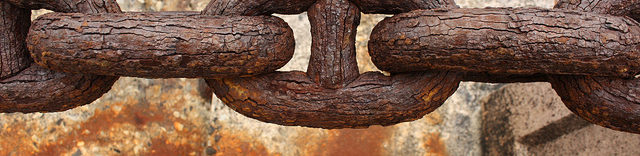
    Rusty Chain

    “Change is inevitable. Growth is intentional.” ~Glenda Cloud

    The squeak emanating from my office chair had finally become unbearable. Like a slow drip of acid on the surface of my psyche, it had finally burned its way into my head.

    I stopped working on the article I was writing and strode into the garage to retrieve my toolbox. Time to replace that rusted out wheel with the shiny new one that I’d bought months ago.

    I leapt into action purposefully. Today, things would change.

    Three of the four bolts holding the wheel in place were out when things ground to a halt, as the last bolt was stuck.

    How many times do you find yourself embarking on a path of change when you are stopped dead in your tracks? You find something has rusted over time and does not want to move.

    You try various methods to loosen that one bolt—you curse it, try several different types of pliers, stop multiple times to make sure you’re actually turning the bolt the correct way. (God forbid you’re tightening it!) Why is this one bolt frustrating your attempts at transformation?

    So what happens?

    You put the bolts back in, liberally apply some WD-40 to the wheel to make the offending sound go away for now, and go on with your life, even though you know the irritation will be back soon enough.

    This scenario surfaces time and time again in my personal life.

    I am a person who does not like conflict and usually tries to find the smoothest path out of drama; I have been called a peacemaker.

    I toiled for years in several jobs that did not allow me to chase my own dreams. I kept my dreams buried under layers of personal rust. On the outside I appeared to be the dutiful husband, father, and employee while on the inside I was languishing. 

    I would decide it’s time to fix my issues only to be turned back by some preconceived notion that had frozen me into an uncomfortable position.

    My first marriage fell apart, a casualty to my own emotional stagnation. My wife pointed it out several times but I refused to change. I was stuck on a path I never wanted to be on. I was unfulfilled and it showed to those closest to me.

    My daughters grew up from infants to beautiful young ladies, yet I still didn’t follow my own path. I listened to the accumulated voices in my head telling me to follow the rules, don’t rock the boat. 

    The ultimate irony was that while I was stuck, I was telling my daughters to follow their dreams. At nights I would lay awake dreaming about the path I had abandoned but was too afraid to follow.

    I met a fascinating woman who challenged all of my ideas of what a partner could be. She dared me, pushed me, loved me, and encouraged me to listen to my heart.

    My first wife loved me, but unfortunately my frustrations—my rust—had helped drive her away. I vowed not repeat my earlier mistakes and slowly learned to trust my heart. In time, I found myself starting to loosen the stuck bolts holding my own squeaky wheel in place.

    How many times in life have you allowed the rust to accumulate around your happiness without realizing it?

    You approach the issue with resolve, vowing that this time you will make that change you’ve been thinking about (finding a new job, moving into a new department, going back to school, chasing a dream you thought was impossible).

    Yet you allow yourself to be turned back due to something that you perceive as being out of our control. You quietly shake your fist at the sky and curse the gods.

    How do you break the rust? How do you move forward in your development and inner peace?

    1. Figure out what the rust is composed of.

    The rust is inside you; you created it, and it’s inside your own head. Figure out what the issues are that allow you not to make this change you so desperately want to make.

    Retreat to a place where you can relax and search your soul. Define your goals, dreams, and aspirations, and realistically list all of the pros and cons for each.

    2. Conquer the “everybody’s.”

    In the book Finding Your Own North Star, author Martha Beck talks about the forces that limit us and hold us back. She refers to these forces as the “everybody’s”—as in “everybody says that is a bad idea,” “everybody tells me to stay in my current job,” “everybody says I am lucky to be doing what I am doing.”

    The question you have to ask yourself is: Who are these people? Are they real or a figment of your imagination? Often, they are the accumulated detritus of messages that have touched upon your psyche over the years.

    Write out your goals, things that make you happy, things you deserve in a fulfilled life, and then create two columns underneath each item. In the left column write down who would want you to achieve your ideals and in the right column, the people who would not want you to succeed in them.

    Hopefully there are no names on the left hand side, but if there are you have some serious soul searching to do. Who are the people restraining you? Do they really not want you to be fulfilled? Do they like seeing you unhappy or are they more encouraging than you give them credit for?

    Talk to them and find out what they really feel. I bet you will soon be able to move their name to the right hand side of your ledger of contentment. If you still have a few names on the left, ask yourself if you should let them direct your life choices. Who would you rather listen to, the large roster of supporters on the right or the few on the left?

    When you find yourself looking at your list you’ll soon realize who is holding you back—it’s you.

    3. Become a positive feedback junkie.

    Remove yourself from negative influences and surround yourself with people and situations that keep you focused on your ultimate goal. Become your own cheerleading squad. I kept a notebook where I recorded my inner thoughts—lists of what made me happy, daily victories, and the eventual objective.

    4. Build up your professional network.

    There are numerous individuals and organizations looking for forward-focused people. Linked In is a powerful tool in today’s business world. Dive into it.

    5. Ask for help.

    Many have changed their lives and are happy to help you. You will be surprised by how many people will step up. It’s human nature to want to help others.

    6. Realize it’s going to be hard, damn hard.

    Only you can change your path. Work on it after work, on weekend, before bed, anywhere you have free time. You owe it to yourself and your loved ones. Remember the age-old question: How do you eat an elephant? The answer: one bite at a time.

    7. Imagine the end result, focus on the good, not the bad, and keep going.

    As Winston Churchill said, “Don’t give up, don’t ever give up.”

    Recently I decided to leave a job I had been out for eight years. I enjoyed my coworkers but found myself uninspired and stagnant. My career had stalled.

    I did not come to this decision easily. It took months and months of soul searching to realize it was time to break the rust and move in a different direction. I gave notice and have not looked back since.

    I am in control of my destiny. My network is pointing out leads for me, inspiring me and advising me.

    What I have found is that people I meet are happy for me and ask how they can help. I’m excited about following the new path in front of me even if a little nervous about the potential to take a wrong turn.

    I am feeling more complete than ever before in my life, but I have to continually watch for fresh rust amassing.

    What a great feeling it is when you’re able to sit back into that favorite chair of yours and know once and for all that you have fixed the annoying squeak that was not allowing you to enjoy it anymore. Imagine a life and career where you are happy. It can happen. Just break that rust.

    Photo by Calsidyrose

  • The Power of Kindness: Life-Changing Advice About Creating Happiness

    The Power of Kindness: Life-Changing Advice About Creating Happiness

    Flower for You

    “We make a living by what we get, but we make a life by what we give.” ~Winston Churchill

    It was a beautiful winter’s day in Sydney. Having returned home after working for two years in Singapore and traveling through Asia, I felt like I owed it to myself to do something I loved.

    My heart has always been in fitness and travel. When there was a job opening at my local travel agency, I applied, went for the interview, and got the position. I was a happy girl—but only for a short while.

    Two months into my job, it didn’t feel right. I felt something was missing. And suddenly, everything that I thought I knew about my love for traveling went astray. I wasn’t satisfied with my job.

    I had to decide if I wanted to stay or leave. I didn’t have a wealth of options. If I were to quit, I would be jobless for a while. The best I could have done was to spread my love and knowledge of fitness to my average of fifty daily blog visitors.

    If I were to stay, I would have had to suck this up, being unhappy and unsatisfied.

    I took the road less travelled and sent in my letter of resignation a few days after.

    For weeks after that, I felt lost and uncertain. I wished I hadn’t resigned. I wondered: What am I going to eat? How am I going to sustain myself?

    And then it happened, when I least expected it.

    A seventy-five-year old lady came in on a rainy day. She had a medium sized stature, and she was of Asian descent with a rather intimidating face. She told me her name was Chan and that she would like to inquire about a trip to London to visit her daughter.

    I was rather reluctant at first to help her out, thinking it might be yet another empty inquiry, but I thought about how I would feel if my parents were the ones walking into a travel agent, being treated unfairly.

    I sat down at my desk, on my second-to-last day, with a genuine smile on my face.

    My “empty inquiry” thoughts turned out to be true. Two hours into her consultation, she said she needed to think about everything I’d proposed. I told myself it was okay. The sale wasn’t meant to be; at least I’d helped her as much as I could.

    Before she left, I had to tell her that it was my second-to-last day at work, and if she were to come in several days later, I wouldn’t be around to help her.

    I thought she wouldn’t really care, but to my surprise, Mrs. Chan sat back down on her seat.

    She started questioning me. She asked me where I was going, why was I quitting, and what my plans were after this.

    I tried to be as honest as I could, telling her that the job wasn’t right for me and I didn’t have any concrete direction. All I had was my Physiology degree and a burning passion for fitness. I was half-hearted. My eyes got wetter and she could sense the doubts in my voice.

    Like an angel sent from above, she held my hands and looked into my eyes.

    “My dear, sometimes in life we’re being tested. We’re given directions and options and we have to weigh them. And sometimes, even after weighing on a multitude of scales, lengths, and units, it is perfectly normal not to be sure of anything.”

    I kept silent. I was listening, my brain was processing.

    “I just turned seventy-five last week. I want to book a trip to London to surprise my daughter who has been living there for three years. Three years ago, she was at the exact same position as you. The only difference is she was made redundant.”

    Still listening, I was a tad surprised she was opening up about her life.

    “Before I go on, I want to thank you for helping me through this inquiry. I am always skeptical about travel agents, but you proved that not all of you are the same. It’s a pity that this company is going to lose an exceptional young lady like you, but I’m happy for you. I could see it through your eyes as soon as I stepped into the store that you would be better off elsewhere. And I was right!” Mrs. Chan chuckled.

    It was unbelievable hearing her speak when she’d seemed cold for the past two hours. Still, I continued listening.

    “Now I’m going to tell you exactly what I told my daughter three years ago. If you’re doing anything in life that is making you unhappy, you should stop as soon as you can. You’re young. Set yourself free. Don’t waste time doing things you don’t enjoy doing.”

    “Great, now she’s reading my mind,” I silently thought, still waiting for her next words.

    “You might not know at this point in time if this is the right thing you’re doing. You might fail. You might be disappointed you left a good-paying job. But a good-paying job is nothing if you’re not happy.”

    She continued, “Finish your duties here and step into the unknown world. You never know what you might discover. You should be out there seeing the world and helping people with your beautiful smile and kind soul.”

    The tears I was vainly holding back started to roll down my cheeks.

    “And if life hits you hard one day, remember you made the effort to pursue your dreams. You made memories. And you chased after what you loved the most. You will be okay.”

    Her words hit me hard. I never knew I needed them until that moment. It was the most perfect timing in my life.

    “That is all I can say to you. Like a seventy-five-year old knows any better!” she joked.

    I wiped my tears and walked her out of the door. I wanted to hug her and just stay there in her arms, the arms of a stranger that I only knew for two hours, but I held myself back.

    “And remember this—no matter what you do, be kind to others. That should be the fundamental base of all your actions.”

    Stunned for the millionth time, I stood there, speechless. She left. I saw her walk away. I don’t even know her full name. Or her contact details.

    I went home that night and hugged my mother. I needed it. I needed her. And I never knew I needed Mrs. Chan and her words.

    It came to me because I was kind. And it came to me when I least expected it.

    Being kind is the fundamental base of all my actions. And I will remember that for the rest of my life. 

    Sometimes in life we meet people who are there to help and guide us, but we have to be open to receive it. Whether or not we choose to accept it, everyone wins when we’re all kind to one another.

    Never underestimate the power of kindness. You never know how much happiness you can bring to someone’s life.

    Photo by Kietaparta

  • 6 Lessons from Nature on Living a Peaceful, Fulfilling Life

    6 Lessons from Nature on Living a Peaceful, Fulfilling Life

    Dancing in a Field of Flowers

    “Nature does not hurry, yet everything is accomplished.” ~Lao Tzu

    Five years ago, I was feeling really stressed (like millions of other people in the world). I was working full time in a job that was draining me of every single ounce of energy I had.

    I had nothing left to give to myself or those I loved at the end of each working day; life had turned into an incessant cycle of getting up, going to work, coming home, working, and going to bed.

    During this time, I read about so many people who were also unhappy with their lives. People who had reflected upon their existence and realized that this was not harmonious with who they were.

    I read about these people who inspired me with awe yet at the same time felt a sense of desperation. That could never, would never, be me, I thought. And while these conflicting thoughts existed, I became increasingly stressed out and more and more unhappy.

    There were things I enjoyed about my job (and still do). I became a teacher because I felt fortunate in having had such amazing support throughout my own education and wanted to offer young people that same help and guidance in return.

    But at the same time, I was changing as a person and I wasn’t the same being I had been six years previously when I had chosen that path. For my own sanity, health, happiness, and the happiness of those I loved, I knew something had to change.

    And then it did. My partner and I decided to move to a rural area of Herefordshire and buy a hundred-year-old cottage.

    There is no quick fix for happiness and I realized that the most important way to become less stressed was to change my way of thinking. But living in the countryside has undoubtedly contributed to my increased levels of calm.

    There is nothing like walking down a tranquil country lane, whatever the season, and just observing the sounds, smells, and landscape.

    I walk the same route regularly but this never bores me. With every single day, let alone season, something has changed and yet there is also a sense of constancy in nature, which I find incredibly comforting.

    The Lao Tzu quote about nature not hurrying embodies something I find I’m continually trying to work on—slowing down my daily pace. All too often we rush through our days, anxious to get things done at the fastest speed.

    When I’m aware that this is happening, I make myself stop and think: Why am I doing this?

    The pace of our world is frantic and seems to be constantly increasing. Despite this, I support the belief that life is not a race. 

    Going faster doesn’t necessarily equate with accomplishing more or better. In actual fact, the opposite is usually true. If you slow down, you make fewer mistakes, are able to think more clearly, and act with purpose.

    For me, this also results in feeling calmer and being more aware of my surroundings and those around me. This can only be a good thing.

    Frequently, we might tell ourselves that we must do such and such but in most cases, this feeling of having to do something is only a result of pressure from within.

    I personally believe that it’s important for our own sanity and health to slow down (and I apply this to driving, walking, and breathing on a regular basis).

    So this quote got me thinking about what we can learn from nature…

    1. Determination

    Nature is pretty hard to stop. Weeds and grass grow with dogged determination (much to the frustration of the lazy or time-pressed gardener). Many baby birds and other young offspring grow up against a huge number of odds; they are determined to survive.

    With determination, it doesn’t matter how fast (or slowly) you move through life. If you are determined, if you have a goal and a plan to reach that goal, you’re already a long way toward it.

    2. Strength in adversity

    Have you ever pruned or cut back a plant only to wonder whether you ever actually did, because now the greenery has exploded into an amazing array? I used to be reluctant to cut any plants back until someone told me that they actually ‘like’ it.

    I suppose it’s nature’s fight for survival; you cut it so it puts even greater energy into growing more.

    Nature could decide to give in and plants could just shrivel up and die. But they don’t. In life, when things seem tough, we usually have two choices: give in or give more.

    Choose to mirror nature and decide to face problems rather than run from them.

    3. Adaptability

    Nature can be incredibly adaptable. Just think about the four seasons. Animals and plants alike adjust to cope with the changes in climate and meteorological factors.

    Humans are no different. We put on an extra sweater or two in the winter but can be less adept at managing with changing circumstances. Since change is one of the only certain things in life, try to accept this and see it as a positive thing as far as possible.

    You might not be able to control life events, but what you can control is how you respond to them.

    4. Storing inner strength

    When autumn arrives, nature seemingly goes into shut down. But actually, wonderful things are going on, ready for when the plant and animal kingdom come into full swing once more.

    Take a leaf out of nature’s book and nurture inner strength when times seem sunny so that when the clouds appear, you don’t give in.

    5. Collaboration

    One thing nature does really well is working together. Bees and flowers are just one of the many examples of this. Bees collect nectar from flowers to make their honey while the flowers get a good deal out of it by their pollen being spread by their furry winged companions.

    You might be a real people person or perhaps you prefer your own space. Either way, the world is one huge partnership of human beings.

    There are so many things that we simply could not do without the help of others. Look around you; everything you see has been thought of by a human, designed by a human, made by a human (okay, perhaps with the help of a machine, but still). I find that thought pretty amazing.

    I’ll never meet most of the people who somehow are connected to my life, but knowing that every single thing I do I am able to do because of someone else is pretty awe-inspiring. In so far as you can, see people as teammates rather than competitors or adversaries.

    6. Consistency

    With the exception of an extreme weather occurrence, nature is pretty darn consistent. Want to be a super fit runner? Jogging every three months isn’t going to get you there; try to stick to a once weekly routine.

    It doesn’t matter if the day or time has to change as long as you hit that road/treadmill/country lane once a week. Maybe you want your garden to look pristine and something to be proud of. Again, get out there regularly rather than spend five hours slogging away once a month.

    Whatever your thing, be consistent.

    Whether you live in a rural area, town, or city, nature is all around us. Harness the power of nature to live your life and slowly accomplish your dreams.

    Photo by Mint-Flower

  • Why We Don’t Do What We Want to Do and How to Start

    Why We Don’t Do What We Want to Do and How to Start

    “If it is important to you, you will find a way. If not, you’ll find an excuse.” ~Unknown

    “The truth is,” she said, “if you can’t put fifteen minutes a day into your art, then you’re making an excuse.”

    I squirmed in my seat.

    It was February 1, 2011, and I was on the phone, interviewing Michele, a professional artist and artist’s mentor, for an online course I created.

    Michele was sharing what she tells the artists in her mentorship program who complain of not having enough time to do their art. Her words were intended for her mentees, but it felt like they were aimed directly at me.

    As an artist myself, I knew making art made me happy—made my whole day go better, in fact—and yet I was always too busy to do it. Was I just making an excuse?

    I didn’t want to admit this truth to myself, but when confronted with the starkness of Michele’s statement, I had nowhere to hide.

    I’d spent years believing I needed big chunks of time to make my art, but if fifteen minutes a day worked for Michele and the serious artists she mentored, maybe I was clinging to a false story, operating under a “self-installed glass ceiling” that was limiting my beliefs about what was possible.

    That day changed my life. Once I accepted that my mindset was the only thing really getting in the way of my “impossible dream” of a consistent, prolific art practice, I committed to trying this fifteen minutes a day idea, as an experiment, for one month.

    I admit I was skeptical that fifteen minutes would be enough to accomplish much, and I couldn’t imagine that such a short amount of time would even begin to satisfy my hungry inner artist. But waiting until I had big chunks of time to work in my studio had gotten me nowhere.

    For over a decade I’d lamented that I never had enough time to do my art. Surely, even fifteen minutes would be better than nothing.

    In fact, my fifteen minutes a day experiment resulted in my most prolific year ever. It stretched well beyond that original first month, and in 2011 I created more art than I had in the previous decade—over 150 finished pieces.

    But it didn’t just make a difference for my art life. This experiment had effects that rippled out into the rest of my life, too.

    When I finally made space in my day—even just a handful of minutes—to do something I loved but had somehow been resisting for years, I realized that my previous “inability” to find a way to make time for my art was, as Michele had said, just an excuse.

    However, I had clung to this excuse not because making art wasn’t important to me. To the contrary: it was precisely because it was so very important to me that I couldn’t seem to get myself to do it.

    Sometimes we make excuses to avoid unpleasant things, it’s true. But human psychology is complex. Perhaps just as often we make excuses because we want something so much it hurts.

    On the surface, this doesn’t make logical sense. Dig a little deeper, though, and things start to become clear.

    “If I do this thing that I really want,” we might think, “I might prove once and for all that I’ll never be any good at it.”

    Or, “If I try, I might fail.”

    Or, “If I step into this bigger identity for myself, I’ll have to let go of my comfy, old identity. People might expect more of me, or they may be threatened or disappointed.”

    And, ultimately, “If I do this, everything might change, and change is hard!”

    No wonder we resist! It feels so much safer not to try at all.

    There are infinite reasons why we make excuses not to do what’s important to us, and the more important something is to us, the more likely we’ll resist it.

    How to break the cycle? By looking resistance square in the face and taking responsibility for finding a way instead of finding another excuse. By acknowledging what is really important, and committing to making it a priority.

    When I finally took the big, scary step to put just a tiny bit of time toward my art every day, something shifted. I started to notice other ways I’d been avoiding things that were important to me.

    Suddenly, the “sensible” reasons I’d given myself for not going after other important goals shone forth as the excuses they really were, like ping pong balls under black light.

    As for my story that I didn’t have time to get to the gym or to go walking every day—I accepted that this was simply an excuse, changed the paradigm, and brought the gym to me: I set up a cheap treadmill in my studio, so I can walk while I work at my computer. It’s now a rare day that I don’t walk at least five miles, and ten or more is not unusual!

    And about my story that I am, and will always be, something of a slob—I accepted that this was just an excuse, too, and I’ve been clearing out clutter, getting rid of stuff little by little, slowly getting closer to the spacious, organized home and studio I really want.

    It won’t happen overnight, but my fifteen minutes a day commitment to my art showed me that baby steps, over time, will take you further than you ever imagined. 

    If something is important to you and you haven’t found a way, don’t give up! Don’t just accept that it’s not important to you if your gut tells you that it is, but do look at where you might be spinning stories, creating excuses for yourself.

    If you accept that your excuses may be the only thing between you and your dreams, you may be surprised at what you can change in your life.

  • Why You Should Do That Thing You’ve Always Wanted to Do

    Why You Should Do That Thing You’ve Always Wanted to Do

    snowboarding

    “Better to do something imperfectly than to do nothing flawlessly.” ~Robert H. Schuller

    In March this year, I did something I had wanted to do since the age of nine: I had my first piano lesson. At the time I was nearly thirty-five, so it had only taken me twenty-six years to get around to it.

    Why the delay? Well, when I was little, we couldn’t afford lessons, but looking back I see that was only an excuse until I got my first part-time job at sixteen—which means that the last nineteen years of procrastinating were entirely down to me.

    Over those years, thoughts of playing the piano had come back to me on quite a few occasions.

    Whenever I talked about it with anyone, we would usually end up agreeing that either it would be too expensive or that I was now just too old. After all, piano lessons are for kids, and posh kids at that.

    Then, one day, I heard that the TV presenter Jonathan Ross was learning to play. He wasn’t posh! And he was older than me! If he could do it, surely I could too. After hearing this, I decided I’d really have to start thinking about having lessons.

    And I did—think about it, I mean. I thought about it a lot. Every time I saw Jonathan Ross on TV, every time I met someone who could play the piano, every time I saw a piano, every time I heard the word “piano.”

    “One day I’ll learn,” I’d think, “when I have more money.”

    Then, when I was teaching in Italy, a golden opportunity came my way: one of my students was a piano teacher. I was very excited when she told me this and instantly told her that I’d love to be able to play.

    Guess what? She offered to give me a lesson. For free! I leapt at the chance and rushed to her house first thing the next morning. Of course, I didn’t really do that. That’s what I should have done.

    Instead, I told her I thought it would be easier for children and asked her if it would be difficult to learn at my age.

    “Maybe,” she said, and that was that. We quickly forgot all about it and the idea was pushed aside once more, with me safe in the knowledge that there really was nothing I could do about it.

    Fast-forward about seven years and I was teaching a group of mixed nationality students in Bournemouth, England. At one point a student asked me if I played an instrument.

    I gave him my usual answer: “No, but I’ve always wanted to be able to play the piano.” He smiled at me and asked, “What have you done to make your dream come true?”

    I was slightly stunned by this question. Not only did I realize I had done nothing, but I hadn’t really thought of it as a dream before; I just thought it was something that I’d quite like to do, if only I could.

    But it was a dream. It had come back to me again and again. Why hadn’t I done something about it? Why couldn’t I do it? What was stopping me?

    I would like to be able to tell you that I ran home and found myself a teacher right away, but I didn’t.

    It wasn’t until a few months later that I finally went for it. I was writing a list of all the things I’d like to start doing in my free time and again, piano lessons were on my list. My student’s words rang in my ears: “What have you done to make your dream come true?”

    “Right! That’s it!” I thought. Turning to my trusty friend, Google, I did a search on “piano teachers in Bournemouth” and found one who lived five minutes from my flat.

    What’s more, she gave free trial lessons. I had nothing to lose. I emailed her right away and booked a lesson for later that week.

    Eight months and a few “good job” stickers later, I am quite amazed by how much I’ve learned in such a short space of time. But one question still bothers me: Why did it take me so long?

    It wasn’t the money; I could have had free lessons in Italy. It wasn’t a lack of a good teacher; I hadn’t even tried to look for one before. When I finally did, she lived a stone’s throw away from my flat.

    What it really boiled down to was this: I was scared.

    I was scared that I wouldn’t be good enough, posh enough, young enough, confident enough, and Lord-knows-what-else enough to learn how to play a musical instrument. People like me just didn’t do that sort of thing.

    How many of us do this? How many people put off doing the things we want to do through fear of failure or being ridiculed?

    What was the worst thing that could have happened? I would have been a rubbish piano player, that’s all. And only my teacher would have known.

    Why do we do it? Why are we so afraid of stepping out of our comfort zone?

    Because that’s just what it is. It’s comforting; we know what’s going to happen. There’s minimal stress involved; we’re safe.

    We’re also most probably, bored rigid. Staying in our comfort zone doesn’t allow us to grow into the people we were meant to be.

    Why is it so important to do that thing you’ve always wanted to do?

    Learning to play an instrument is hard, but not as hard as I thought it would be. Seeing that you have the ability to do something that you didn’t think possible helps to boost your confidence and leads you to think, “Hang on a minute; what else could I do?”

    Nowadays, I’m busy taking my first baby steps toward self-employment and getting my writing out to the world. I’m fully invested in going for my dream.

    While that’s not entirely because of the piano lessons, they have helped give me the confidence to see that I can do whatever I put my mind to.

    It’s never too late (except that sometimes, it kind of is).

    I was originally going to title this post something like “It’s never too late to…” but then I realized that’s not entirely true.

    The truth is, none of us know how long we have, or what condition our health will be in if we do reach old age.

    You never know when the chance will pass you by completely.

    And while I’m happy with my progress, as I practice my latest masterpiece in the hope of another sticker, I can’t help but wonder what I could be playing by now if I’d started earlier.

    So my message is simple: Whatever you want to do, go for it, whether it’s pottery, rock-climbing, tap dancing, or knitting.

    Think of the worst thing that could happen, which will probably be that you’ll be no good.

    So what?

    You have everything to gain and nothing to lose.

    There’s no reason not to go for that thing you’ve always wanted to do.

    Photo by Alex Indigo

  • 5 Tips to Help You Take Action to Overcome Your Fear

    5 Tips to Help You Take Action to Overcome Your Fear

    “Thinking will not overcome fear, but action will.” ~W. Clement Stone

    I made it all the way to my thirtieth birthday without learning how to drive. After I turned twenty-one, people often asked me why I hadn’t learned yet. My go-to story was that I lived in a place with abundant public transportation options and never had any intention of buying a car.

    The truth is that I wanted to learn, but I was terrified, and the fear grew with each year.

    What if I got in an accident? What if people laughed at me for learning so late or honked angrily at me? What if I chose a bad driving school with unforgiving teachers?

    I used these fearful questions and the fear responses that came along with them as obstacles to stop me from taking any action toward learning. I felt as though their presence meant that I couldn’t take an action. I wanted them to go away before I took any steps.

    The one thing I was avoiding was the key to me overcoming my fear. It sounds so obvious, but how many of us have wanted to do something, felt afraid, and then spent more time thinking and talking about it than actually taking action?

    I put “learn how to drive” on my New Year’s resolution list for the last time and decided to find a way to make it happen, despite my fear.

    When you think of taking action, you might have some big, scary idea of what I’m talking about. I’m not talking about deciding one day that you want to jump out of a plane and then an hour later booking your flight. Or in my case, deciding that I wanted to learn how to drive and then getting right in the driver’s seat.

    None of this is necessary.

    I’ve learned five helpful things about taking action that helped me move from thinking about learning how to drive to getting behind the driver’s wheel and actually driving confidently.

    If you already know how to drive, which I’m assuming most of you do, these things can easily apply to anything else you’ve wanted to do but haven’t yet tried out of fear.

    1. Start at the beginning.

    One reason that we hesitate when we have something we are afraid to do is because we are thinking only of the end result and likely feel incapable of getting to that point from where we are now.

    Forget about the end result, or at least take your laser focus off of it long enough to determine what the first step might be. In my case, the first step was visiting my state’s Registry of Motor Vehicles website to find the process for getting a learner’s permit.

    The more you focus on all of the actions you have to take to get to the end result, the less likely you are to actually take any steps. So just focus on the first step and start there.

    2. Remember that small steps count too.

    Each action step doesn’t have to be big.

    Your brain, ego, or that limiting, fearful part within will try to convince you that your steps are too small. They couldn’t possibly count, it says, so better to just not try. It’s lying to you.

    Every accomplishment, like baking a cake, publishing a book, or learning to drive, is made up of small steps made over and over and over again.

    Learning about the learner’s permit process led to picking up a driver’s manual, which led to spending time every day studying the manual, which led to scheduling the permit test. All these small steps built up to me ultimately learning how to drive.

    3. Realize it’s not how you feel; it’s what you do.

    One of my obstacles was thinking that the presence of physical fear symptoms meant I couldn’t take action. You can be terrified, with a quick pulse or shaky hands or shallow breaths, and still take action.

    It’s the steps that count, not how you feel when you take them.

    When I had my first driver’s lesson, my hands shook so badly that I wasn’t sure I would be able to hold the steering wheel. But I got through the lesson, one step further in my journey to learn, and decided that I would celebrate the fact that I showed up, in spite of fear, rather than judging myself as a failure for how nervous I felt physically.

    4. Get high on taking action.

    There is this magically wonderful high that occurs after you’ve taken action that you were afraid to take. I’m not sure how many of you have experienced it, but talking to other people who have done things that terrified them, I found that I’m not alone in noticing this.

    Use that high to your advantage. Make it an incentive that leads you, especially in moments when you are doubtful, that you can handle the fear of taking another step.

    After my first lesson, I wrote down how I felt (excited, proud, happy) and I referred to it again before my next couple of lessons when I forgot how good I felt and needed a reminder to help tone down my fear.

    5. Know that action builds confidence.

    Deciding to take action to overcome my fear of learning to drive has not only meant a new skill, it has also brought me confidence in my ability to learn new things, handle mistakes, work toward and achieve a goal, meet new people, and much more.

    Action has many unintended opportunities for growth beyond the specific area we decide to work on.

    It’s in the action that we test our hypothesis about life and about ourselves. It’s in the action that we grow confident about ourselves and our abilities. It’s in the action that we find out what mistakes are experientially and how much stronger we are by learning from them as we go.

    So today I can say I know how to drive. I even look forward to it. I couldn’t have said that though had I just continued to wait to take action until I no longer felt afraid.

    What action can you take to overcome your fear today?

  • 5 Tips to Help You Stop Limiting Your Potential

    5 Tips to Help You Stop Limiting Your Potential

    Like Flying

    “Have respect for yourself, and patience and compassion. With these, you can handle anything.” ~Jack Kornfield

    I learned one of my biggest lessons in life when I ran into a high school bully many years ago. He was totally different from the last time I saw him. He was now passionate about life and adventure, and he looked very happy.

    He had a thriving textile trading business and he was set to open a clothing store in less than a year.

    After hearing his story, I couldn’t help but feel ashamed of myself.

    I realized that in my resentment toward him for hurting me years ago, I had belittled him and didn’t give him a chance to change or prove himself.

    Yes, he made a portion of my teenage life miserable. But it was unfair for me to completely dismiss his capability to turn his life around and unleash his true potential.

    His story was amazing. He spoke many times of taking risks and breaking barriers. He fought his inner demons as he struggled his way to a new life. He also had to resist negativity from some family members about starting his own business.

    I went home that day happy that I had made a new friend, enriched with new life lessons that I acquired from his powerful story.

    I learned from him that it is actually we who sometimes stop ourselves from reaching our full potential by not challenging ourselves. I was no exception; I realized that I too had been stopping myself from growing because of my own inhibitions.

    Long ago after college, I set my mind on taking a master’s degree. I didn’t make any concrete plans because although part of me wanted to to do it, I was scared of the idea of taking higher-level studies while working full time.

    I decided to ignore my fears and apply for admission a few weeks after I met my friend.

    I haven’t earned the degree yet, but I must say my growth and experience while studying was very rewarding. I gained valuable exposure to new research information that wouldn’t have been made available to me had I not signed up.

    I was also able to establish new connections with brilliant-minded people whom I turn to for professional advice and favors even to this day.

    I would like to share with you a few things I learned when I met my new friend; these may help you unleash your own potential.

    1. Let go of bitterness.

    My friend whose story I just shared told me how his parents’ separation affected his attitude in life. He became bitter as he grew, and this prevented him from making early breakthroughs.

    When he was finally able to move on in his mid twenties, he left behind a trail of hurt people and many missed opportunities for personal and professional growth.

    Obviously, he was able to make up for the missed opportunities because he was able to put up his own textile trading business. Nonetheless, he could have done more sooner if he hadn’t let his bitterness hold him back.

    If you’re holding onto anger and resentment, ask yourself: What might you be able to do if you let it go?

    2. Take major risks.

    Take risks. Big ones! That was what my friend did when he started his textile business. He could have asked his rich father for support, but he chose to do it on his own.

    He started out late in life and he wanted to catch up with everyone by going for broke. He said that even if his investment failed, he knew that he’d learn something valuable from that experience.

    Don’t be afraid to try something big. No matter where it takes you, it will enable you to learn and grow.

    3. Drown out the voices that tell you “that’s impossible.”

    Shameful as it was, I dismissed my friend as someone who was destined for misery. I was so distracted by what I was seeing from him on the outside that I thought it was impossible for him to change. But he knew himself better and he successfully turned things around.

    The same can happen for you. No matter what other people say, you have limitless potential to change, grow, and thrive.

    4. Break out of your self-stereotype.

    When I was growing up, I was fixated on the idea that there were only two kinds of kids: the good and the bad. The good kids had a wonderful future ahead, but the bad ones had nothing but misfortune and suffering awaiting them.

    I equated being good with certain types of professions, such as doctors, architects, and teachers. I aspired to be like them, but in my blindness I shut myself from exploring other things that I may have had a chance at excelling in.

    Later when I began trying out other things like writing, I began to see that I not only enjoyed them, but I also seemed to be good at them.

    Don’t limit your possibilities. If there’s something you think you might enjoy, give yourself the opportunity to find out.

    5. Listen when people praise your talents.

    Until not too long ago, I wasn’t keen on listening to people’s suggestions on showing and developing my hidden talents. They said “You’re so good at this! You should be doing this more!” But I dismissed the affirmations, thinking that those abilities were not within the parameters of my self-stereotype.

    We are our own worst enemy, so they say. It was certainly true for me and my friend.

    If you want to unleash your true potential and earn major breakthroughs in your life, you’ve got to start by believing in yourself.

    Photo by erismirror