Category: Quotes

  • Tiny Wisdom: Being Self-Aware and Minimizing Drama

    Tiny Wisdom: Being Self-Aware and Minimizing Drama

    “Our greatness lies not so much in being able to remake the world as being able to remake ourselves.” -Gandhi

    This past weekend, I took a break from writing at Starbucks to visit the nearby Fall Festival, which featured a petting zoo, face painting, and food samples.

    This is one of my favorite events because it encompasses many things I love, including farm animals, giddy children, and food on toothpicks (yes, that’s in my list of favorite things).

    Much to my excitement, I saw there was also a large makeover event set up in the vicinity. Since I had time, I decided to get in line—except there wasn’t one. It was more like a group of women positioned haphazardly in front of the two stylists.

    So I asked one of the women, “Are you in line?”

    Her response caught me off guard, because she snapped kind of defensively, “Yes. This is the line. Behind me—I’ve been waiting!”

    Instinctively, I felt annoyed. I’d asked to be considerate, but I gathered it didn’t come across that way.

    I realized then that I often feel angry when I have positive intentions that others don’t seem to receive as such; and I can easily get frustrated when I sense hostility that I feel I “don’t deserve.”

    Sometimes, because of that, I take things personally that simply aren’t personal—and also aren’t a big deal.

    While this was a brief encounter with little significance in the grand scheme of things, it got me thinking about the importance of self-awareness.

    So often in life, we feel things that have little to do with what’s actually happening and everything to do with the stories we’re telling ourselves in our head—stories that involve assumption, blame, and defensiveness.

    But we don’t have to fall victim to our instinctive emotional reactions. At any time, we can stop, assess what’s going on in our heads, and decide to respond a little more wisely based on what we know about ourselves.

    Today if you feel yourself getting all worked up over something that isn’t a big deal, ask yourself, “What can I learn about myself that will help me going forward?”

    Photo by Melissa Gray

  • Tiny Wisdom: See, Do, Explore, Learn

    Tiny Wisdom: See, Do, Explore, Learn

    “When you’re curious, you find lots of interesting things to do.” -Walt Disney

    One of my high school teachers once said that a truly intelligent person is never bored because there are always things to see, do, explore, and learn.

    I’ve noticed that my creative process depends highly on my willingness to be curious. On a day when I feel as though I have nothing to share, it’s generally because I shut down in some way. I didn’t get out of my comfort zone, or out of my head, or maybe even out of my house.

    When there’s no image to paint, or story to share, or lesson to offer, it’s a sign I disconnected from the day and myself. I didn’t engage with the world.

    Now that doesn’t mean I always need to be doing something active or pushing myself in some way.

    You can be completely still and yet fully involved in the world around you. Or you can be fully withdrawn and yet still present.

    The point is to stay in the moment and let it somehow captivate you. The goal is to stay open, and interested, and enthralled—by yourself, by other people, by ideas, by the world.

    There are inevitably going to be times when we retreat into ourselves, to regroup, to recharge, or to heal. There’s nothing wrong with that as long as we don’t dwell in that place.

    The best things in life happen when we consent to participate. The biggest opportunities find us when we’re open to receiving them.

    What does it mean to be open? It means heading into the day, prepared to answer these questions: What can I see? What can I do? What can I explore? What can I learn?

    Photo by AlicePopkorn

  • Tiny Wisdom: If You Knew This Would Be Your Last Day

    Tiny Wisdom: If You Knew This Would Be Your Last Day

    “Happiness consists of living each day as if it were the first day of your honeymoon and the last day of your vacation.” ~Leo Tolstoy

    If you knew this would be your last day, would you waste time worrying about everything you might not finish on your to-do list?

    Would you spend today dwelling on that minor disappointment?

    Would you hold a grudge about that fight or misunderstanding?

    Would you hesitate to tell the people you love just how much you care?

    Would you be hard on yourself for your mistakes, imperfections, or struggles?

    If you knew this would be your last day, would you make amends, or make a change, or make a point, or make a difference? Would you do something, or say something, that you’ve been waiting to do or say?

    Would you look at something you always see with a new sense of appreciation?

    Would you listen to people with a stronger focus, taking in every last word?

    Would you say yes to what you really want and no to what you don’t?

    Would you give yourself every opportunity to enjoy the people and things you love?

    Take a deep breath, close your eyes, and then see this day anew. Wipe the slate clean. Take the pressure off. Put a smile on. Today is a new opportunity to be who you want to be and do what you want to do.

    Photo by emdot

  • Tiny Wisdom: Seeing the Good in the Bad

    Tiny Wisdom: Seeing the Good in the Bad

    “Instead of complaining that the rose bush is full of thorns, be happy the thorn bush has roses.” -Proverb

    I once read that people who journal to identify lessons from painful situations generally move on more quickly and easily than people who write merely to vent their emotions.

    In discovering opportunities for growth, we empower ourselves to see whatever we’ve been through as something that can be ultimately beneficial, even if it’s tremendously uncomfortable in the short-term.

    It’s not always easy to do that, particularly because there are so many things that happen that we may never understand—and plenty of events that seem downright unfair.

    Why do some people retain their health despite poor choices, while others wake up seriously ill one day with no reason or warning? Why do some people enjoy great fortune without having to expel much effort, while others struggle all their lives without ever enjoying rewards or stability?

    When you look at the world through this lens, it’s easy to be bitter. We want there to be order—to know that if we’re good, good things will happen, and bad things won’t. But that’s just not a guarantee.

    What is a guarantee is that we can always decide how to interpret what we see.

    Over the past two years, countless readers have submitted posts for this site, many of them sharing stories about overcoming sickness and loss, among other personal challenges.

    There’s nothing as inspiring as seeing the world through the eyes of someone who is determined to see something good.

    After a blood vessel ruptured in Brian Webb’s brain, he couldn’t walk for months—but after running his first marathon he realized his injury taught him to appreciate life.

    Brandy Harris renamed her Crohn’s Disease “Crohn’s Teacher,” and uses her feelings about her symptoms as fuel for writing and sketching.

    Alexandra Heather Foss decided that there’s beauty in her scars—that her past struggles contributed to the strong, wise woman she is today.

    Life is always going to contain a little darkness, but we get to decide whether or not we recognize and appreciate the light.

    Photo by PrescottFoland

  • Tiny Wisdom: Saying Yes Because You Think You Should

    Tiny Wisdom: Saying Yes Because You Think You Should

    “It is not hard to make decisions when you know what your values are.” -Unknown

    Have you ever felt a strong instinct to say no to something—but then said yes anyway? I did this a few months back, when someone contacted me on behalf of a bestselling self-help author, asking me to promote his book.

    As I’m sure you’ve noticed, I love sharing books that have made a difference in my life. And I generally choose which ones to feature based on a genuine desire to introduce them to you.

    When this author’s marketing team contacted me this summer, asking if I’d help make his book a bestseller—without offering to send me a copy—I felt a strong resistance. It felt too much like a business arrangement to engender my earnest support.

    Based on what I read about this writer online, I ascertained his book would be a valuable resource, so I agreed to share it—despite only receiving three chapters in a PDF.

    As the time got closer, I recognized I wasn’t operating with complete integrity, and ultimately decided to renege. His team sent me a number of angry emails, letting me know the author is “the real deal” and that there was no one else on the planet like him, sharing what he’s learned.

    When I recognized the high-pressure, fanatical tone, I instantly felt I’d made the right decision—not because there’s anything wrong with the book or the author, but because the circumstances themselves did not feel right for me.

    Ironically, I’d done something I’ve written about before: I made a decision based on value attribution—meaning I assumed I should say yes solely because the author is established and renowned.

    In a world where influence is king, we all need to be mindful of how and why we’re swayed if we hope to make decisions for ourselves, based on what we feel is right for us.

    This is particularly pertinent when it comes to how we spend our money, as there will always be a groundbreaking new system, or a life-changing new course, often promoted by people we admire and trust.

    That’s to not to say we shouldn’t support them and we wouldn’t benefit by doing it. It’s just that we’re best equipped to help ourselves when we say yes because we actually want to—not because we think we should.

    Photo by jamiehladky

  • Tiny Wisdom: Enjoying How We Work

    Tiny Wisdom: Enjoying How We Work

    “If we are ever to enjoy life, now is the time, not tomorrow or next year.” -Thomas Dreier

    Have you ever formed an insight about yourself that seems completely obvious in retrospect? I had one of those realizations not too long ago.

    I woke up to the sound of raindrops dancing on my window pain. I’ve always said that I dislike the rain, because my mood often dims when the sky turns gray. But on this particular day, the rain seemed beautiful.

    As I sat in my home office (read: the two feet behind my couch) writing and editing, the rain became a soothing companion, as well as a perfectly valid reason to not be outside.

    On every other day, the Los Angeles sun calls to me, tempting me to abandon my laptop to enjoy the bright outdoors.

    That day, without the distraction of gorgeous weather, I found myself far more productive than usual.

    Right then I realized I always feel more satisfied with my work when I work with my preferences, not against them. And I prefer to be outside when it’s sunny. So I’ve now been making a conscious effort to write by hand in parks and outdoor cafes. Obviously I can’t do all my work this way—but what’s important is that I can do some.

    I realize we all have different obligations and options, but for each of us, there are options. Some of them will work with our temperaments and likes, and others will engender internal resistance. Perhaps the key to loving what we do is not just enjoying the work itself, but to also paying attention to how we choose to do it.

    That might mean putting fresh flowers on your desk because they make you happy. Or having a meeting over coffee because it gets you out of the office. Or keeping your iPod handy so you can work to your favorite music.

    Life will inevitably involve a lot of things that we can’t control. Why not make the proactive choice to enjoy as much as we can?

    Photo by 7ino

  • Tiny Wisdom: Stumbling on Unexpected Joy

    Tiny Wisdom: Stumbling on Unexpected Joy

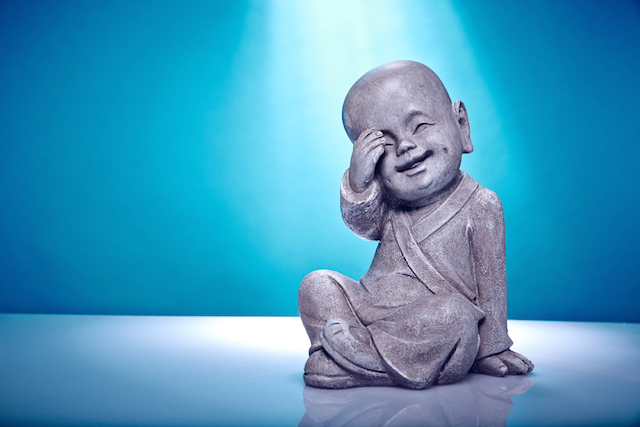
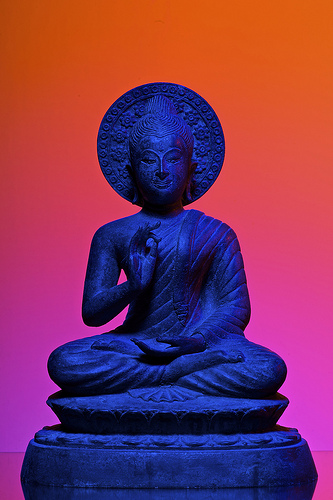
    Laughing Buddha

    “Joy does not simply happen to us. We have to choose joy and keep choosing it every day.” ~Henri Nouwen

    The other day I saw the movie Moneyball after originally deciding it wasn’t for me. I did the same thing with The Blind Side—I assumed I wouldn’t like it because I’m not a sports fan. I realized how wrong I was when I left the theater both laughing and crying (I’m emotionally ambidextrous).

    I’ve done this many times before—made a snap judgment about whether or not I’d enjoy an experience based on assumptions and incomplete  information. And not just when it comes to entertainment. I’ve bowed out of Indian food, country music concerts, and even hiking, all of which I’ve come to love, but not quickly or easily.

    Oftentimes, the stronger my initial resistance, the more stubborn I am about admitting my resistance was unfounded.

    Maybe you’ve been there before. A friend invites you to an art festival and you assume it’s not for you because you don’t generally enjoy museums. Or your sister invites you to a themed party and you choose not to go because you don’t love dressing up.

    While we obviously can’t say yes to everything, and we have every right to honor our preferences, we often underestimate our potential for enjoyment.

    Like the relationship that develops between two unlikely friends or the sun that peaks through the clouds in a sky that was supposed to be gray, unexpected joy is sometimes the most satisfying.

    Say yes today—not to everything, and not to things you feel strongly opposed to doing, but to something you think you won’t like. Try that new restaurant, meet up with a new friend, or get up and sing karaoke. Do it assuming there will be something worth experiencing–something you’ll learn, enjoy, or gain.

    Happiness has a way of finding us when we’re open to creating it.

    Laughing Buddha image via Shutterstock

  • Tiny Wisdom: Worrying About Future Regrets

    Tiny Wisdom: Worrying About Future Regrets

    “Worry never robs tomorrow of its sorrow. It only saps today of its joy.” -Leo Buscaglia

    A friend of mine got engaged this September. Previously, she and her fiance agreed that they both did not want children. But recently she’s been wondering about whether or not she’ll regret this some day–when she’s older and it’s no longer physically possible.

    Mere nights before I discussed this with her, I read some discouraging research about the effects of parenting on happiness: Daniel Gilbert reports that “parenting makes most people about as happy as an act of housework.”

    I suspect that’s not universally true, and I still want children. But part of me can’t help wondering how I’ll feel after I actually have them–if I’ll feel it was the right choice in the right time.

    It’s instinctive to wonder how we’ll feel down the line–to some extent, it guides our decision-making process. But the reality is, no matter what choice we make, there will be pros and cons. And on some level, we will likely imagine how life might have been if we took a different path.

    We have limitless choices in life, and every one is simultaneously a decision to do one thing and not do something else.

    Choosing to be a home owner is choosing not to have the freedom of a month-to-month lease. Choosing to accept an exciting, demanding job is choosing to have less time to yourself than you may have had otherwise.

    We can either stress about everything we might miss by following our instincts, or trust that we are making the right decisions based on our wants, values, and priorities.

    Of course, this assumes we are able to hear and trust our instincts. It presupposes we’re willing to look within and then honor what we find.

    Today if you find yourself worrying about the path you’re taking, remember: You made this choice for a reason. You can only enjoy it if you choose not to stress about it.

    Photo by Cheryl.R

  • Tiny Wisdom: What It Means to Be Free

    Tiny Wisdom: What It Means to Be Free

    “Freedom is the will to be responsible to ourselves.” -Friedrich Nietzsche

    • When you choose to forgive instead of seeing the world through bitter eyes, you are free.
    • When learn from your mistakes instead of letting them define or cripple you, you are free.
    • When you love yourself regardless of what other people think, you are free.
    • When you accept uncertainty instead of stressing about what you don’t know, you are free.
    • When you embrace chaos, instead of struggling for control, you are free.
    • When you recognize that we are all imperfect, and then resist the urge to fight that, you are free.
    • When you choose to appreciate what you have instead of lamenting what you’ve lost, you are free.
    • When you plant yourself in this moment, and do what you can to make the most of it, you are free.

    Photo by usadifranci.

    Visit the Tiny Buddha Facebook page to read 140+ definitions for freedom.

  • Tiny Wisdom: The Triggers That Lead to Pain

    Tiny Wisdom: The Triggers That Lead to Pain

    “The world is full of suffering. It is also full of overcoming it.” -Helen Keller

    There’s a child wailing five feet away from where I’m sitting in the Farmer’s Market at The Grove. This is my least favorite sound in the world, and I often tear up when I hear it.

    While I realize children often cry for reasons that have nothing to do with danger, I associate hysterics with fear and powerlessness, and it makes me want to do something. Since I generally can’t, it manifests in my body as anxiety–a fight or flight response with no outlet.

    I’ve had full-on panic attacks when confronted with a hysterical child. It’s an emotional trigger–and a strong one.

    We all have these triggers, though some of us don’t have such overpowering reactions. Maybe you lost someone you love on a rainy day, so you feel angry when the clouds turn gray. Or maybe you sustained a serious injury at the beach, so the sound of the ocean makes you feel ill.

    These associations can be limiting, and sometimes downright paralyzing. They can cause physical and mental sensations that are completely unrelated to our present circumstances. In short, they divorce us from the present and thrust us into a painful past.

    There are times when we need professional help to fully release traumatic associations. But other times we only need a modicum of self-awareness and a willingness to breathe and let go.

    The past is over. What happened, happened. Today is a new day, and freedom comes from seeing it with new eyes. It comes from recognizing what’s going on in our minds, and then choosing to release those thoughts and feelings. We all deserve to feel peaceful, but no one else can do it for us.

    Today if you get lost in a trigger that thrusts you to a painful event, take a deep breath and remember: we can’t change that we’ve hurt before, be we can choose not to suffer now.

    Photo by ZeePack

  • Tiny Wisdom: Keeping Your Heart Open

    Tiny Wisdom: Keeping Your Heart Open

    “A person’s world is only as big as their heart.” -Tanya A. Moore

    Last week, I wrote about John Robbins, who presented at Bonfire Heights. He and his son Ocean shared a number of stores about loving fully and unconditionally. Sitting in the audience at their presentation felt like participating in a massive, 45-minute group hug. They were just that openhearted–and the audience that receptive.

    This got me thinking about my capacity for vulnerability. Though I write a lot about the benefits of being open, I’ve noticed I have a limit, so to speak–a point at which I inevitably shut down a little.

    For example, if I’ve spent an afternoon baring my soul to someone or a group of people, I retreat into myself afterward, almost as if to regenerate after giving away so much of myself.

    I’ve learned it’s healthy to spend time alone and turn within. But as a former hermit, I try to recognize patterns that lead me to shut people out, as this can create walls where they would otherwise be opportunities to give and receive love.

    I suspect we all shut down from to time, particularly when we feel emotionally raw and exposed. But the minute we close ourselves off from other people may be two minutes before a life-changing connection or experience.

    So I propose a challenge, for me and for you: keep your heart open a little longer than you’re tempted to today. Stay accessible, for even just a few minutes more than you ordinarily would. Keep engaging, even if you’ve shared a lot. Keep listening, even if you’ve heard a lot. Let yourself linger in that vulnerably open place.

    Sometimes we learn and gain the most from the moments that are the most uncomfortable.

    Photo by angrylambie1

  • Tiny Wisdom: The Benefits of Slow Progress

    Tiny Wisdom: The Benefits of Slow Progress

    “It is better to take many small steps in the right direction than to make a great leap forward only to stumble backward.” ~Proverb

    Sometimes it can be challenging to operate with complete integrity in business—particularly because bigger and faster can be seductive.

    Case in point: I have a strong aversion to many traditional marketing methods, as I find much of it to be psychologically manipulative.

    I feel it’s wrong to sell people things by playing to their deepest fears and insecurities, and implying my book or product will be the magic bullet they’ve been waiting for all their lives.

    I also feel uncomfortable with the idea of personal branding, since a brand is an idea or image of a product or service, and human beings are neither of those things. We may sell products or offer services, but we are not commodities—even if consumers often buy based on who is selling to them.

    But statistically, products and books presented as ultimate solutions, by individuals with polished personas generally sell better.

    Now you might not hold the exact same perspective as I do, but you likely have your own set of beliefs and values that inform the decisions you make professionally—and they may occasionally hinder your progress.

    When we act in complete integrity, we often end up advancing at a slower pace.

    I remember when I was 23, knee-deep in a corrupt multi-level marketing company, oblivious to my team’s unethical practices. Everything changed the day I heard our leader suggest we look for “ignorance on fire”—new recruits who never questioned, but merely plowed straight ahead on the path of most profitability.

    Thinking and questioning can slow progress—but maybe slow progress is exactly what we need. Slow progress allows us to adapt as necessary, learn at each step of the journey, and ensure that we’re honoring our ideals and actual desires, instead of pushing ourselves blindly in the pursuit of success.

    I realize this idea isn’t universally applicable. When it comes to advancements that save lives, I absolutely support rapid progress. They couldn’t possibly come out with cures for cancer fast enough.

    But when it comes to our own personal goals and ambitions, sometimes the most satisfying results come from a slow but steady journey with unwavering commitment to what we believe is right.

    Photo by Akuppa

  • Tiny Wisdom: Stop Thinking and Get Moving

    Tiny Wisdom: Stop Thinking and Get Moving

    “Wisdom is knowing what to do next, skill is knowing how to do it, and virtue is doing it” -David Starr Jordan

    Have you ever felt so frustrated with your inability to do something that you committed to doing nothing else until you figured it out?

    I have done this many times before.

    I’ve confined myself to a chair, trying to force inspiration to form into written words when it just wasn’t happening. I have sat around intellectualizing about which decision I should make—as if the act of thinking really hard for hours on end would somehow make it easier to accept that the future is uncertain, and nothing is guaranteed.

    Essentially, I’ve many times chosen to put pressure on myself to do something really well, and effectively ended up doing nothing. Now, by “doing nothing,” I’m not talking about meditating to find clarity in stillness and silence. I’m talking about doing nothing physically, while exhausting myself mentally.

    Perhaps you can relate. Maybe you’ve also pushed yourself because you felt impatient with your process, creative or otherwise. Or maybe you’ve felt so paralyzed by things you can’t control that you’ve sat around trying to think your way around them.

    There’s nothing wrong with using our capacity for reasoning—in fact, it’s a smart plan, on the whole. But generally, we form our best insights and strongest ideas when we release the mental pressure and engage ourselves in the world, in mind and body.

    I know I generally feel most inspired when I actively choose to get out of my head and let ideas come to me, as a natural byproduct of connecting with the world—whether that means hiking, practicing yoga, or simply being with friends.

    I have found that for every wise saying, there is an opposite one that is equally true. Sometimes we need to let go; sometimes we need to hold on. Sometimes we need to be patient; sometimes we need to push forward. Sometimes we need to be still; sometimes we need to get moving.

    Wisdom is recognizing which is true for us individually in each moment.

    Is it time for you to get moving?

    Photo by Atsuhiko Tagagi

  • Tiny Wisdom: Choose to Be a Hero

    Tiny Wisdom: Choose to Be a Hero

    “A hero is a man who does what he can.” -Romain Rolland

    Two weeks ago, a group of brave bystanders in Utah banded together to lift a burning car and save a man trapped beneath it.

    In 2009, a passenger on Northwest Flight 253 leapt onto a burning man to prevent him from detonating an explosive device on Christmas Day.

    Four years ago, a 50-year old man threw himself onto the subway tracks in Manhattan, just as a train was arriving, to save a man who had fallen after having a seizure.

    These men and women all had one thing in common: they were ordinary people, just like you and me, and they decided in an instant to do something heroic.

    According to renowned psychologist Dr. Phil Zimbardo, famous for his Stanford prison experiment, we can all be heroes—and it doesn’t require us to put our lives at risk.

    Dr. Zimbardo has dedicated his career to studying the darker side of human nature to understand what causes some people to act kindly and others to act cruelly. His research has revealed that we all have the potential for good and bad, and it’s largely influenced by our situations.

    So what exactly makes a hero? Simply put, a hero is someone who chooses not to watch and wait in the face of a crisis.

    A hero puts compassion into action by helping someone in need—whether it’s a friend or a stranger.

    A hero decides to speak out against injustice, instead of assuming someone else will do it.

    A hero supports the causes that matter to him or her, without expecting reward.

    It’s easy to feel powerless when it comes to righting the biggest wrongs in our world. But stronger than our fear that we can’t make a difference is our instinct to try.

    Today I commit to doing what I can—being there for those who need me, standing up for what I believe in, and choosing not to ignore my instincts when I feel that something isn’t right.

    How will you be a hero?

    Photo by merick.fightBoredom

  • Tiny Wisdom: Less Pain, More Love

    Tiny Wisdom: Less Pain, More Love

    “The most important thing in this world is to learn to give out love, and let it come in.” -Morrie Schwartz

    There are some people we feel we’ll never understand. They make choices we’d never make, they don’t understand why we do what we do, and they don’t give us what we need in our relationships with them.

    Vegetarian author and advocate John Robbins had a man like that in his life. That man was his father, and the thing he didn’t know to give was love.

    I saw John speak this weekend at Bonfire Heights, the retreat I mentioned yesterday. His father, Irv Robbins, co-founded the ice cream company Baskin Robbins, and lived a life dominated by the pursuit of more.

    Irv believed children should be seen but not heard, and fathered with an authoritarian coldness. In fact, years later, after Irv held his autistic grandson—the first time he ever held a child—he asked John, “Do you think all children need love, or just those kind?”

    John could have unleashed a lifetime of bitterness for a childhood without warmth and affection. But instead he saw his father for who he was in that moment—an old man from a different time, who was open to learning a different way.

    Years later, when Irv was on his death bed, John repeatedly kissed his forehead as morphine dulled his final pain. Irv asked John why he did that, and he responded, “Because I’m showing my love.”

    Irv responded, “That’s been important to you, huh?” Followed by, “Less pain!”

    To which John responded, “More love.”

    Then Irv said, “Less pain!”

    To which John responded, “More love.”

    When John kissed his forehead one more time, Irv released and fully accepted it, even saying, “That felt good.”

    John said, “Less pain?” The last words he ever heard his father say were “More love.”

    Sometimes the people who need our love the most are the ones we may feel deserve it the least. We can make that judgment and stay bitter—or we can actively contribute to making the world a more loving place. Less pain, more love.

    Photo by Mara Earth Light

  • Tiny Wisdom: The Power of Flexibility

    Tiny Wisdom: The Power of Flexibility

    “Stay committed in your decisions, but stay flexible in your approach.” ~Tom Robbins

    This is the post that almost wasn’t—and it’s chock full of irony.

    This weekend I spoke at the first annual Bonfire Heights retreat.

    The founder, Darius, promoted this event as a meeting of “ordinary people doing extraordinary things.” Listening to the stories presenters shared, it occurred to me that “ordinary” was a modest assessment. The lineup included the youngest TED speaker ever—a twelve-year old organic farmer; a teenage paraplegic who started a non-profit foundation called Walk and Roll; and multiple CNN Heroes, to name just a few individuals.

    But it wasn’t just their messages that stirred me—it was their humanity. Since this was the first event of its kind, the crowd was relatively small, which allowed for an intimate experience. From community style meals, to S’mores around the bonfire, to impromptu nighttime beach walks, it felt like a family reunion. It felt like love was the only agenda.

    Yesterday, I planned to write during several hours at the airport, since I hadn’t yet prepared a post for today. But I found myself instead immersed in a fascinating conversation about psychology with a new friend.

    At first I resisted somewhat, since there was all kinds of inspiration percolating in my brain, waiting to be expressed in written words. I also knew I’d likely be exhausted by the time I got home. I have written every week day for more than two years. Not doing it just wasn’t an option.

    Until it was.

    My boyfriend would attest that Tiny Buddha has been the other man in my life. All my heart and soul are wrapped up in this site, and I generally make it my first priority. But in this moment, I decided being was more important than sharing. And I gave myself permission to take a day off from what I always do.

    Of course I woke up at 7:30, fired up to share. But I’m happy to sit here knowing that I do this because I want to; not because I have to.

    Sometimes the best way to stay consistent is to release that sense of urgency.

    Photo by geishaboy500

  • Tiny Wisdom: Stillness in a World that Moves Quickly

    “Within you there is a stillness and a sanctuary to which you can retreat at any time and be yourself.” -Hermann Hesse

    Before I started this site, I had a different blog where I frequently posted uplifting videos. I quickly learned that the average web reader will devote one to two minutes before deciding that a video drags on. It’s a consequence of the rapidly moving digital era: our attention spans have decreased.

    And we tend to get desensitized to concepts fairly quickly. Perhaps it’s because very little feels fresh in an information-overloaded online world, where there are millions of inspiring quotes, beautiful images, and poignant videos to enjoy.

    When something is sticky–the term internet marketers use describe a page that people look at for longer than average–there’s often a highly strategic, psychologically motivated plan that keeps us enthralled and engaging. There are things that captivate and touch us–and they oftentimes go viral. But they may be videos we watch half-way through before sharing. Or blog posts we briefly scan and then Stumble.

    That’s not to say we always hop from content to content with all the focus of an overstimulated goldfish. It’s just that, on the whole, as an audience, we’re hard to captivate. There’s a lot happening around us, online and off, and a lot competing for our attention.

    I thought about all this today, after watching a time lapse video I found linked on Twitter. Shot in San Francisco, it shows hundreds of hours of footage in just under 5 minutes. And it’s beautiful. It’s a condensed slice of everything we might miss, when we’re caught up on our heads, or multitasking, or receiving various stimuli with multiple senses simultaneously.

    Only two minutes in and I was already tempted to do something else. Then I realized the irony.

    Life moves quickly around us. There will always be something else to see and do. There will always be something else that pops up and threatens to scatter our focus. We can task the outside world with being sticky enough to engage us. Or we can choose to find serenity and focus, sitting smack dab in the middle of the chaos.

    Life is beauty in motion, but we can only appreciate it one tiny piece at a time, and only if we’re willing to find stillness within.

    The City from WTK Photography on Vimeo.

    Email subscribers, click through to view the video!

  • Tiny Wisdom: When You Fear Making Mistakes

    Tiny Wisdom: When You Fear Making Mistakes

    “The greatest mistake you can make in life is to be continually fearing you will make one.” -Elbert Hubbard

    The other day I read that most of our fears can be boiled down to a fear of inadequacy, and, consequently, rejection. I know this is true for me.

    When I feel a sense of panic about the potential to fail, it’s really more about being seen as a failure. When I make mistakes without witnesses, assuming the mistakes don’t cause me immense discomfort, I generally rebound fairly quickly. It’s almost like a tree falling the wrong way in the woods–if no one sees it, did it even happen at all?

    I suspect this is true for most of us. A stumble that no one saw isn’t nearly as mortifying as a stumble with an audience.

    When you factor in assumptions about other people’s judgment, suddenly a mistake seems like more than a poor decision; it seems like an admission of weakness. It seems less about our choice in a moment and more about our character on the whole.

    But there’s something ironic about fearing judgment for being fallible, since this is something we all have in common. If we can just embrace our vulnerability and accept that our mistakes don’t define us, they can lead to a greater sense of meaning and connection.

    Most of the purpose-driven people I’ve met feel motivated by the need to help people with struggles they’ve already faced. Because we err and hurt, we can feel for other people and do our part to help ease their pain. And because we know we’re fallible, we learn to be humble, which helps us appreciate and forgive.

    There’s no denying that there are some mistakes that we wouldn’t make if we could re-live those moments. But the reality is that’s never an option. All we can ever do is make the smartest, bravest choice based on what we know in this moment.

    The bravest choice is to do what we really want to do, regardless of who might see and form opinions. It might not always feel comfortable to risk being seen as inadequate, but the alternative is to risk feeling partially alive.


    Photo by Wonderlane

  • Tiny Wisdom: The Time is Now

    Tiny Wisdom: The Time is Now


    “To be alive is to totally and openly participate in the simplicity and elegance of here and now.” -Donald Altman

    We can find reasons to smile, if we look for the good in the now.
    We can silence the thoughts that cause us pain, if we focus on what’s in front of us now.
    We can change the things that aren’t working, if we make different choices now.
    We can let go of the past and start from where we are, if we realize we’re free in the now.
    We can be the people we want to be. The only time to do it is now.

    Photo by Dave_B_

  • Tiny Wisdom: Stressing and Pushing for Success

    Tiny Wisdom: Stressing and Pushing for Success

    “Success is not the key to happiness. Happiness is the key to success. If you love what you are doing, you will be successful.” -Albert Schweitzer

    Last week, I was part of the studio audience for a taping of the Jay Leno show. One of the guests was Glee’s Jane Lynch, who I learned has a new book out called Happy Accidents.

    What struck me during her interview was her confession of struggling with chronic anxiety throughout most of her rise to fame. She always felt apprehensive about her decisions, unsure of whether or not she was doing the right things to succeed as an actress.

    In retrospect, she realizes that all that stress did nothing to lead her where she is now, and that all she really needed to do was to take the chances in front of her—because all those “happy accidents” added up to make her dream come true.

    While listening to her speak, I couldn’t help but wonder what conclusions she’d have formed at this point in her life if she hadn’t succeeded on a massive scale. It’s a lot easier to relax when you feel like you’ve done what you intended to do. It’s easier to be kind to yourself when you feel proud of yourself.

    If things had worked out differently, she may very well feel the same; judging from the interview, she’s gleaned a lot of wisdom in her 51 years. Still, this got me thinking.

    The challenge for most of us is learning to adopt that calm, accepting mindset when we’re midway through the climb, wherever it is where headed. The reality is there are no guarantees about the heights we’ll reach–we can never know for certain where our “accidents” will take us.

    Perhaps happiness is appreciating and enjoying those detours, regardless of where they lead.

    Maybe it’s more than just believing in our ability to succeed; maybe happiness is believing in our ability to be content and satisfied whether we do or not.

    Today if you feel fixated on the success you want to achieve, remember: the greatest success is doing what you love and believing that’s enough.

    Photo by kurvenalbn