Category: Quotes

  • Tiny Wisdom: When Healthy Crutches Hold Us Back
    Tiny Wisdom: When Healthy Crutches Hold Us Back

    “Happiness can only be found if you free yourself from all other distractions.” -Saul Bellow

    I have had a long-standing love affair with bath tubs.

    I stayed in numerous hostels while completing a semester in Europe; I stayed in hotels in nearly all of the 50 states while touring for work; and I lived in a dozen different apartments in Spokane, Washington, NYC, and the San Francisco Bay Area before moving to Los Angeles last year.

    Through all of my travels, I had the world I dreamed of right outside my door, and yet I was often terrified of exploring it, and engaging with people within it. As a result, I felt utterly alone.

    In those moments, when I felt a deep sense of longing and internal conflict, I’d run the water, melt into the cocoon-like heat, and watch the air fill with steam as I avoided creating clarity around my feelings.

    It took me years to realize I had created a healthy crutch. This wasn’t an addiction or dangerous avoidance tactic—I had those, as well. This was something innocent and harmless, but nonetheless, a way to hide from myself.

    I know lots of people who have their own “healthy crutches.” Some people throw themselves into work or hobbies so they won’t have time to think. Some people consume themselves in helping other people so they don’t have to help themselves.

    None of these things are inherently bad. It’s great to relax and be productive, and the world is a better place when we look out for each other. But it’s our intentions that define our choices. With crutches of any kind, the intention is always the same: to indulge in something pleasant instead of acknowledging something unpleasant.

    It’s only in acknowledging our true intentions that we’re able to understand our needs—and that’s the first step to meeting them.

    I am someone who needs to explore and engage with the world. I need to be curious, and social, and active. I also need plenty of time to simply be, whether I’m meditating in a park or unwinding in the steam that feels like home.

    We all have multifaceted needs, and we all lose touch with them from time to time. This means we have to be willing to check in and ask ourselves: What do I need right now? And am I addressing it or hiding from it?

    Photo by Wonderlane

  • Tiny Wisdom: Our Mistakes May as Well Be Our Own

    Tiny Wisdom: Our Mistakes May as Well Be Our Own

    “Trust your own instinct. Your mistakes might as well be your own, instead of someone else’s.”  -Billy Wilder

    A few months ago, when I was creating my book marketing plan, an associate advised me to allocate resources to something that I felt certain was not a smart idea. He offered a detailed explanation for why I should do it, but I felt strongly that it wasn’t necessary.

    I eventually did as he recommended because he was adamant that I should. Essentially, I decided his instincts were smarter than mine—even though this was new territory for both of us—and simply followed his instructions.

    Sure enough, this investment yielded practically no return, and at first, I felt angry toward him. Why was he so persuasive, I wondered, and why didn’t he offer me additional guidance so that it didn’t end up being a complete waste of money?

    I realized then that I was trying to hold him responsible, when the reality is that I am the only person with the power to follow my instincts and make my choices.

    There are always going to be people who think they know what’s best for us—and many times, they will be well-intentioned.

    There will be family members who think they know which career paths we should pursue. There will be friends who think they know when we should walk away from our relationships. It always seems so clear from the outside, but the reality is no one knows what the future holds and where our choices will lead us—including us.

    No one can know that walking away from one job will ultimately lead to something better. No one can know that ending a relationship will prove wiser than spending time trying to work things out. And no one can change that there is an element of risk in every decision.

    We can either take our risks based on other people’s instincts; or we can take responsibility for out path into uncertainty.

    We can only ever know what feels right for us in a moment—not whether or not it’s the right or wrong choice to create our desired outcome. This means we need to dare to own our decisions.

    We can best navigate twists and turns when we’re fully in the driver’s seat—but in order to do that, we need we have the strength and courage to steer.

    Photo by sharrattsam

  • Tiny Wisdom: Defining Valuable for Ourselves

    Tiny Wisdom: Defining Valuable for Ourselves

    “Time is the most valuable thing a man can spend.” -Theophrastus

    There are certain things I don’t want to do that I sometimes feel I should.

    Case in point: A lot of people who run blogs similar to Tiny Buddha eventually begin coaching, running seminars, and offering eCourses on personal development.

    Many of them email me with opportunities for partnerships. I respect and admire them. They’re insightful, well-intentioned individuals who are sharing what they’ve learned to make a difference and make a living.

    But the reality is I have no interest in following their lead. I run this site because it fulfills me; and while I appreciate that it helps sustain me, I simply don’t want to spend any of my time teaching, coaching, or running self-help programs.

    I’m happiest when I spend my time writing and engaging in creative pursuits. This is what I know is right for me. Regardless of how much money I can earn by partnering with other people in the personal growth sphere, I know beyond the shadow of a doubt it’s not something I want to do.

    The only question that remains is: How willing am I to honor that knowledge?

    This, I’ve found, is where things can get complicated. It can be tempting to lose focus of what we actually want if we compare ourselves to other people, or start shifting our attention away from the activities we enjoy toward the income we could generate doing something else.

    The irony, however, is that money is not what makes our time feel valuable. It’s the sense that we’re doing what we want to do in the way we want to do it.

    That being said, money is necessary to live, and sometimes we need to take on work we don’t love to make ends meet or get from A to B.

    But once we’re in a place of enough, we’re faced with two options: base our choices on what earns the most; or based them on what feels valuable to us individually. This will be different for everyone, meaning we truly need to own our choices and resist the urge to compete or compare.

    My genuinely happy place might look like your comfort zone; your fully content might look like my inauthentic.

    These are our hours to fill. Only we know what makes them feel valuable—and only we can do something about it.

    Photo here

  • Tiny Wisdom: Someone Has to Open Up First

    Tiny Wisdom: Someone Has to Open Up First

    “Love is not love until love’s vulnerable.” -Theodore Roethke

    Sometimes people submit posts and I swear I could have written them myself. In reading their stories—learning about the emotions they’re feeling and the pain they’re healing—I feel close to them; and I also develop a better understanding of myself and what I need to do to keep growing.

    Other times, I can’t relate to their experiences, but suddenly I feel compassion for behaviors I may formerly have misunderstood.

    This, I believe is the power of vulnerability. When we open up to each other, we invite people to understand us, and let them know we want to understand them. We break down the barriers of judgment and fear and, in doing so feel safe, connected, and supported.

    I came to Tiny Buddha from a far different place. Formerly, I lived in a world where security meant solitude, and connection meant pain. I saw everyone as someone waiting to hurt me, if I didn’t keep my guard up.

    It’s easier to let your guard down when other people do the same. But the reality is someone has to go first. Intimacy doesn’t happen spontaneously. It’s something we have to create by choosing to be authentic.

    That can be a scary thing—especially since we never know how we’ll be received when we put ourselves out there, or if other people will respond in kind.

    Over the past few years, I’ve put a lot of effort into building solid friendships. This is something that’s always been challenging for me; or perhaps more accurately, something I always made difficult. Sometimes I tried too hard, or created drama, or pushed people away.

    I wanted so badly to be loved and accepted, but in my fear of not receiving that, I set myself up to be feared and rejected.

    I know now that meaningful, intimate relationships start when someone dares to be genuine; and that happiness is accepting the possibility of rejection and choosing not to reject ourselves in response.

    My genuine truth is that I would prefer to live in a world where everyone else let their guard down first.

    But if intimacy is seeing ourselves in each other, maybe it starts with understanding that other people may feel that way too.

    Today I commit to going first—both to give love and acceptance and create the possibility of receiving them. Will you?

    Photo by Christian Haugen

  • Tiny Wisdom: Asking Ourselves the Right Questions

    Tiny Wisdom: Asking Ourselves the Right Questions

    “Sometimes questions are more important than answers.” -Nancy Willard

    A friend of mine once told me she frequently asked herself, “When is the other shoe going to drop?”

    Whenever things were going well for her, she braced herself for an impending fall so that it wouldn’t be too devastating when things changed, as they often do.

    Despite her intentions, this didn’t protect her from pain; it just kept her from fully enjoying what might have been some of the most fulfilling experiences of her life.

    I realized then that I was also living my life around fearful, defeatist questions.

    What if I never find love? What if I don’t have what it takes? What if I messed up my one big chance?

    They always danced around fears of uncertainty and inadequacy—and because they frequently dominated my thoughts, I consistently acted from a tense, frightened place. These questions felt like self-preservation, when really they were emotional self-mutilation.

    And they repeatedly instigated a self-fulfilling prophecy. When you frequently look for answers to questions about worst case scenarios, you tend to find them, real or imagined.

    It reminds of this time I read about a woman who feared for years that she had cancer, even though she had no symptoms and doctors saw no medical proof to corroborate her suspicions. Many years later, when she received a cancer diagnosis, she said she almost felt relief because she finally knew she was right.

    She attached to her panic over the potential for sickness, and in doing so began suffering long before there was a physical cause.

    We can’t change that some things might not last, and things might happen that we wouldn’t have chosen. But the reality is there are just as many positive possibilities as there are negative ones.

    We get to choose where we focus our energy—whether we dwell on everything that might go wrong, or imagine everything that could go right. What we think dictates what we’ll do, and that plays a big role in what we create.

    It all starts with asking ourselves the right questions. What are those? I don’t know—I don’t have all the answers. But I can tell you mine:

    What if I let myself enjoy this moment? How can I appreciate myself and other people in action today? What’s good around me, and how can I contribute to it?

    Photo by Wonderlane

  • Tiny Wisdom: What You Need to Give Yourself

    Tiny Wisdom: What You Need to Give Yourself

    “Man stands in his own shadow and wonders why it’s dark.” -Zen Proverb

    I’ve recognized that I come to my computer to write for one of two reasons:

    Either I feel the need to explore something that’s relevant to my life, and in doing so, start a conversation about it; or there’s something bothering me that I haven’t fully addressed, and I’m hoping the conversation will make me feel better about it.

    Last week an old friend wrote to congratulate me on my book. She started the email by joking that she wouldn’t “sell my secrets if the tabloids called.”

    Though I doubt she was referring to anything specific, this struck a nerve with me because I’ve shared a lot of my personal experiences, but there are some stories I haven’t told.

    Some of them I’ve worked through and simply don’t want to share; others I haven’t completely addressed, and I’m still working through them privately.

    After I read her email, I started to write a post about the difference between authenticity and transparency. I realized three paragraphs in that my sole intention was to receive confirmation that I am not a fraud for keeping certain things to myself.

    So I decided to sit with this, and give myself the reassurance and acceptance I hoped you’d give me.

    I realized then that this same idea applies in everyday life, as we engage with other people and, consciously or unconsciously, look to them to give us what we’re not giving ourselves.

    If we’re feeling down on ourselves, we may look to other people to validate us. If we’re feeling drained, we might look to other people to give us permission to take a break.

    If they don’t give us what we need, we can end up feeling frustrated, and direct that at them. Ironically, even when people say what we think we want to hear, it tends to fall flat if we don’t truly believe they’re right.

    What makes it all the more complicated is that we don’t often realize we’re doing this. It’s far more comfortable to search outside than it is to look within.

    But if we want to fully feel the warmth of light, we need to first access our own. That starts with asking ourselves: What do I really need—and how can I give it to myself?

    Photo by Wonderlane

  • Tiny Wisdom: It Starts with Believing

    Tiny Wisdom: It Starts with Believing

    “Your belief determines your action and your action determines your results, but first you have to believe.” -Mark Victor Hansen

    In my early 20s, I got involved with a pyramid scheme that I mistook for an ethical company.

    I didn’t realize it at first, but most people were only pretending to make money because they believed they eventually would.

    Since the revenue came mostly from attracting new recruits, the head of my young team had rented out an office suite, largely to establish a sense of credibility. This made it look less like a risky network marketing business, and more like a lucrative career path. Of course, I didn’t realize this at the time. I wanted to believe, so I did.

    On one of my first days after joining, right before a scheduled presentation with 30 potential recruits, we got kicked out of our office because of a dispute with the rent.

    In that moment, I had this vision of our entire 40+ person team setting up shop in the tiny Starbucks downstairs. I grabbed all the marketing materials and overflowed with earnest enthusiasm as I told everyone, “We don’t need an office. We just need to bring our heads and our hearts!”

    In the movies, this kind of thing always seems to work. Things fall apart, and yet they somehow come together simply because people care, they’re determined, and they find a way.

    I learned from this scenario that we need to be discerning about what we choose to believe, and clear about why we care. But I also realized that it isn’t naive to believe we can create miracles when we recognize our passion is our greatest asset.

    In most situations, it’s not smoke and mirrors that create the magic—it truly is the people who believe in it and as a result never consider giving up on it. People run the companies. People create the brands. People change the world.

    People just like you and me. It’s not a fancy office that does it. It’s not a massive paycheck. It’s not even the best laid business plans.

    When it comes to building anything worthwhile, it starts with a willingness to believe in ourselves, each other, and what we can create when we have good intentions and keep going.

    Photo by Scottfeldstein

  • Tiny Wisdom: Learning from Pain from the Past

    Tiny Wisdom: Learning from Pain from the Past

    “Wisdom is nothing more than healed pain.” –Robert Gary Lee

    In a college acting class, my teacher had my peers surround me in a circle so that I could toss my body in various directions, while improvising a scene based on my past. She did this because I had no access to my feelings about certain events.

    I could recount the most painful events in my life without a shred of actual emotion—which meant that I was often play-acting when I got into another character’s head, because in many ways, I was shut down.

    When I’d thrust myself at another student, she’d push me across the circle to another one who would push me to someone else, and this would stir something in me. I’d start to feel angry, and agitated, and alive—things I didn’t feel very often back then.

    I’d slowly start reliving the moments that hardened me, and actually connecting with the feelings they inspired. That circle of people felt both harsh and safe, because I was both terrified and desperate to go back—to understand what hurt me so that I could heal.

    Not everyone has trauma in their past, but we’ve all been hurt before–and it can be tempting to move on without every really addressing it. It’s not always comfortable to look backwards, and many times we convince ourselves it’s smart not to do it since life happens in the now. But we can only thrive in this moment if we understand and work through the emotions we avoided to survive in the past.

    We can only address what keeps us stuck if we understand why it feels safe that way—what we gain by ignoring what happened—and then recognize that we gain far more by working through it, learning from it, and then making smart choices based on what we learned.

    We have an amazing ability to lie to ourselves—to say that we’ve moved on when we haven’t, and to say that we’re fine when we’re not. We may even convince ourselves these things are true.

    But if we want to truly let go and feel free, we need to create that circle for ourselves—to address whatever hurt us before and why and how it did—so that we don’t just forget about the past; we shape the future with the wisdom we’ve gained from having lived it.

    Photo by zeze57

  • Tiny Wisdom: When Enough Is Better Than More

    Tiny Wisdom: When Enough Is Better Than More

    “If you concentrate on what you don’t have, you will never, ever have enough.” -Oprah Winfrey

    When I’m not working on Tiny Buddha, I write for ‘tween girls, both as a contributor for a magazine and a ghost writer for a website.

    Recently, I wrote several blog posts about the holiday season. One girl commented that she was excited to have received a $50 gift card and a few clothing items.

    Everything changed for her when she read that another girl received a $500 gift card and an iPad, among other presents. Suddenly her gifts seemed completely inadequate.

    While there’s a lesson in here about our consumer culture, and its effects on our children (the collective “our” since I don’t even have pets, let alone kids), this got me thinking about the comparison game we often play as adults.

    It can be challenging to identify what we believe is enough and then feel satisfied with that if we consistently weigh our choices against other people’s.

    In my book, I referenced some research that reveals we often adjust our spending based on the earners just above us, whether we can afford to or not. When the rich get richer and buy bigger houses, the earners just below them feel the need to go bigger—and this cascades down the economic ladder.

    We end up with a lot of people buying houses farther away from work to get more value for their dollar, commuting longer hours, borrowing more, saving less, and spending beyond their means—which ultimately can decrease our overall life satisfaction. It’s largely because of that instinct to “keep up with the Jonses.” Not doing so can feel like defeat.

    But is it really? What does it mean to succeed—to fill a life with things based on what other people think they need, or to fill our time with experiences based on what we truly want?

    I’m not going to suggest we stop comparing ourselves to other people, because I prefer to work with human nature than against it. But maybe the trick is to be mindful of what we’re comparing, so it’s less about having the same things as people we imagine are happy, and more about making similar choices to people who truly are.

    Those choices rarely have to do with anxiously chasing bigger and better in tomorrow, and everything to do with peacefully creating and appreciating enough today.

    Photo by Mala Imports

  • Tiny Wisdom: The Fear of Spending Too Much Money

    Tiny Wisdom: The Fear of Spending Too Much Money

    “The use of money is all the advantage there is in having it.” –Benjamin Franklin

    I just came back from the dentist where I learned I need $1,400 worth of dental work, and it’s largely because I failed to make a $100 investment last year.

    My former dentist had informed me my teeth were worn down from me grinding them in my sleep. She’d suggested I purchase a customized mouth guard, which would run from $100–500, depending on the quality.

    I decided to spend $30 at CVS instead, because I enjoy spending as little as possible and, as a result, I often finds ways to cut corners. It’s not because I don’t have money; it’s just because I prefer saving it.

    Ultimately, wearing this ill-fitting mouth guard turned out to be an expensive decision, because it kept my mouth slightly open, which dried it out each night—and saliva is something that prevents tooth decay and protects us from cavities, of which I now have eight.

    Have you ever decided to go with the lowest cost contractor—maybe for work on your house or your website—only to find you got what you paid for?

    Have you ever opted to go without health insurance because you assumed you wouldn’t need it, only to find that health is fragile?

    Have you ever bought the cheapest possible furniture, only to realize spending just a little more would have made a big difference in your enjoyment of your space?

    Or how about this: Have you ever talked yourself out of a dream because it would require a financial risk?

    These are all things I have done—sometimes to save a little, and other times to save a lot.

    It seems contrary to conventional wisdom to suggest that not spending can be an emotional decision, but it can be exactly that—a choice to skimp on something necessary or useful in fear there won’t be enough down the road.

    This scarcity mindset can prevent us from rationally weighing the options when a moderate expense now can prevent a major one later—or even make us money in the long run.

    If you’re someone who spends freely without fear, this lesson may not resonate with you, but for those who can relate: less is not always more.

    Sometimes we need to invest in ourselves or our future. As long as we’re not spending recklessly, we can trust this truly is the wisest choice.

    Photo by sherrattsam

  • Tiny Wisdom: Creating Perfect Plans

    Tiny Wisdom: Creating Perfect Plans

    “Expect the best, plan for the worst, and prepare to be surprised.” -Denis Waitley

    The other day I was watching reruns of a show I’ve recently found and now love. In one scene, the main character talked about the “perfect moment” that never came to be—an isolated point in time when things would have worked exactly as he imagined they would, and as a result, there would only be positive consequences to his choices.

    This got me thinking about my own instinct to create perfect moments according to what I’ve visualized—and also the times when I’ve been part of other people’s plans.

    In high school, I reconnected with an old friend from junior high, who’d also been bullied back then. I was going through a lot emotionally and wasn’t in a place to date him. He told me he was disappointed because he “wanted me for his senior year.”

    He had a specific vision of me being the one on his arm at the prom. It wasn’t just about being with me; it was about being with me in a very specific way.

    I’ve done the exact same thing at times. I know I want to have children—but in an ideal world, I’d have them in the next two years, and I’d have created a situation that allows me to spend equal time on the east and west coasts, to be close to family in both places. I realize, however, that in two years time, I may not have created those conditions.

    Life doesn’t always work out in the way we imagine would be ideal. We can either resist that, feeling crushed when we don’t get exactly what we wanted, or accept reality at every step of the way and adapt to make the best of what we get.

    We’re often advised to visualize the future in specific detail so that we may create it; to see in our heads the environment, the people, and the situations we want to manifest. This can be a powerful exercise because it helps us get clear about what we really want.

    It will be a far more effective practice, though, if we remember that what we really want isn’t the perfect moment—it’s happiness from moment to moment. That comes from choosing to embrace and work with what is, instead of bemoaning and fighting it.

    Photo by magical-world

  • Tiny Wisdom: What Unmet Expectations Mean

    Tiny Wisdom: What Unmet Expectations Mean

    “Anger always comes from frustrated expectations.” -Elliott Larson

    Before I left for my two-week holiday family visit, I asked my boyfriend to wash our sheets before I returned. I hoped to come home to a clean, organized apartment, with everything as I left it. That is not, however, how things panned out. Instead, I came home to a somewhat disorganized space and a pile of dirty towels—along with an empty refrigerator.

    My boyfriend told me he’d been busy, and he didn’t have time to do all the laundry or go food shopping. I translated “I didn’t have time” to mean “I assumed you’d do it when you got back.”

    At first, I felt annoyed. I thought, “I wouldn’t leave laundry for you,” “I would have bought at least some staples in case you were hungry,” and a few other righteous gripes about his domestic shortcomings.

    I was going to let him know it’s not okay to take me for granted, but then I realized something: I was assuming his actions meant that, when they may, in fact, have only meant exactly what he said—that he got backed up and didn’t have time.

    So instead of expressing my dissatisfaction with the expectations he didn’t meet, I expressed exactly what I felt: “When you say you don’t have time to do things around the house, I sometimes assume you expect that I will do them.”

    He responded, “I don’t expect that at all. I expected I would do them later tonight. I know you’re busy too.”

    This right here, I suspect, is the cause of most conflict in relationships: one person does something or doesn’t do something, and the other makes assumptions about what it means.

    I have done it many times before—assumed the worst in someone I love because they didn’t do what I would do. But this rationale fails to consider that other people have different ways of doing things, and they have no idea what meanings we’ll assign when they choose to do things their way.

    They also can’t know precisely what we expect unless we express it. I asked my boyfriend to wash the sheets, and he did. But more importantly, he’s a thoughtful, considerate person on the whole, and this one incident was not a big deal in the grand scheme of things.

    We have a right to communicate when we feel hurt or offended, but maybe love is learning to be hurt and offended less often. The people we care about are generally doing their best—love is recognizing that instead of assuming the worst.

    *I added this to the comments, and I decided to add it here: For anyone reading this who feels an overall sense of over-compromising–and as a result sacrificing their needs and losing touch with their values–please know this post is not for you.  This post is for anyone who, like me, is in a happy, healthy relationship, romantic or otherwise, but gets annoyed by little unmet expectations here and there. 

    Photo by torbakhopper

  • Tiny Wisdom: Thanking Your Former Self

    Tiny Wisdom: Thanking Your Former Self

    “Give thanks for a little and you will find a lot.” –Hausa Proverb

    Last year, someone asked me in an interview what I’d say to myself, from 10 years ago, if I could meet that person now. I said something along the lines of, “Be good to yourself—you’re doing the best you can.”

    She then asked what I’d say to myself 50 years in the future, if I could meet that version of me now. I answered that, to that Lori, I would say, “Thank you.”

    I realized after the fact that I thanked my 80 year old self because that version of me would have presumably done everything I wanted to do in this world, and using the wisdom I gave younger me, she would hopefully have done it being good to herself.

    But I recognized that it was equally important to thank myself at each step of the way—regardless of what I did, and even when I stumbled. Why? Because I was doing the best I can, and that is something worth recognizing and appreciating, not just in hindsight, but right now.

    This is the time of year when many of us look back at the 365 days past and measure how much we’ve accomplished—and then look into the next 365 to detail everything we’d like to achieve.

    There’s nothing wrong with making goals; in fact, I’m a huge proponent. But as we go into the next year, I invite you to join me in thanking the “us” from 2011—not just for the things we’ve crossed off our to-do and bucket lists, but for all the courage, passion, strength, and just plain good-heartedness we demonstrated.

    Here is my list of “Thank yous” to me:

    • Thank you for growing a little every day.
    • Thank you for forgiving yourself when you stumbled.
    • Thank you for loving fully and vulnerably.
    • Thank you for trying new things, even when you felt scared.
    • Thank you for cutting yourself some slack when you did nothing because you were scared.
    • Thank you for using the wisdom you gained, instead of just acquiring knowledge.
    • Thank you for taking care of yourself, physically, mentally, and emotionally, more often than not.
    • Thank you for loving yourself, regardless of what you achieved.

    What would you thank the “2011 you” for?

    Photo by pdxap

  • Tiny Wisdom: Avoiding the Urge to Numb Pain

    Tiny Wisdom: Avoiding the Urge to Numb Pain

    “Suffering is not caused by pain but by resisting pain.” -Unknown

    The other day I was watching TV when one of those pharmaceutical commercials came on.

    You know, the kind that shows a blissful looking woman running through a field of flowers while a voiceover extols the virtues of some drug—and then concludes with a list of possible side effects, including tremors, agitation, drowsiness, nausea, diarrhea, hair loss, blurred vision, night sweats, blood clot, stroke, and in some cases, death.

    It might have been for psoriasis or restless syndrome; regardless, I found myself wondering if solving one of these unpleasant but non-life threatening problems was actually worth the risk of so many more uncomfortable, and in some cases, dangerous ones.

    Then I started to think about how this type of thinking often prevails in everyday life, when a drink, a cigarette, or a bucket of chicken can seem like a quick fix for an unpleasant feeling.

    While any of these things might provide relief in the present, they open us up to a great deal of potential pain in the future.

    I’ve turned to all of these crutches at different points in my life; and despite making tremendous progress over the years, sometimes it still takes a conscious effort to resist instant gratification when I’m hurting.

    It can feel like a reflex—I want this feeling to end, and I know exactly the fix that will numb it.

    What we don’t always remember in that moment when we reach for the pill—whatever it may be—is that dulling the symptom rarely removes the cause. It’s really just an avoidance tactic. It’s a way to feel better right now without doing anything to help you feel better on the whole.

    It may dull the pain of a fight, but it doesn’t change that there’s conflict. It may soften the blow of a loss, but it doesn’t change that someone or something is gone.

    It may cloud the reality of what is, but in no way makes it different.

    Oftentimes we feel the need to do something to make pain go away, but most often what we really need is to sit with it, learn from it, and then act on what we’ve learned.

    It might be uncomfortable to go against what we usually do, but it’s the only way to create the possibility of feeling better than we usually feel.

    Photo by Wonderlane

  • Tiny Wisdom: When It’s Best to Stay Out of It

    Tiny Wisdom: When It’s Best to Stay Out of It

    “Never let your sense of morals prevent you from doing what’s right.”  -Isaac Asimov

    Last week a woman emailed me to let me know she holds the copyright for a photo someone submitted for the Life’s Hard Questions contest.

    She told me she took the picture of an ex-friend, who we’ll call Tina, using Tina’s camera when they were on vacation, before they had a falling out—and now she wants the photo removed and Tina disqualified from the contest.

    She also let me know her computer crashed, so she no longer has the original file. Still, she demanded I take it down or she’d be forced to take further action.

    I couldn’t help but feel she reached out to me solely to spite Tina, now that they’re on bad terms. Tina confirmed my hunch when she let me know this ex-friend was harassing her in every possible way on the web.

    I asked this woman to send some type of proof that she holds the copyright, but I have to admit a part of me hoped that she could not.

    This scenario got me thinking about the speech I heard from Dr. Phil Zombardo, when he talked about what it means to be a hero; a big part of it is speaking out against injustice and not ignoring our instincts when we believe something is not right.

    I believe it’s not right to intend to hurt someone—and I always feel compelled to do something when I see someone being mistreated. But I’ve learned that sometimes, even when we believe something is wrong, it’s just not our place to do anything about it.

    When two friends are fighting, for example, and it’s tempting to take sides and get involved. But all this does is create more drama.

    There are going to be things we feel adamantly are wrong, and sometimes there will be absolutely nothing we can do but offer our support where it’s needed.

    Tina’s friend ultimately could not supply proof, so I didn’t need to take the photo down. But if she did, I would have been legally obligated to do just that. Regardless, it wasn’t my friendship to heal.

    Sometimes the right thing to do is to let other people make things right.

    Photo by nickyfern

  • Tiny Wisdom: Peacefully Imperfect

    Tiny Wisdom: Peacefully Imperfect

    “Don’t let the perfect be the enemy of the good.” -Voltaire

    Last week I got sick. Really sick. Head-spinning, stomach-retching, body-trembling sick, and just before the holidays, while visiting my family.

    I completed a radio interview for my book through a brain fog so thick my thoughts felt trapped in quick sand. Needless to say, I got behind with freelance work, and come Christmas Eve, I hadn’t yet prepared anything for this week on the site.

    Since I knew the next several days would be busy, with holiday festivities, wedding dress shopping with my engaged sister, and last-minute get-togethers with friends before I return to California, I realized that morning was my last chance to prepare three days worth of content.

    So I decided to focus solely on what’s important: preparing the blog posts other people had previously submitted. Usually, I spend a great deal of time looking for the “perfect photo” to go with each post—but I decided instead to find a good one and go with it.

    I generally go through each post and insert multiple links back to other posts on the site. But I decided to skip that too since it wasn’t completely necessary.

    These details may seem inconsequential from an outside perspective, but for me, they fall under the umbrella of the “right way” to do things—and oftentimes my perfectionism tells me it’s that way or nothing.

    It’s a limiting way of operating that does nothing but create unnecessary stress, and yet it takes a conscious effort for me to fight this perfectionist instinct.

    Ironically, you as a reader may not even have noticed the things I didn’t do if I didn’t point them out—which is just another reminder that generally speaking, we are the only ones who know how things “should” be or look. Sometimes the best thing to do is do our best and resist the urge to judge it.

    So today, on the tail-end of this sickness I’ve been struggling to shake, I share with you this, my highly imperfect blog post. It didn’t involve deep thought or research. I didn’t spend a ton of time self-editing this.

    And yet, as always it’s my truth. I’ve decided that’s good enough.

    Wishing you a peacefully imperfect day and the capacity to recognize and appreciate the good.

    Photo by Two Roses

  • Tiny Wisdom: The Urge to Make Other People Wrong

    Tiny Wisdom: The Urge to Make Other People Wrong

    “You have your way. I have my way. As for the right way, the correct way, and the only way, it does not exist.” ~Friedrich Nietzsche

    Recently, a blogger I admire wrote a long note on a social media site identifying blogging practices he finds annoying—and referring to bloggers who utilize them as “fundamentally wrong.” Some of them are things I also choose not to do, but not all of them.

    As I read through his list of “blogging mistakes,” recognizing some of them here, I found myself getting defensive. I thought it was wrong of him to call other bloggers fundamentally wrong, implying everything he chooses to do is right, and then I realized the irony.

    I was making him wrong for making me wrong. How was I any different?

    I shared this story with a friend of mine, and she told me that sometimes, it is black and white. She said we sometimes need to identify other people as wrong, because this is how we learn what we believe to be right—which is a precursor to acting on it.

    What I realized amid all of this is that there is a difference between identifying something as right, and identifying it as right for you. And most often, what matters is that we do the latter.

    When you believe something is right, you may be tempted to tell other people what they should and shouldn’t do. When you believe something is right for you, you honor that belief, but accept what other people choose to do without feeling the need to negate it.

    When you believe something is right, you may be tempted to judge other people if they don’t support your belief. When you believe something is right for you, you realize it isn’t a threat when someone else thinks differently.

    When you believe something is right, you may be tempted to fight for it. When you believe something is right for you, you feel at peace whether someone else agrees with you or not.

    And now again, a little irony: clearly I believe it’s right to understand that what’s right for you might not be right for everyone. This feels right for me because it helps me understand and accept people while taking care of my own needs.

    What do you believe is right when it comes to identifying other people as wrong?

    Photo by jumpinjimmyjava

  • Tiny Wisdom: Why We Harshly Label People

    Tiny Wisdom: Why We Harshly Label People

    “Everything that irritates us about others can lead us to a better understanding of ourselves.” ~Carl Jung

    The other day someone I love, who we’ll call Tania, got in a massive fight with her boyfriend. She called me to explain the situation, and ultimately got frustrated because I wouldn’t agree that he was not only wrong, but also a jerk.

    The next day, she and I had a disagreement that ended with her yelling at me. When I discussed this with someone else who loves us both but frequently clashes with Tania (not my finest decision), she quickly turned on Tania, calling her a jerk.

    One hour later, I received an email from someone who wanted to let me know she got my book as a gift, but would never have bought it for herself because it wasn’t about Buddhism and was, therefore, pathetic.

    It was an emotionally draining day, but in this moment I stepped outside it to think about the reductionist instinct.

    It’s when we fail to consider complex factors, and instead reduce a situation to one simple explanation—in these cases, one harsh judgment.

    Maybe you’ve been there before. Someone hurts you deeply, and you decide they did it because they’re a bad person. Or someone says something that threatens a belief you hold dear, so you decide they’re ignorant.

    It’s easier to label a person or a thing than it is to look below the surface, and look within to understand why we’re reacting so strongly. That’s not the most comfortable thing to do.

    I know I’ve been there before. For me, it often happens when I feel someone isn’t prioritizing me. This can make me start doubting myself—but it’s far easier to label that person as selfish or inconsiderate than it is to acknowledge that I’m feeding into old insecurities.

    Other people aren’t perfect. None of us are. People will make mistakes sometimes. At other times, they’ll do things we simply don’t agree with, and it will be tempting to make them wrong so that we can feel good about being right or better about being hurt.

    But all this does is create a world of people accusing each other to avoid looking within. Ultimately, those are our choices: assume the worst in other people, or understand why we feel the instinct to do it, and in doing so, bring out the best in ourselves.

    Photo by AlicePopkorn

  • Tiny Wisdom: All the Fun You Missed

    Tiny Wisdom: All the Fun You Missed

    “Don’t let the past hold you back; you’re missing the good stuff.” -Unknown

    There have been times when I’ve regretted that I missed out on so much when I was younger.

    Because I held onto pain so tightly, I missed out on countless opportunities for fun while sitting alone and feeling bad for myself.

    Because I felt so insecure for so long, I missed out on the chance to make strong friendships while shutting down and assuming people would hurt me.

    And because I was afraid of failing, I missed out on all kinds of professional opportunities while doing what felt easy and safe.

    Now, in my early 30s, it’s tempting to look back and feel bad for squandering those years when I was so full of potential. Then I remember: I still am.

    The other night, I attended a family function with many of the amazing, interesting people who I didn’t fully appreciate when I was caught up in my personal dramas. I planned to leave early because I was somewhat tired, but I ended up dancing until the last song with my big fat Italian family.

    I remember looking around at my cousins, ranging in age from 11 to 35, my aunt in her 50s, and friends of all ages in between, and recognizing that we were all the same on the dance floor.

    We were all losing ourselves in the music, likely thinking about nothing, simply choosing to be together and move. It was almost as if in that moment, we were ageless. What had come or what was coming didn’t matter right then.

    All that mattered was that we all had the same choice to make: sit it out, or dance (yes, like in the song).

    That’s the choice we’re faced with every day.

    We can focus on the fun things we could have done but didn’t, or we can do something fun right now.

    We can dwell on the mistakes we made in past relationships, or we can focus on enjoying the relationships we’re in right now.

    We can think about all the opportunities we missed out on, or we can focus on embracing possibilities right now.

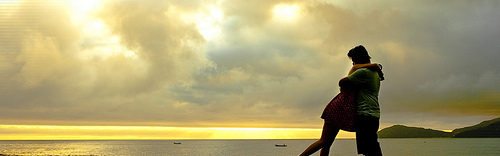
    There will always be something we didn’t do yesterday, but we get to choose right now how yesterday looks when we get to tomorrow. Right now, whatever age we are, this is our chance to live.

  • Tiny Wisdom: The Ideal Time to Appreciate Each Other

    Tiny Wisdom: The Ideal Time to Appreciate Each Other

    “Before someone’s tomorrow has been taken away, cherish those you love, appreciate them today.” -Michelle C. Ustaszeski

    Familiarity can sometimes seem like permanence. Oftentimes the more comfortable we are with someone, the less effort we put into our time with them.

    As I’ve mentioned before, I visit my family on the east coast several times each year for two weeks at a time. Every time I leave California, it’s bittersweet because I’m leaving my boyfriend Ehren to go see people I love.

    And every time I leave Massachusetts, I’m leaving my family for even longer to resume my life with someone else I love.

    Because I spend more time with Ehren, I go through phases where I don’t fully see him for the gift that he is. I might assume that I know what he’s talking about instead of fully listening. Or fail to fully appreciate the qualities that drew me to him, because I’m accustomed to them.

    I don’t always recognize when I’m doing these things, but when I do, I remember the airport.

    In that transient state between there and there, I’ve learned a lot about what it really means to be here—to recognize that everything changes and appreciate it all while it lasts.

    When Ehren drops me off for a flight, I look him in the deeply in the eyes and realize how fortunate I am for the time we get to spend together. When my family brings me to Logan, I do the same with them. And while I’m in the air between them, I remember to appreciate the time I spend with myself.

    The reality is that nothing in life is permanent–not even our closest relationships–meaning this moment is the ideal time to pay attention to each other, understand each other, forgive each other, and be honest with each other.

    Occasionally, we may take each other for granted, or get caught up in little squabbles that we wouldn’t choose to hang onto if we knew our time together was running short. We never get to know when that will happen; we only know it eventually will.

    Every moment we have together is valuable. Whether or not it feels that way is entirely up to us.

    Photo by Luciano Meirelles