Category: love & relationships

  • How Pain from the Past Can Be a Gift in the Present

    How Pain from the Past Can Be a Gift in the Present

    “When something bad happens you have three choices. You can let it define you, let it destroy you, or you can let it strengthen you.” ~Unknown

    Don’t hate your past. No matter what it contained or what it did to you, the past shapes who you are, not just for the things you felt damaged you but for the lessons you can take from it.

    I love working with the people I call the world shakers. They’re the people who want to make a difference in the world so that they leave it in a slightly better way than they found it.

    I love these types of people because they’re so driven by their heart and passion for others. They’re kind. They value people.

    You know what else these people have in common? They have empathy for others and a desire to make the world a better place. Not in a showy, “give me the Nobel Peace Prize” kind of way (although a bit more showy-ness wouldn’t go amiss!) but in a gentle, modest way.

    Do you know what really amazes and inspires me about world shakers? They’ve had their own hurts, challenges, and heartbreaks but instead of letting those things harden them and make them brittle, they’ve allowed themselves to stay open and vulnerable.

    They’ve taken those things that have wounded, battered, and pierced them and transformed the experiences into fierce empathy for others.

    They can’t walk past the person who’s struggling because they know how it feels to struggle. They have a way of recognizing the human condition in all of us.

    They turn it outward and use it as a learning experience, one that enhances their ability to empathize and drives their conviction to change things for others.

    It could be the mother who refuses to pass on the cycle of abuse she experienced to her own kids, or the teacher who bans the world “stupid” from her classroom because she can remember how much it crippled her to hear it as a child.

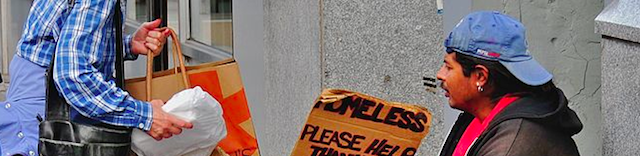
    It could be the man who gives coffee to the homeless guy every day because he can knows what it’s like to feel like no one cares about you, or the recovering addict who works with troubled teens to try and save them the pain of his experiences.

    World shaking is often driven by a need to make things better because of the pain we’ve suffered ourselves. 

    Still, I still have to catch myself when I bemoan the things that have happened to me over the years. Like everyone, I’ve had my share of unpleasant, difficult, and down right heart breaking experiences.

    For the longest time I was angry at the world because I’d experienced them. I hated the mistakes I made. I berated myself for my screw-ups and stupid choices. I felt defined by them—embarrassed and soiled—like I should be wearing a T-Shirt with the words “Damaged Goods” on it.

    One day, a very wise person said these words to me:

    Everything that has ever happened to you is the perfect preparation for the person you’re destined to become.

    And everything flipped.

    Those things that I had regretted so much had shaped me. What’s more, I had a choice in it. I had inadvertently used those things that had happened to me as things that drove me forward. Many of the things I’d become interested in, my passions, and my values were driven by those very experiences.

    I’m a passionate advocate for reducing the stigma associated with mental health issues, and I started my whole journey of learning about personal development and emotional resilience because of my own battles with stress-related illness.

    I help people find joy, passion, and a sense of purpose at work and that’s undoubtedly because I spent so many years in jobs that didn’t suit or that where I didn’t feel I was making a difference.

    I’ve also struggled in jobs that really did suit me because I didn’t know how to handle the stresses and challenges our work can bring. I didn’t understand the importance of asking for help, having strong support networks, actively managing stress, and making sure I wasn’t mentally giving myself a hard time too often.

    Having to take a break due to burn out and stress felt horrible at the time it happened to me. But during that time out I studied, trained, and read—a lot!

    I realized that resilience is a practice, not some innate skill that you either have or you don’t. I learned how to develop my own resilience and that made me immensely driven to help others do it, too.

    My dark times also forged my sense of empathy, a key skill I bring to my work. If I’d had the “charmed” life I’d originally wanted, would this have been the case? Somehow I doubt it.

    All of the lessons I’ve learned led to wisdom that can only be gained through experiencing life’s ups and downs.

    Hard lessons learned are deep lessons. They shape us. Most of us are familiar with the term post-traumatic stress, but did you know there is also a phenomenon called post-traumatic growth?

    It’s the ability to grow through adversity—to come out the other end stronger, clearer, and with a renewed zest for life.

    I think that’s what many of us fail to recognize in ourselves, that those dark times, far from diminishing us, can give us the most profound of gifts—the gift of recognizing human life in all its messy, painful, courageous glory.

    We can take those gifts and use them to be a beacon to others to say, “It’s okay. I’ve been there. This too will pass.”

    And that surely is a real gift worth giving.

  • 25 Ways to Be Good for Someone Else

    25 Ways to Be Good for Someone Else

    “Don’t wait for people to be friendly. Show them how.” ~Unknown

    When I was a teenager, right around the time I knew everything, my mother used to tell me I only remembered the bad things.

    When I told stories about my family, they didn’t revolve around family beach trips, barbecues, and vacations; they focused on painful memories and all the ways I felt my childhood had damaged me.

    The same applied to friends and milestones in my life. I chronically remembered and rehashed the worst experiences.

    In fact, straight through college I followed up every introductory handshake with a dramatic retelling of my life story, focusing on a laundry list of grievances about people who had done me wrong.

    It was as if I was competing for most royally screwed over in life, like there was some kind of prize for being the most tragic and victimized. (Full disclosure: I hoped that prize was compassion and unconditional love. It was more like discomfort and avoidance).

    Not everyone is as negative or needy as woe-is-me-younger Lori was, but I’ve noticed that many of us have something in common with my misguided past self: We focus on how we’ve been hurt far more than how we’ve been helped.

    Psychologists suggest that to some degree we complain because we’re looking to connect with people who can relate to the universal struggles we all face (though in some cases, complaining is a constructive way to find solutions to problems as opposed to a chronic need to vent negativity). I think there’s more to it, though.

    When we complain about everything that’s gone wrong or everyone who has done us wrong, we’re drowning in our self-involvement. (more…)

  • 3 Vital Lessons on Living a Life That Won’t Lead to Regret

    3 Vital Lessons on Living a Life That Won’t Lead to Regret

    Carpe Diem

    “I now see how owning our story and loving ourselves through that process is the bravest thing that we will ever do.” ~Brene Brown

    Even though I’m a psychologist who has been working in the field of development and assessment for the last thirteen years, sometimes it still takes more than reading a theory in a book, or even seeing something work with a client, to make it real for me.

    Here are three of the moments that have had the most impact on me and the way I live my life.

    1. Each of us has the power to change our situation.

    I worked for ten years at a company I mostly loved, in a job I mostly loved, but it was a job that didn’t really love me. It was long hours, hard and stressful work.

    I thought I thrived on it for a long time, until I slowly came to realize I didn’t have much of a life outside of work.

    I had some health issues that didn’t seem to be improving, but I was hoping, year after year, that things would somehow get better. But it seemed things never did.

    My breakthrough moment was realizing that I had the power within me to change the situation. Sometimes a choice might be a hard choice, but it’s still a choice.

    So instead of going for the next promotion, I resigned. I moved to SE Asia, where I’ve been living and working freelance for a year now. My life still has work as part of it, but also coffee shops, blogging, friends, fun, travel, and yoga. And passion and purpose in a way it didn’t before.

    I had the power to change the situation all along, and eventually, I did.

    Consider your own life.

    Is there anything that you want to change?

    Are you waiting for someone else to make it happen?

    Take the power back and take a step toward change yourself.

    Change can be hard, but it can also be incredibly rewarding. And if you always do what you’ve always done, you’ll always get what you’ve always got.

    2. Act to ensure you feel like you’ve done your best by the relationships in your life at any given moment.

    My dad died six years ago, and after the worst of the grieving was done, it gave me another breakthrough moment.

    He died suddenly from a heart attack with no warning at fifty-five. It was a terrible shock for all of us. But through the sadness, I was very grateful that I had no regrets about the way our relationship had been. I’d loved him unreservedly, I’d spent time with him, I’d laughed with him, and I’d shared my life with him.

    The situation made clear to me that anyone can be taken from us at any time.

    And that, even though it sounds a bit macabre, I should live my relationships as though the person could die at any minute.

    It’s ensured I respond in a different way to situations that previously could have been blown out of proportion. It’s helped me to avoid many arguments, but also speak up and be honest about my own feelings.

    It’s helped me to have the best possible relationship I can with the people I love. And, in fact, some I don’t. I no longer waste time, as I know that time is finite.

    How are your relationships right now? With family, with friends?

    How would you feel if someone you loved died today? Is there anything you would change about the way you contributed to the relationship?

    Remember that while it’s not possible to change how other people respond, it is possible to work on your own responses. Sometimes that can take time and effort, but better now than when it’s too late.

    3. What’s right for others isn’t necessarily right for you.

    Another breakthrough moment was in the last couple of months, as I’ve been living a very different life in Thailand to the life of the corporate businesswoman I was in the UK.

    The study of personality and individual differences is a core part of my training, and something I work with all the time.

    I’ve viewed the success of Susan Cain’s book about introverts, Quiet, with interest, as I’m a definite introvert myself, but one who’s always adapted her behavior to demonstrate extrovert behaviors, at work and even with friends.

    Recently, my very extrovert mum visited Thailand to spend a month working on our blog and website. This prompted me to realize that I no longer adjust my behaviour as much as I used to.

    I spend a lot of time alone, I work in coffee shops with people buzzing around me, but in my own little bubble. But more importantly, I’m okay with that life. I accept that this is the right life for me at the moment, and is giving me the kind of nourishment I need.

    And I don’t need to worry about making lots of new friends and doing lots of social activities, as some people suggest to me. I’m okay living the life that’s right for me.

    Whilst it’s good to listen to other points of view, I know that what’s right for others isn’t necessarily right for me. And I have the strength to follow my own path.

    Are there any aspects of your life that you are living according to what others think is right, rather than what’s right for you?

    We are all different, every one of the billions of us alive right now, and we need different things to grow and develop into our “best self.”

    Give yourself the best possible chance at this by creating an environment that nurtures you, rather than what others think should nurture you, or what you think should nurture you.

    You Own Your Story

    All of these three breakthrough moments—taking back the power to make my own choices, ensuring my relationships are in the best possible state, and following my own path despite others’ opinions—had at their core me owning my own story.

    If there’s one overarching lesson I would like to share with you, whispering it gently, kindly, but persistently in your ear, it’s that you own your own story.

    No one else is writing it for you.

    So write with a loving hand, reflecting on your own breakthrough moments, but don’t sit around passively waiting for the story to just happen.

    Take a step toward a more nourishing, powerful, and loving life right now.

    Photo by Chris Parker

  • How to Change a Life and Make the World a Kinder Place

    How to Change a Life and Make the World a Kinder Place

    One Act of Kindness

    “There is no exercise better for the heart than reaching down and lifting people up.” ~John Holmes

    Have you ever been stressed and cranky and having a terrible day when someone was unexpectedly kind to you?

    When this happens, it lifts your mood and changes your state of mind. You want to hold on to that feeling of goodwill. Maybe even pass it on.

    Everyday Kindness

    The Dalai Lama said, “Be kind whenever possible. It is always possible.”

    It is always possible, but it isn’t always easy. Sometimes acts of kindness for people in our lives can be more difficult than random acts of kindness for strangers. We all have people in our lives that are negative, grumpy, or angry. They make us feel negative, grumpy, and angry, too.

    It helps if we remember that difficult people are usually incredibly unhappy. Something is making that person miserable. If we think about that and find compassion instead of letting negative emotions overpower us, it’s surprising how much easier it is to remain kind.

    Real Benefits of Kindness

    It’s scientifically proven that being kind makes us happy. Feeling compassion, laughing, touching, and hugging release oxytocin, a feel-good hormone.

    Try this exercise: Pretend everyone is your friend. Treat them accordingly. When you’re in traffic and see someone trying to turn in, pretend the other driver is your friend. Pretend you know and like the person. Be friendly! Smile and wave them in ahead of you.

    Kindness combats depression and even chronic pain. Studies show that pain, depression and disability all decrease after doing volunteer work.

    Kindness also makes us live longer. We just learned how kindness makes us happy, and happy people are known to live longer lives!

    When we are positive and kind, we spread goodwill and happiness. Don’t we want to be surrounded by goodwill and happiness rather than negativity?

    Negative people are rarely kind. Kind people are rarely negative.

    Heather and the Johnsons

    Even though being kind is beneficial for ourselves, real kindness isn’t about us at all. It’s about thinking of others, having someone else on our minds and hearts.

    The Johnsons are an amazingly, incredibly kind family. If I didn’t know them, I’d have a hard time believing this story:

    Heather was a drunk driver. She ran through a stop sign at an intersection where Mike Johnson was heading home from work. She crashed into his truck. He was injured so severely that he was not expected to survive. But after several surgeries and many months of physical therapy, he recovered.

    Mike and his wife Gene are such kind people, they not only forgave the intoxicated driver, but they also helped her and changed her life.

    Heather was a very young woman going down a dangerous path of partying and drinking. She was arrested after the accident, and she was terrified of going to jail when it was time for her court hearing.

    The young woman visited the hospital where Mike was supposedly dying. When the family noticed Heather there, they warmly welcomed her. Can you imagine that?

    Heather said they consoled her. Mike and Gene’s adult children hugged her and told her it would be okay. They told her, “No one is perfect. We all make mistakes.”

    Shortly after, Heather met Gene in the hospital. Heather was still expecting anger, screaming, and hatred. She knew she deserved them. But Gene hugged the girl and told her she forgave her. Heather said it was like “a 10,000 pound boulder was lifted off” her.

    Heather decided to do something to help the Johnsons to try to give back to them. She organized a live music fundraiser and raised three thousand dollars for the Johnsons before her court hearing. Mike and Gene spoke on Heather’s behalf at the hearing for a reduced sentence for her.

    The incredible, amazing kindness and forgiveness from the Johnsons changed Heather’s life completely. It changed her whole outlook and made her want to be a better person.

    The Johnsons consider their pain a fair price for saving Heather from killing someone else, possibly herself.

    They befriended her and visited her after her trial when she did go to jail. She is incarcerated for thirty-three months at a correctional facility in Florida, where she is keeping a journal of her past experience to inspire other young people towards responsible life choices.

    We all want happier and better lives. To improve our lives, we have to improve ourselves first. Let’s choose to surround ourselves with goodwill and positive energy. Let’s commit to living lives of kindness, compassion, and forgiveness, resulting in a healthier and happier life for ourselves.

    Do you have a story where someone else’s kindness affected or changed your life?

    Photo by Heath Brandon

  • Why It’s Okay to Be Self-Centered Sometimes

    Why It’s Okay to Be Self-Centered Sometimes

    Me Time

    “We cannot live only for ourselves. A thousand fibers connect us with our fellow men.”  ~Herman Melville

    I grew up with a faith that encouraged personal sacrifice for others. Putting myself before others or desiring what they lacked was sinful. So there I was, during my teenage years, trying to be a saint, completely unselfish when thinking or interacting with others.

    I must admit that I was always in the equation.

    If I gave advice to others, I did it for them but also for the good feeling of improving their lives. If I helped someone else solve their math problems, I did it for that person, but also because I enjoyed the new perspectives gained through teaching, and so on.

    Guilty Self-Centered

    I realized that whenever I was about to help others, I anticipated the benefit I was about to receive, whether it was a good feeling, some sort of recognition, more consideration, or leadership experience. And I wanted that repressed benefit.

    But at that time, being centered on me, even slightly, was not good. That was sinful.

    So I kept trying to remove my desire to receive before I was about to give. I felt guilty, hiding my self-interests.

    I wanted to care for others, but I was hardly innocently others-centered.

    Something was missing.

    I knew deeply in my heart that things should not be that way, that desiring gains for myself was a good thing. I felt this was a legitimate need.

    Helping myself and helping others appeared to not be mutually exclusive.

    The Dangers of Being Solely Others-Centered

    The mother who stays up late at night is not purely baby-centered; she has love and affection needs she is fulfilling for herself.

    This post can’t be purely centered on you because if you don’t give me feedback (positive or negative), I won’t be able to improve my weak points or bring more of what you liked it. If I get these gains for me, you get more of my writing. The improvement of the teacher improves the student, and vice versa.

    Many parents killed their children and themselves when they didn’t secure their own oxygen mask first in flight emergencies. That’s why the aviation authorities recommend, “If you travel with someone who needs assistance, secure your own mask first, before assisting the other.”

    An act of self-interest is actually the condition of being able to care for others.

    You can’t help others from a weak condition. Your “weakest you” weakens others. Your “strongest you” strengthen others.

    We can’t sacrifice ourselves in the name of others because in doing so, we hurt ourselves and them.

    When I realized that my well-being was linked to the well-being of others, that caring about myself was caring about others, I felt liberated and more capable of helping others.

    I think this is conscious selfishness.

    If your choices help only others but not you, then you are doing us all a disservice, since you are helping us from an underdeveloped state of being. The more you weaken physically, financially, emotionally, the less you can care for others in these areas.

    Being Self-Centered at Times Helps Others

    The more you help yourself get stronger, the more you can help the weakest.

    The more you help yourself get happier, the more you can help the saddest.

    The more you help yourself get relaxed, the more you can help the most stressed.

    The more you help yourself get wealthier, the more you can help the poorest.

    And if you become far stronger/happier/healthier/wealthier than the average, then the more people you will be able to help in the world.

    Find the ways your strength would help others. Reading a math book could make you wiser for your children; going to the movie theater could relax you so you will bring higher vibes to your home.

    You can’t help others from a weakest position. An ill person can’t help us to be healthier; a hungry person can’t feed others.

    Be at peace with yourself when you are well-intentioned selfish.

    You might be thinking: Should I do things for myself only when that helps others? Does all this mean that I can’t do things just for myself anymore?

    I enjoy eating ice cream without remotely being aware how my pleasure helps others. I keep doing what feels good for my senses and my being.

    Maybe doing things for ourselves feels so good because at the end, even if we don’t perceive it, our happiness helps others.

    Let’s celebrate that each one of us is so important for all of us. We are one!

    Photo by Kyle Garrity

  • Reclaim Your Power: Stop Waiting for Other People to Make You Happy

    Reclaim Your Power: Stop Waiting for Other People to Make You Happy

    Happy and Free

    “You alone are enough. You have nothing to prove to anyone.” ~Maya Angelou

    My knees hit the pavement, unable to hold me up as I watched my entire life purpose drive away.

    I had put my entire heart and soul into that relationship. I had sacrificed everything—my family, my friends, my career, my hobbies. And now I had nothing. What had gone wrong?

    I lay there for a while, quite convinced that the pain and unhappiness was going to be the end of me. I wallowed in the misery of it all.

    Then something touched my face. I brushed it away and opened my eyes.

    A breeze had shaken loose dozens of leaves from the autumn tree above me. Scarlet and gold and sunset orange leaves were drifting down to me. Beyond them was the periwinkle blue sky with gigantic fluffy white clouds floating about.

    I stared at the beauty around me. I had spent so long looking inward, criticizing myself, working to become better, to become enough for a person that had their own issues. And in doing so I had lost sight of just what a beautiful and amazing place the world could be.

    Putting my life on hold for others wasn’t getting me anywhere. I was miserable, I was broke, and I was alone. Enough was enough.

    Something was going to change, and in that moment I determined that what needed to change was me.

    I was no longer going to shut myself away from the world. I was no longer going to ignore all the good things that were out there. From now on I would live a life of open eyes, a life of appreciation, a life of simplicity, a life of happiness.

    In the following months I learned more about myself than I had in my entire lifetime, and in applying those lessons to my everyday life I became truly happy and deeply appreciative of the world around me. I also discovered the strength of the power within me.

    Here is what I have learned:

    No one will ever love you as much as you can love yourself.

    If all you want is to be loved, you need to understand that no one will ever fulfill that feeling as much as if you wholly and completely loved yourself. Many of us have grown up with movies like Jerry Maguire that promise a perfect person who will complete you.

    It may seem radical, but what if that person was you? What if you acted as your own true love? Choose love for yourself over the fear of being alone and realize your own power.

    No one is worth sacrificing your values for.

    We all sacrifice a certain part of ourselves for others, whether it’s deciding not to get a cat because your significant other is allergic, or getting up early every Saturday to drive your child to football practice. These sacrifices are a way of showing we care about another person’s happiness and well-being.

    But anyone who cares about your own happiness and well-being with never ever want you to sacrifice your values. Our values are what define us as human beings. To deny them is to deny our very essence. Stay true to them and to yourself.

    There is always something to be grateful for.

    Just as in my darkest moment I saw how truly beautiful this world could be, so can you find something to appreciate.

    Take time out every day to witness the wonders that exist not just around you but within you. From the way your body allows you to run and jump and dance and sing, to the sunshine and fresh fruit on a summer’s day.

    If you take the time to notice it, life is really very wonderful.

    Spending time alone doesn’t mean you have to be lonely or bored.

    When you spend time alone you learn more about yourself than you ever could in a crowded room.

    By being alone you can determine your own likes and needs without any external influences. You can discover passions you never knew existed, and when you don’t have to worry about what other people will think you are able to pursue them wholeheartedly.

    There is always something new waiting to be discovered. Seek it out and become your own best friend.

    When you say no, you open yourself up to more meaningful yeses.

    By being a people pleaser and saying yes to every opportunity that crossed your path, you may have thought you were doing yourself a favor—that people would appreciate you more. But without creating boundaries, you give people an opening to take advantage of your generous nature, and risk becoming burnt out and resentful.

    Instead, learn the power of no. Take time out for yourself so that when you do say yes, it’s sincere and meaningful.

    Change and grow a little each day.

    No matter how much you feel you’ve lost yourself, you can always instigate change and rediscover who you truly are. It’s okay to start small. Try a new hobby, go on a holiday, do something you’ve always wanted to try. Expand gradually. Learn a little more each day.

    By putting yourself first you can discover who you truly are and form an identity separate from any other person and unique to you.

    By forming a loving, happy, confident base to work with, you teach others to respect you as a person. When you become a whole and complete individual it doesn’t matter what storms appear in your horizon; you will have the strength to weather them.

    Photo by blob-fish

  • A Message for Anyone Who’s Been Abused and Has Kept It Inside

    A Message for Anyone Who’s Been Abused and Has Kept It Inside

    Stand Strong

    TRIGGER WARNING: This content deals with an account of sexual abuse and may be triggering to some people.

    “Nobody can go back and start a new beginning, but anyone can start today and make a new ending.” ~Maria Robinson

    My uncle molested me from the time I was about four until I was in my early twenties. He held me too long and hugged me too tight. He would growl in my ear like an animal in heat, his warm, wet, often alcoholic smelling breath overwhelming me.

    This is how he greeted me at every occasion. When I was really small, I almost looked forward to seeing him because I liked the attention and believed he loved me, although deep down inside, I always felt as if I were doing something wrong, something naughty.

    As I grew, he began to grope my ass through my clothing while he whispered in my ear. He would tell me that I was sexy as he growled and hugged me tighter, pressing me up against his body. Much to my horror, I was aroused.

    I was aroused by my uncle. “MY UNCLE!” I would think to myself. “What on Earth was wrong with me? Surely something was gravely wrong with me to be aroused by my own uncle.”

    I wasn’t even sure of what arousal was at that point and only in retrospect could identify what I was feeling. I didn’t have a name for sex at that age, but I could feel it and knew it was wrong deep down in my belly. I felt wrong. 

    He was an adult. He was my uncle. He loved me.

    I felt the problem was surely mine and would chastise myself as disgusting and dirty. I kept my secret close. I assumed the other members of my family knew of his behavior and that he was normal. He didn’t try to hide it, or so it seemed to me.

    He acted out all the time. He was loud, erratic, and verbally abusive. His behavior was blamed on his drinking and the fact that he was an eccentric artist who simply couldn’t control himself.

    This was the way it was. This was the way it was to be.

    When I was a teenager dancing at a wedding, he told me seductively that he wanted to “make love to me.” I laughed, deflecting his advance as he pulled me in tighter. He had told me that he wanted to have sex with me.

    I knew it was true. I wondered if I would have the strength and courage to say no. I felt the planes and curves of his entire body pressed into mine on that dance floor as I drifted up above, looking down from a cloud, wondering how I might ever escape myself.

    It was only in my late teens that I began questioning if my sickness wasn’t possibly in part his sickness, because in every book that I read and every movie that I saw, I searched but could not find a relationship like the one I had with my uncle. 

    I would wait for the scene in a movie between two related people to become romantic. When it never did, I began to wonder if that bad, ugly feeling in my belly had been trying to tell me something about him.

    I cried to my boyfriend night after night, because the more emotionally intimate we became, the harder it became for me to be physically intimate with him, and he wanted to know why I was in such pain.

    After a Thanksgiving dinner accompanied by my uncle’s raucous behavior and inappropriate advances, my boyfriend insisted on confronting my father. To my shock, my father claimed that he had no idea of my special relationship with my uncle. He never would have guessed.

    No one knew but me.

    I simply never imagined that I would be in the position of having to defend myself. My uncle had been so free in his behavior with me. It never occurred to me that he would deny it.

    He denied it, as did his wife and the entire side of the family that accompanied him. Not only did they deny it, they threw accusations at me.

    “Crazy. Depressed. Liar. She’s unable to interpret harmless behavior.” They defended his honor as husband, father, and grandfather with vigor as if he were a hero—someone to be lauded, not disparaged and blamed with this filth.

    My father had confronted him and relayed the information to me. I did not have the courage to confront him myself.

    Just as I never dreamed I would need a defense, I never dreamed of how many would accuse me. Even my own brother sided with them, and my father would soften my uncle’s blame with statements like “he didn’t mean to hurt you.”

    I wanted to scream so loud the heavens would respond. Cry so long my eyes would bleed into pools of blood around my feet on the floor. Vomit up every one of my organs in sheer disgust.

    But what they didn’t understand is that the blaming, name-calling, and crafting of an airtight defense against me were all unnecessary. I wanted nothing from any of them. I did not want an admission. I did not want an apology. 

    I did not want revenge.

    I did not want him grabbing my ass at my wedding. I did not want to have to explain to my someday husband my “special” relationship with my uncle. I did not want him to have access to the children I would someday have.

    I wanted him to reconsider his behavior before his son’s newborn baby girl, the first girl born into the family since my birth, turned four. I did not want to ever see his disgusting face again. I did not want to feel anymore that sick, dark pain deep in my belly as he touched me.

    I did not want him to touch me again, ever. I wanted my future to be different from my past.  That is all I wanted.

    And I got it. I never saw him again. I turned and walked away from all the disbelievers and my uncle the molester.

    I found people who did empathize and help me heal. I faced the truth of what had been done to me and got the help I needed to go on to live a healthy, normal existence. In doing so, I learned that it is common for families to turn on abuse victims and believe the abuser rather than the abused.

    Were you abused? Did you speak your truth, and no one believed you? Did you speak your truth and experience the pain of even one person doubting you?

    If you were abused and someone, anyone, didn’t believe you, know that I do. I believe you. I stand with you, and for you, in the small way I can. 

    Speaking the truth after being abused takes incredible courage and strength. I am proud of you.  My story can be your story.

    We can be victorious together as survivors. I am a survivor. You are a survivor.

    We are stronger for having survived. We stand together triumphantly and move forward, bravely living abuse free lives.

    If you have been abused or are currently a victim of abuse and have not yet spoken out, I urge you to reach toward a safe person and speak your truth. You too are strong and courageous and deserve to live an abuse free life. Stand with me, no longer a victim but a survivor.

    Start today and make a new ending.

    Photo by Cornelia Kopp

  • What All Great Relationships Have in Common

    What All Great Relationships Have in Common

    “Remember, we all stumble, every one of us. That’s why it’s a comfort to go hand in hand.” ~Emily Kimbrough

    My husband and I have been married for almost ten years.

    And before those ten years, we were college sweethearts and had been dating for over six.

    When you know someone for that long, someone whom you are deeply and madly in love with, something funny happens:

    Your collective thoughts, actions, and words become so tightly intertwined that you walk around believing you are one person.

    As a result, you feel ten times taller. Like you can do anything. You feel as though you’ve discovered the purpose for breathing on this planet.

    But something else happens, too. 

    When you really know someone, intimately and with all the deepest parts of yourself, you also hit bumps in the road.

    Times when you argue. Times when you take each other for granted. Times when you’re completely challenged.

    My husband and I have been through it all, especially as college graduates moving out to Hollywood with big dreams in our hearts.

    We were changing so much, like shapeshifters, rapidly taking on new forms and discovering who we really were in the process.

    The truth is, that period could’ve easily destroyed us.

    Not only that, but: Sometimes we felt like we didn’t know each other. Sometimes our matchbox-sized apartment in West Hollywood got under our skin. Sometimes we fought.

    Sometimes we were broke. Sometimes we weren’t intimate. Sometimes our car broke down.

    Sometimes exes popped up out of nowhere, determined to tear us apart.

    We’ve weathered all of these storms, and more. And we will weather them, still.

    Things will happen. Shadowy forms will come out to dance. Life will hurt sometimes. And be hard. But also worth it.

    My husband and I have a beautiful life. I truly couldn’t ask for more. We have a deep, eternal bond, embodied in the form of a brilliant and loving toddler who brings us a deep joy we once never knew existed.

    We also do things that light us up from the inside out. We make films together. We write together.

    We share a love for the arts, books, meditation, politics, quantum physics, and vegan food. We take walks together. Talk about anything and everything.

    Together, alone, we make the stupidest and most politically incorrect jokes you can imagine.

    We challenge one another to leap out of our comfort zones. We make big decisions and set off on bold adventures.

    My point is this:

    If you have true love in your life, don’t let the down, dark, doomy, disappointing, messed-up times fool you into thinking that you. Just. Can’t. Do. This. Anymore.

    Embrace the fact that love—the real, infinite, take-your-breath-away kind of love—will be filled with ups and downs.

    Embrace your every moment together. All of it—the romance, the laughter, the tears, the disagreements, the adventures, the infinite unknowns. 

    ‘Cause if, along the way, no matter how deep the trenches, you each have somebody who cherishes you, supports you, uplifts you, respects you, and thinks the world of you, then you must thank your lucky stars for that gift.

    And throughout the mystifying journey, remember this:

    If the bad times suck hard, then the good times must be really special. That’s why the bad times make us suffer so much—because the good times are something we can’t bear to lose.

    Accordingly, we struggle. We work at it. We fight for our blessings.

    No relationship is perfect. But the ones worth having are always worth fighting for.

  • Setting Emotional Boundaries: Stop Taking on Other People’s Feelings

    Setting Emotional Boundaries: Stop Taking on Other People’s Feelings

    “The way you treat yourself sets the standard for others.” ~Sonya Friedman

    The longer I stayed on the phone, the more agitated I became. My mother was on the other end, as usual, dumping her emotions on me. I had moved to Los Angeles for graduate school in part to escape all of this—my mother’s unhappiness, my sense of responsibility, the pressure to be perfect.

    When I hung up the phone, I felt an overwhelming sense of anger. At the time, I could not (correction: would not) allow myself to admit that I was angry with my mother. I couldn’t reconcile having such negative feelings and loving my mother at the same time.

    After all, hadn’t she sacrificed so much for me? Hadn’t I always considered her to be my closest confidante? Didn’t I proudly declare her to be my best friend when I was younger?

    Even the most positive memories between my mother and me have been eclipsed by the shadow of her depression.

    As a young child, I could never understand why my mommy was so sad all the time. I cherished the rare days she was carefree and silly and held these moments close to my heart. When she slipped into a depressive state, sleeping days at a time in her dark room, I willed her to come out.

    Early on, I learned to temper my behavior and my own emotions so as not to instigate or prolong her sadness. In my young mind, I made myself responsible for her and was not able to separate her feelings from mine.  

    I wanted her to be happy and thought that if I was always “good,” she would be. When she wasn’t happy, I blamed myself.

    Unconsciously, my mother fed this belief when she constantly bragged to others that I was the “perfect daughter.” The pressure to live up to my mother’s expectations overwhelmed me. I suppressed many negative feelings and experiences in favor of upholding the ideal she and I had co-created.

    That day, I turned this anger toward a safer target, my co-worker. That day at work, I blew up. I can’t remember what I said, but I distinctly remember the look of confusion on her face. My frustration with my inability to express myself made me even angrier. I excused myself, ran to the bathroom, locked myself in the last stall, and bawled my eyes out.

    Soon after, I took advantage of the free counseling services on campus. Over the next several weeks, my counselor helped me realize that it was okay to feel the way I was feeling. This was a radical idea for me, and one I struggled with at first.

    Because I had suppressed my own feelings for so long, when I finally allowed them to surface, they were explosive.

    Anger, resentment, and disgust came alive and pulsed through my body whenever I spoke with my mother during this time. While she seemed to accept truth and honesty from other people, I tiptoed around certain topics for fear of upsetting her.

    I never felt I could share the difficulties and challenges I experienced in my own life because this contradicted who I was to her. I felt I had no right to be unhappy. When I attempted to open up about these things, she often interrupted me with a story of her own suffering, invalidating the pain I felt.

    She seemed committed to being the ultimate victim, and I resented her for what I perceived as weakness.

    I realized that to get through my graduate program with my sanity intact, I needed to limit the amount of time and energy I gave to her. Instead, I found ways to protect and restore my energy. Writing became therapeutic for me. I found I could say things in writing I was unable to verbalize to my mother.

    This won’t be an easy letter for you to read, and I apologize if it hurts you, but I feel like our relationship is falling apart, and one of the reasons is that I’ve kept a lot of this bottled up for so long. I never thought you could handle honesty from me, and so I lied and pretended everything was okay because I was always afraid I would “set you off” or that you would go into a depressed mood.

    You unconsciously put so much pressure on other people (me especially) to fill your emptiness, but that’s a dangerous and unrealistic expectation, and people can’t and won’t live up to it. And they start to resent you for it. I do want you to be happy, but I’m starting to realize that I can’t be responsible for your happiness and healing; only you can.

    Seeing my truth on paper was the ultimate form of validation for me. I no longer needed to be “perfect.” I gave myself permission to be authentic and honored every feeling that came up.

    When I was ready, I practiced establishing boundaries with my mother. I let her know that I loved and supported her, but it negatively affected me when she used our conversations as her own personal therapy sessions. I released the need to try to “fix” things for her.

    I took care of me.

    Do you have trouble establishing healthy emotional boundaries?

    Take a moment to answer the following questions adapted from Charles Whitfield’s Boundaries and Relationships: Knowing, Protecting and Enjoying the Self.

    Answer with “never,” “seldom,” “occasionally,” “often,” or “usually.”

    • I feel as if my happiness depends on other people.
    • I would rather attend to others than attend to myself.
    • I spend my time and energy helping others so much that I neglect my own wants and needs.
    • I tend to take on the moods of people close to me.
    • I am overly sensitive to criticism.
    • I tend to get “caught up” in other people’s problems.
    • I feel responsible for other people’s feelings.

    If you answered “often” or “usually” to the above statements, this might be an indication that you have trouble establishing healthy emotional boundaries.

    Like me, you’re probably extremely affected by the emotions and energy of the people and spaces around you. At times, it can be incredibly hard to distinguish between your “stuff” and other people’s “stuff.”

    It is incredibly important to establish clear emotional boundaries, or we can become so overwhelmed and overstimulated by what’s going on around us that it’s sometimes hard to function.

    Here are a few ways to begin the process of establishing healthier emotional boundaries.

    1. Protect yourself from other people’s “stuff.”

    I can feel when someone is violating a boundary because my body tenses up. I realize that my breathing is very shallow. I feel trapped, small, helpless.

    The first thing I do is to remind myself to breathe. The act of focusing on my breath centers me and expands the energy around me. In this space, I can think and act more clearly.

    When I feel myself becoming too overwhelmed, I try to immediately remove myself from the situation. Sometimes all it takes is a couple of minutes to walk away and regain my balance. Other times, I have had to make the decision not to spend time with people who consistently drain my energy.

    Having a safe space to retreat, practicing mindfulness and meditation, or visualizing a protective shield around yourself are other methods that can help restore balance when boundaries are invaded.

    Find out what works best for you.

    2. Learn to communicate your boundaries in a clear and consistent way.

    For many, this can be the most difficult part of the process for various reasons. We don’t like to appear confrontational. We’re afraid that if we set clear boundaries for ourselves, the people in our lives will begin to resent us. However, learning to communicate boundaries effectively is necessary for healthy relationships.

    I’m not comfortable with that.

    It doesn’t feel good to…

    I’m not okay with…

    I’d appreciate it if you wouldn’t…

    Please don’t…

    If you cringed at the thought of using any of these phrases, you’ll be relieved to know that communicating your boundaries doesn’t always have to be with words. You can also effectively communicate through the use of non-verbal.

    Closing the door, taking a step back, shaking your head, or signaling with your hands can be less threatening ways of letting others know what you will and won’t accept from them.

    3. Be patient with the process.

    When I first realized that I was taking on the negative emotions of my mother, I became extremely resentful and disgusted with her. Instead of taking responsibility for my role in allowing this dynamic to occur, I blamed her for every negative thing that had happened in my life.

    I closed myself off from her and shut her out completely. Our relationship became incredibly strained during this time as we both readjusted to the new boundaries I was setting.

    Eventually, I was able to allow her to have her own emotional experience without making it about me. I could listen and no longer become enmeshed or feel obligated to do something about what she was feeling.

    Whenever you change a pattern, it is natural to feel resistance from inside as well as outside the self. As you practice, your ego may start to act up and make you feel like you are “wrong” in establishing boundaries.

    Others may also become resentful of your newfound assertiveness. They may be used to a certain dynamic in your relationship, and any change has the potential to cause conflict.

    Remember to be kind to yourself through the process and repeat the following affirmation:

    I respect and love myself enough to recognize when something isn’t healthy for me, and I am confident enough to set clear boundaries to protect myself. 

  • How Relationship Issues Can Lead to Growth (and Why It’s a Daily Process)

    How Relationship Issues Can Lead to Growth (and Why It’s a Daily Process)

    “When something bad happens you have three choices. You can let it define you, let it destroy you, or you can let it strengthen you.” ~Unknown

    Relationships are tough. Even more difficult is maintaining healthy boundaries within a relationship.

    My head hurts and I feel like I’m going to throw up. Let me explain. I’m in a loving, healthy relationship with a beautiful woman, and I’m proud to call her my partner.

    Great, so why do I feel like I want to throw up? Well, because last night was a tough night for us, for me, and today I have an emotional hangover.

    Here’s the breakdown. She was going to her girlfriend’s house for dinner and girl time. Great. I was home cooking myself dinner and doing a little reading and television viewing. Great again.

    I sent her a text at 9:40 asking if she was having a good time. No response. Okay, no worries. An hour and a half later, worries—a head full of them.

    Is she okay? Why no reply? Did I do something wrong?

    She always replies to my texts. Always. So why not now?

    Good question.

    A healthy response would’ve been to tell myself she’s having a great time and will call when she’s on her way home. I didn’t have a healthy response.

    I leaked. Leaked all over the place. Leaked as in my boundaries were nowhere to be found, and hence what should have been kept in my head instead leaked all over our relationship.

    I texted a pissy good night text saying I was going to bed and hoped she was having fun. Tough to tell tone via text, but anyone could have seen that I was pissy. 

    A leak = poor containment. I wasn’t containing.

    She replied!

    She said she was having a blast and that I was entitled to be upset. Not good enough. By now I was shaking.

    Containment breach! Containment breach! We have leak in the dam.

    I couldn’t stop. I texted her saying her behavior was anything but normal. That she always texted me back.

    This didn’t help. Stop Zach! I couldn’t.

    The scared, wounded little kid had his hands on the steering wheel. He was in charge, not me.

    I called her. Told her how she had hurt me, that her lack of communication triggered my abandonment issues.

    I blamed her for my own stuff. Great boyfriend I am. Actually, I am a good boyfriend; I just had a tough night.

    My lack of containment led to my leaking all over the place, all over her. Bad boundaries, it happens to the best of us.

    Here’s the growth. Yes growth. There’s growth all over this and I’m thankful for the opportunity.

    Today I can own my part, which was assuming, taking things personally, lack of containment, and blaming. My breach of containment led to all of this. There’s growth because I can see my part, learn, and make amends.

    There’s growth because although I have an emotional hangover, I know in my heart that the relationship is not over. In years past I would have shut down and never recovered from something like this. Not the case today.

    As my therapist told me (yes, I texted him about this), we have to make mistakes to learn and grow.

    Sometimes containment means holding back our own crazy and being the functional adult who can move beyond it. Other times we leak looking for the other person to be responsible for us. It’s about practice and progress, not perfection.

    Relationships are tough, but I’d rather say relationships are rewarding if we’re willing to look at our part and do the work. It’s a daily practice. And not just with a significant other.

    I’m talking about relationships in all areas of our lives: work relationships, sibling relationships., relationships with our parents—all of this and so much more. The biggest for me is relationship with self. I wasn’t taught growing up how to like and love myself.

    I was taught that everything is my fault and that I don’t matter. Makes having a loving relationship with myself tough work. It’s a daily practice, as mentioned.

    If daily is what’s needed, then daily it is. Some days are better than others but still daily, nonetheless.

    I call it re-parenting.

    I call it love.

  • Change Your Life by Changing Your Mind About Yourself

    Change Your Life by Changing Your Mind About Yourself

    Happy Woman

    “The way you treat yourself sets the standard for others.” ~Sonya Friedman

    I’d had enough.

    Once again, I’d sent follow-up emails to guys who had shown interest in my dating site profile. Once again, I’d included full-length photos with those emails, unlike the headshot that went along with my online profile.

    And once again, days later, my inbox was a virtual ghost town.

    Didn’t these guys know how much courage it took for me to set up a profile in the first place? I was twenty-six years old and been on fewer than a dozen dates in my life—including my senior prom, to which I took a freshman.

    I was morbidly obese for most of my twenties and had only recently lost fifty pounds. I was still overweight but in better shape than I’d been in years. And yet it still wasn’t good enough.

    As soon as these once-interested guys got past my witty, self-deprecating profile full of catchy phrases like “loves to cook,” “enjoys watching football,” and “can quote The Godfather” and saw me head-to-toe, they remembered that it doesn’t matter if a girl likes watching sports or can cook a mean Sunday dinner—as long as she’s “fit and athletic.”

    My self-esteem was lower than low. This was just as bad as being ignored to my face in bars and at parties.

    I felt like I had to apologize for the way I looked. “Hey, sorry I’m fat, but I’m a really nice person! And I’ve spent a lot of time developing my sense of humor while the rest of you were out dating and stuff!”

    I’m not sure what finally flipped the switch inside my head, but I remember the date the switch got flipped: March 7, 2006.

    I’d had enough. I realized (somehow, for some reason) that I didn’t have to apologize for anything about myself.

    That there were plenty of girls who looked just like me and managed to find love on their own terms—who managed to live life regardless of the voices in their head which tried to tell them they weren’t allowed to.

    I got mad, both at the world and at myself for wasting so much time feeling apologetic. Like I had to gratefully accept any little crumbs thrown my way.

    So I went on a rant. And I took that rant to the bastion of all that’s sketchy about the internet.

    Yes, I went to Craigslist. Hey, why not? I had nothing to lose at this point.

    I wish I’d kept that rant because it was gold. I derided the nameless men who let me know without saying a word that I wasn’t good enough once they got a look at the full package. I called it exactly as I saw it, with all the vitriol I could manage.

    I then announced to all of the world that I wore a size 14/16, and that anyone who had a problem with that shouldn’t bother wasting my time.

    I listed the same qualities I’d listed on my dating profile, and asked if my size really mattered in the face of all I had to offer. My humor, intelligence, hatred of reality TV, love of old timey movies, insanely huge music collection spanning six decades, mad cooking skills…did my size matter all that much, really?

    I may even have referred to myself as “a catch.” I don’t know, it all became a blur after a while.

    And much to my surprise, my inbox exploded with responses. Many of them were immediately deleted—you know, pictures of genitals and all that. (Craigslist will always be Craigslist.) Some were practically unintelligible, so I moved past them pretty quickly, too.

    But one reply…one reply caught my eye.

    The guy could spell and knew how to use punctuation. He seemed warm and friendly and smart, and appreciative of what I had to say. The fact that he liked to cook earned him points, too. (Ladies, I think we can all admit that we get a little swoony over a man who knows his way around the kitchen—men, pay attention!)

    I knew immediately that if nothing else, this guy and I would be friends. What I didn’t know at the time was that I would marry him in September 2008.

    See, I know now that the moment I decided to start treating myself like I was worth loving—no apologies, no holds barred—was the moment the Universe breathed a great big sigh of relief and said, “Finally.”

    That’s when a man who’s called me beautiful every day since we first met found me. Things started clicking within minutes of me publishing that post.

    For years I had assumed that everyone else saw me the way I saw myself: fat, unattractive, worthless. I know now just how deep my self-loathing went, and I wish I could go back and hug that old version of me.

    That sort of thinking is a vicious cycle—the worse you think you are, the more you cut yourself off from others, which makes you feel even worse than you did before.

    All I had to do was change my mind about myself, about what I was worthy of, about what I was willing to accept from others.

    Bonus: Because I was so utterly myself—snarky, sassy, smart, sarcastic—I attracted someone who likes those qualities and I never have to pretend to be any other way.

    If you’re in a situation where you feel as though you have to change yourself in order to measure up, or like you have to put up with someone else’s mess because you can’t do any better (be it in a relationship or a job), change your mind.

    Know that it’s just your insane, misguided ego trying to keep you small and quiet—and that’s understandable, because your ego wants to avoid going out on a limb and possibly being hurt.

    But you absolutely have to ignore that fearful voice and start speaking and living your truth anyway. And as soon as you put yourself out there, your life will start to change.

    This doesn’t have to be anything on an epic scale—no Lifetime movies-of-the-week here. It can just be something as small as posting a rant online, claiming your worth, and announcing that you’ve had enough of feeling “less than.”

    Maybe you’ll simply start holding yourself to a higher standard when it comes to the way you talk about yourself and others.

    And maybe that new way of talking about yourself will leak into the way you talk to yourself. You might actually start smiling when you see yourself in the mirror.

    You might then start seeing all the ways you’re playing small in your life, and you might start making subtle shifts in how you handle things going forward.

    You’ll stop putting yourself last. You’ll start speaking up when a situation doesn’t feel right to you. You’ll stand a little stronger every day.

    And the Universe will breathe a great big sigh of relief and say, “Finally.”

    Photo by kris krüg

  • Stop Attracting Unhealthy Relationships: 3 Promises to Make to Yourself

    Stop Attracting Unhealthy Relationships: 3 Promises to Make to Yourself

    “When you stop trying to change others and work on changing yourself, your world changes for the better.”  ~Unknown

    For years, I was entering relationships with men where I saw their potential to be a good match for me, if only they would completely change who they were.

    For twelve years, it was the same pattern until one day I finally realized something was broken.

    After my last unsuccessful relationship, where I was just holding on, hoping he would change and be the person I wanted him to be, I had had enough. So, I took a much-needed hiatus to regroup, reprogram, and refocus.

    The Problem

    My sorority sister used to say, “If you always do what you always done, you’ll always get what you already got.” So, what was I doing that constantly attracted me to men who were not a good fit for me? What was so compelling to me about that?

    Here’s what I discovered: The tape that continued to play in my mind said, “I am not able to attract a man with a steady, regular job who’ll make time for me, and is emotionally available.” So, I constantly attracted men who were emotionally damaged, who cheated on and ignored me.

    The Analysis

    Now that I knew what attracted me, I wanted to figure out what made me stay in so many loveless relationships.

    I’m almost ashamed to admit it but I stayed in relationships I should have never started because I thought I could change save them. They were hurt and I could treat them better than their previous lover because, let’s face it, I’m better than everyone.

    I was going to swoop in and save the day and show “him” how much better I was than “she” was to “him.” And “he” will not cheat on me like “he” did “her.”

    But, guess what?  “He” always did. Always.

    And I always took it as a personal failure. As if I had failed “him” somehow, because I wasn’t even good enough, much less better. It never occurred to me that “he” might have been just a jerk to begin with.

    The Solution

    After finally learning my lesson, I’m now ready to re-enter the dating arena, and I’ve made three promises to myself. If you’ve also attracted unhealthy relationships, perhaps these could help you, too.

    1. I will trust myself.

    Many times in the past, I can remember thinking this relationship was not a good idea, or something wasn’t right. But I didn’t listen. And as my grandmother used to say, “If you don’t hear, you feel.”

    When you feel something is off, make the determination of whether you are just nervous because you’re afraid of making another mistake, or if something really feels off. When your intuition tells you something is wrong, move on.

    Trust that you know what is best for your happiness. You are the only one who does.

    2. I will value myself.

    Moving on is much easier to do now that I’ve raised, expanded, and updated my standards. Looking back, it seems that my only requirements were that he be breathing and he liked me.

    For you, it may be time to reevaluate your standards and decide that you deserve to have a happy, healthy relationship with someone who meets your needs.

    Create a list of your top three non-negotiables, and even when you get slack from your friends and family, who mean well, telling you your standards are high or you’re being too picky, don’t waver.

    Not listening to your intuition is what most likely got you in this dating predicament in the first place, so value yourself and stop ignoring your inner voice.

    3. I will focus on myself.

    Worrying about whether the other person was happy or not in my past relationships was emotionally draining, and never created a happy ending for me. So I’m bringing the focus back on me. I’m no longer looking to fix, change, or save anyone, nor restore their faith in relationships, and neither should you.

    If this has been an issue for you, read these next words carefully: It’s not your job to make the other person happy. It’s theirs.

    Believe me, you will save yourself a lot of wasted years, tears, and time by following this one rule.

    If you’re ready to take responsibility for your dating life, consider taking a break to reevaluate your previous relationships, update and expand your standards, and work on your own happiness first. You’ll be a happier, more whole and joyful person—which can ultimately lead you to the relationship you want.

  • The Gift of Kindness: A Simple Reason to Give What We Can

    The Gift of Kindness: A Simple Reason to Give What We Can

    Helping the Homeless

    “Love and compassion are necessities, not luxuries. Without them, humanity cannot survive.” ~Dalai Lama

    “Look at that guy,” I said to my wife.

    We were circling the block looking for parking when I spotted him on the sidewalk in front of the bank. For some reason he stood out from the other people in the area.

    “Seems off,” I thought to myself.

    As I passed by, I kept an eye on him. He didn’t seem to be going anywhere, just walking back and forth along the sidewalk in front of the bank.

    He was looking around and moving around like he was waiting for someone, but clearly he was alone.

    We came back around the block and I parked in a loading/unloading zone.

    “Make sure they don’t tow me,” I joked to my wife. I hopped out of the car and made my way to the bank’s ATM on the sidewalk.

    Halfway through the transaction I heard a very small voice coming from behind me.

    “Can I have two dollars? I need two dollars for the bus.”

    The voice was so small that at first I wasn’t sure if he was talking to me or someone else. I continued with my transaction without acknowledging the question.

    “That’s awesome. You’re ignoring me,” he continued.

    At this point I realized that he was talking to me. I didn’t respond.

    The voice got smaller and turned into mumbling. I couldn’t understand what he was saying.

    I finished the transaction and turned back toward my car. He was standing near my car but not in the way.

    I looked at him.

    In front of me was a disheveled, forty-something man. The years appeared cut into his face in the form of deep wrinkles accentuated with dirt.

    The wrinkles could have meant a man much older, but his overall demeanor suggested youth. He still had the aura of a younger person.

    His hair was very short and he was holding a coffee.

    As I walked toward my car he stopped talking. I got around to the driver side and opened the door.

    “No,” I said loudly and resolutely while looking at him. It was the answer to his earlier question, and also an answer to him in general.

    He didn’t respond.

    Driving away I felt uneasy and my mind replayed the situation a few times.

    I have given money to people in the past. It hasn’t happened often, but sometimes.

    My problem with this man was that I felt he didn’t need the money. It was the coffee that bothered me. He had a cup of coffee in his hands. Premium coffee.

    Coffee, I later learned, would be our connection.

    I had forgotten about him by the next day while I was waiting in the Starbucks drive-through line. We reached the service window.

    “Hi! The car in front of you paid for you,” the barista said.

    “What?” I replied. I was caught off guard.

    “Your order has been paid for,” she reiterated. She handed us our items. “You’re good to go.”

    “Thanks,” I replied reaching for the items.

    My daughter asked me why I was shaking my head as we pulled forward.

    “The universe is always teaching me lessons,” I said smilingly.

    She looked at me blankly.

    That’s what I call it when stuff like this happens—the universe teaching me lessons.

    Over the years I have learned to pick up on this phenomena. The lessons are broad and typically focus on topics like compassion, forgiveness, understanding, and renewal. They always emerge through the random coupling of everyday events.

    Some lessons are blatant, but others can be very subtle. The subtle ones are the best. Sometimes I will only “get it” after a couple of days letting it sink in.

    This one I considered blatant. The lesson being:

    Share what you have. Give—even if they don’t need it.

    I didn’t give that man any money because I didn’t believe he needed it. My assumption was that earlier that day he had traded some of his money for that coffee he was holding.

    If he really needed two dollars, then he shouldn’t have spent his money on that coffee.

    But, that reaction is totally contrary to the lesson.

    Later, as I stewed on the lesson, a couple of thoughts occurred to me: Maybe there was no coffee in that cup. Maybe he was collecting change with it. Maybe the cup was empty. Maybe the cup only had water in it.

    The point was that I didn’t know. I assumed.

    The bigger point was that it didn’t matter whether the cup was filled with premium coffee, gold coins, or anything else.

    Giving is not about the other person’s perceived need; it’s about the act itself.

    We are choosing to be the best version of ourselves when our actions demonstrate the best within us.

    Do you remember how you felt the last time you gave? I am willing to bet you felt good about yourself, and good about the act. And that’s great!

    Now, was that good feeling because you filled a need, or because of the act in general?

    Think about it. You can say it was both, but I am also willing to bet that you would feel just as good if you gave to someone who didn’t really need it.

    The good feeling comes because giving is an act of kindness.

    The person in front of me in the drive-through that day could have looked in her rearview mirror and concluded that I didn’t need it.

    After all, I am driving a newer car, my clothes were clean, and the assumption is that I can afford a coffee since I am already in the drive through line.

    Her gift to me was not because I needed it.

    Her gift to me was about kindness. It was about doing that extra little bit to lift someone else up.

    Lesson taught. Lesson understood.

    Photo by Ed Yourdon

  • 6 Lessons from a Brave Little Girl About Living a Love-Filled Life

    6 Lessons from a Brave Little Girl About Living a Love-Filled Life

    Friends Heart

    “One word frees us of all the weight and pain of life: that word is love.” ~Sophocles

    I can’t believe it was almost four years ago that I met *Holly. Her story is still deeply embedded into my heart. Who would have thought that one can learn so much from a ten-year-old child?

    At the time, I was working in Kenya as a children’s rights researcher. Knowing about my psychology background, the principal of a primary school I was working at asked me if I could talk to one of their students. Since I would only be able to meet her for a few shorts months, and I thought I was not qualified enough, I was hesitant at first.

    Then I remembered: always ask the question, “How can I serve?” in every situation

    I knew it was a place for me to serve. So even though I lacked an official therapist license in my home country, I agreed to meet with Holly.

    For that winter I became her volunteer counselor. I gave her my full attention while I listened to her stories, I provided her full support, and most importantly, I gave her my unconditional love. But in the end, she gave me so much more back.

    When she was only four years old, Holly was raped by her father, contracting an STD that caused her all sorts of health problems, including visible rashes all over her skin.

    It is not only that her rashes were itching and made her feel uncomfortable, but children at school, especially boys, continuously abused her for it.

    “Children throw stones at me. They say I have HIV. They say I am not a child anymore but a prostitute. But I am a child. I want to be a child,” she told me once.

    At home, her life was not better: living in the slums, she was facing extreme poverty. Her emotionally removed mother neglected her and made her responsible for all home tasks, from cooking to taking care of young siblings. Also, she was afraid of her alcoholic uncle visiting them on a regular basis. The list of her sorrows went on and on.

    Holly desperately wanted to be loved and cared for. She was always so thankful for anyone who was there for her, and she radiated kindness and love at all times through her beautiful smile.

    Being on the ground as a researcher on the topic of violence against children, I knew that Holly was not alone. She was not the only child that opened her heart to me. But she was one of the youngest, yet one of the most influential among them.

    Holly has taught me some life lessons that I believe are universal regardless of our life circumstances.

    1. Never give up.

    Holly went through so much yet she never gave up hoping, dreaming, and trying. She spoke about her future as if she believed things could get better.

    As long as we are alive, we have the choice to keep trying to improve our life.

    Sometimes we give up on our dream too early because we don’t believe we can succeed. Giving up guarantees we won’t.

    But what if we fail, you may wonder. In my dictionary there is no such thing as failure: only successes and lessons. Even if we don’t accomplish our goal, we will grow and learn throughout the process—and this growth sometimes provides more than a successful end result.

    2. Use your imagination.

    Holly imagined a better life for herself and she created stories, poetry, and drawings to capture her dreams. She was so clear in her art that it was as if she were already living in her beautiful future.

    Children have wild imaginations. As adults we often forget about this wonderful tool, being overwhelmed with work, family, and other responsibilities in life.

    If we want to create the life of our dreams it is essential that we use our imagination, because it allows us to experience anything we want. Visualizing new possibilities is a first step to creating our future.

    3. Share.

    One day Holly showed up with a few pieces of candy that she got from a volunteer at the school. She offered to share them with me. She didn’t have much—in fact, she had very little—yet she wanted to share that little with others.

    She also shared her life with me. Sharing her stories, her sadness, her joy, her dreams, and her art meant the world to me. I felt love and I loved her back.

    Sharing is caring, sharing creates connection, sharing creates love. You can share so much with the world: you can donate to charities, you can share a meal with your friends and family, you can share your stories through a blog, you can share your experiences over a coffee, you can share your joy, and you can share your love. Show your love—share what you have.

    4. Accept support.

    Holly recognized that she needed support to get out of her situation, and she accepted any support she could get. She accepted financial support through donations from volunteers. And she accepted  emotional support through friendships from anyone who offered it.

    She never felt bad about accepting support. She knew in her heart that someday she would pay it forward, helping children in similar situation. For the present moment, she gave back what she could—her love and gratitude.

    Accepting support is not a sign of weakness. We can’t always do it alone. Accept support if you need it and be grateful. Karma goes around. You can help out someone the next time around.

    5. Be kind.

    Holly was a tiny, fragile girl who received pain from every direction in life, yet she always smiled. Often, I was amazed how much kindness she was able to offer.

    Kindness was her radical response to suffering. I think she innately believed that if she offered kindness, good karma would come back to her to help her life turn around. I know that being kind also made her incredibly happy because she was able to bring joy to others.

    The world needs kindness and there can never be too much of it. It can also be one of the biggest presents to someone because it is a sign of caring, love, and happiness. When you have a choice: always choose kind.

    6. Love.

    Holly had the biggest heart. I seriously believe that this little girl always came from the perspective of love.

    We are all born with enormous amount of love and as children we are more likely to openly share it with the world. Growing up, we close more and more doors in our heart and we get hardened by our experiences. Then we have a difficult time expressing our love as adults.

    I urge you to open up those doors. Let your heart shine to the world and express your love.

    Expressing love doesn’t have to be difficult: a smile, a hug, a loving note, a kind email, a home-cooked meal, a flower, a small surprise, or similar small actions can work. Of course, the words “I love you” can be the most powerful when lovingly coming from our heart.

    There can be never too much love in this world. So choose love, be love, live love, just love, always love.

    Due to confidentiality I was not able to follow Holly’s life-story. I am not sure what happened to her. I don’t even know if she is alive. But I will forever remember her story, her smile, her love, and the lessons she taught me.

    Holly, wherever you are, you are in my heart and sending you some loving vibes.

    *Name changed to protect her privacy. Photo by Sharky

  • Coping with the Pain of Loneliness After a Breakup

    Coping with the Pain of Loneliness After a Breakup

    Breakup

    “Relationships are like glass. Sometimes it’s better to leave them broken than hurt yourself trying to put it back together.” ~Unknown

    I am at a phase in my life right now where I’m struggling with loneliness.

    Most of the time, I feel a deep sense of disconnection from the world around me and the people I share it with.

    The mere fact that I am writing this in the small hours of the morning, deafened by the ear-splitting silence of an empty flat, unable to sleep, simply emphasizes this point to me even harder.

    The empty flat in question is mine. And the situation in which I find myself was not part of the plan that I had envisioned for my life at this moment in time.

    Everything that was once familiar has now changed.

    It was during the end of summer of last year that I split up with my long-term boyfriend. We had begun our six-year relationship stepping out into the big wide world, side by side, doing the grown-up thing of getting our first place together.

    It was new and exciting. The future looked promising. And to be fair, it did work, on and off, for a respectable number of years.

    However, fast forward past the cluster of good times and the occasional happy holiday, and I found myself having to face up to the heartbreak of a damaged relationship. In particular, the daunting prospect of sharing my future with another human being who, in essence, I just did not feel a connection with anymore.

    I could choose to spend my days feeling alone, on the surface still part of the relationship, but deep down feeling emotionally detached and distanced from him.

    I could patiently wait for the days where I felt an element of hope—the momentary optimism that everything would turn work out okay for us in the end. I could even reason with myself that this is only a rough patch in our relationship, just a little blip in the overall bigger picture.

    Or I could face up to the truth and accept the glaringly obvious: it was over, unfixable, and time to move on.

    For months my thoughts were in constant battle. The laborious task of trying to make things work seemed like it was set up to be life-long endeavor. Neither of us had the enthusiasm anymore. It seemed we had simply lost the passion.

    In the end, we knew what was coming. It was time to call it a day, move on, and go our separate ways.

    Here is what I’ve learned about dealing with loneliness:

    Feel your emotions.

    When you strip away a big part of your life, you feel exposed, empty, and vulnerable.

    During the time after my breakup, I experienced deep feelings of unshakable loneliness. And I still suffer with these feelings from time to time.

    However, I have learned that masking those uncomfortable feelings (my escapism being alcohol and meaningless dates) only leaves the pain unattended for a while longer.

    I started to understand that I needed to accept my loneliness as a true emotion. It would not just softly fade away, no matter how hard I tried to numb my feelings or look for distractions.

    As you experience your emotions, you start to feel lighter. Give them the time and space they need to be fully expressed. Write down your thoughts. Talk about them with someone. Acknowledge that they do exist and that what you are feeling is very real to you.

    Trust that the pain does eventually lose its intensity, making room for you to experience a sense of calmness and clarity amidst the difficulties.

    Listen to your own advice.

    I have indulged in my fair share of self-help books over the years, ranging from detailed accounts on depression, self-esteem issues, and more recently, tips and tricks on beating loneliness.

    These stories may offer a few moments of fleeting comfort as you flick through the pages. But they are not able to take the sting out of the raw emotions that you experience first-hand, such as during those times when you are sitting alone, feeling fed up and isolated from the world around you.

    Therefore, I have learned to take only the advice that works best for my own mind, body, and spirit, and leave the rest for someone else.

    Maybe you are someone like me who prefers to stay at home, enjoying a book, watching a film, or having a bath rather than getting “out there,” meeting people, and forging new relationships.

    Sometimes you just need to give yourself a break, making space during those times when you need to rest and restore. Go at your own pace. Understand that you are your own best teacher. And only you will know when it feels right to take the brave step out of your comfort zone into the unknown.

    Realize there is nothing to fix.

    We know the world is a busy place, crammed full of busy people with busy lives. But that doesn’t mean we need to rush around trying to mend everything that is seemingly wrong with us all of the time.

    While learning to stay with uneasy emotions, I realized that I didn’t need to find a speedy resolution for the difficult feelings. It’s okay to feel lonely; it’s just one of our many human emotions.

    In fact, it was a relief. There was no need to force myself to search in all the wrong places for the solution anymore. I am certainly not the only single person in the world. Why did I feel that I needed to fix this aspect of my life so soon? It wasn’t even broken.

    Try and enjoy the freedom that comes from being detached. Appreciate the opportunity to gain introspection on yourself. You may even discover new interests or familiarize yourself with old forgotten hobbies now that your life has shifted focus.

    Accept how it is.

    Accepting that there is nothing wrong with how I am feeling gave me the grace to relax. There is no problem right now; therefore, there is nothing I urgently need to attend to.

    I know that eventually life will change again; it always does.

    How I am feeling now may not be a true reflection on how I feel in a few weeks, months, or years’ time. And I trust that I will stumble across whatever it is I am looking for at some point again in the future.

    Right now, though, I am experiencing my life as it is, complete with its bundle of thought-provoking emotions that come as part of the package.

    I have learned to accept that this is just another passing chapter in my story, purposely placed here to keep life interesting and meaningful.

    It may not be a highlight, but it is still part of my life. And I can live with that.

  • Why Love Addiction Deprives Us of Love, and How to Let It In

    Why Love Addiction Deprives Us of Love, and How to Let It In

    Love

    “What we seek in love is finding someone with whom we feel safe to reveal our true self.” ~Karen Salmansohn

    I wasn’t always in a relationship, but I was almost always in love.

    I even had crushes in kindergarten. I hated school because my grade school teacher didn’t like me. Maybe my crushes helped me avoid feeling the void, the loneliness, and the sense that I was not of this world, an outcast.

    Being in love let me ignore those uncomfortable feelings. Of course, I did not understand any of this at age six. Now I do.

    As an adult, I wanted a lover because I wanted someone to treat me better than I treated myself. I wanted him to fall in love and stay in love with me. I wanted this because I needed something as desperately as the desert needs water: to feel good about myself.

    I wanted someone to mirror back to me the good he saw in me—my beauty, intelligence, and worth.

    I wanted someone to accept and appreciate my quirks, even when I didn’t. I wanted someone to see me for once. I wanted to be okay in the eyes of one person, at least. It never occurred to me that that “one person” needed to be me.

    I also waited for a life partner to enjoy life. His love would protect me. I had no guarantee that I would not hurt again, but if there was one person guaranteed to love me, then I could endure other disappointments that life would throw at me.

    I wouldn’t go camping, to concerts, or even to the Sunday market unless I had someone with me who was “the one.” I missed out on so much while I waited for the love blanket to protect me so I could feel safe enough to discover myself.

    I was a love addict. And I didn’t know it.

    Society pushes this notion on us. Vacation ads feature happy couples. Valentine’s Day comes and people post pictures from their night of love on Facebook. Meanwhile, we lonely love addicts make do with heart-shaped chocolates purchased on sale one day too late.

    How much of life I allowed myself to miss! Instead of drowning in regret, I faced the truth and noted the signs of my love addiction. Maybe these symptoms will seem familiar to you:

    • You’re preoccupied with your love objects—checking their Facebook page, Googling them (many times), daydreaming about them. They become our dreams!
    • An email, text, or smile from your love object, it all sends you into ecstasy. But the next day, the void and the longing come back. The fix has lost its effect.
    • You listen to your love object’s voicemail repeatedly and save them… forever.
    • You gush about your love object any chance you get. And you project qualities you can’t own in yourself, shadow or light, onto them, because it is safer. (For example, you may detest your partner for arrogance, a quality that you deny in yourself, or idolize them for their talent, which you’ve never allowed yourself to express.)

    I am thirty-nine years old. This awareness is relatively new for me. When my last addictive relationship ended, for the first time I experienced what a heartache is.

    After we broke up, he went off to date the woman we had the biggest fights over. That broke my heart. But it also showed me that I did the right thing by leaving him. At that point, I realized he was more wounded than I was. That did give me some relief but didn’t really take the pain of self-betrayal away.

    I lost thirteen pounds in three weeks and had to drive myself to the ER.

    At ninety-seven pounds, I couldn’t eat. I knew my life was in danger and even wondered if my heart was bleeding. With compassion, the ER doctor said, “You will heal, I know, because you were strong enough to drive yourself here.”

    Yes! Right then, I began the excruciating but necessary journey into Self.

    I discovered and felt in my body how much I was depriving myself of life by getting addicted to the crumbs of love—when I actually wanted the whole loaf. I realized that I had never really believed I deserved that much.

    Then, I fell in love again. Just when I thought I was done, for a while at least. He had a similar past, so we immediately bonded.

    During our six-week relationship, I recovered from my love addiction. We used the relationship as a love lab and processed all the feelings and thoughts that came up. We swore to radical honesty and kept our word. With full transparency, we found out what happens when we just show up as ourselves—addictions and all.

    We made passionate love, shared breakfast in bed, went to the farmer’s market on Sundays, did grocery shopping, and kissed at the most beautiful spots on the island.

    He rubbed my feet as I fell asleep, and I lathered sunblock lotion on his body before we took off to the beach. I went snorkeling with him, and we swam naked in secret, secluded beaches with only turtles for discreet company.

    I understood he would move back to New York and it would end, and I appreciated this gift from the Universe, as he helped me be okay with loving someone. Period. No desperate attachment. I knew he didn’t owe it to me to stay with me forever.

    I discovered that my feelings were my own. I, not the other, was the source of my feelings.

    I wasn’t born with my feelings for him. I had created them. I had allowed them. And I was going to love Jim, Mike, Darren, and Chris in the future the same way. I realized they were the objects of my love, but they were not the bearer of it. I was.

    Oh, what a relief! What a blessing to overcome love addiction in the thick of an intense, beautiful connection. I was sad when he left, but I was not left with nothing. I had a happy life and fulfilling work. This was all new for me and I felt so light and free.

    The truth is, when you are a love addict, you have way less love in your life than you were aiming for.

    Ironic, isn’t it? The reason is simple: Making one person the only source of love does not work because love is in everything and everyone. When we miss that, we miss the point of life. Really.

    I now see love in all forms—in the guy bagging my groceries so diligently, in the blissful expression on my best friend’s face as she comes out of her massage session, or in the way the 7/11 guy jokes about my glasses that are too big for my face. Witnessing these things is love. So is painting my toenails while watching an Eckhart Tolle video on YouTube.

    I missed all this while I was hooked on someone. I missed life. I missed myself.

    I hope I live long enough to pass this onto my kids when I have them. If I have a daughter, I will teach her about real love so that she does not end up experiencing what I did. I will teach her that even if I am her mother and love her to death, she owes me nothing because she deserves it by just being her.

    We all do.

  • How to Fall Back in Love With Your Life

    How to Fall Back in Love With Your Life

    Pure Joy

    “If we look at the world with a love of life, the world will reveal its beauty to us.” ~Daisaku Ikeda

    Ever found yourself in a rut, just waiting for some force of the Universe to pull you out?

    When ennui sets in, it can be hard to find a way back into the light, but it typically takes a series of events and choices for us to be living a life out of sync with our personal goals, values, and passions.

    Last year, I found myself in one of these ruts. After spinning my wheels for quite some time, I realized my so-called attempts at improving my circumstances were a farce—I was just exhausting my energy waiting for a savior to come to my rescue.

    Finally, when that savior never came, I snapped out of it and acknowledged I don’t live in some fantasy novel, and can’t invoke, by sheer will, a knight in shining armor. As Alice Sebold wrote in her memoir, Lucky, “You save yourself or you remain unsaved.”

    At the time, I was in a job I had long outgrown. A job that no longer provided challenge, growth, or even companionship. This alone had come to impact everything else in my life.

    Spending solitary day after solitary day was taking its toll, zapping my energy. By the end of the day, I no longer had anything left and didn’t want to do the things I normally enjoyed, like yoga or meeting with friends. I even struggled to regularly apply to new positions, disappointed and despairing with each rejection.

    Since I had just completed my masters program, I felt even more frustrated at my prospects. Had I just wasted three years of my life pursuing a degree that didn’t fit with my values or goals? Would I need to go to school all over again?

    Too many unanswered questions left me feeling hopeless and unmotivated.

    Then I met Hazel, a career coach I instantly connected with. It took me a few months, but I finally called her to schedule a session.

    Hazel helped me work through my self-limiting beliefs, determine my values—and value—and recognize that I could live authentically right now. I didn’t have to start from scratch.

    Here’s what I learned:

    1. Take the long way home.

    Sometimes it takes a literal change in perspective to change your mental perspective. During a week when my car was in the shop, I decided to walk home instead of catching the bus.

    It was raining outside, and the walk was at least seven miles, but I had nowhere to be. Some of the roads I took were roads I’d never taken before and some I’d driven many times. All of them were new to me that day.

    When I first moved to Denver, I walked everywhere, and everything was magical because it was new and special and offered up so much possibility. After being here for three years, the novelty had worn off and it was familiar—and the magic and possibility I felt at twenty-four seemed to have worn off with it.

    This walk brought me back the basics and opened my heart back up to the magic. I didn’t have to move to a new place, a place that would also inevitably become home and lose its magic if I let it. I just had to change my perspective.

    When we get bored or restless, we don’t necessarily have to move on. By taking the long way home, I fell back in love with my town, and by changing my physical perspective, I was able to see all of the possibilities that had been there all along.

    2. Move.

    I highly encourage movement to be a part of your daily life. Like anyone else, I can and will find excuses not to get outdoors or to yoga, but when I do, I feel recharged, centered, and empowered. Movement does this faster and better than anything else I’ve found.

    There’s a funny saying that if you stand on your head for a few minutes every day, you’ll change your perspective. I think this goes movement, too. When you shift your focus through movement, you start to see things a little differently, and the possibilities open up again.

    3. Surround yourself with the right people.

    There’s nothing wrong with relating to people or venting every now and again, but it’s also important to surround yourself with people and conversations that leverage enthusiasm, excitement, and satisfaction. Spend time with people who build you up, see and encourage your strengths, and who are, themselves, living authentically.

    Energy is contagious, and if you’re around positive energy and speaking with others in terms of positivity, you’ll begin to restructure your thinking, and, ultimately, the way you see and experience the world around you.

    4. Be present.

    I know, I know—this one’s been said before. But it can’t be said enough. One of the main reasons people feel dissatisfaction with their life is because they’re missing it.

    When we’re not present, we become a little numb.

    Taking in this very moment as it is, truly engaging—rather than living in your head, thinking about what comes next, or brooding (or pining) over what has past—can really heighten your appreciation and keep you from feeling that sense of emptiness that results from living somewhere other than the here and now.

    You may even be surprised by how easy it is to learn new things or remember pieces of information when you start to fully tune in.

    5. Identify your values.

    I had to identify human connection as one of my top values before I realized there was nothing wrong with me just because I couldn’t work in isolation. Once I recognized what was vital to my emotional well-being, I could pursue a life that ensured my values were a part of my daily world.

    What are your values? We often admire others and think we should be doing what they are doing to be successful and satisfied with our lives. In actuality, we probably admire them because they are living out their own truth. Authenticity is attractive, not quality X, Y or Z.

    Look within, not to others, to find your values; once you do, figure out how they can be put into action so you are living your most authentic life, and start taking steps, large or small, to make them your reality.

    6. Serve others.

    Ever notice how a little time in your head can help clarify things, while too much time just makes everything murkier? Get out of there, already!

    I hate to say it, but we (and I include myself in this statement) are a bit of a self-absorbed society. When we’re always thinking about me, myself and I, we become quickly dissatisfied. Maybe it’s too much time spent with unproductive thoughts or a lack of connectedness, but this self-absorption can quickly bring us down.

    The surest way to stop thinking about yourself is to start thinking about someone else. When you do something for someone else—out of love, compassion or connectedness—not obligation, you might find you’ve forgotten your troubles, and life actually feels fuller, more meaningful.

    I believe we are all connected and thus all have our own roles to play in which we contribute to the collective good. When we connect to that role, we simultaneously connect to our purpose and to each other, filling up that hollowness we can get when we’re not feeling so in love with our life.

    Falling back in love with your life requires a little determination and reflection, but mostly it’s about letting go and just tuning in—to your most authentic self and to the world and people around you.

    Photo by bellaleb-photo

  • How to Avoid Drama: Stop Taking Things Personally and Needing to Be Right

    How to Avoid Drama: Stop Taking Things Personally and Needing to Be Right

    “Concern yourself not with what is right and what is wrong but with what is important.” ~Unknown

    I remember quite distinctly the point where my rational self, less invested in the discussion, took a step back and pointed out that I was descending down the path of needing to prove that I was right.

    It was precisely when I started seeing the other commenter as needling my position and attacking the ideas as mine.

    What started out as an appeal to respect cultures that celebrate death as a normal part of life, turned into a mud-slinging event the moment I ceased to educate and instead went down the road of righteous anger.

    Even if we were to keep our social network to the closest friends and family members, there will inevitably come the time when, as we scroll through our Facebook feed, we encounter something that we disagree with.

    If we are not careful about the way we react or respond to these kinds of things, drama will arise.

    And oh, such drama it was! Despite not participating any further once some ganging up occurred and outright insults were being flung, I came away from the debacle more furious with myself than anyone else.

    In hindsight, it really was hilarious the way it quickly descended into a playground squabble where the crux of the matter was “I’m right, you’re wrong!”

    But unlike childhood fights where it is rare that full-blown grudges develop (notice how children make up and play together easily?), the issues that adults tend to have petty fights over are a bit more complicated, simply because we are way more invested in it.

    It isn’t over a fire truck belonging to us that can be easily shared with another child. It is occasionally belief systems and ideologies that we think define us, and so we do not take too easily to them being challenged.

    I later received a long message from the other person that was essentially an attempt at civility after the earlier descent into childishness. But while the absence of trolling was a nice welcome, here too was another invitation to engage further in another bout of drama.

    Ignoring the comments about my character and only clarifying issues I felt were relevant to the earlier discussion, I refused to bite.

    What I’m slowly learning, and I am quite a slow learner when it comes to social interactions, is that personal affronts are key to the development of drama, and how we choose to respond to what the other person doles out will determine our state of being.

    This isn’t something solely confined to social media interactions, either; Facebook, Twitter, and other sites like them are all just platforms where our interactions take place. Unnecessary drama and squabbles did not appear after the Internet but are simply magnified by it.

    If you decide earlier on that personal attacks will not hurt you and that you will not yourself fling insults, you’ll be much more likely to have a discussion that’s conducive for education and sharing of ideas.

    These attacks often come out innocuously enough. An adept practitioner of shade can fling one at you with much subtlety, so control is necessary in ensuring that you are always on the right road.

    Unfortunately, I have yet to be gracious enough to not throw shade myself, and thus the initial eruption of drama stemmed from my lack of control. We cannot control will perceive or retaliate with, but we can choose how we respond to them.

    The moment we choose to take the issues personally, we cease to participate in civil discourse as we insist upon the particular details that we feel attack our characters.

    We feel the need to yell that we are right rather than strive to seek and communicate truth.

    With that said, I am certainly not excusing those who choose to create conflict rather than communicate peacefully. Once you see things heading down that awful road, it’s best to simply disengage and leave because nothing fruitful will come out of it.

    What matters at this point, I feel, is how you resolve your position, and it isn’t about how you appear to other people who may be watching (or reading the thread), but how you now feel about your beliefs and ideas.

    Are ad hominem attacks ever conducive to the truth? The moment we associate ego and pride with our various ideologies, we miss the mark. 

    In a world of multivariate opinions, beliefs, and philosophies, friction is bound to occur when these ideas inevitably collide.

    There are certain fields more volatile than others, like politics and religion, and they require careful treading. When in the thick of drama, especially with drama-hungry spectators egging us on, we lose the point and indulge, instead, in a battle of wits over who can yell the loudest in being right.

    To keep drama at bay, it is necessary to maintain that, while ideas form much of what we think we are, they are merely constructs that only help us make sense of life and do not essentially form who we are.

    If someone attacks what we believe, they’re not attacking us. They’re disagreeing with our opinion because they hold a different point of view. And if they choose to attack us personally, it’s likely not about us, but rather reflective of their fear-based attachment to their beliefs.

    It is perhaps worth bearing this in mind whenever we feel the urge to take something personally.

  • How to Respond to Negative People Without Being Negative

    How to Respond to Negative People Without Being Negative

    “Don’t let the behavior of others destroy your inner peace.” ~Tenzin Gyatso, 14th Dalai Lama

    A former coworker seemed to talk non-stop and loudly, interrupt incessantly, gossip about whomever wasn’t in the room, constantly complain, and live quite happily in martyrdom.

    It seemed nothing and no one escaped her negative spin. She was good at it. She could twist the happiest moment of someone’s life into a horrendous mistake. She seemed to enjoy it, too.

    At first, my judgmental mind thought her behavior was quite inappropriate. I simply didn’t approve of it. But after weeks of working with her, the thought of spending even one more moment in her presence sent me into, well, her world.

    Her negativity was infectious. More and more, I found myself thinking about her negativity, talking with others about her negativity, and complaining about her constant negativity.

    For a while, though, I listened to her whenever she followed me into the lunchroom or the ladies’ room. I didn’t know what to say, or do, or even think. I was held captive.

    I’d excuse myself from the one-sided chit-chat as soon as possible, wanting to someday be honest enough to kindly tell her that I choose not to listen to gossip. Instead, I chose avoidance. I avoided eye contact, and any and all contact. Whenever I saw her coming, I’d get going and make for a quick getaway. I worked hard at it, too.

    And it was exhausting because whether I listened to her or not, or even managed to momentarily escape her altogether, I was still held captive by her negativity.

    I interacted with her only a handful of times a month, but her negative presence lingered in my life. And I didn’t like it. But what I didn’t like didn’t really matter—I wanted to look inside myself to come up with a way to escape, not just avoid, a way to just let go of the hold this negativity had on me.

    When I did look within, I saw that I was the one exaggerating the negative.

    I chose to keep negativity within me even when she wasn’t around. This negativity was mine. So, as with most unpleasant things in life, I decided to own up and step up, to take responsibility for my own negativity.

    Instead of blaming, avoiding, and resisting the truth, I would accept it. And, somehow, I would ease up on exaggerating the negative.

    I welcomed the situation as it was, opening up to the possibilities for change within me and around her.

    I knew all about the current emotional fitness trends telling us to surround ourselves with only happy, positive people and to avoid negative people—the us versus them strategy for better emotional health. I saw this as disconnecting, though.

    We all have times when we accentuate the positive and moments when we exaggerate the negative. We are all connected in this.

    Instead of continuing to disconnect, to avoid being with negativity while denying my own, I wanted to reconnect, with compassion and kindness toward both of us.

    She and I shared in this negativity together. And once I made the connection and saw our connection, a few simple and maybe a little more mindful thoughts began to enter my mind and my heart. This reconnection would be made possible through love.

    And these simple little, love-induced thoughts spoke up something like this:

    • Patience can sit with negativity without becoming negative, rushing off to escape, or desiring to disconnect from those who choose negativity. Patience calms me.
    • While I’m calm, I can change the way I see the situation. I can see the truth. Instead of focusing on what I don’t like, I can see positive solutions. I can deal with it.
    • I can try to see the situation from the other person’s perspective. Why might this woman choose or maybe need to speak with such negativity? I can be compassionate.
    • Why does what this woman chooses or needs to say cause me to feel irritated, angry, or resentful? I have allowed her words to push my negativity buttons. I can’t blame her.
    • She doesn’t even know my buttons exist. She’s only concerned with her own needs. I’ve never even told her how much her negativity bothers me. I see what truly is.
    • I see that we are both unhappy with our shared negativity. People who complain and gossip and sacrifice themselves for others aren’t happy. I can help to free us both.
    • I will only help. I will do no harm. I have compassion for us both. I will show kindness toward both of us. I will cultivate love for us, too. I choose to reconnect.
    • I will start with me and then share love with others. May I be well and happy. May our family be well and happy. May she be well and happy. I choose love.

    And whenever I saw her, I greeted her with a kind smile. I sometimes listened to her stories, excusing myself whenever her words became unkind, much the same as I had done before. But I noticed the negativity no longer lingered within me. It disappeared as soon as I began choosing love again. I was freed. And I was happier. Compassion, kindness, and love had made me so.

    My desire was not to speak my mind in an attempt to change hers, to change her apparent need to choose negative words. I did hope she might free herself from negativity and liberate herself by choosing positivity instead. Our reconnection was complete, quite unlimited, too, and it gave me hope that happiness could be ours, shared through our connection.

    I continue to cultivate this loving connection, being compassionate and kind whenever people, myself included, choose to speak negative words, for we all do from time to time. We are positively connected in this negativity thing, and everything else. And compassion, kindness, and love happily connect us all.

  • How to Overcome Envy So It Doesn’t Poison Your Relationships

    How to Overcome Envy So It Doesn’t Poison Your Relationships

    “Enjoy your own life without comparing it with that of another.” ~Marquis de Condorc

    I struggled to offer a tight smile to a friend who had achieved a life-changing career break.

    Although I was thrilled and excited for my friend, I was sad and disappointed in myself. I, too, had worked hard and waited patiently, but unlike my friend, my work and my wait continued, unacknowledged and unrewarded.

    At first I didn’t notice I had been bitten by envy. But its invisible poison infected my bloodstream, polluting my future interactions with my friend. I was guarded, afraid of being hurt yet again by yet another one of my friend’s successes.

    Each conversation rubbed between us, creating a visible strain in our relationship. Over time, I started to avoid her. She couldn’t understand why I was pulling away. Envy was killing our friendship.

    For years, I sat on the other side of envy. I was the one who friends showered with praise while hiding the sorrow in their hearts.

    One particular girlfriend who was equally talented and creative felt stuck in a dead-end teaching career that seemed to restart each two years at a different school, preventing her from the security of tenure.  She devoted all her free time to her students, sacrificing her dreams of writing and art. Finally, after yet another lay off, she crumbled into depression.

    She glanced over at me and felt the sting of envy. Here I was, married with children, both with publication credits and art exhibits, and a teaching gig to boot. Why couldn’t she have a little bit of what I had?

    At the time, I didn’t know how to comfort or encourage her. Envy festered until it overpowered the love we once shared. The friendship dissolved in bitterness and misunderstanding. 

    Now, years later, as more and more of my friends enjoy greater and greater success, I understand what my estranged friend must have endured all those years. If I didn’t do something, envy would kill off my friendships just like it had done years ago.

    But how do you treat poison envy?

    It’s taken a lot longer to learn how to turn away from envy, but here are the steps I used to free myself from its bondage and transform my life.

    1. Stop comparing yourself to others.

    The first step to overcoming envy is to stop focusing on what others have and face the truth about yourself.

    As long as I was staring at my friends’ successes, I could not see that the dissatisfaction I felt had nothing to do with their victories and everything to do with my own perceived losses.

    Once I turned the mirror away from others, I discovered I was not where I wanted to be in life. The envy I felt toward the success of others only masked the disappointment I felt in myself.

    2. Stop judging.

    Judgment, even self-imposed judgment, divides and conquers the soul into tiny squares designed to punish. I was stuck, unable to leapfrog to the next level of success, which was bad. My friends, on the other hand, were standing at the top of the mountain, which was good.

    I didn’t understand that good and bad are relative terms. Without them, things just are.

    Once I stopped judging myself, I was able to accept where I was. It may not have been where I wanted to be, but I was no longer angry about it.

    3. Start seeing things clearly.

    With no one to blame, I was forced to accept responsibility for where I was and how I got there.

    Without the veil of envy, without the mirrors of comparison, without the torture of judgment, I saw the truth clearly: I was not where I wanted to be because I was not who I needed to become.

    I had the education, the work experience, and the job skills needed to get promoted, but my attitude of entitlement kept me sidelined. It was only in realizing I was no one special that my humility allowed for my true light to shine. Others took notice of the internal change, and I was promptly promoted to the job I had been craving.

    Once I stopped comparing myself to others and acknowledged the truth about myself, the damaging effects of envy melted away. I was no longer pitted against my friends.

    Now I enjoy the blessings others have been given without the shadow of self-pity. And I am able to champion their success even if our blessings our different.

    I start each day anew, focused on my journey, no longer derailed by the journeys of others. I keep my friendships intact, even flourishing, without the bitterness of jealousy or the darkness of sorrow or the strangling voice of defeat.

    You, too, can treat the poison envy in your life. Start by turning the mirror away from others and toward yourself. Stop judging your life by impossible standards. See yourself clearly for the first time: a wonderfully flawed human being with passionate goals.