Category: letting go

  • Free Online Festival: A Different Kind of Trauma Conference

    Free Online Festival: A Different Kind of Trauma Conference

    Hi friends!

    Last year I invited you all to join the Embodied Trauma Conference, a powerful, healing event hosted by Tiny Buddha contributor Karine Bell.

    This free, five-day online summit featured a series of talks from twenty-two thought leaders, all focusing on different aspects of healing from trauma—including developmental, sexual, racial, and intergenerational.

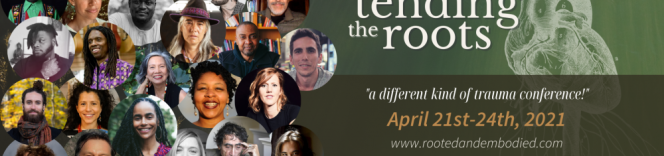
    This year she’s offering a FREE follow-up event that I’m sure you’ll find transformative. It’s called Tending the Roots: A 4-day Odyssey of Resilience & Reimagination, Culture & Community, and it takes place next week, between April 21st and 24th.

    This event will focus on our personal and communal healing, and you can expect educational and experiential workshops, and also music, movement, and art.

    It will be a time of learning and connecting, experimenting and experiencing, and interacting and playing together.

    Closed captioning will be available, and there will also be separate Zoom room spaces with creative activities for kids during some of the main workshop sessions (if you need something to keep them entertained while you tune in!)

    Who is Tending the Roots For?

    This festival exploring trauma healing and transformation, with our bodies as the site of liberation is for…

    Humans, big and small. Lovers and skeptics. Those longing to connect despite wounds around connection. Dreamers and activists, Aspiring activists, body-centered practitioners, therapists, parents and caregivers, educators, artists, musicians, and anyone interested in dancing with and tending to the flame of our life energy in creative, life-supportive ways.

    If you’d like to learn how trauma opens up portals of resilience and growth and connect with like-hearted people dedicated to healing in their own lives and in the world, sign up for the FREE Tending the Roots festival here.

    I hope you find this unique event both cathartic and liberating!


  • Why I No Longer Fight for Acknowledgment When Someone Devalues Me

    Why I No Longer Fight for Acknowledgment When Someone Devalues Me

    “People will teach you how to love by not loving you back. People will teach you how to forgive by not apologizing. People will teach you kindness by their judgment. People will teach you how to grow by remaining stagnant. Pay attention when you’re going through pain and mysterious times. Listen to the wisdom life is trying to teach you.” ~Meredith Marple

    “The ad was a misprint. We can’t offer you any monetary compensation for your writing, maybe dog treats.”

    This is an actual response from a successful animal-themed magazine I was going to write for. This letter went on to say that if my love for animals exceeded my need for money, then they would be happy to have me write for them, which I took as a personal offense since I am a huge animal lover.

    You can’t make this stuff up!

    With experiences like these, I am no stranger to feeling devalued in my career, and I have a hard time accepting a lack of consideration and respect. Case in point…

    Another magazine responded that they were interested in a particular piece I wrote, then proceeded to drop communication. Dozens of follow-ups went unanswered until the one day I had enough. I felt so disrespected, as if I didn’t matter enough to at least receive a response. I wrote a type of letter I had never written before to this magazine, and in turn, I learned a hard life lesson.

    My email detailed how disappointed I was in the lack of etiquette from the people who ran this once-favorite magazine of mine.

    I had let my anger build in true Sagittarian form and let out my storm of personal truth.

    I received a response!

    The editor apologized and forwarded this angry email onto the person above her, but guess what happened next?

    I tried submitting again, and again, even recently, again!

    No response.

    I am convinced that they have purposely ceased communication with me now.

    While the way I was raised and what I believe to be basic human decency justify this act of standing up for myself, all it really did to this person with different values, I’m sure, is make me look immature and emotional. And I imagine I burned a possible bridge.

    Now I realize that, regardless of what I did, they may have continued to handle their submissions with the same disregard, but after the initial, indignant warrior high, I had nothing but regret.

    What I learned is that in many situations, standing up and fighting for acknowledgement isn’t necessarily the wisest action.

    This of course depends on the situation.

    In this situation, I should have simply moved on instead of taking it so personally and allowing this one encounter to take up so much energy in my heart and fill my being with negativity.

    There’s also nowhere to move forward when you’re living within the emotion of anger and hurt. All I did is get myself worked up over something that was beyond my control. And I failed to look at the situation objectively and consider the many reasons why they may not have responded to my emails.

    I was also disrespecting myself by putting so much hope, belief, and self-identification into what, at the end of the day, is a business. There’s truth to the line, “It’s business, not personal,” yet I never seemed to grasp that enough to create emotional separation, which is what I do now.

    Maybe my emails truly did get lost in the shuffle. Maybe the editor had something going on in their personal life that was overwhelming and they simply didn’t need this submission. Maybe my email was just one email too many. Maybe they’re understaffed and often far behind with emails. I can’t possibly know what’s really going on in someone else’s mind or life, and that’s the way I need to look at these situations to move on with grace.

    This world is made up of many different people with different priorities and life situations. I learned that there is nothing wrong with sticking to my values and asserting myself, but it doesn’t help anything to challenge someone who is coming from a different world than my own.

    Now, I ask myself…

    Is standing up, speaking up, worth burning a bridge?

    I think about the other person’s life and workload, and where they may be coming from, not to justify, but to understand.

    I journal or create art to let the hurt out.

    I take deep breaths.

    I exercise the frustration and inevitable lack of closure out from my body.

    “Sleeping on it” also has great value, as well as genuine quiet contemplation time.

    A lot of times standing up against personal injustice doesn’t change the inflictor, but it will always change you, for better or worse.

    At least that is what I have found.

    Most of all, if being vulnerable with someone makes me feel horrible in my own skin because they clearly hold different values, I now walk away. I simply try to acknowledge the difference in character and move forward on my own path.

    These experiences continue to crop up in different forms, and I believe have changed me for the better. People who have broken my spirit by devaluing and ignoring me have actually led me to having more empathy. I have the desire to reach out to people more because I have observed what a lack of human acknowledgement can do to a person.

    I am by no means perfect—none of us are—but I promise myself that I will always get back to people in a timely manner because I know what it’s like to feel disregarded and unimportant.

    I am deeply in tune to other people’s pain, which at times can make me feel unbelievably heavy but somehow creates a profound desire in me to reach out with as much love as possible.

    I also really appreciate people who do respond to emails, letters, phone calls. These people remind me of who I want to be and also remind me that I get to choose who I align myself with in my personal and professional life.

    I learned a lot from the times that I have acted out from my own opinions and values.

    I learned that pushing my perspective on someone else often creates more harm, and in most cases won’t change how they view a particular situation. They may forever be on the opposite side of that long, thick tug-of-war rope.

    Sometimes I think it’s better to let go, turn away, and face forward to the people and life that you desire. If the bridge is broken, don’t burn it, you never know, but don’t try climbing onto it because then you will inevitably fall and lose yourself in the process.

    I say, continue to hold true to your values and stances and spread love by living them instead of spreading animosity by insisting on obtaining justice from those who don’t share the same life views.

    Finally, keep seeking out your people, your friends who would never ignore or purposely disrespect you, because those people will reinforce to you that you deserve attention and acknowledgement, whether everyone values you or not.

  • When You Lose a Loved One to Suicide: Healing from the Guilt and Trauma

    When You Lose a Loved One to Suicide: Healing from the Guilt and Trauma

    “You will survive, and you will find purpose in the chaos. Moving on doesn’t mean letting go.” ~Mary VanHaute

    I was ten years old when I discovered the truth. He didn’t fall. He wasn’t pushed. It wasn’t an accident.

    He jumped.

    Suicide isn’t a concept easily explained to a six-year-old, much less her younger siblings, so I grew up believing that my father’s drowning was an unfortunate freak accident. It was “just one of those things,” the cruel way of the world, and there was nothing anyone could have done about it.

    This explanation more than satisfied me and, other than a fear of open water and a slight pang of sadness whenever he was mentioned, I suffered no grievous trauma for the rest of my early childhood.

    But at ten years old I learnt the truth—that it wasn’t some divine entity or ill-fated catastrophe that took him from me. He had, in fact, ripped himself from the earth and left everyone he loved behind. Left me behind.

    Was it something I did?

    That’s the first question I asked.

    “Of course not,” my mother said. “He was just sad.”

    The idea that suicide was a simple cure for sadness became the first of many dangerous cognitive distortions I adopted. It would take no more than a dropped ice-cream cone or trivial friendship fall-out for me to declare my sadness overwhelming, to the point where, at the age of eleven, I drank a whole bottle of cough medicine in the belief that it would kill me.

    I was sad, I said, just like him. And if he could do it, why couldn’t I?

    As I grew into my teenage years, the possibility that I was the driving force behind my father’s suicide began to plague me, albeit subconsciously. I reasoned that the bullies at school hated me so, naturally, my father must have hated me too.

    Maybe I wasn’t smart enough or polite enough. Maybe I was unlovable. Maybe everyone I loved would leave me eventually.

    This pattern of thinking would slowly poison my mind, laying the foundations for what would later become borderline personality disorder. I suffered from intense fears of abandonment, codependency, emotional instability, and suicidal ideation, believing that I was an innately horrible person who drove people away.

    I refused to talk about my problems and allowed them to fester, harboring so much anger, guilt, shame, and sadness that eventually it would erupt out of me. It was only in my mid-twenties that I realized just how deeply my father’s suicide had affected me and the course of my whole life.

    I sought help and, slowly, I began to heal.

    Coping with The Stigma

    “Mental illness is nothing to be ashamed of, but stigma and bias shame us all.” ~Bill Clinton.

    Selfishness, cowardice, and damnation are toxic convictions that permeate the topic of suicide, adding to the anger, guilt, shame, and isolation that survivors feel. Growing up, I hid the truth of how my father died under fear of judgment or ridicule, scared that the knowledge would not only tarnish his humanity, but paint me with the same black brush.

    I still remember the words of a girl in high school, “Well, you shouldn’t feel sorry for people who do it, it was their choice after all.”

    Understanding the intricacies of mental illness and just how destructively they can distort the mind allowed me to come to terms with my father’s death. I was able to accept that his suicide was born not out of selfish weakness, but from lengthy suffering and pain, carried out by a mind that was consumed by darkness and void of the ability to think rationally.

    Letting Go of The Need for Answers

    “Why?”

    It is a question that only the person who took their life can answer—but they often leave us without any sense of understanding. In the absence of a detailed note or some definitive explanation we find ourselves trapped in an endless spiral of rumination, speculating, criticizing, and self-blaming, to no avail.

    It becomes a grievance, a desperate yearning for closure that weighs heavily on our hearts. After all, not only did they leave us, but they left us in the dark.

    It is completely natural to want an answer to the question of “why.” We feel as though an answer will provide closure, which in turn will ease our confusion, pain, and guilt. However, because there is usually no singular reason for a suicide attempt, we will always be left with questions that will go unanswered.

    Fully accepting that I was never going to get the answers I craved freed me from the constant rumination of “why.”

    Releasing the Guilt

    To quote Jeffery Jackson, “Human nature subconsciously resists so strongly the idea that we cannot control all the events of our lives that we would rather fault ourselves for a tragic occurrence than accept our inability to prevent it.”

    As survivors, we tend to magnify our contributing role to the suicide, tormenting ourselves with “what if’s,” as though the antidote to their pain lay in our pockets.

    We feel guilty for not seeing the signs, even when there were no signs to see. We feel guilty for not being grateful enough or attentive enough, for not picking up the phone or pushing harder when they said, “I’m fine.” Even as a child I felt an overwhelming guilt, wondering whether I could have prevented my father’s suicide simply by saying please-and-thank-you more often than I had.

    It wasn’t my fault. And it isn’t yours either.

    The truth is that we cannot control the actions of others, nor can we foresee them. Sometimes there are warning signs, sometimes there are not, but it is an act that often defies prediction. It is likely that we did as much as we could with the limited knowledge we had at the time.

    Healing takes acceptance, patience, self-exploration, and a lot of forgiveness as you navigate your way through a whirlwind of emotions. However, there is a light at the end of the tunnel of grief. Although we may never fully move on from the suicide of a loved one, in time we will realize that they were so much more than the way in which they died.

    To quote Darcie Sims, “May love be what you remember most.”

  • Learning to Honor My Grief When the World Has Become Desensitized to Loss

    Learning to Honor My Grief When the World Has Become Desensitized to Loss

    “The answer to the pain of grief is not how to get yourself out of it, but how to support yourself inside it.” ~Unknown 

    Since losing my husband Matt over eight months ago to cancer at the age of just thirty-nine, I have noticed so many changes happening within me, and one of those changes is a fierce sense of protectiveness that I have over my grief.

    We are living in a unique time in history. The world has turned upside down due to the coronavirus pandemic, and at the time of writing this the UK had just passed 100,000 Covid-related deaths with many more not involving Covid.

    That is an obscene amount of grieving people, and when I also consider the fact that not all loss is related to death, I suspect that everyone in the country is experiencing grief on some level right now.

    But I worry that this universal loss has become so entrenched within our daily lives that it is now considered the norm to be traumatized.

    The news of more deaths no longer seems to shock us. We’ve become detached from each other in order to survive and preserve ourselves, and this is being reinforced daily with messages of staying home and socially distancing.

    Our human need for closeness and connection has become secondary to the very real threat to life we are facing, and so we willingly obey to these new rules—we wear masks and keep away from each other, we retreat, and we don’t complain about the psychological wounds we are facing as a result of this because the alternative is even worse.

    There is a collective sense of numbness, which is a well-known coping mechanism for extreme levels of stress, and I cannot help but tune into this from my own fear response.

    I also feel numb sometimes, and I can certainly see the rationale for adopting this defense mechanism, but this is why my grief feels like a gift to me now: I am thankful that I can connect with and embrace my feelings of pain and anguish. This is my healing; this is me moving through life as I know I was intended to do.

    We weren’t made to deny or repress our emotions, we were made to learn and grow through them, because emotions are energy and energy needs to move. When I refuse to allow my emotions space to be present within me, they become trapped inside. 

    I know this because it has happened to me before. Grief is strange, it is the most painful and intense experience I have ever had, and yet it is also recognizable to me. I know that I have felt it before but in a different form and at a different time.

    Deep down I also have an inner knowing that I am meant to feel it. In the past, I was scared of the enormity and intensity of my emotions, and so was everyone I was close to. They would recoil when I expressed them, so I would repress them instead and do everything I could to push them down.

    The result? Years of suffering with anxiety, depression, and unexplained physical illness and ailments, which I now understand to be a manifestation of my trapped trauma.

    Bessel Van der Kolk defines trauma as “not being seen or known.” To be truly seen is to risk vulnerability, but we are continuously shamed for being truly vulnerable in our society, a society which rewards busyness and productivity above our human needs.

    Unfortunately, this mutual denial can prevent us from healing. In our culture there is a lack of tolerance for the emotional vulnerability that traumatized people experience. Little time is allotted for the working through of emotional events. We are routinely pressured into adjusting too quickly in the aftermath of an overwhelming situation.

    So, we have a problem. At a time when more of us than ever need to embrace vulnerability to avoid retraumatizing ourselves with a lack of connection to others, we are simultaneously battling with a sense of internalized capitalism. Which do we choose? Authenticity or attachment?

    I believe that we need both, but I also believe that it must start with authenticity, and here’s why.

    My grief feels sacred to me, like it’s the last bit of my love for Matt that I have left, and for that reason I refuse to let it pass me by without really experiencing and cherishing it.

    I recognize that the authentic, broken me is just as important as the joyful, whole me, and that I cannot expect to experience one without the other.

    I do not wish to drift into a false identity where I am always “okay” or “fine” or “not too bad” when anybody asks because really that is all I am permitted to say in those moments. I cannot speak the truth because the truth is unspeakable. There is an unspoken rule that we must never expose our pain in too much depth, we must keep it contained within a quick text message or a five-minute chat in order to help keep up the illusion that we have time for compassion within our culture.

    But we all know that’s not the truth if you live as we are subliminally told to live—with a full-time, demanding, and challenging career and a mortgage to pay, with a family to look after and a social life to uphold, with a strict routine that includes time for exercise, meal planning, and keeping your appearance aligned with what is currently deemed socially attractive, and with just enough spare time to mindlessly consume the latest Netflix drama.

    It really leaves little to no time or the emotional energy it would take to fully witness another person’s pain. So, we turn away from it instead, because we know that if we dare to look a grieving person in the eye, we can locate the universal phenomenon of grief within ourselves and find some affinity to it. And that throws up all sorts of questions that go against our busy lifestyles we are grappling to keep hold of.

    When I have too many superficial exchanges, however well-meaning they are, I end up feeling more disconnected and lonelier than if I hadn’t had an exchange at all, so I choose solitude instead. 

    Some pain cannot be spoken of, it can only be felt, and for me, that can only happen when I have the space and time to intentionally tune into the feelings, without having to cognitively bypass them at every opportunity. However, without a witness to my pain, I never truly feel seen or known either.

    The more time that passes, the harder it is to bring Matt up in the brief conversations I am still able to have or to express my true feelings.

    I’m aware that with time my grief becomes less relevant as more and more people are experiencing their own losses. But I have barely even begun to process Matt’s death. He died during the pandemic, and I am still living in that same pandemic eight months on. I have been locked away for my own safety and for the safety of others, so the true effects of my loss and the trauma attached to it won’t be fully felt until the threat has lifted.

    My brain has been wired for survival for almost a year now—what must the effects be of that?

    I am afraid that the rawness of my pain has a time limit to it, and if I do not fit into the cultural narrative of grief, then I will be rejected, and it’s that fear of rejection that continues to pull me away from sitting with my pain. I have become hypersensitive to other people’s reactions, and I can sense when my pain is too raw and uncomfortable for them, so I avoid the loudest and most consuming part of me to enter the conversation in order to make them more comfortable

    But… I’ve noticed a pattern happening when I prioritize others’ comfort over my authenticity.

    I begin to suffer. I experience emotions like fear, anger, and guilt, and these pull me away from the pure-ness that is my grief. Pain and suffering are not the same thing. Pain is a necessary component to healing and growth, but suffering is a bypassing of the raw pain underneath.

    I believe that the key to healing is to embrace the sorrow of loss throughout life. Loss happens continuously, but we often forget to experience it because we glorify the illusion of always being strong, mentally healthy, and resilient. 

    Fear is a block to healing. It activates our survival brain and keeps us there. Never feeling safe enough to process our emotions, we continue to suffer instead.

    Alice Miller, the renowned swiss psychologist, coined the phrase “enlightened witness” to refer to somebody who is able to recognize and hold your pain, and this becomes a cycle. Once you have had your authentic pain validated and witnessed, this frees up space for you to become an enlightened witness to another.

    That is why I believe there are so many people needlessly suffering right now. We are all afraid to confront the human condition of pain because we are afraid to lose our attachments to others, so we mask it and avoid it and deny it at any cost.

    I am terrified of losing my attachments to others too. I am terrified of ending up alone, and I am terrified of never being loved again. But I am more terrified of having to sacrifice my true self in order to gain that love.

    So, I vow not to put my grief on hold, and I welcome you to join me. However deep the pain becomes, I encourage you to sit with it and honor it as being a true reflection of the magnificent intensity of being human.

  • The Day I Found Out from the Internet my Estranged Father Had Died

    The Day I Found Out from the Internet my Estranged Father Had Died

    “The scars you can’t see are the hardest to heal.” ~Astrid Alauda

    On a lazy Sunday morning as I lounged in bed, I picked up my phone, scrolled through my news feed on Facebook, and decided to Google my parents’ names.

    I am estranged from my parents, and I have not had much of a relationship with them in over fifteen years; however, there’s a part of me that will always care about them.

    I Googled my mother’s name first and found the usual articles about her dance classes, and her name on church and community bulletin boards. From what I was able to find, it appeared she was doing well.

    Then I went on to Google my father’s name. The first item I came across was an obituary posted on the website of a business that provides cremation and burial services. However, there was no actual obituary, only a few pictures of a much younger man and a profile of a much older man.

    Was this my dad’s obituary? It couldn’t be, could it? In shock, I convinced myself that it wasn’t his obituary, but I could not shake the nagging feeling that it was.

    For the last month I had a feeling that something was off, that something terrible had happened or was going to happen. At the time I attributed these feelings to work stress and the global pandemic.

    When I learned of the death of one of my mentors, who had been like a father to me, I attributed these feelings to this experience. Could I have been wrong?

    Later that morning I decided to search for my dad’s name in the obituary section of the online local paper. His name came up instantly, and much to my horror, this was how I learned about his death.

    Shock washed over me as I read the obituary. He had been dead for a month when I began having those intense, unsettling feelings of foreboding, as if something terrible had happened. It all made sense.

    My full name, which I had legally changed several years ago, was mentioned in the obituary under his surviving relatives, which quickly turned my feelings of shock into rage. Did my family think that I didn’t care about him? Did they think that I didn’t have a right to know about his death?

    I reached out to members of my estranged support group only to learn that many others had found out about a parent’s passing in the same manner.

    Years earlier I had feared that I might find out about one of my parents passing through Google; however, I had dismissed the fear and forced myself to believe that someone in my family would tell me if one of my parents had passed.

    In the days and weeks that followed I continued to Google my dad’s name. As I read tributes written by friends and other family members, I was hit with the realization that I did not know the person they were describing.

    He was described as a “simple religious man who was a welcoming neighbor, a devoted friend, family man, and an excellent father.” To me, however, he was none of those things, and as I continued to read the tributes, sadness and anger washed over me, and I was forced to reflect on the painful relationship that I’d had with him.

    In kindergarten I remember him telling me over and over, “You are as dumb as a post.” Later, after a visit to see his father, he repeated his father’s hurtful words, “You’re a wild hair, and you’re going to come to a sad end.”

    He continued to repeat these words on a regular basis throughout our relationship. Every mistake I made was met with harsh judgements, such as “You will never be good at that, you were just wasting your time, you were never going to amount to anything.”

    When I failed, he rubbed my failures in my face, and to this day failure is one of my greatest fears despite becoming a somewhat successful professional and academic.

    Time and time again, he told me:

    “It would be much easier to care about you if you did well with your studies.”

    “You’re illiterate, you’re a delinquent, you’re a dunce, and you are an embarrassment.”

    “You are never going to amount anything; you are going to end up working a minimum-wage job with angry, stupid people.”

    “You are fat, you are lazy, you are unfocused, and you are wasting your time with that stupid piano; you will never amount anything with that hammering.”

    After I broke up with my first serious boyfriend, my father told me, “What do you expect? A person like you is naturally going to have problems with their relationships, I fully expect you to have serious problems in your marriage as well.”

    When I was preparing to move away to go to university, he told me, “When you flunk out, don’t expect to come back here, just find a minimum-wage job and support yourself.”

    It’s taken me years to realize that comments like these are verbal abuse!

    Verbal abuse can be disguised in the form of a parent insulting a child to do better, to push themselves to be more, to lose weight, or enter a particular field. It can be disguised as caring or wanting to push someone to be a better version of themselves. Regardless of the parent’s motive, insults and put-downs are, in fact, verbal abuse, and no number of justifications can change this.

    Verbal abuse can have devastating effects on a child’s life, and these effects can be felt well into adulthood.

    Throughout my childhood and into my teens, my parents’ abusive comments caused me to believe that no one would want me and that I was not good enough for anyone. This limiting belief inhibited my ability to form friendships. As a result, I spent much of my childhood and my teens alone, playing the piano or spending time with my pets.

    The friendships that I did form were often one-sided because I made it very easy for people to take advantage of me, because I believed that I had to give and give in order to be worthy of the friendship.

    I also feared failure more than anything else and became very anxious in any environment where I might fail. This inhibited me from trying new things, and I only engaged in activities I knew I was good at.

    It was not until my mid-teens that I met a mentor who not only saw my work but loved me and nurtured me as if I was his own daughter. For the very first time in my life, I had an adult to support me apart from my grandmother and my grandfather, who believed in me and reminded me every day of my value and my abilities.

    “You are good, you are smart and highly intelligent, you’re capable of doing anything you set your sights on,” he would tell me. At first, I did not believe him, but in time I slowly began to see myself through his eyes.

    He talked to me the way a loving parent would have. When I failed, he didn’t make fun of me; instead, he encouraged me to reflect on what I’d learned from the experience and how I could do better in the future.

    He instilled in me the foundation of shaky self-confidence that enabled me to have the courage to apply to university. Without this relationship, I would likely not be where I am today because I would not have had the courage to break free from the verbally abusive narrative my parents had taught me to believe, or to challenge this narrative.

    As I was reading attributes about my father in tributes from people who knew him, I was filled with a sense of longing. Had my dad been the man who was described in those tributes we could have had a healthy relationship, and I would not have had to make the painful decision to cut him out of my life.

    At the same time, these tributes forced me to accept that we are many things to different people. To some people we are a wonderful friend, a kind neighbor, and a loving parent, but to others we are a rude jerk, a self-centered person, and verbally abusive or neglectful parent. Each one of us has the right to remember the dead as they experienced them and honor their memory as we see fit.

    Years after cutting my parents out of my life I silently forgave them for the hurt they had caused me, and I worked to let go of the pain from the past. However, at times, I found myself fantasizing about what a healthy adult relationship could look like with my father.

    I imagined mutually respectful philosophical discussions, long walks, trips to far off places, and most importantly, being seen not as an unlovable failure, but as a successful adult worthy of love and acceptance.

    My last conversation with my father before my grandmother had passed away was positive, which only fueled these fantasies. Yet in these fits of fantasy, I was forced to accept my father for who he was and acknowledge the painful fact that some people are just not capable being who we need them to be.

    We can choose to plead for a relationship that will never be, or for the person to be something they are not, or we can choose to accept them as they are and accept ourselves in spite of their abuse. But this means we must let go and accept that the future holds time we can never have together.

  • 7 Things You Need to Know If You’re Going Through a Painful Breakup

    7 Things You Need to Know If You’re Going Through a Painful Breakup

    Last year my uncle died shortly after someone I love went through a pretty traumatic breakup. I love all my family, but I wasn’t really close to my uncle and didn’t know him all that well, so I was more grieving for my mother and aunt than myself.

    As I bore witness to the deep pain around me, I started thinking about the expectations we often hold of people when grieving a breakup, as opposed to grieving a death. We often expect them to feel sad for a while and then just get over it. Because the person didn’t die, after all.

    I would never compare the loss of someone’s life to the loss of a relationship, but I wonder, do we even have to? Can’t we just honor both types of losses as difficult in their own way and respect that healing takes time for each?

    I know from personal experience that breakups can evoke all kinds of complicated emotions.

    They can trigger the pain of past traumas—times when people we trusted betrayed, neglected, or abandoned us.

    They can conjure up deep feelings of shame and unworthiness, particularly if we blame ourselves for everything that went wrong.

    They can ignite all our fears about being alone and what we believe that means about us and for us—maybe that we’ll never be happy because we’re unlovable, and no one will ever want us.

    And they can force us to face parts of ourselves we’d rather avoid, pieces of a puzzle we’ve tried to complete with other people’s love, affection, and approval.

    Then there’s the pain of accepting someone’s cruelty, if they weren’t emotionally mature enough to end things well, taking responsibility for their part and offering some sense of closure.

    None of this is easy to get past. And there’s no set timeline for healing.

    The truth of the matter is, it takes as long as it takes. That doesn’t mean there’s nothing we can do to help ourselves heal and move forward. It’s just means that even if we do all the “right” things, the pain may still linger, and that’s okay.

    It’s also totally understandable—in general, and especially now, when we’re far more limited in our options for getting out in the world, doing things we love, and engaging with other people. All things that help when you’re trying to empower and focus on yourself.

    If you’re feeling the pain of heartbreak right now, I hope you know you deserve a ton of credit for doing your best to get through this, especially during this crazy, surreal time. I hope you’re kind to yourself as you navigate the emotional landmine that is healing. And I hope the following pieces of advice, from Tiny Buddha contributors, help ease your pain, even if only a little:

    1. It’s okay if you’re not over it yet.

    “Healing takes time. Give yourself grace because it is the loving thing to do.

    Would you keep asking your best friend why she isn’t over her heartbreak yet? No! That would be unloving, she needs grace. Feeling impatient with your progress or beating yourself up? GRACE. Just cried for hours on the couch even though you’ve had two amazing weeks? GRACE. Behaved in a way that you later felt bad about? Those are old habits arising, my friend—GRACE.”

    ~Lauren Bolos, from How to Come Out Stronger After Heartbreak

    2. You won’t feel this way forever.

    “There is, in fact, a light in the end of the depression tunnel. But the only way to get to that light is to walk through it. There is no way of getting around the process, and the earlier you begin the journey of mourning and healing, the sooner you will reach peace.

    The journey is long, but there is no race and no competition. It’s a journey with yourself. There will be days when you will feel stronger than ever and some days will bring you back to your knees.

    Just remember: The rollercoaster is the journey. So even when you are down, feeling as if you’ve made no progress, remember that progress is being made every day you choose to be alive.

    Progress is being made every day you choose to not call the one who left you.

    Progress is being made every day you choose to take another breath.

    You are alive. You are strong. You will survive.”

    ~Brisa Pinho, from Grieving a Loss That Feels Like a Death

    3. You deserve a lot of credit.

    “Take credit for the good that came out of this relationship. No, it wasn’t all perfect, and there are some things you can take responsibility for in your past relationship, but what can you take credit for?

    If you blame yourself for all the bad things, don’t you also have to take some credit for the good things that happened?

    What positives came out of this relationship?

    How did you grow as a person in your past relationship?

    How did you mature and become a better version of yourself?”

    ~Vishnu, from How to Stop Punishing Yourself for Your Breakup

    4. Your ex wasn’t perfect.

    “Remember the bad as well as the good. Brain scientists suggest nearly 20% of us suffer from ‘complicated grief,’ a persistent sense of longing for someone we lost with romanticized memories of the relationship. Scientists also suggest this is a biological occurrence—that the longing can have an addictive quality to it, actually rooted in our brain chemistry.

    As a result, we tend to remember everything with reverie, as if it was all sunshine and roses. If your ex broke up with you, it may be even more tempting to imagine she or he was perfect, and you weren’t. In all reality, you both have strengths and weaknesses and you both made mistakes.

    Remember them now… it’s easier to let go of a human than a hero.”

    ~Lori Deschene (me!), from How to Let of a Past Relationship: 10 Steps to Move on Peacefully

    5. No relationship is a failure.

    “Our society seems to put a lot of pressure on the idea that things will last forever. But the truth is, everything is impermanent.

    After a recent breakup, I found myself feeling as though I had failed the relationship. Then I stepped outside of my conditioned thinking and discovered that love and failure do not reside together. For when you have loved, you have succeeded, every time.

    It was Wayne Dyer that introduced me to the rather practical concept that ‘not every relationship is meant to last forever.’ What a big burden off my back! Of all the souls hanging out on this planet, it seems to make sense that we might have more than one soul mate floating around.

    Relationships can be our greatest teachers; it is often through them that we discover the most about ourselves. In relationships, we are provided with an opportunity to look into a mirror, revealing what we need to work on as individuals in order to be the best version of ourselves.

    Each relationship will run its course, some a few weeks, months, years, or even a lifetime. This is the unknown that we all leap into.”

    ~Erin Coriell, from How to Love More and Hurt Less in Relationships

    6. If you change your perspective, it will be easier to heal.

    “Whatever story you’re telling yourself about the relationship, you need to retell it. You may be holding onto the sad and tragic version. You were left behind as the victim, as your ex was the heartbreaker who didn’t give the relationship a chance.

    Shift the story to the one that is the most empowering for you. How about a story of how you both gave it your best? You fought, you loved, you laughed, and you cried. You tried over and over when things didn’t seem to work. You fought, forgave, broke up, got back together, and finally called it off for good.

    You both gave it your all, but it didn’t work out. It wasn’t for lack of trying. It was you coming to the conclusion that you were different people, both good people, who were incompatible for each other. You both helped each other grow and become better versions of yourself.

    The more you can flip your perspective on your ex and the relationship, the easier it will be to move on.”

    ~Vishnu (from How to Move on When Your Ex Already Has)

    7. Sometimes you have to make your own closure.

    “Closure is something everyone would like. We would like validation and understanding.

    We can accept that someone doesn’t want to be with us. We can accept that the relationship has changed or that they want something else. What we can’t accept is our partner’s inability to communicate that fact effectively and tell us what went wrong.

    Unfortunately, sometimes your partner does not have this same need, or they may have the same need but they’re better at hiding it and pretending they don’t. They would rather just push you, and their feelings, away.

    In my experience, people can’t always be honest with you because they can’t be honest with themselves. It isn’t about you. We always want it to be about us and our flaws and failures, but it isn’t.

    Many people don’t know how to deal with the emotions that come with a breakup, so they prefer to avoid their feelings altogether, and this is the most likely reason they won’t talk to you. It has nothing to do with you or the relationship or something you did wrong or that you weren’t enough.”

    ~Carrie Burns (from How to Move on When Your Ex Won’t Speak to You)

    I suspect that last one is something many people need to hear. You may have played a role in your breakup, but if your ex hasn’t treated you with empathy and respect, it’s not your fault. No one deserves to be ignored. No one deserves to be treated like they don’t matter. And just because someone treats you that way, it doesn’t mean it’s true.

    I know when I was in the depths of heartbreak I needed a reminder that, regardless of the mistakes I’d made or how my ex saw me, I was still a good person who was worthy of love and healing. You are too. So love yourself and give yourself the time and empathy you need to heal.

    You are strong, you are doing the best you can, and you can and will get through this!

  • The Magic of Rewriting Our Most Painful Stories

    The Magic of Rewriting Our Most Painful Stories

    “When you bring peace to your past, you can move forward to your future.” ~Unknown

    It amazes me how things that happen in our childhood can greatly impact our adult lives. I learned the hard way that I was living my life with a deep wound in my heart.

    My father was a very strict man with a temper when I was little, starting when I was around seven years old.

    He had a way of making me feel like all my efforts were not enough. If I scored an 8 in a math exam, he would say, “Why 8 and not 10?” and then punish me. It was a time when some parents thought that beating their children was a way to “put them in place” and teach them a lesson. All this taught me, though, was that I was a disappointment.

    His favorite phrase was “You will never be better than me.”

    As I got older, his temper cooled down a bit, but one thing didn’t change: his painful remarks. “At your age, I was already married, had a house, a car, two daughters, and a piece of land… what have YOU accomplished? See? You will never surpass me.”

    It was his way of “inspiring me” to do better with my life, but it had the opposite effect on me. It was slowly killing my self-esteem.

    When my father passed away, I was seven-year-old Cerise all over again. At the funeral, I asked him, “Daddy, did I finally make you proud? Did I do good with my life?”

    This was the trigger that made me rethink what I was doing with my life. I had to stop for a moment to look at the past. This can be very difficult to do, but sometimes we need to face those painful events in order to understand the nature of our poor decisions and behavior.

    It helped me realize that, unconsciously, I was looking for my father’s approval in the guys I dated. And you know what? It got me nothing but disappointment and heartache, because I was looking for something that they couldn’t give me.

    Inside, I was still that little girl looking for her father’s love.

    When you are a child, you are considered a victim, but when you are a grown up, it is your duty to heal from what was done to you. You just can’t go through life feeling sorry for yourself and complaining about the hand you were dealt. This just keeps you stuck in a sad, joyless life and jeopardizes your relationships.

    In my case, I had to give that little girl the love she so needed in order to stop feeling lonely and stop making the same mistakes.

    The only approval that I needed was my own! When I realized that, I started learning to love myself—regardless of my accomplishments—and I also developed compassion toward my father because I recognized that he was raised the same way he raised me.

    He probably also felt he needed to be the best at everything he did in order to win his parents’ approval. And maybe he thought if I wasn’t the best at everything I did I would never be valued or loved by anyone else.

    Understanding this enabled me to forgive him, break the cycle, and finally let him go.

    So, what makes us slaves to anger, resentment, and abandonment issues? I think it’s the way we keep telling the story in our heads, and this is something that we can transform.

    Don’t get me wrong, I am not suggesting we sweep things under the rug and pretend like nothing happened. We cannot change the past, and certainly we cannot turn a blind eye to it, but we can modify the way we retell the story to ourselves, and this can be a step toward inner healing.

    I decided to give the difficult parts of my childhood experience another meaning. I edited the way I tell myself the story, and this is how it sounds now:

    “My father was a strict man because he wanted me to succeed in life. He taught me to give my best in every task assigned to me; he didn’t make things easier for me because he wanted me to become strong in character and to find a solution in every situation. Daddy constantly challenged me because he wanted me to develop my potential to the fullest so I could face life and its difficulties.

    I’m certain that when my father departed from this world, he did it in peace knowing that he left behind a strong and brave daughter.”

    This is now the story of my childhood, and you know what? I think I like this version better! It’s helped me close the wound I had in my heart. My childhood left a scar, but it’s not hurting anymore.

    My gift to you today is this: Close your eyes and picture a pencil. Do you know why a pencil has an eraser? To remove the things we don’t like, giving us the freedom to rewrite them into something that we feel more comfortable with.

    You can’t change the facts from your past, but you can change how you interpret them, so feel rewrite as much as you need.

    Your wounds will hurt a lot less when you broaden your perspective, try to understand the people who hurt you, and change the meaning of what you’ve been through.

  • 10 Quotes You Need to Read If You Struggle with Anxiety

    10 Quotes You Need to Read If You Struggle with Anxiety

    Have you ever received well-intentioned advice while facing intense anxiety, only to feel judged, misunderstood, or condescended?

    Like, “Calm down!” Or “Just be positive!” Or “Don’t worry so much!”

    The people who try to help generally want to do just that, but it’s always easier to advise someone when you’re not feeling what they’re feeling, because you have the benefit of rational thought—which goes out the window when fight-or-flight mode takes over.

    And if you’ve never felt the depth of anxiety some of us experience—perhaps because you weren’t conditioned that way through trauma, or you’ve learned to block or resist your emotions—it’s hard to truly understand what it’s like or what it takes to get through it.

    This is why I have appreciated reading stories and advice from people who’ve been there and truly get what it’s like. People who are intimately familiar with anxiety’s blood-pumping, heart-racing, mind-spiraling madness, and have both empathy and insight to offer.

    Reading about their experiences and what’s been helpful to them always makes me feel a little less alone and a lot better equipped to handle the tornados in my head and my heart.

    With this in mind, I decided to amass a collection of powerful quotes from anxiety posts through the years. I hope something here provides you with the same peace and comfort these thoughts have offered me!

    10 Quotes You Need to Read If You Struggle with Anxiety

    1. “Without a doubt, the most important thing to remember is that it’s okay to feel overwhelmed and stressed out. It’s okay to feel lost and unsure. It’s alright to have no idea how you’re going to hold it together sometimes. We put so much pressure on ourselves to be happy all the time. It’s okay to acknowledge when times are tough. It’s alright to feel anxious, even if it’s uncomfortable.” ~Ilene S. Cohen (from When You Feel Bad About Feeling Sad and Anxious)

     2.”When you observe your thoughts, you’re able to choose which to believe and which to let pass. You can choose not to believe that someone else meant to hurt you, that you did something wrong, or you deserve to be judged. You can see these thoughts as nothing more than knee-jerk reactions to a perceived offense, and not reflections of reality or ideas you need to let influence your state of mind.” ~Kimberly Diaz-Rosso (from How to Stop Dwelling: A Simple Practice to Let Go of Anxious Thoughts)

    3. “When you feel like running or fleeing, it’s time to face your fear with courage. Although our automatic response is often to run away, numb our feelings, or somehow distract ourselves, escaping only temporarily relieves anxiety. Fear will return, possibly in a different form, until you choose to confront it with kindness.” ~Carly Hamilton-Jones (from How to Tackle Fear and Anxiety, Cognitively, Behaviorally, and Spiritually)

    4. “No matter how close to home anxiety hits, there is always a lie hiding in it somewhere. Maybe it’s based on a false belief. Maybe the problem doesn’t have to be dealt with as immediately as it feels. Maybe there are options we haven’t considered. But anxiety always—always—contains a lie. It might be big and in-our-face, or it could be small, tricky, and subtle. Look hard enough and we will uncover it… Finding the lie takes the teeth out of the anxiety.” ~Jason Large (from 4 Life-Changing Lessons for People Who Struggle with Anxiety)

    5. “Instead of stuffing down your depression, anxiety, shame, loneliness—or whatever emotion you’re tempted to resist—ask yourself: What message is it trying to send to me? What would I do differently in my life if I listened to this emotion instead of suppressing it?” ~Kelly Martin (from How Embracing and Loving My “Negative Emotions” Helped Me Heal)

    6. “‘I need to be doing something right now.’ This is an incredibly subtle belief that most of us don’t even realize we are holding onto. It stems from our obsession with productivity and achievement, and it manifests as a constant, itching discontent. Though our ego tricks us into believing we need this feeling to get things done, when we can let it go, we see a lot of our anxiety dissolves and our relaxation deepens. We’re also much more likely to enjoy what we need to do without the constant internal pressure of feeling that what we’re doing in this moment is never enough.” ~Benjamin Fishel (from 9 Beliefs You Have to Let Go if You Want to Find Inner Peace)

    7. “When we draw conclusions about a situation without checking the facts first, we can escalate it into a full-blown crisis in our minds. In other words, our negative thinking can spiral out of control, rapidly increasing our anxiety, unnecessarily. That’s called globalizing. How we think about our circumstances can make all the difference in the level of stress we feel.” ~Paula Jones (from To Reduce Stress, Stop Globalizing and Put Things in Perspective)

    8.“Eventually, it passes. It always does. We are left feeling drained or numb or depressed or ashamed. I tend to get angry… We recover, though, and that’s exactly why people who have panic attacks are warriors. We fight battles every day. We know the nature of The Beast. We don’t always know when he’ll strike, but we know that we will survive whatever he throws at us. We’ve faced death in our own way, and it hasn’t beaten us yet. We survived the last panic attack, and we’ll survive the next one. We have no choice.” ~Haley West (from Inside a Panic Attack: What It’s Like When Anxiety Strikes)

     9. “Our primal brain is wired to seek pleasure and avoid pain; and anxiety is often caused by worrying about the potential pain that we might feel in the future. Sometimes we’re so afraid of emotional pain and loss that we forget that they can’t physically harm us. And this is where the saying ‘make peace with discomfort’ will serve you very well, because your ability to be uncomfortable is directly related to your ability to be a relaxed person. Sometimes we assume that we need to be comfortable in order to be relaxed. But sometimes being relaxed simply means feeling uncomfortable and being okay with that. The more discomfort you’re able to tolerate, the less you’ll worry about preventing it from happening.” ~Kari Dahlgren (from 3 Ways to Stop Worrying and Feel Less Anxious)

    10. “In the middle of uncertainty-induced anxiety, our vision narrows, literally and metaphorically. Fight-or-flight takes over and our vision literally focuses sharply while our brain diverts resources to survival, leaving no energy for creative problem-solving. So, relax. Know that this is what is happening and remind yourself that there are options that you can’t possibly see right now. Just because you don’t see them doesn’t mean they aren’t there. Acknowledge that there is a whole lot that you don’t know that you don’t know—and that some of those unknown, currently unforeseeable options will make you very, very happy.” ~Dr. Amy Johnson (from How to Feel Less Stressed About the Uncertain Future)

    Which of these quotes resonated most strongly with you? And are there other quotes you’ve found particularly comforting or helpful?

  • The Cages We Live In and What It Means to Be Free

    The Cages We Live In and What It Means to Be Free

    “Cages aren’t made or iron, they’re made of thoughts.” ~Unknown

    I recently read Glennon Doyle’s Untamed, and like many who have read it, I felt as if it had changed my life—but not because it made me think of all the things I was capable of (as was the case with many of friends who read it), but because it made me realize how capable I had already been.

    The book on the whole is beautiful and inspiring, but the part that stuck with me the most was the story about Tabitha, a beautiful cheetah that Glennon and her kids saw at a safari park and a lab named Minnie that had been raised alongside Tabitha, as her best friend, to help tame Tabitha.

    Glennon watched as Minnie sprinted out of her cage and chased a dirt pink bunny that was tied to a jeep.  Shortly after, Tabitha, who had been watching Minnie, ran out of her cage and chased the “dirty pink bunny” just like her best friend had just done.

    Born as a magnificent, wild beast, Tabitha had lost her wild by being caged. She had forgotten her own power, her own strength, her own identity, and had become tamed by watching her best friend. But remnants of Tabitha’s inner wild came back to life when she walked away from the pink bunny toward the perimeter of the fence that was keeping her caged in. The closer she was to the perimeter, the more fierce and regal Tabitha became.

    Glennon insightfully notes in the book that if a wild animal like a “cheetah can be tamed to forget her wild, certainly a woman can too.” And that’s when I wondered, had I also forgotten my own inner wild?  Was I spending my time trapped inside a cage when I could be pacing the perimeter instead?

    I beat myself up over that story for days while desperately trying to think of how I could break free of my metaphorical cage so I could find my way to the seemingly elusive perimeter that others seemed to have easily found and were already pacing.

    I questioned why I hadn’t worked harder, pushed further, and done more to create the life I truly wanted, especially when it became painfully clear that the one I was living didn’t fit that description.  And that’s when it suddenly hit me. Like a ton of bricks falling on me out of nowhere:

    I didn’t need to make my way to the perimeter. I was already there. Truth be told, I had been there for most of my life, and it was so familiar to me that I didn’t even notice it anymore.

    As I sat there in the midst of this comprehension, I looked back on my life and suddenly the steps to the perimeter all seemed to fall in place.

    When I fell in a bucket of boiling water at two years old and put aside my own discomfort to comfort my mother who had broken down at the sight of my burned body, I took a step towards the perimeter.

    When I moved to America at the age of seven and couldn’t understand the language and was instantly labeled as “stupid” but kept going anyway, refusing to let them define who I was, I took another step towards that perimeter.

    When I watched my younger sister die of an incurable illness and kept her light alive inside of me by recognizing the beauty of her life and not just the heartache of her death, I moved closer to the perimeter.

    When I said no to becoming a teacher or a doctor—an unfathomable and disgraceful choice for women of my culture during those times—I took another step toward the perimeter.

    When I refused an arranged marriage, again disgracing my family in the process, the perimeter was directly in my sight.

    By the time I took off for law school (much to my parents’ continuing dismay), the perimeter and I were practically face to face.

    For a while I stayed at the perimeter, quietly stalking my surroundings with the same pride and inner fierceness as the cheetah who inspired these ramblings. But I now realize I was never meant to stay at the perimeter—I was always meant to go beyond it.

    Until I did, I would remain trapped inside my own inner chaos. And the calm I was so desperately seeking would continue to evade me. That inner restlessness that just wouldn’t go away, that indescribable lack of fulfillment and the hollow feeling in the pit of my stomach… those were all signs that I was ready to move beyond the perimeter. I was ready to uncage more than just myself—I was ready to uncage my soul.

    That’s why I was repeatedly drawn back to certain people, programs, and even books. I was ready to free myself of all restrictions and for that matter, all perimeters.

    The process hasn’t been easy. And at times, it has been beyond lonely. But it has also been rewarding, deeply healing, and transformative at the same time. And perhaps most importantly of all, it has allowed me to understand that in one way or another, we are all here to break free of the cages that have encased most of us for the majority of our life.

    Some cages are imposed upon us by the thoughts and ideas of those around us, and other times we put ourselves into them, willingly. So we can avoid discomfort, pain, suffering, change, growth, and our own rebirth.

    Sometimes they can even be helpful, but other times they do nothing but hold us back. The steel cages often tell us who to be, where to live, what we “should” do for a living, how to behave, and even who to like or dislike.

    Often, the cages come in different colors, shapes, and sizes. Some are made of gold and filled with expensive toys and bribes to keep us from going outside of them.  Their allure is simply too hard to resist for some people, even though they are often accompanied by gold shackles.

    Others are sparkly and filled with all that glitters. The shine is so intense that their occupants don’t even know they’re in a cage. They’re so fixated with the glitter that they spend their entire lives confined inside and never even realize they’re no freer than the people they’ve been looking down on as being “trapped.”

    And of course, there are some who live in small, dark, and dingy cages that they desperately want to escape but dare not try to because they’re so convinced that it’s safer, easier, and more comfortable to just stay.

    Those are the people that are so afraid of their own power and the taste of true freedom that they probably wouldn’t leave even if the cage door was opened for them.

    And then there are the brave. Those that are truly courageous and have no desire to be confined by any cage or any limits. Those are the people who will do whatever it takes to break the cage so they can set themselves and all of humanity free.

    Those are the people who are roaming beyond the perimeter and have uncaged far more than their physical body—they have uncaged their very soul, and along with it, the many lifetimes of memories, wisdom, and truth it holds inside.

    Those are the people I want to run with. Those are the people I want to call my tribe. Those are the people that, when I meet them, I’ll know I have found my home.

  • When People We Love Die: How to Honor Their Legacies and Lessons

    When People We Love Die: How to Honor Their Legacies and Lessons

    “The song is ended, but the melody lingers on.” ~Irving Berlin

    I never went for any of my grandparent’s funerals as a young child, and honestly, I was secretly glad that I didn’t. I was too young to comprehend what death felt like, and I don’t think I had the strength in me to do so. So, when I heard about their deaths, I told myself stories that they had gone on an extended vacation and were having loads of fun, and hence we couldn’t see them.

    This story played in my mind all through the years, and that’s what kept me moving on. But deep inside, I knew I had an intense fear of death and couldn’t stare at it in its face.

    But recently I had to face it when I went to a funeral for a colleague who was like a mentor to me. His sudden and untimely death was like a punch to the gut.

    After his funeral, we went into lockdown, and it felt like the whole world had gone into mourning. It felt as though his death made life come to a standstill. That’s the kind of impression DM had on me. My head went reeling into a state of shock, and I couldn’t tell quite what had just happened and why.

    You see, DM was a magnanimous personality. He was full of life, compassionate, caring, planned, organized, and all of sixty.

    He was radiating with good health, till one fateful day in September he suddenly suffered a stroke. But he fought like a tiger and was soon on the mend. I could picture him coming back to work at least at some level shortly. The stroke took him by surprise as well, for he was quite health conscious and very mindful of his eating habits, etc.

    I always thought I would see DM enjoying retired life, spending it golfing, running charity events, enjoying a good karaoke, singing, entertaining, and spending time with the people he loved. Amidst all his fun, I thought he would still be part of the business as a wise sage. But my dreams were shattered when in January, he suffered some further complications.

    I didn’t think much of it, because had fought like a tiger before and I was sure he would do it again. But it seemed that fate had other plans and took him from us on the 11th of March.

    I could not quite comprehend how or why that happened. It was death rearing its ugly head once again. This time no story could tell me otherwise. I saw no escape because DM and I worked together, and I would miss his presence at work. No amount of storytelling could keep me from facing the truth. He had died, and there was nothing that I could do about it. I had to face this truth.

    I couldn’t bear the thought of being back in the office. The idea repulsed me. I was not sure I would be able to cope. But I had to because we were going into lockdown, and I had to wrap up to start working from home. Every time I went to the office I could still feel his presence there. My stomach would churn.

    I found it challenging to come to terms with his death. How would I get over it?

    I had met DM at a time in my life when I was feeling my lowest. My husband was abroad then, and my kids were small.

    I remember the interview. It was a mortgage admin job, and I was overqualified for it. But the work timings and the flexibility that the position offered fit into my grand scheme of things. And the fact that it is was in mortgages, something that I have been doing for many years pulled me toward the job.  At the interview, something told me that it was going to the best decision of my life.

    We worked together for two years, and during that time, I realized that we were similar in many ways.  DM was quiet, private, friendly, and concerned. Probably because our birthdays were just a day apart, we understood each other even without talking.

    A year later, when he and my husband decided to partner together, I was quite happy because DM was not only trustworthy, but he was also a veteran in his field, was honest and had a brilliant reputation.

    When he passed away, I grieved silently. I kept listening to the song “Memories” by Maroon 5, and something about the lyrics made feel that the singer had written the song for him.

    As I got dragged back into the mundane life I, realized that there were two things that I couldn’t come to terms with about DM’s passing.

    The first was, that to me, DM represented values like honesty, courage, resilience, hard work, kindness, compassion. I always thought that those values were timeless, immortal, and invincible. But with DM’s death, I felt those values got cremated with him. I grieved for those values because I too hold on them very dearly.

    The second reason I grieved was because I felt that life didn’t allow him to sit back relax and have fun, not have a care in the world, and spend time doing the things he loved.

    But as I pondered and reflected more on what it meant, I realized in his passing, in many ways, he handed those values to me as a legacy to carry forward so that I can use it in my life.

    I realized that his death also taught me not to wait for retirement or the future to live my life doing the things I love and want to do. Life is way too precarious, short, and precious for that. We will never know when our time will come, so we must use our time on earth well doing the things we love.

    With that, I realized the person we love or respect never leaves us. They always remain with us in spirit, through memories, in the legacies, lessons, and values they leave behind, just like DM did for me.

    What legacy has your loved one left for you? They must have indeed left something behind. They leave it so that you can carry forward the excellent work they started. It takes time, patience, and courage to see that, and it might be hard when you’re deeply enmeshed in grief. Feel everything you need to feel first, then ask yourself:

    What was important to them? What values did they uphold? What did you admire about how they lived, and how can you embody this in your own life? What can you learn from their choices—the ones they made and the ones they didn’t?

    Jamie Anderson wrote that grief is just love with nowhere to go. So when you’re ready, put all that love into honoring the message they’d want to leave behind.

    As I reflect on what my grandparents would have wanted to leave me, I realize it was to live my best life possible. I am ready to carry their torch ahead! What about you?

  • He Broke My Heart But Taught Me These 5 Things About Love

    He Broke My Heart But Taught Me These 5 Things About Love

    “Sometimes the only closure you need is the understanding that you deserve better.” ~Trent Shelton 

    I’ll never forget the day we met.

    It was a classic San Francisco day. The sky was a perfect cerulean blue. The sun sparkled brightly.

    I ventured from my apartment in the Haight to Duboce Park to enjoy the Saturday. Dogs chased balls in the dog park. Friends congregated on the little hill. They giggled, listened to music, and ate picnic food. Kites flew high in the breeze. Adults tossed Frisbees in their t-shirts and bare feet.

    And I sat, bundled up in my scarf, zippered fall jacket, warm wool socks, and cable-knit sweater.

    This was summer in San Francisco. I had recently moved to the city at the end of May from the east coast with steamy eighty-degree weather, and now in July I sat on a hill and shivered. The famous saying fit perfectly, “The coldest winter I ever spent was the summer I spent in San Francisco.”

    I decided to venture to a nearby café, a French café called Café du Soleil (The Café of the Sun) and warm up with a hot beverage. I loved their outdoor seating.

    When I arrived, the café was packed. Every seat in the patio and the whole place was taken, except for one free stool at the bar next to a tall, handsome man.

    I sat down next to him with my hot chocolate and commented on how crowded the café was. He smiled and agreed, no longer interested in his salad or his glass of white wine. He was interested in me instead. His eyes sparkled.

    Fireworks!

    He was an artist, a photographer. He was a creative like me. Recently, he purchased his first house in Oakland, which included a lovely garden and was close to his work at a fine Japanese restaurant. Our conversation flowed easily, but from the moment I met him, I noticed a dark cloud over his head.

    “Are you married?” I asked.

    He jiggled his left fingers to show an empty hand.

    “No. No ring,” he said.

    “Kids?” I asked.

    “No,” he said, “but I would like some.”

    Our eyes locked. He sighed.

    “But… I’ll never have kids,” he said.

    I pressed my lips.

    “Oh, I think you’ll have kids one day,” I said in a lulling voice, looking sweetly into his eyes.

    He melted.  He really saw me. His eyes were full of adoration, love, and awe.

    We started dating immediately. It was fun and easy. He came to see me perform in Berkeley and I visited him in Oakland (in Fruitvale where he lived), where it was warmer and sunnier. He cooked me meals at his home with fresh fish and vegetables from his garden.

    Hummingbirds danced in the air when we were together. We drove to romantic rendezvous, danced, and he introduced me to the important people in his life: his best friend and his boss.

    The more time we spent together the sunnier and brighter he became, the happier we both were.

    Later, he admitted that he actually made most of his money selling drugs, followed by bartending, and that photography was only a hobby, not a profession. Also, he confessed that he had an alcohol and drug addiction. This was the reason his previous relationship ended even though they were both in love.

    I became sober before I moved to California. I overlooked the red flags because of our remarkable chemistry. Since I didn’t drink, he only drank one glass of wine with me at dinner and didn’t seem to want another. Because I didn’t do drugs, he never did drugs around me and he never talked about missing them.

    Everything was going perfectly, or so I thought. We never fought. Then Malik took his annual vacation to an event called Burning Man in Nevada while I stayed in San Francisco looking for a new apartment. Burning Man was very popular among the San Francisco locals and I was intrigued, but my sublet was up and I had to find a new place fast.

    Described as the “biggest party on earth” or “the only place where you can truly be yourself without judgment,” Burning Man was where people could party all day and night, dress up in outrageous costumes, see fantastic art and performances, and be completely uninhibited.

    When Malik returned from Burning Man, the storm cloud over his head reconvened above him and overshadowed him. He was jittery and paranoid. In fact, I didn’t recognize him; he became distorted and ugly. His eyes were glassy and darted back and forth like Gollum in The Hobbit. Hunched over, he tapped his fingers incessantly.

    “Everything happened too fast,” he blurted. “I told you, I don’t want to fall. I just wanted to have fun. I didn’t want to fall. I can’t sustain a relationship longer than two years. You want more than that. You should have kids. You’re getting older. You’d be a great mother. You need to have kids while you still can. You deserve that. You’re beautiful. There are plenty of handsome men in San Francisco. Why would you pick me? Pick one of them!”

    “Malik… we are having fun. I won’t let you fall. Let’s glide. Why are you talking about marriage and kids?”

    “You want more. I know it. I see it.”

    “We’ve never talked about the future.”

    “It’s not going to work. It’s over.”

    “Why are you breaking up with me? It makes no sense. Things were good before you left. We never fought. You were only gone a week. You mentioned having fun with a girl. Did you meet someone else?”

    His jaw hung open; his eyes bugged, and he took a large melodramatic step backward and gasped. He was shocked by my directness and accusation. But perhaps he was also stunned by my keen intuition.

    Sure enough, over the magical week, he met a beautiful redhead from Arizona, a single mother, who was interested in doing drugs with him in the desert, to escape her demons.

    They had so much fun together, isolated in a made-up city, laughing in the temptress of the sweltering heat. They experimented with Molly on the floor of his tent and “died together.”  Like Romeo and Juliet.

    I was devastated. Malik was no longer the person I thought he was. I had envisioned a life together. I had imagined traveling the world together.

    He told me he didn’t want me to text him any longer, and I didn’t. But the pain seared inside of me. and I held on for hope that he would see his faults and come back to me. How would he maintain a long-distance relationship with someone he did drugs with in the desert for a week? It made no sense. But that was how much he valued drugs over me.

    I never felt closure. I never felt that I was able to express all of my feelings. I wondered if I had been more vulnerable with him, if he knew how much I cared, if he would have had second thoughts and returned to me. He never came back. He never texted. It took me a long time to let him go. He was a big love for me.

    Looking back today (years later), I learned:

    1. Trust a soulmate connection.

    I felt it deep in my heart. I had met a soulmate. There was no denying it. Even though it didn’t work out, he opened my heart to love.

    2. See the red flags.

    I didn’t understand it at the time, but now I know that you can’t help anyone get over drug addiction. They have to want it for themselves.

    3. Don’t cling to love.

    Don’t cling in a relationship and don’t cling once it’s over for it to return. This was a hard lesson for me because when I love, I love hard.

    I have learned if you love someone and they cannot commit, do not hold on. If you love someone and they don’t want to be in a relationship with you, don’t think that in time, they will come to their senses and see how great you were and regret it and come back apologetically. People sometimes move on fast. Set them free. Holding on only hurts you. Allow yourself some peace too.

    4. Value honesty.

    A relationship without honesty is not a deep relationship. One shouldn’t have to drag it out of someone that they are dating someone else or that they have a drug addiction.

    5. Be with someone who has the same vision of the future.

    If you don’t have the same vision of the future, it’s not going to work. It shouldn’t be assumed that you know their wishes or that you have the same vision. It must be communicated.

    Meeting Malik opened my heart. Even though our time together was brief, it changed me forever. After overcoming the grief of losing a soulmate, it taught me not to settle, that I deserve better, and to trust that I will experience an even greater love next time.

  • If You’re in a Painful Relationship and Considering Estrangement…

    If You’re in a Painful Relationship and Considering Estrangement…

    “I understand the life around me better, not from love, which everyone acknowledges to be a great teacher, but from estrangement, to which nobody has attributed the power of reinforcing insight.” ~Nirad C. Chaudhuri

    I was brought up to understand that family is family.  So I have naturally given great weight to the importance of family bonds. However, what happens when a familial bond breaks? Do you commit yourself to holding on despite the cost, or do you acknowledge the damage and take the necessary steps to sever the tie?

    Personally, I sit somewhere in the middle. Any important relationship deserves an extended amount of effort, patience, understanding, and forgiveness in rebuilding. However, you can only do so much, and there comes a point when it could be in everyone’s best interests to walk away.

    I speak from personal experience. I’ve been estranged twice in my lifetime. Once from my father, which was my choice, and the other time from my sibling, who ultimately made the decision to walk away; I guess I just dotted the i’s and crossed the t’s on it.

    Let me be clear, neither estrangement was a wonderful experience. The process of severing ties is heartbreaking, regardless of the situation that led to the estrangement. It hurts when you feel you’ve been rejected, and it hurts when you know you’re rejecting someone.

    But when it’s the right decision for you, and once the hurt abates somewhat, there is a sense of relief. Although you may never feel happy about it, you’ll feel happier overall for the steps you took in protecting yourself and your well-being.

    As with all life events there is opportunity to learn and reflect…

    In hindsight, there are certain actions I should have taken before the relationships ended, especially when it came to my sibling. Perhaps taking these actions could have prevented the outcome? Who knows? Regardless, these behaviors would certainly have helped me heal quicker even if the end was inevitable.

    If you find yourself struggling in a relationship with a family member—or any type of relationship for that matter—these five suggested actions can help.

    1. Be yourself.

    This is what I kick myself the most about when I think about my estrangement from my sibling. I was never myself. I was always trying to impress them and seek their approval.

    You see, my sibling was a lot older than me; by the time I was two they had already left home. Visits were few and far between, and when my sibling married, there were tensions between my family and their spouse.

    Everything had to be done to keep them happy. We had to tread on eggshells around them to maintain the relationship, and that stuck with me well into adulthood. I believed If I stepped out of line then the relationship would end. So I said what I thought they wanted to hear and acted in the way I felt I needed to act.

    This led to a lot of resentment on my part. No matter how hard I tried, I never felt fully accepted.

    As I saw this would soon impact my own children, I knew things had to change.

    I stopped kowtowing, and within a year they had broken away, communication basically stopped. The hardest thing was knowing that all those years I had presented an unauthentic version of me. I felt I had let myself down. What might have happened if I had just been myself?

    It can be challenging to be yourself when it’s a family member you want to please, but you can’t let the labels they place on you define you. Be who you really are. Yes, you might be rejected, but being someone you’re not is exhausting and likely to lead to more unhappiness. You’re the one who has to live with yourself after all—it’s better to love the person you are!

    If I had my time again, I would just be me, and I encourage everyone to adopt this approach too.

    2. Communicate.

    Relationships all too easily break down when there is a lack of communication. Good communication builds your connection, helps you deal with potential issues early, and allows both parties to have their needs met.

    Too often, we end up shouting, judging, criticizing, or not communicating at all. This isn’t a recipe for a healthy relationship.

    In his book Non-violent Communication, Marshall Rosenberg sets out a framework he created which allows people to express their needs and make requests without any negative behaviors. Using this method can make it easier to ask for what you want, and it also gives you a better chance of actually getting it. It’s a technique I wish I had known a lot earlier, but one that I use now to great effect.

    It’s a four-step process:

    Convert judgements to observations.

    So rather than saying, “You never listen to me” (quite an emotionally charged statement), you would say, “I see you checking your phone when I try to talk to you,” which is more factual and less likely to trigger a defensive response.

    Say how you feel.

    Express how you’re feeling without blame or judgment. Instead of saying, “I really needed you and you weren’t there,” express your feelings like this: “I was feeling really alone.” This is a powerful way of expressing ourselves and taking ownership of our feelings.

    State your needs as they relate to you and your values.

    So rather than saying, “You need to change how you treat me,” you would say, “I have a need to be respected as a human being.”

    Ask for what you want.

    Start with “Would you be willing/like to…?” For example, “Would you be willing to put your phone down when we have a conversation?” Framing your request in this way gives the other person the freedom to say no, meaning they don’t feel forced or pressured and in turn more likely to say yes.

    Here’s an example of the four-step process all put together:

    I see you checking your phone when I try to talk to you. I feel frustrated. I value being listened to. Would you be willing to put down your phone when we have a conversation?”

    3. Stand strong (even when you’re scared).

    As a recovering people-pleaser, I used to shy away from standing up for myself. I would choose to agree rather than confront. Life was more peaceful when I just smiled and nodded. But this is not a healthy strategy.

    With my father, I needed him to acknowledge and take responsibility for his actions. With each attempt to broach the subject of his behavior toward my mother and me, there would be denial, false accusations, and even aggression. Fear would make me back down.

    But you have to stand strong, even when you’re scared. If an issue is important to you, don’t allow for it to be brushed under the carpet to fester. Facing issues head on allows you the opportunity to resolve them. It provides you (and them) with clear boundaries and makes repeat behaviors less likely.

    4. Accept your part.

    Nobody is perfect. Relationships are two-person territory. It would be so easy for me to look back and put everything on my sibling or on my father, but that would be inaccurate. I have to accept my share of accountability too. We all do.

    I should have spoken up. I should have acted differently in certain circumstances. I should have been honest about how I was feeling. People aren’t mind readers after all. This isn’t about accepting all of the blame; it’s just about acknowledging your part. It helps you grow as a person.

    5. Forgive and let go.

    Firstly, you need to forgive yourself. You’re a human being after all, we all make mistakes. Show yourself the same compassion you readily show to others.

    Secondly, when you’ve had time (which may include therapy) and feel capable, start to forgive the person, even if you’re now estranged. This doesn’t mean you have to forget what happened but more allow the anger, resentment, or any other emotions that don’t serve you to be lifted from your heart.

    I find writing a gratitude letter (listing what you found good about them and your time together, plus anything you’re grateful to them for) really helpful in the process of forgiving and letting go. It helps to refocus on the good side of the person (and your relationship) rather than the negative.

    Remember, we feel hurt because we loved and cared deeply, two important components of a happy life. Letting go allows us to move forward to what is right for us. Use what happened to personally grow and build a better life.

    Every life event, good or bad, has something to teach us…

    I’ve grown so much from my own experiences and use those learnings to positively affect all the other relationships in my life. There is always hope for reconciliation, but for now, I’m at peace with where I’m at, and I hope you will be too.

  • The Joy of Not Getting What We Want

    The Joy of Not Getting What We Want

    “Remember that not getting what you want Is sometimes a wonderful stroke of luck.” ~Dalai Lama

    Let me tell you a story. I first read it in a book on Taoism, but I’ve seen it in at least a dozen other places since then, each with its own variation. Here’s the gist:

    There’s this farmer. His favorite horse runs away. Everyone tells him that this is a terrible turn of events and that they are sorry for him. He says, “We’ll see.”

    The horse comes back a few days later, and it brings an entire herd of wild horses with it. Everyone tells him that this is a wonderful turn of events and that they’re happy for him. He says, “We’ll see.”

    The farmer’s son is trying to break one of the new horses, it throws him, and he breaks his leg. Everyone tells the farmer that this is a terrible turn of events and that they’re sorry for him. He says, “We’ll see.”

    The army comes through the village. The country is at war and they are conscripting people to go fight. They leave the farmer’s son alone because he has a broken leg. Everyone tells him that this is a wonderful turn of events and that they’re happy for him.

    The farmer says, “We’ll see.”

    Now let me tell you who I was when I first heard that story. I was twenty-three or twenty-four, trying to get off of drugs and stop drinking and turn my life around in general. I had recently rolled my car out into a field, lost my wife and most of my friends, and had moved to West Texas to start over.

    I was smart enough to know something had to change, but I wasn’t quite smart enough to know how, so I tried to do what I thought smart people did—I started going to the library.

    I initially got into a bunch of weird stuff like alternate theories about the history of the world, cryptozoology, and things like that. Not really the change I needed.

    One day I went to the library looking for a book about the Mothman, but Stephen Hawking’s A Brief History of Time was sitting in its place. I didn’t know anything about this book or the things it talked about, but the title was cool, and libraries are free, so I checked it out.

    It’s hard to exaggerate how much this book revolutionized my view of the universe and my place in it. It was thrilling to recognize how much there was out there that I didn’t know. Atlantis and Bigfoot were replaced by quantum mechanics and string theory.

    I eventually stumbled onto The Dancing Wu Li Masters by Gary Zukav, rearranging my worldview again. Having grown up in a pretty strict evangelical home, any sort of eastern philosophy was completely outside my frame of reference. This led me to begin studying Taoism and Buddhism, most specifically Zen Buddhism, and to the story I started this post with.

    I started to recognize that I had a mind, but I was not my mind. Meditation showed me how this mind was always grasping and wanting and reaching out for different things. It was a craving and aversion machine.

    It wasn’t long before I realized that it wanted these things solely for the sake of having them, and that none of them were all that important. I just wanted what I wanted because I wanted it.

    This changed everything.

    I had spent the previous fifteen years running from one thing to another in order to avoid anxiety, fear, anger, and depression. I did this through drugs and alcohol and taking crazy risks with my life. These things have consequences.

    These consequences came as car wrecks, jail time, hospitalizations, and a long string of destroyed relationships. I was so captivated by my wants that I was running through life with my eyes closed, blindly chasing them, with predictable results.

    Realizing that I was not my mind gave me a sense of objectivity about the things I wanted and the things I did not want. It taught me that I didn’t have to be so attached to having or avoiding things. This let me stop running.

    I learned that getting our way is overrated. Once we recognize this, we are much less susceptible to the whims of a flimsy, fragile, and fickle mind.

    Why We Have No Business Getting What We Want

    There are three primary reasons we need to be careful about being too invested in getting what we want:

    • We are emotional creatures, driven by things like hunger and a bad night’s sleep.
    • To a great extent we’re wired for short-term thinking. Immediate benefit often outweighs long-term consequences.
    • We experience time in a linear fashion, so the future is completely unknown to us.

    Let’s take a look at these.

    Hungry, Angry, Lonely, Tired

    I often encourage people to memorize the acronym HALTS to use when making decisions. It stands for hungry, happy, angry, lonely, tired, stressed, and sad.

    These are all common emotional states, and they are all terrible times to make a decision. We’ve all heard the advice not to go shopping while we’re hungry, and there’s a reason for that—it’s good advice. You will buy more food than you need, all based on how you feel in that moment.

    I’m not sure I’ve ever seen good decisions come from these emotional states, unless luck intervened and let the person off the hook. It all makes sense when we think about it.

    Anger shuts down the best parts of out brain. Situations go from bad to worse and from worse to unfixable when we decide to address something in a moment of anger.

    When we are sad the entire world seems bleak and it feels like it will never change. This is okay, unless we make long-term decisions based on the idea of an ominous, crushing world.

    Stress makes even the smallest things feel overwhelming. We cannot make good decisions when making our bed or going grocery shopping sound like monumental tasks.

    When we’re lonely we’re likely to let the wrong people into our lives just because we need someone. This opens us up to toxic, manipulative, and malicious people.

    Our brains are slow and sluggish when we are tired, and our decisions are, unfortunately, rarely our best.

    Even the so-called positive emotions aren’t safe. I know I have overcommitted to things on days when I was happy and feeling a little bit better than normal.

    When you take all of this together, it helps us to see that the things we want are flimsy and that they change depending on our mood. The things we want become a lot less important when we realize that we might only want them because we had a bad night’s sleep, or we skipped lunch.

    Short-Term Planning

    Our immediate responses are rarely oriented to the long term. This makes sense, since most of the things our body needs are immediate—food, sleep, protection, sex, using the bathroom, etc.

    The problem arises when we focus on meeting these needs to the exclusion of the things that are good for us long term. I wasn’t stupid—I’d always known that the drinking and drugs were a problem. The problem was that rational James was usually outvoted by crazy James.

    I had good intentions, and they held so long as I wasn’t around any of my temptations. My long-term planning was solid until short-term fun was in front of me. It was infuriating to watch my resolve and dreams go out the window over and over again.

    As I mentioned above, our wants are flimsy when we begin to explore them. Why do you want chocolate? Why do you want a beer? Why do you want to go on a walk? Why do you want to go to Disney World?

    We have all sorts of answers for these questions:

    Because I deserve it.

    Because I need to relax.

    Because it’s a nice day outside.

    Because Disney World is the happiest place on earth.

    These don’t really hold up when we examine them though.

    Why do you deserve it?

    What does it mean to relax?

    What makes it a nice day?

    What makes Disney World the happiest place on earth?

    If we keep going, we always arrive at the realization that we just want to feel good one way or another. We want to feel good for the sake of feeling good. While there’s definitely nothing wrong with this, it is ultimately baseless, and we cannot let it drive our lives.

    Not feeling good is a part of the human experience. You’re going to get sick, you’re going to have days that are not as good as other days, you’re going to have a headache sometimes. These things are unavoidable.

    The things we want right here and right now are rarely the best things for us long term. Because of this, long-term planning requires intentionality and energy. It may be inconvenient but it’s true.

    We Can’t Predict the Future

    As a kid, I remember thinking it was weird that we couldn’t remember the future. If I could remember what happened yesterday, why couldn’t my brain go the other direction?

    This is one of the primary limitations of our species, and the most important reason that we shouldn’t hold the things we want too tightly. We don’t know how anything is going to turn out, including what will happen if we get what we want.

    I used to drive through Lubbock, Texas, once or twice a year to go skiing. Lubbock is a city out in the desert, and while I have come to love it here, I don’t think anyone would describe it as beautiful.

    Lubbock has some dubious honors. We have been voted most boring city in America, worst weather in the world, and I recently read that we have the worst diet in the United States. Our poverty and violent crime rates are roughly double the national average, and we score high on things like child abuse and teen pregnancy.

    I always swore I’d never live in a place like Lubbock when I would pass through here, but moving here twenty years ago saved my life. The place that I loved, Austin, I brought me to rock bottom. it was only a matter of time before I was dead or in prison.

    On the other hand, the place that I swore I’d never live has given me a college education, a family, and a successful business—all things that I thought only existed for other people. I honestly shudder when I think what my life would have looked like had I not moved.

    There have been smaller examples along the way. I was working at a CD store and loved it, but one Sunday corporate came in and said they were shutting the place down. They gave me a two-week paycheck to help them pack the store up and move it out. It was that abrupt.

    It sucked, but this led me to working at hotels, where I was able to get paid to do all my homework and still have time to read for fun. I burned through all the Russian classics, made all A’s, and got to spend a lot of time with my son when he was little. I will always be grateful for that.

    Before opening my practice, I was working at a private university. For someone with sixty-plus jobs in their life (my wife and I made a list), working on a college campus was amazing—it was the first place I saw as a “forever” job.

    When things went bad, they went all bad and it was obvious it was time to leave, but I was comfortable. I ignored some problems I should not have been ignoring, and it caught up with me. By the time I left I was burned out and sick all the time.

    This catapulted me into opening my own business because I didn’t really see any other options. I’d never seen myself as being responsible enough to do this, and people told me I didn’t have the head for it.

    Six years later, my business has been super successful and afforded me more freedom than I could ever imagine, but even this wasn’t the end. I recently closed my office to stay home with my kids, another twist I couldn’t have seen coming.

    We are trapped in linear time, so we don’t know what’s coming right around the corner. Holding on to one thing or another as the right thing or the thing we “should’ have often causes us to miss the amazing things right in front of us.

    Accepting What We Get

    My life has been a series of hard lessons brought about by my self-absorbed, entitled, and foolish choices. They have all, in one way or another, taught me one thing: I don’t know what’s best, so a majority of the time I don’t have any business getting what I want.

    Things like someone shelving a library book in the wrong place, corporate closing the place I worked, and moving to a city I actively disliked have brought about the best things in my life. I would not have chosen any of these if I’d been given the choice.

    We are emotional, shortsighted creatures who have no access to the future. Learning to cultivate acceptance for the things outside of our control often opens up amazing paths for us. I know it has for me.

  • 8 Ways to Stop Worrying About What Other People Think of You

    8 Ways to Stop Worrying About What Other People Think of You

    “You can’t force anyone to value, respect, understand, or support you, but you can choose to spend your time around people who do.” ~Lori Deschene

    It can be paralyzing.

    The worry about what other people think about you, I mean. That worry can hinder you from pursuing your dreams. It can stop you from expressing your true nature and stand in the way of the life you so badly want to create.

    This worry can easily get your mind wandering to dark places and trigger feelings of insecurity, anxiety, and self-doubt. When it has a grip on you, you do anything to avoid rejection, ridicule, and potential embarrassment. Better to be unseen than negatively judged, right?

    You know that you shouldn’t worry about what others think of you. But that’s just easier said than done.

    For a long time, I felt stuck because I was afraid of other people’s opinions. Due to this fear, I was terrified of pursuing a new career path. Eventually, I reached a point where I couldn’t take it anymore.

    I knew I had to deal with the fear and worry of other people’s judgment, or I wouldn’t be able to live the life I wanted. And I was not willing to compromise on that—neither should you.

    To help you move past the fear of other people’s opinions, I’ve put together a list of ideas that have helped me. Use this list as your go-to whenever your worries about what other people’s opinions get the best of you.

    1. Know that you’re not a mind reader.

    I used to assume that I knew what other people thought of me. But assumptions often lead to bad conclusions.

    When I left my corporate job to travel and pursue my own entrepreneurial endeavor, I was afraid of ex-colleagues judging my decision. I thought they would see me as naive, reckless, or foolish for making that decision.

    Turned out I couldn’t have been more wrong. During the following months and years, many of them became my greatest supporters! Some said I was brave for walking my own path, others opened up about their desires to do something similar. The takeaway here is: You never know what people think about you unless you give them a chance to speak.

    2. Understand that it’s never about you.

    This has been a game-changer for me! Hear this: Another person’s judgment about you is never about you—it’s about them. It’s a reflection of their fears, limitations, and perceptions.

    One of the closest people in my life told me that I was making a mistake by quitting my corporate job to start my own business.

    First, I felt that he judged me and didn’t support my decision. Later on, I realized that his reaction was a mirror of his beliefs, fears, and view on the world. For him, staying at a corporate job meant security, safety, and a good life.

    When I realized that he always had my best interest at heart, I felt nothing but compassion and love for him. To make sure you navigate your choices right, ask yourself: What do I want? What is the right thing for me to do?

    3. Stop judging yourself.

    Many times, we’re so aware of what we find awkward about ourselves that we look for others to confirm our beliefs. So, the judgment we fear from others is really a reflection of what we judge ourselves for. Sneaky, right?

    Be honest with yourself, what do you judge yourself for? It can be related to your health, career, relationship status, living situation, or looks. Then ask yourself why you judge yourself for this. What beliefs are driving the judgments? Do you believe it’s wrong to prioritize career over family? Do you believe it’s bad to be the center of attention?

    Once you challenge these beliefs and stop judging yourself, you’ll be able to make peace with who you are and the choices you’ve made, good and bad. Once you’ve reached acceptance, you won’t fear the judgment of others because you stand behind yourself.

    4. Stop judging others.

    The more we judge others, the more we tend to believe that they judge us. It’s a vicious cycle. So, instead of judging others for their choices, character, religious views, ways to dress, or something else, choose to be curious about the differences and diversity.

    Ask yourself what you can learn from this person? Why this person is in a certain way? Maybe there are reasons for it. As Wayne Dyer said, “When you judge another, you do not define them, you define yourself.”

    5. Use your worry as guidance.

    What is it that you worry other people will judge you for? Perhaps it’s your job position, living situation, relationship status, insecurities, looks, or intelligence. That worry tells you there’s either something you need to accept and make peace with or something you need to change.

    For example, maybe you can start pursuing a new career path that feels more aligned with your values. Or maybe you can choose to view your situation today as a stepping stone to something better. When you approve of yourself and your life, other people’s opinions won’t matter as much.

    6. Expect reactions from others.

    Instead of trying to avoid getting reactions from others, expect them! If you try a new plant-based diet, change career paths, or decide to go all-in on that geeky hobby of yours, expect people to say something about it. And take it as a good sign because it means you’re doing what’s right for you, even though people will have opinions about it.

    As Aristotle said, “There is only one way to avoid criticism: do nothing, say nothing, and be nothing.” And that’s not you, right? You are here to live to the fullest, follow what excites you, and be the incredible person that you are.

    7. Focus on long-term happiness.

    Judgment and criticism from others can hurt. But it will never hurt as much as regret. Do you know what most people regret on their deathbed? This: “I wish I’d had the courage to live a life true to myself, not the life others expected of me.

    Be willing to take judgment and criticism in the short term, in exchange for what will serve you long term. Focus on living life true to yourself and not on the life others expect of you.

    8. Approve of yourself.

    Acceptance of yourself is what it all comes down to, right? Once you approve of yourself, you stop worrying about other people’s opinions. You have the one approval that matters most: your own.

    Look at your imperfections, flaws, and the choices you wish you had made differently and accept it all. Know that you are enough. Know that you’ve done the best you can, from where you once were. We all want you to be the person you are meant to be—including the quirks, flaws, and imperfections.

    Living with the worry that other people will judge you is hard. It can keep you stuck, paralyzed, and separated from the life you want to live.

    It’s time to take your power back. Use this list, choose one or two points that resonate, and practice them. Then, once you’re ready, come back to the list and choose another point.

    Stop living in accordance with other people’s expectations and start living life true to yourself.

    Now, go out and show the world what you’re made of. We are waiting eagerly.

  • Healing from the Conflicting Loss of a Difficult Parent

    Healing from the Conflicting Loss of a Difficult Parent

    “Deep grief sometimes is almost like a specific location, a coordinate on a map of time. When you are standing in that forest of sorrow, you cannot imagine that you could ever find your way to a better place. But if someone can assure you that they themselves have stood in that same place, and now have moved on, sometimes this will bring hope.” ~Elizabeth Gilbert, Eat, Pray, Love

    I had a tumultuous and interesting relationship with my father. He was a strong, proud man in his spirit as well as in his physical appearance. In my younger years, I knew my father as the final disciplinarian, the breadwinner, and the patriarch of the family. Even at a young age, I felt disconnected from him and did not agree with his harsh parenting choices.

    While I do not want to speak too much ill of my deceased father, to put it lightly, he was not always the most sensitive individual regarding other people’s emotions or thoughts.

    Perhaps it was my father’s past filled with deep hurt from abuse and alcoholism in childhood. Maybe it was the manipulation techniques he learned being a psychologist to control people. Either way, abuse, particularly emotional abuse, ran rampant in my home.

    During my senior year of high school, he was diagnosed with a serious, life-changing illness. When his job laid him off due to his failing health, his decline became even steeper. My father, the man who was the epitome of control and strength in my family, lost control of all bodily functions and became very frail and fragile.

    Tasks considered elementary or simple became very hard due to his disease. Activities such as unbuttoning buttons, writing a letter, or eating became very difficult. He started to have severe, deep hallucinations, and his weight started to drop rapidly. These are just a few of the many symptoms his disease caused.

    The year before he died, I took a gap year between high school and college to help my mom take care of him. Due to this, I experienced his journey through sickness and death very closely. That year was the “year from hell.”

    Not only was I helping taking care of a dying parent, but we had an enormous bedbug infestation in our home, as well as a flood that wiped out our entire downstairs. It was one of those years that brought me to my knees. My mother, being the only person who went through the experience with me, often wonders how we got through that year alive and/or sane. It was that bad.

    I saw things that truly broke my heart and diminished my spirit. I picked up my bleeding father when he fell. I witnessed his severe hallucinations. One night, he got a scary look in his eye and screamed that there were people with guns in the house that were going to kill us. I hid in my room with the door locked, afraid of him.

    My most painful memory was seeing him right before his death when he was going in between consciousness and unconsciousness. I have never seen anything like that before. The memory still haunts me.

    When he died during my freshman year of college, I thought I would be fine. I had spent a year watching him decline, so I could just move on, life as normal, right? The grief would not hit me. I had already worked through all of that. BOY, I was in for a wild ride.

    I had spent the last year going through an incredibly difficult experience and because of what I had been through, my maturity was way beyond the normal eighteen-to-twenty-year-old. I struggled to fit into a party school college environment. The things college kids cared about at this point seemed so trivial to me. I was busy thinking about the impermanence of life and funeral plans; my friends were thinking about rush week.

    I fell into the deepest depression of my life. I was in so much pain that I felt the only way out was to not be present on this earth. I would pray that when I went to sleep, whatever existed “up there” would take me and I would never wake up. Getting through the day felt like running a triathlon. The only time I felt solace was when I was asleep.

    So how did I get here? How did I go from being the most depressed I have ever experienced to sitting here at a coffee shop peacefully typing away?

    I want to share some of the most important tools that helped me through my grief journey and helped me through my depression. While they all may not work for you, I am hoping that at least one of them will help you find peace. Most importantly I want to stress, over and over again, you are not alone. There is a light to the end of the tunnel, as cliché as it sounds.

    Be gentle with yourself.

    When I was working through deep trauma and grief, I was surprised how my body reacted. I did not realize that while I was processing what had happened on a surface level, my subconscious was processing the experience as well. Due to this, I was incredibly tired and emotional all the time. I needed so much sleep and time to decompress.

    Giving my body and mind the time I needed to process what I had been through was incredibly important. Working through difficult experiences mentally and emotionally is not a sprint. It takes time. Being gentle with myself and not rushing my healing journey was very helpful in the long run.

    Find a skilled mental health professional ASAP.

    My partner recently asked me what was the best thing that has happened to me in the past ten years. I told them it was my mom getting me a skilled and powerful therapist at sixteen.

    I know there is therapy shaming that goes on in a lot of circles. I have witnessed people who are in the mental health field who refuse to get therapy. While they believe in mental health for other people, they believe they do not need anyone to help them even though they are struggling deeply.

    Speaking as someone who has spent her entire life researching mental health and intends to make it my livelihood, let me just say this once and for all: Everyone, no matter how healthy or “woke” you are, can benefit from seeing a skilled mental health professional.

    Being able to share your problems with a trusted individual, who is educated and trained to handle trauma and difficult situations, is incredibly healing. Therapists will give you techniques and tools to move through your difficult situations and will be a non-judgmental place to hold space for you when processing painful life circumstances.

    That being said, I often tell my friends that finding a therapist is like finding the perfect sweater. Not everyone is going to fit. People have different techniques, energy, and listening styles. Let yourself explore and what is best for you and do not be discouraged if it takes a few people to find a positive fit.

    Share your story.

    The power of sharing your story is profound. The opportunity to claim something that has happened to you and express it to people who will hold space for you is an incredibly healing and cathartic process. When I was able to express what I was feeling, I felt like those feelings did not have power over me anymore. I felt liberated.

    As a caveat, I learned that it was important to carefully consider whom I chose to share my story with. I chose people who I was confident had earned the right to hear my story. So if I knew that Aunt Sally was going to brush my story aside or tell me that my feelings weren’t valid, I didn’t share my story with her. She had not earned the right to be a witness my experience.

    My life journey and experiences are beautiful and valuable. It is an honor for me to share them.

    Depending on your environment and support group, you may want to get creative with who you choose. I know that not everyone has a group of supportive friends or family members. If you fall into this category, I strongly suggest you look for other avenues such as grief support groups, national helplines, group counseling, talking with a mentor, and/or reaching out to a counselor. No matter your situation, you are never alone. There are people out there trained and ready to help.

    Gratitude, gratitude, gratitude.

    When I was in my deepest pit of grief and depression, feeling gratitude seemed impossible. I truly felt there was nothing to be thankful for in my life. My friend recommended that I start writing down ten things I was grateful for everyday when she heard how much I was struggling.

    I did not write down huge things. I wrote about the little joys in life. No matter how sucky things were, there was something that made my life easier every day. Sometimes it was the fuzzy blanket that was draped over me to keep me warm. Or the trashy T.V. show I was binging that made me laugh. Or even though I declined, the invitation that my friend sent to ask if I wanted to get coffee with her.

    The other thing I started making myself to do in the morning was writing the three things I was looking forward to each day. When I was at my deepest point of depression, sometimes the things were incredibly small. However, writing down what I was looking forward to pushed me forward even when I felt overwhelmed. This may seem like a small thing; however, practicing gratitude daily is still one of my most helpful tools to stabilize my mood.

    Be open to receiving alternative forms of help.

    I have always been resistant to taking anxiety/depression medication. This was due to some uneducated biases in my past that I have worked through at this point in my life. However, processing my father’s death and the grief that followed while at college was incredibly painful. I remember being so depressed in the mornings, I would stare at my dorm room ceiling and pray that I would just die. Getting myself out of bed was even harder.

    My therapist suggested I get on depression medication, but I was resistant. Finally, one day my mother said to me, “Angela if your best friend was in this much pain and medication may help her, would you shame her into not taking it?”

    “Of course not,” I thought. “I would absolutely encourage her to take it. Who knows, maybe it could help?” Once I said those words, I knew what I had to do.

    I went to a psychiatrist and he set me with a low dosage of depression medication to make me feel comfortable. You know what? It tremendously helped. In fact, if I hadn’t taken this medication, I do not know if I would be writing this article for you today.

    I write this not to try to push anyone to take a certain kind of medication or to try certain forms of healing. However, I do encourage people to try new ways of healing from your experience. If you have gone through an extraordinary painful experience, sometimes it is going to take more intense measures to get back to a new normal.

    Find a sense of community.

    If this experience, or even 2020, has taught me anything it is that we are not meant to live these human lives alone. It is incredibly important when we are going through difficult times to surround ourselves with people and environments we can lean on and that can support us.

    For me it meant dragging myself to a grief support group every Wednesday, even though I was drowning in homework and had so many things going on in my life.

    It meant pushing myself to go out with my friends who loved me, even when I didn’t really feel like it or felt too sluggish.

    Community for me was making me go to the Unitarian Universalist Church on Sunday. Sure, I did not know anyone and I sat alone; however, I felt deep comfort in a room where people were just focused on spreading love.

    If I needed alone time, I by all means took it. However, making intentional time to spend time with people who made me feel comforted and loved was incredibly important.

    Remember that this is a season, and your pain will lessen over time.

    I remember when I was at my worst point with depression, I truly did not believe it was going to get better. I was in such a dark place that I literally could not even fathom that I would feel like myself again. People would tell me I would be happy again and I would roll my eyes. They didn’t understand how much pain I was experiencing.

    The pain was telling me there was no way I would get through this experience. I would feel this unhappy forever. I was permanently changed. I felt like I had dropped down so low into the pits of it, that there was no way out. I felt helpless, stuck, and alone.

    However, fast forward four years to now, I want to say that those people who told me it was going to get better were absolutely correct.

    Sometimes when working through deep depression or deep trauma the brain can play little mind games with you and tell you things will never get better. I promise with all I have and all I am that at some point you will see the light again. You will be so glad you stuck through the pain and appeared on the other side.

    A Note on Grieving a Toxic Person in Your Life

    Sometimes when we experience the death of a toxic or abusive person in our lives, we have mixed emotions. This is something that is not talked about, and something I really struggled with in my healing journey.

    Let me be clear, I did not want my father to die, and I did not want him to feel pain. I would never wish that on anyone. However, he did cause a tremendous amount of pain in my life, and this, in turn, has caused sometimes conflicting emotions for me when processing his death.

    Sometimes when I miss him, the memory of him slapping me across the face would pop up in my mind. Or when he would emotionally manipulate me over and over again to get what he wanted, and I would finally concede exhausted from the games. It is still hard for me to process and talk about these experiences.

    I want to stress that if you have a similar experience of someone dying who was a painful person in your life and you feel mixed emotions, you are not alone. You are not a bad person. Or evil. Or sick. You have received trauma from an abuser, and it is natural to be angry with them, whether they are dead or alive.

    The emotions and feelings you are processing are valid, and most importantly, they are okay. I am not going to sit here and pretend that I have all of this figured out. To be honest, the complex grief stuff, I am still working through. However, what I can do is hold witness to your feelings and remind you that whatever you are feeling is not strange or a reason to be ashamed.

    With closing this article, I want to express that all these suggestions above, I still implement them into my life even though I am not depressed or feel much grief anymore. The things I learned to help me through the journey of grief, trauma, and depression help me be a happier individual now.

    Maybe I had to go through that experience to learn that, or maybe I would have figured it out eventually without it. One will never know. However, I do know that I have never felt more liberated in my life, and I am truly thankful for those painful years. They led me to my beautiful life today.

  • If You Expect a Lot and You’re Tired of Being Disappointed

    If You Expect a Lot and You’re Tired of Being Disappointed

    “Letting go gives us freedom, and freedom is the only condition for happiness. If, in our heart, we still cling to anything—anger, anxiety, or possessions—we cannot be free.” ~Thich Nhat Hanh

    Almost universally, many of the problems we face in life are tied to our own expectations.  Expectations of ourselves. Expectations of others. Expectations of situations. Expectations of the world at large.

    We may expect ourselves to be perfect and successful in all our pursuits. We may expect to feel constantly happy with our lives. We may expect others to think and react like we do. We may expect life to always go to plan, and the world to be uncompromisingly fair.

    To be clear, some expectations are perfectly healthy and reasonable. For example, it’s reasonable to expect that the people we love will not intentionally hurt us, or that they’ll care when we share our feelings. On the flipside, it might not be reasonable to expect they will show their care in a specific way, since we are all different.

    Holding onto expectations can cause us much harm internally.

    It can eat us up, from inside out. It can lead us to frustration, anger, and resentment. We may blame others and ourselves for the way things are. Or perhaps we feel so hurt that we retreat into a shell to try to protect ourselves, withdrawing from those that care about us and the world at large.

    We can then become indifferent to all that life has to offer. Flat, uninspired, and deeply unhappy. At their worst, these festering emotions can lead us to some very dark places.

    To avoid falling into depression and improve our quality of life, we have to look for ways to let go of our unreasonably high expectations.

    This isn’t easy to do, old habits die hard. Letting go of anything can be tough. We grow attached to objects, habits, people, behavior, and everything in between. But it is possible if we practice self-awareness, continually work at letting go, and have patience with ourselves when it’s hard.

    Personal Experiences: Expectations of Others That Have Only Hurt Me

    Over the years, my expectations of others have brought me much frustration, and some degree of hurt. I’ve left myself open to disappointment when others haven’t seemed to give something that’s important to me equal priority, as I perceive it. As I type this, I realize how trite it sounds. I understand this is entirely about my perspective and expectations, but it’s also something I have had to fight hard against at times.

    This outlook has not been reserved purely for those closest to me, either. A former manager (and something of a mentor in a work setting) once said to me, “Carl, you know your problem is you expect too much out of people.”

    And in that succinct sentence is a very large element of truth. Something I have had to wrestle with.

    I’ve recognized that I hold expectations of others in various circumstances, and it always leads to disappointment. It could be frustration with a good friend for pulling out of plans last minute (even if they had a good reason). It could be a work colleague missing a deadline, that I believe they should have taken more seriously. It could even be related to a stranger not acknowledging the fact that I just held the door open for them.

    Any disappointment I feel in any of these cases is entirely about my own expectations. What I expect others to do, or how I expect them to react. Nevertheless, emotions don’t always make perfect sense, so I’ve had to be mindful of when I’m falling into this harmful pattern.

    Bizarrely, I can also get frustrated at my own frustration—because I expect myself to be better. I’m someone who values calm in my life and sees himself as being pretty rational and reasonably emotionally intelligent. When I let any perceived ‘infringements’ shake this calm, I inevitably reflect on how far I still have to come.

    Self-Examination Without Judgment

    Experiences like these, and how I react to them, have made me confront myself.

    Why did I feel slighted or hurt? Is it all ego, or is something deeper at play? If there is something deeper, what can I do to address the bigger issue instead of stewing in my feelings?

    What good did it do me to carry this energy for any length of time? What good would it do my relationships if I voiced my frustrations?

    Was I guilty of not walking my talk and acting in an adult fashion? Is this the person I want to be? Can I do better?

    Do I expect so much of other people because I expect so much of myself? Would cutting myself some slack enable me to do the same for others?

    This self-inventory is an important step for all of us if we wish to develop ourselves in any way.

    We all have our strengths, and we all have areas that need attention. Without beating ourselves up, we need to ask some tough questions of ourselves at times. If we want to avoid negative reactions in the future and get better at handling expectations and emotions, we also need to have an understanding of them.

    In my case, I’ve realized what a waste of precious life it is to hold onto negative energy. I don’t want to be the person that holds a grudge. I don’t want to carry any anger or resentment with me. I don’t want to be the person that becomes bitter. So now I learn a lesson, if there is one to learn, but then release the negative energy so it doesn’t weight me down.

    I’ve realized that some of my frustrations indicate areas of my life that may need attention.

    If it’s related to a friend who keeps breaking promises, maybe we just need to broach the subject directly, have an open chat, and clear the air. Or maybe, that’s just not the friend for me. We can grow in and out of relationships, as much as we may attach ourselves to them.

    I’ve also realized my ego is often at play in these scenarios. I feel slighted because I take things personally—that someone is cancelling on me, or not honoring something important to me, and therefore, they must not value our time as much as I do. But often, when people disappoint me it has little to do with me and everything to do with their own life circumstances.

    This is something I need to watch and work on. I’m far from perfect, but I am getting better, and now less of my behavior is ego-led.

    I have also made peace with the fact that I may not always be as Zen as I’d like to be, but that’s okay.  My journey is my journey. The important thing is for me to recognize what I am and work on being the best version of me I can be.

    Besides, I’m sure even the Zenist of monks are not immune to the odd expectation and frustration, creeping into their day.

    I have also tried to develop a practice and habit of gratitude in my life to offset the pain of unmet expectations.

    When we feel gratitude, true appreciation and joy for something, it’s hard to stay in a negative space.

    Gratitude enables us to celebrate others for who they are instead of vilifying them for not being who we want them to be. We can embrace the fact that we are all different, we are all fallible. We all have our own little weird and wonderful ways. This is what it is to be human. We can choose to judge less. We can choose to accept and move on.

    We can choose to let go.

    Letting Go Is a Journey

    Expectations are a natural part of life. Not all are necessarily negative, but they often need balancing. If our expectations are causing us pain or making us a person we do not wish to be, we must learn to let them go.

    It doesn’t happen overnight. It’s a journey. It means taking the time to ingrain new habits—like self-reflection, ego-challenging, and gratitude—that will support new ways

    And paradoxically, sometimes our unmet expectations signal something else we need to let go—like friendships that are consistently draining or a career path that is persistently unfulfilling. This means we need to check in with ourselves occasionally to make sure we’re on the right path for us. And we need to be brutally honest with ourselves about what it is we truly hold dear in our lives.

    Letting go not only means confronting ourselves and making challenging choices, it also involves facing down some of our biggest internal fears and perceptions. What we thought we needed may not be what we actually need to nourish ourselves fully. For example, we may realize we need to validate ourselves instead of looking to other people for validation and interpreting every perceived slight as proof of our own unworthiness.

    Learning to let go of our expectations is hard, no doubt, but it’s also necessary to maintain our relationships, our peace, and our sanity and become the best versions of ourselves.

    Are you ready to let go?

  • 4 Reasons to Let Go of the Need to Plan Your Future

    4 Reasons to Let Go of the Need to Plan Your Future

    “No valid plans for the future can be made by those who have no capacity for living in the now.” ~Alan Watts

    I went to college a little bit later in life. Because of that, people often mistakenly believed I was operating on a specific (and somewhat urgent) timetable—as though I was running to catch up with the rest of the people my age.

    However, I was already in a career I loved (teaching yoga) that supported me financially. For me, going back to school was mainly about enjoying the process of getting an education without any pressure to get it over and done with.

    As it came time for me to graduate, I frequently got asked, “So, what’s next?”

    I never quite knew how to answer this question, and to be honest, it always made me a little bit uncomfortable. Mostly it made me uncomfortable because I could sense others’ discomfort with my answer, which was: “Nothing’s next.” People seemed to bristle at my reply and worse, give me a list of reasons why they thought it was risky not to have anything lined-up after I graduated.

    Even though their reactions weren’t personal, and for the most part, didn’t really have anything to do with me, the truth was: I was still insecure about making my own way through life and taking the path less traveled—which in this case was teaching yoga full-time and not making any concrete plans for the future.

    People clearly thought I should go out and get a “real” job (as if teaching yoga didn’t qualify as a real job). Another yoga teacher even asked me if I was going to get a “big girl job” when I graduated. Ouch.

    It seemed as though everyone expected me to launch into a new career or go on to higher education, and in spite of myself, I subconsciously agreed that perhaps I should just make a nice solid plan for my life.

    The problem was A) I already had a plan (which was not making any plans) and B) up until that point, my whole life had been spent making plans, and that hadn’t worked out so well. Over-planning had led to a lot of wasted time and energy. Plus, it had become readily apparent that life doesn’t always go according to plan (and thank God for that!).

    While plans aren’t in and of themselves bad, and they can certainly help lend direction to life, equally, I found it was generally in my best interest to leave things wide open to possibility, and here’s why:

    1. Planning tends to solidify life, and life is simply not meant to be frozen solid.

    Cliché as it may sound, life is a lot like water, and making plans is like placing a whole lot of logs and rocks and other obstructions in life’s way—it clogs up the current. Plans create resistance, and life is usually best when not resisted.

    2. When you’re looking for a specific outcome, you’re often not looking at anything else.

    A whole world of fantastic prospects could be surrounding you, but when you have on what I like to call the “focus-blinders,” all you can see is what you think you want, and nothing more.

    3. This one’s sort of an addendum to number two: We might miss out on opportunities.

    For the most part, people are inclined to think they’ll recognize opportunity when it comes knocking, but it’s been my experience that opportunity comes in all shapes and sizes, and it might easily be missed (or severely delayed) if we’re expecting it to look a certain way.

    4. This last one might be the most important, and it’s that over-planning can cause us to overthink and end up second-guessing or compromising ourselves, as well as our values and goals.

    I’ve learned the hard way (on more than one occasion) that having a plan and sticking to it like glue can be a fast path to rock bottom.

    All those years ago, when I was on the eve of graduating from college and on the verge of having a major planning relapse, I looked back at my life so far and could see that everything had always worked out in one way or another, and often in ways I could never have orchestrated (or predicted) myself.

    While the future certainly looked intimidating from where I was standing, I had the sense that I could trust things would continue to work out. Even if I wasn’t the one carefully planning everything out.

    The story we tend to tell ourselves is that if we don’t make plans, then nothing will happen. And if we’re not in control, then things might fall apart.

    But the gentle truth, which is actually the glorious truth, is: we’re not in control, anyway. Not fully. And that’s such a lot of pressure to take off your shoulders. Even if you don’t plan your life down to the last detail, things will still happen. Opportunities will still show up.

    Phew, it’s not all up to you!

    That doesn’t mean you can’t also have some idea of where you’d like to go—there’s nothing wrong with having dreams and goals. But there’s something to be said for staying open instead of being rigidly attached to a specific outcome.

    That compulsive urge to plan comes from the urge to avoid uncertainty, a protective instinct that’s literally hardwired into our biology. Planning is a powerful impulse to minimize risk and ensure our continued safety and security.

    However, if you can find a way of making peace with a future that is largely unknowable, and also recognize that unknowable doesn’t automatically mean bad, it will help soothe that part of your brain that instantly wants to launch into planning mode.

    Ultimately, real security doesn’t come from the outside—from making plans or holding office jobs or earning Master’s Degrees. Real security comes from within.

    The most control we can exercise is to keep on doing the next right thing, taking steps that move us closer to the center of our Self, and living our lives in a way that reminds us of who we are.

    I still occasionally fall under the spell of planning, but every time I get wrapped up in the false sense of security planning offers, I come once more to the realization that life simply does not function according to my made-up agenda (no matter how well-crafted).

  • Tips from a Former Addict: How I Made a Change for Good

    Tips from a Former Addict: How I Made a Change for Good

    I was a drug addict. Yes, I did it all. No, my childhood was not full of abuse, I was actually a pretty lucky kid, and I had it no worse and no better than anyone else, except for maybe some “daddy issues.”

    I am not much for blame. I know who was smoking, sniffing, and popping, and it wasn’t the bad angel on my shoulder who made me do it, it was just me.

    I can give you the exact reason why I started doing drugs. I was afraid to just be myself, simple enough. Everyone else’s thoughts of who I needed to be or what made me cool was more important than embracing my authentic self.

    Drugs were a huge part of my life, and they influenced the places, people, and pain I endured, but again, this was still all a choice.

    I had wonderful opportunities at my fingertips but let them go for a long-term abusive relationship.

    I lost jobs, burned bridges, and hurt my family.

    I stole, lied, and fought.

    Had random sex, lost respect, and wanted to die.

    On a good note, I still maintained a relationship with my higher power. Even though I checked out on him, he was always there to check in on me, and I always had my mother’s, sister’s, and best friend’s support. This is major because we are not meant to do this alone.

    Change Is a Brewin’

    Before any change happens, most people need something extreme to take place, like a near-death experience or hitting rock bottom.

    Unfortunately, I had to hit rock bottom—a couple of times.

    The first time, I had started doing heroin for a good three weeks, and as my whole world was spiraling out of control—like breaking my boyfriend’s hand for what looked like a piece of black tar heroin… only to find out it was just a piece of stepped-on gum on the floor—a glimpse of light still managed to show through, and I made a decision right there.

    I quit… for good. Yes, it happened that fast. Turns out I’m not about that life.

    The second time, I was homeless with my sister. My mom was tired; who could blame her? She had two daughters she loved with all her heart who continued to make the worst choices, despite what she taught us. So, she kicked us out.

    Subconsciously, I was desperately seeking a better path. My actions would say otherwise, but deep down we all know what we really need. I was finally ready to make the choice to make a change.

    Change for Good

    “No matter how hard the past, you can always begin again.” ~Buddha

    If you want change, if you truly want it, it will be so. Don’t say I’m “trying.” That implies you are still holding resistance, and as Buddha also says:

    “Change is not painful, only resistance to change is painful.”

    A drug addict, or anyone who has ever been addicted to anything in their lives, knows they will stop when they want to. This is at no one else’s will but their own. That doesn’t mean it will be easy or they won’t need help. Just that it starts with a choice—their own.

    If you have ever seen the show Intervention, you know it is very rare that someone who was brought to rehab by the petition of their family ever stays away from drugs for good.

    This is a dire truth, but I can tell you from experience that when you don’t make this commitment for yourself, the decision loses its empowering effect, and you won’t know the feeling of having sovereignty over your own life.

    Whether you are a drug addict or just know you need something to change, accept that you need change and start searching (like you’re doing now, and luckily it brought you to me).

    I am not perfect now… or am I, since I am finally being me? There are days I still get stuck in a mood, but the difference now is I have learned to acknowledge it.

    Acknowledge It… Whatever You’re Feeling

    After I stopped doing drugs completely, and I mean completely, I realized my anxiety was at an all-time high every day. What I needed to do first was acknowledge it, but I kept trying to hide it. Like I was trying to convince myself that I didn’t feel the way I was feeling. I guess because I hadn’t realized yet that I really didn’t know who I was without drugs.

    Say it out loud, even if it’s weird, “I feel so anxious right now” or “I am feeling sad”—it dissipates faster, and maybe if you say it to someone you trust, they can help dig up what the issue is. My boyfriend and I do this with each other and found that sometimes a hug does the trick.

    Once you start admitting that you’re not feeling okay—right when your body is signaling you—you can search deeper into why and find out by paying attention to patterns.

    First, I started acknowledging that I was feeling crappy. I began to also pay attention to the thought patterns that led up to the feeling, or what happened just before the feeling commenced.

    This gives you glimpse into the type of thoughts you are ruminating on. Is there something you have not let go? Is there an irrational thought that keeps coming up? Is your self-talk demeaning?

    When you suppress it, it comes out in lots of different ways, trust me.

    I am the queen of looking crazy because I blew up randomly at a co-worker, overreacted completely to a joke (and made it awkwaaaard), yelled at my boyfriend when he wasn’t giving me the right responses to a story I was telling, and my favorite phrase as the broken girl was, “No one gets me…” Acting like a victim is not the same as admitting what you are really feeling, though it may be easier.

    Find the Good, and Self-Love Will Follow

    During your search, you will find an abundance of “ways to make yourself happy” and outlandish claims of instant happy pills or whatever.

    The important thing right now is to adopt good habits—go toward good and good things will follow. The key is learning to love yourself. The hard part is finding ways to apply this.

    There are two main ways I’ve learned to be good to myself: yoga and meditation.

    This dynamic duo is popular for a reason, guys.

    I recommend Yoga with Adriene, all day. She is amazing. She always says, “Find what feels good.” To a drug addict like me, I/m like, that’s what got me in this mess, Adriene, but if you insist.

    All joking aside, if you have ever done something like drugs, impulse buying, or even eating a donut, it makes you feel good for a short period of time, right?

    And then you seem to need more, feel guilty, or crash (maybe all three). Finding what feels good, in Adriene’s terms, is listening to your body, not your impulses.

    For example, you know when you stretch after you’ve been sitting down for a while, you just seem to know exactly how and which way to move because you know what feels good? Start there. If you practice both yoga and meditation, take all your expectations and trash them. Just listen to whomever is teaching you and follow their guidance.

    Turn Those Good Habits into a Ritual

    After I found yoga and meditation, I started to enjoy taking care of myself. This was more than an addiction; it soon became second nature.

    I recommend you start with:

    • Yoga in the morning. Yoga with Adriene has a ton of beginner videos I started with
    • Mediate whenever you can. I recommend Dr. Tara Brach, who teaches mediation and emotional healing so you can learn easily to do it on your own
    • Make time to do something you really love. Mine was drawing and painting.

    You would think eating healthy would be on the list, right?

    Stopping drugs cold turkey made me lose my appetite, so I was proud if I ate anything at all. But, before I knew it, the chemicals in my brain changed and I started to crave healthy food, and in abundance.

    I didn’t just jump into some random diet because I was “doing everything good for me” now. I knew I needed to take things step by step when making such a big life change and let healthy habits naturally build on top of each other. When we try to do too much at once, and try to form new habits without intrinsic motivation, we often fail.

    Inc.com explains about 60% of us make New Year’s resolutions but only about 8% of us actually achieve them. We are humans, not technology; we can’t click on a software update and “you are now equipped to achieve your goals”—in my best Google Home voice.

    Give yourself some time and be kind to yourself. Once you start making healthy choices, you will naturally want to make more. Honestly, I was proud of myself for already achieving what I had, and my soul couldn’t get enough. I was treating myself with respect, then came love, and then came a deep connection to everything and everyone around me.

    Though you might start feeling happier with yourself and your life, this doesn’t mean you’ll be happy all the time.

    If you need to cry, let the tears flow. There were some days I would ball my eyes out non-stop but feel so cleansed afterward. Actually, there are even some days now when I feel I need to cry and I just do it. And you know what? My anxiety disappears when I didn’t even realize it was building up in the first place.

    Learn Your Triggers and Avoid Them for Now

    During my transformation I had to start identifying my triggers and avoiding situations I knew would start the cycle all over. I realized this meant the difference between change for now and change for good.

    Whatever you are struggling with, identify what triggers you the most into doing it. This will involve you really being honest with yourself, and not judging yourself for what you find out. Right now is not the time to be your own worst critic.

    I hope you know that just reading through this shows how strong you are and how capable you are of living life as yourself and truly at peace.

    I am the first to call myself out, beat myself up, and feel guilty as hell. Don’t do this to yourself.

    This is a vulnerable time, and you need all the love you can get—giving yourself love is the only way to conquer what is causing you pain.

    So instead of going out when everyone else was, I stayed home because I knew that social scenes would make me want to grab a drink; I would start smoking a cigarette (which I also quit), and then who knows what I would want to get my hands on once I was on a roll.

    I waited months before I trusted myself to get out and hang. The power you attain when you realize you can say no—without FOMO—is greater than any feeling you are chasing by giving in.

    If I can do it, so can you.

    You have a whole support system available to you, and yeah, maybe it’s full of strangers in a meeting. But once you get in touch with yourself, you will realize we’re not really strangers at all; we all come from the same energy, and we all mean way more to each other than you’ve ever thought.

    If you ever need support from somewhere, you can always get it from me. The real me. Without drugs. Finally unafraid to be myself, because I finally love myself.

    **This post represents one person’s personal experience and may or may not reflect your unique situation. Especially f you’ve experienced trauma or abuse, you may need professional help to address the root cause of your addiction. There is no shame in getting help, or in struggling as you work toward recovery. Be good to yourself, be patient with yourself, and keep reaching out if you’ve yet to find the right people to help you!

  • 3 Ways Decluttering Can Help You Accept Yourself

    3 Ways Decluttering Can Help You Accept Yourself

    “I now see how owning our story and loving ourselves through that process is the bravest thing that we will ever do.” ~Brené Brown

    I had just squeezed all my possessions into a jumbo-sized moving van and relocated to a teeny tiny apartment. I had landed a new job in a new city, and everything seemed peachy keen… at least, on the surface.

    It was a fresh spring evening in 2015, and I’d spent the entire day trying to fit all my clutter into my new home. Picture this: my 350-square-foot attic had sloped ceilings, the world’s smallest kitchen, and basically zero storage—so as you can imagine, it was no easy feat.

    As I played Tetris with all my kitchen gadgets, trying to make them fit into the cupboard under the sink, I grew increasingly frustrated. My chest began to burn, and a panic attack erupted so suddenly that I collapsed on the floor, gasping for breath between sobs.

    It caught me totally off-guard. I mean, I was surrounded by things I’d purposefully picked out: I’d saved up for them, pined after them, and spent hours upon hours shopping for them. Why didn’t I feel at home in my new space?

    Turns out, the real issue was that I didn’t feel at home in myself.

    The process of decluttering did not come easily to me. I found myself super attached to seemingly mundane things—mugs I never used, dresses that didn’t fit, musical instruments I’d never bothered to learn—and in order to let them go, I had to dive deep into my own insecurities.

    But it was in doing so that I finally found self-acceptance and discovered what was truly important to me.

    Going through our belongings is so much more than simply asking “do I need it?” or “does it make me happy?” It entails being honest and vulnerable with ourselves—which, between you and me, was not something that I was comfortable with in my pre-cluttered life.

    Decluttering requires us to work through some of our deepest fears. But if done right, it also gives us the power to cultivate radical self-love.

    Here are three ways that choosing to let go of your clutter can help you find more self-acceptance.

    1. You make peace with your truest self

    There are some things we keep not for who we are, but for who we wish we were.

    When I was in school, I bought a trumpet. I loved jazz and had this vision of myself blasting out high C’s like Louis Armstrong—but in reality, I never devoted much time to practicing. In fact, I barely learned how to make more than a fart noise with it.

    Purchases we make for our “fantasy self” are generally aspirational and reflect the goals and dreams we have for ourselves. For you, it might look like…

    • A pair of fancy shoes you bought thinking you’d wear them out to special occasions… but when those events roll around, you always reach for a comfier pair
    • Loads of yarn that you swear you’ll use when you learn to knit one day, even though you just can’t seem to make the time for crafty hobbies
    • A collection of classic novels that you just can’t seem to get into, even though you want to be the kind of person who can talk about Dickens and Tolstoy at parties

    If there’s a disconnect between your fantasy self and your habits, these items are almost guaranteed to become clutter. Worse yet, they become clutter that makes you feel like crap for failing to be you’re not.

    If you’ve been feeling guilty about not using your yoga mat or your pasta maker, consider this your official permission to let it go. It doesn’t mean that you’ll never reach those goals, it just means you aren’t in a place to make them happen… yet. And hey, if you decide that those aren’t the right goals for you at all, that’s 100% okay too!

    Decluttering your fantasy self can free you up to be more at peace with your truest, most authentic self—which, in my opinion, is way cooler than any pasta maker, am I right?

    2. You learn to trust in your resilience

    Have you ever been nervous to get rid of something because you “might need it one day” in the future? Then you, my friend, might have just-in-case clutter.

    When our homes are filled with stuff we keep “just in case,” it tends to be the result of a deep-seated fear of change. It’s our way of trying to be prepared for any possible scenario that life may throw at us, of trying to gain some semblance of control over every facet of our lives.

    But here’s the thing: that’s just not how life works.

    As hard as we try, we can never fully prepare for the infinite number of situations that might happen in our lives. So hanging onto that second stapler “just in case” the first one breaks is an attempt to control a future situation which may or may not ever happen. And when you multiply this mentality by hundreds—or even thousands—of items, it’s easy to see how our fear of the future can impact our homes.

    Decluttering these items can help you release that need for control, and trust in your own resilience to overcome obstacles. So if you get rid of that second stapler, and years from now the first one does break, you can ask yourself:

    • Is there something else I can use instead, like a paperclip?
    • Does this document even need to be stapled in the first place?
    • Who in my life has a stapler that I could borrow?

    Decluttering those “just in case” items can help you sharpen your creative thinking and can even strengthen your bond with the community of friends, family, and neighbors around you.

    3. You find more happiness in the present moment

    I’ve yet to meet anyone who wasn’t sentimental about at least one thing they owned. And I totally get it! It can be a comforting feeling to be reminded of memories and people we’ve loved.

    If you’re a sentimental sap like me, you probably have an urge to keep anything that has memories associated with it. The issue arises when our homes are filled with clutter from the past, and it prevents us from living fully in the present. And, let’s be real—living mindfully in the present is probably the key to a happy life, right?

    Now, of course I’m not saying you need to ditch everything that reminds you of people or past events in your life. But if you’re looking to pare down your sentimental clutter, here are some things to keep in mind:

    • There can sometimes be a fine line between fond memories and painful memories. Allow yourself to let go of things that bring up negative emotions or crappy experiences from the past.
    • Getting rid of an item doesn’t mean you’re insensitive or that you don’t love the person that it reminds you of.
    • You don’t need to keep a whole set of items to remember—you can choose your favorite or two, and it can serve the same purpose.
    • If you want to part ways with a sentimental item but worry about losing the memory, you can always take a picture it. After all, your memories live in you… not your stuff.

    It’s natural to feel some attachment to the past, but it doesn’t need to be at the expense of your living in the present. If your home is full of sentimental items, letting go of some of them could be the key to finding more happiness in your space.

    As we declutter, we inevitably come face-to-face with our attachment to the past, our fantasy selves, and our future fears. By working through the emotions behind each, we can start to find a little more peace in the present moment—and, ultimately, in ourselves.

  • Dear Estranged Adult: You Are Strong and Worthy of Love

    Dear Estranged Adult: You Are Strong and Worthy of Love

    Dear estranged adult,

    What I want you to remember is that it was never really about you, although it might have felt like it at the time and it might feel that way now.

    When your parents told you over and over you weren’t good enough, that you would never amount to anything, they were just projecting their own feeling about themselves on to you because deep down, they do not feel they are good enough and don’t believe they have amounted to anything.

    Maybe these feelings were passed down from their parents, or maybe your parents have regrets about their lives that they transfused on to you, but these reasons are not that important. Not as important as that fact that what was said to you, what was done to you, was never your fault. It was not about you.

    You were always good enough; you were always going to amount to something. and that might have threatened them. No one is born unlovable or unworthy of love, no one.

    Over the years I have learned that people’s words, actions, and beliefs have very little to do with me and are more about themselves.

    As people interact with others, they project how they think, what they believe, and how they feel on to others. In fact, we all do this, even you and I do it. But what sets us apart is the fact that we can reflect on how our actions and words impact others. We can see the world from our own perspective and can also understand how others might see it.

    If you grew up in an environment like mine, you were taught the incorrect belief that how others see things and how others see you is more important than how you see yourself. You were likely taught to put your own thoughts and feelings aside and instead engage your parents’ thoughts and feelings.

    In some cases, you might have mistaken their thoughts and feelings as your own. You might have heard their voices in your head over and over, and you might have found yourself saying their words.

    Over time, if you were at all like me, you began to experience dissonance with what your parents told you, and you began to connect with your own ideas, thoughts, and feelings.

    In some cases, you might have felt doubt about your ideas, and you might have tried to suppress them. In other cases, you might have found yourself on a teeter-totter between your thoughts and their paradigms of you on the other side. But either way, you found your truth, and even though it caused you pain you found your voice.

    As you found your voice you found yourself and started to speak your truth. As you started to speak your truth you were told over and over “But they are your parents, they love you, you can’t cut them out, you can’t let them go. They are getting older, they need you.”

    In your heart you know the truth, but because you were taught to listen to and believe the voices of others you questioned yourself and tried over and over to reconcile. With each attempt to fix a broken relationship, your heart ached until you knew you could not take it any longer. You had to listen to your own voice, or you would break.

    You likely wrestled with guilt and you might feel guilty now. If you are struggling with guilt over going no contact with your parents, let me ask you a few questions:

    How do you feel after you have interacted with your parents in any form? Be honest with yourself.

    Do your parents respect your boundaries?

    Is there healthy reciprocity in the relationship?

    Do you feel you can be who you are, and state your truth without judgment?

    Do you feel respect or love or acceptance from your parents?

    If the answers to these questions are painful, know in your heart you have made the correct choice for you. You have made the choice that is best for your health and well-being.

    Now here you are, an estranged adult child. You are navigating the world without connection to your family of origin. You might be stronger than you have ever been, in some cases happier, healthier, and more confident then you have ever been.

    Every day you confront the childhood trauma that brought you to this choice with clarity, resolution, and strength to work through it.

    You might have done things you did not know you were capable of doing; you might have built a supportive family of your own and/or helped others in the ways you needed help. You might be taking small steps every day to live as your best self. Take a moment to celebrate that!

    You have done something that no one should ever have to do, you have made one of the most painful choices you will ever have to make, and you have been misunderstood by so many—and yet you remain strong. You remain true to yourself and your story!

    Maybe you are desperate for people to understand your story, to validate your lived experience. You might long for your parents to say that they are sorry for the pain that they have caused you. I know because I have felt and longed for these things, but the truth is you don’t need these things.

    You might question why. Why will my parents not understand the pain they have caused me, say they are sorry, and love me the way I have needed to be loved all my life?

    I wish I had an answer that would satisfy these questions and somehow take away that pain. The best answer I can come up with for you and for myself is that some people are not ready to accept that they are the villains in your story, and they might never be. Rather than reflect on what you have asked, they lash out, desperate to protect their narrative as kind and loving parents.

    Parents often don’t want to experience any cognitive dissonance, or things that cause them to question who they believe they are as parents and as people. This may be why you do not get the validation you deserve. The truth is, you don’t need that apology you might never get, and begging and pleading with them to validate your truth is likely hurting you.

    Some people will never understand you; some people will hurt you in more ways than you can imagine, and they’ll walk away as if it was all your fault or as if nothing ever happened. This is about them; it’s not about you. You know your story and you are prepared to own it. You are living it despite adversity. and I am proud of you for that.

    Please try not to focus on those who don’t understand, don’t try and convince them to see it your way. You will be better off emotionally if you abandon those fruitless efforts. Sometimes people can only understand what they themselves have lived through.

    If your friends or extended family grew up with supportive parents, they might not even be able to picture what you went thought, and that is okay. Instead, try to surround yourself with people who do understand and do your best to validate your own lived experiences. Write or record notes about your experiences, and when you start to question yourself, look back at these and self-validate. This helped me when I questioned myself, and I still do this today. I know this is not easy.

    Take time to celebrate you, because you deserve it. You have discarded the story your parents tried to write for you, and you have started to write your own. You have walked away from abuse and adversity in a society that sees you as the problem, and you continue to stay strong every day.

    Tell your story, live your truth, and never be ashamed of the painful choice you had to make. The abuse and the way you were treated was never about you, it was about them. You have virtues, insights, and values. You are lovable and you deserve to be celebrated and loved for the person you are and the person you are becoming. You are not alone.