Category: letting go

  • How to Stop Stressing About Being Perfect (So You Can Enjoy Life)

    How to Stop Stressing About Being Perfect (So You Can Enjoy Life)

    “The thing that is really hard, and really amazing, is giving up on being perfect and beginning the work of becoming yourself.” ~Anna Quindlen

    I finally learned I wasn’t Superman.

    It was a hard concept for me to grasp. You see, I was always the good child. The one that did everything without complaint or supervision. I was the one who didn’t need help in school, who knew how to plan, who did the chores without having to be asked twice.

    As I grew older this idea that I was “the good child/person” grew. My grades had to be perfect. My work had to be perfect. I had to interact perfectly with everyone I met.

    Needless to say, this drive to perfection caused me a lot of stress. Stress to the point that I was literally pulling my hair out. I know you see that on cartoons and things, but it happened to me for real.

    I didn’t even know I was doing it until one day I looked in the mirror after my shower and saw a bald spot. I had combed over it for so long without even consciously realizing it was there.

    I knew I had to do something after that. I had to change something. I wanted to just give up. After all, if I couldn’t be prefect, then what was the point of it all?

    I cycled into depression, but even this depression did not lessen my drive to be perfect. I made it look like I was doing fine. I went to work every day, did my home things, and even interacted on a superficial level with those around me.

    After a while of this hollow existence, I started to become angry. Why did no one see I was hurting? Why was there no reaction to this change?

    I slowly ground to a screeching, sputtering stop as circumstances in my life piled up: the death of a family member, the illness of another, my car getting totaled, my job on the edge.

    Boom, boom, boom. One right after another.

    Nothing was perfect now, and I could not see any way to make it perfect. It was hopeless, all of it.

    So, at last, I gave up on being perfect.

    At first, it seemed strange to me. Leaving things unfinished. Doing things halfway. Not going out of my way to make everything seem okay. I thought the world would fall apart. But it didn’t.

    Other people took up the slack. Things that I thought were vital went undone without consequence. Not working at 110% did not make the world come crashing down around my head.

    Hesitantly, I started to look around. I started doing things that were fun for me instead of things that needed to be done. I said no when people asked for help. I left dishes in the sink and trash in the can. I ate out instead of cooking. I ate what I wanted and not what I thought was right. I watched TV when I wanted and slept when I wanted and didn’t worry about what I should be doing instead.

    And you know what?

    It was okay.

    Shockingly, there was little difference in my life between working hard and enjoying it. Little difference to others. However, it was a big difference to my mental health. I discovered I could do more with less. Less work, less stress, less perfection.

    I could enjoy life without being perfect.

    I am not saying that my change did not cause conflict. My family was not pleased with the sudden upsurge in their workload. Those little things I always did were now undone. If they wanted it done they had to do it themselves.

    The little things they took for granted suddenly became scarce and my ever helpful and always consistent presence became something that had to be requested rather than relied upon.

    It was empowering to say no. To be out of touch. To be enjoying myself without guilt or stress.

    I found out that I could now enjoy and even look forward to things that had previously stressed me out. That every experience was not a chance to screw up but a chance to learn something new. That doing new things was good, even if I wasn’t good at them at first.

    It’s great to strive toward excellence, but it’s not worth stressing about perfection. If you’d like to take a page from my book and learn to enjoy being imperfect:

    1. Accept that perfection is unreachable.

    No one can possibly be perfect; that is what makes us human. However, you have to not only accept that you will not be perfect, but also be happy that being imperfect makes you different than everyone else. Being perfect would make everyone identical. Our imperfections are what make us unique and special in this world.

    2. Say no.

    When you are trying to be perfect, it’s hard to tell people no. You want to make them perfectly happy. You want to be the perfect spouse, sibling, or friend. However, taking on more and more things does not make you more perfect or even a better person. It only makes you more stressed.

    Saying no is not only good for your mental health, but it is good for others as well. Many times people will have to deal with their own issues, which will make them grow into stronger human beings. If you had helped them, they would not have had the chance to grow.

    3. Try new things, even if you fail.

    Being a perfectionist, it’s hard to get the guts up to try something you have never done before in the fear that you will be less than perfect at it. However, that’s the fun of trying something new! You get to learn and grow and become more than what you were before. Staying stagnant is not healthy for anyone. Embrace your mistakes and learn something new.

    4. Let some things go.

    We prioritize things that are not really important. Will you remember doing the dishes, or having fun with your friends? Will you remember filing, or having a great conversation with your coworker?

    When you learn to let the unimportant things go, you have more time for what really matters. You also have more time to do what is fun for you instead of only doing what ‘needs’ to be done.

    5. Prioritize what makes you happy.

    Life is more than work and chores and making it through one day after another. If you feel like you are working and moving but never enjoying or accomplishing anything, you may need to take a step back and reevaluate what you are doing with your life.

    Being stressed all the time is no way to live. Instead, try to enjoy your life. Prioritize those things and people that make you happy.

    Stressing out about perfection is a useless endeavor. Perfection is impossible for us, so why do we make ourselves sick over it?

    I have learned to abandon perfection and focus on enjoy life every day. This has greatly reduced my stress, increased my happiness, and made me the kind of person I would want to be friends with.

  • Your Struggle Does Not Define You: 2 Steps to Start Breaking Free

    Your Struggle Does Not Define You: 2 Steps to Start Breaking Free

    “Your present circumstances don’t determine where you can go; they merely determine where you start.” ~Nido Qubein

    It’s difficult to remember the exact moment when things fell apart.

    By now, so much time has passed that when I think back to that evening, the chain of events is clear up until everything stood still. I don’t remember how I slept after midnight or when he left.

    Just the eerie glow of the flip phone in my darkened apartment as I ignored the calls after I sent the text. The text that set my whole life into forward motion after feeling stuck for years.

    You’d think I would remember the text clearly, but instead I remember how my then-boyfriend rushed into the apartment, reeled when he saw I was safe, and then slid down the wall like a cartoon character, numb with tears.

    I think I sent “I won’t be here tomorrow,” but I can’t be sure. I thought about the tequila that was above the refrigerator and the ibuprofen that was in the medicine cabinet. I did nothing with either.

    It was the second time in my life that I was in such a low, but it was the first time in my life that I realized I had to get help. Because when I saw how much I was hurting someone else, I finally saw how much I was hurting myself.

    I tell this story today and it doesn’t feel like it’s part of me anymore, even though it’s here on this page. After that evening, I drove myself to the doctor and got an antidepressant. Then I drove myself to my first yoga class.

    And this was when things really started to get interesting.

    I considered the possibility that I was not destined for depression my entire life just because it was in my genes.

    In fact, I was not destined to be or do anything I didn’t want to be or do. I was not trapped, not insignificant, not worthless.

    Turns out, our lowest lows reunite us with our resilience.

    A lot of us equate bad days, depression, and whatever else we’re struggling with as roadblocks in our progress toward being a more mindful, happy person.

    Feeling down is not the same thing as moving backward. Depression isn’t regression. Your dis-ease is key to your transformation.

    This is for you on those off-days, those disaster days, those days when you’d rather pull up the covers for no reason at all. This is your two-step process for easing your way into a life that is worth living again.

    1. Identify that you are struggling (with depression or <insert your pain here>).

    You’ve probably heard the first step in the twelve-step program before, proposed by Alcoholics Anonymous: admitting that you can’t control your addiction.

    In this first step, however, it’s all about identifying with your pain without giving up your power to change it. In fact, you’re now fully stepping into your power because you’re present with your problem instead of remaining a victim.

    Hi, hello—yes, I see you there. I feel you and I see you. Now, let’s get on together with this, shall we?

    2. Stop identifying with your struggle.

    This is the most important thing to remember, always: You are not whatever you said you were in step 1. As an example, here’s how I recovered, day by day for two years after I sent the text.

    Every time I felt a spark of hopelessness, I told myself: You are not your depression.

    You may be or have been depressed, but depression is not who you are. That’s difficult to understand, especially when you’re consumed and it feels like there’s no other possible way to feel. Like all the feels have evaporated quicker than sweat on a 100-degree day.

    Until I started taking a yoga class once a week, I didn’t think twice about rethinking who I was at my core. But when you’re laser-focused on bending your body into yoga poses with proper alignment, you have little time to ruminate on what’s happening in your head.

    And so it dawned on me that depression is a temporary experience, just like taking a yoga class. If I could get out of my depressed mind for an hour, I had the potential to get out of my depressed mind all the time.

    You do, too, no matter what’s causing you pain. The pain is the starting point.

    The rest is up to you.

  • Worrying About the Future: On Trusting in Uncertainty

    Worrying About the Future: On Trusting in Uncertainty

    “Worry pretends to be necessary but serves no useful purpose.” ~Eckhart Tolle

    The other day my good friend from back home called me hysterically crying. She felt certain she just blew a second job interview, and she’d hit a breaking point.

    She’d been struggling for months, just barely paying her bills and wondering if she could afford to keep her apartment.

    Every purchase had become an exercise in extreme deliberation. In fact, I’m fairly certain that when I visited last, I saw her stressing in the grocery store about whether she really needed that box of Twinkies that beckoned from the shelf.

    Now here she was, hyperventilating, recounting in explicit detail all the things she’d done wrong in this interview.

    The interviewer looked disgusted, she said—he was probably thinking she was incompetent. He asked her questions in an abrupt way—he was trying to trip her up. He didn’t respond when she made conversation on the way to the door—he most likely hated her and couldn’t wait to get rid of her.

    Having gone through countless interviews with multiple companies, after sending out dozens of resumes, she was just plain exhausted and starting to feel desperate.

    As she recalled the anxiety she felt in this encounter, I visualized her sitting vulnerably in front of his desk, and my heart went out to her. I imagined she felt a lot like Tom Smykowski from Office Space when he was interviewing with the efficiency experts to save his job—before he invented the Jump-to-Conclusions mat.

    “I deal with the goddamn customers so the engineers don’t have to! I have people skills! I am good at dealing with people! Can’t you understand that? What the hell is wrong with you people!?” (more…)

  • How to De-Stress Dating and Stop Tying Your Worth to Relationships

    How to De-Stress Dating and Stop Tying Your Worth to Relationships

    “Your value doesn’t decrease based on someone’s inability to see your worth.” ~Unknown

    I’m all too aware that dating can feel like a grinding, painful roller coaster to nowhere.

    If you’ve hit your head against the wall as many times as I have, you know how frustrating, depressing, and downright disheartening it can be. Meeting someone new, going on a few great dates, getting excited, having one/both of you sort of stop calling; then repeating the process over and over is enough to make you want to give up for good.

    The ups and downs in this cycle can make you feel like you are unbalanced and have whiplash. While it can be fun to go on a bunch of dates with different people, it can also make you feel like you’re floating alone on your own little island of solitude.

    For happily married people, the trials of meeting a mate are ancient history that they’ve completely glossed over. So they often parrot off clichés like “you’ll meet the right one when you least expect it” and “you’ll find him when you aren’t looking.” 

    When you’re on this emotional roller coaster, these well meaning statements are enough to make you want to cold clock someone in the face.

    How exactly do you even meet anyone if you aren’t looking? Does someone accidentally fall on you in the grocery store?

    In the two-and-a-half hours I leave the house each week, is he going to trip on me at Starbucks while I’m nervously palming my skinny hazelnut latte and completely avoiding eye contact? Will I lock eyes with him at the library while I’m researching just how relationships actually work?

    “Oh, hello beautiful. I see you’re clutching every book on love ever written. I find that super intriguing, want to go get a drink?” Said no one ever.

    After a while, it’s easy to feel like starting your collection of cats and totally giving up on the idea of ever meeting the right person.

    Several times during my dating experiences, I had to shut down my various online dating profiles for a few months and lick my wounds.

    It takes a lot of determination and/or masochism to keep putting yourself out there when Mr. Potential turns into Mr. Wrong with such break-neck frequency. It often became necessary to stop everything and reflect on why dating experiences had been such abysmal failures.

    Why wasn’t it working? I went on so many dates that I was testing different outfits, different responses to texts, different time frames for everything.

    I tried every type of date I could imagine. I certainly could have won an award for persistence, but why did it still feel like not only were there great people out there, but they were behind some kind of sturdy glass wall?

    Without fail, I would eventually put my rose colored glasses back on and try again, inspired by a friend meeting someone new or it being the absolute depths of winter. My best friend called it “going for another round.”

    It took me years to realize that I was addicted to the experience of dating itself. There is a great deal of novelty in meeting new people and experiencing new things with them while clinging to the distant hope that one of them just might click.

    The ups and downs were enough to keep me hooked, as I allowed my feelings about myself to be dictated by the opinions of people I barely knew. If they liked me, I liked me. 

    Somewhere along the way, I had let my ego get completely tied up in these experiences. I had fallen into the trap of letting my opinions of my failed relationships shape my opinion of myself.  No wonder I felt horrible and had lots of go-nowhere relationships. I wasn’t confident, I was afraid.

    Dating was like trying on new bras. While it was often an uncomfortable, awkward, painful, struggle, eventually I was ecstatic when I found a few that seemed to fit. Then, just like the lifespan of my favorite bras, the support system failed and the underwire started digging in.  When this happened I felt horrible, and went out looking for my next fix.

    One day this realization hit me like a ton of bricks while I was obsessing over the failure of my latest relationship.

    To stop feeling terrible and get off this emotional roller coaster for good, I realized I had a choice.

    I could either continue to view my dating experiences as abysmal failures that reflected poorly upon my self-worth and keep letting my self-esteem circle the drain. Or, I could manage my attitudes about my relationships in general and take a whole different approach to dating. 

    I could let myself off the hook and let the dating experiences just be what they were instead of tying my ego to them.

    When I stopped hanging so much of my feelings on these experiences, I started meeting completely different people than ever before. The best part about it was that even though I was still excited about a great date, there was not longer the subtle hint of desperation in my interactions.

    To continue to date without this emotional cycle was difficult but essential. Here is how I stopped the painful experience of getting my self-worth tied up in my dating experiences.

    1. Develop and maintain the belief that you are already whole without someone else.

    Rather than looking for your other half and staying off balance, you must believe that you are worthy and whole right now. While it is a universal experience to want someone to share your life with, your value is not determined by your success or failure at searching for a mate.

    It helped me to repeat, “I am whole, I am love” before and after dates, to get the idea across strongly that the outcome of this one event was not a determinate of my lovability or worth.

    When you strongly view yourself as a whole person who is looking for someone to share your life with, it takes away some of the fear that they won’t like you, that your destiny is hanging on this outing, and that if they don’t approve of you, you are back to square one.

    2. Be mindful of your fears surrounding relationships.

    So many people carry around the same negative thoughts about their desirability. “I am flawed.” “If I spill my guts to someone else, they will run.” “I can’t be vulnerable.” “I’m not enough.” “I’m going to die alone.” “If I commit I will be trapped.” And on and on. These are all rooted in fear and are not facts.

    When you hear yourself repeating any of these negative statements, say, “stop” and replace the thought with a positive affirmation. I like to use “I am whole, I am love,” but use a positive statement about your worth that resonates with you.

    3. Know that rejection does not mean you are not good enough.

    For whatever reason, you were not right for someone else. That decision is up to them. It is easy to get hung up on the “whys” behind their decision, but dwelling on them doesn’t change the reality. If you aren’t right for someone else, they aren’t right for you.

    Each time someone isn’t right for you and shows you that, honor their decision even if you feel differently. Move on and let them go. Do not use the experience as proof that you aren’t good enough.

    4. Get rid of the scarcity mindset regarding meeting the right person.

    You have an infinite well of love to give another person. This love is extremely valuable. Do not underestimate its worth to a potential mate.

    There are lots of people in the world. You must maintain the belief that there are more than a few who would love your company. If it doesn’t work out with one, you are not doomed. In addition, there is not a timer on your desirability.

    5. Be less serious about your search.

    Go on fun dates. Refuse to turn your dates into stuffy job interviews in contrived romantic situations. Dates are not a matter of national importance.  Show up, enjoy yourself and take some of the pressure off.  Laugh and play.

    When you adopt a lighthearted attitude it is easier to be fully present and experience the other person in the moment. Fun takes the pressure off. Then if you two are not a love match, at least you had fun.

  • Overcoming Fear and Perceived Threats to Work Toward Your Dream

    Overcoming Fear and Perceived Threats to Work Toward Your Dream

    10 Steps for Overcoming the Fear of Making a Change

    “Fear is a natural reaction to moving closer to the truth.” ~Pema Chodron

    I awoke with a jolt. I heard the steady breathing of my sleeping partner next to me. I checked the clock; it was 3:30 AM. With a deep exhale, while rubbing the sleep from my eyes, I reached out to my bedside table to grab my phone.

    For a moment, I hesitated. I knew that tickets went on sale at 4:00 AM New Zealand Time and that they would be going fast.

    The U.S. event I wanted to attend would require a considerable financial investment (air travel and accommodation in addition to the costly ticket) and, given my track record, I was worried that I’d be wasting my money, once again.

    I looked back at my history of getting really excited about something, only to lose steam halfway through and find all sorts of excuses why it was impossible to continue. How could I be sure this wouldn’t happen again?

    Could I trust this time that fear would not take over and destroy my best intentions?

    I knew that I wasn’t just buying a ticket to an event. From the moment I heard about the conference, I was certain of one thing: I had to be there because I wanted to get up on stage and talk, even though I never thought that I’d have ambitions to be in the public eye, to disrupt the comfort of my calculable days, or to allow those really grand dreams into my consciousness.

    Instantly, after recognizing that I couldn’t shake the desire to talk in front of hundreds of people—in public and in a foreign country—I heard the familiar naysaying voices. Faint at first, they whispered that I should go back to sleep and not waste my money.

    Together, they wondered what excuse I could tell my friend, whom I had promised that I’d be at the event this year. What would be the most plausible reason why I couldn’t go?

    It was undeniable; fear was here. Reliable like the clock that was ticking in my bedroom, fear had crept up to me out of the darkness.

    Now, holding me fully in its grip, it spoke with a booming voice while breathing ice-cold air down my neck.

    “Put your phone away and go back to sleep. Don’t be so stupid,” it hissed. “Money doesn’t grow on trees, don’t waste it on this little fantasy of yours. You’re never going to board that plane anyway, I can tell you now.”

    Fear is one of the most excruciating and potentially destructive encounters we have to face. It is the enemy that attacks us from within.

    While reliable enough for us to know that it will show up, we can never be sure when we will have to brace ourselves. As I was lying in bed at 3:30 AM, phone at the ready with the intention to take the next crucial step towards realizing a long-held dream, fear showed up.

    Its presence usually triggers the following events for me: my heart starts to beat faster, my breathing accelerates, and my body temperature rapidly fluctuates between hot and cold, all while I spiral downward into a mental and emotional abyss, resulting in the total collapse of the dreamer within who triggered it all in the first place.

    Fear puts me in survival mode and pushes aside everything else that has a whimsical, magical, and expansive quality to it.

    I know this sequence so well. Many of us do. So that night, tired of being tossed around by fear-induced tidal waves, I hatched my own four-step process for dealing with fear and transforming it into positive action.

    1. Ask yourself if it’s a real or perceived threat.

    Undeniably, fear is a powerful emotion. And it’s useful too. I want fear by my side, heightening my senses and alerting me to potential dangers when a loud noise wakes me up at night.

    But I realized that fear is not as clever or cunning as it may seem. It cannot differentiate between a real threat and a perceived threat. Differentiating those nuances is not its job, really; it has no time to categorize. Once there is any kind of threat on the horizon, it kick starts the survival program to keep me safe from harm.

    My job is to recognize that fear is here and has begun to lock me into survival mode. Once I brought full awareness to the fact that I was scared, I was able to look at the trigger. It occurred to me to ask if what I’m fearful of is actually a real threat or a perceived threat.

    Real threats are usually quite obvious. They are potentially very dangerous and more often than not involve physical harm. For example, I would not think twice about protecting myself from someone trying to climb through my bedroom window at night.

    Perceived threats, on the other hand, are usually mental images such as memories or ideas. They are based on past experiences or on future predictions; they are walls we erect to protect the delicate structures of the world as we know it.

    Perceived threats are mere illusions that hold us back from pushing our boundaries and exploring new shores. So perceived threats are, in reality, opportunities for immense personal growth.

    Unless we live in an unstable region, I would argue that 90% of the time we experience fear, it is a perceived threat. What an insight! Once I realized that I wasn’t dealing with a life-threatening situation, I steadied myself with a calming breathing exercise.

    2. Use fear’s energy as a lever to break through.

    A little calmer, I saw that fear set free an incredible amount of energy. My heart was still beating at one hundred miles an hour. What to do with it?

    Busting through those sturdy walls I erected in the past takes a certain oomph. I realized that I can redirect the energy let loose by fear and rattle those walls until they crumble.

    Suddenly, fear became not so much an emotion to give in to blindly, but an invitation to actively participate, to identify where its energy was needed most and to use the powerful physical and emotional tidal wave to wash away those outdated, internal boundaries.

    3. Go deep.

    I scrubbed. I mean, I really scrubbed! I looked in every nook and cranny of my being, brushed away the cob webs, and shone a light into those dark corners where I don’t usually like to look.

    I wanted this personal growth. So, like old and weak leaves from trees in stormy weather, my own limiting beliefs were removed from my mental catalogue and dissolved.

    How do we do this? We take every fear-induced mental image and transform it from a negative to a positive experience.

    I saw myself boarding the plane instead of watching myself construct plausible excuses why I couldn’t go. I pictured myself at the conference, on stage, talking in front of hundreds of people that loved every word I said instead of seeing myself sitting at home in Auckland on the weekend of the conference.

    4. Take action.

    I checked my phone; the ticket sale had started. “This is it,” I thought. “Go for it.”

    After the intense standoff with my own fear, I decided to be gentle with myself. With a deep exhale, I closed my eyes and anchored those positive mental images in every cell of my being until I was ready to take the next courageous step towards realizing my dream.

    And with reassuring peace and newfound freedom in my heart, I purchased.

    What fear is holding you back? Is the danger real or perceived? Can you see a mental image of your dream coming to life? And how can you channel the energy of your fear to take action toward your dream?

    Photo here

  • Letting Go of the Guilt That Keeps You Chained to the Past

    Letting Go of the Guilt That Keeps You Chained to the Past

    “Letting go gives us freedom, and freedom is the only condition for happiness. If, in our heart, we still cling to anything—anger, guilt, or possessions—we cannot be free.”  ~Thich Nhat Hanh

    One night after my nine-year-old son had just gone to bed, he asked me if I would lay with him, as he was scared. I was getting ready for a busy week and was tired, so I replied, “No, you’re fine. Go to sleep.”

    When he died the following afternoon after being hit by a car, I remembered what he’d asked me. The guilt that followed me from that day on was overwhelming.

    Guilt is an emotion that we have all experienced. It can come in many forms, from simply cheating on a diet or from making a dreadful choice that affects our lives forever.

    The guilt I felt after my son died burdened me for several years. Every anniversary, I would go over and over what I hadn’t done during those last few days before his death.

    I would remember every conversation, every request. The guilt beat me up, it made me replay my mistakes, and it wasted enormous amounts of my energy, re-enacting how I could have done something differently. It made me feel bad even when I didn’t feel bad!

    I think one of the reasons it was so hard to give up and let go of my guilt was because I felt the need to punish myself after his death for all the things I hadn’t done in his life.

    I would pretend that if I had made different choices, I could have changed that day.

    People would remind me of all the things I had done for my son and the wonderful life and love he was given, but it wasn’t enough for me. I constantly questioned why I hadn’t done more.

    After a few years, I realized that guilt was consuming me and in order for me to move on, I needed to find a way to let go and forgive myself.

    I was weighed down because I was living a life consumed by the past. Guilt did not allow me to be fully present with my family, or to see all the good that I had in my life then and now.

    I had to face that I was never going to change the past, but I could change the way I remembered my precious time with my son. Once I did, I could free myself from being the victim of my story.

    Guilt was a pointless burden on top of my grief. I needed to accept the decisions that I had made and let go.

    With guidance from a reiki practitioner, I learned how to become still, empty my mind of my negative thoughts, and finally give myself permission to stop carrying this burden.

    Here are some of the ways I learned to let go of my guilt and forgive myself. If you’re also clinging to guilt and living in the past, these may help you, too.

    Stillness

    In our busy world it can be difficult to find time for stillness, and sometimes it’s easier to avoid it, since it can bring up painful emotions. But it’s only in facing the emotions that we can work through them and let them go.

    Through practicing meditation and yoga, I found that breathing deeply and slowly helped me release the stress in my body and mind.

    It allowed me observe, accept, and release my guilt, and it also helped me focus and create new, positive beliefs and thoughts.

    Over time, stillness can help us learn to identify the beliefs and thoughts that lead to guilt so we can let them go to feel lighter and less attached to stories about the past.

    Journaling

    Not long after our son died, I began to write in a journal. It really helped me to express my feelings and understand why I felt how I did.

    Start by writing down your overwhelming thoughts and feelings. Allow yourself to express everything. Be still and take time to read it back.

    Now ask yourself some questions, like: Do I need to hold onto to these thoughts and feelings anymore? How would changing these thoughts or feelings make a difference in my life? How is guilt holding me back?

    Answer honestly and begin to see where you can change the thoughts and beliefs you have about your situation.

    Then start writing down some new goals, affirmations, and thoughts you can have instead, and make time each day to practice them. Our journals can help us release, learn, and keep track of our progress and our goals for the future.

    Visualization/Forgiveness

    Sitting in a calm, quiet place, visualize the person you feel guilty about and ask them for forgiveness. Now, see them forgiving you, see yourself and the other person covered in light, and see yourself no longer burdened by your guilt.

    For a long time I didn’t believe I deserved forgiveness, and you may feel the same.

    Forgiveness means letting go and releasing the heaviness and the old story we have told ourselves. Forgiveness allows us see the truth and release the past.

    It’s hard to forgive yourself and accept that you deserve it, but holding onto your guilt only creates pain. Seek help from a trained practitioner if you feel you cannot do it on your own.

    Time and practice will always be your healer, so be patient and never give up.

    Realize that no one is perfect—and also that our guilt often has more to do with ourselves than those who we feel we have harmed. Guilt is often a self-created reminder of all the things we wish we had done differently for ourselves.

    In realizing that it’s in large part about us, it’s a lot easier to let it go.

    I no longer allow guilt to have power in my life, and in doing so, I can experience the fullness of life and the precious time I have with everyone I love. No matter what you feel guilty about, you deserve that too.

  • 4 Steps to Process Your Emotions So They Don’t Zap Your Energy

    4 Steps to Process Your Emotions So They Don’t Zap Your Energy

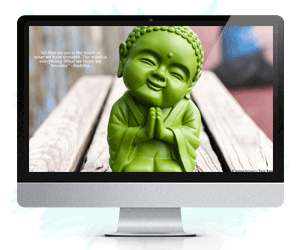
    Smiling Buddha

    “Your emotions are the slaves to your thoughts, and you are the slave to your emotions.” ~Elizabeth Gilbert

    I felt zapped. Depleted. Drained. Out of gas. And I wasn’t sure why.

    • Enough sleep? Check.
    • Enough exercise? Check.
    • Enough nutritious food and vitamins? Check.
    • Health check-ups and tests up to date? Check and check.
    • Reasonable schedule? Check.

    I thought I felt this way because I’d recently had surgery to remove a sizeable tumor.

    But that had gone smoothly, and I was fully recovered and back to my regular schedule.

    However, there was one thing that I noticed since the surgery: I was angry and couldn’t seem to shake it. I don’t think I realized the grip it had on me until I started trying to figure out the source of my low energy.

    I began to wonder if my anger and inability to let go of it could be the cause. I also wondered why I was so angry when the surgery and recovery had gone so well. I should have been happy that the tumor was benign.

    I was in it, but not necessarily conscious of it and not realizing what it was doing to me. The best way to describe it would be an automatic emotional reaction coupled with a lack of awareness.

    I had been zapped by my emotions!

    How we manage and deal with our emotions affects our energy big time.

    Here are four steps to process your emotions so they don’t zap your energy.

    1. Be mindful and consciously aware of your emotions.

    Before we can manage anything, we need to be aware of it instead of acting on autopilot. Awareness puts us in the driver’s seat and allows us to not only engage in the experience, but also decide how we want to respond to it. In this case, we need to realize how the energy of our emotions affects us.

    I noticed that I had been low in energy, and by the process of elimination and observing my behavior, I realized I had been stuck in anger. I had been irritable, argumentative, and overreacting to the smallest things. Once I had observed my behavior, I acknowledged that anger was becoming my main emotional state.

    The next time you catch yourself in an emotional experience, try to notice your behavior and identify the feeling behind it. This will give you insight and a new ability to manage it.

    2. Identify what thoughts are triggering the emotions. 

    Once you’ve observed your behavior and identified the emotion that’s zapping your energy, you need to see what thoughts may be triggering it.

    After I identified that I was stuck in anger, I kept thinking about the surgery and the events that led up to it. I had felt pain in my abdomen, so I went to the doctor and told her this.

    She did a regular check-up and said there was nothing wrong. I was relieved to hear this, and went home and didn’t give it another thought—until I started feeling pain again.

    I went back and told her that I felt pain and I was sure there was something wrong. It was a very strong intuitive feeling. This time she did a quick check and said, once again, “There is nothing wrong with you.”

    I questioned her about the pain, but she rolled her eyes and said, “Ignore it. At a certain age everything starts to hurt.”

    I asked if I should get a test or an ultrasound, but she said it wasn’t necessary, so, despite my intuition, I went home.

    A few days later, I was in pain again and began to think it was my imagination, because a doctor that I trusted said, “Don’t worry; nothing is wrong.”

    My intuition kept telling me I needed to get a second opinion. So I went to another doctor who immediately sent me for a test and quickly scheduled me for surgery after having found a tumor.

    Having gone back through the events, I realized that the few days before the surgery I was livid about what had happened. What if it was cancer? I let precious months slip by because I didn’t listen to my intuition.

    After the surgery, I was so focused on recovering that I guess I just put it out of my mind. After I recovered, the anger set in again, but it wasn’t until I started searching for the cause of my low energy that it started to make sense.

    The thoughts running through my mind post-surgery were: Why didn’t she take me seriously?  How dare she blow me off like that? Why didn’t I challenge her and insist on a test? All these thoughts were triggering anger. I was stuck in it, but not aware enough to figure it all out.

    Always try to connect your thoughts to the emotion you’re expressing. In recognizing the thoughts, you’re able to address them to move through the emotion.

    3. Lean into the emotion and learn from it.

    When we suppress our emotions, we send that energy underground, with toxic effects.

    Don’t suppress your emotions, but also don’t get caught in the energy of them. When we let our emotions hijack us, it’s like we’re on a runaway train. We are not in control. We may get addicted to the surge of emotion and get stuck in it.

    This is what happened to me when I was angry after my surgery; my emotion dictated my behavior, which depleted my energy. When I acknowledged what was happening and leaned into the emotion, I was able to identify the problem instead of just suppressing it.

    When we lean into an emotion, we can learn from it.

    4. Respond proactively to the emotion and transition from it.

    When an emotion lingers, we don’t have to get stuck in it.

    Now when I feel a powerful surge of emotion that I think will hijack my energy and time, I take a deep breath. I then visualize a simple picture with the cause, the emotion I’m feeling, and the action I can take to shift out of it and deal with what caused my reaction.

    For example, if something makes me angry, I visualize anger in a red circle with an arrow pointing to what caused it and another arrow pointing to the releasing action.

    The releasing action usually has two parts: The first part deals with the energy shift. For example, if I’m angry about something, I absolutely have to fit in some form of exercise as soon as possible. Even if I don’t have time and it’s just twenty sit-ups or a quick walk. This releases the energy in a healthy way and clears my mind.

    The second part deals with the cause and what action I can take to address it. In this instance, I promised myself I would always be my own advocate and insist on a test if I feel it is necessary.

    Make this process a habit and it will have a great effect on your energy, happiness, and productivity.

    You can only manage your emotions to the extent that you’re aware of them. Creating awareness gives you the chance to maximize and manage your experience. And by doing so, you can avoid getting stuck and depleting your most valuable resource: energy!

    Have you ever felt like your energy was zapped by your emotions? What helped you move past it?

    Photo by AlexanderStein

  • Live Your Life for You: 5 Benefits of Embracing Who You Really Are

    Live Your Life for You: 5 Benefits of Embracing Who You Really Are

    “Live your life for you, not for anyone else. Don’t let the fear of being judged, rejected or disliked stop you from being yourself.” ~Sonya Parker

    I have struggled with my different-ness since I was young. I grew up trying to change the things that made me different in order to fit in. At home, my parents were doing their best to raise three young children, which I can imagine would’ve been very hard.

    I can still remember the first time I asked myself, “What is wrong with me?” I loved to take my time and have everything neat and tidy; my family, on the other hand, was the complete opposite.

    Being neat and tidy reflected in the way I would dress myself. One morning, when I was getting ready for my first day of school, my parents gave me socks to wear that didn’t match. I got very upset, and although they tried to understand what the problem was, they couldn’t help but be frustrated with me, as I was making the morning more difficult.

    We were also running late. I wanted to take my time and not be hurried. This caused us to run even later and made my parents even more stressed. I felt so guilty to have made them feel like this. 

    I wanted to belong and feel loved by them, so I tried my hardest to change the things about me that seemed to cause them stress.

    Trying to change these things that were a big part of who I was created inner conflict, and I would have big tantrums as a result. This would cause my parents stress as well, so eventually I stopped expressing my feelings.

    I became ashamed of the things that made me different. I was shy. I loved lots of time on my own. I had dark skin.

    I wanted to be accepted to avoid judgment and rejection. During school, other kids teased me for not having many friends. I felt so hurt and alone that I started a constant battle within myself to change my different-ness.

    I forced myself to be more social. I searched for ways to change the color of my skin. I stopped giving myself the alone time I wanted. I stopped expressing how I was feeling.

    This went on for the next twenty years. Since I spent my whole life trying to fit in, I never really got to know my true self. It was incredibly exhausting and I was very unhappy.

    It took having kids to wake me up. The love I had for my two boys gave me the drive to search for another way to live.

    I wanted my boys to love and accept themselves for who they were, differences and all, but how was I to teach them if I didn’t even know how? I needed to be the example.

    I finally discovered some things that empowered me to embrace my differences. I was amazed at the life changing effect it had on me. 

    When you embrace who you are:

    1. You stop living in fear.

    The choices I make in life are no longer dependent on what other people will think and whether I will be judged, disliked, or rejected. I just focus on being me.

    In the past, I feared what people would think of me for choosing to have a few close friends instead of a huge social circle and spending a lot of time on my own. Now that I accept that this is me, I feel a sense of freedom.

    Trying to be someone you’re not is exhausting. Being your true self is a courageous thing to do in a world that is constantly trying to change you. When you realize that living the life you want is more important than pleasing other people, suddenly you feel free.

    2. You form deeper, more connected relationships.

    In the past, I’ve had my fair share of not-so-good relationships. People would connect to the fake me, so they were never genuine relationships.

    I was able to sift through my relationships by loving my differences and being myself. This allowed the right people to come into my life who loved the real me. My relationships are now all fulfilling and genuine.

    If you want people to accept you for who you are, you first have to show them who that is.

    3. You treat yourself more kindly.

    I saw myself as weird so I would constantly put myself down and beat myself up. The negative self-talk was painful.

    In accepting my “weirdness,” I went from telling myself, “Because of my differences, I’m worthless and no one will ever love me,” to “I have to be true to myself. The people who really matter will accept me for who I am.”

    It was so liberating, I started to feel the happiest I’ve ever felt.

    4. You’re better able to find your passion.

    When hiding my true self, I could never know my strengths. I’m a compassionate person, which makes me good at helping people. I found that this is what I love to do and it’s my passion.

    After learning this about myself, I was able to offer my friends and family advice when they needed help. I also branched out and started my own blog, which is my main creative outlet where I can combine my passion for writing and helping people.

    Once you allow yourself to be who you are, you’re free to find what you’re good at and what you love to do.

    5. You start appreciating yourself.

    When you truly embrace your differences, you begin to find reasons to appreciate them. I’ve always been ashamed of my introverted nature, thinking it was a weakness. Only recently have I started to embrace it. I now appreciate that it allows me to enjoy time on my own, which is where I’m the most creative.

    I’ve finally discovered my strengths and weaknesses. I own them and I am grateful for them both because they make me who I am.

    When you start seeing your “weaknesses” as potential strengths, you develop a whole new sense of appreciation for yourself.

    I hope these lessons can help you learn to embrace your differences without having to become a parent to do it—and if you are already a parent, then I hope this can inspire you so you too can pass on self-acceptance to your children.

  • Stop Aiming for Perfection: Can You Let Good Enough Be Good Enough?

    Stop Aiming for Perfection: Can You Let Good Enough Be Good Enough?

    Ready to Receive

    “Good enough is the new perfect.” ~Becky Beaupre Gillespie

    The music started. Pachelbel’s Canon in D on harp and flute. I was supposed to enter the room near the end of the piece.

    I knew there were fourteen sets of four measures each, but in my nervous state I quickly lost track. I picked a random moment in the music that I thought might be near the end (surely I’d been waiting forever already), opened the door, and walked in.

    Then: BAM!

    The door startled me by suddenly slamming shut behind me. Oops… That was not supposed to happen.

    Thus started my recent wedding, with the bride oh-so inelegantly slamming a door.

    Then, uh-oh, I heard my dad stumble over a note on his flute. And when I got to my designated spot by my groom and our officiants, I realized—oops—I had entered way too early. We all had to stand there awkwardly while the piece played on for what seemed like ages.

    Twenty years ago, at my first wedding, this stuttering start probably would have horrified me. This time, thank goodness, things were different.

    Instead of being horrified that my perfect day was being ruined, I just beamed. My heart swelled that my parents, who get so nervous playing for a rapt audience, were the ones sharing their music with us. I giggled as my groom and I mimed flirting with each other while the music played, and everyone else laughed along.

    All the “mistakes” were part of the fun and specialness of the day.

    Twenty years before, when I got married the first time, I was a card-holding Perfectionist with a capital P. I sought out the best string quartet, the best photographer, the best caterer, the best florist, the best makeup artist.

    When my custom-made gown (made by the best seamstress) didn’t turn out exactly the way I wanted (read: perfect), I feared the world might end.

    Oh, yes, I was one of those brides. I admit it. The sad fact is that I was a perfectionist about the wedding because some desperate, scared, insecure part of me unconsciously believed that if the wedding were perfect, maybe it would somehow fix my flawed relationship and make it okay.

    If the wedding were perfect, maybe my life would be good enough.

    As you may already have gleaned, from the fact that there was a second wedding, this isn’t how things worked out.

    That first wedding was perfect. Or, at least, darn near close to it. And this, not surprisingly, did nothing to save what was ultimately a doomed marriage.

    Yet for years I still hid behind a perfectionist mask, believing that if I only showed my shiny highlight reel with the world, and never revealed the messy, broken, confused, imperfect self underneath, somehow my life would be good.

    It was the continuation of a lifetime of perfectionism.

    When I was in school, happiness seemed to depend on getting straight A’s.

    As a newlywed, happiness seemed to depend on the perfect, beautiful home.

    Then, as I started exploring the world of art and calligraphy, and gradually grew a small business from my creative work, happiness still seemed to depend on keeping up a shiny, perfect front.

    I did my best to hide my flaws and mistakes. And as my marriage disintegrated, I focused even more intently on achieving perfection in my work.

    But of course, true perfection is not possible, so all of this seeking of happiness through perfection only left me miserable.

    I became too scared of imperfection to try anything. My creative flow dried up.

    Who can create anything when only “perfect” is considered good enough?

    I suspect the ultimate collapse of my marriage played a big part in getting me on the road to recovering perfectionism. A divorce makes it very hard to pretend to the world that everything is perfect.

    And once you acknowledge that you aren’t perfect, that your life isn’t perfect after all, you no longer have to keep up the charade. Suddenly, it becomes acceptable to simply be you, in all your glorious imperfection.

    Letting go of a lifetime of perfectionism is not easy. Like recovering from alcoholism, I see it as an ongoing pursuit, and I consider myself a recovering perfectionist.

    Now, though, instead of aiming for perfection, I intentionally embrace imperfection. I proudly call myself an Imperfectionist with a capital I!

    I’ve learned the hard way that when I wait until something is perfect before I can try it or share it with the world, I stay permanently stuck in perfectionist paralysis.

    Whether building a website, learning to sing, asking someone out on a date, broaching that difficult conversation, putting a new product on the market, or anything else, the only way to move forward in life is to allow yourself to be imperfect.

    Plus, embracing imperfection is just a kinder, gentler way to live. I haven’t given up on my quest for excellence, but I’m a strong believer that going for “good enough” leads to a lot more happiness than going for “perfect.”

    This was certainly true when, twenty years after my first wedding, fifteen years after that “perfect” marriage ended in divorce, I said “I do” a second time.

    This time around, instead of seeking out a passel of the best wedding vendors, we aimed for “good enough.”

    I knew that the marriage was the truly important thing, while the wedding was merely a small entertainment we were doing because it gave us pleasure, and because it gave our families pleasure, which in turn gave us pleasure.

    Freed from my perfectionist paralysis, I even wrote a song to sing at the ceremony, as a surprise for my new husband. I’d started writing it a few years before, but had never managed to finish. Perhaps I’d been trying to make it perfect?

    Now, though, I had a new goal: not a perfect song, but simply a complete song—a good enough song.

    I also had a deadline, and deadlines are magical things, especially when combined with imperfectionism.

    I did complete my “good enough” song and I surprised my groom with it, right before our officiant officially declared us married. Like my dad on the flute, I was a bit nervous. My voice wasn’t the absolute best it’s ever been, and I messed up one of the chords.

    And you know what? It was perfect.

    Where can you let go of “perfect” in your life, and replace it with “good enough”?

    Photo by AJ Leon

  • Why We Stay Busy When We’re Not and The Benefits of Doing Nothing

    Why We Stay Busy When We’re Not and The Benefits of Doing Nothing

    “Doing nothing is better than being busy doing nothing.” ~Lao Tzu

    How many times in a day do you tell yourself you are busy and have too much to do? In a week? In a month?

    How many of those times are you actually busy doing “nothing”? You know the “nothing” that I am talking about—the nothing that means you are watching hours of mindless TV, roaming the internet, or playing a game that you can’t seem to tear yourself away from on your smartphone.

    I’ve been there and done that, and I still do it sometimes. I know what it’s like to feel drained and tired and want a break from real life for a bit so that you can recharge and refresh yourself.

    And I know what it’s like to choose to tune out/zone out/disconnect instead, and how that ends up causing you to feel even more worn out and overwhelmed than before you took that so-called break to do “nothing” for a while.

    We tell ourselves that it’s okay to do “nothing” and that we deserve some downtime, but we really don’t believe it and that’s why we choose to occupy that time with activities that don’t allow us to recharge. We want others to believe that we are as busy as they are, so we distract ourselves with those mindless tasks.

    I resisted “doing nothing” on its own for a long time without realizing it. I tried to do it while reading a book and watching TV and texting friends (yes all at the same time) and I burnt myself out.

    I couldn’t focus anymore and I had trouble completing my work when I needed to.

    I told everyone that I was busy and stressed out, but I really wasn’t doing what I was supposed to be doing, and my workload was getting larger and the quality of my work was decreasing, all because I wouldn’t give myself permission to take a genuine break and “do nothing.”

    It wasn’t until I left a stressful work situation and took some time to travel in South America for a few months that I learned the difference between being busy “doing nothing” and just “doing nothing.”

    It was there that I was challenged to just be, as I was traveling by myself, didn’t have any work to bury myself in, and there was no TV or phone to distract myself with.

    It was scary at first to be alone with my own thoughts and feelings, and I actually felt anxious, as I experienced sadness, anger, and worry without any way to divert my attention from them. However, as those feelings came up I was able to deal with them and release them, and that was what allowed me to feel rested and recharged.

    Even better, when you stop distracting yourself, you also get to enjoy your comfortable feelings such as excitement, happiness, and joy on a more intense level.

    Now you don’t have to leave your job and travel to South America to learn how to just do nothing; there are ways to experience this in our everyday life.

    For example, we don’t give ourselves permission to take a walk in the park and notice the changing leaves. Instead, we check in with a friend or work on our cell phone and let them know we are busy “exercising.”

    We don’t give ourselves permission to enjoy a cup of coffee or a glass of wine with a friend as we talk about how grateful we are for what we have. Instead, we meet with a friend after months of trying to schedule something and end up trying to compete over who is the most overwhelmed.

    We don’t give ourselves permission to have fun with our family at the beach, where the only thing we should worry about is remembering to put sunblock on. Instead, we get annoyed by our kids who want to play with us while we try to read “that book” that everyone is raving about, that we have no interest in but feel like we are supposed to read.

    Well let me share something with you: All of those things that you keep busy with when you say you are “doing nothing” are distractions. 

    They are distractions that are preventing you from connecting with others on a deeper level. They are distractions that are actually contributing to your feelings of exhaustion and unease.

    I want to challenge you to try doing nothing for a while. Spend some time just being where you are and enjoying this downtime either by yourself or with others. Tell yourself that it’s okay to spend some time really, truly “doing nothing.”

    Now, you may be figuring out how to do nothing, and I don’t want you to waste your time worrying about that, so here are some ways to try this “doing nothing” thing out:

    Sit on a park bench and enjoy the fresh air, take a nap if you need some extra sleep, enjoy a cup of coffee out while you spend some time people watching, call a friend or family member and only talk about happy events in your lives, lie in your backyard and watch the clouds roll by, or get lost in a magazine or a few chapters of a funny book.

    It doesn’t matter which “nothing” you choose, just make sure that you will not be distracted so that you can benefit from it (that means keeping your cell phone far away from you or even turning it off).

    This may feel uncomfortable for you the first few times you do this. There are some things that you can do to make this easier for yourself.

    Put this into your calendar just like you would a haircut, a doctor’s appointment, exercise, or any other type of self-care.

    Also, before you start this process, give yourself permission to set the intention that you will be doing nothing and are okay with that.

    There are a bunch of benefits that you will get to experience when you release your need to stay busy, which include feeling relaxed and less stressed, decreased tension, increased focus, improved connections with others, and a greater appreciation of all that you have.

    Isn’t time you let yourself reap the benefits of really, truly doing nothing?

  • A Message for Anyone Who’s Been Abused and Has Kept It Inside

    A Message for Anyone Who’s Been Abused and Has Kept It Inside

    Stand Strong

    TRIGGER WARNING: This content deals with an account of sexual abuse and may be triggering to some people.

    “Nobody can go back and start a new beginning, but anyone can start today and make a new ending.” ~Maria Robinson

    My uncle molested me from the time I was about four until I was in my early twenties. He held me too long and hugged me too tight. He would growl in my ear like an animal in heat, his warm, wet, often alcoholic smelling breath overwhelming me.

    This is how he greeted me at every occasion. When I was really small, I almost looked forward to seeing him because I liked the attention and believed he loved me, although deep down inside, I always felt as if I were doing something wrong, something naughty.

    As I grew, he began to grope my ass through my clothing while he whispered in my ear. He would tell me that I was sexy as he growled and hugged me tighter, pressing me up against his body. Much to my horror, I was aroused.

    I was aroused by my uncle. “MY UNCLE!” I would think to myself. “What on Earth was wrong with me? Surely something was gravely wrong with me to be aroused by my own uncle.”

    I wasn’t even sure of what arousal was at that point and only in retrospect could identify what I was feeling. I didn’t have a name for sex at that age, but I could feel it and knew it was wrong deep down in my belly. I felt wrong. 

    He was an adult. He was my uncle. He loved me.

    I felt the problem was surely mine and would chastise myself as disgusting and dirty. I kept my secret close. I assumed the other members of my family knew of his behavior and that he was normal. He didn’t try to hide it, or so it seemed to me.

    He acted out all the time. He was loud, erratic, and verbally abusive. His behavior was blamed on his drinking and the fact that he was an eccentric artist who simply couldn’t control himself.

    This was the way it was. This was the way it was to be.

    When I was a teenager dancing at a wedding, he told me seductively that he wanted to “make love to me.” I laughed, deflecting his advance as he pulled me in tighter. He had told me that he wanted to have sex with me.

    I knew it was true. I wondered if I would have the strength and courage to say no. I felt the planes and curves of his entire body pressed into mine on that dance floor as I drifted up above, looking down from a cloud, wondering how I might ever escape myself.

    It was only in my late teens that I began questioning if my sickness wasn’t possibly in part his sickness, because in every book that I read and every movie that I saw, I searched but could not find a relationship like the one I had with my uncle. 

    I would wait for the scene in a movie between two related people to become romantic. When it never did, I began to wonder if that bad, ugly feeling in my belly had been trying to tell me something about him.

    I cried to my boyfriend night after night, because the more emotionally intimate we became, the harder it became for me to be physically intimate with him, and he wanted to know why I was in such pain.

    After a Thanksgiving dinner accompanied by my uncle’s raucous behavior and inappropriate advances, my boyfriend insisted on confronting my father. To my shock, my father claimed that he had no idea of my special relationship with my uncle. He never would have guessed.

    No one knew but me.

    I simply never imagined that I would be in the position of having to defend myself. My uncle had been so free in his behavior with me. It never occurred to me that he would deny it.

    He denied it, as did his wife and the entire side of the family that accompanied him. Not only did they deny it, they threw accusations at me.

    “Crazy. Depressed. Liar. She’s unable to interpret harmless behavior.” They defended his honor as husband, father, and grandfather with vigor as if he were a hero—someone to be lauded, not disparaged and blamed with this filth.

    My father had confronted him and relayed the information to me. I did not have the courage to confront him myself.

    Just as I never dreamed I would need a defense, I never dreamed of how many would accuse me. Even my own brother sided with them, and my father would soften my uncle’s blame with statements like “he didn’t mean to hurt you.”

    I wanted to scream so loud the heavens would respond. Cry so long my eyes would bleed into pools of blood around my feet on the floor. Vomit up every one of my organs in sheer disgust.

    But what they didn’t understand is that the blaming, name-calling, and crafting of an airtight defense against me were all unnecessary. I wanted nothing from any of them. I did not want an admission. I did not want an apology. 

    I did not want revenge.

    I did not want him grabbing my ass at my wedding. I did not want to have to explain to my someday husband my “special” relationship with my uncle. I did not want him to have access to the children I would someday have.

    I wanted him to reconsider his behavior before his son’s newborn baby girl, the first girl born into the family since my birth, turned four. I did not want to ever see his disgusting face again. I did not want to feel anymore that sick, dark pain deep in my belly as he touched me.

    I did not want him to touch me again, ever. I wanted my future to be different from my past.  That is all I wanted.

    And I got it. I never saw him again. I turned and walked away from all the disbelievers and my uncle the molester.

    I found people who did empathize and help me heal. I faced the truth of what had been done to me and got the help I needed to go on to live a healthy, normal existence. In doing so, I learned that it is common for families to turn on abuse victims and believe the abuser rather than the abused.

    Were you abused? Did you speak your truth, and no one believed you? Did you speak your truth and experience the pain of even one person doubting you?

    If you were abused and someone, anyone, didn’t believe you, know that I do. I believe you. I stand with you, and for you, in the small way I can. 

    Speaking the truth after being abused takes incredible courage and strength. I am proud of you.  My story can be your story.

    We can be victorious together as survivors. I am a survivor. You are a survivor.

    We are stronger for having survived. We stand together triumphantly and move forward, bravely living abuse free lives.

    If you have been abused or are currently a victim of abuse and have not yet spoken out, I urge you to reach toward a safe person and speak your truth. You too are strong and courageous and deserve to live an abuse free life. Stand with me, no longer a victim but a survivor.

    Start today and make a new ending.

    Photo by Cornelia Kopp

  • Setting Emotional Boundaries: Stop Taking on Other People’s Feelings

    Setting Emotional Boundaries: Stop Taking on Other People’s Feelings

    “The way you treat yourself sets the standard for others.” ~Sonya Friedman

    The longer I stayed on the phone, the more agitated I became. My mother was on the other end, as usual, dumping her emotions on me. I had moved to Los Angeles for graduate school in part to escape all of this—my mother’s unhappiness, my sense of responsibility, the pressure to be perfect.

    When I hung up the phone, I felt an overwhelming sense of anger. At the time, I could not (correction: would not) allow myself to admit that I was angry with my mother. I couldn’t reconcile having such negative feelings and loving my mother at the same time.

    After all, hadn’t she sacrificed so much for me? Hadn’t I always considered her to be my closest confidante? Didn’t I proudly declare her to be my best friend when I was younger?

    Even the most positive memories between my mother and me have been eclipsed by the shadow of her depression.

    As a young child, I could never understand why my mommy was so sad all the time. I cherished the rare days she was carefree and silly and held these moments close to my heart. When she slipped into a depressive state, sleeping days at a time in her dark room, I willed her to come out.

    Early on, I learned to temper my behavior and my own emotions so as not to instigate or prolong her sadness. In my young mind, I made myself responsible for her and was not able to separate her feelings from mine.  

    I wanted her to be happy and thought that if I was always “good,” she would be. When she wasn’t happy, I blamed myself.

    Unconsciously, my mother fed this belief when she constantly bragged to others that I was the “perfect daughter.” The pressure to live up to my mother’s expectations overwhelmed me. I suppressed many negative feelings and experiences in favor of upholding the ideal she and I had co-created.

    That day, I turned this anger toward a safer target, my co-worker. That day at work, I blew up. I can’t remember what I said, but I distinctly remember the look of confusion on her face. My frustration with my inability to express myself made me even angrier. I excused myself, ran to the bathroom, locked myself in the last stall, and bawled my eyes out.

    Soon after, I took advantage of the free counseling services on campus. Over the next several weeks, my counselor helped me realize that it was okay to feel the way I was feeling. This was a radical idea for me, and one I struggled with at first.

    Because I had suppressed my own feelings for so long, when I finally allowed them to surface, they were explosive.

    Anger, resentment, and disgust came alive and pulsed through my body whenever I spoke with my mother during this time. While she seemed to accept truth and honesty from other people, I tiptoed around certain topics for fear of upsetting her.

    I never felt I could share the difficulties and challenges I experienced in my own life because this contradicted who I was to her. I felt I had no right to be unhappy. When I attempted to open up about these things, she often interrupted me with a story of her own suffering, invalidating the pain I felt.

    She seemed committed to being the ultimate victim, and I resented her for what I perceived as weakness.

    I realized that to get through my graduate program with my sanity intact, I needed to limit the amount of time and energy I gave to her. Instead, I found ways to protect and restore my energy. Writing became therapeutic for me. I found I could say things in writing I was unable to verbalize to my mother.

    This won’t be an easy letter for you to read, and I apologize if it hurts you, but I feel like our relationship is falling apart, and one of the reasons is that I’ve kept a lot of this bottled up for so long. I never thought you could handle honesty from me, and so I lied and pretended everything was okay because I was always afraid I would “set you off” or that you would go into a depressed mood.

    You unconsciously put so much pressure on other people (me especially) to fill your emptiness, but that’s a dangerous and unrealistic expectation, and people can’t and won’t live up to it. And they start to resent you for it. I do want you to be happy, but I’m starting to realize that I can’t be responsible for your happiness and healing; only you can.

    Seeing my truth on paper was the ultimate form of validation for me. I no longer needed to be “perfect.” I gave myself permission to be authentic and honored every feeling that came up.

    When I was ready, I practiced establishing boundaries with my mother. I let her know that I loved and supported her, but it negatively affected me when she used our conversations as her own personal therapy sessions. I released the need to try to “fix” things for her.

    I took care of me.

    Do you have trouble establishing healthy emotional boundaries?

    Take a moment to answer the following questions adapted from Charles Whitfield’s Boundaries and Relationships: Knowing, Protecting and Enjoying the Self.

    Answer with “never,” “seldom,” “occasionally,” “often,” or “usually.”

    • I feel as if my happiness depends on other people.
    • I would rather attend to others than attend to myself.
    • I spend my time and energy helping others so much that I neglect my own wants and needs.
    • I tend to take on the moods of people close to me.
    • I am overly sensitive to criticism.
    • I tend to get “caught up” in other people’s problems.
    • I feel responsible for other people’s feelings.

    If you answered “often” or “usually” to the above statements, this might be an indication that you have trouble establishing healthy emotional boundaries.

    Like me, you’re probably extremely affected by the emotions and energy of the people and spaces around you. At times, it can be incredibly hard to distinguish between your “stuff” and other people’s “stuff.”

    It is incredibly important to establish clear emotional boundaries, or we can become so overwhelmed and overstimulated by what’s going on around us that it’s sometimes hard to function.

    Here are a few ways to begin the process of establishing healthier emotional boundaries.

    1. Protect yourself from other people’s “stuff.”

    I can feel when someone is violating a boundary because my body tenses up. I realize that my breathing is very shallow. I feel trapped, small, helpless.

    The first thing I do is to remind myself to breathe. The act of focusing on my breath centers me and expands the energy around me. In this space, I can think and act more clearly.

    When I feel myself becoming too overwhelmed, I try to immediately remove myself from the situation. Sometimes all it takes is a couple of minutes to walk away and regain my balance. Other times, I have had to make the decision not to spend time with people who consistently drain my energy.

    Having a safe space to retreat, practicing mindfulness and meditation, or visualizing a protective shield around yourself are other methods that can help restore balance when boundaries are invaded.

    Find out what works best for you.

    2. Learn to communicate your boundaries in a clear and consistent way.

    For many, this can be the most difficult part of the process for various reasons. We don’t like to appear confrontational. We’re afraid that if we set clear boundaries for ourselves, the people in our lives will begin to resent us. However, learning to communicate boundaries effectively is necessary for healthy relationships.

    I’m not comfortable with that.

    It doesn’t feel good to…

    I’m not okay with…

    I’d appreciate it if you wouldn’t…

    Please don’t…

    If you cringed at the thought of using any of these phrases, you’ll be relieved to know that communicating your boundaries doesn’t always have to be with words. You can also effectively communicate through the use of non-verbal.

    Closing the door, taking a step back, shaking your head, or signaling with your hands can be less threatening ways of letting others know what you will and won’t accept from them.

    3. Be patient with the process.

    When I first realized that I was taking on the negative emotions of my mother, I became extremely resentful and disgusted with her. Instead of taking responsibility for my role in allowing this dynamic to occur, I blamed her for every negative thing that had happened in my life.

    I closed myself off from her and shut her out completely. Our relationship became incredibly strained during this time as we both readjusted to the new boundaries I was setting.

    Eventually, I was able to allow her to have her own emotional experience without making it about me. I could listen and no longer become enmeshed or feel obligated to do something about what she was feeling.

    Whenever you change a pattern, it is natural to feel resistance from inside as well as outside the self. As you practice, your ego may start to act up and make you feel like you are “wrong” in establishing boundaries.

    Others may also become resentful of your newfound assertiveness. They may be used to a certain dynamic in your relationship, and any change has the potential to cause conflict.

    Remember to be kind to yourself through the process and repeat the following affirmation:

    I respect and love myself enough to recognize when something isn’t healthy for me, and I am confident enough to set clear boundaries to protect myself. 

  • Are You Holding Yourself Back with a Story About the Past?

    Are You Holding Yourself Back with a Story About the Past?

    “The distinction between the past, present, and future is only a stubbornly persistent illusion.” ~Albert Einstein 

    One morning I woke up inexplicably sad. I sat on my bed trying to make sense of how I felt and what could be behind it. Intuitively, I grabbed one of the many books lying on my night table and opened it in a random place.

    What I had in my hands was A New Earth: Awakening to Your Life’s Purpose by Eckhart Tolle, and the chapter was called “Breaking Free.”

    Tolle explains how we tend to be unconsciously engaged in stories from the past and habitual thoughts about them and how we avoid the feelings associated with them.

    Avoiding uncomfortable feelings instead of allowing them to wound us is not the answer, Tolle warns us; emotion is a response to what is happening in the mind.

    Our ego clings to false stories that create fear, anger, jealousy, and other emotional responses because it feeds on the past and future for its existence.

    The best thing we can do to reduce the impact of these emotions is acknowledge them.

    Uncomfortable emotions bring the precious gift of making us aware that we’re trapped in thoughts, beliefs, stories, and old interpretations of ourselves. By being present with our emotions, we can break our identification with them and release the past.

    Reminded once more that every emotion is a messenger of something else that’s running deeper, I allowed my sadness to just “be.”

    I could see how my past beliefs of being unwanted, undeserving, and punished were dominating the scene. I was living a past story as if it were happening today with an intensity that surprised me.

    I realized then that the stories we tell ourselves are a mixture of “old emotions” and experiences we have come to feel as our identity.

    “The Unwanted Me” is a personal story that has pervaded my life for too long, making me feel terrified about showing what I have to offer and taking pertinent actions.

    From an early age I felt that I was somehow “different.” My environment was one of noisy activities—hanging out, watching TV, or playing video games—while I enjoyed reading, silence, nature, learning, being by myself, and engaging in artistic or volunteering activities.

    I was an extroverted introvert; I loved to talk about things I was passionate about, and others mocked me for this.

    The rejection made me disappear into a very rich but lonely inner world. As I grew up, I developed an inquisitive mind and artistic tendencies, which seemed to aggravate and scare my relatives and acquaintances even more than my “nerdy” style.

    How could I feel so inspired and touched by things that drove others nuts? The battle to correct and bring back on track this lost sheep became so fierce and devastating that it ended with me having to leave home to be able to pursue my dreams.

    Finding my way to who I was included not only being homeless and broke but also feeling enormous amounts of guilt and shame for the disappointment and pain I was causing my loved ones by doing the “wrong things.”

    It took a lot of hard work to get where I am now. Long nights filled with doubts about my abilities and choices made the call for becoming an artist a painful one.

    The pleasure and wonder I felt for the arts became tainted by the belief that there was something inherently wrong with me and I was being punished for challenging traditional points of view.

    What I understand today is that I was struggling not only with the “real” day-to-day challenges but also with this invisible past story silently sabotaging my efforts. This is the reason why I feel so tired and frustrated sometimes.

    I have actually enjoyed the benefit of having good people in my life and even recognition, but because I was unaware of a hidden script running the show, it took me loads of effort to believe people actually appreciated me for my qualities instead of pitying me.

    I felt left alone many times in my life, which was both the result of the old pattern of being unwanted and punished and the fuel that kept the pattern going.

    I know better now than to let the old story run wild instead of building the one I want to live. Whenever I feel this way again, I can ask myself: Who is speaking? Is it the real me, or my old “unhappy,” “unwanted,” “unworthy” (fill the blank) story?

    Knowing what story we are telling ourselves helps us learn, little by little, to trust life and build the sense of self-worth we need to succeed and be fulfilled.

  • 5 Tips to Accept Your Imperfections, No Matter How Different You Feel

    5 Tips to Accept Your Imperfections, No Matter How Different You Feel

    Cheerful Girl

    “I follow four dictates: face it, accept it, deal with it, then let it go.” ~Sheng Yen

    Growing up different isn’t easy for anyone.

    I was born normal, happy, and healthy. I had five fingers and five toes. I reached all my developmental milestones and showed promise as a vivacious, energetic child. It all changed when I was ten months old.

    I became violently ill with bacterial meningitis. I battled the infection with a strength I was naturally graced with at birth. One week into my hospital stay, I was finally able to lift my head; two weeks later, I was back home.

    I was lucky to escape with my life from the meningitis. When it’s not fatal, it can result in long-term complications, such as low IQ, cognitive impairment, loss of limbs, and learning difficulties, to name a few.

    I came away with profound hearing loss. Not quite deaf, but enough loss to have it impact on my daily functioning.

    At seven years of age, I got my first pair of hearing aids. It opened my world to a whole new experience. I could hear a lot more and I have this vivid memory of hearing a leaf scatter across the pavement for the first time. I couldn’t for the life of me figure out what that noise was.

    It brought challenges along with it too.

    I was known as the kid with “the things in her ears.” I was bullied for being different. I hung out with the boys playing football and cricket because the girls didn’t want a bar of me.

    It left me emotionally dead. I was really good at burying all the pain inside and trudging along every day.

    I became a master robot—a mechanical human being incapable of trusting and feeling. It was my survival mechanism doing its best to avoid accepting who I really am.

    Entering the real world after school became a shock. Out of my comfort zone, I had to enter a world of large groups, noisy parties where I couldn’t hear what anyone was saying, large lecture rooms, and meeting new people. I had to suddenly be more than okay with my hearing loss.

    I had to be okay with being a little different.

    It was the biggest lesson of my life—my own perceived fears are far more powerful than anything else.

    I perceived people would treat me different or look at me differently if I told them I had hearing loss. By believing this, I practically encouraged them to treat me differently without realizing it.

    So there I was, in my late teens, brewing with years of buried emotions and a confronting new reality of accepting who I am. So what did I do? Partied hard of course. The emotions came out in a flurry of binge drinking and hangovers worthy of a death bed.

    It took me three years to finally wake up. Three years to finally realize that I must accept every part of me in order to live the life I want. Negative emotions continue to build up when we cannot accept ourselves for who we really are, and burying our emotions is no different to avoiding our true self.

    Accepting who we are is a beautiful, bone-achingly hard thing to do. It’s about being vulnerable, consciously opening our eyes to our flaws, and seeing them in a whole new light. It hurts at first, but it’s a pain worth a thousand lifetimes.

    By changing our perception to see our flaws as neutral traits that are both good and bad, we change how we choose to react to things. It will ultimately change our life for the better.

    I’ve learned to see the benefits of my hearing loss. I’m a world-class lip reader who can probably “hear” better than you in loud settings. I’m more visually aware and observant than most, which has been incredibly handy in understanding human behavior.

    I had to face my hearing loss through accepting it as a genuine, unique part of me. I am absolutely in love with my life, despite all its challenges and pitfalls, and I have no doubt that if I didn’t have this unique part of me, I would be in a very, very different place.

    If I could give you five tips to help you accept who you are, they would be this:

    1. See your perceived flaws in a whole new light.

    Nothing is ever completely good or completely bad. In fact, everything is in perfect, harmonious balance. Find the benefit of that one thing you have trouble accepting, and change your perception to see that it’s not so bad having it after all.

    2. Practice gratitude daily.

    We all have so much to be grateful for. Gratitude helps to cultivate a positive mindset, which will help you to accept yourself for who you really are.

    Create a daily gratitude journal and list three things for which you are grateful. Do this in the morning to start your day on a positive note.

    3. Recognize that you are not your thoughts.

    We get so lost in the story that goes through our minds. Our egoistic mind is, in fact, our greatest storyteller. And too often, we believe everything it tells us.

    Learn to recognize that thoughts are created by an egoistic, survival-focused mind. It sees the threat in everything. Start to separate yourself by asking your mind this: “Does this thought serve me and my purpose? Does this thought actually help me?”

    4. Be vulnerable with others.

    You will be pleasantly surprised to know that you are not alone in this big, beautiful world. Someone out there has gone through your tribulations and trials, and they will understand what you are going through.

    We can feel so alone with our ego at times, so sharing with others can help us to see the light at the end of the tunnel. It also helps us to change our perception, as others can guide us to a different angle.

    5. Look after yourself.

    Eat a nourishing diet, move regularly, rest often, and be mindful. We, too often, underestimate how the mind and body work both ways. By looking after your body, you are creating a sacred environment for your true being. It makes acceptance a lot easier when you look after the house your soul resides in.

    It wasn’t until I started applying these five tips that I finally began the arduous process of accepting every little part of me, including that ever so tough one of my hearing loss. Every day, I accept myself a little more.

    I just want you to remember this: you are imperfectly perfect, just the way you are.

    Photo by g-imagination

  • A Letter from Your Future Self

    A Letter from Your Future Self

    “The place to be happy is here. The time to be happy is now.” ~Robert G. Ingersoll

    Dear Past Me,

    Remember that day when you thought all was lost? When you thought there was barely any point in carrying on?

    The bank account was dangerously low.

    You were arguing with everyone close to you.

    The roof was leaking.

    It felt like everything was a struggle and the so-called abundance of the Universe was nowhere to be seen.

    You were going over the mistakes you’d made.

    The money you had lost.

    The opportunities you had missed.

    You were going over angry conversations and thinking about how right you were and how wrong they were.

    You were searching for forgiveness but holding onto the unfairness of it all.

    Remember how low you felt?

    You actually spent more time than you care to admit wishing you didn’t exist.

    You thought at least that way, nobody would miss you and you wouldn’t cause them any pain if you had never existed.

    Dude.

    Seriously?

    You do realize now that you wasted a bit of time with that ridiculousness, right?

    You wished for a lightning bolt of awareness to hit you in the head.

    You were hoping for a finely tuned droplet of self-aware genius to magically transform your heart.

    The Universe provided because in the next few moments, you read this:

    The average person lives to be 76 years of age, which is approximately 28,000 days.

    28,000 days.

    That’s when it hit you.

    Every day is truly precious.

    Months seemed to come and go.

    Years flew by.

    But days. Days were made up of habits.

    You woke up to your own habits at that point.

    How much time had you wasted drifting into jealousy?

    How many hours had been lost sinking with regret or crying over disappointment?

    If you added up the hours you’d filled with worry, regret, anger, sorrow, and guilt, how many days would it equal?

    It was terrifying to even consider.

    You shifted.

    You found three ways to live in each day that have changed you forever.

    1. You are not your feelings.

    When anger or hurt hits your heart like a ton of bricks on a hot summer day, it can feel like it consumes you.

    The more you resist, the more you fight it, the bigger it gets.

    Allow the pain to be there. Talk to it. Realize that you are the witness that is doing the talking.

    2. Meditation.

    It seems like everyone talks about meditating.

    Once you made it a non-negotiable part of your life, everything else shifted for you.

    Think of it like brushing your teeth or taking a shower.

    You can sit quietly anywhere. In your car. At your desk. Just close your eyes and breathe.

    It will help you to be in the day.

    3. Forgiveness.

    As much as you’re struggling with your own crapola, everyone else is going through his or her own lessons as well.

    As soon as you leaned into forgiveness, you felt better.

    You stopped resisting.

    Forgiveness gives you flow.

    And when you flow, BOOM—you’re in the present moment again.

    I want you to wake up to what you have right now!

    I want you to know that no matter what, today is beautiful.

    It doesn’t matter if it’s pouring rain, pounding snow, or penetrating sunshine.

    Weather is neither good nor bad. It just is.

    Today is what you make it, and I want you know that here and now, in this future moment that I’m writing you from, love is the only thing that lasts.

    Whether your current moment is filled with sorrow or bursting with joy, this too shall pass.

    Find ways to make today into a beautiful painting of kindness toward yourself and toward others, and you will reach the end of your 28,000 days with a knowingness that you lived well.

    What day is it today?

    It’s the best day ever.

    Love,
    Future Me

  • Stop Resisting: Surrender to Your Body to Transform It and Your Life

    Stop Resisting: Surrender to Your Body to Transform It and Your Life

    Surrender

    “Whatever you fight, you strengthen, and what you resist, persists.” ~Eckhart Tolle

    Most people don’t realize that your relationship with your body affects your entire life. Why? Because if you are fighting with your body, you are fighting with yourself. And if you are fighting with yourself, you are resisting what you truly desire in life.

    I know too well what it feels like to fight with your body. I had the same fear as most people…

    If I love my body as it is today, it will get worse. I will gain more weight. If I keep my constant attention on it, remind myself hourly how much I don’t like it, it will transform.

    Sure sounds crazy, doesn’t it? Has anyone ever “hated themselves skinny” and had healthy, long lasting results? Or how about the opposite? Has anyone ever “loved themselves fat”? And I am not talking about the love you think you are giving yourself by eating a package of Oreo cookies. I am talking true, authentic love causing the body to gain massive amounts of weight.

    And yet this is our fear: that if we were to love ourselves, love our bodies as they are in this moment, we would get worse. But remember, what you fight you strengthen.

    The more I fought with my body for gaining weight, the more weight I gained.

    Then, one sunny day as I was driving, singing along to my favorite tunes, thinking about what new clothes I wanted to purchase at the mall, I noticed something out of the corner of my eye.

    Before I could comprehend what this thing was, everything went black. To this day, I can’t be fully sure whether everything went black because my eyes were closed or because my airbag deployed, but either way I knew that I was no longer on my path to the mall.

    In what felt like the most extreme game of bumper cars, I finally came to a stop as my Chevy truck flipped on to the side with me on the freeway and my passenger door above me.

    Turns out I was hit by five cars, one car for each lane on the freeway. And although I was able to safely exit my vehicle the next morning, I quickly learned that I was not able to lift my own head and, therefore, couldn’t move freely on my own.

    As I lay on the couch each day, unable to lift my own head, I no longer had the strength to fight against my body and, therefore, my body finally had the ability to let go. And after thirty days of only moving with help to get to and from the bathroom, my body released ten pounds.

    It is safe to say that some people would have gained weight injured on the couch. There are very specific reasons that my body didn’t, one of which was my ability to simply be okay with where I was.

    I wasn’t angry that I couldn’t move. I wasn’t upset that I could no longer work out. I certainly wasn’t fighting with the idea of a much-needed vacation from working. And I decided to treat it as just that—a vacation from my everyday life. The life that I had set up for myself that was so stressful and impossible to maintain.

    I relaxed and enjoyed not needing to do anything but heal.

    I realized that there are more important things in life then losing weight, like being able to lift my head again.

    I allowed my body to rest and stopped punishing it for being the way it was.

    And I finally allowed my body and myself a much-needed break from the stress of trying to lose weight.

    I highly recommend surrendering to your body without being hit by five cars. Here are three tips to get you started:

    1. Become present where you are.

    The first step is to be honest with yourself and admit where you are to establish a starting point for your growth. Otherwise, this would be like trying to drive to New York without knowing if you are in California, Florida, or Mississippi.

    It also follows along with the theme that what you fight, you strengthen. The longer you ignore where you are or pretend you are not where you are, the longer you’ll stay there.

    When you let yourself be in your body without needing to have a different one, you release the resistance and have the ability to move forward toward a life you truly desire.

    When you are desperately clinging to a different body with all your might, convinced that this is what will bring you all the happiness, contentment, and love in the world, you will find that an alternate physical appearance simply doesn’t create the internal feelings you are after.

    Therefore, even if you achieve this physical body that you desire, it will come with a sense of emptiness, as you still must learn how to simply be where you are with full presence and love, no matter what.

    2. Feel your feelings.

    In order for me to find acceptance for myself, I had to feel. I had gone so many months feeling completely numb to everything and then wondering, “Why can’t I just love myself?”

    In order for me to love myself, I had to first admit that I wasn’t happy. In fact, I was out right pissed off. And after a celebratory pity party, followed by many tears, I could finally move forward.

    When we ignore what we feel, we think we can make it go away. However, just the opposite is true. Not feeling our feelings isn’t a way to make sure we never have sadness; it’s a way to start an inner battle for however long it takes you to finally feel sad.

    The minute you admit that you are in fact pissed off, frustrated, and down right suspicious of your body, you will release the resistance, call off the fight, and move toward an overall feeling of lightness.

    3. Find peace and calm.

    It’s no secret that a stressful environment is not conducive for lasting results in your life, yet so many people live each day in a stressed out body, wondering why they can’t release their weight and feel lighter.

    Then to make matters worse, they obsess over their food and spend hours at the gym without even taking a moment to breathe.

    In order to find acceptance for your body and release your weight, you first want to create the most peaceful environment in your body as you possibly can.

    This doesn’t mean you have to lock yourself in a room with your Pure Zen CD for a month; it means you begin to find places in your life where you can introduce more peace and calm easily—for example, your own thoughts and beliefs. Why not zen those puppies out?

    Instead of believing that weight loss is hard and your appetite is too big, why not believe that in the past weight loss has been challenging and now you are open and ready to receive an approach that feels easy and effortless? And your appetite isn’t too big, but maybe you need to learn how to better connect to your body and hear your hunger and fullness cues.

    We tend to take on very stressful thoughts and beliefs about weight that will inhibit our bodies’ ability to release the weight easily and effortlessly. If you believe weight loss is hard, painful, and full of restriction, then it will be. If you believe that weight loss is intuitive, insightful, and transformative, then it will be.

    You get to choose what your weight loss journey looks like. I suggest you choose a path that feels calm and peaceful in order to enjoy each step of the way without being so dependent on the end result to fill you up.

    When you become present with exactly where you are, feel all your feelings, and find your peace and calm, you now have the ability to stop fighting. The battle that you have been facing with your body and weight will finally be done as you wave your white flag and admit that you are tired of the fight.

    This doesn’t mean you aren’t giving up on your true desires. You are deeply aligning with them.

    You are admitting that this whole weight loss thing isn’t something that you want to control anymore. That maybe there is a better way to release your weight that doesn’t suck. And you’re reminding yourself that when you desire something, the ability to have it has to be present.

    Therefore, you have no reason to focus so intently on losing weight anymore. Instead, you get to focus on living your best life in this moment, wherever you are.

    Remember this, you’re not weak or pathetic for surrendering. You are smart and powerful.

    You have the ability to say that you have so much love for yourself that you are willing to do whatever it takes to feel good now, regardless of where you are. And this is the most powerful move you can make for lasting results in your body and your life.

    Photo by Scott

  • 5 Steps to Deal with Emotional Baggage So It Doesn’t Define You

    5 Steps to Deal with Emotional Baggage So It Doesn’t Define You

    Woman and a Suitcase

    “Sometimes the past should be abandoned, yes. Life is a journey and you can’t carry everything with you. Only the usable baggage.” ~Ha Jin

    You’ve probably heard of the fear of missing out but what about the fear of letting go?

    My father was volatile and mentally unstable. Criticism was his preferred method of communication. As a child and teenager, I learned to keep my thoughts and feelings locked away and became an expert at deflecting personal questions.

    Without realizing it, I carried this habit into adulthood, avoiding any talk about my feelings or turning them into a joke. When a friend finally called me on it, the shock of self-recognition quickly turned to resistance. This is who I am, I thought. Why should I change?

    I plodded on, working as hard as ever to keep my fortress intact. It wasn’t making me happy yet I wasn’t ready to change.

    As I struggled with my desire to cling to hurtful memories and self-defeating behaviors, it dawned on me that I was afraid to let go because defensiveness was part of my identity.

    The problem wasn’t that I had baggage—everyone has baggage—but that it had come to define me. I didn’t know who I would be without it. At that point it hit me: I had to dig deep, discover the person I wanted to be, and then act on it.

    After I identified that I was holding on to the past because it seemed too important to jettison, I discovered that letting go is harder than it sounds. Relaxing a long-held belief isn’t a one-day, one-week, or even a one-year process. However, it is possible.

    This is the five-step process I discovered:

    1. Write an honest list of the thoughts, beliefs, and behaviors that weigh you down.

    Grab a pen and notebook, find a quiet space, and spend thirty to forty minutes thinking and writing. It is important to be honest and write down whatever comes to mind. Don’t judge what comes up, just take note.

    2. Reflect on each item and identify the source of the thought/belief.

    Travel back in time and see where you picked up these items of baggage. Do you fear intimacy because a partner cheated on you? Do you dread holidays because your parents drank too much? Acknowledge the painful memories but don’t wallow in them. Write it down and move on to the next step.

    3. Find at least one positive in each hurtful experience/situation.

    Look for the silver lining in your cloud. For example, my father’s criticism made me aware of the power of words and taught me the importance of speaking with kindness. Looking for the good in the past helps you reclaim your power. You are no longer a victim; you decide what you take from that experience.

    4. Create affirmations to foster change and counteract negative thoughts.

    Take the positives from step four and turn them into affirmations or statements of intent, i.e.: “I will speak with love” or “I will treat people with kindness.” This puts the emphasis on positive future behavior and frees you from the past. Make the affirmations tangible: put a reminder on your phone, write them on post-its, or put a list on the fridge.

    5. Practice patience and mindfulness.

    It takes time to change habits, especially when they are rooted in deep hurts or fears. Check in with yourself regularly using journaling or meditation. If you find yourself shouldering old baggage, be sure to acknowledge it, then gently release it and focus on your affirmations. Replacing negative thoughts with positive actions will help you let go for good.

    There are infinite possibilities for each of us, baggage notwithstanding. Everyone has pain. It’s part of what makes us who we are. What defines us, however, is how we handle it. One of my favorite artists, Bruce Springsteen, has some wise words on the subject:

    “You can find your identity in the damage that’s been done to you. You find your identity in your wounds, in your scars, in the places where you’ve been beat up and you turn them into a medal. We all wear the things we’ve survived with some honor, but the real honor is in also transcending them.”

    By taking the time to identify and understand our baggage and making a conscious decision to let go, we free ourselves to experience life in a richer, deeper, more meaningful way.

    Photo by Donnie Nunley

  • How the Word “Should” Can be Harmful and 3 Empowering Alternatives

    How the Word “Should” Can be Harmful and 3 Empowering Alternatives

    “To wish you were someone else is to waste the person you are.” ~Sven Goran Eriksson

    How many times a day do you use the word “should” in reference to yourself or other people? I don’t know about you, but I used to use it a lot.

    The word “should” has become a fixture in our everyday dialogue. We use it in conversation with others, as a way of motivating ourselves or keeping ourselves in check, and to express a myriad of feelings, including frustration, guilt, and regret.

    As I’ve become more interested in my internal dialogue and how it affects the way I feel about myself, show up in the world, and live my life, I’ve started to realize just how insidious the word “should” can be.

    Although I used to “should” myself about a variety of things, many times each day, I realized that telling myself I should be doing more or being more wasn’t actually helping me do more or be more, and it left me feeling like I wasn’t enough as I was.

    Equally, I realized that when I told other people they should or shouldn’t do something, I wasn’t respecting their ability to make the best decisions for themselves. That didn’t fit with my personal philosophy (that people are free to do what they want as long as they’re not harming others), and I knew I wasn’t being the best friend or partner while I was using “should”-based vocabulary.

    Since I had these realizations, I’ve been on a quest to replace my “should” with alternative vocabulary that is healthier and more accepting—both of myself and of other people. The longer I’m on this quest, the more I realize the damage the word “should” does to our self-relationship and our relationships with others. Here is what I’ve discovered so far:

    Two Major Problems with Using the Word “Should”

    When we use the word “should,” we’re not accepting reality. We’re talking about things that we wish were so, but aren’t (or vice versa). Whenever I used the word “should” when talking to myself, it was motivated by a lack of self-acceptance rather than encouragement.

    As Dr. Shad Helmstetter explains in his book What to Say When You Talk to Yourself, when we tell ourselves that we “should” be doing something, we’re implicitly reinforcing the idea that we’re not doing it.

    If we say to ourselves “I should really meditate more often,” the unspoken follow-up to that sentence is “…but I don’t.

    Equally, if we say, “I should really be exercising this morning,” the unspoken ending to that sentence is “…but I’m not.”

    In the long-term, when we tell ourselves or other people that we should or they should be doing something (as well-meaning as we might be), we’re reinforcing the negative, and the fact that we or they are not doing it.

    Alternatives to “Should”

    I won’t pretend that removing the word “should” from my vocabulary has been easy, or that I’ve arrived and currently inhabit a “should”-free existence. I used to use the word “should” a lot and, in truth, I think it’s something I’ll have to keep an eye on for the rest of my life.

    For now, however, I’ve found some alternatives helpful in overcoming my habit of “should”-ing myself and other people.

    1. Focus on the benefits.

    Instead of telling myself I “should” be doing more of something, I try to focus on why I want to do that particular thing.

    Instead of saying “I should do more yoga,” I remind myself of why I want to do this: “I feel great when I do yoga a few times each week,” “I enjoy feeling myself relax and stretch out when I do yoga,” or “I feel a greater sense of self-connection when I make time to connect my body and my breathing in yoga.”

    2. Focus on how the activity fits with your values.

    One of the biggest things I used to “should” myself about was being on time. I struggled to turn up on time for work, appointments, meeting up with friends, and pretty much anything that was due to start at a set time. It was a constant battle with myself and, of course, telling myself “You should be on time” or “You shouldn’t be late” did nothing to change my tardiness.

    Instead, I started reframing this from the perspective of my values. I started telling myself “It’s really important to me to be on time,” or “I want to live with integrity and do what I say I’m going to do, when I say I’m going to do it.”

    3. Focus on accepting and exploring reality.

    I used to think that I shouldn’t feel angry or jealous. I had heard they were “unhealthy” feelings to experience and had the belief that there was something wrong with me for feeling that way. No matter how much I told myself that I shouldn’t feel these things, however, they didn’t go away.

    Now, I focus on accepting my experience. Instead of telling myself “I shouldn’t be feeling/thinking _____,” I take a step back and say, “Okay, I’m feeling/thinking _____. I wonder why that’s happening now?”

    Removing the word “should” from your vocabulary will take time, patience, and practice. But it is possible, and it comes with great rewards. Replacing “should” with more helpful dialogue will lead to a kinder relationship with yourself, and better relationships with the people around you too.

    Photo by Hartwig HKD

  • How to Overcome Envy So It Doesn’t Poison Your Relationships

    How to Overcome Envy So It Doesn’t Poison Your Relationships

    “Enjoy your own life without comparing it with that of another.” ~Marquis de Condorc

    I struggled to offer a tight smile to a friend who had achieved a life-changing career break.

    Although I was thrilled and excited for my friend, I was sad and disappointed in myself. I, too, had worked hard and waited patiently, but unlike my friend, my work and my wait continued, unacknowledged and unrewarded.

    At first I didn’t notice I had been bitten by envy. But its invisible poison infected my bloodstream, polluting my future interactions with my friend. I was guarded, afraid of being hurt yet again by yet another one of my friend’s successes.

    Each conversation rubbed between us, creating a visible strain in our relationship. Over time, I started to avoid her. She couldn’t understand why I was pulling away. Envy was killing our friendship.

    For years, I sat on the other side of envy. I was the one who friends showered with praise while hiding the sorrow in their hearts.

    One particular girlfriend who was equally talented and creative felt stuck in a dead-end teaching career that seemed to restart each two years at a different school, preventing her from the security of tenure.  She devoted all her free time to her students, sacrificing her dreams of writing and art. Finally, after yet another lay off, she crumbled into depression.

    She glanced over at me and felt the sting of envy. Here I was, married with children, both with publication credits and art exhibits, and a teaching gig to boot. Why couldn’t she have a little bit of what I had?

    At the time, I didn’t know how to comfort or encourage her. Envy festered until it overpowered the love we once shared. The friendship dissolved in bitterness and misunderstanding. 

    Now, years later, as more and more of my friends enjoy greater and greater success, I understand what my estranged friend must have endured all those years. If I didn’t do something, envy would kill off my friendships just like it had done years ago.

    But how do you treat poison envy?

    It’s taken a lot longer to learn how to turn away from envy, but here are the steps I used to free myself from its bondage and transform my life.

    1. Stop comparing yourself to others.

    The first step to overcoming envy is to stop focusing on what others have and face the truth about yourself.

    As long as I was staring at my friends’ successes, I could not see that the dissatisfaction I felt had nothing to do with their victories and everything to do with my own perceived losses.

    Once I turned the mirror away from others, I discovered I was not where I wanted to be in life. The envy I felt toward the success of others only masked the disappointment I felt in myself.

    2. Stop judging.

    Judgment, even self-imposed judgment, divides and conquers the soul into tiny squares designed to punish. I was stuck, unable to leapfrog to the next level of success, which was bad. My friends, on the other hand, were standing at the top of the mountain, which was good.

    I didn’t understand that good and bad are relative terms. Without them, things just are.

    Once I stopped judging myself, I was able to accept where I was. It may not have been where I wanted to be, but I was no longer angry about it.

    3. Start seeing things clearly.

    With no one to blame, I was forced to accept responsibility for where I was and how I got there.

    Without the veil of envy, without the mirrors of comparison, without the torture of judgment, I saw the truth clearly: I was not where I wanted to be because I was not who I needed to become.

    I had the education, the work experience, and the job skills needed to get promoted, but my attitude of entitlement kept me sidelined. It was only in realizing I was no one special that my humility allowed for my true light to shine. Others took notice of the internal change, and I was promptly promoted to the job I had been craving.

    Once I stopped comparing myself to others and acknowledged the truth about myself, the damaging effects of envy melted away. I was no longer pitted against my friends.

    Now I enjoy the blessings others have been given without the shadow of self-pity. And I am able to champion their success even if our blessings our different.

    I start each day anew, focused on my journey, no longer derailed by the journeys of others. I keep my friendships intact, even flourishing, without the bitterness of jealousy or the darkness of sorrow or the strangling voice of defeat.

    You, too, can treat the poison envy in your life. Start by turning the mirror away from others and toward yourself. Stop judging your life by impossible standards. See yourself clearly for the first time: a wonderfully flawed human being with passionate goals.

  • How to Move On When You’re Hurt and Waiting for Closure

    How to Move On When You’re Hurt and Waiting for Closure

    “Letting go gives us freedom and freedom is the only condition for happiness.” ~Thich Nhat Hanh

    Ah, closure. That feeling of vindication, or a sense of completion—it can be very enticing!

    There are times when seeking resolution is really important. If we are having an argument with our partner, settling it can help strengthen our relationship. If we are having a disagreement over a contract, determining the outcome may be required to continue with the project at hand.

    In these types of situations, seeking resolution is very relevant.

    That said, there are loads of situations that occur in life in which we seek closure, even though it does not really serve us. As a matter of fact, this desire can hold us back.

    When we feel we’ve been done wrong, we want resolution. The size or type of infraction may not matter. We want to know who is guilty of the offense, or, if we know who the culprit is, we want to know why they did it.

    Heres the catch: It’s pretty common to feel like this resolution is necessary to move forward.

    Many moons ago I was in a relationship with a man who turned out to be quite unsavory. Unbeknownst to me, he had gone through my wallet, made note of my credit card info, and was using two of my cards to finance what I can only describe as a shopping addiction.

    I was not using the cards at all, so was not expecting to see bills, and since he consistently arrived home before I did, he was able to get the bills from the mailbox before I ever saw them.

    I did not learn of his deception until we broke up for other reasons.

    Besides dealing with typical breakup emotions, I also had to face the reality of this man’s ability to lie to me and steal from me.

    Yes, the relationship went south, but I thought we’d had love and respect between us, and, well, enough integrity to not commit crimes against one another.

    I wanted him to account for his behavior; I wanted an apology; I wanted him to explain to me how he could have behaved in such a despicable manner toward anyone, much less me, his girlfriend (at the time).

    Unsurprisingly, I didn’t get any of that.

    I was rocked by this for quite some time. It took me months to realize that the reason I wasn’t getting over it was because I was still waiting for him to explain, apologize, or something. I realized that if I wanted to let it go, I was also going to have to let go of my desire for him to admit he was a mega jerk.

    We want to feel in the right. We want it to be recognized that we were done wrong. If possible, we want an admission of guilt.

    However, in looking for this type of closure, we are often giving away our power. We’re saying, “I cannot move past this experience until…”

    What we actually desire is an internal, emotional shift. We want to feel better!

    We already know we can’t expect the outside world to take care of our feelings. Let’s apply that knowledge to resolution as well.

    Here’s how I got over the thieving boyfriend situation, and it’s a formula I continue to remind myself of whenever I begin to feel like I can’t move past an experience until satisfaction is mine.

    Acknowledge that something crappy happened.

    Yes, it totally sucks when a formerly good friend stops returning our calls and texts. And it can be life-altering when we are let go from a job, despite receiving positive feedback on our performance review.

    It’s important not to pretend. Sometimes we rush past the feelings that are present in an attempt to appear uncaring (unhurt, really), or like we have it handled. Getting back on the horse is great and all, but let’s first acknowledge that it hurt when we were knocked off!

    Having feelings doesn’t make us less able to handle tough stuff, or to come up with great solutions. It just means we’re human.

    Identify all the feelings you do have.

    If the situation is minor, it may be one or two feelings. For more intense events, it can take a while to pinpoint all of them.

    This is essential, because identification and recognition go hand-in-hand. In doing this, we’re accepting that we are feeling these emotions. This sort of self-acknowledgment is crucial.

    By the way, we’re the only ones who get to decide what is major, or minor, for us. We’re all unique, and we’ve all had different experiences that have helped mold who we are. Something that is minor for one may be major for another, and vice versa. That’s okay.

    The point is not to compare the experience we are having to how others would react; it’s to self-process and move forward.

    Release the need for outside meditation of any sort.

    This is not about forgiveness. It’s not about taking the high road, either. Those options both involve the other person. This is about us, and what we want.

    It is simply about asserting that we can move forward regardless of what is happening (or what doesn’t happen) in the outside world. We can use affirmations, or meditation, or whatever tools work for us for energy release.

    When we are looking for resolution from the outside world, we are also seeking acknowledgement. Learning to self-acknowledge is a wonderful gift to give ourselves.

    Whether you use the tips above, or another recipe that works for you, let’s choose to move forward. We are the one who will benefit, and we’re the only ones who will suffer if we don’t.