Category: letting go

  • The Key to Freedom: Minding Your Own Business

    The Key to Freedom: Minding Your Own Business

    Freedom

    “The day you stop racing is the day you win the race.” ~Bob Marley

    Let me take you back to the beginning of my day, how I used to do it.

    Flicking through my Facebook newsfeed, clicking on profiles, scrolling through comments, monitoring social interactions, checking how many likes my last post or profile picture got. Then I’m going to my therapist, to talk about how worthless my own life is, how inadequate I feel.

    I’m not saving the world, pursuing my passion, making friends, or traveling. Neither am I getting married or engaged nor having children—and I do not have a clue what the heck I even think about all of these prospects, whether I even want them.

    I can barely look at myself in the mirror. I hate my life and my own weakness for not taking control of this pathetic situation.

    The smiling faces on my social media page grin down at me like clown masks in some perturbed haunted house in a nightmare. I ask myself, why am I taking their happiness so personally?

    We can’t seem to escape comparison. We seem to be enmeshed in it, entangled in it, trapped and suffocated by it. We can’t seem to understand who we are or where we are in life without looking around us to compare our position.

    Somewhere inside us we believe that if we can gain all the information that we can through comparing ourselves to those ‘better than us,’ maybe we will find the key to that elusive happiness, which comes only from the confidence that we are good enough.

    If we keep on social media stalking those who are living the lives of our dreams, maybe we will pick up on that thing that makes them so different from us—so much ‘better.’

    I believe we aren’t after their lives so much as what we perceive is their ease. As much as the freedom they ooze, or the contentment they display, we want their happiness. We forget that most people only display the highlight reels of their lives on the Internet.

    In fact, I used to tell myself that we create ourselves, and I tried to make myself a collage of all the people that I admired—Beyoncé included.

    I told myself, that I didn’t have any preferences. I treated myself as a blank canvas, and by that I mean I slowly rubbed out anything that came from within, without reason or logic, and replaced it with everything I was attracted to externally, like a magpie.

    The noise I was letting in from outside was torturing. And deafening.

    When the toxic concoction of low self-esteem, ambition, insecurity, and unfavorable self-comparison escalates, you may get depressed, as I did.

    My former way of life (in combination with a complex range of other factors) made me ill. While everyone is different, I realized, for me, the key to recovering my mental health was to supplement professional help and therapy with a radical simplifying of my life.

    Today, I wake up in the morning and open my eyes, taking a good look around at where I am, noticing a kitten asleep at my feet. I talk with my sister who I share a room with; we both get dressed for work, joking and teasing the other on our rushed fashion choices.

    I look out of my open attic window and smell the fresh crisp air, watching the stillness of the tree-lined street against a backdrop of rolling green hills, before the storm of traffic and rush hour.

    I get changed and choose my clothes. I pick out a book for my short commute to a digital marketing agency where I work as copywriter. I walk to work lightly, observing my surroundings and feeling life flow through me, a dull vibration at every step.

    I sit on a seat on the public bus as children get on with their parents, gossiping and teasing amongst each other. My mind is still, and I feel strangely alone—but alone in my own company. I am with myself.

    I am whole. How curious. What changed? Very little, externally. I unplugged from the noise around me and started to mind my own business.

    It happened one day, quietly, and I found it made my thoughts less erratic, my mind less split and divided. I didn’t force myself to come off social media; I knew I was way too stubborn and addicted to do that. So I turned my attention, gently, not in distraction, to the present moment instead.

    I peeked out of the quicksand that is an obsession with comparison and self-deprecation, and asked myself out of curiosity, what’s going on in my own life?

    I looked around and thought: this is it. Your dreams haven’t come true yet, and your past is filled with soreness. But there is no escape from that which you consider to be a hellhole, this is your life.

    And you are living it.

    Then a curious thing happened. I allowed any pain to pass through me like water in my hands. I processed the beauty in the same way, and I felt a part of life. Like life itself, in fact.

    I realized that I wasn’t in a hellhole at all. Relentless clinging to my thoughts, obsessions, and desperate escapes from life—resistance—had made it so. And all I had to do to be free was let go.

    Don’t worry, minding your own business doesn’t mean ignoring everyone else’s existence. But it does mean you get to control how you give and what you give, so that it is conscious, not masochistic martyrdom.

    Rather than thinking, I should travel abroad and save all those poor unfortunate souls less privileged than I (which is escapist, and also patronizing, and also doesn’t tackle the issue at the root), I began to help my mother, my siblings, my friends and began to write and share work on poverty and mental illness, as these were my most immediate experiences.

    Everyone has a different path, of course, and this is only one route, which brought me peace.

    I decided to pay attention to my existence, seeing as it was the only thing I had, after all.

    And, I started to really see the things around me, like the dust on the corners of my floorboards, and the hundreds of books I’d bought and piled up in desperation for some kind of knowledge that might bring me certainty or security, thinking I should maybe arrange them in alphabetical order.

    I would barely acknowledge these tiny details of living when I was caught up in the whirlwind of my mind—and now they grounded me in a stillness that calmed me.

    I was able to let myself live and feel worthy of the miracle of existence, with all its highs and lows. Above all, I felt a gorgeous freedom, liberating, vast and expansive, allowing me to have fun with curiosity, gratitude, and peace.

    I told myself I would enjoy the days I had, as I passed through this world, just like everyone else was also passing through. By freeing myself every day, and indeed every moment, from the limits of comparison, competition, chasing, and clinging, I began to mind my own business.

    We can all experience this freedom. We just have to choose to see life through our own eyes, by being present in the only moment that matters: this one.

    Free, happy woman image via Shutterstock

  • How to Free Yourself from the Pain of High Expectations

    How to Free Yourself from the Pain of High Expectations

    Imprisoned

    “Suffering is traumatic and awful and we get angry and we shake our fists at the heavens and we vent and rage and weep. But in the process we discover a new tomorrow, one we never would have imagined otherwise.”  ~Rob Bell

    During my pregnancy, I was the poster child for prenatal health. From taking my supplements and participating in birthing and breastfeeding classes to doing downward dogs up until three days before my birth, postpartum depression never crossed my mind.

    I am married and financially and professionally successful.

    I hungered to be a mom.

    I have a robust community of friends.

    I do not fit the stereotype of who is at risk for postpartum depression.

    And yet, less than six weeks after giving birth to my daughter, I found myself sobbing and shaking on my bedroom floor in the middle of the night—incapable of getting up, incapable of taking care of myself or of my daughter.

    To understand how I found myself in this position, it’s important to understand what happened leading up to my birth.

    From the moment I found out I was pregnant, I began designing the vision for how I wanted to bring my child into the world.

    This was going to be my greatest creative act.

    I would labor at home as long as possible so that I could take baths and walk in my meditation garden.

    When I finally arrived at the hospital, I had an iTunes playlist (think Yanni, Jack Johnson, and Snatam Kaur) that was to play while my husband rubbed lavender and frankincense essential oils over my body.

    I did not want any pain medication. After all, my husband and I trained in hypnobirthing so that he could help me manage my pain.

    I created a lengthy document listing my desires as well as what I most definitely did not want. I posted it in multiple spots in my hospital room and provided a copy to my obstetrician and each nurse who attended to me.

    As you have probably guessed, my birth did not go according to plan.

    From the moment I was told that I needed to be induced because my daughter was in fetal distress, I watched myself move from protagonist to bit player in my birth story.

    Cervical ripening. Pitocin. Ruptured membranes. Epidural. Each of these medical interventions I abhorred the thought of I found myself submitting to as my labor stalled and my daughter’s breathing become more erratic.

    Twenty-seven hours after my induction, I gave birth. Only, I did not feel bliss or even gratitude. I was emotionally exhausted, disappointed, and anxious about what would come next.

    Within a day of my beautiful and healthy daughter entering the world, my cat of thirteen years exited it. As I grieved his passing, I found it difficult to bond with my daughter, particularly as she struggled to latch and my attempts at breastfeeding became futile.

    My fragile emotional health ultimately compromised my physical health. After a lengthy upper respiratory infection and weeks of postpartum insomnia, I began to feel like a dark, unfamiliar force had taken over my body. And I had no will to do anything about it.

    Fortunately, my mother and husband rallied to my rescue. They ensured I received the multiple forms of treatment needed to get back to me while my daughter was provided the nurturing that I could not give her at that time.

    By five months postpartum, I felt whole again. I felt connected to my daughter. Fortunately, she felt connected to me.

    I felt excited about my own and my family’s future.

    Postpartum depression forced me to question everything I thought I believed about what makes me happy, what I want my life and work to look like, and what makes me feel worthy to receive love and happiness.

    I am grateful for these lessons, even though the process to them was painful.

    While I now know that I was unconsciously equating my success and self-worth with my birth experience, strangling one’s self with an unrealistic benchmark for success is most definitely not just a woman’s issue.

    I do not want to allow myself to become prisoner to my expectations ever again.

    And I do not want you to become a prisoner to yours.

    Most of us struggle with how to create an ambitious and achievable vision for what we want for ourselves without getting our identities wrapped up in achieving them.

    Whether we strive to scale a business, negotiate a salary increase, payoff debt, buy a house, or take a family vacation, the key to having aspirations that fuel us, that make us feel good, is shifting our expectations about the outcome.

    First, we want to create goals for how we want to feel as we pursue what we are seeking to achieve.

    Prior to postpartum depression, I had never realized that in both my personal and professional life my goal setting always revolved around achieving something I could check off a list. And unfortunately, whether or not I checked off that thing on my list, was in large part not in my control.

    As a result, my feelings often operated by default rather than by design, and they were directly connected to my outward achievement.

    If we want to set ourselves to do well and feel good, we have an opportunity to set expectations for how we want to feel going through the process of achieving our vision.

    Had I done this during my pregnancy, I would have been lauding myself along the way for feeling healthy, creative, present, and so forth rather than pinning all of my success on the ultimate destination, the childbirth.

    We know from neuroscience that our beliefs shape our thoughts, and our thoughts give rise to our feelings. We have an opportunity to decide we are ready to feel a particular way—i.e., grateful, inspired, or accomplished—and align our beliefs and thoughts accordingly.

    Of course when we are triggered from something unexpected, upsetting, or downright devastating we are entitled to whatever emotional response is evoked. In these moments, we can observe our emotions moving through us without becoming them, or getting stuck in them, until we are back on the path we want to be on.

    When we put our awareness on believing that the feelings we desire can and will happen, it empowers us to have moment-to-moment thoughts (even if there are some occasional interruptions) that support the realization of the feelings we are striving for.

    This, ultimately, gives us a more solid base for realizing our expectations.

    Second, we want to find a way to measure success that goes beyond yes and no.

    To me, a successful childbirth was delivering my child without what I deemed were “unnatural” forms of medical intervention. I now realize how silly this goal was, given that it did not even address my daughter’s health.

    Yet if I were to time travel back or at some point have another child, I likely would still strive to minimize many of the medications and procedures I experienced.

    The key is the word “minimize.”

    I would focus on minimizing medical interventions that were not needed for the emotional, physical, and spiritual health of my child and me.

    That is very different, yes?

    How can you create goals that allow success to be lived in the gray, very important space, between black and white?

    Third, we must surrender in the wake of surprises and setbacks.

    When we surrender, we make peace with what is, and we use our newfound awareness to expand our conscious capacity for how to move forward with grace and ease.

    Note: This is not giving up.

    When we have an expectation that clearly cannot be met, we may grieve the shedding or the reframing of the expectation, but we do not adopt embarrassment, shame, or guilt about what has happened.

    We give ourselves space to awaken to the lesson, and then we incorporate it in how we move forward.

    To recap, if we want to consistently preserve our self-worth and ensure our identity does not become enmeshed in our results, we begin by shaping expectations that set us up to be successful in multiple and holistic ways.

    Then, we pause and pivot when expectations are challenged or outright dashed. We forgive ourselves for whatever role we played in the situation. And no matter what, we remember we are the protagonists in the story we choose to create about our lives.

    Prisoner image via Shutterstock

  • If It’s Hard to Say Goodbye, Your Life’s Been Truly Blessed

    If It’s Hard to Say Goodbye, Your Life’s Been Truly Blessed

    “You can’t start the next chapter of your life if you keep re-reading the last one.” ~Unknown

    On the evening of my high school graduation it hit me—the familiar faces and places I’d grown so accustomed to over the last twelve years would soon be changing.

    The anxiety of that reality had started to creep into my psyche weeks ago, when I was being fitted for my cap and gown. Standing there looking in the mirror, I remember thinking to myself, “How did I get here?”

    Somehow I had gone from a seven-year-old schoolboy to an eighteen-year-old teenager, and I wasn’t quite sure where my youth had gone.

    Sitting at the ceremony, one thought continued to occupy my mind.

    I knew at the conclusion of our graduation party early the next morning, I would be closing a chapter in my life—one filled with exploration, development, struggles, and growth.

    For so many of my fellow classmates, we had been together since kindergarten. We journeyed together, watching each other grow through the innocence of childhood, to the prejudices that develop as young adults.

    We went from adorable five year olds without a care in the world, to the awkwardness of puberty and the struggles to live up to societal stereotypes.

    In a way they were like family—comfortable like an old sweater; grounding me when I needed a reminder that I belonged to something greater than myself.

    It was a bittersweet moment in my life.

    While I understood that life didn’t end after graduation, and opportunities were certainly before me, it also meant leaving the safety and security I’d come to rely on over the last twelve years.

    As I tossed my cap high into the air I realized it would soon be time to say goodbye.

    When my aunt called me that summer morning, I wasn’t completely surprised by the news that my grandmother had passed away.

    My wife and I had just visited her the night before, and each of us felt as though her silent stares were her way of telling us goodbye.

    My relationship with her was invaluable—a profound part of my existence from a rambunctious child to a young married adult. She was a constant source of joy, love, and support, one I came not only to rely on, but also cherish.

    A few years prior, she gave me a photo album she began compiling on the day I was born. A photo album dedicated to my life, featuring photographs, recital programs, and other mementos she religiously collected and safely stored behind a clear sheet of plastic film.

    Flipping through the pages after her passing, I felt as though a part of my heart had died along with her.  

    I never questioned her love for me; it was incredibly evident each and every time I was in her presence. And while that was a comforting reminder, the loss was intense.

    Throughout the memorial service, I was surprised by my complete composure on what was an incredibly sad occasion. But as the church organ began to play and they wheeled her coffin down the center aisle, tears began flowing uncontrollably.

    It was a bittersweet moment in my life.

    While I knew deep down she was tired of being a prisoner to her physical ailments, accepting that I would never see her again in this earthly life was difficult to acknowledge.

    As I wiped the tears from my eyes and headed to the cemetery, I realized it would soon be time to say goodbye.

    With the last box loaded on to the moving truck, our house appeared just as it did when we first moved in—empty.

    As we meandered from one room to the next greeted by the sound of a faint echo, my wife and I tried our best to hold back the tears to no avail.

    We remembered how we first felt as young homeowners.

    There was an air of excitement and a feeling of accomplishment swirling around the empty rooms of our new home.

    It was there we would host family and friends on cherished holidays or for simple Sunday dinners; where we’d tackle DIY projects together, going from frustrating to entertaining by its completion; where our bodies would grow twelve years older, and our hearts infinitely stronger still.

    It had become a place of solace from the harsh world outside our front door. Filled with warmth and overflowing with unforgettable memories, which now seemed to replay in our minds like a documentary chronicling our time there.

    It was a bittersweet moment in my life.

    While moving our lives across the country provided us with new opportunities both personally and professionally, it also meant leaving a house that had become our home for over a decade.

    As the two of us made our way down the stairs of our side hall colonial for the very last time, I realized it would soon be time to say goodbye.

    I think we all can agree that saying goodbye is never easy.

    And while the word “goodbye” has garnered a rather negative emotional connotation in society, there is another way, a more positive way to perceive it.

    Author A.A. Milne, who is perhaps best known for his books about a teddy bear named Winnie-the-Pooh, once wrote:

    “How lucky I am to have something that makes saying goodbye so hard.”

    While saying goodbye does mean accepting that a part of our life is now over, it also provides us with a chance to realize just how blessed our lives have been.

    To look back and reflect on the journeys we’ve shared with some wonderful people, while being exposed to amazing and invaluable experiences we often take for granted.

    Regardless of how long someone has been a part of our lives, whether it’s five minutes, five years, or five decades, their impact will always remain with us—even after we utter that simple, yet hard to say two-syllable word.

    My stories above are but a small snapshot of the many times during my personal journey when I’ve struggled to utter the word “goodbye.” Regardless of the circumstances, saying goodbye means change, and change rarely comes along with immediate acceptance.

    The finality associated with saying goodbye is challenging. Yet it’s an empowering word, enabling us to achieve closure and ultimately move on with our lives.

    The quote below, from Walt Disney, has continually provided me comfort on days when I’m feeling sad and lonely and need a little reminder of the blessings I’ve been bestowed, which no one can ever take away.

    “Goodbye may seem forever. Farewell is like the end, but in my heart is the memory and there you will always be.”

  • Letting Go of Anger: Forgiveness Is a Choice and a Process

    Letting Go of Anger: Forgiveness Is a Choice and a Process

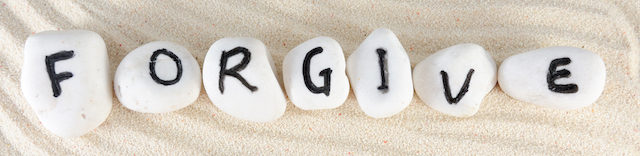
    Forgive on Stones

    “Forgiving someone doesn’t mean condoning their behavior. It doesn’t mean forgetting how they hurt you or giving that person room to hurt you again. Forgiving someone means making peace with what happened. It means acknowledging your wound, giving yourself permission to feel the pain, and recognizing why that pain no longer serves you. It means letting go of the hurt and resentment so that you can heal and move on. ~Daniell Koepke

    My father leaned back in his overstuffed recliner, eating the double-chocolate raspberry gelato I had just bought for him as he stared entranced at the television.

    His feeble body was bent over in pain and his feet were as swollen as sausages. A wave of sadness mixed with acceptance rolled through me and I felt peaceful.

    My father is slowly deteriorating from Parkinson’s disease, and at the age of eighteen, it’s a difficult experience for me to go through. Heck, going through death at any age is difficult.

    For years, my relationship has been very tense with my father. I used to have major “daddy issues” and held onto a lot of pain from my childhood.

    When I was younger, he wasn’t always the nicest man, especially when it came to disciplining. I can remember him screaming at me to get on the ground and do push-ups for back-talking my mother.

    His eyes were full of hate and anger, and for the next ten years I would hold a deep resentment for him centered around memories such as those.

    This past May, I graduated from high school and was faced with the path of choosing a school. I’m a very serious musician, so I auditioned at eight schools all over the country, and got accepted to six.

    It was a major accomplishment. But, as my anger continued to brew for my father and his health deteriorated, I realized that he wouldn’t be here much longer. If I wanted to make things right and receive closure, I had to act now.

    I decided to take a gap year to spend time with my father and take some much needed time for myself. Most importantly I wanted to learn about ultimate forgiveness.

    Giving up all those schools and scholarships was difficult, but what I realized would be more difficult was giving up the healing process I could go through right now regarding my past relationship with my dad.

    So here are three lessons I have learned from going through this process with my father. I’m sure I will learn much more in the year to come, but I believe I have learned some valuable lessons thus far.

    1. Life is too short to hold onto regrets.

    When a life or death situation happens, you soon realize that some things really don’t matter. I could easily hold onto resentment for my father’s actions, but you know what? I don’t want to be thirty-five or sixty-two regretting that I never made peace with him while he was still alive.

    I could wait, because forgiveness doesn’t require his participation, but why prolong my unhappiness? An added bonus has been my ability to enjoy getting to know him a bit from a loving perspective.

    2. Forgiveness is a process; it’s not magic.

    This is a common misconception. Saying, “I’m sorry,” and expecting everything to fade away and be sunshine and roses is ridiculous. You will be angry and feel those resentful feelings again and again. But, you have a choice.

    When you have those feelings, you can question them. Is it really worth it? Can you see it another way? Are these hurtful thoughts bringing you peace? I choose peace.

    3. Real forgiveness does not require two people.

    My father has no clue that I am going through this process or even that I have held some major resentment. If I felt sharing with him would help the forgiveness process, I would share. But in my opinion, it all has to do with me giving up blame.

    My, father, like many people, had a very hard life and abusive parents as role models. He honestly did the best he could.

    This is not excusing his behavior. However, I realize that holding blame just eats me up in the inside. I would rather forgive his behavior and look at how it has benefited me than hold resentment.

    I appreciate the sacrifices he has made for me and realize he was the exact father I needed for my self-growth process. If it weren’t for him, I probably would not have developed such a positive, meaningful relationship with my mother.

    I know his sickness will only get worse from here and I’m at peace with that. I’m happy that my sweet father is transitioning to a better place and am thankful for all of the life lessons he has taught me.

    Remember that life has an expiration date, which should push you to live the fullest every day. And it should be an even greater reminder to love deeply and always, always forgive.

    Forgive on stones image via Shutterstock

  • 40 Ways to Let Go of Anger Right Now

    40 Ways to Let Go of Anger Right Now

    “You will not be punished for your anger, you will be punished by your anger.” ~Buddha

    Anger is merciless.

    It leaves you feeling torn up inside.

    Your head pounds. Your jaw locks. And your muscles scream. Every inch reels in pain with the electric shock that shoots through you.

    You can’t eat, or sleep, or function like a rational human being.

    You’ve good reason to be afraid of unleashing that screaming monster of rage lurking inside you. You’ll likely lose control, lash out, and retaliate.

    Even though you have been wronged, you’ll end up feeling guilty, ashamed, even horrified by your reaction. That’s one more regret your peace of mind wouldn’t stand.

    But sometimes the person you’re enraged with is yourself. That’s a doubly painful blow of anger and self-disgust.

    Being angry is exhausting . . . and yet you’ve found the energy to keep it alive for months, even years.

    I have too. Oh sure.

    I devoted the first half of my life to being angry, silently seething, and ever resentful. I’d periodically explode in rage and then be consumed with shame for losing control and screaming words I could never retract.

    I lived on nerves that felt like they were constantly fried with 40,000 volts. That was a hideous way to be.

    And for the longest time, that burning fury that raged inside me seemed totally justified. All that bitter resentment, well, “what else should I feel?” my thoughts screamed. No chance to be a kid, no carefree years, blissfully unaware of some of the bad things that could happen in life. They were right there, every day. They stole my childhood.

    Growing up in an unpredictable, unhappy environment was the pits. I hated it, hated not being able to escape, and hated everyone involved because they were old enough to know better. They denied me my childhood.

    My anger was borne out of having had no control of those events; my resentment grew out of a sense of loss. Oh boy, bitterness is so corrosive.

    All that anger, all that resentment had to go for me to have any chance of happiness.

    So with a newfound rationality, I learned to listen to my angry thoughts. I heard the pain and sadness wrapped in every one. I recognized the self-harm my anger was inflicting. I realized I’d been the one keeping alive those events and people that had hurt me, and I alone had the power to decide their time was over.

    And that feels incredible.

    I very much want that for you too. To be free. To let go of all that resentment, anger, and rage.

    How? With one small anger-conquering action at a time.

    40 Ways to Let Go of Anger

    1. Look at your rulebook.

    If you never explained your rules to the person who angered you, how can you be upset that they broke them? Maybe their rules are different.

    2. Use aromatherapy to create a calm environment.

    Candles and diffusers alleviate stress and anxiety. Or try a couple of calming drops of essential lavender oil on your pillow.

    3. Buy a recordable alarm clock.

    Wake up to a soothing self-recorded message. Alternatively, use an app.

    4. Recognize that others say and do harsh things out of jealousy.

    Change your anger to compassion because they are obviously struggling with their own negative emotions.

    5. Personalize a keep-calm mug.

    Choose some anger-defeating text for your mug. Use it at work or home.

    6. Let your anger fizzle out with a bath-bomb.

    Relax in a warm bath as you watch the bath-bomb and your anger fizzle away.

    7. Quiet your anger.

    If you’re likely to fall into a rage when speaking up, say nothing at all. “Silence is sometimes the best answer.” ~Dalai Lama

    8. Visualize your anger as a drop of water.

    Close your eyes and see your mind as a crystal-blue ocean of calm. See your anger as a single drop of water falling into your calm ocean, barely causing a ripple before being absorbed.

    9. Create a universe of peace in your bedroom.

    Make a night sky with luminous stars and planets. Lie on your bed with the lights off, and pick a star to project your anger onto. Now re-focus to see the whole galaxy with your anger as a tiny dot among a universe of peace.

    10. Put your anger to bed.

    Anxiety and irritability are instigated by lack of sleep. More sleep can be as effective as conscious meditation. “Sleep is the best meditation.” ~Dalai Lama

    11. Take responsibility for your anger.

    Someone can influence your anger response, but only you control it.

    12. See your anger as a boiling kettle.

    Flick the switch to off as if you were turning off your anger. Let your temper cool down like the kettle.

    13. Look at who you’ve become.

    See how letting go will allow you to be true to yourself and finally at peace.

    14. Paint an angry mouth on an hourglass egg timer.

    Now paint a happy mouth on the other half. Turn your angry mouth upside down and watch the happy mouth fill.

    15. Understand that you are only hurting yourself.

    “Holding onto anger is like taking poison and waiting for the other person to die.” ~Unknown

    16. Recognize their inner angst.

    This is the real reason they acted like they did. Heal your anger by setting out to help them feel better about themselves.

    17. Blow up a dozen balloons.

    Write an angry thought on each one and step on them until they pop, leaving only the shredded remnants of your deflated anger.

    18. See your anger as a runaway horse.

    Imagine it trying to break out of your “mind paddock.” Rein it in.

    19. Use wise words to halt angry words.

    In confrontational situations, remember: “Speak in anger and you will have made the best speech you will regret.” ~Dr. Laurence J. Peter

    20. Wear a calming color.

    Avoid confrontational colors like red and black. Instead wear calming blue or soothing green.

    21. Have a calming message engraved on a ring.

    Avoid anger by playing with your ring and thinking of those soothing words.

    22. Use a mirror for self-reflection.

    Look in the mirror and let your anger out. “The more you hide your feelings, the more they show. The more you deny your feelings, the more they grow.” ~Unknown

    23. Shred a physical representation of your anger.

    Take those hurtful letters, print off those emails, or write out your angry thoughts. Push the pages through a shredder, and reduce your anger to tatters.

    24. Record yourself describing your anger.

    Capture your angry thoughts on your phone or computer. Listen back to this as if it were a good friend telling you theirs. Offer yourself the empathetic advice you would give a friend.

    25. Repeat a happy mantra.

    Regain control of your emotions by repeating, “I’m a happy person who does not see the benefit of staying angry.”

    26. Choose a positive, healthy outlet.

    Use feel-good endorphins to dispel anger by going for a run or singing loudly and dancing energetically.

    27. Express your anger to a friend.

    A supportive environment can be hugely beneficial in getting your emotions out safely.

    28. Use a self-hypnosis video.

    Hypnosis can help you get your anger under control. Alternatively, try a registered hypnotherapist.

    29. Shift your perspective.

    If you cannot change the events that have made you angry, change your perspective for the sake of your peace of mind.

    30. Take a soothing shower.

    Wash away your anger with calming ylang ylang or chamomile shower gel.

    31. Personify your anger.

    Imagine it as a fiery-tempered troll in your path. Push it away.

    32. Remind yourself that you have a choice.

    Between stimulus and response there is a space. In that space is our power to choose our response.” ~Viktor E. Frankl. Decide that your response will not be anger.

    33. Keep this quote on you at all times:

    “He who angers you, conquers you.” ~Elizabeth Kenny. Repeat it to yourself when you feel anger rising, or pull it out and read if possible.

    34. Take a step back.

    In a confrontational situation, physically take a step back.

    35. Be honest with yourself.

    What are you achieving by holding on to anger? Is it a case of injured pride that you would really love to swap for forgiveness?

    36. Picture angry thoughts as bitter, poisonous seeds.

    Stop these from taking root in your mind. Instead, raise a happy, forgiving “mind garden” by populating your thoughts with anger-defeating quotes.

     37. Plant a garden of compassion.

    Take the idea above a step further with a flower border or window box. For your own well-being, plant a flower for anyone who has angered you to signify your wish to forgive them.

    38. Weed out your anger.

    When you tend your Garden of Compassion, picture each weed you root out as further uprooting your anger.

    39. Seek help to defeat your anger.

    If you feel stuck in a cycle of resentment and anger, consider taking a course.

    40. Laugh at your anger.

    “People are too serious. All the time, too serious.” ~Dalai Lama. Anger is sometimes just injured self-pride. It’s not easy, but try not taking yourself so seriously.

    Beat Your Inner Anger Monster for Good

    Being angry has stolen your happiness for too long.

    It’s eaten you up from the inside and shattered your peace of mind.

    It’s even affected your health.

    But worse still, it’s allowed the person or events that caused your anger to have power over you.

    Just imagine getting through a whole day without losing your temper.

    Imagine that seething resentment disappearing, leaving you feeling liberated of all those toxic thoughts.

    Imagine being able to react with forgiveness instead of rage and being able to respond by letting go rather than clinging on to old hurts and wrongs.

    By taking small, simple actions, you can take great leaps in beating your anger monster for good.

    Try to be open-minded in letting these ideas speak to you. Pick the ones that shout loudest.

    Put yourself back in charge of your emotions, your life, and your happiness.

    Happy woman image via Shutterstock

  • Ending the Cycle of Breaking Up and Getting Back Together

    Ending the Cycle of Breaking Up and Getting Back Together

    Breaking Up

    “As soon as you trust yourself, you will know how to live.” ~Johann Wolfgang von Goethe

    Almost all of my romantic relationships have had some kind of long ending. At some point I’ve gained clarity on the relationship, I’ve acknowledged the truth that it’s not working out, and then I’ve ended it.

    I would like to say that was the end of the story, that I moved on each time with peace and ease. But the reality is that I second-guessed myself and ended up excusing all of my partners’ faults to justify giving them another chance.

    There have been significant studies that show that our brains literally become addicted to our partners. But our relationships also have an emotional attachment. Oftentimes our partner fulfills some kind of void for us, particularly from childhood.

    Maybe we want to know that our partner will put us first or will never leave us, or maybe we want to feel that we are worthy of being loved unconditionally. These wants make it difficult to go through with a breakup — even when it’s for our own good.

    To have a healthy separation, we have to understand that breakups are huge obstacles to overcome, and have compassion for ourselves as we navigate the intense emotions.

    It’s important to know yourself and what you need to do to move forward. Even then, it can prove difficult to remain steadfast. Breakups can re-open deep wounds that evoke powerful emotion.

    Flip-flopping in relationships is a sign that we aren’t clear on what is best for us or how to give ourselves what we need.

    We’re dealing with the intensity of feelings and the brain’s addiction, so we have to learn how to gain and maintain clarity for ourselves. The back and forth shows that there is doubt and uncertainty. It shows us that we aren’t abiding by our own truth. 

    I was once in a relationship for about eight months. It was a deeply powerful and transformative relationship for me. But we broke up because something was fundamentally off.

    Two months later (and in a depression), I convinced myself I had made a mistake—that I just needed to accept him as he was and we would be fine—and I asked for him back.

    That lasted maybe a month. Then two more months passed, and we got together to exchange belongings. Feelings opened back up, and we spent another month or two together. It ended again.

    Four months apart. I was doing great. I was strong. Then it was my birthday, and he popped up. Two more months together. And then reality hit me.

    The truth was that the relationship had depleted me completely. I had no energy for myself. I had no ability to be truly happy when we were together because I was giving all of myself to him. He was pulling on me to fill his voids, and I was depleting myself in an attempt to acquire his love.

    The back and forth was exhausting and a little embarrassing.

    I could never wish those encounters didn’t happen, because I learned tremendously from each one of them. But now I’ve learned the lesson, and moving forward I know how to stand by my own side and cultivate relationships that are balancing and harmonious. 

    This particular ex recently popped back into my life, and this time I was prepared. I’d done deep work on myself since our last communication. I understood the root of my attachment to him, and I realized that I was punishing myself for “messing up.”

    I had wanted his love back, at any expense to my own well-being. I also had a deep realization that I am worthy of a healthy partner, someone who can have an equal exchange of depth and intimacy with me.

    Recognizing these truths and putting my happiness before his allowed me to put up firm boundaries so we could have healthy communication.

    Having boundaries is an act of respect for yourself. It shows you and the person you’re in communication with that you value yourself first and foremost.

    I was very clear within myself (and later with him) that I was not willing to open up any door that would lead down a road that was unhealthy for either of us.

    I was no longer willing to put myself out for him, but that doesn’t mean I wasn’t willing to give him some of my time. I was able to show him compassion and still be true to myself.

    I also know that I am where I need to be—without him as a romantic partner. And I have faith in my own path. I know the only thing I need to do is to connect with the deeper part of myself and allow it to guide me.

    We all know what is best for ourselves, even in the times when we feel most confused. Trusting our inner voice, even when it may sound tiny and muffled, is the key to ending the cycle of breaking up and getting back together—and the path to a healthier, happier relationship.

    Breaking up image via Shutterstock

  • How Losing All Hope Can Be Freedom

    How Losing All Hope Can Be Freedom

    Kneeling Silhouette

    “Losing all hope was freedom.” ~Edward Norton in Fight Club

    We naturally think of hope as a positive thing, as we do freedom, but this quote says that losing hope brings freedom. It may seem contradictory, but losing hope has been my most unexpected lifesaver.

    My Mental Breakdown

    I struggled with severe anxiety four years ago. The onset was abrupt.

    Until I was twenty-five, I was the healthiest person I knew. I never got sick, would play basketball six hours straight, and always felt great. That changed suddenly in 2011.

    I woke up one morning with an itchy spot on my chest; I looked down and saw two small fang marks. A spider bite. After a few more minutes, the toxins set in and I started convulsing a little bit, so my dad took me to the ER.

    At the ER, they gave me a steroid shot in the butt and antibiotics to prevent infection (such wonderful memories).

    Long story short, the whole experience shook me, and I developed severe health anxiety, constantly worrying about what would happen next. I feared going asleep because I couldn’t protect myself. I could be seen visibly shaking upright in my bed.

    Spider bites are rare, right? I shouldn’t have worried about it, right? I thought so too until another spider bit me a few days after the first one did! Luckily, my body didn’t react so… emphatically to the second bite, but it still made me even more paranoid.

    In this short period of time, I went from being calm to only knowing how to be really anxious. It was a strange and unexpected slippery slope of worrying, not getting enough sleep, being scared to sleep, and freaking out because I was freaking out. Meanwhile, I hoped for it all to go back to the way it was. I had never hoped for something so much in my life.

    Hope’s Dark Side

    Hope has a dark side in the way that it impacts the mind.

    It’s an intense yearning for something to happen: You hope to conquer anxiety or depression. You hope to get into your favorite college. You hope to find love one day. You hope to overcome the pesky problem that’s weighing you down. You hope the Detroit Lions will (please) just win one Super Bowl.

    Hope can become an ironic mental prison by its mere intensity and dominance of your thoughts.

    “Letting Go”

    I’ve studied the self-help book market quite a bit, and one of the most popular, best-selling topics I’ve noticed is that of “letting go.” Last I checked, several of the top 20 self-help books were about letting go of one thing or another.

    Letting go of whatever dominates your mind (including hope) instantly frees it to think of other things such as warm breezes, the beauty of friendship, and the simplicity of enjoying a meal. We lose out on these small joys of life when our big problems take more than their deserved mindshare.

    But there’s still the issue of hope. Why would letting go of hope—something seen as positive—bring freedom and not darkness?

    How Is Losing Hope Helpful?

    I beat my downward spiral because I lost hope. Nothing else worked.

    When I was in the worst part of the struggle, I hoped so much for things to just go back to normal. The worse it got, the more I hoped. Why can’t this nightmare end? I hoped that my next breath would be drawn out and deep and relaxing, but it never was. I hoped to go back in time and punch that spider’s fangs out. I hoped and tried to change without success.

    Hoping is like a weaker form of expecting something. When you expect something, you’re almost sure it will happen. When you hope for something, you don’t know it will happen, but you’d like it to happen.

    Hope is dangerous when it compels you fight a battle you can’t win. 

    For example, in my situation, I could theoretically relax and “beat this,” so I did what people instinctively do: I threw the gauntlet at the problem. For example, I tried adjusting my breathing, but it backfired because I became hyperconscious about it; it made things worse.

    My hope kept me fighting so hard. But fighting is not what I needed to do.

    In life, like in war, we must know when to attack, and equally important, when to retreat. Not all enemies can be defeated in a straightforward conventional way.

    I remember the very day I purposefully lost hope and “gave up.” I was in the kitchen, being really anxious for no reason, and I was fed up with this fight, so I decided to quit. I gave up hope in winning this fight. I was surprised when, over time, the enemy walked away!

    Here’s specifically how I changed my behavior when I lost hope: I stopped trying (and hoping) to not get butterflies in my stomach for no reason. I stopped caring about my breathing frequency and depth. I even began to be playful with my problem, showing that I didn’t care: “Only five butterflies this time? That’s it? Give me a few more!”

    Losing hope meant I stopped trying to fight the battles. And that’s how I won the war and regained my mental freedom!

    I know, it’s a story as inspiring as Braveheart. But did you know this concept has been shown elsewhere?

    One day, novelist Leo Tolstoy’s brother told him to sit in a corner until he stopped thinking about a white bear. Much later that day, Tolstoy remained in the corner, his mind fixated on the white bear he needed to stop thinking about. He was finally able to stop thinking about the white bear when his brother gave him permission to think about it.

    This experiment has been replicated, and the result is always the same: when people forbid themselves or attempt to rid their mind of something, it boomerangs back to them with alarming consistency and persistency.

    “Studies show that the more you try to suppress negative thoughts, the more likely you are to become depressed.” ~Kelly McGonigal, PhD. (The Willpower Instinct)

    Hope drives persistence, which is why losing hope in an area that requires retreat is so often freedom. 

    More effort does not always bring greater results. Smarter strategies always bring greater results.

    Think of an area in your life in which you are trying, fighting, and hoping without making progress. What would losing hope and letting go look like?

    This is most helpful with areas like anxiety, worry, fear, and depression. When you accept them and stop hoping they go away, they lose a considerable amount of their power over you.

    For me, losing hope was freedom. Maybe it will be for you too.

    Kneeling silhouette via Shutterstock

  • How To Reclaim Your True Identity and Live Beyond Your Labels

    How To Reclaim Your True Identity and Live Beyond Your Labels

    “When I discover who I am, I’ll be free.” ~Ralph Ellison

    Who are you? Yes, you! No, not what the world has tried to make you. Not what your past tells you. Not what your worries tell you about your future. Who are you?

    If you’ve ever felt like your identity has been completely shattered, then I have news for you…

    Good! You’re on the right path. Give me a second, because I’m sure you’re wondering where I’m going with this.

    Well, how do I begin reclaiming my identity once it’s lost? First, in realizing what your identity is. What is an “identity?” Were you born with one? No. Did you suddenly become your “identity”? No.

    You created it. We are merely the creators of our identity.

    When I was in college I used to define myself as a singer. I was at the best university in the country for musical theater and singing was all I did. In fact, it was the only thing I really cared about.

    People would always ask, “What do you do?”

    “I sing.”

    “Oh, cool! What else!?”

    “Uh, I sing.” But it was more than what I did—it was who I was. WARNING: This is very dangerous.

    Why? Because what happens when you lose the very thing that “makes you” who you are? Well, I’ll tell you…

    My senior year of college I lost my voice completely to a cancer diagnosis. Yeah, pretty dramatic, even for a kid studying the dramatics.

    For two years, my booming baritone turned in to a whisper. I no longer knew who I was. If I wasn’t a singer then who was I? Am I a cancer patient now? How will the world know how to define me?

    After months of wrestling with this concept of who I was, I finally got some clarity. My best friend and I were speaking one day and I brought it up, “Now that I can’t sing, I don’t know who I am anymore.”

    She looked me square in the face and said, “Alex, do you think I’m your best friend because you can sing?” I honestly didn’t know.

    “Do you think people only admire you because you sing well?” Again, clueless. “Your talents don’t define you. You are none of those things. You are a loving, generous man, and that has nothing to do with your singing.” Light bulb to my inner light!

    Maybe this is all obvious to you, but for me it was a huge revelation. Hopefully you’re not suffering from my label syndrome. Our identity is not our labels!

    For the first time I started waking up to the fact that we are only what we say we are. We limit our potential by trying to box ourselves in to descriptions that the world can understand.

    The soul does not understand labels. We’re not meant to be barcodes that run through an assembly line like products in a factory. Our identity has nothing to do with our labels and everything to do with our qualities.

    We were created so that we can create from our inner qualities. That is our identity.

    So let’s shift the bloggersation.

    Knowing and having a sense of identity is still important as long as it’s not about your occupation, achievements, or external gains.

    So what is your true identity? Your true identity knows nothing of fear or labels. Your true identities are reflections of love. How the heck do we uncover that?

    I’ll tell you!

    Here’s an eight-step process to help you uncover your true identity (I’ll be the guinea pig):

    1. What are the labels you’ve created for yourself?

    Easy: Singer. I’ll throw in actor just for fun.

    2. What qualities do those labels have in common?

    Approval seeking. Giving. Passionate. Loving. Serving.

    3. What qualities do you identity as limiting?

    Approval seeking.

    4. How can you challenge that limiting identity?

    By doing something completely embarrassing and/or failing on purpose in front of people. Perhaps making some typos in this bloggesthofihgjh post (that was fun.)

    5. Was there a key decision that gave you this limiting identity?

    When I saw how much my dad loved me after a performance I gave. I thought the only way to get that love would be by performing. Essentially, seeking approval/applause = love. (Anyone else relate?)

    6. What are the consequences of this limiting identity?

    Thinking that the only way I can get love is by performing and getting the approval of others. Not showing my true self in fear that I might not be “approved.”

    7. What is your life like without this limiting identity?

    I’m fulfilled because I’m communicating from a place of authenticity instead of trying to impress. I realize in order to have true love I must love myself first. I know that my true artistry will come when I’m creating from my place of purpose not what I think others want to hear.

    8. What action can you take to prove your limiting identity wrong?

    Finish this blog, send it off to Tiny Buddha, and not care whether or not it’s accepted (although I hope you’re now reading this, Tiny Buddha readers. So meta).

    So there you go! That didn’t take long and you can do that for any limiting quality you might have. My only hope for you is that you become your true self so you can create beauty for others.

    Oh, and FYI, if you were wondering, I’m cancer free and my voice is back! I now know more than ever that my true indentify is how I show up in the world, not what the world would like to call me.

    Let me know in the comments: What’s your true identity look like? How do you plan on claiming it?

    Claim your purpose, live your love, and spread your light!

  • Feeling Trapped? Step into the Unknown and Set Yourself Free

    Feeling Trapped? Step into the Unknown and Set Yourself Free

    Man and Birds

    “Dont call it uncertainty—call it wonder. Dont call it insecurity—call it freedom.” ~Osho

    My daughter loves birds. So, as a treat, we all went to a Bird of Prey center near to where we live. Here in the UK, there is a long tradition of keeping these birds. As stated on one hawking site, falconry is “the noble sporting art of flying trained birds of prey.”

    Noble or not, I have an issue with keeping birds captive. I had hoped that, in the center we would be visiting, these would be rescue birds.

    They weren’t.

    They were raised in captivity, slightly better than being caught in the wild, but only slightly. There was one area I referred to as Prisoner’s Row. Big, powerful and noble birds like falcons and kestrel chained to a post. A long row of them stuck there for visitors to gawk at.

    Yes, they are beautiful, and amazing to see up close, but they are much more beautiful to see flying up there in the wild expanse of sky.

    In any case, we were there for the Owl Experience. One by one, they brought out owls, starting with the smallest burrowing owls and getting bigger until the huge and majestic European eagle owl was brought out.

    The birds were coaxed over to the leather gauntlet our kids were given to wear. They were stunning and tolerant of us, but it was clear they were doing something against their nature. Owls are not meant to perch on human arms. These owls have been trained to do so, but trained against all natural inclinations.

    Then we went out to the flying arena where our children fed them. Chopped up bits of baby chick feet were dangled temptingly in the air then placed on a gauntlet, and eventually and very reluctantly the owl swooped down and picked up the morsel.

    They weren’t good flyers, these birds. They knew how to fly but their muscles were weak. They flew short distances and preferred to hop.

    It all left me feeling uncomfortable. It was a privilege to see these beautiful creatures up close, but at what cost?

    Perhaps it makes me uncomfortable because it is uncomfortably close to our own limited experience of life.

    As I watched the owls soar within the flying arena, I wondered why they didn’t simply soar off to freedom. They weren’t chained. Their wings were not clipped. They could do it, if they chose to.

    But they stayed. They hopped and half-flew to each wiggly bit of chick foot and hop-flew back to their post, with thinly veiled resentment. But they stayed. And then, after the show, they allowed themselves to be carried back to their cage.

    Why?

    Perhaps the birds are as susceptible to the lure of certainty as we are.

    There is the certain provision of chick feet if they fly to their keeper’s arms and back to a post within a small outdoor arena. After all, having been raised in captivity, that’s all they’ve known.

    And then there is the great, wild uncertainty that exists beyond the arena. Will there be food there? Will they be able to catch it? Are there unknown dangers lurking in that great blue expanse of sky?

    And here’s the clunky metaphor. My husband and I are in our own sort of flying arena at the moment. We’re both in regular jobs, jobs that more often frustrate than inspire, getting regular paychecks.

    We’re eating with these paychecks. It may be our own version of chick feet, but, hey, we’re eating. We are testing our wings, though. Flying a bit further. But, for the moment, we are returning to our keeper’s arms.

    We gaze out at that broad blue expanse. We know we’re capable of more. We know we haven’t really tested ourselves; we haven’t really indulged our deeper passions. It seems to me that we’ve all been trained to do things against our true nature, and have grown up in this limited, but safe, way.

    The few times I’ve flown into uncertain territory have been terrifying but thrilling.

    As it has been said, uncertainty is the only certainly. To resist it is to resist our true nature. To resist it is to stay trapped, to accept the cage, the gauntlet, the chick foot for supper. To embrace the uncertain is to fly beyond the arena into that beautiful blue expanse of freedom.

    We know beyond a shadow of a doubt that the owls can do it. Not just can, we all intuitively know that they should do it. To live in the freedom of uncertainty is infinitely better than to live in the security of captivity.

    We know this and wish this better life for the owls. Why, then, can’t we know it and create it for ourselves?

    So this is my challenge, to myself, and to you, should you choose to accept it: try something you’ve never done before. Taste something you’ve never tasted before. Read someone you’ve never read before. Say something you’ve never said before. Write something you’ve never written before and then share it.

    Step into the unknown and feel it—that ground dropping away, breath-catching feeling. That’s the feeling of the limitless expanse of creative potential. That’s life as it’s meant to be lived.

    Man and birds image via Shutterstock

  • Most of the Things We Fear Are Highly Unlikely to Happen

    Most of the Things We Fear Are Highly Unlikely to Happen

    Fear

    “Only when we are no longer afraid do we begin to live.” ~Dorothy Thompson

    Australia is full of biting, pecking, threatening animals.

    Swarms of mosquitos puncture our skin every summer, flies are everywhere, we’ve got spiders bigger than my hand, our magpie birds swoop and peck at our heads during spring, and don’t get me started on the sharks and crocodiles and those mighty big bites.

    I am most scared of the snakes. Australia has twenty of the top twenty-five most venomous species of snakes in the world. We have a hundred and forty species of land snakes and thirty-two species of sea snakes. That’s a lot.

    I grew up in the Australian bush. My family had a small property that was covered in trees and long grass.

    Throughout my youth my parents and others constantly reminded me that I had to be watchful and careful of animals that bit, pecked, or did other horrible things, particularly snakes.

    If we were walking anywhere outdoors, it was important to make noises to scare snakes away. I sang, whistled, and stamped a lot and saw almost every stick as a potential snake. The longer the grass, the more noise I made and the more I watched for any movement.

    It didn’t help that when I was very young my parents had a bonfire. It was dusk and I trotted over to the fire, all happy and youthful, and a black snake reared up in front of me.

    I’ve never forgotten the shiny eyes, the glisten on its scales. It was absolutely terrifying. We stared at each other for a moment and then I employed a bit of first class noise creation by screaming at the top of my lungs, and it slithered away.

    Dad also used to tell stories of growing up in country Australia in a big old house with snakes everywhere.

    One his favorite stories was of the time he walked into their outdoor toilet and got a big shock when he saw a two meter long brown snake curled up on the floor enjoying the afternoon sun.

    The toilet was a bench of wood with a hole, and because there were so many snakes, Dad was in the habit of crouching over the hole rather than sitting on it for fear of snakes biting his bottom.

    It didn’t end there. There was also a small island on the lake in front of where he lived called Snake Island, and it was apparently infested with them.

    I’ve seen Snake Island and it’s covered in long grass and bushes, the perfect holiday destination for slithering scary things. Oh yes, and the big brown snakes could swim, yes, swim. That’s how they could go on their holidays to the island.

    Can you imagine how much I loved hearing these stories, as every kid loves a scary story, but also how much these and other snake stories impacted a child with a very big imagination?

    It didn’t help that snakes were spotted on the property every now and again. As I grew up and throughout my adult years I never stopped watching for snakes in the bush. That’s a long time to be scared of the outdoors.

    The Camping Trip & the Confrontation with the Slithering Things

    Two months ago I went on a camping trip with my family. We were camping at a remote dam surrounded by beautiful arid bush, lots of gum trees, crickets buzzing, rough ground, and dare I say it, lots and lots of sticks. A gazillion sticks, actually.

    After the sun set over the lake and we’d eaten apricot chicken in front of a campfire flickering away in a rusty old bin, I took my torch and proceeded to walk the five minutes in the darkness to the toilet block to brush my teeth.

    My snake routine started again: torch flashing over ground, eyes seeing long thin objects, stamping my feet as I walked, some humming. It didn’t help that my torch was dimming and nearly out of batteries.

    There were shadows and movement everywhere and so many sticks. These sticks could bite me at anytime and inject me with deadly poison, and our campsite was far from medical help.

    And then it happened. I hadn’t camped in a while or been out in the bush in a while. I had been through a period of my life where I had suffered terribly from an illness and had faced many fears and had overcome many of them. I was in the habit of facing things head on.

    I thought, “What’s the chance of being bitten out here? Had my father who had basically lived in snake kingdom in his youth ever been bitten? Had anyone I know, any friends of friends, anyone, ever been bitten?”

    I watched myself looking over the dim ground. I watched my brain wanting to invent snakes, seeing movement when the only movement was the shadows cast by the torch and the wind in the gum leaves. I was dumbfounded. What had I been doing all these years?

    As soon as I got back to my tent, I got onto Google and looked up exactly how many people had been bitten by snakes in Australia. It turns out that out of Australia’s population of twenty-three million people only one or two people die from snakebites per year.

    Most bites are because people try to pick up the snake or kill it. If I wanted to get bitten I would have to chase the snake down and pick it up and hug it. I also found out that sharks only kill one or two people in Australia per year as well, and the average is only a little higher for crocodiles.

    I lay back on my sleeping bag and comprehended what Google was saying. That all my life from a young age I’d been programmed to be fearful of something that was extremely unlikely to happen. 

    It dawned on me that my sense of alarm and my fastidious watchfulness was misplaced. It had taken years and years of reinforced programming to get me to a place that I couldn’t walk in the bush without being fearful.

    What a silly state to be in. I remembered that a couple of years ago I’d hiked through New Zealand and one of the truly delightful days was walking through grass as high as my waist without fear. There are no snakes in New Zealand. I’ve never forgotten the ecstasy of it.

    Reminding Ourselves About the Nature of Fear

    My realization about snakes also highlighted to me how heavily programmed fear can make us completely lose our perspective. We don’t even question whether what we fear has any basis at all. We don’t test it. We don’t think about it other than to react.

    Albert Einstein said that we must not stop questioning, and this applies when we feel fear. We should question it, investigate the nature of it, and test our preprogramed and sometimes deeply subconscious hypothesis about the ways we should live our lives.

    Sometimes the result of our investigation will be that our fears are founded. For example, we probably should be fearful of walking across a canyon on a tightrope. But what if there’s no rational explanation?

    What if there’s a brilliant world out there that we are not experiencing to the fullest in this very short time on earth?

    We have some tough genetic programming to overcome. Our brains are used to looking for threats in the environment. In the past it was a tiger, now it’s whatever we deem threatening.

    I was recently doing some research on fish and found a study examining whether fish experience pain. It turns out that even fish avoid objects that have previously caused them pain.

    Our natural animal instinct is to avoid what has hurt us before or, similarly, what we perceive could hurt us in the future. Our alarm mechanisms are inbuilt.

    We also live in a complex world full of stimulation, and it’s hard for our brains to keep up with what is a true threat such as a car heading straight for us and what’s not. There’s just so much for our minds to deal with.

    The good news is that we are equipped with tools such as logic, information, and awareness to help us overcome our fears.

    I’m finding the more I confront my fears and do the opposite of what they are warning against, the more my consciousness understands that these things are a programmed mirage.

    I know we’ve all heard this wisdom, we all inherently know that most fears have no basis in reality, but my little snake adventure reminded me that I don’t often apply this knowledge to my everyday life. So this time I decided that it was about time that I did.

    So how does a woman who has treaded heavily all her life for fear of sticks learn to live again? I’ll tell you how I learned. Later that night I had to go to the bathroom and I ventured outside my tent, turned off the torch, and walked—not stomped, walked.

    I drank in the vision of the moonlight touching the gum trees, the lake, the rough dry land and it was glorious. That’s how.

    Face everything and rise image via Shutterstock

  • How To Stop Being A Slave To Your Emotions

    How To Stop Being A Slave To Your Emotions

    Emotions

    “I don’t want to be at the mercy of my emotions. I want to use them, to enjoy them, and to dominate them.” ~ Oscar Wilde

    Would you describe yourself as emotional?

    Do you feel like your mood can change instantly according to what happens in your day?

    Then you may be a slave to your emotions.

    Being an emotional person and leading with the heart can both be great qualities. Leaning into our feelings allows us to be more self-aware and helps connect us to others. But if we allow our emotions to dictate how we live our lives, it can lead to anxiety, depression, and even have a negative impact on our health and relationships.

    As an empathetic person who feels things deeply, I have learned this lesson the hard way.

    It took me many years to grasp the concept that all emotions stem from thought. As a young woman with low self-esteem, I didn’t realize that my negative self-talk and sensitivity to others’ opinions were having a profound effect on my emotions and moods.

    After years of faulty thinking about who I was and what I had to offer in life, I found myself in my doctor’s office clutching a prescription for anti-depressants. My emotions had officially taken control of my life.

    At the time I had no idea that each negative thought was having a compound effect on how I viewed myself and my life.

    The older and wiser me has learned to be very aware of my emotions and to check in with myself on several levels before allowing them to have the final say.

    Here are some of the lessons I’ve learned over the years to help me manage my emotions rather than allowing them to lead the way. 

    Validate your emotions first.

    When you find yourself riding the wave of emotion, it’s important not to dismiss those feelings. Emotions can be a lot like unruly children in need of attention. Once we validate them, we allow them to be seen and have a voice.

    Feeling our emotions is an important part of life; it’s what we do with them that can create problems.

    For example, if I’m feeling bored, sad, or lonely, I tend to turn to food for comfort. This usually doesn’t end well. As I gain weight I then feel even worse because now my self-esteem suffers. Leaning into my emotions instead of numbing them with food has been a huge part of my process.

    When we validate our emotions, we become more aware and accepting of them, and we begin to understand where they come from. It’s only in this place of awareness that we can see what power they may hold over us. 

    Be aware of your triggers.

    If you know you struggle with specific emotions, such as anger, jealousy, or fear, try to become aware of the circumstances that trigger them.

    In my own life, I have learned that I often feel angry when I am disrespected or unappreciated. So if I ask my kids several times to do something and they ignore me, I feel anger beginning to rise inside.

    Not too long ago I would have given in to the emotion and started to shout, whereas nowadays I’m able to tune in to the preceding thought—they don’t respect me—recognize that it isn’t true, and avert the anger. 

    Awareness is power; it gives us the control to choose how we respond.

    Always remember that emotion is derived from thought. If we find ourselves experiencing strong emotions, it’s helpful to examine the thoughts that preceded them. Then ask the question, are these thoughts based on truth, or my perception of the truth? 

    Write it down.

    One of the biggest tools in helping me deal with my emotions has been to write them down. I have been journaling daily for about three years now, always asking questions about my emotions and trying to dig beneath the surface-level thoughts.

    If I feel at the mercy of my emotions, I’ll ask a simple question in my journal, such as, why do I feel so overwhelmed today? From there I can work back through the sequence of events and thoughts that have led me there.

    I will then ask a positive action question to engage with another emotion, such as, what is one positive thing I can do for myself right now?

    If you don’t have time to write, try to at least ask the questions.

    Take responsibility.

    How many times have you told someone that his or her actions made you feel a certain way? For example, “You made me angry when you were late.”

    It’s true that other people’s words and actions affect us, but we also need to take responsibility for the emotions we feel in response to those words and actions. No one can make you feel anything; it’s always your choice.

    So often the reactive emotions we feel are based on our own perception of the truth, and on the things that matter to us. Being late may be one of your triggers for anger, but for someone else it may be their norm and no big deal.

    Consider also that people act a certain way based on many influences that differ from your own, such as culture, upbringing, beliefs, and life experiences.

    Take time away.

    When you’re strongly connecting with a negative reactive emotion, it’s important to take time away from the person or situation you are reacting to. Never act on strong emotion. Wait until you are feeling calm and have given yourself time to rationalize and think. Only then should you act. 

    Even if the emotion is a positive one, it can still lead you down a destructive path. How many times have you done something you later regret in the name of love?

    Create your mantra.

    It’s easy to say, “Take time away,” but hard to do in the heat of the moment. If I find myself beginning to anger and I’m not able or quick enough to remove myself from the situation, I try to connect with my mantra. A mantra is just a word or short phrase that helps you become aware of your emotion and not be controlled by it.

    The word I use is “soft” because I associate this with a gentle temperament. For you it may be something completely different, depending on the emotion you are most reactive to.

    Ultimately, it’s important to remember that you are not your emotions—you have the ability to decide if they lead you or if you lead them.

    As you build awareness and learn to recognize your triggers, you will become increasingly savvy about when your emotions are serving you well and when you may need to take charge of them.

    Emotions image via Shutterstock

  • Let Go of Your Unhelpful Story: Accept, Surrender, and Move On

    Let Go of Your Unhelpful Story: Accept, Surrender, and Move On

    Man in Lotus Position

    “The primary cause of unhappiness is never the situation but your thoughts about it.” ~Eckhart Tolle

    I recently discovered just how powerful our thoughts can be. I learned that it doesn’t take time for us to accept our current situation; it simply takes a shift in our perceptions and a change in the stories we tell ourselves.

    The catalyst for this realization was sent to me, in a small envelope placed under the windscreen wipers of my car. Yes, it came in the form of a parking ticket.

    At first I was shocked and quite disappointed in myself for getting a parking ticket.

    As I drove home, I found myself building a story in my head: It’s so unfair. I didn’t realize it was rear-to-curb parking only. Other people were parked the same way and they didn’t have tickets. Why me?

    I saw the parking ticket as an attack against me personally, as an indicator that I wasn’t good enough. I was beating myself up and couldn’t understand why I had been fined.

    But then I stopped. I dug a little deeper and tried to unravel why I was feeling so upset. I realized I was making something insignificant into a really big deal.

    I was building a story that did not serve me at all. I was too attached to the current situation.

    The parking attendant didn’t know me personally; he was just doing his job. There was no one else that I could blame for the ticket; I had parked incorrectly and it was only fair that I received a ticket for doing so.

    Once I realized this, I was able to take a step back, and I thought to myself, You know what? It doesn’t matter what story I create. I’m still going to have to pay this fine. I may as well accept it and move on.

    There was no need for me to be so upset, and the only way to move past how unhappy I felt was to change my thoughts.

    In the last few years, as I’ve delved into self-study and spiritual enquiry, I’ve read a lot about the power of non-attachment and our ability to create our reality through our thoughts.

    Hundreds of articles, books, presentations, and videos all encouraged me to become aware of my thoughts, and to watch whether the stories in my mind serve me or take me further away from where I want to be.

    But I had never really put it into practice. At least not until the day I received my first parking ticket.

    As I drove home, I paid very little attention to the road in front of me because I was so caught up in my story about how unfair the whole situation was. Then suddenly a switch flicked inside my mind.

    It was probably the first time that I have truly been aware of my thoughts. I felt like an observer, watching my mind race and witnessing the birth of a new story.

    This sense of awareness made me realize how frequently I create stories in my head and how often I take something insignificant and turn it into something huge. I’ve learned how frequently I create drama and complications in my life.

    It’s certainly true that we can’t always control the situations we find ourselves in and we definitely can’t always control what happens to us. But it’s also true that we can control how we react. 

    When I realized just how petty my reaction was, I was able to shift my train of thought completely.

    I learned that we don’t have to waste twenty minutes or a whole day (or longer) creating stories that get us nowhere. We don’t have to turn a minor annoyance into a huge drama.

    Things can be so much simpler. We can accept what happens, even if we don’t like it.

    We can just watch as something happens, without making it into a personal problem that needs to be solved.

    We can be humbled by our errors rather than trying to shift the blame and pass off any consequences.

    We can accept, surrender, and move on. We don’t have to attach our happiness or sense of self to everything that happens in our lives. 

    The next time (and I know there will be a next time) something I don’t like happens, I will do my best to not take it personally.

    I will bring awareness to my thoughts and I will stop myself from creating a useless and unhelpful story. I will accept the situation, as it is, and I will try to keep my reaction cool, calm, and collected.

    I will react in a way that doesn’t cause undue stress or unhappiness.

    You too have the power to control how you react to the situations that unfold around you. You can bring awareness to your thoughts and to the stories your mind creates. And you can uncover a new sense of awareness and non-attachment without first needing to pay a fine.

    Man in lotus position image via Shutterstock

  • Why We Should All Stop Trying to Be Good Enough

    Why We Should All Stop Trying to Be Good Enough

    Man Sitting Under Tree

    “Only something as insane as human beings would ever asked themselves if ‘I’m good.’ You don’t find oak trees having existential crisis. ‘I feel so rotten about myself. I don’t produce as much acorns as the one next to me.’” ~Adyashanti

    The feeling of not being good enough is widespread among the population regardless of age or social status. Even people who, from society’s standards, are highly successful may very well feel they are not good enough and that something is missing.

    For most of my life, I suffered from that feeling of not being good enough.

    When I joined a master’s degree program a year and half ago, I was shocked to see how smart some students in my class were. I was surrounded by people who had more work experience than me and were way more confident than I was.

    Sometimes I felt stupid in their presence. No matter how hard I tried, I just couldn’t find a way to contribute in class. Never befor had I felt such a deep sense of not being good enough.

    Achieving, learning, or experiencing more never seemed enough to fix my issue. I started to seriously question whether anything I would accomplish could ever help me feel “good enough.”

    I perfectly understood that there would always be people around me that are more confident, more attractive, smarter, richer, or more knowledgeable than I am, but this still didn’t make me feel better.

    Since I always felt that my duty was to contribute to society, feeling that I couldn’t contribute as much as I would like to made it difficult for me to maintain a healthy self-esteem.

    When it comes to self-worth, experts generally recommend using positive affirmations, learning to be more self-compassionate, or achieving small goals to create momentum and build confidence.

    These techniques are certainly good ways to build self-esteem, and I used them personally with some success. However, it’s likely that they might be missing the point.

    Rather than “How can I feel good enough?” wouldn’t a better question be: “Do I need to feel good enough?” or “Is it actually possible not to be good enough?”

    Most people spend their life trying to be good enough, to be liked and appreciated, often without actually succeeding to fill a void within themselves. It’s insane to see how everyone tries so hard to be “somebody.”

    I started wondering if, during all that time I spent trying to be good enough, I wasn’t actually fighting the wrong battle.

    Our society conditions people to tie up their self-worth to how much they “contribute,” and that supposed “contribution” often refers to the amount of money we earn or our social status. Society creates an artificial duality between “successful” people and others.

    Nowadays, the idea of success is a constant obsession. Media and personal development websites are continually talking about what more can be done to become more successful. Success has become the Holy Grail to pursue, the only path to living a life worth living and earning recognition from society.

    However, I could easily come up with names of people that are regarded as “successful” from society’s standards, but are not from an objective point of view.

    Interestingly, the definition of success is rarely explained. It seems as if we have all agreed with society’s definition. There appears to be very little space to question it; however, could the assumption under which we operate our life actually be false?

    To be honest, this whole idea of good enough or not good enough is nonsense. I’m sure the doctor didn’t tell your parents when you were born that, “I’m sorry, but your son won’t be good enough.”

    The entire paradigm of “good enough or not good enough” comes from the misconception that we need to become “somebody” and that other people have the power to determine our self-worth.

    It is a mere product of social conditioning, not of reality, and it certainly doesn’t have to be that way!

    Depending on your belief or reasoning, you could spend your entire life just meditating under a tree, doing absolutely nothing, and you would still be totally relevant as a human being.

    So why don’t we get rid of that concept once and for all, discard it as irrelevant, and rebuild our life on a healthier assumption?

    Being a total “failure” under society’s standards can never ever make you a failure as a human being. Nothing can turn you into a not-good-enough person without your consent, without you buying into the current fallacious assumption that society is telling you to live under.

    Sure, you might have failed at many of the things you’ve tried and some of your friends might be more “successful” than you are, but then, does that mean you are not good enough? Does that really mean you are not worthy?

    If you buy into society’s expectations, yes, probably. If you don’t, the question then cannot be answered, because it’s irrelevant!

    A tree doesn’t have self-esteem issues. A bird doesn’t ask itself, “Am I good enough?” Why should you?

    Are your attempts to become somebody actually working? If not, it might be time for you to stop trying to be “somebody” and just relax.

    Imagine the sense of freedom that you would experience if you were to stop trying to be “good enough.” Suddenly, the burden you’ve being carrying on your shoulders would become lighter.

    You could then enjoy your time with others without trying to impress them. You’d be able to free up your energy for more creative purposes. Suddenly, you could just be yourself.

    The greatest and wisest spiritual teachers of all time stopped trying to be somebody because they realized that it was not possible. If after all those years of inquiry and self-reflection they came to that conclusion, is it possible that they were on to something?

    So do you really need to be good enough? Are you fighting the right battle? This is something you might want to meditate on. It might require some time before you can change your former conception, but isn’t it worth trying?

    Personally, I chose to fight less and to progressively distance myself from the battlefield. I’m not “not good enough” or “good enough.” I am just who I am and that’s more than enough!

    Man sitting under tree image via Shutterstock

  • Awakening to Life and Love After a Devastating Loss

    Awakening to Life and Love After a Devastating Loss

    “The world breaks everyone, and afterward, some are strong at the broken places.” ~Ernest Hemingway  

    For years I cursed spring.

    During that time my heart woke to the bitterness of life. In the harsh frost of winter my anguish and the season were one, a climate where I felt safe, cocooned in a blanket of grief, a camouflage that ensconced me from the world outside.

    Like grief, winter brings the bitter cold to our life, and those withered months drenched in sorrow tasted natural.

    In the time I lingered frozen in my shroud of despair, spring had arrived, with feathered creatures whistling joyous songs while the leaves danced up our driveway. The warmth of the sun was a charlatan, exasperating my pain while seducing me like a stranger to a foreign place.

    Welcoming the signs of spring felt like a betrayal of my grief. For years I remained suspended, cursing the seasons, as if they had something to do with my anguish. Spring represented an unwanted gift, and this rebirth offended me. How could life continue when I stood so raw?

    Marooned in a well of grief, I felt alone in a world surrounded by people, a place where I was unable to articulate the wound that clutched at my soul.

    My attention oscillated with an assault of questions, an endless loop of uncertainty that blemished my heart.

    Feeling guilty for being alive when he was gone, for waking each day, even the shame I felt running out of tears depleted me, until nothing but darkness remained. Each day another upheaval when I woke peacefully until the ambiguity dissipated and exposed me to the pain again.

    Meeting with other bereaved families and sharing our lives brought the courage I needed to begin functioning again. Slowly a thaw occurred and the bitter cold that once surrounded my heart began to warm.

    The heartache that previously consumed me now unfolded into a treasure of memories and the gifts they bring with the passage of time. Gratitude can nourish us when our heart feels empty. Though learning through loss is difficult, it remains powerful.

    Embracing this enlightenment and the growth it provided filled me with love and compassion. Through years of grief, love, and self-examination, I began to find myself authentically whole again, and like the new buds of spring, my heart began to open.

    Eventually spring’s return blossomed within me and I looked forward to the new beginnings it would bring—perhaps because of the cold, seemingly endless winter, or the accumulation of snow all around us?

    But when I happened upon an old journal from twenty years ago, the place where all this grief began, the year our five-year-old son died, the fog began to lift.

    Finding a quiet room I sat down and began slowly turning the pages, revisiting the season of loss I had endured. Tenderly I stroked the pages acknowledging that despairing period of my life.

    As I read, I recalled the brave woman I was, surviving the loss of my child, and I could not help but honor her and the battle she had forged to survive.

    For days I continued reading the journal entries, discovering stories that swelled my heart and welled my eyes with tears. Yellowed pages filled with letters and poetry, notes and emotions bringing the words to life again, reminding me of how far I had come.

    Entries I had written cursing the seasons stung at my vision, until suddenly aware of the anger I once held with spring, for it was not the season that hurt; the pain that gripped me was witnessing life moving on without me.

    It took me years of unraveling to find myself again, and there are still days when I hear his sweet voice in the quiet of my day and know that he is still with me. Learning to step beyond the loss and share the love I had for my son in positive ways became one of my greatest blessings.

    Gratefulness is plentiful when we look beyond ourselves and see the beauty that exists in life all around us.

    Ryan’s story became a story of love, one of giving to others the way this small child gave to us. Caring for strangers with random acts of kindness began filling the emptiness that once consumed me.

    The power connected to giving is immeasurable, and that influence sustained me. Beginning with small acts that kept me anonymous was the tipping point I needed to shift directions.

    Paying at a drive-through where I remained nameless energized me, and instead of the melancholy I had previously felt, a new kind of optimism emerged.

    Solace can be found in that quiet place of grace when you release a kind deed into the universe and let the laws of nature embrace it.

    Over twenty years later I was running a race on Ryan’s birthday and aspired to do something special.

    Although I was unclear on how I would present it, I went prepared, picking up two $10 gift cards from a local store. This time I needed to step out of my anonymous comfort zone and be present.

    After asking permission, I handed the two gift cards to two young siblings there to run the race. The delight alone was a gratification to witness, but this act gave more.

    After sharing Ryan’s story, they all thanked me and I returned to my own daughter, both of us beaming.

    Within a few minutes the children bashfully approached me, thanking me again and sharing how special they felt. Smiling, I looked up at their mom who stood watching with tears running down her face.

    Allowing Ryan to live on in positive ways is a gift I have given away countless times without regret. Connecting ourselves with others makes the world a more loving place.

    Although we try and live with a strategy in mind, planning how many children we want or the house we need, within all of this, there is no immunity from loss.

    When we realize that material things are fleeting collections of wants and will not sustain us in tragedy, we begin to embrace the little moments of life.

    Giving of ourselves is the most valuable offering we can present, shaping the world in a perfect light. A beautiful sunrise, a child’s laughter, even the smile we bring the elderly neighbor when we stop to visit will be the pause that will anchor us if our ship begins to sink.

  • How to Overcome Unhealthy Cravings When You’re Feeling Down

    How to Overcome Unhealthy Cravings When You’re Feeling Down

    Sad Man Smoking

    “Your worst enemy cannot harm you as much as your own unguarded thoughts.” ~Buddha

    As a kid, I was taught that the Devil tempted us to do evil deeds. When I had the urge to do something naughty, I imagined a pitchfork-totin’ demon whispering into my ear. He’d encourage me to steal that Hershey’s bar from the 7-11, or to lie to my mom when she asked if I’d finished my homework.

    Today, I don’t believe in the existence of the Devil, but I do believe my doubts and fears can appear to be downright devilish—if I give in to their whisperings. But what if these discursive thoughts aren’t “evil” after all? What if we need our cravings and impulses to help us see the truth in our lives and push past negative patterns?

    Recently, I had the chance to test this theory when my book manuscript was rejected by a major publisher.

    I’d poured my heart into those pages and anxiously waited for weeks only to receive a standard “thanks but no thanks” reply. After years of work, in an instant, my hopes were crushed, and I was swamped with doubt and self-pity.

    Soon my disappointment turned into indignation: How dare that editor reject my work! I began typing a hateful email, but (thankfully) I stopped short of clicking “Send.” Rather than write something I’d regret, I strapped on my sneakers and went for a power walk.

    When I’m in a sour mood, walking usually helps me clear my head, but even on that crisp, sunny, fall day, a black cloud of dissatisfaction hovered over me. Thoughts of failure invaded my mind. With every footstep, my negative thoughts grew.

    Then I smelled an all-too-familiar aroma. I glanced over and saw a man smoking a cigarette on his front porch. That scent wrapped around my brain and triggered a thought, “If you have a smoke, you’ll feel better…”

    I haven’t smoked in more than three years, but somewhere in my mind, a familiar longing stirred.

    I began smoking during college when I felt insecure. Over the years, anytime I felt lonely or upset—when my marriage was troubled or my career was threatened—I stepped outside and lit up a cigarette.

    Even years after successfully kicking that bad habit, the associative power between my unhappiness and nicotine was still strong. The tempting thought swirled in my brain, “Bum a smoke from your neighbor! No one will know!”

    Thankfully, enough time had passed since I quit and I could view my desire to smoke with objectivity. But rather than push it aside, I entertained the thought.

    “That’s so interesting,” I said to my former-addicted self. “You haven’t craved a cigarette in years, and now you’re upset and bam! You have a craving.”

    In truth, even the part of me that used cigarettes for comfort didn’t really want to smoke again. Addicted Me knew the reality: Tobacco tastes bitter and the smoke burns my throat and makes me feel crappy—not to mention all the horrible diseases it causes. The urge to smoke was just a thought, an unhealthy one at that.

    A moment later, the urge was gone, but craving that cigarette—which was once so intoxicating to me—provided a wonderful way to be present with what was happening to me physically and emotionally.

    In other words, the urge to smoke became a signal encouraging me to explore what it was I really needed.

    What bedevils you? The next time you’re tempted to give into an unhealthy urge, try this practice.

    Observe the feeling. The craving wants your attention, so give it what it needs—for a limited time. Observe, don’t indulge. Become curious about the nature of your thought.

    What does the feeling want you to do or say? When did you first feel this craving? Why is it prompting you toward an unhealthy response today?

    What triggered the craving? Are you really hungry? Or do you feel angry, sad, or lonely? If the latter, what might you do to take care of the feeling without indulging in an unhealthy habit?

    Entertain the thought. Rather than push it away, make a place for it in your heart. Address the thought or emotion as you would to a dear friend or child, “Hello, disappointment. I recognize you! You’re afraid of not being acknowledged, but I see you!” (This is what therapists call self-talk.)

    Listen deeply to the need. At the heart of every craving is an unmet need. The need itself may not be “bad” or “wrong,” but how you take care of it can be. Rather than fill that void with a negative habit or unhealthy choice, consider what it is you really lack.

    In my case, I needed acknowledgement and support. When I returned from my walk, I called a trusted friend and fellow-writer and allowed her to cheer me up. Then, we brainstormed ideas about other potential publishers for my book.

    Treat yourself (and others) with compassion: Ultimately, as I walked that day, I became aware of my weaknesses and my strengths. Each time I breathed in and smelled the cigarette smoke, I breathed out gratitude that my addiction no longer had me in its grip.

    And rather than beat myself up for feeling what I felt, I used the experience to generate empathy for my neighbor. Maybe he was struggling with anxiety or loneliness, too.

    In the end, my craving can become my worst enemy—or a good friend. When I seek the truths that rise out of difficult situations, a seeming loss can turn into a win. If I’m aware and healthy, I might even be able to learn something very valuable and transform a negative habit into the means for healthy self-discernment.

    Sad man smoking image via Shutterstock

  • A Life-Changing Guide for Emotionally Sensitive People (and a Giveaway!)

    A Life-Changing Guide for Emotionally Sensitive People (and a Giveaway!)

    Sad Girl Illustration

    Update: The winners for this giveaway have been chosen:

    You’re too sensitive. You’re making a big deal out of nothing. Why are you letting that bother you? Why can’t you just let it go? Really, you’re crying? What’s wrong with you? 

    If you’re an emotionally sensitive person, like me, you may have heard some of these phrases throughout your life. And, like me, you may have concluded that your emotions made you tragically flawed.

    For the longest time, I felt a deep sense of shame about my sensitivity. And I found it difficult to deal with everyday life—not just because I felt everything so deeply and often reacted irrationally, but also because I absorbed other people’s feelings as if they were my own.

    I remember in elementary school when most of my peers had to get shots from the school nurse. I’d already gotten one at my pediatrician’s office, so I sat in the hallway as, one by one, they approached her office to meet certain doom.

    I could recall the fear and dread I’d felt in the moments before the needle pierced my skin, and I relived it, over and over again, as each student approached the door. In fact, my vicarious anxiety was so intense that I threw up, right there in the hallway.

    I didn’t just empathize with their pain—I felt it. Deeply. And repeatedly.

    I constantly felt emotionally overwhelmed, and often confused about the root of my feelings. All I knew was that I hurt—a lot—and I wanted to make it stop.

    When I first realized I wasn’t alone with my emotional sensitivity, it was like someone rubbed a soothing balm on the achy heart I wore on my sleeve.

    And it was even more liberating to realize I could leverage my sensitivity for good, as I have through Tiny Buddha.

    Suddenly, it wasn’t something I had to hide; it was something I could openly acknowledge and harness in a positive way.

    Still, I’ve had to work at managing my emotions, and I’ve had to learn to challenge destructive thoughts and behaviors that only exacerbate my pain.

    If you too experience intense emotions, you don’t need to feel bad about yourself, or powerless to your heightened sensitivity.

    Psychologist Karyn D. Hall has written a life-changing book that can help you manage your emotions so they don’t take over your life.

    The Emotionally Sensitive Person: Finding Peace When Your Emotions Overwhelm You offers proven strategies to identify emotional triggers, challenge negative thought patterns, and recover from emotions more quickly.

    I wish I’d read this book years ago. It’s insightful, practical, and chock-full of effective strategies to transform your sensitivity from a burden to a gift.

    I’m grateful that Karyn took the time to provide some incredibly detailed answers to my questions about emotional sensitivity, and that she’s provided two free copies of The Emotionally Sensitive Person for Tiny Buddha readers.

    Sensitive CoverThe Giveaway

    To enter to win one of two free copies of The Emotionally Sensitive Person:

    • Leave a comment below
    • For an extra entry, tweet: Enter the @tinybuddha giveaway to win a copy of The Emotionally Sensitive Person http://bit.ly/1KZGNnL

    You can enter until midnight PST on Friday, May 22nd.

    The Interview

    1. Tell us a little bit about yourself and what inspired you to write this book.

    I’m a therapist who works with emotionally sensitive people and I’m an emotionally sensitive person too.

    I noticed that many people were suffering because they felt different, rejected, and flawed because of their emotional sensitivity. Many of them had heard statements like, “You’re just overreacting,” and “Stop being so dramatic,” for most of their lives.

    In my work I found that if emotionally sensitive people could understand and accept their sensitivity, and not judge themselves because of it, that could ease some of the suffering they experience. I also believe that learning to manage intense emotions is part of decreasing their suffering.

    Being emotionally sensitive is not an illness, but it does mean you are more vulnerable to anxiety and depression and other disorders. Judging and hating yourself for being sensitive is part of the pain and suffering that happens.

    I wanted to write a book that could help emotionally sensitive people accept their sensitivity and learn to manage their intense emotions to help them live the life they want to live.

    2. What causes emotional sensitivity?

    Emotional sensitivity is biological. Research shows that some individuals are born with more intense emotions, meaning you react faster to emotional situations, your emotions are more intense, and your emotions take longer to fade. Events in a person’s life could also influence that emotional sensitivity.

    3. Emotionally sensitive people, like myself, often feel shame for being this way. What can help people like me feel less ashamed, more accepting, and perhaps even proud of their emotional sensitivity?

    First of all, ask yourself if the shame you experience is based on facts. All emotions have a purpose, and the role of shame is to keep you from behaving in ways that would get you kicked out of groups that are critical to your survival.

    Most likely being an emotionally sensitive adult will not get you kicked out of important groups. Is the shame from being judged by others as flawed? Perhaps as a child? Maybe from people who didn’t understand? Perhaps give some thought as to what specifically the shame is about and how it came to be.

    So if shame is not justified, that being emotionally sensitive is not something that warrants shame, then consider that the way to overcome shame is to do the opposite behavior to that which shame urges you to do.

    Shame urges you to hide. So the opposite behavior is to not hide. To do the opposite is to look people in the eye, and stand up proud of your sensitivity. When people say, “You’re overreacting,” respond with pride, “Actually, this is exactly how I feel—I feel emotions intensely.”

    Many times it is the discomfort that other people have with emotions that leads them to criticize your emotional reactions.

    Our culture tends to value logical, analytical thinking. That doesn’t make their way better. In fact, emotionally sensitive people are the ones who become passionate about causes and make changes in the world. They are artists and caregivers and those who contribute to humanity.

    The positives of being emotionally sensitive are often overlooked. If you consider it very carefully, what could or are you proud of about your emotional sensitivity? Make a list and review it often. Keep the positives in your mind to help you keep a balanced view of your emotional sensitivity.

    Let yourself really see what your sensitivity is about—check out reality and let go of myths you might have accepted along the way about the “wrongness” of emotional sensitivity. Do you care intensely about others? Do you express yourself authentically?

    Another idea is to practice self-compassion in place of judging yourself. Respond to yourself as you would a friend who feels emotions strongly.

    If your emotional sensitivity leads to depression or anxiety or to behaviors that you know are not effective or helpful, then focus on changing the behaviors and learning ways to manage your emotional sensitivity that work for you rather than judging your sensitivity.

    It’s not wrong, it’s just different. Judging your sensitivity is like judging yourself for how short or tall you are. It just is. It’s not helpful to continually berate yourself for your height, and in the same way seeing your sensitivity as wrong or yourself as flawed only adds to your distress and suffering.

    4. What are the two different types of emotional sensitivity, and how do they manifest?

    The two types I’ve identified are reactive and avoidant. People who are reactive act on feelings without thinking and are very quick to respond to emotional triggers. They have strong impulses that come with their emotions. They can be spontaneous and fun and also may act in ways that cause difficulties for themselves.

    The avoidant type attempts to push away or avoid uncomfortable emotions and/or situations. The avoidant type might not attend gatherings if someone at the event was upset with her and would avoid other situations that might involve difficult feelings, such as confronting someone who owed her money or saying no to someone who asked for a favor.

    5. What are some things we can do to improve our ability to manage our emotions?

    There are many options to improve your ability to manage your emotions. One area is prevention.

    This means that you make sure that you get sufficient sleep, eat a nutritious diet, take prescribed medications, take care of your physical health, exercise, and create positive experiences to build your resiliency. Work to develop safe and emotionally intimate relationships so you have a support network.

    Let go of judging, stop avoiding your emotions, learn ways to change your emotions, and stop feeding or building difficult emotions. The book discusses the specifics of these ideas. In addition, I have a subscription website opening soon called DBTCoaching.com that focuses on coping skills.

    6. You wrote that emotionally sensitive people tend to “catch” other people’s emotions. Can you tell us a little about this, and how we can stop doing it?

    Emotionally sensitive people are often tuned in to the emotional experiences of other people, so much so that they may experience the emotion that someone else is having. If you are with someone who is sad, you may feel sadness too, for example.

    Awareness that you are experiencing an emotion that actually belongs to someone else is helpful in letting go of it.

    If someone is relating an experience that made them sad, then you can say to yourself, “Not my experience, her experience,” to help maintain the boundary.

    If you experience emotions that you imagine others might have, such as “She must be so sad,” then remind yourself that someone else’s experience is not necessarily the same as yours. For example, if someone is moving, he might be excited and happy instead of sad or scared or vice versa.

    7. In reading the “Identifying Your Emotions” section of the book, I realized I’ve mislabeled many thoughts as feelings, compromising my ability to cope with my actual emotions effectively. Can you share a few examples of mislabeling thoughts as feelings, and how we can identify what we really feel?

    Some examples of mislabeling thoughts as feelings can be as simple as, “I feel like I’ll never succeed,” “I feel like I don’t fit in anywhere,” and “I feel like I’m different from anyone else.”

    Those expressions are actually thoughts. To be more accurate your would say, “I think I don’t fit in anywhere and that makes me sad,” and “I think I’m different from anyone else and that makes me sad.” Then you either challenge the thoughts or find ways to cope with the feelings that come with the thought.

    It’s difficult to challenge statements when you express them as feelings. “I am scared because I think I’ll never succeed” gives you the information about both the feeling you are having and the thought.

    You recognize that as a negative thought and you can challenge it. Is that statement true? In what situation do you think it is true? Do the facts back it up? If so, what do you need to do differently? The emotion of sadness would indicate coping skills to help you deal with that specific emotion.

    8. In Chapter 6, you wrote, “Judgments hide primary feelings.” What did you mean by this—and how can we challenge our judgments?

    We often judge when we are emotionally upset. “He is a complete jerk,” is a judgment. What led to that thought and emotion? Maybe you were embarrassed because you spilled wine all over yourself and your date didn’t offer to help clean up. You use the judgment of him to cover the embarrassment.

    “I spilled wine all over myself and I felt hurt that he didn’t help me clean it up,” might be more accurate.

    9. The chapter that was most helpful to me personally was the one on decision-making—particularly the part about separating the decision from the emotion and accepting emotional consequences. Can you expand on this?

    I’ve found that many emotionally sensitive people believe they can’t make decisions but they actually avoid decisions because of the emotional consequences of those decisions.

    There are few choices that don’t have emotional consequences. Even picking a restaurant for a group dinner means someone will likely not agree with the choice and may be disappointed or critical. You know which restaurant you want, but you struggle with the decision because of the emotional consequences of the decision. You don’t want anyone upset.

    If you can separate the two, the choice of restaurant and the emotional consequences of the choice, then you can be clear about what the issue is and how you want to manage it.

    10. What do you think is the most important thing an emotionally sensitive person can do for their well-being?

    Accept themselves as they are, completely and totally, and also work on changing behaviors that are keeping them from being effective in building the life they want to live.

    You can find The Emotionally Sensitive Person on Amazon here.

    FTC Disclosure: I receive complimentary books for reviews and interviews on tinybuddha.com, but I am not compensated for writing or obligated to write anything specific. I am an Amazon affiliate, meaning I earn a percentage of all books purchased through the links I provide on this site. 

    Girl under rain clouds image via Shutterstock

  • Letting Go of Difficult Emotions eBook (Name Your Own Price!)

    Letting Go of Difficult Emotions eBook (Name Your Own Price!)

    Letting Go of Difficult Emotions

    “If you let go a little, you will have a little peace. If you let go a lot, you will have a lot of peace.” ~Ajahn Chah

    Growing up, I often felt emotionally overwhelmed, causing others to call me “too sensitive.”

    It was very clear to me from a young age that emotion was a sign of weakness, but try as I may, I couldn’t escape mine.

    I believed there was something wrong with me for feeling so deeply—that I was fundamentally bad because of it—then I felt bad about my inability to change.

    As the years went on and life got harder and more complex, I struggled with severe anxiety and depression. I wasn’t equipped with the tools to manage the natural emotions I felt after others mistreated me, so instead, I learned to numb them.

    I numbed them with food, alcohol, and men, to name a few crutches, but my efforts often backfired.

    With so much pain repressed under layers of fear and shame, I often exploded in hysterics after one drink too many, unleashing on some defenseless friend or boyfriend a dramatic story of anguish and an eruption of despair.

    Coupled with the aftermath of bullying, this tendency to lose control of my emotions led me to fear social situations.

    Even if I didn’t drink—which I often did, to ease my anxiety—I couldn’t be certain something wouldn’t trigger painful feelings and I wouldn’t embarrass myself with my response.

    What if I obsessed and looked neurotic? What if I attacked and looked combative? What if I cried and looked unstable?

    Judgment seemed inevitable—from others and myself—but even worse I’d have to hear three seemingly patronizing words: let it go.

    As if it were that easy. As if I could just roll all my feelings into a neat little snowball and toss it out into the distance.

    I felt this was incredibly insensitive—that someone who clearly didn’t understand the depth of my pain would suggest that moving beyond it was as simple as “letting it go.”

    As if “letting it go” was an easy, one-time decision, like pulling off a Band-Aid.

    “Let it go” seemed like advice from the disinterested and lazy. At least, that’s what I thought back then.

    After spending years of my life trapped in a maze of disempowering stories, I’ve realized dwelling, complaining, and analyzing my life does very little to help my emotional state.

    I now know I don’t need to be a prisoner inside my own mind.

    I can’t help that I’m emotionally sensitive—and having leveraged my sensitivity to create this site, I now know I wouldn’t want to change that—but I can choose not to keep myself miserable and stuck.

    It turns out “let it go” is pretty helpful advice. But it’s such an abstract concept. What I wished someone told me back then was how.

    How do you let go of anger when your first thought in the morning, the last one at night, and the majority of the ones in between revolve around how you were hurt?

    How do you let go of resentment when it feels like you’ll never be able to change the things that you resent?

    How do you let go of frustration when you feel stuck, stagnant, and completely powerless to change it?

    How do you let go of worries when even the thought of letting them go fills you with worry?

    And how do you let go of your disappointment with yourself when you try your best to “just let it go” and continually struggle to do it?

    I’ve devoted much of the last decade to studying the art of letting go—a skill that’s helpful to all of us, not just those of us who are highly sensitive people.

    In this time, I’ve learned a few things that help with all disempowering emotions and a few things to address some of the specific ones that are the most difficult to release.

    In my new 54-page eBook, Letting Go of Difficult Emotions, I’ve tackled them one by one, addressing how to let go of:

    • Anger
    • Resentment
    • Frustration
    • Anxiety
    • Self-Judgment

    Each section offers a few simple things you can do to release the feelings, come back to the present moment, and find a sense of peace.

    And best of all, I’ve decided to release this eBook with a “name your price” model. The suggested payment is $10; however, you can pay as little as $1 or give more than that, if you’ve gotten a lot from Tiny Buddha and would like to give more back.

    [gravityform id=”10″ title=”false” description=”false”]

    I hope you find this eBook helpful, and I welcome any feedback at email(AT)tinybuddha.com.

  • Pearls of Puppy Wisdom: 7 Lessons from a Furry Little Sage

    Pearls of Puppy Wisdom: 7 Lessons from a Furry Little Sage

    Cavalier King Charles Puppy in the grass

    “Buy a pup and your money will buy love unflinching.” ~Rudyard Kipling

    I didn’t even want a puppy really. Puppies are synonymous with poop and pee. Everywhere. At least until they’re trained, and that takes time.

    Of course, they’re also synonymous with love and affection, puppy breath, and lots and lots of wet kisses. (I’ve learned to keep a towel handy around my little Bella.)

    Certain things I sort of expected when we got our little girl.

    I expected to lose some sleep for a bit.

    I was prepared to sacrifice the cleanliness of our home for a while. (Puppies and puppy toys are about as bad as actual baby messes, and sometimes worse.)

    I even expected to lose an object or two to the jaws of this teething little being—though my beloved $300 Bose noise-canceling ear-buds came as a very unwelcome surprise.

    That was the first lesson our puppy taught me. That hanging on to, dare I say being attached to, material objects is a sure-fire way to set yourself up for suffering.

    I mean, after all, they’re just headphones; they can be replaced.

    When it was all said and done, I was just thankful that she hadn’t chewed through an electrical cord somewhere and shocked herself to death.

    My second lesson under the tutelage of our King Charles Cavalier is one she delivers daily: Don’t forget to stretch.

    Not just after you’ve been sleeping all night, but every time you get up. Extend those limbs to their max and even let out a big yawn to open up your jaw muscles.

    This is a super important lesson for a guy like me that spends so much time hunched over his laptop.

    Speaking of which, it’s exactly when I’m hunched over my laptop that she offers up the third lesson: There’s always time for kisses.

    Now, I know there are many breeds of dogs and each has their own distinct characteristics. Well, the Cavalier is known for an enormous amount of affection; and Bella has it in spades.

    Hardly an hour of work goes by that she doesn’t jump up onto my lap and shower me with puppy kisses. And I’m not talking the quick little peck you might expect from other animals. No siree! She places her forelegs on either side of my neck and covers my face with hers.

    She’s a great reminder for me to give this same kind of love and attention to my family. You can never get (or give) too many kisses.

    The fourth lesson is one I’m still working on mastering, and that’s unconditional love.

    I would joke with my wife that only Bella loves me unconditionally, because if I locked them both in the trunk of the car for an hour, only Bella would be excited to see me and shower me with affection upon my return.

    My wife later experienced the truth of this when she had to leave our puppy in the car for a bit (not in any way endangered, mind you), and was greeted with great exuberance upon her return.

    Which leads me to the fifth lesson: dogs know how to let go. Well, maybe not of a bone, but of grudges, attachments, and feelings.

    Within two minutes of me scolding Bella for eating my ear-buds, she was right back on my lap and begging for playtime and attention.

    She somehow understood that my “No” said in anger was only a temporary thing. She didn’t add any story to it. She didn’t turn it into the idea that from now on I hated her.

    This lesson really got me looking at the places in my life where I could consider letting go. Where was I hanging on to a moment in time and carrying it with me into the future?

    Another great thing I’m learning from our puppy—don’t judge. That’s the sixth lesson.

    As I mentioned early on, I tend to work a lot over my computer, and she tends to try and distract me. In combination, it really does lower my productivity.

    So, sometimes I take Bella and place her in her kennel near me. She may whimper and whine occasionally, much preferring to be roaming loose, but I’ve noticed that she doesn’t judge.

    I mean, okay, maybe it’s a stretch to think that I can read her thoughts or feelings, but, to a large degree, I think I can. And I know that she isn’t sitting there thinking, Hmmmph! He’s just too damn lazy to play with me right now.

    And you know what? It feels good to not be judged. And when I tried it on the other way, it felt even better to not be judging others.

    I think our puppy’s onto something.

    And finally, the seventh lesson showed up over several days. That is, I didn’t see the lesson right away; I was just seeing, well, from human eyes.

    This lesson frequently takes place in my kitchen. On many occasions, I will make (and eat) my lunch standing at the kitchen counter. Please apply the sixth lesson here, and try not to judge me.

    As I’m prepping and eating my food, Bella sits patiently behind me, I suppose hoping for me to drop something. She’s so good about being quiet and not begging (and she’s just so damn cute) that I feel compelled to treat her.

    As I mentioned, I didn’t notice this last lesson for a few days, and then it came upon me like a ton of bricks. Bella never complained. Not one bit.

    Now, I know that may seem trivial, but hear me out.

    She would watch me take a big bite of my sandwich. Then another. And then a third, before I would lightly toss her a small piece of bread (about half the size of a kernel of corn).

    Then I went back to eating before I would treat her again in a bit.

    And then I noticed something big. I was placing very human thoughts into my perceived dialogue for her. That is, I imagined her thinking things like, Why is he getting to take big bites and I’m only getting crumbs? Or, Why won’t he just give me that whole damn sandwich?

    These thoughts I was giving her quickly devolved into things like, Wow, my master is a greedy jerk and What a selfish pig this guy is.

    It took a little bit before I let go of giving her any thoughts at all and actually tuned into what was likely more real.

    She was completely happy with what she got. Her thoughts were more likely in the line of “wonder” questions: I wonder if I’m going to get any food, followed by Oh, hey, I did. Brief pause. I wonder if I’m going to get any food.

    And maybe an occasional I wonder what that food tastes like.

    This lesson was my favorite because it’s all about being present. And not just being present, but also letting go of the need to make things up about the present. The need to give meaning to what we see in the world.

    My little puppy Bella, my great sage, is teaching me all the time. She’s a great example of being, here, now.

    Now if I can just teach her to poop outside.

    Cavalier King Charles puppy image via Shutterstock

  • We Are All the Same, So There’s No Reason to Hide

    We Are All the Same, So There’s No Reason to Hide

    Woman in a Mask

    “One of the most calming and powerful actions you can do to intervene in a stormy world is to stand up and show your soul. Struggling souls catch light from other souls who are fully lit and willing to show it.” ~Dr. Clarissa Pinkola Estés

    It’s taken a long time for me to be comfortable with being completely myself.

    Most people who meet me now see a strong and confident woman. Yet, underneath that confidence there is still a little girl in me that is scared. I’ve accepted that she is always going to be a part of me; however, I have learned to take responsibility for her care instead of giving that to other people.

    When I meet new people, I suspect either they are relieved to talk to someone who is transparent and real, or they are uncomfortable with my directness.

    I imagine it’s not always a matter of instant like or dislike on their end, but sometimes it feels that way to me. Either way, I’ve had to learn to not let others’ reactions influence how I show up in the world.

    I spent a good part of my life as a chameleon, changing myself to try to fit in and be accepted.

    Being the youngest of four in my family meant I was left out, teased, picked on, and blamed by my older siblings. As a result, I turned out to be a geeky kid in junior high and high school, lacking any confidence or sense of self-worth.

    I walked with a funny lurch, had a bit of a speech impediment, and tried so hard to be liked that I achieved the opposite. In high school the kids all called me a dog and barked when I walked down the hall. I was the brunt of the jokes for every classroom clown.

    The late 1970’s in the heart of Southeast Texas was not a good time or place for a pre-teen to question her sexual orientation. My science teacher, who had become a friend, no longer wanted me in her class when she suspected I had a crush on her.

    The vice-principal of the school said I was sicker than I thought I was and needed professional help.

    My chemistry teacher told the group of popular girls if they didn’t stop talking he was going to make Shannon sit with them.

    We all know kids are cruel, but in Bryan-College Station, meanness wasn’t limited to by age.

    I’d make out with boys in the hallways or back of the school bus trying to prove I wasn’t gay. I started seeing a psychologist. I put up with the cruelty of my teachers and students because there was nowhere to escape.

    If people look closely they can still see glimpses of the young girl who kept her head down and slumped her shoulders trying not to be seen. She is still with me today. Defeated without any outs, however, she had only one choice if she wanted to live. And that was to stand up for herself.

    Because it’s difficult for me to do this, I can sometimes come across kind of loud, directive, or bossy. Early on I learned to put on a good show and convinced myself that self-confidence is the key to success. Years of trying so hard not to care whether people liked me eventually integrated into a strong persona.

    Underneath it, however, still lived that little girl in me desperate for love and approval. For most my life she’s been in control. Like a puppet master, she’s pulled the strings behind my mask, seeking out someone or something to be her salvation. She was great at staying well hidden but in control.

    All she ever wanted was an end to her suffering. All her searching and orchestrating was always been about finding a way to stop the pain. She didn’t know the strings she pulled were putting me right back into the frying pan. How could she know that by latching onto other people she’d end up more hurt?

    It took a lot of personal development, self-help, spiritual woo woo reading, seminars, retreats, workshops, relationships, therapists, self-analysis, journaling, crying, screaming, pleading, praying, rationalizing, and running for me to finally understand: Latching onto anything will only bring more suffering.

    When we keep parts of ourselves locked away and behind a mask, we only give them more power and control.

    Finding my authentic voice has meant holding myself with compassion and learning to accept all of who I am.

    Letting go of my need to be perfect and my self-judgment isn’t something I’ve been able to do once and be done with. It’s something I have to do over and over again.

    I can let down my mask and be real because I believe at our core we are all the same.

    I believe we all want love and approval. I also believe that it is only by giving that to ourselves that we can give it to each other.

    Woman hiding behind mask image via Shutterstock

  • 5 Crippling Lies About Forgiveness (and the Truths That Set You Free)

    5 Crippling Lies About Forgiveness (and the Truths That Set You Free)

    “Forgiveness has nothing to do with absolving a criminal of his crime. It has everything to do with relieving oneself of the burden of being a victim.” ~C.R. Strahan

    It’s not fair, is it?

    Getting hurt. All over again.

    It wasn’t so bad forgiving them the first time. You rose to the occasion. You became the bigger person. You tried to move on.

    You thought you had to. After all, they did ask nicely.

    You just knew you’d be BFFs again and go right back to, “Let’s go for Jamba Juice!”

    But it didn’t go down like that, did it?

    No BFFs. No Jamba Juice. Not even a check-in text.

    You put it all on the line and forgave them. Now they’ve let you down again, and you can’t help but think it was the biggest mistake you ever made. And on top of it all, you can’t stop wondering why it all happened to you.

    I used to wonder that too.

    When I was fourteen, my mom sent me away. She thought it would be nice if there were a nun in the family. And I was going to be it.

    I had never been further than my Mamaw’s house. I had just shaved my legs for the first time and gotten my room back after the toddlers moved into the new add-on.

    Now, I’d be sharing a room with three other postulants over 1,100 miles away—sleeping on used hospital beds. In silence. For six years.

    My life, as I knew it, had ended.

    I wasn’t allowed to spend holidays at home. I never got another birthday present. And for six years, all I wore was a homemade blue habit with a plastic collar I had to scrub with a toothbrush.

    But then I got out. And my life ended all over again.

    Where do you fit when you don’t fit anywhere? I didn’t know anyone. No one knew me. My little brothers and sisters were all teenagers by then. My dad had married the woman he’d had an affair with. And to top it all off, my mom wouldn’t let me come home.

    I just wanted to move on. I thought forgiving everyone would make it okay. Forgive my family for giving me away. Forgive the nuns for going all American Horror Story on me. Forgive the Catholic church for expecting me to make up something to say in confession every week. Forgive my parakeet for dying while I was gone.

    The more I told myself to stop being angry, the angrier I got. The more I tried to let it go, the more it haunted me at every turn.

    After six years, I should have been an expert at forgiveness. But in reality, I was as clueless as a homeless kid trapped in a grown-up twilight zone.

    In the end, forgiveness actually became my ultimate game-changer. But only after I saw through the lies people led me to believe.

    Can You Trust Everything You Believe About Forgiveness?

    There’s a whole lot of noise out there about forgiveness. And you know what noise does? It chats up your Inner Victim and distracts you. The louder the noise gets, the quicker you need to call in your Inner Skeptic. Because some of the noise is nothing but big, fat lies.

    Lying to yourself while you forgive someone is worse than not forgiving them at all.

    If you want to open your heart to freedom, you must open your eyes about forgiveness. Here are some crippling myths about forgiving that leave you victimized and the truths that will set you free.

    Lie: When I forgive, I have to forget what happened and move on.

    Truth: Remembering how you got hurt empowers you to forgive and create the life you deserve.

    When I got home, I tried to forgive my mom for making me grow up isolated and alone. I thought I had to forget that I’d never been allowed to talk to a guy who wasn’t a relative.

    The one awkward time I got asked to dance at a happy hour, I freaked out and started picking an imaginary bug out of my drink. Right then, I wanted nothing more than to crawl into that cup and float around with the ice cubes.

    Acting like the convent never happened was like walking through a minefield with my eyes shut and a great big target on my back. When you forget, you don’t know how to navigate. When you can’t navigate, you fake it.

    Faking it is not forgiveness. Faking it does not set you free and keep you safe.

    That’s why it’s important to remember. Remembering what happened gives you a compass for where you want to be. It lets you go easy on yourself while you design how it’s going to be from now on.

    Remembering how I was kept isolated told me that I didn’t deserve to be lonely any longer. Once I knew I could surround myself with loving relationships in my life, I was open to forgiving my mom.

    Honoring your reality lets you build the life you deserve and empowers you to forgive.

    Lie: Forgiveness wipes the slate clean and gives them another chance to hurt me.

    Truth: Forgiveness doesn’t invite you to get hurt again. Forgiveness empowers you to teach others how to treat you differently.

    Forgiving someone takes a lot of honesty. Honesty about yourself and how you deserve to be treated, and honesty about the one who hurt you and how they’re inclined to act around you.

    You don’t cause the way someone else acts, but you can invite them to act differently with you. If they don’t want to play nice, you get to change the way you show up around them.

    When my brother texted me that they all changed their minds about picking me up at the airport, I got frantic. It was Christmas. Mom’s house was an hour away. And all the rental cars were taken.

    When you trust people to be exactly who they are, you can adjust your expectations of them accordingly.

    I told my family that I wanted control over my travel arrangements and would get my own room and join them for dinner.

    The long drive gave me time to think and see them honestly after they let me down. Right then, I decided that I wouldn’t rely on unreliable people any longer. Suddenly, I wasn’t expecting them to rescue me. And I was able to forgive them.

    Forgiveness lets you see your offender honestly and puts you in charge of how you’re treated.

    Lie: I have to forgive someone or they won’t heal and be forgiven.

    Truth: When someone asks for forgiveness, they want their own peace back. And that’s not even something you can give them.

    One of the biggest truths I learned is that forgiveness heals me. I can’t do someone else’s healing for them.

    The only time my mother ever asked me to forgive her was late at night, in the privacy of her own living room, at the bottom of a bottle of Sandeman’s Port.

    “Will you forgive me? For everything?”

    “Sure. Yeah. Of course,” I’d say. But next year would only find her crying at the bottom of another bottle. I wanted her to be happy. But I couldn’t go there for her.

    Setting people free to walk through their own darkness is the truest test of your own freedom.

    Lie: I can’t forgive someone who doesn’t deserve to be forgiven.

    Truth: Forgiveness doesn’t give others what they deserve. Forgiveness gives you the only chance of ever getting what you truly deserve—your freedom.

    Freedom means you let go of hurting and decide to take the good stuff for a change.

    Letting yourself feel better takes a lot of trust. Trust that there’s enough good stuff out there for you. Trust that even if the bad guy gets some, there’s still always plenty for you.

    My early phone chats with Mom always ended badly. She’d start in with, “Remember when you guys used to—” And I’d cut in that, “No, Mom. I don’t remember. I never lived in that house. I was in a convent.” As soon as she’d come back with, “Well, I hope you don’t think that was my idea!” the F-bombs would hit the fan.

    I thought I never could forgive her if she wouldn’t admit all that happened to me. Truth is, I don’t think she’ll ever understand all that happened to me. And eventually, it didn’t matter. I stopped waiting for her to deserve it and just gave myself the good stuff anyway.

    Forgiveness isn’t about balancing the scales of justice. Forgiveness is about attaining your own freedom along the way.

    Lie: I can’t forgive until I know the reason this happened to me.

    Truth: You may never know the reason anything happened. But you can create your own reason for everything that happens now.

    What happened to you wasn’t fair. But “why?” is a question you could be chasing to your grave.

    Why torture yourself trying to make sense of what didn’t make sense? You already suffered through what actually happened to you. Why keep feeding the story with endless possibilities of terrible endings?

    I wasted a lot of time wondering why. I wanted it all to somehow make sense. If it wasn’t my fault, it had to be somebody else’s. Because what’s more pointless than thinking that I sacrificed my entire youth for absolutely no reason at all?

    Finally, I gave myself my own reason. I needed a reason to live now.

    If I was going to live, I was going to love living.

    The day I gave myself a reason to live was the day I stopped looking for the reason my youth had died.

    That was the day that I became free.

    Freeing yourself from the burden of “why?” sets you free from an eternal blame game with no end in sight.

    How to Break Free Once and for All

    Can I get real with you for a second?

    We’ve all got an inner victim. Our own personal champion of lies and no way out. And it needs us to believe it.

    Here’s the thing—lies get bigger when you believe them. But so does the truth.

    Stop pointing fingers at the lies you’ve been led to believe.

    You are not a victim. You are strong. And free. And powerful in your truth.

    There’s not a thing standing in your way.

    Set yourself free already! Take the good stuff for a change.