Category: change & challenges

  • When People Want to Help but Just Make Things Worse

    When People Want to Help but Just Make Things Worse

    When I was fourteen years old, my family spent a week of vacation in the northwoods of Minnesota. We rode horses, sailed on the lake, sang songs around a campfire, and all the other things most teenagers tell their parents is lame. Even if they are having fun.

    After this week of boring, according to me, my family loaded up into our van and began what should have been a five-hour drive home.

    Except it wasn’t five hours.

    Thirty minutes into the drive we were in a head-on car collision. Triaged and transported to different hospitals around the area, it wasn’t until a few hours later—when my question, “What happened to my dad?” was met with silence from nurses, physicians, and my extended family who found me in the ER—that I knew he didn’t make it out. Not alive, at least.

    Two weeks later, I started high school.

    While I would have liked everything that had suddenly made my life “not normal” to fly under the radar, that was easier said than done. I was walking with crutches. I had crunching, paper bandages around my neck from the seat belt, and the whole story had been on the front page of the newspaper.

    What I was going through was my business, and yet I became surrounded by people offering this and bringing me that and giving me hugs when I just wanted to get back to normal.

    A few weeks later, my uncle showed up at our house and wanted to take us apple picking, something my dad had taken us to do at the local orchard every year.

    This time, when my uncle said apple orchard, he meant the Mecca of all apple orchards near Pepin, Wisconsin.

    As instructed by my mom, I pulled open the door to the garage and loaded into the car, suddenly finding myself sitting behind the driver’s seat. The exact same spot I was sitting during our crash. And not only was I sitting in the driver’s seat for the first time since the crash, I was sitting behind someone who, from behind, looked just like my dad, and who was trying to help by taking me to the apple orchard just like my dad.

    My heart was pounding. I focused on the seat back pocket in front of me, tried my best to breathe and sit facing forward while not looking any longer at the driver and his seat in front of me.

    The longer we drove, the angrier I became.

    My uncle was trying to help, but this, this was not helpful.

    I was tense the entire ride, wrought with worry the car might explode in front of me again, and when we returned home a few hours later, I shot out of the car, slammed the door behind me, muttered, “Thank you,” ran to my room, closed the door, and burst into tears.

    Going to the apple orchard with Dad was our business. Not my uncle’s. Driving that car was Dad’s job, not his.

    While he thought he was doing something so helpful to keep my dad’s memory alive, his one time trip to the Mecca of apple orchards, for me, was the opposite of helpful.

    That’s the thing about any business that’s important to you.

    Whether it’s someone you’ve lost or something you’ve loved and now lost, when things are special to you and other people see those things causing you hardship, they want to help.

    It’s a natural human reaction to want to help. But when you’re the one who’s receiving the help, there are so many times when something that was meant to be helpful turns out the be… the opposite of helpful.

    The truth is just because someone meant well with their actions that does not mean you have to feel good about their actions.

    In fact, most of the time, if someone does something that does make you feel good, it’s because they’ve taken the time to know you really, really well (like asking you if you prefer a compliment during a team meeting or a thank you card in your mailbox), or it’s just luck.

    And all the times when someone means well but it doesn’t feel well are so very normal.

    That’s okay.

    Instead of feeling bitter and angry about what someone did, whatever their intentions, and instead of becoming disillusioned about whether you can do anything to help someone else, it’s important to know the one thing you can know for certain in any interaction: you. Your thoughts, feelings, intentions, and expectations.

    So the next time someone is trying to help with something that is your business. Try this:

    1. Take a time out.

    We tend to use this as a tool for disciplining kids, but honestly, it works just as well, if not better, on ourselves as adults. And it’s not about giving yourself a time out from something you want to be part of. What you do is notice when you are feeling a growing sense of anger, frustration, overwhelm, and use your words to say something like, “I’m going to need some time to think this through. Let’s pick up this conversation at another time.”

    And then take the time away from the situation.

    2. Remind yourself of the intentions in the room.

    Why are you doing what you are doing?

    Why do you think they are doing what they are doing?

    Most of the time, people are doing something because they think it is a good thing or a helpful thing or something that will make the situation better. So, know that the people who are wanting to help are doing so because they care. There is something in it for them to help you and they want to help you.

    Even if the way they are helping now is the opposite of helpful, you can use this reminder about their intention as a key to making the situation helpful for you again.

    3. Speak out. Ask. Use your words.

    You have a person that wants to help you. So use your words. Tell them what would be helpful (or if you don’t know, tell them what is not helpful, and why).

    Say something like, “When you came to take me to the apple orchard, I felt like you were replacing my dad. I already feel worried that I am going to forget him, and I felt even more scared when we did something that made it feel like we were trying to replace him.”

    Notice the “When _______ happened, I felt ________.”

    This is intentional language.

    When you speak this way, you keep the focus on the goal: helping you to feel better, because you have identified a specific situation when that did not happen.

    Then say, “To make this feel better to me, I would need ________.” And say what you would need.

    Is it any apology? Is it that you want them to talk about things more? Do you not want to talk about it more? Do you want to do something you’ve never done before instead?

    It’s your business. So make it your call. And help them help you by showing why unhelpful things are unhelpful and suggesting what would have made the unhelpful things… well, helpful. Because at the root of every relationship is love.

    So, even during times when things aren’t as good, it’s important to separate the actions other people do to help with the intention that’s behind it all: love for you.

  • How to Move Forward When You’re Out of Work and Feeling Lost

    How to Move Forward When You’re Out of Work and Feeling Lost

    “My attitude has always been, if you fall flat on your face, at least you’re moving forward. All you have to do is get back up and try again.” ~Richard Branson

    Let’s face it, losing a job sucks! Over the last couple of months, I have been chatting with friends who have recently been affected by organizational changes resulting in being out of work involuntarily. This is a situation all too familiar to millions of people, frequently through no fault of their own. Often it’s a result of an economic downturn, restructuring, acquisitions, and cost savings.

    A couple of years ago, while I was on a business trip, I found out my role would be coming to an end. It wasn’t completely unexpected, and I was actually relieved. However, as an expat it was overwhelming.

    Would I have to move back to my home country? Would I have to leave the place where I’d started to build a life? What about my volunteer commitments? This and so much more spun around my head.

    Thank goodness for re-runs of How I Met Your Mother. Upon finding out the news, I spent hours obsessed with the saga of Ted and Robin while indulging in cookies and ice cream. After a few days, (and before my jeans got too tight), I picked myself up and started moving forward. I was reminded of some valuable lessons along the way.

    Feel the feels.

    Likely you will experience a range of feelings. Allow yourself to sit in it. You may find yourself grieving. This is natural; after all, something that was a significant part of your life has come to an end.

    Elisabeth Kubler-Ross made famous the five stages of grief: denial, anger, bargaining, depression, and acceptance. Recognizing these stages can help with the coping process.

    Breathe. Do yoga. Meditate. Write in a journal. Create a vision board. This will help ground and center you and soon enough, you will start having clarity about how to move forward.

    Your tribe will always be your tribe.

    Connect with friends and family. Let people know what’s going on. Your tribe will rally and embrace you no matter where in the world they are—or you are. They will love you, encourage you, help you, and still think you’re great, even when you don’t. They will drag you out of the house, drink a cup of tea with you over a video call, and make sure you get to that yoga class. As tough as it is, talking about it helps.

    Ask for help.

    As a fairly independent person, I find asking for help uncomfortable. In the spirit of “be comfortable with being uncomfortable,” I reached out to my network and asked for help.

    One particular situation will always stick with me: I called someone I’d met at an event and told him the news. He asked me to call him back the following week so he could think about suitable connections. Sure enough, the next week, he was ready with a list of ten people that would be valuable to connect with. This blew my mind. He spent time in the following weeks crafting up personalized emails and making introductions. This was a reminder of the human spirit. People want to help—ask!

    Create a routine.

     Not having to wake up and be somewhere messed with my routine. Having a routine can help anchor us, while providing structure, building good habits, and creating efficiency.

    I found it helpful to design a new routine.

    I woke up at the same time every morning, did an hour of physical activity, meditated, and created a to-do list for the day.

    I found a neighborhood coffee shop that became my “office.” When I was not out meeting someone, I would go to the coffee shop and work on applications, networking requests, learning modules, goals, and volunteer projects.

    I ended my “work day” around the same time daily and would have an evening activity lined up. This helped me have structure, kept my mind engaged, and ensured I was making connections.

    Set goals.

    When a job loss hits, it is easy to feel as though your purpose has been lost too. A way to counter this is to set goals and reflect.

    Setting goals helps provide clarity and gives focus, motivation, and accountabilities. Examples of goals could be setting up a meeting or two per week, fixing up your CV, applying to two jobs weekly, or getting involved in volunteer work.

    Goals give you something to work toward, and at the end of the week you can take stock of what you’ve completed and feel a sense of accomplishment. Taking the time to reflect allows you to see your progress and be grateful for the support you have received, and it also gives you something to build on.

    Create a personal board of directors (PBOD). 

    This was a concept introduced to me a few years ago by one of the members of my own PBOD. They’re a trusted group of people who you can turn to for advice, who will share helpful resources and offer different viewpoints.

    As Lisa Barrington explains in her article, Everyone Needs A Personal Board Of Directors, “Your PBOD exists to act as a sounding board, to advise you and to provide you with feedback on your life decisions, opportunities, and challenges. They provide you with unfiltered feedback that you can’t necessarily get from colleagues or friends.”

    Companies are careful to select their board of directors, and you should be too. Some roles you may want to consider are: an accountability partner, someone who will ask the tough questions, one of your biggest fans, a connector, and a mentor.

    Your PBOD does not have to meet all together. You just have to stay connected to all of them regularly. I speak with at least one member of my PBOD weekly. It helps keep me on track and provides pushes me to think differently.

    Play.

    This can be a time filled with high highs and low lows. Take time to play. Laughter and play release endorphins in the brain. As stated on NPR’s podcast All Things Considered, adults play for many important reasons: building community, keeping the mind sharp, and keeping close the ones you love.

    Explore the city you’re in—check out all of the free things you can do. Spend time outside. Go on a vacation for a few days. It can help you gain perspective and reconnect you to what’s important.

    According to Dr. Stuart Brown, Founder of National Institute for Play, “What you begin to see when there’s major play deprivation in an otherwise competent adult is that they’re not much fun to be around.” Put yourself out there. Talk to strangers. Say yes. Have adventures.

    Celebrate.

    Yes, this sounds counterintuitive. You’re walking into the unknown, what’s there to celebrate?

    It’s not every day you get to put life on pause and recalibrate. Be grateful for the downtime. Think of this time as a gift. Be thankful for the experiences the job gave you. Celebrate the success and the struggles. Embrace the lessons—you will take these with you as you move forward. Be thankful for the relationships you formed and the people who helped you and will help you.

    While this period in life may sting, remember, it’s temporary.

    Take this opportunity to hit the pause button, reflect on what’s important, renew and build your network, and set new goals.

    Trust the process—this journey will add a richness to your life, give you empathy, and will build your resilience. The turbulence might shake you, but space is being created for new opportunities, and chances are it will work out better than you thought. Keep moving forward and enjoy all that this time will bring.

  • How I Found Hope and Inspiration After Years of Quiet Desperation

    How I Found Hope and Inspiration After Years of Quiet Desperation

    “Most men lead lives of quiet desperation and go to the grave with the song still in them.” ~Henry David Thoreau

    How many years do we live with a sense of quiet desperation, faking the connection we have with ourselves? Why do we deny ourselves authentic living and exchange our time for mindless living?

    Over the years, life silently and slowly eroded my identity away. By the time my son was twelve years old, I’d completely lost touch with reality. I was always busy trying to be everyone’s hero and creating this perfect little world around me. While juggling the responsibilities of being a wife and mother, I’d lost my individuality.

    Life had brought me to unchartered territory, a place I had never been before. I could no longer silence the cries of my quiet desperation, the yearning to break free from what everyone wanted me to be.

    The weight of being a perfect mother—having laundry done and feeding my family home cooked meals daily—seemed more than impossible. The goal of being an amazing wife was like climbing Mount Everest; I had no energy left when it came to my husband. Because I’d excelled in my career, they thought I could handle more, so they’d doubled my workload.

    I was suffering. The despair was a disease I learned to live with every day, but this day was different. The pain of my confusion and mental starvation was agonizing.

    I found myself on my knees having a mental breakdown.

    I can still feel the tenderness of my hands after I spent almost two hours pounding my kitchen floor, screaming at the top of my lungs, “I can’t do this anymore!” I was shaking uncontrollably from the anger I could no longer suppress. It was a long and painful journey down to the bottom of my soul.

    My tears seemed never-ending. I could barely breathe as my emotions began smothering the little air I could take in. I felt like I was drowning, being suffocated at my own will..

    My mind wandered to thoughts of suicide. My brain fantasized about not having to make decisions, meet deadlines, or deal with the uncertainty of life. I pondered if I could really take my life as an answer to my silent depression.

    I could not calm myself down. I could barely even open my eyes enough to see my hands beginning to swell from the pain of hitting the floor. I felt my husband physically lift my body off the floor, but my soul remained lying there.

    The decades of living in quiet desperation had surfaced.

    I was a shell of a woman whose soul had left her years ago. I had abandoned all my internal needs—time alone, boundaries at work, and space to reconnect with my writing.

    My exhaustion had left me paralyzed. My eyes were dark and my heart was empty of any spirit or ambition. The beautiful glow I once possessed seemed non-existent. The only things visible were fatigue and hopelessness.

    My husband cradled me in his arms, gently stroking my hair while telling me, “It’s going to be okay.” I didn’t believe him. Instead, I worried about the time I was wasting crying when I could have been checking things off my to-do list.

    In that moment, as I wept like a child in my husband’s arms, I realized the root of my suffering.

    There was no major catastrophe in our home or tragic event. I was simply tired of holding it all together and figuring it all out, every day. I was living life in constant “ready” mode, like a soldier in war.

    I had to be ready for tomorrow, prepare for next week, and be on guard for next month. As a responsible mother and wife, I was always trying to get ahead of the schedule by meal prepping, doing laundry for the following week, paying bills early, and preparing for any hiccup that might come up.

    I was serious all the time. I remember my boss describing me as intense, which bothered me at the time, but now I understand. I saw every action as proof of my success or failure; each gauged whether I was excelling or being lazy.

    I never took the time to feel the present moment because I was so worried about the next one. I never truly connected to what was going on within me because the future always mattered more than the present.

    I spent decades “preparing.” To-do-lists, goals, and deadlines spun a web around me until I was fully cocooned, unable to breathe.

    On this particular day, the air had run out and I was gasping for a few more breaths. I had two choices: ask for help or die trying. Either way, something had to give.

    I could no longer live this way, in a hamster wheel of predictability and repetition. I was a robot on autopilot doing the mundane tasks that filled up time slots on a weekly planner. There was no connection within me, just a hodgepodge of work, errands, a few holidays, and parenting.

    After this breakdown, I spent life in a fog, unable to answer my own questions. I was sick inside and had been silently bleeding for years. I needed to heal. I made the decision to take the time I needed for my own recovery. The first step in returning to my soul was to put myself first.

    As I plunged into the depth of my inner self, many things became clear. The carefully spun web of my former life began to shed, and I began exploring new ways of living.

    These five things saved me, healed me, and put me back on a path to authentic and balanced living.

    Just stop.

    Stop everything. The running, rushing, hustling, and moving. Just stop it all. Time will not stand still until you make a choice to break the routine.

    I never took the time to be in the moment because I was always rushing to the next destination and looking to check off the next box on my to-do list. I was running in an eternal mental marathon with no real winner. I was trading the beauty of life for mundane tasks without ever stopping to smell the roses.

    I had to stop the mindless living at all cost. This was the first step in reclaiming my power. It was the first call to action that I demanded of myself. If I did not practice controlling what I did with my time, I would never be able to rescue my soul.

    Cultivate passion.

    My soul constantly yearns to be in harmony with my mind and heart. These three facets of my identity are vital, crucial to my well-being. When they are uncoordinated, exhaustion easily seeps in along with negative thinking and fear. I become an easy target, not anchored or stable.

    My weapon against uncertainty is my passion for writing. When I don’t cultivate that which makes my soul sing, I die a little each day.

    We all have something we do that causes us to lose all sense of time. You cannot ignore this innate ability or talent. It’s simply part of you. Take the time to find it, reconnect with it, and cultivate a relationship with it. It’s your eternal escape. It’s your ace in your back pocket, the answer to most of your confusion. You will find many of your answers when you connect and unite your soul, mind, and heart together.

    Rest your soul.

    Let’s face it, there will be very demanding days where you are juggling many things. The flow of life can get complicated at times, but in order to regain your center, you must take time for your soul to rest and recharge, without any guilt. You wouldn’t run your car twenty-four hours a day thinking it can do more by staying powered on. Everything and everyone needs downtime.

    I used to wrestle with the idea of downtime and often confused it with laziness. I couldn’t have been more wrong. Resting is the most efficient way to keep your spirit aligned. Don’t try to be a hero and neglect your own needs as a human being. Oddly enough, the better care you take care of yourself, the better you are to others.

    Seek connection, not perfection.

    My need for perfection was insatiable. I used to label it as my Type A personality, my overachiever tendency, or the fact that I simply wanted the best of everything.

    This way of thinking often led me to isolation, anxiety, and a heighted sense of depression. However, in my vulnerable state of lying on my kitchen floor having a breakdown, I didn’t have the strength to hold the wall up anymore. The wall that separated me from having true friendships and connections had to come down. It just wasn’t worth the effort of trying to make everything look perfect when it really wasn’t.

    I didn’t need perfection to gain happiness; I needed the connection and the closeness that only real relationships bring. So I exchanged the pursuit of perfectness for the ability to be vulnerable with others. It was finally okay for me to say, “I am a hot mess, and I don’t have a clue how to put myself back together.”

    Allow inspiration to emerge.

    Denying the fact that I was living under a cloak of desperation led me to a higher realization about life. Sometimes in the lowest points of our lives, when all seems to be falling apart, life is actually falling into place.

    When the walls are caving in, the air is getting scarce, and you can feel the weight of suffocation, something happens. Your pain transforms, your agony evolves into something bigger, and you realize that a new you is about to emerge.

    My desperation was the pathway for me to rediscover my inspiration. The dark valley I found myself in led me to higher grounds. I don’t push away the struggles or hide from hard times. Instead, I remain patient, allowing the pain to bring forth a new chapter in my life. Sometimes you need to take a few steps back in order to take giant leaps forward.

    Today, I live from a connected heart space, one that is fully aware and conscious of the energy I hold within me.

    Today, I seek to stay centered. It is here I feel most alive and the happiest.

    Today, I can thank the years of desperation I lived, for I am now on the path to living the best version of myself.

  • It’s a Myth That We Can Just “Get Over” Pain and Loss

    It’s a Myth That We Can Just “Get Over” Pain and Loss

    “There is some kind of a sweet innocence in being human—in not having to be just happy or just sad—in the nature of being able to be both broken and whole, at the same time.” ~C. JoyBell C.

    “I just feel like it’s never ending… like I should be more over it by now,” my friend says, her eyes looking down at her mug of tea. She lost a loved one three years ago in tragic circumstances.

    Her words make me sad, and there are layers to my sadness: I’m sad for her loss, her grief, for the difficulty she faces daily as she continues her life without this person. Also, I’m saddened by her belief about her suffering; that it’s somehow not okay or normal to still be so sad.

    This is not a woman in ruins. She has a good life. A job she loves, a beautiful home, and family. She’s a wonderful mother to her children. But she is deeply sad. She carries this sadness around with her everywhere she goes—on the train to work, on the sofa while she watches Netflix, out to dinner.

    Her sadness is heavy, yet she carries it with a grace that belies its weight. It’s not ruining her. Yet it’s there, like a psychological shadow, even in her happier moments.

    This conversation made me think more broadly about our societal beliefs about loss, our attitudes toward sadness, and the inherent problems these give birth to.

    My grandmother died over six years ago now. She died horribly and quickly from a brain tumor. From the time of her diagnosis to her death, there were only three weeks.

    Her death didn’t feel real for a long time, and initially I didn’t grieve as I expected I would.

    Months afterward, it started to sink in. As it did, the sadness came. It didn’t consume my every waking thought and feeling, but it was there beside me, wanting me to turn toward it. For a long time, I found this very hard to do.

    My cultural conditioning that sadness was ‘bad’ added a toxic layer on top of the raw experience of sadness and made me feel somehow ‘wrong’ each time I felt sad.

    A Kind of Healing-Perfectionism

    “Get over it.”

    These words suffuse the space around us, deeply ingrained in the cultural lexicon of healing. “I’m over it,” we say to ourselves. We assure others that they will do the same. Worst of all, we hold the belief that we should be over it by a certain time.

    We believe that this is the hallmark of a perfectly recovered loss/trauma/sadness—the gold standard of “I am perfectly okay now.”

    Is anyone ever perfectly okay? Is this really what we’re aiming for?

    Is there anyone who doesn’t walk around with the roots of sadness grounded in their being, even as their happiness exists above these depths? I don’t know of these people.

    What I do know is that the greatest lie we’ve been sold about success and happiness is that these things exist in our lack of sadness or pain.

    The notion of “getting over” a loss speaks more to an ideal than a reality. Like many ideals, it’s alluring, but the closer you move to it, the more you see the danger. It gets in the way of our understanding about loss and grief, and it congests the fullness of our hearts.

    It disconnects us from our emotional truth and gives credence to an expectation about the course of grief that we cannot live up to. When this happens, there is one predictable outcome: We add judgment to our suffering and turn a natural process into a pathological problem, something to be ‘fixed.’

    Certainly, when it comes to dealing with loss, there are times when a normal emotional response can turn into a condition in need of intervention—if our initial sadness fails to abate with the passage of time, and we continue to be obsessed with our grief and unable to function in our everyday lives.

    In such cases, therapy and possibly medication are required. Yet, within the boundaries of what can be considered a healthy reaction to loss, there is a great range.

    What does a normal, healthy response to loss look like? How should it feel? How long is it okay to still experience sadness? When should we get over it? Should we ever? Says who? Why? What does “getting over it” even mean?

    When we think about the need to get over a loss, what we’re referring to is arriving at a psychological destination of being untouchable, unshakable. Reaching a point where we are largely unaffected, even by the fondest memory, or the most difficult one, of that which we have lost.

    It’s a kind of healing-perfectionism that needs to be named for what it is. Such ideals around suffering cause further and unnecessary pain and obstruct the very heart of what it means to be human. When we use the language of “getting over” loss, we are reinforcing the belief that sadness is something that must be overcome.

    Co-existing with Our Sadness

    We are conditioned to move toward things that feel good and to retract from those that feel bad. Primally speaking, it’s about survival. Sadness is one such ‘bad’ feeling; we recoil from it. Yet this retraction isn’t so much based on the inherent quality of the emotion as much as our insidious belief that sadness is, per se, bad.

    Of course, sadness isn’t a pleasurable experience—psychologically speaking, it’s classed as a “negative” emotion. However, we are not simple beings, and the primal drives we have are not so simple either; as such, it is often necessary to go against our basic instincts—to move away from pleasure (as in the case of addiction) and to move toward pain (as in healing).

    In healing from loss, ignoring and resisting our sadness will only send it deeper into our psyche and our bodies. One thing we know for certain is that when we fail to acknowledge our feelings, they continue to affect us anyway—influencing our thoughts, our emotions, and our decision-making beneath the level of our conscious awareness.

    One of the biggest problems with the idea of getting over loss is the implication, and subsequent expectation, that there is a life span to our sadness. A progressively tapering timeline where, after a certain point, the volume of our grief has reached a finite baseline—zero.

    Depending on our unique losses and our personality, the acceptable lifespan might be one year, two years, three years, four. But at some point, as time marches on, we’ll turn to our sadness and ask it why it’s still sitting with us.

    We’ll start to tell ourselves that it’s “been too long.” Yet, try as we might, we cannot force or sadness to leave, so we’ll do the only thing we can: turn our minds away from the sadness that lingers on in our bodies. We’ll disconnect.

    We Can’t ‘Fix’ Our Sadness, and We Don’t Have To

    Whilst Elizabeth Kubler-Ross may have delineated the stages of dealing with death (denial, anger, bargaining, depression, and acceptance), these were originally meant for those who were themselves dying, not for those who were dealing with the death or loss of another.

    An unfortunate consequence of applying the concept of linear stages of grief to our human experience of loss is, again, the expectation of a finite ending; we go through the stages and we reach The End.

    The less convenient truth is that grief is non-linear; there is no one pattern it’s obliged to follow.

    Yet this concept of a finite resolution speaks to our society in a broader sense. Humans are exceptionally good at finding solutions. If there’s a problem, we solve it. If something’s broken, we fix it.

    This way of thinking is part of what makes us great; without it, we wouldn’t have the technological advances we have. But the problem arises when we apply this mode of thinking to our human suffering.

    Our bodies can be fixed; we can give someone a leg when they’ve lost one, sew a deep cut, stop an infection with antibiotics. But what of our sadness in the face of loss? How are we to ‘fix’ that?

    When we’re sad, we are not broken. We are suffering, and this is different. Sadness is a normal response to the experience of loss. Yet in a culture obsessed with fixing what’s broken, the idea of “getting over it” starts to infiltrate the rawness of our experience and dilutes the edifying, tragic beauty of living with loss.

    Making Space for Our Sadness

    It also speaks to our discomfort with ambiguity and paradox, especially in the realm of our emotions. We cling to our separate boxes; we seek the clear delineation of “I’m over it” versus “I’m still suffering.” Such thresholds don’t exist in life, nor in love.

    But rather, two opposing, seemingly contradictory emotions coexist; I am both okay and I am suffering. We must give ourselves permission to be the complex and contradictory beings that we are if we want to be fully human.

    Healing is not a line, but a wave. It’s organic, meandering. It doesn’t always move in one direction with one energy. But the most important thing is that it moves—if we allow it to.

    When we have lost, we must learn to live side by side with our sadness. Attempting to shut it out will shut everything out. There is only one highway where emotions in the body make their way into the awareness of the mind; joy, sadness, frustration, peace—they all travel along this same road.

    There are no alternate routes. Which is why when we judge our sadness and push it away, we inevitably push away our joy also. Rather than wasting our energy on the hopeless eradication of sadness, we must make a home for it. A place where it is welcome to live.

    We, in the West, are not so hot at embodying the truth that our sadness has a right of its own; we can’t really control it, any more than we control our joy. Certainly, we can’t structure our life around it, but we can make a space in our life for it to coexist.

    Its resting place is in the same sweet spot as our deep joy and gratitude. Sometimes I say to myself, “My sadness is a person too.” This is how I think of it. And in this thought, a respect for it arises.

    Side by Side, Sadness and Love

    Our belief in the notion of getting over our sadness also robs us of one of the most beautiful opportunities of healing—experiencing love by the act of remembrance.

    The thing that keeps our sadness close is remembering the love we hold but cannot give to someone we’ve lost. Memories are how we relive a person. They’re a way that we honor the existence of another. They’re also how we re-live a part of ourselves and bring meaning to our life.

    In our remembrance, we suffer. We feel sadness. And there is such poignant beauty in this; it’s an edifying kind of pain because it’s born from the depths of our love. To never feel sad, then, would be a kind of forgetting.

    The last thing we want to do when we’ve lost someone we love is to forget them. And yet, when we buy into the belief that healing means a lack of sadness or pain, we avoid the memories of the people we’ve lost, and in our avoidance, we disconnect from our love. Because to feel this love is also to feel the pain of it.

    Where does the love we hold for someone who is no longer with us go? It lives in us. But to breathe life into it, we have to let it live in our hearts right next to the pain that love and remembrance bring.

    When we do this, we soften. There is a release. We expand. We connect, both to ourselves and also to others.

    Compassion can only exist between equals; when I know my suffering and let it speak to me, I can see and speak to yours.

    You don’t need to overcome your sadness. That is not the measure of your healing.

    The measure of healing lies in the relationship between you and your sadness. You don’t have to make friends with it, but you do have to learn how to allow it to live in you, to respect its right to be there even as you respect your wish that it wasn’t.

    This is no small feat. It is the most courageous and bold thing you will ever do, to live in that dichotomy. To inhabit that space.

    Let this be the measure of your healing.

  • Collective Trauma Online Summit—A Transformative Free Event

    Collective Trauma Online Summit—A Transformative Free Event

    Do you ever feel overwhelmed by everything that’s going on in the world and powerless to help? Even if you avoid the news—which to be honest, I generally do—you’ll still be bombarded with the latest conflicts and tragedies when you log on to social media. We may look to our smartphones for a little break from the chaos, but really, there’s no escape from it.

    It’s not that we don’t care—that’s not why we often try to zone out and tune it all out. It’s just all so heavy and scary and disheartening, not to mention never-ending. Still, we can’t just avoid reality, not if we want things to change. And we can’t simply disconnect from it. Whether we face it head on or not, it all takes a toll.

    We are all affected, in some way, by collective trauma.

    We all bear psychological scars from the many disasters and catastrophes we’ve faced as a society.

    We’re all carrying the weight of traumas passed down from generation to generation, possibly without conscious awareness.

    And many of us are working through our own personal traumas while contending with all the tragedies we see in the world around us.

    The good news is, we can heal our collective wounds, find new ways to address the critical challenges we’re facing as a society, and create a world with far less pain and suffering—if, that is, we’re willing to work together.

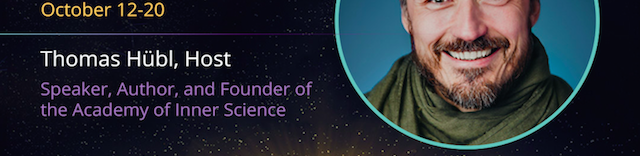
    If, like me, you’re committed to healing and helping others do the same, I invite you to join meditation teacher, mystic and systems-thinker, Thomas Hübl for a free global online summit to explore one of the most important issues of our time: collective trauma.

    “When we address and heal collective trauma, we go to the root of problems and conflict that can divide people and nations, while preventing future generations from unnecessary anguish and residual problems that get passed through generations.”  ~Thomas Hübl

    Thomas Hübl created this free nine-day summit, which starts on October 12th, to bring awareness to how trauma is not just an individual issue but also a collective phenomenon. Our traumas stay alive (repeating in our life and our world) precisely because they are unrecognized.

    During the summit, Thomas and other speakers will discuss not only the social symptoms we’re all experiencing, but also the steps we need to take to address our challenges through global collaboration and creativity. The summit will explore the following areas:

    • How each of us is affected by collective trauma
    • How community can be a resource in the healing process and pathways to bringing different groups together for large-scale healings
    • How the current structures hold us back from group healing and what we can do to create new supportive structures
    • How our global immune system operates and what can be done to strengthen it as we move through greater stress on the planet
    • How we can invite humanity into a new future where we have the tools and teachers that can work to heal collective trauma

    When you attend this online summit, you’ll learn new insights from leading experts including:

    • Dr. Gabor Maté – Bestselling author and speaker
    • Dr. Claus Otto Scharmer – Senior Lecturer in the MIT Management Sloan School and founder of the Presencing Institute
    • Rev. Angel Kyodo Williams – Zen teacher, author, social justice activist
    • Daniel J. Siegel, MD –  Best-selling Author, Founder of the Mindsight Institute
    • Woman Stands Shining (Pat McCabe) Diné (Navajo) activist and international speaker
    • Ken Wilber – Founder of Integral Theory
    • Monica Sharma – Best-selling author of Radical Transformational Leadership
    • Richard Schwartz Ph.D. – Developer of the Internal Family Systems model of psychotherapy
    • Terry Real – Best-selling author and founder of The Relational Life Institute

    You can register for the Collective Trauma Summit for free here.

    This is the first even of its kind, and it’s going to be powerful and transformative, accelerating our understanding of health, collective healing, conflict resolution, global governance, and the nature of our climate crisis.

    I hope you emerge on the other side of this summit feeling more aware of our shared wounds, more empowered to proactively heal them, and more hopeful about our collective future!

  • The Negative Impact of Not Feeling Your Feelings

    The Negative Impact of Not Feeling Your Feelings

    “If the only thing people learned was not to be afraid of their experience, that alone would change the world.” ~Sidney Banks

    I spent most of my life scared of my feelings. Having feelings and expressing them made me mentally ill—or so I was led to believe by a large number of mental health professionals. When I felt sad, they labeled me as depressed. When I showed any signs of anxiety, they gave me another list of mental health disorders I needed medication for. And if I was angry? Oh well, that was the absolute worst. That clearly proved how insane and utterly out of control I was!

    I didn’t understand how they couldn’t see what was really going on for me. I couldn’t understand how everyone saw me as the problem when what was happening to me was the actual problem. But that’s a story for another time.

    I was brought up to be a good girl, which meant that any angry expressions were forbidden, shamed, and punished.

    I wasn’t allowed to express disappointment because that made me ungrateful.

    I couldn’t ask for what I wanted because that made me greedy.

    I wasn’t allowed to disagree with anyone because that made me difficult.

    I couldn’t express frustration because that meant I was out of control and needed to be left alone to think about my shameful behavior.

    I didn’t ask for help because good girls don’t inconvenience other people.

    I couldn’t be happy either because that made me attention-seeking and annoying.

    I felt all the feelings, but I was taught that they were wrong, forbidden, and shameful, so it didn’t feel safe to feel them. And so I tried to suppress them. I inhibited them, pushed them away, avoided them, shamed them, and feared them.

    Every time I felt something, I saw it as more evidence for how bad I was. Later on, I saw it as evidence for how broken and mentally insane I was. It drove me crazy. But it was thinking that having feelings made me insane that actually drove me insane.

    I believed that what I was experiencing was wrong. I saw my feelings as problems, so I tried to hide them and not feel them. So much so that I don’t even recall feeling very happy or excited about anything. All I remember is feeling tired, lethargic, and bored. I wasn’t even fifteen years old at that time …

    I continued like this for a very long time. My life felt lifeless and bleak. I don’t recall having any fun, adventures, or exciting experiences. Everything just seemed so hard. Life was something to endure, not enjoy. Enjoyment seemed to be reserved for a lucky few, and I most certainly wasn’t one of them.

    It wasn’t until I was in my thirties that I learned that my feelings weren’t problems, and that they didn’t make me insane. My feelings only made me one thing—human.

    Feelings Lesson 1: Feelings aren’t evidence that we are broken or insane. They are evidence that we are human.

    I know now that I had always been perfectly healthy, but others taught me to believe that being a little human with feelings was somehow wrong and shameful.

    My feelings were a problem for others. They were inconvenient to them. And as a result of them not dealing with their own feelings—their own irritation, intolerance, and impatience—they tried to control and eliminate mine.

    But what happens when we try to control or eliminate our feelings is that we deprive ourselves from experiencing the richness of life. We numb them all because we cannot selectively numb. We feel it all or nothing at all.

    So if I am unwilling to feel my anger, I will eradicate other feelings with it—apart from maybe one or two that will be expressed more strongly than they would if we only let ourselves feel whatever it is that we actually need to feel.

    Feelings Lesson 2: We are meant to feel all our feelings and can’t selectively numb them.

    In my professional work, I have noticed that sad people usually suppress their anger and angry people usually suppress their sadness. It’s a simplistic generalization, but it is largely true. The problem is that the displaced feeling will be way more powerful and destructive than it would be if we didn’t try to control or avoid it. We avoid a feeling when it is shame-bound, when every time it arises we feel shame for feeling it.

    If we feel something excessively and intensely, it’s a sign that we have shame-bound another feeling, which means that this feeling was not tolerated in our childhood, and every time it arises, our anxiety level rises. We then try to push it down to stop ourselves from feeling it, but then the energy of that feeling gets displaced and added to a feeling we believe to be more acceptable to feel and express.

    The ‘more acceptable’ feeling then takes on a bigger form, and we end up having panic attacks instead of expressing our frustrations about someone. Or we get depressed instead of setting boundaries with people who treat us in disrespectful ways. Or we explode in a rage because we don’t allow ourselves to admit to feeling hurt, alone, and unsupported.

    There are thousands of examples like the above. Sadly, we always believe that our misdirected expression like rage or depression is the problem we need to fix, and so we focus on the result of the problem and not on its actual cause, which means that we cannot solve it.

    If we want to work through our issues, we need to identify which of our feelings are shame-bound and then reconnect with them in healthy and compassionate ways. This is a process. We are going against a lifetime of conditioning, so we need to be gentle with ourselves while persevering and getting honest with ourselves.

    But it is possible. We can remove the shame-binding from all of our feelings by reminding ourselves that our feelings aren’t problems, and that feeling our feelings is what makes our human experience special.

    Feelings Lesson 3: Shame-bound feelings express themselves in different and destructive ways, meaning we simply can’t not feel.

    When we inhibit what we are meant to express to protect others from our feelings, because we perceive that they’re a problem for them, we reinforce the message that our feelings are problems and that we are wrong to feel them. Believing this will negatively impact our mental health and enjoyment of other people and life in general, because feelings exist for our benefit.

    Our feelings exist to guide us through life. They show us what we want and what we don’t want so we can create more of the former and move away from the latter. When someone shames our feelings and encourages us to disconnect from them, they encourage us to disconnect from our emotional guidance system, which serves to help us create a great life for ourselves in which we can grow and thrive. This inevitably leads to creating an inauthentic, unfulfilling life, and stunted development.

    Our feelings also show us when we believe something harmful that isn’t true: a lie of the mind.

    If I believe that my anger is a sign that I am an inherently flawed human being, I feel distressed because this isn’t true. My guidance system is trying to tell me that I’m on the wrong track.

    Because just like the physical pain we experience when touching something painfully hot, emotional pain tells us to move away and let go of a harmful thought. And so, our emotions highlight our state of mind. They encourage us to let go, drop, and move away from anything that doesn’t serve us or promote our personal growth.

    Feelings Lesson 4: Our feelings tell us when we engage in harmful thinking.

    Once we understand the purpose of our feelings, we begin to see the beauty in them. We are made to have feelings—all the feelings! We are meant to feel our feelings. Our feelings aren’t problems. They are just here to give us the full human experience. And there is absolutely nothing wrong with that! We have the potential to experience it all. It is a once-in-a-lifetime opportunity!

    But we cannot make the most of this opportunity if we go in blind. Being cut off from our feelings is just that. It’s like trying to sail the oceans without a compass, hoping to find paradise to live in. It’s navigating life without any sense of what we want or what is good and healthy for us. As a consequence, we make many wrong choices and keep believing all the wrong things.

    Our attention then goes into fixing our mistakes instead of creating a life that is most suited to who we really are. Because we simply don’t know what’s good for us and what isn’t because we don’t know what we are feeling. We are emotionally disconnected.

    We have feelings that try to move us toward what’s good for us, but because we don’t like how some of them feel, we disregard them all. We try to create a successful life without any sense of what successful actually looks like for us.

    Let me outline this with an example:

    What was my anger during my childhood trying to tell me?

    It definitely wasn’t that I was a bad and ungrateful child who was inherently flawed and devoid of any tender human qualities. My anger didn’t mean that I was disrespectful or manipulative and deserved to be hit, shouted at, shamed, and punished. My anger was trying to get me to act, to stand up for myself, to protect myself. Only I was too little.

    Then.

    Not now.

    But I lived by those shame-bound rules for most of my life. I hated my anger. I avoided conflict. I didn’t stand up for myself when it mattered and then got myself into situations that were abusive, full of conflict, draining, and traumatic—but also unnecessary.

    If I had been attuned to my anger, if I had responded to it immediately, nothing would have ever needed to escalate. I would have stood up for myself and moved away from whoever and whatever wasn’t healthy for me and didn’t contribute positively toward my growth.

    I would have made very different choices and I would have lived a very different life.

    Being cut off from my feelings and disconnected from my internal guidance system deprived me of the experience of life I wish I’d had.

    I was doing it the hard way. I was trying to succeed going in blind. It doesn’t work. I know you know that too.

    Feelings Lesson 5: Our feelings ask us to act in ways that are good for us.

    So why am I going on about feeling our feelings? Because it’s the solution to many of our problems.

    Instead of putting all our energy into avoiding, controlling, and eliminating our feelings, we have to become attuned to them. We have to reconnect with them so we can make better and healthier choices for ourselves. We need them. We are meant to have them. And the more we let ourselves feel them, the more easily we learn to respond to them in healthy and life-enhancing ways.

    Because our feelings aren’t problems. They are not inconvenient. They are trying to move us into the direction of health and well-being on a physical, emotional, and mental level.

    And in that way, they help us create a life we can actually enjoy. But only if we allow ourselves to feel them.

  • If You Don’t Like the Cards You Were Dealt…

    If You Don’t Like the Cards You Were Dealt…

    “People are so caught up in their own negativity and losses that they give up on creating the future they want.” ~Grant Cardone

    I have a friend. Let’s call him Ram. Ram is always angry because of the cards that he was dealt in life. He comes from a middle-class family that has no money or inheritance. He got a decent education but couldn’t go to a better college because his parents didn’t have the money to fund it.

    He’s disappointed that his education has limited his opportunities. He’s frustrated that he has to spend money on public transport while others drive in their swanky cars. To him, it feels like the entire world has conspired against him to ensure he doesn’t succeed.

    What Ram doesn’t realize is that most of us have been dealt less-than-ideal cards, and it’s up to us to make the most of what we have.

    For Ram, everything that he’s suffering through, or has a problem with, is not under his control. He’s angry, frustrated, disappointed, and sad because, according to him, he is not responsible for any of his problems!

    Ram has what you would call a victim mentality. For a victim, everything is someone else’s fault and nothing is under their control. Every obstacle is a problem instead of an opportunity.

    Every time we suffer a setback, we think:

    Why me?
    What did I do to deserve this?
    Everybody is out to get me.
    I cannot do anything right.

    But every time we suffer a setback, we have a choice to reframe our thoughts to:

    I was not up for the task.
    I was lacking somewhere.
    This is a good opportunity for…
    I will be better prepared next time because of this.
    Now I know what not to do.

    Can I be completely honest with you?

    Ram is a pseudonym I created. Ram is me. I am Ram.

    I get into the victim mentality very easily, because that’s easier than taking responsibility for my life. For four long years, I rejected the cards that were dealt to me because I felt that I didn’t choose them, so I could just ignore them.

    I tried to distance myself from my parents and avoided going home for as long as I could because I blamed them for everything that was lacking in my life.

    I’ve read a lot on self-help and personal development, so I don’t know exactly when the switch happened or why, but sometime in the beginning of 2015, I realized that running away was not going to get rid of the cards I was dealt, so I needed a different strategy.

    So I decided to listen to Marcus Aurelius, who said, “Reject your sense of injury and the injury itself disappears,” and pack my bags to relocate back to the motherland—back to where it all started.

    It’s easy to look over the white picket fence and think that the grass is greener on the other side. We’re quick to assume things, to create this image about others, thinking their life is perfect when that’s far from the truth! We all have things we wish we could change, but like it or not, much is beyond our control.

    We don’t have control over where we are born, who we are born to, if we are born with a disability or we are born into a poor family. We also don’t have control over the stock market, natural disasters, the decisions our parents make for us when we are kids, which school we go to, or where we live. Most of us have to accept things we wouldn’t choose ourselves—but most of us still have a lot to appreciate.

    When we measure ourselves on someone else’s yardstick, the yardstick tends to be very short because we are only looking at what we lack and wishing we had it. We completely ignore all the things that might be going our way.

    In my case, I was overlooking the fact that I had a college degree, a roof over my head, parents who loved me, a job that was satisfying to varying degrees and helped me pay the bills, and colleagues who were friends at this point, who cared for my well-being. More than anything else, I had mental peace—when I wasn’t dwelling on everything I lacked.

    When we spend our time wishing for something we don’t have, we waste time that could be used for either accomplishing something or getting us closer to actually having that something we want. You can complain and cry about how things are unfair and how other people have it easier, or you can get to work.

    I am going to share a secret with you: You don’t have to do the craziest thing in the world. You don’t need to be the most spectacular. You don’t need to be the most famous. You just need to do what you can, with what you have, where you are.

    Benjamin Hardy hit the nail on the spot when he wrote, “Most people wish that their circumstances would magically change for them. They don’t have a desire to become better themselves so they can proactively improve their circumstances.”

    I had tried avoiding and running away from the cards dealt to me, but it hadn’t occurred to me that I was actually missing out by shunning my family, my friends, and my culture. So this time, I decided to embrace my cards and work with them.

    And boy did that make a difference!

    I’d missed celebrating the festivals, wearing Indian outfits, getting my elders’ blessings, smelling all the street food, and playing on the streets. I was slowly losing my ability to read and write in my mother tongue, which scared me. So, for starters, I decided to reconnect with my roots.

    The festivals reminded me of the fun I’d missed out on, while the street food brought back a lot of great childhood memories. Attending religious ceremonies and weddings reminded me of the importance of having a close-knit family. Reconnecting with my cousins and old friends made me realize that we all have our own flaws and we are all trying our best to live with them.

    The biggest change, however, was that I began to recognize the sacrifices my parents had made to ensure I got a good education and the right values growing up—moving to USA in their forties so that my brother and I could have a better life, working late hours to provide for us, giving up on their wants to fund our education.

    Yes, they were lacking in many departments, but realizing that they didn’t have much help and were figuring things out themselves was the shift in perspective I needed.

    As I started to work with what I have, I was able to leverage that instead of always wishing that I had a completely different deck. 

    I started to lean more on my family. Instead of thinking of them as the weak link, I began to leverage their connections, their experiences, and their advice. I began learning how to navigate the complex web of human relationships.

    It was the beginning of a different relationship with my parents, because by seeking to understand where they come from and why they do what they do, I had begun to respect them and earned their respect  in me.

    I started reconnecting with old friends, who exposed me to interesting people and experiences, and in doing so, strengthened my relationship with them. For the first time, I was able to give back by being present and helping instead of being away and wishing I was present. Overall, this gave me immense satisfaction and mental peace.

    I slowly began to return to myself—to remember who I was before I decided the world had wronged me.

    Moral of the story, as Arthur Ashe wrote:

    “Start where you are. Use what you have. Do what you can.”

    My favorite indian word is Jugaad. Translated to English, the shorter version means “resourceful,” while the longer one would read, “Doing the best with what you have.”

    If you are stuck and unhappy, maybe it’s time to accept the cards you were dealt, because acceptance is the first step toward happiness.

    There would have been no Helen Keller if all she did was rue that she was deaf and dumb. Instead, she decided to accept it, and years later, at a time when very few women were even attending college, she graduated. Not only that, she authored six books while co-founding the American Civil Liberties Union.

    Helen Keller is may be a famous example, but she is not the only one. Every day I see people accepting and playing their hand instead of wishing they’d been dealt other cards. They might not have everything, but they’re doing everything they can to make the most of what they have.

    If they can do it, so can you! I promise you won’t regret it.

  • 3 Practices That Help Ease the Pain of Being Highly Empathetic

    3 Practices That Help Ease the Pain of Being Highly Empathetic

    “I do not ask the wounded person how he feels, I myself become the wounded person.” ~Walt Whitman

    Empathy is the ability to put yourself in another’s experience and understand with depth the gravity of their situation. In general, I believe the world needs more empathy.

    But I’ve learned over the course of my twenty-nine years that sometimes being a highly empathetic person is incredibly painful. And sometimes too much of a good thing is a bad thing.

    Hearing stories of the pain that people experience can be extra painful when your mind tries to carry their pain around with you. Empathy is healthy when it’s useful and helps a wounded person feel understood and validated and release their pain. But it’s unhealthy when you carry it with you as if it is your own.

    Feeling sorrow for someone who is suffering is part of our humanity and connection to each other. Carrying the sorrow as if it belongs to you ends up feeling traumatizing and can cause you to disconnect from others.

    I’ve always struggled with holding on to the pain of others. From the stories of suffering I hear on the news to the people I run across in my everyday life, I’ve found it difficult not to get lost in their pain and end up holding on to it. When that problem hit even closer to home, I reached a breaking point that ended up teaching me how to stop it.

    My sister is a nurse who was working on a trauma unit floor the day she was assaulted by a patient. Seeing the bruises covering her face and her eyes swollen shut was a gut wrenching experience. For months after that my mind turned over and over again how she must have felt.

    I’d see the surprise and fear on her face in my mind’s eye. I’d feel the terror and the pain. And the overwhelming relief when he was finally off of her. Followed by the sense of humiliation and vulnerability at being alone on the floor.

    She was wounded. My overly empathetic brain created me as the second wounded one.

    I am a highly sensitive woman who struggles with both ADHD and Anxiety. These three challenges come together into the perfect storm to torture me with too much empathy sometimes.

    High sensitivity makes me more attuned to others. ADHD makes it extra difficult to control my runaway thoughts. Anxiety creates a sense of ongoing vulnerability that keeps the wound open. This perfect storm has required a strong internal set of resources to combat it. In the traumatic aftermath of my sister’s assault, I finally found the recipe for that resource.

    These three things have helped me reduce the internal wounding of being too empathetic.

    Mindful Attention to Words without Pictures

    I was on the phone with my mom as she was processing what happened to my sister, and I noticed that the most painful part of it all was the movie reel playing in my head as my mind interpreted her story in pictures.

    I couldn’t bear the emotional onslaught that I could feel coming and somewhat intuitively picked up on a mindfulness tool that I now swear by. As she continued, I made a conscious effort to hear only her words. To only focus on her words.

    When my mind started to create the overwhelming pictures, I would return my focus to the sound of the words themselves. I tried to hear the words and only understand them to the extent of their definition—devoid of the extra meaning and emotional context I had been attaching to them.

    Even though this practice was difficult to do, I was able to leave that conversation without feeling re-wounded. And that was a first.

    A Mindful Mantra

    It wasn’t just the conversations and specific triggers that created the wounded feeling. My anxious ADHD brain would recreate the story on its own. It would play that movie of what my sister experienced start to finish. In those moments, there were no words to attend to. There was only me and my sometimes-torturous brain.

    It was out of that experience that I developed what I’ll call my mindful mantra. It starts with the recognition that my thoughts have run away from me. When I see that, I imagine that it was all playing out on a picture book that I can see myself firmly shut. I even imagine the sound of a book being forcefully shut.

    Then the mantra. Every time I catch myself in this place I use the same mantra, and over time it has become helpful in its own right. This could be anything, but for me, my mantra goes like this:

    “Nothing good goes down this path.”

    It serves as a reminder that there is nothing useful to me or to the wounded person (in this case my sister) in fixating on their painful (now past) experience. It’s also a subtle reminder that choosing to stop the internal battle isn’t hurtful to the person who’s been wounded.

    With that, I find that I can practice the next skill before re-engaging myself in something else.

    A New Visual for Letting Go

    Sometimes the mind tries to hold on as if it’s not quite ready to let go. My ADHD mind has extra trouble with this. It’s in those moments that I practice this mindful visual exercise. I sometimes need to practice it several times before my brain is ready to transition on to something more helpful.

    But like any mindfulness practice, I find that the more I bring my mind back to the exercise, the better it gets at using the exercise for letting go.

    I see my thoughts (or sometimes the book in which I closed them up) floating down a river. I grew up in an area with a ton of amazing waterfalls that debut in this visual exercise. I visualize a powerful, tall waterfall like the ones I grew up with and I see my thoughts fall over the edge.

    Then I stand and watch them flow on the river beneath until they are completely out of my sight.

    After this, I’ve found that it can be helpful to engage myself in another activity to help my brain transition. Sometimes that looks like a good movie or a walk with my husband. Other times, it’s a hobby or project I’m interested in that helps grab my attention.

    If the movie reel starts to play again, I send it back over the waterfall.

    With these strategies, I’ve been able to finally find some peace with my mind. Even though they are challenging strategies that sometimes take practice, I’ve found them to be well worth the effort.

  • My Favorite Tip to Ease the Pain of Grief

    My Favorite Tip to Ease the Pain of Grief

    “It’s also helpful to realize that this very body that we have, that’s sitting right here right now…with its aches and its pleasures…is exactly what we need to be fully human, fully awake, fully alive.” ~Pema Chodron

    Many people like to think of grief as an emotional experience. It’s something that dominates your internal, emotional space, and that’s it.

    But it doesn’t take long when you’re in the thick of grief to experience grief that isn’t emotional at all.

    You feel heavy. Like there’s a giant weight on your shoulders.

    You feel like your legs are weak and shaking from trying to stand after the ground has been pulled out from underneath you.

    It’s hard to breathe because it feels like the wind has been knocked out of you.

    You feel heartbroken. Like there is literally a hole punched in your chest. Your grief is as much physical as it is emotional.

    Each of the times you experience intense emotional grief you have also been a human being, in your body, experiencing what’s going on.

    When I started to recognize my own body as part of my grieving, I discovered my favorite way to ease the pain from grief for myself and for people around me.

    You see, when I was fourteen I started high school two weeks after my dad died.

    As I walked into that school building, everyone knew what happened, but at the same time I felt like I had no allies. No one that understood. That knew my dad, or that knew where I was coming from.

    The first couple months I just tried to get by.

    I did the motions.

    Didn’t ask too many questions.

    Nodded and shook my head at the appropriate times, making sure each day I came back with the worksheets filled out and ready to turn in.

    I was like a machine.

    My school counselor checked in with me each week to see how things were going. I saw her in homeroom every Tuesday.

    “How’s it going, Kirsten?” she’d ask.

    “It’s so hard,” I repeated again and again.

    So when she sat me down in her office after the first term, she braced herself for the worst. She’d gathered all the paperwork and people she needed to begin a full blown intervention. And then she looked at my grades.

    “Kirsten! What are you talking about?”

    “What do you mean?”

    “You have excellent grades. What do you mean ‘school is hard’?”

    “That’s just it. It’s one thing to fill out a worksheet everyday (this is what I now call “showing signs of life”), it’s another thing to actually do this school thing. I barely feel like I get settled in one class before the bell rings for the next one. I can’t switch my mind from thinking about geometry to immediately conjugate Spanish verbs. My world runs in slow motion, and this place doesn’t slow down.”

    “What can I do to help you?” she asked.

    “I don’t know.”

    Because I didn’t know.

    That’s totally normal not to know.

    Later that week, I found out from my mom that all my teachers had met about how they could help me, and they offered me an extra set of textbooks to keep at home so I didn’t have to carry around heavy books all day.

    “Why would I want that?” I told Mom. I didn’t want any special treatment.

    “Just try it, Kirsten,” my mom encouraged.

    So because she’s my mom, I listened.

    And it was the BEST. THING. EVER.

    On the physical level, it literally lightened the weight on my shoulders. It reinforced the true reality that just showing up to class was more than enough.

    It meant that just being there was all I needed to do, and the rest of the stuff—the logistics—were already taken care of.

    So when you know you’re going to have an emotionally intense day, what’s one thing you could do to lighten your load?

    Maybe it’s setting a timer when you’re cooking so you don’t have to remember how many minutes the pasta has been on the stove. Lighten your mental load so you have space to be with your thoughts.

    Maybe it’s resetting expectations your family has of you, being honest with them about what you are not available to do so you can use that open space for yourself.

    Whatever it is, think about the little things that cause you stress and use those as a source of inspiration for what actions will help.

    The other key part of the textbooks gesture is that it was a gesture that recreated trust.

    You see, in that one small gesture of giving me an extra set of textbooks, my teachers showed me they trusted me.

    They trusted me with these expensive things and they trusted that I would take their gift with respect.

    All the while, I didn’t know if I could trust myself.

    What was even left of me?

    It felt like I was all grief and no me.

    When someone, a whole group of someones who I respected, said with their action, “We trust you,” it was the first time in a long time I was extended a gentle invitation to trust my community again.

    I didn’t have to feel up for every social event or trust the whole world yet, but I could trust my teachers.

    Suddenly, I had a whole group of undercover allies.

    None of the other students knew I had been given “special treatment.” And each day I walked from class to class to class, I knew there was at least one person in the room I could trust.

    That one action was more powerful than any amount of words my teachers said to me over the entire year.

    Here’s what I want you to take away, even if you can’t resolve the pain from a feeling: Try to alleviate some of the physical burden. By doing so, you are creating space for you to heal that would never have occurred if you focus only on words, wondering “What do I say? How can I talk about grief?”

    Pay attention, listen to your body.

    Even if you can’t take away the emotions right now, what can you do to relieve the physical burden?

    How can you relax the gripping around your heart?

    What can you do to release the physical tension in your muscles?

    It might not take away everything, but just a little something can make a world of difference.

  • When Things Go Wrong, I Remember This Day

    When Things Go Wrong, I Remember This Day

    “There is no such thing as a problem without a gift for you in its hands. You seek problems because you need their gifts.” ~Richard Bach

    I’d wanted to visit Alaska nearly my entire life. I’d always wanted to see the vast landscape, majestic scenery, and awesome wildlife. So as a single, middle-aged mom with two boys aged fourteen and twelve, we went.

    It was going to be an epic trip—travel from our home in the Midwest to Anchorage, a few days to Denali and back, then down to the coast and a cruise all the way to Vancouver. So much to see, and I was finally there! I was thrilled to experience it all with my boys.

    The first few days of the trip exceeded my expectations. The train ride to Talkeetna was amazing, the lodge we stayed in was perfect, and one clear morning, we got to see Denali! I could practically hear the angels singing when the clouds parted and the mountain was visible.

    After the Denali leg of the trip, we returned to Anchorage to catch a bus to Seward, where we were going to board our cruise ship and head down the coast for the wonders ahead. We had eaten breakfast and were supposed to have lunch at a wildlife rescue center, and then board our ship. It was a lovely sunny day.

    But only an hour or so outside Anchorage, all the traffic on the two-lane highway came to a dead stop. Right there in the middle of nowhere, with the Cook Inlet on our right and the mountains on our left, we were stopped along with all the other traffic in both directions on the highway.

    The bus driver learned there had been a terrible accident up ahead that had involved seven vehicles. Some people were transported by helicopter back to Anchorage with serious injuries; some died. It was truly horrible.

    After the first hour of being stopped, passengers on our bus started getting anxious about how long we’d be stuck and if the cruise boat would leave without us, ruining our vacations.

    The driver told us the traffic jam was many miles long. My kids were hungry for lunch and starting to get stressed about missing the boat. I knew they were trying to figure out my reaction, and they’d probably catch my mood. If I was upset, angry, or anxious, they would be too.

    I realized at that moment that the universe had sent me a test! I think I actually chuckled to myself.

    I’d been interested in spirituality since my youth, reading and studying and pondering a lot. But I hadn’t expected to be tested in front of my kids on my long-awaited dream vacation. I decided in that moment to make some choices in accordance with all that I’d learned, and here’s how they played out.

    1. Acceptance of what is

    I told my kids that I didn’t know for sure if we’d miss our cruise, but that even if we did, we’d find a way to salvage the vacation. They were hungry and bored—their cell phones didn’t work out here. What should we do, Mom? How are we going to pass the time?

    I told them I was going to talk to people, and they should, too. They resisted at first. What will we talk about? We don’t know these people. But we were allowed to get out of the bus and stand beside it with the others, so we did. Wow was it beautiful there—water glimmering with sunlight, green fields in front of gorgeous mountains. And miles of vehicles standing still!

    2. Gratitude

    After a few hours, the wreckers started coming by on the opposite side of the road carrying the crushed vehicles back to Anchorage. One was flattened; another had its roof missing. Awful. My boys and I said a silent prayer for all the people who had been in the cars, and gave thanks that we weren’t among them. None of those people expected their day would end this way.

    3. Calm

    As the hours passed, people were getting hungry and thirsty and more anxious. The tour company sent water, and we had a working restroom on the bus, so we were okay. The boys were hungry, but we’d eat again later.

    We heard stories about people on the other busses yelling at their drivers, threatening, cursing, and acting badly. No one on our bus was doing that, which was another reason to be grateful.

    Before it got dark, our driver told us the cruise line was holding the boat because eleven busses were stuck in the traffic jam. We truly had nothing more to worry about.

    It got dark out and the moon was shining when the bus started moving again. We had been stopped for ten hours! The boys fell asleep on the bus, and we finally got to the boat at midnight. They had a big buffet for all who had been stuck and we were on our way.

    Sometimes when we anticipate something for a very long time, it turns out much differently that we’d imagined. I’m so glad I recognized a test when it presented itself. Now whenever I find myself being tested, I try to apply the lessons that served me so well in a traffic jam in the most breathtaking spot you could ever be stranded.

    Acceptance, gratitude, calm. Embrace the situation for what it is. Find something to appreciate. Keep things in perspective. Things often aren’t as bad as they seem, and even when a lot is beyond our control, we can always control our attitude and how we respond.

  • 3 Negative Inner Voices and How to Challenge Them

    3 Negative Inner Voices and How to Challenge Them

    “Beautify your inner dialogue. Beautify your inner world with love light and compassion. Life will be beautiful.” ~Amit Ray

    There is no better way to feel good about yourself than changing your internal dialogue. Yes, you have the power to change your inner voice. You can choose to speak to yourself in a positive way or a negative way.

    Stop all activity for a moment.

    Be still. Notice what your inner voice is saying. Do you hear anything? If not, ask your inner voice this question: How does it feel to be still?

    Listen.

    Is your inner voice declaring that you are too busy to be chillin’? Or is it supporting you, happy to be playing this hanging-out-and-noticing game?

    Get to know your inner voice.

    Over the next few days stop and listen to your inner dialogue. Especially notice what your inner voice says as you are about to make a decision. Does it say, “I think, I can, I think I can” or does it say, “There is no way, I can’t do that, I can’t do that.”

    Powerful Lessons from a Little Children’s Book

    I hung out with a two-and-a-half-year-old the other day. He wanted to read a book and brought me The Little Engine that Could, by Watty Piper.

    This book was read to me as a child, and I heard the voice in my head chant, “I think I can, I think I can” as I opened the book’s cover. The part I didn’t remember was the lessons of the trains.

    As I read this little children’s book written way back in the 1930’s I felt the power of the lessons and how they apply to my own self-speak today.

    The Little Engine That Could

    The story is about a little train who wants to bring presents over the mountain to children who are patiently and excitedly awaiting their gifts.

    However, on the way to the town, the little engine breaks down. The toys are very upset, and one of them, a funny little clown, sets off to find another train to help them.

    Lessons on Self-Talk from Four Trains

    1. The first train has a Shiny New Engine.

    The Shiny New Engine didn’t want to help the little toy train because he was too special, too proud. He looked down on the little train and said a resounding “NO.”

    I thought of my shiny arrogance that I’d polished for years. I’d told myself I was too special, too important to waste my time and attention on certain tasks and people.

    Even though I’ve worked on this character defect, I know I have some of this self-speak going on inside of me. I noticed it the other night when I went out to dinner with a friend who brought along a friend of hers.

    The woman appeared to be in her sixties with huge fake boobs. She dressed in a tight, sparkly sundress that emphasized her boobs and wore high heels with gold doodads pasted on. She talked about how her love life was filled with younger men who were her “F–k buddies.”

    The moment she said this, I felt superior and stopped listening to what she shared. The next two hours I spent wishing I was at home watching Netflix. My inner voice said she was desperate.

    What did I miss out on? She could have been a kindhearted, fascinating person, even if she dressed provocatively and made choices I wouldn’t make. Where was my compassion or at least my curiosity?

    2. Next comes a Big Engine.

    The Big Engine says he is too important and won’t “pull the likes of you.”

    That got me thinking of my judgments. How do I judge others? Have I missed out on opportunities and connections because my over-inflated ego tells me that I’m too important to get involved with that person or situation?

    My lesson on this came from an Alanon meeting. Well, actually, two separate meetings.

    I rushed into my regular Alanon meeting a bit late and sat down in the only open chair. Once I arranged myself I noticed the man I was sitting next to had a scraggly beard, his clothes looked like they’d been slept in, and he smelled a bit. I scooted as far as I could from him in my chair and held my nose in the air.

    When he shared in the meeting I chose not to listen. My inner voice said, “He has nothing to share that could be of value.” I knew that at the end of the meeting I’d have to hold his hand. My inner voice said, “No way.” So I slipped out right before the closing of the meeting.

    A week later I arrived at my Alanon meeting on time and sat beside a good-looking man in a neat business suit. He piqued my interest. I’d never seen him at a meeting before, and I always appreciated a good-looking, well-groomed man.

    When this good-looking man shared, I listened intently and nodded my head in agreement with much of what he said. My inner voice said “yes” to holding this man’s hand at the end of the meeting. As we grabbed hands, I gave his an extra firm squeeze as my way of saying, “I’m glad you are here.”

    As we released our handhold, I turned to the nice-looking man and said, “My name is Michelle, welcome.” I’ll never forget how he looked at me with his deep blue eyes and asked, “You don’t remember me, do you?” I nodded my head “no,” thinking to myself I’d surely remember him if we’d met before.

    He said, “I was here last week, a bit disheveled, as my best friend who suffered from alcoholism had killed himself. This Alanon meeting was recommended by my therapist to get help and support. I was so distraught I wasn’t eating, sleeping, or taking care of myself. I noticed you wanted nothing to do with me.”

    It dawned on me as he spoke that he was the homeless-looking man from the week before. I turned bright red, mumbled an apology, and ran out of the room.

    I never saw the man again, but I do think of him often and consider him an angel sent to stop me from my “I’m better than” inner voice.

    3. The Rusty Old Engine comes next.

    The Rusty Old Engine sighed and said he could not. He was too tired and weary.

    I personally am not familiar with this inner voice. My inner voice tells me I can do anything and handle most things that come my way, to a fault. But I’ve watched others run this internal narrative. One of them is Jean.

    Jean was a vibrant, gorgeous woman who owned a successful advertising company. When the advertising business began to shift away from print toward the Internet, I watched as she became defeated. She told me she was too old to make the changes she needed to make.

    Her business began to fail, and as it did Jean failed as well. She stopped doing her movement practices, gained weight, and subsequently had two hip replacements. Her financial picture grew dim, and Jean was forced to sell her beautiful condo. She gave up on the life she’d so artfully created for herself over decades.

    I saw Jean a couple of years ago. She was a shell of her former self and shared she felt old and tired.

    4. Lastly comes the Little Blue Engine.

    Chugging merrily along. The dolls and toys didn’t have to ask this train for help. She asks them, “What’s wrong?” As she hears of their plight, she tells them she isn’t very big and has never been over the mountain.

    She thought of what the kids would be missing if this little train didn’t bring the gifts to the boys and girls on the other side. So she said, “I think I can, I think I can.” It was a supreme effort, but she hooked up to the train, began chugging along, and kept going all the way over the mountain by saying to herself over and over again, “I think I can.”

    I know this voice.

    I recently changed my business model from brick and mortar, which I knew I could do, to an online business, which required a supreme effort. I’ve gotten up every morning for over a year chanting, “I think I can.” I’ve put my head down and chugged through twelve-hour days, and you know what? I did it. I made it over that mountain. My online business is going strong.

    Inner Voice Lessons from The Little Engine That Could:

    1. Listen for your arrogant inner voice that tells you that you are better than anyone else. Tell yourself to remain curious and compassionate.
    2. Listen for your inner judgments. Say to yourself, “I’m grateful for the people that I meet; they might teach me something.”
    3. Listen to your inner voice of defeat that tells you that you are too tired. Change that voice to “I’m not handed anything I can’t handle.”
    4. Take the next adventure you encounter and say to yourself, “I think I can. I think I can.”
  • What a Month of Daily Panic Attacks Taught Me About Anxiety

    What a Month of Daily Panic Attacks Taught Me About Anxiety

    “You can’t stop the waves, but you can learn to surf.” ~Jon Kabat-Zinn

    It happened in the middle of an intimate moment, about a month before my wedding.

    One minute I was enjoying a kiss from my fiancé and the next thing I knew, I was clutching my face and writhing in agony.

    At first, there was a loud thud in my chest, as if my heart had skipped a beat.

    Then out of nowhere I started getting this strange sensation—like the kind of feeling you’d get on an elevator that’s going down too fast. The feeling was so disorienting I couldn’t help but let out a startled cry.

    I felt what I would later describe as “the draining”—it was as if all the blood had poured out of my body in a split second and I was left with an icy, numb, and shaky shell.

    I was convinced that I was going to die.

    But I wasn’t dying. Ten minutes and many repetitions of long, deep breaths later, I calmed down enough to shake off the fear and I was able to see the ordeal for what it really was—a panic attack.

    It Wasn’t My First Time

    I was no stranger to panic attacks—I’d already had a few in my life up till then. The first one hit me shortly after I was diagnosed with Leukemia at age nineteen. From then on it would rear its ugly head from time to time when things get overwhelming.

    So when I had this panic attack a month before my wedding, I didn’t think much of it at first. I chalked it up to excitement over the impending wedding. I thought once I rested up for the weekend, everything would go back to normal.

    But I was wrong.

    I went on to have another panic attack, and then another one—until I lost count.

    I continued to have panic attacks every day for an entire month. The experience opened my eyes about anxiety—I learned a few valuable lessons in this journey that taught me how to cope with anxiety and helped me get to a better place.

    And I’m here to share those lessons in the hopes that my experience may be able to help someone else who’s suffering from anxiety.

    3 Important Lessons About Anxiety from My Month of Panic Attacks

    1. You don’t need a reason to explain or validate your anxiety.

    I used to think that anxiety was something you’d only feel if there was a good reason for it.

    For example, just right before an important exam or after a life-changing diagnosis.

    So when I first started having those daily panic attacks, I kept asking myself why?

    I know what you’re probably thinking: Maybe it was the wedding planning?

    After all, many brides do get stressed just before their wedding. But I assure you that wasn’t the reason. I was a happy, relaxed bride-to-be who already had everything planned out months in advance. There was little left for me to do except to wait for the day to arrive.

    Perhaps there were other stressful things going on at the time? No, not a thing.

    My job was wonderful, my health was better than ever, and I was having a great time with my family and friends. I’d been through rough waters before and in comparison, this period of my life was all smooth-sailing.

    Could it be from chronic stress that had been building over time? I doubt it.

    I was practicing Tai Chi and Qigong meditation for at least forty-five minutes on a daily basis—a habit that I’d kept up for a couple of years already by then. I was in a good place mentally and physically. In fact, I hadn’t had an obsessive thought or lost sleep over anything in a long time.

    I was feeling on top of the world.

    But despite all of this, I began to experience some of the most terrifying symptoms of anxiety I’d ever experienced in my life. And the more I tried to look for an explanation, the worse I felt. As my mind desperately searched for an answer, it became more and more fixated on the anxiety itself.

    I started to examine myself inch by inch—with a giant imaginary magnifying glass—for any clues that would explain the tightness in my chest, the tingling in my hands, or the throbbing in my neck. Soon, my anxiety was all I could think about.

    In order for me to stop ruminating over my anxiety, I had to surrender to the fact that I didn’t know the explanation.

    I had to accept that anxiety can strike at any time for no reason.

    I came to realize we don’t need a reason to explain our anxiety, as if a solid explanation would somehow validate the way we feel. Sometimes anxiety just shows up. And once I accepted this fact, I felt more at peace with myself.

    So if you’re stuck running in circles wondering why you feel the way you do, try this:

    Instead of beating yourself up looking for a reason for your anxiety, accept that it is happening and you may never know why.

    The sooner we make peace with the fact that there is no clear answer, the sooner we can stop scrutinizing our anxiety—and concentrate on healing.

    2. Incredible things can happen when we open up about our anxiety.

    I used to think having anxiety was embarrassing.

    My family never talked about mental health when I was growing up. It wasn’t hard to figure out why. A couple of my relatives had mental health issues, and everyone in our extended family treated them like they were the family shame.

    So when I started having the daily panic attacks, I felt I had to keep up the act that nothing was wrong.

    I’m fine,” I told my friends and coworkers when they noticed I wasn’t my usual cheery self. “I’ve got it under control.”

    But as the days went by, it began to dawn on me that I was not fine. I was rapidly loosing grip on my normal life. I needed help.

    I finally opened up to my friends and coworkers about my anxiety. I was skeptical and nervous at first. I’d imagined I’d get a lot of caring but suffocating questions, plenty of warm but generic words of comfort, and a few well-intended but over-simplified comments like “just relax.” I expected some people would want to jump in right away and try to “fix” me. But to my surprise, I got a very different kind of response.

    Instead of doing all the things I’d imagined they’d do, the people I talked to listened to me with compassion and understanding. Many of them even opened up to me about their anxieties too.

    They shared with me their encounters with panic attacks—their symptoms, worries, and coping strategies. Their stories gave me an incredible sense of relief, comfort, and hope. The experience gave me the courage and reassurance I needed to keep going. Because I knew I was not alone.

    So if you’re suffering from anxiety, don’t bear the burden alone. Talk to someone. Find your support tribe. Give people the benefit of the doubt that they’ll understand you and do whatever they can to help you. Incredible things can happen when you open up about your anxiety.

    3. Believing you can get better is the key to getting better.

    I used to think I was helpless against anxiety. Panic attacks would come out of nowhere like rogue waves, and all I could do was flail my arms in the air and wait for them to pass.

    But what I learned from this month-long struggle with anxiety is that believing you can get better is key to getting better. It’s called “sense of agency.”

    Sense of agency is the belief that you have control over your own life. When you have a sense of agency, you feel you’re in charge of your actions and you have the ability to influence your reality.

    When you believe you have the power to control what happens in life—despite the fact that there are things that are clearly out of your hands—you act in a way that aligns with that belief. Instead of being a “victim of circumstances,” floating in every which direction life takes you, you become the driver of your own destiny.

    When you have a sense of agency, magic happens. You complain less. You become more optimistic. And you focus on what you can do instead of ruminating over what you can’t. As a result, you feel better.

    I didn’t always have a sense of agency. In fact, I spent much of my childhood and teenage years feeling helpless. Life at home was hell—a stewing pot of anger and disappointment from my parents’ unhappy marriage. School wasn’t much better—I was this awkward kid who was on the fringe with exactly two friends out of the entire school. And then I won the lottery from hell when I got cancer. I frequently asked myself the question: “Why do bad things happen to me?”

    But my thinking started to shift during my early twentiess. I realized in order for me to win the fight against cancer and live a fulfilling life without the constant fear of relapse, I needed to change. I was sick of being a victim—I wanted to be a victor.

    So I began to take actions to improve my health and my mindset.

    I admit, I was doubtful at first.

    Do I really have the power to make a difference in my life? I would think to myself. But I pushed forward anyways, taking one small step at a time. And my efforts paid off. Once I started seeing some improvement in my life, I started to gain confidence. And the more confidence I felt, the more I believed in my own power.

    When I started having those daily panic attacks, my initial response was to cry, complain, and throw my hands up in the air and say, “I can’t deal with this!”

    I was scared and lost.

    But I reminded myself that the power to heal was already within me—I didn’t have to settle on being frightened and helpless. So I started to learn and practice strategies to help manage my symptoms—everything from breathing techniques and meditation, to acupressure and cardio exercise.

    I believed I could make myself feel better, and that belief helped me feel better.

    So work on building your sense of agency. Start with just making one small positive change such as adopting a tiny habit. You’ll be amazed how much impact your actions—even if seem insignificant—can have over your life.

    The good news is I haven’t had a panic attack in over a year now. My anxiety still rises up from time to time like waves in the ocean, but for the most part, it remains quiet. I know one day, my anxiety might get out of control again and I could have another panic attack, but I’m not scared anymore.

    I’ve learned how the surf the waves.

  • The People Who Hurt Us Are Vehicles for Our Growth

    The People Who Hurt Us Are Vehicles for Our Growth

    “You only see in others what you have in yourself.” ~Annette Noontil

    I now recognize, after observing painful patterns repeat many times, how things that trigger me are just lessons I need to learn that are often delivered through other people. The more painful the experience, the more I can see (in retrospect) I learned from it.

    Every now and then, when I find myself getting sucked into thoughts about the rightness or wrongness of a situation and how much pain it’s causing me, I take a step backward. I can see that people are just the mechanism to my growth, and painful experiences are just big Wrong Way signs redirecting me to my best life.

    In his book Scattered Minds, Dr. Gabor Maté wrote, “It is well recognized now that people will form relationships with others exactly at the same level of psychological development and self-acceptance as their own… What we might call the law of equal development holds true even if the people themselves buy into the mythology that one of them is more emotionally mature than the other.”

    I love this insight from Dr Maté, especially when he goes on to give a typical example of a married couple with one spouse that appears to be functioning in the world more successfully than the other. When the relationship is examined more closely it can usually be seen that both people have a lot of maturing to do in order to be able to function healthily as individuals rather than in a codependent state.

    It’s no coincidence that we form relationships with people who trigger us. We are drawn to people who are, in some way, a match to our own issues, and they both challenge us and help us heal and grow.

    As a homeopathic practitioner recently observed, about two differing constitutions often drawn to one another: “One is in their head and has to learn to connect from their heart, the other is in their heart and has to learn to connect from their head.”

    But all this holds true whether it’s an intimate relationship or a more distant one; if someone triggers you (positively or negatively) they have something to teach. Michael Kerr puts it simply as “People gravitate toward their emotional mirror images.”

    “People tend to sort themselves out by levels of emotional development for many purposes, not just marriage, “ writes Stanley Greenspan, “because those functioning at different levels are practically speaking different languages…. People widely separated developmentally in fact have very little to talk about.”

    It can be tough to look at people I have, at one time, literally despised and consider that we were emotional mirror images—for example, a jealous colleague who went out of her way to discredit me on a number of occasions. This doesn’t mean that I am a bully because someone bullied me (although it could mean that for someone else); it means that we both had an equal emotional stake in the same interaction.

    In retrospect, I can see that my former colleague triggered pain from my childhood relationship with my mother.

    My colleague’s modus operandi was an unfiltered lashing out at anything that stood in her way. Her unprofessional conduct went unchecked and unmanaged because she had been promoted for the short-term results she’d achieved.

    Her behavior reflected the unfiltered (tongue) lashing I often received from my mum when she was feeling highly anxious.

    As a child, I learned to stay out of trouble by anticipating her emotions and striving for perfection in my behavior so that I received no criticism (which was usually unfounded and always delivered in a way that felt crushing and unfair).

    Not that I was ever passive, but when I wanted something I would go after it from a point of defense, justifying myself rationally rather than having healthy boundaries around my own needs and desires.

    To be criticized publicly by a colleague was, therefore, not something that felt safe to me. My attempts at repairing the relationship privately were unsuccessful, and it was not until I stood up in a meeting and told her pointedly that I would not allow her (nor anyone else) to bully me that I garnered her respect.

    This experience allowed me to see how much hurt I’d been harboring from my childhood, and to put energy into healing that old wound rather than perpetuating any more situations that echoed it.

    With the benefit of hindsight and my own years of parenting, I can now see I wasn’t responsible for my mum’s anxiety; rather it was an amplification of her own anxiety as a child in reaction to the culture and environment she grew up in, and the way her behavior was managed.

    While it’s easier for me these days to detach myself from issues that trigger me emotionally, note that I do still get triggered. That, I believe, will never change because there is no surer way to know what we do want without first experiencing what we don’t want. It is just best not to get stuck feeling sorry for ourselves.

    I’ll admit it’s sometimes hard to see a way through the emotions of the moment, especially when it relates to an ongoing situation. When I’m triggered, it’s still through other people whom I would dearly love to validate my view, just as they would no doubt love me to validate theirs, so there is a lot to work on.

    The beauty, though, is that I mostly choose to do it from a point of intrigue and willingness to learn and grow rather than feeling powerless and at the mercy of others.

    Again, note I said mostly. Old habits die hard, and there are still many times where I’ll find myself turning to confidants to rant about something. For this reason I choose to confide in people who gently prompt me back to the observer’s chair, and the broader view.

    And when similar situations keep arising, I know that life is presenting an important lesson for me. It’s not always immediately obvious what the real lesson is and how I can overcome my struggle, but experience has taught me that things become clear when they are ready to; my job is to cope as best as I can with my frustrations rather than make myself miserable.

    And since the lessons are most often delivered through others, I try not to vilify them for their part. I know that in the future I will be thanking them—even if only inwardly—for the role they played in my ongoing growth and journey through life.

    So what are you currently triggered by, and who is the focus of your frustrations? Think about past situations where you’ve felt similarly. When was the first time you can recall feeling this way? Try to see the pattern, and what it might be telling you.

    Rather than living through the pain as a helpless victim, try to see the lessons you’ve come to learn. In whatever way the lesson is being played out, the true lesson will be some version of learning to love yourself more; it always is.

    Can you imagine a world full of people who are seeking their power through self-love rather than trying to take from others? Now that is a world I’d like to live in.

  • You Can Have a Tender Heart and Still Be Fierce

    You Can Have a Tender Heart and Still Be Fierce

    “Life is a balance between what we can control and what we cannot. I am learning to live between effort and surrender.” ~Danielle Orner

    For too long, I felt myself pulled between two shores of my identity. On one side was my yoga teacher, meditator, healer identity—my tender side. On the other side was my activist, change-maker role—my fierce side.

    I always felt like I was too tender for some and too fierce for others. It made me feel like I didn’t fit in anywhere.

    Definitely the soft-hearted “woo” person in my activist circles. And I was definitely the one talking about structural oppression and other activist ideas in my yoga teacher trainings. (The ahimsa lecture was always a sticky one.)

    What I now know is that both of these sides of myself are valid. Both are necessary for living in the world, whether you want to bring healing, love, and light—or whether you want to really shake things up.

    The problem is not that both of these exist (both do, in all of us). The problem is what happens when they are out of balance.

    When we favor our tender side too much, we might succumb to heartbreak and collapse. If we let our fierce side get too strong, our anger might consume us until we flame out. Either option is a recipe for burnout and exhaustion.

    This is your official permission slip to embrace both of these sides of yourself.

    When I became a mom, my perspective shifted dramatically. While I aimed to be a tender, safe container for my baby, I also had to be a warrior-advocate for him on a number of fronts.

    New motherhood was also a time when I had to admit vulnerabilities in myself like I never had before, while having less access to outlets for my fierce activism. I had to admit that I had no idea what I was doing; that I needed help; and that I needed to take a step back from certain areas of life.

    It was tender. And it was an act of fierce self-love. I learned that we needed both, not just within us, but at the same time.

    My self-care also shifted. I couldn’t procrastinate or be wishy-washy anymore. I had to clearly (sometimes fiercely communicate) my needs.

    I also had to slow way down and shift my expectations for myself. I had to invite a sense of tenderness into my days, even when it would have been much easier to push harder. I incorporate a sense of flow into my days, even when it feels challenging to allow myself that.

    That looks like taking dedicated, structured time for myself and my work when my energy is high. And it looks like easing off a little bit when my energy is lower. This requires clear communication with those around me, and a lot of grace for myself.

    It takes both the fierce side and the tender side, working together.

    Now, I’ll be honest: Society is sometimes not wild about folks being fierce and tender. It can be very gendered: men are expected to be tough and fierce; women are expected to be sweet and tender. So we’re breaking the rules.

    But trust me when I say that it’s worth it. It’s worth it to embrace your whole self. Ultimately, those around you (and the world!) will benefit from you showing up as your complete self.

    Yes, our fiery side will make some folks uncomfortable, just the way our vulnerabilities will. Everyone will survive that discomfort. Just remember that your tender heartbreak is valid—as is your fierce desire to create transformation.

    Sometimes it feels as though nuance is no longer welcome—that we’re reduced to what we can fit into an Instagram caption. But you are allowed to be complicated.

    There’s a myth that being fierce isn’t spiritual—that we’re all supposed to be perfectly calm all the time. That just isn’t true. Our fierce side—or any other reaction to oppression or the state of the world—is just a set of conditions we’re working with.

    Anger is simply another part of our experience. In fact, it offers us grist for our practice. Beyond our own individual practice, our fierce side is a lamp to illuminate injustice and show the path forward.

    On the other hand, there’s a misconception that if we’re “too” tender, then we’ll crumple when the going gets tough. It’s true that we don’t want to become victim to our emotions. It is a gift to be able to work with them skillfully.

    Our tenderness, though, is actually an asset. Tenderness allows us to perceive our interconnection more easily—to recognize ourselves in others, and vice versa. It is the foundation of a more compassionate world.

    This is why I (and we) need both. When there’s too much of one, we fall out of balance. There are gifts to embracing both, of being somewhere in the middle.

    To create more of this balance, it’s important to know your tendencies. Do you tend toward the fierce side or the tender side? With that information, you can navigate ways to create more equilibrium and communication between those two sides.

    If you tend more toward the fierce side, practice getting in touch with the feelings underneath any anger or reactivity. Remind yourself that it’s okay to feel tender and vulnerable. Place your hands over your heart and breathe, if you’re having trouble getting in touch with your tenderness.

    If your natural state is more tender, practice taking action in service of what breaks your heart. Getting into action creates a sense of empowerment. Taking action (even small actions) regularly may help you release the feelings of helplessness you might be feeling.

    Above all, remember the root of your caring. Whether it comes from a place of fierce protection or tender nurturance, these feelings are reminders that you care.

    We are all allowed to hold all of our parts, all at the same time, even if some of them don’t seem to fit at first.

  • Living with Depression and Anxiety: How to Lessen the Pain

    Living with Depression and Anxiety: How to Lessen the Pain

    “I am bent, but not broken. I am scarred, but not disfigured. I am sad, but not hopeless. I am tired, but not powerless. I am angry, but not bitter. I am depressed, but not giving up.” ~Unknown

    Depression and anxiety. Two words we hear often, but unless we have actually lived with them, we cannot come close to understanding the tremendous impact they can have on one’s quality of life.

    Depression and anxiety can make people feel as if they are worthless and better off dead. What a horrible plague. But it is 100% possible to tame these two demons and live a happy, optimistic life that is full of wonder, gratitude, and contentment.

    I have lived with the twin tornado for as long as I can remember (since around the start of secondary school), and it’s been a battle of trying to find things to help me to live a good life—one in which I don’t constantly feel a knot in my stomach and a numbness toward living.

    When you tell your doctor you’re struggling with depression and/or anxiety, they usually suggest taking medication. This approach can work for many people and is a viable temporary option; however, what happens when the medications don’t work? What happens if the medication turns you into a walking zombie—numb, passive, and cold?

    That was my experience. Fortunately, I had enough self-awareness to realize that I wasn’t living; I was just surviving.

    There has to be another way, right? That is the question I asked myself night after night. Luckily, my interest in self-development and self-help led me to a few alternative options for healing, many of which sounded promising and were very effective.

    I stumbled across the work of Anthony Robbins, which really blew my mind. Many of his NLP ideas were great, ideas such as reframing the way one perceives a problem, creating a radical change in one’s physiology (posture, breathing rate, facial expressions, etc.), and changing the images in our head as well as the story we tell ourselves when we get depressed or anxious.

    I found this new information exciting and put it into practice straight away. Sure enough, I started to become more socially confident and began feeling more comfortable in myself.

    Much of the change in my life came about because now I had tools that I knew could take the edge off my depression and anxiety whenever they cropped up.

    These psychological tools continued to work time and time again; plus, I knew just how effective they were, so my self-belief improved.

    Before long I started training in martial arts and kickboxing, began attending public speaking classes, and also landed myself a girlfriend. These were feats that had seemed daunting, intimidating, and impossible back when I didn’t have a handle on my depression and anxiety.

    I want you to know that if you are suffering right now, things can and will get better.

    Many of you are likely reading this article to get the ‘answers’ for defeating anxiety and depression in order to help yourself escape a dark place. Many of you are reading this in order to help a friend or loved one do the same. Some of you might be reading out of curiosity.

    For those of you who are struggling right now, you might feel pessimistic about my advice, and that’s totally understandable. I ask that you dedicate a week to trying some of my suggestions and make a point of noting your mood throughout the day; you’ll see how these things will help you, again and again.

    For those of you reading this who aren’t struggling too much but are looking for suggestions to promote happiness and well-being, or simply to fight off a bad mood when one arises, I also urge you to keep reading, as well as to take on any of my suggestions that may suit you.

    Before I share the main things that have helped me manage my depression and anxiety, I want to let you know that I still have bad moods (I am human), I still get nervous (I am still human), and that life is not a fairy tale.

    This being said, I have made tremendous leaps forward and feel in control of my depression and anxiety. These two demons are still in my life, but now I control them and not the other way around.

    Okay, so let’s take a look at some of the things that helped me—things that can help you too.

    Practical Steps for Managing Depression and Anxiety

    Meditate.

    This is easily the most overlooked and simple practice that can make a world of difference in improving the quality of your life.

    It is so frustrating to see people who know all of the vast benefits meditation has to offer and yet do not meditate. Due to the fact that it seems too simple to be truly helpful, many people never start a practice. (Rant over!) I lovingly suggest you make it a daily habit, as it can help you train your brain to respond differently to negative thoughts and stressful situations.

    There are many different forms of meditation (including walking meditation, so “having no time” cannot be an excuse). I suggest you experiment and find one that suits you.

    If you’re suffering with depression and/or anxiety, I recommend Loving Kindness Meditation. (Google it—you’ll find lots of articles explaining how it’s done).

    Start with a short practice to ensure that you build the habit of practicing daily. If you can only manage three minutes a day, then perform three minutes of meditation per day. If you feel as if you can do more, then go right ahead. The goal is to eventually practice twenty minutes a day.

    Ask better quality questions.

    Thinking is nothing more than the process of asking and answering questions in our heads. We need to develop the habit of asking ourselves more empowering questions whenever we fall into a downward spiral.

    If we ask a question such as “Why do I always fail?” or, if we make statements to ourselves like “Life is pointless,” we can’t be surprised that we feel bad. Imagine somebody following you around all day pointing out the negatives in you and in life; your self-talk can have the same damaging impact on you and your emotions.

    Whenever I felt as if the cycle of depression was coming on strong, I would take the time to answer the following questions in as logical as manner as possible. Why logical? Because logical thinking negates irrational thinking and helps stop the spiral of depression (or anxiety) from getting worse.

    It’s easier said than done to be purely logical in our thinking when we’re depressed or anxious; it’s still worth a shot, though, because it can help.

    • What is the issue that is upsetting me? (Be factual here—what do you know for sure?)
    • What can I learn from this problem/situation?
    • What is one good thing about this? How can this be an opportunity?
    • What is great about this situation?
    • What action can I take right now to better the situation or how I feel?
    • What is the worst-case scenario here? How can I handle this should it become a reality?
    • What am I grateful for in my life right now?
    • What am I excited about or looking forward to right now?
    • Who do I love and who loves me?

    These questions can get us to acknowledge all of the good in our lives and helps us to get away from a downward negative spiral of emotions when we encounter situations that might otherwise trigger depression and anxiety.

    Practice acceptance.

    Many people have different ideas of how we can truly accept the obstacles and struggles that life throws us; they all involve non-resistance to the present moment (how things are in your life right now).

    I practice acceptance by stepping into the body, becoming present, and identifying how depression and anxiety feel. This does not mean how we think our depression and anxiety feel but how it actually feels.

    Is it a tension, a tingling, a pulsing? It usually feels like a knot in my stomach. I often feel my heart beating stronger and stronger, while I also experience a slight tingling or even shaking in my legs.

    Where do all of these sensations reside? Are they in your chest, stomach, or throat? How about all three?

    I have found that depression usually occurs in the mind first—our thinking is what gets us depressed. Accepting how your body feels in the moment takes your attention out of your head, giving you a much-needed break from the relentless thoughts that depression and anxiety bring forth.

    Try not to get roped back in to wrestling with your thoughts. Simply acknowledge them and let them drift in and out, or even dissipate. This kind of acceptance is likened to a mindfulness approach—again, very simple but extremely effective.

    Side note: Another great way to get outside of your head is to help somebody else. Spend some time helping somebody feel better, sleep better, live better, and notice how this makes you feel.

    Tell people how you feel.

    Sometimes it can feel as if those around us, whether family, friends, or colleagues, don’t truly understand how we feel. You might think people can sympathize but cannot empathize, but more people struggle with anxiety and depression than you may realize.

    When we tell people how we truly feel it’s as if a weight has been lifted off of our shoulders, and also, we are more likely to receive their support and understanding, which makes our lives a little bit easier.

    I understand how difficult it can be to let people know that you suffer with depression and anxiety, especially since we have been taught to ‘soldier on’ and put on a happy front to the outside world. But believe me, there is nothing embarrassing about admitting that we struggle. In fact, quite the opposite is true; it’s admirable because it takes a huge amount of courage to do so.

    Try telling somebody close to you how you feel and ask for their support and understanding. If you are really struggling and even battling suicidal thoughts then this is an even more important action step for you; I know it is extremely difficult but I promise you will not regret it.

    Give yourself time to be happy each day.

    This may seem too simple and perhaps even patronizing, but stay with me while I explain what I mean. Actually, I mean two things:

    First of all, we must be kind to ourselves and allow time for relaxation and enjoyment. Seems obvious, but many people (including myself) find ourselves feeling guilty or lost in thought during times in which we ought to be relaxing and having fun.

    Take an hour each day to do something you truly enjoy, something that makes you lose track of time and feel joyful and vibrant.

    One element of depression is a lack of enjoyment in activities, so you may need to think hard about what you can do each day that will bring a smile to your face; but I’m certain there is something!

    You could go for a walk in nature, read a book, watch your favorite television program, talk to a friend—the options are truly limitless.

    Now, if you struggle with both depression and anxiety (like myself), you may find that many activities you truly enjoy involve being alone. This is perfectly fine, but I urge you to push yourself at least once a week to spend time with close friends or loved ones; you will likely see an improvement in your mood and increase in your energy once you do so.

    The other element of giving yourself time to be happy is slightly different from what you may have heard before. Sometimes we forget that being happy can actually require work! In fact, most of the time we need to exert self-discipline in order to do those things that we know are good for us, such as eating a healthy, balanced meal and taking part in regular exercise or meditation.

    Set aside ten to twenty minutes a day to write in a journal. This is a great way to vent your thoughts, feelings, frustrations, fears, and dreams. A journal can give you more clarity and objectivity so you get out of your own head and escape your sometimes-malicious thoughts.

    I personally like to journal for five to ten minutes each morning and then again every evening. I noticed a world of difference to my mood once I became consistent, especially with regards to my anxiety.

    If you don’t know what to write or how to structure your journaling sessions, then start with the basics: how you feel, what you have been doing, anything on your mind, anything you are worrying about, etc.

    Try and write at least one thing each session that you are grateful for or looking forward to, as this will likely lift your mood. Remember that this will be your journal; you are free to do with it what you will. Give it a go yourself and see how you get on.

    A quick word before I leave you: You might not experience any benefits immediately after you begin implementing these practices, so it’s important to be patient and to keep moving forward.

    As I already mentioned, applying some of what you may have learned here will require discipline, but I know that you can do it.

    Also, remember to be kind to yourself. Don’t beat yourself up for feeling down or anxious or uncomfortable. We all have bad days, especially when we are dealing with the twin terrors of depression and anxiety. Be kind to yourself. Be kind to others.

    I wish you all the best, and I sincerely hope that this article has been of benefit to you.

    *This post represents one person’s personal experience and advice. If you’re struggling with depression and nothing seems to help, you may want to contact a professional. 

  • Maybe I Don’t Need to Make a Big Change in the World

    Maybe I Don’t Need to Make a Big Change in the World

    “Be the change you wish to see in the world.” ~Mahatma Gandhi

    As a teen, I was passionately idealistic about justice, love, and compassion. Reading the words of Martin Luther King, Jr., Mahatma Gandhi, Mother Teresa, and other icons of justice inspired a desire to make a big change in the world.

    Older people would attempt to temper my enthusiasm with a dose of jaded reality, saying things like, “That’s just the way the world is,” and “You can’t change people.”

    I vowed to never be like that. I didn’t want to give into the status quo and turn a blind eye to others being mistreated.

    I literally went out into the world and off to college clutching King’s book, Strength to Love, under my arm. I wanted to live my life advocating for justice and fighting for human rights.

    The world swiftly punched me in the gut…

    Fueled by my passion to change the world, I wrote a fierce letter to the editor on a racial topic affecting my college campus. In response, a group of giggling girls called me late at night, to mock-thank me for being the “white savior” of the campus.

    It was a painful lesson that hurt deeply and confused and embarrassed me. My gusto to change the world had missed the mark.

    I learned many important lessons from that “smack down” experience. I learned to listen more and understand my place within groups. I learned to forgive myself for my mistakes and continue to grow. I learned to slow down and be more deliberate in my actions.

    After healing from my initial wound, I reached out to a mentor. This man had worked in the area of social justice for decades. I wanted to be like him and understand life from his knowing-heart.

    He tolerated my persistent idealism of great change and my occasional self-centeredness, and encouraged me to grow and learn.

    He encouraged me to accept myself for who I was and to focus on listening to others’ stories.

    With hopes of making great change, I started working with those struggling with mental health issues, addiction, poverty, and homelessness. I heard the stories of people who had no voice.

    Stories of disparity, discrimination, and injustice fueled my frustration with society’s sleepy acceptance of the horrors of racism, sexism, and classism. The complexity of these issues belied my passion for change.

    Decades passed and I grew into the person I always wanted to be. I gained experience and understanding. But, the lack of progress in changing society and changing/helping individuals carried a high-level of burn out.

    My soul felt tarnished by anger and exhaustion. I carried so many stories close to my heart…

    The young girls who climbed in the bathtub at night to stay safe from stray bullets of warring gang members. The fifteen-year-old, with the wicked sense of humor, who was killed by his friends. The young man, struggling with schizophrenia, drifting homeless, and then sentenced to a lengthy prison term. The frail, elderly man living in poverty in a remote area with no one to check on him.

    I felt as if my efforts had been completely futile. What type of change had I ever accomplished? I did a quick appraisal and felt full-blown compassion fatigue.

    During this time, I met a man who was addicted to drugs, struggled with severe mental illness, and cycled through homelessness and incarceration. He struck me as one of the most vulnerable individuals I had ever met.

    Because of his childlike trusting, it was easy for his peers to steal his money or con him out of any item. Because of his small size, he was set up and raped. He was incomprehensibly underrepresented and misunderstood within society and within the criminal justice system.

    Whenever I would see him, I would reach out with a gentle voice and word of encouragement. He didn’t seem to respond or notice my efforts. He became symbolic of my compassion fatigue. I couldn’t affect any significant change for this man.

    I took a break and went on a vacation. During my time off, I journaled my list of jaded grievances—aspects of the world I wanted to change.

    People in the world should be more educated, more compassionate, more honest, less judgmental, more accepting, more generous, less self-absorbed… As I scribbled and grumbled, I felt myself thinking, “That’s just the way the world is. You can’t change people.”

    Over my vacation, I continued to reflect on my purpose in the world. An idea that I had been tossing around began to take shape in my mind:

    What if I didn’t have to change the world or even change a single person? What if I simply had to be what I wanted in the world?

    By accepting the fact that I could not change the world, I allowed open space for hope and potential. I felt a burden lift, as I realized satisfying, attainable goals.

    I made a list of personal, complementary goals for each grievance:

    I will educate others by sharing the stories of injustice.

    I will be compassionate, kind, genuine, and open.

    I will be generous and trustworthy.

    I will listen without judgment and strive to understand another’s viewpoint.

    I will keep my ego in check and act from humility.

    At the bottom of my list, I wrote, “All I have control over is myself. It is enough to focus on changing myself into the person that I want to see in the world. Any outcomes are up to the universe.”

    I thought of my vulnerable friend, so taken advantage of by others. My efforts to change his world had failed. My efforts to effect healthy behaviors had failed. Yet, I had been the person to him that I needed to see in the world. I had accomplished this important goal.

    Instead of being the symbol of my futility to effect change, my relationship with him became a symbol of the simplicity of “being” with another, of showing compassion to another.

    After my retreat, I went back to work with a more centered approach of just being present. It felt really good.

    As I walked up to the homeless shelter, I visited with a group of men outside. I saw my vulnerable friend approaching and was surprised he was looking directly at me.

    He pointed at me, smiled, and said to one of the men, “That’s Amy.” He then went to the next man and said the same thing, moving around the circle. When he got to me, he gave me a big hug and said, “I missed you.” I hugged him back, and said, “I missed you, too.”

    I was astonished. Within that hug was my balm. He had given me a great gift of healing, stemming from the realization that we’d both helped each other in that moment. The gift was minute, but mighty. It wasn’t about changing or improving anything, but rather accepting and supporting each other. Allowing that moment to be enough.

    We can focus on change, for ourselves and others, as an ideal or a goal. Working on ideals of change has a place in life. However, the balm, for me, was to elevate “just being” to the same level of importance as “changing or fixing,” and shifting my role from savior to friend.

    This shift is affirming for everyone, including myself and especially those who consistently are looked upon as needing to be changed. That space of being and of acceptance is where healing can take place.

  • When You Feel Tired of Hoping and Trying, Remember…

    When You Feel Tired of Hoping and Trying, Remember…

    “What happens when people open their hearts? They get better.” ~Haruki Murakami

    What do you do when just can’t do it anymore? When the pain is too much? The discouragement is too much? The hoping and trying are too much?

    It’s not that you haven’t tried. You’ve been brave. You’ve been persistent. You’ve been soldiering on through hurt that other people don’t understand.

    It’s that you’re feeling broken from the trying.

    That’s how I felt when my husband died of stomach cancer. There were two healing realizations that changed not only the path that I was on, but how I felt. I think they can help you too.

    In the ten months between my husband’s diagnosis and his death, I was driven by desperation.

    I only slept five hours a night. The rest of the time I was caring for him. Or researching his condition. Or worrying about him.

    Don could only eat a few bites of food at a time, and he was often too nauseated to want to eat at all. As I watched him waste away, I cooked as many as five fresh meals a day, trying to create something that would persuade him to eat.

    Meanwhile, I lost thirty pounds.

    My path was unsustainable.

    I knew it, but I didn’t care. Deep down, I didn’t want to go on without him.

    At the end, I spent more than a month at his side in the hospital, day and night. I left my job and children to care for him. He was my whole world.

    Then he died.

    In that small, dark place, I had to decide if I would die too.

    Realization #1: It’s not about you.

    Choosing to live didn’t come all at once, any more than feeling lost and broken had. The first step was realizing “It’s not about you.”

    It may seem like that realization wouldn’t be helpful for someone who wasn’t even eating or sleeping. And how are you supposed to live your life if it isn’t about you, anyway?

    But the truth is, I was neglecting myself because I was so focused on my own pain. Shifting my focus eased my suffering.

    I didn’t make the shift for philosophical reasons, though. I made the shift because I saw how much my pain was hurting my children.

    My teenage daughter went out for pie on a special occasion with her friends. She brought her piece home untouched for me because she said I needed the calories.

    On another occasion, she brought home a Styrofoam box containing the entire restaurant meal from her anniversary date with her boyfriend, for the same reason.

    When my heart started breaking from these small but mighty sacrifices, I realized how much heart I really had left.

    I had thought my capacity to love, to hurt, to care had been exceeded. But it hadn’t.

    Most of us have the instinct to shut down in response to pain. To pull back inside, as though cutting ourselves off from the rest of humanity could heal our broken parts. The truth is just the opposite.

    Love heals.

    Finding the Love that Heals

    Viktor Frankl lost his entire family in the Holocaust. During his own imprisonment in multiple concentration camps, Frankl became fascinated with the differences in how people responded to the atrocities they experienced.

    Everything about the camps was designed to dehumanize the prisoners. To tear them down, and to strip away their courage, hope, and identity. Most of the time it worked.

    Many people gave up. Frankl described camp mates who died not just from starvation and illness, but from grief and discouragement.

    Sometimes the shift was subtle–a spiritual and emotional wasting away that the body could not survive. Sometimes it was more dramatic. Prisoners walked into an electric fence or the path of a guard’s rifle.

    And sometimes, in order to physically survive, prisoners let part of their spirit die as the experience transformed them into someone cold and uncaring.

    But there were exceptions.

    There were people who became more kind, noble, and beautiful through the experience. The difference, Frankl concluded, was that these people were living for something bigger than themselves.

    They were sustained by love of family, faith in God, or commitment to science or art. According to Frankl, “Those who have a ‘why’ to live, can bear with almost any ‘how.’”

    Healing comes from having a reason to hold your heart open to pain. Because when you do, you automatically hold it open to joy as well.

    What do you love more than yourself?

    When You Don’t Feel Like Loving

    Maybe you don’t know right now what you love enough to motivate you.

    Maybe the problem is that you lost someone or something you really loved.

    Or maybe you feel exhausted from the way you’ve been going about loving.

    I get it.

    Not the specifics of your story, but I get what it’s like to be disconnected from every feeling except pain. To feel sucked dry from the giving. To be disillusioned and discouraged and so tired that the thought of loving any more is impossible.

    And you know what? That’s okay. It’s okay to be with those feelings. To take time for yourself, even if all you can bring yourself to do is binge watch Netflix.

    But the truth? When you’re ready, choosing love will do more to help you than almost anything else.

    Love prompts us to do hard things.

    It’s love that fuels parents who stay awake night after night with a colicky baby. It’s love that helps hurt friends to reconcile. It’s love that makes those relationships that have spanned the years precious, not despite but because of all the ups and downs along the way.

    And it’s love that can give us the courage to walk away when the situation calls for it.

    Love prompts us to make those sacrifices that in the moment don’t seem beautiful at all, but in retrospect become the most significant choices of our lives.

    It’s love that fills us, when we feel our most empty.

    So be brave. Let yourself love. Love an animal. Love the houseplant on your kitchen table and the nature you encounter on a quiet walk. Love the contributions you can make toward the greater good. And love the people around you.

    Love Grows

    I started back at my job a few weeks after Don died. It was tough. We had taught at the same college, working out of the same building, for a decade. Memories were everywhere. And because I teach psychology, there were many discussion topics that were triggering for me.

    I did it because my kids needed me to pull it together. For them.

    But as I did I it, I realized I was also doing it for me. The classroom became my happy place. I felt better when I got out of my head and focused on my students.

    My own pain was still there, of course. I cried in class more than once that first term. When I did, my students cried with me. They thanked me for being brave and open, and they offered me the same love and encouragement I had been trying to give them.

    That’s because love grows. That’s the magic of it. Even when you think you don’t have much to offer, it becomes enough, and to spare. When it is freely offered, love expands within us and around us with the giving.

    So how do you get to that point when you are feeling too worn out to give?

    Realization #2: Sometimes it has to be about you.

    When you get real about doing the impossible, about trying when you don’t know how to try anymore, you have to accept that it’s going to take all of you.

    It’s going to take you showing up fully. Owning your own power. Being unapologetically yourself.

    It’s going to take you making yourself the hero of your own story.

    So what have you been holding back?

    Is it love?

    What it Looks Like to Love Yourself

    When I was at my lowest point, my kids pointed out the ways I wasn’t taking care of myself. And because I didn’t want them to follow my example, I listened.

    I finally got medical treatment for a back problem that had been bothering me for years. I started buying myself little things that I enjoyed. I planned activities that weren’t really necessary, but that I wanted to do.

    In my world, trying had meant chronically neglecting myself so that I could put just a little more time, energy, or money into someone else.

    It’s no wonder I felt like I couldn’t keep going. I was right.

    Step one was nurturing myself with the same tangible attention I would give to someone else who I loved.

    But loving yourself means a lot more than a new haircut and a bubble bath.

    What it Feels Like to Love Yourself

    Loving yourself means showing up in your own life.

    It means giving yourself the best you have to offer and trusting that it is enough.

    It means being willing to try something new. And to keep trying.

    It means believing that you can create something beautiful even when all you’re feeling is pain.

    It means respecting your own boundaries.

    Loving yourself means being willing to do the hard things that will help you in the end.

    It means when you start to feel sorry for yourself, you stop. And you reconsider how to connect the dots between the events in your life. Because you get to determine the meaning of it all, and to decide how you want to move forward.

    And it means that when it’s time, you let go of the dreams that used to fuel you and dare to believe in new ones.

    Choosing Life

    When your spirit has been crushed, when you have no more words for the pain and no more heart for giving, remember:

    Love heals our broken places.

    Loving others. Loving yourself. It’s the same flow that heals everything it connects to.

    Those wounds hidden carefully away inside? They are the ones that don’t heal.

    The wounds bravely opened sting, yes. There is pain, but it is healing pain. Sadness felt and released opens space for joy.

    Gently offer love like sunshine, and feel your spirit grow toward the warmth.

  • What If Everyone Were Conspiring to Help You?

    What If Everyone Were Conspiring to Help You?

    “The sage perspective accepts every outcome and circumstance as an opportunity.” ~Shirzad Chamine

    No doubt you’re familiar with paranoia. In the modern world, it’s hard not to be. And as Joseph Heller wrote, just because you’re paranoid, it doesn’t mean they’re not after you. But there is another way to look at the world. What if you could see every situation in your life as a positive conspiracy, aimed at aligning you with your highest good?

    This might seem outlandish, but it’s not as crazy as it seems. If you imagined that the person annoying or challenging you was actually a gift to help you further your mental or spiritual development, how would you respond differently? What could you learn from them?

    At the very least, you’d probably resist the urge to react negatively to the perceived provocation. Instead, you’d likely take a second look at what they were trying to communicate to you, and perhaps see something you might otherwise have missed.

    This perspective has its limits, of course. Those in abusive situations should not stay in a repeated pattern of abuse. But for those of us who experience the usual trying circumstances on a daily basis, releasing some negativity can be useful.

    Imagine yourself as an actor, in search of your big break. Aspiring actors frequently find it difficult to handle rejection, which is an inevitable part of the job.

    In the context of pronoia, you might see not getting a part differently. Maybe it looked like a good opportunity but would actually have been a dead-end or lead you in a direction that was undesirable. Or maybe each rejection is bringing you a step closer to success. If it takes a hundred auditions to land one great part, then every audition completed is another step closer to success.

    Similarly, mountain climbers don’t look at each grueling step on an ascent as a setback; rather, each step brings them closer to their goal at the top of the mountain.

    If we can change our perspective to “Every rejection or difficulty brings me that much closer to success,” we can shift our outlook. We won’t be mired in self-pity or overwhelmed. Instead, we will feel grateful for the opportunities that allow us to deepen our craft. The strongest sword is forged in the hottest fire.

    It’s easy to identify the people in our lives who are helpful. We naturally feel positive toward them. Then there are those with whom we have a neutral relationship. With a little effort, we can see those people in a positive light. But even the challenging people, the hard situations, and the failures can be reframed in our minds to be seen as a way to further our development or evolution.

    I was once leading an expedition in the Himalayas, and one of our group members was quite vocal about the lack of amenities while we were trekking. At first, I thought he was just unhappy about a particular cabin where we stayed one night, but as we continued the trek, his complaints became more and more pronounced.

    I kept trying my best to change his circumstances for the better, but in the back of my mind I thought, “What does he expect—we are traveling by foot at 15,000 feet through one of the most remote parts of the world!?”

    Finally, I took the time to pull him aside in the evening and ask what was really going on. It turned out that he had lost his wife recently and that they were planning on taking a trip like this together. It was a valuable lesson for me to take the time to connect deeply with people rather than just assume what is going on by observing the surface. In the end, he ended up being quite happy with the trip, and I became much better at deep listening.

    Of course, it is rare to get to know the pain that is the root cause of people’s difficult behavior. This can be particularly hard when the challenging person is someone close to you.

    We all have people in our lives whom we are close to but continue to challenge us deeply. In that case it is important not to rely on finding the source of the other person’s upset. That pain is most certainly there, but it rarely happens that we get to understand it for what it is. Instead, it’s important to learn how to be grateful for the continuing training they are providing for us in our journey.

    You may be tempted to kick challenging people out of your life, but what if instead you see them as a training ground for future greatness?

    Sometimes learning to work with someone negative can prepare you to work with difficult people you encounter in the future. When we adopt this viewpoint, we can generate a kind of gratitude toward those challenges.

    You wouldn’t go to the gym and get mad at the weights for being heavy, or mad at your muscles for being sore. Instead, you might celebrate, in the knowledge that your training is working. Similarly, you wouldn’t get mad at a sparring partner in the martial arts for trying to attack you, because you know they’re training you for a real life-and-death situation.

    It’s easy to see our real-life “sparring partners” as true battle opponents, but if we avoid them, we miss out on all the potential lessons that might come from interacting with them.

    In the end, the choice is yours. You can go through life seeing each negative person in front of you as an irritant, to be removed as soon as possible. Or you can try on the idea that they have something to teach you. It’s not a matter of which perspective is objectively “true.” It’s a matter of which perspective allows you to learn, grow, and thrive.

  • How to Stop Feeling Consumed by Your Fear of Being Alone

    How to Stop Feeling Consumed by Your Fear of Being Alone

    “Pain makes you stronger. Fear makes you braver. Heartbreak makes you wiser.” ~Unknown

    You wake up and check your phone, expecting a “good morning” text, but there’s nothing there. Going through your day, everything feels quieter, and there’s a gaping hole inside of you that nothing seems to fill. No matter what you do, you can’t seem to shake that relentless ache for the one person who consumes your mind.

    It’s an emptiness that makes you feel lost and scared.

    There’s nothing quite like a breakup to spark fears of being alone. It’s like a wave of dread that hits you once the breakup dust settles and you realize you no longer have a partner by your side. Anxiety hits, and you start to wonder if you’ll ever find anyone to love you again.

    It’s a fear that I became very familiar with while dating in my early twenties.

    I was a late bloomer when it came to relationships. I never had a high school sweetheart, or even a college one for that matter, and spent half of my twenties in frustratingly casual relationships.

    Those relationships would fizzle out almost as quickly as they began, and every time, I was left heartbroken, wondering if I’d be alone forever.

    What made it worse was that I would see my friends in happy, committed relationships and doubt that I would ever have that for myself. Spending most of my life single felt like a curse.

    Then, after countless short flings, I met someone who would eventually become my boyfriend. It was a moment I had been waiting for all those years, yet it wasn’t what I expected.

    I thought being in a relationship would bring me happiness and peace, but once I had the serious, committed relationship I had been yearning for, I realized I was only masking my loneliness under a false sense of security. Because being with someone who was not right for me felt equally lonely.

    So now that I’m single again after ending that five-year relationship, I have a new perspective on my feelings of loneliness and fear.

    While I don’t have all of the answers and everyone has different ways of coping, here are some things that helped me overcome my fear of being alone after a breakup.

    Lean on others for support.

    A breakup can feel a lot like losing your balance. The person you once relied on for support has been pulled out from under you, and it can be difficult to find your footing.

    Those feelings of loss only exacerbate the feelings of loneliness.

    However, if you look around, you’ll most likely find that there are people in your life who are just as supportive (if not more) as your ex-partner.

    After my breakup, the first people I turned to were my friends. They were my shoulder to cry on, and I could talk to them about anything and everything.

    Even though I wasn’t communicating with them as often as I should have during my last relationship, when that ended, they were right by my side without hesitation.

    Understand that being single doesn’t mean you’re alone.

    Almost everyone has at least one person they can turn to in times of need, so turn to friends, family, or whoever you feel comfortable opening up to so that you can vent, cry, yell, and express your emotions freely, without inhibition.

    If there’s no one in your life you can lean on, maybe this is a good time to work on building a support network outside of a romantic relationship by putting yourself in new situations and opening up to new friends. This way, being single won’t feel so scary because you’ll know you’re never truly alone.

    Embrace being single.

    Do you look at your breakup as just an ending or also a new beginning?

    If you view the change in your relationship status as a loss and nothing else, then, chances are, you also view being single as a negative, which allows your loneliness and sadness to get the better of you.

    Sure, you lost a partner, and the heartbreak that comes with it takes time to heal, but you can choose how you perceive the breakup and the experience of being single.

    So shift your perspective and focus on the positives by using this time as an opportunity to reconnect with yourself.

    During a relationship, many people end up mirroring a lot of their partners’ habits, likes, and dislikes, losing their sense of self in the process. It happens to the best of us.

    The end of a relationship is the perfect opportunity to reevaluate all of those interests and passions to see what is truly yours.

    Think about it: You no longer have to consider the thoughts, feelings, and needs of another person, which means you can finally focus on you and you alone.

    So embrace it.

    Having the time and space to focus on your own needs is extremely important for growth and happiness. That way, you can develop a stronger sense of who you are, which will help you find a partner who is a better fit in the future.

    Life’s ups and downs are all about perspective, and breakups are no different.

    Get out of your head.

    Oftentimes we overthink and overanalyze during times of stress and anxiety. It’s a vicious cycle that only perpetuates toxic thoughts and keeps us chained to the past. In order to move forward, you need to physically get moving.

    Immerse yourself in activities that pull you out of your mind so that you’re less apt to dwell. Find things to do that disrupt your negative thought patterns so that you’re not constantly falling into a pit of fear and sadness. Exercise, take up a new hobby, do something creative, start a new passion project—anything to get you engaged with the physical world.

    Focus on the world around you, practice gratitude, and be mindful of your thoughts and how they’re shaping your perspective of the world.

    While you can’t completely avoid the feelings of loneliness, particularly during those quiet moments late at night and early in the morning, moving your body and taking action can make the transition from relationship to single life that much easier.

    In turn, it will also ease those fears of being alone.

    Relearn how to do things alone.

    Having a partner in crime can be fun, but that doesn’t mean you can’t also have fun doing things alone.

    There’s a certain level of empowerment that comes from doing an activity by yourself. It takes confidence and forces you into independence, both of which many of us could use more of.

    So revisit old activities you used to only do with your partner and try doing them on your own. Find brand new activities to try out by yourself as well.

    After my breakup, I made an effort to do things I was too scared to do without a partner. I started with little things like going to restaurants by myself. Then I moved on to other activities like touring museums, relaxing on the beach, and visiting local sites in my city.

    The biggest activity I took part in was going on vacation by myself. I drove two hours away to spend a few days in a town I had never been to, which pushed me past my fears of tackling the unknown on my own.

    While all of these activities were terrifying at first, they taught me that I don’t need a partner to do the things I want to do. And it was empowering to know that I am capable of doing things by myself.

    At first, it may be a little scary to go it alone, but pay attention to how you feel after. You may not feel better after the first time you do it, but after regular practice, you may find that you feel stronger and more confident as a result.

    Practice self-care habits.

    Going through the pain of a breakup requires space to heal, so use this time for introspective self-care.

    Find practices and activities that add more peace and mindfulness to your daily life. You can do that through a meditation practice to clear your head and calm any anxiety you may be feeling, or you can start journaling and get your feelings down on paper.

    Other self-care habits include having a spa day, exercising, practicing healthy eating, and getting proper sleep.

    The point is to be a little selfish and focus on yourself and your needs. When you do the activities listed above, listen to what’s going on in your body and mind—thoughts, emotions, aches, pains, and all.

    It’s not easy, but facing your issues head-on will enable you to heal the wounds of the past so you don’t repeat damaging relationship patterns in the future.

    It’s Worth Waiting for the Right Person

    The last thing you want to do is enter into a new relationship simply because you’re scared of the alternative.

    Fear can lead to desperation, which can cloud your judgment and push you toward decisions you wouldn’t make in the right state of mind. It’s in moments of desperation that we end up choosing the wrong partner and settling for less than we deserve.

    It isn’t easy to embrace the single life when you’re afraid of being alone, but it’s all about perspective. Rather than allow your fears to back you into a corner and swallow you whole, challenge them by recognizing the opportunities in front of you.

    You just may realize that being alone isn’t so bad because it gives you a chance to explore yourself and put your best foot forward when you are actually ready for love.

    After all, is it not better to be single than to be driven by fear into the arms of the wrong person?

  • Why I’m Grateful for Accidents, Pain, and Loss

    Why I’m Grateful for Accidents, Pain, and Loss

    “If you have nothing to be grateful for, check your pulse.” ~Unknown

    I couldn’t feel my legs.

    There wasn’t any pain, just this odd “sameness” of non-sensation.

    My body was frozen as I turned my eyes downward to scan down my nineteen-year-old body. Below my knees, my legs were splayed out in a very peculiar way. I was halfway underneath my car, pinned down to the dirt and gravel of the road by the back right tire.

    The tire had caught my long, curly hair and the puffy left sleeve of my new white peasant blouse, miraculously missing my face.

    Blessing Number 1:

    In the distance, I could hear my two best friends shouting for help; as passengers, they were fast asleep when I fell asleep driving, hitting a tree and rolling the car. Thankfully, they escaped unscathed.

    Blessing Number 2:

    My vehicle was lifted off my broken body, and I was carefully hoisted into the ambulance. Without warning, pain seared through me like nothing I’d ever experienced. I remember worrying about my parents and how upset they would be that I’d crashed the car.

    The blur of the ER swirled around me, and I was quickly positioned on an ice-cold steel table.

    I could hear the ripping sound of my clothes as they were cut off my body. I was aware enough to be embarrassed when they got to my underwear. With no time for pain medication, the doctors yanked my left leg straight. Both of my femurs were badly broken and had to immediately be put in traction.

    When it came time for leg number two, the attending doctor told me it was okay to scream, so I did—loudly.

    I can still see my mother standing in the doorway of the ER. I will never forget the look of fear and horror on her beautiful face. Not wanting her to suffer, I looked up and said, “Mommy, I’m okay.”

    It’s been nearly four decades since my accident, and my eyes still well up as I share this part of my story. Not because of what transpired over the next extremely difficult year, but for the pain it caused my parents. It seems that while I woke up physically under the car, I had also woken up in spirit.

    Blessing Number 3:

    Before the accident that was to define my life, I was a carefree, hippie-type, artsy teen. Nothing bothered me; I went with the flow, was basically happy, and, like all teenagers, believed I was invincible. Traction, a body cast, a blood clot in my lungs, and a wheelchair would teach me that nothing was further from the truth.

    The details of the next twelve months don’t really matter, although they certainly did at the time. All I know is that facing my mortality at such a young age was the greatest gift of my life. Everything that I had taken for granted was gone—I lost everything during that time, from walking to finishing college to using the bathroom and everything in-between.

    Blessings Number 4, 5, 6… infinite:

    Over the course of the next year, I graduated from traction to a full body cast, into a wheelchair, onto crutches with a leg brace that wrapped around my hip, and eventually to a cane. Just before my twentieth birthday, I was set free, finally able to walk on my own again.

    Walking is something almost all of us completely take for granted, but not me, and never again. With each literal “step” back into life, I became more and more grateful. It wasn’t just the joy of advancing from a bedpan to a toilet, but to live in a place that had a toilet. To live in a country where insurance paid my staggering medical bills. To live!

    I was grateful to have a family that stayed by my side, day in and out over the course of that year, through multiple surgeries and life-threatening situations. A mother that drove the hour back and forth daily for the three-plus months that the hospital was my home. A father and brother who pressed their hands into my ribcage for an entire night to alleviate the pain of a blood clot that had traveled the distance from my right calf to my right lung.

    I was grateful for my older sister, who brought her toddler every week to sit on my stomach while my two legs were in traction. I was grateful to experience life in a wheelchair, being looked at with pity and wanting to scream, “I’m going to walk again!” to total strangers. Grateful for two legs that were still the same length. Grateful to be alive, and so much wiser than my peers.

    As soon as I could walk, I returned to college, finished my art degree, and went out into the world. At twenty-seven, I fell madly in love with a crazy comedian, who became my husband and the father of my children.

    During our thirteen years together, we traveled the corners of the earth, living a life of love and laughter. Until we didn’t. The loss of my marriage is another story, but I will say this: It was as dramatic and painful as breaking both of my legs and not walking for a year.

    There was no money; I lost my home and was forced into bankruptcy.

    The word “accident” is defined as “an unfortunate incident that happens unexpectedly and unintentionally, typically resulting in damage or injury,” or “an event that happens by chance or that is without apparent or deliberate cause.”

    Losing everything was completely unexpected, extremely unfortunate, and most definitely damaging.

    While the signs leading up to the demise of my marriage had been there all along, I had spent years pushing them down to a place where they couldn’t hurt me—at least not then. But I was much wiser this round: I knew that, in order to survive, I had better look for the blessings.

    Being broke meant my two sons and I staying home, making cardboard box forts and lots of brownies, which was actually my preference!

    The animals we rescued, that my ex-husband never wanted, were to love us for the next fifteen-plus years.

    Losing my marriage revealed who my friends really were.

    Having no money pushed me into single, working-mom mode, earning me a badge of courage that I proudly still wear today.

    My boys learned too: Losing our home made all of us appreciate our tiny rented condo and everything we shared in that beautiful, intimate space. Thousands of art projects, play dates, and burnt Eggo waffles later, my children and I became closer than I ever could have imagined.

    To navigate and process my pain, I became a “seeker,” which led me to incredible teachers, a lifelong meditation practice, becoming an author, lots of art, and a master’s degree in art therapy.

    Over time, I understood the true meaning of forgiveness and self-love, which fully opened my heart and my life. I understood that compassion was the answer to almost everything, and embarked on a path of helping others overcome hardship. This has become the most gratifying part of my life.

    I learned the beauty and blessings of the present moment, and how to stay there. I learned that loving someone with all of my heart did not mean sacrificing my own dreams.

    In the end, losing everything led directly to me finding myself.

    Both accidents taught me this: It’s easy to find things to be grateful for when life is wonderful. The key is finding things to be grateful about during and in challenge, so we feel good more of the time.

    Here’s how I did it: I learned to look at just about every situation and ask this question: “What’s good about that?”

    This was no easy feat, and I’m not at all saying that when life gets hard or tragedy strikes, we should immediately be expected to feel grateful. I certainly didn’t. Gratitude is a path and practice, and finding blessings-in-disguise can take years, even a lifetime.

    I believe that genuine gratitude is simply about finding good things in less time, whatever that is for you, and however you need to get there.

    Knowing all I know now, am I grateful enough to say I am glad it all happened? My accidents made me who I am, and I’m not sure how I would have gotten here without the hardship. So, in that sense, I can honestly say that I wouldn’t change a thing.

    I am most thankful for my abiding trust in the knowledge that looking for what’s good in hardship is a transformative way to live, and it both humbles and amazes me. The present moment is all we have, so we may as well find peace in it.

    I have absolute faith that by looking at all areas of life—emotional, social, physical, spiritual, familial, and vocational—and asking, “What’s good about that?” I will always have something to be grateful for, even if it’s simply using the bathroom again.