

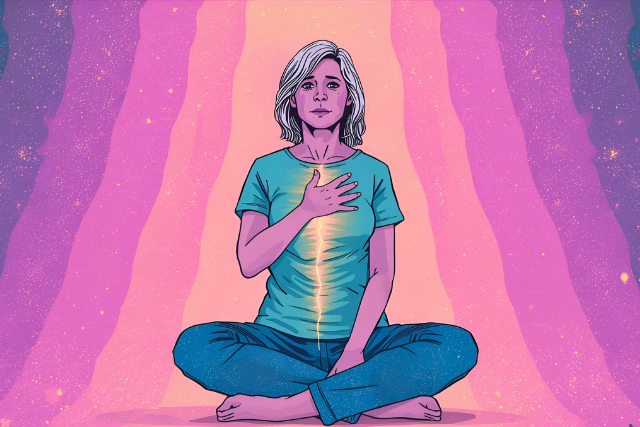
“The wound is the place where the Light enters you.” ~Rumi
I didn’t know what it meant to grieve a body that was still alive until mine turned on me.
It began like a whisper—fatigue that lingered, strange symptoms that didn’t match, a quiet fear I tried to ignore.
Then one night, I collapsed. I woke up in a hospital room I didn’t recognize, attached to IVs I hadn’t agreed to, surrounded by medical voices that spoke in certainty while I sat in confusion.
It wasn’t just a diagnosis I was given. It was a line in the sand.
Before that night, I thought I knew who I was. I had moved across the world for love, leaving behind my home, my language, my work, my identity. I thought that leap of faith had already redefined me.
I was wrong.
Illness Doesn’t Just Change Your Health; It Changes Everything
When you live with chronic illness, the world doesn’t change with you.
Everyone else keeps moving. Fast.
Meanwhile, your pace slows to survival mode. Appointments become your calendar. You measure your days in energy—not hours. You go from thinking “I’m strong” to wondering “Am I weak now?” And the hardest part is, people still see you as who you were before.
But inside, you’re unraveling.
I remember standing in the shower, my hands trembling, trying to wash my hair, crying because I couldn’t lift my arms long enough. I remember sitting in a café with friends pretending I was fine, while every muscle screamed. I remember how silence became my shield because explaining felt harder than hiding.
I Had to Mourn My Old Self
No one tells you how much grief comes with getting sick.
Yes, I mourned the physical freedom I lost. But more than that, I grieved who I thought I was. The capable one. The dependable one. The one who could do it all.
I had been that woman.
Now I couldn’t even cook dinner some nights, let alone help others like I used to.
And it made me angry. Sad. Ashamed.
Illness stole not just my stamina but also the image I held of myself. That was the most painful part. I didn’t know where I fit anymore. I wasn’t who I used to be, but I wasn’t sure who I was now.
The Turning Point Wasn’t Dramatic; It Was Quiet
Healing didn’t arrive with fanfare. There was no great epiphany.
It came one small moment at a time.
The first shift happened when I stopped fighting what was. I realized I couldn’t move forward until I stopped clinging to the past. That realization didn’t heal my body, but it softened my soul.
And that softness became the doorway to something new.
I began to see that maybe the goal wasn’t to get back to who I was but to become who I could still be.
That gave me hope—not because things got easier, but because I wasn’t resisting everything anymore.
What Helped Me Rebuild from the Inside Out
If you’re facing a change you didn’t choose, especially one that lives inside your body, I want to offer you what I needed most: permission to become someone new.
Here are a few things that helped me begin again—not as a fix, but as a practice:
Grieve the old version of you. Seriously.
Don’t rush past your sadness. Say goodbye to the “you” who did it all, carried everything, said yes, pushed through. That person mattered. They were real. They deserve your tears.
Grieving isn’t weakness—it’s the beginning of truth.
Redefine strength.
Strength is not being able to run five miles or check every task off your list.
Strength is waking up in pain and choosing to get up anyway—or choosing to rest instead of proving something.
Strength is asking for help when your whole identity was built around helping others.
Stop waiting to feel like your old self.
The truth? You may never feel like your old self again.
But that’s not a tragedy—it’s an invitation. To live differently. To deepen. To slow down. To choose softness over striving.
Some days that will feel like a loss. Other days, it will feel like grace.
Let others in—selectively, honestly.
It’s okay if most people don’t understand. Find the few who do, or who are willing to listen without needing to fix.
Speak even when your voice shakes. Share even when you don’t have a tidy ending.
You’ll be surprised how many people whisper “me too.”
Make peace with the pause.
You’re not falling behind. You’re not broken.
You’re simply in a new season. One that asks different things of you.
Don’t measure your worth by how fast you move. Measure it by how deeply you stay with yourself, especially on the hard days.
I wish I could tell you that I handled all of this with grace from the beginning. But the truth is, I resisted every part of it.
I wanted my old life back. I wanted to prove I was still the same person. So I kept pushing—ignoring symptoms, pretending to be okay, trying to keep up.
That only deepened the exhaustion, physically and emotionally. My body would shut down for days. I would hide in bed, ashamed that I couldn’t ‘push through’ like I used to.
What I didn’t realize then was that trying to be who I used to be was costing me who I was becoming.
There’s a moment I remember vividly: I was sitting at my kitchen table, the afternoon light pouring in. I had a warm cup of tea in my hand. And for once, there was no rush. No guilt. Just a breath. Just presence.
It wasn’t a breakthrough. But it was something. A tiny opening. A softness. I remember thinking: maybe I don’t need to heal back into the person I was. Maybe I can heal forward.
This mindset shift changed everything.
It didn’t fix the illness. But it fixed the part of me that kept believing I had to earn rest, prove my worth, or hide my pain.
Now, when the flare-ups come—and they still do—I try to meet them with compassion instead of frustration. I speak to myself like I would to someone I love.
On the outside, not much has changed. But inside? I’ve made space. Space to be exactly who I am, even in discomfort. Even in uncertainty.
To anyone reading this who feels like their body has betrayed them—who wakes up wondering who they are now—I want to say this: your softness is strength. Your slowness is sacred. Your survival is heroic.
Even if the world doesn’t see it, I do. And I hope someday, you will too.
You Are Still You
There are moments, even now, when I miss who I was before the diagnosis. I miss the energy. The ease. The certainty.
But I wouldn’t trade what I’ve found: A self that is more tender. More present. More aware of what really matters.
Illness taught me to slow down. To let go. To stop living as a checklist.
And it taught me that I’m still worthy, even when I’m not productive.
If you’re in the middle of an identity shift—whether from illness, loss, divorce, or something else—you are not alone. You’re not broken. And you don’t need to rush toward reinvention.
You are still you. Just different.
And that different might be where the real light gets in.

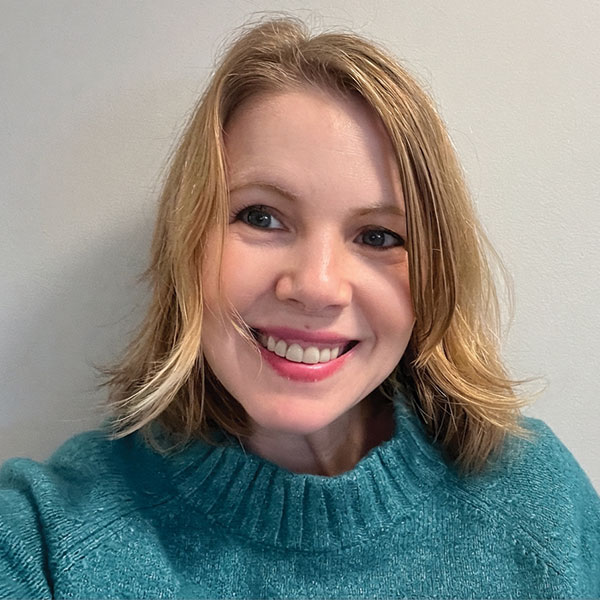
About Micaela Becattini
Micaela Becattini is a mentor and educator who helps people move through life transitions, grief, chronic illness, and identity shifts with grounded compassion. She writes about emotional resilience and soulful growth based on her own lived experiences. You can find her and her work at micaelab.com.au or connect on Instagram instagram.com/micaelabecattini/ and on Facebook facebook.com/micaelaauthor.
- Web |
- More Posts






 Though I run this site, it is not mine. It's ours. It's not about me. It's about us. Your stories and your wisdom are just as meaningful as mine.
This article is a mirror to my life's experience with severe, yet to be resolved illness for the past 5 years. For the first time, I feel seen, heard and understood. Thank you.
Oh, my heart…
Thank you for sharing this. I’m holding your words gently with me.
To live inside an unsteady body is a kind of courage that rarely gets acknowledged. So much of that journey is invisible to others…the grief, the waiting, the uncertainty, the breath-by-breath hope that things might shift. When you said you finally felt seen… I felt that. Truly.
I’m sorry you’ve been walking through this for five years. That kind of endurance changes a person, and not in the tidy, inspirational way the world prefers to hear about. It shapes us in quieter, deeper places. In patience, tenderness, resilience we never asked to learn.
Please know this: you are not alone in this landscape. I see you too, in the exhaustion, in the strength it takes to keep going, in the softness it takes to still believe in your own life while navigating a body that doesn't always cooperate.
May your days ahead bring relief, gentleness, and moments of being held, by others, and by yourself. And thank you for letting me know these words reached you. That connection makes this journey feel less solitary for me as well. Micaela 🤍
Thank you for a beautiful article on acceptance and moving forward. Chronic illness — especially one that has flare-ups — can be a valuable lesson in learning how to be kinder to yourself as well as truly appreciating and treasuring the good in one's life.
Thank you for sharing this 🤍
You’re right, living with a chronic illness that ebbs and surges teaches a kind of self-kindness that can’t be learned any other way. It asks you to slow down, soften, and pay attention to the good that’s still here, even on the hard days.
The flare-ups, the unpredictability, the recalibrating over and over… it’s not the life any of us would’ve chosen, but it does shape a deeper appreciation for the small, steady moments of ease. The ones we used to rush past.
For me, acceptance hasn’t been passive, it’s become an active practice of meeting my body where it is and choosing to move forward with compassion instead of resistance. And I’m grateful the article reflected that tender balance for you.
Wishing you gentleness in the hard waves
and presence in the soft ones. 🤍 Micaela
Thank you for your honesty. My ex-spouse was recently diagnosed with fibromyalgia and is going through many of the feelings you did. I sent this to her for some assurance.
On a personal note, I went too fast in my healing after a bipolar diagnosis five years ago. I had a mental health crisis two years later. Now, I move forward with deliberation instead of forcing change.
Thank you for sharing this with me Richard.
I’m really moved that you passed the article on to your ex-spouse. Fibromyalgia brings a level of exhaustion, frustration, and emotional ricocheting that is so often misunderstood. I live with Crohn’s disease and fibromyalgia myself (alongside a few other conditions), so I recognise those early waves of fear, grief, and disorientation she may be feeling.
Your awareness and kindness in offering reassurance says a lot about your heart.
And the personal piece you shared… that resonates deeply. Healing isn’t meant to be rushed, yet so many of us try to rebuild too quickly, not out of denial, but out of longing to feel “normal” again. Moving too fast can shake the foundation we’re standing on, especially with something as delicate as a bipolar diagnosis.
Deliberation, moving forward slowly, consciously, with honesty, is its own form of wisdom. It’s a kindness we learn only after the body or mind has asked us to stop.
Wishing both of you steadiness, gentleness, and a pace that truly supports where you are today. 🤍 Micaela