

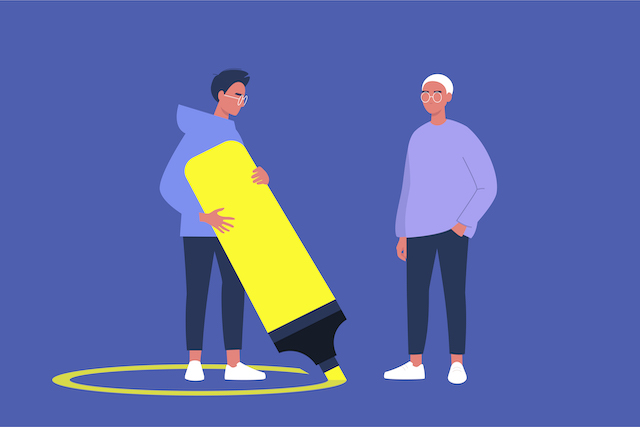
“Yesterday I was clever, so I wanted to change the world. Today I am wise, so I am changing myself.” ~Rumi
Three years back was the first time I dared to set a boundary and be assertive in a friendship, and guess what? She blocked me on her phone, and we stopped being friends.
It came as a rude shock because I was quite invested in the friendship. Not only did we have good times together, but I had helped her search for and find a job and even babysat her kid for a long while free of charge. I felt betrayed and hurt. It made me feel like I was the one in the wrong, the bad person, and like I had no right to say what felt right to me.
I admit that I was early in my journey of being assertive and learning how to set boundaries, so my skill set wasn’t the best. But despite the mayhem and chaos it caused, it was a good thing for me.
We were similar in many ways, and I knew she was a lovely person. Still, I didn’t particularly appreciate that she always wanted to be in charge, acted as though she knew it all, only wanted her way, and behaved as though she had the world’s worst problems.
I empathized with her because she shared her struggles with me. But I didn’t share mine back partly because I wasn’t comfortable and partly because I felt there was no place for me; it was only about her. So, one day, when I’d had enough, I exploded and said what I had to say, rudely, and that ended the relationship.
Three years later, when the dust settled, we started talking. We are cordial, civilized, and respectful now. We share laughs and anecdotes, but it’ll never be the same because we’ve both changed, and our relationship has changed as well.
After taking this journey, I’ve concluded that being assertive and setting boundaries is not as easy as it sounds. But it’s the only way to regain your sense of self, sanity, and self-love.
What are the Benefits of Maintaining Boundaries?
Boundaries are limits between us and other people that enable us to honor our feelings, wants, and needs and take good care of ourselves. We need to set boundaries because:
- Boundaries offer protection against people who habitually do things that leave us feeling uncomfortable.
- Correcting troublesome behavior and letting other people know what’s acceptable or not, where we stand, and what we are willing to tolerate drastically improves our sense of self.
- Setting boundaries helps us trust ourselves and, in turn, trust others.
- It helps us treat ourselves and others as equal with respect and dignity.
- It teaches us what’s essential for us and gives us the courage to stand up for it.
- It builds our confidence as we work on our assertiveness muscle.
- Boundary-setting is generous to others because it allows them to grow and take responsibility for themselves, their actions, and their issues.
So, if boundary-setting is such a good thing, what’s the problem?
The problem is that it’s hard, especially for people who are not used to setting boundaries. It can make you question yourself and your intentions and turn your world topsy-turvy.
Why Is Boundary-Setting So Difficult?
Most people with weak boundaries:
- Are not aware of their needs, and this takes lots of time and practice.
- Are afraid to stand up for themselves.
- Don’t believe that they deserve to have their boundaries recognized and honored.
- Are afraid that people will think they are selfish.
- Think it is wrong to think about themselves because of various cultural or religious influences.
- Believe that what they want is unreasonable.
How Do You Start Setting Boundaries?
1. Take inventory.
Have you ever been in a situation where you felt like you were being taken advantage of, taken for granted, or treated disrespectfully? When you feel any of these things, you need to ask yourself:
- What are you feeling? Is it anger, hurt, betrayal?
- What brought about those feelings? What did the other person do? Did they disregard your feelings or act dismissive? Did they cross a line you’d rather no one cross?
- How did you react to the situation? Did you ignore it, make an excuse for them, or get angry and resentful but fake a smile?
- Why did you tolerate this behavior and respond this way? What were you afraid of?
So, the first step is being conscious of what happened and what you’re feeling.
This is essential because it helps you become aware of your needs, wants, and limits; notice when someone is neglecting or violating them; and reflect on how you usually respond—and why.
2. Be honest and courageous.
The second step is being honest about what you would like to do in the situation and reflecting so you can find the fairest and healthiest way to respond.
Then comes the hardest part: finding the courage to act even if it may displease, anger, or irritate the other person.
Everything inside you might scream that this is a mistake. You may feel scared, anxious, and even unsafe speaking up. But remember that ignoring the issue is not a solution because you will just end up feeling resentful if you continually avoid saying what you really want to say.
What No One Tells You About Setting Boundaries
1. You may feel guilty.
Somewhere down the line, you may have learned that your needs, feelings, and wants are less important than others’. When you start making changes, it may feel like you are embarking on a journey of selfishness and betraying the very core of your being.
2. You will likely make mistakes.
You are learning a new skill, and mistakes are bound to happen. You may overreact to minor issues or fail to communicate your feelings and needs accurately or clearly. There’s no right or wrong here, only a learning curve. You can always change your decision or apologize later if you realize that your decision wasn’t the best.
3. It sometimes feels like you are at war with yourself.
To some extent, that’s what this is. A war with what you once believed to be true but isn’t anymore, a war against your default responses.
4. It is not easy.
It will sometimes mean wrong turns, slip-ups, and lost relationships. But if you’re honest with yourself, you may realize that those relationships were already dead to begin with; you were trying to nurture doomed relationships because you were afraid to let them go.
5. It makes you confront demons you didn’t know you had.
Your insecurity, your feelings of low self-worth, your fear of being rejected or alone—all this and more bubbles to the surface when you get honest about why you’ve struggled with boundary-setting and start pushing past your blocks.
6. It takes all you have, tears you up, and breaks you down.
But when it’s all done and over, you build strength, wisdom, and trust in yourself. You learn to give your feelings more credence, knowing they’re an internal signal that something is off and you need to investigate them further so you can decide what’s really best for you.
So yes, boundaries can be life-changing, but the emotional upheaval that often accompanies them isn’t for the fainthearted. Changing yourself, getting out of your comfort zone, and doing what is right for you can trigger your reptilian brain, which craves safety, making you feel like you are doing something wrong. Arnold Bennett rightly says that all change, even for the better, is accompanied by discomfort.
Deepak Chopra said that “All great changes are preceded by chaos.” I believe the benefits of maintaining boundaries make the chaos worth it.

About Lana Goes
Lana is a finance professional, writer, and book lover. She loves to inspire people to live life on their own terms. She believes in the art of journaling and that journaling is a skill everyone should learn, as it helps with self-awareness and self-discovery. Her course 'Journaling with Intention' includes journaling practices to help you clarify your vision, navigate through stuck areas, and create the life that you want. You can find some of her written work on Medium, Quora, her personal blog.
- Web |
- More Posts









 Though I run this site, it is not mine. It's ours. It's not about me. It's about us. Your stories and your wisdom are just as meaningful as mine.
Hi Lana,
Thank you so much for the beautifully written piece. It literally came at a very pivotal moment. Today I finally made the decision to set boundaries in my life. I am going through the motions of feeling guilty, sad, indecisive, etc. Your article touched on a lot of great points and was exactly what I needed to confirm that I am making the best decision for myself. It’s a new behavior I have to learn because honestly my mental and emotional are drained at this point. Thank you for your wonderful insight and sharing your story!
Very nice and good reminder. TY Lana! Yeah some people will be in shock and awe when we quit reacting the way they want us to.
Hi Lana,
This is a wonderful post. So much to relate to. I recently gathered a lot of courage to give closure to a toxic relationship. Logically it was over last year but I kept on letting myself being taken for granted because I was mistaking unconditional love for unconditional tolerance. As expected, the other person didn’t even have the courtesy to respect that and moved on with someone else in less than 2weeks. While I am still hurt and angry, I know I truly deserve to experience happiness and mutual respect without self-sabotaging myself to just keep up with someone else’s idea of validation or poor boundaries. It is definitely not easy to recognize these patterns of self-harm, but once we do, it is also what gives us courage to begin our transformational journey. Lots of love and power to all those who are struggling yet continuing to find their own meaning in life. Also, don’t forget to feel the same compassion & kindness towards your own self, the way we feel towards all others.
Thanks,
Divya
I feel as though this was written for me. I have been working on setting boundaries for the past year. As an introvert, it’s been hard and It’s an ongoing process. I had a friend who I set a boundary with politely but firmly and she ended the friendship. Recently, I read that if someone responds negatively to you setting a boundary, it shows that the boundary needed to be set. I truly believe it and have started standing up more for myself.
Hmm how sad that you know so little about his your advice crippled people and blocks them from true healing. What a bunch of garbage. Everyone that follows your teaching will fail in love. The Fisk people is to become mastered svx string so that you don’t need to be protecting your flail feeling . Only truly healthy people can truly live and let live. You can not live from bring in defense mode always protecting yourself from getting upset. This precept is counter productive.