

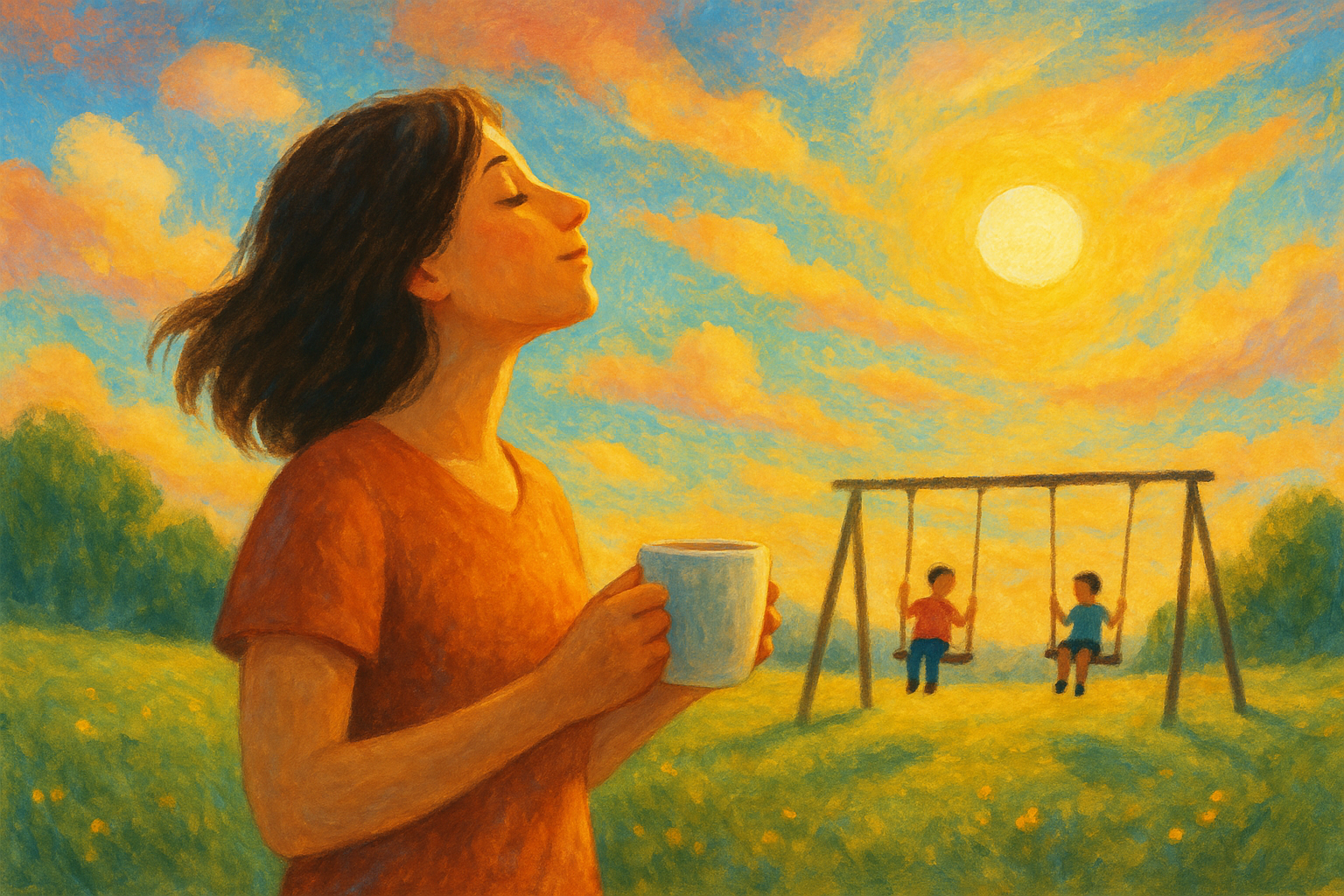
“True healing is not a straight line. It is a spiral. You come back to things you thought you understood and see deeper truths.” ~Barry H. Gillespie
I used to believe healing would be obvious. Like a movie montage of breakthroughs… laughter through tears, epiphanies in therapy, and early morning jogs that end with a sunrise and a changed life. But that’s not what healing looked like for me.
It looked like dragging myself out of bed with puffy eyes after staying up too late crying. It looked like brushing my teeth when everything in me whispered, “Why bother?” It looked like answering a text when I didn’t feel lovable or worth responding to.
Healing, I’ve learned, is quieter than I expected. It’s not a climax. It’s a practice.
Three years ago, I hit what I can only describe as emotional gridlock. I wasn’t in crisis, at least not the kind that gets dramatic music. I was in the kind that feels like cement. I was tired all the time. My fuse was short. I wasn’t sleeping, wasn’t eating regularly, and the woman in the mirror didn’t look like someone I recognized anymore.
If you had asked me what was wrong, I wouldn’t have had an answer. It wasn’t a single event. It was a slow erosion of self, life chipping away piece by piece until I felt like a ghost of who I used to be.
One night, after snapping at my kids over something insignificant and crying in the shower, I sat on the edge of my bed and thought: I don’t want to live like this anymore.
Not “I want to disappear.” Not “I want to run away.” But this version of life, the one that felt like survival mode on loop, had to change.
So, I did something radical:
I took one deep breath. I unclenched my jaw. I drank a glass of water.
And that was day one.
There was no fanfare. No overnight shift. Just a decision to start with what I could reach: my breath, my body, the next kind choice.
The next morning, I made breakfast. Not for anyone else, just for me. Eggs and spinach. It sounds small, but it felt like reclaiming something. I was so used to skipping meals or eating standing up like my needs were interruptions.
That day, I walked around the block after lunch instead of scrolling. It wasn’t even a workout. I didn’t track it. But the sun hit my shoulders, and for the first time in a long time, I felt here.
That walk was healing.
So was every moment I chose presence over performance.
I started keeping a mental list of all the tiny things I did in a day that felt like medicine. A bath instead of another task. A journal entry that made no sense but helped me feel less like I might explode. Drinking water before coffee. Asking myself “What do I need?” and then actually listening for the answer.
Sometimes the answer was a nap. Sometimes it was a good cry with no rush to wipe my face. Sometimes it was texting a friend and saying, “I’m not okay right now,” even when I worried I might sound dramatic.
And sometimes, the answer was just silence.
Letting myself be… without the need to improve, perform, or explain.
Over the next year, healing became a practice of showing up differently.
Not dramatically.
Consistently.
I started listening to my body instead of overriding it. I rested when I needed to instead of proving I could push through. I said no even when my people-pleasing screamed at me to just say yes and make it easier for everyone else.
And the thing about consistency? It’s boring. It doesn’t get applause. But it works.
Healing is in the repetition of small kindnesses to yourself. The boring, brave acts of resistance against self-neglect.
It wasn’t linear, either. I fell back into old patterns. I had days where I numbed out with my phone, skipped meals, and snapped at everyone in the house. But I stopped making those days mean that I was back at square one.
You can fall down and still be healing.
You can feel stuck and still be progressing.
One of the most freeing things I ever learned was that healing isn’t a destination you arrive at. It’s a relationship you build with yourself. One rooted in trust.
And trust is earned in the small, quiet moments.
What I didn’t know then, but deeply understand now, is that our nervous systems aren’t waiting for one massive overhaul. They’re waiting for safety, predictability, and care. You rebuild your sense of self the same way you build trust with another person: One consistent action at a time.
It’s brushing your hair instead of pulling it up in frustration. It’s putting your phone down and drinking tea. It’s crying when the tears come instead of swallowing them down.
These things don’t look revolutionary. But they are. Because every small act of care tells your body and mind, “You matter. I’m here. I’ve got you now.”
I remember one day vividly.
It was pouring rain. My toddler had just thrown oatmeal across the room. I was already touched out, overstimulated, and dangerously close to tears. My instinct was to throw the day away, to turn on cartoons and pour coffee over my anxiety and call it survival.
But instead, I sat on the floor. I scooped my screaming child into my lap, pressed my forehead to his, and whispered, “We’re okay. We’re safe.”
I took a breath. Then another. And something in me softened.
That moment didn’t fix my life. But it reminded me of my power. That was healing, too.
If you’re in a season where everything feels off, where you feel numb or exhausted or like the spark you used to have is buried under obligation, I want you to know this:
You don’t need a ten-step plan. You need one small thing you can do today that feels like care.
A breath. A meal. A walk. A text to someone safe. A cry you’ve been holding in.
That is healing. Not a dramatic rebirth, but a quiet reweaving of yourself, thread by sacred thread.
A Few Things That Helped Me
- Lower the bar. Healing isn’t about being your best self every day. Some days it’s just about not abandoning yourself. Start there.
- Romanticize the boring. Light the candle. Make the tea. Put on the cozy socks. Small rituals matter. They remind you that your life is worth living even when it’s messy.
- Give yourself credit. Every time you choose presence over autopilot, you’re rewiring something. That’s no small thing.
- Befriend your body. It’s not broken. It’s responding to years of survival. Treat it like a loyal companion, not a machine that’s malfunctioning.
- Talk to yourself like someone you love. When you mess up. When you overreact. When you don’t meet your own expectations. Especially then.
- Keep showing up. Even if it’s not glamorous. Especially when it’s not.
You won’t always feel the shift. But you’ll wake up one day and realize: you’re softer. Kinder. Less reactive. More you.
That’s what healing does.
Quietly. Faithfully. Cell by cell.

About Cristie Robbins
Cristie Robbins is a published author, speaker, and certified mental wellness coach. Through The Wellness Blueprint, she helps women reduce stress and reclaim vitality with a root-cause approach. Her books, including Scars Like Constellations, explore resilience, healing, and personal growth, and can be found on Amazon at her Author Page. Connect at The Wellness Blueprint. You can find her on Facebook here and Instagram here.









 Though I run this site, it is not mine. It's ours. It's not about me. It's about us. Your stories and your wisdom are just as meaningful as mine.
Cristie, that is the most helpful and healing thing I've read, maybe ever. Thank you.
Alane 💛💛💛💛💛