

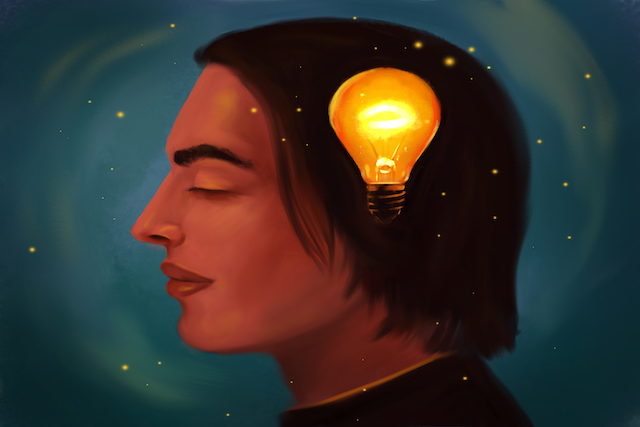
“The truth is, unless you let go, unless you forgive yourself, unless you forgive the situation, unless you realize that the situation is over, you cannot move forward.” ~Steve Maraboli
The key to healing is learning to let go of negative thoughts and feelings. Mindfulness will allow you to be aware of your thoughts and feelings; forgiveness will help in letting them go.
Simple as it is in theory, putting it into practice may be harder.
Mindfulness, being aware of your thoughts and feelings in the present moment, is not that difficult. But the trick is to do it amidst the chaos of our modern way of living.
Forgiveness is even harder. Our mind sees the events of the past as lessons that are beneficial for our survival and wants to hold on to painful and irritating memories.
But in the modern world, we rarely need this primal safety mechanism, and the grudges we hold hurt us more than they do good.
What’s worse, the things we have done, or others have done to us, often make us angry. Anger can be a severely damaging mental condition; not only damaging to our minds but also to our bodies.
However, taking the time to consciously combine mindfulness with forgiveness will open the way to profound emotional and physical healing, and will eventually lead to a joyful and healthy life.
Being mindful of your thoughts and feelings will allow you to confront them instead of repressing them. Once confronted, the events that cause those thoughts and feelings can be examined and forgiven.
I learned this the hard way, but now I want to share what I know so that you can skip the painful part.
Pain is Often a Prompt to Grow
Just a few years ago, I thought I had life figured out. I had done everything ‘right,’ succeeded in achieving my goals, and therefore, I expected to be happy.
After years of rigorous studying, I landed a job at a corporate bank. It was everything I had ever dreamed of. I could finally afford a fancy car. I was surrounded by amazing people. I went to parties, traveled, and had fun. Life was (supposed to be) pretty sweet.
As fun as it was, it was not healthy in any way. My health started to deteriorate quickly. I gained over thirty pounds, started to have pains in my back and legs, and was always tired.
What’s worse is that no matter what I did, I could not be happy. I was constantly irritated or anxious and had no idea what was causing these feelings.
Then one day a realization hit me: I was completely miserable.
Why was I not feeling any joy in life? I could not understand what the matter was. There was no reason for me to feel how I did. I was doing everything that I had learned was supposed to bring me happiness, yet I still wasn’t happy.
So there I was: a young man in my mid-thirties, gaining weight, feeling miserable, and losing my mental and physical health in the process.
I had no idea how to deal with any of this. How was I supposed to deal with my anxious and angry mind when I had never learned to deal with my emotions, let alone express them in a healthy way? The only solution for me was to not confront my feelings at all.
Before long, I developed a heart arrhythmia, which felt really uncomfortable, especially when trying to sleep. My pulse rate went up to 120 bpm and did not come down no matter how I tried to relax. Sometimes it felt like my heart would stop beating for brief periods of time.
So I went to a hospital, but the doctor who examined me told me that he couldn’t determine the cause. Physically I was fine, and my EKG was perfect. Like taken from the pages of an anatomy textbook.
This was, of course, very puzzling. How could my heart seem to be healthy when I was clearly suffering from arrhythmias?
Lying there in the hospital bed, I had time to think deeply about life. And after some pondering, the answer became obvious.
Illness Is Created First in the Mind
My condition was psychosomatic. I understood that my inability to deal with my emotions was piling up negative thoughts and beliefs in my mind, which caused my body to react in a negative way. I had refused to be mindful of my thoughts and feelings, thus being unable to let go of them.
Only when I was forced to stop and listen to how I truly felt could I find this answer. It was a hard and mandatory lesson in mindfulness, one that still sticks with me today.
So I decided to confront my negative thoughts and emotions. The process was simple: Stop and take a deep breath. Be still and focus on breathing in and out slowly. Then tune in to how I feel. What are these feelings? Why am I feeling them? What are they trying to tell me?
I noticed that under the surface, my most dominant feeling was anger.
I was angry with myself. Why was I not able to deal with my emotions? Why hadn’t I listened to how I felt and tried to repress my emotions instead? Why did I let the situation get so bad?
I was angry with my parents and teachers. Why didn’t they show me how to express emotions in a healthy way? All I was ever told was “crying is weakness,” and “being angry is not okay; go to your room until you calm down.” Sometimes it was not even okay to show love or affection. So I learned to repress my emotions.
I was also angry with society. I felt that the only thing I had ever heard about how to be happy was wrong. I did not find happiness by achieving goals or getting material wealth, as is so often taught by society (and everyone else around us for that matter). I had the education, the career, the money, the car, and so on. Yet I was miserable.
But I knew that it was not necessary to be angry with myself or others. I was only doing what I had learned was right. Likewise, what others had taught me about life, feelings, and happiness was what they had learned themselves. They did not know any better, and their intentions were good.
So I decided to start forgiving. I used mindfulness meditation to connect to my thoughts and feelings.
And when I was deeply immersed in my mindfulness meditation and focused on a feeling, often a memory popped into my mind. It was something that someone had said or done that had made me feel angry or afraid.
I then “healed the memory” through an exercise where I forgave the people involved.
And wouldn’t you know it, when I started to forgive the things that I or others had done in the past, I healed almost instantly.
I got rid of all the pain in my mind and body, and there was no sign of arrhythmia anymore. I almost couldn’t believe it. With this simple combination of mindfully identifying thoughts and feelings, then forgiving the people that caused them, I healed my body in two days.
Two days. That’s all it took to heal over ten years of neglect.
I also found my mental well-being improving by leaps and bounds. I felt peaceful and happy. I started to see the joy in everyday moments, which I hadn’t for years. I realized that the opportunity to feel joyful was always there, but I’d been so occupied with the past and the future that I was unable to see it.
The 4 Levels of Forgiveness
This is what I did, and you can try this too.
- Forgive yourself for what you did to yourself.
- Forgive yourself for what you did to someone else.
- Forgive others for what they did to you.
- Forgive others for everything they have done.
Start with level one and work your way through the levels. With this exercise, you will start to feel better in a matter of days.
For levels one and two, forgiving yourself, try this simple exercise:
Think about something you regret. Stand in front of a mirror, look yourself in the eyes, and say, “I forgive you. You did the best you could at the moment. You didn’t know any better.” Repeat this in your mind, or even better, say it out loud. Do it at least five times. After you are done, close your eyes and take a deep breath. Relax.
This might be the hardest one of the exercises. For some reason, we tend to hold a grudge against our past selves. But it doesn’t do any good to be unforgiving. For a long time, I was guilty of thinking, “I’ll never forgive myself for what I did!” But as I started to do this exercise just once a day, I quickly started to feel like a weight was being lifted off my shoulders.
For levels three and four, forgiving others, try this quick meditation:
Close your eyes and relax. Breathe in and out slowly three times. Think about a memory that’s bothering you. Imagine the situation as vividly as possible and pay close attention to the person that’s the cause of your negative feeling.
Then, imagine the scene you are in starts to fill with bright, warm light. Like the midday sun on a beautiful summer day. Imagine yourself approaching the person that’s causing the suffering and saying to them, “I forgive you. You did the best you could at the moment. You didn’t know any better.” Then imagine giving them a warm, loving, forgiving hug.
If you feel like you need help with this, you can imagine anyone you want, even multiple people, there with you to give their support. If you so choose, you may even bring to the scene a higher power to help you.
Done! Open your eyes and take a deep breath. Relax. You may already feel a little lighter, but don’t worry if this takes several tries. It may not be instantaneous or easy, but it’s definitely worth it.
Everyone Is Doing Their Best (Including You)
Forgive yourself for not knowing any better at the time. Forgive others for acting the only way they knew how. You acted the way you had learned, and so did everyone else. Please don’t blame yourself and try to forgive others for their behavior. By holding on to fear, anger, or hate, you will ultimately hurt yourself.
Forgiveness will give you peace of mind. It will allow you to live mindfully and enjoy the moment, which you now understand as a perfect opportunity to express who you are. You will be able to let go of the past and stop worrying about the future, and your life will start to fill with peace and joy.

About Atte Nissinen
Atte Nissinen is the founder of Happiness On Demand, a company realizing his vision of a world where people can live free from depression and anxiety. Atte is also a co-founder of Coach Professionally, a platform that connects people with expert coaches to help them overcome life's challenges. Additionally, Atte is the author of the book 'Happiness on Demand: 3 Simple Steps to Overcome Negative Thoughts and Emotions and Create a Life Filled with Joy. You can find him on Instagram here and Facebook here.







 Though I run this site, it is not mine. It's ours. It's not about me. It's about us. Your stories and your wisdom are just as meaningful as mine.
Hello Atte , thanks for sharing this amazing post on mindfullness
Forgiveness is really the key in healing process ..
Although i want to add some thing for the fellow reader .
1) Observing your emotions & thoughts as it comes throughout the day …is the key . then your mind is free from all the chattering and free from problems.
2) We need clear mind to forgive and see emotions clearly as it is and not getting attached to one particular scenario
3) Our mind is like a tape recorder , it records moments of pleasure and pain for use ..then persue pleasure and get away from pain ….but does not realise that pain and pleasure are both sensations in body .
4) Be attentive to activites of mind and soon you will realise the connection of you and your surrounding
5) Forgiveness comes only when there is total understanding that forgiveness is not for others its to stop the suffering of ourself
Thank you for sharing this wisdom! These are important things to consider. I’m a strong proponent of mindfulness, or otherwise being aware of thoughts and emotions. Thoughts become beliefs, so it’s very important to be aware of what we are thinking.
A very well written article😊👍
Thank you Amy 🙂
Sometimes illness can be emotional and/or spiritual. But sometimes it isn’t. It could be a plain old-fashioned germ or virus, which emotionally healthy people as well as emotionally unhealthy people can get. It’s hard enough having health problems, and it’s made worse by the guilt trips we’re given when we weren’t feeling good.
There’s nothing wrong with honest self-examination. But then there’s also a place for rest, drink lots of water, and take some old-fashioned medicine and go to bed until we feel better. And as far as chronic conditions go, age can be a definite factor because bodies wear out, no matter how positive we are.
Well said, as age must taking to consideration.
Absolutely true! This reminds me of the wisdom of Neale Donald Walsch, who mentions in one of his books that “wounds must be treated on the level they occur”. So if one breaks a bone, for example (this is the physical level), it will probably do no good to try and imagine (mental level) your bone back together. But there’s a strong mind-body connection and it’s possible to worry yourself sick. If the problems start at the mental level, then doing physical activities may not be the best way to get rid of the problem. And getting to the source of the problem is a whole ‘nother story! In any case, nothing wrong with good ol’ rest! 🙂
I’ve always liked the saying that forgiveness is giving up on ever changing the past. It’s definitely something we do for ourselves whether or not we verbalize it to the other person. And if there is a breach of trust then I feel it’s necessary to be kind to the other person but not engaged in a relationship.
Well said! Thank you for your comment.
This is wonderful insight from such a young man!
Thanks, Diana! My friends already call me middle-aged. Bless them 😀
Hi,
I liked your article and will try the self forgiveness exercise. CRITICAL to the process is aligning with a spiritual master to boostbour efforts. Mine is Christ. Asking to receive a boost and CHOOSE to not prosecute and reprosecute the offence and offender – understanding yes wrong was done – choosing to not put them or yourself on trial repeatedly. My body is at crisis point, over 60 and have regained 32 kg after a catastrophic and profoundly unjust injury and mistreatment at my old employment. It destroyed my appetite control and I regained nearly all the 38nkg I had lost and kept off for 5 years. Cortisol in the blood does that.
Having faith and asking for help from a higher power is always helpful. I do that all the time. I wish you all the best and hope that you make a recovery.
Thank you for your thoughtful comments! As much as I like telling my stories and trying to help others, I love hearing the stories and wisdom of others even more! There’s such an amazing community here on tiny buddha. Please let me know if there’s something more you’d like to know about forgiveness, or perhaps a different subject altogether. Have a blessed 2023!
You are welcome 😊