

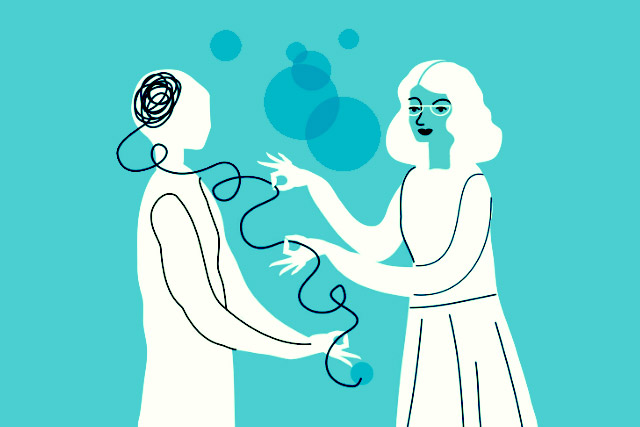
“We delight in the beauty of the butterfly, but rarely admit the changes it has gone through to achieve that beauty.” ~Maya Angelou
I have always been a “fixer.”
I liked to fix people’s problems.
Someone feeling down and out? Let me fix it by trying to take away their pain.
Someone on the wrong life path? Let me fix it to get you back on track.
Someone I love making unhealthy life decisions? Let me fix it so they can be happier.
‘Fixing’ people made me feel good.
It made me feel needed and purposeful.
It made me feel like I was making a difference.
But sometimes this led me to being a martyr.
Are You a Fixer?
Being a fixer, you most likely are an empath. You’re able to put yourself in someone else’s shoes and want to take away any pain they are feeling because you feel it with them.
Being a fixer, you often drop what you’re doing to help another.
Being a fixer, you often feel guilt around saying no. Around ‘disappointing’ someone.
Being a fixer, you are often very hard on yourself for not helping enough, not being good enough, or not being able to fix a perceived problem.
Being a fixer, you often attract people who may take advantage of your heart and willingness to help.
Being a fixer, you may have traits of being a martyr. Healthline defines martyr as a person who “sacrifices their own needs and wants in order to do things for others,” sometimes helping others out of obligation or guilt, which leads to feelings of resentment, lack of appreciation, or anger.
I knew I was living in an unhealthy martyr mindset when I started recognizing that I was resenting ‘fixing’ all the time and putting myself last. When I began feeling underappreciated and not recognized for the sacrifices I was making. When I noticed that I felt guilty if I didn’t ‘fix’ someone and fearful that if I didn’t say yes all the time, they wouldn’t love me.
The lesson I learned about being a fixer is that by trying to fix everyone’s problems, you are not allowing the person you are trying to fix to grow into the best version of themselves. Being a fixer and taking on others’ pain is also emotionally draining and not conducive to your mental health and well-being.
I came to this realization at multiple points in my life; however, the turning point for me was when I felt utterly helpless in a situation.
Many years ago, my sister experienced infidelity in her long-term relationship while living in another country.
Having also lived away from home and been cheated on, my heart literally was breaking for her. Knowing the pain she was probably feeling—the insecurities, shame, hurt, betrayal, anger, and sadness that was pulsing through her blood—felt as if it was pulsing through mine. Knowing all too well the pain that was coming to her in the coming weeks and months ahead as she pieced her life back together felt like a dagger in my heart.
And I just wanted to make it go away for her.
But there was nothing I could do to take it away from her.
I was thousands of miles away, and rehashing my own experience with infidelity wasn’t going to help her or my current relationship.
She had to process it, to grow through it just like so many others, and I could literally not fix it.
I felt helpless.
It was then I came across this beautiful story of the butterfly all those years ago. You may have heard a version before, but I had kept this one because it was so powerful. The site I copied it from is no longer on the internet, so the author is unknown, but it needs to be shared.
Once upon a time, a young girl was playing in her grandmother’s garden when she noticed some butterfly cocoons getting ready to open.
She watched the first butterfly trying to come out of its home. It struggled and took a long time. By the time the butterfly got out, it was exhausted. It had to lay on the tree branch and rest awhile before it could take flight. The little girl felt so terrible for the little butterfly, who had to go through so much of a struggle just to get out of his little cocoon.
When the little girl saw the second cocoon getting ready to hatch, she didn’t want it to go through what the first butterfly did. So she helped open the cocoon herself and took the butterfly out. She laid him on the branch and saved him from the struggle. But the second little butterfly died, while the first little butterfly, who had fought so hard, took off into the sky.
Distraught, the little girl ran to her grandmother, crying. “What happened? Why did the second butterfly die?” she asked.
Her grandmother explained that butterflies have a liquid in the core of their body, and as they struggle to get out of the cocoon, that liquid is pushed into the veins in the butterfly wings, where it hardens and makes the wings strong. If the butterfly doesn’t push and pull and fight to get out of the cocoon, his wings won’t be strong enough to fly, and the butterfly dies.
“Without the struggle, there are no wings,” Grandmother said as she stroked her granddaughter’s hair. “Just like it will be with you, child. In life you will go through hard times. But it is the hard stuff, the struggle, that will help you grow, and help you learn to fly.”
“But won’t it hurt?” asked the little girl.
“Sometimes, things will hurt. Sometimes, things will be hard. But one day, it’ll all be worth it. And you’ll learn from all your struggles—they’ll teach you how to fly!
Struggles make us stronger; they teach us, they empower us, they connect us.
Do not take away someone’s opportunity to grow by trying to ‘fix’ them or rescue them from their trials.
Without the struggle they would not have their wings.
At that point in my life, my view on being a fixer shifted.
My sister made it through stronger, more beautiful, and happier than ever, and I did not do a thing to ‘fix’ it.
Although I am still an empath and still feel all the feels, I have accepted and embraced that letting someone experience their own struggle is one of the most empowering things I can do for them.
If you are a perpetual fixer, recognize that you can be there for them as a supportive ear to listen, a shoulder to cry on, and a trusted suggestion giver… but you have to allow them to go through their struggle without taking on all of their emotions as if you are living it.
Taking the weight off their struggle not only weighs you down but also stunts their growth.
Allow them to fly.
It is one of the best gifts you can give them.
As an end note, from one fixer in remission to another, I want you to know that this may be hard for you to do. Recognizing and bringing awareness to the fact that you may have traits of being a martyr can (and most likely will) catapult you into your own struggle and period of growth.
Saying no to someone you love can often be harder on the fixer than the other person, especially if you are acting as an enabler to an unhealthy behavior. But from my experience, both professionally and personally, please know that by letting them empower themselves, you too are empowering yourself.

About Lora Devries
Lora Devries combines her social work degree with her passion for neuroscience and holistic wellness to support others in empowering themselves to shift their mindset and take control of their lives with practical strategies like learning how to set intentions. Lora lives with her husband and daughter on Vancouver Island, Canada. She is an advocate for mental wellbeing, self-healing, mindfulness and intentional living. You can follow her on her blog, Instagram, Pinterest, Linkedin or Facebook.











 Though I run this site, it is not mine. It's ours. It's not about me. It's about us. Your stories and your wisdom are just as meaningful as mine.
I was at conference many years ago with Marianne Williamson. I asked some question and she said”Oh your a fixer!?” For awhile I felt ashamed I knew it wasn’t a compliment. I’m 66 now and many lessons have been presented since then for me to get it. I still no pro but at least I understand. Sometimes I want to fix because I’m uncomfortable. Thanks for sharing. I must have needed a reminder😊
Hi Jen, Thank you for sharing this. I think ‘fixers’ have some of the most beautiful humanistic qualities that a person can possess, yet I too once felt ashamed of being called a ‘fixer’. But like you, as I continued to bring awareness to the difference of being helpful and supportive versus ‘fixing’ I was able to find a balance. A balance which allowed me to be conscious of my mental health while allowing the other person to empower themselves. I absolutely love your comment “sometimes I want to fix because I’m uncomfortable”. WOW. spot on. In my years of social work, through all the un-comfortableness in sitting with others through the ‘messiness of life’, I can 100% say there is nothing quite as powerful as seeing the light in someone’s eye as they empower themselves to make the changes they want. Thank you for your thoughtful comment. – Lora
I needed to read this article, because I am a fixer. With most people I think I am generally just helpful, but I have a niece that I am very close to (more like mother/daughter than aunt/niece) and I have probably been stifling her struggles. I hate to say that, because my husband has been saying it to me for years! We have fought about it! There have been some issues she has absolutely required help with, but there have been others that I should have probably allowed her to battle on her own. Wow! That’s going to be hard for me. But I want her to be a strong, independent woman who knows SHE can handle whatever is thrown at her; she doesn’t need a man or an aunt. Thanks for letting me share.
Hi Uncadiane, Thank you for sharing this. Reading it gave me goosebumps – both from the perspective of being a new mother to a daughter and from being the daughter who was constantly wanting to be fixed. There have been many times in my life where I know my parents too have had differing opinions of how to help me during my difficult times. I’m not sure what your niece is struggling with, but there is a balance between helping and enabling.
From someone who has struggled and made it out the other side – I still tell my Mother and Father that one of the best gifts they ever gave to me was letting me go through my struggle – while supporting from the sidelines. Just a small example – at one point I was constantly calling them to bail me out financially – it came to a point where they had to say no. At the time, I was angry, hurt, resentful and down right mean to them. However, as the time went by, I slowly gained confidence, empowered myself to get my finances under control and learned I WAS a strong independent woman who could handle whatever life threw at me.
From a Fixer, a Mother and a past troubled youth – please know the balance of support with the balance of allowing your niece to grow will truly serve her in the long run. Please reach out to any of my links in the article if you want to chat more. – Lora
Wow! What a brilliant insight. That’s me for certain, and it is so easy to slip back into the “fix it” mode when I am trying to not do that, its such a very fine balancing act, and still I fall, yet are learning to get back up and try again. Seems age is immaterial, at 67 I always had the idea that one would have this “wisdom and knowledge” yet it seems it doesn’t, as the old saying goes, age knows no barriers. That feeling of “needing to do for others” is so inbuilt that I do struggle, so have a saying now “I have the choice”, and try to remind myself each day. I have just ended a 10 year relationship and feel guilty to realise how much “damage” I did do by fixing! No self beating up, just facing facts and taking that ownership as mine! Feels good too!
Hi Yvonne,
Thanks so much for sharing. Love, love love the perspective of “I have a choice” – it is a very empowering way to live your life. Taking 100% responsibility for our lives is not always easy, but it is so empowering. Realizing that others have to take responsibility for their lives – is also empowering.
I think it is the most beautiful thing to help others; and I agree 100% the balance is recognizing when you are trying to ‘fix’ versus ‘support’ – which can be hard – especially having those ingrained subconscious beliefs. After trying to ‘fix’ people in relationships, I too became aware, at times, I was nowhere close to ‘fixing’ but rather ‘damaging’. It was a big pill for me to swallow at the time…but changed the relationships in my life – for the better! Awareness is always the first step to make any change and I’m so happy to hear you are embracing ownership. It does feel good!
– Lora
There’s a big difference between being a fixer and letting someone struggle. As an empath, especially one with a professional counseling background I do believe you (and I) have the responsibility to share what we sense and know with those who are struggling. Sharing wisdom (or counseling) isn’t fixing.
Some people will take the opportunity to learn and grow and change. Others won’t. The results are on them, not you. But reaching out definitely is on you.
Debra Holland, M.S., Ph.D, M.F.T
Hi Debra,
Very good point. I think it is our responsibility to meet people where they are at, offer support if they are willing to hear it and then allow them to decide what to do with it – versus trying to ‘fix’ it for them.
I completely agree the results are on them not us – which sometimes can be hard to let go of – especially as someone with high Empath traits. I am currently reading Dr. Judith Orloff’s “The Empath’s Survival Guide” and find it very insightful on this topic – helping to find that balance. Thank you so much for your thoughtful comment and all the work you do! – Lora
Thank you for the Beautiful post Lora! There were many feelers touched on throughout the read. I found myself instantly reflecting as a husband and also as a manager. Yes, I am a fixer. I hate to see others struggle, especially when I have the potential solution. But I also love to watch others grow, especially loved ones. Learning how to play the “supporter” versus fixer role is something I have had to learn which is difficult to do as well. It’s interesting, the fixer role feels like a selfless act but at the end of the day, it ends about being about you…kind of selfish, right? Thanks again Lora!
Hi Nicholas,
Thank you for your insight. Absolutely love your comment “It’s interesting, the fixer role feels like a selfless act but at the end of the day, it ends about being about you…kind of selfish, right?”. Such a good thought to ponder and reflect on.
And so happy to hear that you bring this awareness into your role in your family and your career. It is exciting to hear Managers who are taking on a more empathetic, emotionally intelligent role in organizations. Because we need this not only in our families but in our workplaces too. Thank you for sharing. – Lora
I too am a fixer. I have been since I was a little girl. I used to call myself the human teddy bear listening to all my older sisters problems. The idea of allowing others to struggle so they may grow makes sense to me. What I am having struggles with right now is taking care of my aging parents. I’m trying to fix everything for them so they don’t feel bad about getting old and loosing so many basic things physically and mentally. But what would they gain by me letting them go through the struggle of getting old instead of trying to fix everything?
Hi Susan, That is a great question without an easy or black and white answer. I think it is so important to still help and support your parents – while still letting them empower themselves and keep their autonomy as much as possible. Unfortunately we have not discovered how to reverse aging and we are all going to go through that transition of life at some point or another…. by focusing on the positive things they can do, spending time together, making memories, laughing and being together is probably the best gift you can give them. Unfortunately, you will not be able to take away whatever they are feeling about getting older – because they are responsible for their feelings… and aging is a fact of life…but I am sure you make their lives so much brighter by being in it. Setting healthy boundaries that work for you and your family is important so you too can continue to stay healthy. I do not know your individual situation, but I hope you are can reach out to a support group or some sort of support system in your area to continue learning how to support your parents while still caring for yourself. – Lora
I, too, am a fixer. Just recently it let me to become enmeshment with a narcissistic man who was struggling with an emotional upheaval in which I as also involved. Instead of taking care of myself, I took care of him and lost sight of who he was and the true nature of our connection. What a painful experience! It’s one I vow not to repeat. Thank you – this article spoke to me in a very special way.
Thank you for sharing Donna. Have you ever read the book – The Empath’s Survival Guide by Dr. Judith Orloff? Such a good read – especially for anyone who may have Empath tendencies. Thank you for sharing. – Lora
Thanks Lora, I badly needed this words today. I’m struggling and eager to fix my partner’s pain this day but I couldn’t do anything about it and your article gave me some light and peace of mind, that it’s okay for her to experience the pain and I don’t need to also beat myself for not doing anything about it and to feel guilty. Thank you, I can now move forward with this thing called life.
Felt so blessed to read your article, it gives me so much strength to go through this gloomy day of mine.
Ann, I am soo happy this article found you on a day you needed it. Sending you so much positive energy. Thank you for sharing. – Lora
I was seemingly born a fixer. It began when I was 6, a little girl who seemed poor and never spoke was being teased on the playground. I hated that and determined that I would be her friend. So I’d spend my own recess’s talking to her endlessly (she never spoke back, maybe she was deaf, I don’t really know) pushing her on the swing, dancing around her as she watched. And that began a lifelong effort of trying to make the world a happy place. Fast forward 60 years, two divorces and many lessons, I still struggle with this. I am much better but must keep my eyes wide open, and constantly examine myself with rigorous honesty so as not to rob others of their own growth. And in doing so, I continue my own journey out of the cocoon. Thank you for sharing.