

“How pleasant is the day when we give up striving to be young or slender. ‘Thank God!’ we say, ‘those illusions are gone.’” ~Alain de Botton
Are you high functioning at school, college, or in your career, but dysfunctional with food? I was.
I’ve always been ambitious. I see things, and I wanna do them too, even better!
It’s a powerful trait, but unruly—like living with a big dog. Sometimes it strains on its leash and pulls you along further than you thought you’d go. And sometimes it knocks you onto the carpet and stands over you, panting, with its balls in your face.
That’s what happened when I got ambitious about getting thin—it floored me.
I tried to mold myself into someone who’d look good in leather pants, and became obsessed and depressed around food.
Leather pants!!!
Exhale. Part of me—that dog jumping up again—still gets excited about becoming supermodel-skinny. But I have to let it go.
Because when I was twelve, I tried to lose weight, even though I didn’t need to. Compulsive overeating entered my life, and dominated my teens.
Up until then, I had a great formula for success: Grades = intelligence + sacrifice.
For instance, I swore to become top of my class. So I holed myself up in my bedroom and made weekends into homework-ends.
The more awards I got, the more I believed self-punishment paid off. I worried if I didn’t push myself to extremes, I’d fall short.
One thing I sacrificed, other than fresh air, was popularity. My ‘A’ grades were social suicide. Other kids found me haughty and tried to bring me down, taunting me about my acne, and my ‘posh’ accent.
My only friend was the silent type—I suspected she was inwardly laughing at me. I was totally insecure.
So I relied on adults saying “Well done” to feel okay. Being average wasn’t enough. I had to be impressive; make the bullies sorry.
I wasn’t overweight, but I was lonely, and I’d started comfort-eating meat pies at lunchtimes. So I already thought “I should eat less.”
And since I couldn’t make my spots disappear, and friendship confused me, I reached for a ‘doable’ transformation: I thought if I could nail weight loss, that’d be like a fairy godmother’s magic wand.
So I deliberately poured all my ambition into one extreme goal: “I’m gonna get showstoppingly skinny, so everyone’ll be impressed.”
My mum was a hippie feminist. She would’ve been horrified. I already secretly ‘borrowed’ my dad’s razor to do my armpits, because she didn’t think women should shave; she didn’t agree with society’s beauty standards! So, what could be more rebellious than worshipping models?
Leather pants became my benchmark after I saw a particular fashion article, ironically titled “Chocaholic.” The theme was “how to wear brown,” and the model wore a white shirt and brown leather jeans.
She was blonde (like me), tall (like me), and leggy (not so like me). I was pretty sure if my thighs didn’t touch anymore, I could be her.
So I made a plan, and not just to stop yomping meat pies. I vowed to skip school lunch completely.
It made perfect sense in my head: No food, and nobody would know, or stop me. But… I hadn’t factored in my body! I wasn’t prepared for gnawing hunger.
That first day I tried it, I panicked I wouldn’t get through the day.
I begged my friend for pennies. She gave me 25p, with a wry smile. I bought chocolate biscuits from a shop near school. She thought they looked cheap and nasty, but I ate the whole packet.
That was the pattern from the off: I’d create rules and then cave in and eat whatever.
I found myself binge eating for the next seven years.
Sometimes I’d make myself sick. But mostly, afterward, I’d just be full to bursting, and feel so guilty I’d want to curl up in a ball.
Guilty, 24/7. Waking up guilty. Guilty about yesterday’s food, and guilty for wanting breakfast.
If I ate, I’d failed. And since I hadn’t had experienced much failure before, I took it to heart.
By the time I was nineteen that sense of failure had spread. I needed constant affirmation from my boyfriend, I hid under my duvet instead of studying for my college exams, I was competitive and jealous of my (luckily forgiving) friends, and I’d become too scared to audition for drama school, which was my dream for afterward.
I hadn’t stopped being an ambitious person—I still had sky high expectations—but that only made me want to eat more, because while I was putting food in my mouth, I was free from living up to my own standards for a few minutes.
I’d eat until I had to lie down, and I spent days and days in bed—stuffed, daunted, and depressed. I felt ugly, worthless, ashamed, and like I didn’t deserve love at all.
Something had to give.
I had to find a way back to ‘normal’ around food. Normal, which had once been such a boring, unexceptional way to be, now seemed wishful.
I thought: “I’d give anything, just to be able to enjoy food again, and not feel guilty.”
I leapt at my new ambition. Got books. Threw myself into the homework. Journaled, examined my beliefs about myself.
At first, I didn’t give up wanting to lose weight. I just committed myself to my new mission, and that sidelined my desire to get thinner.
But that was enough.
If you’d told me one day I’d enjoy eating a few meals and snacks each day, and not really think much about food in between, I’d have said, “Whoa. Steady on!” But here I am, and I’ve set my desire to get skinny aside permanently.
Sure, I still get that “leather pants thought” occasionally. But I don’t have to jump aboard every train of thought that passes through my head.
It doesn’t feel like giving up, or admitting defeat. It’s liberating.
I haven’t stopped wanting to be healthy, but I have stopped asking my body to leap hurdles it can’t handle.
I respect my biology now, and the powerful survival urges it’ll react with, if I starve it.
So if you’re struggling with your eating, maybe it’s worth weighing up whether you’re wasting precious energy trying to “be successful” with your body.
You don’t have to wait until you’re desperate before you get sane around food. Just reset the bar. Make smarter choices about what you pour your ambition into.
And if you’re thinking, “But I’ve wanted to be thinner most of my life—it’s part of who I am!” I totally get that.
I’m not saying it’s easy to change your own mind. Sometimes you have to coax yourself.
So here are four thoughts that help me stop wanting to be thinner. I’m pretty sure they’ll help you too.
1. I’m becoming my best natural weight.
So far, when I eat normally and look after my body and my sanity, I’m really happy with where my weight lands. I call this my “best natural weight.” It’s a great place to aim instead of trying to get thinner.
I don’t concentrate on my body size.
I have loads else to focus on. Like eating mindfully. And feeling my feelings.
I can focus on getting strong. That’s fun—I can enjoy movement, without worrying about how many calories I’ve burned.
I can also focus on thinking positive thoughts like “I really care about my body” so I feel encouraged to look after myself.
2. I don’t gamble with my natural confidence.
When I embarked upon my dubious quest to get skinny, it was the impulsive voice of my (over)confidence that urged me to do it.
But my naïve arrogance also has an upside.
It has enabled me to move abroad, make several theater shows, have children, and buy a hillside to build a house on. Without really knowing what’s involved, I plunge in and try things!
Sadly, by my last year of college, when my eating was at its worst, failure with food had destroyed all the optimism that usually goes hand in hand with my confidence.
We think getting a head-turning body will give us confidence. We don’t realize that for most of us, the quest to get that body will cost us our confidence.
My confidence is buoyant again now, but I won’t stake it on another body project.
3. I’m searching for a more meaningful life purpose.
It was trivial, and vain, and superficial, just aching to be thinner than I was made to be.
But it didn’t feel like I had a choice: I’d wake up, remember there was something I was depressed about, feel ugly and horrible, and then wonder how to stop myself eating today.
It didn’t make sense—I’d read feminist writers like Naomi Wolf! Although it was hypocritical, I still wanted to be thinner.
That’s because it’s impossible to tell yourself to not focus on something; it’s like trying to look away from a spider!
But the second I had a new focus—getting sane around food—everything changed.
I threw myself into friendships like never before. Started cooking meals to share. I had fun, and started exercising for fun too.
I felt like I had energy to start thinking about the world, and even annotated a global politics textbook. Which was taking things a bit far.
But the point is, for the first time in years I could think about what I wanted to do with my life.
What would you do with all that energy, if you weren’t dieting?
4. I think, “This food struggle isn’t a handicap. I’m OVERfunctioning.”
If you’re doing well in most areas aside from eating, it’s easy to feel like your food struggle is your Achilles’ heel.
Thinking like this makes you feel like a victim.
In reality, you don’t have a fatal flaw. You’re not missing a willpower gene. You’re just trying to exert your intelligence, talents, and strengths over something you can’t master—your body.
But no wonder you try to control it! Think about what’s expected of you at work or school.
When you work in a goal-oriented, intellectual way, it’s unsurprising you also try to boss your body, by making rules about what you should eat.
When you’re competitive enough to climb the hierarchy of your career, is it any wonder you compare your appearance to others? Or get tempted to copy your friends’ “you-gotta-try-this-juice-fast” transformations?
When you’re expected to be businesslike rather than emotional, is it any surprise that you’re skillful at keeping your feelings under wraps, even if it requires using food as a crutch?
When you work within a meritocracy, it’s easy to think if you’re not being successful with your body, it’s just because you’re not working hard enough. So you try and try again. But the body isn’t a blank canvas for you to make a masterpiece of.
Your body isn’t a job, either.
I know it sounds obvious, but we forget that it’s a living thing It has its own wisdom, and a mind-bogglingly complex—miraculous, even—set of chemical processes (including hunger, satiety, digestion, hormones, immunity, for example) that it performs without us handing it any to-do list.
—
Your food obsession might not feel like a good thing right now.
I’m not saying mine was fun either, but my struggle did stop me in my tracks, and it forced me to pay myself attention to myself.
If it nudges you to weigh up how you define success, create self-worth, and deal with emotional and stressful experiences, maybe that’s a tiny plus.
And I know it’s hard to let go of being thinner if it’s something you’ve invested years of your life trying to achieve. But when you stop trying to become someone you’re not, it’s easier to trust and believe in yourself.
That confidence pays off in other places. Who knows? It might translate into asking for a pay rise, sharing your feelings, having deeper relationships, or being brave enough to hit the high notes when you belt out “Let It Go” in your next audition.
Food and body sanity aren’t a consolation prize for people who can’t ‘make it’ to supermodel status, and have to accept boring old reality.
It’s a choice, for people who are smart and curious.
And P.S.: They make leather pants in every imaginable size.

About Laura Lloyd
Laura Lloyd is an Eating Psychology Coach and Cognitive-Behavioural Hypnotherapist, helping people un-addict from everything, including bingeing and overeating. You can access her FREE illustrated ebook, How To Unlearn Overeating, here.






 Though I run this site, it is not mine. It's ours. It's not about me. It's about us. Your stories and your wisdom are just as meaningful as mine.
Rings so true. And good advice too! Thank you for writing this. I came to the food obsession the same way you did and have moved beyond it, but can’t pinpoint how I moved on. I still have those ‘Leather pants” thoughts too, but I treat them with respect and don’t let them stick around. Sure was hell being obsessed with food though. I hope others who struggle can find their way out.
I’d love to see a world where we don’t waste energy – precious life energy – on worrying about food. What do you do with all your renewed headspace these days Thinker1969?
Enjoying the people in my life in a full-hearted way is one. Also, I have a side-hustle. Photography! It’s the true me.
So lovely to hear that!
Laura Lloyd, you’re my new heroine and Hippie Highness….I resonated so with your trajectory….I imagined I was the only thinaholic…..Thank you for inspiring me to be my personal best, even if less isn’t best. Big hugs. Kat
Kat, thank you. Hugs back. Be your lovely self. x
Laura Lloyd, you’re my soul sister…..I was shocked when I read your post: I imagined I was the only thinaholic…..that can’t be, can it?
Thanks so much. You’re a goddess. In healthy spirit!
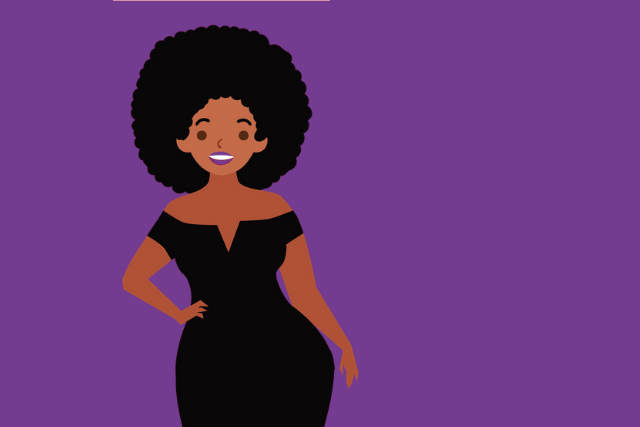
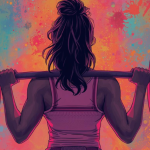
I only glanced at the piece because my attention was immediately drawn to the image used. It struck me as odd because though I realize it may have been an attempt at diversity, it felt off to me because black women have been leaders in the body positivity movement even before it was deemed as such. And the image shown, to me, is of a black woman who would be considered by many black people to have an ideal curvy figure. In other words, this image didn’t translate to me as a black woman who wants to or should lose weight. It came across as a standard. Or conversely, if the image is supposed to show a woman who’s got “extra weight” and is ok with it, her figure doesn’t translate to me as someone with weight issues. I feel this image is aspirational for many black women. (It’s a cultural difference in terms of how this image is processed.) Though culture changes and there are obviously black and brown people concerned with thinness or their weight, we, historically, generally, have not “idolized” a thin/ner frame but rather embraced thicker body types. So in the context of the title it just struck me as an odd image to use, particularly when I don’t see many images of black/brown people (or writers of color) here in general. So with that in mind, using an image of a brown person for this particular article felt odd to me. I hope this comes across as something to think about as opposed to a harsh critique because I believe there were good intentions and I though I’ve never seen a black writer featured here (could it be that we’re not submitting?) I do enjoy Tiny Buddha very much.
Hi W.T.,
I’m Lori, the site founder and editor. It’s a pleasure to e-meet you! Though I didn’t write this post, I did choose the illustration. Your comment certainly got me thinking. I can understand why you might find this an odd choice given that this shape seems aspirational.
I looked at this and saw a beautiful woman who seems comfortable at a healthy size. The author talks about wanting to be supermodel skinny and realizing that will never be attainable for her, but she can reach her best natural weight. That’s what I saw in this particular woman, but I realize I made an assumption there!
Regarding diversity, I try to showcase a variety of ethnicities in the images, but I’m sure I could do a better job with that. And as far as writers go, that’s completely dependent on who submits. I don’t usually know an author’s ethnicity when I read their post, since that information isn’t included with their submission. Some people have images tied to their email, but not all. I generally decide what to publish based solely on the topic/writing quality. That being said, I’m always thrilled to publish posts from people of different backgrounds and ages, so I welcome submissions from anyone and everyone with a story and insights to share!
I’m glad you’ve enjoyed the site. Thank you for taking the time to write. =)
Lori
Hi Lori, thank you for the kind reply and explanation behind the choice of image. I didn’t suspect any ill will with the image and definitely have taken note of the intentional diverse imagery overall. I appreciate it. My position, as I feel you understand, is that culturally, things can read differently. That’s a struggle POC have with media in general. Also, I agree that who is submitting dictates the diversity in this space. But even so I’ve been reading for years and love it. Thanks so much for Tiny Buddha and all the good you’re doing. Again, hoping this sparked thought as opposed to feeling confrontational. I really appreciate you receiving it well.
You’re most welcome! I do understand and appreciate that you shared this. =)
xx
Hi W.T, I loved this comment and how you put it. It’s fascinating – I had only seen the image as a curvy woman who’s happy with her shape. Now I can see this image selection process in a new light. It’s really useful to me personally – though I didn’t play a role in illustrating this post, I’ll be able to make smarter choices when I illustrate my own blogposts. Someone also pitched in that they’d prefer to see a man included in the picture as they were male and related to the issues. Fascinating!
xx
I think people waste time focusing on other things that really don’t make good use of time, effort, emotions, anger, etc…
That’s what just “popped” into my mind when I got a glimpse of the comment about the illustration. The color of skin, to be exact. Also, the fact that writers are of color. Really??? I do appreciate the replies to this comment. I’m always fascinated by the fact that we always hear, “just don’t see color of others skin. Treat everyone like we’re all one color, (whatever that is),” but, the people of color are always the ones bringing it up… I’m just wondering where the comment came from and what it had to do with anything about her article?
Correction: writers aren’t of color