

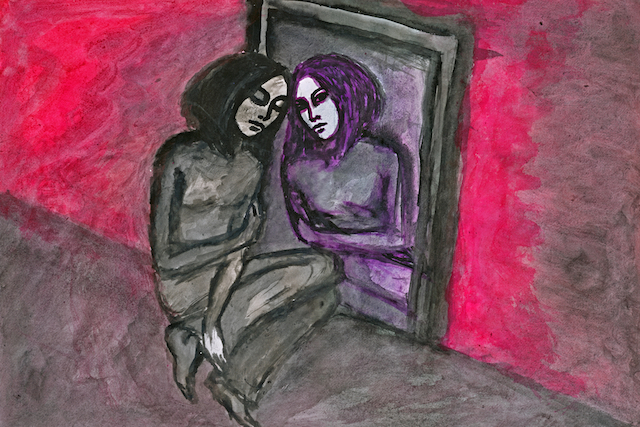
“Highly sensitive people are too often perceived as weaklings or damaged goods. To feel intensely is not a symptom of weakness, it is the trademark of the truly alive and compassionate.” ~Anthon St. Maarten
There are some words that get painfully etched into our memories as if with a red-hot poker. For me, growing up, those words were “you’re too sensitive.”
I often caught this phrase in the fumbling hands of my shame after someone chucked it at me with callousness and superiority as a means to justify their cruelty.
They may have said something vicious or condescending in private or told embarrassing stories or outright lies about me in public.
Either way, the results were the same: I’d take it personally, get emotionally overwhelmed, then either explode in anger or sob.
But it wasn’t just cruelty that evoked my sensitivity, and I didn’t cry only when obviously provoked.
Well-meaning people, who generally treated me with kindness, would gently remind me I’m too sensitive when I overanalyzed the smallest things other people did—like taking a while to call me back or “making a face” after I said something I thought sounded stupid.
Or they might pull out this sage observation of my character when I took criticism to heart, struggled to let go of something painful, or experienced someone else’s pain deeply and intensely, as if it were my own.
It was as if the whole world could see that there was something glaringly wrong with me. But I couldn’t seem to change the way I perceived, experienced, and reacted to life.
Little did they know how deep this sensitivity ran, far below the surface.
They had no idea that my mind was a web of constant reflection pertaining to not only my own experiences, but also the suffering of everyone around me.
They had no idea how frequently I felt drained and overstimulated, and that just showing up to a crowded or loud environment took monumental strength (which I had to muster often growing up in a big Italian family).
They had no idea how often I felt stressed, anxious, and jumpy because my nervous system was so dialed up.
And I had no idea there was a biological explanation for all of this. It wasn’t until years later—decades, actually—that I found the term “highly sensitive person” and finally understood that my brain actually processes information and reflects on it more deeply than non-HSP brains.
Over the years, I’ve learned to accept that some of my traits and behaviors are just part of being a highly sensitive person.
I’ve learned that HSPs:
- Are highly perceptive and empathetic
- Feel everything deeply
- Absorb other people’s emotions and can tell when something’s wrong
- Pick up on subtleties other people might miss
- Have heightened intuition
- Easily feel drained or overwhelmed in loud, chaotic, or otherwise overstimulating environments
I’ve also learned that some of my former behaviors were responses to my sensitivity, for example:
- Overanalyzing things other people said or did
- Internalizing judgments as truth
- Judging myself for my needs instead of honoring them
- Drinking to numb myself in over-stimulating environments instead of simply avoiding them or making efforts to ground myself
- Ignoring my intuition about people or situations that weren’t good for me
- Taking on everyone else’s pain instead of setting boundaries
Though I am by no means an expert on navigating life as a highly sensitive person, I know I’ve come a long way over the years. I still experience the world and my emotions intensely. But I feel less like a rag doll in a roaring tornado and more like a deeply rooted tree that may lose some of its leaves but can ultimately endure one hell of a storm.
I’ve learned to take good care of myself, honor my needs, and worry less about what other people think of me. And I generally don’t judge myself as harshly as I once did.
It helps that I not only have a toolbox for self-care—including meditation, walks in nature, and long baths—but also an arsenal of lessons to remember whenever my sensitivity gets the better of me.
If you can relate to any of what I’ve shared, and if you frequently feel drained, ashamed, or judged, perhaps these reminders may be helpful to you, now or some time in the future.
When You Feel Drained
1. You are only responsible for your own emotions. You can’t take away everyone else’s pain, and if you could, you’d be robbing them of the chance to grow.
2. You don’t need to fix anyone else’s problems. Just listening is enough—but you can only listen for so long before it gets to be too much.
3. You don’t need to put yourself in environments that overstimulate you, and choosing to do something different doesn’t make you weird or any less fun.
4. It’s not worth forcing yourself to do something if you know you won’t enjoy it and you’ll end up feeling drained.
5. You can choose to listen to your instincts instead of your anxiety. If you feel you need to leave but you’re worried about how you’ll be perceived, focus on the voice that knows what’s best for you.
6. Other people and external situations can only drain you if you let them. You have the ability and right to set boundaries at any time.
7. It’s not selfish to take care of yourself. As the saying goes, you can’t pour from an empty cup.
8. Sleep isn’t a luxury; you need to get sufficient rest to handle the many parts of life that are emotionally exhausting.
9. The most important question you can ask yourself, at any time, but particularly when you feel overwhelmed, is “What do I need right now?”
10. It doesn’t have to be all-or-nothing. Even five minutes of a calming practice, like deep breathing or yoga, can make a huge difference.
When You Feel Ashamed
11. You can’t control or change that you have a highly sensitive nervous system, and you can’t help that you process everything deeply and experience emotions intensely. You wouldn’t feel ashamed of your hair or eye color, so why feel ashamed of something else you were born with?
12. Sensitivity isn’t a weakness; it’s the source of your understanding, compassion, depth, and creativity—which means it’s actually a strength.
13. There is nothing “wrong” with you, and you’re worthy of love and respect just as you are.
14. You are not alone. According to psychologist Elaine Aron, who wrote the book on HSPs, highly sensitive people make up fifteen to twenty percent of the population.
15. If someone else shamed you for your sensitivity, or for coping with it ineffectively because you didn’t know any better, you didn’t deserve it.
16. Your shame comes from the story you’re telling yourself about yourself—and you can change that story to be more compassionate at any time.
17. You don’t have to “fix” your emotional intensity. You simply need to observe your emotions so you’re less likely to get caught up in them.
18. You are not what you do. If you act in a way you regret when you’re feeling emotionally overwhelmed or overstimulated, you can simply apologize, forgive yourself, learn from the experience, and move on.
19. Crying isn’t something to be ashamed of. It actually helps release stress and pent-up emotions, and it’s a sign of immense courage if you let yourself cry instead of resisting vulnerability.
20. If you sit with your shame instead of trying to numb it, it will eventually move through you. No emotion lasts forever.
When You Feel Judged
21. For every person who might judge you, there’s someone else who’d love, value, and accept you just as you are.
22. You don’t need everyone to understand or like you; you just need to understand and have compassion for yourself.
23. What other people think of you is their business, and their opinions and judgments can only hurt you if you let them.
24. Just because someone else says you’re “too sensitive,” that doesn’t mean you’re doing anything wrong or you need to change.
25. If other people don’t value you, they’re missing out on the chance for a deep, meaningful relationship with someone who’d always be there and would never hurt or judge them.
26. If someone judges you, it’s a reflection of where they are in their life and development, not who you are as a person.
27. Just because someone minimizes your feelings, that doesn’t mean your feelings aren’t valid.
28. You have the right to end a conversation at any time if someone dismisses your feelings or violates your boundaries.
29. It’s okay to walk away from a relationship if someone consistently devalues, disrespects, or hurts you.
30. Just because you think someone is judging you, that doesn’t mean they are. Their silence, distance, or mood may have nothing to do with you.
—
Of course, it’s far easier to jot down a list of lessons than it is to remember the most useful one in the moment when it can be most helpful. I’ve struggled to recall these insights many times, both in the distant and recent past. But it’s not about perfection; it’s about awareness and practice, as is everything in life.
Read this, print it, put it somewhere you’ll see it often, and perhaps you can etch these ideas into your memory, as deeply but not as painfully as the criticisms you’ve likely heard over the years.
And if you only take one idea into your day, let it be this:
We are not defective. We don’t need to get harder or grow a thicker skin. We don’t have to “man up” or “suck it up” or stop caring so deeply.
The world doesn’t need more guarded people, weaponized by apathy and bitterness. The world needs more people who aren’t afraid to reflect, to feel, and to love with hearts so open they overflow with empathy and kindness.
The world needs us sensitive souls to see beauty others might not see and create beauty where it might never exist if we hadn’t filtered life through the kaleidoscope of our own unique perspective.
But we can only give the best of ourselves if we take good care of ourselves, even if other people have different needs; if we value ourselves, whether others do or not; and we remember that judgment is inevitable, but it doesn’t have to control or define us.
**This is an older post I shared years ago that was popular on the site. Since I’ve been a little drained and behind recently, I decided to share it again both to benefit those who haven’t read it before and to take a little off my plate!

About Lori Deschene
Lori Deschene is the founder of Tiny Buddha. She started the site after struggling with depression, bulimia, c-PTSD, and toxic shame so she could recycle her former pain into something useful and inspire others to do the same. You can find her books, including Tiny Buddha’s Gratitude Journal and Tiny Buddha’s Worry Journal, here and learn more about her eCourse, Recreate Your Life Story, if you’re ready to transform your life and become the person you want to be.
- Web |
- More Posts






 Though I run this site, it is not mine. It's ours. It's not about me. It's about us. Your stories and your wisdom are just as meaningful as mine.
Ive been here for years. I buy all your shirts. I love and promote your site to my friends. I love you for making these life changing articles available. This is a very special place.
Thank you Lori
Thanks so much for the compliment, Tim, and you’re most welcome! I appreciate that you’ve shared the site, and I hope it’s helped your friends as well. =)
You have just described my life. Love this piece Lori. Thank you! And loooooove the art🌙 keeping this one in my back pocket.♥️
Thanks, Christy, and you’re most welcome! Though I know there are many other HSPs out there, it’s always nice to connect directly with other people who can relate. <3
The traits of an HSP describes my experience very well however for me the words etched into my memory were “you think to much” and “don’t worry so much”… I wonder had I been a girl if it would have been “You’re to sensitive”. Sad how those words ‘Your to…’ can hurt so much
In hind sight I realize that being a HSP has been be a strength and weakness.
Hi Pieter~
I’ve heard those words quite a bit myself! I know people often mean well when they say these things, but they’re oversimplified and don’t address the core issues underneath the overthinking and worrying.
I’m with you on sensitivity being both a strength and a weakness. For me, the weakness generally comes from what I do with my sensitivity. It’s all too tempting to numb myself in some way, avoid triggering situations, or react emotionally instead of stepping back, taking a deep breath, and thinking about how I want to respond.
Has this been your experience as well – not these specific behaviors, but the just the idea that the weakness is more about what you do with your sensitivity, not the sensitivity itself? Or has it been different for you?
Lori
Yes very much so.
As a weakness avoidance is very much part of my experience as a HSP
I suspect this is a common HSP struggle. It’s far easier to avoid a situation than find a way to feel balanced and grounded amid chaos!
What a wonderful article. You (and your writing) are so in tune. You write the things I want to say, but rarely can. Thank you for always reminding me that I have permission to be me. Sending Love and Peace, Jim
Thanks so much, Jim, and you’re most welcome! If I could only share one message, I think that would be it – that who we are is not only okay but beautiful. I think this is a reminder we all, myself included, need often!
Right on point. It took be the better part of five decades for me to come to this discovery about myself, the people and situations around me. Insight and awareness are healing balms to an often stressful life. Great article. Thanks!
Thanks Fleure! You’re so right. With insight and awareness, we can overcome almost anything.
An amazing article Lori!! every word has true sense and it reflects the struggles of a person who’s sensitivity is seen as a weakness rather than strength. Thank you for publishing such a great piece.!!
Thanks so much, Radhy, and you’re most welcome! I’m glad this spoke to you. =)
This is me ~ a highly sensitive person. I often named it an empath. It is pretty hard at times being so sensitive and being in tune with people … and it is hard practicing how to turn it off. Also hard to let go … this has been one of my biggest challenges.
Thank you so much for sharing your experiences and helpful suggestions!
I hear ya, Angela! Letting go has been one of my biggest challenges as well. You’re most welcome!
A well written piece Lori. I have been labeled this by my parents many years ago and it was not until I was in therapy that I began to see that I am not imagining what I saw, heard and believed. The trouble I find those of us who are HSP is in letting go of that negativity that is ingrained in us.
I hear ya, Judi. I had years of therapy myself, and I know the pain can linger and even rekindle itself years after the most hurtful incidents. I’m often surprised when something I thought I’d overcome bubbles back to the surface and triggers me. Perhaps it’s a lifelong process, letting go – something we need to do over and over again as we continue to heal and grow.
Wow… Can I thank you enough for this article, Lori? Thank you thank you thank you!!! You nailed every single aspect of it. As I read it, it made me feel you were sitting right in front of me, like an old friend who was here to reassure me of my wholeness, divinity and worth, and remind I must accept myself just as I am, and embrace this gift like never before. Grateful for you and all you do to make the world a better place in your own unique ways. Gassho.
You’re most welcome! I love what you wrote, as I hope to be that old friend for anyone who needs the reassurance. Thanks for taking the time to write!
Thank you for this site. I came across it a few days ago, and have been pleasantly surprised by how much the writings resonate with my thoughts and feelings. It’s refreshingly unusual, with insights that reflect the writer’s own journey of self-awareness and discovery.
Hi Susan,
Welcome! I’m glad you’ve enjoyed the site so far. ☺️
Lori
What a great article and it all resonates with me as a HSP. I was recently told I needed to grow a thicker skin, not the first time this has been said to me. I felt so misunderstood and deeply hurt, it was ok for someone to hurt me – I just had to brush it off so as not to upset the other person! What a joke this really is and totally wrong as I am a person who matters just as much as the next and vice versa. I constantly care deeply for others and feel other people’s mood and pain to a point that I lose myself, many times I have wished I didn’t feel such intensity but as said in the article this world really does NEED HSP like us, I see how my bubbly mood affects others in a positive way and I believe that makes me totally worthwhile.
I loved this article. It helped my understand some things. I was wondering whether anyone is aware of any resources for someone in a relationship with a person who is HSP in terms of how to be supportive or whether anyone would be willing to share some advice on things their relationship partners did that were helpful.
I’m glad this spoke to you, RW! This sounds like a wonderful idea for a follow-up post. But for now I’ll share the single most important thing that’s helped in my relationship: understanding.
Given that I’ve done a lot of research on what it means to be an HSP, I’ve given my boyfriend a pretty thorough education. He understands why I feel and respond how I generally do and that enables him to empathize when I’m struggling in some way. It also enables him to remind me of needs I might not be meeting. For example, if I’m overstimulated or overwhelmed, he might suggest I take a bath or a walk.
It helps a great deal to have someone in my life who respects my feelings and encourages me to take good care of myself when I might be tempted to be hard on myself.
I hope this helps a little…
Lori
Thank you so so so much for this.
You’re most welcome! ☺️
Thanks, like this article. I always help clients understand at the end of the day we are responsible for how we feel about whats is said to us. So many project their stuff onot others so yes if someone says to me’ you are so sentistive’ I say ‘yep I am and as you know that why would you make those remarks?’ Its crucial people are held accountable… obsc one has to be discerning as to when to speak up and when to walk away… but yes I am and can be sensitive but I am not allowing others to use that fact to be offensive and think its ok….
You’re welcome! For a long time I resisted the idea that I’m responsible for how I feel about what others say. I thought that essentially gave them the green light to be cruel because I was absolving them of responsibility for the impact of their words. But I now understand that only I can decide how I internalize what someone says – and that I can choose not to take a callous remark personally without condoning it.
Thank you, soulfully wise woman and fellow HSP, for your well-crafted article, your validation, and your eloquence.
A heartfelt ‘yes’ to this: “The world doesn’t need more guarded people, weaponized by apathy and bitterness. The world needs more people who aren’t afraid to reflect, to feel, and to love with hearts so open they overflow with empathy and kindness.”
The world needs more soul, more love, and more people like you, dear Lori.
You’re most welcome, and thank you so much for what you wrote. I’m truly touched. =)
Yes Lori I totally agree, it’s aboit how we internalise it, for me as I teach women to speak up I feel it’s essential I practise what I preach by speaking up without worrying about the outcome, just to keep my courage muscles flexed so my inner core is strong..but often having prayed and meditated I know I can let it go and I don’t need to say anything…
This resonantes with me so much. Whenever I stand up for myself and express myself, I get to hear ‘you are being insanely sensitive and defensive’. First they hurt me, and when I take a stand for myself, they blame me again. How to deal with such mean comments?
I definitely know what that’s like. In these situations, I try to focus on what I can control: communicating how I think and feel. I can’t make someone else agree with me, see my side, or admit they’ve been hurtful. I can only speak my truth, then accept that they may or may not take it to heart.
It’s not easy to do this, I know, because it can seem like speaking up was pointless if it doesn’t effect any change. But all we can really do is share our feelings, accept that the rest is beyond our control, and remember that we don’t need anyone us to validate us in order to move on from a painful encounter. It would be wonderful if they did, but sometimes we just have to accept how people are and then set boundaries, if need be, to protect ourselves.
So thankful you wrote and posted this article. Very helpful and I appreciate the good information. I find it so challenging to be around people and not be affected by their moods (high to low). This article gives me hope for a more positive way to deal with others who are not HSPs / Empaths.
I know that challenge all too well. I’m glad this was helpful to you!
This was something I really needed to hear right now. I printed this out to remind myself when I’m feeling overwhelmed with emotion or when my deep feelings are being marginalized that this is a strength, not a weakness. Thank you for this.
You’re most welcome, Destiny. I’m glad this was helpful to you!
Great post. I know I am HSP. The trouble I get into is when I fixate on how work environments should be fair to everyone. I have job-hopped quite a bit because of environments which felt unfair. I have been in work situations where there are lazy people who are practically BFFs with supervisors. These coworkers have barely produced yet receive opportunities based on favoritism. So I can relate to the things in this article. Thank you!
I totally get that, Elise. I’ve tossed and turned through many a night obsessing about things that seem unfair. Sorry to hear about the favoritism in your offices. I know how frustrating that can be!
I may be missing something important. I feel like everything on HSP helps guide a person to embracing their attribute and protecting themselves from overstimulation. For me I always feel hurt that the rest of the world does not act as an HSP toward me in return. I want to live in a world where I give abundantly and the world gives me a large portion of that back in return. I understand this is an ideal world we dont live in, I struggle to let go of it. I dont question why do I feel this way but, why dont they feel this way about me? It causes me significant pain.
I hear ya, Aaron. I’ve felt this same way at times.
Because we attract people who are selfish and users because we are kind, forgiving, empathetic, and we listen to them, we care. We are trying to gain acceptance from these insensitive people most LIKELY because we were raised by someone like this who didn’t give us validation and we are searching for that from the same kind of person who is incapable of giving us what we need. We have to learn to figure these people out before they use us up. There are plenty of sensitive and caring people out here! As you can see by all the comments and how many people relate to these kinds of articles.
You’re most welcome. You’re far from alone!
Thanks for sharing. This makes me feel like I’m not the only one who’s dealing with these issues.
Just what I needed at this time. I expressed my feelings to my family and now they avoid me. My emotions have been suppressed to long and I just had a meltdown. So someone say they support me but they have distance themselves–so I question that move. Family wants to box me in so I don’t express how l feel. I get your to emotional, overreacting, etc. Family equals pain for me and has been that way my entire life.
This is so true!
I am always being accused of being a weak person because I empathize with other people.
It is difficult and many people make it a character flaw to be quashed!
So strange that people do this, since they’ll want empathetic like us in their lives when they’re hurting!
I needed to read this today. I am feeling too sensitive for this world today and this helped to ground me.
Thank you.
And thank you to all my HS peers.
It has been GREAT to read this article and all of the positive comments. I must say that this was such a rewarding connection with others who are like-minded and full of love.
I do think, Lori, that you owe it to yourself to rerun this article more often than every four years! Maybe every year on a particular date. Maybe on your birthday?
(or mine) No “real” holidays in August…..
Thank You from the bottom of my heart!
My Love to all the Empaths out there.
This Article resonated with me a lot. Thanks for these words. Makes me feel I am not abnormal. Greatly appreciate the effort.
“But we can only give the best of ourselves if we take good care of ourselves, even if other people have different needs; if we value ourselves, whether others do or not; and we remember that judgment is inevitable, but it doesn’t have to control or define us.”
Thank you for this.