Author: Michelle D’Avella

  • Stop Talking So You Can Start Feeling

    Stop Talking So You Can Start Feeling

    “Don’t hide from your feelings. Press into them. Learn from them. Grow from them.” ~Unknown

    There have been times in my life when you could look at my cell phone call log and see back-to-back conversations for hours. I am blessed to have a large support system of loving friends and family, and there have been many times when that has saved me from facing my pain.

    If you know anything about attachments styles or are one of millions who suffer from anxiety, you will relate when I tell you that I spent most of my life incredibly anxious. Most of my anxiety had to do with me dealing with people: going to parties where I didn’t know people, knowing someone was unhappy with me, feeling like my needs weren’t being met in relationships, etc.

    I work with many sensitive people and, in more recent years, I have come to accept that I, too, am very sensitive. We are affected by words, punctuation, tone, and demeanor. We know that words say a lot and words combined with punctuation say even more and that we communicate in more ways than is accepted as normal.

    If I had to cancel on a friend and she responded, “That’s fine,” I would start to get worried that she was mad at me. The response that would have appeased my anxiety would have looked more like this: “I totally understand! Look forward to seeing you another time!”

    For many years I thought I had found the perfect solution to this situation: talk to my wise friends who would make me feel better. Client who was not thrilled with me? Ex-boyfriend who posted something insensitive on social media? Friend who was giving me attitude? I picked up the phone for that.

    Because my community of friends was fairly vast, I was able to avoid overusing anyone (though my mom might tell you otherwise). I’d hurriedly vent my frustrations and wait to receive the compassion and wisdom from my loved ones.

    I had the process down: feel hurt, pick up the phone, vent, talk about the problem a lot, hang up, and then call someone else if the wound hadn’t been totally clogged.

    Analytical processing can be useful at times, but more often than not we use it as a crutch so we don’t have to feel our pain. Talking about how I was feeling made me feel productive, but it prevented me from really feeling what was under the anxiety.

    Anxiety was showing me that there were some much bigger feelings underneath the surface that needed my attention, but they would be very uncomfortable to move through.

    A couple years ago I went through an incredibly devastating breakup. I lost everything that mattered: my will for life, a few pounds I didn’t have to spare, and myself. Once the natural grieving process had commenced, I realized nothing had changed. I was not getting better, so I panicked and began my calling sprees again.

    One morning, with tears pouring from my eyes and a deep hole in my chest, I called my mom and asked her to please fly across the country to stay with me. She was heartbroken, but wise enough to know that what I really needed was to get to the place inside myself that wanted to live. She knew she would leave, and I would not be any better off.

    I hung up the phone with her that day and realized I had been using other people to avoid feeling. These feelings were so deep and dark that they felt terrifying to face, but only I could face what was living within me.

    The next time the pain surfaced, instead of picking up the phone, I turned inward. I lay down to do breathwork and faced the painful emotions and fears that were keeping me stuck. Through this long and grueling process I began to transform.

    I didn’t move on from this breakup like I had other times. In fact, this wasn’t even about the breakup—it was a reckoning with my soul. I used this opportunity to really get to know myself. I learned about the human condition, and I came out a different person with more wisdom and compassion.

    I realized that every time I felt a twinge of pain from someone’s words or actions, I had an opportunity to investigate what that meant to me. My habit was to talk it through with people, but the talking always kept me out of really feeling and getting to know the wound it pointed to.

    Through healing, I was able to accept and love the parts of myself that were wounded when others responded to me in ways that triggered pain. I was able to feel it, see where it was coming from, and love myself through it.

    When I stopped talking about my “problems” so much and started to heal the unprocessed emotions causing them, they diminished. I’m able to let things slide off me more easily. When I am triggered, I can look inward to feel where it’s coming from and honor myself through it.

    Instead of running from my pain by picking up the phone, I have found the strength to face my own demons so they no longer control me. Now there is more space in my relationships for interesting and uplifting conversations.

    If you’re struggling with chronic anxiety and spend a lot of time talking about your problems, you can use this breathwork meditation to learn how to heal yourself. This is a practice you can use continuously and also in the moments you feel yourself wanting to avoid your pain by talking about it.

    How To Breathe

    This is a specific two-part inhale that moves stuck emotion from the lower chakras into the heart. Most of our repressed emotions are stored in this energetic center in our bodies. You’re going to be breathing in and out of the mouth, which connects you more deeply to your body and your emotions.

    Most of us have years, if not lifetimes, of unprocessed emotions. This breathwork technique is designed to open up the energetic channels of your body and help the emotions release.

    You’ll first breathe into your low belly, then you’ll take a second inhale into your heart, and you’ll exhale. This inhale and exhale are all done through the mouth. This will connect you to your body and help the energy flow. You do not need to force your exhale. Let it naturally fall out of your body like a sigh of relief.

    1. Get in a quiet space where you won’t be disturbed.
    2. Lay somewhere comfortable on your back.
    3. Put on a playlist with three of your favorite songs.
    4. Close your eyes (you can use an eye mask if you have one) and breathe as per the instructions above to the first two songs. This might feel like work, but just stick with it and focus on the breath. Feel your belly and chest rise. Feel the breath move in and out of the body.
    5. Pay attention to what your body is experiencing. After a few minutes you might feel your body tingling. That’s normal.
    6. If you feel tightness or tension place your awareness there and breathe into it. There is probably some emotion that wants to release.
    7. Once the third song begins release the breath and begin to breathe in and out of the nose. Let your body vibrate here for as long as you like.

    Oftentimes people feel immediate relief after a breathwork practice, but it can also stir up some uncomfortable, deep emotions. This is a meditation you can work with daily to continue the healing process.

    Many of us live in cultures that promote fast payoffs. Healing is a long-term game. If you’re willing to put in the work and be patient, you will begin to notice yourself changing. Sometimes you’ll notice it after one session and sometimes after several. Pay close attention and be very gentle with yourself post session, no matter how you’re feeling.

  • The Two Biggest Mistakes Newly Single People Make

    The Two Biggest Mistakes Newly Single People Make

    “Don’t rush into any kind of relationship. Work on yourself. Feel yourself, experience yourself and love yourself. Do this first and you will soon attract that special loving other.” ~Russ von Hoelscher

    If you’re single right now, this is your moment. And by single I mean not dating, not sleeping with people, and not engaged in romantic mingling of any kind. I mean truly single.

    When we’re truly single we have a chance to transform like never before. We have the opportunity to face into our pain, transmute it, and turn our heartbreak into our greatest lesson.

    Two of the biggest mistakes newly single people make are these:

    • Jumping back into a relationship without healing, reflecting, and working on themselves
    • Staying single but numbing the pain with distractions like drugs, food, alcohol, or TV

    Yes, transformation can happen in relationship, but being single allows us to get to know who it is we truly are without the fear of outgrowing our partner.

    Most people think they’re ready to start dating far before they actually are. That’s because we do anything we can to avoid facing our pain. Being in relationship feels really good. We want someone to love us, often desperately when we don’t truly love ourselves.

    A month after my last breakup I sat in my cozy studio with eight other women. One of them said that she had gone through a traumatic breakup and a year later she was just getting to the point of being ready to date again. I remember thinking, “What?! That’s sooooo long. I’m going to heal faster than that.”

    I’m approaching the ten-month mark of that breakup, and I’m just getting to the point where I feel like I’m open to dating again. You can’t expedite your healing. Healing will take its slow old time, even if you commit yourself to it. The deeper the wound sometimes the longer the healing process can take.

    Once I got over my judgment of being single and started to embrace it, the length of time stopped mattering so much. What mattered was me healing the parts of myself that had been traumatized. I earnestly wanted to do this part right. I wanted to do it right for myself and I wanted to do it right for my future relationship.

    It’s taken me almost a year to become solid enough in myself again where I feel ready to inch myself open for relationship. This is because I acknowledge that the kind of relationship I am interested in is one that is deeply intimate, soul-connected, and mature.

    I have to be ready to give myself to someone in this way. I have had to turn down dates because I know I’m not ready to give what someone else deserves.

    But during this time I’m doing incredible work in getting to know myself. I’ve been able to see myself more clearly than I ever have before. I see my wounds. I know where I need to love myself more. I know what I need to let go of. I know what I need in a partner. I know that I know when I will be ready. I don’t need to rush it. 

    When you’re truly ready to date you’ll know it. If you’re reaching out to connect with others to avoid pain you’re not ready.

    There were many times in my past where I’d come home at night and feel lonely so I’d begin browsing dating apps and setting up dates. I lacked true love for myself and self-confidence. I was reaching out when I felt unworthy instead of understanding where those wounds came from. I wanted someone else to fill that void for me instead of doing the hard work myself.

    If you’re single now this is your opportunity to get to know yourself. You can shed the beliefs that are no longer serving you. Maybe you feel a new life churning within you, but you’re afraid because you’re stuck in your head trying to figure out how to bring it to life. You can learn to trust yourself, to hear your intuition, to start taking steps to live that blossoming life within you.

    It’s your chance to learn from your past partners. You can discover why you acted the way you did in your past relationships. You can spot the patterns. You can find out why you keep attracting the same fundamental qualities in partners. You can see why it’s not quite working.

    From this place you get to find out what you truly want in a relationship. What is it you value? What are your deal breakers? What do you want your relationship to feel like? What do you want to experience together? 

    All of this information will empower you to choose a partner who will be the right fit. But most importantly, you will now know who you are, and that is the most incredible feeling. Something magical happens when you know yourself.

    You begin to recognize that the love you have been looking for outside of yourself has been within you all along. The desperate need for a partner starts to fall away. You become content being single. You start to love your life. You enjoy your own company. You think you’re the best. Who wouldn’t want to spend time with you?

    This is the place we want to choose a relationship from. The place where we aren’t needy. The place where we are already whole. The place where we aren’t willing to sacrifice the most important things to us.

    If you’re single right now, and you don’t know yourself this well, get off the dating sites. Politely decline when someone asks you out. Commit to loving yourself before you ask someone else to love you. If you do, I’d place a big bet that you’ll end up with a love you could never have dreamed of. That is worth all of the patience in the world.

  • If You Want To Know Love, Stop Lying

    If You Want To Know Love, Stop Lying

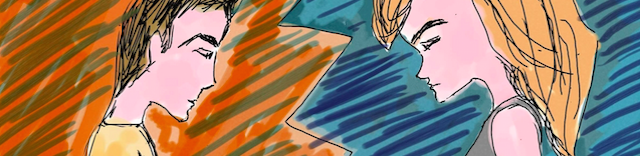
    young couple in love outdoor,illustration,digital painting

    “Lies may make people feel better, but they do not help them to know love.” ~Bell Hooks

    I was once a liar. I didn’t know I was a liar at the time. I didn’t consciously tell an untruth. Instead, my entire being did.

    Lying isn’t just something that is done with words. We can lie with our actions. We can lie with our silence. We can lie with our complicity. We can lie by pretending to be who we aren’t.

    I was the lie.

    I played dress up for most of my life. It didn’t happen all at once. I didn’t walk into someone else’s closet and come out with a new wardrobe. It happened slowly, over time.

    Each time I said or did something that didn’t get approval from the world around me, I chose to pull a garment from the imaginary closet of people who are lovable. By the time I was twenty, my true self was so far hidden that even I didn’t know where she was.

    It first began by disappearing. I felt rejected by my peers in grade school. It felt like so much work to be liked and popular. So I decided to give up trying. But instead of just being myself, I decided to hide away. Being unnoticed seemed easier than being seen for who I was.

    College was my opportunity to reinvent myself. But when I got there I found out I couldn’t force myself into being outgoing or easily likable. So I turned awkward. I was hyper self-conscious that I was not being myself, but I didn’t know how to let myself just be. So my body got stiff, my movements fidgety, and my voice uncertain.

    I began to watch other people and would, in the slightest ways, begin to mimic them. I’d adopt someone’s laugh, another person’s style, and someone else’s slang. This mishmash of what I thought it meant to be likable only kept me further away from the truth of who I really was.

    I had friends, but no one really knew me. I was lost and lying about who I was. I pretended like I had it all figured out because admitting that I was clueless would mean my world would come crashing down.

    When we build identities for ourselves we can’t risk allowing them to crumble. So we lie. We create more masks to wear and keep ourselves further from the truth. Our egos know that if one brick loosens, everything we’ve worked so hard for will be ruined.

    When we choose to deny who we truly are, we are lying. Lying is a choice, one that deeply harms ourselves and oftentimes, those around us. And even though it is a choice, it’s one that is very easy to hide from. In our search for love we will do almost anything to attain our goal even if it means denying ourselves the truth.

    The irony, though, is that love itself is impossible without honesty. If you find yourself desperate to know what love really is, take a deep breath and look at how honest you are about you.

    Do you really know yourself? Do you share who you are with the world? Are you overly concerned with what other people think about you? Will you change yourself to be accepted by others? These are all great questions to help you recognize how comfortable you are with your true self.

    Uncovering yourself is part of the path. It’s okay to share with people that you don’t know. That you’re confused. That you’re lost. That you feel pain. That you’re in the process of getting to know yourself.

    You don’t have to use all your energy to put on the facade that you’ve got it all figured out. It’s okay to not have it all together. When you begin to open up and communicate with others about who you truly are, you begin the opportunity to discover what love is.

    The people who open their hearts to you will create a beautiful container for love to grow. Those who are triggered by who you are will move their own way. Let them go. Stay connected to your truth and keep sharing with the people in your life.

    As I began to test the waters in my friendships I started to open up about my feelings of shame and guilt.

    I have one memory of sitting at the kitchen table with a girlfriend and telling her something I had never told anyone. I could feel the space opening between us as she acknowledged my feelings and matched them with her own experiences of similar feelings.

    Sharing ourselves allows us to know love. Love makes us feel safe and wanted. It makes us feel connected and like we belong.

    We often lie when we’re afraid of the truth. When we lie about who we are, we tend to be afraid that who we are isn’t lovable. If we show our true selves and we aren’t loved and accepted, we don’t know how we’ll recover.

    We recover by loving ourselves. But you can’t love yourself if you don’t know who you are. You can’t love yourself if you’re using all your energy to put on an act for everyone else. And other people can’t love you when they don’t know who you are.

    So if you want to know love, show yourself. Take off the mask. Let go of all the energy it takes to be someone else and use it to discover who it is you truly are. Love that person up and watch as the world loves you back.

  • To Fully Heal Your Broken Heart, Make Sure You Do This

    To Fully Heal Your Broken Heart, Make Sure You Do This

    Broken heart

    “Grief is healthy and it is healing.” ~Richard Moss

    When I was a little girl there was this belief floating around in my head that there was only one person. One person who was my soulmate. One person who could love me. I think the belief was formed by some concoction of Disney movies, religion, and American culture.

    What’s worse than this belief is that I somehow found myself afraid that I wouldn’t even have one person. I was afraid I would be alone. Forever.

    I don’t know when I adopted the belief that I wasn’t enough, that I might not find someone, that I was unlovable. My mom did her best to reassure me, but it didn’t quite do the trick.

    Self-love is the work we have to do ourselves. No one else can give us that gift, no matter how young we happen to be. 

    Into my third decade of life I did the deep work that led me to discover what it actually meant to love myself. My life transformed in so many incredible ways, and then I no longer worried about whether there was someone out there who would love me. I knew I was lovable, and by more than one person.

    At some later point I met a man. I liked him, but there were some red flags. He was a bit flaky, and he lacked the ability to communicate maturely. I was about to walk away, and then suddenly everything changed. The red flags turned green, and we pranced off into the moonlight.

    That red lack-of-communication flag never really turned green. Nothing had actually changed. He just hid who he really was until he felt suffocated and invisible. After almost a year of living like this he left me with no warning.

    For a long time I felt so much pain that my entire being melted into sorrow. I fell into a deep depression and reached out to a spiritual teacher who wrote me this:

    Please do not indulge any thought that attacks yourself or even your ex-boyfriend. Grief is healthy and it is healing.

    I wrote back to this teacher that I wasn’t indulging in negative thoughts, that the pain was so overwhelming that I felt no anger, just the deepest sadness I’d ever felt.

    I spent a lot of time in bed feeling my pain, crying, and thinking. This was a man who I was building a life with. This was a man I opened my whole heart to. This man showed me love and support like I’d never experienced before. And then he swiftly took it all away. As I lay in bed for days with a churning mind the stories began to surface in whispers:

    See, I am unlovable. He didn’t think I was worth loving.  I’m not enough.

    And the stories grew louder.

    “Please do not indulge any thought that attacks yourself.”

    The stories we tell ourselves that deny the essence of who we are may be so deeply rooted that we’re unconscious of their presence. I was attacking myself. Each time I allowed these beliefs to hold an ounce of truth I was attacking myself.

    So I worked on loving myself instead. I worked on seeing the truth of who I was in each moment. The truth I found was this: I am worth loving. I am enough. I am lovable. I am beautiful. I am whole. All of this is true right now, in every single moment I am living. 

    A few months into my grief, the anger began to surface, and I started to vilify him. I was tired of feeling the pain, so my mind created stories about him to make me feel better. I told myself he was incapable of loving me, that he couldn’t allow me to be fully me. I thought about how he was a selfish person for treating me the way he did.

    Please do not indulge any thought that attacks yourself or even your ex-boyfriend.”

    My teacher was right. Those stories didn’t do my ex justice. They didn’t honor the time we shared together. And they didn’t actually serve me. They were a weak tool to help me avoid my pain.

    The truth is simply that he wasn’t my person anymore. And that didn’t make him wrong. It didn’t make him bad. I didn’t have to turn him into a villain to heal my wounds. I didn’t have to diminish my pain or justify his actions. I could simply allow for the pain and allow for the healing.

    Grief is healthy and it is healing.”

    That breakup took me down, down, down. It made me forget who I am so I could find myself again. It was the greatest gift I have been given in a very long time, and it took me many months to recognize the gift at all.

    Grief is healthy and it is healing. I didn’t need to make up stories to ease my pain because the more I hid from it the more it had a hold on me. Instead, I chose to let the pain wash over me. I allowed it to teach me. That’s how grief can become a gift.

    We don’t need to hold on to old lovers, torturing ourselves with “what-ifs” that don’t serve us.

    We don’t need to condemn ourselves for being imperfect, for being too much, for not doing all the right things.

    And we don’t need to denigrate the people we have loved because they hurt us.

    I have never been more confident that I will have an incredible partner in life one day. You can too. But first you have to let go of that story, whether you’ve adopted it as a child or created it to feel less pain as an adult. Stop shrinking yourself down because you won’t let go.

    Allow for the grief so you can begin to truly heal. Through healing you will grow more fully into yourself, and from that place you will discover the truth. Release the burdens of storytelling. You don’t actually need them. You are strong enough to heal on your own.

  • Healing from Heartache: How to Ease the Pain

    Healing from Heartache: How to Ease the Pain

    “Be gentle with yourself. You are a child of the universe no less than the trees and the stars; you have a right to be here.” ~Max Ehrmann 

    If you looked at your broken heart and allowed for tenderness, you would feel better. Maybe not completely better, but there would be a softening. Compassion for yourself is soothing. When our hearts are aching, we need all the soothing we can get.

    If you looked at your broken heart from the perspective of the loving mother within you, you would see that the only thing you need right now is gentle care. You need to wrap your arms around yourself and let everything be exactly as it is. When we fight what is, the pain only grows stronger.

    When people who seek growth go through heartbreak, we want to fight through it when we just need to let it all go. We need to sob, we need to hold ourselves, and we need to tell ourselves we’re okay. That’s what it means to show up for yourself when you really need it. That’s self-love.

    I struggled hard in my last breakup. I reopened the deep wound and falsity that I was worthless without his love.

    I am someone who teaches self-love. None of us are immune to our entire realities being transformed with the flip of a switch.

    I fell into a deep depression. I was so far away from feeling my own love that my system felt like it was shutting down. And it was. I wasn’t eating, barely sleeping, and I relived everything in my head. Nothing in my life felt good. It was horrible.

    You can’t solve the pain of your heartbreak with your mind. The mind wants everything to feel better, and it will do everything it can to figure out a solution that makes the pain end fast. That’s its job. Unfortunately for us, it will do so at the expense of what’s best for us.

    You’re going through pain for a reason. We learn our greatest lessons through pain. Do yourself a favor and feel it and be with it, and give yourself compassion to help ease it up until you get through.

    Because if you don’t, you’re going to run from it. You’re going to make some decisions that aren’t in alignment with who you are really here to be. You might avoid the pain by jumping back into a relationship, or with food, alcohol, or drugs. And then at some point in the future, this will happen all over again. Because you haven’t learned your lesson. You haven’t truly healed.

    This is the biggest thing we forget when we’re in pain:

    It’s going to get better if we’re easy on ourselves.

    It’s so simple, but it’s the thing I kept forgetting over and over again. I would default to my mind, finding myself analyzing the past or mourning the future. There was some unconscious belief that all my thinking was doing something, benefitting me in someway. Instead, it was perpetuating my suffering.

    Eventually I would exhaust myself to depletion. I would sob and think and sob and hope for the pain to go away, and the pain only got worse and worse until it felt inescapable and overwhelming. And from this exhausted and overwhelmed place, something within me rose up. I began to do what I call “mothering myself.”

    I told myself, “It’s okay. I’m here. It’s going to be okay. Everything is okay. Just relax. Just lie here and rest. Don’t worry about anything. It’s all okay.” I cradled myself in my own arms. I gave myself exactly what I needed: love.

    I could give you a list of additional things to do, acts of self-care to lift you out of your broken spirits, but the truth is that when you’re in the depths of despair, this is the only thing you have to focus on to life yourself up.

    When you “mother yourself” enough by being kind and compassionate toward yourself, things begin to get better. It’s really how it happens.

    You are allowing it to be okay. You are giving yourself love. And it starts to be okay. Your judgment is gone. Your pain eases, even if just a little. And when you’re in a ton of pain, just a little ease makes all the difference.

    From that place you will start to give yourself things you need. You’ll begin to nourish your body more because you will be feeling just slightly better.

    You’ll keep telling yourself it’s okay, and you’ll find yourself doing some gentle yoga.

    You’ll keep on telling yourself everything is okay, and you’ll be curled up in bed with a good friend, laughing at a funny movie.

    The natural process of healing happens when we just keep giving ourselves love.

    Once you walk through the most intense part of this painful process, you will have a beautiful opportunity to get to know an amazing soul: you. You will not walk out the other side the same person. I know that’s scary, but trust me, you will like who you are so much more.

    I am six months out of a devastating breakup, and I’m taking the time to get to know myself. I’m not the person I was before or during the breakup. I have grieved deeply, gotten myself utterly lost, found some way to give myself compassion through it all, and now I am enjoying getting to know this new me that is emerging. And I love her so much already.

    When we’re heartbroken we don’t need our minds to tell us stories to make us feel better. We only need our hearts to open and to show ourselves compassion.

    Any time you find yourself in despair, in depression, in immense pain, look within. Are you living in your head or your heart?

    When you feel so deeply that the pain is overwhelming and you can see no clear way out, remember this. Write this down. Post it by your bed. Pull your chin up, force your eyes open, and read these words:

    It’s okay. I’m here. It’s going to be okay. Everything is okay. Just relax. Just lie here and rest. Don’t worry about anything. It’s all okay. 

    Everything always gets better. That is the truth. You are a shining soul deep within a body that is here to do great things. You are here to experience shimmering love, heart-aching laughter, and so much joy.

    So it’s your responsibility to take care of yourself. That means you don’t get to bully yourself when you’re in pain. You don’t get to judge yourself for where you’re at. It’s your responsibility to show up for yourself in these moments when you need yourself the most.

    And right now, you’re in pain. And that’s okay. Because it will get better if you’re just easy on yourself.

  • You Can Have The Love You Deserve If You Just Let Go

    You Can Have The Love You Deserve If You Just Let Go

    “Even if it seems like it’s taking too long for what we want to arrive, it’s better to stay with the ache than abandon the desire.” ~Danielle Laporte

    Last week when I was in the front row of a yoga class, I moved my hips up and back into downward dog, and through my legs saw the top of my ex-boyfriend’s head. I hadn’t seen him in months, and I wasn’t really interested in having small talk with the man who’d crushed my heart.

    He approached me, eyes shining, happy to see me. I, on the other hand, drove home, walked into my apartment, and sat on the bed for a good cry.

    I cried because when I saw him, all of the love came rushing back in and because he didn’t seem to have a clue how much he’d hurt me. So I found myself considering reaching out again.

    Should I write him an email so he knows how much he’s hurt me? Should I get coffee with him and fill him in on everything he seems to not understand?

    My mind was moving into “fix it” mode, my habitual state. It’s a controlling tendency, something that has kept me in back-and-forth relationships for most of my life.

    You see, I have had many opportunities to learn the lesson of letting go throughout my life. People I loved have died, friends have vanished, and men have come and gone. Every single time I have had the opportunity to let go, I have fought it.

    We fight letting go because we’re afraid. We’re afraid of what’s on the other side.

    First we’re afraid of the pain we’re going to have to face when we let go, and then we’re afraid that things won’t be okay. We’ll never find love again. No one will ever be as good. The pain will never stop. we’re unlovable.

    When I was going through the devastating first weeks of my breakup, I kept getting the same message over and over again: You are being cleared out for something amazing to come in. Deep inside me, buried quietly under the overwhelming heartache, was my soul nodding yes.

    I have actively faced my pain over and over again these past few months.

    I know that to heal we have to be with our feelings so we can release them. I cried more than I ever have in my life. I went deeper into my darkness than ever before. I saw the unworthiness I felt and all the fears. I was braver than I’ve ever been.

    Because of that bravery, I’m connected to my soul in a completely new way. Instead of just hearing it, I am fully abiding by it.

    My soul is telling me clearly that it’s time for me to get what I deserve in life, and the only thing that has been holding me back is myself.

    I have been making choices that aren’t serving my highest self. I have dated men who were not capable of holding space for a strong, passionate, big-hearted woman. It has felt easier to fall in love and to keep giving chances than it has been to say no and hold out for a partner who is right for me.

    I desire a relationship with a man who I can deeply connect with. Who gets me. Who can open his heart as big as I can open mine. Who won’t run away because he’s afraid. Who can hold space for me to live in my power just as I will hold space for him.

    I desire an incredible partnership that is mutual and trusting and loving and joyful and honest.

    And I deserve it. I am finally waking up to the fact that I deserve that kind of love.

    I am finally waking up to the fact that if I want to have that kind of love, then I need to do things differently. I have to listen to my soul and choose to give myself what I deserve. I have to allow that man into my life.

    So the aching, it’s worth it. It’s worth it for a little bit longer while the right person finds his way to me. It’s worth it so I can learn more about myself.

    There are times when it’s your turn to take responsibility, to be the one to reach out and make amends. But if you’re on the Can’t Let Go Bandwagon like me, you probably need to delete that email, put the phone down, and bring the focus back to you.

    When we find ourselves reaching out for someone else, it’s usually a sign that we need to pause, take a deep breath, and ask ourselves what it is we deserve. Then we have to let go of the need to ask someone else to give that to us and give it to ourselves instead. That’s self-love. That’s self-respect.

    We stay in unhealthy relationships because we don’t feel like we deserve anything more. We refuse to let go of exes because we don’t trust that someone better suited for us will come along. We reach outside of ourselves to feel better because we’re terrified of facing the pain.

    The truth is that you can actually have what you truly desire. You can have the great love and whatever else your soul is yearning for. It just might show up in a different package than your mind is willing to accept right now.

    When we have deep faith that everything is exactly as it needs to be, that the universe is supporting us, and that good things are coming, then we’re capable of letting go. We trust that it’s all going to work out.

    If you want something greater for your life, pay attention to where you’re reaching outside of yourself. In those moments, choose to pause and breathe. Ask yourself what you’re avoiding. Feel the pain you’re running from. Cry if you need to.

    Embrace the pain and the fear and the hurt and love yourself through it all. That is your job, no one else’s.

    Do this over and over again until you find yourself more and more free. Trust that everything is exactly as it needs to be. Be patient. Stay with the ache a little bit longer. Something big is coming your way.

  • How to Prevent Fear and Insecurity from Ruining Your Relationship

    How to Prevent Fear and Insecurity from Ruining Your Relationship

    “Everything you want is on the other side of fear.” ~Jack Canfield

    Buried deep within the broken heart of every great loss is a nugget of wisdom. I experienced the greatest grief of my life just a few months ago, and with it came an opportunity to uncover ugly truths about myself I’d been hiding from.

    In facing my pain, I have discovered that underneath the conscious, big-hearted, beautiful person that I am lives a small girl who is terrified of being misunderstood and abandoned by those she loves most.

    The surface signs alerting me to these fears looked something like this:

    My boyfriend and I are lying in bed reading one night. His mind is lit up in fiction while my soul is on fire with a spiritual book. We have often shared these evenings with one another, smiling and supportive.

    This night I want more. I want him to be as excited about this chakra healing book as I am. I want him to crawl into my body and feel everything I’m feeling and see everything the way I’m seeing it.

    I think he can feel me wanting more, and it freaks him out. He energetically hides in the bushes, further away than I’ve ever felt him go, and I panic.

    The warning signs that go off in my body read: IF HE DOESN’T GET THIS HE IS GOING TO LEAVE YOU. DO YOU HEAR ME?! YOU ARE GOING TO END UP ALONE.

    I don’t actually hear those words, I just feel a need to push my feelings onto him and basically tell him he’s wrong for not feeling the way I do. He looks at me with big, helpless eyes and responds:

    “I think it’s okay that we’re different.”

    I stare blankly back at him while an inner struggle ensues. I can feel my ego fighting. It wants to win. It wants him to see things my way. It wants to be right. It wants him to be just like me.

    But I know better.

    I move from my head to my heart, and I know it’s okay that we are different. What is important is that we love each other, respect each other, and support each other. So I melt into his arms with a smile, an apology, and a “You’re right.”

    But I don’t let him be right. That night I do, but every incident after that I don’t. And he never says it again. He never reminds me that it’s okay that we’re different.

    So the other times, later on, when he doesn’t see things the same way as me, the warning signals go off, and no one reminds me that it’s okay. So I panic, and I spin the fear into all kinds of stories that justify me bullying him into being like me. All because I’m afraid he is going to leave me.

    And he did leave me.

    There are many ways I could tell the Leaving Me story, but the truth is that it’s as complicated as human beings are. One part of it, the part I take responsibility for and the part I’m focusing on here, is that I fought his perspectives that were different from my own, leading him to feel like he couldn’t be himself with me.

    I did this because I was afraid to lose him. I was afraid that if we were different in some big ways maybe we wouldn’t make it. I felt safe when we were agreeable and felt unsafe when his thoughts differed from mine.

    But I was safe. I am always safe. A part of me knows this, but the part of me that comes to life when the fear arises is the part of me that needs a reminder. I didn’t know I needed to be reminded at the time. I didn’t even know I was doing it at the time.

    But now I know. I just needed those simple words, “It’s okay.”

    It’s okay that we’re different.

    He is someone who doesn’t know how to fight for himself. It’s not something I understood about him at the time, but I see it now.

    I am strong in my conviction. I am forthright. I speak my feelings decisively and with ease. He sweats and stutters, but mostly he shuts down.

    I suspect he shuts down because he is afraid. He is afraid of losing himself, but really he is afraid that I won’t love him for who he truly is. He doesn’t trust that he can speak up, that he can challenge me, that he can tell me it’s okay and that I’ll believe him.

    The tragedy is that I don’t know it. Neither of us knows it, really. We’re blind to our shadows, only seeing our own reflections after we’re over.

    I don’t know he is shutting down because he’s scared, and I don’t know I am trying to make him see things my way because I’m afraid. It’s all this delicate dance that happens backstage, until one day he tells me he doesn’t feel like he can be himself with me, and everything comes crumbling down.

    You might be thinking that we were too different, and maybe the truth is that I should be with someone who can share my excitement about chakras. I don’t know.

    I do know I loved him more deeply than I’ve ever loved.

    I know that our relationship was the healthiest, most beautiful relationship I’ve ever experienced.

    I know that I messed up by not letting him be him completely, and I know that he messed up by not sharing his true feelings with me.

    That is a lesson, yes. But there is a deeper lesson, and it’s a lesson about fear.

    I acted controlling because his differences triggered my fear of abandonment, a nerve that runs all the way through my heart and back into my childhood. The irony isn’t wasted on me that my reaction to my fear inevitably created the very thing I was attempting to avoid. And that is the lesson.

    When we act from fear we begin our journey to the guillotine.

    Fear hides behind many guises, ruining plenty of love lives.

    We’re afraid we’re unworthy of love, so we push our partner away when things get too intimate. We’re afraid to be abandoned, so we try to control the relationship or smother our partner. We’re afraid we won’t be accepted as we are, so we don’t show our true selves. 

    We act from fear when we’re too busy to pay attention, when we’re too stressed to slow down, when we make assumptions instead of asking questions. The very thing we are afraid of often becomes our reality when we live from our fears. It’s an act of self-sabotage.

    Relationships are a beautiful opportunity to see ourselves more clearly, but we each have to be looking. You have to be willing to see you, and your partner must be willing to see them. And this all needs to move very slowly, very delicately, and very lovingly. It’s the way we make it through.

    Fear has a million different faces, but your soul always knows the way. When you feel your body tense, when your voice rises, when you begin to shut down, when you begin to explode, when you run away, when you shake with anxiety, your body is telling you.

    Slow down in those moments. Breathe. Let your breath open you up into the vulnerable space of love, and let it cocoon you until you can step out from that place.

    Tell your partner all about it. Tell them about your fears, your discovery of your fears, and how they can help you through it. But don’t put it all on them. This is your work, and this is a practice, one that you have to keep coming back to over and over again.

    You might need some gentle nudges along the way. It’s okay to be different. But if you keep showing up, and if you continue to be willing to see the truth about yourself you will break through the boundary of fear and into the heart of love.

  • Stop Worrying About Being Good Enough and Start Accepting Yourself

    Stop Worrying About Being Good Enough and Start Accepting Yourself

    “The thing that is really hard, and really amazing, is giving up on being perfect and beginning the work of becoming yourself.”~Anna Quindlen

    “I’m not actually happy,” I heard myself saying.

    They were words I hadn’t yet admitted to myself, but I found myself sharing with a friend and mentor several years ago.

    At the time, I was deeply identified with living a happy life. I was also deeply identified with the views of what you might call a cult, something I’ll explain more in a moment.

    I was always working on bettering myself, and I devoted my life to living with purpose. The sentiment I shared with my mentor didn’t fit with the life I thought I had created, and it certainly didn’t fit with the notion of being on the leading edge of consciousness and culture, my organization’s motto.

    He listened without judgment, and then he said this:

    “This is your life and your spiritual path. It can be anything you want it to be, but it should be joyful.”

    In that moment I felt liberated, and I realized that I had unconsciously bound myself to a life my mind had created.

    I thought all of my hard work and dedication would bring me to some final place of happiness and didn’t realize that happiness is not a future goal to attain. It’s a relationship to ourselves.

    I spent most of my life feeling misunderstood and lonely. In my mid-twenties I found myself at a party with a bunch of people of all ages who appeared joyful and treated each other like family. Over the next few years I became more involved with these people, many of them beautiful, loving people who I still consider friends.

    This group was basically a cult, a small gathering of people committed to a spiritual principal.

    We would get together and talk about spirituality, the nature of life, consciousness, human development, and culture.

    I found myself excited to be so intellectually stimulated, but also intimidated. All of these people seemed so comfortable with themselves. They spoke with intention, and when it was my turn they all gave me their undivided attention.

    I found myself in a situation where I was forced to be seen, and in turn I began to see myself.

    It would be easy for me to blame the organization, and it’s true that there were things that were not conducive to my growth. Although I enjoyed many of the people, the collective feeling for me was one of judgment.

    I felt like my words were being measured each time I spoke so teachers could see how I was growing. While I never felt an insufficiency of kindness, I did feel a lack of warmth and love.

    The deeper truth was that I was judging myself. I felt inadequate. I felt like I couldn’t show who I really was because I was terrified of being perceived as less than.

    I developed serious anxiety around speaking in groups. I started to shut down. I put pressure on myself to do as much as possible behind the scenes. I felt like there was always so much more I needed to learn and understand before I could add value to the conversation.

    Instead of looking inward to discover who I was, I had an idea of who it was I should be. I spent my time striving to maintain that image, and it sucked me dry.

    I suddenly woke up to the truth, years in, that I was unhappy. My zest for life was gone.

    You might not have had the same cult-like experience, but I’m sure you can relate to the experience of trying to fit it and not feeling good enough.

    It’s a burden that we often put on ourselves, one from which we have the power to liberate ourselves.

    I have found that people who want to better themselves have a tendency to never be good enough for themselves, and it leads to deep dissatisfaction in life.

    I could say that I lost myself during my time in that organization, but the truth is that I never actually knew who I really was. My time there was part of my journey to discovering myself. I walked away from that group and walked into a path of personal exploration.

    I found that the things I felt in the organization, the lack of love and fear of judgment, were things I was struggling with within myself. I didn’t truly love who I was, and I was constantly self-judging. The feelings we have in relationship to others are often reflections of our relationship to ourselves.

    I have found that those of us most interested in becoming better people are often far too hard on ourselves. We can look at our lives and see that we’ve put in a lot of effort, but we often experience little joy.

    We have an idea of who we should be, and we’re constantly attempting to live up to that ideal but never seem to make it. When we attempt to do something to prove our worth, it’s never good enough for ourselves.

    Being willing to see that we’re being hard on ourselves is the first step in transforming, but it’s really the big leap between seeing it and doing something about it that transforms our lives.

    Soon after I realized I was unhappy I discovered breathwork, an active meditation practice that opened my heart and showed me what it meant to love myself. For the first time in a long time I felt joy again, and I discovered what it means to be truly happy.

    I found that I needed to learn to let go, to surrender to my heart and soul instead of continuing to “power through” my life. In addition to my breathwork practice, I started doing more yin and restorative yoga. These tools helped me connect to my body and allowed me to see the truth I had been hiding from.

    I found that I was afraid to show who I really was to the world, so I kept trying to change myself into someone I thought would be worthy of acceptance. I was afraid of being judged, afraid of being seen as imperfect. The even deeper truth was that I wasn’t accepting myself.

    All of the pressure I put on myself to be this specific kind of person pushed me further away from loving who I already was.

    The only way I could live the life I truly wanted was for me to release what I thought it meant to be happy.

    Happiness doesn’t come from what we think our lives should be like. True happiness is a deep state of love for ourselves. It comes from awakening to the truth within you, that you are already everything you need to be right now.

    When we’re chronically hard on ourselves we’re attempting to be someone other than who we really are. Within the body we find wisdom. We find signs like anxiety, depression, and illness that point to the truth that our systems are being burdened by our minds.

    We’re driving ourselves like machines, and we’re suffering greatly because of it. The practice of slowing down and looking inward whenever we find ourselves consumed with who we think we should be gives us the opportunity to surrender.

    We have to stop spending so much time trying to be better and see the beauty that is already there. We have to stop striving and start surrendering. We have to begin to acknowledge how incredible we are in this moment, right now, for being exactly as we are, as imperfect as that might be.

    Remember, this is your life and your spiritual path. It can be anything you want it to be, but it should be joyful.

  • Why We Worry About What Other People Think of Us (And How to Stop)

    Why We Worry About What Other People Think of Us (And How to Stop)

    “When I look back on all these worries, I remember the story of the old man who said on his deathbed that he had had a lot of trouble in his life, most of which had never happened.” ~Winston Churchill

    I often play a little game with myself when I’m feeling bad. The game is a simple one, and maybe one that some people might find slightly morbid, but it cuts to the heart of the matter.

    I ask myself if this thing that is making me feel bad will matter to me when I’m on my deathbed. Ninety-nine percent of the time the answer is no.

    The things that matter to us when we’re contemplating our demise are the things that are actually important like, Did I love enough? and, Did I do all of the things I wanted to do?

    No one on their deathbed has ever said, “Man, I really wish I hadn’t stumbled over my words during that job interview.” Or, “I wonder why no one complimented me at that party when I was twenty-two.”

    We spend a lot of our time worrying about things that won’t matter to us later.

    You might be thinking, but it matters to me now, and it does. But there are two reasons why it shouldn’t: The first is that worrying is counterproductive, and the second is that worrying about what other people think of you doesn’t serve you.

    Worrying is the most impractical way to use your energy. There has never been a time when worrying if so-and-so would like you, give you the job, or want to be your partner in life contributed to you getting what you want.

    Not only does this not solve your problems, it typically leads to anxiety and overwhelm.

    When things are outside of our perceived control, like when we’re meeting people for the first time, worry kicks in.

    Our minds are wired for negativity—an evolutionary tool designed to keep us safe. But today, this process doesn’t serve us. We’re not meeting bears that might kill us at the event tonight, but our bodies are responding as if we were.

    Just like anything that isn’t serving us, worry can act as a signpost for where we need to dig more deeply into ourselves.

    Worrying about what other people think about you is a key indicator that you do not feel whole without the approval of others. 

    You’re looking outside of yourself to fill something only you can fill. No amount of approval from an outside source will ever make you feel whole. You’ll get it once and need it again and again and again. It’s an addictive cycle that turns you away from yourself.

    I remember when I began dating in my early twenties. I was super nervous because I wanted to make a good impression on whoever I was going out with. I was so focused on appearing likable that I didn’t even consider whether or not I liked him.

    This, in the simplest of terms, is disempowerment.

    We disempower ourselves when we’re more concerned with how other people perceive us than we are about how we perceive ourselves.

    When you are truly content with who you are, you stop being concerned with whether or not other people like you.

    You deserve to live your life for you instead of chasing an ideal your mind has created.

    You deserve to discover who you truly are, and show that incredible person to the world.

    You deserve to have people around you who love and admire you for who you are instead of who you are trying to be.

    There are two techniques that have alleviated my worry about what others think of me. The first is my breathwork practice, a powerful active meditation that gives me clarity, connection to my deeper self, and lightness of being.

    The second is mindfulness, the act of being conscious and nonjudgmental of my thoughts. Once I’m aware of my thought process, I work on actively shifting my focus to something that serves me.

    I recently went through a shocking breakup. It was shocking because the person I had been dating led me to believe he was committed to me, and we were planning our futures together.

    Without warning, he decided he didn’t want that. Of course, there is a natural grieving process when we lose someone we love dearly, but part of my challenge has been letting go of what he thinks about me now.

    I will have thoughts about how he doesn’t hold me in the high regard he once did, and it will leave me feeling deflated.

    In these moments, I am disempowering myself. I am allowing his thoughts about me to matter, and they shouldn’t.

    It’s not that we shouldn’t ever care about what people think about us, but we should care what we think about ourselves first. So in these moments I ask myself who I am and place my attention there.

    If he doesn’t think I’m amazing anymore, it doesn’t matter, because I know I am.

    We disempower ourselves far too often. A simple shift in our thinking can bring us into connection with the truth.

    When you find yourself concerned about what someone thinks about you, bring the focus back to yourself. If you’re thinking, “I hope she doesn’t think I’m a flake.” Ask yourself, “Am I a flake?” If you know the answer is no, then you’re good. Release it and move on.

    If the answer is yes, then take note and forgive yourself for it.

    When you spend time wondering how other people perceive you, you create stories that are often far from the truth. In order to change, we have to be able to see ourselves, accept who we are by giving ourselves love, and then make new choices.

    Worrying about everyone else’s possible thoughts doesn’t contribute to positive transformation.

    When I’m on my deathbed, the people who are going to matter to me are the ones who chose me, the ones who really saw me, the people who chose to give me love even when I fumbled.

    These are the people who matter.

    And it will matter to me that I lived a life I was proud of, that I was able to get to know myself and share that person with the people I love.

    So, you have to learn to be your own advocate. You have to stop giving your power away to other people.

    Like meditation practice, each time your mind wanders to the thoughts of other people, bring it right on back to yourself. Fill up that void with your own love. Stand in your own power. Show people who you really are, unapologetically.

    Don’t wait for someone else’s permission to be amazing. If they don’t see it in you, it doesn’t matter.

    The truth is that if they don’t see it in you, it’s because they don’t see it in themselves.

    We are all acting as mirrors for one another. Don’t try to be the broken version of someone else. Be the best version of yourself and your own biggest fan.

  • Healing a Broken Heart: It Will Get Better

    Healing a Broken Heart: It Will Get Better

    Sad Woman

    “This is a good sign, having a broken heart. It means we have tried for something.” ~Elizabeth Gilbert

    I thought I went through my last breakup a few years ago. I thought I had paid my dues, cried my share of tears, and dealt with some deep wounds. I thought I was done. I was happy and in love, and talking about moving in with my boyfriend.

    One day we took a little vacation. We laughed and explored the desert excitedly talking about our dreams. Three days later I found myself sobbing on the floor of my tub, hot steam clouding around me.

    Our breakup was actually quite beautiful aside from the shock and confusion. We looked into each other’s eyes. We smiled. We cried. We held each other. We said goodbye.

    It might sound like we handled this really well, and in many ways we did. We always respected one another. We never said anything hurtful or manipulative. I think that shows how much we loved and cared for one another.

    But I was still a mess, deeply heartbroken and deeply depressed. It was the deepest depression I’d ever been in. I could do little more than cry and stare at the ceiling. Nothing in me wanted to stay in bed and nothing in me wanted to get out. It felt like torturous limbo with a crushing weight on my chest.

    My mind couldn’t comprehend a day when I wouldn’t feel like this. Each night I fell asleep I prayed the morning would be different. But each day I woke up with a pang in my stomach and a heaviness in my heart.

    Until one day I didn’t.

    It wasn’t a miracle. My pain didn’t disappear in my sleep. But I started to feel better. The first day I was able to eat a little more. The next day I found myself laughing with a friend. I slowly started to be able to sleep longer hours and function more clearly. It was a snail’s pace, but it was progress.

    If you’re going through a breakup right now the truth is that it will get better.

    I needed to hear this over and over again from other people. When the pain is so intense it takes over everything. It’s very difficult to believe anything will change. I would call my mom in the mornings sobbing into the phone, “It still hurts. It’s not getting any better. Why does it still hurt?”

    It’s supposed to hurt. Your heart is broken. You loved deeply, and now it’s over. One side of the coin is that endings are really sad. The other side is that endings are opportunities for new beginnings, and that’s really exciting, even if you can’t feel the excitement right now.

    It was difficult for me to see that I was making any progress so I documented my days over those weeks. I found that there were five key things that helped me begin to heal:

    • I felt all the feelings.
    • I took advantage of my support system.
    • I gave myself love and compassion.
    • I took responsibility for my life.
    • I focused on me instead of him.

    I can’t emphasize enough how important it is to allow yourself to grieve when your heart is broken.

    Our bodies are intelligent. They can hold trauma for a lifetime. When we sob so deeply our chests heave and the tears fly out, our bodies are purging the pain. Allow this to happen. I was so tired of crying, but I would keep on doing it as I needed. I actually cried a little a few hours ago. It lessens. The pain lessens. I assure you this.

    There were two or three people who were my everything during my lowest low. I used their support to get me through all of the times when I just wanted to give up on my life. I talked things through incessantly, something that can help us come to terms with the situation. Our minds need to process the change, especially if it was traumatic or sudden.

    It’s really important that these are people who understand you, who are capable of being there for you in this way, and who are nonjudgmental. Someone who is going to say to you, “Honey, I am so sorry you feel like this. My heart breaks for you.” Not all of our friends and family are capable of taking on that role, and that’s okay. You just need one or two.

    Through these first two steps I started to gain my own strength and identity back. I got to a point where I knew that only I could pull myself up out of it. I had enough moments of clarity through my pain that I was able to see what I needed to do for myself, and I gave myself so much love.

    I honored myself and acknowledged that my heart was broken. I didn’t judge myself for being weak or stress out about being low functioning. I just let myself fall into my own arms.

    I treated myself like my own daughter. I asked how I was feeling and listened to the response with compassion. I kept telling myself, “I am here for you. I am always here for you.” This type of love for myself helped the pain dissipate. It helped me to feel worthy of life again.

    I am also someone, probably very similar to you, who is always looking to better myself. Nothing in life is isolated—we’re all connected and affected by one another, so I knew there were deep things about myself to look at.

    Instead of focusing on my ex and why he left, I began to look at myself. I questioned what I was doing in my life that left me in relationships where men chronically abandoned me.

    I didn’t put pressure on myself to figure it all out, but I allowed the question to be there. I invited the answers to come in as they needed to. I knew that whatever was most obvious was probably not the full picture — and it wasn’t.

    Through a candid conversation with a very close friend, I began to discover some of my deepest fears. I realized that when I get very close to people I become afraid I will lose them, something that occurred repeatedly in my childhood.

    When someone I was close to shared a different perspective than mine, on some deep unconscious level I became threatened, terrified this was the beginning of the end for us. Ironically, my own fears of abandonment contributed to my relationship ending.

    This kind of revelation is liberating when there is a lack of clarity in a breakup. I saw myself so much more clearly, and then I looked at the relationship through my ex’s perspective. I saw my newfound self through his eyes, and I understood how he felt. It all made sense.

    One of the most important things I did that allowed me to heal was to focus on myself each time I thought of him.

    This is especially true if you are not the one who wanted to break up. I didn’t reach out to him at all. I gave us each space. I knew seeing him show up on social media would increase the pain so I used all my willpower to stay focused on myself. If I felt the urge to check up on him I reminded myself that I didn’t need to feel any more pain. This was enough.

    Getting through a breakup inevitably comes down to letting go. All of the steps I’m describing are about allowing.

    We have to allow ourselves to feel everything.

    We have to allow our feelings to be okay.

    We have to allow ourselves to be supported.

    We have to allow ourselves to be worthy of our own love.

    We have to allow ourselves to see the truth.

    And finally, we have to allow ourselves to move on.

    I know it’s hard. I’m right there with you. Just remember that it will get better. 

    Sad woman image via Shutterstock

  • The Truth About Social Anxiety and 5 Ways to Relieve It

    The Truth About Social Anxiety and 5 Ways to Relieve It

    “Perfectionism is a twenty-ton shield that we lug around thinking it will protect us, when in fact, it’s the thing that’s really preventing us from being seen and taking flight.” ~Brené Brown

    About fifteen million adults suffer from social anxiety according to the Anxiety and Depression Association of America. Fifteen million. And we’re not just talking about what you’d call shyness. We’re talking about big fears of judgment and scrutinization from others.

    When we hear statistics it can be difficult to remember the humanness of those numbers. These are people who want to find love, who want to make new friends, or who need to talk to new people for work. Maybe you’re one of them. I used to be.

    I remember feeling uncomfortable in my own skin, being highly aware of what I was saying, how I was saying it, and how other people were taking me in. I even remember being in college at a party standing with a group of friends when one of them loudly declared that I looked super uncomfortable.

    Well, I was super uncomfortable, and that statement only brought more attention to my demeanor making me even more self-conscious. It sucked. I didn’t want to feel awkward let alone be known as the awkward girl.

    I was always so concerned with how I was presenting myself. I wanted everyone to feel like I had it all together. I wanted to appear cool, but mostly I didn’t want to do a lot of things.

    I didn’t want to say the wrong thing. I didn’t want to make a fool out of myself. And I definitely didn’t want to be disliked.

    What I wanted was to be able to speak easily to people. I wanted to feel laid back. I wanted to not be “shy” in groups. I wanted to feel comfortable. I wanted to get lost in the moment instead of watching and analyzing my every move. I wanted to just be me, and be okay with it.

    Often times when we talk about anxiety this is where we stop. But I’ve discovered something deeper. I worked on myself a lot in my twenties. I made a very dear friend who was super outgoing. Being in her presence helped me see that I could present myself differently.

    I could open up a bit more, I could smile a bit more, and I could show my happiness to strangers.

    I also learned a lot about my ego. I saw some of the ways my mind was holding me back. I was able to acknowledge that fear was driving me in these situations and that I didn’t have to pay so much attention to my mind.

    I became more comfortable in social situations through practice. I found my edge and worked from there. I became more cheerful, more outgoing, and it worked.

    People responded, and I connected more deeply. It felt great, but it didn’t entirely feel easy. I still didn’t feel 100% in my own skin, and I found myself exhausted after being in social situations.

    Years later I discovered that all along I had been afraid of being seen.

    I’m not talking about being out in the world and observed by others. I’m not talking about being afraid of showing up at a party or an event and having people look at me. I’m not talking about superficial self-consciousness. I’m speaking about a deep, spiritual need to be seen for who it is we really are.

    All this time I had actually been terrified that if someone saw who I really was they would reject me, and I didn’t know that I could recover from that. But if someone rejected the persona I’d created, well, that wouldn’t be as bad—it wasn’t really me.

    I discovered this truth through something we all have at our disposal 24/7. It’s actually something we all need and use: the breath.

    Breathwork is a powerful active meditation, and it’s changed so many aspects of my life including this one. It’s given me access to deeper truths about myself and about human beings in general.

    We all want to be loved, and to be loved means you’re accepted as you are. So if you’re deeply afraid, unconsciously afraid, that you might not be loved, how do you think your body is going to respond? It’s going to feel fear.

    It shows up as self-consciousness because our minds work to remedy the situation. If I monitor my every movement I’ll be safe. I won’t show too much of myself, and I won’t be rejected.

    The problem here, aside from the fact that we don’t want to actually be living our lives in constant moderation of ourselves, is that we expend so much energy watching ourselves, trying to be the person we think we should be.

    That’s why I was so exhausted after being in social situations. It took up so much of my energy to be around people and not feel like I could really be myself.

    There is so much relief in being able to be yourself. There is so much freedom in having deep, unconditional love for yourself and knowing that the only thing that matters is that you have your own back.

    It leaves you feeling comfortable being you. It allows you to have a more intimate relationship with yourself, discovering who it is you actually are instead of living under the guise you’ve created for yourself. That guise was a defense mechanism; it was your shield so you wouldn’t get hurt.

    But you don’t have to worry about getting hurt anymore. Yes, you will still feel pain, but you will have such a deep trust in life that you know you’ll always get through it.

    With this trust and this love and this new life, it’s not scary to show yourself anymore.

    You know that the right people will forgive you if you mess up. You know that the people who you need to have around you are the ones who love the things that come out of your mouth, who don’t push you or manipulate you or judge you.

    From simple, immediate action steps to deeper healing work, here are five ways you can start relieving your social anxiety today:

    1. Use the power poses.

    Power Poses are simple body movements scientifically proven to increase confidence hormones and decrease stress hormones. Before you’re going into a social situation put your hand behind your head or even simply raise your hands wide and high in the air.

    2. Focus on others.

    When we’re self-conscious in social situations we’re so focused on ourselves that it’s extremely difficult to connect with others or to even relax. Try finding someone to connect with by asking them about themselves. Become interested in them and place all your awareness on what they’re saying. This helps us engage and removes us from our own self-concern.

    3. Find your edge.

    Know where you’re comfortable and where you feel like you’re going to have a panic attack. Somewhere in the middle lies your edge.

    Your edge is the place you can go to that feels uncomfortable but not like you’re going to die. Hang out there, take some risks.

    This might look like you starting a conversation with someone on your own, asking someone a question, making eye contact, or telling someone something about yourself that feels personal. Continue to practice living on your edge, and it won’t be your edge anymore.

    4. Look deeper.

    You can remedy things by watching and emulating those who excel socially. Or you could spend time getting to know yourself more deeply, facing the truth that maybe you’re afraid to show who you really are. Once we’re willing to face the things we’re hiding from we can begin to liberate ourselves from these deep fears.

    5. Use your breath.

    You can use your breath in the simplest way to reduce your stress levels. Take deep belly breaths very slowly. The slower and deeper the breath the more you activate your parasympathetic nervous system creating a relaxing environment in your body.

    If you want to go for full transformation you could try breathwork and see what you discover about yourself.

    There is a life free of social anxiety. When you choose to dig a little deeper and take steps to heal yourself, you’ll find yourself on a new path. On that path you may discover that you don’t even know who it is you really are. But once you discover yourself, you’ll see there is a whole world of people out there waiting to meet you.

  • If You’re Scared to Share Yourself and Your Gifts

    If You’re Scared to Share Yourself and Your Gifts

    Hiding Woman

    “True happiness involves the full use of one’s power and talents.” ~John W. Gardner 

    If you’re afraid…

    …to launch your project,

    to share your voice,

    to sing in front of someone,

    to dance in public,

    to write a book,

    to show who you really are to the world,

    to ask someone out,

    to tell someone you love them,

    to try something new,

    of what other people will think of you…

    if you’re afraid of any of these things or more, I have three simple words for you:

    Do it anyway.

    Do it anyway! Isn’t that liberating? Come on, isn’t it kinda?

    You don’t actually have to overcome your fears to do any of the things you’re afraid of. Every single time you become conscious that you’re frozen from fear you get to make a choice. You get to choose to continue to be stuck or you get to choose to move through the fear.

    Moving through the fear does not mean that fear is going to go away. And let’s just be clear here: trying to be fearless is a waste of our time and energy.

    Trying to be fearless is an attempt to make it easy to do something that feels difficult. It could also be called avoidance. Instead of avoiding, you can choose to feel the fear right now and do what you need to do in spite of it. Yes, it’s going to feel scary. But so what?

    If we want to focus on how things feel for a minute, let’s think about this deep desire you have to share your art. (When I say art, I’m speaking about your gifts, your service, the thing that your soul is screaming to share.)

    So, you have this deep calling to share your art but there’s also this other part of you that is afraid. So you think about all of the reasons you’re scared and you analyze them and you go back to your art and you try to make it more perfect so you can squelch any potential haters.

    Then it’s time to share and you get scared again, and this cycle goes on.

    This might look a little differently for you.

    You might just be frozen in fear. You might be so scared you haven’t even started your art. You might be avoiding it. You might be perfecting it, so convinced that a true artist spends a lifetime perfecting something when you’re really just scurrrred. Yes, you are.

    And all of this that I’m describing, all of it spells out A.N.X.I.E.T.Y. So let’s take the power out of fear.

    So let’s take the power out of fear. If we do it anyway, if we launch the project, if we stop perfecting, if we take any kind of leap that feels risky, we’re telling fear that its voice doesn’t hold any weight.

    Isn’t that more fun than all of the anxiety around avoiding the leap? Just jump. It’s the most difficult and yet the simplest thing you can do. And the trick is that once you do it the first time, it gets a little bit easier to jump the next time.

    One of my favorite Paulo Coelho quotes is handwritten on a chalkboard in my kitchen. It says, “No matter how you are feeling, get up every morning and prepare to let your light shine forth.”

    I write a lot about the fleeting nature of feelings. They come and go. They’re not stable. They blow with the wind. So yeah, it would be lovely to be stoked to share your gifts with world. But the truth is that when it comes to being seen and heard, most of us are scared, and most of us are scared of what other people think.

    What other people think about your work is none of your business. Your business is listening to your soul and abiding by it.

    Your business is connecting with the depths of yourself and living a life so fulfilling that there could never be such a thing as regret.

    Your job is not to worry about someone else, change yourself for someone else, or stifle yourself out of fear of someone else.

    And let’s just shift our perspectives a bit. We spend so much energy worried about whether people will misunderstand us, dislike us, or mistreat us. The truth is that most people are supportive. Most of the people we fear will surprise us and say, “Hey what you’re doing is awesome. I admire it.”

    And the very few who don’t, the ones who want to critique you instead of looking at themselves, they’re the last people you should be worrying about. Judgment comes from fear. And when someone else projects their fear onto you, it’s not worth an ounce of your energy. Keep it movin’.

    No, it’s not easy to do things that feel scary. It can be painful to show the parts of yourself that are really you. It can be really hard to hear people say mean things about your art.

    The truth is that there are really unpleasant things about being alive, but there are also things that are more important than feeling good.

    When your soul is screaming loud enough you’ll have no choice but to listen and leap. But maybe do it before then. Maybe choose to move through the fear as soon as it shows its face. Maybe do it anyway.

    Hiding woman image via Shutterstock

  • What It Really Means to Be Happy

    What It Really Means to Be Happy

    “Happiness is an inside job. Don’t assign anyone else that much power over your life.” ~Mandy Hale

    Everyone wants to be happy, but not many people contemplate whether or not they really are.

    Some of us feel too privileged to not be happy, while others don’t want to face the possibility that we might not be. Here are nine truths about happiness to help you think a little more deeply about what it really means.

    1. It isn’t a feeling; it’s a relationship to life.

    To be human means that we experience a range of emotions. If you were to look at a grid and see a line in the shape of a wave it would be an accurate representation of the human experience.

    We shouldn’t be operating as an even, straight line. That’s what I’d call a robot or someone numbed out.

    Human beings experience emotions in response to life circumstances. That means sometimes you’re going to feel happy, sad, and all the other emotions in between. Embrace it.

    True happiness is not a state; it’s the way we relate to our lives.

    If we’re rooted in unconditional love for ourselves, the world around us transforms.

    We have the ability to express gratitude for all experiences in life. We’re able to sit with difficult emotions without denying ourselves love. We’re able to be with ourselves and with the world in a way that shapes our overall perception of our lives to one of love and gratitude. This is the path to happiness.

    2. It requires a willingness to know the truth.

    I once felt guilty for not being happy. I felt like I had no right not to be happy. After all, I was born into a loving family, I was fed, I was loved, and I was educated. I had so much more than so many people on this planet.

    And then I woke up the truth that I was, in fact, not happy, and to deny that didn’t change the truth.

    I realized that my relationship to myself was the source of my unhappiness. I lived under the illusion that I loved myself by avoiding contemplating whether or not I did. I was able to see that I couldn’t actually be happy until I learned to love myself as I am.

    We have to wake up to our own underlying truths. Anything you’re lying to yourself about is holding you back from true happiness.

    3. You have to be willing to feel pain.  

    True happiness isn’t the expression of happy chemicals floating through our brains. True happiness comes from the willingness to face ourselves. Only through some of my most painful experiences have I come to live in true happiness.

    When I was willing to sit in the despair of my lost love, when I was willing to face the truth that I had become numb from feeling, and when I did the difficult work of healing I came out the other side. Sometimes I felt lighter, but always with a deeper understanding of who I am.

    4. It has nothing to do with whether or not people like you.
 

    Doesn’t it feel great when people like you? It’s like the high school experience I always dreamed of. As I got older and more comfortable with myself, I seemed to attract amazing people into my life. I loved them and they loved me.

    And then someone slipped through the cracks, and I experienced someone not liking me again. It stings, right?

    No one likes not being liked. But it also wasn’t my problem.

    As long as you’re good with who you are deep down and as long as you’re facing yourself each day, it’s not your problem if someone else doesn’t like you. It’s their problem, because more often than not people are reflecting their relationship to themselves.

    When someone doesn’t like you it doesn’t threaten your happiness. Your happiness is yours. It’s your relationship to yourself and your own life. What another person thinks about you can sting, but it doesn’t have to change how you feel about yourself.

    5. It’s what most people are pretending to be.

    Comparing yourself to anyone else is not only futile but also irrelevant. Your concern should be to uncover your own truth and live according to that.

    When you try to be like someone else, you are trying to live according to what you think it means to be happy like them. And the unfortunate truth is that most people are pretending to be happy.

    They may gloat about their successes or perceived achievements. But true happiness is a vibration that is undeniable and needs no proving.

    6. You can’t look for it anywhere outside of yourself.

    You will never find true happiness if you take out a flashlight and start searching. There is not one single thing outside of ourselves that will cultivate true happiness. Nothing. Not another human being whether it be a partner, parent, or child.

    The only place true happiness can emerge from is through the self. We can experience moments of joy and bliss in relationship to other human beings, but true happiness is a result of your connection to your own truth.

    Once you’ve awakened to that, all of your relationships will be more vibrant.

    7. It’s what babies see when they look in the mirror.
 

    I have six younger siblings. Years ago, I remember my three year old sister looking at herself in the mirror. When I asked her if she thought she was beautiful, her eyes lit up as she looked at herself, and without a doubt, without hesitation, she said yes.

    Children are not yet tainted by the judgments of our world. They see that beauty is not physical, that it’s an essence. They look at themselves without judgment.

    It’s the same relationship to self we now have to cultivate. We have to learn to let go of the judgments of others in order to see the truth of who we are: that we are, in fact, that same beautiful baby.

    8. You can’t buy it, drink it, or recycle it.

    True happiness is not a book you can read, lipstick you can wear, or act you can do. It’s almost ineffable. It’s most definitely not any of the things our culture has attempted to brainwash us into believing it is.

    It’s something you have to discover for yourself. It’s something you have to be willing to work hard to uncover. A good place to start would be to let go of all of the ideas that things and ideas are what will bring you to true happiness.

    9. True happiness reveals itself through love.

    In our moments of great deliberation we have two choices: love or fear. Love is not often the easy choice. Love can challenge us. It can make us feel uneasy. Love can actually elicit deep pain.

    Fear is the easy escape route. It’s the choice to express anger instead of vulnerability. It’s the choice to hide instead of face the pain. It’s the decision to push someone away instead of embrace them.

    True happiness will always be at arm’s distance when you choose fear. Choosing love, especially when it’s difficult, is the path to accessing true happiness.

    True happiness is an unwavering connection to your own truth. It’s is a connection to the soul, to the deepest part of ourselves that screams out for us to listen.

    You always have the choice to align yourself with it because your soul is always communicating with you. It’s happening now as you read this. Are you listening?

  • Ending the Cycle of Breaking Up and Getting Back Together

    Ending the Cycle of Breaking Up and Getting Back Together

    Breaking Up

    “As soon as you trust yourself, you will know how to live.” ~Johann Wolfgang von Goethe

    Almost all of my romantic relationships have had some kind of long ending. At some point I’ve gained clarity on the relationship, I’ve acknowledged the truth that it’s not working out, and then I’ve ended it.

    I would like to say that was the end of the story, that I moved on each time with peace and ease. But the reality is that I second-guessed myself and ended up excusing all of my partners’ faults to justify giving them another chance.

    There have been significant studies that show that our brains literally become addicted to our partners. But our relationships also have an emotional attachment. Oftentimes our partner fulfills some kind of void for us, particularly from childhood.

    Maybe we want to know that our partner will put us first or will never leave us, or maybe we want to feel that we are worthy of being loved unconditionally. These wants make it difficult to go through with a breakup — even when it’s for our own good.

    To have a healthy separation, we have to understand that breakups are huge obstacles to overcome, and have compassion for ourselves as we navigate the intense emotions.

    It’s important to know yourself and what you need to do to move forward. Even then, it can prove difficult to remain steadfast. Breakups can re-open deep wounds that evoke powerful emotion.

    Flip-flopping in relationships is a sign that we aren’t clear on what is best for us or how to give ourselves what we need.

    We’re dealing with the intensity of feelings and the brain’s addiction, so we have to learn how to gain and maintain clarity for ourselves. The back and forth shows that there is doubt and uncertainty. It shows us that we aren’t abiding by our own truth. 

    I was once in a relationship for about eight months. It was a deeply powerful and transformative relationship for me. But we broke up because something was fundamentally off.

    Two months later (and in a depression), I convinced myself I had made a mistake—that I just needed to accept him as he was and we would be fine—and I asked for him back.

    That lasted maybe a month. Then two more months passed, and we got together to exchange belongings. Feelings opened back up, and we spent another month or two together. It ended again.

    Four months apart. I was doing great. I was strong. Then it was my birthday, and he popped up. Two more months together. And then reality hit me.

    The truth was that the relationship had depleted me completely. I had no energy for myself. I had no ability to be truly happy when we were together because I was giving all of myself to him. He was pulling on me to fill his voids, and I was depleting myself in an attempt to acquire his love.

    The back and forth was exhausting and a little embarrassing.

    I could never wish those encounters didn’t happen, because I learned tremendously from each one of them. But now I’ve learned the lesson, and moving forward I know how to stand by my own side and cultivate relationships that are balancing and harmonious. 

    This particular ex recently popped back into my life, and this time I was prepared. I’d done deep work on myself since our last communication. I understood the root of my attachment to him, and I realized that I was punishing myself for “messing up.”

    I had wanted his love back, at any expense to my own well-being. I also had a deep realization that I am worthy of a healthy partner, someone who can have an equal exchange of depth and intimacy with me.

    Recognizing these truths and putting my happiness before his allowed me to put up firm boundaries so we could have healthy communication.

    Having boundaries is an act of respect for yourself. It shows you and the person you’re in communication with that you value yourself first and foremost.

    I was very clear within myself (and later with him) that I was not willing to open up any door that would lead down a road that was unhealthy for either of us.

    I was no longer willing to put myself out for him, but that doesn’t mean I wasn’t willing to give him some of my time. I was able to show him compassion and still be true to myself.

    I also know that I am where I need to be—without him as a romantic partner. And I have faith in my own path. I know the only thing I need to do is to connect with the deeper part of myself and allow it to guide me.

    We all know what is best for ourselves, even in the times when we feel most confused. Trusting our inner voice, even when it may sound tiny and muffled, is the key to ending the cycle of breaking up and getting back together—and the path to a healthier, happier relationship.

    Breaking up image via Shutterstock

  • 10 Ways We Hide from the World & Why We Need to Be Seen

    10 Ways We Hide from the World & Why We Need to Be Seen

    Man with Bag on Head

    “Don’t hide yourself. Stand up, keep your head high, and show them what you got!” ~Joe Mari Fadrigalan

    Sometime in high school I started to disappear. If I think back to the source of my disappearance, it was probably in sixth grade, the year all of my girlfriends ostracized me from sleepovers, parties, and general friendliness.

    I was resilient, made some new friends, and forgave the old, but I kind of stopped trusting people. And when you don’t trust people, you can’t be yourself around them. So I decided to disappear.

    I remember becoming ghost-like. I remember it being a choice. A conscious choice.

    I decided to slouch in my desk and cover my eyes. I decided to silence my voice when an opinion was provoked. I decided to avoid eye contact. I decided to skip parties, stop making efforts with people who made no efforts with me, and hold my breath until graduation day.

    And this is what I learned: people let you disappear.

    I don’t think I expected to be saved, but no one crawled into my hole, grabbed my hand, and pulled me out.

    If you want to disappear, you will. You’ll meet someone five or six times and they will never seem to remember meeting you. You’ll walk down streets and people will bump right into you. You’ll be looked through and talked over.

    The world does not carve out a space for the voiceless. They do not roll out a red carpet and invite the invisible to parade through.

    This is the great lesson of life: you get what you ask for. If you want to disappear, you got it. If you want to be seen and heard, you can have that too.

    Disappearing is much easier, I have to say. It doesn’t take much energy to shut up and fade away. What’s much more challenging is acknowledging to yourself that you’re worthy of being here and facing the pain that’s required of being seen.

    Here are some of the ways we hide:

    1. We don’t give our opinion because it’s different from what other people are saying.

    2. We avoid eye contact or look away once initial eye contact is made.

    3. We speak very softly and timidly.

    4. We slouch and hunch over in an effort to shrink ourselves down.

    5. We wait for other people to initiate.

    6. In conversation we don’t offer up anything about our lives, our feelings, our interests, our thoughts.

    7. We decline invitations to parties, to dinners, to coffee, to anything new.

    8. We tell ourselves stories about people so we don’t have to like them and, inevitably, let them in.

    9. We don’t tell the truth to others.

    10. We don’t tell the truth to ourselves.

    I was waiting to live. Waiting to feel okay in my skin. Waiting to find people I could trust and open up. Waiting to live the life I wanted for myself.

    This was a dangerous lesson in my life. It taught me that it was okay to hide, that it was okay to shrink myself down to a barely audible whisper. Hiding became a habitual coping mechanism.

    When I moved to LA in my late twenties, I realized that no one knew me. I had some amazing people in my life who lived all over the country, but this was my new home—and no one knew me.

    Around this time I began to heal myself through mentorship and breathwork.

    I learned to value myself, to recognize my inherent worth, and I became more open. I took risks: I maintained eye contact with strangers, I smiled, I gave out information about myself without it being requested of me, I asked people out for coffee, I had presence, I was vibrating at a higher frequency.

    And guess what started to happen? People were seeing me. At cafes people looked me in the eye, and we made small talk, sometimes real talk. Neighbors learned my name. People remembered me.

    We all need to be seen. It’s part of what makes us human. When we don’t allow ourselves to be seen, we diminish our importance in this world. We undervalue ourselves. We hold ourselves back from greatness. We stifle our contributions. And it just plain doesn’t feel good.

    A life of joy is one in which we feel comfortable showing who we really are to the world. It means accepting the fact that we’re going to stumble over our words sometimes, be misunderstood sometimes, and even be disliked sometimes.

    But even in those moments we will still love ourselves first. We will allow the pain of others to be their pain and not our own. We will do our best to continue to give love to those who need it most, even when the remnants of their rejections sting.

    When we shrink ourselves down we diminish our light. We literally become invisible. People look right through us, walk around us, and forget our existence because we have allowed ourselves to disappear.

    There is light that vibrates through each of us. When we love ourselves we are illuminated, and we can’t help but be seen. People flock to light. 

    Hiding in a dark shell of a body is not a life. It’s a holding room. It’s the place where you’re choosing to find safe harbor until the storm passes. But the more you hide, the more difficult it is to come out. Everything feels like a violent storm.

    We avoid our own lives and, in doing so, relinquish our right to living a truly happy one.

    There are some really uncomfortable things we have to encounter in this life. We are all wounded. The only way to get to the other side of any pain is to walk through it.

    Sometimes you have to walk really slowly, and sometimes you have to sit in the pain and feel it deeply.

    Sometimes you have to let yourself be humiliated, heartbroken, and defeated in order to walk through the other side resilient, lighter, and wiser.

    The only way to shed the burden of our pain is to face into it and feel the love buried deep beneath. And we need you to walk through the fire. Because the truth is that we need to see you as much as you need to be seen.

    If you’re hiding right now, please come out. We’re all here, waiting to meet you.

    Man with bag on head image via Shutterstock

  • If You Want to Be Happy, Do This First

    If You Want to Be Happy, Do This First

    Happy woman smiling

    “When I had nothing to lose, I had everything. When I stopped being who I am, I found myself.” ~Paulo Coelho

    Someone once asked me if I was happy.

    The question confused me because it didn’t really seem like something I had a choice in.

    I had two parents and wonderful siblings who loved me deeply. I was smart, a good friend, and had opportunities many people throughout the world didn’t have. I never worried about being hungry or safe. What else was there?

    Unfortunately, growing up semi-privileged doesn’t prevent us from developing fears and insecurities.

    Though there was laughter and creativity in my early life, I was too busy deflecting judgments and attacks to feel okay in my own skin.

    People would tell me to smile, so I learned that something was wrong with me if I wasn’t smiling.

    Someone told me I had a big nose and hairy arms, so I discovered my body was not up to my peers’ high standards.

    I often felt misunderstood or unseen for who I really was.

    As I got older, I dated men who made me feel good about myself. They loved me, with my big nose and hairy arms. They also had just enough problems to keep me busy avoiding myself.

    Somewhere in midst of trying to show them they could be anything, I lost myself entirely.

    I didn’t actually feel comfortable in my own skin. I judged my words, my actions, and my thoughts constantly. I did the same with others. I was always trying to figure “it” out. I don’t think I even knew what “it” was back then. I do now.

    “It” was happiness. I wanted to figure out how I could stop running in place. The present moment was never enough for me.

    I was always going to be happy when I had a new roommate, my boyfriend changed, I signed up at a yoga studio, my Mom saw things my way, or I was making more money. The now, for me, was completely inadequate, and I was always reaching for some future event to make it better.

    Throughout my twenties, my life began to transform, but it was just two years ago when I hit the climax. Three things happened all at once:

    One, I fell in love with a man who showed me unconditional love; two, I became conscious of the fact that I was in relationships with people who were no longer serving me, and I left; and three, I discovered breathwork, the most powerful tool in my life.

    The first thing, unconditional love, gave me the safety to see the truth about myself.

    Because I was always in relationships with men who needed me to be there for them, I had developed a habit of hiding from my own needs. This relationship allowed me to feel safe so I could finally focus on myself with the support of someone who loved me deeply.

    The second thing, leaving unhealthy relationships, showed me I had the strength to choose what is best for me.

    There were clear signs that I was engaged with people who were manipulative and felt they knew what was better for me than I did. Walking away from relationships that I had put so much energy, trust, and love into was challenging, but ultimately liberating.

    And the third thing, finding breathwork, transformed my life in the deepest way possible. Breathwork was my tool to accept myself.

    At the time I couldn’t fathom how breathing could make any sort of significant change in my life, but this particular type of breathing was powerful. It helped me get out of my head and into my heart. It helped me see the truth about myself and life.

    Through a two-step deep breathing process in a safe and guided environment, I was able to release limiting beliefs and past traumas. Breathing deep into my belly and then into my chest, I was able to bring my awareness into my body.

    It’s a healing practice that has a life of its own and didn’t require me to do anything but breathe.

    Each time I practiced I felt myself let go a little more until I was grounded into a healthier relationship with myself and the people around me. On many occasions breathwork has helped me feel the emotions I was hiding from, see the truth about my life, and know that everything is perfect as it is.

    Because I was always in my head, I was a very analytical person, always seeing what was wrong and how I needed to fix it. When I learned to accept myself, I was finally able to relax and enjoy simply being.

    And through accepting myself I learned to love myself. Not all at once, but it happened gradually. It’s probably still happening. But the eyes I see myself through now are full of funky daisies and hand drawn roses. Way better than red pen edits and negative graffiti, let me tell you.

    I am happy.

    If you’re unsure if you’re happy I have to tell you, you’re not. Happiness, to me, is not a state. Sometimes I’m down. Sometimes I’m up. Happiness is my relationship to life.

    I am happy in my life. I am happy in my skin. I am happy with the body I have. I adore the people in my life. I am blessed. I am grateful.

    The hunt for happiness is exhausting. I was always trying—trying to be knowledgeable about one more thing, trying to do this better, trying to make my business more successful. Everything revolved around reaching.

    Now, I sit back. I smile. I can let life unfold without needing to control it. I can enjoy each moment for what it is.

    There is naivety around happiness and healing. There’s this idea that we shouldn’t get sad, that we should be able to cope with every situation perfectly, and that we are only going to go up from here. That hasn’t been my experience.

    I have days when I’m depressed. But I know my feelings are fleeting, so I can embrace them and let them be what they are.

    I have grown and learned tremendously about myself.

    I have been willing to answer the tough questions honestly.

    I have been willing to show up and see the truth of myself. That means times get hard. Sometimes I get a little lost. That’s why I have my practice. That’s why I have support.

    This is what life is. It’s up and it’s down. It’s high and it’s low. It’s happy and it’s sad. And I love it all.

    I can’t reject the bad because it’s part of life. I embrace it and accept it. I break through the stories and limiting beliefs and show myself love and compassion. And that is how I am happy.

    So, if you want to be happy do this first:
 be willing to see the truth of who you are right now.
 Release judgment and accept everything about who you are right now.
 Show compassion for the parts of yourself that are difficult to bear. Begin to show yourself love.

    Rinse and repeat.

    This life is far too precious to wait another moment to be happy.

    Happy woman smiling image via Shutterstock

  • When You’re Hiding Your Pain: Why It’s Worth Letting People In

    When You’re Hiding Your Pain: Why It’s Worth Letting People In

    Hopeless Man

    “All men are caught in an inescapable network of mutuality, tied in a single garment of destiny. Whatever affects one directly affects all indirectly. I can never be what I ought to be until you are what you ought to be, and you can never be what you ought to be until I am what I ought to be.” ~Martin Luther King, Jr.

    We are all interconnected, and we all need each other. Our ability to see and be seen by each other creates a beautiful depth of connection that we are privileged to experience.

    This has been a great lesson for me. I realized many years back that I had been hiding my struggles from those who wanted to help me.

    One of my close friends died when I was twenty-three. I’d thrown an art event the night before and had just come home from brunch with some friends.

    I was tired and processing something hurtful that had happened to me at the event. And then my phone made this little beep, and I found out that while I was mingling at a party my beloved friend was dying.

    Her sister, in her grief, sent me a text, “Lauren passed away last night. For service information email me…” I fell to the floor and simply stared at the words. I was numb and disoriented. Those words, there weren’t enough of them. It was too simple, too short, too fast.

    As I stared at the phone in shock, it began to ring. My friend and business partner called to talk about the event.

    I answered and told her my friend just died. And here comes the part that I’ve been ashamed of: instead of revealing my pain, I told her I was okay and began to talk about the drama from the previous night.

    In an instant, unconscious choice, I decided that it was easier for me to push aside my grief than to be vulnerable.

    That moment makes me cringe for a couple of reasons.

    First, I’ve held on to the guilt that I wasn’t honoring my friend in having a casual conversation after learning of her passing. Yes, I was in shock, but there was something deeper happening.

    I’ve realized that I wasn’t allowing myself to be authentic in my grief because I was afraid to be seen.

    To be seen by our community is to recognize that we are worthy of being here, of taking up space, of needing support. I was unwilling to allow others to see me in my time of grief because on some level I didn’t believe I was worthy of it.

    In some way it felt too risky. To open up would mean that the friendship was being tested, and what if the other person couldn’t be there for me? I wasn’t willing to find out.

    And now I can see that there were so many more times throughout my life where I didn’t allow people to be there for me. I’d force my friends to take money when they wanted to pay for our meal. If I was sick I’d order take out instead of letting my friend pick up some soup and bring it over.

    The only people I felt comfortable allowing to be there for me were my family members, the people who have known me forever and who accept me as I am.

    When I lost Lauren I took the train to my parents’ house and fell into my mother’s arms sobbing. I knew how my mom would react to me; I knew she would embrace me and show me the love I needed.

    It’s risky to open up to people when we’re not sure the outcome, but it’s important to be willing to be surprised. 

    The beautiful thing is that most people want to do for each other without getting anything in return. It makes us feel good to help someone else. We want to be of service, and we’re actually getting something in exchange.

    We feel good about ourselves, about being alive, about being able to help someone. It gives us value and worth. It reminds us of the beauty in being human; it reminds us that we’re interconnected.

    I want to live in a more authentic world. A place where we can show each other the truth about ourselves. I want to give my friends the privilege of being there to support me, and I hope they give me that same honor in return.

    I hope we learn to stop filtering the parts of ourselves that make us human; because that humanness, that part of you that is unique to you, that is the part of you that you ought to be and the part of me that I ought to be.

    And only when we show that part of ourselves to each other are we really living authentically. We need each other, and we want to need each other. You are no exception.

    So when you’re in pain, share it. When you need help, ask for it. Trust that people will be there for you when you need it. All you have to do is share your truth.

    Hopeless man image via Shutterstock

  • How to Know If You’re with the Right Person

    How to Know If You’re with the Right Person

    Couple Silhouette

    “Our lives improve only when we take chances and the first and most difficult risk we can take is to be honest with ourselves.” ~Walter Anderson

    I’m not actually interested in telling you if you’re with the right person. I’m interested in you discovering who you really are. If you’re not in the right relationship, you probably shouldn’t try so hard to make it “work.” Sometimes the right thing to do is walk away.

    But the big gap here is in the knowing. The knowing if it’s right or not. The truth is that you don’t actually need somebody else to tell you what the truth is. In fact, that’s the last thing you need.

    What you really need is to uncover your own truth so you can live according to it.

    If you’re not sure if your partner is for you, then you’re living in your head. You’re ignoring your truth—the deep part of yourself that is screaming at you to leave or to stop fighting or to open your heart. Whatever your truth is, it’s inside you and it’s dying to be heard.

    Relationships are tough. I totally get it. The songs of heartbreak tell the stories of our human weakness, and I’ve cried to many of them.

    The deeper untold story is that we’ve lost ourselves. We don’t live in a world where we’re taught to look inward to resolve ourselves. We look outward to fulfill ourselves, a feat that leaves us defeated time after time.

    I have discovered that when you live according to the deeper truth within yourself, you become happy in circumstances you never thought you would have been happy in.

    Maybe you’re single or divorced or childless or on a new career path or living in a new town; you’re somewhere, and you thought you’d be somewhere else.

    You thought that trying to control the outcome would result in your happiness. The irony is that the things we think are right for ourselves are often the things that are holding us back from discovering what is actually right for ourselves.

    I once shared a depth of love with a man in a way I’d never experienced before. Circumstances beyond our control ended the relationship. We did a back and forth thing—a few times. Then we really let it go; we both believed it was over.

    After months without words we reconnected and discovered that the profound love between us still remained. But there was a deeper truth we each recognized within ourselves. Even though we shared this beautiful connection, love, and respect for one another, we wanted different things.

    I wanted to experience depths of intimacy that he didn’t feel capable of at that time. So we parted ways once again. Respectfully. Gracefully. With love. And it doesn’t mean it was easy. But it was right, and we weren’t confused about it because we both knew ourselves.

    You see, the love that we’ve become accustomed to is not actually love. Our desire to possess another doesn’t come from love; it comes from fear. And that fear comes from a lack of confidence, a lack of self-love. 

    The desire to control things and manipulate them to satisfy our ideal outcome does not come from love. It comes from the fear of letting go, the fear that things aren’t going to turn out the way you want them to.

    Maybe you’ve misinterpreted your fear for love. You give it to your other in desperation. It’s missing the genuine gift of heart, the fully embracing warmth of love that is timeless and boundless.

    Love knows you do not own another, and rooted in this love you do not want another to ever be your possession. What you want for them is the greatest life offers up to us. You want for them to be whole, to feel love, to be honored by themselves.

    True love wants movement. It wants to share and rejoice. It expresses diversely. We don’t all mesh in the same way. We’re not all for each other.

    So how do you know if you’re with the right person? The answer is that you have to know yourself. Sorry, but this is the hard work of love. 

    It starts with you. This is your job: Know yourself. Be happy with yourself. Love yourself.

    It’s not your job to give what you don’t have or to take on the impossible burden of fixing someone else.

    When you lose yourself in another, when you confuse their problems for your own, when you deny another the freedom of pursuing their soul’s journey, you do a great disservice to two incredible human beings.

    Only when you know yourself will you be able to know if someone else is right for you.

    When you know what it feels like to be in tune with your core, your essence, your spirit, your whatever-you-want-to-call-it, your soul will scream out YES! or NO! when you’re with another person.

    Your soul will respond ferociously.

    It’s already screaming now.

    The question is: Are you listening?

    Couple silhouette via Shutterstock

  • When We Try to Change Others and Avoid Ourselves

    When We Try to Change Others and Avoid Ourselves

    “I’ve discovered that you can’t change people. They can change themselves.”~Jim Rohn

    This is indeed a fact—a fact I took a long time to learn.

    You may argue that we help each other change, and it’s true. But the deepest truth is that only we are responsible for our own growth.

    The most difficult work is the seemingly minuscule shift from resistance to willingness, which allows us to face the difficult things we’ve been hiding from, and only we can do this for ourselves. 

    I had boyfriends who had issues. One of them lacked ambition; he was already lost when we met around age sixteen. I, on the other hand, was born with sparks at my heels. It took me two years to have the courage to break up with him.

    I dated another sweet guy who also happened to be lost. His mouth said a lot of things about what he wanted to do with his life, but his body seemed to be paralyzed. I figured this out pretty early on and broke things off.

    Then his cousin called to tell me he was okay but that he’d been shot (wrong place, wrong time they say), and I dropped everything to take care of him. I convinced myself this was the catalyst for his change. It wasn’t. Almost a year later we broke up.

    Then there were other guys with other issues. Some of them frozen in fear from traumatic circumstances and others with kinks they were unwilling to iron out.

    Then I was twenty-nine, and I met this guy I told my roommate was “really great, but not gonna be my boyfriend.” He kept asking me out and he kept having nothing but positive qualities, so I found myself in love.

    And he loved every ounce of me. Suddenly I was wrapped up in a man who thought I was spectacular just as I was, and couldn’t help but tell me every chance he got.

    His unconditional acceptance allowed me to see that I had been busy trying to save men instead of saving myself.

    Only through the cloak of genuine love can we have the courage to face the darkest things about ourselves, things we’ve been hiding from our whole lives. And I was ready for it, so it all spilled right out.

    I saw that my whole life I had been trying to be someone instead of simply allowing myself to be.

    I realized that part of the reason I had been drawn to the men from my past was because helping them gave me a sense of control. I didn’t trust them to figure it out on their own; I didn’t trust myself to be with a man who was genuinely strong because I wasn’t yet.

    I was afraid of losing them and the feeling of worthiness they provided me, so I tried to control their lives and my own.

    I believed I could manipulate circumstances to create my happiness. And one day I woke up to the recognition that trying to control everything in my life hadn’t worked out very well for me, and, frankly, it was exhausting.

    It was simply much easier to accept things as they were; the burden was gone, the trying, the effort, the need for things to be different.

    I wasn’t nudged or asked to work on these things. I did it for myself. Because I needed to.

    So I think we need to stop asking each other to change. We need to embrace who it is we see in the moment and accept them as they are. If they can’t be in our lives in the way we’d like because of who they are in that moment, then we get to make the choice to move on.

    But we can’t force each other to change.

    Sticking around because we see potential, in turn, stifles ourselves.

    We spend so much energy trying to be okay with who we’re with instead of really being okay with them. And if we’re not okay with them as they are, then it’s okay to walk away. It’s okay to walk away.

    I had to walk away from the man who changed my life. Because I had loved and been loved so deeply, the loss of that relationship left me in a deep depression. For the first time in my life I didn’t really care about anything. But it turns out that letting go is one of the gorgeous gifts of life.

    I embraced love and truth and difficult feelings and no feelings at all. On the other side of letting go I was left in the residue of the truth of my humanity; I am always left with myself, and it’s myself that I must remain true to.

    When we desperately try to make something work that just isn’t working, we waste an immense amount of energy and create a lot of suffering.

    So, when we finally walk away we feel light (eventually). We realize we are full as we are and so we attract fullness. When we do this we’re allowing the highest love to come into our lives.

    Something Jim Rohn also says is this, “The greatest gift you can give to somebody is your own personal development. I used to say, ‘If you take care of me, I will take care of you.’ Now I say, ‘I will take care of me for you, if you take care of you for me.’”

    Each relationship I’ve had has become a part of me. The love still exists, and the pain transforms into love when we allow it. The difficult truth is that when someone is hiding in fear or suffering in pain or rejecting our love, we have to allow them to do that.

    We’re not here to fix each other or change each other. Sometimes the best choice is to let go and trust each of us to handle our own journey.