Author: M. J. Ross

  • Why It Takes Strength to Be Vulnerable, and Why It’s Worth It

    Why It Takes Strength to Be Vulnerable, and Why It’s Worth It

    “Vulnerability is our most accurate measure of courage.” ~Brené Brown

    When we’re younger, we’re fearless. We don’t mind climbing trees, making friends with strangers, or telling our secrets to people we’ve just met. We open our eyes and hearts to new experiences and people, and we trust that everything is going to be okay.

    Somewhere along the way, we learn that being vulnerable can hurt.

    We get teased or laughed at, and we learn that not everyone can be trusted with our secrets. Our knees get bruised and our hearts get broken.

    I don’t fall in love easily. So, when I tried to heal myself and get back out there after a significant relationship of mine came to a halt, it was a big deal for me. Six weeks in, he cheated on me.

    It didn’t matter that it was at the start of the relationship; the point was, I had been vulnerable with him, and he was the first person I’d opened up to in a long time.

    The shock of being lied to and cheated on felt like a punch to my stomach. I felt like my insides were being ripped out, that someone could betray me in such a vile way.

    I felt small and insignificant, and I hated that I had given someone the power to affect me that way. 

    I ended things and crawled forward with my life. However, the betrayal had put me on high alert to other people’s capacity to hurt me, and I shut down.

    Toward the end of last year, I decided to take time and space to figure out what I had the capacity to offer anyone, what it was that I was giving, and what it was that I desired in return.

    My answers left me with a bitter taste in my mouth: If someone had betrayed me in such a vile way, in such a short amount of time, how could I risk getting hurt again?

    I remember speaking to a friend about this. I told her that I knew the inherent risk that accompanied vulnerability, and that I wished it were different. She asked me what I learned from the experience.

    I explained to her that the experience would give me an extra amount of empathy when clients and friends came to me describing their experience of infidelity.

    Also, I was lucky it had happened sooner rather than later, when I was more invested.

    Then I explained that the experience gave me the strength to know that I could walk away from the relationship when my non-negotiable value of honesty and trust was compromised.

    Most importantly, being cheated on forced me to evaluate my values and how I was going to love and be loved.

    I know that I won’t compromise on honesty, loyalty, passion, and kindness. My strength is in my honesty and the way I can open up to others; the only fault was doing so to someone who took that for granted and didn’t share the same values.

    I wish I didn’t have to spin the situation to find a lesson, as bluntly put, being cheated on sucks. But the only mistakes we make in life are the lessons we don’t learn and use the next time around.

    Though I could recognize these lessons now, at the time I could feel myself withdraw. I asked questions like, Why does anyone bother being vulnerable when we just get hurt? What’s the point?  

    At one stage I told myself that perhaps strength involved complete self-sufficiency, and that I would hold other people at arm’s length. I rationalized that if I didn’t let people get close to me or allow myself to be so vulnerable, then I wouldn’t be in that position in the first place.

    Then I thought about the best moments in my friendships and relationships. There’s the ones where we’re silly and laugh until we cry. The ones where we reveal our deepest fears and insecurities, and the other person tells us that we’re great anyway. The ones were we dance through the world together knowing that we have the freedom just to be ourselves.

    So, here are the important lessons after my betrayal, my hiatus, and my re-evaluation of vulnerability.

    Being hurt is never wasted if we take the lessons with us.

    Being hurt is a byproduct of being human. I very much doubt that there is anyone who has passed through the world without experiencing pain.

    The smartest are those who take the lessons with them so they don’t make the same mistake twice, and the strongest are the ones who learn and keep living with an open heart. The most admirable people are able to do both.

    We can’t have genuine connection without authenticity.

    The most meaningful connections are the ones where we reveal a part of ourselves.

    If you tell me that you can build a genuine connection without showing a part of yourself, I will say that’s impossible.

    I would rather remember that being vulnerable takes strength than sit alone in my ivory tower watching the outside world go by. And I would rather be remembered as the girl who cared too much than the one who couldn’t and didn’t build meaningful connections.

    I am not going to be frivolous or foolish with my heart, and though I am learning who to let into it, I will not shut myself down to the two things my soul needs: the freedom to be genuine and live my life, and the capacity to build genuine human connection, whether that’s with friends, romantic interests, or with strangers.

    There is no shame in being hurt, because these hurts can be lessons in disguise. I have learned red flags in other people that I can now recognize better than ever before, and I’ve re-enforced my own non-negotiables and core values.

    Ultimately, even though we shy away from being vulnerable, due in part to our experiences and our defenses to being hurt, being genuine, open, vulnerable perhaps takes the most strength of all.

  • How Non-Attachment Can Benefit Your Relationship

    How Non-Attachment Can Benefit Your Relationship

    “You only lose what you cling to.” ~Buddha

    I remember one of my first mindfulness classes that pertained to impermanence. I went home in a bit of a slump.

    Nothing is permanent; everything ends; “This too shall pass.” It was quite a shock to the system.

    After getting over what, on a surface level, seemed to be incredibly dire, I realized that this could be incredibly liberating.

    Enter the principle of non-attachment, a notion that has the potential to aid in the evolving nature of day-to-day life.

    Rather than clinging to things—relationships, jobs, material goods—hoping that they will last forever, or being fearful that the uncomfortable parts of our lives will never change, we learn to deal with the moments as they arise.

    There is power in knowing that our moments can, and will, inevitably shift.

    Knowing the good won’t last forever gives us permission to embrace the moment fully without clinging or depending on it.

    Acknowledging that the bad won’t last forever gives us strength to move forward instead of being caught up in helplessness and insight to make shifts and changes if need be.

    Impermanence is a blessing in disguise. And non-attachment is the only way to truly forgive and love another person.

    Sounds counterintuitive, doesn’t it? How can non-attachment possibly lead to a happy, fulfilled relationship?

    Here’s how.

    In my last relationship, I prided myself on being honest and open. I didn’t want to play games, because that’s not the sort of person I am, nor the sort of man I wanted to attract into my life.

    I wanted a guarantee that he would stick around and that our relationship was progressing. I wanted to know that he wasn’t going to just disappear from my life, a dialogue from my past that prickled at my defense mechanisms and inevitably pushed him away, too.

    This made me fearful and scared, and I shut down intermittently. This invisible pressure burdened both of us.

    The hard truth is that there are no guarantees.

    Of course, there were other factors in our relationship. The point here is that there was also an unhealthy attachment present; I became dependent on him, and I clung.

    I was like a child who was holding onto a baby animal, who was so scared of it running away that I held it tightly, suffocating it.

    Non-attachment means that you are able to live your life outside of the other person; it ultimately takes pressure off and allows you to be without depending on anything or anyone to feed your soul.

    Clinging onto things—relationships, jobs, materials goods—simply does not make sense considering their evolving nature.

    These things add to your life, but they are not your life. You’re all that’s guaranteed, and even you grow and change, physically, emotionally, and spiritually.

    This doesn’t mean that past lessons or past behaviors can’t or won’t guide your present actions or that future goals aren’t important. Instead, it means that you can live out your moments naturally and organically, with appreciation and/or awareness, because you aren’t leaning on something that might change or shift.

    Non-attachment in relationships is not indifference or apathy to another person. It’s an absence of fear. Fear and clinginess come from a sense of impending loss.

    However, if we go into a relationship or exist in a relationship already knowing that things may change or shift (for better or worse), we rid ourselves of pressure and burdening expectations. We can approach the relationship and issues with an open heart and simply see what unfolds naturally.

    Relinquishing (some) control is scary, but not impossible.

    This is not to be confused with blind acceptance of things that aren’t satisfying.

    Existing in the unattached present moment acknowledges what is actually happening now and gives us the power and capacity to shift or change a situation, which is also applicable to a relationship that isn’t what you want, need, or deserve.

    I know many couples who are staying together, even if it hasn’t been working for years and years, because it was “so good long ago.”

    I’m an advocate for working through things, but ultimately, the present is all that is relevant.

    As far as relationships go, I was once told that some people you simply get for a season, some people appear in your life intermittently, and some people stay around for longer and forever, if you’re lucky.

    The catch is that you ultimately don’t know which category the person you’re dating or in a relationship with is or will be in, and red flags aside, there is no way to know.

    However, being unattached, open, and aware is a key ingredient to experiencing a relationship organically and observing what may unfold.

  • When You’ve Fallen for Someone Who Isn’t Right for You Right Now

    When You’ve Fallen for Someone Who Isn’t Right for You Right Now

    “You have to learn to get up from the table when love is not being served.” ~Nina Simone

    I completely fell for someone.

    It was one of those instantaneous connections, the kind that movies are made of. That’s how it was in my head, at least.

    But it didn’t matter, as I was moving to another city, traveling, and exploring by this point. There was no way anything was going to happen, because there was no space in either of our lives for it.

    Almost a year later, we found our way back to each other. It was fireworks. Long conversations, physical connection, honesty. We carved out places for ourselves. I found that I didn’t have to play games, that I could be completely open with him.

    I decided to make space for him in my life, no matter what.

    There came a point when I asked him whether we were working toward anything more substantial, and though he admitted to feelings for me, he said that he didn’t have the capacity for anything serious.

    It stung, yet how could I let go of someone who made me feel this way? The highs were so high.

    We tiptoed around a relationship that stemmed from something real, yet became based on addiction and longing. It was a dangerous cycle of feeling broken when he left and high when he re-entered my life.

    I knew he was working through his demons, too, and though I believe he cared for me on some level, he didn’t have the ability or desire to give me what I needed—his consistent presence, and the foundation for something healthy and meaningful outside of the honeymoon and infatuation stages.

    I was taking what was offered to me, even though it wasn’t enough.

    Whenever he’d come back into my life, I’d cling to him emotionally and our connection would be as strong as ever, yet I’d return home in tears, knowing that it would be a long time between ‘hits.’

    I felt myself shatter and became prickly toward him when we saw each other, unwilling to properly communicate my discontent, since it came at the risk of one of us finally walking away.

    We could both see I was getting hurt and that he felt stifled by expectation, yet neither of us had the capacity to shift our desires or leave, so we’d find our way back to each other again.

    It was the perfect storm. Eventually, we had to hit a wall.

    When we ended, it was not because I’d stopped caring, but because we were unwilling to shift what we wanted or could offer one another.

    There was no drama of hurtful words—he had not lied to me or cheated, and I hadn’t been anything but upfront about how I felt or what I wanted. We just weren’t on the same page.

    Even though the split felt counter-intuitive, we were in an uncomfortable stalemate. The only option was to walk away. I learned some important lessons, however.

    Remember what you are willing to accept, and be honest with yourself about it.

    At first, I merely wanted to know he had space for me in his life. I thought I could accept our off/on dynamic because I was in a place in my life where I was focusing on what I wanted to achieve outside of intimate relationships. But the more I was around him, the more I wanted something meaningful.

    I began to strongly believe that we could be in a healthy and functional relationship; however, my belief didn’t change the present reality, which was only hurting me.

    While it’s good to see how things unfold, if someone doesn’t treat you the way you want to be treated and the whole situation is bringing you down, you are doing a disservice to yourself by staying.

    You need to take care of yourself before you allow anyone else in your life. No one is there to ‘fix’ you.

    Because we had such an intense connection, I lit up around him. I felt like I was the best version of myself. Though he was someone I genuinely cared about, he inadvertently became an easy way for me to feel better and worthwhile, and I came to rely on that validation.

    We were on shaky ground already, and my dependence on his fluctuating presence made the way I perceived myself even more tumultuous.

    It’s difficult to have a healthy relationship if someone is filling a void instead of just adding to the great person that you are. The first step, however, is to believe you’re worthy outside of that connection.

    I needed to learn to be happy with myself and my decisions without someone reassuring me. For me, that occurred by exploring the things I craved to my core: writing, traveling, reading, and meeting new people.

    I committed myself to nourishing experiences, recognizing my own thoughts and habits, and behaving in a way that was kind to myself.

    You can’t pry someone’s heart open, nor might you be enough to change them.

    If someone doesn’t want to be with you, or doesn’t have the capacity to be with you, then there is nothing left for you to do but respect that decision and try to reassemble your life without them.

    Both people need to be willing to make an effort and come to the table with open hearts and open minds. You can’t fight for something if it’s not on offer.

    If it’s meant to be, it’ll happen. But if it can’t now, you have to move forward.

    There is a time to fight and sometimes, a time when you need to walk away. Instead of frantically searching for a resolution, sometimes we just need to get off the emotional roller coaster.

    Whether that means taking time apart or splitting for good, there is opportunity in learning to live your life as best you can outside of your relationship. You never know what might happen down the line, but unless a shift occurs for the both of you, it is impractical to entertain the possibility of a reunion.

    I’d love to say that my feelings have subsided completely, that I don’t feel a sting in my chest when I think of him, but that isn’t the case. However, I have enough self-awareness to know that we couldn’t continue that cycle, that I needed someone to be on the same page as me, and that I needed to grow and heal before I could be in a relationship—with him or anyone else.

    Everything in our life is a reflection of the choices we have made, and once we’ve exhausted all possibilities, we need to start making new decisions.

    Though it can feel counterintuitive, letting go of a love that isn’t good for you right now is an act of kindness to yourself.

  • When You Feel Pressured and Overwhelmed by Possibilities

    When You Feel Pressured and Overwhelmed by Possibilities

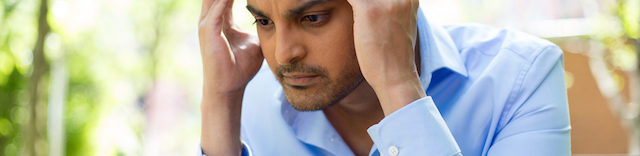
    Stressed Man

    “Ego says, ‘Once everything falls into place, I’ll feel peace.’ Spirit says, ‘Find your peace, and then everything will fall into place.’” ~Marianne Williamson

    I have exhausted myself with my own expectations. The pressure I have put on myself to be a certain person is consuming my thoughts and eating away at my soul.

    I imagine a point in my life when I’ll have it all together, and I feel a sting in my chest that this has not happened yet.

    I think about the milestones that might get me there and the things that have led me astray. I think about degrees, jobs, relationships—the things that I have been conditioned to believe will guarantee my happiness—and wonder why it hasn’t turned out that way.

    There are so many ways to live, and I feel overwhelmed by all of them, confounded by the endless possibilities.

    Do I want to take this path or that one? Job? Travel? Another degree? Buy a car? Settle down?

    I feel like I’m trying to decorate myself with achievements and using stuff that indicates, somewhat frantically, to the world “Don’t worry, I’m alright! Look at what I’m doing!”

    People tell me what I should be doing, predetermining the best path to a life that is full and whole. It’s like there are certain checkpoints I need to pass to ‘get there,’ presumably to be at peace and content.

    If I take this career path or have this relationship, I’m told, everything will be okay. I take these on and feel like I’m reading someone else’s lines, no longer in my own story, and I can’t hear myself think.

    There was a nagging voice telling me I needed to get out of my comfort zone and have an adventure. I needed to explore the impractical and indulgent part of myself that wanted to write, meet new people, and gain new insights.

    I’m learning to filter out the white noise and listen to myself. So I decided to fulfill my fantasy of living in France, and to later intern in Italy. Now, away from the familiarity of people I know and their ever-consistent opinions (however well meaning), I’m forced to confront the aspects of myself that are uncomfortable.

    On the other side of the world, in a place where no one will tell me what is right or what I should do, I have let all my insecurities surface.

    I’m filtering out what the world has been telling me and deciphering and reconstructing the elements that constitute the sort of life that I—not others—want to live.

    I chastised myself for deviating from ‘the plan’—more study that would currently be just for the sake of studying—even though I felt it was the right thing for me to do.

    Now, I am aware that I compare myself to others who are on their own journey, and instead of berating myself unproductively, I accept my own experience and remind myself there is no such thing as the “right” way.

    How can one route possibly be suitable for everyone? How can I compare myself to others, with different hopes, dreams, experiences, talents, and instincts? I can’t. There is no right way, there is just this way—now—which I can amend or shift if or when I need to.

    If you’re going through something similar, feeling pressured and overwhelmed by possibilities:

    Allow yourself to feel what you need to feel.

    We spend a lot of time fighting our emotions instead of sitting with them and recognizing them for what they are.

    The world is now blissfully quiet, and I allow myself to feel the doubt, confusion, and other uncomfortable feelings that are perhaps residual effects of such a big change. Only then do the feelings settle.

    Stop focusing on what could or should happen.

    I’m re-training my brain to relinquish control over what might happen or what could be a future possibility, and instead focus on what is currently happening in my life.

    I notice that if I focus on current experiences, on being more accepting of myself and the moment, my entire mentality and experience shifts.

    Remember that self-worth starts with you.

    We often rely on external things to fuel our self-worth; we use material goods, careers, or relationships to feel good about ourselves.

    What we don’t always realize is that nothing will fulfill us if we don’t first develop self-love. When we look to ourselves with compassion, understanding, and kindness, we see our experiences in a whole new light.

    As a wise person once reminded me: “If I took away everything—your house, your job, the people you know—all you’re left with is you.” 

    Let go.

    Once we relinquish control over the future and stop believing we will be happy if or when something occurs, we allow ourselves to enjoy the present without frantically grasping at external things to validate our self-worth—be they relationships, career achievements, or other milestones we have set for ourselves.

    The shift is enjoying these should they occur (if that is what you, not others, truly desire), without being dependent on them for happiness.

    If we remember that there is no rulebook for living our life and accept that we are on our own journey, we will be liberated.

    Stressed man image via Shutterstock